BJJ Pendulum Sweep by a COP!

An unusual and spectacular situation happened between the sufficiently trained cop and the suspect.

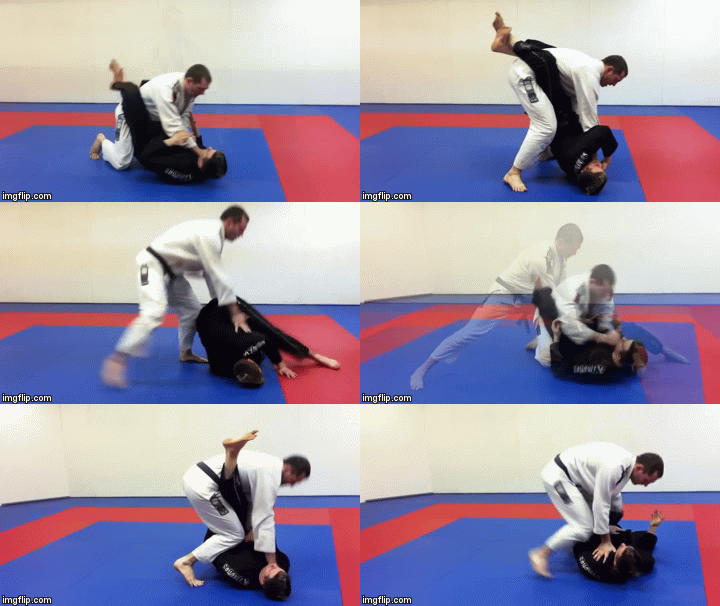
As you can see in the video below, the officer takes the suspect down and prepares to take his back. As he starts to “climb” on top of the suspect to take his back, the suspect drives back into the Officer. At that moment officer felt the momentum and drives him across himself with a pendulum sweep landing into perfect side control.

After getting the side control, the officer even went to the north and south position to maintain the side control and to keep the suspect on the ground.

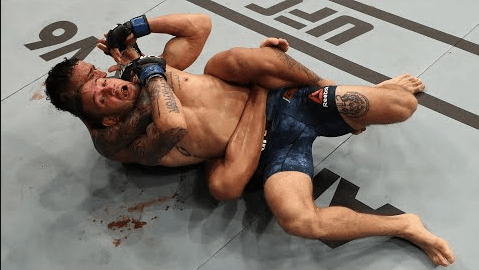
Watch All Charles “do Bronx” Oliveira Submissions in UFC

watch all charles oliveira submissions in the ufc

The Countdown begins, just a few days to UFC 256. The co-main event is the lightweight match between Tony Ferguson and Charles Oliveira.

First, Tony Ferguson should face Michel Chandler, but Chandler canceled the fight. As he stated the recent weight cut was the reason why he canceled. Charles Oliveira steps in, on less than 20 days’ notice.

charles oliveira vs tony ferguson at ufc 256

Charles „Do Bronx“ Oliveira, #6 ranked lightweight, is currently on a seven-fight winning streak. The Brazilian fighter has been waiting for a match like this for a long time, and in Las Vegas, he will be chasing his eighth victory in a row against Tony Ferguson. A win in this match would surely put him in the top 5 lightweights.

Oliveira’s last fight was against Kevin Lee, at UFC Fight Night 170, in March. He had a great performance and submitted Lee in the third round via Guillotine choke. After this victory Oliveira extended his UFC record for most submission wins to 14. Also, he extended his finishing streak to 7. This is the longest active finishing streak now, and ties with Donald Cerrone with most finishes in the UFC.

Charles is a black belt in Brazilian Jiu-Jitsu under Jorge Patino. His ground game is very dangerous as we have been able to see in his matches so far. In his 37 matches, he won 29 times, 19 of them by submission.
Will Oliveira be able to continue his winning streak and beat Tony Ferguson? Let’s see on Saturday night.

Check Charles Oliveira Submissions.

Gordon Ryan’s Tranformation from 163 To 232 Lbs in 18 Months!? Natural or not?

ADCC Champion Gordon Ryan amazing 18 months body transformation

Gordon Ryan, for sure one of the most controversial grapplers in the community. A week ago he started an extremely sensitive topic, the use of PEDs in Brazilian Jiu-Jitsu, and you know what? HE’S ACCUSING PEOPLE OF USING STEROIDS!

Gordon Ryan Accuses Lachlan Giles of Steroids Use, which caused a lot of discussions. Again, Gordon attracted a lot of attention on social media, and again the question, is Gordon Ryan on steroids? This is a highly requested topic for the last couple of years. As we all know Brazilian Jiu-Jitsu as a sport is filled with the most cranked looking athletes in it. To be honest, the main reason for that is because there are no regular doping tests. Only one major organization (IBJJF) is doing regularly tests on the athletes.

Gordon Ryan amazing 18 months body transformation
In an interview for Flograppling, from 2017, Gordon was talking about his physical transformation. He says that all guys he wants to compete against and beat are all about 230, 240 pounds, and that’s the main reason he decided to gain weight. However, Gordon again gets the most attention when he said: “Everyone at the highest levels, for the most part, is on something you know, like our team is pretty much the only people who I think don’t use steroids, to a certain degree.”

And that means he doesn’t use steroids because he’s part of his team, right?

Gordon Ryan amazing transformation

Before we get onto the topic let’s take a look at Gordon Ryan’s transformation cause it’s one of the most impressive and one of the best before and after’s in the history of Jiu-Jitsu. In the period between 2015 and 2017, he achieved an incredible body transformation, which you can check out in the pictures below or just go to his Instagram profile. He’s not ashamed of his body that’s for sure.

Natural Or Not?

When we look at Gordon Ryan, we can see outstanding technique accompanied by the body of a Greek God. Many members of the Jiu-Jitsu community are pointing to steroid usage. But first, let’s take a look at some facts. Gordon’s girlfriend Nathalia Santoro is a former bodybuilding athlete that competed at the highest level in the bodybuilding game. Nathalia acts as his training partner and also as a mentor in the gym. Well-earned experience from bodybuilding helping Gordon in the gym.

Another fact that people don’t see is the hard work. Whether on steroids or not, such results require hard work and a lot of sacrifices. The last and probably the most important fact, which could be the keys to success, you guessed it, it’s nutrition.

And what’s even more interesting Gordon Ryan explained in detail what he did and how he did it. So, if you really want to know how he did it or at least what he said he did, he explained it pretty well in his e-book and DVD. So, why not give it a try?

Gordon Ryan getting swolle as a grappler

When we put all these things together, we get a solution to the problem, or something else is missing, what do you think?

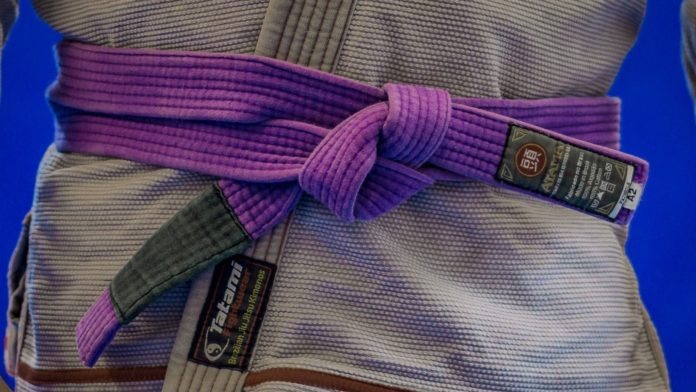
BJJ Purple Belt Requirements And Curriculum

BJJ Purple Belt Requirements And curriculum

So, you’re hoping to reach the next level in BJJ. You’ve proven that you can stick with it, you made it through the white belt “initiation period”, and then you did not quit as a blue belt, proving all those memes wrong. Great job. But now, you’re wondering when your purple belt is going to come, to further reinforce the fact that you’re serious about Jiu-Jitsu, whether it is to yourself or to others. Well, there are certain BJJ purple belt requirements that are expected out of everyone, regardless of which academy they train at. 

With most academies around the world having their own version of a curriculum, and professors having different belt promotion standards there’s no unified system that clearly defines when one is ready to get their next belt. However, there are certain things that specific BJJ belts should be supposed to do and there’s no need really to put it on paper. That said, BJJ purple belt requirements are quite clear, similar to blue belt requirements. Let’s systematize them in a universal way.

BJJ Purple Belt – The Most Fun Time In Jiu-Jitsu

Becoming a purple belt is a serious thing. Nowadays, BJJ is spread so much that plenty of people make it to the blue belt. In fact, I’d even go as far as saying that the bar for most belts, and especially the blue belt has been brought quite a bit lower than a decade ago. But that’s progress, I guess. As long as the fundamental belt requirements are clear, promoting someone is not an issue.

To get a purple belt, though, any grappler needs to actually have quite a bit of knowledge and start developing an understanding of Jiu-Jitsu. BJJ purple belt requirements are a big step up from the blue belt requirements. The purple belt is a defining period of any grappler’s journey. It is a time when things start to make sense, and the individual game develops. As someone once said: “a purple belt knows all the techniques a black belt does – it is the experience that makes the difference”. As a blue belt looking to become a purple belt, you’re not quite there, but you should be close.

In fact, I believe that promoting someone to a purple belt should only be done when they’re already at the purple belt level. That means that when someone is ready to get a purple belt, they should still wait a little bit longer so that when they get their belt they already have some of the beginning markings of a purple belt. As per IBJJF guidelines, the minimum age for getting a purple belt is 16. Furthermore, the “average” period peoples spend at blue is about 2 years which I think is appropriate, given the vastness of BJJ purple belt requirements.

BJJ Purple Belt Requirements– An Overview
BJJ Purple Belt Requirements: promotionAs a blue belt, you’ll actually face many more challenges than a white belt. While you might be thinking that you’re done with the worst when you get your blue belt, your journey is only just beginning. The challenges a blue belt in BJJ has to overcome are of a different nature and complexity compared to those a white belt faces.

One thing that really helps to accumulate enough knowledge to progress to a purple belt is the frequency f training. If a blue belt trains once, or even twice a week, it’ll take significantly more time for them to reach the next level. Three times a week without missing classes is a bare minimum to be able to have hopes of fulfilling almost BJJ purple belt requirements within the “average” two year period. Training more than three times a week will accelerate how fast you’re ready to get to the next level.

That said, BJJ purple belt requirements are not just technical. It takes a lot more than just a collection of techniques to become a purple belt. While it is a marking of a purple belt to have a cohesive game that flows together, tailored individually to one’s needs, glimpses of that should be apparent at the blue belt. In other words, your mindset, technical knowledge, understanding of BJJ, as well as some specific behavioral aspects should all be at the purple belt level before you get the belt. This is a requirement that is specific to the purple belt, given the importance of that belt in BJJ.

Detailed Breakdown Of BJJ Purple Belt Requirements

What exactly is expected of you in order for that coveted purple belt promotion? Well, to be honest, a lot. For starters, you will need to demonstrate that you don’t just have several moves from any given position, but that you also know how to connect everything together. That means that you should not just be bel to string together different submissions, but also transition between the main positions of Jiu-Jitsu. Those include guard, mount, side control, back control, knee on belly, and turtle. In order to even hope for a purple belt, you should also be comfortable from both your back and when in someone’s open or closed guard.

From the feet, being able to take someone down in at least three different ways is a big aspect of BJJ purple belt requirements. Guard pulls, as much as I don’t like them, are also mandatory in a purple belt’s arsenal. Actually, there should be more options than just pulling a closed guard.

In most gyms around the world, the self-defense aspect of the sport is less and less in focus as people go higher in rank. Whether or not this is justified, is a subject for another day. For now, let’s just say that a purple belt in BJJ needs to be able to have the composure for staying calm faced with strikes, as well as being able to take a fight down into a controlled position.

1. Movement

One thing that is true of all purple belts is that when you see two of them fight or roll, they look like cats. There’s a smooth movement that might go on the duration of around without any breaks. They seem to be gliding around when on top and spinning and shrimping when in guard. That has to do with how they perceive transitional movements in-between positions, which is exactly what blue belts need to figure out.

BJJ Purple Belt RequirementsThe key thing to learn at the blue belt is how to transition in-between positions. Trying to hold one position is an impossible notion in Jiu-jitsu, and a purple belt knows this. A blue belt, conversely, has to learn this hard lesson, and it will take time and frustration. Figuring out the hierarchy of positions in BJJ helps a lot but at the end of the day, as part of BJJ purple belt requirements, a blue belt must be able to get from a guard all the way to mount or back. An example is going through all positions from guard (sweep, pass, side control, knee on belly, mount/back).

A high blue blets should also be able to do so more advanced BJ specific motions, like Granby rolls, Imanari rolls, inversions, backsteps, sit-outs, and similar movements are definitely staples of a purple belt’s game. they are, however, things that students learn at blue belt and then get to use as purple belts.


2. Bottom Game

From the bottom, BJJ purple belt requirements spread to much more than just the closed guard, and an open guard variation or two. A blue belt should be comfortable from their back, having at least a couple of closed guard variations and at least three (preferably more) open guards. Moreover, this is the time when the half guard comes into focus, especially from the bottom. The reason for this is that half guard is the perfect checkpoint for all escape attempts, which are a mark of bleu belts. When those escapes to half guard become successful, that is a clear sign of a purple belt, and understanding half guard plays an obviously huge role.

  • Closed Guard 

From the closed guard, retention remains the number one priority for any belt. If your guard gets passed, all your attacking tools will be useless. As a blue belt, though, you’ll need to be able to stay in guard against different levels of guard opening, ranging between standing, kneeling, and Sao Paolo-style passing.

Moreover, variations of the closed guard are also key to fulfilling BJJ purple belt requirements. At least two variations (basic closed guard and one more) are necessary. Here are some ideas:

  • High Guard              [Read More]
  • Williams Guard       [Read More]
  • Rubber Guard         [Read More]
  • Closed Guard Attacks

Attacking from the closed guard is also not as straightforward as in the beginning. IF you want to be a purple belt, your attacks will have to go together. That means that when you get an armbar, for example, you’ll need to be aware of how to get into a triangle from there, as well as using the position to sweep. We’ll talk specifically about submissions, later on, but sweeping with a submission form closed guard is definitely a clear mark of a BJJ purple belt.

  • Flower sweep                      [Read More]
  • Overhead sweeps               [Read More]
  • 100% sweep                       [Read More]
  • Guillotine Sweeps               [Read More]
  • Open Guards

There’s no point in having just one guard in Jiu-Jitsu, especially in the context of open guard. As a blue belt, you’ll start experimenting with gaurs, but it will be purple when you really discover what you love to play. BJJ purple belt requirements demand that you know how to work from at least a few different types of open guards. The specialization will come later.

  • De la Riva guard(s) – regular and reverse De la Riva             [Read More]
  • Spider guard                                                                        [Read More]
  • X guard(s) – Full X-Guard and the Single Leg X-Guard            [Read More]
  • Open Guard Attacks

BJJ Purple Belt Requirements guardThis is where things get interesting. A huge part of a purple belt’s game are attacks from open guards. They are really slick with them and have tons of moves and combinations all over. However, being able to string attacks together, means you know attacks, and those are skills that you need to acquire as a blue belt. Attacking from the open guards will depend on the guard variation, so at least a couple of sweeps in different directions from every variation are essential.

  • De La Riva Sweeps            [Read More]
  • Spider Guard sweeps        [Read More]
  • X-Guard Sweeps                [Read More]
  • Half Guard

The half guard is a huge part of a blue belt’s game. It is something white belts dabble in, but it only starts to make sense at blue belt. The half guard nowadays has so many variations that it would be difficult to pinpoint the one that best fits BJJ purple belt requirements. I’d go for the Z-guard as it offers the highest percentage attacks, easy retention, and works in Gi and No-Gi. Again, retention is the number one focus from the half guard.

  • Half guard sweeps (at last two)                               [Read More]
  • Half guard submissions (Loop choke and Kimura)     [Read More]

3. Top Game

If purple belts are known for experimenting with guards, they must then be quite comfortable passing the guard. And they are, mainly because it is something that they developed at blue belt, as part of the BJJ purple belt requirements. Apart from passing, top position maintenance and moving in between all major top positions is also a must for any purple belt.

Simply put, a purple belt must know at least a few side control variations, a few knee on belly variations, the main levels of the mount, as well as back control variations, and be able to move between them.  Once again, the focus is on transitioning.

  • Side Control     

Form side control, it is all about staying in side control, as long as you see fit before moving on. Since saying in just one side control variation is not going to help you stay there, you’ll need not just different options, but ways of connecting them with each other as well. Knowing these ticks off a big box of the BJJ purple belt requirements.

  • Twister side control           [Read More]
  • Judo Side Control               [Read More]
  • North-South                       [Read More]

The Mount 

The mount might seem simple but there are so many different little details that make it actually work for people. If you want to kill off bridge and knee and elbow escapes, you’ll need to know how to move up the mount. That means you’ll need to be comfortable low, high and S-mount, and of course, know how to transition in between them.

  • Low mount                     [Read More]
  • High mount                    [Read More]
  • S-mount                         [Read More]

Back Control

The back is something that purple belts really call home. IN order to e able to have fun with the different purple belt level attacks from the back, though, you’ll need to understand how to stay on the back. In terms of BJJ purple belt requirements, being able to stay on someone’s back for an entire round is what matters. Retention is key, and it will take time to really master, but what else are you going to do as a blue belt? Figuring out how body triangles work and how to stitch the harness grips from side to side are also important things to learn before purple belt.

The knee on belly position is actually much more diverse than people give it credit for. it is not just a spot to hang out for a few seconds. there’s a reason why this position is worth 2 points in competition – it provides control and with it, plenty of attacking options. That said, alternating between a knee on belly position that puts people under crazy pressure, and the one that allows you to transition further along the hierarchy is one of the most important BJJ purple belt requirements.

  • Pressure from knee on belly          [Read More]
  • Switching sides                              [Read More]
  • Turtle Attacks

Breaking down the turtle with attacks that lead somewhere is another characteristic of purple belts. Knowing the directions in which you can do it, along with the positions that will allow you t dominate an opponent once you break their turtle and prevent them from re-turtling are the things to focus on as a blue belt.

Rolling into back control, figuring out how the kneeling front headlock works as well as using some wrestling staples like Nelsons and chicken wings to break the turtle down are a must.

  • Rolling back takes                [Read More]
  • Front headlock attacks        [Read More]
  • Nelsons                                 [Read More]
  • Guard Passing 

Getting past the legs is never an easy task in Jiu-Jitsu, at any belt level. BJJ purple belt requirements for getting past the legs must involve at least one option of there of the four directions of passing – under the legs, around the legs, and through the legs. Going over the legs is something that purple belts need to learn later on. Understanding pressure passing and lose passing is also important at that level.

  • Sao-Paulo Pass                   [Read More]
  • Folding Pass                       [Read More]
  • Stack Pass                          [Read More]
  • Leg Drag Pass                    [Read More]
  • Over Under Pass                [Read More]
  • Knee Slice Pass                  [Read More]

4. Standing

From the feet, BJJ purple belt requirements are all about direction. You need to be able to throw or take people down in every possible direction, using both upper and lower body takedowns. Moreover, you’ll need to take people down in both Gi and No-Gi. Also, guard pulls become much more important, as you need to know how to get into open and half guard form standing, as well as knowing how to pull the closed guard.

  • Half Guard pull                                                                              [Read More]
  • Open Guard pull                                                                            [Read More]
  • Double leg takedown (different finishes)                                    [Read More]
  • Single leg / High crotch takedown (different finishes)              [Read More]
  • Sumi Gaeshi / Tomoe Nage                                                          [Read More]
  • Front Headlock Snapdowns                                                          [Read More]
  • Kata Guruma                                                                                 [Read More]
  • Hiza Guruma                                                                                 [Read More]

5. Submissions 

A blue belt looking to progress to purple needs to know submissions. And lots of them. In fact, right before you get your purple belt, you should already be a specialist in at least one choke, one leg lock, and one arm lock, preferably more. being a specialist means being able to catch everyone at your level, and oftentimes people that are above you in rank with them. That, however, does not exclude other submissions. Quite the contrary, blue belt is when you mess around with as many different submission techniques as you can!

  • Triangle choke(s) (from, guard, mount, and back)                          [Read More]
  • Armlocks (from closed guard, half guard, and the mount)                 [Read More]
  • Ezekiel choke (from the mount)                                                     [Read More]
  • Loop Choke (from half guard)                                                        [Read More]
  • Arm triangle (from the back)                                                         [Read More]
  • Toe Hold                                                                                         [Read More]
  • Kneebar                                                                                          [Read More]
  • Bow and arrow choke                                                                    [Read More]
  • Wristlocks (from both closed guard and the mount)                         [Read More]
  • Darce choke                                                                                   [Read More]

6. Escapes

BJJ Purple Belt Requirements escapesEscapes are a mark of a purple belt. It is therefore obvious why they are a big aspect of BJJ purple belt requirements. However, escapes will only work when defense from certain positions is really efficient, and that is what blue belts specialize in. So, escaping should be based on useful defense, and it should lead to a dominant position rather than a neutral one when BJJ purple belt requirements are in question.

One main thing from any defensive position for blue belts is not allowing the other person to submit you.

  • Side control bottom (Ghost escape, getting half guard, rollover escapes)   [Read More]
  • Mount bottom (bump escape, escaping into Ashi Garami, Alcatraz escapes)[Read More]
  • Back Control bottom (Body triangle escape, grip fighting, escape to turtle)[Read More]
  • Turtle bottom (rolling out, getting half guard, frame escapes)                   [Read More]
  • Knee on Belly (escape to leg locks, escape to half guard)                          [Read More]

7. Mindset

A blue belt is a very difficult period in terms of BJJ mentality. this is the time when you need to tame your ego, at least the most glaringly obvious aspects of it. This has to do a lot more with the mental approach to the game than the physical one. In terms of BJJ purple belt requirements, you need to have an open game, which is something i see blue blets struggling with the most.

Namely, blue belts get so good at defending, and eventually escaping things, that they oftentimes become very passive. While there are merits and logic to this type of game, progress requires going on the offensive as well, which means you should abandon the safety of your sweet spots, especially against higher belts. Overcoming this particular hurdle is the biggest mindset BJJ purple belt requirement of them all. Just go on the offense yourself and to worry about what will happen – that’s how you’ll learn that three’s always bigger and “badder” wolf in the pack.


8. Self-Defense 

  • Strike evasion (on the ground and standing)                   [Read More]
  • Quick takedowns (on the ground and standing)               [Read More]
  • Standing and ground control                                         [Read More]

9. Drills And Rolling 

Rolling-wise, BJJ purple belt requirements are actually easy – know how to roll. it is not about what you do, how much you accomplish, or anything of the sort. You’ll just need to learn how to roll first and foremost – no spazzing, trying to be technical, and rolling slightly differently with different major categories of people as to accommodate them and yourself.

Learning different types of rolling also happens at blue belt. Slow rolling is a big one, and it is an important aspect of a purple belt’s game. Without at least understanding how slow rolling works, you’ll hardly be able to progress to the purple belt. this is what makes all those transitions seem simple and smooth.

Specific sparring is a huge aspect of rolling as well. In fact, it is an aspect of both rolling and drilling for blue/purple belts. It is better to set up drills in scenarios, where people can see the context of the entire move they’re working on. Specific positional sparring offers just that, as well as the chance to control the intensity and the level of resistance.

The final aspect of BJJ purple belt requirements in terms of rolling has to do with responsibility. As a blue and soon to be a purple belt, you need to know how to roll with those that are new, injured, older, from the other sex, etc. As a purple belt, you’ll have to do teaching rolls as well, with people that won’t offer you a challenge, but the roll with you will be extremely valuable to them. understanding your rolling responsibilities in the gym is a huge step forward for any grappler.


10. Behavior

The way people act on the mass is always something instructors monitor. However, as you progress through the ranks, the expectations in terms of overall behavior rise. In fact, they’re a part of the requirements for every belt. in terms of BJJ purple belt requirements, it comes down to the example you set for others, your dedication to the sport, and giving back to the art of Jiu-Jitsu.

In terms of being an example, expect that new students will always look up to the belt that is within their reach. That means that blue belts are often the most reliable example for white belts, as they know that is the next level. How you conduct yourself in class, from warm-ups to rolling, and in the changing room will affect the way they behave as well. As you get to the purple belt you’ll have even more people looking up so acting right is a big deal. Really!

At purple belt, many people start to dabble in teaching, whether it is helping coaches out in fundamentals groups or taking up a role in kids groups. Knowing how to teach is a huge thing in Jiu-Jitsu and you definitely need to know how to do it, if that is what you want. While this is one of the optional requirements at this point, it is still something to start considering.


11. Optional

Finally, a few more aspects of Jiu-Jitsu fall under BJJ purple belt requirements. You already know that competing is not a condition for progression in BJJ. However, many people decide to do it anyway. Competing in Jiu-Jitsu is fun and as a blue belt, you’ll run into probably the biggest pool of opponents possible. If you decide to compete, you’ll need to devise a game plan. Moreover, you’ll need to have a gas tank to help you execute it.

– Competing

As a blue belt, competing comes down to two things- having a game plan, and listening to your corner. As a white belt, it is mostly about trying to survive by using the few tools you have. At the blue belt level, you’ll need a game plan for every position. You’ll also need to factor in plenty of other things, like scrambles and transitions. In fact, the moment you start bringing tactics into it, you’re ready to start testing purple belt competition waters.

– Conditioning 

For competitors, conditioning is mandatory after the white belt level. There’s just no way around it, given that everyone else will be doing it, especially in adult divisions. The focus at this point should be on cardio and conditioning rather than strength. As a purple belt, you’ll need to move a lot and your conditioning needs to reflect that. Be careful and well-informed when it comes to choosing your conditioning plan though. It needs to fit you.

Gi vs. No-Gi BJJ Purple Belt Requirements

Let’s discuss something that I also consider to be among the BJJ purple belt requirements, at least in my gym. While people might not agree, I do think that overall knowledge of Jiu-Jitsu is a must for everyone, at least until they reach back belt and can then decide to specialize in something. That means Gi, No-Gi, and self-defense all have a part to play.

In terms of training without the Gi, I think it is a must if someone wants to be a purple belt. It doesn’t mean people have to compete in No-Gi or spend ample amounts of time training it. However, being able to roll without a Gi is an important aspect of Jiu-Jitsu. That means knowing grip fighting, submissions, positional details, escapes, etc in a No-Gi setting. As similar as this is, it is far from being the same as in Gi, which means there’s a lot to learn.

My two cents are that even people that rain exclusively No-gi should be working with the gi as well. It is ok to focus on one or the other, but there has to be at least rudimentary knowledge of the alternative. And that knowledge needs to be appropriate to the belt rank of a person.

Conclusion

BJJ purple belt requirements are probably the most complicated of them all. Purple belt marks a huge transition from being someone who trains, to someone who embraces the BJJ lifestyle. As such, they tend to encompass a lot of different things. They are, however, more than worth it! Coming into the purple belt ready for the challenges it brings is way better than coming in unprepared. While the requirements above are far from everything you need to be a purple belt, they’re universal for everyone. Any person that fulfills them all is already at purple belt level, regardless of what hangs at their waist. Wearing a purple belt you can say that you’re very good in Jiu-Jitsu and even able to compete at a high level in Pro and Advanced tournaments together with other brown and black belts and those who got their Jiu-Jitsu black belts very fast.

Related Articles

BJJ Belts System – Jiu-Jitsu Belts Ranking Guide


Purple Belt – The Time When Jiu Jitsu Starts To Make Sense

BJJ Purple Belt: The Annoying “Know-It-All” Student

BJJ Blue Belt Requirements and Curriculum

BJJ Black Belt VS World’s Strongest Man Ft Bas Rutten, Josh Palmer & The Mountain

BJJ Black Belt vs World's Strongest Man

Brazilian Jiu-Jitsu is the only combat martial art where size doesn’t matter… It is quite certain that you have heard this many times before, a very common and popular sentence in the world of Jiu-Jitsu. There are a large number of different videos on this topic that we can find on the internet. A few days ago a new video with the title Strongman vs BJJ BLACK BELT, appeared on youtube.

Hafthor Bjornsson is a strongman from Iceland.One of the strongest men in the world. He won many titles in the world of strongman. His strongman career began in 2010, from then Haftor managed to win 10 titles for Iceland’s Strongest Man,5x European Strongman,3x Arnold Strongman Classic. In 2018 he won the title for the World’s Strongest Man 2018.
Earlier this year, in May he set a record in deadlifts. Hafthor deadlifted an incredible 501 kilograms  (1,105 lb) under strongman rules at his gym in Iceland.
A few days ago he posted a video on his youtube channel, Strongman vs BJJ BLACK BELT! He trained with former UFC Heavyweight Champion Bas Rutten and Brazilian Jiu-Jitsu Black Belt Josh Palme.

strongman hafthor björnsson and Bas rutten
Bas Rutten and Hafthor Björnsson

In the first part of the video, Bas introduced Haftor to the fundamentals of karate combat, with striking and ground and pound. In the second part, they were doing Brazilian Jiu-Jitsu. Haftor learned some techniques, and he rolls with the BJJ Black Belt Josh Palme. What happens when the strongman faces the BJJ Black Belt? Check out the video below:

Jake Mackenzie Competition Closed Guard DVD Review

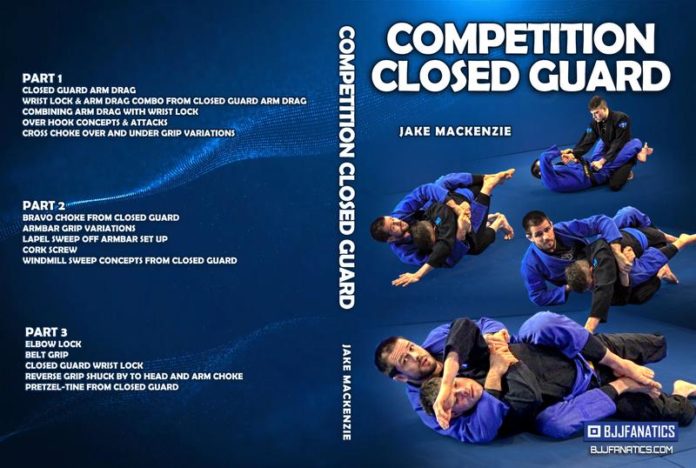
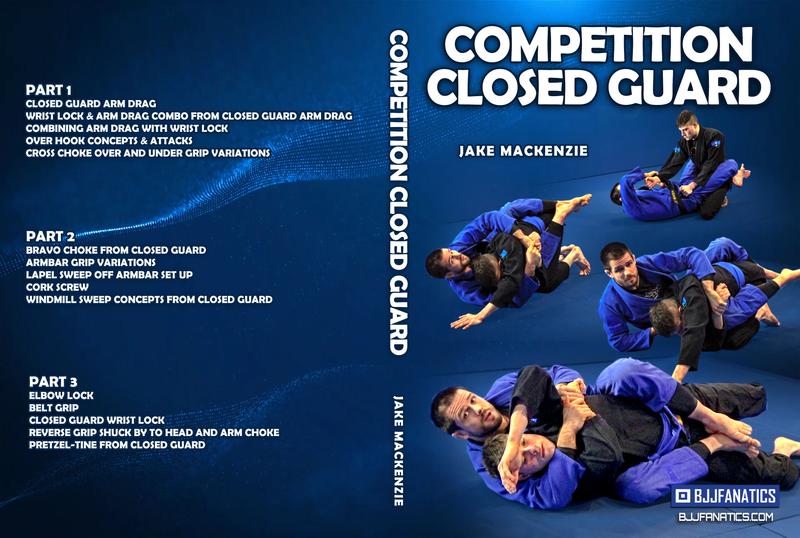
Jake Mackenzie Competition Closed Guard DVD Cover

Not another closed guard DVD! yeah, I know, that’s what I thought too. I was wrong. This Jake Mackenzie DVD is anything but yet another generic closed guard BJJ instructional. The Competition Closed Guard DVD focuses on one very small aspect of the closed guard – tournament application and strategies. However, it goes deeper than any other instructional before it. Jake is a fearsome competitor that really understands what it takes to win a BJJ match. After all, he is a Roberto “Cyborg” Abreu black belt, and certainly knows his way around tournaments!

ON SALE HERE:
Jake Mackenzie – Competition Closed Guard (DVD/DIGITAL/COMBO)

Jake Mackenzie DVD Hig Precision Half Guard
Techniques List

The closed guard remains to this day one of the most effective spots to attack from. However, modern Jiu-Jitsu has many more solutions for the closed guard compared to the old-school BJJ. So, to be able to really make the closed guard position zero, you need to use a different game as well. For competitors, this is of particular importance. Ther Competition Closed Guard DVD is a BJJ instructional that focuses on an extremely simple, yet effective closed guard game. The advantages are that it is a brand new game, based on high-percentage moves that are simple but unexpected. In short, competing in modern BJ without owning this Jake Mackenzie DVD is like shooting yourself in the foot.

A True BJJ Warrior – Jake Mackenzie

Who is Jake Mackenzie? Well, I ran into the name a few years back when I was obsessed with the Tornado guard. Jake is one of Cyborg’s black belts, and one of the top competitors to come out of the Fight Sports team. He is a black belt as of 2010, three years after he joined up to train with Abreu full time.

Jake Mackenzie Competition Closed Guard DVD CoverMackenzie was born in Canada, more precisely in Nova Scotia. He started training Jiu-Jitsu at 14 in a quest to learn some self-defense. Suffice to say, he got hooked immediately. he initially trained with Marcio Feitosa before Marcio Canario took over the school. Jake loved traveling to compete ever since he started BJJ. he particularly liked Brazil and even learned Portuguese along the way. During those visits, eh met Cyborg, and as a purple belt made the switch to his academy. Ever since he has been a part of the Florida-based Fight team.

As a competitor, Jake has numerous accolades during his 9-year stint as a BJJ black belt. During his frequent visits to Brazil, he spent a lot of time competing. So far he has four Brazilian nationals titles to show for it, along with a couple of No-Gi titles with the same name. He is also a World Masters Champion as well as a European Champion. Jake is a lightweight grappler, meaning he is pure technique and leverage. Plus, his rich competition experience makes him the perfect person to issue a “Competition CLosed Guard” DVD instructional. Let’ go deeper in this awesome Jake Mackenzie DVD.

Jake Mackenzie Competition Closed Guard DVD Review

To be fair, this is not the first Jake Mackenzie DVD out there. his take on the half guard is also a highly-practical one. In fact, it is the half guard that Jake is famous for. His closed guard escapades came later, but they’re no less impressive than his half guard knowledge. Of course, i is the competition aspect of Jake’s guard game that catches the eye. To that extent, he has an unbelievable way of weeding out all the stuff that’s not useful in a competitive setting. His Competition Closed Guard DVD is one more example of that.

This BJJ instructional is a Gi one and focused on a quintessential BJJ position. In that sense, this is a DVD set that consists of three distinct volumes. In the very first one, Jake goes over his take on the closed guard and its applications in tournaments. The first volume is all about the arm drag and subsequent attacking opportunities. Part two goes into choke and armbar options, while the final one is all about sneaky guard attacks that’ll catch anyone. Oh, and did I mention that Jake really likes wrist locks?

Part 1

Opening up the Competition Closed Guard DVD is a section on arm drag-based attacks from the closed guard. Jake Mackenzie uses the arm drag as an entry to the go-to position from his closed guard system – the overlook. This lesser-used variation provides a lot of stability and attacking options while taking posture away immediately and effortlessly.

Attack-wise, the first volume of this DVD provides lots of sneaky submissions, mostly in the form of wrist locks. The wrist lock and arm drag combo is really good, ensuring at least one of the two moves will work out in your favor. The wrist lock also helps establish the overlook, which then serves to launch other attacks, the likes of the cross choke. Mackenzie provides several variations.

Techniques List:

CLOSED GUARD ARM DRAG
WRIST LOCK & ARM DRAG COMBO FROM CLOSED GUARD ARM DRAG
COMBINING ARM DRAG WITH WRIST
OVER HOOK CONCEPTS & ATTACKS
CROSS CHOKE OVER AND UNDER GRIP VARIATIONS

Part 2

This second portion of the Jake Mackenzie DVD starts off with a very interesting choke variation. the Bravo choke will help you surprise people, and since it is a Gi choke, it is perfectly suited for competitors. An armbar comes next, with Jake focusing on different grips that will help you keep your armbar secure and never risk losing both the submission and the closed guard.

The second part of this volume of the Competition Closed Guard DVD moves on from submissions (however briefly) to explore sweeps. Mackenzie starts with a beautiful lapel sweep that ties into the previous armbar setup perfectly. He also shares a couple of other slightly unusual sweeps in the form of the corkscrew and the windmill sweep, with the second looking particularly enticing to try in rolling and competition.

Techniques List:

BRAVO CHOKE FROM CLOSED GUARD
ARMBAR GRIP VARIATIONS
LAPEL SWEEP OFF ARMBAR SET up
CORKSCREW
WINDMILL SWEEP CONCEPTS FROM CLOSED GUARD

Part 3

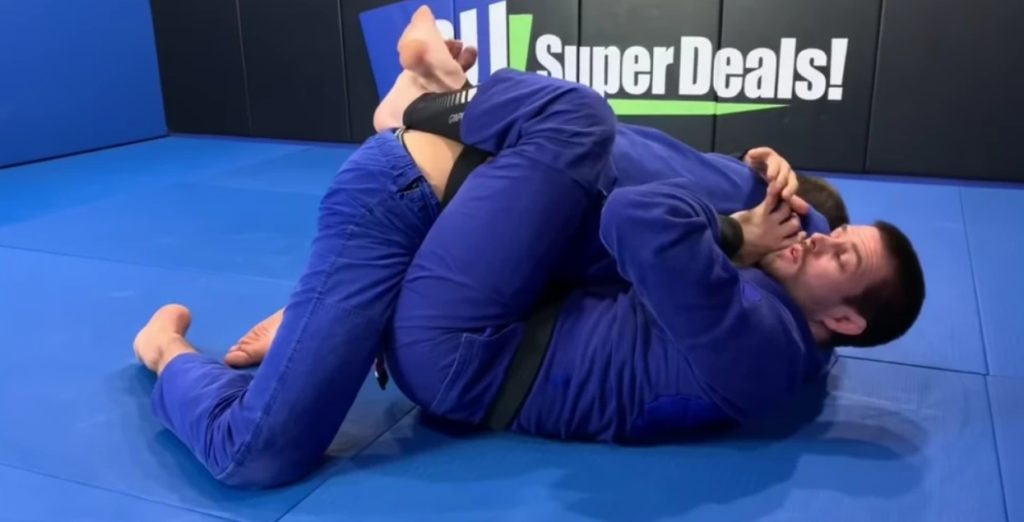
Jake Mackenzie Competition Closed Guard DVD - Haed And Arm ChokeThe final part of this BJJ instructional looks into some really fancy attacks from the closed guard that we’re not used to seeing every day. They really do seem efficient though, and the few I’ve tried did work in the gym. Namely, I managed to pull off the elbow lock which is a submission I’ve always wondered how it works, but never really gotten precise instructions. Another thing that I’ll definitely incorporate in my game is the pretzel-tine guillotine choke variation. That one really works!

In addition, Jake Mackenzie also shows how to use belt grips from the closed guard (a very useful concept) as well as yet another wristlock. The reverse grip shuck-by modified from wrestling to work from the ground is also interesting, opening up a head and arm choke setup from the closed guard, which always looks impressive.

Techniques List:

ELBOW LOCK
BELT GRIP
CLOSED GUARD WRIST LOCK
REVERSE GRIP SHUCK BV TO HEAD AND ARM CHOKE
PRETZEL-TINE FROM CLOSED GUARD

Final Thoughts

The Competition Closed Guard DVD by Jake Mackenzie is the perfect tool for any Gi competitor that likes to spend time on their back. However, it is not limited to competitors only. There are amazing concepts and combinations in there that will help everyone improve their closed guard. Moreover, the concepts include both submissions, transitions, sweeps, and guard retention, meaning everyone can find a chapter in this instructional that will fit their specific needs.

ON SALE HERE:
Jake Mackenzie – Competition Closed Guard (DVD/DIGITAL/COMBO)

Jake Mackenzie DVD Hig Precision Half Guard
Techniques List

Clash of The Champions : Kaynan Duarte VS Rodolfo Vieira

ADCC Champion Kaynan Duarte vs ADCC Champion and UFC Middlewwight Rodolfo VIeira

One of the biggest and most exciting grappling matches of the year awaits us on Friday at Who’s Number One Event in Austin, Texas. Current ADCC Champion Kaynan Duarte will face the former ADCC Champion and one of the best grapplers in the UFC, Rodolfo Vieira. They will fight in a 15 minutes No-Gi, submission only match.

Rodolfo’s comeback 

Rodolfo Vieira is one of the biggest and most famous fighters in the history of the sport. Rodolfo Wins 5 IBJJF  World Championship gold medals as a black belt, 4 in the Heavyweight division, and one in the absolute. He also wins the ADCC World Championship 2015 in Sao Paolo, in the -99kg division. In addition to all the titles he won, Rodolfo is also one of the most accomplished BJJ fighters of all time. Rafel Lovato, Andre Galvao, Xande Ribeiro, Braulio Estima, Bernando Faria, are just some of the names that Rodolfo managed to beat.

Rodolfo Vieira UFC Submission win
In 2016, Vieira decided to retire from competing in BJJ and he transitioned to MMA. He has a score of 7-0. After a successful start, and five wins in five matches, he signed with the UFC. So far he has won his first two matches, both of them by submission (arm-triangle choke). He also announces his next fight in the UFC, in January, he will face Anthony Hernandez.
The fight against Kaynan will be his first No-Gi match since 2015 when he competed at the ADCC Worlds.


The current Champion

Kaynan Duarte, representing Atos, is a black belt under Andre Galvao.  In a very short time, he achieved almost everything that you can achieve in the sport, in every belt. In 2019 he had 51 matches, with a record of 46 wins and just 5 losses. He won gold at the Europeans, PAN Championship, and the Kasai Pro Heavyweight title belt. His biggest achievement was the gold medal at the ADCC World Championship 2019, in the -99kg division.

Kaynan Duarte IBJJF No Gi World ChampionshipWhat caused a lot of attention was a positive doping test. In February, this year USADA announces that  Duarte has accepted a one-year suspension for an anti-doping rule violation. Duarte tested positive after his match at the  IBJJF World Jiu-Jitsu Championships in 2019. In addition to being banned from competing under IBJJF for one year, the gold medal from IBJJF Worlds passes to Leandro Lo.


The Revenge

This is not the first match between these two. They had a fight last year in the semi-final of the 2019 Spyder Invitational BJJ Championship. It was a pretty tactical match. Kaynan pulls guard at the first seconds of the match, and he secures a sweep, for the 2 points win. Will Duarte repeat the success and beat Rodolfo again? What do you think, who takes this one? Let’s see on Friday night.

Kaynan Duarte Submits Rodolfo Vieira in only 2m30s

BJJ Blue Belt Requirements and Curriculum

BJJ Blue Belt Requirements Cover

One of the first questions I usually get from new students of BJJ is when they can expect to get their first belt. For adults, that is the blue belt. It is natural for people to wonder when they’ll be able to get out of the beginner zone and be treated as if they’re “something” in the sport. It is the same in every sport. However, with Jiu-Jitsu being so vast and complex, the timeline for getting that first belt is quite different than other sports. In fact, it is different for everyone, based on how quickly they can master the fundamental BJJ blue belt requirements.

With every belt in Brazilian Jiu-Jitsu, you get different challenges and different requirements that you need to fulfill. While Jiu-Jitsu is highly individual, there are still certain benchmarks that everyone has to reach in order to understand the fundamental aspects that reflect the readiness to move to the next level, which in BJJ is marked by a change in belt color.

Out of all those belts, getting a blue belt is perhaps as hard as it is desired by everyone. Moreover, the BJJ blue belt requirements are no breeze as well – they include basically everything fundamental about Brazilian Jiu-Jitsu.

BJJ Blue Belt – The Most Coveted Jiu-Jitsu Rank

Being a blue belt is a fun and challenging period at the same time. It is pretty much like being in second grade in school. You’re not at the bottom anymore, but there are still so many people in grades above you. It feels great not to be a beginner, even though you know you’re just barely above that line. Nevertheless, the blue belt is the period when people can, and should focus more on Jiu-Jitsu, and lesson when they’ll get a belt or stripe, or how much they don’t know.

BJJ Blue Belt Requirements AnalyzedThe blue belt is a period when you realize that you actually don’t know anything about Jiu-Jitsu, and also that you’ll never be able to learn and master it completely. This is when it dawns on people that BJJ can be fun in many different ways apart from trying to win every possible exchange. That said, becoming a blue belt is not just hard, but it is also crucial in order for you to advance through the Jiu-Jitsu ranks.
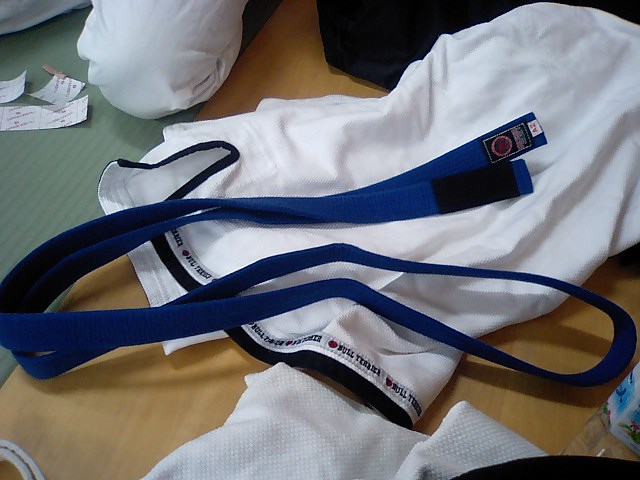
What I mean by that is that oftentimes, blue belts are held back by bad habits and white belt mistakes they still tend to do. that is what happens when people get promoted without fulfilling certain BJJ blue belt requirements that I think everyone should abide by. After all, a blue belt should know everything about the fundamentals of BJJ, even though it is not expected of them to actually know the ins and outs of those fundamentals.

BJJ Blue Belt Requirements – An Overview

Speaking of BJJ blue belt requirements, what exactly is expected of people in order to get their blue belt properly. When someone becomes a blue belt, there’s the knowledge that they should already posses, and which will help them not just survive the incoming onslaught of the blue belt period but also thrive during it.

The BJJ blue belt requirements are actually pretty simple – you need to be able to attack and defend from all major positions of Jiu-Jitsu with at least one viable technique. On top of that, you need to have at least one of each major submission category that you can turn to with a solid degree of success. Of course, nobody is going to expect you to pull everything off on black belts, but seeing that you know what you’re doing in certain positions is a mark of your readiness to graduate to the next level of BJJ.

The most important thing to note is that any BJJ academy worth being a part of will not only promote people based on their technical knowledge. Of course, attendance is important, but other things are real priorities. For example, certain aspects of grappling-specific movement are simply a must, as is some understanding of Jiu-Jitsu in general, its history, and its origins. Moreover, the biggest emphasis on self-defense is during this period of your BJJ journey, and the BJJ blue belt requirements should reflect that in every academy around the globe.

I’ll only mention this briefly, but there’s also a competition to factor in. It would not be smart to promote someone to a blue belt if they’re not actually already prepared to face at least other beginner blue belts in tournaments.

A Detailed Breakdown Of BJJ Blue Belt Requirements

BJJ Blue Belt Requirements - Expectations vs. RealityLet’s now look at the  BJJ blue belt requirements that I feel should be universal for gyms all around the world. Keep in mind that some schools train only No-Gi, others, train exclusively in the Gi, some like to put an emphasis on self-defense while others are 100% sports-oriented. these are all aspects of training that will affect what BJJ blue belt requirements are held in the highest regard. However, the bottom line is, that with every blue belt I meet, regardless of their academy of origin, I expect to be able to perform all of the things that I’ll cover in detail below.
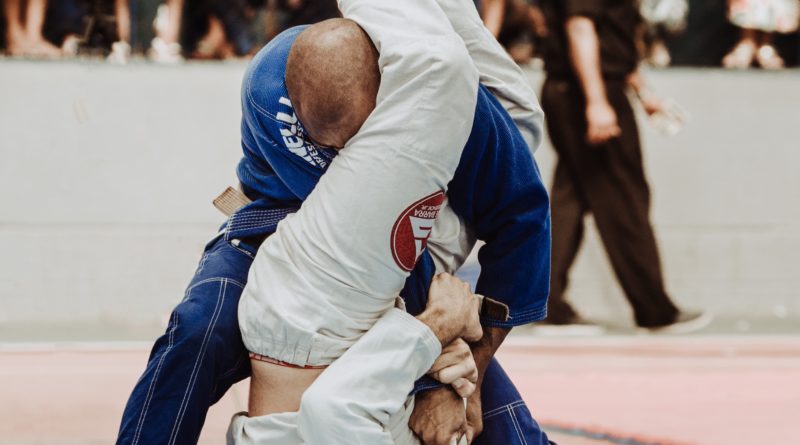
There are 10 basic categories of requirements that people should have knowledge of. that said, it is not about testing people like in other martial arts. In Jiu-Jitsu, it takes only a couple of rolls for an instructor to see if someone fulfills all the BJJ blue belt requirements listed here:

1. Movement

Since it all starts with movement, I expect white belts to be able o move in BJJ specific ways. Note that I say “move”, and not “excel at” because it will take years for people to perfect some of the BJJ-specific movements they haven’t encountered before. The list of movements within the BJJ blue belt requirements are many, but there are a few that are an absolute must for everyone.

Let’s divide movement further into categories to make it simple for everyone to understand. From a defensive standpoint, there are three movement patterns every blue belt needs to be able t do “in their sleep”. those are shrimps (aka hip escapes), bridges, and technical standups. Simply put, there’s no blue belt without this holy trinity of BJJ movements.  [Read More]

In terms of standing, the sprawl, and penetration step, from a defensive and offensive aspect, respectively, are also a must. The break fall and front roll complete the list of moves that every blue belt should know how to perform.  [Read More]

Also, while it may fall under the options category of “athleticism”, certain animal walk drills are also among the movement-based BJJ blue belt requirements. [Read More]


2. Bottom Game

When it comes to the bottom game, BJJ blue belt requirements area pretty straightforward – have a guard that is difficult to pass. In those terms, at least one open guard variation should supplement the closed guard that is obviously one of the first requirements in Jiu-Jitsu anyway.

  • Closed Guard

Staying in the closed guard, managing grip fighting, and preventing people from breaking it open are some of the key requirements. Getting back to the closed guard after someone opens it is another one.

  • Closed Guard Sweeps

Attack-wise, from the closed guard, you need to get on top, plain, and simple. Or submit, but submissions get a category of their own. That leaves us with sweeps from the closed guard that you need to master and there are three of those that you need in order to become a blue belt:

  • Scissor Sweep                      [Read More]
  • Pendulum Sweep                 [Read More]
  • Sit-up Sweep                        [Read More]
  • Open Guard 

There’s really no limit on what you can do in terms of the open guard as a white/blue belt. However, as far as recommendations go, stick to the basic open guard – one leg hooked behind a knee, the other foot on the opposite side hip, grip on one leg, and one arm. It is also known as the tripod guard, given that it provides easy entries to the same sweep.

  • Open Guard Sweeps

Once again, you can feel free to expand on the sweeping options from open guard, or perhaps even work from an entirely different guard, however, the following two sweeps are stuff that works from white to black belt level, so why not learn them early?


3. Top Game

The focus on everyone training Brazilian Jiu-Jitsu as a white belt should bet the top game. Apart from guard retention, sweeping, and submitting from the bottom, everything else should be all about top positions. Why? Well, they’re the positions that get you points in the competition, and control and domination in sports or self-defense settings.

  • Side Control                                  

Holding side control for as long as possible without the opponent escaping is one of the crucial BJJ blue belt requirements. To that extent, the “traditional” side control, Judo side control and North-South should be variations that a blue belt knows by the time they get their rank.  [Read More]

  • The Mount

From the mount, it is all about control one again, and not letting the bottom person escape. The low mount is the starting point, and learning to keep it is a crucial skill. Given that it is not the nature of Jiu-Jitsu to just hold people down, at least one more variation in the form of the high mount is a blue belt requirement. S-mount is a bonus.  [Read More]

  • Back Control

From the back, BJJ blue belt requirements are easy- stay there without losing control. A blue belt should be able to keep the back control of white elts and most of their peers for the duration of the round. Basic rotational control with double hooks and the seatbelt grip is a must, although a body triangle is always a great skill to develop early as well.  [Read More]

  • Knee On Belly

The knee on belly position is one more key positions for anyone training Jiu-Jitsu. It is one of the hardest things for new students to learn, given the balance requirements, but it is one everyone needs without exceptions. Apart from being able to hold someone with your knee on their belly, switching it from one side to the other is yet another crucial skill and blue belt requirement.  [Read More]

  • Turtle

You will deal with people that turtle up, and it is one of the key BJJ blue belt requirements to be able to break down a turtled opponent. While there are many  directions in which you can take someone who is in turtle, two main ones are required for a blue belt:

  • Take the back              [Read More]
  • Get side control           [Read More]
  • Guard Passing 

Getting past the legs is an area of Jiu-Jitsu where you’ll spend most of your time anyway. Early on, you’ll need to be able to get past the same two guard variations that you should know. And once again, it all starts with the closed guard.

  • Standing opening                     [Read More]
  • Staple Pass                               [Read More]
  • Single Underhook Pass            [Read More]
  • Torreando / X Pass                  [Read More]

4. Standing

An absolute must for anyone hoping to get a blue belt in my academy. There’s no point in giving out belts to people who can’t get a fight/match/roll to the ground. Since most takedowns come from wrestling or Judo, there’s no point in expecting blue belts to know as much as Judokas and wrelst4ers d, they can, however, master certain aspects of it. HEre rea the standing BJJ blue belt requirements:

  • Guard pull                                                             [Read More]
  • Double leg takedown                                           [Read More]
  • Single leg takedown                                            [Read More]
  • Body lock throws (rear and front)                      [Read More]
  • Outside Reap (O Soto Gari)                                 [Read More]
  • Inside Reap (O Uchi Gari)                                   [Read More]
  • Hip Throw (O Goshi)                                           [Read More]

5. Submissions

As previously mentioned, submissions deserve a category of their own. Getting people to surrender is a key skill in BJJ as tying a belt. I like to teach the students in my academy to have submission options from both top and bottom, and it is particularly useful to focus on subs that work from both those crucial BJJ positions. The following submissions are a must for anyone looking to be a blue belt, even if they never have the intention of competing:

  • Cross Collar choke (from both closed guard and the mount)             [Read More]
  • Armbar (once again, from both closed guard and the mount)             [Read More]
  • Americana (from the mount and side control)                                  [Read More]
  • Kimura (from closed guard)                                                            [Read More]
  • Collar choke (from the back)                                                          [Read More]
  • Rear-naked choke                                                                          [Read More]
  • Ankle lock                                                                                       [Read More]
  • Guillotine choke (from both closed guard and the mount)                [Read More]

6. Escapes

The most underrated skill in Brazilian Jiu-Jitsu is the ability to successfully escape bad positions. People usually do not place an emphasis on how much skill, presence of mind, and technical abilities it takes to get out of mount or side control. Escapes are absolutely among the most important BJJ blue belt requirements. especially in the context of the main BJJ positions. In fact, you have to be able to escape any top position you know how to hold if you hope to get a promotion.

  • Side control bottom (bridge and shrimp escape, Kesa Gatame escape, North-South escape)                                                                                                  [Read More]
  • Mount bottom (Bridge and roll escape, knee to elbow escape, armpit escape)                                                                                                                             [Read More]
  • Back Control bottom (Bridge escape, bottom hook escape)                      [Read More]
  • Turtle bottom (Sit out to guard, rolling escape)                                       [Read More]
  • Knee on Belly (ankle push escape, hip frame escape)                               [Read More]

7. Mindset

One of the things people usually miss when they’re looking at BJJ blue belt requirements (or belt requirements, for that matter) is a mindset. The way people think about Brazilian Jiu-Jitsu is just as important, if not more at the stage of white and blue belt, as any technique or movement they might be doing.

BJJ Blue Belt Requirements EscapesFor one, people need to be aware of what the top and bottom positions are. The perception of these is often confusing and there needs to be a clear distinction between guards, bottom positions, top positions, and positions that will let you point in tournaments. In that sense, people should understand that there is a hierarchy and that some positions earn more points than others for a good reason. this hierarchy needs to be learned at this point, allowing people to build effective games once they reach other belt levels.
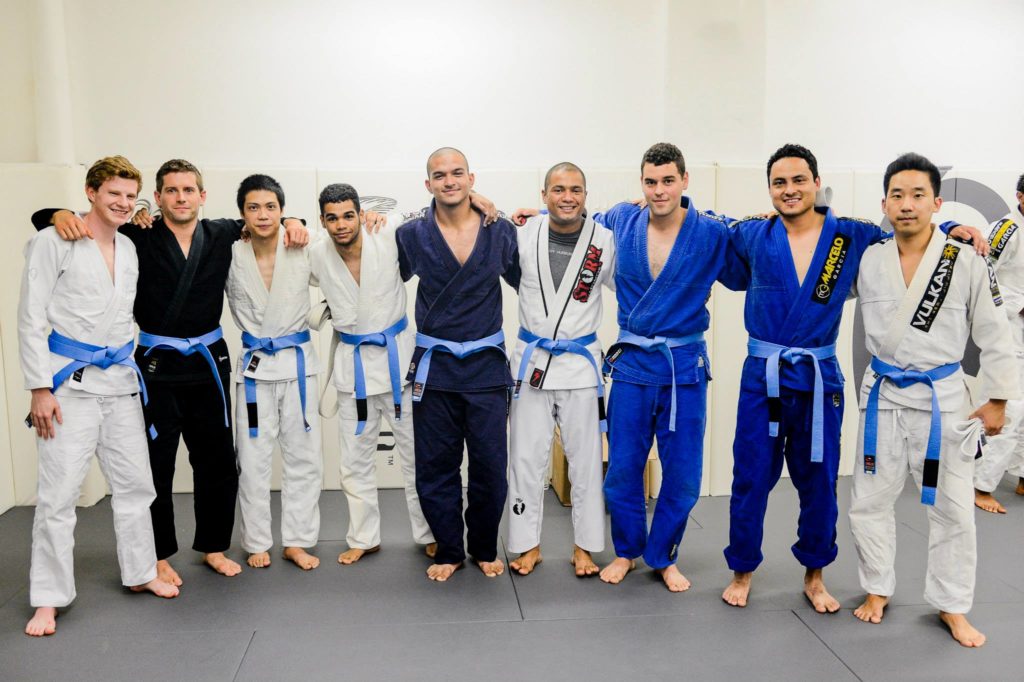
One more thing I consider important as one of the BJJ blue belt requirements in terms of mindset is how white belts approach chaotic situations. It is normal to hear stuff like “I don’t know anything” or, “I can’t, do that”, but if they come with a desire to change that then they’re more than ready to go to the next level. If they believe they can’t, there’s still work to be done.

The most important thing, though, when it comes to the mind is tapping out. Unless a student that is a blue belt in every other aspect is not ready to tap to people of their own rank or lower, they’ll need to stay a white belt. At least until such time that they learn that taping out is inevitable.

Finally, there’s no point in expecting white/blue belts, not to spaz, but this at least needs to be made clear for them.


8. Self-Defense

Nowadays, BJJ is more of a sport than a method of self-defense. However, it is still more than efficient in that area, and I do believe everyone needs to learn at least some key self-defense aspects of the art. That said, expecting people to roll with punches and check kicks before they execute overly complicated takedowns is as realistic as what Steven Seagal does in moves.

Apart from being able to submit people on the ground, which I qualify as the most important self-defense skill BJJ can teach you, there are three more aspects of grappling-based self-defense any blue belt should know:

  • Headlock escapes (on the ground and standing)                   [Read More]
  • Distance management (on the ground and standing)            [Read More]
  • Clinching                                                                              [Read More]

9. Drills And Rolling 

This is where things get interesting. Some schools don’t allow new students to roll for a while, limiting them to positional sparring. That is fine, but unless positional sparring is setup to teach people how to roll later on, what is the point?

Drills are something people should be doing early on, and they should be done both as positional drills (like guard passing drills for example) and situational drills (more of scenarios where people get to connect the techniques) they’ve learned. Doing a hundred reps of the Torreando pass left and tight would be an example of the first. Doing a guard pull into the closed guard, sweeping with a scissor sweep, stabilizing mount, and finishing with an American is an example of the second.

In terms of rolling, the BJJ blue belt requirements can be described with one word: awareness. Seeing that someone knows where they are at, and what course of action they should take si more than enough for a blue belt, regardless of the outcome of their actions.


10. Behavior

A white belt student that’s new to BJJ will be completely lost. A white belt student that is hoping to get a blue belt, on the other hand, should know certain things. While instructors don’t expect the same things from blue lets as they do from purple and brown, there are still some “everyday” things they need to know.

BJJ Blue Belt RequirementsFor example, the way you conduct yourself during rolling. There are no exceptions from these, and apart from jokingly messing around with a friend,  there shouldn’t be any trash-talking or disrespect and extreme competitiveness during rolling. Listening to what is being taught and overall discipline and hygiene come as a given for anyone walking through the door.
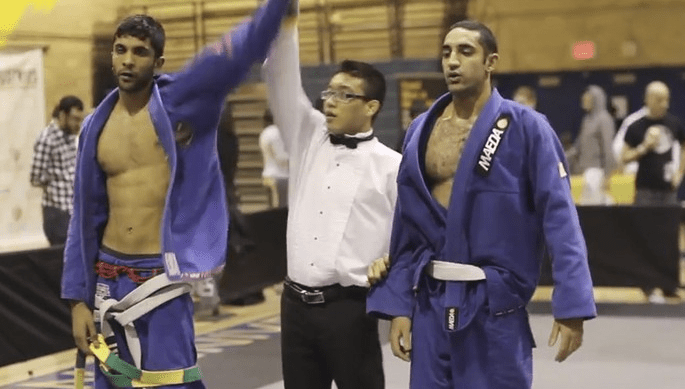
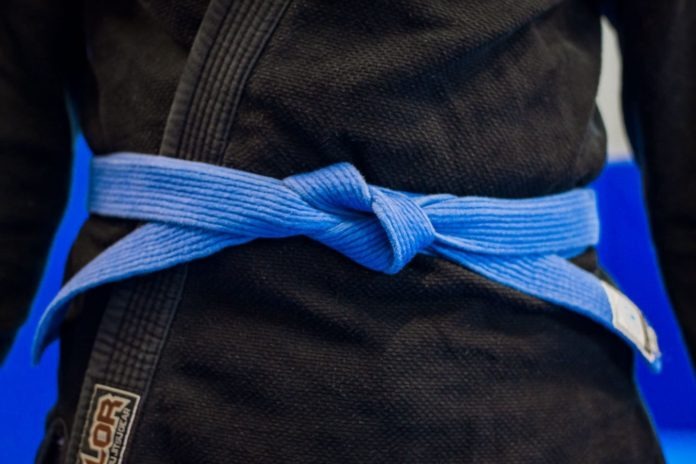
Other simple little things, like tying a belt correctly, knowing where to stand in line, being on time and doing the warm-ups properly, as well as helping new students out as much as possible are also BJJ blue belt requirements, even if they’re not written down in any curriculum.


11. Optional

Finally a couple of things that may come as “bonus” BJJ blue belt requirements. Competing in BJJ is not mandatory, nor are any fitness or athletic abilities. However, being able to do some basic athletic exercises and have at least a baseline of conditioning will come in handy. As will come competition tactics, for those that decide to test themselves in tournaments.

– Competing

BJJ Blue Belt Requirements CompetingTo make things clear, you can reach not just a blue belt, but a black belt without ever competing in BJJ. Henceforth, it is not really a requirement. But also there are very solid people who got their Black Belts very fast for being very good in any kind of competition related to Jiu-Jitsu. However, people do decide to compete more often than not, and competing factor into their blue belt promotion. Results in competitions couldn’t matter less when it comes to promoting someone to a blue belt, but competing might delay a promotion due to someone trying to accomplish as much as possible at the white belt level. From the standpoint of actual technical requirements,  tactical awareness is the most important thing for a competitor to be ready to face blue belts. That, and knowing the rules of BJJ competition.
– Athleticism

There are no real athletic demands from people who 6train BJJ. Apart from being able to roll in training, there’s no real need for conditioning or strength. However, as a rule of thumb, begin able to do at least 30 pushups, 50 situps, and 10 pullups, and having the “lungs” to run a mile or two, will come in really handy. However, if there’s one thing to focus on, it is flexibility, particularly that of the hips and shoulders.

Concepts vs. Techniques For Blue Belts

Finally a word on the modern approach to Brazilian Jiu-Jitsu.  Conceptual BJJ is all jazz nowadays, with people trying to explain grappling through scientific metaphors or philosophical quotes. While it is undoubtedly effective, concepts won’t work without techniques,s and vice versa. That means that instructors should figure out a way to balance both if they decide to incorporate concepts in their curriculums in addition to the mandatory techniques.

If concepts are taught to white belts, then they should have an understanding of base, posture, structure, and breathing as the main things that can make a difference. Furthermore,  some specific attacking ad defensive concepts, like elbows to the ribs, head up, isolating joints, etc are appropriate for the blue belt level.

Last but not least, No-Gi. The IBJJF doesn’t allow white belts to compete in No-Gi but if you have intentions to do so, then training should begin as a white belt. No-Gi BJJ blue belt requirements are the same, there’s just more attention to grips, especially if you train both Gi and No-Gi.

Conclusion

So far, I’ve rarely seen BJJ blue belt requirements written down in a precise and meaningful way. Trying to clear that up, as this is a question that people ask more than any other, we tried to organize everything in this article. Regardless of what your academy requires, if you can achieve all of the above, you’ll not only be fit to wear a blue belt, but you’ll also be able to go toe to toe with most blue belts in Jiu-Jitsu competitions.

Related Articles

4 Ways Of Making A BJJ Lapel Takedown Effective

4 Best BJJ Lapel Takedown Options

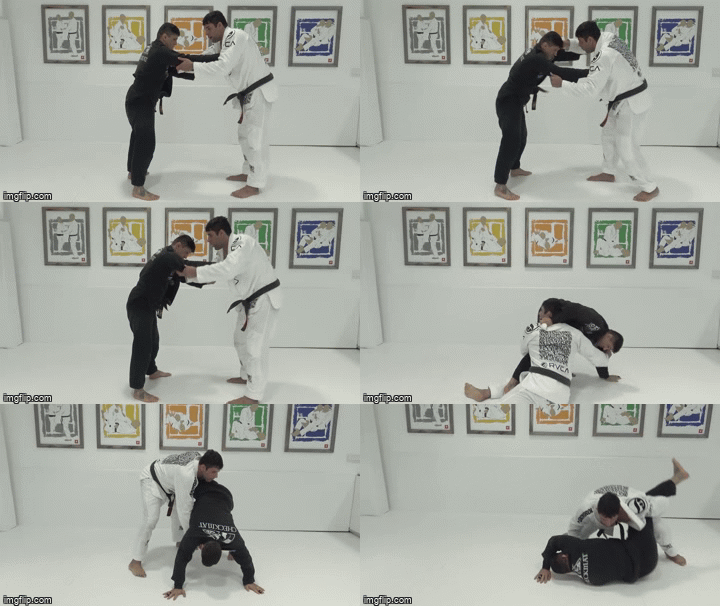
Takedowns are probably the most painful subject to discuss in BJJ. Given that there are entire arts like wrestling and Judo around the action of taking someone down, it comes as no surprise that they’re not easy. Incorporating them into the difficult and complicated world of Jiu-Jitsu makes them even more of a challenge. Plus, there’s the “easy way” of pulling guard to get you pas them. Still, takedowns are an integral part of grappling, and everyone should know at least a few ways of getting people to the ground. IN the Gi, that might just come with the help of the cloth, in the form of a BJJ lapel takedown or two.

The lapels are a funny thing. Whoever it was that first figured out you can use the lapel to bind and manipulate an opponent was pretty much a genius by Jiu-Jitsu standards. Lapels are fun (when you‘re the one doing the wrapping) and do offer a lot of variety to your BJJ game. While not many people think you can pull off lapel stuff from standing, the fact of the matter is you can. It is not just possible, but even preferable. There are some BJJ lapel takedown options out there that have the highest percentage of success of any takedown or throw available.

The Unique Nature Of The Lapel Game In Jiu-Jitsu

If you take a look at grappling martial arts and combat sports that use the Gi, you’ll notice that people do tend to grip the cloth a lot. It is a great way of attaching yourself to an opponent, starting an engagement, and manipulating them into a takedown or throw. However, they usually tend to focus on gripping either at or around the sleeves and along the collar.

Brazilian Jiu-Jitsu, though, utilizes as much of the Gi as it is possible. There are grips the focus on the skirt part of the jacket, creating pocket grips on the pants, and even grips on the belt, while it is still tied around the waist. As such, the most original thing about BJJ has to be the use of the lapels. Unlike other arts, taking the Gi outside the belt and using it to tie an opponent down, or even choke or armlock them is not just allowed, but encouraged. In fact, you could go as far as using your opponent’s lapels, or your own when you’re playing this type of game in Jiu-Jitsu.

In terms of BJJ lapel takedown options, you are pretty much limited to the legs. At least for the time being, until someone figures out a way to wrap the Gi differently. The fact of the matter is that using the lapels to get takedowns is pretty much the same as using them to get anything else you’d ordinarily go for in Jiu-Jitsu. All you need is a bit of creativity, a way to get the lapel loose, and the confidence to pull off high percentage takedowns that nobody is going to expect you to get.

BJJ Lapel Takedown Options That Work

The nasty part about being on the receiving end of a BJJ lapel takedown is that you find it really difficult to move in order to try and resist. Somone controlling your own lapel means they have your posture., given that the lapel goes around your neck anyway, via the collar. Any pull on the lapel tightens the control an opponent has over your posture. Plus, if they decide to warp arms and stuff in it, you’ll end up with blood flow restriction and pain to go with the humiliation.

When it comes to a BJJ lapel takedown, when you use one to wrap the leg, you get the best of both worlds. You get a broken posture, tourniquet-style pressure on the leg, and one of the best grips you could wish for in grappling.

Lapel Single Leg

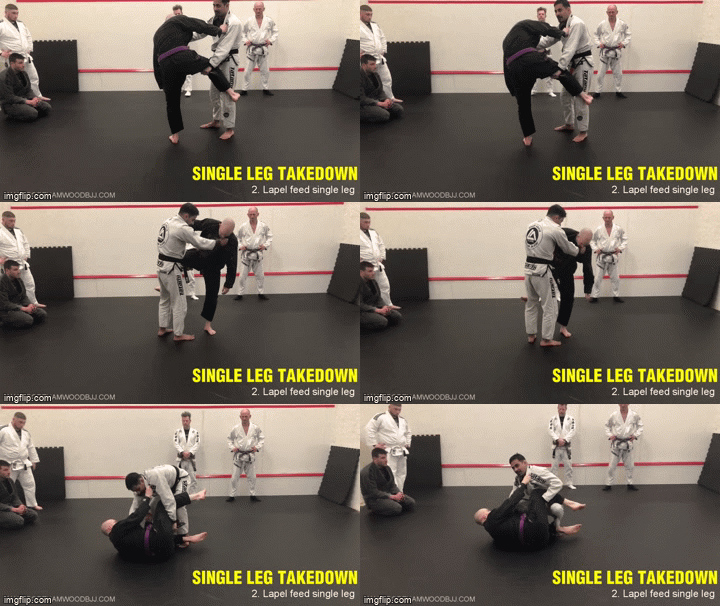
Single leg BJJ lapel TakedownThe single-leg takedown is an obvious choice when it comes to using lapels to set up throws. It doesn’t matter how you get to a single-leg position. Everyone has their own preferred way. The important part is that you get one leg in between yours. That is when the battle for the single-leg takedown really happens. It is also a battle that a lapel can help you win easily.

The idea behind the single-leg BJJ lapel takedown is to use the arm that’s nearer the opponent’s front side and loosen a lapel up. You then pull it out and pass it on to the other arm, underneath the leg. Any grip or pull-out troubles you might be encountering with the regular single leg are gone now. This lapel variation gives you all the security you need to hang there for a while before you take people down at will. Or, you could just keep the grip, go for the takedown and follow wherever it may take you, Lucas Lepri style.

Lapel Drag Takedown

The lapel drag (aka collar drag) takedown is another great BJJ lapel takedown you can do set up takedowns. It works from both a cross collar and same side collar grip and will work regardless of depth, with adjustments, of course.

BJJ lapel Takedown Colalr dragThe goal is simple – Make sure the grip is tight, and the collar is somewhat loose. Then lift the elbow of the collar grip arm high, and immediately point it to the ground, pulling with all your power, as you site done on your butt. YOu might finish right then and there, but for a higher percentage finish, focus on grabbing one, to both legs once down, not letting go of the lapel until you’re safely on the ground.  

Lapel Snapdown

BJJ lapel Takedown snapdownThis one is borrowed from Judo, where people call it the Uki-Otoshi. Of course, the version we’ll discuss is a modified one, tailor-made to fit the needs of Jiu-Jitsu takedowns. you’ll need the same side collar grip and a sleeve grip for this one. The goal is to use the sleeve grip to pull the opponent into one direction while turning your body as if doing a hip throw, and dropping to the knees at the same time. The lapel grip will help you pull the opponent over, and they’ll end up cashing face-first most of the time.

The Tornado Throw

BJJ lapel Takedown Torando ThrowThis is one you often see Cyborg do against all kinds of elite-level opponents. The grip is on the lapel, preferably a loose one, and is placed quite low compared to where people usually grab. In fact, the goal is to grip on the same side where your opponent has a collar grip. Yoru arm will go over theirs and grip the lapel, as you use the other arm to secure their sleeve in place.

To execute the throw, you step to the side and then do a roll under the opponent’s armpit. This will pull them over you and down with a somersault motion for one of the most attractive and uncomfortable (for the opponent) BJJ lapel takedown options you’ll ever do!

Conclusion

All in all, having a BJJ lapel takedown or two in your arsenal is a smart strategy. You never know when you’ll need them, and what other throwing, sweeping, or takedown options they might open up. The four examples above feature both easy, attractive, and sneaky options when it comes to using lapels and obscure grips to throw people around. Have fun!

BJJ Punch Choke: A Surprise Legal Submission From Hell

The BJJ Punch Choke From Eveywhere

Are you looking for a way that will help you finish takedowns? How about a guard pass that will get rid of the boring closed guard? Perhaps even a submission from the closed guard that people won’t expect? Well, how about if I told you that you can achieve all three, and then some, with just one move – the BJJ punch choke? Using this old-school BJJ move you’ll be able to surprise everyone with one of two things – either a submission finish or wrapping up whatever it is you were initially after (pass, sweep, or takedown). 

The BJJ punch choke is a Gi based technique that will help you surprise lots of folks. that said, you can’t bet on it working every time from everywhere – it is simply not a high percentage submission. However, if you are experienced enough as a grappler, you’ll recognize all the options this choke opens up. If you’re not as experienced, just read the article, try it out, add it to your game and see what happens. I can promise you’ll love the results, one way or another.

What Is The BJJ Punch Choke?

The BJJ Punch Choke is a very simple way of getting a tap. There are plenty of variations of it, and the most effective one is actually one done from the mount and one that doesn’t necessarily require a Gi. I’ll mention it briefly because the other version of the BJJ punch choke are actually even more unexpected and unorthodox than this one.

Also known as the ‘grapefruit choke” when you find yourself in the mount, you’ll be looking to place the knuckles of both clenched fists on either side of the opponent’s neck. if you want to be all precise about it, you should aim to have the first two knuckles pressing on the arteries on each side, but that’s not mandatory. Net up, you can do the choke directly, but anchoring yourself by gripping the collars of the Gi, four fingers-in, on both sides will make it all tighter.

The choke works great from the mount because you’re weight is on top, and you can use your hips to further place pressure on both arteries. I’ve used this in competition at different belt levels several times so far, and it works. The question is how t take the punch choke further and make it even more useful, both as submission and as a setup for other moves? the answer is simple and old-school – look to punch just one side, while you manipulate the gi on the other. Read on.

Why Even Consider Such A Move? 

Because it is easy to set up, perfectly legal, and will provide you with different opportunities to what you’re used to. The BJJ punch choke will get you plenty of taps, by using the same move when you’re in guard, trying to pass the guard or standing. There are very few moves in BJJ that actually work at all of those three different levels, regardless of how high or low percentage they might be.

With the BJJ punch choke, you’ll get taps or people sleeping against folks that have never experienced them. And yes, that includes black belts. People that know what is going on will provide you with something equally as rewarding as a tap – a reaction. It is of course, down to you to make the most out of that reaction, but wif and when you do, you’ll have a breeze of sweeping, throwing, or passing people of all levels.

Setting Up The BJJ Punch Choke From Everywhere

The version of the BJJ punch choke that you can set up from everywhere works slightly differently than the one from the mount. For it, you want to be holding the collar on one side, four fingers inside, and a pinky finger towards the head. The other arm will grip the collar on the other side, holding like for a basic collar grip.  This second grip may vary depending on where you are setting the BJJ to choke up from, but the first one is the same for all variations.

Top Position

Closed guard ChokeFrom a top position, the BJJ punch choke works best against a closed guard. In old-school BJJ they also call it Amassa Pao. What you need to do is get the four fingers-in grip when you’re in someone’s closed guard. You then pop up, pull on the other collar with the other arm, and project all your weight into the choking arm. As long as you maintain a straight arm and forward pressure the bottom person will only be able to open their guar,d but won’t be able to get armbars, Omoplatas, triangles, or anything else.

that said, you’ll rarely finish people from there (only stubborn ones) but you’ll find that the BJ Jpunch choke provides you with the easiest way of opening and passing the closed guard.

Bottom Position

BJJ Punch Choke Submission From guardFrom the bottom, it is once again the closed guard that opens up a BJJ punch choke option. The grip configuration is the same, four fingers in on one side, as deep and high up the collar as possible. The other arm just grips a regular collar grip. Usually, opponents are not too wary about the grips, which means you can simply punch in with your cooking arm for the finish. The choke is so sneaky, that people often fall asleep before they even realize they need to tap.

Standing

BJJ Punch Choke Form StandingThe moment people least expect a choke or submission is when they’re standing and looking to trade takedown. Well, the BJJ punch choke is one of the options that actually work when it comes to tapping out people on their feet. The grip setup is the same as before, you just need to change the angle in order to warp the choke up.

Simply do a step to the side, rotate your body for 45 degrees, and punch in with the choking arm. Easy!

Closing Arguments

The BJJ punch choke is something that you should consider experimenting with. It will get opponents to react and will surprise even seasoned grapples. Moreover, you can further adjust it to your need,s and let us know if you figure out other positions where this choke might work from.