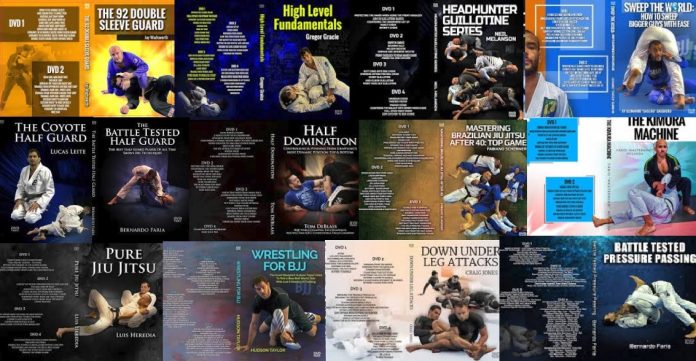
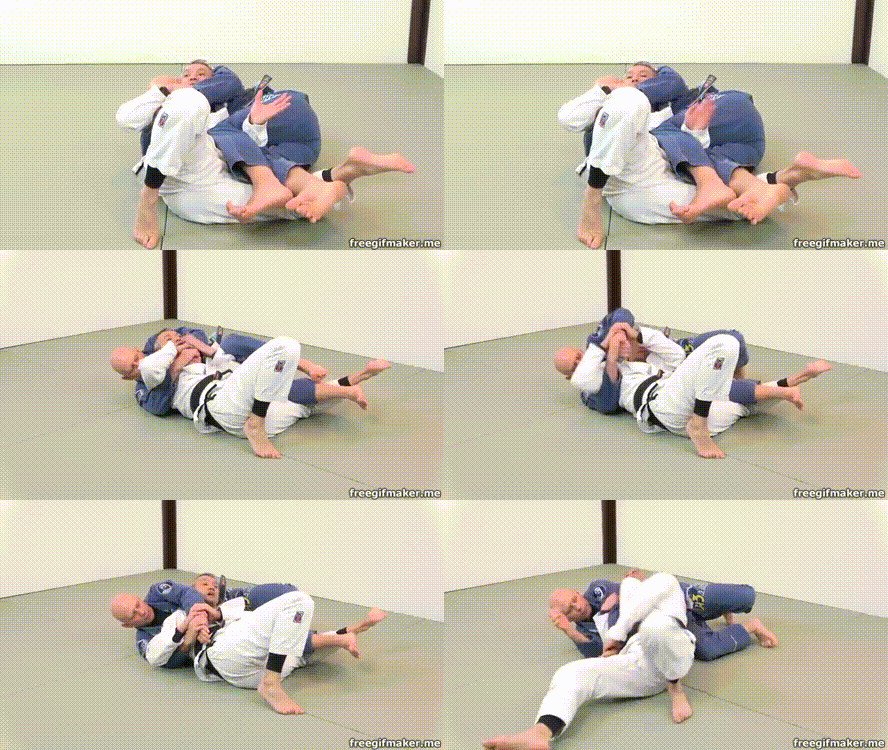
People involved in grappling are always looking for the best companion activity to make them better at Jiu-Jitsu. Is it good old weight lifting, running, doing gymnastics or stretching? Well, it depends on who you ask. Ask someone with a wrestling background and you’ll probably get high volume calisthenics as an answer. Ask a 10th Planet grappler and you might end up with break dancing as a suggestion. The truth is that all of the above athletic disciplines work for Jiu-Jitsu. However, the one activity everyone agrees is helpful is Yoga for BJJ. It is a great way fo gaining strength that relates to grappling, along with some much needed functional flexibility. Now, for all of you that are particularly stiff and brittle, there’s a brand new DVD out that’ll change your life. It is the Sebastian Brosche Yoga For Rocks DVD instructional.
Where do I start with the benefits of Yoga for grapplers? Yoga is the perfect activity to help you get a workout in, while still not sacrificing your body in the process. On the contrary, Yoga helps you mend your body while you train, whereas other more common activities like weightlifting or sprinting further put stress on it. Let’s be real, Brazilian Jiu-Jitsu is more than enough stress on anybody, and particularly those that are on the “wrong” side of 30.
Yoga 101
If there’s one movement based system out there that is tailor-made for BJJ than it has to be Yoga. Yoga for BJJ is the same as a brioche bun for a burger. It almost seems as if Jiu-Jitsu and Yoga were designed to complement each other. The Yoga For Rocks DVD by Sebastian Brosche is a great example of this. There are just so many similarities between the two of them. It’s not surprising that they both have roots that are deeply entwined with Buddhism and ancient India.
Yoga is a commonly used generic term for a collection of physical, mental, and spiritual disciplines which originated in India. It is an extremely complex and diverse system that embraces many different aspects of the human experience. This aspect of yoga is largely concerned with asanas, which refer to the body positions and physical postures that are held during practice, and vinyasa – a specific sequence of breath-synchronized movements used to transition between sustained asanas.
Besides having been proven to alleviate depression, high blood pressure and a host of other physical ailments, Yoga for BJJ are beneficial in a number of grappling specific ways, several of which we outline below. There are countless different types of yoga classes available, but the main ones you’ll encounter are:
Iyengar Yoga
This style focuses on the physical alignment of the body in the various asanas. It often uses various supports or ‘props’ to facilitate the poses for beginners and the less flexible. It has very little vinyasa between postures. This type of yoga mainly benefits those with muscular and /or postural imbalances as well as less athletic individuals.
Vinyasa Yoga
Vinyasa yoga, in which movement synchronizes with the breath, is a term that covers a broad range of yoga classes. This style is also called flow yoga, because of the smooth way that the poses run together.
Vinyasa classes are some of the most challenging. Each class is usually quite different, and that the pace and intensity closely approximate jiu-jitsu. If you’re looking for muscular endurance and dynamic flexibility this is the class for you.
Ashtanga Yoga
This is a form of Vinyasa in which the sequence of asanas and vinyasas is much more regimented and strict. In fact, it so structured that every class you do will be almost exactly the same. It’s very effective but some people become bored by the lack of variety.
It uses a very specific form of yogic breathing called ‘ujjayi’ which has a great carryover application to BJJ. It offers supreme breath control and is really beneficial for developing coordination.
Bikram / ‘Hot’ Yoga
The main differentiating factor of Bikram is that you practice it in a heated room. This (and other styles of ‘hot yoga’) has become very popular as of late. Due to the heat and humidity, Bikram can be a little extreme, and it’s not a good fit for anyone in poor shape.
Although I feel that most other Hatha styles are superior, I think that the discomfort caused by the humidity might be good for developing mental strength that could transfer well to grappling martial arts. It is perfect for losing fat.
Benefits Of Yoga For BJJ
Yoga for BJJ is something we’ve all done at one point or another. Or at least, what we thought was Yoga for BJJ. Most of us did have been to a regular Yoga class or tried to follow a YouTube workout along. While that’s all good and beneficial, it is not grappling specific. The “real” Yoga for BJJ is actually a somewhat new creation. The man behind it BJJ black belt Sebastian Brosche. Hw is the first one to merge the two, by creating a Yoga system that is specific for grapplers. Moreover, he has several programs that address different aspects of strength flexibility. The Yoga For Rocks DVD, though, has to be his most impressive work so far!
One of the most commonly ‘imposed demands’ of Jiu-Jitsu is a contraction. When you’re in guard, attacking from the side or back control and many of the other positions, your body is constantly in a contracted state. The upper back is often rounded as you are holding onto an opponent. The hip flexors and psoas muscles are usually tightened because the knees are tucked up towards the chest. As for the neck and shoulders – well if you’ve been training for any length of time you’ll know exactly what I’m talking about. This excessive contraction is even more pronounced in the primary defensive postures, like the turtle position.
Yoga for BJJ results in twofold effect – it lengthens and opens the body. As an added bonus, many of your submissions will also improve. Consider that many of the finishes in grappling martial arts require an exaggerated expansion out from the center. For example, during an armbar, you arch your back and drive your hips forwards to apply leverage. Addressing imbalances with Yoga for BJJ will allow you to improve greatly.
Inevitable Flexibility Gains
We all know that guy who can wrap his legs around your waist from the bottom of the mount and reverse the position. There’s one of those in every academy.
Although you can get away without being flexible in Jiu-Jitsu, it’s an attribute that’s unquestionably beneficial. The greater the range of motion in your joints, the more options you will have in each position. In fact, some parts of Jiu-Jitsu will be completely inaccessible to you unless you develop the required suppleness. The rubber guard is the most obvious example of such a position. And, the Yoga For Rocks DVD is the ultimate tool to turn even the stiffest grapplers into proficient rubber guard players. Or develop an impassable guard like Sebastian Brosche.
Strength Through Stability
The kind of strength developed through Yoga for BJJ is unlike anything else you’ve ever experienced. Over the past couple of decades the phrase ‘core strength’ has become very popular in sports training. Well, Yoga goes far beyond that.
Correct practice develops so-called ‘”intelligent strength”. Not only does it train the central nervous system to fire muscles in the correct sequence, but it also teaches you which muscles to engage. The ultimate goal is to maintain postural alignment and efficiently move your anatomy through space. And we all know that good posture and movement are hallmarks of superior Jiu-Jitsu skills. Both of these qualities are included in the Yoga For Rocks DVD classes.
Furthermore, holding the asanas develops muscular endurance which is perfectly suited to the isometric contractions required for finishing submissions. And although it tones and strengthens, yoga does not produce excessive muscle hypertrophy. Too much muscle mass is never good for Jiu-Jitsu. It is inefficient because it burns oxygen quickly and inhibits movement. Consistent practice (will reset your body to its optimum tissue composition.
Yoga is exceptional for developing balance. Many of the standing asanas are done unilaterally (on one leg), which not only improves stability but sport-specific strength as well.
Breath Control
Your body is the tool with which you create your Jiu-Jitsu, and the more you know about it and more effectively you can operate it the better you’ll be on the mat. The increase in body awareness from yoga practice is a major benefit.
One of the most valuable ways to achieve this is through breath control. Not only will the vinyasas teach you to coordinate your movement and breathing, but yogic techniques such as pranayama will enable you to engage your diaphragm and utilize your lungs to their full capacity. This will greatly improve your stamina during rolling.
Sebastian Brosche – The Most Flexible Grappler Alive
Sebastian Brosche is a Swedish BJJ black belt under Eduardo Rios. He received his black belt recently, in December of 2016.he is also a second-degree Judo black belt. Apart from grappling martial arts, Sebastian is also a huge Yoga enthusiast. So much so, in fact, that he even turned full vegan in an attempt to weed out bad habits. The thing is, Sebastian was once just like the rest of us – an injury-ridden, stiff grappler that was constantly in some sort of pain. Until he met Stine Hegre.
Hegre, now Brosche’s wife, is a Yoga expert. She influenced Sebastian to give Yoga a try in addition to his constant BJJ training. Form 2007 onwards, Brosche was all about submission wrestling and Judo. He started training BJJ in Checkmat Sweden and then moved to Oslo where he met up with Eduardo Rios. Just like every other grappler, Brosche suffered from injuries and little nags. With the help of Hegre, though, he managed to turn things around completely.
Regular Yoga training, paired with BJJ, increased his flexibility, dexterity, range of motion and reduced pretty much every injury he had. After only a year of Yoga and BJJ, Sebastian actually came up with the Yoga FOR BJJ concept. Since then, his idea has grown into a full-blown online training program. And now, his first-ever multi-part DVD is out as well.
Should you get Sebastian’s Yoga For Rocks DVD to become stronger, yet more flexible and limber? Certainly! Should you also go vegan in the process? That’s up to you but is far from mandatory. Me, I’m going to be sticking to steak and potatoes, but I’m making this yoga program a daily thing!
Sebastian Brosche And The Yoga For BJJ Brand
Yoga for BJJ, in particular, has been around for several years. It is an online-based program created by Sebastian Brosche that anyone can sing up for. The best part about it is that similarly to BJJ it is far from complete. As Brosche himself learns the secrets of Yoga further, he always updates his programs or comes up with entirely new ones. Given that he is not just a black belt, but also a highly competitive grappler, his inside knowledge of what is needed to actually make BJJ people move better is priceless. The Yoga For Rocks DVD is his latest issue.
Borsche was actually considered one of the top brown belts in 2015. He has a World champion title (purple belt), European (purple & blue) and more to his name. He also has notable appearances in invite-only professional tournaments like Polaris. His experience means that he knows exactly what to target with each of his programs.
His first DVD though is a real godsend to most grapplers. The Yoga For Rocks DVD is actually a complete program, focusing on all the areas that are essential to grappling. Moreover, you do not need to be flexible like Eddie Bravo to start practicing it. On the contrary, this is instructional to take the stiff and achy grappler and turn him into, well, a not so calm Yogi.
A Review Of The Yoga For Rocks DVD by Sebastian Brosche
The Yoga For Rocks DVD is, first and foremost, one of the best-named DVDs in the history of BJJ instructionals. Sebastian Brosche speaks perfect English and is very easy to listen to. He likes to demonstrate all the moves himself while explaining in detail why he is doing what he is doing. Moreover, he draws BJJ parallels to make everything crystal clear. The program is very easy to follow, as it does not include crazy Yoga positions that will have you suspended in the air. On the contrary, you’ll increase your range of motion and specific strength by using seemingly straightforward exercises that are staples of Yoga. Which brings us to the progressions.
This Sebastian Brosche DVD is a three-part instructional that goes through all the Yoga progressions that people who have never stretched a day in their life need. The first part covers an introduction and contains two main classes – neck and shoulders and an upper back class. Part two goes into what is, arguably, the most important part of the body for BJJ – the hips. The third and final part is all about the hamstrings, ankles, and wrists. All in all, Brosche covers every body part, with special emphasis on those that are integral for Brazilian Jiu-Jitsu. What I can’t stress enough is, that despite the Yoga For Rocks DVD title, this instructional is far from a beginners-only one. I’ve been doing Yoga (on and off) for th past decade, and this DVD is not easy to get through, believe me!
Part 1
In the first portion of the Sebastian Brosche Yoga For Rocks DVD, he starts off with an introduction. This is where he quickly goes over his own BJJ and Yoga journey, before going deeper into the benefits. Moreover, he includes a practical manual of how you should use the videos inside. As you’ll see, the content is divided into classes, with each class targeting specific body parts. The ways you can use this is as a weekly program, a daily practice, or a highly specific way of focusing on only one lagging body part.
The second portion of part one contains two classes. The first one is all about every bodybuilder’s favorite part – chest, albeit in a much different fashion. Here, you get a complete rundown of how to strengthen your chest and triceps, while taking them to extreme ranges of motion at the same time. The one key component of class 1 is the inclusion of the neck. As far as BJJ goes, this is one of the body parts that get lots of damage. In class One, you’ll learn how to make it a lot tougher, while resolving any ongoing issues.
Class two is also extremely important. For instance, I am a guy who has lots of trouble with the traps. This upper back class by Brosche is insanely good for anyone sharing my ailment. It is the one class I tried first from this DVD, and one I plan on doing daily from now on.
Part 2
Part two is something most people in BJJ will probably focus the most on. This is where you get to learn all the exercises and sequences that’ll help you immensely with guard work and retention. This is where Sebastian Brosche covers hip flexibility and strengthening. The first class of this part, or third in total, is all about the front of the hips and the lower back. In other words, the two areas of the body which do not get much rest during Brazilian Jiu-Jitsu training.
The inner thighs and outer hips are the focus of the next, fourth class. This is where you learn how to work on those muscles most of us never recognize as important. Not just that, but you also get a full explanation of why they’re important and how to use the Yoga For Rocks DVD to make your BJJ better by training them correctly.
Part 3
Finally, after covering the most important aspects of guard playing, Sebastian Brosche switches his attention to the muscles that guard passers use the most. While the hips and lower back get a shift in her too, there’s more. Class five of the Yoga For Rocks DVD covers the hamstrings and calves which are the muscles on the back of your legs. They are responsible for lots of the motions during passing, as well as balance and base. Moreover, much of the power that the hips have comes courtesy of the hamstrings. That is why deadlifts are such a powerful tool for grapplers. Well, this class is the way to take things to a whole new different level.
Wrapping up the classes in this Sebastian Brosche DVD is the 6th and final class. This is where Brosche covers some of the less trained parts of our bodies. The attention here is on the ankles, wrists, and forearms. If you think these have no role to play in BJJ, just think about grips and movement, and you’ll see how much you actually rely upon them. Well, now you can make them stronger and be even more efficient.
Final Words
Training Yoga for BJJ is always a good idea, period. However, training Yoga that has actually been developed for grapplers, buy a high-level grappler, is a whole different ball game. Furthermore, in the Yoga For Rocks DVD, you get a Sebastian Brosche instructional that’ll turn even the stiffest grappler into a full-blown Yogi in just weeks. And this is all before we even touch on the present class organization inside the instructional. If there are one strength and conditioning instructional you need in your life, it is this one. Namaste!
In Brazilian Jiu-Jitsu there are two major currents. One is true to the original roots of the art, emphasizing training in the Gi. On the other end of the spectrum is the No-Gi current, where people wouldn’t get within 10 feet of a Gi. Both have their strengths and advantages as well as merits. That said, the best BJJ practitioners are those that combine both of these disciplines. Since they’re both parts of Jiu-Jitsu one would think training in both is a given. However, there are people that choose to cross-train in other grappling martial arts, like Judo or wrestling, before looking at the opposite BJJ discipline. This causes people to turn to other sources in their quests for the complete study of BJJ. Since digital content is the modern grappler’s learning method of choice, we take a look at the best No-Gi BJJ DVD instructionals available.
Whenever you’re looking for a resource that is worth your while, make sure you know whose product you’re going after. Look for the people that are the best in the discipline and furthermore, in a certain aspect you’re looking at. This is a foolproof way of selecting the truly best No-Gi BJJ DVD out of the bunch. In today’s market, it is very easy to be confused, so make sure you also look at reviews to get an idea of what certain instructional holds. And, of course, do not skip class in favor of watching DVDs. Roll first, watch tape second.
Going No-Gi
The transition to No-Gi for a Gi-only practitioner can be quite a difficult one. I went through it myself as a blue belt and it took a lot of time to adjust. Which is completely normal since a lot of the moves’ mechanics change slightly but very significantly. As such you need to approach the transition ready for certain sacrifices.
To begin with, you will have nothing like the control you have with the Gi. Grips are the one area where the difference is more than noticeable. In the absence of material, wrist and elbow control is the only way to go. This, however, is far more difficult in a No-Gi setting, especially after a few minutes when sweat makes everything slippery. The same goes for head control since there are no lapels to tug on. The grip differences are crucial for every aspect of the game, from takedowns to submissions, so this needs to be the first thing you study when transitioning.
Next, when looking for the best No-Gi BJJ DVD instructionals, make sure you include one that focuses on positional control. The slippery environment and lack of steady grips make controlling even the most dominant position a real chore in No-Gi. People are going to easily weasel out of positions you’re accustomed to dominating. Just keep practicing and you’ll find all the nuances in time. On a positive note, your Gi game is going to improve rapidly once you figure things out in No-Gi.
The Best No-Gi BJJ DVD:
Before going out in a futile search for the ultimate DVD set that’ll resolve all your No-Gi issues, understand one very important thing. There is no one resource for learning Jiu-Jitsu, whether it is No-Gi or Gi. BJJ is made up of different areas of grappling and no one DVD or instructional offers an insight into all of them. That said, go for very specific DVDs for very specific situations.
For example, if you’re looking for an intricate No-Gi guard game, you wouldn’t look at a takedown DVD, would you? If the development of a complete game is your goal, then be prepared to acquire multiple DVD instructionals for the most important positions in grappling. Luckily for you, we’ve made a thorough selection of the very best No-Gi BJJ DVD instructionals for every aspect of the No-Gi game.
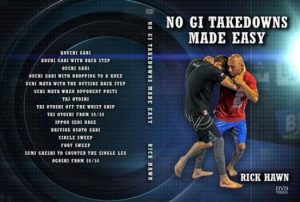
As with every BJJ match, we’re going to start on the feet. Since we already discussed that grips are very different, you’ll probably be stuck in this area. Especially if you’re used to judo throws. Well, there is an instructional that can help your stand-up conundrum. All you need is Rick Hawn’s “No-Gi Takedowns Made Easy”. It is a DVD that’s purely No-Gi but focuses on all variations of throws and takedowns available. Yes, modified Judo throws are included, so all you’ll need to learn are the grips. From the Kouchi Gari to foot sweeps and sacrifice throws, you’ll have a complete and effective throwing arsenal.
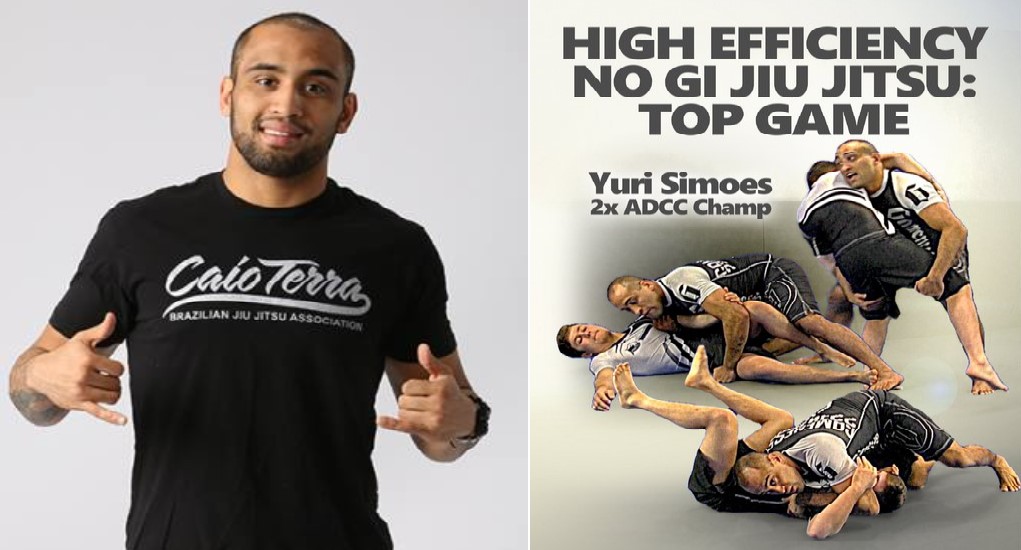
Once down, however, it is time to focus on pressure. This is a very tricky area in No-Gi JIu-Jitsu, even for the best grapplers out there. Speaking of the best, Yuri Simoes might be able to help you out with that one. His “High Efficacy No-GI Jiu-Jitsu: Top Game” DVD is a masterpiece of No-Gi instructions. The 2x ADCC Champion is going to show you how to put pressure on your opponents and pass their guard with ease. It won’t matter if they’re playing open, closed, half or inverted guard. You’ll be able to destroy even the most flexible guard player with very little effort. Oh, and there are a few submissions and wrestling takedowns sprinkled around the set. Just for good measure.
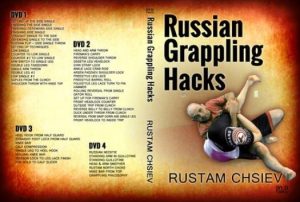
Jiu-Jitsu is the art of control that leads to submission. Seems simple when put like that. Regardless, when you try to control someone on the ground you’ll be in for a surprise. And if you’re only wearing a rashguard and spats you’re in for a struggle. And struggle you shell when transitioning from Gi to No-Gi BJJ, at least until you watch Rustam Chisiev. His “Russian Grappling Hacks” material is just that – hacks for fast progress in No-Gi BJJ. We all know how relentless Russian grapplers can be, just look at Khabib Nurmagomedov. Out of our collection of best No-Gi BJJ DVD instructionals, this one is a definitive must. YOur obligatory No-Gi takedown techniques are there, but the real value is in the control and submission volumes. What you’ll learn is how to control your opponent both standing and on the ground.
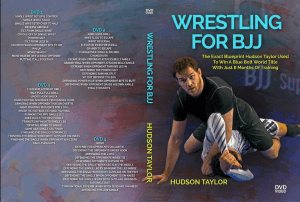
A great addition to Chsiev’s material is that of Hudson Taylor. The wrestling champion shares awesome concepts of control in his “Wrestling for BJJ” blueprint. Heavy pressure and tight control from every position imaginable are what you get. Moreover, you’ll get to learn defensive aspects of the No-Gi game that’ll get you out of “sticky” situations.
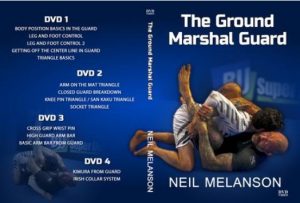
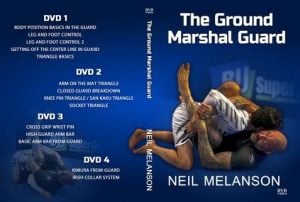
The best No-Gi BJJ DVD in the bottom guard game compartment is a no-brainer. With Neil Melanson’s “Ground Marshall Guard” you get nothing but the best. A very cool rubber guard-like position with no flexibility requirements, his system is a deep and very detailed one. Melanson’s style of explanation is very thorough, allowing whoever watches his material to learn every possible variation of a certain move.
Melanson system starts with body positioning basics, before going deeper into control concepts from the bottom. The beauty of this instructional is that it doesn’t just show submissions, it teaches you how to bait your opponent into getting in them by himself. It is the simplicity of the system that makes it so effective and one of the best resources of all times for No-Gi Jiu-Jitsu.
The cherry on the top. Although you might be tempted to jump straight into heel hooks now that you’re going No-Gi, take it easy. We’ll get to leg locks, but first, go for the proven moves that you’re already somewhat familiar with. In NO-Gi, you’d be hard-pressed to find a better percentage submission than the Guillotine. Now imagine a whole system of control devised around this staple BJJ submission. That’s exactly what Josh Hinger delivers in his “Hingertine” series. He has every right to name the move seeing as how deep he goes in the world of front headlock chokes. Mechanical details, more than two dozen setups, opponents’ reactions, and counters are all discussed thoroughly. You’ll become a choking machine in no time!
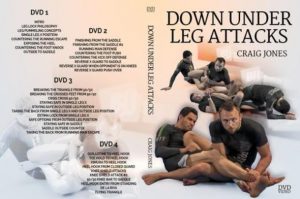
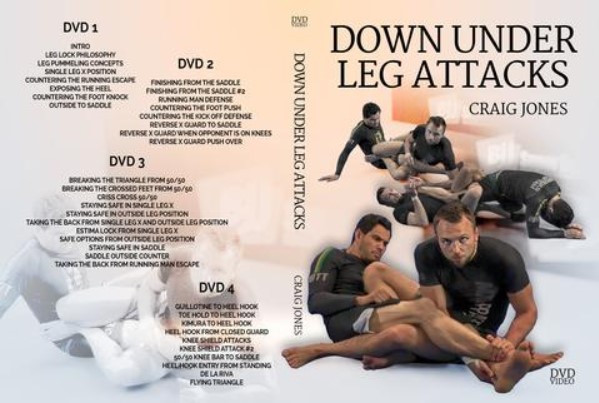
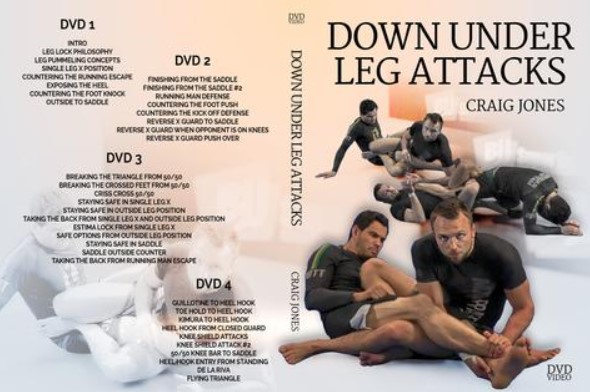
That said, why would you ignore 50% of the human body? Craig Jones certainly doesn’t, so his ‘Down Under Leg Attacks Series” is an essential element of the best No-Gi BJJ DVD instructional stack. The heel hook is the centerpiece, but, it is not really what you’re after. Yes, you’ll get useful details but Craig’s forte is entering dominant leg locking positions. All his unique entries, along with tips to control even the greatest spazz are going to turn you into a formidable leg locker yourself!
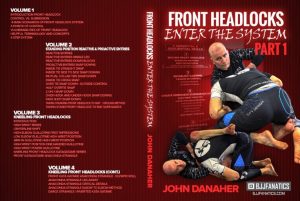
This one works just as well in both Gi and No-Gi, but we all know it is tailor-made for No-Gi. Danaher is the ultimate No-Gi BJJ coach in the world. Now, he also has the ultimate Best No-Gi BJJ DVD contender. There’s nothing like being able to control an opponent from the top. Even better, controlling and submitting an opponent who is really defensive, like in the turtle position for example. This is a major issue, especially in No-Gi.
Well, thanks to Danaher, you have the solution. But it is not just for the turtle position. The “Front headlocks: Enter the System” DVD by John Danaher is the only guide you’ll ever need to anything front headlocks related. Guillotines, D’arce chokes, innovative anaconda choke concepts… Everything you ever associated with the front headlock is in there. In fact, all you know about the front headlock is probably only in one volume of this DVD instructional. And there are 8 of them. Over 10 hours of pure Danaher brilliance on how to choke and control people hile bein in top position and completely safe. What more could you ask for when grappling without a Gi?
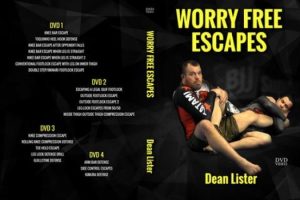
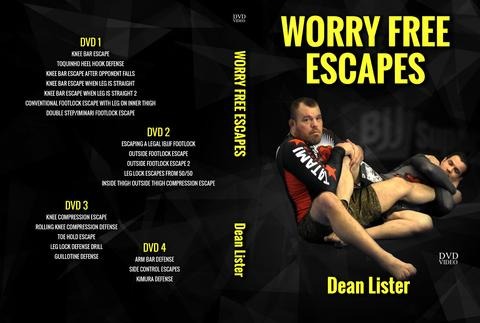
Before you binge out on every title in our collection, take one more aspect of BJJ into account. Once you start messing around in No-Gi, regardless of your level, you’re going to tap more often. It is just the way things are. So do not skip the defensive side of Jiu-Jitsu and let Dean Lister help you with his “Worry Free Escapes”. Fear submission no longer, especially the leg attacks that are predominant in No-Gi. Just follow Lister’s easy step-by-step instructions and you can stay safe and impose your own game.Best No-Gi BJJ DVD
At the moment, leg locks are all the jazz in Jiu-Jitsu. As much as they were shunned before, now they are everywhere. Even IBJJF oriented competition teams are embracing some of them so that they even the playing field. They’re as effective, if not more, like any other submission in grappling martial arts. The problem is that because they were ignored for so long, very few people have a complete understanding of them. So, what do you do if your instructor is not a leg lock savvy person, but you really need to learn them in order not to be left behind the opposition? Well, you’re going to look to pick up a few DVDs on the subject and make sure you’re learning from the best. In those terms, nothing but the very best leg lock DVD instructionals are going to do the trick!
The reason there’s a big gap in the leg locking department is that of the witch hunt people led against them. Helio Gracie was once challenged to a 10 vs 10 match by Oswaldo Fadda. Fadda’s students won the challenge by submitting 9 out of 10 of the Gracie representatives via leg locks. many people think that he is what spurred the leg lock hatred. They were characterized as a cowardly move, only done by people who had no idea how to pass the guard. The result of this behavior is a deep hole in the knowledge of the mechanics of a very effective submission system. It was only after John Danaher figured it out, that everyone started looking for the best leg lock DVD instructionals in order to catch. We offer you a list of the best among the best to get your leg lock game up to speed.
What Is The Best Leg Lock DVD Instructional?
If you ask anyone who is part of the BJJ scene who the best leg lockers are, the answer is always going to be the same. The best in the business are the Danaher Death Squad. Since the Danaher deaths squad re-introduced leg locks in a conceptual manner, everyone has been trying to copy them. So far, only a few have gotten close. Luckily some of those that have managed to obtain certain success with leg locks have come out with DVD releases of their own. So, until any one of the Danaher Death Squad decides to put something on film, these are your best leg lock DVD instructionals:
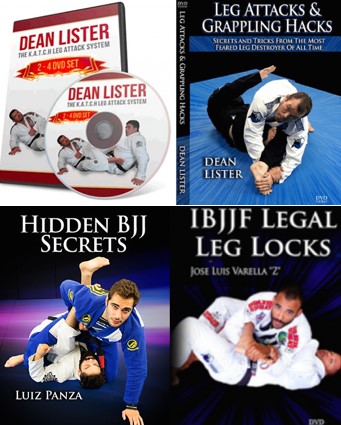
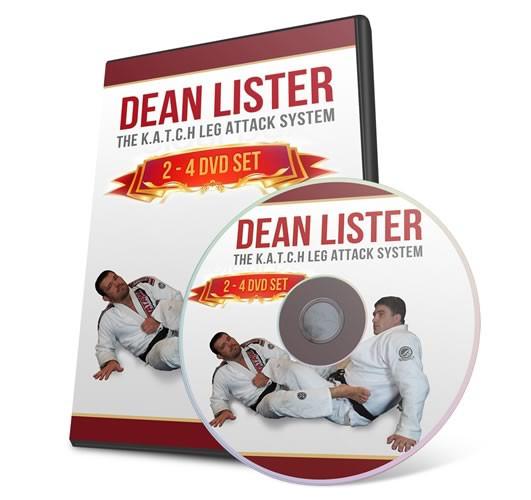
Dean is the man that opened John Danaher’s eyes to leg locks in the first place. It is only fitting that he tops this list. His K.A.T.C.H. system is one of the oldest leg lock instructionals that actually makes sense. K.A.T.C.H. stands for Kneebars, Ankle Locks, Toe holds, Compression locks (AKA slicers) and Heel hooks. As you can see, there are no leg lock categories that are missing. Further, ore the level of detail is astonishing, as it is Mr. leg lock himself doing the teaching. This is the first DVD set for any BJJ leg lock enthusiast out there. Grab it and see.
The one man that has risen to similar heights as Danaher’s boys is Australia’s own Craig Jones. He went from zero to hero in no time, dispatching of some of the world’s most elite grapplers with ease. How did he do it? With the help of vicious heel hooks that only took seconds to apply. Craig’s secret is not in the way he heel hooks people, but that he follows Danaher’s philosophy. He looks to obtain maximal control before applying the submission. His success in finishing people with the speed of light is mainly due to his entries. He’s got an elaborate and very cool system for getting into leg locking positions and transitioning between them. His DVD material shows all of them in great detail. A no-brainer and definitely one fo the very best leg lock DVD instructionals for any grappler!
Oh, look, he’s back again! Lister followed up on his ingenious K.A.T.C.H. system with an even more impressive one. His latest release focuses on the modern aspect of the leg lock game. He goes into every position frequently used by the Danaher Death Squad, explaining his philosophies. What really makes this worth your while is Lister’s experience on every stage of grappling. He’s leg locked the crème de la crème of grapplers without looking back. To top things off, he includes a whole leg lock seminar that has some sweet entries and concepts for hunting leg locks from the top!
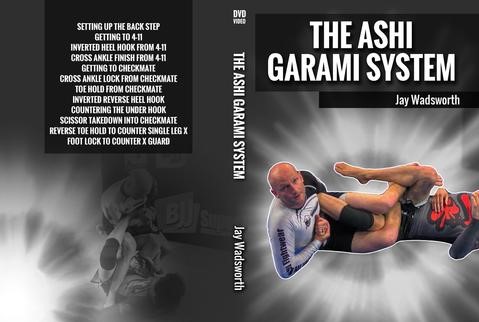
Admittedly, Jay is not at the same level of competition as Lister and Jones. His leg locking concepts, on the other hand, are right up there with the best. Whereas all of the above titles looked at the leg lock game as a whole, this one goes into specifics. It focuses on the two Ashi Garami variations that are the most successful. The 4/11 Ashi Garami is an equivalent to the back control in BJJ. We all know that escaping back control is a real pain. The Checkmate Aashi position is another dominant position, often compared to the mount in regular BJJ. Jay goes deep explaining entries, setups, control, and submissions from every angle. Highly recommended!
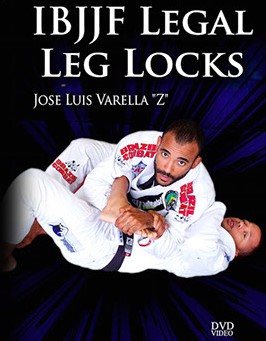
Varella pulls no punches on this one, but he very smartly stays within the IBJJF boundaries. No heel hooks, no knee reaping or other illegal techniques. What you get instead is an ankle lock galore, followed by some brutal knee bar and Toe Hold finishes. For all those feeling particularly frisky, there are even some really painful calf slicing options included. All in all a real must have for any leg locker, especially those that like to hunt legs while wearing a Gi.
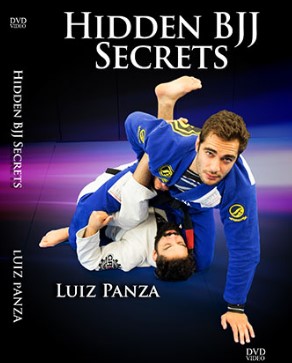
Sweeps, submissions, popular open guard passes…Even if none of these interest you, you should still look to pick up this Luis Panza DVD set. First of all, you’ll learn a few stuff that goes along great with leg locks. next, you’ll learn some of the best leg locking tricks you’ll ever come across. Thirdly, Lusi is going to connect leg locking positions with sweeps and submission from everywhere. After all, it’s not only about leg locks, it’s about total control, isn’t it?
AS far as the leg lock specific DVD is concerned, be prepared to venture into the world of footlocks as never before! Gi or No-Gi, IBJJF or sub-only, these footlocks are going to work everywhere. Oh, and they’re legal as well. A kneebar or two makes its way into the bunch, but Panza is a true master of the straight footlock. Especially from the 50/50. Be ready to surprise some of the higher belts in your academy with air-tight footlocks that nobody can defend!
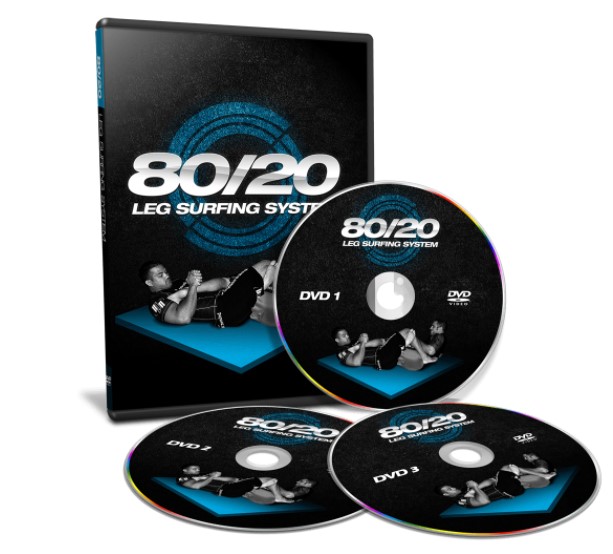
For everyone who is unaware of Josh Hayden’sleg locking prowess, this is the perfect introductory set. In all honesty, I’ve never really liked the 50/50 guard in terms of leg locks. Why give the opponent a 50% chance to attack me while I’m looking for a sub? Hayden was the answer to all my problems. His system is all about the 80/20 guard, or better said leg locking position. Hayden’s set includes an introductory DVD that focuses mostly on attacking from the outside Ashi Garami. He includes heel hooks, footlocks and toa hold as well as transitions into the 4/11 and Sambo Knot positions. While you might think you’ve struck gold with the DVD, this isn’t even his best material.
The 80/20 system is truly one of the best leg lock DVD instructionals ever put on disc! Hayden’s take on it is that you need to be safe before attacking. In those terms, he’s turned the 50/50 position into one of advantage instead of equal playing ground. Attacks, combinations, follow-ups, and re-counters are all included in this magnificent volume. It is worth buying the set alone, even without the two accompanying discs.
The third one is a defensive concepts volume. If you’ve ever seen the Hayden brothers in action you know how difficult they are to submit via leg locks. Now imagine being able to defend as well as them while always looking for an attacking opening. That’s exactly what this set delivers. A true must for every leg locker!
In all the leg locking madness that has engulfed the BJJ world of today, Dean Lister comes up with a cure. The man indirectly responsible for all the frenzy now gives a few answers to some of the burning leg-locking questions. Namely, Dean goes over some of the most effective escapes and defenses against leg locks. With Dean, things are always detailed, so it’s not just about defending single submissions but getting out of Ashi Garami positions of control as well.
Over 4 volumes Dean presents brilliant ways in which to put an end to the countless taps your training partners get from you each time you roll. First of all, you’re going to learn how to defend the kneebar. From everywhere. Lister leaves no stone unturned when it comes to becoming kneebar-proof. This set is also going to keep you worry-free from the dreaded heel hooks as well. Inside or outside, from any Ashi Garami position, you’ll be able to break out easily. And, while he shares his secrets, Dean also teaches how to escape toe holds, and knee compressions, which are often skipped in terms of defense. It is as complete a defensive system as K.A.T.C.H.is an offensive one.
LEG LOCK BUNDLE BY DEAN LISTER, LUIZ PANZA & JOSE BARCA (13 DVD SET)
While you’re searching for the best leg lock DVD instructional out there, why not buy in bulk? After all, this one is comprised of everything we covered earlier, only at a huge discount! You’ll get 13 discs of pure leg locking knowledge, dissected and systematized by some of the greatest names in Jiu-Jitsu! That’s hours upon hours of material to make you a true master of the leg lock game! It is simply an opportunity you can’t miss! Remember that your opponents are looking for any kind of edge over you, so be fast and grab this while it’s available!
It’s been said over and over again that BJJ is a martial art that is not shy of evolving. In fact, evolution based on experimentation is one of the main premises behind the success of Jiu-Jitsu. This unique aspect of the art, along with the technical depth, means that there’s more than one way to approach learning. Let’s be clear, going to class regularly is the best way to learn grappling martial arts! However, learning doesn’t have to stop there. Off the clock drilling with training partners, competing, and watching high-level tournaments all play their role. One very valuable best teaching tool is digital content in the form of video instructionals. So, grab your copy of the best BJJ DVD 2023 and start learning! Well, it’s not quite that easy.
Don’t forget to check ourDVD Collectionscategory where you can find all the best DVDs and Digital Instructionals for positions, submissions, etc.
When it comes to choosing the best BJJ DVD 2023, you need to make sure you know what you’re looking for. It’s not just about grabbing the first title that you find on a subject and going with it. Much like BJJ schools, not all BJJ DVDs are created equal. Some are better than others in certain aspects of the game. For example, a leg lock instructional from a decade ago is not even in the same category as a leg lock BJJ DVD of today!
As with choosing a BJJ gym, you need to make sure that the style of the person demonstrating the moves is also a good fit for you. Watching Keenan Cornelius while being built like Cyborg Abreu is not going to be of much help and will only frustrate you. So, make sure you have selection criteria before you decide on the best BJJ DVD Instructionals 2023.
How To Learn From Video Instructionals
First and foremost, let’s make a crucial distinction between the different kinds of video instructionals available. YouTube videos are rarely on the same level as DVDs. So whenever you’re looking to really improve, go for well-structured DVD releases. They offer a framework of positional hierarchies in relation to a move, as opposed to just quick-start instructions. BJJ DVDs and instructionals are much more in-depth in terms of material and knowledge that are presented. They offer systems instead of just singular techniques, which is the best way to approach any subject of your Jiu-Jitsu that you’re looking to improve.
That said, make sure you approach digital learning correctly in your quest for the best BJJ DVD 2023. Since most BJJ DVD instructionals come on multiple discs, managing material is your first priority. As you begin a new instructional, stay focused only on specific sections of the DVDs, instead of trying to watch them all in one sitting. Follow the chapters by moving on to the next only after you’ve tested the previous one in training.
That brings us to the next important point. Always attempt what you learn from BJJ DVDs in training. However, know that rolling is not your only testing ground. Try to find like-minded partners that are willing to drill with you. Drilling is huge in BJJ and for a good reason. It’ll help you develop muscle memory and work out the kinks that’ll open up the next chapter of the DVD for you.
A good idea is also to connect the subject of your DVD with whatever you’re learning in the academy at the moment. Try to add to the knowledge you get on the mats by exploring different perspectives through related BJJ DVD instructionals.
Improve Your Game Fast: Best BJJ DVD 2023
Now that we’re a couple of months into the new year, it’s time to take a look back at some of your BJJ resolutions. The cycle of going for it in January, giving up, and feeling sorry for yourself in February is over. Now it’s time to pick yourself up and really dig into your resolution of expanding your BJJ knowledge. There’s hardly a better way to do so, apart from being on the mats, than through instructional video DVDs. So, let’s take a look at a comprehensive list of the best BJJ DVD instructional 2023 releases. Here are our top picks!
Leg lock enthusiasts rejoice! One of the top emerging leg lockers did not wait long to get his stuff on a DVD! After shining bright at ADCC and EBI, Australian black belt, Craig Jones put together a great piece of content on his favorite attacks. Just take a look at his effectiveness with heel hooks at the top tiers of competition and you’ll know that you’ve hit a jackpot. Only second (MAYBE) to the Danaher Death Squad with his leg lock game, until the Danaher Death Squad releases digital content Craig’s DVD easily makes the top of the best BJJ DVD 2023 list.
EDIT: As Danaher DVD is out there’s a question of what you should buy, Craig Jones DVD or Danaher’s DVD? If you like a lot of talking, a lot of concepts, and everything about certain positions then you should go to John Danaher’s DVD. But if you like pure techniques, greatly explained without unnecessary details that most of the time won’t help you a lot then Craig Jones DVD on leg attacks is the way to go. You just can’t go wrong with it as it offers pretty much everything you need to know about leg attacks. Also, the price may play a big role in your decision as Danaher’s DVD costs 3 times more than Craig’s.
So, John Danaher vs Craig Jones leg locks instructional? Our choice is definitely Craig Jones DVD as it offers everything you need to know without a lot of talking about something you might not be interested in.
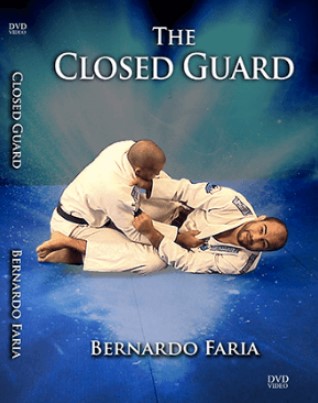
The highly accomplished grappler that’s been a nightmare for everyone when passing, this time went with a very specialized release. Bernardo chose the Omoplata to focus on and in doing so, revealed concepts that very few people actually understood about the submission. The 3 x world champion, didn’t hold back in this one, with some killer details included in the material! After absolving Faria’s material, you’ll be able to hit the Omoplata from every grappling position. Knowing that he’s not the most flexible or most athletic competitor out there makes his Omoplata DVD more attractive for the average BJJ practitioner.
Now, this here is a classic that is probably more sought-after nowadays than when it was originally released. Luckily, this timeless Brazilian Jiu-Jitsu DVD instructional is still around. Dean was certainly ahead of his time in leg-locking terms. The K.A.T.C.H acronym stands for kneebars, ankle locks, toe holds, calf slicers, and heel hooks. It really does say it all, seeing as no leg attacking category’s left out. Conversely, Dean is a real expert in each and everyone which is as rare as it gets. After all, Danaher himself said that Lister is the reason why he dedicated himself to studying leg locks in the first place.
Across four volumes Dean demonstrates his leg destroying brilliance from every position imaginable. The level of detail regarding the execution of the submissions is breathtaking. This BJJ DVD is a staple that no grappler can overlook, regardless of their feelings towards lower body submissions. The calf slicing and kneebar information he provides is unlike anything digitally available out there. This was my first ever leg locking instructional and remains one that I consult regularly to this day. Training without this BJJ DVD is like rolling without a belt – you can do it, but something is going to be missing.
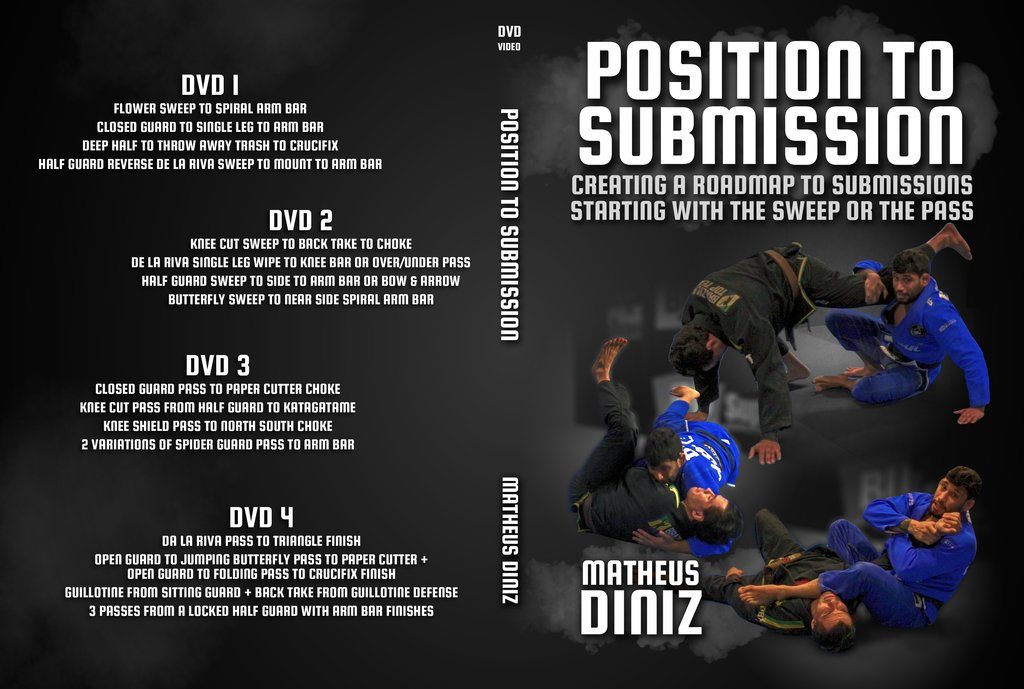
Marcelo Garcia’s black belt Matheus Diniz is a great representative of Garcia’s philosophy of Jiu-Jitsu. He truly emphasizes the concept of position before submission, proving why his master is the greatest of all times. This BJJ DVD instructional is full of basics that have been proven to work at every level of Jiu-Jitsu.
The flower sweep has always been perceived as a move to get you on top, but Diniz extends its reach straight into an armbar. On the subject of armbars, how to position yourself in the closed guard is also covered in depth. Some crucial Deep Half Guard attacks complete the first volume. best BJJ DVD
The rest of the DVDs focus on the top game. Again, starting from the basics, Diniz presents ho to end up on the back from the knee-cut position. Going into modern-day submission, he also opens up cool kneebar entries against the De La Riva open guard. A bit more on the old-school side, his take on the closed guard pass that ends with a paper cutter choke is a thing of pure grappling brilliance. The finale is reserved for some pretty attractive stuff like jumping over the butterfly guard into a paper cutter or a crucifix. You’ll find your fair share of crucifix attacks in this BJJ DVD, which really isn’t that strange, given who Diniz’s master is.
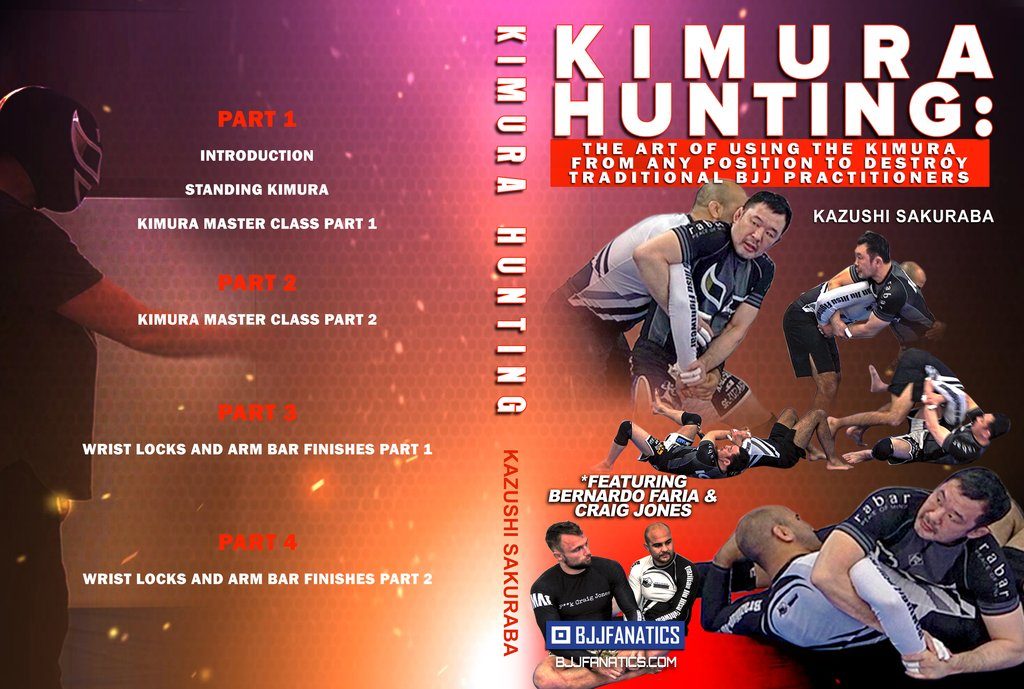
Japanese legendary pro wrestler turned MMA fighter, Kazushi Sakuraba is recognizable for his ultra-effective Kimura! He is not just great at all the usual Kimuras, but also the creator behind a bunch of new ones. Every Kimura secret he has is now available in his instructional.
The instructional itself is unlike anything we’ve seen before. Each volume contains just one chapter – a masterclass. Kimuras feature in the first and second, and straight armlocks and wristlocks make up volumes three and four. The Kimura section has one volume with standing Kimuras, which doubles as a takedown DVD. Throughout the instructional Sakuraba speaks Japanese, with a translator doing the simultaneous translation. Craig Jones and Bernardo Faria act as his ukes. All in all, the best BJJ DVD on the subject of Kimuras! Highly worth having.
What is Craig Jones known for? Okay, now it may be leg locks, but do you know what his signature move was before that? Triangle chokes. Craig has one of the best Triangles in the whole sport of Jiu-Jitsu! In fact, Craig managed to ride the z-guard to triangle setup all the way to gold at the No-Gi worlds when he was a brown belt.
His “Triangle Machine” DVD is another one-move masterclass by the Australian. In it, he starts from the back, by explaining how the submission works at first. Then, he moves on to covering some slick setups that include triangles from top positions like side control and then mount, as well as a couple of crazy flying triangle setups! A DVD that’s a must for all triangle lovers out there! Great instructions and really detailed explanations!
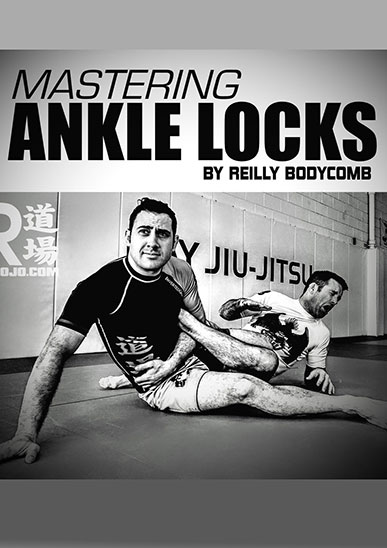
Reilly Bodycomb is a high-level Sambo grappler who is also a wizard at leg locks. He is also a Brazilian Jiu-Jitsu black belt since 2017. Bodycomb is a grappler that’s proficient in all leg locks but seems to really favor ankle locks. His system is a combination of the modern BJJ game and old-school Sambo locks.
Reilly’s DVD set is, somewhat strangely, one focusing on ankle locks. Despite most people thinking about the fall behind heel hooks, Bodycomb proves how effective they can be. The instructional has three different subjects inside. First up is the outside position, and all assorted ankle locks that are available from there. Next, Bodycomb switches to the inside position, providing further high-level ankle locking options. Finally, he spends a lot of time on defense strategies against common and uncommon leg lock attacks.
One of the coolest named instructionals out there also addresses one of BJJ’s most epic moves – the armbar. Renato Canuto is a world champion black belt who is famous for his incredible armbar skills. Now, all of his trademark armbars are available through the “50 shades of Armbar” DVD.
In it, Canuto offers four volumes of information never before seen. Of course, everything is about Juji Gatame AKA the armbar. The one thing that’s noticeable about this DVD is how progressively crazier it gets with each volume. First setups include your basics, albeit with a huge amount of details. Further along, setups and submission positions become crazier and crazier. Some examples include nutty flying armbars, inverted armbars from and even armbars from the bottom turtle.
One of the slickest grapplers in the game is here to explain one of the most sought-after moves in modern BJJ. As far as smaller-framed BJJ guys go, Musumeci is right at the very top, with two world titles to prove his worth. he is also one of the most technical fighters out there, and certainly an expert in IBJJF competition.
His four-part “High Percentage IBJJF Legal Footlocks” DVD set the best guide to legal leg locks you can get. Mikey managed to bridge the gap between legal and effective by modifying the moves that are allowed. In his instructional, he goes over ankle locks, kneebars, toe holds, and calf slicers of all kinds and variations. Knowing Mikey, expect a lot of baby bolo/Berimbolo setups. Certainly one of the best BJJ DVDs on the subject of leg locks, and a clear winner when it comes to legal ones!
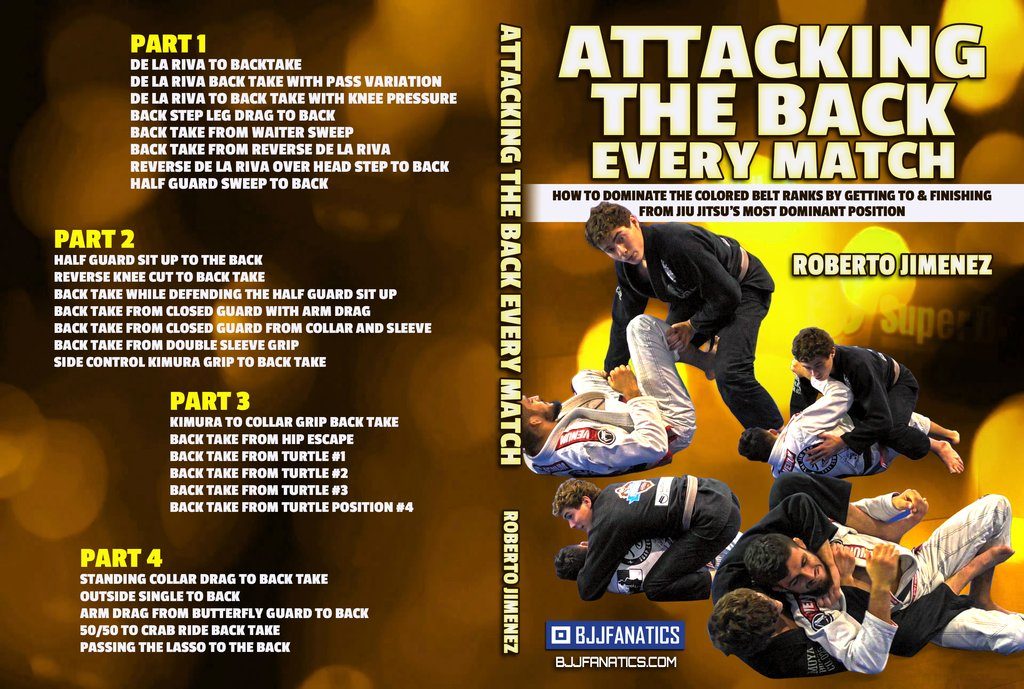
Here’s one DVD everyone was impatiently waiting for. Roberto Jimenez is probably the most feared brown belt today! He is a renowned black belt killer, even though he still doesn’t have his own. In fact, he started dominating advanced grapplers as early as a blue belt, and then managed to become a purple belt world champion by submitting all of his opponents! His favorite move? Choking people from the back.
Back attacks are precisely the subject of his very first BJJ Instructional DVD. In it, Jimenez covers his favorite ways of getting to the back, controlling it, and finishing. Expect a lot of De La Riva guard entries to the back, along with some neat deep half guard work. Turtle attacks get a whole volume to themselves, and there are also a lot of Collar Drags and even standing setups. One of the overall best BJJ DVD instructionals of 2023, and only Roberto’s first. Can’t wait to see what comes next!
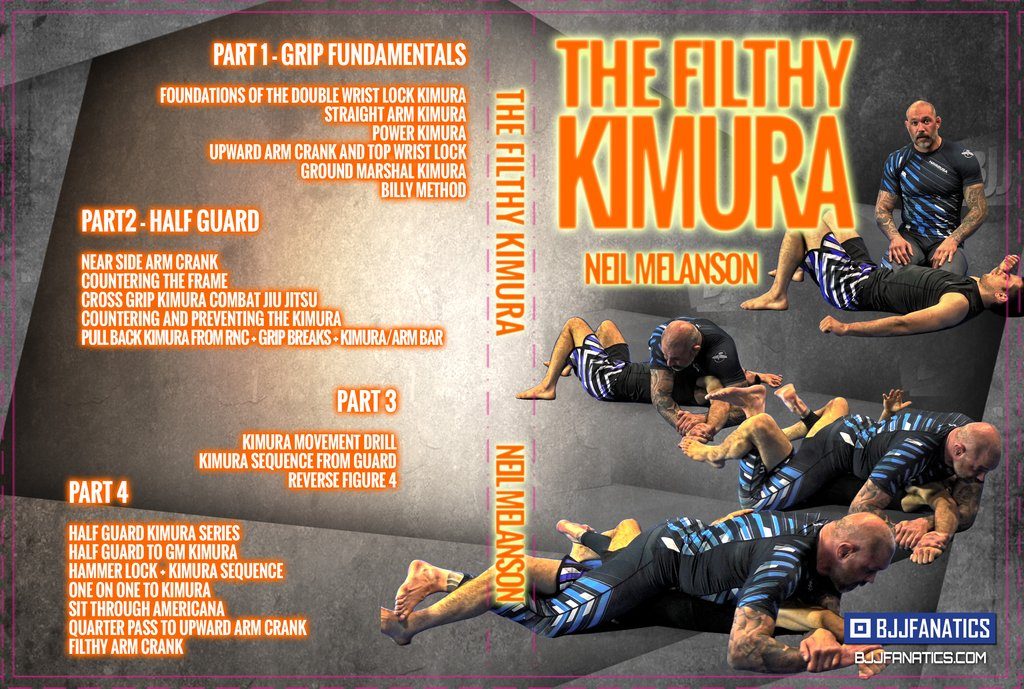
Sakuraba’s Kimura instructional was a touch of something different. Neil Melanson’s is not only different but it’s painful, quick, and all-around brutal! neil’s take on the Kimura is from a catch-wrestling perspective (surprise, surprise).
Four incredibly long volumes outline a unique catch-wrestling and BJJ Kimura merger. From grip fundamentals and basic breaking mechanics in the first volume to Neil’s filthy arm crank and reverse Kimura, there’s a wealth of shoulder-breaking knowledge in this instructional! It is all neatly organized into chapters, that feature long explanations and complete systems. All in all, it depicts a different, filthier side of the Kimura lock that you, as a BJJ competitor, absolutely need to develop!
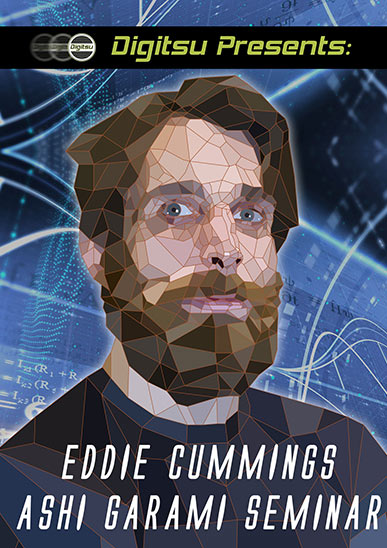
This one is pretty self-explanatory. When you read the words Eddie Cummings and Ashi Garami, you can bet your life you’re in for a treat. This is Eddie’s first instructional ever, and one that he released after leaving the Danaher Death Squad. Of course, it is all about his favorite Ashi Ggarami variations, but with a twist.
Upon leaving Renzo’s Cummings has added to his leg locking game. In fact, he has taken it to a whole new level! What’s best about this instructional is that Eddie covers not only attacks from the likes of the “Honey hole” but also a wide array of defenses. he even includes defenses to the dreaded inside heel hook. However, he doesn’t stop there and also goes over counters and re-counters that ensure you’ll get a tap from ultra-tight leg locks! A lower limb braking masterclass from the original BJJ leg lock master!
Let’s start this list with a BANG! MR John Danaher just dropped a massive knowledge bomb on the BJJ world! He came out with an instructional on one of the most versatile positions in Jiu-jitsu and dumbed it down to a T. The No-Gi guru broke down the front headlock position as much as was possible. And you’re going to love it!.
The front headlock in wrestling is a way of getting the fight to the ground or getting an opponent on their back for a pin. In BJJ, apart from guillotines, people usually use them to get the back. In both instances, this position is massively underused. Just like with leg locks, Danaher discovered how to turn a staple of grappling into a complete system that can win you world titles. The “Front Headlocks: Enter the System” DVD by John Danaher is an 8 volume set that will teach you a complete grappling system.
The DVD features both top and bottom positions, as well as options from the feet. As you’d expect, Danaher really emphasizes control and has incredible concepts about rationing the position. Furthermore, it is true chokes galore as he goes over every possible guillotine variation. But, the best part, at least for me, is his Kata Gatame series, focusing mostly on the Anaconda choke. get this DVD if you truly want to become a submission artist of the highest caliber. It is as simple as that!
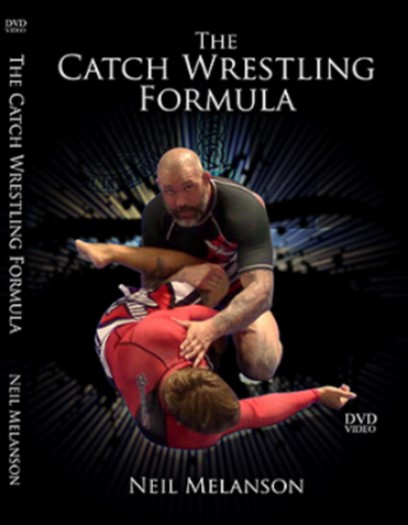
Now, this is the one clear winner for me personally. I’ve been a big fan of Neil’s stuff for a while now and this one was a no-brainer when it came out. Catch wrestling complements Jiu-Jitsu better than any other style of wrestling. Melanson’s submission-heavy approach is rivaled only by his knack for brutality. The DVD is full of tips and tricks to make you heavier from the top position and make your opponent suffer in discomfort while you slap on a tight submission. Arm locks, chokes, leg attacks, and neck cranks all features in this release. It’s a top game-changer for any grappler! Best BJJ DVD
Would you buy an instructional from a blue belt in BJJ? How about if I told you that the instructional was about BJJ-specific wrestling techniques? What if he was also a world champion at the blue belt? If you’re still not convinced, then the fact that it is a world-class wrestler demonstrating the techniques should remove any doubt. Hudson Taylor is quite new at BJJ but so are numerous unranked catch wrestlers like Josh Barnett.
In his Brazilian Jiu-Jitsu DVD, Hudson managed to identify the flaws of Jiu-Jitsu in a grappling sense. He then went on to plug in those holes with high-level wrestling moves. The result is wrestling for BJJ, DVD Instructional that covers a lot more than just wrestling takedowns. Yes, you’ll learn wicked details about double and single leg takedowns but that is not the focus of this digital release. Most of the material is focused on controlling an opponent on the ground and successfully transitioning without creating space.
What was completely new to me (since I have no wrestling background) were the defensive and counter-attacking concepts. Hudson definitely knows what he’s talking about and what relates to BJJ. Cradles, pins, Granby defending stuff like the banana split are all covered. The part on leg rides is also really useful to open up turtled-up opponents with ease. Just pick up the DVD. You can thank me later.
Best BJJ DVD 2018 Release? If you’ve ever seen Rustam Chisiev grapple you know what you’re in for. There’s no way anything Rustam does is half-assed. He goes all in, all the way and he did so with his unique instructional. With a heavy wrestling background, Rustam offers amazing No-Gi techniques and concepts that are bound to take most opponents by surprise!.
The name “Grappling Hacks” really suits this Jiu-Jitsu DVD since it is not your regular system-based instructional. Instead, you get shortcuts to submissions from a multitude of positions. Leg locks feature heavily in this BJJ DVD, as do front headlock-based chokes like neckties and guillotines. Rustam also shares his grappling philosophy and principles, providing insight into the way he sets up his mindset for competition.
A No-Gi Brazilian Jiu-Jitsu instructional done by a wrestler is not going to be complete without in-depth standing techniques. Chisiev’s release is heavy on the takedowns, exploring everything from single-leg takedowns to suplexes and gator rolls. Reversals and counters you’ve never seen before (unless you’ve wrestled in Russia) are also included in the release.
Here’s one bonus hack for you: combine this release with any (or even better all) of Neil Melanson’s releases for a mean No-Gi system with no holes whatsoever!
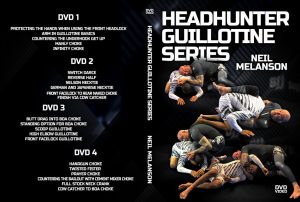
The master of Catch wrestling for Jiu-Jitsu strikes again! Neil Melanson never fails to deliver on his DVD sets and he’s got another masterpiece in this one! Renowned for his catch wrestling-based style of grappling, Neil focuses on a staple of the wrestling world – the front headlock. Right up there with the Shultz brothers in terms of front headlock knowledge, Melanson goes deep into the world of Guillotines, D’arce chokes, Anacondas, and Neckties. Grab this BJJ DVD and you’ll never lose a front headlock control ever again. As a bonus, you get a whole volume dedicated to the chokes of Neil’s own invention. Now you’ll be able to tap even those more experienced grapplers that are hard to get with a Guillotine or Brabo. It’s still early but I think this one is going to be my pick for the best BJJ DVD 2023
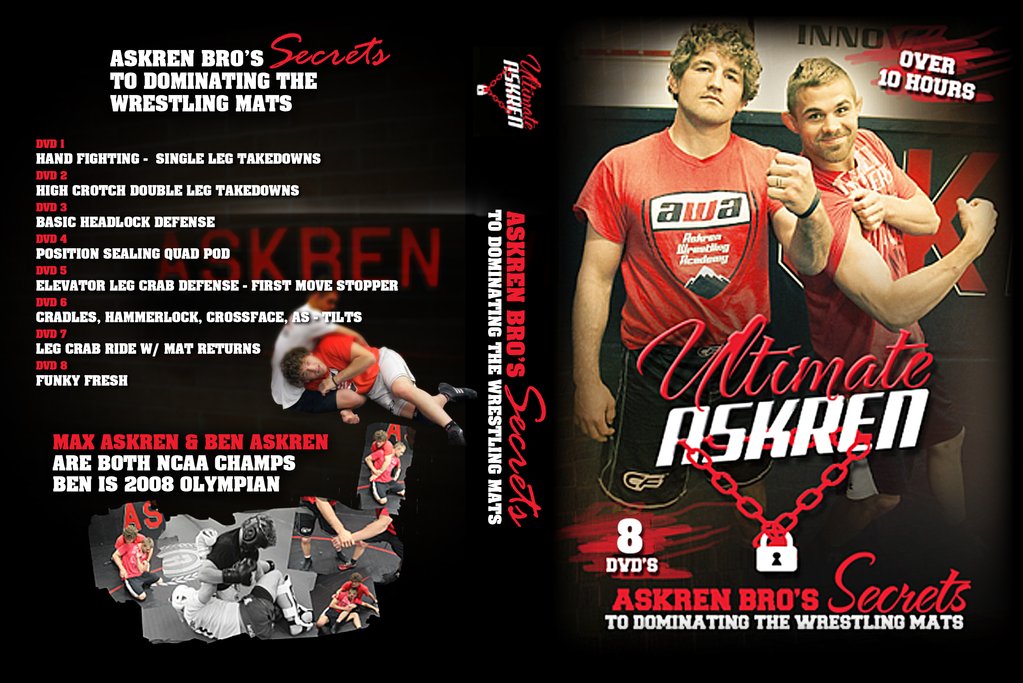
When it comes to the best BJJ DVD Instructional of 2023, Askren’s Ultimate Wrestling is one to consider as the best deal possible! With most instructionals nowadays, the “norm” is two to four volumes per DVD set. Well, Askren’s has 8, and they’re all filled with world-class instructions from a world-class wrestler!
Ben Askren is an Olympian, ONE FC Champion, and currently on the UFC’s roster, coming off his debut victory over Robbie Lawler. He is widely considered to be one of the very best grapplers in MMA. As such, he has also been featured in the ADCC. Now, in over 10 hours of material, Ben, along with his brother, goes over the secrets of the “Funk” wrestling. “Funk” is Askren’s individualized brand of wrestling, one that covers all the basics from a unique and original perspective. Since Ben is also a BJJ black belt and MMA fighter, his wrestling actually has real-world applications. This DVD is one to go and get without giving it a second thought! It is that good!
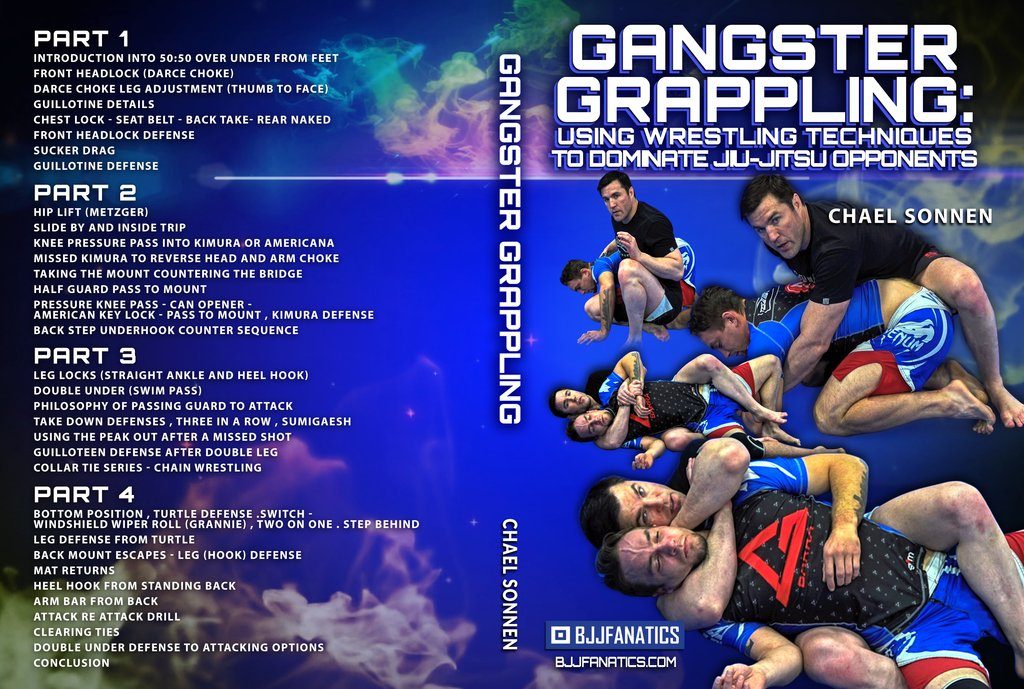
The original bad boy of MMA, AKA “The People’s Champ”, Chael Sonnen is undoubtedly a talented grappler. He also had a great long UFC career, with lots of victories based on his incredible grappling background. A wrestler by trait, Chael is no stranger to Jiu-Jitsu either, currently holding a brown belt under Fabiano Scherner.
Chael’s “Gangster Grappling” DVD set is an instructional that features a mix of Jiu-Jitsu, MMA grappling, and wrestling. In it, Chael offers the most effective moves and concepts that he picked up over the years. We all know how effective he could be, and now, he spends close to four hours explaining how and why his moves work so well. He starts with lots of front headlock chokes, featuring guillotines, Darces, and a crazy chest lock sequence. He also covers guard passing, submission follow-ups, standing strategies, and some awesome turtle defenses.
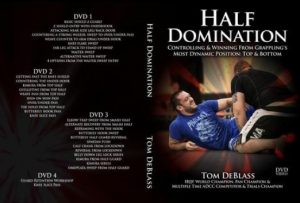
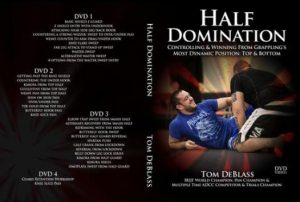
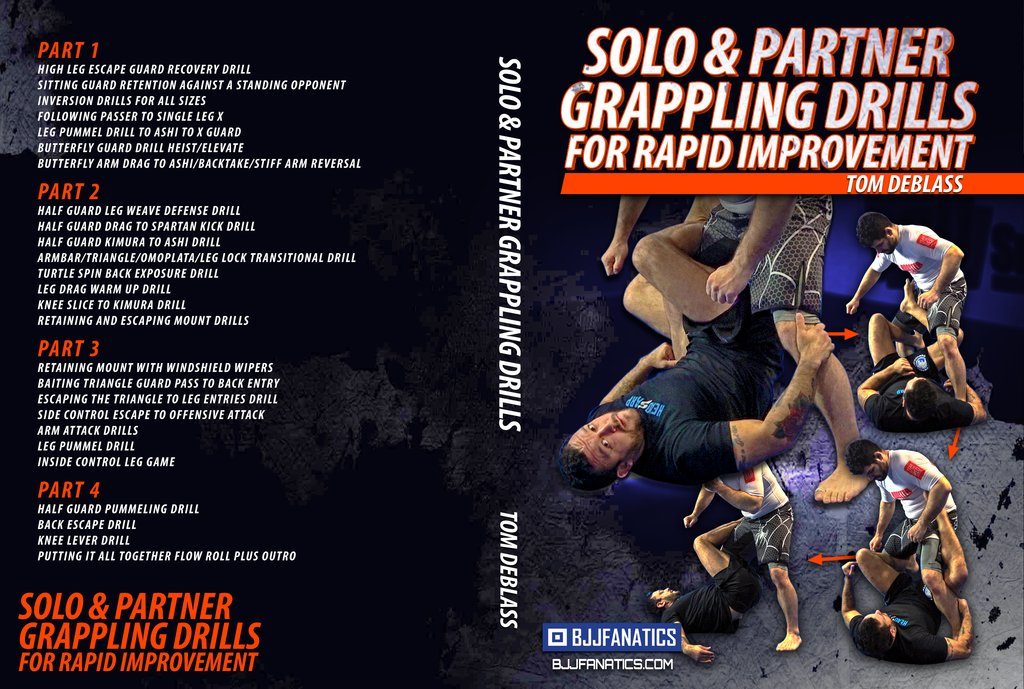
On the opposite spectrum of the Half Guard game from Melanson, DeBlass came out with a bottom half guard game release. If you’re looking for a BJJ DVD to solve all your half guard woes, look no further. Tom DeBlass goes through every half guard variation imaginable, both offensively and defensively. He even has a segment on submission options from the top half guard! The real gem of the release, though, is the final volume in which DeBlass goes over every “what if’ guard retention scenario that you’re bound to encounter while rolling. Do yourself a favor and get your copy ASAP! best BJJ DVD 2018
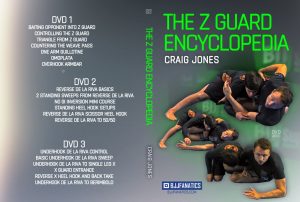
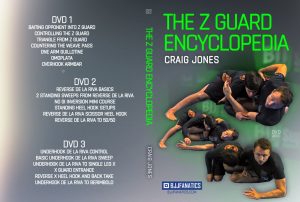
The enigmatic Aussie is back with another release to complement his Down Under Leg Locks BJJ DVD Instructional. Craig’s fame is due mostly to his leg locking efforts of late, namely at the ADCC and a couple of EBI’s. Most people see him as just a leg lock specialist but the young grappler is much more well-rounded than that. He has an admirable bottom game as well, particularly from the Z-guard. In this release, Craig goes through every Z-guard scenario in his usual systematic style. Z-guard, De La Riva GUard, and reverse DLR are all covered in different dedicated volumes. What you also get is more than your fair share of triangles, a submission that Jones is particularly experienced in. All in all, a true encyclopedia that all Z-guard players simply have to own!
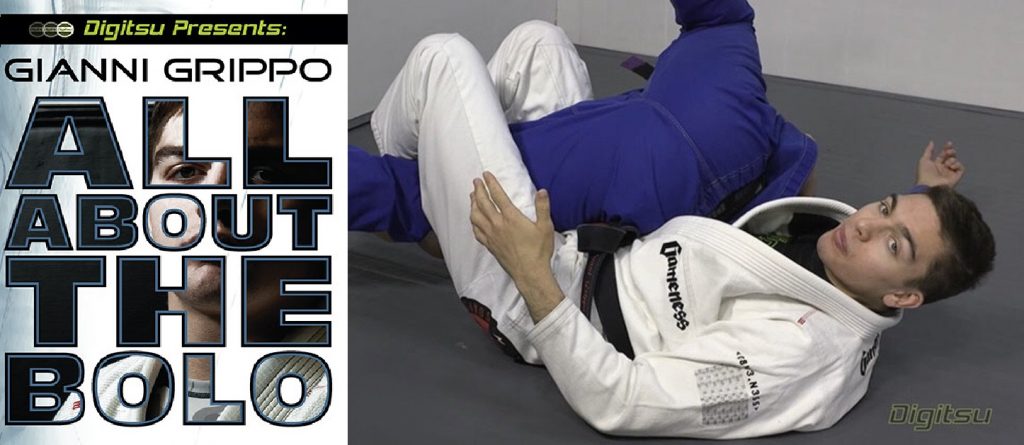
All About The Bolo – Gianni Grippo – TECHNIQUES LIST
Gianni Grippo is a Marcelo Garcia black belt that is a true representative of the Berimbolo generation. The multiple world champion has released the very best Brazilian Jiu-Jitsu DVD instructionals up to date! His “All about the Bolo” BJJ DVD is as in-depth as anyone has gone in terms of the Berimbolo. The real value of this digital release is in the step-by-step organizational system of the material that is presented.
Everything starts with the solo drills that are the foundation for any Berimbolo enthusiast. Much valued gripping details from the De La Riva guard provide clarity of the position and its structure. Simple knockdown setups open up the technical entries to the Berimbolo, adequate for all levels. All the basics are covered as precisely as possible before moving on to more “fun” applications of the position.
All leg lockers that give the Berimbolo a hard time are going to reconsider after seeing this Brazilian Jiu-Jitsu DVD! Calf slicers and twister hooks are dissected to the bone, linking everything up via the bolo. But why stop there? Cool crab ride combinations are going to open up new grappling horizons even for the most experienced inverted guard players. ANd this is all before touching the subject of counterattacking. Every possible scenario you can think of, from a posting opponent to countering back step passes and single leg X-guard is part of this unbelievable instructional! The choice of the best DVD for BJJ 2023 is no easy feat!
As far as No-Gi BJJ DVD instructionals go, this one is the first volume you should own. The closed guard is a great way to keep an opponent at bay when Gi grips are not available. It is even better when you approach the subject from an unorthodox point of view. Neil’s catch wrestling background means that he does not shy away from innovation and borrowing elements that work from other grappling martial arts.
This BJJ DVD is one more done is classic Melanson style. There aren’t plenty of chapters per volume but there is a lot of explaining in each. Neil spends at least 20 minutes per chapter, going as deep as possible into the structure and possible follow-ups from every position. His take on the closed guard is a blend of rubber guard and traditional guard philosophies. He takes the best of both, throwing out any flexibility requirements or unnecessary movements. Apart from a triangle choke setup, the first DVD is all about the concepts of the ground marshall guard. Everybody part’s placement is carefully covered and explained.
As the instructional progress, the focus turns to submissions. Plenty of triangle options and a few armbar setups make up most of the material. A cool Kimura setup precedes the Irish collar system, a closed guard variation of Neil’s own making. Trust me, this is one closed guard system you really need to learn, especially if you compete in No-Gi!
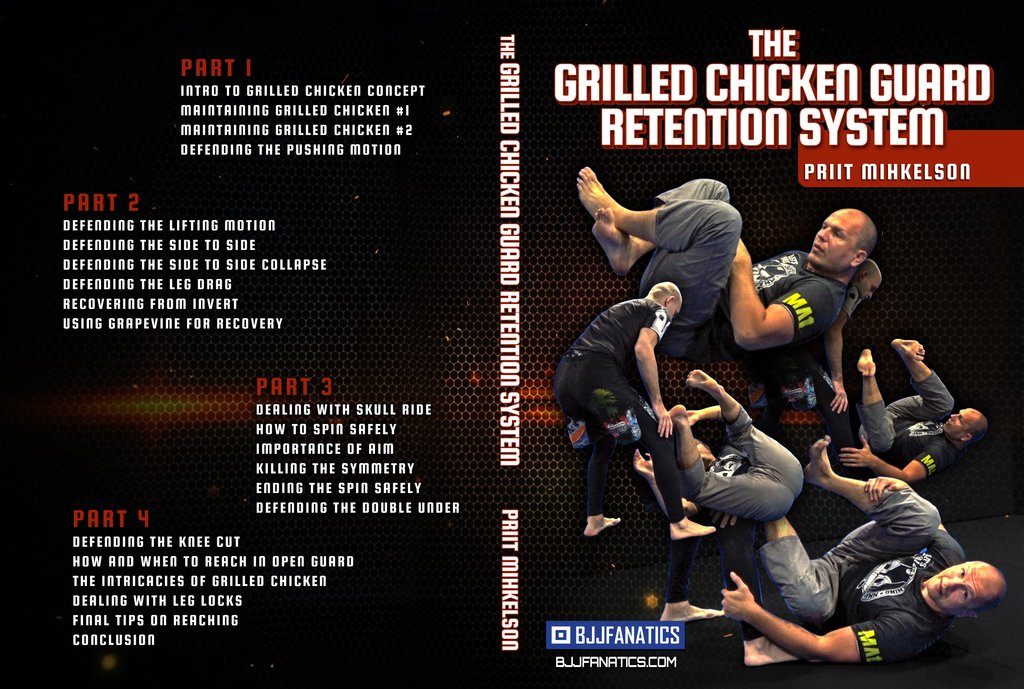
One of the very best guard repetition systems comes to us by an amazing Estonian grappler who’s not very well known. Well, not outside the BJJ Globetrotters community anyway. That’s all about to change after the “Grilled Chicken Guard Retention” DVD instructional, though.
Priit Mihkelson is a crazy, enigmatic, and very entertaining BJJ black belt. Not to mention how knowledgeable and good at teaching he is. As such, he is a regular feature at BJJ Globetrotters camps around the world. In the Grilled Chicken Guard Retention System DVD, he offers the best way to stay safe off your back, when you have no flexibility and are older. Basically, Priit is a master at escaping and countering, and his first instructional is all about doing it off your back. Of course, there are a bunch of offensive moves and submissions inside too, all bearing similarly crazy names to the one his guard has.
The Masters’s guard DVD set is one that all master competitors need to own. As far as masters are concerned, this is the very best BJJ DVD Instructional in 2023, and one you need to pick up first! Why? Consider this: Black belt for over 20 years, 4 time World masters champion and still going strong at 43. If you too want to be able to perform at your best in your forties, then this is instructional for you.
Beleza’s guard system is incredibly simple, yet effective even against advanced grapplers. The DVD starts with submissions like the triangle, Omoplata, and a ton of loop choke variations. The loop choke is Beleza’s trademark, and also happens to be one of the highest percentage chokes in Gi Jiu-Jitsu. The second volume is all about the masters’ version of the spider guard, along with a dozen or so armbar variations. finally, the third volume moves in a more advanced direction, outlining some traps and counters. In particular, Beleza teaches a slick way to set traps when the opponent is attempting a Double Under pass.
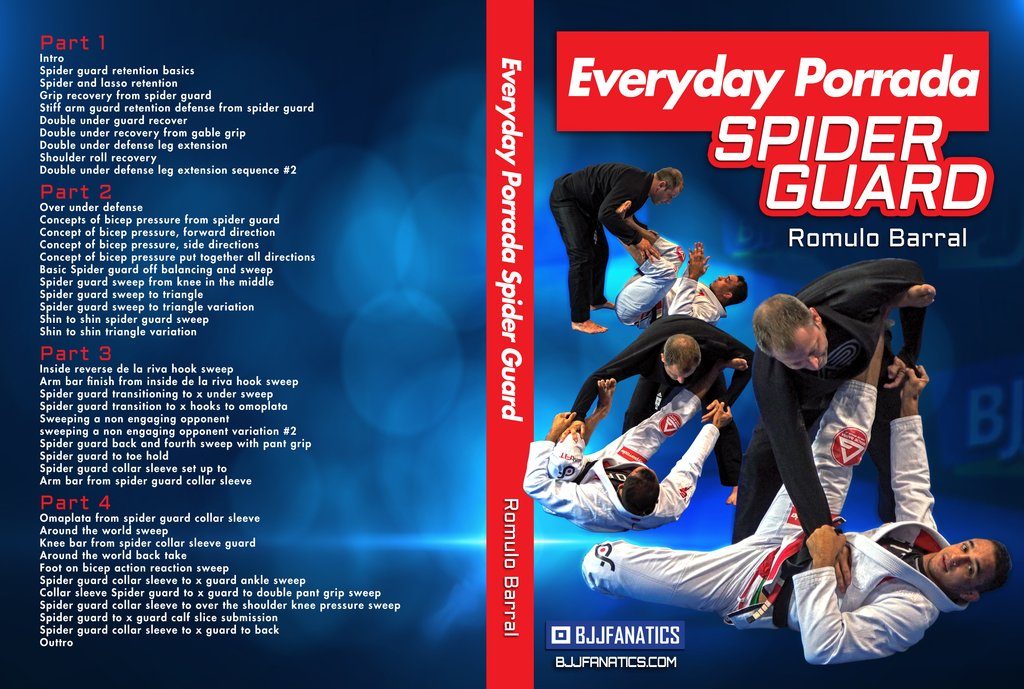
#Everyday porrada much? On the off chance that you have no idea what that is, you can read it here. Otherwise, the term’s godfather, Romulo Barral brings you his take on his Everyday Porrada Spider Guard. A legendary grappler, who coined a legendary catchphrase, demonstrating the secrets of a legendary Jiu-Jitsu guard. What more could you want from a BJJ DVD?
Romulo divides the spider guard into four main sections – retention and recovery, sweeps, transitions and submissions, and some advanced spider guard concepts. each of these subjects gets its own volume, each running well over an hour. Basically, Barral dissects the spider guard completely, opening up opportunities you’ve never even thought of before. It is certainly the best BJJ DVD when it comes to spider guard and one of our overall BJJ DVD favorites!
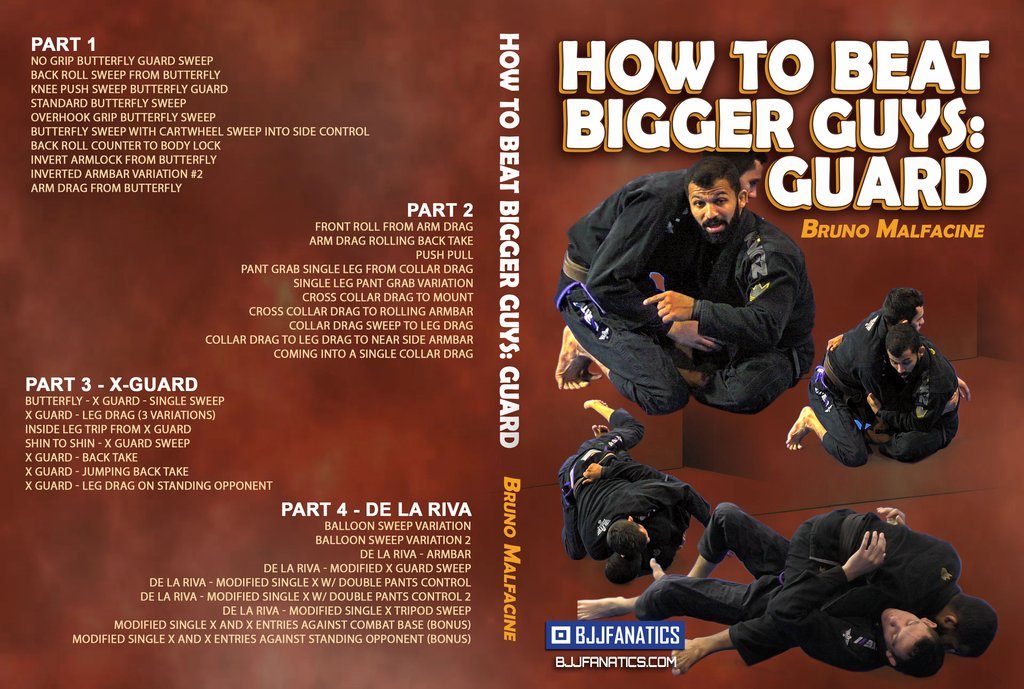
One of the scariest grapplers on the BJJ scene today is Bruno Malfacine. The rooster weight is just as efficient against ultra heavyweights as he is in his own division. The 32-year-old is a 10 x World champion in addition to a host of other titles. His guard is the stuff of nightmares, and he now opens up his world title-winning moves to everyone. If you’re a smaller or female grappler, this is the one DVD you need beyond doubt in 2023!.
Bruno’s guard is by all means his most potent weapon. As a smaller framed grappler, he likes to rely on simple guards that get him under his opponents. Conversely, the butterfly guard makes for a large portion of his BJJ instructional. Since we’re on the subject of going underneath, he also covers the X guard with amazing detail. De la Riva attacks are also included, featuring in a volume of their own. The best part of this instructional, for me at least was the volume on collar guard and arm drags. It is by far one of the best methods to get a jump on anyone, regardless of size or level.
Just when you thought there were no more Neil Melanson instructionals, we come up with this one. Or, better said, Neil comes up with this one. As if the Ground Marshall Guard wasn’t a complete enough system, Neil brings us its companion, the Ground Marshall Half Guard as well. However, this is a lot more than just another Half Guard DVD.
Neil’s take on grappling is a unique one, as you should be aware by now. Literally, all grappling martial arts, from Judo to Sambo, from catch wrestling to BJJ are a part of his system. The “Ground Marshall Half Guard” DVD set has four parts in total. Neil begins with some basics in the first and goes deep into brutal submissions in the second. Lots of neck cranks in this one, but there are also some cool IBJJF legal foot locks to provide balance. The octopus half guard, Melanson-style is the theme of the third volume. In the fourth and final volume, Neil pulls all the stops. A huge amount of Half Guard sweeps into subs or outright submissions from the bottom feature throughout. There’s some really nasty, black belt killer stuff in this one!
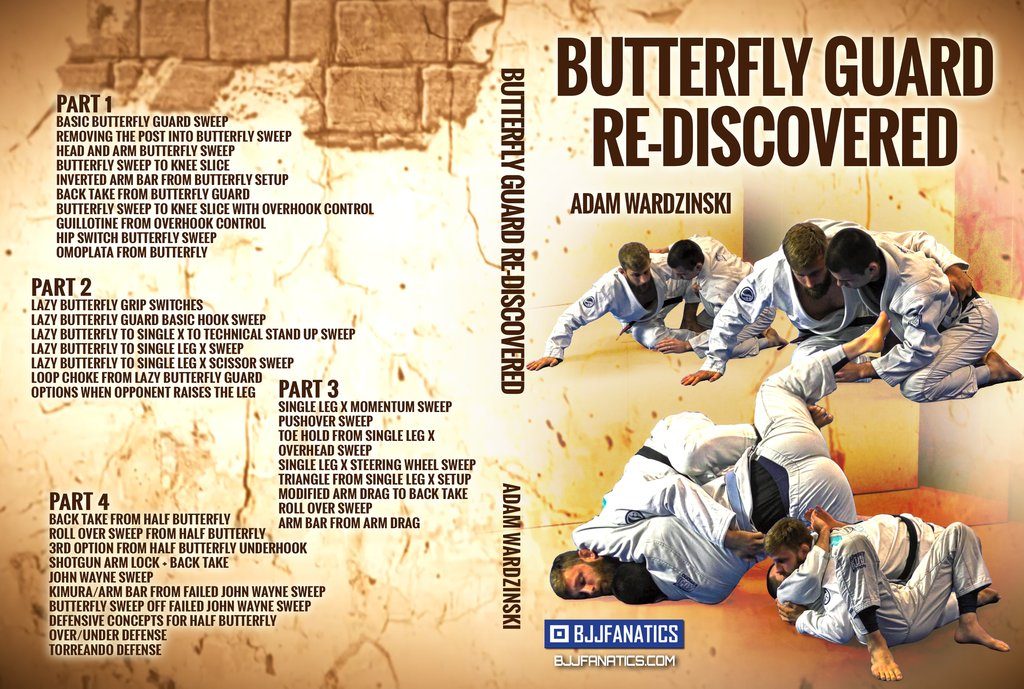
Adam quickly rose to prominence as one of the highest-level butterfly guard players out there. The Polish grappling sensation is just getting started, with a European, UAEJJF grand slam, and ADCC trials championships to his name. And the Alan do Nascimento black belt is only 28 years old.
Although Adam is a big fan of No-Gi, the “Butterfly Guard Re-Discovered” DVD set is a Gi BJJ instructional. It contains four extra-long volumes, each dissecting the butterfly guard in extreme detail! It starts from the most basic butterfly sweep and then evolves into the very best BJJ DVD on the subject! Adam’s modern take on the butterfly almost always ends in submissions, so expect a lot of transitional work after every sweep. There’s also a whole volume dedicated to the so-called “lazy butterfly guard” which is crazy good! Wardzinski also covers single and full X guard transitions and sweeps, as well as some neat half-butterfly attacks. In other words, he covers everything even remotely butterfly guard-related!
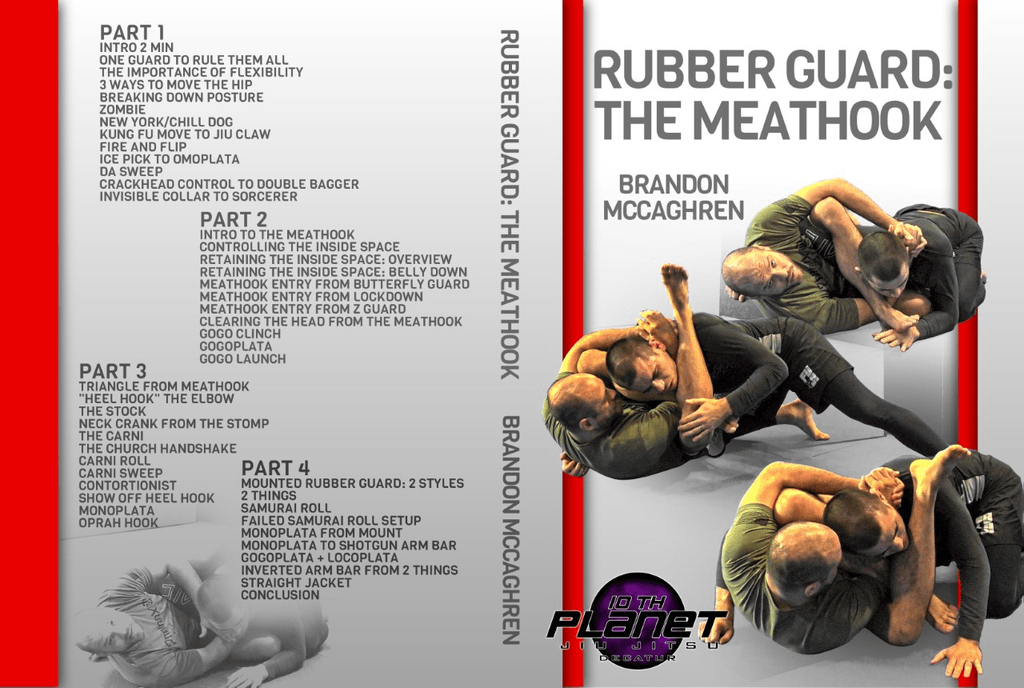
After Eddie Bravo’s original, and really old, instructional on the basics of the RUbber guard, nobody really explained the position thereafter. Until now. Brandon McCghres, one of Eddie Bravo’s black belts and, arguably, one of the best overall instructors in BJJ, now sheds some light on this highly underrated full guard variation.
Brandon doesn’t only cover the rubber guard essentials but also goes really deep in the realm of the meathook. The meathook is one aspect of controlling the rubber guard in a way that opens up countless attacking opportunities. At the same time, there’s hardly another guard that offers more control than a rubber guard with a full meathook on. The instructional has a total of four very tightly packed volumes. Brandon has a unique teaching style and is going to clear up one of the most misunderstood guards of all time. Crazy 10th Planet nomenclature is, of course, present throughout. The instructional. However, as crazy as they sound, stuff like the ice pick Omoplata, gogo clinch, and Oprah hook, to name a few sounds, they’re crazy effective. Expect intros to other positions like the mounted rubber guard and half guard as well.
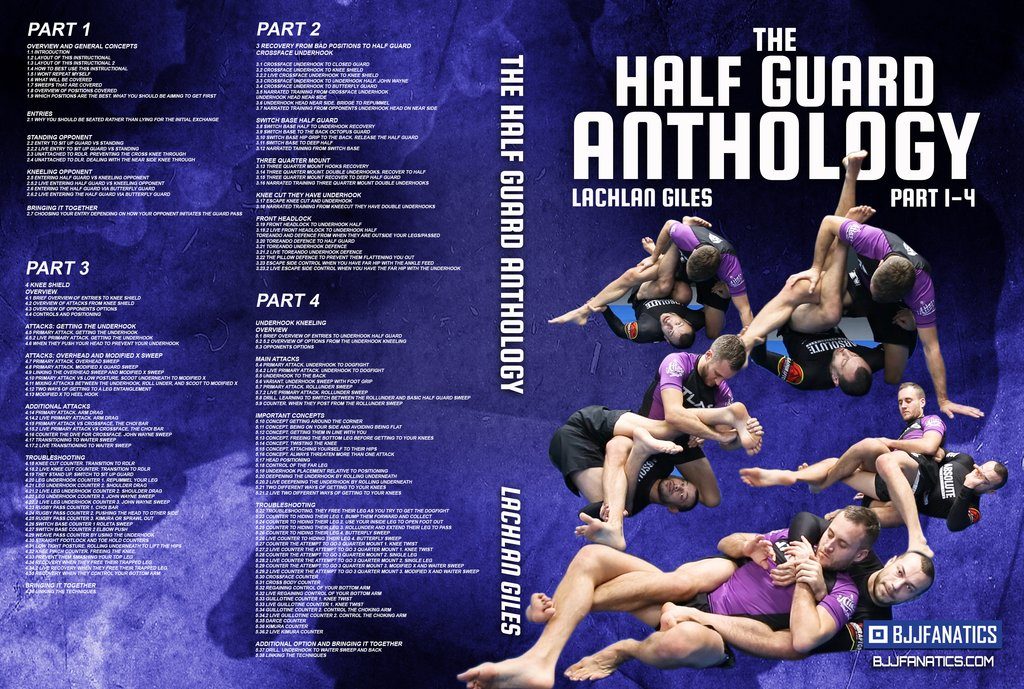
Lachlan Giles, one of the coolest BJJ instructors of today has really outdone himself with this one. 8 volumes and more than 10 hours of material make this BJJ DVD an absolute must-have. Plus, the subject is about the position that everybody, without exception, includes in their game in one variation or another. Lachlan made sure he included every possible one in his highly technical and very comprehensive Half guard Anthology DVD set.
What you get with this instructional is volume upon volume of insane half guard instructions. The DVD is a No-Gi instructional, which means it works in both Gi and No-Gi. The Half Guard variations covered in the first four volumes are the basic version and entries, the knee shield, and underhook and quarter guard. Entries, sweeps, submissions, defense, counters, transitions, troubleshooting, you name it, it is in there. Volumes 5 – 7 cover the reverse half guard, dogfight, shin to shin guard, and even reverse De La Riva and seated guard, among others. The final volume is the best, according to me. It is full of narrated rolls in which Lachlan does all the moves he teaches previously and explains what and why he is doing. Simply put, a masterpiece of a BJJ instructional!
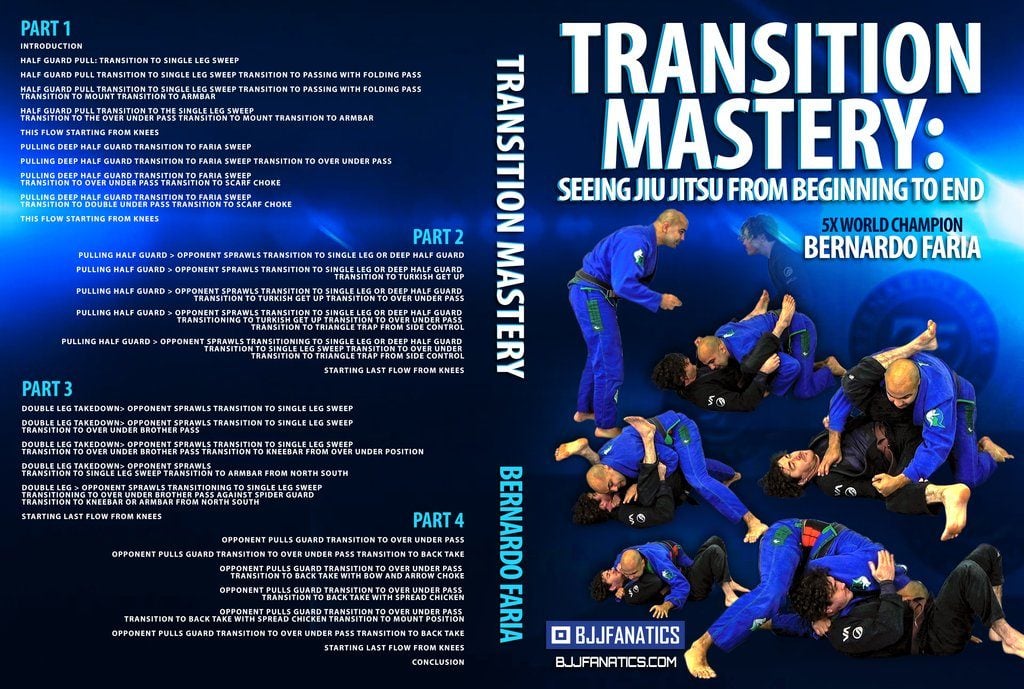
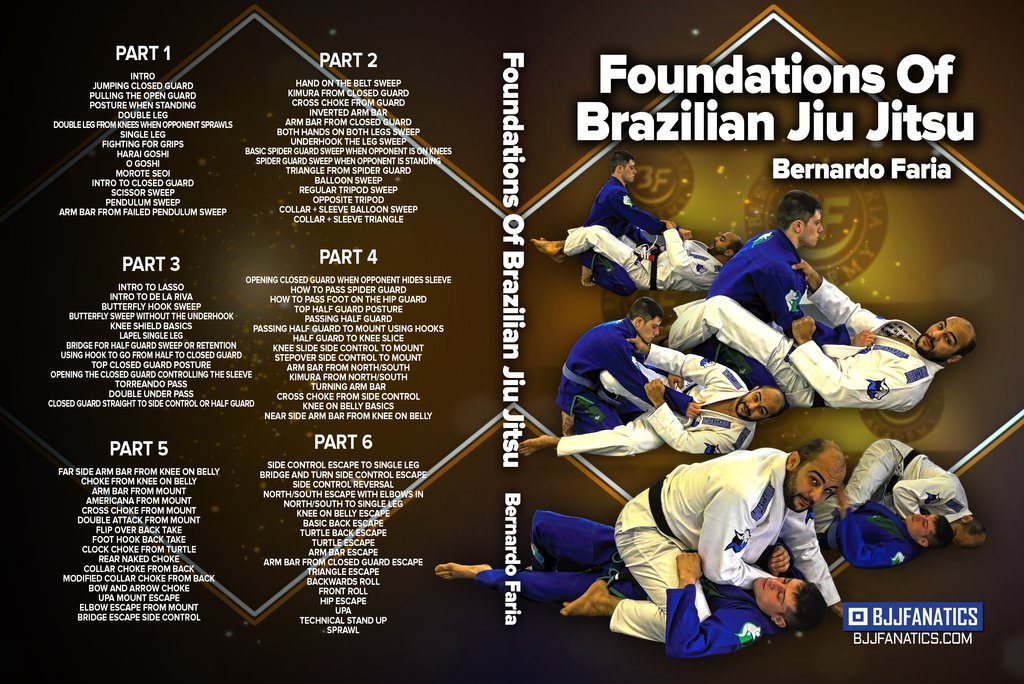
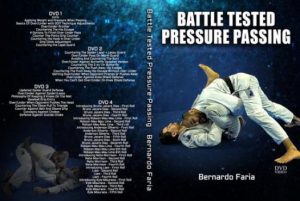
If there is one thing I really love about Bernardo Faria is his dedication to a single aspect of the game. When Faria records an instructional, he truly demonstrates everything that he knows about a certain subject. So when a multiple times world champion that is one of the most notorious guard passers issues a guard passing instructional it is going to be, arguably, the best BJJ DVD 2018 instructional.
Bernardo Faria’s signature pass is the over-under pressure pass. If you think, though, that this is the only focus of his multiple-volume release, you couldn’t be more wrong! 4 high-quality Brazilian Jiu-Jitsu DVDs deliver an astonishing amount of information on all things related to pressure passing. There’s no pressure passing unless you know how to distribute your weight correctly and Faria makes sure that this is crystal clear. The first DVD is all about the over-under pass and creating the utmost possible pressure while passing.
From the second volume onwards it really gets interesting. Bernardo has no trouble passing even the most elaborate modern guard, and neither will you. The worm guard, lasso spider guard, and other complex guards are no longer going to be puzzling. Furthermore, you’ll learn how to counter your opponents’ attacks s that you can get into pressure passing mode whenever you choose. As if that wasn’t enough, there’s a whole DVD with narrated rolls where Bernardo is using all of his techniques as a complete system.
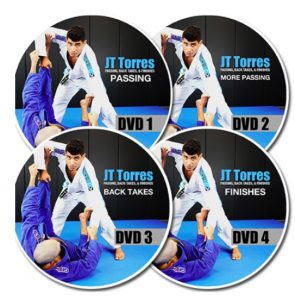
When you think of JT Torres, you most likely picture him hanging off of someone’s back, like a Koala bear on a eucalyptus tree. He is as proficient at taking the back as one can get. Finally, JT has released a DVD where he explains his back taking strategies and techniques. But he neither starts nor stops with back takes. This BJJ DVD covers everything from initially passing the guard to get to the back, all the way to inescapable submission holds.
The set is made up of 4 DVD volumes, each filled with invaluable information for anyone training Jiu-Jitsu. The first couple of discs are all about getting passed the dangerous legs of your opponents. It gets as basic as opening the closed guard and as advanced as cartwheel passing and destroying lapel guards. You won’t be left with many guard-passing-related questions after going through JT’s material. best BJJ DVD
Torres’ bread and butter, attacking from the back is the subject of the last two volumes in this BJJ DVD instructional. First of all, you’ll learn ways of getting the back you’ve never thought were possible. Secondly, you’ll discover how to keep the position and never get shaken off again! Lastly, you’ll master brutal submission holds from the back. And they’re not limited to your regular Rear Naked Choke and Bow And Arrow Choke. The back position also opens up Ezekiel, Brabo, Clock chokes as well as kimura and armbar opportunities and JT goes every single option and variation. An essential for any self-respecting competitor out there! Best BJJ DVD
Vagner Rocha is one of the most exciting grapplers of today, and we can’t wait to see him at the ADCC in September! Luckily, he left us with something to pass the time, in the shape of his “Float Passing System” DVD instructional. Vagner is a real machine when it comes to the top game, and his passing is unstoppable. Although he does like to pass in different ways, he always incorporates the float passing concept in all of them. Now, it is time to learn exactly how he does it.
The Float Passing System is a 3 part DVD instructional that starts with one of BJJ’s most utilized passes – the knee cut pass. While you might be wondering how you can float from the knee cut, everything is going o be revealed as early as the first volume. Rocha uses the knee cut to deal with all versions of the knee shield guard, and as a starting position for his unique passing system. Vagner explains his entire floating philosophy before going into the moves. Volumes two and three are all about Vagner’s very own float passing system. They include passing options against all common and uncommon guards, from the butterfly to the Lockdown.
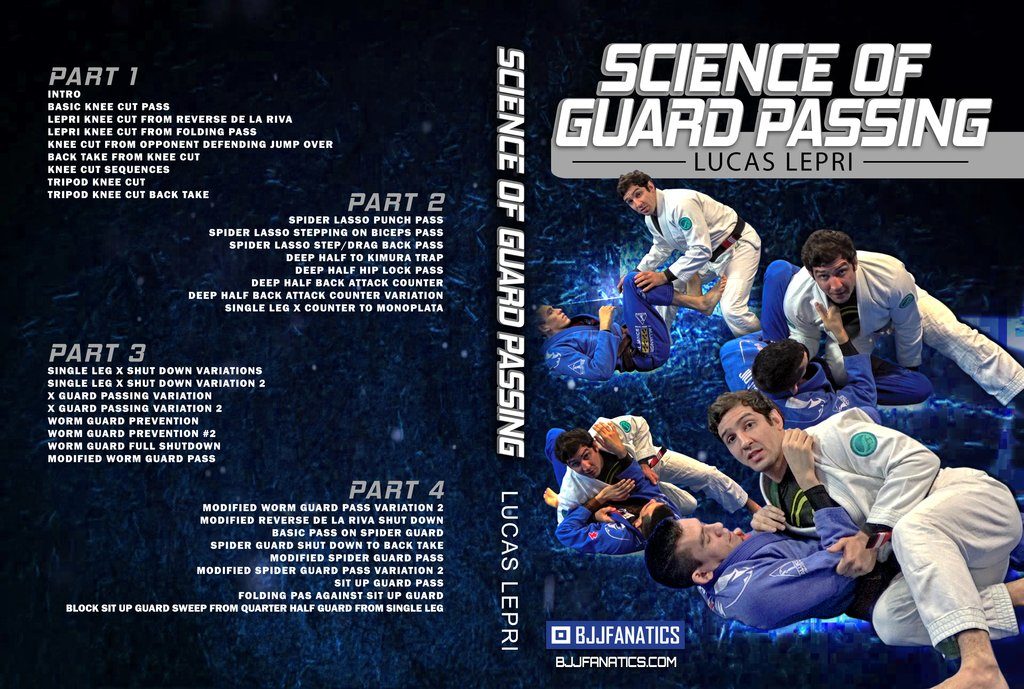
Lucas Lepri really has passing down to a science, and he’s proudly demonstrating it. His “Science Of guard Passing” DVD set is the best BJJ DVD you can get on Gi passing in 2023. Lepri is a 5 x World Champion at black belt, and one of the best lightweights in the sport. He is a complete well-rounded grappler, but his top game is definitely his strongest quality.
The DVD itself is a four-part instructional, divided into volumes according to guards, rather than passes. The first one covers the knee cut, the second goes over dealing with the spider and lasso guards. The third offers ways to shut down X guard variations and the dreaded worm guard, and the final volume is all about advanced passes against all kinds of modern lapel guards. All in all, this DVD is all you need to make sure you never get stuck in one of Keenan’s ugly tangle guards again! Nor are you ever going to get in trouble from any of the regular closed, half, or open guard variations people usually play.
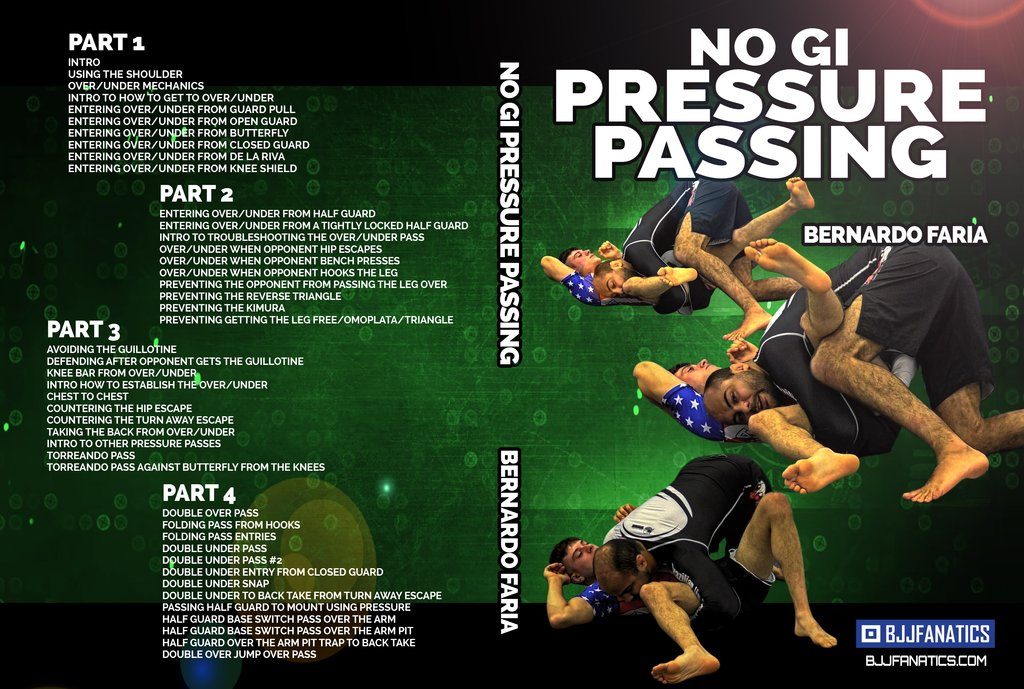
Mister Faria is back, and he has another pressure passing DVD on offer! this time around, however, it’s all about passing without the Gi, which is something we’re not used to seeing from Faria. Yet, he is just as well versed without the Gi, as he is with it. After all, he does have 5 world titles to his name. As expected, the over-under pas is going to feature heavily in this instructional, albeit quite different from the Gi setups.
The instructional starts with over a dozen ways to enter the over-under pass position. Faria covers everything here, from closed guard entries, all the way to De la Riva and knee butterfly guard options. Once that’s out of the way, Bernardo goes into what happens once you enter into the pass – resisting opponents. Faria is going to teach you how to shut down any counter or defense options your opponents come up with. The third disc covers some safety tips on avoiding common submission counters, before moving on to submissions off of the over-under pass. Faria rounds it off with a volume on the double under pass masterclass.
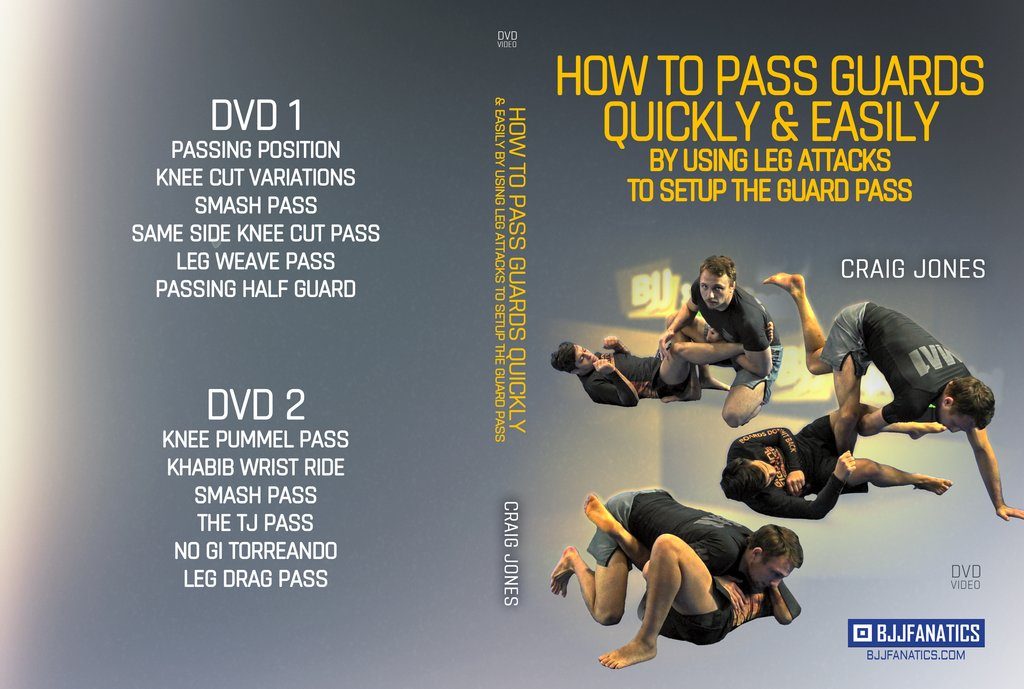
Craig Jones is one of the best grapplers in the world, and his time is yet to come. The young Australian is famous for his leg locks, and, up to a point, for his triangles. However, he does have some slick passes in his game as well, something he’s proven over and over again at events like EBI and ADCC.
The one trick to Craig’s passing system is the constant double threat. In his “How to Pass Guards Quickly And Easily” DVD set, Craig uses leg lock threats to set up all his guard pass. You can see this BJJ DVD Instructional is considered to be one of the best in 2023. Across two volumes, Craig goes over some of the most effective guard passes you’ll ever see! HE does have a favorite “position zero” type of position, similar to Lovato’s “headquarters”. from which he likes to launch his passes. Expect to see a lot of smash passes and knee cut/leg weave variations, particularly in the first part. Leg pummel passing and some innovative concepts (Khabib wrist ride, TJ pass, etc.) make part two a really special instructional. Jones brings things to a close with the always dangerous leg drag, Aussi-style!
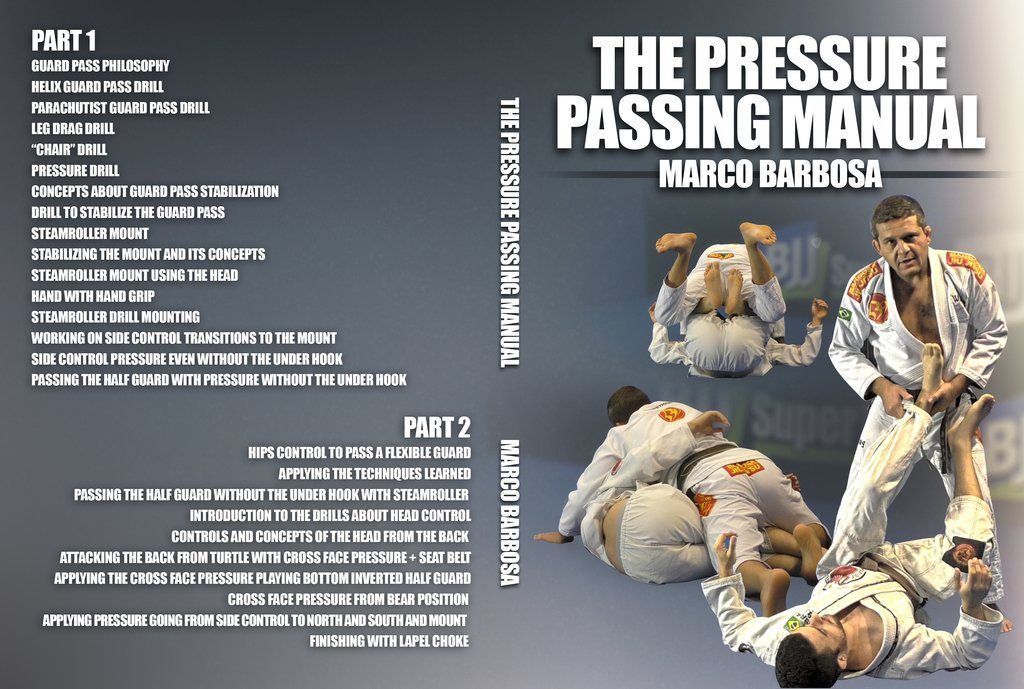
This DVD is an instructional on the old-school style of pressure passing. You won’t find fancy moves, jumps, or explosive movements in this one. Barbosa is all about slow torture via immense pressure. What you’ll learn is how to get your opponents to let you pass just so they can get away from the pressure.
Marco Barbosa is a Rickson Gracie lineage black belt and a high-level Judo black belt. The 53-year-old grappler has accumulated impressive knowledge over a lifetime of grappling. His take on pressure passing is different from the modern one, more efficient, and much easier to understand and incorporate. Barbosa split all his instructions into two highly packed volumes. First, he shares his passing philosophy and the essentials of pressure and weight distribution during passing. He then goes over a host of guard passes before explaining how to remain heavy once you’ve passed to side control or mount. The second portion of this Marco Barbosa DVD offers ways of controlling the opponent’s hips and the head. He also explains the Crossface and opens up new attacking avenues from it.
Cyborg is truly an astonishing grappler. He is a heavyweight that is built like a brick house, yet seems to be able to move around like a featherweight. No wonder he is an ADCC and multiple-time world champion black belts. “Flow: The Top Game” is an incredible instructional that gives us an insight into Cyborg’s top game strategies.
If there’s one thing that’s really impressive about Cyborg, apart from his agility and crazy Tornado guard, it is his transitional game. The way he and move in and out of positions and link up submissions and positions is uncanny. In this DVD he starts with surfing lessons, on how to flow past your opponent’s guard rather than attempt to break it down. He has a really cool “missile pass” concept that’s really going to change the way you approach guards. Stuff like the 100-kilo side control and other crushing top positions also star in this instructional. A truly remarkable part of this DVD is the one in which Cyborg attacks the turtle from all sides. Some connection flows wrap up the instructional, offering ways to connect the moves Cyborg teaches over the four volumes. there’s also a section on the mindset behind flowing from the top.
Who better to teach you how to escape submissions than a formidable submission artist himself. Dean Lister is certainly the go-to guy for anything submission-related. After all, this is the guy behind the birth of the Danaher leg lock philosophy. In this No-Gi instructional Lister focuses on high-level submission defense. The focus of the release is mainly on defending and escaping leg locks. Other submissions like guillotines and armlocks are also included, but it is the defensive side of the leg locking game that makes this DVD special. I can not recommend it highly enough!
The man who has not been submitted for longer than a decade is here with an amazing BJJ DVD to make you submission-proof. Every submission you’ve thought of is covered, along with the major dominant positions. It is not just about defending the submission and ending up in another one or a worse position. DeBlass makes sure that you stay safe, defend and successfully escape.
It all starts fairly simple. After all, you primarily need to know how to get out of the most common submission in the sport. Straight armbars, triangles, Kimura locks, guillotines… you name it. There is not one submission that happens at least once a class is not covered here. Furthermore, there is a complete volume dedicated to keeping you safe from leg locks. Much like the comprehensive attacking nature of Dean Lister’s K.A.T.C.H. system, Tom’s is on the opposite side of the spectrum. It is not just about defending heel hooks, but getting out of every leg lock BJJ has to offer.
Capping things off is a DVD that focuses on reversing some of the most dominant positions in grappling. No more trouble when you’re at the bottom of the mount or have someone on your back. Simple concepts and easy techniques are going to allow you to slide out of every bad position you find yourself in. As far as a Brazilian Jiu-Jitsu DVD goes, it can hardly get better than this one. Well, in a defensive manner, at least.
BJJ standout Chris Haueter is as old school as BJJ gets. The Machado black belt and UFC veteran bring you invaluable material that’s based on “old school” Jiu-Jitsu. It starts with an intricate bottom guard game full of “forgotten” moves. What follows is an equally impressive passing game where the central theme is pressure. Hauter ends up with amazing strategy advice for all the “old guys” competing in the master’s divisions, but not before going over some fundamentals like side control and back mount. best BJJ DVD
For all of you that think that Mr. Tom DeBlass is only a No-Gi and Intermittent Fasting wizard, here is a surprise. He is also world-class in the GI and he has the DVD instructional to prove it (not that he needs to). Tom DeBlass’s latest digital release is a great guide to every position you might find yourself when training in Brazilian Jiu-Jitsu. He devotes equal time to both the bottom and top game concepts. Passing any guard, especially boring lapel-based guards is not going to be a problem any longer! There are also very elegant solutions to neutralize guards that open up leg locks, like the butterfly and X-guard variations.
From the bottom, Tom’s trademark half guard has visited once again, this time in the Gi. After some serious Half Guard material, Tom gets into the X-guard and shows some real magic! Butterfly-half hybrid guard essentials open up the transition to insanely good counter-attacking options from the bottom. A philosophical outline of the most important grappling principles closes out this amazing digital release. Tom Deblass has certainly delivered one of the best BJJ DVD 2018 releases!
Highly accomplished black belt Yuri Simoes has claimed many accolades in both Gi and No-Gi. he is, however, much better known for his proficiency in the No-GI game. As such, his BJJ DVD is one of the best BJJ DVD 2018 instructionals anyone can get.
Yuri Simoes has his Brazilian Jiu-Jitsu DVD instructional set up in the best way possible for grapplers. He goes over every concept of the top game before turning to the related techniques. And by top game, I mean every aspect of it. Yuri goes over guard passes, takedowns, and even submissions from a top perspective. After outlining the basic concepts, he focuses on the destruction of the opponent’s guards. If you can think of a No-Gi guard, there’s a pass for it in this release.
One outstanding characteristic of the DVD is that there is a whole volume dedicated to dealing with the inverted guard. This guard is by far the most commonly used one in NO-Gi. IT is great that Yuri went into such depth explaining how to pass it. It is a mark of highly technical and often extremely flexible grapplers, so dealing with it can be a real nuisance. Not after watching Yuri’s take on it!
Finally, every takedown you need to master to dominate No-Gi matches on the feet is there. All in all, it is one of the most complete No-Gi BJJ DVD instructionals out there!
Luis Hereda is one of the old-school guys. He was a student of Helio Gracie and is a true representative of Gracie Jiu-Jitsu. In his BJJ DVD, he focuses on the old-school principles that made the art famous in the first place. At 54 years of age, Hereda likes to do only techniques that really work. These are the same techniques that he demonstrates in his 4 disc release.
It all starts with a look at a true BJJ classic – the closed guard cross collar choke. The details on this fundamental submission are second to none, and yes, I have thought about oRoger Gracie as well. Some really useful tricks for defending the Ezekiel choke really give this DVD value. And you’ll learn the paper cutter choke. Everyone training BJJ needs to know the paper cutter choke.
Something missing from almost all BJJ instructionals is specific information on weight distribution for Brazilian Jiu-Jitsu. Knowing how to be heavy from top Side Control is truly an art, one that Hereda is the Picasso of. Turn your Knee on Belly into the stuff of nightmares for your opponents. Best BJJ DVD
Hereda also doesn’t leave out the most old-school position of the mall – the closed guard. Complete attacking and counter-attacking concepts are explained in amazing detail. Some crucial guard passing principles and techniques round off this amazing digital release. Really make sure that you have this one in your BJJ DVD collection.
This is Bernardo’s latest BJJ instructional and one that’s certainly among the Best BJJ DVD for 2023 contenders. It is an unusual and original instructional, both from an organizational and a technical perspective. All of Faria’s previous DVDs were following a pattern that is now dropped. Most likely it is the subject matter that merited such a positive change in direction.
The DVD once again features four volumes, but the contents are organized much differently. Her, Faria starts at a certain position, for example pulling half guard. the first chapter of a given volume starts with pulling Half Guard and establishing ground control. The next chapter goes on to offer sweeps and/or submissions straight off the half guard pull. As chapters progress transitions take us from pulling half, to sweeping, to getting the top position, to submitting opponents in different ways. You get the idea. All four volumes are organized like this and offer double leg flows, pull guard counters, and signature Faria half guard magic on top of pulling half.
There’s hardly a more likable character in BJJ today than Tom DeBlass. He has a very strong social media presence, interacts with everyone, shares positivity, and issues DVD instructionals like their cookies. However, his DVDs are the extra chocolate chip and fudge on top kind of cookies. There has not been a bad one so far, and the “Grappling Drills” DVD is certainly not one to break that streak.
We all know how crucial drills are to a complete JIu-Jitsu game. Well, Tom DeBlass agrees, and, while he’s on the subject, provides four DVDs filled with solo and partner grappling drills. The volumes are organized by subject rather than the presence or absence of a training partner. In that sense, Tom offers guard retention drills, followed by some Half Guard mastery drills that include submission holds. Halfway through the switches to the top position, offering a bunch of transitional drills and even more submissions. the final part is all about escaping from bad situations and some advanced flow drills that include both partners working at the same time. A real must for anyone, particularly competitors!
Matt is one of the most underrated ultra-knowledgable grapplers out there! he just likes to keep his head down and work at his SBG headquarters. However, the amount of information he has on BJJ is staggering, along with the way he conveys it! the Rickson Gracie black belt has been pretty much “translating” all of Rickosn\s concept for years! However, it is this mount DVD that really takes things to the next level!.
Looking for the best BJJ DVD ever on the subject of mount concepts? “Mastering The Mount” should not only be your first but your only option as well. it has everything you’ll ever need. Instead of throwing around a bunch of techniques, Thornton makes sure you understand the mount position and all that it brings. Matt covers the concept of framing, along with strategies on practical use. He also goes over crushing pressure from the mount, which is something nobody else ever managed to fully explain to me, the way Matt does in this DVD. This also holds true for Rickson’s famous, yet mysterious principle of “connection” in BJJ. Mat is the man to clear things up, particularly when it comes to the mount. A few extra features at the end, like 15 full lectures to change your mount game completely, make this DVD that much better!
We love ourselves a bit of BJJ renegade now and then, especially when it’s the man himself, Kurt Osiander! Why keep things orthodox when they can be wildly unpredictable, even at the fundamental level? The Carlos Gracie Jr. black belt has just as effective Jiu-Jitsu as his demeanor is crazy and unorthodox. Now, yours can be as well, along with the slick JIu-Jitsu that’s a trademark of Kurt.
Kurt’s four-part instructional takes you on a journey to all of BJJ’s foundational positions. Starting with some simple guard work, Kurt offers a bunch of sweeping opportunities that include everything, from the hip bump to lasso hook sweeps. DVD 2 is all about escapes from everywhere that are going to make you impervious to submissions. Next up, Kurt shares strategies on how to open up the turtle most effectively and brutally, of course. The final volume is one big and highly entertaining guard passing the masterclass. Kurt even shows you how he shuts down “exotic” guards without too much hassle. An awesome BJJ DVD for both beginners and advanced students of the game.
Bernardo Faria is probably the only one who cha challenge Tom DeBlass and Neil Melanson on the number of DVDs they issue each year. HE not only issues a lot of titles, each and everyone is of the highest possible quality. This includes both production quality and the quality of the information inside. Just like with the Transition Mastery DVD, this one is somewhat different from Bernardo’s usual instructionals.
Over 6 DVDs Bernardo covers literally every possible aspect of Jiu-Jitsu basics. Just like any JIu-Jitsu match, Bernardo starts from the feet in the first volume, covering all foundational throws and takedowns you might need. A closed guard masterclass follows, with options that include quick submissions and unstoppable sweeps. Since this is a Gi instructional, DVD No. 3 covers some lapel guards, most notably the lasso guard. Hook guards like the butterfly and the De La Riva also feature heavily here. After the halfway point, Bernardo’s witches to the top, and starts from the closed guard again. This time though, it is all about destroying the closed guard and getting past the legs, top half guard, and side control/ North-South attacks. Part five continues from knee on belly, and wraps things up from the back, after a transition through mount territory.
Finally, Faria covers escapes, defenses, counters, and some key BJJ drills at the tail end of what is certainly the best BJJ DVD you can get this year.
One of the best Judokas in the world, Olympic silver medalist Travis Stevens is also a John Danaher BJJ black belt. That is a deadly combination of grappling skills right there. Travis is obviously more than well versed in every possible aspect of grappling. As such, he chose to address something that’s not often the subject of BJJ instructionals – grip fighting. As a matter of fact, this is the one and only best BJJ DVD on the subject.
“Scientific Gripping Systems For Jiu-Jitsu” is a Gi instructional in which Travis shares his grip fighting secrets. With grip fighting a truly deciding factor in Judo, Travis has hugely important concepts to share. His system is a merger of BJJ and Judo grip fighting strategies that bring together the best of both worlds. To begin with, Stevens outlines basic gripping positions, combinations, and patterns. He then moves on to demonstrate the best ways to break any grip, against any opponent. The truly original aspect of this instructional is in the third volume, where Travis utilizes Judo grips to attack from the BJJ guard. Make no mistake, although this is a Gi instructional, grips like underhooks, whizzers, and kimura grips also make an appearance. The final part is all about advanced grip strategies, featuring the likes of claw grips, body locks, inverted grips, “Y” grips, and plenty more.
A somewhat unexpected feature in the best BJJ DVD 2018 list. DeBlass makes the list again, although this time in a different BJJ related to fashion. Namely, the renowned grappler decided to share his strength and conditioning regimen along with his nutritional protocol. Although there’s nothing really new in terms of physical training, there are some cool exercise variations that are definitely useful for grapplers. The truly valuable advice is on the nutrition part. There, Tom details how intermittent fasting for grappling works and how anybody can use it. After seeing his incredible physique, how can we not believe him?
George Lockhart Nutrition & Weight Management System DVD+Ebook
When you think of the top-level combat sports nutritionists out there, three names usually pop up. George Lockhart, Mike Dolce, and John Berardi. Of the three, none has delivered more in shape athletes at the highest levels of MMA and grappling competition than George Lockhart. Now, his secrets are revealed in detail by none other than the man himself!
Lockhart issued a three DVD set that covers every nutrition and weight-cutting aspect of a fighter’s tournament preparation. The best thing is that you do not need a Ph.D. in natural sciences to understand what he’s talking about. Lockhart outlines the basics of nutrition in a very easy to understand manner and provides a very effective way of planning a diet
Each macronutrient is covered in-depth, leaving no place for wondering after you finish the DVD. A real gem of this release is the hydration and supplements guide which are the two areas most grapplers fail at. A comprehensive weight cutting system that is fail-proof is also included in the set. Finally, everything is topped off with 100+ pages of E-book full of delicious recipes based on Lockhart’s principles.
The Diamond Protocol By Ethan Benda – TECHNIQUES LIST
Let’s jump off the technical bandwagon for a second and turn towards conditioning for BJJ. Ethan Benda is a 43-year-old fitness expert that also trains grappling. While he is a regular in training he is not a professional, meaning he leads a life similar to most of us. Ethan’s reputation on the mats is that he never gases out. Now, he shares his conditioning secrets with the rest of the Jiu-Jitsu community.
It is always welcome for a fitness expert to have a complete understanding of grappling when constructing a conditioning program. Ethan Benda ticks every box in this context. His system is one that is perfect for grapplers. The DVDs outline a 12-week plan that gets progressively tougher with time. It is separated into three distinct phases, each posing specific demands. In terms of equipment, it only takes a couple of kettlebells and a pull-up bar for this program.
The Diamond Protocol DVD gets its name from the structure of the training program. Denda’s innovative programming is shaped like a diamond, offeri9ng benefits to grapplers that no other program can. Also included in the instructional are complete nutritional guidelines for everyone training BJJ. Do not just eat healthy before a competition, but all year round by following Ethan’s easy principles. The final volume is dedicated to weight-cutting strategies and a cheat meal schedule.
Ricky Lundell is truly an impressive individual. He is a 4th-degree black belt under Pedro Sauer, has lifelong experience in the field of strength and conditioning. He is also a motivational speaker and the founder of the “1% better every day” movement. As far as Ricky is concerned, everyone should strive to get better in something in small increments every day. This is the philosophy that he uses in life, BJJ and of course, lifting.
The “1% Better Every Day” instructional bundle includes a four-part DVD set, along with a highly informative E-book that shows you how to use the DVDs. To make things clear from the beginning, Ricky’s system is all about pure strength and Olympic lifts are his method of choice. In the first DVD, Ricky goes over lifting basics like loading the bar, warming up, and some 101 on snatches and the cleans. In DVD #2 he covers everything there is on performing the snatch and the clean and press. The next volume switches attention to squats, covering both the back and front squats. Each volume also contains progression guidelines that help you build a program. the final volume outlines the “1% better every day” philosophy and how it pertains to lifting.
Finally, the E-book helps bring everything together into a concise and highly individualized program for everyone. If you’re looking for a top grappling strength resource, you just found the best BJJ DVD for that!
This is instructional is as unusual as it gets when it comes to BJJ strength and conditioning. It is not an instructional on sprints, or lifting, or kettlebells. This one is all about movement, a real movement that’ll get you ready for anything on the mats. the man behind it is Scott Georgaklis and his “sidekick” throughout is none other than Travis Stevens.
Gerograklis is a functional strength coach and certified massage therapist. He is also a nutritionist and a dedicated martial artist. As such, he knows how to make the bodywork perfectly in order to perform to its full potential on the mats. And it’s not just about lifting. He starts with a routine that works in a corrective fashion. It is aimed to get you limber and ready for training, so it doubles perfectly as a warm-up. The second volume moves on to developing strength, albeit in a much different way than anything you might be used to. Activation exercises, followed by some planks and deadlifts are a great way to become a grappling machine. Also, the final portion of the DVD addresses isometric training for BJJ in great detail. The E-book is the final piece of the puzzle bringing everything perfectly together.
Who better to teach you how to send opponents flying than a Judo Olympic silver medalist? The answer to that is a Judo Olympic silver medalist that’s also a John Danaher BJJ black belt. And there aren’t many of those around, In fact, we know of just one – Travis Stevens. In this instructional, he teams up with his coach and Judo legend Jimmy Pedro to provide one of the all-time best BJJ DVD takedown instructionals!
The instructional has three volumes in total, and there’s hardly anything that Travis and Jimmy do not over. What’s most important is the Travis understands the needs of Jiu-Jitsu and offers modifications to Judo throws to fit those needs. The first couple of volumes cover a huge array of the most effective Judo throws in existence. These include variations of Tai Otoshi, Osoto Gari, Drop Seio Nage, Kata Guruma, and many more. They are all optimized to work for BJJ and against any opponent. The final, third volume covers sport-specific scenarios that include different opponents. For example, you get strategies on dealing with wrestlers, ultra-strong weightlifters, crazy flexible guys, and, of course, guard pullers.
The safest way to take someone down in Brazilian Jiu-Jitsu is, arguably, via upper body ties. Focusing on upper body takedowns removes the need for penetration steps, level changes, and complex Judo throws mechanics. The man that has the ultimate system on the subject is Adam Wheeler. Adam is a Machado Jiu-Jitsu black belt that grew up doing Greco Roman wrestling at the highest level. So much so, in fact, that he has an Olympic bronze medal to prove it.
The black belt World No-Gi Champion goes over some essential clinching details for BJJ in this instructional. He starts both volumes with specific warm-up drills before moving on to the moves themselves. The first volume covers two-on-ones, body locks, snap downs, direction changes, and many more. The second one goes to explore some guillotine choke variations, lots of pummeling strategies, and some nasty headlocks and duck under. It is a complete takedown system that’s as different as it can be from that of Travis Stevens. getting both means you end up with the most comprehensive strategy for standing exchanges in BJJ.
The fireman carry is one of the most attractive and efficient throws you can learn for any grappling martial art. it works in wrestling, Judo, Sambo, and ultimately, in BJJ. What most people do not realize is that it is not complicated at all and you can master it quite quickly. All it takes is correct and precise instructions and a partner to drill with. As far as the first part of these requirements goes, we got you covered. Or, better said, Matt D’aquino has you covered.
Matt is another grappling standout with accolades that include an Olympic Judo career. The “Fireman’s Carry Frenzy” DVD set numbers a total of three volumes. Each of them takes you through a progression of the Fireman’s Carry or Kata Guruma. The first one covers some crucial fundamentals that center around setups for the classic Kata Guruma. The middle volume changes levels and focuses on the “Drop Fireman’s Carry”, a trademark of D’Aquino. It is by far the best way to set the move up for BJJ at least when it comes to high-level matches. Finally, Matt covers the No-Gi version of the move, bringing things full circle.
When it comes to takedowns for BJJ, we chose nothing but the very best instructors’ work. Once again, we have an Olympic medalist to coach us, this time a gold-winning one. As chance would have it, he is also a current UFC World Champion. It is safe to say that Henry Cejudo knows his grappling.
Cejudo is by far one of the most accomplished grapplers of today. his takedowns are unstoppable and once you’re on the ground he’s impossible to shake off. All his Olympic winning secrets are now unlocked, as he explains his takedown system through 4 action-packed DVDs. From basics like stance and motion, all the way to takedown defense and top control on the ground, this instructional has you covered. Cejudo teaches some invaluable concepts like using fakes, hand fighting details, dealing with collar ties, a masterclass on distance management, and much more. This is not just a wrestling DVD but an instructional on taking people down in any combat sport, with the highest possible percentage of success!
As luck would have it, we have one more Olympic gold medalist here, this time in the art of Judo. Satoshi Ishii is a Japanese Judo Olympian, professional MMA fighter, and overall badass grappler. Also a BJJ black belt as of late, the Japanese has been a regular in the Quintet Grappling Tournament.
The “Japanese Judo Secrets” DVD instructional has four volumes that go deep into the world of authentic Japanese Judo. Some of the instructions in this DVD set are things that people outside of Japan have never seen before. This becomes apparent from the very beginning when Satoshi discusses the gripping strategy. As he goes deeper, he opens up foot sweeps and how best to utilize them for any occasion. What’s unique about this instructional is that Ishii goes over not only throws but also submissions and guard passes. In that sense, he merges Judo and BJJ creating a unique hybrid that’s incredibly effective. Other than that. you get all the usual suspects like Uchi Mata, Tai Otoshi, Ko Uchi Gari, Sumib Gaeshi, etc, but from the perspective of a true Kodokan Judo master. The best BJJ DVD for incorporating Judo? Most likely!
The Hulk is scary whether he is a CGI “Avengers” character or the reals life BJJ version. Why would a person that is not even an ultra-heavyweight have the nickname “The Hulk”? Well, for one, he weighs as much as the Hulk himself when he’s on top. Not to mention the crazy strength that Lucas Barbosa has to go with his flawless technique. The André Fabiano black belt is a World Gi and No-Gi Champion and one of the most feared grapplers of today.
The “Top Game” DVD set contains two volumes. the first one is all about Hulk’s top game with the Gi. The second, as you might’ve guessed, addresses his No-Gi system of top control and pressure. Both volumes are additionally divided into two main categories. In both of them, the first one is takedowns, where Lucas demonstrates his go-to moves to get the fight to the mats. The second portion is all about staying on top once you take an opponent down. Subjects include passing lapel guards and smashing people in the process. No-Gi wise, Barbosa offers solutions to the knee shield and some inverted guard counters.
BEST BJJ DVD COLLECTIONS CATEGORY
Neil Melanson Best BJJ DVD Collection
Why just get one DVD when you can get a whole system? And by the system I mean the collected works of a certain grappler that all tie together perfectly. The man to start with, of course, is Neil Melanson. So far, the “Ground Marshall” has plenty of titles out, and they all cover different grappling subjects. Available so far are catch wrestling secrets, front headlock chokes, Kimuras, a half guard, full guard, and advanced open guard system. It is by far not the extent of Neil’s knowledge and we’re eagerly expecting his next release. Until then, you can read all about each piece in his collectionHERE.
Craig Jones Best BJJ DVD Collection
Everyone’s favorite Australian grappler is also one that’s not shying away from BJJ instructionals. From his inaugural leg locks instructional which turned out to be the best BJJ DVD on the subject, all the way to his guard passing system, Craig never disappoints! So far, on top of those two, he also has an instructional on triangle chokes, one on the Z-guard, and a back take masterclass. essentially, all of the things he loves doing in competition and against world-class grapplers. A full review of everything Craig Jones has on a digital platformHERE.
Travis Stevens Best BJJ DVD Collection
A BJJ black belt, Judo Olympic medalist, and an overall great guy, there’s hardly a more likable person in grappling than Travis Stevens. On top of it all, he is also an awesome teacher and one of the most knowledgeable people in grappling martial arts. As one would expect, his collection is based mostly on Judo. HIs “Takedown Blueprint” DVD collaboration withJimmy Pedro is definitely his most notable work. That doesn’t mean that his other instructionals which include grip fighting, Armbars, fundamentals and concepts, crazy wrist locks from everywhere guard passing, and a complete turtle position masterclass are any worse off. Every one of them has an in-depth review which you can check outHERE.
Bernardo Faria Best BJJ DVD Collection
Mr. BJJ DVD himself, Bernardo is currently the proud owner of one o the biggest BJJ instructional collections in modern times. With 11 titles to his name and no intention to stop there, Bernardo is going to give everyone a run for their money when it comes to the best BJJ DVD of 2023. So why not check out his entire collection? It is like a BJJ curriculum, covering every possible aspect. Pressure passing in both Gi and No-Gi, as well as high-level Half Guard variations, are Bernardo’s bread and butter. In addition to those, he also covers the closed guard, BJJ fundamentals, Omoplatas, escapes, and defenses, high percentage submissions, transition mastery, and more. More is sure to come, and while we wait, make sure you check out Bernardo’s BJJ DVD collectionHERE.
Ryan Hall Best BJJ DVD Collection
Ryan Hall, the original leg locker might not be very active on the BJJ DVD scene lately, as he has a UFC career to focus on. However, his assorted instructionals, which a total number of 10 are one of the best digital sources for learning BJJ. each of his sets have three discs, with a runtime of more than 2 hours per disc. Subjects include literally everything, from defensive, deep half, and inverted guards, through passing and the open elbow concept, to submissions like arm triangles, leg locks, triangle chokes, and back attacks. All in all, a collection to certainly consider if you want to reach the black belt level in the least amount of time possible! All the details on the Ryan Hall DVD CollectionHERE.
Gianni Grippo Best BJJ DVD Collection
Grippo is one of the most exciting guard players in the game, especially with the Gi, As such, his collection features highly specialized titles that cover his favorite positions in great detail. Most of his DVDs focus on his guard game, starting with his masterclass on the Berimbolo. The single-leg X guard and the De La Riva guard are the positions he usually likes to attack from, so they both get a multi-volume instructional! Then, there’s the leg drag DVD that not only covers guard passes but offers invaluable drills for mastering them as well. Everything about Gianni and his collection in great detailHERE.
Jiu-Jitsu is a sport that takes place on many different planes of motion. Even though it is so versatile, BJJ folks often see themselves in one of two major positions. They are either the person on top of the person on the bottom. In order to keep things simple, let’s summarize BJJ with the help of this two positions. If a grappler on the bottom, they either look to submit and finish a fight or seep to get in top position. From top position, the idea is to pass the legs and get in a dominant position to finish. In both instances, people are looking for the top position. But the top position is only valuable if you know how to get past the legs. That’s where Guard Passing BJJ DVD instructionals can be of assistance.
Guard passing is a subject that’s been thoroughly exhausted in grappling martial arts. In the digital world of BJJ, a huge percentage of releases claim the title of the best guard passing BJJ DVD ever recorded. The truth is that only a few actually live up to that mantle. In order to reduce the guard passing BJJ DVD clutter, we compiled yet another top list. Gain the respect of everyone on the mats by becoming a real passing machine with the help of these digital releases.
The Best Guard Passing BJJ DVD and DIGITAL Instructionals:
When you’re in the market for a BJJ DVD you have to be in the clear what you’re looking for. The first thing to consider is your level in BJJ. Although all white belts feel like they can do things meant for more experienced grapplers, they can’t. Stick to what works best for your level of grappling, as exploring those passing paths are going to lead you to the more advanced ones when the time comes. If you’re not sure what to stick to talk to your instructors. They’ll take your experience, body type, and style into consideration when recommending a passing strategy. They might even recommend a DVD or two of their own choice.
Next, look for those DVDs that cover material which you can relate to the things you learn in class. It is never the wrong strategy to focus on the same things you learn in class. The connections you make this way have two-fold benefits. First, you’ll be able to fill up the holes you have from watching DVDs when in class. On the other hand, you’ll be able to expand on the knowledge you get from class by going further into the concept o certain passes via digital content. It is a win-win situation!
Finally, as with all kinds of instructional DVDs structure is of the utmost importance. There’s no point in attempting to cartwheel over someone if you have no idea how things work. In my opinion, cartwheeling over someone in BJJ is rarely a good idea, but there are those that favor it. The important thing is knowing how to do it, when to do it and what to do when/if it fails. That is structure.
Bernardo Faria – Battle Tested Pressure Passing
Bernardo Faria – Battle Tested Pressure Passing
Mr. Faria is one of the regulars on most DVD lists regarding most subjects in BJJ. It’s not just hat he is a 5 x World Champion in BJJ and one of the top grapplers of today. It’s not the fact that he’s great at explaining and is very easy to follow. It is the fact that he has a wide array of high-level abilities and he puts out different material on a regular basis.
One of Faria’s strongest grappling qualities is his guard passing skill. He’s what is known as a pressure passer and an exceptionally good one at that. Over 4 DVDs he details a complete system that is really easy to follow. In a structural sense, he starts at the very beginning – how to correctly distribute weight. He then goes into different passion options offering up not just passing sequences, but recounters to the opponent’s counter attempts. It is a very elaborate system that is going to decode most of the guards used in BJJ today. He devotes one complete DVD to rolls with people, explaining how his systems work live. This Bernardo Faria guard passing BJJ DVD is appropriate for all belt levels.
Fernando Reis – The Folding System
Fernando Reis – The Folding System
The folding system is one that works from both the top and the bottom, but for the sake of this article, we’ll focus only on the former. Reis is a Fabio Gurgel black belt and one of Alliance Team’s top competitors. He’s won championships at every belt level and has now recorded some of those techniques in a digital format.
The 4 volume set is divided in half. Two of the DVDs are full of sweeping opportunities for guard players, while two are devoted to passing the guard. The folding system that Reis offers up is quite simple conceptually. He is a big proponent of getting the legs of your opponent as close as possible to their head (folding). In a guard passing sense, he uses this principle to pass every guard imaginable, from the De La Riva to the butterfly guard. He even offers up back takes and submissions that are there straight off the pass. IT is always good to have a complete system that works against different positions. Reis brings just that to the table. This DVD is one that’s most suited for intermediate to advanced students, so it’s advisable to be at least a blue belt in order to make it work on the mats.
Leandro Lo – Guard And Passing Matrix
Leandro Lo – Guard And Passing Matrix
Another volume structured much like the previous one, this set brings together both the bottom and top game strategies. Leandro Lo is a household name in the world of grappling martial arts, a multiple world champion and dangerous competitor. His guard passing prowess has been proven many times against the most elite Jiu-Jitsu players in the world.
The Guard And Passing Matrix have one volume that covers sweeps, while the rest of the material is on guard passing. Lo’s style is one of relentless pressure, which is exactly what you can expect from the instructional. From basic passes like the Toreando (one of Lo’s favorites) to intricate Reverse De La worm guard passes, this guard passing BJJ DVD answers all questions guard players are going to ask of you. Once again, not really suitable for complete beginners. Blue and purple belts, and above are the ones that’ll gain the most from this set.
Berardo Faria – The Pressure Passing Encyclopedia
Berardo Faria – The Pressure Passing Encyclopedia
The man is back again. Bernardo Faria probably has the highest percentage of DVD releases per person in the BJJ world. His second set on the subject of passing focuses on how to put the pressure on every opponent you encounter. This one is a true encyclopedia, just like the name suggests. The focus here is only on one passing system – Faria’s favorite over-under pass. If you’re looking for the most comprehensive material on the subject look no further. Over 4 DVDs, you’ll learn every little detail of the pass that brought Faria multiple world titles. Suitable for all levels.
JT Torres – Passing, Back Takes And Finishes
JT Torres – Passing, Back Takes And Finishes
The human backpack that is JT Torres. He is a world-renowned choke artist, with back control his position of choice to do so. However, as it is with most prolific back takers, he is also a very accomplished guard passer. In his quest to demonstrate the best route to the back, he put out real quality material on passing.
Namely, he kicks things off from the closed guard. Torres focuses on pure Jiu-Jitsu fundamentals in his passing sequences, that every student of the Gentle Art is going to find useful. The DVD encompasses X pass details, Knee cut fundamentals, Leg Drag principles, and even some cartwheel passing. All in all, there’s no guard that is going to be an obstacle for you once you’ve gone through JT’materialal on this DVD. White to black belt, everyone needs to own this guard passing BJJ DVD
When you first take a look at Brazilian Jiu-Jitsu, you get the impression that is a highly individual sport. Nothing can be further from the truth. Although individuality is a huge part of Jiu-Jitsu, it is not the defining trait of the sport. The most obvious moment is training. Unlike their striking counterparts, grappling martial arts cannot be trained alone. The only thing a grappler can do without a partner is drilling certain moves. However, in order to truly train grappling, you need a partner. Actually, you need more than one in order to progress. Competition-wise, the importance of having like-minded training partners is even more important. That’s the reason people usually congregate in BJJ teams for tournament preparation.
Even though competitive BJJ teams are mostly aimed at preparing for tournaments, they turn out to provide much bigger benefits for grapplers. In a competitive environment, teams usually stick together and corner every member for every match. Given enough time, people in teams inevitably become friends off the mats as well as on them. A strongly knit BJJ team usually means you have friends for life that offer support in every possible way. But what is it that makes a BJJ team such a positive influence? How do you know if you’re in the correct team environment for you? Is a bigger or smaller team a better fit for you? Let’s try and answer all of these questions.
The Role Of BJJ Teams
Despite individuality being the driving factor behind BJJ innovation, Jiu-Jitsu can be considered a team sport. Team presence is extremely notable at every BJJ tournament you go to. Everywhere you turn you’re exposed to t-shirts, hoodies, Gi patches etc. all demonstrating affiliation to different BJJ teams. Some of the major BJJ teams or those most enthusiastic about competing even have team flags that they proudly display. All these team “colors” are always passionately defended and relentlessly promoted.
The reasoning behind this mentality is the sense of belonging that a team environment offers. BJJ teams are friendly, family-like environments that offer inclusion and warmth. Team mentality can range from just a group of people that drill together to a cult-like devotion. Both have certain traits in common. For one, they offer consistency. Large teams with a worldwide reach, provide the option to train everywhere that you are and feel right at home. This is priceless for someone getting ready to grapple at a BJJ tournament. This kind of consistency that BJJ teams offer is the reason behind the success of many of the top world champions.
Furthermore, BJJ teams offer valuable resources to all members. Instructors, facilities, training partners and training schedules offer the opportunity to students of all levels to prepare as best as possible. The more people you train with on a regular basis, the better you’ll become. Now, if those people are like-minded in preparing for tournaments, you have the perfect environment to thrive. BJJ teams give access to more people that often turn to be valuable contacts off the mats.
Finally, there’s a feeling of loyalty. People are usually fiercely loyal to their teams which can be a double-edged sword. Loyalty can bring a team together or down, depending on the circumstances.
The BJJ Teams To Avoid
The defining characteristic of a BJJ team depends on the type of individuals in it. A BJJ team is only as good (or bad) as the people in it. Some of the same issues that trouble other groups in society are also present in BJJ teams. Despite the ability of Jiu-Jitsu to weed out bullies, they manage to make their way on the mats. Having a bully on the team, especially one that’s highly ranked can be a real problem. usually, the instructor is the one to deal with this, but in instances where he/she is the bully, the whole team is going to suffer.
One huge sign to stay away from a team is the “McDojo” mentality. To put it simply, if you find yourself having to pay for anything and everything, then you’re part of a scheme instead of a team. The most prevalent activity in McDojos is belt selling, which waters down the quality of a “team” from the start. Next, having to buy all kinds of training gear, from Gis to T-shirts just in order to train is not how a team should be organized. Remember that cult-like behavior we mentioned earlier? Well, that’s exactly the commitment that a McDojo is going to require from you. Stay away from McDojos if you’re really looking to become a fierce grappling competitor.
Another big and pressing issue is that of sexual harassment. There have been a few instances lately of this kind of behavior associated with Brazilian Jiu-Jitsu. To be clear, sexual harassment has no place in any kind of sport and should be condemned by everyone. Regardless of sex, if this happens in a team, you should leave immediately and consider going to the authorities.
The Relevance Of Team Size
With the growth of BJJ as a sport, teams around the world have also grown in size. today, you can find BJJ teams of all sizes around the globe. From a few men local teams to worldwide organizations like Gracie Barra, the team structure is present in grappling. Both these examples offer up different opportunities for people involved in the respective BJJ teams.
Smaller-sized BJJ teams are those that rarely have more than one gym, and have a total member count of a maximum of 50 people. They usually do not extend past a city or a country. To begin with, there’s no reason to think that smaller teams have fewer chances of winning at tournaments. A team built of good people is always going to have the chance to breed world champions, regardless of size or reach.
The good sides of a small team are that you can get a lot of attention from instructors since there aren’t that many people around. You also get to roll with the instructor on a regular basis, due to the same reason. Smaller teams are tight groups that offer a very strong bond. On a negative note, smaller teams have no affiliates for people that travel often to train with. Another downside is rolling with the same few people over and over again and not getting exposed to different styles.
Larger teams are those like Gracie Barra, Alliance, Athos, Checkmat GFT, etc. They extend across continents, having multiple academies per country and/or city and hundreds or even thousands of members. They offer experience, a huge network of resources, and lots of different training partners and styles. Where they lack is individual attention as well as ending up competing against teammates due to the overwhelming presence in numbers at tournaments.
In Summary
Choosing academies to train in can be a difficult job sometimes. Given that we live in an imperfect world where 90% of academies do not adhere to either the curriculum or the way techniques are done, nor do they follow the very principle of operation of academies that these same academies do not impose on them. An even bigger problem happens that belts are obtained on the basis that you see the person who gives you a black belt once or possibly twice in your life unless you train at their home academy. When you add it all up and subtract it, we come to the conclusion that a lot of academies, even over 90%, no matter what sign they have in front of the name, work as they please and do not reflect the position of their supreme academy whose name they bear.
Just the other day I was explaining the very basics of BJJ to a brand new white belt beginner with no prior martial arts experience. After 7+ years in the sport, I caught myself self-taking a lot of things for granted. It is easy to forget how confusing it all was in the beginning, even though I had grappling martial arts experience. Stepping on the mats, a white belt’s expectations are very different from what they’ll get. Getting your limbs twisted and bent is not as nearly unsettling as the feeling of utter powerlessness when getting choked. getting around the confusing and difficult white belt period requires putting the hours in, both on and off the mat. Yes, digital instructionals can help, but no one has to be pickier than a beginner white belt. After all, not all instructionals are the best DVD for white belts to learn from.
The first priority of a white belt and any beginner in grappling martial arts is orientation. There’s no substitute for learning from an experienced instructor. The only way to learn BJJ is to do BJJ. However, you can’t be doing BJJ all day, every day. Even if you can, the instructors might not. So, how do you go about expanding your knowledge without getting lost in this very sensitive period? Grab yourself a few beginner DVDs, but be really careful. If you start off with Eddie Bravo’s stuff you’ll only get lost an nothing is going to make sense. When trying to figure out what the best DVD for white belts is, the most important criterion is simplicity. A white belt should look to expand knowledge only in the areas of BJJ they’re learning about on the mats. Period!
The Best DVD For White Belts and Beginners
Now that it is clear that nothing but the fundamentals should be the subject of choice for a white belt, let’s go deeper. Even amongst the basics, there are so many titles to choose from that even a black belt would be confused! So, to give beginners a fighting chance, we decided to dig through the digital mines and retrieve only what really makes sense. In order to reduce the clutter, we made a selection of the top white belt instructionals out there. Which one is the best DVD for white belts and beginners? We’ll expect to hear the verdict from you, once you’ve gone through all of them.
Digital learning is a valuable tool for any grappler, regardless of level. It is very important to know what you’re looking for when selecting an instructional. For one, skip the YouTube videos, webinars, and or partial instructions. To lessen the confusion go for structure. A DVD should make sense in terms of how stuff is presented. If you can keep up with it while understanding how things link up, you’ve struck gold. Just be sure to demonstrate patience and not watch the last disc straight away in search of cool techniques. There are no cutting corners in BJJ, whether in real life or digital!
Closed Guard by Bernardo Faria
Closed Guard by Bernardo Faria
The staple of BJJ is the closed guard. The ability to fight off one’ back is what discerns Jiu-Jitsu from all other grappling martial arts. It is always involved in the first class in academies across the world. The closed guard is a very powerful position because it is very simple. As such, it has to be among the first things a white belt learns. It would be hard to skip over a good closed-guard instructional when looking for the best DVD for white belts!
When looking to reduce the clutter is always have a BJJ world champion as a major selection criterion. Since Bernardo Faria thicks that box (5 times, actually) we decided to put his closed guard instructional on top of the pile. And for a good reason! Faria’s material is comprehensive, understandable, and most importantly exactly as detailed as required for beginners He goes over every important point without causing confusion. Over 4 discs, Faria explains how to get to the guard, how to maintain it, and attack from it. Although there are some advanced moves thrown in the mix, you can look at them as a preview of what’s coming in BJJ. Stick to what Bernardo demonstrates along with what you learn in class, and you’ll progress to the next level in no time!
The Lower Belt Prescription by Vinicius “Trator” Ferreria
The Lower Belt Prescription by Vinicius “Trator” Ferreria
This one is a really cool one, to be honest. It is aimed at white, blue, and purple belts, so it contains moves that might just be out of the regular white belt’s reach. There’s a Catch-22, however. White belts are going to roll with all other belts in an academy. That’s given. So, when they get in a roll with a purple belt they’ll often find themselves in situations they do not understand. Well, Ferreira singled out two of these areas and made them simple.
In the series, Ferreira focuses on the leg lasso guard and the sit-up guard. While the former is a bit advanced, the latter is definitely in white belt territory. The trick is that he not only provides information on working with both guards but also how to deal with them. His passing of more complex guards is impressively put together so that anyone can understand the basic principles. Look at it as an investment – you’re learning how to deal with the more complex guards at the beginning of your Jiu-Jitsu journey so that you’ll know how to use them when you’re a blue belt.
Old School Efficient BJJ by Chris Haueter
Old School Efficient BJJ by Chris Haueter
Who better to learn the fundamentals from than a member of the Dirty Dozen? If you have no idea what I’m talking about, they’re the first 12 American black belts in the world. Chris Haueter is a distinct member of this group, which speaks volumes about his experience as a grappler. The Machado black belt has always been a fan of the root style of BJJ. He likes to keep things simple, efficient, and tight. And that is exactly what he delivers in his amazing DVD series. The best DVD for white belts? This might be the best DVD for grapplers overall!!!
Haueter has a self-defense thread running through all the moves he demonstrates, staying true to his old-school Jiu-Jitsu background. The obligatory closed guard is present yet again, albeit this time from a different perspective. Chris demonstrates only the basic attacks every white belt should know, like the armbar and cross-collar choke. For those that think the cross-collar choke is a waste of time, I’ll refer you to Roger Gracie‘s success with it. Point made. Apart from working from the guard, Chris Haueter demonstrates how to destroy it and various open guards in his passing instructional. Staying with the flow, he then reveals crucial secrets on how to dominate side control. Keeping side control is one of the crucial things a white belt has to learn and Haueter’s strategies are all you need to do so.
Pure Jiu-Jitsu by Luis Heredia
Pure Jiu-Jitsu by Luis Heredia
Luis Heredia is one of the pioneers of BJJ and an Helio Gracie student. That tells you all you need to know about his pedigree. Heredia still favors the old-school style of BJJ that Helio taught and his DVD reflect that. it’s a very strong contender for the best DVD for white belts that there is!
Heredia’s focus is on counters and escapes that’ll help every white belt survive its initiation period. Also, he explains some of the truly fundamental BJJ concepts like weight distribution from the top and knee on belly attacks. His knowledge of the guard, especially how to pass it, is very apparent and he explains it in depth. Going for this DVD is certain to do one thing – make you better at Jiu-Jitsu.
High-Level Fundamentals by Gregor Gracie
High-Level Fundamentals by Gregor Gracie
No quest for the best DVD for white belts would be complete without a representative from the Gracie family. Gregor Gracie is an accomplished grappling competitor and Renzo Gracie’s black belt. His material is all about the very basics of BJJ. Guard passing, armbar details, choke mechanics, and powerful sweeps are all in there. Not just that, but Gracie explains each and every one of them in a very detailed and precise manner. It’s one DVD set that you simply can not miss out on!
The back control position is considered to be the most dominant one in Brazilian Jiu-Jitsu. While there, you have the opportunity to control both your opponent’s hips and shoulders from a position of total safety. It is also a great position to set up attacks that are very difficult to defend. In terms of back control, there are a few variations that offer either greater control or greater submission opportunities. One such position that is quite underrated in grappling is the BJJ crucifix position.
The BJJ crucifix position can be used as a great way to attack an opponent while he is in turtle. It can also be another way of attacking from the back position. The control and the easy submissions that come from that position make it that much more favorable. In terms of control, it lacks the hip control that the back position has, but doubles up on shoulder control instead. And, while there aren’t a ton of submissions from there compared to other positions such as closed guard or mount, the subs that are available work exceptionally well.
First of all, we’ll mention the NEWAlexandre Vieira DVD – The Crucifix and Loop Chokes. If you’re interested in loop chokes of all kind and also the crucifix position I must say there is no better instructional anywhere around then Alexandre Vieira DVD is. It’s an instructional with so many techniques (check techniques list) and so many options to get the loop choke from any position that it’s a real game changer. I won’t even mention the crucifix position because Alexandre showed the ways of getting there so easy that it’s almost impossible to defend it. Make sure you check it HERE if you’re interested in crucifix position and loop chokes.
BJJ Crucifix Attack System
Before we get into the various submissions that can be launched from the BJJ crucifix, let’s look at some ways to enter into the position. There are a few common scenarios that you will find yourself and your opponent or training partner in, that will allow you to enter into the BJJ crucifix position. In the simplest terms possible, the goal is to try to pin one side of the opponent’s body. To do so you’re going to use your legs and hips to control one side of their upper body. The opposing side of their upper body is under the control of your arms and your own upper body. Once the opponent is controlled, you can begin working the various submissions options like chokes and arm locks.
Like most every technique in Jiu-Jitsu, it’s important to have both your upper and lower body working in unison. In the case when the opponent turtles up, you must think about what to do with both sides. The far leg, must trap the near side arm of the opponent and begin to separate it from their torso. Simultaneously, you’ll need to secure control of the opponent’s other side to prevent escapes. You can do this by controlling their wrist, which prevents them from making a strong base when you try to take them over. This also sets the stage for the upcoming submission attempts.
Crucifying The Turtle
The turtle position can be one of the most difficult positions to break through because of the ultra-defensive positioning the opponent is using. Elbows are tight. Many times there is no way to get a knee or hook into their hips. Without that, there’s no hope of breaking down the position. Many BJJ players tend to focus on the lower half of the opponent’s body to try to control the hips and ultimately become frustrated when they can’t break through. By attacking the upper third of the opponent’s body with the BJJ crucifix position, you can open many new doors. From there, you can begin to submit your opponents. The BJJ crucifix is going to help you spend much less time beating your head against the impregnable shell of turtle defenses.
Submission Chains From The BJJ Crucifix
With the crucifix, you get what known as a dual attack. That’s where you’re applying two attacks at the same time. As you’re controlling the person with the crucifix, you have both armbar variations and choking options immediately available to you. The beautiful thing about a dual attack is that your training partner won’t know which attack to defend.
Crucifix Chokes
Since the BJJ crucifix is just another version of the back control, the first go to submission from there is obviously the rear naked choke. Once in the BJJ crucifix position, you must put your free hand into action right away. Taking your free hand, you must use the “blade” of your wrist and forearm to go underneath your opponent’s chin, going relatively deep in on the neck. When he goes to defend against your hand, take your hand that was controlling his shoulder and get a palm to palm grip, popularly known as a Dan Severn grip, and squeeze in. This is a strong choke that can end a match abruptly.
The setup and attack for this collar choke are the same as the rear naked choke. Usually done rolling from the turtle, you will control your opponent’s far shoulder with your legs, and his close shoulder with your arm. With your free hand, you must use the “blade” of your wrist and go underneath your opponent’s chin and get a deep grip on his collar. Once you have that grip, you must use your arm that is controlling his shoulder. Shoot that arm up and behind his head. Pull the collar and apply pressure with your hand behind his head. It’ll be time to tap.
This variation of a collar choke from crucifix position is called “Jigoku Jime” – translated as the Hell Strangle. It is a very powerful choke as you use your leg to apply big pressure.
Armlock Attacks
One way in which grappling martial arts practitioners can leverage this position is by attacking the opposition with an armbar. What is normally a pretty effective hold, it gets a little more complicated when you begin to factor in the BJJ crucifix position. Let’s take a closer look as to how you can properly execute the crucifix armbar, and start scoring some slick looking submissions!
https://www.youtube.com/watch?v=tro4jq3oeqQ
Many experts say that the back position is the most offensive position in BJJ. However, there are certainly flaws in this position. Many people find it difficult to finish the rear naked choke in the conventional back position. In BJJ tournaments, taking the back and putting your hooks in is critical for getting points.
Like most positions in BJJ, there are many variations and many different ways to control an opponent and the back position is no different. The crucifix is a variation on the back take that takes both arms out of play so that the only thing the person can do to defend is to drop their chin in an attempt to protect their neck.
Keep learning and keep improving, and there’s no telling how quickly you will progress up the ranks in Jiu-Jitsu! Now enough reading, go give the crucifix a try and let us know how it works!
BJJ Crucifix Defense System
If you asked me which position in really deeply hate defending against I’d have to say it was back controlled. Having someone behind you makes finding ways out that more difficult. Even leg locks are easier to deal with than having a human backpack trying to strangle you from behind. To this day, I do not particularly enjoy getting out of back control, so I try to prevent it the best I can. That said, there’s one back control variation that I’d bet most grapplers utterly hate. At least when they’re on the receiving end. Back control defense is not easy, and crucifix defense is even harder. In fact, getting out of the crucifix position might be the greatest Houdini act in Jiu-Jitsu! Now, it’s time for you to learn how to perform it!
If you take a look at some of the world’s most proficient grapplers, you’ll easily notice a common pattern. Marcelo Garcia, Felipe Pena, Cobrinha etc, all have the tendency to hunt for the back. Back control does bring an immense amount of control along with direct submission options. In fact, it also brings 4 points in most competition formats, which is the most you can get from a single position. Escaping is hard, even when you’re in the basic seatbelt and hooks control. Crucifix defense is a whole different can of worms, but it is absolutely necessary for you to know at least one.
Why should you be so focused on learning a crucifix defense? Well, first of all, the crucifix position is like back control on steroids. Secondly, even more, submissions and even striking options are readily available. And last but not least, even though your hips are free, getting out is nearly impossible against a well-versed opponent. So, figuring ways out of a position that has you trapped, powerless and gives your opponent multiple ways to finish you is not just a good idea, it is a priority!
The Power Of The Crucifix
The crucifix position is one of the most brutal positions in Brazilian Jiu-Jitsu. In fact, it is one of the most notorious positions in all of grappling martial arts and even MMA. The main problem with the crucifix position is the incredible amount of control over your upper body. Even though it may seem your opponent is barely hanging on, there’s absolutely no way to free your hands. Unless you create one, of course.
The crucifix position has you behind an opponent, controlling one arm with a Kimura grip, and the other with a triangle made with your legs. The power of the position lies in the fact that it offers control over both shoulders. The reason why control is so tight is that there’s no way to either pull or rotate your arms out. In fact, you’ll hardly even be able to bend or extend them unless the opponent allows it.
Getting there is also not hard at all. Feeling comfortable defending chokes from the back? Well, once you get caught in the crucifix a few times you’ll reconsider how comfortable you are. Getting there fro regular back control is a breeze. there are also very nasty ways of entering the crucifix from the turtle or the front headlock. In both cases, there are even more options for submission.
Speaking of submissions, name your favorite. the only thing missing are leg locks, and they’re actually not that far away. Arm locks and chokes are the usuals but there are also nasty neck cranks and ultra painful wrist locks. Now it is clear why you need a crucifix defense if you’re to become a good grappler.
High-Level Crucifix Defense Principles
Before we begin discussing crucifix defense, let’s make something clear. You can fight against the position until a certain point. Once you’re past the point of no return, you’ll get submitted, This is crucial to understand in order for you to know when you should tap. The crucifix defense options we’ll explore today work against the position, not fully locked submissions.
In order to stay safe, you need to understand that the weak spot of the crucifix is only during its establishment. Since in most cases, people are going to have control over one arm. preventing them from getting the other is essential.
From the back, people will usually control one of your arms with their arms in a Kimura grip. This means they’ll need to set up the triangle control on the other if they want the crucifix. Before they manage to get there, one good option is to roll out towards the side of your arm that’s trapped in a Kimura grip. This’ll both get you on top and keep you safe from submissions, at least for a while.
Another option, one that sometimes works if you’re late with the first is the rollout. You need to be careful with this crucifix defense though because you might end up neck cranking yourself. The goal is to slide forward until your head is on the mats and then simply roll behind before your opponent establishes rotational control over your arm. It is not a very high percentage move, but it works well if you time it right.
Last Gasp Crucifix Defense
This crucifix defense is as last second as it can be. it utilizes the fact that your opponent releases one of your arms in order to get to your neck. At this point, an experienced opponent is already very near a choke so you’ll need to act really quick.
First and foremost you’ll want to turn towards their legs. This is going to both get you into position to work a defense and create space to deny the choke. Since a good crucifix requires correct leg positioning (outside leg goes over the arm) you’re going to use it to your advantage. Once you turn towards the legs you’ll look to hook the “dangling” leg with one of yours, preferably your bottom leg.
Once you have the leg it’s time to worry about the seatbelt grip. Defend as you would from regular back control, looking to hip escape along the mats towards the opponent’ head. This will release the arm they’re controlling with their legs, so you can use it to remove their seatbelt grip completely and shimmy out to safety and top position.
Brian Ortega (14-0-1) proved he’s the real deal once again. In the co-main event of UFC 222 Ortega took on Frankie Edgar.
In the first round, Brian Ortega managed to KO Frankie Edgar. Unfortunately for Edgar, Brian is the first to knock him out ever. Check the KO in a video below




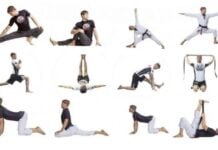
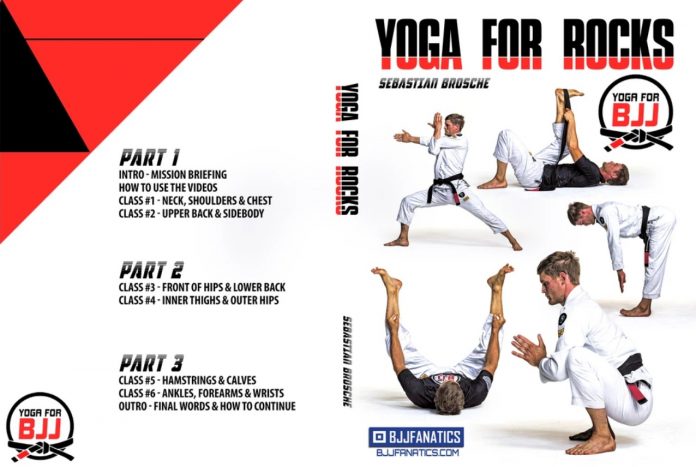
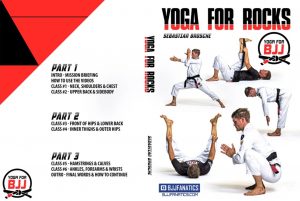
 Yoga is a commonly used generic term for a collection of physical, mental, and spiritual disciplines which originated in India. It is an extremely complex and diverse system that embraces many different aspects of the human experience. This aspect of yoga is largely concerned with asanas, which refer to the body positions and physical postures that are held during practice, and vinyasa – a specific sequence of breath-synchronized movements used to transition between sustained asanas.
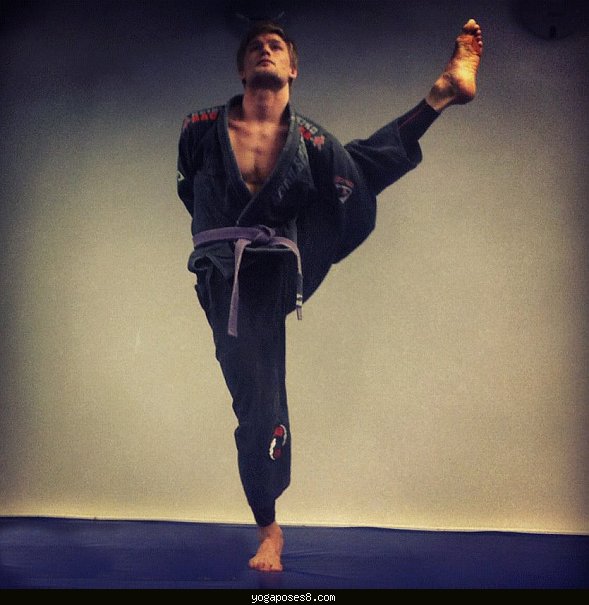 One of the most commonly ‘imposed demands’ of Jiu-Jitsu is a contraction. When you’re in guard, attacking from the side or back control and many of the other positions, your body is constantly in a contracted state. The upper back is often rounded as you are holding onto an opponent. The hip flexors and psoas muscles are usually tightened because the knees are tucked up towards the chest. As for the neck and shoulders – well if you’ve been training for any length of time you’ll know exactly what I’m talking about. This excessive contraction is even more pronounced in the primary defensive postures, like the turtle position.
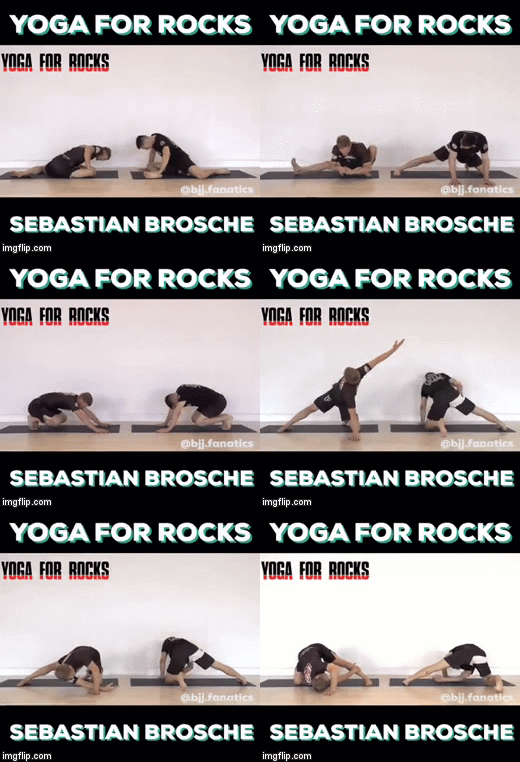 Correct practice develops so-called ‘”intelligent strength”. Not only does it train the central nervous system to fire muscles in the correct sequence, but it also teaches you which muscles to engage. The ultimate goal is to maintain postural alignment and efficiently move your anatomy through space. And we all know that good posture and movement are hallmarks of superior Jiu-Jitsu skills. Both of these qualities are included in the Yoga For Rocks DVD classes.
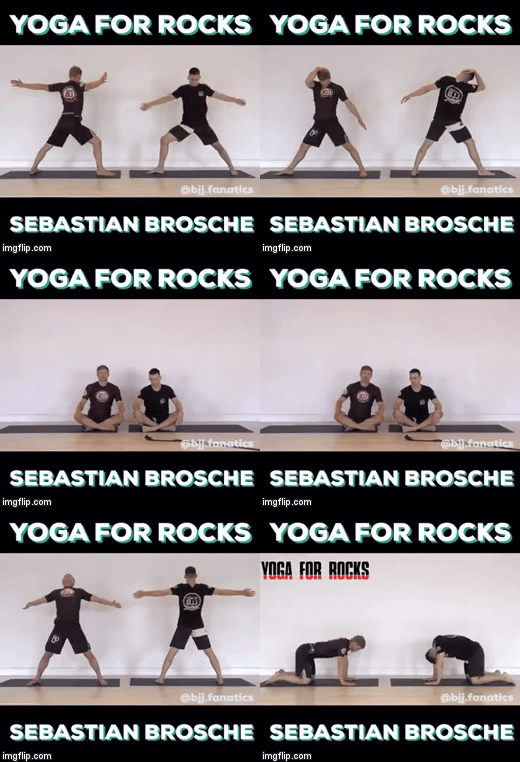 Yoga for BJJ, in particular, has been around for several years. It is an online-based program created by Sebastian Brosche that anyone can sing up for. The best part about it is that similarly to BJJ it is far from complete. As Brosche himself learns the secrets of Yoga further, he always updates his programs or comes up with entirely new ones. Given that he is not just a black belt, but also a highly competitive grappler, his inside knowledge of what is needed to actually make BJJ people move better is priceless. The Yoga For Rocks DVD is his latest issue.
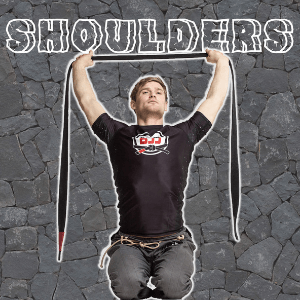 The second portion of part one contains two classes. The first one is all about every bodybuilder’s favorite part – chest, albeit in a much different fashion. Here, you get a complete rundown of how to strengthen your chest and triceps, while taking them to extreme ranges of motion at the same time. The one key component of class 1 is the inclusion of the neck. As far as BJJ goes, this is one of the body parts that get lots of damage. In class One, you’ll learn how to make it a lot tougher, while resolving any ongoing issues.
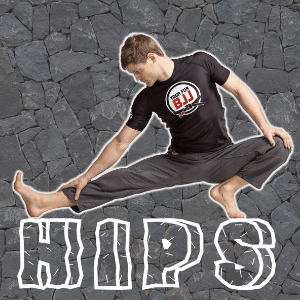 Part two is something most people in BJJ will probably focus the most on. This is where you get to learn all the exercises and sequences that’ll help you immensely with guard work and retention. This is where Sebastian Brosche covers hip flexibility and strengthening. The first class of this part, or third in total, is all about the front of the hips and the lower back. In other words, the two areas of the body which do not get much rest during Brazilian Jiu-Jitsu training.
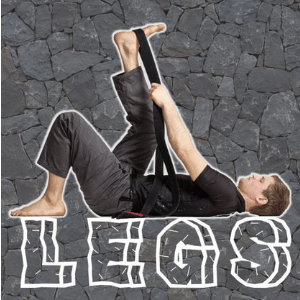 Finally, after covering the most important aspects of guard playing, Sebastian Brosche switches his attention to the muscles that guard passers use the most. While the hips and lower back get a shift in her too, there’s more. Class five of the Yoga For Rocks DVD covers the hamstrings and calves which are the muscles on the back of your legs. They are responsible for lots of the motions during passing, as well as balance and base. Moreover, much of the power that the hips have comes courtesy of the hamstrings. That is why deadlifts are such a powerful tool for grapplers. Well, this class is the way to take things to a whole new different level.