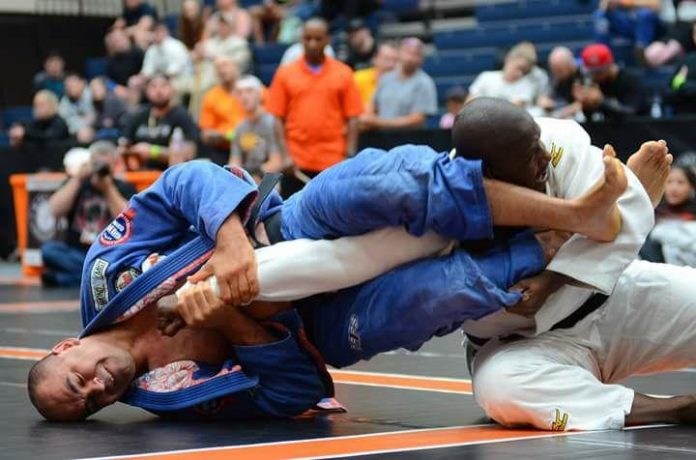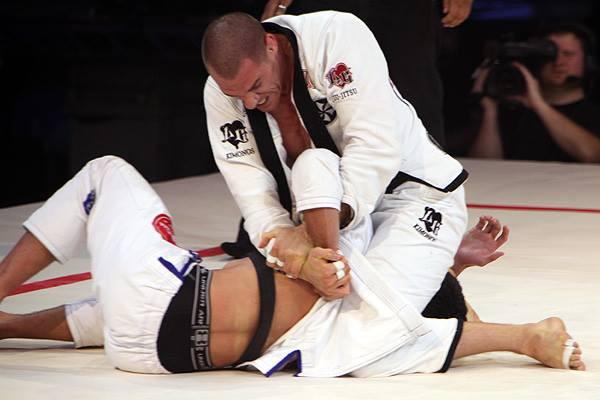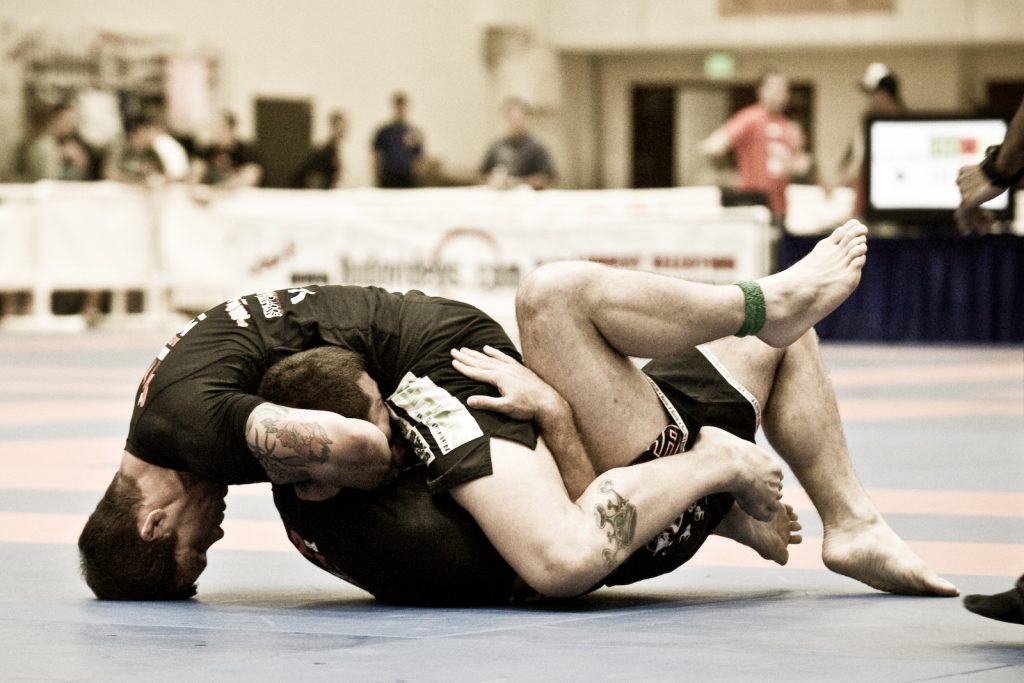



Wrestling For BJJ – How To Master The Arm Drag

Master the Arm Drag

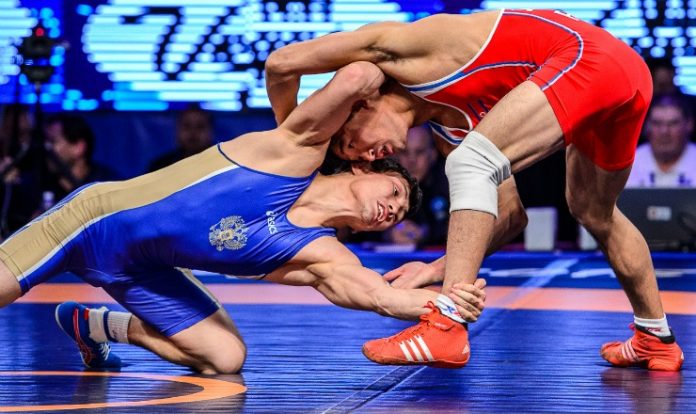
Wrestling has always played a huge role in the development of BJJ. Much of the stand-up game is based on takedown systems that have been borrowed from wrestling. There are also a lot of the weight distribution principles that allow Jiu-Jitsu athletes to be so dominant on the ground. Technically speaking, no other grappling martial art, except for maybe Judo, has had such a big impact on BJJ as wrestling. The Arm Drag is a position and a takedown. it is a control and a pivot point for many transitions. All in all, it is a very versatile move that has successfully found fertile ground in the Gentle Art. Let’s look at how BJJ not only borrowed this move from wrestling but took it into completely new directions along the way.

Perhaps the most difficult but important aspect of the arm drag is understanding that as much as your goal is to quite literally drag your opponent in the direction in which you are pulling their arm is important, moving around that arm is equally crucial. It is a question of understanding how your weight moves the other person and remembering Newton’s Third Law: for every action, there is an equal and opposite reaction. Bearing this in mind one needs to remember that in pulling the opponent down they are potentially able to pull themselves up, and around.

Mechanics of The Arm Drag

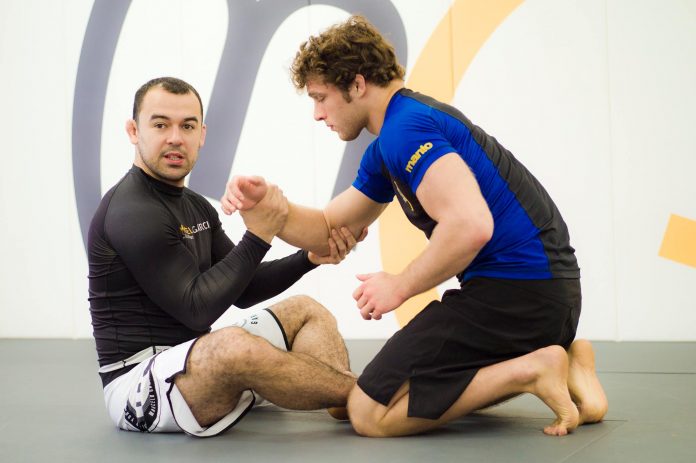
There are many great competitors who have made use of this technique in their competition successes. Perhaps best known for this is Marcelo Garcia who used arm drags in many of his matches with fantastic effect. There are, of course, many others who use it successfully.

Part of what makes the arm drag so effective is that people are generally weak behind the elbow. That is to say if you grab someone behind their elbow and pull their arm forward their ability to stop you is likely to be less than the force you can apply. More importantly, the arm drag relies on the dragger’s ability to force the person being dragged to bear their weight for a short time, thus forcing them to fall forward. People who get really good at arm drags are able to manipulate opponents much larger than them by forcing them to use one of the weaker areas of their bodies to carry their weight.

The concept is relatively simple: Pulling even a relatively strong practitioner away from their center of gravity will likely force them to compensate. Add to that the fact that the opponent is off balance due to the mechanics of the position and you’ve got the upper hand for sure. During that compensation, whether or not it results in them falling, the arm-dragger can easily move around their opponent.

A crucial element of the arm drag is getting out of the opponent’s way.  Very often the rookie mistake is to drag an opponent down but to then be trapped under their weight rather than to move around them.  When hitting an arm drag, the most important part of the move is escaping one’s hips to the side of the arm being dragged.

Arm Drag Takedowns

Arm drags lead to various opportunities for positional improvement.  Even a failed arm drag can put the person attempting it in position for a takedown or another position change in their favor.  Resisting the arm drag requires a certain degree of off-balanced force by the resister.

On the feet, the arm drag sets up a variety of takedowns and trips. While on the ground, it sets up back takes sweeps and submissions. Since all matches start standing, let’s talk about how it sets up takedowns. One particularly effective takedown of an arm drag is the double leg. Though why does the arm drag work so well here? The first reason is that it gets rid of a possible frame (the opponent’s arm) of defense and the second reason is that it will put you at a subtle angle that will make the takedown work. Check out how Marcelo Garcia, master of the drag, uses it to set it up.

https://www.youtube.com/watch?v=m2xo4IBax58&w=640&h=380

Arm Dragging From Guard

When on the ground, the arm drag can be used with great effect from the half guard. In half guard one can initiate back takes with relative ease using an intelligently placed grip. The half guard pairs nicely with butterfly, making the arm drag extra potent from either position.

From the closed guard, the arm drag provides a great path to the back as well as entries to various submissions, depending on how an opponent reacts to the back take attempt. The more you play the arm drag game the more openings and opportunities you will find to use it.

https://www.youtube.com/watch?v=ItgLxy0M1sA&w=640&h=380

Arm Drag To The Back

Last, but certainly not least, is the ability to take the back from an arm drag. Taking the back from the drag can be done standing, off of your back and from a seated position just to name a few. From there, you can hit any technique that you like from your opponent’s back. In gi, you have plenty of gi chokes and in no gi, the rear naked choke is still king.

Hunting For Leg Locks

Since the arm drag works so well, it is a valuable tool to experiment with in training. If you find yourself in any of these spots, try it out. It could very well become one of your favorite techniques in Jiu Jitsu.

Long Island MMA fighter Rob Diggle shows how to enter into a leg lock position from an arm drag:

The more you play with the arm drag the more you’ll see opportunities to use it.  The more you understand it, the better you’ll be able to use it to further your own Jiu-Jitsu game.  The key to this move is to drill it.  No one wants to be dragged to the ground and choked, so grip placement is key to success with the move. Drilling aids in innately understanding grip placement.  The more you drill the move the better you’ll understand it.

https://bjj-world.com/leg-locks-ultimate-guide-positions-submissions/

https://bjj-world.com/2-things-never-bjj-wrestling/

Double Leg Takedown – How to Do It & The Most Common Mistakes
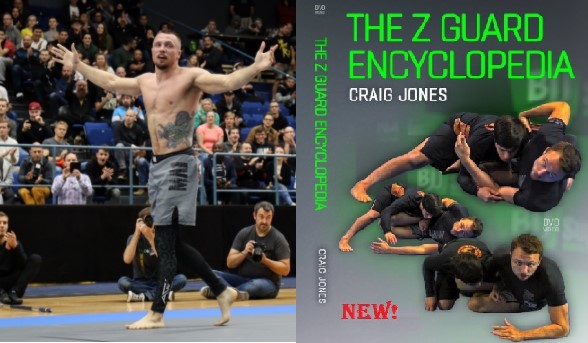
REVIEW: Craig Jones DVD – The Z Guard Encyclopedia

REVIEW: Craig Jones DVD - The Z Guard Encyclopedia

Craig Jones is fast becoming the latest huge star in the world of Grappling. The BJJ black belt emerged from relative obscurity to take the Jiu-Jitsu scene by storm. He trains at Absolute MMA in Melbourne under Lachlan Giles. Following impressive showings at the biggest stages of No-Gi Jiu-Jitsu, EBI and ADCC, the Aussie became a household name in terms of submission effectiveness. He is probably the only one to get near the efficiency of the Danaher Deat Squad leg lock system. As is the case with people who rise to glory via certain moves, he’s got way more tricks in his bag than just hell hooks. In that sense, Jones has just released another DVD instructional. We bring you a new Craig Jones DVD Review: The Z Guard Encyclopedia!

During our DVD Review: Craig Jones The Z Guard Encyclopedia, we just confirmed the fact that Craig is anything but a one-trick pony. While the level of his heel hooking game is beyond any doubt, his game is also a very well-rounded one, befitting of a high-level black belt. As a grappler who seems to favor the bottom position, it is no wonder he set off to demonstrate his knowledge of the Z guard. The best thing about it is that he decided to share his “secrets” with the grappling martial arts world.

DVD Review: Craig Jones The Z Guard Encyclopedia

The Z guard is an often underrated position in BJJ despite it’s proven effectiveness. Also known as the knee shield, this position offers both a high degree of control and lots of offensive options. In all honesty, the position is a fairly complicated one, requiring a high level of technical understanding of its fundamentals. One of the huge advantages of the Z guard is that it stops the opponent from advancing through a variety of guard passes.

Craig Jones demonstrates his most effective sweeps and sneaky effective attacks from the bottom. He shows how to turn this often defensive position into a true nightmare for your training partners and opponents. The DVD is an exclusive opportunity to also learn some of Craig’s devastating heel hook setups to have your opponents shiver with fear. Make no mistake, this system took a long time to develop. It’s been tested and tried across all kind of competition formats, always coming on top.

In case you need a testament to the effectiveness of Craig’s Z guard system you need to only look as far as the ADCC.  He uses a lot of the techniques he demonstrates to defeat both Leandro Lo and Murilo Santana at the latest edition of the ADCC. So, without further ado, let’s get into the meat and potatoes of our DVD Review: Craig Jones The Z Guard Encyclopedia.

Z guard essentials (Disc 1)

Starting off this series, Craig Jones starts off impressive. First and foremost, he teaches a unique way to enter the Z guard position. Instead of looking to enter Craig forces the opponent right into his Z guard via a very cool bait. He then proceeds to explain all the little tricks that allow you to control the position without much effort. He goes even further by offering a very viable defense against the weave pass, the most utilized pass against the Z guard. It is one of my favorite ways of passing the Z guard, but I’m now reconsidering my approach after witnessing how easy it is to stop it.

In an attacking sense, Craig starts things off with his favorite submission, and it is not the heel hook. Before adopting the dark side of BJJ, Craig was known for his devastating triangle chokes, mostly from the closed guard. His Z guard setup fo the triangle is a true masterpiece, hitting it from a very unexpected angle. Furthermore, he offers a cool armbar as well as a one-arm guillotine that has become a favorite of mine after the very first try! There’s also an Omoplata finish, which is not set up in any revolutionary fashion, but ends in a very unorthodox fashion!

Reverse De La Riva (Disc 2)

As you progress through the digital content, volume two kicks things off with the basics of the reverse De La Riva guard. Craig offers ways to integrate a very good reverse De La Riva game with the Z guard. After a long while on every aspect of the guard’s basics, Jones offers a couple of great sweeping options against a standing opponent. Both work really well against all levels of training partners, at least for me.

Since I was always a big fan of the Tornado guard, which is as inverted a guard as it gets, the next chapter really hit the spot for me. Craig offers a masterclass on how to invert, how to stay safe and how to attack from the position. All in all a really effective mini-course on one of BJJ’s most impressive and effective guard positions.

A Craig Jones DVD wouldn’t be complete without some heel hook setups and finishes. From the reverse De La Riva, Craig offers a very fast finishing standing heel hook. In an original fashion, he follows up with a scissor heel hook finish and transition to the 50/50 guard.

De La Riva Guard (Disc 3)

The final volume of the series is all about the De La Riva Guard. Controlling the guard with an underhook is certainly a novel approach that seems to really work. Craig explains how to utilize the De La Riva underhook to effortlessly sweep your opponent.  He also uses the underhook to gain entry to the Single Leg X guard. This, in turn, is a doorway towards X guard variations, most notably the reverse X. Reverse X guard is a favorite of Craig Jones, with multiple options for heel hooks or sweeps. His use of the Reverse X guard is what got him to the firework final against Gordon Ryan at EBI. To cap things off, he throws a Berimbolo entry into the system, again proving his grappling versatility.

The Verdict

What our DVD Review: Craig Jones’ The Z Guard Encyclopedia demonstrated is that Craig Jones managed to do exactly what – an encyclopedia. It offers options to control, sweep, or move into more elaborate positions to finish quick. Getting this instructional will accomplish two things. It’ll make you very dangerous off your back and it will raise your submission game to new heights. It did it for me and it was totally worth every penny!

You Might Also Be Interested in:

Tapping in Jiu Jitsu: Ways, Benefits and Misconceptions

Tapping Out

Submission Grappling. Catch Wrestling. Brazilian Jiu-Jitsu. Do you know what these grappling martial arts have in common? They all have one major goal – hunting for a submission. The submission is the proverbial cherry on top of the Jiu-Jitsu cake. The reason why the submission is the ultimate reward in grappling is that it is most often a fight-ending technique or even a lethal one. Submission either break a joint or a bone in the body or restrict the flow of air and/or blood to the brain. Whatever the case, they are debilitating moves that need to be practiced with care. That’s where tapping outcomes into the picture.

During submission-oriented grappling training, such as BJJ rolling, two athletes enter a contract of a sort. They agree to lend each other their bodies, while looking to dominate the other one, ending in a submission. The contractual obligation of the one submitting is not to take anyone fight-ending move even near to completion. On the other side of the contract, the grappler caught in the submission has the obligation of tapping out, once all logical defensive options are exhausted. As such, tapping out plays as significant a role (or more) as submission themselves in grappling martial arts.

Tapping Out In Jiu-Jitsu

Of all the techniques you learn in Jiu-Jitsu, the most important one is tapping out. The tap symbolizes death because you acknowledge your partner could’ve killed you with a move. If you put it like that, it does seem more important than ego, doesn’t it?

The tap, is first and foremost, not a measure of someone’s skill. No self-respecting instructor is ever going to measure your BJJ progress by it, so you shouldn’t either. It is the wrong mentality for grappling to see tapping out as a failure.

When to tap in Jiu-Jitsu?

A very important part of tapping is knowing when and how to tap. First, let’s look at how you should tap in order to make sure you’re understood clearly. Whenever you recognize that there’s no way out, be sure to have a limb (or three) available to tap. As far as tapping surface goes, ALWAYS try to place your tap on your training partner’s body. The next best surface is the mats. On top of that, do not just pat your partner once or twice. Always look to tap repeatedly and loudly. Remember that you can use your legs too when you’re tapping or you could do it verbally by yelling “tap”. Ideally, go for as many of the above as possible at the same tie.

Tapping a higher belt is no big deal

Let’s put it like this – how many times can you tap a blue belt to catch a brown belt? The likely answer is hardly a few. Does that mean the brown belt’s skill and knowledge suddenly disappeared? No, it just means they got caught or were intentionally putting themselves in a difficult position to figure something out. Tapping out means just one thing – they can start again and find the solution to the puzzle.

Should Lower Belts Be Able To Tap Higher Ones: https://bjj-world.com/lower-belt-student-submit-higher-belt-bjj/

Tapping Out To Learn BJJ

The Teaching Power Of The Tap

“There is no losing in jiu-jitsu. You either win or you learn!” This popular saying is actually not limited to BJJ. It transcends the boundaries of sports and has been used in every competitive environment out there. Although it is often an excuse, the original notion behind it is spot on. Using it as an excuse is born of frustration, which is a derivative of ego. As much as we say we “leave our ego at the door’ it is always present. As such, we need to find a way to deal with it. Tapping out is one great option. All we need is to perceive it correctly, as the powerful teaching tool that it is.

It is crucial to understand that everyone taps in training. Even those top-level grapplers you’re looking up to tap repeatedly when preparing for super fights. Do you know why? Because that’s a great way to learn really fast. Whenever you’re caught in submission of more than one, understand it as a puzzle needing to be solved. Do not get discouraged by tapping out to the same move. Talk to your partner and the instructor, and ask them to first, explain the move to you. Then you can either ask for defensive options or proceed to discover them on your own. Whichever path you take, be prepared for more taps before you figure it out. After all, tapping out provides you with the opportunity to try again. Not tapping is likely to injure you and rule you out for a while. You won’t be learning much from your couch, will you?

In addition, remember that there are more instances requiring a tap besides just submissions. Whenever you’re unable to breathe or are feeling serious discomfort tap fast and hard.

The “Brazilian Tap”

As far as respectful behavior on the mats goes, the “Brazilian” tap is as far from it as possible. The “Brazilian” tap is essentially a fake tap when someone caught tightly in a submission only slightly touches the opponent or makes an action as if they’re going to tap. It is a form of cheating and is highly frowned upon in BJJ.

It is an old trick originating from Brazil. In competition, it is a great way to fool a referee by tapping out of their field of vision. The use of this cheating move is not limited to Jiu-Jitsu only. There have been several instances of “Brazilian” taps in the UFC, the most notable being Matt Lindland’s. Lindland managed to fake tap his way out of a very tight armbar and keep on fighting. It was, luckily, of little consequence to the outcome, he got caught in a guillotine later on. If people learn that you favor the “Brazilian” tap, you’ll most likely end up injured because they won’t want to risk you getting out of anything. Not a really smart way to learn Jiu-Jitsu.

Some Unwritten BJJ Rules You Need To Obey: https://bjj-world.com/unwritten-bjj-rules/

Taping Out Higher Belts

There’s no need to worry whether you’re on the giving or receiving end of the tap. As I previously stated, being a higher belt does not render you immune to lower belts’ submissions. However, you should consider them as learning opportunities rather than ego bruises. You haven’t somehow lost all of your expertise as a black belt if a blue belt is able to submit you.

The same rule applies in reverse. If you tap out a higher or black belt, you’re not suddenly a world-class grappler. Of course, congratulations on the successful attacks, but don’t think you can use the same technique on everyone again and again.

Finally, while you’re rolling with your coach, don’t be afraid to attack. I’m talking as a full-time instructor and black belt, so go for it! Try to put us in any position possible. There are times when you should show your coaches respect, but holding back during training is not one of them.

Celebrating Taps

Whether you tap a lower belt, a peer, or a higher belt, acknowledging the fact that you were tapped is an indication of the type of individual you are. Rolling isn’t about winning and bragging about your victory makes you look ridiculous.

In competition, it’s a whole different story. If you were able to finish your opponent in the finals in just 30 seconds, that’s fantastic. In a highly competitive scenario where adrenaline is racing, though, you’re celebrating a victory rather than the tap itself.

In Conclusion

On a final note, even when you embrace the concept of tapping out, make sure your goals in that regard are clear. To clarify further, not tapping out to a certain move is not a legitimate BJJ goal. Running out the clock by holding for dear life while at the edge of a submission provides no learning experience whatsoever. You want attainable goals that lead to progress? Look to either escape in a technical manner or to tap out. You’ll learn more that way than by just surviving.

Science Behind Brian Ortega Chokes – 425 lbs Of Force On Triangle Choke

Science Behind Brian Ortega Chokes - 425 lbs Of Force On Triangle Choke

In the UFC Performance Institute, they were examining submission skills of Brian Ortega. Specifically his chokes.

There are two phases of this examination. They took a look at the high level of technique that Brian Possesses as well as forces that Brian can produce.

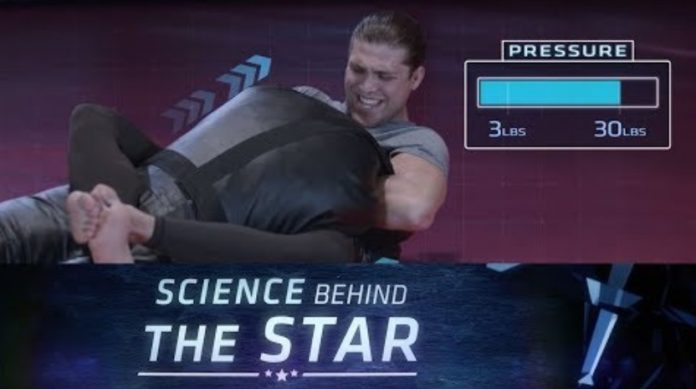
To measure Brian’s force they implanted the Force Dynamometer into neck region of the grappling dummy. So as Brian squeezes and compresses the dummy, the Force Dynamometer will calculate how much of the force Brian is producing with his chokes during every stage of the technique.

The first submission that is tested is Triangle choke. The first pressure point of the triangle is hips and the second are the knees. In this Brian’s signature submission he managed to produce 425 lbs of force. Which is a bit less than a bite of the wolf, which is 500 lbs.

The next submission they were examining was Brian Ortega’s Guillotine Choke. Brian successfully utilized two guillotine chokes in his UFC career. One against Cub Swanson and another against Renato Moicano.

Brian Ortega was able to produce 365 LBS of force. To put that in context, Ne England Patriot’s tackle man Marcus Cannon is 335 lbs. So, 365 lbs that Brian Ortega produce is basically the equivalent of an offensive liniment Marcus Cannon standing on your throat.

So, the interesting thing about choking techniques is not about how much force you can produce. It’s more often the direction of where the choke is held. There are needed only around 3-30 lbs to keep it for 10 seconds to render your opponent unconscious.

So what these results demonstrate is that Brian is one of the scariest submission martial artists in the UFC today.

BJJ Purple Belt Chokes Out Much Bigger Attacker

Top Jiu-Jitsu Gifts To Surprise A Grappler (Reviews Included)

Jiu-Jitsu Gifts For Grapplers

Brazilian Jiu-Jitsu is fa more than just a sport. it becomes a full-time lifestyle for most people involved in it, especially after the purple belt. Although the manic dedication looks puzzling to people outside of the sport, they soon learn to live with it. This holds especially true for those closest to us. BJJ is as much of a lifestyle for the immediate family and friends of grapplers, as it is to practitioners themselves. So it is not unusual to see those closest to us reach for Jiu-Jitsu gifts when such an occasion arises.

The catch here is, that despite BJJ having such a distinct place in our lives, it provides loved ones with an easy choice for a gift. Regardless of the reason, when the time comes to surprise a grappler, Jiu-Jitsu gifts are the best way to go. Whether it is Christmas, a birthday, Valentine’s day, or just an impromptu present, Jiu-Jitsu gifts are going to bring a smile to every cauliflower ears-framed face.

The Ultimate Jiu-Jitsu Gifts

When it comes to choosing Jiu Jitsu gifts, the only problem is which of the many to give to your loved one. There’s no problem when it comes to a BJJ practitioner. The sport is not really the most affordable one, with a lot of gear needed just to train on a regular basis. As a grappler gets more and more experienced, the easier it is to choose a BJJ-related gift for them. Firstly it is because people close to us know what we like. Secondly, the toll BJJ takes on our bodies makes it even simpler to choose a gift or two. Here’s a quite comprehensive list of Jiu-Jitsu gifts to choose from the next time it’s your turn to choose a present.

Jiu-Jitsu Clothing

Of course, we’re going to start with the most obvious. There’s nothing a BJJ athlete desires more than a new piece of training, competition or just everyday apparel.

Giving a BrazilianJiu-Jitsu practitioner a new Gi can never go wrong. And by never, I truly mean never. Even if you get the wrong size, they’ll still be very grateful and happy. After all, it is easy to exchange it with the vendor or in the academy. The sheer diversity of brands, colors, and designs means that you have a vast array to choose from. Trust me, no grappler is going to refuse a brand new Gi as a gift from a loved one. Unless they train at 10th Planet.

For all those die-hard No-Gi fans, there is always a very cool Gi alternative. Just look for the latest Rashguard and spats design and choose the desired size. But there’s no reason to stop there. Since you’re already buying No-Gi training gear, throw in a pair of shorts as well. The only downside of this is that you’re loved one is going to disappear out of your sight the moment you hand them the gift. Where to? Well to the academy, of course, first to brag and then test out the slick-looking gear.

Finally, as grappling martial arts grow in popularity, so does the associated apparel industry. Nowadays there’s no piece of clothing that you can think of, that’s not available in a Jiu-Jitsu-related way. From your compulsory t-shirts and hoodies, all the way to baby clothes and bedsheets, whatever you choose just make sure relates to BJJ and you’re on the right track!

Allow us to suggest a few items that will bring joy to any grappler:

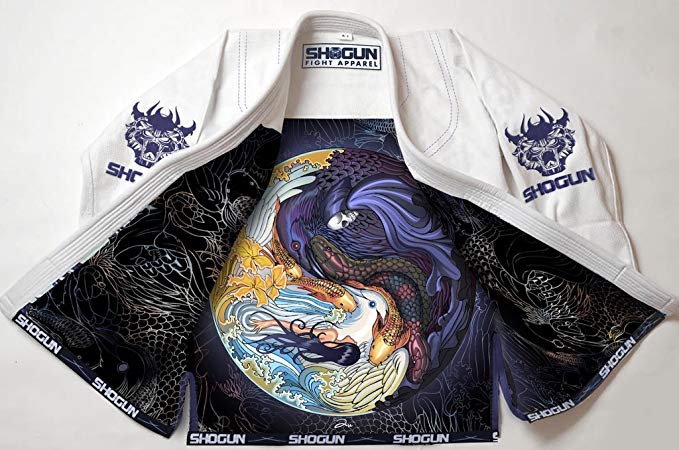
Shogun Fight Jiu-Jitsu Gi Tao Premium BJJ

Jiu-JItsu GiftsAs far as Gi Jiu-Jitsu gifts go, Shogun Fight’s Tao Premium Gi is top of the list. The jacket is 450g Pearl Weave Cotton, coming in at a very lightweight. The Gi is available in black, white and blue color, and a large variety of sizes. The unique aspect of this Gi is the interior of the jacket. On the inside, the lining is completely covered in cool art. All the more, the lining itself is made from rashguard material. The lining extends to the sleeves, which makes this Gi the perfect rahguard+Gi combination. Reinforced ripstop pants complete the experience. 100% IBJJF legal. 

Enjoy A Choke BJJ T-Shirt 

Jiu-JItsu GiftsThis one works as both leisurewear and/or training wear, depending on the preferences of your loved one. In any case, it is a high-quality product, available in black color. the design of the T-shirt is with white letters, saying “Enjoy A Choke” in Coca-Cola style art. Comes in a variety of sizes from extra small to XXXL. The print is sublimated, meaning it won’t peel off or get damaged. Perfectly safe for the washing and drying machine. The material is 100% cotton and hypoallergenic. 

Anthem Athletics MIDNIGHT Ranked Rash Guard 

Jiu-JItsu GiftsLet’s not forget all our No-Gi exclusive significant others, though. One of the best Jiu-Jitsu gifts you can get for a No-Gi grappler is a cool and durable rashguard. This one is going to allow those wearing it to compete in both official IBJJF tournaments, as well as all others. Thre area five designs available, depending on belt rank. Sized from S to XXL, this long sleeves rashguard is perfect for No-Gi training as well as wearing under the Gi. Multi-panel construction, antimicrobial, moisture-wicking properties, and 4-way stretch technology. This rashguard really has it all! 

Grappling Gear

Next on the Jiu-Jitsu gifts shopping list are all the various pieces of training equipment a grappler needs. There are so many to choose from that you’ll be only limited by your imagination. And your budget.

A good, solid gm bag is almost as good as getting a BJJ loved one a Gi. You can go commercial and get a great gym bag for everyday use. But, if you want their face to really glow, go for BJJ specific bags or backpacks. There are plenty of brands out there that have great products designed especially for the need of BJJ athletes. Now your loved one can fit all those gifts you’ve already gotten for them in one place!

Supportive gear is also a big one, especially for more experienced (read injured) grapplers. Finger tape is a huge one for anyone who’s been involved in Jiu-Jitsu for more than a couple of years. Getting them a few rolls of different colored tape is a great way to surprise them! Knee pads are the next big essential thing for the “over 40” grappler. Competition essentials like mouthguards are also a top choice when it comes to Jiu-Jitsu gifts.

Finally, any kind of training equipment that can be used at home is an ideal BJJ present. Think more of kettlebells and grip strengthening equipment rather than squat racks and barbells.

Our suggestions include:

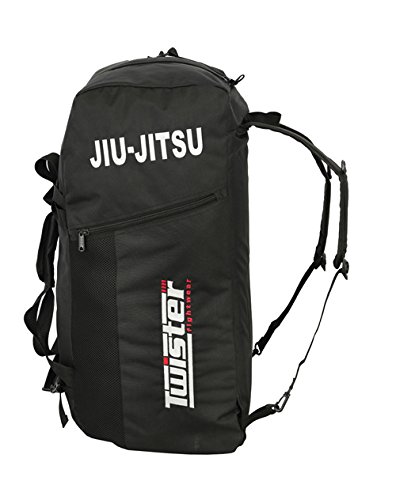
Twister Jiu-Jitsu Backpack

Jiu-JItsu GiftsThere’s no way we can skip over this incredible backpack when discussing JIu-Jitsu gifts! The Twister Jiu-JItsu backpack is a vented convertible duffel/backpack bag that offers both space and versatility. Plus, it is incredibly comfortable to wear because of its anatomical design. Switching between duffle and backpack is easily done in just seconds. Made from extra strong fabric used for motorcycle helmets.  Fully breathable and doesn’t retain odor. Fits two Gis. 

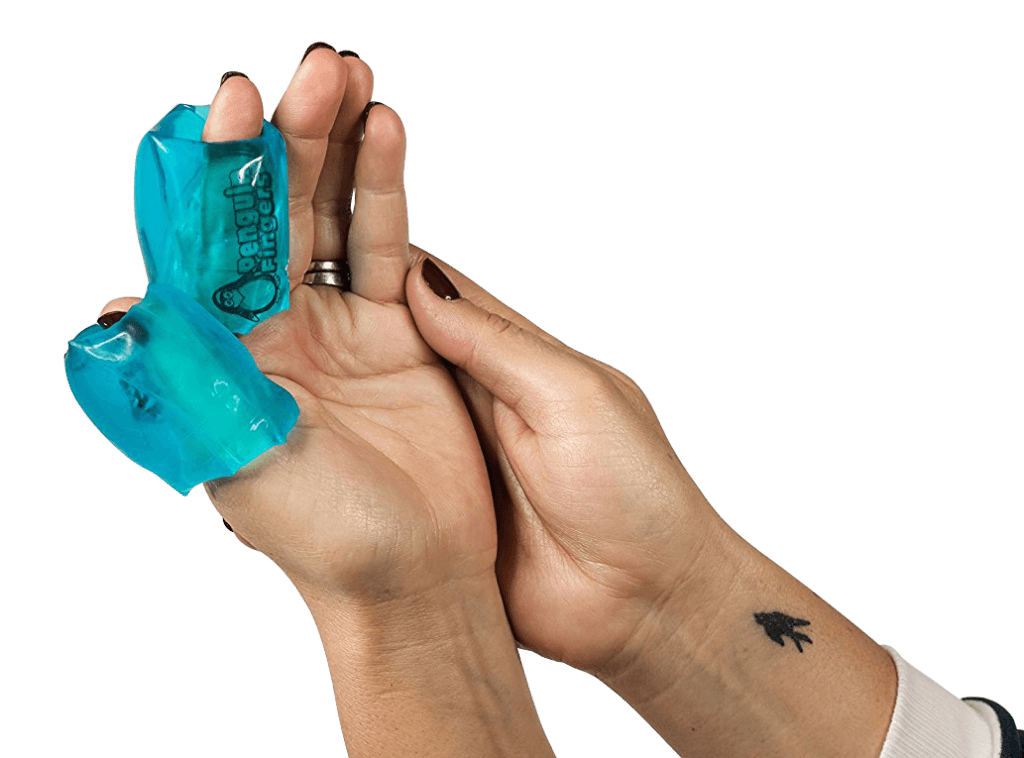
Finger and Toe Cold Gel Ice Pack

Jiu-JItsu GIftsIn terms of common injuries, there are hardly more troublesome ones that finger/toe injuries. In JIu-JItsu, they’re as common as they can get. Although not particularly debilitating, they are painful and take time to heal. The Penguin Fingers’ specialty Cold Gel Pack is a great way to ensure you resolve any finger/toe injury as soon as it happens! Just pull the gel on your finger and prevent the swelling from ever appearing! reusable and easy to carry around. 

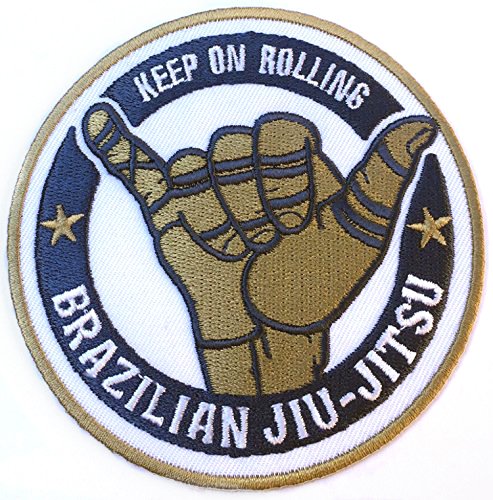
Karma Jiu-JItsu Patch 

Jiu-JItsu GiftsEven if you’re totally lost in terms of choosing JIu-Jitsu gifts for your special someone, you can’t go wrong with a patch. And this patch is going to make anyone happy. It is simple, cool looking and easy to put on. Karma’s patch has the BJJ favorite shaka hand sign, along with teh writing “Keep On Rolling”. It looks great and is perfect for decorating a BJJ Gi, backpack or any other piece of equipment. 

Extra BJJ Classes

The whole point of being so deeply immersed in BJJ is the ability to practice BJJ on a regular basis. This means going to classes as much as possible. However, classes do not come cheap, depending on the school and your location on the globe. As such, paying a month’s worth of Jiu-Jitsu classes for a loved one is one way of making them adore you even more.

If you’re looking to make that extra step, say for Valentine or another holiday, instead of a monthly membership, buy a private class with a top instructor for your loved one. The amount of knowledge one can get from a private is only rivaled by the amount of happiness at receiving such a gift.

Digital Content

Still, on the subject of learning but in a completely different setting, digital gifts are also at your disposal. Many of the top-level world-class Brazilian Jiu-Jitsu athletes have online programs that require a monthly or yearly subscription. Get your loved one access to this content and they won’t know how to repay you. Just be wary that they’re going to spend as much time as they can in front of a computer while the subscription lasts.

Another great gift option is instructional DVDs. Most of the top fighters in the world have their content out on a disc, most of them more than one. I’m certain you’ve heard of your loved one’s favorite competitor countless times by now, so it is not going to be that hard to decide what to buy.

You can see a lot of DVD’s and DIGITAL Instructionals HERE.

Competition Fares

If your family member or friend that’s obsessed with BJJ is also a hardcore competitor then you have a direction to think about in regard to Jiu-Jitsu gifts. Competitions in BJJ are not cheap events. It might be baffling to you why instead of fighting for money, your loved one pays to fight, but such is life. So, paying for a tournament registration fee, or arranging travel expenses to a tournament is as great a gift as any. Again, you’re in the best position to know where your loved one is looking to compete. Take that to your advantage and surprise them with a gift!

BJJ Supplements

Last but not least, most of the people in BJJ are really careful about what they eat. Furthermore, they’re most likely using a supplement or two to help them stay on weight or just to stay healthy. If you’re familiar enough with their supplement stack, just look to refill the one that’s almost gone. On the off-chance that you have no idea what supplements to buy, just get a voucher from a supplement store. That way your gift is going to allow your favorite grappler to choose their protein, creatine, vitamins or whatever energy-boosting pre-workout they like to use.

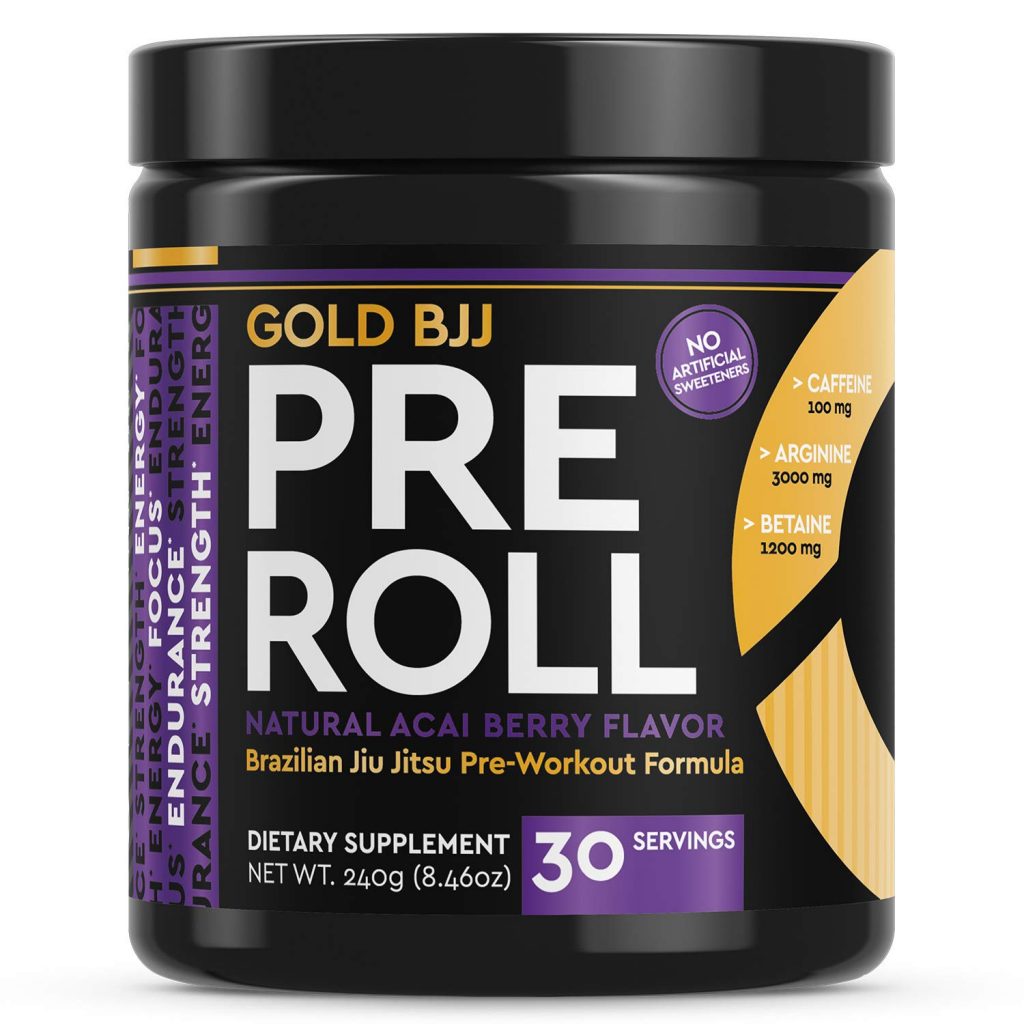
Gold BJJ PreRoll

Jiu-JItsu GiftsIn terms of supplements, this one is a real game changer. It’s not only a great pre-workout supplement, but it’s also BJJ specific! It is a special formula designed to get you into third gear before you even step on the mats. Ingredients are very carefully blended and include caffeine, betaine and more!. The dose is carefully regulated and provides a great punch! Acai flavored for that complete JIu-Jitsu experience! 30 servings with less than 1 gram carbs per serving! 

Best BJJ Christmas Gifts & Presents For 2021

Key Details To Tighten Up The Bow And Arrow Choke

Bow And Arrow Choke

When I first started BJJ I had some basic knowledge of chokes, given my Judo Background. As a white belt, I thought I couldn’t be surprised by chokes that involve the lapel. To put it mildly, I was wrong. There’s no comparison between Judo and BJJ in terms of the depth of collar choke variations. Both of these grappling martial arts rely heavily on the Gi, especially the top part of it. Despite great controlling options, the Gi material is a very dangerous weapon for those that know how to use it. So, imagine my surprise (and lightning-quick tap) when I first got caught in a Bow And Arrow Choke.

As far as Jiu-Jitsu collar chokes go, none is more of a staple of the art than the Bow And Arrow Choke. Not to take anything from other collar and lapel chokes, but the effectiveness of the bow and arrow choke is undisputable. This is largely due to the positioning and high degree of control that one has when executing this beautiful technique. As such, it is almost entirely exclusive to Gi BJJ, since it requires the use of a collar. Notice how I said “almost”. Read on and you’ll discover a No-Gi bow and arrow variation that’ll have you running towards the academy to give it a shot!

Do You Know How The Gi Became Such A Huge Part Of BJJ? Here’s The Answer: https://bjj-world.com/jiu-jitsu-gi-bjj-origins-samurai-gracie/

Collar Chokes History

As with many of the Gi related BJJ techniques, collar chokes came from Judo. All choke techniques in Judo are known as Shime-Waza (choking positions) In Kodokan Judo circles, the collar chokes are categorized under the name  Okuri-Eri-Jime. These include the loop, clock and a variation of the crucifix choke. More along the lines of the bow and arrow choke, Judo collar chokes often utilize control of the pants when hunting for a submission.

The bow and arrow choke (Berimbau in Portuguese) derives its name from the specific choking position. Namely, for this choke to work, a grappler needs to be behind their opponent, with one arm grabbing their collar around the head. Since an additional grip on the pants is also required, the body has to be angled towards the opponent’s hips. The result is a bow and arrow-like position of the arms, hence the name.

This attractive position is the reason why the bow and arrow choke has become a mainstay in BJJ culture. It is a common subject of all kinds of BJJ related artwork like photographs, graffiti, tattoos and t-shirt designs.

Check Out Some Amazing BJJ Ink Art: https://bjj-world.com/jiu-jitsu-tattoos/

The Bow And Arrow Choke

The bow and arrow choke is a very technical choke. It is usually part of the fundamental curriculum but remains an often re-visited subject during classes. It is one of the highest percentage submission in BJJ, and on top of the chokes category, along with the rear naked choke. A large part of the choke’s effectiveness is due to the fact that it is executed from the back position, considered to be the most dominant one in grappling.

Technically speaking, the starting point of the choke is getting the collar grip. The goal is to get as deep of a grip as you can while having the opponent’s back. For the grip, the thumb needs to go on the inside part of the lapel. The area of your gripping hand that is under the thumb should end up under the opponent’s chin. A cool trick to remember is to always look to turn the edge of the collar upwards by twisting your wrist in a forward manner. This creates an arrow-head-like structure that goes under the chin really easily, but cannot be pulled out.

Once the choking arm is in place, it’s time to think about changing the angle. The idea is to open release your back control hooks so that the leg that is on the same side as the choking lapel goes across the opponent’s body. that is going to get your free arm closer to their leg. The point is to grab the Gi pants on that leg at the level of the need of the knee. For top control, it’s paramount to focus on gripping the outer part of the Gi at the knee. For a finish, all you need to do is ext3end your hips while leaning back.

Variations For Every Occasion

Passing into a bow and arrow choke is a dream combination. Rafael Lovato Jr, one of the top American black belts, walks us through this one. He starts things off with an X-pass and reacts to his opponent turning as a defense. During the turn, Lovato gets the choking grip on the collar and threads his foot under the opponent’s hips. The hook allows you to control your opponent while you get the second hook in. From there, it’s just the regular bow and arrow finish.

Attacking the armbar is a very viable option from the back. However, BJJ works in every direction, so you can go for a bow and arrow choke off an armbar attempt as well. From the basic armbar position, it is important to keep control of the arm with a Kimura grip. While doing so, make sure you pull off your own lapel that is on the side of the opponent’s head. Keep the free end of the lapel in your arm and take off your leg from their head. From there, just add the lapel to your other arm and you’ve got a tight choke!

A rolling bow and arrow set up from the turtle position is as attractive as this choke gets. Actually, one of the best times to sink in a submission is during transitions. It is very important to keep the hips low and have a deep and secure collar grip before looking to roll. The roll itself is a front roll and is the most difficult part of the technique. Just remember that the aim is to get both your shoulders on the ground at the same time after you roll. Also, the leg of your opponent shouldn’t be out of reach once you finish the roll. The finish is as described above.

For the No-GI cherry on top of the choking cake, here’s a very cool variation of the bow and arrow choke. The beauty of this one is that it is a No-Gi version of this popular choke. It is a really cool option to have when an arm triangle attack fails. Key details are how you lock your fingers and keeping your arms relaxed as you apply the choke.

The Old Man Sweep – Very Effective Sweep that you Should Learn ASAP

Old Man Sweep - Very Simple and Very Effective

Have you ever heard of Old Man Sweep? Well, if you didn’t it’s time for you to learn it. It’s very easy and very effective sweep that can earn you the easiest 6 points ever.

In a video below “old man sweep” is demonstrated by Marcelo Cohen from BJJ Box, ADCC and IBJJF Champion. Check it out, especially if you’re in “BJJ After 40” group of practitioners.

You can also check the article below and check strategies for older people and see why BJJ is the best martial art for older man.

Old Man Jiu-Jitsu – Training Tips For Older Grapplers

How To Keep Weight Training For BJJ Simple And Effective

Weight Training For BJJ

In the maze of information out there on how to train, it is really hard to choose a routine to fit in with BJJ training. The latest program is just a simple click away, full of novel movements and intricate strategies. Despite the availability of options on the internet, very few are applicable to the average grappler. Namely, weight training for BJJ is a very specific subject that requires expertise and knowledge. Not everyone can assume the strength needs of grappling martial arts practitioners. It takes a grappler, preferable that is an expert in weight training, to train a grappler.

Fortunately, lately, there is a lot of backlash in Ji-Jitsu circles against all the needless clutter. Despite the lucky handful, grapplers can’t really make a living through Brazilian Jiu-Jitsu. As such, the cannot train like a professional grappler or an MMA athlete. Even then, all those professionals have tailor-made routines to fit their needs.  Discipline, organization, and understanding are all universal principles that have stood the test of time. Apply them to any training environment and you’ll come up with solid results. In terms of weight training for BJJ, the most important rule is to think simple.

Weight Training For BJJ

How To Keep Workouts Simple

If you’re just starting out, look at some of the lifting programs of the guys from the 50s and 60s. They were simplistic in nature which made them very effective. They were void of complex systems requiring meticulous record-keeping and confusing sequences of execution. Granted, you could argue that this was before science got its hands into the exercise realm, but you can’t dispute the results!

If you’re the type who loves to lift in addition to BJJ, think back. Remember your early days when increases in muscle, strength, or whatever your goals were, came quickly? It was the basics that got you there. It was your efforts toward the necessities and little else that enabled you to focus on just a few simple principles.

When it comes to weight training for BJJ the subject gets a bit more complex. Most people think things must become more scientific, “functional” and sport-specific. Well, it’s time for a brutal wake-up – there’s no sport-specific strength training! Strength is the strength, it is as simple as that. Train it correctly and it will translate well to your BJJ game, giving you an edge over the opposition.

In reality, simplifying your training will free up your attention, so you can apply more effort toward your goals. For a grappler that spends about 10 hours a week rolling on the mats. there’s no need for one-legged Bosu-ball curls with water weights  Overcomplicated training leaves you constantly questioning your methods, and never settling on a clear path to work.

Key Principles Of Weight Training For BJJ

These rules of weight training for BJJ aren’t exactly rocket science. You’ve heard them before, but it’s important to get a quick review. Are you still following these vital principles of minimalist training?

Compound beats isolation: Although repeated to death, this still needs to be stressed again and again. As so many grapplers migrate to concentration curls and machines that meticulously isolate every muscle fiber, the message of the compound, the multi-joint movement has gotten lost.

Progression for success: This principle is key when you want any change to occur. For Jiu-Jitsu purposes, look towards progressive overload with moderate weights and reps. It’s fine to go heavier or lighter some days, as long as you’re constantly moving the needle forward.

Form and range of motion: This is another simple but seldom-followed principle. Learn to correctly brace, contract, and move each area of the body. For example, the deadlift has many technical aspects to consider other than just lifting a bar off the floor.

Weight Training For BJJ

Simple Equipment For Complex Results

Here is a complete (albeit short) list of what you’ll need on to build a weight training for BJJ program. It isn’t sexy, but you also won’t have to go out and buy the latest gadget that tracks every rep, step, and breath. Feel free to add your own minimalist pieces of equipment, but just remember to keep it simple.

  • Barbell
  • Plates
  • A pull-up bar
  • Adjustable bench
  • Squat or power rack
  • Parallel dip bars
  • Kettlebells
  • TRX or Gymnastic rings

Effective Programming

When you choose a training program, make sure you can train at least two, preferably three nonconsecutive days per week (Monday, Wednesday, Friday or Tuesday, Thursday, Saturday). The non-lifting days would be the days you do Jiu-Jitsu.

First and foremost, make sure you go through a complete warm-up before every session, which includes general warm-up movements (walking, jogging, dynamic mobility) along with specific warm-up patterns for each area that’s going to be trained.

Also, stick with your program for at least four weeks, or even better, six. This will enable your body to adapt and see results. After 4-6 weeks, take a few days off from weight training, and then either run the program again (with adjustments and slight changes) or choose a new program. Just keep up with the simple principles stated above.

Travis Stevens’ 3 weeks / 3x per Week Weight Lifting Program for Grapplers

The Ultimate BJJ Core Workout Program

A Jiu-Jitsu Workout Program To Lose Fat And Improve Performance

Use Gymnastics To Become Freakishly Strong For BJJ

21 Strength and Conditioning Exercises For Jiu Jitsu!

How To Integrate The Ankle Pick Takedown Into Your BJJ Game

Ankle Pick BJJ

Do you know what BJJ’s best takedown is? The answer might surprise you, as it is actually the guard pull. All other takedowns are borrowed from other arts such as Judo or Wrestling. Accordingly, those takedowns that connect easily to the guard pull are top choices for higher level Jiu-Jitsu players. In case of borrowing from Judo, foot sweeps and/or sacrifice throws can be combined with pulling guard. On the contrary, wrestling offers a different aspect of takedowns to use in connection with the guard pull – the ankle pick.

The ankle pick is one of the most dynamic and effective wrestling takedowns. Actually, it is one of the most versatile takedowns in grappling martial arts. The ankle pick is an offensive move where a grappler grabs the ankle of the opponent and pulls it towards their own body. The idea is to force the opponent into a one-legged stance and take them down effectively. If you know the basics of this technique, you can pick an opponent’s ankle from almost anywhere!

The Ankle Pick Position

The key to a successful ankle pick is the setup. To begin with, you need to choose which of your opponent’s ankles you are going to pick. Typically, it’s advised to go for the ankle of your opponent’s lead leg. This, in turn, determines which leg you’ll be focusing on. If you are picking his right ankle, your focus will be on his right leg. With this in mind, you can look to get into a position for the ankle pick.

As with all things BJJ, it all starts with the grips. A collar tie or sleeve and collar grips on your opponent are mandatory. This allows for upper body control and the opportunity to push or pull at will. In G, one grip is on the collar, while the other is on the sleeve behind the triceps. In N- Gi it’s head and triceps or wrist control. Knees should be bent and hips low in order to perform a quick level change.

To begin the entry, you need to start pulling your opponent’s head (or collar) down towards the knee of their lead leg. Next, you need to lower your body for a level change. Try to force their head past his knee and towards the ankle you want to pick. The closer the head gets to the ankle, the greater your chances are of taking them down. You’ll also want to try to force a shift in the opponent’s body weight towards the foot of the ankle you’re attacking. This is known as creating a “heavy foot” in wrestling. It is essential in creating much more difficulties for your opponent to defend against the ankle pick.

Taking It To The Ground

To finish the takedown you need to take a penetration step towards your opponent. Make sure you lead with the leg that’s on the same side of your opponent’s body as the ankle you’re picking. From there, look to drop to your knee and cup your opponent’s heel from the outside of the foot.  The outside of their foot should be on the inside of your forearm, given that you’re in the correct position. The arm that grabs the hee3l is the same as your leading leg. It’s the arm that controls the grip on the opponent’s triceps or wrist.

In terms of cupping, aim for the very bottom of the heel so that your pinky finger is touching the mat. This will not only help you control the foot better, but it will also force you to get lower. This is the desired angle for high percentage finishing. Staying on your knee, keep your trail leg extended behind you, basing with your foot.

In one swift motion, look to quickly pull the ankle towards your own body, while keeping a tight grip on the collar/head. Simultaneously with pulling the ankle, push their head/collar away from you. This is going to cause the unbalancing you’re looking for to complete the takedown.

Takedown Variations And Finishes

The fundamental setup to the takedown has a lot of details, which, once mastered, will ensure your success. Pay special attention to details about proper grips and body positioning. Another important aspect is correct arm positioning following the takedown. This takedown in BJJ is very effective and it doesn’t put someone at too much risk for things like Guillotine chokes. It’s a smooth technique and doesn’t rely on brute power.

Fake Guard Pull To Ankle Pick

Linking up a fake guard pull to the takedown setup gives both of these highly effective moves a whole new dimension. Primarily, you need to establish your grips and feel like the opponent is not going to pull guard. A push-pull motion with the grips is essential in the correct timing of the takedown.

To start things off, lift your leg as if you’re going to step on your opponent’s hip in order to pull guard. While balancing on one leg, making the opponent hold your weight so that they have to lower their level as they prepare to brace for a guard pull. When you feel the shifting of weight towards their hips, transition into the takedown. To do so, pull the stepping leg back and reach for your opponent’s ankle with the hand that was grabbing their outside sleeve. After the takedown is finished, make sure to keep at least one knee up to ensure that you’re not caught in the closed guard.

Marcelo Garcia-style Ankle Pick

Marcelo Garcia has his own variation of the ankle pick. One of the keys to the takedown that stands out is how Marcelo pulls the leg to the side instead of straight up. By pulling to the side, you can sweep your opponent over which would make the takedown easier to finish. Marcelo also talks about keeping control of the head as you go for the takedown. By controlling the head/collar, you are able to control your opponent’s movements. Head/collar control will also help you fold the opponent in half when you go for the takedown.

https://www.youtube.com/watch?v=MCt2a-mj530

Toe Hold Finish 

In a very interesting twist of events, you might find yourself in a great position to get a tight submission off of the ankle pick. Here’s a really interesting transition right into a Toe Hold that you should give a try:

So, now that you have a better idea of how the basic ankle picks works, make sure you drill it often. Once you have mastered it, you’ll be able to pick from a variety of grip position, both Gi, and No-Gi. This takedown is invaluable at higher levels of grappling— it’ll make you tough against any opponent.

Double Leg Takedown – How to Do It & The Most Common Mistakes

https://bjj-world.com/seven-takedowns-every-bjj-fighter-know/

https://bjj-world.com/guillotine-choke-basics-bjj-submission/

The Full Circle Of Understanding BJJ Submissions

BJJ Submissions

BJJ submissions are the pinnacle of the sport. Getting a submission in Brazilian Jiu-Jitsu is the ultimate victory. A good submission hold ends up in one of two ways, both of which suit the attacker. One is that the opponents give up, while the other, more painful one is that you take the submission all the way. It is no wonder that everyone involved in Jiu-Jitsu is looking for submissions left and right. But there is a curious thing that happens with the submissions of choice for people.

Namely, most people do not go for all BJJ submissions at all times. Grappling martial arts are so rich in submission holds, that such a feat is not possible anyway. However, the usual practice is for people to focus on a certain submission or chain of them and get really proficient at them. The curious part is, when people that were known for doing a certain submission, suddenly come out tapping people with a completely different move. There’s a circle of understanding BJJ submissions that are very specific to Jiu-Jitsu and everyone has to go through it. The sooner you’re able to recognize it, the faster you’ll progress through BJJ.

The Circle Of Jiu-Jitsu

It takes a very long time for most regular people that enroll in BJJ to achieve the advanced levels of BJJ. Getting to a brown or black belt is a long and hard journey. During this journey, the techniques that we use evolve along with us. As we gain an understanding of them, we choose which to keep and which to discard.

When you first start out, you concentrate on the fundamental BJJ moves. Those are signature moves of Jiu-Jitsu that everyone associates with the Gentle Art. Actually, these are the moves that you very likely learn in your first 6 months of BJJ classes. Scissor sweeps, the Americana, the hip bump, Armbars, the Rear Naked Choke, and others fall into this category. This is also the starting point of the circle of Jiu-Jitsu submissions and their understanding.

BJJ Submissions Fundamentals understanding

Choosing Your BJJ Submissions

As your technical skills accumulate and evolve, you are certainly going to explore some of the more advanced positions. As you reach blue and purple belt, full guard cross chokes are not going to be your go-to move anymore. Now, De la Riva guard sweeps and inverted triangles are your moves of choice.

On the road to the black belt, an interesting thing begins to happen. The first recognition of the circle is around the brown belt when most people go back to basics. Instead of looking for even more new positions, grapplers come full circle. It is not unusual for people to rediscover those fundamental moves they learned back when they first got involved in Jiu-Jitsu. This holds especially true for BJJ submissions. These are the submissions that you perhaps discarded because they “didn’t work against advanced guys”. One more reason to call it a day on submission is that everyone knows you’re going to hunt for it and they defend successfully.

Now that you are a brown belt, though, you most likely have a much deeper understanding of the weight placement, timing, and leverage. This means that your understanding of these basic moves is much deeper than when you were previously practicing them. All of a sudden, these “old” BJJ submissions become new again. It’s a magic circle!

At the highest levels of the sport, professional grapplers often tap out to that same old Rear Naked Choke, Guillotine, or Americana.

Going Full Circle

So, why does this happen? Quite simply, the fundamental submissions work! The reason they’re considered basic is that they have proven themselves over and over again. These basic BJJ submissions usually have shorter movements and fewer steps involved, which makes them so effective.

BJJ Submissions Guillotine

When you reach the brown belt level, it seems that you’ve suddenly gained the ability to comprehend an entirely new level of technical precision.  Now, take notice that many of these basic submissions you probably dismissed as a beginner. For example, it’ not unusual for your professor to submit you with the same moves that he just demonstrated in the Fundamentals class.  While you look for intricate and innovative ways to catch him off, he just does the very basics over and over again to frustrate you. It’s very normal, and you’ll do the same too when you reach their level.

So whenever you find yourself having renewed interest in moves like the Kimura,  cross collar choke, or Triangle Choke once you get to the brown belt. Congratulations, now you’ve come full circle in Jiu-Jitsu. It is amazing that there were so many details that you were unaware of before, and are now clear as day. All the black belts have their favorite advanced submissions, but the majority concurs that they have switched their focus back to the basics.

So, the next time your instructor shows a move that you’ve seen before, suspend your skepticism and show deeper interest. The basic submissions work and they may well become new again for you. The sooner, the better!

Weed Out Beginner Mistakes In Your Jiu-Jitsu Game
Brush Up On Your BJJ Choke basics