


How good are your Jiu Jitsu submissions finishing rate? Are you sure you have every tool at your disposal to finish people in training, and more importantly, in competition? Submissions are the cherry on top of the grappling cake, but as delicious as they are they’re extremely hard to get. So, how do you go about learning ALL the Brazilian Jiu Jitsu submissions? We’ll give you the foolproof formula today, at the same time covering nearly every submission option in the sport of BJJ!
We all love to catch submissions, but most of us fail more than we succeed. A true submission hunter requires the right mindset as well, but only having a mindset won’t help. You’ll actually need to know two other things in addition to such a mindset to succeed with Jiu Jitsu submissions. The first si knowing as many Jiu Jitsu submissions as possible, and the second is understanding what makes them work.
Jiu Jitsu Submissions: A Grappling Microverse Of Its Own
In the BJJ world, there are plenty of ways to roll and fight in matches. People all develop their distinct styles but winning still comes down to several universal ways – either dominating positionally, finishing with Jiu Jitsu submissions, or being a scramble artist that can outwork anybody. In competition, there are points, advantages, and other tactics to also consider. Still, it is rare to see someone to be equally as good in positional Jiu Jitsu as they are in submissions and vice versa. That is because they both are universes of their own, sort to speak, and each requires lots of dedication to understand and break down.
In that sense, learning Jiu Jitsu submissions is probably the most difficult aspect of the entire sport. Submitting someone means a match or a roll is over, and that’s often the one thing that people defend the most. You’ll get plenty of positions most of the time when people are fighting off your submission attempts. Not tapping out is as important for them as it is for you to finish a sub.
Luckily, there are ways to sharpen your skills and become a DDS-style submission hunter. Before you go into such things, though, you’ll have to start learning about Brazilian Jiu Jitsu submissions: what are they, how they work, and how to use cunning and tactics to set them up. That is what this article is all about!
How To Get All Jiu Jitsu Submission To Work
First up, let’s clear a very important thing up there are too many Jiu Jitsu submissions to remember as single techniques. However, if you look to figure out why they all work, and find a categorization system, you’ll be able not only to finish everyone, but also to use as many different submissions as possible, and learn them with ease.
Certain aspects of finishing submissions are universal for every terminal BJJ move you’ll do. Those have to do with different aspects of the game. The first huge thing is positioning. When hunting submissions, you want to position as much of your entire body as possible against just one part of the opponent’s body. In doing so it is preferable to always use strong body parts to attack weak ones a well.
The grips you’re going to use are also highly important as they make or break any submission attempt you go for. They are also the most important factor behind creating tension in the body part you’re attacking (trying to pry it away from the body) and applying torsion (always introducing a twisting motion in every type of submission).
Those are all mechanical principles that make Jiu Jitsu submissions possible. However, different submissions will have different fundamentals, which means that unless you try and categorize everything in a system that makes sense, you won’t be able to keep track of them all.
Categorizing Jiu Jitsu Submissions
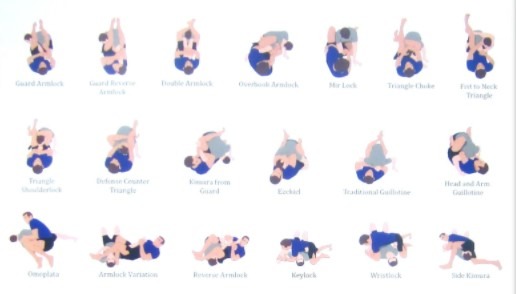
Let’s now take a look at ALL the Brazilian Jiu Jitsu submissions, who to organize them in a way that will help you remember them, and how to get as many taps as possible with them. The main categories we can put submissions in are chokes, arm locks, leg locks, spinal locks, and muscle slicers. Each category has certain “subcategories” that contain the actual techniques.
The categories are made based on the shared fundamental mechanical characteristics of all submission holds placed inside them. Check them out:
Chokes (Strangles)
Chokes are pretty straightforward really, get something around a person’s neck, and tighten it. In terms of Jiu-Jitsu submissions, there are actually four things you can do to a neck, three of which are means of finishing strangles. Those are blood chokes (when you compress the carotid arteries on both sides of the neck, air chokes (when you close the trachea), and chest compressions (when you prevent the chest from expanding via pressure). You could also do neck cranks, but those fall under the spinal locks category.
The second principle of chokes is to always remember to plug the hole. No choke will work if you leave space around the neck. When you put all the structural elements into place, you have to find a way to “plug the hole” making sure the choke will come on.
Speaking of a choke coming on, patience is key. When you set up everything perfectly, start counting to 20. If an opponent doesn’t tap or nap by then, you should re-adjust, maybe introduce a squeeze, and do it all over again. Use these three principles and all your chokes are going to work.
I. Direct Strangles
Direct strangely work by you placing parts of your body around the neck of an opponent, with the idea of getting a blood choke, air choke or chest compression, or a combination of them all. A great example of a direct choke in Brazilian Jiu Jitsu is the rear-naked choke – you use your arm to place pressure directly on the carotid arteries of the neck. All other chokes that allow you to compress the arteries (or trachea) of the neck directly with your body parts (arm to legs) are direct chokes.
REAR-NAKED CHOKE
The rear-naked choke is one of the most important Jiu Jitsu submissions to learn. It works from back control when one of your arms goes around the neck of the opponent, reinforced by placing the other arm in a figure four configuration. Sticking your elbows toward your chest and to the side while squeezing guarantees you’ll plug the hole, and get sufficient tension and torsion.
Legal, and works with and without the Gi, legal at all belt levels.
GUILLOTINE CHOKE
The guillotine, as opposed to the rear-naked choke, is done from the front, most often from the guard, although it can be done from several other positions as well. Having the opponent’s head under your armpit is a must, followed by the all-important chin strap grip. Finishing mechanics depend on which guillotine variation you’re using, and the choke can work both as blood and an air choke. It also has a chest compression element in both finishing versions.
The choke works with and without a Gi and can be done from mount, guard, half guard, and standing. Variations include low elbow, high elbow, arm-in, ten-finger, power guillotine, and many others. Legal at all belt levels.
GRAPEFRUIT CHOKE
This is one of my personal favorite Jiu Jitsu submissions and is probably the simplest way of choking someone out. Also known as the Helio Gracie choke, this one is a really old-school choke done from the mount. All it takes is to position your knuckles on both sides of the neck, fists clenched. Elbows on the ground will provide you with a great position to place direct pressure on the arteries with your knuckles. Quick, painful, and extremely effective.
Works with and without the Gi, and is legal at all levels, for those wondering.
SCISSOR CHOKE
While many think this choke is not a really efficient BJJ submission hold, I tend to disagree. Just like with other chokes, if you set it up correctly it will work against anyone. It works from a Kimura position when you’re in side control or North-South. Holding the Kimura grip on an arm is absolutely integral for the scissor choke to move. the goal is to place one leg underneath the neck of an opponent, and the other, knee facing up, over their neck. the goal is to close your feet like in the closed guard and squeeze with the legs. As long as your opponent has both shoulder blades on the ground, the choke will work.
Legal at all levels, and once again, universally effective both with and without a Gi.
DIESEL SQUEEZEL CHOKE
Keenan Cornelius is responsible for this one. It is one of the sneakiest Brazilian Jiu Jitsu submissions ever and is a fairly new choke. The choke is very simple though and works like a charm because it can be executed from both top and bottom. It works like a guillotine, at least with one arm that has to go around the head. the other though works like the grapefruit choke, only reinforced by the arm wrapped around the hearing. You can do it from the guard, bottom, and a top side control, front headlock, etc.
Legal in Gi and No-Gi!
COBRA CHOKE
This one is “stolen” from wrestling, where it works more as a pinning position. In BJJ, it works as a submission and a darn good one! The original wrestling move is the “headwrap half Nelson” while in BJJ, we know it as the Cobra choke. Again working as a guillotine, you finish this one with one arm only, and it has the most pronounced chest compression element of all direct choke Jiu Jitsu submissions covered here.
Legal for everyone, work Gi and No-Gi, but you can only set it up from the front headlock and finish it from the top side control.
BULLDOG CHOKE
A playground choke re-popularized by Ben Askren not long ago when he did it in the UFC. The choke works from the top turtle position when you’re to the side of an opponent. Namely, you need to grab their neck, in as simple a manner as you can, and connect your arms with a specific grip., Getting the angle right is crucial for getting a choke, although you might end up with a crank as well.
Legal, unless it turns into a crank and will work in Gi and No-Gi. Not a very high percentage submission, though.
NORTH-SOUTH CHOKE
This is one of the Jiu Jitsu submissions that are Marcelo Garcia’s signature moves. It works from the North-South position, as the name suggests. This is another choke you can do one-handed. However, reinforcing the grip with the other hand is usually required as well. The goal is to grab a guillotine-like grip with one hand, isolating the head of the opponent under your armpit from the North-South. There are fine details to the choke, with your lat muscle choking on one side of the neck, while the biceps cover the opposite.
Universally high-percentage in Gi and No-Gi and legal under all rule sets.
VON FLUE CHOKE
The Von Flue Choke is a direct choke that you do with your shoulder on the opponent’s neck. However, it requires help from your opponent in order to work. Namely, this is one of those Jiu Jitsu submissions that only work as a counter to a submission the opponent tried to set up first. In this case, it is the guillotine choke. When an opponent has a guillotine, and you’ve managed to get to side control, you’ll be safe from the guillotine itself (unless they switch to a Diesel Squeezel). That said, if they keep on holding tight, you can use a crossface grip and place your shoulder on the neck to get a very nasty choke.
Works only from top side control, can be done in Gi and No-Gi, but does require an opponent to keep a hold of their guillotine choke attempt.
II. Triangle Chokes
In terms of the basic principles of chokes (the 20-count rule, plugging the hole, and knowing the type of strangling you’re doing) triangle chokes work the same as direct chokes. the only difference is that on one side of the neck, you’re using the opponent’s shoulder to compress the carotid artery. that said, you still need to place a body part on the other side of the neck.
Triangle chokes are extremely versatile not just because you can set them up from virtually any position in BJJ, but also because you can do them with both your legs and arms. As long as you include a shoulder in the choke, you’ll have a triangle choke ready to go!
- Leg Triangle Chokes
FRONT TRIANGLE
The front triangle is the one that most people have in mind when a triangle choke is mentioned. That is, of course, perfectly understandable as it is something the Gracie’s used in their logo. The triangle choke works when you place one leg over an opponent’s shoulder, and the other underneath their armpit. The goal is to place the shin of the first leg parallel to the shoulders and use the second one to lock it up in a triangle configuration. the leg that goes under the armpit is the one that forces the shoulder on that side into the carotid artery. On the other side, your hamstring compresses the other one for a brutal blood choke.
This one is legal at all belt levels, and moreover, works just as fine in Gi and No-gi Jiu Jitsu. The best position to get it from is guard, regardless if it is an open or closed variation. This is one of the Jiu Jitsu submissions everyone in grappling has to know.
REAR TRIANGLE
The rear triangle is a position that became quite famous lately. For this triangle, you’re behind your opponent, and oftentimes back control is the spot to set it up from. That said, it can e somewhat difficult to finish the choke unless you know how to exactly place your leg. The leg that goes over the shoulder this time heads in the opposite direction since you’re behind the opponent. Moreover, it is the calf that needs to be tight on the artery on that side. You lock the triangle on the top side, trapping the arm as in a regular triangle, which means you push the shoulder into the other artery.
Gi or No-Gi, this one will get you plenty of taps when chokes from the back are not working. Legal across all rulesets.
INVERTED TRIANGLE
The inverted triangle is a Braulio Estima invention and is one of the best Jiu Jitsu submissions to do from the bottom of side control. You can also set this one up from the guard, though, when you’re on the offensive. Compared to the front triangle, you’re doing the same thing, just in reverse. Instead of placing the right leg over their left shoulder as in the front triangle, you’ll use your right leg for the job. From there on it is easy to figure out the configuration. Things are happening just like with the front triangle – shoulder on one side and hamstring on the other.
Legal for all belt levels in Gi and No-Gi.
MOUNTED TRIANGLE
While this is a front triangle by design, setting it up and finishing it does require a few adjustments, so I’ll mention it as a submission of this own. Obviously, it is a triangle done from the top, more precisely the mount position. The goal is to set up a front triangle just like from guard. Finishing it, though, means you can’t really use your legs to squeeze or press together, because they’re trapped under the head. That’s why you’ll be looking to manipulate the head by pulling it upwards and to the side of hamstring pressure. This is one of the Jiu-Jitsu submissions that take some getting used to.
Once again, perfectly legal for everyone and works in all situations.
- Arm Triangle Chokes
It is sufficient to say that arm-triangle chokes are Jiu Jitsu submissions that work exactly the same as leg triangles, but are set up using your arms. That means you get even more versatility, given that the positions to set up arm-triangle chokes differ from those we usually use to hunt for leg triangles.
DARCE CHOKE
The Darce is one of the best Jiu Jitsu submissions, period. It is a choke that can be pulled off from virtually anywhere, although the front headlock, top half guard, top and bottom side control, and knee on belly remain the best. The choke works by sneaking an arm under the armpit of an opponent, around their neck and out the other side, over the shoulder. The other arm goes behind the head, and the goal is to grip the triceps of this arm with the choking arm. On one side, it is the forearm of your arm that compresses the artery, while your biceps and shoulder help you squash the shoulder of the opponent into the artery on the opposite side of the neck.
Gi or No-Gi, this choke is money, and it is perfectly legal.
ANACONDA CHOKE
The anaconda choke is the mirror submission of the Darce choke. It is set up very similarly to the Darce, just the other way around. Namely, for an Anaconda you want to thread your arm over the shoulder first, and under the armpit second. The grip is the same as with the Darc, but you’ll lock it up under the armpit this time. Usually done from the front headlock, you can connect it to the Darce, or go for it form just about any position that offers Darce choke opportunities.
Another very legal move that works all over.
NECKTIES
Neckties are Jiu Jitsu submissions that are best friends with Darce and Anaconda. They work similarly but require much less positioning and much shallower grip. Usually, a palm to palm or S-grip is all you need to finish a necktie. They work from all over once again and come in many variations. However, the Japanese necktie form the top side control or half guard, and the Peruvian necktie form that front headlock are the highest percentage options.
They are legal for all belt levels and will work in both Gi and No-Gi. There is a potential of finishing with a neck crank with any necktie submission you go for.
ARM TRIANGLE
The arm triangle choke is probably the most obviously named one in the bunch. It is a top position choke done from side control only, but one that works extremely well. All it takes for this choke is hugging someone from the side, ongoing undernet the armpit on the nearside and around the neck on the far side. The details that make or break this submission are the angle of your body, weight distribution, and how you grip your arms.
Everyone is allowed to do this submission and it works great with and without a Gi, although it is usually preferred in No-Gi.
MIZZOU CHOKE
The Mizzou choke is one of the obscure and less known Jiu Jitsu submissions that might end up being your silver bullet. It works when you lose an Anaconda choke, or can’t quite get the grip to finish it off. All you need to do for this one is use a monkey grip on the triceps of the trapped arm, and position your chest on top of it. You’ll get a very tight choke which you finish by forcing the knees of the opponent to the opposite side.
While illegal in wrestling, the move is legal in BJJ and works in all circumstances.
III. Gi chokes
The gi is a great tool to use in Brazilian Jiu Jitsu and it extends to much more than just gripping. Instead of only holding the Gi for the sake of it, or when trying to play some new lapel guard that makes very little sense, you can use the Gi to finish Jiu Jitsu submissions, mainly in the form of chokes. The way to get them is by using the gi to block off either one or both arteries on the neck.
CANTO CHOKE
The Canto choke is a weird one and not something very used in BJJ but it is a highly effective one in Judo, where competitors look to get it whenever they can. The choke works from the guard, with a same-side grip of the collar. The goal is to place the leg on the same side as the grip behind the head so that the hamstring is at the neck. Forcing the head down with the leg means the noose you’ve made with the Gi grip tightens, providing you with a great and largely unexpected choke.
Legal all over, but obviously, only available with a Gi on.
BASEBALL CHOKE
The baseball choke is a real masterpiece among Jiu Jitsu submissions. Apart from being extra effective from top side control, it is also the perfect trap from the guard or bottom side control. The configuration of the grips is like holding a baseball bat – one arm goes four fingers in gripping the far side collar while the other goes thumb in int the near side one. The goal is to get the forearm of the first arm across the neck, completely shutting off the arteries on both sides with the Gi. Great to use as a trap from the guard, letting people pass to side control and choking them pout in the process.
Legal for everyone, No-Gi variations exist.
SAMURAI CHOKE
The Samurai choke is a tighter version of the baseball bat choke, done with the lapel of an opponent instead of the collar. From top side control, you want the far side lapel free, and you want to trap the far side arm with it. Once you have it, you can go to the knee on belly and proceed to grip the end of the lapel with the baseball bat choke grip. The finishing mechanics are the same, going to North-South and twisting, but the choke si much tighter because you’re using a very small portion of the Gi.
Only works with the Gi, but you can go for it at all levels.
BOW AND ARROW CHOKE
A classic amongst Jiu Jitsu submissions. The bow and arrow choke is probably the strongest choke in BJJ, and definitely the tightest one among Gi chokes. It works from the back, meaning you get a lot of points before you even get to set it up. For the finish, you want one hand around the neck and grabbing the collar, thumb-in. The positioning of the body such that you end up like a T in relation to your opponent’s torso, and you can grab the Gi pants at knee level, ending up in a position as if shooting a bow.
Legal for everyone, and only worth considering with a Gi on.
COLLAR CHOKE
The collar choke from the back works pretty much the same as the bow and arrow, just without a switch in position. You do it from the same spot as you’d finish a rear-naked choke. All it takes is one hand in the collar (like for a bow and arrow) and the other (usually the one going under the armpits) grabbing the opposite side collar. This brings about extremely tight pressure on both sides.
Legal and only available in the Gi (for obvious reasons).
EZEKIEL CHOKE
The Ezekiel choke is one of the most curious Jiu Jitsu submissions, it basically works as a direct choke, but can’t be done without a Gi involved. that said, it works not just from top positions like mount and half guard, but you can also do it from the bottom, even bottom mount. The most interesting position to set it up from is from inside someone’s closed guard.
The choke works by hugging the head with a crossface, and inserting the hand of that arm into the sleeve of your own Gi on the other side. This creates a tight loop around the neck, and all you need is to press the palm of your second arm into the neck for either a blood or air choke.
There are No-Gi versions of the choke that are efficient, and there have been some IBJJF rule changes that might make this one illegal. The jury is still out on legality, but it is perfectly good to use in training.
LOOP CHOKE
The loop choke is basically a guillotine choke done with the collar. It works just like a guillotine, from top positions, bottom positions, and even standing. The loop choke is a quick choke that you can use as a trap. All it takes is gripping the collar with a cross grip. YOu then need to guide the head of the opponent under the armpit of the gripping arm, just like fro a guillotine with a chin strap. For the finish, the second arm goes behind the head, with the forearm acting as a wedge.
Legal for everyone, and only available with a Gi on.
CLOCK CHOKE
The clock choke is the one submission that really efficiently takes care of the turtle position. It is a fairly simple one to get, really, where all you need is a grip on the collar of a turtled opponent with your far arm, on the far side of their collar. Simply turning froward from there, like the arrows on a clock will get you an extremely tight finish. One of the most underrated Jiu Jitsu submissions in the game, which is actually highly effective.
Legal and dependent on the Gi.
PAPER CUTTER CHOKE
One of my all-time favorite Gi chokes. This one works only from top side control which makes it an isolated choke. It will, however, put to sleep even the most defiant of opponents when set up correctly. The initial grip fro the paper cutter can sometimes be tricky, but it is actually pretty simple once you get used to it. You need to thread your far arm in, under the nearside arm of an opponent, and grab the top of the collar behind their neck, four fingers in. Your other arm then goes thumb in grabbing the far side collar. A simple sprawl of your body will help you touch the elbow of that arm to the ground, getting a very quick and efficient tap. Or nap.
Only available with a Gi and perfectly legal for all to use.
ELVIS CHOKE
The Elvis choke is quite similar to the Canto choke, only done from the top with one grip variation. It works from top side control when you get a grip on the collar with the arm that goes under the head. you should go deep with the grip, but not too far, gripping behind the neck whenever possible. Swinging your leg over the face of the opponent will provide you with leverage to finish the choke via pressure with the forearm of the gripping arm.
Obviously, impossible to do without a Gi, but legal for every belt level.
X-CHOKE
The king of Gi Jiu Jitsu submissions, mostly thanks to Roger Gracie. The choke works from mount and guard and is very, very effective. It takes time to get the finer details right, but once you do, you can strangle anyone with it. All you need to do si place an arm inside the cross-side collar, four fingers in. Your other arm should do the same on the opposite side. There are different gripping options with this second arm, but they all involve the use of a Gi.
Legal for everyone, and exclusive to Gi Jiu Jitsu.
Arm Locks
Attacking the joints of the arm (shoulder, elbow, and wrist) is among the most often used forms of Jiu Jitsu submissions out there. In fact, the straight armbar is, statistically, the most used, and therefore, the highest-percentage submission in the entire sport. Armlocks come in different subcategories, depending on whether the arm is straight or bent in addition to which joint is under attack. Similar to cookies, Jiu Jitsu submissions on the joints of the arms share some underlying principles that apply universally to all moves within this category.
The main principle behind armlocks is one of controlling the two neighboring joints, on either side of the one you’re attacking. bent or straight armlock, you’ll hardly be able to finish if you do not obtain such control. That means you’ll need to become comfortable holding an armbar, or Kimura, or Americana position for a while, usually starting with one joint under your control. Until such time as you get the other one, though, going for a submission finish will only provide the opponent with an escape route.
I. Straight Armbars
ARMBAR
The straight armbar is a BJJ submission that targets the elbow joint. Done from top or bottom, this move has your hips pressing on the elbow of an opponent, forcing it to bend in the “wrong” direction. Your own legs and hips control the shoulder joint, while your arms and torso are responsible for the wrist. The move is usually set up from mount or guard, but almost all position offers an armbar entry.
Arguably the most famous of all Jiu Jitsu submissions is perfectly legal for anyone and works fine with and without a Gi.
STRAIGHT ARMLOCK
The straight armlock works from the top or bottom. When done from the guard it is also known as the inverted armlock. The goal is to put pressure on the elbow with your arms rather than your hips. In the meantime, your legs still control the shoulder joint, while you block the wrist by using your head and your own shoulder to trap the arm.
Legal, Gi effective in both and No-Gi.
II. Bent Armlocks
Bent armlocks usually target the shoulder joint. The work by having the arm bent at the elbow, at an angle of 90 degrees or less. There are specific grips associated with different bent armlocks or even the use of the legs. The principle of controlling two neighboring joints is still in effect though, with the head being one and the elbow another, in relation to the shoulder joint which you’re targeting.
KIMURA
The Kimura is one of the most famous Jiu Jitsu submissions in existence. It works when you use a figure-four grip configuration o the wrist of an opponent, thus getting control of the elbow via a lever. The legs take care of the neck as the second joint and a twisting motion with your torso and arms causes the break. The move works from virtually anywhere, and there are plenty of modifications for finishing it.
There’s no difference in effectiveness with and without the Gi. Moreover, the Kimura is a legal move under all rulesets.
AMERICANA
The Americana works as a Kimura, bit with the arm bent in the opposite direction. It is a submission exclusive to top positions, given the direction of the arm. An Americana works when you grab a figure-four grip on the wrist, this time the other way around. Your elbow blocks their neck, while the grip takes care of their elbow. For a finish, all you need to do is drag the back of the palm across the mats, towards the opponent’s hips on the same side.
Americans are available from side control, mount, and top half guard, and there are no restrictions as to who can do them. Just like all other armlocks, they work great with and without a Gi.
OMOPLATA
The Omoplata is a bent armlock that you execute with your legs. Instead of your arms, you want to have your legs in a triangle configuration around the shoulder of an opponent. given the dexterity this submission requires, it is best to set it up from the bottom, although you might get it from the top if you’re willing to use a rolling setup. What you essentially need is a leg under the armpit, at least knee-level deep. The other leg then goes over the foot of that leg in a triangle configuration, while you place the palm of the arm you’re attacking “in your pocket” on the near side.
Straightening your legs will get you in a finishing position where you gain a multitude of options, depending on what you’re after. Legal and easy to get in No-Gi and Gi.
SQUIRREL LOCK
The sneakiest of all armlock Jiu Jitsu submissions, the squirrel lock once again uses the legs to get the tap. This time, however, the bottom side control is the position of choice, which makes the submission completely unexpected. The setup requires training and tinkering but in essence, you’re doing a Kimura by entangling the far arm with your legs. the submission can be finished from the bottom or help you roll over on top to wrap it up.
Legal for everyone, slightly easier to set up with a Gi, but will work regardless.
TARIKOPLATA
The Tarikoplata is amove popularized by Tarik Hopstock, who is credited for developing the move. If the squirrel look was a Kimura done with legs, then the Tarikoplata is a blend of both – it is done with one arm and one leg. Basically, you replace the arm that grips the wrist of the opponent with a leg that goes over the arm, leaving your hand free for maneuvering. The move is usually done forme guard, but you can set it up and finish it from top positions like side control or mount as well.
Given that it is in the armlocks category, there are no restrictions o the move, which once again, is universally effective.
BARATAPLATA
One more interesting Kimura variation that is very popular among Jiu Jitsu submissions is the Barataplata. Like the Traikoplata this move involves an arm and a leg but in a fairly simpler configuration. All it takes is to control the forearm of an opponent’s arm with your arm, and have a leg over the shoulder. This means the move si easy to set up from lots of positions, like guards, the mount, knee on belly, side control, etc.
Legally, you won’t get into trouble with a Barataplata, and you can do it just as fine in Gi and No-Gi.
III. Wrist Locks
The final piece of the arm-locking puzzle is wristlocks. These are sneaky Jiu Jitsu submissions that come on quickly and are quite painful. That said, the same principles apply – isolate two joints. For a wristlock, that would be the elbow on one side, and the knuckles of the palm on the other. Interestingly enough you can do wristlock directly, or by using the Gi.
DIRECT WRISTLOCKS
Although they might seem like they’re something out of a Steven Seagal movie, wristlocks really do work like a charm. When doing them without the gi you want to make sure you’ve isolated the elbow so that it doesn’t move. You can do that by pinning it to the ground, to the opponent’s own ribcage, or to your torso. You then proceed to control the knuckles with your grips and place pressure either directly with your arms or with your torso or hips. obviously, setting up wristlocks is possible from just about anywhere.
They work perfectly with and without a Gi when you hunt for them directly. Legally-wise, they’re allowed from blue felt onwards in official competitions.
GI WRISTLCOKS
Wristlcoks with the Gi follows the same principle as all other wristlocks, and armlocks in general. In this case, though, you isolate the palm (knuckle joint) by warping it up with a lapel or making it stuck in your collar. They tend not only to work from anywhere, but also present a very interesting option from standing.
Once again, only available if you’re a blue belt or higher, they obviously require a Gi for the modified finish to work.
Leg Locks
Jiu Jitsu submission on the legs have become increasingly popular during the last decade or so, and for a good reason – they work. There are plenty of principles behind them, and it takes a lot of work to make them work. However, the one principle you can’t do without is to have both the opponent’s hips (or buttcheeks, if you will) on the ground. If you want to finish a leg lock in a meaningful way, on everyone, this is the pone thing you can’t do without.
Another principle that really makes leg locks easier and much more reliable is having the leg you’re attacking beneath you. It is much easier to cause a break in any joint of the leg when you have the leg completely under your control, and pinned with your own weight.
That said, the categories of leg locks range between ankle locks, kneebars, heel hooks and toe holds.
I. Ankle locks
Ankle locks, as the name suggests, are Jiu Jitsu submissions that target the ankle joint of the body. They work by forcing the ankle to roll like you would when you misstep. There are different ways of injuring the structures of the ankle, and if you can’t really hit the ankle joint, you can go for tendons or even the foot itself.
ANKLE LOCK
The ankle lock is simple, in essence. All you need is to wrap one arm around the ankle joint, place the palm on your chest, and grab a guillotine-style grip with the other one. That’s the easy part. Finishing with a solid ankle lock will be depended on how good your Ashi Garami positioning is, in order to keep both hips on the ground while you’re angling in for the finish. Wrapping up an ankle lock will require you to get your shoulder to the ground, and start twisting, trying to look over the shoulder that’s on the bottom. No need to squeeze.
Legal for everyone, effective with and without a Gi.
ESTIMA LOCK
The Estima Lock is a brutal submission, courtesy of the Estima brothers. It works without too much positioning, mostly from the top, even though you can set it up using Ashi Garami positions a well. The goal is to trap the side of the foot using your belly, wrapping the ankle up with a grip heading from the heel towards the toes. The other arm goes in a rear-naked choke configuration to ensure you get a very painful blend of a toe hold and ankle lock.
The Estima lock is questionably legal, depending on whether a referee is going to see it as toe hold or an ankle lock (since it can be both). Works great regardless of apparel.
TEXAS CLOVERLEAF
The Texas cloverleaf would be the perfect ankle lock if it wasn’t illegal. The 50/50 guard is a great example of this straight ankle lock. what you want to do is take the far leg, the one that is not under your control and wrap that one under your armpit. However, then you want to thread the same arm under the other leg and wrap that one in as well. A rear-naked choke grip will ensure ap painful tap, with the shin of the opponent’s own leg pressing up against the leg you’re attacking. Having crossed legs takes care of that all-important “hips on the ground” principle.
The crossed position of the legs is what places the Texas cloverleaf among the illegal Jiu Jitu submissions. It works in both Gi and No-Gi, but can only be done under specific rulesets.
ACHILLES LOCK
The Achilles lock is what you do when for some reason an ankle lock doesn’t work, or you want to introduce a bit of pain until you adjust a proper ankle lock. Alternatively, from certain Ashi Garami positions, it is simply the stronger submission to go for. For the finger lock, you use the same grip configuration as for the ankle lock, but you don’t twist your body, Instead, you lie back straight, digging your forearm into the Achilles tendon by twisting the thumb up and forward.
Very painful, completely legal, easy to get in Gi and No-Gi.
II. Heel Hooks
Heel hooks have the reputation of being among the most effective Jiu Jitsu submissions. that reputation is well deserved, and some forms of the heel hook might as well be the most devastating submission hold in grappling. There are several different ways to set them up, but they basically work based on that key leg locking principle of having control of the hips.
INSIDE HEEL HOOK
The inside heel hook is the ultimate submission hold. It involves direct pressure, twisting pressure, extreme control via Ashi Garamis. It is as close to perfect as Brazilian Jiu Jitsu submissions can come but legality issues have scuppered its use. The submission works by twisting the heel via a palm to a palm grip, or any other grip variation. However, the submission itself doesn’t target ht hell, but rather the ligaments of the knee. Twisting the heel multiplies the force on the knee, causing devastating injuries to multiple ligaments.
Heel hooks are not legal under IBJJF and UAEJJF rules for all belts, but that is going to change with the turn of the year. Brown and black belts will be able to do them come 2021. Gi or No-Gi, the heel hook is dreadfully effective.
OUTSIDE HEEL HOOK
The outside heel hook is pretty much the same as the inside, just done the other way around. Instead of gripping the big toe under the armpit, you grip the pinky toe instead. The grip remains the same. This heel hook targets the outside ligament of the knee and is just as effective as the inside one, but it is not as devastating (potentially) as the inside heel hook.
Legally-wise, all heel hook variations are the same as the inside heel hook described above. Gi and No-Gi effective.
TRUCK HEEL HOOK
The wheel hook from the Truck position is what even Danaher describes as the most powerful heel hook ever developed. The truck position in itself is a very tricky one to get out. The heel hook that is available is something that is not often considered by most people, with calf slicers begin usually the order of the day. The heel hook is an inside one and works when you use both hands to grip the big toe of the free leg. It will give you extreme leverage for pulling, meaning you can tear a knee apart with next to no effort.
This one will probably stay illegal for the time being, I guess and should be a move you practice with caution. Will work Gi and No-Gi.
III. Kneebars
The kneebar is a very reliable submission as long as you get the fine details right. While you can get away with the sloppy technique with heel hooks, the kneebar is an attack on the entire leg, and you’ll need to be prices or nothing will happen. It works like an armbar, basically, with pressure placed on the knee joint forcing it to go in the direction opposite of the one it usually bends in.
KNEEBAR
The kneebar works from a very specific position. Even in Ashi Garami terms, it is a highly specific leg lock. The goal is to sit on the opponent’s hips, hugging the leg before you fall to your side. That’s when you get the space to triangle your legs and go for a figure four grip on the leg to position your body in a way that can break the knee. For the break itself, you need to both extend the hips and twist the shoulders towards the ceiling.
The kneebar is legal for brown and black belts at the moment. Helpfully, it will become legal for lower belts as well. Gi or No-Gi, it will get you taps.
DOGBAR
One of the more unusual Jiu Jitsu submissions is essentially a kneebar done with the legs instead of the arms. The position to set it up form is usually the over under pass, where you can triangle your legs over the half guard leg. Your shoulders block the hips, while the triangle of the legs will pull on the calf when you extend your hips into the knee.
This one is a grey zone, legally speaking, so you’re better off doing it as a brown belt and above if you want to be sure. AS with other leg locks, the Gi doesn’t make a difference.
IV. Toe Holds
Toe holds are basically Kimura locks one on the feet. It is the same grip as with Kimura, with the notable difference of the ankle joint being the one to break. In terms of principles, it is more important to have both the opponent’s hips on the ground, than it is to isolate neighboring joints, given the structure and build of our legs.
TOE HOLD
The toe hold is a highly versatile submission that works from just about anywhere. You can do it from top and bottom, as long as you have a solid Ashi Garami position. The move itself requires you to grip the top of the toes with one hand. The second hand then goes around the ankle, and into a Kimura grip configuration with your other arm. Hug to your chest and twist for a truly devastating submission.
Just like the kneebar, the toe hold is legal for brown and black belts only. For now.
REVERSE TOE HOLD
A reverse toe hold, just like the name suggests, works the other way around. You’ll rarely see this move among the highest percentage Jiu Jitsu submissions but it will work when done right. In fact, you can even finish it with one than only, from spots like top side control, under the right circumstances. You can even pull this move off when someone has you back. Basically, you just grip the foot the other way around and bend it to the outside instead of the inside.
Since it is a toe hold I guess this is legal for brown and black belts only, but I think it is in a grey zone.
Spinal Locks
Spinal locks are a story of their own, even among Jiu Jitsu submissions. They manipulate the joints that have the highest potential for debilitating or even lethal outcomes. usually, it is the neck that is the target, but the low of the back is also not spared from certain spinal lock submissions.
In terms of principles, the goal is to isolate the hips and shoulders whether directly or via levers (the arms/legs). Then, to pull off a spinal lock, you’ll need to make sure you have the knees pointing in one direction and the shoulders in another.
I. Neck Cranks
Neck cranks are simple. Bend the neck in a certain direction placing pressure on the spine. This causes lots of pain and is a move that is fairly dangerous. That said, there are several versions of neck cranks you can do, depending on which position you’re in.
CAN OPENER
The can opener is a move that has a bad reputation. It works from inside the guard. the goal is to cusp the head, with both hands, like for a Thai clinch. Finishing requires you to bend the opponent’s neck forward while placing pressure with your hips. Initially devised a as means of opening the closed guar,d now the can opener is a legitimate submission.
It is completely illegal but will work in Gi and No-Gi.
FROM MOUNT
From the mount, getting a neck crank is probably one of the easiest things to do. It is pretty instinctive, in fact, for most people. Simply put, you do a rare naked choke from the mount. One arm goes around the head, and as you set the grip, your palm ends up on their forehead. The pressure is nasty, with your forearm directly pressing on the spine.
Similar to the can opener, and all other neck cranks, this one is very much illegal under most rulesets.
FROM BACK (DAN SEVERN)
Eddie Bravo calls this move the Dan Severn, so we’ll do the same. From back control, you can do lots of Jiu Jtus submissions. However, if an opponent lies flat on the ground while you’re on their back, you’ll have your work cut out for you. Unless you go for Dan Severn. The forearm needs to go across the jaw, turning the head to one side. Locking your arms with a palm to palm grip and pulling will take care of the rest.
Once again, completely illegal.
II. The Twister
One of the signature 10th Planet Jiu Jitsu submissions, stemming from an old wrestling move. Eddie Bravo made tons of modifications to it, turning it into a very formidable finishing move. It works by pinning one leg via a lockdown, mostly from back control. Then you proceed to pin the shoulder by basically laying on one arm with your torso. With all principles for spinal lock in place, you get to pull on the head with different grips from there. Very painful, and depending on the grips and positioning, can put pressure anywhere along the length of the spine.
Highly illegal, but easily done with and without a Gi.
Muscle Slicers
Muscle slicers are usually put into categories with arm or leg locks, depending on which limb they involve. However, since there are separate mechanics to this move, they should have a category of their own. The principle behind muscle slicers is to have a bony surface behind the belly of a large muscle. The other principle is the angle – the bony surface (shin or forearm) should twist to get the finish.
I. Biceps Slicer
The biceps slicer works from plenty of top position and even from guard. However, the absolute best spot for it is the top armbar position. Whenever an opponent has a tight grip that scuppers armbars, go for a biceps slicer. You should place one leg, preferably the inside one over the forearm. Then, look to close a triangle with the other leg. The forearm of one of your arms should be in place hunting for the armbar anyway. Press with the triangle and twist that forearm to finish one of the most painful Jiu Jitsu submissions.
It is legal for brown and black belts, and great with Gi and No-Gi.
II. Calf Slicer
They work similarly to biceps slicer but are more painful because the calf is a much bigger muscle. Conversely, you use your legs to entangle a leg and place pressure on the calf. The Truck is arguably the best position to do so, but you’re not restricted to it. Having a shin on the inside of the calf muscle is the norm. Once e again, triangling the legs only makes the structure tighter. Pulling on the toes while twisting your shin in the opposite direction will make sure people tap like they’re drummers.
Brown and back belts are the only ones who have the privilege of hunting for calf slicers.
III. Crotch Ripper
The crotch ripper is different from the slices above, but since tendons are the target it is still a muscular submission. The crotch ripper or Banana split is another one done from the Truck mostly. The goal is to stretch both legs in different directions, completely tearing the tendons from the hip bone. The Truck position makes the submission really simple with different grip configurations available.
Completely illegal for now, but effective, Gi and No-Gi.
IV. Suloev stretch
The Suloev stretch is a highly specific submission that is quite painful when it works. It is set up from the back. Against a turtled opponent, you’re aiming to get a grip on one leg. so that you can extend it completely. You being behind the person means there’s immense pressure on the hamstring muscle. In fact, the muscle can easily snap with this submission so be wary when doing it.
This one is not defined clearly anywhere, but consider it illegal if you’re in an IBJJF tournament. The Gi doesn’t affect it.
Hunting For Jiu Jitsu Submissions
The key thing to remember if you’re looking to become a Jiu Jitsu submissions hunter is that you have to focus on nothing but submissions. Of course, positions are important, but they are not a prerequisite for finishing a submission. On the contrary, focusing too much on doing something from a specific position will only interfere with your submissions. If you want to be a submission hunter, you’ll have to forget about positions and change your mindset.
The mindset in question is one where you absolutely don’t care about anything but Jiu Jitsu submission. If it is a roll, nothing but tapping the other person out matters. If it is a match, only a submission victory counts in your mind. Forget about holding positions. Moreover, forget about not giving up positions, or going into inferior ones intentionally. So, don’t seat about going from mount to side control, if it means you’ll submit someone. Forget about points and advantages and only go for the kill.
Timing is the other piece of the puzzle. There’s no submission without the chance to actually set up the move. The thing is, BJJ people know submissions are a threat and they defend them with their lives. So, when you’re hunting for subs constantly, your goal is to look for them in transitions. The moment someone moves you can actually slap on a choke or limb lock.
Closing Thoughts
All in all, hunting Jiu Jisu submissions can be fun. Moreover, tapping people out feels very rewarding. Understanding how submissions work is the first step to actually becoming good at getting them. Having everything organized in categories helps immensely as well. Finally, there’s mindset and timing to consider and choose a submission (or category to specialize in). With more than 60 techniques covered in detail, this article is all you need to turn yourself into a fearsome submission artist.
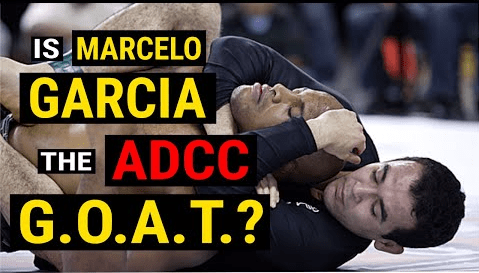
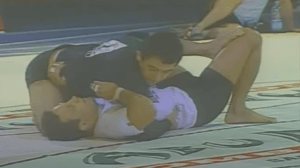 In the first match, Marcelo has faced Japan’s Kuma Kunioku and in less than two and a half minutes submitted him with what has become his patent combination arm drag, back take, and rear-naked choke.
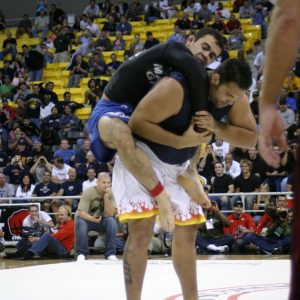 Absolute division
 Though his epic match with Ricco Rodriguez to his rivalry with Pablo Popovitch, outweighed several times but never outmatched severely by technique, Marcelo was one of ADCC’s most memorable champions.








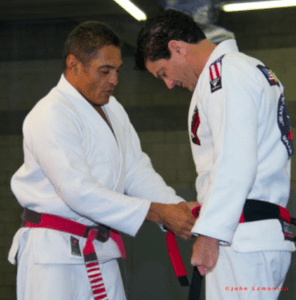
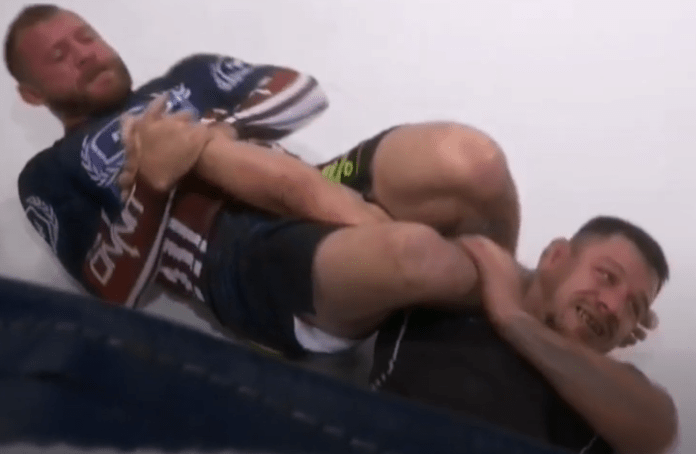
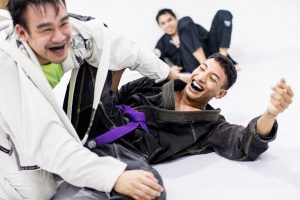 At the same time, if you offer too much resistance your partner is just learning the technique, he won’t be able to deal with those roadblocks yet. You should not try to counter, allow your partner to learn techniques, be a good training partner, guide your partner, offer some feedback about how he’s doing. Here is an example, if you’re drilling a choke, don’t tap if you’re not actually feeling. Help him, for example, say “get your hand a little deeper”, this feedback is important between the two partners, so both of you can grow.
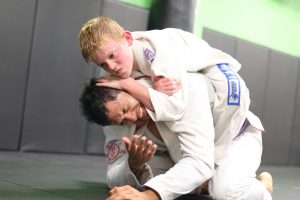 Actually, it is safer to roll against an experienced and higher-level guy. When you go against another beginner since they don’t have that feeling, they don’t have many raps on that submission. For example, they don’t know really if the submission is about to happen or not. So they will crank as hard as they can and they don’t know if they’re getting in or not so if you tap on the mat, they are so focused on that submission that they won’t see you tapping. Tap on your opponent, so he will feel you tapping, and he can let go.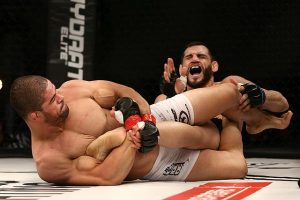



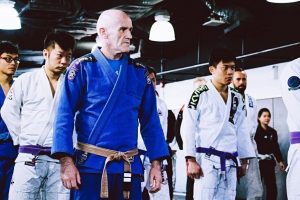 Some will get their blue belts in less than a year and others for example in five years. Also, there are competitors and they train at a professional level, and for some, it’s just a hobby. Just do the best you can do, with the time that you had, with the physical limitations that you have, and keep showing up.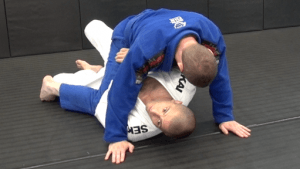
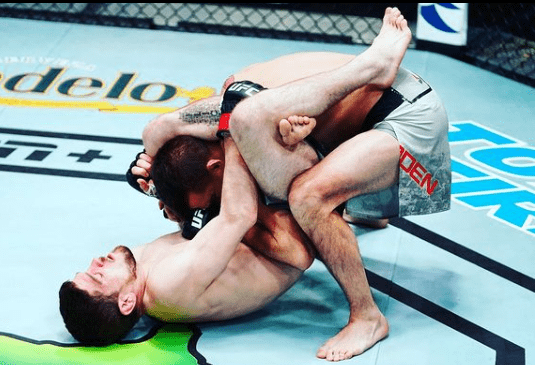
 Jimmy is a Black Belt in Brazilian Jiu-Jitsu, once again he proved how much his ground game is dangerous.
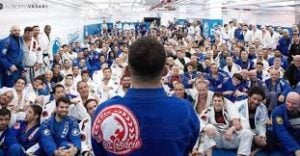 Confidence building