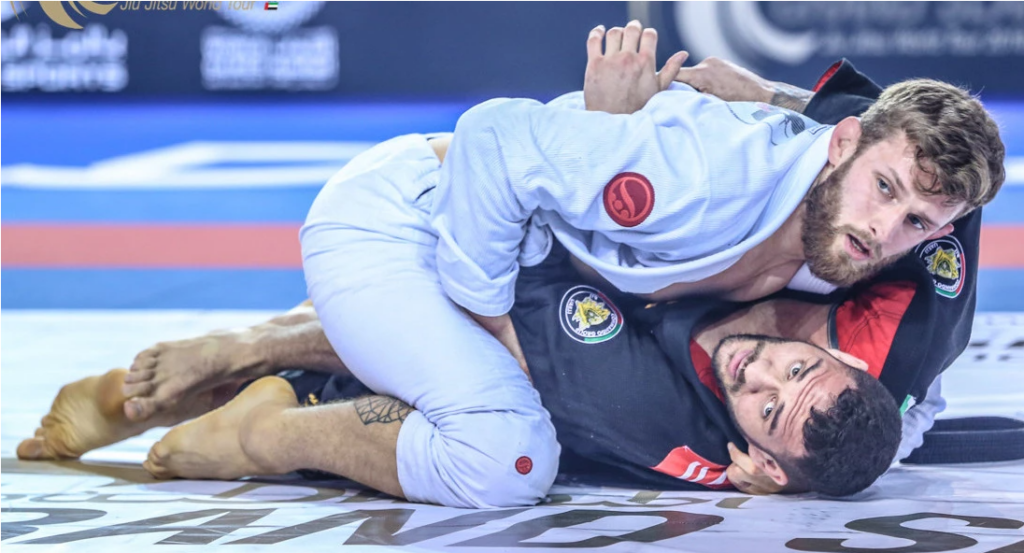
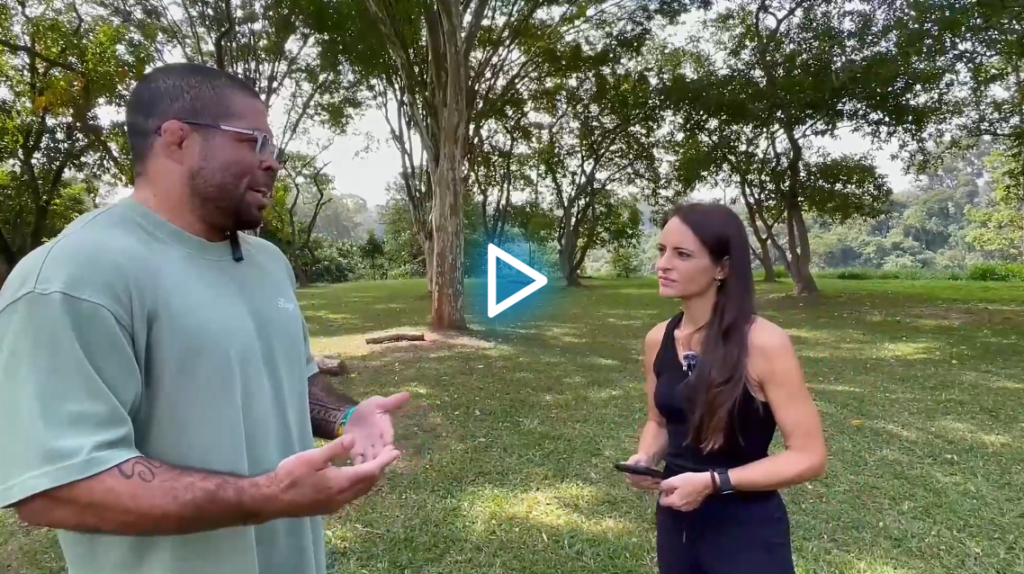
After the first day of the Craig Jones Invitational (CJI) yesterday, which featured the round of 16 and quarterfinal matches, today saw the semifinals and finals. Additionally, we watched two super fights, one of which Craig Jones called the “Battle of the Sexes.”
From the start of the event and the list of competitors, it was clear that Nicky Rodriguez was the heavy favorite in this tournament. After 4 matches, Nicky secured 4 submissions. In the semifinal and final matches, he defeated Adam Bradley and Felipe Andrew by rear-naked choke (RNC), thus winning the grand prize of one million dollars.
After his victory, Rodriguez didn’t miss mentioning his biggest rival, Gordon Ryan.
“The only thing better than one million dollars is two million dollars,” – Nicky Rod said, continuing to call out Gordon Ryan.
“Since I know I’m the best grappler in the world, I want a match with Gordon Ryan. My million against your million, winner takes all. Let’s do the fight on the B-Team YouTube channel,” – Rodriguez declared.
What do you think, will Gordon Ryan accept Nick Rodriguez’s challenge for a million-dollar match?
Who would you like to see as the winner in a potential match between Nick Rodriguez and Gordon Ryan?
Do you think Nicky Rodriguez is currently the best grappler in the world, or is there someone better?
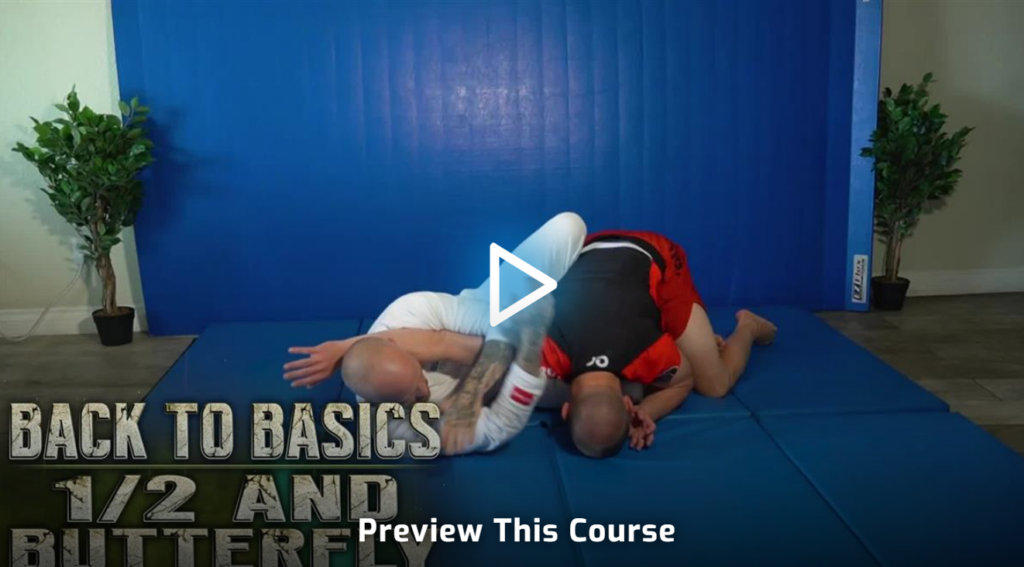
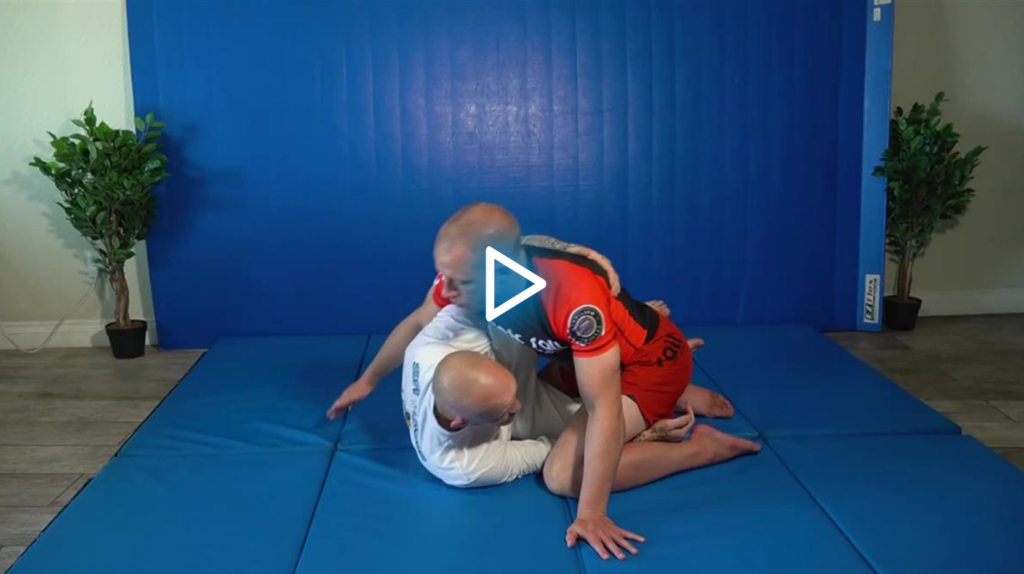
Whenever you see a Jeff Glover DVD, you should be wondering what kind of craziness he has put on video this time. Looking at the title of the Back To Basics: Half and Butterfly Guard Jeff Glover DVD me me wonder if it is a ruse masking a DVD that offers some typical Jeff Glover craziness.
Somewhat surprisingly, Jeff offers a very down-to-earth instructional that probably had him holding back a ton, but what he delivers might just be better than his craziness-filled DVDs. This one is definitely worth exploring for everyone, from white belt to black!
Key Takeaways
3-part No-Gi BJJ DVD with just under two hours of material.
A very well-organized instructional that flows from one volume to the next.
Covers attacks and transitions between the half, butterfly half, and butterfly guards.
The one thing nobody likes to practice (before brown belt, at least) is the basics. While training BJJ like the Gracie’s did in the 80s is definitely not effective and can be boring, there is nothing wrong with using the basics of BJJ to set up a modern game, as long as you modify them to fit modern-day needs.
In fact, there’s hardly anything better than relying on basics, such as the half guard or closed guard as a safety net to ensure you keep being a threat if fancier options, such as lapel or inverted guards fail. The same principle applies to top positions as well as standing exchanges.
Everything you see these days, from leg locks to crazy inversions and spins, to lighting-fast wrestling scrambles on the feet, is made possible because of the basics of Jiu-Jitsu. They are the foundation that provides you with the feeling of timing and control that makes all the more advanced stuff possible to pull off.
In this particular Back To Basics: Half and Butterfly Guard Jeff Glover DVD, the focus is on these “forgotten” basics, rather than the fancier stuff. It’s not something that we’d expect from Glover, but still very well worth a watch.
The Grappling Legacy of Jeff Glover
Jeff Glover was the epitome of the creative BJJ troll in the 2010s. These days, he has been outside of the spotlight, after he decided to stop competing professionally. The 41-year-old is still active in the BJJ world though, mostly through releasing high-quality content.
Style-wise, Glover was always a wild card, but whatever he did pull off while performing on the mats, he was able to back it up with a very high level of technical proficiency and tactical genius. For example, he is the mastermind behind the Donkey Guard, a position so weird that it got banned for a while. Jeff, however, pulled it off at the highest levels of BJJ competition.
Equally as crazy and fun in both Gi and No-Gi, Glover has a legacy of being a troll land trickster, but not a jester. His stuff, while crazy, is not just efficient, but they are also easy for different grapplers to pick up and learn fast, adding them to their game. Proven at the highest levels, as confirmed by Glover’s No-Gi world title and ADCC bronze, opting to research some of his work, such as the Back To Basics: Half and Butterfly Guard Jeff Glover DVD is always a good idea.
Half and Butterfly Guard Jeff Glover DVD Full Review
This three-part No-Gi instructional by Jeff Glover is really simple, just like it promises. The Back To Basics: Half and Butterfly Guard Jeff Glover DVD goes over the most fundamental ways you can use these two guards to catch everyone off guard (pun intended).
Part 1 – Half Guard Simplified
The Back To Basics: Half and Butterfly Guard Jeff Glover DVD begins with just over thirty minutes of material covering one of Jeff’s favorite positions – the half guard. While he was a fan of the deep half, this instructional stays true to its title, covering the most basic half guard version that works like a charm.
This part of the instructional contains a couple of basic leg-based sweeps that follow a lengthy explanation of the basic half guard positioning that makes them possible. Glover ties in two sweeps, offering combo options through the body lock grip.
Part 2 – Pummeling to Butterfly Half
The second portion of the instructional cleverly opens the half guard as Glvoer starts using just one butterfly hook to set up more sweeps and a few submissions as well. In fact, the butterfly hook is a backup option to use if you fail when you open the half guard for triangles or Omoplatas.
This part of the Half and Butterfly Guard Jeff Glover DVD also covers how to set up variations of the top butterfly hook both offensively and defensively, as Glover touches on the use of the popular shoulder crunch position as well.
Part 3 – Butterfly Guard Game
The final part of the Back To Basics: Half and Butterfly Guard Jeff Glover DVD is all about the butterfly guard, a strong suit of Jeff and a guard everyone plays from time to time. As expected, the introduction to the guard is tied in with the information from the previous volume.
This final part of the instructional also introduces Ashi Garami and the leg lock game, slightly modified by Glover for maximum efficiency. Interestingly enough, he prefers overhook control from the butterfly guard, which I have always been a fan of.
Building a Safety Net for Your Guard Game
Using basics such as the half guard and the butterfly guard is the perfect way of building a crack-proof guard game you can use even at high levels of competitive grappling. The reason behind this is that these positions share the same main goal of ensuring you keep your opponent where you want them, making it easy to figure out how to attack them.
Another crucial aspect of building a guard game around these two positions is that you can be as basic or as crazy as Glover is while playing them, still reaping the positional benefits they bring to the table. Both guards offer lots of variety and attack options that you can start very basic, and keep doing nothing but those two guards til the end of your grappling journey.
Finally, they integrate perfectly with one another, as demonstrated in the Half and Butterfly Guard Jeff Glover DVD. That translates to building a versatile, yet simple game that you can use against anyone, both with and without the Gi. If I had to pick two positions to build a guard game around, I’d pick these 10 times out of 10.
Do not run from the basics simply because you think they’re boring or they don’t fit your game. They’re basics because everyone can do them and benefit, so make sure you master the basics first. The Back To Basics: Half and Butterfly Guard Jeff Glover DVD is a great blueprint to help you focus on a couple of very basic guards and build an intricate game around them.
Trying to come up with a foolproof No-Gi guard for BJJ is one of the most difficult problems you’re going to need to address and solve as a grappler unless you’re happy to wear pajamas for every training and competition for the rest of your grappling career.
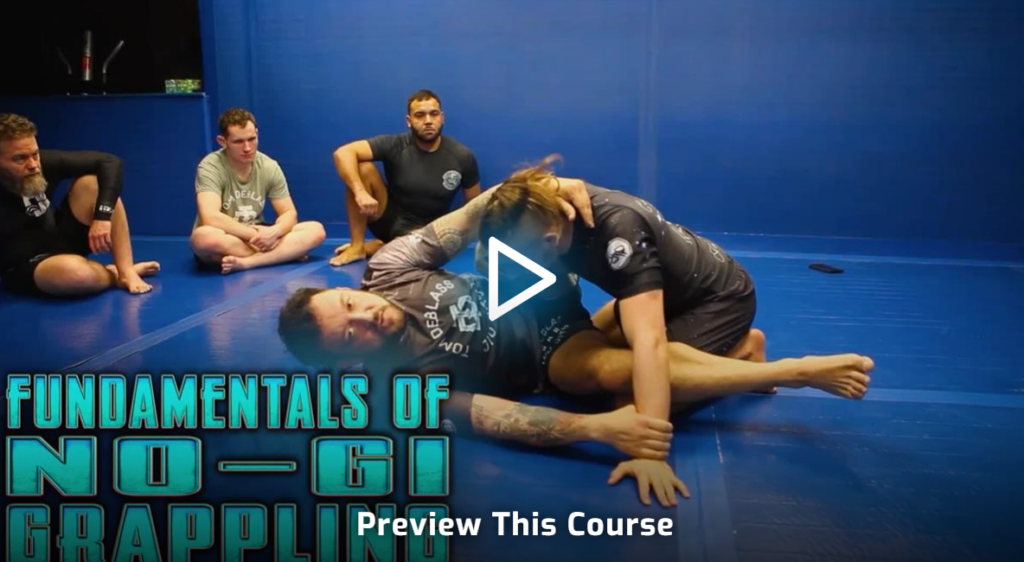
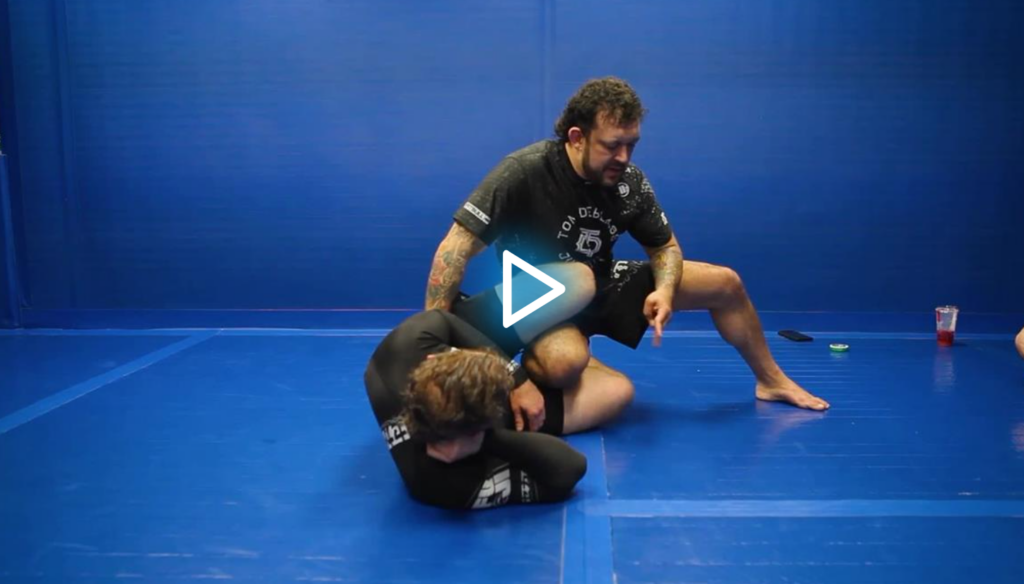
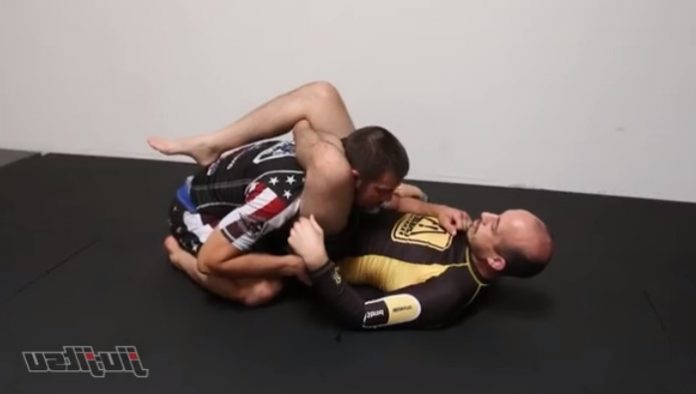
The Fundamentals of No-Gi Grappling Tom DeBlass DVD does not offer a blueprint on how to set one up, but it does cover the two most effective guard variations for No-Gi BJJ, which are the closed and half guard. DeBlass offers both perspectives of the guards, covering passing and common threats as well as how to play them effectively without relying on panicky Gi grips.
Key Takeaways
An 8-part BJJ DVD instructional outlining the No-Gi guard and passing game of Tom DeBlass.
Focuses mostly on the half guard and closed guard, covering both bottom and top tactics.
Just over 4 hours of details on how to set up DeBlass’ world competition-tested No-Gi guard game.
The guard is the most difficult aspect of a No-Gi BJJ game to set up for effective use in competitions. As much as it is the go-to with the Gi, to catch your breath and rest, it is a dangerous and slippery place to be in when the security of the Gi is not there.
That being said, if you’re anywhere along your BJJ journey, from the first day to the first day of your third decade. the closed guard is a great idea for No-Gi purposes. On its own, it is powerful enough to cause problems in terms of passing for the top person, but not quite enough to sweep or submit effectively, which is crucial.
This is where another version of the closed guard comes into play – the half guard. As the natural continuation to and from the closed guard, the half guard offers fewer rendition options but far more in terms of attacks, especially submissions.
The half guard also opens up butterfly guard and more attack-minded open guard options that build off the security of the initial closed/half guard combination. All of these aspects feature in the Fundamentals of No-Gi Grappling Tom DeBlass DVD.
Athlete, Coach, and Advocate Tom DeBlass
There is no way that you do not know the name Tom DeBlass if you are involved in grappling, if for no other reason, than his always-entertaining Instagram account. Make no mistake, Tom is one of the baddest grapplers on the planet, ironclad through years of grappling MMA and altercations that saw him build a character that people look up to now.
The founder and head coach of Ocean County BJJ, now a worldwide affiliate organization, is himself a 3rd-degree BJJ black belt under Ricardo Almeida and the man behind the early development of some titans in the BJJ world such as Garry Tonon and Gordon Ryan.
DeBlass, apart from serving as an inspiration to folks through his social media, is also very active in directly helping out kids who face bullying all over the US and the world. He has lately been growing his Buddies over Bulles platform, which empowers kids with free BJJ classes to help combat bullying.
In a quest to provide the people who already train and are not getting bullied with some incredibly useful material too, Tom is issuing new instructionals very often, with his collection numbering over 20 titles at this point. One of his latest efforts is the Fundamentals of No-Gi Grappling Tom DeBlass DVD, his take on building a comprehensive No-Gi game regardless of your level.
Fundamentals of No-Gi Grappling Tom DeBlass DVD Review
I think a more fitting title for the Fundamentals of No-Gi Grappling Tom DeBlass DVD would be Fundamental No-Gi Closed and Half Guard. Seven out of the eight volumes in this No-Gi instructional focus on these guards, whether from top or bottom. In addition, Tom offers long chapters filled with very, bordering on overly, detailed explanations, offering no more than 30 minutes, often less, of material per volume.
Part 1 – Closed Guard Essentials
The closed guard is definitely a top option to use in No-Gi and I was interested to see whether Tom sticks to basics or goes off the deep end into modern iterations of the guard. Safe to say, he sticks to proven stuff, although he adjusts everything to fit the needs of modern BJJ perfectly.
The Fundamentals of No-Gi Grappling Tom DeBlass DVD starts with key details on braking posture and how DeBlass likes to use his legs to aid him, opening up triangle/Omoplata combos along the way. He goes deeper into the Omoplata sweep before connecting an armbar into the mix as the opponent fights for posture. 10 out of 10 for this volume.
Part 2 – Armbars From the Bototm
As we get to the second position of this No-Gi Tom DeBlass DVD, it seems as if we’re in for a treat, with Tom continuing to build on the previous fundamental combinations. He shares a few more top armbar to Omoplata transitions, taking the attacks full circle.
He also covers the concept of space, more precisely how to stop the top person from creating space while you’re transitioning in between armlock attacks. He wraps up with a chapter on the shoulder crunch from the closed guard.
Part 3 – Sweeps, Kimuras & Back Attacks
The third part of the Fundamentals of No-Gi Grappling Tom DeBlass DVD goes further into the closed guard, exploring how you can add the Kimura to the mix and introducing sweeps in more detail.
This is also where Tom starts to kind of complicate as I feel he diversifies too much trying to connect the previous attacks to intricate back takes and Kimura combos that will leave many people confused. It is a completely new game to the one presented before, and this is where the flow of the instructional is somewhat lost. The chapters themselves are solid in terms of the quality of instruction.
Part 4 – Defensive Guard Tactics
A useful part of this instructional that targets a more defensive use of guards with DeBlass exploring how to deal with the top person forcing chest-to-chest pressure and breaking apart your closed guard.
He ties this aspect in with some reactive sweeps, such as the hip bump and the push sweep, which work perfectly when set up using the opponent’s own movements. He also talks about overhooks and how hunting for them is the best way to recover half guard and stop the passer after they break your closed guard.
Part 5 – Passing and Back Control
This DVD kind of jumps out as we reach past the halfway point of the DVD, positioning you from the top and blending closed guard opening and passing moves with back control and finishes.
In this stuffed part of the Fundamentals of No-Gi Grappling Tom DeBlass DVD, Tom shares 6 chapters in 30 minutes, covering stack passing, guard breaks, back control, body triangle, triangle and choke finishes, and back takes against the turtle. It is like he is answering a random Q & A session in each chapter.
Part 6 – Half Guard Bottom
Once the confusion of the fifth volume is done DeBlass switches over back to guard, this time exploring the half guard. In my mind, he would’ve ended with a much better instructional if he committed to the previous volume completely.
This one is another great one. Tom DeBlass has one of the best half guards in the game so everything he says is legitimately important. He begins by sharing how to position your body relative to the top person and explores how to play the underhook game without exposing yourself to front headlock chokes or body lock passing.
This part of the No-Gi Tom DeBlass DVD also features the lockdown, and Toms’s own variation of it that helps him play a defensive-minded version of the half guard, in terms of recovering the underhook control.
Part 7 – More Half Guard
The penultimate part of the Fundamentals of No-Gi Grappling Tom DeBlass DVD goes on to build on the half guard foundations for No-Gi, covering some of the key sweeping parts of Tom’s half guard game. he starts with the knee lever, explaining it beautifully, before going on to cover guard recoveries and the butterfly half guard.
He spices things up with some interesting chapters on the knee shield in half guard and using the Kimura trap to maneuver that top person easily.
Part 8 – Top Half
The final part of the Fundamentals of No-Gi Grappling Tom DeBlass DVD covers Tom’s top half guard system. Well, it covers the basics of it, which is more than enough to get you going.
I’d single out the framing action from the top half, which is the basis of his entire game, confusing bottom players since they’re the ones usually resorting to framing. DeBlass likes to redirect the bottom person’s guard structure away from his passing, rather than the other way around, which he deconstructs in detail in this portion of the DVD.
He wraps things up by adding the knee slice pass as the natural follow-up of his pressure-based top half guard game, before concluding the instructional with a short overview of everything demonstrated in it.
Evolving Instead of Copying
This Fundamentals of No-Gi Grappling Tom DeBlass DVD might not be the best instructional to help you develop a precise guard game for No-Gi, but it does offer something very valuable – an approach.
So far, Tom has shared his game in instructionals, and I have tried some of his stuff since I liked playing half guard, hunting for kneebars, and attacking triangles for a while as well. The thing is, I am a featherweight, and found the mechanism to e off since Tom is heavyweight.
This No-Gi guard instructional, however, offers a lot more variety by building the positioning, attacks, and defenses on concepts that everyone can apply to their game. The DVD lacks a clear progression throughout, but there are systems that emerge in it, involving two to three volumes and allowing you to figure out how to evolve both your guard and passing game without the Gi.
There is nothing that works as well in BJJ as the basics. This means sticking to proven gaurd positions such as the closed and half gaurd, but not the ultra-early variations shown by the Gracies. It is the developed and evolved versions of these grappling staples that
The Fundamentals of No-Gi Grappling Tom DeBlass DVD offers ultra-functional guard variations of the best positions to use in No-Gi. He also covers a vital aspect of gaurd play which is awareness of the possible threats and how to capitalize on the opponent’s actions.
You’ve probably heard both Gordon Rayn and John Danaher talk about scrimmage rounds during their training sessions, but neither one rally went too deep in explaining what these are. That is all about to change now with the Gordon Ryan Systematically Attacking The Scrimmage DVD.
In a brand new 6-part instructional, Gordon covers the concept of scrimmage for BJJ, demonstrating how they set it up and offering a really useful and crucial blueprint for approaching the standing game. In a DVD where Ryan does not show a single takedown, he sets you up to succeed at all of them. His best-organized instructional to date, by a country mile!
Key Takeaways
6-volume No-Gi BJJ DVD containing over three and a half hours of material.
Lays the foundation of any effective standing game plan development for BJJ.
Contains over an hour of rolls and rolling commentary and breakdowns by Ryan.
The term scrimmage is not something you often hear in terms of Brazilian Jiu-Jitsu. In team-based sports, scrimmage refers to playing “mock” games during practice, which are not scored or officiated but replicate exactly what the athletes encounter during a live, official game.
In wrestling terms, this means you’re playing the “who scores first” game, setting it up to mimic the official scoring goals of the sport. The same is true for BJJ, with the New Wave team preferring to set up their scrimmage rounds following the ADCC ruleset format.
In the first of what I expect is going to be a long series of instructional Ryan explains how exactly they set up this popular aspect of training. The Gordon Ryan Systematically Attacking The Scrimmage DVD outlines his experiences in learning wrestling by aiming to score a point using ADCC rules, and starting from standing.
Learning From Gordon Ryan Instructionals
There is no point talking about what Grodon Ryan has done in his grappling career. He is such a staple name at the moment that even people who have never trained know who he is and get pulled into BJJ because of him.
Apart from his stellar no-Gi grappling performances that positioned him as the best competition ever in the history of the sport, Ryan has been very active in sharing his knowledge and understanding of Jiu-Jitsu through instructionals.
When he first started, Ryan approached BJJ DVDs as seminars, offering way too many details and no real way to follow his train of thought unless you watch the entire instructional. With his early DVDs lasting more than 8 hours, this was no easy task.
I am glad that Gordon proved that he is an incredible student of the game in every possible way, learning and adapting to start issuing way better-structured DVDs that offer a lot more information that will benefit those that mostly watch BJJ instructionals – white to purple belts.
his latest instructional marks the start of a whole new era, with the GOAT addressing his standing fame for the first time ever in the Gordon Ryan Systematically Attacking The Scrimmage DVD.
Gordon Ryan Systematically Attacking The Scrimmage DVD Review
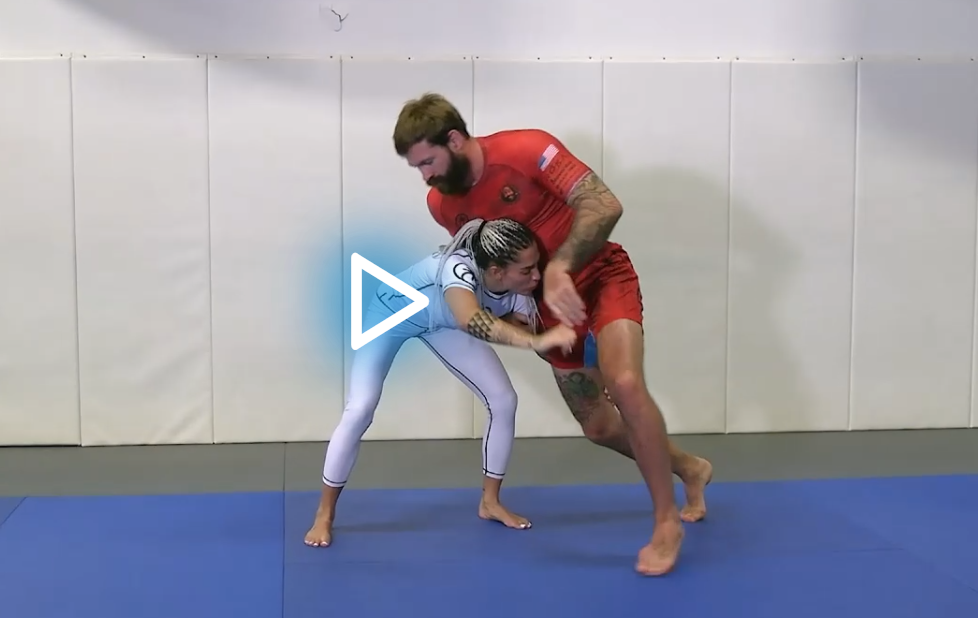
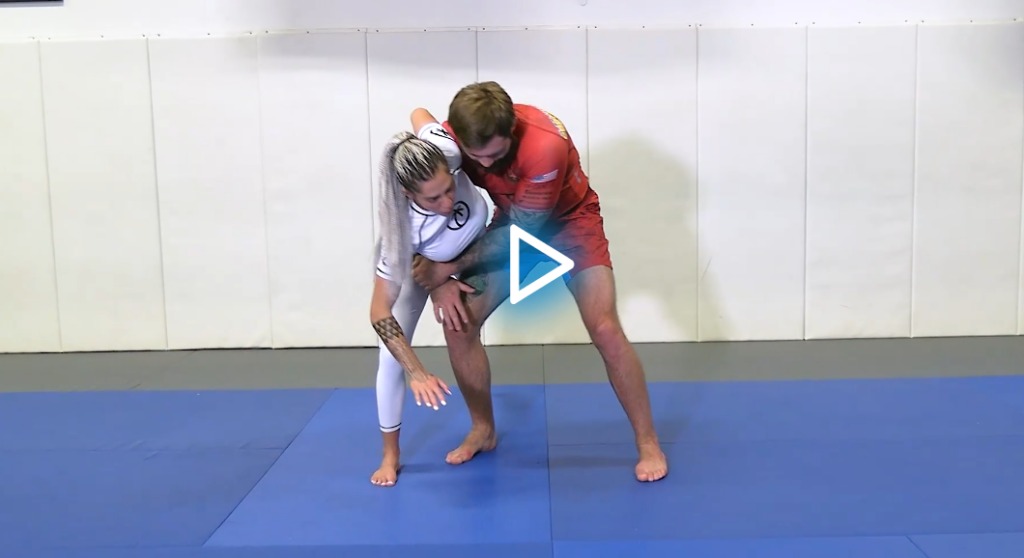
In this No-Gi (no surprise there) Gordon Ryan Systematically Attacking The Scrimmage DVD, the “King” introduces his approach to the standing aspects of the BJJ game. With his trusted uke Nathalia Santoro, Gordon demonstrates how to set up a winning approach to wrestling on the feet for the specific goal of winning BJJ matches.
Part 1 – Introduction to the Concept of Scrimmage Wrestling
Gordon begins his instructional in a very Danaher-esque manner, going through an entire 40-minute-long volume of theory regarding the standing game in Jiu-Jitsu. He first defines the goals of the instructional, making a careful and precise comparison of the scoring goals in wrestling and BJJ, focusing on the differences.
This sets the tone for setting up a tactical approach that wins you matches, and organize training in an efficient manner. Ryan talks a lot about time limits and pacing, as most people know that standing exchanges are the physically most demanding aspects of grappling.
As this part of the Gordon Ryan Systematically Attacking The Scrimmage DVD draws to an end, Ryan also covers the role of posture, common submission risks, and the scoring criteria in BJJ. I liked that he included the beginner’s theory as well, providing clear instructions on how new students should approach the standing game.
Part 2 – Stance and Motion
When I first started learning wrestling takedowns, the first two out of 5 crucial steps to any takedown were stance and motion. While it may seem like practicing katas, stance, and motion are the vital precursor of any successful takedown.
Gordon goes really deep in this one, covering stuff such as line of sight, how to align your own body, attacking the legs and the dominance that locked arms have over unlocked ones.
He also demonstrates some basic setups in this part of the Gordon Ryan Systematically Attacking The Scrimmage DVD. These serve as a foundation for the introduction of distance management, and the concept of smartly using the 3 zones at your disposal.
Part 3 – Grips
Grips are a tedious subject to study in grappling. yes, I know they’re very important, I tooth the same horn, but I still do not enjoy experimenting with them for long periods of time. Gordon’s third volume does not make things easier.
In this part dedicated solely to grips, Ryan goes over the general gripping theory they utilize at New Wave Jiu-Jitsu and talks a lot about the inside position. He introduces a few interesting concepts in his chapters on asymmetry which are only going to excite black belts, if we’re being honest.
If I had to only watch one part of this volume of the Gordon Ryan Systematically Attacking The Scrimmage DVD over and over again, it would be the one with chapters on creating ties, particularly collar ties, as the opening configuration.
Part 4 – Defense
As the instructional portion of the Gordon Ryan Systematically Attacking The Scrimmage DVD draws to a close, Gordon foes over staple defenses that are crucial to allow you to set stance, motion, and grips up in the first place.
He really does go basic here, which I appreciate. there is no place for fluff in wrestling, so Gordon sticks to comparing early and late defenses, and portraying how to keep your legs safe using both methods.
Parts 5 & 6 – Rolling Footage and Commentary
The customary rolling commentary is the centerpiece of the final two volumes of the Gordon Ryan Systematically Attacking The Scrimmage DVD. In the fifth part, he does four rolls with different people, totaling 20 minutes of material.
In the final volume, Ryan does a commentary on those four roles, spending a lot of time on each, explaining exactly what he did, though, and how he adjusted to his partner. his analysis more than doubles the length of this part, which runs for almost 50 minutes.
A Different Approach to Standing
This Gordon Ryan Systematically Attacking The Scrimmage DVD is not going to teach you everything about wrestling for BJJ. I expect there are other titles to follow in this Gordon Ryan standing DVD series, but until such time, the truly crucial aspects of wrestling are all at your disposal.
If you can figure out a way to get close enough to someone to establish a locked arms position, you can set up any wrestling, or to an extent, Judo game that you want, while not losing control over the opponent. With this as your main goal, stance, motion, and grip fighting will emerge pretty naturally.
Instead of focusing on the final outcome, which is the takedown, and practicing how to do it over and over again focus on achieving dominant control over your opponent during standing, and keep them there. This opens up a lot more than just one takedown, which, oftentimes, in BJJ, ends up blocked or with you in a submission hold.
I think that I will call the Gordon Ryan Systematically Attacking The Scrimmage DVD my favorite instructional so far out of all his work. take this as you wish, knowing it comes from a black belt with a Judo background who has spent so much time scrimmaging that his neck now forces him to pull guard.
Unless you want the same thing to happen to you, now is the best time to pick this Gordon Ryan DVD up and set yourself up for success. This one is truly worth every penny!
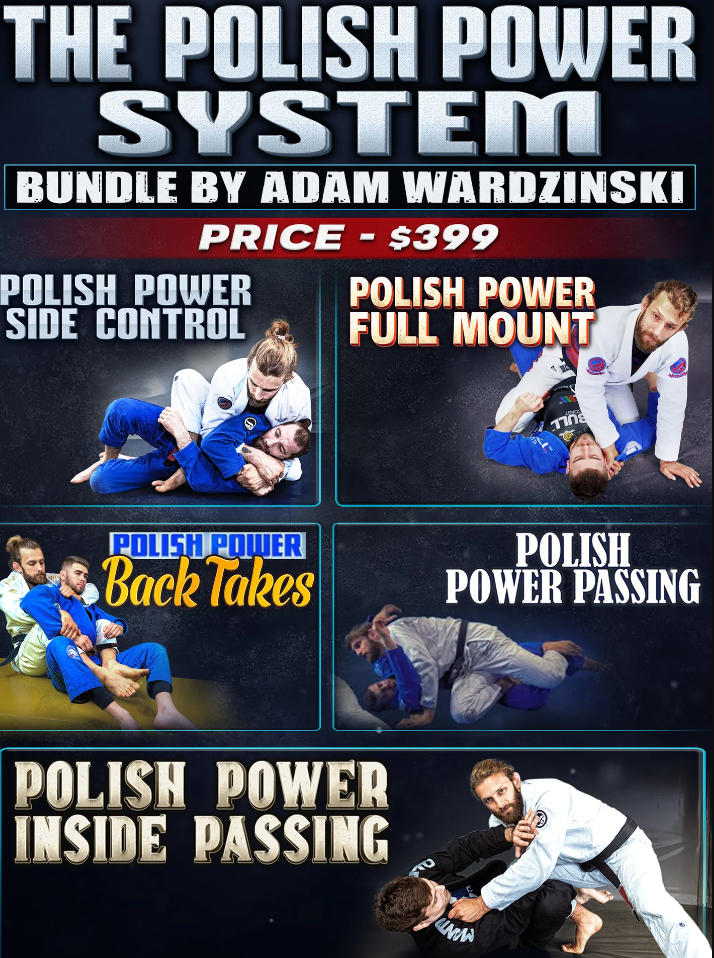
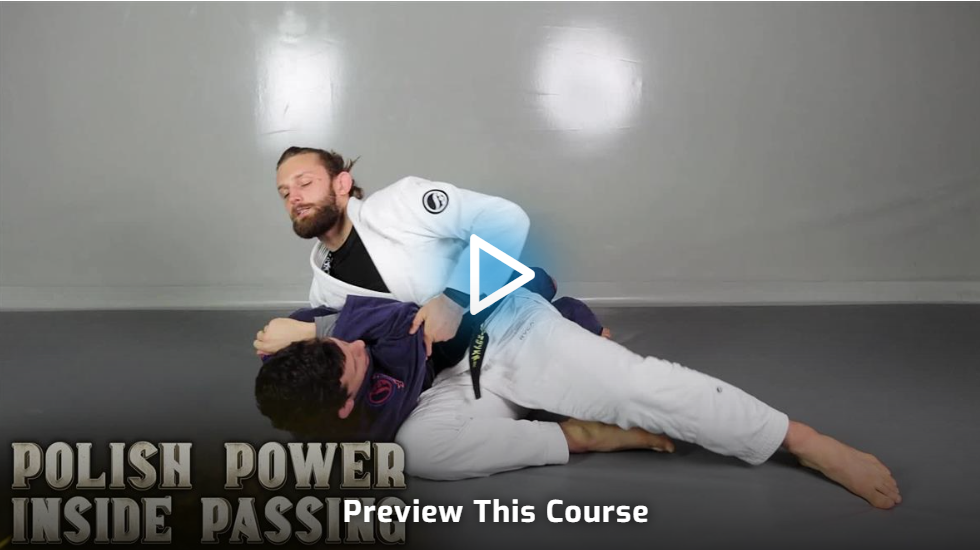
We take a look today at the Adam Wardzinski Polish Power System DVD Bundle, which contains Adam’s best top game instructionals with the Gi. This collection is a must for any modern BJJ competitor since it provides a wealth of information on moves and techniques that have been tested at the very highest levels of the game over and over again.
What you get inside are 5 different titles, focusing on the key aspects of the top game in BJJ. Adam covers passing in two different DVDs, on top of offering blueprints for side control, back control, and the mount.
Key Takeaways
A five-part bundle containing 5 different Adam Wardzinski top game DVDs.
Features Adam’s complete top game covering side control,m mount, back control, and passing.
13+ hours of details on how to set up Wardzinski’s world title-winning competition game.
Adam Wardzinski is a man who needs no lengthy introductions. He is one of the most accomplished butterfly guard players in the history of the sport and one of the best grapplers ever to emerge out of Europe. As POland’s leading game in Brazilian Jiu-Jitsu, Adam won his first ever IBJJF Gi Worlds just a few short months ago in 2024.
That title is bound for a cabinet already holding Adam’s Gi and No-Gi IBJJF Pans, Gi IBJJF Europeans, and AJP Abu Dhabi World Pro titles. All that is left for now is the ADCC, but Adam does seem to prefer competing in Gi rather than No-Gi, despite being very good at both.
Wardzinsk is undoubtedly one of the competitors of this decade, and he has developed a game that has been tested, and finally proven to work on the biggest stage. Namely, Adam has had to go back to the drawing board multiple times, readjusting aspects of his game that were lacking that world-champion quality. Until now.
Presently reigning at the top of the Gi BJJ world, Adam has put all his research that went into building his comprehensive BJJ game into a DVD bundle that everyone who competes in the Gi should own – the Adam Wardzinski Polish Power System DVD Bundle.
Components Of The Adam Wardzinski Polish Power System DVD Bundle
The Adam Wardzinski Polish Power System DVD Bundle is a collection of five multi-volume Adam Wardzinski BJJ DVD instructionals focusing on the World Champion’s top game design. Each of the titles is a Gi instructional, and the total running length of the material is just under 14 hours.
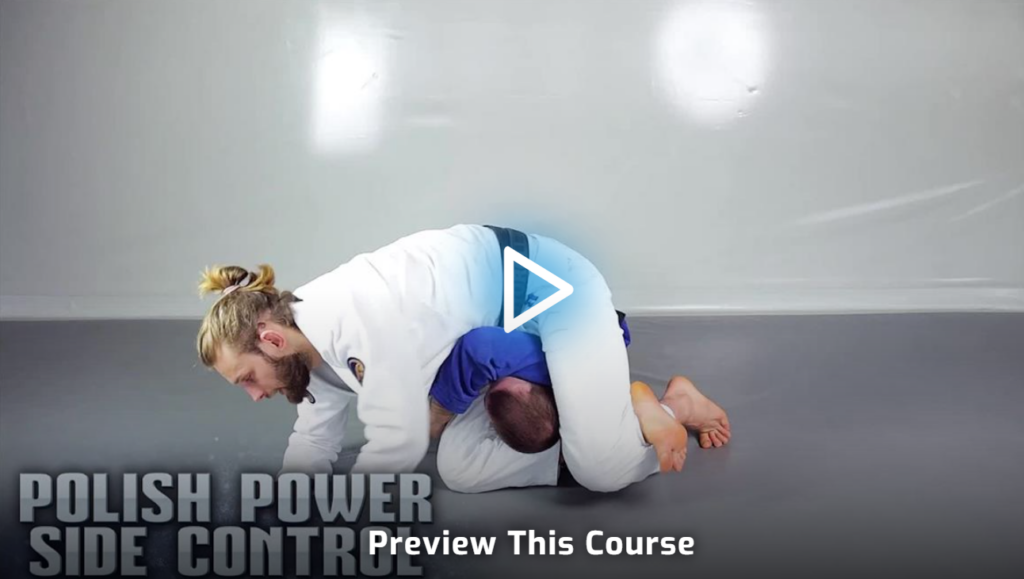
Subject Matter: Kicking off the Adam Wardzinski Polish Power System DVD Bundle (although there is no particular order in which you can watch the instructionals in it), is his take on dominating the top side control position in Gi Jiu-Jitsu.
Key Points Covered: This 4-part instructional outlines Adam’s own game, starting with the 5 different types of side control versions he uses, and how each works. As the DVD progresses, Adam connects the dots, covering common counters bottom players turn to, as well as who to finish most submissions as they try to escape.
The instructional relies heavily on lapels and the use of the Gi, featuring things like paper cutters choke, lapel Baseball choke, and lapel crucifix moves, to name a few. There is an entire volume third one) dedicated to armbars, one of Adam’s bread-and-butter submissions.
Technical DVD specifications: The instructions last around 3 hours, with the final part being a bonus volume containing only three techniques that didn’t fit the earlier organization pattern. Everything is demonstrated with the Gi.
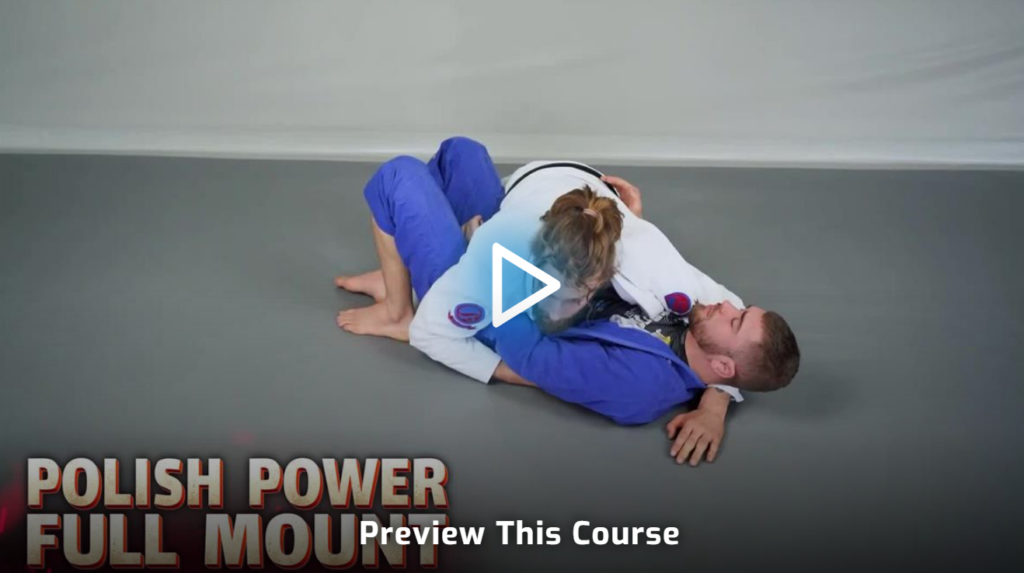
Subject Matter: Most of Adam’s DVDs in this bundle are pretty self-explanatory, with his most instructional being one of the most straightforward ones. Simple but effective, it shows you how Wardzinski dominates the mount against world-class opponents.
Key Points Covered: This instructional is one of the shorter ones in the Adam Wardzinski Polish Power System DVD Bundle, containing three volumes. In them, Wardzinsk addresses the key problems the mount presents, offering quick transitions that open up the back to help you constantly switch between the two.
he also focuses heavily on submissions, which is not strange given his propensity to hunt for finishes. Lots of cross chokes feature here, topped off with lapel chokes and a series of modifications (these are truly great) that ensure common chokes work against everyone.
Similarly to the side control instructional, there is one entire volume covering armbars and wristlocks, the latter being extremely sneaky and effective! Adam does introduce some bent armlock variations as well and even shares a useful triceps crusher submission.
Technical DVD specifications: As previously mentioned this DVD has only 3 parts and a total running length of around 2 and a half hours. The material progresses from mount control, through transitional retention to chokes and arm lock finishes with the Gi.
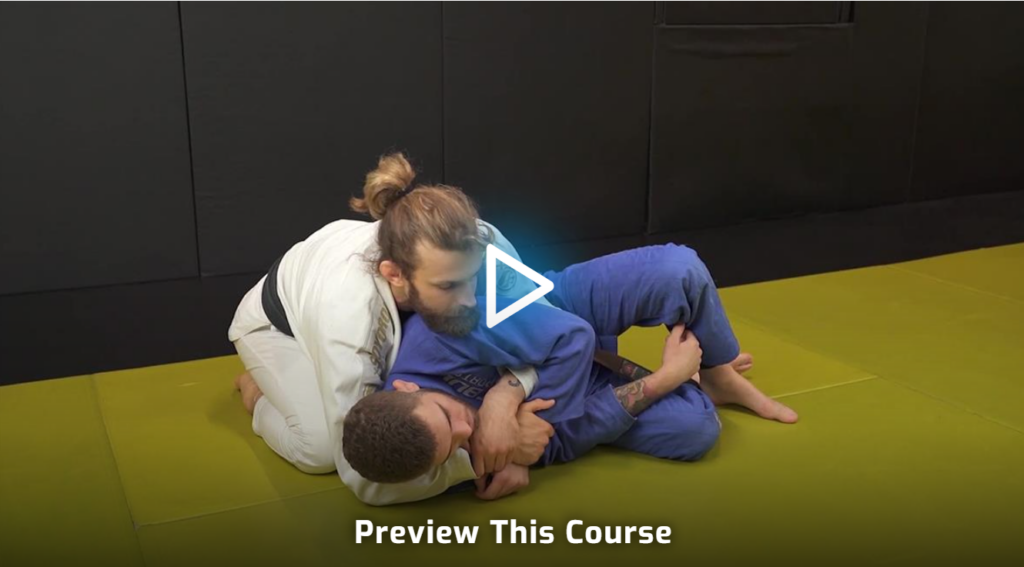
Subject Matter: Title number three in the Adam Wardzinski Polish Power System DVD Bundle deconstructs Adam’s back control tactics, focusing on efficiency and application over the length of material.
Key Points Covered: Adam begins his Polish Power Back takes DVD with several different back takes against a turtled-up opponent, which I find doubtful to be effective against the modern turtle. Moving forward this instructional does offer some value though, mostly in terms of several trutle breakdowns adopted from wrestling that do stand a chance.
The strange and refreshing thing about this title is that Adam seems to have decided to move away from the standard rear naked choke finish and introduce versatile submission attacks from the back. The list includes, while not being limited to rear triangles, Kimuras, different crucifix subs, lapel Ezekiel modification, and armbars.
Technical DVD specifications: Over the course of 4 parts, Wardzisnki delivers just under 2 hours of material. Not some of his best work, and doubtful anything from the first half of the DVD is effective, but there is lots of merit to his submissions system, which is organized beautifully.
Subject Matter: This is the first of two DVDs in the bundle that outline Aam’s passing game. In this iteration, Wardzisnki outlines his general passing approach, organized around the passing directions he uses most.
Key Points Covered: This instructional features lots of pressure-based passing which Adam is known for beginning with the knee slice pass and a bunch of brutal adjustments to force yourself past people’s intricate guards. Adam attempts to end up in the mount rather than side control while using it.
Also on the menu are the backstep pass and Wardiznski signature smash passing mini system. The first is mostly a solution to the Reverse De la Riva guard while the second focuses on beating the dreaded Z-guard and other half guard variations.
There is also some stack passing demotivated mixed in with some cool acrobatics, such as cartwheel passing. It is all stuff we’ve seen Adam use on the biggest stages of grappling.
Technical DVD specifications: This member of the Adam Wardzinski Polish Power System DVD Bundle contains four volumes, each lasting under an hour, which brings that total time to barely over 2 hours. Once again, every technique requires the Gi and follows a clear progression-based system that is easily applicable.
Subject Matter: The final contributor to Adam Wardzinski’s top game Polish Power System is another passing DVD, this time a lot more specialized. In it, Adam focuses on a passing concept and bases all the material on the guards people are playing rather than pass techniques.
Key Points Covered: This is one of the best overall DVDs by Adam and my favorite out of all the titles in the Adam Wardzinski Polish Power System DVD Bundle. Adam begins by exploring the concept of the inside position, dissecting fundamentals such as pummeling, distance management, and grip tactics before moving on to actual passing.
In passing terms, he covers the most popular guards, from the Reverse De La Riva to modern lapel guards such as the Squid guard and Lasso X guard variations. During the demonstrations of all techniques, he sticks to the inside position concept as his main principle.
Technical DVD specifications: This is Adam’s longest title in the bundle, containing 6 distinct volumes and with a total running time of over 4 hours. Once again a Gi-exclusive instructional.
Copying the Games of BJJ World Champions
So, how do you best use an instructional bundle such as this one? Well, for the most part, you can learn al to about competitive BJJ by watching the stuff competitors do, especially world champions such as Adam. However, the copy-and-paste expectations you might have in terms of the material probably need a major adjustment to reality.
First of all, nobody but Adam can do the stuff in the Adam Wardzinski Polish Power System DVD Bundle perfectly and with a high degree of success over and over again. If you have a similar body type and build, with similar affinities and experience to Adam, you will definitely benefit the most.
Moreover, those that have not been training nearly as much as Adm, should not expect to simply try out the moves and dominate black belts in their first few attempts. Instead focus on selecting aspects of the game you need to improve in and use Adam’s information to adjust and evolve your own game, rather than simply copy his.
All is said and done at this point and what is left is for you to go on and pick up the Adam Wardzinski Polish Power System DVD Bundle. It will make you a much better competitor overall, even though it only focuses on the top aspects of the BJJ game. The only drawback is that there isn’t a No-Gi counterpart to this bundle, so all grapplers get the answers Adam Wardzinski has to offer.
Are you trying to figure out how to escape the triangle choke in BJJ? Why merely escape? Instead, you could opt to use a proven Garry Tonon tactic and apply a triangle escape to leg lock combo that catches your opponents by surprise.
Moreover, after you take a look at the dissected, step-by-step instructions on how to perform this BJJ triangle escape to a leg lock, you’ll gain an understanding of how the best grapplers bind together submissions and escapes. This is why Tonon has such courage to go for crazy things at the highest level – he can escape submission if it fails!
Why Watch Garry Tonon?
Garry Tonon, dubbed “The Lion Killer” is one of the most recognizable names associated with John Danaher and his Death Squad. He’s a multiple World No-Gi & Pan Ams No-Gi Champion, and gunning for his first-ever ADCC title again in 2024. He’s simply one of the best No-Gi BJJ practitioners in the world at specializing in submissions and No-Gi Jiu-Jitsu.
His specialist style of Jiu-Jitsu has benefited Garry enormously in MMA. It’s best defined as relentless submission hunting mixed with scramble initiation. It has helped Garry achieve a 9-1 record in MMA, fighting under the ONE FC banner.
With such a style, though, the art of escape gets sharpened daily. Garry’s style has landed him in some difficult situations such as losing to Tye Ruotolo and Sean McNally. Garry does have an incredibly effective escapes system, built upon his submission-hunting prowess.
Garry is hunting for submissions all the time and he also gets himself into bad positions probably more often than anyone else, but ends up getting out and tapping more people than he taps to. We’ll take a look at how you can integrate his tactics into your game today.
Garry Tonon how to escape the triangle choke
Turning Escapes into Attacks
Whenever you do just one thing in BJJ, you set yourself up for failure. For example, trying to hold mount using everything you know, even against a first–day student is eventually going to fail – they’ll find a way out, even if it is by pure luck.
Threatening submissions while you try to retain mount, such as the Americana will most likely not end up with you tapping the bottom person. However, keeping them busy with arm lock defense means you can easily stay in the mount, which is a smart and efficient tactic to win matches.
Well, you can reverse-engineer this entire approach to use when you’re escaping as well. In fact, the most success I’ve had with escapes is when I wasn’t trying to get out of bad spots but rather hunted for counter-submissions. The D’arce choke off a Ghost escape and the Squirrel Lock Kimura comes to mind.
There are plenty of similar examples of how you can use submission threats to get out of escapes or turn escapes into submission attacks halfway through when the opponent is busy trying to keep a hold of you. You can be as creative as you want as long as you set up everything you do as at least a dilemma.
BJJ Triangle Escape
Technique Breakdown: Garry Tonon Triangle Escape To Leg Lock Finish
Triangle chokes are very tricky to get out of. It is not defending them that gets you in trouble, though, as much as the final stages of escaping do, when a lot of different attacking follow-ups open up to your opponent.
One way of countering these is to go for a counter yourself, well before such opportunities present themselves to your opponent. Here Garry Tonon shows a pretty slick triangle escape to leg lock combo that will catch anyone by surprise.
Moreover, he has created plenty of additional options to finish his opponent after he escapes toward Ashi. Let’s break down the entire sequence, along with the foundational idea behind it:
Keypoint 1: Posture is not Enough
While Garry agrees that posture is important during any BJJ triangle escape, he states that not jsut any posturing is going to help you. Instead of trying to pull up with your neck, focus on wedging your hips underneath the opponent’s hips. This soveling motion will provide you with all the posture you need to fend off the choke, as you set up your way out.
Keypoint 2: Don’t Go Forward, Go Up
Another key aspect of posture during a triangle escape from guard is getting up to your feet. Many people take the easy route of trying to stack the bottom person by leaning forward. This is a trap that only gets you deeper into the triangle, or potentially in a mounted triangle choke.
Instead, focus on standing straight up. Stepping to the side of your trapped arm is going to provide you with both the drive and the essential angle to stand up while not straining your neck and look to set up your triangle escape to leg lock combo.
Keypoint 3: Angle for the Step Over
We used to learn the basic triangle defense as jsut finding a way to sit back and throw both legs over the opponent’s belly. This still works, but Garry dissects the “just find a way to stand up” part in a very methodical way.
Yes, his route is longer. and does not employ both legs, which is a lot more effective, believe it or not. Once up, he steps over on the side of his trapped arm, and carefully sits back rather than throw himself on the mats. This latter is only going to pull the bottom person on top of you.
Keypoint 4: Open the Legs
A plus side of Carfull descending to the mats in a controlled fashion is that the opponent’s legs are still closed in the triangle. No this is not a bad thing, as now you can easily open them up while immediately gaining control over them.
This step is crucial as this is when your opponent will be looking for follow-ups since the triangle cannot work anymore. Even if you don’t open the legs immediately, use your free arm to control the one on your neck, as it will buy you all the time you need to set up Ashi Garami.
Keypoint 5: But-to-Butt
The final aspect of this Garry Tonon triangle escape to leg lock combo is to remember that your butt needs to stay close to the opponent’s butt at all times. This is the first step we went over (wedging) and still makes or breaks this sequence.
Being butt-to-butt means you can work towards any Ashi Garami configuration that you want. In fact, Garry offers two options as a way to tap your opponent:
Outside Hell Hook: Immediately available off this modified staple BJJ triangle escape is the Game Over leg locking position, a.k.a. the Sambo Knot. Garry demonstrates an outside heel hook but you can go for a bunch of different locks from there.
Straight Ankle Lock: For the PG version that those IBJJF leg lockers are after, Tonon provides an alternative finishing, utilizing the most powerful version of a straight ankle lock – the belly-down finish.
How to Apply Submissions to All Your BJJ Escapes
Garry’s incredible rendition of a triangle escape to leg lock, as effective as it is to immediately add to your game, is a lot more than jsut a copy-paste tactic. It provides you with an entirely differnet way of thinking about escapes, as the means not just to get out, but to win.
This does not mean that you do not need to practice complete escapes any longer. On the contrary, you need to research and dissect them even more, so that you’re able to pinpoint the best time for transition into a counter as opposed to jsut running back to safety. it wil undoubtedly turn you into a true high-level grappling competitor!
If you’re interested in all kinds of escapes from numerous submissions make sure to checkoutTom DeBlass’s DVD instructional. It’s calledSubmission Escapes! It can really improve your escape skills. And when we talk about Tom DeBlass, he’s the guy who hasn’t submitted to competition for more than 10 years.
Not even mention that Tom DeBlass’s guard is almost impossible to pass. He’s been working on it for the last 15 years and it’s nearly perfect. Check Tom DeBlass’ Half Guard DVD Instructional namedHalf Domination
Tom DeBlass DVD and Digital Instructionals
There is also another Great Escape Instructional from Brazilian Jiu-Jitsu Legend Dean Lister. He’s very well known for his leg locks and intentionally giving legs to people so he could defend them and submit them. He’s the guy who inspired John Danaher with his legendary sentence “Why would you ignore 50% of the human body”. Dean Lister gathered all of his best escapes and put them in this instructional.
It’s called Worry-Free Escapes. And it’s something that will get your escapes to another level. And once you’re not afraid of being submitted you’re more offensive and that can be the game changer in your BJJ. So, check out the technique List and Dean Lister’s Worry-Free Escapes Instructional.
With wrist locks, you’re either all crazy in love with them or completely and utterly despise them. There is no middle ground and that’s perfectly okay. Get to know them and join the love-them crowd, rather than being the crybaby that despises them and has no idea what to do when they strike.
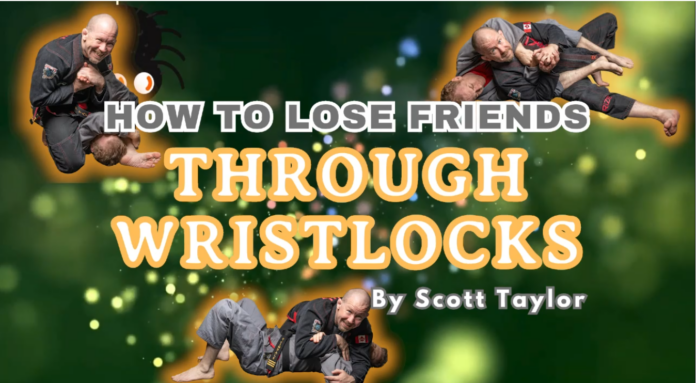
There is a very interesting instructional out now, called Lose Friends Through Wrist Locks Scott Taylor DVD. It features lots of Gi-heavy information that will help you devise a deadly attacking and counter-attacking wrist lock game. It is the perfect blend of traditional martial arts techniques adopted to be extremely efficient in BJJ.
Key Takeaways
A 3-part Gi BJJ DVD containing 2 hours of highly effective wrist locks.
Heavy use of Gi grips and lapels in setting up wrist locks from everywhere.
Organized to help you improve your submission finishes, pins, and escapes.
Wrist locks are often frowned upon in BJJ, but there is no real reason to do so. Yeah, they are sneaky, and they are effective, but that doesn’t mean we stop using them just because they work. Quite the dichotomy right there.
The use of wrist locks should, in my opinion, be encouraged in our sport, as they are often overlooked, and lead to complacency that ends up costing you matches. And no, shrugging off a submission loss to a wrist lock as a fluke is not the way to cope with these arm locks.
At the end of the day, we need to use everything at our disposal to be effective within the bounds of competitive Jiu-Jitsu. Unless we treat wrist locks seriously, we just create another boogey submission, as the Gracies did with leg locks, effectively forcing them underground. if history has taught us anything, that will come to bite us in the a$$.
One step in embracing wrist locks, especially if you’ve never considered them before, is the Lose Friends Through Wrist Locks Scott Taylor DVD. It explains them better than any pure BJJ grappler ever could.
A Wrist Lock Master With a Peculiar Resume
I guess we can call all those who train BJJ, myself included, the snobs of the martial arts world. Knowing something is effective, fun, and difficult makes us think we’re involved in something that is better than most other martial arts. Given the standards, most of the time it is, but that doesn’t mean other martial arts have nothing to contribute that’ll make us better at Brazilian Jiu-Jitsu.
Every now and again a person with a very long and accomplished traditional martial arts background in BJJ goes through the ranks and ends up developing some mixture of BJJ and other martial arts that seems to be ultra-effective, at least for themselves. It is not much unlike the origin story of BJJ. The challenge, however, is how to have it work for others as well.
Scott Taylor, a fifth-degree black belt in Kumo Jiu-Jitsu (a traditional variation) as well as a Tae Kwon Do and BJJ black belt. That is an impressive blend of credentials, which also contributed to Scott’s specialization of one particular aspect of submission grappling – wristlocks.
Having trained with the likes of GSP, Nick Maynard, Jo Stevenson, and Brendon Vera surely helped Scott weed out the useless form of what really works. He now attempts to pass on his decades’ worth of knowledge to the BJJ world via the Lose Friends Through Wrist Locks Scott Taylor DVD.
Lose Friends Through Wrist Locks Scott Taylor DVD Review
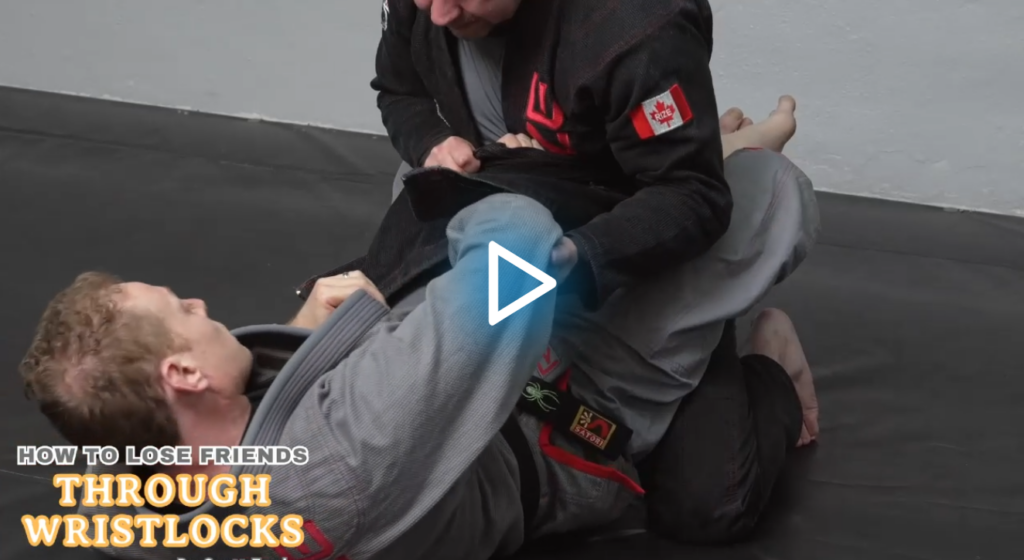
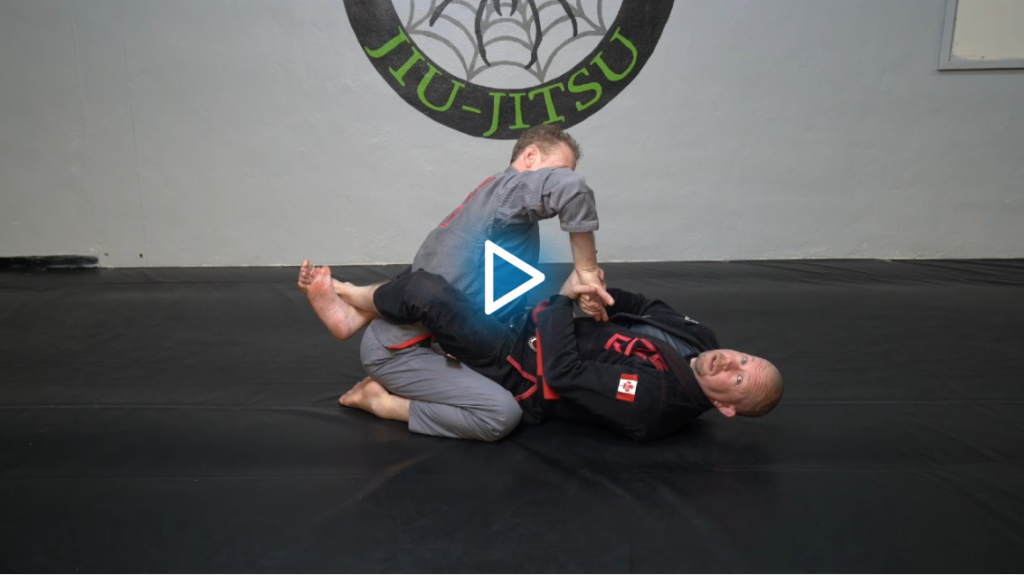
This highly amusing 2-hour long Gi instructional features 3 different volumes focusing on very effective and no less brutal wrist lock finishes from every position. The Lose Friends Through Wrist Locks Scott Taylor DVD relies heavily on the use of lapels to blend in BJJ and traditional Jiu-Jitsu attacks into a very formidable system.
Part 1 – Closed Guard Wrist Locks
As Scott opens his introduction, he talks a bit about his background which actually provides a lot of credibility given the subject. Why he wears a black and red coral belt is beyond me, though.
the initial focus is on the closed guard, with the entire first volume of the Lose Friends Through Wrist Locks Scott Taylor DVD addressing different setups and finishes from the closed guard. There are lots of Japanese names assigned to the different wrist locks, which are not unknown to those who’ve practiced Aikido and traditional Japanese Jiu-Jitsu.
Taylor uses the lapels heavily when setting his wrist lock up, combining them with other BJJ tactics, such as sweeps that land you in the mount, with the threats of wrist lock finishes still active. Scott also provides a blueprint for connecting wrist locks to other guard submissions and transitions.
Part 2 – Hidden Wrist Lock Attacks
The second portion of the Lose Friends Through Wrist Locks Scott Taylor DVD is the one I enjoyed the most. It contains wrist locks which I tend to use (although I go for them very rarely).
Most of these become available as opponents defend other stuff you’re throwing at them, such as submissions or heavy positional pins. For example, Scott demonstrates a coo variation to a wristlock used when an opponent is defending an armbar, on top of plenty of surprising side control and mount options.
The centerpiece of this volume is a couple of chapters addressing the biceps wrist lock, particularly the scarf modification. There is also a cool variation of the old ‘answering the telephone’ counter to an arm triangle choke defense.
Part 3 – Wrist Locks From Everywhere
As we arrive at the final part of the Lose Friends Through Wrist Locks Scott Taylor DVD, we get access to details on setting up sneaky wrist locks from literally anywhere. The opening chapters in this part focus on open guard setups, before going on to explore more versatile options.
I really enjoyed the D’arce choke wrist lock combo, as well as the one that helps you get out of side control, unless the top person decides to tap. Taylor also has a few more defensive uses of wrist locks, wrapping up with a finish from the turtle position.
How Wrist Locks Improve Your BJJ Game
Knowing what you now know about the versatility of wrist locks from our Lose Friends Through Wrist Locks Scott Taylor DVD review, you must be thinking about how you can integrate wrist locks into your game. It is a lot easier than it seems:
Pins – Writ locks from any top pin position are made easy by the fact that you only need to place your weight correctly, and the bottom person cannot defend them. They’re particularly effective when you introduce lapels to trap the wrist.
Submissions – On top of being a highly viable and available submission on their own, wrist locks perfectly complement all other submissions in BJJ. Most people defend heavily by relying on their arms, which always expose them to wrist locks.
Escapes – One of the crucial aspects of creating space with wrist locks is their effectiveness in escaping. Pain is the best motivator for someone to ease off the pressure, and as people forget their arms all over the place, an easy shortcut to creating defensive space.
Standing – Stopping just short of Aikido, wristlocks are huge at forcing people to move in the direction you want them to while placing their focus on the pain in their wrist. This allows you to set up any takedown you desire.
The above are just a few examples of how wrist locks can feature in your BJJ game as much more than simply a submission move. They create space, which is integral to effectively doing Jiu-Jitsu, while they cause panic and disarray among opponents on account of how painful they are.
you’re not going to become a wrist lock master by picking up the Lose Friends Through Wrist Locks Scott Taylor DVD and following its instructions. However, you will become a lot better in BJJ, while introducing a new aspect of grappling to your game.
Once you get comfortable with wrist locks, you can think about specializing in them. Once again, this Scott Taylor DVD is going to be one of the best resources to re-discover new details you’ve missed before when you were a writ-locking noob. Happy hunting!
“Just hold him there!” How many times have you heard your coach yell that from the sidelines as you’re struggling to maintain top side control over your opponent in a tournament? Well, there is an easy way to fix your top side control pressure, and, you guessed it, there is a BJJ DVD to teach you how.
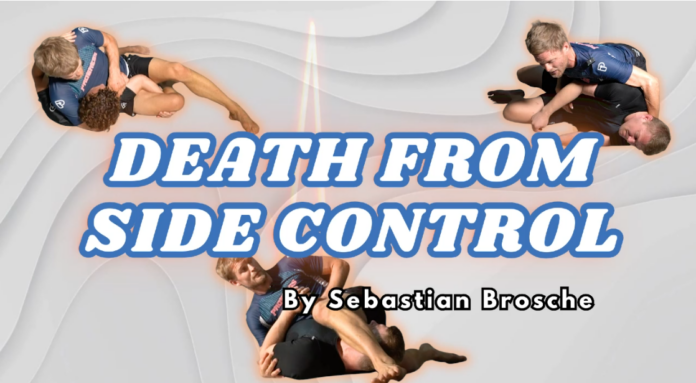
The Death From Side Control Sebastian Brosche DVD covers an interesting perspective on making you a lot heavier during pinning without going through a masterclass of physics, biomechanics, and anatomy. It is a good No-Gi instructional, with particular value for white to purple belt students.
Key Takeaways
3-part Gi BJJ DVD with roughly two hours of side control torture hacks.
Techniques that allow you to feel like you weigh a ton by leveraging limb placement from side control.
Contains footage from a complete fundamentals side control class.
What is the most disturbing thing about side control? I can wager that most of the people who’ve trained, at least for a few months, are going to say pressure or a different explanation that boils down to it. And you’d be right.
Side control can be now of the most brutal pinning positions in grappling and combat sports if the top person knows how to inflict pain by distorting your body so that you can’t adjust to bear their weight. The discomfort in the pin comes from the weight, but it is what the top person does with their arms, legs, and head that makes it impossible for you to offset that weight.
Here’s the best part – you don’t need to wait until you’re an “efficient brown belt” to develop these crushing skills. All it takes is a few well-executed placements of your limbs that will allow you to position your body in a way that makes the bottom person feel as if a boulder is crushing them. And we all know that everyone hates pressure more than they hate leg locks, wrist locks, and takedowns together.
The Death From Side Control Sebastian Brosche DVD promises to teach you such hacks and tactics in just a couple of hours. Too good to be real? Let’s review the content.
The Yoga For BJJ Guy
If you’ve ever tried to find anything along the lines of flexibility for BJJ, Yoga for BJJ, and similar mobility stuff, you’ve most likely come across the name Sebastian Brosche. The Swedish-born BJJ black belt became a staple name in the conditioning for BJJ world while he was a brown belt when he launched his Yoga for BJJ instructionals.
While Brosche is absolutely a master in Yoga (or whatever titles they have there) he is no less proficient on the BJJ mats when it comes to grappling. While no accolades stand to his name after he got his black belt he did win medals at all major tournaments, including gold at the Euros and Worlds as a purple belt.
A black belt under the ultra-skillful Eduardo ‘Teta’ Rios, Sebastian is one of the hoards of students to represent Teta’s famed Frontline Academy, such as Tarick Hopstock. Brosche discovered Jiu-Jitsu in 2007 and has been hooked since, both in terms of exploring how to best torture and submit people and how to teach them to fix their bodies.
Known as a top player who brings tremendous pressure to the mats, which makes his Death From Side Control Sebastian Brosche DVD a promising one, at least if we judge it by the title.
Full Death From Side Control Sebastian Brosche DVD Review
The Death From Side Control Sebastian Brosche DVD review revealed a 3 part instructional that contains two volumes of standard BJJ DVD material – each has several chapters focusing on different techniques within the scope of the subject. Brosche makes the instructional different by including a complete class he teaches as his last volume, giving a perspective of reality to the entire instructional.
Part 1 – Pinning
As Sebastian begins his instructional, he doesn’t waste any time on lengthy introductions and unnecessary fluff. All his BJJ instructionals so far contain a number of chapters covering different techniques, sometimes even unrelated to each other.
In this case, he lays a foundation by talking about the opponent’s center and how to best pin it. Building form there, he involves the legs, and arms, covering leg engagements and the Shoulder of Justice, a.k.a. crossface that has “retired” many a BJJ white belt.
As the opening part of the Death From Side Control Sebastian Brosche DVD progresses, so does Brosche’s positioning, as he moves towards the half knee on belly, which I find to be extremely useful. He finishes by explaining how to build yourself back up when you lose the position.
Part 2 – Causing Pain and Misery
The second portion of the Death From Side Control Sebastian Brosche DVD instructional takes a step back (literally) and uses the foundation of pin control from the first volume to demonstrate how to enter from passing.
If you expect a series of Danaher-esque instructions in this DVD, you’re sorely mistaken. You will, however, learn all about executing brutal stuff that won’t win you any friends, such as Mother’s Milk, reverse knee on belly, scarf holds, and the innovative Reverse Bear Hug.
Part 3 – Full Fundamentals Class
The final part of the Death From Side Control Sebastian Brosche DVD contains a full-length fundamentals class taught by Sebastian which covers plenty of the stuff he demonstrated before but adjusted to the needs of people who are more or less new to BJJ.
The Art of Pinning in BJJ
Pining in BJJ is an awkward business, unlike other grappling martial arts. The goal of submissions makes pins secondary, which means that the bottom person often accepts them, even though that means conceding points. In the great scheme of things that is BJJ, the advantage of points is easily reversed by a well-placed submission.
That places the top person in a conundrum – would you focus on pinning flawlessly, which might leave you open to some unorthodox and wicked counterattacks, or do you bled in submissions of your own, taking away from the pin’s effectiveness? This Shakespearean grappling dilemma often leaves people confused and ends up offering neither a pin nor a submission that’s going to work.
So, when you’re looking to improve both, improve your pins. However, approach pins from a different perspective. Instead of trying to stop the bottom person from moving completely, stop them from moving you – that will introduce the weight factor.
Once you’re torturing them just by being there, you can slowly, methodically, and malevolently set up any submission you like. See the Death From Side Control Sebastian Brosche DVD for ideas.
There is some merit to the idea behind the Death From Side Control Sebastian Brosche DVD. The instructional will definitely make lower belts utilize weight better by taking their mind off chasing weight distribution – it is ingenious. However, apart from a few interesting brutality-based hacks, it doesn’t offer much for those who have mastered side control pressure the hard way. Still, a good way to spend a couple of hours.
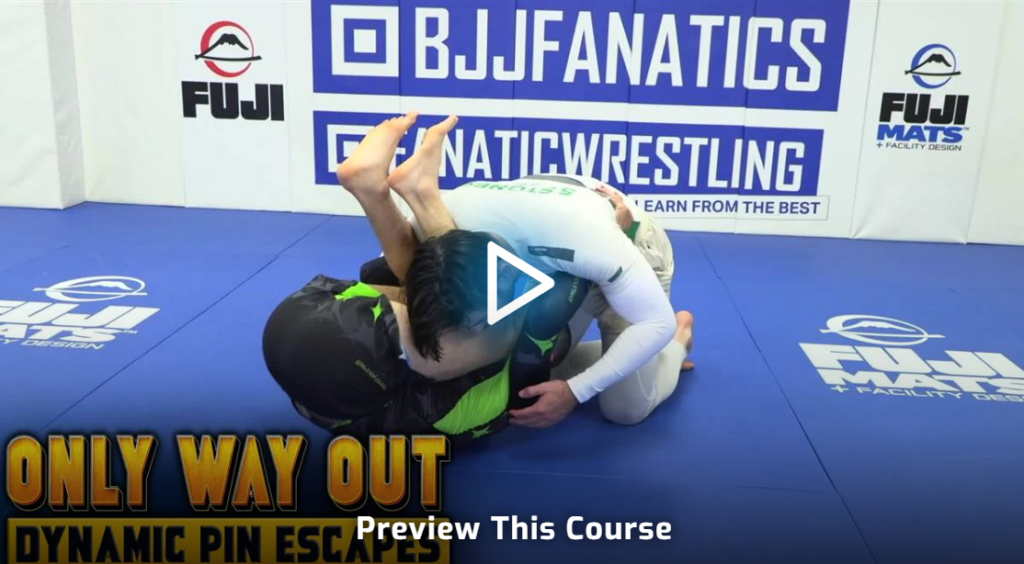
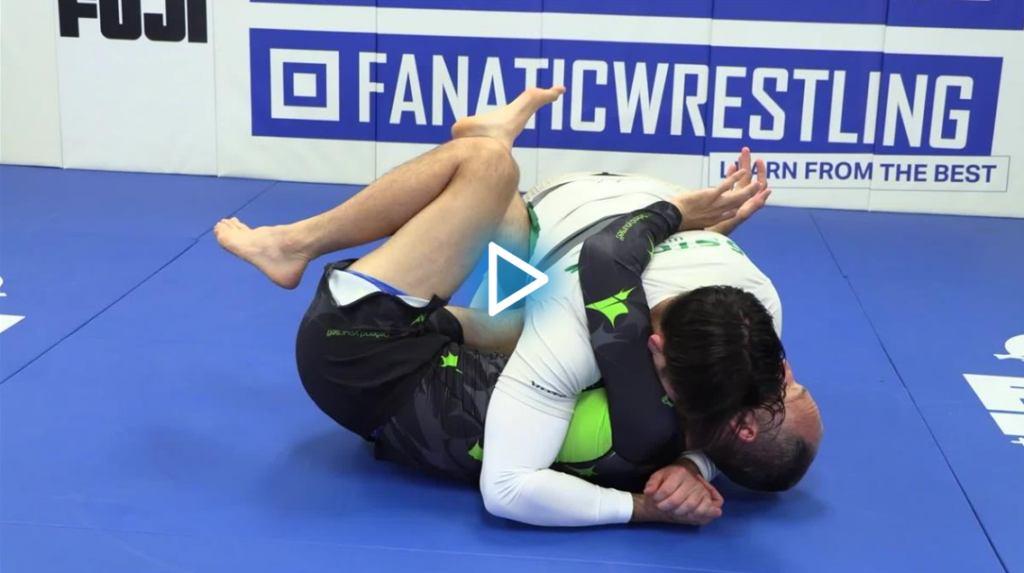
We’re focusing on escapes today, as presented in the Dynamic Pin Escapes Brian Glick DVD instructional. Covering a hugely important subject, this instructional contains lots of information on a dynamic approach to dealing with BJJ pins, which does seem practical.
While you shouldn’t take any escape instruction for granted, as escaa[ping is so much more harder and specific than attacking, there are some BJJ DVDs out there that offer value in that department. Whether this Brian Glick DVD can join that select circle is going to be decided at the end of this review.
Key Takeaways
A 7-part BJJ DVD containing 6 hours of applicable BJJ pin escape material.
Covers all major pins in BJJ exploring movement-based escape tactics.
Contains a volume that sums everything up in 40 minutes, providing a blueprint for using the system.
One of the toughest things people encounter in BJJ when they start is the reality of pins. The fact that someone can hold you down against your will and there’s not much you can do about it is enough to send even grown meant into fits. I’ve seen it happen.
The thing most people do not understand is that it does not get any easier. Pins are one of the integral aspects of learning BJJ and as such are always going to be a part of the game. That also means that pin defense and escapes are imperative if you want to have any hope of at the very least enjoying BJJ in the long run.
Another significant differnece between pins in BJJ and other grappling martial arts is that in Jiu-Jitu you get to hold pins for as long as you can, rather than getting an immediate victory. That means the top person is going to have an elaborate style of control, preventing escapes, counters, and breaking up defense.
So where does that leave you? I’d suggest you look into defending from bad spots first, by placing yourself in them intentionally and doing the research while taking the suffering. Alternatively, you can try and skip that step and go straight into practicing escape, such as the Dynamic Pin Escapes Brian Glick DVD Review suggests you do.
Escape Artist Brian Glick
When John Danaher awards a black belt in BJJ to someone, then they really do know how to grapple. Brian Glick had the honor of receiving the coveted BJJ rank of black belt directly from Danaher, after spending years under the Evil Mastermind’s tutelage.
Glick’s feat is made that much more memorable and impressively the fact that he is no Gordon Ryan. HE is smaller, older, and has no huge athletic attributes to boats. That just means he really got the essence of everything Danaher taught as he turned out to be one of the most technically accomplished grapplers alive.
Brian has been training since the late 1990s, persevering through the rough times of early BJJ in the US. Having access to monsters such as Renzo Gracie, GSP, and Chirs Weidman made a huge difference in how Brian approached his game and his longevity-based system clearly works – he is still very much active as a coach in Brooklyn BJJ.
He also has several BJJ instructional out, outlining different aspects that can help you build a longevity-based game. One of his efforts includes the Dynamic Pin Escapes Brian Glick DVD which is up for review today.
Dynamic Pin Escapes Brian Glick DVD Review
An interesting 7-part BJJ instructional looking into the difficult art of escaping pins in grappling. The Dynamic Pin Escapes Brian Glick DVD contains 6 hours of escape material organized by pins and presented through concepts and principles. Here’s the full Brain Glick DVD review:
Part 1 – Understanding Pin Escapes
The first volume of the Dynamic Pin Escapes Brian Glick DVD features an hour-long introduction to the concepts and principles he likes to use when escaping. Brian decided to build a principle and situational-based escape system rather than try and match positions with different escapes.
The key aspects of his approach are the inside position, arm and leg frames, how and when to use those frames as well as several key movements that are at the foundations of every escape. Motion-wise he covers bridging, kipping, rocking and the knee-elbow connection to achieve all of his dynamic pins escapes.
Part 2 – Knee On Belly Escapes
Part two goes into more specificity, with Brian addressing the dreaded knee on belly position first. There is a lot of pressure for the bottom person from this one, especially if they are smaller and lighter, so Brain helps you deflect the weight factor by offering different directions of escaping.
Keeping things dynamic at all times Glick advocates for turning into counters, whether you go towards a single leg, into the half guard, or try to invert to an Ashi Garami. In fact, he shares a few very insightful things about Ashi setups, including how to frame with the legs until you’re ready to spring a trap.
Part 3 – Escaping the Mount
In part 3 of the Dynamic Pin Escapes Brian Glick DVD we get to learn his take on beating the mount, which is not an easy thing to achieve. I like that Brain’s approach is more through the knee-elbow combination as opposed to bridging.
he does include kipping variations that help him protect and re-conquer his inside position, which allows for different ways out, some of the unorthodox suc has Garry Tonon’s turning escape featured in this instructional.
There is a particularly useful chapter on troubleshooting the high mount which I am sure many will find solves lots of pin issues, which, in turn, will make armbar attacks impossible.
Part 4 – North-South Solutions
The one position I get more questions about than any other in terms of escapes and defense is the North-South. As “specific” as it is, there are proven ways to deal with the position, some of which Glick covers and even upgrades in the DVD.
The main thing he addresses is the importance of movement, as escapes work much better in transition, no matter how small it is. Of course, most of the escapes are based on getting back control over the inside position using pummels at every level from your wrists and elbows to your knees.
He also addresses some late escapes that will help you deal with an already-established pin. This section is one of the most useful in the entire Dynamic Pin Escapes Brian Glick DVD
Part 5 – Beating Side Control
This is where things take sort of Saturn. Sider control escapes can be really easy, at least at the level of principles and Glick decided to complicate them. a bit too much for my taste. In the fifth part of the Dynamic Pin Escapes Brian Glick DVD he dedicates an hour and a half to different turns and twists that end up being overwhelming as a bunch.
There are some highly useful and interesting ideas such as using the lower leg shift, something I haven’t seen since Ryan Hall fought competitively. He also explores the use of a headlock to get out of side control, but the jury is still out on that one.
All in all, the inclusion of sit-throughs, different stances and posts, underhooks, and tight waist control all spell a bit too much, given that he doesn’t spend too long on any of these concepts.
Part 6 – Executive Summary
In part six of the Dynamic Pin Escapes Brian Glick DVD, Brian does something I really appreciate seeing in instructional – he sums everything up, connecting the dots between the different pin escapes and how they all work together.
This volume is a cheat sheet where the entirety of the DVD is connected in a system covering 40 minutes’ worth of scenarios and connections. WHiel it is hugely useful to watch after you see the entire content, and perhaps the only one you need to rewatch. seeing just this one is far from enough to rally grasp Glick’s escape system.
Part 7 – Ottakes
Another fun and innovative way to break the mold of standard BJJ instructionals by Glick is to include a dedicated volume in the Dynamic Pin Escapes Brian Glick DVD for the key outtakes you can base your entire escapes on, from white to black belt. These are the most important 10 or so minutes in this instructional.
The Secret to Being Unpinnable
You can’t hold something that keeps moving. When you are the ‘something’ this becomes even more important, which is why dynamic defense is the foundation for all pin escapes in BJJ. If you want to be difficult to hold, even after people achieve a certain top-pinning position against you, you’ll need to keep moving.
When Isay moving, I don’t mean trying to run or crawl around the mats while someone’s trying to get to your back. Instead, I mean creating space by turning, twisting framing, posting, rocking, etc, to force the top person into re-adjusting. Once they move, you can too, as their weight and body positioning are no longer an issue.
BJJ is a game of inches, and whenever you can create an inch of space, you can mess up the other person’s plans, top or bottom. Getting an inch of space while you’re on the receiving end of side control or mount is huge, and you can learn a lot about creating those inches from the Dynamic Pin Escapes Brian Glick DVD.
No need to wait (literally) as you yearn to escape pin in BJJ! The Dynamic Pin Escapes Brian Glick DVD is a solid resource to at least, introduce you to a practical way of looking at escapes and organizing them together in a system.
The time of like-for-like escapes is gone, given the variety of top pinning positions in BJJ and the follow-up threats they create. What you need is as smart, replicable way that works for all large audiences and won’t leave you reaching for the ice pack once you get home. I think Brian Glick delivers, with varying levels of success, on all these aspects in this instruction.
If I had a penny for every time I had to have the “talk” with parents who know nothing about grappling and martial arts and who try to be sideline coaches, I’d still be having those conversations, I’d just be a lot richer than now. Jokes aside, parents play a huge role in their child’s grappling performances and there is a clear lack of communication on the subject between parents and coaches.
Enter the Raising Confident Athletes Andre Galvao DVD. This collaboration between the BJJ legend and a sports psychologist delivers a blueprint on how Jiu-Jitsu coaches should prepare parents to guide young grappling athletes toward developing a winning mentality for sports and life. It is a great resource for coaches and parents alike!
Key Takeaways
A 4-part instructional with nearly 2 hours of material on the psychology of BJJ.
Aimed at parents of young grappling athletes who have no experience with BJJ.
Invaluable for both coaches of kids classes and parents of young grapplers.
As a BJJ coach with vast experience in teaching kids classes (still do and I will never give up on those classes until I am involved in the sport), I often find coach-parent relations to be way more difficult than dealing with the children. While it is a mutual relationship, in the end, the thing parents need to understand is that they do not know BJJ (most of them, anyway) and they need to leave coaching to the professionals.
Parents obviously play an integral role in the life of a child, as they should carefully navigate, guide, and manage the development of their child into a functioning adult. When they enroll kids in competitive sports, such as BJJ parents introduce another variable int the mix, which is the athlete mindset.
Most of the time, parents are not equipped to put their child’s needs first, the reason being they do not understand the sport. This means that coaches should also dedicate a small portion of their time to coaching them on how to be the parents of athletes rather than just those of kids.
Such an investment in time is going to have incredible returns in how coachable the kids are, as well as how the parents aid in the efforts of coaches rather than inadvertently impeding them. The Raising Confident Athletes Andre Galvao DVD, as the first of its kind, is the ultimate resource to help parents and coaches achieve such a relationship.
The Coaches Behind This Project
This one-of-a-kind BJJ instructional is a collaboration between BJJ celebrity Andre Galvao and a sports psychologist named Mayra Ramos. Both have vast experience in the realm of professional sports which encompasses high-level practice, world-class competition, and exceptional coaching.
Mayra Ramos is a Brazilian clinical psychologist specializing in sports psychology. She was also a professional figure skater for over 20 years and a part of the Brazilian national figure skating team with impressive accomplishments such as World Cup runner-up and Pan and South American doubles champion.
Mayra continued her career in the realm of mental coaching after she hung her skates up, focusing particularly on young athletes as well as their parents. She is the founder of Academia do Atleta Campeão, a platform dedicated to mental training for athletes.
Andre Galvao is a name well-known to everyone in the BJJ world. The Brazilian has more world titles in IBJJF, ADCC, UAEJJF, and CBJJO than we can count. He also had the longest winning streak of ADCC super fights, from 2013 to 2022. Andre is the founder of the Atos Team which has produced countless talented grapplers such as the Mendes brothers, Ruotolo brothers, Keenan Cornelius, etc throughout the years.
Galvao’s daughter Sara Galvao, a World Champion and purple belt and currently a brown belt went through the BJJ ranks, starting at a very early age. Her career has brought together ANdre and Mayra Ramos, a partnership which now resulted in the Raising Confident Athletes Andre Galvao DVD.
Full Review: Raising Confident Athletes Andre Galvao DVD
The unique Raising Confident Athletes Andre Galvao DVD offers roughly 2 hours of material that covers all the key psychological aspects of managing child athletes. Over the course of four volumes, Andre Galvao and Mayra Ramos provide invaluable information for both coaches and parents on how to build the best relationship that includes both them and the child.
Part 1 – Parents and Mental Coaching of Young Athletes
As this unusual Andre Galvao DVD kicks off, the first chapter addresses the theme that runs throughout it – how to raise confident athletes as a parent of a young grappler. The idea is that parents should not just be there to transport kids to and from training, but rather an integral part of the team.
A short guide outlining three different layers of behavior change set the tone, providing invaluable information for parents and coaches alike. The first part of the instructional wraps up with a section covering how to best build realistic self-esteem in children who practice competitive sports such as BJJ.
Part 2 – Building a Relationship With Children
As the Raising Confident Athletes Andre Galvao DVD goes on, Mayra and Andre lead us through some of the best tools that can help parents guide their kids to be coachable, as well as outlining the main reasons why kids tend to quit sports they’re good at.
Ramos also explains how parents sometimes project their insecurity on their children and how they can do the same with confidence instead. This leads straight into the most important chapter of the entire DVD, which addresses strategies for supporting a child after they lose in a tournament.
Part 3 – Crafting the Championship Mindset in Kids
The third part of this Andre Galvao parents coaching DVD goes over the dynamics that the coach shares with parents, as both have immense influence in the child’s grappling career and life.
Aspects such h as balancing Jiu-Jitsu, family, and school, fostering a supportive environment both during training and in competitions, and allowing kids to grow feature heavily in this section of the instructional. I found the chapter on helping kids understand why they shouldn’t compare to others, particularly informative and helpful.
Part 4 – Being Supportive
The final portion of the unconventional but information-rich Raising Confident Athletes Andre Galvao DVD addresses mindfulness and how to foster a champion mindset in kids. This includes the role parents play in the aftermath of a tournament, regardless of the outcome, as well as the basics of ensuring optimal health and fitness in a growing competition.
The final chapter in the DVD is a very original one that I didn’t expect – it addresses how to approach the competitive BJJ development of kids who are home-schooled, as this introduces a different social aspect in these children’s lives.
Raising Better Athletes
The task of developing competitive grappling athletes from the youngest age possible rests not just in the hands of coaches, but also their parents. Coach only sees the kids a few hours per week, whereas parents spend most of the time in their day with the kids, so they get to influence them a lot more than the coaches.
The most important variable is how to ensure the steady development of a growth-oriented competitive mindset in young athletes who still have to discover who they are. It is easy for adults to get lost in the competitive nature of Brazilian Jiu-Jitsu, let alone children who still try to make sense of the world.
Since access to a sports psychologist is not an option for most BJJ gyms that offer kids classes, the next best thing is having the ability to consult with one or use the best-proven principles of coaching sports mentality in kids. That is exactly what the Raising Confident Athletes Andre Galvao DVD offers, and it delivers.
As someone who has been coaching kids martial arts classes, including BJJ for the better part of 15 years I wholeheartedly recommend the Raising Confident Athletes Andre Galvao DVD to any adult athlete who practices grappling. The usefulness of this instructional is twofold – it will benefit both parents and kids coaches but it will also benefit those who are competing themselves and are yet to have kids.
A resource such as this is incredible to help instill a healthy competitive mindset in kids from an early age, using methods that fit their age and needs, as opposed to the one-size-fits-all-ages approach we commonly see in BJJ gyms. A true gem of an instructional, even though it doesn’t offer the latest inverted Mikey lock modification to a double triangle.