The Dragon Sleeper Hold – A WWE Move That Works?

Dragon Sleeper Hold: WWE For BJJ

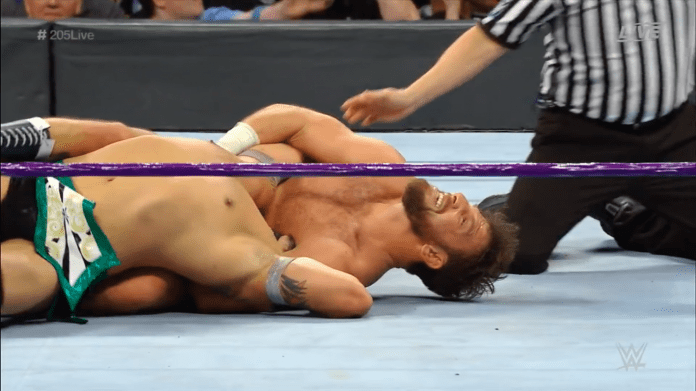
It is a funny time to be involved in martial arts. We’ve been locked down for more than a couple of months now, with no training, no competing, and only BJJ DVDs to keep us company. Luckily, things seem to be improving, or our impatience is getting the better of us. Whichever the case, martial arts competitions are coming back to life. Some, like Submission Underground, or the UFC, never really went away. Others, like Fihgt2Win, are slowly restarting under different formats (at least when it comes to hygiene and safety). In the midst of it all, we saw crazy upsets, some broken bones, and moves that are not supposed to actually work. We saw an actual dragon sleeper hold performed live and ending with a tap.

There are certain moves that we see in pro-wrestling that are supposed to be nothing more than fight choreography. Well, maybe Steven Seagal would be able to pull them off, or tech them to Anderson Silva, but nobody else. Some of these moves are completely out of order and have no chance of ever working. But every now and then, an innovative fighter or grappler comes by, throwing caution to the wind and giving a nutty move a try. We’ve seen it with the Boston Crab before. Well, we can now add the dragon sleeper hold to that list. Brace yourselves for some nasty neck cranking once we’re back on the mats!

Wrestling Moves That Aren’t Supposed to Work

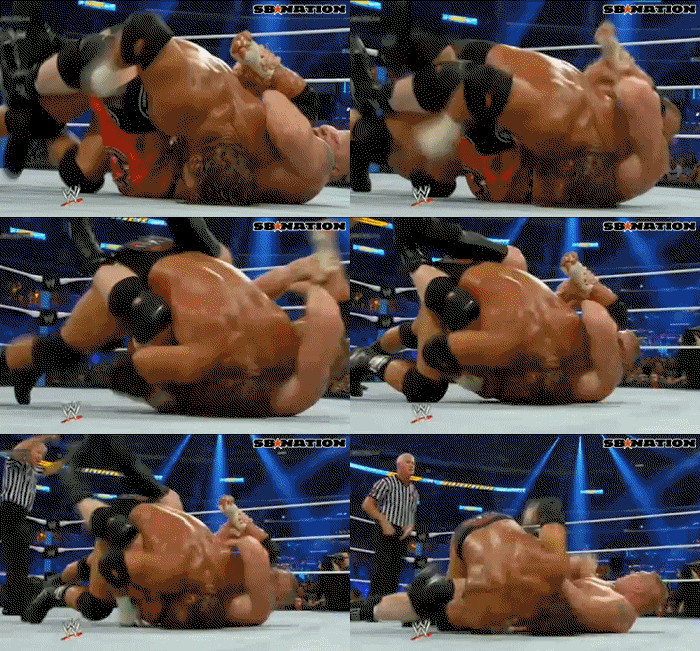
Dragon Sleeper Hold - Lesnar arm breakThe thing with pro-wrestling is that it is fake. Right? Come on, we all know those guys and girls don’t really fight each other. Remember when Brock Lesnar came back from his UFC stint and took things a bit too realistically, breaking his WWE “opponent’s” arm with a Kimura? Well, as it turns out, it’s not just legit moves that work in pro-wrestling, but also the other way around. Although extremely rarely.

Actually, when I come to think about it, stuff like the figure four leg lock and the Texas Cloverleaf are now staples of BJ (albeit modified) despite once being seen as nothing but pro-wrestling moves “for the show”. So, there’s the odd move or two that really do end up having an application. The Dragon Sleeper Hold is just the last one in a line of moves people have decided to use, pull off and now have bragging rights about. In all fairness, though, it does have its roots in actual catch wrestling.

That said, to be honest, pro-wrestlers really do undergo hard preparations. Despite all matches being nothing more than choreography, it still takes knowledge to pull things off. In fact, some of them are also ex-wrestlers, and good ones at that. Moreover, some of the moves they drill and perform end up looking so cool or even effective that BJJ folks or MMA fighters sometimes pick them up. The rest is history…

What Is The Dragon Sleeper Hold?

So, what exactly is this Dragon Sleeper Hold? IN short, I guess you could call it a reverse guillotine neck crank, but that’s putting it bluntly. A notion of caution before we go into it, though. This move is potentially debilitating and not one you should try unsupervised. Also, consider this to be the definition of illegal moves when it comes to IBJJF Gi BJJ rules. That said, a legit submission is a legit submission, and, I foresee quite a few attempts at the Dragon Sleeper Hold in the near future.

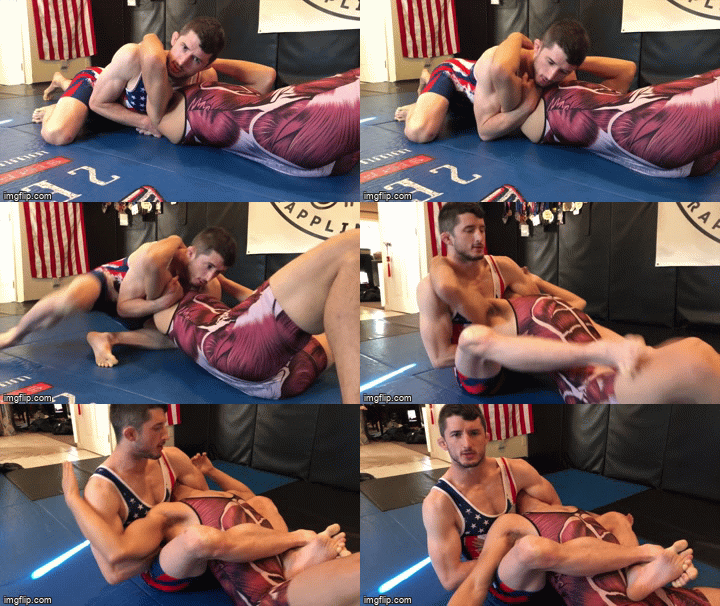
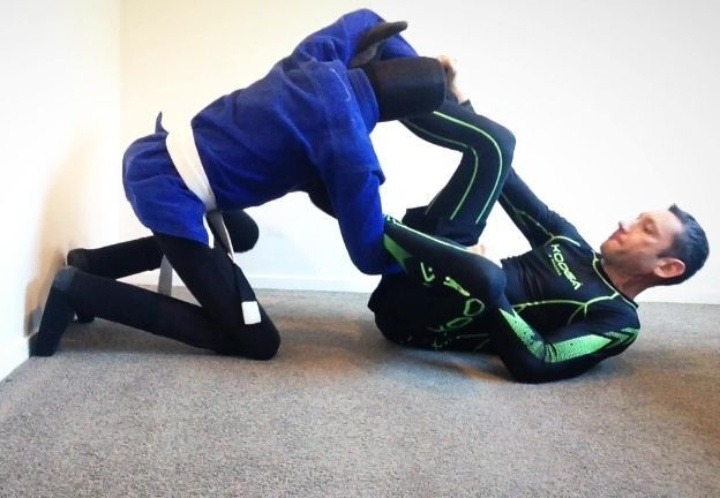
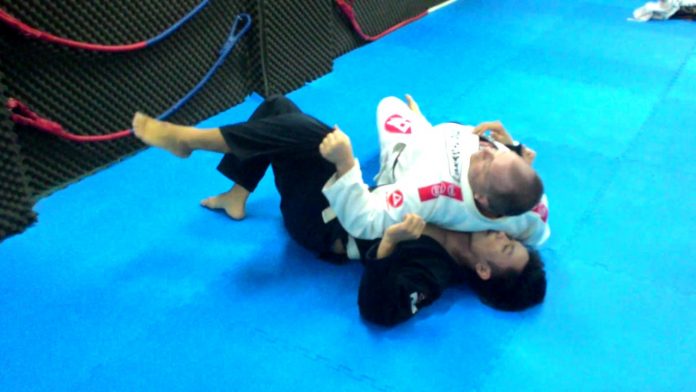
The dragon sleeper holdThe Dragon Sleeper Hold works from the back. But it works like a north-south choke / gu8illotine choke from the back. That right there should be the first thing scaring you into being careful with this one. Now, there is a more “PG” version, where you can set the move up from North-south. When first attempting and learning it, I’d suggest doing it from there. What you want it to set up for a North-South choke – the configuration of your arms is identical. However, instead of trying to find the sweet spot and strangle, you want to make life miserable for your opponent.

The first step is to sit down, while still holding on tightly to the neck. Once you achieve that, you slowly and methodically transition to the back of the opponent. Only after you’ve established bot hooks will you think about finishing the move (if they don’t tap form discomfort up until then). How to finish? Imagine you’re in full guard and you’re trying to do a Guillotine choke. Just don’t snap backward too fast!

Of course, you could make the setup much easier by simply getting the submission directly from back control.

Real-Life Dragon Sleeper Examples

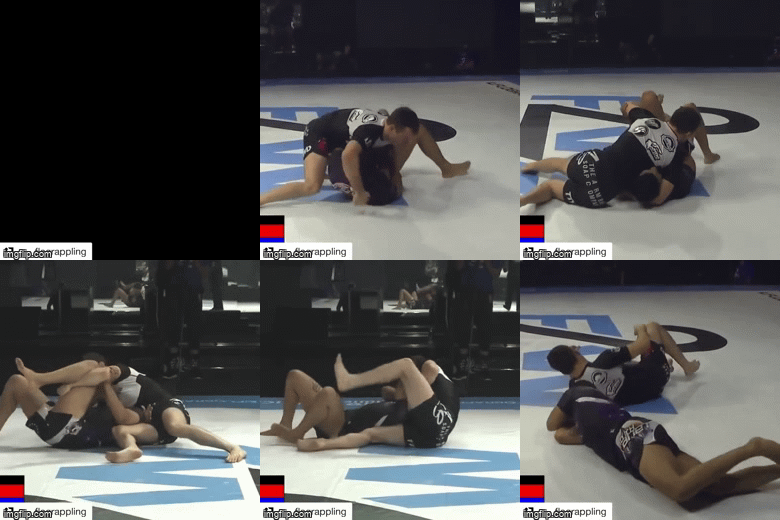
Dragon Sleeper Hold Fight2WinThe reason I’m talking about the Dragon Sleeper hold now, is that a grappler named Michael Salazar, a BJJ brown belt pulled off what might be the most brutal submission in Fight2Win history. He managed to get a modified Dragon Sleeper hold, something known as the “Executioner”  in 10th Planet on his opponent Tony Oviedo. He set the move up after passing the guard with a leg drag, but finished with just one hook, as he had it sunk in really deep.

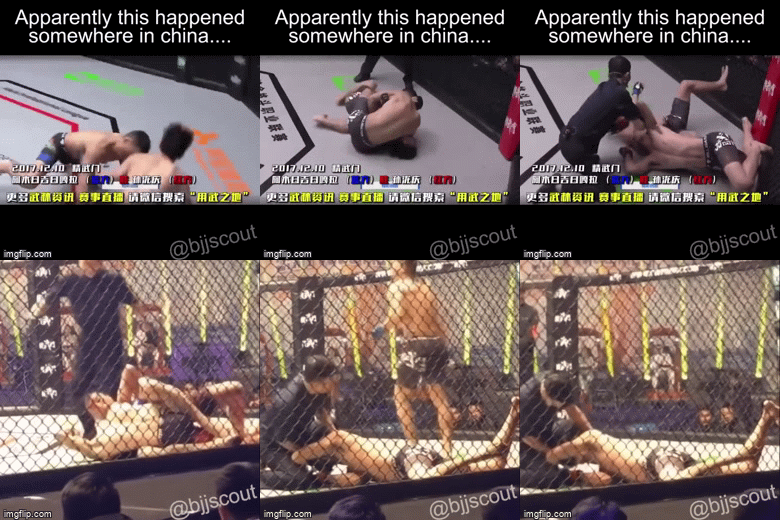
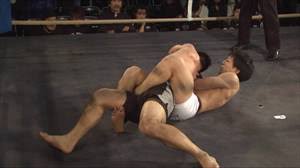
dragon sleeper hold MMAThere are also several instances in MMA where people have pulled off the Dragon Sleeper hold. On instance is from china, where a fighter pulled off a picture-perfect Dragon Sleeper. There’s another one as well, where you can actually see how dangerous the move is, from the reaction of both the referee and the fighter that tapped out as a result of the submission. While we still haven’t seen it at the biggest stages the likes of UFC, ONE FC, and Bellator, the move is certainly to wiggle its way there soon.

In Summary

Pulling off Berimbolos, flying armbars, and the likes is cool. But, have you ever pulled off a Boston Crab or a Dragon Sleeper Hold? DO it safely, and it will become the stuff of legends, particularly if you can do it in an actual match.  Guess some pro-wrestling submissions do deserve more credit than we give them.

Brazilian Jiu-Jitsu For Small Guys And Girls: Enjoy The Advantage!

Jiu-Jitsu for Small guys And Girls - Advantages

I learned Jiu-JIsu because I am small. I’ve ever in my life being small really paid off, (apart from being able to run away really fast) it is In Brazilian Jiu-Jitsu. I started off as the first member in a brand new BJJ gym, and all the guys there (founders) we’re bigger than me. Suffice to say, it meant getting crushed for longer than the usual few months, and that included new members. Luckily, I discovered then and there that being small just meant I have to learn BJJ the right way – leverage and cunningness. And, even if I had to choose, I’ll always go for the small package in grappling, now that I understand all the advantages of Brazilian Jiu-Jitsu for small guys. And girls.

Say whatever you wish, you can’t get rid of ego completely, “Oss” is not the only word you need to learn and size does matter in BJJ. Size, along with age is not something you can really change. No matter how much you bulk up you’ll never be able to actually grow a few inches or vice versa. So, we have to make do with what we have/. Which is actually awesome. The thing you can always change si the appraoch. That is the same for age, as well as size and gender. Jiu-Jitsu for small guys and girls is a bit different from the stuff that “regular” and giant-sized people do. And we wouldn’t have it any other way.

The Small Package

Brazilian Jiu-Jitsu did start off as the art that helped skinny and frail grapplers (Helio and Carlos Gracie) to deal with just about anyone they challenged. Then, BJJ evolved into a sport of global proportions with rules and formats and everything. In all that time, the one truth that remained is that a smaller person can use BJJ to beta a larger one, even if the larger person also knows Jiu-Jitsu. It is all in how you approach the sport. In today’s’ age of a scientific appraoch to the game that explores leverage and technical nuances to the smallest details, being a small guy or girl is actually starting to become enjoyable. The age of the assassin BJJ nerds is upon us!

Apart from the ladies, which are still underrepresented in pout sport, small guys are all the folks that are featherweight and below. From lightweight to light -heavyweight we have the “regular” sized folks, and the giants are heavyweight and beyond. Jiu-Jitsu for the small guys and girls is what will allow the tiniest among us (me included) to easily survive, and even thrive in BJJ academies filled with a majority of regular-sized folks, and the odd giant (or ten).

Brazilian Jiu-Jitsu for Small guys And GirlsFinally, let’s not forget a group of small grapplers that’s perhaps the most important one. These are the Juveniles. They’re not quite kids, but far from adults too. They are also in growth, meaning they might not end up being small grapplers. However, learning like one is only going to raise their technical levels to unimaginable heights. And that’s before they’re even old enough to sign up for the adult division.

Simply put, BJJ won’t evolve and progress as fast as it does, without the input of small guys and girls. Every technical advancement, both conceptual and in terms of moves, is mostly due to the efforts of diminutive grapplers to understand the inner workings of the Gentle Art down to the tiniest fractions.

Jiu-Jitsu For Small Guys And Girls

Iн my decade of experience in the Gentle Art, there are a few pointers I always give people. They’re the things that have really helped me, Whether I had to discover them on my own, or someone else led me to them. In any case, these are not just strategies fit for smaller grapplers – they’ll benefit everyone. However, when it comes to Jiu-jitsu for small guys and girls, these are the absolute mandatory tactics to use any time you roll.

The first rule is right out of Chris Hauter’s playbook – be on top, and stay on top. Despite many smaller folks thinking guards wil help them, being on top is the ultimate spot to be in grappling martial arts. After all, in competition, nothing but top positions brings you points, right? Plus, you don’t have to bear anyone’s weight. Also, you’ll have gravity helping you in your efforts to control and submit.

Of course, this begs the question of “how do I hold big people down”? Well, that’s tricky; Weight distribution is the one technical aspect of BJJ people tend to focus on way too late, at around late blue or early purple belt level. And it is not really hard to focus on it since the very beginning. The rules of being heavy on top are easy. First, nothing but your toes can touch the mat. Second, push your chest in the direction you want to be heavy. Thirdly, have control over both shoulder, and preferably, the head as well. That’s it.

This is when the fun begins. Once you’re able to hold people down from positions like half gaurd, side control, and mount, it is time to finish the job. The trick here is to be sneaky and cunning. There’s no need to do the regular stuff when you can go for things that are high percentage, and work particularly well against bigger guys. Use size to your advantage and don’t just settle for the usual toolbox of moves. Explore, ask, and discover unorthodox moves that wil work for you.

Last but not least, defensively, make sure you never ever have to carry someone’s weight. This is the toughest of al Jiu-Jitsu for small guys and girls principals to figure out. It is well worth it, though. All bottom positions have “safe spots” whew you won’t be feeling the opponent’s body weight at all. Figure them out and you can easily turn the tables and get back on top.

How to Win In The Absolute Division

When it comes to rolling,.thigns are usually not as serious as signing up for the absolute division. Being the smallest guy or girl in a sports win which everyone’s trying to be the biggest their weight class is hard enough. Fighting in the absolute is an experience on its own and one that will require a different tactical approach.

Jiu-Jitsu for Small guys And GirlsFirst up, we go back to using the right tools for the job. That means, going into catch wrestling, sambo, etc waters to fish out some long forgotten and very successful moves. That and focusing o nth things you know slay giants – chokes form the back and footlocks. Build a game un those and you’ll be having fun in any absolute division, Gi or No-Gi.

However, before you can get to the back you’ll have to actually engage. In the absolute division, the most dangerous period for a small grappler is during the standing portion of the match. What you don’t want to do is to get into a strength measuring contest with a big guy or girl. Instead, you want Jiu-Jitsu for small guys and girls. Lots of movement, sneaky direction changes, and more faints than they can process. Combine that with the right grips that have a clear purpose, and you’re well on your way to slay a giant or two. By gripping with a purpose I mean not just grabbing and holding but doing something every time you actually put a hand on your opponent.

And of course, every time you decide to compete, know the rules. If you’re going in the absolute division, know every little nuance. That way, you can turn the tides to your favor with tactics, and by exploiting the odd loophole or two, or gaming the system without being a douche.

Wrap up

Jiu-Jitsu for small guys and girls is actually what Jiu-jitsu was intended to be in the frit place. It is about being technical, yeah. But it is also about to begin cunning, sneaky, and constantly thinking outside the box. It is what BJJ is all about. It can be extremely fun to be the smallest person in the gym. Remember, begin a diminutive grappler has lots of advantages!

Want to Be a BJJ Competitor? Learn How to Deal With Losses!

Learn To Lose To Be A Better BJJ Competitor

Not everyone trains Brazilian Jiu-Jitsu to compete. Most people do dabble in it eventually, though, and it can be one of the most stressful things you do in your life. IT is also one of the most fun things to do if you can get over the anxiety of the result. Now, whether you are only considering competing recreationally, or are looking to become a full-time BJJ competitor, on thing is for sure – you will lose. In fact, the more you win, the harder it will be to lose, particularly if you haven’t got the right mindset about it.

Competing in any type of sport is a hard thing. I’m not just talking about the physical side of things, that much is obvious. While most sports competitions take place in the “physical realm”, it is our minds where the real competition takes place. There, we have two opponents (at least) to beat – the one we’re competing against and ourselves. If you’ve never competed, you can’t really comprehend this. However, if you’ve ever thought of being a BJJ competitor, you need to be ready for the biggest truth of all – you’ll lose!

You Either Win Or You Lose

How many times have you read or heard the phrase “there is no losing in Jiu-Jitsu, you either win or you learn”? Well, while there’s truth to it, it has been taken completely out of context, like most things that become ultra-popular. The phrase now serves as the biggest crutch for anyone looking to compete. In other words, it is the ultimate excuse. The trouble with excuses is that they actually hold us back from becoming better and learning that lesson that’s supposedly there when we lose.

Learn from defeats as a BJJ CompetitorLet’s just be honest about things – you either win or you lose. And, in both instances, there’s a lesson to be learned. It is the manner of learning that is different  – in one, you’re ecstatic, in the other, you’re disappointed. The lesson is still going to be there, as is the outcome. If there was no loss, then all that records would show in any competitive martial art or sport would be wins, perhaps draws, and a column for lessons. Sounds dumb,  I know, so let’s not sugar coat it when we’re actually competing. Just accept the result, learn your lesson, and go on.

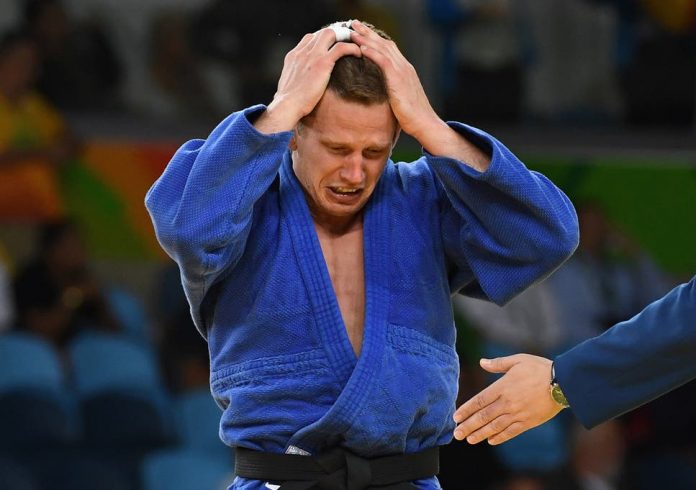
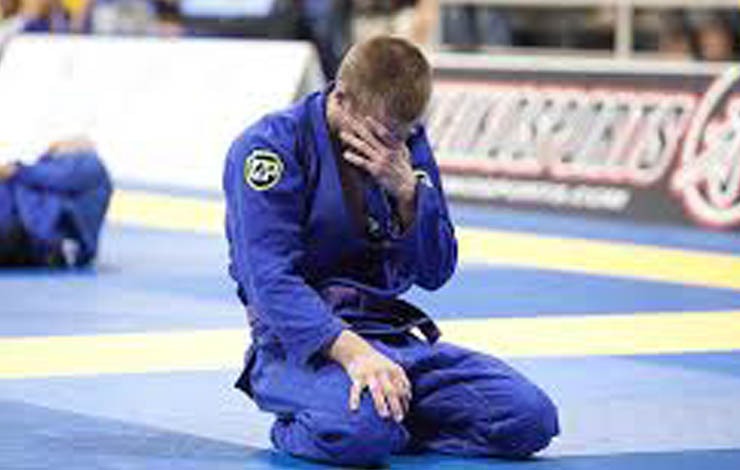
However, this means you’ll have to face defeat head-on, and that is something that very few people seem to be able to do. For a BJJ Competitor that prepares for months, travels, cuts weight, pays for everything themselves, to lose the first match is not an easy thing to swallow. I know, I’ve been there. However, if you want to really become a BJJ Competitor, you have to accept losses as a fact of life. If there’s one guarantee for grappler that competes, it is that they’ll lose. And it is all a part of the game.

Lessons in Defeat

When it comes to losing in Jiu-Jitsu, the first time is always going to be the hardest. For most people that start competing, the phase of getting absolutely destroyed is at least somewhat behind them. It takes a few months to get acclimated to Jiu-Jitsu. And b ten, there are other new faces that are lower on the totem pole than you. Just when you start “feeling it” you go to compete and you get to experience a loss   BJJ competitor. And that’s on a whole different level.

But what can you get out of it? Well, for starters, you’ll actually learn to lose. And yeah, that is a thing. A loss at a tournament is also going to do wonders for keeping your ego in check. That said, every time you lose, you will be disappointed. Without it, victory wouldn’t be so satisfying. Being disappointed is actually great, as it will drive you to figure out why things happened. After all that preparation and dedication it would be crazy not to feel disappointed, so embrace it, and use it to become better.

Which brings us to failure. There’s no greater teacher in Jiu-Jitsu than failure. In the gym, we fail constantly during rolling. Every position lost, every unsuccessful escape, every tap is a failure to complete our goals. How come you don’t’ really pay attention to it in class, but in tournaments it becomes devastating? Failing will provide you with feedback, and that feedback will help you, eventually, understand parts of the BJJ game.

Another huge lesson is going with the flow. Corny and overused, but true nonetheless. While the outcome of a match can be rewarding od devastating, it is the process that matters. It is the actual match that provides you with all the feedback and experience. The outcome is just the way things turned out on that particular day, for a number of reasons. Recognizing and focusing on the important things is what will make you a real BJJ competitor.

Fight To Lose?

When it comes to losing, the mindset you need to succeed in commotion is a mindset that you should cultivate in the gym. Just like with your technical and tactical training. What I’ll suggest now may seem like a radical thought. When I come to think of it, it actually is radical, but it will show you Jiu-Jitsu in a whole different light. Answer this question first, but be brutally honest about it – what is your goal when you roll?

BJJ Competitor: Lern To Lose, Because You WillMost people want to survive, escape, submit, control, stay on top or something along those lines. However, you’ll rarely hear that someone rolls with the intention of actually losing. Now, that doesn’t mean rolling with no resistance. It just means that tapping out, as the ultimate form of losing in BJJ, is your goal. And, the fewer times you achieve that goal, the better you’ll become. Moreover, your mindset and attitude are completely going to change.

When you put losing as not just an option, but a goal, and you put yourself in difficult positions, it is getting out or countering that comes as a surprise. In other words, you turn things upside down. The next step would be doing this as a BJJ competitor, in a real live match. I can safely say that it is going to be the hardest thing you’ll ever do in Jiu-Jitsu. It is also the one thing that will transform you both as a BJJ competitor, practitioner, and eventually, someone who teaches the Gentle Art. Why not try it? What have you got to lose?

Conclusion

Rolling to lose, embracing defeat, not using excuses…sound hard if you’re a BJJ competitor.  Almost illogical. But that’s exactly why it will work. There’s no undefeated grappler in the history of BJJ or grappling martial arts. If you’re looking to be one, you’re in the wrong sport. You can, however, be one of the best competitors ever, but only if you accept everything that comes with competing. And defeats will certainly come.

What Is The Best Jiu-Jitsu Match Of All Time?

What Is The Best Jiu-Jitsu Match Of All Time?

It would be next to impossible to figure out the greatest Jiu-Jitsu match of all time. People have their own favorites and opinions and coming to a consensus would be hard. So far, there are several matches out there that are contenders to be the best ever. Some are older, and some come from the most recent BJJ history. All in all, we’ll take a look at these today, and we’ll share an idea about how we might come up with the best of the best at the end of the article. Enjoy!

With the present hiatus from actually doing BJJ excluded, there has been an exponential increase in BJJ matches in the past decade. Form just your major tournaments (and a few local ones) ten years ago, to the entire professional Jiu-Jitsu scene and countless shows and tournaments nowadays, it has been amazing to witness the rise of BJJ. This rise also bought about some memorable battles between some of the colossuses of Brazilian Jiu-jitsu. It also means there are too many matches to choose from, and finding the best Jiu-Jitsu match is going to be like hitting that amazingly impressive submission that you can probably get only once in a lifetime. Still, let’s check out a few contenders.

What Is Your Favorite Jiu-Jitsu Match?

Who is the GOAT of Jiu-Jitsu? We tried to answer that in an earlier article, which inevitably brought about the next question: What is the best Jiu-Jitsu match ever? It seems this one will be a bit harder to answer. Is it a Gi or No-Gi match? Will it be one of the male or female competitors? IS there a possibility of sharing the number one spot? And that is all before I even start to mention rule sets and other factors.

Generally speaking, people like highly technical, entertaining, and fast-paced matches. As it turns out, while favorable, submissions are not essential for a Jiu-Jitsu match to be entertaining. I’ll refrain from commenting on the different rule sets, as I tried to include matches from all kinds of competition formats among our contenders below. That said, I should probably make it lean that I lean more towards No-Gi matches than Gi ones.

That said, I have to admit that there have been quite interesting GI matches as well. So much so, in fact, that it can be really hard to pick a few to include among the contenders for the best JIu-Jitsu match ever, let alone pick the winner. Throwing in a few wrenches in the form of modern sub-only tournaments just makes the entire process even more difficult. But it also makes it fun, as I got to watch some of the most entertaining matches in BJJ history while doing this article. Check them out for yourself!

Best BJJ Match Ever Contenders

Of course, not everyone will be content with the choice I made here. That’s perfectly ok and was expected. However, there’s no denying that the matches below are some of the best ever in the history of our young sport. Moreover, even though they’re not organized by year, you can still see when each of them takes place. This really puts into perspective the evolution of the sport in just a decade, from every possible standpoint.

Plus, featuring superstars the likes of Marcelo Garcia, Roger Gracie, Garry Tonon, Mackenzie Dern, Keenan Cornelius, etc. only makes our quest for the best Jiu-Jitsu match ever more interesting. After all, who else would we feature?

SPOILER ALERTIn the off chance you haven’t seen any of the matches below, not that the results are included, so you might want to watch the match first.

  • Lucas Lepri vs Renan Marcel (2019)

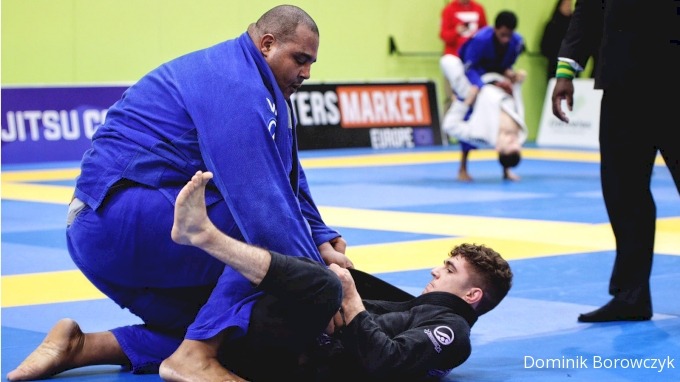
First up is a match that lit up the 2019 IBJJF Europeans. It is also one of the last top matches we saw before the world went into lockdown. In the finals of the absolute division, double runner up Lucas Lepri faced Renan Marcel who outweighed him by nearly 100lbs. The fact that Lepri ended up winning this match makes it even better. After some relentless guard passing pressure (Marcel pulled guard), Lepri ended up on the back and choked his opponent out after only 4 minutes.

  • Marcus “Buchecha” Almeida vs. Rodolfo Vieira (2012)

The names of these two giants of BJJ (both literally and figuratively) are enough to guarantee fireworks. This was a highly anticipated Jiu-Jitsu match that definitely did not fail to entertain. Back in 2012 when Buchecha was on a meteoric rise, he met pressure machine Rodolfo Vieira who was probably the scariest grappler of that period (still scary nowadays).

The match took place at the 2012 Worlds in the Absolute division and saw Buchecha walk away victorious on points. After a jump guard, Buchecha managed to sweep Rodolfo quickly, and tried to pass his guard for half of the match. Rodolfo managed to get one sweep back at the halfway point, and even passed to side control to turn the tables. Bunchecha had none of it, using a very tight kneebar attack to end up back on top, however briefly. Rodolfo used a kneebar of his own to get back on top before the two scrambled to their feet.

Another guard pull by Buchecha and some crazy transitional magic got him yet another sweep, followed by one of his trademark power double leg takedowns to seal the points advantage. In the last minute of the match, Rodolfo did slap on a very tight armbar from the bottom that Buchecha miraculously escaped, earning the victory and the absolute title.

  • Kron Gracie Vs Marcelo Garcia (2009)

Kron Graci, Marcelo Garcia, ADCC. These are all the ingredients you need for the most explosive and entertaining Jiu-Jitsu match of all times. This one took place at the 2009 ADCC, in the -77 kg division.

Marcelo, at the height of his prime, pulled guard against a very aggressive Kron Gracie. The 5-minute long exchange that followed included some of the most explosive sweeps and pass attempts ever, by both grapplers, respectively. Marcelo ended up on top, however briefly, halfway in the match, before they kept going like before. A Guillotine attempt by Korn helped Marcelo get on top and establish side control after 6 minutes in.

Marcelo’s own guillotine attempt got him in Kron’s full guard, eventually providing Gracie with a way to get back up to the feet. Marcelo pulled off a single leg takedown and managed to get past Kron’s guard on a second occasion, with both attempting more Guillotines in the process.

Kron tried standing back take late in the Jiu-Jitsu match taking it into overtime. Marcelo got a crucial takedown early and proceeded to pass Kron’s full guard, via half guard (and a scramble), straight into mount. His Mounted Guillotine proved too much for Kron who tapped, sending Marcelo to the semifinals.

  • Ffion Davies vs Natahlie Ribeiro (2019)

At the 2019 Worlds, intense pressure passer Davies met up an open guard expert in Riberio that was to be a real challenge. The featherweight quarter-final saw Ffion get past Riberio, staging the best comeback of the tournament.

Nathalie pulled guard immediately, which Ffion welcomed. Her passes were soon met with a triangle attempt by Ribeiro. It seemed tight, and Ffion got away by the skin of her teeth, executing a sitting back triangle defense after 5 minutes inside the submission attempt. Quickly passing the guard afterward, Ffion detonated her trademark aggressiveness in taking the back and choking Nathalie out less than a minute after she escaped the triangle choke attempt. A Jiu-Jitsu match to remember, for sure.

  • Nicolas Meregali vs Felipe Andrew (2019)

Meregali and Andrew definitely provided the BJJ world with a Jiu-Jitsu match for the history books. By many, it is the match of the year (2019) although ADCC fans would argue that. There’s no arguing that the match had everything, from submission attempts to high-speed takedowns and scrambles. The match was the heavyweight final at the Brazilian Nationals in 2019 a competition that houses the who-is-who of Jiu-Jitsu.

Andrews opened with a takedown, forcing Meregali to play guard, which he gladly did in a very aggressive fashion. He quickly got up to the feet, holding on for a single leg, which Andrews amazingly turned into a second takedown for himself. More open guard action saw Meregali threaten with an Omoplata that provided him a much-needed sweep that led to yet another nutty scramble with back attack attempts by both grapplers.

After having to restart, Meregali pulled guard, going for an aggressive De La Riva which yielded him a route to the back, albeit via a standing rear body lock. In the spirit of this Jiu-Jitsu match, the two yet again rolled off the mats.

Another guard pull finally allowed Meregali to establish a top position, which he then used to pass and get a very tight collar choke while Andrews was in the turtle.

  • Roger Gracie Vs Ronaldo “Jacare” Souza (2004)

There’s nothing much really that is left to say about this particular Jiu-Jitsu match. It had all the ingredients of a legendary battle and still remains one, more than 15 years later. In the finals of the 2004 Mundials, the pair made sure their names got etched in BJJ history forever.

The epic match saw Roger pull guard and attack Jacare form the closed guard for a good while. Jacare would have none of it, slipping an armbar attempt to pass the guard and force Gracie into turtling up. Eventually, Jacare clawed his way to Roger’s back, establishing both hooks. Roger, however, managed to recover guard, using the 50/50 to get back up to his feet, where Jacare followed.

Another guard pull and some action from Roger’s closed guard led to one of the most iconic moments of Brazilian Jiu-Jitsu history. Namely, Roger went for another armbar attempt, this time getting everything right, and famously broke Jacare’s arm in the process. Refusing to tap, Souza went on to evade Roger’s takedown attempts and another guard pull, all the while hiding his arm to get one of the most legendary wins in BJJ.

  • Leandro Lo vs. Keenan Cornelius (2015)

In 2015, in the finals of the Mundials, two giants of the game crossed paths in one of the most exciting BJJ matches ever. Keenan Cornelius used this Jiu-Jitsu match to present to the world his now recognizable Worm guard, which caused all sorts of trouble for Leandro.

A double guard pull marked the start of the match, with Keenan enduing up on top. After a couple of minutes, Leandro got the upper hand finishing a sweep. This brought Keenan to the bottom where he initially wanted to be. As expected, Keenan went for a lapel, and after several moments, set up the Worm guard for the first time ever. After a while in the guard, Keenan managed to get a sweep ending back on top and level on points. However, Leandro’s collar drag proved to be extremely effective yet again, with two more points going to the Brazilian.

Another sweep by Keenan, and yet another stalemate. After 8 minutes, though, Kennan decides he had enough of the top game and tried a flying triangle that eventually turned into a belly-down armbar. Lo used the commotion to get on top, escaping the submission attempts in the process, only for Keenan to get yet another sweep. Lo had the last sweep of the day, earning 2 points to edge Keena in an epic battle.

  • AJ Agazarm vs Dan Strauss (2015)

In a submission-only Polaris match, Gracie Barra’s AJ Agazarm squared against Daniel Strauss From Roger Gracie’s Academy. In one of the most entraining grudge matches of recent times (it took place in 2015), we saw only a draw, due to the sub-only rule set Polaris employed.

There were, however, some crazy exchanges in this Jiu-Jitsu match. The pace was off the charts. With both men constantly hitting explosive takedowns and going for submission attempts. As notorious a Straus’ guillotine choke is, it turned out that AJ’s resistance to submissions was better. With a lot of slaps, and the legendary moment where Strauss took AJ’s mouthpiece and threw it in the audience, the fight ended in a draw, but was full of submission attempts on both sides.

  • Andre Galvao vs. Rousimar Palhares (2011)

Two giants in an ADCC Jiu-Jitsu match to remember. Andre Galvao is practically ADCC royalty, while Palhares is arguable the scariest grappler to ever fight in either BJJ or MMA. In 2011, the pair met in the -99kg finals.

After a significant time grip fighting from the feet, Palhares got the first takedown, albeit in a period when no points were awarded. It didn’t take long for him to try and hit a heel hook, which Galvao defended expertly. Palhares kept attacking the legs until Galvao slithered away forcing him to stand to his feet. After 7 minutes Galvao hit a successful sweep ending up on top and eventually getting the back. Palhares managed to get out though, after a few attempts, and both men stood back up.

One more significant takedown by Palhares and yet another sweep by Galvao saw the match end 5 points in the favor of Andre Galvao.

  • Mackenzie Dern vs. Gabi Garcia (2015)

In a legendary feat of triumph, Dern finally got one over giant rival Gabi Garcia in the absolute of the World Pro Abu Dhabi 2015. After losing to Gabi on several different occasions earlier (with a significant size difference in Garcia’s favor) Dern finally managed to get one over her opponent.

Mackenzie pulled guard immediately. Gabi put a lot of pressure, but Dern’s inverted guard proved effective at stopping her. After a while Dern got to the closed guard, forcing Garcia to stand. Gabi did almost pas the guard but was met with a sweep attempt by Dern that she missed out on by inches. They even stood up for a little while but ended up back on the ground with no points for each.

After yet another exchange of closed guard and pass attempts the match ended in a draw. Only it didn’t. As it turns out, Garcia got a negative point early in the match, which eventually awarded Dern the victory. However, the match was so fast-paced and there were so many exchanges that nobody really took notice of the scoreboard until it was over.

Pick Your Own

When it comes to the best Jiu-Jitsu match ever, most of us have our own opinions. So, why not help us create the greatest database of the best possible Jiu-Jitsu matches ever? Sound off on your favorite match, so that we can collect them all and organize them year by year in than extensive and highly entertaining video database here on BJJ world. We’re waiting for your responses!

Jiu-Jitsu Nutrition: How To Pull Off A Plant-Based Diet

Jiu-Jitsu Nutrition: How To Pull Off A Plant-Based Diet

This year has been crazy to say the least. In the chaos of what’s happening now, we can reflect, organize and perhaps even rethink our lifestyle so that when BJJ comes back (Which has already started), we can come back and keep on going even stronger. Jiu-Jitsu nutrition is a huge part of that, especially if you haven’t been eating clean in lockdown. Speaking of nutrition, we’ve talked carnivore diet, vegan diet, etc so far. But what happens if we try and meet in the middle? What about a plant-based diet for BJJ athletes?

What do Kron Gracie, the Diaz brothers, Jake Shields, Dave Meyer, Mike Tyson, Coleen, Schneider, and Arnold Schwarzenegger have in common? Well, they’re all more or less famous. More importantly, however, they’re all plant-based. There’s no need to point out that their athletic abilities are what makes them special, so there has to be something to this non-meat thing that does work for athletes. The Game Changer documentary coming out in 2019 also made a lot of people wonder. It is a movie by James Cameron, after all, but not one without flaws in terms of content. However, it has some fair points, so let’s look at plant-based dieting for grapplers.

Vegan, Vegetarian, Cranivor, Ominovore?

First of all, you’ll notice that I use the term plant-based instead of saying outright vegan, or vegetarian. In this world of political correctness and social justice warriors, I love using ambiguous terms that tend to confuse everyone. However, this is not one of those instances. I say plant-based because it describes a type of diet that is, in my opinion, perfect for Jiu-Jitsu nutrition. Moreover, it is not as restrictive as having to brand yourself in just one of the usual categories. It is something like being the crazy fanboy of just one BJJ affiliation.

Jiu-Jitsu Nutrition: Plant-Based Diet for grapplersLet’s clarify a few terms first, just for the sake of argument. Vegans are people that do not like to eat anything that comes from animal origin. that includes honey and eggs and the likes. In other words, only fruit, vegetables, seeds, and things like that are on their menu. Vegetarians are the folks that usually skip only meat. All other animal products, and oftentimes fish, are ok. Then we have the omnivore, that’s your “normal way of eating” everything. Finally, on the far end of the spectrum, is the carnivore diet, which consists of nothing but meat.
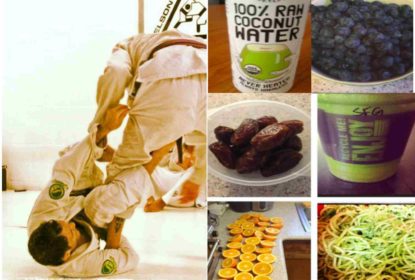
Now, since we’re talking plant-based Jiu-jitsu nutrition here, let’s focus on “vegetarianism” more closely. The thing with vegetarians is they tend to split into further categories depending on whether they eat fish, and/or eggs, and/or milk products, etc. Too complicated. Fort the purpose of this article, plant-based means someone that eats a diet that predominantly includes fruit, vegetables, and animal products other than meat.

The Benefits Of a Plant-Based Diet

Why exactly would you even think about going on a plant-based diet, to begin with? As a grappler, you’re probably interested in health and performance. Well, you get both of those, and then some with a plant-based diet. And I haven’t even mentioned how tasty the meals are…

In terms of Jiu-Jitsu nutrition, you can expect the best performance of your life. I’ve tried almost every type of nutrition in the past ten years, from keto and pale to intermittent fasting and eating within a preset value of macros. I’ve never had more energy than when on a plant-based diet. Cardiovascular energy, mental clarity, and also recovery all get a boost from skipping on ingestion a lot of meat. Some claim it has to do with acidity, for others it may a psychological moment, but the fact remains that eating plant-based is awesome for BJJ.

As a bonus, remaining on weight can be easier. Digestion and gut health improves when you reduce meat consdu[tion. It has to do with plenty of factors, like ingesting away more fiber through more vegetables and seeds. In any case, bot dreaming on, and cutting weight will be (slightly) easier than on an omnivore diet.

From a health perspective, eating plant-based will help you battel some common chronics diseases like diabetes and heart diseases, as well as help fight off inflammation. It is also helpful in boosting the immune system and helping you prevent certain modern-day diseases, like some forms of cancer.

There are also claims that a plant-based diet boosts mood as well, but the jury is still out on that one/. Since no studies have been performed on the brain chemistry of someone on a plant-based diet, I’ll say that this is just a possibility at best, for now. It perhaps has to do with the “saving the planet, sparing the animals” vibe.

Being Careful With Jiu-Jitsu Nutrition

In a previous article on a vegan diet for BJJ, I mentioned that every diet that restricts something has to be balanced in order to work. It should go without saying that junk food, processed food, sugars, and the like won’t really do anything for you. So it’s not just about dropping meat, but actually eating whole, real foods and balancing them in a smart way.

Jiu-Jitsu Nutrition: Plant-Based DietLuckily, for people on a plant-based diet, this is not hard. Milk-derived products, like cheese, cream, and greek yogurt, along with eggs will make sure you’re not missing out on any essential nutrients. Some essential amino acids, along with useful non-essentials ones are only found in animal products. Moreover, if you’re flexible enough to not exclude meat completely, apart from the occasional fish, grab a liver or spleen. Internal organs once every month or so wil help you get a real nutrient-dense bomb of things you might not be getting regularly on a plant-based diet.
Of course, supplements will help immensely. I’m not talking about pre-workout stuff or protein powder. in fact, you can get more than enough protein on a plant-based diet. Eggs, milk products, beans, chickpeas, nuts, quinoa, etc are all amazing sources of protein. Supplements that you should include in any Jiu-Jitsu diet anyways are fish oil and multivitamins. Pop one of each daily and you’re golden. Oh, and include Spirulina if you want to go the extra mile.

Finally, if you’re thinking about starting a plant-based diet, be smart about it. Start to wean off meat gradually, while introducing more vegetables and fruits. Try to make sure you balance your protein sources and include variety in every meal. Apart from that, you’re bound to discover some amazing tastes and combinations you weren’t aware of before.

Conclusion

I haven’t been on a plant-based diet for long, but I have to say that I’m loving the effects. In the past few months I’ve been on it (along with time-restricted eating) I’ve never felt better or more energetic. The only thing I haven’t checked is my blood health markers, but given the Covid-19 situation, I’ll hold off on them for a while more. n  terms of Jiu-Jitsu nutrition, this is a diet plan that I’ve enjoyed more than any other so far. Plus, it’s extremely easy to find food that fits your needs, even if you’re used to eating out. Give it a try!

George Lockhart Nutrition

Easily Escape Side Control With The Hotdog Roll

Escape side control with the Hotdog Roll

There’s something about moves with cool names in BJJ that make them really enticing to try. How could you not want to give a move called “the Hotdog Roll” a try? Moreover, if you’re like me, you’ll find a way to make it work. Some of these cool named moves are so nutty they’ll hardly ever work. Luckily, the hotdog roll is not one of them, and it is a legit way to escape side control. Actually, it is an awesome way to get out of quite a lot of bad spots, including scrambles when you start to lose the sense of where both you and your opponent are.

Now, there is an art to escaping side control. It is probably one of the hardest spots to clear away from if the person on top knows what they’re doing. However, figuring them out is also immensely fun, especially when people can’t seem to find a way to pin you down long enough to actually establish side control. The Hotdog roll is one of those moves that are not supposed to work. In fact, it won’t if you don’t’ time it right, However, once you get h hang of it, you will be able to escape side control and or the turtle position at will, wand with a big smile on your face.

The Art Of Escaping Side Control

Yup, I’ll go as far as calling it art. Remember those early days when side control meant much more than just getting your guard passed. It meant arrival at a position you dread. It is not perhaps as dangerous for you like the mount or the back, but it is the most unpredictable, and, if the top person knows what they’re doing, the most uncomfortable position in Jiu-Jitsu.

Escape side control Hotdog RollThe dynamic nature of side control is what makes escaping so hard. People тhat hold you in side control rarely just try to do a wrestling-style pin. Pinning can work, and it has its merits when it comes to collection points. However, most experienced top game players will constantly move and re-adjust, shifting their weight and making you bear their weight. Not fun at all if you’re on the bottom with no idea how to escape side control.
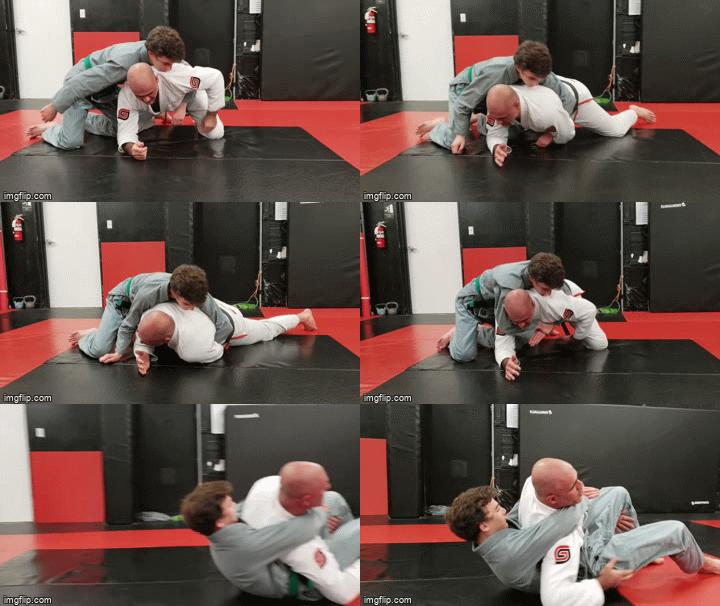
When it comes to escaping a dynamic position like side control, most people choose the harder way out by treating it as a static pin. Getting out with explosive movements is possible but it is not the smartest, nor the most efficient way. Escaping side control starts with understanding where the pressure is, and where it is going to be next. That little bit of anticipation will allow you to position yourself in a defensive posture that will keep you safe from all the pressure. Next, you will also need to move. There’s no point in trying to push and hold someone away, while they are moving. You will need to get moving too, and Hotdog Roll is one very fun way of doing so.

The Hotdog Roll

The Hotdog Roll, apart from being perfectly named, is also very efficient at getting you out of bottom situations without spending energy. The beauty of this move is that it works against many bottom positions, the most significant two being turtle and side control. This also means that it is perfect to keep your back safe, given that the turtle is one thing people try to force when in top side control in order to get the back. And vice versa. The Hotdog roll gets you out of both.

hotdog roll escape side controlThe move is a transitional move. As such, it relies a lot on timing. The basic Hotdog Roll is actually a move that deals with the seatbelt when you’re in turtle, rather than as a means to escape side control. The first step is trapping the hand that’s on the “under” side. This is crucial. From there, the goal is to lie on your belly and simply do a roll to the side. Because of the seatbelt, the opponent will go flying over, and you end up on top. If you play your cards right in terms of positioning, the seatbelt won’t mean a thing and you’ll actually be in Twister side control, which gives you a great advantage.
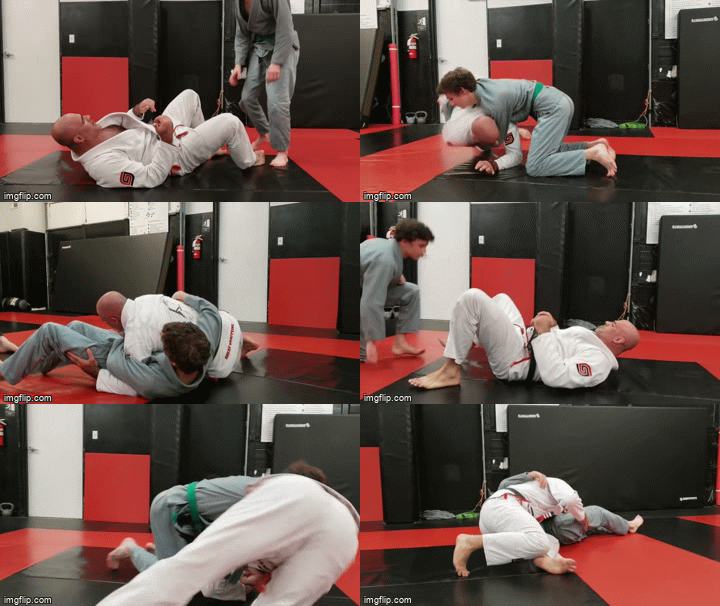
hotdog roll escape side control and turtleIn terms of escaping side control, the Hotdog Roll is the perfect trap. When you realize that your guard will get passed, you simply roll away, heading into turtle and deliberately exposing your back. As opponents reach for control, the “under” arm of the seatbelt always goes first. This gives you the chance to trap it and Hotdog Roll straight out of it. Moreover, if an opponent is following you closely, you’ll have inertia from getting in turtle in the first place, which will mean you actually roll 360 degrees in just one go.
Do You Really Have To Escape Side Control?

This is a somewhat different notion. It works perfectly, though, and it will help you set up the Hotdog Roll even after someone has established solid side control. The idea is that when your guard has been passed, there’s no immediate need to escape side control. You can, and should actually stay there a while. The first few moments of side control are actually the ones where your opponent is most active and focused. Instead of thinking of escaping, find a defensive posture that will keep you safe, and simply stay there.

The thing with side control is that nobody wants to remain there if they can’t use it to set up attacks. If you simply “play dead” and give them nothing, opponents will have to start looking for ways to break through a defensive shell, instead of using your defensive reactions to set up their attacks. That means that they’ll start to move, which is exactly what you want. Doing a Hotdog Roll at any point now becomes easy because the first condition for executing it is fulfilled – an opponent is moving, making space for the roll itself.

The idea of moving less, or not at all, is not easy for people to get used to. I admit, even I had reservations about it. However, if you’re really into the art of escaping side control, then you should think in absolutes. Either no movement or keep moving and rolling with inertia, but also with intention. Staying put to try and sneak a hook or frames in is a great way of getting into even more trouble.

Final Words

There are 101 ways to escape side control. Perhaps even more. The fun thing about the Hotdog Roll as a means out is that it will keep you safe from the follow-ups as well, while surprising just about anyone you roll with. Plus, how can you stop yourself from using a move with a name like this?

How To Train BJJ With A Grappling Dummy

How to train with a grappling dummy

Gyms are slowly starting to reopen their doors for BJJ training. During such time, though, and according to local government guidelines, some academies will employ non-contact training, at least at the beginning. It does not make much sense, to train Jiu-Jitsu without contact, but in reality, it is not exactly so. Non-contact training means you’ll be using a grappling dummy to train, instead of a live partner. That said, training with a grappling dummy can be awkward, especially if you’ve never done it before. 

Grappling dummies play a big role in wrestling training. In fact, dummies might just exist because of wrestling in the first place. Anyhow, training with a grappling dummy can be really beneficial for Jiu-Jitsu. It can never replace full-blown partner training, but it might just be the next best thing until we can relax a bit more with the restrictive measures. Still, even with a dummy, you need to know what you’re doing, in order to really get something out of training. Moreover, if you don’t have a grappling dummy, you’ll find a useful guide to making one at the end of this article.

How Far Can A Grappling Dummy Take You?

With a grappling dummy, you can work on two main aspects of your Jiu-Jitsu game. The first one is a specific movement, and it depends on the type of dummy you’re using. The second is specific conditioning, doing physical drills by using the grappling dummy more as weight than a substitute partner.

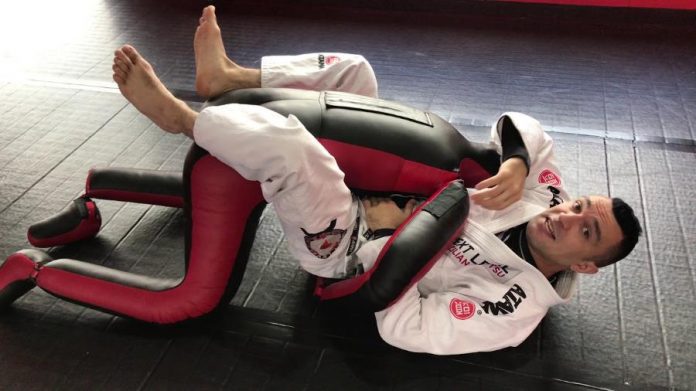
Training With a Grappling DummyGrappling dummies have the advantage of not resisting you. Moreover, they come in several different shapes and sizes. In terms of BJ, I’d recommend getting one with limbs, possibly both upper and lower. In any case, most of them at least have “arms” and that’s the minimum you should use. This will allow you to drill a lot more things than just transitioning through top positions. Limbs are useful to work on both top and bottom game, plus, of course, submissions. Also, throwing a Gi over a grappling dummy is not just great for BJJ drills, but will also help with BJJ Hygiene if you’re using the same dummy as someone before you. Simply take a spare Gi jacket to put over it and you’ll be safe and have lots of drilling options.
Now, you won’t’ really be able to learn anything new, at least not in a realistic way when your “partner” is not moving, shifting weight, and resisting more or less. However, you will be able to really fortify positions and techniques you already know. The limbs really come in handy here, as you can greatly improve leg locking and arm locking positioning using a grappling dummy. You might fall short on any real guard work, as you can’t drill too many things form the bottom with a dummy, but your top game will certainly be on fire. Since passing guards also makes little sense without resistance, go for pressure, and the feel of transitioning without leaving any space.

Training With Grappling Dummies

Now, people might say that training with a grappling dummy is a waste of time. To be honest, it is like learning to surf without going into the water, but given the current situation, it is much better than doing nothing at all.

The most important thing to know when setting up grappling dummy drills is managing expectations. Instead of looking for fast-paced action, focus on the details of every move you perform. To that extent, try to mimic a roll as much as you can. Every gym that has no-contact training probably has a curriculum repapered with what you can train. However, if you have the freedom to have fun, mimic a match. Start standing and do as many takedown drills as you can. From there on proceed to guard passing drills, before looking to establish side control. Even better, if you can, train half guard first. Continue through all top positions to mount. Use the Gi to train some chokes, and of course drill armbars on both sides.

Then, get up, and mimic pulling guard. From the bottom, you won’t have many options but you can still put in reps on chokes, armlocks, some sweep motions, and eventually, go for the back to work on some more chokes.

In terms of using a grappling dummy for conditioning, think standing. It doesn’t have to be only takedowns. You can lift the dummy on each shoulder, you can suplex it, you can turn it upside down, hip throws it… Also, going for knee on belly transitions left to right, or speed passing, and even hip bumps can be a great way to increase your cardio before live rolling is back on the schedule.

Make Your Own Grappling Dummy

Now, let’s look at how you can make a grappling dummy out of practically nothing. All you need is a spare Gi, and some stuff you surely have lying around your house. In fact, the equipment you need is as follows; A GI jacket, a belt, three towels (regular sized ones), three pillows (also regular sized) a blanket, and a winter coat that zips all the way up.

Simply stack the pillows on top of each other, and cover tightly with the blanket. Now, slide a towel in each of the winter coat’s sleeves, and use the third one to connect the other two from the inside. Place the wrapped pillows in the middle and zip the coat up. Finally, put the Gi jacket over the coat, and tie the belt. There are other options as well that include building a grappling dummy with legs. All you have to do is a little online research.

All In All

Training with a grappling dummy can be fun. It also gets boring really quickly unless you change things up. Hopefully, your gym will have a curriculum for non-contact training that will provide variety. If not, make sure you cycle through different drills, both technical and conditioning ones. Also, if you’re making your own grappling dummy, then make sure you make it in a form that will help you drill your own game. Or just buy one of the best.

The Best Grappling Dummies in 2024

Kurt Osiander’s Cabbage Patch Collar Choke

Cabbage Patch Kurt osiander Collar Choke finish

A funky choke that people don’t really expect is always a fun thing to pull off in a roll. But what about a choke everyone knows, and yet, they’ll never see it coming? Yeah, I know you’re interested. Let me take things even further – the choke in question Is arguably the most powerful choke in Brazilian Jiu-Jitsu. Well, at least with the Gi, as it is a collar choke. However, the setup is so unusual, that people will never see it coming. Even when they wise up t it after having to tap out several times, you can still surprise them over and over again. Sounds too good to be true, right? Well, when I tell you that Kurt Osiander is the man behind it, it should be more than enough to prove it is efficient and practical.

Kurt Osiander is known for having some of the most painful Jiu-Jitsu in existence. His game is a reflection of his long-time teacher Ralph Gracie and is more about pain and suffering than funky moves where you roll several times. Nope, with Kurt, it is all about pain and submissions, and a sneaky way of making it all happen. To be honest, his “Cabbage patch” setup for the bow and arrow collar choke is one of the sneakier ones, albeit weird when you first see. It does work, though, and it will take most people by surprise.

The Strongest Choke In BJJ?

John Danaher once described the bow and arrow choke as the strongest choke in Jiu-Jitsu. The only “drawback” is that it is only available when people are wearing Gis, given that it is a collar choke. Now, Danaher managed to transfer the powerful mechanics of this choke over into No-Gi, ending up with his signature Rear Naked Choke that is as close as you can come to decapitating someone with your bare arms.

Kurt Osiander Cabbage Patch Collar Choke setupsWhat Danaher had right (as usual) was that the bow and arrow choke is powerful. Whether it is the most powerful one will always be open to debate. Personally, I agree. The bow and arrow is a collar choke that exploits all of the fundamental attacking BJJ concepts. First of all, to get it, you need to have the back, which is universally considered to be the best attacking position in the sport.

Secondly, you’re working on a strangle (AKA blood choke) which is also one of the most potent BJJ weapons.  Even better, you’re using the GI’s collar to execute the choke itself, which is a more reliable option (when done right) than suing your arms. Finally, in a bow and arrow collar choke, you’re also controlling the posture of an opponent, by gripping their leg. In fact, this choke breaks posture by both bending and twisting the spine.

So, let’s recap. Attacking from the back with one of the best BJJ attacks, emphasized by using the collar, and completely taking away any defensive options by breaking the posture sure seems like the perfect recipe for the perfect BJJ choke. The problem is, 3veryone knows the choke is there and actually getting to it is the hardest part of the setup. Enter Kurt Osiander and his Cabbage Patch setup to get you to the bow and arrow in the sneakiest, unassuming way possible.

The “Cabbage Patch” Collar Choke Setup

The “Cabbage patch” refers to the manner in which you set up a bow and arrow starting in side control. For all you IBJJF fans out there, don’t expect any points for getting the back. This is a submission setup that leads directly into the bow and arrow collar choke from side control.

Kurt Osiander Cabbage patch Collar Choke GripsThe way Kurt sets it up is by establishing grips first. From side control, the arm that is under the head will go in the far side lapel, with a thumb-in grip. Your other arm should do the same, gripping with the same thumb-in grip and on the same far side collar, just a bit lower. This is actually the choking grip that you set up really early on.

Kurt Osiander Cabbage patch Collar ChokeThe manner in which you get to the back is highly unusual and is why this setup really works. Instead of slowly looking to go on top of your opponent, or make them roll, you actually pick your opponent up. However, there’s a trick to making this work – you have to stay tight. In other words, use the grips you have to pull the opponent as close as you can towards your chest while raising your own torso up. When you get them in a sitting position, simply switch them to your other side and you can easily get behind them.
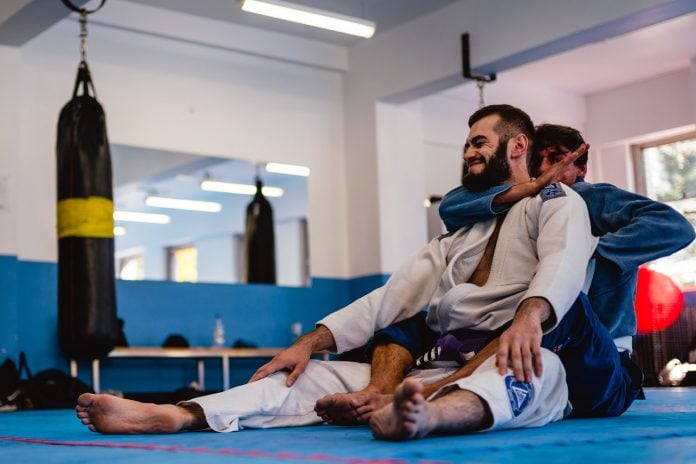
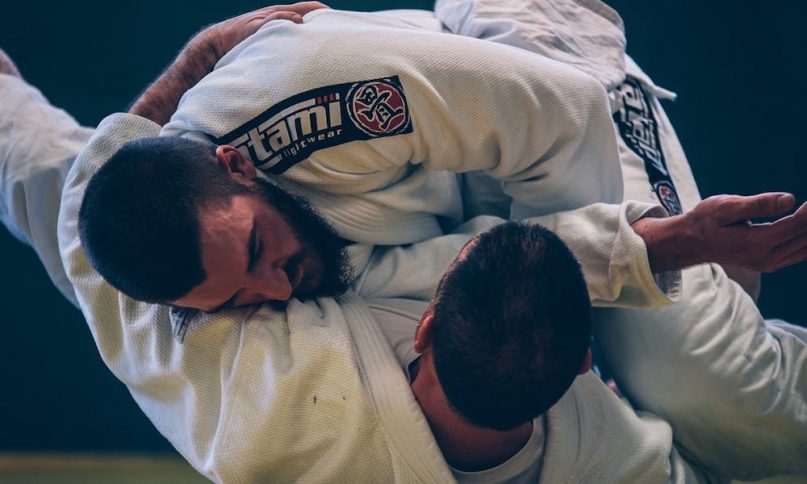
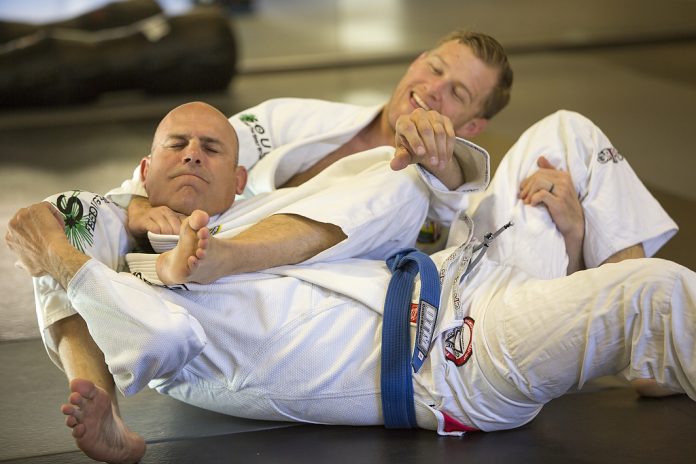
The goal now is to get the opponent to their side, so that you can throw a leg over. This is yet another way of distracting them, as you have no intention of actually getting the mount. The moment the leg is in place, you sit back down, and go for the grip on the pants, just like in any other bow and arrow collar choke setup. From there, it is simple to finish whichever way you want. Your best choice is to throw the other leg over the shoulder and perhaps even close your legs like in full guard. No need to really squeeze for the choke once you’re there, they’ll either tap or nap.

A Collar Choke Trick

There’s one simple little choking trick that I can’t remember who I learned it form. It was quite early in my Jiu-Jitsu journey but it completely changed every collar choke I have attempted since. Namely, choking with the collar is great because the cloth is thin enough to sneak under the chin. It is also extremely hard to get a grip on it once it is sunk in. This makes it really hard to get out of, but it also brings about a problem – you can get the collar stuck on the chin of an opponent.

This is easy to solve though. The trick is in always rotating your palm slightly so that the edge of the collar actually points to the outside. In other words, you are trying to form a triangle, the tip of which is the part that actually slides under the chin. This is a foolproof way of making any collar choke work without interference, even if the opponent attempts to use their chin to block. Another plus side is that by doing this, you also make it even more difficult for them to try and pull the collar out, as now there’s a wider surface preventing them. It works every time!

In Summary

Using the bow and arrow collar choke is a reliable way of getting taps. Masking the fact that you’re about to go for this choke e is what will actually make the choke work for you. In fact, a high percentage of submissions work mostly due to sneaky setups, rather than just mechanics. Anyone can finish a choke once everything is ready. In rolling, however, it is never easy to actually get to the position for the choke. Unless you have a move like the Cabbage Patch up your sleeve. Then you’re golden.

In the Zone: 6 Ways To Relax When You Do Jiu-Jitsu

6 ways to get in teh zone when you do JIu-Jitsu

Remember those first days of Jiu-Jitsu? Of course, you do, nobody ever forgets them. Perhaps you’re a complete beginner that’s still struggling with it. In any case, I have both good news and bad news for you. All that panic that you felt in the first few days never really goes away. That’s the bad news. The good news is that the more you do Jiu-Jitsu, the more you’ll get used to it. However, you could actually “hack” your way through the process, and learn how to relax more. Whether you’re a beginner terrified of rolling or a seasoned competitor about to go for that most difficult first match, you’ll need to find a way to deal with the jitters. Well, here are 6 ways to feel more relaxed when you’re grappling.

Competition jitters, anxiety, butterflies, nerves…call it whatever you want. It is something you’ll always have to deal with. Some of us are fortunate enough not to take it seriously, while others completely succumb to this state. In any case, It is manageable. The fact of the matter is, it will never go away. Even after training for most of your life, you’ll run into folks that’ll l wipe the mats with you and humble you in minutes. Sometimes you’ll feel the nerves before a match or a tough roll, and in other cases, they’ll creep up while you do Jiu-Jitsu. The first step is to accept that adrenaline will flow anytime you’re not completely comfortable. The second step is figuring out which of the next 6 techniques to use in order to relax.

The Best State To Do Jiu-Jitsu In

You’ve heard time and time again that you need to relax, go with the flow, and the likes when you do Jiu-Jitsu. We’ve all seen it in clips of high-level black belts rolling or even seen them compete like they’re strolling on the beach. It all seems fun and easy to do until that moment when you slap and bump and you actually need to put it to practice. This is an aspect of BJJ psychology that you can always bet on – if you’re winning, you’ll actually be able to find that flow and have fun. The moment something doesn’t go as planned, you lose it all like the adrenaline starts to kick in and you become rigid as a white belt on their first day.

Flwo when you do Jiu-jitsuFlow rolling is one way of trying to teach people how to roll relaxed. Unfortunately, it is also the hardest thing to teach anyone, mostly because of people actually need to teach themselves. All that talk about going 30% or some stupid arbitrary number like that is only good as long as the other person is also relaxed. The moment one rolling partner amps up intensity, all those percentages and numbers mean nothing. And still, every time you roll relaxed, flowing, you end up feeling much happier and fulfilled at the end, as opposed to going hard as your life depends on it. Not to mention that things just seem to stop working the harder you try to get them.
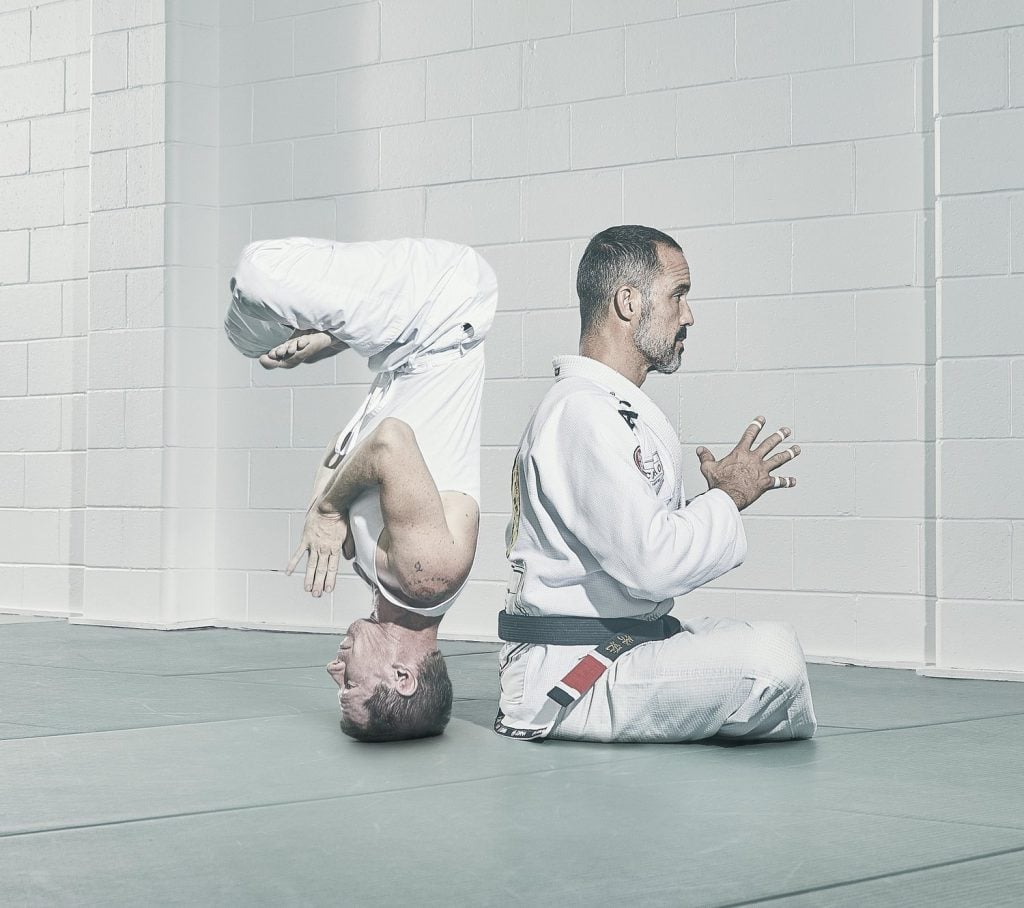
When you do Jiu-Jitsu, the “zone” you’re looking to get in is the one where your body is relaxed, but your mind is sharp. This may be hard at first, but the more you do JIu-Jitsu, the easier it gets. The whole idea is that when you relax your body, you can move, react, and adapt much easier to any situation that arises. Moreover, you’re more difficult to move, if on the bottom, or heavier if on top. Being relaxed also provides you with a much better base than being rigid and stiff. Moreover, staying relaxed will allow you to work more on movement and slick transitions because you can decide to switch halfway through. Not to mention all the injuries it is going to spare you.

If only there was a way to roll and even compete like this every time… Well, we found 6different ones to help you reach your flow state for BJJ.

6 Ways To Relax For BJJ:

The reason why people tense up before or during stations that make them uncomfortable is adrenaline. That fight or flight state is something we’re all pre-programmed with and there’s no escaping it. However, you could teach yourself to manage it and turn it into an ally. If you think that’ll those star athletes you know, whether they’re grapplers or from any other sport don’t get the jitters every time they compete, you’re mistaken. They just find ways of dealing with it. Speaking of ways of dealing with anxiety when you do Jiu-Jitsu, here are some of the best:

Ask Yourself Why Are You Nervous?

The first thing to do is to try and figure out why you’re getting anxious. It sounds like usual self-help mumbo-jumbo but it is not. Every roll is a simulation of a fight. The harder the roll, the more your body panics. In matches, this is even more emphasized. Convincing your mind that what you’re doing is not life-threatening is going to help a lot with managing your state. And, when you do Jiu-Jitsu, the main thing to figure out is why you’re getting anxious and then work on reversing that.

Know Your Limits       

Yeah, you have limits Everyone has them. If you’re the guy/girl that’s constantly winning in the gym, then you’re not really aware of what your limits are. In fact, if you do Jiu-Jitsu regularly, and haven’t tapped in a couple of weeks, you’re doing something wrong. Go for the weak spots of your game intentionally, so that you get used to not panicking when someone tougher eventually gets you there ina roll or a match. Learn your limits and respect them, and suddenly, they won’t be so scary.

Learn To Breathe

The most important thing to calming yourself in any situation is your breath. Whether you choose the Wim Hof method, some form f Yogic breathing, or whatever works for you, the important thing is to breathe. Holding your breath just makes things worse, and it is the last thing you want to do in a sport where choking is one of the main focuses anyway. To relax your mind, you’ll have to learn to breathe. That, in turn, will help you relax your body.

Think Positive

How to Relax when you do Jiu-jitsuIt sounds like another one of those memes self-help sites post. It is not. This is actually a really good way to hack your mindset for BJJ. It doesn’t mean you have to walk around with a stupid grin on your face all the time. It just means that whenever you find yourself in a bad position, you should think positively. Apart from tapping out, what’s the worst that can happen? It doesn’t matter if it is a roll or a match. As long as you can stay positive, you’ll be calm and accept the situation. That’s when you can actually solve it rather than thinking “oh s*^t they have my back, Now I have to panic”. Be positive about the problem, and you’ll find the solution.
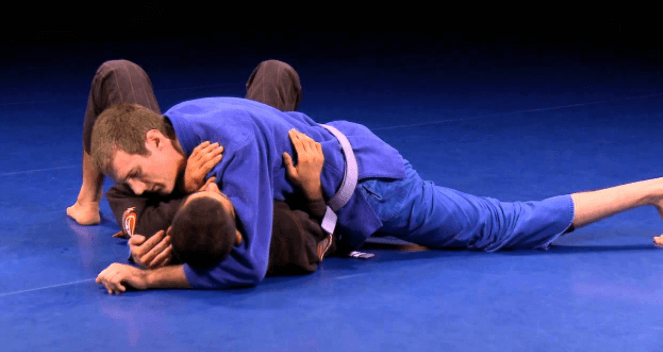
Focus

It is amazing how many of us can’t focus on what is happening while they do Jiu-Jitsu. People often focus on what’s going to happen next, or how much time is left, etc. Instead, all it takes is focusing on what is going on at the moment. Even when it comes to figuring out an opponent’s next step, the most important thing is staying focused on what they’re doing, rather than what they might do. This is how you’ll get all those submissions you’re looking for, or get out of plenty of bad spots.

Train Your Mind

Adrenaline might be a purely physiological function of the autonomous nervous system that we can’t control willfully, but it is still something our minds cause. Adrenaline will flow no matter what when the fight or flight kicks in, but we can train our minds to control the effects. There are plenty of practices from meditation, to form so yoga, or working with mind coaches and sport psychologists to get yourself in the zone for Jiu-Jitsu and use anxiety to actually fuel your [performance instead of hinder it.

Find TheFlow And Keep It Playful…But Not Always

When we do Jiu-Jitsu there are good days and bad days on the mats, just like with everything else. On those bad days, when things are off, whether it is training or tournaments, just do the best you can but never force yourself that’s the one thing to remember on a bad day.

On good days, though, your approach should always be the playful one. The reality is that you will grapple in a tournament in the same way that you roll. That doesn’t mean that you should roll wild and tense. Why not flow most of the time,. And then go and compete in such a manner as well? It doesn’t matter if an opponent is tense and explosive. Jiu-Jitsu is not about who is more explosive and powerful, but who is smarter and more “in the zone”. And, there’s no better way to actually learn flow rolling than keeping things playful.

By playful, I really mean messing around. Get caught, tap, go in bad spots. Even better, use games whine you roll, try and roll with handicaps (not using one arm, or using just one submission, etc.) Have fun and learn to relax. That way, whenever anxiety and nerves hit, and they will, you’ll still be able to do Jiu-Jitsu the way you want to.

Final Thoughts

Most people don’t enjoy their first experiences in Jiu-Jitsu. The inexplicable thing is that people get addicted anyway. Once that period passes though, there’s no reason not to do Jiu-Jitsu without having to be anxious on the mats. Whether it is rolling, visiting an academy, going to camp or competing,  use any of the methods above to get to that relaxed “zone” and turn on our best flowing BJJ mode.

Brazilian Jiu-Jitsu Basic Moves: What To Teach Beginners

Brazilian Jiu-Jiitsu Basic Moves: What To Teach beginners

Here we are again on the subject of Brazilian Jiu-Jitsu basic moves. In all other martial arts and combat sports, everyone knows what the basic moves that you learn are. From boxing to Judo, people have a fundamentals curriculum that tends to be the same all over the world. Enter BJJ, and every academy, and even every coach, has their own idea of what is basic and fundamental. That’s cool, and if it works, why change it? However, experimenting from time to time might just yield better results, or help you come up with a brand new idea and maybe even lead to developing Brazilian Jiu-Jitsu world champions. So, I’ll just share my latest experiences, and let you decide how to run your fundamentals.

No matter how we approach Gracie Jiu-Jitsu fundamentals, there are certain Brazilian Jiu-Jitsu basic moves that we all agree upon. What people usually see differently is the order in which to teach them. And that is perfectly ok. However, after using the Covid-19 lockdown fiasco to really research how other coaches organize their training sessions, I’ve come up with a plan that seems to offer the best possible results. It may seem a little out there, and I’ve just started implementing it. However, I’ll share all results after spending a while in it. And, a big focus is on the Brazilian Jiu-Jitsu basic moves and the fundamentals groups.

Learn Submissions First

Yeah it is odd. It may seem like there’s no context to it all, but if you really come to think about it, it makes perfect sense. Why should you teach submissions first? Well, for starters, they’re the ultimate goal of every match. Moreover, they’re exactly what you should be looking for in a self-defense scenario. Finally, they’re the most dangerous parts of training BJJ and as such, require the most attention. Plus, explaining the entire concept of tapping out is much easier when you’re actually using nothing but submissions.

paisnful BJJ submissions CoverWhen it comes to Brazilian Jiu-Jitsu basic moves, nothing is more fundamental than submissions. And yes, I do mean all submissions. Granted, you won’t be showing Gogoplatas (Eddie Bravo fans look away) and other crazy stuff off the bat to complete beginners. However, explaining the armbar, from both top and bottom is a great way to have people in adult classes learn the move correctly. Compared to the usual method of teaching a complete beginner to rotate their hips from the guard, and look to break posture to get an armbar, it makes a lot more sense. Submissions to include are triangle chokes (arm and leg), Gi chokes, rear-naked choke, guillotine, fotolocks, straight and bent armlocks. The basics.
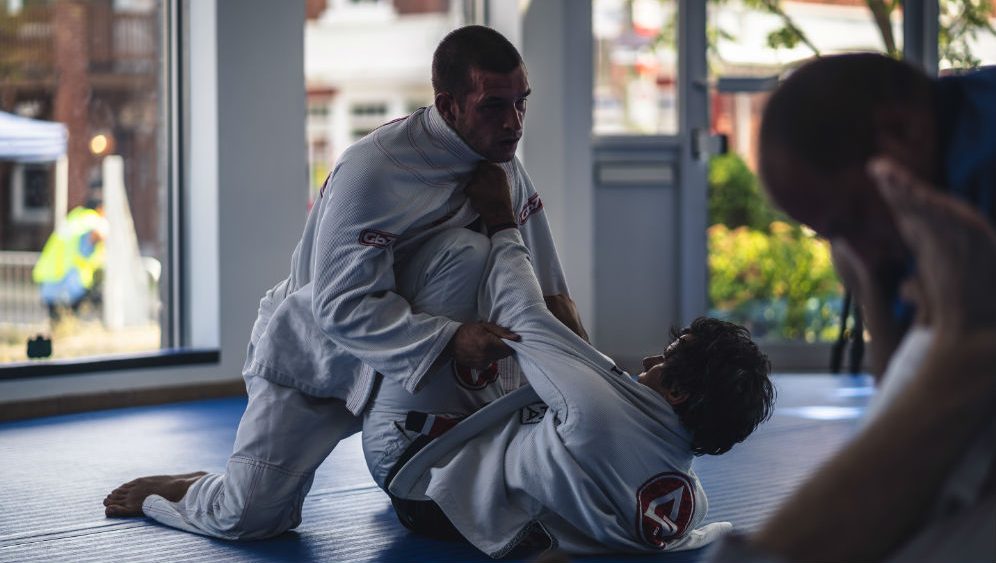
The key lesson they learn here is to tap. They also get a fee for the finish and tension of each move, without having to learn how to get there in the first place. Entries and positional holds tend to be difficult for higher belts to learn, let alone new students. And we just glance over them on our way to submission, leaving their minds confused and full of stuff they can’t utilize. Going for a submission-only course for a couple of months for every new student is a great way of simplifying things and making JIu-Jitsu really interesting from the get-go.

Movement Comes Next

Movement comes next. It is what most people think of in terms of Brazilian Jiu-Jitsu basic moves anyway. However, once again, people tend to go overboard. Yes, teaching people how to move through space in a grappling sense is important and crucial. However, we have to focus on the right moves that they’ll be using all the way to black belt. Backward break falls that proceed to press handstands are not really that important at this level.

Brazilian Jiu-Jitsu Basic Moves: MovementWe all know the hips are one a crucial body part in BJJ, you want to move your own in a very specific manner while controlling the other person’s hips at the same time. When it comes to moving your hips, the hip escape is the only move you need to know. Think about it. Isn’t the technical stand-up just another form of hip escape? What about the bridge, when you do it so that you end up on your knees? If you’re really looking to teach Brazilian Jiu-Jitsu basic moves, you need not look further than the hip escape in all its forms and variations. Even the great Rickson Gracie shares this sentiment.
More offensively speaking, you’ll need to teach people balance. While still not really talking about positions, use drills to teach people how to move when an opponent is resisting. Simply having them drill to get past the lags, while the bottom person does nothing but retention will make them extra efficient at movement, before they learn the ins and outs of all the positions. Which, conversely, comes next.

Brazilian Jiu-Jitsu Basic Moves: The Positions

Once again, I’ll use a concept that will defy most people’s approach to Jiu-jitsu. It is okay, as this is my take on things, and the results will show if I was right or wrong. Just don’t let any of the “guinea pigs” in my experimental group what I’m doing. Jokes aside,  positions in BJJ come in three different categories – standing, top, and bottom. And those are the three distinctions any beginner should be able to make. After they learn about submissions and how to move like a grappler.

Keep things simple here – there’s no need to talk about worm guards just yet. Closed and half guard is all you need to show from the bottom. Tie them with the movement patterns of retention and hip work from below and you’ve got a game for beginners to play. Plus they already know where all the submissions are, so when you show an armbar from guard now, they’ll know the end point, and how to use their hips to get it. Guard now makes a lot more sense to them and they actually think and learn about the position itself.

Brazilian Jiu-Jitsu Basic Moves: positionsThe same holds true for top positions. Side control, mount, and back control are all they need. They work for Gordon Ryan and will do the same for any newbie. Throw in the odd knee on belly if you’d like, but I’d stick with those three first. Also, I like to teach the turtle, both offensively and defensively, as I think it is the most important position out of all Brazilian Jiu-Jitsu basic moves. But more about that on a different occasion.

Finally, when it comes to takedowns, teach them backward. Start with control on the ground. Then, drill the takedown itself, from the last moment of standing. Then go one step back and drill the entry, then go a step back and drill the grips and level changes. This is how people get to work on the actual takedown and control more than on the movement and grips part. It also works great in kids classes.

The best way to get people to learn how to apply them in rolling? Give them endless rounds of positional sparring for each of the above.

Final Thoughts

All in all, Brazilan Jiu-Jitsu basic moves can be whatever you say they are as a coach. As long as you can make things have sense, you can teach people however you want. The approach I have is that people that walk in the Jiu-Jitsu gym are neither retarded nor 3-year olds and they can understand and do much more than we give them credit. Why not teach them the real Brazilin Jiu-Jitsu basic moves off the bat, instead of trying to teach them the right ways over again when they become purple belts or so? After all, Brazilian Jiu-Jitsu developed quite a lot throughout the years, and so should our teaching methods.