



BJJ Hygiene: What Are The Covid-19 Protocols We’ll Have To Follow?

BJJ hygiene: training with covid-19

We’re back! We’ll sort of. Most countries in Europe are starting to relax with the Covid-19 control measures, and in the process, BJJ gyms are starting to reopen. However, for anyone that thought it would be just a massive open mat party the first day back, you better think again. I can’t presume how long it will last, but I dare say that until the end of 2020, we won’t be training BJJ like before. The good news is that we’ll be able to train, and that’s something. However, there are some brand new and improved BJJ hygiene protocols that we’ll have to obey if we want to remain open and keep training.

The responsibility for keeping a BJJ gym Covid-19 free is going to be with both the students and coaches (as usual). BJJ Hygiene is going to become the sole most important thing when someone enters a Jiu-Jitsu academy. Seriously! All that stuff about washing your Gi and your belt etc that we talked about before now gets a whole different meaning. There will be Gi washing instructions, there will be screening, taking temperature and other things we never thought we’d see in BJJ. But hey, if that’s the price of training, then so be it!

Personal BJJ Hygiene Requirements

Before we start, let’s make sure we’re aware of what the categories of BJJ hygiene are. In other words there will be levels or layers of protection in order to keep a gym Covid-19 free. If just as much as one case emerges, it might mean the entire academies to close again, and it may even turn out to be for good.

BJJ HygieneWhen it comes to personal hygiene, things go well beyond just being clean and showering regularly. The Gis and all training equipment will need to be in pristine condition. When it comes to mouthpieces, I’d leave them out completely. Still, for those that have to wear them, heavy-duty disinfection will be mandatory. Ideally, you’d have people arriving already dressed in their Gis and heading straight to the mats. However, for those that can’t realize this, dressing rooms will have to be rotated. More on that later on in the gym BJJ hygiene department.

As far as personal hygiene goes, given that we’re dealing with a respiratory virus, the protocols for entering the gym are going to include alto more control. First up, it is advisable that you do a screening via a questionnaire for all members. The best way to do it safely is online, before you actually open the gym. That way, you’ll be able to prevent even suspicious cases from entering the mats.

Next up, be ready to measure temperature and carefully write down attendance. A non-contact thermometer is a must, and everyone that enters will get have their temperature taken. Note down the temperature as well as when the person arrived, an which area of the mat’s they’ll be training with. Also, you’ll have to not who their training partner is, as well as everyone else in the group.

Gym Protocols

BJJ hygiene of the facilities where we train was always a thing of great importance. Now, it is going to be the biggest factor in whether or not you create a Covid-19 cluster. To begin with, re-opening the gym is only advisable if your local government allows it. Moreover, if they have other protocols in addition to what we offer, you’re best off following them as well. The ones we share are mandatory in order to keep people safe on the mats.
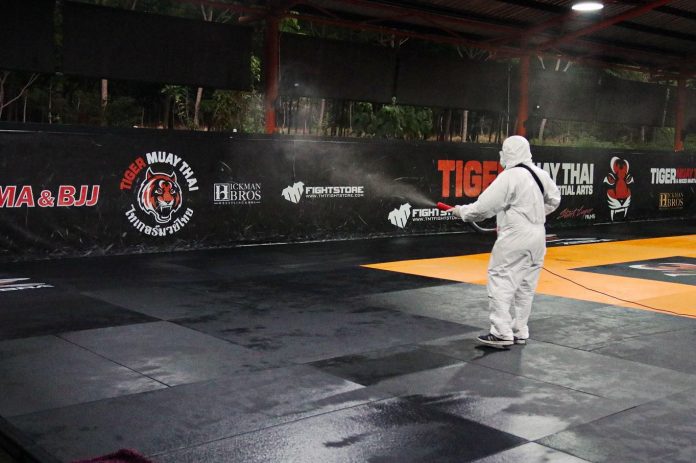
Post Covid-19 BJj hygieneFirst of all, you’ll have to set up disinfection barriers. That means getting a metal box with low edges, putting a towel or rags inside, and soaking them in disinfectant. One of these should be at the main entrance, and in front of each toilet and, if you’re using them, in front of each changing room.

Hand sanitizers should be placed at the entrance, and their use has to be mandatory. The person at the reception desk should wear a face mask, and a Plexiglas shield should be placed on the desk itself. Anti-microbial soaps should be in the toilets.

All surfaces in the gym, from common areas to the mats need to be thoroughly cleaned with a chlorine-based disinfectant. However, since chlorine doesn’t work when there’s organic mater on any surface, you’ll have to first use soap and water, and then the disinfectant for best results. You’ll have to repeat the process between each group of people that comes in to train.

Another huge thing to remember is aeration. If you have an air conditioning system that can pull air out, it would be perfect. In any case, even if it is by windows only, make sure you aerate the mats and changing rooms between groups.

Finally, a big thing to remember is to ask people to leave their phones in their pockets. No phones or personal stuff should ever come in contact with the mat area at any cost.

Training Protocols
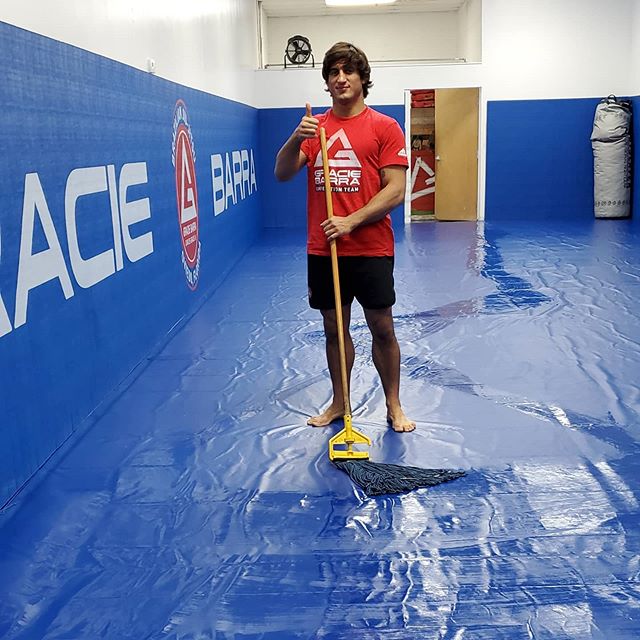
BJJ Hygiene cleaning the matsWhen it comes to classes themselves that’s where we’ll feel the most difference. It is ales where BJJ hygiene is more important than anywhere else. People are going to be in close contact and the dangers of transmitting something to one another, or those that come to train after them is huge. However, with precautions and solid BJJ Hygiene measures we can minimize if not eliminate the risks altogether.

First of all, people that train, will have to train with one partner only. That should last for 3-4 weeks at least. Moreover, depending on the size of the gym and the local government recommendations, there shouldn’t be more than 4-8 pairs of people on the mats. That will mean more groups of fewer folks, which is a logistical nightmare, so you better start organizing it now.

Training areas should be numbered and assigned to each pair. It is great if you can physically separate the areas with a barrier, but if not, marking them will do. Disinfection of each mat space after people training is a must, of course.

The training itself should last no longer than 40 minutes, given how much disinfection and protocols are in place. No-contact training is dumb for me, so training should consist of drills and light flow rolls. After almost three months out, people will be rusty, and they’ll want to roll. Give them that, but not in a way that they injure themselves. For 3-4 weeks. This will be the new normal way of training BJJ.

If you’re using the changing rooms, you should think about rotating them. That means one group uses one, the other goes in different, physically separated changing rooms. That’ll give you time to disinfect so the third group goes back to number one etc, etc.

Wrap Up

BJJ hygiene is the one thing that will allow us to successfully train once again. Unless we follow strict protocols and take care, we won’t be able to train for a long, long time. Nobody wants to sit at home when other BJJ schools are opening, so let’s all be smart about it and focus on BJJ hygiene and following all protocols as best we can. Now, it is time to wash that Gi, as the slap and bump is not far away!


BJJ Tournaments 2020: What’s Left After The IBJJF Suspends All Competitions?

BJJ Tournaments 2020: What's left?

Half of 2020 has passed and we only go a couple of months of BJJ training. AS if that wasn’t enough, it seems that most of the Jiu-Jitsu tournaments planned for this year have been scrubbed. Just as training seems to become a viable option once again (albeit in a very different manner than before), the BJJ tournaments 2020 calendar just got a lot less crowded. Namely, the IBJJF deemed it safest (or easiest) to cancel all upcoming events indefinitely. In the meantime, all those drooling for competition after a few training sessions will have to retrain themselves or look for other options.

To be honest, canceling huge tournaments is the right thing to do. In fact, keeping up with the social distancing measures is ok, but we can’t go on like this. Yeah vaccines will come, we’ll beat the virus and all that, but it will take time. The sad reality is that there’s no safe way of actually conducting grappling competitions for now. While we might get away with training, if we follow strict protocols and guidelines, the BJJ tournaments 2020 plans will definitely need to go back to the drawing board. That said, there still are some options left out there, apart from invitation-only tournaments which, for the majority of BJJ folks, are just a viewing option……for now.

How Covid-19 Almost Tapped BJJ Out

It is February 2020 and everything is going according to plan. Brazilian JIu-Jitsu training has never been so good, there are more and more people in each class, and gyms are getting too small. The perfect scenario. Then, a starry about a virus going through Chine slowly starts becoming everyone’s reality as the virus spreads faster than wildfire throughout the world. The way to deal with it, at least until the worse comes to pass, is by limiting contact between people. Now, that notion and BJJ don’t go well together. Actually the don’t go together at all.

The result of the Covid-19 pandemic was that BJJ came to a screeching halt. It actually very nearly crashed and burned. Form March onwards, we did try anything and everything, from online drill classes to Ginstica Natural and even non-contact training. Nothing really works, to be honest.  But that’s not the scary part.

Everyone that’s been out with an injury knows that a few months on the sidelines are not a big deal. Apart from the psychological “trauma’ of not training, they do pass pretty quickly. When there’s the threat of potential death on the other side they tend to go by even faster. However, the issue is on the business side of things. After all, most BJJ academies are businesses and small ones at that. So, it was inevitable that some of them (and not a small number) did not manage to survive. Even Garry Tonnon had to close his Brunswick BJJ academy until he can relocate. Not fun, and not something any grappler wants to see.

That said, things are starting to look up. There are still plenty of people that are sick, abut training is now a real possibility. We’ll have to modify it a lot and use different protocols, but we can stay safe on the mats. Unfortunately, the BJJ tournaments 2020 season looks to be all but over. At least as far as summer goes. Unless things worsen with the virus, there might be a spark of hope in the last few months of the year. However, none of those will be IBJJF tournaments, by the looks of it.

IBJJF Statement

The IBJJF, as the leading organization in organizing BJJ tournaments on a world scale, decided to cut back on its losses and actually put safety first. As things stand, they canceled all events indefinitely, which does leave a little room for improvisation. However, reading between the lines, we can safely assume that no the BJJ tournaments 2020 season, at least in terms of the IBJJF is done and dusted.

BJJ Tournaments 2020: IBJJF Cancels EverythingThis is the statement they issued: “The IBJJF will continue to work with governments, world health authorities and local communities in regards to travel restrictions, public transportation, hospitals, and health networks, on the gathering of people and contact sports restrictions, to meet the demands of large sporting events before actively restarting the tournament season safely and legally.
The IBJJF would like to inform all athletes who had a valid IBJJF membership until the moment the calendar of events was interrupted due to the pandemic, will have their membership extended for as long as the Federation is prevented from doing events. The period from March 1, 2020 until the date when our next event is held, will add the expiration date of the membership.

We are joining our efforts with many leaders in the Jiu-Jitsu community and are confident that we will overcome this challenge. Hoping that we can return to doing what we love the most as soon as possible. We hope that all of you and your family members are safe and healthy. Together, we are going through a delicate time. A test of patience and endurance, as a father/mother, brother/sister, son/daughter, and friend. Those who learned the noblest values through the years of Jiu-Jitsu training will be able to show resilience, never give up, and show the capability of winning this one more fight.

BJJ Tournaments 2020: Any Options Left?

So, without the IBJJF, what are we left with? Currently, apart from professional Jiu-Jitsu tournaments like Fight2Win and Submission Underground, not much. At least not until July at the earliest, and that’s being optimistic.

BJJ Tournaments 2020A good sign is that the second biggest organization, the UAEJJF has not pulled the plug completely. They did cancel the Abu Dhabi World Pro but have a hope that they can revisit the idea come November. In the meantime, they are not giving up on local, regional, national, and international events depending on the situation and recommendations on each intended location. However, nothing before September is actually realistic, according to them.
In the USA, there seem to be BJJ tournament 2020 options as soon as July, though. There are several NAGA (Charlotte, Honolulu, Atlanta) and Grappling Industries (Maryland, Dallas, Atlanta) events, for example that haven’t been postponed or canceled. They’re all slated to take place in July, but somehow, I doubt they’re really a possibility. On a more positive note, the ADCC East Coast trials set for November in New Jersey are still on.

In Europe, the situation is similar. There are still tournaments that appear to be taking place as early as June, but I doubt they’ll really materialize. Moscow, Kyiv, Stockholm and even London have vents scheduled to take place. However, most of Spain and Italy’s events are off, and Germany still remains a doubt. The ADCC European trials, set for October in Moldova, are still a go, though.

In Summary

The BJJ tournaments 2020 session is definitely not the one we envisioned. I know several people that have been tearing up the scene and hoping to really get to the next level this year. It seems they’ll still have a chance, though, if they play their cards right. However, I still think caution is the best way forward and even if we have to scrub the entire year from a competition standpoint, we can at least find solace in the fact we can still train. And, for those like me that we’re ready to do a competitive comeback after while out, it seems we get some more time to shake the rust off.

Secrets Of BJJ: The Real Reason You Can’t Finish Moves

Secrets Of BJJ: Finish More Moves

The one thing that makes us love BJJ so much is also the one thing that I most frustrating about our sport. It is damn hard to finish. And I’m not just talking about submissions here. Finishing any move you try is where the real challenge in Jiu-Jitsu lies, whether you’re attacking or escaping. Granted, with time and experience people‘s finishing rates start to climb. However, with knowledge, you could really shorten the time it takes to figure out one of the secrets of BJJ: how to finish more moves.

As you immerse yourself in Brazilian Jiu-Jitsu, solving the secrets of BJJ becomes the real big challenge. However, before such time when the outcome of a roll or even a match becomes insignificant for you, it is all about pulling this and that move on as many people as possible. There’s a simple concept that will greatly help you with this, and it is one you’ve already heard about: alignment. The trouble is in applying it at the right time, rather than knowing about it.

Unlocking The Secrets Of BJJ

Three’s something extremely rewarding when you “solve” something in BJJ. Call it a Eureka moment, a click, a revelation, solving a mystery, or whatever you want. The moment things start making sense is a “facepalm” moment that seems unbelievable you couldn’t “solve” earlier. However, that’s far from an endpoint. In fact, solving one BJJ secret, like cutting off a Hydra’s head, will only give birth to a bunch of new ones.

When we’re talking about the secrets of BJJ, those are not some things reserved for the masters that you get to learn only after you get your black belt. Far from it. Those are the things that are not really important when you start. As you go up the ranks, priorities, and perception change, allowing you to see things differently. That’s when you get to solve some (or most) of the secrets of BJJ. However, this approach has a flaw, at least according to me.

Secrets Of BJJ Why You Can't FinsihThe approach we have in Jiu-Jitsu is to teach people “beginners” Jiu-Jitsu, only to have them slowly re-learn everything as they progress. Why do we have to do things twice? Why not teach people correctly from the beginning? And yeah, that includes divulging some of the “secrets of BJJ” even as early s the first few months. And yes, beginners will be ready to take them in. In fact, they’ll actually understand all the moves you’re trying to teach them much better if you explain and reiterate stuff like alignment early on.
Science Of Jiu-Jitsu: How To Finish Everything

Wrapping up that tight choke with a tap while you’re not really exerting yourself is the ultimate mark of high-level jiu-jitsu. The same holds true for just about any move you use. Taking a look at any of the grapplers we consider GOATs makes them seem like they’re pulling things off without even trying. You then go to the gym to give that pass, sweep, escape, or submission a try, and you fail miserably. That is because you’re focusing on the wrong thing.

The way to make everything in BJJ work is to understand how things work. And to do that, you want to look at some fundamental principles of grappling. To that extent, one of the secrets of BJJ that is the hardest to figure out (unless someone explains it) is alignment. But it is not the alignment you’re probably thinking about.

When it comes to alignment people think about how they’re positioned in relation to their opponent. That is actually not really important and is constantly in flux. It is one aspect of alignment you can’t really control. What really matters is the alignment of your own body first and foremost. Then, in a very logical way, you should look to disrupt your opponent’s own alignment. Now, try and execute every move after doing these two things and you’ll have one of those Eureka moments again.

A Few Practical Examples Of Alignment

Let’s look at alignment from a more practical perspective. Let’s say you’re standing and you and your partner have a collar and elbow tie (regardless if it is Gi or No-Gi). Stand like that and tell your partner to try and move you around. Easy, right? Now, improve your alignment. First, stagger your stance, just slightly, by pulling one foot back. Next, lower your shoulders and tuck your pelvis forward. Make sure your spine is straight (upwards, to the sides and in terms of torsion. Now, have them try and move you again.

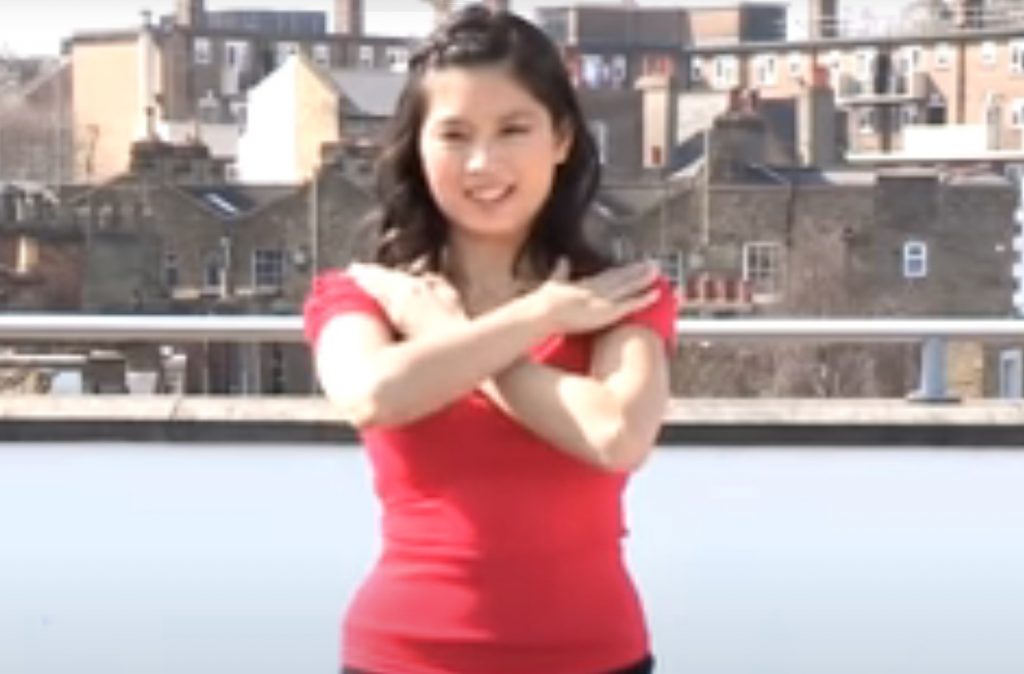
Secrets Of BJJ: AlginmentA more attacking application would be attacking from the back. Having a seatbelt often makes our spine twist lightly, taking our own body out of alignment. Once you’re on someone’s back, make sure your spine is straight, shoulders are rounded, and that your hips are extended slightly, so that your hooks are heavy. Choking someone out will also have to do with how your own body Is aligned first. Just think about the Macarena dance – that’s how you should have your arms set up to choke someone.

The leg drag is our final example today, where I’ll focus on breaking the opponent’s alignment. When trying to pass via a leg drag, most people fail to finish right before they pass. The reason is, you allow your opponent to keep the alignment in their body. If you focus on keeping their knees pointing away from you, and you also pull their head towards their knees, you will be able to pass to wither side, or directly into the mount, without their legs giving you any sort of trouble. Moreover, if you do so by aligning your own body (head down butt up) you’ll only make the pass more powerful.

Suddenly, the secrets of BJJ don’t’ seem so secret anymore.

Conclusion

The beauty of Jiu-Jitsu is in small victories. And, those are hidden in the tiniest details of the art. Be warned, though, once you start looking into solving secrets of BJJ the likes of alignment, you’ll fall in a very different rabbit hole than the one of gathering techniques and moves. It is a fun journey though, and it will make you appreciate Jiu-Jitsu even more!

What Two Years Of Using The Gracie Barra Jiu-Jitsu Curriculum Have Taught Me

Lessons From Two Years Of Following the Gracie Barra Jiu-Jitsu Curriculum

Gracie Barra is one of the largest BJJ affiliations in the world. It is named after the first school the Gracie’s established in Rio. To this day, Carlos Gracie’s son, Carlos Gracie Jr. is at the helm of the organization. Across, the world, they have numerous affiliate schools that follow their Jiu-Jitsu curriculum. In fact, Gracie Barra is organized more like a business company than they are your usual BJJ academy. That said, is their approach applicable everywhere? Here are my experiences.

First and foremost I’ll make something clear. I am not against, nor for Gracie Barra. I train at a gym with a GB association, and as such, we have access to the Jiu-Jitsu curriculum they use. What I am about to share are my personal thoughts and experiences on how GB organize things, and the lessons we can learn from teaching in an academy in accordance with their philosophies.

The Gracie Barra Jiu-Jitsu Curriculum

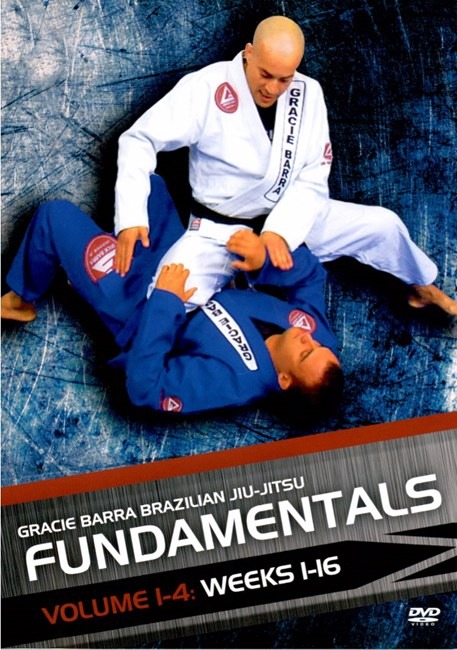
Gracie Barra Jiu-Jitsu Curriculum FundametnalsA while ago, I got certified as a Gracie Barra coach. There is an online course you take (a long one) that shares lots of the philosophies (perhaps too much) and some of the principles of work of Gracie Barra. It does require you to pass tests after every chapter, and eventually, finish some practical hours in an academy under the supervision of a GB Professor in order to get certified.
That said, doing so opened up the door to a lot of GB content. Let me just say, they have a system in place for everything. However, what I want to focus on is what is the most important aspect of teaching in any BJJ academy – the Jiu-Jitsu curriculum.

The Gracie Barra approach is to put people in different groups, including kids. We’ll talk about different kids groups on another occasion. In the adult system, there are there groups, and hence, three curriculums. The first is fundamentals, then the advanced, and ultimately, the black belt curriculum. They all follow the same pattern – 16 weeks long, a subject for each week, two training sessions per week, consisting of a takedown and two bottom techniques per training session. So, we gave it a try in our academy. And we did learn important lessons along the way.

Kids Curriculum

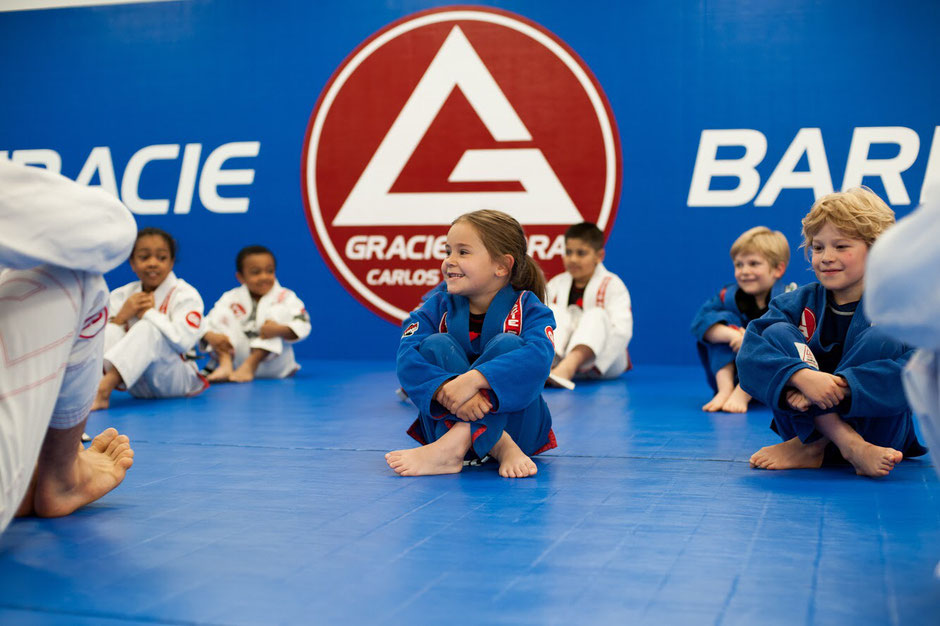
With the Kids Jiu-Jitsu curriculum, Gracie Barra has quite a good thing going on. Most of what they use in their class structure seems to be working, particularly in a group of kids aged 5-11. Anything older or younger than that requires their own group.

Gracie Barra Jiu-Jitsu Curriculum - KidsWhat I really like is the part that does not concern direct technical Jiu-Jitsu. That is the warm-up, physical drills, and especially the games. The approach here is to help kids develop BJJ movements through games and fun. Combine that with a personal connection with the kids and a bit of joking around and you’ve got a happy group that will easily tackle hard things like shrimping or tumbling.
The concept of an end of the class message is also really cool, although I think there should be more variety there instead of just repeating a few subjects over and over again.

Technically speaking, there are too many techniques for kids to really learn. In fact, it tends to turn them off when there’s too much material. Instead, I’d go with fewer techniques per class, and keep a certain subject for maybe a couple of weeks instead of just one.

I also don’t like the GB clock, which is basically the pattern each class should take. I find it too rigid and unnatural, both here and in all other groups.

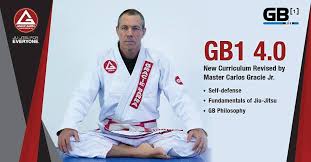
Fundamentals Curriculum (GB1)

This portion of the Gracie Barra Jiu-Jitsu curriculum is meant for total beginners. As such, it features a warm-up (could do with some variety). Also, I’d spend a bit more time on subject-specific movement, i.e. drilling movement that has to do with the techniques demonstrated that week.

The technical portion of class starts with a standing technique (in most cases), trained from a self-defense perspective. Most of the things here are plain stupid. While the takedowns themselves are the usual (Judo throws, double legs, etc.) setting them up with unrealistic self-defense scenarios is a waste of time, and puts people off. So much so, in fact, that some of the things won’t even be at home in a Steven Seagal movie, let alone real self-defense situations.

Gracie Barra Jiu-Jitsu Curriculum classesThe ground techniques are okay, in general. There are two per training session, which leaves enough time to demonstrate them and let people try them out. Some of the moves are overly complicated for the level, but that’s easily amendable.  Classes usually end with positional sparring and no live rolling. For those just starting out, contrary to most popular belief, I find this to be the perfect formula. After a month or two, people can choose to partake in live rolling.
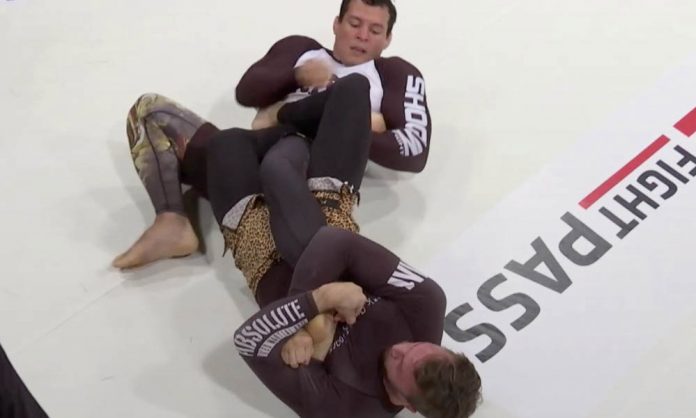
During two years of the fundamental curriculum, I’ve seen some great results with people coming in with no experience and really getting to grasp BJJ. I’d really completely throw out, or completely re-do the self-defense aspect though.

Also, I’d focus more on the why when explaining the techniques, rather than just using a three-step key points formula. The three steps are great, but people need context, and even though they haven’t trained, they are not morons. It tends to go so much better when they know why they’re doing those three steps, rather than just being robots.

Advanced Curriculum (GB2)

I think this is the Gracie Barra jiu-jitsu curriculum I have the most trouble with. It is intended to be for everyone from a blue belt all the way to brown. To begin with, that is a huge pool of people with very different levels of understanding. Even more so, oftentimes people get to this group after completing two rotations of the GB1 program, meaning they’re still white belts. And the jump is immense.

Once again, the clock is completely unrealistic. BJJ should be al more relaxed than having to finish a warm-up in exactly seven minutes or demonstrating a move for 1 and a half minutes. Particularly in a group of more advanced students.

The takedowns portion is the one thing I really, really like about this part of the GB Jiu-Jitsu curriculum. Although there are several crazy moves in there, most of the techniques are great, and applicable to all levels.

The groundwork, though, is completely out of order. Three’s no point in saying we’re doing side control, this week, just o do long and complicated chains of attacks one training, and even longer and more complicated ones of defense. In these groups. People like to learn more about how the moves work, rather than a bunch of moves stacked upon each other. Too much clutter, and way too little retention, particularly for white/blue belts.

The class structure is ok in general, with mandatory position sparring to wrap a class up. I’d introduce more basic drills at the beginning of class, though, reinforcing people’s fundamentals and coordination.

Black Belts Curriculum (GB3)

Given that there are not many black belts where I train, having a group focused on black belts only makes no sense at the moment. As such, I’ve glanced over the Jiu-Jitsu curriculum dubbed “GB3”, but until such a time that I go through it several times, I’ll reserve any opinion I have for myself. You might feel free to disclose any of yours, if you want to, though. Simply comment below.

The Takeaways

All in all, I find the Gracie Barra Jiu-Jitsu curriculum very useful, as a guide to setting up your own curriculum. It has been obviously thought through, but not necessarily from the best standpoint for learning jiu-jitsu. GB is a conglomerate that has plenty of focuses, apart from just teaching BJJ.

Just like with everything in Jiu-Jitsu, the goal is to adopt. There is a lot to learn from their curriculum, but it is not equally applicable all over the world. After a couple of years of following (most of it) completely, it is time to branch off and start combining things to both offer people the best BJJ experience and teach them actual jiu-jitsu in the process. When it comes to self-defense, it will be harder, but I’ll definitely skip all the crazy stuff from the GB curriculum altogether. Who knows, perhaps in a couple of years, I’ll write an update of how things work out.

BJJ Blue Belt Requirements and Curriculum

BJJ Purple Belt Requirements And Curriculum

BJJ Brown Belt Requirements And Curriculum

BJJ Black Belt Requirements And Curriculum

The Different Types Of Ego In Jiu-Jitsu (And How To Recognize Them)  

managing Ego In JIu-Jitsu

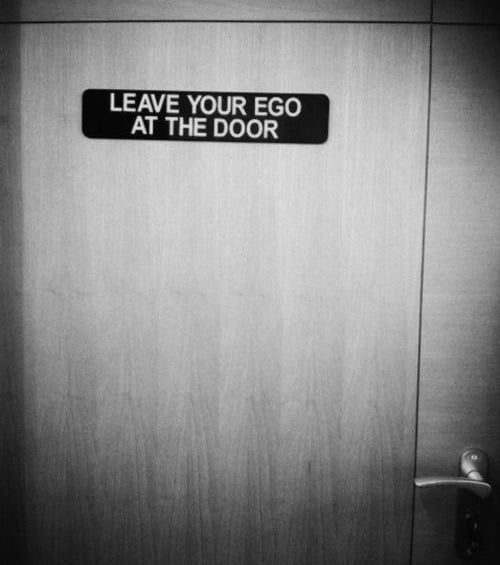
What exactly is that much talked about ego in JIu-Jitsu? You’ll hear the phrase “leave your ego at the door” probably as many times as you will hear “Oss” in your garden variety Brazilian JIu-Jitsu academy. And, if you ask most people what it means, they’ll have no idea how to really explain it. Most likely, you’ll get an answer along the lines of “it means tapping and not caring about it, bro” or something similar. But that only touches upon the subject of ego in Jiu-=Jitsu, and the different types and forms it can take.

having an ego is not going to help you much in most aspects of life. However, ego is there for a reason. Moreover, there’s no way to get rid of it, so “leaving it at the door” is not really an option. For those that don’t take the phrase literally, things usually work out much better and easier in BJJ. those that think there’s no ego in Jiu-Jitsu should really reconsider their stance. Ego is always going to be present. the trick is not leaving it at the door – it is knowing the different types of ego, and recognizing them so that you can take them into account.

Why Is Ego So Important In BJJ?  

Ego is a part of human nature. it is a big thing in psychology and it does really play a massive role in our everyday lives. Normally, it has an impact on Jiu-Jitsu as well. that said, there’s no Brazilian Jiu-0Jitsu, or any martial art, or any sport, for that matter, if there’s no ego. So leaving ego out of it, even if it were possible, would actually get us nowehere in BJJ.

Ego In JIu-JitsuThe thing with ego is that itis a double-edged sword. it can drive us to success and make us overcome obstacles when properly utilized. It can also give us a very unreal picture of ourselves and prevent us from achieving maximal potential. As you can see, there’s trickery afoot. Controlling our egos is not easy, particularly given that everyone has their own version (and strength) of it. However, embracing our ego is what will eventually make us good at Jiu-Jitsu. We need ego in Jiu-Jitsu as much as we need armbars and chokes.
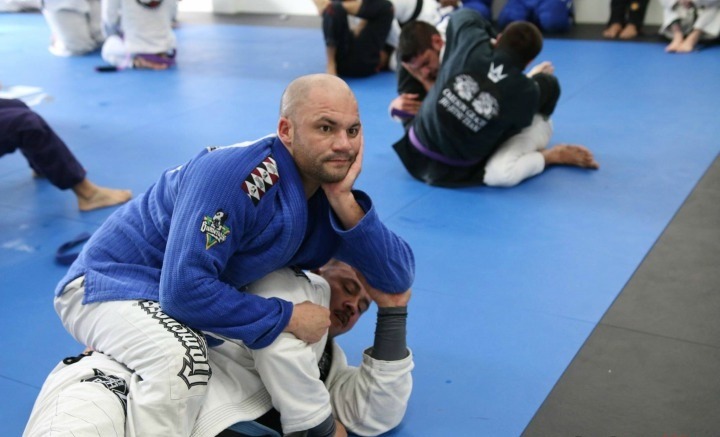
Now, the aspect of squashing your ego, or at least not letting it guide you is essential as you start to grapple. jiu-Jitsu is unlike any other sport out there, and there’s always going to be someone better than you, no matter how good you are. Moreover, everyone loses in Jiu-Jitsu at a certain point, so there’s no way you can be unbeatable, or untouchable or anything of the sort. Realizing this early on will help you pout an all-important check on your ego, until such time as you need to turn towards it for a bit more motivation.

The Types of Ego in Jiu-Jitsu: There’s More Than One

You’ probably think of ego in Jiu-Jitsu as the pointless pursuit of never losing. That’s the easy way of lookign at things. For those that can’t actually stand the fact that they’ll get mauled by 140 lbs ladies, perhaps even lighter men, and people that look like the cast of the Big Bang theory rather than athletes, BJJ soon becomes something they don’t want to do. This is the first type of ego, or the beginner ego, and itis the best possible filter for douchebags ever! Those that manage to overcome their primordial ego of never losing, will get past the “initiation” point and can start enjoying the art. More or less.

The blue belt ego is a very different type of ego in Jiu-Jitsu. This is when you get selective. There’s still the mentality of “I’ll lose most exchanges” but suddenly, you’re not at the bottom of the food chain. In fact, the blue belt ego is one of the most dangerous out there, particularly in terms of white belts. God forbid a white belt does something to a blue, right? it will hurt even more than the first day when that purple belt girl submitted you 24 ties ina 5-minute roll. Another one to control if you’re ever to move forward in BJJ.

There’s also the “I’m never tapping to that” mindset. That’s ego too, and that’s exactly the ego that got Vinyn Magalhaees his leg broken. in fact, a lot of the fractures that have happened in BJJ competitions are down to this type of ego that “certain moves don’t work on you”. Evidence to the contrary means you should recognize this as apart fo your ego and deal with it.

Now we arrive at the most complicated type fo ego I’ve encountered so far. it comes after a certain time in the game and a good level of experience. It is when you have moves you’re known for, and people can’t escape them . or so you think. Every once in a while, someone you’ve been tapping with your D’arce will sneak out of t. This when this type of ego turns on and you “have to tap them out with that move” to prove how great you are. This can be one of the hardest egos to overcome in BJJ.

Last but not least, there’s the “I have to win” ego in JIu-jitsu. this is usually a mark of competitors, either those starting out or those that have been preparing for a tournament perhaps a bit too much. It is completely unrealistic but often spills out to rolls, making them seem more spazzy than they actually are. Not fun for anyone, and definitely not helpful when learning.

What Happens When BJJ And Egos Mix?         

If you’ve learned anything from the information above is that ego in Jiu-Jitsu is not something you can get rid of. In that sense, you can use it to help you with your journey or inflate it, even more, becoming a person nobody wants to be around.

Types Ego In JIu-JitsuWhen you roll, you need to be aware of where you are and what types of ego are most likely to try and take over. control them, and you’ll do great. Even better, use them (up to a point) to actually improve your performance. In the gym, ego will help drive you to improve. You know that feeling when you tap toa triangle fro the hundredth time? Well, it is your ego that will drive you to figure out how to eventually beat it. Moreover, it is your ego that will make your work much more than you thought you could in a match too. As you can see, there is a place for ego in Jiu-Jitsu, and it is an important one
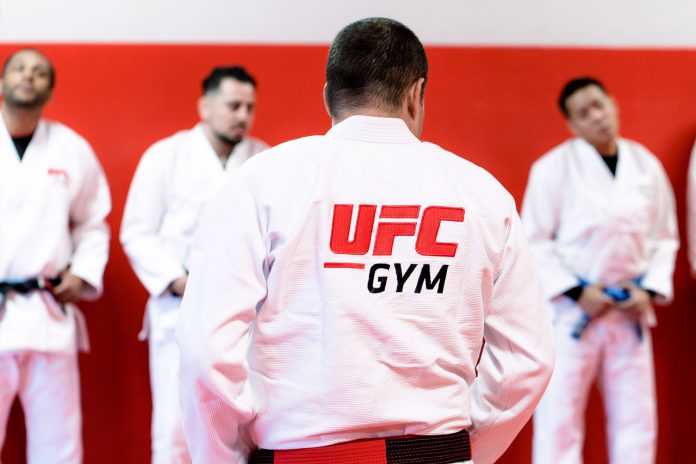
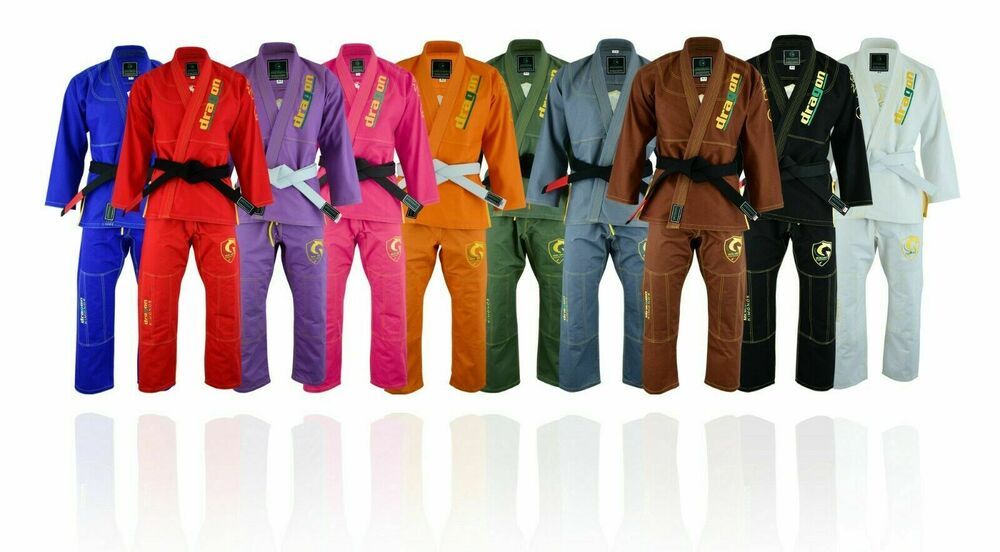
On the other hand, you could let Jiu-Jitsu go to your head as well. Some of the Gracies, particularly among the founders, were known to be highly egotistical, even too much for their own good. This is something that we see to this day as well. You could easily fall into a trap thinking your Jiu-Jitsu game is so good you’re unbeatable at certain aspects of it. It may even go as far as to change your demeanor to others. Trust me, if this is you, start losing and start now because when you fall, it will be a very hard landing. And it will come, I can guarantee that.

Closing Arguments

Ego in Jiu-Jitsu can be a good thing, a bad thing, or a horrible one if your BJJ actually manages to inflate your ego. That said, it takes ego management and not exclusion for you to become good, or even great at grappling. Ego is nothing scary, but you need to respect it as a grappler. That way, the different types of egos will actually help you when the time comes. All it takes is knowing that they exist and they kick off at different times during your BJJ journey.

The Concept Of The Gi As a BJJ Uniform And Why It Is Dumb

BJ jUnform, Dumb Or Good?

What kind of a BJJ academy do you train at? Does it only offer Gi or No-Gi classes, or mixes them both? What about the type of Gi or rashguard you should wear in class? There are academies out there that will let you wear anything you want, as long as it holds up to hygiene standards. And does the trick, of course. There are other, though, that look at the Gi (or No-GI gear) as a BJJ uniform and you can’t train in anything but what is allowed. The question is, whether such practice is good for BJJ and those training, or just plain stupid?

To be honest, I like No-GI just a tiny bit more than I like Gi Jiu-Jitsu. However, I have been training, and in the past few years, teaching, at an academy that’s mostly Gi originated. And I love training in the Gi as well. Particularly when I discovered how great I feel in lightweight BJJ Gis. That said, the selection of Gis available out there is huge, and oftentimes, choosing the best Jiu-Jitsu Gi can be quite a hassle. However, I like having that problem. I would hate to be restricted to just a couple of Gi options just because they fit the politics of a BJJ team I might be associated with.

The Role Of The Gi In Jiu-Jitsu

One of the best things about Brazilian Jiu-Jitsu is that you can train both with and without a Gi. The Gi is actually how people imagine BJJ for the most part. Gi BJJ is still much more widespread and dominant than No-Gi Jiu-Jitsu. This is not a debate about whether one is better than the other. The Gi has a huge value for BJJ, apart from showing respect to the Japanese roots of the art/sport.

To be honest, the Gi means much more than that in Jiu-JItsu. The early concept of the Gi as we know it was developed by Dr. Jigoro Kano, the founder of Judo. He came up with it to fit the needs of a grappling sport. Later on, the Judo Gi was further modified for BJJ, tightening it up at the waist, sleeves, and pants. The goal of these modifications is to make the Gi fit the needs of the sport.

What exactly are those needs? Well, simply put, you won’t find another grappling martial art that utilizes every possible piece of the Gi as much as Brazilian Jiu-Jitsu does. In fact, thee’s no BJJ without using the Gi, and not just for grips. We use it to pin, escape, attack, and innovate in ways other martial arts can’t. In other words, unless you’re training exclusively No-Gi, there’s no way to train Jiu-Jitsu without wearing kimonos.

BJJ Uniform Gi optionsIn that sense, thinking of the Gi as a BJJ uniform you wear for training is perfectly ok. Because it is. it is just like scrubs that nurses wear in hospitals. However,. what do you like better? Nurses that all wear the same type of scrub or those nurses that thave flowers and butterflies and other stuff fall over their scrubs? Both do the trick, but having a choice is always a  great option. Plus a class looks so much better with much different Gis scattered across the mats. ith people inside them, of course.
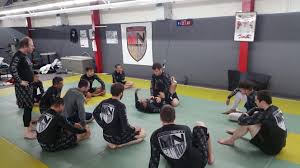
The Concept Of A BJJ Uniform

What is the idea of a BJJ uniform that I don’t like? Well, that is the notion of taking the Gi past what it is – training attire with a touch of tradition and turning it into a symbol of sorts. Having the Gi be a symbol of Jiu-Jitsu as a sport is perfectly ok. Turning it into the symbol of your own gym is taking things in the direction of a McDojo. And nobody wants to train in one.

There are academies out there that have a philosophy of only allowing a certain type of Gi brand, often with specific academy patches for their students. It goes as far as not allowing people to train if they do not have the Gi. The thing is, most of these academies are well established and are not McDojos per se. Their concept of the BJJ uniform is that it provides people with the chance of looking equal on the mats. A wonderful notion, but not practical at all.

Having a brand design a bunch of Gis for an academy that has hundreds of members, and then custom fit patches is not cheap. Understandably, the Gis won’t be cheap to get either. Now, the equality notion is great and all, but not everyone can afford the exact Gi that’s allowed. Moreover, some (if not most)_ people won’t want to, given the sheer options available out there. In an art as creative as Brazilian Jiu-Jitsu, telling people what to wear for training just seems glaringly out of place.

To be honest, I don’t particularly like competition restrictions either, but at least they stop at color. And, there is something about people wearing black, blue or white at a tournament. there’s enough variety, but not too much, so that competitions look funny and out of place. I can be on board with that. However, imagine if all you could wear at a tournament was one (or two) brands of Gis and very particular models at that?

By the way, everything of the above applies to No-Gi uniforms and academies that try to enforce the same rules to rashguards and spats.

Why Complicate Simple Things?

In all honesty, Jiu-Jitsu is not easy to begin with. Everyone is trying to try and make things simple so that we actually understand what it is we’re doing while we’re grappling. There’s no need to make a mess out of things that should be simple, like the BJJ uniform. In fact, there’s no need to look at it as a BJJ uniform. Why not just call it training clothes and be done with it?

BJJ Uniform And Why It is dumbThere already enough controversy and confusion worldwide with the concepts of affiliations, belt lineages, and the likes. I like the idea of belonging to something, but not when that thing tries to up the notches of cult-like behavior. BJJ, as it is, is already culty enough. there’s no need to bow to pictures of people, or claim that wearing a certain type fo “BJJ uniform” makes us a family and makes us stronger. IT doesn’t. It just takes away choice and makes training dull.
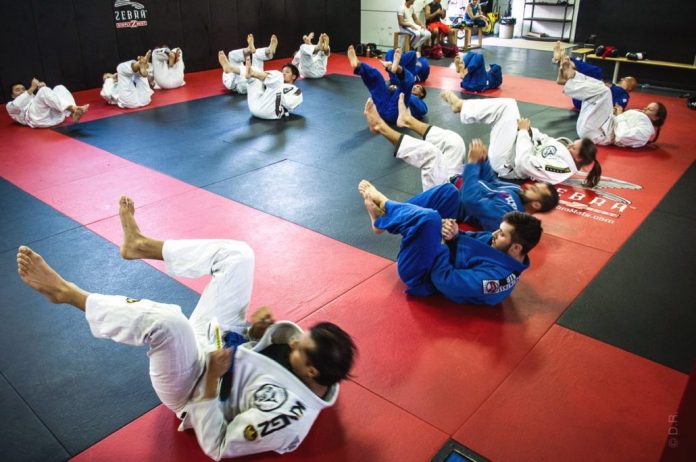
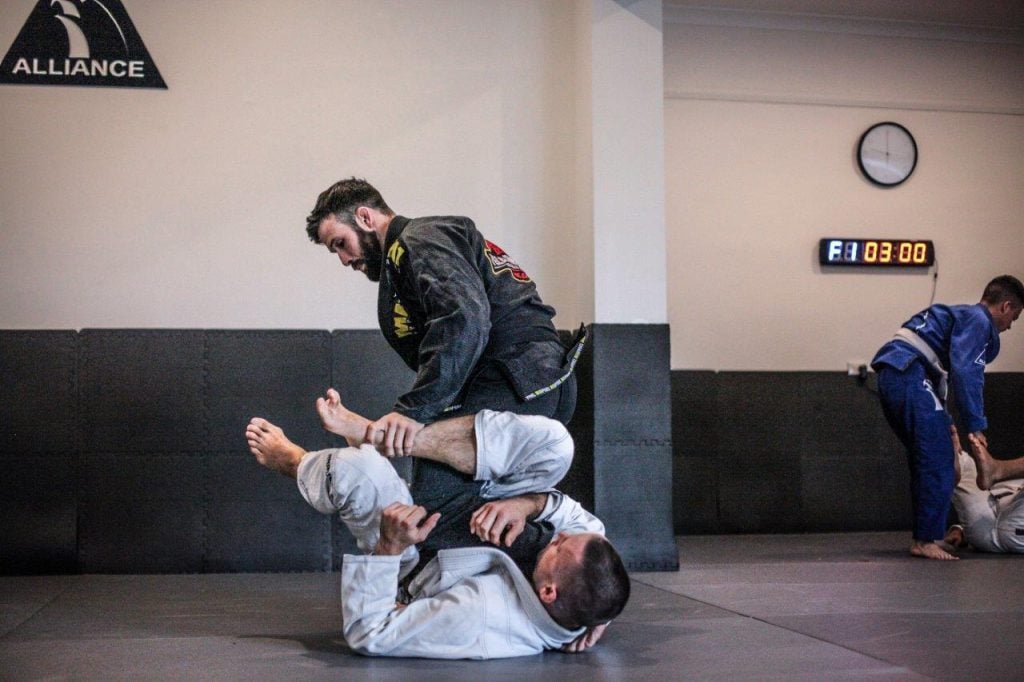
The biggest contradiction here is that people claim BJJ is still evolving and we should encourage people to experiment and be creative. A the same time, there are rules about affiliations, the immensely stupid concept of Creonteism, the BJJ uniforms (Gi/No-Gi), and a bunch of other stuff that makes no sense. If we’re being creative, then what does it matter if I wear a pink Gi with patches of frogs that are high on DMT all over it? Does that impact my ability to grapple, or maybe, one day, stumble upon something that helps the entire sport move forward and evolve, even if it is ever so slightly?

In Summary

The Gi is a BJJ uniform. A No-Gi kit is also a BJJ uniform However, they do not have to be a part of an organization’s uniform. Rather, they’re uniforms of the sport and nothing more. If you’re at ana academy where you have to buy this or that type of Gi to be able to train, perhaps you should consider moving to someplace that allows more creativity. Even if it is a smaller one, and doesn’t have as many world champions on the mats. It may even turn out to be much better.

Core Workout For BJJ: Be Ready To Resume Training

Core Work For BJJ: A Bulletproof Workout

We can’t wait to get back on the mats! The truth is, while we still have some time before we can do what we love, the end is now in sight. As the Covid-19 situations slowly unravel (in our favor, more or less), the world is slowly thinking about returning to normal. And that, of course, includes going back to BJJ. However, after a couple of months (or more in some cases) out, things are not going to be the same. And, while we all like to think we stayed in shape during the lockdown, nobody really managed to stay in BJJ shape. Well, it is about time we do what we can to make sure our return to the mats goes smooth and injury-free. And the most important thing you can do is some specific core work for BJJ.

You’ve heard it times and times again, that the core is a very important group of muscles for Jiu-Jitsu athletes. But what exactly is the core? First of all, it is much more than just your abs, given that it seems most people somehow think these two are one and the same. In essence, the abdominal muscles are a part of the group of core muscles, but they do not represent all of them. A bunch of other muscles, from the small of your back, to intercostal muscles between your ribs and long muscles running the length of your spine, also fall into this category. And they have many crucial roles, ranging from flexion and extension to stabilization and torsion. With dedicated and specific core work for BJJ, you can make sure you get all of these muscles in working shape before you return to the JIu-JItus mats.

Why The Core? 

A common question is how come the core muscles are the ones that are so important for BJJ? Isn’t it much more useful to have powerful legs, mobile shoulders, and Popeye-like forearms? As usual, everything has its place in JIu-Jesus, but if you can choose what you need to train first, you should actually always start with the core. While strong hips and hamstrings and iron-clad forearms do come in handy, there are plenty of examples of people who don’t’ have them, and yet, they do impressively great in Jiu-Jitsu. How come?

Specific Core Work For BJJIt is what you don’t see that makes all the difference. Unlike most sports, Brazilian Jiu-Jitsu requires the body to move in every possible direction (and a few slightly unintended ones) under all kinds of circumstances. That means that your body should be able to move, primarily, and then allow you to control and move others. As far as controlling others, that’s why we learn all the techniques, concepts, principles, moves, etc.
When it comes to controlling our own bodies, there’s one sport out there that is pretty reminiscent of the requirements of BJJ – gymnastics. And, if you talk to gymnasts, and people who understand the biomechanics of the body,  you’ll constantly get one piece of advice over and over again – develop a core of steel. And, if it can help gymnasts do all sorts of crazy things with their bodies, from flipping several times through the air, to all the stuff they can perform on gymnastic rings, that it will certainly help with grappling too. You just need some core work for BJJ to fine-tune everything.

Basically, the core muscles are responsible for generating most of the movement in our bodies, particularly when it comes to full-body motions. In fact, they connect the upper and lower parts of our bodies. Also, the core muscles are in charge of controlling posture, and through it, our balance and base. And without that holy trinity of posture, base and balance, there’s not much you can do in JIu-JItsu, is there?

Core Work For BJJ: The Essentials

Core work for BJJ should not be something fancy. If you’re thinking you’re going to stand on a stability ball that’s dressed in your Gi jacket like a flamingo and try to do some crazy crunches, you’re in for a rude awakening, that’s a great way to get injured, nothing more. Working your core will require some common sense and some knowledge of anatomy and physiology. Or you could just follow our advice, and use the following four staple exercises to really hit your core from all possible angles.

Garhammer Raise

This is a regular Bruce Lee type of exercise, just without all the trouble dragon flags may cause to your spine. The Garhammer raise is something very few people incorporate in their core work fro BJJ, and it is a highly beneficial exercise for grapplers.

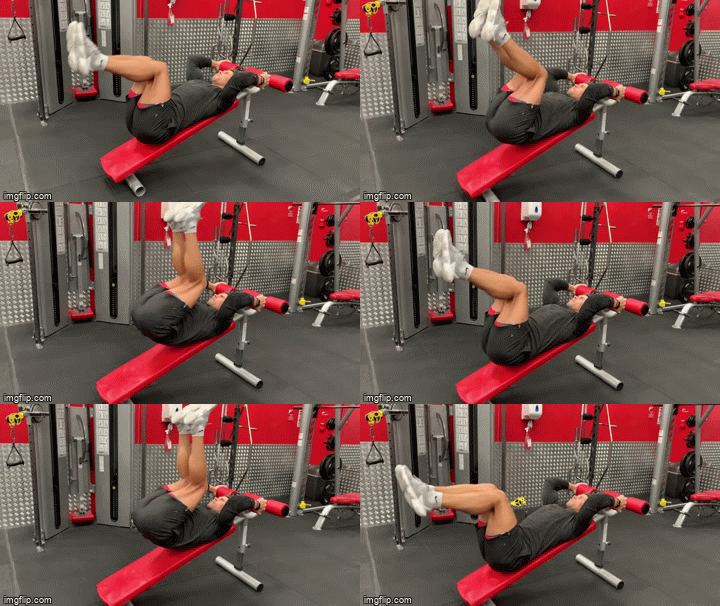
Core Work For BJJ: Garhammer raiseThere are a bunch of ways you can do this one, but a decline bench will give you the most bang for your buck. The name of the move stems from its founder, John Garhammer Ph.D. For the exercise, you grab ahold of the top part of the bench. Put your legs together, knees bent, and raise your legs so that your hips (butt) get off the bench. Then, lower the legs until your hips are completely back on the bench. If the exercise is too easy (yeah right) like this, straighten your knees a bit more. Moreover, you can always change the level of incline on the bench.
If it is too hard, feel free to start out flat. The more you can do this exercise slowly, and focus on using the abs rather than just the hip flexors, the better it will be.

Hanging L-Sit Holds

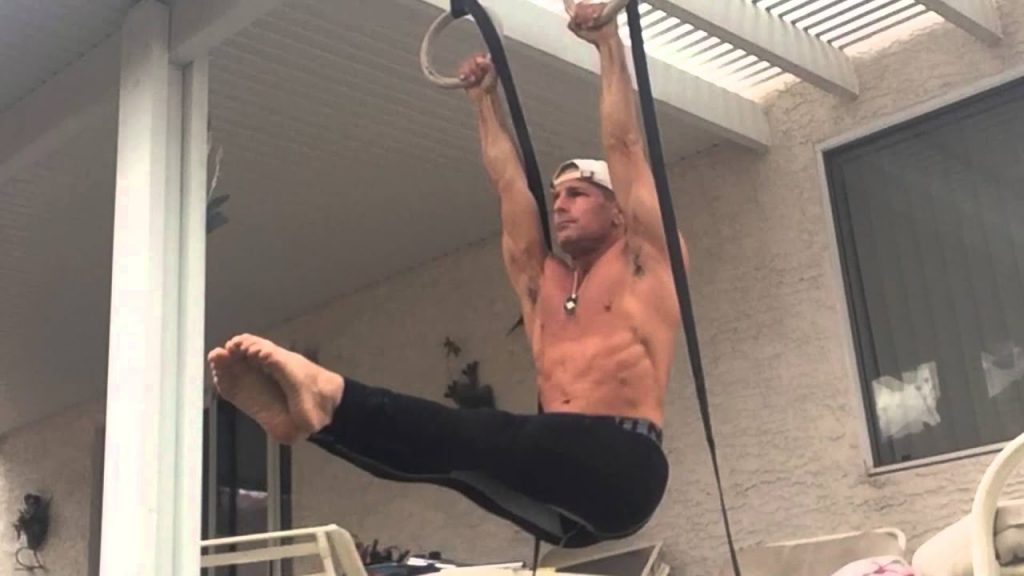
Nothing fancy here. You just need a pullup bar or a safe spot to hang from. The goal is to do an isometric hold. Usually, L-sits are done with your arms on the floor, or on parallel bars. In this case, hanging from a pullup bar will make it more challenging, and much more useful for grappling, given that you’ll often need to use your core to stabilize while pulling, like for example in any pressure passing scenario.

Core Work For BJJ: Hanging L-sitsFor the exercise, simply grab the bar, hang freely, and lift your legs up to an angle of 90 degrees in relation to your upper body. Hold the position for as long as possible. The goal to begin with is 30 seconds of accumulated work. If you can already do that, I’ll offer some tips on programming further in this article.
Since isometric exercises only strengthen the muscles in for a very short range of motion you can always add angles to your L-sits incorporated in core work for BJJ. For example, you can hold at 90 degrees, then lower the legs a little and hold there, lower a little and hold, etc, until you get all the way down. Raising your legs higher will require some solid core strength to behind with, so leave that version for later.

Ab Wheel Rollouts

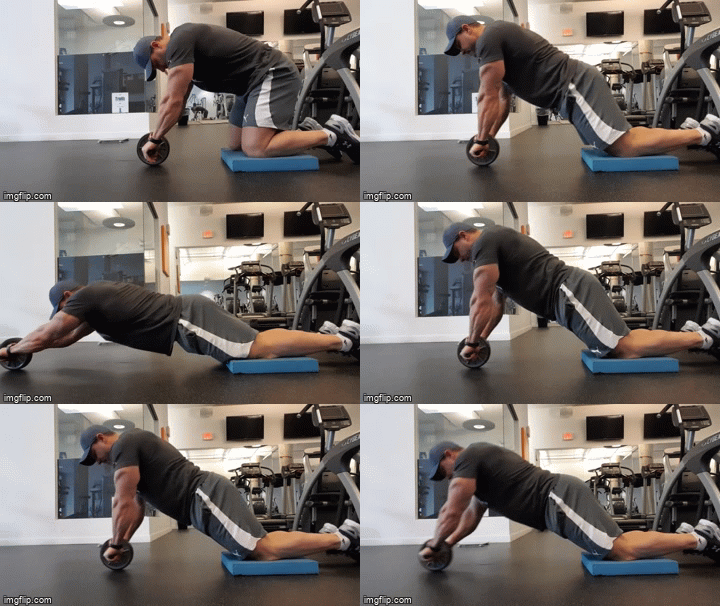
One more exercise that people get very wrong. The ab wheel is a simple tool but it can offer amazing returns, but you need to know how to execute it properly. It does have a few tips and tricks rather than just driving the wheel forward and back.

Core Work For BJJ Ab Wheel RolloutsThere are two main ways of doing ab wheel rollouts – form the shoulders and from the spine. The first is a complete core exercise, engaging just about every muscle in the core. You can do it from kneeling (recommended, particularly if you have no experience with it) or standing. Furthermore, you can add different directions to your rollouts, including some great motions that make provide core work for BJJ.
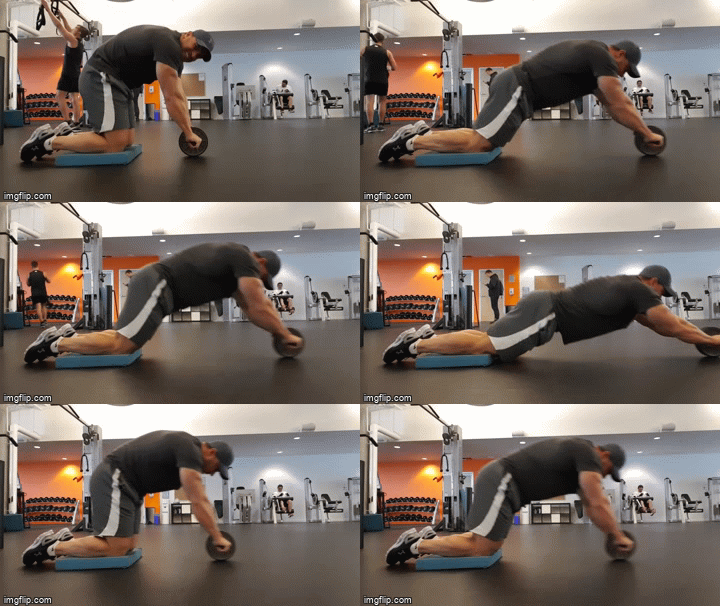
Ab Wheel Rollouts Core Work For BJJThe second version of rollouts, from the spine, mostly targets the abdominals. However, it doesn’t just work flexion and extension but introduces specific stabilization as well. Since the motion here starts from the spine, it will help you to hold and adjust posture in ways you can’t imagine.
Putting It All Together

First of all, do not be tempted to organize core work for BJJ in a circuit. While this may be tempting, particularly in terms of finishing quicker, it will yield subpar results at best. Think of core work for BJJ as a workout on its own. While you can do it at the end of a workout, or even after rolling, it is not just an ab circuit.

In terms of sets, 3-6 is great. Start with three, of course, and build from there. Also, remember that each of these exercises has progressions, so there’s a lot of tinkering you can do.

For the Garhammer raise, I recommend trying it out with sets of 8-12 repetitions, and a rest period of 30-60 seconds in between sets. Once you’re comfortable with the motion, you can transition into rest-pause sets, which will definitely challenge you. That means doing two sets of 8-12 and then doing a final set where you do as many good reps as you can, rest for 15 seconds, repeat, rest for 15 seconds, and repeat once more.

The L-sit holds are easy to program. At first, you’ll work to accumulate time, until you can hang for a minute/ That’s when you start introducing sets but start at 30 seconds again. When you can do 5 sets of 30-second hangs, start playing with angles.

Finally, use ab wheels smartly. Incorporate the simplest version in your core work for BJJ, to begin with. That means start with kneeling ab wheel rollouts from the spine. Then add rollouts from the shoulders, preferably supersetting them with the spine rollouts. Anything in the 8-12 range is perfect, with the same number of sets (3-6). Going to standing rollouts or side to side will require experience and core strength, as you’ll soon find out.

1 Video Source

2 Video Source

3 Video Source

BJJ Online Coaching: The Final Nail In The Coffin

teh Death Of BJJ Online Coaching

[td_smart_list_end]Up until just recently, you were in one of two camps in the BJJ world. You either thought there was absolutely no point in BJJ online classes, or you were one of those Gracie Jiu-Jitsu online blue belts. With a few exceptions, BJJ online training has never been seen as anything more than just another way to make money. In recent times, though, with a couple of months of isolation and no Jiu-Jitsu anywhere in the world, it seems we made a U-turn on the whole idea of BJJ online coaching. Or have we?

As convenient as it may be, some things will never be truly able to be transferred online. Or, to be more precise, some aspects of things will never be online. Training Brazilian Jiu-Jitsu is one of them. Now, we can come up with a thousand and one modalities on how to make the experience fun and entertaining for people. And that will work, they’ll be entertained. But they won’t learn Jiu-Jitsu. I guess as unwanted as this whole Covid-19 thing is, it did come in handy to confirm what most of us already knew – BJJ online coaching is never going to be a viable way to teach someone Jiu-Jitsu.

BJJ Online Coaching: The Early Controversy

When Brazilian Jiu-Jitsu started, not many of those training in Brazil thought that it would become such a worldwide phenomenon. As BJJ grew, it took on the huge mantle of being an effective, no BS martial art, and one of the most challenging and fun sports to do. That kind of came easy to Jiu-Jitsu, as most other martial arts at the time were generally based on point striking and similar nonsense that didn’t have much practical use. At the time, Jiu-Jitsu folks laughed at all the attempts that martial arts instructors made to make things interesting and engaging to people.

BJJ Online coaching doesn't workNow, one of the things BJJ never really needed was taking it online. Or at least claiming that you could learn, or worse, teach someone Brazilian Jiu-Jitsu through online classes. In Jiu-Jitsu, it is all about contact. And  I don’t mean just training techniques with a partner, although that is extremely hard to replicate too. Put in simple terms, you can’t find a way past drilling and rolling if you don’t have a partner. And guess what? If you only have one partner, you won’t have much progress either. At least not an attainable one.

There was an early attempt at BJJ online coaching by the Gracies, Ryron and Rener. In fact, it was not an attempt, but an actual online academy that took off, kind of. Of course, it didn’t go well with the BJJ community, as it seemed that it was only a business solution, rather than one that helps Jiu-Jitsu as a whole. They had an entire curriculum, with requirements for stripes and belt promotions. The idea was for people to see moves demonstrated by the Gracies in video clips, then do them and send a video back to the brothers for evaluation. The program resulted in quite a few online blue belts, whose’ skills are anybody’s guess.

What The Covid-19 Pandemic Has Taught Us

The Covid-19 pandemic and the effect as if somebody pressed the pause button on Brazilian Jiu-Jitsu, and then forgot all about it. Even the most optimistic among us soon realized that the situation won’t get resolved in a week or two like we all wanted to think. That meant that Jiu-Jitsu, at least for the time being, stopped existing as a sport everywhere in the world. And there are huge lessons to be learned from the current situation.

First and foremost, people live from BJJ. And I’m not just talking about the huge academies with hundreds of members and hundreds of affiliations across the globe. Smaller gyms were actually hit much worse than the huge ones. And, while people tried to support their gyms by still paying tuition fees, the economic situation makes that quite the challenge as this drags on. So, gym owners had to find ways to keep the proverbial doors open. That is what led us to BJJ online coaching.

Now, unlike regular times, BJJ coaching is somewhat of a necessity nowadays. To that extent, people tried their best to make it work. Everyone from world champions to blue belt gym owners tried their hand at organizing online Jiu-Jitsu classes. At first, it was all about movement, with coaches demonstrating solo drills as kind of homework. However, that was never meant to last, and many tried their hand at actual BJJ classes.

Some academies decided to share instructions on building grappling dummies and organize classes in that direction. Others decided to focus on movement patterns, which are just another version of solo drills, to be honest. There were, and still are, attempts to make classes work similarly to the Gracie Online Academy model (ironically). Some folks decided to demonstrate on a partner, hoping people would find a willing participant while stuck in isolation. In other words, BJJ online coaching faced the largest-scale test so far. And I dare say it didn’t’ fare well.

The Final Nail In The Coffin

I think it is safe to say that BJJ online coaching is dead in the water. Now, talking about BJJ philosophy, or analyzing matches or even doing solo drills is very much an option. However, actually training JIu-JItsu to the fullest extent is, as we already knew, impossible. Now, I get that people have to do something to make ends meet during a very difficult time. As someone with an academy of my own, I completely get it. I had my attempts at online Jiu-Jitsu as well. And, while some stuff may work to keep academies afloat ( I certainly hope everyone manages to re-open their doors) the conclusion s clear – BJJ online training is plain dumb.

BJJ Online CoachingThe biggest draw fro people in Jiu-Jitsu is unpredictability. Yeah, that’s right. That is exactly why all those people are coming back to the gym – because this time, they just might end up winning, or making the move better, os simply surviving. It is not unlike video games, where people just keep coming for more, regardless of the outcome. Well, in order for all that to work, you need people at the gym. And the key word here is people. While you can do a lot with a grappling dummy, there are more limitations than there are opportunities. Unlike striking martial arts, bag work or shadow boxing are not really options here.
another huge thing is training with different partners. One of the biggest drawbacks of the original BJJ online coaching (Gracie academy style) was the lack of training partners. Learning how to do BJJ on one partner is not far from training with a grappling dummy. Unless you get to mix with different types of training partners, progress will be slower than a drunken snail.

Last but not least, there are things like balance, timing, feel, flowing, scrambles, etc that you can never replace without actual rolling and/or specific drilling. With all the best intentions in terms of people trying to keep BJJ academies alive, let’s be honest about what we’re doing. Because it is not training BJJ.

Wrapping Up

The situation we’re in is far from ideal, or something anyone wanted. However, we’re there, and much like a bad spot in BJJ, we need to try and find a way out, rather than try to do that one escape that obviously doesn’t work. BJJ online coaching is not a viable option for training. If there was ever any doubt about it, the Covid-19 pandemic has certainly seen to it that it is removed. Online communication, workshops, match analysis, etc are still awesome options. However, BJJ online coaching doesn’t work, and I do not see a version of events where we could change that. At least for now.

How To Set Up Every Takedown For BJJ With The Shuck  

Use The Shuck To Set Up Any takedown For BJJ

There are certain things in Jiu-Jitsu that we do that do not make much sense. For example, we tend to consider double leg takedowns, or Judo hip throws and sweeps as things beginners should learn directly. At the same time, there’s little talk of grips, posturing, balance, and footwork. It is like putting someone in a car and telling them to go straight into a rush hour without really explaining how they should be driving a vehicle. It doesn’t make sense for driving, so why should it for Jiu-Jitsu? The thing is not that people can’t learn that stuff, it is just shat by teaching them things directly, we tend to skip over some basic moves that will actually help them learn faster. When it comes to setting up a wrestling takedown for BJJ, the Shuck is one of those wrestling moves that are extremely underutilized in Jiu-Jitsu.

Have you ever noticed how much time Judokas spend perfecting their entries? They do those entry and footwork drills for hours upon hours. The same is true for wrestlers. Now, in BJJ, there are so many ways to organize drills, that we do tend to slack. And that is particularly true when it comes to the throws and takedowns department. While we don top have to put in the same hours Judokas and wrestlers do, given the different demands of BJJ, we still need to know some essentials. One reason why a double leg takedown needs a lot of time to start working for people in matches has a lot to do with how we teach the setup. And in BJJ, we tend to brush over it.

Ending up with a takedown for BJJ that is effective, but only after you spend as much time working on it as a wrestler. Not really the point, when at the same time, you’re also trying to learn other takedowns, and all the BJJ moves on the ground.

Basic Wrestling For BJJ 

How does any grappling exchange begin? By placing your hands on someone, literally.  In a BJJ sense, that means grips. Now, whether we are talking Gi or No-Gi grips, the fact of the matter is, there’s no grappling from a distance. The current COVID-19 situation certainly made us aware of that. Well, let’s come back to the mats with an important lesson learned, and start focusing on the things that work for other grappling martial arts and incorporate them into our BJJ curriculums. After all, isn’t the point to teach people Jiu-Jitsu and make them highly effective in as little time as possible?

Wrestling shuck takedown for BJJWhen it comes to wrestling, three of the most useful moves, from child-level all the way to Olympic level are Russian ties, arm drags and duck unders. And they all have something in common – they tie up the upper body. If you look at how most wrestlers set up actual effective takedowns, you’ll see that they tangle with their upper bodies first. In other words, the get a grip on an opponent. So why do we try to do double leg takedown, for example, from inconceivable distances in BJJ?
The shooting and penetration step and all that jazz are important. But all of it becomes so simple when you put a person on the back foot. And upper body ties do just that. In fact, there’s one wrestling move that can work as position zero for just about and takedown for BJJ worth giving a try. That is the wrestling Shuck, yet another of those upper body throw-bys that people don’t even notice when they watch high-level wrestlers grappler or fight in MMA. In Jiu-Jitsu, we have ourselves to blame, for trying to teach people how to run before they learn how to stand. It is not too late to re-discover the basics, though, both for seasoned grapplers, and those just signing up.

The Wrestling Shuck

What exactly is the Shuck? It is a way of making your opponent expose their back. Since this is not a good thing to do in any grappling martial art or sport, both standing and on the ground, people tend to react panicky to it. It is exactly what opens up opportunities to realistically execute a takedown for  BJJ with a high degree of success.

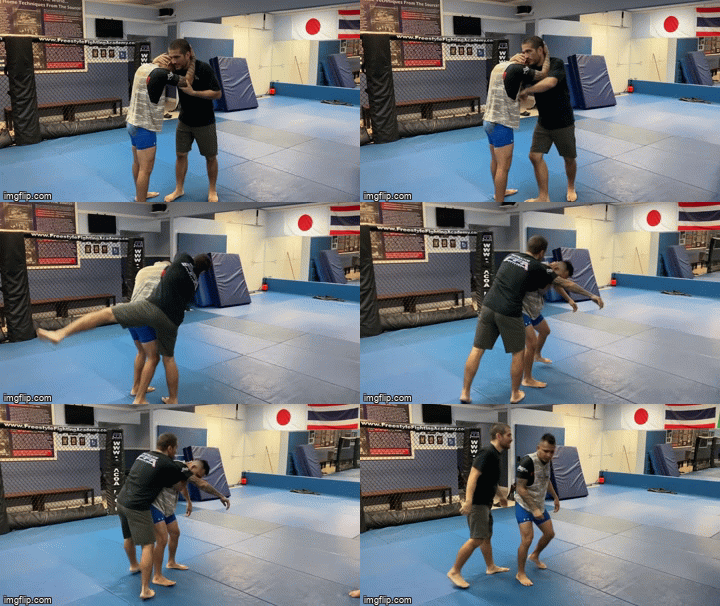
Wrestling shuck To setup Takedown For BJJThe basic shuck works from a collar tie. Essentially, this is a misdirection move, one that forces your opponent to go past you. From a basic collar tie, the goal is to get your head free from their collar tie, by forcing their arm off. That is often quite hard to do directly, as opponents expect it. However, with the Shuck, you use a push-pull dynamic to create movement, and then simply guide their arm behind your head, while moving the head out of the way.

A basic wrestling setup is using the shoulder to direct their forearm upwards as you move towards the opponent, pivoting to face them at the same time. It sounds much more complicated than it is. It is basically a shoulder shrug on one side, done while you’re stepping forward and turning. Usually, given that you also have a head and arm collar tie, you help your shoulder by using the forearm fo the arm that is controlling the opponent’s triceps. It is a low effort but a very high reward move, given that the reactions you’ll get are panicked and big movements.

The shuck To setup Takedown For BJJThere’s also a variation where you can use a claw grip to set the Shuck up. It takes just a bit more time to master but is my preferred option when it comes to using the Shuck, particularly for Jiu-Jitsu. Here, you still shrug your shoulder, step forward, and pivot, but you position your arm over their elbow crease. As you go for the move, you actually grip their armpit from the top down as you perform the Shuck. This won’t just open up any takedown fro BJJ, but also direct routes to the back and/or certain submissions.
Setting Up Any Takedown For BJJ With The Shuck  

Now that you have an idea of what the Shuck is, let’s see how you can use it to set up a takedown for BJJ. Regardless of which grip variation you use, the goal is the same – get past your opponent. This opens up their back, which usually has them overreacting to return to a position where they are facing you. This means they’re only thinking of getting back in front of you, and not about defending takedowns and throw. Of course, this is the best time to go for a takedown of your choosing.

If, for example, it is a double leg takedown you’re going for, having an opponent turning towards you will also have them coming forward. That really helps you remove distance as a factor in setting up your takedown, as people are going to step right in as you shoot. In wrestling, where people tend to jump like bunnies to face you or get up from the ground, the Shuck is the perfect thing to get the hopping so that you can take them down without much effort.

As far as BJJ goes, you also have the threat of the back, which makes people even more jumpy and wary when you get past their hip. And, if you don’t like standing back takes (why wouldn’t you?) there’s actually a perfect wrestling pairing for BJJ – use the Shack along with the front headlock. You can actually use the Shuck to get to the front headlock, snap someone down, and use the Shack again to get the back. The combination here is endless, and given that all you have to do is shrug the shoulder and pivot, I can’t see why we’re not teaching this to anyone that walks in the gym. I certainly intend to incorporate it a lot more once we’re back on the mats.

Summary 

A big question is whether the Shuck would also work In the GI. When the grip is on the collar, it can be tougher to break it to actually manage to get to the back. However, the same move will definitely force the opponents to move and readjust, giving you an option to set up a different takedown for BJJ, like for example, the single leg. Use the Shuck and you’ll end up to the side of your opponent. The slack in the collar allows you to squat down and grab a leg, landing a single leg, or eventually getting the back from there. It is a very powerful move and the fact that not many people use it in BJJ works in your favor if you pick it up and add it to your game.

Video Source 1

Video Source 2

BJJ Pins vs. Wrestling Pins: What is the Difference?  

BJJ Pins vs. Wrestling Pins

What’s the point of Brazilian Jiu-Jitsu? You’ll probably get as many different answers to this question, as there are people training in the Gentle Art. However, most of the responses you’ll hear will have something to do with either control, submission or both. The interesting part about it is that there’s no right or wrong answer – everyone has different goals when they roll. Still, for anything to be possible in BJJ, there has to be some amount of control. Now, control, in a grappling sense, is a tricky thing, and we’ll get into it more a bit later. Equating control to pinning someone is usually what most people consider to be controlling and opponent. In that sense, BJJ pins are a very important aspect of Jiu-Jitsu. They are, however, a far cry from wrestling pins, and this is exactly the distinction we’ll be focusing on today.

In almost any grappling martial art, a pin is considered getting someone’s shoulder blades to the floor and holding them there for an allocated period of time. When it comes to wrestling, Judo, Sambo to an extent, etc., this is the ultimate thing to look for, as it will immediately win you a match. In sports like Brazilian Jiu-Jitsu and MMA, though, pinning someone, as effective as it may be, won’t win you a fight. In fact, most often, it’ll barely get you points. And yet, we often talk about BJJ pins and how to hold people down. The important thing to know is that BJJ pins and wrestling pins have several crucial differences. While we tend to use the same term as in wrestling, pinning in BJJ doesn’t just mean holding an opponent down.

The Hardest Thing In Grappling 

It is not easy to control a person’s movements, particularly in a grappling sense, against their will. That is why BJJ is so much fun to train. If you take a careful look at the sport, though, you’ll notice that the goals people often quote as primary have one thing in common – they’re notoriously difficult to achieve. Those goals are control and submissions. We’ve explored the subject of BJJ submissions in-depth previously, so control is going to be in the crosshairs today.

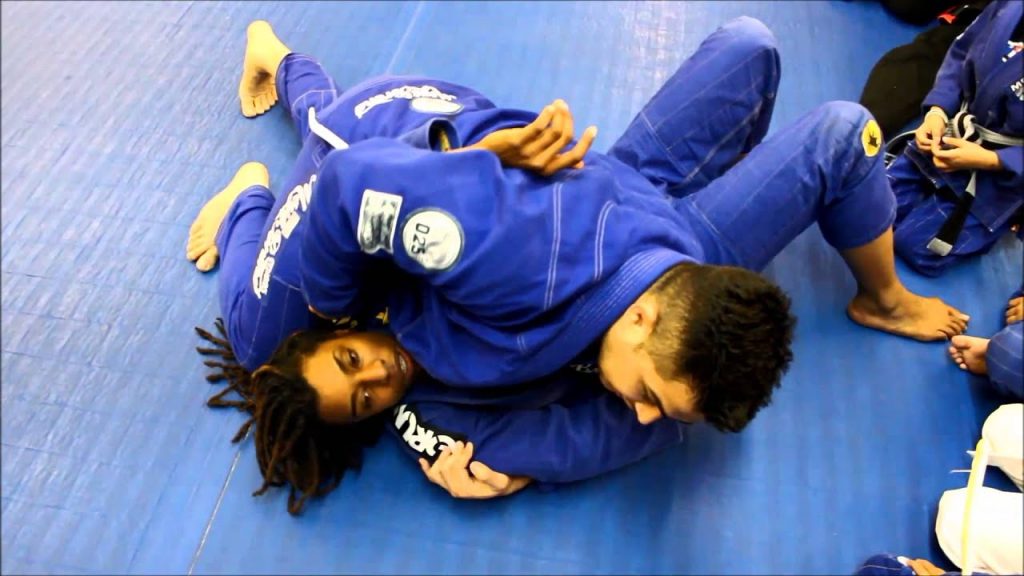
BJj pins vs Wrestling Pins side controlIn the context of Brazilian Jiu-Jitsu, control has a slightly unusual meaning. It does not mean making someone do things or stay in one spot. On the contrary, control has a lot more to do with preventing people from doing things. It would be ideal if we can make someone give us their arm or neck for a submission finish, but things are seldom so easy in sparring or a match. However, we can’t just use wrestling pins and make people stay in place. The nature of BJJ is such that holding someone down does not help you win points. On the contrary, it may even earn you negative ones. Plus, there’s the unwritten rule that the more wrestling-like your pin is, the fewer options you have to transition into another move in BJJ.
As such, control in BJJ is very tricky. The goal is to restrict someone from moving, while still being able to move in a very particular fashion yourself. Moreover, you want to be guiding your opponent into moving towards a direction you want, all the while making it seem like it is their own choice. The ultimate feat of trickery. In that sense, it is best if you think about control in BJJ, and BJJ pins in general, as methods of restricting movement and directing it in a direction you choose. Often times, you might hear the term “dynamic control” in a Jiu-Jitsu class. That is exactly what this means – focusing on restricting specific movements so that only a few options remain. Moreover, during that time, you want to be able to move and set up finishing moves, rather than use your entire body to hold a person in place.

Wrestling Pins: Why We Still Need Them 

With regard to all of the above, wrestling pins still do have a place in BJJ. They’re just not the optimal way to win a BJJ match. A good example would be passing the guard. Whenever you manage to pass a guard, in most cases, you’ll find yourself in side control. That’s three points in a BJJ match, but only if you manage to stay in side control for at least three seconds. Knowing how to use a wrestling pin to maintain your position is going to earn you points, make your opponent struggle to get out, and give you quite the amount of control over the action.

But what happens next? It will be obvious to all the seasoned competitors, but it is still worth mentioning that side control, as a position, does not earn you points. The guard pass is what earns three points, and side control is just the first immediately available top position after that. Staying in side control in BJJ, and pinning someone down from there for longer than a minute will get you a warning from a referee, and ultimately, even negative points. In fact, pass a guard in the first minute of the match, and before five minutes are up if you’re doing nothing but holding side control, you’ll get a DQ after several warnings and negative points.

That said while wresting pins are not really practical as BJJ pins, they are by all means necessary and important to know. In my academy, we drill them regularly, mostly as games in which you need to do a picture-perfect wrestling pin – get someone’s shoulder to the ground and hold them there for the count of 5. They do come in handy as such, and are a must, especially for people just starting Jiu-Jitsu. However, at a certain point, you’ll have to “evolve” toward BJJ pins, if you want to have an effective Jiu-Jitsu game.

What Makes BJJ Pins Different 

BJJ pins are different mostly in the sense that they’re not pins per se. Grappling martial arts have led us to categorize pins as moves that help us press and hold someone down, preventing them from moving certain body parts. BJJ pins, on the other hand, focus on restricting people’s movements, but not taking them away completely. Let me elaborate.

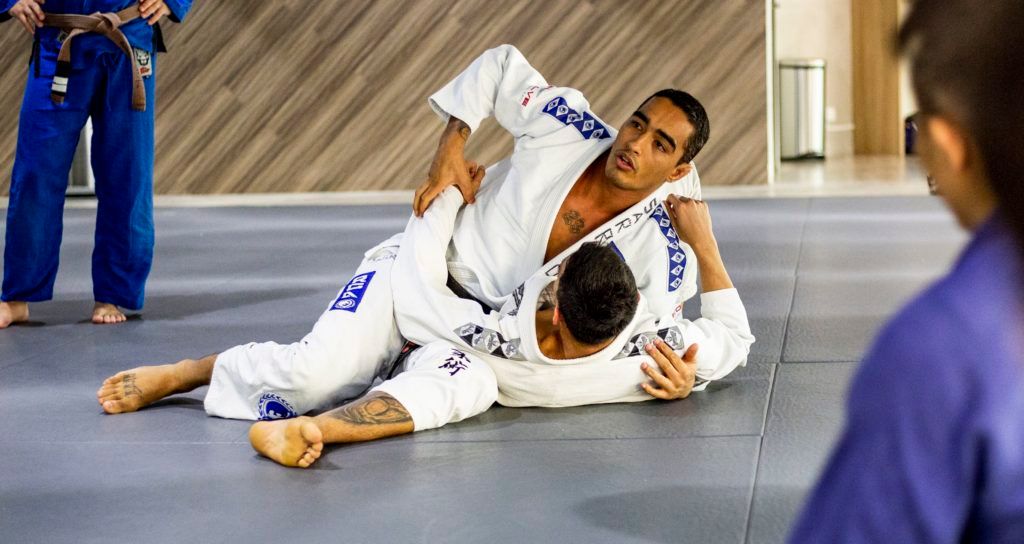
BJJ Pins Dynamic controlLet’s keep using side control as an example. In a Jiu-Jitsu match, the perfect combination would be passing the guard, getting to side control, earning the points, and moving on to a better position (mount or back) or a  submission. To that extent, right after the guard pass, going for a position like Twister side control is a much better option. While it won’t give you as much of a wrestling pin as going into a more traditional side control option. It will do exactly what a BJJ pin needs to do – restrict specific movement.

In Twister side control, that means blocking the head and shoulders from moving. This leaves the legs and hips mobile and does not pin both shoulder blades to the ground. It does, however, allow you to move into the mount, submit directly, or use the directions in which the opponent can move to actually improve your position.

The goal with BJJ pins is to prevent people from positioning themselves in a situation where they can escape. An escape, though, means both the current position and the one that would come next. In other words, you need to be thinking ahead and having different options ready. If you understand pinning in BJJ, this will become easy. Moreover, scrambles are going to become much more predictable, as you spend more time rolling and discover the patterns of movement people usually use. So, dynamic control in Jiu-Jitsu means pinning someone, by not letting them move in a very specific direction and/or manner while leaving yourself at least two different options for progressing through the positional and technical BJJ hierarchy.

Conclusion

BJJ pins are still pins, and the goal is still to have people stay in a certain spot. The difference from a wrestling pin is that you don’t have to immobilize the person to do it. It is enough to restrict them from going in one, or a few very specific directions .that is much easier to achieve than trying to hold someone down, particularly when there is a notable size difference. While the traditional wrestling pin still has a role to play, it is best to combine it with the dynamic nature of BJJ pins in order to develop a crushing top game that will have you transition like a panther at the same time.