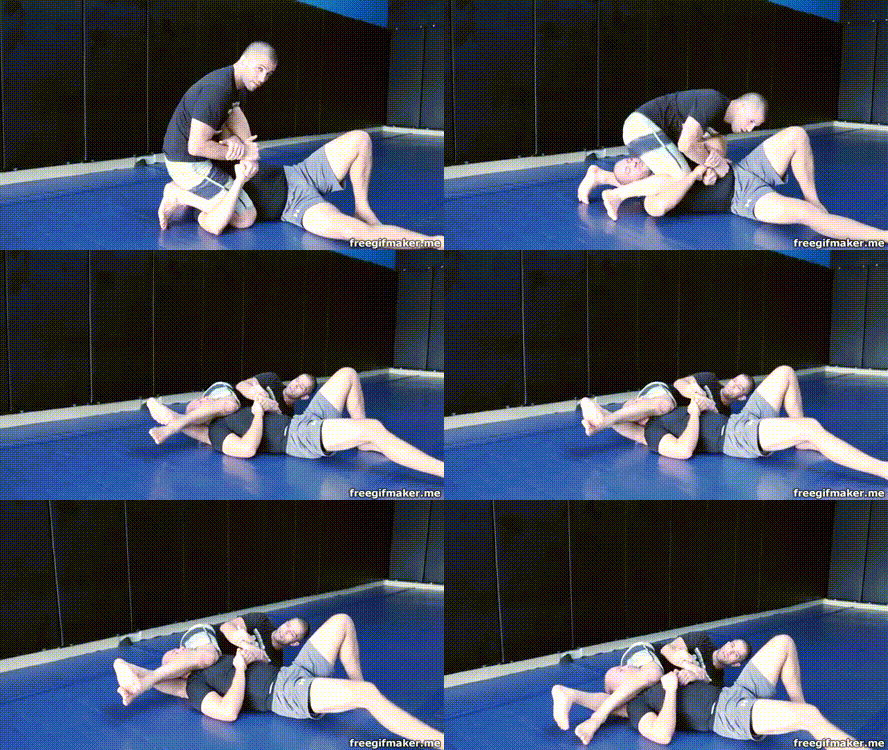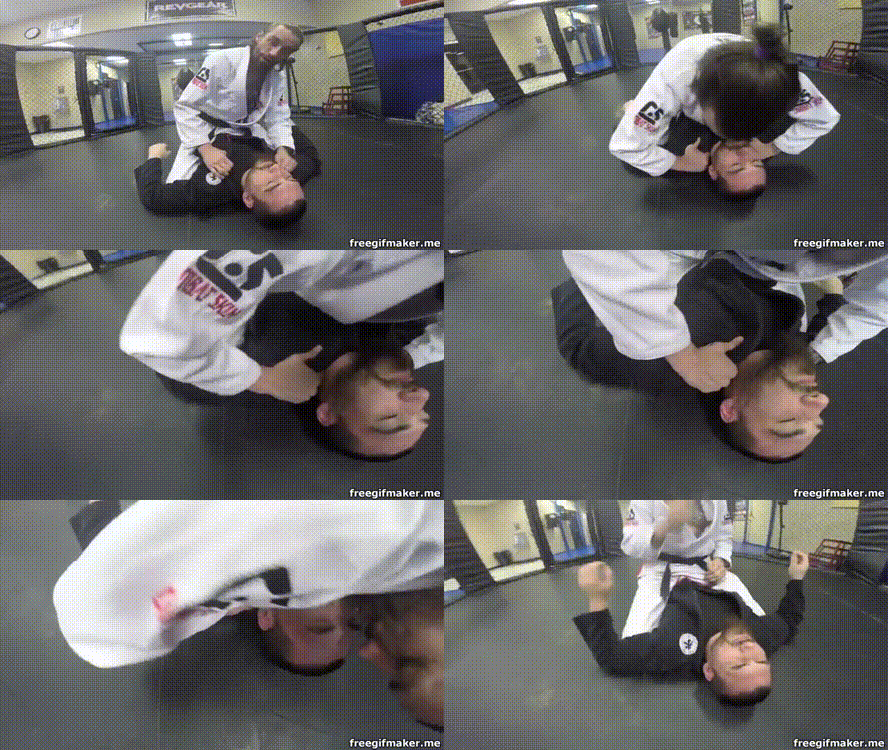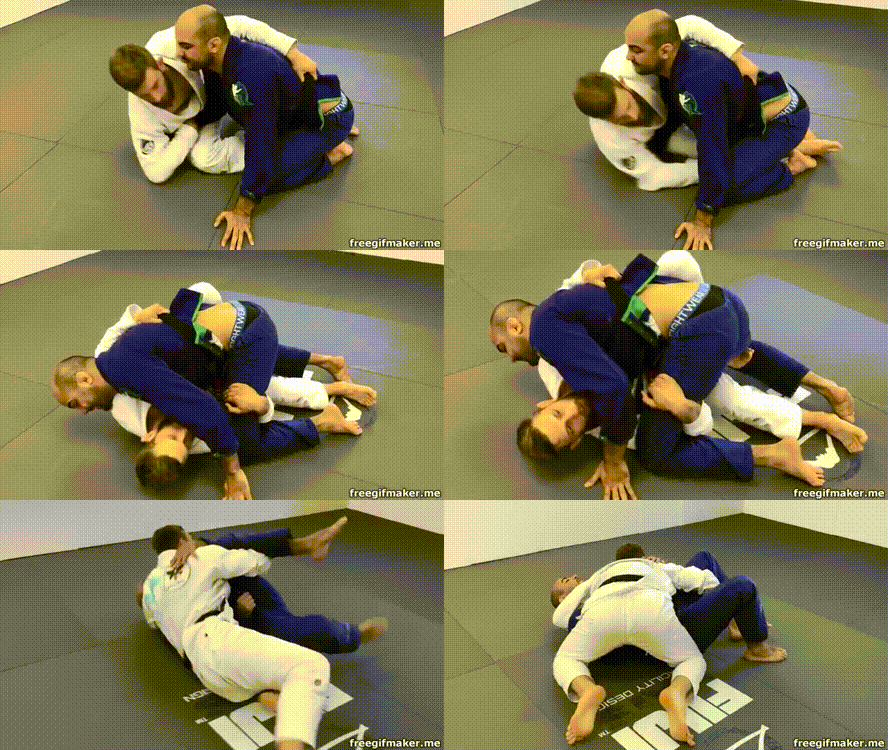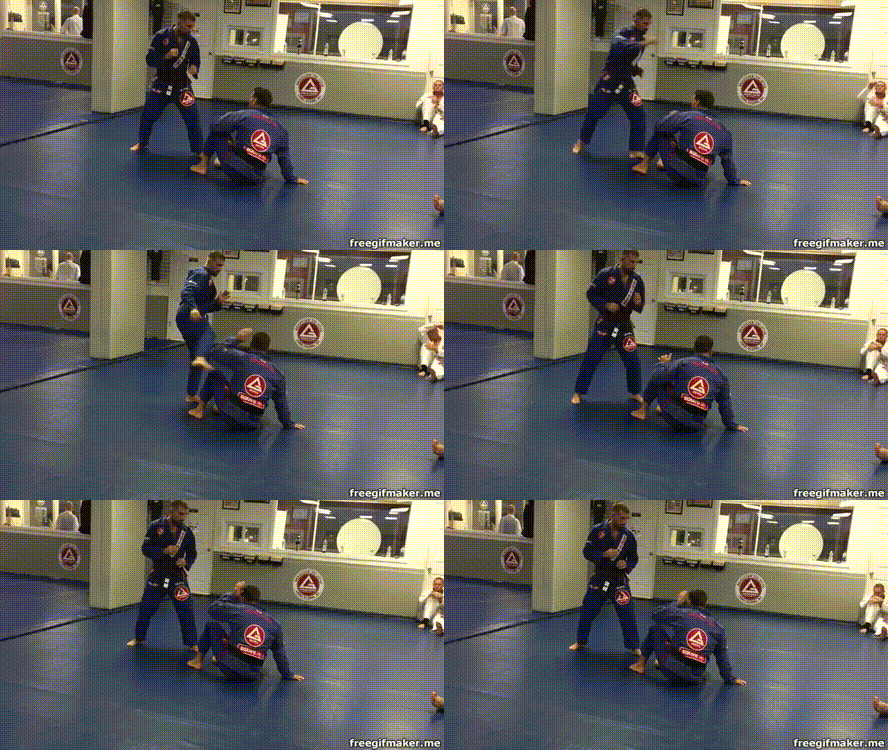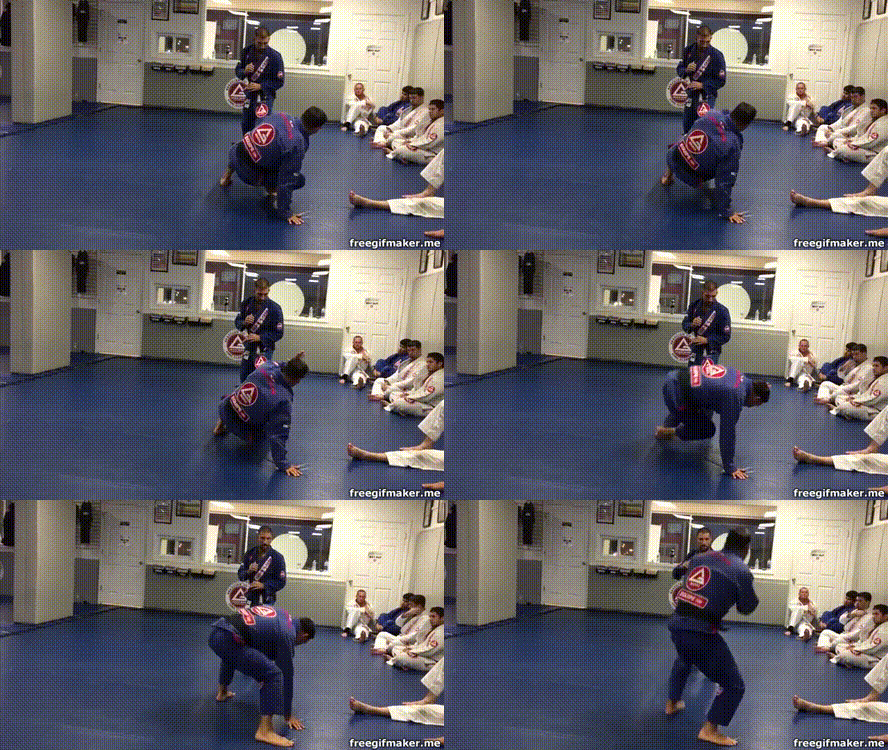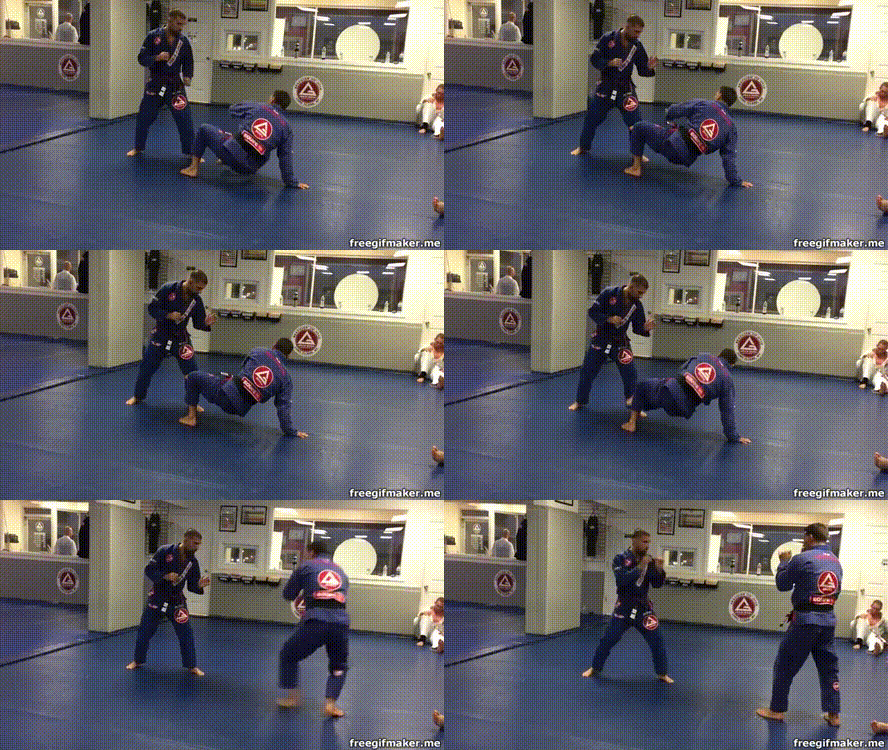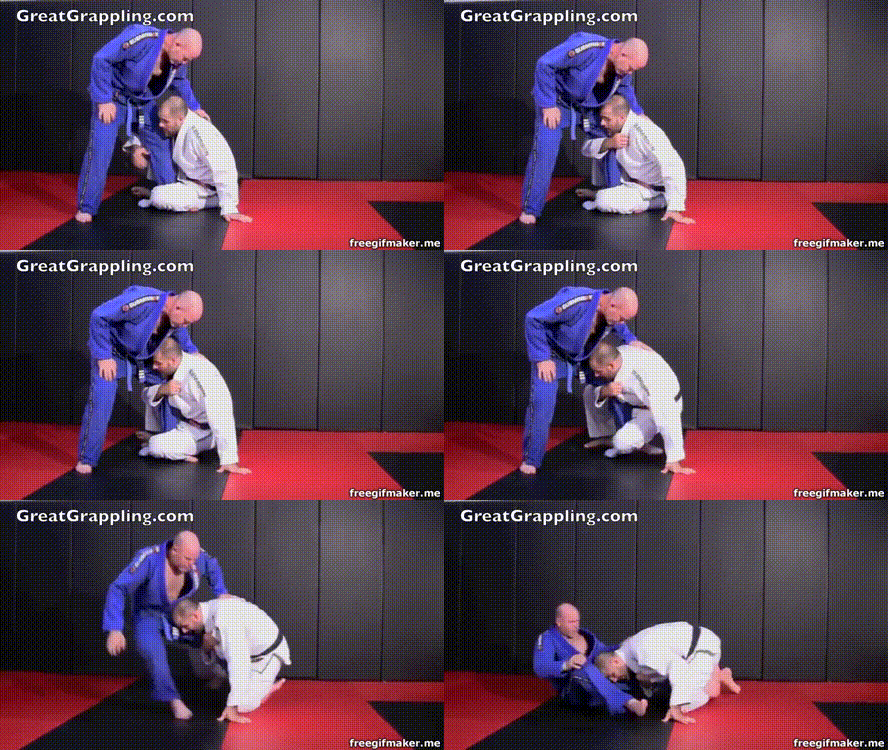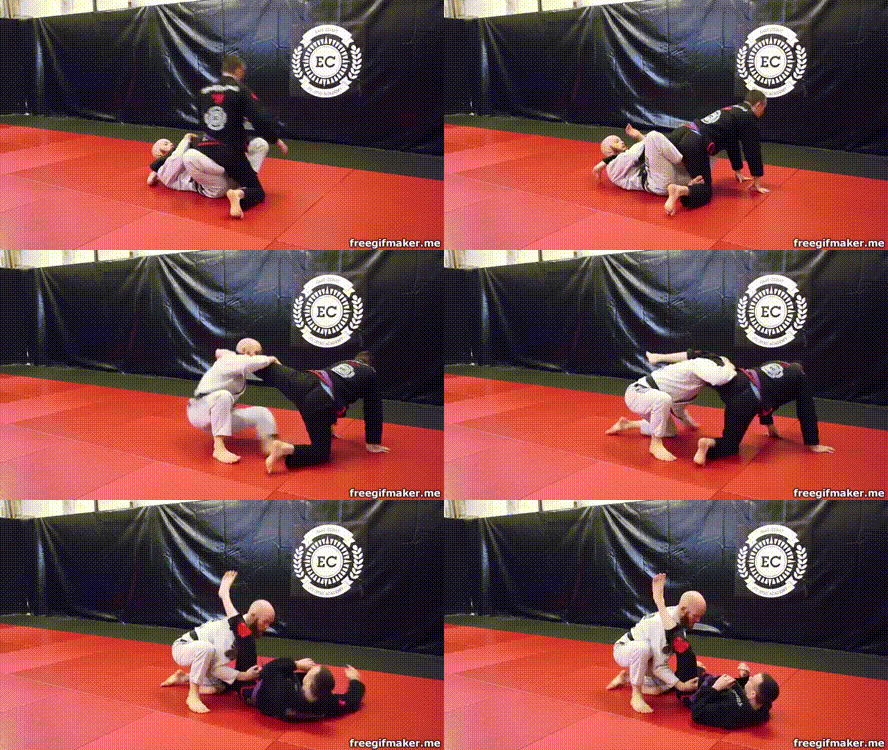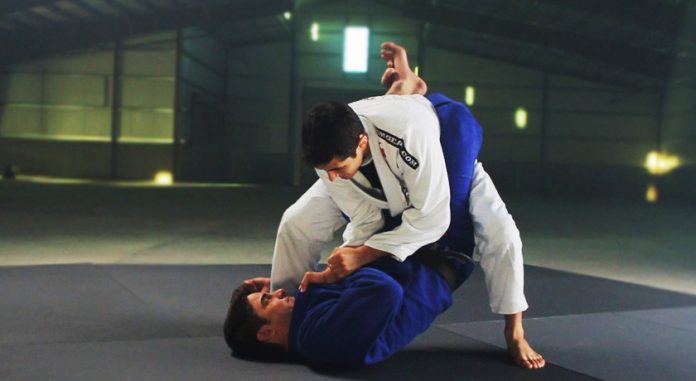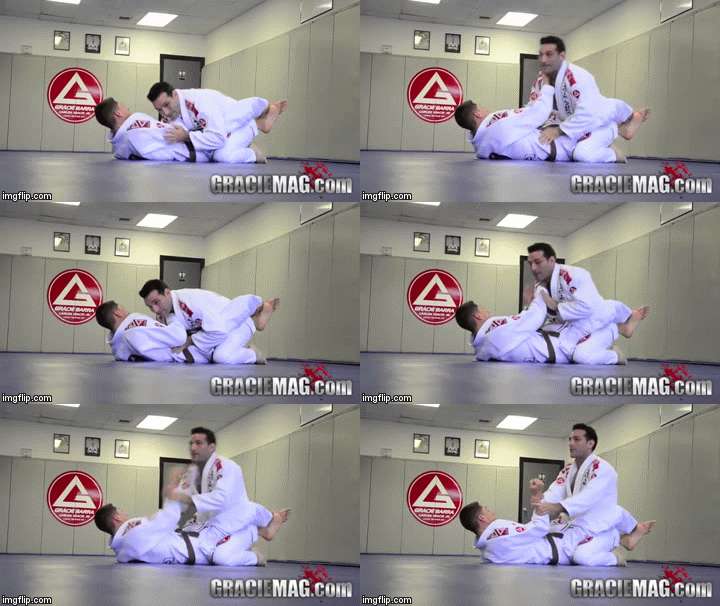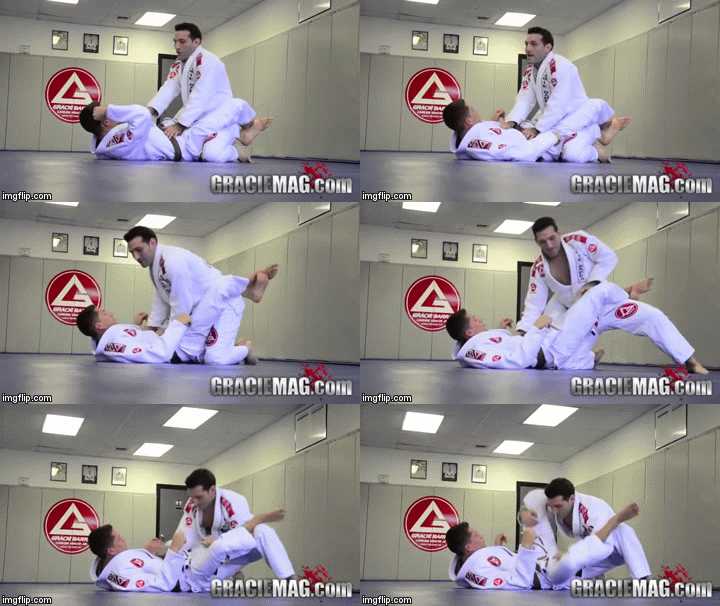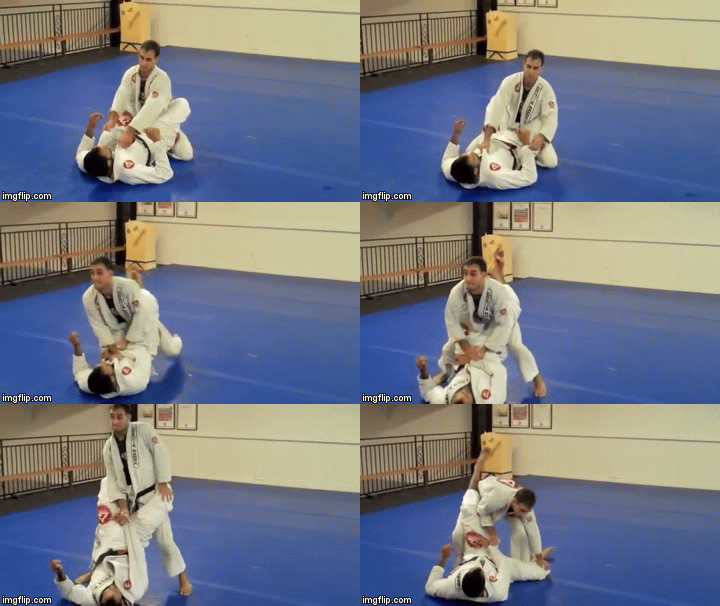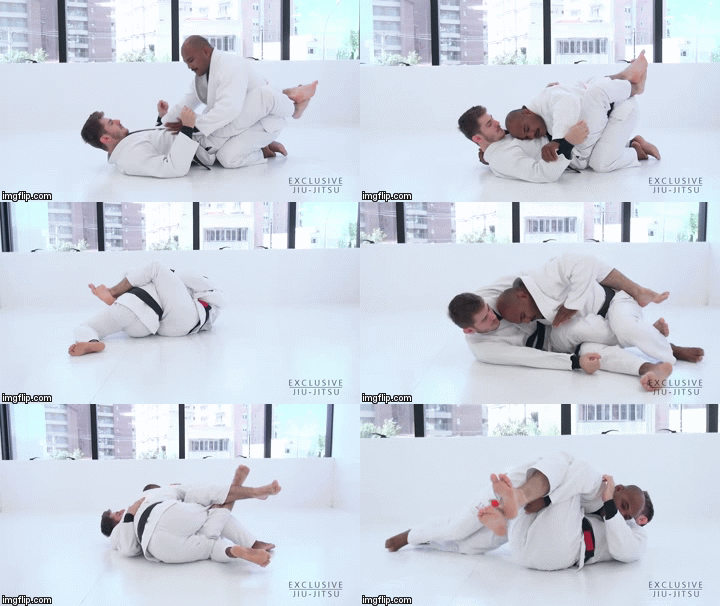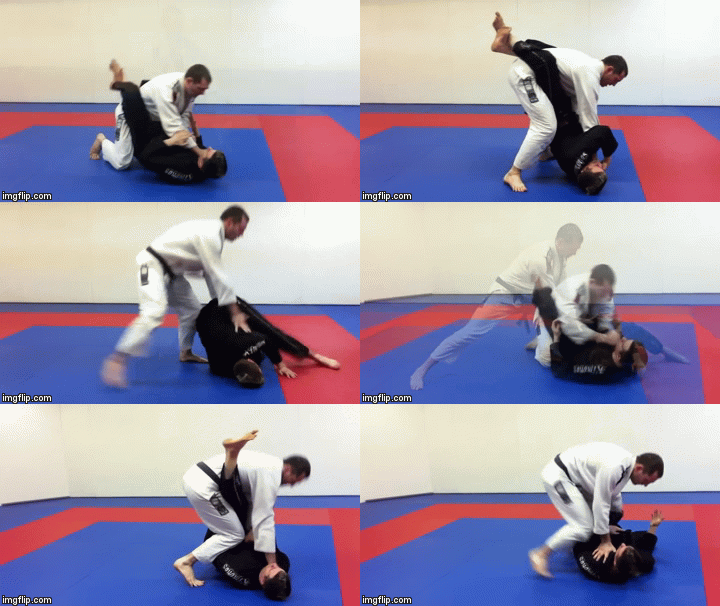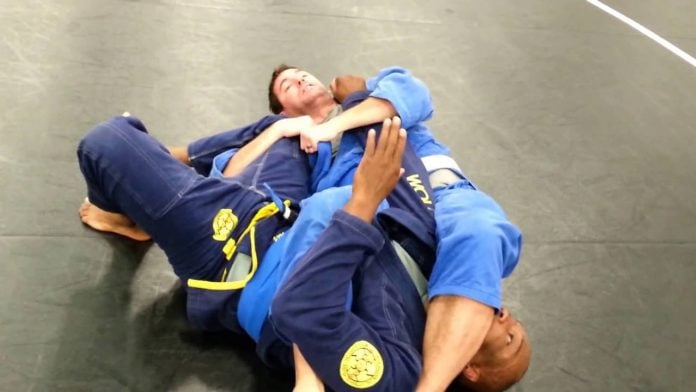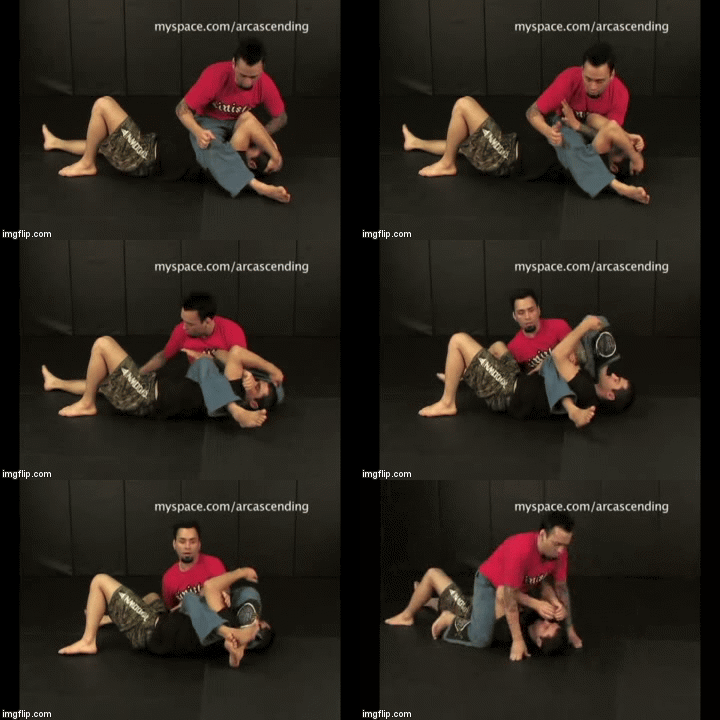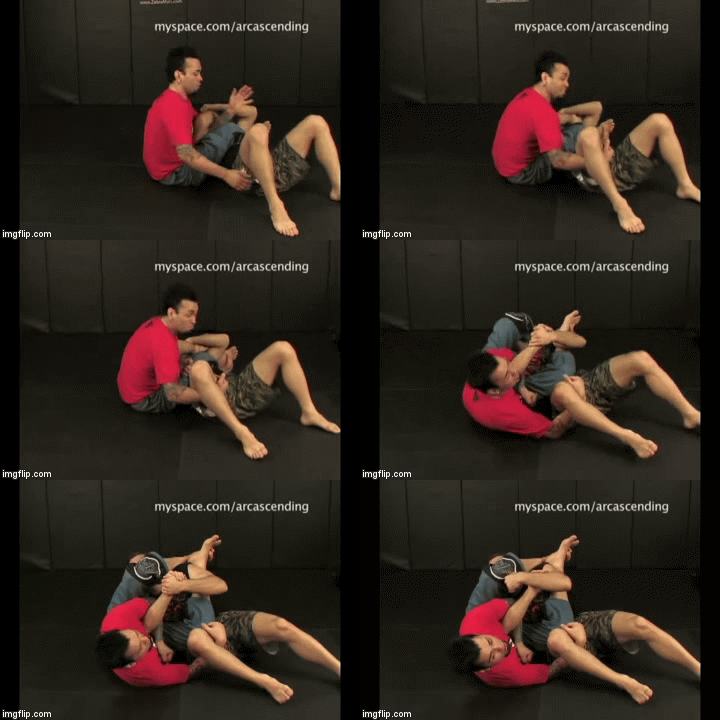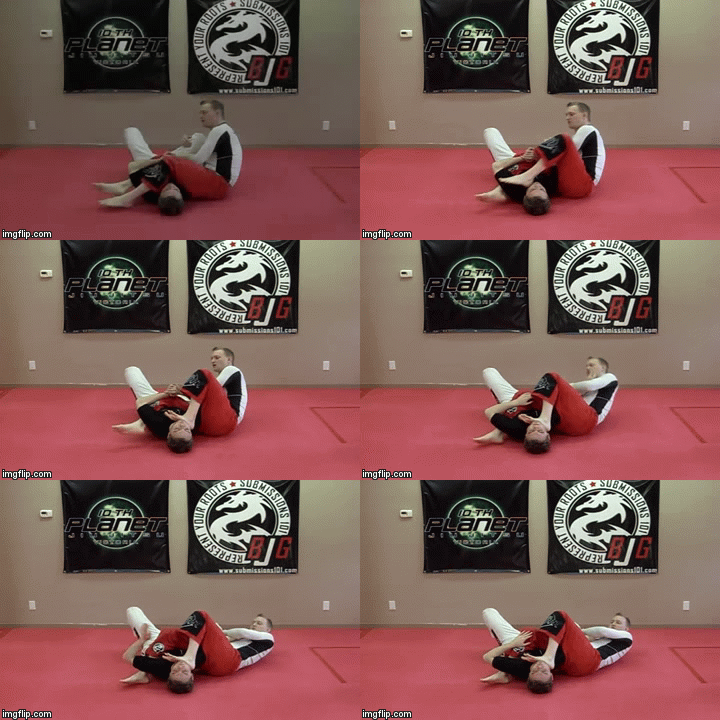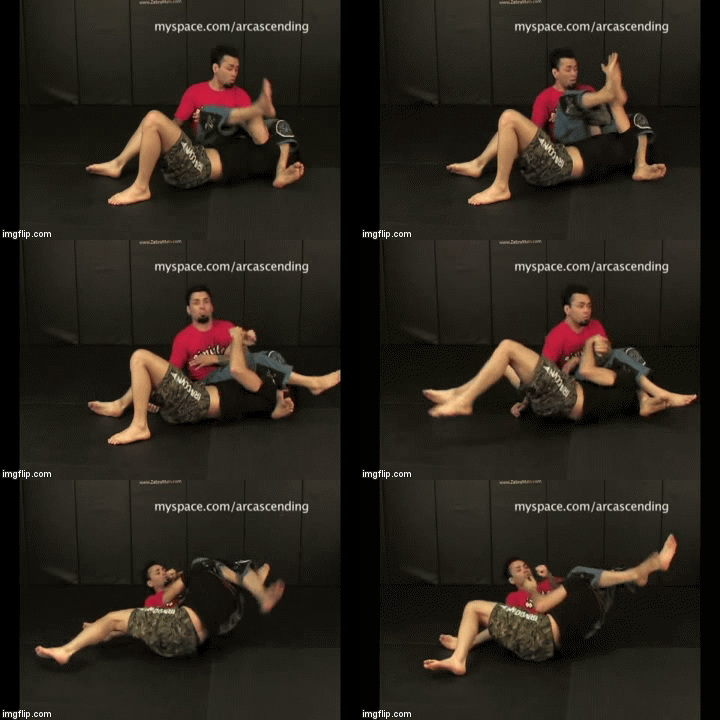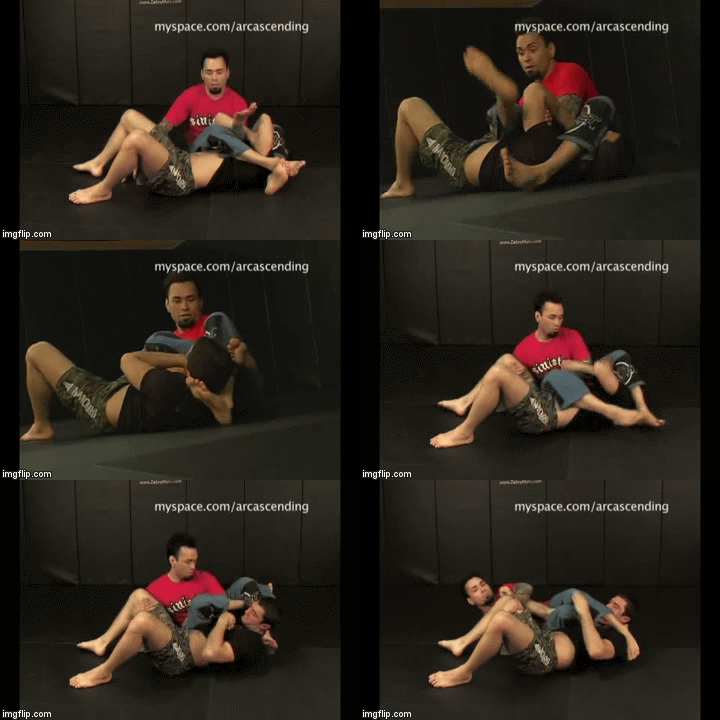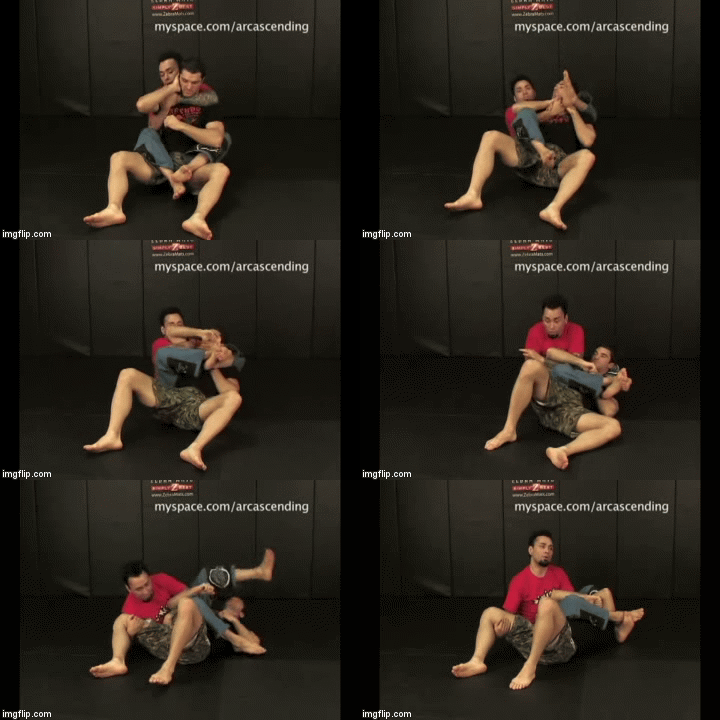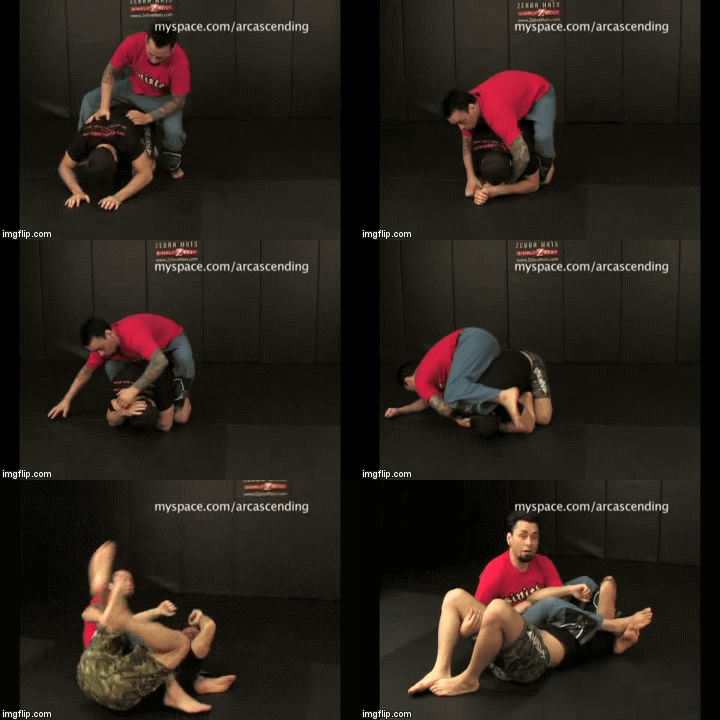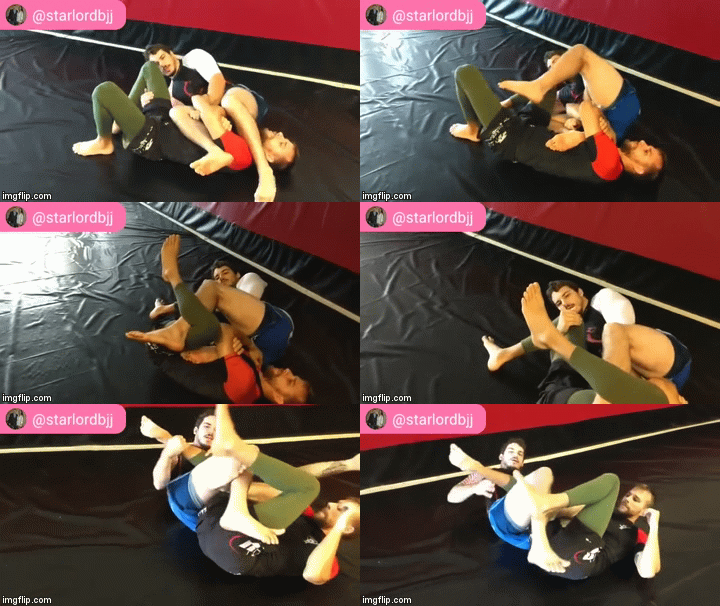

REVIEW: “Killer Turtle Attacks” by Mike Palladino DVD

Killer Turtle Attacks Mike Palladino DVD

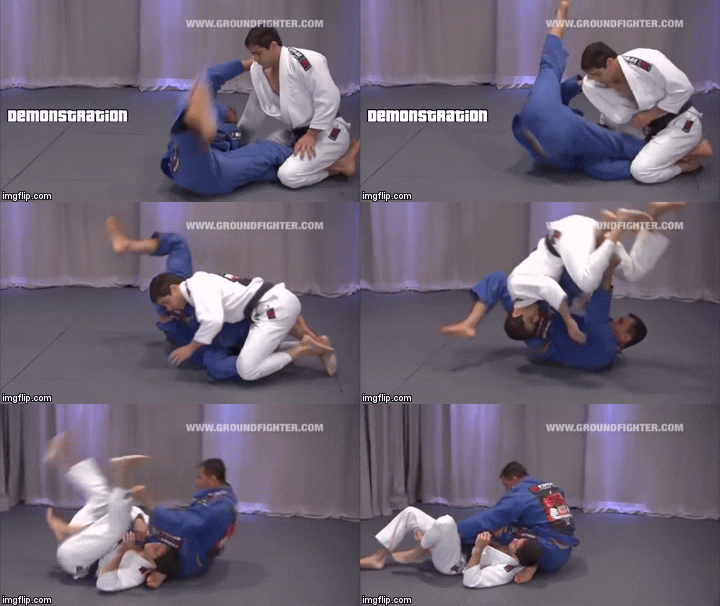
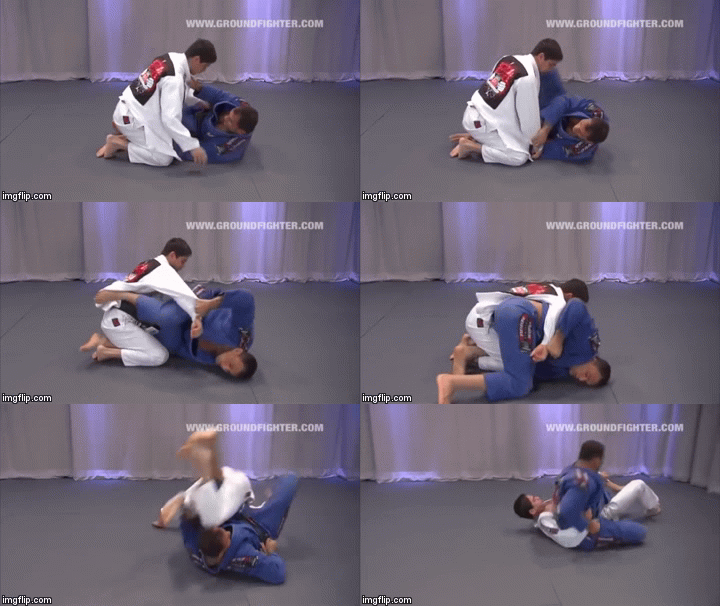
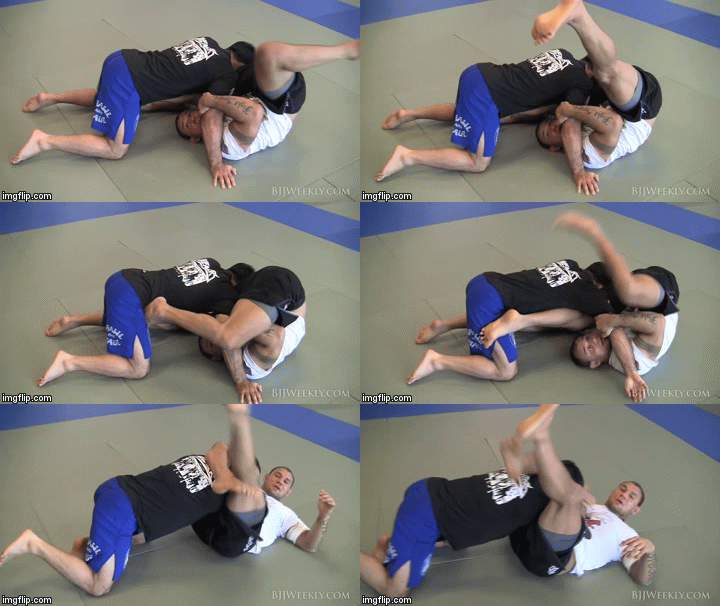
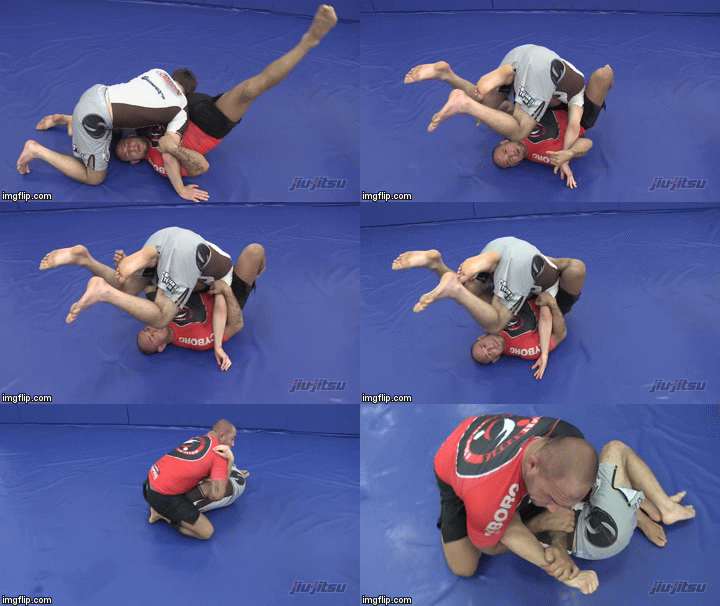
Having trouble dealing with opponents that get into a turtle? Well pick up a number and get in line, s you’re not the only one. As we can see from Judo, the turtle position is defensive heaven if your idea of defense is doing nothing. In Brazilian Jiu-Jitsu there are some effective options for breaking down the turtle, but most of them take time to master. Furthermore, if the opponent is experienced in defending from the turtle, chances are they’re going to escape to guard leaving you frustrated. Luckily, one BJJ coach recognized the troubles that the turtle position causes and decided to do something about it. Thanks to the latest Mike Palladino DVD, you can now learn Killer Turtle Attacks that’ll solve all your trouble.

Mike Palladino is a BJJ coach that got his black belt from Rafael “Formiga” Barbosa. He is the head coach at the Evolution Grappling Academy and extremely well versed in grappling martial arts. Not only does he have a black belt in BJJ but he is also highly skilled in Sambo under none other than Vladislav Koulikov. Some of Mike’s accolades are gold at the Combat Wrestling Championship, 2x Pan American medalist and a host of other titles. So, when a grappler of his pedigree comes out with a digital release on breaking one of the toughest defensive positions in grappling, you should pay attention. This Mike Palladino DVD is one that is going to change the way you see BJJ forever!

Turtle Trouble

Before we get into the meat and potatoes of Palladino’s latest release, let’s see why the turtle position is so tough to break. The turtle position is one very often utilized by Judo Players. By preventing positional transitions, you can prevent losing points to the opponent as well. In short, it is a position to keep you safe from almost anything.

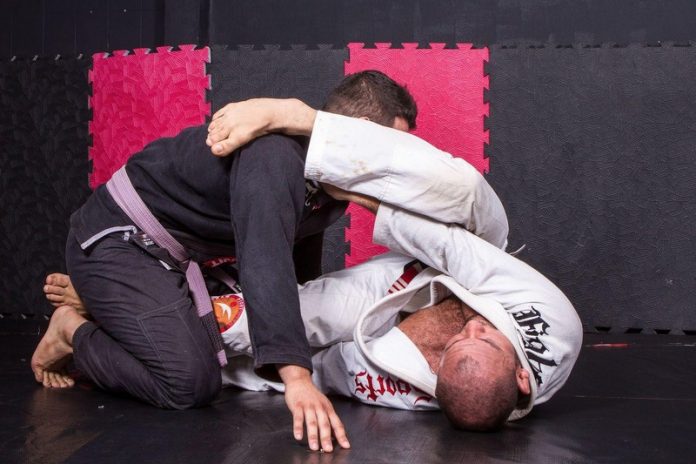
When in turtle, grapplers are essentially on all fours, face facing the floor. The shins and head are the main points of contact with the ground, forming a strong tripod-shaped base. Furthermore, the head is tucked in as far as possible towards the knees. Elbows are placed in the hip folds and the palms are used to cover the neck. The turtle position turns you into a rock-like structure that’s very hard to move because of the strong base. Getting to a neck arm or a leg is also notoriously difficult since everything is so tight. The defensive power of the turtle is that every structure is protected by other surrounding ones, seeing how close and tight everything is.

The downside of the turtle position is that there’s nothing a defending grappler can do from there. Those that have experience in the position know exactly when to get out of it. itis precise timing that makes the position ultimately effective. IF a grappler decides to open up in a specific manner at a specific moment, they’ll get to the guard or half guard position with ease. At the same time, opening up the position also leads to attacking opportunities for the opponent. The beauty of the Killer Turtle Attacks Mike Palladino DVD is that it deals with both the closed and open turtle position.

“Killer Turtle Attacks” Mike Palladino DVD Review

What makes this Mike Palladino DVD different from other similar instructionals you might ask? Well, first of all, it is a No-Gi instructional. That means that all the techniques you’re going to see work in every situation. Battling the turtle with a Gi allows for more leverage thanks to grips on the material. Opening up a turtled up opponent in No-Gi takes much more effort (or strategy) and the skills are transferable to the Gi.

Furthermore, Mike presents a submission-based approached by defeating the turtle. The reason this works is that it’s a double attack. Attacking with submissions can end in one of two ways. First, the opponent can tap due to the submission, which is the best-case scenario. Second, the opponent might focus on defending so much that they open up other opportunities. This means you can either switch the submission or transition into a dominant position. Whatever the outcome, you’re going to achieve your goal of beating the turtle position.

The release is divided into two chapters, each on a separate DVD. The first one is mostly oriented on direct turtle submissions. The second one goes over transitional options to improve your positioning before going for the kill. All information is clear, precise and works as a complete system.

Finishing Strategies Against The Turtle

Mike Palladino starts off things by precisely defining the turtle position. After going through its mechanics and structure, he covers the most common entries. In that sense, he goes over entering the turtle from both standing and grounded positions. What follows is the one thing you need to learn from this Mike Palladino DVD – multiple threat attacks. He has a system in place based on a triple threat. One attack is rarely going to work against the turtle. Going for multiple threats is going to ensure you get into a position to catch a submission perfectly.

After the detailed introduction, its time for some submissions! Mike Palladino explains such a wide array of submissions that you won’t be able to choose which one to try first! Front headlock attacks are the quickest way to deal with a turtled up opponent if you can get to the neck. As the triple threat system opens the neck, the first attacks are guillotine variations and D’arce/Anaconda chokes. Leaving no stone unturned, Mike also fills the gap between these two choke categories with neckties. Neckties are some of the most vicious attacks you can do and are very diverse. This makes them the perfect weapon to battle the turtle.

But why stop there? Palladino stitches his attention to attacking by trapping one arm into the Crucifix position. From there, he offers a huge collection of armbars, biceps slicers, and chokes to finish even the most stubborn of opponents. Keep your eyes open for the X armbar from the Crucifix, as it is one of the most effective submissions in BJJ!

Transitional Options

Don’t get me wrong, when I write about transitional options I don’t mean that MIke gives up on submissions. All it means is that he likes to improve his positioning in relation to the turtle before finishing. And the best way to do so is going for either the back or the truck.

Transitioning to the back is the most widely used method to deal with the turtle. However, without understanding the position and how it works you’ll most probably fail more than you’ll succeed. Mike’s triple threat method ensures that you’ll leave your opponent no chance to defend. Multiple backs taking options are presented, each specific to a certain situation. Of course, finishing options along the way, as well as from the back are covered in detail!

My personal favorite is the truck transitions. The truck is a highly underutilized position that is incredibly effective. As such it is my preferred spot to go against a turtle. Furthermore, it still offers the opportunity to get to the back, but not before having multiple submission options. Mike explains the truck mechanics and how to get there before switching over to submissions. Calf slicers, the banana split, twister, Kimura and many more complete this incredible Mike Palladino DVD. One thing is for sure. You’ll never get angry again when an opponent turtles upon you.

Chris Haueter DVD Review – Old School Efficient BJJ

Old School Efficient BJJ Chris Haueter DVD

The Dirty Dozen of grappling. The name says it all really. These are the nastiest, deadliest and nowadays oldest grapplers that you wouldn’t want to cross paths with. Let’s clear up a common misconception before going on. The Dirty Dozen refers to the 12 first black belts in BJJ that were of non-Brazilian origin. These were the first people to truly embrace Brazilian Jiu-Jitsu and turned out to be real monsters on the mats. One of the bunch is USA’s own Chris Haueter. He is a Rigan Machado black belt since the mid-’90s and one of the pioneers of Jiu-Jitsu. Now, you have the opportunity to learn from him wherever you are, thanks to digital video releases. Appropriately names Old School Efficient BJJ, this is a Chris Haueter DVD that you can’t miss!

Chris Haueter is known for one of the longest BJJ seminars runs on a global level in the history of grappling. He is a top-class teacher that has the ability to make everything crystal clear. Chirs is a fan of simplicity and likes to stay the course of the original philosophy of Jiu-Jitsu. A Chris Haueter DVD is worth gold these days, given the quality and amount of information available. What’s best about it is that it is suitable for all levels of practitioners, from white to black. It is refreshing to go back to the roots of Brazilian Jiu-Jitsu and revisit the fundamentals under the tutelage of Haueter.

Chris Haueter – As Old School As It Gets

Chris Haueter started off his martial arts journey as a karateka, before embarking on a wrestling stint. Following his high-school wrestling career, Chris joined the Marines and gave Thai Boxing a try. After a while though, he decided to go back to his grappling roots and through Aikido, found his way to a BJJ academy.

Chris first walked into the Rorion Gracie academy, where he met Rigan Machado, who became his teacher. Like a pioneer of BJJ, Chris Haueter is responsible for the development of a few positions that we today take for granted. One such position is the combat stance, which is how his academy is named. These days, Haueter trains under Rickson Gracie, always looking to perfect his game.

In terms of style, Chris is a diehard fan of the old school BJJ philosophy. HE likes to work with proven techniques and concepts without adding in unnecessary complexity. To that extent, he is a true wizard from the fundamental positions, using them as very formidable weapons. The release of a Chris Haueter DVD is an opportunity for everyone across the world to learn in detail from one of the very best the world of grappling has ever seen

Chris Haueter DVD Review

What you get when you buy the “Old School Efficient BJJ” Chris Haueter DVD is not just a BJJ release. You get the complete package with drills, strategies and MMA and real-world applications of Jiu-Jitsu principles. On top of that, he sticks to basic positions that everyone can do. More experienced students are going to find unbelievable details that’ll have them focus back on the old school and ditch berimbolos for a while.

The DVD is spread across 4 volumes, each tackling a specific subject. Both top and bottom position techniques are covered, with the focus on effective finishing and correct positioning. A crucial element of the DVD is the focus on weight distribution as a weapon. From the bottom, Chris teaches how to disrupt your opponent’s balance by making them shift their weight. From the top, you’ll learn to be heavy as a buffalo, often causing people to tap into pressure alone. Haueter’s instructions are really easy to follow as he teaches the way he rolls – simple and effective.

The Guard 

The first Chris Haueter DVD begins from the closed guard, in true old-school BJJ fashion. However, it is unlike any other closed guard instructional you might find. Chris has elements of self-defense sprinkled along, which are going to be extremely helpful for MMA fighters and people looking to protect themselves in general. Submission-wise, the cross choke is dissected so much that even Roger Gracie might learn a thing or two.

Chris does not stop at the closed guard and goes over a few open guard variations in this volume. The spider, butterfly and De La Riva guard are simplified and explained in a way that makes them applicable to anyone. Furthermore, you’re going to get crucial insight into the principles of countering guard pass attempts, including the notorious over-under pass.

Guard Opening And Passes

The second volume flips things around and puts you on top. Once again, it is all about simplicity and effectiveness. There won’t be any cartwheel passes that’ll lend you in a gogoplata from the mount. However, there are extremely efficient ways to pass most of the toughest open guard variations.

First of all, begin stuck in the closed guard is quickly going to become a thing of the past. Chris sheds new (or old-school) light on the most fundamental guard opening in an astonishing demonstration. Furthermore, once the guard is open, Chris doesn’t rush straight into passing. Instead, he offers you passing concepts according to the way your opponent reacts.  It is a concept that is surely going to work, as opposed to just one technique. Of course, there are also a few passes explained in detail so that you have enough weapons when you apply the passing concepts.

Top Position Details

In the side control series of the Chris Haueter DVD, the focus is on controlling the top positions after you pass the guard. Do you sense the connection here? The first DVD started off from the bottom offering submission and sweeping options. Once on top, DVD 2 took us over passing concepts and variations. Finally, the third volume is going to focus on the most dominant top positions that you can find yourself in.

Weight distribution from side control, brutally painful knee rides, essential mount details, anaconda-like chokes from the back. Whatever you think about, you’ll find in this volume. Once again, be prepared for the old-school approach of simple works best. Chris goes over all the positional nuances that are going to make you akin to an immovable object from all top positions. Only then does he dwell into brutal submissions that nobody is going to be able to get out of.

Finishing this exciting volume area a few crucial counters that are going to change your game forever.

Concepts And Strategies

Disc 4 takes a very different turn from the previous three volumes. Here, Chris shares high-percentage strategies for everyone over 30. Competing in the Masters’ divisions requires a different strategy and Chris knows this better than anyone. He offers efficient tactics to set up a high-level competition game based on old-school principles.

Furthermore, he goes over a few drills to help you develop an impassable guard. Regardless of the type of guard, you like to play, these drills are going to have a positive effect on your game. even more so, they’re going to help you perform the techniques from the first disc much more easily.

To wrap things up, Chris connects all the dots for effective MMA application. Once again it is all about concepts, old school efficient ones, that all but ensure victory in the cage. After all, they have been polished and tested for decades now by some of the best grapplers in the world. Now, you have a chance to learn them from the man that was there when they all got developed. What are you waiting for?

Dean Lister DVD REVIEW – “Worry Free Escapes”

Worry Free Escapes Dean Lister DVD Instructional

A couple of days ago John Danaher came out with he announced that he is finally releasing a DVD series. Every self-proclaimed leg locker in the world had as close to a holiday as possible when the news came out. For all the people that are still not knee-deep in leg locks, this came as a piece of horrible news. People are now going to have access to a highly structured and effective system of leg lock submissions, primarily heel hooks. This raises the need for a defensive concept to battle these brutal submissions in a safe and effective way.

Luckily, there’s no need to wait as there’s a digital resource out there that is as good as they come. And it is hosted by the one man Danaher himself recognizes as the “original leg locker” Yup, you guessed it, it is a Dean Lister DVD that is all about escaping leg locks.

In the flurry of leg lockin instructionals coming out every day, only a few have found it important to include defensive aspects of the game. This latest Dean Lister DVD is all about deconstructing the most dangerous leg locking positions and escaping submissions that were thought to be inescapable. Only a few people have managed to get out of bouts with the Danaher death quad without tapping to a heel hook so far, and now, you can learn the secrets to becoming one of them. Not that you’re going to face the squad anytime soon, but you’ll probably come up against a fan of theirs. this is even more dangerous, as people experimenting might do way more damage than those experienced in leg locks. So, grab your Worry-Free Escapes Dean Lister DVD and be afraid of leg locks no more!

The Threats Of The Modern Leg Locking Game

What Danaher brought to the world of Jiu-Jitsu, in terms of leg locks was nothing new. Actually, he applied the most basic BJJ principle of them all – positional control. Inspired by Dean Lister, Danaher decided to explore the forbidden territory of leg locks. However, he did not settle only for studying the different locks but instead developed a complete system. He decided to emphasize control over finishing, which interestingly enough, only improved the finishing.

Danaher’s leg locking system is based on what he calls Ashi Garami or leg entanglement. The Ashi Garami system focuses on controlling every joint of a leg with your whole body, before eventually finishing with a heel hook. its effectiveness is beyond doubt, as proven on every major competitive stage in the world. The riddle so far has been how to deal with the heel hook finishes that the system favors. The real problem, however, is dealing with the control that enables a grappler to finish with a submission.

Dean Lister, who is one of the most successful leg locker s in the world, is no stranger to the Danaher system. In fact, he is the reason Danaher developed it. Dean is also the first to recognize the need to deal with the positional dominance of this leg locking system, instead of submissions themselves. Now, with the Worry-Free Escapes Dean Lister DVD you can learn all the nuances of a successful defensive game too!

The Danaher Leg Locks Systemhttps://bjj-world.com/john-danaher-leg-lock-system/

Worry-Free Escapes Dean Lister DVD

This Dean Lister DVD is a real masterpiece. Dean is extremely good at focusing on what is truly important and leaving all the mumbo-jumbo aside. he is a terrific teacher that is very easy to listen to. Do not expect to be confused by the complexity of his explanations. Quite the opposite, he keeps things simple and crystal clear.

The focus of this Dean Lister DVD set is on all leg locks that you might come up against. Whether legal or illegal, Dean offers ways to deal with every lock and position opponents might attempt against you. Three of the four volumes in the set are aimed at deconstructio\ng positions that lead to kneebars, heel hooks, toe holds, foot locks, and knee compressions. The final volume is a bonus one, offering defenses to the most common upper body submissions and escaping dominant positions.

Kneebars And Heelhooks

No introduction needed, Dean jumps straight into the deep end. Volume number one starts off with a basic knee bar escape before tuning to the dreaded heel hooks. If you ever wondered how someone could escape Rousimar Palhares’ heel hooks, you’ll get the answer here. Dean deconstructs every little mechanical point of control so that you’ll not only defend but escape the positions as well.

Kneebars are the central piece of this DVD, which is great news for all IBJJF competitors out there. Dean starts off easy, covering the basics of the kneebar, and offers defensive variations as the attack progresses. In that sense, you’ll learn how to defend the kneebar at multiple levels, from entry all the way to full leg extension. Lister covers everything there is about kneebar and heelhook defense, all the way to deal with an Imanari roll.

Footlock Escapes

If there’s one volume of this Dean Lister DVD set that every grappler needs to see it is this one. Straight footlocks are legal at every belt level in every competition in the world. A such, they are a big threat when done from a position of dominant control. Actually, it is this IBJJF legal footlock that Dean focuses on at first. Expect to learn a lot of details on the leg lock itself, before discovering how to get out.

Furthermore, the volume goes over every footlock position imaginable, Inside footlocks, outside footlock, attacks from the 50/50 guard area all covered in impressive depth. IN summary, this is the hail Mary of leg lock defense DVDs and is a must for anyone training BJJ.

Knee Compressions And Toe Holds

WHile toe holds are quite common in BJJ circuits, knee compressions are, for some reason, a very underused submission. Despite their huge effectiveness, people seem to shy away from them, even though they’re legal in IBJJF tournaments. There are a few instances when people have pulled off brutal compression locks in the UFC. Lately, Geo Martinez got one at the highest level of No-Gi BJJ – The Eddie Bravo Invitational. NOw Lister offers ways in which to deal with these brutal submissions. The lock itself is not very difficult to defend, but the position is. Lister covers both prevention and escape. He also covers rolling attacks that are notoriously hard to defend against.

IN terms of toe holds, There’s not much information. Let me rephrase that. There’s not much unneeded information. In one swift chapter, Lister explains how to deal with the toe hold once and for all, no matter the position your opponent is attacking you from. Easy, effective, and simple.

Armbars, Guillotines, And Positional Defense

Rounding off this amazing Dean Lister DVD are a few escapes and counters to upper body attacks. After going over every leg lock position available, Lister focuses on armbar escapes, guillotine defenses, and Kimura counters that are as easy as they are effective. You’ll also learn how to stay calm and collected when on the bottom of side control. This is essential in successfully getting out of one of the most dynamic positions in BJJ. All in all, you’re become unsubmittable to even the most experienced grapplers.

REVIEW: Neil Melanson DVD – The Ground Marshal Guard

Ground Marshall Neil Melanson DVD Review

So, I was asked by BJJ World to write a review on a relatively new Neil Melanson DVD. Neil is by far one of the most entertaining and innovative coaches of today, so looking at his content is always a pleasure. I am very familiar with the work of Neil Melanson since I predominantly do No-Gi. So far, all of his instructionals and YouTube videos have been No-Gi which comes as no surprise given his catch wrestling background. Previously, I have really enjoyed his Catch Wrestling Formula DVD so I knew what to expect even before playing the content. I was under the impression that, generally, you can’t go wrong with a Neil Melanson DVD. After this last release, I’m certain of it.

Neil Melanson is one of those coaches that leaves a lasting impression. He is eloquent, detailed and has tremendous knowledge. He is also famous for always coming up with alternative ways of strangling, neck cranking and/or limb tearing. Whatever his focus is, he always delivers effective concepts that universally work against high-level opposition. The Ground Marshal Guard series is no different. It is a classic Neil Melanson DVD release, so full of grappling wisdom that it’ll take months for you to truly grasp it. In this age of countless digital releases, it is refreshing to see one that truly explains grappling concepts, as opposed to only resulting in confusion.

Why Buy A Neil Melanson DVD?

In most cases, if someone recommends me a DVD, I’m essentially going to spend some time researching the person demonstrating the moves. That said, I’m going to save you some time and bandwidth and give you a few reasons why a Neil Melanson DVD is always a smart investment.

First and foremost, Neil Melanson’s pedigree is spotless. Both as a grappler and a coach he’s worked with some of the greatest names in MMA and grappling martial arts. He has a background in Judo, catch wrestling and BJJ, having trained with greats like Gene Lebell and Gokor Chivichyan. He is also a very renowned grappling coach, mostly based out of Xtreme Couture in Vegas. Randy Couture, Gray Maynard, Vitor Belfort, and Chael Sonnen are the names of only some of his standout students.

Furthermore, Neil Melanson has a teaching style as unique as his grappling style. Neil is a big fan of the conceptual approach, as opposed to focusing only on moves. He likes to develop systems based on a position or submission, with countless follow up opportunities to make sure he gets the tap. His teaching style is reflected in the structure of the DVD as well. Instead of 5-minute snippets and 20= chapters per DVD, with Neil Melanson, you get the opposite. There are only a few chapters on each volume, but they all go into high-detail and contains loads of information. Each chapter lasts in excess of 20 minutes and focuses on a system that incorporates a number of techniques.

Finally, since this is a guard-related release, how good is Neil off his back? Well, so far he has developed a few closed guard variations that are not really mainstream. And that is good since the fewer people know them, the more you can use them. AS far as effectiveness goes, there’s not much anybody can do once you get into these positions. Neil is notorious for his ability to submit people from the bottom, especially with triangle chokes. He is a true Ground Marshal and his latest DVD only confirms his pedigree.

The Ground Marshal Guard DVD Review

It is always good to start things off at the beginning. This Neil Melanson DVD does not start with the assumption that you know the intricacies of the closed guard. Instead, what you can expect from the first volume are the basics. What you probably do not expect is how deep Neil Melanson goes into explaining them. Crucial body positioning tips and correct placement patterns of legs and feet are the main focus for the better part of the first DVD. Neil’s signature submission rounds it off, with killer details on getting to, finishing and adjusting the triangle choke.

Going ahead, it is all about triangles. Now that the basis of the full guard and the triangle have been covered, Neil’s own attack systems come in to play. What I really like is the concept of anticipating the opponent’s reactions in setting up the choke. Rest assured, you’ll learn a couple of triangle variations that nobody but Neil himself can teach you. And he pulls no punches explaining them as well.

Neil’s desire to link submissions into effective systems really comes to the forefront in Disc 3. Again, wrist and arm manipulations are covered in depth before initially moving into the armbar. The two armbar options Neil presents are easily connectable with the triangle setups. Both these submissions systems go back and forth, allowing a grappler to get deeper and deeper into position for the finish.

Finally, the pièce de résistance. Neil’s latest closed guard variation is the Irish collar system. It is simple, it is effective and it is beautiful. High-level control that opens up tons of submissions, let alone sweeps. It is a true masterpiece and one that I rely heavily upon, especially since I have neck hernia problems and can’t handle being stacked.


https://bjj-world.com/neil-melanson-dvd-collection-review/

REVIEW: Luis Heredia DVD – Pure Jiu-Jitsu

Luis Heredia DVD Review Pure Jiu-Jitsu

If you know what an Amassa Pao is than this article might not be for you. What is definitely for you though is the Luis Heredia DVD that explains this old-school move. Not only does it explain the Amassa Pao, but it also contains a host of other techniques that are Pure Jiu-Jitsu. Perhaps it is time to give the worm guard a rest and focus on some forgotten fundamentals. These techniques work and they’re going to fit your BJJ game to a whole new level, Who knows, you might even get a belt if you really absorb the knowledge in this Luis Heredia DVD.

ON SALE HERE:
Luis Heredia – Pure Jiu-Jitsu DVD/DIGITAL

Luis Heredia DVD Review Pure Jiu-Jitsu
Techniques List

Perhaps most of you are unaware who Luis Heredia is and this is keeping you from purchasing his amazing product. Well, you’re not going to find a BJJ coach that is more knowledgeable in the basics of the Gente Art than Limao. Well, perhaps maybe Rickson Gracie, who, by the way, is Heredia’s coach. So what you get in a Luis Heredia DVD is all the knowledge of the great Rickson, digested and purified in a way anyone can understand. Still not sure?  Heredia is a multiple-time world champion and a 6th-degree black belt under Rickson. You don’t get a better pedigree than that.

Luis “Limao” Heredia

Born in Rio De Janeiro, Brazil, Heredia got into martial arts as a teenager, much like many of his contemporaries. His art of choice was Taekwondo, but he soon came across Jiu-Jitsu and found his true passion. Seeing as how Gracie Jiu-Jitsu kids always came up as winners in street fights that were really common for Brazil, Heredia decided to give it a try. He began training at a local academy before ending up in Gracie Humaita, thanks to his surfing friend Royler Gracie. Once he moved to the USA, Heredia ended up training with Rickson at the newly formed Gracie academy around 1987.

After the turn of the century, Heredia moved to Hawaii, where he established his own academy in 2002. Hawaii is the perfect destination for a dedicated surfer like Heredia who also is a master of Jiu-Jitsu. Suffice to say, his academy Maui JIu-JItsu is still at large as one of the top academies on the island. Now, anyone in the world can benefit from the decades of knowledge and experience of a true legend of BJJ, thanks to the Luis Heredia DVD “Pure Jiu-JItsu”

Pure Jiu-Jitsu Luis Heredia DVD

As far as Jiu-Jits style goes, Heredia as a proponent of the Gracie way. He likes to keep things simple and as close to the root style of BJJ as possible. Furthermore, he’s also a 145 lbs grappler, meaning he relies way more on techniques than athleticism. His Jiu-Jitsu is really as pure as it gets, revolving around effective techniques that require no strength.

The “Pure Jiu-Jitsu” Luis Heredia DVD set is a four-volume release that focuses on a different subject in every disc. Luis goes deep into detail on every position and submission and has sequences structured around one basic move. All in all, every chapter works like a mini system of its own, often not relating much to the other systems presented in the same chapter. This allows you to build a complex BJJ game in which you can go back and forth among a bunch of systems to reach your final goal.

Bottom Game

From the bottom, Heredia first dissects the first submission new students learn – the cross collar choke. From the closed guard, he explains how the Gracies did the choke and why these mechanics are superior to any other. Hidden details about the choke are revealed that once you see, you’re going to want to test immediately. A really useful concept is the one on defending the can opener. The can opener is a really brutal neck-cranking way to open the closed guard. While illegal under IBJJF rules,s it is legal in other competition formats, meaning you need to know how to defend it.

Kesa Gatame defense, Ezekiel while in closed guard defense as well as dealing with the Paper cutter hoke are also covered. it is truly Pure Jiu-Jitsu.

Knee On Belly

One of the most dreaded positions in all fo JIu-Jitsu is the knee on belly positions. Hereda explains how to position yourself in order to maximize your pressure on the opponent’s chest. His weight distribution tips really do make a difference. Going ahead, Luis spends a lot of time demonstrating a series of submissions from the knee on belly. From chokes to armbars he covers everything before moving on to side control attacks. Ultimately Hereda circles back to the cross collar choke, this time from the mount position.

Counterattacking From The Guard

In the third volume, it is back to the guard with counterattacking concepts. First and foremost, it’s the Amassa Pao. This is a really old school way of guard passing with a Gi choke that is very difficult to deal with. Until now. Heredia offers variations on defending this choking pass while opening up counters to submit your opponent. Once again the knee on belly position is featured, although this time in a defensive manner.

In this volume, Luis spends a lot of time on closed guard concepts and attacks. He offers principles on how to retain the closed guard and attack with multiple threats at once.

Guard Passing

Finally, it is time to deal with the guard, as Heredia moves on to passing. He shows a very interesting drill sequence dubbed “dirty feet” that everyone should spend time on. Furthermore, he dissects how some of the most common guards work and conversely, how to pass them without getting caught. His focus is on preventing the structure of guards in the first place, and only then on passing them. The De La Riva, Spider and lasso guard are covered in great detail.

ON SALE HERE:
Luis Heredia – Pure Jiu-Jitsu DVD/DIGITAL

Luis Heredia DVD Review Pure Jiu-Jitsu
Techniques List

Rodrigo Cavaca DVD – Wiseman BJJ Detailed REVIEW

Rodrigo Cavaca Wiseman BJJ DVD

There is no one universally best strategy to use in Brazilian Jiu-Jitsu. There are, however, certain tactics that can ensure you get the most out of every situation. Sometimes these tactics can be seen as stalling by people who enjoy doing flips and inversions. This misunderstanding is understandable as many matches have run their entire course in one position without anyone getting the edge. When you add in certain attacking elements that are very high percentage though, things get a very different direction. Basic and secure positions now have the added benefit of an attacking threat. It is simply, the wise thing to do. And who better to give you this knowledge the Wiseman himself, Rodrigo Cavaca. On Rodrigo Cavaca’s DVD, Wiseman BJJ, he offers an insight into the competitive strategies of a truly seasoned grappler.

The Wiseman BJJ DVD is primarily intended for two groups of grapplers. First and foremost, older practitioners or Masters are going to benefit greatly from this release. Secondly, it is a great guide for anyone actively competing in grappling martial arts. The Wiseman BJJ DVD is all about the most effective strategy to win a match without any exertion whatsoever!  You’ve never seen so effective uses of the closed guard before, especially not in conjunction with the most devastating submissions in grappling – leg locks. It took a Wiseman to put this together, but now that it’s out there, you have no excuse for not getting it straight away!

Rodrigo “Wiseman” Cavaca – A Masterful Grappler

Rodrigo Cavaca was one of the main coaches in the famed Checkmat academy. He is a highly accomplished grappler with many world titles to his name. Now he is associated with Zenith BJJ alongside grappling standout Robert Drysdale. Cavaca is a 36-year-old grappler who qualifies as a Masters 2 competitor under IBJJF rules. However, so far he is still competing in the adult division, dominating everyone. He is not an exceptional athlete or the strongest person on the mats. He is, however, wise and is especially adept at devising cunning strategies that are simple and effective.

One great quality of Cavaca is his exceptional knowledge of footlocks. Early on he understood the advantage leg locks offer and started developing his own system. In that sense, his methodology is different from Danaher’s legendary system in that it is legal under IBJJF rules. That said, the Wiseman BJJ DVD offers leg locking attacks that are anything but ineffective. Footlocks are very powerful submissions that can catch everyone, once they’re understood and used correctly. Cavaca’s recognition of this fact resulted in the development of a very efficient leg locking system that competitors can apply without much effort. It is one of the reasons he is successfully competing in adult divisions to this day.

The second main part of Cavaca’s effective strategy is working from a position of dominance without being at risk. One such position is the fundamentally closed guard. Without the need for fancy experiments, Wiseman offers strategies in two distinct directions. One is offensive, exploring attacking opportunities from the closed guard. The second one is counterattacking, focusing on how to retain the guard by countering your opponents. Combine this with the footlock concepts and you have a world title-winning combination, all in one Wiseman BJJ DVD set.

Rodrigo Cavaca DVD Wiseman BJJ – An Instructional For Every Occasion

The secret behind Cavaca’s footlock success? He has his own variations of the legal leg locks that are brutally effective. Remember that he tapped Cyborg in 10 seconds with a move nobody had seen before? Now you can see all the details of the footlock that took down an ADCC champion. Cavaca has a clear system in place to provide you with the best opportunity to beat bigger, faster and younger opponents. It is all about being smart.

The Wiseman BJJ DVD set is split right down the middle. Two volumes focus on Cavaca’s top-class footlock strategies. IN order to ensure that you can reach victory from anywhere, he offers setups and finishes from both the top and bottom. Even better, he offers footlock sequences that contain up to 5 moves. This means no opponent is going to have the ability to resist for long, no matter what they try. The second part of this series is all about being as effective from the bottom as possible. In that sense, Cavaca goes over closed guard strategies and counters to the most common passes.

Rodrigo Cavaca DVD – Wiseman BJJ vol.1

Introduction to footlocks. Contrary to most of the latest leg lock DVD instructionals, Cavaca starts his off from the top. He offers crucial details on finishing the straight footlock, most of them never heard of before. Without wasting any time he offers a multi-threat attacking sequence to demolish the feet of an opponent in closed guard. Yeah, you read that right, he discovered a way to attack the closed guard with footlocks.  Also featuring in the volume are counter-attacking sequences against one of the most annoying guard positions in Jiu-Jitsu – the deep half guard. Capping things off is a fantastic footlock sequence off of the Torreando guard pass. Brilliant stuff by a real Jiu-Jitsu genius.

Rodrigo Cavaca DVD – Wiseman BJJ vol. 2

This is where things get really interesting. DVD number two has only three chapters. However, each of them is so much more than just a demonstration of a technique. Namely, the focus is on three distinct sequences of footlocks, each starting from a different bottom position. The lasso guard is one of the toughest guards to pass as has been proven over and over again at the highest levels. Now Cavaca makes it even more dangerous by including a multi-attacking system of footlock submissions. Your opponents won’t know what hit them when you master this system.

Furthermore, if you like to attack from the single leg, you can attack footlocks. Yes, nobody has thought of that before, but once you see Cavacas take on it, you’ll realize how effective it can be. Again, it’s not just a move it is a whole sequence of them. Finally, Wiseman introduces the closed guard by demonstrating a very cool footlock sequence. It all starts from the closed guard and ends up in the 50/50 with 5 submission options along the way.

Rodrigo Cavaca DVD – Wiseman BJJ vol.3

Closed guard magic. This is the best description of this Wiseman BJJ DVD volume. Just like with the footlocks, Cavaca takes an unusual route when attacking from the closed guard. He likes to use an overhook control, which is very rare in BJJ. Perhaps this is one of the reasons why it is so effective. It opens up Oomoplata attacks so fast and tight that you won’t believe how easy you get the tap.

For me, the real winner of the complete Wiseman BJJ DVD set is at the end of this particular volume. The Brabo grip system from the closed guard is nothing short of astonishing. I am a big proponent of Brabo chokes and had no idea they could be set up perfectly from the closed guard. Cavaca’s system utilizes lapel grips to great success, with multiple follow-ups available. And of course, the octopus series from closed guard is going to confuse even the most experienced opponents you meet.

Rodrigo Cavaca DVD – Wiseman BJJ vol.4

The icing on the cake comes in the form of a series of counterattacks from the bottom. Although it is highly unlikely, in some instances the guard system just won’t work. No matter if you go for the Brabo sequence or a footlocking one, sometimes things just don’t go your way. In case of such situations, Cavaca has a complete system to help you submit your opponent by baiting them into attacking. Instead of defensive options, Cavaca offers high-percentage counters to most passing sequences. From Ttorreandopassess to pressure passes like the over-under, you’ll brush them all off with ease thanks to one Wiseman’s innovative efforts.

John Danaher DVD Instructional ANNOUNCED – Leg Locks: Enter The System

John Danaher DVD Instructional and Free Technique fom John Danaher

John Danaher DVD – Enter The System is almost here. John Danaher is a well-known Coach and Instructor in Brazilian Jiu-jitsu Community. Since the first EBI (Eddie Bravo Invitational) hit the ground BJJ and Especially the BJJ NO-Gi scene got into a new dimension. A dimension of submission only as, probably, the most interesting aspect of Jiu-Jitsu. And, now, we have John Danaher DVD Instructional – Leg Locks Enter The System coming up! Check Out John Danaher Instructional Techniques List.

We’ll keep this article daily updated with all the news, techniques, and everything else related to John Danaher Instructional.

John Danaher’s DVD Leg Locks: Enter The System Instructional is ON SALE Check it HERE.

NEW John Danaher’s Instructional is OUT:

FRONT HEADLOCKS ENTER THE SYSTEM

That was actually a starting point of the raise of Danaher’s Death Squad and John Danaher himself. Danaher, Renzo Gracie Academy Coach, was able to show the brilliance of his Jiu-Jitsu through his students that were invincible in EBI tournaments.

If you watched the EBI’s you can’t get a pass by the match between Garry Tonon and Eddie Cummings. Teammates at that time went through each other exchanging such tremendous knowledge of leg locking skills that probably all of us realized that we have no clue what these guys were doing at all. That was the point where interest in leglocks went through the roof. And Danaher Death Squad became an Iconic team together with their coach John Danaher. We can freely say that these guys had a huge influence on all Grappling Martial arts too.

John Danaher was teaching a lot of great athletes. Some very well known like Gordon Ryan, Garry Tonon, Eddie Cummings, Travis Stevens, Tom DeBlass, and all other great athletes. He’s also an instructor of MMA legend Georges St-Pierre, Chris Weidman, and many others.

Tom DeBlass also released some Great Instructionals. Submission Escapes, Half Domination, High Tech BJJ in The Gi Together with some Weight and Nutrition Programs, and they are all influenced by training with John Danaher. You can check all of Tom De Blass DVD Instructionals HERE.

Travis Stevens Did a Great Job on Releasing Instructionals from what he learned in JUDO and Training with John Danaher. Travis did a lot of instructionals focused on every aspect of BJJ combining Judo and Jiu-Jitsu. Chokes, Armlocks, wristlocks and the great release of Fundamentals of BJJ

John Danaher DVD Announcement

Today, John Danaher announced on his Instagram Profile that he’ll be making a new DVD series. You will be able to find John Danaher DVD Instructionals HERE so make sure you check it from time to time.

John Danaher said that till now he was only able to teach the audience in front of him. And that he’s been doing it for 24 years. He was teaching in his sensei’s Dojo Renzo Gracie Academy.

As Danaher is saying that’s not what he wants. He can’t have a huge influence in the knowledge of people around the world by training only people in front of him or doing seminars. He wants to teach the wider audience and actually to teach the world.

When people were asking John Danaher to come and teach them he usually didn’t have time for that. He was too preoccupied with his students and their own progress that he couldn’t help others to make progress. You could only come to his classes which are opened to everyone or wait for him to come to make a seminar.

Unfortunately for students around the world, John Danaher wasn’t able to travel a lot because of problems with his body. So that was even worse for people who wanted to learn from him. At the point when his knee was replaced after he got the hip replacement things were just going worse for him. He wasn’t able to travel at all and was in serious doubt of being able to demonstrate the moves at all. Not even on seminars but to his own students too.

The good thing is his students were able to show us the moves Danaher taught them throughout the variety of competitions around the world. From Local tournaments to EBI, ADCC etc.

John Danaher DVD Instructionals Are Already Recorded!

Acknowledging all those problems that John Danaher has he decided to go for DVD series release. This will be the first John Danaher DVD ever and that’s something that you can’t miss.

John Danaher will produce these DVDs together with Bernardo Faria and Michael Zenga from BJJ Fanatics. As he said, Bernardo Faria, a multiple World Champion made him do it. The John Danaher DVDs will at first have two systems. The first one will be Ashi Garami leg Locking system and the other one will be Back Attacks.

As Danaher is saying there will be a lot of it about leg attacks. He will show the full concept of Ashi Garami. He’ll show the full concept about leg attacks too. It will also contain philosophy, tactics, and techniques on all kinds of leg attacks. Danaher will show everything that his students were doing in competitions and seminars for the last years.

Both John Danaher DVD instructionals are already filmed in the basement of BJJ Fanatics. Danaher is describing it as a marathon session that will make his DVD Instructional be very long and very educational.

Danaher also said that if people will be interested to see more from him that he will continue his work with BJJ Fanatics, Michael Zenga, and Bernardo Faria.

It’s finally time for us to learn everything that Danaher Death Squad was learning for years. Who knows, maybe these DVDs will change the way and direction that Jiu-jitsu is going to. Maybe it will raise some new athletes that were unknown before without real leg locking instructions. The time will tell.

And until this release is up, make sure you check the free preview of John Danaher DVD and the free techniques that we’ll be able to see on his Instructional.

Although the other great athletes like Craig Jones, Dean Lister, who influenced Danaher the most to go for leg locks training, Jay Wadsworth and others also made great Instructionals on leg locks. You can check The list of the BEST LEG LOCKS INSTRUCTIONALS.

Probably the closest Instructional to the Danaher Death Squad Leg Locking system is made by Craig Jones. He was very influenced by the DDS leg attacks system and their presentation in tournaments. Craig Jones’ Leg Locking Instructional is so great that Danaher will have a hard time showing more than Craig Jones did. Craig Jones DVD Instructionals also made a huge influence on leg locks around the world and they’re definitely something you want to have in your Collection. Craig Jones also did an Awesome Z-Guard Instructional. The position where a lot of leg attacks are coming from. There are more instructionals from Craig Jones like Back Attacks etc…. You can Check all Craig Jones Instructionals HERE.

John Danaher Outlines What Will be on his DVD Instructional and Talks about Importance of Incorporating news Skills Into Your game.

It’s very important to incorporate a system into your own game is the main focus of John Danaher and something he tries to do with all the athletes that he coach. He outlines how some athletes are very capable of using the same set of skills for years and then incorporate new skills into their game. It’s something that gives them joy and new perspectives and skills on top of something they already know.

Danaher Talks about Tom DeBlass as an example of a very successful athlete with great skills. The skills that allow him to win many ADCC US trials and World Championships. Tom DeBlass was able to incorporate new sets of skills into his already great game and easily win with it. If you watched Tom DeBlass on Fight To Win pro in Philadelphia you could see how well he executed everything he was taught by John Danaher. He was there fighting for an inside position and then used a Kuzushi to off balance his opponent. After that Tom DeBlass applied a perfect heel Hook. He was able to do it in only 30 seconds.

Something that Danaher tries to explain with this is that it’s not necessary for you to start training some system from the early beginnings of your BJJ Career. Many of his successful athletes came to him late already training for few years somewhere else. Although, he was still able to teach them and incorporate his own system into their game. That’s exactly what he’s trying to accomplish with his DVD Instructionals.

John Danaher DVD Techniques List

DVD 1:
4 Mechanical Pillars Of Jiu-jitsu
Lever
Directionality of Force
Kuzushi – Off Balancing Wedges
Review – 4 Mechanical Elements
3 Families Of Ashi Garami
Straight Ashi Garami
Cross Ashi Garami
Reverse Ashi Garami
Grip and Inside Position
2 on 1 Elbow Grip
Gripping For A Purpose
Theory of Gripping
Underhooks

DVD 2:
Inside Position / Inside Control
Gripping Top Position
Negate Opponents Game
Pummeling To Inside Position
3 Desirable Positions
Distance & Connection
1. Gravity Drills – Facing Opponent
2. Gravity Drills Facing Array
3. Gravity Drills – Rolling Inversion
Gravity Drills – Good Posture & Connection

DVD 3:
Straight Ashi Garami
Straight Ashi Garami Entries
Breaking Opponent Down To a hip
-Single Leg Ashi Garami
-Double Leg Ashi Garami
-X Guard To Reverse X Guard
Heel Exposure
Negation Resistance
Negation and Distance

DVD 4:
Breaking Mechanics
Creating Tension
Pros And Cons of Each Grip
Function outside Heel Hooks And Cycling of Our Legs in Breaking Opponents Legs
The Shared Spiral

John Danaher DVD

You Might Also Be Interested in:

10 Best Leg Locks DVDs and Digital Instructionals

Subtle Tricks For Developing World-Class BJJ Chokes

Tips And tricks Fro BJJ Chokes

Whether it is a regular BJJ class, open mat, or a tournament two things are for certain. You’re going to see someone tap to a choke. You’re also going to see someone escape a choke that seemed tighter than a hanging noose. BJJ chokes are very effective submissions and are among the highest rate finishing moves in grappling martial arts. Their constant use and efficacy, though, have made them the subject of detailed studying. The result is plenty of options to defend, escape and even counter them. It is not uncommon to see a blue belt escape a brown belt’s choke after defending for a while. This demonstrates that no matter how experienced someone is, defenses are so efficient that even lower-ranked students can use them successfully.

If you’ve ever had someone escape a Rear Naked Choke, for example, that you thought you had, you know the feeling. First of all your confidence in the move gets shattered. Second, you might end up with tired arms and lose a match as a result. This often leads to reexamining choke mechanics and how they work. Now, it is important to understand that this is a normal cycle in BJJ development. What is important is recognizing the need to evolve your BJJ chokes. To that extent, there are certain principles, tips, and even tricks to ensure your submission success. All you have to do is make sure you follow the subtle rules of choking people unconscious.

Tips To Tighten Up Your BJJ Chokes

As far as the basics go, everyone knows that chokes come in two main varieties. The first is blood chokes when you cut off the supply of oxygen to the brain by compressing the major blood vessels of the neck. Others, known as air chokes, restrict the flow of oxygen to the lungs by compressing the larynx/trachea. In both instances, the goal is rendering a person unconscious. Thanks to tapping, this rarely happens in BJJ tournaments, and almost never happens while training.

Using BJJ chokes to the full extent of their power means being able to tap anyone, anywhere once you obtain the correct structural alignment. For that purpose, you must understand the anatomy of a choke. When performing BJJ chokes a grappler needs to use their arms, legs, the lapel, or any combination of the above in order to apply a blood or air choke to their opponent. All of these combination possibilities are the reason why BJJ chokes are so diverse and ultimately, effective. Let’s go over a few crucial tips to take your choking game to the next level.

When Choking, Think Deep

For example, when you learn the cross collar choke from the bottom, new students often say that they can’t complete it. When that is the case, instructors are usually able to recognize the issue without even looking.  The usual culprit is the depth of placement of the primary choking hand. Namely, for the choke to work, the hand must be deep enough in the collar.

The cross collar choke is just one example of the importance of hand placement. The same goes for any lapel choke variation, apart from the loop choke. The basic idea is that the deeper you are, the less space your opponent has to insert their arms and defend. If you pay attention to this single detail your BJJ chokes will quickly become twice as effective.

It Is All In The Wrist

The majority of BJJ chokes are actually applied with the help of your forearm bones. To be more precise, the area that connects your palm with your forearm, at the level of the wrist. Placing this part of the wrist against the neck of the opponent’s neck cuts off blood flow to the brain. Think about a tight Marcelotine for example. Having your arm deep (the first tip) and pushing your wrist on one side of your opponent’s neck, straight into their carotid is going to result in a very effective choke.

With The Gi itself, it is usually easier to find leverage. The lapel or collar greatly aids the application of the sharp edge of the wrist to the neck. Moreover, the pressure that you can exert in this manner is far greater than without the Gi.  Think about doing a paper cutter choke from topside control. If you’ve ever attempted the move in No-Gi you know how hard it is to execute it. With the Gi, on the other side, gripping the collar is a game-changer in terms of pressure. This is why correct placement of the hand, as we discussed earlier, is so important.

Either A Blood Or An Air Choke

A guillotine choke, for instance, usually means applying pressure directly against the throat of the opponent. The goal is to constrict the airway in order to get the tap. This, however, is quite different than a strangle or a blood choke, as we discussed earlier. A blood choke (like most Gi chokes) means putting pressure on the carotid arteries on the sides of the neck. Rendering the brain devout of oxygen results in fairly quick unconsciousness. Lack of oxygenated blood to the brain shuts it off in order to protect it.  No harm is done to the opponent if the choke is not held for too long.

A very common occurrence is trying to finish a Rear Naked Choke through a combination of the two mechanisms. Now, while a Rear Naked Choke variation can be finished as an air choke, it is primarily a blood choke. In that sense, trying to fit two choking mechanisms into one means you can’t really build the required structure for each of them. This is a reason why BJJ chokes often fail. The solution is very easy. Identify the type of choke you’re looking to apply and adjust accordingly. As long as you have a deep grip and use your wrist, you’re going to get a tap or a nap.

Keep It Tight! 

This is one of the best pieces of advice I got very early on in my BJJ journey. Actually, keeping things tight applies to Jiu-Jitsu as a whole. There are very rare instances in which making space is a good thing. In terms of chokes, this is even more important. No matter what kind of a choke, the rule remains the same.

If there is any space between the opponent’s neck and the structure that applies pressure, they’ll be able to defend it. his doesn’t ensure that they’ll get out of it as you’ll probably finish 8 out of 10 chokes like this. However, once you come up against a seasoned opponent. you’re going to lose the choke 8 out of 10 times. Whenever the blood is still able to reach the brain, there’s hope for the opponent. This is where you need to develop that feel about the correct depth and wrist position. Always remember to adjust in order to remove as much space as possible to make your BJJ chokes tighter.

The 10 Second Rule

How many times have people told you that you were inch-close to finishing a choke that you gave up on? Giving up on a choke that would’ve worked is even a worse feeling than an opponent getting out on their own. It is a very frustrating situation that grapplers go through at some point in their BJJ journey.

This very common problem ha a very simple solution! There’s a principle in BJJ that is called “slow choking”. This means holding on to a choke that you have wrapped tightly and correctly for a certain amount of time. Usually, the rule of thumb is going for a 10-second count before either adjusting or transitioning to another attack.

This approach makes sure that you’re applying pressure long enough for the choke to take effect. What you need to understand is that BJJ chokes are unlike arm or leg locks.  Joint locks generally work in a binary fashion. They either work, or they don’t. Chokes, on the other hand, tend to be more of a gray zone.  A strong clean choke can force any opponent to tap out immediately.  But not all chokes are created equal. Sometimes your grips can be just slightly off, for example.  However, even chokes that are not completely perfect can still work.  It just takes time.

The basic concept is that holding on to a choke is not only going to apply pressure to the neck but also slowly restrict the opponent’s ability to breathe. As taking in air becomes tougher, people tend to give up or go to sleep. Al lit takes patience.

Related Articles:

BJJ Chokes Dissected – Everything About Choke
Loop Choke Essentials
Different ways in which you can finish a Jiu-Jitsu Choke
Blood vs air Jiu-Jitsu chokes: Which are better?

Surfing And Rolling – Living The Ultimate BJJ Lifestyle

BJJ Lifestyle - Surfing And Rolling

BJJ athletes are usually very outgoing people that enjoy being active and socializing with others. Those that have embraced the BJJ lifestyle have their lives revolve mainly around the sport. Strong friendships are made on the mats which often extend out as well. Grappling athletes are known to enjoy staying active and moving when they’re not rolling or doing specific conditioning. There are many complementary sports that are often associated with Brazilian Jiu-Jitsu, from yoga to Ginastica Natural. However, one discipline very often stands out within the BJJ lifestyle – surfing.

Surfing and Jiu-Jitsu have a much deeper connection than just waving the Shaka sign around whenever a camera is present. it does have a big connection with the birthplace of BJJ though, where surfing is a major part of everyday life. Surfing is a staple of life in Brazil and is anything but an easy sport, so no wonder that it clicked with grapplers. Even the Gracie family members were very big on this activity that is the perfect complement to the BJJ lifestyle.

Why You Absolutely Need to Wear A Rashguard When Training BJJ: https://bjj-world.com/wearing-bjj-rashguards-under-gi/

A Common History

Surfing and Jiu-Jitsu have been closely related ever since the inception of the Gentle Art, a few decades ago. Living in a warm environment like Brazil means you’re going to turn to the ocean for relaxation at one time or another. When you train Jiu-Jitsu in the Gi, the need to cool off and wind down becomes even more important. However, that character of Brazilians in general and grapplers in specific isn’t one of ordinary beach dwellers. Even when relaxing, Jiu-Jitsu folks like to be engaged with both mind and body, and do something fun. Surfing offers just that, an option to unwind while staying active, focused and relying on much of the abilities that BJJ develops. A match made in heaven for the ultimate BJJ lifestyle.

Grappling and surfing easily find each other wherever there are waves and people that roll. Some of the top people in the sport, the likes of Rolls, Relson and Rickson Gracie were just a few Gracie family member who adored riding the waves. Funny enough, and in true Gracie manner, Rolls became friends with surfers by engaging in a fight with a group of them, alongside his students. After choking out most of them, Rolls developed a relationship with surfers that ultimately saw him fall in love with surfing himself. Rickson had a similar run-in with a surfer he challenged and choked out repeatedly.

The connection between surfing and BJJ doesn’t stop with the Gracies, though.  It is not only BJJ lifestyle that turns to surfing in need of a related activity. Seen from the other side of things, lot’s of prominent surfers are picking up on Jiu-Jitsu more and more. Kelly Slater, Joel Tudor, and Frederick Patacchia are just some of the surfing stand-outs that have completely fallen in love with grappling.

BJJ Lifestyle Surfing And Rolling

Surf & BJJ Lifestyle

As plenty of Brazilians left Brazil to spread the art of Jiu-Jitsu, they focused on settling in spots of the world that were similar to home. As such, oceanside cities that are also top surfing spots were among their first choices. It is no wonder that many huge BJJ academies popped up at spots where surfers tend to congregate. The BJJ lifestyle turned out to be very appealing to surfers, who quickly signed up for classes. Some examples include Murilo Bustamante, who was a pro surfer before becoming one of Carlson Gracie’s best students. Tinguinha and Alexandre Soca were surfers turned grapplers thanks to the Gracie Barra academy influence in their vicinity. And of course, Checkmate recruited one of the top heavyweights ever in Marcus “Buchecha” Almeida.

If you find yourself in Copacabana these days, apart from riding the waves and taking in the view, you only need to choose a direction to go to and you’ll end up in one of the top-level academies mentioned before. Other top spots around the world, from Indonesia to Hawaii, also offer the ultimate BJJ lifestyle experience. California is another Mecca of both BJJ and surfing and offers numerous options. From Jean Jacque’s academy, through Gracie Barra and all the way to Art Of Jiu-Jitsu, the choice is a diverse one.

For all those enthusiastic enough about surfing and grappling, that do not have the good fortune of living beachside, there are cool options to experience the ultimate BJJ lifestyle. BJJ & Surf camps are popping up all over, offering a unique opportunity to have your taste. BJJ Globetrotters organize one such event that moves location every year. Other options include Sub and Surf Camp as well as Grappler’s escape, which features some of the biggest names in grappling as instructors.

Surfing And Grappling Camp BJJ LIfestyle

BJJ For Better Surfing And Vice Versa

Brazilian Jiu-Jitsu and surfing relate to each other across many aspects. On such thing is the mindset. Both world-class grapplers and surfers share the need to control their minds and emotions in order to conquer physical obstacles. Confidence is also a common mental trait of both sports. In order to be a champion, whether it is on the mats or on the waves, you need to be confident. The adversity that comes with both is an excellent way to breed confidence that carries over to the other.

In order to excel in surfing, you need the ability to move efficiently and adapt to a number of given situations. At the same time, the goal is to spend the least amount of energy possible. Furthermore, similar athletic abilities mark both sports. Balance, base, quick direction changes and instinctive reactions all feature heavily in both surfing and BJJ. Strength is one quality that is highly interchangeable between the two. The strength BJJ helps develop, especially the isometric is crucial for surfing endurance, for example. Core strength is another major factor in both, and doing one ensures you develop it for the other. Balance is probably the most obvious and important one, though. It’s easy actually – go surfing and you’ll quickly become the “unsweepable” guy in the academy. Moreover, it is dynamic balance you’ll learn, which is much harder to develop than static.

Destroy Your Opponents With These Banana Split Submission Tips

Brutal Banana Split Submission Tips

When we think of submissions in Brazilian Jiu-Jitsu, we primarily think of a few categories of moves. The main few are strangles, joint locks, muscle compressions, and spinal locks. In those terms, these submissions stem int subcategories that give birth to other subcategories etc. For example, a joint lock subcategory is an armlock and a further subcategory would be a bent-arm lock like the Kimura. IN the category of joint locks, most people tend to focus on either arms or legs. While with the arms, grapplers usually divide their focus among the three joints, the legs are different. While most people go for ankle and knee locks all the time, the hips are often skipped. The banana split submission is just one example of how efficient hip locks can be, so why do BJJ people shy away from them?

The hips are arguably the most mobile joint in the bodies of grapplers. Given the nature of guard playing in BJJ, hips often tend to have a wider range of motion than most other athletes. That said, the joint still has limits and all it takes are small adjustments to the banana split submission in order to get a tap. Also known as a crotch ripper, the banana split submission is pretty much an indefensible one when applied correctly. As with other leg locks, control is crucial in order to execute the move and is the one thing most grapplers get wrong. In order to obtain sufficient control, though, it is essential to understand how the banana split submission essentially works.

What Is Banana Split Submission

The banana split submission appears very easy until you give it a try. Once you find yourself in a position you’ll see how much details make the submission. Once you get it right, though, there aren’t many submissions in grappling martial arts that are more effective. So, how does this brutal move work?

The primary idea behind the banana split submission is pulling the thighs of both legs in opposite directions. Before we get into control and specific execution, though, let’s discuss angles and direction. In terms of direction just pulling the legs in different ones is not going to provide you with a submission. The hip is a multidirectional joint that is quite adept at an end-of-range movement. There is, however, an angle that is often problematic even for flexible grapplers. Opening the hip laterally, or away from the crotch is the only direction in which you can cause damage to the joint structures and surrounding muscles.

One thing to keep in mind though is that just pulling one leg, even in the right direction, is not going to do anything. The hips work in unison so if you have insufficient control over the opposite leg, it is just going to tag along. In order to complete a banana split submission, both legs need to be pulled in opposite directions. The truck position is the best option for controlling someone while setting up the banana split. In short, you need to lockdown one leg with both your legs, so that you can use both your arms on the opposite leg. The goal is to have two of your limbs against one of your opponent’s on each side.

Truck Position Mechanics, Entries And Attacks: https://bjj-world.com/effective-attacks-from-bjj-truck-position/

Entries Into The Banana Split Submission

Entries into the banana split are very similar to those to the truck position. The distinction is in the way you grip the leg of your opponent. In the truck, usually, the control is at the end of the lever, on the fingers of the foot. This control allows for transitions to the twister, back control or attacking with a calf slicer. Since the banana split has different mechanics, the entries are slightly different.

The best way to enter into the truck and directly get a banana split is from turtle. When an opponent is turtled up, the goal is to thread one of your legs inside, much like a hook for back control. In cases when this is not possible, you can always thread a knee in and readjust later on. YOur arms go directly around the opponent’s thigh on the far side. From there just sit back, lock your feet down and switch to an s-grip with your arms. The S-grip is superior to the palm-to-palm grip in terms of range of motion which is crucial for finishing the banana split submission.

Another option is from side control, by using Eddie Bravo‘s twister side control or hunting for a leg directly from a roll. Personally, I prefer entering from Twister side control, particularly from the Fishnet position. It offers complete control and makes the Granby roll much easier. Not to mention that it lands you directly into the banana split. From side control, sit in reverse Kesa Ggatame and hook the far side leg of your opponent with your bottom leg. Once there, grip the thigh of the leg that’s on the bottom. Then pull yourself towards that leg, rolling over your shoulders and extend your legs.

Brutal Calf Slicers From Everywhere: https://bjj-world.com/calf-slicer-underestimated-submission/

How To Submit Even The Most Flexible Grapplers

Every now and then, you’ll come up against opponents that are insanely flexible. And by flexible, I don’t mean your regular butterfly stretch flexible, but more of Yoga Guru legs-behind-the-head flexible. Or women. Women are naturally very flexible which especially holds true for the hips. Whenever you run into opponent’s like this the main thing is to think about adjusting instead of abandoning the banana split submission.

The very simple adjustment here comes in the form of an angle. When you feel you’re reaching the maximum point of tension you can create in the submission without a tap, just change the angle. As with other joint locks, adding a twisting motion to a straight lock is almost always going to do the trick. In the case of the banana split, all it takes is twisting one, or in extreme cases both of the legs so that you accentuate the stretch. Just remember to twist both legs in opposite directions so that you add the maximal amount of tension.

Related Articles:

Omoplata Game Essentials