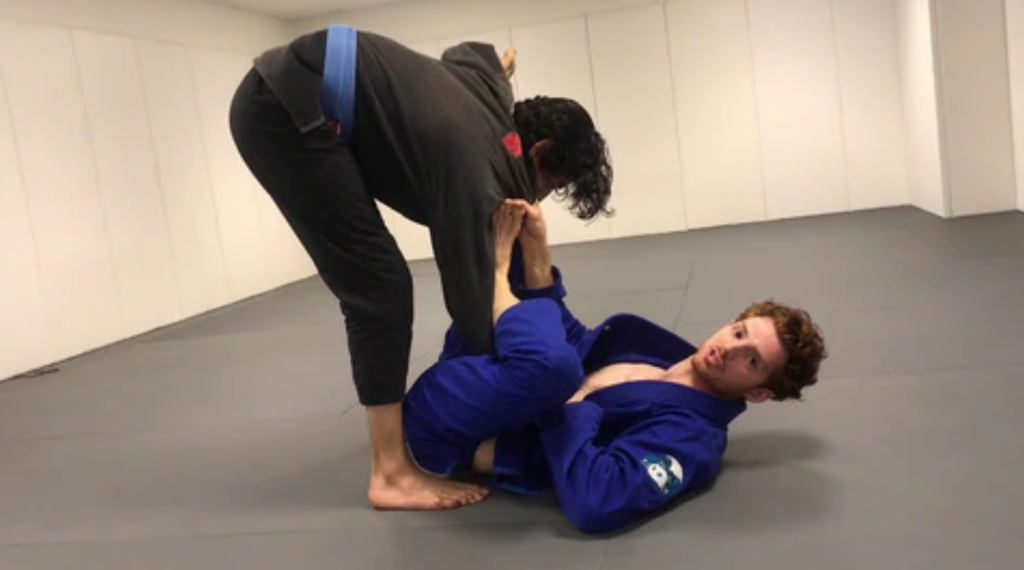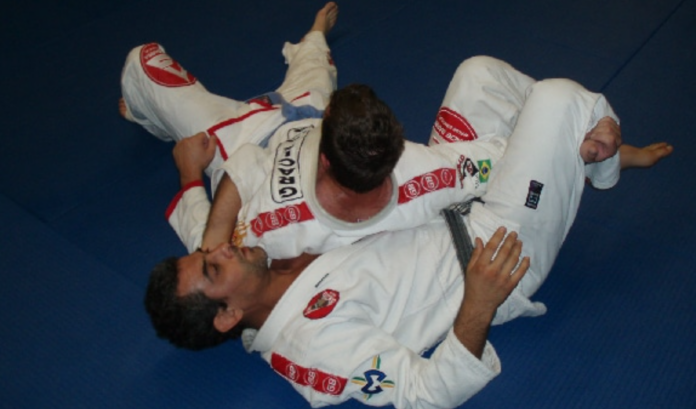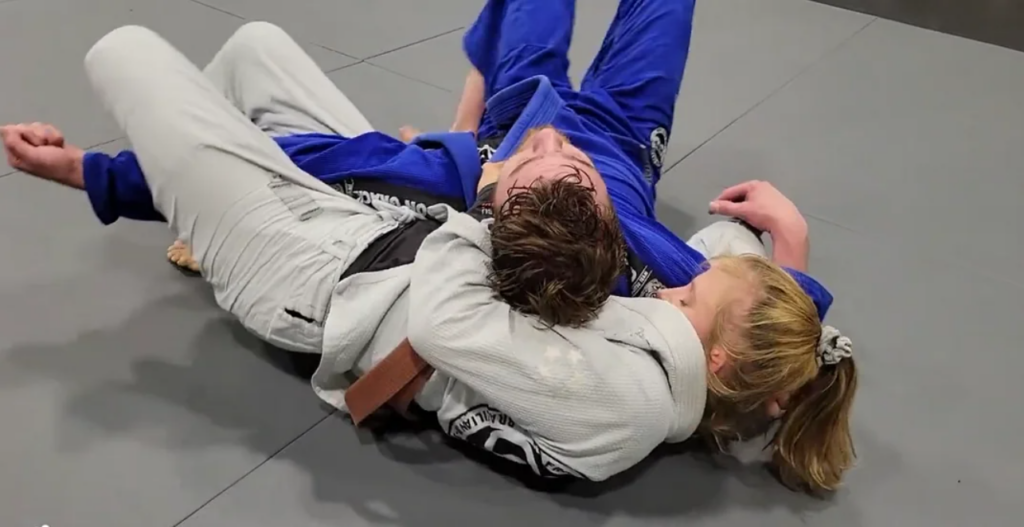


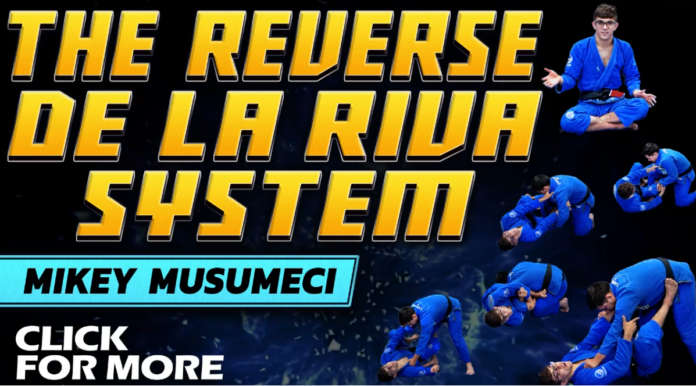
Reverse De La Riva System Mikey Musumeci DVD Review [2024]

Reverse De La Riva System Mikey Musumeci DVD Review
Key Takeaways
  • A 4-part Gi Jiu-Jitsu DVD that breaks down the RDLR guard into three ‘boxes’ of attacks.  
  • Contains invaluable material on controlling the guard, and attacking with sweeps, backtakes, and submissions.
  • Features great organization and plenty of reaction-based attacks covering different scenarios.
  • BJJ World Expert Rating: 9.5 out of 10.

REVERSE DE LA RIVA SYSTEM MIKE MUSUMECI DVD GET HERE:
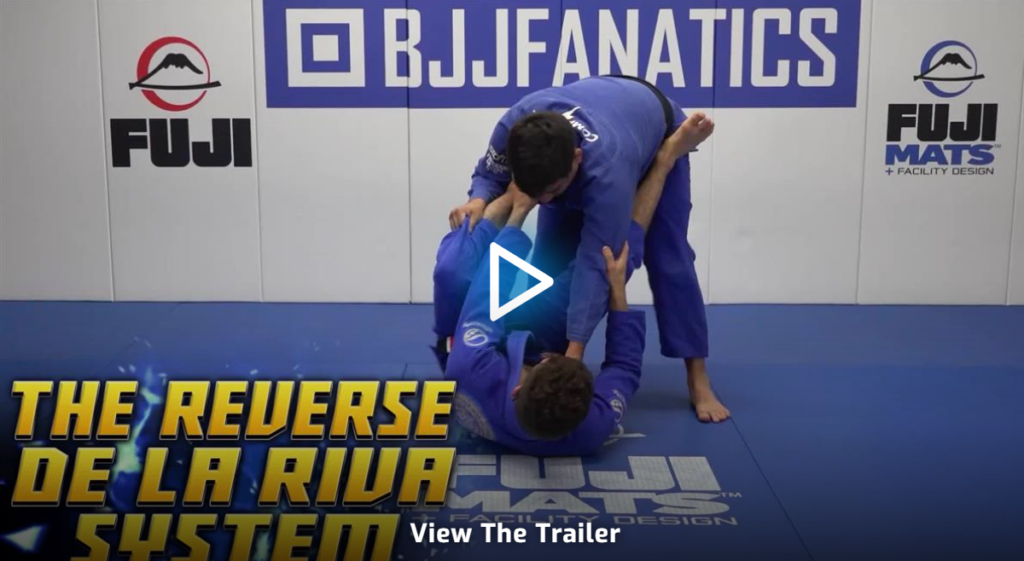
Reverse De La Riva System Mikey Musumeci DVD Preview
FULL TRAILER: Reverse De La Riva System Mikey Musumeci DVD

When people mention pen guard in Jiu-Jitsu, a version of the De la Riva guard pops into everyone’s mind. There are quite a few, especially with all they hybridized guard versions, and they all bring something different to the mats. However, nothing beats sticking to the classics, which include the original tow versions of the De la Riva guard. 

The Reverse De La Riva System Mikey Musumeci DVD focuses on one of these two fundamental De la Riva guard variations, braking down the Reverse version. Originally highly popular in both Gi and No-Gi, the RDLR got pushed pout of Gi Jiu-Jitsu for a bit, only to come back stronger than ever. Mikey explains what changed and how this modern RDLR world. 

What is the Best De La Riva? 

Fifteen years ago the landscape of Jiu-Jitsu guards was very different to the one we have today. On top of the closed and half guard, there were a bunch of open guards, but not nearly as many as these days. Among those, the De la Riva was a go-to method for Gi grapplers.

The Reverse De la Riva appeared a bit over a decade ago, with the Mendes and Miyao brothers taking it to new heights with inverted back attacks from the bottom. I’m sure the guard is older than that, but it never clicked for the majority of grapplers until then.

From that moment onward, just about every open guard got a De la Riva hybrid, from the spider guard to different worm guard iterations. This does create a lot of confusion, which I usually do not like, but in that madness, there is sense to be found as well.

Namely, such a wide use of the De la Riva guard(s), or, to be more precise, a part of their mechanics, demonstrates how valuable they are. The De la Riva hook, which is the knee-level hook you place inside or outside, paired with the very low gripping arm on the same leg si what gives the guard and its variations its retaining and attacking power.

Mikey does a great job at focusing attention on these aspects of the RDLR while offering all the different types of attacks available to you in his Reverse De La Riva System Mikey Musumeci DVD. 

The Best Flyweight Grappler in the World? 

Mikey Musumeci is a man of many talents. From high-level grappling skills, to equally as impressive pizza-making skills, “Darth Rigatoni” has made tsunami-level waves in the BJJ world.

The 5x World Champion, 2x Pans and Euros conqueror, and former ONE FC Flyweight champion has had a very fruitful career, surpassing the achievements of many grapplers before even reaching 30 years of age. And he is not done yet.

Just last week, Mikey quit ONE FC, not long after they stripped him of his titles for missing weight. HE decided to move back to the US and refocus on showcasing his talents in other promotions, which I have no doubt are scrambling to sign him up for as I am writing this.

In the meantime, we’re left with quite the collection of Mikey Musumeci DVDs, one of which is going to be my primary focus today. I’m talking about the Reverse De La Riva System Mikey Musumeci DVD, one that I wanted to go over for quite a while. 

Reverse De La Riva System Mikey Musumeci DVD Review

It’s been a while since I’ve seen Mikey Musumeci in a Gi. The Reverse De La Riva System Mikey Musumeci DVD offers a very comprehensive way of setting up one of the most popular No-Gi guards in Gi BJJ, with over three hours of material incredibly well divided between four volumes. 

Part 1 – RDLR Control Points

If you ask me, every instructional covering the guard position needs to follow this structure from now on. Mikey has found the perfect template, breaking down guard like nobody else did in an instructional to date.

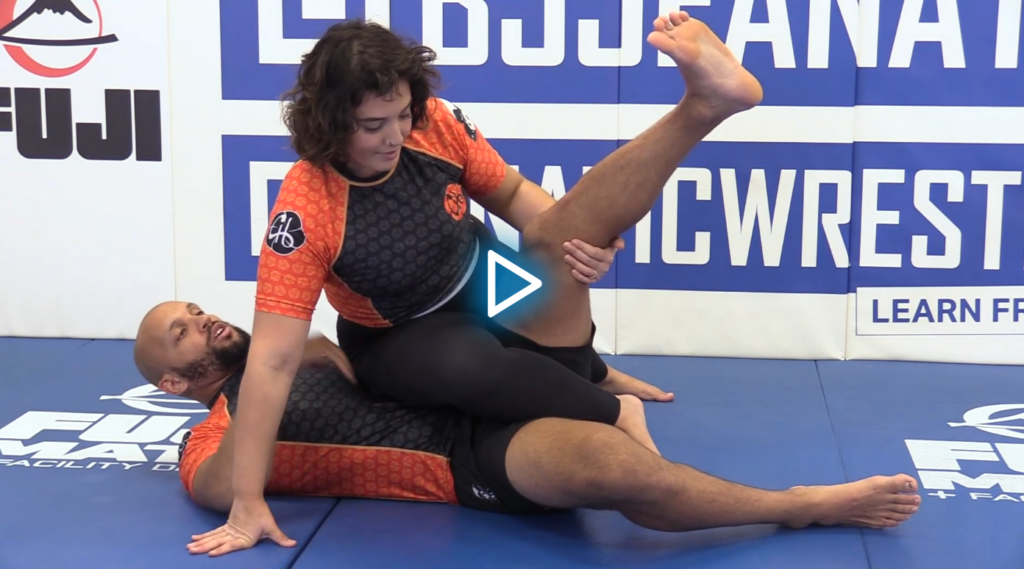
The first volume of the Reverse De La Riva System Mikey Musumeci DVD targets the foundations of any guard, with Musumeci sharing them through the perspective of the Reverse De la Riva guard. He goes over body positioning very meticulously, from grips to hooks, demonstrating how to achieve total control from the position. 

He then shares his groundbreaking concept of piling stuff into boxes – in this case, three boxes of different attacks- which is how he proceeds to deliver the information that comes later in this instructional. In fact, he touches upon the first one, containing sweeps attacks in this opening part, covering several tripod sweeping variations.

Part 2 – Sweep Timing 

Still on the subject of sweeps, the second part of the Reverse De La Riva System Mikey Musumeci DVD is the best-formatted BJJ sweep instructional I’ve ever seen. Musumeci explains sweeps by covering in detail what the opponent does, and how to punch each of his actions with sweeps. 

Scenarios include people removing the hooks by lifting or pushing, as well as using hip frames, which have proven to be effective at killing the Reverse De la Riva guard very effectively in the past.

The key aspects of finishing sweeps from the RDLR, but also from any other guard, wrap this volume up, along with a technical standup sweep to provide a longer route to sweeping, which includes standing up.

Part 3 – Back Exposure

After unboxing sweeps, Mikey focuses on opening the back attacks box in the third volume of his Reverse De La Riva Mikey Musumeci DVD. This one is what most people were after in this DVD anyway, given Mikey’s (and just about every other world-class lightweight grappler’s) success with it in competition. 

In the longest portion of the instructional, Musumeci covers how to attack the back by going not just between the legs, but also around them, using the RDLR as a launching pad. Of course, the Kiss of the Dragon features a lot, with Mikey showing his take on the popular inverted attack.

While exploring outside back exposures, Mikey mainly talks about flanking, using different ways to effectively pin the top person in place as he maneuvers around the leg and inserts hooks to start creating back-taking opportunities. He sprinkles it all by sharing his favorite Berimbolo attack for those who absolutely love to invert.

Part 4 – Submissions

The final box of the Reverse De La Riva System Mikey Musumeci DVD contains submissions attacks, divided between upper and lower body submissions. The RDLR is one of the rare guard positions that provide access to all submission categories that are available, and Mikey certainly knows how to make the most out of it. 

From classic Triangle-Omoplata combos to kneebars, Musumeci offers a comprehensive system that allows you to fire submission after submission at the top person until you get the tap. Combined with sweeps and back attacks, this really amps up his RDLR guard system for Gi Jiu-Jitsu.

The Value of Guard Systems

Playing with systems is something many people did, but it was Danaher who managed to put it into perspective and conceptualize it. Instead of developing game plans, like other sports have, he opted to create systems of attacks that consist of many small-scale subsystems, each perfectly operational on its own.

The Reverse De La Riva System Mikey Musumeci DVD is just another in a whole series of system-based guard developments that have emerged since. It shows how valuable thinking along these lines is for grapples, as it helps remove the fluff and provides a clear goal that you can then reach using different paths. 

Organizing your Jiu-Jitsu into systems, particularly when your back is on the mats, allows you to figure out exactly what suits your game, and what you should disregard. Furthermore, by offering a system with ‘boxes’ Musumeci helps simplify Danaher’s concept of systems even further, allowing you to form a pattern you can easily remember and apply even when you’re under the pressure of competing.
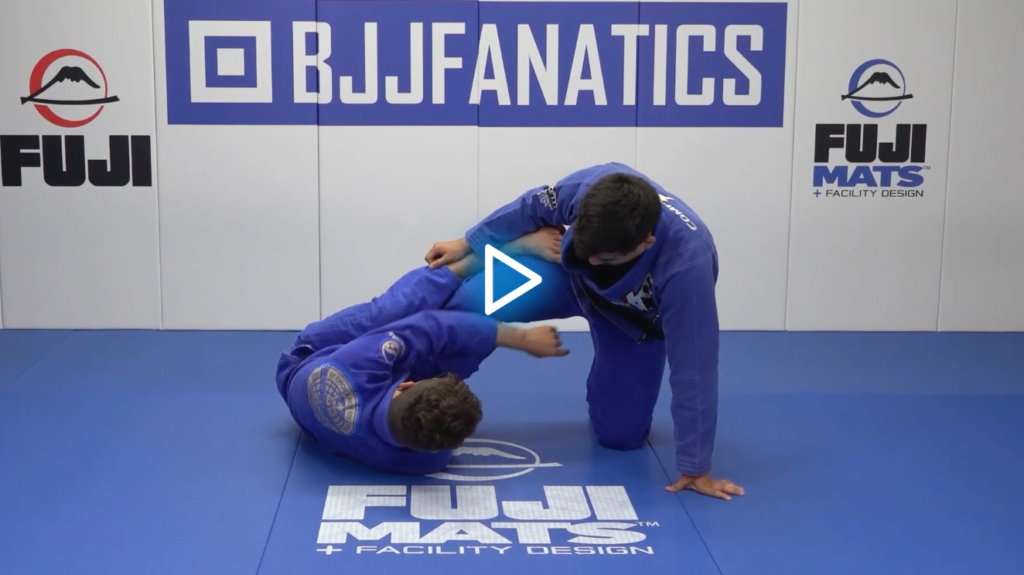
Reverse De La Riva System Mikey Musumeci DVD Free Sample
FREE TECHNIQUE from the Reverse De La Riva System Mikey Musumeci DVD

FULL DOWNLOAD: REVERSE DE LA RIVA SYSTEM MIKE MUSUMECI DVD

The RDLR is Back! 

For a little while there, the Reverse De la Riva guard kind of disappeared from Jiu-Jitsu, particularly Gi BJJ. It lingered on in No-Gi, long enough to solve the leg lock puzzle that kind of killed it off for a little while. The Reverse De La Riva System Mikey Musumeci DVD is a great example of how the guard works in modern BJJ, and why you should (re)introduce it to your bottom game as soon as possible. 

Reverse De la Riva Guard – The Best DVD and Digital Instructionals

6 Easy Reverse De La Riva Back Take Variations [Gi & No-Gi]

The LIST of ALL Brazilian Jiu-Jitsu and Grappling DVDs EVER MADE
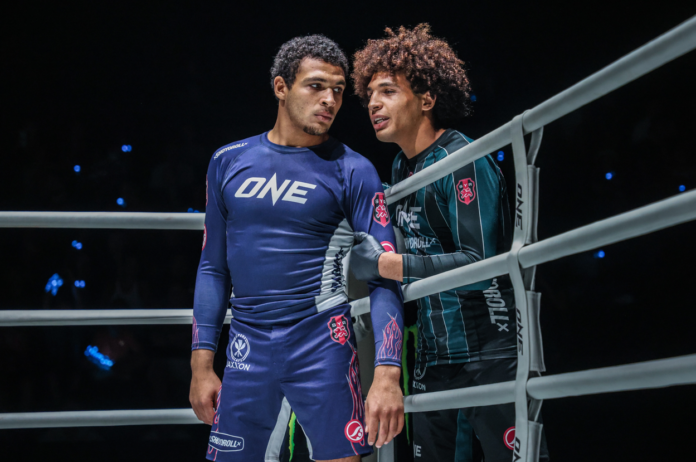
Ruotlos Done with Jiu-Jitsu? Kade Ruotolo MMA and Olympic Wrestling Goals

Ruotlos Done with Jiu-Jitsu? Kade Ruotolo MMA and Olympic Wrestling Goals

Kade Ruotolo is the man of the moment after clearing out his division to win the $1 million prize at the CJI last August. Many then asked what was next for someone who conquered everything in BJJ at the age of only 21. For those wondering about the possible Kade Ruotolo MMA goals and the brothers’ competitive grappling aspirations, Kade has some interesting answers:

Ruotlos Done with Jiu-Jitsu?

Is Kade Ruotlo Done with Jiu-Jitsu? 

The Ruotolo brothers have been dominating the lightweight divisions in grappling for the past few years, racking up every possible title, from IBJJF worlds to the ADCC among them. There is not much left to conquer in BJJ, which could be the next challenge for the 21-year-old phenoms.

Kade Ruotolo recently spoke about the matter with Ariel Helwani, discussing his MMA goals after a successful debut in ONE. Given the demand for a full-time MMA career, are the brothers going to be able to keep up high-level BJJ competitions along with a successful MMA run?

Speaking about a potential MMA debut, Kade wants nothing short of a straight title shot, though: “I don’t think there will be a time when I completely ever leave Jiu-Jitsu. But when we’re getting to a time where we’re getting closer to fighting for the title, probably just put Jiu-Jitsu on the back burner a little bit as far as competitions.”

Kade is set to face Ahmed Mujtaba at ONE 169 in Bangkok, Thailand on November 8. After winning his debut MMA fight via submission, the reigning lightweight ONE submission grappling champion seems to be carving a path to an MMA title next.

However, it would take a substantial offer, along the lines of a title fight to fully pry him away from BJJ. After all, competing as a pro in BJJ did just land him a $1 million not so long ago.

Kade Ruotolo MMA and Olympic Wrestling Goals

The Rutolo Brothers’ Olympic Wrestling Aspirations

It seems that a Kade Ruotlo MMA career is not the only thing the brothers are considering. Speaking to Helwani, Kade also entertained the opportunity to have a run at Olympic gold as well.

Since BJJ is not going to make it to the Olympics anytime soon, and the same can be said for MMA, the Ruotlo brothers seem to be considering leveling up their wrestling to open up a shot at an Olympic performance.

My brother and I, we like to talk about it because we’ve dabbled in wrestling, you know, a little high school wrestling class growing up,” said Kade to Helwani. “We feel like we have very strong wrestling, you know, we could wrestle with very high-level wrestlers. And we’ve never focused on it“.

Still wary that Olympic-level grappling is no joke, Kade added: “Obviously, I don’t think I can wrestle at that level anytime soon,” he acknowledged. “But with a lot of time given to it and dedicated to it, I think anything in the martial arts world, we could really accomplish almost anything that we put our minds to.

Ruotolo brothers wrestling pedigree

We Have Nothing But Time

At the end of the day, the Ruotolo brothers are still very young and have already built a legendary BJJ legacy. The door is still open for them to entertain a future in any combat sport they choose:

We’re still so young. We have nothing but time,” Kade proclaimed when discussing his MMA career and potential Olympic wrestling involvement. “If we decided to put everything into wrestling, we know that we could make real progress.”

Will wrestling end up being the Ruolo brothers’ next Mount Everest to conquer, or will the Kade Ruotolo MMA career get precedent? Let’s not forget that we’re still open to Franeksteing matches featuring any (or both) Ruotolos and Gordon Ryan, as well as seeing more of them in the Gi!

Darces From Everywhere Kade and Tye Ruotolo DVD Review [2024]

Darces From Everywhere Kade and Tye Ruotolo DVD Review [2024]

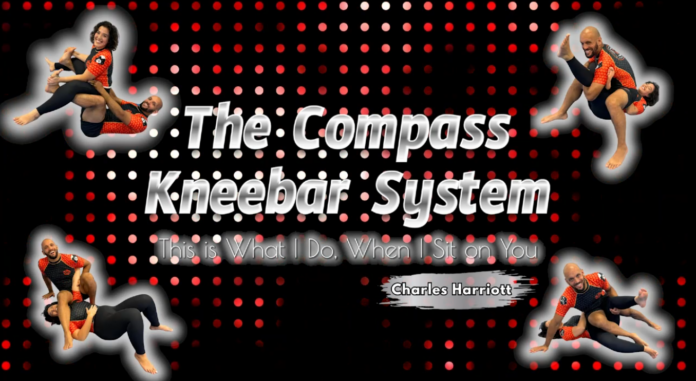
Compass Kneebar System Charles Harriott DVD Review [2024]

Compass Kneebar System Charles Harriott DVD Review
Key Takeaways
  • A 4-part No-Gi DVD instructional that offers a new, very effective kneebar hunting system. 
  • Contains different control checkpoints, entries, and follow-ups, merging together Ashi Garami systems and upper body attacks.
  • Features several sets of different games aimed at helping you master the content faster.
  • BJJ World Expert Rating: 10 out of 10.

COMPASS KNEEBAR SYSTEM CHARLES HARRIOTT DVD GET HERE:

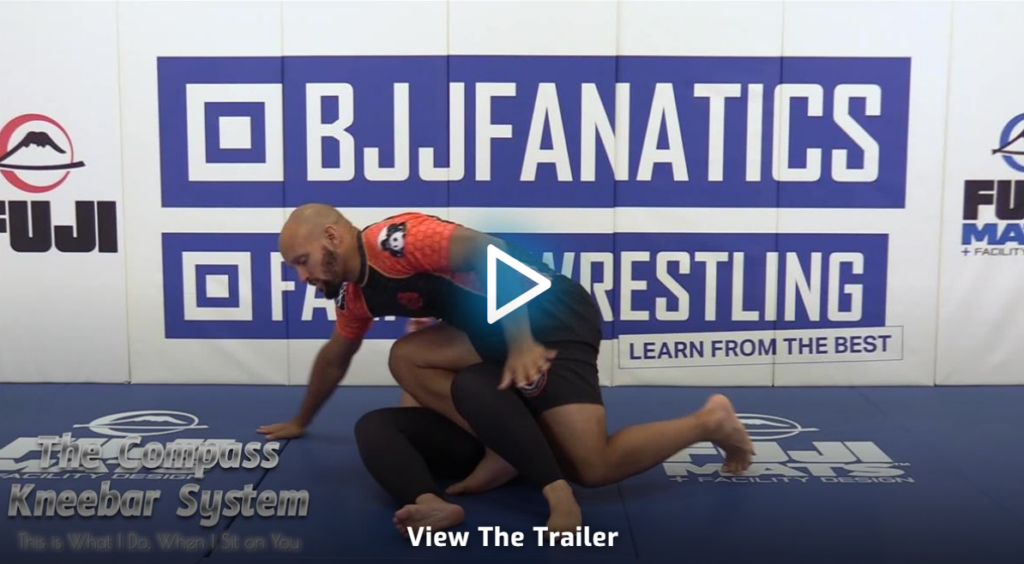
Compass Kneebar System Charles Harriott DVD Preview
WATCH FULL TRAILER: Compass Kneebar System Charles Harriott DVD

A kneebar DVD is always fun to consider, especially if you’ve been training for a few years and like to compete. Regardless of rules or attire, at one point, you’ll be allowed to hunt for kneebars (and be hunted) so developing an understanding of the move early on is imperative.

The Compass Kneebar System Charles Harriott DVD offers a shortcut to mastering kneebars in just a couple of hours. It delivers a clutter-free and concise version of the basics, building on them by way of innovative concepts that make things logical and easy to remember. With drills and games included in this DVD, you really have no excuse to avoid kneebars any longer.

What Happened to Kneebars? 

Back when I was a blue belt, and the leg lock embargo was firmly into place, kneebars and toeholds were the only viable options. Ankle locks didn’t work back then, and heel hooks were the devil’s spawn.

Of course, standard operating protocols back then dictated that we couldn’t touch kneebars and toe holds until they became legal (which, to this day, is still at brown belt level) so all we knew about them was from ADCC matches.

Then came Danaher’s Death Squad, demonstrating that leg locks actually do work and that heel hooks are the way forward. Suddenly, the dogma was lifted and the blue basement cult of heel hookers took over, re-introducing 50% of the human body back as a viable submission target.

This, however, came at a certain expense – kneebars and toe hold fell behind in this evolution, with the former suffering the worse faith. Since we now know for sure that heel hooks and ankle locks work, how about getting back to some finishes that we’ve known to be reliable for ages?

The Compass Kneebar System Charles Harriott DVD is one way to bring back the kneebar! let’s see what it offers.

Leg Lock Genius Charles Harriott

Charles Harriott is a BJJ black belt and BJJ Globetrotters instructor. He has the best job in the world – he is a traveling Jiu-Jitsu coach. Instead of focusing on a ‘home base’ he travels the world, offering to teach classes at any gym that is open to it along the way.

I’ve had the pleasure of training with him on several occasions, including hosting him in my academy, which shows how greatly I rate him. While very well-rounded, and almost impossible to deal with non the mats, as a result of his grappling proficiency, but also his competitive breakdancing background, Harriott has a particular game that is incredibly effective.

His real affinity lies in the leg-locking department, where he excels more than any other aspect of BJJ. Having already revolutionized the way I think about some staple Ashi Garami positions during private classes, Charles now allows you to learn his innovations even if you don’t end up training with him in person somewhere around the world. The Compass Kneebar System Charles Harriott DVD is a great way to see what his BJJ is all about.

Compass Kneebar System Charles Harriott DVD Review

The Compass Kneebar System Charles Harriott DVD is a four-part BJJ DVD that focuses on the kneebar position. It delivers finishing mechanics, control points, entries, and a couple of different mini-systems that tie in perfectly to each other, and certain upper-body submissions. All the material is delivered in No-Gi, amassing to over two hours of instructions.

Part 1 – The Russian Cowboy

The first couple of chapters in the Compass Kneebar System Charles Harriott DVD serve as an introduction to both Charles and his uke Natasha, as well as the contents of the instructional. He shares some key principles of joint locking as well to provide a clear goal for all the technical details that follow.

This first part focuses on a knee-baring/leg-locking position that originates in the 10th Planet Jiu-Jitsu system, dubbed the Russian Cowboy. Charles has taken this double-kneebar concept and turned it into a complete kneebar-centered system, allowing attacks on both legs and providing immense pinning control by explaining how to sit on people.

I particularly enjoyed that Harriott includes notes on training intensity for the position, and especially finishes. He also shares a bunch of super useful games that follow progressive resistance to help you master the key checkpoints of the position.

Part 2 – Compass Kneebars

The star of the show, which is Charles Harriott’s innovative kneebar system is what the second part of the Compass Kneebar System Charles Harriott DVD is all about. Here, Charles builds on the previous base which is the Russian Cowboy, providing several flowing transitions to merge different Ashi Garami destinations with different top position entries.

Following is the compass kneebar system, divided into, you’ve probably guessed, 4 different segments: west, east, north, and south. They refer to the different directions available from the initial entry, which spans to offer different kneebars. The compass is the bottom person, their head representing the north.

Part 3 – Entries & Retaining Top Position

I found this third portion of the new Charles Harriott Kneebar DVD to be particularly interesting, as it helps with an issue I see many people having when they try to focus on entering into leg locks from the top. Apart from Riley Bodycomb, and to an extent, Sean Applegate, nobody has really paid too much attention to this aspect. Until now.

Charles explains in great detail how to make sure that you still retain the top position even if you mess up a kneebar entry or finish by returning to sit back on your opponent. This paves the way for additional entries that allow for even better use of the compass kneebar system, all of which Harriott delivers in this part of the instructional.

Part 4 – Paring Armbars with Kneebars

As we reach the final part of the DVD, Charles opens up yet another can of worms, somehow managing to lin armbars and kneebars in a way that makes sense. He shares different ways to finish armbars off of the initial kneebar setups, jokingly referring to them as kneebaring the arms.

He also delivers easy ways to deal with some common counters you’ll run into, such as Matrix entries or the Jedi Mind Trick. The Compass Kneebar System Charles Harriott DVD concludes with yet another set of games that further allow us to understand the goal and mechanics of the compass kneebar system.

Same Attack, Different Angles

Having the ability to hit a submission you are good at from different setups is the mark of a true submission specialist in BJJ. Not many people can claim this mantle, at least not realistically, though. Submissions are the toughest moves to finish, especially when you’re dealing with someone who has grappled for a bit.

Kneebars represent a very potent option in this regard, given that finishing requires a straight leg. This turns the opponent’s leg into an axis, allowing you to rotate as needed until you land the position you’re after. Or, even better, one of the many alternative finishes that the Compass Kneebar System Charles Harriott DVD provides.

While the kneebar might not be as easy to wrap up as some other leg locks, particularly heel hooks, it does offer a lot of value by introducing not just a different threat to a different joint in the leg, but also a great way to reinforce ankle and foot finishes. Throw in the 360-degree entry opportunities and there is a huge case to be made in favor of the kneebar.

Compass Kneebar System Charles Harriott DVD Free Sample
FREE TECHNIQUE SAMPLE: Compass Kneebar System Charles Harriott DVD

FULL DOWNLOAD: CHARLES HARRIOTT KNEEBAR DVD

Kneebars All Around! 

Next time you have top position with a scoop grip on one of the opponent’s legs and are wondering what to do next, feel free to hate yourself for not picking up the Compass Kneebar System Charles Harriott DVD earlier. For everyone else smart enough to find their kneebar bearing early, it was more than worth it, wasn’t it? Arrr maties!

How To Master The Kneebar For BJJ And MMA

From Sambo With Love – Rolling KneeBar Setups For BJJ

The Dogbar: A Surprising Kneebar Submission From Top


Trip Throw Dilemma Michael Pixley and Heath Pedigo DVD Review [2024]

Trip Throw Dilemma Michael Pixley and Heath Pedigo DVD Review
Key Takeaways
  • A two-part No-Gi DVD blending together trips and throw techniques for BJJ.
  • Contains a bunch of different trip-throw combinations, executed from either underhook or overhook control.
  • Features bonus submission follow-ups, as well as effective mat return tactics.
  • BJJ World Expert Rating: 8 out of 10.

 TRIP THROW DILEMMA MICHAEL PIXLEY DVD GET HERE:

Trip Throw Dilemma Michael Pixley and Heath Pedigo DVD Free Sample
SEE THE FULL TRAILER HERE: Trip Throw Dilemma Michael Pixley and Heath Pedigo DVD

The best way to throw someone down is to trick them into messing their balance up. If you decide to only attack one aspect of their structure, such as posture, you’ll likely hit a brick wall, and end up messing it all up. Or worse, you’ll be forced to pull guard and butt scoot.

The solution to this issue lies in dilemma attacks. The Trip Throw Dilemma Michael Pixley and Heath Pedigo DVD offers a way to combine Judo and wrestling into a simple system that will allow you to finally start taking people down at will. Or pulling guard better, if you’re dead set on being the subject of BJJ memes.

The Story of BJJ Dilemmas 

It was Danaher who introduced the concept of dilemmas in BJJ under that name, providing a very concise and detailed explanation of how threatening at least two things at once forces opponents into making bad decisions, allowing you to capitalize on at least one of your attempts.

Others before him used the same tactics, from the Gracies onwards, and even people before them, probably. I’ve heard it explained as baiting, trapping, leading, faking, etc. Regardless of the name, it comes down to tricking your opponent into messing up, by offering them two scenarios that they don’t like as their only options.

In essence, it is the illusion of an option, as whatever the outcome is, it favors you. With dilemmas, you usually like to combine end-range movements such as a submission with a pass or sweep that, allowing each to enhance the threat and effectiveness of the other.

You can also use dilemmas to take people down, ranging from pulling guard and doing takedowns (the guard pull-ankle pick being one widely used example) to combining different types of takedowns to achieve your goals.

The Trip Throw Dilemma Michael Pixley and Heath Pedigo DVD presents one such example of a choice that your opponent won’t find easy to make. Your only task in succeeding with ti is presenting it in a way that leaves no other options open. 

Michael Pixley and Heath Pedigo

The Daisy Fresh team has really pushed the boundaries on BJJ in more ways than one. From putting together a team out of nowhere and in the middle of nowhere, to producing world-class competitors and even changing the template of BJJ instructionals.

One thing we often see from the team’s founder Heath Pedigo is that he participates in the instructionals of all his students. The credits are shared, but it still remains within the team and we viewers get to see two perspectives rather than one. Imagine if Danaher and Ryan did that too.

In terms of bios, Heath Pedigo is a black belt in Brazilian Jiu-Jitsu under Rodrigo Vaghi. He founded the Petigo Submission Fighting Team from Mount Vernon, IL, which became known as the Dasiy Fresh team. He has been training and competing since the late 90s, which puts him among the pioneers of submission grappling in the US.

Michael Pixley, on the other hand, is a Heath Pedigo purple belt, and the Daisy Fresh team wrestling coach. The former NCAA and NAIA Champion announced himself to the world by taking out Nicholas Meregali at the ADCC, leaving lots of questions about whether belts really mean anything in BJJ anymore.

Nevertheless, the focus of today’s article is on the Trip Throw Dilemma Michael Pixley and Heath Pedigo DVD, a joint effort that introduces a blueprint to developing a dilemma question for standing that few will be able to answer. 

Trip Throw Dilemma Michael Pixley and Heath Pedigo DVD Review

The Trip Throw Dilemma Michael Pixley and Heath Pedigo DVD is a two-hour-long instructional that covers a simple way of using underhooks and overhooks to launch dilemma attacks while standing. It is a No-Gi instructional featuring Daisy Fresh team members. 

Part 1 – Overhooks

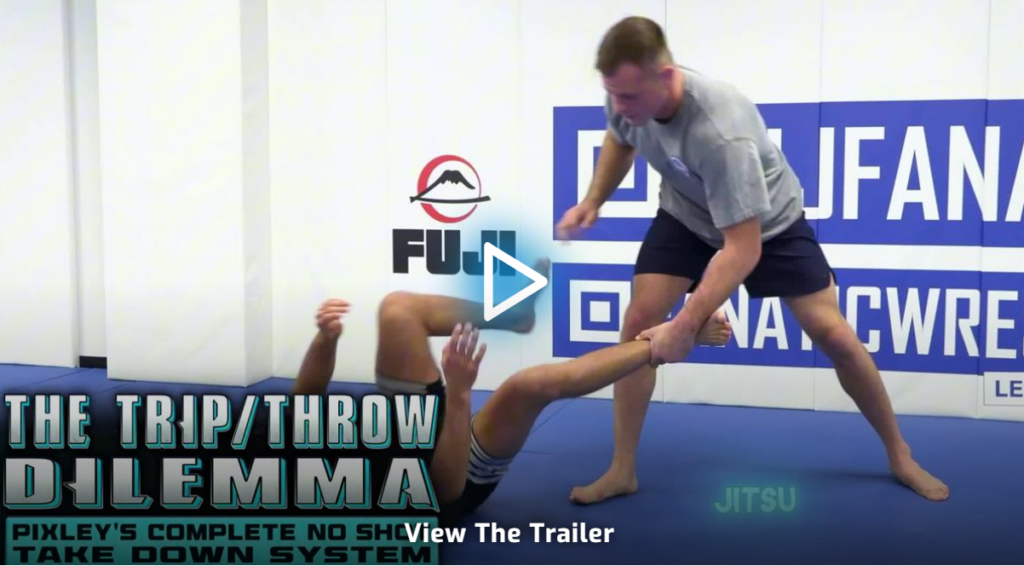
This Trip Throw Dilemma Michael Pixley and Heath Pedigo DVD is beautifully divided into two portions, the first of which addresses how to get people to the mats relying on overhooks. Of course, it presents a dilemma, offering leg attacks in the form of trips, paired with hip and upper body throws. 

The main culprits in the first volume are ankle picks and inside leg trips, made possible by the overhook that denies the opponent a chance to counter. While these can prove difficult to finish, as opponents can still escape by raising their foot off the mats in time, Pixley and Pedigo fortify them with a couple of Judo throws, one of which is dubbed the Meregali throw. Read into it as you want.

Part 2 – Underhooks

The second part of the instructional stays on the same track, although there is a change in the main method for control, swapping the overhook for an underhook. Most of the second part of the Trip Throw Dilemma Michael Pixley DVD covers shoulder crunch-controlled attacks, transitioning to headlock as needed. 

The dilemmas feature low foot trips and drag downs, paired with the occasional leg-sweeping throw. Judo drops also appear, offering a great addition to a few wrestling-inspired mat returns that the Daisy Fresh team loves to use.

As the final part comes to a conclusion, Pedigo and Pixley offer a very cool concept I never realized before, which is bundling trips together in a way that affects both legs, making it fairly impossible to defend against.

Two Dimension of Takedown Setups

Dividing the body into upper and lower in terms of management is the ultimate way of controlling people in grappling. It may be standing, or on the ground, it may be top or bottom, and even offense or defense – the goal remains the same.

In wrestling, they refer to it as bunching – getting the head and feet as close together as possible. I like to call it folding. This is what you want to force your opponent into if you want to control them, regardless of where you are. It is also what you don’t want to give away as well.

Since people who have grappled a while understand this, they won’t be easy to fold, which now means you have to alternate attacking different parts of their body, usually at both ends. Going for headlock and footsweeps, for example, is a great combo, but it can also be difficult to pull off against folks with good posture habits.

That leaves us with the Judo classics of using upper body throws from clinching positions combined with inside and outside trips. Sprinkle a bit of classic wrestling control in there, so that you’re not reliant on the GI and you have the blueprint offered in the Trip Throw Dilemma Michael Pixley and Heath Pedigo DVD. It works. 

Trip Throw Dilemma Michael Pixley and Heath Pedigo DVD Preview
FREE TECHNIQUE: Dragdown – Trip Throw Dilemma Michael Pixley and Heath Pedigo DVD

FULL DOWNLOAD: TRIP THROW DILEMMA MICHAEL PIXLEY DVD

Throw or Trip? 

So, the dilemma is whether you’ll succeed with a throw or a foot sweep? The Trip Throw Dilemma Michael Pixley and Heath Pedigo DVD has everything you need to start asking such Shakespearean questions out of your grappling partners, even though you’ll have the advantage of knowing the final answer. 

The Judo Leg Grab Ban is Lifted, But There Are Conditions

All the Best Judo Instructionals and Courses

Bodybuilder Tries JUDO with 5x British Judo Champion & BJJ Black Belt


Osoto Gari for Jiu Jitsu Jackson Nagai DVD Review [2024]

Osoto Gari for Jiu Jitsu Jackson Nagai DVD Review
Key Takeaways
  • A Gi BJJ DVD containing two volumes breaking down the different ways you can use Osoto Gari trips in BJJ.
  • The material features Judo essentials adopted to the specific needs of BJJ.
  • Contains plenty of submissions, either from standing or as follow-ups.
  • BJJ World Expert Rating: 8.5 out of 10.

 OSOTO GARI FOR JIU JITSU JACKSON NAGAI DVD GET HERE:

Osoto Gari for Jiu Jitsu Jackson Nagai DVD Preview
WATCH FULL TRAILER: Osoto Gari for Jiu Jitsu Jackson Nagai DVD

Gi or No-Gi, your takedowns in BJJ are always going to be a determining factor of what happens on the ground, once you eventually reach it. The rule of thumb is that you want the most effectiveness with the least amount of effort, as that translates to the least danger while you attempt your takedowns.

For the purposes of BJJ, this means Judo trips and footsweeps. Whenever possible, try to learn from people who share specialized moves from other grappling martial arts, adapted to the needs of BJJ – such as the Osoto Gari for Jiu Jitsu Jackson Nagai DVD. It makes a significant difference.

Judo Trips for BJJ 

If you want to become better at takedowns for BJJ, turn to wrestling, not Judo. You’ll have an easier time figuring things out, incorporating them into your training, and eventually, adding them to your competitive game plan.

That said, Judo remains a highly effective option to spice up your standing game and introduce variety to your attacks. However, given the very long learning curve that Judo requires, you should apply the filter of reality and focus on moves you can learn fairly quickly, rather than hoping to develop Olympic-level Uchi Matas while drilling 15 minutes every two weeks.

Your focus with Judo for BJJ, at least in terms of standing exchanges should be on trips and footsweeps. You’ll be able to figure them out quicker than upper-body throws, particularly if you already have a wrestling-based game plan and some experience in not getting taken down easily.

Of course, any instructional specializing in Judo foot sweeps and trips for BJJ, such as the Osoto Gari for Jiu Jitsu Jackson Nagai DVD is a very valuable resource to help you achieve this goal, shy of joining a Judo gym. 

Jackson Nagai – Connecting Japan and Brazil

Jackson Nagai was born in Brazil in 1994, but spent half of his life in Japan, after moving there at the age of 10. Funny enough, he discovered Brazilian Jiu-Jitsu in Japan rather than his native Brazil, joining and academy Evox BJJ as a teenager and ending up in love with the sport.

Along with his brother Samuel,  Jackson ended up showing incredible talent, dominating competitions around Asia. When he ended up back in Brazil, Nagai kept training at Nova Uniao, starting to really establish himself in the sport. He was a brown belt at the time, promoted by Marcio Pontes.

It took World Champion Gavriel Moraes to convince Jackson to turn to grappling as a career, getting him and his brother to the US. As part of the Checkmate team, Jackosn kept growing, earning his black belt in 2020, and having already won the Worlds, Pans, and American Nationals since.

Today, we’re looking at the Osoto Gari for Jiu Jitsu Jackson Nagai DVD, which is the first instructional we’ve had the pleasure of reviewing from this up-and-coming grappling sensation. 

Osoto Gari for Jiu Jitsu Jackson Nagai DVD Review

The Osoto Gari for Jiu Jitsu Jackson Nagai DVD is a two-hour long BJJ instructional featuring an easy-to-use footsweep system for BJJ that ends in different submission holds on the mats. It contains two different volumes and is shot with the Gi. 

Part 1 – Technical Osoto Gari

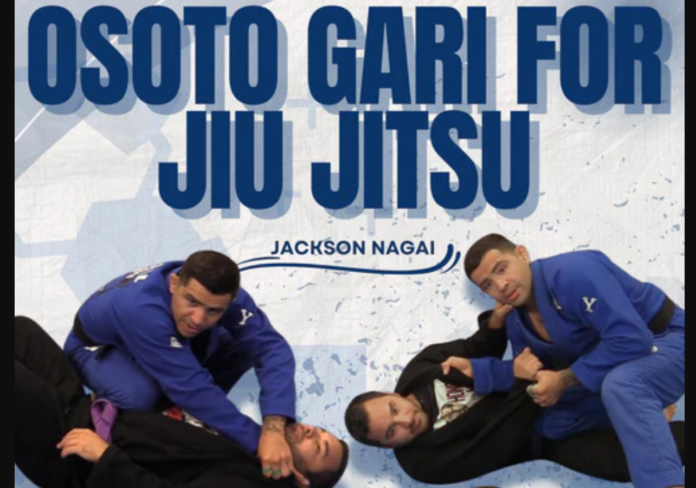
As the Osoto Gari for Jiu Jitsu Jackson Nagai DVD kicks off, Nagai begins like any Judo class would – with drills. He talks about timing and Kuzushi through the prism of the Osoto Gari, as he explores its foot-sweeping effectiveness and uses. 

Sticking to Osoto’s application for BJJ needs, he offers a slick armlock that pairs perfectly with it, as well as a collar choke that you can get after completing the trip. He also explores how to change the depth of the trip by pairing it with the even more technical Ouchi Gari.

The Kata Guruma (a.k.a. Fireman’s carry) also makes an appearance, offering a different dimension of takedown to pair with the Osoto Gari and once again, leading to a bunch of follow-up submissions on the ground.

Part 2 – Osoto and Kouchi Gari

The second part of this instructional goes further into the domain of Judo trips and sweeps, once again, only taking into account things that make sense in BJJ. Jackson first addresses the Kouchi Gari technique mechanics, as an opposite to the Osoto.

he follows up with ankle pick variations that end up opening leg locks, such as ankle locks and kneebars, and different passes once you reach the mats. he demonstrates how to Ososot Gari and Kouchi Gari work together, offering a system that’s hard to beat without the added threat of submissions.

Towards the end of this part of the Osoto Gari for Jiu Jitsu Jackson Nagai DVD, we also see how to turn a failed Osoto Gari into success by utilizing the balloon sweep, and, of course, following up with submissions. Nagai also covers single-leg takedowns, showing an easy seatup that features an Osoto Gari entry.

Go For The Legs First

During standing exchanges in BJJ, you have more ways to take the match to the ground than in any other grappling martial art. This is because you can pull guard in addition to throwing someone on their back, even though that might not earn you points.

Another thing to consider is that BJJ offers plenty of submissions, a few of which work during standing, while others require a standing exchange in order to set them up before going to the ground. This introduces too much variability off the bat and leaves people confused when they try to develop a standing BJJ game.

Let me simplify things. First, get grips. Then, disrupt your opponent’s balance. Finally, focus on tripping up their legs. Do that, and you don’t immediately get a takedown, you’ll get the chance to follow up with anything you want, from guard pulls to power doubles.

The Osoto Gari for Jiu Jitsu Jackson Nagai DVD offers options regarding the balance disruption and tripping up a portion of this three-phase standing concept. Grips are something you’ll need to figure out yourself. 

Osoto Gari for Jiu Jitsu Jackson Nagai DVD Free Sample
FREE SAMPLE: Osoto Gari Kneebar – Osoto Gari for Jiu Jitsu Jackson Nagai DVD

FULL DOWNLOAD: OSOTO GARI FOR JIU JITSU JACKSON NAGAI DVD

Trip ‘Em Up! 

Out of all the takedowns you do, sweeping the legs from beneath an opponent, sending them flying through the air for a moment is more rewarding than anything else. There is a movie-like pause while you wait for the opponent to land, during which you get to enjoy the helpless expression of terror on their face. The Osoto Gari for Jiu Jitsu Jackson Nagai DVD is going to teach you how to accomplish this and follow up with submissions immediately afterward. What’s not to like? 

BJJ vs. Judo – What Are The Main Differences?

Grappling Without Limits: Wrestling And Judo For BJJ

Simple Judo Takedowns For BJJ by Matt D’Aquino DVD Instructional

Double Sleeve Guard Jon Thomas BJJ DVD Review [2024]

Double Sleeve Guard Jon Thomas BJJ DVD Review
Key Takeaways
  • A 4-part BJJ DVD featuring the Gi that explores how to optimally play guard using double sleeve control. 
  • Covers guard retention, submission and sweep attacks, and transitions between different guards.
  • Features the Spider/Lasso guard, De la Riva guard, shin-to-shin guard and X-guard.
  • BJJ World Expert Rating: 8.5 out of 10.

 DOUBLE SLEEVE GUARD JON THOMAS DVD GET HERE:

Double Sleeve Guard Jon Thomas BJJ DVD pReview
WATCH FULL TRAILER: Double Sleeve Guard Jon Thomas BJJ DVD

What’s the first grip you establish when you play guard in the Gi? If you mention the collar anywhere in your answer, you have no idea how to play guard against standing opponents. If you don’t mention a sleeve grip, you have no idea of how to play any guard.

Allow Jon Thomas to help. In the Double Sleeve Guard Jon Thomas BJJ DVDyou get everything that he usually offers in his YouTube video, but taken up a whole level – this one lasts over two hours. Let’s take a closer look at this instructional.

The Coolest Trick in BJJ 

One of the things I really love to show people when I teach anything guard-related is how to prevent a pass using nothing but their grips. I simply get the bottom person to grab the top person’s palms, one in each hand, usually from a stated position. Then, I ask the top person to pass.

You can try it out for yourself, but let me save you the hassle – the top person can’t pass. It turns out, that the top person needs to have at least one arm free to grip during passing, otherwise, they stay hopelessly far away from getting their hips past the bottom person’s knees and hips.

You can use this cool trick any way you want while playing guard. whether you opt for wrists, palms, or sleeve grips, as long as the palms of the top person stay away from you and you can control their elbows to a certain point, you’ll have a breeze at keeping any guard. Most of you are already seeing attacking opportunities that appear as the top person tries to deal with the grips.

The Double Sleeve Guard Jon Thomas BJJ DVD makes a lot of sense when you know this fact about passing. Jon knows exactly how valuable double wrist control is, and he does an outstanding job explaining how to build a full guard game using them in this instructional.

Jon ‘Spaghetti’ Thomas

If you’ve ever searched for anything BJJ related on YouTube, which you have, as well as me and everyone else who trains, you’ve seen Jon Thomas. His YouTube channel is crazy good, offering not just in-depth instructions, but also constantly going over positions and moves that many people don’t use often.

From fundamental principles to crazy move sequences, Thomas has proven to be able to explain everything in a way that makes sense using short clips only. Now, imagine what a full-length instructional, such as the Double Sleeve Guard Jon Thomas BJJ DVD can offer! 

Thomas, apart from being a YouTube grappling celebrity, is a well-established black belt under Lucas Lepri. Jon has been training since he was a teenager, competing since the early 2000s. Along the way, he decided to go pro, seeking our Ryan Hall at first, before linking up with Alliance and settling under Lepti and Romero Cavalcanti.

Promoted to black belt in 2013, the Missouri native has won the Worlds twice at colored belts (purple and brown), but and the Pans three times (starting from blue belt). He still hasn’t replicated these results at black belt, although he has won a bunch of IBJJF open tournaments around the world.

The Double Sleeve Guard Jon Thomas BJJ DVD Review

The Double Sleeve Guard Jon Thomas BJJ DVD is a four-part Gi instructional that contains four volumes and lasts for over two hours. The material covers different guards that offer double sleeve control and methods to retain guard and attack using it: 

Part 1 – Positional Theory & Examples

With Jon being particularly effective with his guard, the depth of knowledge available in the Double Sleeve Guard Jon Thomas BJJ DVD is staggering. That is apparent in the opening chapters of the instructional when Thomas explains the positional theory that fuels his guard game. 

Through the four key aspects of any guard, Jon makes it obvious why the double sleeve control from the guard is so powerful, following it up with examples including the use of the De la Riva and sit-up guard. This first volume covers all the nuances of gripping, leg positioning, sleeve control, and basic off-balancing and set-up principles and directions.

Part 2 – Lasso/Spider Triangles & Retention

As we get to the second part of this Double Sleeve Guard Jon Thomas DVD, the focus is more on the practical use of the foundations demonstrated in the previous volume, mostly through the use of the hybrid lasso/spider guard

Jon’s attention in this part is on explaining how attacks from the double sleeve position work, and how to stay on guard when you’re opponent’s are trying to break the connection.  For the first aspect, Thomas picked triangle setups to explain how off-balancing and double-sleeve control exposes your opponent’s posture, and subsequently, their neck.

In terms of guard retention, he covers the most effective and often used threats from the top, from stomping to the wrist loops that make it impossible to hold, along with easy and straightforward solutions to them all.

Part 3 – X-Guard 

Part three of the Double Sleeve Guard Jon Thomas BJJ DVD tells us about a guard we’ve seen Thomas use over and over again: the X-guard. Arriving there off the use of the spider/lasso guard brings cohesion to everything Jon demonstrates, allowing him to easily explain the back-and-forth relation between these guards.  

Once again, keeping the guard is the key aspect, with JOn’s game making the most out of a double-sleeve grip from the X-guard. While it does mean you can’t immediately attack with a submission, it guarantees you can sweep in any direction you want. All of this is dissected over the course of half an hour in this volume.

Part 4 – Kneeling Opponents & More Spider Variations 

The final part is Jon taking us on a journey of how his mind works in terms of applying double sleeve control to a bunch of guards, as he ties in together the lasso/spider, DLR, and X-guard, reinforcing all the information delivered up to this point.

As the Double Sleeve Guard Jon Thomas BJJ DVD nears the end, Thomas moves on to explore a level change, showing how you can use double sleeve control from the shin-to-shin guard and DLR variations even against people half-kneeling or kneeling from the top. 

Grips Win Fights! 

The more you understand grip fighting in BJJ, the more effective you’ll be in winning all exchanges, which also translates to winning more matches. When you’re the bottom player, grips are crucial to success, whereas you can sometimes manage to slide by using sub-optimal grips if you’re on top.

For the most part, you need to understand two key aspects of gripping to have a hope of succeeding in grappling. The first one is that you need to use your grip for a purpose, rather than just place your arm at a specific point. For example, with double writs grips, you need to pull and place tension on the arms, not just hang on to the Gi.

The second key principle of gripping in grappling is that you don’t have to break any grip an opponent has on you. Unless their grip serves a purpose, like explained above, leave it be – it won’t affect you while handicapping your opponent as a result of dedicating a limb to something that serves no goal.

The Double Sleeve Guard Jon Thomas BJJ DVD is great at providing you with plenty of answers in regard to the first of these two key gripping principles for grapplers. If you like to play guard with the Gi, this instructional must be a part of your collection. 

Double Sleeve Guard Jon Thomas BJJ DVD Free Sample
FREE TECHNIQUE: Double Sleeve Guard Jon Thomas BJJ DVD

FULL DOWNLOAD: DOUBLE SLEEVE GUARD JON THOMAS DVD

Grab Those Sleeves! 

Remember, sleeve grips are not death grips! Holding on to the sleeves needs to be uncomfortable for your partner, not just give them a connection they can use to pass. The Double Sleeve Guard Jon Thomas BJJ DVD offers the perfect blueprint for setting up any guard game that utilizes double-arm control by using the same simple principles. 

De La Riva Guard: The Best DVD And Digital Courses

Single Leg X Guard: ALL DVD And Digital Instructionals

BJJ Spider Guard: How To Become An Apex Predator

Quick Crucifix Choke Variations From Front And Back

Crucifix Choke Variations From Front And Back

The crucifix position has several different variations that appear throughout grappling martial arts. In Brazilian Jiu-Jitsu, in particular, the crucifix is most often used as a variation of back control, or to improve pinning from the top of side control. In both cases, numerous submission options present themselves, with crucifix chokes being the most reliable one to look into.

Quick Crucifix Choke Variations From Front And Back

What is the Crucifix Position in BJJ?

The crucifix position is very efficient in both grappling and MMA. The question is, why don’t more people use it then, especially in Gi Jiu-Jitsu? Well, for one, it does not earn people points.

Given that most positions that earn points, at least under the IBJJF principles, do so from the perspective of how much control and damage you can apply to an opponent, this seems ridiculous, but let’s not turn this article into an IBJJF witchhunt.

The fact remains that the crucifix position, particularly when done from the back offers extreme amounts of control and very interesting finishing options. The most effective submissions to look for are a bunch of particularly nasty crucifix chokes.

Origins of the Crucifix

The position became popular through the crucifix wrestling move, done by pro wrestler Dan Spivey, and later named the crucifix powerbomb. While it was entertaining to watch, we all know that most pro-wrestling moves are completely unrealistic in a real match/fight. Well, the crucifix is one of those rare exceptions to that rule.

The position most likely originates from Judo, where it is used to break down turtled opponents and immediately choke them. In fact, the crucifix choke utilized by Judokas is named Jigoku-Jime which translates as “hell choke”. That right there is all the validation you need about the crucifix choke. 

The way the crucifix is used in modern grappling is mostly from the back, but there’s also a great variation that helps keep people in side control when you are on top. In both cases, chokes are pretty easily available, but what really makes the position a powerful one is the amount of effortless control you have over someone from there.

There is an old wrestling principle called “the pole and the tree”. If you have a tree on the ground, and you have a pole on the ground, which one is going to be easier for you to roll? If your answer is “the pole” you are correct. Obviously, it would be very difficult to roll the tree because of its branches, which is exactly the principle that blocks people from rolling when caught in a crucifix.

Whether it is from the back, or from top side control, the crucifix Jiu-Jitsu position allows you to turn someone into a “tree” by trapping their arms in an “open elbow” position on each side. Combined with the weight of your full body on the shoulder line you have a great position to look for crucifix submissions.

How Do You Put Someone In a Crucifix?

As usual, there are plenty of ways to get to the Crucifix BJJ position, once you know your control checkpoints. For both the back mount and top side control crucifix variations, you entangle one of the opponent’s arms with your legs, and the other with your arms. This gives you lots of power against their weak isolated limbs, which provides the control, and some submission options.

From the back mount, a Kimura grip ensures control over one arm with your arms, at least initially. Controlling the second arm requires a triangle configuration with your legs. That means you’re using two of the most powerful reinforced wedge systems in BJJ to control the limbs of an opponent.

Top side control crucifix has you pinning both arms, this time focusing more on gravity than reinforced wedges. Using your shins to pin the near side arm is not just powerful, but also very painful for the bottom person. There are several ways to control the far side arm using your arms, but the best one is to place an underhook, grabbing the shoulder of the opponent. It is one of the tightest op pins in Jiu-Jitsu.

Crucifix Chokes In No-Gi

Now, let’s talk about how to actually put people to sleep from the crucifix. Of course, you have lots of arm-locking options as well, but there’s nothing quite like making people tap with chokes. After all, they’re the only submission people can’t just power out of and endure for long.

Mounted Triangle Crucifix Finish

Start off by lifting the shoulder on the far side up, along with the head. You can cup the head or get a grip on the back of the collar. This places the bottom person under pressure, similar to S-mount but with extra control via the pinned near side arm.

Put your free leg behind the head of the opponent, bunching them up. From there, you’re in the perfect position to slide that leg under the head, getting your hip to the ground. Sliding the other leg across the opponent’s chest will get you straight into a mounted triangle.

Inverted Triangle

Another useful triangle crucifix choke from top side control is the inverted trinagle. For this version, instead of going under the head with the free leg, you go over it, while releasing the pinned near side arm so that you have a triangle position.

No-Gi Crucifix Rear Naked Choke

A very reliable crucifix choke option from the back crucifix in No-Gi is the good old rear naked choke. After all, the opponent has no arms that can defend, while you have a free arm, positioned perfectly to start attacking the neck.

All you need to do is put in reps on finishing the rear naked choke with one arm, which is actually easy. Just get your palm behind their shoulder and use your fingers to find a “ledge” on their back that you can hold on to.

You can also opt to go around the head (like for a guillotine). Then, use the top leg and place it around the opponent’s torso, so that you and sneak the choking arm underneath it. You are a palm-to-palm grip and a squeeze away from a nasty and unexpected crucifix choke. Check out the video below for details:

Gi Crucifix Chokes

With the Gi your options to both control and finish from the crucifix position increase, just like with any other attack. With more places to get tight grips on, and the lapels serving as extensions of your arms or legs, you can finish even the most stubborn opponents from the BJJ crucifix.

Paper Cutter Choke

One of the easiest Brazilian Jiu-Jitsu chokes to set up from a top side control crucifix is the paper cutter. The original paper cutter choke works by trapping the near side shoulder before choking.

Since both shoulders are trapped and pinned in the crucifix, all you need is to place the free arm across the neck. This crucifix choke requires a grip with your thumb inside the collar. Make sure you touch your elbow to the ground and continue to open up the elbow towards the opponent’s head for a tap.

From the back crucifix, it is choking galore, whether you opt for the collar or your own lapels. Collar chokes are pretty easy – same as if you would set up a rear naked choke, but you need less space since the Gi is easier to grip and provides a tighter choking option.

Lapel Chokes from The Crucifix Jiu-Jitsu Postiion

Lapels are where things get tricky but interesting. Your own lapels are better suited for the job, given their proximity to the neck. However, you can also use their own lapels to further trap their arms, or more precisely, the arm you’re controlling with your own arms.

For a lapel crucifix choke though, all you need is to free up your lapel, regardless of side, and wrap it around the neck of the opponent. From there, you can directly squeeze, or put more pressure on by using your legs. Also worth mentioning is that you can wrap a lapel around the neck from either direction, making it all the more confusing for your opponent.

Escaping the Crucifix

When it comes to beating crucifix chokes, you’re not going to have too much success. However, getting out of the position before the opponent starts setting chokes up is a viable option. In order to achieve that, you need to e aware of the position’s main strengths and beat them early.

Early on, your best bet is to start bridging so that the top of your head reaches the ground over the opponent. The goal will be to free up the arm that is trapped by the legs.

That means the direction of your bridging will be diagonal, over the far shoulder of the opponent. This will help you get your arm out as long as you keep it limp and loose. From there on, it is easy to completely disengage, or go for counterattacks.

One thing you can do later on is try to disentangle the control they have over one arm with their legs. Your goal is to walk your legs towards theirs, curling your body up so you can trap one of their legs with both of yours.

You can use this configuration to sneak your trapped arm out, thus preventing most chokes. In order to completely escape, you’ll also need to free up the other arm, but that’s easier now that you’re no longer crucified.

Using the Crucifix to Submit

Attacking with crucifix submissions is not just limited to crucifix choke BJJ variations. You can freely hunt armlocks as well, with wristlocks and biceps slicers being particularly brutal and effective. Given the success rate of chokes, though, my suggestion is to start with them from the crucifix and then expand your submission game from there. You can always spice it up with an armlock or two.

Darragh O’Conaill Crucifix Encyclopedia DVD Review [2024]

Side Control Crucifix Attacks To Make Yourself Enemies In The Gym

Alexandre Vieira DVD – The Crucifix And Loop Choke

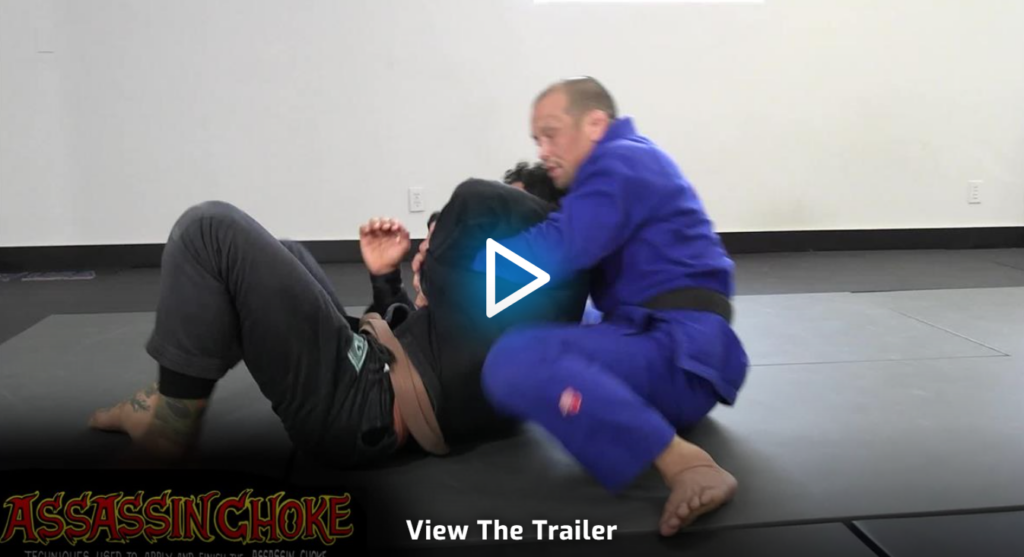
Assassin Choke Baret Yoshida DVD Review [2024]

Assassin Choke Baret Yoshida DVD Review
Key Takeaways
  • A 2-volume Gi BJJ DVD that breaks down the highly effective lapel-based Assassin choke. 
  • It contains different ways to finish the choke, from different positions and using different lapels.
  • Features combo attacks that connect arm locks and other chokes to the system.
  • BJJ World Expert Rating: 7.5 out of 10.

 ASSASSIN CHOKE BARET YOSHIDA DVD GET HERE:Assassin Choke Baret Yoshida DVD Preview

Lapel chokes are attractive, effective, and fun, but they can be hard to set up. Unless you can somehow hide your intentions from the opponent and catch them completely off guard once the choke starts to sink in.

One way of doing this is to use a specific configuration of your lapel to set up as many different chokes as you can think of. The Assassin Choke Baret Yoshida DVD delivers exactly that, organized neatly in two volumes. In about an hour, you’ll see everything you’ll ever need to assassinate people using the cloth. As long as you drill it regularly, of course.

Adding Reach to Your Chokes

Can you tell me what the biggest problem of any No-Gi choke is? Think rear naked choke, or Darce, as they’re easy examples. You probably figured it out by now, but I’ll still say it – arms’ length. Since you can’t really do anything about how long your arms are, you have to figure out alternate ways of remedying this.

One thing you can do is switch your angles, trying to pinpoint a position that will allow you to finish chokes even if you have T-rex arms. However, given that your opponents are going to do all they can to defend, this doesn’t really offer a very effective solution.

Enter the Gi. Or, rather, a specific part of it. The lapels, as well as the collars, and even the belt, are all great tools that you have at your disposal to extend the reach of your chokes. In fact, the Gi can completely take over the tasks of one of your arms, leaving you not just with a tighter noose, but also an extra limb to tighten it with.

The Assassin Choke Baret Yoshida DVD explores a choke many people is difficult to set up, on account of the level of Gi manipulation involved. Baret does not agree, obviously, and outlines exactly why in this instructional. 

BJJ Elite – Baret Yoshida 

There was a period at the start of professional grappling when you couldn’t watch a pro event without seeing Baret Yoshida compete in it. It also means that you could probably predict one of the semi-final or final spots, given Yoshida’s deadly game.

The guard specialist, who is an Egan Inoue black belt has been racking up wins and medals at the highest level of the sport since 2002. The Hawaiian-born managed to win the IBJJF worlds in No-Gi 4 times in a decade, also conquering the Pans in the process and having all medals except the gold on multiple occasions in the ADCC.

Baret started training early, joining Relson Gracie’s academy in 1994 when most people still had no idea what BJJ is. Given his location, he chose to switch academies at purple belt, option for the Inoue academy, then ultra-popular on account of Enson and Egan. He also gave MMA a try, but a 6-6-1 record meant that he opted to stick with BJJ instead.

That said, there’s hardly anyone who knows more about No-Gi Jiu-Jitsu at the highest competitive levels than Baret Yoshida. Particularly dangerous off of his back, he always poses a serious submission threat, something that becomes crystal clear as you go through the Assassin Choke Baret Yoshida DVD.

Detailed Assassin Choke Baret Yoshida DVD Review

Interestingly enough, even though Baret is a true No-Gi specialist, the Assassin Choke Baret Yoshida DVD is a Gi instructional. Over the course of two volumes, Yoshida offers more than an hour of quality material pinpointing one specific aspect of BJJ – Gi chokes

Part 1 – Assasin Submissions

The first part of the Assassin Choke Baret Yoshida DVD features very little of the choke you’d expect to see init. Worry not, there’s plenty of that in the second part, but I do wonder why Baret did not switch the order of DVDs. 

Anyhow, this portion shows the Assassin choke just for reference’s sake, before moving on to explore different ways that other submission holds tie-in with it in a complete submission-hunting game. For example, Baret shows Kimuras, bread cutter choke variations, and lots of crucifix variations of the move, showing how versatile your transitioning can be while holding on to the choke.

Part 2 – Assasin Chokes from Everywhere

The second part is a lot more detailed when it comes to executing the actual Assasin’s choke. The first part of it explores different setups, such as back mount, off of Nelson holds, and top side crucifix. Variations include one-arm choke finishes, choking with the belt, and switching sides.

The Assassin Choke Baret Yoshida DVD then goes further in the rabbit hole of Assasin chokes, covering the likes of baseball chokes and neckties as ways to reinforce the submission power of the Assasin choke. The  Ninja choke, of course, features as well, before Yoshinda wraps everything offering a cool Assasin choke flow you can drill. 

Introducing Lapels to Your Submission Game

Lapels are a great way to improve your BJJ submission attacks which are not limited only to chokes. You can easily rely on lapels for hunting armlocks as well, particularly bent arm lock variations, and even finishing some leg locks.

Using the lapel has a host of advantages – it provides a great gripping surface that doesn’t slip, you can thread it around more easily than a limb, you can tighten it more since it has no joints, and you have four lapels at your disposal throughout any match.

The one glaring drawback is that you can’t use lapels in No-Gi. If you’re a Gi exclusive grappler, you don’t have this problem, whereas, for everyone else, variations of powerful Gi chokes exist to stand in while rolling in no-GI: guillotines for loop chokes, Darce for Brabo, bow and arrow choke for the rear naked choke, etc.

The Assassin Choke Baret Yoshida DVD offers all of these chokes but through the methodology of just one technique. This reduces the amount of information you need to master lapel chokes and makes it a lot easier to add to your game. 

Assassin Choke Baret Yoshida DVD Free Sample
FREE MOVE: Assassin Choke Baret Yoshida DVD

FULL DOWNLOAD: ASSASSIN CHOKE BARET YOSHIDA DVD

The Assassins Creed! 

Next time you roll, try to choke your partner with the lapel. Forget about the Assassin Choke Baret Yoshida DVD, try to use the lapel any way you can think of.  You’ll be surprised at how effective it is! Then, you can turn to the resource by one of the elite competitors in BJJ and use a proven system to tangle everyone in the Assassin choke, as long as at least one of you wears a Gi. 

Miko Hytonen Lapel Chokes From Everywhere DVD Review [2024]

7 Key Things To Know About Getting Choked Out In BJJ

BJJ Punch Choke: A Surprise Legal Submission From Hell

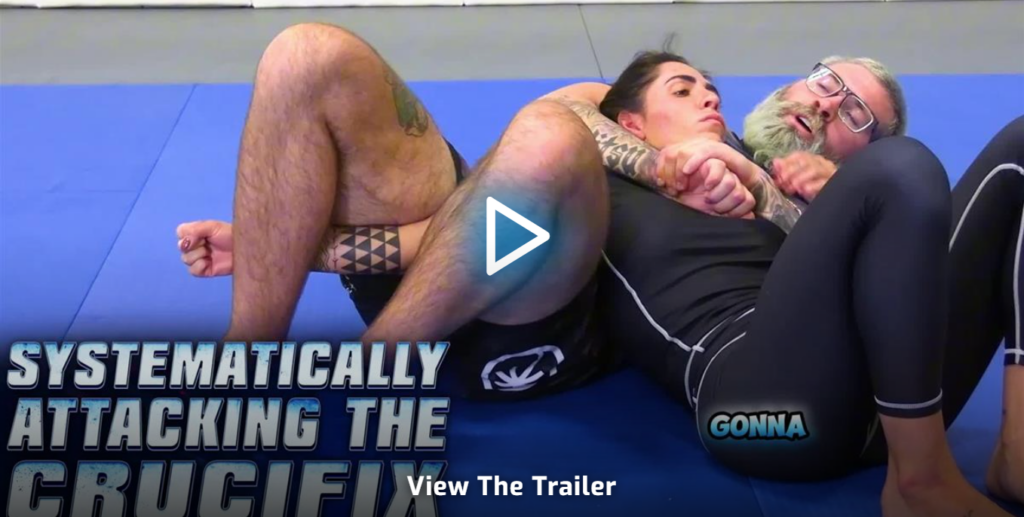
Systematically Attacking The Crucifix Gordon Ryan DVD Review [2024]

Systematically Attacking The Crucifix Gordon Ryan DVD Review
Key Takeaways
  • An 8-part No-Gi BJJ DVD offering Gordon Ryan’s crucifix attacks system.
  • It features back and front mount crucifix uses, setups, finishes, and transitions.
  • Offers two parts with crucifix-focused rolling footage and subsequent analysis.
  • BJJ World Expert Rating: 7.5 out of 10.

 SYSTEMATICALLY ATTACKING THE CRUCIFIX GORDON RYAN DVD HERE:

Systematically Attacking The Crucifix Gordon Ryan DVD Preview
WATCH TRAILER HERE: Systematically Attacking The Crucifix Gordon Ryan DVD

Thinking about adding the crucifix to your back attacks game? Why have you waited for so long? If there is one thing you can do to take your submission threat from the back to DEFCON 1, it is the crucifix, and all the information you need about it is already out there!

Today, we’ll be looking at the Systematically Attacking The Crucifix Gordon Ryan DVD and what it has in store for us. There is no denying that we have lots to learn from Grodon, but given his previous track record with instructionals, is this one going to be a real hit or another messy miss? Read on!

The Best Back Position in BJJ?

I never really got the bug for attacking the back in BJJ, which is what everyone seemed to be after when I started training 15 years ago. I had a brief stint of fun with the Straight Jacket system by Danaher, but the classic back control just doesn’t click with me.

The crucifix, on the other hand, is something else. I know, I know, hooks bring points, hip control is crucial for choking, yadda, yadda, yadda. At the end of the day, there is a reason why one of the best grapplers ever, Marcelo Garcia, decided to opt for the crucifix as his main way of finishing from the back, after becoming one of the best backtakers in the history of the sport.

If you’re a smaller grappler (such as me) you’ll find that the crucifix offers just about everything the back mount does, and perhaps even more, in terms of the ability to control someone from the back, while exposing lots of submission options.

A drawback is that Truck and other leg ride attacks are not immediately available, which is balanced out by the option to easily mix up chokes and armlocks without having to adjust your positioning. Think about it this way – Danaher’s straight jacket system is just a different way of working off crucifix back control.

As usual, I expected Godron Ryan to be a lot more offensive than his mentor when covering a subject already covered by Danaher. The Systematically Attacking The Crucifix Gordon Ryan DVD didn’t disappoint in that regard. 

Why Everyone Will Remember Gordon Ryan

Gordon Ryan will undoubtedly remain a name that no one will forget in the BJJ World. Despite his crazy competition results, I think it will be his instructionals that keep his legacy alive in the decades to come.

Let’s face it, not many young grapplers these days watch Roger Gracie’s or Marcelo Garcia’s matches, but they still know the names and opt for the instructional. It is funny how things work out, as all the effort put into competing, not to mention all the trash-talking and beefs will end up being mostly for nothing.

Ryan is a polarizing figure, but one thing is for certain – steroids-fueled or not, he did manage to achieve great, if not insurmountable things in grappling. A part of his legacy is also the fact that BJJ athletes can actually get paid for competing now, and not just peanuts.

It was fun watching Gordon develop, from the scrawny kid who won his first EBI, to the man who walks into ADCC super fights as a black belt does among blue belts at an open mat. The thing with me is that I enjoy watching Ryan compete, but don’t really like how he structures his instructionals. Let’s see if the Systematically Attacking The Crucifix Gordon Ryan DVD can change my mind. 

Systematically Attacking The Crucifix Gordon Ryan DVD Review

The Systematically Attacking The Crucifix Gordon Ryan DVD follows the typical New Wave Jiu-Jitsu instructional template, offering 8 different volumes, the final two of which contain rolls and commentary of the crucifix techniques done live. The total running length of this one is just shy of 4 hours, and everything is demonstrated in No-Gi:

Part 1 – Two Sides of the Crucifix

Gordon begins the Systematically Attacking The Crucifix Gordon Ryan DVD by talking about the two main ways you can use a crucifix – from the back, which most people know, and from the mount, which is hugely underused and underrated. 

In a typical Gordon Ryan instructional fashion, ‘The King’ goes really deep into dissecting the nuts and bolts that make the position work. This part of the DVD is very well organized, focusing on how to control either arm of the opponent, how to position your limbs differently, and what your goals are.

Part 2 – Crucifix Submissions

The second part goes into the finishes that are available from the crucifix, which extends beyond just choking or trying to hit weird armlocks with your legs. Gordon basically does a short review of his Kimura attacks previously taught in other DVDs here, with the dorsal Kimura-Triangle combination being his main focus.

Throughout this portion of the  Systematically Attacking The Crucifix Gordon Ryan DVD, we also see some positional transitions, with a route to the crucifix from the North-South presented by Ryan. It makes a lot of sense but is not really viable to set up during sparring. 

Part 3 – Mounted Crucifix

I enjoyed this part of the Systematically Attacking The Crucifix Gordon Ryan DVD a lot, as it introduced an depth analysis of a crucifix position that nobody has covered in depth until now. Marcelo Garcia, the original crucifix hunter has everything covered in terms of the back, and everything subsequently done by others still works off of those principles. 

The mounted crucifix, though, is a whole different ball game. It offers a different type of control to what people are used to, making escapes almost impossible. Gordon offers options for working against open and locked hands, with the crucifix still viable against both. 

He also introduces some wrestling into the mix, presenting the dangers of the high crotch grip even from a dominant position such as the crucifix. He ends up with a portion of the crackdown, covering baiting entries along the way.  

Part 4 – Crucifix vs Turtle

The hallway point of the Systematically Attacking The Crucifix Gordon Ryan DVD goes over the crucifix as we know it, used against a turtled-up opponent. I’ll say it again, as I have many times before, the turtle is not just a position you can attack easily. As with other DVDs on the subject of turtle attacks, this one misses the spot by a country mile. 

Gordon demonstrates back crucifix entries using the turtle, mostly by trapping one arm with the legs or using gift wraps to break the turtle down. They’re all very effective, but the problem is getting there against someone who can actually play turtle. In that regard, this part of the DVD fails miserably.

Part 5 – Belly Up Crucifix

Redemption comes in the fifth segment of the Systematically Attacking The Crucifix Gordon Ryan DVD, with Ryan sticking to the back crucifix while supine, the position most people are after anyway. 

He begins by covering the main escape routes people take, which I find to be the best approach to figuring out positional dominance. He then launches into an in-depth analysis of controlling the opponent’s head and each arm, before offering a route back towards the submissions outlined in the second part of the instructional.

Part 6 – Connecting the Dots

Speaking of submissions, the final instructional volume of this Systematically Attacking The Crucifix Gordon Ryan DVD is one that surprised me. In earlier DVDs, Ryan just poured more and more info as his instructions dragged on. Here, he finally circles back to connect the dots, which is extremely helpful for the cohesiveness of this DVD. 

Kimuras, triangles, and chokes feature here, some against an opponent who can’t really move or do anything, while others work when the opponent escapes using one of the predictable routes. A really cool thing is that when setting up the subs, Gordon constantly leaves an option open to get back to the crucifix, which he shows in great detail.

Part 7 and 8 – R0lling Commentary 

As we come to the concluding parts of the Systematically Attacking The Crucifix Gordon Ryan DVD, we once again see classic Gordon Ryan narrated rolls. In all his previous DVDs this was my favorite portion, and I managed to learn the most from them as opposed to the other material. 

Once again, the rolling commentary proves to be exceptionally valuable., Gordon rolls for 5-minute rounds against 4 different people in the penultimate part of the instrucitonal and then spends double that time explaining every roll in the final one.

Back Control on Steroids

If I had to pick one position to play until the day I stop rolling… I’d stop rolling now. There is no fun in doing one thing over and over again, even if your goal is to specialize in one move as Roger did with the cross-collar choke.

That said, if I had to pick one variation of each dominant position to play, I’d accept that challenge with a smile. With regard to the back mount, the crucifix wins 10/10 for me, even at the expense of those 4 points that I’m mission out on because of the lack of hooks.

There’s something extremely satisfying about obtaining the crucifix position against an opponent who is of a high level and sees it coming. There’s an even more satisfying component when you take all their power away, and they eventually stop struggling to get out. you know the moment, they’d scratch their head about what to do next, if they only could.

The crucifix allows you to get the most out of the back mount, while still keeping all ‘around the world’ options open, in terms of going to front pins and back at your convenience. This Systematically Attacking The Crucifix Gordon Ryan DVD offers some valuable insights into the use of the position, particularly mixing up front and back variations. 

Systematically Attacking The Crucifix Gordon Ryan DVD Free Sample
FREE MOVE: Mounted Crucifix – Systematically Attacking The Crucifix Gordon Ryan DVD

FULL DOWNLOAD: ATTACKING THE CRUCIFIX GORDON RYAN DVD

Ditch the Hooks! 

If you want to end up with an amped-up version of back control, ditch the hooks and turn to the crucifix. Start exploring the different ways in which spreading your opponent’s arms makes them weak, and you’ll never go back to traditional back control again. With the  Systematically Attacking The Crucifix Gordon Ryan DVD, you have a great toolbox to start using the crucifix from all kinds of different positions. Just don’t try to do the turtle stuff, and you’ll get great value out of this instructional. 

Marcelo Garcia DVD Instructional: Complete Back Attack System Review

All Back Attacks DVD Instructionals

BJJ Crucifix Position – Attacks & Defense System

Darces From Everywhere Kade and Tye Ruotolo DVD Review [2024]

Darces From Everywhere Kade and Tye Ruotolo DVD Review

Key Takeaways

  • A two-part No-Gi BJJ DVD revealing the Ruotolos Darce game
  • Covers submission finishing details. top and bottom entries and setups.
  • Offers sneaky counterattacking Darce uses, such as hitting it during back escapes.
  • BJJ World Expert Rating: 9 out of 10.

DARCES FROM EVERYWHERE KADE AND TYE RUOTOLO DVD HERE:

Darces From Everywhere Kade and Tye Ruotolo DVD Preview
WATCH THE FULL TRAILER: Darces From Everywhere Kade and Tye Ruotolo DVD

The Darce choke is something you have either tapped to or used to tap people out. In other words, you know what the move is. The one thing you might not understand about it is how versatile this submission is, offering a lot more than just a way to strangle people effectively.

The Darces From Everywhere Kade and Tye Ruotolo DVD can help shed some light in that regard. At present, the two are the undisputed Darce kings, having taken the heads off many of the top grapplers in the sport using the move. This instructional will let you see why the Darce is such a strong move for Kade and Tye. Enjoy the review!

His Majesty the Darce Choke

If you’ve read any of the articles on BJJ World, you know that I am highly biased towards the Darc choke. My saving grace against the underhook half guard since my early blue belt days, the choke has proven to be a powerful tool in my box of tricks.

In fact, I had so much success with the Darce over the years, that I rarely use it anymore. I know that doesn’t make much sense, but the choke is so powerful once you get the hang of it, that it kinda starts to feel as if you’re cheating when you hit it against people. It is that powerful and versatile to set up.

I still do it, but if we ever roll and I get you in a Darce, it means you made me use my best weapon, and you’re a force to be reckoned with. For anyone out there not having the option of Darcing, I urge you (of course I do) to give it a try. Short or long arms, it doesn’t matter, it will work for you, just as it does for the Ruotolos.

Speaking of the Ruotolos, their Darces From Everywhere Kade and Tye Ruotolo DVD is probably one of the best resources to use as a shortcut when learning how to apply the choke.

A Ruotolo Brothers Special

What do you think about when you hear the Rutolo brothers mentioned? Personally, I think crazy movement all over and Darces. Lots and lots of Darces and other arm triangles. Even the buggy choke – it is, effectively, an arm triangle.

The brothers Kade and Tye have so far shown everyone in the BJJ world what it means to come through the kids’ belt system all the way to the black belt. In their case, it was age 18 when they went black, and they’re only going forward from there.

between them, Tye and Kade Rutolo have won just about everything there is, from IBJJF, through ADCC to the $1 million prize at the inaugural CJI. I expect they’ll get even more wars in the upcoming months, with everyone now gunning for them, as they are the grapplers to beat, after Gordon.

The brothers also seem to have a knack for teaching. I guess we can expect that from all the new generations of grapplers who come through the complete belt system. unsurprisingly, the brothers break down one of their specials in the Darces From Everywhere Kade and Tye Ruotolo DVD.

Darces From Everywhere by Kade and Tye Ruotolo DVD Review

This incredible Darces From Everywhere Kade and Tye Ruotolo DVD is a short instructional. Given the subject they are covering, it makes sense – there’s no need to overcomplicate a simple, yet extremely versatile tool as the Darce.

In about an hour Kade and Tye share how they set up the Darce when hunting for submissions, but also how they use it to get out of tight spots and to create more opportunities to establish pins or turn the tables. Our detailed Ruotolo Darce DVD review below will tell you everything that you need to know:

Part 1 – Top Position Darces

The first part of the Darces From Everywhere Kade and Tye Ruotolo DVD is delivered by Kade or Tye, no one can really tell. They start by delivering a short introduction, followed by an immediate show stopper – the diving Darce choke setup. It is a variation of Jeff Glover’s Marce (or was it Shlarce), simplified and made tighter and more powerful.

A couple more options appear, with the finishing mechanics wove into the setups, rather than shown in different chapters. while I’m not sure how I feel about it, the two setups that round off this part, especially the one used as a single-leg counter are fire, just like everything else Rultoolo bros related.

Part 2 – Bottom Darces and Darce Counters

The second volume in this two-part Darces From Everywhere Kade and Tye Ruotolo DVD delivers more Dare choke entries and finishing variations, this time focusing on bottom setups and countering.

The butterfly guard is the Ruotolos’ go-to Darce launchpad, with the arm drag providing the perfect entry. Since any underhook your opponent takes is a Darce opportunity, the Rutolos demonstrate how to turn double underhooks into a choke easily and against anyone.

Ending with a bang, the always elusive Darce setup against back control features in this Darces Kade and Tye Ruotolo DVD, finally kind of makes sense as a setup. It still won’t work for everyone, but if you can pull it off it is wild!

One Move BJJ Game Plans

Making a game plan where the Darce choke is your main move is more than just possible – it is smart. However, you can’t just do the same with any move in BJJ. The one thing to always remember when trying to use a one-move-based game is whether that move works from different positions.

For example, basing your game on the Rear Naked Choke will never offer the same versatility as using a guillotine, Kimura, or the Darce for the same purpose. Some moves work extremely well from entering positions (armbars, RNC, kneebars) but don’t allow you to transition through BJJ positions while holding on to them.

If a move can’t work from both the top and bottom, then it is probably not worth being your centerpiece. While you can specialize in anything, figuring out how to use submission moves as trap systems are going to turn you into a much more versatile and unpredictable threat.

The way the Ruotolo brothers organized their Darces From Everywhere Kade and Tye Ruotolo DVD reflects such an approach THey offer not just top position setups, but also bottom entries and counterattacking applications of the choke.

Darces From Everywhere Kade and Tye Ruotolo DVD Sample
Ruotolo Brothers Diving Darce Choke DVD

FULL DOWNLOAD: DARCES KADE AND TYE RUOTOLO DVD

Slap that Darce on! 

Time to take the Darce for a test ride! The Darces From Everywhere Kade and Tye Ruotolo DVD holds the blueprint for turning you into a Darce master in a matter of days. It is short, and concise and will reveal how the Darce connects top and bottom positions in an endless loop of strangle threats from everywhere!

Darce Choke Encyclopedia – Origins, Mechanics and Variations [2024]

How To Finish A Darce Choke: Grip Variations

Upper Body Submission Assault Kade And Tye Ruotolo DVD Review