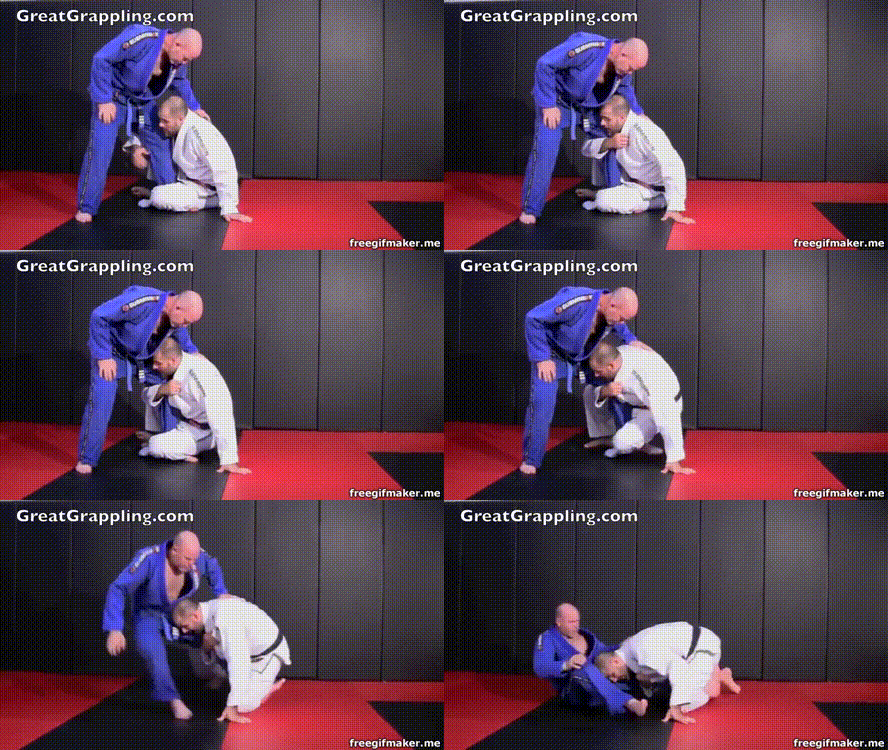
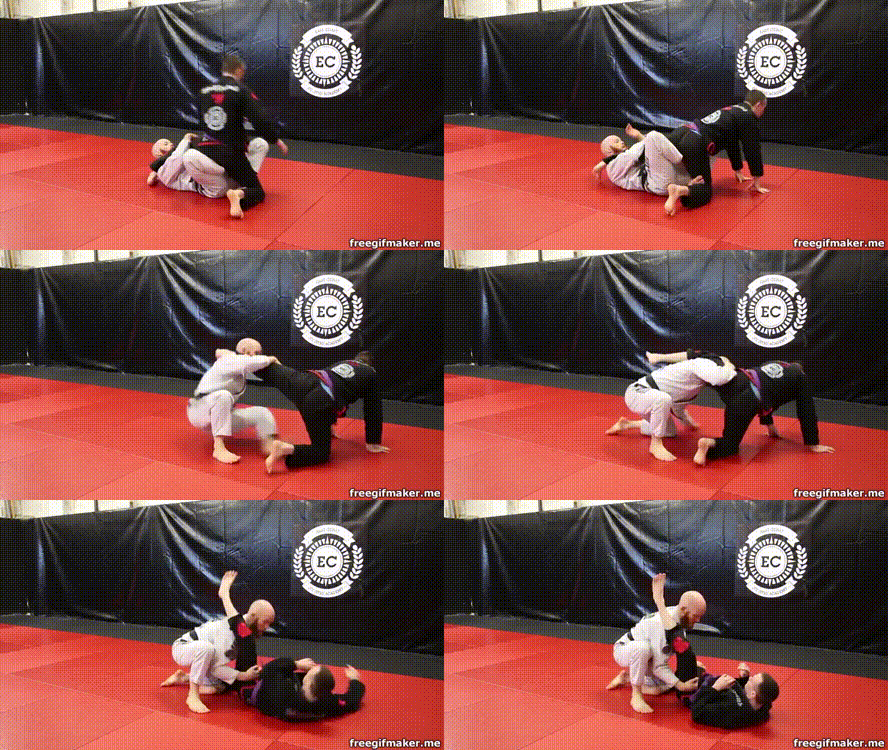
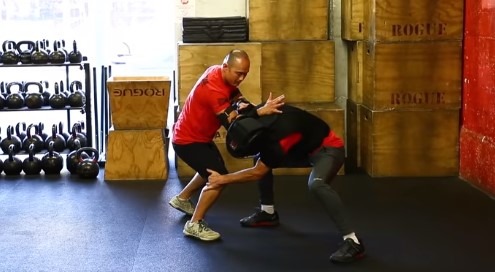
CrossFit is a pretty solid fitness regimen that can improve your Brazilian Jiu-Jitsu or any other martial art that you’re training through strength and conditioning programs. But CrossFit is not meant to be a self-defense martial art no matter how hard this guy is trying to prove that it is. Or at least not in the way that this CrossFit Instructor Adrian Gonzales is trying to explain to these guys that CrossFit “moves” will help them defend themselves.
Adrian Gonzales is basing his theory on “kinetic chain” that should help you with self-defense!? He’s actually showing the movements CrossFitters do every training connecting them with punches and kicks that you do in real self-defense situations. He said:
“Wall balls exercise have the same kinetic chain required to throw a palm strike.” – Oh!
“If you do 150 wall balls per week and you do any other workout that has wall balls you have now thrown more power punches than pro boxers in their fights.” – interesting theory comparing wall balls to punches ignoring technique, timing, precision and a lot of other stuff that pro boxers do in a pro fight and not even mentioning boxers training time.
He continues:
“cleaning a bar (Barbell Clean) has the exact same kinetic chain probably more violent and explosive than some fighters throw.” – Sure!
“mountain climbers exercise and knees to elbows exercise has the same kinetic chain as knee kicks” – it’s 100% not true- Throwing a knee has a lot different mechanism and it’s not just about the closing of the core as CrossFit exercise is done.
He even mentioned putting on a seat belt as horizontal elbows in a fight?!?!?!
The only good thing this guy said and proved is: “I’m not a martial art athlete“. And that’s exactly a reason why anything of this makes sense!
Someone should really explain to this guy that self-defense is a lot more than a few punches and kicks that he can “improve” with CrossFit without training real martial art.
As I said CrossFit can really improve your self-defense but not by training CrossFit only and for sure not in the way this instructor is trying to show.
The worst thing about CrossFit self-defense is that it really exists!
Adrian Gonzales CrossFit instructor with his Be Your Own Bodyguard – “Kinetic Chain” self-defense theories is not the only CrossFit instructor to advocate the theory of a CrossFit as a good self-defense platform. There are many others with those theories too. You can check one of them in a video below.
Trying to convince people that are training cross fit that they are able to defend themselves is actually a crime if you ask me. It’s worse than Jay Queiroz and other fake black belts and a lot of other fake martial arts instructors. Those fake Black Belts at least watched few videos and maybe they show 1 out 10 right moves that you can really use in self-defense situations.
Making people who train CrossFit believe that they are able to defend themselves is just going to make someone completely unprepared to jump into a fight and get hurt.
CrossFit is a whole another story. When you’re training CrossFit you’re not taught to do anything you should do in self-defense situations. Neither a single thing. You can try to “convert” some of your exercises to some kicks, pushes, and punches but it’s not self-defense and it’s definitely not a self-defense martial art.
The main question is, why people just can’t leave the CrossFit to its main purpose and that’s very solid strength and conditioning competitive fitness regimen.
Check out the video below and see by yourself what kind of self-defense CrossFitters are trying to promote and how stupid CrossFit self-defense theory looks like.
The grappling world seems to get wackier as time goes by. First, we only had the usual, “vanilla” IBJJF Gi competitions to test out our skills. Later on, Metamoris opened a whole Pandora’s box by coming out with the submission-only format. From there on this format got associated with the No-Gi scene for one reason for another and caught on like wildfire. It took a while to find the best ruleset, which Eddie Bravo ultimately did with EBI. His ruleset got further adopted by many organizations, an even modified by some. Now, it seems there’s a whole new level of wackiness in the grappling competition scene. And it seems fun as hell too! Today’s focus is on the latest quantum leap in Jiu-Jitsu competition formats – the Quintet Grappling tournament.
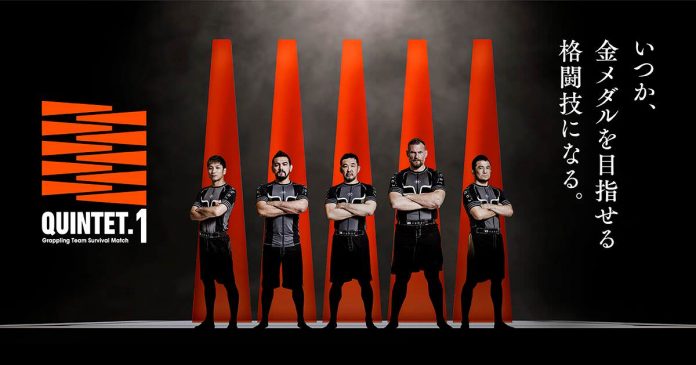
Usually, when grapplers come up with grappling tournament ideas, they tend to come out successful. When the grappler in question is a true legend of the ground game, we expect nothing less. Even when it sounds dubious at first like the Quintet Grappling Tournament did. The founder of this innovative tournament format is non-other than Japanese grappling veteran Kazushi Sakuraba. The esteemed grappler, pro wrestler, and MMA vet clearly had some time on his hands which he used pretty creatively. He brought a pro wrestling component into an individual sport that’s based around teams, and arguably, hit the jackpot!
What the Quintet Grappling Tournament is all about is basically “tag team” grappling. No, it’s not like the 5 on 5 MMA madness we saw a few years back. This tournament is very well thought of and precisely organized. It features teams of 5 grapplers that battel under pre-determined rules, thus having always changing chances of victory! ANd this crazy new format already attracted huge name the likes of Craig Jones, Josh Barnett, The Martinez brothers etc. But will it catch on?
Learn the most effective choke setups for No-Gi from Austrailia’s premier grappling coach! Lachal Giles has a DVDout by the title “High Percentage Chokes: No-Gi” Form the guillotine to the Japanese Necktie, you’ll have everything you need for any kind of a tournament!
The Quintet Grappling Tournament Concept
The interesting thing about BJJ competition is that is is an individual sport that only works with a team. There’s no preparing for competition without a good team, nor competing successfully without sound corner advice. However, once you step on the mats, the outcome is all down to you. But what if winning a tournament wasn’t down only to your success in a single grappling match?
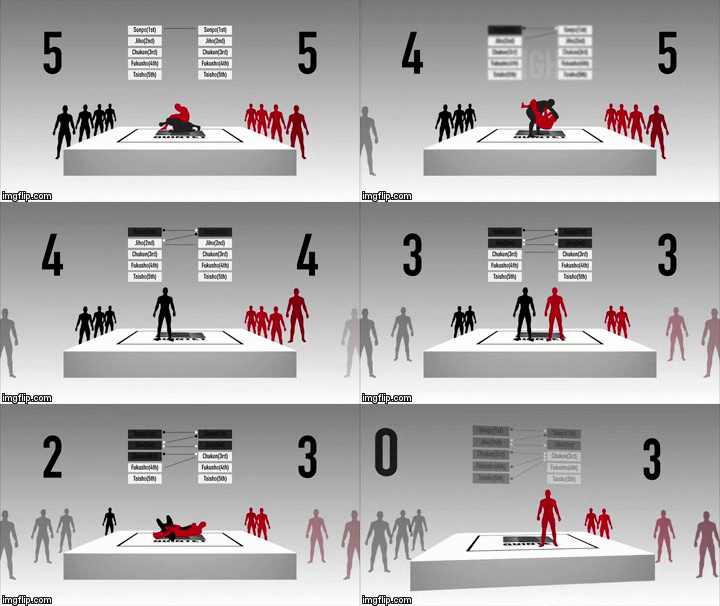
The QUintet Grappling Tournament’s concept is that grapplers face their opponents’ as a team. Each event features teams of 5 grapplers, that have varying chances of victory, depending on each member’s success on the mat. Let’s look at the rules to gain some clarity.
First of all the Quintet is an invitational tournament held in No-Gi format (rashguards are mandatory). The competition’s format is based on the Japenese, pro wrestling “Survival Series” model. This means that a few 5 member teams, that have to fulfill certain conditions will battle it out between themselves.
The basic rules are that the weight of all competitors on a team must not exceed 946 lbs (430 kg). Furthermore, each team has their own order of appearance. The first pick of one team is going to go against the first pick of another, and so on. The time limit is 8 minutes unless there’s a weight difference of more than 33 lbs (15 kg.) IN that case, the total time of a match goes down to 5 minutes.
The victorious grappler proceeds to the next round in which he/she’ll face a grappler that has also won on the other side of the brackets. Only illegal moves are the closed guard and heel hooks. The way of getting eliminated is by losing, or drawing within the time limit. IN case of a draw. both grapplers get eliminated.
The Result So Far
While there are more rules than the above, we covered the gist of it so far. For the first tournament, Sakuraba employed the help of Josh Barnett for moth the competition format and on the mats alike. They were part of the “Haleo” team, one of four teams that fought for glory at the inaugural Quintet event. The tournament took place on April 11 at the legendary the Ryogoku Sumo Hall in Tokyo. Apart from the Haleo team, three other teams completed the roster. Those were the Sambo team, Polaris team, and Judo team. The glory went to the Polaris team, unsurprisingly, given that it featured Craig Jones, Daniel Strauss, Gregor Gracie, Charles Negromonte and Caol Uno. Runner-ups were the hosting Haleo team.
While the first event didn’t really get plenty of attention, the second one most certainly did. It took place just a couple of days ago and featured a whole new lineup of 5 man grappling teams. To be completely honest, I only got wind after the event, but it most certainly raised my appetite for the next one. Through some very very exciting matches, the 10th Planet Jiu-Jitsu Team got the best of Tiger Muay Thai, Reebok and Vagabonds teams.
The organization’s aim is to put on one more event in 2018, for a total of three. I will most certainly be looking forward to it and will take careful note of the build up. It seems to me, personally, that his format is a really fun one to compete in and it will certainly catch on. I can’t even imagine what this format is going to give birth to next, but for now, I’ll settle for Quintet Grappling Tournament 3.
Ankle locks, toe holds, knee bars, calf slicers… No matter which leg lock it is, none can even come close to the devastating power of the heel hook. This twisting submission is the source of large amounts of controversy in the world of grappling. Still, to this day, the heel hook is not allowed even for black belts under certain competition rules. However, the landscape of Brazilian Jiu-Jitsu has gone through some major changes lately, one of them being the resurgence of heel hooks. Normally, this prompted grapplers worldwide to trace back and look to learn this highly effective submission. As it becomes more and more popular, so rises the necessity of a reliable defense against it. For a while there, nothing seemed to work. Now, we’ll take a look at the few heel hook defense methods that can actually get you out without a limp.
The most unlikely duo in the grappling world, Eddie Bravo, and John Danaher are the main culprits behind today’s leg lock craze. Danaher came out with a system and Bravo gave him the platform to popularize it. Walk into any BJJ gym across the world and you’ll see a tap due to a heel hook submission or two. What you probably won’t see are legitimate defense attempts too many of the heel hook attacks. Especially the dreaded reverse heel hook. There’s much deeper reason for this than just the technical superiority of the heel hook submission. What many people fail to grasp is the psychological component behind heel hook defense.
For decades heel hooks were the source of horror stories in Brazilian Jiu-Jitsu. Much like all other Boogeyman-type stories, there nothing more than folklore. However, all this resulted in a deep-rooted fear of heel hooks, so much so that people would much rather tap just to the threat of it than look to intelligently defend. If you can get past the psychological stumbling block you’ll see that a heel hook is just like any other submission out there. It is based on certain mechanics and if you can counter them efficiently and accurately, you can escape from the submission.
Craig Jones knows heel hooks. What he also knows is heel hook defense, and he shares all his little tricks in his “Down Under Leg Attacks” DVD. Take your leg lock game to a whole new level with his amazing material!
Don’t Be Afraid OF The Heel Hook
What is so scary about the heel hook exactly? The potential for injury is actually no greater than any other submission holds out there. Actually, a choke is far more dangerous, given that it can actually kill someone if held for too long. Takedowns and scrambles have also resulted in far more injuries than heel hook attempts so far.
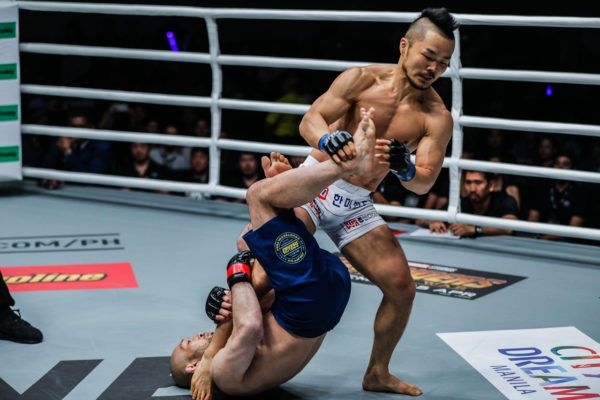
What the heel hook submission basically does is use a wrench-like mechanic to blow out your knee. In particular, it involves manipulation of your foot in order to build up pressure inside your knee, which results in ligament tears. Which ligament exactly is put under strain depends on the type of heel hook attack.
Essentially there are two main ways of getting a heel hook. One is the so-called straight heel hook in which the goal is to place the fingers of the foot under the armpit, with the outside of the foot facing the armpit of the attacker. In the modern day Ashi Garami leg lock game which emphasizes control, this is the less reliable variation. The second version is the reverse heel hook, in which the placement f the foot is opposite. Namely, this time when you trap the fingers, you’re looking for the inside of the foot to be facing your armpit. This one is really nasty, especially if you have a solid hip control as well.
Just like with any submission, for an efficient heel hook defense, you need to understand the technique first. So, even if you do not like heel hooks, learn the correct mechanics so that you know what you need to prevent/escape. If you only focus on defending without really knowing what you’re defending against, you won’t get a lot of success.
Core Concepts Of Heel Hook Defense
Before we move on the actual defensive principles and concepts let’s get something clear. Acting irrationally and panicking while in any kind of submission is going to get you hurt. Do not try to force your way out of a heel hook or you’ll pay dearly and add fuel to the “they’re dangerous” fire. Wouldn’t you try to power out of a Kimura right? Heel hook defense isn’t any different, it needs to be smart and methodical, not instinctive. So, exercise caution every time you’re looking to defend submissions in Jiu-Jitsu.
That said, there are a few main steps in heel hook defense you need to understand and be able to recognize. First, remember that there’s no leg lock of any kind without knee control. The moment your knee clear the line of the opponent’s hips, you can sit back and relax. There’s no more leverage for anything but a toe hold which is easily defendable at that point. So, the main aim of a counter leg lock game is getting your knee to safety.
The whole point of the modern-day leg lock system is control of the hip. This makes getting the knee out quite difficult, especially against seasoned opponents. So, the best approach is reverse engineering a heel hook attack in order to identify the crucial mechanical advantages of it. For that, we’re going to use three distinct steps.
Step 1
The first thing you need to think about with leg locks is prevention. This is where the knee clearance principle is king. Every modern day leg locker is going to look to establish control over all three major joints of your leg before attacking. While the control itself is also escapable, the best approach is to completely prevent someone from getting there in the first place. Experienced grapplers are always going to open up entries into leg locks and there’s not much you can do about it.
Click for full video instructional
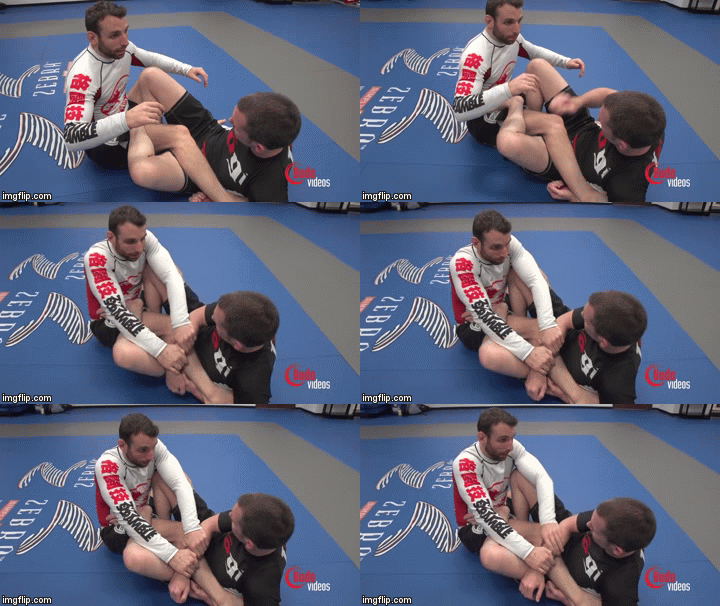
However, remember that your goal is to prevent them from putting a clamp over your knee. For the very basic Straight Ashi Garami, this means blocking the opponent from establishing hip control. To further make sure you can get out safely, aim to keep their knees open since this gives you rotational control over the knee. Once the knee is out you can turn and push with the other foot to completely disengage. Against a more elaborate position like the Inside Senkaku, the goal is to prevent the wedge system. This means allowing your opponent to triangle their legs tightly over your knee. Pushing on one of their knees is very often going to allow you to create enough space to clear the knee-line.
Step 2
In certain situations, though, you’re going to end up in an Ashi Garami variation. This is the time for damage control. What you should NOT do is lay back and accept that you’re going to get submitted. The Ashi Garami is no different than mount or back control and you’re getting out of those each training session. Once in a position, the opponent still has to dig your foot out, apply tension and only then go for the submission itself. This allows for plenty of time to work.
Click for full video instructional
The one thing you need to worry about here is foot safety. There are different technical ways of doing so in different positions. For now, we’re sticking with concepts. Depending on the position you could cross your feet, hide a foot under the opponent, kick out or curl your leg, etc. Whatever you do, the goal is to make them really work for a grip. This, in turn, is going to allow you to mount a heel hook defense.
To break out of most Ashi Garami positions you need to create space to allow your knee line to clear. There are two main ways of achieving this: either breaking apart their hip control or shifting the angle so that you can trap one of their legs while manipulating the other. Mess around with it a bit and you’ll find what exactly suits you from each position.
Step 3
Holy sh#t territory. This is where you should be careful and apply the rule of not fidgeting uncontrollably. This is the stadium in which your opponent has established grips and is looking to put your leg under tension. Do not attempt to disengage teh Ashi Garami at this point. It’s too late for that, now you need to focus on the grip fighting. Finishing a heel hook with one arm is a big task for most people, especially since you can use your other foot to further interfere. This means a mandatory 2-on-1 grip on one of their hands.
Click for full video instructional
Gripping an arm is not going to help you much if you do not prevent/break the grip. The aim is to get keep their arm as far away from your foot as possible. Keeping your elbows to your body is a great way of frustrating your opponent. The trouble is, that even with one grip, there’s the danger of submission. If you control an arm you’ll need to be patient and allow for the opponent to re-adjust in order to completely release your foot and look to hide it. Now you’re back on step number 2.
As a side note, remember that tapping out is also a legitimate heel hook defense. NOt tapping and walking around on crutches for months is not. So if you feel the tension building up o the leg, do not wait for the opponent’s breaking mechanics. Tap early and roll again.
With all the leg locks flying around today, there are a lot of things coming out that are simply worthless. Some moves are flashy and will only get you in trouble, while others are low-key but bring about certain taps. And, of course, there’s everything in between. Danaher’s control-based approach really changed the world of leglocks. However, the new-school leg lockers, such as Craig Jones will not stop there. Plenty of new entries are coming out and some are as effective as they are entertaining. THere’s one thought that has always fit this mold. Fast, spinning, and attractive, the Imanari Roll is a legit and high-level leg lock entry.
Ahh, leg locks again. Well, this article is not going to address a leg lock submission per se, nor one of the high-control positions. This one is all about entries and the most attractive one at that. THe Imanari roll is not a new entry, but it’s rising to prominence along with the leg lock craze. As the name suggests, this entry has Japanese roots thanks to one of the most fearsome grapplers of all times – Masakazu Imanari himself.
However, today’s Imanari is a long way from the original setup. Many people have influenced the move over the years, and I suspect a great many more will in the future as well. This entry is undoubtedly efficient and can work at the highest levels of the sport. Even better, it works for both IBJJF legal leg locks, making it a great choice for all competing platforms. So, why exactly the Imanari roll? Isn’t it difficult to execute? Doesn’t it seem too risky? Read on for answers to all these burning questions along with many more!
Learn all the best leg lock entries from one of the best in the game! Use the Craig Jones “Down Under Leg Attacks” DVD to gain access to the most innovative leg locking entries that the rising star has come up with! Complete instructionals to controlling and finishing are also included, so don’t miss out on this one!
Why Imanari?
First of all, let’s make the etiology clear. The name Imanari is due to the “Ashinka Judan” Masakazu Imanari. “The Great Leg Lock Master” was highly successful with heel hooks and other lower body submissions in both grappling and MMA. Imanari is one of the first leg lock specialists in the game and, as such, responsible for many of the techniques we still use to this day. the Imanari roll is one of them.
Although the name cannot be traced back to an exact moment, the connection is clear. Imanari liked to fight off his back and had vicious submission attacks spring-loaded at all times. Since getting into leg entanglements is not easy, Imanari found a way around. Literally.
Since the old days of Imanari rolls in Pride, other people adopted the move to great effectiveness. Ryan Hall is one name that stands out in terms of using the roll to set up heel hooks. Much like the father of the move, Hall used it in both BJJ and MMA matches, in an awe-inspiring fashion. Since then, the new wave of leg lockers also gave in to the temptation of using the Imanari roll entry. Remember 10th planet prodigy Marvin Castelle’s breathtaking viral execution of the move? It’s on the left, for all of you who need a reminder.
Rolling Into Leg Locks
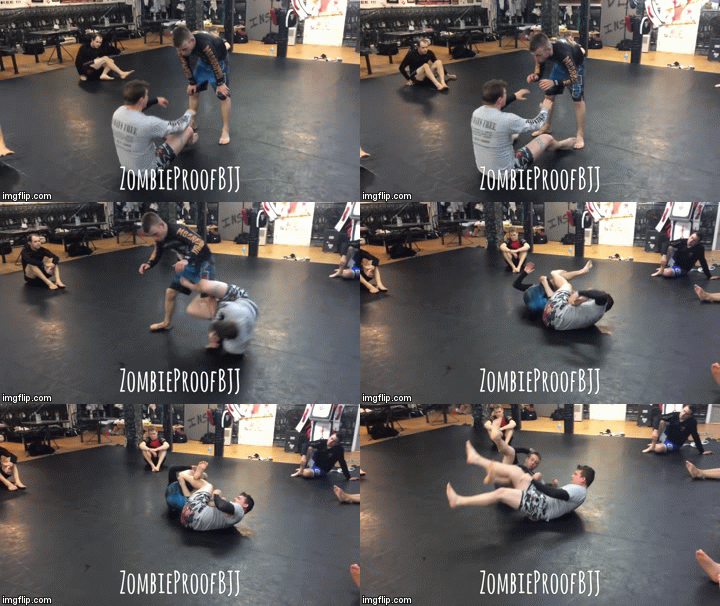
So what exactly is this Imanari roll? It is essentially a hybrid between a Granby roll and a backroll which allows you to place a standing opponent in an Ashi Garami of choice. Executing it requires you to have a certain level of dexterity and at least some grappling experience.
First, you need to know which position you’re after since the Imanari can end up in a few different ones. Second, you need to know how to invert and Granby roll, which are BJJ drills that you should do in every class.
Let’s take an opponent in a parallel stance as the starting point in our Imanari roll execution example. You’ll start on your butt, feet close together like in a butterfly guard. The first goal is placing a hook grip on the leg you’re about to attack. for the grip, you need to place your palm on the inside of their ankle, palm facing outwards. This is going to allow you to end up with a perfect grip once you roll.
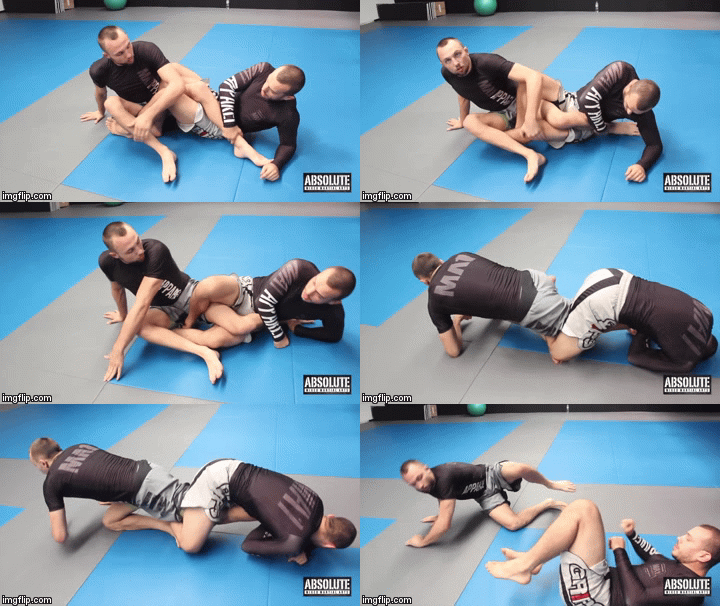
The roll itself is anchored on this first grip. Basically, you want to use your grip to pull yourself into inversion, rolling your legs toward the outside of your opponent. To do that you lay down on the shoulder of the arm that’s gripping the leg and you swing your legs around and over. Your shoulders should be the only thing touching the ground when you roll. The goal of the roll is to end up with your legs on either side of the leg you’re attacking. this is going to land you in a high control Ashi Garami position so that you can finish with a leg lock.
Imanari Roll Leg Lock Options
So, how does this entry put you in a dominant leg locking position? Well, the idea is to sue a roll to get to a leg entanglement, and, at the same time, use the inertia of the roll to bring your opponent to the ground. A pretty effective strategy. The only catch here is speed. You need to be fast to get the inertia benefit and get into position before the opponent reacts. This requires relentless drilling of the entry before you can use it against high-level opponents in competition.
The finishing positions available from the Imanari roll depend on the placement of your legs after the roll. If you place your outside foot in a “reaping” position you’re all set for the Honeyhole AKA Inside Senkaku. The inverted heel hook finish is as easy as spelling Masakazu Imanari.
Ryan Hall’s take on it was to get to the 50/50 position instead. For this, the leg that goes in between the opponent’s legs needs to come out in front of them. Since this requires a bit more movement than the previous one, you’ll use your outside leg on their hip to help you thread the second leg. the leg on the hip also determines when you’re going to take your opponent down. The 50/50 is a legal IBJJF position and if you attack an ankle lock from there you can use the Imanari at all levels in competition.
Finally, if you like to attack from a straight Ashi Garami position, both the outside and basic Ashi are available. After you bring your opponent down with the 50/50 set up, simply transfer their leg across your chest so that it is not in the cross position.
BJJ mobility is a highly underrated area of grappling conditioning. Even more so, it is not really appreciated in all athletic disciplines. Despite the recent rise in awareness about mobility training, it’s inherent lack among high performing athletes is baffling. In terms of Brazilian Jiu-Jitsu, where not only competition but everything done in training put the body under immense stress, mobility should be the number one priority outside of class. However, BJJ mobility doesn’t get the recognition it deserves, which results in an increase of musculoskeletal injuries among grapplers.
Training mobility is a low as it gets on every grappler’s checklist. People usually associate BJJ mobility training with stretching or warm up-like exercises and are easily thrown off. This is understandable, as warm ups and cool downs are the most despised portions of any grappling class. Most people like to roll, drill or even practice techniques way more than making sure their bodies work properly. In all fairness, BJJ mobility training isn’t the most entertaining thing to do. However, there’s a way to incorporate it into our weekly routines and we must do so for our own benefit.
Personally, I’m not really a big fan of doing long mobility workouts either. The true reason is somewhere between I haven’t enough time and I’m too lazy to do it now. For most people involved in grappling, this seems to be the rule rather than the exception. Luckily there’s a really easy way to rectify this. First, we’ll look at which injuries are statistically most common in BJJ. Then we’ll offer short and precise BJJ mobility exercises that address those areas in particular. The goal of our quest today is to create a short and effective BJJ mobility routine we can do at least a couple of times weekly.
Leg locks require certain dexterity in grapplers. So do guard passes. So, when you combine both in a great attacking system, you’re going to need all the flexibility and mobility possible. Craig Jones takes care of the technical part of the puzzle in his “How To pass Guards Quickly And Easily” DVD. The part about mobility is covered in this article.
The Preventative And Restorative Effect of Mobility Training
So, why exactly do we need mobility training in the first place? Will it ensure that we remain injury free while rolling like savages on the mats? And, is there any way of doing it effectively without spending hours on the foam roller? Let’ see if we can answer these common questions one by one.
First, mobility training has the task of helping the body achieve or retain a maximal range of motion. Brazilian Jiu-JItsu takes a real toll on the body, whether you compete or not. The joints are put under a lot of strain, scar tissue slowly builds up and the range of motion decreases. Furthermore, the nature of the art is such that it doesn’t involve the use of all muscles equally. This lead to inevitable imbalances in the body which over time get worse. Add to that the modern lifestyle based around a seated position and you have a recipe for disaster. Yet somehow, we all choose to skip taking the cure.
IN terms of injury prevention there’s no way that you’ll stay injury free when you train grappling. This is a fact of life for grapplers. At a certain point in time, you’ll be nursing an injury or 10, and there’s no way to prevent them completely. However, you’ll get fewer injuries or you’ll mitigate the effects of those you get by incorporating BJJ mobility drills into your routine.
Finally, the most important answer is yes, there is a way to train effectively. This is not a shortcut and going for a longer routine is going to yield more results. However, focusing on the most common problem areas for grappler is a great start and can be done quickly. Another approach is to focus on an area that’s problematic for you.
BJJ Related Injuries
In terms of BJJ related injuries, it is hard to pick a starting point. There are some BJJ injuries I’ve seen that are probably not even in most medical books. However, there are certain areas of our bodies that get beaten, crushed and twisted more than others.
First and foremost, I’ll begin with something that ails me in particular. Furthermore, it is a crucial body part which can cause serious consequences when injured. I’m talking about the neck. As a “proud” hernia representative I can tell you that you do not want to have a neck hernia or injury. The unique aspect of fighting off the back is the main culprit behind the frequency of this injury among grapplers. BJJ mobility drills to keep your neck healthy in the face of everyday abuse are as crucial as mobility training can get. Whatever you do, make sure you keep the neck and surrounding muscles happy and in shape. You’ll thank me later.
Next, it’s the shoulders. They are usually a body part that is the focus of injuries in most competitive sports. Modern lifestyle is largely responsible for the stiffness and imbalance in our shoulders. Add to that the constant push-pull motion while rolling along with submissions and you have a problem. Improving the range of motion in our shoulder can improve both daily lie and ou time on the mats.
Finally, in light of the modern leg lock heavy game, there are the ankles. They already take enough beating from standup training. Now, with the whole leg lock frenzy, they’re pushed over the limit and result in painful injuries that require a lot of time to heal. Even worse, once they heal the effect the normal range of motion causing even more trouble down the road.
BJJ Mobility Drills For More Limber Grapplers
The above list is by far not the most comprehensive one, but it does focus on the most common culprits. This gives us the opportunity to identify the areas our BJJ mobility routine should address. Without any further ado, let’s jump straight into some neck, ankle, and shoulder loosening BJJ mobility drills.
Twisting Side Rolls To Granby
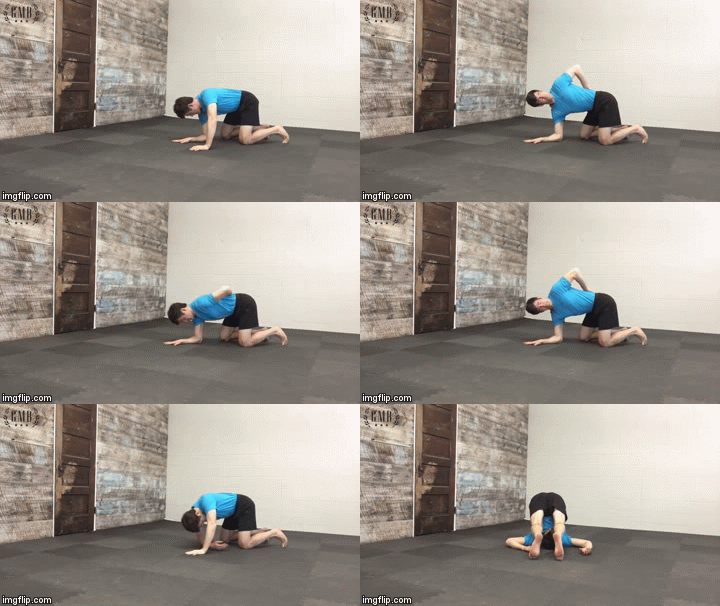
The twisting side roll is a great exercise to help you with neck stiffness, muscle pain or similar issues. For this very basic exercise, you start on all fours. Once there, place one elbow on the ground and put the other one behind your back. Make sure you retract the shoulder blade for maximal effect. The point is to twist your torso all the way toward that side, aiming to look at the ceiling.
Basic rules are to hit each exercise at least 3-5 times, or focus only on one but go for at least 5 sets of it.
This exercise has both a dynamic and static component to it. Hit ten reps of twisting on one side first and then use the hand you have on the mat to guide you into a Granby roll. Instead of finishing the roll stay on your shoulders for about 15 seconds. Repeat on the other side.
Kneeling Lunge To Pigeon
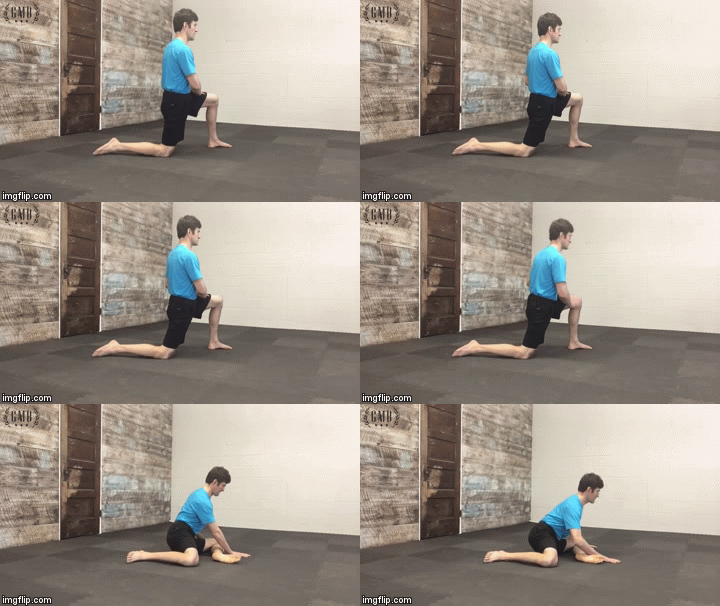
This BJJ mobility exercise has the ankles in its sights. To perform it, simply kneel on one knee while keeping the opposite foot on the ground. Once in position flex the glutes and rock forward and back for ten reps. On the last repetition, hold the position for 15 seconds once more.
Next, release the stretch and bend your front leg in front of you. Your shin should be on the ground, foot towards one side and the knee on the other. Pull your second leg so that your both your legs are in an S-like position. Hit 10 reps again, finishing with a 15-second hold. Finally, transition straight into a deep squat and hold it for 15 to 30 seconds. Make sure both your feet are firmly on the ground when you squat.
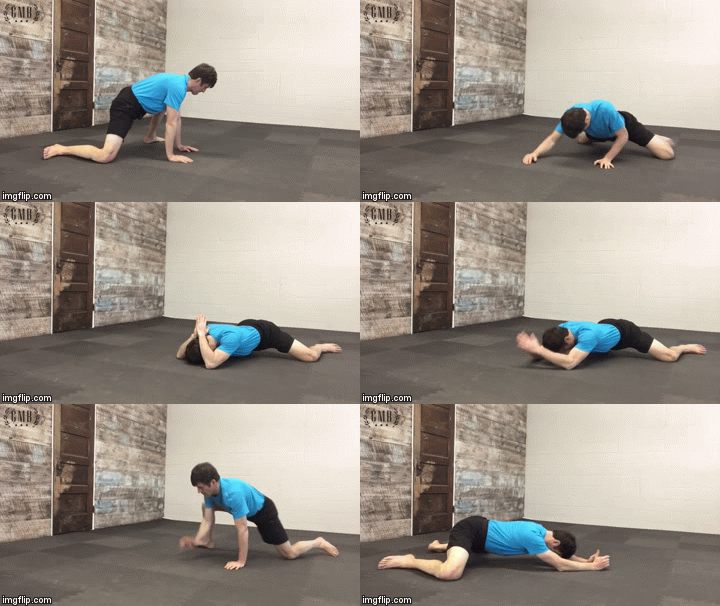
Sit Through Frog Stretches
Finally, it’s time to address the shoulders. This exercise is going to require some space to move. AS far as a sit out goes, you probably already have them down from all those BJJ drills you do daily. For those new to the game, you start on all fours, use an opposite side leg and arm to balance and shoot your leg through, opening up your torso. For this exercise though, instead of going back, you’ll continue the motion.
You’ll place the extended leg’s knee on the ground and pivot so that you end in the frog position. Instead of going for your regular frog stretch, extended forward, placing both your elbow points on the ground, either side of your head. Put your palms together and pull them backward, over your head. Hold for 15 seconds. This is one rep, and you want to do 10 on each side.
Breaking into someone’s house is never a good idea and especially breaking into BJJ Black Belt’s house. That’s exactly what happened in California to one of BJJ Black Belts Sergio Hernandez.
Sergio Hernandez is 38 years old Black Belt and EBI veteran. He’s a student of Grappling legend Baret Yoshida. He’s well known for his flexible legs and a system that he created and named it “rubber side control”.
This is what he wrote on his Instagram Profile
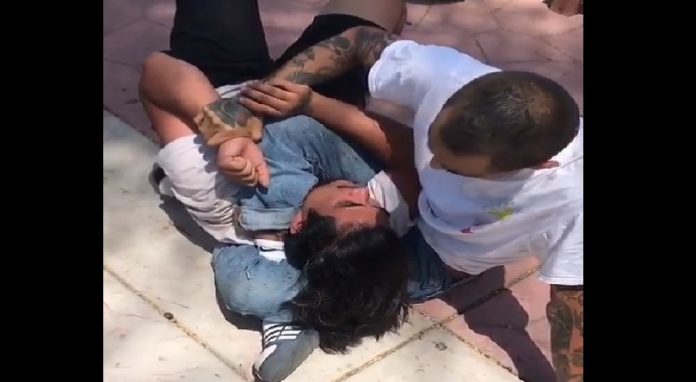
“This piece of shit was breaking into my Dads house right now. He ran down the alley and I caught up to him. I brought him back to my Dads house and then he tried to escape. I threw him to the ground using what little judo I know, then put him in a triangle until the cops showed up. He probably weighed 50 more pounds than me. He said he had a two-year-old and he didn’t want to be separated from his kid. I felt bad about that. Anyhow, I gotta get to work. I’ll be at Pop’s all day”
In a case, you didn’t know BJJ Brown Belt was forced to defend himself on the streets of San Francisco a few days ago. People are accusing this BJJ Black Belt for using excessive force on a homeless guy but is that really so? You can check the video HERE!
This is exactly the reason why you should practice takedowns as much as possible if you’re training BJJ. Fighting on the streets without takedowns is bringing you to a point where you have no chance to use anything that you’re probably learning for years and… that’s pretty bad.
When we talk about Jiu-Jitsu chokes there is a real danger of getting lost in the subject. There’s simply no other grappling martial art out there that has as much diversity in the area of choking people out as Brazilian Jiu-Jitsu. From the quintessential guillotine and Rear Naked Chokes to intricate lapel chokes from weird positions, you’ll see it all in BJJ. However, there’s clear favoritism towards certain chokes. Although they have proven to be effective throughout the years and in multiple competition formats, it is good to take a break and explore some other aspects of strangling people every once in a while. Today, we’ll look at two underused, yet astonishingly effective chokes that’ll catch everyone you meet by surprise!
The most satisfying tap in BJJ doesn’t come from an arm or leg lock. Yes, hitting a heel hook from the Inside Senaku is rewarding but it’s not as much of an undisputed victory as choking someone. Jiu-Jitsu chokes have the power of ending someone’s life and it requires surprisingly little force. Given that you know how to perform it, of course. A person tapping to a choke acknowledges that you could’ve taken their lives at will. It is the ultimate surrender and the most satisfying manner of winning.
Furthermore, Jiu-Jitsu chokes are the one move that works on anybody. No matter the size, strength or flexibility of a person if you get into a position to catch a choke it’s over. Whether you go for a blood choke and finish things in seconds or torture someone with an air choke the result is the same. the only trouble is, that people that also train BJJ are well versed at defending and countering choke attacks. to that extent, there are moves that’ll surprise even the most seasoned black belts. In fact, one of the chokes we’re going to cover today was a favorite of Helio Gracie himself. That’s as big of a statement on its efficacy as there’s one.
Mixing It up With Jiu-Jitsu Chokes
As previously mentioned, most chokes in Brazilian Jiu-Jitsu work in one of two ways. The most common, and more reliable method of strangling someone is via a blood choke. That involves blocking the blood flow of the carotid arteries on both sides of the neck. NO blood means no oxygen to the brain, which, in turn, means going to sleep.
The second manner of choking people is via an air choke. A great example is eh Guillotine choke 9lthough it can double as a blood choke two). With an air choke, yo disrupt the airflow by blocking the trachea with direct pressure. They also work very effectively but take more time and are much more painful than the surgical blood chokes.
Today’s unusual choking techniques come in each of the above-described varieties. These chokes do not feature as regularly in BJJ anymore, for one reason or another. Perhaps they’ll have a resurgence sometime in the future, or stay in the shadows for time to come. Who knows. What I know for sure is that they work, both in training and competition and against all kinds of opponents. Nope, they’re not the ultimate chokes that’ll work 100 % of the time. They’re just a different and really simple way of getting a tap via an unusual technique. they’re also legal at every level of BJJ and work both in Gi and No-Gi.
Increase your choking arsenal with the help of the Aussie that knows all about chokes!Lachlan Gilescan teach you everything you need to know about chokes for BJJ in his High Percentage Chokes.And also Alexandre Vieira with hisCrucifix and Loop Choke Instructional.It’s the best and most detailed instructional on Loop Choke and Crucifix ever.
The Nutcracker Choke
I’ve heard people refer to this one as an old wrestling choke that doesn’t work in BJJ. I, personally, beg to differ. I re-discovered this one a short while ago and it refreshed my submission game significantly.
First and foremost, who can aim to use this choke? To tell you the truth, I’d recommend it to people from the blue belt onwards. The reason is that it involves a Kimura grip which, in itself, requires a certain level of technical knowledge. In terms of the mechanics of the choke, this one is an air choke.
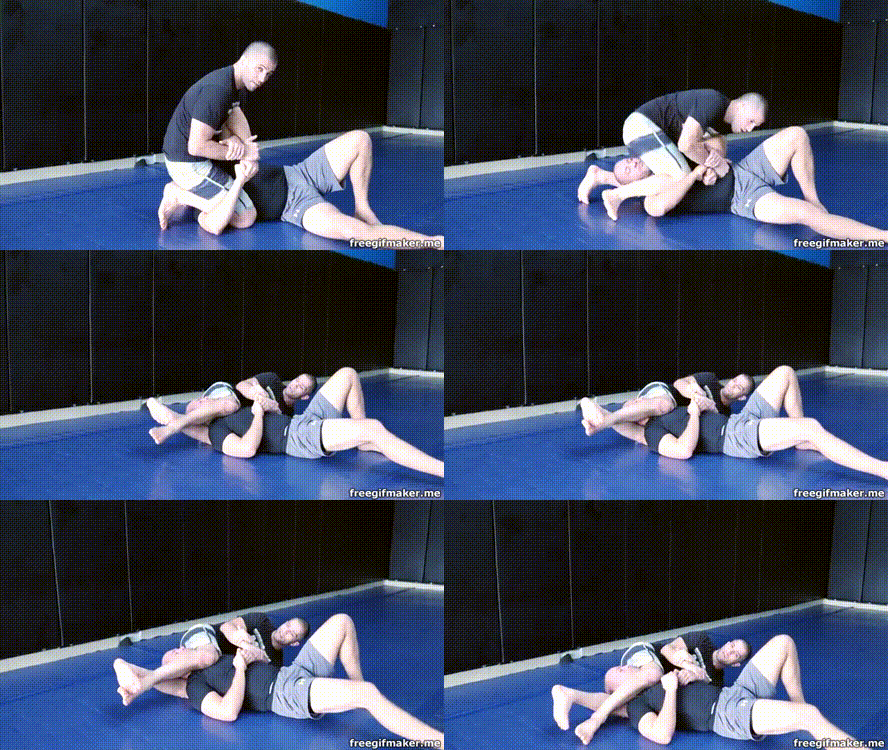
Basically, the picture that you have a Kimura on someone from a north-south position. This is a very usual position of attacking the Kimura lock. It is also a very usual thing for an opponent to defend stubbornly, by holding on to their belt or leg. This prevents the Kimura submission but provides an anchor point for the nutcracker choke. To get the choke, you need to lie to the side of the arm you’re attacking. The idea is that you’re lying on the shoulder of the second arm in the figure four grip.
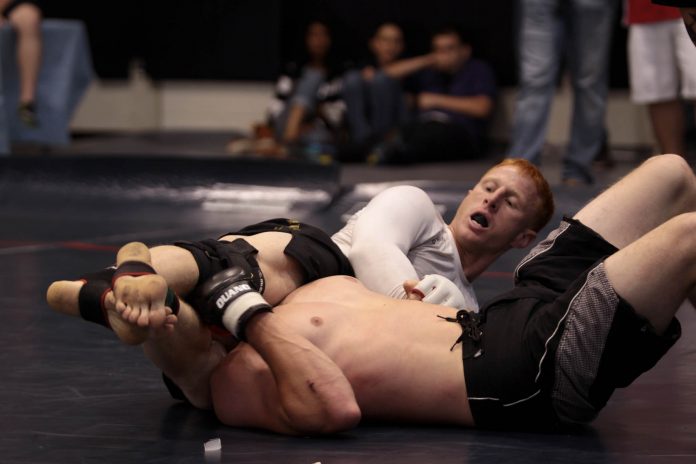
The goal here is to use the position of your legs to get a choke. from the north-south, you already have each of your legs on either side of your opponent’s head. When you lie down, one of your legs is going to stay under their head. The other is going to end up on top, which is what you want. You need to place the back of the knee of this top leg, straight on the opponent’s Adam’s apple. Then, simply cross your feet like in the closed guard and extend your legs. You’ll end up tapping the opponent with the Nutcracker or you’ll get a Kimura when they panic.
The Grapefruit Choke
First of all, credit where credit is due. I learned this choke as a white belt from Jungle BJJ founder and black belt Fernando Araujo He referred to it as the Helio Gracie choke, and later on I found it cited as the Grapefruit choke as well. Apparently, Grandmaster Helio Gracie used this choke very often and to great success. Personally, I’ve gotten two wins via this choke in competition, so I can say that it works for me. People that I’ve shown it to have also used it successfully when fighting.
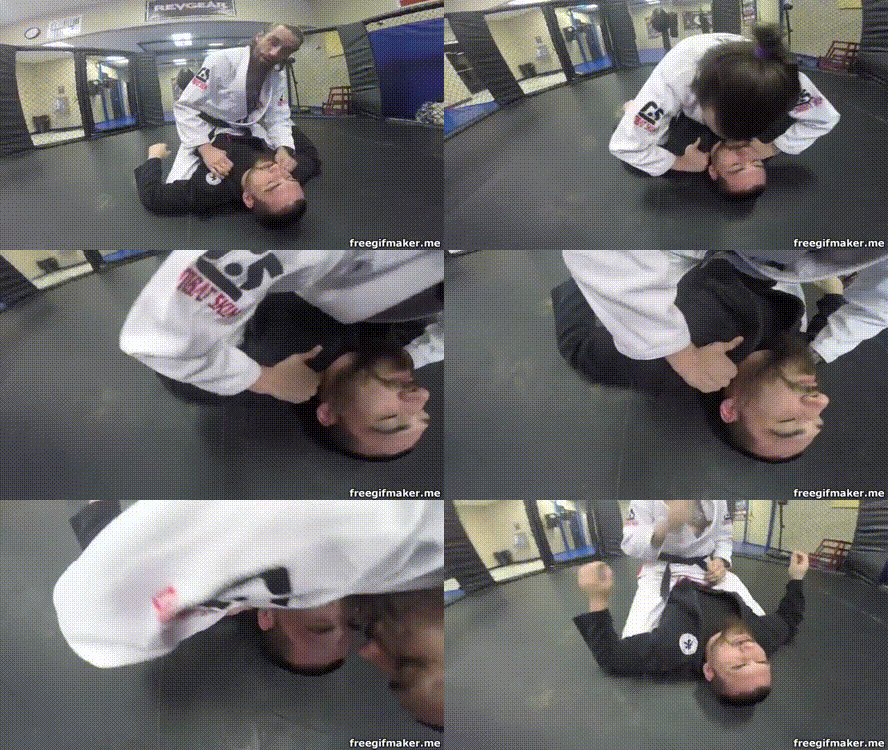
The Grapefruit choke is one of those Jiu-Jitsu chokes that are readily available, yet nobody notices. It is a blood choke done from the mount position. In terms of mechanics, it is as simple as chokes get. You simply grab the Gi collar on both sides with a thumbs-out grip. Once you make fists on both sides, you place the knuckles on your opponent’s carotid arteries. From there, finishing is as easy as sprawling forward and putting your forehead on the mats.
What I found out in No-Gi is that it is way easier for someone to slip out since there’s no Gi to anchor on. So, when finishing the choke in No-Gi, aim to place both elbows firmly on the ground with the choke ready to go. Then, use your head to further stabilize your position and twist your fists, first towards yourself and then towards the mats. AS far as Jiu-Jitsu chokes go it doesn’t get simpler than this. Nor more effective!
There’s a classic guard out there that is a staple of BJJ open guard. It is the butterfly guard, a simple effective and timeless tool to attack from the bottom. It is one of those techniques that never really goes away, just takes the back seat for a while from time to time. Plenty of grappling legends like Marcelo Garcia has demonstrated how good this position can be. During the old days of glory for the butterfly guard, Marcelo used ti to get to the back or hit a Guillotine Choke. After a short hiatus, the butterfly guard returned with a bang, courtesy of Eddie Cummings and his leg lock game. Now, Adam Wardzinski, a modern-day grappler, fearsome leg locker and legitimate black belt brings it all together. How? Via the “Butterfly Guard Re-Discovered” Adam Wardzinski DVD.
If you follow the grappling scene of today, you’re aware of who Adam Wardzinski is. The Polish grappling sensation has won everything there is at the IBJJF and UAJJF tournaments during the last years. “Megatron” as he is known is a force to be reckoned with, especially when he’s in butterfly guard. He now shares all his butterfly guard knowledge with us via his Adam Wardzinski DVD. It is the DVD we’ve been waiting for since the re-emergence of the butterfly guard. It is not that the old-school Marcelo Garcia stuff doesn’t work. it is about how the butterfly guard first the modern-day game and Adam is unrivaled at demonstrating it.
The butterfly guard is a huge favorite of mine, so, naturally, I was stoked to check out an Adam Wardzinski DVD since he’s an authority on the subject. The butterfly guard is an open guard that offers lots of attacking options and works just as well in both Gi and No-Gi. The beauty of the butterfly guard is it’s simplicity. Furthermore, it is a gateway to both upper and lower body submissions. Let’s now look at how all this is possible along with Adam Wardzinski.
An Introduction to Adam Wardzinski
A few words on Adam before we continue. He is an accomplished black belt under the legendary Alan “Finfou” do Nascimento. Adam Wardzinski is a pioneer of Polish grappling, at least on the big scene. The heavyweight is a fearsome opponent for anyone in his weight class, as his rich record clearly demonstrates.
Born in 1991 in Poland, Adam didn’t start his martial arts career with BJJ. Although he followed the sport via Youtube, he was a practitioner of Aikido, as per his parents’ wishes. At 18 years of age, Wardzinski had enough of Aikido and finally made the switch to the Gentle Art. His first coach was a Polish grappling legend in Karol Matuszczak, a Roy Harris black belt himself. Adam remained with Matuszczak until his brown belt days.
His path led him to Sweden, and world-renowned black belt Alan “Finfou” do Nascimento. Adam went on to affiliate himself with Nascimento, and eventually earned his black belt in 2016. Wadzinski’s record has 82 wins and 21 losses so far. half of his wins are via submission.
The Re-Emergence Of The Butterfly Guard
So, why is the butterfly guard such an effective position? The key is in its simplicity. for a simple open guard, it offers a lot of submissions and sweeps opportunities. However, this comes at a cost. namely, the position is not one that offers a lot of control over your opponent. At least not initially.
The main goal of the butterfly guard is to get under your opponent’s center of gravity. That’ll allow you o easily sweep them, get a leg lock or get into a different guard variation, like the X-Guard, for example. In situations when an opponent retains a strong base and posture, grip fighting is what can get you behind your opponent for a back take. Another option includes going for front headlock attacks, most notably the Guillotine choke. So, the lack of control in the butterfly guard is compensated via positioning yourself under the opponent or utilizing precise grips.
What the grappling world lacked so far is a cohesive system to bring together all aspects of the butterfly guard. the “Butterfly Guard Re-Discovered” Adam Wardzinski DVD does just that. It is the must-have resource for anyone aiming to become proficient from the butterfly guard. Here’s what it offers:
“The Butterfly Guard Re-Discovered” Adam Wardzinski DVD
Adam Wardzinski has truly made a masterpiece on the subject fo the butterfly guard. His DVD instructional has it all. OVer 4 content-rich DVDs, he outlines the philosophy of the guard, attacks, counters, tactics, and defenses. it is by far the most comprehensive and easy to follow the butterfly guard system available so far!
1. Butterfly Guard Basics
It all starts with the basics, but Adam wastes no time on needless talking. He kicks things off with a sweep, getting into the mechanics of the butterfly guard along the way. After all, learning through examples is a great method, isn’t it? I loved the detail on each aspect of completing the very first basic butterfly sweep. Wardzinski goes int detail on body positioning, how to nullify the opponent’s base and finishing with ease. he also offers a few different grip setups as well as a direct transition int a knee slice pass off the sweep.
The second part of the DVD refers to some of the most basic submissions from the butterfly guard. this includes a very interesting inverted armbar setup, your basic Guillotine choke as well as an Omoplata. He rounds it all off with a path towards back control. All butterfly guard classics but with a new modern touch.
2. Sweeps, More Sweeps, And A Loop Choke
If there’s one thing this Adam Wadzinski DVD does not lack, it is sweeping. Actually, the second volume of the instructional is all about sweeps. Well almost all.
A few grip fighting tips preceded the butterfly guard sweep galore. Adam opens up paths to the top via a hook sweep as well as transitions into other guards. There are plenty of sweeps from the Single-leg X Guard close neighbor of the butterfly guard. The cool thing is that these sweeps are all very easy to get and require almost no effort. No wonder Adam labels them as “lazy” sweeps.
To keep things interesting, he throws in a Loop Choke setup at the very end, but that’s not what caught my attention. What I really liked about this volume, is the final chapter. Namely, the dynamics of the butterfly guar change significantly when an opponent raises on leg up. To my great pleasure, Adam focuses on this problem and offers a great solution. Pay attention to this as it is a very useful move.
3. The Advanced Butterfly Guard System
This is where this Adam Wardzinski DVD goes into overdrive. it’s the Holy Grail of butterfly guard attacks. Adama carries over the Single Leg X dynamics from the previous volume, opening up a great toehold setup to complement all the sweeps. There are, of course, more sweeps, each more attractive than the previous one. From overhead sweeps to the steering wheel sweep, Adam sure offers ways to get your opponent down.
A really really useful setup is the triangle choke entry from the Single Leg X guard. This one is really going to surprise most people, as nobody expects to get triangled from the Single Leg X.
It wouldn’t be a butterfly guard DVD if there weren’t arm drags in it, which is exactly how this volume ends. Some very cool options there.
4. Half Butterfly And The John Wayne Sweep
If there’s one thing out there that nobody has video material on, it is the half-butterfly guard. This is one guard I use on a daily basis and Adam just opened up new horizons for me. For a simple back take all the way to armlocks, this is going to revolutionize your half guard game!
And finally, the one thing that really catches the eye in this Adam Wardzinski DVD – The John Wayne sweep system. The sweep itself is as cool as it gets, let alone the follow-up submissions and even fallback sweep options. It is a simple little system that’s going to do wonders for your butterfly guard game. It has for me!
Finally, a bit on the defensive side, Adam rounds things off with a few half-butterfly guard defenses against common passes.
For all of us that train on a regular basis, we know how “gentle” grappling can be. However, in its essence, Brazilian Jiu-Jitsu is also known as the gentle art, or ‘Arte Suave” in Portuguese. If you see a BJJ match live you’ll hardly think it is a gentle affair. If you roll in BJJ, you’ll most likely experience a plethora of things, none of them even near gentle. However, there is a subtleness to Jiu-Jitsu that can make it look and feel effortless. The only catch is that you need to really master the art in order to get to the Arte Suave part.
The basic notion behind calling Jiu-Jitsu “Arte Suave” is due to the art’s Japanese roots. In Japan, Jiu-Jitsu is perceived as an art in which fighters execute moves in real life-like circumstances without causing injury to their opponent. Since not many other martial arts could boast with the same characteristic, Jiu-Jitsu emerged as the gentlest of the bunch. As BJJ evolved, the Arte Suave brand stuck with it, and the Gracias tried to enforce it as much as they could.
Back when Carlos and Helio re-mastered the Japanese art of Judo to fit their needs, they were non-athletic and skinny men. As such, they emphasized the use of leverage over power and developed an attacking game from dominant positions. Even to this day, the Gracies are big proponents of the “keep it playful” philosophy, one that truly represents BJJ as a gentle art.
Japanese Roots
In Japanese, First, let’s address the “gentle” part of the term “Jiu-Jitsu”. In Japanese, it Ju-Jitsu and it loosely translates as gentle art. “Ju” can mean gentle, yielding, soft or flexible, whereas “Jitsu” is art. You might argue that BJJ comes from Judo, not Jiu Jitsu, but the meaning of Judo is essentially the same, with the only difference being the “do” (path) instead of “Jitsu”.
As surprising as it may sound to grapplers, the reason why Jiu-Jitsu is the gentle art is in the fact that people thought of it as being a soft martial art. Compared to the “hard” arts like karate, for example, Jiu-Jitsu had a lot more flow to it. The “yielding concept” is an advanced one even in the modern BJJ game. It haste do with the flow of Jiu-Jitsu which is something we’re going to address in a moment.
There is a reason why the Samurai chose Jiu-Jitsu as their martial art of choice for unarmed combat. The “Arte Suave” approach allowed them to control and quickly dispose of enemies even when wearing uncomfortable battle armor. It both provided them with an efficient means to an end, as well as a method of staying in motion which is essential on the battlefield. Since striking is largely ineffective against armor, joint locks and chokes from dominant positions we’re the methods of choice. To that extent, acquiring finishing positions required efficient and seamless movement, which is where the flow comes to play.
The Modern “Arte Suave” Game
In the modern Jiu-Jitsu game, the Arte Suave principle is still the best way to victory, even if it is not discussed very often. The modern BJJ game is all about precision and efficiency. The goal is to use as little movement to obtain the best possible mechanically advantageous position. From there, leverage and technique are the methods of control as opposed to forcefully pinning an opponent. As the BJJ game progresses, the ultimate goal is to apply leverage and technique once more, this time in order to submit an opponent.
Another aspect of being gentle in Jiu-Jitsu is being smart. There is a reason why a rear naked choke requires the figure four arm configuration or an armbar is not done from the half guard. Smart and deliberate actions are marks of high-level grapplers and embody the spirit of the gentle art.
As a comparison, Judo aims to land an opponent on the ground, preferably on their back. As such, there are not many submissions that Judokas use in order to win. Wrestling is all about pinning, and the numerous ways of keeping your opponent on the round once you take them down. Getting a tap from a rear naked choke is an acknowledgment that you could have taken the person’s life without applying any stretch whatsoever. It is as gentle as it gets.
The modern game of Jiu-Jitsu, especially high-level “flows” are the pinnacle of the Arte Suave approach. Top class BJJ grapplers tend to have tons of fun when rolling an make it all seem like a light-hearted game of human chess. The only part people need a really long time to comprehend is that the tap is not the ultimate goal. How you get to the tap is what Gentle Jiu-Jitsu is all about.
Ego In Brazilian Jiu-Jitsu
Finally, a word or two on ego and the part it plays in the Gentle Art. As we all know those with immense egos rarely stay in BJJ for long. Jiu-jitsu is an ego killer. The mats have a way of exposing people for what they truly are. People who cannot let go of their egos an stubbornness are not going to be successful on the mats. People who can, on the other hand, are going to turn into BJJ nerd-assassins very fast!
One huge lesson that Jiu-Jitsu teaches us is humility. The moment you learn how to let go of your ego is the moment you begin learning BJJ. Not only that, but you’re on a good path to understanding the gentle aspects of this grappling martial art. The reason why beginners are anything but gentle is exactly in ego. The panic of losing or giving up a position is all about ego. The consequences are tight muscles, labored breathing and the inevitable fall deeper into an opponent’s spider web.
People who have been grappling for years though seem to be patient, relaxed, smiling and having fun, even when they tap. This is the true spirit of BJJ as the Arte Suave. It is also a result of getting rid of ego and understanding the Jiu-Jitsu flow!
There are certain moves in Brazilian Jiu-Jitsu that are simply unavoidable. They are literally everywhere in the game and you do not even notice when you use them. These moves are so crucial that they’re both techniques to do in rolling and essential BJJ drills. Whenever you hear of a technical grappling move that you can do solo as a drill, pay close attention. One example of such a move that is in the very essence of grappling is the technical stand-up.
The technical standup is a staple of grappling martial arts. It has a very wide application in almost every aspect of Jiu-Jitsu. Actually, people are very often in need of technical stand-up without even realizing it. Reaching a level of consciousness in which you recognize every move’s importance is a mark of high-level grapplers. But, before you strive to understand Jiu-Jitsu, you need to understand each and every move on its own. Starting with the technical standup.
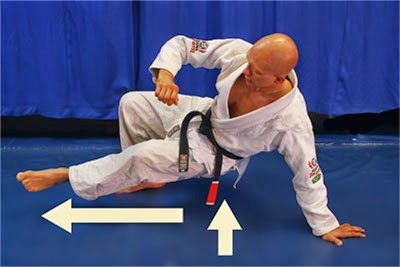
The basic idea of the technical standup is to get you safely from a prone position to your feet. The operating principle here is safety, as there are plenty of ways to get up to your feet. People usually lead with their heads, which is instinctual and mechanically easy to achieve. However, in terms of combat sports, this is a big NO! If it’s grappling, it’s guillotine time. If it’s an MMA fight, it can be guillotine time or knockout time. And, if it is a street fight situation, it can be, well, everything. So, getting up as you do in the mornings is bad, technical stand-ups are good!
The technical stand up is a true BJJ fundamental. If you want to build your game around fundamental moves then we have a great resource for you.“Fundamentals Of A Jiu-Jitsu renegade”is a DVD set featuring none other than the legendaryKurt Osiander. Grab it and master the fundamentals over four immaculately doneDVD volumes.
Technical Stand Up – Staying Safe
A closer look at the technical standup is going to let us understand it better The main goal of the move is to neutralize the offensive options an opponent has while you’re changing levels in a match. Basically, it is all about two things: Distance and protection.
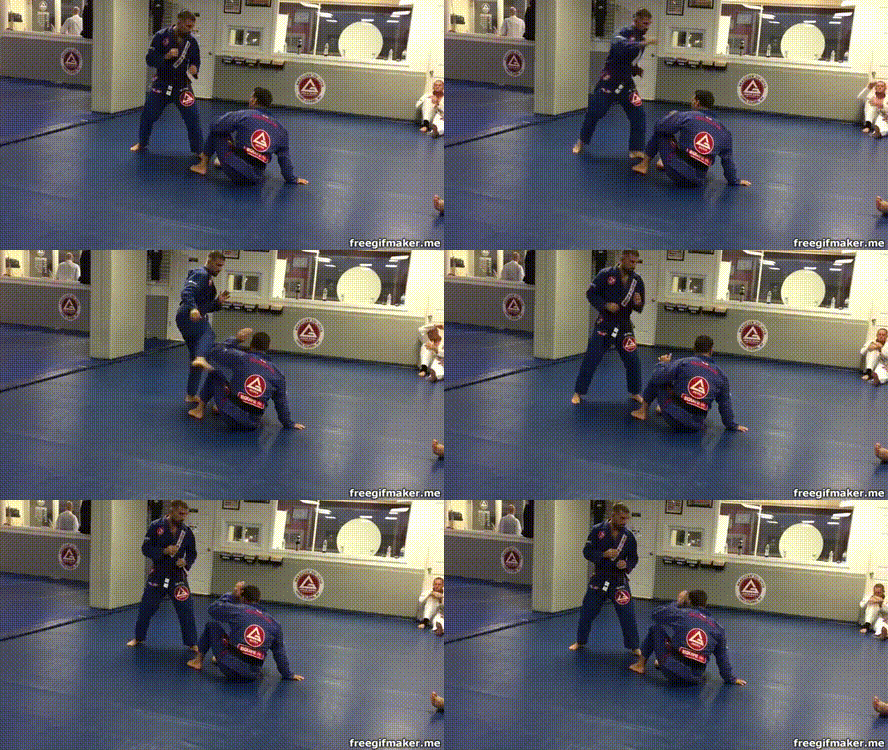
To execute the technical stand-up, you need to be on your butt. The goal is to build a movable base that’ll allow you to get up safely. However, before you do this, you must stay protected and manage distance at all times. To begin with. one arm goes palm behind your head, in order to protect you from strikes. You could also extend the arm (if you’re only grappling) to make sure you have extra control over the distance.
Next, you need to place your body in a mechanically advantageous position in terms of a level change. This means lifting your butt off the ground without allowing your head to go forward. If you’re not a gymnast this is probably going to be difficult for you. Well, at least without the technical standup. So, a base that allows you to move with purpose involves the opposite side limbs. This means one arm, and the opposite side leg is going to be the columns on which you base. Since you already have one arm busy with protecting your head, you’re going to use the other one as the first base point. Logically, the opposite side foot is going to be the one you place on the ground, knee bent.
Distance Management And Getting Up
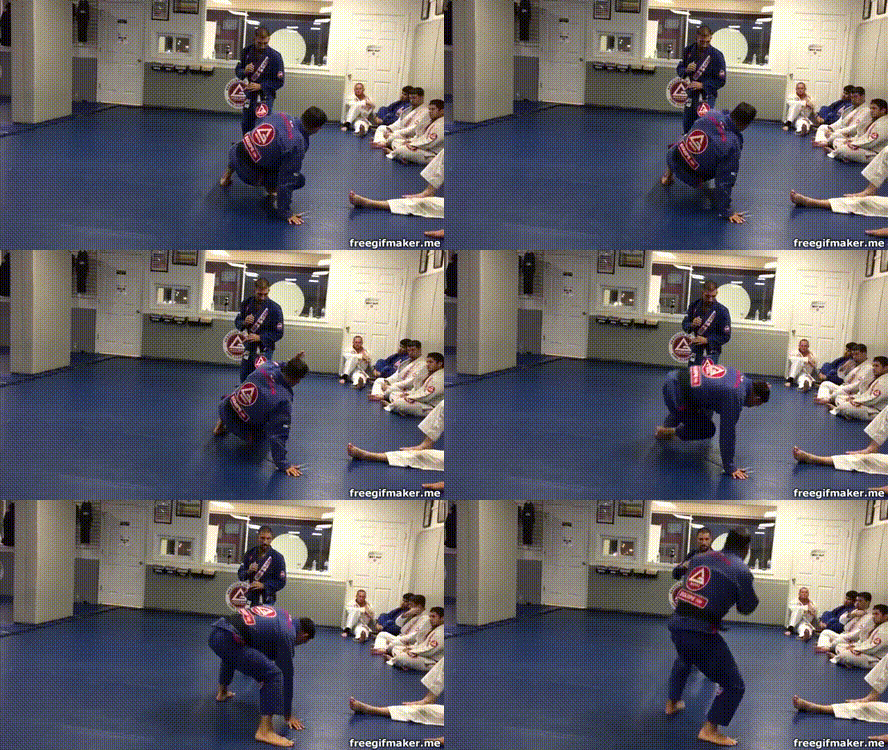
Once you have sufficient protection and the correct base, you can look to get up. Since you have one arm and foot down, you need to distribute your weight properly. To do that, make sure your weight is shifted toward the side where your arm is on the floor. This will ensure you can be stable when you raise your body off the floor.
In order to manage distance, the bottom leg needs to be completely straight. It acts as a block and can even be used to kick or trip when needed. whenever you raise your body with the frame, you need to have this leg extended or there’s no technical standup.
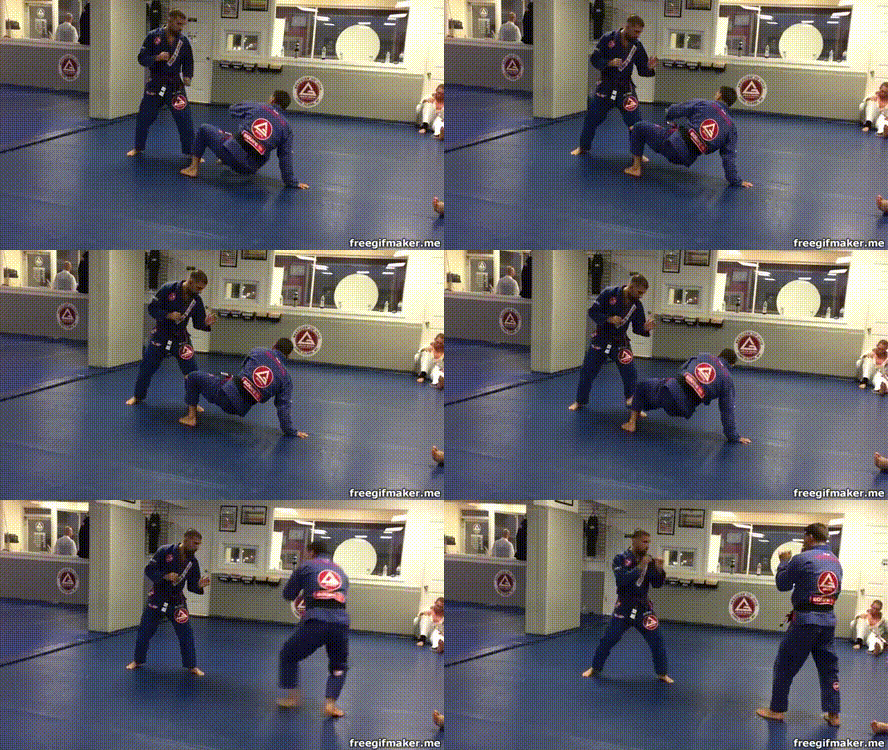
Finishing the move requires you to pull the straight leg all the way behind you. This is going to land you in a staggered stance. However, once you pull the leg behind, you need to remember that your protection arm becomes extremely important. Now it can either control distance if it’s straightened, or protect the head.
Once both feet are firmly on the ground, you can look to pick the frame arm off the floor and straighten up your torso. You’re now up and in a staggered stance and arms ready for a guard position.
How To Use The Technical Standup
So, now that you know what the technical stand up is, you might be thinking, where do I need this in BJJ? Granted, as per our example, the move sounds better suited to MMA or self-defense. Well, this is not really the case.
One very important aspect of the technical standup for Brazilian Jiu-Jitsu is sweep completion. Although you might not have noticed, the technical standup motion is part of a large variety of sweeps. The Koala sweep, an X guard sweep, finishing takedown variations off the knees… There are plenty more examples, and, if you focus on finding while you roll, you will.
Another major use of technical stand up is in guard retention. If you have the correct arm frame, it can help you stay in a guard or even sweep even against people already past your legs. It is a great way to reset when you only have head/neck control from the bottom, especially in No-Gi.




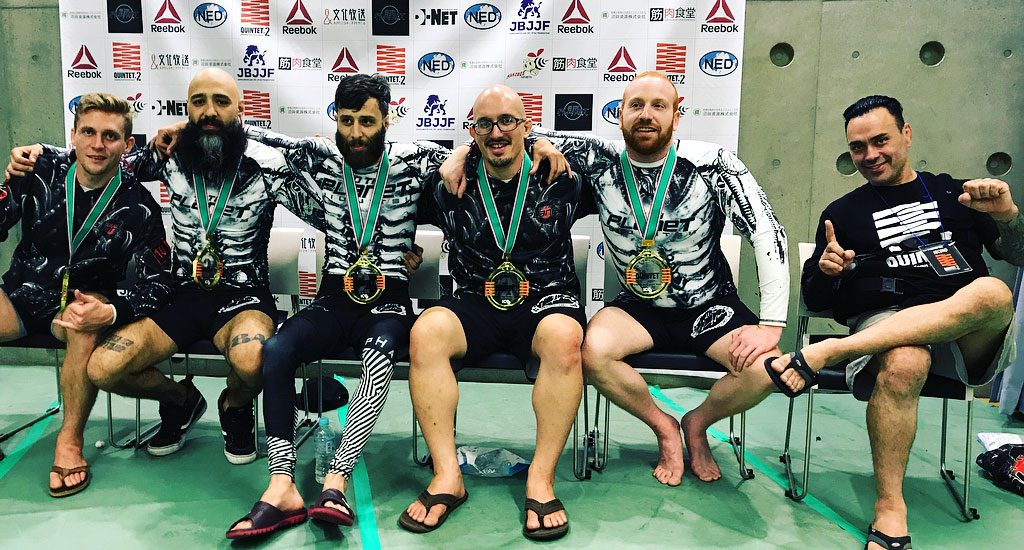 While the first event didn’t really get plenty of attention, the second one most certainly did. It took place just a couple of days ago and featured a whole new lineup of 5 man grappling teams. To be completely honest, I only got wind after the event, but it most certainly raised my appetite for the next one. Through some very very exciting matches, the 10th Planet Jiu-Jitsu Team got the best of Tiger Muay Thai, Reebok and Vagabonds teams.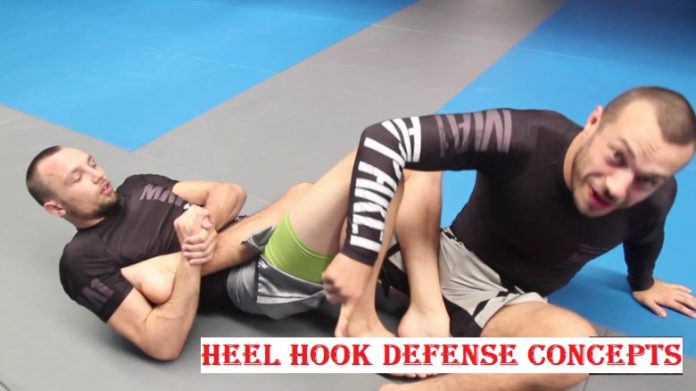
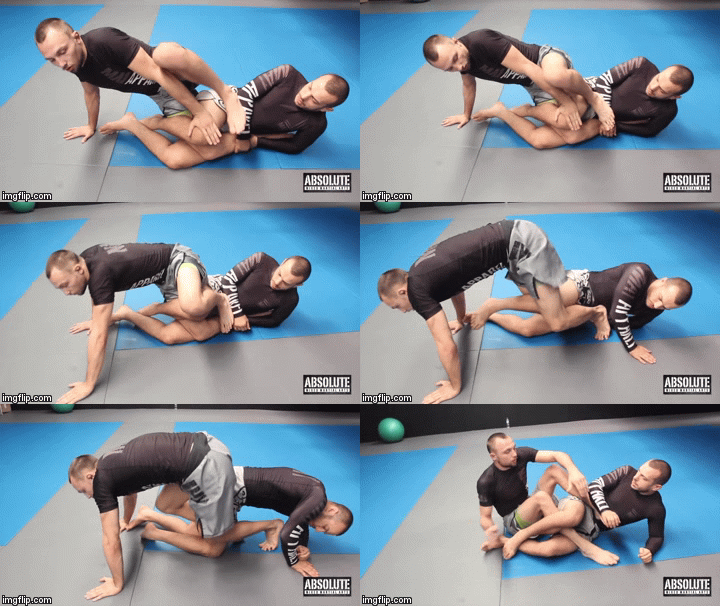
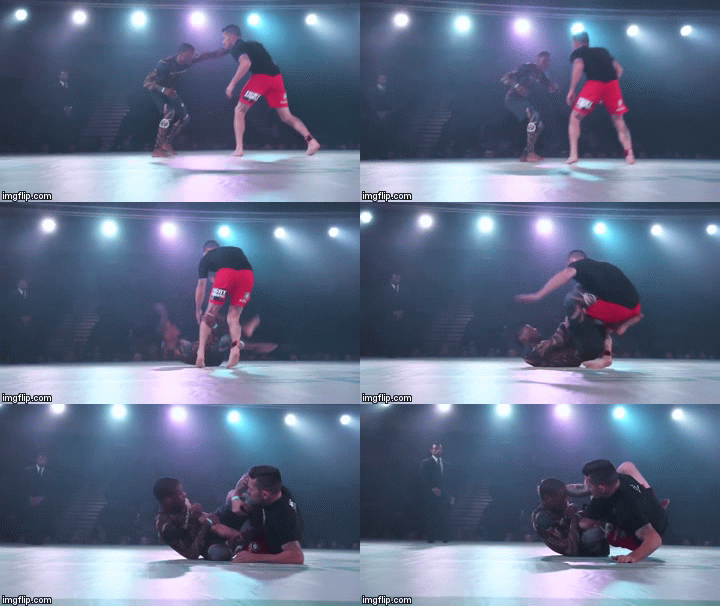 Since the old days of Imanari rolls in Pride, other people adopted the move to great effectiveness. Ryan Hall is one name that stands out in terms of using the roll to set up heel hooks. Much like the father of the move, Hall used it in both BJJ and MMA matches, in an awe-inspiring fashion. Since then, the new wave of leg lockers also gave in to the temptation of using the Imanari roll entry. Remember 10th planet prodigy Marvin Castelle’s breathtaking viral execution of the move? It’s on the left, for all of you who need a reminder.
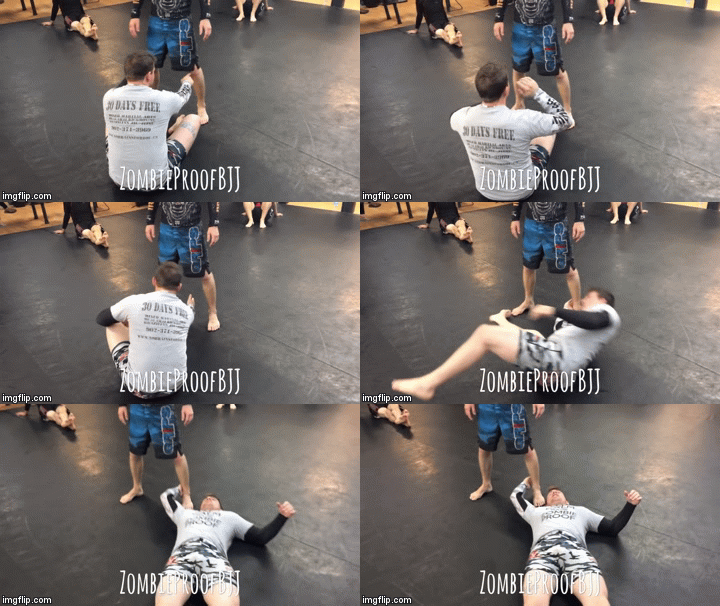 Let’s take an opponent in a parallel stance as the starting point in our Imanari roll execution example. You’ll start on your butt, feet close together like in a butterfly guard. The first goal is placing a hook grip on the leg you’re about to attack. for the grip, you need to place your palm on the inside of their ankle, palm facing outwards. This is going to allow you to end up with a perfect grip once you roll.
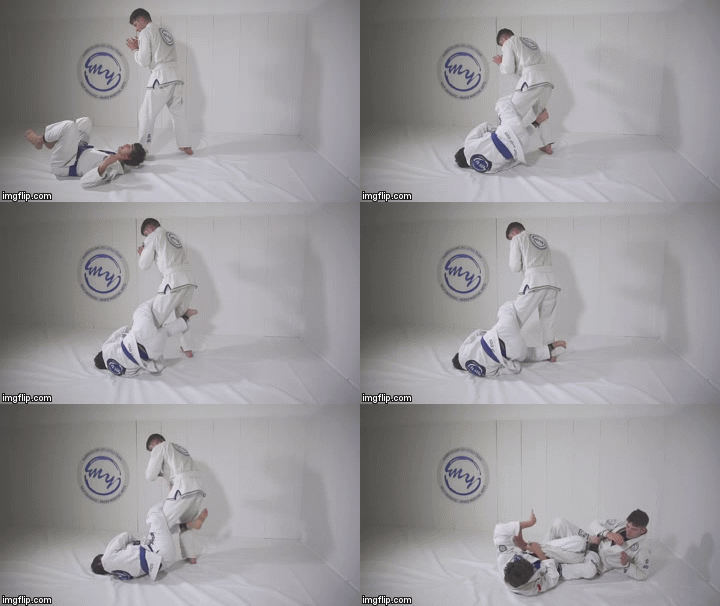 The roll itself is anchored on this first grip. Basically, you want to use your grip to pull yourself into inversion, rolling your legs toward the outside of your opponent. To do that you lay down on the shoulder of the arm that’s gripping the leg and you swing your legs around and over. Your shoulders should be the only thing touching the ground when you roll. The goal of the roll is to end up with your legs on either side of the leg you’re attacking. this is going to land you in a high control Ashi Garami position so that you can finish with a leg lock.
 The finishing positions available from the Imanari roll depend on the placement of your legs after the roll. If you place your outside foot in a “reaping” position you’re all set for the Honeyhole AKA Inside Senkaku. The inverted heel hook finish is as easy as spelling Masakazu Imanari.
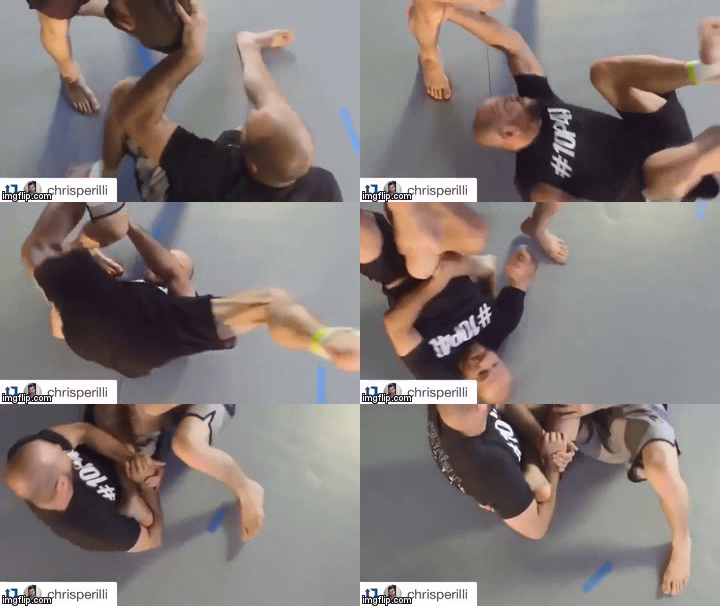 Ryan Hall’s take on it was to get to the 50/50 position instead. For this, the leg that goes in between the opponent’s legs needs to come out in front of them. Since this requires a bit more movement than the previous one, you’ll use your outside leg on their hip to help you thread the second leg. the leg on the hip also determines when you’re going to take your opponent down. The 50/50 is a legal IBJJF position and if you attack an ankle lock from there you can use the Imanari at all levels in competition.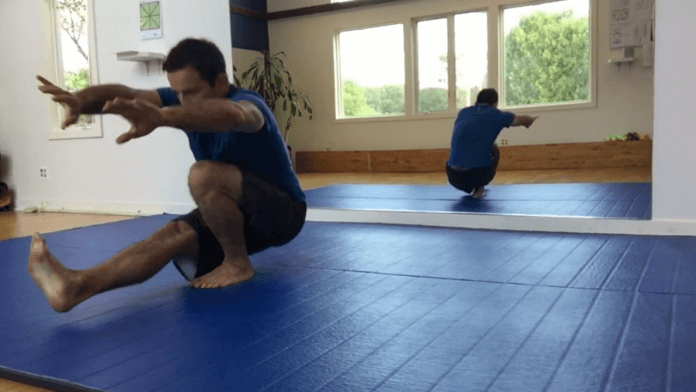
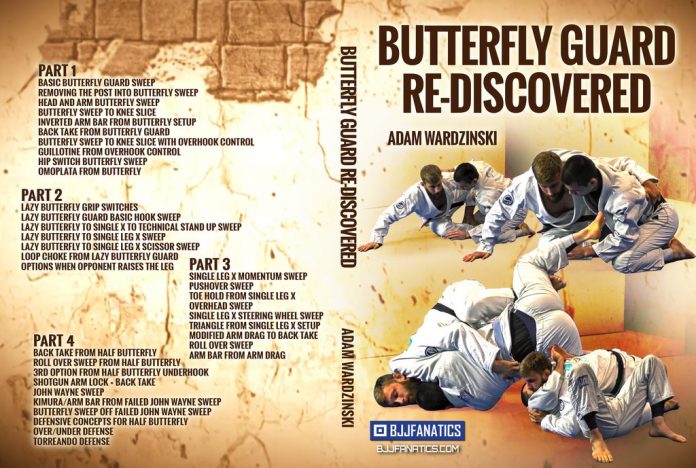
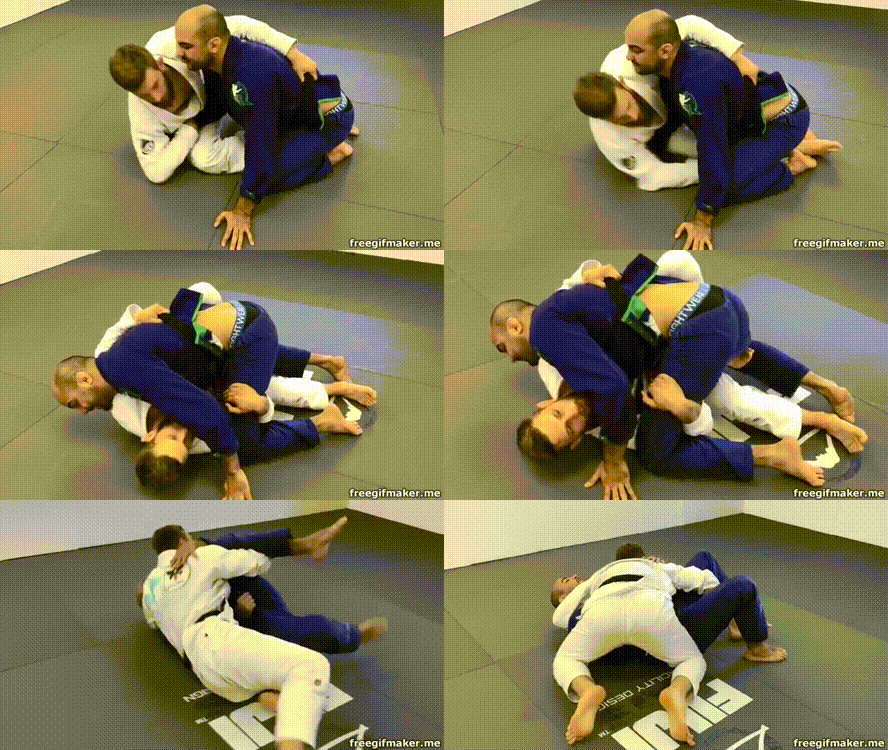 It all starts with the basics, but Adam wastes no time on needless talking. He kicks things off with a sweep, getting into the mechanics of the butterfly guard along the way. After all, learning through examples is a great method, isn’t it? I loved the detail on each aspect of completing the very first basic butterfly sweep. Wardzinski goes int detail on body positioning, how to nullify the opponent’s base and finishing with ease. he also offers a few different grip setups as well as a direct transition int a knee slice pass off the sweep.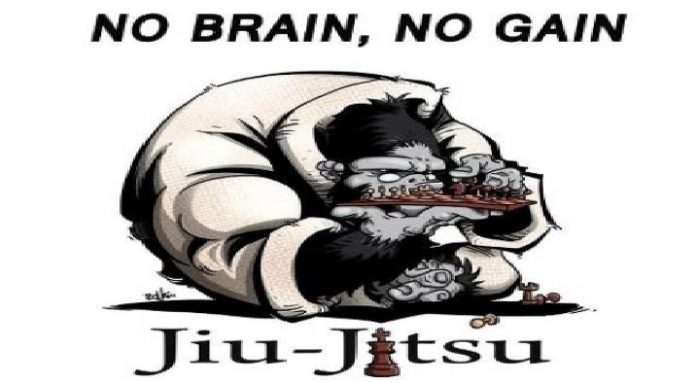
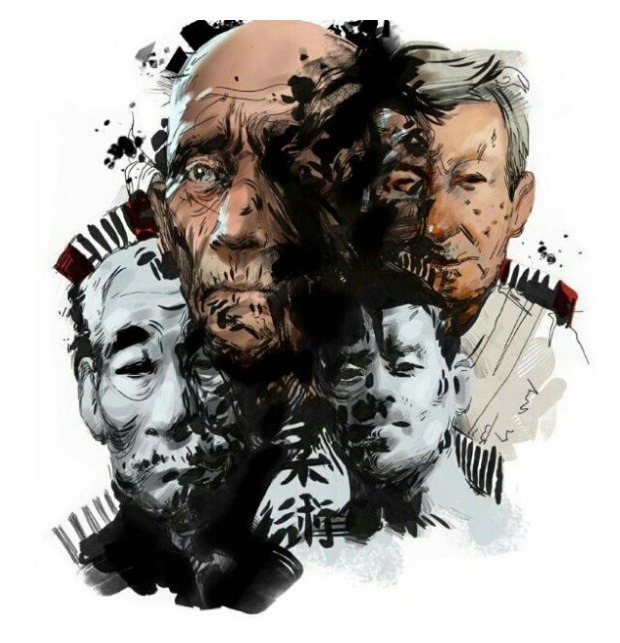 Back when Carlos and Helio re-mastered the Japanese art of Judo to fit their needs, they were non-athletic and skinny men. As such, they emphasized the use of leverage over power and developed an attacking game from dominant positions. Even to this day, the Gracies are big proponents of the “keep it playful” philosophy, one that truly represents BJJ as a gentle art.
 In the modern Jiu-Jitsu game, the Arte Suave principle is still the best way to victory, even if it is not discussed very often. The modern BJJ game is all about precision and efficiency. The goal is to use as little movement to obtain the best possible mechanically advantageous position. From there, leverage and technique are the methods of control as opposed to forcefully pinning an opponent. As the BJJ game progresses, the ultimate goal is to apply leverage and technique once more, this time in order to submit an opponent.
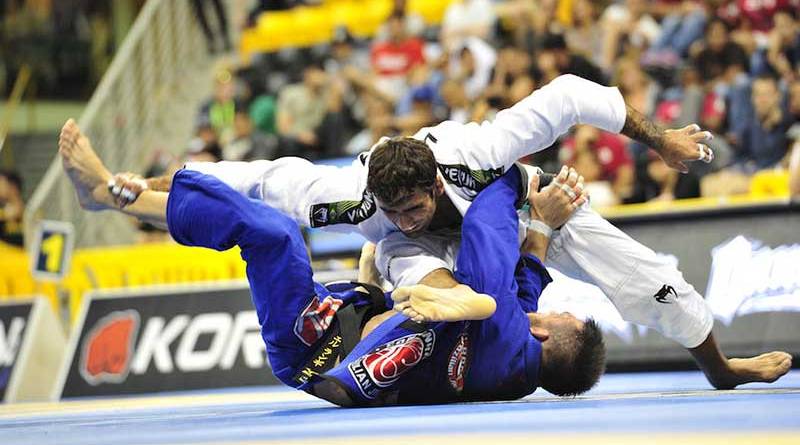 One huge lesson that Jiu-Jitsu teaches us is humility. The moment you learn how to let go of your ego is the moment you begin learning BJJ. Not only that, but you’re on a good path to understanding the gentle aspects of this grappling martial art. The reason why beginners are anything but gentle is exactly in ego. The panic of losing or giving up a position is all about ego. The consequences are tight muscles, labored breathing and the inevitable fall deeper into an opponent’s spider web.