





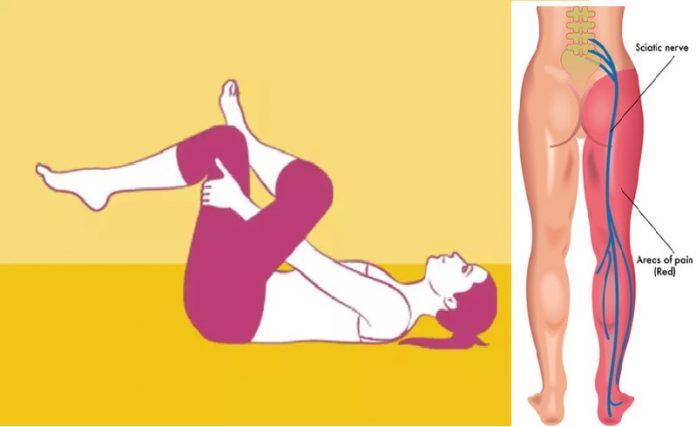

BJJ lower back pain is more than common. Whether it is due to tight hips, lower spine hernia, weak core or another reason when you train BJJ lower back pain is likely to become an issue. There are certain options, however, to prevent or even reverse this condition. Everything from a sciatica stretch to a solid warm-up can help, all you need to do is know what to use and when.
For people in BJJ lower back pain is not a simple ailment. There are many factors that contribute to the emergence of lower back pain symptoms. To begin with, the primary reason is not directly connected to grappling, though. Modern lifestyle is the main culprit behind sciatica and other related lower back conditions. The way we go about our day develops weakness resulting in disrupted posture and overall tightness. Sitting down and desk work, along with spending time in our cars put our back muscles under constant stress. Add to that the stress of training, especially grappling martial arts and you have the perfect storm.
In BJJ lower back pain is inevitable. Everyone that trains grappling, is prone to lower back and hip trouble. It may not be a chronic or serious thing but it is going to happen to everyone The nature of the sport is such that we spend most of the time with our hips in a flexed position. Coupled with the weird pressure angles and involuntary spinal twists it’s a recipe for back pain. Furthermore, playing inverted guard does not help at all. For people training BJJ, the only difference is how much pain they’re in and whether they’re in pain all of the time or just some. And no, going for what you think is a sciatica stretch is not going to help.
Main Reasons For Lower Back Pain
Anatomically speaking, three main factors combine together to cause lower back pain. Lifestyle habits along with grappling potentiate these three main culprits. These factors play a huge role in your overall quality of movement. Furthermore, they are big determinants of whether or not you’re going to be experiencing back pain on a regular basis.
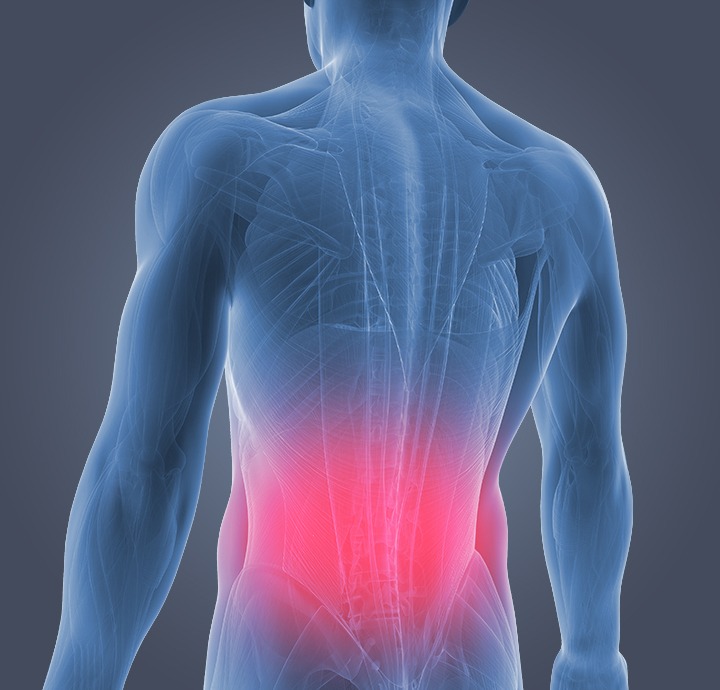 These 3 factors are very closely related and work together in making things worse. For people in BJJ, lower back pain is mainly a product of all three working together. The body works as a whole thanks to all its parts doing their specific role. The body is actually a series of joints that connect via muscles, along its length. Each of these joints plays a dual role – stabilize or mobilize. Now imagine that one of them is not working efficiently. All other joints have to pick up the slack which means trouble.

Tight Hips
This means extra work for neighboring joints first and foremost. Those are the knees on one side, and the lower back on the other. Tight hips result in overextension or of the lower back in an attempt to compensate.
A perfect BJJ lower back pain example is playing guard with tight hips. Working on guard retention with tight hips ends up with overcompensation. This comes in the form of twisting the knees or the lower back beyond their points of the range of motion. Make a note to check if you’re doing this next time you roll. If your hips don’t have enough flexibility, go for any variation of a sciatica stretch.
Having a weak core
Having a weak correlates directly to having back pain. The core along with the lower back region isn’t meant to be mobile. It is the main point of stability for our bodies. This means that a weak core tightens up the hips and upper back looking for stability.
The lack of upper back mobility.
This one is the main side-effect of modern lifestyle. Seating all day while staring at a computer screen creates imbalances in the posture. These are mostly in the region of the upper back where mobility declines. If you leave it unattended, you have a source of trouble that’ll ultimately translate to lower back pain.
Basically, when you have an issue with a joint do not look at it as a singular issue. It is very likely that you also have another issue in one or more adjacent joints. When trying to fix BJJ lower back pain, try to fix all issues at once. Focusing on just one without addressing the others will likely give no result.
How Does Lower Back Pain Manifest?
Lower back pain doesn’t necessarily start because of grappling, However, in BJJ lower back pain gets exposed and turns into a real problem. Most people that come to training already have issues, they just aren’t aware of them because they’re fairly inactive.
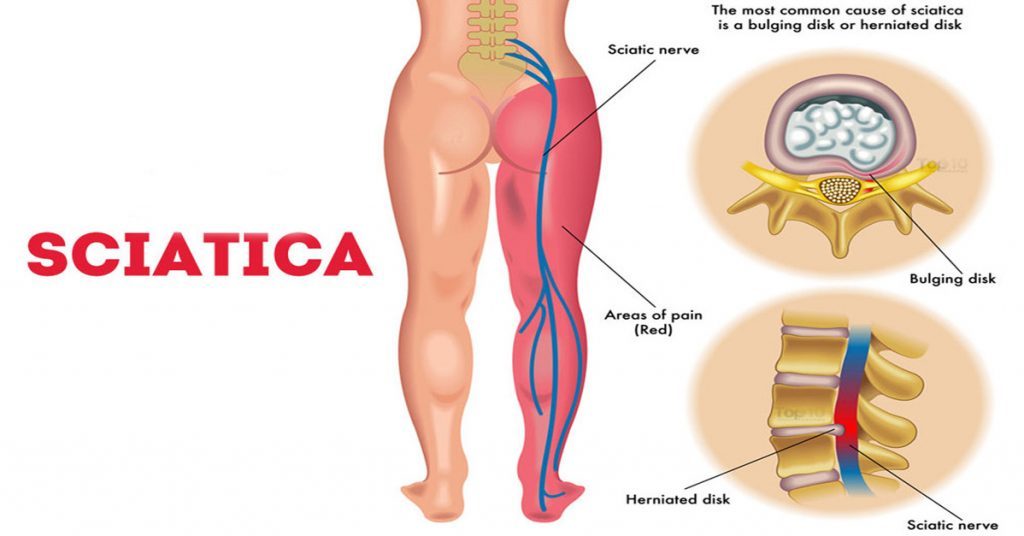 For most affected people in BJJ, lower back pain spreads in a downwards direction. It emanates at the spine and affects the lower body limbs. Most of these effects can be countered with a simple sciatica stretch. A deep sciatica stretch alleviates the symptoms by releasing tight piriformis muscles and relaxing the sciatic nerve.
The piriformis muscle is a deep-lying posterior chain muscle, located in the buttocks. It starts at the lower spine and connects to the thigh bone on each side of the body. The main function of the piriformis is to assist the rotation of the hips and turning the legs outward. The path of the sciatic nerve goes straight under the piriformis muscle on its way to the back of the thigh. In some cases, the nerve can actually pass through the piriformis itself, resulting in sciatica symptoms that can’t be solved by a regular sciatica stretch. Lower back pain caused by an impinged piriformis muscle accounts for less than 10 % of people who experience lower back pain.
Direct sciatica pressure due to tight hips and /or a weak core is the norm rather than the exception among grapplers. While prevention can go a long way, once you have symptoms you need to think more in terms of treatment. This is where the sciatica stretch comes into play. Performing light and gentle stretches without pain are crucial to restoring pain-free movement. For those in BJJ, lower back pain can be resolved with the right stretching exercises.
How To Deal With BJJ Lower Back Pain
The best approach for battling lower back pain is addressing the underlying issues instead of just the symptoms. For example, if you have tight hips, solely focusing on hip stretching is not going to help you much. In fact, it won’t do anything if the underlying cause is actually a weak core.
We’ll get into the exercises and training techniques further down. But for now, let’s make one point very clear. Eliminating lower back pain means you need to attack the condition from 3 main directions. These are directly connected to the three main factors of lower back pain. Namely, you need to work on core stabilization, hip mobility, and thoracic movement as much as possible.
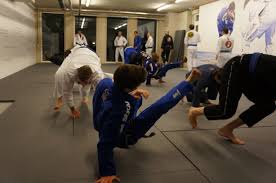 That being said, you also need to roll smart so that you do not make everything worse. Yes, you can still roll and improve BJJ lower back pain. You just need a bit of common sense. Certain BJJ positions cause your lumbar spine to bend into undesirable positions. Start by trying to eliminate these situations during rolling, no matter the cost.
For example, avoid stacked positions at all costs. You always have the choice of giving up a guard pass instead of enduring a 200-pound grappler stacking you. Do not worry, the world isn’t going to end if your guard is passed. In training, it is always better to practice recovering guard than to get stacked.
Basically, any position that twists or bends your lower back (and we have plenty of those) is potentially injury-inducing. Stay conscious of your body position in training and do not be stubborn. Be willing to give up an advantage or even tap, rather than suffer for months.
The Sciatica Stretch And Other Related Exercises
Finally, we arrive at some practical ways to address lower back pain. There are a lot of lower back stretches and all work. The thing is, finding the one that is going to work for your specific condition Any sciatica stretch is adequate for getting rid of with sciatic nerve pain and muscle tightness.
Lying Sciatica Stretch
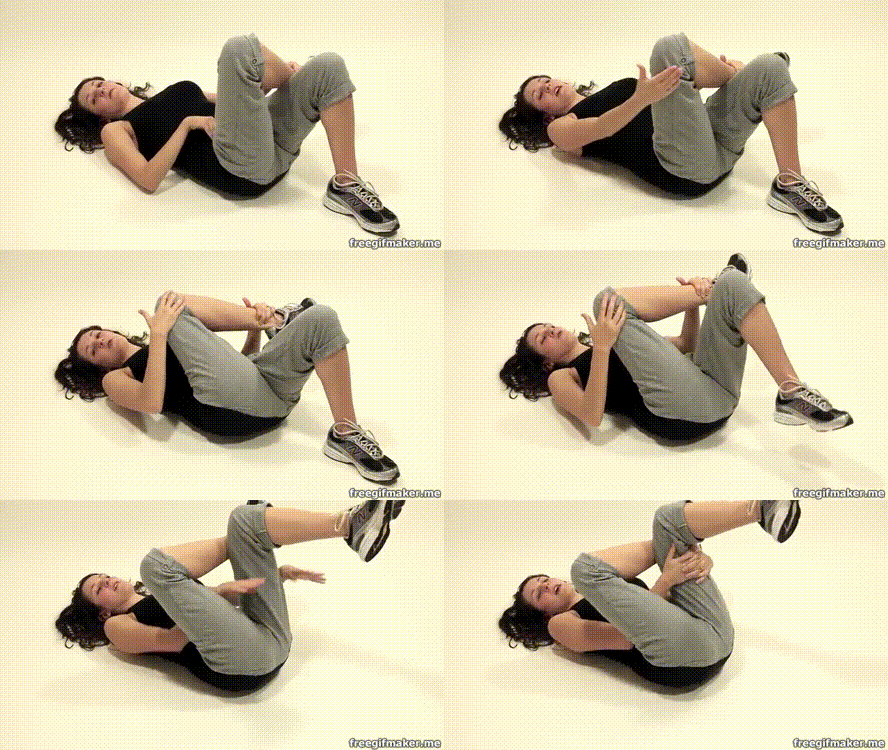 To begin with, lie on your back with your legs flat. Then, pull the affected leg towards your chest, while holding the knee with the hand on the same side. To accentuate the sciatica stretch, grab the ankle with your opposite hand. What you want to do is pull the knee across to the opposite shoulder until you feel the stretch. 30 seconds is great hold time, before slowly returning to the starting position. If you’re having knee problems hold your “right” knee with your hands and pull your “right” ankle as much as possible.
Standing Sciatica Stretch
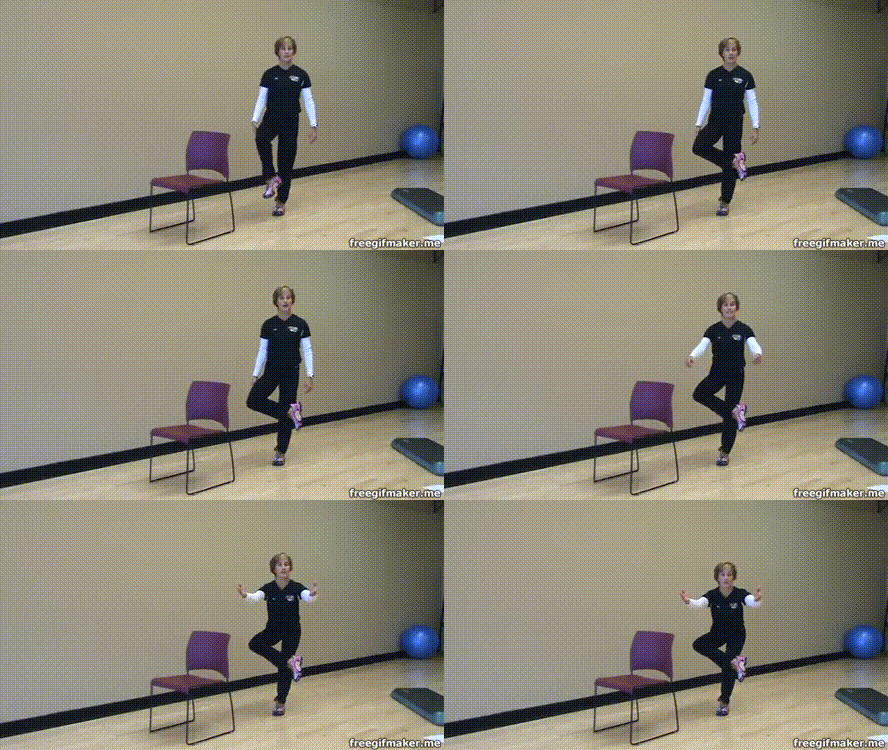 Do not focus on balance when you go for this sciatica stretch. If you have trouble with it press your back against a wall or hold onto on with your arm. Make sure your knees are directly over your ankles and lower your hips at a 45-degree angle. Pick one of your feet off the ground and place the ankle on your opposite side knee. Then, lean forward so that your chest lowers towards the knees, but remember to keep your back straight. The stretch is in the glutes, and once again, 30-60 seconds is more than enough. Do not forget to repeat everything on the other leg.
Outer Hip Stretch
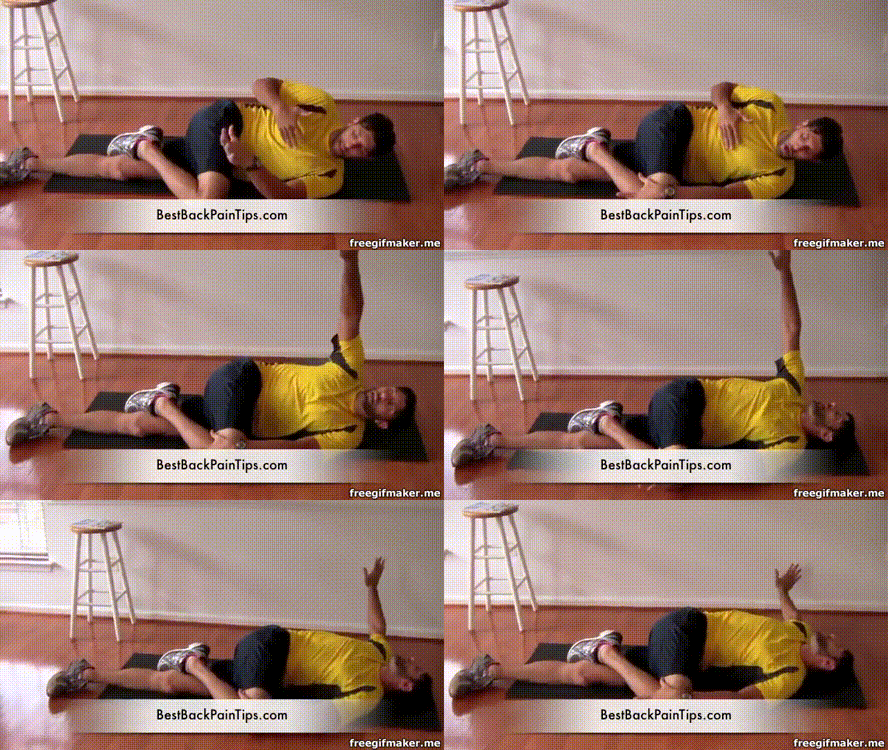 Lie on your back with one knee bent. Reach the opposite site hand to the knee and pull it to the side. Keep your back glued to the floor, and you will feel the sciatica stretch in your hip and buttocks.H old for 30 seconds, and repeat on the other side.
50/50 Hip Flexor Stretch
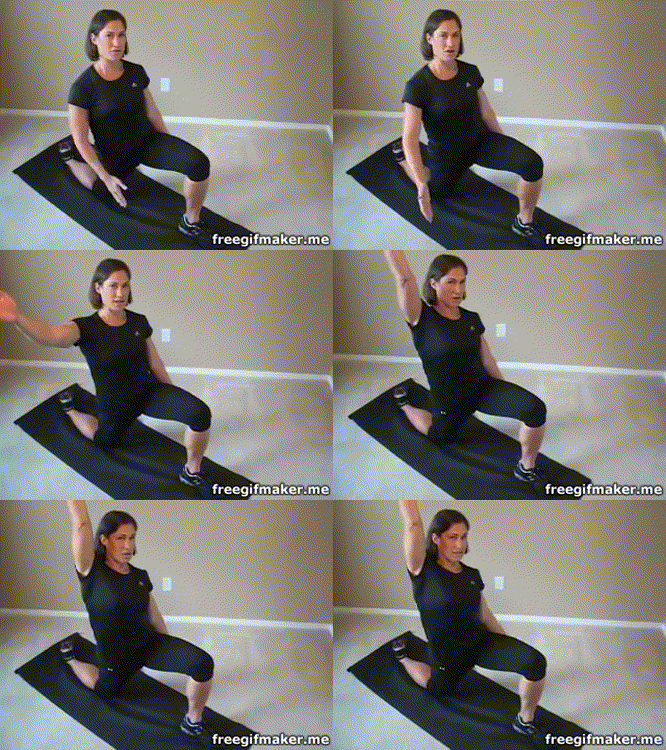 The 50-50 stretch is a standout exercise that is universally effective for all grapplers. It works as a long-term preventative exercise. Furthermore, it is very effective in immediately relieving BJJ lower back pain. To perform it, you need to be kneeling on one leg, your shinbone touching the floor. Your other leg should have the foot firmly on the floor. Both knees need to be at a 90-degree angle. Raise the arm on the side where you have your shinbone touching the floor. Go for 30 seconds on each side.
Steps To Prevent Lower Back Pain When Rolling
Doing all these stretches on a daily basis is going to provide you with huge pain relief and increased mobility. However, to make sure that you remain pain-free, you’ll need to follow some general rules regarding prevention. There are few things to keep in mind when you actually arrive on the mats ready to roll.
1. Do a proper warm-up
This is an obvious thing to say but still, make sure you warm up properly. Jumping into training cold is a certain way to injure yourself. If you roll without a warm-up, you are asking for trouble. A great warmup option is to go through all the above exercises before you start training.
2. Be Aware Of Your Position
Remember that your hips and upper back are the mobile parts of your body. Your lower back, on the other hand, is meant to stabilize. So, avoid getting into positions that make your lower back work unnaturally. Twist or bending it is going to result in inevitable pain. BJJ is full of positions that are just as bad as being stacked. Make sure you recognize them in time to save yourself from trouble.
3. Morning Mobility
When you train in the morning the lower back work overtime. At this time, you are dehydrated and your vertebral disks are larger. Once gravity starts pressing down on them after a night of relaxation, they’ll react with inflammation. This increases the chance of a lower back injury. Stay loose but do not overdo it in the morning.
4. Hydration
Drink at least a couple of liters of water every day. This does not include coffee, tea or water that you drink during training. Good hydration helps keep the body healthy and plays a huge role in the safety of the spine.
Talk To A Professional
The one advice nobody wants to hear until its too late is not to train when in pain! Try to do stretching and mobility exercises only if they are pain-free. If you can’t, then go see a doctor. You’ll most likely end up having an X-ray or other imaging to determine the extent of the issue. If that’s the case, you’re going to need more intensive treatment.
Grappling With Yoga
This Is How Stretching For BJJ Should NOT Be Done!
How To Deal With Sciatica Problems in BJJ
Plyometric Training For Explosive BJJ Strength
How to Fix your Low Back Pain and Never Feel it Again – Simple Exercises