




Brazilian Jiu-Jitsu is all about submissions. Wait, no it is all about positions. No, no wait, BJJ is all about control and domination. Or is it? While all of the above is true to a certain extent, there’s one way to very accurately portray Jiu-Jitsu. BJJ is all about deception. As unattractive as that sounds, once you grasp this concept your BJJ is going to get better by a country mile. Namely, the ability to deceive your opponent into thinking you’re doing a certain move is a very powerful weapon. It is way more than just a BJJ concept, it is the very essence of the Gentle Art. At the highest level of competition where people are aware of everything coming their way, deception is the key to winning. This approach actually has a name for it – Invisible Jiu-Jitsu.
For BJJ, the old saying that the devil is in the details is tailor-made. Invisible Jiu-Jitsu is all about the things that you do not see but impact a match or a roll significantly. It is the game that takes place behind the curtains. The small moves and angles that make the visible moves work. It is the very essence of grappling martial arts and it is deception in its purest form. We’re going to present the basic concept of Invisible Jiu-Jitsu before we dig into the meat and potatoes of the game of deception and details.
Invisible Jiu-Jitsu
So what is Invisible Jiu-Jitsu It is the game that goes on behind the curtains of moves and counter-move?. Invisible Jiu-Jitsu consists of really tiny movements. A subtle shift of pressure, increasing or decreasing an angle ever so slightly. This might sound like inconsequential to some, but advanced students are going to recognize them immediately. The hardest part is becoming aware of these details and starting to use them intentionally.
Let’s try and use an example to capture the essence of Invisible Jiu-Jitsu. When you are passing the guard a common reaction of the opponent is to construct a frame. Usually, the placement of the frame is somewhere along the neck. This is invisible Jiu-Jitsu at work in itself, because if you press you’re going to choke yourself. The advanced use of the concept goes beyond this, though. Knowing that any direct resistance just makes the frame stronger offers a way to use deception to complete the pass. Placing light pressure on the frame is going to make your opponent commit to it more. The moment they give it too much of a push, you change the angle and you’re through. Deception got the opponent to overcommit, resulting in their frame turning into a lever for you. Cunning and beautiful!
From an outside perspective, seeing two high-level grapplers tangled up might seem boring and uneventful. To them, however, there’s a full out war going on below the surface. As you learn BJJ, you’ll start noticing these patterns more and more. This is why BJJ is the game of human chess. The mental battle of deception is as important as the physical battle for position. Something as small as a grip placement or a pushing or pulling motion can be a game changer.
Training The Game Of Details In BJJ
At the highest levels of Jiu-Jitsu, you have two people essentially playing a highly developed game of details.The ultimate goal is, of course, getting a submission over the opponent.
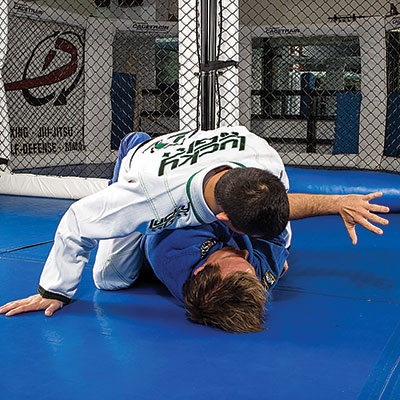 In Brazilian Jiu-Jitsu, even the smallest shift of position in a joint, or the angle of your elbow can make or break the structure of your own body. Conversely, when you apply the system properly it is going to destroy the structure of your opponent’s body. The end game is to allow the body to work a whole, both offensively and defensively. You can achieve this through alignment and proper use of leverage and tension. Another Invisible Jiu-Jitsu example is the war of frames. Whenever an opponent has a frame on you, probe their structure with a frame of your own. Once you discover a weak spot in the opponent’s structure, grab the opportunity. Using a strong body part of yours against the opponent’s weak one is a major part of Invisible Jiu-Jitsu.
The ultimate goal is always to locate weaknesses in the structure of the opponent. This includes the use of the muscles, ligaments and skeletal structure of your opponent against them. Shifting angles is a great way or creating dominant skeletal alignment superior to the opponent. A great way to become extremely proficient at this is positional drilling. An example is hunting an Americana from the mount where the sole purpose of the opponent is hiding the hand. Force won’t’ work unless you know how to create the correct leverage to force their arm to the mat so you can finish.
Understanding Alignment
In BJJ, the general focus is on the physics of the skeletal system. Invisible Jiu-Jitsu is exactly this, the physics of biomechanical movement. As far as skeletal structure goes, in Jiu-Jitsu we usually focus on how the bones line up with one another. Proper bone alignment allows us to create leverage, friction, pressure, etc. There’s a deeper aspect to this, though. Skeletal alignment works great in combination with strength to create a match-winning structure. This means turning the muscles on at the correct time.
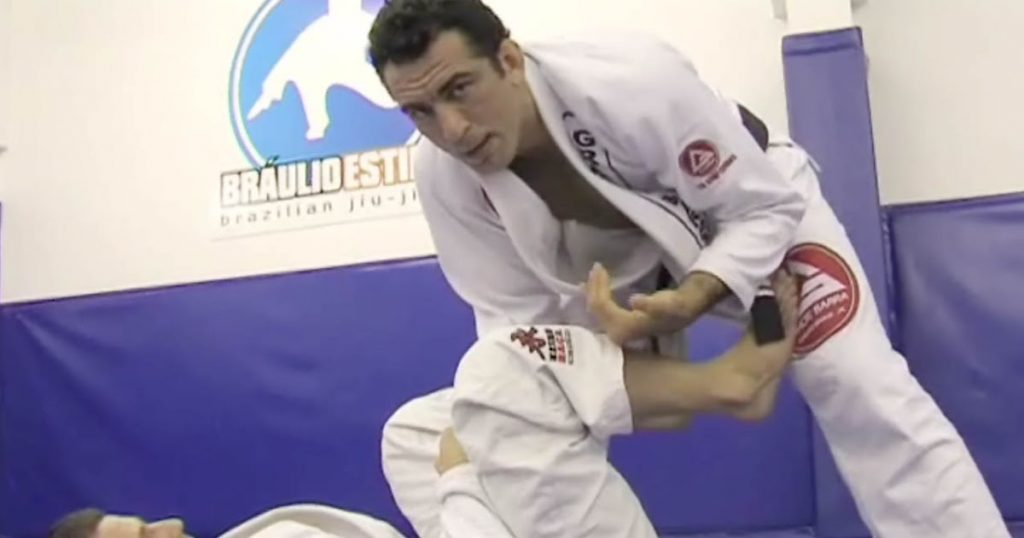 This comes into play in many small battles during a roll or match. Working against a knee shield in half or guard is one such example. IN this case, try to focus on skeletal alignment that facilitates optimal usage of the larger and stronger muscle groups. At the same time, make sure you’re not backing your structure with smaller and weaker muscles. A precise and well-timed skeletal structure, backed by the correct layers of muscle is black belt level Jiu-Jitsu. This is what makes smaller grapplers feel like they have gorilla strength when rolling with someone bigger and stronger. It is invisible Jiu-Jitsu at it’s best!
Try to look for these Invisible Jiu-Jitsu concepts when you roll your academy. do not expect to understand or even recognize them instantly. It takes years to master the invisible game of details. However, once you understand it, you’re going to become a truly formidable grappler. So it is better to start off early and invest your time in developing your invisible Jiu-Jitsu game.
You Might Also Be Interested in:
- What Is The Best BJJ DVD Instructional For Submission Hunters?
- The Best BJJ DVD Instructionals For Masters Divisions
- A Collection Of The Best No-Gi BJJ DVD Instructionals
- The Best BJJ DVD 2018
- Review Of The Top 5 Guard Passing BJJ DVD Instructionals
- The 9 Best Leg Lock DVD Instructionals For Grapplers
- The Best DVD and Digital Instructionals For BJJ White Belts
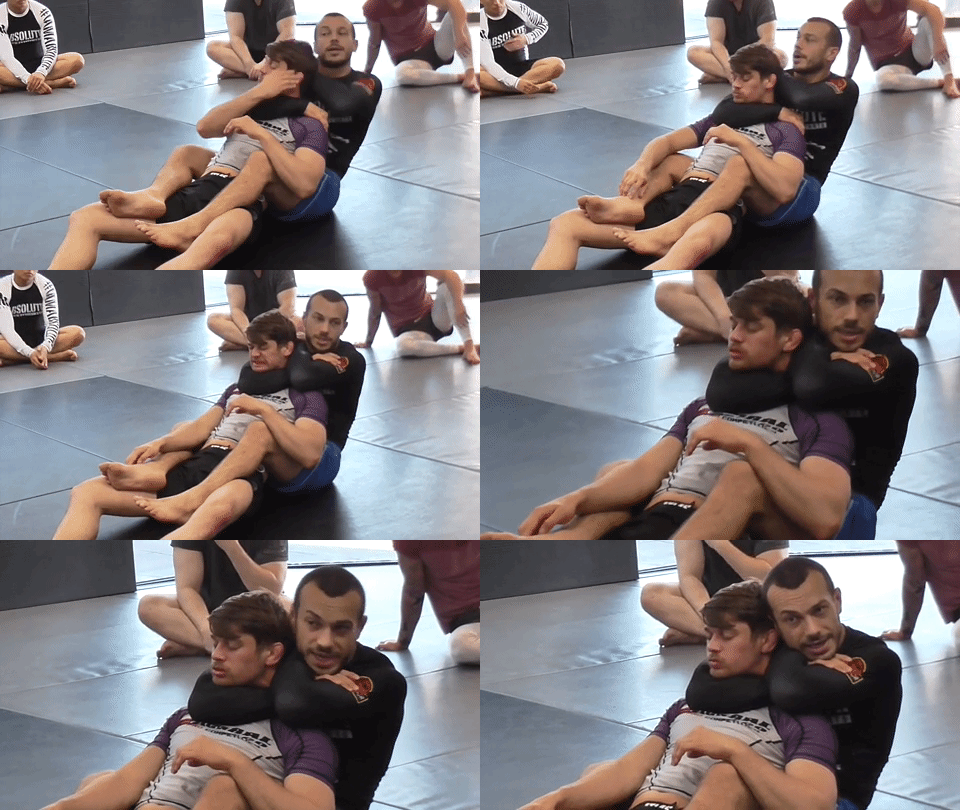 The choke itself requires you to thread the top seatbelt arm below the opponent’s chin and around the neck. The goal is to touch your own shoulder on the opposite side. It is crucial to have your elbow right below the opponent’s chin. The point of the elbow should be bang in the middle right below the point of the chin. Unless you achieve this, you won’t be able to pull the choke off effectively. Securing the position requires you to place the forearm of your other arm behind the opponent’s neck while placing the palm of the choking arm in your elbow. To finalize the position your head must go as close to their head as possible. Choking pressure comes from squeezing the elbows, squeezing the choking arm while pushing on the neck with the other one.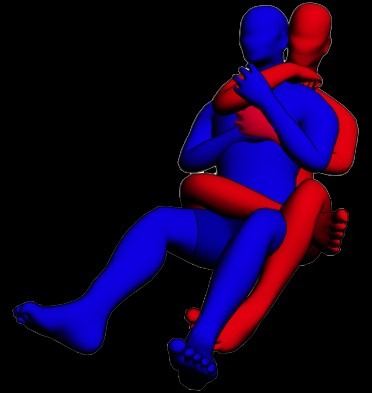
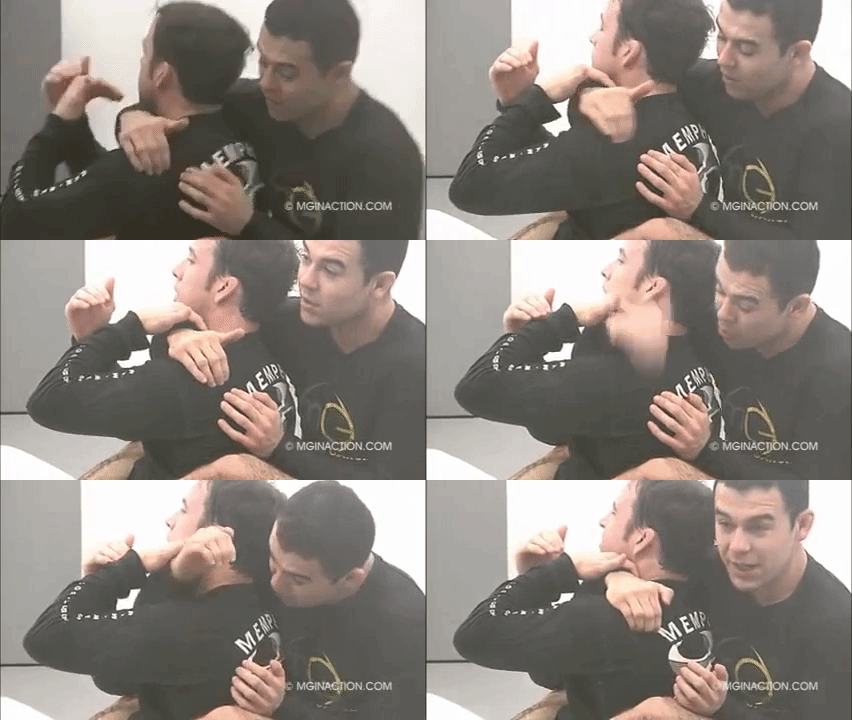 The next step in the puzzle is getting your arm into a choking position. Shoulder hook in, this is where you really use the body triangle. Squeeze hard with your legs and do a hip extension. This is going to stretch out your opponent, allowing you to squeeze the choking arm through, regardless of chin position. Once in, go deep. The goal is to reach the opponent’s shoulder blade with your grip. Don’t worry about elbow alignment at this point, just go as deep as possible. here’s the crucial trick. Use your fingers to dig into the opponent’s shoulder blade as hard as possible. This is an unmovable grip that’s going to further tire out your opponent. As you’ll see later, you could simply finish at this point, but let’s see how to get a proper Rear Naked Choke first.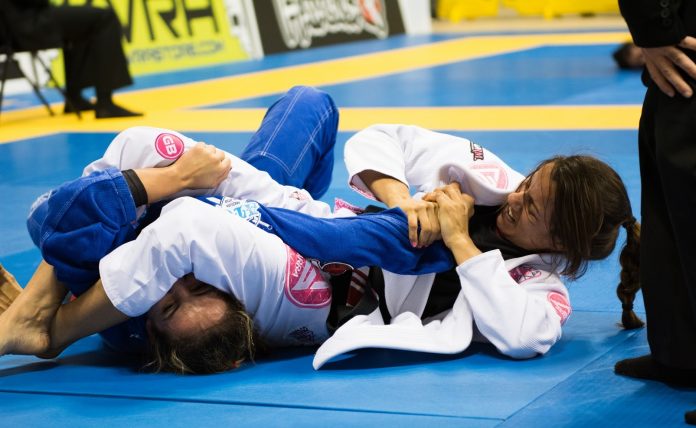
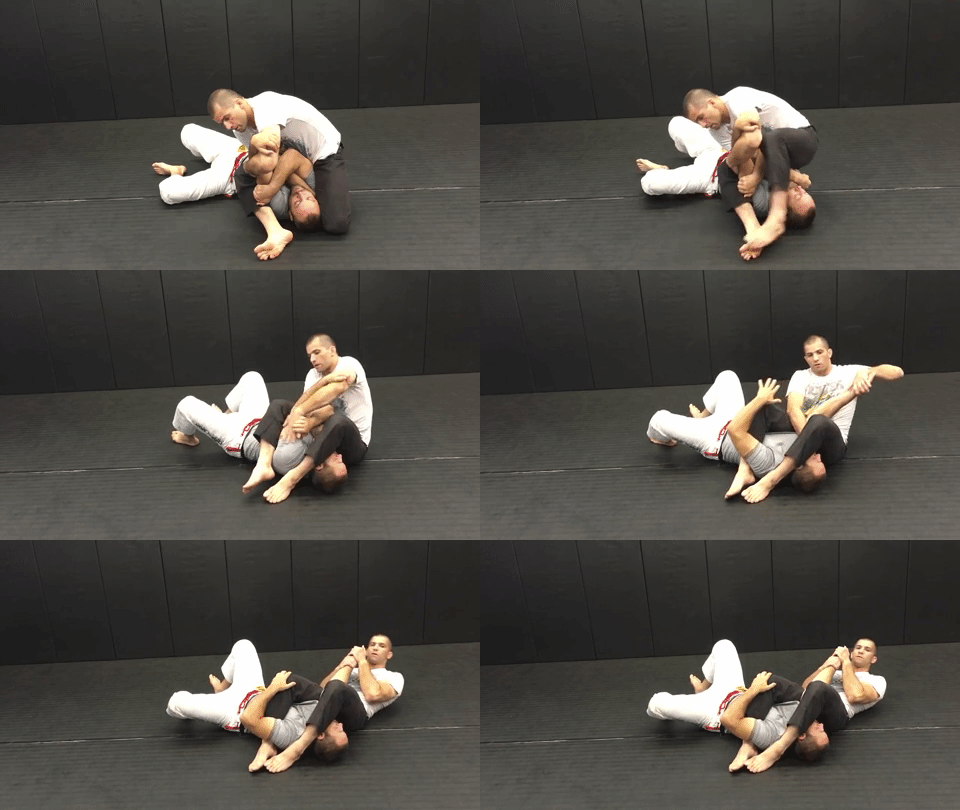 The crucial part of the setup is getting on your back to finish the submission. This requires very precise shifts in weight distribution and careful distance management. The goal is to land your butt as close to the shoulder of the arm you’re attacking as possible. Once there you can think about extending the arm.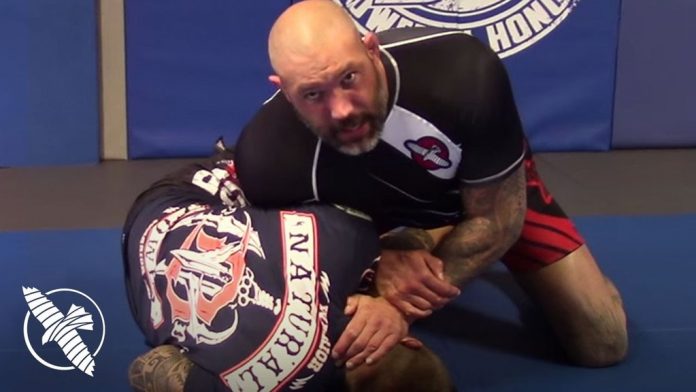
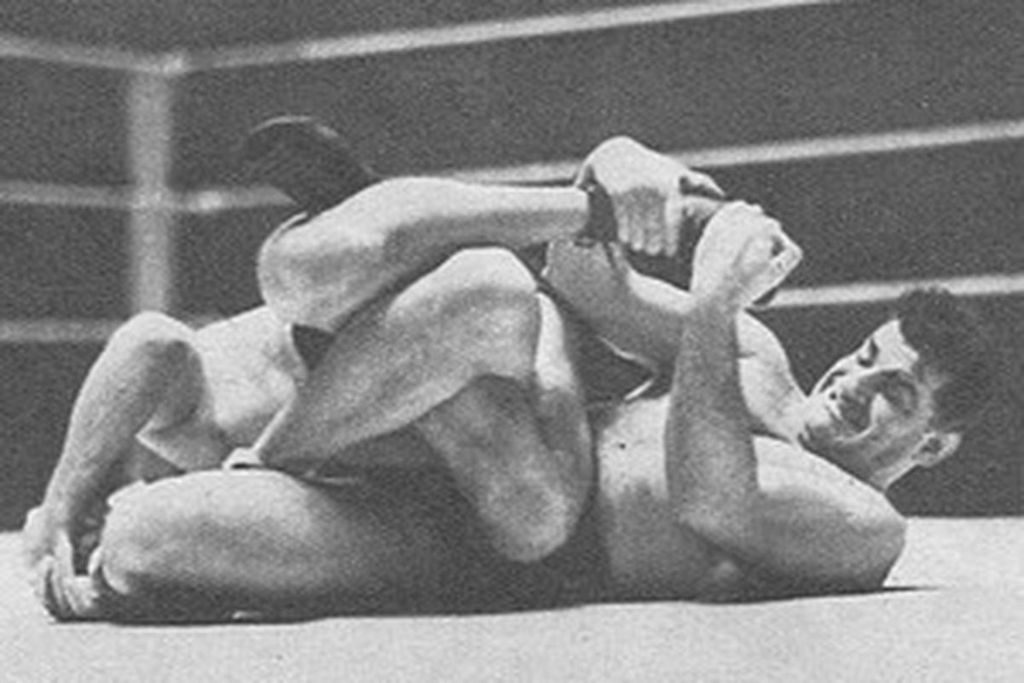
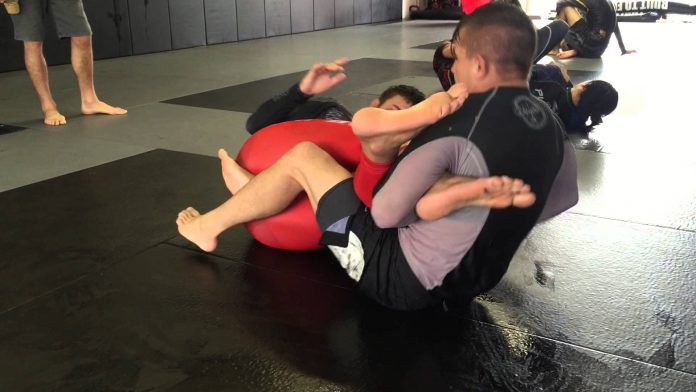
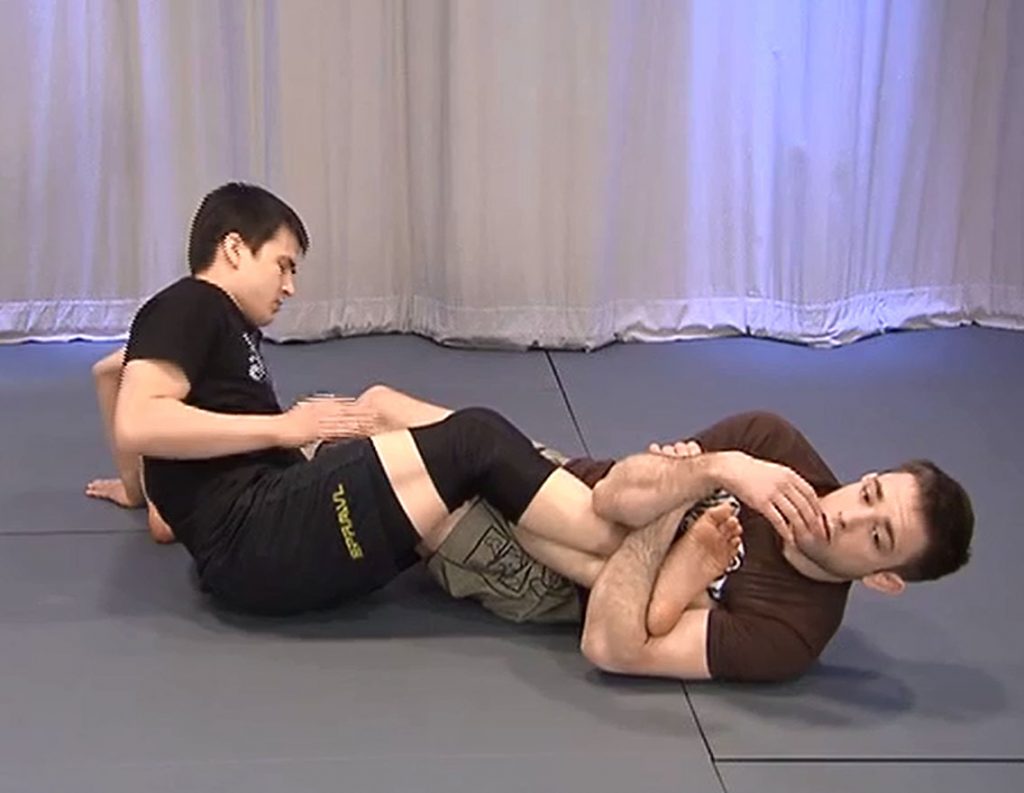 The positioning of the hands is the first major step in finishing the Texas cloverleaf BJJ leg lock. The arms, in particular forearms, provide the first part of the leverage that forces the break. The arm that has the opponent’s leg trapped under the armpit, goes under the other leg. Since both legs are crossed fairly low (near the ankles) this means you place the forearm as low as possible on their leg as well. A gable grip is a great place to start for a solid ankle-breaking grip.
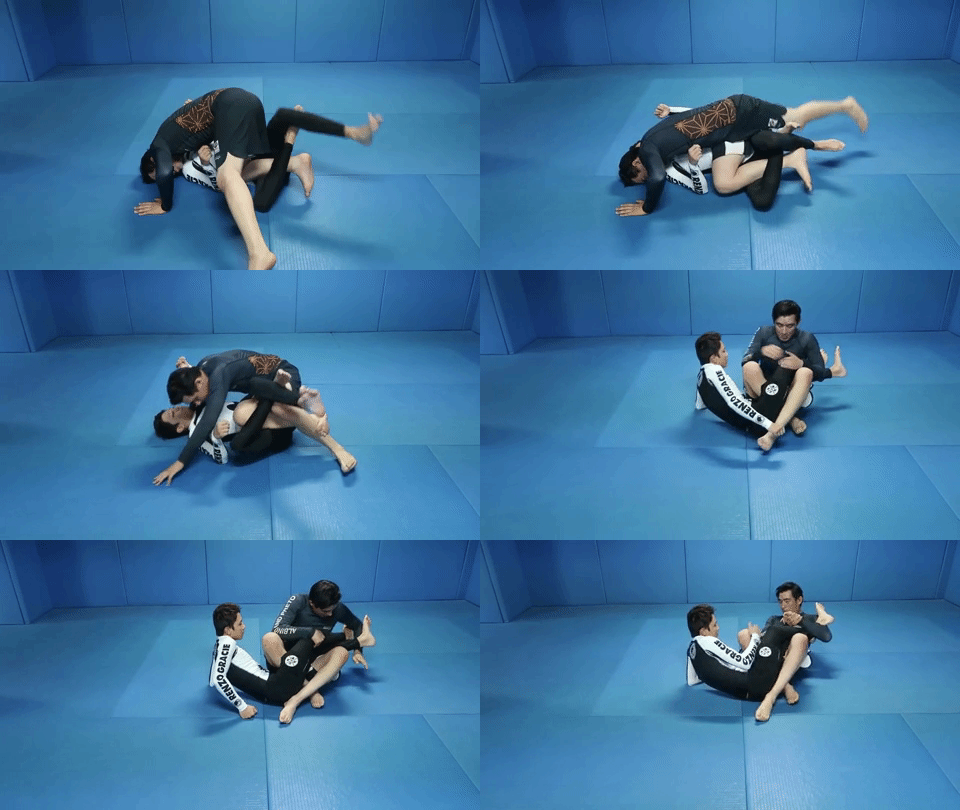 To get the submission, first, you must set your grip up. The same as with the 50/50 one arm goes under and around the trapped leg (the pretty girl). Once there, a good hint is to figure four your hands instead of going for a Gable grip. This is going to get you a tap right then and there in lots of cases. The real finishing trick though is in upper body movement. Instead of a hip extension, think about crunching to the side where the legs are. This is going to force the shin into the Achilles with all your body behind it, leaving no option but a tap. For even more leverage, consider opening the triangle and placing your outside leg on the opponent’s hip. BOOM! Legal and devastating.