



Inverted Guard – Is It Really Worth The Trouble ?

Inverted guard jiu-Jitsu

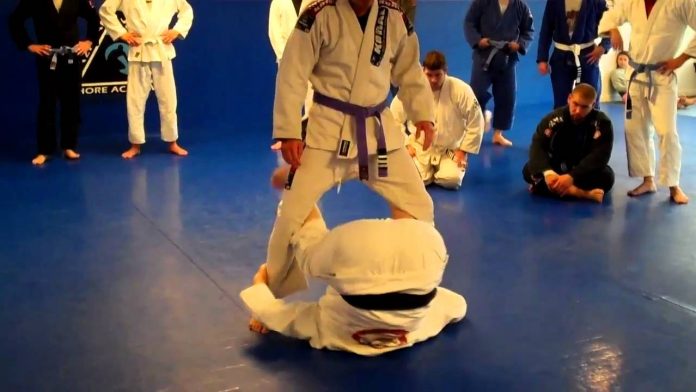
Jiu-Jitsu can really get awkward at times. The Gentle Art is only gentle when you’re manipulating someone against their will by using technique and pressure. Once you’re on the opposite side, nothing about it feels gentle. The same holds true for some of the positions Brazilian Jiu-Jitsu gets us in. Just think about it. The art has them all, from torturous positions like knee on belly to stuff like the North-South, probably only a part of Kama Sutra before BJJ. And then, there is the inverted guard. A position so awkward it feels just as uncomfortable as it looks. Especially when you have someone trying to smash their way past it. Is it effective? By all means yes. But the cost of going inverted might not be worth all the hassle. At least in the long run.

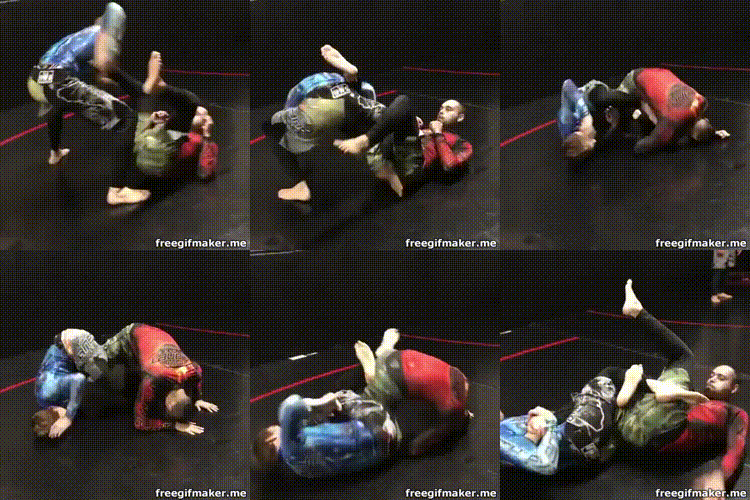
The inverted guard is part of the new school Brazilian Jiu-Jitsu techniques. Actually, it might be the spark that gave birth to the Berimbolo, Tornado guard, and countless other modern grappling concepts. Going inverted is now an integral part of Jiu-Jitsu, at every level of the sport. It is not uncommon to see white belts going upside down in an attempt to do something even they don’t understand. Actually, does anyone truly understand what the inverted guard does? I don’t mean in the sense of preventing your opponent from passing or attacking. I mean internally, what is the cost that our body has to endure for us to fight from a position not really meant for human beings?

Most inverted guard variations need us to be on our neck. Even in a best-case scenario, we need to be on our upper back/traps in order to be effective. Unless we can use such a pivot point, our hips won’t have the mobility to truly do anything from the position. Much like when a white belt tries to pull it off on you. However, once you go against someone really versed in inverting, you’ll ultimately be battling a human fidget spinner. There’s simply no way around. However, the more you stay in the position, the more stress certain body parts feel. As stress mounts up, things are bound to give way. It is, in short, what has happened to me, and countless other grapplers I know. But why did it happen and is there a smart way to approach the inverted game?

Anatomy Of The Inverted Guard 

The inverted guard is often seen as a position for those with flexible hips. While flexibility can only help it is not a pre-requirement for the inverted guard. Actually, nowadays there are drills that people do almost every class to make them better at inverting. The Granby rolls were not always a part of the warm-up drills for BJJ. They represent a very technical way of training inversions. And inversions are integral for a top-level Jiu-Jitsu game.

What essentially happens when we go inverted is that we gain both distance and mobility. We also establish a great structure, albeit at the cost of a solid base. Once we’re upside down, our hips are too far from the opponent for effective control. Furthermore, when we’re pivoting correctly, as high as possible on our back, the hips are also extremely mobile. We can go in any direction, 360 degrees, with not much effort.

Jiu-Jitsu Inverted Guard GrapplingSo, with the Granby roll as our perfect technical entry and all the benefits associated with the inverted guard, why doesn’t it become as normal for a grappler to use it as a half guard, for example. Well, the trick is in staying upside down. Going inverted to prevent a guard pass, or to open up space for an escape is unquestionably efficient. However, staying in that position and attempting to play an inverted game has not been proven sustainable. At least not this far. The main issue that arises, is in staying inverted for too long. Regardless of the nature of your game (offensive or defensive), the inverted guard is not a long-term position you need to be considering.

The Price Of Going Upside Down

As we said before, going inverted means we end up pivoting on our traps and/or neck most of the time. getting to a position of the inverted guard is not uncommon for gymnasts or Yogis worldwide. Yet, none of them seem to share the ailments that grapplers end up with when going inverted. The reasoning behind this is very simple – other athletes do not have someone actively trying to smash and tear them apart.

An external force is a factor that leaves most inverted guard enthusiasts (me included) with a spinal hernia of some sort. It may be the neck, upper back or lower back. It might be mild or aggressive, and it’ll certainly become chronic if you keep on inverting. Going inverted puts enormous stress on the spine of the neck and upper back This inevitably results in faster degenerative processes and all the side effects that come with having a spinal hernia.
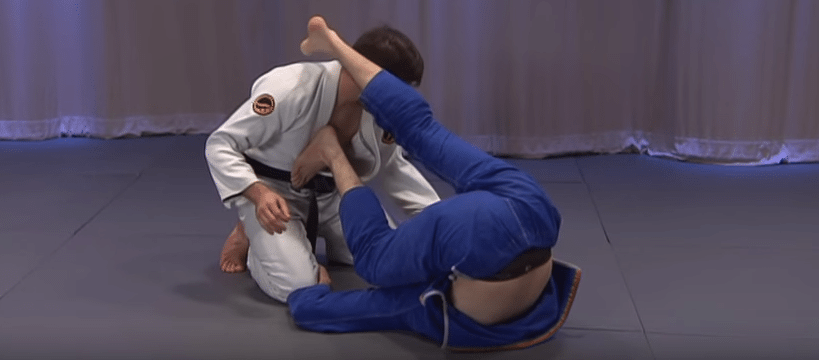
BJJ Inverted guardAs we age, our disc spaces tend to become constricted even without the stress of grappling. Discs become more brittle and degeneration slowly develops in everyone. Now, add to that the stress of grappling with all the chokes and cranks and you already have more stress than the body can handle. If you end up staying inverted, while carrying the weight of a partner on top of that, you have a real disaster. Don’t take this lightly as having a hernia means that you’ll have to change your whole game if you want to keep training. It may even end up sidelining you for good.

Finding Balance

So, from all the conflicting evidence above we learned two things by now. First, the inverted guard works like a charm to prevent passing and get you out of tight spots. Second, staying inverted for too long might cost you your BJJ career. That’s a gut-wrenching dilemma if ever I saw one. However, nothing is finite and there’s always a way to find balance.

For starters, lay off the inverted guard as your first choice. Do not go upside down immediately after the slap’n’bump. Furthermore, avoid staying in an inverted guard any longer than actually required. And finally, try to avoid using it unless you absolutely have to.

That said, going inverted as opposed to playing an inverted guard should be something you have in your toolbox. Whether it is for pass prevention or some fancy modern leg lock entry, you need to have the skill to invert. What you do not need is a hernia, so make sure you manage how often and for how long you use inversion in BJJ.
Ground Marshall Neil Melanson DVD ReviewIf you’re on the lookout for a guard that works to replace your inverted guard, then your search is over. Neil Melanson has a whole DVD set by the name of “the Ground Marshall Guard” that’s the answer to all your prayers. It’s unorthodox, effective and is going to spare your spine any additional stress. 

Sciatica Stretch Variations To Fix BJJ Lower Back Pain

Imanari Roll Breakdown – The Most Attractive Leg Lock Entry

Why You Need The Technical Stand Up For High Level Jiu-Jitsu
Making The Most Out Of Private Jiu-Jitsu Classes

Why Tae Private jiu-Jitsu Classes

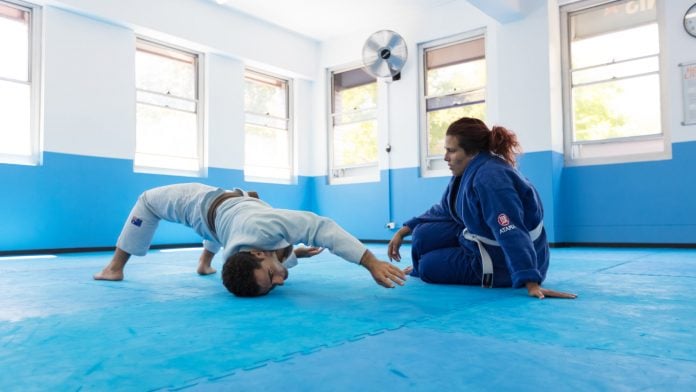
Training Jiu-Jitsu cannot be done by yourself. Although you can learn certain aspects of Jiu-Jitsu with the help of auxiliary methods, there’s no substitute for being on the mats. Brazilian Jiu-Jitsu requires partners, a controlled environment and lots of time in order to become effective with it. Jiu-Jitsu DVDs are an awesome resource to help you get better while away from the mats. However, nothing beats working with a partner. Now imagine if that partner can be the head coach of your academy. or, maybe even better, a legendary name in grappling. Training like this is possible and comes in the form of private Jiu-Jitsu classes. However, people do not always know what to expect from a private class.  furthermore, they do not know when exactly they might need one in order to achieve a breakthrough in grappling.

Jiu-Jitsu classes are fun in a painful way. At least at the beginning. As you progress, you get used to the basic structure of Jiu-jitsu classes and you know what to expect. A regular class has the warmup, technical portion, some drills and free rolling. Open mats are simply periods of time when you can do whatever you want on the mats. Competition classes are highly organized events featuring in a mental toughness and conditioning component on top of highly technical practice and lots and lots of drilling. All these types of Jiu-Jitsu classes have a specific goal behind them.

The same holds true for private classes, yet people often misunderstand when and how to use them. This is a pity, as privates cost money. In fact, the more famous the coach, the more expensive their time is. So if you get a slot with a guy like Craig Jones, for example, you need to make sure you make the most of it.

Private jiu-jitsu classes are unlike any other type of private lessons in other martial arts. The subjects of a private class can vary greatly. This is all down to you, as the recipient of a class. However, going to someone for a private and asking them to teach you Berimbolos as a white belt, is a great way to throw away money. Most coaches won’t even accept the subject as a viable one for you. You need to use private lessons to specifically address one or more lagging aspects of your Jiu-Jitsu.

Getting a Craig Jones DVD is almost as good as a private with the man. His instructionals are just that good! Take his “Triangle Machine” DVD for example. It’s the one and only resource you need to learn triangles like never before !

What Are Private Jiu-Jitsu Classes

Private Jiu-JItsu classes are one-on-one sessions in which a student get to spend exclusive time with a BJJ coach. Private classes can also feature two students and a coach, which is arguably, the best way to schedule a private. But, more on that later. For now, let’s see how a typical private class looks.

Depending on the coach’s time and preferences, privates can take form one to one and a half hours. Usually, you’re let free to warm up either before class or just as the coach arrives. Do not expect a lot of time though, so if you have some specific warm-up needs address them immediately.

Private jiu-Jitsu Classes Next, you’ll spend some time discussing the subject with the coach. In some cases, the subject matter might be agreed upon beforehand. In others, you’ll inform the coach right then and there. whatever the case, a discussion is sure to follow. This is when the coach is going to ask you about your experience with the subject as well as suggest the best path to approach it. Sometimes, you might not like the direction a private takes, but you need to listen to the coach.

Some coaches might want to gauge your actual level of knowledge through a slow roll or some technical drilling. This is not always the case, though. Once the subject is clear, it’s time to approach work. You either get to work directly with the coach or with a partner you brought along. In both cases, the coach is going to stand over you all the time, always correcting and giving directions. Remember that this is not the time for questions. Follow instruction first, as a Q-and-A session will surely follow.

Finally, in some cases, a coach might roll a round with you at the very end.

Getting The Most Out Of Private Jiu-Jitsu Classes 

So, should everyone in BJJ take privates? Yes, they should. How often should you opt for private Jiu-Jitsu classes? While there’s no real rule, it’s a good practice to do it at least a couple of times a year.

Private jiu-Jitsu Classes One great reason for taking private Jiu-Jitsu classes are tournaments. However, do not confuse taking a private with competition classes. First, take a private before a tournament, when you need to discuss tactics and strategy with a coach. Make sure you outline your ideas for a game plan and listen to what they have to offer as feedback. Try to have that instructor in your corner. Next, go for a private after a tournament, especially one you lost. This is where you work out all the mistakes.

Probably the most usual reason for private Jiu-Jitsu classes are submissions. le lock privates, for example, are in the majority’s focus right now. This is a real valid reason to go for privates, but manage expectations first. You might not just be ready to do what Craig Jones did at ADCC, just yet. And if a coach thinks you need more of the basics, you need to listen.

One reason to consider for privates is that latest DVD you picked up. Watch it a few times and go discuss it with your coach in a private. You’ll gain perspective and you’ll learn all the funky details you didn’t catch while watching the DVD. tT’s a win-win situation.

Finally, a good way to approach privates is with a blank slate. Go to an instructor that knows you and ask them to help you fix a part of our game you’re really lagging at. Your instructors know exactly where you need improvements, and a private is the best way to resolve them.

10 Obvious Reasons Why You’re still a White Belt

Why You Need The Technical Stand Up For High Level Jiu-Jitsu
Jiu-Jitsu Self Defense – Are You Training It Right?

Three Easy Ways To Improve Your BJJ Posture

BJJ Nutrition: The Most Important Meal Of The Day

BJJ Nutrition Brakfast Options

Training Brazilian Jiu-Jitsu means your body needs the right fuel to work. Yes, you can get by on the average North American diet, but a good nutrition plan is going to make all the difference. Why struggle with heartburn, cramps, and regular toilet urns? Instead, you could be smart about your food. The Jiu-Jitsu lifestyle often includes certain nutritional advantages but it’s hard to live off Acai and tapioca wraps. Especially if your country doesn’t have either on offer. Instead, when we’re talking about BJJ nutrition, we mean the principles that will fuel you for better performance on the mat. Staying healthy is just a side-effect.

In terms of adhering to a healthy nutrition plan, most people quote the same problem – time. The second most likely culprit is usually price. But BJJ nutrition doesn’t need to be time-consuming, or expensive. Actually, if you do it correctly, you’re going to end up saving a few bucks. So excuses aside, where should you start with your nutrition? At the beginning, of course. IF you start your day off right, it’ll be much easier to stay in line with a diet plan. if you skip to Dunkin Doughnuts after you wake up, you’re off the bandwagon for sure.

“Breakfast is the most important meal of the day”. You’ve heard that one for sure. While it’s hard to talk definitively, this saying does have some truth to it. Eating a good meal at the start of your day can give you an instant shot of energy, which as you know, we’re all desperate for in the mornings. But, instead of just eating to satisfy taste, go for the full experience. Satisfy your taste, your stomach, you’re body’s energy needs and its potential to perform on the mats. Creating the habit of eating breakfast is not hard at all. Give it a try, stick with it for a couple of weeks and it’ll stop being a struggle. To get you going, we’re going to offer two breakfast options today, that are bound to become your favorites.

George Lockhart DietBreakfast is important. If you do not believe me, then listen to an expert on the subject of BJJ nutrition. George Lockhart is the leading expert in nutrition for combat athletes. His pedigree includes MMA stars and top-ranked BJJ athletes. Now you can learn his “Nutrition And Weight Management System” too. Check out what this DVD & E-book release has to offer! 

Do You Really Need Breakfast? 

The short answer to this question is no. However, skipping breakfast is going to make planning your nutrition for the day that much harder. You see, your body needs a certain amount of calories in order to function. The more physical demands you place on it, the more calories it’ll require.

Now imagine trying to get all those calories down from healthy food sources, in just two, or maybe three meals. Furthermore, imagine all those meals are crammed into a certain part of the day. It becomes really easy to jump off the BJJ nutrition train and back to your old habits. Yes, you could go for some nutrition protocols like intermittent fasting, but you’ll need lots of dedication and planning. Isn’t it easier to just simplify things and make yourself breakfast instead?

The benefits of having breakfast are numerous. First, you wake your digestive system up. next, you make sure your body has all the resources it needs to work. your muscles need protein, your brain needs carbohydrates and your endocrine system needs fats. That’s putting it bluntly, but it’s true nonetheless. Furthermore, going through your day hungry is a difficult task for anyone. Especially if you have to train grappling in the morning. Instead of thinking about your rolls, you’ll just be focusing on that meal you’re planning to devour after. And I can bet you it’s not going to be a healthy one!

BJJ Nutrition Basics: Two Irresistible Breakfast Ideas

S what’s with this idea of two breakfast options? Well, we’re going to tackle both common problems for skipping breakfast with these options. Since most people complain that they haven’t got enough time in the morning we offer you the fast and the lighting fast breakfast options.

The most important thing about these options is that they focus on real food items that are easy to prepare and not expensive at all. Furthermore, they contain all the essential micronutrients your body needs. you have good quality carbs, good fats, and ample amounts of protein. Not to mention how tasty they are.

  • The Fast BJJ Breakfast

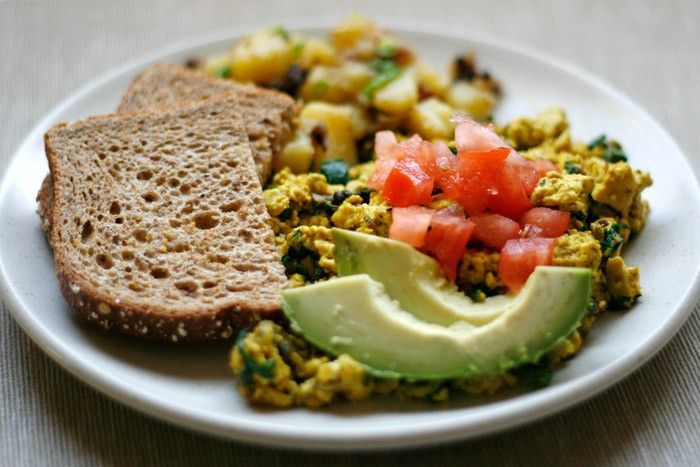
BJJ nutrition BreakfastThis is the breakfast for people on the go, who still have 10 minutes to spare in the morning. First and foremost, start your day off right by drinking a glass of water. This sets you up perfectly for your day. next, brew yourself a cup of your favorite pick-me-up. It could be some kind of tea or just a regular cup of Joe. Adding coconut oil and/or butter to your coffee is optional and only limited by your preferences.

Next up, put a couple of pieces of good quality whole-grain bread in the toaster and fire up the oven. Use coconut oil, as it is the perfect fat source. Throw in a few eggs and some veggies if you like and scramble them up. They should be ready by the time your bread slices pop out of the toaster. Throw your eggs on your bread and slice up some avocado to top it off.

Whenever you’re looking for variety, go for sunnyside, poached, or boiled eggs. you could even make a french toast if you’re into it. A sprinkle of cheese won’t do you much harm either.

  • BJJ Breakfast For Hectic Mornings

This one is easy. I’ll offer up two varieties, although the first one is my favorite by far. What you should do when you’re rushing out the door is just grab a bag of trail mix and a scoop of protein. Trail mix has fats, protein, a bunch of minerals, and fiber so it works just as well as any meal would do. And just to ramp up your morning protein intake, simply put water in your shaker and mix well. To really feel satiated and make this the perfect BJJ nutrition meal, grab a piece of seasonal fruit as well.

BJJ NutritionThe second version of this breakfast requires a couple of minutes of your time. Put a fruit (or more), some protein powder, and some oat in a blender. Top it off with milk, or better yet use coffee. That way you get everything you need in a bottle and are ready to go. On top of everything, it’s going to keep you completely full until your next meal. A simple recipe includes a banana, some berries, rolled oats, a tablespoon of peanut butter/coconut oil, and a double shot of your favorite coffee. Enjoy!
Performance Nutrition For Grapplers: 2 Things Everyone Gets Wrong

How All Grapplers Can Benefit From The Gracie Diet

The Secret To A Huge Gas tank For BJJ Rolling

How To Set Up A BJJ Nutrition Plan On A Budget

Leg Drag Pass Masterclass

leg drag pass masterclass

Passing the guard in Jiu-Jitsu is a special thing that not many people truly get to appreciate. The guard game in BJJ is wide and diverse. it is also the first choice form plenty of grapplers involved in the Gentle Art. This is exactly why guard passing is a source of such satisfaction. Getting to completely nullify and then demolish most people’s favorite position is a very rewarding feeling. It takes a special kind of a person to be attracted to guard passing from the get-go. But once you get into that Rodolfo Vieira type of game, there’s no turning back. Smashing guards is going to become the pinnacle of your Jiu-Jitsu game. Just like with guard players, passers have their favorite tools to finish the job. And one of these tools that needs to be in everyone’s toolbox is the leg drag pass.

Passing the guard usually has three main directions. The goal of each is to get past the opponent’s legs, so that you can score positional points and set up attacks. Each direction of passing has specific techniques or concepts that work together towards a common goal. One of the most prolific passing positions is the leg drag pass. yes, the leg drag is much more than just a pass. It is a position that you can use to control an opponent and attack with very versatile and numerous attacks.

The leg drag is part of a pressure passing game that is slow and methodical. Unlike some passing sequences, the leg drag pass requires patience and a slightly sadistic string. It is all about making an opponent quit due to both pressure and the feeling of being powerless to stop it. Now, there are some defensive options for them, but they’re all dependant on you making mistakes or not truly understanding the mechanics of the leg drag. Today, we’re going to cover everything in regards to the leg drag pass position. We’ll go over mechanics, uses and the most popular follow-ups from the position. All in all, everything you need to become a real threat to anyone with this BJJ classic.

Leandro Lo is a household name in the world of Brazilian Jiu-Jitsu. He is one of the most decorated grapplers of all times and a truly fearsome guard passer. He shares plenty of his groundbreaking details on passing in his “Guard And Matrix Passing” DVD Instructional. Get it for tips on the leg drag pass and plenty of other concepts. 

Directions Of Passing 

Passing the guard is generally done in three main directions. On another occasion, I’m going to dedicate a whole series of articles to cover them in depth. For now, we’ll just glance over them in order to gain an understanding of the nature of the leg drag pass.

Since the goal of passing is to nullify the strength and dexterity of the legs and hips, guard passing must move in very specific directions. The first one is the most logical one – going around the legs. This is exactly where the leg drag pass excels. Along with the leg drag, other passes like the Torreando and X-pass also fall into this category.

The second most common direction of guard passing is going through the legs. This means moving in between the opponent’s legs, looking to isolate each one of them. Classic examples for this include the over-under pass and knee slice pass among others.

The final category is one not many people opt to use. it is pretty acrobatic, at least to people that are spectators. it involves going over the legs, which means you need both dexterity and flexibility. The cartwheel pass and some associated jumping passes are the norms here.

In order to be a successful passer, you’ll need to have knowledge of each of these directions. not only that but you’ll need to know exactly when to use a specific move. The leg drag pass is no different is and its a great place to start!

The Leg Drag Pass

The leg drag pass is quite simple mechanically. It is based on two fundamental BJJ principles of the top game. The first one is hip control via the hip rewind principle. The second is pressure, also based on twisting your opponent up.

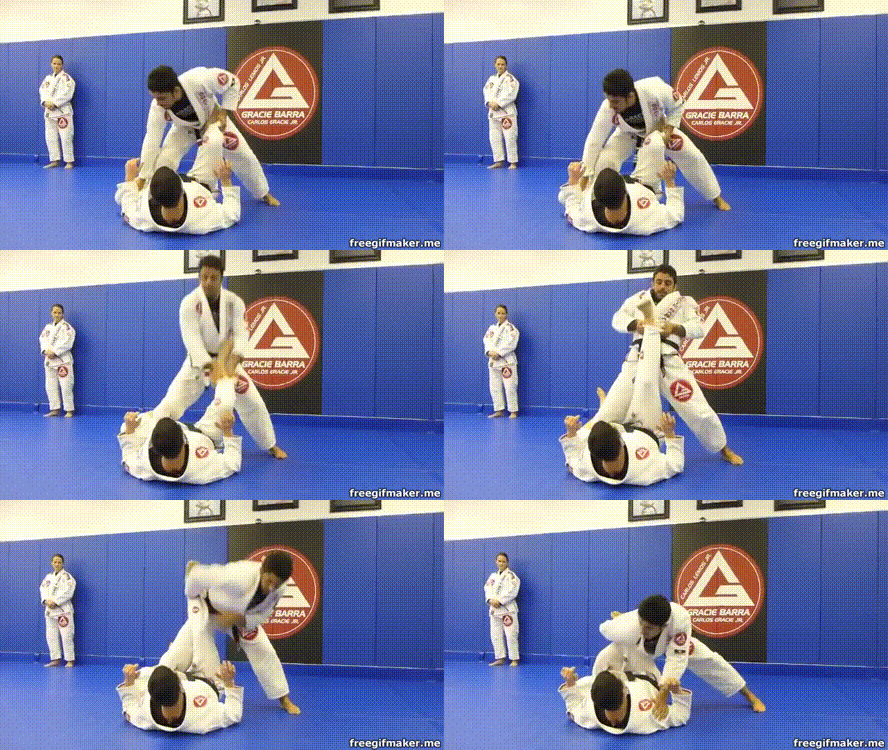
First and foremost the leg drag pass is an open guard pass from the feet. You can use it against the closed guard, but you’ll need to stand up and open it first. Let’s start at a position where both your opponent’s feet are on your hips, while you’re up on the feet. From there’ you’ll need to choose a side to go to. Once you do, you need a two-on-one grip in one of their legs. You can either grab the Gi and the heel or go for a heel and ankle grip. The goal is to guide that leg across your opposite side hip.

Leg Drag pass BJJ
Click for Full Technique Video

In order to force the leg across you’ll need to make the knee as immobile as possible. A simple hip pressure forward is going to get you both. Once you feel the opponent pushing back, get your hips back and use the newly created space to guide their leg over. The goal is to place your hip right up on the back of their thigh.

leg Drag Pass Position
Click for Full Technique Video

As you get there, you’ll need to drop on your knees in order to make sure there’s no space for them to counter. The knee that’s on the side of the trapped leg needs to fall on or over the thigh of their other leg. This will act both as ap in for that leg, and a platform for the dragged leg. You should aim to keep the opponent’s spine twisted by pinning their free shoulder to the ground with your arms and upper body.

Options Form The Leg Drag

The first thing to remember once you’re in a leg drag position is patience. “Cook” your opponent a little while by keeping them wound up and under pressure. It’ll be much easier to pass then than rush right into a pass. The leg drag requires small movements and keeping constant pressure on the opponent. for that, you need to keep your hips heavy.

leg Drag pass
Click for Full Technique Video

Passing the guard is as easy as walking yourself to the side where there are no obstacles. That’s the side of the leg that you have dragged over. IFrom the leg drag position, place your arm behind the opponent’s neck. Keep the elbow of the other arm on top of the trapped leg’s knee, keeping it in place. Then, you can simply move, step by step, to the free side, ending up in side control.

Leg Drag pass backtake
Click for Full Technique Video

One very usual reaction from your opponent is turning away from you, looking to end up on their knees. This sets them up perfectly for the back. As they turn, simply insert your hook into the space that opens and get a seatbelt grip on. From there on you could go for the back or the Truck.

Leg Drag pass Heel Hook
Click for Full Technique Video

Alternatively, you can think about getting to the 4/11 position for a heel hook as well. Simply throw your outside leg over the trapped leg to get the triangle and simply sit back. you’ll end up deep into a perfect leg locking spot!


Pressure Passing For BJJ: The Stack Guard Pass

The Only Butterfly Guard Passes That You Need!

The Old Man BJJ Game Blueprint For Senior Grapplers

Old man BJJ Game Blueprint

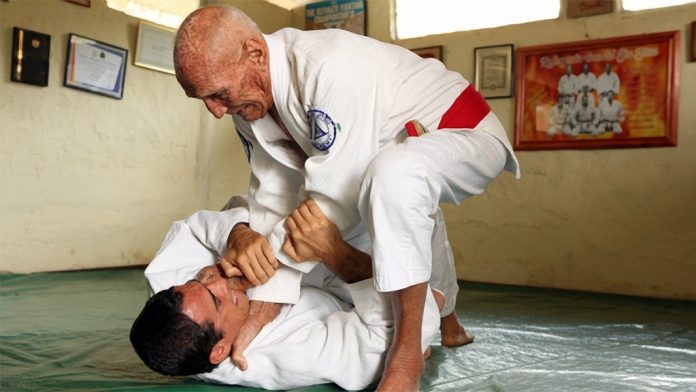
Brazilian Jiu-Jitsu has no age limits. it is meant for people from 4 to 94 years old. or at least that’s the romantic way of thinking about it. A simple look at some of the most prominent coral belts out there is going to show you that years of doing BJJ does not make old age as fun as it seemed to be for Helio and Carlos. Rickson Gracie even got a ban for walking at one point in time. If you think that taking up BJJ at an older age is easier than spending a lifetime in it you’re sorely mistaken. That said there is a way for older grapplers to be safe in training and still be highly effective. The two main factors are understanding when you’re “old for Jiu-jitsu” and developing a correct old man BJJ game.

So, when should you be considered an old man in BJJ? Well, the answer differs from person to person. There’s a host of factors to take into consideration. how long have you been training for? Which serious injuries are you struggling with? How are your body weight, type, and your overall Jiu=Jitsu game? To put into perspective, people that are not professional grapplers should look towards an old man BJJ game after the age of 30-32. After the age of 35, you’re certainly an OG grappler, and not taking care means you won’t be grappling at 40.

Luckily, we can learn from other people’s mistakes and find an old man BJJ approach that fits us. All it takes is some common sense and a modification or two. Those that will have the hardest time with these are people who have an aggressive game. Especially if they’re just getting on the wrong side of 30. While you still might feel like e young gun, you’re not. And training like one is only going to make you older, faster. If you want to grapple till you’re 90 like Helio, then you need to train in a way that’s going to guarantee it. here is the old man BJJ game blueprint that’ll help you achieve it.

As far as old timers go, Kurt Osiander is one that deserves special recognition. The old renegade has seen and done it all in grappling. Now, he has a way of sharing all his fundamental BJJ tips with you. perfect your old man BJJ game with the help of Kurt’s “Fundamentals of A Jiu-Jitsu Renegade” DVD set. It is available now, and you can read an in-depth review of it right HERE!

Fundamentals Of The Old Man BJJ Game

The start of any old man BJJ game starts with a basic understanding of the human body. As we age, our bodies tend to become more brittle and difficult to repair. Add to that the constant wear and tear of grappling, and you have all the reasons you need to switch things up. The moment you start noticing that you can’t keep up with the pace you used to go at, it’s time for a change.

Playing an old man BJJ game doesn’t mean lying there being defensive as hell and pissing everyone off. That’s the lazy man BJJ game. Instead, it means playing to your strengths, whatever they are. Even more importantly it means removing your weaknesses form the equation so that they can’t be used against you. It means learning to be a predator that hunts from ambushes instead of all-out races. It means finding a rhythm that you can keep using for decades to come, without having to re-assess it again. And, most importantly it means staying healthy for BJJ training and competition until you reach Master’s 5.

In order to cover everything, we’re going to split the old man BJJ game blueprint into three categories. Each category is specific to a certain aspect of Jiu-Jitsu which plays into your overall BJJ game.

Training

Although it is not necessarily a part of the old man BJJ game per say, warming up is essential. There’s no game at all without it, so never ever slack during warm up. In fact, look to add a few things that are specific to your needs as a grappler. Whether it’s due to an injury or simply stiff and tight body parts, make sure you loosen up completely.

Next, when you train the technique of the day, try to avoid unnecessary risks. If the move of the day is berimbolo, either go really slow or try to ask your coach to give you an alternative. While you can’t choose the techniques you can certainly look for a variation. moreover, activate your brain. it’s not just about doing the move of the day. As you’re doing it, think about where it can fit into your game. If the whole move can’t fit, can you use certain parts of it to make your game more efficient?

Old Man BJJ GameAlso, try to keep a steady pace. Even if the technique is an explosive one, there’s no need to get all bent out of shape doing it. Slow is smooth and smooth is fast. Instead of rushing moves, learn to do them so precisely that slow is going to be lightning fast. Also, try and find a training partner that understands this. People that spaz during techniques are ones to avoid in every moment of class.
Rolling

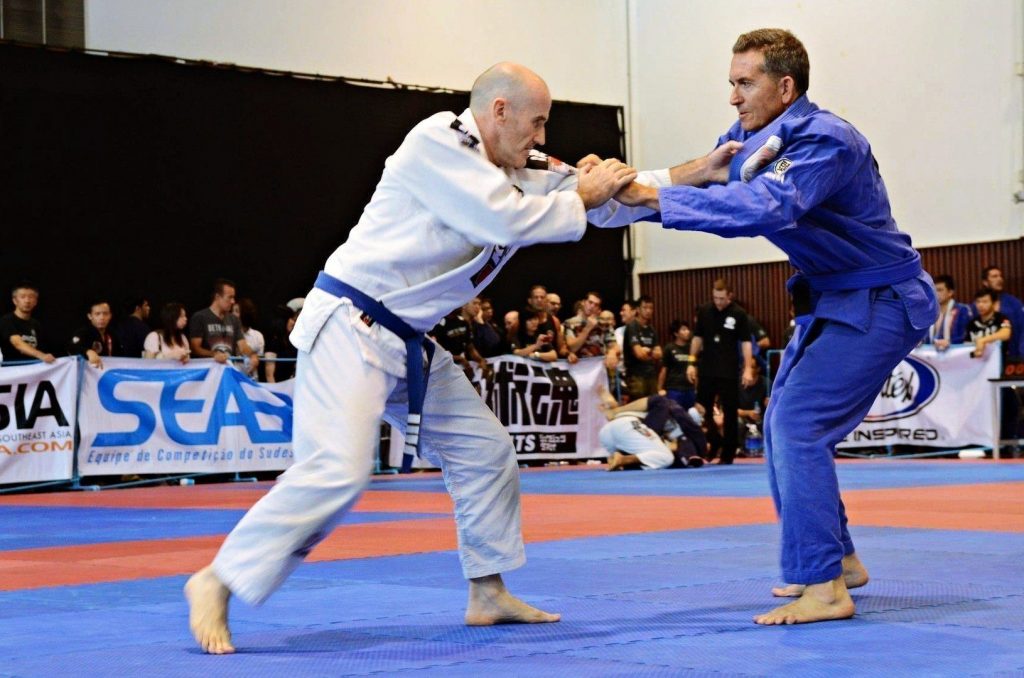
Certainly being older does not mean you need to skip over rolling. After all, it’s the best part, right? This is where your old man BJJ game really matters. In order to make sure you develop one, start by completely avoiding all the young guns in the academy. That includes all white belts, regardless of size, age or sex.

Next, the most important piece of the puzzle is speed. You need to find your own pace and you need to make sure you keep the roll at that precise pace. Trying to follow someone else’s pace is never a good idea. If they’re younger and/or more experienced than you than it’s’ certainly the wrong strategy. Instead, dictate a tempo that suits you and your style of grappling.

Technique-wise the unwritten rule is keeping things simple. Simple means easy to control and hard to escape. It also means effective, getting a sweep/pass/submission without effort or muscular strength. Instead of playing inverted guard or passing with cartwheels, go for closed guard and leg drags. Also, consider becoming a half guard expert. It is by far the best position for OG grapplers.

Competing

Old Man BJJ Game Plan TournamentFor those OGs that actively compete there’s also the old man BJJ tournament gameplan. Rolling is way easier than competing, meaning you need an even better strategy. First and foremost, you’re going to start your match standing. The rule here is simple – pull guard. It is the safest way to stay safe and get into a superior position. If you really insist, make sure you go for simple stuff like arm drags and or trips instead of full-blown takedown attempts.
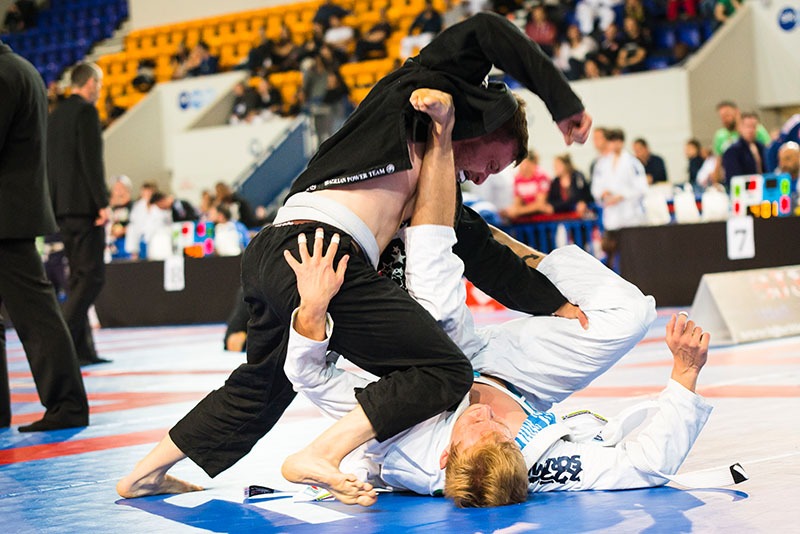
Once in your preferred position, make sure you’re safe. If that means wasting a minute or two, then be it. Staying safe means you’ll avoid scrambles and panicked reactions, which are sure to spend a lot of your energy. Instead, stay active but conserve your strength.use smart positioning and dominant positions to obtain as much control as possible.

In terms of an attacking strategy, it is always better to be on the offensive. However, in the spirit of the old man BJJ game, you’re going to do this with a twist instead of being the aggressor, be a counter-attacker. Let your opponent move or bait them into attacking something that’s not really there. Then, use their positioning to capitalize on moves that are there for the taking. Speaking of which, make sure you research sneaky BJ Jsubmissions and attacks. They’re bound to become your best friend for the long run!

Feeling Lost After Starting Jiu-Jitsu? Read This!

5 Steps To Fix Your BJJ Game Weak Spots

BJJ Mental Attitude For Each Belt Level

The Lowdown On BJJ Rules For IBJJF Competitors

BJJ rules Explained IBJJF

Hey there IBJJF competitor! I guess since you already have a few tournaments under your belt, you do not need this article. Or do you? This is a piece for both the novice competitor and the seasoned grappler too. The world of BJJ rules, even under one organization is so vast, there’s no way of explaining it without a book. Actually, there’s a book out there called the IBJJF rulebook, which usually only makes things even more complicated. Today, we’ll go over the nuts and bolts of BJJ rules fro IBJJF competition. We won’t cover everything, but we’ll try to make sense of the most basic things. That way you won’t have to be confused or yell at the referee next time something “unexplainable ” happens at a competition.

The IJJF or International Brazilian Jiu-Jitsu Federation is the largest global organization in the grappling world. It is a product of Gracie Barra, the largest BJJ association of academies run by Carlos Gracie Jr. himself. The IBJJF has a truly elaborate system of rules which is not really subject to much change. Over the years, there haven’t been any major changes to the IBJJF rulebook. That said, the influence of the IBJJF is so widespread, that most local tournaments, at least in the Gi, go by their BJJ rules. That means that wherever you choose to compete, apart from professional submission-only events, you’ll be grappling under the same rules. Even the world’s second largest organization the UAJJF has the same rules when it comes to competition.

So, what should you know about BJJ rules? How can we sum up a whole book of rules in just one article? Well, we’re going to categorize things, of course. in order to do so, we’re going to run over a usual IBJJF tournament as if competing. We’ll cover everything in the process, from signing up to what you do on the mats. You’re going to find some useful information for sure, even if you already know all the IBJJF rules. Knowing the BJJ rules you’re competing under means that you can use the system to ensure you get an undisputed victory, even if it is by the notorious advantages.

The Basics Of IBJJF Tournaments

Signing up for an IBJJF tournament is done online. You need to create an account and follow the instructions. Make sure you sign up on time though, as registration closes a few days before a tournament.

BJj RulesWhile signing up you’ll need to clarify a few things that have to do with BJJ rules. The major one is the category in which you plan to compete. In BJJ categorization of competitors is based on weight age, sex and belt level. As such you’ll need to make sure you choose the best one for you. Since most people have no trouble with their age, sex or belt level, weight is where things get confusing. If you register for one weight class and end up too heavy a couple of days before a tournament, there’s no way to change it. It means you’re now ineligible for competition and your registration fee is lost.
Next up it’s the duration of your matches. Different belt levels are grappling for different time periods. White belts have 5-minute bots, blue belts six, purple seven, brown 8 and ten-minute matches are reserved for black belts. But, there’s a catch to this as well. Bout duration changes (shortens) with each age category. The above rules are for the adult division, meaning people from 18 to 29. Everyone above thirty is in the Master’s divisions where bouts get shorter as the age gets higher.

Finally, you need to know that your Gi and belt need to be in pristine condition and with the appropriate length in order to even be allowed to step on the mats.

Technical Aspects Of BJJ Rules

the only goal of a BJJ match is, of course, to win. Doing so in IBJJF matches comes in a few varieties. According to BJJ rules, you can either win by submission, points, advantages or a decision. Now, since submissions are clear to everyone, we’re not going to linger on that point log. It’s enough to say that any choke or joint lock you can successfully apply, is going to bring you victory. If you can’t submit your opponent, it’s down to other methods.

I’m going to dumb down the point system as much as I can. In order to win you need more points than our opponent. You get points based on the positions you acquire. A successful takedown or a sweep bring you 2 points. Passing the guard (not getting to side control from another position) brings you 3 points. Knee on belly is also a two-pointer, while mount and back position is the best to go for, with four points each. Just remember that reversing someone from bottom side control or mount is not a sweep, and you’ll get no points for it.

Advantages are the dark spot of BJJ rules. Most people do not understand them and losing by one is definitely something you do not want to do.  If you attempted a submission or got a sweep but you couldn’t hold your opponent for three seconds, you get no points, but you get an advantage. Advantages can see out a match so they’re an important piece of the puzzle. However you can have all the advantages in the world, but if the opponent has just 1 point, they win.

Finally, a referee decision is going to determine the outcome if everything is equal.

Illegal Moves

Now that you know all the ways to win an IBJJF match let’s look at how not to lose. JJ rules in terms of illegal techniques and positions are numerous, and you need to know them as good as these that can bring you victory. The basic idea is that some positions are too dangerous ate certain belt levels (or all of them). For example, heel hooks are illegal for everyone, regardless of belt level. Wristlocks can be done from blue belt upwards, while knee bars and toe hold enter the game from the brown belt.

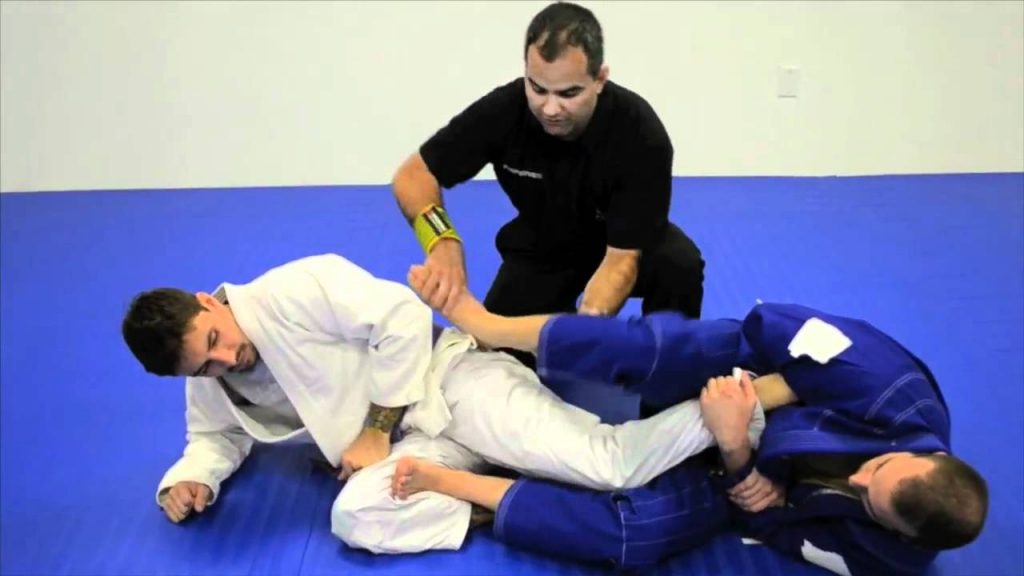
BJJ reules Knee ReapIt is very important to understand the knee reap rule as it often happens involuntarily. The thing is that you can’t place one of your legs in between the opponents an then loop it around one of theirs. IF you do so, you’re in the knee reap position which is an instant DQ. So be very mindful of this when you’re in open guard.
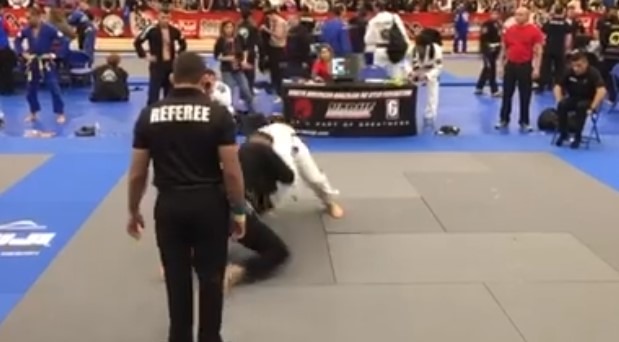

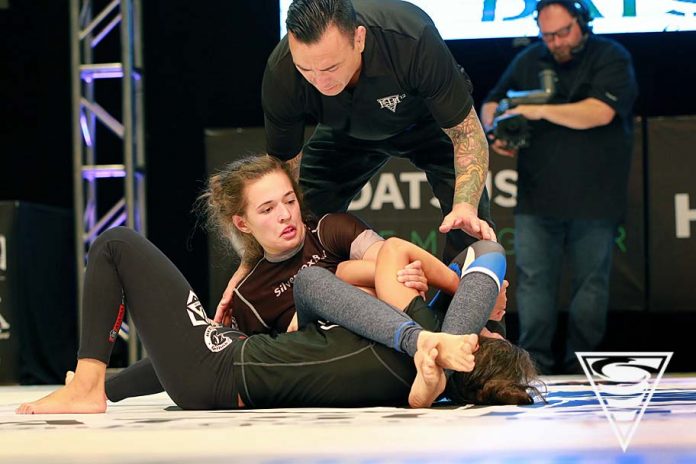
Neck cranks are also illegal at all belt levels. While you can get away with Japanese neckties or cranks from a rear naked choke, it’s best if you avoid them completely.

Takedowns are another major aspect of BJJ rules for competitors. In Jiu-Jitsu you can’t do dangerous takedowns like the scissor takedown or slams. These are all ground for immediate DQ.

Jose Varella knows exactly which leg locks are allowed under the IBJJF banner. Thanks to his “IBJJF Legal Footlocks” you can now also bring an end to all the confusion. Get this DVD fast!

A Practical Blueprint for the Journey Through Brazilian Jiu-Jitsu

Jiu-Jitsu Techniques For A Complete Competition Gameplan

BJJ Fundamentals Every White Belt Have to Know

How To Set Up A Rock Solid Game Plan For BJJ Competition


Four Seconds Wristlock Finish in Competition & How To Do It

We can say that wristlocks are one of the sneakiest submissions in BJJ and there’s really a lot of them. For some reason, BJJ fighters don’t spend so much time learning them. Maybe they’re hard to master or hard to apply but they’re definitely worth a try.

As much as Wristlocks are hard to learn and hard to apply that much they’re dangerous. Damage done to someone via wristlocks is pretty hard to repair.

Wristlocks are being applied in all levels of Jiu-Jitsu, even the highest levels. I believe we can all remember of Jacare’s standing wristlock.

Standing Wrist Lock is one of the hardest wristlocks to apply but it can be very surprising and lethal weapon. It comes very fast and that’s the reason why it is so hard to even practice it. There’s no time to tap for most of the time, your opponent even in practice may just yell to make you let him go.

That’s exactly what happened in this tournament match video that we can see below.

If you’re interested in really learning and mastering wristlocks, Renzo Gracie Black Belt Travis Stevens did a great instructional about it. Wrist Locks From Everywhere by Travis Stevens

Thug Tries to Rob a 72-year-old Jiu-Jitsu Coral Belt!

Thug Tries to Rob a 72-year-old Jiu-Jitsu Coral Belt!

Edson Franco Penteado, 72, is an 8th-degree black belt in Brazilian Jiu-Jitsu.

A thief in Rio de Janeiro tried to rob the master and got taken down, mounted, and slapped silly until the police arrived.

https://youtu.be/R_5FHPjxU0s

BJJ Brown Belt Instructor Attacked On The Street

Devastating Heel Hook In a Street Fight

Street Fighter Dojo Storms BJJ Gym to Challenge Jiu Jitsu Instructor to a Boxing Match

https://bjj-world.com/rener-gracie-street-fight-vs-multiple-attackers-bjj/

Pulling Berimbolo in a Street Fight

The Best Strategies For EBI Overtime Rounds

EBI Overtime Strategies

It is safe to say that Eddie Bravo’s EBI tournament has re-shaped the world of Jiu-Jitsu. And for the better. The tournament has plenty of positives about it, from the fact that it pays grapplers to compete to the exciting submission the only format. However, there were other organizations before EBI that offered the same benefits, like Metamoris for example. Actually, Metamoris is where Bravo first got the idea. the true innovation though is in the ruleset. EBI’s greatest achievement is the manner in which it solved the draws issue. The EBI overtime rounds were the spark the submission only grappling scene was lacking to take off. And it did.

Everyone who has ever competed at an IBJJF event knows that there are plenty of ways to win besides submitting an opponent. Moreover, there are easier ways to win than going for a finish. Just holding an opponent down might bring you victory by points, advantage or even a referees decision, if you were more active. This is the main reason that other organizations popped up about a decade ago, trying to encourage grapplers to go for the finish by limiting victories opportunities to submissions only. However, this gave birth to a whole different problem – draws. Since submission was the only way to win, when both grapplers failed to finish within a timeline, the match was a draw. This turned out even more boring than IBJJF rules in certain cases. Until along came Eddie Bravo and his EBI Overtime rounds.

What Eddie Bravo essentially did was combine rules from different organizations. He took ideas from Metamoris, ADCC and a host of others and molded the perfect tournament format. TheEddie Bravo Invitational is a 16 men/women NO-Gi submission only tournament with a twist. It provides a means to distinguish a clear winner out of every match while still not falling back to a points system. The EBI Overtime rounds are, arguably, the best rule-related innovation the world of Brazilian Jiu-Jitsu has ever seen.

Improve Your Chances To Win In EBI Overtime With JT Torres’ Groundbreaking DVD Instructional “Passing, Back Takes And Finsihes”. This Instructional MIght Even Help You To Finish Before You Reach Overtime! Get it Now! 

EBI Overtime Rules Explained

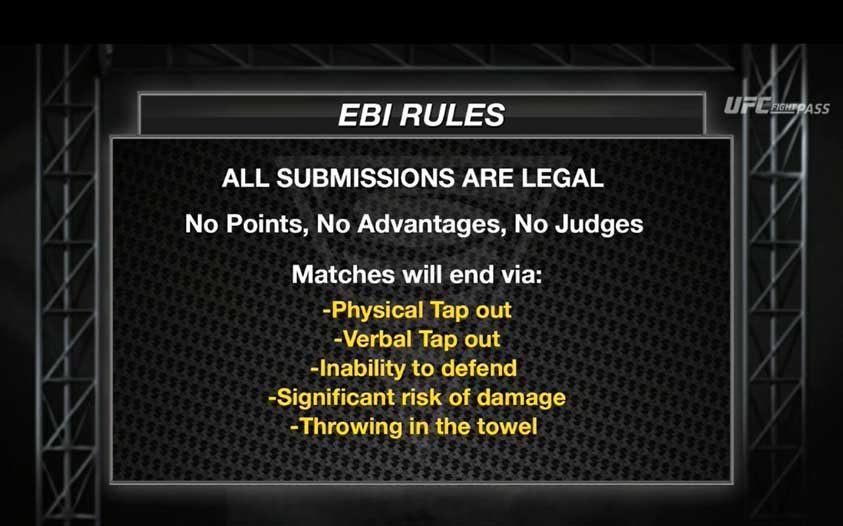
The basic idea behind overtime rounds is to get a winner without the need for a judge’s decision. Basically, the overtime rounds in EBI give both grapplers the opportunity to directly attack and defend submissions in turn. IN order to provide equal opportunities, there are two starting positions. One is the spider web position (armbar) and the second is seatbelt and hooks back control.

The competitors who drew in regular time get to choose a position to start in. The grappler who attacked more gets to choose first, or they flip a coin if everything was pretty much level in regular time. Once they know who goes first, the set up in one of the two positions described above. Each overtime round has two parts – top and bottom. That means for every attacking position you have in a round, you have to go through a defensive one as well.

EBI Overtime RulesFor regular bouts, there’s just one overtime round at the end of each regular time match. In the finales, there are three. Furthermore, the limit of an overtime round is 5 minutes. That means that in 5 minutes the attacking grappler needs to finish, or the defensive grappler to escape the position. If there’s no winner by submission at the end of overtime, the grappler who escaped the fastest gets the victory.
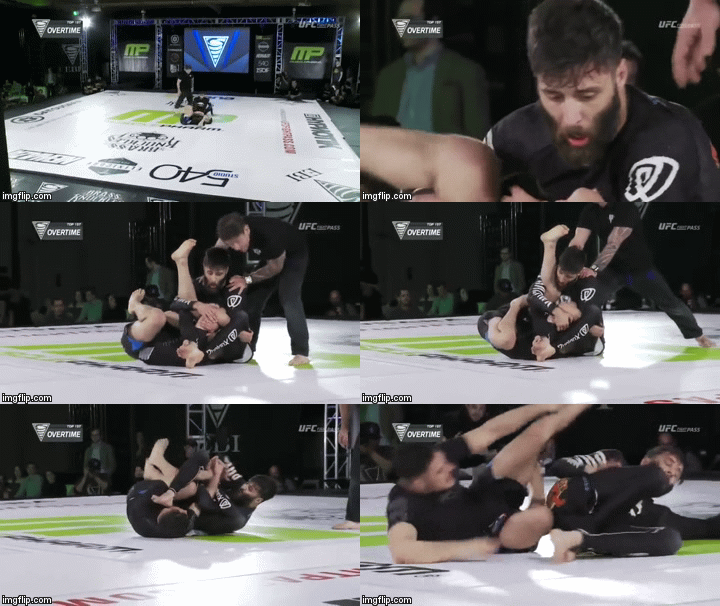
There are several more nuances to the rules, like what exactly constitutes an escape or ways in which to transition into other submissions. So far, EBI overtime rounds have been largely successful, so much so that other organizations are adopting them into their formats.

Analyzing The EBI Overtime Positions

So, now that the rules are clear, what about the two overtime positions? Surely there’s a reason why exactly these two positions are the norm? Well, back control is widely considered as the best position to be in for grappling. The armbar is generally not as good in terms of control. However, Eddie Bravo’s spiderweb positions change this significantly, while also providing quick submission options.

That said, both of these positions have their strengths and weaknesses. So far, we have 16 EBIs to draw conclusions from, not to mention the qualifiers and other organizations. During those events, both positions were exposed and grapplers started devising strategies for both offense and defense. So, which one is better for you? Depends on your preferences, the circumstances, and of course, the opponent.

Spiderweb

The spiderweb position is essentially the finishing position of a mounted armbar. You’re at an angle to your opponent one leg over the head and the other over their chest. You get to choose an armbar grip, most often involving a deep hook. Your other arm can (and should) hook the nearside leg, offering increased control. The opponent also gets to choose whichever defensive grip configuration they want.

The major strengths of the spider web position are in the speed of attack. You are very close to a submission, and all you need is to retain control and pry open the arms. This doesn’t take much time, usually and it is a great way to go for a fast submission. You might be going for it because you’re an expert at armbars, or because your opponent escaped and you need a fast submission before time expired.

Spider Web EBI Overtime On the negative side of things, the spider web position is much easier to escape than back control. While some general armbar escapes (like the hitchhiker) do not work as good, there are ways to defend and get out. IF you’re looking for ride time, this is definitely not the position to choose. If you’re in a hurry to escape though, the spiderweb is your best bet.

Back Control

Back control is one of the ultimate checkmate positions in BJJ. It offers loads of control and great submission options. The thing is, that since you can control it, you do not need to rush a submission. Ths means your opponent can mount a steady defense and look to escape and beat you via the time factor.

EBI Overtime BackWhat back control brings to the table is ride time. When you have seatbelt control and hooks, you can keep your opponent there as much as you want. Slapping on a body triangle is also a good strategy, as proven throughout EBI so far. This is a notoriously difficult position to escape from, and you can also get a submission if you’re persistent.
The main trouble with back control is getting a fast submission. The opponent has two arms to grip fight with against t your two arms. that makes the battle equal even if you have a dominant position. Since taking (or cranking) is the way to go, opponents know what to expect. So, if you have an opponent on your back during EBI overtime rounds, better hope that he’s not a back control expert, or you’re most likely doomed. Unless you flip the tables and get a sub before or after.

https://bjj-world.com/leg-locks-ultimate-guide-positions-submissions/

Are You Hitting The Monoplata As Often As You Should?

BJJ Gift Wrap – The Perfect Mount And Back Control Hybrid

The Only Butterfly Guard Passes That You Need!

Neck Conditioning Exercises Essential For Jiu-Jitsu

neck conditioning

Getting your body in shape to perform flawlessly on the mat is no easy feat. You need to first and foremost have the necessary gas tank for Jiu-Jitsu. There’s no point in being strong as an ox if you gas out after two minutes. Conversely, you need strength, but not just your regular body-builder. you need to be strong in compromising positions which is a difficult puzzle to solve. At the same time, you need all those strong body parts to be flexible enough to endure the strain of grappling. In terms of exposure to stress, not all body parts get an equal amount in BJJ. In an intriguing turn of events, one of the most exposed body parts gets the least attention outside of the mats. Neck conditioning is something most grapplers take very lightly. Big mistake!

There’s no denying that the neck plays a major role in Brazilian Jiu-Jitsu. Most grapplers you see have Popeye-like forearms, a cauliflower ear or two, and a massive neck on them. Those that still have a tiny neck are either dealing with a neck injury or just about to get one. Neck conditioning can both prevent injuries and give you the necessary neck strength for rolling. And no, it doesn’t necessarily have to give you an oak-thick neck. If you know which neck conditioning exercises to do, you’ll get a strong, yet flexible neck, tailor-made for grappling.

If you still think neck conditioning is a luxury instead of a necessity, just think about injuries in BJJ. Hernia of the neck vertebrae is one of the most common ailments grapplers face. On top of that, BJJ has a tendency of making life hell through constant neck muscle pulls. Very often, those muscles you feel tight and crackling in your shoulder and back are actually a consequence of neck manipulation. NOt all neck muscles start and end where you can see them. so, take a few moments of your time and add in conditioning exercises for your most vulnerable body part.

When you’re already in the process of neck conditioning, throw in some other exercises as well. There’s hardly a better tool to get yourself in top grappling shape than kettlebells. All you need to know is in the “KB Essentials Instructional Guide” DVD by Mike Perry. Pick it up!

The Role Of The Neck In Grappling

The neck consists of seven vertebrae, which are packed tight with layers upon layers of muscles. It is anything but simple, both in anatomy and its purpose. The neck protects some of the most vital parts of our body while being able to execute complex movements in different directions. In BJJ, we use those abilities to the maximum, often putting the neck under a lot of strain.

Since the neck is so well surrounded by muscles, it can be trained to become stronger. However, neck conditioning exercises are something most people fail to understand. They’re not as easy as picking up a weight and curling it. Since the neck moves in plenty of directions, it involves different muscles. Different muscles mean different exercises. On top of everything, you need to find balance. Lucky for you, we take all the guesswork out of the equation.

The primary movement patterns of the neck are those of twisting, bending and a combination of both (AKA rolling. Each of these movement patterns can be executed in multiple directions, meaning some muscles have more than one job. As such, you need to make sure all your muscles are up for the task. Because in BJJ, you don’t just need to lift or turn your neck, you need to do it against another person, or simply use isometric force. very often we address the neck as the “fifth limb”. In order to post and hold with our necks, we need them to be strong and conditioned.

BJJ Neck Conditioning Exercises

Neck conditioning exercises for BJJ and grappling martial arts do not need to be complicated. All you need is versatility and smart programming. For that purpose, we’ve created three categories of neck conditioning exercises. First up are those that involve isolated neck movements. Next, its full-body moves strengthen the neck. And finally, we have the exercises that require additional equipment to help our necks become better suited for Jiu-Jitsu.

Isolated Exercises

Neck Conditioning
Click for Full Video

These are probably the easiest of the bunch. Isolated neck exercises are those you usually do in the warm-up before every class. Or at least you should be doing it. They involve bending the neck in all directions, twisting the neck in all directions, and rolling the neck. Basically, they cover all the basic movement patterns of the neck.

At first, it is wise to start doing these movements standing or sitting. This way, you lessen the effect of gravity. When you are used to 20+rep sets, go supine. Now the same exercises are going to become much more difficult. You need to really master these before you even think about moving on to full-body exercises.

Full Body Exercises

Neck Conditioning
Click for Full Video

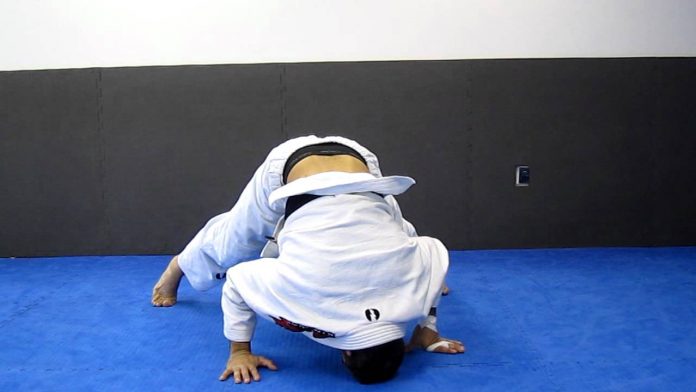
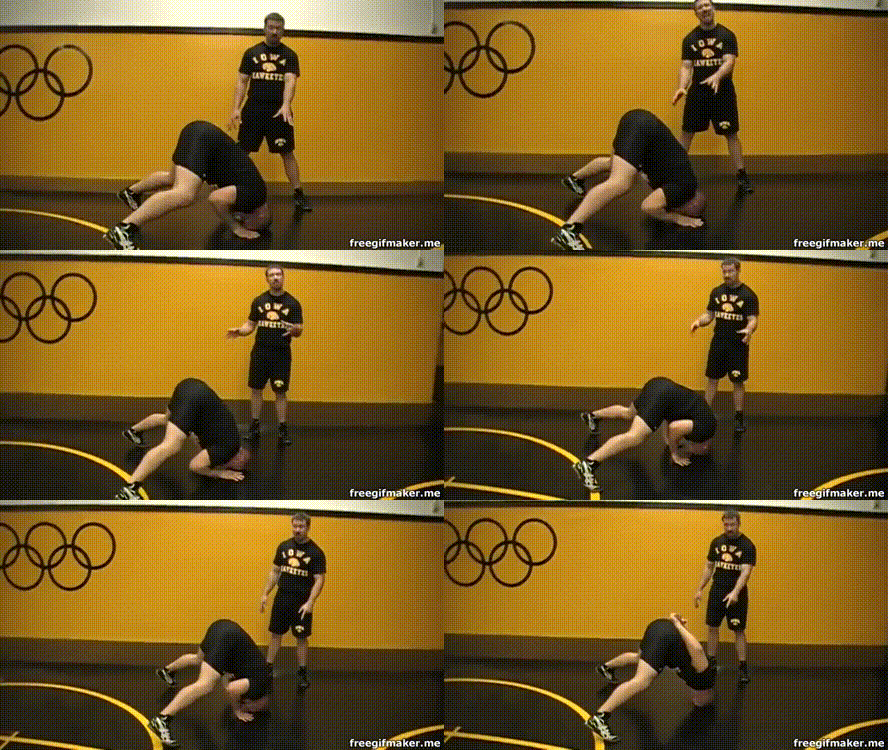
Full body neck conditioning exercises should be approached with caution. yes, they’re safe and have been proven to work, but you need to build up to them. These exercises are basically stolen from wrestling. Those funky bridges you see wrestlers doing are all about neck strength. For BJJ, you need to skip past flips and the like and settle for good old bridge holds and neck rocks.

In order to make sure you hit all muscle groups associated with neck movement, you need variety in y our exercises. That means that when you do a neck bridge you should do it both front and back. When you do front bridges, you should also throw in neck rocks. These are basically all the exercises we talked about before. The only difference is that you have your head and feet on the mats and your butt up high, like an inverted V-shape.

Equipment based Neck Conditioning

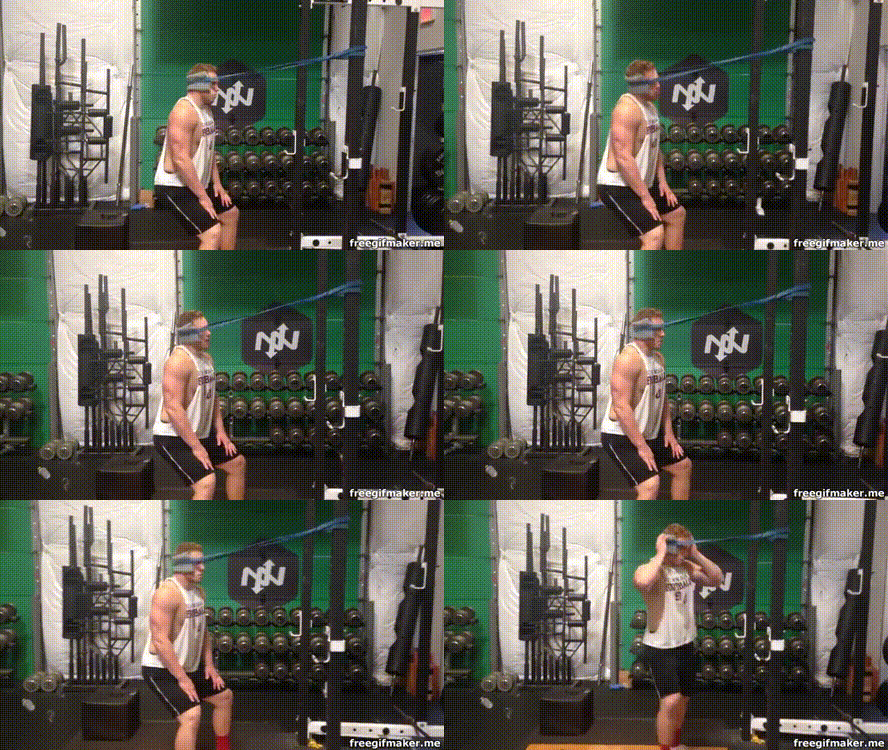
Neck Conditioning
Click For Full Video

Remember that if you jump straight into equipment training, and you have no prior experience, you’ll most likely end up with a very serious injury. So, go through all the above, master them, and if you still need/want a challenge, only then consider equipment.

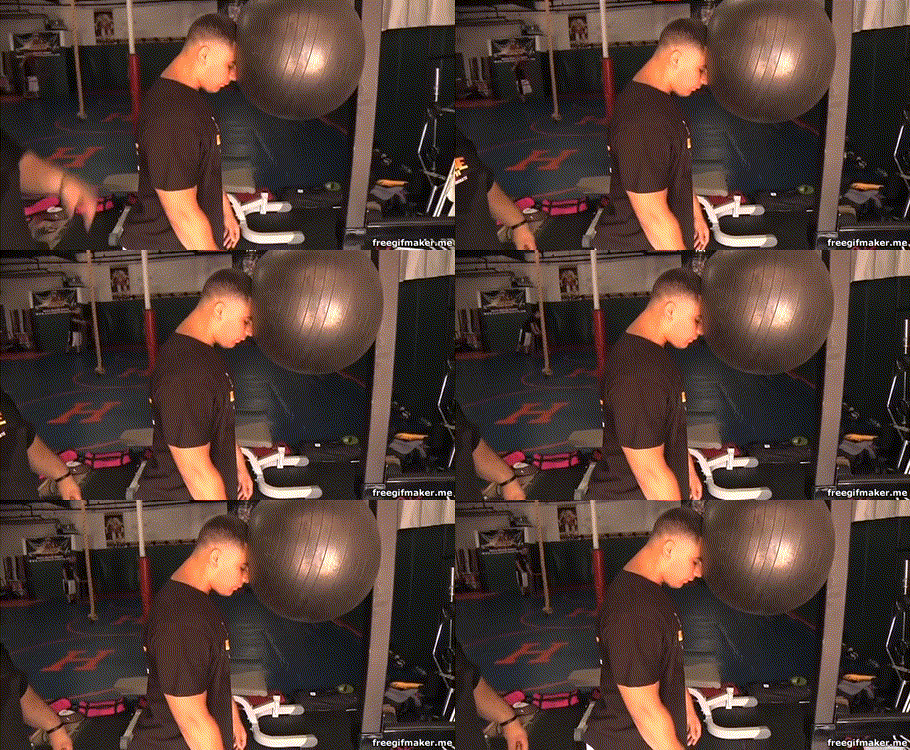
Neck Conditioning
Click For Full Video

In terms of equipment, you won’t need much. Either a rubber band or a stability ball is more than enough. Actually, you could use both if you want to. With a band it’s easy – do all the isolated exercises, only now adding resistance in each direction. With the stability ball, you can do exercises in two planes – standing and/or supine. For example, take a stability ball and place it on a wall at eye level while standing, Now use your forehead to keep it in place. Press downwards and stay there, or go up and down for reps. The ball provides more resistance as you push into it, working both sides of the muscles involved in a movement.

The Best Strength & Conditioning DVD and Digital Instructionals

6 Exercises To Develop Insane BJJ Strength

Rope Climb Jiu-Jitsu Workouts For Incredible Strength

The Ultimate BJJ Core Workout Program

The Secret To A Huge Gas tank For BJJ Rolling