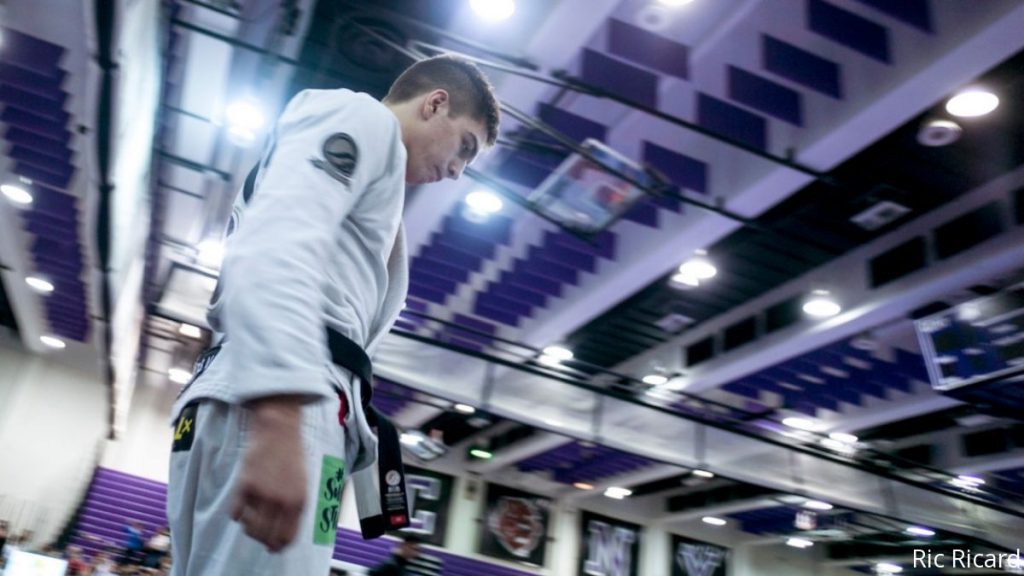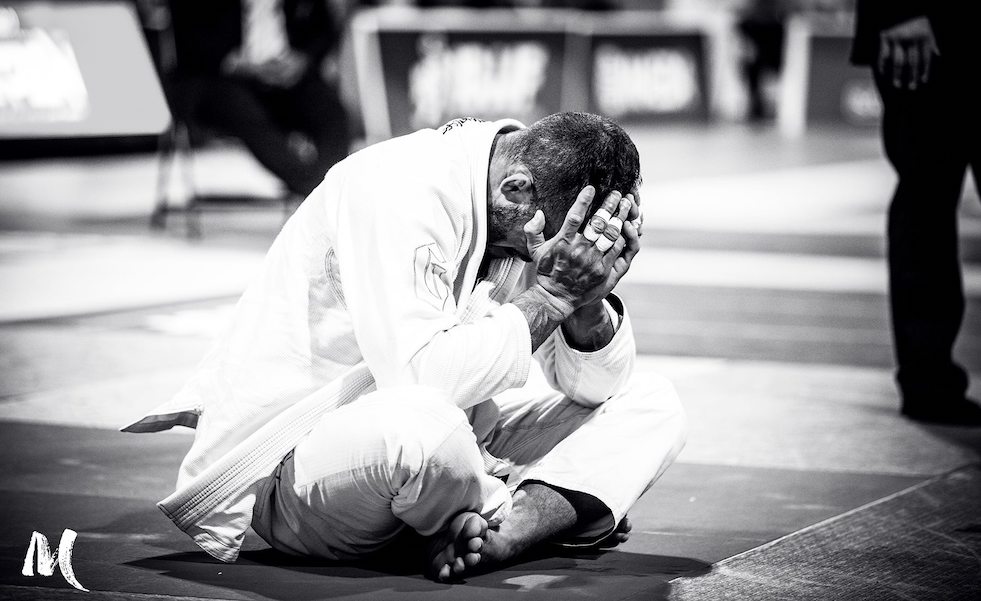



How To Get Over Grappling Competition Anxiety

Tips on dealing with grappling competition anxiety

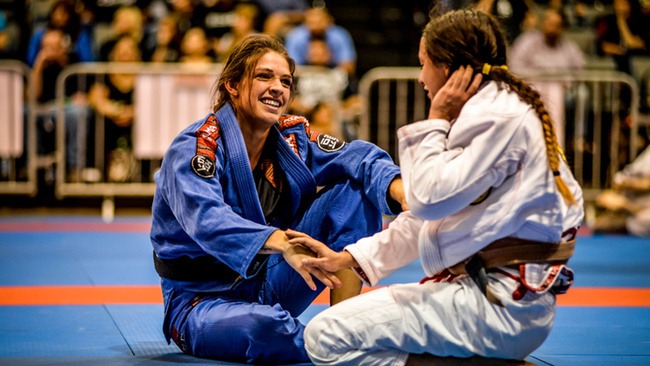
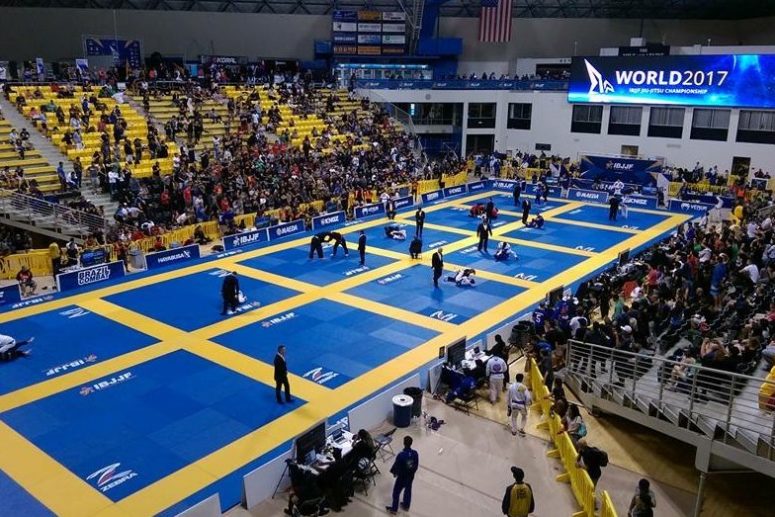
Competing in anything is stressful. That said, there are levels to competition anxiety. A lot of that has to do with the competition setting. In general, team sports are usually less stressful than individual ones. Moreover, competing in martial arts is always harder than competing in other sports, at least mentally. After all, you are fighting with another human being, even though it is in a controlled setting. Furthermore, grappling competition is way different than other martial arts. Grappling is one of the oldest modalities of competition among people that do not intend to injure one another. And it is anything but pleasurable, at least until you get the hang of it. 

The thing about anxiety is that we can find ways to battle it because we can understand it. While everyone has a different response to stress,  the physiology of stress response is the same. It is normal to be jittery when you’re going up against another grappler, with a referee standing in the middle. After all, it is all about who has the better performance. Moreover, grappling competition is never without an audience, adding to the anxiety and stress of competitors. Still, as you’ll find out after your first one, the worst thing that can happen is that you can lose. And its nothing to be stressed about.

Solving Grappling Competition Anxiety 

Competition anxiety is something that literally every athlete feels. There isn’t a human being that has not felt anxious when under the spotlight. Whether it is competing, performing in front of an audience or any setting that is different from what we’re used to, anxiety will inevitably follow. The one biggest mistake is trying to go against it and look to remove it. The most important thing you need to know about anxiety is that it ‘ll never go away. That said, you can control it and even use it to your advantage.

Once again, anxiety and stress do affect everyone differently. However, the following tips cover pretty much everything, so that anyone can find a way to deal with anxiety. Remember that the point of grappling competition events is first and foremost to have fun. testing yourself and your tactics come second, and winning is at the very end.

  • Manage Expectations

When we compete with someone, the ultimate goal everyone wants is to be better than the other person. In simple terms, we all want to win. This is precisely why we get anxiety. the more we crave the win, the worse our performance anxiety is going to be. This first tip is also the most important of all: you have to accept that you won’t be able to win every match.
Solutions For Nerves And Jitters in Grapping CompetitionRegardless of how much you want it, or prepared for it, you’ll never be able to go without losing a match. Believe it or not, that is the point of competing. It is not important whether you lose because you make a mistake, or because the opponent is better. In a grappling competition, anything can happen. The point is that you go in looking for the win, but not expecting to get one in every match. the point is to work and compete for it, not go in there looking to claim it.

  • The Right Mindset

Of course, our minds play the most important role when it comes to having the competition jitters. Believe it or not, you can also train your mind, much like you do with your body. The main thing to remember is that you have to keep a positive mind, as obvious as that might seem. Now, you are going in to fight, so you shouldn’t think about unicorns and pink butterflies.

However, there’s absolutely no point to let negative thoughts enter your mind. This means not thinking about possibilities of losing, getting injured or making a mistake. This means you’re placing yourself under pressure and actually increasing your anxiety. Stay loose and keep a positive mindset.

  • The More The Better

If there’s one thing that could help you with grappling competition anxiety is competing. Yeah, the more you compete, the easier it is going to become. Think about this example for a while. Do you remember your first live rolling efforts? The moment you start rolling, you’ll get absolutely crushed. However, the more you do it, the easier it gets. Not only that but you become better at it.

Well, it is the same when you compete. The more BJJ tournaments you go to, the more experience you get. That means that you’ll inevitably become better, but also more comfortable competing. As that happens, anxiety is going to go down.

  • Focus On Your Gameplan

Speaking about strategy, fear of the unknown is always going to result in anxiety. The more you wonder about what your opponent is going to do, and what you’ll do in response, the more you’ll build up anxiety. Instead of trying to figure out what is going to happen, make sure you know what you’re going to do, at the very least.

When you prepare for a competition, make sure you devise a solid game plan. More importantly, if you want to be calm and perform well, stick to the plan. Do not go off books the moment you slap and bump. Focus on executing your gameplan and making the opponent fight your game. This will have you in control the entire time. On the plus side, working your gameplan step by step does not leave much time to think about anxiety.
Bernardo Faria Transition Mastery DVD REVIEW
Techniques List

A good transitioning game is going to take care of pretty much any competition scenario. it’s a great way to both play your game and prepare for the unknown. Bernardo Faria is a master of transitions that is ready to teach you how to become one too. Pick up his “Transition mastery” DVD set for a taste of something different!


  • Remove Unnecessary Stress

Easy |Ways of reducing grappling competition anxiety and nerves By unnecessary stress, I mean everything that doesn’t have to do with a grappling competition. The first thing here is to make sure you get a good night’s sleep. UNless you give your mind a rest, your body won’t be able to perform. Next up, make sure you’ve got everything dialed in. Focus on finishing your weight cut on time and without too much hassle. Make travel arrangements so that you have time to get ample rest before stepping on the mats. All in all, try to limit sources of stress as much as possible so that you can focus on Jiu-Jitsu completely.

  • Eat, Breathe, Drink

This one ties in with our previous tip. Eating is the trickiest of the bunch because it depends on your weight. If you have weight to cut, you’ll probably be limiting food. What you must not do completely stop feeding. So have a good nutritional plan and try to have breakfast before fighting.

Also remember to stay hydrated, once again, as much as cutting weight allows. IF you’re cutting to the very last moment, at least make sure you get some electrolytes right after weighing in and in between matches. Do not underestimate the power of the positive feeling of a full stomach.

Finally, make sure you breathe. You don’t have to do any Wim Hoff craziness or meditate, just breathe normally before your match. If you can also control your breathing while you grapple, you’ll have absolutely no problem. However, it is enough to breathe calmly before a match and your anxiety will fade away.

  • Listen 

I cannot stress this one enough. the moment your match starts, anxiety will reach its peak. The more the match lists, the less anxiety you’ll have. However, the initial moments are key. A great tactic is to always constantly listen to your corner, particularly if you feel your mind going blank for a minute. The best way to get through that initial anxiety is by allowing others to guide you.

On the subject of listening, your favorite music choices will go a long way to calming your nerves. Contrary to popular belief, it doesn’t have to be heavy metal or something of the sorts. You can get int grappling competition mood even with reggae if that is what motivates and relaxes you.

  • Know The Rules

While this is probably the most obvious one, make sure you know all the rules of a tournament before you compete. Understanding the tournament format, ruleset and referees actions goes a long way to removing a lot of unknowns. That, in turn, as we already know, reduces anxiety. Make sure you step into an environment you understand and you’ll do great!

  • The Right Warm-Up 

Warming up is another key aspect of positive grappling competition experience. It is also something you’ll have to figure out on your own. Some people do well with just a little mobility work. Others like to run or do jumping jacks. There are also those that can’t compete unless they do a few all-out rolls. Figure out what is best for you and what gets you going. Then, simply do it before you have to step on the mats. Confidence and comfort are great ways of battling nerves.

  • The Fun Side Of Losing

How To Deal With Grappling Competition Jitters? As a final tip, make sure you really give winning and losing a thought. Normally, winning is the best possible outcome of any competitive effort. However, is losing really such a big deal? The world won’t end when you lose. You might feel sad or disappointed but that should be a motivation to do better. All in all, losing has a fun side to it. Once you figure it out for yourself, you won’t demonize it anymore. It is not that you won’t want to win, you’ll just be more relaxed and laid back about possibly losing.

In Summary

Anxiety can really throw a wrench into the performance in a grappling competition. There area athletes that are real beasts in the gym but choke up in tournaments. Once these people get over their anxiety, the game is on! There are, however, cases of people that never really manage to deal with competition jitters. Make sure you’re not one of them and follow our tips for battling grappling competition anxiety!
Jiu-Jitsu Tournaments – Do You Really Need Them?

Competition Tips To Prepare For BJJ Tournaments

Tournament Day BJJ Nutrition Hacks

Did You Lose at Jiu-Jitsu Tournament? No Big Deal!

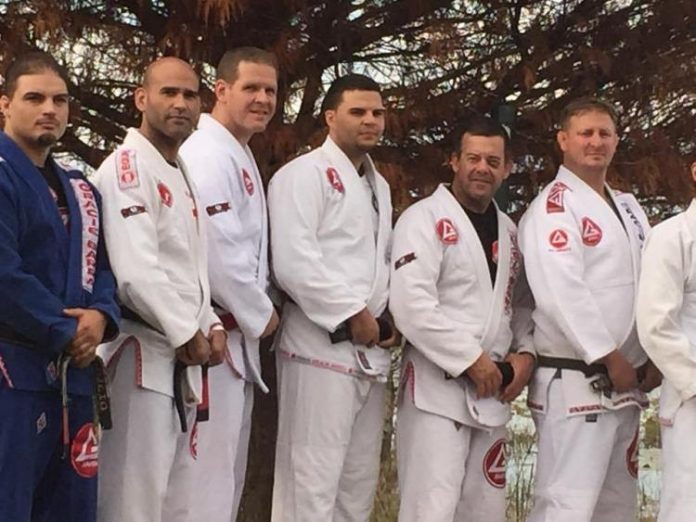
Little Known Brazilian Jiu-Jitsu Facts About the Gracies

Jiu-JItsu Facts About the Founding Gracie Family Members

People in grappling like to gossip as much as anyone else. This is not helped by the fact that the history of Brazilian Jiu-Jitsu is plagued with inconsistencies. It is often hard to distinguish fact from fiction which leads people to draw conclusions. As time passes, these conclusions become “fact” although they have no solid base behind them. Some of the most rampant BJJ myths have to do with the founding Gracie family and their history. Today, we bring you 10 little known Jiu-Jitsu Facts about the Gracies and the true history of the Gentle Art.

In some of our past articles, we did our best to explain some of the BJJ idiosyncrasies of today. For example, we went over the history of everyone’s favorite Shaka sign, and the reason it is such a BJJ symbol. On another occasion, we talked about the origins of #Everyday Porrada and explained what “Nutella BJJ” is, as well as the difference between Japanese Traditional Jiu-jitsu and Brazilian Jiu-Jitsu. As much as we take such things for granted, unless we understand exactly what they are all about, we’ll contribute to more and more BJJ myths. Today, the focus is on Gracie history. The 10 Gracie Jiu-Jitsu facts below will definitely clear up some common misconceptions people have about BJJ.

BJJ Myths And Misunderstandings

The moment BJJ became a worldwide phenomenon (arguably right after the first few UFCs) it was bound to result in many myths and obscurities. The Gracies pretty private history didn’t help. The legendary martial arts family did not divulge much apart from what they wanted people to know. Even then, let’s remember that propaganda was an important marketing tool even back then. All the talk of crazy challenges, undefeated champions with hundreds of bouts, etc were a part of the game. It is thanks to those in largely that BJJ managed to get out of Brazil and conquer the world.

However, Facts are facts, and as fun as some things sound, they’re simply not true. Luckily, as a martial art, Brazilian Jiu-Jitsu is built on techniques that are as real as it gets. The efficiency of BJJ is beyond questions. The way it was, and is still being portrayed to the world is not so straightforward though. Which is normal.

If we’re being completely honest, BJJ actually has quite little “mysteries’ compared to other martial arts. This is mostly down the practical nature of the ar and the fact it doesn’t leave too much room for speculation. However, some of the things we take from granted, particularly historically are pretty far from the truth. In that sense, if you’re content with what you know about Jiu-Jitsu, stop reading now. If you do like to clear up some things, we bring you 10 little known Brazilian Jiu-Jitsu facts straight out of the history books.

10 Little Known Gracie Jiu-Jitsu Facts

Enough about myths, let’s talk facts. Thanks to the accounts of people that were present, we can now clear up some key misunderstandings about BJJ. In certain cases, it is family members who focused on doing biographies for Carlos, Helio, Rickson, and other standout grapplers. In other cases, it is people who knew them, worked with or for them. All of them offer their recollections on a bunch of Subjects that people usually get wrong.

Did the Gracies really utterly hate footlocks? Who was the better grappler, Carlos or Helio? Was Helio really a weak and skinny guy with absolutely no strength at all? Who is the man behind the Gracie Diet and is he actually a nutritionist? Time to dwell into the realm of Jiu-Jitsu facts rather than fiction to find the answers to these questions, and a few more.

Who Invented BJJ competition rules? 

Many people would really like to know the answer to this one. It is actually not complicated at all. While many think Helio and Carlos came up with BJJ and everything associated, the fact is that what they did is modify at best.

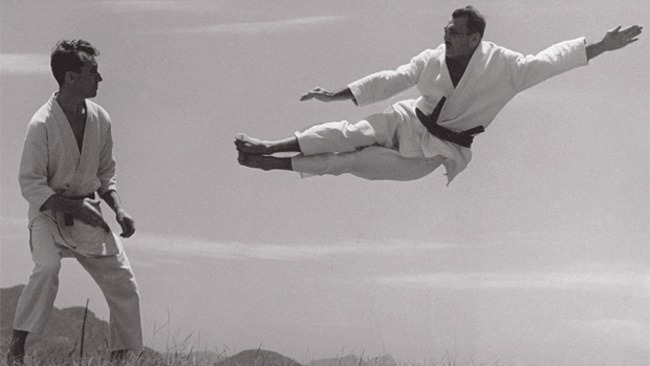
The rules we use in competition today are an evolved version of old Judo rules that the Gracies borrowed, much like with many techniques. Pure grappling bouts before the 1950s were usually decided by these common Judo rules. What the Gracies did is refuse to accept some pinning rules in regard to fighting off the back. n essence, Helio and Carlos actually re-introduced some long forgotten old techniques of grappling. They also modified the rules and adhered to Jigoro Kano’s style of methodical and detailed teaching, which not many people did back then. In fact, Helio often denied that he invented anything.

The Undefeated Gracies

This one is still a hotspot for many discussions today. It is beyond a doubt that the Gracies were tenacious and highly-skilled fighters. They also didn’t shy away from challenges (much) and had the habit of challenging other people often. However, they did not go undefeated for as long as people usually think.

We all know Helio lost to Kimura and a few others. However, that was before he retired from fighting. What actually happened in the period leading up to that is not the supremacy of Jiu-Jitsu over all other martial arts. The Gracies, all of them (yeah including Rickson) both won, lost and drew as part of their fighting record. What the did is introduce a highly unconventional style for the time that gave them a certain edge. However, they did not go undefeated, nor as prolific as many think at any point of their grappling development.

A Review Of The Kimura Hunter DVD by Kazushi Sakuraba
Techniques List

Have you ever heard of the Gracie Hunter? Well, Kazushi Sakuraba certainly deserved that nickname by beating a bunch of the Gracies during the 90s. Check out his winning secrets in the “Kimura Hunter” DVD set. In an instructional like no other, Sakuraba covers everything about his famous Kimura system in four lengthy volumes.

Kimura And Helio Gracie 

Jiu-Jitsu Facts About Helio Gracie vs KimuraSpeaking of Kimura and Helio, time to face the Jiu-JItsu facts about that legendary rivalry. When they first met, Kimura caught helio in a bent arm lock (now bearing his name) and broke his arm. Was Kimura really heavier than Helio? Yes, but only by a small margin, as opposed to what is a common belief.

Another common misconception is that Kimura was so impressed with Helio that he invited him to teach at the Imperial Academy in Japan. All that Kimura did was a comment on Helio’s defensive effectiveness. However, as we all know, Helio was nothing but defensive in that match. Certainly not enough to impress Kimura who had no authority of inviting someone to the emperor’s academy anyway.

Carlos Gracie’s Professional Grappling Career

There wasn’t one. The man that is behind Gracie Barra and modern Brazilian Jiu-Jitsu in general actually never won a professional fight. Carlos Gracie’s only pro fight came in the shape of a bout with a middle-aged wrestling coach. Carlos lost the match by refusing to even step in the ring and fight. All his other exploits were exhibition matches which ended in draws.

Vale Tudo Origins

Similar to Brazilian Jiu-Jitsu, the Gracies are not responsible for the birth or development of Vale Tudo. People were setting up striking vs. grappling matches as early as the late 19th century. In fact, it is mostly down to Brazilian circuses and theaters that put together matchups between different arts, like capoeira and catch wrestling, for example.

Helio Gracie himself has only two Vale Tudo fights, coming out of them with a 1-1 record.

Helio Gracie’s Strength 

Speaking of Helio Gracie, what we often imagine when we think of his is a slim and weak Brazilian, weighing barely 140 lbs. It is undisputed that Helio was not a big guy, but he was not a sickly or weak as people thought. He did like to portray himself as such though, raising the stock of Brazilian Jiu-Jitsu along the way. What most people don’t realize is that Helio was a champion swimmer before he took up grappling. As such, he might have been small and an ectomorph by build, but he was by no means weak.

Origins Of the Triangle Choke 

Techniques origins are often the main points of dispute in terms of what is real and what is fiction. As far as Jiu-jitsu facts about the triangle choke go, Rorion claims to have introduced it to BJJ. According to him, he discovered it in some old Judo literature and immediately put it to use.

Fact is that the triangle choke was not just in existence, but in use at the time. Even if it was not a usual move, lots of Japanese fighters had tremendous success with it. Back then, most of the Judoka’s that came to Sao Paolo not only knew the triangle but were also teaching it to others.

Gracies Vs. Footlocks?

We all know that footlocks, just like the triangle have their roots in Judo. Well, at least the ones we still like to practice today. After all, Ashi Garamis is a Japanese term regarding a Jud position that allows for foot lock submissions. Back in the early days of Jiu-Jitsu, everyone practiced leg locks just as much as they did other moves. This included the Gracies who had nothing against foot locks.

Another fact is that people thought foot locks were a “cheap” way of winning. Another anecdote might shed some light here. IN a 10 vs 10 challenge between academies, Oswaldo Fadda’s students beat 9 of Gracie’s student by using leg locks. This, in turn, led to the Gracies developing an eversion for the technique.

The Helio Medal Of Honor 

This is one of those Jiu-Jitsu facts that are still out there. The fact is that Helio did receive a medal of honor from the Standard Oil Company in 1952. The reason they awarded Helio a medal was that the allegedly saved someone from drowning at great risk to himself. According to a report, helio jumped into shark-infested waters to help save a man that fell from a boat they were in. Whether this was true or just a publicity stunt by Carlos, remains unclear. Given that Helio was a champion swimmer this is not highly believable.

The Gracie Diet

Gracie Family History Jiu-JItsu FactsThe one fact that’s still used to this day to discredit the Gracie diet is that it is not based on a nutritionist’s efforts. To put things to rest, this is true, as Carlos Gracie was never a nutritionist. Even in the book, he claimed that he has no formal education in the field. Instead, he based all his methods on years of experimentation. The fact is that the found a system that worked great for himself and others with his genetics. Moreover, it is a proven way of eating healthy.
As a source of confusion is perhaps the fact he appeared in several television shows in Brazil, each time called a “dietista”. This prompted many to regard him a nutritionist, which he clearly wasn’t, having only completed primary school education.

Bonus Fact: Gracie Jiu-Jitsu In Street Fights

I know, we said we’d offer 10 Brazilian Jiu-Jitsu facts about the Gracies, but we have a bonus one to offer. This one is pretty close to the “undefeated Gracies” one but form a different perspective. We do know that the Gracies were involved in lots of street fighting during their time.

However, Jiu-Jitsu didn’t seem to be any more effective than other fighting styles in real street fights. In cases of multiple opponents or weapons, the outcome is easy to predict. However, there are no records of the Gracies using BJJ to successfully win a street fight. helio Gracie did, allegedly, pull guard once in a street-fight, and ended up in the hospital.

Final Words

There’s always going to be a lot of speculation surrounding something that’s a global phenomenon. Fact is that we can’t solve every BJJ history puzzle out there. Nor do we want to. Let’s face it, some of these stories sound much better in their publicity version than the original. However, we need to understand that there are Brazilian Jiu-Jitsu facts and Jiu-Jitsu myths. We can enjoy both, as long as we can make the distinction which is which.

Helio Gracie: Rules For Jiu-Jitsu And Life

Helio Vs. Carlos Gracie – Gracie Jiu-Jitsu History And Politics

Brazilian Jiu-Jitsu History – Rise and Expansion of the Art

In And Out Transitions Of The Truck Position in BJJ

The art of transitioning in BJJ is one that requires a certain level of grappling skills. DO not get me wrong, even white and blue belts can transition, but not as effectively as advanced belts. As such, more advanced BJJ transitions not only allow you to continue attacking constantly but also help you get submissions easily. The trick with transitioning is timing and that is one thing that takes time to develop. it is not hard, though – the more you roll, the better you get. If you look at any high-level BJJ match you’ll notice that transitions and transitional attacks are the deciding factors. However, even with transitions, you need to really be on point to manage and catch a high-level opponent. To that extent, where you transition to and how you do it are crucial to success. 

The Truck is a position most “mainstream” grapplers do not expect. Granted, there’s not much to do from there unless you’re a brown belt. Well, at least under IBJJF rules. Under different rulesets, the Truck is one of the best positions you can get yourself into. Moreover, it can act as a position zero for further transitions into virtually any direction. As such, its power is highly underrated, making it a great weapon for you to exploit. That said, the one tricky thing about the Truck is getting there in the first place. Entries into the Truck are available from every position, but transitioning successfully into the position might prove a bit difficult. Today, we’ll go over the best BJJ transition for obtaining the Truck.

BJJ Transitions And Submission Rate

It has been said many times that positions do not make BJJ. Granted, they bring you points and might help you win a match, but pinning someone to the ground is not the ultimate goal of Jiu-Jitsu. Making them surrender as a result of a strangle or a joint lock is. The only problem with achieving this ultimate goal in competition is that the other guy/girl know what you’re after too. Not only that, but they’re also attempting the same. So, there’ll be no easy days on the tournament mats.

The one trick about a higher rate of submissions that black belts know and do not share easily has a lot to do with BJJ transitions. Namely, what advanced grapplers do is they hunt for that elusive submission while they’re transitioning. For example, when a black belt is taking your back from the turtle position, they’ll have the choke sink in as they’re rolling, while you’re still thinking about the position you lost instead of defense. This is just one simple example of how BJJ transitions can impact your submission rate.

Now imagine that you can get a bunch of top submission positions, as well as many transitional submissions from one single position. Moreover, that position is available from literally everywhere. The whole trick here is knowing how to use BJJ transitions to get there in the first place. That position is the Truck, and this article has all the ways to transition into it you’ll ever need!

While we’re on the subject of submissions, let’s not forget that Bernardo Faria has a brand new BJJ instructional titled “Transition Mastery”. This brand new four-part DVD set contains secrets of the transitional game that no black belt has shared before. Moreover, it is filmed in a very unique and original manner.

BJJ Transitions Into The Truck

Like I said, getting to the Truck is not hard when you know-how. While usual entries are from the top turtle position and some side control variations, transitions into the position are available from many more positions. In fact, the Truck is the transitional station for all your submission efforts, bar the full mount position. Let’s take a look at some of the best BJJ transitions into the Truck:

  • Turtle 

Getting the Truck from the turtle position is probably the most common entry. while you might not consider this to be among the advanced BJJ transitions, consider the opportunities it opens. Defending the entry opens up other attacks from the same position with minimal transitioning. Or, you always have the option to proceed to the Truck and work from there.

BJJ Transitions to The Truck Position From TurtleForm the top of the turtle, the only requirement is to stay heavy on the hips. Your main goal is to thread your far leg inside the opponent’s leg. In essence, you want one leg in the half guard position. The moment you get it to grab the far leg’s foot with two arms. This very motion is going to get you into the Truck, but if you want to, you can sit back for an added effect. To make sure you stay in the Truck, keep the opponent’s hips above ground at all times and you’ll have nothing to worry about.

  • Half Guard Dogfight

Getting from the half guard to the dog fight position is not hard. Whenever you get the underhook from the bottom, which should always be your main half guard goal, you’ll be looking for a way to sweep. The simplest way is to get up to your knees. At this point, you’ll run into the most resistance an opponent can offer from the position. Instead of muscling them to the ground, use their wide base to get to the Truck. As far as advanced BJJ transitions go, this one is really slick!

Since you’re already on your knees, you actually have a much more mobile base than your opponent, because you’re carrying no weight. What you want to do is use your outside leg as a hook. This opens up your other leg to go around and hook the other leg, just like for a seatbelt. Keep your grip tight and stay glued o their torso for the whole time. Once the hook is deep enough, sit back and lock your legs down for the Truck.
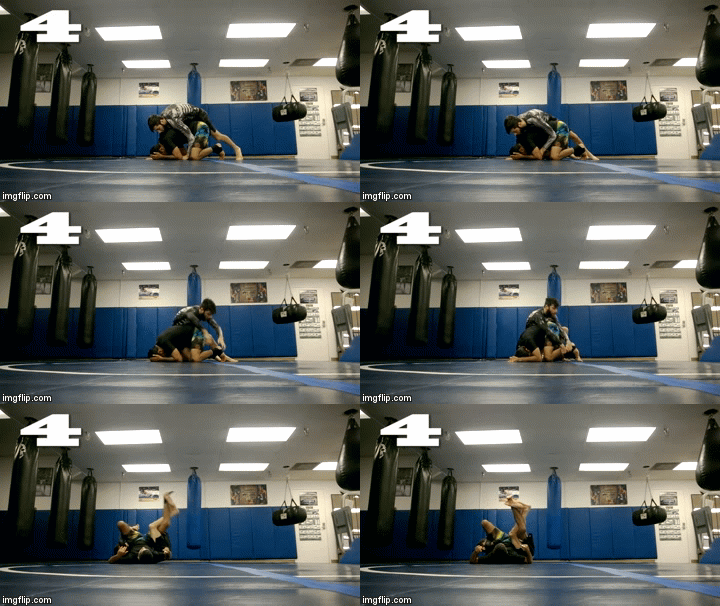
  • Top Side Control 

Getting to the Truck from top Side Control is probably the most widely used way of entering the position. The 10th Planet “Twister Side Control” position, more commonly known as the reverse Kesa Gatame. The main goal here is to remain heavy on your opponent. In most cases, they’ll try to get their legs into half guard, meaning they’re opening the transition for you.

BJJ Transitions to the Truck position from Twister Side ControlAll you need to do is hook their top leg with your bottom one. Try to hunt for any part of their bottom leg with your arms, preferably the foot. All you need to do now is get both your shoulder to the opposite side and pull with your arms. You’re not directly into the Truck with submissions ready to go. Or further BJJ transitions, if that’s what you want/need.
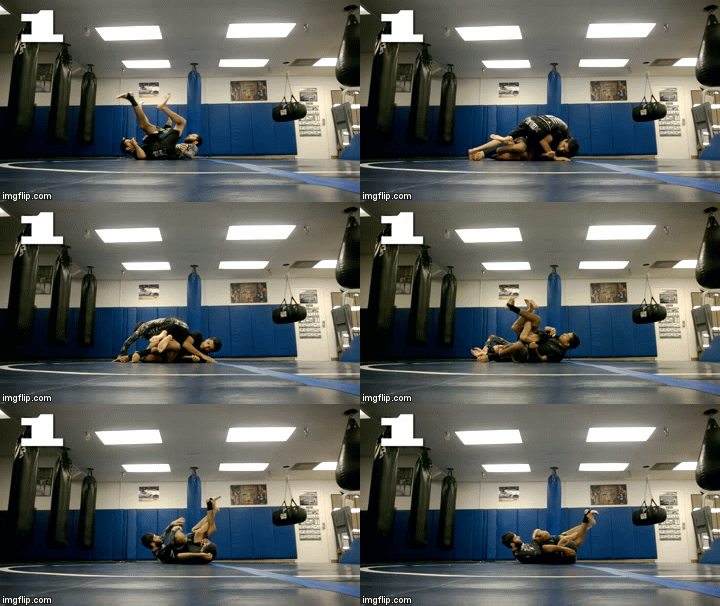
  • Back Mount 

Getting the Truck from the back is a great option when none of your bak attacks seem o be working. When you can’t get the choke, you usually go for an armbar or triangle choke from the back. But, what happens when an opponent is so good that they block everything? Time to consider lower body BJJ transitions. That, of course, means the Truck.

BJj Transitions to the truck from back controlAll you need to do from full seatbelt back control is tilt the opponent to the choking side while getting the top hook out. Make sure you really use your upper body to tilt the opponent, so that their hips end up in the air. All you need to do now is lock the legs and let go of the seatbelt. You immediately end up in the Truck with both leg locking and twister options.
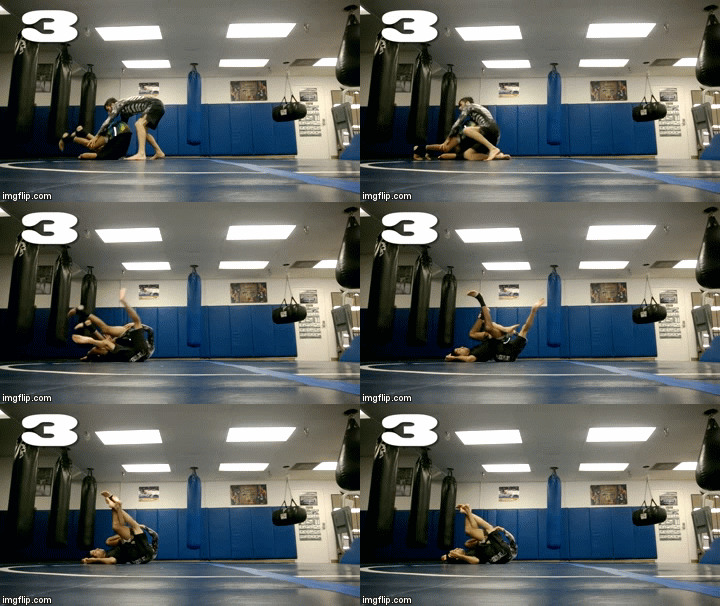
  • Double Underhook Pass

From the double underpass, you can use the Truck to deal with those extra flexible opponent’s that can’t be passed. Once an opponent has both feet down in an inverted guard passing becomes really tricky. Opting for the Truck is your best choice.

Getting the Truck transition means you’ll have to choose a side to go to. This means getting your shoulder on one side of your opponent’s hips, and your knees on the other. Now you simply trap the leg with your legs, just like before. Your arms are already in a position to grab the free foot and attack. You might need to make a few little adjustments to make sure their hips stay off the ground, but then you’re all set!
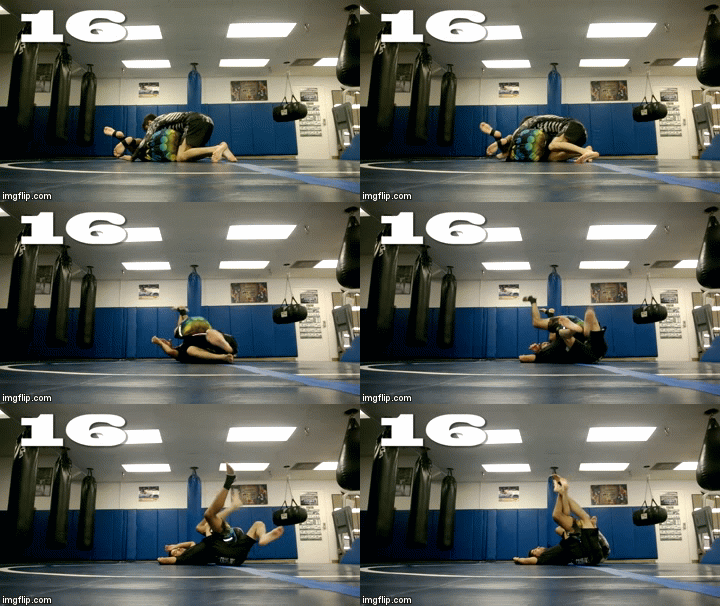
  • Wrestling Cradle 

The wrestling cradle is one of the best positions for pinning and holding an opponent down. However, in BJJ it brings no points and doesn’t open many direct attacks. what it does offer, though is a great and easy transition into the Truck.

Bjj transitions to the truck from the cradle positionThe movement here is quite similar to the transition from the double underhook pass. From the far side cradle, your goal is to stack your opponent on their neck, both feet pointing to the ceiling. Use your nearside leg to frame under their butt so that they can’t get back to the mats. Now you lie down just like for the double under setup, knees on one side of the hips. and shoulder on the other. This entry is much more secure than the double underhook pass one because the legs are together and you have crushing control at all times.
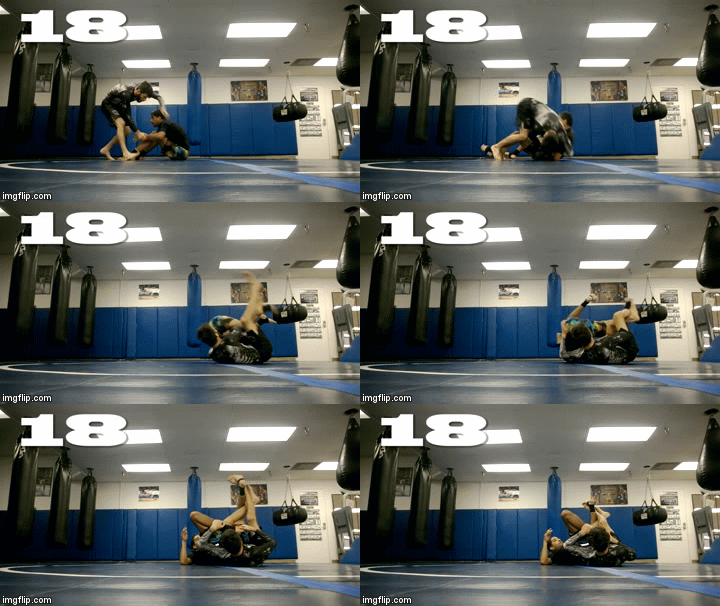
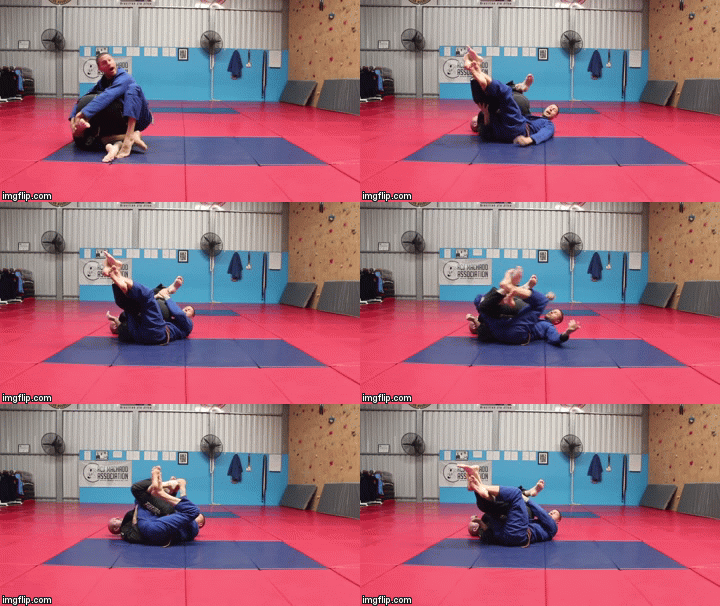
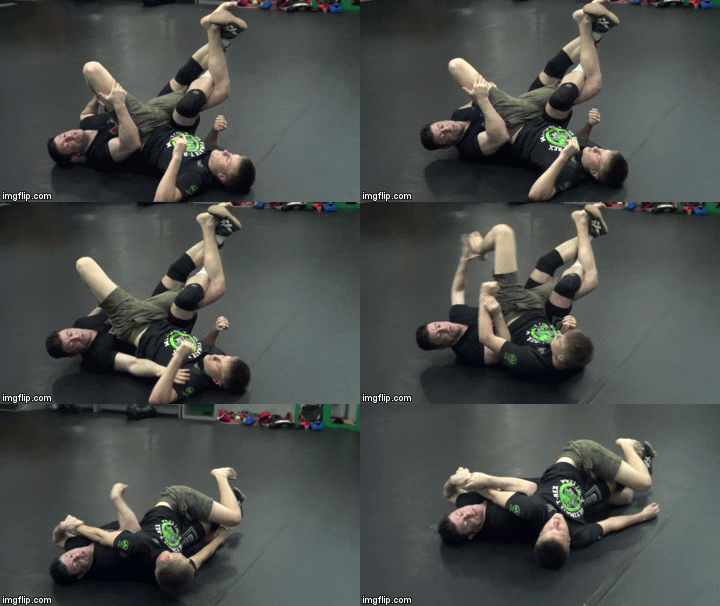
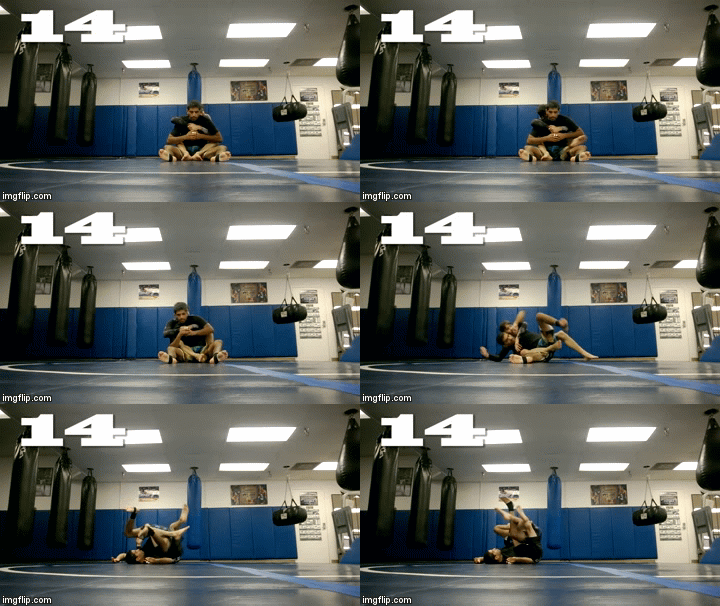
  • Rolling Kimura 

IN terms of difficulty, this one is the hardest of all BJJ transitions into the Truck. It is also the most attractive one and the one that’ll surprise everyone. What you want to do is go for a rolling Kimura against the butterfly guard. The thing is, many people find ways to counter this one as of late.

Bjj Transitions to the truck from a Rolling KimuraThe solution is as easy as switching transitions midway. The moment you begin your role, make sure you use your inside leg to entangle (hook) the leg on the same side as the Kimura grip. In essence, this is the same side you’re rolling to. The trick is to stop the roll halfway, when you’re back is on the ground. If you placed your hook right, you’ll be in the Truck and your opponent will be none the wiser about what just happened.

Attacking From The Truck 

Although attacking from the Truck is not the focus of this article, we’re going to check some direct submission options. In the spirit of the article, though, we’ll discuss how you can get them while doing BJJ transitions.

BJJ transitions and attacks from the truckThe easiest attacks are on the lower body. Here, the banana split is the most obvious solution. Namely, as you transition, all you need is to have your hand hooked around the thigh of the free leg for a banana split. As you land in the truck you simply pull with your arms and extend your hips for a brutal crotch ripper. The problem is that this is an illegal submission under the IBJJF. Furthermore, you can transition directly to, or proceed to hit a calf slicer from there. For the slicer, you need to get the foot of the hooked leg and pull it towards you. This is a move that’s legal from the brown belt onward.

BJj transitions and Twister From the TruckFinally, the Twister position is also available as a transitional attack from the Truck. All you need is to release any grips and continue extending your hips. This can lead directly to a Rear Naked Choke attack or into the Twister if you trap an arm along the way. Remember that the Twister position is not illegal if you don’t go for the neck crank. Armbars and wristlocks are also available from there.

Summary

All in all, using BJ Jtranistions to attack with your submissions is an advanced way of approaching the grappling game. The Truck is the ultimate pit stop for any kind of transitional game, as it can lead you into submissions or other great positions. Whether you like to get them back, top half guard, or simply want to finish from there, you have every option open from the truck. Give these BJJ transitions into the Truck a go, and by the time you master them, you’ll be a force to reckon with!

Effective Attacks From The BJJ Truck Position

https://bjj-world.com/definitive-guide-trucking-ninja-rolling/

NEW Neil Melanson DVD – Ground Marshal Leg Locks

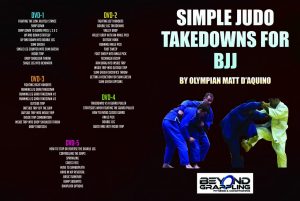
Simple Judo Takedowns For BJJ by Matt D’Aquino DVD Instructional

Simple Judo Takedowns For BJJ Matt D'Aquino DVD Instructional Full Review

Judo for BJJ? If you’re a grappler that prefers training and, more importantly,  competing in the Gi, than definitely! there’s no better way of getting a Gi fight to the ground than using Judo. The problem here is that Judo is a complete, and quite complicated, grappling martial art in itself. If only someone could make a selection of the Judo stuff that really works for BJJ and put it together. Or, even better, make a selection and then simplify things as much as possible. Well, this wish is now a reality, thanks to a certain Matt D’Aquino DVD Instructional named ‘Simple Judo takedowns For BJJ’.

ON SALE HERE:
Simple Judo Takedowns For BJJ by Matt D’Aquino

Simple Judo Takedowns For BJJ Matt D'Aquino DVD Instructional Full Review
Techniques List

In all honesty, I’m really interested in wrestling based takedowns at the moment. However, I do have an extensive Judo background and very often fall back to my go-to moves. Still, the way they’re taught in Judo and the way they’re required to work in BJJ can be quite different under certain circumstances. Matt D’aquino is a Judo Olympian who also just so happens to be highly proficient in BJJ. This means that he doesn’t only teach Judo in its original form, but also has modifications that fit BJJ. This Matt D’Aquino DVD Instructional not only modifies the best Judo moves for Jiu-Jitsu but also takes away all the confusion out of them. As such, it is arguably, the best Judo for BJJ DVD instructional of all times.

Making Judo Simple

There’s no point in going over all of Matt’s Judo accomplishments at a global level. It is enough to know that the Australian is a high-level Judo Olympian and multiple times world champ. On top of it all, he is also a BJJ brown belt under Felipe Grez, a Michelle Nicolini black belt.

Something that makes Matt particularly great as a takedowns coach is his size. If you expected a giant super heavyweight, then’ you’ll be very surprised. Matt is an extra-lightweight according to Judo weight classes. That means that he has less than 140 lbs when he steps on the mats. However, he is also a 4th-degree Judo black belt, meaning that his technique is as high-level as it can get. A lifetime in the art of Judo, though, means Matt can dumb it down for us and filter out all the stuff that’s not really applicable to Jiu-Jitsu.

This Matt D’Aquino DVD Instructional manages to do just that. Matt focuses primarily on the Judo moves that are the highest percentage. He then makes them as simple as humanly possible, before looking into various ways they can be adjusted for BJJ. If you enjoy Judo style attacks, you’ll enjoy every bit of this DVD. If, on the other hand, you’re a fan of wrestling style takedown, this DVD is a nice way of introducing a little variety to your game. A win-win situation in any case!

“Simple Judo Takedowns For BJJ” Matt D’Aquino DVD Instructional 

So far, this instructional is by far the biggest one on the subject of BJJ specific Judo. It has a total of five discs, each addressing a different chapter of Judo. First up, as expected are the basics, along with some fundamental counters. Next, come key grip strategies and the essential trips and foot sweeps. Leg takedowns are the theme of the midway DVD, opening up the door to Judo combinations for the first time in this instructional. The penultimate chapter is all about dealing with guard puller and beating them to the punch, or rather, takedown. In the final chapter, Matt covers various ways in which you can use Judo to get the better of a wrestler, along with some innovative and never before seen techniques.

Production wise, the DVD is flawless. In terms of content quality, there’s nothing but crucial information in each chapter. While there is a progression, you could also start with the fourth DVD and still obtain incredible results. This is down to the way this Matt D’Aquino DVD Instructional is organized. Namely, each chapter contains information on a  certain subject area which connects, but doesn’t require the information from all the other parts. Genius!

Chapter 1

Let’s take a better look at each of the chapters that make up the “Simple Judo Takedowns For BJJ” Matt D’Aquino DVD Instructional. First and foremost, instead of covering Judo basics, Matt goes into the ins and outs of the Jiu-Jitsu stance. BJJ people tend to start way lowers the other grapplers, and Matt has the cure to countering this opening gambit.

What I consider to be Judo’s most powerful secret weapon, the snap-down is covered next. Mat not only shows you how to “ragdoll” your opponent’ but also how to pass the guard while you’re at it. Some cool counters wrap things up, with the Sumi Gaeshi counter to the single leg being my clear favorite. The Single leg to Uchi Mata is also one to look out for.

Chapter 2

Simple Judo Takedowns For BJJ Matt D'Aquino DVD Instructional Part two begins with something that’s unique to this instructional. Here, Matt addresses how to approach people that are primarily left-handed. Unusual for a Judo DVD, he covers double leg takedowns here, before moving on to some cool judo stuff, like the Valley Drop. In fact, the sues the Valley Drop to open up further classics like some highly effective ankle picks.
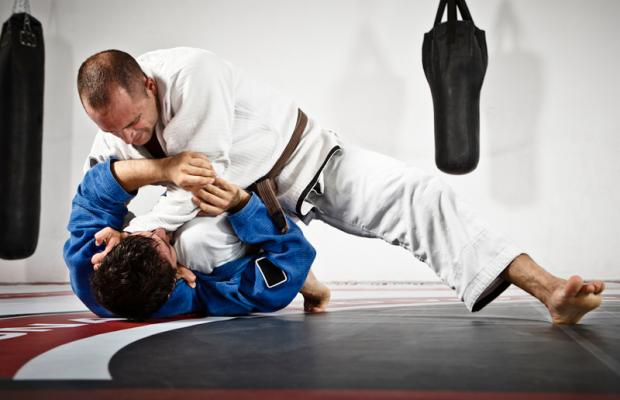
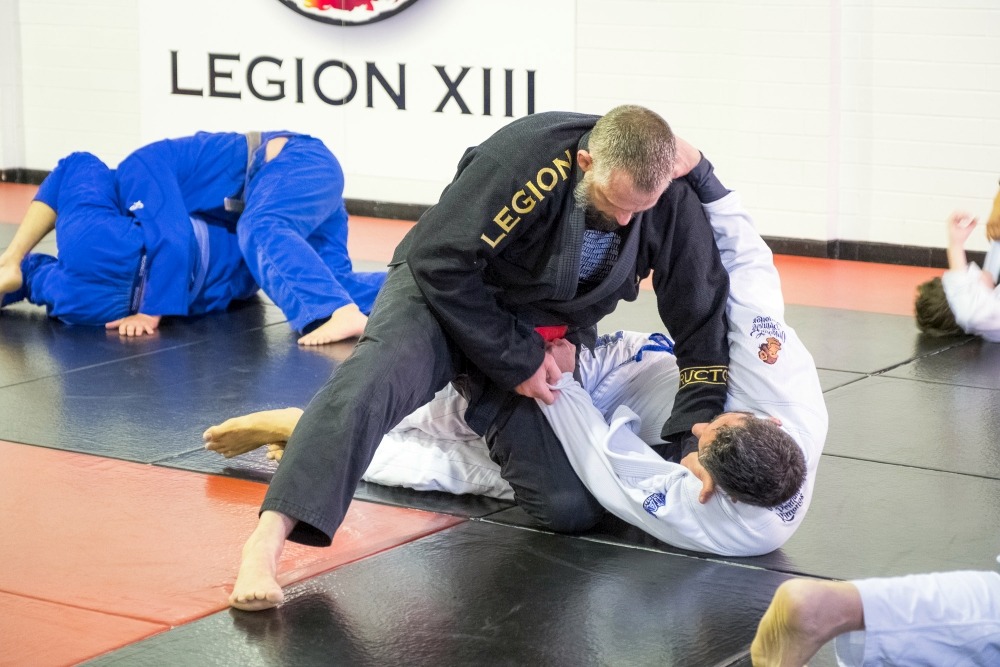
Foot sweeps are not far behind, and Matt managed to really reduce the Ashi Waza part of Judo to just a few high percentage moves. Moreover, they’re all easy to learn and have rather simple mechanics. After the initial foot sweeps basics, D’Aquino goes into the inside and outside trip, using the armdrag as the perfect setup. Some further Sumi Gaeshi options, this time offensive, wrap the second chapter up.

Chapter 3

Midway through the Matt D’Aquino DVD Instructional, we get to learn how to deal with right-handed opponents. This is where Matt’s unique approach shines. Left-handed opponent? Use the stuff from Chapter 2. Right-handed opponent? Switch strategies by going for leg grabs instead. Leg grabs are not a part of sports Judo due to rules, but they’re open for BJJ grapplers. Matt offers a bunch of variations on them before he gets back to foot sweeps.

Once again, trips feature here, although this time with slightly different setups. Remember, these are all about dealing with a right-handed opponent. Outside trips are the initial ones here, and can then transform into inside ones if the opponent reacts. There are a  few coo combinations here that all but guarantee you a takedown. The drop Tai Otoshi, a very attractive trip/throw is at the tail end of this part.

Chapter 4

I really enjoyed this part, probably more than any other in this instructional. In terms of content, this one is the shortest but covers a lot of very important aspects of Judo for BJJ. Dealing with guard puller is just as important, if not more, than countering the low BJJ stance. Matt’s strategies are very to the point and without unnecessary complications. He even accepts that a guard puller might be quicker than you. That doesn’t mean, though, that you should allow them to get you into their closed guard. Matt offers the best sneaky trick I’ve ever seen to make sure you stay away from a guard pullers full guard.

Deep studies of the ankle pick and double leg takedown follow, where Matt covers basics, variations, and BJJ specific setups. Yet another inside trip variation, this time a quick one, brings this chapter to a close.

Chapter 5

The final piece of the Matt D’Aquino DVD Instructional is going to help people that have no wrestling background more than anyone else. After covering left and right-handed opponents, guard pullers and the low BJJ stance, all that’s left is dealing with the guy who has wrestled all his life.

As you might suspect, it all starts with grip fighting. The one thing about wrestlers that you can bet on is their explosiveness. So, Matt brings you an updated sprawl version that’ll have you stuffing all takedown attempts. There’s also some key innovative stuff here, starting with crossface pressure details and ending up with the Samboplata and Omoplata.

Olympic Judo For BJJ

So, will Olympic Judo really help your Brazilian Jiu-Jitsu? Of course, it will, under the condition that you learn a condensed and precise version of it. Actually, you do not need to learn Judo as a whole, but rather certain aspects of it in a specific context. What you need is to understand what you want to achieve with every Judo move you like to add to your arsenal. Next, you’ll want to make sure you really master each and every one of those moves.

The bottom line is that you do not need to train like an Olympic level Judo athlete in order to use high-level Judo for BJJ. All you need is to pick up the “Simple Judo Takedowns For BJJ” Matt D’Aquino DVD Instructional. You’ll get a condensed and easy to follow program that is going to take your Judo to Olympic level standards in a fraction of the time. Sure, you won’t be able to fend off lifelong Judokas, but to BJJ opponents you’ll certainly look and feel like an Olympic level Judo player.

The Verdict

If it hasn’t become painfully clear by now, I am fascinated by Matt’s instructional. As such, I can’t recommend it highly enough to anyone involved in grappling. If you train Brazilian Jiu-Jitsu, particularly Gi BJJ, then this is the one title you absolutely have to own when it comes to the standup department. It is the ultimate Judo shortcut to an effective, al round standing game that’ll make you a handful for anyone!

ON SALE HERE:
Simple Judo Takedowns For BJJ by Matt D’Aquino

Simple Judo Takedowns For BJJ Matt D'Aquino DVD Instructional Full Review
Techniques List

How Can You Learn From BJJ Rolls With Lower Belts ?

BJJ Rolling" How to Learn From Lower belts

The ranking system in Brazilian Jiu-Jitsu is arguably the best in martial arts. It allows for great structure, while also leaving a lot of room for expressing individuality. It is unique in many aspects, but one is particularly eye-catching. If you’ve ever looked at other martial arts with belt ranking, you’ll notice that not a lot of beginners and lower belts get to train a lot with the higher belts. In terms of sparring, this almost never happens. In Jiu-Jitsu, on the other hand, having a  white belt roll with a black is nothing unusual and happens on any given day. We already know that the white belt is going to learn a lot. But do higher belts really get anything from BJJ rolls with lower-ranked training partners? 

The answer to this question is not an easy one. Yes, a higher belt can learn from every roll, regardless of the training partner’s rank. The key is in knowing how you should train with people that have a lower rank than you. If you decide to just go with your usual game, you’ll just smash most of the people with ease. That’s all fine and dandy but what the take from BJJ rolls like that? Chances are, your opponent is going to be in such confusion they’ll just shut down and not really provide you with any meaningful feedback in terms of defending. If you’re looking to learn and improve, this is not going to help. On the contrary, it is a great way to make you think you know something. However, there is another way. or a few other ways, to be more precise.

BJJ Training Partners

One of the best things about Jiu-Jitsu is that you get to train with all kinds of different people. And, when I say different, I include lots of variables there. First up, you get people of all sizes, ranging from the rooster-weight to a super-heavyweight. Then, you get people from both sexes. Moreover, you get to roll with people of different ranks and experience. Finally, something people usually do not consider as important, you have access to people that come from all walks of life. This is a crucial part of Jiu-Jitsu as people’s characters often determine the type of game they play. The more training partners you have, the more variety at your disposal.

How to Learn from BJJ Rolls with lower belts So, how do you approach training with partners that have different color belts? That’ll depend a lot on your rank, of course. If you are the highest-ranked person in the academy then you have to take into account the variables above as well. BJJ rolls with a super-heavyweight blue belt, a female purple belt, and a 45-year-old white belt are certainly not going to be the same. So, why would you use the same approach on each and every one of them?
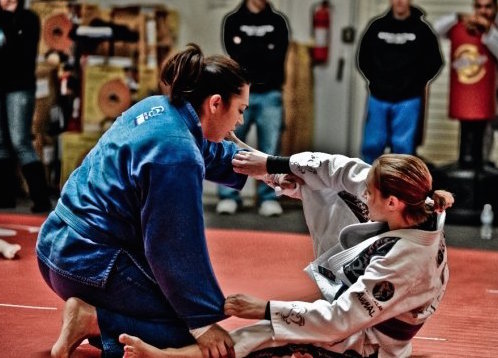
The key here is to think about what every one of them brings s to the table. Looking at our examples, a super-heavyweight is always going to be a pressure threat, regardless of the belt. The blue belt also means a Spaz alert and a lot of defensive positioning. the female purple belt, on the other hand, is going to be all about technique, and most likely a real handful from any guard position. Be aware of sneaky submissions as well. They will all learn from you, but how can you get the same in return?

How To Approach BJJ Rolls With Lower Belts 

Let’s look at a few strategies that’ll help you advance your BJJ progress and fine-tune your techniques. The one thing to keep in mind is to approach every roll with a lower belt without the competition mindset. that means you’re not rolling to win, but rather to learn. With people of the same rank, feel free to be more competitive, or challenge yourself against higher-ranked grapplers. However, if you want to learn and develop as a grappler yourself, you have to know how to roll with lower belts.

While BJJ is currently spread all across the world if you look at the most common rank you’ll see that there are more blue and white belts than any other belt. Lots of academies only have a few purple belts and perhaps a brown or black belt as an instructor. While this is great for the white and perhaps the blue belts, higher-ranked belts might find themselves hitting a plateau, or gaining false confidence. Below we offer a few ways in which all your BJJ rolls can be valuable learning experiences, regardless of your partner’s rank and experience.

Exploring New Moves

This is a huge one. Try executing a move that’s brand new to you on a partner of your rank or higher and you’ll soon disregard it as “not working”. This is because you’re starting from the middle of the ladder. Instead, use your time with lower-ranked p[artners (which are more numerous anyway) to give new moves a real shot. That means having a clear progression and starting with white belts. The more they’re new to BJJ, the better. Focus on hitting your move throughout the roll with them, working out kinks. Then, go for it again, this time with more experienced white or blue belts. You get the idea.

Just to clarify, this concept is applicable to anything you’re trying to learn. it’s not just about going for submissions, You can train passes, sweeps, guard retention concepts, weight distribution, and pressure, you name it. Just remember to stay away from your A-game even when you see openings for it.

Be Perfect!

If you’re dead-set on sticking with what you do best, then BJJ rolls with lower belts area great chance to fine-tune everything. Even if you’re really proficient at Kimuras, for example, certain more experienced grapplers might still be able to wiggle out now and then. Your lower belt friends (yes, they’re friends, not just food) are the best way fo perfecting everything.

Get the most out of BJJ Rolls with lower belts Using our Kimura example, let’s say you’re doing your usual setup against a lower belt. When going for the Kimura, make sure everything is absolutely perfect! Unless you’re really there with 100% technique than adjust and re-assess or let go and set it up again. Keep repeating the process until you’re satisfied. It’ll make your go-to moves a lot more precise and will certainly increase the percentage of success against higher belts. Remember, the technique only and absolutely no muscle at all, even if it means you do not hit that Kimura the entire roll!
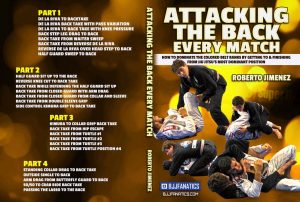
Roberto Jimenez DVD ReviewRoberto Jimenez is proof of how flawless technique can help you win World Titles! The 18-year-old brown belt is famous as a black belt killer. He also won a double Word Title submitting all of his opponents. In his “Take The Back Every Match” DVD instructional he outlines how perfect techniques helped him submit everyone! 

Defensive Strategies

Although obviously essential, nobody likes to train defense when they’re rolling. it is logical that everyone is trying to win the “fight” but at some point, you’ll surely end up on the defensive. Using lower belts to really get the knack of most dominant positions is an extremely valuable learning tool in BJJ.

Once again, you can follow a progression. Try figuring out positional escapes when rolling with people that are beginners, just to make sure you don’t get accidentally injured from submissions. Use them for escapes from most common dominant positions like mount and back control. With blue and purple belts you can extend this to submissions and some more complex positions like the turtle. Whatever you do, remember that escaping is your goal so allow training partners to get you in bad spots.

“Handicapped” Training

At one point in time, when I was a blue belt, our coach told us to bring blindfolds to training. We did, and we trained with one person blindfolded and the other watching out for safety. Suffice to say, it really opened my eyes (pun intended).

Handicapped” training is when you decide to reduce your available options. You can close your eyes, look to use one hand only, legs only or any other possible combination. You could also limit yourself to one move only, let’s say a sweep. Once you get it, you don’t try to maintain the top position but rather return to the bottom and go or it again and again. This is similar to position sparring, but your partner is allowed to do everything, and you have just one thing at your disposal. Just remember to consult people if it’s okay not to use sight or a limb. Certain people might find it disrespectful, so make sure you get the nod before you slap and bump.

Conclusion

Learning from BJJ rolls is actually very easy. All you need to do is look for a lesson instead of a victory when you do so. If you approach rolling with the right mindset, it won’t matter what rank your partner is. Don’t get me wrong, competition-style sparring is important and it has its place in training. However, your regular BJJ rolls at the end of class should be learning experiences first and foremost. And there’s hardly a better way to learn and improve than by training with lower belts.

Common Blue Belt Mistakes Caused By Bad White Belt Habits

The Best DVD and Digital Instructionals For BJJ White Belts

BJJ White Belt Survival Kit: 5 Essential Tips For Beginners

NEW Neil Melanson DVD – Ground Marshal Leg Locks

Brand New Neil Melanson DVD Instructional Ground Marshall Leg Locks

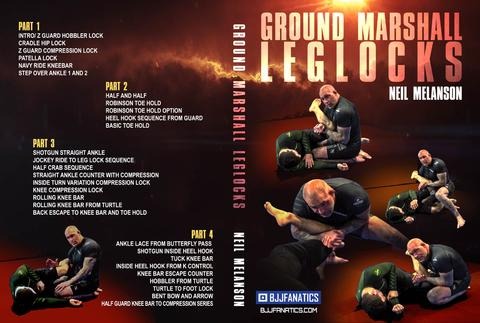
The Ground Marshall is back everyone! A new Neil Melanson DVD Instructional literally just came out and it is on a subject the grappling world is crazy about – leg locks. So far, Neil has one of the best DVD collections available to grapplers and fighters! Now, a very important new member of that collection is his “Ground Marshall Leg Locks” DVD. As you’ll see later in our review, it is an instructional that is like no other on the subject. In it, Neil takes us through the leg lock game from the perspective of catch wrestling, the original leg locking grappling martial art.

ON SALE HERE:
Neil Melanson – Ground Marshal Leg Locks (DVD/DIGITAL)

Brand New Neil Melanson DVD Instructional Ground Marshall Leg Locks
Techniques List

The “Ground Marshal Leg Locks” DVD set is something the grappling world lacked. It is the final piece of the puzzle that brings leg locks together. So far, we’ve had instructionals like Craig Jones’ or Danaher’s, that go deep into the modern leg lock game. Opposite them, we had every other new and old-school instructions that have gaping holes in the leg locking philosophies. And then, there’s this Neil Melanson DVD instructional, the missing link. Neil’s original teaching methods manage to connect the best of old school catch wrestling and modern BJJ leg locking into one of the overall best grappling instructionals of today!

Ground Marshall Catch Wrestling 

Why the Ground Marshall? that one is easy. if you know Neil’s history, that you already know that he used to be a Federal Air Marshall. Accordingly, as he transitioned into a full-time grappling coach, he picked up the mantle the Ground Marshall. As such, most of his instructionals also bear the Ground Marshall somewhere in the title.

To be honest, I was hoping Neil would one day touch the subject of leg locks in one of his instructions. After all, he does have an unusual grappling background, to say the least. Don’t get me wrong, he is as high-level as a grappler can get, it’s just that he didn’t take the usual BJJ route. instead, Neil is primarily a catch-wrestler, a Judo black belt, and an overall scary submission grappler. Moreover, he trained a lot with the legendary Gokor Chivichyan, a leg lockmaster of his own.

Neil turned out to be one of the best grappling instructors in the world, although one that liked to stay in the shadows. He spent many years working as the official team Quest grappling coach. During that time he coached lots of UFC legends the likes of Randy Couture. The “Ground Marshall Leg Locks” DVD is a blend of Neil’s catch wrestling experience, Gokor’s leg lock instructions, and his understanding of the modern BJJ leg lock game. All in all, this might turn out to be the best Neil Melanson DVD instructional so far!

A Review Of The Neil Melanson DVD Instructional “Ground Marshall Leg Locks”

What should you expect from a Neil Melanson DVD Instructional? Well, if you’ve seen one you’ve seen them all, at least in terms of organization. Neil is a coach that has a lot to say. This is down to his understanding of BJJ and grappling, which runs really deep. As such, Melanson talks a lot, covering literally every aspect of a given subject.

There are four parts in total in the “Ground Marshall Leg locks” DVD, and each contains a different number of chapters. What is clearly apparent is that none of the volumes actually has chapters upon chapters of material. This is because Neil’s style is to use broad subject matters as chapters and then go in-depth within the chapter itself. For example, there’s a chapter on the “half and half” in the second volume of the DVD. In it, Neil explains literally everything there is about his take on a crazy top Half Guard ankle lock. All setups and variations of the move are included here as a whole, instead of multiple additional chapters.

All in all, this DVD is not just filled with original techniques that are ultra high-percentage, but it is also organized very adequately. Neil doesn’t care too much about legal and illegal moves, so expect a to of catch-wrestling craziness here. Moreover, it is a No-Gi instructional, but everything will work just as well with the Gi. Oh, and Neil likes to name his moves so expect cool, unusual, and cruel names.

Part 1 

The DVD starts off with some intro into the Z-guard. In case you didn’t know, Neil is a big fan of the half guard. He likes to attack from it, and he really likes passing it. However, he doesn’t just pass but set up a bunch of brutal submissions along the way. In terms of leg locks, the Hobbler lock is the first one and it is just as nutty as the name suggests.

Neil Melanson DVD Instructional Ground Marshall Leg Locks Full ReviewThis first part of the instructional is all about Z guard destruction, so it’s no wonder that the cradle makes an appearance. Not just as the cradle though, but along with a brutal hip lock. Next, Neil offers a Z-guard compression lock before going into the star move od the first volume – the Patella lock. This is essentially a really nasty kneebar, that’s done pretty much like a straight armlock.
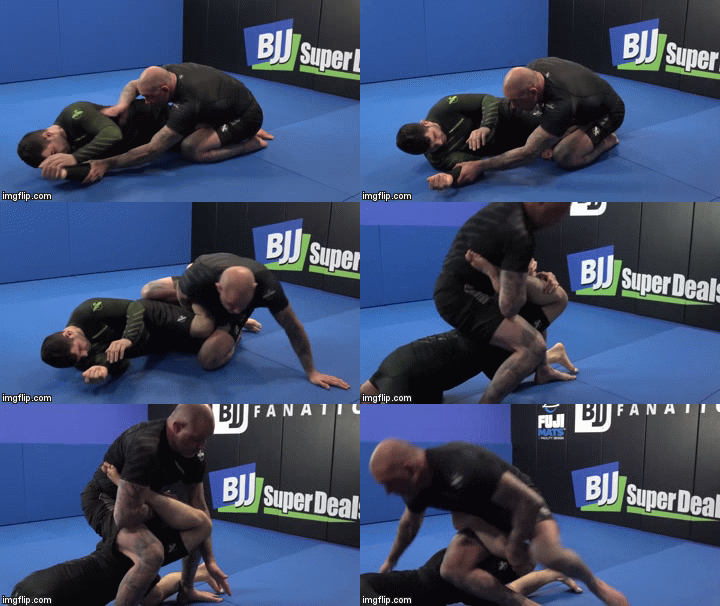
A spinning kneebar dubbed the “Navy Ride Kneebar” wraps this DVD up. Neil spends quite some time on it, offering a few different angles of spinning into the move.

Part 2

The second portion of the Ground Marshall Leg Locks Neil Melanson DVD Instructional has the toe hold as its main subject. In it, Neil covers the previously mentioned half and half as the opening move. This crazy belly-down style ankle lock will have opponents crying out as they tap. It’s a nasty one, but very very effective!

Neil Melanson DVD Instructional Ground Marshall Leg Locks A Complete ReviewMany toe hold options follow suit, starting with the brand new “Robinson” toe hold. There are a couple of variations available, and there’s some to hold innovation right there, trust me! There’s also a new take on the classic toe hold as well as a heel hook sequence that starts in the guard.
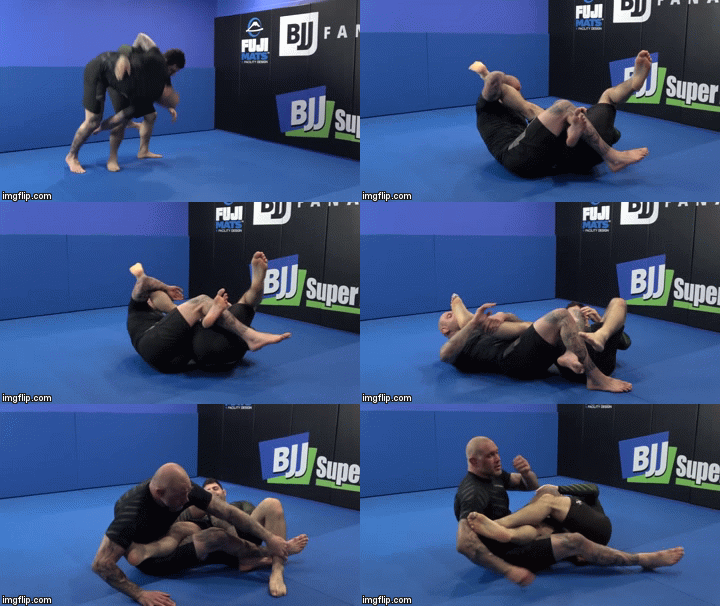
Part 3

In parts 3 and 4, Neil does offer a bit more chapters and moves than usual. Very welcome if you ask me, given how much we all love leg locks! It’s a real leg lock frenzy here and it starts with the shotgun straight ankle lock. The jockey ride is on to look out for, as it’ll turn into one of your go-to leg lock entries real quick!

Review Of The Neil Melanson DVD Instructional Ground Marshall Leg LocksA few hefty compression locks (slicers) follow the ankle lock portion of this volume. here, Neil does cover a counter to an ankle lock attack which I tried multiple times. It worked for each and every one of them! A rolling kneebar sequence that includes three chapters closes out DVD number three. however, three chapters in Neil’s style is akin to a whole DVD another peoples. The rolling kneebar is one of the best moves of this entire instructional so make sure you pay attention!
Part 4

The final portion of the “Ground Marshall Leg Locks” Neil Melanson DVD Instructional explores some Melanson “Specials”. Heel hooks, ankle lace options, crazy kneebars whatever you want. Lot’s of heel hooks here, featuring some wacky inside heel hook action in the shape of K control heel hooks. My personal favorite from this one? the Kneebar escape counter. it really made sure I won’t lose the kneebar once I get into position!

Another move that makes a re-appearance here is the Hobbler lock from DVD 1. This time, Neil uses it to attack from the turtle position, though. speaking of the turtle, you also get a great foot lock option from the bottom of the turtle to surprise anyone!

The entire Neil Melanson DVD Instructional finishes with a sequence that takes us from the kneebar into a multitude of compression locks. Real leg lockers heaven!

Conclusion

The question so far was who got the better leg lock instructional, Craig Jones or Danaher? Well, that debate is settled once for all now, thanks to the “Ground Marshall Leg Locks” DVD. This Neil Melanson DVD instructional reigns supreme simply because it has it all. It’s not a BJJ-specific leg look instructional but rather one on the very best leg locks for any occasion, be it grappling, MMA or self-defense! Check it out for yourself and take your leg lock game miles past that of your training partners and opponents!

ON SALE HERE:
Neil Melanson – Ground Marshal Leg Locks (DVD/DIGITAL)

Brand New Neil Melanson DVD Instructional Ground Marshall Leg Locks
Techniques List

10 Best Leg Locks DVDs and Digital Instructionals

The BJJ Coaching Styles Of Different Jiu-Jitsu Instructors

BJJ Coaching Styles Of Different Professors

If you have ever visited a BJJ academy outside your own or attended a seminar, you’re aware of how different BJJ coaching styles can be. Even within the bounds of your Academy, different coaches have different ways of conveying grappling knowledge. Some are your quintessential Professor types, both in rank and coaching style. Others like to use their own experience and grappling style to try and show you the ways of the Gentle Art. Some may even be prone to teach you according to your body type and mindset, give the correct circumstances. Or, you may run into the guy/girl who’ll teach you seemingly crazy stuff that actually works unusually well. Which one do you prefer? 

In truth, there are as many BJJ coaching styles as there are BJJ coaches. Still, when you look into each and every one of them, you’ll notice some similarities or differences. These place the aforementioned coaches in one (or even more) of a few coaching style categories. Before we proceed, let’s make it clear that these are definitely not the only available coaching styles. They are, however, categories that fit the styles of BJJ coaches worldwide. They also help us understand the methods that coaches use and in turn, figure out who we want to learn from best. Straight to it, then!

BJJ Coaches, Instructors, And Professors

before we explore the entertaining world of BJJ coaching let’s get a few nomenclature questions out of the way. Very often, in academies across the globe, you’ll encounter a few terms taht refer to Jiu-Jitsu coaches. The most widespread are coaches, teachers, instructors, and professors. While they all might refer to the same person, in certain Academies you might end up insulting someone. In that sense, it is better than you know the unwritten rules.

The term professor is usually reserved for black belts only. Certain organizations or gym affiliations tend to take this very seriously. Let’s remember that in Jiu-Jitsu, coaching is not limited to black belts only. Apart from white belts, students of all other ranks might be involved in BJJ coaching, or even be full-time coaches. However, what they’re not, at least until such time that they earn a black belt, is professors. IN that sense, I’d reserve the term teacher for black belts as well.

Different Jiu-Jitsu Academies And Their BJJ Coaching StylesThe reasoning behind this is that professors or teachers are so knowledgable of the art, that they can teach it to others. Others, namely coaches/instructors are simply demonstrators who can demonstrate moves but still have more to learn before they can teach, per se. So, in short, professors/teachers are black belts and instructors/coaches are all other belts that are involved in leading a class.
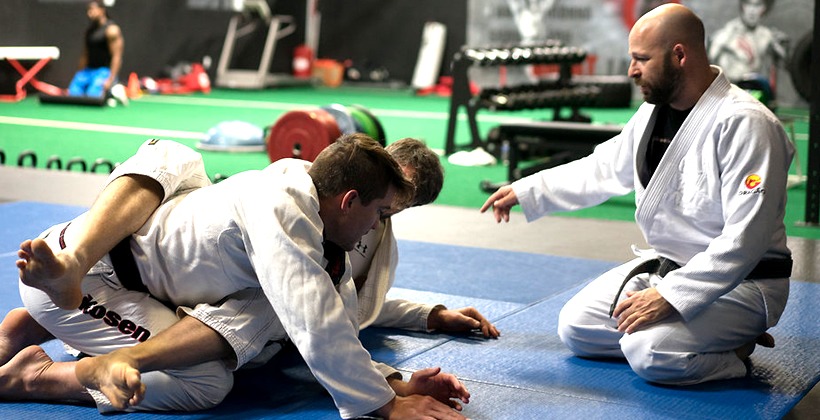
It is important to note that many academies couldn’t care less about such formalities, and you can address the person in charge of class however you want. In stark contrast, you might also run into overly formal associations that like to use terms like Master and grandmaster.

BJJ Coaching Styles 

Now that terminology is out of the way, let’s get back to BJJ coaching styles. Remember that, as a beginner, you’ll have lots to learn from each of them. When you start BJJ it is mostly Academy philosophy and personal preference in a coaching style that’ll define your choice. As you become more involved and progress, your goals will most likely define whose classes you enjoy most. Luckily, most academies have a few different coaches and groups that allows for a lot of variety.

Finally, remember that if you stick with it, you’ll become a coach yourself one day. While your coaching style is going to be primarily influenced by your BJJ game, it is nice to know which category you fit into. In many cases, you’ll see that you’ll end up emulating the coaching styles of those coaches that influenced you the most throughout your journey.

  • The Old-School Coach

For an old-school coach, you’ll need access to someone who is truly seasoned in BJJ. The old-school BJJ coach is not necessarily a competitor, but most likely has lots of accolades to their name. They’re also extremely big on fundamentals, and their grappling style reflects that as much as their coaching style. They like to keep things simple and effective, at the expense of attractiveness.

The style of these coaches is perfect for beginners and advanced students alike. The reason for this is that they can explain things both simple enough for beginners and deep enough for brown/black belt students. Blue and purple belts tend to feel bored when exposed to such a BJJ coaching style, but will inevitably benefit hugely from it. DIscipline is a huge trait of this type of coach and they’re also most likely fond of the Professor or even Master title.

  • The Competitor 

When you have a relentless competitor for a coach, you can expect to part take in some grueling training sessions. Belt level does not make much difference for such an instructor. Although they do have a wealth of knowledge, competitors like to teach class much like preparation for competition. That means a precise focus on certain techniques and a whole bunch of innovative ways of training. If your training sessions are based on drills, and techniques always take into accounts points, advantages, and similar tournament terminology, you’re training with a competitor coach.

Who will benefit most from this type of BJJ coach? Well competitors, of course, since the competition experience of such a coach is invaluable. Also, those looking to get into shape, since classes are dynamic and very demanding. Expect a lot of positional and live sparring as well. Furthermore, this is the preferred style for people who like a lot of structure and discipline to their training sessions.

  • The Scientist 

You might quickly recognize one of the most prominent coaching names in Jiu-JItsu as belonging to this BJJ coaching style really fast. John Danaher is a clear example of a “scientist” BJJ coach. These are the guys that use deduction and the scientific method to analyze Jiu-Jitsu, and in turn, teach it to others.

This coaching style involves a lot of scientific terms, mostly based on the person’s own background. A lot of physics, sometimes mathematics, anatomy, etc often make their way into these coaches classes. They have the deepest understanding of the art and often teach in way of principles and concepts rather than techniques. If you’re looking to pick up moves only, this style won’t fit you. Neither is it a good fit for complete beginners, as these types of coaches often do not have the patience to go over the fundamentals with beginners. Still, this is arguably the best BJJ coaching style for art as complex as Jiu-Jitsu. Blue belts and onwards should really relish the chance of learning from such a teacher. Very laid back in terms of addressing terminologies.

  • The Artist 

This is the polar opposite of the Scientist BJJ coach. Wher the Scientist uses deduction and logic, the artist is free-flowing and likes to come up with things based on inspiration. They tend to develop very unusual grappling styles, reflected in their style of teaching. People like this often come from an artistic background and tend to be really creative. Classes are also usually without a very clear structure and might even change subject halfway through. the insight into Jiu-Jitsu, however, is unlike anyone else’s for sure!

A drawback of such a BJJ coaching style might be that the moves are often quite specific to the coach’s own game. This includes body type and athletic abilities. A great example of an artist BJJ teacher is 10th PLanet Founder Eddie Bravo, who also happens to be a musician. Absolutely no care in terms of how you address them.

  • The Kids Coach 

The BJJ Coaching Styles Of Different InstructorsIt takes a special kind of person to be able to teach a complicated art like BJJ to kids between the ages of 4 and 12. Very often, the kids’ coach is also helping out with other classes, and some people do enjoy learning from them. This BJJ coaching style is actually a unique blend between the scientist, artist and in a certain measure, the old school coach, the focus with kids has to be on fundamentals, but there has to be entertainment. On top of that, kids need to actually learn which requires some innovative explaining.

If you’re in class with the person who teaches kid’s class you’ll get a lot of individual attention. Depending on the subject matter and class level, you’ll also get a huge level of detail. In case you’re struggling with something, expect an innovative solution to fit your individual needs. Oh, and warm-ups are so much fun! The perfect style for kids (obviously) but also beginners and people looking to improve their fundamentals. Very big on discipline and structure.

  • The BJJ Nerd

This is a more modern type of BJJ coach. This is a style that relies on the BJJ world as a whole and what’s going on in it. the nerd knows everything there is about the latest trendy move, but also about all the moves that used to be real hits. they also have crazy wisdom on some obscure moves borrowed from Smabo or Catch Wrestling that’ll blow your mind.

BJJ nerds are usually crazy good competitors, but they might be difficult to follow as teachers. They can be great for everyone one class and confuses all students the other. They live for BJJ, breathe BJJ and will do everything for it. These coaches also have so much knowledge and reference that only other BJJ nerds can fully follow them. they are a source of some key information though, often the tiny details that completely make or break moves.

  • Dishonorable Mention: The McDojo “Coach” 

Although they shouldn’t really be considered as coaches, we have to mention them. This is more a word of caution so that you can recognize and run form them. When you see a coach act in a suspiciously cult-liek fashion, alarm bells should go off. You’ll most likely be required to wear specific equipment, bought from the coach. Everything that happens is business oriented and even the classes are more like infomercials than proper BJJ classes. Not hard to recognize and nothing to learn from. Check out all the warning signs of a McDojo gym HERE!

Final Thoughts

Choosing an Academy that suits your needs is very important. Choosing one by a coach, though is a bit harder. Each academy has at least a few coaches, and you’ll most likely be exposed to different BJJ coaching styles often. The best thing to do is know what you can learn from each, and soak everything up, The fact is, each coaching style brings something different to the table. They all have something to teach you and you should listen to all. OF course, it is normal to have a favorite and try and spend as much time with that coach as humanly possible!

Can You Get A Black Belt Without Competing In BJJ?

Things That Greatly Annoy Your BJJ Instructor

Top Reasons and Warnings That Your BJJ Coach or Instructor “Sucks”

Grappling Arts Of The World: Senegalese Women Wrestlers

Grappling arts from Senegal, female wrestling professionals

When we’re talking about grappling arts of the world, apart from Brazilian Jiu-Jitsu, of course, a few different ones spring directly to our minds. Of course, there’s the age-old wrestling, the legendary Judo, and the still somewhat mystical Sambo. For those that are more in tune with grappling martial arts, catch-wrestling, Sumo, Luta-Livre, Pankration, and others might also feature. However, most people are unaware of at least one grappling martial art that originates in Africa. Given that it is the creed of civilization, it would be presumptuous to think taht there are no grappling arts that originate there as well. In, fact, there are many and one of them is particularly captivating. 

Africa is a continent that is full of different experiences, to say the least. A trip there, to any part of it, is going to result in a cultural shock for any westerner. In the sense of martial arts, the oldest continent also has a lot to offer. Let’s not forget that there are still many tribes in Africa that live according to ancient traditions. In such a society, grappling plays a huge role in the lives of people. As countries progressed, they kept on to some of these traditions, most notably the original grappling arts. A great example of this is the traditional female wrestling that’s specific to the country of Senegal.

African Grappling Arts

Before we go deeper into the Senegalese grappling art of Laamb, let’s quickly recap some of Africa’s most prominent grappling styles. The second most populous continent in the world also has a very rich martial arts history. Among them, the most numerous and most prominent are of course, the grappling arts.

Evala is a style of grappling that’s pretty similar to western wrestling. It is actually a ritual of coming of age for boys in Togo. While wrestling is similar to western traditions, the training is more like ancient Sparta. The boys get about 10 days of training before they go out and wrestle, during which time they’re away from their parents and all live and train together. Similar wrestling styles and traditions also exist in Egypt.

Laamb Wrestling African Grappling ArtsLutte Traditionnelle is another grappling art that is specific to Africa. This one though resembles Japanese Sumo wrestling rather than western wrestling. The goal here is to push your opponent outside of the ring. It is a sport that’s spread out across Africa and even includes punching in certain areas. This grappling art is now so developed it is an international competitive sport.

Nuba wrestling is a martial art that’s also based on grappling. This one is native to Sudan, more precisely the southern parts of the country. The Nuba people have a centuries-old tradition of wrestling, where the goal is to pin the opponent on their back. There are whole communities build around this sport, which is still a huge part of Sudanese culture.

On top of grappling martial arts, Africa also has striking based ones like Dambe, Musangwe, and Ladjia. Weapon-based martial arts also exist, like Tahtib, Donga, and Nguni, which all utilize sticks.

Senegal Women Wrestlers

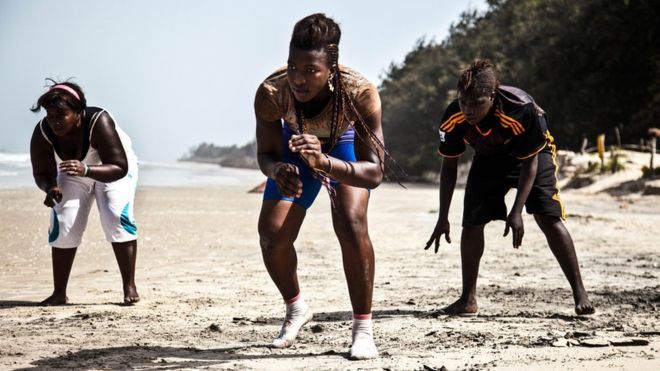
On top of all the grappling arts we briefly mentioned above, there’s the traditional Laamb wrestling of the Jola women. Make no mistake, as traditional as Laamb wrestling might be, it does produce fearsome overall grapplers. Some of them even end up representing Senegal in wrestling at an Olympic level.

Grappling Arts Africa, Sengalese Female Laamb WrestlingAs a tradition, the Jola women wrestle until such a time when they become pregnant. It has been a way to prove their womanhood for thousands of years. Historically, Laamb wrestling was used in a festival fashion to celebrate harvests. Back then it was a strictly male privilege. So much so, in fact, that techniques were passed generation to generation in great secrecy. The goal was the same, marking the coming of age of boys and proving their manhood. Still, what may be seen as the earliest victory for women’s rights, Jola women got the right to train and compete in wrestling as early as the 1400s.

In the Oussouye area, in particular, Laamb is huge among women, and this region yields the most champions, and even Olympic representatives. In all fairness, Laamb is so popular in Senegal nowadays, taht it easily trumps soccer. This means that athletes get endorsements, high-profile matches even hefty paydays if they’re amongst the best. This holds true for both male and female Laamb wrestlers of Senegal.

Laamb Wrestling In A Nutshell 

Nowadays, the largest Laamb wrestling ceremony is part of a big Folklore Festival in Senegal. In a sandy arena, encircled by thousands of bystanders, multiple matches take place simultaneously. There are no matchups as people just go in and grab an opponent, or wrestlers walk around strutting until someone accepts their challenge.

Grappling Arts OF the World - Laamb Women Wrestlers From SenegalThe ladies have their hair braided by their coach, so as it doesn’t interfere. The festival also acts as the best spot for scouting new talent that might end up wrestling on an international, and even Olympic level. So everyone’s game is on point on that occasion. Traditionally, men go to wrestle first, and women only enter the sandy arena once they’re done. Given the popularity of the sport, the crowds are huge and very knowledgable. In fact, the crowd might influence the match to the point of deciding the winner.

The crowd’s decision is one of the three ways in which a Laamb wrestling match can end. If the crowd overwhelmingly cheers one contestant, they’ll end up walking away with the victory. Another way to win, or rather lose,  is when someones back, both arms or both knees touch the ground. Finally, there’s the referee’s decision which is a tie-break, meaning nobody wins.

Conclusion

Seeing a sport that’s one of Africa’s traditional grappling arts evolve into the number one national sport is amazing. Furthermore, when that grappling art helps both men and women build a future for themselves by grappling, it has even more weight to it. We might not have been completely aware of how big a deal Laamb wrestling is in Senegal. After this article though, we’ll all be paying special attention to the wrestlers of Senegal on the next Olympics, particularly the women grapplers!

The Difference Between Japanese (traditional) Jiu-Jitsu And BJJ

The Litvinov Grappling Workout – Are You Strong Enough?

Can You Get A Black Belt Without Competing In BJJ?

Bulldog Choke – BJJ Submission Explained In Details

The Ben Askren BJJ Bulldog Choke

When Ben Askren made his UFC debut, we all got a lot of entertainment, just like we expected. The fight did not begin Askren’s way, but it ended on his terms, albeit controversially. The end result was a victory against Robbie Lawler via a submission that came in the form of a rarely seen Bulldog Choke. This choke is something we all know, or think we know. Apart from strangling someone with hands on the neck, the Bulldog Choke is what most of us perceive as a choke or strangle before training BJJ. It is a move that’s rarely in the curriculum of gyms, and one that we almost never see in tournaments. However, Askren’s latest efforts got us thinking. Is the Bulldog choke a viable option in grappling, or was it simply down to chance? 

In Brazilian Jiu-Jitsu, techniques come and go in waves. It goes something like this: Someone figures out or modifies a move, gets success with it, people pick it up and it becomes a hit. After a while, since everyone now knows the move, it loses its efficiency somewhat and slowly fades away. After a while though, most moves that at some point really worked, do get a revival. Up until a short while, we all thought leg locks didn’t work. Now, we’re scrambling for the latest instructional on the subject. So why would the bulldog choke be any different? In fact, it can turn into your secret weapon, if you’re the one to take it out of the drawer and start fine-tuning it first!

The Ben Askren Bulldog Choke

So, let’s go over what happened in that famous Ben Askren UFC debut. It is pointless to talk about spoilers since a couple of weeks have already gone by, but still, SPOILER ALERT. Now that that’s out of the way, let’s recap.

Ben Askren had some crazy statistics about being hit only a few times in his last dozen or so professional MMA fights. Former UFC champ Robbie Lawler quickly corrected those statistics by almost finishing Askren with strikes in the very first round. Askren proved that he has some chin on him, weathering the storm and going on offense late in the round. We all know how reliant Ben is on his wrestling, so it was no surprise to see him pin Lawler to the cage. While scrambling for position, it seemed that Askren got an opening for the back, but only managed to get a sort of a Rear Naked Choke in without the hooks. Where he needed up instead was to the side of a kneeling Robbie Lawler, still holding on to that choke, which Joe Rogan immediately recognized as the Bulldog choke.

When many people thought Askren has nothing, due to not having back control. Robbie’s arm went limp and the referee stopped the fight. The moment the two fighters got separated, it appeared Robbie was ok, and a controversy ensued. Still, it turned out to be a good stoppage, which means Askren’s Bulldog choke did the job.

Ultimate Wrestling Ben ASkren DVDIf you’re interested in learning more about Askren’s funk wrestling style, make sure you get his “Ultimate Askren Wrestling” DVD instructional. It is a set of 8 DVDs that cover every possible aspect of wrestling intended for grapplers an MMA fighters. Check out a full review HERE
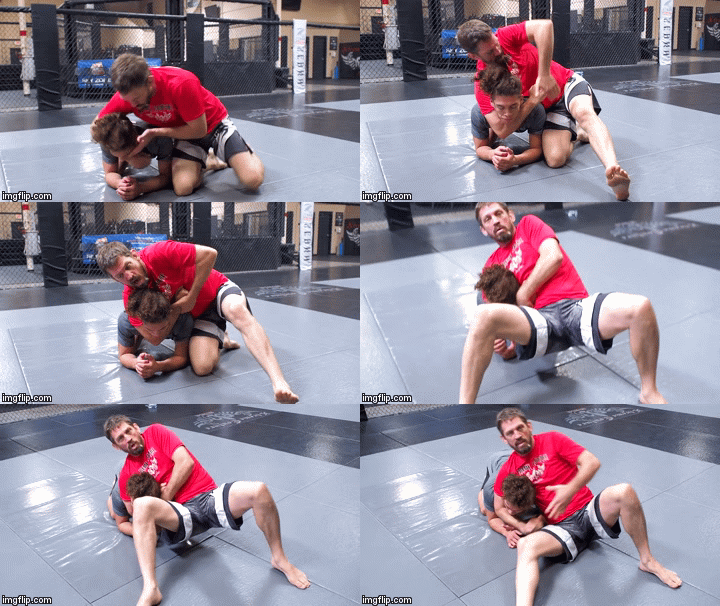
Bulldog Choke Essentials

So, how does this infamous Bulldog choke work? It does defy the age-old BJJ mantra of position before submission, so how come it worked on a UFC world champion? There’s a reason why most kids reach for this move on playgrounds and during brawls. It comes naturally as it offers control over the head while breaking the opponent’s posture at the same time. As you’ll see, many BJJ principles are still applicable and are the foundation of this strangle.

Bulldog Choke instructional For Brazilian Jiu-Jitsu and MMAThe way the Bulldog choke works just like a Rear Naked Choke but without the figure four grip. It also does not require you to have hooks inside the opponent’s hips. All you need to make sure you get a really tight choke is to have the arm deep on the neck. You could pull off the choke even if you’re higher up on the chin. It might require Ben Askren-like grip strength, though! Now, once your arm is deep enough around the neck of a turtled opponent, you’re good to go. The grip here is the same as in a Guillotine, with your free hand over the palm of your choking arm and pulling upward.

Position-wise, to make sure you are stable and you have weight on the opponent, you need to have a solid base. In order to get it, you’ll need to do a sit-out to the front once you get the choking arm in. To make sure all your weight is on their head and neck, you’ll also bring your other leg forward, ending up in the “table” position. The position itself is enough to ensure the choke. However, you also have the option to squeeze with your arms for the tap.

Will it Work? 

Why wouldn’t it? After all, the position for the Bulldog choke is not one that doesn’t offer submissions. In Gi Jiu-Jitsu, the clock choke works from the same position and with largely similar mechanics. In that sense, the Bulldog is essentially a No-Gi clock choke hybrid that includes some Rear Naked Choke and guillotine principles. Given that all these chokes are high-percentage submissions, the Bulldog choke can actually be a very successful strangle.

BJJ Bulldog Choke Execution And DetailsA very important aspect of this choke is weight distribution. It is extremely easy to go flying over the top of a turtled opponent. In order to make sure that doesn’t happen, you’ll need to keep your hips up in the air and heavy on your opponent. Moreover, you’ll need an anchor point until you set the choke up. This comes via a crucifix trap on the near side arm. Use your far side leg to trap the arm, just like for a crucifix position. Keep it there until you manage to get the choke in order to stay stable and prevent any escapes.

Once the choke is in and you have your grip, you’ll have to release the crucifix arm in order to do the sit-out. In terms of choke depth, the deeper the better. Still, if you end up on the chin, make sure you completely retract your shoulder blades once you are in a choking position. This will make the choke that much tighter and might even give it a crank aspect as well.

In Summary

The Bulldog choke might look like something out of old, B-list martial arts movies, but it is not. It is, in fact, a very viable Jiu-JItsu move that can be a very high percentage submission. All it takes is using some foundational BJJ principles to make sure the move has pristine mechanics. Apart from that, there’s no reason why the choke wouldn’t work. It is effective in both Gi and No-Gi, and against all levels of opponents.

The Highest Percentage No-Gi Chokes

5 Ezekiel Chokes From Mount

Knee On Neck Choke – The Real Life Mata Leao Strangle

Review: “Cruci-Fixing” Thomas Lisboa DVD Instructional

Cruci-fixing - A thomas lisboa DVD Review

One of the hardest positions to escape from in Brazilian Jiu-Jitsu is back control. Unless you’re really proficient at positioning and defensive grip fighting, you’re highly likely to get finished from there. Now imagine that even this ability to grip fight is taken away from you. that is exactly what the Crucifix position does. It is by far the one and only worse BJJ position to get stuck in. Conversely, it is the one position you need to be looking to master in order to become a nuisance against people of all belt levels. The best resource for people that are interested in taking up the Crucifix as their main position is the Thomas Lisboa DVD Instructional “Cruci-Fixing”. 

ON SALE HERE:
Thoman Lisboa – Cruci-fixing (DVD/DIGITAL)

Cruci-fixing - A thomas lisboa DVD Review
Techniques List

The crucifix is one of those positions that seem to get left behind. When Marcelo Garcia used it to destroy people during his prime, everyone tried to copy him. The moment he dropped off the radar, the crucifix went with him. It is a pity that nobody really paid much attention to a position that’s more effective than back control and mount put together. Or so we thought. It turns out Thomas Lisboa, a Fabio Gurgel black belt never really gave up on the position. After years of perfecting it, all his crazy details and submissions are now available for anyone. The “Cruci-fixing” Thomas Lisboa DVD is the crucifix instructional everyone wanted during the Marcelo Garcia days, but nobody managed to find.

Introducing “Jabuta”

“Jabuta” means a small type of turtle, commonly found in Brazil. Thomas’ godfather in regard to his nickname is his longtime training partner Bruno Malfacine. It was down to his laid back nature, and the fact that he was moving slowly after some time out, that Malfacine started calling him “Jabuta’. The name stuck though and is now a part of Thomas’ identity and his BJJ game.

31-year-old Thomas Lisboa was born in Taubaté, Brazil. he discovered Jiu-Jitsu at 16, after playing around with Judo for a couple of years. He started training at Alliance, which is the banner he’s fighting under to this day. After becoming a World Champion at purple and brown belt, he got his black belt in 2012. Since then, Thomas won a few further IBJJF championships, coming just short of the World title at the black belt on a couple of occasions. His career is still thriving though, and a World Championship is certain to come his way sooner rather than later.

The light featherweight is one of the best smaller-framed grapplers in the world. given his size, it is understandable how the Crucifix became his favorite position. The Crucifix choke is one of his main weapons, accounting for 30 % of his victories. “Cruci-fixing” is actually the very first Thomas Lisboa DVD instructional. Given how successful Thomas is as a grappler, and how great this DVD is, we sure hope for a lot more instructions in the future!

“Cruci-fixing” Thomas Lisboa DVD Detailed Review

What makes this Thomas Lisboa DVD so different from others? Well, there’s the subject matter, to start with. Not many other BJJ instructionals really explore the crucifix to such a depth as this one. Moreover, this instructional offers a lot of positional details on top of plenty of submissions. Precise and in-depth information on entering and maintaining the crucifix is scarce at best. or at least it was, until this Thomas Lisboa DVD.

Cruci-Fixing Thomas lisboa DVD Full In-Depth Review Furthermore, the instructional contains two volumes, each numbering well in excess of a dozen information-packed chapters. It is by far the most comprehensive crucifix system in existence. Thomas takes us through everything crucifix related, including submissions, and more importantly, transitions to and from other high-percentage positions. All in all, this instructional has everything you need to become the nastiest submission artist in your Academy.
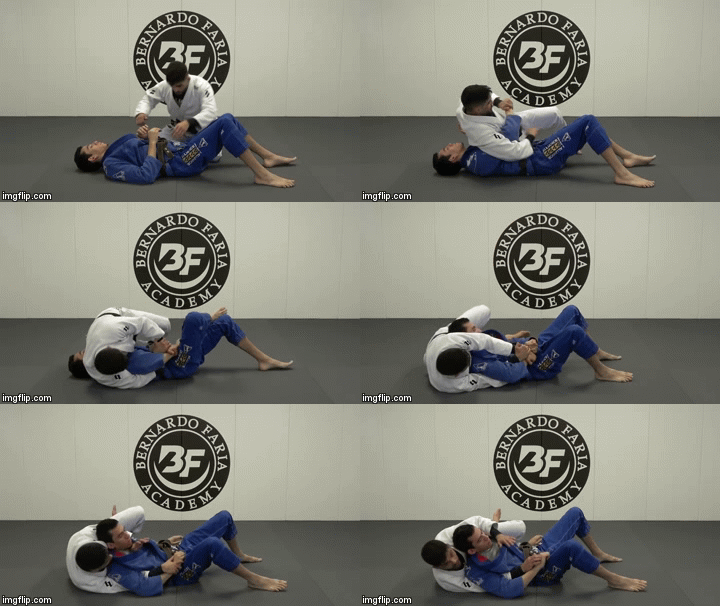
PRoduction-wise, the instructional is flawless. Sound and video are on point, and Thomas has an extremely laid-back teaching style. He is easy to listen to, addresses important points and answers questions even before you get to ask them.

“Cruci-Fixing” Volume 1 – Fundamentals Of the Crucifix

The complete first volume is all about what the crucifix is. here, “Jabuta” goes over how to get the crucifix, stay in it, what grips you should use etc. It is a volume that’s full of essential “Cruci-fixing” information and one you must not skip when watching this Thomas Lisboa DVD.

First few chapters take care of the introduction to the position. here, Thomas goes over how to capture the arm with your legs, which is a common crucifix sticking point. Expect to learn a lot of tips on positioning your legs and further exposing the arm. A really cool chapter is the one explaining Lisboa’s “traps” philosophy, shedding light on his success with the crucifix.

When attacks start, Thomas begins with collar choke variations. Apart from your “garden-variety” collar choke from the top and the crucifix, you also get a brand new “climber choke”. Not far behind are some crucial arm-locking details involving some crazy armbar variations. The first volume ends with a bunch of submission drills to help you understand the crucifix and get comfortable. Moreover, Lisboa also demonstrates a few maintenance drills that really changed how I approach the crucifix. I have to admit that after watching this DVD I immediately reintroduced the crucifix to my game.

“Cruci-Fixing” Volume 2 – Crucifix Bonanza 

Volume two is where all the fun is. It begins with a slick crucifix entry from a headlock. “Jabuta” then follows up with some of his trademark trap variations. This paves the way for the craziness that follows – getting to the crucifix from every position!

Kimura to crucifix From the Cruci-fixing Thomas Lisboa DVD Thomas’ first setup is a side control kimura to crucifix path. Given how close the Kimura is to the crucifix, Lisboa also explores so further transitioning options involving Kimuras. Of course, there’s always the opposite direction as well, offering a Kimura from the Crucifix. Further chapters take us into the crucifix from the deep half, over-under position. A cool Oomoplata finish from the crucifix is really going to make your day.

Wrapping up Lisboa teaches several ways to get the crucifix against common guards. The butterfly guard gets a lot of attention, but there’s also a crucifix vs. the De la Riva guard. The penultimate track is the upside-down crucifix, which will have you running to the mats to try it. Finally, a conclusion by “Jabuta” brings this amazing Thomas Lisboa DVD to an end.

Closing Thoughts

As someone who has dabbled with the crucifix position, I was keen on giving this Thomas Lisboa DVD a try. I have to say I did not regret that decision. Furthermore, it prompted me to do a review of the whole thing, since it’s that good! “Cruci-fixing” is going to change the crucifix forever, and perhaps even usher a new era of back attacks. Who knows, maybe a bit more information on the upside-down crucifix will soon follow! We can only hope…

ON SALE HERE:
Thoman Lisboa – Cruci-fixing (DVD/DIGITAL)

Cruci-fixing - A thomas lisboa DVD Review
Techniques List