

Best Judo Gi For 2020 – Complete Guide With Reviews

A complete guide to the best Judo Gi options in 2019

Thinking about adding a few Judo sessions to your BJJ training schedules? Good idea by all means, as there’s hardly a grappling martial art that complements Gi Jiu-Jitsu more than Judo. That said, remember that Judo is an art in itself, not just something complementary to BJJ. As such, there are certain principles and traditions you need to uphold. For example,  you’ll get a far better experience if you’re wearing an authentic Judo Gi, rather than a BJJ one. You see, Judo Gis are quite different in cut and design than Jiu-Jitsu ones, due to the need for the art. If you’re truly looking to learn Judo and develop those crazy Judoka grips then you need to spar with a Judo Gi on. We bring you the best Judo Gi guide for 2020, along with reviews of some of the top kimonos on offer.

As the quintessential martial arts uniform, the Gi plays a very important role in traditional martial arts. Judo is definitely among those traditional martial arts that value their training uniforms a lot. The moment you first engage with a Judoka in sparring, you’ll know exactly how important the Gi is. Judo uses strategic (and really tough) grip fighting to ensure the best leverage for throwing people to the ground. The Gi is the ultimate anchor point for the Judo game, which makes having a good one mandatory. You can’t just wear any Gi to Judo class, as it’ll soon get destroyed, due to the constant pull and push. Any of the kimonos in our Best Judo guide, though, will more than do the trick whenever you need to test your Judo skills. Moreover, they’ll prove to be a real handful for opponents, literally.

The Best Judo Gi Guide

So, let’s start at the beginning. The Judo Gi is a modification of the ancient samurai garments, usually worn under the armor. As warfare turned to art, there was no place for the armor in training. That’s when the Gi came to the forefront. Judo’s founder Dr. Jigoro Kano made some crucial adjustments to it, bringing about the precursor to the modern Judo uniform. As such, the modern Gi cut and style is all about functionality within the boundaries of Judo.

A key thing with every grappling martial arts Gi is, of course, material. Wearing a Gi In Judo and BJ Jis far more than just ceremonial. The Gi is used to tug, pull, twist, push etc, your opponent in various directions, before sending them flying. This means the material has to be able to withstand such exchanges on a regular basis. The fabric has to be thick and heavy, featuring specialized weaves. A Judo Gi is usually made of cotton, with at least a single, preferably double weave pattern.

In terms of style and cut, Kano’s original modifications still mark the Judo Gis today. The Gi consists of drawstring pants and a quilted jacket. The jacket has sleeves that are longer than other Gis, thus allowing for an intricate gripping game. The wais area is also tighter, in a more athletic cut fashion, but still loose enough to be effective.  The available colors are white, blue, and black, with blue often being a scorned option, at least in some schools.

The belts in Judo today feature a color system similar to that of Karate. Originally, there were only white and black belts to distinguish students. Most of the Kimonos in our best Judo Gi guide come with a complementary belt, although most often a white one.

The Best Judo Gi in 2020

The main governing body of Judo is the International Judo Federation or IJF. Similar to the IBJJF and UAEJJF, it sets standards for anything, from unified tournament rules to Gi requirements. This was a major condition during the creation of the 2020 Best Judo Gi Guide. After all, what’s the point of getting a Gi that you can’t wear in a competition? That said, we won’t go deep into the standards of Judo Gis now. What we will do is go straight into the kimonos that will bring you the best Judo training (and competition) experience in 2020. Our seven top candidates are as follows:


Ronin Judo Gi
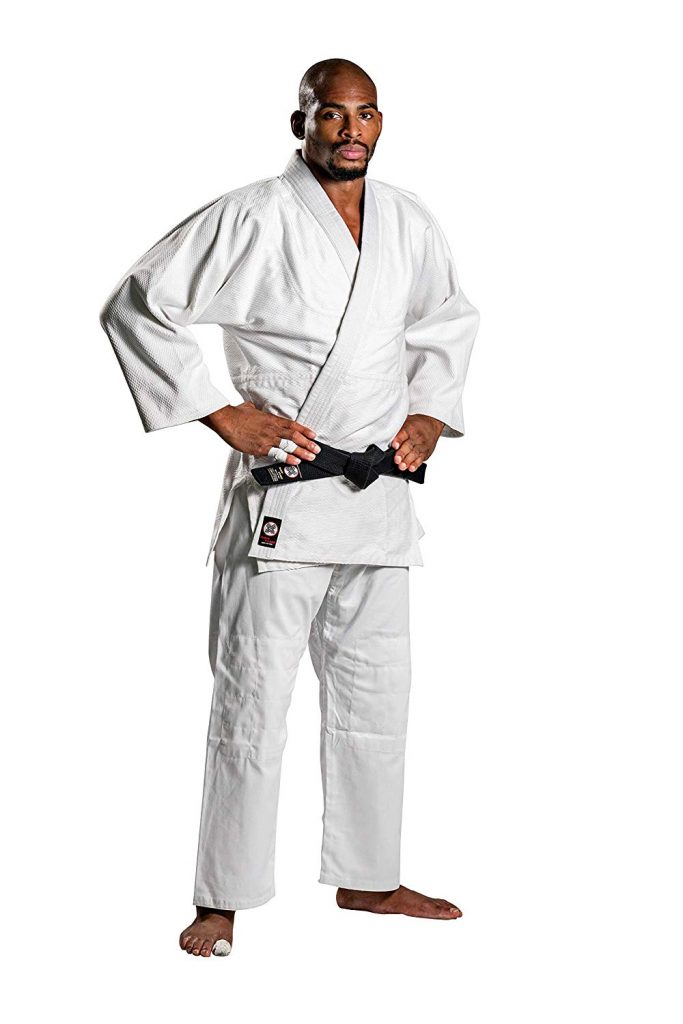
Ronin Judo GiThe Ronin Judo Gi is where we’ll start our Best Judo gi guide today. This is exactly the high-quality Judo Gi that’ll serve you for a long long time. Of course, it is IJF approved, making it perfect for both training and competition. On top of everything else, it is more than reasonably priced!
Check at Amazon US | UK | DE

What you get with the Ronin Judo Gi is a single weave Judo Gi that’s 100% cotton. Moreover, it’s premium bleached cotton, making a very sturdy, yet light kimono. the strategic stress points are heavily reinforced, particularly on the shoulders, lapels, sleeves, and knees. There’s also traditional diamond stitching on the skirt of the jacket. The Gi is white and available in sizes from 0-7. Up to size 2, the pants come with an elastic waistband, and larger ones are all drawstring. A perfect Gi for a Judo beginner, a BJJ grappler that cross-trains, or even an experienced Judoka.  


Mizuno Yusho II Gi
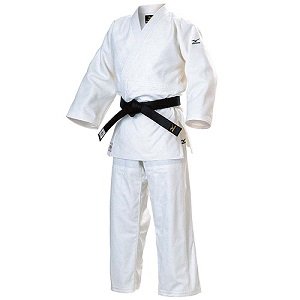
Mizuno Yusho II GiThe Mizuno Gi is a traditional white Judo Gi that is approved by the International Judo Federation. It is a brand new model that not only fits standards but features a modern and performance-oriented design. One of the Gis that professional and Olympic level Judokas often favor.
Check at Amazon US | UK | DE

The Mizuno Yusho II Gi is a preshrunk, white only Gi that undergoes special testing after manufacturing. It is available in a large variety of sizes, a dozen to be precise, ranging from 1 – 7 with lots of in-between options. The Yusho II is a brand new model, completely washing machine friendly. It is also very easy to dry, is modified to be highly breathable and extremely comfortable. The material is in between single and double weave. Given that Mizuno is famous as a manufacturer of both high-end Judo and Brazilian Jiu-Jitsu Gis, it’s no wonder that this is one of the best quality Gis in our guide.


Fuji Judo Uniform
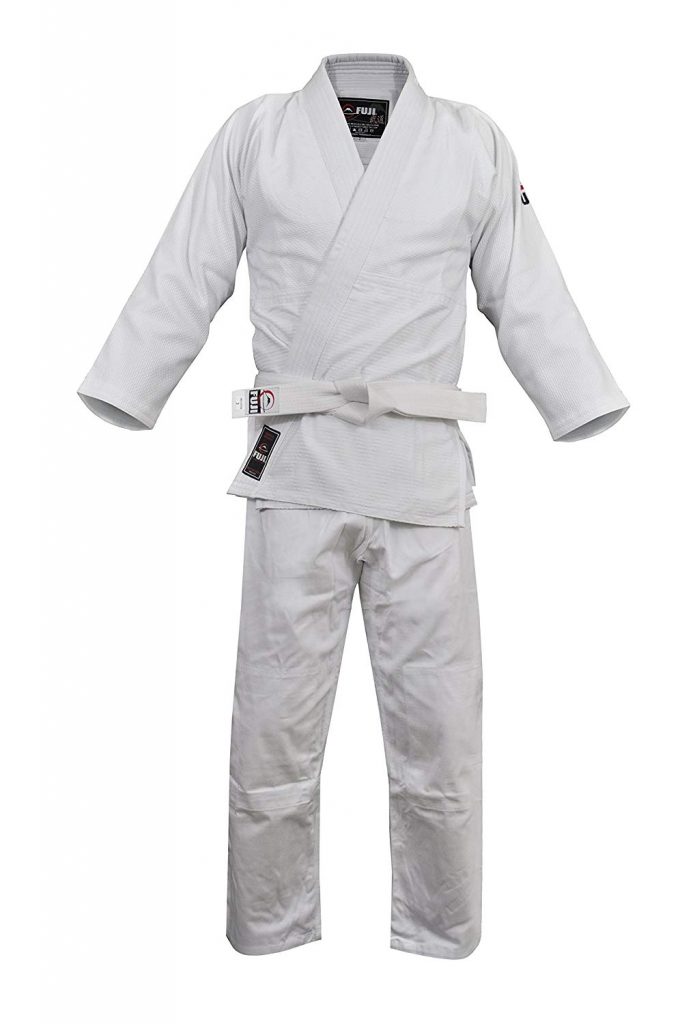
Fuji Judo UniformFuji is a mainstay in the Gi industry. They not only produce some of the best Gis, but they also have them virtually every martial art. With grappling arts, in particular, they have nothing but ultra high-quality Judo and BJJ Gis. The real caveat though is the price – for such a high-quality Gi, the Fuji comes more than reasonable, it actually comes cheap!
Check at Amazon US | UK | DE

Fuji was actually making Judo Gis longe before they branched into BJJ ones. The Fuji Judo Gi is a double weave 100% cotton kimono, that’s probably the softest in our best Judo Gi guide. That doesn’t make it less durable or sturdy though, On the contrary, it is one of the longest-lasting Judo Gis in existence! Some key features are an ultra-thick collar and extra high-quality stitching and reinforced seams. It is available in 15+ sizes, ranging from 1 to 9, with options in between. Maximum breathability is guaranteed! Comes in white or blue color.


Elite Sports Deluxe IJF Judo Gi
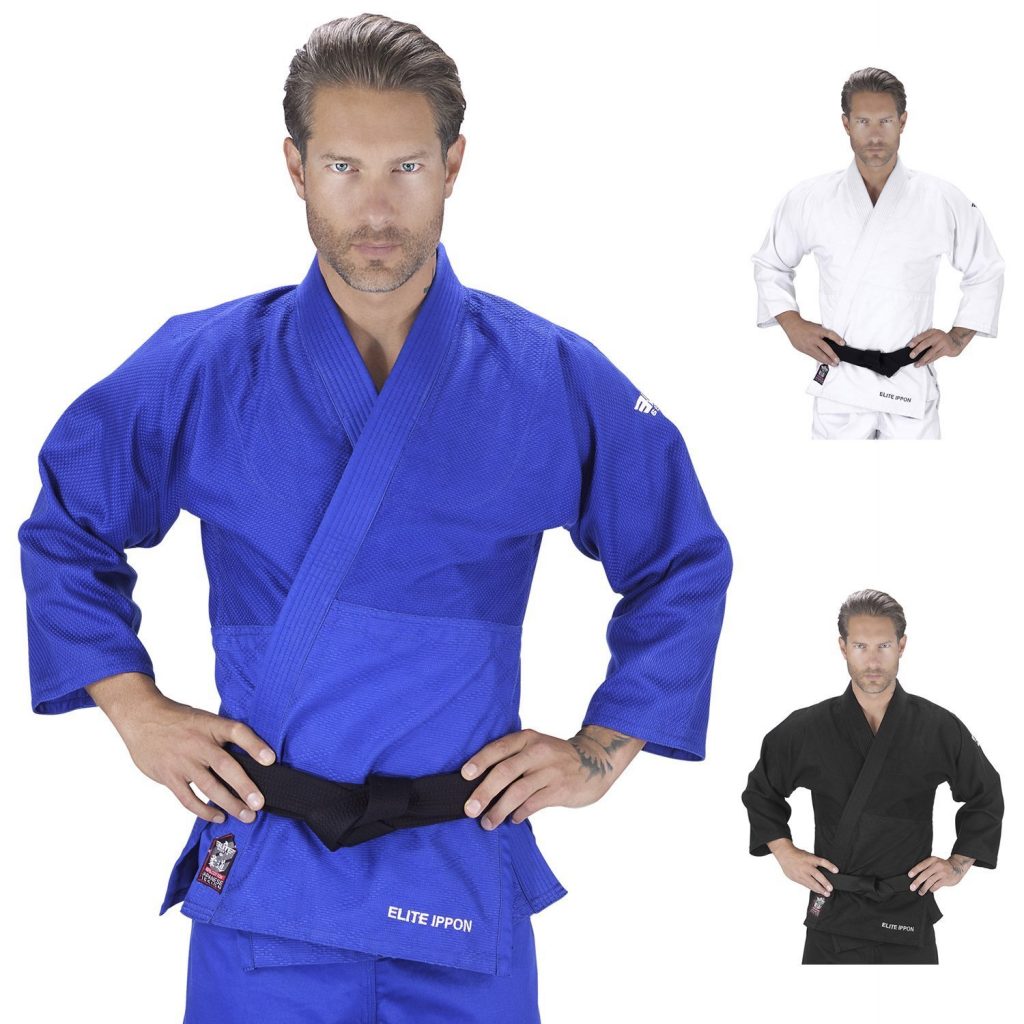
Elite Sports Deluxe IJF Judo GiElite sports are fast climbing the scale of Gi manufacturers. They have great quality Kimonos for every occasion, be it Judo, BJJ or even Sambo. Their Deluxe Judo Gi is one of their best accomplishments so far. In fact, it is one of the most stylish Judo Gis out there. It certainly is affordable for anyone and is IJF and USJF approved. The perfect deal, if you ask me.
Check at Amazon US | UK | DE

What the Elite Sports Deluxe offers is durability, longevity, and comfort all at once. The stitching is so precise that it guarantees the Gi lasts for a long, long time! A great quality of this Gi is that it makes gripping a real nightmare for your opponent. At the same time, it provides you with great mobility and comfort. The material is a double weave special cotton blend, washing machine friendly, and easy to maintain. A free white belt is included with every purchase. The Gi is available in a few different sizes and all three IJF approved colors. This is the only Gi in our Best Judo Gi guide that comes with a 6-month full money-back guarantee.


Yamato Sakura Single Weave Judo Gi
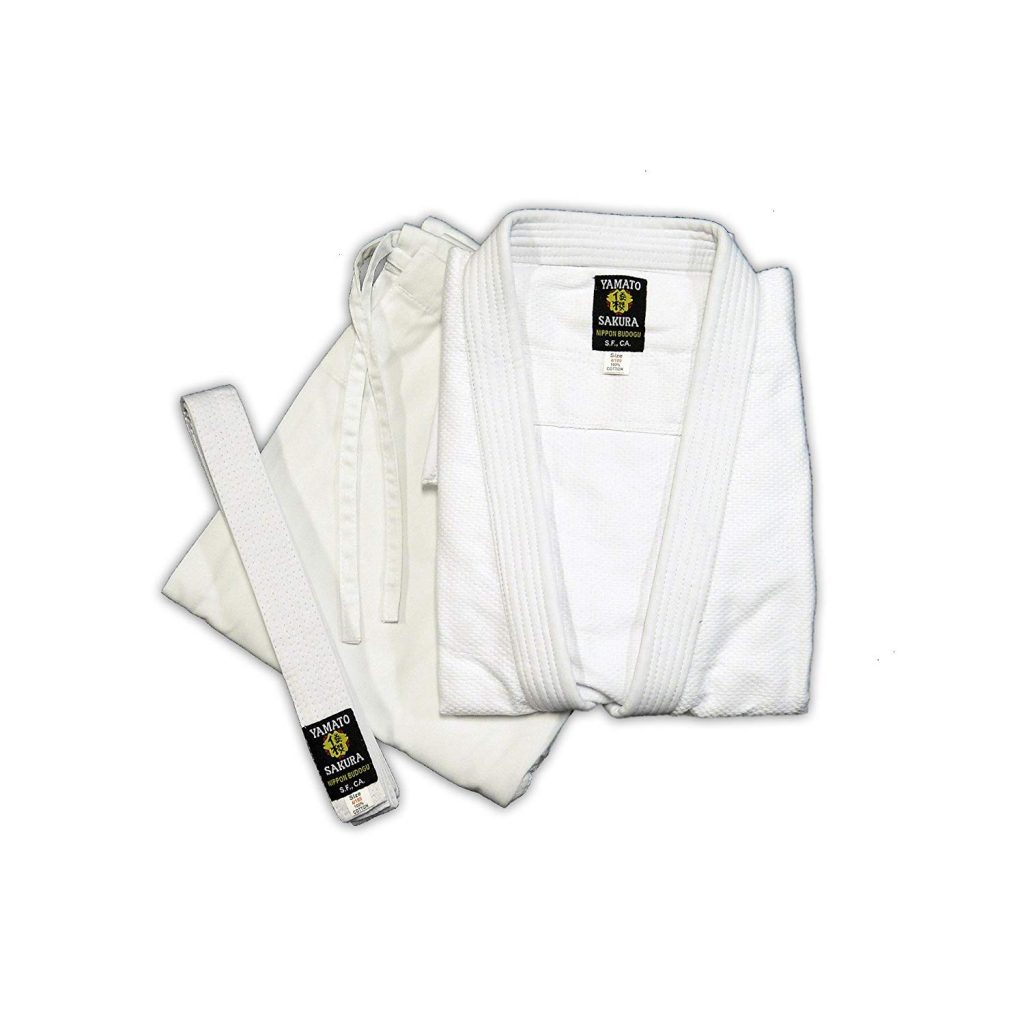
Yamato Sakura Single Weave Judo GiOne more 100% premium cotton Gi, this time coming in a single weave pattern. This means the Gi is ultra-lightweight, at only 450 GSM. The Yamato Sakura is made from nothing but high-quality materials and is built to last. This is a great Gi to consider for complete beginners.
Check at Amazon US | UK | DE

The Yamato Sakura Judo Gi comes with drawstring pants and a single weave, reinforced quilt jacket. The way this Gi is different from the others in this guide is weight As a single weave, this is one of the lightest weight Judo Gis you’ll ever come across. A key advantage of a lightweight Gi is training in warm weather. Unlike heavier double weave Gis, this one doesn’t feel like you’re in an oven while you’re grappling. This also makes it extremely comfortable. Yet, make no mistake, as this Gi is going to outlast a good portion of heavier duty ones. Available in multiple sizes (0-7) and come with a free white belt.


Pro Force Gladiator Judo Gi
Pro Force Gladiator Judo GiIf you’re really on a budget then the “Pro Force” Gladiator Gi is the one for you. It is by far the best priced best Judo Gi in 2020 without a doubt. Still, we did not consider anything but high-quality durable gis for our guide, so as cheap as this Gi is, that doesn’t come at the expense of quality.
Check at Amazon US | UK | DE

Just like the Yamato, the Pro Force Gladiator is a single weave 100% cotton Judo Gi. It is perfect for beginners that are looking to train regularly and compete. Also great for anyone more involved in grappling. The real secret of this Gi is that although it is a single weave, it features the durable construction of double weave. These properties are down to some signature premium stitching. Come sin ten different sizes, 0000-7. Another thing specific to this Judo Gi is that it comes in four, rather than three colors. Apart from the blue and black, there are two white options – natural and bleached white. In the competition, only white and blue colors are allowed. The only drawback, if you can call it that, is that this Gi does not include a  belt.


Adidas Judo Contest Gi
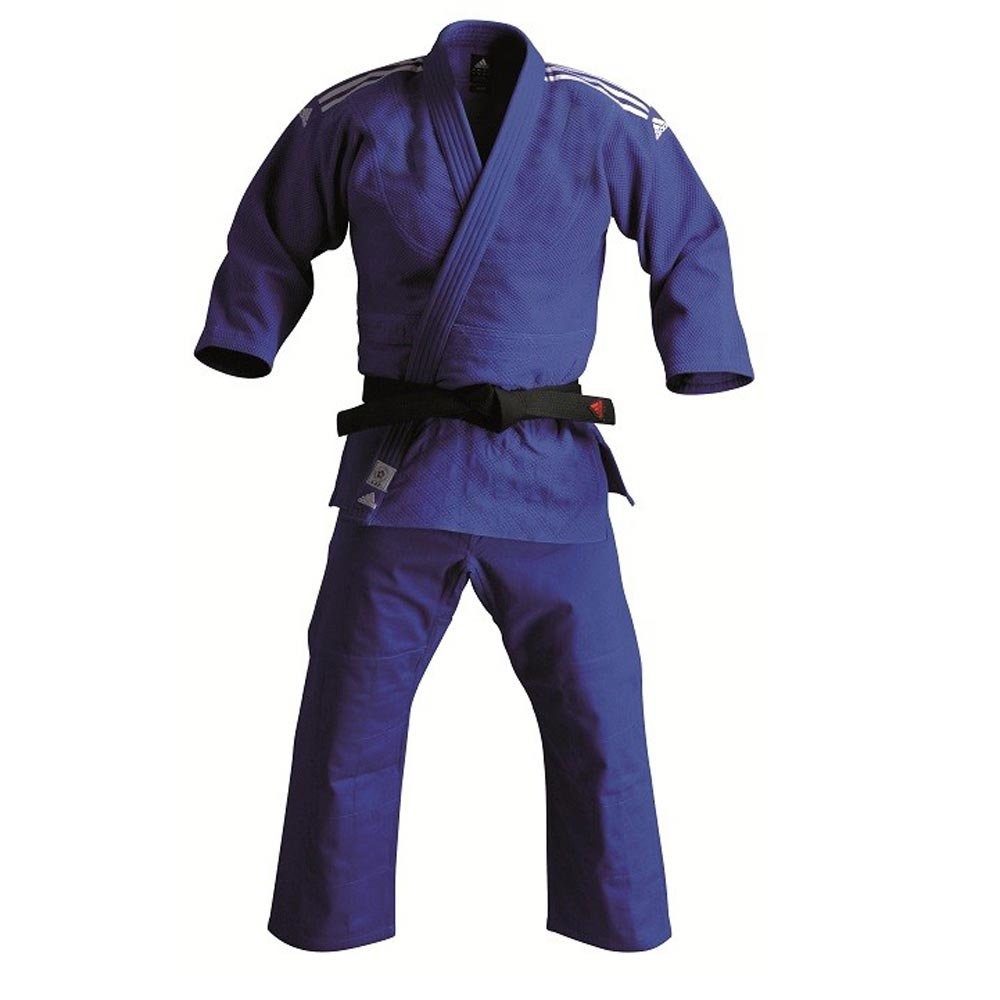
Adidas Judo Contest GiA real classic here to wrap things up. The Adidas Gi, particularly in blue, is probably the definition of a Judo Gi. it is what many think of when we talk about Judo kimonos. It is also what most athletes choose to wear during competitions. the reasons behind such widespread use of the Adidas Judo gi are many.
Check at Amazon US | UK | DE

The Adidas Gi is the only one in our Best Judo Gi Guide that is not a 100% cotton Gi. In fact, it features a special blend of 55% cotton and 45 % Polyester. This makes it one of the toughest Gis in existence today. On top of that, the material is a double weave, with a very thick collar that has no less than six rows of stitching. Available in competition-approved blue and white, the Gi features the unmistakable Adidas stripes on both shoulders. Despite the double weave, the jacket weighs only 690 grams, providing maximum mobility and comfort. It comes in plenty of sizes but does not include a belt. Olympic level Judoka or a beginner looking for your first Gi, you can’t go wrong with the Adidas Contest Gi.


Conclusion

Whether you’re looking into Judo Gis because you want to dedicate yourself to the art, or simply to cross-train as a BJJ athlete, you’ll need a good Judo Gi. That much is clear from the get-go. The option we offer in our best Judo Gi guide pretty much cover everything, You have reasonably priced and outright cheap Gis price-wise. Still, each and every one of them is ultra high quality and approved for competition. Moreover, there are options in terms of color, size as well as material, and weight. All in all, everything you might need while choosing a Judo gi in 2020 is in here!
The Wrestling Crab Ride For BJJ

The Crab Ride - One Of The Must KNow Grappling Fundamentals Of BJJ

What I really love about BJJ is how much you can add to it from other grappling martial arts. There’s a goldmine in other arts such as Judo, Sambo, wrestling, etc that we’ve barely tapped in as Jiu-Jitsu practitioners. Some of the moves those arts offer are already a huge part of BJJ, whether they are just borrowed or modified. However, there are also moves that we do not explore, due to reasons we’ll look int later. The fact is, there are some grappling fundamentals form other arts that can really give your BJJ game a boost. One such technique is wrestling’s Crab Ride, the forefather of the BJJ Berimbolo. 

Grappling martial arts do have a lot to teach us. The older the art is, the more hidden gems it contains. Given that wrestling is arguably the oldest grappling martial art ever, it’s easy to see how much-untapped potential it holds for grapplers. So far, we’re very keen on using wrestling takedowns on a regular basis. Although not as often, we also use some less known techniques, like the wrestler’s guillotine AKA the Twister. However, there’s one move that western wrestlers really rely upon, and it’s not about takedowns. It is a transitional move that helps with pinning. The Crab Ride is one of those grappling fundamentals that the potential to work in any grappling martial art. And it is a particularly good fit for BJJ.

The Power Of Grappling Fundamentals 

Regardless of the martial art, some grappling fundamentals easily transcend the borders between different arts. Whether you go for an armbar in Sambo, Judo or BJJ, you’re still bound by the same mechanics. the same holds true for foot sweeps, chokes, etc. However, there area also grappling fundamentals that involve movement rather than a specific goal. They have the task of providing control and opening other options. The control part is what is valuable to all martial arts. The opening will vary depending on the art and goal at hand.

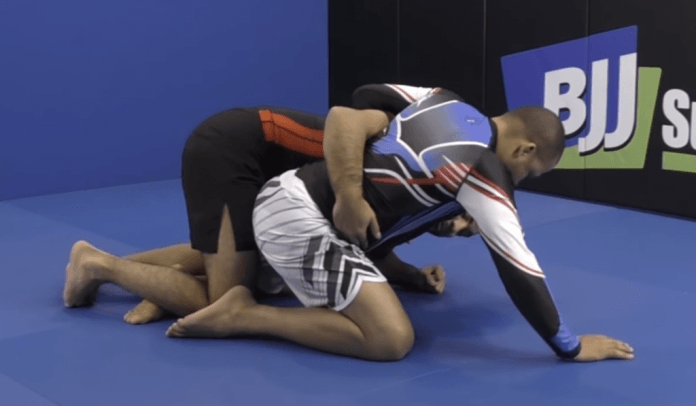
A perfect example of the above is the Crab Ride. Originally form freestyle wrestling, this position is a simple transitional move that offers a huge amount of control. The move utilizes foot hooks, something we take for granted in Brazilian Jiu-Jitsu. In the case of the Crab Ride, one hook goes under the opponent’s ankle. The other hook can be out, or, more often, at the level of the knee on the same or opposite side leg.

The power of the Crab Ride is in the indirect control that it provides over the opponent’s hips. Controlling both legs with both the hooks and sometimes your grips mean you can take your opponent into virtually any direction. it also means you can prevent them from moving if that is your goal. As fundamental and simple as it sounds, this move is actually the foundation of modern BJJ techniques like the Berimbolo, Baby Bolo, etc.

The Original Crab Ride

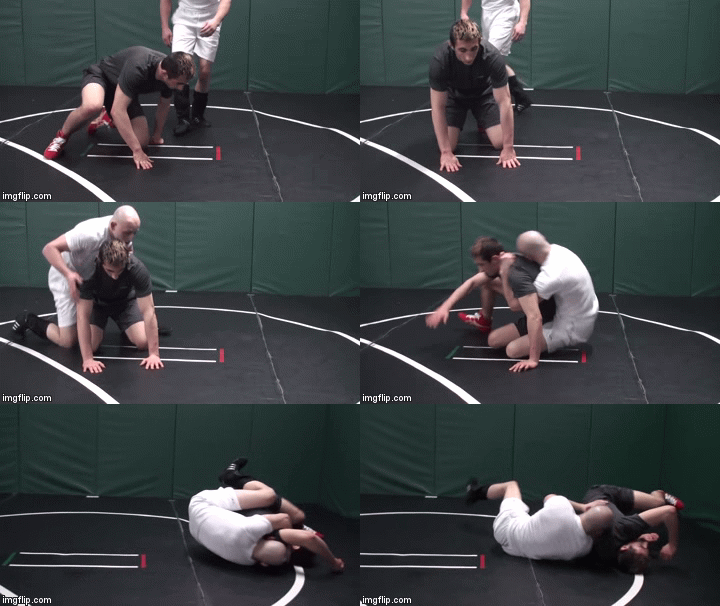
We all know that wrestling, in a nutshell, is about your opponent to the ground, and keeping them there, pinned. In most cases, once the match ends up on the ground, wrestlers will do anything to keep their backs off the ground. A position that they often end up in is the “all-fours”, or more commonly known as the referee’s position. This is where the Crab Ride can really make a difference.

Grappling Fundamentals: The Wrestling Crab Ride The goal of rides in wrestling is to allow you to hold the opponent down from the bottom position. The difference between this and a pin is that you’re on the bottom as opposed to being on top. It is a highly technical move and part of the grappling fundamentals taught as early as high school wrestling.

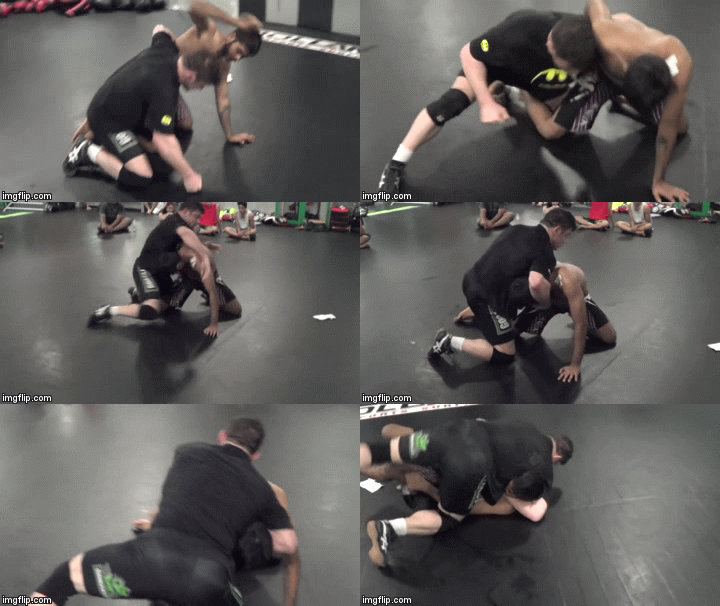
Getting the Crab Ride provides the attacker with the option of controlling the legs and hips and getting the opponent all the way to the mats. There are plenty of different options that wrestler can do from this ride. Usually, the goal is to get upper body control against someone in the referee’s position an use that to force them to turn. This opens up the Crab ride, that, via the elevation that he hooks provide, allows wrestlers to get the opponent’s shoulders to the ground and hold them there for as long as it takes.

Modern BJJ Crab Ride Applications

In BJJ the Crab Ride actually has many more applications than in wrestling. Due to the nature of BJJ, transitional moves such as this are really useful at all levels. Some of the most prominent BJJ fighters to use the crab ride are Caio Terra, the Miyao brothers, Gianni Grippo, Marcelo Garica, and many others.

Crab riding in BJJ can be done from a variety of positions. Give the position’s basic mechanic, you can see how close it is to back control. Conversely, transitioning in and out of back mount is really easy. Against a standing opponent, a whole new world of opportunities opens, by way of Berimbolos. The Crab Ride is also useful to break down the turtle, enter the 50/50 guard or even hunt for heel hooks. There’s even a great way to use it from standing and both get the fight to the ground and get a finishing position with just one move.

Back Attacks

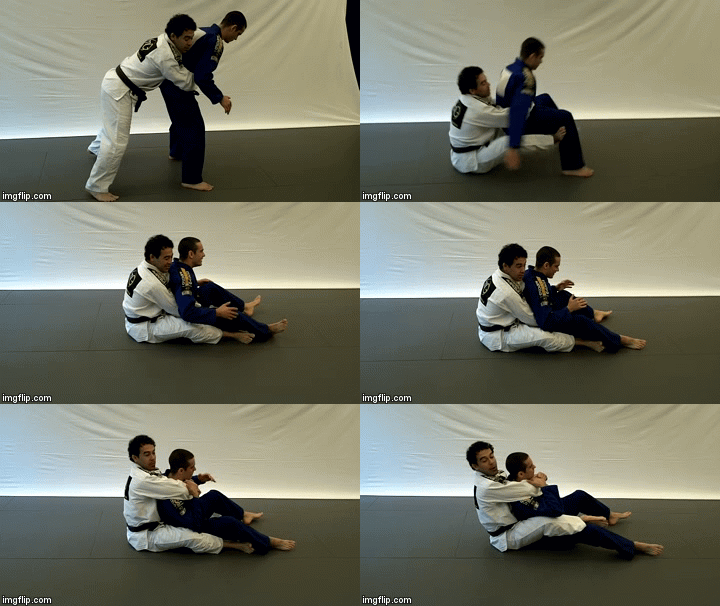
Grappling Fundamentals: Crab Ride back take For BJJAttacking the back is extremely easy from the Crab Ride. These are two grappling fundamentals from different arts that work flawlessly together. Most often, it is done against a standing opponent, when you have the ride from behind. In this instance, you have a belt and ankle grip and both hooks behind the opponent’s knees. Once you lift their hips in the air, the goal is to transition into the truck position, briefly, on the leg opposite of the side of your belt grip. Once there, getting the back is as easy as extending your hips and bringing the opponent into the middle.

Gianni Grippo Berimbolo
Techniques List

Gianni Grippo is a real maverick when it comes to the Berimbolo. Naturally, he is also very well versed at the Crab Ride, particularly from the De la Riva. Check out his take on riding your way to the back in his “All About The Bolo” DVD instructional

Inside Heel Hook

A surprise contender from the Crab Ride is the heel hook, It is definitely not something people are used to, and it is a  real black belt killer move. In this instance, the ride is from the front, although the mechanics are much the same. In case of a double guard pull, this is a great way to finish fast.

Grappling Fundamentals: Crab Ride Heel Hook For BJJ Basically, you want to make sure you get a tight ride and lay on your back while pulling one of your opponent’s legs on top. The Crab hooks make sure you can do this with ease. Once there, you switch the grips on the top leg and get back up to your butt, while gripping the knee with the other hand. The other leg remains in the Crab Ride, thus allowing you to easily thread your now free leg in the Inside Senkaku position. From there on, you already know how to finish a heel hook.

Crab Ride From The De La Riva 

The De La Riva guard is another position that works perfectly with the Crab Ride. It is actually down to this ride that the De La Riva became the launching pad for the Berimbolo. It works both against standing and kneeling opponents, but it’s much better when the opponent is kneeling.

Grappling Fundamentals: De La Riva to Crab Ride SweepYour goal with the De La Riva is to get the opponent on their butt. Whether you use a regular De La Riva or a spider/De La Riva hybrid is down to you. Once the opponent’s butt is on the ground, you invert and get your hooks in the Crab Ride position on the near leg. From there you can choose whether to get to the back like before or go up to get a seep. As a bonus, if you sweep, you end up in the leg drag position.

Turtle Position Crab Ride Pass 

A very cool variation of the Crab Ride for BJJ comes from the top turtle position. In this case, you start off just like with any turtle attack, with one arm around the opponent’s waist. The goal is to secure a grip on their Gi so you have an anchor for the ride.

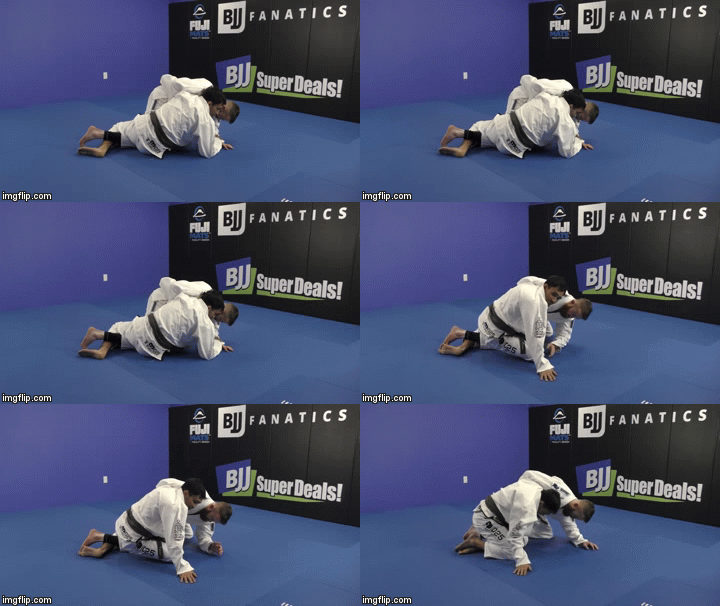
Grappling Fundamentals: Crab Ride Cartwheel Pass Against Turtle To set the ride up, you need to hook your far side leg to the opponent’s near side knee. Once there, you won’t be trying to pull the opponent down to the butt like in wrestling. Instead, you’ll look to use the anchor and hook to pry open the legs, so that you insert a second hook behind the other leg. Keep your free arm posted on the ground. With a cartwheel-like motion, switch to your other side and you’ll end up in the leg drag position once again. While this application might look fancy and acrobatic, it is still based on sound grappling fundamentals and has a high rate of success.

Standing Bodylock Crab Ride

This is a real Marcelo Garcia special. The Crab Ride can also tie in well with takedowns, particularly those that get you behind the opponent. A simple option is to get into the ride straight from the body lock from standing.

Grappling Fundamentals: Bodylock Takedown To Crab Ride Once you’re in the full body lock, an opponent is going to try and manipulate their center of gravity to stop you from taking them down and taking their back. From there, Marcelo likes to use both feet to put simultaneous pressure behind both of the opponent’s knees. This will get even the most stubborn of opponents down to their butt. From there on, you can get the back, go to the Truck or whatever it is you’re after.

Conclusion

All in all, using grappling fundamentals from one art in another is usually a good idea. AS long as you stick with real foundational, high-p[ercentage moves, you’ll be able to use them under any grappling setting. Although often used in BJJ, the Crab Ride does have its roots in wrestling. Therefore, it is prudent to turn to wrestle to learn the details and mechanics of the move. Then, it’ll not only work in BJJ, but it’ll work against all kinds of different opponents.

The One De La Riva Footlock That Really Works!

Bulldog Choke – BJJ Submission Explained In Details

https://bjj-world.com/boston-crab-submission-mma-fight-unbelievable/


BJJ Dogfight Position Blueprint: How to Win Every Exchange

Attacking From the BJJ Dogfight Position From Half Guard

While you might argue that every roll in BJJ is much like a dogfight, there’s actually a specific BJJ Dogfight position. Moreover, you’ve probably already been there, but are probably unaware of it. While the BJJ Dogfight position is just as it sounds, a dogfight, it does offer some really cool options. Today, we’ll be covering the “bottom” position of the dogfight, which is the more attacking of the two. What you need to remember is that this position is much like the 50/50 guard, with both people having lots of options. In that sense, always remain careful and try not to spend too much time in the Dogfight. 

The BJJ Dogofgith position is one of those strange sports most consider to as scramble. In essence, it is a powerful transitional position, as long as you know what you’re doing. Some things do come instinctually, like sweeping, but others will require a certain level of experience with the position. Furthermore, you’ll have to know how to get there and stay safe, since your opponent is going to have some quick attacking options as well. All in all, the dogfight is not something you want to pursue, but you definitely want to be know what to do once you end up in it. And that will inevitably happen more often than not.

BJJ Dogfight Position

So what exactly is the BJJ Dogfight position? Let me put it this way – it is the halfway point between the bottom half guard and every successful sweep you execute from there. Basically, it is a position where both grapplers are on their knees. While entangled in the Dogfight, the positioning of the arms is going to determine the outcome. As I previously stated, it’s pretty much a 50/50 situation. However, there are certain advantages to being the “bottom” grappler.

BJJ Dogfight Position MechanicsThe best route to the Dogfight position is from an underhook half guard. Once you have an underhook, the goal is to get up to your knees. However, the underhook also often meant the opponent tries to Whizzer your arm. This means you reaming connected. This fact is just as helpful to you as it can be dangerous.
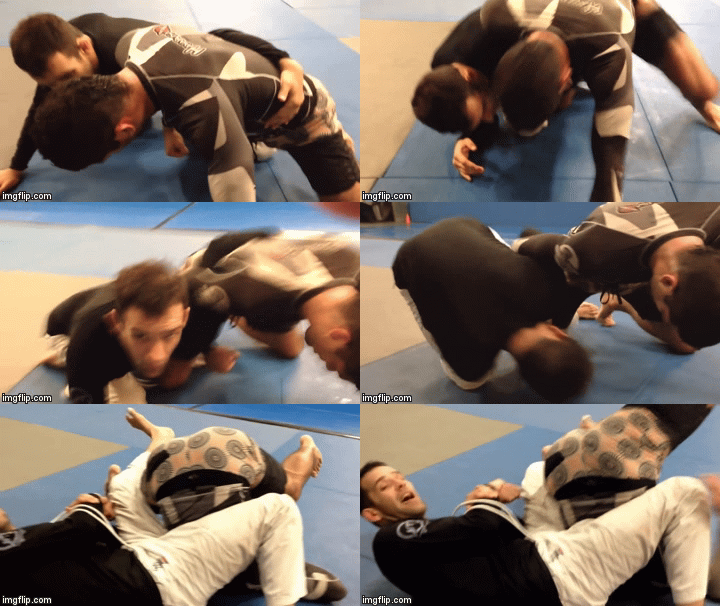
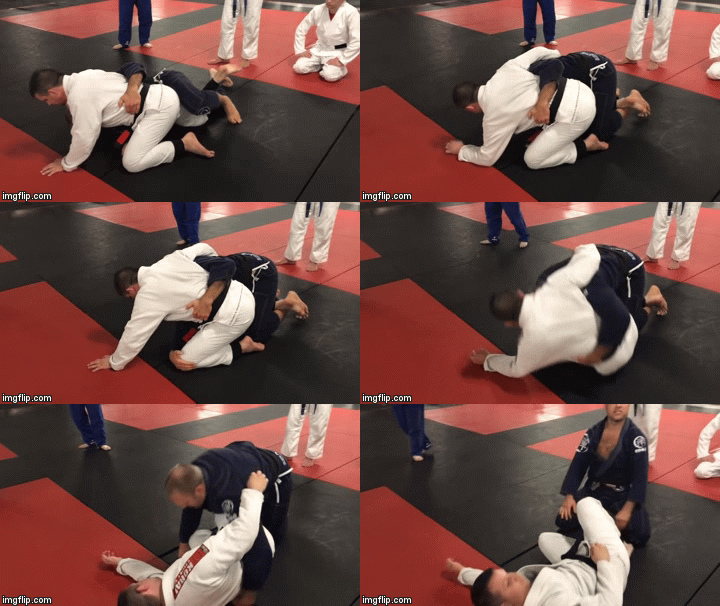

So, once you get a deep underhook you need to unlock your legs and turn to your knees. As you do that, you take the inside leg of the half guard out and wide. The knee of the other leg goes behind the knee of the opponent. This is key to obtaining a sound position that an opponent can’t just roll out of.

Now, the key to controlling the BJJ Dogfight position is in the underhook. You need to have the correct grip first, which comes in two main varieties. One is to latch on to the lat muscle on the opposite side and the other is to grab the shoulder. both open different avenues of attack, as you’ll soon see.

The Dogfight Game 

When in the BJJ Dogfight position, you’re going to be constantly active. There’s no resting there like in the mount or closed guard. On the contrary, you’re either attacking or defending the position. Going back to half guard is certainly an option, but it will take you a step back instead of forward.

Before exploring some attacking options from the BJJ Dogfight position, let’s look at some defense staples. In terms of base and posture, you’re both in pretty much the same position on your knees and with one arm posted on the mats. The battle is determined by your underhook or the opponent’s Whizzer. In that sense, headlock attacks are very readily available to your opponent, particularly D’arce choke attacks. The positioning of the legs also opens up rolling kneebars to them, so you have to stay wary of these two major threats.

A good underhook with tight elbow control will go a long way to deter any imminent D’arce attacks. Conversely, a strong base with your weight towards your heels, along with the underhook, will prevent quick rollunder and leglocks. Apart from that, you have most of the upper hand, even though you’re the one with an underhook.

Rolling Wristlock

This is one of the slickest attacks you can do from the Dogfight position. Wristlocks are sneaky anyhow, and even though they’re legal from blue belt onwards, even black belts rarely expect them. They’re notoriously underrated for such an effective submission hold. For this move, aim for an underhook that ends up with a grip on the shoulder rather than the lat.

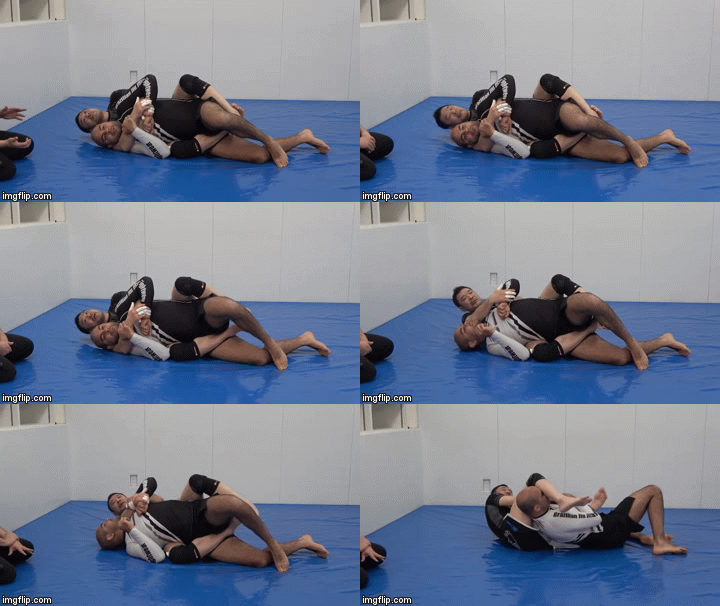
BJJ Dogfight Position Rolling WristlockThe BJJ Dogfight position offers an attractive entry into a really tight wristlock. Moreover, the entry ensures you end up on top, even if the wristlock fails. For the wristlock, you’ll first have to get a hold of the opponent’s Whizzer arm. What you want to do is use your free arm to catch the wrist of the opponent. then, sneak your underhook out and back and close a figure four with your arms. For the roll, go over your far side shoulder. You’ll end up in an Omoplata like position with a tight wristlock finish.

The Easiest BJJ Sweep

The easiest and most basic half guard sweep is actually one that is executed from the Dogfight position. While you might not know much about the position, you’ve certainly done this sweep.

BJJ Dogfight Position SweepThe moment you find yourself on your knees, with an underhook in, your goal is to off-balance your opponent. The angle that the underhook provides is a great one for sweeping people in all directions, the easiest one, though, is towards the underhook. For that, you’ll need to use your free hand and grip and pull the opponent’s far side knee. This is really going to compromise their base and allow you to push forward and end up on top.

Lucas Lepri DVD Science Of Guard PassingLucas Leite is a true aficionado when it comes to the BJJ Dogfight position. His unique take on the half guard utilizes the Dogfight a lot, as you can see in his “Coyote Half Guard” DVD Instructional. There’s also a lot of information on the Dogfight position in it! 

Headlock Attacks

Attacking the headlock is harder when you’re starting off with an underhook, but it is by no means impossible. Quite the contrary, headlocks form the BJJ Dogfight position are high percentage attack that ensures you end up with either top position or a tap.

BJJ Dogfight Position HeadlockFor the headlock entry, the crucial thing is to widen your base before you transition into the headlock. That means extending your far side leg outside, similar to how you hold your leg when in the knee on belly. The next step is using the underhook to pull towards you and wrap the head with your free arm. You’ll also need to switch your hips slightly so that they face the opponent. How you proceed from there is up to you. You can use the head wrap half Nelson position you’re in to sweep, the transition to chokes or other dominant positions.

Triangle Choke

One of the coolest submission entries from the dogfight. It is also one of the easiest to mess up and end up on your back. However, when you get it right, you end up with one of the most attractive triangle entries apart from flying triangles.

BJJ Dogfight Position HeadlockThis setup is another one that relies on having a shoulder grip with your underhook arm. Actually, with this one, you need to connect your arms around the opponent’s neck. Once again, you’ll need an extended base with an outstretched leg. In order to get the triangle from here, you’ll have to go to the opposite direction first. this will have your opponent moving upwards, which in turns opens up space for you to thread the far side leg into a triangle position. How you finish from the triangle is down to you.

Spiderweb

The spiderweb position is one of the most versatile attacking positions in BJJ. While most people perceive it as only an armbar position, it offers much more than that. But that’s a subject for another article. Now, we’ll focus on obtaining the spiderweb from a dogfight.

BJJ Dogfight Position SpiderwebOnce again, this is an attractive transition that requires you to be quite agile. It is not hard at all, though, and as long as it is technical, anyone can do it. Having an underhook mean you’re in a good position for an armbar, after slight adjustments. The most crucial adjustment is sneaking your arm back towards you. Make sure you do it fast and with a loose arm so that the opponent doesn’t get attacking opportunities. Once you have the arm in, you already have an armbar entry. All you need to do is throw the near leg over the head and roll over, pulling the opponent into a spiderweb.

Final Words

The BJJ Dogfight position is a great attacking pitstop for everyone that likes to play half guard. In essence, there’s no playing offensive half guard without it. It doesn’t matter if you like Z-guard, lockdown, or another half guard variation. The Dogfight is the nexus for all half guard attacks that work. So make sure you give our attacking options a try, to help you get more out of the position than just a sweep.

Half Guard Sweeps: Lockdown Masterclass

The Only BJJ Half Guard Sweep You’ll Ever Need!

Dynamic Underhook Half Guard No-Gi Sweeps

How To Discover Your Best Learning Style in BJJ

Learning BJJ: The Three Styles Of Learning

Did you know that there are threes styles of learning things? Since learning BJJ is still learning, all fo the principles of the learning styles apply to it as well. Given how individual learning is, people will often be in between some of the three main styles. In essence, we use a mixture of all three when we learn, but we do favor one over the others. The one we favor is the one that we define as our main learning style. Let’s look at what these three styles are and how understanding them can help you learn BJJ faster. 

When you’re in Jiu-Jitsu class, which method of learning do you prefer? Do you learn easily just by watching the instructor demonstrate the moves? Is it much easier to hear what they’re saying rather than just watch what they’re doing? Or, do you prefer to try the move out with and learn along the way? In most cases, all of these methods together help us when we’re learning BJJ. However, one of them is usually a favorite, meaning that if you remove the other two, you’ll still be able to get the point of the move. However, if you remove that one, learning becomes really hard and most likely, improbable. So what exactly are these learning styles?

The Three Learning Styles

According to the VAK we use the main methods of receiving, processing and understanding new data. VAK stands for Visual, Auditory and Kinesthetic, which describes all three learning styles within this modality.

All three learning styles are developed throughout our life, mostly at a very young age. Basically, in kindergarten, we go through a Kinesthetic learning phase. Later on, mostly in primary school, visual methods of learning take over. Finally, as we go to high school and college, most of our learning tend to switch again, this time towards auditory. While this can, of course, varies on an individual basis, it is a rough outline of how we master all three learning styles.

Kinesthetic learning is basically the ability to process and understand new information by means of interacting. This means using touching and movement as the main methods of learning new skills or information.

Visual learners, unsurprisingly, learn most just by watching. In that sense there tend to be two main types – those that learn by writing down, and those that prefer different visual materials to write. Visualizing is the most prominent tool of this learning style.

Finally, auditory learners are those people that you might see talking to themselves, Yeah, as crazy as it sounds it is a learning style and a method of remembering. With them, it is all about the information they can hear rather than see or touch.

It just so happens that the VAK approach is one of the best ways of learning BJJ as well. Let’s look at ways in which we can use it to improve our study of grappling.

Learning BJJ: Know Your Learning Style

Learning BJJ with the help of the VAK system is nothing new. In essence, it is precisely how we all do it anyway. The difference is that, when you know your learning style, you can use that to learn things much better and faster. Let’s face it, Jiu-Jitsu is never ending and it has countless things to learn. Whether you like to learn specific techniques, understand principles, try out the conceptual approach or all of them, you’ll have lots to learn.

Learning BJJ: What Is Your Learning Style?The thing to understand here is that no one style of learning is better than the other two. As an individual, you’re most likely in favor of one of them. However, that doesn’t mean that this is the method that will be universally the best option for everyone.

A special note here for coaches and instructors. Whatever your learning style is, your teaching style does not have to reflect it. You can teach in one, two or all the styles. Whatever you choose remember to try and understand the individual students’ learning styles when you’re explaining. This is particularly important when you’re correcting someone while they’re performing the move you’re teaching.

Auditory Learners

If you are an auditory learner, then you must know how to position yourself best to understand what’s going on. During the demonstration, an instructor is going to move, and often times, end up muffled. You need to know how to position yourself best to be able to catch all, or at least most of what they’re saying.

Furthermore, whenever an instructor is overseeing you doing a move, ask directly about anything that’s not clear. Make sure you ask enough questions so that you get a detailed explanation. In cases when an instructor doesn’t speak particularly clearly, make sure you ask simple questions fo short, understandable answers.

*Instructors’ tip: Make sure that when you’re explaining to an auditory learning style student you use as detailed explanation as possible. Explaining every step you take during a technique will ensure they get the most information possible. Give clear directions on what they should do when performing a technique without interfering with your limbs. 

Visual Learners

Learning BJJ as a visual learning type is something that fits right in. The common thing BJJ classes have is repeated visual demonstration of a given move. During such a time, even if an instructor doesn’t really say everything, they’re doing, you can see every little detail of the move. For visual learners, this is perfect.

Once again it is important to position yourself correctly to be able to see every important angle. Not only that but make sure you ask to see something again. As a visual learner, it is best that you ask you questions during the main demonstration, rather than when an instructor oversees you doing the move. Also, try to get permission to circle around and look from different spots. With most BJJ instructors, this is more than fine.

*Instructors’ tip: More than half the people in a given class tend to be visual learners. this is perhaps why BJJ classes are organized in the way they are. To teach visual learners, make sure everything is clearly visible. That means figuring out creative ways to show things that are not always clearly visible, like guillotine choke details, for example. IN essence, make sure everything you do is clearly visible to the students. 

Kinesthetic Learners

Kinesthetic learners usually make up the smallest portion of VAK learners. However, grapplers do tend to be keen on kinesthetic learning, so you can expect quite a lot of them in a BJJ class. As a kinesthetic learner, you have two main avenues of learning. One is to ask the instructor to demonstrate the move on you, which, depending on the technique,  is not always a good idea. Another is to ask the instructor to place your body/limbs in the correct position when they oversee your execution of the move.

Learning BJJ: Know Is Your Learning Style for fast progressRemember that as a kinesthetic learning type, you can use higher belts for learning BJJ as well. Try to pair up with one every class, and let them go first. This will give you a much better understanding of the technique before you get to do it. Oh, and make sure you drill, both with and without a partner. A lot!
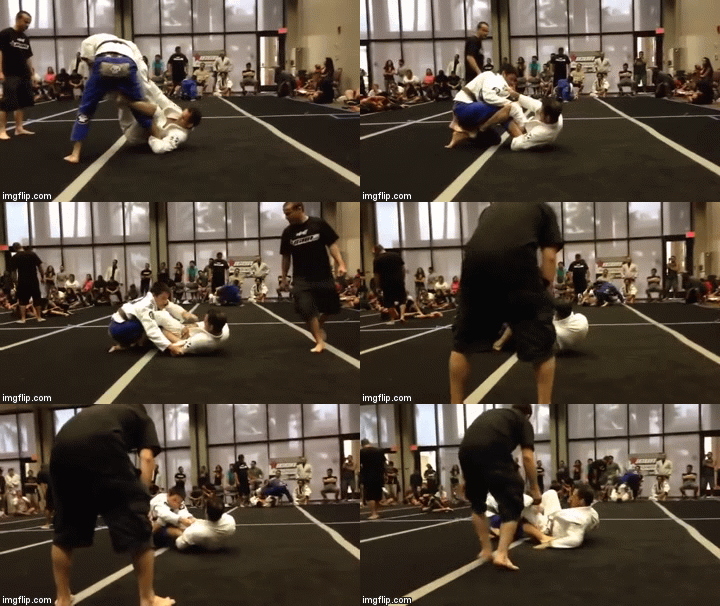
*Instructors’ tip: For kinesthetic learners, drills are key. You’ll easily notice that the more drills you assign, the better they get. use drills as an invaluable tool to help kinesthetic style learners progress better. Also, whenever possible, show the moves you’re teaching on them at least once. It goes a long way to help them process even very complicated information.

Tom Deblass Solo And Partner Grappling Drills DVDTom DeBlass has the best resource on the subject of drills. Use his “Solo And Partner Grappling Drills For Rapid Improvement” DVD instructional to make sure you get every move down with no difficulty! There are four volumes covering every possible aspect of BJJ drills that you can think of! 

Summary

Whatever your learning style is according to the VAK modality, you’ll find success in Jiu-Jitsu. Also, note that as much as you rely on one of them, the other two are also essential to your progress. Spend some time discovering your style so that you know how to approach learning BJJ in a way that is best suited to you!

Do You Have The Best BJJ Style For Your Body Type?

https://bjj-world.com/learn-valuable-lessons-from-every-roll/

Things That Greatly Annoy Your BJJ Instructor

The Drawbacks Of Being A Submission Specialist In BJJ

The One De La Riva Footlock That Really Works!

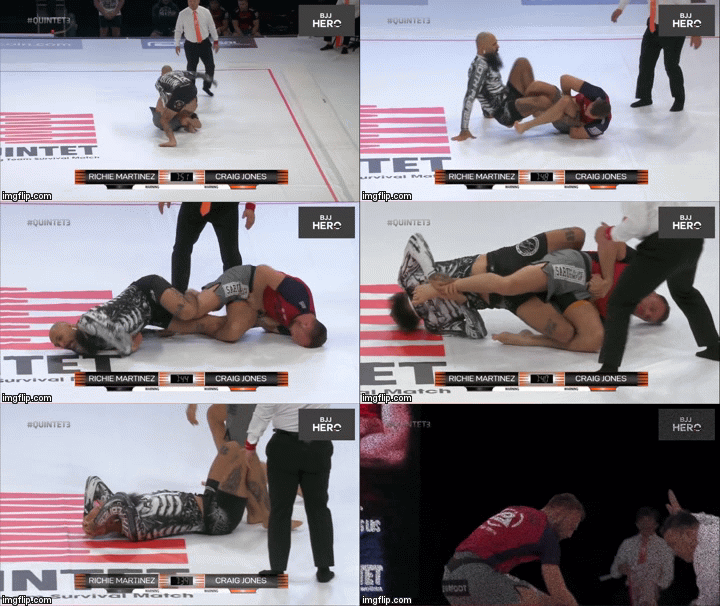
Craig Jones Catches Boogeyman Martinez wit ha De La Riva Footlock

The De La Riva guard is a real staple of Jiu-Jitsu. It is not only a position that allows you to control and attack from the bottom but also an attractive form of open guard. All in all, it is one of the most utilized modern BJJ positions. In fact, it was a huge precursor for the emergence of the Berimbolo, the latest Jiu-Jitsu craze before leg locks. However, catching leg locks from the De la Riva Guard often proves to be a tricky business. Not many people have successfully applied a De La Riva Footlock in competition. There are, however, such options and they’re really high-percentage! 

It is always great when you get a chance to connect some high-percentage move with a position you’ve been using for years. For people, that really love their Berimbolos, the modern leg lock game did not come as good news. The De La Riva guard opens leg attacks for the standing grappler. Moreover, there are a few legs locking counters to the Berimbolo to further frustrated players of this guard. Well, it is time for revenge! Now you can hunt for a De La Riva Footlock to completely catch opponent’ by surprise. It is a move that works, unlike many other previous foot lock attempts from the De la Riva.

The De La Riva Footlock

The De La Riva foot lock was somewhat of a Bigfoot for people that are enthusiast about both of those techniques. The basic principles of leg locking dictate that both our feet need to be between the opponent’s legs. Well, at least if the goal is an effective foot lock. The De La Riva guard which works with an outside hook seems directly opposed to this foundational principle. So, how does a leg lock from there actually work?

In essence, there are two ways in which you can use the De la Riva guard to get a foot lock. The most common one is to transition into a guard that provides you with an inside position for your legs. The usual contenders here are the single leg X guard (no surprise there) and the X-guard. While they both offer awesome leg locking options from the AShi Garam, they do require work to get into.

On the opposite side, you have a direct De la Riva foot lock setup. But how does it work? Doesn’t it go against the principle that guarantees leg lock success? Well, if you try it yourself, you’ll most likely end up frustrate d and give up. The trick here is to think outside the box. One world class grappler did and came up with a top option for a direct De La Riva foot lock. So much so, in fact, that this submission is often referred to as the Caio terra foot lock.

How It Works

The way these foot lock works is similar to a belly-down foot lock from the straight Ashi Garami. The lock is the same, but the positioning is completely different from what we’re used to. The Caio Terra De La Riva foot lock starts with a heel grip from the De La Riva. Even if you’re with the Gi, do not be tempted to hold on to the pants, but rather go for the heel.

The De La Riva Footlock Done In CompetitionThe first step requires you to off balance your opponent so that they shift weight off their lead leg. The goal is to go for an ankle lock grip on the bottom foot. Since you have to raise your hips off the ground for this, you use the increased leverage to also bring the opponent to a kneeling position.

The second step has to do with really sinking in the grip. With the Gi, you can use your own lapel to enforce the position of the hand. Moreover, you need to place the hook of your De La Riva leg inside the opponent’s hip, fingers pointing outwards. this gives you an anchor for hip control, as well as control over their knee. The opponent’s leg should be extended at this point.

For the finish, You need to turn towards the trapped leg, rolling over your shoulder. The foot lock is most powerful when finished from a belly down position. However, if you have everything set up correctly, you’ll rarely need to go all the way to the belly-down position. Can work as an ankle lock, finger lock or Achilles lock.

Troubleshooting 

The main thing you need to focus on with the De La Riva foot lock is keeping the opponent’s leg as straight as possible while you set your grips up. In order to achieve this, you must maintain a distance. The best way to achieve this is to keep the pressure on their hips with your free leg. You can use foot to hip or hook the free leg of the opponent. Basically, anything will do as long as you can keep their hips away from yours so that you can work on the trapped leg.

Troubleshooting the Caio Terra De La Riva FootlockNext up is the grip. Remember that with the De la Riva you start with a heel grip, but your leg is on the outside. this means your leg is in the way of your grip. So, in order to get the grip you need, once you have an extended leg and a kneeling opponent, first thread the arm around the ankle. You don’t have to have the grip over your thigh at this point. AS you turn to your side, the more space is going to open up for you to thread the arm and tighten the foot lock.

Finally, do not forget your De La Riva hook. Your leg should not only dangle as you fight for grips and the hip distance. It is imperative that you keep your hook tight on the hips and use it to help you tilt to your side for the finish. The De La Riva hook actually acts as an Ashi Garami here, allowing you to completely control and move the leg of the opponent, from the hips down.

The Craig Jones Modification

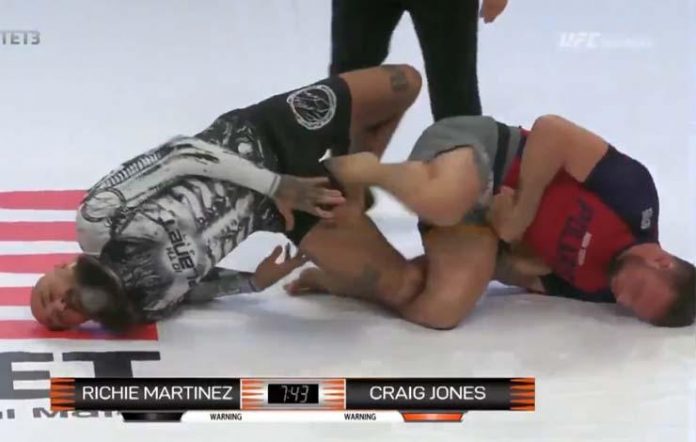
OF course, some of the world’s top leg lockers have already tinkered with this effective De la Riva foot lock. One of them is Craig Jones, who seems to have decided that he needs more leg locking weapons in his arsenal. At the Quintet 3 tournament, Craig disposed of 10th Plante’s Richie “Boogeyman” Martinez.

Craig Jones Variation Of The De La Riva Footlock Craig’s take on the foot lock was to play with the weight distribution. Instead of looking to go belly-down, Craig decided to keep his weight on the opponent’s hips, thus tightening the lock. He went to turn but stopped just short of it, placing his forehead on the ground. His goal was to place his shoulder on the ground so that he could lift his hips. He then projected his weight forward towards Martinez, completely blocking his hip. As “Boogeyman” tried to turn and get out, Craig even let go of the De La Riva hook in order to maintain hip pressure and prevent rolling.

It is also important to note that Craig had a really low grip. He had an arm around the foot of Martinez, so when he applied pressure the lock acted a lot like a heel hook on top of an ankle lock.

Craig Jones Down Under Leg Attacks

Check out all of Craig’s leg locking exploits in his “Down Under Leg Attacks” DVD instructional. In the 4 volumes of the instructional, he goes over a bunch of top and bottom leg lock setups, along with lots of signature moves. For anyone interested, there are also some cool leg lock defenses and counters ins there.

Final Thoughts

The De La Riva foot lock is a really potent weapon for many reasons. First, it is something very few people will expect from the position. Next, it is proven to work at the highest levels, bot hin GI and No-Gi. Finally, it is legal for everyone under any ruleset, as it is a straight foot lock. Even if you try to turn it into a heel hook, unless you do the Craig Jones grip you’ll fail due to the positioning. So use the foot lock as Caio or Craig and enjoy all the taps that you get from it!

The 9 Best Leg Lock DVD Instructionals For Grapplers

The BJJ Ankle Lock – A Detailed Guide For Every Position

John Danaher’s Ashi Garami System Of Leg Locks

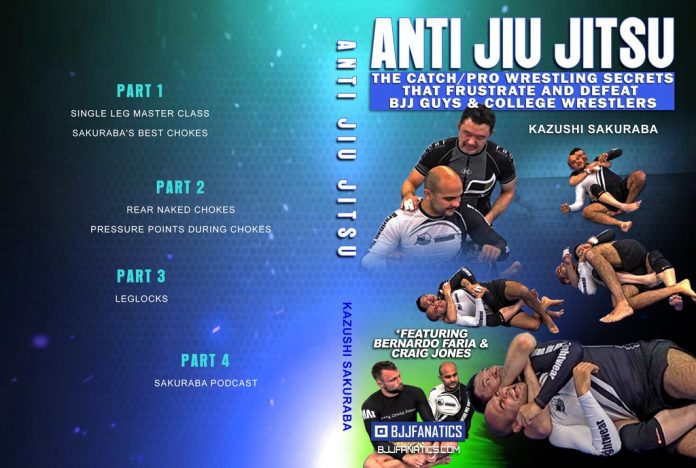
“Anti Jiu-Jitsu” Kazushi Sakuraba DVD Review

A Review Of the latest Kazushi Sakuraba DVD "Anti Jiu-JItsu"

So, not so long after his very first modern BJJ DVD release, Kazushi Sakuraba is back with yet another instructional. We can’t say we’ll mind, as everything Sakuraba related is always entertaining, to say the least. This time, Sakuraba provides us with his original take on Anti Jiu-Jitsu. In short, it is an instructional on how catch wrestling can be used to beat BJJ. If it was anything else but a Sakuraba DVD, this instructional would probably never be considered seriously. However, given Sakuraba’s background, you can bet this instructional is going to have some crazy grappling move that nobody’s thought of.

ON SALE HERE:
Kazushi Sakuraba – “Anti Jiu-Jitsu” (DVD/DIGITAL)
A Review Of the latest Kazushi Sakuraba DVD "Anti Jiu-JItsu"The famous, or infamous, depending on how you look at it, “Gracie Hunter” is going at it strong once again. Sakuraba sure seems relentless, as he will probably never retire from martial arts. We can’t say we mind, though, particularly with stuff like the Anti Jiu-Jitsu Kazushi Sakuraba DVD coming to light. Who better to divulge the secrets of catch-wrestling than one of the most seasoned catch-wrestlers of all time? After all, BJJ is turning to catch wrestling for advice more and more often in modern times. This time, though, there might even be more answers that there are questions.

What is Anti-Jiu-Jitsu?

Of course, you can expect Sakuraba to name his grappling instructional “Anti Jiu-Jitsu”. After all, not many others will, correct? Regardless, his take on the supremacy of catch-wrestling over BJJ is about to get tested by thousands of grapplers worldwide. Will it stand up to the claim that it can “frustrate and defeat” BJJ? We’ll see. Let’s not forget that the “Almighty” Gracie Hunter also claims this instructional will help you stop collegiate wrestlers in their track.

There’s no question that catch-wrestling is one of the oldest submission grappling martial arts. As such, it is also the one that’s more similar to BJJ compared to others. Namely, without the restraints of tradition or Olympic rulesets, which bound sports like Judo and wrestling, catch wrestling was always free to evolve. As such, it morphed through the years, adjusting its techniques along the way. In fact, as forgotten as it is today, catch wrestling is actually still evolving.

The modern evolution of catch, though, only happens along with Brazilian Jiu-Jitsu. The fact both arts feature lots of submissions and do stretch outside any boxes, means they’re perfect for each other. As such, BJJ has a lot to learn from catch wrestling. All it takes is someone that really understands catch wrestling and BJJ to connect them together. Rest assured, the name of this Sakuraba DVD might be “Anti Jiu-Jitsu” but the contents are the staples of the next level of BJJ without a doubt!

“Anti Jiu-JItsu” Kazushi Sakuraba DVD Review

Kazushi proved to the world how efficient his brand of catch wrestling can be on multiple occasions. Apart from his crazy career as a catch and professional wrestler, Sakuraba is also an old-school MMA standout. He fought literally everywhere that mattered, from the UFC to Pride and K1. Currently, on the Rizin roster, he is also very active in the ultra-entertaining Quintet Grappling tournament that he founded.

A Review Of Kazushi Sakuraba DVD "Anti Jiu-JItsu"Sakuraba’s previous DVD instructional, “Kimura Hunting” really brought together the catch-wrestling double wrist lock and BJJ Kimura submissions together. The instructional explores Sakuraba’s own Kimura hybrid, one that brought him significant victories. Among those are a couple of notable Kimura wins over and Royler and Renzo Gracie. after the great reception of this instructional, the latest Sakruba DVD goes even deeper into his grappling philosophy. Now, he demonstrates multiple aspects of his catch wrestling-Jiut-Jitsu hybrid that made him one of the most fearsome grapplers of his time.

The “Anti Jiu-Jitsu” Kazushi Sakuraba DVD has 4 volumes, in which his ukes are once again Bernardo Faria and Craig Jones. The key goal of this instructional is to teach you how to get control over an opponent long enough so that you can finish a submission. While in Gi Jiu-Jitsu this might not be a huge thing, it is crucial for success without the Gi. Sakuraba is a real submission machine, able to get a tap from every angle. His innovative take on submission grappling provides answers to common BJJ questions. Solutions include different leverage points and even pressure points to ensure you break through any resistance. Let’s look at some key chapters.

Key Chapters 

The way this Kazushi Sakuraba DVD is structured is in four volumes, each of them containing only a couple of chapters. In fact, two of them only has a single chapter. Still, one being the third volumes on the subject of leglocks, somehow I think it’ll be everyone’s favorite.

The reason the chapters are so few is that each represents a masterclass. Look at it as a seminar on a given subject by Sakuraba, Faria, and Jones. The first volume addresses single leg takedowns from every possible angle until halfway through. The second portion is a completely different masterclass, this time on chokes. Of course, you get a lot of variations on common chokes, along with some Sakuraba “Anti Jiu-Jitsu” specials.

Kazushi Sakuraba DVD "Anti Jiu-JItsu" ReviewThe second volume also contains two separate masterclasses. This time, it is all about rear naked chokes in one masterclass, and pressure points in the other. the pressure point masterclass is once again about chokes, ensuring you really get a finish even against hardcore grapplers. In that sense, this DVD really is a blueprint for beating the best submission defenses BJJ and wrestling have to offer.

Of course, there’s no need to discuss Sakuraba’s leg locking pedigree. He is, after all, the quintessential leg locker in the world of grappling and MMA. This time, he really goes deep into his leg like philosophy and reveals some truly innovative concepts. The final volume is a podcast where Sakuraba shares his thoughts on submission grappling and how catch wrestling can be used to defeat straight up BJJ and wrestling.

Summary 

All in all, any Sakuraba DVD is worth having, if it is only for the entertainment factor. However, this one is solid all over. It is entertaining (that’s a given) but it is also highly informative. It has some old catch wrestling staples that come as new to everyone in the modern grappling world.” Anti Jiu-Jitsu” is a great way to take your game not only to a new level but in a completely new direction than modern grappling.

ON SALE HERE:
Kazushi Sakuraba – “Anti Jiu-Jitsu” (DVD/DIGITAL)
A Review Of the latest Kazushi Sakuraba DVD "Anti Jiu-JItsu"

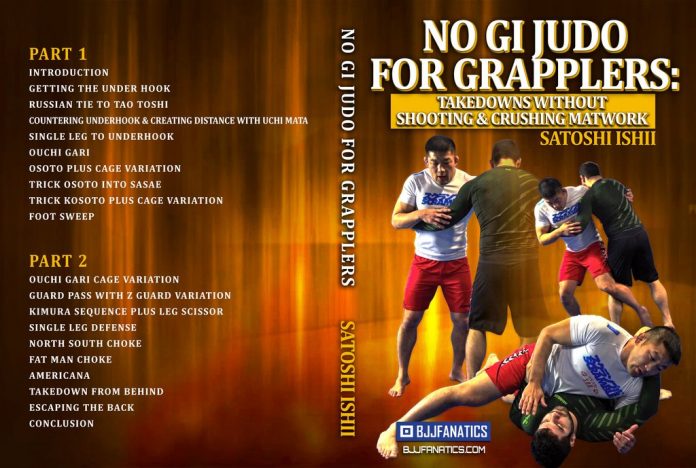
Satoshi Ishii DVD Instructional “No Gi Judo For Grapplers” Review

Review Of The "No Gi Judo For Grapplers" Satoshi Ishii DVD Instructional

Judo for Gi BJJ takedowns and wrestling for No-Gi, right? That is the commonly accepted theme in BJJ when it comes to the standing game. It is very logical, as Judo is all about manipulating people with the help of the Gi. On the other hand, wrestling is all about shooting for takedowns, collar ties and 2 on 1 grip. Well, what if I told you that this doesn’t have to be the case? A certain Ronda Rouse sure proved how effective Judo can be without the Gi. Moreover, lots of academies worldwide often teach single and double leg takedowns in Gi classes. Now, one of the greatest Judokas of our time gives hi two cents on “No Gi Judo For Grapplers” in the brand new Satoshi Ishii DVD Instructional.

ON SALE HERE:
Satoshi Ishii – No Gi Judo For Grapplers
Review Of The "No Gi Judo For Grapplers" Satoshi Ishii DVD Instructional
Judo is one of the best grappling martial art in the world. Well, apart fromBJJj, of course. Joking aside, Judo’s prowess is undisputed, at least when it comes to throwing someone down to the ground in a highly effective manner. However, in MMA or No-gi Jiu-Jitsu getting the Judo grips people are used to is a real hassle. unless you’re just as good at BJJ as you are in Judo. Satoshi Ishii certainly is, and he has lots to share on the subject. The “No Gi Judo For Grapplers” Satoshi Ishii DVD instructional is the one resource that is going to teach you how to use Judo in stations when there’s no Gi to cling on to.

No-Gi Judo

For most of us, the term No-Gi Judo might seem odd.that’s because it is. Judo is a highly traditional grappling martial art. in fact, we have judo to thank for the formation of BJJ and the precursor for today’s modern BJJ Gi design. The two arts share a lot, so it is common to seep people in each art using a move from the other. However, when the Gi comes off, Judo tends to become a lot more difficult.

However, if you have an Olympic level Judoka, who is the pride of Japanese Judo, Gi or No-Gipeople are going to go flying. Satoshi is one of the best Judo practitioners of today, he keeps proving both in MMA and grappling. His Judo is most definitely on a different level than most. As such, he is in a pWhy listen to Satoshi? Well, apart from being such a Judo badass (Olympic and All Japan Judo Champion) he is also a Yuki Nakai BJJ black belt. For those that do not know who Nakai is, he is a Carlos Gracie Jr. black belt.

“No-Gi Judo For Grapplers” is the second Satoshi Ishii DVD instructional to come out in quick succession. The first one was all about ‘Japanese Judo Secrets” and was a Gi instructional. Now, Satoshi makes sure he covers all bases by covering how Judo can work in No-Gi settings as well.

REVIEW: “No Gi Judo For Grapplers” Satoshi Ishii DVD Instructional

As a Japanese life long martial artist, Satoshi thrives on discipline and organization. Conversely, his “No-Gi Judo for Grapplers” DVD is highly organized and meticulous. in it you get two volumes, each with well over a dozen chapters. In both volumes, Ishii covers No-gi modifications of some of Judo’s most high percentage moves.

The first portion of this Satoshi Ishii DVD instructional covers some basic clinch fighting along with the essential sweeping techniques of Judo. The second one goes into throws, but also covers submissions, escapes and even guard passing. Of course, everything is tried and tested and works with a very high degree of success. On a different note, Satoshi explains things really well, and the sound and video quality are pretty much flawless.

DVD 1

"No Gi Judo For Grapplers" Satoshi Ishii DVD Instructional ReviewThe first volume, as we previously mentioned is all about foot sweeps. As usual, it starts with an introduction that covers Satoshi’s take on No-gi Judo, and how you can get the fight to the ground. In order to make things crystal clear, he then covers some basic tie-ups from standing positions. For example, he demonstrates variations of the underhook and how it can open up Judo attacks without the Gi. He also goes into a wrestling classic – the Russian tie and gives it a new and innovative Judo dimension.
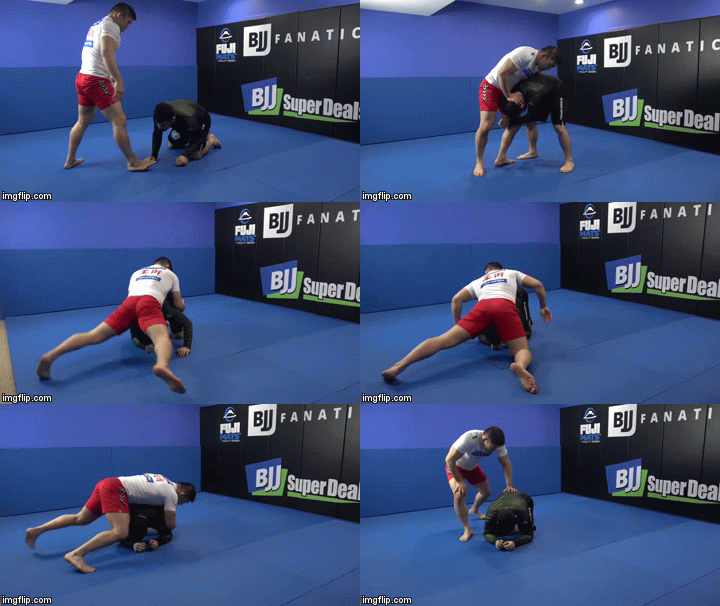
On the subject of foot sweeps or Ashi Waza, there’s hardly anyone better than Satoshi. He starts off easy with the Ouchi Gari and then moves on to things like Osoto Gari and its variations. He also covers some trick setups for the Osoto than end up with different takedowns, like Kosoto and Sasae. There are also a few counterattacks, mostly when an opponent attempts to udnerhook you.

DVD 2 

The second portion of this Satoshi Ishii DVD Instructional truly brings Judo and Brazilian Jiu-Jitsu together. Here, Satoshi teaches a BJJ/Judo hybrid that includes guard passes and a ton of submissions. Given how difficult No-Gi guard passing is, I really enjoy his take on passing the guard, particularly the Z-guard.

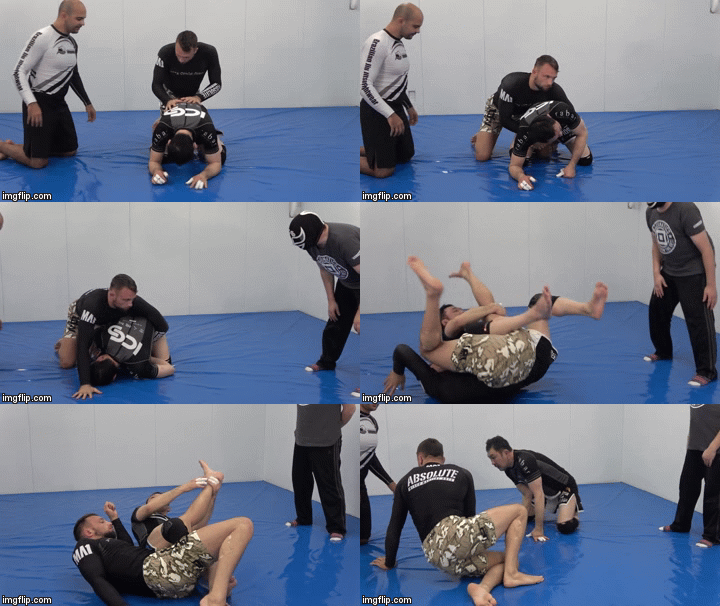
"No Gi Judo For Grapplers" Satoshi Ishii DVD InstructionalThe submission portion of includes some Judo classics, this time done in No-Gi style. Of course, you get a long and detailed version of the Kimura, along with a complete sequence to wrap things up. There are also some crucial North-South choke details, and the Fat Man Choke is certainly an innovative way to strangle people. And no, there’s no need to e fat to do it. Some defensive moves wrap up the No-Gi Judo For grapplers DVD, mostly by showing back control escapes and single leg takedown counters.
Why You Need To Get It

The reason you need this Satoshi Ishii DVD Instructional is simple – better takedowns. It doesn’t matter if you’re a D1 one wrestler, or a black belt Gi only BJJ competitor. “No-Gi Judo For Grapplers” is a DVD set that’ll open up some new perspectives for you. Understandably, the things outlined here are also very applicable to the Gi. In fact, gripping differently when in a gi match might really throw your opponents off. Conversely, going for Judo moves without the gi is also a huge element of surprise. All in all, you need this BJJ DVD to become a better overall grappler, both standing and on the ground.

ON SALE HERE:
Satoshi Ishii – No Gi Judo For Grapplers
Review Of The "No Gi Judo For Grapplers" Satoshi Ishii DVD Instructional

Budo Fit DVD Review: A Nic Gregoriades Instructional

review of the Budo Fit DVD training program, a NIc gregoriades isntructional

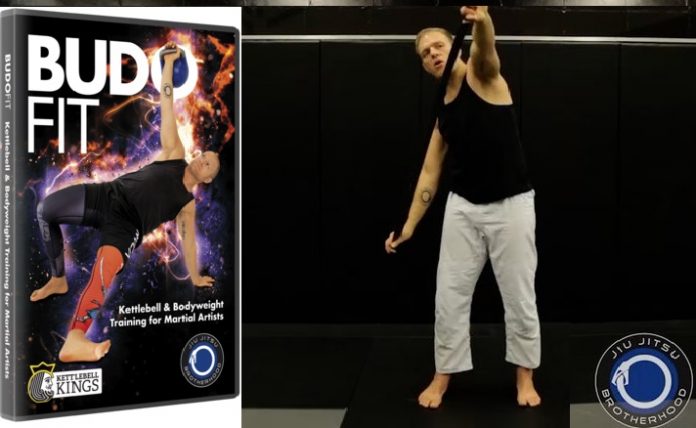
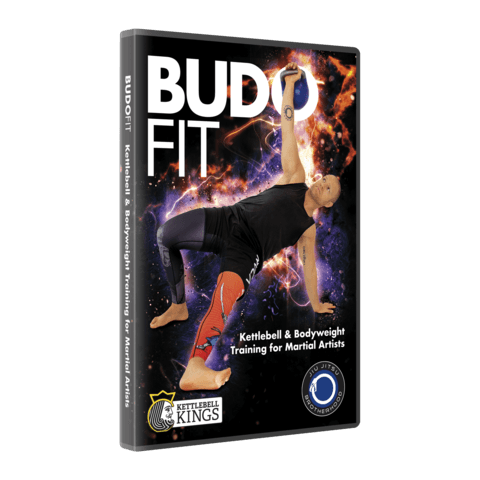
Finally, a kettlebell training program that makes sense and is easy to execute! What is the point of creating a kettlebell (or any kind of) instructional if you’re just going to demonstrate exercises? If the goal is to show the exercises only, then, by all means, do so. But please stop naming them programs and workouts! I’ve been burnt with the so many times before that I was really hesitant about giving the Budo Fit DVD a go. What made up my mind was the fact that it is aNic Gregoriades instructional, and Nic always has great things to say. I didn’t wrong that much can tell you now!

ON SALE HERE:
Nic Gregoriades – Budo Fit (DVD/DIGITAL)
Budo Fit DVD Nic Gregoriades instructional
Kettlebells are by far one of my favorite training methods. When you’re juggling an insane love for BJJ, teaching classes, a day job, and a family, not much time is left for strength training. So, kettlebells and gymnastics are my go to, as they give me the best bang for my buck in the time that I have. We already know that kettlebells and BJJ are a match made in heaven. However, there aren’t that many great programs out there, particularly not one intended for grapplers. The Budo Fit DVD is one done by a high-level grappler, for all grapplers. It covers everything you need, including guiding you through the workouts themselves! Thumbs up for this Nic Gregoriades Instructional, no doubt about that!

Nic Gregoriades

Nicolas Gregoriades is a Roger Gracie black belt and one of the most knowledgable young grapplers in the world. His take on Jiu-Jitsu is a highly philosophical one, with lots of attention to how stuff works and a fascination with concepts. I’ve enjoyed many of his videos on different subjects, as he really knows how to explain key points of the art to a wide audience.

Budo Fit DVD Nic Gregoriades instructionalNic is a South Africa native that comes from a martial arts family. He started off in Karate with his father, before moving on to Judo. He already had his sights set on BJJ but had nowhere to train at. So he went on to train Judo until he reached brown belt. When he moved to England, he found Roger Gracie and stayed with him throughout his journey. He became Roers’s first black belt in 2008. Today, Nic runs Jiu-Jitsu Brotherhood, his own BJJ association.

He is also a big proponent of kettlebell training as well. On that note, he is just as good as explaining kettlebell training as he is Jiu-Jitsu. The Budo Fit DVD is not a complicated instructional, but it is one that offers programming and variety. Furthermore, there’s lots more in this Nic Gregoriades instructional than simply kettlebell exercises and workouts!

The Budo Fit DVD Review

As I said, I was not too thrilled about watching another disappointing kettlebell DVD instructional. As it turns out, it was the Nic Gregoriades instructional that I’ve been looking for all along. In it, Nic really covers everything, First up, it doesn’t require anything more than a kettlebell. The weight is down to your abilities and goals, but it shouldn’t be less than 16 kg if you really like to see noticeable benefits.

The Budo Fit DVD includes a whole host of chapters that cover mobility, strength training, improving your metabolism rate, mastering bodyweight movements and lots more. Plus, Nic makes sure everything ties in together perfectly in a few different workouts. Speaking of complete programs, there’s one for beginners, intermediate and advanced athletes, so nobody is left wanting.

  • Mobility

A really cool component of this Nic Gregoriades Instructional is the mobility portion. As a 2nd-degree black belt, Nic really knows what it means to train for grappling. In the Budo Fit DVD, he includes a couple of different mobility routines for both warming up and cooling down.

They’re just as good as BJJ warm-ups, as they are for any kind of physical training. The upside is that hey include BJJ specific movements, are not hard to follow and are not long at all! Still, they’ll not only manage to warm you up and cool you down but also improve your range of motion and overall mobility!

  • Strength And Power

This is where kettlebells enter the frame. Nic makes sure he covers all the foundations of training with kettlebells. In this portion, even people who have never picked a kettlebell up before will learn all they need to know. Moreover, there are some really cool exercise combinations that are perfect for grapplers. Nic has things organized in full follow-along workouts, which make things extremely easy. Also, his focus is on strength and power, with conditioning being just a welcome side effect.

  • Coordination And Movement

NIc gregoriades instructional BUdo Fit DVDThis is something that I did not expect to find in a kettlebell DVD. Do not get me wrong, it is something that makes the Budo Fit DVD that much better though! Here, Nic coves some basic calisthenics exercises, like pushups, squats, and jumps. But he doesn’t stop there. He also throws in some animal movement exercises and drills. As we already know, they’re a real staple of BJJ specific movement. However, the Nic Gregoriades instructional manages to tie them in with highly effective kettlebell work. Not only that, but the choice of exercises once again allows for people of different skill levels to constantly find a challenge.

The animal movement drills are shown both separately, and as part fo mixed workouts with kettlebells. That allows you to either sue them on their own or as part of the following along workouts.

  • Improving Metabolism

Finally, there’s another key benefit to training the way Nic does. Your metabolism is going to become much more efficient and will help you get in tremendous shape. It is not only conditioning that you get, but also a real helping hand in cutting and/or maintaining weight. All you need to do is follow the workout s along, trying to match Nic’s intensity and you’ll get in the best shape of your life in no time! Plus, it is a lot of as there’s a lot of variety to the workouts.

Summary 

As if you need me to keep on convincing you that the Budo Fit DVD is really something you need. Still, in case you’re not completely sure, let’ me throw in some more info. Each workout lasts no more than 40 minutes,  including the warm-up and cooldown portions. yeah, you’ll be all done in 40 minutes, using just 1 kettlebell and enough room to do a few animal drills forward and back. it is a convenient and fun way to get in shape and not waste any time doing it! Plus, it is really specific to BJJ so your benefits stretch much further than just athletic and aesthetic gains.

ON SALE HERE:
Nic Gregoriades – Budo Fit (DVD/DIGITAL)
Budo Fit DVD Nic Gregoriades instructional

Brown Belt Killing In Lousiana: RIP Adam Roy Williamson

Adam Roy Williamson Brown Belt Killing

Despite hating to be the bearer of bad news, we have to report about a loss of one of ours today. Yesterday a highly accomplished and respected grappler in Adam Roy Williamson was shot to death in Louisiana. The Grappling community is together in condemning the brown belt killing and mourning the Gracie United grappler. 

The Brown Belt Killing In Louisiana

In a very sad turn of events, Team juggernaut from Louisiana lost a team member, friend, and teacher in Adam Roy Williamson in the most unexpected and brutal fashion possible.  The 20-year-old was the victim of yet another act of gun violence.

The shooter, also 20, was identified as Jeremy Edwards. the shooting took place at an apartment complex where Edwards shot and killed two men, one of which Adam. In what seems to be an unprovoked attack, Edwards opened fire on a group of friends in The French Colony complex. The second victim is National Guardsman Dustin Wiltz. The brown belt shooting hit the BJJ Community hard, given Adam’s appreciation in grappling circles.

The police managed to arrest Edwards after a brief car chase. There’s a big list of charges that he’ll have to answer for.

Who Was Adam Roy Williamson

Adam Roy Williamson Brown Belt KillingAdam Roy Wilson was a brown belt under his father an IBJJF Masters Champion. Adam was also an up and coming MMA fighter and a Jiu-Jitsu kids coach. He also held some big accolades in various grappling competitions including IBJJF and Cage Warrior.
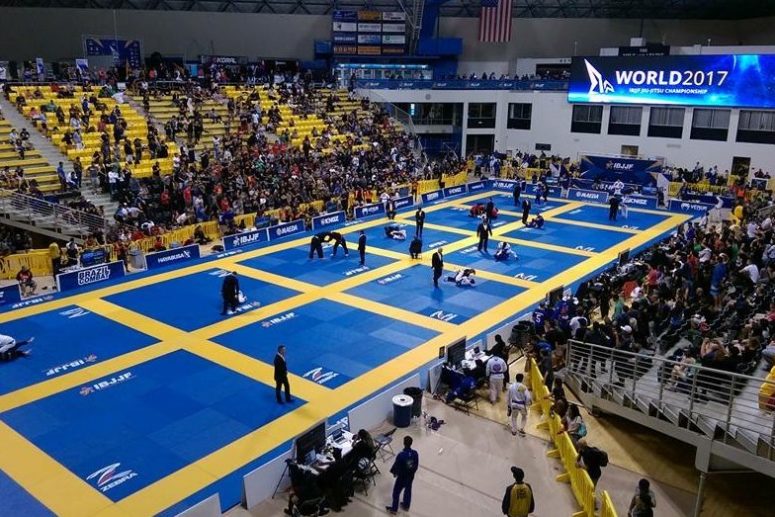
Adam was a model grappler, amazing teacher, and overall good guy. His untimely death plunged his family and team into disarray. Our thoughts and prayers are with Adam’s family and team members. At the same time, we strongly condemn the cowardly act that took away one of the BJJ community’s brightest future hopes. His father reacted with a heart-breaking post on social media.

“I live life without fearing much but almost every night when talking to our Maker I asked for the same thing just to keep my kids safe. The thought of this has haunted my nights from the day they opened their eyes. I’d imagine most parents have this fear. Whatever I’ve done wrong in my life whatever sins I’ve now paid the cost 10 fold with this one crushing blow. Does a human heartbreak beyond repair? I can now answer that question with a statement when Adam was born it took a piece of my heart to make him live and over his life, at times I had to give more to keep him and then without warning all of it was stolen with no way to get it back. No parent should have to feel this, it’s unnatural for our babies to go before us. I’ve had my share of pain in this life but didn’t understand before now what true suffering was. Regret fills every breath I take, tears I have cried a river and still fear the ocean that’s coming from a lifetime without him. Whatever fight the creator put inside me he stripped it from me when he took my Animal.
I need no sympathy just giving a reason I haven’t returned any text, calls, messages, posts. I’m not avoiding anyone on purpose, talking about this is difficult but I want to thank all of you for sending them it means more than I can say.” – Lang Williams

https://www.facebook.com/lang.williamson/posts/2671058682965418

Rest In Peace Adam Roy Williamson!

How To Get Over Grappling Competition Anxiety

Tips on dealing with grappling competition anxiety

Competing in anything is stressful. That said, there are levels to competition anxiety. A lot of that has to do with the competition setting. In general, team sports are usually less stressful than individual ones. Moreover, competing in martial arts is always harder than competing in other sports, at least mentally. After all, you are fighting with another human being, even though it is in a controlled setting. Furthermore, grappling competition is way different than other martial arts. Grappling is one of the oldest modalities of competition among people that do not intend to injure one another. And it is anything but pleasurable, at least until you get the hang of it. 

The thing about anxiety is that we can find ways to battle it because we can understand it. While everyone has a different response to stress,  the physiology of stress response is the same. It is normal to be jittery when you’re going up against another grappler, with a referee standing in the middle. After all, it is all about who has the better performance. Moreover, grappling competition is never without an audience, adding to the anxiety and stress of competitors. Still, as you’ll find out after your first one, the worst thing that can happen is that you can lose. And its nothing to be stressed about.

Solving Grappling Competition Anxiety 

Competition anxiety is something that literally every athlete feels. There isn’t a human being that has not felt anxious when under the spotlight. Whether it is competing, performing in front of an audience or any setting that is different from what we’re used to, anxiety will inevitably follow. The one biggest mistake is trying to go against it and look to remove it. The most important thing you need to know about anxiety is that it ‘ll never go away. That said, you can control it and even use it to your advantage.

Once again, anxiety and stress do affect everyone differently. However, the following tips cover pretty much everything, so that anyone can find a way to deal with anxiety. Remember that the point of grappling competition events is first and foremost to have fun. testing yourself and your tactics come second, and winning is at the very end.

  • Manage Expectations

When we compete with someone, the ultimate goal everyone wants is to be better than the other person. In simple terms, we all want to win. This is precisely why we get anxiety. the more we crave the win, the worse our performance anxiety is going to be. This first tip is also the most important of all: you have to accept that you won’t be able to win every match.

Solutions For Nerves And Jitters in Grapping CompetitionRegardless of how much you want it, or prepared for it, you’ll never be able to go without losing a match. Believe it or not, that is the point of competing. It is not important whether you lose because you make a mistake, or because the opponent is better. In a grappling competition, anything can happen. The point is that you go in looking for the win, but not expecting to get one in every match. the point is to work and compete for it, not go in there looking to claim it.
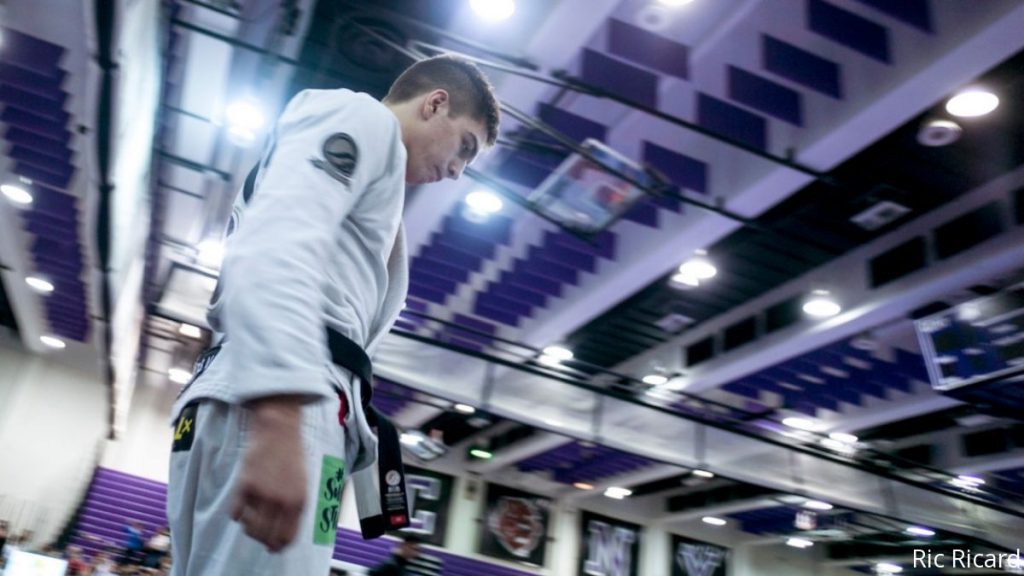
  • The Right Mindset

Of course, our minds play the most important role when it comes to having the competition jitters. Believe it or not, you can also train your mind, much like you do with your body. The main thing to remember is that you have to keep a positive mind, as obvious as that might seem. Now, you are going in to fight, so you shouldn’t think about unicorns and pink butterflies.

However, there’s absolutely no point to let negative thoughts enter your mind. This means not thinking about possibilities of losing, getting injured or making a mistake. This means you’re placing yourself under pressure and actually increasing your anxiety. Stay loose and keep a positive mindset.

  • The More The Better

If there’s one thing that could help you with grappling competition anxiety is competing. Yeah, the more you compete, the easier it is going to become. Think about this example for a while. Do you remember your first live rolling efforts? The moment you start rolling, you’ll get absolutely crushed. However, the more you do it, the easier it gets. Not only that but you become better at it.

Well, it is the same when you compete. The more BJJ tournaments you go to, the more experience you get. That means that you’ll inevitably become better, but also more comfortable competing. As that happens, anxiety is going to go down.

  • Focus On Your Gameplan

Speaking about strategy, fear of the unknown is always going to result in anxiety. The more you wonder about what your opponent is going to do, and what you’ll do in response, the more you’ll build up anxiety. Instead of trying to figure out what is going to happen, make sure you know what you’re going to do, at the very least.

When you prepare for a competition, make sure you devise a solid game plan. More importantly, if you want to be calm and perform well, stick to the plan. Do not go off books the moment you slap and bump. Focus on executing your gameplan and making the opponent fight your game. This will have you in control the entire time. On the plus side, working your gameplan step by step does not leave much time to think about anxiety.

Bernardo Faria Transition Mastery DVD REVIEW
Techniques List

A good transitioning game is going to take care of pretty much any competition scenario. it’s a great way to both play your game and prepare for the unknown. Bernardo Faria is a master of transitions that is ready to teach you how to become one too. Pick up his “Transition mastery” DVD set for a taste of something different!


  • Remove Unnecessary Stress

Easy |Ways of reducing grappling competition anxiety and nerves By unnecessary stress, I mean everything that doesn’t have to do with a grappling competition. The first thing here is to make sure you get a good night’s sleep. UNless you give your mind a rest, your body won’t be able to perform. Next up, make sure you’ve got everything dialed in. Focus on finishing your weight cut on time and without too much hassle. Make travel arrangements so that you have time to get ample rest before stepping on the mats. All in all, try to limit sources of stress as much as possible so that you can focus on Jiu-Jitsu completely.
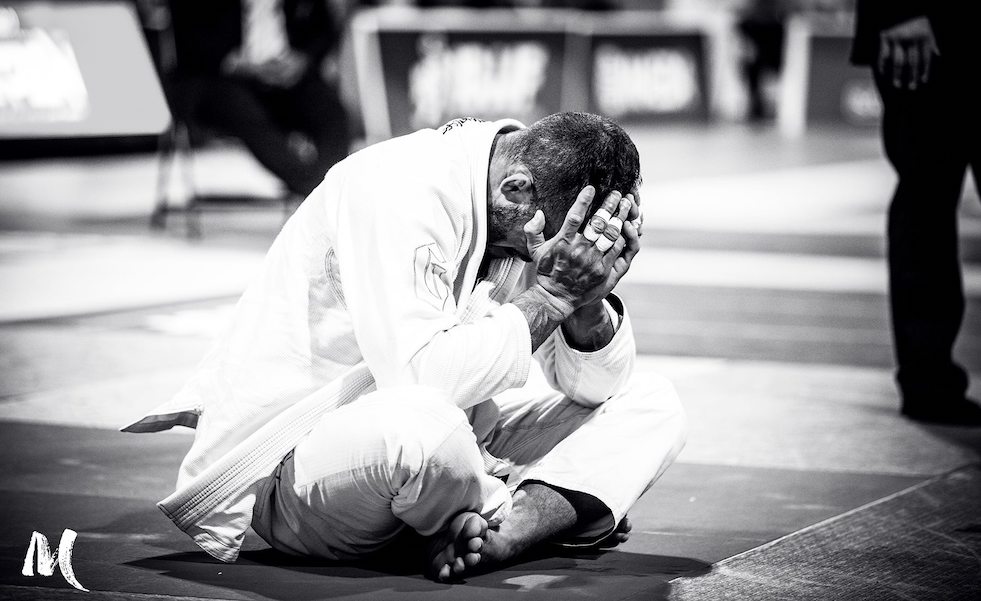
  • Eat, Breathe, Drink

This one ties in with our previous tip. Eating is the trickiest of the bunch because it depends on your weight. If you have weight to cut, you’ll probably be limiting food. What you must not do completely stop feeding. So have a good nutritional plan and try to have breakfast before fighting.

Also remember to stay hydrated, once again, as much as cutting weight allows. IF you’re cutting to the very last moment, at least make sure you get some electrolytes right after weighing in and in between matches. Do not underestimate the power of the positive feeling of a full stomach.

Finally, make sure you breathe. You don’t have to do any Wim Hoff craziness or meditate, just breathe normally before your match. If you can also control your breathing while you grapple, you’ll have absolutely no problem. However, it is enough to breathe calmly before a match and your anxiety will fade away.

  • Listen 

I cannot stress this one enough. the moment your match starts, anxiety will reach its peak. The more the match lists, the less anxiety you’ll have. However, the initial moments are key. A great tactic is to always constantly listen to your corner, particularly if you feel your mind going blank for a minute. The best way to get through that initial anxiety is by allowing others to guide you.

On the subject of listening, your favorite music choices will go a long way to calming your nerves. Contrary to popular belief, it doesn’t have to be heavy metal or something of the sorts. You can get int grappling competition mood even with reggae if that is what motivates and relaxes you.

  • Know The Rules

While this is probably the most obvious one, make sure you know all the rules of a tournament before you compete. Understanding the tournament format, ruleset and referees actions goes a long way to removing a lot of unknowns. That, in turn, as we already know, reduces anxiety. Make sure you step into an environment you understand and you’ll do great!

  • The Right Warm-Up 

Warming up is another key aspect of positive grappling competition experience. It is also something you’ll have to figure out on your own. Some people do well with just a little mobility work. Others like to run or do jumping jacks. There are also those that can’t compete unless they do a few all-out rolls. Figure out what is best for you and what gets you going. Then, simply do it before you have to step on the mats. Confidence and comfort are great ways of battling nerves.

  • The Fun Side Of Losing

How To Deal With Grappling Competition Jitters? As a final tip, make sure you really give winning and losing a thought. Normally, winning is the best possible outcome of any competitive effort. However, is losing really such a big deal? The world won’t end when you lose. You might feel sad or disappointed but that should be a motivation to do better. All in all, losing has a fun side to it. Once you figure it out for yourself, you won’t demonize it anymore. It is not that you won’t want to win, you’ll just be more relaxed and laid back about possibly losing.

In Summary

Anxiety can really throw a wrench into the performance in a grappling competition. There area athletes that are real beasts in the gym but choke up in tournaments. Once these people get over their anxiety, the game is on! There are, however, cases of people that never really manage to deal with competition jitters. Make sure you’re not one of them and follow our tips for battling grappling competition anxiety!

Jiu-Jitsu Tournaments – Do You Really Need Them?

Competition Tips To Prepare For BJJ Tournaments

Tournament Day BJJ Nutrition Hacks

Did You Lose at Jiu-Jitsu Tournament? No Big Deal!