



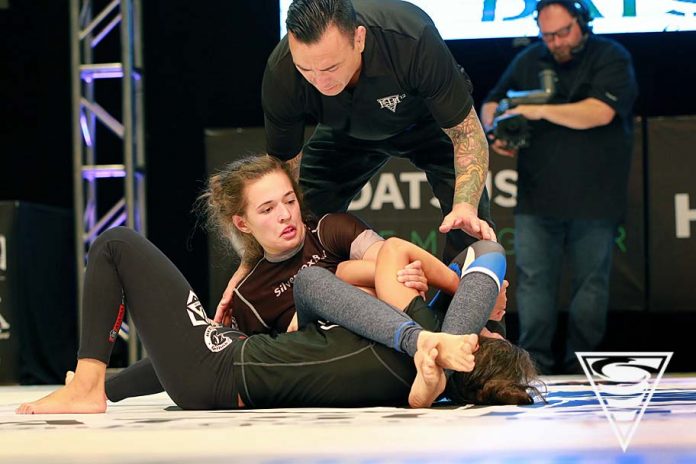
It is safe to say that Eddie Bravo’s EBI tournament has re-shaped the world of Jiu-Jitsu. And for the better. The tournament has plenty of positives about it, from the fact that it pays grapplers to compete to the exciting submission the only format. However, there were other organizations before EBI that offered the same benefits, like Metamoris for example. Actually, Metamoris is where Bravo first got the idea. the true innovation though is in the ruleset. EBI’s greatest achievement is the manner in which it solved the draws issue. The EBI overtime rounds were the spark the submission only grappling scene was lacking to take off. And it did.
Everyone who has ever competed at an IBJJF event knows that there are plenty of ways to win besides submitting an opponent. Moreover, there are easier ways to win than going for a finish. Just holding an opponent down might bring you victory by points, advantage or even a referees decision, if you were more active. This is the main reason that other organizations popped up about a decade ago, trying to encourage grapplers to go for the finish by limiting victories opportunities to submissions only. However, this gave birth to a whole different problem – draws. Since submission was the only way to win, when both grapplers failed to finish within a timeline, the match was a draw. This turned out even more boring than IBJJF rules in certain cases. Until along came Eddie Bravo and his EBI Overtime rounds.
What Eddie Bravo essentially did was combine rules from different organizations. He took ideas from Metamoris, ADCC and a host of others and molded the perfect tournament format. TheEddie Bravo Invitational is a 16 men/women NO-Gi submission only tournament with a twist. It provides a means to distinguish a clear winner out of every match while still not falling back to a points system. The EBI Overtime rounds are, arguably, the best rule-related innovation the world of Brazilian Jiu-Jitsu has ever seen.
Improve Your Chances To Win In EBI Overtime With JT Torres’ Groundbreaking DVD Instructional “Passing, Back Takes And Finsihes”. This Instructional MIght Even Help You To Finish Before You Reach Overtime! Get it Now!
EBI Overtime Rules Explained
The basic idea behind overtime rounds is to get a winner without the need for a judge’s decision. Basically, the overtime rounds in EBI give both grapplers the opportunity to directly attack and defend submissions in turn. IN order to provide equal opportunities, there are two starting positions. One is the spider web position (armbar) and the second is seatbelt and hooks back control.
The competitors who drew in regular time get to choose a position to start in. The grappler who attacked more gets to choose first, or they flip a coin if everything was pretty much level in regular time. Once they know who goes first, the set up in one of the two positions described above. Each overtime round has two parts – top and bottom. That means for every attacking position you have in a round, you have to go through a defensive one as well.
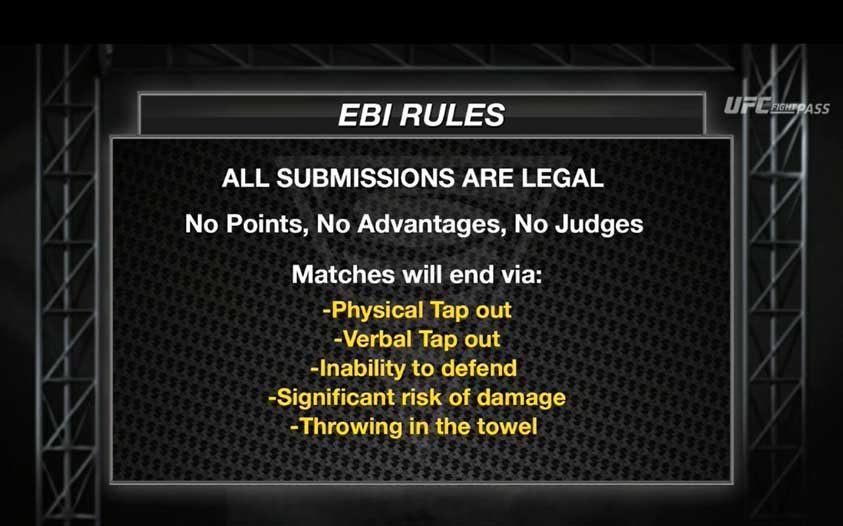 For regular bouts, there’s just one overtime round at the end of each regular time match. In the finales, there are three. Furthermore, the limit of an overtime round is 5 minutes. That means that in 5 minutes the attacking grappler needs to finish, or the defensive grappler to escape the position. If there’s no winner by submission at the end of overtime, the grappler who escaped the fastest gets the victory.
There are several more nuances to the rules, like what exactly constitutes an escape or ways in which to transition into other submissions. So far, EBI overtime rounds have been largely successful, so much so that other organizations are adopting them into their formats.
Analyzing The EBI Overtime Positions
So, now that the rules are clear, what about the two overtime positions? Surely there’s a reason why exactly these two positions are the norm? Well, back control is widely considered as the best position to be in for grappling. The armbar is generally not as good in terms of control. However, Eddie Bravo’s spiderweb positions change this significantly, while also providing quick submission options.
That said, both of these positions have their strengths and weaknesses. So far, we have 16 EBIs to draw conclusions from, not to mention the qualifiers and other organizations. During those events, both positions were exposed and grapplers started devising strategies for both offense and defense. So, which one is better for you? Depends on your preferences, the circumstances, and of course, the opponent.
Spiderweb
The spiderweb position is essentially the finishing position of a mounted armbar. You’re at an angle to your opponent one leg over the head and the other over their chest. You get to choose an armbar grip, most often involving a deep hook. Your other arm can (and should) hook the nearside leg, offering increased control. The opponent also gets to choose whichever defensive grip configuration they want.
The major strengths of the spider web position are in the speed of attack. You are very close to a submission, and all you need is to retain control and pry open the arms. This doesn’t take much time, usually and it is a great way to go for a fast submission. You might be going for it because you’re an expert at armbars, or because your opponent escaped and you need a fast submission before time expired.
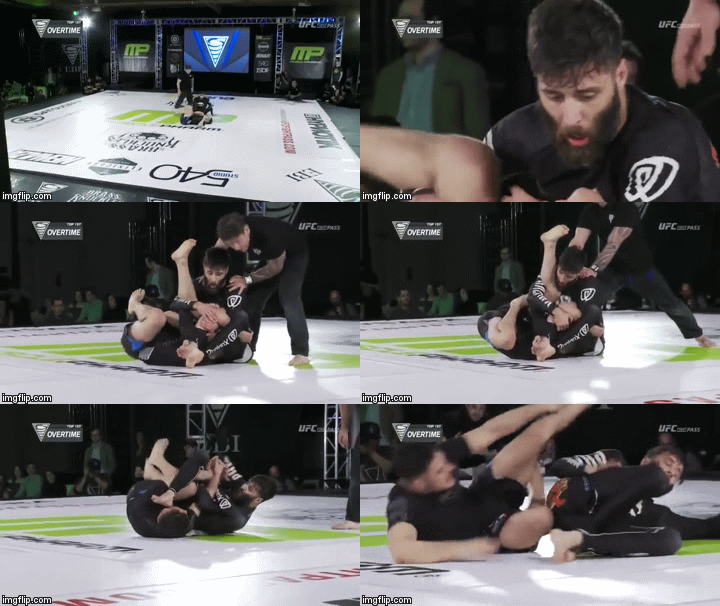 On the negative side of things, the spider web position is much easier to escape than back control. While some general armbar escapes (like the hitchhiker) do not work as good, there are ways to defend and get out. IF you’re looking for ride time, this is definitely not the position to choose. If you’re in a hurry to escape though, the spiderweb is your best bet.
Back Control
Back control is one of the ultimate checkmate positions in BJJ. It offers loads of control and great submission options. The thing is, that since you can control it, you do not need to rush a submission. Ths means your opponent can mount a steady defense and look to escape and beat you via the time factor.
 What back control brings to the table is ride time. When you have seatbelt control and hooks, you can keep your opponent there as much as you want. Slapping on a body triangle is also a good strategy, as proven throughout EBI so far. This is a notoriously difficult position to escape from, and you can also get a submission if you’re persistent.
The main trouble with back control is getting a fast submission. The opponent has two arms to grip fight with against t your two arms. that makes the battle equal even if you have a dominant position. Since taking (or cranking) is the way to go, opponents know what to expect. So, if you have an opponent on your back during EBI overtime rounds, better hope that he’s not a back control expert, or you’re most likely doomed. Unless you flip the tables and get a sub before or after.
https://bjj-world.com/leg-locks-ultimate-guide-positions-submissions/

 Irina is coming from a small town in Russia where she began her modeling career. But if you look at her it’s not hard to find out why is she the most popular model today. Maybe, her 5 years relationship with Cristiano Ronaldo did help a bit in her career but we can say that she did it all alone and she deserves all the fame she has.
 In her interview in Russian Evening Urgent show, Irina was asked provocative about her husband Bradley Cooper and Cristiano Ronaldo but she refused to talk about her former lover Cristiano.
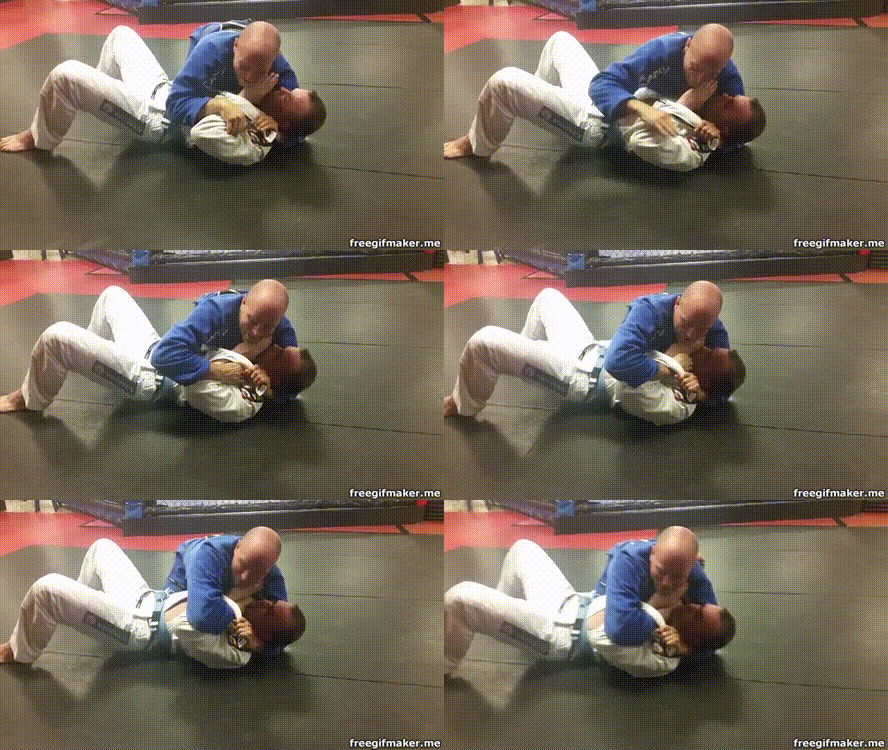
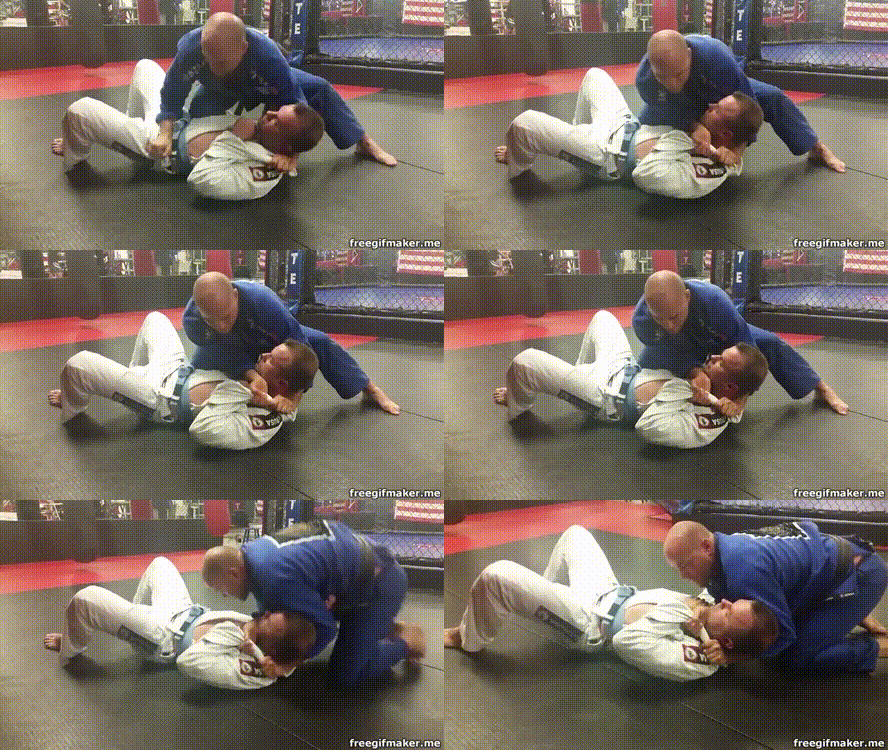 Our next options come from side control as well. All things are the same up to the point of threading an arm in for the Ezekiel. Some opponents are going to be so tucked in that you won’t be able to use to loop. If that’s the case, pop up to knee-on-belly and simply thread a hand in, palm to the ceiling. You’re now all set for a lapel baseball choke. You just need to get to North-South and you’re done.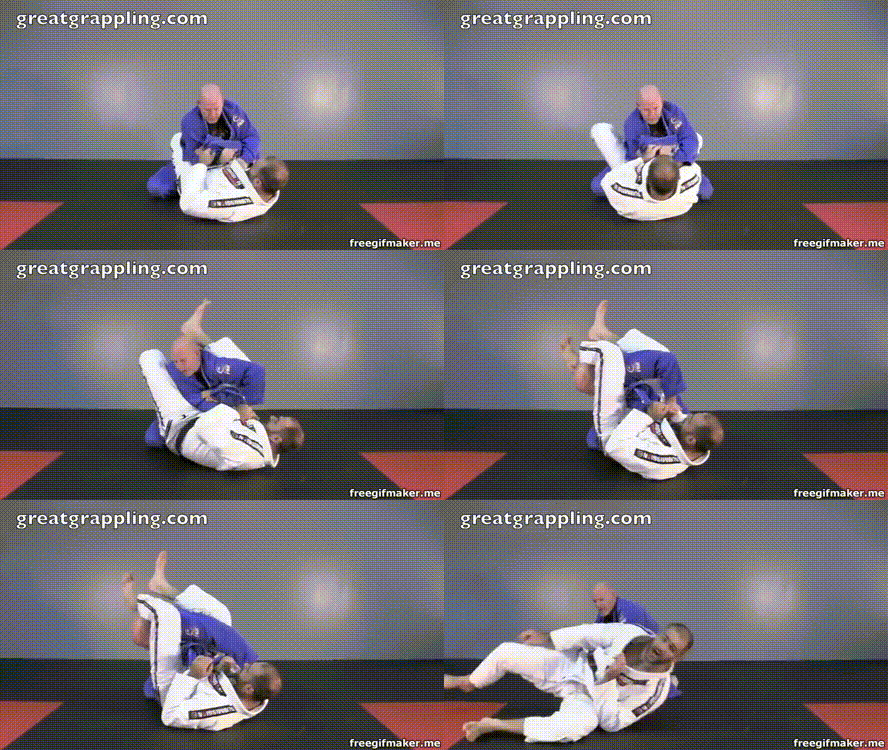
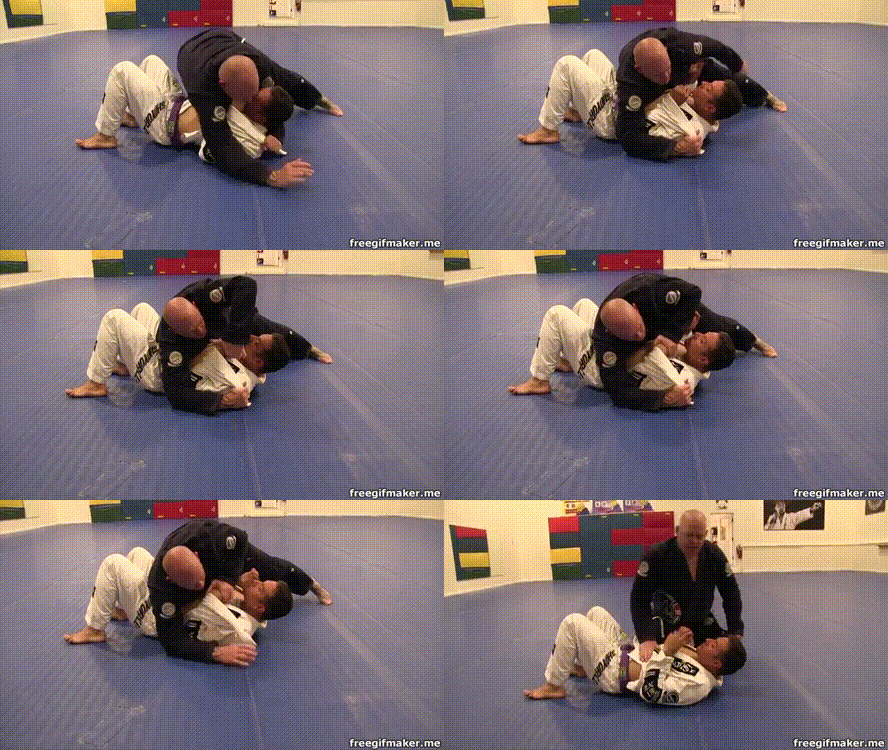
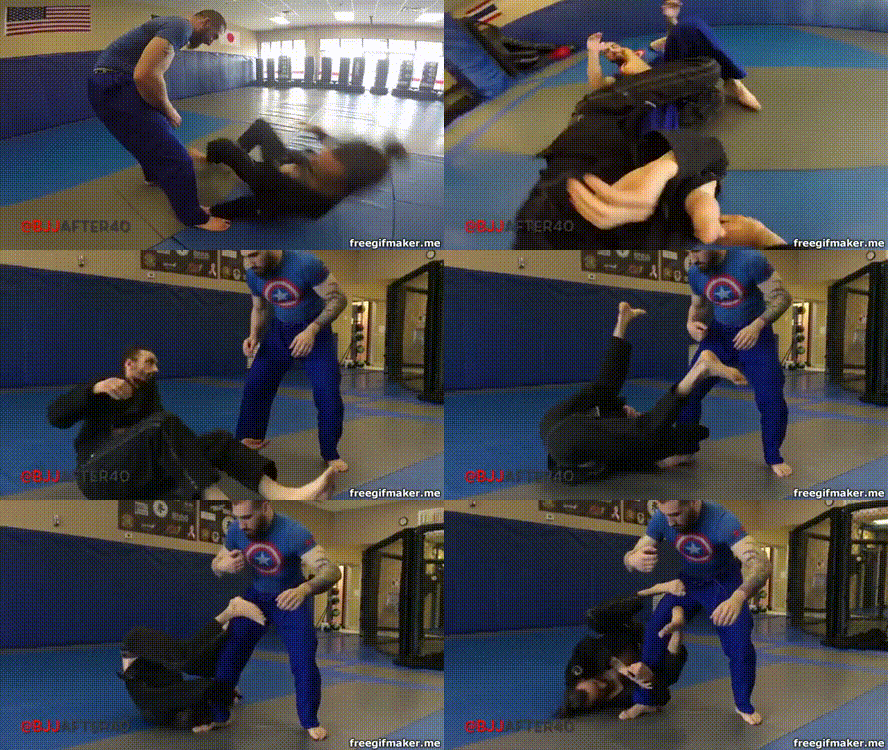
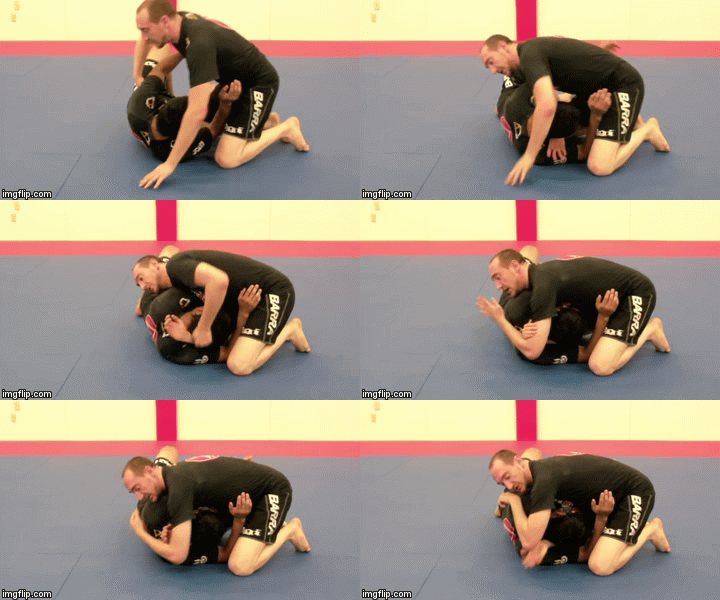 Once the arm punches through, though, you need to decide what you’re going to go after. If its a D’arce you’re after you need to establish a gable grip and look to beak posture. The ultimate goal is to get the figure four configuration behind the opponent’s back and finish. For a Brabo though, you need to work on getting some Gi material loose first. We’re going to get into how to do this later on, but for now, just be clear that you need the top side lapel-free.
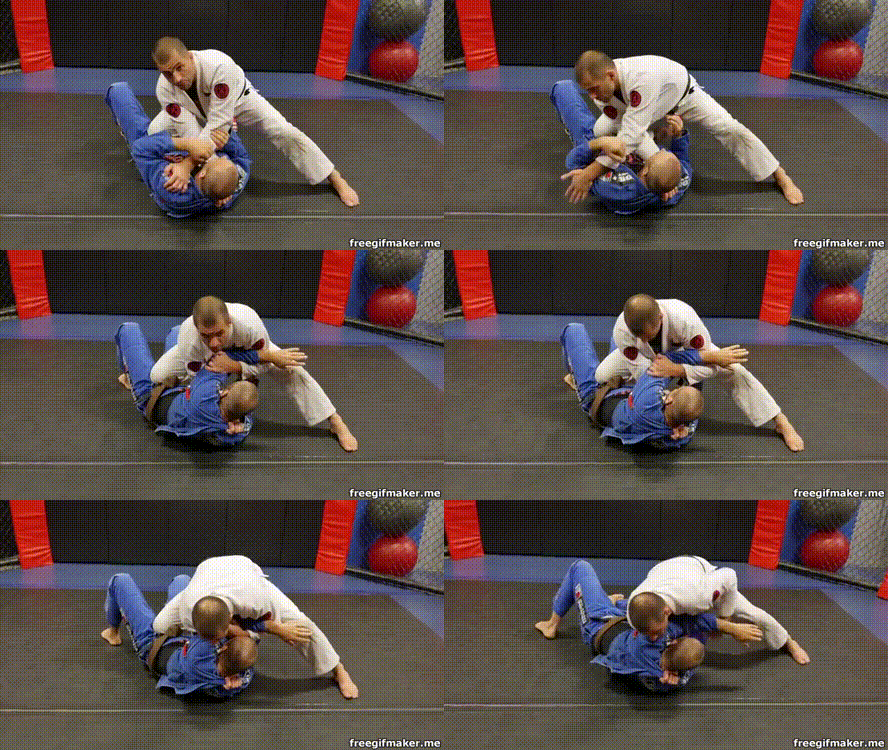 As far as the half guard goes, The Brabo choke from hell only requires you to get the lapel. Since most people go for the underhook anyway, all that you need to do is release the lapel on the same side. Once they have an underhook, you’ll need to be fast or you’ll find yourself fighting off all kinds of sweeps. You could go straight for a Whizzer and get the lapel freeform there. Once you have it, you’ll need to thread it through all the way up and behind their neck. At this point, your other arm will have to secure it until you can thread the underhooked arm in for the choke. Once you have the grip on the lapel you can rest. You have total control and all you need to do is just apply pressure.
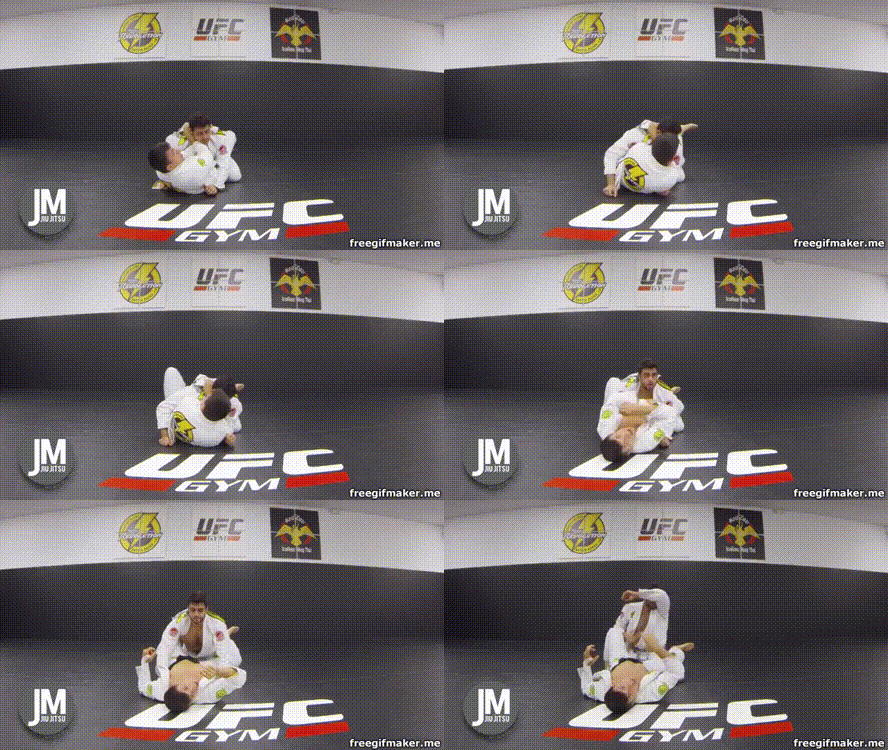 What you get form this position is immediate posture control. Even if you decide to chill right there, you’re safe from any kind of pass or counter. Until the opponent breaks that grip they’re going nowhere. And, you’ll find that grip is really difficult to break. The broken posture also allows you to get your arm over theirs and through to re-grip for the Brabo. This is where all hell breaks loose for your opponent.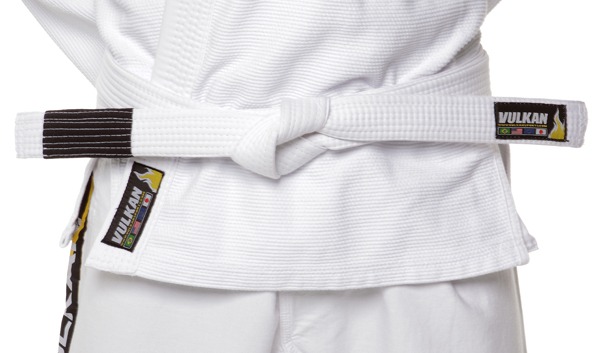
 So, brave new grappler starting Jiu-Jitsu, are you ready to make sense of all this mess that’s unfolding before you? Yes, all those funky names, crazy moves, and confusing concepts have a meaning. Moreover, they all work together to make everything come together. And yes, one day you might be the one teaching them to someone new and lost, just like you are now. but for now, baby steps.
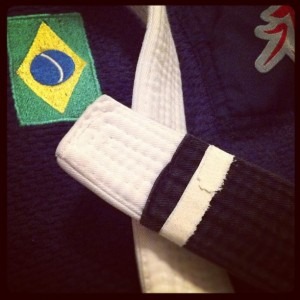 This one is in terms of gear. Yes, you need a Gi or a Rashgaurd and spats, depending on your academy. However, you do not need a whole collection of gis with the assorted auxiliary equipment. Learn how to tie your belt first, then you can worry about that latest pearl weave hemp-only Gi that just came out. master the basics first, grasshopper.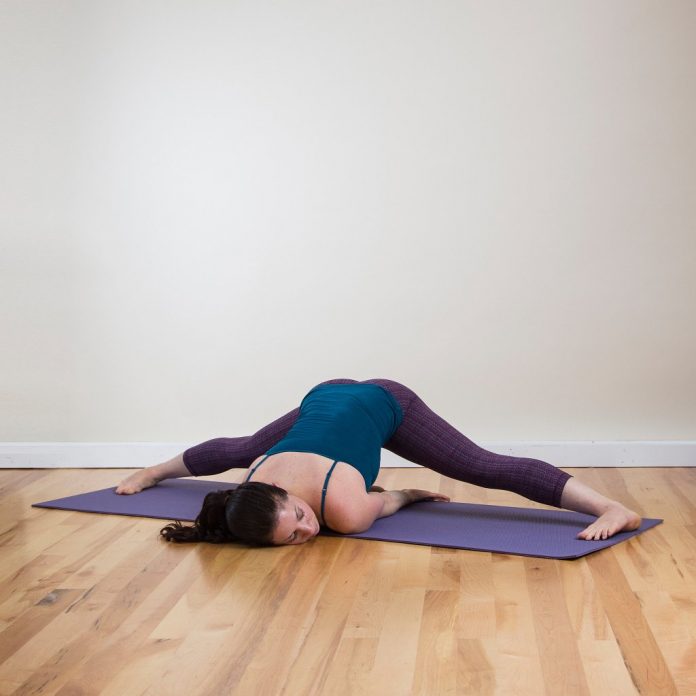
 This fairly simple stretch comes from Yoga. It is a great way to begin stretching your hips. It is simple and prepares you for more intense stretching later on. You need to be on your back, knees bent, hands holding your feet. Place your palms on the outer edges of your feet. Your soles need to be facing the ceiling. The aim is to pull the knees as close to the mats as possible.
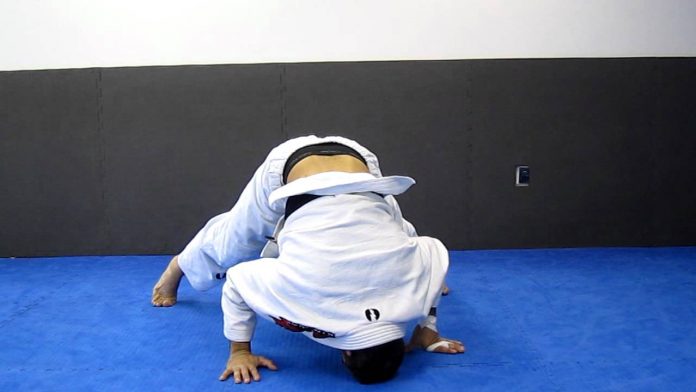
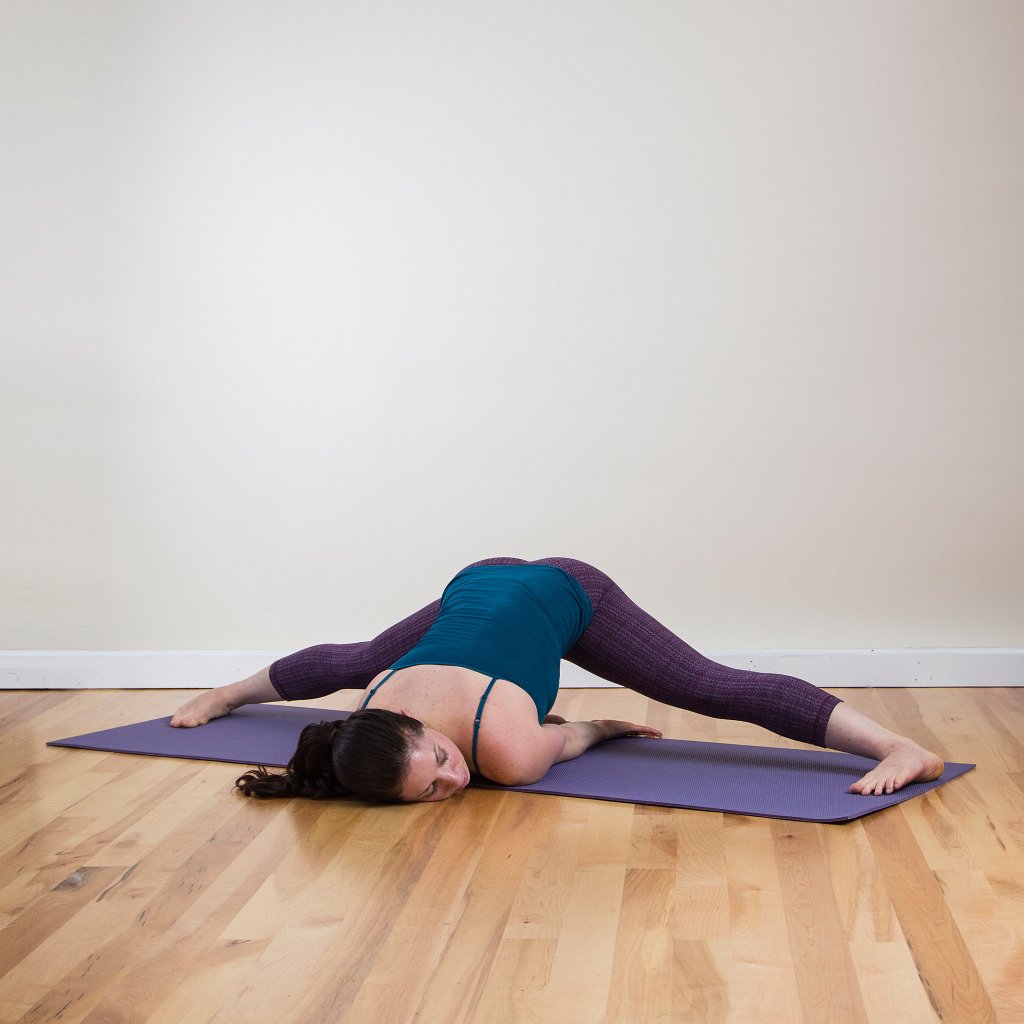 Do not be afraid of the name of this exercise. You won’t be doing a full split just yet. However, if there was ever an exercise that could help you with splits, it’s this one. Simply stand with your legs as wide apart as comfortable. Feet pointed forward and knees straight, bend forward and touch your arms to the ground. The ultimate goal is to place both your arms on the ground, from fingertips to shoulders. Your head should turn to one side and be flat on the mats as well. Take it slow with this one and progress slowly until you can get into position as described.
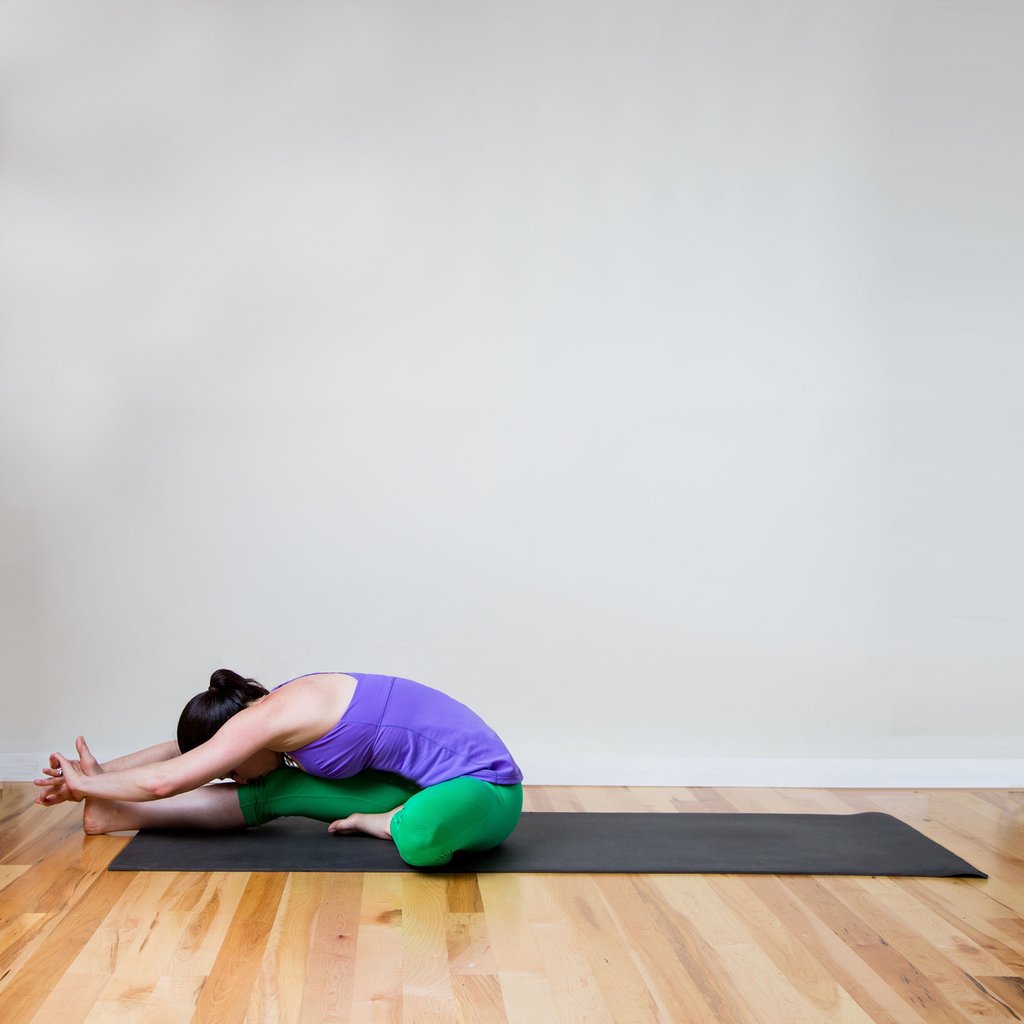 The pancake is an essential gymnastics stretch. However, it is an advanced one that has no place in our routine. Instead, a progression that leads to the pancake makes the cut. It’s also one you probably know, Sit on the ground with one leg extended in front of you. Put the sole of the other foot on the inside of the extended leg’s thigh and keep your knee falt to the ground. The goal is to touch the toes of your extended leg (foot flexed) while bending over it with a straight spine. remember to do the stretch on both sides.
 This is another Yoga stretch that’s tailor-made for BJJ. Start off by placing one leg in the mat in front of you. bent the leg 90 degrees at the knee, so that the foot is touching the mats with the outer edge. Extend the other leg as far back as possible, keeping it completely straight. The goal is to touch both your hips to the ground. At first, keep your arms extended and as you get better, aim to put your elbows on the floor in front of you. Once again, the spine stays straight.
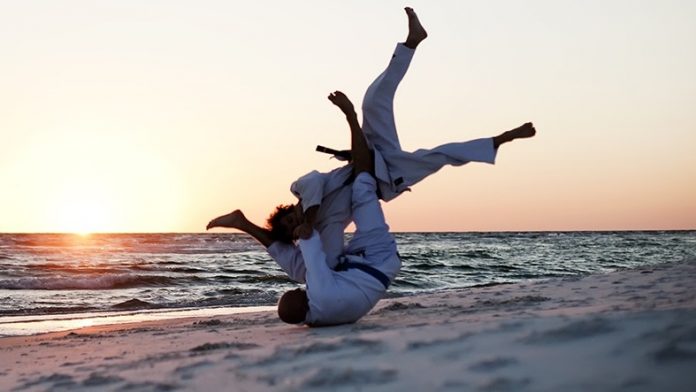
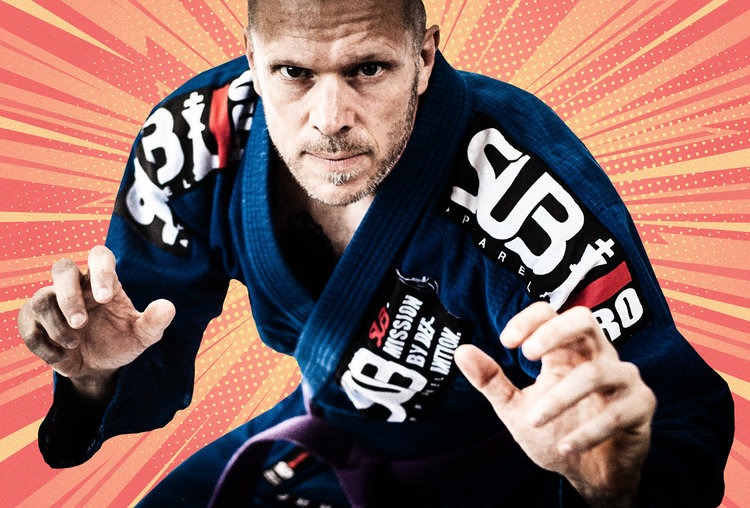 In terms of benefits, Jiu-Jitsu can guarantee a few things. First, you’ll get better overall health. This is due to to the physical aspect of it. But also there’s the lifestyle aspect, one which includes proper nutrition and often, supplemental conditioning or mobility training. Next, you’ll become better at life, as simple as that. Taking the BJJ principles and applying them to other life situations is going to provide you with answers to plenty of questions you thought were too hard to solve.
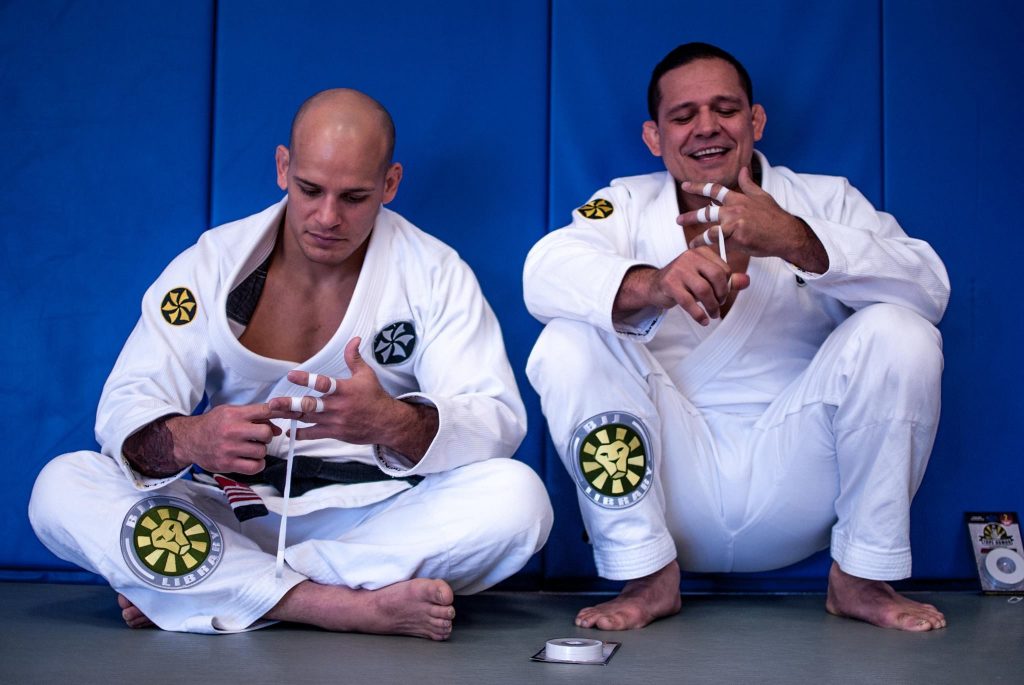 Benefits of Jiu-Jitsu include a hard lesson in humility. Why hard? Just look back to those first few months. you got through them, and you never want to go through it again. But what did they teach you? They taught you that no matter how strong you think you are, how good you think you are, there’s always someone better. They taught you that you sometimes need to tap in order to learn something and keep on fighting. These area ll lessons that today’s society is not fit to teach. That’s where BJJ steps in.
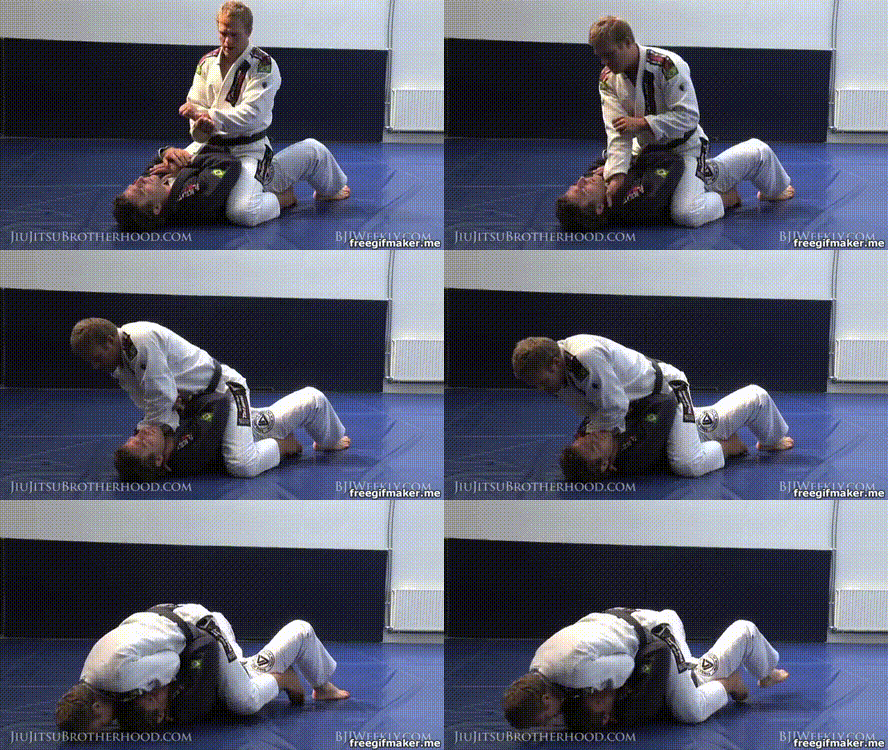 The cross collar choke is probably the most quintessential of all the submissions from the mount. Roger Gracie does it like no other, submitting the highest level black belts like it’s a joke. This only demonstrates how much the move is effective. For the cross collar, you need one hand in each of the opponent/s collars. As the name suggests, one hand should go deep on the opposite side collar. The other should follow. The grip you need is four fingers in, thumbs out. To submit all you need is to keep your elbows close and place your forehead on the mats, above the opponent’s head.
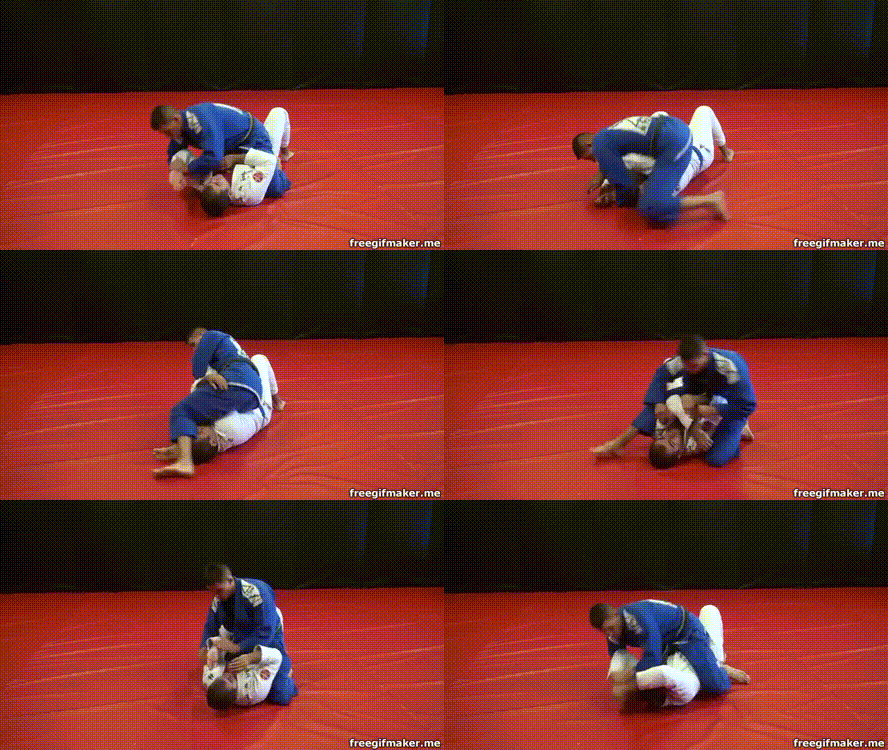 Starting from low mount the Americana is the first one. All you need is to pin one wrist of the opponent to the mat right next to their head. the arm should be at a 90-degree angle. You need to control the wrist with your opposite side arm and thread the other arm under the opponent’s upper arm. The result is a figure four grip which is essential to finishing. Simply pull the opponent’s back of the palm across the mat, like a paintbrush and you’ll get a tap.
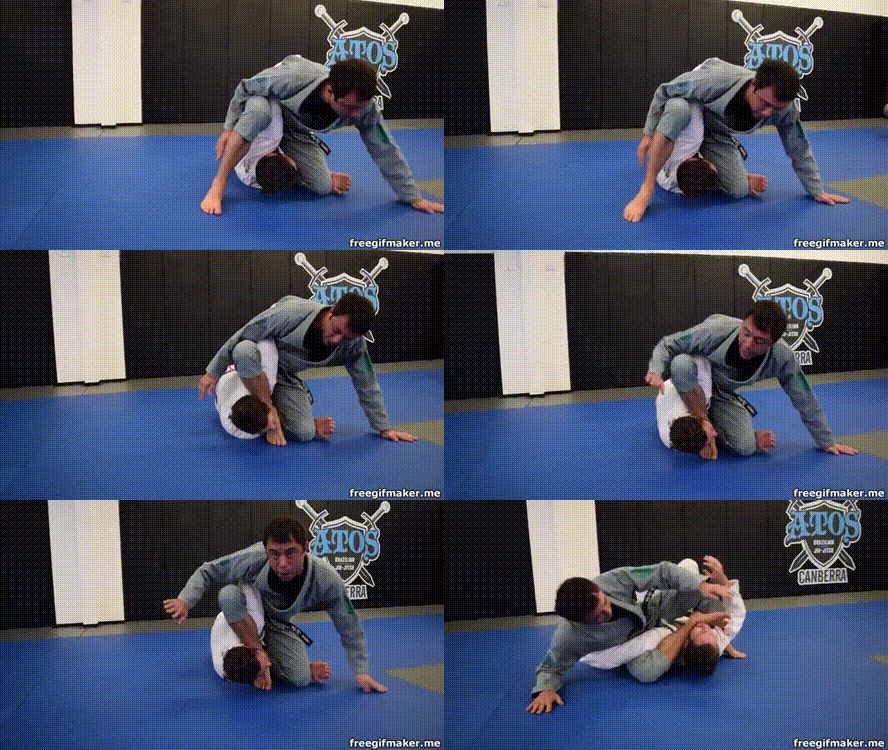 From a mounted triangle, getting the Gogoplata requires you to switch legs. Basically, you’ll want to open the triangle, get your leg back on their shoulder and use the other leg to choke them. To do this, you’ll need the dexterity to place the foot on their trachea. Once you have it, the choke is really tight and brutal. Just like with triangle, even if an opponent reverses you at this point you’ll still get the submission.
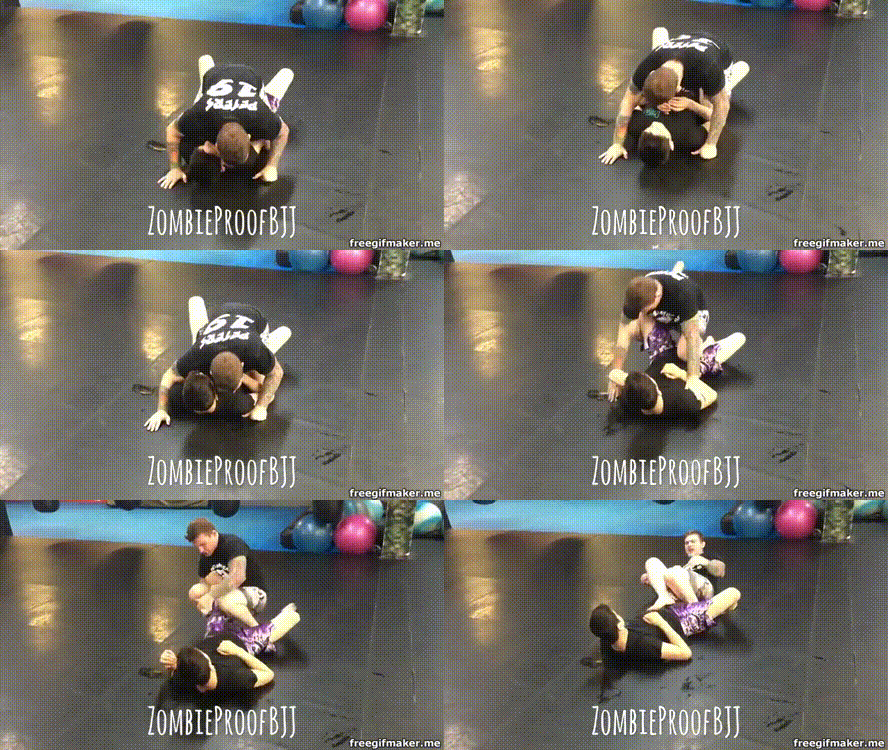 When other submissions from the mount don’t work, you need to get innovative. use both your feet to put in butterfly hooks from the mount. This is going to open an entry to an Ashi Garami on each side. You simply need to sit back and trap one leg. From there on feel free to finish with a leg lock of your choosing.