


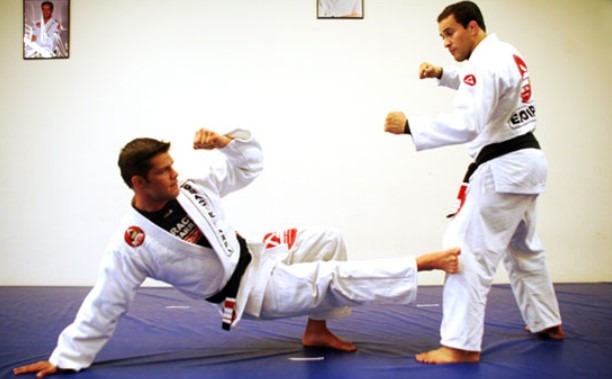
There are a lot of questions about differences between Sport Brazilian Jiu-Jitsu vs Self Defense Jiu-jitsu. Those questions are usually coming from people who are mostly interested in just Self-Defense aspects of Jiu-Jitsu art.
The bald statement about differences between sport and self-defense Jiu-Jitsu is that the question about differences is mostly exaggerated by the people that are pushing the self-defense aspect of Jiu-Jitsu. We’re gonna talk more about it but that is artificially elevated and inflated difference.
The Essence of Jiu-Jitsu is ground fighting and ground fighting is required whether you’re doing sport or self-defense aspect of the art.
Nobody in Sport Jiu-Jitsu camp is saying that if you get in a street fight that you should immediately pull inverted Guard or some kind of reverse de la spider guard and try to score advantage and keep your opponent there. There is definitely no one saying that in any aspect of sports Jiu-Jitsu.
Let’s take Draculino for example. Draculino is one of the founding fathers of the spider guard. And in Draculino academy they are teaching stand up, clinch, stabilization, side mount etc… they were doing 1 on 1 self-defense. There are no academies that are good in sports Jiu-jitsu that never do anything relevant to self-defense.
What’s actually relevant in self-defense? Taking the guy down or getting to the top position, passing the legs, stabilizing on top, get your opponent to turn and choke him out, right?
Guess what, this will get you a whole bunch of points in competition and is happening all the time in the street fights and this will win you a lot of street fights as well.
It’s not like there are some magic self-defense techniques that work only in self-defense that sport Jiu-Jitsu guys don’t know.
The main ability of an art of Brazilian Jiu-Jitsu is to work against the pressure. For example, let’s take the most combative BJJ guard, the closed guard. Nobody is arguing that a closed guard is a good form of controlling your opponents when they’re trying to punch you. And let’s take one the least competitive form of open guard, the reverse de la spider.
After that let’s say you take someone who trained all forms of the closed guard but they never sparred it and you take somebody else trained in all sports techniques of reverse de la spider but they’re sparring it all the time against resistance. Who would you bet on?
I would bet all my dollars on a guy with a less combative form of guard because he’s used to dealing with pressure. He’s used to dealing with a real-world application.
If all your learning is based on magical self-defense techniques and you’re never applying it against resistance it’s like reading lines in a play. It’s not like having a conversation. It’s not like you and me sitting down having a conversation.
It’s like a line in a script says, “punch with a right hand and I’ll slip to one side and then I’ll apply technique number 1.”. That is a play, a procedure and it’s not working in a real fight.
If it comes down about you choosing between the academy A with more self-defense Jiu-Jitsu or academy B with more Sports Jiu-Jitsu, which one would you choose?
I wouldn’t go with sport vs self-defense. There is more about it there. Do you like the instructor? Do you like the people in that academy? Do they train against the pressure? Do they have some form of sparring? Those are the more important things than to think about self-defense vs sports aspect of the art.
Let’s say you go to train to a “sport” based academy and you’re still worried about self-defense that’s ok. Once in a while, once in two months, three months, even six months do some sparring on the ground wearing MMA gloves and mouth guard and do some light punching with 10, 20, 30% of contact. That will very quickly calibrate your BJJ to a self-defense thing.
Do a little bit of kickboxing, MMA and do your sport Jiu-Jitsu reverse de la spider guard and every few weeks go do an MMA class to calibrate your brain that you might get hit. Calibrate your brain that you need to control distance much more intelligently. Not too close and not too far away because good Jiu-Jitsu is always better than bad Jiu-jitsu.
So, if good jiu-jitsu is at the self-defense oriented place go train there. If good Jiu-jitsu is at the sports-oriented place then go to that place, and make necessary calibrations for what you want.
Don’t expect one place to have 24 magic techniques that you need to learn to defend your self at the street and the other place just do the sport stuff and don’t have any street application.
Training your ability to react to pressure is way more important than those magic techniques.
Actually, the most of the Gracie Stand Up techniques that were popular 20-50 years ago are not actually very good.
The fact is that the Gracies don’t use those techniques when they’re fighting in MMA. They don’t use hip tosses like, Gracie Jiu-Jitsu against punches… close the distance, hip toss then armbar. I’ve never seen anybody do that neither Gracies never do that. They’re using single legs and double legs and much more MMA based platform techniques.
There’s another terrible technique when someone is attacking you with the overhand knife attack and you catch the knife and you apply the standing figure four… well, good luck with that. It’s a complete fancy technique with some outdated Jiu-Jitsu techniques from 1930’s in a style of “Japanese super secrets revealed”.
To be honest, there are much better ways to do something like that. So a lot of this magical self-defense on the feet I don’t really like. I don’t really think they’re effective as they are reported to be.
At the end of a day, on the ground, you’re gonna learn bridge and roll as a mount escape whether you go to the sport based place of self-defense based place just like any other good BJJ ground technique. You go to train where ever you know they’re doing good Jiu-jitsu. Good Jiu-jitsu always beat bad Jiu-jitsu and that’s more important than sport BJJ vs Self-Defense BJJ.
Train at the place where you like the instructor, where you like the other students and where’s you’re gonna go cause it’s closer to you and not super far away… That’s way more important than this Sport vs self Defense Jiu-Jitsu question.
Good Jiu-Jitsu beats bad Jiu-Jitsu
Related Articles:
BJJ White Belt Survival Kit: 5 Essential Tips For Beginners
Jocko Willink Explains Why Running Away is the Best Self Defense
No Time To Train BJJ? Here Is How To Make Time For Grappling
Rener Gracie: Even if You’re Purple Belt You Can Get Beat Up on the Street
The most Effective Jiu-Jitsu moves for a Street Fight
Which Martial Art is The Best for the Streets

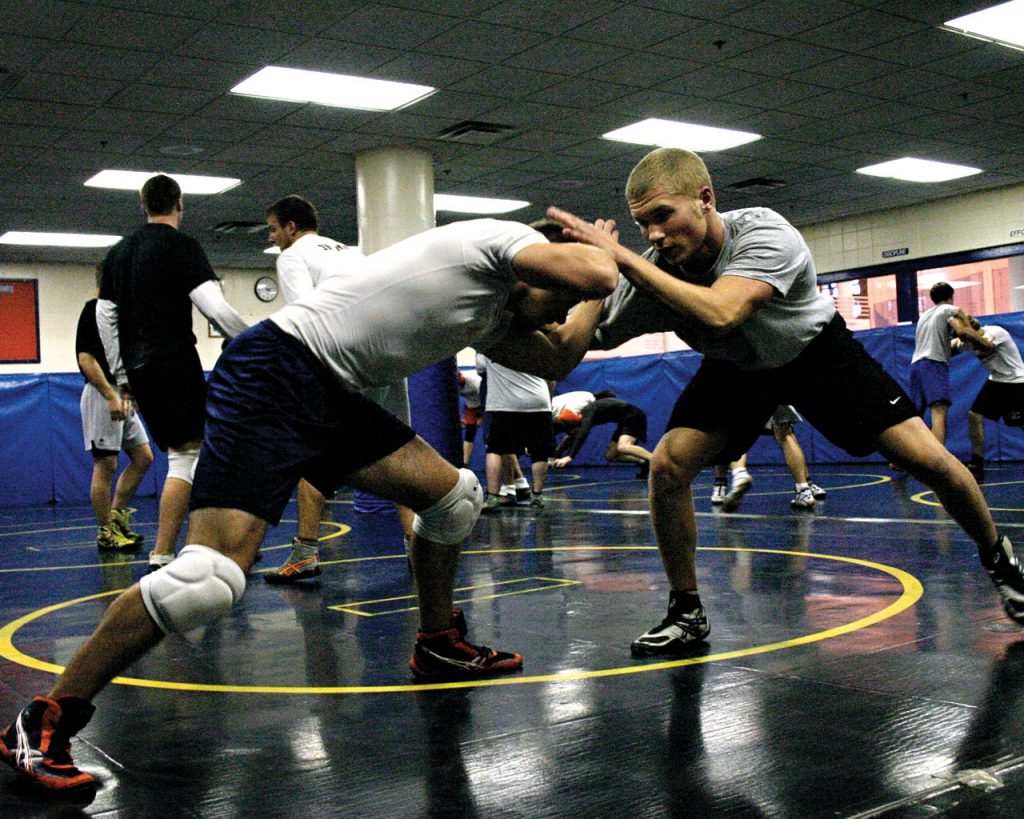 The next key factor of the success of wrestling conditioning drills is the selection of training methods and exercises. People in charge of turning wrestlers into grappling machines have the winning formula. Namely, wrestling conditioning is all about bodyweight work and partner drills. This allows them to work all relevant energy systems and develop strength qualities highly specific to the sport. What’s even more important, is that bodyweight work is submaximal, meaning recovery is easier and faster compared to lifting. And best of all, there’s not much need for long, boring running sessions, although some wrestlers still swear by it.
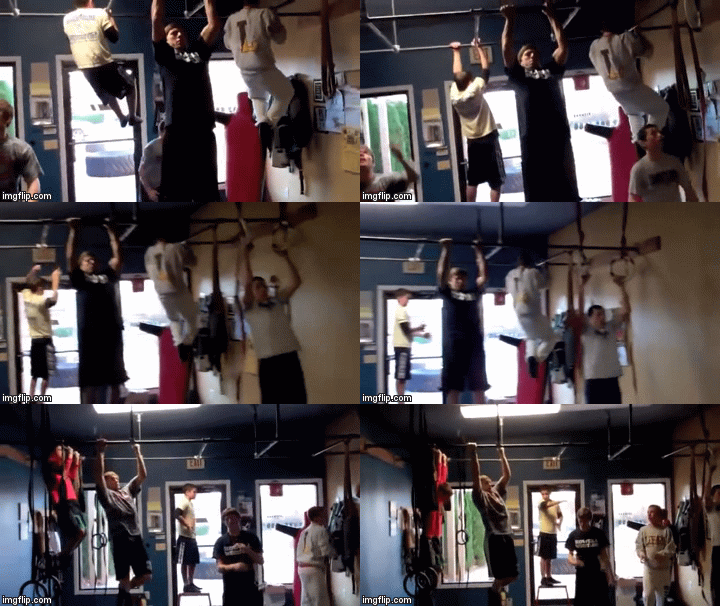 These are the meat and potatoes of wrestling conditioning drills. They’re perfect for everyone, especially done at a wrestling pace. The usual norm is going either for a high number of repetitions or going all out for a given time period. Whatever the case, intensity must be high. Since wrestlers mainly focus on bodyweight exercises they get the added bonus of working on strength and endurance in a way that benefits them specifically for grappling. It also means you can repeat the workout the next day without any (or much) soreness.
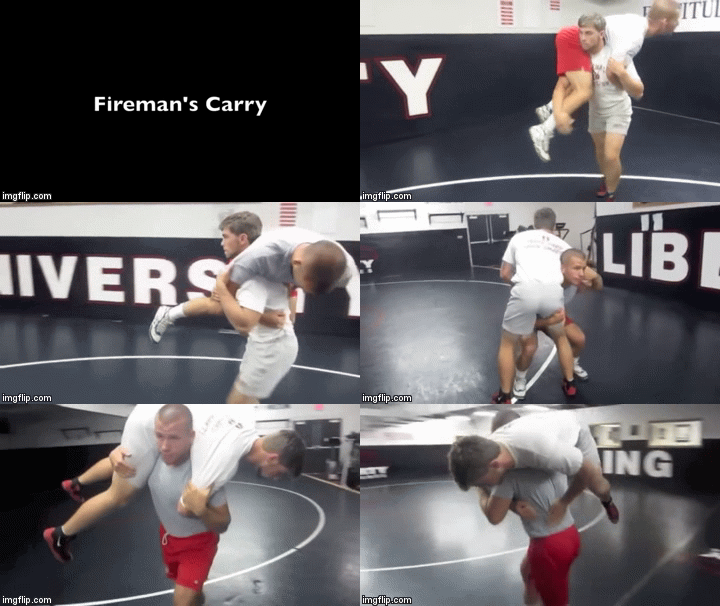 Drills to include into your conditioning plan are carries of all varieties (piggyback, belly to back, etc). Furthermore, pushing and pulling exercises like squats and deadlifts become far more useful when training with a partner instead of a barbell. There are plenty of ideas on how to increase your strength and cardio with partner drills for grapplers.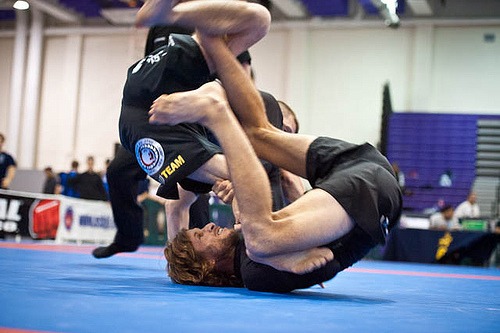
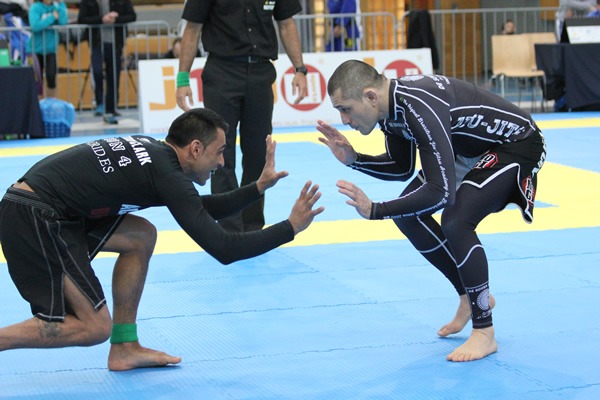 First and foremost it is the misplaced feeling of loyalty. The “my instructor doesn’t like No-Gi BJJ so I’m not even going to try it” is just plain stupid. How can you know if you like something if you’ve never even tried it? Loyalty to your instructors and academy is ok, but that doesn’t mean you need to copy everything they do. Learn what they teach and talk with them, but explore every aspect of Jiu-Jitsu. Stay respectful but not blindly loyal, as No-Gi BJJ has a lot to teach you.
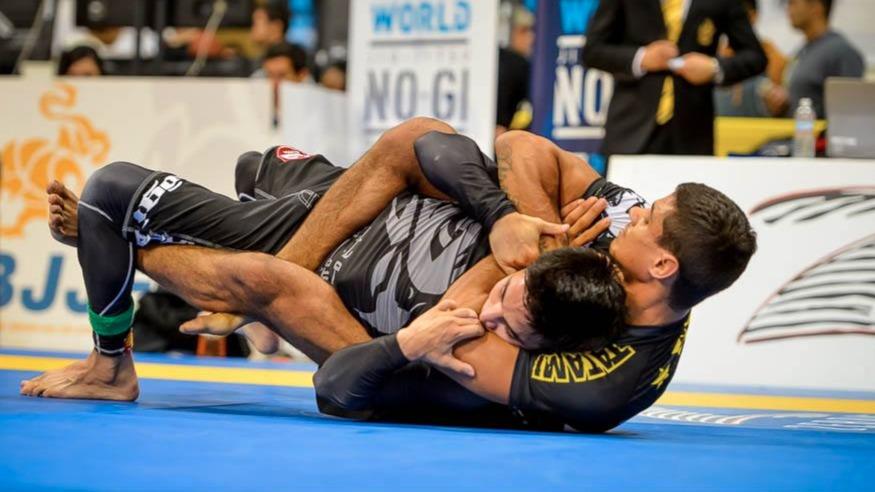 Furthermore, rolling without the Gi is more dynamic in nature. This means that you won’t have time to grab on for dear life and stall, but think quickly instead. This translates directly to better reflexes, quicker decision making, and a more fluent overall game. As an added bonus, your conditioning is going to get a boost as well. Still, on the subject of control, the apparent lack of it means you’ll learn different ways of obtaining it. The ability to successfully control an opponent with only shorts on means you’ll destroy opponents wearing Gis.

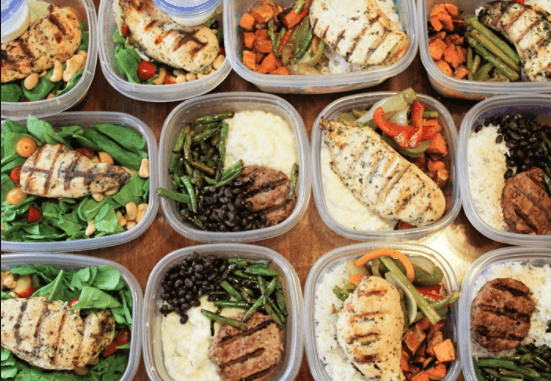
 A lunch, as per our example above, with a pound of chicken and some mixed vegetables is going to cost no more than $3-4. Not only that but if you prep properly you only have to reheat it. One day’s lunch of a full pound of chicken and two ounces of baby spring mix is less than $3. If you really want to switch things a dinner of pork chops and some potatoes to help you recover after training is also less than $4. Throw in a banana and perhaps some more peanut butter as a snack and you’re all set. That’s around $10 a day for 4 healthy, satiating meals. Mind you, you can prepare the food using any recipe you want.
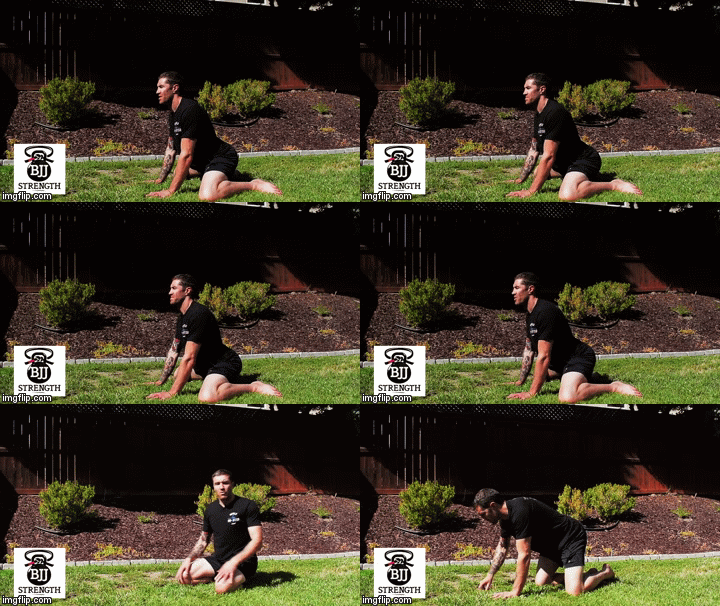 Frog Squats
 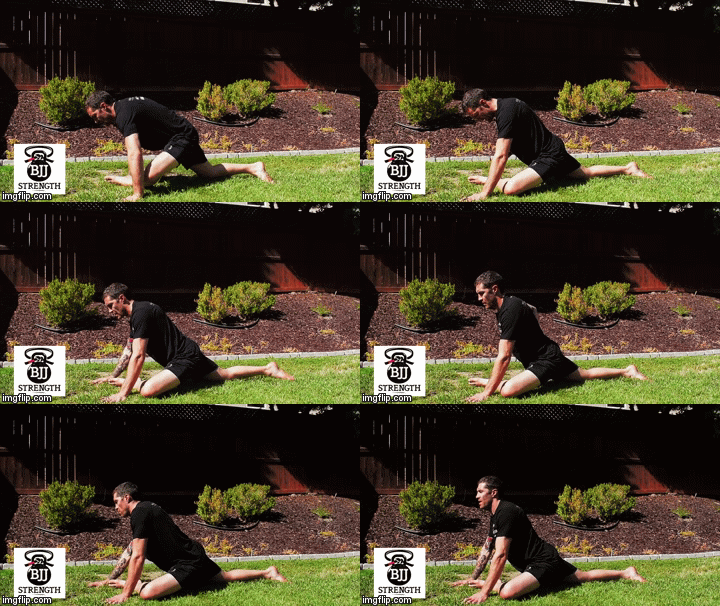 Glute Stretches
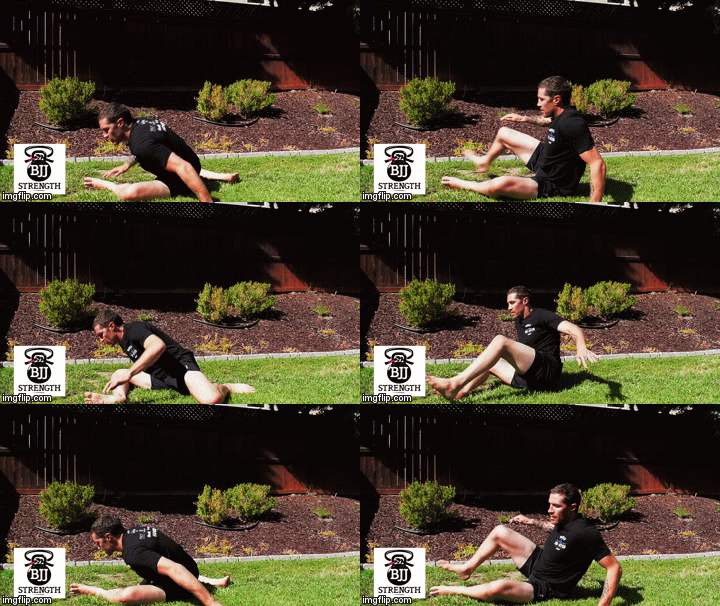 Hip Switches
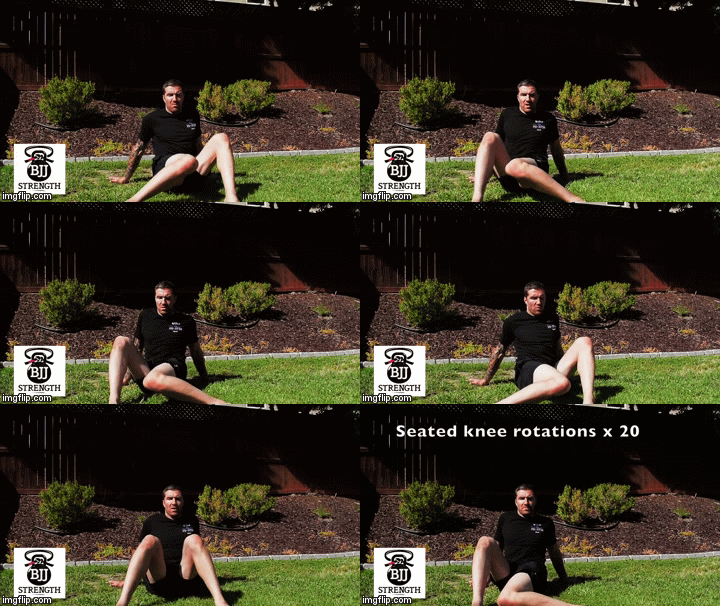 Knee Rotations
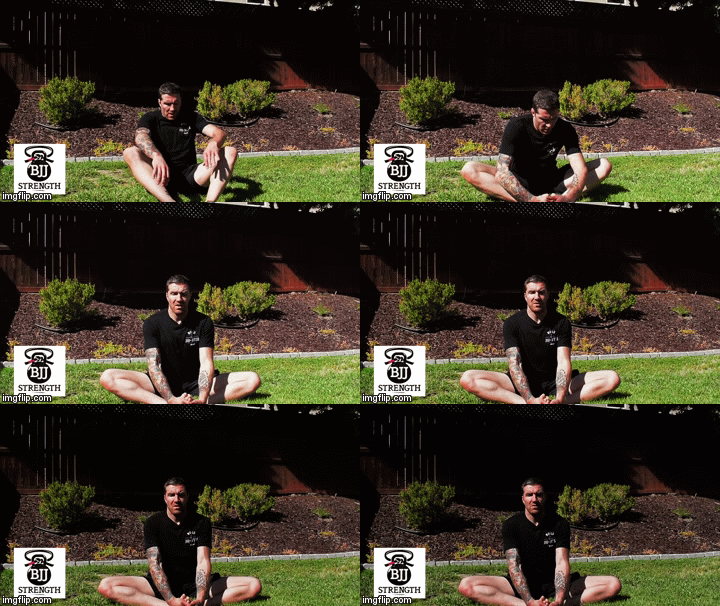 Butterfly Stretch
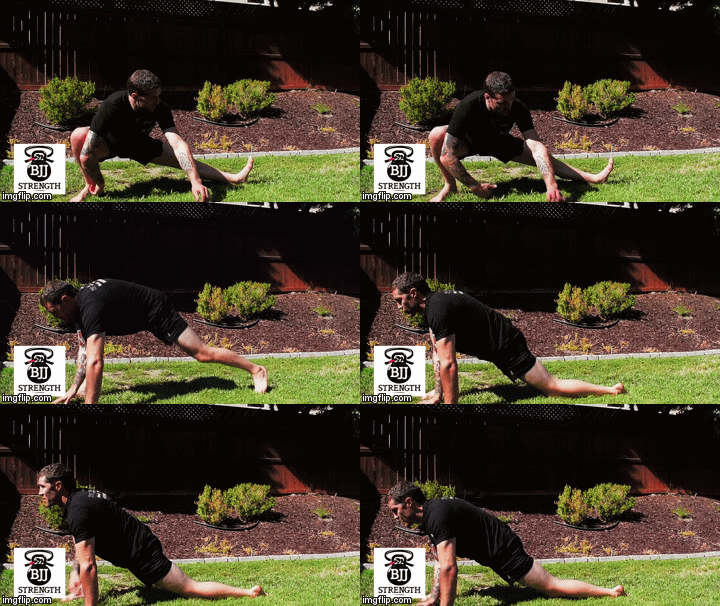 Cossack Lunges
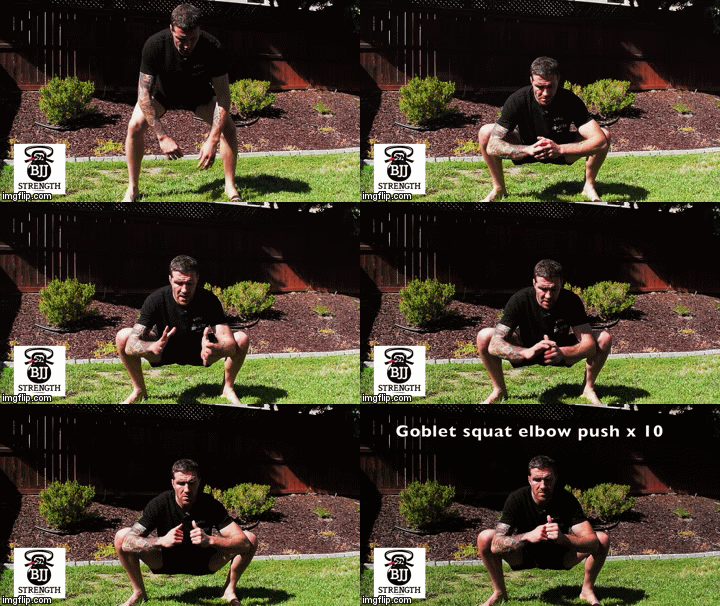 Goblet Squat Stretch
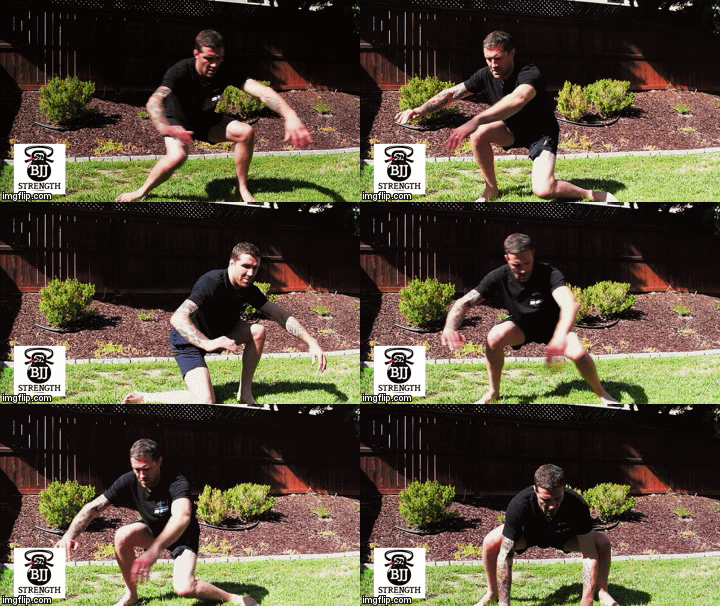 Standing Knee Rotations
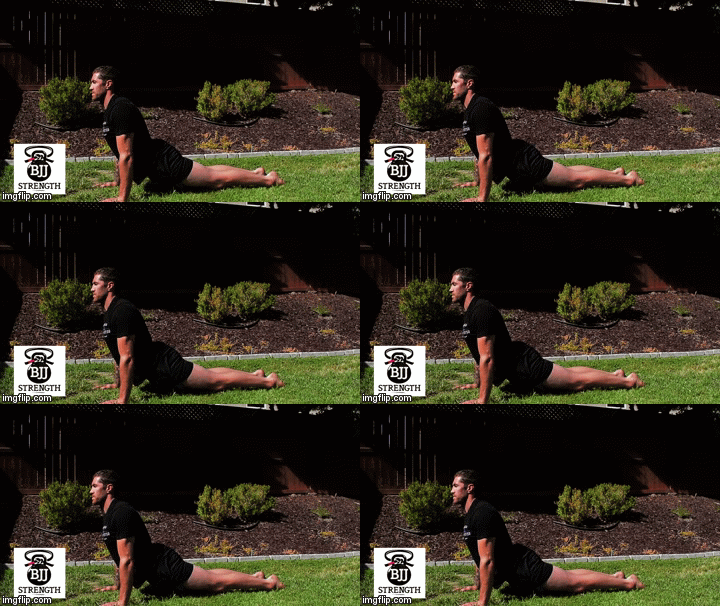 Cobra Stretch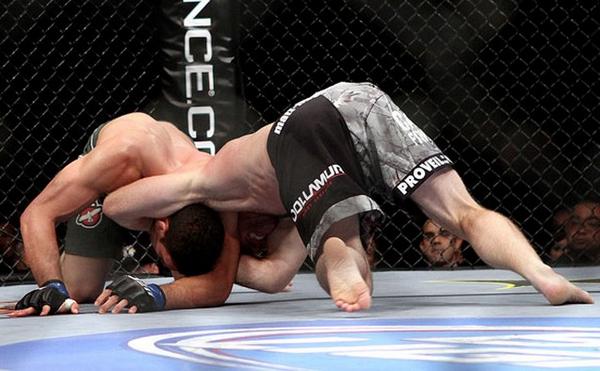
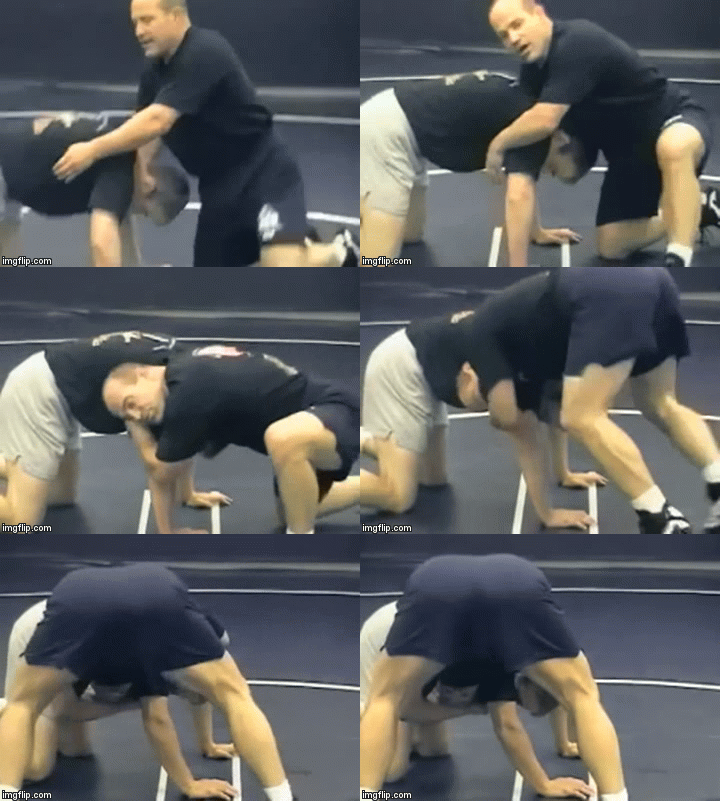 The front headlock position is when you control an opponent while standing in front of them. If we take the turtle position as an example, the front headlock involves you placing an over/under grip from the front side of your opponent. The regular front headlock usually calls for a gable or S-grip and has the task of pinning an opponent. In wrestling terms, you could also transition or spin to get an opponent falt on the mats. In BJJ terms, submitting with a guillotine choke is usually the next step. There are also multiple transition options available, like getting the back or a leg lock.
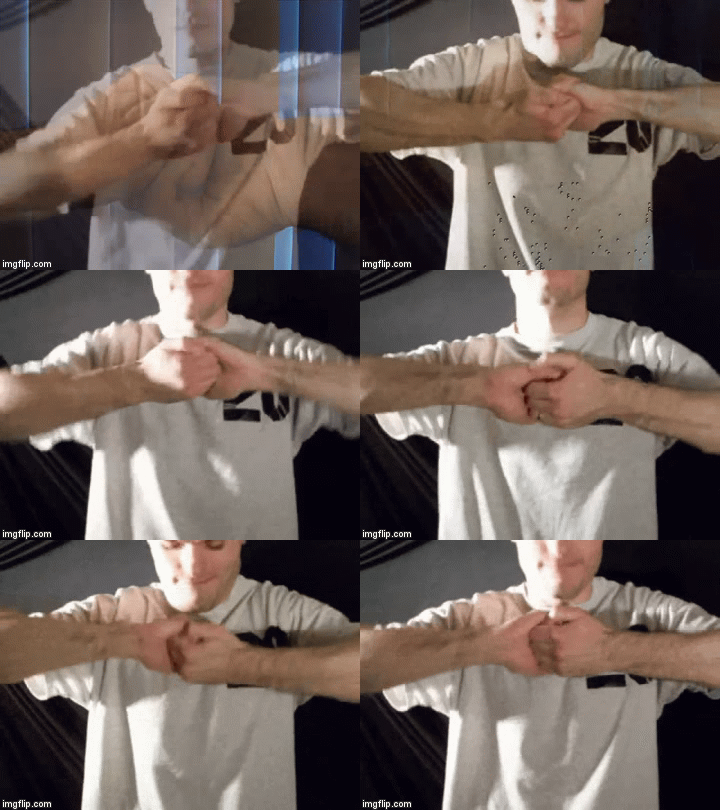 What the Schultz brothers did was put a lot of emphasis on grips and body positioning. First, they call for a chin strap, that connects with an s-grip to your other arm. Next, you need to pull the opponent to the front, trapping one of their arms. Interestingly, the Schultz brothers preach staying slightly to the side instead of directly in front of your opponent. The side you go to is the one where you control their arm.
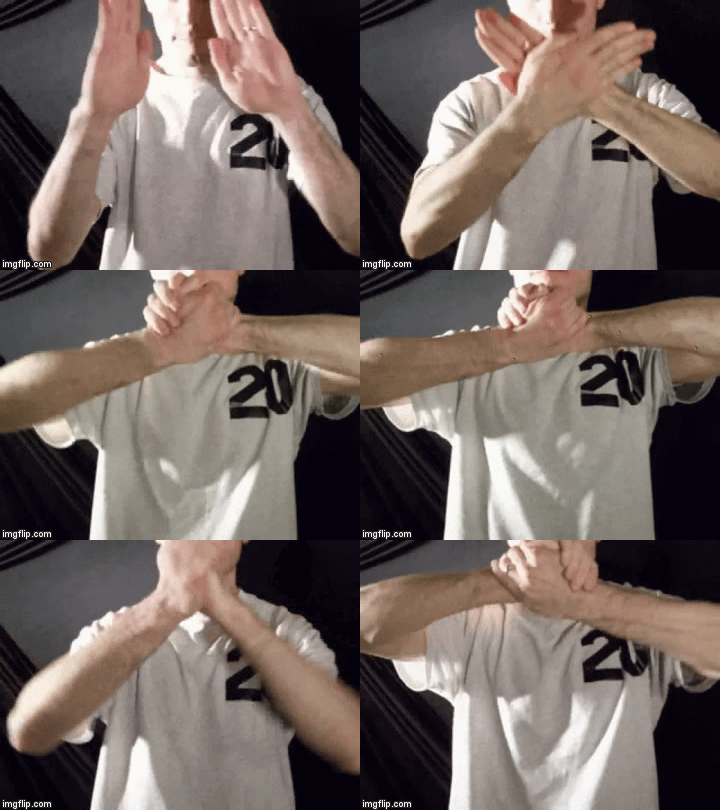 Once you have total control it’s time to take away any space left. For that purpose, you need to maneuver your grips into a Gable grip. At this point, you need to place yourself perpendicular to your opponent and place the back of your head under their armpit. From there the goal is to bring your elbows together and twist.
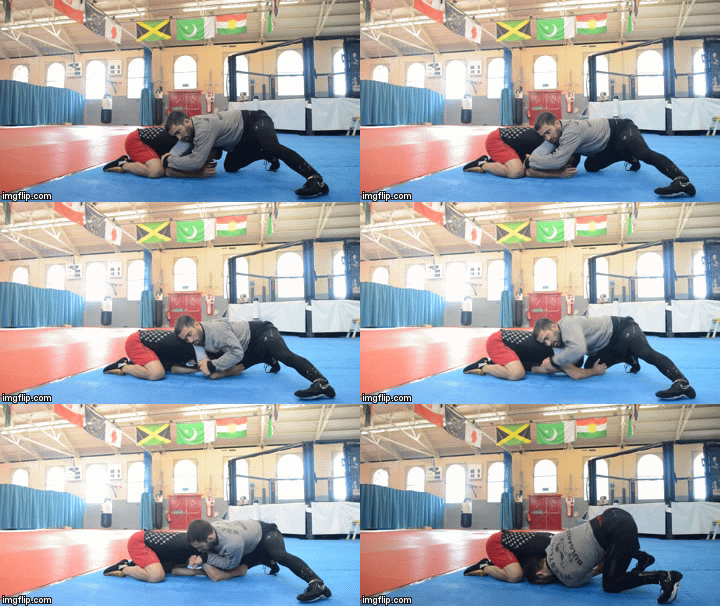 One useful byproduct of this position is exactly the thing that made it illegal in wrestling. The shift in body position to the side accentuates the strength of the grips to such an extent, you get a choke right then and there. The choke works and can catch even black belts by surprise. If you need a testament of its effectiveness, know that Matt Hughes pulled it off in the UFC against Ricardo Almeida. And Mark learned the move directly from the Schultz brothers. The choke works because of the body positioning, grip configuration, and the squeeze of the elbows.
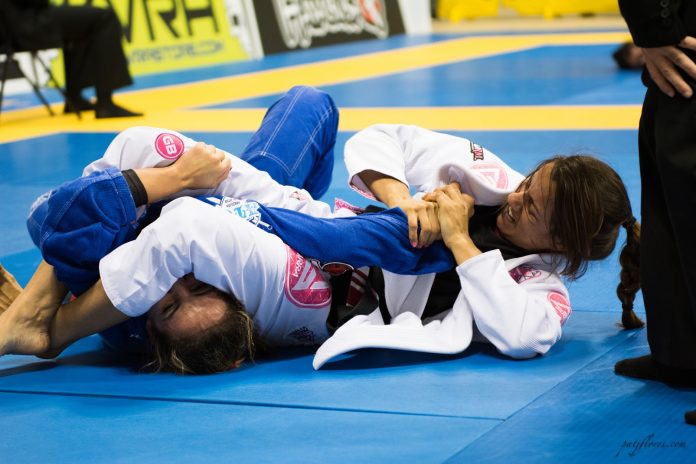
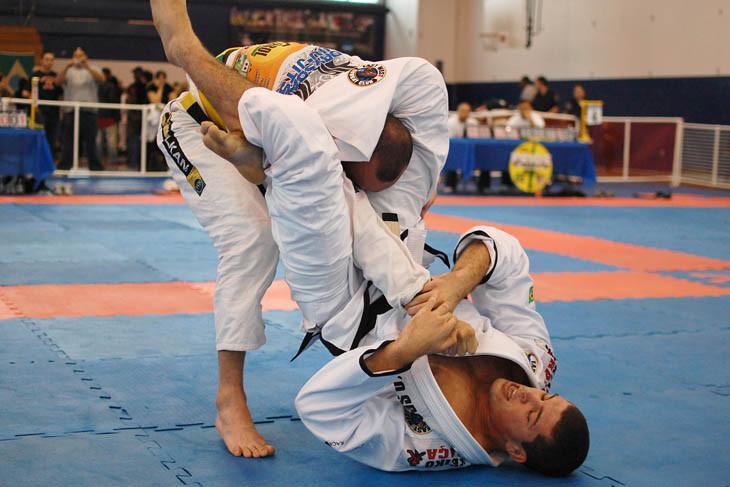 Let’s take the finish from the top as our basic armbar example. The goal is to have your complete body wrapped around the arm you are attacking. First and foremost, you have to place the opponent’s arm in between your legs. Next, you need to have your butt positioned as close to the opponent’s shoulder as possible. The arms should have a firm grip on the forearm of your opponent’s arm. Once there, it is time to work on holding the position before hyperextending the joint.
 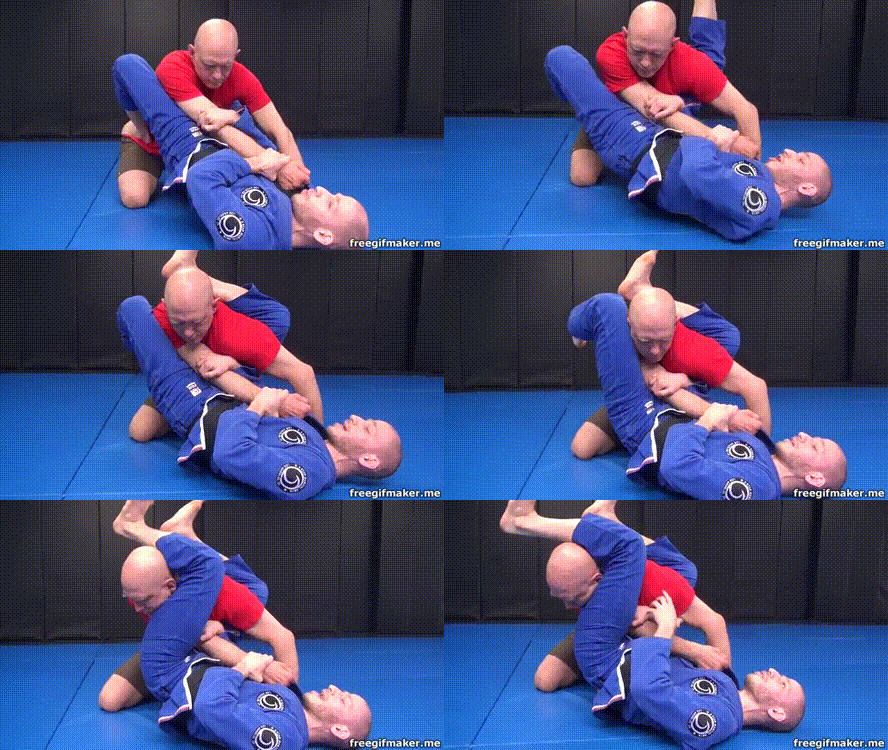 From The Closed Guard - The closed guard armbar is as basic as it gets. All you need to remember when running for the armbar from the closed guard is that posture is your enemy. If you let your opponent posture up, you’re going to lose the submission. In order to prevent this, you need to place weight on their back from the moment you start setting it up. The best way to do so is to first one, and later on both of your legs on the opponent’s back and neck. When you have their posture broken, finishing is just a game of patience and details.
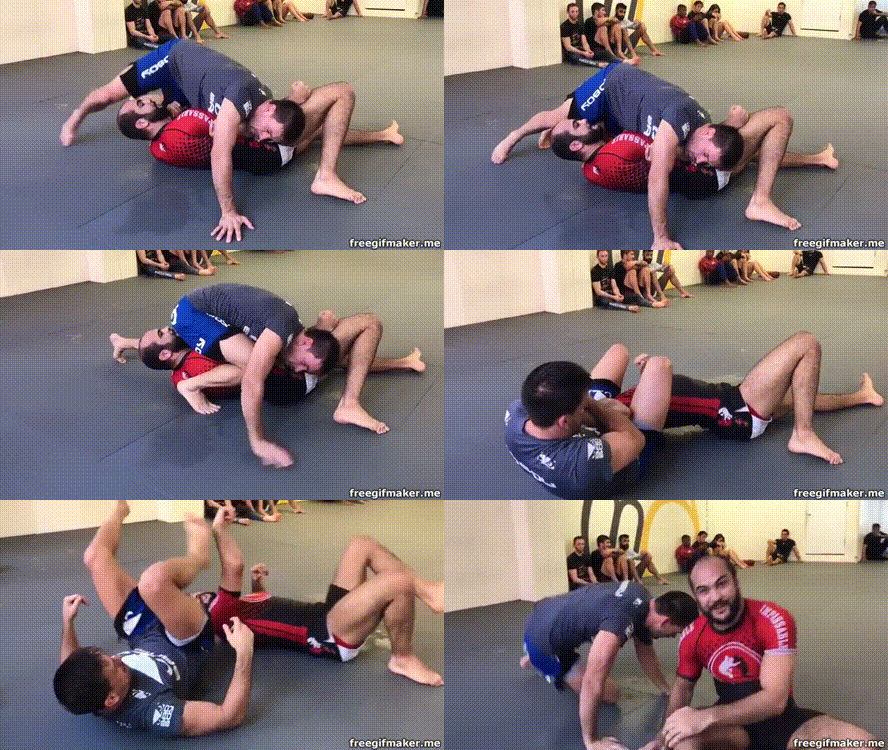 From Side Control - When in side control. always remember that the arm you can attack with an armbar is the far side one. To get into position, you’ll need to spin around your opponent. What makes this really easy is to make your opponent turn into you first. That way, you’ll shorten the distance you need to cover.
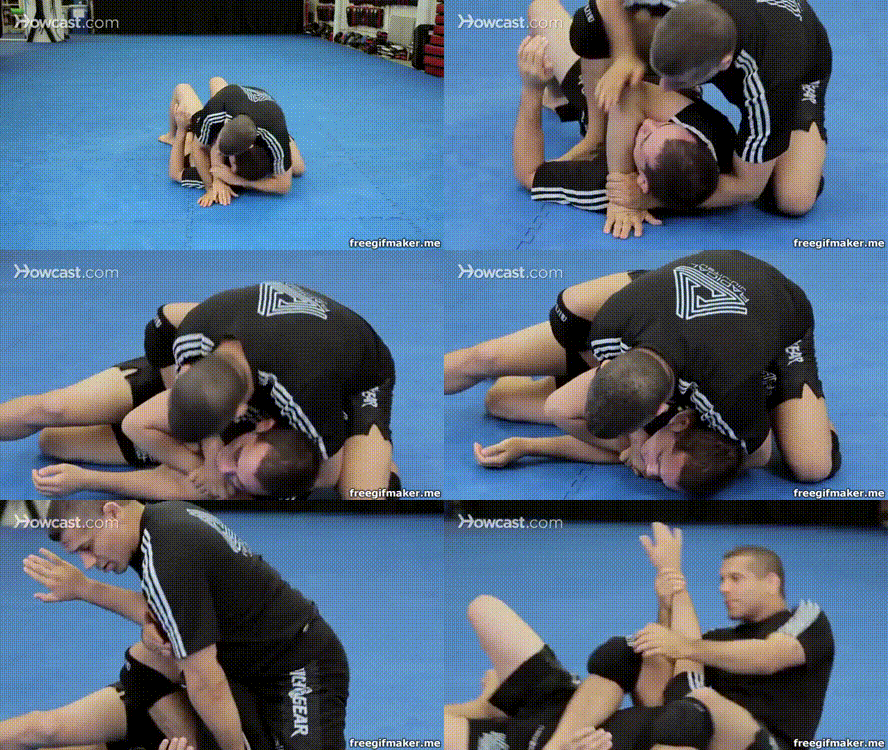 Once again it all starts with isolating and arm. Once you have an arm, you’ll need to use both of your arms on the opponent’s chest to pivot. This puts pressure on the opponent while allowing you to get into position at the same time. From there, keep your weight on the opponent and slowly place your leg over their head. It doesn’t have to be one motion, you just need to make sure you’re heavy. Finally, when you lay back, focus on keeping your butt as close as possible to the opponent’s shoulder.
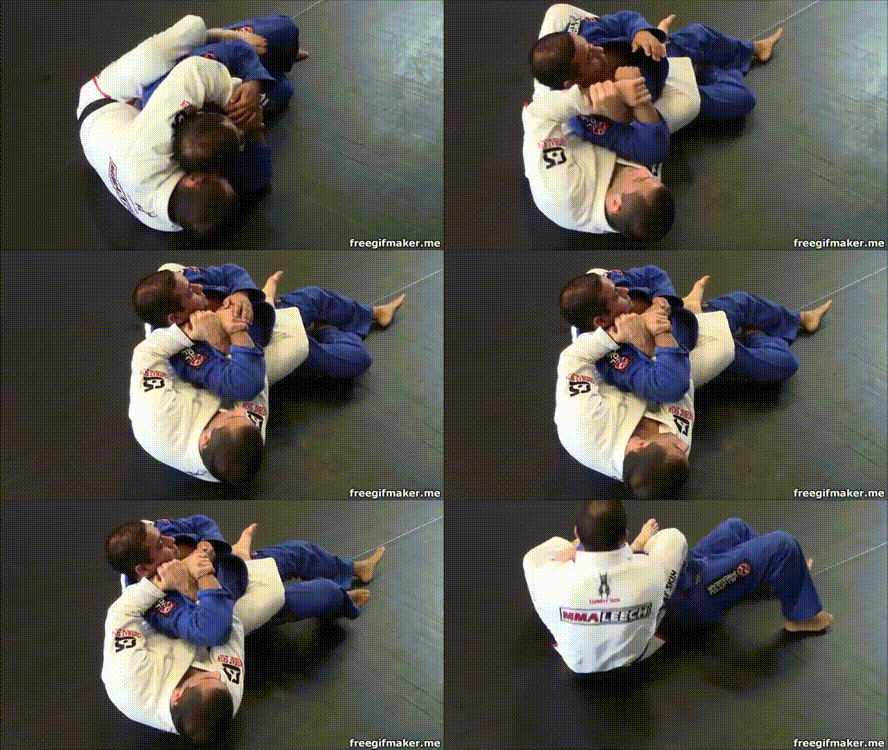 From The Back - The armbar from back control is actually a follow up when an opponent defends the choke. While it is not a beginner move per say, it is not one that is uncommon among new students. To perform it correctly, you need to be on the ‘weak side” of back control. That means that your choking arm is on the top and you’re lying on your underhook arm. Once there place a Kimura grip (figure four) on the opponent’s top arm and you’re halfway there. All you need to do is clear the head, and swing your bottom leg over the head. You’ll end up in the same finishing position as from the mount and side control.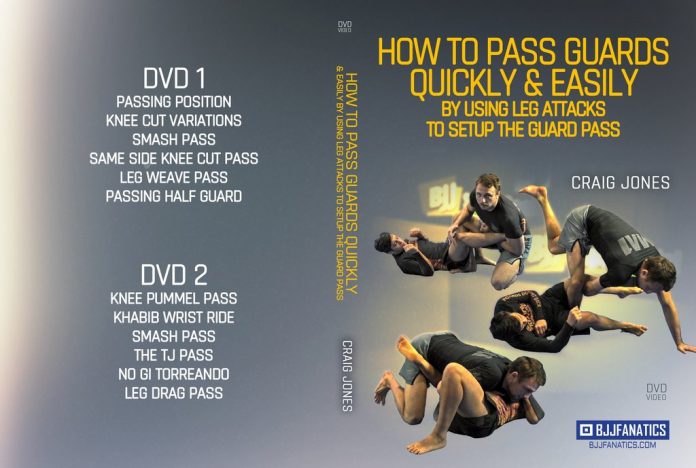
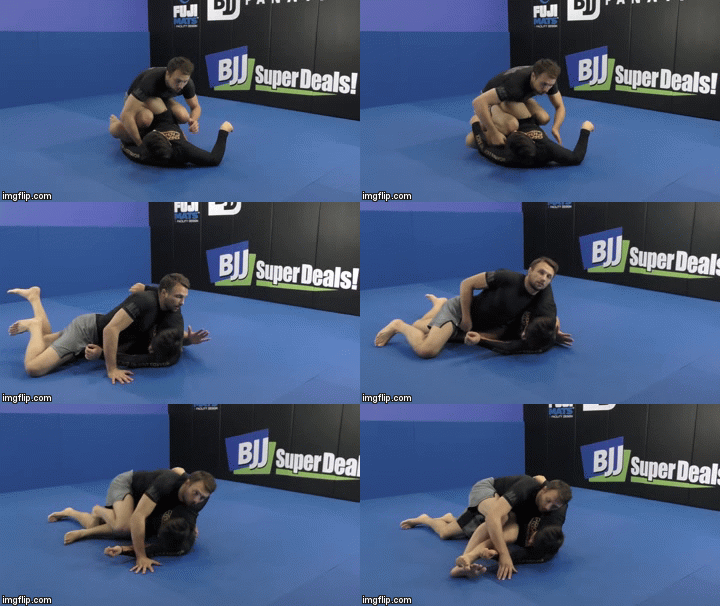 The second volume of this release goes into some still basic, but yet a bit more advanced passing strategies. It all starts with the pummel pass, only to continue in a Craig Jones special. The Khabib wrist ride is something you most likely do not know. it is also the one thing that you’ll fall in love with at first try. It works, and it does so against much more experienced opponents.