


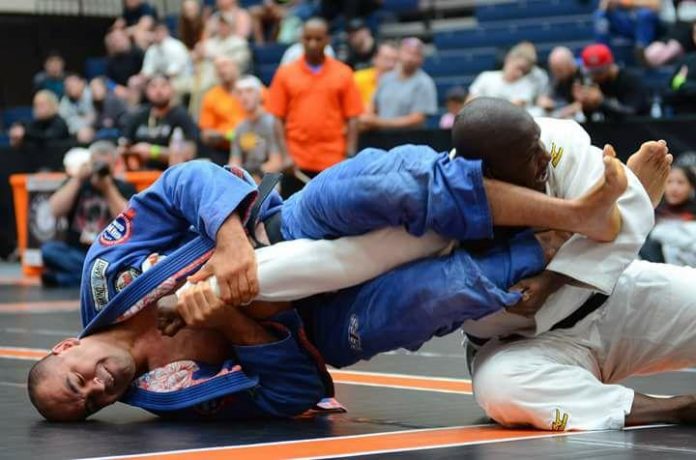
There’s absolutely no way that a grappler can execute every submission with the same rate of success. It just doesn’t work like that in Brazilian Jiu-Jitsu. Despite the fact that everyone can learn every move, not everything works equally as well for each person. This holds true for every category of the move, from sweeps to submissions.
However, in the case of submissions, understanding what works for you may be of crucial importance. finding out which the best BJJ submissions are for you, means you can focus on what works. Spending time working on the best options for you is going to make you extremely proficient in executing them. And, if you’re a smaller built guy or girl, this takes on a whole new level of importance. Now, you not only need to know your top options, but you also need to know the best BJJ submissions to beat the bigger grapplers.
When you are a smaller grappler, looking to become successful in BJJ, you need to start off cautiously. Surviving the first few months are going to be more difficult for you than for others. Simply carrying the weight of larger opponents is exhausting. Factor in the fact they’re also attacking you with specific techniques, and it becomes near impossible. There is a specific way to build your jiu-Jitsu game in order to mitigate the size difference. Today’s focus, however, is going to be on only one aspect of it – the most important one. What are the best BJJ submissions small grapplers can successfully use?
For all us small people out there (I’m a featherweight) grappling can be a difficult task. The best way to get an edge is to use smart tactics when we’re rolling or competing. Going for an opportunity that presents itself against a bigger grappler is a great way to lose everything and end up on the defensive. Patience is key here, as well as meticulous work towards the ultimate goal – getting a giant to tap. to that extent, certain submissions do work universally both for all small people and against all the large people.
The Struggles Of Smaller Grapplers
In a sport where putting pressure on everyone, attempting to make yourself feel heavier than you small people have a really difficult task. They need to find a way to negate the natural weight advantage of their opponents. They also need to make sure larger grapplers can’t look to maximize weight distribution, making them even heavier. Smaller framed grapplers are also required to mount an offensive game of their own, one that’ll work without your opponent’s bench pressing you off them.
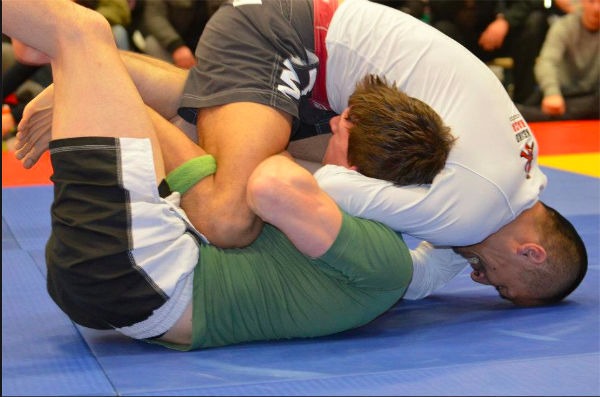 These are all valid issues that small grapplers need to overcome in order to become proficient grapplers. First and foremost, techniques should be the only thing you care for. make sure you have a solid gas tank and do not rely on strength in order to finish moves. A smart technical approach means you’ll easily deal with the fact your opponents are heavier. The strategic use of frames, for example, takes care of natural weight as well as weight distribution.
Next up, you can’t go for anything but the absolute best BJJ submissions that work against bigger opponents. The list here is not big, nor does it contain crazy flying moves. It is all about the moves which can put down giants with ease. But not only them. You need submissions that will work against opponents of all shapes and sizes. Once you identify these subs, you can build a truly effective submission game around them.
The Best BJJ Submissions For Small People
There are a few rules of thumb you need to look at when trying to be a small and nasty submission machine. The first thing to remember is to leave pressure alone. If there’s more than a 30 lbs weight difference between you and your partner, forget to be heavy from the top position. Actually, give up on them completely, apart from transitioning. And never ever try to hit a submission which only works if you’re heavy from the top. You’ll just end up flying.
Speaking of transitions, make sure you use them to their maximum. The best BJJ submissions work from solid positions. getting to those positions is hard when you’re obvious about it. So, whenever you’re transitioning, make sure you start setting your submissions up before you reach the final position. For example, start looking for a Rear Naked Choke while you’re in the middle of a back take. There’s no way an opponent is going to defend you sneaking your arm around their neck while they’re focused on defending the back take.
In terms of what are the best BJJ submissions that small people can rely on, there’s just one rule. use the stuff that works against everyone with the highest rate of success. On top of that, a good piece of advice is to figure out a sneaky submission or two. Still, make sure they fit the principles we already discussed above.
Top Choking Options
First of all, let’s look at what you shouldn’t look for against big opponents. Any choke that requires you to be in the mount, top half guard, or even topside control is probably not a good idea. Unless you’re in front, or behind your opponent, stay away from chokes. Furthermore, chokes like the D’arce or anaconda, which require a certain arm length are also not a good fit. And leave most elaborate and complicated lapel chokes to tall and lanky people.
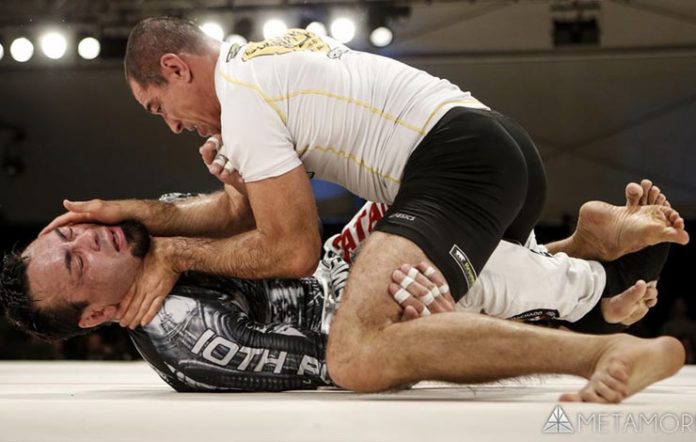
The chokes that are going to work start with a very familiar one. The Rear Naked Choke is a great fit for a multitude of reasons. It has you behind the opponent’s back, it doesn’t require strength and it works against everyone. Plus it is one of the all-time highest percentage submissions in the history of BJJ.
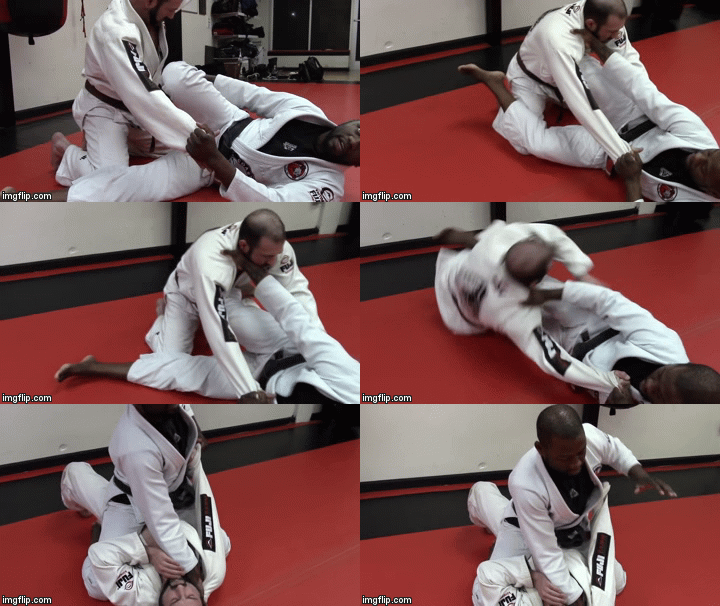
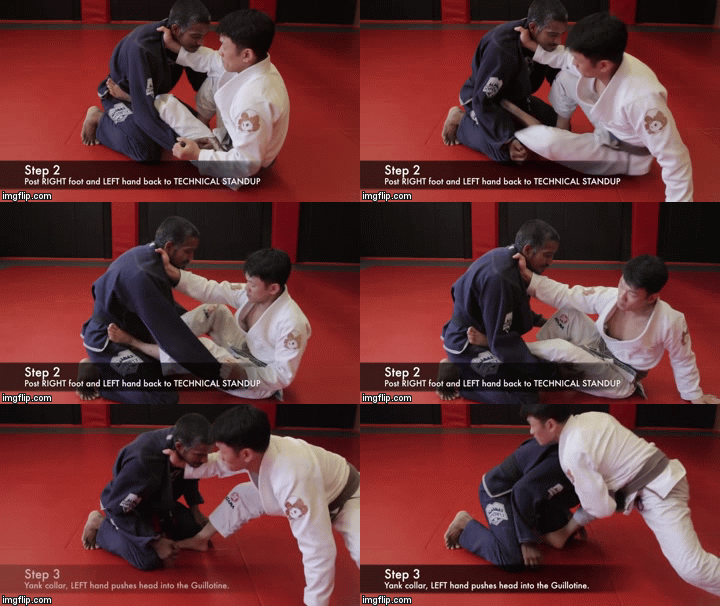
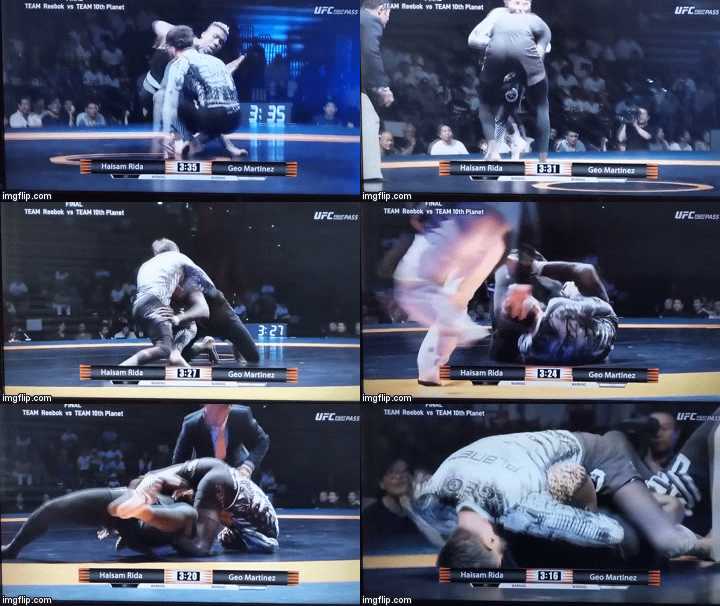 A surprise one might be the guillotine choke. many people see it as a strength move but it is actually a really technical one. A guillotine works because it puts you in front of your opponent while having extreme control over your head. Moreover, it has your arms in a wide circle, which means you can get it even against the biggest of people. It works both in gi and No-Gi and has a few variations you can use. One really reliable one is the Marcelotine.
There’s no way we can discuss the best BJJ submissions for small people without mentioning the loop choke. It is a Gi version of the guillotine and is really reliable, Plus you can get it from the bottom half guard as well as against a turtled-up opponent.
Effective Leg Locks
Once again, we’re starting with what you shouldn’t do. Positionally speaking, unless you’re training with John Danaher, do not go for the outside Ashi Garami. It opens up too many options for your opponent to crush you. Also, forget about inverting in order to hunt for positions. From a submission standpoint, toe holds are the only ones that might fail you, due to how easy an opponent can straighten their leg.
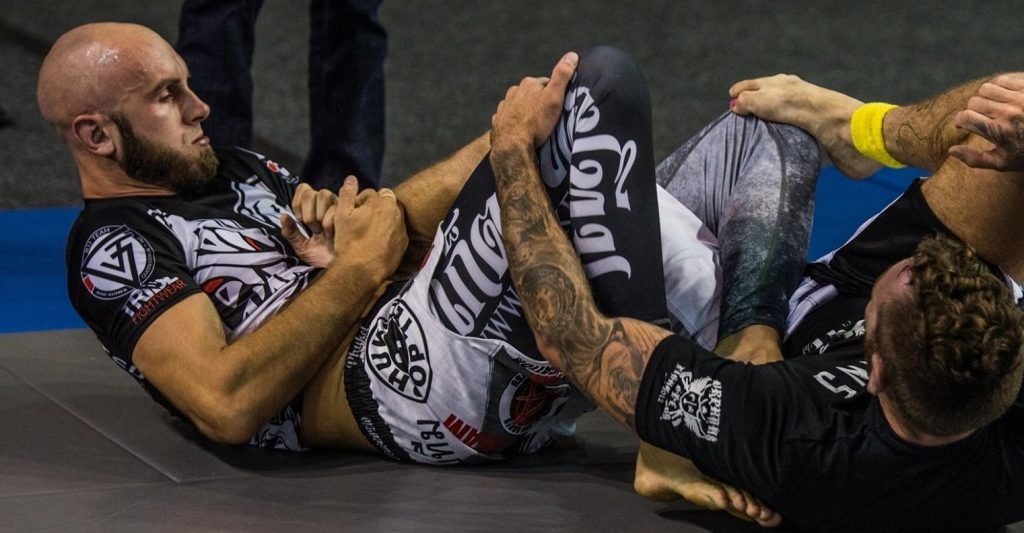 It is really easy actually. If you want the best BJJ submissions to beat big guys, go for heel hooks. Outside or inside, if you can do them, go for them! Just remember to skip the outside Ashi. Also really effective are ankle locks, although some people might be able to power through them. Your best bet is to use ankle locks to set up better positions and more effective subs, like kneebars and heel hooks.
Positionally speaking, the 4/11 position is the absolute best one to use for heel hooks. You can actually transition in and out of kneebars from there as well. If you can’t use it, go for the straight Aashi Grami and focus on ankle locks.

Improve your overall submission game and discover more submission options that work for the smaller grappler. Bernardo Faria’s “High Percentage Submissions” DVD set has everything you need to submit each and every giant you cum up against!
Arm Locks That Work
As far s submission s to skip when battling bigger opponents, give bent arm subs a pass. Kimuras and/or Americana submissions are not going to work really well against anyone who is stronger than you. People are going to be able to pick you up and shake you off with ease. The same holds true for the Omoplata.
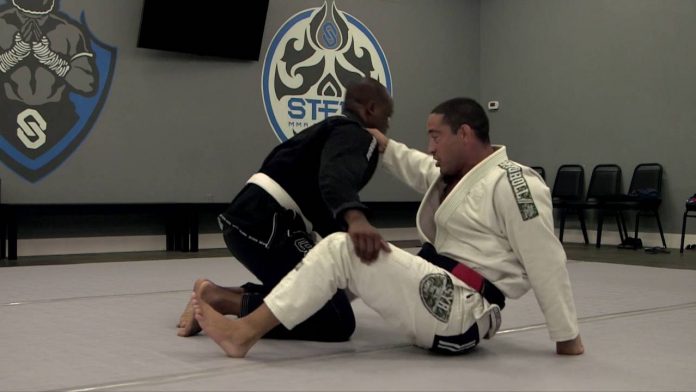
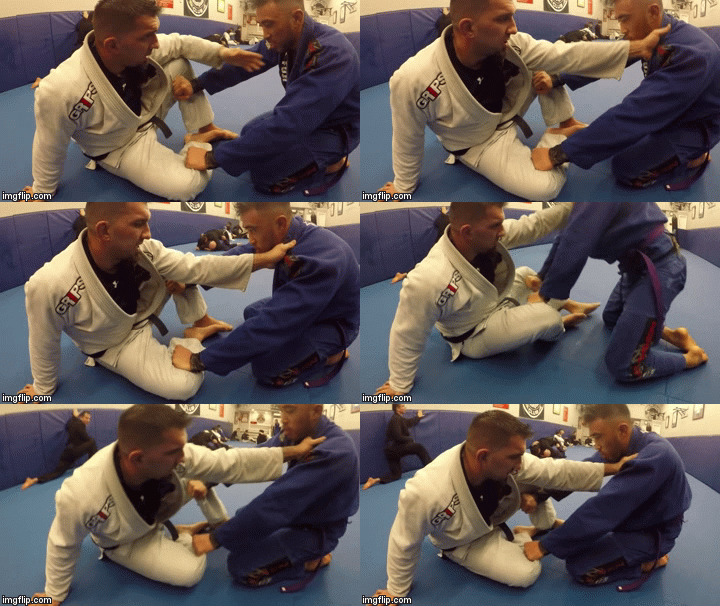
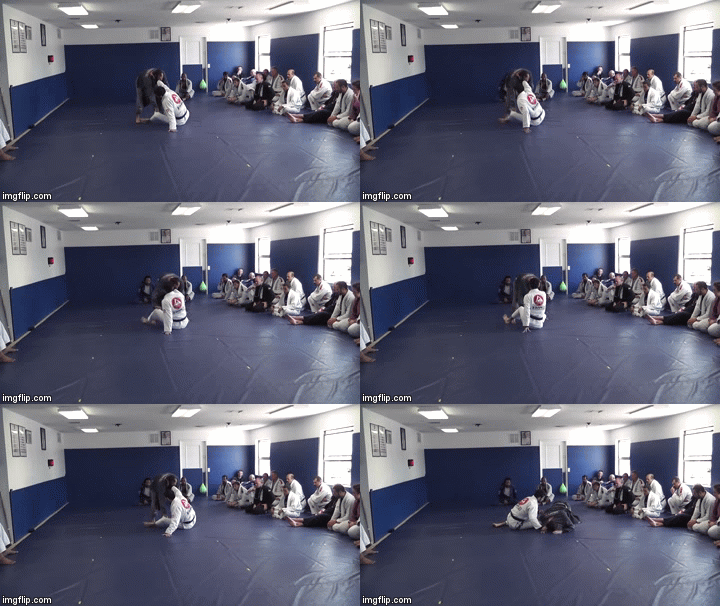
The absolute best arm-based submission? Wristlocks.No matter how big and strong someone is, their wrists are probably the weakest part of their body. Learn how to wristlock people, especially from the closed guard. They’re arguably the best BJJ submissions, period!
If you want to go for a different kind of submission, use the straight arm lock. From the bottom of half guard, there’s hardly a better and easier submission than this. Pair it up with a loop choke and you have a deadly combo right there. The straight armbar is also good, but only if you catch it tight while transitioning.
https://bjj-world.com/best-bjj-dvd-instructional-for-submission/
 A joint is a dynamic body part that is expected to remain active throughout our lifetime. Joints are actually the spots where two bones meet each other. They’re surrounded by a protective wrap that is filled with a specific fluid. Inside a joint, ligaments hold the two bones in proximity, as well as determine the direction for movement. The main work in the joints is done by cartilages. they are the cushions that allow the two bones to interact without causing immense pain. They’re also the one spot that suffers the most as time goes by.
 First up are the things that can help you reduce inflammation. Every time you use your joints, there’s a certain level of information that follows. With grappling, this information is that much more pronounced. Among all the supplements for BJJ athletes out there, the only one that does wonders for inflation is fish oil. It has an undeniable positive effect on information, while also having a host of other benefits. Some of them actually help joints, in particular, making fish oil the first thing you should reach for.
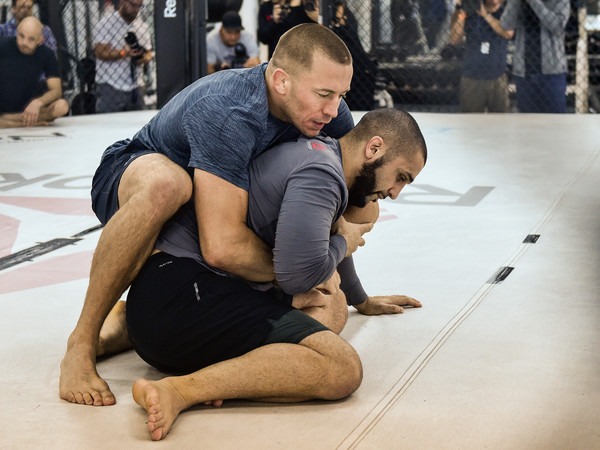 Taking into account the analytical approach Firas has towards things, it is not hard to connect him to Danaher. One might even go as far as the claim that the two were made for each other. Similar to his professor, Zahabi likes to dedicate enormous attention to details. However, he does so in a very specific way, looking at the essence behind the details instead of only at the technical aspects. This gives him a unique insight into both Jiu-Jitsu and other martial arts. It also makes him what he is today, one of the best martial arts coaches in the world.
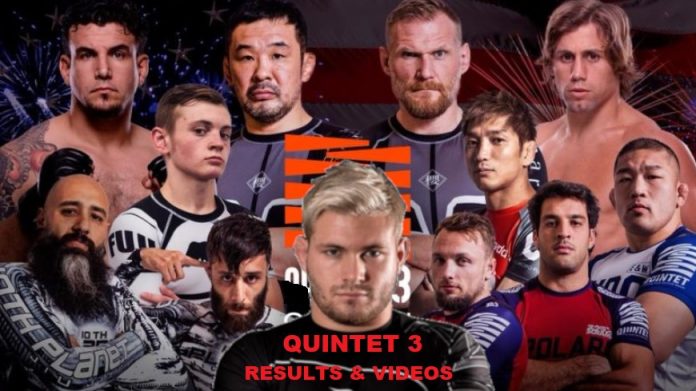
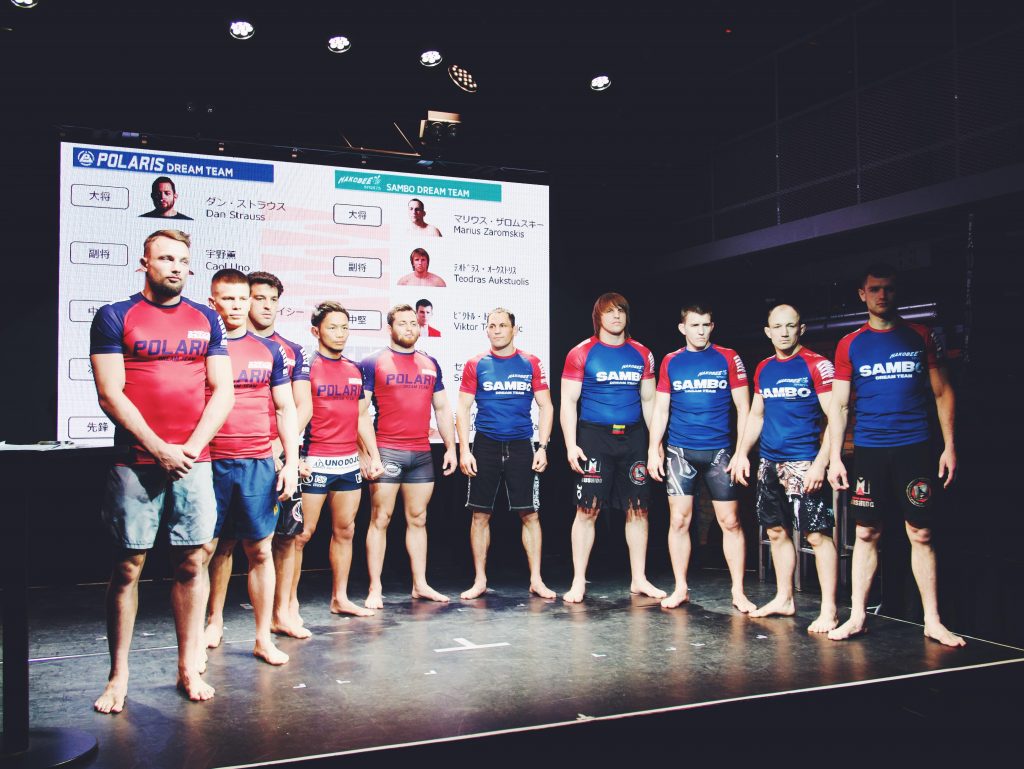 Seriously, if you still have to ask this questions you must’ve been living under a rock. In all fairness, the Quintet tournament is pretty new, but it is anything but unnoticeable! a grappling tournament featuring 5 vs 5 teams? It is already enough to tickle the curiosity of every grappler out there. Throw in
 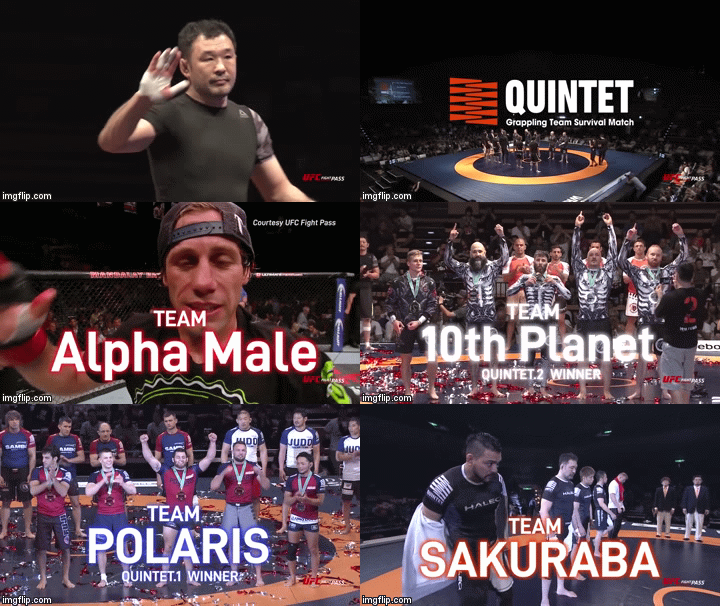 So far, even the announcement of Quintet 3 has people anxious for the tournament! Polaris team, the winners of the inaugural event, and Quintet 2 victors 10th Planet Jiu-Jitsu will both feature. The remaining two teams are no joke either, with one of them, named led by Sakuraba himself once again. The final team for Quintet 3 is handpicked by Uriah Faber, unsurprisingly called team Alpha Male. Which team has the best chance of victory?
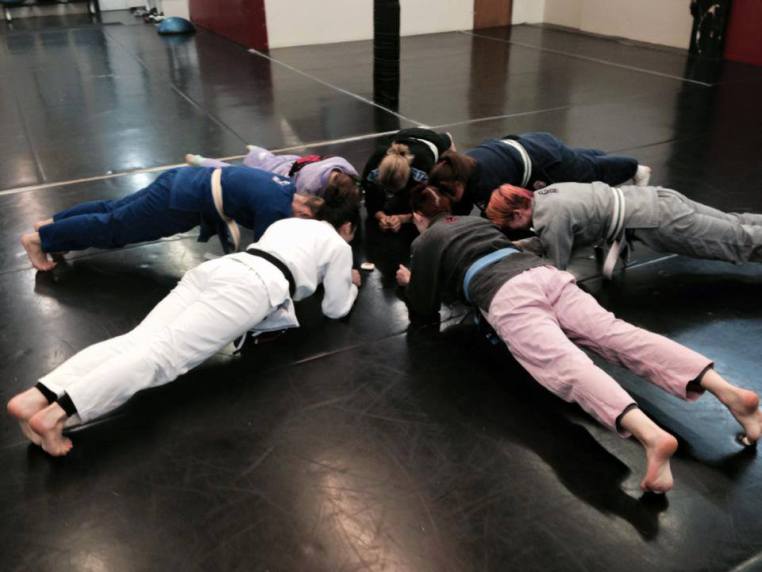 You can see why isometrics should be a big part of any grappling strength and conditioning program. They are the perfect tool to develop specific muscular endurance essential for BJJ. Working on isometric strength means you train both maximal static strength as well as improve strength endurance. This means you can hold tighter for longer, as opposed to not training. The reason is simple – isometric training recruits much more muscle fibers than dynamic training. This makes this type of strength much more reliable than others, at least in grappling terms.
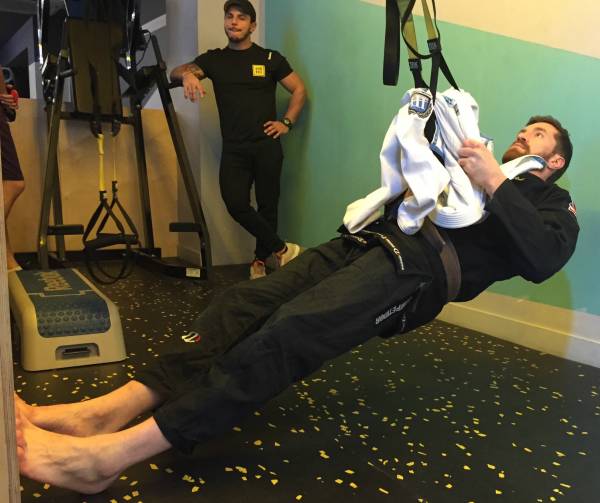 For the upper body pulls, focus on pull-ups for the vertical, and rows for the horizontal. By rows, I mean doing bodyweight inverted rows as opposed to barbell rows. The same principles apply as you’ll need to hold a pull-up-position at a few different points of the motion. The same goes for rows. In the case of pull-ups, in particular, try to vary the grips you have on the bar. You could (and should) also use a Gi to hang on, as this is going to develop really specific grappling strength.
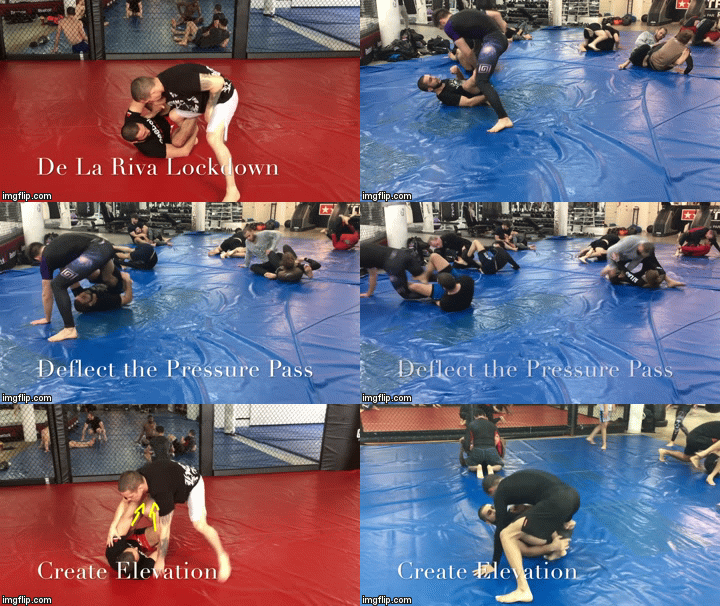
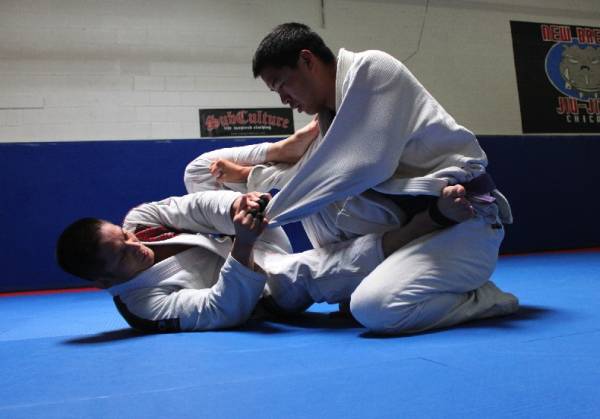 The usual length of specific technical training in Jiu-Jitsu is short, compared to other arts. This is ok as far as the fine technical aspects of the sport go. However, in order to reinforce the most basic movement patterns for every technique, drills should follow the technical part. The trouble with Jiu-JItsu drills is that, even when people go for them, they only do a couple of minutes each. Afterward, either the whole class goes to roll. or people start slacking off.
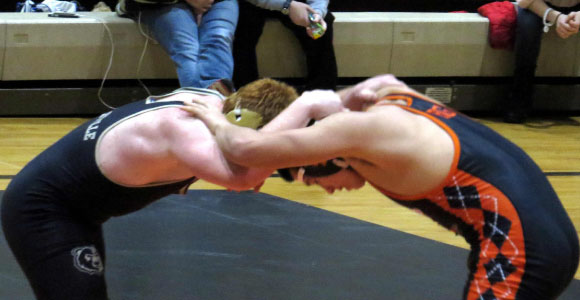 To remove the boredom factor from drilling, we can look to make some BJJ-specific adjustments. For example, we can mix things up by building upon drills. If we train the X-pass on Monday, for example, we’ll do a guard recovery on Wednesday. Now, when we drill one partner starts with the pass, and the other follows up with a recovery move. This turns to drill into a mini-scenario, where both partners get to work. PLus they have the chance to attempt a specific technique against resistance with another specific technique. The Friday session can build even further upon the moves, offering both variety and much-needed repetition.
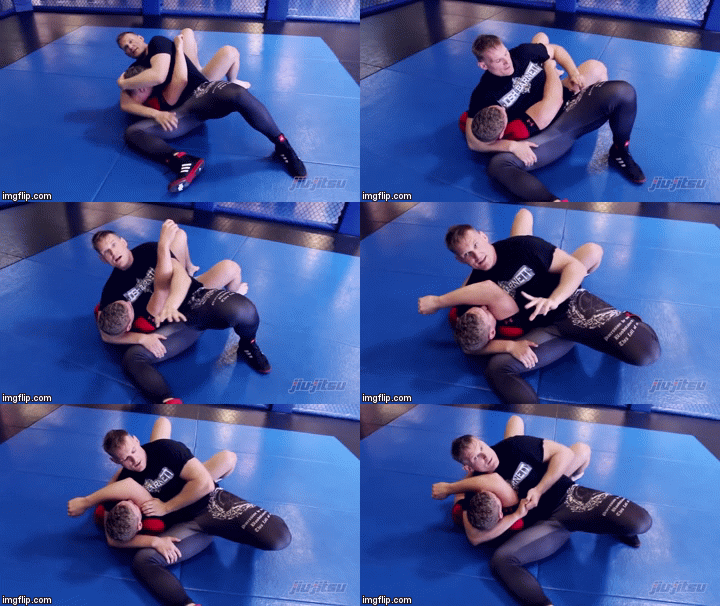
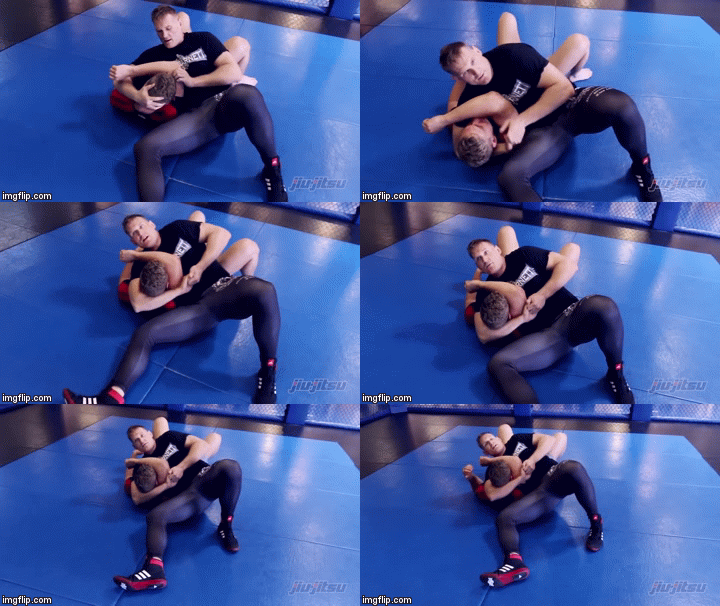
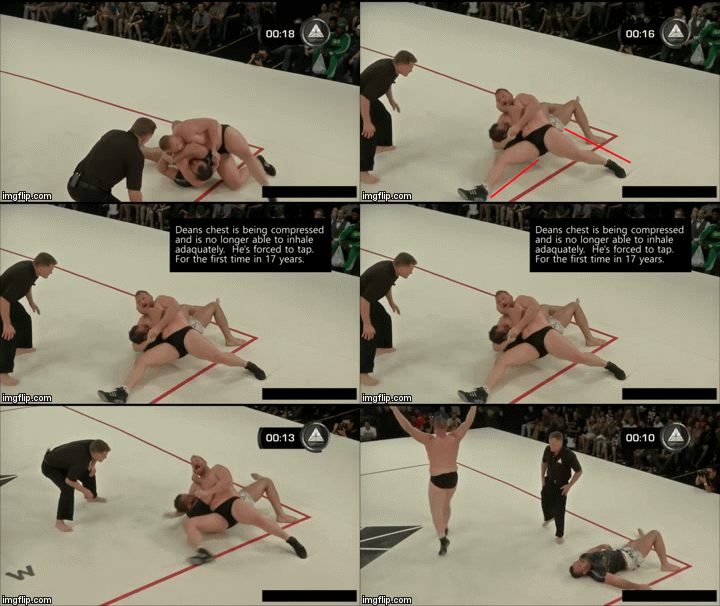 In all honesty, the scarf hold is not a position known for submission options in BJJ. In both Judo and Catch wrestling, the situation is the opposite. Granted, there are much more options for the bottom person to do in BJJ, but submissions are still scarce. The chest chokes allow you to better control the position, prevent all counters and finish with ease. Plus, it makes your opponent cringe with discomfort and pain.