


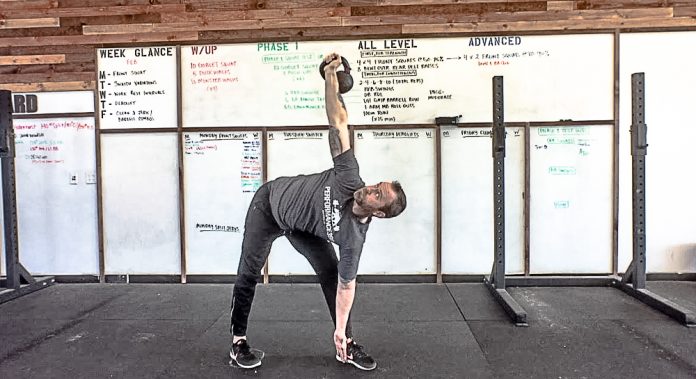
The Only Jiu-Jitsu Kettlebell Exercise That You Need!

Windmill Jiu-Jitsu Kettlebell Exercise

One of the best tools to use to get in shape for martial arts is by far the kettlebell. Or a couple or even a bunch of them, for that matter. They are the top utility for strength and conditioning for grapplers and are used worldwide. With kettlebells, things seem easy. The only thing you need now is a program and some exercises. That’s where most people hit a snag. As kettlebells gained popularity in the fitness world, training with them become more complicated. there are a bunch of pointless exercises out there now, some of them making the way into grappling conditioning as well. Since simplicity is key for grapplers, there are some exercises that fit the bill better than most (or all) others. And even among them, there’s one Jiu-Jitsu Kettlebell exercise that is an absolute winner when it comes to creating better grapplers.

Kettlebells Training and Brazilian Jiu-Jitsu

Training Brazilian Jiu-Jitsu is a very time-consuming activity. While you’re probably aware of the time it takes to train, you might not be factoring in commuting time. There’s also washing your equipment, packing for class and even meal prep. Plus, the one thing you’re surely not factoring in is the time you spend looking at DVDs or YouTube videos related to BJJ. Given that most people out there do have a few other things to do, like jobs, family etc, this leaves really little time for additional training. Especially strength and conditioning training, in a more “traditional” sense. This again demands preparation, commuting, training at a facility, monthly fees etc. A good way out of this is turning to kettlebells for conditioning training. An even better way is knowing what the one Jiu-Jitsu Kettlebell exercise that you truly need is.

I am probably going to take you by surprise with the exercise I’m about to focus on. It is not the Turkish get up, nor the kettlebell swing. Despite the popularity and effectiveness of both, there’s something much more important for grapplers. It is core training, one done in a way that really taxes the core in unusual positions. Because, as you know, these “unusual” positions are actually very usual for grapplers. While the Turkish get-ups are definitely a good choice, there’s a surprise contender that offers even more benefits. People rarely see kettlebell windmills as a strength building exercise. And it is even rarer to regard it as a Jiu-Jitsu Kettlebell exercise that is actually beneficial.

Understanding Core Training

When people think of the core, the usually only think about the abdominal muscles. In some cases, they also include the muscles of the small of the back too. However, the core is much more than just a group of muscles that are in direct touch with each other. The core encompasses a big part of our musculature. Moreover, all of these muscle groups have the task of working together in an optimal fashion. This is not easy at all, especially considering the modern lifestyle.

Best Jiu-Jitsu Kettlebell Exercise The core is actually made up of all the muscles we already mentioned. The abdominals and lumbar muscles to make a large chunk of the core. Other key components are the muscles of the upper back and the shoulders on one end. On the other end, it is the hip flexors, upper thighs, and hamstrings. As you can see, the core requires most of your torso musculature to put in some work. No wonder our top pick Jiu-Jitsu kettlebell exercise is one that targets the whole core.

The thing with training the core is that it helps you train most of your body all at once. This is a very important ability for Jiu-Jitsu. BJJ requires a very high level of coordination and the ability to adapt to sudden changes of direction. As such, training the core to be able to move in a full range of motion in each possible direction is crucial for grapplers. Doing that requires either a very complicated program or just one carefully picked kettlebell exercise.

The Ultimate Jiu-Jitsu Kettlebell Exercise – Windmills

The windmill is an exercise that you can do with one or two kettlebells. To begin with, remember two simple rules. The first I to start light, very light if you’ve never done it before. Second, do not work with two kettlebells unless you’re really advanced in kettlebell training.

The reason that the windmill is one (if not the) best Jiu-Jitsu kettlebell exercise is diversity. You can train pretty much your whole body with just one exercise. Plus, you get a lot of different physical benefits from it. You’ll get stronger without a doubt since you’re using an external resistance that you can increase at all times. Combining both gives you the ability to be strong at the ends of your range of motion. This is as key to BJJ as much as correctly executing techniques.

What you get from windmills is direct dynamic work of your oblique and side abdominals. During this, the front abdominal and the muscles on your back work hard to stabilize. Since the weight remains over your head, you also get a lot of shoulder mobility and stability work. And, your hip flexors and hamstrings, in particular, get to work a lot both concentrically and eccentrically. From a conditioning perspective, try going for time with just one kettlebell and tell us how you feel after 20 minutes non-stop. It is the one Jiu-Jitsu kettlebell exercise to rule them all!
Mike Perry is an expert when it comes to training with kettlebells. Since he is also a solid grappler, he’d be my choice for a strength and conditioning trainer. Since I can’t get to him, I use his “KB Essentials Instructional Guide” DVD set to great success. Now you can too because this resource is available, cheap and full of information that lasts a lifetime!

Executing The Windmill

Let’s take a look at some of the technical aspects of executing a windmill. If you truly want to master kettlebells, look for a trainer. Or, pick up a good instructional DVD, like MIke Perry’s. This will ensure you’re safe from injury while training.
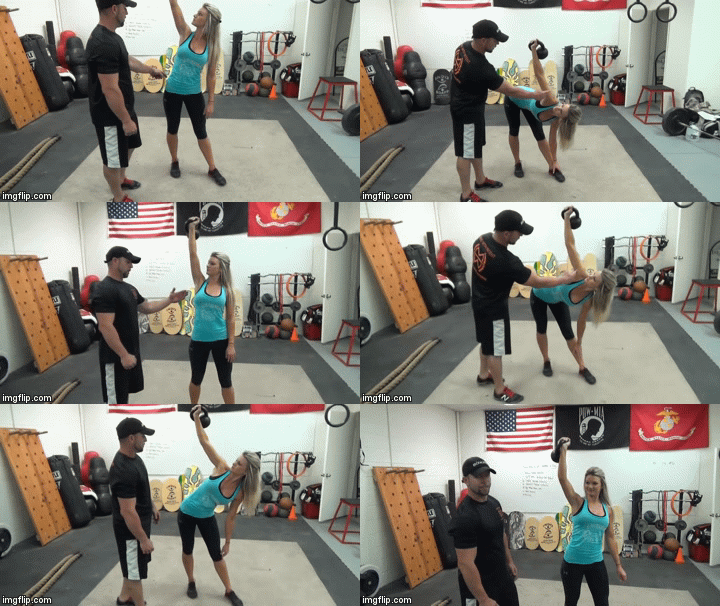
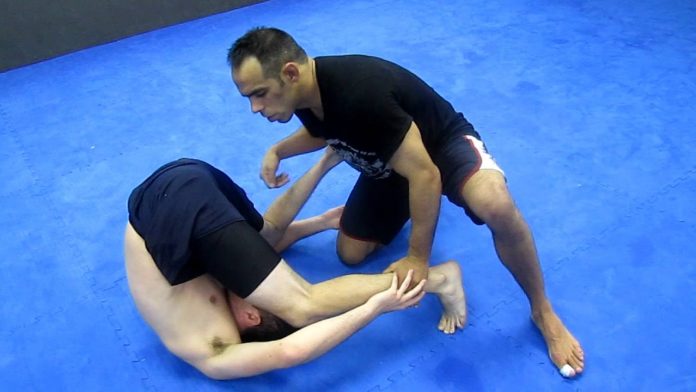
 Jiu-Jitsu Kettlebell Exercise WindmillsThe starting position of the windmill is with a kettlebell held over your head with one arm. Stat with a stance that is a little wider than shoulder width. From there, the aim is to bend sideways, aiming to touch the ground with your free hand. While you do that, you need to make sure you keep the kettlebell over your head at all times.

The key thing to remember about windmills is that you need to keep your joints straight. Keep your kettlebell arm straight at the elbow. This is the most important thing. Also, keep your spine and another arm straight, along with both your knees. Basically, you should be bending at the hip joint only along with rotating the shoulders. And, keep your eyes on the kettlebell at all times too. Once you go all the way down, get back up towards the starting position.

Once you master this particular Jiu-Jitsu kettlebell exercise, you can look to add in on ore two more to get an even tougher workout. The two I mentioned before, Turkish get-ups and swings are great choices.


How To Develop Crushing Grip Strength For BJJ

Can Ginastica Natural Help Your BJJ Conditioning

BJJ Mobility Drills For Flexible Hips

Why You Need Fish Oil Supplements For Jiu-Jitsu

Fish Oil Supplements For Jiu-Jitsu

Healthy joints, better recovery, fewer injuries, more cardio, more strength, bigger muscles, losing fat… All of these qualities are on the priority list of grapplers worldwide. They depend on a host of factors and are mainly down to the individual. In terms of achieving them, most people try to look for a shortcut. Who wants to spend 16 grueling weeks losing fat the old fashioned way? Instead, it is much easier to swallow a pull or dilute some powdered supplement and you’re all set. The only trouble is, you’ll probably spend more money achieving less than what you would otherwise. Well, in some cases, at least. While supplements do have their drawback and advantages, like everything else, some of them are actually really good for grapplers. Sadly, there are still no supplements for Jiu-Jitsu that’ll turn you into Gordon Ryan after a few weeks. There are some, though, that’ll give you a chance to become a world-class grappler because they help keep you on the mats. One example is fish oil.

Supplementing With Fish Oil

Supplementing with fish oil is nothing new. Every time you end up with a supplement that’s just an improved form of something used traditionally, you can be certain you have something that works. Back in the day, people used to gulp tablespoonsful of fish oil. I remember that experiences from when I was a kid, along with the gag reflex they caused. Today, thankfully, things are much simpler. Chugging down a few fish oil capsules is much more bearable. If you get high-quality ones, even your subsequent burps won’t have that old fish oil aftertaste. But why fish oil? Out of all the supplements for Jiu-Jitsu, it might seem like fish oil is a trivial thing to take. Well, perhaps you should reconsider.

As you’ll see further down this article, fish oil is anything but just another oil. it is so rich with nutrients that it could single-handedly make you a better athlete. The trouble is, most of the world’s population is deficient in some way. This means that even if you start taking fish oil regularly today, you’ll still need to catch up before you see certain benefits. that said, the moment you start taking this supplement, you’re going to feel positive changes. And, fro the battered grappler out there, fish oil should be the first one you buy when you’re putting together your supplements for Jiu-Jitsu.

Supplements That Work

During the course of this entire article, I’ll try and convince you why you need to include fish oil in your supplements for Jiu-Jitsu. However, before we go into fish oil, let’s briefly take a look at some other supplements that actually work.

Fish Oil Supplements For Jiu-JitsuMultivitamins should be the second thing you get (right after fish oil) if you’re serious about training. Actually, if you just want to be healthy, you’ll need to take them on a daily basis. There are too many different brands of multivitamins out there to choose from. Similarly to fish oil, most people are deficient in one or more, and overdosing isn’t really a thing for concern. So take the prescribed those early and enjoy a healthier life.
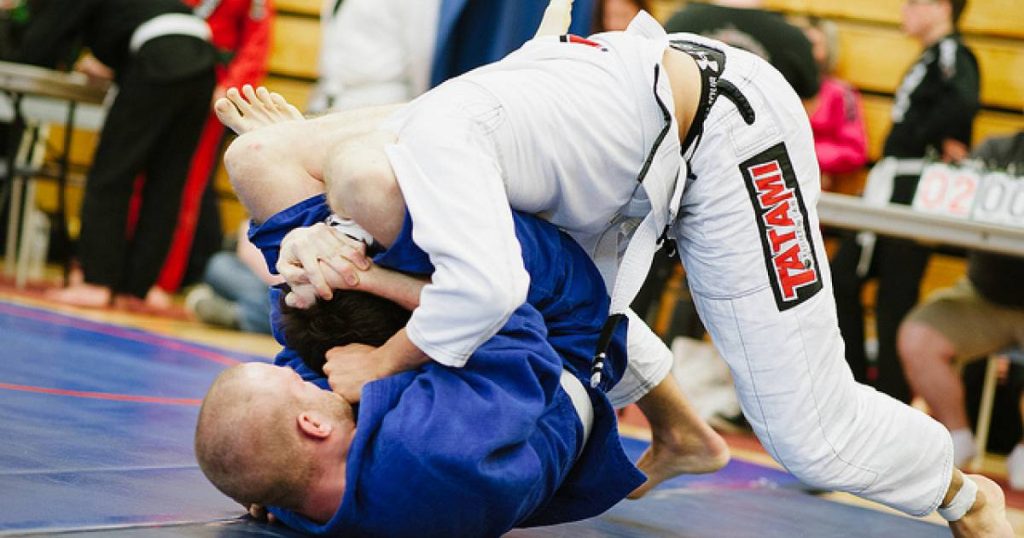
Next up for grapplers must be creatine. It is the one performance oriented supplement that does what it says. Creatine is going to increase your ability to work at a higher rate, for longer. This doesn’t mean you’ll have an endless gas tank, but you’ll be able to find the energy for that last push much more often. It also hast eh ability to increase muscle size, if that’s what you’re after. Be wary of only one thing though. Creatine binds water, so if you’re cutting weight for a competition, lay off it for a couple of weeks. It is the safest, effective supplement for Jiu-Jitsu out there, and a surprisingly cheap one at that!

Whey protein is more of a meal replacement than supplement nowadays. Still, it works perfectly and should also be an integral part of your supplement stack.

What’s The Deal With Fish Oil

Back to fish oil, then. Fish oil is mainly made up of two very important fatty acids. EPA and DHA are the main components in fish oil. The one thing you should know about them si ratio. When you’re choosing your fish oil supplement, make sure it has a 1.5:1 EPA: DHA ratio. Apart from Omega 3 fatty acids, fish oil also contains high levels of Omega 6 and 9 fatty acids. All these are essential for our bodies, and we have a distinct lack due to modern lifestyle.

Omega 3 fatty acids, in particular, cannot be produced by our own bodies. This means we must rely on food to get our daily dose of them. However, apart from leaving in Japan or perhaps the Mediterranean, this is a very hard and/or expensive thing to accomplish. This is exactly why fish oil supplements exist.

Fish oil has noticeable anti-inflammatory effects, boosts brain function, helps the immune system, provides energy and can lead to fat loss and even muscle gain. not this is not the same mumbo jumbo as you hear for all other supplements in the store. All this is actually backed by scientific research. It also won’t make you the Hulk in just 3 months but will have a gradual and continuous positive effect on your training. Supplements for Jiu-Jitsu must include fish oil, one with as high a dose of EPA and DHA as possible, along with the correct ratio.

George Lockhart Nutrition And Weight Management SystemGeorge Lockhart devotes a lot of attention to fish oil in his “Nutrition And Weight Management System” bundle. He has a whole DVD dedicated to supplements, as well as a large part of the accompanying e-book. Check it out for yourself and learn even more about the power of fish oil!

Fish Oil Supplements For Jiu-Jitsu

Let’s dwell a bit more on the positive effects of fish oil supplements for Jiu-Jitsu athletes. After all, we need specific benefits in terms of grappling, not just some general mumbo-jumbo.

The key benefit for athletes is the ability of fish oil to decrease muscle soreness. The way it works is by reducing inflammation. After rolling, all involved muscles (meaning all muscles) have a certain degree of inflammation. Fish oil helps reduce it massively and quickly, allowing your muscles much faster recovery.

Fish Oil Supplements For Jiu-JitsuThere’s also ample research out there that indicates how supplementing with fish oil can improve body composition. Fish oil affects the resting metabolic rate, fat oxidation, and cortisol excretion. They also have a boosting effect on muscle protein synthesis by improving the muscles’ anabolic response.
Fish oil is also a powerful tool in the prevention of a bunch of chronic and serious diseases. It improves heart function, lowering LDL cholesterol and triglycerides, as well as blood pressure. There’s also a notable anti-inflammatory effect on the blood vessels. Furthermore, fish oil provides a boost to the brain, especially memory.

In terms of dosage and taking, things are simple. Take 3 grams of fish oil daily, and always consume it around meal time, as it is best to take fish oil supplements along with food. The number of capsules you take per day will vary depending on the type of supplement you choose. You could also position them throughout the day instead of taking it all at once.

The Only Supplement You Need – Creatine For BJJ

Are Pre-Workout BJJ Supplements A Good Idea?

The 5 Best BJJ Supplements For High Level Performance

No-Gi Ezekiel Choke From Top And Bottom

No-Gi Ezekiel Choke

During the last couple of years, I really fell in love with No-Gi Jiu-Jitsu. Before that, I was doing mainly Gi BJJ, training and competing under IBJJF rules only. Then, as leg locks and front headlock chokes became a large part of my game, No-Gi started to emerge as a more interesting option.

Since I’m a part of an academy that’s still based on Gi Jiu-Jitsu, I decided to try and bridge the gap. To that extent, my strategy was (and still is) to work with No-Gi grips only, even when rolling with the Gi. It is much harder but much more fun that way! Also, I started looking into submissions that work as well in both worlds. Some were already there, and some, I had to research in order to adapt some Gi moves I really like to No-Gi. One such example is the Ezekiel Choke, or, better said, the No-Gi Ezekiel choke.

How No-Gi Ezekiel Choke Came to a Spotlight

It took me a while to get the hang of the No-Gi Ezekiel Choke, I must confess. As a Gi move, I had great success with it, so I simply had to take it over to No-Gi. It is such a reliable choice to have in your arsenal that it would be a shame if it was only confined to Gi. Luckily, there were a few options out there that guided me towards success with the No-Gi Ezekiel Choke. Now, it is a huge part of my game, fitting perfectly with back takes and front headlock chokes. Plus, it works from a few different positions, making it even more useful than the Gi version.

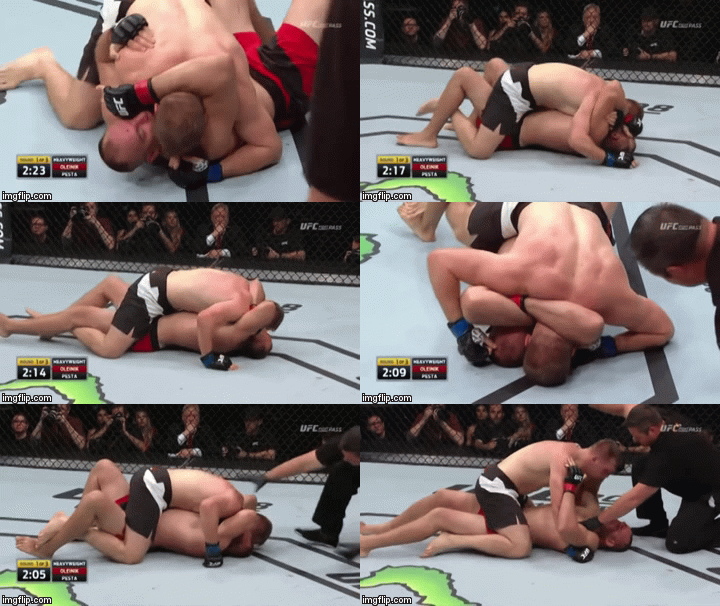
Lately, the No-Gi Ezekiel Choke came into the spotlight thanks to the efforts of a certain UFC fighter. Alex Oleynik managed to pull off a few successive Ezekiel Chokes inside the octagon. The impressive thing about it was not only the fact that he did it No-Gi, but that he caught it from the bottom. Yes from the bottom and from a bad position. Alex is a master at sinking in Ezekiel Chokes when he is mounted, something not many people can boast about. This just further demonstrates how versatile and useful the Ezekiel Choke can be, even without a Gi.

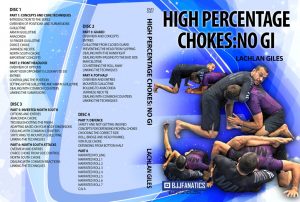
Lachlan Giles DVD ReviewThe Ezekiel Choke, both Gi and No-Gi is a submission with a high finishing rate. Pairing it with a few other is just going to increase your effectiveness with it. “High Percentage Chokes: No-Gi” is the DVD instructional you should reach for. Lachlan Giles is the man to turn to for the best instructional advice for choking people out.
The Ezekiel Choke

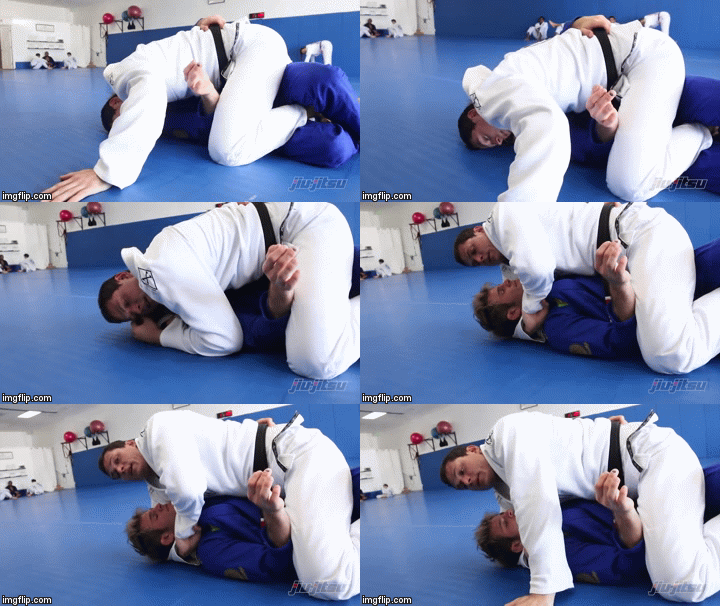
The basics of the Ezekiel choke (Gi version) are easy. The Ezekiel works primarily as an air choke, not dissimilar to an old-school Guillotine choke. For an Ezekiel choke with the Gi you need to be in a top position, either in half guard or mount.

No-Gi Ezekiel ChokeThe choke begins with you placing an arm around the opponent’s head. YOU’ll want the arm to be as deep as possible so that you can control the choking lever better. The choking arm is your other arm. Form the mount, for example, you want to first insert four fingers of your arm around their head, into the Gi sleeve of your other arm. From there on, you want to thread the forearm of that arm across the opponent’s neck. The choking pressure is from the bottom arm pulling on the sleeve, the turning of the palm on the top arm, the turn is towards the opponent’s throat, closing up the trachea and putting immense pressure on it.

The main advantages of the Ezekiel choke are that it is really easy to set up. It is sneaky and you work to form a position people do not directly associate with submissions. The arm under the head is a mainstay when playing the top position, whether it is mount or half guard. Another key element is that the mechanics are fairly simple, once you get the hang of it. The choke is a good fit for students of all levels and works at every level as well.

No-Gi Ezekiel Choke From Top

From the top position setting up the Ezekiel, the choke is easy. In No-Gi, you’ll still use the basic setup, with one arm around the head. However, gripping is different, which is where most people fail with this. having longer limbs is going to help immensely in finishing the No-Gi Ezekiel Choke.

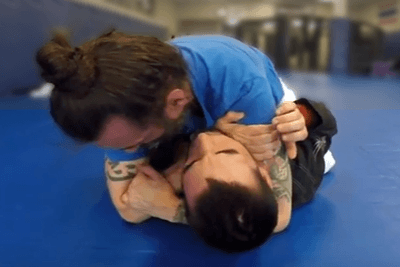
No-Gi Ezekiel Choke Half GuardFrom the top half guard position, You want to have a deep cross- face on the opponent. From there you’ll be looking to control the far side arm so that it doesn’t interfere. Once you have a clear path towards the neck, make a fist with your free arm. Then, place it across the opponent’s throat. Only after you place it there, use the bottom arm to establish a grip on the top arm. Depending on arm length, this grip will end somewhere between your elbow and the middle of your forearm. All you need to finish is stick your head close and lift the elbow of the choking arm while pulling with the other one.

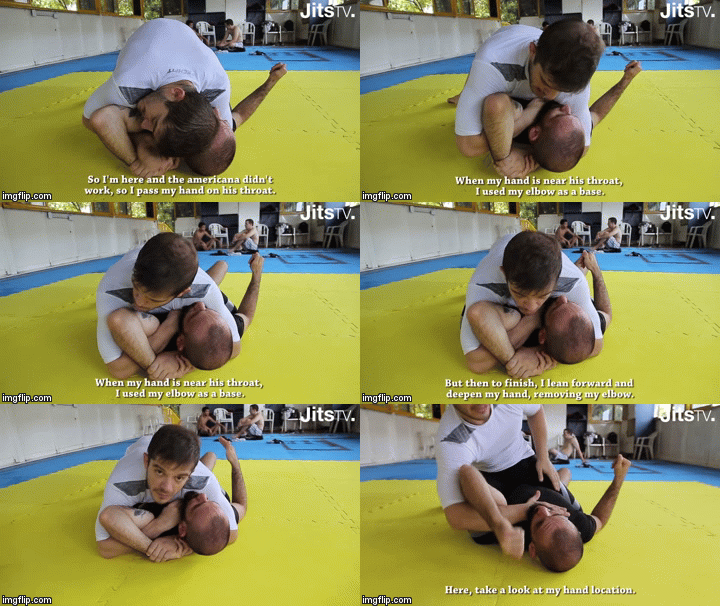
No-Gi Ezekiel ChokeFrom the mount, a great way to set up the No-Gi Ezekiel Choke is via an Americana. At the highest levels of the sport, you’ll need modifications to the Americana in order to get a tap. Or, even better, a pathway to another reliable submission. The starting position is an Americana grip from the mount, but with the head included in the grip. The goal is to release the top arm of figure four and thread it across the opponent’s neck. Now, you’ll have their arm looped around your choking arm. Actually, their arm plays the role of the Gi in this situation. Kee both elbows on the ground for a solid base and push forward with your torso. You’ll get incredible pressure and a really fast tap. Plus, there’s no need for long arms.

Sneaky No-Gi Ezekiel Choke From Bottom Mount

Before seeing Alex Oleinik doing this in the UFC I never even thought of submitting someone forms the bottom of the mount position. Now, it is a huge part of my game, despite having to work out a few kinks. Give it a try and you might end up working them out on your own. if so, let us know in the comments!

No-Gi Ezekiel Choke From BottomThe basic idea of the No-GI Ezekiel choke from the bottom mount is staying safe. In the UFC, Alex made sure he’s safe by wrapping an arm around the head of his opponent and keeping him close. he reinforces this arm with a Rear Naked choke grip, protecting the side of his head from punches. Once he sees an opening, he sneaks the arm in, and, since he already has the Rear-Naked choke configuration, the choke is instant and imminent. In Alex’s case, having MMA gloves actually helped him finish. In a purely BJJ setting, you’ll need to work out how much to twist your arm and in what direction, but it is not too hard to do.

This is a really cool choke that can surprise your opponents from the bottom. Even when they know it’s coming, they’ll either tap or completely abandon everything, giving you a way out of mount at the very least.

A Collection Of The Best No-Gi BJJ DVD Instructionals

The Best Guillotine Choke Escape Options And Counters

https://bjj-world.com/killer-ezekiel-choke-details/


Jiu-Jitsu Open Mat Visits To Other Academies – Yes or No?

Jiu-Jitsu Open Mat Visit Academy Creonte

Brazilian Jiu-Jitsu does have a certain level of cult-like behavior to it. Generally speaking, grapplers tend to be a bit more humble than vegans, cross-fitters, or Jehova’s witnesses. Rolling will do that to you (maybe the above-mentioned should try it?). However, pull a grappler’s tongue just a bit and you’ll hear of nothing but BJJ all night long. There are also apparel, social media photos, and posts, ringtone, and everything else. These are all positive and somewhat playful aspects of the cult-like behavior common to Jiu-Jitsu.

There’s also a darker aspect, one that refers to the Jiu-Jitsu community only. It is the issue of misplaced loyalty or at least the appearance of it. Despite all the tension loosening up lately, there are still academies in every city with a hardcore stance on this. They prohibit members from visiting other academies in class, Jiu-Jitsu open mat or even communicating with rival members. Not the kind of behavior to pain BJJ in a positive light, wouldn’t you agree?

The Open Mat is an Awesome Experience

The open mat is an experience unique to the sport. Before BJJ, I had never seen the concept of an open mat class. A Jiu-Jitsu open mat offers a great opportunity for grapplers to focus on whatever part of their game they want to polish. For beginners, it is a great time to ask questions and look to figure things out. More advanced students usually use the time to roll or drill. For competitors, though, the open mat is the closest they can get to the competition experience. they get to roll with all kinds of training partners, at all kinds of paces. Facing as many styles of Jiu-Jitsu as possible is key for success in tournaments. So, when grapplers from other academies walk in on open mat day, why shouldn’t competitors get the chance to improve further?

The whole concept of creontes seems redundant in today’s world. I mean, loyalty is a huge thing for people training in martial arts, and that’s a fact. However, sacrificing progress because of an outdated practice may brand you in the BJJ community for life is just plain stupid. Treating people that go to another academy’s open mat as traitors is a sure way to lose them for good. Plus, it defies the very purpose of the Jiu-Jitsu open mat. The reason this class takes place each week is to allow students time on the mats to do what they need to. Stopping them is as good as completely abolishing open mats.

Creonteism In Jiu-Jitsu 

Just as a short reminder, or explanation for those who don’t know. Creonte is a term used in Brazil for someone that demonstrates immense disloyalty. It usually refers to people that leave a certain academy for another. Back in the day, when grapplers were scarce anyway, this kind of made sense. Having your best competitor leave fro a rival team was a big thing to get over. The label of Creonte was obviously the solution.

Jiu-Jitsu Open Mat Creonte? The trouble with people branded as Creontes was that this left no way back for them to their own academy down the road. It even affected their choice of the next academy. If people in the BJJ world ever had a common thing to bind them, it is their hatred of Creontes.

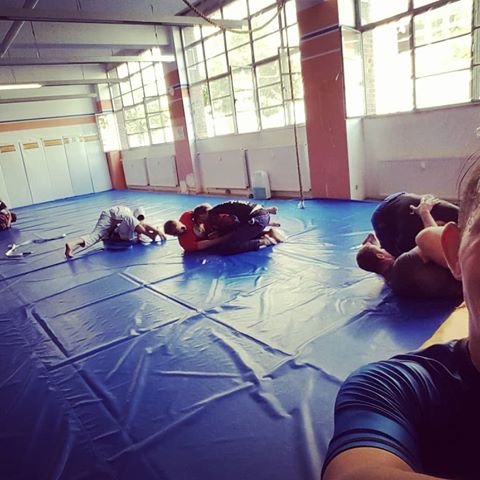
While it is somewhat understandable in terms of switching teams, branding someone a Creonte for attending a Jiu-Jitsu open mat is excessive, to say the least. The whole concept has no place in modern Jiu-Jitsu, especially in terms of visiting other academies. The reason people still fear the name is the main thing holding them back from much faster progress. And this needs to change, fast!

Bernardo Faria DVDLooking for a few more things to add to your rolls on open mat day? Check out Bernardo Faria’s “No-Gi Half Guard” DVD. It has everything that you need to destroy everyone on the mat from the bottom. Plus, all the stuff from the instructional works just as good with the Gi. Perhaps even better!

The Purpose Of The Jiu-Jitsu Open Mat

The whole purpose of an open mat day is to get away from the usual class structure. Instead of having a structured class that works in a certain fashion, the open mat allows for freedom. Even the warm-up is down to each person individually. The goal is for everyone to get better at their respective aspects of grappling. It is an invaluable tool for anyone training BJJ, not just the competitors.

Speaking of competitors, one of the main arguments for not visiting rival academies goes out the window in terms of open mat classes. Since there’s no structure or curriculum to follow, there are no techniques that might be revealed to rival academies. People coming in are also not going to figure out your competition strategy, as that’s the subject of competition classes. So, there’s no real reason for any academy to reject rival students from coming in for class.

Visit Jiu-Jitsu Open Mat Preventing your students from visiting a Jiu-Jitsu open mat is also unfounded. Just as described above, nobody can steal your secrets during an open mat. Yes, people might be impressed by how good a visiting student is wit ha certain technique. But learning it at the same level is going to take time and dedication, a lot more than an average open amt hs to offer.
In terms of not rolling with people you might meet in a tournament, there’s hardly any dumber reason than this. People usually gladly allow students from other countries or cities to visit them on an open mat. these same people are going to be the rivals of your students in tournaments anyway. So why not allow students from the neighboring academy to participate?

It Is Called “Open” For A Reason

It’s about time the BJJ community wised up to this issue. There should be a clear distinction between competition classes and an open mat class. In my opinion, the fear and importance we give to the term Creonte should go down the drain right away. And not just in terms of the open mat.

Your school isn’t going to lose it’s best students because they visited another academy. Nor is your business going to fail. The thing about visiting other places is that it prompts people to visit you too. Open up your academy and your mind to the idea of global Jiu-Jitsu. Let the students and your academy progress and prosper. After all, it is called an “open” mat.

Creonte Culture – Loyalty, Disloyalty, and Traitors in BJJ

OSS Meaning: Discover Its Origin, Usage, And Purport In Martial Arts

A Stage By Stage Omoplata Escape Pattern

Omoplata Escape

Getting out of submissions is the most difficult task you can face in Jiu-Jitsu. The thing with submissions that they’re designed to make you tap while holding you firmly in place. When someone does a submission precisely, there’s no way out. Well, that’s not entirely true. There are stages to each submission and there are solutions to specific problems that each stage presence. The moment where there’s no way out apart from a tap is called the point of no return. As long as you know where the point of no return is, you can defend all previous stages in ways that address them specifically. Today’s focus is going to be on beating the Omoplata shoulder lock. We’re going to use the stage by stage approach and offer an Omoplata escape for each.

Omoplata Escape Observation

There are plenty of submission escape strategies. Some focus on merely escaping a position and getting as far from your opponent as possible. This is great for self-defense but not as good for sports BJJ. Defense is a more viable option, where you find a way to make prevent the move from working while you improve the position. While better than simply escaping and disengaging this is still not an optimal solution. The best way to deal with submissions is escaping right into a counter attack. Furthermore, having multiple defense options, all ending in a different counter is the best defensive gameplan you can utilize. So, when you’re thinking about using an Omoplata escape, you’ll have to ask yourself a few questions first.

There’s no point in doing an Omoplata escape if all you’re going to do is give up another position. Rolling out and ending up in bottom side control is one example. Instead, try to figure out which stage of an Omoplata you are in. If you’re past the point of no return, tap and get back straight into it. If you still have options though, focus on the ones which turn your escape into a counter. The idea is not to accept an inferior position just to avoid a tap. The best version of events here would be to get out of the Omoplata and end up straight into a submission attack yourself.

The Main Problems With The Omoplata

There are a few consecutive stages to the Omoplata shoulder lock. Getting into position is first. Here, prevention is what is going to help you stop the attempt in the first place. Next up, once your opponent has your arm controlled, and their legs in position, you’re in a different stage. Once they manage to get an arm on your belt, around your waist or your leg, you enter a different stage. Also, when an opponent manages to break your posture and get your head to the mats, things change significantly. All these stages have solutions to the common problem that is the Omoplata lock.

The reason why you need to choose your Omoplata escape carefully is the nature of the attack. The Omoplata shoulder lock is one of the best trap positions in BJJ. Once people manage to get to the first stage of it, they can chill and wait for you to open up options for them. Apart from getting the Omoplata, your reactions could get you in trouble with other submissions. OR, you could end up in another position that’s hard to get out of. In order to avoid these, you’ll have to use an Omoplata escape that can keep you safe and turn the tables quickly.

Achieving this, mean that you’ll need to be aware of the common problems during an Omoplata. The three main ones to focus on are your posture, your hand positioning, and secondary controls. Posture is easy to understand, the better your spine alignment is, the more you can defend. Hand positioning is crucial in escaping traps in multiple directions, as you’ll see later on. Finally, knowing where the opponent has their secondary control (belt/Gi/waist/leg) is and dealing with it is important for preventing the point of no return.

An Omoplata Escape For Every Stage

Now that we’ve broken down the Omoplata to 4 distinct stages, let’s take a better look at each of them.

The first stage usually has you on your knees, posture still intact but with your arm trapped between you and your opponent. Also, the opponent has their legs crossed, which gives them immense control over your shoulder. The central problem you need to solve here is getting your arm out while keeping your posture.

The second stage is where your opponent has most traps. You’ll have to tread carefully here. In terms of positioning, you’re still going to have your posture, but now you’re in a battle to keep it. This battle opens up plenty of follow up opportunities for the opponent, along with a few tricky traps.

Stage three is where your opponent finally gets your posture broken. Here, you’re in a position similar to the turtle, hand trapped and forehead on the mats. There is still hope but you need to be very careful what you do. What you shouldn’t do, is the usual Omoplata escape where you simply roll forward. Giving away the Omoplata sweep is bad for you for multiple reasons.

Finally, you’ll need to know how to deal with the opponent’s added points of control. The thing with them is, that unless you address them first, you won’t be able to either go for a stage 4 Omoplata escape or get back into an earlier stage that’s easier to defend.

Stage 1

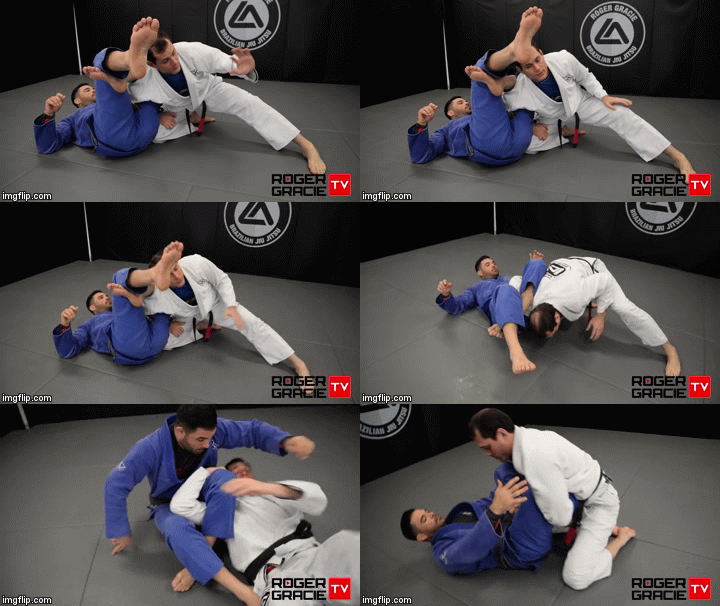
Omoplata Escape BJJWhenever you still have your posture, you need to focus on getting your arm free. This is really easy if your time it right. By this, I mean react the moment you know you’re in trouble. Here, you still have your posture so you have no immediate threat. The goal is to try and place your arm on the opposite side of your opponent’s body.  Once you do that, grab their thigh and start rotating to the other side, straight into a pass.

Stage 2

This is where things get interesting. Once your opponent has your hand tight, you know that posture is the next thing they’ll go for. the best way to retain your posture is by retreating down to the mats. However, you need to do this in a very specific manner. The goal is to sit your butt down on the mats, right beside them.  To stay safe, grab your own thigh with the trapped arm first. Once you’re down, make sure you keep your free arm hidden from their legs. If they manage to sneak a leg through, you’ll end up tapping right there.

Omoplata Escape

You have two great options from that position. One is to go straight for a toehold. This is your best bet for completing an Omoplata escape for two reasons. One, you can get a tap straight away. Two, you open up the opportunity to pass directly. For the toehold, look to catch their fingers and transfer the leg behind your own head. From there, a simple twist will get a tap or a fast break. If that fails, or the opponent resists, you’re now in a position to switch to a pass because their leg is behind your head. All you need to do is turn towards the opponent and let go of your thigh.

Worry Free Escapes Dean Lister DVD ReviewDean Lister has many more Omoplata escapes in his “Worry Free Escapes” DVD set. Actually, he has Omoplata escapes that end up in leg locks. He also has escapes from every other submission or position in BJJ that you can and can’t imagine. It is a Dean Lister DVD after all, so I can’t think of a reason not to go and get it right away! 

Stage 3

As you progress through the stages, you get into more and more trouble. In stage three, your posture is not as secure as before. If you do not have perfect posture, sitting back like in stage 2 is going to be impossible. Instead, you need to think about going in the direction in which your opponent is pushing you. However, there’s a wrong and a right way to do this.

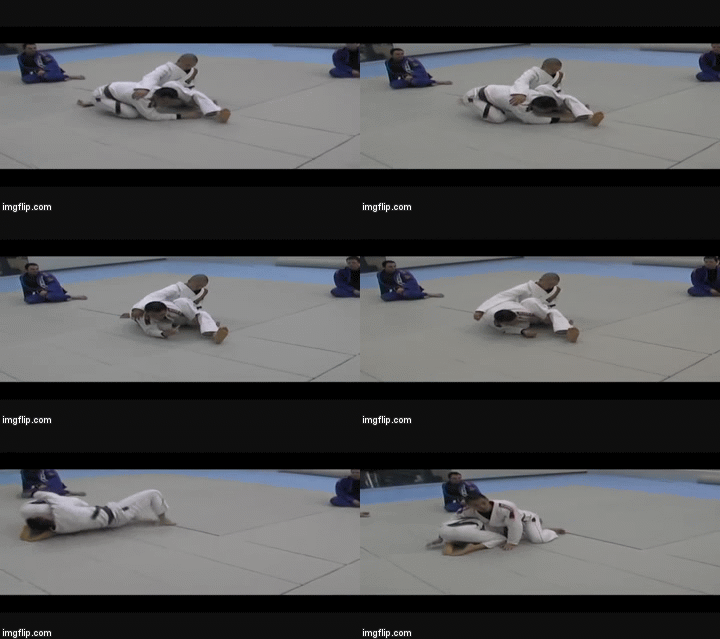
Omoplata Escape RollSimply rolling forward is going to get you in bottom side control at best. At worst, you’ll tap to a Monoplata/Armbar/triangle choke from mount. Instead, you still want to roll out, but in a way that blocks your opponent’s attempts to follow up. To do that, keep your hand on your thigh, just like in stage two. Then, look to roll over the free shoulder instead of your trapped one. This will land you in a much better position where you simply have to turn to your side an get into a passing position from the top.

Stage 4

Finally, this is the best thing you can do when your opponent has your arm trapped, your posture is broken and controls your body. In most cases, they’ll either place an arm around your waist or control your belt or pants. They might even go for ankle control to stop you from rolling.

Omoplata Escape Since you’re now really close to the point of no return, you need to be very precise with your Omoplata escape. The trick is to go for a roll once again but in a completely different fashion. Instead of rolling forward you want to roll your opponent over. The added control he has over you is going to work in your favor here. Secondary controls mean that he is connected tightly to you. To get out, you need to get your far side knee and elbow close to each other and straighten your near side leg. Then, you’re going to roll like a log, over to you back. For a brief moment there, you’re going to be in a bad position, but the inertia of the roll is going to get you out straight on top of a turtled up opponent.

Omoplata Explained – How to Make It Really Work

Side Control Escape – The Biggest Mistake That Everyone Does

The 9 Best Leg Lock DVD Instructionals For Grapplers

Passing The Guard Of Extremely Flexible Grapplers

Passing The Guard Against Flexible people

There are plenty of things that can annoy you as a guard passer in Brazilian Jiu-Jitsu. First of all, you have to deal with a bunch of lapel guards with dumb names. The cutoff circulation to your arms or legs, making them extremely uncomfortable but not unpassable. Also, leg locks start to spring from everywhere, requiring a more cautious approach to passing. However, there’s hardly anything more annoying than having to deal with a freakishly flexible person. What most people do not realize is that flexible people closed guard is just as difficult to pass as their open ones. Passing the guard of a really flexible opponent might take the whole match, and even then you can come up short. There are a few basic concepts out there that can help, but still, you’ll have to be ready to truly put an effort in!

Guard Passing and It’s Meaning

Passing the guard has something deeply satisfying about it. The conqueror genes inside us get activated everytime we manage to smash all our opponent’s defenses and conquer their space. Getting past the legs of an untrained person is no easy feat, let alone a trained grappler. When the person on the bottom has an inclination toward playing a certain guard type, things become way more difficult. People that have more than one guard at their disposal can make your life as a passer real hell. And those that boast with extreme flexibility on top of it, make passing the guard a nearly impossible task. The keyword here is ‘nearly’.

Just like with everything else in BJJ passing the guard of flexible grapplers is a hard thing to do but it is possible. Technical passes won’t work the same as they do on regular people though, You need to be ready for this and be open to making modifications. That said, there are a few principles and one key thing to focus on with flexible guard players. You’ll need to pay special attention to just one of your opponent’s body parts. Your overall alignment also plays a huge role, as even the slightest loss of posture or base is going to get you flying.

Craig Jones DVD guard PassingCraig Jones is one of the best No-GI grapplers in the world, that much is apparent. “How to Pass Guards Quickly and Easily Using Leg Attacks” DVD set is a genius guard passing system developed by Craig himself. With this instructional, no one’s guard is going to be a problem for you, ever again!

Flexible Guard Players

Whenever you’re up against a flexible guard player, you’ll know it from the very first moment you enter their guard. They seem to b giving away certain position while holding on to specific grips. Flexible people usually have no fear of a smash pass, since they can wiggle their legs everywhere. They also have no trouble deflecting your repeated pass attempts with just their legs.

Passing The Guard Against Flexible GrapplersThere are generally four basic directions of passing the guard. You can go under the legs, around them, through them or over them. Out of the four, none are directly applicable against people that are very flexible. the simple fact that they can put their legs behind their head, means there’s no way you can pass. You can go around or through and you’ll still end up facing some part of their legs. Furthermore, flexible people invert with ease. This is another indicator you’re up against a flexible grappler. Once you see someone working towards an inverted guard, get ready for a battle to pass the guard.
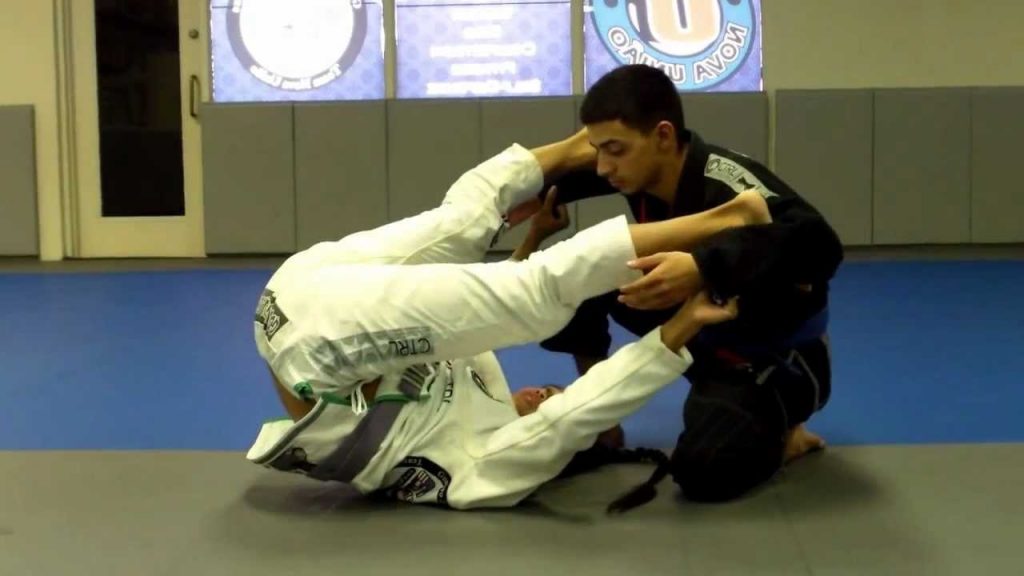
While there are certain guards, like the inverted or spider guard, that flexible people usually play, they do great in almost every guard variation. Plus, there’s no way you can use their flexibility against them. Even going for a leg lock setup from the top can be difficult. They tend to move their legs constantly, switching the points of control. However, they’re not unbeatable and even the most flexible guards can be passed.

Focus On This Crucial Aspect

The one concept that universally works against all guard players, flexible or not, is controlling the end of the lever. In terms of passing the guard, this means the legs. And, despite your perception that you can only control the foot, as the only lever, you’re wrong. Controlling the foot in a precise manner is a huge part of passing. However, controlling the other end, in the form of the hips is even more important. As long as you manage to block and control the hips and or the ends of both feet, you’re in business.

Now, getting control over the feet is much easier than controlling the hips, After all, it is the flexibility of the hips that makes grapplers so good at playing guard. When aiming to control the feet, always look for the fingers. If you can wrap a grip around the toes of the foot, at the level of the first knuckle, you’re golden! It is very easy to manipulate the feet from there and even affect how the hips work.

With the hips, you need solid grips and a good understanding of what the opponent aims to do. Pinning the hips requires you to adjust angles constantly and look to introduce, one by one, all the elements we’re going to go over next.

Passing The Guard

There’s more than one way of pinning the hips when you’re passing the guard. The hardest one to achieve is actually pinning them to the ground. What you should also consider is that lifting the hips off the ground is also a great way of blocking them. As is neutralizing them via a pin on one side only. Whatever you choose to do, make sure you’re going for one of these options.

The goal with all of the above is to make sure you reduce the space between you and your opponent completely. The more space they have, the more they’ll be able to use it to escape. If you leave even the tiniest hole, a leg is going to appear there at some point. Once an opponent has a pivot point, they can look to release their hips and stay active.

One great way of achieving a hip pin, along with great control of the legs is the stack pass. Passing the guard by stacking your opponent. means their neck is their only point of contact with the ground. Plus, they have to carry all your weight.  What you need to be careful is not letting their feet touch

Passing The Guard FlexibilityFlexible guard players usually use the inverted guard to get underneath you and sweep you at will. This means you need inch perfect balance at all times. For this, make sure you keep your posture and stance immaculate. Your advancement towards the pass should be slow and methodical, completely controlling the hips.
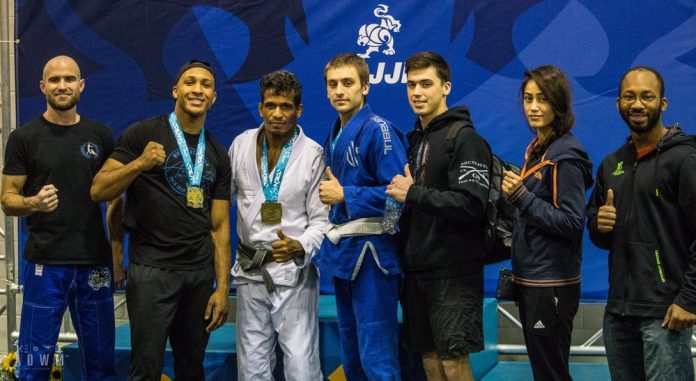
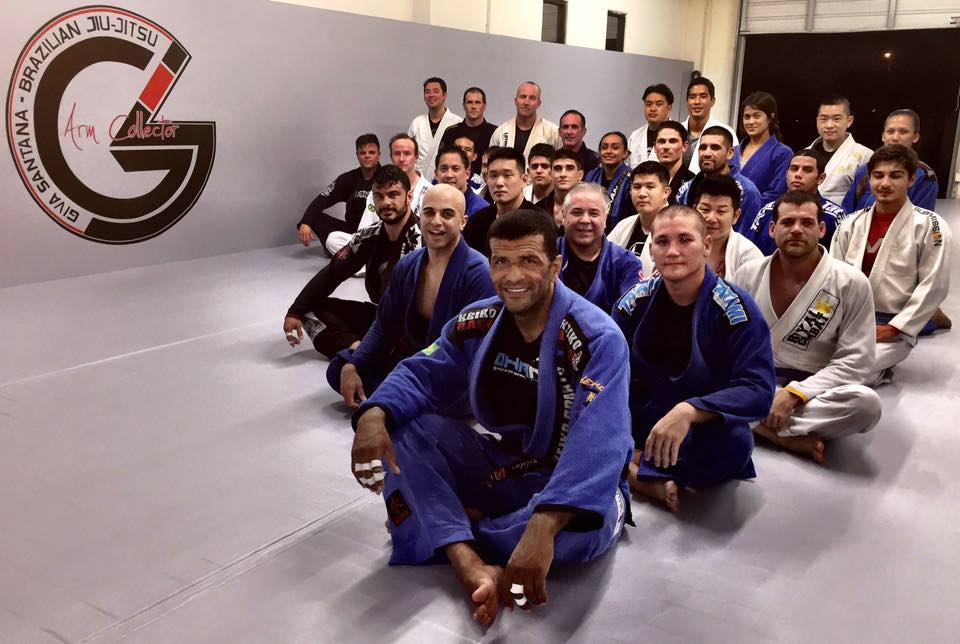
The final part of the puzzle is pressure. You have the hips, you control the legs, you have your balance. Now, make sure you make your opponent feel pressure. Make them let you past their legs while making sure their hips are above the ground at all times!

Review Of The Top 5 Guard Passing BJJ DVD Instructionals

Black Belt Tips To Improve Your BJJ Guard

Inverted Guard – Is It Really Worth The Trouble ?

Putting Together A Balanced Competition BJJ Team

BJJ Team

BJJ for most people is an individual sport. However, once they start training, they start to see that there’s a crucial team aspect to training Jiu-Jitsu. First and foremost, people take training itself for granted. While training solo drills can help you improve your Jiu-Jitsu, ti cannot teach you Jiu-Jitsu. In order to learn how to grapple, you need to train with other people. You need to practice techniques on static partners and resisting partners. You also need to roll live and with as many different people as possible. That said, there’s also another team aspect to BJJ, which is one most people usually perceive as the solo part. While competing might seem to be all down to you, you still need a good team behind you. Furthermore, your BJJ team is going to need you in order to compete at maximum potential!

What does it mean to Be a Part Of the Competition Team?

Being a part of a competition BJJ team is a really cool thing, You get to train with people, go hard when you roll and have a lot of laughs. You also get to travel a lot, compete and corner your teammates while they fight. It is one of the most interesting parts of Jiu-Jitsu and is one of many people gravitate towards. However, in order to also have a certain level of success apart from all the fun. In order to achieve this, you need to have a well-structured BJJ team, one that will dominate tournaments with ease. While everyone is welcome to compete, there is a certain structure to aim towards when building a competitive team to rival the best.

A competition-oriented BJJ team is a group of people that work together with the common goal of competing in Brazilian Jiu-Jitsu. While this may seem like an obvious thing to say, look at it a bit more specifically. Training for a competition requires you to have good nutrition, a good training schedule, additional strength, and conditioning training, different partners to work with, etc. All of this requires a lot of effort and planning. Plus you have to keep learning Jiu-Jitsu while focusing on polishing your A game for tournaments. For this, you need to train with other people that have the same goal as you. This is where organizing a BJJ team correctly plays a huge role.

The Structure Of A Top Competitive BJJ Team

The structure we’re about to share with you is not the only way to organize a team. However, having most, or all, of these types of people in a BJJ team, helps a lot. As you’ll see, the team is only as good as the individuals in it. So, having a few different types of people is key to a successful team. Also, having people with different grappling styles helps in more ways than one. First, you get to roll with different kinds of styles on a regular basis. Furthermore, the guy/girl doing all the unpredictable crazy stuff is going to be on your side, as opposed to an adversary.

BJJ TeamAs a basic rule of thumb for balancing a competition BJJ team, make sure you go as general as possible and as specific as possible. In terms of going as general as possible, make sure you have as many people from your academy as possible to compete. You want to cover as many weight classes and belt categories as possible. This is your base, which is not the same as your competition BJJ team. For that, you’ll want only the best. Your competitors are going to feed your top team new members and/or training partners at all times. that way everyone benefits and you get a stronger team.
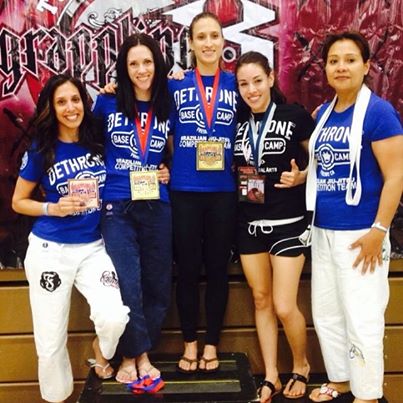
Having someone in every category (this includes kids as well) means you have the most chances of truly dominating a competition. Not only will a lot of people get to win or medal, but they’ll also feature heavily in the absolute division as well. This is a good problem to have, especially if you run a competition-oriented academy.

Let’s see what the core of your top competition BJJ team should include in an ideal situation.

The Guy In Charge

First and foremost, you need someone to lead the team. This doesn’t have to be you, but it needs to be one of your coaches. Contrary to popular belief, it doesn’t have to be an active competitor. There’s another spot on the team for your top competitor and it is not the leading one. This should be the person that is the most technically sound grappler at your disposal. they should know the game of all other team members well so that they could organize training and give solid corner advice. This is the point person of the team, the one without whom there’s no way to organize all other competitors.

The Enforcer

This is the guy/girl in charge of discipline. The moment you start having competition classes, you’ll see that you need an enforcer even more. People are going to look to slack off, especially when you’re going over drills. You’ll want to have that one tireless guy who’s ready to a goal out with everyone all the time. In training, this is the guy that pushes everyone further and makes them adhere to structure. Even more importantly, it is the one pushing the whole BJJ team forward in the competition, by giving everyone the support they need. Hearing encouragement in a difficult moment from someone who really knows what you got, is a great way of pushing past momentary barriers.

The Top Competitor

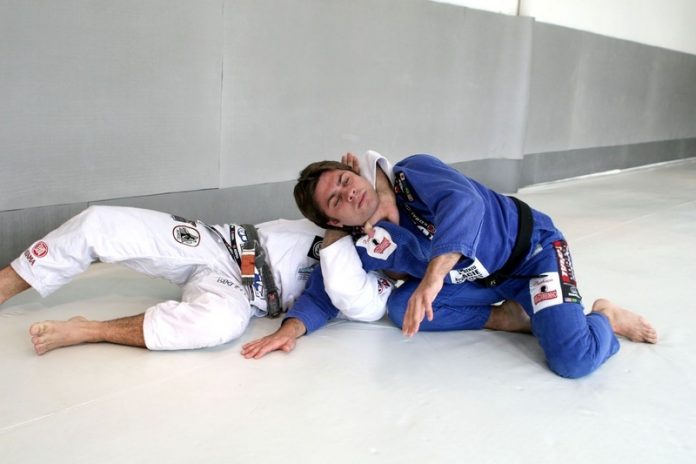
BJJ TeamThis is the guy/girl that’s the tip of the spear. They’re usually an adult class competitor, mainly between purple and black belt. they live, breathe and eat Jiu-Jitsu. They are rarely interested in teaching or doing anything else than competition preparation. They’re the ones that push the pace on everyone and thrive under pressure. They’re also the ones that usually manage to win the absolute a well as their weight class, despite not being ultra heavyweights. there’s no BJJ team without one or more of these guys.
The Big Bear

Speaking of having someone in every weight class, you need to make sure you cover both ends of the spectrum. Even it is in not at every belt level, your team must have a big teddy bear that turns into a Grizzly. The ultra heavyweights bring something else to the table for everyone, especially in training.

The Energy Ball

This is the opposite side of the spectrum to the ultra-heavyweight. This is the rooster to featherweight guy/girl that’s technical as hell.  As if that’s not enough, they’re usually tireless, having the energy to go at a lightning pace for hours. They’re also the person that has the sneakiest weeps and submissions possible. They’re a real gem to have in competition but are also key during those tournament prep training sessions!

The Conditioning Guy

What is truly necessary for a BJJ team to have as well, is a strength and conditioning guy. It doesn’t have to be a specialist in the field, an enthusiast will do just fine. They’re crucial during training, designing the drills and programs to get you in shape for a tournament. They never run out of gas when they roll and compete and can easily find the right formula to make you perform like them.

The Nutrition Specialist

Last but not least, everyone needs a nutrition guy. Their role is crucial, especially in the few weeks before tournaments. While everyone seeks their advice regularly, people rarely follow them until it’s time to cut weight. The nutrition specialist should know how each BJJ team member responds to weight cuts and the best formula for each. They’re the guy/girl that has no trouble cutting and are always pacing something fresh to eat. Absolutely crucial to a successful competition BJJ team!

https://bjj-world.com/george-lockhart-nutrition-dvd-book/

BJJ Teams – Their Role, Mentality And Benefits For Competitors

Tournament Day BJJ Nutrition Hacks

Russell Brand: Life Is a Struggle And BJJ Teaches You How To Cope With the Struggle

Russell Brand: Life Is Struggle And BJJ Teaches You How To Cope With Struggle

Here is the Russel Brand’s observation of Brazilian Jiu-Jitsu and how it affected his life in a positive way. The brand also said how now he’s able to control his anger and aggression. Russel Brand said:

Observation on Brazilian Jiu-Jitsu from a beginner. This is what I first had to learn and first to overcome when even going to Brazilian Jiu-Jitsu.

It was a bit scary going down to that gym. I thought, oh no, I’m gonna have to wrestle with people and have stubble and sweat in my face and get crushed underneath people. I’m gonna hate that. But I went and I got used to that. 

I got used to the idea of being submitted and subjugated by other people, being humiliated. I got used to the idea of entering into the rooms in my mind where I felt not good enough and weak but this time in a safe context.

What I’ve most lately learned is that we house within us aggression and animalism and in Brazilian Jiu-Jitsu there are moments where you need to apply a burst of aggression. For someone like me, that’s not experienced in martial arts or fighting it’s good to learn that I have this energy in me and I can apply it without going in mad hysteria.

Do you remember when I get used to getting arrested? You must have seen the papers and stuff. I was arrested for shoving paparazzi and little bloody excursions and affrays what Matt Morgan once called “Liam Gallagher: The Musical”. Well, now I feel like those moments of aggression can be harnessed.

Now, how this is analogous to life? Sometimes, when dealing with people you will need to access energies in yourself that are assertive and to be able to do that without being hysterical, submerged in them, lost, chaotic is a very useful skill.

Life is a struggle and martial arts like Brazilian Jiu-Jitsu teaches you that life is a struggle and how do we cope with the struggle. What decisions do we make when we’re struggling. Do we choose the correct moments to apply aggression or simply a higher energy state?

I’m of course a beginner and I recently got a little stripe on that white belt, slightly coloring it in. So my observations are the observations of a beginner.

Thanks to my teachers that I’ve had, the Gracie Brothers. They sound badass, don’t they? Chris Cleere & recently Dean Barry, Paul Busby, good teachers.

Jiu-Jitsu there from the perspective of a person who knows very little about Brazilian Jiu-Jitsu.

Almost a year ago Russell Brand was the guest of Joe Rogan in Joe Rogan Experience podcast. He was talking about his believing in the possibility of change

I believe in the possibility of change. What happened to me was that when I hit 40 I thought right now I know a lot of things.  It is some kind of a personal version of spirituality. That’s what I’ve found. William Blake, the great English poet, says each artist must find his own religion. We have to find our own way. We have to find what works for you is not gonna be the same as what works for me”

Russell Brand explained:
“There are ways where we are collective but there are ways where we are individuals. So I got to educate myself. I’m gonna have to do things that mean something to me. Part of that is me doing my own small fragile brittle way Brazilian Jiu-Jitsu. I’ve never done stuff like that before. Live in your body, be in there and go”

Russel Brand also gave his club a shout out saying to Joe Rogan about how everyone in his club is huge fans of Joe Rogan and his show:

“Go into RGA BUCKS MARLOW GENESIS GYM, giving them a drop because they’re all such huge fans of your show”

Brand added: “I go in there and I do sessions with Chris the titanium skeleton of a man, beats me up he can cause pain in ways…How is he even doing that?! And when I try to do the stuff back it doesn’t work. Or puts me in my body a different way.“

You can check the full Interview with Joe Rogan and Russell Brand and Brand’s training of Brazilian Jiu-Jitsu in a video below:

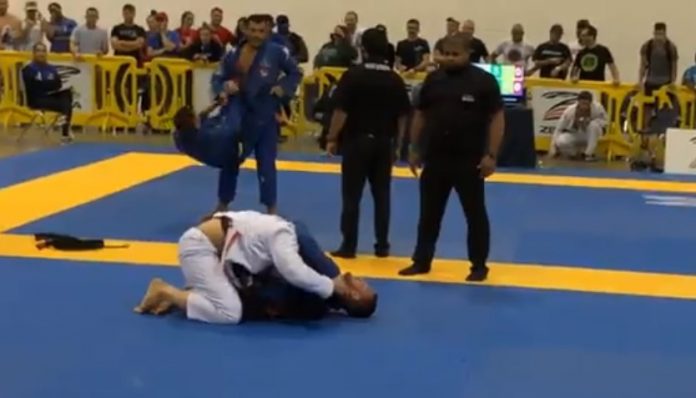
Competitor Keeps Carrying His Opponent Around to Be Able to Watch his Teammate

Competitor Keeps Carrying His Opponent Around to Be Able to Watch his Teammate

Some pretty unusual scene happened at the IBJJF Tournament. Guy competing on the mat near his friend used every second of his fight to watch his teammate. He was even carrying his opponent around and wasn’t paying attention to his own match at all.

Check out the video below as this guy just can’t stop watching his friend.

Black Belt Coach Throws a Chair and Charge his White Belt Student’s Opponent at IBJJF Austin

WARNING: This is Why Jiu-Jitsu is NOT for Everyone. BJJ in Wrong Hands!

Kron Gracie on His Last Roll with His Dad Rickson Gracie

Think You Only Need One Top BJJ Technique? Think Again!

BJJ Technique

When we begin training BJJ we’re all clean slates. Even those that have experience n other grappling martial arts shouldn’t rely on previous experience too much. BJJ is unlike anything else, and most outside moves do not have a very high success rate. That said, the first few months of BJJ are going to be a fight for survival by all means. However, all the techniques we learn in class tend to slowly but surely pay dividends. As progress undoubtedly ensues, you start gravitating more towards certain techniques. Whether they’re a good fit for you, or you’ve just made them work is largely irrelevant. What is important is that everyone has a favorite BJJ technique that they want to use. However, unlike MMA or other sports having just one highly polished move is far from enough to guide you through Jiu-Jitsu.

After a short while of training, everyone discovers a favorite BJJ technique.  This is perfectly okay, both as a behavior and as a BJJ strategy. As people, we tend to choose favorites in almost everything we do. When we’re facing as many options as Jiu-Jitsu has to offer, it is normal that we tend to focus on certain aspects of it only. Plus, when we find something we’re successful with, we tend to hold on for dear life. We’re creatures of habit, which is as much a good thing as it is a bad one, at least in grappling terms.

Despite the success rate of a certain submission, position, sweep, pass or other BJJ technique, nothing is going to work for us 100% of the time. At least not in BJJ. Creating habits based on our prowess with a certain technique is a great way to stall. IN a competition sense, being a specialist might prove fruitful, at least for a while. The trouble starts when people inevitably find out where you’re dangerous from. Remember that has good as you are with a move, somebody might be just as good with a counter. SO what happens when your one favorite, never-fail move, stops working?

DVD Review: Craig Jones Z Guard Encyclopedia
Techniques List

Craig Jones is certainly a master of leg locks, but he does not limit himself to lower body submissions only. He also has a very wicked triangle game that even top-level opponent’ can’t deal with. The common ground of both attacking systems is the Z- Guard, Craig Jones’ position zero. Learn the secrets of this essential BJJ guard from “The Z-Guard Encyclopedia” DVD set, available now!

Working With A Favorite BJJ Technique

The moment you discover a thing that works in BJJ is one of the most joyful moments of training. You think to yourself “Hey, I might just turn out to be good at this”. Whether it is a back take, a submission or some other move, even a defensive one, you now have something to go to. Both when the going gets tough and when you’re dominating, you know what the pinnacle of your game is. Actually, your favorite BJ technique IS your game, in most cases.

Favorite BJJ TechniqueHaving that one move in your toolbox is not just okay, it is absolutely necessary for your progress. It is how the BJJ journey starts, but it is not the ticket to the end, wherever it may lie. Going for your favorite sweep or submission is going to do wonders for you at first. In the beginning, you’ll get it sporadically, but you’ll be looking for it everywhere. As time passes, your proficiency with the move is going to rise, until you become known for it. You’ll have multiple setups and never worry when you set yourself up to execute it. Your whole game is going to gravitate around it and competition success is certain to follow.
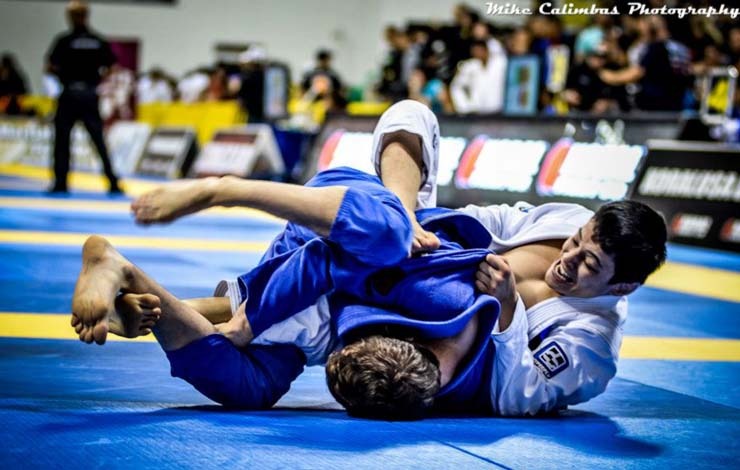
There are two ways of working with a favorite BJJ technique. Ones basing everything you have on it, and creating a game that only leads to one conclusion. Unfortunately, this is the wrong way of doing it. Building a game plan that evolves from one favorite move, instead of leading up to it, is a completely different thing. After, al lit is called a game plan for a reason. You need contingencies and lots of them!

When Trouble Hits

The first sign of trouble usually shows up in training. It hits at late blue belt/early purple belt level. It comes on slowly, it is not apparent. You start to miss out on your move more than usual. it happens with higher belts only, but you can’t put your finger on why. After all, it used to work on everyone until a while ago.

The moment this starts to happen, you have a choice. Unless you’re aware, you’re going to take the long road as most people do. You can either keep doing what you’re doing and try to polish your favorite BJJ technique even further. Or, you could start to develop answers to the questions that arise.

At this point, your move only works on lower belts, and even they are getting savvy to it. Moreover, your opponents at competitions also know what you bring to the table and they’re ready. Now, you seem to be losing more often, even when you face an opponent’s you’ve beaten before. Frustration inevitably follows, and you start muscling things which makes your technique work even less!

The main issue here is that your whole game revolves around the success of that one move. If you do not have the move, you do not have a game, it is as simple a that. Now, if you stubbornly try to push through, you might even make it after a while and modify your move to work

A Gameplan Towards Progress

The solution is not a difficult one, but it is not a quick one as well. I’ll use a practical example to make things as clear as possible. Let’s turn to the guillotine choke for example. It is your go-to move, and you’re a great master of both the arm-in and regular guillotine. You can hit it from everywhere. When the opponent defends, you can re-adjust and look for it again. But what happens when opponents’ prevent it completely or counter it with a BJJ technique of their own?

Favorite BJJ TechniqueWhat you want to do is think fo the guillotine as your position zero. This means that whatever you do should start from a guillotine position, regardless if it’s bottom or top. You should not look at the guillotine as the one and only place where everything you do leads. Using it as a position zero is going to require you to start opening your game up and learning new things.

Now, when the guillotine from the bottom doesn’t work, you’ll have options instead of just holding on until your grip fails. Now, when you’re stuck you can proceed to sweep, or transition into other great attacking positions, like the inverted North-South. Or, you could get back out to a front headlock and switch up your guillotine attacks. Even better, you can use the position to get on top and look to finish from a more secure position, also getting some points along the way.

The opportunities are endless when you base an actual game plan from a common starting point. It is much better to focus on how to start and adapt along the way, than look for one specific BJJ technique. If you’re stuck, give this a try and let us know if it helped! Ossss!

Omoplata Explained – How to Make It Really Work