


Leg Locks 101: A Guide to Positions, Submissions, Dangers, And Rules

Leg Locks 101: A Guide to Positions, Submissions, Dangers, And Rules

Let’s get the obvious out of the way straight off the bat. John Danaher is arguably the best leg locks coach in the world. His Danaher Death Squad is the most fearsome group of lower limb submission artists on the No-Gi scene. Okay, now that we stated the obvious, let’s look at what matters. Leg locks are definitely powerful submissions, but they’re no longer the one submission to rule them all. As people wise up to them, there are certain patterns that start appearing. When people follow these patterns, they start to understand the leg lock game.

Leg locks remain controversial and complex. They have a long history and culture in grappling arts, and they have evolved and changed over time. They have different rules and legality depending on your belt level, the type of competition, and the organization. Furthermore, there are different risks and benefits depending on how you use them and how you train them.

By the end of this article, you will have a comprehensive understanding of the leg lock game in BJJ, and you will be able to use it to your advantage in training and competition.

What Are Leg Locks?

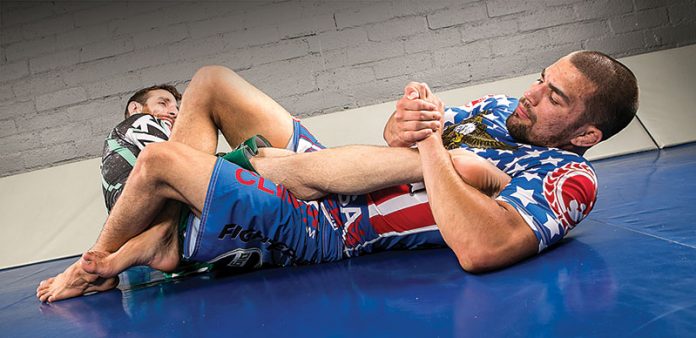
Leg locks are a form of submission that is directed at the joints and muscles of the lower body (hips and below), with the goal of causing enough pain and/or damage for the opponent to not be able to continue the match. The ankles and knees are common targets of a leg lock submission.

Leg locks work by applying leverage and pressure on the opponent’s leg joints in breaking or rotational force. This means that you use your arms, legs, or body to create a fulcrum (a point where force is applied) on the opponent’s leg joint, and then apply force in a direction that goes beyond the normal range of motion of that joint. This causes pain by stretching or tearing the ligaments, tendons, or cartilage that support the joint. In some cases, it can also cause damage by dislocating or fracturing the bones.

There are two main categories of leg locks: joint locks and compression locks.

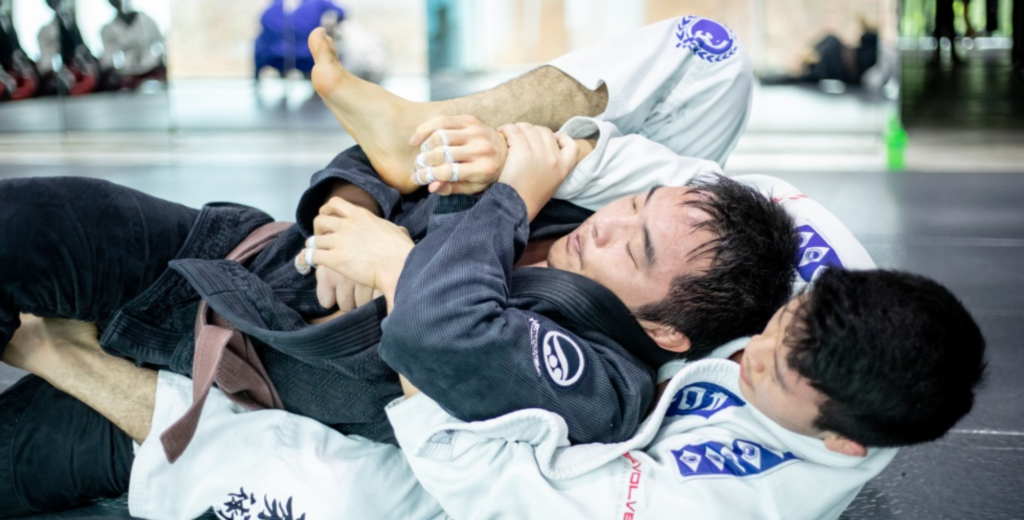
Joint locks are leg locks that target the ankle or knee joint directly. They involve bending or twisting the joint in an unnatural way that causes pain or damage. Examples of joint locks are ankle locks, heel hooks, toe holds, and knee bars.

Compression locks are leg locks that target the muscles or nerves around the ankle or knee joint indirectly. They involve squeezing or crushing the muscles or nerves between two hard surfaces (such as bones or limbs) causing pain or damage. Examples of compression locks are calf slicers and bicep slicers.
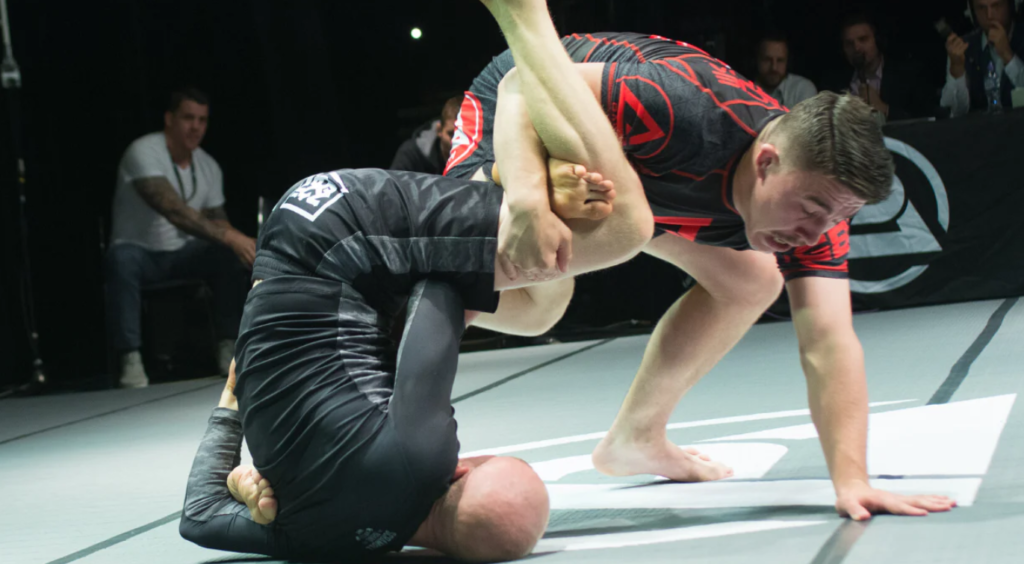
what are leg locks?

Why Are Leg Locks Effective And Popular?

Despite the seemingly unaffected state of traditional Jiu-Jitsu, there’s no denying that the leg lock game has reshaped the BJJ world. Although it is mostly limited to the No-GI scene, the emergence of the leg lock game has caused a lot of top competitors to reevaluate their approach. Take a look at leg lock specialists like the ex-DDS members, 10th Planet athletes, and the B-team to see what I mean. So, why are leg locks such a game-changer?

There are several reasons:

  • Leg locks allow you to attack a large portion of your opponent’s body that is often exposed and vulnerable. Unlike upper body submissions (such as arm bars or chokes), which require you to control your opponent’s upper body first, leg locks can be applied from many positions (such as guard, half guard, side control, mount, back control, etc.) without having to pass your opponent’s guard or achieve a dominant position.
  • They can surprise your opponent and catch them off guard. Many BJJ practitioners focus more on upper body submissions than lower body submissions, so they may not be prepared or trained to defend against leg attacks. This gives you an advantage if you know how to use leg locks effectively.
  • Leg lock submissions have the potential to end a match quickly and decisively. Some leg locks (such as heel hooks) can cause severe damage to your opponent’s legs if they do not tap out in time. This means that you can finish a match with one move without having to wear down your opponent or risk losing the position.
  • Leg locks can open up other opportunities for attacks or transitions. By threatening your opponent with a leg lock, you can force them to react in a certain way that exposes other parts of their body or create space for you to move or escape. For example, you can use a leg lock to sweep your opponent, pass their guard, take their back, or transition to another submission.
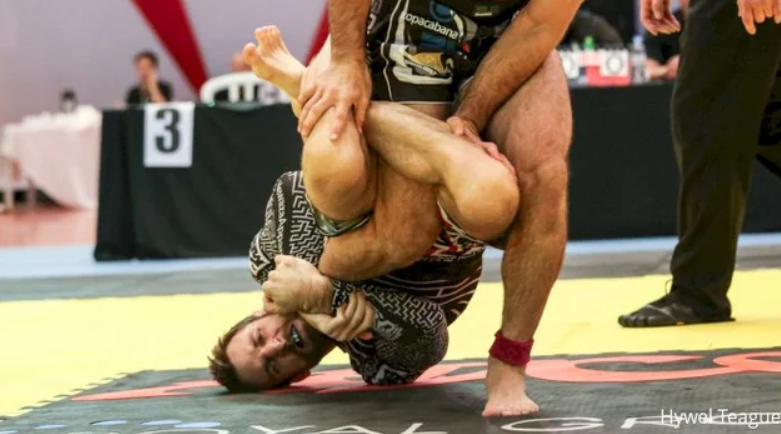
Why Are Lower Limb Submissions Effective

Leg Locks Safety Tips

To understand leg locks, let’s bust a myth first. Until the IBJJF relaxes its rules, it’s always going to come up. So, to clear things up – leg locks are perfectly safe to train and use in rolling and competition. They’re no more dangerous than any other submission hold when done correctly. It is this “done correctly” part that is behind the misunderstanding of leg locking submissions.

In order to be able to successfully apply BJJ leg locks, you have to understand them. Every leg lock is based on strong mechanical advantages over an isolated part of the opponent’s leg. Whether it is a choke, a kimura, or a heel hook the same principles apply. This is the basis of training any submission-based martial art. If a student understands what they’re trying to do, they are less likely to cause an injury to their partner or themselves. Otherwise, even a guard pass or a sweep can go very wrong.

Here are some general guidelines and best practices for avoiding and preventing injuries when training leg locks:

  • Always warm up properly before training leg locks. You should warm up your joints and muscles with some light exercises and stretches to prepare them for the stress of leg locks.
  • Tap early and often when caught in a leg lock. You should tap as soon as you feel pain or discomfort in your leg joint or muscle. Do not wait until it is too late or try to escape by force. You should also respect your opponent’s tap and release the leg lock immediately.
  • Constantly communicate with your training partner when practicing leg locks. You should let them know if you are going for a leg lock, if you feel any pain or discomfort, or if you want them to stop or slow down. You should also listen to their feedback and adjust accordingly.
  • Use control and technique when applying leg locks. You should apply leg locks slowly and gradually, without jerking or twisting the joint too hard or too fast. Dean Lister’s catch-release philosophy is by far the best approach. The idea is to catch a submission and release it straight away before any opportunity for injury.
  • Make sure to practice leg locks with trusted and experienced partners. You should practice leg locks with partners who know how to apply and defend them correctly and safely. Avoid practicing leg locks with partners who are too aggressive, reckless, or unskilled.

Ashi Garami training safety tips

10 Best Leg Locks DVDs and Digital Instructionals

Leg Lock Submissions

Working in a backward fashion, let’s look at the top leg lock submission holds available in BJJ. The point of listing them before listing the positions is simple. I, personally, prefer this way of teaching when it comes to submissions. I have no idea where I first saw it, so I cannot credit anyone. Nevertheless, the concept is that you should know what you’re looking for in a submission before you set up a position. Conversely, positional teaching should proceed to teach entries, again, due to the fact that a student should know what they’re looking for.

That said, leg locking submissions are based on putting pressure on the joints or muscles of the legs. As such, different leg locks have different mechanical principles. Different locks fit different situations and they have varying degrees of success.

Straight Ankle Locks

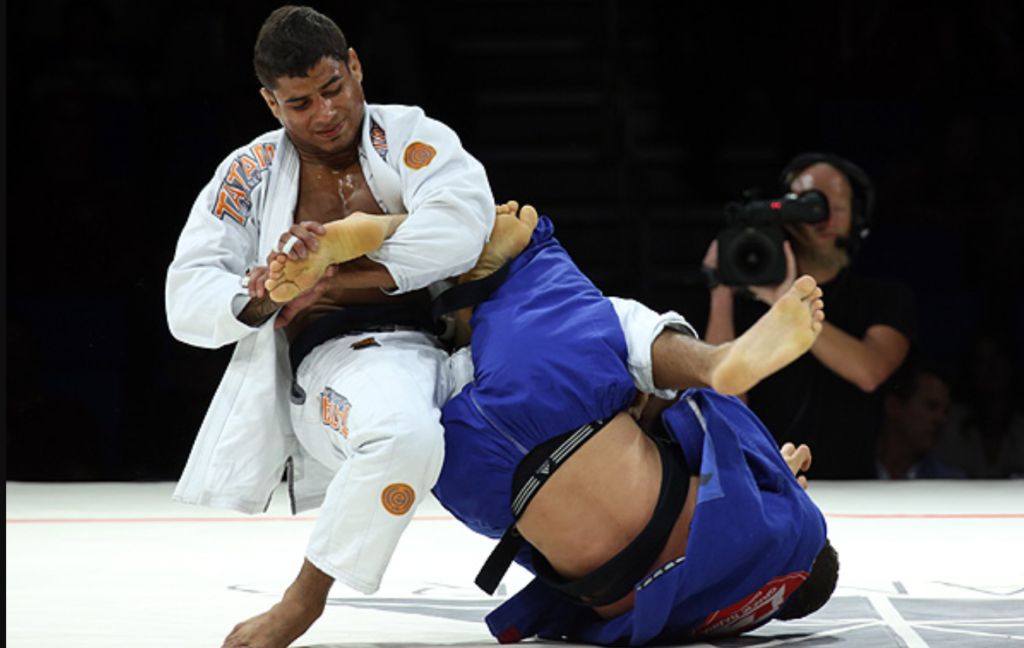
Straight Ankle is also known as Straight foot lock, Achilles Lock and Botinha. It is the one submission that is allowed under all kinds of competition rules, for every adult belt level. The foot and ankle make up a complex joint with approximately 26 bones involved. That means there are at least that many ligaments that can be damaged by correct pressure.

How To Do A Straight Ankle Lock

The mechanics of a Straight Ankle Lock rely on causing simultaneous hyperextension and torsion of the joint. In order to do so, the arms have to be placed correctly around the foot.

  1. Place the bony part of the wrist just below the thumb needs to be situated on the lowest end of the Achilles tendon, right above the opponent’s heel.
  2. The grip is a palm-over-palm configuration, just like with the guillotine choke. Similarly, both arms should be high on the chest.
  3. Create breaking pressure by retracting your elbows back. With the hips as a power source, the motion to finish involves extending the body and rotating the torso towards the opponent’s foot.

There are different versions of grips when finishing any kind of straight foot locks, but the mechanics remain more or less the same.

Toe Holds

The Toe Hold is a leg lock that is also legal in Gi Jiu-Jitsu, albeit only at the higher levels. Brown belts and above are allowed to use this devastating hold without many restrictions. It is a signature move of many Gi BJJ Worl champions like Caio Tera and Mackenzie Dern.

How To Do A Toe Hold

The Toe Hold is based on twisting mechanics, although there’s an extension of the joint involved as well.

  1. A figure four grip, like that of a Kimura, is used around the foot of an opponent. The palm of one hand is placed around the fingers of the foot, with four of the hand’s fingers over the pinky toe. The other arm is then weaved through to catch figure four grip configuration.
  2. Pressure stems from squeezing the foot towards the chest and keeping the elbows tight.
  3. To break the foot, the general rule of thumb is to force the fingers towards the opponent’s butt.

While there are many variations of Toe Hold Leg Locks with different grips, the most known version is an Estima Lock. It’s named after the popular Gracie Barra competitor Braulio Estima.

Kneebars

The knee bar is the leg locks analog to an arm bar. It involves putting pressure on the knee in the opposite direction of the natural bend. The body positioning for a knee bar is also very similar to that of an arm bar.

How To Do A Knee Bar

  1. The whole body should be positioned against the leg in such a manner that the hips are just above the opponent’s kneecap.
    There are a few grip options available, none more devastating than putting the foot of the leg in your armpit.

Kneebars are one more submission not available to those ranked lower than a brown belt. In Gi Jiu-Jitsu, at least.

Calf Slicers

The calf slicer is a very brutal submission that can completely open up the knee as well as snap the calf muscle. The positioning is somewhat complex and involves knowledge of the truck position.

How To Do A Calf Slicer

  1. The idea is that you place one of your shins behind the opponent’s knee while pulling their heel towards their butt using your arms.
  2. Your second leg is used to reinforce the submission, causing extensive damage to the calf muscle.

Heel Hooks

The heel hook is the king of leg locks and the most brutal submission of them all. Affecting both the ankle and the knee it destroys the knee’s inner structure very easily. It is forbidden in all Gi competitions unless specified otherwise. In the No-Gi competition, it is the submission of choice for most, whoever it is allowed. It is the one submission that the Danaher Death Squad built its reputation around.

The heel hook can be done in two varieties. The first is the outside heel hook (regular heel hook) and the second, and more dangerous, the inside heel hook (a.k.a. reverse heel hook). The mechanics for both are very similar.

  1. The toes of the opponent’s foot are placed in the armpit, to begin with, with their heel sticking out.
  2. You then cup the heel with one arm and place it on your wristbone, right under the thumb, similar to the ankle lock.
  3. Once you lock the grip, pull the heel in a twisting motion for the break. The position means your power transfers and amplifies through the lever (in this case that shin) delivering an extreme amount of force to the soft tissues of the knee.

Leg Locks Positions

Now that we covered all the submission options, let’s see which positions offer the best bang for your buck. The missing link in training leg lock attacks in Brazilian Jiu-Jitsu, prior to Danaher’s breakthrough was using them without proper positioning. When leg locks are used as a quick submission, they’re rarely effective because of a lack of control.

Danaher managed to isolate the best leg entanglement positions for a leg lock and put them together in a complete system. Despite focusing on heel hooks, most of the other submission options are available as well from the majority of positions in his system.

What Is Ashi Garami?

Ashi Garami is a term that means “leg entanglement” in Japanese. It is a position that allows you to control and attack your opponent’s leg with various joint locks, such as heel hooks and ankle locks. It is one of the official 29 grappling techniques of Kodokan Judo, but it is also widely used in Brazilian Jiu-Jitsu.

There are several variations of Ashi Garami used in submission grappling these days: the Straight Ashi Garami, the Ouside Ashi Garmi, the Inside Senkaku, the Sambo Knot, 50/50, and the Truck.

Straight Ashi Garami

The least controllable position in the system of Leg Locks. It is, in essence, a supine version of the Single Leg X guard. The difference is that the inside foot that’s kept on the butt in Single Leg X is now hooked on the opposite side. The position allows control over the hip, knee, and along with correct grips, the ankle. This completely immobilizes an opponent, opening up different attacks.

The heel hook is the best option, with the straight ankle lock following suit closely. There’s also a toe hold available when an opponent tries to spin out, or when the controlled leg ends up on top instead of on the floor.

Outside Ashi Garami

The outside Ashi Garami is the next step on the Leg Lock ladder. It offers better control than the Straight Ashi, as well as more transitioning options.

  • In terms of mechanics, the bottom leg remains in the same position as in the regular Ashi Garami.
  • The top leg, which hooked the opposite side butt in Ashi, now goes over the hip of the leg that is being attacked.
  • Both feet are placed to the outside of the opponent’s hip. This allows for increased control over the hip, although sacrificing a little of the knee control.

Again, the heel hook is the preferred submission, along with the ankle lock. Toe holds are available from the top position, just like with the Ashi Garami. There’s also a knee bar just a short transition away from the outside Ashi.

Legal at all levels.

411, Saddle, Honey Hole, or Inside Sankaku

The 411 / Hhney Hole/ Inside Senkaku / Saddle position is the “back control” position of the leg locking system. It offers the ultimate control and numerous submission options.

  • It involves placing a triangle with your legs around one of the opponent’s legs. The triangle structure offers very high control over the limb that is under attack.
  • Keeping your knee in the opponent’s hip fold emphasizes the pressure of the position.
  • From the 411, the leg of the opponent is placed across your body, opening up many Leg Locks. The inverted heel hook, Estima locks, ankle locks, toe holds, and knee bars are available on both legs.

Escaping the position is notoriously difficult.

Legal at all levels (with some important keynotes on how to hold it if you are a white belt, blue belt, or purple belt).

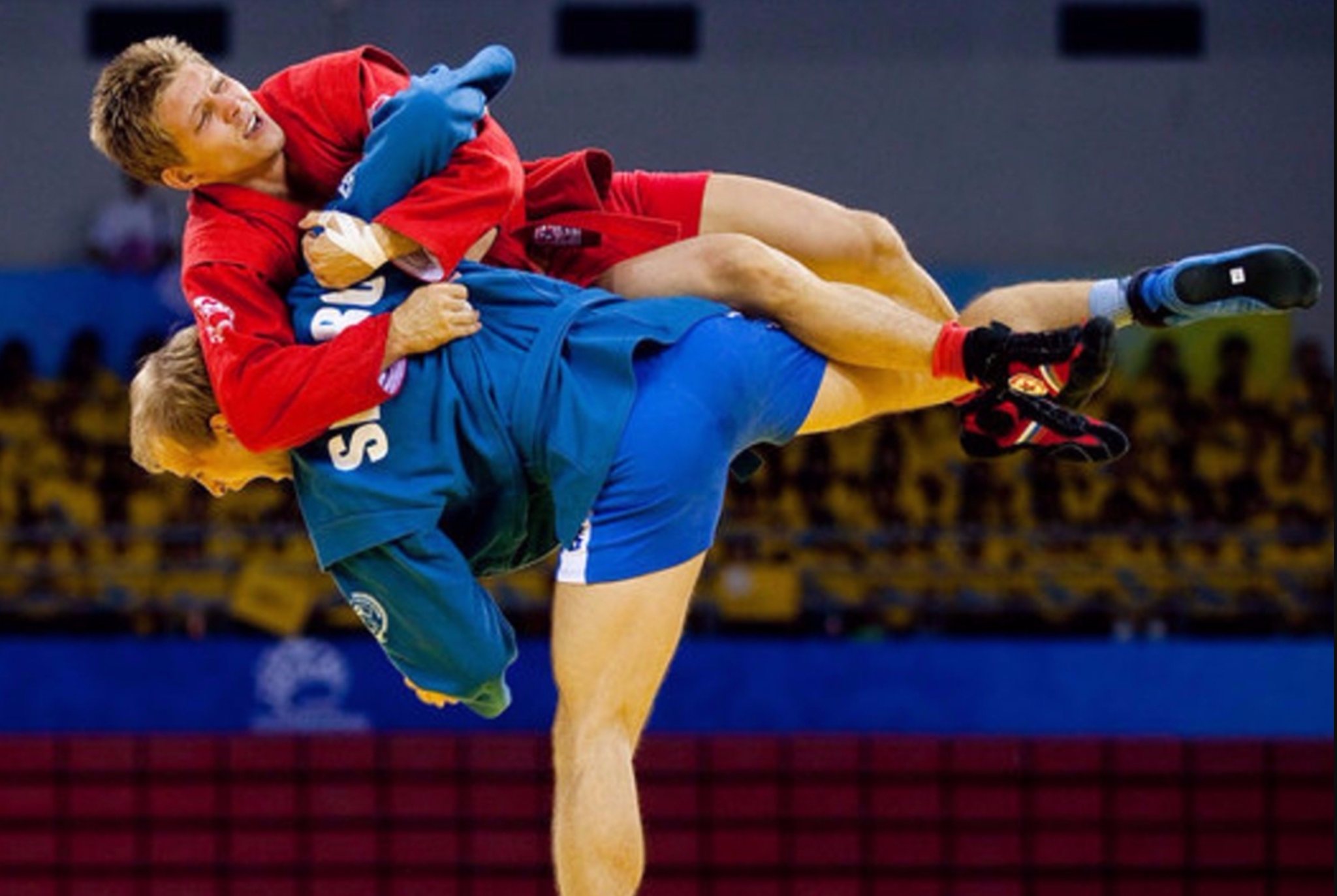
Sambo Knot (a.k.a. Game Over)

The Sambo Knot is the perfect example of the infamous “knee reap”. If the 411 is the back control, then the Sambo Knot is the amount of leg-locking positions.

  • It involves placing one of the opponent’s legs as if you’re in the Single Leg X, but intentionally looking to get the outside foot in the opponent’s crotch.
  • You can control their lower leg by locking both of your feet around the shin of that leg, just like you would close the legs for full guard.
  • You can attack the top leg with heel hooks and foot lock variations, as well as toe holds. Submissions can be done with one hand only, and transitioning between this position and the 411 is easy and tight.

Sambo knot as a position is illegal in IBJJF tournaments, except for brown and black belts in No-Gi, because of the knee-reaping rule.

50/50 (Guard)

The 50/50 position is a staple of BJJ as a guard and falls under the category of legal positions for leg locking. In terms of control, it is somewhere in between the straight and outside Ashi Garami and the more dangerous 411 and Sambo knot positions.

  • The 50/50 is a position that also involves a triangle of a kind, but this time it is locked on the outside of the opponent’s hip.
  • Heel hooks are the submission of choice, although there are ankle locks, toe holds, and other leg locks available too.
  • The drawback of the position is that the opponent is in the exact same position, meaning they can counter attack with leg locks at the same time as you.

The Truck

The truck is a position developed by Eddie Bravo for his 10th planet Jiu-Jitsu system. It is a halfway checkpoint position between side control and the back mount and offers a host of different submission options to other leg entanglements.

The Calf Crush is the easiest one accessible, but there are also ankle locks and a particularly nasty heel hook from there as well.

Leg Locks Rules And Legality

Leg locks have different rules and legality depending on your belt level, the type of competition, and the organization. You should always check the rules before using leg locks in a grappling martial arts competition.

IBJJF Rules

The IBJJF (International Brazilian Jiu Jitsu Federation) is one of the most popular and influential organizations in BJJ. It has its own set of rules for Gi and No-Gi competitions that regulate the use of leg locks.

Here are the main rules for leg locks in IBJJF competitions:

  1. Straight ankle locks are legal for all belt levels in Gi and No-Gi competitions.
  2. Knee bars, toe holds, and calf slicers are legal for brown and black belts in Gi competitions and in No-Gi competitions.
  3. Heel hooks are illegal in all belt levels in Gi competitions and in all belt levels except brown and black belts in No-Gi competitions.
  4. Knee reaping (crossing your outside leg over your opponent’s inside leg while controlling their outside leg) is illegal in all belt levels in Gi competitions and in all belt levels except in No-Gi competitions unless you are a brown or black belt.

ADCC Rules

The ADCC (Abu Dhabi Combat Club) is another popular and influential organization in BJJ. It has its own set of rules for No-Gi competitions that regulate the use of leg locks.

Here are some of the rules for leg locks in ADCC competitions:

  • All leg locks are legal for all belt levels in No-Gi competitions.
  • Knee reaping is legal for all belt levels in No-Gi competitions.

EBI Rules

The EBI (Eddie Bravo Invitational) is another popular and influential organization in BJJ. It has a highly specific ruleset and is an invitation tournament where every competitor is usually a BJJ black belt.

Some of the main rules for leg locks in EBI competitions include:

  • All leg locks are legal for all belt levels.
  • Knee reaping is legal for all belt levels.
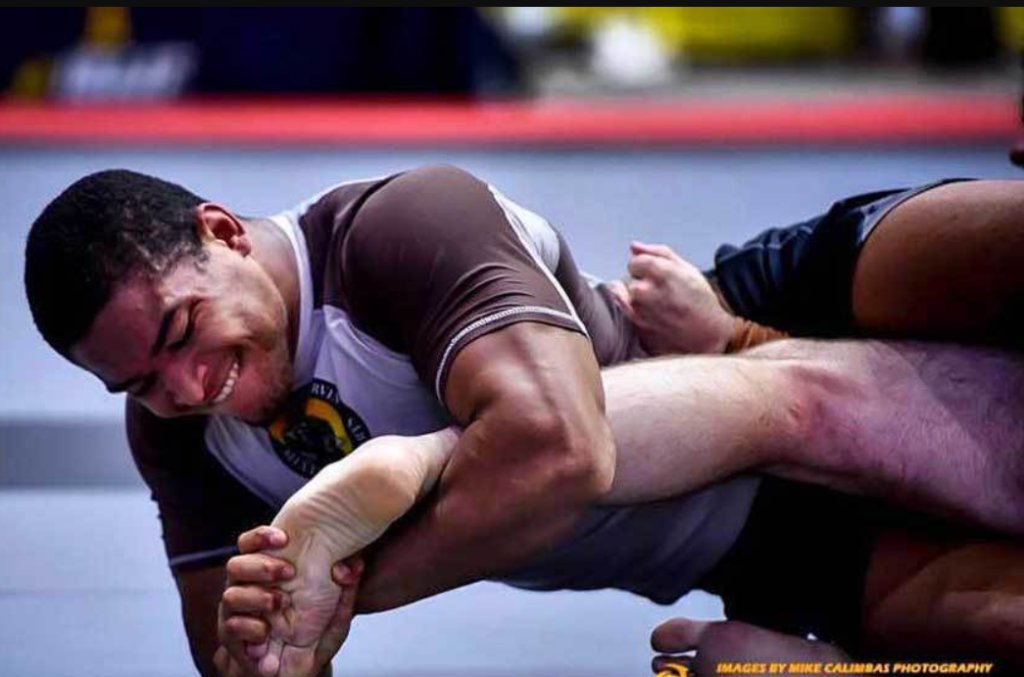
Leg Lock Rules and Legality

Putting It All Together

All in all, leg locks are effective and safe submissions that need to be part of every BJJ school’s curriculum. They should be approached as every other submission, with control and positioning to the forefront of the techniques.

For a successful leg lock game, you have to remember that leg locks are not the Hail Mary move of BJJ. They’re not a silver bullet to work against everyone, every time, everywhere. You need to know when to transition between leg locking positions or other BJJ positions. More importantly, you need to understand when to bail out and switch to a pass or another submission before it’s too late.

That said, make sure you’re using leg locks as a system that is integrated with other attacking systems of your game. And remain wary of competition rules that can land you a DQ because of your favorite leg lock!

DVD and DIGITAL Resources: Instructionals Related to Leg Locks

If you want to learn more about leg locks in BJJ, here are some resources that you can check out:
  1. Leglocks: Enter The System by John Danaher

  2. Leg Lock Anthology: 50/50 by Lachlan Giles

  3. Down Under Leg Attacks by Craig Jones

  4. The K.A.T.C.H. Leg Attack System by Dean Lister

  5. FOOTLOCK MASTERY BY OLIVER GEDDES

10 Best Leg Locks DVDs and Digital Instructionals

How John Danaher’s Leg Lock System Re-shaped Jiu-Jitsu

Garry Tonon Triangle Escape To Leg Lock Finish Breakdown

The MOST Dangerous FOOTLOCK – Still Legal at Whitebelt!


The Best MMA Schools In The World: How to Train Like a Champion

the best MMA schools in the world

If you have a strong interest in mixed martial arts and aspire to enhance your abilities, you may be curious about where to seek training. MMA is not solely focused on individual performance but also emphasizes team collaboration. You need to learn from the best coaches and train with the best fighters in order to sharpen your iron.

Thankfully, a multitude of MMA schools worldwide provide exceptional training and superb amenities for individuals aspiring to become or currently working as fighters. These gyms are capable of aiding you in accomplishing your objectives, regardless of whether you aim to participate in UFC or Bellator or simply wish to enhance your physical fitness and martial arts capabilities.

This article will introduce you to the most elite MMA training centers across the globe, chosen for their prestige, past accomplishments, exceptional trainers and athletes, and outstanding amenities. We will also tell you what makes them stand out from the rest and why you should consider training there.

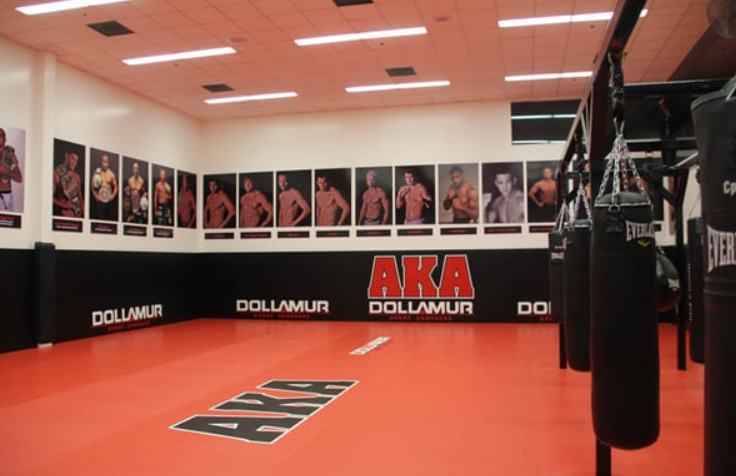
1. American Kickboxing Academy (AKA)

Located in San Jose, California, AKA is one of the most successful MMA schools. Founded by Javier Mendez in 1985 as a kickboxing gym, AKA has evolved into a powerhouse of MMA, producing several UFC champions and contenders.

This MMA center provides courses in boxing, Brazilian Jiu-Jitsu, grappling, kickboxing, and Muay Thai for novices, informal combatants, and expert contenders. The facility is 27,000 square feet and features boxing rings, a hybrid cage room, over 50 heavy bags, and extensive strength and conditioning equipment.

Some of the current or former notable MMA fighters who train or have trained at AKA include:

Daniel Cormier: former UFC heavyweight and light heavyweight champion

  • Khabib Nurmagomedov, a legendary MMA fighter, and former UFC lightweight champion, who is widely regarded as one of the greatest fighters in the sport’s history.
  • Cain Velasquez: former UFC heavyweight champion
  • Luke Rockhold: former UFC middleweight champion
  • Josh Thomson: former Strikeforce lightweight champion
  • Jon Fitch: former UFC welterweight title challenger
  • Islam Makhachev: top UFC lightweight contender
  • Umar Nurmagomedov: rising UFC bantamweight prospect

AKA is known for its intense and hard sparring sessions, which prepare its fighters for real combat situations. However, it is also known for its family-like bond among its members, who support each other through thick and thin.

AKA one of the best MMA schools on the planet

2. American Top Team (ATT)

Another one of the top MMA schools in the world is American Top Team (ATT), which was founded by Dan Lambert in 2001. The team is so accomplished and famous that in addition to its home gym in Coconut Creek Florida, ATT has facilities in Atlanta, Indianapolis, Portland, Orlando, among many other cities.

Throughout its history, ATT has been the go-to destination for numerous global champions across different leagues, such as the UFC, and remains a highly sought-after training facility, attracting fighters from all corners of the globe. ATT provides classes for different levels of expertise in various forms of martial arts, such as Brazilian Jiu-Jitsu, wrestling, boxing, Muay Thai, judo, and MMA.

Some of the most elite MMA fighters who train or have trained out of ATT include:

  • Amanda Nunes: current UFC women’s bantamweight and featherweight champion
  • Dustin Poirier: current UFC interim lightweight champion
  • Jorge Masvidal: current UFC BMF title holder
  • Tyron Woodley: former UFC welterweight champion
  • Robbie Lawler: former UFC welterweight champion
  • Junior dos Santos: former UFC heavyweight champion
  • Joanna Jedrzejczyk: former UFC women’s strawweight champion
  • Colby Covington: former UFC interim welterweight champion
  • Yoel Romero: multiple-time UFC middleweight title challenger

The school is famous for its diverse and well-rounded coaching staff, which includes former fighters and experts in various martial arts disciplines:

  • Mike Brown: former WEC featherweight champion and head MMA coach
  • Ricardo Liborio: co-founder of ATT and Brazilian Jiu-Jitsu black belt
  • Conan Silveira: co-founder of ATT and Brazilian Jiu-Jitsu black belt
  • Steve Mocco: former Olympic wrestler and wrestling coach
  • Phil Daru: strength and conditioning coach
  • Din Thomas: former UFC fighter and striking coach
  • Katel Kubis: Muay Thai coach

ATT offers a competitive and friendly atmosphere, where fighters challenge each other to improve, but also respect each other as teammates.

3. Jackson Wink MMA Academy

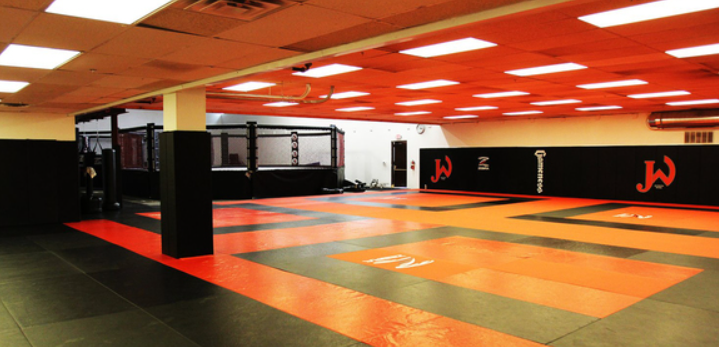
Out of Albuquerque, New Mexico, comes the Jackson Wink MMA Academy, one of the best MMA schools in the world, with a long history of producing champions and contenders. Founded by Greg Jackson and Mike Winkeljohn in 2007, Jackson Wink MMA Academy is a merger of two successful gyms: Jackson’s Submission Fighting and Winkeljohn’s Kickboxing.

The Academy provides courses in a range of fighting disciplines, catering to both novice and advanced-level practitioners. These include BJJ, wrestling, boxing, kickboxing, Muay Thai, and MMA.

The establishment measures 30,000 square feet and comprises two enclosures, two areas with mats, a boxing enclosure, a room with exercise machines, an area for cardiovascular workouts, and a living area for competitors.

It has been one of the best stables of MMA champions and top UFC fighters for decades:

  • Jon Jones: current UFC light heavyweight champion and one of the greatest MMA fighters of all time
  • Holly Holm: former UFC women’s bantamweight champion
  • Carlos Condit: former UFC interim welterweight champion
  • Michelle Waterson: top UFC women’s strawweight contender
  • Diego Sanchez: former UFC title challenger and The Ultimate Fighter winner
  • Donald Cerrone: multiple-time UFC title challenger
  • Alistair Overeem: former Strikeforce heavyweight champion
  • Andrei Arlovski: former UFC heavyweight champion

They have an innovative and strategic approach to MMA, which combines various martial arts techniques and tactics to create a unique style. Greg Jackson, the co-founder and head MMA coach, is widely regarded as one of the best MMA coaches in history, with a reputation for developing game plans that exploit the weaknesses of his fighters’ opponents. Mike Winkeljohn, the co-founder and head striking coach, is also a highly respected coach who has trained some of the best strikers in MMA.

Best MMA schools in the world: Jackson Wink Academy

4. Kings MMA

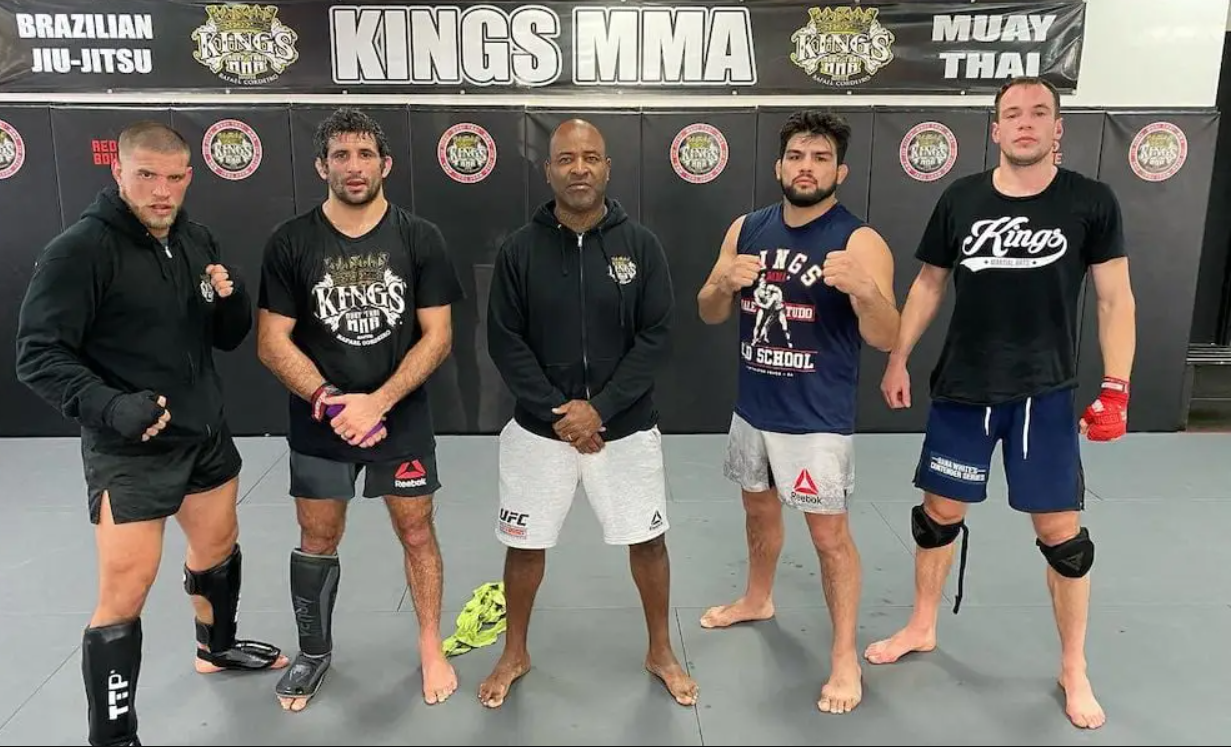
Kings MMA has its base in Huntington Beach, California, and is considered among the top-notch MMA training centers with an emphasis on the art(s) of striking. Founded by Rafael Cordeiro in 2010, Kings MMA is a branch of Chute Boxe Academy, which was one of the most dominant and influential gyms in MMA history.

Kings MMA has a facility is 8,000 square feet and features a boxing ring, a cage, a mat area, and a weight room. Practitioners of all levels and interests in combat sports are welcome.

Fighters training out of this gym that you’ve probably heard of include:

  • Rafael dos Anjos: former UFC lightweight champion
  • Kelvin Gastelum: former UFC middleweight title challenger
  • Beneil Dariush: top UFC lightweight contender
  • Lyoto Machida: former UFC light heavyweight champion
  • Wanderlei Silva: former PRIDE middleweight champion
  • Mauricio Rua: former UFC light heavyweight champion
  • Cris Cyborg: former UFC women’s featherweight champion

Kings MMA is well-known for its active and bold striking techniques, blending characteristics from various martial arts styles such as Muay Thai, kickboxing, boxing, and karate.

Rafael Cordeiro has established himself as an iconic mentor having honed the skills of numerous outstanding strikers throughout the history of MMA.

Cordeiro has a history of fighting in Muay Thai and MMA, having participated in several competitions such as PRIDE and K-1.

5. Sanford MMA

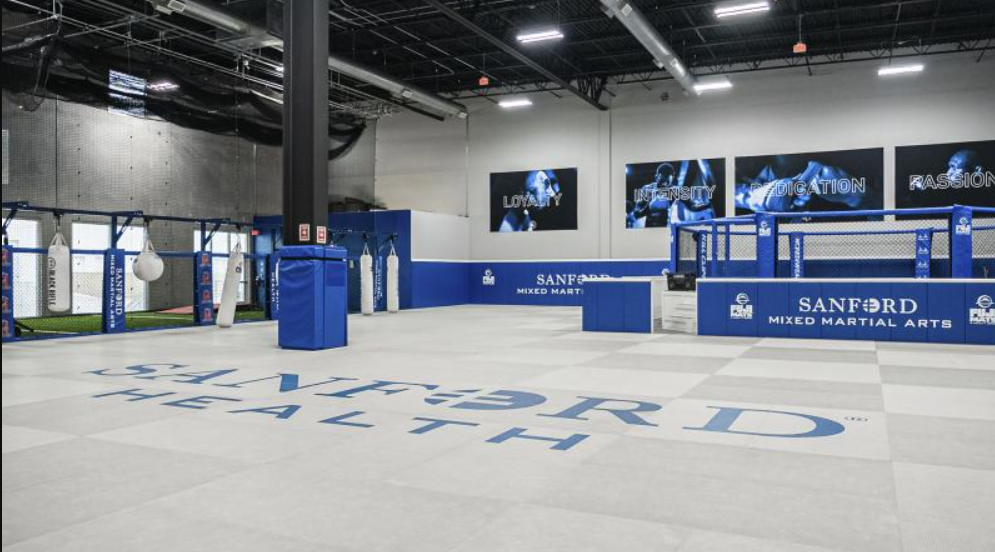
Located in Deerfield Beach, Florida, Sanford MMA comes with a modern, balanced, and comprehensive approach to MMA. Founded by Henri Hooft and Greg Jones in 2019, Sanford MMA is a partnership between two successful gyms: Hard Knocks 365 and Combat Club.

Located within a 32,000 square foot space, this gym boasts an array of different amenities, including two areas equipped with cages, two spaces devoted to training on mats, a professional boxing ring, a room for weightlifting, a designated area for cardio exercises, and even a facility for recovery purposes.

Some of the notable fighters who are a part of Sanford MMA include:

  • Kamaru Usman: current UFC welterweight champion
  • Gilbert Burns: current UFC welterweight title challenger
  • Michael Chandler: current UFC lightweight title challenger
  • Robbie Lawler: former UFC welterweight champion
  • Anthony Johnson: former UFC light heavyweight title challenger
  • Aung La N Sang: current ONE Championship middleweight and light heavyweight champion
  • Martin Nguyen: current ONE Championship featherweight champion
  • Vicente Luque: top UFC welterweight contender

Sanford MMA is known for its well-rounded and versatile style, which combines high-level striking and grappling skills. Henri Hooft, the co-founder and head striking coach, is a renowned coach who has trained some of the best strikers in MMA history. He is also a former kickboxing champion who has competed in various organizations, including K-1 and It’s Showtime.

Greg Jones, the co-founder and head wrestling coach, is a legendary coach who has trained some of the best wrestlers in MMA history. Jones, a distinguished wrestling athlete, formerly achieved three national championship titles in NCAA Division I.

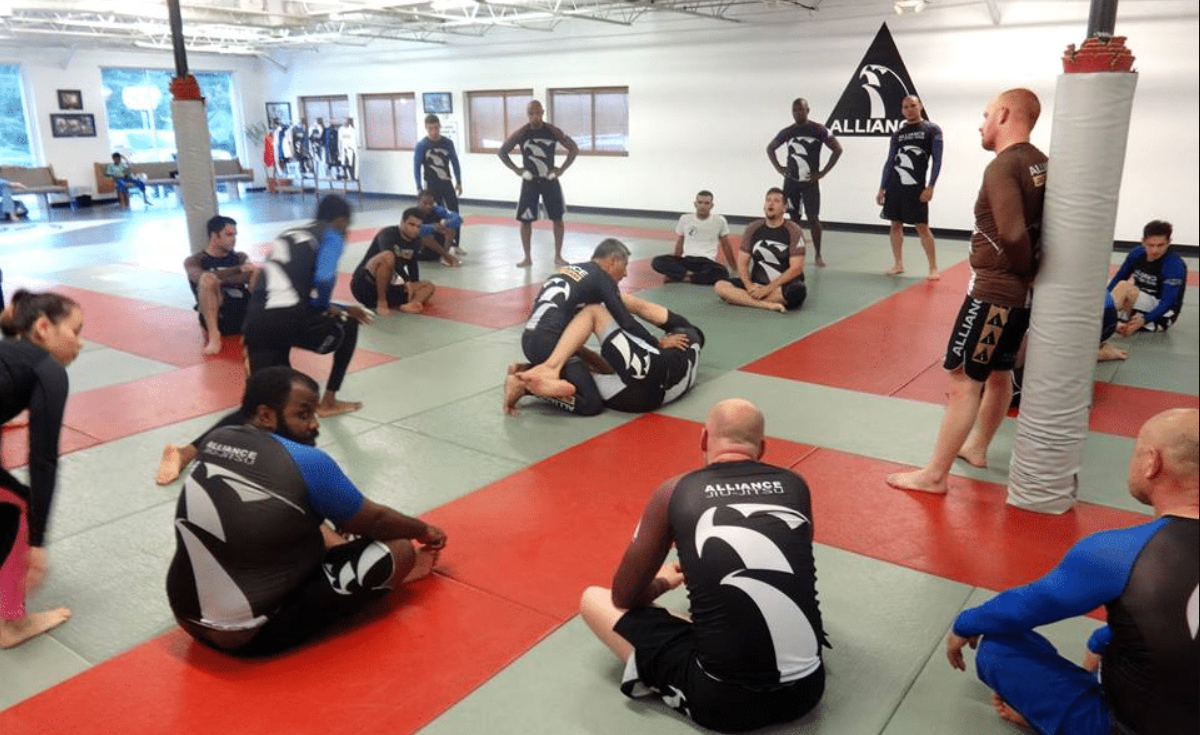
6. Alliance MMA

Out of San Diego, California, Alliance MMA is a gym balancing wrestling and striking. Founded by Brandon Vera and Eric del Fierro in 2007, Alliance MMA is a collaboration of several MMA schools and coaches in the San Diego area.

Their facilities are 12,000 square feet and feature a cage room, a mat room, a boxing ring, a weight room, and a cardio room, open for use to all members.

Some of the current or former notable MMA fighters who train or have trained at Alliance MMA include:

  • Dominick Cruz: former UFC bantamweight champion
  • Phil Davis: former Bellator light heavyweight champion
  • Alexander Gustafsson: former UFC light heavyweight title challenger
  • Jeremy Stephens: top UFC featherweight contender
  • Ross Pearson: former UFC fighter and The Ultimate Fighter winner
  • Myles Jury: top Bellator featherweight contender
  • Angela Hill: top UFC women’s strawweight contender
  • Jessica Penne: former UFC women’s strawweight title challenger

Eric del Fierro, the co-founder and head coach, is a respected coach who has trained some of the best fighters in MMA history. Del Fierro is also a former wrestler and boxer who has competed in various tournaments. Brandon Vera, the co-founder, and fighter, is a former UFC fighter and current ONE Championship heavyweight champion.

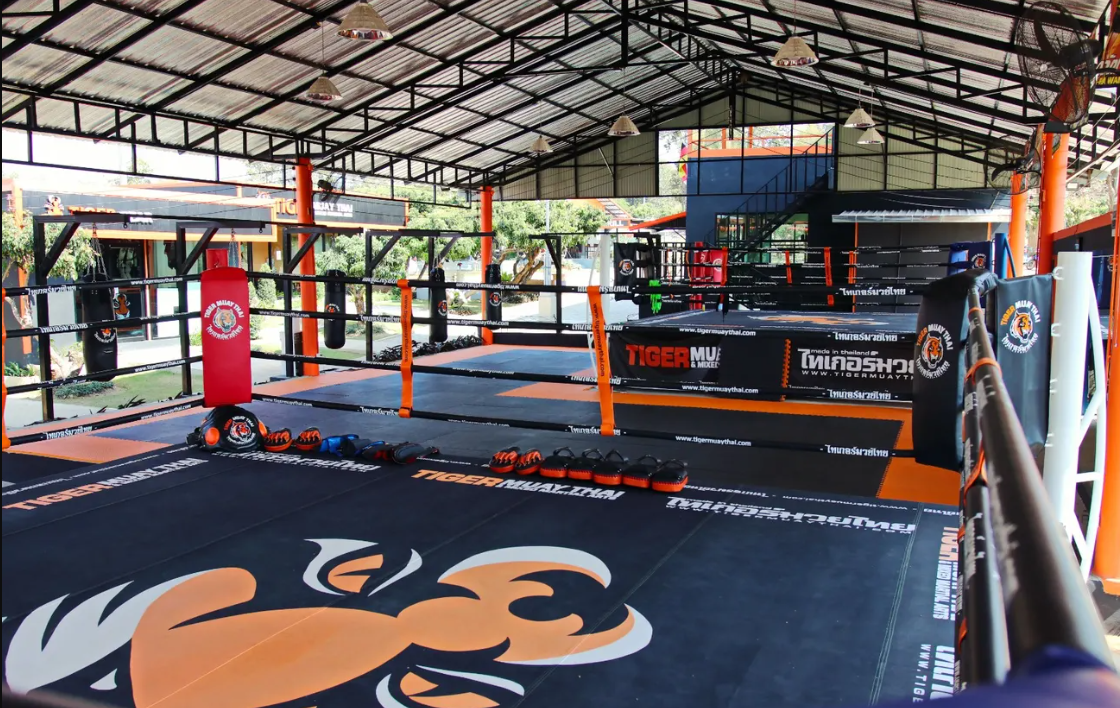
7. Tiger Muay Thai

Located in Phuket, Thailand, Tiger Muay Thai is a prominent MMA gym in Asia that specializes in Muay Thai and other forms of striking arts. Established by William McNamara in 2004, the gym attracts martial artists and fighters worldwide seeking genuine Thai training and culture.

At Tiger Muay Thai, you can find an extensive range of classes, including Muay Thai, Brazilian Jiu-Jitsu, wrestling, boxing, kickboxing, MMA, yoga, fitness, and an assortment of others. The venue spans across 8 acres and comprises numerous sections to facilitate training such as a cage enclosure, a boxing arena, a gym fitted with weights, a cardio room, a swimming pool, a sauna, a dining establishment, and lodging amenities.

Some of the fighters calling Tiger Muay Thai home include:

  • Valentina Shevchenko: current UFC women’s flyweight champion
  • Petr Yan: current UFC bantamweight champion
  • Dan Hardy: former UFC welterweight title challenger
  • Brian Ebersole: former UFC fighter
  • Roger Huerta: former UFC fighter
  • Alex Volkanovski: current UFC featherweight champion
  • Israel Adesanya: current UFC middleweight champion

Tiger Muay Thai is known for its authentic and traditional Muay Thai style, which incorporates elements of clinching, elbows, knees, and kicks. Tiger Muay Thai has a team of experienced and qualified Muay Thai trainers, many of whom are former champions and fighters. Tiger Muay Thai also has a team of MMA coaches, who specialize in Brazilian Jiu-Jitsu, wrestling, boxing, and kickboxing.

Tiger Muay Thai is very popular for its tropical and relaxing environment, where fighters can train hard and enjoy the beauty of Thailand. Tiger Muay Thai offers various activities and services for its guests, such as sightseeing tours, beach trips, massage sessions, nutrition plans, and more.

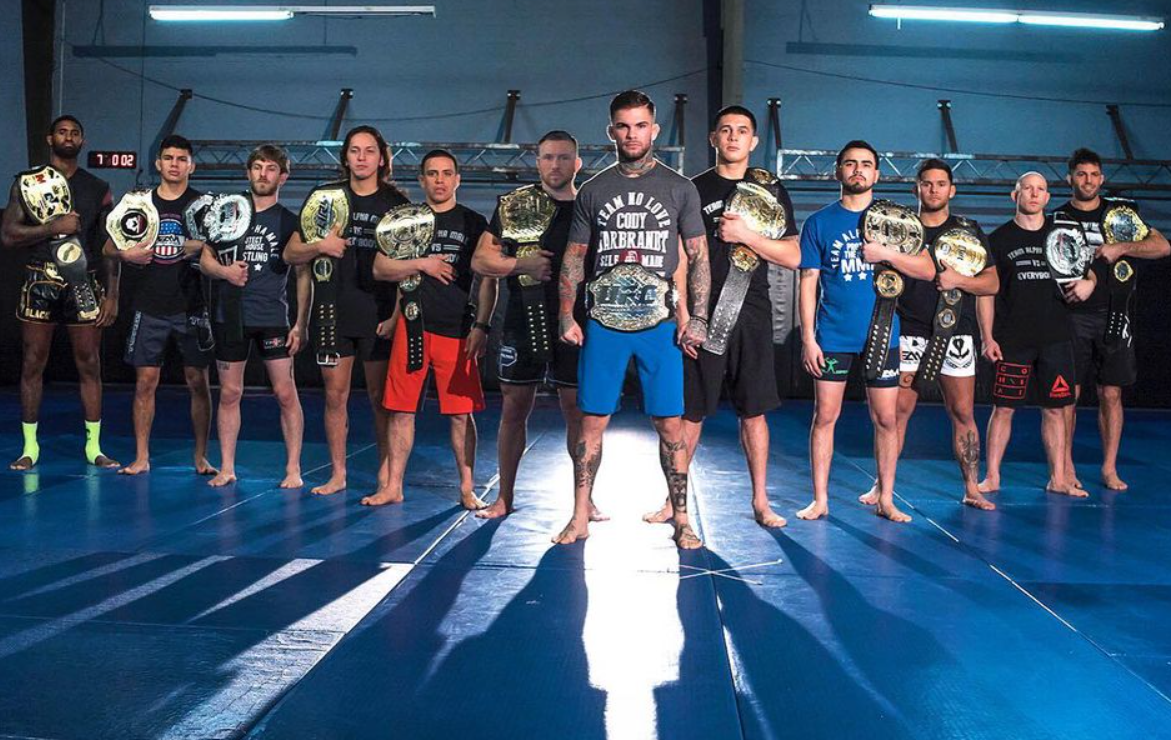
8. Team Alpha Male

Representing Sacramento, California, Team Alpha Male is a predominantly grappling-focused MMA school founded by Urijah Faber in 2004. Team Alpha Male is a team of fighters who share a common bond of being smaller in size but big in heart.

They have a state-of-the-art facility is 20,000 square feet and features a cage room, a mat room, a boxing ring, a weight room, a cardio room, and a recovery center.

The stables of Team Alpha Male contain some of these legendary small-sized monsters:

  • Urijah Faber: former WEC featherweight champion and UFC Hall of Famer
  • Cody Garbrandt: former UFC bantamweight champion
  • TJ Dillashaw: former UFC bantamweight champion
  • Chad Mendes: former UFC featherweight title challenger
  • Joseph Benavidez: former UFC flyweight title challenger
  • Paige VanZant: former UFC fighter
  • Andre Fili: top UFC featherweight contender
  • Song Yadong: top UFC bantamweight contender

Team Alpha Male is known for its wrestling and grappling style, which emphasizes takedowns, transitions, submissions, and ground-and-pound. The main coaches are:

  • Urijah Faber: founder and head MMA coach
  • Danny Castillo: wrestling coach
  • Chris Holdsworth: Brazilian Jiu-Jitsu coach
  • Joey Rodriguez: boxing coach
  • Master Thong: Muay Thai coach

Team Alpha Male is also known for its loyal and fun culture, where fighters train hard and have a good time.

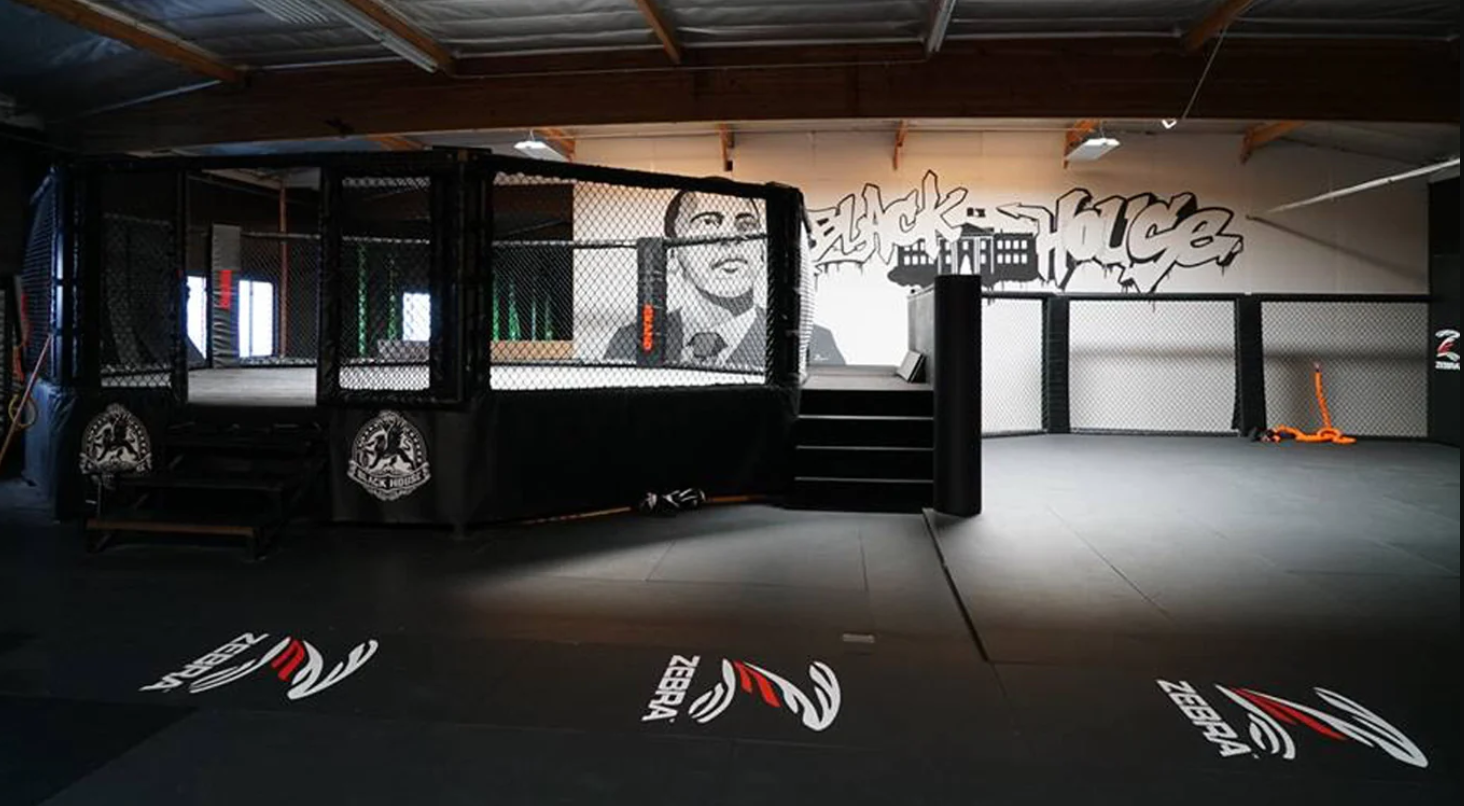
9. Black House MMA

From Los Angeles, California, Black House MMA is one of the most modern MMA schools focusing on striking and Brazilian Jiu-Jitsu. Founded by Ed Soares and Jorge Guimaraes in 2006, Black House MMA is a private gym that caters to elite fighters and celebrities.

The luxury facility is 10,000 square feet and features a cage room, a mat room, a boxing ring, a weight room, a cardio room, and a lounge area.

Some celebrities you can find on the mats in Black House MMA are:

  • Anderson Silva, an ex-champion in the middleweight division of UFC and a legend among the MMA fighters
  • Lyoto Machida: former UFC light heavyweight champion
  • Antonio Rodrigo Nogueira: former UFC interim heavyweight champion
  • Antonio Rogerio Nogueira: former UFC light heavyweight contender
  • Jose Aldo: former UFC featherweight champion
  • Glover Teixeira: current UFC light heavyweight title challenger
  • Ronaldo Souza: former Strikeforce middleweight champion
  • Fabricio Werdum: former UFC champion at heavyweight

Black House MMA has a team of experienced and respected coaches, who have trained some of the best fighters in MMA history:

  • Ed Soares: co-founder and manager
  • Jorge Guimaraes: co-founder and manager
  • Rafael Cordeiro: striking coach
  • Kenny Johnson: wrestling coach
  • Ricardo De La Riva: Brazilian Jiu-Jitsu coach
  • Pedro Rizzo: Muay Thai coach

The gym is not open to the public, but only to selected fighters and guests who are invited by the owners or the coaches. Black House MMA is a place where professional, top-level fighters can focus on their MMA training.

Best MMA achools; Black house MMA

10. Cesar Gracie Jiu-Jitsu

Finally, we have Cesar Gracie Jiu-Jitsu out of California, a Brazilian Jiu-Jitsu and grappling gym with a keenness for boxing. Founded by Cesar Gracie in 1994, Cesar Gracie Jiu-Jitsu is a branch of Gracie Jiu-Jitsu, which is one of the most influential and prestigious martial arts schools in history.

Cesar Gracie Jiu-Jitsu offers classes in all combat sports, in a facility that is 5,000 square feet and features a mat room, a cage room, a boxing ring, a weight room, and a cardio room.

Some of the most popular faces that strut around the mats here are:

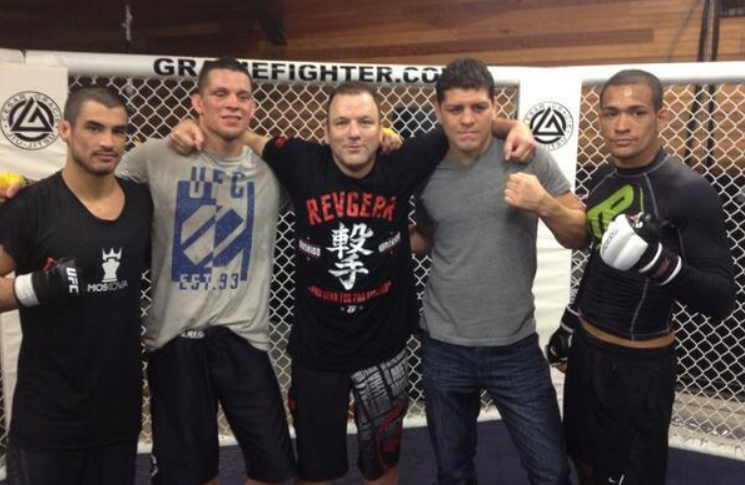
  • Nick Diaz: former Strikeforce welterweight champion
  • Nate Diaz: former UFC lightweight title challenger
  • Gilbert Melendez: former Strikeforce lightweight champion
  • Jake Shields: former Strikeforce middleweight champion
  • David Terrell: former UFC middleweight title challenger

Conclusion

These are just some of the best MMA schools in the world that you can train at if you want to become a champion or just improve your martial arts skills. A lot of other great MMA schools and schools around the world also offer quality training and facilities for fighters and martial artists of all levels.

If you have a keen interest in obtaining top-notch training in MMA, then visiting the gym’s website or reaching out to them for more details on their courses, timings, costs, and prerequisites would be an excellent way to begin.

Basics of Jiu-Jitsu: A Guide For Newbies Who Never Trained Before

Basics of Jiu-Jitsu: A Guide For Newbies Who Never Trained Before

If you are looking for a martial art that can challenge you physically and mentally, improve your fitness and self-defense skills, and provide you with a fun and supportive community, then you should consider learning Brazilian Jiu-Jitsu. BJJ is a “gentle art” that uses leverage and technique to control and submit an opponent, regardless of their size or strength. In this article, we’ll discuss the basics of Jiu-Jitsu, ranging from main positions, transitions, submissions, and defenses to some tips on training and resources that will help you start your Jiu-Jitsu journey today.

What Is Jiu-Jitsu And Where Did It Come From?

Jiu-Jitsu (originally written “Ju-Jitsu”) is a martial art/combat sport that originated in Japan as a form of unarmed combat for samurai warriors. The word Ju-Jitsu means “gentle art” or “gentle technique” in Japanese, as it relies on using minimal force and maximum efficiency to overcome an opponent. Originally, the art involved grappling, throwing, striking, joint locking, choking, and weapon-disarming techniques.

While the exact origins of Jiu-Jitsu are unclear, some historians think it originated in ancient India or China. It was initially a means for Buddhist monks to defend themselves against bandits and invaders. Later, the art was brought to Japan, most likely by traveling monks or traders who passed it on to various clans and schools of samurai warriors. Jiu-Jitsu then morphed into a vital skill for samurai who had to face enemies without their swords or armor on the battlefield.

In the early 20th century, Jiu-Jitsu was introduced to Brazil by a traveling Japanese judoka named Mitsuyo Maeda. The Jigor Kano student traveled around the world to learn various grappling styles in order to improve his Judo.

Maeda settled in Brazil in 1914, where he befriended a local businessman named Gastao Gracie. Gracie’s son Carlos became one of Maeda’s students and learned the secrets of Jiu-Jitsu. Carlos then taught his brothers, especially Helio, who was smaller and weaker than his siblings. Helio adapted Jiu-Jitsu to suit his physical limitations, focusing more on ground fighting and leverage rather than strength and speed.

Helio and his brothers then challenged fighters from other martial arts to prove the effectiveness of their style. They beat everyone up, gaining notoriety in the process and naming their skillset as Gracie Jiu-Jitsu or Brazilian Jiu-Jitsu.

During the 1990s, BJJ gained worldwide recognition when Helio’s son Royce Gracie competed in the first Ultimate Fighting Championship, giving birth to mixed martial arts in the process. The first UFC pitted fighters from different disciplines against each other. Royce Gracie dominated his opponents purely with his Jiu-Jitsu skills, submitting every one of them with ease, despite being smaller and lighter than most.

Royce’s victories inspired many people to learn BJJ as a way of self-defense or sport.

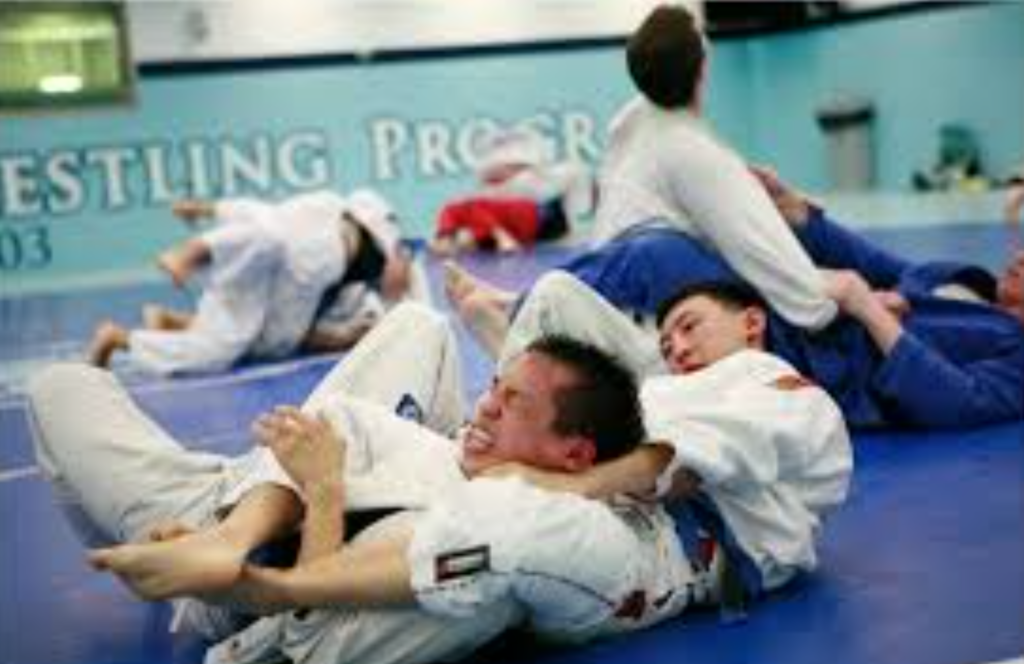
Choke submission in Brazilian Jiu-JItsu training

Basics of Jiu-Jitsu Positions (And Transitions)

One of the first things you need to learn when you start practicing Jiu-Jitsu is how to position yourself in relation to your opponent. There are three essential positions that make up the basics of Jiu-Jitsu, relative to how you are facing your opponent and where you are in regard to the ground: standing, top ground, and bottom ground position.

The Difference Between Standing, Top And Bottom Positions

Standing position is when both you and your opponent are on your feet, facing each other. This is where most fights/grappling matches start, but not where they end. In the standing position, the goal is to engage with grips in order to achieve takedowns, throws, or clinches that allow you to take the fight to the ground on your terms.

The top position is when you are on top of your opponent on the ground, either in their guard (their legs are in between the two of you) or past their guard (in positions called side control, mount, or back control). This is where you have more control and leverage over your opponent, as you can use your weight and gravity to pin them down with pressure and apply submission holds.

The bottom position on the ground is when you are on the bottom with your opponent in your guard (your legs in between the two of you in some way). From the bottom, you have less control in t terms of pressure, but different angles in terms of leverage which you can use to get on top (sweep). You can also set up submission holds directly from your guard on the bottom.

Advantages Of Basic BJJ Positions

There are many positions in Jiu-Jitsu, but they all boil down to variations of several basics of Jiu-Jitsu :

  • Guard: This is a bottom position where your legs are wrapped around your opponent’s waist or hips, for the most common variation – closed guard. This is one of the most versatile positions in Jiu-Jitsu, as you can use your legs to control your opponent’s posture, balance, and movement. You can also attack with various submissions, such as armlocks, and chokes. The guard is considered a neutral position, as both you and your opponent have offensive and defensive options.
  • Side control: A top position where you are on top of your opponent with your chest on their chest while positioned sideways (your bodies are like the letter “T”). You can use your arms to control your head and arm. You can use side control to transition to other positions, such as mount, or back control and direct submission attacks are also available (armlocks, leg locks, and choke holds).
  • Mount: One of the two most dominant top positions. You are on top of your opponent, straddling them with both of your knees on either side of their torso. You can use your arms to control your opponent’s head and arms or place both your arms under their armpits. The full mount is one of the most dominant positions in Jiu-Jitsu, as you can use your weight and gravity to pin your opponent down and attack with submissions at will.
  • Back control: Considered a top position and the second of the two most dominant ones in BJJ. You are behind the opponent with both of your legs hooked around their waist or hips. Your arms control their head and shoulders, via a strategic and precise placement (looks like a seatbelt in a car). From back control, you can use leverage and superior angles to choke your opponent out or attack with armlocks.

Brazilian jiu-jitsu spider guard position

Transitioning From One Position To Another

Knowing how and when to transition from one advantageous position to another smoothly and efficiently is a crucial grappling skill. Transitioning involves using movement, timing, leverage, and technique to change your position relative to your opponent’s position. There are two types of transitions: passing and sweeping.

Passing is when you are on top of your opponent in their guard or half-guard (when they have one of your legs trapped between theirs) and you move past their legs to a more dominant position, such as side control, mount, or back control.

Sweeping is when you are on the bottom of your opponent in guard or half-guard and you use your legs, hips, arms, and leverage to flip them over and end up on top of them in a more dominant position.

To transition effectively, you need to follow the principles of the basics of Jiu-Jitsu:

Control the distance: Depending on whether you want to pass or sweep, you need to either close the distance or create distance between you and your opponent.

For example, if you want to do a guard pass, you need to close the distance by breaking their grips, controlling their legs, and lowering your base.

If you want to sweep them from guard, you need to create space by breaking their posture, pushing them away with your legs or arms, and moving your hips.

Dominate the angles: Depending on whether you want to pass or sweep, you need to either maintain or change the angle between you and your opponent. Angles allow the use of leverage and are funnels that help you create traps for your opponent.

Manage space: The space between you and your opponent defines the success you’ll have with any transition in BJJ. When you are on offense, you want to make sure there’s as little space between yourself and your opponent as possible. Obviously, when you are on the defense, you want the opposite- create space between you and your opponent.

Basics Of Jiu-Jitsu Submissions And Defenses

Another essential skill in Jiu-Jitsu is knowing how to submit people and defend yourself from submissions. Submissions are BJJ techniques that force your opponent to tap out or give up due to pain or fear of injury. There are two main categories of submissions in Brazilian Jiu-Jitsu: joint locks and chokes.

BJJbackcontrol

The Two Types of Submissions: Joint Locks And Chokes

Joint locks are submissions that target your opponent’s joints, such as elbows, shoulders, wrists, knees, ankles, hips, and spine. Joint locks work by applying pressure and/or torque on the joint until it exceeds its limit of motion and causes pain or damage. Some of the most basic common joint locks in Jiu-Jitsu are: armbar, kimura, Americana, omoplata, straight ankle lock, kneebar, heel hook, etc.

Chokes are submission holds that target your opponent’s neck or airway. Chokes work by cutting off the blood flow or oxygen supply to the brain and causing unconsciousness or suffocation. The most common techniques from this category are the rear naked choke, triangle choke, guillotine choke, cross-collar choke, etc.

8 Basics Brazilian Jiu-Jitsu Submissions And How To Use Them

Take a look at a short summary of some of the submissions that are considered basics of Jiu-Jitsu and how you can use them against a resisting opponent.

Armbar: This is a joint lock that targets your opponent’s elbow by extending their arm (straight arm submission) and applying pressure on the joint with your hips or legs. You can do an armbar from various positions, such as guard, mount, side control, etc.

Kimura: A joint lock that targets your opponent’s shoulder by bending their arm behind their back (bent arm submission) and applying torque on the joint with your arms. You can set up a kimura from many different top and bottom positions, such as guard(s), half-guard, side control, etc.

Americana: Another bent arm submission hold that also targets your opponent’s shoulder by bending their arm. This time, the bend is in the other direction (palm towards their ear). The Americana works from various top positions, such as mount, side control, top half guard, etc.

Omoplata: This arm lock targets your opponent’s shoulder by trapping their arm with your legs and applying pressure on the joint with your hips or body. The direction of the bend is the same as with a Kimura. Omoplata’s are mostly set up form different guards.

Straight ankle lock: One of the basic leg locks, an ankle lock targets your opponent’s leg by wrapping your arm around their ankle and applying pressure on the joint and Achilles tendon with your forearm. Usually, you set ankle locks up from bottom positions, but you have access to them from top positions as well.

Kneebar: The target of this leg lock is your opponent’s knee. It works just like an armbar, but this time with the pressure on the knee. Kneebars are available, and used, from both top and bottom positions.

Rear naked choke: The quintessential Jiu-Jitsu submission, the RNC work by wrapping an arm around the opponent’s neck, reinforcing it with the other arm, and applying pressure on both sides of their carotid arteries with your biceps and forearm. The choke works from back control and certain variations of the position.

Triangle choke: A choke that uses the opponent’s shoulder on one side, and your hamstring on the other to cause the same effect as a rear naked choke. Setting it up involves using your legs to trap your head and one arm and then applying pressure on both sides of their carotid arteries by squeezing your thighs. One of the most versatile submissions in Jiu-Jitsu, the triangle is available from virtually everywhere.

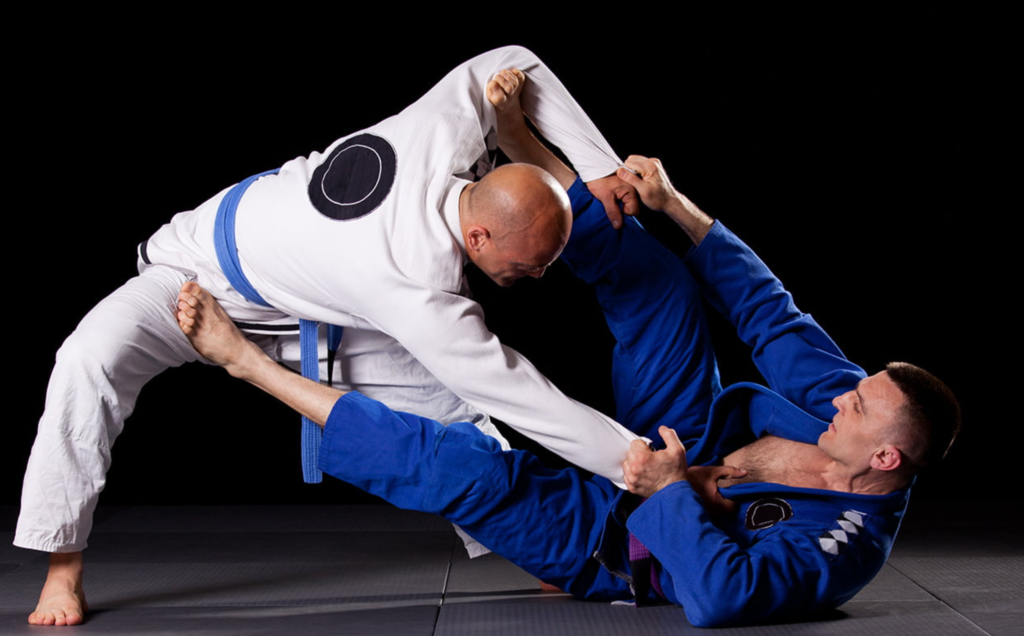
Basics of jiu-jitsu: leg lock submission

Strategies For Defending and Escaping in Jiu-Jitsu

Defense is when you are preventing an opponent from succeeding in securing a submission hold on you (joint lock or choke) or transitioning to a superior position in regard to their starting one.

Escapes in BJJ refer to getting out of positions like the mount, back control, side control, and guard. When it comes to submission holds there’s no way to escape unless you defend first, which is something most people have a hard time making distinction of.

The basics of Jiu-Jitsu, when it comes to defending joint locks and/or chokes, include the following:

Prevent the position early: The best defense is prevention. Avoid getting into bad spots where your opponent can isolate and attack your limbs or neck. You also need to prevent them from securing their grips, hooks, or angles that can set up their submissions.

Protect the alignment: To escape a joint lock or a choke, you need to restore your alignment by moving your limb or neck in a way that relieves the pain or pressure. It is also important to think about aligning your own body in a way that minimizes the leverage and force on a specific target area.

Create space: To free yourself from a submission or tight pinning position, you need to create space between you and your opponent that will allow you to relieve the pressure and get out. Concepts like frames, wedges, movement, and leverage help with this goal.

Best Practices For Training BJJ

To improve your Jiu-Jitsu skills, you need to train regularly and effectively. Training involves both learning new techniques and drilling them until they become second nature, before testing them out in live sparring with different partners:

  • Train with a qualified instructor: A good instructor will teach you Jiu-Jitsu in a planned and progressive manner while correcting your mistakes. They will also be happy to answer all your questions. Be sure to pick a reputable instructor though, as not every “expert” is exactly as they present themselves to be.
  • Train with a variety of partners: Training partners are irreplaceable in helping you practice and improve your techniques. They should challenge you and push you to your limits, as well as provide constructive feedback.
  • Have a positive attitude: A positive attitude can help you enjoy your training, overcome difficulties, learn from failures, and grow as a martial artist. respectful, humble, and supportive of yourself and others.

Recommended Resources For Learning and Improving Your Jiu-Jitsu Skills

Besides training on the mats, there are other ways to learn and improve your BJJ skills. You can use various resources to supplement your training and expand your knowledge. Some of the best resources for learning Jiu-Jitsu fast are:

Books: Books can provide you with detailed explanations, illustrations, and insights on Jiu-Jitsu techniques, concepts, strategies, history, culture, etc.

DVDs: Videos can provide you with visual demonstrations, explanations, and tips on Jiu-Jitsu techniques, concepts, strategies, and drills, by all of the world’s leading coaches and instructors.

Podcasts: Podcasts are usually audio/video interviews that cover the BJJ lifestyle through discussions, stories, and insights on various topics, such as Brazilian Jiu-Jitsu techniques, concepts, strategies, history, culture, mindset, etc.

The BJJ World blog: We aim to provide you with high-quality written articles, reviews, opinions, news, and advice on all kinds of Jiu-Jitsu topics.

BJj instructor teaching the basics of Jiu-Jitsu

Attitude, Mindset, And Training Goals

To succeed in Jiu-Jitsu, you need more than just physical skills. Mental skills are a big part of the basics of Jiu-Jitsu as they can help you overcome challenges and persevere in an environment that is very challenging.

Have fun: Jiu-Jitsu can bring you joy and satisfaction. Enjoy your training and have fun with your partners. Don’t take yourself too seriously or get frustrated by setbacks, and remember that BJJ is a journey that never ends.

Be respectful: Jiu-Jitsu is all about respect for yourself and others, from your instructor, your partners, your opponents, to the art itself.

Be humble: Acknowledge your strengths and weaknesses, your successes and failures, your knowledge and ignorance. Stay open to feedback and criticism, and willing to learn from anyone.

Ask questions: in Jiu-Jitsu you should always seek to learn new things, explore new possibilities, and experiment with new ideas. Don’t be afraid to ask questions constantly, from both your coaches and senior training partners.

Set goals: Having clear and realistic goals for your training and performance, such as learning a new technique, improving a skill, winning a JIu-Jitsu match, developing your BJJ game and/or getting a promotion, is the best way to progress through the sport quickly.

Fun training experience: Brazilian Jiu-JItsu class

FAQs On Starting Brazilian Jiu-Jitsu Training

What are the basic concepts of Jiu-Jitsu?

Some of the concepts that the basics of Jiu-Jitsu are based upon are leverage, technique, strategy, control, submission, defense, transition, and adaptation. These concepts are the building blocks behind all major principles and methods of Jiu-Jitsu and will help you understand what you are doing as opposed to mindlessly repeating things.

Can I learn Jiu-Jitsu by myself?

You can learn some aspects of Jiu-Jitsu by yourself, such as the history, theory, terminology, and rules of the art. However, you cannot learn Jiu-Jitsu fully by yourself, as you need a qualified instructor to teach you the details, correct your mistakes, and answer your questions. You also need a partner to practice and spar with.

How many days a week should a beginner do Jiu-Jitsu?

There is no one-size-fits-all answer to this question. It depends heavily on your goals, availability, fitness level, and personal preference. A general recommendation is to train at least twice a week as a beginner in order to to make consistent progress and retain what you learn.

What are BJJ basics?

BJJ basics are the fundamental techniques, concepts, and strategies that form the foundation of Jiu-Jitsu. They include the basic positions, submissions, and defenses. BJJ basics are essential skills for any grappler to master, as they provide the foundation for more advanced skills and variations.

What moves can you do in BJJ?

There are hundreds of moves that you can do in BJJ, ranging from simple to complex, from basic to advanced.

What is the best BJJ move for a street fight?

There is no single best BJJ move for street fights, as different situations may require different responses. In general, try to avoid going to the ground unless necessary, use strikes and takedowns to create distance and control, and submissions to end the fight quickly and safely,

Some of the most effective BJJ submissions for a street fight are the rear naked choke, guillotine choke, armbar, kimura, triangle choke, etc.

What is Jiu-Jitsu weakness?

Jiu-Jitsu has some distinct weaknesses depending on its use. For example, it can be ineffective against multiple attackers or weapons. Also in terms of self-defense, it can be difficult to apply in confined spaces or on uneven surfaces. It is also often limited by rulesets in terms of sports performances which take away many options.

How to memorize Jiu-Jitsu moves?

Memorizing Jiu-Jitsu moves can be challenging, as there are many techniques to learn and remember. Some tips to help you memorize Jiu-Jitsu moves are to try and to understand the concepts and principles behind each move, drill the moves repeatedly until they become automatic, review the moves regularly and test yourself on them, use mnemonics or associations to recall the names and details of the moves, and visualize the moves in your mind or watch videos.

What do you do in beginner Jiu-Jitsu?

In beginner Jiu-Jitsu, you do a variety of activities that help you learn and improve your skills.

Usually you start with warm-up exercises, followed by technique demonstrations, then technique drills, and ultimately sparring sessions that allow you to test your skills against a resisting opponent.

What is the first move in BJJ?

There is no definitive answer to this question, as different instructors may teach different moves as the first move in BJJ.

What are the most important BJJ positions?

The most important BJJ positions are the ones that give you complete control and advantage over your opponent. These positions are usually classified into two categories as part of the basics of Jiu-Jitsu: dominant top positions and guard positions.

Dominant positions are the ones where you are on top of your opponent or behind them, such as mount, side control, back control, etc.

Guard positions are the ones where you are on the bottom of your opponent, but you use your legs to control them and prevent them from passing, such as closed guard, open guard, half guard, etc.

What are the different arm locks in BJJ?

Arm locks are submissions that target your opponent’s elbow or shoulder joints by applying pressure or torque on them. There are many different arm locks in BJJ, but some of the most common ones are armbar, kimura, Americana, omoplata, bicep slicer, Tarikoplata, wrist lock, inverted armbar, etc.

Is training BJJ 3 times a week enough?

Training BJJ 3 times a week can be enough for some people, depending on their goals, availability, fitness level, and personal preference. Training 3 times a week can help you make consistent progress and retain what you learn.

However, if you want to improve faster or compete at a higher level, you may need to train more often or supplement your training with other activities, such as strength and conditioning, drilling, watching videos, etc.

Conclusion

Jiu-Jitsu is a martial art that originated in Japan and evolved in Brazil. It is a grappling-based art that focuses on using leverage, technique, and strategy to control and submit an opponent. Jiu-Jitsu can be practiced for self-defense, sport, or recreation. It can also provide physical, mental, and social benefits, such as fitness, confidence, discipline, friendship, etc.

To learn BJJ, you need to understand the basics of Jiu-Jitsu in terms of positions, transitions, submissions, and defenses. You also need to train regularly and effectively, using various resources and tools to supplement your learning. You also need to develop a positive attitude, a growth mindset, and clear goals for your training and performance.

Mat Burn In BJJ: What It Is, How To Prevent It, And How To Treat It

Mat Burn In BJJ: What It Is, How To Prevent It, And How To Treat It

If you train BJJ you probably know what mat burn is. It’s that painful red mark on your skin that you get after sliding or dragging on the mat. While it may not seem like a big deal at first, it can be very uncomfortable and sometimes even dangerous if you don’t take care of it properly.

Mat burn is a type of friction burn that can expose your skin to germs and parasites that live on the mats. This can lead to infections such as staph, ringworm, or impetigo, which can ruin your health and your training.

That’s why you need to know how to prevent and treat mat burn effectively. Time to learn how!

What is a Mat Burn?

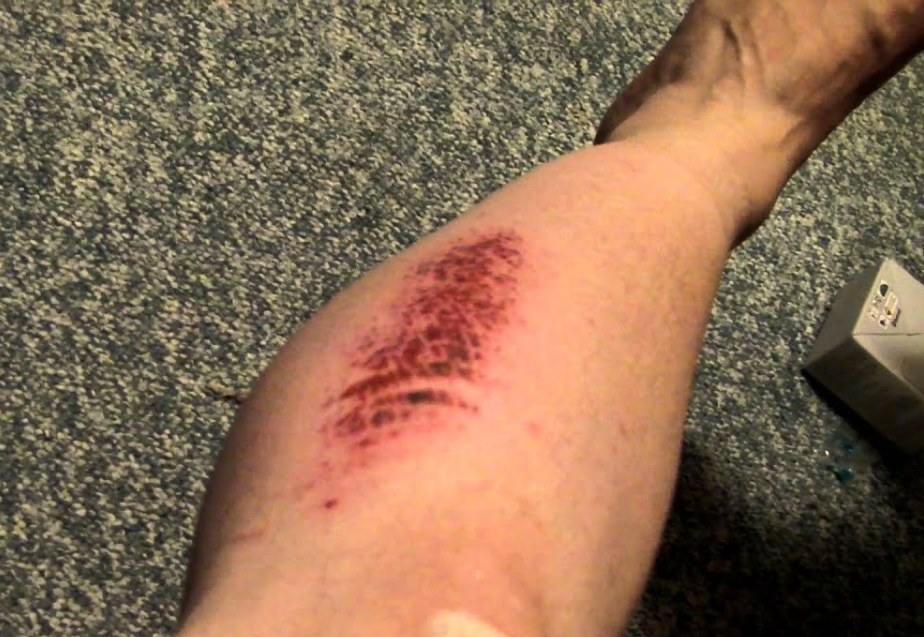
Mat burn is a type of abrasion or friction burn that occurs when bare skin rubs against a rough surface, BJJ mats being the perfect example of one. It is similar to a carpet burn or a rope burn, which are caused by different materials to mats.

In fact, even different types of surfaces in Jiu-Jitsu mats can cause mat burn, regardless if they are smooth or textured.

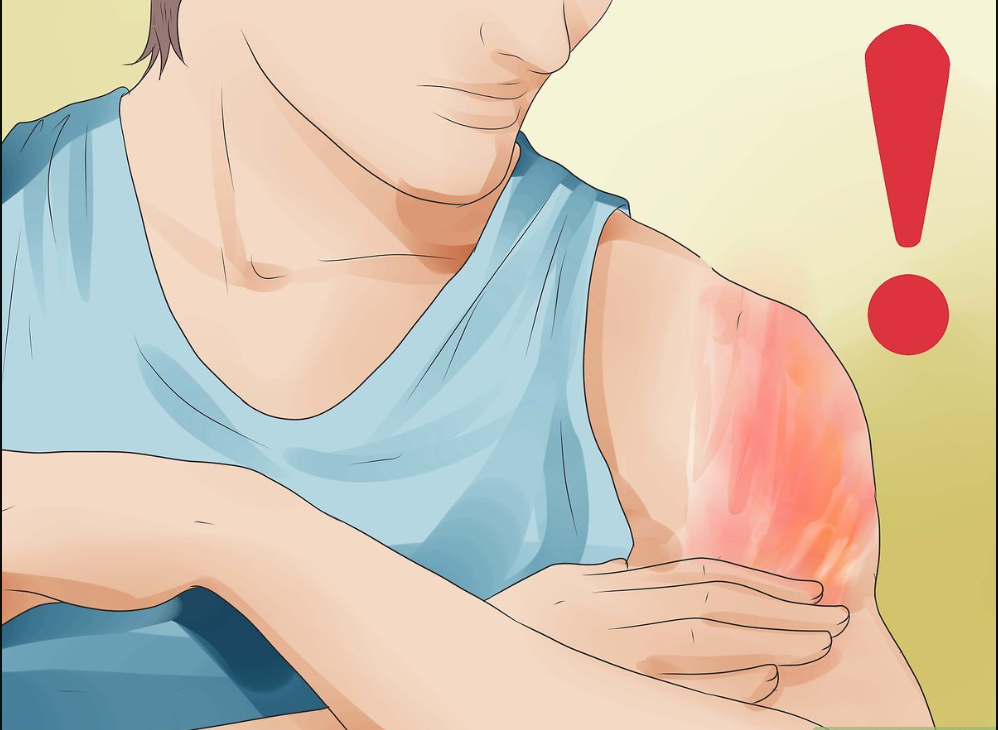
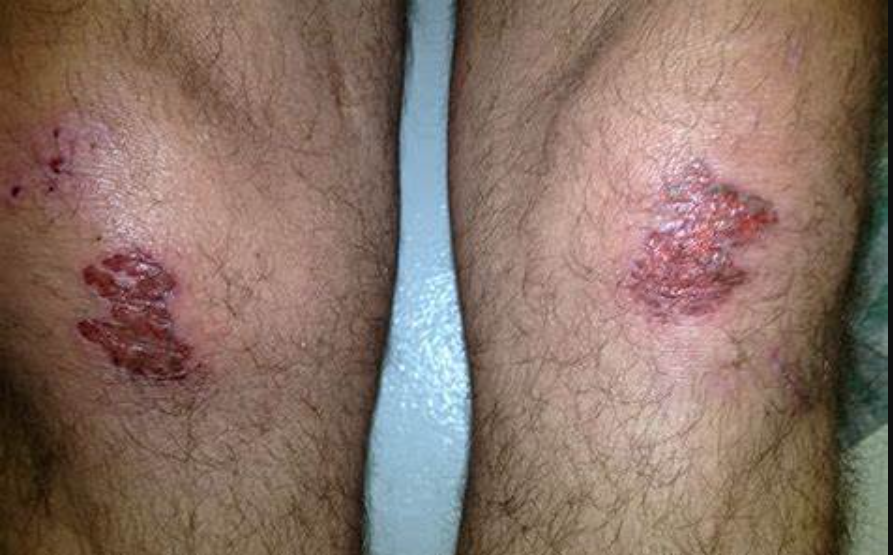
Skin burns typically affect the outermost layer of your skin (the epidermis), but they can also damage the middle layer (dermis) or even the inner layer in severe cases. The symptoms of mat burn include:

  • Redness
  • Swelling
  • Pain
  • Blistering
  • Rawness

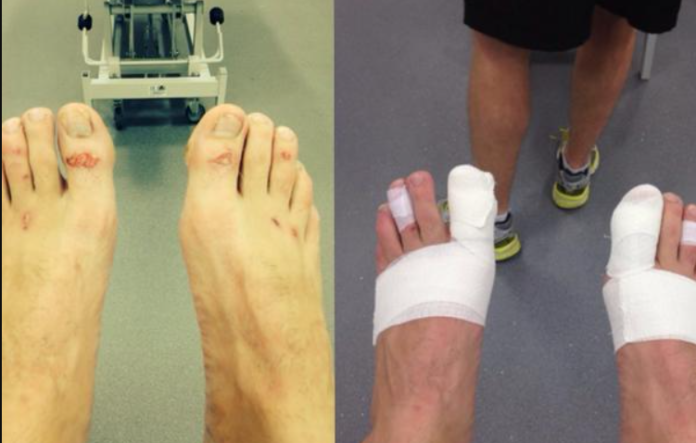
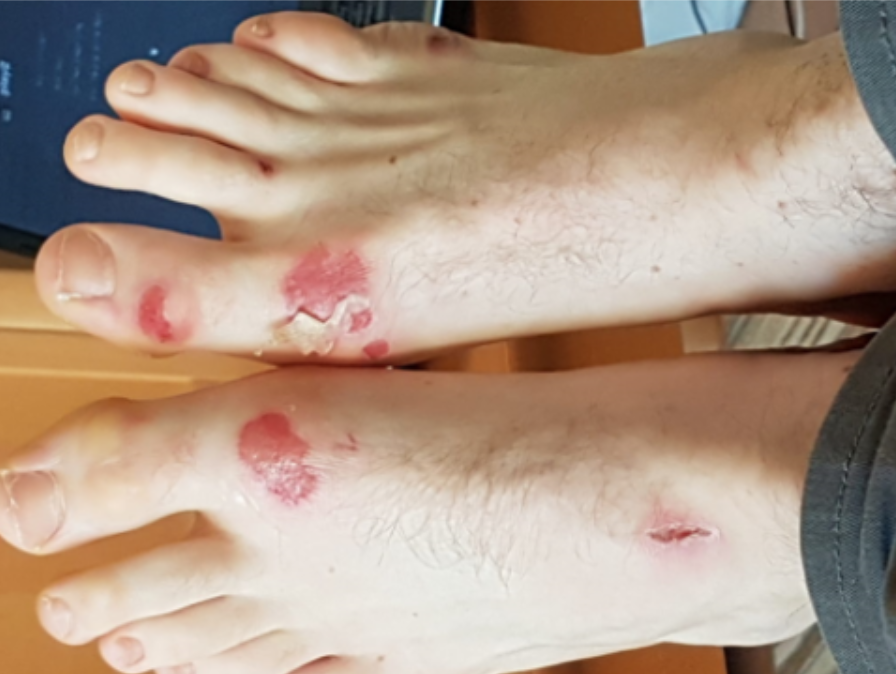
Mat burns can affect any part of your body that comes in contact with the mat, but it is most common on the feet, knees, elbows, and hands. Toes mat burn is also very common. These are the areas that are most exposed to skin rubbing during Brazilian Jiu-Jitsu training, particularly without the Gi.

Mat Burn From BJJ Training

What Does Mat Burn Look Like?

Mat burn usually looks like a reddish or brownish patch of skin that may be swollen, blistered, or raw. It may have a circular or oval shape that follows the rough texture of the mat.

The size and depth of mat burn depend on the force and duration of the friction as well as on individual factors like skin thickness and sensitivity.

Sometimes, mat burns may also have dirt, dust, or fibers from the mats embedded in the wound. This can make it harder to clean and significantly more prone to infection.

How to Treat Mat Burn

Mat burn is usually minor and heals on their own within a week without scarring. However, you need to treat it properly to avoid complications such as infection, pain, or irritation.

You can quite easily treat mat burn at home, as long as it is not severe. A simple way to soothe burns is to do the following:

  1. Remove any clothing and jewelry from the affected area. This will prevent further damage and reduce swelling.
  2. Cool your burn by placing it under running water that’s either cool or room temperature for up to 15 minutes. This will reduce inflammation and pain.
  3. Wash your burn gently with soap and cold water or antiseptic wipes removing any and all dirt, dust, or fibers from the wound and preventing infection.
  4. Apply ointment to your burn after cleaning it. The ointment can help your burn by providing pain relief, keeping it moist, and preventing infection.
  5. Cover your burn with a bandage or dressing after applying ointment to protect your wound from bacteria and irritation.
  6. Change your dressing at least once a day and whenever it gets dirty or wet.
  7. Monitor your wound for signs of infection, such as redness, swelling, pus, or fever. If you notice any of these signs, consult a doctor as soon as possible.
  8. Avoid scratching or picking at your wound, as this can delay healing and cause scarring.

Treating Jiu-Jitsu skin abrasions from the mats

What Is The Best Ointment For BJJ Mat Burns?

There are many ointments that you can use for mat burns from the mats. Some of the most effective options include:

  • Aloe vera gel is a natural extract with anti-inflammatory and soothing properties.
  • Petroleum jelly, which creates a protective barrier and prevents moisture loss.
  • Antibiotic creams, such as bacitracin, polysporin, neosporin, or mupirocin, to gett rid of all the bacteria and reduce inflammation.
  • Vitamin E cream, to promote healing and prevent scarring (for minor burns).
  • Sudocrem contains zinc oxide and other ingredients that protect the wound from irritants.

You can find these ointments over-the-counter or with a prescription at your local pharmacy.

Apply them in a thin layer of ointment after cleaning your wound as described above and before covering it with a liquid bandage or dressing.

That said, you should avoid using ointments that contain alcohol, hydrogen peroxide, or fragrance, as they can cause irritation and delay healing. Also avoid using butter, oil, lotions, or creams that are not meant for burns, as they can trap heat and worsen your condition.

Does Vaseline Help For Mat Burns?

Yes, Vaseline (a.k.a. petroleum jelly) can help with mat burn by creating a protective barrier over your wound and preventing moisture loss2. This reduces pain and itching by keeping your wound lubricated and preventing it from sticking to your dressing.

Vaseline is widely available, inexpensive, and safe to use for most people with mat burns. You should change your dressing at least once a day and remove the Vaseline gently with warm water and soap.

Keep in mind that you must avoid using Vaseline if you are allergic to it or have an open wound that is bleeding or oozing.

Feet mat burns from competing in Brazilian Jiu-Jitsu

How To Prevent Mat Burn

The best way to prevent mat burn is to avoid getting it in the first place. This, however, usually proves challenging for people who are not used to the friction of the mats.

While you getting mat burn is usual in training, or more likely, your first tournament, there are simple ways to avoid mat burn.

Here are a few things experienced BJJ athletes and wrestlers use to prevent mat burn:

  • Wear proper clothing that covers your skin and reduces friction, such as a rash guard, spats, knee pads, elbow pads, and Gis. These garments can protect your skin from direct contact with the mat and prevent abrasions.
  • Train on mats that are made of smooth and durable materials and are regularly cleaned and disinfected.
  • Apply moisturizer or petroleum jelly to your skin before BJJ training to keep it hydrated and lubricated. This can reduce the friction and dryness of your skin and prevent blisters. Be wary of stepping on the mats with a freshly applied layer of the above, though, as it can leave visible stains depending on the color of the mats.
  • Avoid excessive sliding or dragging on the mats whenever possible. Reducing the force and duration of excessive friction helps prevent mat burn, but it will not come natural to you if you are a beginner, at least not until you master some key grappling movements first.

Preventing grappling skin burns

How Long Does It Take For Mat Burn To Heal?

The healing time of mat burn depends on these factors:

  • The severity and size of your wound;
  • The location and depth of your wound;
  • The cleanliness and care of your wound;
  • Your general health and immune system.

Generally speaking, mat burn can heal within a week without scarring if it is minor and treated properly. However, it may take longer if it is more severe or infected.

Depending on the severity of the burn, there are different timelines for complete healing:

  • Mild mat burn usually heals within a few days to a week.
  • Moderate mat burn will take one to two weeks to heal.
  • A severe mat burn may take two to four weeks or longer to heal and will require you to see a doctor.

To speed up the healing process, you should follow the treatment steps mentioned above and keep your wound clean, moist, and protected. You should also avoid going to training, which is usually the part most people mess up. Returning to the mats with unhealed burn will only worsen the situation.

Should You Train With Mat Burn?

The answer to this question depends on how bad your mat burn is and how comfortable you feel with it. Generally speaking, you should avoid training with mat burn, particularly if it is:

  • Painful or irritating;
  • Bleeding or oozing;
  • Infected or inflamed;
  • Large or deep.

Training with a mat burn presenting as one of the above (or similar)can worsen your injury and increase your risk of infection. It can also affect your performance given that you’ll likely experience pain, irritation, bleeding, or uncomfortable sticking when you roll.

Therefore, you should take a break from training until your mat burn heals completely or at least cover it with a protective layer of clothing or bandage.

How Do You Tape Your Feet For Mat Burn?

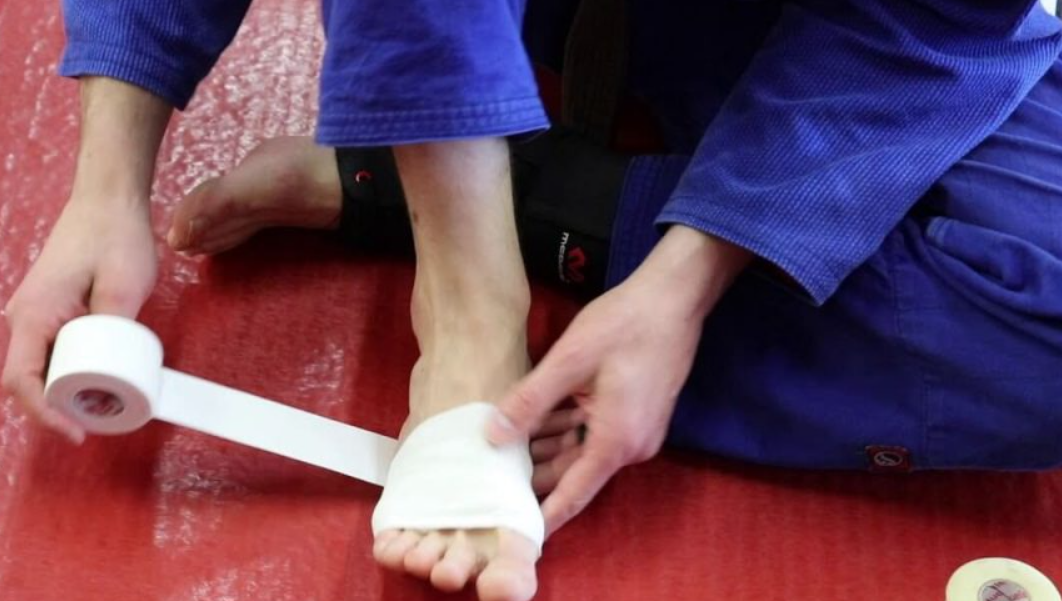
If you have feet mat burn, you may want to tape them before training to protect them from friction and irritation. Proper taping also helps you avoid scraping off the scabs and reopening the wound.

Taping is quite easy and starts with the same initial treatment steps we covered above:

  1. First, clean and dry your feet before applying tape. This will prevent potential skin infections and ensure the tape sticks well.
  2. Next, use athletic tape that is flexible and breathable. Your feet will need to move naturally and it is important to prevent moisture buildup.
  3. Cut the tape into strips that are long enough to cover the affected area and wrap them around your foot. You may need different sizes of strips depending on where your mat burn is located.
  4. Then, apply the tape smoothly and evenly, trying to avoid any wrinkles or gaps. This will create a secure seal and prevent dirt or sweat from entering the wound.
  5. Overlap the tape slightly to cover the entire wound and prevent it from peeling off. You can also use a cross pattern or a figure-eight pattern to reinforce the tape.
  6. Avoid taping too tightly or loosely, as this can restrict blood flow or slip off. If you can’t wiggle your toes and feel comfortable with the tape on, it is too tight.
  7. Finally, remember to change the tape regularly and remove it carefully. You should change the tape at least once a day or whenever it gets dirty or wet. Remove it gently using warm water and soap to help the process and avoid pulling or tearing the tape.

Atheltic tape for mat burned feet in BJJ and wrestling

Conclusion

Mat burn is a common but preventable and treatable injury that can affect anyone who trains on mats, especially new practitioners. It is caused by friction between your skin and the mat, resulting in a first-degree burn that can be painful and prone to infection.

To prevent mat burn, you should wear proper clothing that covers your skin, use high-quality mats that are clean and smooth, apply moisturizer or petroleum jelly to your skin before training, and avoid excessive sliding or dragging on the mats.

Treating mat burn quickly requires cooling, cleaning, and dressing your wound as soon as possible, followed by the application of ointment to provide pain relief and prevent infection. Covering your wound with a bandage or dressing will help you heal faster.

Jiu-Jitsu Benefits: Why Everyone Should Try BJJ

The ultimate guide to Jiu Jitsu Benefits: Why You Have to Try BJJ

Have you ever wondered what are the benefits of Brazilian Jiu-Jitsu? If you are looking for a martial art that can challenge you, improve you, and reward you in multiple ways, then Jiu-Jitsu might be the perfect choice for you.

Jiu-jitsu is a martial art from Japan that focuses on grappling, or fighting on the ground. It was brought to Brazil in the early 20th century by Japanese immigrants and adapted by the Gracie family, who created Brazilian jiu-jitsu (BJJ), a style that emphasizes leverage and technique over strength and size.

Brazilian Jiu-Jitsu, a.k.a. The Gentle Art is one of the most popular and effective martial arts in the world today, practiced by millions of people of all ages, genders, and backgrounds. It is also a sport, a hobby, a lifestyle, and a passion for many.

brazilian jiu jitsu, bjj, male

Who Can Benefit from Jiu-Jitsu?

Jiu-Jitsu is a martial art that can benefit individuals of all ages and abilities. It can be a great option for individuals looking to improve their physical fitness, mental health, or self-defense skills, as well as for those looking for a new social activity or competitive sport.

BJJ can also be adapted to meet the needs of individuals with different abilities or limitations. For example, individuals with physical disabilities can still participate in Jiu-Jitsu, as many techniques can be adapted to accommodate different physical abilities.

The Unique Benefits Of Brazilian Jiu-Jitsu

But what are the benefits of Jiu-Jitsu? How can this martial art improve your physical, mental, and social well-being? Let’s explore the various benefits of BJJ that can make you a better and happier person.

Strength

One of the first benefits that Brazilian Jiu-Jitsu practitioners notice is an increase in their strength. BJJ is a great way to build and develop your muscles, especially your core, arms, and legs.

Here are some ways that Jiu-Jitsu improves your strength:

– Grappling with a Gi improves your grip strength by forcing you to hold on to your opponent’s collar, sleeve, or belt. In addition, BJJ greatly increases pulling strength (traps, lats, biceps, delts, etc.).

– Takedowns improve your overall strength by requiring you to lift, throw or trip your opponent. Takedowns also involve explosive power, which is the ability to generate force quickly and efficiently.

– Holding someone in your guard improves your strength by engaging your legs, hips, and abs to control your opponent’s posture and movement. The closed guard is a position where you wrap your legs around your opponent’s waist while lying on your back.

Increased Endurance

Another benefit of Brazilian Jiu-Jitsu that you will notice is an increase in your endurance. It is a great way to improve your cardiovascular fitness and stamina.

Jiu-jitsu improves your cardiovascular fitness by increasing your heart rate and oxygen consumption:

– BJJ improves your anaerobic fitness by requiring short bursts of intense effort. Anaerobic fitness is the ability of your muscles to produce energy without oxygen. A higher anaerobic fitness means a higher tolerance for lactic acid, which causes muscle fatigue and soreness.

– Grappling also improves your mental stamina by challenging your mind to stay focused and calm under pressure. Mental stamina is the ability to cope with stress, adversity, and pain.

brazilian jiu-jitsu, bjj, fight

Improved Muscle Tone

When training BJJ you will notice an improvement in your muscle tone. Jiu-Jitsu is a great way to burn fat, build muscle and shape your body:

– Grappling burns fat by increasing your metabolism and energy expenditure. A higher metabolism and energy expenditure means a lower body fat percentage and a leaner physique.

– Jiu-Jitsu builds muscle by providing resistance and strength training. The bigger the outside resistance is, the higher muscle mass and the more defined appearance you’ll have.

– Training BJJ shapes your body by targeting different muscle groups and improving your posture. It works all major muscle groups, such as your chest, back, arms, legs, core, and neck. It also helps you align your spine and correct muscular imbalances that can cause pain or injury.

Fat loss

With Brazilian Jiu-Jitsu you will notice a reduction in your body fat percentage. It is a great way to lose fat, manage your weight and prevent obesity-related diseases.

Here are some ways that BJJ reduces your body fat percentage:

– It increases your metabolism and energy expenditure, as explained above. This means that you burn more calories than you consume, creating a negative energy balance that leads to fat loss.

-BJJ also regulates your appetite and reduces your cravings. Training stimulates the production of hormones that suppress hunger, such as leptin and peptide YY, and reduces the production of hormones that stimulate hunger, such as ghrelin and neuropeptide Y. This means that you feel fuller for longer and eat less.

– Moreover, BJJ prevents obesity-related diseases by lowering your blood pressure and cholesterol levels. Jiu-Jitsu improves your cardiovascular fitness, as explained above, which lowers the pressure on your arteries and reduces the risk of hypertension, heart attack and stroke.

Better Flexibility

Another benefit of Jiu-Jitsu that you will notice is an improvement in your flexibility. It is a great way to stretch your muscles and joints, prevent injuries and enhance mobility.

– In BJJ, you stretch your muscles and joints by moving in different directions and angles. Jiu-Jitsu involves all major joints, such as your shoulders, elbows, wrists, hips, knees and ankles.

– Training also prevents injuries by increasing your range of motion and reducing your stiffness. That helps you avoid muscle strains, joint sprains, and ligament tears by allowing your muscles and joints to move more freely and smoothly. It also helps you recover faster from injuries by improving blood circulation and reducing inflammation.

– Brazilian Jiu-Jitsu also enhances mobility by allowing you more freedom and encouraging fluidity of movement.

Increased Mobility

Jiu-Jitsu is a great way to strengthen your core and stabilizing muscles, improve your balance and coordination, and improve your agility and reflexes:

– Regular grappling strengthens your core and stabilizes muscles by engaging them constantly to maintain your posture and movement.

– Your balance and coordination improve through training your vestibular system and proprioception. Jiu-Jitsu helps you develop these senses by requiring you to balance on one leg or one arm or to coordinate different limbs simultaneously.

– By exposing you to different stimuli, such as speed, direction, force, and timing BJJ also helps you improve your agility and reflexes by requiring you to react quickly and adjust to changing situations.

Sleep Quality

Jiu-jitsu helps promote physical exhaustion and mental relaxation, which help you regulate your sleep cycle and melatonin production, and enhance your sleep benefits.

BJJ training is a vigorous workout and a positive outlet for stress. It helps you burn calories, release endorphins, clear your mind, and calm your emotions. This makes you feel tired but satisfied after a session, which prepares you for a good night’s sleep.

Stress relief

By releasing endorphins and serotonin, the feel-good hormones, BJJ training reduces anxiety and depression and improves self-esteem and social support.

Here is how grappling relieves stress:

– It releases endorphins and serotonin by stimulating your brain and nervous system. These hormones’ levels increase through physical activity, mental stimulation, and emotional satisfaction.

– Brazilian Jiu-Jitsu reduces anxiety and depression by improving your confidence, assertiveness, and positivity, as well as your friendship, respect, and camaraderie with others.

Self-Defense

Brazilian Jiu-Jitsu is a great way to empower self-defense by enabling you to control and subdue an opponent without striking, prepare self-defense by simulating realistic scenarios and situations, and enhance self-defense by developing awareness, intuition, and instinct.

– BJJ enables you to control and subdue an opponent without striking by teaching you how to use leverage and technique over strength and size. It helps you learn how to apply joint locks or chokes, which can force your opponent to submit or lose consciousness.

It also helps you learn how to use your body weight and position, which can immobilize your opponent or create space for escape.

– Jiu-Jitsu prepares you for self-defense by simulating realistic scenarios and situations by exposing you to different types of opponents, attacks, environments, and rules. Jiu-jitsu helps you train with opponents of different genders, sizes, strengths, skills, and styles, which can prepare you for any potential attacker.

– Training BJJ also enhances your self-defense by developing awareness, intuition, and instinct by training your senses, mind, and body.

Community

A huge Jiu-Jitsu benefit that you will notice is an improvement in your friendship. BJJ is a great way to cultivate friendship by joining a supportive and respectful community:

– Brazilian Jiu-Jitsu teaches you how to treat others with kindness and courtesy. It helps you learn how to greet others with a handshake or a hug, how to compliment others on their skills or achievements, how to help others with their problems or difficulties, how to apologize for your mistakes or injuries, and how to thank others for their time or effort.

– BJJ also strengthens friendship by fostering trust and loyalty among training partners by teaching you how to cooperate and collaborate with others. It helps you learn how to share your passion and enthusiasm for jiu-jitsu with others, exchange your knowledge and experience of Jiu-Jitsu, explore new aspects or dimensions of the art, celebrate your achievements or occasions with others, and be a part of a team.

Conclusion

In conclusion, Brazilian Jiu-Jitsu benefits include strength, endurance, muscle tone, fat loss, flexibility, mobility, posture, sleep quality, appetite control, stress relief, happiness, confidence, self-defense, friendship, discipline, focus, critical thinking, problem-solving, humility, and patience, to name but a few. These provide a number of physical benefits, mental, and social benefits in multiple ways.

Key Differences Of The Most Famous Schools of Jiu-Jitsu

The Differences Of The Most Famous Schools of Jiu-Jitsu

Jiu-Jitsu is a martial art that originated in Japan and was adapted and developed by the Gracie family in Brazil. It is a grappling-based art that uses leverage, technique, and strategy to control and submit an opponent. Jiu-Jitsu can be practiced for self-defense, sport, fitness, or fun. But not all schools of Jiu-Jitsu are the same.

There are different types of schools that have different histories, lineages, curricula, philosophies, competition levels, and affiliations. Depending on your goals, preferences, and budget, you want to choose a Jiu-Jitsu school that suits you best.

In this article, we will compare different types of schools of Jiu-Jitsu and their respective teaching styles, philosophies, and directions. We will also give you some tips on what to look for when you are new to BJJ or when you want to change academies.

How Are The Most Famous Schools Of Jiu-Jitsu Different?

Here are some of the most common types of schools of Jiu-Jitsu that you can find around the world, based on their reach, success in competition, their range in terms of affiliated schools, teachers and competitors on a global level, as well as the quality of their classes:

Gracie University

This is the original and most traditional form of Brazilian Jiu-Jitsu, developed by the Gracie family in Brazil. This school emphasizes self-defense, survival, and street-fighting scenarios.

Some of the features of this school are:

  • It follows a standardized curriculum that covers all aspects of Jiu-Jitsu, from basic techniques to advanced strategies.
  • The School teaches both Gi and No-Gi Jiu-Jitsu, as well as striking and weapons defense.
  • There is a global network of certified instructors and affiliates that follow the Gracie philosophy and methodology.
  • It offers online courses and videos through Gracie University and Gracie Academy.Gracie University Jiu-Jitsu school

10th Planet Jiu-Jitsu

This is a modern and (for some) controversial style of BJJ, created by Eddie Bravo, a student of Jean Jacques Machado. This school specializes in No-Gi grappling, flexibility, and creativity, often encouraged by smoking cannabis for creative sparks in training.

Here is why the 10th Planet Jiu-Jitsu school is so unique compared to others:

  • It has a unique and innovative curriculum that covers all aspects of No-Gi grappling, with positions specific to this system alone, like the Truck, Twister, Rubber Guard, etc.
  • 10th PLanet is an exclusive No-Gi only Jiu-Jitsu school. They are, however, open to innovation and include lots of elements from other grappling martial arts like wrestling, judo, sambo, catch wrestling, etc.
  • Similarly to the other schools of Jiu-Jitsu in this article, 10th Planet Jiu-Jitsu has a global network of instructors and affiliates that follow the schools’ philosophy, curriculums, and methodology.
  • It has produced many successful grapplers and MMA fighters, such as Tony Ferguson, Geo Martinez, Grace Gundrum, Vinny Magalhaes, etc.

10th Planet Jiu-Jitsu school

Atos Jiu-Jitsu

A powerhouse of BJJ talent and innovation, founded by Andre Galvao and Ramon Lemos. This school combines high-level technique with physical conditioning and mental toughness.

The Atos Jiu-Jitsu no-nonsense approach to BJJ includes:

  • There is a comprehensive and dynamic curriculum that covers all aspects of BJJ, focusing on sports competition, and ranging from fundamentals to advanced techniques.
  • Atos produces both Gi and No-Gi Jiu-Jitsu champions, as well as MMA fighters. They have particularly strong kids and youth programs.
  • Not surprisingly, Atos also has a very wide global network of trainers and affiliates that follow the Atos team philosophy with many competitors choosing to affiliate with this popular sports competition-focused school.
  • Some of the main “exports” of this school of Jiu-Jitsu are many world champions and legends of BJJ, such as Andre Galvao, Keenan Cornelius, JT Torres, Lucas Barbosa, the Ruotolo Brothers, and many more.

Atos BJJ Team

Checkmat Jiu-Jitsu Team

This is a global network of BJJ academies and affiliates, founded by Leonardo Vieira and his brother Ricardo Vieira. This school promotes a friendly and supportive environment for learning and training BJJ.

Some of the defining traits of this school are:

  • It has a diverse and adaptable curriculum that covers all aspects of BJJ, from self-defense to sports competitions.
  • They offer both high-level Gi and No-Gi BJJ, as well as mixed martial arts classes.
  • Their affiliation also includes schools and instructors around the world, with many competitors opting for this school’s competitive training approach as opposed to other competitor dens like Atos.
  • A few of the world champions to come out of this academy are greats such as Marcus Buchecha Almeida, Michelle Nicolini, Lucas Leite, Luiz Panza, etc.

Popular schools of JIu-Jitsu: Checkmat Academy

Gracie Barra

This is a worldwide community of BJJ instructors, students, and athletes, founded by Carlos Gracie Jr., a son of Carlos Gracie Sr. This school teaches Jiu-Jitsu as a lifestyle and a way to improve one’s health, fitness, confidence, and respect.

Operating under the motto “Jiu-Jitsu is for everyone” this school’s principles include:

  • The use of a standardized curriculum that covers all aspects of Jiu-Jitsu, from basic techniques to advanced strategies.
  • It teaches both Gi and No-Gi Jiu-Jitsu, as well as striking defense, and BJJ-focused self-defense.
  • Gracie Barra’s global network has the biggest reach of all schools of Jiu-Jitsu, with certified instructors and affiliates following the creed, from the dress code to the way classes are run, spread all around the world.
  • It offers online courses and videos through Gracie Barra Online, for both students and professors of all ages.
  • Some high-level representatives of Gracie Barra are Aj Agazarm, Edwin Najmi, Gabriel Arges, the late Orlando Sanchez, Felipe Pena, and others.

Gracie Barra BJJ Schools Affiliation

New Wave Jiu-Jitsu

A revolutionary BJJ grappling gym that was formed by John Danaher and Gordon Ryan after the breakup of the Danaher Death Squad. This school follows a new philosophy of positional and submission approach that challenges the conventional wisdom of BJJ.

One of the very best Jiu-Jitsu schools in the world in, New Wave offers the following unique features:

  • New Wave has the most in-depth and quickly applicable, amazing curriculum that covers all aspects of No-Gi grappling, especially submissions like leg locks and chokes from the back, as well as extremely strong positional pins.
  • The school teaches primarily No-Gi Jiu-Jitsu. incorporating elements from all other martial arts and fighting styles. They are also well-versed in Gi BJJ, but are not known for producing competitors in that discipline.
  • The New Wave Academy has no known affiliates as it is fairly new, and since it is run by John Danaher himself, any affiliated school without him in it wouldn’t make much sense.
  • It has produced some of the best grapplers in the world, such as Gordon Ryan, Garry Tonon, Nicholas Meragali, Giancarlo Bodoni, etc. There is a whole new generation of men and women killer competitors currently brewing at this school of Jiu-Jitsu.

new Wave jiu-Jitsu team

B-Team Jiu-Jitsu

One more offshoot of the Danaher Death Squad led by Craig Jones and Nick Rodriguez. This school represents a new generation of BJJ grapplers who are fearless, creative, and versatile.

Here’s what B-team has to offer:

  • A diverse and dynamic curriculum that covers all aspects of No-Gi grappling, especially leg locks, back attacks, and lots of wrestling.
  • While the focus is on No-Gi Jiu-Jitsu, elements from wrestling, judo, sambo, catch wrestling, and MMA are also blended in.
  • B-Team is another young academy that still has no affiliates and is only as strong as its headquarters in Austin, Texas.
  • It has produced some of the best grapplers in the world, such as Nicky Ryan, Craig Jones, Ethan Crelinsten, Nick Rodriguez, etc.

B-Team Jiu-JItsu Headquarters

Marcelo Garcia Jiu-Jitsu Academy

This is one of the most respected and admired schools of Jiu-Jitsu in the world, founded by Marcelo Garcia, a five-time world champion and four-time ADCC champion. This school focuses on technical excellence, efficiency, and simplicity.

Marcelo’s approach is unique and what his schools offer mirrors that:

  • A clear and concise curriculum that covers all aspects of Gi and No-Gi grappling, especially butterfly guard, x-guard, single-leg x-guard, guillotines, back attacks, etc.
  • The academy offers both Gi and No-Gi classes, as well as MMA training.
  • There are many Marcelo Garcia affiliates around the world, offering training in accordance with the school’s methodology.
  • Through the “Marcelo Garcia In Action” online library this school of Jiu-Jitsu also offers online classes and coaching.
  • Many champions call the MG Academy home, like Matheus Diniz, Jonathan Satava, Marcos Tinoco, and everyone’s favorite misfit Dillon Danis.

Marcelo Garcia Jiu-JItsu School

Renzo Gracie Academy

This is one of the most renowned and influential schools of Jiu-Jitsu in the world, founded by Renzo Gracie, a grandson of Carlos Gracie and a nephew of Helio Gracie. This school combines tradition and innovation, self-defense and sport, Gi, and No-Gi.

The famous Renzo Gracie blue basement in NYC (and all their affiliates) focus on:

  • A structured approach to BJJ, utilizing well-organized curriculums taught by a huge team of very competent coaches.
  • A balance between Gi and No-Gi classes, as well as self-defense training and an MMA program.
  • Affiliates that follow the Renzo Gracie philosophy and methodology are all around the world.
  • Household BJJ champions and UFC fighters, the likes of John Danaher, Matt Serra, Georges St-Pierre, Karel Pravec, Gianni Grippo, Shawn Williams, etc.

Renzo Gracie Academy is one of the best schools of Jiu-Jitsu

Alliance Jiu-Jitsu

This is one of the most successful and influential teams in BJJ history, founded by Romero “Jacare” Cavalcanti, a student of Rolls Gracie. This school focuses on sports competition, innovation, and excellence.

What sets Alliance BJJ apart is the following:

  • It has high-level technical instruction that covers all aspects of modern BJJ competition training and preparation.
  • At Alliance, they focus mainly on Gi Jiu-Jitsu, but also tech No-Gi classes and MMA training.
  • It has a global network of coaches and affiliates representing the strong Alliance team in tournaments and events.
  • Many world champions and legends of BJJ have come out of this school of Jiu-Jitsu, such as Fabio Gurgel, Marcelo Garcia, Lucas Lepri, Cobrinha, Bruno Malfacine, etc.

Before joining Alliance Jiu-Jitsu make sure they are a registered Alliance academy on their website because there are a lot of fake alliance academies flying under the radar in the world right now.

Alliance BJJ Academy and affiliates

How To Pick The Best School of Jiu-Jitsu For You

Now that you have an idea of what types of schools of Jiu-Jitsu are out there, how do you choose the best one for you? Here are some tips to help you make an informed decision:

#1. Define your goals: What do you want to achieve with Jiu-Jitsu? Do you want to learn self-defense, compete in tournaments, get in shape, have fun, or all of the above? Depending on your goals, you may want to choose a BJJ academy that specializes in what you are looking for, or offers a balanced and comprehensive program that covers all aspects of Jiu-Jitsu.

#2. Consider your preferences: What kind of Jiu-Jitsu do you enjoy more? Do you prefer Gi or No-Gi, traditional or modern, sport or street, technical or physical, etc.? You want to focus on schools of Jiu-Jitsu that match your style and personality or offer a variety and diversity that keeps you interested and challenged.

#3. Check your budget: How much can you afford to spend on Jiu-Jitsu? Do you have a monthly or yearly budget, or are you willing to invest as much as possible? Your best option is to pick an academy that offers reasonable and affordable prices or look to make the most out of discounts and scholarships.

#4. Do your research: How can you find out more about the schools of Jiu-Jitsu in your area? Do you have friends or acquaintances who train there, or can you find online reviews and testimonials? A school of Jiu-Jitsu that has a good reputation and feedback or offers a free trial class or consultation for you to see for yourself is always a smart choice.

#5. Visit the schools: How can you get a feel for the schools of Jiu-Jitsu that interest you? Do you have time and opportunity to visit them in person, or can you watch online videos and photos? Rate cleanliness and facility safety, how friendly and professional the staff is, gauge the atmosphere, and consider the quality of instruction and training.

How To Change Schools Of Jiu-Jitsu

Sometimes, you may find yourself in a situation where you want to change schools of Jiu-Jitsu. Maybe you moved to a different location, maybe you outgrew your current BJJ school, maybe you had a conflict or disagreement with someone there, or maybe you just want to try something new. Whatever the reason, changing schools of Jiu-Jitsu can be a difficult and delicate process.

All you need to do is talk. Here’s how and with whom:

#1. Communicate with your current instructor: How can you inform your current instructor of your decision to change schools? Do you have a good relationship with him or her, or do you have some issues or problems? Whatever the case, be sure to tell your coach in person, by phone, by email, or by letter.

You may want to explain your reasons for leaving, thank him or her for everything they taught you, express your gratitude and appreciation, and ask for their blessing and permission.

#2. Communicate with your current teammates: Do you have many friends and connections there, or do you keep to yourself? Depending on your communication, you may want to tell your training partners in person, or by social media, for example. You don’t always have to point out the reasons for leaving.

#3. Communicate with your new instructor: Introduce yourself to your new instructor at the BJJ academy that you want to join. Visiting a school prior to signing up is a great idea, as stated above. Discuss whether you have any references or recommendations from someone who knows him or her, or are starting from scratch.

#4. Communicate with your new teammates: Do you have any friends or acquaintances there, or do you have to make new ones? Make sure to introduce yourself, talk, ask, and ease into the atmosphere at the new school. Keep in mind it may be significantly different from what you are used to.

You can explain your background and experience in Jiu-Jitsu, state your goals and expectations, and ask for their experiences and advice.

Conclusion

Brazilian Jiu-Jitsu is a martial art that can offer many benefits and rewards to anyone who practices it. However, not all schools of Jiu-Jitsu are the same. There are different types of BJJ schools that have different histories, lineages, curricula, philosophies, competition levels, and affiliations. Depending on your goals, preferences, and budget, you may want to choose a BJJ school that suits you best.

In this article, we compared different types of schools of Jiu-Jitsu and their respective teaching styles, philosophies, and directions. We also gave you some tips on what to look for when you are new to BJJ or when you want to change schools.

How To Start Competing In BJJ: Everything You Need To Know

Competing in BJJ: Everything You Need to know to start

Do you want to test your skills, challenge yourself, and have fun on the mats, now that you’ve started BJJ? If so, competing in BJJ might be just what you need.

BJJ is fun and engaging, leads to self-improvement, and might even teach you some self-defense. but it is not only about training in the gym. It’s also about competing in tournaments against other practitioners who share your passion and dedication. Competing in BJJ can be one of the most rewarding and exciting experiences of your life. But it can also be intimidating, stressful, and overwhelming if you don’t know what to expect and how to prepare.

That’s why we created this ultimate guide for competing in BJJ. In this guide, you’ll learn everything you need to know about competing in both gi and No-Gi, from choosing your tournaments, training for them, performing at them, and learning from them.

Whether you’re a beginner or an advanced grappler, this guide will help you become a better competitor and enjoy the thrill of competing in BJJ, or even other grappling martial arts.

Ready? Let’s get started!

How To Train Specifically For A BJJ Tournament

The first step to competing in BJJ is to train specifically for it. Training for a competition is different from training for fun or learning new techniques. It requires more focus, intensity, structure, and discipline.

Here are some tips on how to prepare for BJJ competitions:

  • Set a clear goal. Before you start training for a competition, you need to have a clear goal and a realistic plan. What is your motivation for competing? What are your strengths and weaknesses? What are your expectations and objectives? How much time do you have to prepare? How will you measure your progress?Having a clear goal will help you stay motivated, focused, and accountable throughout your training.
  • Train efficiently. Training for a competition doesn’t mean training more or harder. It means training smarter. You need to train effectively and efficiently, meaning that you need to optimize your training frequency, intensity, duration, and content.A key thing is to balance your training volume with your recovery time. You need to prioritize quality over quantity. and every training session has to serve a purpose.
  • Avoid common pitfalls. Training for a competition can also expose you to some common mistakes that can hinder your performance or even cause injuries.Some of these mistakes are: overtraining, undertraining, neglecting nutrition and hydration, cutting weight too fast or too much, changing your game plan at the last minute, etc. Listen to your body, follow your plan, eat well, drink enough water, cut weight gradually and safely, stick to your game plan, and you’ll have no trouble staying on track.

Competing in your BJJ weight class and the abosolute

How To Prepare For Competition Day

Once you’ve trained specifically for a BJJ competition, you need to prepare for it. Preparing for a BJJ competition involves taking care of the logistical, mental, and physical aspects of competing.

Here’s a checklist for the ultimate way to prepare for a tournament day:

  • Register for the tournament. The first thing you need to do is register for the tournament that suits your level and goals. You need to choose the right tournament based on factors such as location, date, ruleset, format, organization, cost, etc.Even more importantly, you have to know the right division based on factors such as: weight division, belt rank, age group, gender category, etc. Register early enough to secure your spot and avoid late fees or sold-out divisions.
  • Pack a bag. The next thing you need to do is pack your bag with everything you need for the tournament day.Key essentials are your Gi or No-Gi gear (plus an extra one), your belt, your ID card or passport, your registration confirmation, a water bottle, snacks, a towel, and the like. You also need to pack optional items such as: headphones, a camera, etc.
  • Relax and rest. The last thing you need to do before the tournament day is to relax and rest. Taper down your training intensity and volume as in the two weeks prior to the tournament. Proper nutrition and hydration are key, especially if you’re cutting weight. You also need to sleep well and avoid stress.
  • Visualize and affirm. In order to mentally prepare yourself for the tournament day you should visualize yourself performing well and winning your matches. Affirming yourself with positive and empowering statements goes a long way to giving you peace of mind when you step on the mats.

Preparing for a BJJ competition

What To Expect From Your First Competition Experience

The tournament day has arrived and you’re ready to compete. But what can you expect at a BJJ competition? How can you deal with the nerves, stress, and pressure that come with competing?

Follow these proven tips for a hassle-free tournament day experience:

  • Arrive early and weight-in. The first thing you need to do when you arrive at the venue is weigh-in so that you can check in for your weight class. You’ll then need to confirm your registration, get your bracket, and find out your mat number and schedule.It is a great idea to familiarize yourself with the venue, the facilities, the rules, and the staff, so walk around, talk to people and find your bearings. Do not arrive immediately before your match, it will greatly hinder your performance.
  • Warm-up and stretch. The next thing you need to do is warm-up and stretch. Try to activate your muscles, joints, and cardiovascular system so that you prevent injuries and cramps. Do shorter versions of the warm-up every 30 minutes, if you’re waiting more than originally intended for your first match.
  • Observe. Another thing you can do while waiting for your matches is watch and learn. You can watch other competitors in your division or other divisions. Watching your potential opponents can reveal their strengths and weaknesses.There is also your team and teammates to watch, support, and coach.
  • Breathe and focus. One of the most important things you need to do before each match is breathe and focus. You need to calm your nerves and clear your mind. All you really need is a clear focus on your game plan and your goals. Breathing deeply and slowly for a few minutes before each match will help calm and center you.
  • Have fun. The last thing you need to do is fight and have fun. Give your best effort but do not take things too seriously. After all, you paid to participate, and not the other way around. Make sure you follow the rules and respect your opponent and the referee.

BJJ tournament performance

How To Learn From A Jiu-Jitsu Competition Experience

After the tournament is over, you might feel a mix of emotions: happiness, sadness, pride, disappointment, relief, etc. But regardless of the outcome of your matches, there is always a lesson to learn from a BJJ competition:

  • Analyze your performance. The first thing you need to do after a competition is to analyze your performance. Review your matches (if possible) or recall them from memory and focus on identifying what you did well and what you did poorly.Also, listen to the feedback from your coach, teammates, opponents, and referees. Hearing about their perspectives and insights will help you broaden your mind.
  • Celebrate your achievements and overcome your failures. The next thing you need to do after a competition is to celebrate, regardless of the outcome. You’ll learn a lesson whether you win or lose so acknowledge and appreciate your efforts and results, but do not dwell on them too long. Re yourself (most often with a huge meal and some beer) and share your joy with others.
  • Set new goals. The last thing you need to do after a BJj tournament is set new goals and plan new actions. Use your tournament day as a learning experience and the feedback of others as a guide for your improvement. Allow a few days/ weeks to let the impressions settle in and then it is back to the porrada.

When And Where Should You Start Competing In BJJ?

Two very common questions that BJJ practitioners have are:

  1. When to start competing in BJJ, and,
  2. How to choose the best BJJ tournaments?

There is no definitive answer to these questions, as it depends on many different factors such as: personal preference, skill level, availability, budget, etc. However, here are some general guidelines that can help you decide when to start competing in BJJ and how to choose your tournaments:

When Should You Start Competing In BJJ?

The best time to start competing in BJJ is when you feel ready and willing to do so. There is no minimum or maximum requirement for competing in Jiu-Jitsu. You can compete as a white belt or as a black belt, you can compete as soon as you start training or after years of practice. Your grappling experience does not matter too much. The only thing that matters is that you have a genuine interest and desire to compete in BJJ.

That said, try to compete sooner than later. It will help you pick a direction in your BJJ game early on.

How To Choose Your Tournaments?

The best way to choose your tournaments is based on your goals and preferences. You need to consider factors such as location, date, ruleset, format, organization, cost, etc. Tournaments that are convenient, suitable, reputable, affordable, etc. for you make the most sense. You’ll be very stressed at your first competition regardless of when you start competing in your BJJ journey, so make sure you get it out of the way by performing locally for your first BJJ tournament.

Another thing to consider is choosing tournaments that match your level and goals. For example, if you want to test yourself against the best competitors in the world, you might want to choose tournaments like IBJJF Worlds or ADCC. If, on the other hand, you want to have fun and gain experience, you might want to choose local or regional tournaments.

Competing in BJJ is fun

How to Choose Between Gi and No-Gi BJJ Competition

Another question that most BJJ practitioners have is how to choose between Gi and No-Gi BJJ competitions. Gi and No-Gi are two different styles of BJJ that have different rules, techniques, strategies, and cultures.

Gi BJJ is when both players wear cotton kimonos (Gis) that they can grip to help control or submit to each other. No-Gi BJJ is when both players wear rashguards and shorts that they cannot grab during a match.

There is no right or wrong answer to this question, as it depends on your personal preference and goals. However, there are some pros and cons of competing in Gi and No-Gi BJJ that might help you decide:

Pros And Cons Of Competing In Gi BJJ

On the pros side of competing in gi BJJ, it’s more traditional and authentic, more technical and strategic. Competing in a Gi leaves you a lot of time to think about your next move as movent is restricted as a result of grips on the kimonos. It is also more accessible and available, although we’re seeing a shift in that as of late.

Some of the cons of competing in gi BJJ are that it can feel restrictive and frustrating since people can hold you as well by controlling the Gi. Competing like this is also much more complex and confusing, and highly dependent on grips and strength. A very important aspect of training/competing in the Gi is that it is also expensive and cumbersome.

Kimura submission setup in a BJJ comeptition

Pros And Cons Of Competing In No-Gi BJJ

Some of the pros of competing in No-Gi BJJ include the fact that it is more modern and relevant, way more dynamic and fast-paced compared to its Gi counterpart, and a lot simpler and more direct. People tend to say that No-Gi is more comfortable, convenient, and fun.

The negative aspects of competing in No-Gi are that it is less traditional, usually requires a lot more adaptation and reactive timing as opposed to using strategy and guile. Some also argue that No-Gi is less diverse and creative.

Ultimately, the best way to choose between Gi and No-Gi BJJ competitions is to try both styles and see which one suits you better. You might find that you enjoy both styles equally or that you prefer one over the other.

The bottom line is that both ways of competing in BJJ have their advantages and disadvantages, their challenges and rewards. The only way to know for sure is to experience them for yourself, but expect that your attitude towards one or both will change along with your current skill level.

Competing in BJJ: No-Gi

How To Develop A Competitive Brazilian Jiu-Jitsu Gym Culture

Another aspect that can influence your success in competing in BJJ is the culture and mindset of your gym. Having a competitive Jiu-Jitsu gym culture and mindset can help you prepare better, perform better, and learn better.

Developing such a culture requires you to have a supportive and motivated team and coach to begin with. One of the most important factors for developing a competitive BJJ gym is to bring together people who share the passion and dedication for competing.

You need training partners who will encourage you, challenge you, inspire you, and help you throughout your journey. The coach also plays a pivotal role as someone to guide, teach, correct, and push you beyond your limits.

Fostering a competitive mindset among teammates and students is based largely on creating a positive and productive environment where everyone can learn, grow, and excel. As long as people push themselves, but are respectful through that endeavor, a solid competition team is bound to emerge. Specific training sessions geared towards creating competitors help immensely and there are many different fun ways to set it up.

The final factor is adopting habits and attitudes that can help you become a successful competitor in BJJ. You need to develop habits such as training regularly, eating healthily, sleeping well, recovering properly, etc.

Brazilian Jiu-Jitsu Comeptition

Conclusion

Competing in BJJ is a great way to test your skills, challenge yourself, and have fun on the mats. But it’s not only about training in the gym. It’s also about competing in tournaments against other practitioners who share your passion and dedication.

In this guide, you learned everything you need to know about competing in both Gi and No-Gi BJJ, from choosing your tournaments, training for them, performing at them, and learning from them. Whether you’re a beginner or an advanced grappler, this guide will help you become a better competitor and enjoy the thrill of competing in BJJ.

The Gracie Family Tree: Tracing The Origin of Jiu-Jitsu’s Founding Fathers

The Gracie Family Tree: Tracing The Origin of Jiu-Jitsu

If you are a fan or practitioner of Brazilian Jiu-Jitsu, you have probably heard of the Gracie family. They are the pioneers and innovators of this martial art that has revolutionized the world of combat sports. But do you know how the Gracie family tree started and how it has grown over the years? Do you know who are the most influential and famous members of this family and what they have achieved in BJJ and mixed martial arts? Do you know how you can trace your own lineage to the Gracie family tree and why it is important to know your roots? In this article, we will answer these questions and more as we explore the history and legacy of the Gracie family tree.

The First Generation Of The Gracie Family Tree

Jorge(George) Gracie

The Gracie family story begins with George Gracie, who emigrated from Scotland to Brazil in 1801 for adventure and fortune. He had no idea that his descendants would one day form the largest family of athletes in history.

Gastão Gracie

Gastao Gracie’s life was both intriguing and contentious. He partnered with the American Circus in Belém, Brazil, where his entrepreneurial drive flourished. The circus featured a variety of acts, including martial arts performances by Mitsuyo Maeda. Carlos, Gastao’s son, developed a keen interest in Jiu-Jitsu while watching these fights.

Carlos Gracie Sr

Gastão Gracie arranged for Carlos to study classical Japanese Jiu-Jitsu with the former Japanese champion, Mitsuyo Maeda.

Carlos was fascinated by this martial art and learned it quickly. He also taught it to his brothers, especially his younger brother Hélio Gracie, who was too frail and weak to practice other sports.

Hélio Gracie

Helio adapted the already adjusted judo techniques to suit his smaller and weaker physique, creating a style focused on leverage, ground fighting, and submissions. He pioneered Vale Tudo (no-holds-barred) fighting and challenged many opponents of different martial arts backgrounds.

He was also the father and master of many famous BJJ fighters, such as Rickson, Royce, and Rorion Gracie. He was part of the roots of the Gracie family tree, being responsible for the technical advancements of BJJ in its earliest days.

Gastão Gracie Jr

Gastão Jr. was a man with strong spiritual beliefs who believed he could read people’s auras and heal people with hypnosis. He was one of the least competitive among the Gracie brothers, which made him a favorite instructor by many of the students.

Oswaldo Gracie

Oswaldo was one of the founding members of the first Gracie Jiu-Jitsu Academy in 1925 with Carlos. He also helped develop Luta Livre Esportiva and other forms of Brazilian grappling and catch wrestling. He became a close combat instructor for the police department until retirement.

Jorge Gracie

Jorge was the second youngest son, born in 1911, and had a reputation for being a hothead and for getting into trouble. He was nicknamed ‘Gato Ruvio’ which meant ‘Red Cat’. A name that was chosen because of his tenacity when fighting and because of his hair. Jorge was the most competitive Gracie family member, regularly competing in Vale Tudo competitions. He had the best unbeaten record in the family’s history at the time.

The Second Generation Of The Gracie Family Tree

The second generation of the Gracie family tree consists of 21 children from Carlos Gracie Sr. and 9 children from Hélio Gracie. They all learned BJJ from their fathers and uncles and continued to spread and develop their martial art around Brazil and beyond. Most of them also competed in Vale Tudo matches or MMA events to prove the effectiveness of BJJ over other styles of fighting. Many also founded their own schools or associations to teach Brazilian Jiu-Jitsu to their students.

Some of the most prominent members of this generation are:

Carlson Gracie Sr

He was Carlos’ eldest son and one of his best students. He had an aggressive and offensive style that made him dominant in Vale Tudo matches. Carlson Gracie Sr. won over 30 fights without losing or drawing. He also influenced many champions such as Murilo Bustamante, Vitor Belfort, Ricardo Liborio, and Mario Sperry.

Robson Gracie

He was Carlos’ second son and one of his most loyal followers. He had a defensive and counter-attacking style that made him successful in different weight classes. Robson Gracie won multiple world titles in BJJ and became one of the most respected instructors in the sport. He also taught many students who became champions themselves, such as Renzo Gracie, Ralph Gracie, and Roger Gracie.

Rolls Gracie

Rolls was Carlos’ third son and one of his most innovative and eclectic students. He had a style that incorporated elements from wrestling, sambo, judo, karate, and capoeira. He was considered one of the best grapplers ever and a pioneer of modern BJJ. Rolls, unfortunately, died in a hang gliding accident in 1982 at the age of 31.

Carley Gracie

The fourth son of Carlos Gracie and one of his most technical and precise students. He had a style that focused on leverage and timing rather than strength and speed. He was the first Gracie to introduce BJJ to the United States in 1972. He also taught many students who became influential in BJJ or MMA, such as Steve Maxwell, Bob Bass, and Chuck Norris.

Carlos Gracie Jr

He was Carlos’ fifth son and one of his most modern and progressive students. He had a style that emphasized competition rules and sports aspects of Brazilian Jiu-Jitsu rather than self-defense or street fighting. He founded the International Brazilian Jiu-Jitsu Federation (IBJJF) and the World Jiu-Jitsu Championship, the most prestigious and recognized organization and event in BJJ.

Carlos Gracie Jr. also founded the Gracie Barra school and team, one of the largest and most successful in BJJ history.

Rorion Gracie

Hélio’s eldest son and one of his most traditional and conservative students. He had a style that preserved the original teachings of his father Hélio rather than adapting to new trends or techniques. He co-created the Ultimate Fighting Championship (UFC) in 1993 with Art Davie to showcase the superiority of BJJ over other martial arts.

Rorion also promoted BJJ in Hollywood by teaching many celebrities such as Mel Gibson, Ed O’Neill, and Jim Carrey. The Gracie Diet, the famous system of nutrition the family used was popularized by Rorion.

Relson Gracie

The most street-oriented and self-defense student of Helio, also his second son. He had a style that adapted to real-life scenarios rather than sports situations. He was successful in teaching BJJ to law enforcement agencies such as the FBI, DEA, and SWAT.

Relson Gracie also taught many students who became proficient in Brazilian Jiu-Jitsu or MMA, such as Pedro Sauer, Phil Migliarese, and Roy Dean.

Rickson Gracie

He was Hélio’s third son and one of his most holistic and balanced students. He had a style that integrated the physical, mental, emotional, and spiritual aspects of BJJ rather than focusing on one dimension.

Rickson Gracie, to this day, is widely regarded as the best fighter in the Gracie family and one of the best fighters in MMA history. He had an undefeated record of over 400 fights in BJJ, Vale Tudo, MMA, sambo, wrestling, and judo. He also inspired many fighters and fans with his charisma and philosophy.

Royler Gracie

Hélio’s fourth son and one of his most dynamic and versatile students. He had a style that showcased his speed and flexibility rather than his power or size. He was a four-time world champion in BJJ and one of the most decorated competitors in the sport.

Royler also competed in MMA and fought against legends such as Kazushi Sakuraba, Genki Sudo, and Eddie Bravo.

Royce Gracie

The sixth son of Helio Gracie and one of his most effective students. He had a style that proved the superiority of BJJ over other martial arts with minimal effort or technique. Royce was the Gracie family representative in the first UFCs, launching MMA as we know it in the process.

He was a three-time UFC champion and one of the most influential fighters in MMA history. He defeated opponents who were much bigger or stronger than him with his Brazilian Jiu-Jitsu skills and helped popularized BJJ around the world with his performances in the UFC.

The Third Generation Of The Gracie Family Tree

The third generation of the Gracie family tree consists of the grandchildren of Carlos Gracie Sr. and Hélio Gracie. They all learned BJJ from their fathers, uncles, or cousins and continued to innovate and spread their martial art around the world.

Some of the most notable members of this generation are:

Carlson Gracie Jr

Carlson Sr.’s son. He has a style that follows his father’s aggressive and offensive approach to fighting. He is a successful coach who has trained many top fighters such as Andre Pederneiras, Ricardo Arona, Murilo Bustamante, and Vitor Belfort. He also runs his own school and team in Chicago, Illinois.

Renzo Gracie

Robson’s son and one of his best students. He has a style that combines his father’s defensive and counter-attacking style with his uncle Carlson’s aggressive and offensive style.

Renzo was a successful fighter who has competed in MMA promotions such as Pride, UFC, One Championship, and K-1. He is also a successful teacher who has taught many famous students such as Matt Serra, Georges St-Pierre, John Danaher, and Tom DeBlass.

Renzo runs the world-famous Renzo Gracie Academy in New York City, New York.

Ralph Gracie

Robson’s son and Renzo’s brother. Ralph Gracie has a style that reflects his personality: aggressive and fierce. He is known for his intensity and brutality in fighting and training. He has competed in MMA events such as Pride, UFC, and K-1.

Many students Of Ralph became champions or contenders in Brazilian Jiu-Jitsu or MMA, such as Kurt Osiander, Dave Camarillo, BJ Penn, and Luke Rockhold.

He runs his own school and team in San Francisco, California.

Ryan Gracie

Another of Robson’s sons. He had a style that was similar to his brother Ralph’s: aggressive and fierce. He was known for his controversial and tragic life and his memorable fights with Kazushi Sakuraba and Tokimitsu Ishizawa.

Ryan died in 2007 at the age of 33 from a drug overdose while in police custody.

Rolles Gracie Jr

He is Rolls’ son. He has a style that follows his father’s innovative and eclectic approach to fighting.

Rolles has competed in top-level Brazilian Jiu-Jitsu and MMA events such as ADCC, IBJJF, UFC, WSOF, and One Championship. He is also a teacher who has taught many students who became successful in BJJ or MMA, such as Igor Gracie, Gregor Gracie, Neiman Gracie, and Khonry Gracie.

Also, he runs his own school and team in Old Bridge, New Jersey.

Clark Gracie

Carley’s son. He has a style that follows his father’s technical and precise approach to fighting. He is known for his popularity and charisma and his signature Omoplata technique.

Clark Gracie is a world champion in Brazilian Jiu-Jitsu and one of the most decorated competitors in the sport. He is also a teacher who has taught many students who became proficient in BJJ or MMA, such as Magid Hage, Brian Morizi, and Garry Tonon.

He heads his own school and team in San Diego, California

Roger Gracie

The son of Mauricio Gomes who took his mother’s surname and one of the best competitors in the history of Jiu-Jitsu. He is known for his dominance in BJJ and his record of 10 world titles. He is widely regarded as the greatest BJJ competitor of all time. He has also competed in MMA events such as Strikeforce, UFC, One Championship, and Bellator.

Roger Gracie is also one of the best Gracie Jiu-Jitsu instructors, having taught many students who became successful in Brazilian Jiu-Jitsu or MMA, such as Braulio Estima, Nicolas Gregoriades, and Buchecha Almeida. He also runs his own school and team in London, England.

Rodrigo Gracie

The son of Rolls Gracie. He has an innovative and eclectic approach to fighting.

Rodrigo competed in BJJ and MMA events such as ADCC, IBJJF, Pride, UFC, and K-1. and also produced many famous MMA stars, such as Daniel Gracie, Ricardo Almeida, and Frankie Edgar.

He has a BJJ Academy in Rio de Janeiro, Brazil.

Igor Gracie

Known for his performances in the ADCC, Strikeforce, and Bellator, Rolls’ sone is also a world-famous coach who has trained the likes of Rolles Gracie Jr., Gregor Gracie, Neiman Gracie, and Khonry Gracie.

His school is based out of New Rochelle & Eastchester, New York.

Gregor Gracie

Gregor Gracie is not a member of the Gracie family by blood, but he is the half-brother of Rolles and Igor Gracie, both sons of the legendary Rolls Gracie. He has also competed in MMA with a professional record of 7-4-0.

He is the founder of Gregor Gracie Jiu-Jitsu Academy, which has branches in Brooklyn and Teaneck.

Ryron Gracie

Rorion’s eldest son. He adheres to the original principles of Gracie Jiu-JItsu and is the co-creator of the Gracie University online learning platform. He has also competed in BJJ and MMA events such as Metamoris, EBI, and Ralek Gracie’s Fight Night.

Ryron runs the Gracie Jiu-Jitsu Academy in Torrance, California, with his brother Rener.

Rener Gracie

Rorion’s second son is known for his innovation and creativity in BJJ and his co-creation of the Gracie University online learning platform. Not a competitor but known as a very good teacher of both professional MMA fighters and amateur practitioners alike.

He runs the Gracie Jiu-Jitsu Academy in Torrance, California, with Ryron.

Ralek Gracie

Rorion’s third son focused on promoting and organizing Metamoris, the first-ever professional submission-only grappling event that featured some of the best grapplers in the world.

He has also competed himself, mostly in IBJJF events and in the Rizin MMA promotion.

Ralek’s Academy is in Los Angeles, California.

Cesar Gracie

A son of Rolls Gracie, Cesar is a figure of leadership and guidance in the Gracie Fighter team, one of the most successful and respected teams in MMA history.

He has trained many champions and contenders in Brazilian Jiu-Jitsu or MMA, such as Nick Diaz, Nate Diaz, Gilbert Melendez, Jake Shields, and Caio Terra.

Like his brothers and cousins, he also runs his own school out of Pleasant Hill, California.

Kron Gracie

Rickson’s son and one of the third generation’s best competitors. He has a style that follows his father’s holistic and balanced approach to fighting.

He is known for dominant victories over Otavio Sousa, Leandro Lo, Garry Tonon, Ben Henderson, and Alex Caceres.

Currently, Kron is focused on MMA, being part of the UFC roster, with a record of 5-1-0. He will face Charles Jourdain at UFC 288 on May 6, 2023, next.

Crosley Gracie

Carley’s son. Crosley competed in MMA, grappling, and IBJJF events, winning several titles along the way.

He is the owner and head instructor of Crosley Gracie Jiu-Jitsu School in Brentwood, California.

Rose Gracie

She is Relson’s daughter known for her activism and advocacy for women’s empowerment and safety in BJJ and MMA. She is also a promoter and organizer of the Gracie Worlds and Gracie Nationals tournaments, which feature submission-only rules and no weight classes.

Reylan Gracie

Reylan Gracie is a Brazilian Jiu-Jitsu black belt and a son of Rorion Gracie, one of the founders of the UF¹. He is a third-generation member of the Gracie family and a representative of the Gracie Academy in Torrance.

Roggan Gracie

Roggan Gracie is the son of Rilion Gracie, a renowned instructor, and competitor. He started practicing Brazilian Jiu-Jitsu at a very young age and followed in his father’s footsteps to become a professional MMA fighter. His record is 3-0-0 with fights in Italy and Brazil.

He currently lives in Miami and teaches at Rilion Gracie HQ alongside his father.

The Fourth Generation Of The Gracie Family Tree

The fourth generation of the Gracie family tree consists of the great-grandchildren of Carlos Gracie Sr. and Hélio Gracie. They are the youngest members of the family and they are still learning and practicing BJJ or MMA.

Some of the members of this generation who are already practicing or competing in Brazilian Jiu-Jitsu or Mixed Martial Arts are:

Kyra Gracie

Renzo Gracie’s daughter. Kyra was a highly popular and charismatic commentator for Combate Americas, a Hispanic MMA promotion. She is also a five-time world champion in Brazilian Jiu-Jitsu (ADCC and IBJJF) and one of the most decorated female competitors in the sport.

Neiman Gracie

Rolls’ grandson, he is mostly known for his success in MMA mostly through his fights in Bellator.

Khonry Gracie

The son of Royce Gracie, Khonry Gracie is an American professional MMA fighter who currently competes at Bellator MMA in the welterweight division. He is set to make his return to MMA at Bellator 293 on March 31st, 2023

The Future Of The Gracie Clan

The fourth generation of the Gracie family tree faces many challenges and opportunities in continuing the legacy of their ancestors. They have to deal with the high expectations and pressure that come with being part of such a famous and influential family. They have to adapt to the changing rules and trends of Brazilian Jiu-Jitsu and MMA competitions and events, which they are often reluctant to do.

However, they also have many opportunities and advantages that their ancestors did not have. There is now access to more resources and information that can help them adopt and embrace the evolving nature of BJJ so that they can teach their martial art better and improve upon their legacy.

Conclusion

The Gracie family tree is a remarkable and inspiring story of a family that has dedicated their lives to developing and spreading a martial art that has revolutionized the world of combat sports.

From the first generation of Carlos and Hélio Gracie, who learned judo from Mitsuyo Maeda and created BJJ as a martial art that gives smaller people an advantage over larger opponents, to the second generation of Carlson, Robson, Rolls, Carley, Carlos Jr., Rorion, Relson, Rickson, Royler, and Royce Gracie, who challenged and defeated other fighters in Vale Tudo or MMA events and founded their own schools or associations to teach BJJ to their students, to the third generation of Carlson Jr., Renzo, Ralph, Ryan, Rolles Jr., Clark, Roger, Rodrigo, Igor, Gregor, Ryron, Rener, Ralek, Cesar, Kron, Crosley, Rose, Reylan, and Roggan Gracie, who innovated and spread their martial art around Brazil and beyond and created or influenced other organizations or events that promoted BJJ or MMA around the world, to the fourth generation of Neiman, Khonry Gracie and others who are still evolving and practicing BJJ or MMA and have started to compete or teach their martial art to others.

The 13 Deadliest Martial Arts In The World

The 13 Deadliest Martial Arts In The World

BJJ, Martial arts are systems of codified practices and traditions of training for combat. They are practiced for various reasons, such as self-defense, physical fitness, mental and spiritual development, entertainment, and cultural preservation. Some martial arts are also considered sports and provide competition options at various levels.

But not all martial arts are created equal. Some are more lethal than others, and some are designed to kill. These are the world’s deadliest martial arts, the ones that can cause the most damage and destruction in the shortest amount of time.

What Martial Art Is The Deadliest?

What makes martial arts deadly? There is no definitive answer to this question, as different martial arts have different strengths and weaknesses, and different situations may require different approaches.

However, some possible criteria for ranking the world’s deadliest martial arts are:

  • The effectiveness of the techniques and tactics used
  • The amount of force and power generated
  • The speed and accuracy of the execution
  • The versatility and adaptability of the style
  • The availability and usage of weapons
  • The training and conditioning of the practitioner

Based on these criteria, we came up with the deadliest martial arts list in the world, with 13 representatives organized in no particular order:

Krav Maga

Krav Maga is a self-defense system that was developed for the Israeli Defense force, to train their soldiers in hand-to-hand combat. It is a highly respected deadly fighting style and is still used today for its military forces, police, and special forces.

Needless to say, its military origin and use easily rank it among the top of the deadliest martial arts in the world.

Key Features

Some of the features of Krav Maga are:

  • It combines striking, grappling, and weapons disarmament techniques.
  • It is designed to neutralize threats quickly and effectively in any situation.
  • It does not follow any rules or conventions, and it uses any means necessary to survive.
  • It teaches situational awareness, threat assessment, and aggression management.

Deadly potential of Krav Maga

Krav Maga does not fit the mold of sports or traditional martial arts. It is a practical and realistic fighting style that can be learned by anyone, regardless of age, gender, or physical ability. It can be deadly if used against an armed or unarmed opponent, especially if the opponent is larger or stronger.

Muay Thai

Muay Thai is a Thai martial art that uses punches, kicks, elbows, knees, and clinches to inflict damage on the opponent. It is known as “the art of eight limbs” and is widely used in mixed martial arts (MMA) competitions.

Key Features

Some of the most characteristic features of Muay Thai are:

  • It is a striking skill that requires strength, endurance, agility, and coordination.
  • It also involves mental toughness and discipline.
  • Muay Thai fighters train rigorously to condition their bodies and minds for combat.
  • They also learn how to use various parts of their body as weapons, such as their shins, forearms, elbows, and knees

Deadly potential of Muay Thai

Muay Thai can be deadly if used with full force and intent to harm. This martial art can cause serious injuries such as fractures, concussions, cuts, bruises, internal bleeding, and even death, earning a rightful spot among the world’s deadliest martial arts.

Muay Thai fighters are famous for their resilience and toughness, as they can endure and inflict a lot of pain.

Brazilian Jiu-Jitsu (BJJ)

Brazilian Jiu-Jitsu is a grappling-based martial art that focuses on ground fighting and submission holds. It is based on the principle that a smaller and weaker person can defeat a larger and stronger one by using leverage and technique. It is also widely used in mixed martial arts competitions and is one of the most lethal martial arts in existence.

Key Features

Some of the most recognizable aspects of BJJ are:

  • It is a skill that requires intelligence, strategy, patience, and creativity.
  • It also involves physical fitness and flexibility.
  • BJJ practitioners train to improve their skills in various positions and scenarios on the ground.
  • They also learn how to apply pressure, control, and choke or joint lock their opponents until they tap out or pass out.

Deadly potential of Brazilian Jiu-JItsu

BJJ can be a deadly martial art if used to slam or choke an opponent to unconsciousness or death. It can also cause permanent damage to the joints or spine leaving people paralyzed.

BJJ practitioners are usually calm and confident, as they can handle any situation on the ground with ease and elegance.

Judo

Judo is a Japanese martial art that focuses on throwing, pinning, choking, and joint-locking techniques. It is derived from jujutsu and was developed as a sport and a means of physical education.

Judo can be a deadly martial art if used to slam or choke an opponent to unconsciousness or death.

Key Features

Some of the most distinctive features of Judo are:

  • It is a skill that requires balance, leverage, technique, and timing.
  • It also involves physical fitness and flexibility.
  • Judo practitioners train to improve their skills in various throws and holds.
  • They also learn how to use their opponent’s weight and momentum against them.

Deadly potential of judo

Judo can be deadly if used to slam or choke an opponent to unconsciousness or death. It can also cause permanent damage to the neck or spine through a variety of different techniques. Judo practitioners (Judokas) are known for their respect and discipline, as they follow a code of honor and respect.

Silat

Silat is a collective term for various martial arts from Southeast Asia that involve striking, grappling, weapons, and animal-inspired movements. It is influenced by Hinduism, Buddhism, and Islam. This martial art can be deadly if used to target vital points or inflict severe injuries on the opponent.

Key Features

Some of the features of Silat are:

  • It is a skill that requires agility, grace, fluidity, and precision.
  • It also involves spiritual and mental aspects.
  • Silat practitioners train to improve their skills in various forms and styles of silat.
  • They also learn how to use weapons such as knives, sticks, swords, and spears.

Deadly potential of Silat

Silat is clearly one of the deadliest martial arts out there, particularly if used to strike vital points or use weapons such as swords or spears. It can cause bleeding, paralysis, organ damage, and even death.

Silat practitioners are known for their stealth and cunning, as they can blend in with their surroundings and surprise their enemies. Think ninjas, but very real and deadly ones.

Kung Fu

Kung Fu is a general term for various Chinese martial arts that involve striking, grappling, weapons, internal energy, and animal-inspired movements. This popular martial art has a long history and a rich culture behind it.

It can be deadly if used to strike vital points or use weapons such as swords or spears.

key features

Defining characteristics of Kung Fu include:

  • It is a skill that requires speed, power, grace, and harmony.
  • It also involves mental cultivation and moral values.
  • Kung Fu practitioners train to improve their skills in various styles and forms of Kung Fu.
  • They also learn how to use their internal energy or qi to enhance their performance.

Deadly potential of kung fu

Kung Fu can be deadly if used to strike vital points or use weapons such as swords or spears. It can cause paralysis, organ damage, bleeding, and quick and painful death.

Practitioners of the most popular representative of Chinese martial arts are usually seen as wise and spiritual, as they follow a philosophy of balance and harmony. Their calmness should not be mistaken as complacency, though.

Taekwondo

Taekwondo is a Korean martial art that emphasizes kicking techniques, especially spinning and jumping kicks. It also incorporates punching, blocking, and self-defense skills. It is one of the most popular and widely practiced martial arts in the world.

Taekwondo is a full contact combat sport and also one of the deadliest martial arts if/when used to break bones or knock out an opponent with a powerful kick. Ther is plenty of brutal Taekwondo knockout footage out there to corroborate this statement.

key features

Important features of Taekwondo are:

  • It is a skill that requires speed, power, balance, and flexibility.
  • It also involves mental focus and discipline.
  • Taekwondo practitioners train to improve their skills in various patterns and sparring modes.
  • They also learn how to use their legs as their main weapon.

Deadly potential of taekwondo

Taekwondo can be a particularly deadly martial art if used to break bones or knock out an opponent with a powerful kick. It can cause fractures, concussions, internal injuries, and even death.

The practitioners of this Korean martial art are known for their athleticism and elegance, as they can perform impressive and beautiful kicks.

Combat Sambo

Combat Sambo is a Russian martial art that combines judo, wrestling, boxing, and other skills for military and law enforcement purposes. It allows striking, grappling, and, in military or law enforcement versions, even weapons usage.

Sambo, translated as “self-defense without weapons” is designed to be effective in any situation and against any opponent, originally tailored for close quarter combat needs on the battlefield.

key features

The most distinct Combat Sambo features are:

  • It is a skill that requires strength, endurance, technique, and adaptability.
  • It also involves tactical awareness and survival skills.
  • Combat Sambo practitioners train to improve their skills in various combat scenarios and environments.
  • They also learn how to use weapons such as knives, guns, and grenades.

Deadly potential of combat saMBO

Combat Sambo can be deadly if used to neutralize or eliminate an opponent with any means necessary. It can cause injuries such as broken bones, dislocations, or death.

Combat Sambo practitioners are known for their versatility and resourcefulness, as they can use anything as a weapon or manipulate the environment to their advantage.

Similar to Krav Maga, Sambo’s military version sand application makes it a legitimate contender for the top among the deadliest martial arts in the world.

Kajukenbo

Kajukenbo is a hybrid martial art that combines karate, judo/jujutsu, kenpo, and boxing. It was created in Hawaii by a group of street fighters who wanted to develop a more effective system for self-defense. It is known for its hard-hitting and aggressive style.

key features

A few of the popular features of Kajukenbo are:

  • It is a skill that requires strength, endurance, technique, and adaptability.
  • It also involves street smarts and survival skills.
  • Kajukenbo practitioners train to improve their skills in various scenarios and situations.
  • They also learn how to use weapons such as knives or sticks.

Deadly potential of kajukenbo

Kajukenbo can be deadly if used to overwhelm or incapacitate an opponent with any means necessary. It can cause injuries such as broken bones, concussions, cuts, bruises, and death.

Practitioners are known for their courage and loyalty, as they follow a code of brotherhood and honor.

Keysi Fighting Method

Keysi Fighting Method is a fighting system, rather than a martial art, that was developed by two Spanish street fighters who based it on their own experiences of violence. This fighting style involves using all parts of the body as weapons, especially the elbows and head. It also teaches awareness, instinct, and adaptation to any situation.

key features

Some of the features of Keysi Fighting Method are:

  • It is a skill that requires speed, power, technique, and intuition.
  • It also involves mental toughness and resilience.
  • Keysi Fighting Method practitioners train to improve their skills in various scenarios and environments.
  • They also learn how to use their natural weapons and defend themselves from multiple attackers.

Deadly potential of the keysi fighting method

Keysi Fighting Method finds its way on the list of deadliest martial arts due to the potential to inflict severe damage on the opponent with any part of the body. It can cause cuts, bruises, fractures, concussions, and even death.

The practitioners of this art are known for their realism and pragmatism, as they do not rely on any rules or styles.

Bojuka

Bojuka is a fighting style that was created by Tom Schrenk, a former police officer, and SWAT team member. It combines elements of boxing, wrestling, jujutsu, and other skills for close-quarters combat. It teaches how to use strikes, takedowns, locks, and escapes to survive an attack.

Simply put it is a deadly version of MMA.

Key features

The main aspects of Bojuka are:

  • It is a skill that requires strength, endurance, technique, and adaptability.
  • It also involves tactical awareness and survival skills.
  • Bojuka practitioners train to improve their skills in various scenarios and situations.
  • They also learn how to use weapons such as knives or guns.

Deadly potential of Bojuka

Bojuka can be deadly if used to neutralize or eliminate an opponent by any means necessary. It can cause fractures, dislocations, or death by way of overwhelming trauma. A defining characteristic is the clear lack of any rules or styles.

Kapu Ku’ialua

Kapu Ku’ialua is a Hawaiian martial art that involves bone-breaking, joint manipulation, pressure point strikes, and nerve attacks. It is also known as Lua or Hawaiian Bone Breaking. No wonder it is on our list of the deadliest martial arts.

It was originally practiced by warriors and nobles as a way of defending their land and culture.

key features

What makes Kapu Ku’ialua stand out are the following features:

  • It is a skill that requires strength, flexibility, technique, and courage.
  • It also involves spiritual and cultural aspects.
  • Kapu Ku’ialua practitioners train to improve their skills in various forms and techniques of Lua.
  • They also learn how to use weapons such as shark teeth or fish hooks.

Deadly potential of Kapu Ku’ialua

Kapu Ku’ialua can be deadly if used to break bones, dislocate joints, or strike vital points of the opponent. It is a brutal martial art that can cause severe pain, paralysis, organ damage, and even instant death.

Wrestling

Wrestling is a combat sport that involves grappling with an opponent, using various techniques such as takedowns, throws, pins, locks, and holds. It is one of the oldest and most universal forms of martial arts in the world. It can be practiced for self-defense, sport, or entertainment.

It is also the one form of fighting that people might don’t often associate as one of the deadliest martial arts in existence.

key features

What makes Wrestling unique is that:

  • It is a skill that requires strength, endurance, technique, and strategy.
  • It also involves physical fitness and mental toughness.
  • Wrestlers train to improve their skills in various styles and rules of wrestling.
  • They also learn how to use leverage, balance, and momentum to control their opponent.

deadly potential of wrestling

Wrestling is an extremely effective martial art style that can be deadly if used to slam or choke an opponent to unconsciousness or death. It can also cause permanent damage to the neck or spine if applied correctly or excessively.

Wrestlers are notorious for their determination and perseverance, as they can overcome any challenge or obstacle.

Conclusion

These are some of the most popular martial arts in the world that can also be very deadly, but they are not the only ones. There are many other martial arts that can be lethal in the right hands and circumstances. However, it is important to remember that martial arts are not only about fighting and killing. They are also about self-improvement, discipline, respect, and peace.

Martial arts can be used for good or evil, depending on the intention and morality of the practitioner. They can be a source of empowerment and confidence or a tool of violence and destruction. The choice is up to you.

Gilbert Burns retires ‘King of Miami’: Jorge Masvidal looked powerless against ‘Durinho’

Gilbert Burns retires 'King of Miami': Jorge Masvidal looked powerless against 'Durinho'

The great Brazilian fighter won his second victory in a row with a dominating performance.

The co-headline fight of the evening attracted huge public attention ahead of the UFC 287 event. Gilbert Burns and Jorge Masvidal were paired at the event in Miami. Jorge is in the eyes of many the “King of Miami”, while Gilbert Burns is a Brazilian who has lived in Florida for a long time and performed in some way on the “home field”. Of course, Masvidal enjoyed more support from the crowd, but when the cage doors were locked, the crowd’s support was secondary, and the focus was on the skills of two excellent welterweights.

It was expected that Burns would quickly look for a fight on the ground, but “Durinho” relaxed into the confrontation in the stand. With a nice combination of front and back straight, he hit Masvidal after a little more than a minute and a half of the first round, and Jorge entered the match a bit more reserved. In the middle of the round, we saw the first more specific combination of Masvidal, and he ended it with a good right “low kick”. We didn’t see much action in the first round, even though it took place in the standings. Burns scored several times cleanly with a straight right and a hook and ended the round with knockdown and several shots from the top position. With that, he took the first round against the reserved Masvidal.

Burns started the second round explosively, got in Masvidal’s face and with a few quick punches he even sent Masvidal to the ground briefly. It was Masvidal’s loss of balance, not a classic knockdown. Burns continued to press, entered a double leg takedown, lifted Masvidal high and threw him to the floor. “Durinho” found himself in the closed guard of Jorge Masvidal and actually had a very comfortable position if I take into account that Burns is a master of the ground floor. Masvidal was well closed defensively, he kept a tight guard and the referee asked for more action from Burns on a couple of occasions. Masvidal managed to get up two minutes before the end of the round, he did a good “scramble”, but Burns did not separate from him and soon came to another knockdown. The second round gave us something similar to what we saw in the match between Colby Covington and Jorge Masvidal. Burns dominated from top position for most of the second round. Masvidal managed to get up a minute before the end of the round, and he separated only about 30 seconds before the end of the round. Both fighters seemed a bit tired, and in one open exchange near the end of the round, both managed to land a clean right hook. Burns, however, took the second round cleanly and cruised to his second straight victory.

Masvidal needed a stoppage in the third round to avoid a fourth straight loss. Henri Hooft advised Burns to continue to stick to his tactics and that his only task was to win this match. With that, the coach tried to keep Burns from engaging in unnecessary open exchanges. Burns didn’t immediately look for a takedown, but Masvidal didn’t look like a fighter in need of a break either. He threw a few “low kicks”, but he didn’t really engage in open exchanges. Two minutes into the third round, Burns throws a great combination of front and back. Masvidal was visibly shaken, although with his gestures he tried to give the impression that Burns did not threaten him. The Brazilian started to dominate in the stand, but Masvidal also woke up and connected several good boxing combinations. Burns continued to press, he seemed significantly fresher and was hitting Masvidal with “bombs”. It looked like Burns might even get a knockout victory. Masvidal was not even a shadow of the fighter he was at the peak of his career. The explosiveness is gone, and with it the knockout power he once possessed. 70 seconds before the end, Burns got a knockdown, which only confirmed his dominance and routinely won.

He controlled Burns Masvidal almost until the very end of the fight and it was clear that he would win by unanimous decision of the judges. Burns was better in all three rounds, and he dominated Masvidal in every segment of the fight. Two judges awarded all three rounds to Burns, while one judge scored the match 29-28. It is truly unclear which round Masvidal could have won in the eyes of the licensed judges.

Jorge was expected to be the more dangerous stand-up fighter, but his time has clearly passed, while Burns seems never more confident. From the edge Burns steps towards a new attack on the title, and this is his second victory in a row.

At the beginning of the year, he went through Neil Magny with ease and finished him with a “submission” in the first round. Two and a half months later, he also defeated Masvidal, and now he is probably only one win away from attacking the title. He entered this match as the fifth-ranked welterweight challenger, and after the fight he announced.

“I may even be the only fighter within the UFC who is ready to fight anyone, anytime. Leone Edwards or Colby Covington, I’m ready to fight and I won’t agree to anything but an attack on the title”, Durinho said, and he also paid respect to Masvidal, whom he called the “King of Miami” and the man who is responsible for the return of the UFC to Miami after 20 long years.

Joe Rogan then came to Jorge Masvidal who took off his gloves. “Gamebred” pointed out that his career has been going on for 20 years, but that he simply doesn’t feel the same inside the cage anymore.

”I hope that I have inspired someone, no matter what field it was. I’m a multi-millionaire now and I’m insured for the rest of my life,” said Masvidal, and before throwing his gloves into the audience, he gave a short speech in which he touched on politics. He complimented Donald Trump, calling him “the best president”, and Trump watched everything from the front row, sitting right next to Dana White.

So we witnessed the end of a great career. “Gamebred” made as many as 52 professional appearances, and recorded 35 victories in his career. He won 16 times by knockout, and shared the arenas with almost all the greats of his era.

The year 2019 marked the peak of his career. Masvidal recorded three stoppage victories within that calendar year, defeating Darren Till, Ben Askren and Nate Diaz respectively. He knocked out Askren with a “flying knee” after only five seconds of the fight and still holds the record for the fastest knockout in UFC history. In the match against Nate Diaz, he was crowned with the “BMF” title, which is a fictional title for “The Baddest Guy in the World”.

Masvidal then fought twice for the UFC title, but Kamaru Usman was better on both occasions. Defeats against Colby Covington and Gilbert Burns followed, and it is obvious that Masvidal can no longer compete with the best.

Let him enjoy his retirement, he deserved it!