


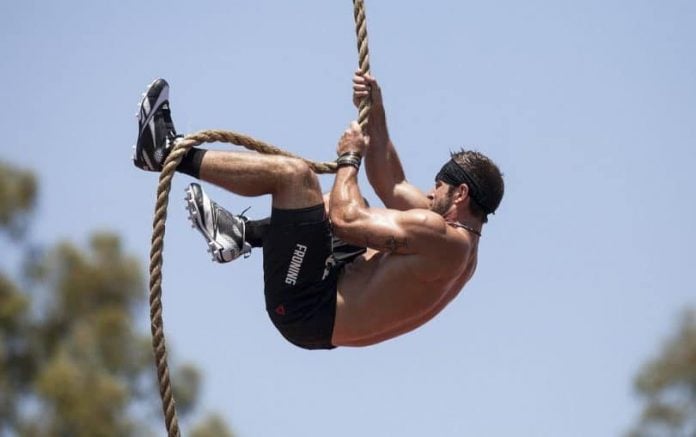
Rope Climb Jiu-Jitsu Workouts For Incredible Strength

Jiu-Jitsu Workouts

Conditioning for BJJ is getting as complicated as quantum physics nowadays, if not more. Granted, the conditioning methods available today are light years ahead of those that were modern just a decade ago. A lot of science and experimentation goes into the art of conditioning for combat sports. With the worldwide appeal of MMA, the rise of Jiu-Jitsu, and a bunch of combat sports in the Olympics, it is understandable why this is a huge priority. moreover, very few people have been able to successfully crack the conditioning puzzle so far. So what should a grappler do in this world of intricate and confusing Jiu-Jitsu workouts their inventors swear upon? The answer is to look back. there are certain methods that have worked for centuries. One of them is the simple yet grueling rope climb training.

Rope climb conditioning is as basic as it gets. You get a rope, you hang it somewhere high and you go up. Easy peasy. Well, not exactly. Give it a try and you’ll see what I mean. While the basic idea behind the activity is fairly simple, the execution is anything but. If you like to devise Jiu-Jitsu workouts based on rope climbs, you’ll need to make sure you’re able to do them correctly. Worry not newbies, as we’re going to show you how to start from the very beginning and progress up the rope.

IF you’re wondering about the effects such a simple workout is going to have, just look at gymnasts. All of them are super jacked and able to do wonders with their bodies. Do you know what is one of the most essential skills gymnast master very early on? The rope climb. And yes, they start from the bottom and work their way up through each progression. This is the only way to ensure bot positive adaptation for your body and ultimate safety. Oh, and freakish strength and unbreakable grips as well, not to mention the gas tank.

Rope Climb Benefits For Grapplers

The benefits of a simple activity like the rope climb are truly diverse. They’re exactly what a grappler needs, to be honest. They hit the sweet spot for BJJ competitors and enthusiasts alike. There are plenty of benefits that grapplers usually look to develop through different Jiu-Jitsu workouts. Why not get them all at once, along with some bonus benefits on top?
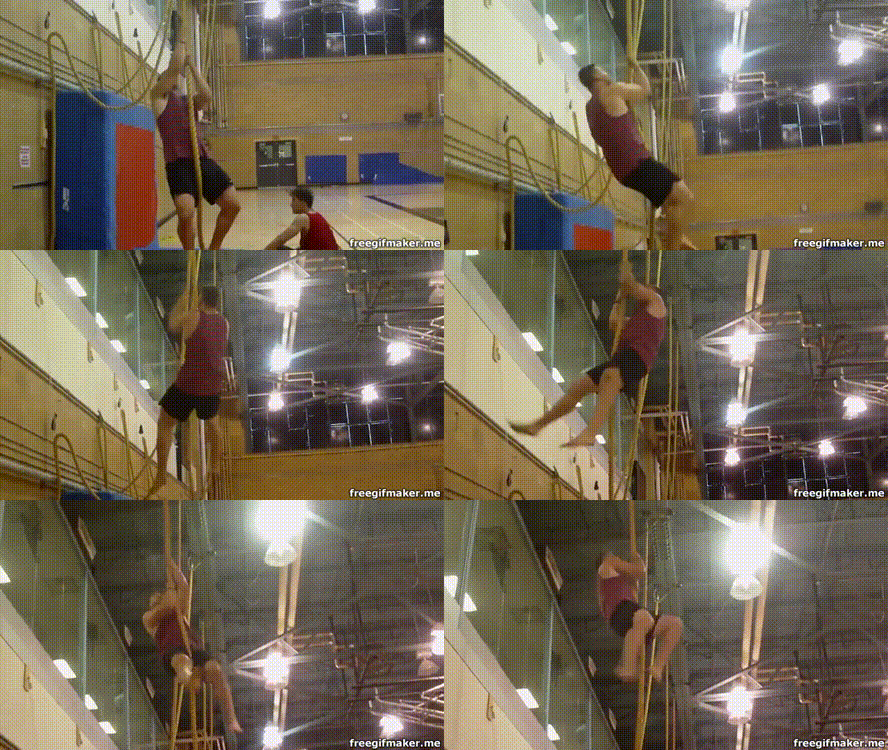
Rope Climb Jiu-Jitsu WorkoutsTo begin with, the most obvious one. Grips. Just hanging on a rope is a brutal task. going up one gets more and more tough on the grips and you go further up. Taking the legs out of the equation takes it to new levels of difficulty. And going back down in this manner just rubs salt to the wounded palms. Grips are a limiting factor in grappling. rope climbs require you to move your weight exclusively with the help of your forearms, Moreover, you need to resist gravity along the way.

Next up is arm and back strength. The most prevalent muscles we use in BJ are the pulling muscles of the upper body. Yes, even when you’re on top your always tugging on something in Jiu-Jitsu. Rope climbs are going to make you incredibly effective at this since all your upper body pulling muscles lear to work in unison.

Another aspect of rope climb training is power. Gymnasts develop extreme explosive power thanks to rope climbs. Grapplers get the same benefit, along with some great conditioning work as well. Getting up and down a rope is going to develop immense strength and power for sure. Doing so at pace is going to make you a machine.

Equipment And Progressions

So, what do you need to start doing your conditioning Jiu-Jitsu workouts with a rope? Surely any rope would do? Well no. Get a thin rope and you’ll palm are going to burn before you make it a few feet up. In terms of equipment, you need to look for a rope at least 2″ in diameter. Also, go for as much length as space allows.

In terms of actual rope climb training, there’s one thing that you have to remember. you need to warm up properly. Warming up is both the best way to prepare and the first progression you need to master. A good warmup includes a lot of forearm work. Wrist circles, finger extensions, wrist rollers, some biceps and triceps work, as well as static rope climbs, are the bare minimum you need to go through before every session
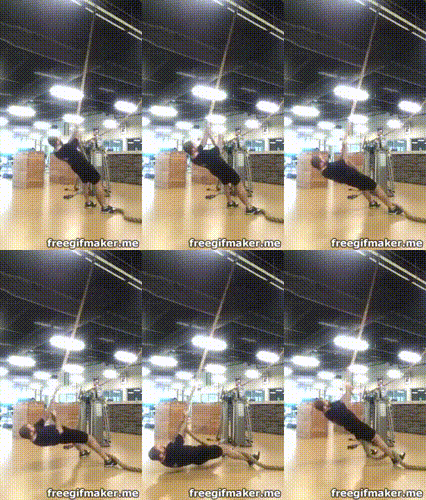
Rope Climb Jiu-Jitsu WorkoutsAs far as progressions go, the very basic one is mastering horizontal pulls. This means your feet are on the ground and you’re holding yourself above the ground horizontally. At first, master just going downwards. Then go for pull repetitions, and finally go up and then down.

The next step is to start going vertically. Since you’re already hanging isometrically during the warm-up you’ll skip[ that. To begin with, you’ll use your feet to help you go up. The first method is the step assist method, in which you use one leg to help you create a loop to step in with the other. When you master this, start using just the insides of your feet on both sides of the rope to help you up.

After this, it’ time go arms only. When going up and down like this becomes too easy, you can turn to the weighted vest for help.

Rope Climb Jiu-Jitsu Workouts 

Remember that climbing up a rope can be very hard on your shoulder and elbow joints, so make sure you’re well oiled up for training. Warm-up properly and give your joints some extra attention if you’re nursing injuries. Also, pay attention to the length of the rope. Climbing up a 10 and 25-foot rope is a very different thing. It is a progression in itself and one you need to always consider. that said, here are a couple of Jiu-Jitsu workouts based on rope climbs:

  • Beginner Workout

In terms of programming, beginners need to focus on distance. Getting all the way up the rope and back down is the most important goal. From there on, you can focus on how many times you do it. Here’s a sample workout to try:
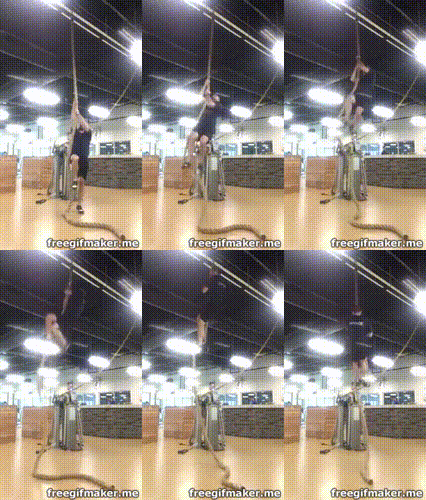
  1. Rope Climb Jiu-Jitsu WorkoutsWarm-up properly and include isometric hangs. 10-30 seconds is plenty. Try to do it 2-4 times with as much rest as you need in between.
  2. Work on your pulling strength and grips. Do an eccentric horizontal climb (downwards) with feet on the ground or elevated. Try to cover as much distance as possible and repeat 3 times.
  3. Go for a vertical rope climb variation. Hit any of the progressions involving the feet that we outlined before. Again, go for a maximal distance no more than three times in a row.
  4. Finish with some pull-up variations to make your forearms used to working when tired. Gi pullups are a great way to develop grappling-specific strength endurance.
  • Advanced Workout

This is where things get interesting. How do you know that you’re up for advanced Jiu-Jitsu workouts involving rope climbs? Well, if you can go up and down a rope 5 times with arms only, you’re advanced enough.

  1. Start with arms-only climbs. Go for just one set of full-length climbs. Look to execute it as fast as possible.
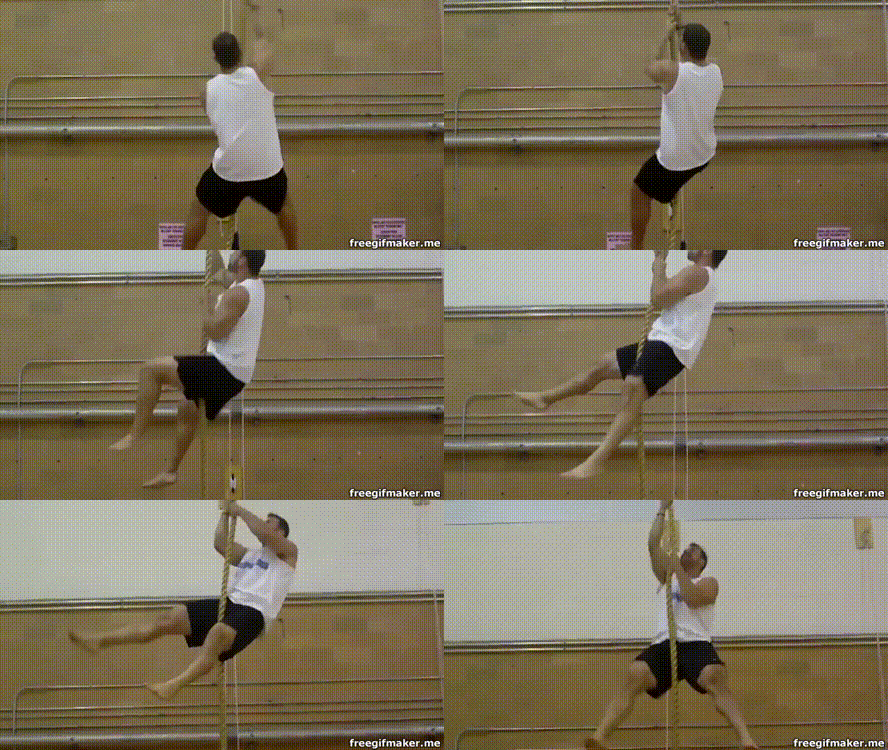
  2. Rope Climb Jiu-Jitsu WorkoutsLead hand climbs. This means that you’re going to keep the hand that’s on top in the same position all the way. Instead of gripping hand over hands, one hand is always going to be on top all the way up and down. repeat on the other side.
  3. Reverse Grip Climbing. To do this rope climb variation, grip the rope with your pinky fingers towards the ceiling. Now go up and down the length for one set again.
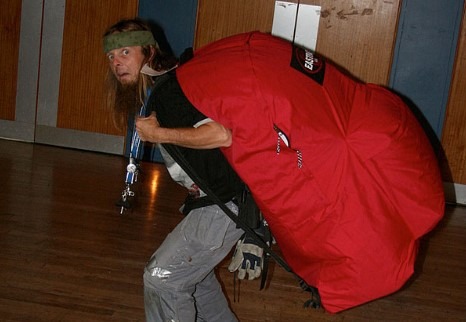
  4. Introduce weight for your final exercise. A weighted vest works best, but you can also use a loaded backpack. One set as fast as possible is enough.

* Add a set each couple of weeks. Also, once a month do this workout as a race, up against a teammate. 

Check Also:

Dealing With Jiu-Jitsu Injuries: Elbow Joint Hyperextension
Wrestling Conditioning Drills For Brazilian Jiu-Jitsu
Quick Jiu-Jitsu Conditioning Workouts For Busy People
The Future of Jiu-Jitsu: Technology and Modern BJJ
The 6 Exercises To Develop Insane BJJ Strength
Use Gymnastics To Become Freakishly Strong For BJJ

The Best Strength & Conditioning DVD and Digital Instructionals
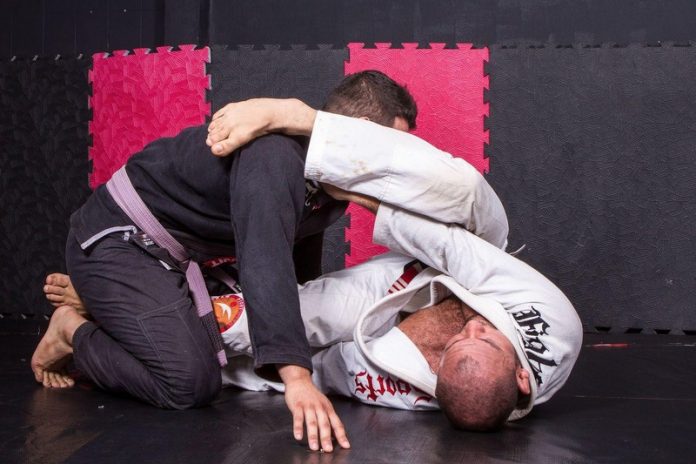
Tornado Guard Sweeps And Submissions For Gi and No-Gi

Tornado Guard

It is the year 2015. I just returned from a competition where I lost in my first match of the day. I was contemplating how to change my game to a more effective one in order to avoid heartbreak again. At the same time as the IBJJF tournament, I was competing in, the ADCC was happening on the opposite part of the globe. China was the host of the Brazilian Jiu-Jitsu Olympics and the biggest accolade (the Absolute division gold) went to a guy named Cyborg. I was amazed at how limber and fast this heavyweight was, while still being super powerful. So I did a little research and discovered a half guard variation that would change my BJJ game forever. I discovered the tornado guard.

The inverted guard game is a very popular one in the world of modern grappling. It is difficult to say when it all started, but we all know when it took off. It was the Mendes brothers and the Miyao brothers, spinning like fidget spinners and berimboloing around that got everyone interested in going upside down. However, the berimbolo game might not git everyone equally. It requires certain dexterity and smaller grapplers have the upper hand. The tornado guard, on the other hand, gives you all the benefits of the inverted guard with none of the strain.

“Cyborg”, or Roberto Abreau has proven over and over again that the tornado guard works at the highest levels. He used his invention to beat the who’s who of BJJ in both gi and No-Gi. What really got me interested in it was the fact that a heavyweight was doing it with ease, which meant I’d have no trouble as a featherweight. Fast forward a couple of years and people were flying left and right once they got in my half guard or Reverse De La Riva Guard. Today, it’s time to revisit the Tornado guard along with everything this position offers.

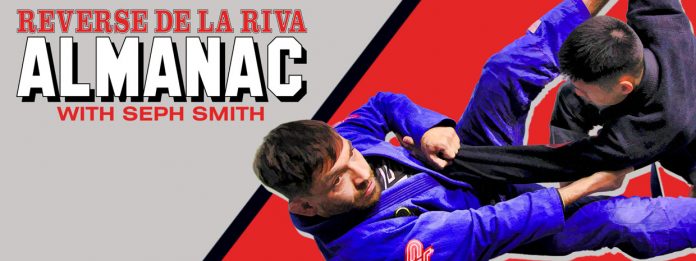
Connect your Tornado guard to a wicked Reverse De la Riva game for the ultimate attacking system from the bottom! Use “The Reverse De la Riva Almanac” DVD instructional featuring Ryan Hall’s black belt Seph Smith to get the lowdown on this essential BJJ guard. 

What is The Tornado Guard

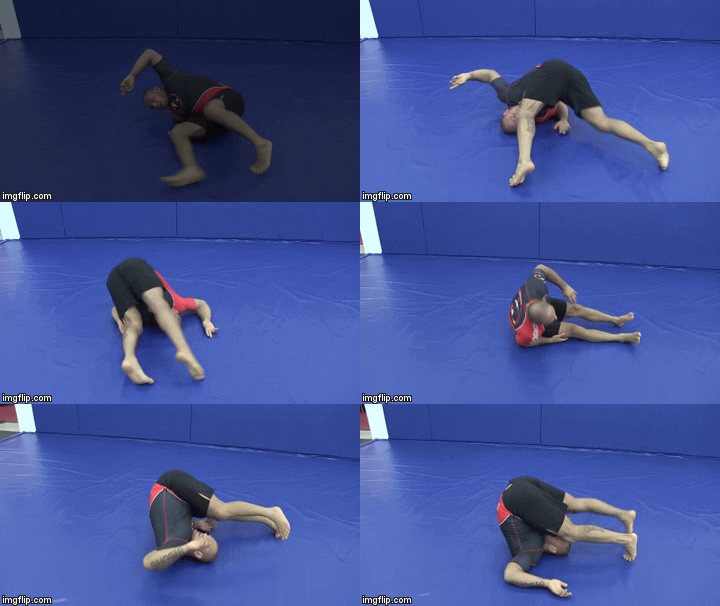
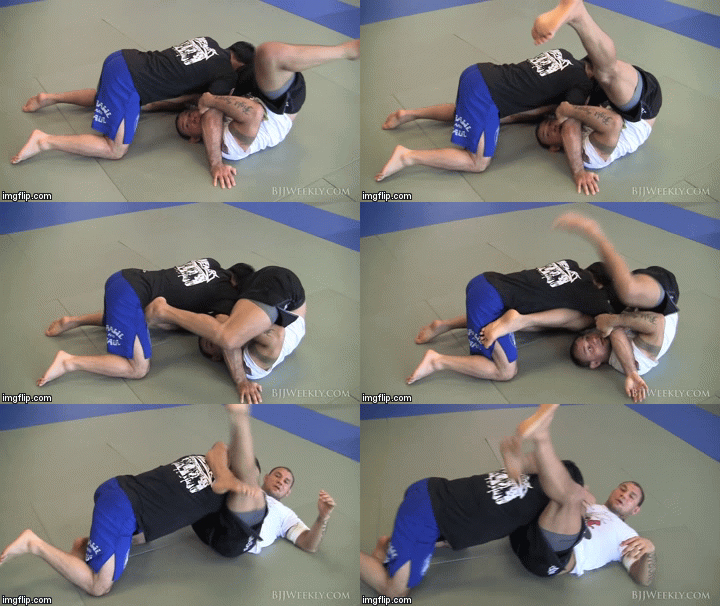
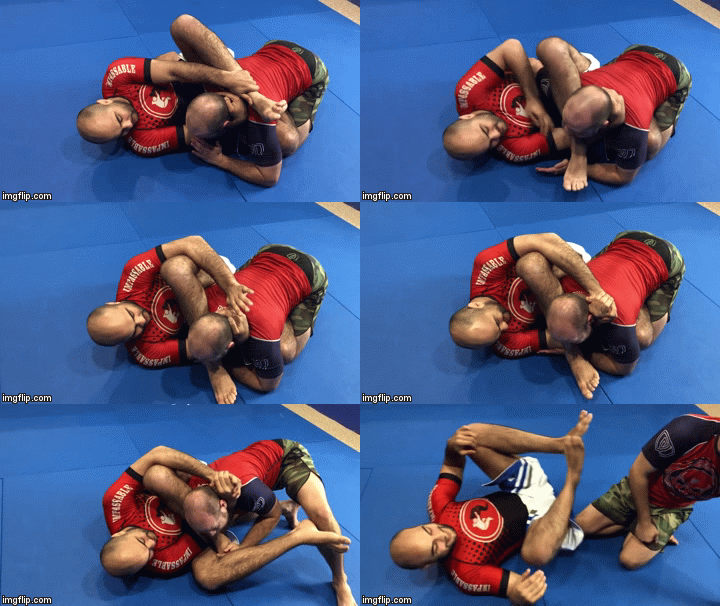
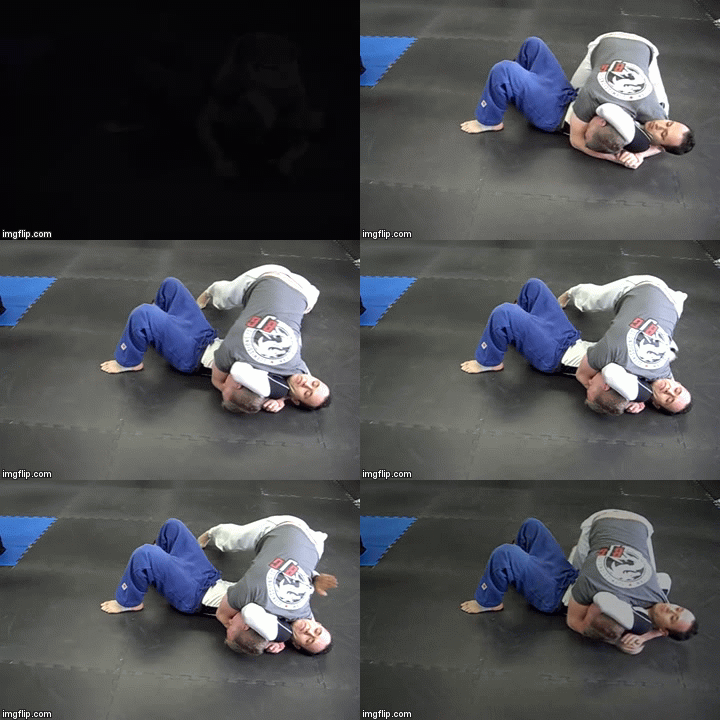
Tornado guard GranbyThe Tornado guard is basically a hybrid between the half guard and inverted guard. To really get the hang of this guard, you’ll need to put in your fair share of drills. If there’s one drill you really need to master, it’s the Granby roll. The Granby roll is a drill in which you start seated with your legs straight forward in front of you. You then aim to touch your toes with your arms and you roll over your shoulders for a full circle. Once you’re able to do it with ease, spend some extra time halfway through the roll. This is the inverted position that is essential for the tornado guard.

Tornado guardFor the Tornado, you start off in a basic half guard position, with a knee shield in. Probably the most important point of control is the first grip. For that, you need to place the bottom sidearm in between the opponent’s legs and grip their pants. The way you grip is also very important. What you need to do is make a pocket with four fingers in and the thumb out. You also need to grip inverted, meaning your thumb should be towards the mats and your pinky finger towards the ceiling.

Once you have the grip, its inversion time! Your other arm should grab the opposite side collar so that you have a pulling anchor. Next, you’ll kick your knee shield leg out and swing it around like a pendulum. Between the two grips and pendulum inertia, you have plenty of drive to get inverted. When you finally get there, place the shin of your pendulum leg on top of your opponent’s back. It’ll keep their posture broken as well as protect you from eventual toe hold attempts.

Tornado Sweeps

There are a lot of sweeping options from the Tornado guard and they all depend on what your opponent does as a reaction. Every time they attempt to push forward or stand up you can go or the basic Tornado sweep.

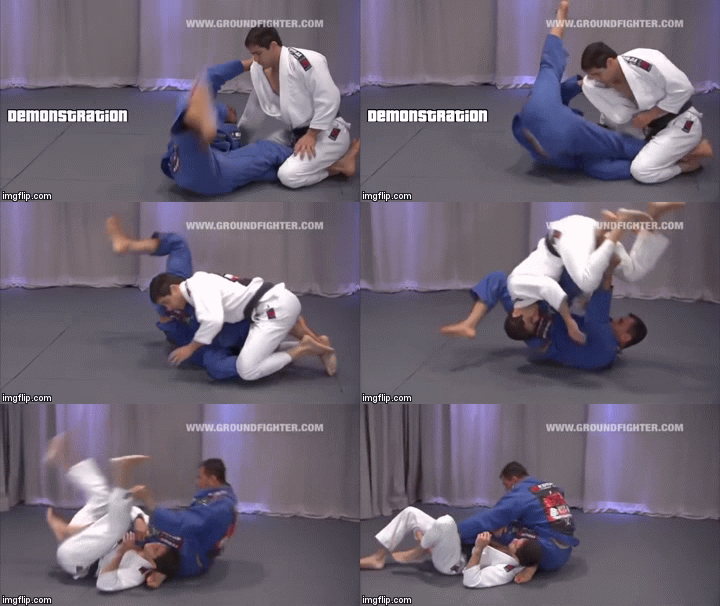
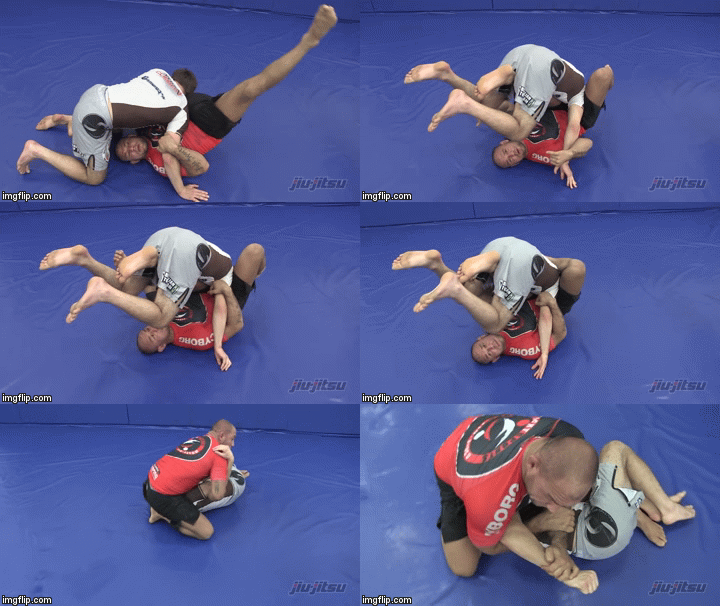
Tornado guardFinishing the basic Tornado sweep involves another pendulum-like motion with your free leg. The goal is to swing your leg in the direction of your butt, keeping it as straight as possible. This is going to give you enough force to use your other leg, the one still in half guard as a lever to lift your opponent in the air. The tricky part here is getting the angle correctly and distributing the opponent’s weight properly. Getting both is as easy as making sure that your opponent is over your thigh and not over your calf. This is going to make lifting the opponent extremely easy. the finishing position is with the opponent on their back and you on top, most likely in half guard.

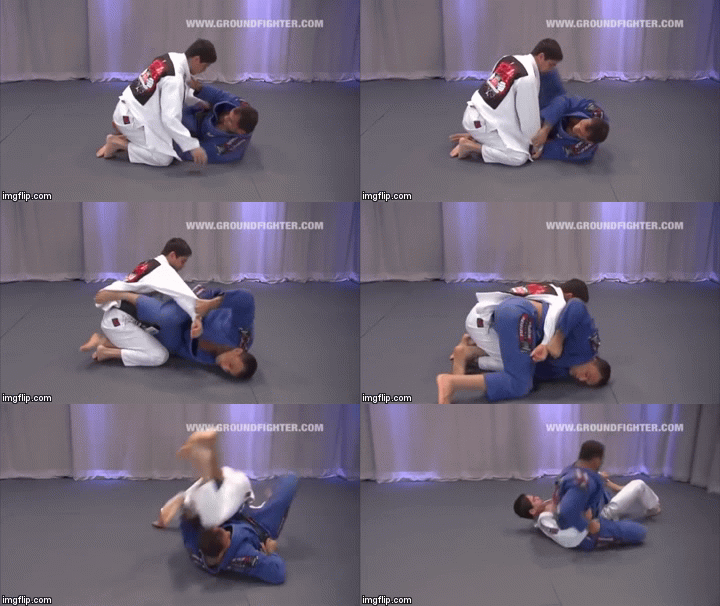
Tornado guardIn certain situations when you can’t establish a good collar grip there’s a trick to get a modified Tornado sweep. Once again, the crucial point is in the pants grip, which stays tight until you get on top. Your other grip is going on the opponent’s sleeve this time, which is going to block your leg from swinging over. So, instead of swinging, you’ll thread your leg under the far side armpit and use it to help you invert. This is going to land you in a really great sweeping position as you also have the arm trapped.

For No-Gi, the first grip is on the opponent’s ankle, and the second is behind the neck or over the opposite side shoulder.

Submission Opportunities From The Tornado Guard

The Tornado half guard also offers different submission options. They can either be done from directly, or after finishing a sweep variation. This allows you to control where the finish takes place, in case you’re in a competition format where points are important.

Tornado guardGetting submissions right away is the perfect option when an opponent sprawls back hard, in order to avoid the sweep. This is a good defense for the sweep but opens up a triangle. Once you see that you’re “stuck” in the Tornado position, place your top leg on the opponent’s hip. Use this a power source to extract your half guard leg and thread it under the opposite side armpit. You’ll need to control the opponent’s arm with a grip over their shoulder as well. Once you thread the leg, simply spin around to the front and you’ll have a triangle locked and ready to go.

Tornado guardAnother great finishing option is the Kimura. This is the go-to submission after a successful Tornado sweep. The sweep itself actually lands you in the perfect position to get a Kimura. All you need to do is hold the arm you already have trapped tightly until you let go of the ankle and set up in a figure four grip. From there’ finishing is as easy as looking over your shoulder.
Check Also:

Deep Half Guard in BJJ – Everything About
Purple Belt Guide To Developing A Mean Jiu-Jitsu Guard
The Basic Principles Of Attacking From The X-Guard
Make Your Opponent’s Quite Before They Tap With These S-Mount Attacks

BJJ Stretch Routine To Fix You Up Fast After Class

BJJ Stretch Routine To Fix You Up Fast After Class

Nobody likes to spend extra time doing flexibility and mobility work. It is every athlete’s nightmare to warm up or cool down in every training session. As important as stretching is for professional athletes, it is even more important for the everyday Joe. Especially for those involved in grappling martial arts like BJJ. Giving your body a stretch after a hard rolling session is the best way to ensure longevity and prevent injuries. It also helps you calm down and gives you time to work on breathing techniques. But most importantly, it is the one thing that’s going to ensure you’re at 100% next time you need to grapple. So, knowing that everyone hates long and boring flexibility/mobility cooldowns, we bring you a fun and easy BJJ stretch routine you can do in minutes!

What is the best way to approach stretching after Jiu-Jitsu? Is it Yoga, mobility work involving a bunch of balls and pipes, or going by feel? To tell you the truth, all of the above have their benefits. However, none of them are really a good choice after BJJ. For starters, Yoga requires time and focused breathing in order to get the maximum benefits. MObility work requires tools and is a better fit before training or done on a separate day. It too takes a lot of time to finish. Going by feel is probably the worst thing you can do, especially if you have no idea how to stretch. Stretching an achy body part is the worse thing you can do for it! So, how should a BJJ stretch routine that’s both short and effective look like?

Well, there are a few things a good BJJ stretch routine must cover. First, it needs to address the entire body. Next, the focus needs to be on those muscles that really get worked during grappling. Finally, it needs to be short and appropriate for all skill levels. Sound impossible right? Well, it not only possible but very easy. A few exercises in the right order are all you need in order to stay limber and injury-free. Let’s look at which exercises are best for grapplers and why we need to use them daily!

Why We Need Stretching

Let’s cover all the important basics of stretching before we move on to the best BJJ stretch routine. After all, everyone raving about stretching must be for a good reason, right? Well, it is. Actually, there are plenty of reasons why grapplers need regular and precise stretching.

For starters, stretching elongates the muscles which helps them realign while they’re still warm from training. This greatly helps in the prevention of small injuries that tend to pile up over time. It also prevents scar tissue from forming which ensures the muscles can work at an optimal rate.

The next huge benefit is one many people do not really think about. Joint health. While the muscles get most of the focus, the joint also gets benefits. All muscles end in tendons on each side. All of these tendons, in turn, attach to bones, in most cases near joints.  A good stretching routine helps you keep your joints humming. Stretching is also a great tool to deal with joint and/or muscle pain.

Blood flow is another huge benefit of stretching that people often overlook. Correct stretching provides the muscles with increased blood flow that helps them repair and recover much faster. It also primes them for receiving much-needed nutrients which you should supply to your muscles as soon as possible after hard training, especially rolling.

The All-In-One BJJ Stretch Routine

So, what is the best way to approach stretching after multiple competition-level rolls? Well, we said we’ll aim for simplicity so we’re going to limit the BJJ stretch routine to just 8 exercises. Furthermore, we’re going to employ smart programming that’ll keep the routine short, yet as effective as an hour-long Yoga session.

The whole routine shouldn’t take you more than 12 minutes. There’s no way you do not have an extra 12 minutes at the end of class to go over a few basic stretches. The goal is to hold each stretch for a minute. Wait, 8 exercises and 12 minutes, something’s not right here. Well, a few of the stretches are done bilaterally, meaning you need to spend a minute on each side. In terms of equipment, all you need is a wall, your Gi, and your belt. If you have a foam roller lying around the academy, you can use that instead of your Gi.

#1. Legs Up The Wall

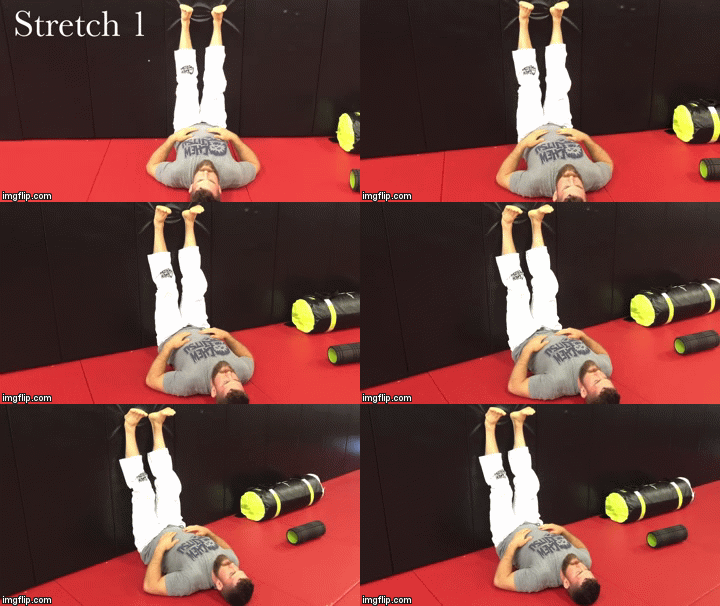
BJJ stretch routine We begin the BJJ stretch routine with the legs up the wall stretch. This one is a simple as the name suggests. Simply lie next to the wall and get your butt a close to the wall ass possible. In the best-case scenario, you should be touching the wall. Straighten your legs up and put them together. Lie flat with your back on the mats and keep the back of your head on the ground as well. Keep the arms bent at the elbows, palms on your belly. Stay there for the minute and try to calm your breath as much as possible

#2. Wall Straddle Stretch

BJJ stretch routine From the previous position, you’ll simply proceed to widen your legs to each side, as far as comfortable. Remember that stretching shouldn’t feel uncomfortable at any point. Your torso, head, and arms remain as in the first stretch. Your legs should be as wide as possible. heels on the wall. Once you reach your maximum stay there for a few breaths. Use the remainder of the minute to try and go even further. With every exhale attempt to get your legs just a little bit wider. Stop before you feel discomfort.
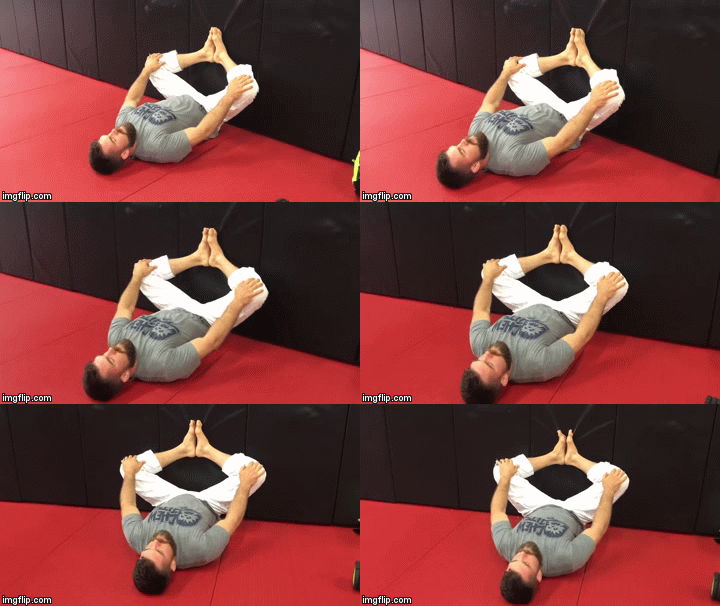
#3. Wall Butterfly Stretch

BJJ stretch routine The wall butterfly stretches much like the seated butterfly. When you have your legs up the wall, gravity does not play as big of a role in the stretch, meaning you’ll need to work a bit more. Since you’re already there, all it takes is to get your feet next to one another after the wall straddle stretch. Once you have them there, try and get your heels as close to your butt as possible. Keep your head and torso on the ground but place your hands on each knee to help with the depth of the stretch. Once again, use the exhales to go deeper into the stretch and never overdo it. This is a nice relaxation from the wide straddle and an awesome way to increase your hip flexibility for BJJ.
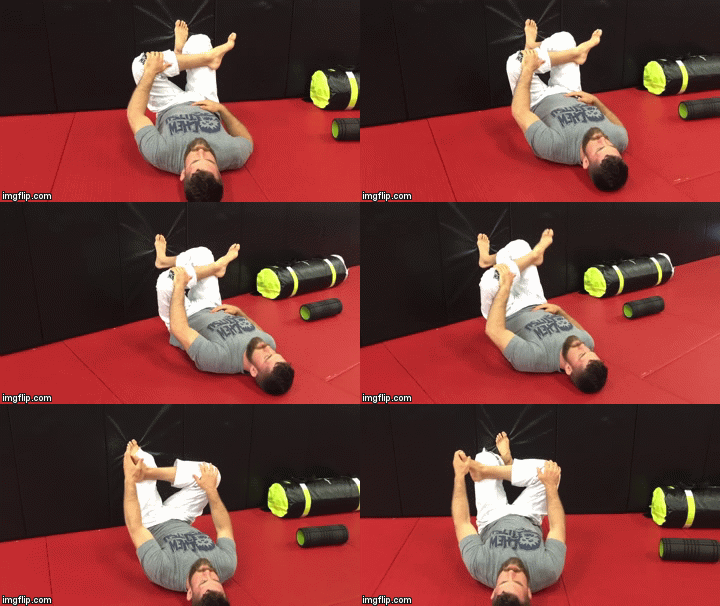
#4. Wall Glute Stretch (Each Side)

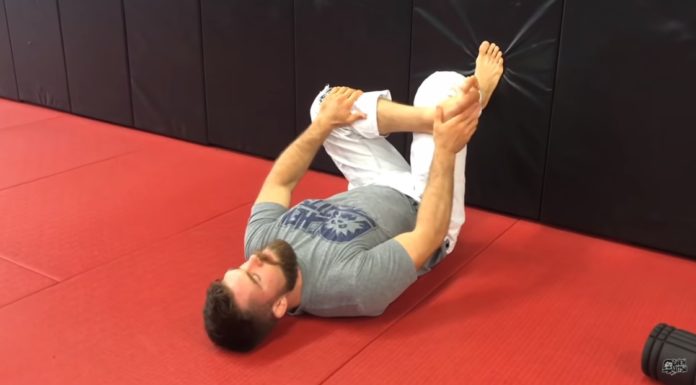
BJJ stretch routine This is one you’re used to doing regularly. All that changes now is the position of the support leg. For the glute stretch, you need to place the ankle of one leg over the knee of the other. The support leg is going to be placed on the wall, knee bent at 90 degrees. The other leg goes in front of you and on the knee of the first one, also at 90 degrees. Place both your arms on the shin, one at the knee and the other at the ankle. Not unlike adjusting a triangle choke. Make sure you keep your ankle steady and push on the knee as much as possible. Repeat on the other leg for a minute as well.
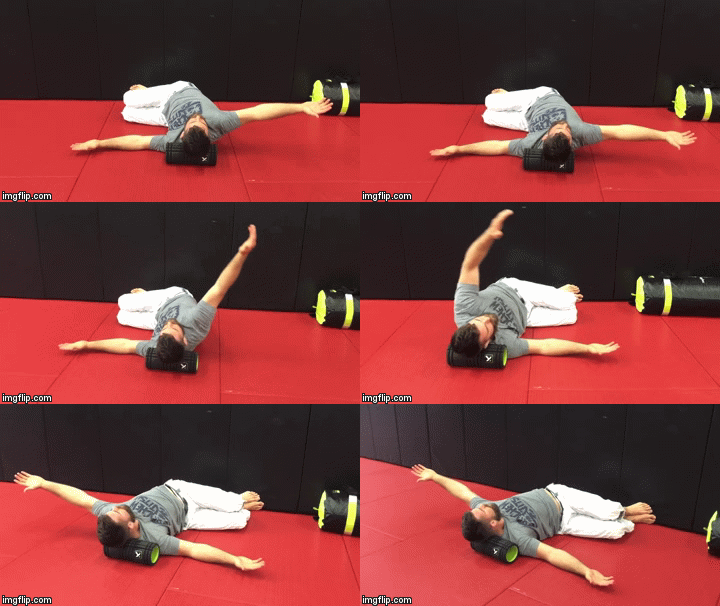
#5. Spinal Rotations (Each Side)

BJJ stretch routine Another classic stretch, yet usually not done correctly. As you finish with the wall glute stretch, lay on your side and place one leg on top of the other. Keep the knees bent and the feet on the wall. Get a foam roller, or simply roll up your Gi jacket and put it under your neck. This is a crucial part of the stretch as your spine needs to be in alignment. straighten both arms and place them on top of each other in front of your chest. Now open the top arm and look as far to the other side as possible. Let your top arm open up as much as you can, while still keeping it straight. Again, repeat on the other side once you’re done.
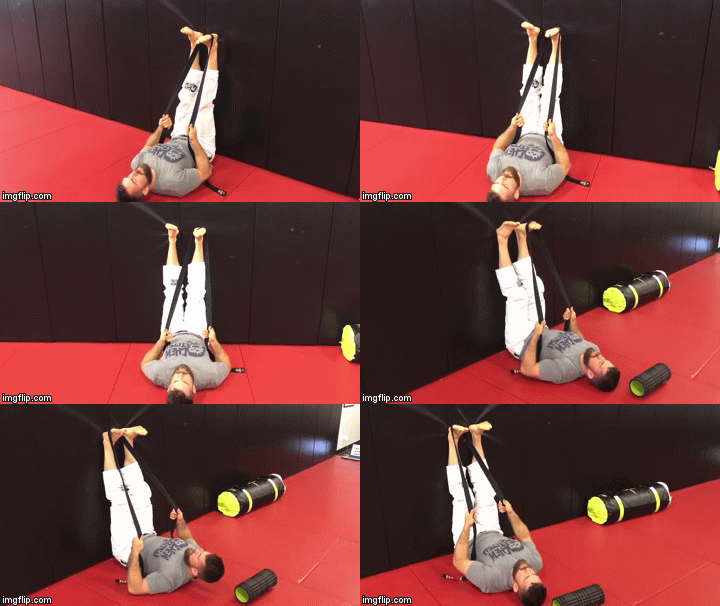
#6. Belt-Assisted Hamstring Stretch (Each Side)

BJJ stretch routine This one is very simple and to the point. Get in the same position as with the first stretch. Take your belt and fold it in the middle. Now place one foot directly in the loop and hold on to the two straps. The other foot stays up on the wall. Raise the leg that’s in the belt towards you and attempt to straighten your knee as far as you can. If you think you can go further, place your hands further up the belt straps on either side. Repeat on the other leg.
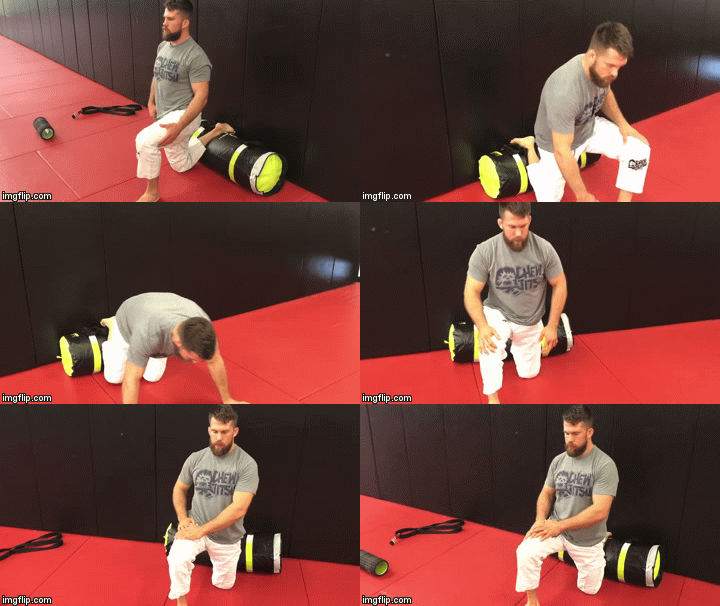
#7. Wall Hip Flexor Stretch (Each Side) 

BJJ stretch routine The hip flexor stretch is a complete core stretch, despite its name suggesting otherwise. For this one, you need to be facing away from the wall. Place one knee on the mat, right up against the wall, so that your shin and instep are on the wall. Have the other leg in front of you, bent at the knee, like at the bottom of a lunge. push in with oy ur hip and raise your arm on the side where your leg is up against the wall. If you can’t get your knee to the wall, use your Gi or whatever’s around to elevate it behind you as much as you can.
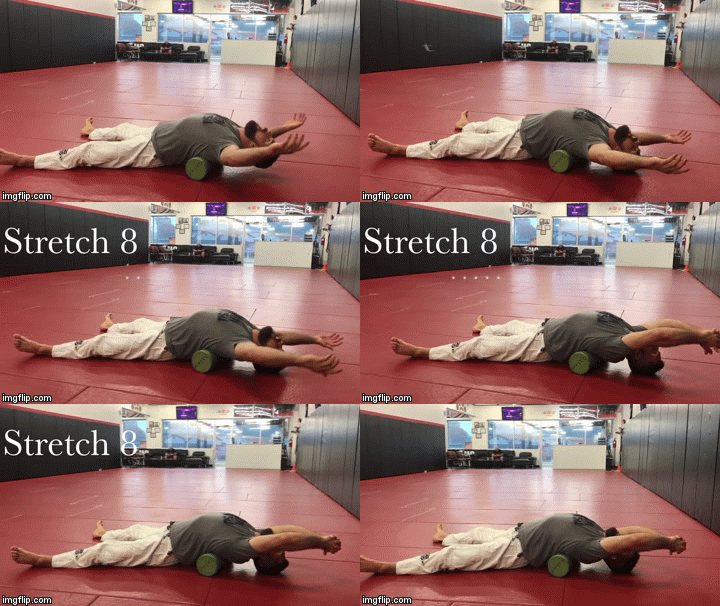
#8. Backward Spinal Stretch 

BJJ stretch routine To finish this BJJ stretch routine, you’ll once again turn to the foam roller or rolled-up Gi jacket. Simply place it on the mats and lie over it, so that your upper back is directly over the roller/Gi. Bend backward put the top of your head on the mats and extend both your arms over your head. Stay in the position for the duration of a minute.
Related Articles:

3 Most Common Stretching Mistakes
How To Get Flexible For Brazilian Jiu-Jitsu
Strategies To Win The Battle With BJJ Arthritis

Yoga For BJJ & Yoga For Rocks DVD by Sebastian Brosche

Three Ways To Open Up The Closed Guard

Closed Guard Passing

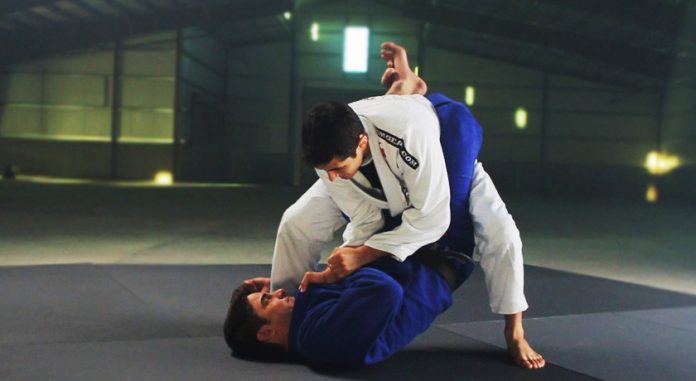
Today’s article is going to be all about a BJJ position that often puzzles even the most experienced grapplers. It is the first position you learn, a trademark Jiu-Jitsu prone, and one that remains very difficult to battle against all the way to black belt. The interesting fact is that the more you like attacking from it, the worse you probably are at dealing with it. The position in question is the closed guard, and today’s subject is passing it.

The closed guard is probably the one position that truly depicts the spirit of Brazilian Jiu=Jitsu. It is on that helped make the Gentle Art famous worldwide and a staple of BJJ fundamentals. Undoubtedly, during your first couple of weeks of training, you got exposed to the closed guard at one point or another. Most likely, your first encounter with the closed guard is from a passing perspective, which never translates to a pleasant experience. However, when most students figure out the power of the full guard, especially new ones, they tend to stay there for quite a while. Some even take it to such a high level that they make top-class competitive careers out of it.

The evolution of the game and diversity in closed guard variations are among the main reasons why this guard is so difficult to pass. Well, that and superior mechanics. For the person on the bottom, there’s very little effort required for attacking and/or controlling. the person on top has to find a way to nullify all attacks long enough to first open the guard. Then, they have to figure out how to keep it open before attempting to pass. Not an easy task at all, but neither an unachievable one. It is time to take a look at the various options available to the top player.

Check out the best passing resource and the best guard passing instructionals of 2018 HERE.

Why Is the Closed Guard So Annoying To Pass? 

Well, primarily, the reason the closed guard can be frustrating is in its very nature. AS the name suggests, it represents a closed circuit, one in which there’s no easy way out. Since the person playing guard is already on the bottom, there’s no gravity to fight against. In fact, gravity is their friend. Furthermore, establishing and maintaining grips is way easier than doing so from the top.

In terms of positioning, the legs provide an immense controlling opportunity due to their configuration. Having the legs crossed behind an opponent’s back provides two great advantages. First. the placement just above the hips provides both hip and torso control. Secondly, the fact that the weakest point (the cross) is behind the opponent’s back means the structure is well protected. Factor in the grip supremacy and you have a real mess to deal with.

But that’s not all. The system for attacking from the closed guard is such that it only entangles you deeper if you do not act in time. This position has gotten a lot of attention during the years and there’s a surprisingly large arsenal of weapons available. From sweeps, through transitions an all the way to a myriad of submissions, the full guard is a tricky spot to be in. If you rush just one thing, you’re going to have to start all over again (and that’s the best case scenario). The likelier version of events is that you’ll get swept or stuck in a submission.

However, there is hope. All it takes is patience, knowing what NOT to do, and then going for the things you’re supposed to do. Those area s follows:

The Main Principles Of Opening And Passing

When in the open guard, you need to learn to prioritize the sequence of events. That means focusing on the major threats first, then looking to establish control and finally, breaking apart the guard and passing.

To do this you must remember that the number one priority are grips. An opponent with good grips from the bottom can make your time in the guard even more unpleasant. Drill grip breaks until you get bored with them, and then drill some more. There’s no way of overemphasizing the importance of the “no-grips” principle for closed guard passing.

Closed guard Opening
Click for full video instructional!

Next, you need to apply the BJJ tripod principle. This means, acquiring posture first (which is something your opponent is going to look to break). Then, you move on to a solid base, to help you retain that posture. Expect to continuously grip fight while you’re fighting for base and posture. Finally, when everything is set, you’ll look to establish a dominant structure that’ll allow you to think about passing.

Only when you’re safe, and you have superior positioning, you can proceed to actually open the guard. In order to open it, you have a few options which greatly depend on what your opponent is doing. Generally, there are three main ways of opening and passing the closed guard:

1. Passing From the Knees

This is the most “basic” way of passing the closed guard. The advantage here is that gravity is less of a factor for you to worry about which means retaining posture is easier. The drawback is that it is easy for an experienced opponent to keep you in guard. Namely, as you move your base to open, they’ll be looking to shift ever so slightly back into position. This is where your structure (via grip fighting) comes into play.

Closed guard passing
Click for full video instructional!

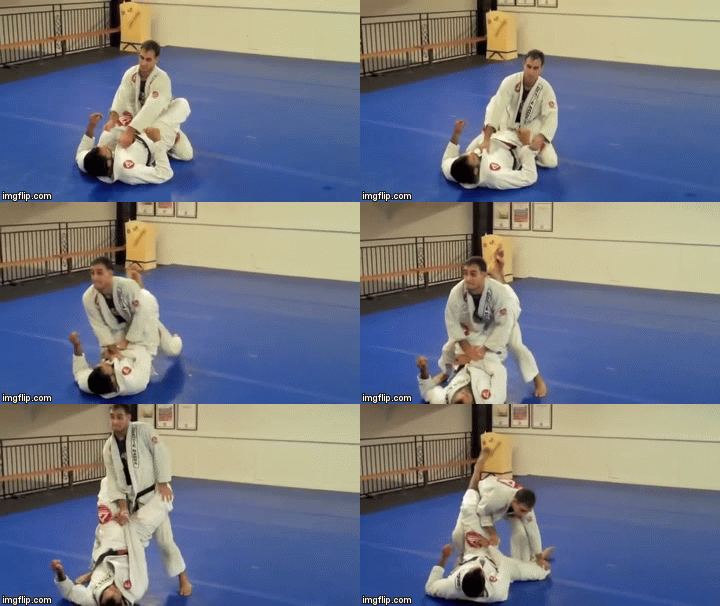
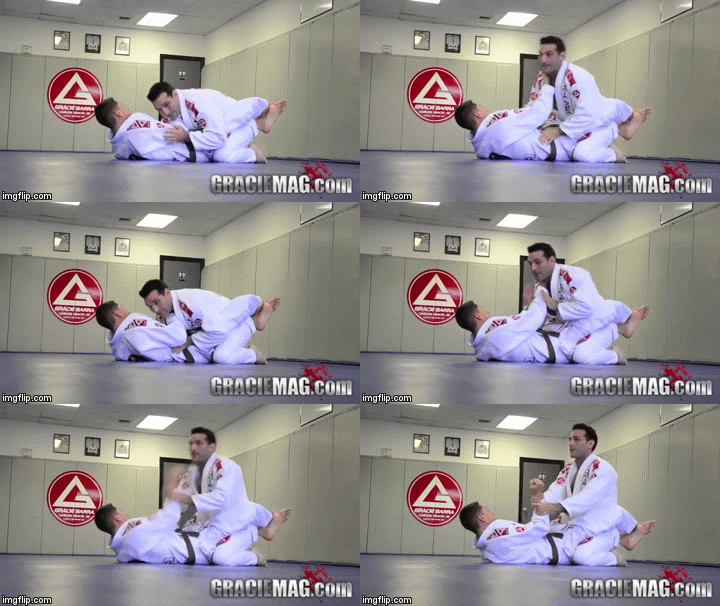
To open the closed guard from the knees you need to have one of your arms tucked between your torso and the opponent’s knee. This makes it inaccessible to them. Just remember not to put it behind your back or you’ll be in a triangle before you know it. Next, the main thing you absolutely have to do from this position controls the opponent’s hips. The more pressure on their hips, the harder it will be for them to re-adjust when you open. The basic position is placing your arm on their belly, pushing slightly upwards towards the sternum. Remember to keep the elbow deep into their thigh.

Which brings us the second arm. You can keep it there and attempt to open directly or go for even more control. To get it, take your tucked arm and place the palm on the most prominent point of their pelvis (on the same side). This is going to cause their hips to go out of balance and there’ll be no way for them to follow.

Finally, opening the guard should be easy once you have base, posture, and structure (i.e. control). You can either go from the knees or with one foot on the mat. If you choose the latter, raise the leg that’s on the side of the pelvis control.

2. Standing Passes

Standing passes enter the frame when there’s one grip you just can’t get rid of. Most likely, this is going to be a sleeve grip. Instead of fighting for it the whole match, you’re going to use it to your advantage. Just make sure it’s not a collar grip or you’ll never get posture.

Use the grip your opponent has to establish a grip of your own on their arm. Grip both their lapels with your other arm and tuck the first one under. Now you have their arm trapped. Once you have it, it’s safe for you to attempt to stand up. Do not worry about what your opponent does, apart from keeping that one arm trapped.

Closed guard pass
Click for full video instructional!

Standing up requires you to place a foot on the ground. Since you have one arm trapped, you’re going to step up on that side first. That’ll give you the base you need to get your other foot on the ground as well. Keep perfect posture throughout teh motion if you do not wish to find yourself back in the closed guard. Once you’re standing tall, use the grip you had on the lapels to push down on their same side knee. make a small step back at the same time and you’re going to pop their guard with ease. Pass with a sequence of your own choosing.

3. Passing Without Posture

THere area certain situations out there that require you to defy all of the rules above. This means passing with no posture and/or structure. When you can’t get your posture back from an opponent you need to think about changing passing strategies. namely, there’s a system of passing named the Sao Paolo pass which works perfectly in this scenario. Keep in mind that it is a more advanced option and beginners should look to the basics first.

Closed guard Pass
Click for full video instructional!

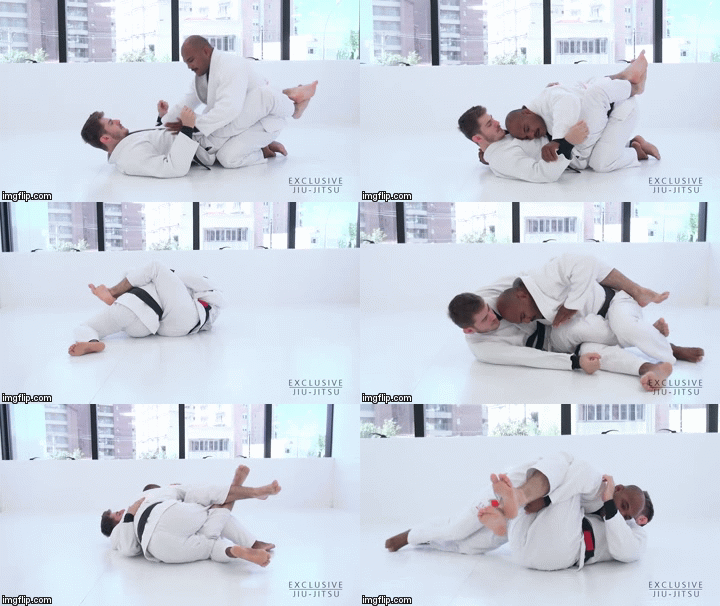
For the Sao Paolo, you need to go as forward as possible, placing one of your arms as an underhook. Make sure your palm goes as high above the opponent’s head s possible. Next, you’ll need to rotate to the side, so that your opponent’s guard comes at a side. Once there you’re going to break another principle and place your free arm behind to pry open their ankles. Once they’re open you’re going to find yourself directly in top half guard.

Closed guard Choke
Click for full video instructional!

As an alternative, you can also hit the Amassa Pao. When an opponent has your posture broken you can take a slightly risky approach and place an arm on their collar at neck height. You’re then going to jump up with both feet and extend that arm as straight as you can. The point is to place as much pressure as you can on their neck, which means you’ll need to be net forward, sacrificing posture. Another key thing to remember is to be an angle towards the arm on the collar, to prevent armbars, CHoke or pass, the choice is going to be your opponent’s.

Check Also:

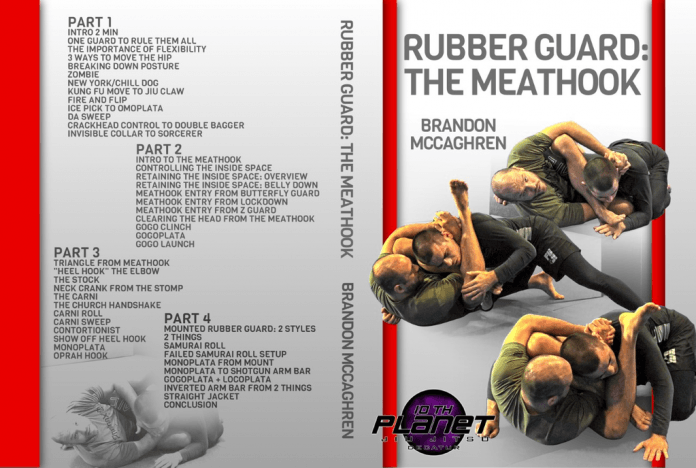
Rubber Guard: The Meathook DVD by Brandon McCaghren
Review Of The Top 5 Guard Passing BJJ DVD Instructionals
Jiu-Jitsu Techniques For A Complete Competition Gameplan
Turtle up! A Quick Guide To The Forgotten Turtle Guard

Submissions Galore From The Spider Web Position

Spider Web Position

If you’ve watched an EBI event at any point then you most certainly have taken notice of the overtime rounds. The basic idea is that to determine a draw, you start off from a dominant position. The point is to try and submit, at least until the opponent finds a way out. Then you reverse and you need to be the one trying to defend and escape. It’s a great concept that many other organizations have since adopted. The two overtime positions usually at play are back control and the spider web position. We’ll take a deeper look into the second one, trying to determine just what makes it such a dominant attacking spot.

The beautiful thing about BJJ is all the ways in which you can adapt its’ many techniques. If something doesn’t work for you do not abandon it. Instead, look to modify it and mold it to your needs. The trick is just to remember that things are effective for a reason. If you move very far away you’ll most likely suffer failure. But changing small things here an there can only make something work much better for you. In certain case,s it’s going to end up working better for everyone. Once such example is the spider web position, which was originally just an armbar adjustment. Today, its’ one of the top position to be in, with tons of control and easy submission opportunities.

The spider web position, as you might conclude from the name, comes to us courtesy of 10th PLanet Jiu-Jitsu. It’s one of those positions that’s not as fancy as the rubber guard nor as famous as the Twister. However, it is a position that works and it does so at the highest levels of Jiu-Jitsu. And for all you 10th planet critics out there, yes it does work perfectly in the Gi as well. You can look at the spider web as just a way to increase your armbar finishing rate, or you can practice it as a position of control.

If there’s someone that understands the 10th Planet system, it’s Eddie Bravo’s black belt, Brandon McCaghren. He just released an extremely comprehensive guide into one of the 10th PLanet Jiu-Jitsu basics. Here’s a comprehensive review of what to expect from the “Rubber Guard: The Meathook” instructional DVD!  

The Spider Web Concept

Picture yourself in the mount. You decide to go fora BJJ classic, the armbar from full mount. You do the setup and end up at the perfect position for an armbar. However, somewhere along the way, the opponent figured out what’s going on and slapped a defense on. Now you’re in a great position to attack if only you could isolate that arm. Stay there long enough without doing anything and your opponent is eventually going to figure a way out. Actually, there are several ways out and they’re fairly easy.

The usual armbar position has you on your butt, hooking the arm you’re trying to isolate with the arm that’s closer to the opponent’s hips. The other arm is usually trying to help break the defensive grips, while the legs are over the head and neck, respectively. This is where most armbar finishing battles take place.

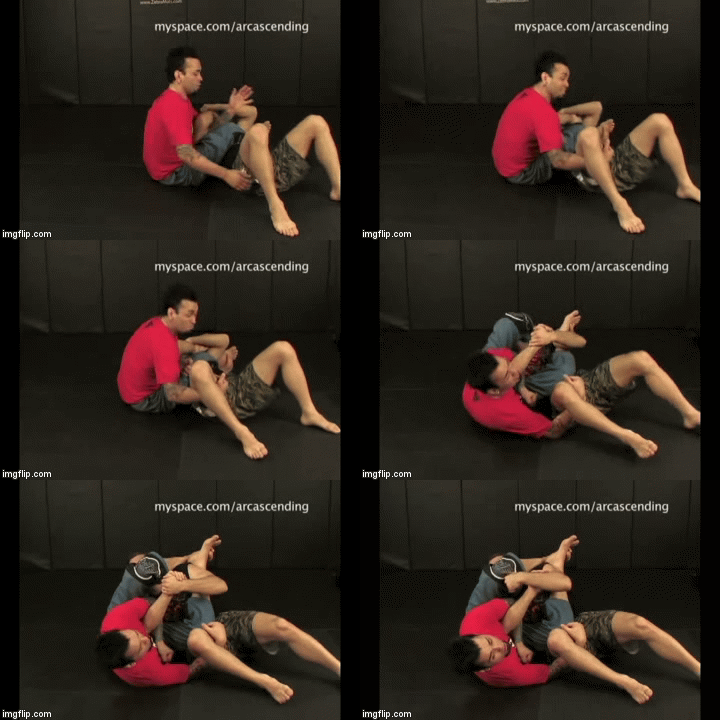
Spider Web PositionThat’s where the spider web position shines. What you basically need to do is switch the arms. Look to insert the arm that’s closer to your opponent’s head into their elbow crease. To enhance control over the arm, you have to grab your opposite side hip with the palm. The goal is to have your elbow control their arm, while your palm holds your hip. The legs stay in the usual manner, over the head and neck. The second arm, though, has a different task. The aim is to lie on your side and use that arm to hook the nearest leg, under the thigh and all the way back up. Now, you’re in the spider web and the fun can begin!
Analyzing The Spider Web Position

It is clear that the spider web position is a very dominant way of controlling and, ultimately, finishing the armbar. But why do these small adjustments change the dynamics of the position so much? Do they really offer an advantage over your opponents? How about using the spider web position to transition into other means of attack? Is it too early for me to look into learning this position? The answers are as follows:

  • Mechanical Advantage And Control

The reason that the spider web is such a tight position is in the hooks. Eddie Bravo, the founder of this position, refers to them as deep hooks. Basically, the reason you’re holding their arms elbow-deep is to reach your hip. The reason for this, in turn, is to get tight control over the arm and an even easier defense break when the time comes.

Spider Web PositionSecondly, there’s the hook on the leg. Hooking an opponent’s thigh removes the ability of hip movement. This means escaping is not going to work until they get their leg back. In terms of extra control, once you have the leg hooked, the aim is to connect both your hands. A gable grip is a way to go here. Now, you have an opponent deep into an armbar, with their leg trapped and bent, taking away all movement possibilities. Crushing discomfort is just an added benefit.
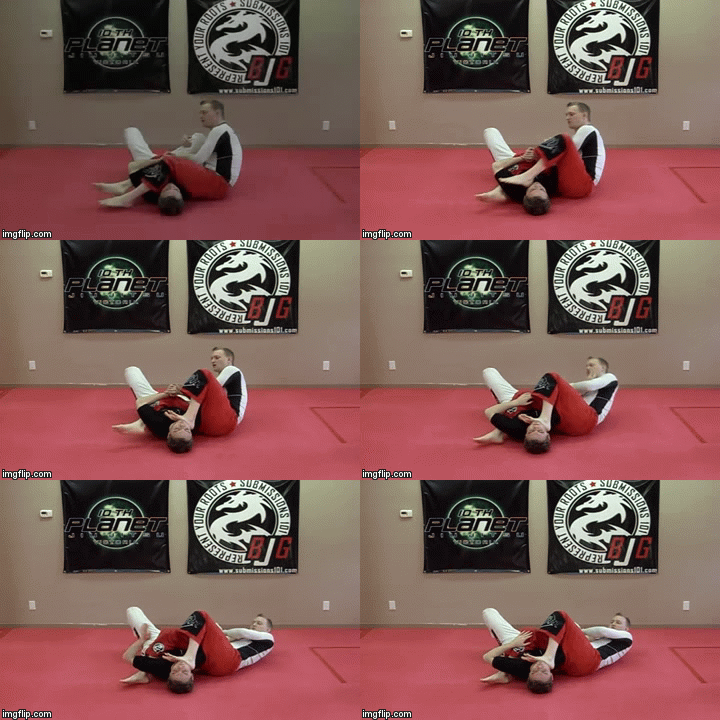
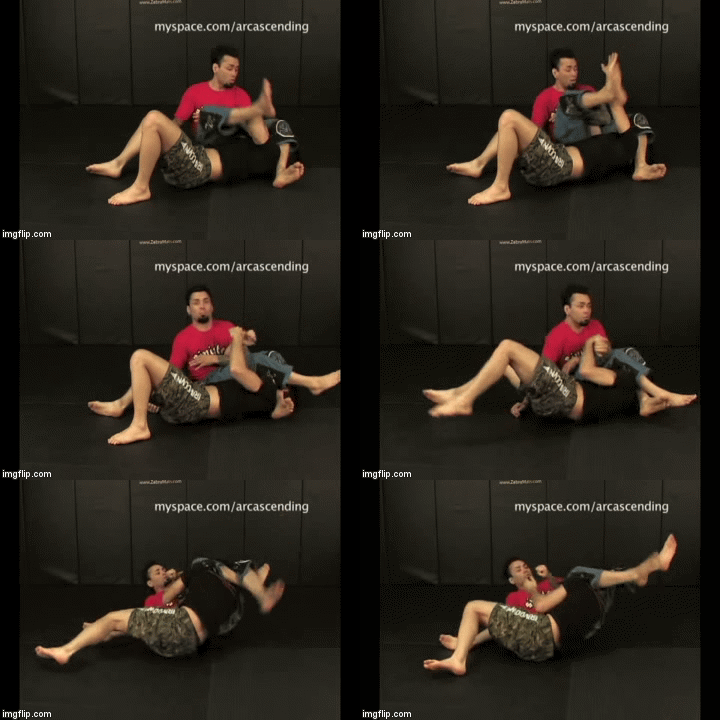
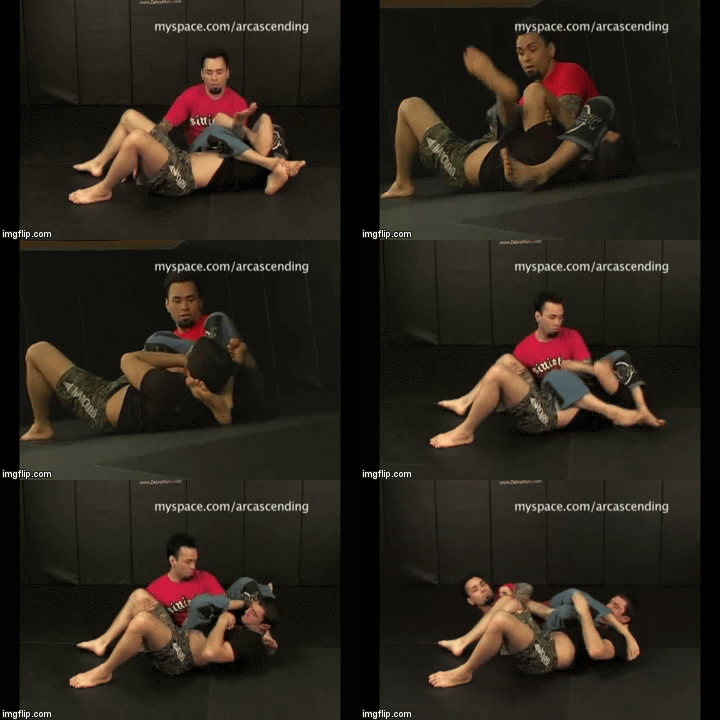
Another great aspect of the spider web is that the much-utilized hitchhiker escape simply doesn’t work. There’s a simple mechanical reason for this. The fact that you’re using the outside arm for the deep hook, forces their elbow towards their hips which makes the hitchhiker escape useless. There’s simply no way to rotate the head enough without tearing away the shoulder completely.

  • Submission Options

Spider Web PositionSo, the option to finish the match. Of course, the first choice submission is the armbar. There are several ways to break the grips, each more effective than the other. Special mention to the Douchebag grip break, which is unstoppable as its name is appropriate. finishing the armbar might require you to go on the back in a quest for better leverage. The fact that you have the leg trapped means you’re completely safe from being stacked. When the grip breaks, remember to use both hands to control the wrist. This keeps the leg hooked while taking away all options of resistance.

Spider Web PositionIn situations where the opponent’s grips are unbreakable (not likely with the Douchebag) there are simple follow-up options. Namely, sometimes people are going to look to get up on their knees by trying to remove one of your legs. This opens up enough space for you to thread the shin of the leg that’s on the chest over their shoulder. Boom, you have an instant triangle, not to mention still keeping the armbar option.

Spider Web PositionAnd, for all, you brown belts and above, who like to play by IBJJF rules here’s a sneaky one. The opponent has their arms gripping for dear life? No problem, just throw the shin of your inside leg over the arm you’re attacking. Use the other leg to make a triangle and you have the tightest biceps slicer you’ll ever get.

  • Entries Into The Spider Web

Getting to the spiderweb is where things get really fun. Namely, despite your usual mount/S-mount entry, there are several other ways to get to the position.

Spider Web PositionOne great option is to get there from the back. When things are not working out for you from the back, look to transition to the spiderweb. You’ll need to angle off your body slightly to the “under” side and keep the seatbelt grip in as long as possible. Once you have the angle, get the “over” arm inside their arm and get the deep hook. All that’s left is to get eh leg over their head and hook the leg.

Spider Web PositionA very cool entry option is also the rolling entry. Off an arm drag (or against the turtle) look to have one leg hook in. The goal is to place your forehead on the mats and place the deep hook in (while upside down). From there, look toward the opponent’s feet, grab their foot with your free arm and roll over your shoulder. While in transition, look to place the leg hook in and finish by throwing the second leg over their head.

  • Transitional Pathways

If things are not working out for you from the spiderweb (which is unlikely) you can always look to transition out. We already covered the triangle as an option. Now, we’ll look at other dominant positions available.

One thing you can easily go for is the back. All you need to do is give your opponent the possibility to move in the desired direction. To achieve this, simply take your leg off their head. they’ll attempt to get up immediately, allowing you to get a seatbelt on and look to finish from the back.

Spider Web PositionA very cool transition option is into the honey hole position. When stuck in a spider web, look to place the knee of your inside leg all the way on the mat and against their hips. Keep a tight control and try to pull their leg and arm together as tight as possible. The opponent’s reaction is going to be to open up, which will allow you to release the deep hook and throw the leg that’s over the head over their near side leg. From there you’re just a butt scoot away from the honey hole and a reverse heel hook.

  • Skill Requirements

To sum it all up, let’s give all fo you beginners some peace of mind. Yes, the spider web is applicable to all belts out there. Al it takes is a basic understanding of the armbar submission. So, if you have more than six months experience, and you like armbars you should look into the spider web position. Just remember to stay away from biceps slicers if you’re training and competing under IBJJF rules. At least until you’re a brown belt.

Related Articles:

The Ultimate Open Guard Masterclass For BJJ
Pin And Submit At The Same Time From Twister Side Control
What A Year Of Doing 10th Planet Warm-Ups Has Taught Me
Lockdown, Electric Chair Sweep And The Nastiest Submission In BJJ

BJJ Brown Belt Instructor Attacked On The Street

Lamorinda BJJ instructor Mozart Gutierrez was attacked today on the streets of San Francisco and he displayed a fine self-defense execution without the use of excessive force. Something that should everyone do in a street fight if it’s possible.

Mozart Gutierrez was able to control his attacker forcing him to give up on the attack without any consequences. This is exactly what Brazilian Jiu-Jitsu teaches you and you’re able to execute it without any problems on almost anyone and especially on someone without any training.

If you check the video of this self-defense you’ll be able to see some pretty weird comments about this fight where the BJJ coach didn’t want to inflict any pain on a guy who attacked him. Here are some of the comments:

“Pretty sure the homeless guy was harassing him and swing first. Definition of self-defense”
“are you beating up civilians on your commute to work?”
“I think you lose empathy from the public to get help when you take the guy to near unconsciousness. An extreme length of self-defense turns into what looks like retaliation of pain to bystanders passing by. Not everyone walking down the street is a jiu-jitsu enthusiast and can appreciate looking at someone in distress like that. Regardless of who the “victim” or “attacker” is. I don’t blame ppl in the vid for reacting how they did.”
“Far from self-defense. This was just an attempt by Mozart to be his cocky self and beat up on a mentally ill homeless guy. Go use your BJJ on someone who will put up an actual fight. Let’s see your “self-defense” there.”
“Little Asian man thinks he’s big! wow!”

And there are other comments supporting BJJ Instructor in this street fight:

“I’m shocked he stopped I thought he would stop when that dude was choking on his tongue on the floor I mean he can go home on a stretcher At least your walking and alive today, see how many crazy homeless people are in San Francisco? Do you know how many shooting stabbings and muggings they commit? LA has a HUGE problem with homeless men and woman carrying guns on their person with no CCW or approval cause THEIR HOMELESS! Straight up if a homeless man attacks me or my family he’d be lucky if he wakes up in a fucking hospital, causes like I said when some junky attacks you for no reason and a lot of them got guns, you don’t walk away, and you don’t fucking talk. you choke them the fuck out and disarm their ass till the cops get there to arrest both of you and you can explain to them (a sane person) that a homeless man attacked you or your family and your defending your life.”
“So what are you supposed to do in San Fran let people accost you? People should ask and assist if needed. That hippie stuff doesn’t work when someone is trying to hurt people.”
“Unbelievable. A smart and capable man defends himself and the public shame him and makes him look like the villain. Smh”
I’ve certainly been attached before and in return received no help from bystanders looking on. Let’s use common sense here. ?. Two people saying they were attacked. A man in a defensive position holding another man and when getting up afraid of being attacked again. If the Asian man was the aggressor, he would’ve thrown punches. I sense a bias in you……”
“Pretty sure the homeless guy was harassing him and swung first. Definition of self-defense”

“Nobody willing to call the police or help out is just sad. Is everyone quick to want to help the attacker tho? Only in San Francisco!”
“Cameraman should’ve gotten choked out, “let him go before I kick your ass” yeah right!”

If you check the video the BJJ Brown Belt instructor Mozart Gutierrez was obviously saying that he was attacked and was telling people around to call the cops.

The weirdest thing in this situation is that some people around want to help the attacker and no one is saying they’re calling the police. We can say that people are saying he’s homeless, what we don’t know, and it really doesn’t matter in a situation where he’s attacking people.

So, when you’re attacked, you won’t let the guy walk away just like that simply because you’re not sure he won’t attack you again. What if he let him go and a guy pulls out a knife or any other kind of weapon? Would that be a risk to your life and the people around you?

To sum it up, the BJJ instructor didn’t do any damage to the guy in this street fight. He didn’t kick him, didn’t punch him, he didn’t make him bleed or have any consequences. He just made sure the guy is calm and won’t attack him again. Wasn’t that the best thing he could actually do?

If you ask me, the only wrong thing Mozart Guiterrez did here that he crossed his ankles but luckily for him the other guy doesn’t know how to ankle lock him 🙂

Mateo Juric

Check out the video and tell us what you think:

https://www.instagram.com/p/BlG6B7vFHXW/?taken-by=lamorindabjj

BJJ In A Street Fight & The Most Effective Moves

Street Fighter Dojo Storms BJJ Gym to Challenge Jiu Jitsu Instructor to a Boxing Match

Royce Gracie: I won’t Teach my Students Anything that Doesn’t Work on the Street

How to use Brazilian Jiu-Jitsu in a self-defense Situation on the Street

Jiu Jitsu Guy With No Takedown Skills in a Street Fight – FAIL

Rubber Guard: The Meathook DVD by Brandon McCaghren

Rubber Guard: the Meathook

Every time someone mentions 10th Planet Jiu-Jitsu people picture Eddie Bravo straight away. The enigmatic founder of the franchise is an unforgettable character, that’s for sure, but he’s not the only one. The 10th Planet community features a lot of very talented high-level grapplers. One great example everyone has heard of is Geo Martinez, and Ebi champion and ADCC veteran. Another name you might not know so much is Brandon McCaghren. Although not in the spotlight, he is probably the best teacher inside the system. So, when he comes out with an instructional, you should buy it immediately. And with a catchy title like Rubber Guard: The Meathook DVD, you better hurry up!

Simply put Brandon’s Rubber guard: The Meathook DVD is as comprehensive a guide to 10th PLanet’s signature guard system as you can get. So far, Eddie Bravo has a few instructionals that address the position, but nothing recent. Given the constant evolution of the position, thanks to the input of the many black belts Eddie now has, the rubber guard has come a long way since then. Brandon McCaghren is by far the utmost authority on anything 10th PLanet (perhaps second to Bravo only). He has immense knowledge of Jiu-Jitsu and has a great knack for teaching.

ON SALE:
Rubber Guard The Meathook by Brandon McCaghred DVD/DIGITAL
Brandon McCaghred Rubber Guard The Meathook Technique List

Rubber Guard: the Meathook DVD Review
Techniques List

As far as the legitimacy of the position goes, the rubber guard works. 10th planet members have been super successful in grappling, combat Jiu-Jitsu, and even MMA. The rubber guard is a very elaborate system that might seem like more fuss than it’s worth. Once you give it a try, though, you’ll never look into other closed guard variations. It’s that good and that effective. And, to dispell the most common myth straight away, freakish flexibility is not a pre-requirement. Yeah, you read that right, even the stiffest of grapplers can be effective from the rubber guard. How? Brandon McCaghren has the answers.

A Look At Brandon McCaghren

Since most of you probably never came across Brandon McCaghren until now, let’s shed some light on this mysterious grappling genius. As far as BJJ nerds go, Brandon is right up there with the best of them. He is completely obsessed with Gentle Art. Although faithful to the 10th Planet system he is a huge part of, Brandon tends to have a deeper teaching style. In that sense, he is more alike Firas Zahabi and John Danaher than the free-flowing artistic Eddie Bravo. It is a very nice contrast to the usual way of 10th Planet instructions, which makes him the premier coach to demonstrate the system.

Brandon became a black belt under Eddie Bravo in 2016. An impressive fact about Brandon is that when he began training, he didn’t really have a coach or resources at his disposal. It’s hard to imagine a world without video instructionals today, but that’s exactly how Brandon started. Since Eddie Bravo was not near him, he had to learn by trial and error. As painstakingly slow as this process is, it’s is effective nonetheless. Ultimately Brandon turned into the most detail-savvy grappler out there, and a great teacher.

One more thing to note is the time and effort Brandon McCaghren puts into being a better teacher. he is constantly discovering new and improved ways of teaching and communicating with his students. This is apparent throughout the Rubber Guard: The Meathook DVD, which is his first digital release. Hopefully, there will be plenty more to follow.

Rubber Guard: The Meathook DVD Content

Before we get into the content of this great new release let’s do a rubber guard crash course really fast. The rubber guard is basically a closed guard variation in which your legs and arms connect behind the back of your opponent in specific ways. This allows you for constant control of their posture as well as plenty of attacking opportunities. the system is very elaborate and has lots of small maneuvers and positions within it. All of these are originally named by Bravo, who likes to put funky names on every step of a technique.

One such crucial component of the rubber guard is the meathook. It is a painful way of improving your control over an opponent while creating a great opening.  Why would you focus so much on just one same adjustment within the guard? Read along, or better yet, get the DVD and everything is going to become crystal clear!

The Basics

Rubber guard: The MeathookDVD
Click to Watch Full Technique

Since the inner workings of the rubber guard are not commonly known among grapplers, Brandon takes it from the very top. Rubber Guard: The Meathook DVD number 1 is all about rubber guard essentials. It all starts with some flexibility advice as well as crucial points on hip placement. It turns out the angle of your hips is much more important for rubber guard than flexibility.

From there on it’s all tuber guard classics, with a modern twist. All of the basic positional checkpoints, like Zombie, NY, Chill Dog, Ju Claw and the rest are there, explained in great detail. Before the DVD concludes, Brandon goes over the easiest submission to get from the rubber guard – the Omoplata. At the very end, there are a few essential modern rubber guard concepts like the sorcerer and invisible collar to tease you over what’s coming next.

Introducing The Meathook

Finally, meathook. What is this meathook we can’t seem to stop talking about? Well, let’s put it this way. If you stick the meathook when in rubber guard you can do whatever you want to your opponent. Just like a meathook in a carcass.

Basically, what Eddie Bravo calls the meathook is armpit control with the palm. You can achieve this by putting a hook grip into an opponent’s armpit, over their shoulder. However, the manner in which you get it (from the rubber guard) involves much more tangles and positioning. Fear not, Brandon dumbs down everything to the bones, so much so that even I got it from the first attempt.

In terms of the meathook though, Brandon expands the concept to other positions as well. Butterfly guard, Z-guard and lockdown entries might turn out to be a better fit for certain grapplers. The final touch in this second DVD is the few Gogoplata setups that round it off.

The Stock, The Carni, And Other Wicked Stuff

This is where things turn, err, strange. The third volume goes deep into 10th Planet territory both in terms of techniques and nomenclature. For your everyday Gi student, a glance at the content of this DVD is going to be as foreign as looking at a Tai Chi release. Once again, Brandon is there to make things painfully simple.

There’s no way around the 10th PLanet terminology but there is a system to help you understand it. From the Stock, via the Churchill handshake all the way to the Carni, you’ll learn moves that are as effective as their names are fun. There’s no way of explaining them here that’s going to do them justice so just pick up the DVD and learn from Brandon himself. Al I’m going to say is that if you’re looking to turn an opponent into a pretzel, you need to learn the Carni.

Deep Into The Rubber Guard

Finally, McCaghren goes over all the possible directions in which the rubber guard game can expand. One great example is the mounted rubber guard. Sweeping from the rubber guard is simple if you follow all the rules. What’s really cool about it is ending up in mount while still having the rubber guard on. I doubt many opponents are going to be able to get away from there.

Some very cool finishes follow the basics of the mounted rubber guard. The Monoplata is one such submission that ties in the rubber guard with other submissions perfectly. Once you have it the door is open to inverted armbars, Locoplatas, the straight jacket and everything else you might think of. Oh and the best thing? Even if you get reversed, you just end up in a rubber guard again. There’s no way out once you master the Rubber Guard: The Meathook DVD.

ON SALE:
Rubber Guard The Meathook by Brandon McCaghred DVD/DIGITAL
Brandon McCaghred Rubber Guard The Meathook Technique List

Rubber Guard: the Meathook DVD Review
Techniques List

Jiu-Jitsu Gear Essentials To Keep In Your BJJ Gi Bag

Jiu-Jitsu Gear Essentials To Keep In Your BJJ Gi Bag

Jiu-Jitsu is a martial art that requires a lot of accessories to make your training comfortable. Even in terms of customary training apparel, you need many more pieces than just your Gi. As years go by and you become a true BJJ addict, your Jiu-Jitsu gear is going to slowly grow bigger. This is due to the nature of the sport and the fact that your experience teaches you what you really need on the mats. Actually, it extends beyond the mats and includes pre and post-training items as well as an “emergency situations kit”. Let’s take a good look at the Jiu-Jitsu gear essentials you absolutely need to have in your BJJ Gi Bag with you every time you go to class!

So you’re all serious about Brazilian Jiu-Jitsu. You got your Gi and you’re all ready to conquer the grappling world! You even have your specialized BJJ Gi Bag all packed up. Hold your horses there, cowboy, as you still have a boatload of taps to go before you even realize what it is you’ve gotten yourself into. That said, once you accept the BJJ lifestyle you’ll soon find out that a Gi just won’t cut it. You are going to need a bit more Jiu-Jitsu gear than that, along with a suitable bag to place it all in.

Just like with any other sport, grappling requires specific JIu-JItsu gear to make training possible. As such, some things are absolutely essential for training Brazilian Jiu-Jitsu. For example, the aforementioned Gi. And a belt, never forget the belt! On top of that, you have the essential accessories you’ll need to get through training. And there’s also the gear that is not crucial but helps make you BJJ experience more pleasant. Especially once all those pesky little injuries start.

The Complete Jiu-JItsu Gear Guide

First of all, you need a good BJJ Gi bag or backpack. Here is a list of our choice of the Best BJJ Backpacks For 2021. Pick your favorite and let’s go train!

So, time to go to the gym. Grab your favorite BJJ Gi bag or backpack, throw the Gi in and go. Proceed to fume when you arrive there and discover that your belt is still on the drying rack. Furthermore, you left your mouthpiece on the sink. Now you got to get through class beltless (if your instructor allows it) and hope your teeth survive all rounds of rolling.

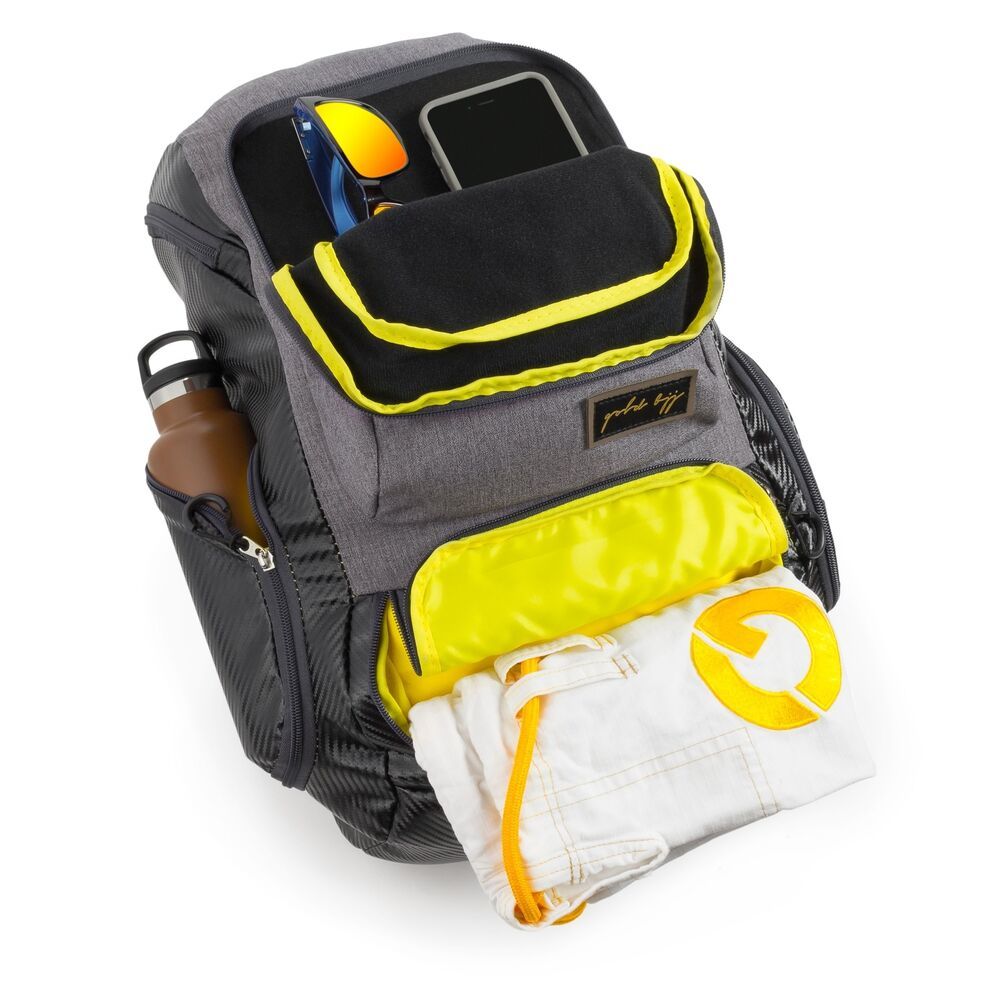
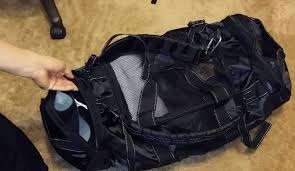
BJJ Gi Bag Essential Jiu-JItsu Gear Granted, I’m being a bit dramatic but it’s nothing you haven’t experienced so far at least once. The better approach is to have everything organized so that you’re sure that you at least have the minimum required Jiu-Jitsu gear on you at all times. This requires just a little bit of pre-planning on your part, and perhaps 20 minutes in a week to do an inventory. So, pick up your bag, turn it upside down until everything comes out (pinch your nose if you have to) and get ready to start packing. This is what you’ll need:

  • GI(s)

There’s really no point in mentioning this but stick with me. You need a Gi in order to train BJJ (unless you’re training at an exclusively No-gi gym). That means having both Gi pants and a jacket, preferably of the same variety packed in your BJJ Gi bag. Another very obvious point (yet somehow easily ignored by many) is to pack a clean Gi for every training session. If you’re new, wash your Gi regularly. If you’ve been training for a while, you already have at least a couple of Gis to rotate.

Make sure you have a good folding system for your Gi so that it doesn’t take up unnecessary space. Best case scenario, especially for those that train multiple times a day, is to pack a second backup Gi. Yes, it can be a logistical nightmare, so if you do not have space in your bag, you don’t need it. But if you can keep it there, by all means, have a backup!

  • Belt(s) 

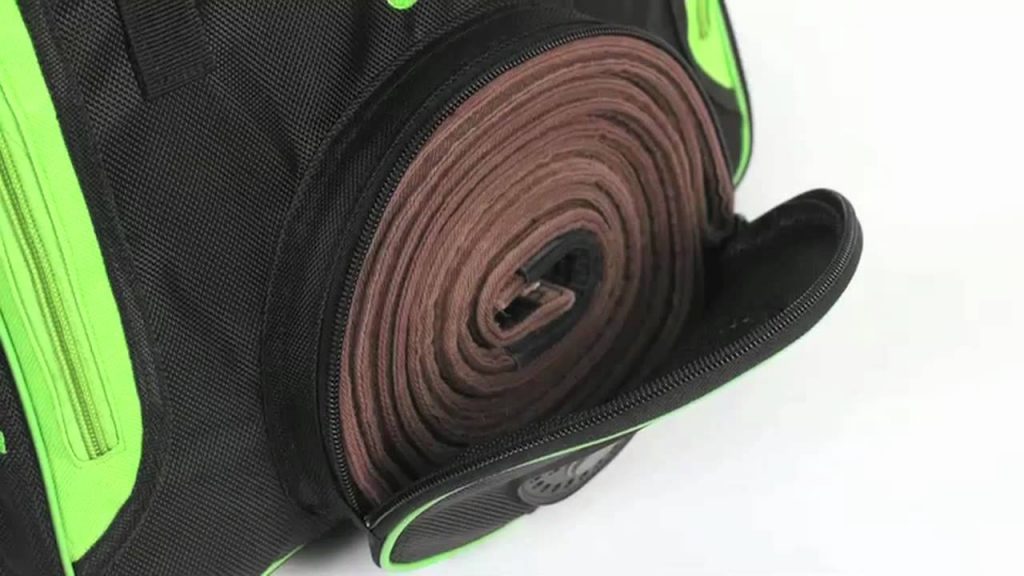
Packing your BJJ Gi Bag: Jiu-JItsu Gear essentials This is probably the one piece of essential gear that people forget more than anything. In all honesty, it is quite easy to misplace a belt after washing it. There’s an easy fix for this through – a separate pocket in your BJJ Gi bag. Designate one pocket of your gym bag to carry nothing but your belt(s). Before you train, when you pack your Gi in, sneak a peek into the pocket. It’ll turn into a habit very soon and you’ll never forget a belt at home again!

Once again, you can get a backup belt and keep it in your bag. Same pocket or a different one, regardless, this is the one certain way to never be without a belt on the mats.

Best BJJ Belts

  • No-Gi Gear

Now, this falls under the essentials even if you do not train without the Gi ever! As you should already know by now, you need to have a rashguard underneath your Gi, preferably both top and bottom. A rashguard and a pair of spats can do wonders in terms of protecting both your health and making your Gi last longer. Of course, a rashguard and spats need to be clean for every training session, so make it a habit to pack them with your Gi(s).

Secondly, if you have at least one No-Gi session per week, make sure you’re ready beforehand. Use your “inventory” time to pack a pair of shorts into your BJJ Gi bag. There’s no need to get them out until you use them, and you never know when you might need them. They do not take up a lot of space anyway.

The best BJJ Rashguards
The Best MMA Rashguards
Cheap BJJ Rashguards
Best BJJ Spats
Best BJJ Shorts

  • Protective Gear

This is the last crucial piece of Jiu-Jitsu gear you need to keep in your bag at all times. And, by personal protection, I mean a mouthguard. Along with the belt, this is another piece of equipment really easy to misplace. So, to avoid hiccups, assign it a permanent place in your bag. After training, get it out, wash it and leave it to dry where you can see it. Pack it back into the bag the moment it’s dry enough.

The Best Mouthguard
BJJ Mouthguards, How to boil it, mold & Why You Should Wear It
The Best Grappling Socks

  • The Injury Kit

When you start training, this is not going to be a priority. As the years go by, you’re going to need yet another whole compartment of your BJJ Gi bag to fit this kit into. The one mandatory thing is athletic tape, and, if you need them, scissors.

Next, you have all your supportive gear. Knee pads, ankle wraps, elbow braces and all the rest fall into this category. Of course, you favorite pain-relief product (most likely in some sort of balm form) should also be a permanent feature of your gear.

The Best BJJ Knee Brace
The Best BJJ Finger Tapes
The Best BJJ Elbow Pads

  • Personal Hygiene Products

I can’t stress this point enough. While you do not need it per se, a basic personal hygiene kit is really a must. For your own health, and for that of others, look to have an antibacterial soap with you. This is going to ensure you stay clear of stuff like ringworm, staph, and other pests that might lurk in a gym. Since you’re already showering, a small towel and a bottle of deodorant are also not hard to carry. Particularly when you have a specialized BJJ Gi bag.

A very important point is to never forget flip-flops, along with something to store them in. A basic supermarket bag will do, as long as they do not come in touch with anything else in your bag. Use flip flops to get around the gym (apart from the mats, of course).

And, all you ladies out there, have a feminine product or two, ready, in case of surprises.

The Best BJJ Soaps

  • Bottle / Shaker

This goes without saying but still, when you pack plan some space for at least your water bottle. If you’re like most grapplers out there you’ll probably need a shaker bottle as well. Whether you fill it up with state-of-the-art supplements or a Gracie diet smoothie, you’ll need to fit it in the bag.

The Best BJJ Shakers

  • Leisure Items

BJJ Gi Bag Essential Jiu-JItsu Gear Packing Finally, if you have the opportunity, have small pocket designated for everyday items. This is where you can keep your headphones, a phone charger, sunglasses, car keys, etc. This will work in reverse of all the other pockets in your bag. This is the pocket that’ll help you bring everything you need home from the gym instead of the other way around.

Best Training Bags
Best BJJ Backpacks

Wrapping Up

If you can make sure you get al lof the items above to fit in your BJJ Gi Bag, you’re truly ready for anything! In all honesty, though, you probably do not need every single item at any given time. However, make sure you at least have all your essentials packed neatly, and make it a point to keep everything clean. To that extent, never leave sweaty Jiu-JItsu gear in your bag any longer than absolutely necessary!

Related Articles:

The Ultimate 6 Ingredient Post-Workout Shake For BJJ
What Is The Best BJJ Finger Tape, How To Use It & Why
Why Wearing A Rashguards Under The Gi in BJJ Is Important

The Best Guillotine Choke Escape Options And Counters

Guillotine Choke Escape. Defense, Counters

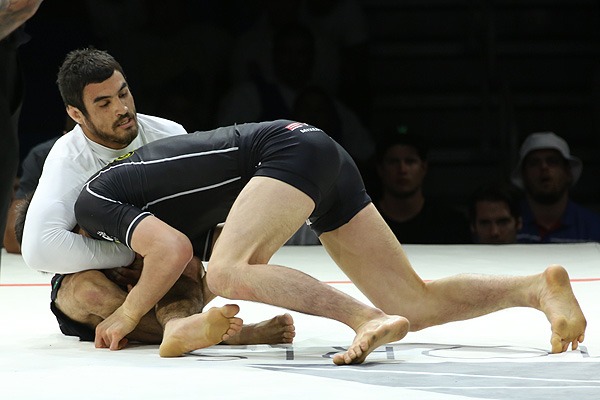
Getting submitted is not an easy thing to get over. The whole “there’s no ego in BJJ’ thing aside, nobody likes to get submitted. Whether you’re a beginner or a fairly experienced grappler, submission is the one thing everyone hates. As it should be, of course. A submission is the ultimate form of surrender and nobody likes to lose. As far as submissions go, probably the scariest category is choked. That familiar feeling of going through the tunnel is not something people like to experience. And there’s one tight choke out there that can make this unpleasant experience to a whole other level – the guillotine choke. So, let’s focus on understanding it and discover a guillotine choke escape that’ll get you out of this dreaded submission.

The guillotine choke is one of the “basic” techniques in BJJ. people learn it fairly early in their journey, especially if they train mostly No-Gi. The trouble with the guillotine choke is that it is both efficient and painful, due to its mechanics. namely, it follows all BJJ principles: strong position, a high degree of control, and plenty of variations and follow-ups. For those that know it, it’s an almost certain way of finishing a match. To put it short, getting caught in a guillotine spells trouble. Luckily there is more than one guillotine choke escape, and there are also counter submissions to consider.

Escaping the guillotine is not an easy task precisely because of all the variations of the choke. Getting out of a Marcelotine is not the same as escaping an arm-in guillotine choke. And there’s the standing guillotine as well… All this variety means that you need to primarily understand how the choke works before you look to escape. Once you know how the choke works, you can do the needed adjustments that are going to get you out of danger

Learn further ways of escaping the Guillotine as well as any other submission you can think of! Tom DeBlass has the pedigree of an un-submittable grappler and shares all his knowledge in detail through his “Submission Escapes” DVD. Check it out and never worry about being in a bad spot again! 

Understanding The Guillotine Choke

The guillotine choke is a tricky one. It can double as a blood choke and as an air choke, which makes it very difficult to defend against. Furthermore, these two variations are easily interchangeable back and forth, constantly tightening the choke. For that, you need to identify three main areas and systematically work to block each from working if you want a guillotine choke to escape to work.

The first threat during a guillotine choke is the opponent’s arms. Regardless of the type of guillotine, the grip under your chin is crucial, as it provides the connection needed to complete the choke. Break this connection, and there’s no leverage to finish a choke.

Secondly, body positioning. The guillotine requires your opponent to be in front of you, which leaves your hips more or less open for movement. Not many people can finish the submission like that, so control over the hips and your posture is crucial. Your opponent is going to look to utilize their legs in order to keep your hips from moving. If they know what they’re doing, they’ll place the legs so that they make counters really difficult as well. This is a second thing you need to address because if you can’t get out of the position, an opponent can re-grip and still finish.

Finally, you need to understand direction. There are some directions in which you simply cannot move unless you want to tap or nap. So, you need to familiarize yourself with the execution of the guillotine, so that you can understand where its weak spots are. Moving the wrong way is going to ensure you’ll tap out. Also, be wary that your opponent is probably going to try to funnel you in such a direction deliberately.

Dealing With The Guillotine

First things first, the “regular” guillotine. For this, the opponent has a grip established around your neck, gripping underneath the chin. Both your arms are free in this scenario, which you’re going to use to your advantage. Let’s start with a guillotine from the guard.

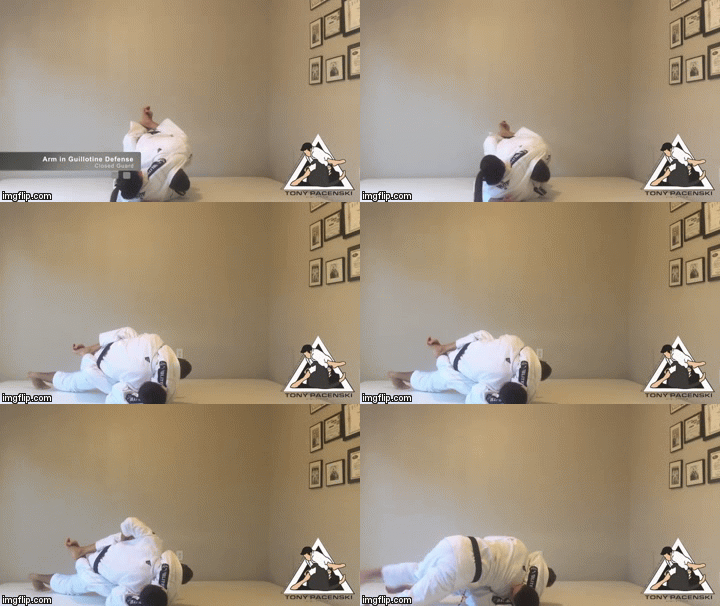
Guillotine Choke escapeYour first step is relieving pressure on the neck. To do this, you need to pull the opponent’s arms away from your neck. Since their grip is in the way, you’ll only be able to create a little space. To begin with, use the arm that’s on the choke side to hook the palms of your opponent. The goal is to pull your elbow towards your hips, not towards the ground. This is a more powerful configuration of your arms as opposed to pulling downwards. To further relieve pressure, get up on the balls of your feet and push forward.

This brings you to the second step – breaking their positional structure. The fact that your second arm is free is huge here as it’s going to help you establish an even better position. Simply place it around the opponent’s neck (like for side control) and keep your shoulder close to their head. To do this you’ll need to place your head on the mat, which is further going to relieve pressure. You can now release the wrist grip to push on their near side leg and open the guard.

Finally, remember to move towards the opposite side of the choke. Otherwise, you’ll just choke yourself unconscious.

Arm-In Guillotine Choke Escape

This is a guillotine choke variation in which the opponent has your arm stuck in their grip along with your neck. This can make it particularly hard to resist as they’ll be pushing your shoulder into your neck in addition to direct pressure with the arms. So, we follow the three steps we outlined before. For the sake of simplicity, let’s say you’re already in a full-blown arm-in guillotine from the closed guard.

The first step is wrist control. Once again, you’ll look to control the opponent’s wrist with one arm only. This time, it’s the arm that’s free. Once you grab the wrist take your elbow in to have breathing space.

Defending the Arm In Guillotine The second step requires a bit of clever positioning on your part. For starters, you need to try and keep the trapped arm’s elbow as close to your body as possible. This further reduces the choke’s tightness. In order to achieve it, you’ll have to place your arm all the way back, palm on the floor. Next, you need to look away from your opponent as much as possible. Only then can you think about moving.

In order to defeat their structure, you’ll need to shift your body to your side(opposite of the choking side). Remember to constantly stay on the balls for your feet. To break free, you can release the wrist control and push down on their hip which is going to land you straight into side control. That’s where you’re safe from a guillotine.

Standing Guillotine Escape 

The standing guillotine choke is a very nasty move to get caught with. As such, defending it requires a bit of different positioning, since the mechanics are different from the feet. Braulio Estima has a great way of defeating the standing guillotine.

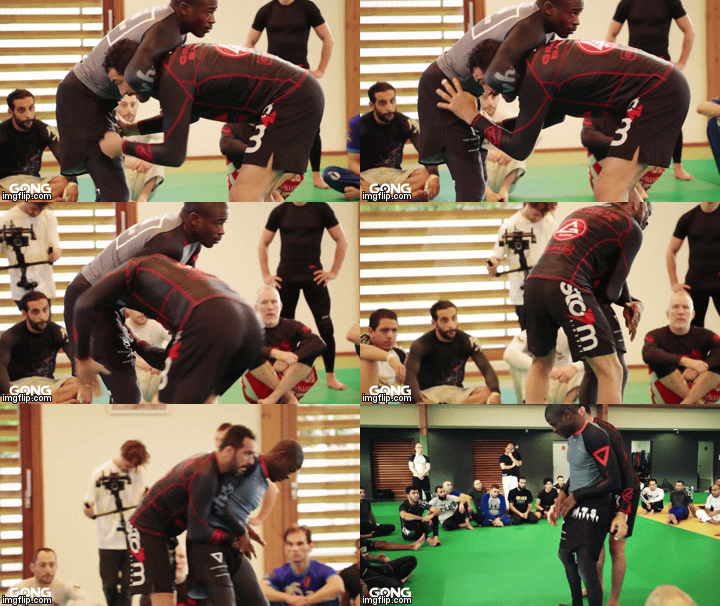
Guillotine Choke counterIn the case of the standing guillotine, you can skip the first step. There’s no need to go for the wrists, as you’ll utilize an angle change to deflect pressure. To achieve this you first need the space to move. The first thing to do when in a standing guillotine is to get your hips back and place your arms on the opponent’s thighs. This will open a V-like shape in front of your head.

Next comes the angle change. In order to beat the guillotine, you’ll need to use this V-like space to thread your head all the way to the other side of the opponent’s body. This renders their guillotine useless. Simply put your hands around their waist and you can get on their back.

The Von Flue Counter

When you end up in top side control after defending a guillotine on the ground you can finish with a counter choke of your own. Although the regular guillotine defense is the easiest way to do it, you can get it from an arm-in guillotine defense as well.

Von Flue Choke Guillotine CounterThe goal is to place your shoulder (that’s already close to their neck) directly on their carotid artery. to achieve it, you need to be on the balls of your feet. Another crucial thing is that an opponent has to keep hold of the guillotine grip. If they let go, you’ll most likely fail to finish. In any case, the Von Flue choke is a powerful submission and if you time it right you can get a tap in a second.

Related Articles:

Guillotine Choke: Basics secrets and Variations 
How To Make The Standing Guillotine Choke Work For You
A Complete Marcelo Garcia Guillotine Choke DVD Review

A Few Crazy BJJ Guillotine Variations To Brighten Your Day

Standing Guillotine Defense Techniques You Must Know

Reverse De La Riva Almanac 2018 – Seph Smith DVD Review

Reverse De La Riva Guard almanac

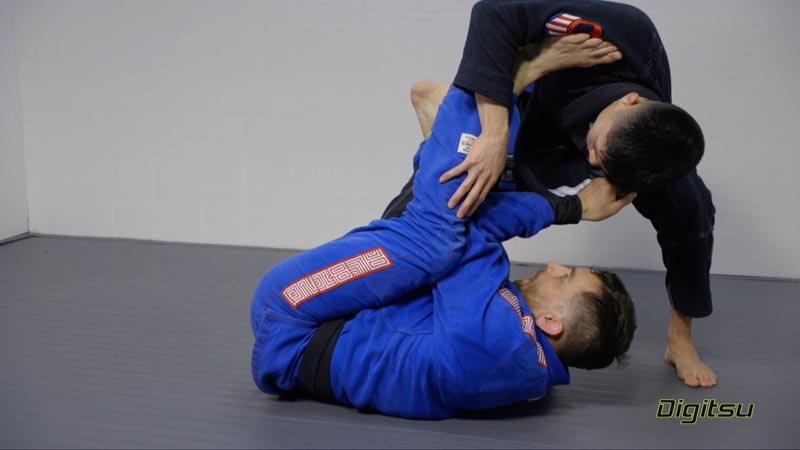
As far as open guards in BJJ go, not many are used more than De La Riva guard variations. Basically, you can connect De la Riva guard to anything and get a hybrid open guard. De La Spider guard, De La Worm guard, and the likes are quite useful ways of innovating from open guard. Another is simply reversing the control. Reverse De La Riva guard might not be as fancy as other variations, but it is undoubtedly efficient. For those looking to dominate opposition from the guard without complicating things, RDLR is the way to go. The man to teach it to you is Seph Smith and the teaching tool of choice is his Reverse De La Riva Almanac 2018 Edition DVD set.

Ever since the Mendes brothers started spinning left and right from the De La Riva, this old-school guard got a resurgence. Berimbolos suddenly became a craze and spread through the BJJ community like wildfire. Soon everyone was trying to roll around their opponent, looking for back control. This resurgence of the De La Riva saw the guard evolve into a whole family of sub-positions, some more effective than others. In terms of application in both Gi and No-Gi as well as simplicity, hardly any of them is better than the Reverse De La Riva guard.

So, you should probably get down to AOJ and learn the secrets of the De La Riva tradecraft from the Mendes bros, right? Well, not quite. There’s a great resource out there, and a brand new one at that. Even better, the instructor is one hell of a teacher. His name is Joseph Smith and he is an expert when it comes to the Reverse De La Riva. If you truly want to understand the position, and eventually master it, then the “Reverse De La Riva Almanac” DVD is for you.

ON SALE HERE:
Seph Smith – Reverse De La Riva Almanac 2018

Reverse De La Riva Guard
Techniques List

Who Is Seph Smith?

So, you’re probably asking yourself who this Joseph “Seph” Smith is? Let me refresh your memory. Remember Ryan Hall? Sure you do, he is the guy whose DVD instructionals are mandatory learning material for any student of grappling martial arts. IF you haven’t seen anything from him you’re either new to the game or you’re doing something wrong. Now, back to Seph Smith. Remember the guy who is Ryan Hall’s assistant across most of his digital releases? Well, he also happens to be Hall’s first-ever black belt and the main culprit behind the RDLR Almanac DVD.

Seph started his Jiu-Jitsu journey much like many of his contemporaries. In 2001 he only knew he wanted to train martial arts so he did. JKD, Kali, Muay Thai, BJJ, he dabbled in everything. It turned out, however, that grappling was the best fit for him. he shod grat dedications from the beginning, traveling 2 hours in one direction just to train. He met Ryan Hall at Lloyd Irvin’s academy and when the phenom decided to leave, Seph followed.

As Ryan Hall opened 50/509 Jiu-Jitsu in Fall Church, Seph stayed on as a teacher. Ryan awarded him with his black belt and Seph stayed helping him with the academy and his DVD releases. A few years back, Speh decided to open his own academy, Upstream BJJ in Richmond, Virginia where he teaches at present.

Reverse De La Riva Almanac DVD Contents

INtroduction out of the way, it’s on to the meat and potatoes of the DVD. Why this exact DVD? Well, there are a few reasons to go for it, to be honest, even before you know what’s inside.

Reverse De La Riva DVD
Watch Free Techniques

The first reason to go get this DVD is the subject matter. The RDLR got shunned to the side in light of all the le lock madness in the past few years. This was due mainly to the fact that the regular Reverse De la Riva opened up leg attacks for the top person. Well, this might’ve been true a few years ago, but not anymore. The RDLR evolved, just like everything else that works in BJJ and is now past that particular problem. This means that you have a very potent guard that is not complicated to learn and works against opponents of all sizes. With Seph Smith’s help, you’ll also make it un-passable and turn it into an attacking position.

The second reason is, of course, the coach. Any Ryan Hall black belt is a great choice for me, and especially his first one. Seph has a very similar teaching style to Ryan, focused on details and fun to listen to. Just like him, Seph has the ability to point your focus to what truly makes or breaks the position, and has a conceptual approach to BJJ.

Finally, there’s production. The “Reverse De La Riva Almanac” is a two DVD set with a total running time of 215 minutes. That’s nearly four hours of highly detailed RDLR material to make you a true master of the position. Furthermore, the production is clean, the chapters are marked very precisely and there’s zero dead time.

ON SALE HERE:
Seph Smith – Reverse De La Riva Almanac 2018

Reverse De La Riva Guard
Techniques List

DVD 1 – The Half Guard Shell

This RDLR instructional starts slow. In fact, it starts so slow that you have to wait until DVD #2 to actually learn about the Reverse De la Riva. And this is exactly as an instructional should be. Seph kicks things off with a position that is essential for developing a killer RDLR – the half guard shell.

After a short introduction, Seph describes the half guard shell in a precise and extremely detailed manner. He focuses on the things that make this guard work, and how to maintain it with ease as a go-to defensive position. After all, there’s no guard game without a guard recovery strategy!

Reverse De La Riva ShieldWhen the mechanics of the guard are clear, it’s time to move on to more attacking setups. The first in this progression are sweeps, namely a Marcelo Garcia inspired sweep that works like a charm! Following suit are great combinations that include off-balancing, sweeping and submitting your opponent. Very useful chains that make sense and are extremely easy to follow.

The half guard shell is the perfect base to build an RDL game upon, and Seph explores every sweeping option before moving on. Seph uses a BJJ classic – the underhook to open up half a dozen sweeping opportunities that require next to no energy to complete.

DVD 2 – RDLR Almanac

Finally, time to start messing around with the RDLR! The second DVD is noticeably longer than the first, as it goes deep into the world of De La Riva. It picks up right where the previous volume ended.

Seph offers a complete system by connecting the half guard shell directly with the Reverse De la Riva. After some basic configuration notes, Seph goes straight into attacks. There are all your basics sweeps from the RDLR as well as the essential Omoplata setup. However, once the basics are out of the way, Seph opens up brand new horizons.

Namely, he begins with the Jedi mind trick Ryan Hall loves so much and offers unique concepts around the Leg Drag. From there it gets really interesting. Berimbolo back takes, reverse half guard attacks and the awesome Long Hook concept are just some of the features that are going to revolutionize your guard game.

Finally, Smith wraps up this great DVD with a few concepts on pass prevention. The RDLR’s one big weakness, apart from leg locks, was the leg drag pass. Seph offers a great solution to this conundrum along with a footlock for good measure.

Reverse De La Riva Almanac 2018 – Seph Smith DVD Techniques List:

DVD 1:

  1. Introduction
  2. Half Guard Shell
  3. Recovering The Shell
  4. Marcelo Hook Sweep
  5. Arm Drag | Crotch Lock | Rear Naked Choke
  6. Arm Drag | Crotch Lock 2 | Rear Naked Choke
  7. Defending Over Under Pass | Triangle
  8. Twist Sweep
  9. Back Roll Sweep | Kimura
  10. Shaolin Lapel Sweep | Kneebar
  11. Securing The Underhook
  12. Knee Torque Sweep
  13. Butterfly Hook Sweep
  14. Half Guard Breakdown
  15. Leg Shelf | Back Take
  16. Bonus: Drills Part 1

DVD 2:

  1. Half Guard Shell | Reverse De la Riva
  2. RDLR | Back Roll Sweep | Kimura
  3. RDLR | Modified X Guard | Technical Stand Up
  4. RDLR | 2-on-1 Grip | Scissor Sweep
  5. Platform Arm Bar | Omoplata
  6. RDLR | Jedi Mind Trick | Leg Drag
  7. Jedi Mind Trick | Twister Hook | Back Take
  8. Reverse Half Guard Control
  9. Reverse Half Guard | Leg Drag
  10. Reverse De La Riva | Thumb Down Cup Grip
  11. Spinning Under Opponent
  12. Long Hook | Spinning Back Take
  13. Long Hook | Spinning Back Take 2
  14. Long Hook | Armbar
  15. Long Hook | Berimbolo
  16. Quick Low Single
  17. Leg Drag Pass
  18. Leg Drag Pass Counter
  19. Leg Drag Pass Counter | Footlock
  20. RDLR | Twister Hook Back Take
  21. RDLR | Twister Hook Back Take 2
  22. Drills Part 2

ON SALE HERE:
Seph Smith – Reverse De La Riva Almanac 2018

Reverse De La Riva Guard
Techniques List