

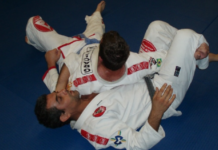


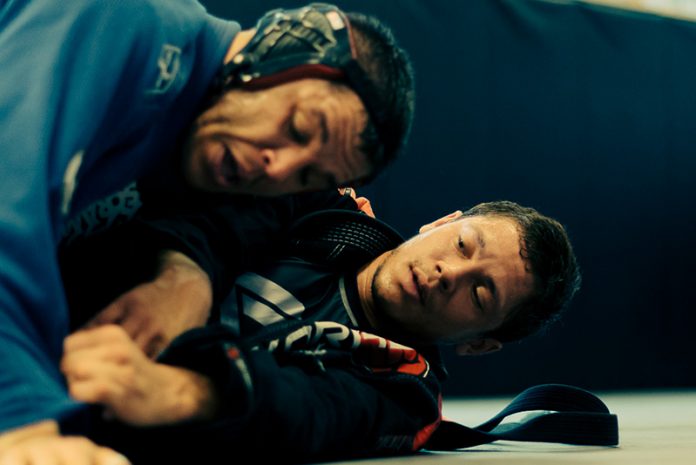
Where would we be if we had to train BJJ on our own? Well, I guess we’d be at this point in time, trying to make grappling dummies out of pillows and old Gi tops. Jokes and pandemic lockdowns aside, training Jiu-Jitsu requires two people (at the very least). Even in online programs, it takes a partner for it all to make sense and for real progress to ensue. That said, the more Jiu-jitsu partners we have to train with, the better we will become. Now, not everyone we train with is a great training partner, so let’s take a look at some of the traits that make a great jiu-jitsu training partner.
One of the main reasons why we enjoy training BJJ so much is the human connection factor. Say what you want, but everyone needs human contact, and there’s nothing that delivers on than more than Brazilian Jiu-Jitsu. Granted this might not be the best time to talk about close contact with the Covid-19 pandemic out and about. However, the fact still remains that we need a Jiu-Jitsu partner to actually training the art/sport. That also means other people need us, so why not try our best to be a great training partner for them?
Value Your Training Partners
If you’re reading BJJ World regularly, you’ve surely seen the quote I’m about to use. It is a quote my professor old me really early on in my Jiu-Jitsu journey and it stuck with me. What he said was this: “The most valuable material possession we have are our bodies. That means that every time we train, we give someone our most valued material possession to use and play with. If they “break it”, we won’t want to extend the same courtesy to that particular training partner again.” This really sums up how important a good jiu-jitsu partner is for training.
It doesn’t matter what belt you are, as a BJJ practitioner you need to make a clear distinction between what a training partner is, and what an opponent is in a competitive match. Sadly, I see people not making this particular distinction way too often. In competition, your goal is to win. That doesn’t mean you need to destroy your opponent mercilessly, but you should be aiming to apply your BJJ knowledge in a way it was intended to. Training, on the other hand, is akin to just playing around.
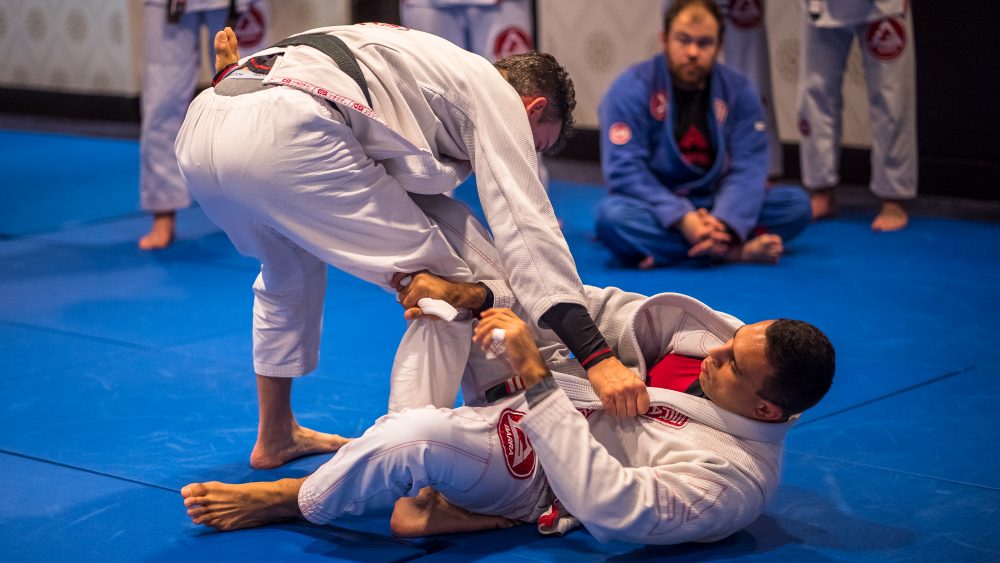 The value of a great Jiu-Jitsu partner is huge. Given all the different types of people that come to train BJJ, you’re bound to end up with different types of training partners. In fact, you’ll surely bump into the type that nobody really likes to train with. However, you’ll also meet those that make everything enjoyable and fun, not to mention helping you actually learn things. While every type of training partner, even those ‘bad” ones has value, it is the great training partners that we come back to over and over again. That begs the question what type of training partner are you, and what should you do to be considered a great jiu-jitsu partner?
The Marks Of A Great Jiu-Jitsu Partner
There are certain things that really set some jiu-jitsu partners aside from others. In that sense, it doesn’t matter if they’re higher or lower belts. There are higher belts that spaz out completely, as well as lower belts that roll as calmly as Hello Gracie themselves. So, belt color is not important right off the bat.
What matters are the traits that make every roll, drill, or technical practice with a certain training partner an enjoyable experience? As much as trying to strangle one another can be enjoyable, of course. In any case, if you know the marks of a great jiu-jitsu partner, you might just adopt some of them you might be lacking to become a great one yourself. Here is a selection of the most important ones:
Hygiene
This goes first, and I won’t dwell on it. Simply reading the word “hygiene” needs to be enough. Especially now, in the post-Covid-19 world, where people are freaked out about cleanliness and health anyway. If you’re sick, stay at home. Wash your Gi, wear a rash guard underneath, an trim your talons. If you really want to know more about personal BJJ hygiene, read this article.
Focus
One of the things that really puzzles me is the patience span of BJJ people. Despite knowing that we need to be patient, time things, and set traps, we all want everything to happen instantly. Often times, we end up unfocused and trying to do things that help neither us not the Jiu-Jitsu partner we’re training with. Focus is extremely important in training even more so than in competition, actually.
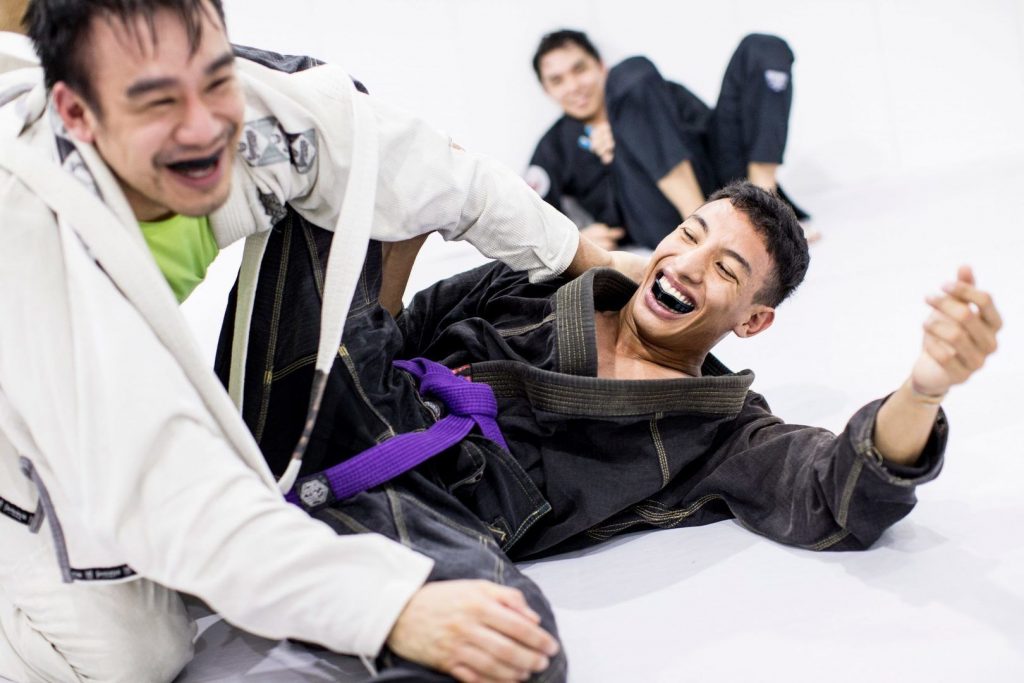 While it is not hard to leave everyday worries and issues outside the mats (in most cases) people still have trouble focusing. The more they train, the more people like to experiment. However, not every time is good for experimenting. Whatever the topic is of class or drills, stick to it. It is all fine if you want to practice Keenan’s latest lapel guard, but your partner might actually want to learn what is being shown. Stay on topic and work on the task. That’s what great training partners do.
Be Welcoming
Once again it doesn’t matter if you’re’ a three-stripe white belt or a brown belt. When new people walk in be welcoming. There’s no need to act stuck up and look down on folks. Remember how you felt the first time you needed to pick a jiu-jitsu partner for a roll? Stay cool, welcome people, explain things to them and help them along the way. You can learn something form every roll, even if you’re a black belt rolling with the person that just signed up.
Drill, Don’t Kill
Also very important. Drilling is one part of BJJ that most of us get wrong. People usually either dedicate too much or not enough. Both are examples of not being a good jiu-jitsu partner. Coaches usually set both goals and tempo for drills. Respect them. If you go too hard, it turns into position sparring, and that’s not the intention of drills. If you just go through the motion, you’re actually doing the other person a disservice.
So, drill as the instructor says, even if you don’t like that particular drill. One day in soon, your partner might not like a drill but they’ll shut up and be a good partner about it because you were.
Be In Control (Of Yourself)
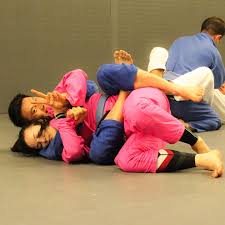 If I had to choose one trait of a great Jiu-Jitsu partner for training, apart from hygiene that would be the ability to stay in control. This extends far beyond controlling an opponent. By control, I mean that you’re controlling your temper, emotions, and situations that arise at all times. Control is knowing that you need to tap and when to tap. Control is also knowing that an opponent should; tap, but they’re not being wise about it. Letting go of that submission and going on with the roll is also a form of self-control.
There’s no place for revenge submissions because they caught you, or deciding you’ll do a move at all costs. That quickly spirals out and you turn into a spaz. If you want o e a good training partner, you need to keep a clear head and always be in control of your emotional state.
Tap
You’ll never learn Jiu-Jitsu if you don’t tap. And that doesn’t just mean tap to higher belts. Tap to everyone. Of course, they’ll have to earn it, but when they do, you don’t just bust out by force or some last-ditch move. Tap, let them have the experience and learn from it so that they have to work harder the next time. A good jiu-jitsu partner drags people up in training, not down. And the best way to do that is to tap out.
Communicate
As much as the physical aspect is important in Jiu-Jitsu so is the social one. Make sure you communicate with your partner at all times. Whether it is before a roll, asking if they’re ok, during, or after, you need to always be willing to talk. That doesn’t mean chat about anything and everything as you roll. But you do need to have feedback that concerns whatever it is you’re both doing.
If you’re a higher belt, you also have the obligation to always answer the questions you know how to answer to lower belts.
Support The Team
This is something that people really appreciate. Whether you show up to pair up with someone for competition classes even if you don’t compete, or show up at a competition as support, that is always welcome. It is also a trait of the very best Jiu-Jitsu partners out there. Just be there for your team, as much as you can. One day for sure they’ll be there for you as well.
In Summary
Training with a good Jiu-Jitsu partner can make all the difference. In reality, we can’t expect everyone to be on the same level, but if more people put just a bit more thought into it, we’d certainly see a lot more great partners and have more great rolls than average ones. And it is not that hard to be a good BJJ training partner. Or even a great one.

 The fact of the matter is, this is an important aspect of any meal plan. However, it is not just the psychological aspect. Okay, you have your Jiu-Jitsu diet plan, whether it is Gracie or another family’s all set up. How do you go about making it work? It is not about the plan itself if we’re being honest. The reason why most diets fail is that people can’t stick to them. So, the most important thing after picking your diet plan is to make sure it works for you. To make things easy let me put it like this: What worked for
 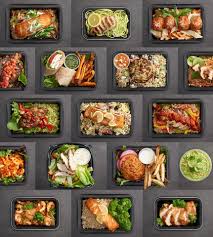 The holy trinity begins with a very logical step – become a prepper. Not a doomsday one, but rather, a meal prepper. Iт doesn’t take much to get into the habit of having a meal or two readies ahead of time so you just pop them out and go for it. Especially when you have to juggle between work, house chores, and training BJJ. Moreover, extend preparation тоyour shopping as well. Know what you’ll eat at least a few days in advance and do all the shopping at once. That way you cut back on needles time in supermarkets, plus you don’t’ have to figure out what to eat on a day-to-day basis.
 Apart from the incredible levels of antioxidants you get from different berries, they’re also an awesome source of energy without all the drawbacks of highly processed carbs sources. They’re also very rich sources of Vitamin C, as well as the immune-boosting ellagic acid. Plus, you can have them in liquid form if you use them in smoothies, rather than just having to eat them as part of your meals.
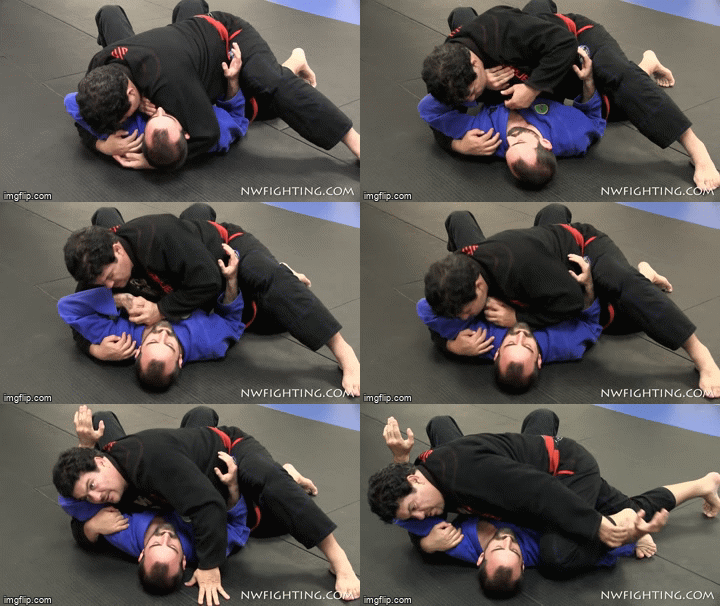 Setting up the position can be done from most side control variations. From a crossface position, the goal is to look and isolate the far side arm first. In many situations, this will be easy as opponents usually try and keep this arm near your neck in order to execute escapes. All you need to do is literally hug the arm, looking to place it on the shoulder that’s further from the opponent’s head. It will work if you hug it on the other side as well, but you won’t have as many attacking options. Only when you have control over the far arm should you go hunting for the other arm.
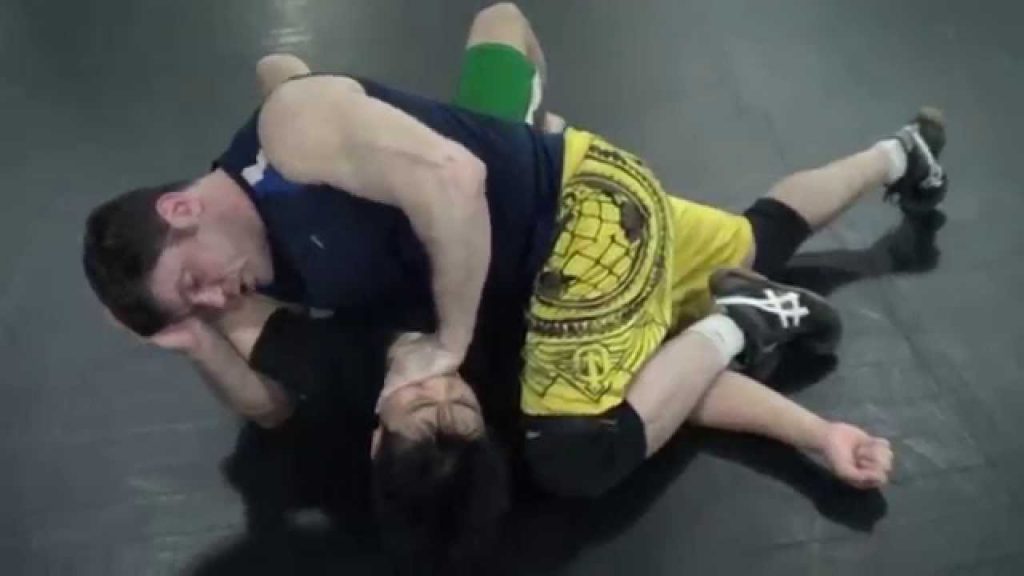 The side control crucifix is not a position people like to go for often, which really amazes me. In MMA it is a go-to spot for anyone in side control. When striking is involved, you get to be on top, with an opponent that has no arms to defend, and you have ample place to strike significantly. Not to mention all the submission side control crucifix attacks that are also available.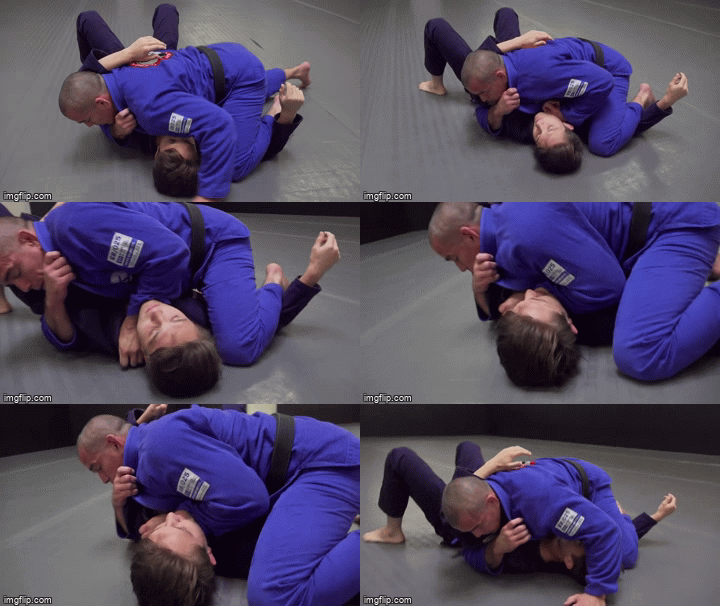
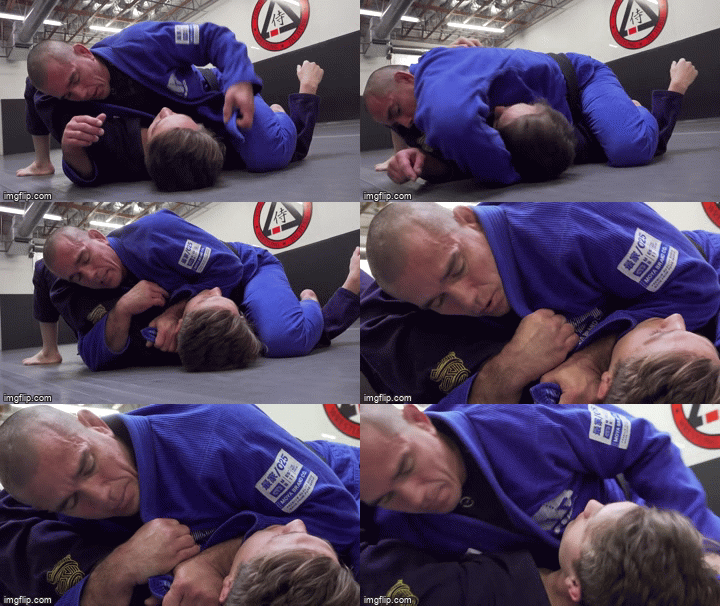
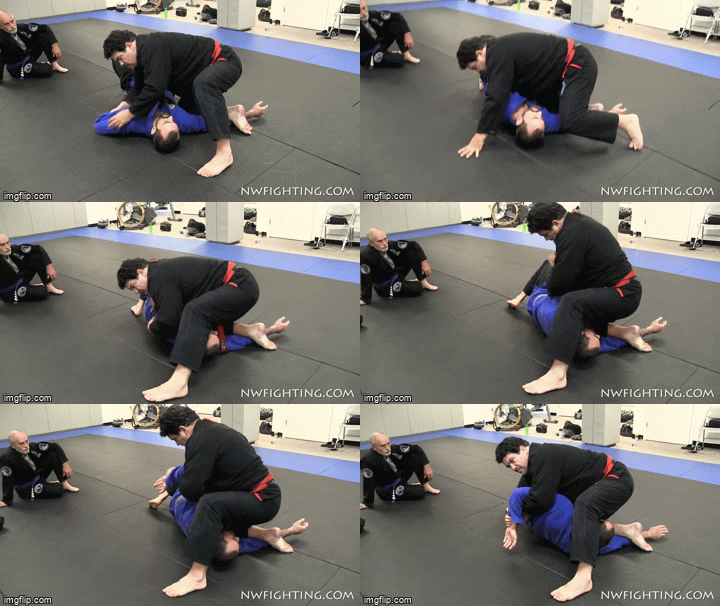 The Kimura
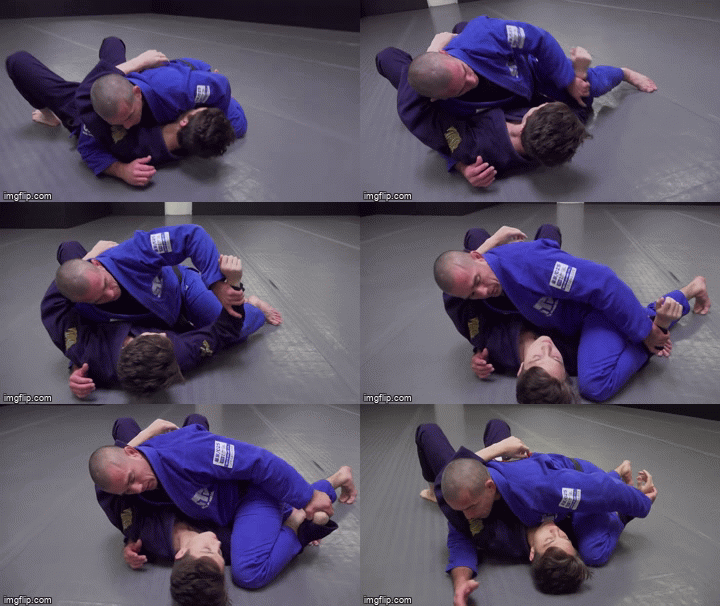
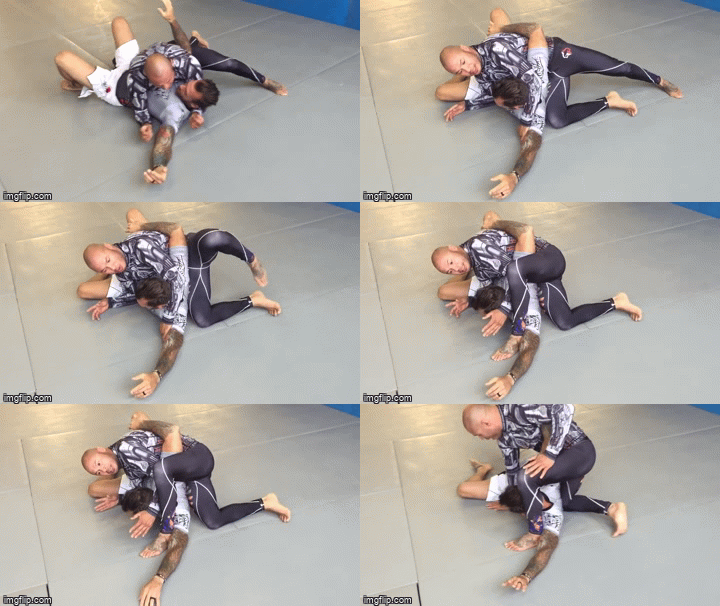

 Granted, I’m overgeneralizing things, but that’s intentional. In grappling martial arts, and particularly Brazilian Jiu-Jitsu we spend most of our time grappling on the ground. That is perfect, and it is extremely fun. We also do spend a considerable amount of time trying to find ways of getting a fight or a match to the ground. And in this case, I do consider
  In case you think there’s not much use of the BJJ skill of standing back up in sports BJJ, you’re very wrong. As discussed before, it is one of the three main things you can do when you’re in any guard. The guard can be a good neutral position if you set everything right. However, you’re never in a dominant position when you’re on the bottom, apart from wrapping someone up in a submission. In fact, if you think about sweeps more closely, they’re nothing more than ways of getting up while taking your opponent to the ground. You just don’t stand all the way up.
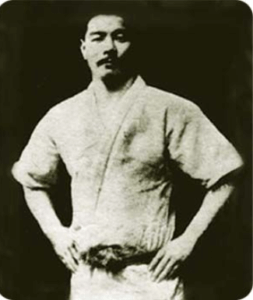 However, considering that Maeda also had other students (like Luis Franca) who ended up teaching future generations similar things, it does raise the question of how much did the Gracies really modify? Maeda was not just a Judoka, but also an accomplished catch wrestler who fought NHB fights around the globe. SO, it isn’t Kodokan Judo that he taught in Brazil.
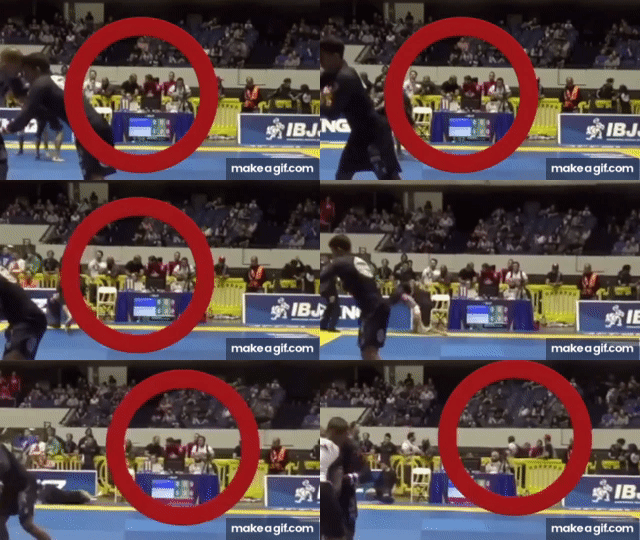 The latest example of a Gracie family member going berserk is when Ralph Gracie assaulted Flavio Almeida t at the 2018 No-Gi Worlds. Ralph approached Flavio on the sidelines, as Almeida was coaching one of his students that was competing at the time. After a short talk, Ralph, out of nowhere, elbowed Almeida in the face and followed up with a few kicks. The entire incident was caught on video and later turned out to be over gym territory in the area of San Francisco.
 There’s another instance of Renzo unleashed in NUC that is on a much bigger scale though. In 2014, along with Igor and Gregor Gracie, and several other grapplers, were involved in a night-club bawl with the bouncers that saw several bouncers end up heavily injured, including some broken bones. The Gracies were arrested and stood trial but got away with community service. The story went public and viral, though, as one of the Gracies’ more violent outbursts.
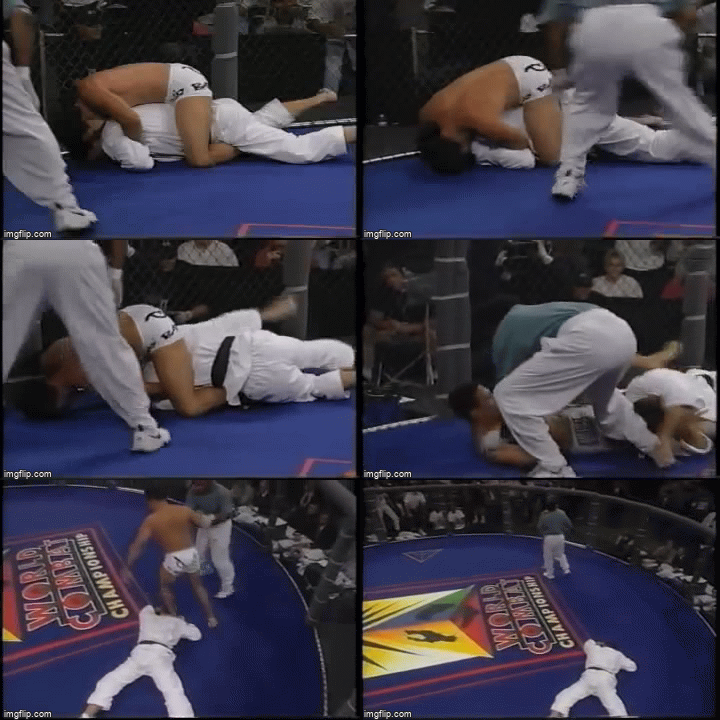 On another occasion, back in 1995, Renzo fought a Judoka named Ben Spikijers. It was only Renzo’s second professional flight, in which he managed to submit the Judoka. The controversy came after Renzo got up, and stomped on his opponent’s head after the submission. Surprisingly, he got off with just a warning from the referee and kept fighting in the tournament two more times that night.
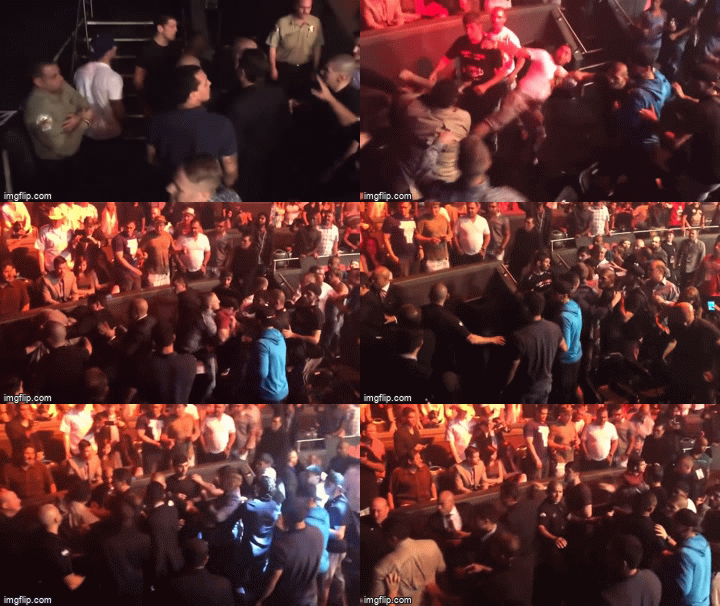 One more example of a Gracie family member brawling from recent history. Kron Gracie is known to hang out and train with the Diaz brothers, which are notorious as folks with a short fuse themselves. In 2015 at a WSOF event, Kron was involved in a brawl along with the Diaz camp when they faced off with Khabib Nurmagomedov’s camp right next to the WSOF cage. Krona was taken to the ground in the brawl and can be seen kicking upwards.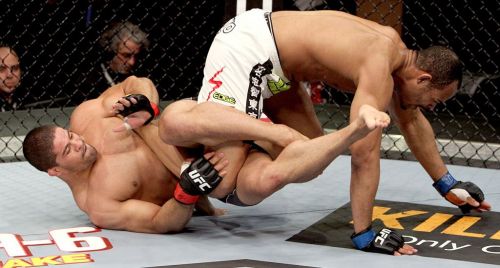
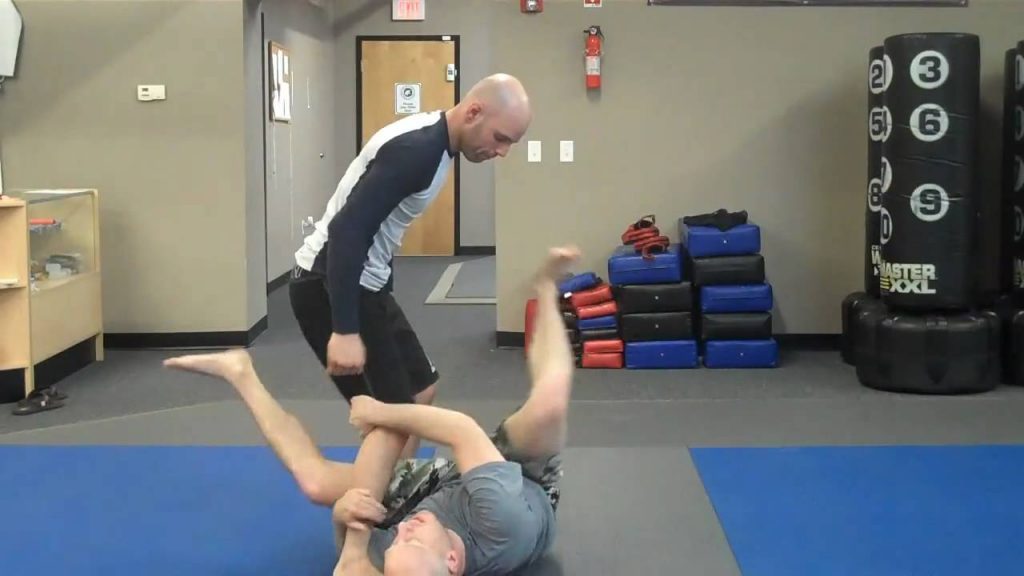 When I show people leg locks for the first time, they all tend to focus on the submission aspect of it more than anything else. This is understandable, as we’re talking about leg locks per se. However, the submission itself, or the breaking of the joint will only work with a high degree of reliability if certain conditions are fulfilled. Without going too much into the entries into leg locks I’ll just mention the basics once an opponent is down.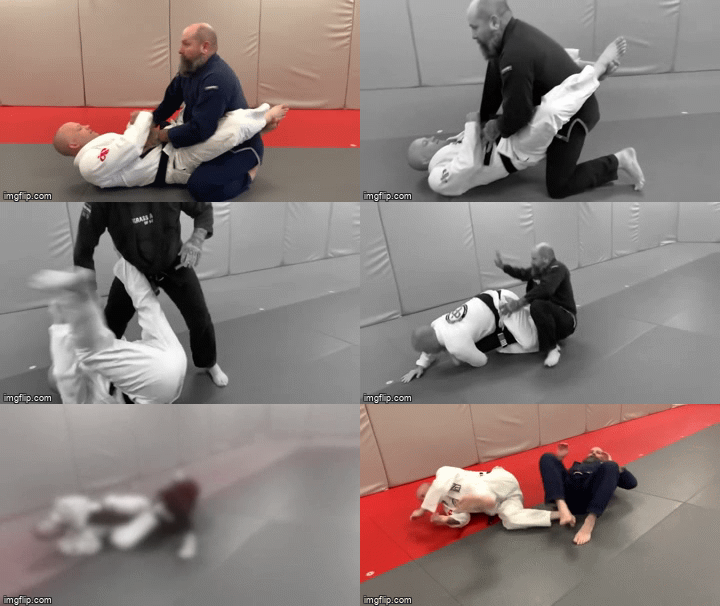
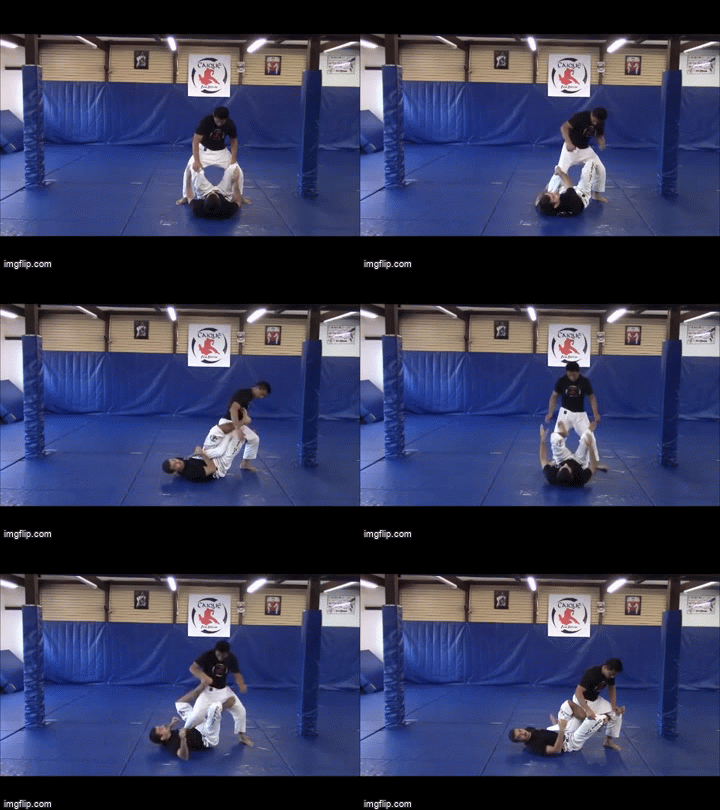
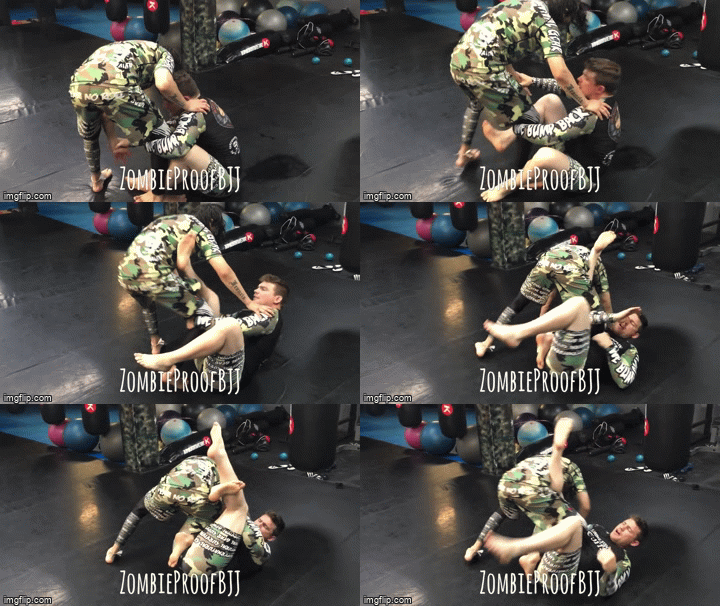
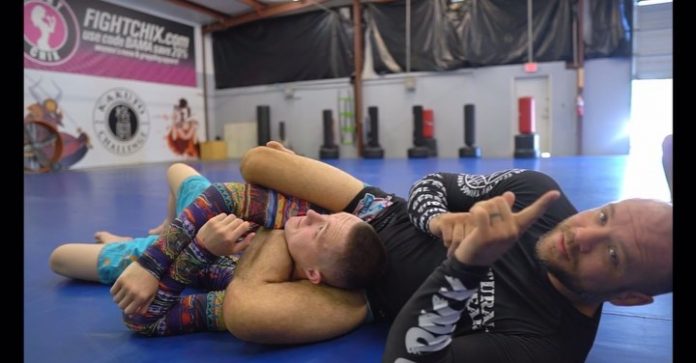
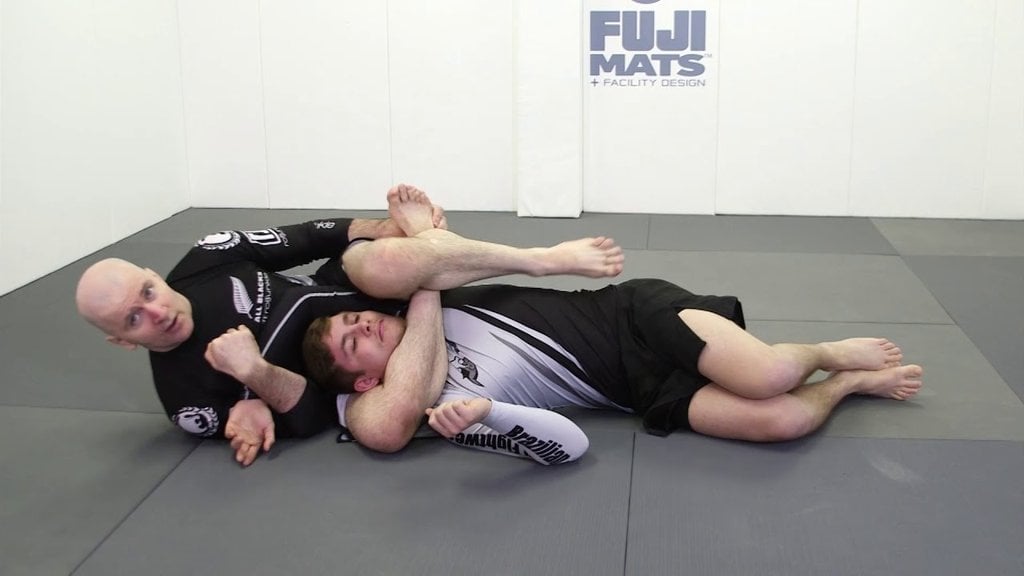 As the name suggests, the rear triangle is done from behind. The configuration you’re looking for is that same as with every triangle choke. What you basically want is to have one leg on the opponent’s shoulder, with the shin running across the neck to the opposite side. The knee of the leg that’s directly on the neck should be on the ground. This means that you’ll close the triangle on the top side, which also happens to be where you trap the opponent’s arm. As with all triangles, the point is to place the back of the knee of the top leg on the ankle of the bottom one, for the most powerful lock. Furthermore, if you can wedge the foot of the top leg behind the small of the opponent’s back, you’ll accentuate the lock even more.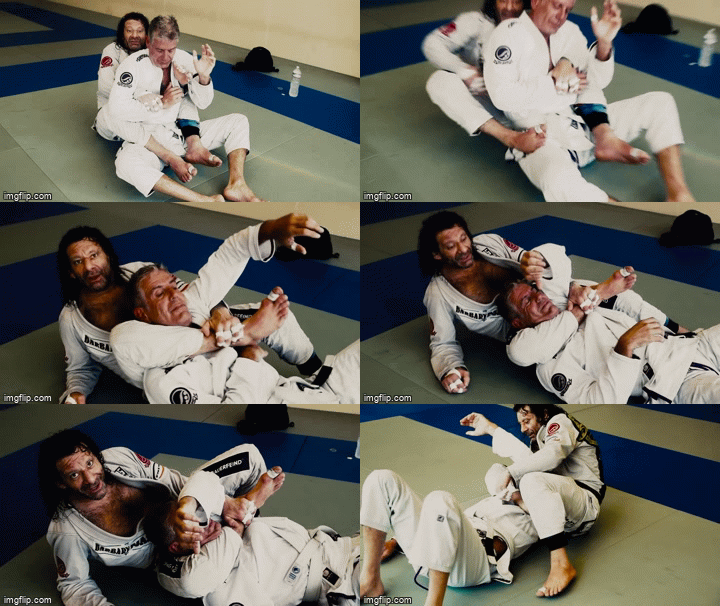
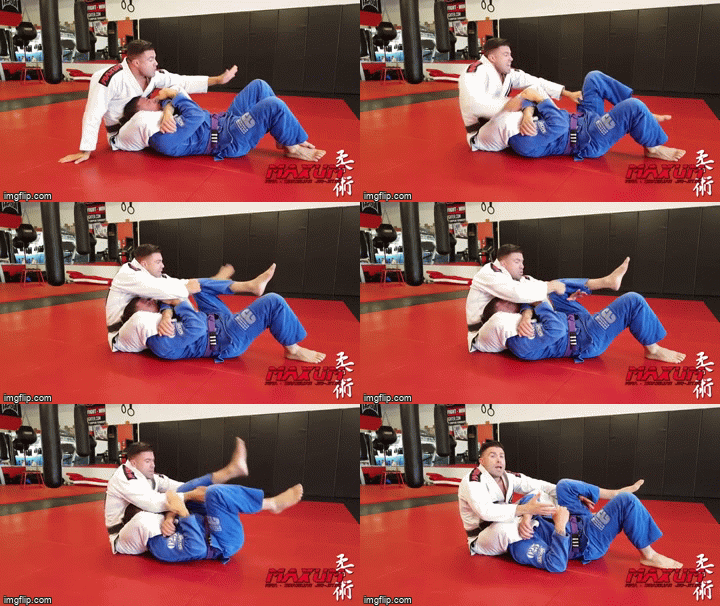
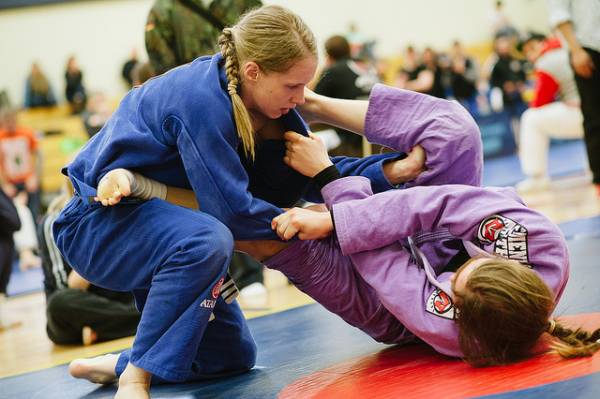
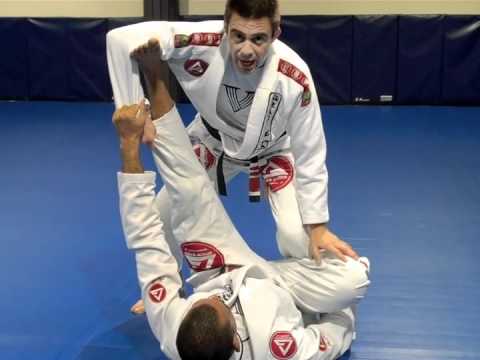 What is a defining trait of all the best guard players out there? If you analyze the game of all top players, Gi and No-Gi alike, you’ll notice several things that they all share. I’m not talking about the technical aspects of the game. What do the rubber guard and worm guard have in common? Apart from both being guards, you’d say not much. That’s not true. Both provide the bottom person with a position of safety first – there’s no direct route to passing. Both provide the guard player with anchors to latch on to their opponent. Moreover, both offer different directions and different attacks to allow the bottom person to achieve a submission or atop position. And these are just some of the similarities.
 Any guard in Jiu-Jitsu has the hips in focus. It can be directly (Reverse De La Riva Guard) or indirectly (Butterfly guard). In all cases, the goal is to control the hips of the opponent in two ways. One is the distance between yourself and them. The other is the ability to move their hips through space in order to off-balance them and execute effective attacks. While the legs usually control the hips, it can also be done with your arms, or with the lapels.
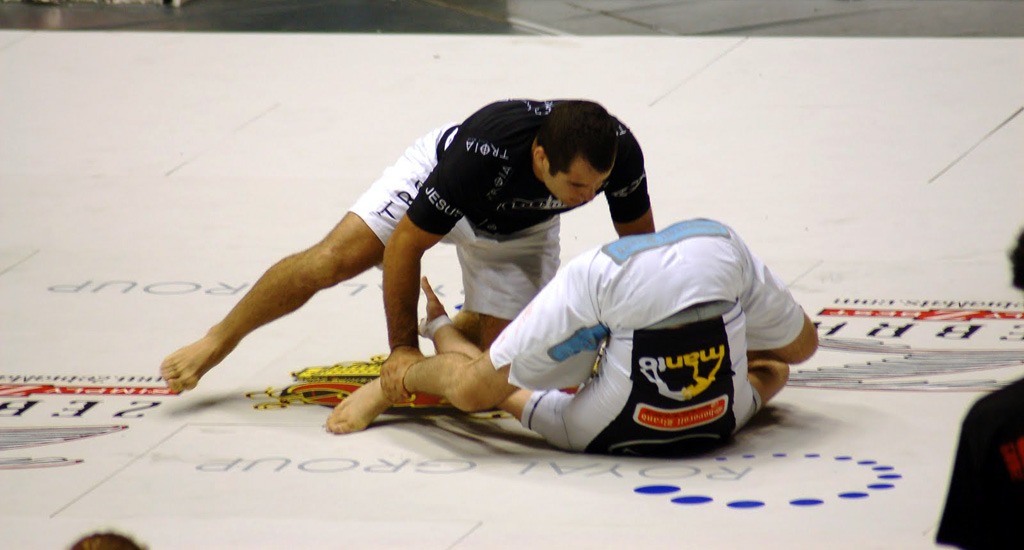 The idea is to never ever play your best move, or best guard for that matter first. Always have an option for “rain days” one which will get you out of trouble if things don’t go as planned. It can be as simple as a grip (think collar guard) or a hook (an active butterfly hook), or it can be an entire guard change, or even inversions and other moves that completely change the game in an instant. Whatever it is, the end goal should be to end up in a safe spot that you know you can get out of. As they say, it’s better to have it and not need it than the other way around.