



Brazilian Jiu-Jitsu is a complete martial art. It has its philosophy, its lifestyle, and even its own diet. The founders of the art came up with everything you need to make the BJJ lifestyle a wholesome experience. The Gracie Diet is a nutrition plan straight out of the Gracie household. Grandmaster Carlos Gracie came up with the system and it stuck. It is simple, it works, it is going to make you more healthy and it is going to keep you on weight.
In grappling martial arts, you can’t go far without proper nutrition. As athletic or technical as you might be, you won’t be able to outrun a bad diet. Hours on the mats followed by hours in the weight room mean nothing if you’re diet isn’t clean. One search on the internet is going to spit out countless results on the BJJ diet subject. Most of this area is a pure waste of time and has absolutely nothing to do with Jiu-Jitsu. luckily there’s the Gracie Diet. This is the one plan that can really benefit grapplers of all levels. And it is very easy to follow, despite the original impression that it is very complicated.
The Gracie diet is the brainchild of Grandmaster Carlos Gracie Sr. He developed the diet primarily for himself, but later put the whole family on it. Before you even consider it, though, know this. There’s absolutely no science behind the Gracie Diet methodology. Even Grandmaster Carlos Gracie Sr. is blatantly honest about this part. It is based on common sense and years of experimentation. Now, the one thing that should make you look into it is the fact that both Carlos and Helio ate in accordance with the Gracie Diet. Both ended up living for more than 8 decades.
A Few Gracie Diet Staples
The one basic principle behind the Gracie Diet is simplicity. What this means is that you eat food that your body can handle. Furthermore, you combine the food in a manner that optimizes the body’s ability to digest it. Also, there’s no overloading of the body and digestive system with constant snacks and timing. There’s hardly a diet that makes sense more than the Gracie Diet out there: fresh fruit, greens, some meat, cheese, and plenty of water.
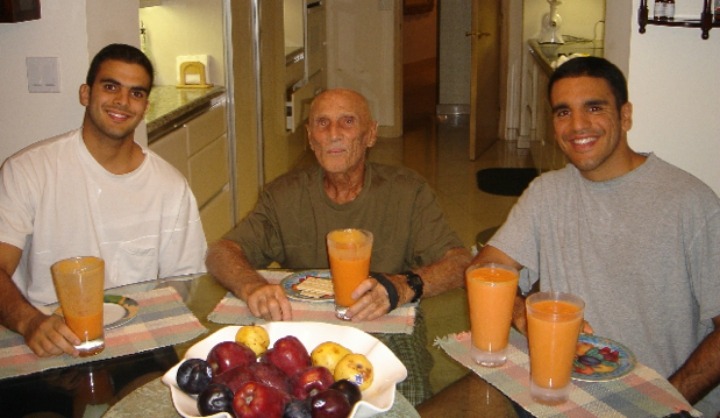
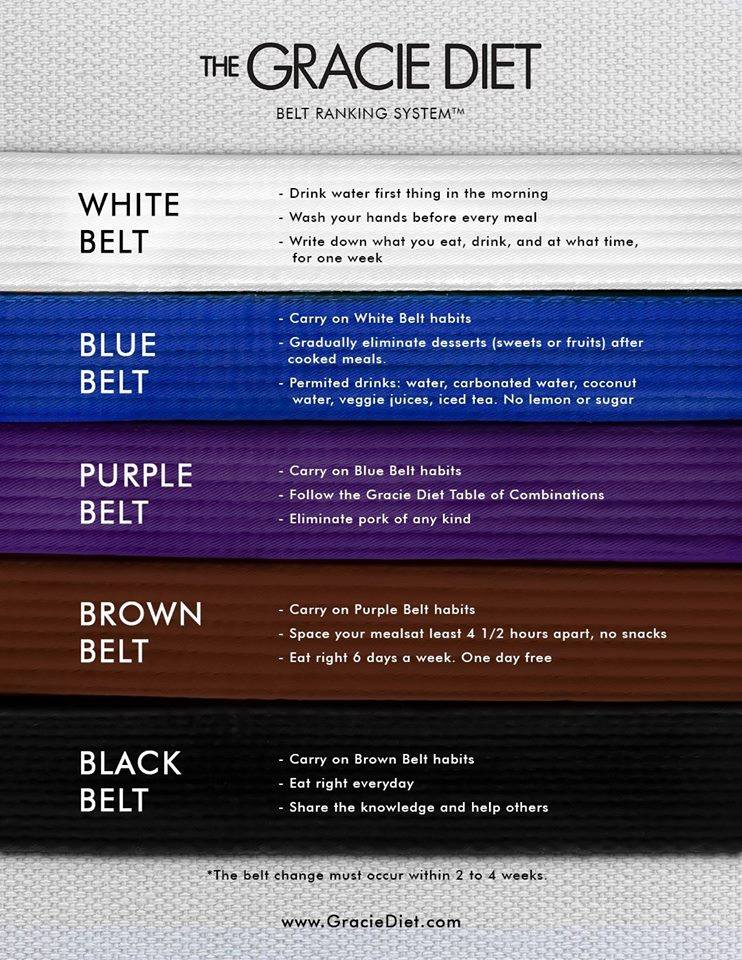 First things first, when to eat. If you’re lethargic and can barely get out of bed in the morning, the reason might be your diet. The reason is that you have a lot of food in your digestive system that the body still needs to break down. This makes it work during the night, which impacts rest and recovery. This is not to say that you should starve yourself before bed. Just make sure you eat enough to keep hunger away and not stuff yourself. Eat light before going to bed and, if you’re really really hungry, eat big but only vegetables. A good salad is never a bad idea, no matter the portion size. Another great option is fruit.
As far as time between meals, the Gracie Diet advocates for 4-5 hours. This is not in agreement with the bodybuilding-based system of eating every couple of hours. The basic idea is that you need to give your body enough time to process your last meal. Adding something every couple of hours means your digestive system is not getting any rest.
And finally, water. While you need to be hydrated at all times, you shouldn’t drink anything while eating. This dilutes the digestive juices, slowing down the breakdown of food.
https://bjj-world.com/george-lockhart-nutrition-dvd-book/
Fruit And Vegetables
If you’re on a diet that says fruit is bad for you, ban it immediately. Our bodies are made to process fruit, vegetables, and meat. So, excluding any of these categories is only going to negatively impact your health. Fruit is arguably the best food in the world. It takes very little energy to digest and it provides our bodies with a huge return. Least effort – maximum benefit. Just like with Jiu-Jitsu, isn’t it?
Furthermore, the only food that makes your brain work is glucose. The fruit has a high content of fructose, which can later turn into glucose. Fruit also has a very high content of water. 90-95% water means that fruit both hydrates you and feeds you at the same time. Eat fruit after getting up in the morning on an empty stomach.
Vegetables are not much of a puzzle. The Gracie Diet is no different than any other diet worth anything in terms of vegetables. Eat a lot of them, eat them often and make sure you have plenty of colors on your plate. Also, make it a daily habit to go for some dark leafy greens. I told you, it’s simple.
Easy On The Protein
There’s a widespread notion amongst athletes that they require huge amounts of protein. While this is true for certain athletes, like bodybuilders and powerlifters, grappling is very different. You need a body that works and has the energy for hours.
Just to make things clear – you absolutely need protein. A meal a day has to contain protein, at the very least. If it’s animal protein, perfect. If it’s a plant protein, you might need to look for a few supplements to complete your nutritional requirements.
But what about the myth that protein is good for, well, everything? This one has been debunked for a while now. Too much protein overloads your system with nitrogen, which can cause fatigue. Excess protein has been linked to osteoporosis, degeneration, and weakening of the bones.
The Food Combinations
So, we arrived at the very essence of the Gracie Diet. The basic thing that deters most people is that they see groups of foods that need to be combined correctly. The moment people see this, they think it’s too much of a hassle and they give up before even giving it a try. Personally, I also passed the Gracie Diet on a few occasions for the same reason. When I finally got to try it, though, it turned out I was wrong. IT won’t take more than a week, or two at most to settle into it. It is very simple actually.
 There are 6 food groups, each containing certain products. For example group, A contains vegetables and protein sources, along with healthy fats. Group B is all carbohydrates. Group C and D are fruit and cheeses and E and F concern milk, curdled products, and bananas. There’s a bit more to it than this, but this is the general situation.
So, when you sit for a meal, first, remember that you can’t have two carbohydrate sources at one meal. It’s either the bun or the potatoes with a burger, you can’t have both! Furthermore, all the protein and vegetables (and fats) go with each other and the carbohydrate of your choice. If you’re not feeling like eating meat, you can combine a carbohydrate source with fruit and cheese (group C). Just don’t mix meat and cheese.
The one small catch is group D. It is the “acidic fruits” category. Anything in this group should be eaten alone. There’s no combining it with other groups, or anything from the same group. Simply put, if you want an orange, eat it. Or better yet, eat 5 or 6, just don’t eat anything else at that meal.
Related Articles:
George Lockhart’s Nutrition System – Conor McGregors Personal Nutrition Coach
The 5 Best BJJ Supplements For High-Level Performance
Eat These Foods To Effectively Lose Fat For BJJ
Eggs – The Superfood
Nutritional Guidelines For Going Up A BJJ Weight Class
Performance Nutrition For Grapplers
The Paleo Diet – Sustainable BJJ LifeStyle
The Best Way Of Cutting Weight & Avoiding Common Mistakes
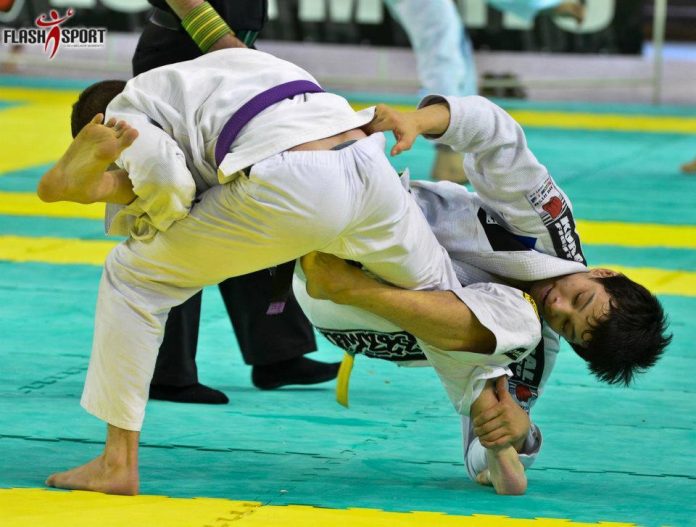
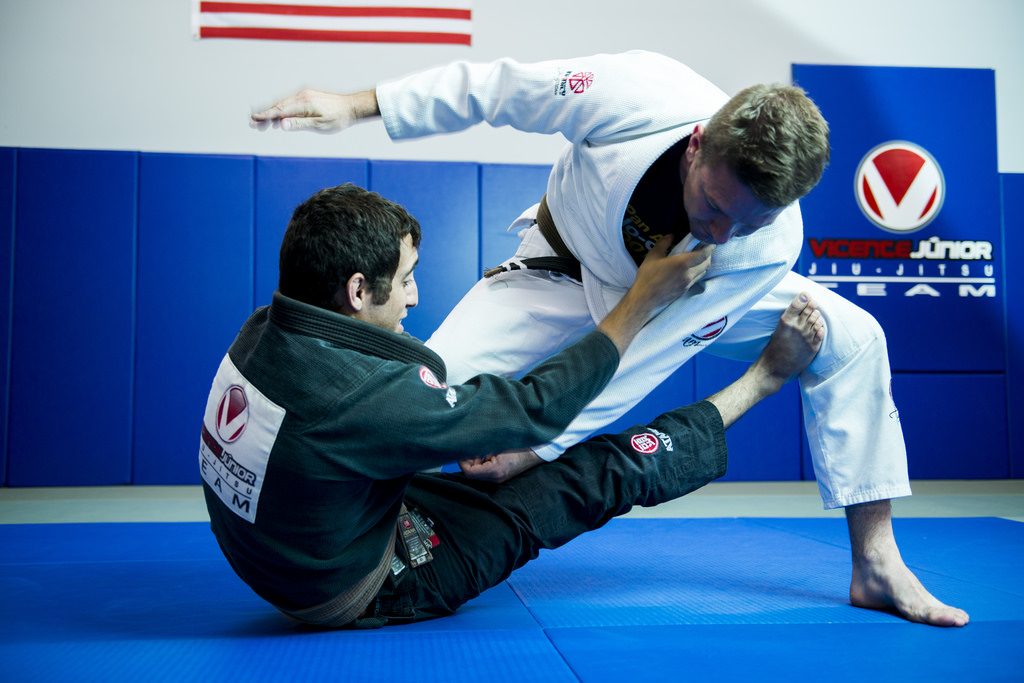
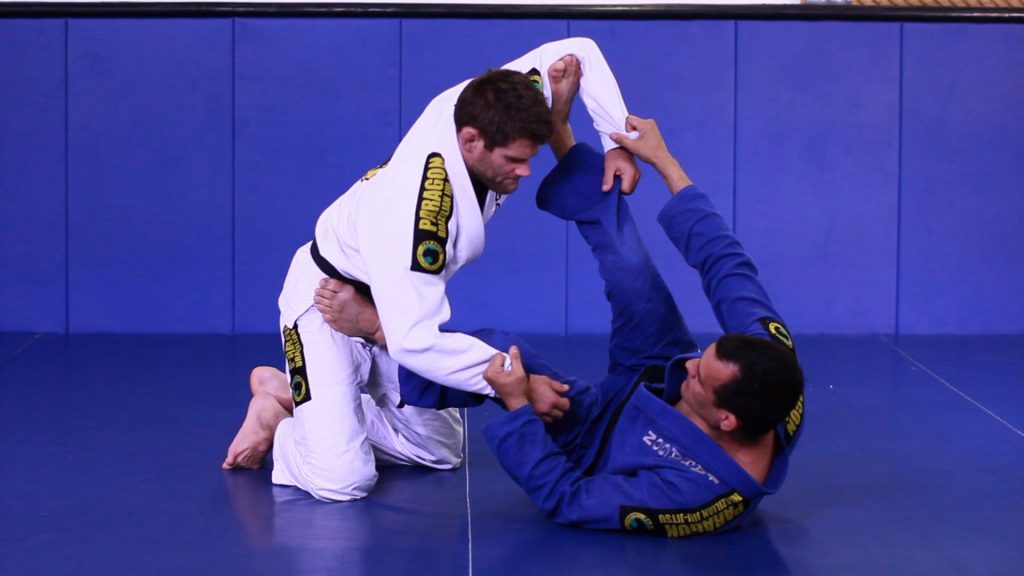
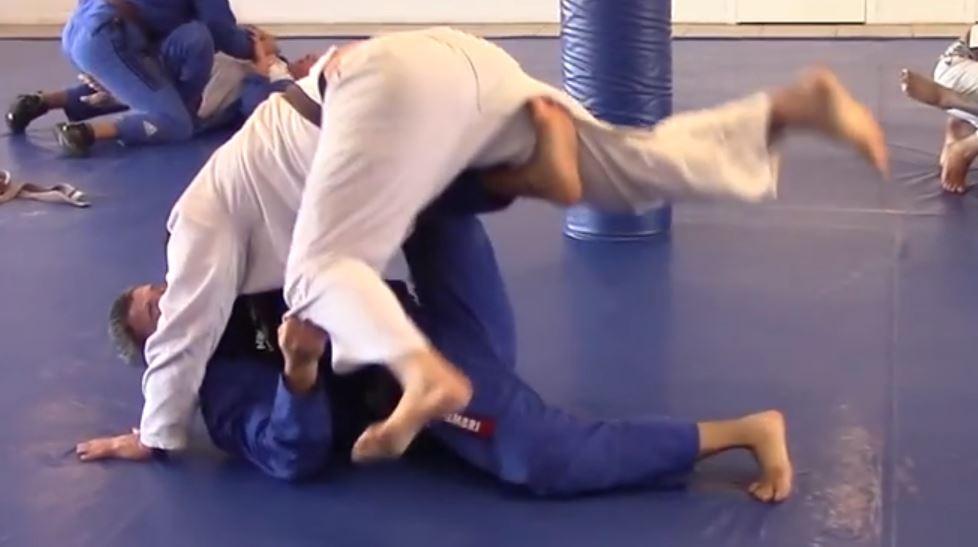 So let’s say you’re in the butterfly guard and have everything set up correctly. You go for a butterfly sweep but your opponent bases out on all fours. you restarted, and try to hit the sweep on the other side but the same thing happens. The problem is apparent. The opponent’s’ base is what is preventing you from sweeping, Now that we know this, let’s move on the next step.
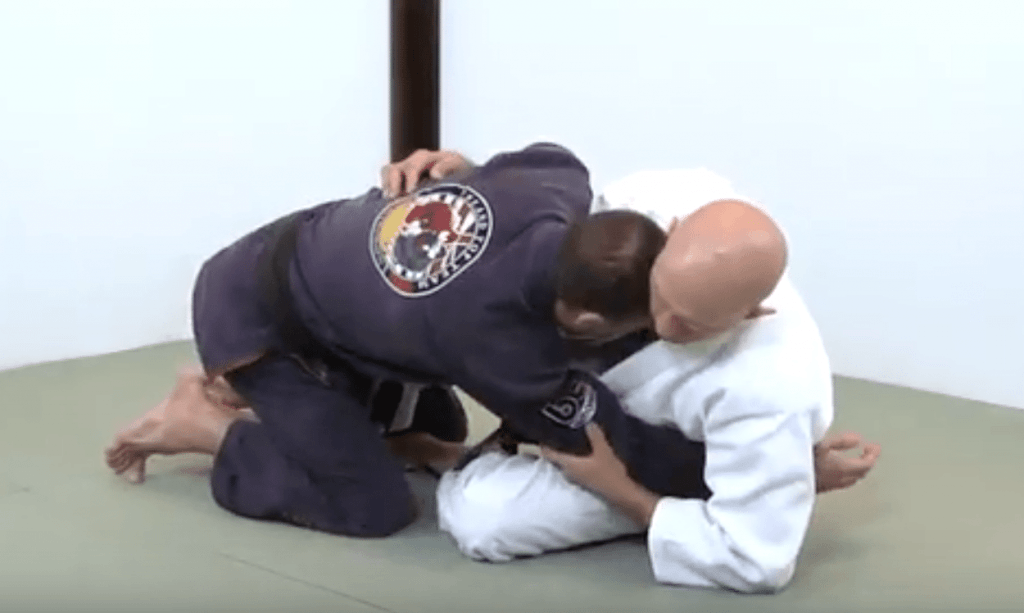 The issue that you identified as the opponent’s opportunity to base. Now, the technical solution to this is creating disbalance before looking to apply the sweep mechanics. That means making your opponent look for a base in places where they don’t have it. Form the butterfly guard, instead of going for the sweep they expect straight away, make them step out of balance first. Use your hooks and your grips to disrupt their balance before your attempt to sweep. Next, make sure you take away as much of their base as possible. The best way is to fold one of their arms towards their belly so that there’s no base on that side.
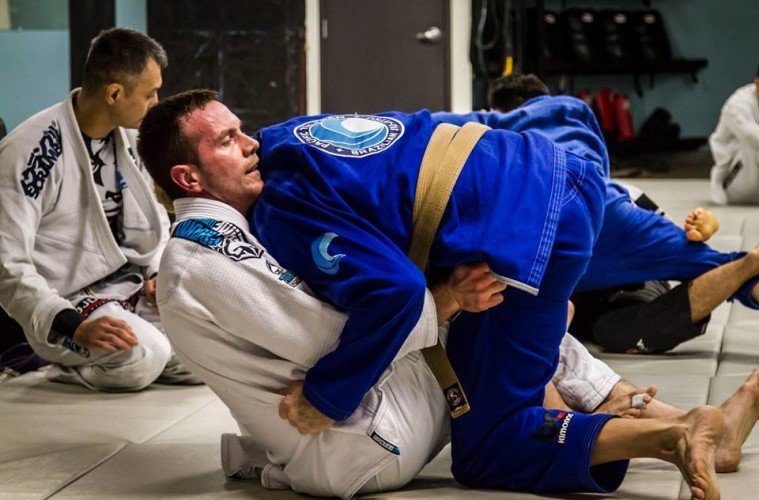 When you get proficient enough with you butterfly sweep, someone is going to come up with a way cancel out your efforts. Once that happens, you mustn’t stop. There’s no need to go back to the drawing board, you just need small adjustments. For example, even when you have everything set up correctly, your opponent shifts their weight so that their leg is enough to keep them in balance. Now, it doesn’t matter that you have their arm trapped, they do not require it for a base. What you have though, is an advantage. Simply switch your efforts to the opposite side and do a butterfly sweep there. Because of the weight shift, your opponent is going to be helpless.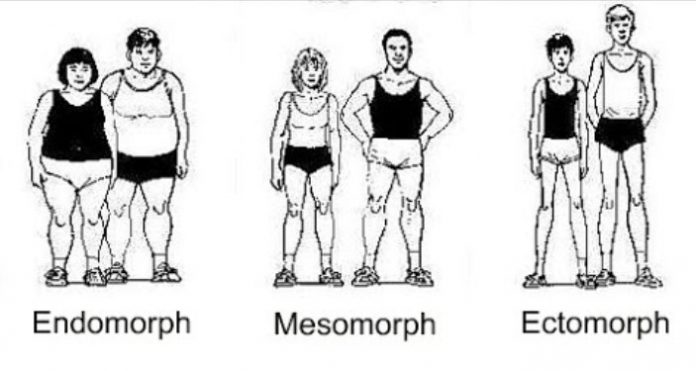
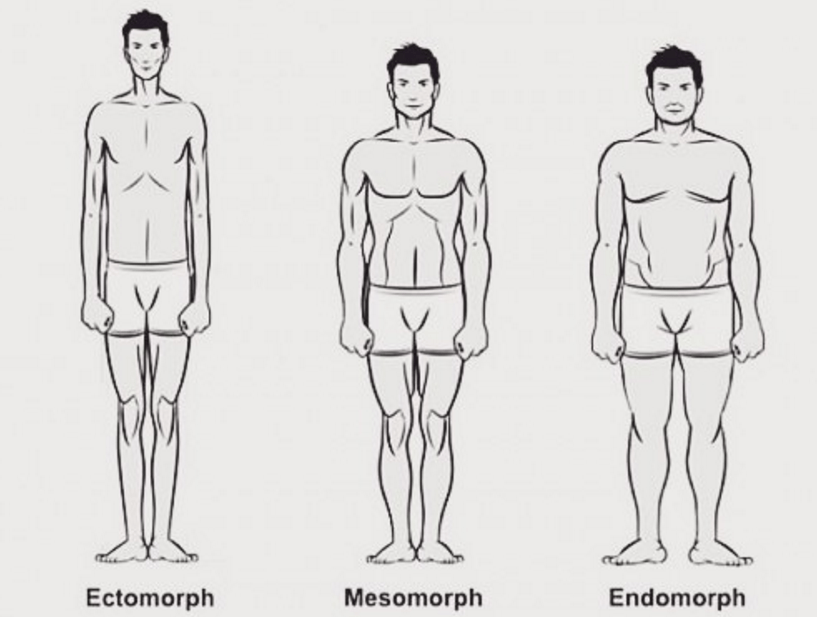 Mesomorph.
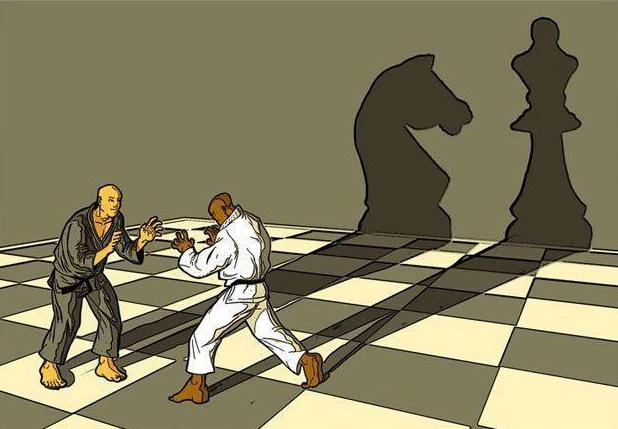
 For example, shorter people (meso/endomorphs) tend to have lower centers of gravity. Also, physically smaller people tend to be able to make themselves more compact when they roll. When doing, they can become notoriously difficult to physically hold in place. When one looks at most high-level wrestlers, the common theme is stocky and squat rather than long and lanky. There is a very good reason for this, though.
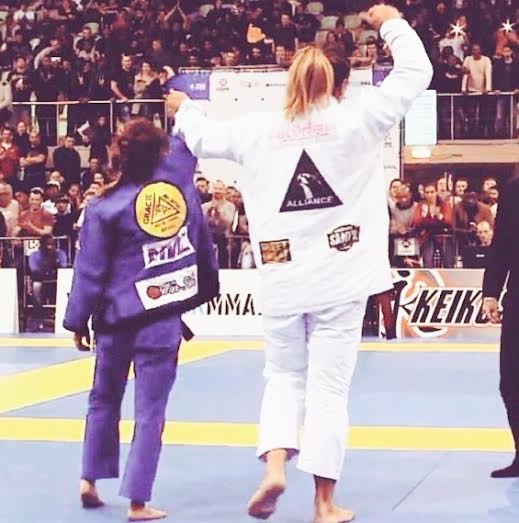 There are, of course, exceptions to every rule. The same holds true for your BJJ style in relation to your body type. There are people with short and stocky legs who have insane guard games. There are also, tall and lanky people who can drop enough pressure to crush you in an instant. A lot of this has to do with personal preferences. There’s no way of knowing what someone’s going to do based on their body type alone. Remember, there are modifications to everything so even a stocky grappler can get you in a triangle. But could you get them in one, seeing as most of them have really short necks? As a general rule of thumb aim to avoid tall people’s guards when competing. Conversely, if you’re the taller grappler, expect them to be wary of you guard.

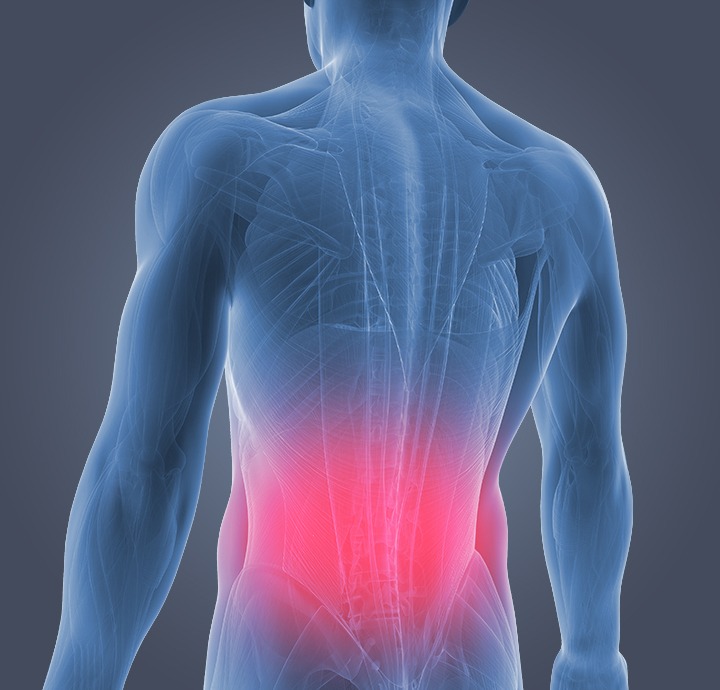 These 3 factors are very closely related and work together in making things worse. For people in BJJ, lower back pain is mainly a product of all three working together. The body works as a whole thanks to all its parts doing their specific role. The body is actually a series of joints that connect via muscles, along its length. Each of these joints plays a dual role – stabilize or mobilize. Now imagine that one of them is not working efficiently. All other joints have to pick up the slack which means trouble.
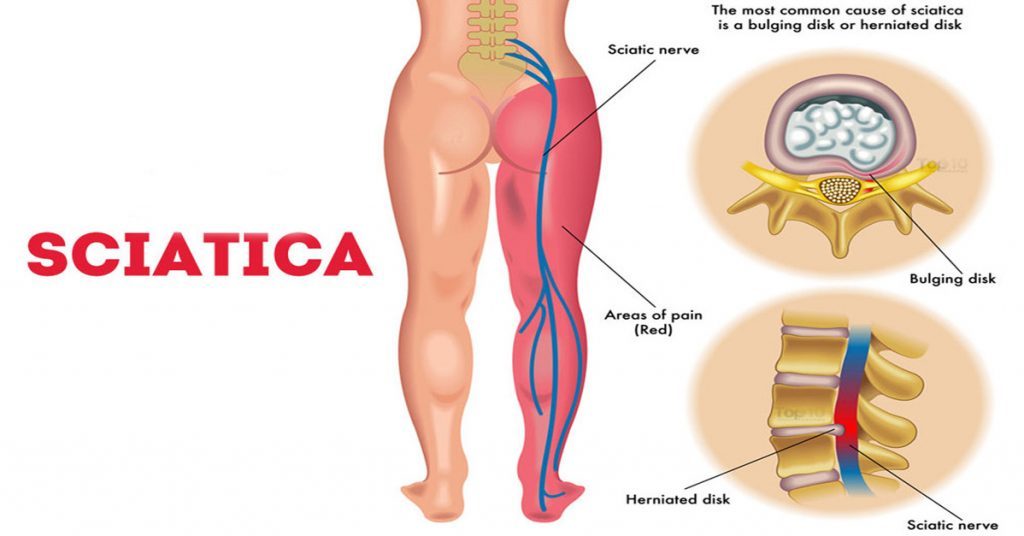 For most affected people in BJJ, lower back pain spreads in a downwards direction. It emanates at the spine and affects the lower body limbs. Most of these effects can be countered with a simple sciatica stretch. A deep sciatica stretch alleviates the symptoms by releasing tight piriformis muscles and relaxing the sciatic nerve.
 That being said, you also need to roll smart so that you do not make everything worse. Yes, you can still roll and improve BJJ lower back pain. You just need a bit of common sense. Certain BJJ positions cause your lumbar spine to bend into undesirable positions. Start by trying to eliminate these situations during rolling, no matter the cost.
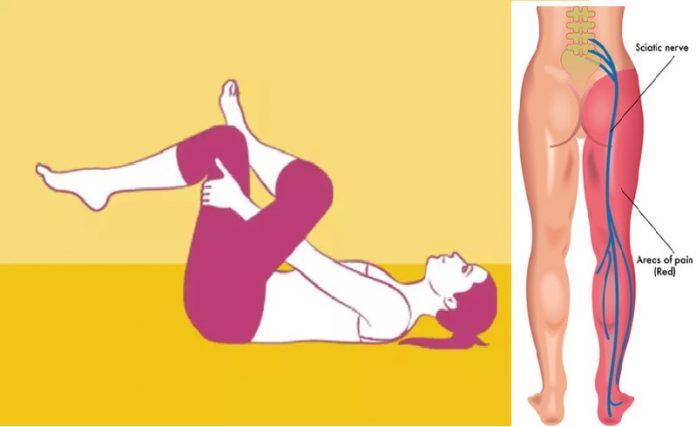
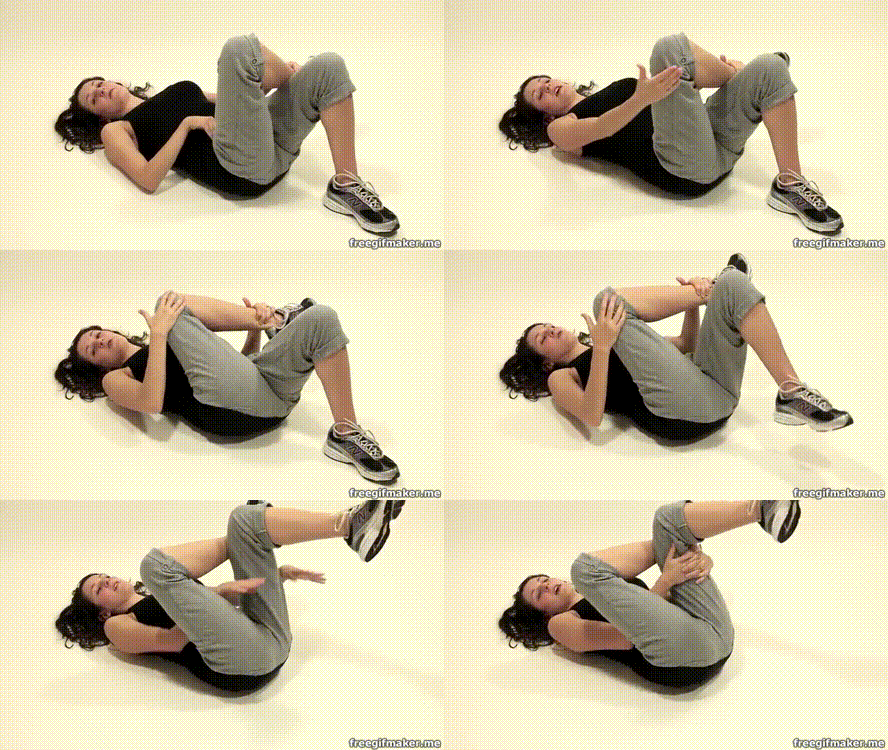 To begin with, lie on your back with your legs flat. Then, pull the affected leg towards your chest, while holding the knee with the hand on the same side. To accentuate the sciatica stretch, grab the ankle with your opposite hand. What you want to do is pull the knee across to the opposite shoulder until you feel the stretch. 30 seconds is great hold time, before slowly returning to the starting position. If you’re having knee problems hold your “right” knee with your hands and pull your “right” ankle as much as possible.
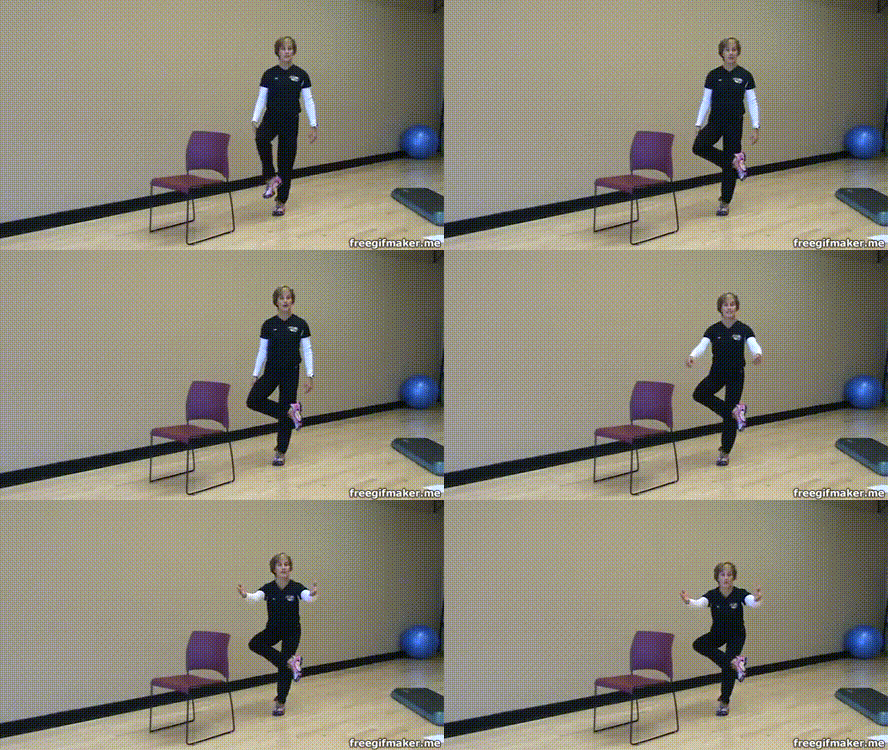 Do not focus on balance when you go for this sciatica stretch. If you have trouble with it press your back against a wall or hold onto on with your arm. Make sure your knees are directly over your ankles and lower your hips at a 45-degree angle. Pick one of your feet off the ground and place the ankle on your opposite side knee. Then, lean forward so that your chest lowers towards the knees, but remember to keep your back straight. The stretch is in the glutes, and once again, 30-60 seconds is more than enough. Do not forget to repeat everything on the other leg.
 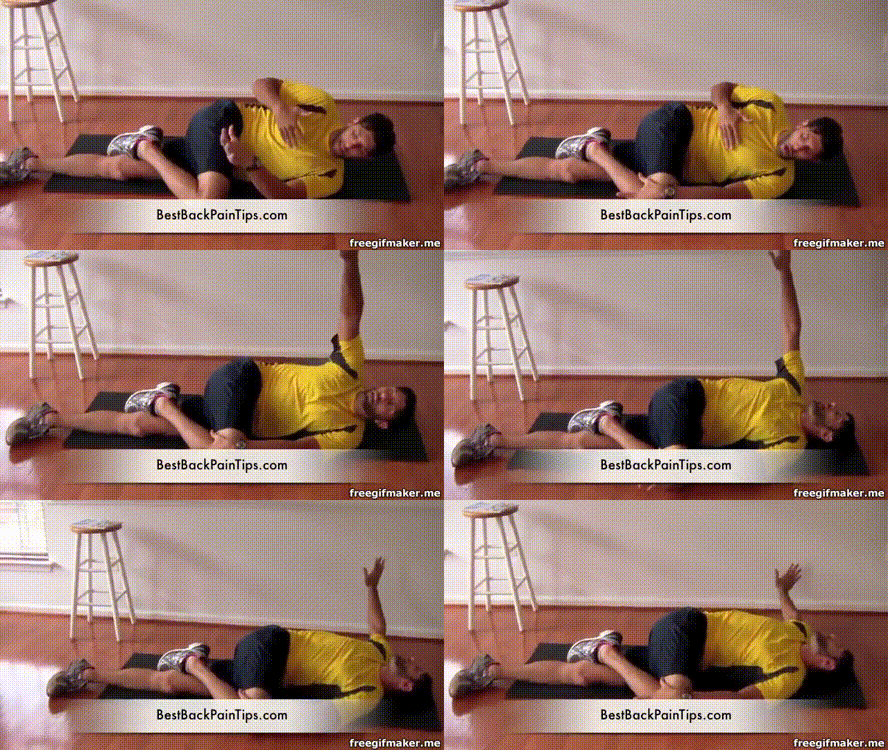 Lie on your back with one knee bent. Reach the opposite site hand to the knee and pull it to the side. Keep your back glued to the floor, and you will feel the sciatica stretch in your hip and buttocks.H old for 30 seconds, and repeat on the other side.
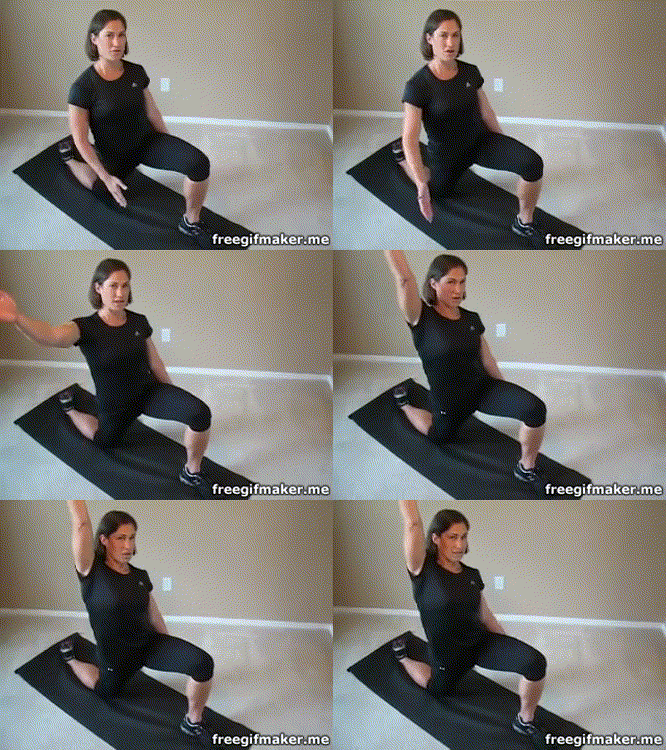 The 50-50 stretch is a standout exercise that is universally effective for all grapplers. It works as a long-term preventative exercise. Furthermore, it is very effective in immediately relieving BJJ lower back pain. To perform it, you need to be kneeling on one leg, your shinbone touching the floor. Your other leg should have the foot firmly on the floor. Both knees need to be at a 90-degree angle. Raise the arm on the side where you have your shinbone touching the floor. Go for 30 seconds on each side.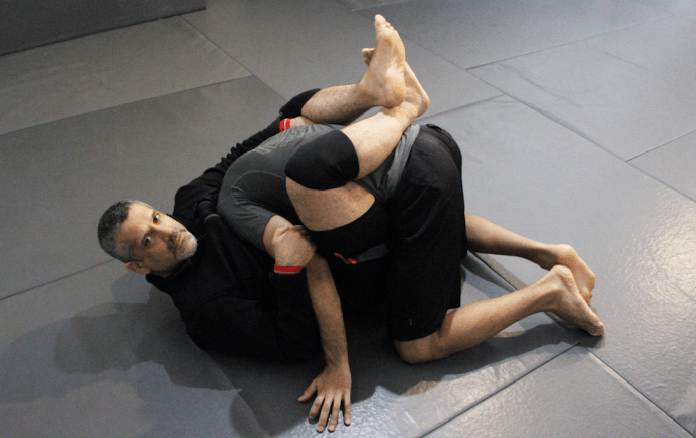
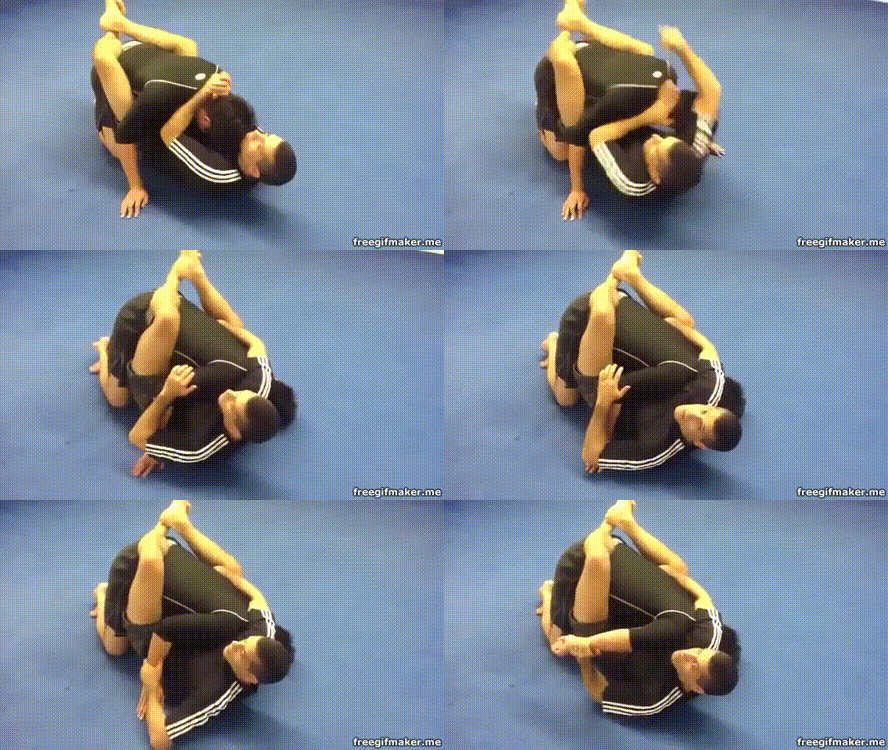
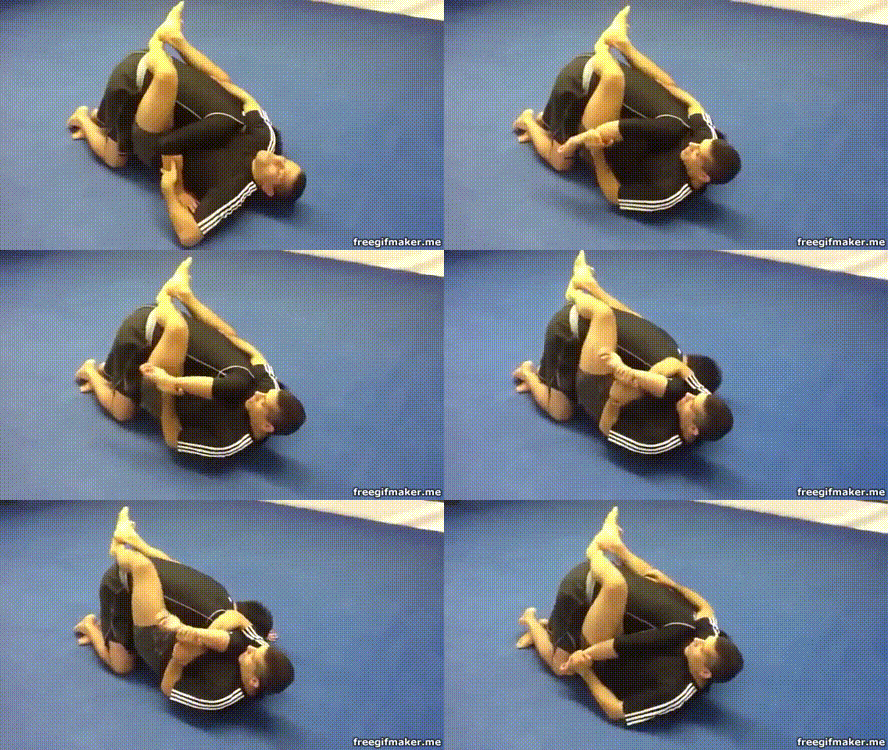
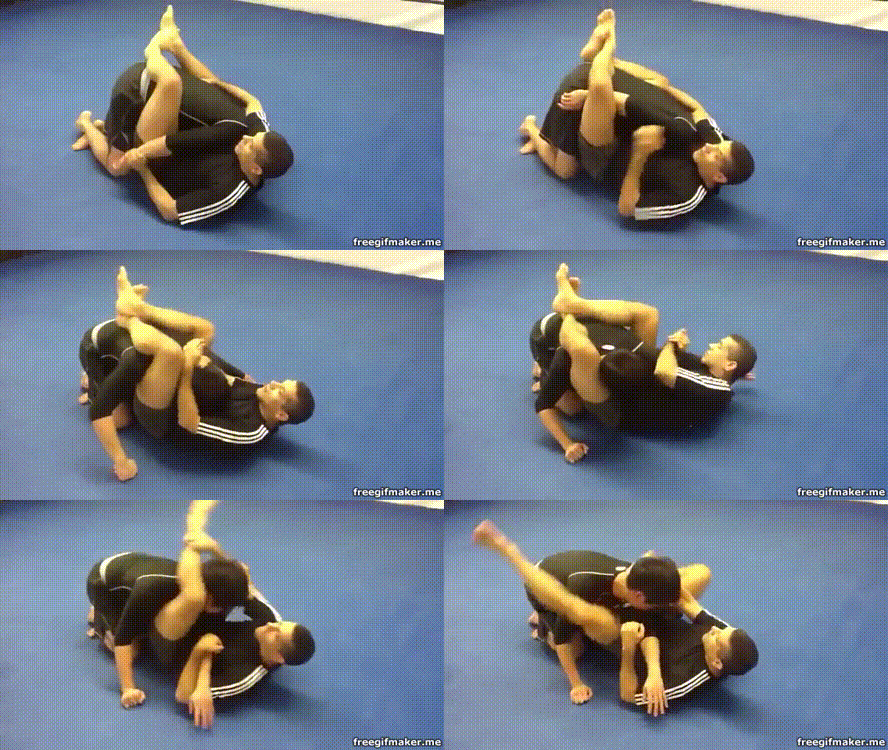
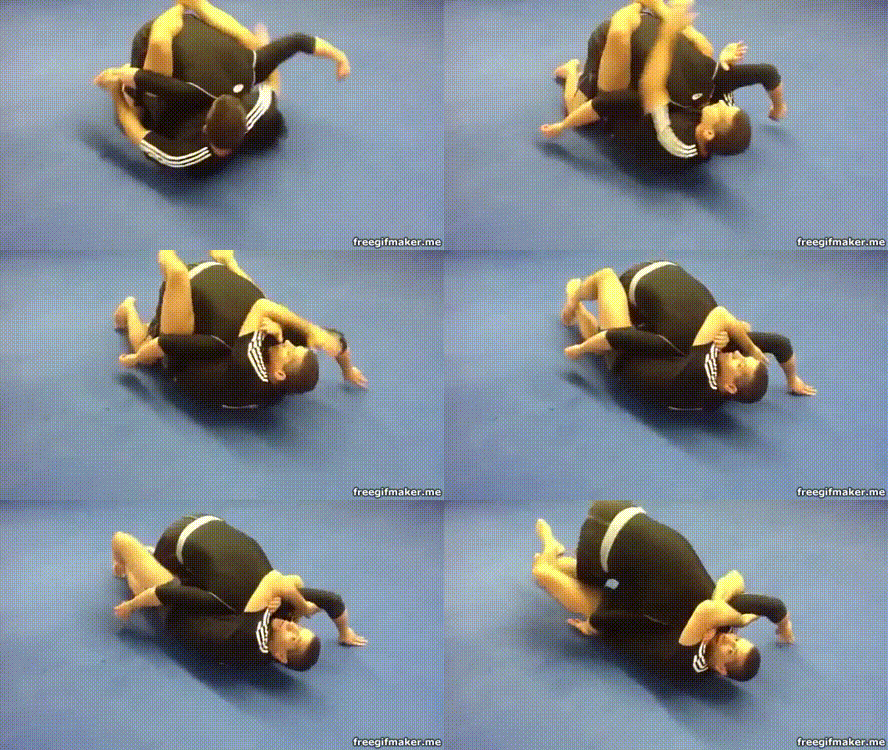
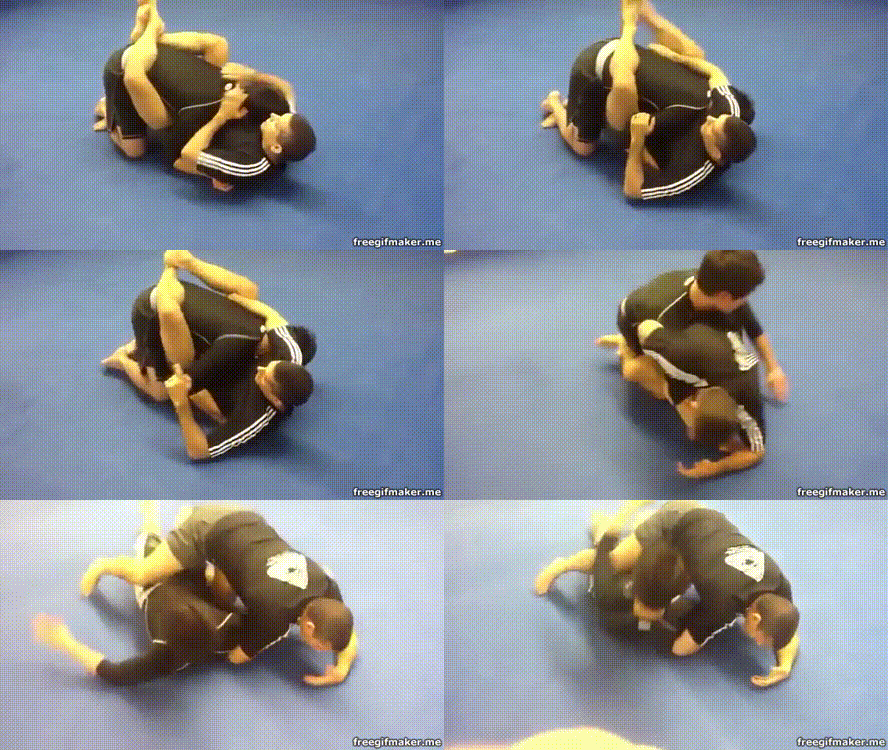
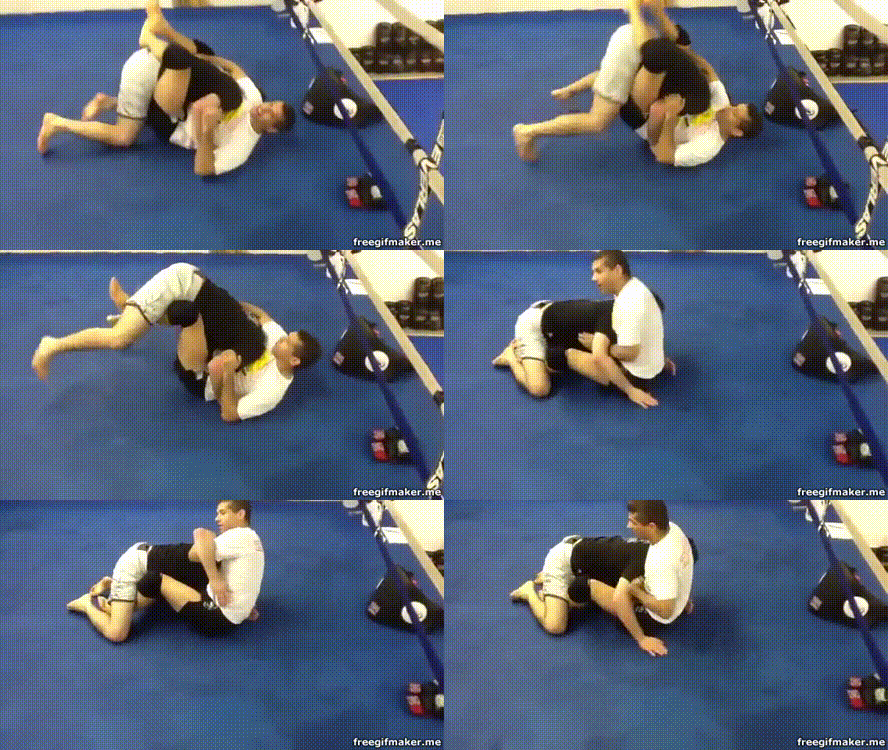
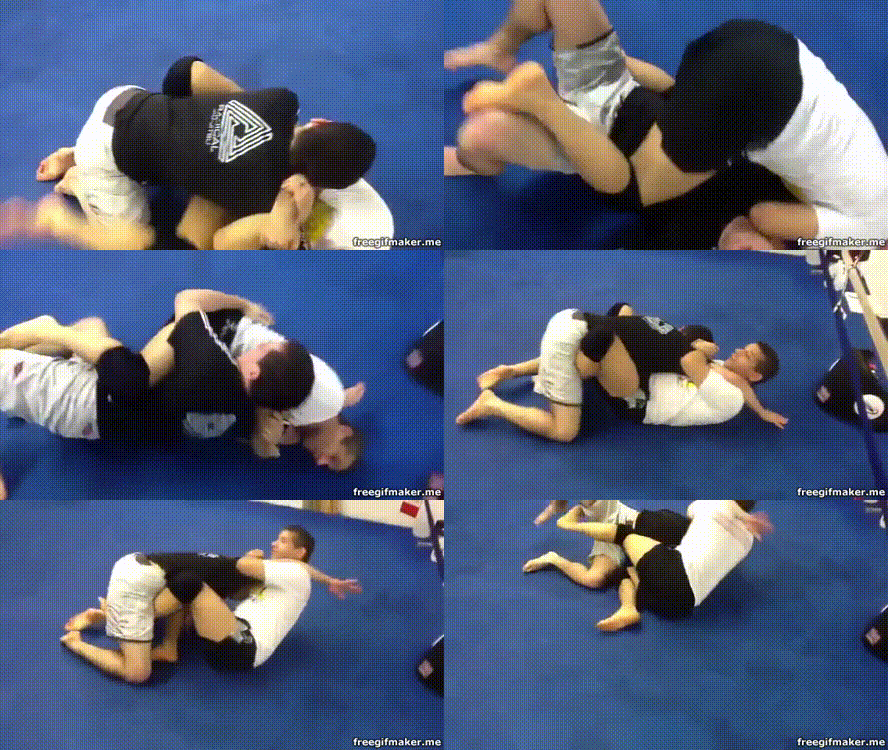
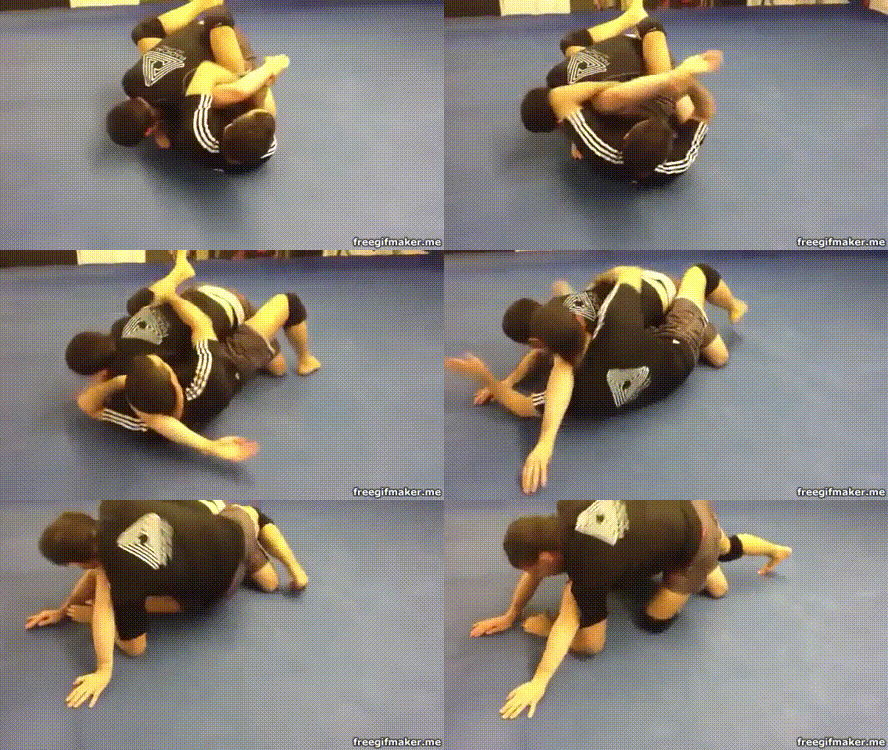
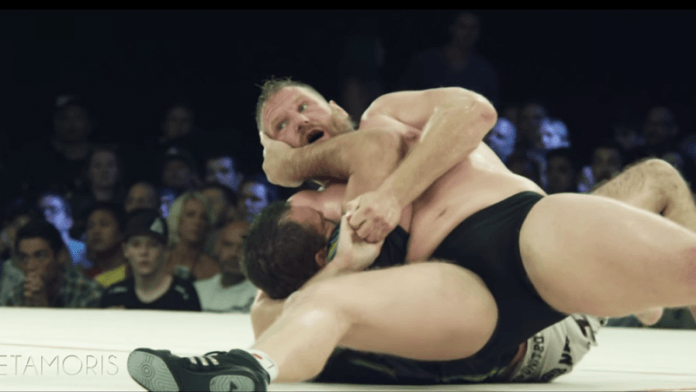
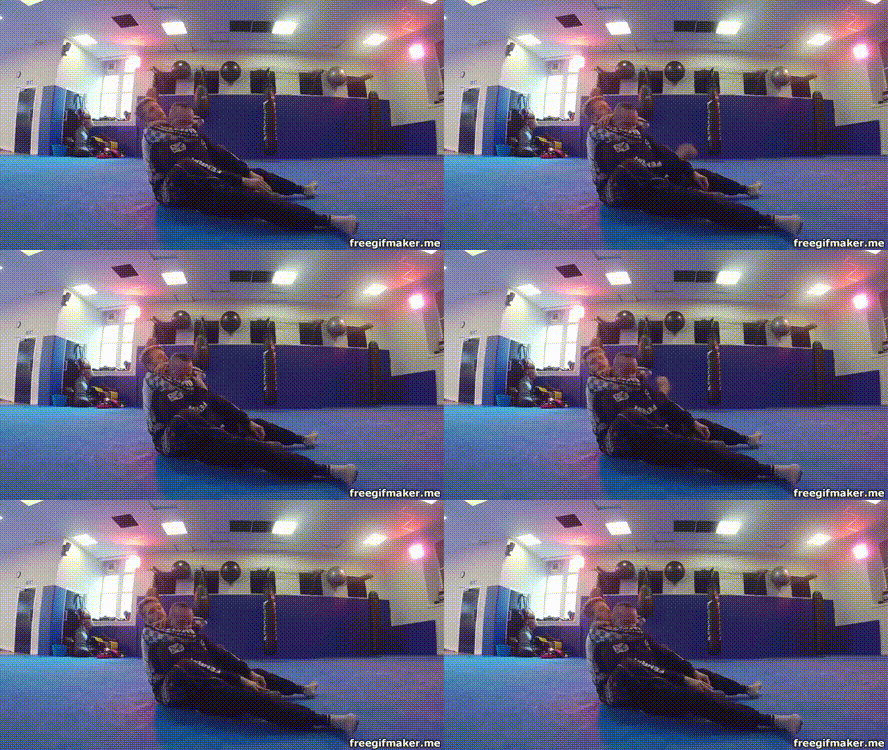 The other direction is when you have the choke incorrectly, or the opponent wiggles out of it enough to prevent it from working. In a case like this, continuing to apply choke mechanics from a less than optimal position often results in a Neck Crank. A Neck Crank applies twisting pressure to the spine in the neck region, resulting in debilitating pain.
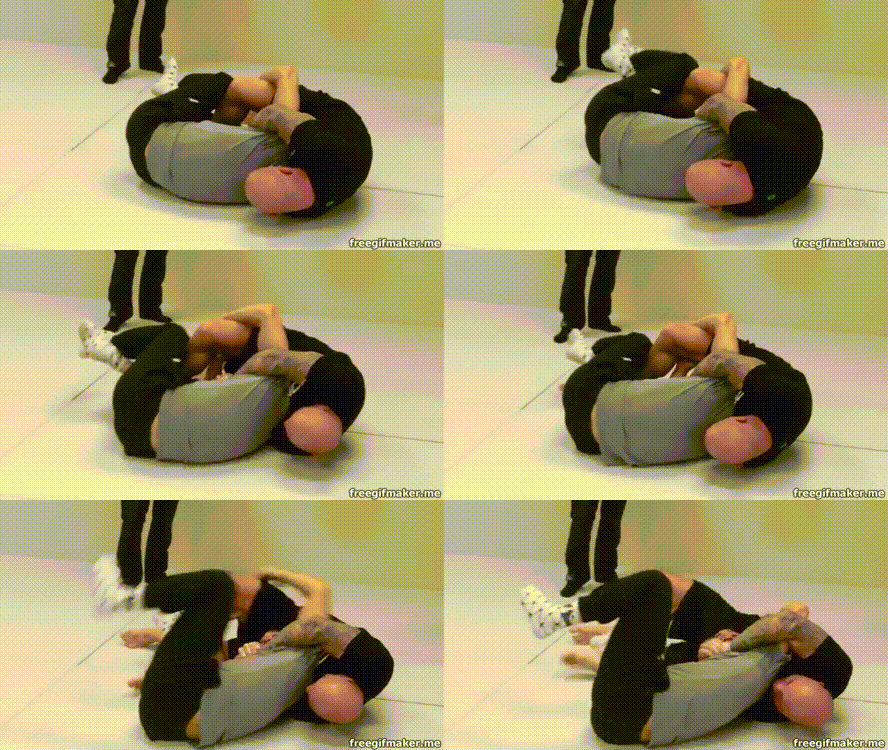 Furthermore, in both cases, you need to be aware of when the choke stops working. Because, if you do not want to or can’t go for a crank, you’ll need to abandon the position. A seasoned opponent can defend the Rear Naked Choke very effectively without much movement. Playing the game of detail angles and grips can keep an opponent safe, even though you have a choke on. The same holds true for the D’arce choke, where the opponent’s body position can make it impossible to finish the hold.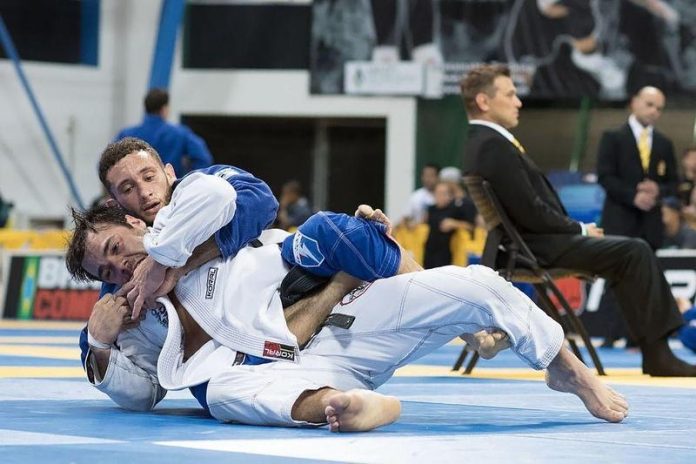
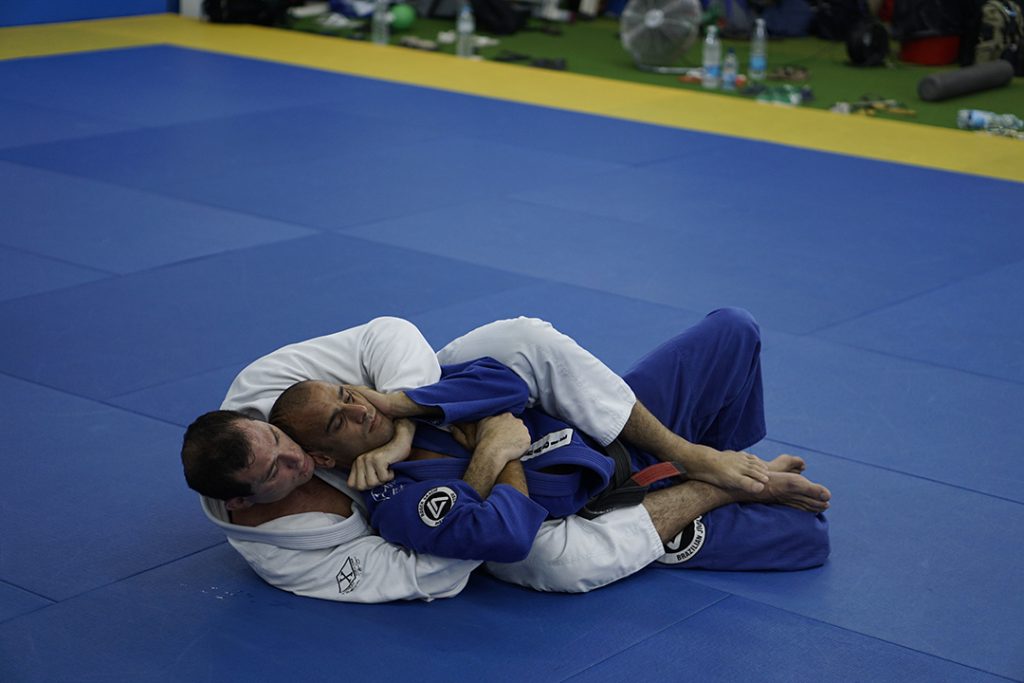
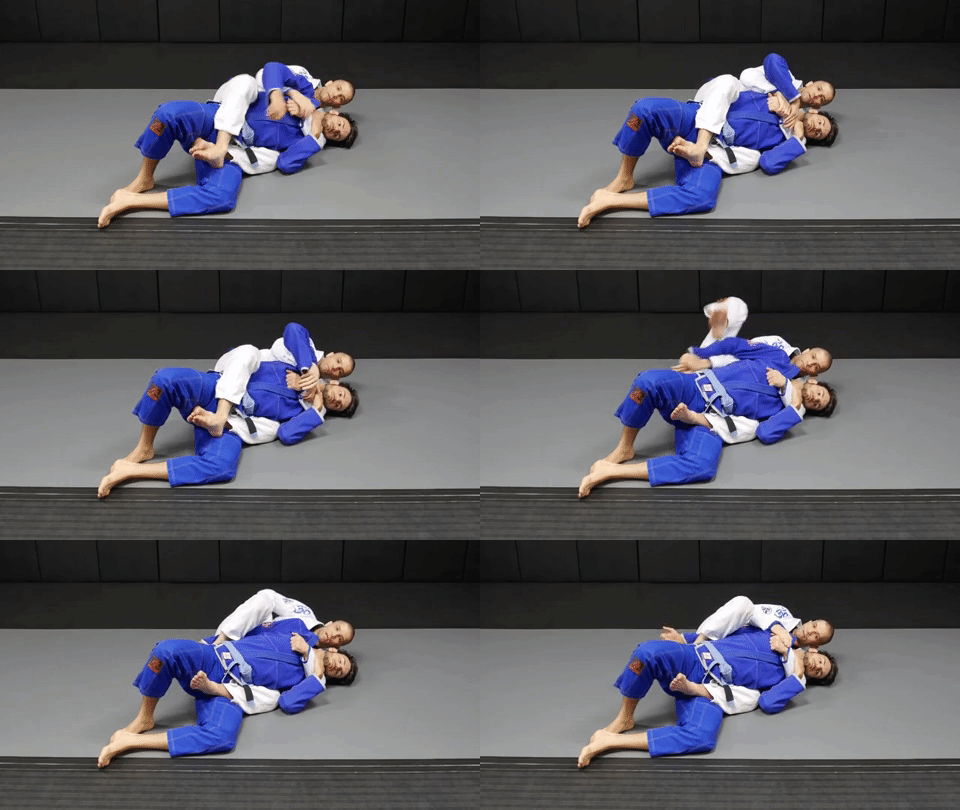 When you’re on the strong side, the usual configuration is both of your opponent’s arms on your choking arm. In this situation, that’s the bottom side arm
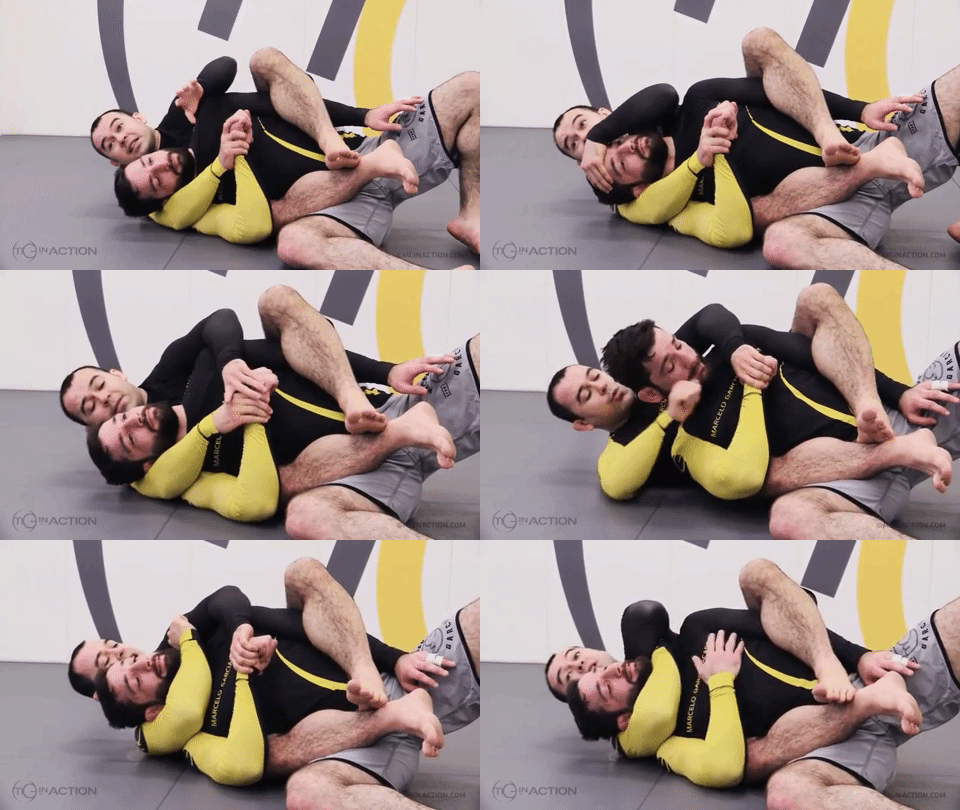 Once you have one arm trapped, you have a huge advantage. Now it’s two of your arms against one of your opponent’s. To get your choking arm free, you’ll need your free arm’s help. use the free arm (underhook arm) to pry their wrist off your choking arm. The best way to achieve this is is to push their arm towards their hip. Focus on gripping right at the root of their thumb, and they won’t be able to resist. Once you win the grip fighting, immediately go for wrist control with your choking arm. The goal is to get their arm a far as possible away from the neck. To set a choke up, open up their neck by pulling their head with your top side arm.
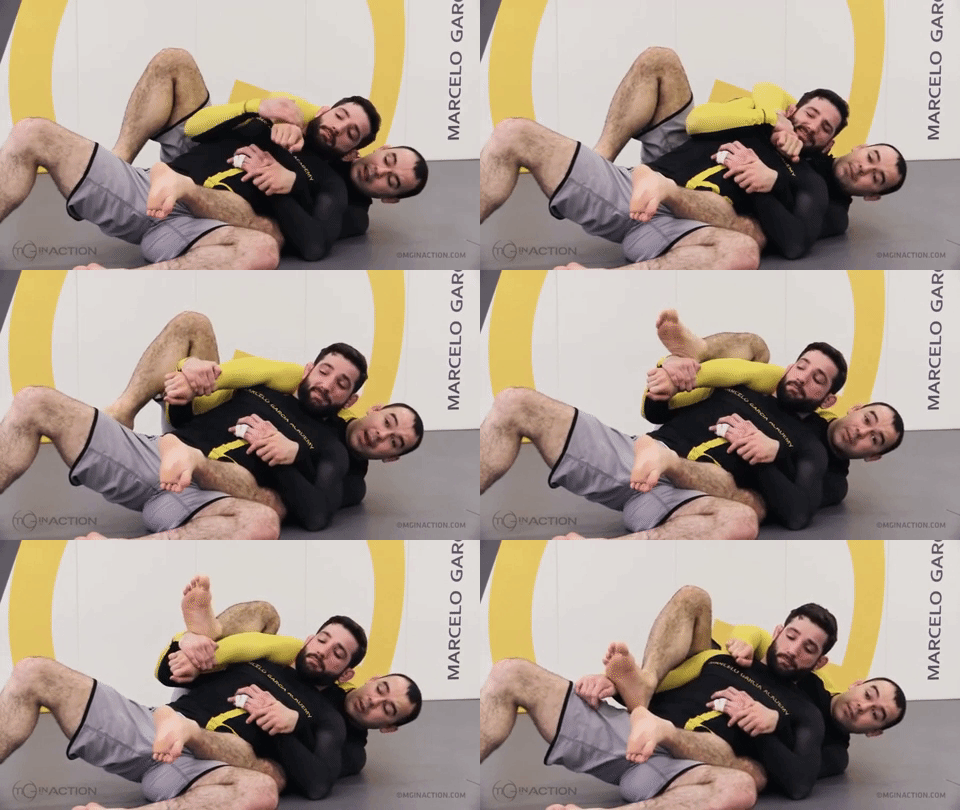 To strip the top side arm grip, you’ll need to use your top side leg as well. The best way to do so is to use the fact they have a tight grip on your choking arm. Simply extend that arm as far away towards your hips as you can. Once it’s extended, use your top side leg to push their wrist off and trap their arm at the same time. With this motion, you both strip the grip and trap their arm. To finish, you’ll need to dig with your top arm under the chin until you go all the way through. Only now you can release the bottom arm and figure four it. You could even finish a Rear Naked Choke variation with one arm, or do any lapel choke you want, without releasing the bottom arm control.