Irina Shayk is Obsessed With Jiu-Jitsu

Irina Shayk is Obsessed With Jiu-Jitsu

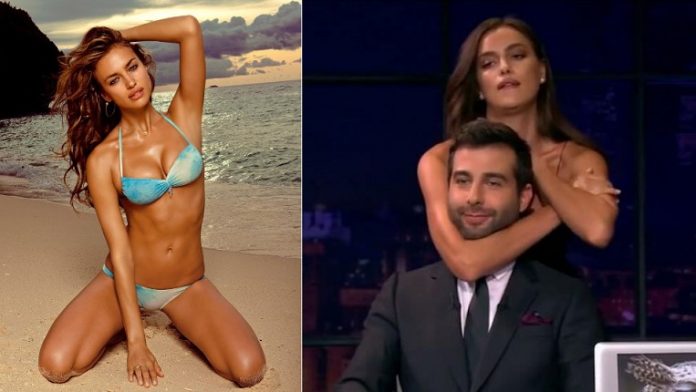
In a case, you don’t know who Irina Shayk is, what is pretty hard to imagine, we’ll tell you. Irina, with a real name Irina Valeryevna Shaykhlislamova, is a Russian world known model, actress, mom (she has a child with Bradley Cooper) and she’s also a Jiu-Jitsu practitioner.

Irina is coming from a small town in Russia where she began her modeling career. But if you look at her it’s not hard to find out why is she the most popular model today. Maybe, her 5 years relationship with Cristiano Ronaldo did help a bit in her career but we can say that she did it all alone and she deserves all the fame she has.

What’s more interesting to us is the fact that she’s a passionate Jiu-Jitsu practitioner as she said in an interview. She’s training 4 times a week when she’s at home in New York.

“I work out a lot. I do boxing, I do a little jiu-jitsu which I am obsessed with,”

When she was asked why she trains Jiu-Jitsu she said:

“Because there are so many possible move combinations, it’s brilliant for constantly challenging my body and pushing it to exhaustion every time.”

She hates something that most of us training BJJ do and it’s running. I mean who likes to run when you can roll right?

“I hate traditional cardio. Running is my worst nightmare,”

In her interview in Russian Evening Urgent show, Irina was asked provocative about her husband Bradley Cooper and Cristiano Ronaldo but she refused to talk about her former lover Cristiano.

What she wanted to talk about is her training of Jiu-Jitsu. And not only that, she was willing to choke out the presenter with a rear naked choke as you can see in a video below.

https://youtu.be/_lqs83lJY2M?t=10m12s

Irina is not the only celebrity that practices Jiu-Jitsu. There’s much more of them and we bring you the list of 58 celebrities that trains jiu-jitsu or they were training it before.

58 Famous Celebrities who Train Jiu-Jitsu

Halle Berry also spent some time training Jiu-Jitsu and her moves are pretty slick. We’re not sure if she’s training Jiu-Jitsu except for movies but it’s really a shame if she’s not.

Watch Halle Berry Training Jiu-Jitsu For John Wick 3

Mel Gibson is training Jiu-jitsu with Carlos Machado. What can we say? Mel Gibson is a pioneer in including Jiu-Jitsu in movies and he was doing it pretty well.

Mel Gibson BJJ Training with Carlos Machado

Even Justin Beiber is training Jiu-Jitsu and he’s not afraid to show his skills everywhere. Watch him sparring in a park.

https://bjj-world.com/justin-bieber-shows-off-jiu-jitsu-skills/

Keanu Reeves is training Brazilian Jiu-Jitsu for a few years now and he’s very good at it. We could see his moves in both John Wick movies. You can watch his training and his movies in a video below together with his thoughts on Brazilian Jiu-Jitsu.

Keanu Reeves: Deeper You Get into Jiu Jitsu The Less You Have Normal Life

Demi Lovato is one of the most passionate BJJ practitioners of all celebrities at this moment. She’s training with a World Champion and she’s a blue belt now. She takes pictures in Gi’s, Rashes and she’s not afraid to show her Jiu-Jitsu moves in every possible situation. She’s the great ambassador of Jiu-Jitsu and we hope that she’ll continue to chase her dream of becoming a BJJ Black belt

Demi Lovato: My Ultimate Goal is to be a Black Belt

Wrap ‘Em Up: Use Your Opponent’s BJJ Gi Against Them

BJJ Gi Lapel Submissions

The most exhausting debate the BJJ world faces is not one about rules or illegal techniques. It’s also not about which school is the best or what’s the best P4P grappler out there. The greatest debate of the grappling world for years has been Gi vs No-Gi. Today, we’re going to provide all those Gi proponents with some additional points in this everlasting debate. The Gi might have a host of drawbacks, but for, now, we’ll look at the advantages. Moreover, we’re going to check out the best ways in which you can submit someone with it. After all, taking someone’s BJJ Gi and finishing them with it is the ultimate victory you can get.

The BJJ Gi is an essential part of Brazilian Jiu-Jitsu. However you put things, there’s no Jiu-Jitsu without the Gi. It’s very easy to say just train in both Gi and No-Gi and be done with it. However, in practice, things are rarely that simple. Both these disciplines require dedication and time. While you definitely can learn useful things that apply to both, you’ll eventually have to choose a favorite. At least if you want to be effective at the highest levels. If the BJJ Gi is your choice then this article is for you. If you like to roll in a rashguard and spats, then this article can make the few sessions you have with the Gi a real pleasure.

Choking people with the Gi is nothing new. In the spirit of uniting Gi and No-Gi, here’s an example. You’re rolling with the Gi and go for a rear naked choke. As much as you’re fighting, there’s just no way to finish. However, if you just look around you’ll see that you’re already more than deep enough for a tight lapel choke. This is just one example and the simplest one at that. Today’s topic is not about lapel chokes from the back. We’re going to explore some more unorthodox ways in which you can use an opponent’s own Gi to finish them with ease.

Attacking With The BJJ Gi 

The BJJ Gi is a true remnant of the past. In most other arts, the Gi is considered to be mandatory. In striking arts like Karate, people wear it without even touching it. Judo guys depend heavily upon it but always in the same patterns. In Brazilian Jiu-Jitsu the Gi has much more of a crucial role. For one, grip fighting usually sets the tone of a match. IN order to successfully grip fight, you need to be able to control a Gi. As BJJ evolves, so do gripping sequences and the opportunities to attack by using the Gi.

However, simply gripping for control is not the only way to attack someone with the BJJ Gi. There are plenty of ways to use the Gi to your advantage. There are countless submission opportunities available. From chokes to armbars and neck cranks, you can pull off brutal submissions using the opponent’s Gi. However, in order to have success with it, you’ll need to know which parts of the Gi are best used to attack.

For one, you have the collar. The collar choke from the back is the most usual option. However, there are plenty of other ways to finish with the collar. The collar is the part of the BJJ Gi that extends from the chest, around the neck and back. The continuation of the collar lower than the belt is usually referred to as the lapels.  You can use the lapels while they’re tucked in under the belt, or release them to gain more material. You might find people calling tucked lapels “the skirt”. The belt is self-explanatory, although you do not have many opportunities once it comes undone. When it’s tied, you can either control the wrapped portion or the hanging ends of the belt.

BJJ Gi Chokes

Choking with the Gi is probably the most common BJJ move. Since we’re focusing on less conventional moves today, we’re going to use lapels and sleeves to finish, instead of the collars. This is a great way to surprise an opponent with an inescapable strangle.

BJJ Gi submissionOne very cool choke to have in your arsenal is the lapel Ezekiel choke. Whenever your opponent is tucked in while you’re inside control, this is a great option. Use your positioning to extract the opponent’s far side lapel from their belt. Once you have it, grasp the end and use it to trap their far side arm. To do this, simply add the label to the hand you have under their head. Now, use your far side arm to insert it in the loop you created with the lapel. Thread it as far as possible and finish like you usually finish an Ezekiel choke.

BJJ Gi ChokeOur next options come from side control as well. All things are the same up to the point of threading an arm in for the Ezekiel. Some opponents are going to be so tucked in that you won’t be able to use to loop. If that’s the case, pop up to knee-on-belly and simply thread a hand in, palm to the ceiling. You’re now all set for a lapel baseball choke. You just need to get to North-South and you’re done.

Speaking of lapel chokes, loop chokes can surprise even the most experienced opponent. Especially when you add an unexpected twist to them, on that Alexandre Vieira knows all about. Learn everything there is about loop chokes from the best in the business from the “Crucifix And Loop Chokes” DVD set

Gi Armbars

BJJ Gi SubmissionsIf there’s one thing most opponents won’t expect, it’s an armbar from closed guard with the help of a lapel. From the bottom, you’ll have to get the opponent’s lapel-free on one side. Next, you need to thread it over their upper arm, much like an overhook. The aim is to control the free part with your opposite side arm, as tight as possible. From there on you finish just like with a regular armbar. Open your legs, change the angle and pop the hips up.

BJJ Gi Lapel SubmissionAnother very sneaky arm locking option is a lapel wrist lock. Remember the position we did for the side control Ezekiel and baseball choke? Well, its; the same setup all over again, only a different finish. If your opponent is particularly stubborn, simply switch the lapel control back to your far sidearm. Once there, make sure you keep their arm pinned to their body. Then, proceed to grab the wrist of the trapped arm with your other arm. Push their wrist downs towards their body and shift your weight forward for a very nasty wrist lock.

Lapel Leglocks

Since leg locks are the submission of choice nowadays, here’s a very cool toe hold variation to catch everyone by surprise. Granted, you need to use your own lapel instead of the opponent.s but it’s a great way to finish a toehold in a blitz.

BJJ Gi Lapel Toe HoldOnce in 50/50 thread your own lapel around the opponent’s leg, under the calf, and towards the inside. This will provide you with ankle control. To finish, you’ll need to keep wrapping with the lapel. Since it’s a toehold we’re talking about, you need to wrap the lapel over the opponent’s instep. Keep control of the lapel with your opposite side arm. to finish, simple thread in your free arm for a figure-four-like configuration.

Loop Choke – Submit Your Opponents From Everywhere

A Tale Of Two Forgotten Jiu-Jitsu Chokes

How To Develop Crushing Grip Strength For BJJ

The Closed Guard Gi Brabo Choke From Hell

Closed Guard brabo choke

What if I could tell you that you can use the same submission you’re using with the Gi and make it effective in No-Gi? Or that it works in reverse too? Yes, it’s not anything groundbreaking but it is a fact of Brazilian Jiu-Jitsu. If you like to use a Guillotine choke, for example when you’re rolling No-Gi, what do you do with the Gi? Guillotines can be really tough to pull off with all that Gi material in the way. Luckily there’s an option you can switch to directly, without giving up on the submission. For a Guillotine choke, the loop choke is the like-for-like Gi alternative. But there’s something better. If you’re into getting D’arces left and right, consider the Gi Brabo choke. It’s going to drastically change your choking game.

The Brabo choke is a fairly old one, to be honest. It is actually a synonym for the D’arce, albeit a less famous one. Nonetheless, the Brabo is just as effective, especially when you turn to the lapels for help. The Brabo choke takes over from where the D’arce stops working. it is as simple as that. Wrapping someone up in their own Gi and slapping on a Brabo is a real source of pleasure. The plus side? You’re not limited to getting the Gi based Brabo to positions that are usual for the D’arce choke.

You see, whenever you’re in top half guard, or top side control, the D’arce is always a viable finish. Especially when opponents look to establish and underhook thinking it will do them good. In just such situations, when the Gi is in play, you can reach for a lapel and do Brabo instead. What you can also do with the Brabo is get it from the bottom. Yes, the D’arce works from bottom side control in certain instances. But the Gi Brabo works form full guard at a 100 % finishing rate. Sounds too good to be true? Read on!

D’arce Vs. Brabo

In order to simplify things let’s put it this way – everything is the same up until the grip. You see, the Brabo choke is still an arm triangle choke in essence. this means that in order to get it, you need one of the opponent’s arms and both of yours. The configuration of the arms is just like wit the D’arce. One arm goes over an opponent’s arm and then under their chin, all the way through to the other side of their neck. Up to this point, everything is the same with both hokes.

Brabo ChokeOnce the arm punches through, though, you need to decide what you’re going to go after. If its a D’arce you’re after you need to establish a gable grip and look to beak posture. The ultimate goal is to get the figure four configuration behind the opponent’s back and finish. For a Brabo though, you need to work on getting some Gi material loose first. We’re going to get into how to do this later on, but for now, just be clear that you need the top side lapel-free.

The way the Brabo choke works is by replacing one of your arms (the second one) with a lapel. namely, you need to have the lapel of an opponent threaded all the way behind their neck. The arm that’s in a D’arce position needs to grip the end of the lapel instead of your other arm. Now you’re in a position of a much better control than any gable grip (or other grips) can offer. To  finish, all you need is to get the trapped arm across your body and squeeze. You can finish with one arm in most occasions. If the need arises, your free arm can also grab the lapel for more pressure.

The Brabo Choke From Hell

The Brabo choke game is a really versatile one, as we already stated. Just to get the mechanics down, we’re going to go over the top half guard Gi Brabo. After that, we’re going to look at how the Brabo offers something very different from the closed guard if you know how and when to get it.

Gi brabo Choke As far as the half guard goes, The Brabo choke from hell only requires you to get the lapel. Since most people go for the underhook anyway, all that you need to do is release the lapel on the same side. Once they have an underhook, you’ll need to be fast or you’ll find yourself fighting off all kinds of sweeps. You could go straight for a Whizzer and get the lapel freeform there. Once you have it, you’ll need to thread it through all the way up and behind their neck. At this point, your other arm will have to secure it until you can thread the underhooked arm in for the choke. Once you have the grip on the lapel you can rest. You have total control and all you need to do is just apply pressure.

Lachlan Giles knows everything about D’arces, Guillotines, Neckties and the Brabo choke. Pick up his “High Percentage Chokes: No-Gi” DVD instructional for 4 volumes of pure choking brilliance! 

The Closed Guard Brabo System

For the closed guard version you’ll need a bit more deception. The goal here is to find a way to release the Gi without making your opponent any wiser as to why. In order to achieve this, simply grab, pull and release their Gi on several occasions. Once the Gi is undone you have a clear path to setting up the Brabo. All you need to do is thread it behind their back and around their neck.

brabo ChokeWhat you get form this position is immediate posture control. Even if you decide to chill right there, you’re safe from any kind of pass or counter. Until the opponent breaks that grip they’re going nowhere. And, you’ll find that grip is really difficult to break. The broken posture also allows you to get your arm over theirs and through to re-grip for the Brabo. This is where all hell breaks loose for your opponent.

In order to finish, all you need to do is transfer their trapped arm across your body. In case of any defense attempts, you can use the position to weep to either side and finish the Brabo choke from the top, just like before. Whatever the situation, you have a fool-proof closed guard strategy that works. And, if you’re a D’arce fan, it involves your favorite move as well.

Source 1

Source 2

The Paper Cutter Choke in BJJ For Gi And No-Gi

https://bjj-world.com/guillotine-choke-basics-bjj-submission/

Schultz Headlock – The Nastiest Front Headlock In Grappling

Feeling Lost After Starting Jiu-Jitsu? Read This!

Starting jiu-Jitsu

Starting Jiu-Jitsu training is a very brave thing to do. Especially if you have no prior training in martial arts, or grappling, for that matter. It takes a special kind of person to willingly go be smashed by sweaty people trying to strangle you and break your limbs on a regular basis. Put this way, it sounds much better than it is. Well, after a while it does. The first few months are a struggle, as they should be. If you’re having the time of your life right after starting Jiu-Jitsu, you’re probably in a McDojo. If you hate life, yourself and everyone else after training, but can’t wait to get back on the mats, then you’re at the right spot. Furthermore, you’re in the right mindset to become a savage yourself. Let’s answer some of the most burning questions all those quiet beginners have but are too afraid to ask.

Training grappling is going to change your life, it’s as simple as that. Starting Jiu-Jitsu is a huge step in everyone’s life. First and foremost, you need to know that it’s addictive. however, since this article is for those that have already (albeit just) started, it’s too late. you’re now bitten by the bug and if you’re like most people, you’ll succumb to the magic of grappling. However, things are going to be tough before you turn into a walking commercial of your academy, with your arm cramped in the Shaka sign. We’ve talked about the hardships of early BJJ life before. instead of that, today we’ll focus on the few things all beginners struggle with, but often keeps to themselves.

Brazilian Jiu-Jitsu is a very complex sport that’s a lifestyle for those involved in it. it is a neverending quest for the knowledge of how to better control people against their will. It is a way to express yourself and become better under pressure. The mats are the place where all other aspects of your life get left behind. It’s the best psychotherapy and meditation the world has to offer. However, nothing as good comes without a price. the price of admission is surviving the first few months of Jiu-Jitsu. And the key to doing so is understanding what’s going on. That and huge amounts of grit.

Start at the beginning. Start with the most basic fundamentals of Jiu-Jitsu. Start with the foundations. Start with Bernardo Faria. “Foundations Of Brazilian Jiu-Jitsu” is a 6 DVD set that’s perfect for beginners. It’s one investment you’re surely not going to regret! 

Starting Jiu-Jitsu – The Hardest Thing You’ll Do

Let’s be real – you won’t do anything harder in life than go for your second BJJ class. This is the moment that counts when you’re starting Jiu-Jitsu. That first time on the mats you’ll keep to yourself among all the different types of people with deformed ears around you. You’ll be as lost as Red Riding Hood in the explanation and names of moves the instructor is showing. before that, you’ll be asked to warm up in the most unusual way you’ve ever seen. And at the end, people are going to come at you with a smile, bump fists and dominate you physically and mentally.

Coming back after an experience like that is truly the bravest thing you can do. So, now that you’re a part of the Gentle Art, what’s next? Apart from the same abuse as the first time, only worse, for months. Well, it’s time to make sense of what’s going on around you. What you basically need to know is that you’re now a part of the most elaborate martial art in the world. Yes, you’ll become a blue, and eventually a black belt, but you’ll never master it. Nobody has ever done so since there’s no end to it. If you can wrap your head around that philosophy, or simply accept it as is, you’ve already shortened your hell period significantly.

Starting jiu-JitsuSo, brave new grappler starting Jiu-Jitsu, are you ready to make sense of all this mess that’s unfolding before you? Yes, all those funky names, crazy moves, and confusing concepts have a meaning. Moreover, they all work together to make everything come together. And yes, one day you might be the one teaching them to someone new and lost, just like you are now. but for now, baby steps.

What’s With All The Details?

Let’s say the coach is explaining a cross collar choke from the guard. You sit there, listening for the better part of 5 minutes wondering what all these details have to do with choking someone asleep? Why is it so important if the wrist is turned this way, instead of that way? Well, as you’ll soon learn, BJJ is a game of details. It is not that the smallest details matter, the smallest details make the whole thing work. There’s no need to go for all the things you’re seeing your instructors do. Simply try and remember those that they outline as the most important.

Should you Train Every Day? 

NO, you should definitely not train every day. There is such a thing as BJJ burnout and beginners can get it easier than others. Stick with no more than 3 training sessions per week, plus open mat if it’s not too much physically. You’ll have time to add no-gi, competition classes and all the other stuff later on. 3 times per week is plenty up until you’re a solid blue belt, at least.

Struggling WIth The Names

Starting Jiu-Jitsu is like signing up for a new language. There’s not much grammar in it, but there’s a whole new vocabulary. even those names and terms which are in English often make no sense. It is all going to come together, don’t worry. However, if you truly want to learn how to distinguish an Americana from a Kimura early, there are two things you should do. First, ask your instructors for pointers, as all coaches have tricks that help with the names. Second, start writing things down after training. it’s the best way to make sure you remember what’s going on on the mats.

Does It Get Easier? 

How will I ever manage to survive a roll with a purple belt? They move like ninjas! Worry not, you won’t always be the one everyone’s smashing. Purple belts are a high target, though. Focus on surviving and understanding rolls with other white belts at first. Then, the occasional blue belt. At this time, you’ll know enough to go and try stuff yourself so you can go on offense. Again, start with your peers. At some point, there’ll be new students through the door and you’ll suddenly realize that you actually know some BJJ when you go up against them.

Additional Conditioning

While swinging kettlebells and lifting weights might be your idea of fun you absolutely do not need it as a beginner. leave those things for later on. Stating Jiu-Jitsu is hard enough by itself, let alone tax your body further. Stick with BJJ and make a habit of stretching after class. This is the only supplemental conditioning you need for now.

The Ego Talk

This has to be said. You should already know by now that you’re ego is going to suffer like nothing else. It’s the way of BJJ, as the art has a way of humbling even the most boisterous personas. Yes, you’ll have to swallow your pride and tap and accept the domination. It’s important that you learn this when you’re starting Jiu-Jitsu because it’s never going to stop. There’s always going to be someone better than you, no matter what belt you have.

Take it Easy

Starting jiu-JitsuThis one is in terms of gear. Yes, you need a Gi or a Rashgaurd and spats, depending on your academy. However, you do not need a whole collection of gis with the assorted auxiliary equipment. Learn how to tie your belt first, then you can worry about that latest pearl weave hemp-only Gi that just came out. master the basics first, grasshopper.

Do The Drills

This includes warm up. Never slack through drilling or warm ups. Thre’s a point to all that drilling and specific sparring you’re doing. It makes your body remember the most important movement patterns of grappling. Do them often and with dedication and you’ll advance faster than most.

Never Refuse A Roll

This one is pretty self-explanatory. While it is an unwritten rule that whenever a higher belt invites you to roll, you shouldn’t refuse, there’s a benefit to rolling with everyone. This includes your peers. it doesn’t matter that the new guy that outweighs you by 20 lbs beats you regularly. Unless you’re injured, roll with everyone. it’s the best way to get comfortable with the positions of BJJ. It’s going to take some time until you’re the one attacking, so get sued to it. Roll more.

Tournaments And Rules

The best thing to do competition-wise is to have at least 8 months, or preferably a year before you compete. Starting Jiu-Jitsu doesn’t mean starting to compete right away. First, you’ll need the technical knowledge to go out. Next, you’ll need the experience. Finally, you’ll need to get acquainted with the rules. The best way to do so is learning them while you’re rolling. That way, every time you roll you’ll be acting in accordance with a ruleset. When you get out to compete, you’ll just need to repeat your rolls. Nothing to it.

A Practical Blueprint for the Journey Through Brazilian Jiu-Jitsu

7 Awesome Tips To Make You A Formidable White Belt

Arte Suave – The Gentle Side Of Brazilian Jiu-Jitsu

BJJ Stretches For Open Guard Game

BJJ Stretches

BJJ is a sport for everyone. Regardless of age, sex, body type or athletic abilities, anyone can find a Jiu-Jitsu game to play. In general terms, there are usually two major game directions in BJJ – top, and bottom. Top players are those that like to pass, put pressure and work without spending too much time on the mats themselves. Bottom players are those that like to work off their back, in any of the numerous guard variations. But, every once in a while, you run into a move or guard, for example, that would fit your game perfectly. The only thing stopping you is the lack of flexibility to use that particular guard. Well, this doesn’t have to be the case. with the help of some BJJ stretches, you can become as flexible in guard as Eddie Bravo.

BJJ stretches are aw ide topic that has been discussed many times. Today, the focus is only on a very specific part of the flexibility game. For a dynamic and hard to pass guard, you need to have flexible hips. The good news for all you brittle rock out there is that hips are highly trainable. Even if you have the tightest pair of hips in the academy, you can become a rubber guard machine. All it takes is a careful selection of specific BJJ stretches. That and dedication.

Similar to grappling, stretching and flexibility require time. It doesn’t necessarily mean that you need to spend as much time stretching as you do BJJ, But you do need to make it a daily practice, especially when it’s focused, like in our example. For a better guard, you need to be able to open up your hips significantly. Getting more flexible hips is probably the easiest part of the flexibility puzzle. Still, there’s no shortcut, and you’ll have to put the work in. The stiffer you are, the more you’ll need to stretch. With some clever programming and a select few BJJ stretches, though, you’ll be well on your way to play guard like never before!

On the subject of rubber guard, there’s a brand new DVD release by Brandon McCagren. It’s called “Rubber Guard: The Meathook” and will teach you what to do with all your new found flexibility. Check it out! 

Stretching 101

There are a few essential things you need to know about stretching for Jiu-Jitsu. Namely, simply sitting in a lotus position is not the way forward. For stretching to actually work, you need to know how to program it. This means how often you should do it, how long to hold specific stretches and, of course, which exercises are actually worth your time and effort.

The first thing to know is that there’s no way you can make cold muscles more flexible. Unless your muscles are ready for work, just like with grappling, BJJ stretches are going to be ineffective. So, you could either warm up for stretching or fit your stretching in your workout. Or, to be more precise, after you’re done.

Next up is the one thing everyone gets wrong at the beginning. Instead of just holding without any regard for time, have a system in place. As a rule of thumb, the aim should be to hold BJJ stretches for at least 30 seconds. 90 seconds is the norm you should be shooting for. So, next time you stretch, do it with a timer.

Another important point is how deep to go on stretches. In most cases, people wither go too light or too far. If there’s a lot of pain, you’re doing something wrong. however, if there’s no tension, then there’s no benefit either. make sure you feel tension when you stretch but that you’re not overdoing it. If you keep going too deep, you’ll confuse the body’s protective mechanisms and injuries will surely follow. you should be uncomfortable, but never in pain.

BJJ Stretches For Guard Players

Playing guard requires your hips to be as flexible as a ballerina’s. So, does that mean you should do the same type of training ballerinas do? Not necessarily. In terms of selecting the best BJJ stretches for a better guard, you need to think wide. Ballet, Yoga, PT stretches, mobility drills all have their place. There’s no one specific stretching system that fits BJJ perfectly. However, each has certain exercises that benefit certain grappling aspects.

In our quest for the best BJ stretches for guard players, we came up with 6 exercises. Each of this hits a different area of the hips. When you combine all of these stretches, in the given order, you end up with the perfect routine. As an added bonus, it won’t take more than 20-30 minutes to complete, depending on hold time. You think that this is a lot? next time you manage to retain guard against a top brown belt competitor in your gym, you don’t think so.

1. Baby Pose 

BJJ StretchesThis fairly simple stretch comes from Yoga. It is a great way to begin stretching your hips. It is simple and prepares you for more intense stretching later on. You need to be on your back, knees bent, hands holding your feet. Place your palms on the outer edges of your feet. Your soles need to be facing the ceiling. The aim is to pull the knees as close to the mats as possible.

2. Deep Squat

This one is a classic stretch. Actually, this stretch should be done by everyone as it helps with guard passing as well. It is the one stretch every grappler should do. The exercise requires you to stand with your legs hip wide apart. Keep your fingers pointing straight ahead, and squat as deep as you can. The aim of the stretch is to squat deep while keeping the soles of your feet glued to the ground. your knees should also stay in line with your fingers.

3. Standing Wide Split

BJJ StretchesDo not be afraid of the name of this exercise. You won’t be doing a full split just yet. However, if there was ever an exercise that could help you with splits, it’s this one. Simply stand with your legs as wide apart as comfortable. Feet pointed forward and knees straight, bend forward and touch your arms to the ground. The ultimate goal is to place both your arms on the ground, from fingertips to shoulders. Your head should turn to one side and be flat on the mats as well. Take it slow with this one and progress slowly until you can get into position as described.

4. Butterfly Stretch

Of all the hip related BJJ stretches, this is the one everyone is attempting. It is also the one most people are just half-assing. The stretch itself is simple – sit on the ground and put the soles of your feet together. Try to pull the feet as close to your butt as possible. From there on, the goal is to put your knees falt on the mat on each side, while keeping the feet together. To make the stretch even better, add a forward bend to the mix. If you can touch your forehead on the mat while your knees are flat down on each side, you don’t need this article.

5. Single Leg Pancake

BJJ StretchesThe pancake is an essential gymnastics stretch. However, it is an advanced one that has no place in our routine. Instead, a progression that leads to the pancake makes the cut. It’s also one you probably know, Sit on the ground with one leg extended in front of you. Put the sole of the other foot on the inside of the extended leg’s thigh and keep your knee falt to the ground. The goal is to touch the toes of your extended leg (foot flexed) while bending over it with a straight spine. remember to do the stretch on both sides.

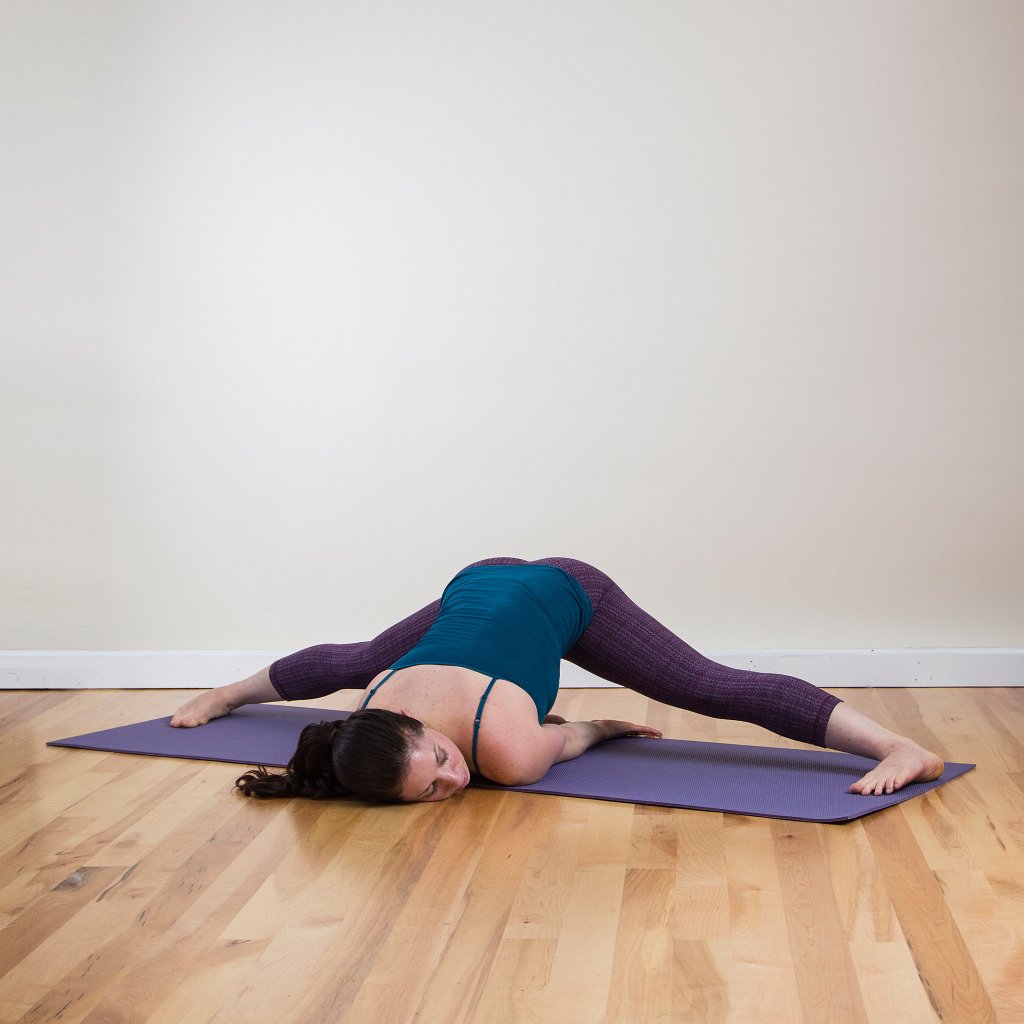
6. The Pigeon Pose

BJJ StretchesThis is another Yoga stretch that’s tailor-made for BJJ. Start off by placing one leg in the mat in front of you. bent the leg 90 degrees at the knee, so that the foot is touching the mats with the outer edge. Extend the other leg as far back as possible, keeping it completely straight. The goal is to touch both your hips to the ground. At first, keep your arms extended and as you get better, aim to put your elbows on the floor in front of you. Once again, the spine stays straight.

BJJ Stretch Routine To Fix You Up Fast After Class

This Is How Stretching For BJJ Should NOT Be Done!

The Secret To A Huge Gas tank For BJJ Rolling

The Secret To A Huge Gas tank For BJJ Rolling

Have you ever wondered how to make sure you can roll longer and harder without getting tired? Sure you have, there’s not one person training grappling that hasn’t. Well, apart from those that already figured out what the secret is. Is it more conditioning exercises out of the academy? Is it more rolling or focused drills on the mats? Please tell me it’s not more running and roadwork! Fear not, you won’t need to move a muscle in order to get a better gas thank with this secret little trick. All you’ll need is a clear head and some focus. If you think you can do that then you can learn the secret to an endless gas tank for BJJ rolling! If not, stick to your Tabatas, and maybe one day, you’ll catch up.

The Secret To A Huge Gas tank For BJJ Rolling

Getting tired during BJJ rolling is not like getting tired in any other sport. In regular sports, you can stop to catch a breath, no matter how small. IN all other combat sports you can revert to defensive strategies while you recover. But in grappling, you have the pressure of a person on top of you, trying to break a limb or strangle you with all their might. Not somewhere you want to be even with a full gas tank. What usually happens in situations like this is the combination of pressure and exhaustion lead to panicking. This, in turn, leads to the most dreaded tap of all – the cardio tap.

While most people turn to all kinds of modern ways to get them up to speed, the secret to endless rolling lies in another place. Just like with most things in BJJ, this is not apparent and has to do with technique. It is invisible Jiu-Jitsu at its best. don’t get me wrong, conditioning outside the academy is a must. It’s the homework grapplers must do in order to make sure their body is functioning to its maximal potential. Staying calm and preserving plenty of energy during BJJ rolling, though, has little to do with treadmill sprints. At least in the long run. It has more to do with your mindset an ability to apply, or even more importantly, do not apply certain techniques in certain situations.

Old School Wisdom

As usual, all Jedi mind tricks in grappling come from one of the old foxes in a particular martial art. The people that have hugely successful competitive careers followed by even more impressive teaching careers are the ones you should pay attention to. It’s far better to learn from someone who has already gone through trial and error than do it yourself. so, when old-school grapplers talk, make sure you listen. Very often i is the stuff between the lines that are truly worth gold.

In that sense, this secret concept came to me via the knowledge of a legend form the sport of wrestling – Wade Schalles. The enigmatic coach and former prolific competitor are very keen on concepts. As we all know, concepts are essential for a high-level BJJ game, so I listened. Despite laying out his concept for a very different use, one specific to wrestling, something really seemed logical about it. So I went on to experiment.

At firs,t I focused on doing things exactly as Wade demonstrated in an instructional I came across. Of course, the concept worked and it got me a lot of success. As with all things BJJ, I decided to broaden the spectrum. After many attempts, some of them unsuccessful (of course) I managed to find several different uses of Wade’s concept. One of them is never running low on gas while BJJ rolling. Let’s get straight into how the “loosey-goosey” concept works.

The “Loosey Goosey” Theory

Wade’s original application of the “loosey-goosey” method was while standing up. namely, whenever you’re tight while grip fighting for position on the feet, you end up giving your opponent a lot to work with. A tight body means increased leverage for the opponent. that, in turn, means it’s easy for them to control you, or even overpower you, even if they’re physically weaker than you. Let me elaborate.

If you’re all tense during BJJ rolling, your body is working as a whole. While this is what people look for during conditioning sessions, it is something grapplers have to avoid. In terms of standing up, this means there’s no way out once an opponent establishes grips. Staying loose, on the other hand, is going to allow you to wiggle out of every grip the opponent has, no matter how strong. Staying loose is going to make you as slippery as an eel for your opponent.

Not only that but whenever they apply any technique on you, it won’t work. The looser you are, the less a move is going to be effective. Now, this doesn’t mean to play dead, it means to loosen up in situations where it is going to benefit you. If you start attempting it you’ll see that these situations arise multiple times during BJJ rolling.

How It Works In BJJ Rolling

Let’s say you started rolling with a tough purple belt at your academy. You stood your ground but the purple belt just kept moving around. You then went on to roll with the gym’s enforcer, leaving you drained fora tough roll with at op brown belt. We all know how that ends up. Now let’s say that you are going to apply the loosey gosedy principle when you roll.

First of all no matter how much someone moves or attempts to get superior positioning on you, staying loose will make sure you’re immovable. If you’re on top, it ends up allowing you to project even more pressure on to an opponent. Even more importantly when you’re not tensing up your body is not working as hard. Relaxed muscles mean rested muscles. Even better, staying loose means your mind is calm and you can think how to apply techniques instead of panicked movements. The result is that you’ll last longer and be able to deal with all kinds of opponents, without the need for extra conditioning. It’s the magic bullet that black belts know all about. But how do you accomplish this?

Here’s where I’m going to provide you with one more trick to get you all loosened up – smile. Whenever you’re tense, your jaw is one of the first things that clench up. The best way to relax your jaw is by smiling. If you relax your jaw, the rest of the body will follow. Now you’re loose, your mind is relaxed, your breathing is calm and you can fight intelligently and never get tired!

Do You Have The Best BJJ Style For Your Body Type?

Interesting BJJ Warm Ups To Get You Ready For Class

Elite Strength and Conditioning For BJJ Competitors [Sample Plan]


A Few Surprising Benefits Of Jiu-Jitsu Training

Benefits Of jiu-Jitsu

Why do you train in Brazilian Jiu-Jitsu? is it because of the workout? Maybe it’s the self-defense aspect of it. Or perhaps you’re a competitor hoping to become a pro one day. Some are even into it to give their mind a place to rest. Whatever the case, you’re hooked to the best combat sport on the Planet. But are you aware of the impact BJJ has on your body and mind? Because there are other benefits of Jiu-Jitsu despite your own personal reason for training. Let’s see how Jiu-Jitsu changes the lives of everyone involved in it for the better.

Grappling is definitely one of the hardest things people can do in their lives. It requires dedication and even a level of addiction to truly become superior to it. It also has huge mental and physical demands. you not only get to do a really difficult sport but also have to do it against always changing resistance. You’re up against an opponent that moves in an unpredictable manner. Moreover, you need to manipulate both yours and their body weight. And during all this, you need to keep a clear head and make lightning-quick decisions. But it’s not all demands. There are also plenty of benefits of Jiu-Jitsu that you might not be aware of.

Jiu-Jitsu is a really complex martial art. The main thing that makes it so elaborate is the constant evolution. nobody can master the art as it is always changing and growing. expanding into new areas. This requires both physical and mental attributes in order to keep track of and aim to master.  Luckily these are not pre-requisites as BJJ has the tools to develop them in everyone. When the Gentle Art takes over you, it molds you to become better at it. It is just one of the multiple benefits of Jiu-jitsu that people are mostly unaware of. Let’s look at some of the rest.

Bernardo Faria is a 5 times World champion that certainly understands BJJ. Use his “Foundations of Brazilian Jiu-Jitsu” DVD set to learn the essence of the Gentle Art correctly. Here’s what you can expect to find in this instructional.

The Benefits Of Jiu-Jitsu You Need To Know About

The benefits of Jiu-Jitsu go well beyond the physical. Despite what most people think, BJJ is much more than just a workout. It is also different to other grappling martial arts, that are based more on the physical side of things. Brazilian Jiu-Jitsu is all about leverage, mechanics, principles, and concepts. On top of all that you have a whole phone book of techniques and their names. This obviously requires some mental gymnastics as well, on top of all the physical work we put in.

Benefits Of jiu-JitsuIn terms of benefits, Jiu-Jitsu can guarantee a few things. First, you’ll get better overall health. This is due to to the physical aspect of it. But also there’s the lifestyle aspect, one which includes proper nutrition and often, supplemental conditioning or mobility training. Next, you’ll become better at life, as simple as that. Taking the BJJ principles and applying them to other life situations is going to provide you with answers to plenty of questions you thought were too hard to solve.

Mental Toughness

Mental toughness is a trait often associated with wrestlers. They do tend to have grueling physical workouts and matches, demanding them to be mentally powerful to push through. Jiu-Jitsu though boosts your mental toughness in a whole different way.

Training Jiu-Jitsu means that you won’t just gain the direct nitty gritty mental toughness of wrestlers. you also get a problem-solving component to, it, one that you can’t get anywhere else. Whenever you’re in a tight spot in BJJ, simply pushing through i not going to get you far. you’ll either end up worse or won’t affect the situation at all. Instead, what you learn is to be persistent enough until the time is right to apply the correct solution to a problem. This means being able to face a problem, position yourself so that you can withstand it, and find a crack to get through it without t any damage to yourself. This happens multiple times in a single BJJ class, so you make the math. As far as benefits of Jiu-jitsu go, mental toughness ranks right at the top.

Physical toughness

This is a no-brainer really. If you want to become really physically tough and well conditioned, do grappling. While you might not get the grind that Judo players and wrestlers face daily, you’ll get more than enough to keep you sharp.

All those tough rolls and small injuries you pick up along the way are going to teach you that you’re tougher than you think. On top of that, they’re also actually going to make you tougher. Your body gets a workout like no other form of Jiu-Jitsu. It’s not just the muscles that of another athletic discipline can hit. TI’s the ways in which BJJ works them that’s unique to the Gentle Art. namely, you work strength, explosiveness, isometric strength, flexibility and everything in between during just one class.

Nutrition Benefits

If there’s one thing that is common among people sharing the BJJ lifestyle it’s nutrition. benefits of Jiu-Jitsu include changing your eating habits for the better. sometimes it’s just because you want to fit in. Other, you find the support group you need in your teammates who are already eating right. Or, you might just want a taste of that Brazilian cuisine. After all who doesn’t like tapioca pancakes and Acai?

Confidence

Most of the Brazilian Jiu-Jitsu academies today have a self-defense portion in their classes. It might be a class on its own or just a part of the class. Whatever the situation, the outcome is the same -you’ll know how to handle yourself if the need arises. Are you going to be as “effective” as Steven Seagal? Of course not. But you’ll know what works and what doesn’t. you’ll also gain the confidence absolutely need in a confrontation. Confidence means you’ll end most confrontations with the other person backing down. And even if things get a bit out of hand, you know how to take care and control someone at will, don’t you? After all you’re doing it multiple times a week.

Humility

This is the big one that grapplers tend to take out of proportion. Let’s make ti clear – there’s no way to get read of your ego. its’ as much a part of us as our limbs. However, there’s a way t learn humility, which is how our egos are kept in line.

Benefits Of jiu-JitsuBenefits of Jiu-Jitsu include a hard lesson in humility. Why hard? Just look back to those first few months. you got through them, and you never want to go through it again. But what did they teach you? They taught you that no matter how strong you think you are, how good you think you are, there’s always someone better. They taught you that you sometimes need to tap in order to learn something and keep on fighting. These area ll lessons that today’s society is not fit to teach. That’s where BJJ steps in.

Flexibility And Mobility

Once again in the domain of physical benefits of Jiu-Jitsu, we have to at least mention flexibility and mobility. after all, we all know someone who turned up to class as brittle as a rock. A couple of years in and they’re now doing cartwheel passes and full splits. There are some enormous physical benefits of rolling and training BJJ in general. Yes, injuries area part of the sport as well, but the benefits of mobility certainly outweigh the small knocks we pick up along the way.

BJJ Blue Belt Requirements, Struggles And Expectations

When Are You Experienced Enough To Be A Jiu-Jitsu Instructor?

25 Reasons Why You Don’t Progress in Jiu-Jitsu As Fast As You Can

Benefits Of Drinking Coffee And Green Tea For Jiu-Jitsu Training

The Best BJJ Submissions From Mount

Submissions From Mount BJJ

Whenever kids get into it on a playground, there’s one position that comes instinctively to them. As with grown-up fights, most fights end up on the ground. When they do, one person inevitably ends up on top. The position everyone strives for, from the playground sandbox to the octagon is the mount. It has a huge mechanical advantage over an opponent and plays right into human instincts. A such, Brazilian Jiu-Jitsu has perfected the position to ti’s tiniest detail. The mount is often dubbed the “king” of BJJ positions. Although some might argue, there’s no denying that the mount is one of the positions to be in. But staying in the mount is not enough. If you can’t or won’t punch, then you need to know a few submissions from the mount that’ll finish everyone.

Despite the overwhelming mechanical advantage of the position, submissions from the mount are no easy feat. Against an inexperienced opponent, you can do whatever you want, and make it look easy. However, if the person on the bottom knows what to do you’re going to have to work. If you can make submissions form mount look easy against a seasoned grappler than you’re really high level yourself. For most, it takes a long time and lots of mistakes before they get the mounted game down. Instead of trying to figure it out for yourself, we’re going to provide a simple guide to the best submission options from the king of BJJ positions.

The main advantage of the mount position is that you have a high degree of control over an opponent. No matter what they do, you can adjust easily and look to apply your game. When you understand the mount positions, you’ll be able to see and use every opportunity that comes your way. If an opponent is actively trying to escape there will be plenty of openings. If they’re just sitting tight defensively, you can open some doors by yourself. All you need to do is know which weapon to use and when.

Dominant Positioning In The Mount

The mount position is fairly simple at first glance. However, staying on top is like riding a rodeo – you’re going to get flipped at one point or another. In order to avoid, you need to know how to control the position. To do that you must realize two things. First, you need to know the control points of the body from the mount. Second, you need to know which height you need to be at for control and submissions from mount

The main control point of the mount position is the hips. Whenever you’re on top, your hips should, at least initially, be right on top of the opponent’s hips. Sitting with your body weight right above the opponent’s hips make s you notoriously hard to move. The secondary point of control is the shoulders. This is done with the help of your arms, torso, and head. A simple hand under the head offers you the option to control an opponent’s posture along with their shoulder girdle. This effectively pins an opponent down completely.

In terms of mount height, there are two variations. The first is a low mount, which is what I described above. The second is high mount which brings your knees as far up the opponent’s armpits as possible. For hip control, you’re going to use both feet on either side of the shoulder control. The high mount frees up your arms to hunt for submissions but takes away from the hip control.

Submissions From Mount

When we’re talking about submissions from the mount, the most important thing is timing. You have to be as precise as possible with your attacks. Whenever you’re looking for a submission from the mount, you’ll have to sacrifice some of your structure in order to obtain it. This means the opponent can use it to get out. that’s why you need perfect timing before anything else.

next, it is very important to have more than on weapon It’s ok if your favorite mount attack is an armbar. But you also need at least one choke, one bent arm submission, and a leg lock to complete your arsenal. You never know which is actually going to work.

Finally, remember that constantly threatening your opponent means they have to defend. This, in turn, provides you with control over them and the opportunity to create an opening. be mindful though, that only hunting, for one thing, is not going to provide you with success. Be ready to use the opening you get, and do not hesitate to go for it!

Cross Collar Choke / Helio Gracie Choke

The Reason why there are two submissions from the mount in each category is twofold. First, they offer both Gi and No-Gi options to finish. Next, the compliment each other perfectly, working as chains. The only way to be proficient from the mount is knowing how to attack from both low and high mount with a barrage of various attacks that you can connect.
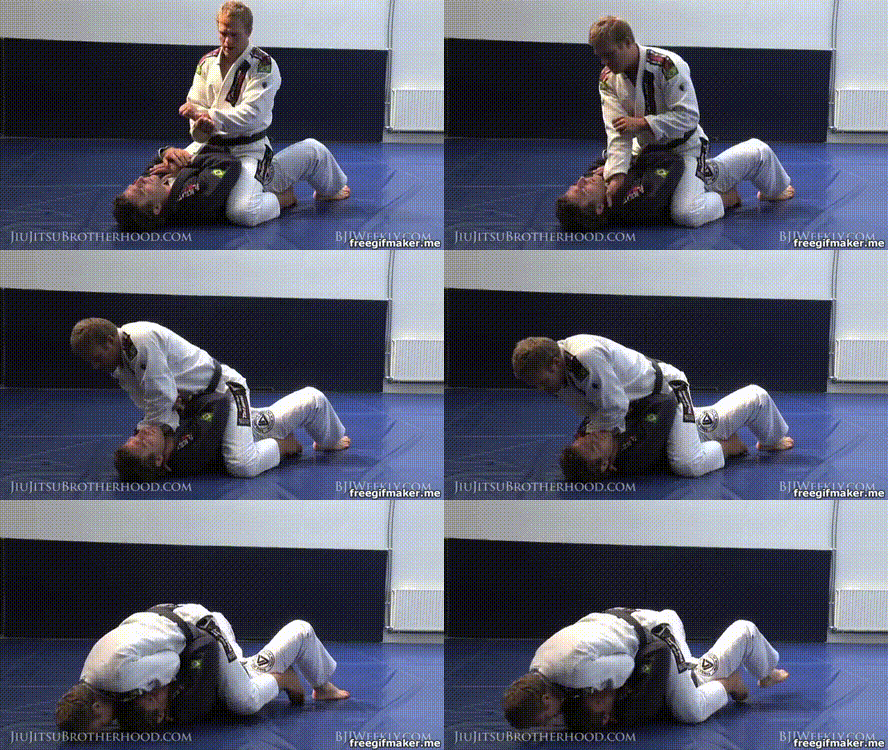
Submissions From MountThe cross collar choke is probably the most quintessential of all the submissions from the mount. Roger Gracie does it like no other, submitting the highest level black belts like it’s a joke. This only demonstrates how much the move is effective. For the cross collar, you need one hand in each of the opponent/s collars. As the name suggests, one hand should go deep on the opposite side collar. The other should follow. The grip you need is four fingers in, thumbs out. To submit all you need is to keep your elbows close and place your forehead on the mats, above the opponent’s head.

For a No-Gi option (also available with the Gi) you can always go back to a truly old school choke. the Helio Gracie choke requires you to simply place a fist on each carotid artery from the low mount. just squeeze and sprawl from there and you’ll get a fast and easy choke that works.

Armbar / Americana

There’s no way we can skip over these two when the topic is submissions from the mount. The Americana and straight armbar are not only classic mount submissions but the arm-locking combo from hell. You have both a bent and a straight arm lock, they work with and without the Gi and they compliment each other. Plus, you can use them to transition to and from low/high mount.
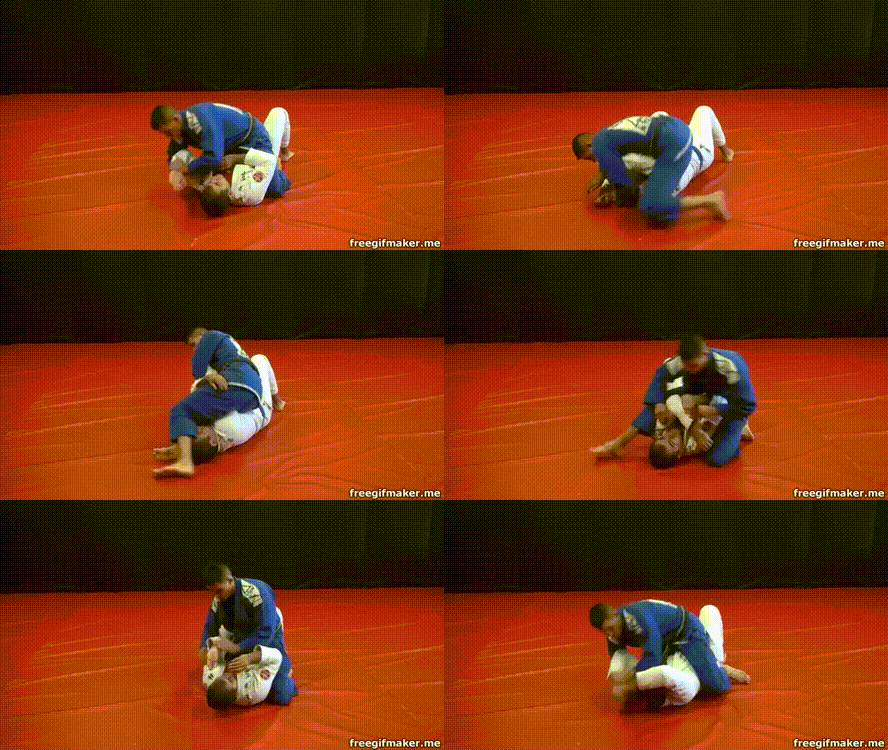
Submissions From MountStarting from low mount the Americana is the first one. All you need is to pin one wrist of the opponent to the mat right next to their head. the arm should be at a 90-degree angle. You need to control the wrist with your opposite side arm and thread the other arm under the opponent’s upper arm. The result is a figure four grip which is essential to finishing. Simply pull the opponent’s back of the palm across the mat, like a paintbrush and you’ll get a tap.

The defense to an Americana is for your opponent to find a way to get their arm to their chest. Once they have it, you’re all set for a straight armbar. The figure four rip you already have means you’re in complete control. All you need to do is the transition to an S-mount and hit the straight armbar. The grip is going to help you finish against any resistance as well.

Triangle / Gogoplata

The mounted triangle and the Gogoplata are not submissions from the mount that you see often. they do work, however, and they have their place in the hierarchy of mount attacks. For the triangle, your best bet is the high mount. Sometimes the opponent’s try to sneak an arm under your leg when in the high mount. This sets you up perfectly for a triangle. Simply control the other arm, and put your free leg under their head. That’s it locking the triangle is easy from there. To finish, just pull up on their head. or, if you’re after fancy points, switch to a Gogoplata.
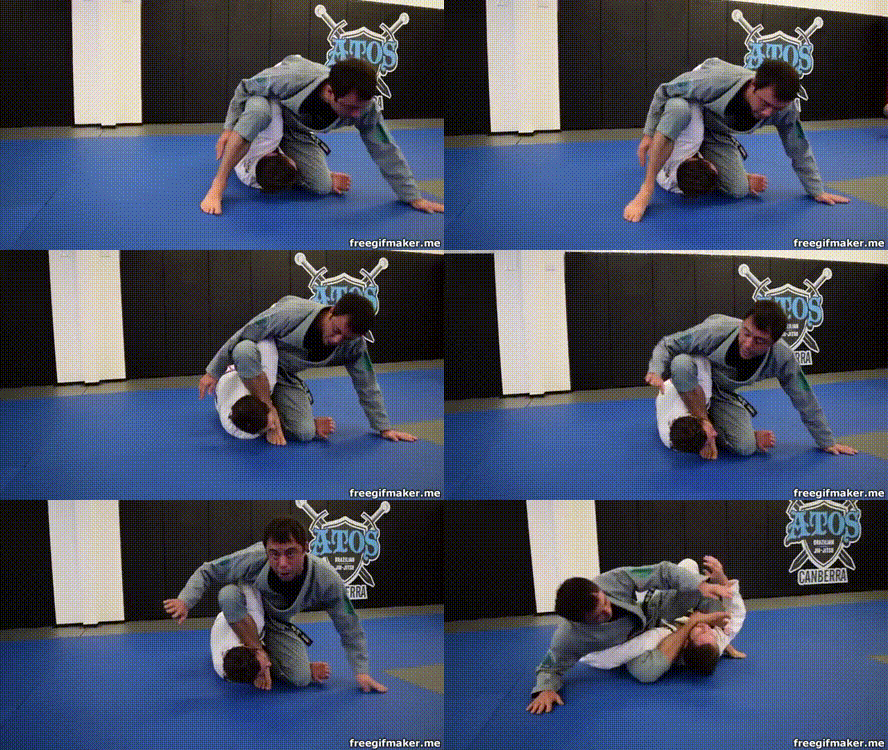
Submissions From MountFrom a mounted triangle, getting the Gogoplata requires you to switch legs. Basically, you’ll want to open the triangle, get your leg back on their shoulder and use the other leg to choke them. To do this, you’ll need the dexterity to place the foot on their trachea. Once you have it, the choke is really tight and brutal. Just like with triangle, even if an opponent reverses you at this point you’ll still get the submission.

Ashi Garami

Finally, sometimes, in order to get submissions from the mount, you need to leave the mount. How come it’s still a submission from mount? Well, the setup is from the mount, even though the finish might be a step further. Like an Ashi Garami, for example.
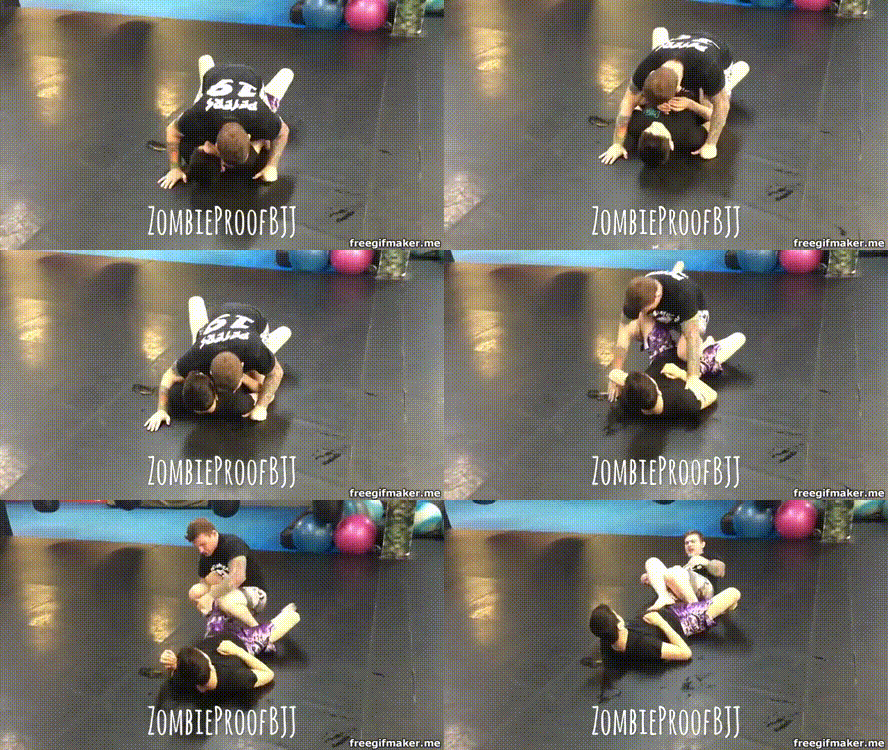
Submissions From MountWhen other submissions from the mount don’t work, you need to get innovative. use both your feet to put in butterfly hooks from the mount. This is going to open an entry to an Ashi Garami on each side. You simply need to sit back and trap one leg. From there on feel free to finish with a leg lock of your choosing.

Become a real menace from all top positions by adopting some of the principles of Catch Wrestling. There’s no better coach to teach you Catch Wrestling for BJJ than Neil Melanson. Check out his “Catch Wrestling Formula” DVD for detailed information. 

Source Videos:1 2 3 4

17 positional Escapes from Mount and Back Mount

High Percentage BJJ Americana Setups From Top And Bottom

 

4 Knee On Belly Escapes You Need To Learn

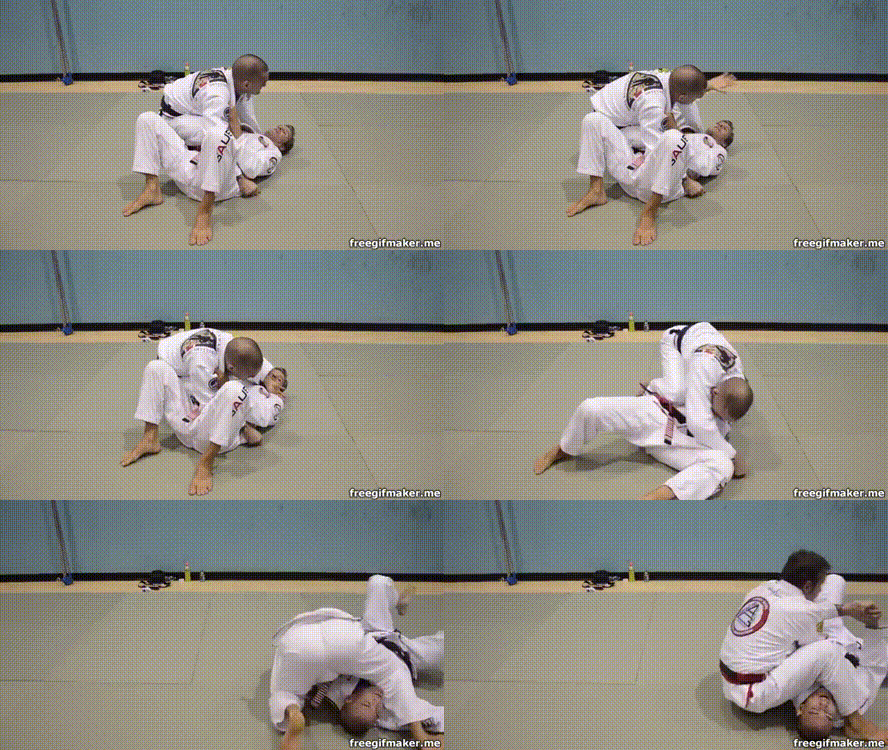
Knee On belly Escapes BJJ

Out of all the torturous positions in Brazilian Jiu-Jitsu, none is more painful than knee on belly. Of course, this holds true for those occasions in which you’re on the receiving end of it. Getting the air crushed out of your body, along with the weight of an opponent on top of you is enough to break even the strongest fighter. The knee on belly position is the true showcase of BJJ power. A position from which even a 150 lbs grappler can be as heavy as a 300 lbs one while controlling a much bigger opponent. In cases when it’s the other way around, well, good luck to the smaller bottom person. Or for those that do not want luck but are after the technique, 4 high percentage knee on belly escapes to get you breathing and grappling again.

Knee on the belly. The one position every grappler fears. It doesn’t matter how big, strong or skilled someone is. if you’re up against an opponent that knows how to control the knee on belly position, you’re done. Although the position is not one for static control it is one of pressure. People that know how to stay in control also understand that the need t o switch sides constantly. However, they also know how to switch by maintaining pressure, taking all will to fight out of you. But there is a way out. Actually, there is more than one way out, making you as unpredictable from the bottom as the attacking is. Knee on belly escapes are probably the most technical moves you’ll ever learn in Jiu-Jitsu.

The reason most knee on belly escape attempts fails is due to not understanding the position. yes, you need to know how to hold knee on belly in order to escape it. It’s not that knee on belly escapes do not work as stand-alone techniques. it is that when you know how pressure and weight distribution work, you can look to exploit the weak spots. Every position has weak spots, and knee on belly is no different. The strategy is easy – stay safe, understand what the opponent wants, and use it to escape. Now, let’s see how you can do it in four different ways.

The BJJ Boogeyman Position – Knee On Belly

Before we even think about discussing knee on belly escapes, let’s analyze the position for a while. The knee on belly position is considered a halfway stop between side control and mount. As such it brings two points in the competition, depending on the ruleset. It also opens up plenty of attacking opportunities, in the form of chokes, arm and leg locks. Getting to the mount, or even back control is also pretty easy. And to top it all, there’s immense pressure with absolutely minimal effort during all of this.

For the knee on belly, you essentially need to have the tip of your knee placed right below the sternum of your opponent. This is how you exert maximal pressure on the diaphragm, apart from the direct pressure on the stomach. Your foot should hook the opponent’s hips, making it difficult to access. The other leg is responsible for balance and support. It needs to be out wide at an angle, foot on the ground. It should not be accessible to the arm of your opponent.

The pressure from the knee on belly comes mainly from the grips and hips. If you just stand in the position you won’t really have that crushing effect. However, if you grab the near side lapel as deep as possible and you pull you get a different effect. If you also pull the pants at the hip level you multiple your pressure. To really torture someone, you’ll need to put your hips into it as well. Just a slight thrust forward is going to make all the difference.

Staying Safe In Knee On Belly

We’re still somewhat away from talking about specific knee on belly escapes. First, we need to see where the danger is and how to stay safe. While bearing the pressure might be quite difficult, the ultimate goal of the position is to get the mount, back or a submission. The pressure is simply a gateway for your opponent to get what they want. However, you are the one that needs to open the door.

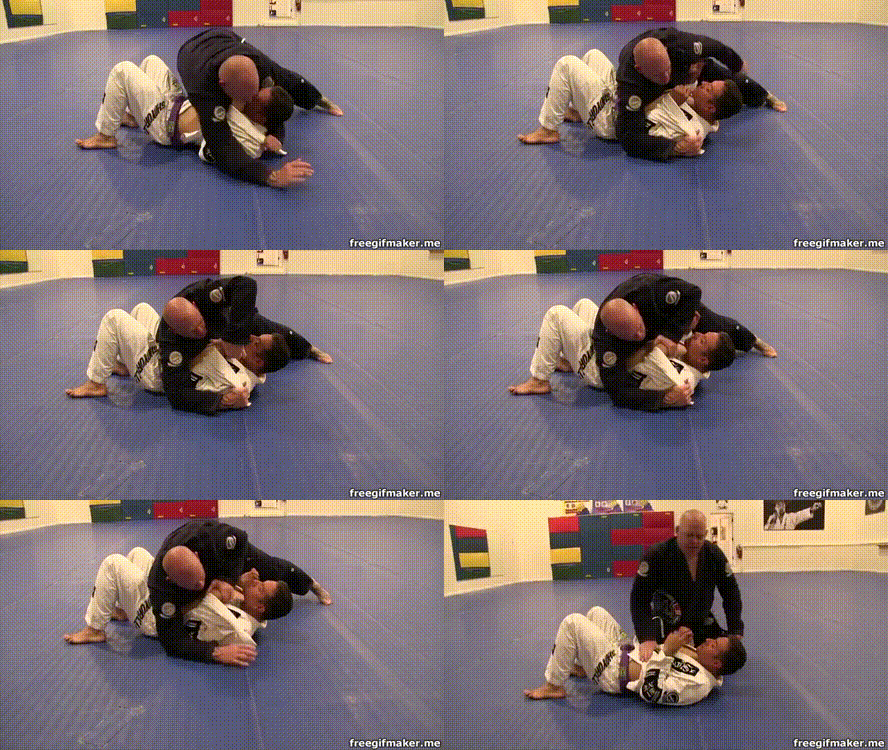
First and foremost, never push on the knee with your opposite side arm. This is a clear invitation for a far side armbar. Second, do not use your nearside arm to push on the opponent’s torso. Once again, armbar. Make sure you have both your arms T-rexed on your chest. This will keep them safe along with your neck. Most chokes from knee on belly rely on the Gi, so keeping your arms close is going to make your collars and lapels inaccessible. Also, keep your feet on the ground, knees bent. Every time you throw your legs toward the opponent, you open up leg locks entries or transitions.

Speaking of transitions, there’s essentially little you can do to prevent mount. If you’re smart, however, you won’t give up the back. The knee on belly position has an opening if you turn away from it. While there’s a transition to knee on belly on the opposite side, this often opens up back attacks. never turn away from an opponent in the knee on belly.

4 Knee On Belly Escapes That Work

Finally, we can talk about knee on belly escapes. the moves we’re going to cover today are based on the main weaknesses of the position. The first one exploits the knee’s tendency to push downwards. The second one is all about disrupting the already fragile balance of the position. The third and fourth escapes are going to feed the opponent’s tendency to hold you in place using their grips and pressure.

#1 The Most Basic Knee On Belly Escape

If you’re going to escape from any position in BJJ, your best bet is a simple and easy escape. As long as you’re safe, there’s no need to think about fancy 10-step escapes. For this one, all you need to do is hip escape away from the opponent. yes, this is impossible to do directly because of the pressure. however, ask yourself what the focal point of the pressure is? The answer is the knee. So to escape knee on belly, you need to redirect the focal point of the pressure. After that, gravity will take care of the rest.

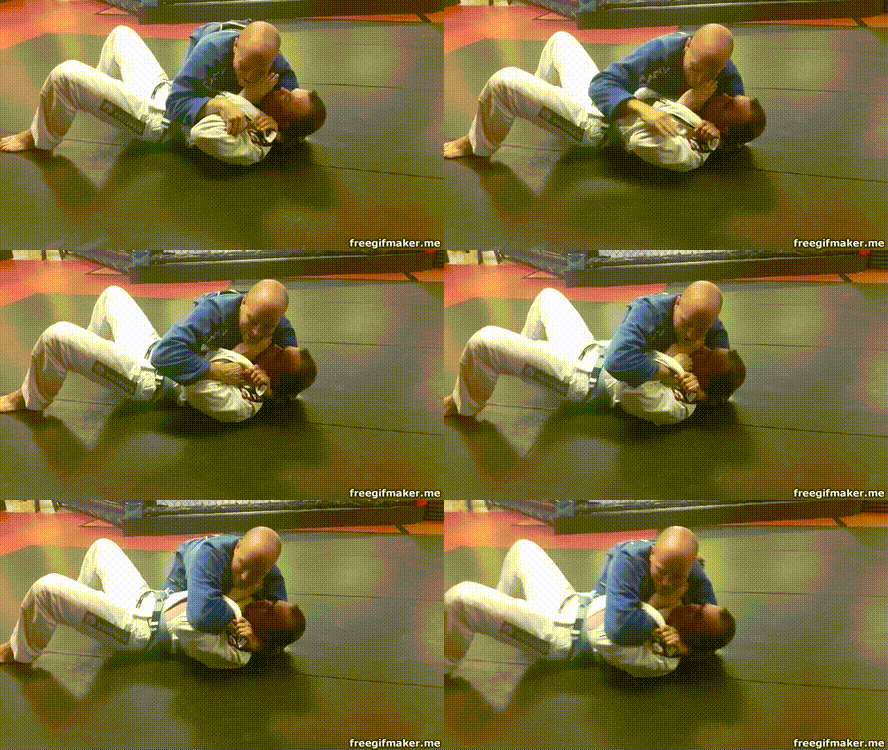
4 Knee On belly EscapesThis escape is simple – you just need to slide your near side elbow in front of the knee. You might need to twist to get your elbow in position. From there. simply hip escape and their knee are going to land on the ground and you can technical stand up or go into half guard. The trouble with this escape is that it won’t work if the opponent has their grips tightly in. So, whenever you feel someone going into knee on belly, this should be your first choice of escape.

#2 The Single Leg Takedown Escape

4 Knee On belly EscapesAs far as knee on belly escapes go, this is the one that you’ll probably use most often. it works well for both Gi and No-Gi and is fairly easy to execute. Furthermore, it doesn’t require you to open up anything for your opponent and exploits their attempts to stay in static control.

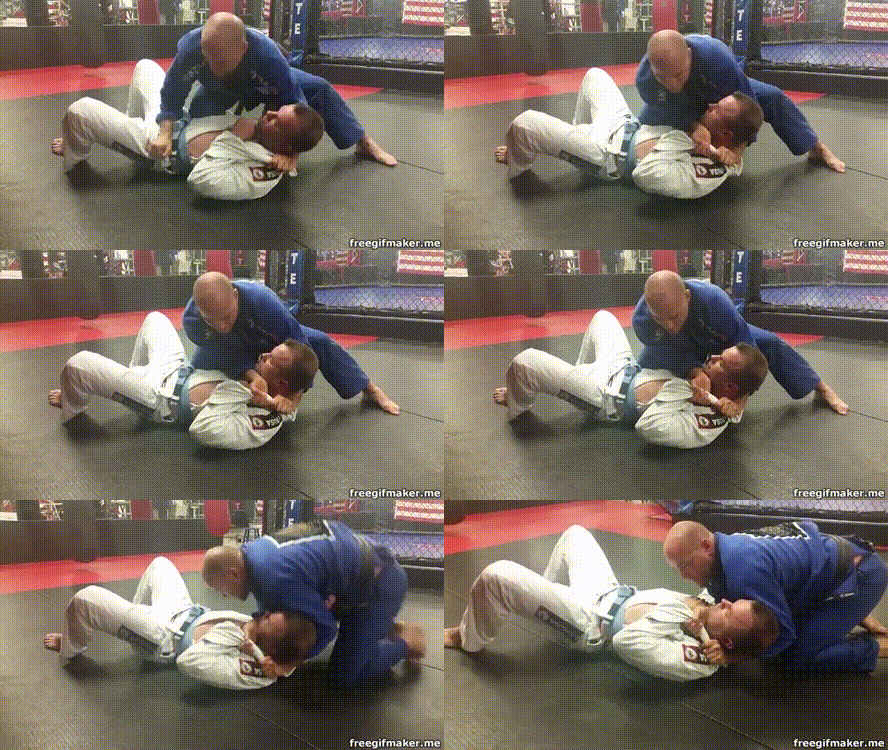
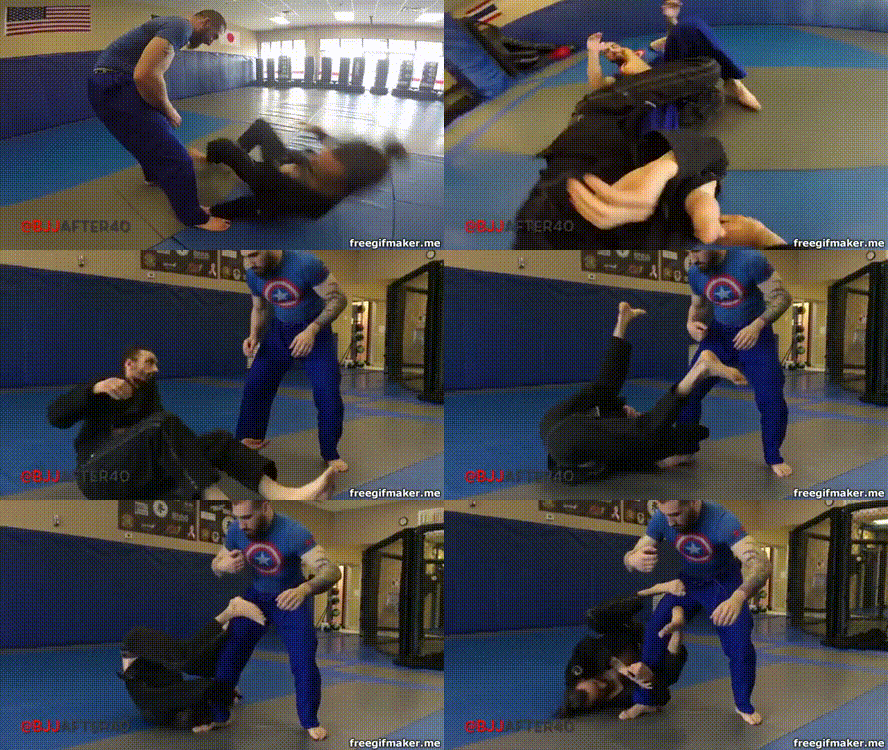
To execute this escape you must first grab the opponent’s belt with your nearside arm. keep the elbow close to you and you’ll be safe. next, you’re going to use your near side knee to kick the opponent in their butt, making them post above your head. Now they’re out of balance and all the pressure is gone. From this position, you need to use your free arm to hug their leg right below the knee. Simply extend your legs and turn to your belly and you’ll end up on top, ready for a leg drag pass.

#3 Arm Trap Escape

4 Knee On belly EscapesThis is probably the coolest escape from the bunch. it is my favorite and it works against everyone. For this escape, you’ll take advantage of the fact that your opponent has tight grips on your collar and hip. First, you’ll need to make sure you break their posture down. To do this, reach for their far side collar with your far side arm. Once you have the grip, push towards your legs and then pull downwards. At this angle, there’s no way for your opponent to resist.

Next, you’ll use your near side arm and your head to trap the arm that’s gripping your collar. Look to use your elbow crease to trap their arm just above their elbow just like for a straight armlock. Once you have the arm trapped, the escape is simple. Just turn to your side and push on their trapped elbow. You’ll not just end up on top, but in a great position for an armbar too.

#4 The Roll Over Escape

This one is courtesy of Kurt Osiander. Of all the knee on belly escapes, this one has the most steps. This doesn’t make it complicated, though and it is perfect for really experienced opponents. This is the escape to turn to when nothing else seems to be working.

4 Knee On belly EscapesThe first thing to do is sneak your nearside arm under the shin of the knee on belly leg. Once through, the goal is to grip the back of the Gi skirt or the belt. The opponent’s reaction here is going to be to trap your arm with the leg. For that, they’ll have to transition to a cross-face in order to maintain balance. This is exactly where your escape takes place. Once your opponent lowers down, use your free arm to grab over their shoulder and in their armpit. This provides the leverage to tilt your opponent over. Simply bridge up and turn to your knees, just like when escaping the mount with an Upa.

Kurt Osiander is full of effective escapes, counters and brutal old-school attacks. he lays it all out in his “Fundamentals Of A Jiu-Jitsu Renegade” DVD set. There’s no excuse for not having a Kurt Osiander DVD instructional so go get yours!

Related Articles:

Four Full Mount Escapes Every Grappler Needs
Heel Hook Defense Concepts That Never Fail
High Percentage Guillotine Choke Escapes And Counters
Simple Side Control Escape Concepts You Must Know

Old School BJJ Submissions – The Straight Armlock

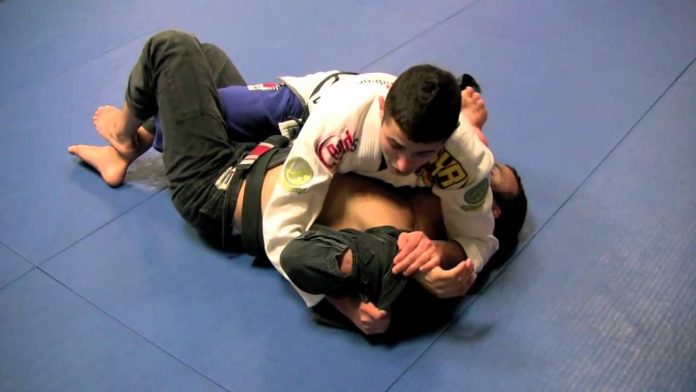
Straight Armlock

When we’re talking submissions in Brazilian Jiu-Jitsu we either think chokes or joint locks. If you take the modern leg locking craze aside, you’re left with good old arm locking options. In terms of armlocks, people tend to go for one of two choices. They either hit a straight arm submission or a bent arm variation. While the bent arm variations boast with plenty of variety, as far as straight arm submissions are involved, there’s only one – the armbar. However, the armbar has a next door neighbor that’s just as potent if not more. The straight armlock is old school submission straight out of hell, for those that know how to use it.

Ah, we’re on to explore the world of a true BJJ classic once again. The straight armlock is as old school as submissions get. It even features as far back as the very first “self-defense” instructional. In BJJ, the approach to the straight armlock is different – it works. There’s no apparent reason why people avoid this easy and effective submission hold nowadays. The straight armlock is available from a variety of positions, both from top and bottom. Furthermore, this move works just as good with the GI as it does in No-Gi. Let’s revisit this forgotten submission and see where it can feature in a modern grappling game plan.

As the trend of submissions changes over the years, some moves get left behind very often. IT happened to leg locks until a while ago. It happened to a host of sneaky moves that work like a charm if you’re aware of their existence. The straight armlock is not one that was completely forgotten, however, it is one that most people skip over when they roll. That’s a real shame since it presents itself during transitions between other submissions and positions of control. Why skip over a legitimate and easy to master submission hold, just because you’re not sued for hunting it?

The Secret Of The Straight Armlock

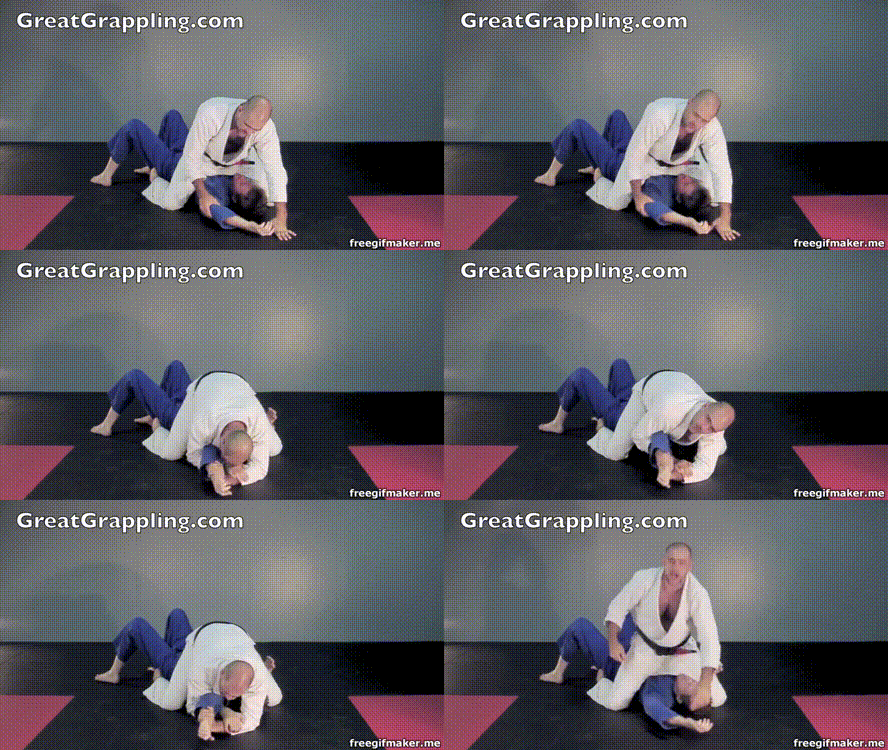
The straight armlock works much like the armbar. The ultimate aim is to place pressure behind the opponent’s elbow, on the side of the upper arm. The direction of the pressure needs to be opposite of the direction in which the elbow bends naturally. The main difference to that of the armbar is that you’re not using your hips to put pressure on the elbow. At least not directly.

The straight armlock is done with your body in, essentially, an opposite position than that of an armbar. The main source of pressure for the arm lock are the hands of both your arms. The grip to go for is the palm to palm grip, right above the ulnar process of the elbow. There’s a small little pocket there in which a palm to palm grip fits perfectly. Finishing the armlock requires leverage on the other side of the lever as well. This means you need to have something propped against the wrist of the opponent, pushing in the opposite direction of the pressure on the elbow. The best body part to use for this is your shoulder.

Finally, in order to make sure you truly have the armlock, you’ll need to trap their wrist in place. There’s no way to keep their arm on your shoulder just by placing it there. However, if you use your head, bending it towards the arm, there’ll be absolutely no way out. Keep in mind that this is the most usual way of setting up the straight armlock. There are ways to set it up that do not involve your shoulder or a palm to palm grip. But, more on that later.

Straight Armlocks From The Top

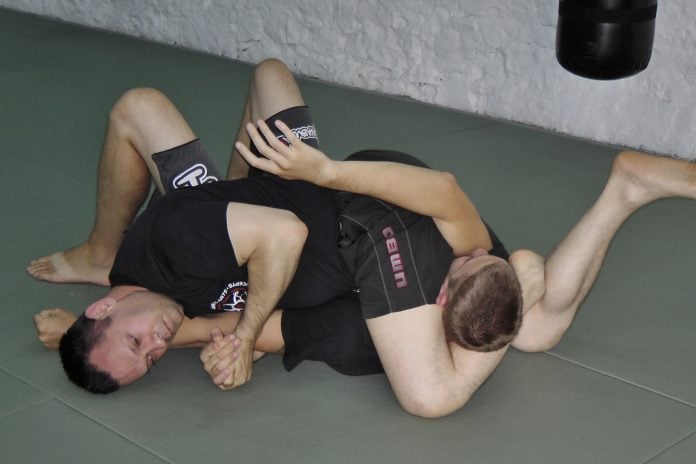
Straight ArmlockThe best position to hit a straight armlock from, when on top, is North-South. Whenever you find yourself there, you do not have any direct submission opportunities. North-South is great for holding an opponent down but not submitting. Unless you have the straight armlock in your arsenal. Form a strong north-south position, an opponent is going to attempt to place one arm under your neck in order to create space. if they don’t you can always place it there yourself. Once the arm is there, you can think about finishing. Switch your base in order to open up space, use the arm that’s closer to their hips to secure the elbow and then establish a palm to palm grip. All you need to do now is place forward pressure with your body while pulling with the arms. Keep your elbows close and there’ll be no way out.

Straight ArmlockAnother top position for getting a straight armlock is the mount. Simply put, whenever an opponent resists your Americana attacks he opens up an armlock straight away. Whenever an opponent extends the arm defending a bent arm lock, look first and foremost to trap the arm. Use the head and shoulder trap we discussed earlier. Once you have it, keep the arm extended long enough to set up your palm to palm grip. Since you’re on the top, you have gravity working for you. Base on your head and feet, keep your hips heavy and pull your arms toward you. IF you’re having trouble finishing like this, you can always throw a leg over their head and create further tension.

Bottom Armlock Set Ups

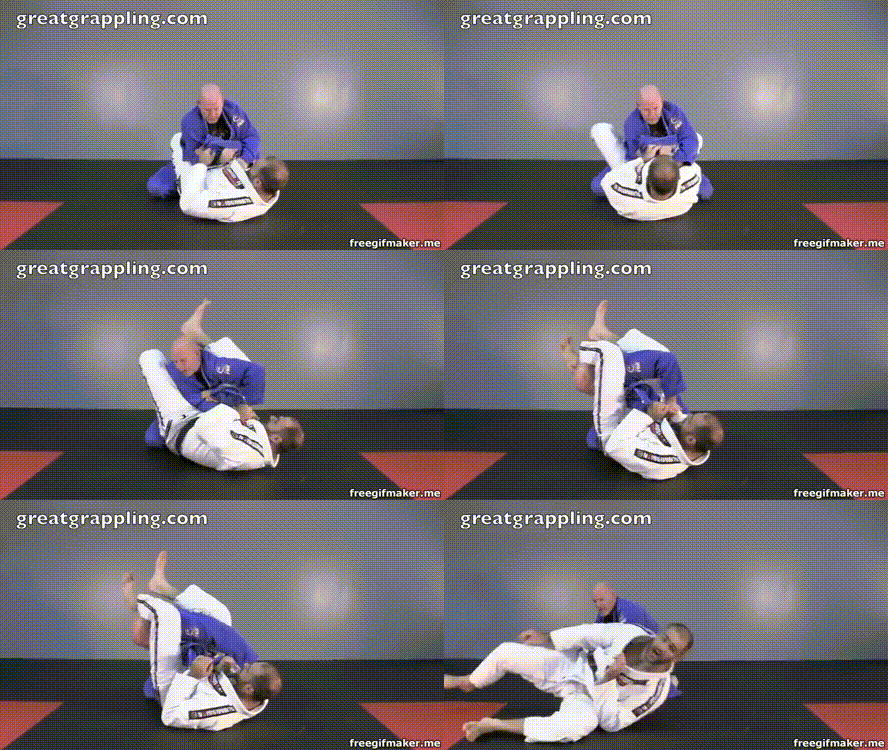
Straight ArmlockThe straight armlock from the half guard was a favorite of mine for a long time. Now that people now I’m hunting for it, I use it mainly to set up other attacks. Every now and again, though, when I go for it really fast it works like a charm. This one is probably the easiest to set up, as the opponent usually gifts you the submission. Every time you’re in bottom half guard the opponent is most likely going to look to place an arm under your head for a crossface. Once the arm is there, use your arms to set up the palm to palm grip/ Once you have it, use your free leg to swing it over their head. Now trap the arm with your head and extend your hips while pulling down for the tap.

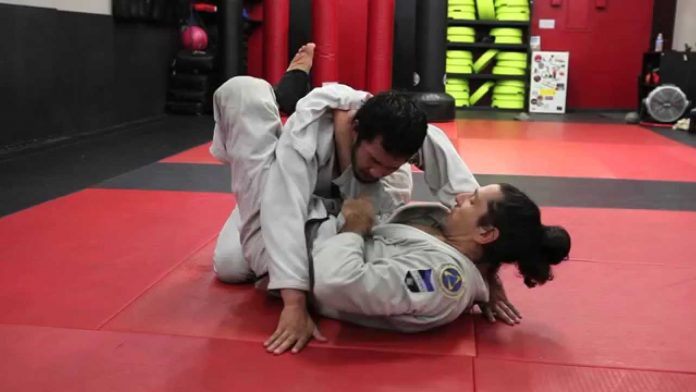
Straight ArmlockThe straight armlock from the closed guard is set up a bit differently than other armlocks. From a closed guard, the aim is to get a tight overhook on one of the opponent’s arms. The higher you are on the arm, the better. The hand of the overhook should grab the opponent’s lapel on the same side. Once you have it, open the guard and hip escape toward the arm. Place your feet on both sides of the hips of the opponent and lie on your shoulder. Now you have the angle to finish the armlock with ease.

Check out what Chris Haueter has to say on the subject of straight armlocks. Even better, check out his complete “Old School Efficient BJJ: DVD instructional for a whole bunch of easy, effective and brutal movers most people have forgotten about!