

Strength And Conditioning For BJJ – What Is Best For You?

Strength And Conditioning For BJJ

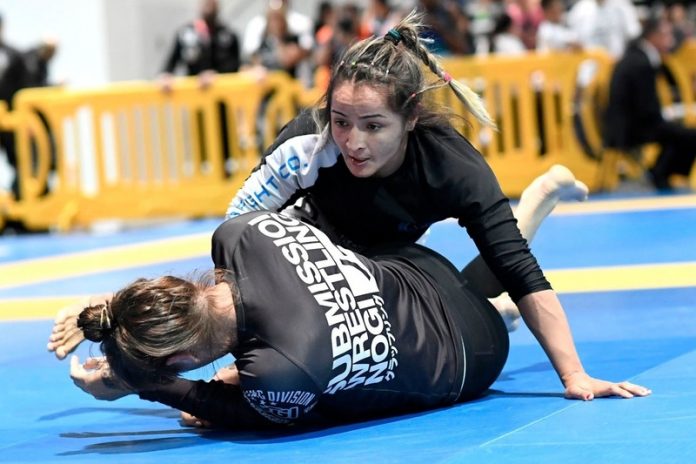
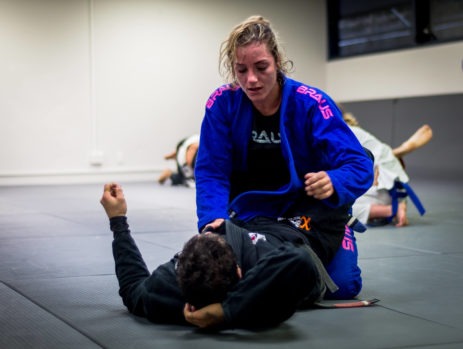
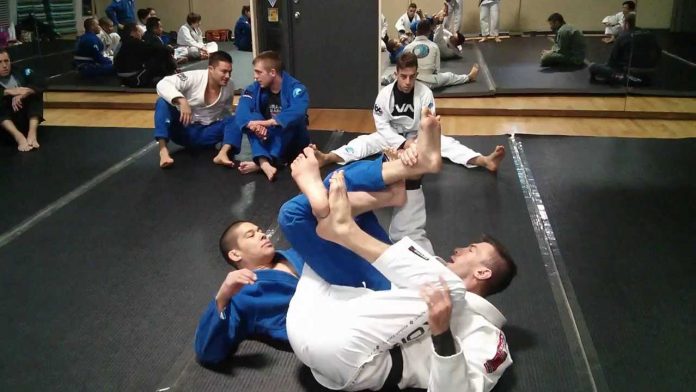
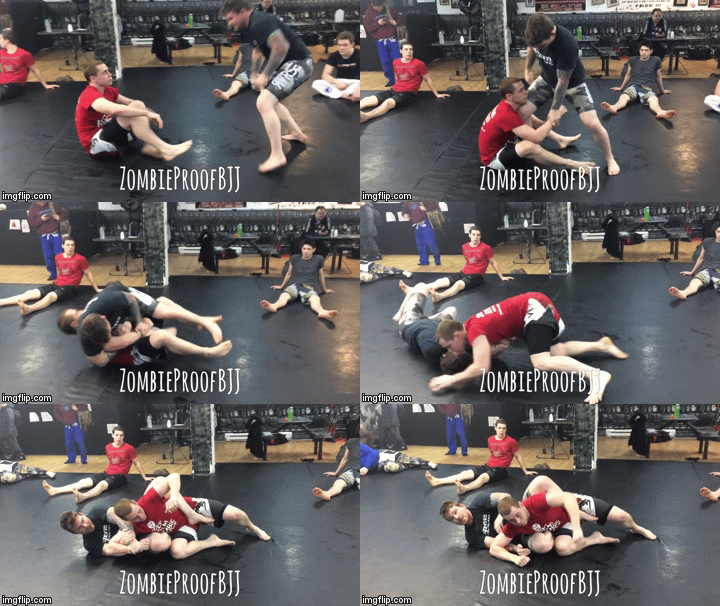
Do you know what the biggest issue with strength and conditioning for BJJ is? Despite what most people think it is no sticking to one. It is also not about specific parts of the program itself. Whatever workouts you choose to compliment your BJJ training are going to have an effect. This brings us to the actual problem itself – selection. How do you know that you’re doing the correct strength and conditioning for BJJ? After all, there are so many options out there, that you couldn’t go through them in a lifetime. How can you know that your current selection covers everything you actually need for grappling? 

Much like the art of cutting weight, strength, and conditioning for BJJ remains mostly uncharted territory. After all, grappling is a sport, unlike others. It involves motion patterns and muscle groups that are very hard to target with traditional training means. And, despite many grapplers advocating that more Jiu-Jitsu is the best conditioning tool, I can say with certainty that it is not. Supplementing BJJ training with “homework” in the form of strength and conditioning is a must for any serious grappler.

Let’s go over some facts regarding strength and conditioning for BJJ. Fact number one is that you need a strength and conditioning program. There’s no way around it. Fact number two is that it needs to be something that actually has a positive carry-over to grappling. Third, it needs to be in accordance with your goals and capabilities. Finally, in order to reduce the clutter, you need to make sure you keep things as simple and effective as possible.

Strength And Conditioning For BJJ – The Options

Despite all the information out there, bodybuilding routines still remain more or less the norm. People still tend to train in body part splits. Even if they focus more on a powerlifting kind of effort, they still keep the training modalities close to those of physique competitors.

The Kettlebells are also a big one. Now more popular than ever, there are a thousand ways of organizing kettlebell workouts. Everything from elaborate multi kettlebell programs to a single kettlebell circuit is used in strength and conditioning for BJJ. The fact is that kettlebells are definitely a very useful tool for grapplers and are here to stay.

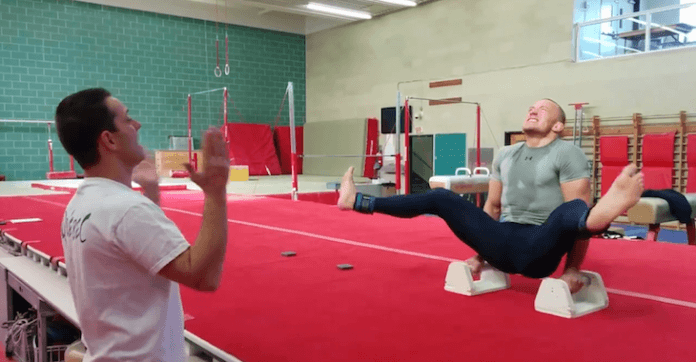
Next up is bodyweight training. This is where things can get overwhelming. Everything from simple calisthenics to complex gymnastic workouts often gets associated with strength and conditioning for BJJ. We’re also going to slam roadwork, like long-distance running and/or sprints in this category.
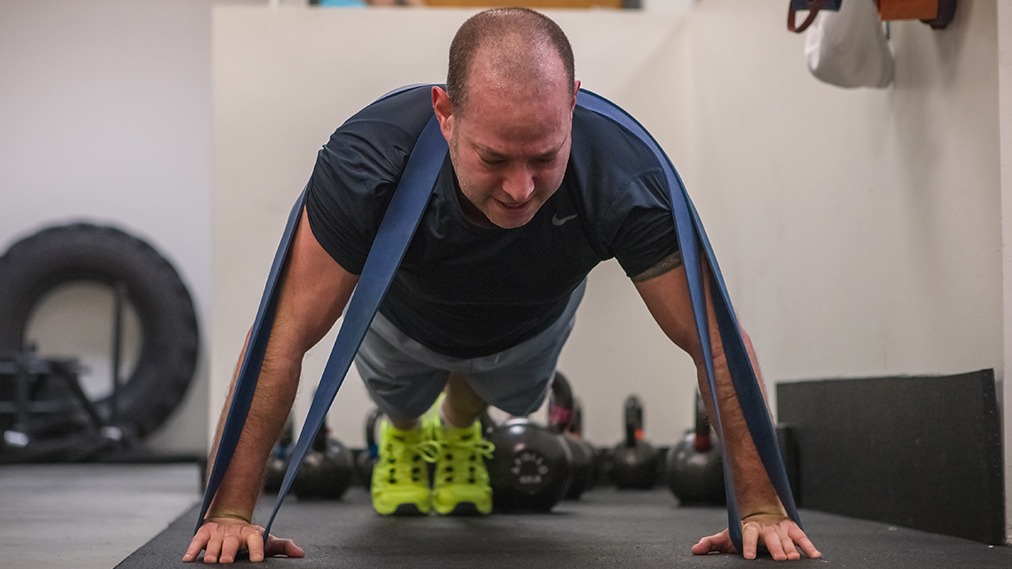
Strength And Conditioning For BJJNext up is the black sheep fo athletic conditioning. The aim of the functional training was to introduce a methodology focused on supplemental sports training for athletes. It ended up offering the widest variety of training routines and exercises that many of the other methods outlined above. While certain things make a lot of sense, not everything “functional” actually works for grapplers.

Finally, if you talk to a real expert in the field, you’ll be able to gain access to an individually tailored plan. These specialized programs are usually hybrids, including two or more of the methods we already covered. These programs are great, but they often cost a lot and maybe overly complicated.

Strength And Conditioning For BJJ – Selection Criteria 

Now that we know what’s out there, we can look to apply certain selection criteria to reduce the clutter. After all, the goal is to choose something that is going to fit your level, your goals and really helps grappling as the main sport.
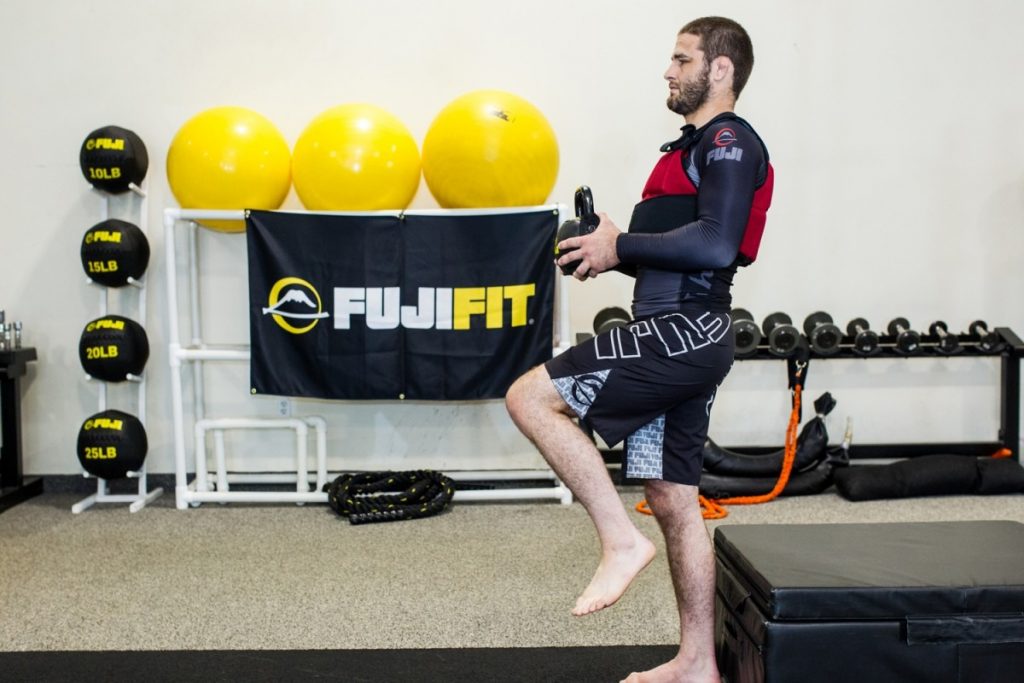
Strength And Conditioning For BJJWe’ll actually start with grappling as the first criteria. After all, if it doesn’t make you better on the mats there’s little sense in using it. Bodybuilding has its advantages. Lifting weights makes muscles and tendons tougher, providing stability and strength. However, it does tend to work in planes of motion that are too restrictive for grappling. Compound lifts are great but can be too taxing along with grappling.

Bodyweight can greatly help your grappling when used right. Jumping on gymnastic rigs without any experience is not a good idea though. The only drawback of gymnastics as strength and conditioning for BJJ is the learning curve. Sticking to some proven basics, like pull-ups, pushups, and squats is great, especially if you’re a beginner.

Kettlebells are truly awesome and actually have very few drawbacks. One is that you need to invest in a pair, and initially in a coach. However, once you master the movements, which takes little time, you’re good to go! A hybrid specialized routine should only be a consideration for professional athletes.

Finally, make sure your goals and capabilities align with your choice of method. This means taking into account time, injuries, finances, and athletic abilities. Also, consider your long-term goals when choosing your strength and conditioning for BJJ.

The One Rule You Must Follow

Training to become more comfortable and efficient in your body is not hard. All you need to do is listen to your body, and know what you should work on. As we already covered, there are plenty of options out there. Applying the correct selection criteria will get you to the best program for you. This brings us to the most important part of strength and conditioning for BJJ.
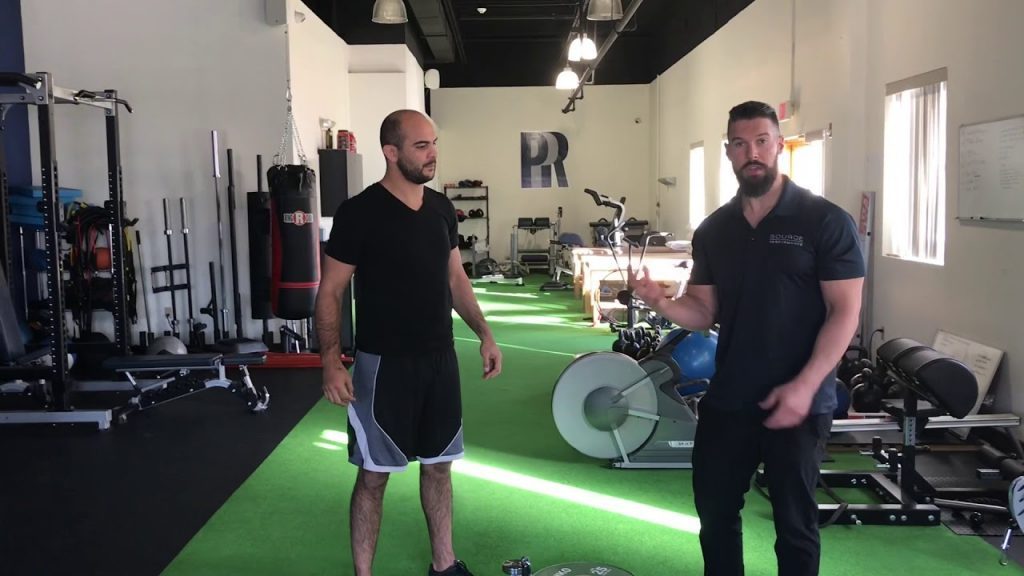
Strength And Conditioning For BJJIf there’s one thing that can make you better at Jiu-Jitsu, it is showing up. The more you show up at the academy, the better you’ll get. This same principle applies to strength and conditioning as well. The main rule is to stick to whatever it is you choose as your best option. Even if you don’t really like it, or grow bored with it after a few weeks, stick to the ends. there’s a reason why strength and conditioning routines are periodized in a progressive fashion. You actually need to get through a program to gain the benefits of it.

As a side note, make sure you allow your body ample time to recover. This means taking care of nutrition, sleep, and recovery. If your supplemental training is getting in the way of your grappling training, cut back or change your approach. Also, consider adding active recovery methods like yoga or walking/hiking.
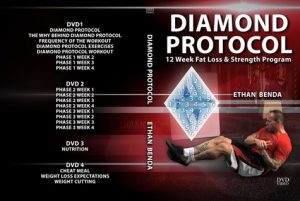
THE DIAMOND PROTOCOL BY ETHAN DVD
Meals, Weight loss, weight cutting, workout techniques…

Using a grappler who’s also a strength coach seems like a logical way to approach strength and conditioning for BJJ. Even better, instead of paying for sessions on a monthly basis, you can get all the instructions you need with one-ff payment! “The Diamond Protocol” is Ethan Benda’s DVD instructional that’s tailor-made for BJJ. You need minimal equipment to gain maximal results, so do not wait and pick it up now! 

The Best Strength & Conditioning DVD and Digital Instructionals

How To Develop Crushing Grip Strength For BJJ

Grappling Strength Training – How To Train Isometric Strength
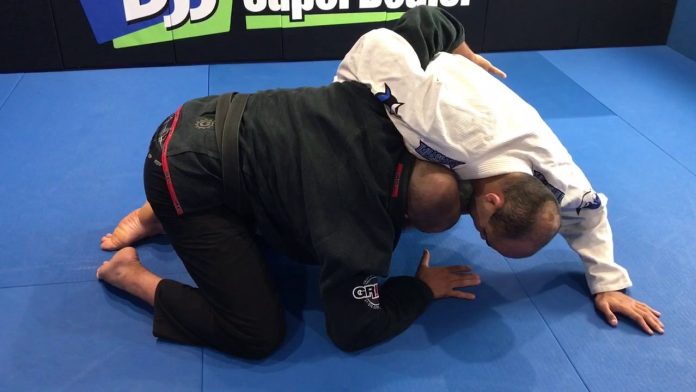
BodyWeight Exercises Based on Jiu-Jitsu Movement

Wrestling Whizzer Essentials For Brazilian Jiu-Jitsu

Wrestling Whizzer Tips For BJJ

The best moves that work across all grappling martial arts usually have one thing in common. They have an origin in some form of wrestling. Seeing as wrestling is the oldest grappling sport in the world (probably) this makes a lot of sense. Even more so, those moves are mostly moves that are the very basics of grappling. One such example is the wrestling Whizzer. As far as wrestling for BJJ, MMA or any competitive format goes, the Whizzer simply has to be included. It is a multifaceted technique that offers everything a grappler wants – control, attacks, and reversals. 

The wrestling Whizzer is actually a means of controlling the opponent’s upper body. Out o the many wrestling tie-up positions, the Whizzer is arguably the most utilized option. It offers a huge amount of control via indirect means. Namely, the Whizzer focuses on isolating one of the opponent’s arms in order to completely control the upper body. The move works from a multitude of positions and is one of the first things wrestlers learn. As such it has a great application in BJJ as well as other grappling martial arts.

Wrestling Whizzer in Brazilian Jiu-JitsuThe beauty about he wrestling Whizzer is in its’ simplicity. If you’re expecting a flashy move, you’ll be disappointed. The Whizzer is painfully simple but incredibly effective at the same time. It is a move you can rely on not just to get you out of a tight spot, but to also win you a match.
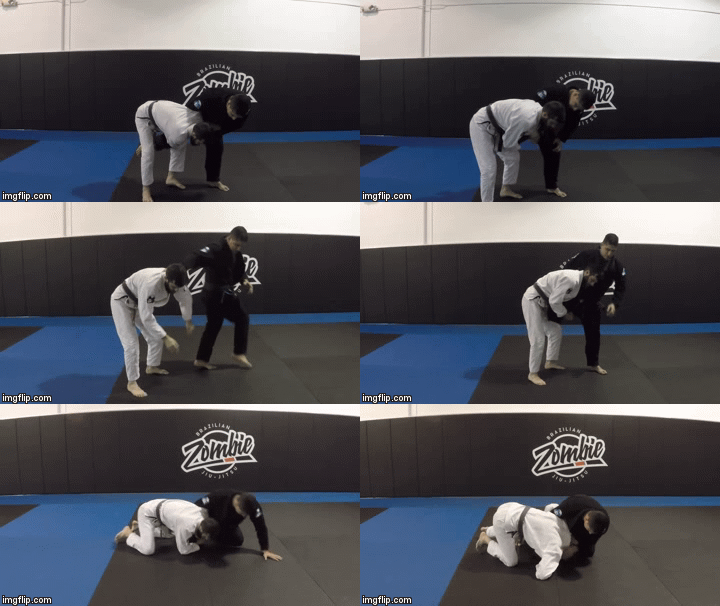
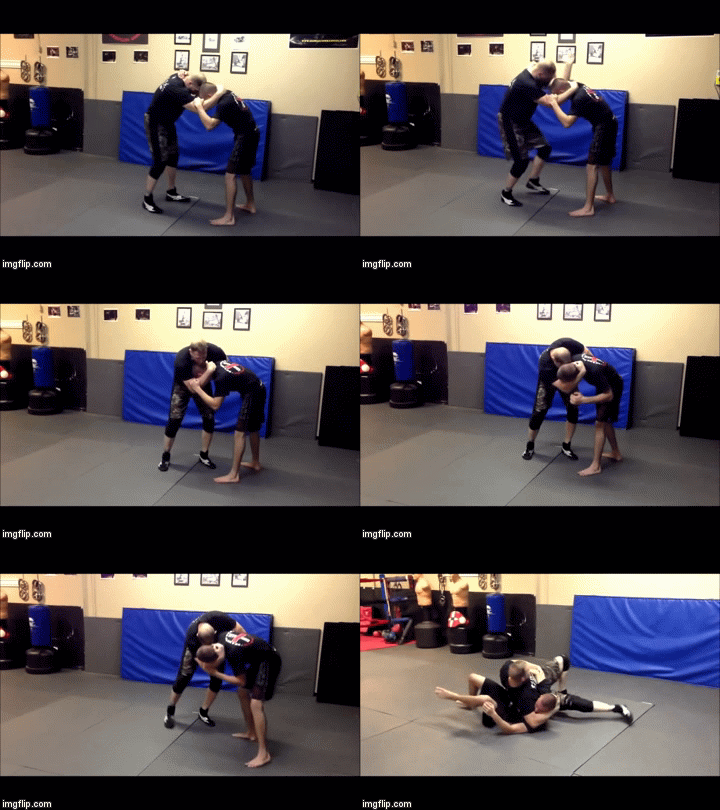
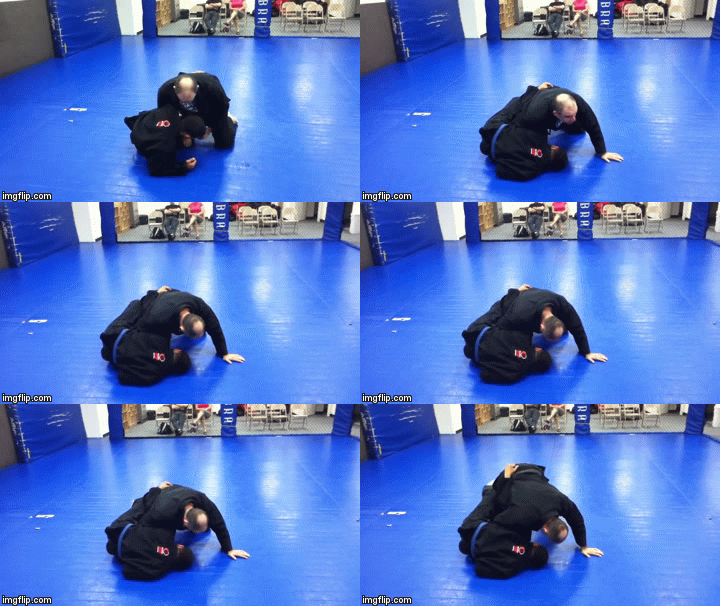
What Is The Wrestling Whizzer?

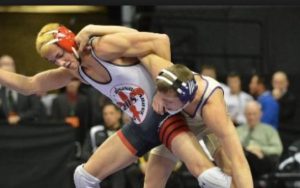
The wrestling Whizzer is basically a single leg defense position, before anything else. there’s hardly a better way to deal with a single leg takedown than going for a Whizzer. Technically speaking, the Whizzer is a way of controlling the outside arm of the opponent with your arm. Positionally, it is similar to an overhook. there is, however, a very clear distinction between a Whizzer and an overhook.

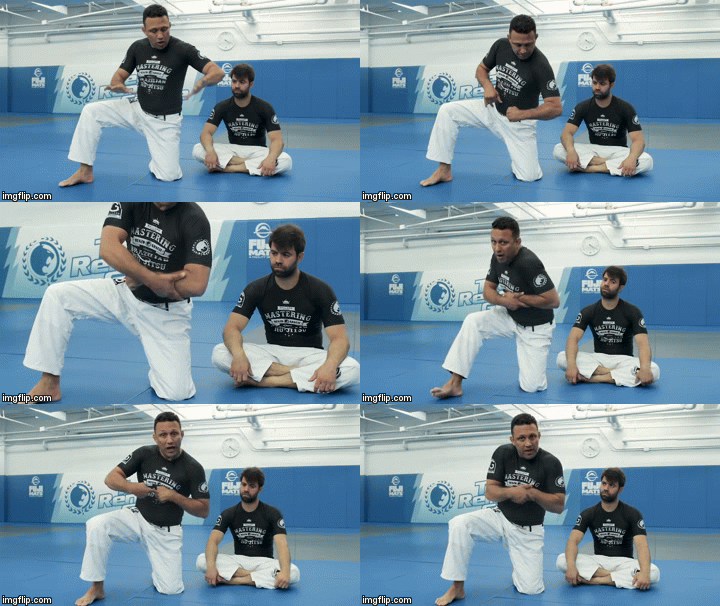
Wrestling WhizzerThe main positional difference is in the placement of the hand. With A Whizzer, the hand of the arm that goes over the opponent’s upper arm ends up on your (or their) thigh. With an overhook, your hand ends up on your chest, similar to a Guillotine Choke. This, in turn, leads to the next difference between the two. The main functional difference between the wrestling Whizzer and the overhook is in the direction of pressure. The Whizzer aims to lift the opponent’s armpit, while the ovehook has the task of bringing the shoulder of the hooked arm down.

From the Whizzer position, against a single leg takedown, the goal is to place your hand on your thigh and lift their armpit. This opens up ample space to circle your leg out and escape the takedown. Furthermore, it offers great control once you have your leg back. When on the ground, things are the same. The most usual position for a Whizzer is the top half guard, where opponent’s give up the position by looking for underhooks.

The Whizzer offers very good control over the opponent by trapping their arm. Since you have a way of pushing and twisting their upper body at will, you can instigate takedowns in any direction, or go for other offensive techniques.

The Wrestling Whizzer For BJJ

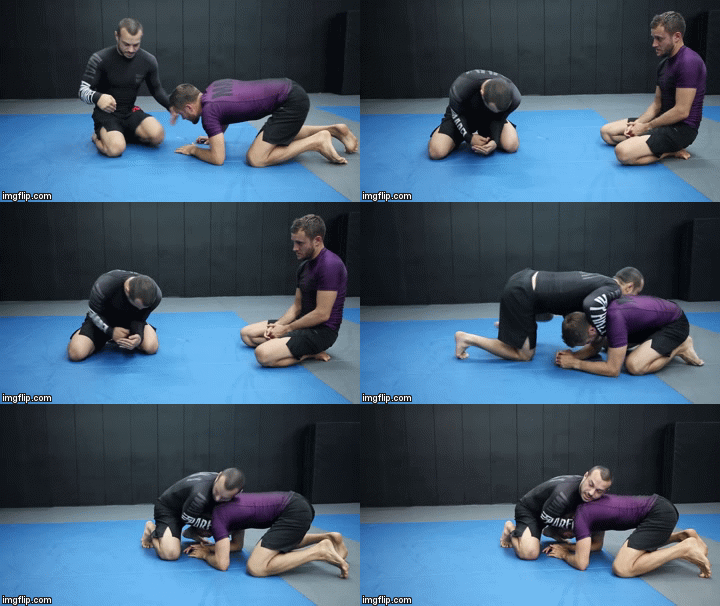
Wrestling Whizzer For BJJIn terms of Brazilian Jiu-Jitsu, the wrestling Whizzer is applicable from a very wide array of positions. Apart from defending single-leg takedown attempts, the Whizzer is also great for attacking takedowns of your own. One great option is to reinforce the wrestling Whizzer with a collar tie when you want to execute a takedown. From there, the goal is to twist the opponent towards the opposite side of the Whizzer control. Push back so that the opponent takes a couple of steps back. Once they push back, take the collar tie arm under the Whizzer arm, get both your feet to that side and drop to the mats while rolling towards the Whizzer.

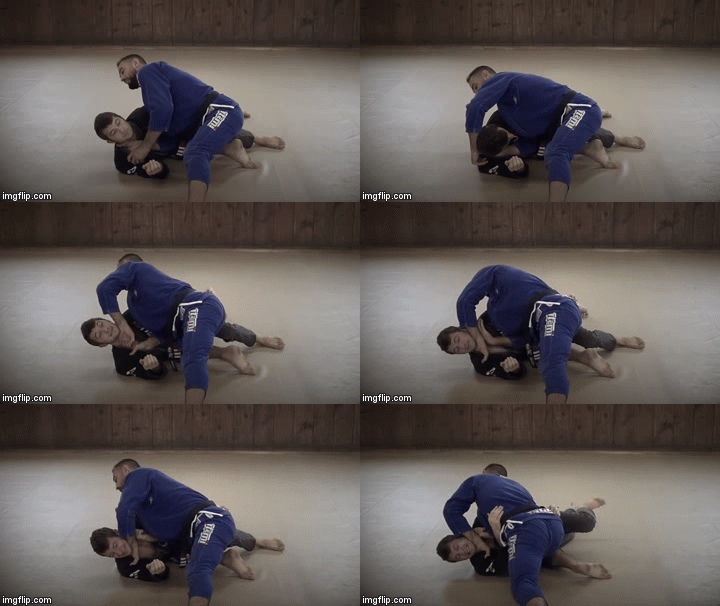
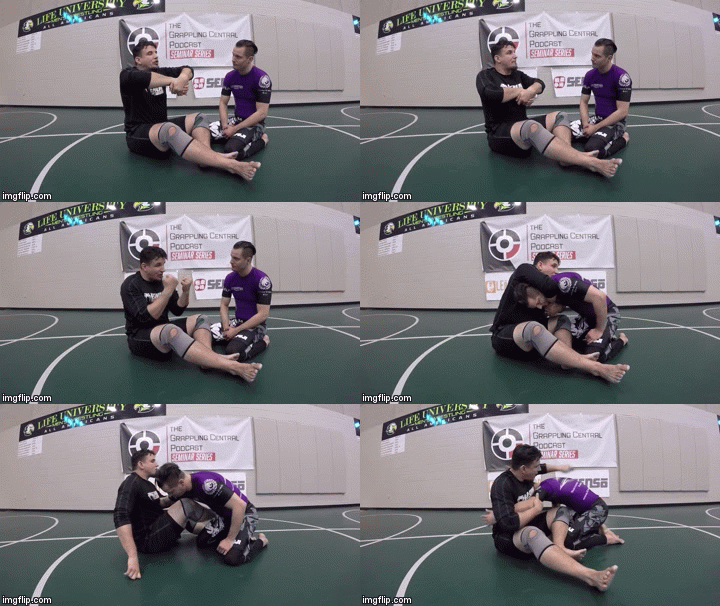
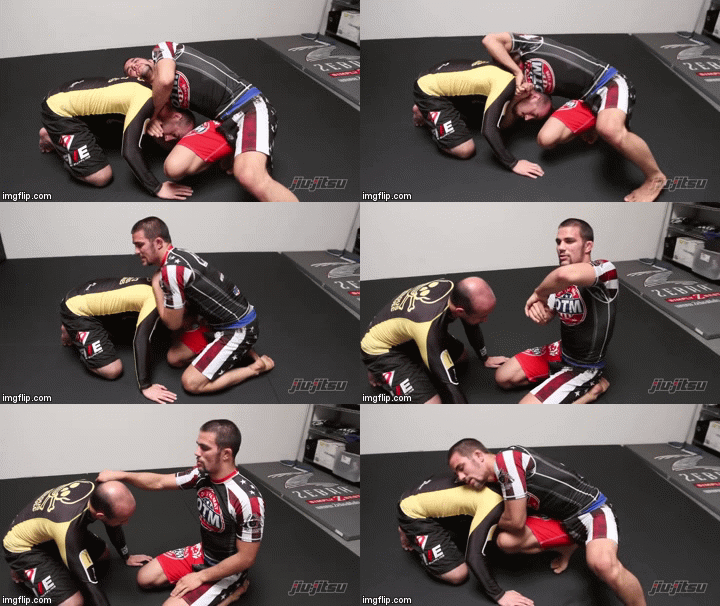
Wrestling Whizzer Jiu-JItsuFrom the top half guard, the wrestling Whizzer offers the option to pass, while preventing your opponent from shrimping away. In this instance, the palm of your hand ends up grabbing the opponents bottom leg providing great leverage. The hand position also ensures there’s no way for the hips to move while you go for a pass. Place your shoulder on the opponent’s ribs and go to your feet before going for a knee cut pass.

Wrestling WhizzerThe same position offers a great choke with the Gi a well. Once you have the Whizzer from the top half guard you’ll look to sneak the overhook arm all the way into the bottom collar. Use this grip to open up space to sneak four fingers of the other arm inside, above the first arm. As counter-intuitive as it sounds, place the thumb of the Whizzer arm inside the opposite collar. Turn your hips and body toward the opponent, pulling with the elbows and you’ve got a tight Reverse X choke.

Dealing With The Wrestling Whizzer 

Wrestling Whizzer CounterWhile ways of dealing with the wrestling Whizzer do exist, they require a lot of work and experience to get right. That said, there are options but going over them is going to be the subject of a future article. However, we’ll offer one important way of dealing with the Whizzer when you’re in half guard. Just remember that the person with the Whizzer is always going to have the upper hand, even when you’re countering., So, the best bet is to get out of the Whizzer completely.

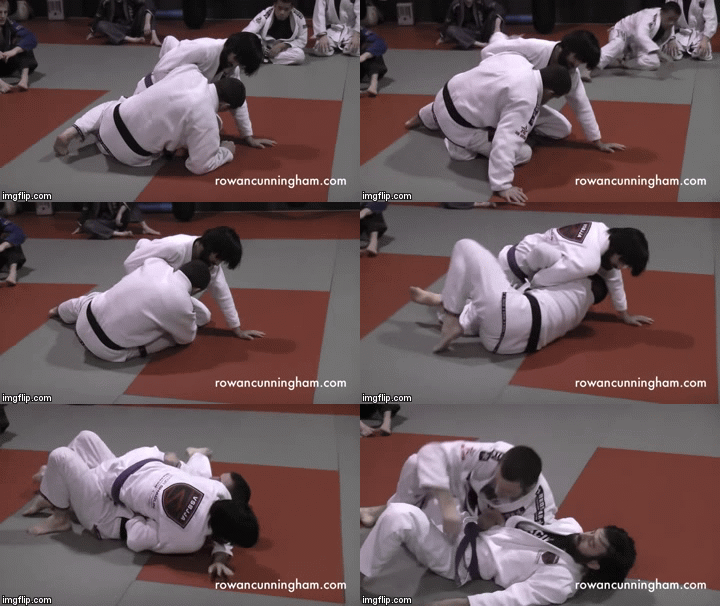
If your opponent has a Whizzer from top half guard you need to act fast. You must use your trapped arm to grab the Gi on the Whizzer arm, at wrist level. Grab the opponent’s free leg with your free arm, underhooking the thigh. Now, use your hips, underhook, and legs to turn on to your back and over to the other side for a sweep.

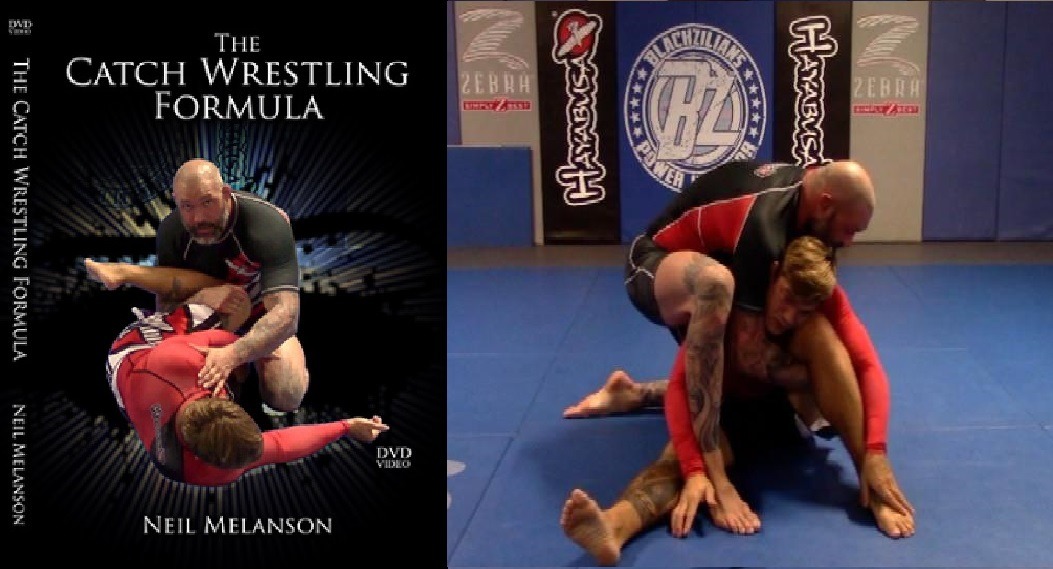
Do you want to be good at the wrestling Whizzer? How about overhooks? Underhooks maybe? Well, now you can master them all with just one video instructional. Neil Melanson is the man to guide you to the principles of catch wrestling for Jiu-Jitsu. All you need to do is pick up his amazing “Catch Wrestling Formula” DVD set and reap the benefits.

Neil Melanson DVD Catch Wrestling Formula
Techniques List

Neil Melanson DVD Collection – A Submission Heaven

Double Leg Takedown – How to Do It & The Most Common Mistakes

7 Strategies to Defeat Bigger Opponents In BJJ

Guy did a Brutal Takedowns To Destroy Two Guys Who Attacked Him

There’s an old saying, “don’t bite off more than you can chew”, and we’re sure these teenagers found out what that saying means in reality

It’s pretty unknown what exactly happened between these guys, but we can see that two white guys attacked a Mexican boy. The only problem they have is that he really knows how to handle himself. He Simply took them both them down and put a clinic on a guy who wasn’t unconscious until their “help” came in.

After these two kids attacked a bigger guy who is probably a wrestler or even a rugby player, they tried to kick and punch him but they got blown away. I bet they felt like train got them. Guy just charged at them and got two of them between his hands. After that, he threw a smaller guy head first into the road and. Smaller guy isn’t moving nor he moved in the rest of the video.

After that, he set upon the other kid who attacked him. While this was a one on one fight it was hard to expect anything else but a huge takedown. So it was. In a matter of seconds, the other guy was on the floor while an attacked guy was beating him until some woman stepped in.

Well, interesting thing is that in this fight wrestling was enough to take two guys down very easy. Maybe it’s a matter of size, or something else but grappling did a really good job here. As soon as we find out more about this fight we’ll update the post as I believe we’re all interested in martial Art background of the Mexican kid who was attacked.

Gas Station Clerk Knocks and Chokes Out a Robber With A Guillotine Choke

GSP Met the Guy Who Bullied Him for Years

Jiu Jitsu Guy With No Takedown Skills in a Street Fight – FAIL

Jiu-Jitsu For Women – Dealing With Common Training Issues

Jiu-Jitsu For Women Tips

The sport of Jiu-Jitsu is certainly meant for anyone and everyone willing to adhere to the lifestyle. Gender makes absolutely no difference in someone’s ability to learn and use Brazilian Jiu-Jitsu. Actually, there are some really high-level female competitors out there that could give most guys a run for their money. Thankfully, during the last few years opportunities in Jiu-Jitsu for women have become more available. There are now professional competition formats that target only the ladies. This, in turn, only brings more new students to the art, helping both the art and those practicing it, grow even further. However, being a lady in what is still to a certain degree, a man’s sport, is anything but easy. here are a few tips to make life easier.

The benefits of training Jiu-JItsu for women are numerous. It offers a fun way workout for those looking for one. It also offers valid self-defense options that actually work. There’s also the sports aspect to it, both from a training and competition perspective. Jiu-Jitsu truly is for everyone, regardless of size, gender or age However everyone’s approach to training BJJ shouldn’t be the same. After all, it is a sport aiming to develop an individual within a team. That said, ladies should look to become comfortable with life on the mats and become efficient grapplers that can deal with anyone they slap and bump with.

There are certain aspects that women face which are completely unknown to most men. NO matter how much we equate men and women socially, physiologically there are differences. these differences entail different approaches and carry different advantages for both men and women alike. Women should aim to use every advantage they have to make their experience on the mats as pleasant as possible. This is especially true for those ladies just starting out with BJJ. In that sense, there are some essential tips that make training Jiu-Jitsu for women a lot easier.

Jiu-Jitsu For Women

Training a contact sport is never easy, regardless of gender. However, when you’re a woman surrounded by men in a gym, where you’re physically weaker, this gets a whole new meaning. Unfortunately, across the world, the ladies are still massively underrepresented in the sport of Brazilian Jiu-Jitsu. All due respect to all the brave girls and women working tirelessly to change this, there is still a large deficiency of the finer half in grappling.

Given that BJJ is a sport that has so much to offer women, this is somewhat baffling. Yes, the fact that it is a contact sport has something to do with it, but it is actually a very large pro instead of a con. We’ll focus on this more a little bit later in this article. In short, we’ve already covered why Jiu-Jitsu for women is a good idea. The sport breeds confidence and empowers women. It also offers a great chance to stay in shape, become a part of a community and, for those willing, test their skills. There also the option of teaching classes as well.

The aspect that interests us more today is how should women approach BJJ training. There are a few major aspects of training BJJ, like rolling with men and/or choosing the moves that work best for you. There are also other aspects that are as huge but can be equally as annoying. Like, for example rolling (or not) during your period. Training BJJ is unlike training anything else, especially with the Gi. That said, there are ways for even the shyest of ladies out there to integrate into the art, as long as they love training. And if there’s anything we need in BJJ, it is more women that represent the ways of the Gentle Art.

A Few Tips To Make Life Easier

Okay, ladies, time to get right into Jiu-Jitsu for women. These tips are going to be more useful to those just starting BJJ, or just “finding their feet” in the sport. The first thing you need to understand is that grappling is a contact sport and there’s no way of training it without working close to other people. Regardless of gender, some might find this aspect gross and revolting, but it gets easier with time.

Now, being in a contact sport does not mean you need to put up with the weight of everyone around you. For starters, it is a good idea to talk to both women and men and ask them to go as easy or as hard as you want. As you progress, you’ll be looking for tougher rolls anyway, and you’ll actually be asking people not to hold back. As you can see from multiple examples out there, black belt women are a force to be reckoned with. They roll hard with both men and women and can destroy opponents of all sizes with ease and graciousness.

Rolling With Men

Jiu-Jitsu For Women Rolling With MenThe one glaring issue is, of course, rolling with men. Actually rolling, in general, should not be something women, or any new student, is directly exposed to anyway. Until you gain a certain amount of experience, positional sparring should be the only kind of “live”  work you do. Regardless, when rolling with men, remember not to be afraid or shy away from it. This, however, does not mean not to command respect.
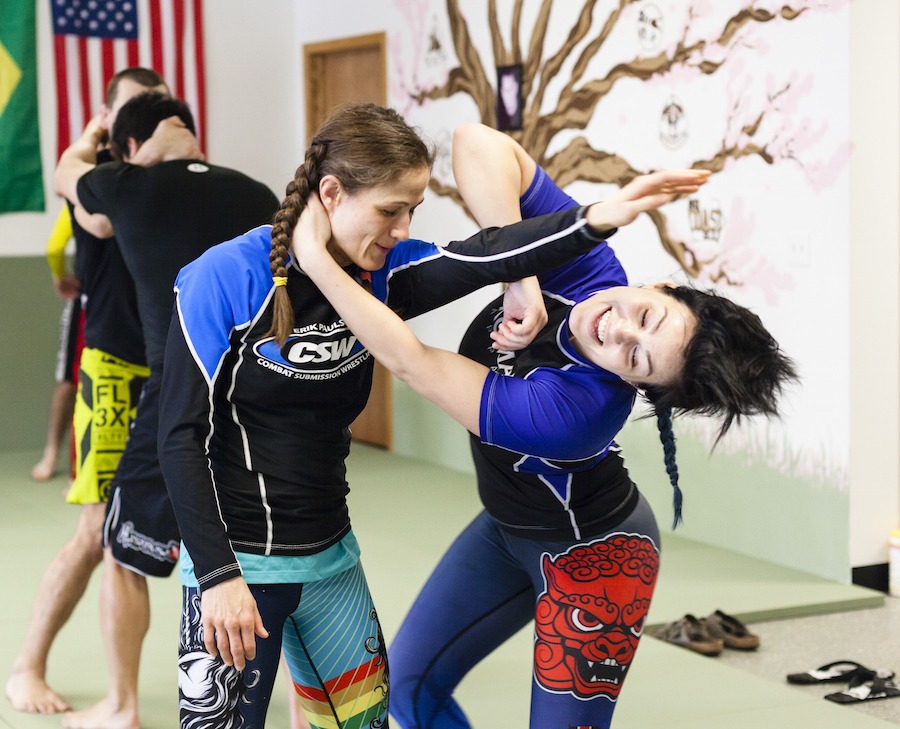
You must accept one thing when you start training BJJ – it is a grappling sport, meaning you’ll be in weird situations with people entangled with you. If you can’t bear being in such close proximity to someone, maybe you should consider training something else. When you’re rolling with men and women alike, you’ll get grabbed in different areas and you’ll get smashed and crushed from time to time. It is the nature of the sport. The sooner you accept that the sooner you’ll see that people, in general, have no hidden agendas when they call you for a roll. Oh, and rolling with men is only going to make you better ad fighting women when tournament time comes.

Rolling During A Cycle

In terms of Jiu-Jitsu for women, there’s one issue that is specific to ladies only. During a cycle, things are pretty much easy – do not roll if you have physical symptoms like cramps or pain. It is better to miss a couple of training sessions, no matter how hard that is. If you’re still dead set on training, the first thing to address, is, of course, feminine hygiene products. This is an easy solution as you can prevent any accidents – the menstrual cup. Wearing one is going to give you a piece of mind while you roll. Another option is a pair of menstrual panties, reinforced with a pair of black spats on top, and under your Gi pants.

Also, consider using some supplements to make things easier. Some fish oil, along with magnesium and vitamin D3 is a great combination. It is going to make your time on the mats easier during your period.

Dealing With Your Hair

Jiu-Jitsu For Women HairThis is an aspect of training BJJ that’s as important to you as it is to your partners, Well, probably more important to you, as constant pulls on your hair hurt like hell. Factor in the weird position people get and all the neck manipulation, and you’ll be in for a long night if you do not take care of your hair.
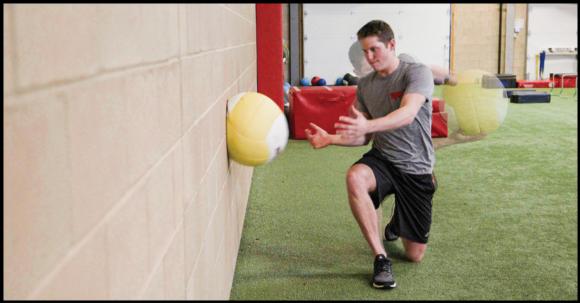

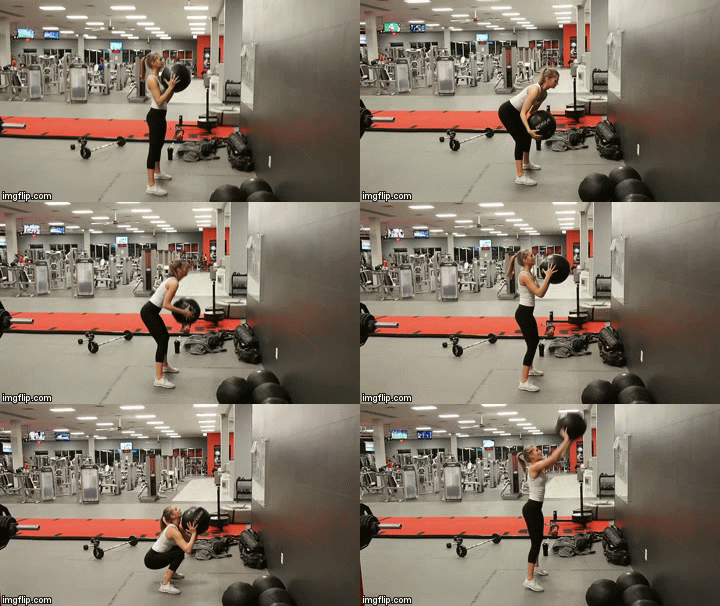
That said, there are several very easy hairstyles that’ll keep everything in place. Braids are always a good option, especially a French braid. You could go with one or two, depending on how much time you have. If you go for a simple ponytail, go for a high one and make sure you’re using high-quality elastic bands. They’ll both hold the hair tightly in place and have less chance of snapping.

After training, make sure you give your hair some extra attention. Use a good quality shampoo an all assorted product, depending on your hair type.

Technique Selection

This is the easy part. You have to be the perfect technician if you truly want to succeed as a grappler. Chances are that most people in your gym are going to be larger and strong than you. the first thing you need to settle is that you do not want special treatment, particularly from smaller sized guys. When you roll, have people treat you like an equal and punish them if they slack.

Technically speaking Jiu-Jitsu for women need to be based on your strengths. While you might be smaller and physically weaker, you’re also faster and much more flexible. These are all attributes that are going to define your technical style of Jiu-Jitsu. Also, factor in your body type as well. Taller women are going to have a different game to shorter ones, for example. Make sure you’re using as much leverage and trickery as possible and always go for the kill. Focus on chokes and leg locks, as they’re high percentage moves that keep you safe from counters.

Sticking with the basics is also never a bad idea. Ladies, make sure you check out Kurt Osiander’s DVD set “Funamentals Of A Jiu-Jitsu Renegade” It’s got great techniques along with lots of moves nobody is going to expect. Perfect for the ‘weaker” sex to hunt and kill male grapplers. 

Helio Gracie: Making Love is an Unnecessary Expenditure of Energy

https://bjj-world.com/best-bjj-books/

BJJ Guy Beats up Two Bullies in a Street Fight Back to Back

Medicine Ball Workout For Jiu-Jitsu To Get You Lean

Medicine Ball Workout For Jiu-Jitsu

Who doesn’t want to be lean and look good? How about if I throw improved Jiu-Jitsu performance to go with that lean look? Brazilian Jiu-Jitsu goals are actually pretty simple. You need to perform well on the mats and you need the body to help you do it. Both of these goals are easily achievable if you use the right tools. As far as grappling goes, almost any activity outside the academy is going to help you become better at Jiu-Jitsu. Whether you choose to run, do bodyweight exercises or lift weights, you’ll have benefits that carry over to the sport. That said, what if I told you that you can achieve maximum benefits in minimal time by only using one conditioning tool? Just going for one, properly structured medicine ball workout for Jiu-Jitsu is going to do wonders for your grappling and your physique.

Training Jiu-Jitsu is hard enough even when you’re in peak physical condition. The fact that we roll with people of all sizes. Carrying around a few extra pounds is only going to make your life on the mats much more difficult. Being lean has valuable advantages for any grappler. Apart from not carrying extra weight, your body can move and perform much more efficiently. Try doing inverted guard drills with a beer belly and you’ll understand what I mean. Being lean for grappling will make you faster, harder to control and it will help you raise your cardio levels. And, achieving this is actually not that hard. No need for countless hours on the road or body part splits in the gym. A simple but intense medicine ball workout for Jiu-Jitsu is all you need to become a monster on the mats.

Despite the growing popularity of medicine balls, you might wonder how you can use just a medicine ball for a complete workout. The “if little is good, more must be better” train of thought is somewhat applicable here. Pairing it with other tools and methods is a great way to achieve world-class conditioning, but it requires time and effort. Check out Hurricane training if you’re looking for something like this. However, if simplicity is what you’re after than a short sweet and brutal medicine ball workout for Jiu-Jitsu will do the trick just fine!

Training With Medicine Balls

Medicine balls are probably the most uncomplicated tools you can use for your strength and conditioning training. They’re just balls of different sizes that are filled with weight. That said, they also come in different weights as well. Both size and weight are things you need to consider, but more on that later.

Going for a medicine ball workout for Jiu-Jitsu is a great way fo doing something fun while achieving your goal. Medicine balls allow you to train in a range of motion that other conventional tools cannot achieve. Furthermore, the exercises you can do, as well as the speed of execution are also unique to this training tool. it is also a great way to add resistance to bodyweight movements.

In terms of benefits, a medicine ball workout for Jiu-Jitsu athletes is going to hit everything a grappler needs. First of all, there’s no muscle isolation, meaning your whole body gets a workout. This, along with the fact it is a weighted object that’s not easy to hold raises the heart rate significantly. Gas thank – check. Furthermore, you get the benefit of strength endurance by working with a challenging weight. Finally, there’s hardly any better tool for developing explosive grappling power than medicine balls.

The weight you should use depends on your skill level, experience and, of course, goals. For example, if strength is your goal, using a ball that you can move for 8 reps is a great way to start. For endurance, it’ll be slower to 15 reps, whereas fro power, you need to use about 5 % of your 1 rep maximum.

If you’re all set on combining methods, look to throw in kettlebells into your medicine ball training. Mike Perry is the man to show you what and how to do. The “KB Essentials Instructional Guide” is the perfect compliment to any grapplers collection.

Explosive Power For Grappling

The best way to make sure your body becomes lean and powerful at the same time is work on your explosiveness. This means doing power exercises, like medicine ball slams for example. As stated above, this means using a lighter weight but really going for every rep.

The reason medicine ball exercises work so good for grapplers is core engagement. With a medicine ball, your whole core has to work in unison in order to execute explosive motions. Just to clarify, the core is not just made up of your abs. It includes the shoulders, chest, upper back, lower back, hips, and thighs. All these muscles help you stabilize your body. Now imagine what you can do when your stabilizing muscles become incredibly explosive.

The slam is a great example of an exercise every medicine ball workout for Jiu-Jitsu should have. It engages the core, helps build stamina and sheds the fat off. Even better, it offers you to work in different ranges of motion and directions, just like you do when rolling.

Medicine Ball Workout For Jiu-Jitsu:

We arrived at the meat and potatoes of this article. In terms of exercise selection, what you need for grappling is movements that will cause your body to move in a similar fashion as in BJJ. By that, I do not mean trying to train spider guard with medicine balls on your feet. The idea is to hit all the same muscle groups in a range of motion and direction similar to grappling techniques.

The medicine ball offers the perfect external resistance for grapplers. It is an object that’s not easy to hold even under the best of circumstances. When you’re trying to hold on to it or throw and catch it while performing other complex movements, you’ll need all the coordination you can master.

Here’s a sample medicine ball workout for Jiu-Jitsu that both beginners and advanced grapplers can do. Remember to adjust the wight according to your needs, though. You have the option of doing this workout for time or for reps. If you do reps, do not do more than 12-15 per exercise. If you go for time, go for 30 seconds of work. Do the workout as a circuit, resting a minute once you’re done. Do as many rounds as you can, but not fewer than 3.

#1 Medicine Ball Sprawl & Rotational Throw

Hold the ball in front of you and shi an explosive sprawl, just like in training. Use the ball to pivot on the ground when you sprawl your hips back. When you get back up on your feet, do so in a stance with one leg forward. Use the opposite side arm to throw the ball to a partner in a rotational manner. AS the partner passes the ball back, sprawl again and repeat.

#2 Medicine Ball Multi-Directional Slam

Medicine Ball Workout For Jiu-JitsuThe regular slam requires you to raise the ball high over your head and slam it on the ground as hard as possible. There will be a minimal bounce back, that you can use to get the ball right back in your arms. Instead of repeating the motion to the front, do a twisting slam to one side, followed by the same to another. This is one rep.

#3 Medicine Ball Russian Twists

The Russian twist is an exercise you can do for max reps instead of the prescribed 12-15. sit on the ground, holding the medicine ball in front of your chest. Raise your legs from the ground, knees slightly bent, You might even cross them like in full guard. Turn to one side, aiming to touch the medicine ball to the ground. As you get back, continue to the other side, completing one repetition.

#4 Medicine Ball Halos

This is the ultimate upper body exercise for grapplers. Do not be tempted by how easy this one looks as it will drain your arms, shoulders and torso muscles fast. Hold the ball with two arms in front of you. Raise it up and back, like when doing triceps extensions with a dumbbell. Then, start moving the ball to one side in a circular fashion, aiming to do a full circle around your head. Go for the prescribed number of reps on one side before repeating on the other.

#5 Medicine Ball Squat To Press or Throw

Medicine Ball Workout For Jiu-JitsuThis is a fairly simple exercise that you probably already know. With dumbbells/kettlebells, people usually squat with the weight in front of their chest. When they get back up to their feet, they do a press above the head before returning to the front position. That’s one rep. With the medicine ball, you’re going to use the overhead pressing motion to actually throw the ball up. IF you’re unsure about the throw, proceed with a press only, If you throw it, though, remember to keep your eyes on it at all times, so you can catch it and go straight into the next repetition.

#6 Medicine Ball Zercher Carries 

You can’t do this one for reps. You’ll either need to do it for time or for distance. Pick up the heaviest medicine ball you can handle and get it in a Zercher position. With upright posture, carry the ball for a certain distance or for time.


Rolling Jiu-Jitsu Attacks: High-Percentage Moves

Rolling Jiu-Jitsu Attacks

There’s a common thing with rolling Jiu-Jitsu attacks across all academies in the world. Well, around most, at least. White belts try to do them every chance they get. Of course, they do the horrible job of doing anything but getting stuck. Most old-school black belts fringe at the sight of white belts (or most other students) attempting such moves. And purple and brown belt competitors who follow modern BJJ simply thrive with them. While this is not a situation common to all, it is a pretty usual one. And it shouldn’t be. Not for all rolling Jiu=Jitsu attacks.

The things that make white belts stuck like fish in a net are the same that make black belts cringe. Rolling Jiu-Jitsu attacks do not always work, even if black belts are performing them. The reason for this is that some attacks are far from high percentage moves. This, in turn, raises the question of which of the rolling attacks are worth your time? Well, the old BJJ mantra “when in doubt, go with basics” is the answer here.

While rolling attacks do seem impressive and cool, they also need to be effective. By effective, I mean land you in a better position than your starting one. The best outcome is getting a submission straight away, but this is not always possible. The key is in finding a balance between rolling and having a clear-cut purpose for doing so.

Rolling As An Attack

Rolling as an attack is not an easy thing to do. While there are some rolling Jiu-Jitsu attacks that really work, they’re not for beginners. So, white and blue belts, stay away from rolling attacks, at least for the time being.

The goal of a rolling attack is to help you get into a better position to finish and/or control your opponent. In order to achieve this, you’ll need to not only know what you want but how to roll precisely to get it. Rolling requires you to part from the ground completely at one point, which can easily be used against you. You have to have clear intentions and know the shortest route possible.

As far as positions from where you can roll, surprisingly to some, you’re not restricted to the top, you can also use bottom positions for rolling Jiu-Jitsu attacks, sometimes even more efficiently. Regardless of position, you need to know how to set your body up for the roll. Even more importantly, you need to know how and where to anchor yourself. Which is where the grips come in.

And finally, if you ever have a hope of mastering rolling Jiu-Jitsu attacks make sure you drill them. If you need to drill basic BJJ moves 10 000 times, you’ll need to double that for rolling attacks. So get to work!

Rolling Jiu-Jitsu Attacks 

Rolling Jiu-Jitsu attacks are actually nothing any. They’re just another means to an end in BJJ. The roll itself does not do anything but get you into an improved position. You could even go as far as looking at it as just a step or hand placement that opens up more opportunities. The thing to remember is that you need to start from a position of stability and control. You also want to end up in a position of even better control and/or stability. If you manage to slap on submission while you’re rolling, good for you.

In order to make things easier for everyone looking into rolling Jiu-Jitsu attacks, we focus on “just” four of them. yes, “just four” attacks but each one as secure as reliable as the Rear Naked Choke is.

As interesting as rolling Jiu-Jitsu attacks are, make sure you master the basics first. Kurt Osiander is a great coach to teach you the basics in an unorthodox way. His “Fundamentals Of A Jiu-Jitsu Renegade” DVD instructional is full of great moves that are as attractive as rolling attacks, but way simpler to master. 

Rolling Kimura

If there was ever a rolling BJJ attack that you could call “classic” it is the Kimura. This one is the most recognizable rolling attack from the top. the thing with the trolling Kimura is that it offers a lot more than just a Kimura position.

Rolling Jiu-Jitsu Attacks KimuraOne great advantage of the rolling Kimura (and all rolling Jiu-Jitsu attacks from the top is that it brings you a bonus guard pass. It works against all kinds of open guards, ranging from De la Riva to the butterfly guard. The first thing you need is to have a leg deep in between the opponent’s legs. This is your base. Next, you’ll want to get a Kimura grip on the arm that’s on the opposite side of your leg. The goal is to place the shoulder that’s on the same side as the base leg on the ground first. Use your base leg as a power source for the roll.

The aim with all rolling Jiu-Jitsu attacks is to finish as close as possible to your opponent. With the rolling Kimura, you get an opening to take the back, or transition into a North-South Kimura after the roll.

Rolling Back Take 

The rolling back take is also a recognizable BJJ move. It is a great way of obtaining the back from side control, half guard, or the mount. It is also a surprising move that most opponents won’t be expecting. However, it is, arguably, the most complex of all the rolling Jiu-Jitsu attacks we’ll cover today.

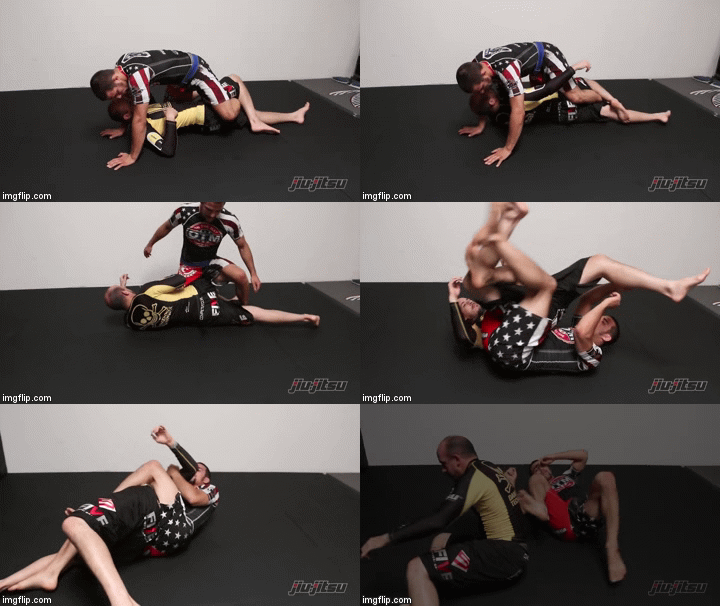
Rolling Jiu-Jitsu Attacks Back take Let’s say you find yourself in your opponent’s half guard. The goal is to use the fact that one of your legs is in between theirs. You’ll want to fall to the hip on the side of your trapped leg. Make sure that you keep the leg inside theirs, and press your knee to their bottom hip. Also, make it a point to have the opponent on their side, and not on their back. For the roll, rach over and look to place your shoulder on the ground, while you grip their bottom leg with both hands. All you want to do now is go to your back and extend your legs.

While this roll gets you straight into back control, you also have a great attacking checkpoint along the way. Right after you get your back on the mats, you’ll be in the track position. From there you can go for leg locks, neck cranks, or get to the back. If you go straight for the back, you’ll end up with a Rear Naked Choke directly most of the time.

Rolling Kneebar

The rolling kneebar is great as a takedown or even as the move from the bottom. From the feet, you can do it reactively, if an opponent gets behind. You can also do it proactively, and position your body so that you hunt for it. From the bottom, you can use a multitude of guards to get into position for such a roll.

Rolling Jiu-Jitsu Attacks KNeebarWhen on top, using any tie-up you want, the goal is to end up slightly sideways to your opponent. From there, you want to place one leg in between their legs, and one leg out. Once you do that, you want to face your body away from them. This is when you can abandon your tie-up and go for a roll. What you absolutely have to do is grab the leg you’re attacking while you roll. You’ll end up in a tight kneebar position straight away. Of course, you can easily transition into Inside Senkaku as well.

Rolling Guillotine

The rolling guillotine is one of those rolling Jiu-Jitsu attacks that have the wow factor. This is due to the fact that you need to be fast with it. It also has to do with the fact that you end up in the mount with a full-on choke.

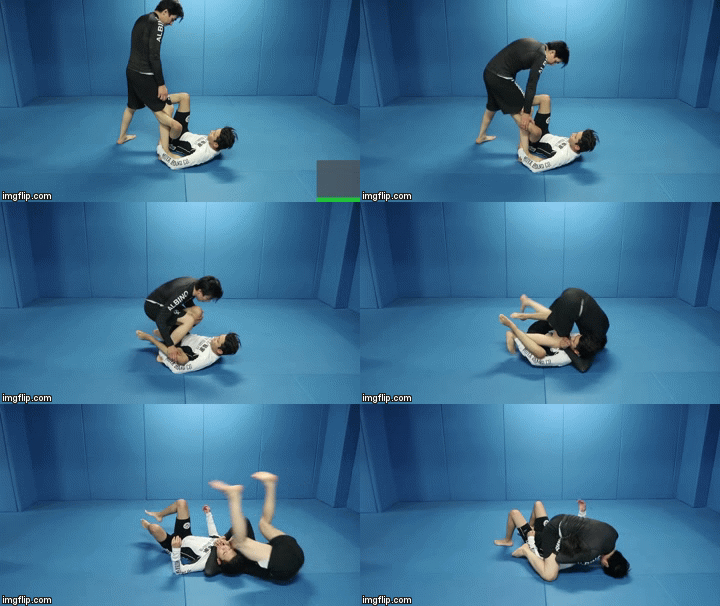
Rolling Jiu-Jitsu Attacks Guillotine Choke Similar to the rolling Kimura, this attack works from any open guard variation out there. It might even work from certain half guards as well. The thing about this one is that you need to be fast. Otherwise, your opponent can easily get their head out and you’re left with nothing. A short and fast snap-down is all you need to get your grips in. Once you have them, you roll over the same as with the Kimura. This time though, you’ll end up in an inverted North-South position, where you can attack with a variety of front headlock attacks. Or, you could use the grips to roll back, ending up in the mount.

The Best DVD and Digital Instructionals For BJJ White Belts

Common Blue Belt Mistakes Caused By Bad White Belt Habits

Jiu-Jitsu Fundamentals By The King, Roger Gracie

Grip Variaitions To Finish All Guillotine Chokes

Guillotine Chokes Best Grip Variations

Guillotine chokes are not just another submission in Brazilian Jiu-Jitsu. Across all grappling martial arts, guillotine chokes have a role to play. Very often, they’re among the highest percentage submissions people have at their disposal. In modern days, the guillotine is having somewhat of a revival. Not that guillotine chokes ere ever gone, but nowadays, they seem to be everywhere. This, inevitably, leads to experimentation and the creation of different new variations. The one defining factor of a guillotine’s effectiveness is in one tiny crucial detail – the grips. 

The reason people going for guillotine chokes is their versatility. Unlike many other BJJ submissions, guillotine chokes literally work from everywhere. Successful guillotine setups are available from the guard, from the mount, from both top and bottom half guard, from standing. The list goes on and on. Even better, guillotine mechanics are fairly simple, with just a few key details to focus on.

AS far as variations of the choke itself go, people usually recognize a couple of main ones. Those are the arm-in guillotine and the classic guillotine. these two are the base from which all other guillotine chokes stem, regardless of positioning. Both these variations, though, require different grips to truly work at a high level.

Finishing Guillotine Chokes

Without getting into the specifics of guillotine chokes we’ll only go over some key finishing details. the first is the position you’re doing a guillotine from. Usually, it is the guard, but it can also be any of several top positions. Wherever you are, you need to remember that your hips need to be over the opponent’s hips.

The next key thing is head position. The head of your opponent has to remain bent forward at all times. This holds for any position. Usually, it is your armpit or your chest that helps you put pressure on the back of the head. What prevents the opponent from extracting their head is the almighty chin strap This is when you cradle their chin in the palm of one hand.

Also very important, you need to have control over the posture. From top positions, this is not hard, as the floor is a great aid. From bottom positions, though, you’ll need to have a leg over the opponent’s back. When you do this, make sure you keep it as high towards their head as possible. Remember to also have your toes pointing forward, like a ballerina’s foot.

The final tip is to avoid going for a squeeze and a pull when finishing guillotine chokes. The key is to compress the space where their head is, not extend it.  In order to achieve this, you need to look to touch the elbow of the arm that you have around their neck to your knee on the same side.

Guillotine Grip Variations

All that covered, it’s time to focus more attention on how you grip your hands. The first thing we need to clear up is that all the high percentage grips do not require any particular athletic capabilities. No need for crazy flexibility or insane amounts of strength. what you actually achieve with the grips are different angles and very precise pressure. Plus, you make sure the opponent can’t escape your grasp.

There’s something beautiful about grips that work just as well in both Gi and No-Gi Jiu-Jitsu. Guillotine chokes work is more often associated with No-Gi, but they can work with the Gi as well. It is all in the grips. The only thing you need to know is when to use grips that work better in an Arm In Guillotine, opposed to a regular one. As you’ll see later on, this is not hard at all.

The BJJ guru of modern times, John Danaher has everything you need to know about guillotines. All his information is neatly packed into about 10 hours of incredible instructions. All of these guillotine chokes and grip variations and many more are in the “Enter The System: Front Headlocks” DVD instructional by the one and only John Danaher.

Ball-In-Socket Grip

The ball and socket grip is the most basic guillotine chokes grip. It is the one people used to use for both the arm-in and regular guillotine. While it still is a good option for both, there have been certain changes that make it way more effective now.

Guillotine Chokes Ball-In-Socket Grip For the ball in socket grip, we’ll use an arm-in guillotine example, from the guard. As with all guillotine chokes, one arm needs to go over the had and under the neck of an opponent. For the ball-in-socket grip, this means having your forearm under the neck. The arm needs to go as far towards the other side as possible and the palm should be in a fist. The other arm needs to cover the back of the fisted palm, fingers pointing downwards. Your fingers should grip the bottom of that palm.

Finishing guillotine chokes with this grip requires you to keep the choking arm high on your chest at all times. Apart from that, finishing mechanics are the same. You need the leg over, an arm in, and you need to crunch to the side before you add squeezing.

Pretzel Grip

The pretzel grip is one of those innovations that completely change a submission. Namely, it is a “hack” for the arm-in guillotine that is simply impossible to escape from. As far as drawbacks go, there’s only one – you can’t use it with a regular guillotine.

Guillotine Chokes Pretzel Grip For the pretzel grip, you need the classic arm-in guillotine position. From there, you’ll need to keep an open palm on the choking hand in this instance. The other arm, that goes around the opponent’s arm, is going to grip a palm to palm grip with the choking arm. This is where the “pretzel” comes into play. Instead of gripping with your thumbs near each other, you need to grip with the fingers of the non-choking arm pointing downwards. This places the thumbs on two opposite sides of the grip.

While this grip might seem uncomfortable and strange at the beginning it is a great one for guillotine chokes. It allows you to keep the choke ultra-tight. It also allows you to squeeze with your back instead of your arms, making it a much more powerful submission. All basic finishing mechanics still apply.

10 Finger Grip

The 10 finger grip is not really a tight grip when you first think about it. However, if you place your arm precisely, it is a perfect grip for finishing a no-arm guillotine. Just like with the “pretzel” grip, the only drawback is it only works with one variation. This time though, it is the classic guillotine variation.

Guillotine Chokes 10 Finger Grip For the 10 finger guillotine, the only adjustment you need is sneaking the chin strap a bit deeper. The goal is to have the knuckles of your choking hand peek from the other side. This places the root of your thumb straight into the opponent’s necks. causing a very painful choke. Your other hand is simply going to go over the choking hand, finger in the opposite direction. The final finishing trick is to rotate your choking arm thumb towards yourself so that you dig the choke in.

High Elbow Guillotine Grip

the high elbow guillotine is arguably the most famous of all guillotine chokes, at least at present. The trouble with it is, only a handful of people can actually do it right. And it is all down to how you grip your hands.

Guillotine Chokes High Elbow The high elbow guillotine grip is actually a modification of the ball-in-socket grip. It works best with the classic guillotine but can work with an arm-in as well. the goal is to place a ball-in-socket grip but keep the palm of the choking arm open. You’ll need to use your non-choking arm to pull the choking arm as deep as humanly possible. The main goal is to place the back of the non-choking hand on the opponent’s shoulder. This will result in your elbow pointing high towards the ceiling.

having the elbow in such a position might be easy for yogis, but normal people will struggle. To avoid flexibility as a requirement, remember to place your head towards the opposite side shoulder. This will get your arm straight into position. It is so powerful that you’ll rarely even need to squeeze.

DVD and DIGITAL Instructionals Related to Guillotine Chokes :

  1. MASTERING THE GUILLOTINE BY JOSEPH CAPIZZI
  2. MASTERING THE GUILLOTINE VOL 2 BY JOSEPH CAPIZZI
  3. Mastering the Guillotine by John Combs

  4. Mastering Guillotine Concepts and Principles by Karel “Silver Fox” Pravec

  5. Guillotine Fundamentals by Pedro Marinho

Advanced Grip Fighting Tactics From The Guard

Von Flue Choke – Sneaky And Powerful Submission

No-Gi Ezekiel Choke From Top And Bottom

The Best Guillotine Choke Escape Options And Counters

BJJ Throws: Modifications To The Drop Seoi Nage

BJJ Throws - Drop Seio Nage

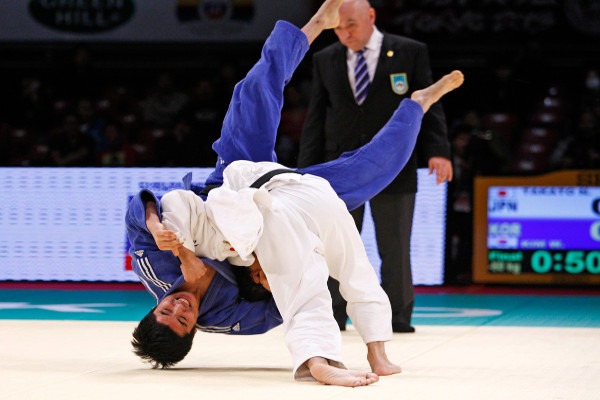
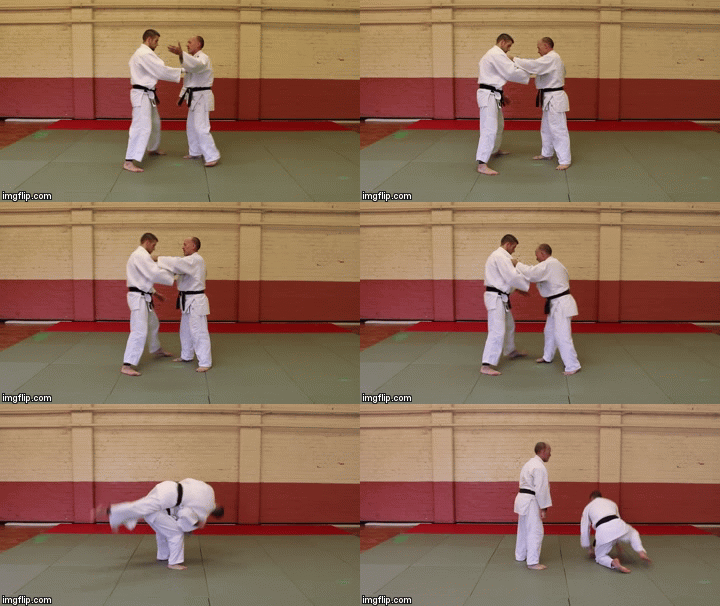
Throwing people to the ground is fun! In fact, for me, it is much more fun than taking them down to their butt. Do not get me wrong, I’ve got nothing against takedowns and do use them regularly. But throws are much more devastating, seeing as flying through the air before you end up crashing on the ground takes some time to recover from. And, as same as that window might be, it is long enough to go for a finishing move. There are two issues with BJJ throws though. The first is that there aren’t any generic ones. So, we borrow from Judo. The second issue is that some Judo throws might land you in trouble instead of the other way around. A great example is the Ippon Seio Nage. 

Judo techniques are a near perfect match for Brazilian Jiu-Jitsu. The fact that they include Gi manipulation in their essence makes them very applicable in BJJ. However, rulesets can really affect how effective a throw can be between the two grappling martial arts. A throw that might be really high-percentage in Judo might not work at all in a Jiu-Jitsu setting. This is not inherently a bad thing. Such a situation leads to innovation and modifications, deepening the pool of techniques for both arts. This means BJJ throws are in essence similar to Judo throws, but modified in some crucial aspects. The Ippon Seio Nage, for example, is pretty dangerous to go for in BJJ. But the Drop Seio Nage is a completely different story.

BJJ Throws: The Drop Seio Nage

The Drop Seio Nage is not a throw that comes naturally to people in Jiu-Jitsu. After som any hours of instruction on never turning your back to your opponent, it is not surprising. However, every rule has an exception. And, the Drop Seoi Nage is as exceptional as it gets.

If you look at high-level BJJ competitions across the world, you’ll see the Drop Seoi Nage feature, yet not nearly as much as it could. Actually, apart from a few proficient Judo players with lower belts, it is almost exclusively a throw used in the advanced divisions. this means that brown and black belts use it as part of their BJJ throws much more than others. While the throw itself does require good technical skills and very precise timing, it is not an advanced technique per say. In fact, it can work at all belt levels and for every type of grappler.

The Drop Seoi Nage is one of the most reliable BJJ throws if you can master its mechanics. It lands you in a great top position to easily dominate a match. In many instances, it’ll open up submission option straight away. It is an explosive and violent throw that leaves opponents confused and dazzled. For Brazilian Jiu-Jitsu, this throw is exactly what the doctor prescribed. The only “drawback” is that you’ll need to drill it, constantly and with as many different partners as possible.

The Judo Version

The basic Judo version of the throw is actually the Ippon Seoi Nage. For Judo, this throw is somewhat of a basic. It is akin to the armbar in Jiu-Jitsu – you learn it early and you can use it all the way to black belt. That said, the move is not one that comes naturally to people, hence the need to drill it so much.

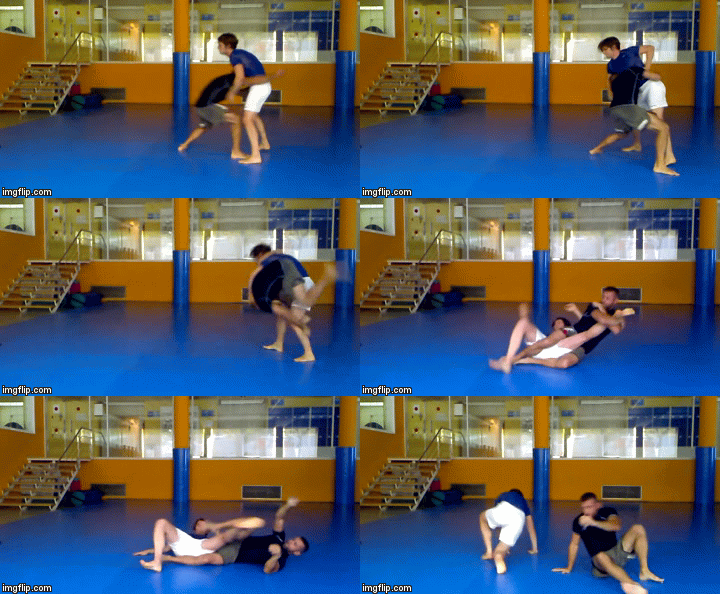
BJJ Throws - Drop Seio NageExecuting the Ippon Seoi Nage starts in the basic Judo grip position. It is pretty much the same as the starting BJJ position – collar and elbow grips on the Gi. From there, the goal is to create a Kuzushi (off balancing) by pulling the opponent forward and opening their elbow. At the same time as you pull their weight forward, you’ll be looking to enter fro the throw. Entering requires you to place a foot in between their feet so that you can pivot. The goal is to get both your feet parallel and in between the opponent’s feet. At the same time, the arm that ‘s on the collar let’s go and goes under the other arm’s triceps, like a hook. As your hips go below the opponent’s you’ll be able to use the momentum to throw them over the shoulder of the arm that you’re using a hook.

The one glaring issue that prevents the Ippon Seoi Nage of being a part of the most successful BJJ throws is arm placement. Whenever you place an opponent’s arm over your shoulder, you’re opening up back attacks. Even if you do not get choked, your opponent can take your back and start from a dominant position. Skillful and experienced grapplers can take the back even as they’re being thrown via an Ippon Seoi Nage.

BJJ Modification

The one key modification is probably obvious to you now. It is, of course, the placement of the arm. However, as with all other BJJ techniques, why stop there? Why not increase the power of the throw even further, by introducing a level change.

Initially, the grips are the same as in Judo. As far as differences go, remember that the grips you get, are the same grips that you’re going to keep until the opponent is on the ground in front of you. The arm is not going to to go under when the grip stays on the collar. However, as you need support under the opponent’s triceps, your elbow is going to go under the opponent’s armpit. This eliminates the back take problem immediately.

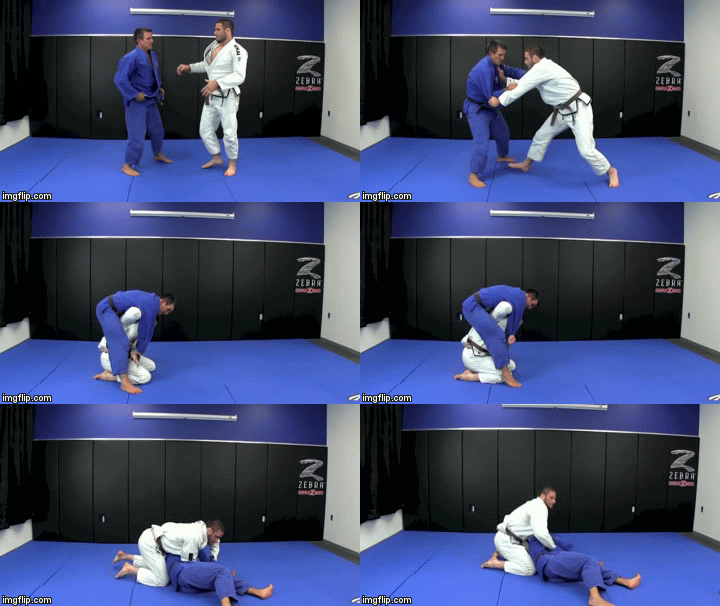
BJJ Throws - Drop Seio NageKeeping the Kuzushi and entry principle the same, another modification for BJJ is the “drop” part. Once you pivot on your leg and manage to create an opening. Instead of turning your back and just bending your knees, you drop to your knees completely. This is going to destroy the opponent’s posture regardless of their strength. However, it also carries a moment of danger. If you stay on your knees too long, your opponent can get top position, despite your grips. The trick with the Drop Seoi Nage is to get up on your knee the moment your butt touches your heels. It is a spring effect that’s going to send your opponent crashing while keeping you safe.

Brutal Drop Seoi Nage

If there’s one example of a nasty Drop Seoi Nage that works in high-level BJJ, it is that of Erberth Santos. The Brazilian throws heavyweights around like they’re pillows, planting them on their faces. His Drop Seoi Nage is a brutal version of the regular and has much to do with Santos’ explosiveness.

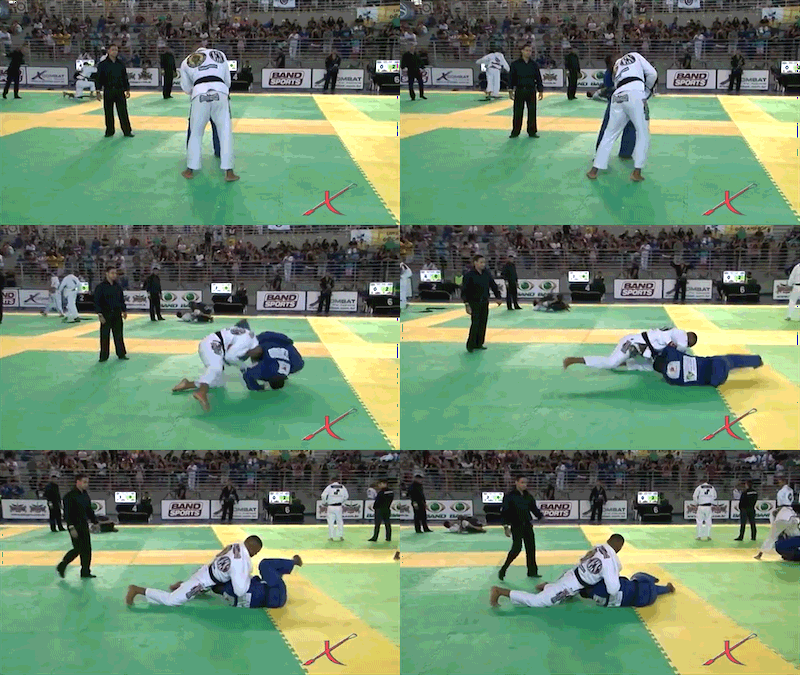
BJJ Throws - Drop Seio NageThe strategy Santos employs is a truly brutal one. He explodes right into the Drop Seoi Nage, however, does so at a different angle than most. This results in his opponent’s hitting the ground head first. The logical response is to stay on the ground accepting the takedown. The alternative is to get back on the feet and end up on your head repeatedly. Not something you’d like to experience, but definitely something you want to add to your BJJ throws.

Travis Stevens is an Olympic Judo Silver Medalist and a BJJ black belt. If there’s anyone that knows how to adapt Judo to BJJ it is him. In his “Takedown Blueprint” DVD set, Travis goes over all kinds of Judo throws for BJJ, along with the help of his friend and mentor, Judo standout Jimmy Pedro. Pick this video instructional up and start enjoying immediate success on the feet!

Sumi Gaeshi – The Perfect Throw For Guard Pullers

Judo For BJJ – The Essentials Of The Uchi Mata Throw

Throws And Takedowns For BJJ That Really Work

Some Judo throws for BJJ

How To Balance Your Budget To Pay For BJJ Training

Pay For BJJ training

BJJ training is fun but it is not cheap. As a sport, Brazilian Jiu-Jitsu is not something that’s only affordable to a small portion of the population. However, it is on the expensive side of affordable martial arts. Especially when you train with the Gi. Of course, BJJ academies need to survive in order to provide yours with a place to train at. This means that there’s simply no way around membership fees. However, add to that the cost of Gis, rashguards, grappling accessories, competitions, and the BJJ lifestyle and you’ve got quite a budget you need to have at your disposal. The good news is that there are ways to trim your Jiu-Jitsu expenses and make your budget more than enough to support your BJJ training. 

If there’s one thing that can skyrocket your BJJ training expenses it is competing. If training is fun, then competition is just about the best thing you can do. However, it involves a lot of variables, each with a cost of its own. You need to travel, find accommodation, pay a participation fee etc. Add to that a nutrition plan to help you cut weight, plus the expenses of being abroad and it already mounts up to a significant sum. And this is all before factoring in the membership and/or gear fees for the month.

BJJ training requires money. However, the cost is easily manageable with some common sense and a few rules to go by. today, we provide both the rules and categorization of the most usual expenses you’ll encounter as a grappler.

Costs Of BJJ Training

When it was created, Brazilian Jiu-Jitsu certainly wasn’t intended to be an expensive sport that people train and compete in worldwide. It was an efficient system to beat any opponent under any circumstances. As the art turned into a sport, so did the BJJ training environment. Today training grappling requires you to take both monthly and yearly costs into account.

For starters, there are gym memberships. It is normal to pay for learning Jiu-Jitsu, as academies can’t stay open without members. PLsu, take into account that Jiu-Jitsu requires both space and mats to train on, which is not easy to pull off. Especially if the academy is lending instead of winning the space where it’s located. Across the USA, people pay between $100 and $200 depending on Academy.

On top of a monthly (or yearly) membership, you’ll need gear to train at. And, as you’ll definitely be training more than once per week, just one set of gear won’t cut it. If it’s Gi training, you need at least two Gi’s if you’re training two-four times a week. Even if you’re only doing Gi BJJ training, you’ll still need rashguards to wear under the Gi. Throw in some spats too, to keep you warm in winters and you’ve got quite the expense. Training No-Gi is slightly cheaper, but you still need rashguards, spats and shorts, a set of which can easily reach up to $100.

Mouth guards, shinpads, athletic tape, post workout shakes, commuting, tournaments, seminars…. spending money on BJJ is so easy that you might find your whole monthly budget disappeared on the mats.

Balancing Your Finances

Just like with anything else you do in life, you’ll need to balance the financial aspect of your BJJ training. The alternative is going to leave you without money, and without a place to train at. Not a good outcome.

Luckily, there are great ways to introduce some order into your BJJ lifestyle. At least from a financial standpoint. And no, you won’t need to hire an accountant to do it for you. A few simple guidelines and a couple more tricks will help you train BJJ on a budget and thrive. Be warned, however, that it is going to require you modify some other aspects fo your lifestyle as well.

Have A Plan

The first thing to do is have a plan. However, when you plan finances, it is best if you have a long-term plan that includes unexpected expenses. For that try to allocate a certain percentage of your monthly income for BJJ. For example, 10 % is a great amount to dedicate to BJJ. It’ll probably cover more than your membership fee, meaning you can put it away and have ready to use when you need a new Gi, or a tournament comes up.

BJJ Training Financial Plan Next up, make sure you manage to allocate 10% of your budget by cutting down on some other expenses. Going out is going to need to take a break, especially if you’re out all night long every weekend. Drinking alcohol tends to make people spend more, so whenever you go out, make sure you’re not overdoing it. And limit your night adventures to as few as possible in a month. Certainly not every weekend.

Also, make sure you keep your shopping sprees down to a minimum. This doesn’t mean stashing away all cahs for new Gis, but do be sensible about going shopping. After all, it is all about balance, remember?

A very important BJJ training-specific thing is to make sure you’re actually getting what you’re paying for. If you’re asked to pay about everything and anything, you might be in a McDojo, so a good financial move is to find another academy.

Extra Activities

If you need to really cut back on BJJ training expenses, then you can always look to offer some help around the academy. Regardless of belt level, you could ask to do some chores around and get a certain discount as a result.

If you’re a higher level student, like a purple belt or above, ask if you could help out with classes. Kids classes usually need all the adults they can get, so you might find a discount there. or try and help out in fundamental classes. If you’re a proven competitor and a higher level belt, you could also offer privates. This will bring some income for both you and the academy, plus, you get to train and learn more, even when you’re teaching.

And, if it is possible for you, perhaps try your hand at professional BJJ tournaments. They tend to offer cash prizes which may help you if you’re in a financial tight spot.

Gear

As far as gear goes, it is as straightforward as possible – stick to the cheap stuff. This doesn’t mean that they’ll be a worse quality than the latest model you see pop up on your Facebook timeline. The latest Scramble Gi might really be an awesome one, but also has the price of one. Stick to cheaper models and brands that’ll provide you with good quality gear for BJJ training and even competition. And, if you’re really a stickler, try to focus on sales and clearances., you might need to wait a while for the latest rashguard kit, but you’ll still get it without having to sacrifice a month of training.

Also, make sure you provide your gear with the utmost possible care. the better you take care of all your training apparel and accessories the longer they’ll last. Plus, keeping them in pristine condition has its benefits. For example, if you’re looking to sell your old Gi in order to fund buying a new one, a well-kept one is going to be worth much more than a ragged one.

Tournaments

Tournaments are also an area which can help you balance your budget. Namely, there’s little you can do about the registration fee unless you find a sponsor. But you can influence almost all other aspects of it. For one, you can make sure you plan your travel early and get cheap tickets. Try buying through services that offer the cheapest prices on tickets.

Also, try and book hotels instead of luxury hotels. All you need to do is have a good comfortable bed to sleep in any way. Factor in all the expense you might have on the day of and after the tournament as well. It’s okay to treat yourself to a good meal afterward but you do not need to pig out 5 times between the tournament and coming back home. remember, every meal you eat out is more expensive than something you prepare. Which, interestingly, you can do in a hostel.

Jiu-Jitsu LIfestyle

BJJ Training NUtrition Cost For grapplers, BJJ is much more than just a sport. It turns into a complete lifestyle, which includes what you do off the mats as well. One huge aspect is nutrition. Eating healthy doesn’t mean you need to eat expensively. Eating at “healthy” restaurants and buying tons of supplements is not going to help your budget. Make sure you buy in bulk, you prepare your food on your own, and you do meal prep so you have time.
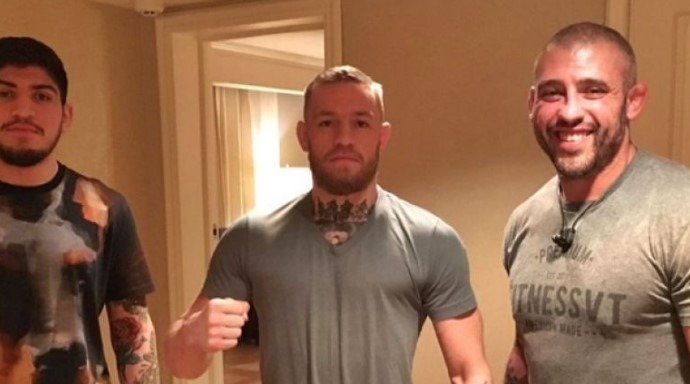

You also do not need a strength and conditioning coach to yell at you during training sessions outside the academy. Instead, go out and do some exercise on the monkey bars. Or, even better, pick up a kettlebell or two and you’ll get in amazing shape at home.

Finally, look to shorten your commuting expenses. Either carpool with someone to training, or try to go wit ha bicycle or other cheap transportation means.

Creonte Culture – Loyalty, Disloyalty, and Traitors in BJJ

Jiu-Jitsu Supplements Series: BCAAs For Grapplers

The Impact Of Brazilian Jiu-Jitsu On Your Social Life

George Lockhart Diet For MMA

George Lockahrt, Conor Mcgregor, Dillon Danis

The best in the fight nutrition business, by far is George Lockhart. Currently, George is in the focus along with Conor McGregor, whose camp he is in. However, Conor is definitely not the pinnacle of George’s work. After all, he has coached over 100 UFC fighters in nutrition and weight management, 11 of the world champions. Actually, he is the nutritionist of Georges St. Pierre as well and has been for a number of years. Still, his work is really known to people that don’t hire him. This often raises the question about what the George Lockhart diet is and what are some of his main diet tips for grapplers?

The real reason George Lockhart is so successful with his nutrition advice is simplicity. He is a very down-to-earth guy who doesn’t like to do unorthodox stuff in terms of dieting. After all, he does follow everything he says himself and is shredded and in the shape of his life. He also used to be a marine and even has a medal for the nutrition plans he provided the Army with. The George Lockhart diet is one that works because it is based on principles instead of templates.

Geroge’s approach to dieting and cutting weight for fighters and grapplers have drastically changed the world of martial arts. Currently, most people in the game are either using or looking into his methods. The thing with Geroge is that, much like Danaher, he is available only for direct work. Up until a short while ago, there was no information about what the George Lockhart diet is all about. Now, all his secrets and diet tips for grapplers and MMA fighters are out.

The George Lockhart Diet Tips For Grapplers And MMA Fighters

Eating the Geroge Lockhart way is actually not hard at all. There’s definitely a lot of science involved in the Geroge Lockhart diet. However, that doesn’t mean that it is complicated or that they need a degree to follow the basic principles. Just like conceptual BJJ is far better than simply going for one technique after another, principle-based nutrition beats templates. There are no X weeks to shredded or nonsense like that. Lockhart’s approach is simple and it works for everyone.

What George advocates above all are following common sense. There’s nothing magical about his diet tips for grapplers and fighters. He likes to limit his fighters to non-processed foods only. As much as you think you’re already doing it, you’re wrong. As you’ll discover later in this article, processed foods have a way of creeping into your diet.

George Lockhart DietGeroge also likes to use simplicity in supplementation and his pre and post-workout meals. Unlike many other nutrition specialists out there, the George Lockhart diet actually does not require you to drink protein right after training. Crazy right? Well, not BJJreally, if you stop and think about it.

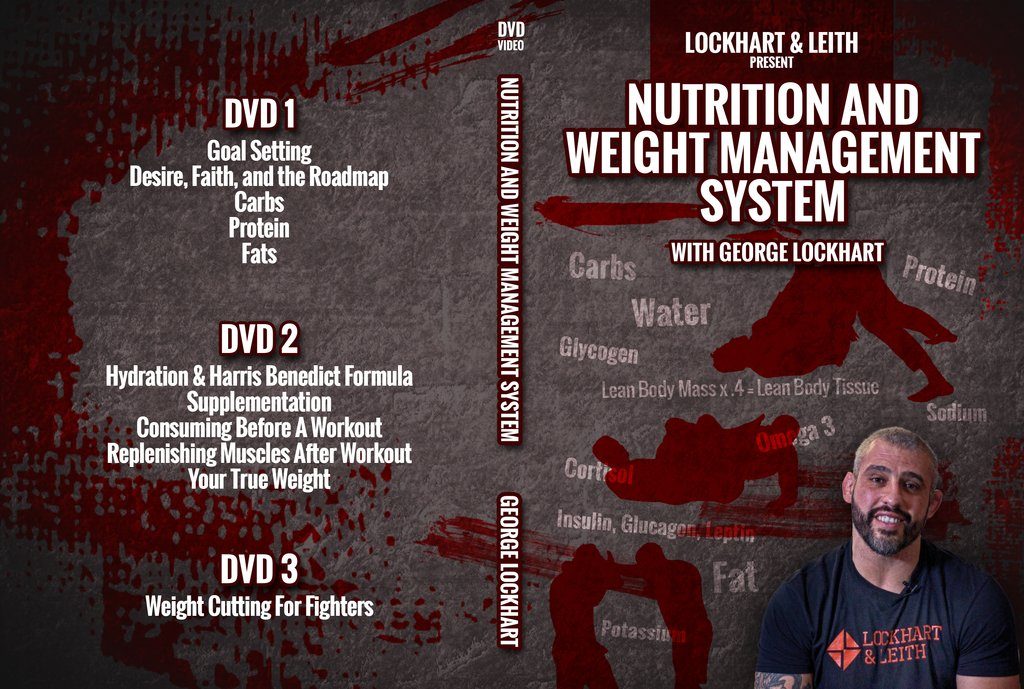
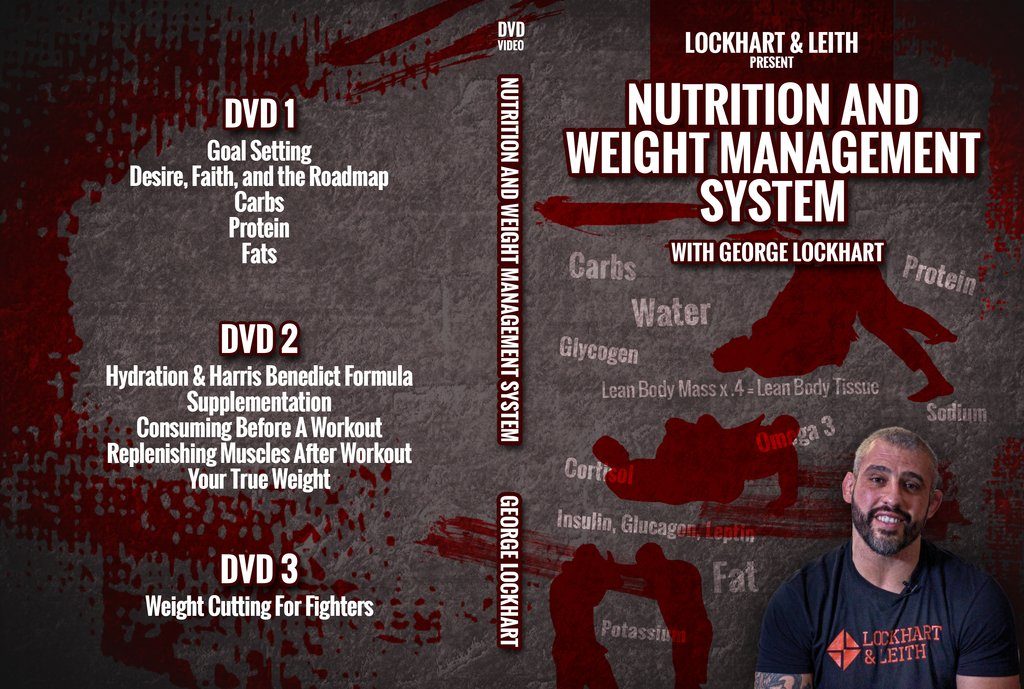
If you truly want to gain a deep insight into the George Lockhart diet, you should know that his principles are no longer a secret. The man decided to issue a bundle that you can acquire very easily. His works are organized in 3 DVDs and an E-book. Inside the “Nutrition And Weight Management” bundle, you’ll get all the information you need about macros, weight cutting, hydration, a ton of recipes and much more! 

Sugar Cravings

In today’s world ruled by sugar and sugar derivatives, it is really hard to avoid them. Even people that think they’re going sugar-free, are actually ingesting large amounts of it. Of course, I’m not talking about natural sugars, like honey or dates here. I mean processed sugar and all other processed sweeteners in use. The trick with it is that you get them in both savory foods, like pizza and bread as well as sweet ones.

George Lockhart DietThe key problem with sugar, according to Lockhart is that it has a never-ending cycle. the more sugar you ingest, the more hungry for sugar you get. And we all know how that can end, especially if you’re a fighter who’s been withholding it for months. Luckily, the George Lockhart diet has a solution to this common problem.

What Lockhart does is add a bit of cinnamon to some warm water. He propagates anything, from a stick or teaspoon to a tablespoon of the stuff. Cinnamon has actually no impact on your caloric intake but is incredible in cutting sugar craving down. If they’re followed by hunger, George likes to throw in some psyllium husk to make it a fiber-rich drink. Now you cut sugar cravings and stop hunger in one motion. This is just one example of the many diet tips for grapplers he has to offer.

Pre And Post Workout Nutrition

Here’s where George is going to make a lot of people wonder if he is right. Let me help you-he is. He knows his stuff and is one hundred percent right. The main source of fuel for people is not carbs. but fat. The reason for this is that most of our daily lives require aerobic energy systems. While fat is not the only source, it is the primary one.

Now, in anaerobic endeavors, like training Jiu-Jitsu or MMA, you need to tap into a more fast-acting source. This is where carbs come into play. The carbs your body uses are mostly from the glycogen stores in the liver and muscles. The key trick here is that you need to ingest protein, to make all the carbs in glycogen available to the body. So protein before a workout? Yes, definitely. Another of his crucial diet tips for grapplers is to pair protein with honey for maximal effect.

However, gulping down a protein shake after a workout is not going to do anything for you. Your body requires carbs after training and lots of them! Protein does absolutely nothing for you. It is a misconception that is leftover from outdated bodybuilding practices. It’ll work for builders, but not for grapplers. So stick to carbs like dried fruits after rolling.

Supplements

As far as supplements go, George doesn’t advocate their use but doesn’t forbid it either. Supplements are a highly individual thing, so using some might actually work for some people. The thing with supplements is that they’re processed products. And, as we covered earlier, processed foods are a no-no in the George Lockhart diet.

One thing that Lockhart absolutely avoids is fat burners. As he states, fat burners work in of two main ways, neither of which is healthy. Fat burners either jack up your heart rate so that you do not want to even think about food or they suppress appetite. Both ways are due to a bunch of chemicals that are anything but natural, so they have no place in the George Lockhart diet. What’s worse is that the body gets used to fat burners so you’ll need more and more to get an effect. Diet Tips For Grapplers

As far as approved supplements go, George likes to use vitamins, especially with deficient athletes. Those most deficient in certain vitamins are usually vegetarians and vegans, so they should definitely pick up a vitamin supplement.

Fat Loss Diet Tips For Grapplers And Fighters

The one thing everyone out there wants to figure out is fat loss. Whenever someone mentions a nutritionist, people think about fat loss and shredded abs. Regardless if the goal is a six-pack or maximum performance, people always have fat loss in their mind, even if it’s not a priority.

Training-wise, Lockhart advises doing things you want to increase training hours. Whatever you like doing (for grapplers, that man’s more BJJ) is the best way of sneaking in more hours and leaning out. Furthermore, the main thing in fat loss, especially for grapplers and fighters is that it mustn’t be a priority. Fat loss is a certain by-product of the George Lockhart diet. The main goals, however, are better health, increased performance, and more strength and power. Having abs comes as a great bonus!

Weight Cuts And Weigh-Ins

Why do so many fighters turn to the George Lockhart diet is that they’re never hungry. Geroge has his fighters eat up to 10 times a day, meaning they never go hungry. At the same time, they manage to strip the pounds off, while keeping their power levels intact. this is the delicate balance of weight cutting that so many got wrong before.

As one of his main diet tips fo grapplers and MMA fighters, Lockhart likes to manipulate water to get his athletes on weight. However, he doesn’t like to dehydrate fighters, as many others do. Instead, he does water loading, so that he tricks the body into thinking it needs to shed water. This means that when you actually stop water, the body will continue pushing it out. The best thing is that he does this on the last day or two before a weight in, meaning your body is never dehydrated. He keeps drinking water while he loses water to make weight. It is like magic.

For same-day weigh-ins, which are common in grappling, Lockhart advocates cutting no more than 5 lbs in the days leading up to it. Anything more brings the risk of dehydration and fatigues your organism. That means you’ll make the weight, but be completely useless in the fight.

Cheat Meals 

This is the burning question for people onGeorge Lockhart Diet every kind of diet out there. Cheat meals are a staple of athletes’ diets, especially when people are cutting weight. It is not unusual for grapplers and fighters to binge like crazy on a weekly basis especially after a competition they cut weight for. If you ask Geroge, he never has to cheat meals. However, he does advocate a form of them. In fact, some of his best diet tips for grapplers are in this department.

When it comes to cheating meals, the Geroge Lockhart diet forbids anything processed for a cheat meal. Other than that, you can have whatever you want. The no processed food rule means no fried food or fast food. While people can’t perceive this as a cheat meal, it can be one, depending on the quantity. Geroge’s cheat mals allow you to eat as much as you want, as long as you’re still adhering to the principles of his diet.

Nutrition And Weight Management System DVD/Book/E-Book

George Lockhart Nutrition And Weight Management System
Click For More Info

In Conclusion

Geroge Lockhart system is by far the best one out there in modern times. It is based on science and has been proven to work for fighters of all weight classes. Moreover, it is a very affordable one as there are no expensive “must-have” supplements. This one is a life changer and the sooner you get on it, the better you’ll perform and feel.

Related Articles:

Conor McGregor’s Nutritionist George Lockhart on Joe Rogan Podcast
George Lockhart Nutrition & Weight Management System DVD/EBook
The Conor McGregor Camp – Kavanagh, Lockhart And Portal
A George Lockhart Meal Plan For Brazilian Jiu-Jitsu