



Rolling In BJJ: How to Improve Your Sparring

Rolling in BJJ 1

People often think they learn the most from rolling in BJJ. I beg to differ. You discover a lot when rolling, and you can learn some things but actual learning is done in other parts of the class. That said, you could structure your sparring sessions in a way that will help you learn more. And, it doesn’t have to be about learning techniques. Sparring can serve a bunch of different purposes, from simply having fun and messing around, to polishing up your BJJ skillset.

Rolling in BJJ is the best part of the training. It is wild, chaotic, there’s hardly any meaning to it, and no way of ever knowing what is about to happen. And yet, that is exactly what we try to do. We try to tame it, bring order to the entropy, and try to figure out what and why everything happens. In that process, we pick up a thing or two. However, if you’re looking to actually get something out of your sparring in terms of learning and retaining knowledge, you need to apply a bit of structure to what you’re doing when rolling. Don’t expect to tame that best though – many have failed before you.

Different Types Of Sparring

When people slap and bump, it is time to start trying to kill each other. Cool, but that‘s the white, perhaps blue belt way of thinking. No offense. Purple belts will look to pull a move or two off against anyone, forgetting that there’s a lot more to Jiu-Jitsu than the latest Keenan-inspired lapel guard. After brown belt, people start to focus on what is really going on in a roll, and that’s when rolls become infinitely more fun and way better learning tools than when they’re all our wars. But why wait until you’re a brown belt to start getting the most out of sparring?
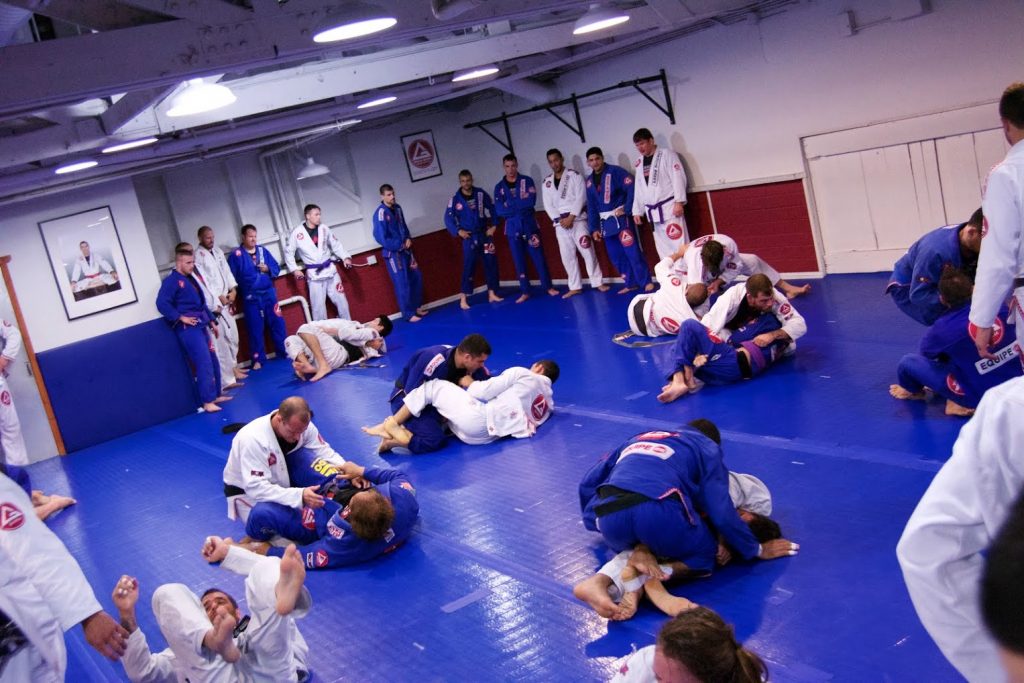
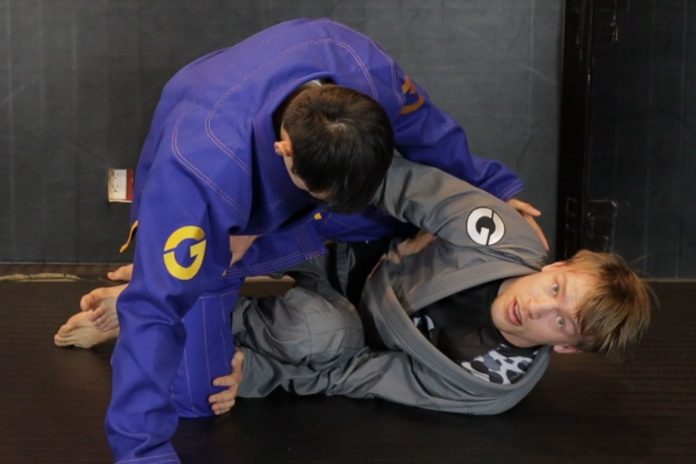
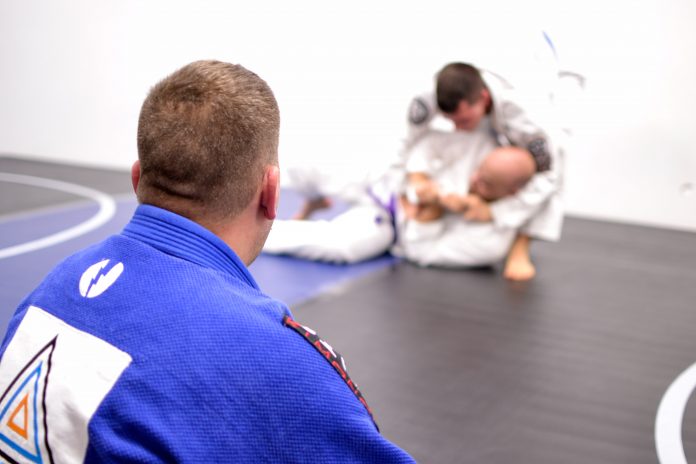
Rolling in BJJThere are different types of sparring in BJJ, and some of them have nothing to do with rolling. In fact, rolling in BJJ should not be the explanation for sparring. Rolling is just a form of free sparring that we do. Other types of sparring, like drilling, for example, or position sparring are much more focused on teaching you something, rather than you going all out. And many times, this type of controlled sparring is very needed in Jiu-Jitsu.

Drilling should be where you start with moves you already did in technical training, but now want to incorporate in rolling. Sure you could go and try to execute them straight away, but that often doesn’t really work out. You’ll learn how to catch a move live much easier by drilling it first, going through position sparring next, and perhaps, trying to pinpoint how everything would work during flow rolling.  Try this sequence, spending, say a week on each of these, and then try doing the move while you’re live rolling in BJJ.

Goal Management

A very important thing in your sparring is the actual goal. Of course, if you just want to go for a war, there’s not much you need to consider, apart from injuring yourself or your training partner. There are different categories of goals you can have in rolling, from training for competition to specializing that one moves you love.

The first thing to focus on when you’re trying to roll with a purpose is whether you’ll try and go for concepts or techniques. Yes, they need to go together for you to truly make BJJ work, but when you’re’ learning them, you need to go one by one. Focus on either concept that you’ll look to apply in sparring or technical sequences. Once you’re satisfied where you are with one, go for the second, and only then try and combine them tougher in a roll.
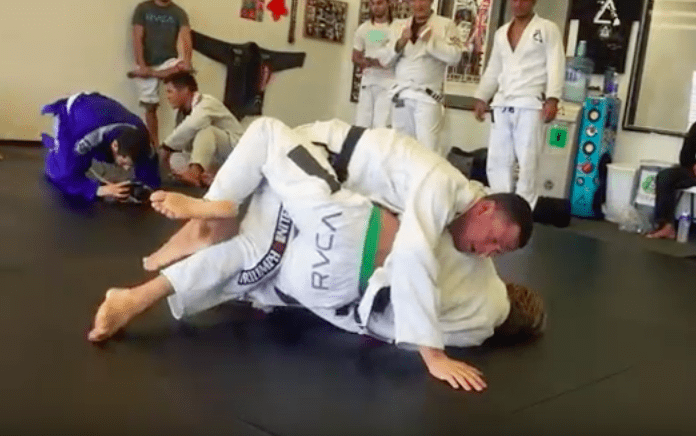
Rolling in BJJ - types of sparringHow would that look? Well, a great conceptual way to think about things is to start off with defensive postures. Think of a boxer’s guard. The first thing they learn is to tuck the chin and raise the arms. If you can’t get knocked out, you can mount offense that makes sense. It is the same in BJJ – figure out a starting point where you’re safe, and start building from there.

That would be a concept. The techniques you apply off of a solid defensive posture would be the next step. Your focus is going to determine whether your “offense” is going to be about escapes, transitions, or submissions.

Strategy And Gameplan

So far, we covered that different forms of sparring in BJJ are how you start incorporating a new move in your game. Later on, through goals in the form of concepts or technical details, you can find ways of applying those moves in the chaos of a real roll or a match. Speaking of matches, if you are a competitor, you will also need to factor in a few more variables that you add on once you’ve mastered everything about a move in the manner we discussed previously.

To begin with, you need to focus on strategy. It is not just about learning how to do the move against resistance or figuring out concepts that will allow you to see the move up. More experienced opponents will have ways out of everything, and you need to factor that in. For example, you decide to learn a D’arce choke. You’ll do some drills first, followed by position sparring and free rolling. Concept wise, you’d want to make an opponent weaker before attacking, so practicing how to open people’s elbows will teach you both this, and how to enter the D’arce in a creative way. Finally, you throw in all the possible technical details of a D’arce, based on opening the elbow. Now, you’re pretty good with the choke and can pull it off on most people when rolling in BJJ.
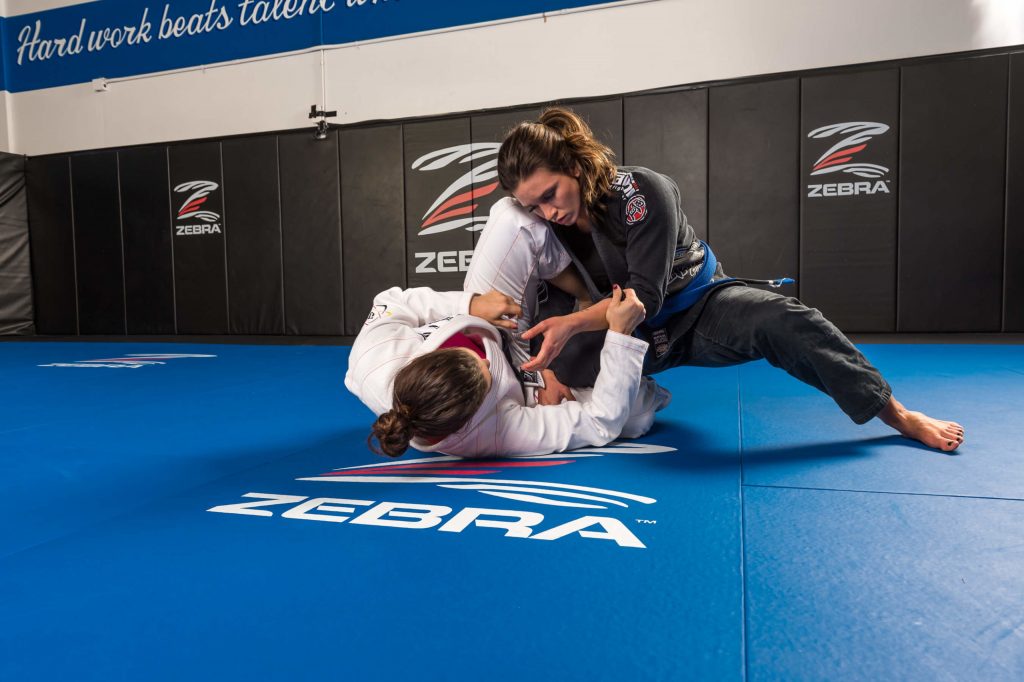
Rolling in BJJ - How to Lean From SparringPulling it off on everyone, though is going to require strategy as well. People will defend your D’arce, especially if they know it is coming. So, you need to mas it with other moves, set it up from the bottom or other unexpected positions, or create sequences of reactions that lead to the opening you need whoever you imitate them, but seemingly have nothing to do with a D’arce when you begin.

Strategy-wise, you also need to factor in all the athletic abilities someone possesses. This is especially true and important for competitors. Factoring in that someone is stronger, a lot more flexible, or faster than you will help you anticipate these qualities rather than being surprised by them.

In Conclusion         

Rolling in BJJ doesn’t just have to be bout chaotic wars. It can be a very valuable learning tool, one that will teach you to think you can’t figure out when you’re only practicing techniques. To achieve that, though you have to categorize sparring in BJJ and figure out a sequence that will help you learn something in a way that is quicker than trying to simply apply it to anyone when going all out.

Confessions Of A BJJ Addict: My BJJ Story (so far)

Confessions of a BJJ Addict - My BJJ Story

Hi, my name is Ogi, and I am a BJJ addict.

It is almost 10 years since I started training Brazilian Jiu-Jitsu. Suffice to say, a lot has happened during that time. In a decade, I got a university degree, almost finished a Ph.D., I had a few jobs, got married, got divorced, and somehow, ended up teaching BJJ as a full time “job”. It seems that there was a reason why Jiu-Jitsu remained the one consistent thing in my life from my mid-twenties to my mid-thirties, which is a crazy period in life on its own. Somehow, this crazy sport where we grapple on the ground wearing funny pyjamas has become a huge part of my life. And yes, I am aware that I am a BJJ addict, and I am proud of it!

The Beginnings

When I was 6 years old, my father got me into Judo. I guess I was too much of an energy bundle to handle at home. I hated it. Back then, I was not the kid that wanted to spar, I was always afraid I was going to lose. And I did lose, a lot, and did it in front of everyone, given that we did sparring sessions with two students fighting in the middle of a circle formed by everyone else.

After a couple of years, the Judo club, which happened to be very near to where I lived, closed. Immediately, I went into Karate. I spent the next decade punching and kicking (back then karate was a full-contact sport, even for children). A diagnosis of myopia (short-sightedness) meant I had to stop competing because I couldn’t get hit in the eyes. That prompted me to look elsewhere and a journey through Aikido, Krav Maga, Thai Boxing, and even MMA followed (so much for not getting punched, I know). Somehow, BJJ was the last one I tried, perhaps because there wasn’t any back then.

The first time I went to train Jiu-Jitsu was really a different experience. With almost 20 years of martial arts training under my belt, I never thought I’d get dominated so much by a blue belt who was pretty much my size. I had no idea what was going on. Despite my best efforts, no amount of watching UFC or training grappling as part of Krav Maga, and even Judo, could have prepared me for that experience. After that first session, I knew I’d be back for more. I just had to know all that stuff they did to me. Little did I know that I had become a BJJ addict already.

Flirting With Pain…Every Day

The first few months of BJJ were… nasty seems like a good word for it. I’m a 150 lbs guy, with a solid level of strength for my size, and good conditioning. When I started BJJ I was in immense shape. And it had absolutely no impact on what happened on the mats. Every training, I got destroyed beyond the point of belief. I trained Judo at the same time and had started teaching Karate again. I was doing Karate and Judo sparring almost daily, but nothing got close to the craziness of BJJ. It was like those Judo sparring sessions back when I was a kid all over again. However, this time, I knew that I had to convince myself that losing was the way to actually learn.

It took a while but I got into it. The first competition went by, first stripes on my white belt, meeting the mythological creature that is a black belt (our instructor was a blue belt at the time). It all happened within a year of me starting to train. A BJJ addict who could no longer be helped by any means, I stopped doing Judo, and MMA, and only kept up with Karate because I met a girl there that would eventually become my wife. BJJ, however, was my sole focus. Going to training in that small basement (the door opened up like a hatch, literally) was the highlight of my day. Moreover, the three days a week I got to train were the happiest in my week.

After about a year and a half, I was already all-in. I started looking at my first DVDs and started discovering there’ a lot more to BJJ than what we did at the academy. First experiments began, and, me being me, it had to be something unorthodox. While most “white to almost blue” belts in the gym were looking at closed guard or armbars, I decided I’d learn the Tornado guard. How? By watching DVDs, of course.

The short version of events, it worked and I did manage to get the hang of it.  It took drilling with religious dedication for about 6 months. Even people double my size were now flying across the gym, and I had a fair amount of success with it in tournaments as well. The only drawback was that I had no idea how to learn Jiu-Jitsu, especially form a source like a DVD. The end result – a pretty bad hernia in my neck that I discovered halfway through blue belt.

Since then, the pain of BJJ injuries has never stopped. Even as I am writing this, my right elbow is killing me (and the funny thing is, I have absolutely no idea why). I have a badly bandaged big toe on one foot that’s missing the entire nail (a result of takedown training). Not to mention my almost completely ligaments in my knee are locking up at various intervals without any logic to it. Just the life of a BJJ addict, I guess.

Overcoming Everything

The first moment I saw a purple belt was in my first ever competition. That was the moment when I knew I had to get to that belt. I already had black belts in other martial arts, but I had never worn a purple belt. Moreover, the way they moved, like two cats doing a gracious battle was exactly what I wanted to do. It just so happened, I got my purple belt fairly quickly (just a year at the blue belt). Of course, that just meant I stayed at purple for longer (3 years) but for me, that didn’t matter. In fact, I enjoyed it. I don’t know about others’ experiences, but it felt somewhat sad when I got a brown belt and had to take that purple belt off. I still have it hanging in my bedroom, and look at it with nostalgia every single day.

During purple belt, I had to stop competing because of all the injuries that kept piling up. That sucked because I took up an office job just to be able to pay my way through competitions and have time to train after the 9-5 shift was done. Too banged up (especially the neck) to even think about competing, I found a different focus in teaching. That meant that I had to devote even more time to Jiu-Jitsu. As a textbook BJJ addict, I only saw it as a good thing. Somewhere along the line, I got married, and everything seemed to click. At first.

Confessions of a BJJ AddictIt turns out, dedicating yourself to addiction can really be tough on others. Even if you try and justify it by saying you’re doing things for them. Suddenly facing “grown-up problems” I threw myself into BJJ even more, trying to provide for the family via the addiction. I guess I already knew that I would never stay in a 9-5 job my entire life, and was looking for a way to make what I love my way of earning for a living. It didn’t bode well for my marriage though. Even though BJJ was not the only, or main reason for divorcing, spending so many hours in the gym, planning classes, drilling, teaching, rolling, etc certainly factored in. My marriage was over, but it also brought about a big revelation – it was easy to overcome.
Brazilian Jiu-Jitsu might be brutal on the body, but it is incredible on the mind. There are lessons hidden in that crazy pajama-grappling art, that not many other aspects of life can teach you. I am a curious person by trait and I have many interests and hobbies. I am a veterinarian by trait, with a special incline towards small animal surgery. Also, I like to brew craft coffees; I do animal photography; can write strength and conditioning programs for anyone, etc., etc. Nothing  I do in life has taught me so much about, well, life, in the 35 years I’ve been trotting around this flying ball we call Earth, as much as Brazilian Jiu-Jitsu has. And most of all, I have my BJJ addiction to thank for being able to overcome everything that life throws at me.

“First They Laugh At You, Then They Respect You, And Finally, They Want To Be Like You”

When I first told my friend that I was to compete again (hadn’t done so since high school days), back when I was a BJJ white belt, everyone laughed. “You’re crazy”, “you’re 25”,” you’re already old for competing”, “young guys will eat you up”,” you’ll be 40 by the time you’re a black belt”. Fast forward a decade, and now I have most of my friends training in the gym, taking my classes, and starting to show signs of being a BJJ addict themselves.

It really was like the quote says. At first, everyone thought I just found a new toy to play around with. People said that I had crazy ideas, they said I should focus on work, get married, have kids, and perhaps train just so that I am in shape. Me being me, I didn’t listen. I went about things my way, realizing I am a BJJ addict probably during the short period between the referee saying “Paroooo” and raising my arm for the win in the first-ever match I had at my first ever tournament.

Looking around now, I wouldn’t have things any other way. I currently work mostly with BJJ-related stuff, whether it is online or in the gym. The academy is running strong (it ended up as mine through a weird sequence of events) with four adult groups and two children groups in the midst of the Corona pandemic. And there are new people signing up almost daily.

Already a very avid traveler, I discovered BJJ camps, which helped me meet incredible people, learn even more about the art, and travel to crazy places. In just a few months I’ll be off to spend 10 days in the Caribbean, training BJJ in literal paradise. With potential romance blooming in the most unexpected of places, life couldn’t be better at the moment, and it has nothing to do with what people thought I should do with my life. Those that saw me as a BJJ addict were right. They just didn’t know that they’d try to become one themselves, after seeing what the Gentle Art did to me during the past 10 years.

What Really Matters To A BJJ Addict

That I don’t know. I will never assume ever again that I know what matters in life. I can only go by the feeling I have at the moment. And, if I like something that is going on, I’m doing it. If I don’t, I’ll stay away. It is as simple as that. Among many other things, BJJ has thought me that not everything is for everyone. People pick what they’re good at, or interested in when they train and tend to specialize in certain areas of the sport. In life, it is pretty much the same.

BJJ is just like life, endless and ever-changing. If you’re doing Darce chokes to everyone at the moment, a few years down the road you might turn into the “escape guy/girl” with your focus shifting completely. That is what we call progress in Jiu-Jitsu. Then, how could we say that doing the same thing in life over and over again for 30-50 years is progress? Why fear change so much on the grandest scale of our existence, when we’re looking to do it in the microcosmos of Jiu-Jitsu every time we’re on the mats?

I have no idea what really matters, to be honest. I know what makes me feel full of energy and happy about life though. It is seeing the change that happened to me, happen to others on the mats. People leave the academy with huge smiles on their faces after every class. People start talking to each other, really talking and not about everyday stuff like bills or the weather. They find meaning in what is happening on the mats, and I couldn’t be more grateful that I have the chance to send people home happier than they’ve walked in every day. To me, that matters. There’s a meaning to everything when I see the change that made me realize how I wanted to live, start to brew in others.

Yes, there are constant battles and challenges in life. Yes, we need others in our lives, partners to share moments with. But, just like in BJJ, there are ways of conducting those battles. Begin a BJJ addict has taught me that you won’t win every battle. However, even when losing, you’ll learn, and you can apply that knowledge to all the battles that follow. And, just like there’s no perfect BJJ training partner, you’ll probably never find a perfect life partner. You can get pretty damn close, though. Especially with someone that has a similar vibe to yours, even if it is for just a little while.

I have absolutely no idea what the future will bring. All I know is that it will have something to do with Brazilian Jiu-Jitsu and trying to use it to help people embrace change, progress, and figuring out how to truly live. Well, that’s my path, at least, and I’m enjoying every single second of it.

Hi, I’m Ogi, and I am a BJJ addict. You wanna roll?

6 Things I Wish I Knew Before Starting Brazilian Jiu-Jitsu Training

Brazilian Jiu-JItsu training: things to know

We often say we’d like to know certain things earlier. In Jiu-Jitsu, this is something I’ve said on plenty of occasions. The thing, is, that when it comes to certain technical stuff, or stuff learned through experience, thinking that learning them early would make a difference down not make sense. However, there are certain things that would come in handy to anyone who decides to start Brazilian Jiu-Jitsu training.

BJJ is a hard sport that demands a lot of dedication. Those that make it past blue belt, will really be in it for the long run, most likely for life. Along the way, there are different milestones to reach and huge lessons to learn. However, among all the craziness of BJJ, some things should probably be on the “recruitment poster”, just so people have an easier time as they start training Brazilian Jiu-Jitsu. Those things have more to do with what the actual training is about and some philosophies of Jiu-Jitsu, rather than being something that will change the outcome of a match in an instant.

Starting Brazilian Jiu-Jitsu Training

I’ve trained 6 or 7 different martial arts in the span of 30 years. All of them and their challenges especially form the start. Brazilian Jiu-Jitsu training, though, has to be the hardest one. You start training something that makes you wonder why you’re allowing people to torture you on the ground as they’re doing it. The moment you get out of the gym though, you just can’t wait to be back in again. It is something that’s very specific to BJJ and is something most people experience.

Of course, the way classes are scheduled, and how instructors act and teach makes all the difference in the world. Starting Jiu-JItsu can range from going in and just stepping into class, and eventually going for rolls on your very first day. In other situations, there are intro classes, introductory courses, and group classes that do not allow for rolling at all, for a short period of time. All of this really affects how people perceive Brazilian Jiu-Jitsu training when they first sign up.

thigns to know before starting Brazilian Jiu-JItsu trainingThat said, there are several things that I guess everyone should know before they start training. It is not that these things will change people’s lives, or they’ll have a much harder time if they don’t know them. Most of us never knew them, and we turned out okay…sort of. These are things that will help people understand different aspects of Jiu-Jitsu that don’t necessarily have to do with how you execute an armbar or a guard pass. Simply put, they’re stuff I wish somebody told me before I started.
Going In Prepared

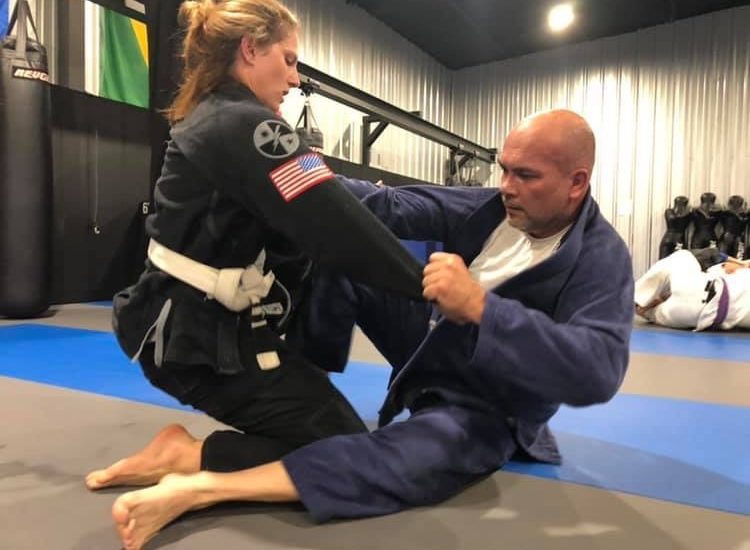
It is always smart to be prepared for whatever endeavor your undertaking. When that endeavor is training grappling martial arts, and in particular, BJJ, being prepared is even more important. Think of this as a warm-up. Having an idea of what Brazilian Jiu-Jitsu training is will help you fit into the Academy quicker and better. Plus, you won’t feel so lost in classes.

Getting A Gi Right On The First Try

Yeah, it is possible. You can get a Gi right the first time you get one, and it is not that complicated. Our comprehensive guide to everything Gi related is all you need to make an informed decision. What people usually say is that you should get an entry-level Gi, and later start to figure out what type of Gi you like to wear more. I think that you could figure out a Gi for you from the start, size, and all if you just talk to someone that understands BJJ Gis. It is not something people usually volunteer as information, though, so you will definitely have to ask about it.

When To Force Yourself To Stop Rolling

Brazilian Jiu-JItsu trainingThis is something that all kinds of people, of all belt levels, struggle with. We all know that we shouldn’t train/roll injured, and yet, we still do it thinking it is not a big deal. However, stopping yourself from rolling in Brazilian JIu-JItsu training can sometimes be the most important part of a class. there are those days when things just aren’t working for you. It may be that your mind is wandering, or you’re just off with your timing, techniques, etc. The best thing someone could tell you to do is stop. After class is over, skip the rolling, preventing injuries to yourself and/or teammates. Just walk away and come back to the next class.
Don’t Wait Until You’re Purple/Brown Belt To Start Training No-Gi

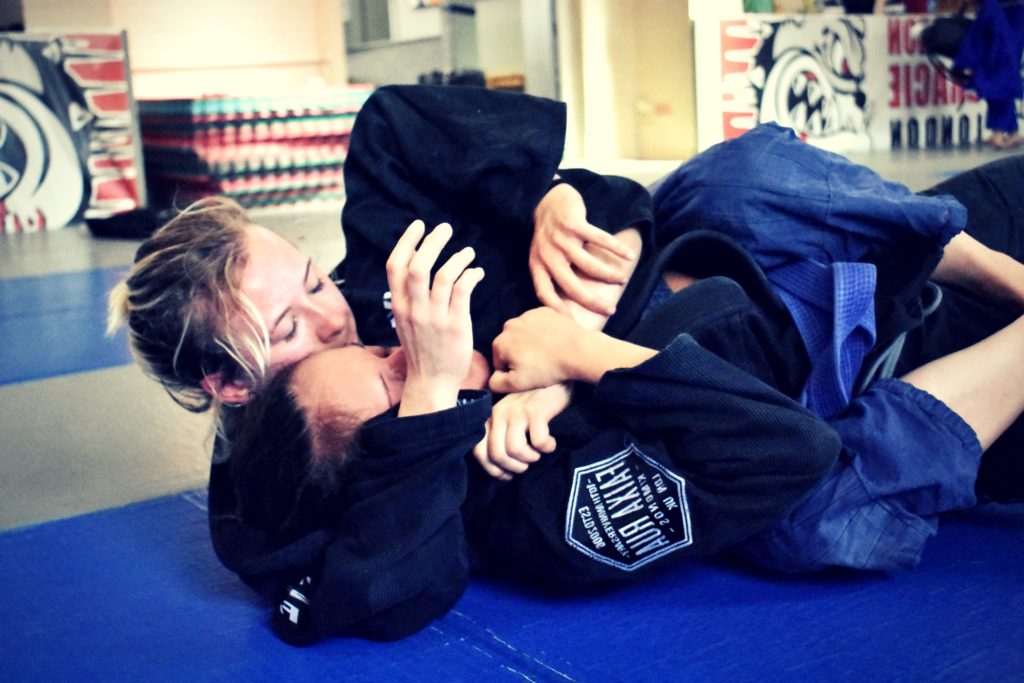
This is something that I personally wish someone told me. As a big fan of NO-GI that trained (and still trains ) in a predominantly Gi academy, I was guided to learn Gi BJJ first, and then look into No-GI. It made no sense then, but I obliged. It still doesn’t make sense, but now I tell people that they should do it. Not just try No-Gi, but actually do it in addition to their GI training. And they should start as early as possible. Moreover, the same things are true the other way around – No-Gi players should train with the Gi.

You Don’t Have To Train Techniques On Both Sides

This was a big one for me, and it would’ve made my game so much more versatile had I known it before. It was something I figured out along the way, and not a thing someone told me. There’s absolutely no need to be able to do the same move left and right. Even better, you should actually try and have different ones, on different sides. For example, why pass with a knee cut pass on both sides, when you can do leg drags on one, and knee cuts on the other? It is something that really does impact how you look at Jiu-Jitsu and is something I think people should learn very early.

There Is No Final And Ultimate Solution To Anything

What yo uhave to know before you start Brazilian Jiu-JItsu trainingThis is probably obvious, but sometimes, people like to say that a position or move is the ultimate solution to something else. In other words, they say it like it is the end solution when it is not – BJ evolves on a daily basis. people thought leg locks didn’t work, then everyone started doing them, and calming they’re undefendable. Fast forward a bit, leg locks are now just another submission that we know works but is ales not hard to defend. There are plenty of examples like this and it needs to be clear that during Brazilian Jiu-Jitsu training, what works today, might be redundant tomorrow, and there are definitely no “silver bullet” moves.


Running An Academy Is No Breeze (And Sometimes Not Fun)

This one is a big one for me, at the moment. I guess not everyone wants to hear about running an academy as soon as they start training, but, it will be important to those that end up owning or managing one. In that regard, while we all dream about doing nothing but BJJ for a living, running an academy is not always a fun thing to do. there’ a lot happening behind the scenes that you need to be ready to cope with,. and one thing I can guarantee is that it won’t be a breeze. It may eve not be fun and interesting all the time too, despite it being “The BJJ dream”.

In Summary

Learning these 6 things before starting Brazilian Jiu-Jitsu training, or during your first few weeks, will help you get a better handle on what is going on. In fact, most of these will actually help you progress faster and become a complete grappler further down the line. The reason is that once you start seeing things from a specific perspective, one that’s based upon someone’s experiences, you’ll be able to understand what is going on and how you need to react to things.

Grappling Nutrition: Improve Gut Health To Improve BJJ Performance

Grappling nutrition: Gut Health

What is the point of all the nutrition plans that most grapplers use? If I had to sum it up in one word, I’d choose performance. Performance on the mats, in everyday life, in the bedroom… It is pretty straightforward – if your body has the “fuel” it will perform. However, performance is affected by more than just one variable of grappling nutrition. It is not just when you eat, what you eat, and how much. One aspect many people fail to consider is gut health and how it influences your attempts at “performance nutrition”.

Gut health is becoming a subject more and more of us are getting interested in. There’s a lot of information out there, though, and it can be hard to make sense of things if you’re not a medical professional. The important thing is figuring out how to keep your guts healthy so that they can actually absorb everything else that you provide via whatever nutrition plan you’re following. that is the bottom line. From the perspective of grappling nutrition, there’s no need to overcomplicate stuff past this point, but we will discuss the subject a bit deeper.

Effects Of Poor Gut Health      

The gut has the purpose of transporting nutrients into the bloodstream. That is the simplest way possible of explaining what our guts do. However, it is just a small piece of the role our gut plays in our overall health. There are plenty of cells that release stuff like neurotransmitters like serotonin, which affect our mood among other things. The gut also plays a huge role in our immune system, helping us fight off infections of all kinds.

Grappling nutrition: Gut Health and BJJOne example of poor gut health everyone can relate to is “leaky gut”. This refers to situations where the intestinal lining is damaged, and part of the food passes through, causing inflammation in the body. This causes stress to the body and the release of stress hormones that make things even worse. Such an imbalance can be the reason why people have allergies, skin conditions, intolerances, etc.

Poor gut health definitely decreases performance, given that the body has to deal with a bunch of issues, and can’t process food and liquids optimally. there are trillions of bacteria in the gut that help use break food down and even have a role to play in immunity. They exist in a balance, which poor gut health can shift towards the reproduction of unwanted types of bacteria that might result in serious illnesses

Gut health is affected by a host of reasons, from genetic, through environmental, to nutritional ones, which shows that your grappling nutrition plan is just one piece of the puzzle. It is an important one, though.

Grappling Nutrition: Setting Up to Win

Without going very deep into the realm of gut health from a medical perspective, let’s look at several ways in which you grappling nutrition plan can help you improve gut health, while you’re achieving all your other goals like weight loss.

Grappling nutrition: Better Gut HealthThe first step would be to remove a lot of the things you normally eat and which can cause trouble in your gut. These include processed foods, sugar, alcohol, saturated fats, and similar things. In fact, you should remove anything that affects the balance of your microbiome and your gut health, even if it is not a “bad food”. Intolerances are highly individual, like for example, with caffeine.
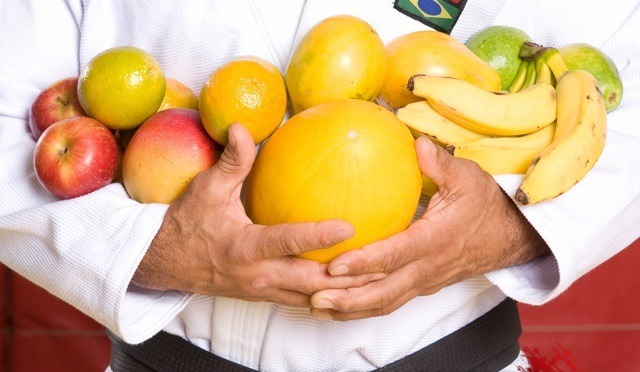
The second would be to repair the damage that foods like that might have done to your gut. This is where grappling nutrition really plays a role, as food choices will help you expose your gut lining to compounds that help it heal. Examples are zinc, Omega-3 fatty acids, antioxidants, etc.

Restoring balance would be the next step, which is shifting the gut back towards an environment where helpful bacteria dominate the microbiome. You could actually ingest bacteria directly, like  Lactobacillus acidophilus and Bifidobacterium lactis to help repopulate the gut quicker. These bacteria are usually found in probiotics, especially yogurt-based ones.

A Carefully Picked Supplements Stack

Finally, you can help improve your gut health by replacing some of the things that make it work with external sources. For example, you could use digestive enzymes or organic salts to help with digestion and aid the compounds already begin secreted by your body.

Grappling nutrition: improve Gut HealthL-glutamine is one supplement that is particularly useful for gut health. It also helps with recovery after training. Fish oils, as we mentioned earlier are very important to gut health. They help battle inflammation, which is something that often happens in pour guts when we just cram stuff in there without giving them a rest. Probiotics also fall under the supplements category.

Minerals like zinc, are also important to include in any grappling nutrition meal plan. They are building blocks for plenty of enzymes which are key to a balanced gut microbiome. Cinnamon, mint, and other commonly found herbs and spices can also help improve digestion and gut health. Finally, you could always look to counter the acidic nature of the digestive system by using pH balancing foods, like kale, spinach, broccoli, etc.

All In All

Grappling nutrition will only be good as its most fundamental parts. Not taking into account gut health when you’re choosing your food sources will mean that your performance won’t improve as much as it can. Moreover, gut health is not just about performance but also longevity. There’s no point in doing something you can’t keep on doing for the rest of your life, so when you’re’ trying to solve the complicated puzzle of a meal plan, make sure you start with gut health.

35 year Old Promoted to Red Belt in BJJ

35 year old Clayton Silva promoted to a Red Belt by Ubitaran Cordeiro

The 9th degree Red Belt is the highest rank anyone can have in BJJ except the pioneers of BJJ who are awarded 10th degree Red Belt.

According to Renzo and Royler Gracie, If a practitioner receives his or her black belt at 19 years old, the earliest they could expect to receive a ninth degree red belt would be at the age of 67. Brazilian jiu-jitsu red belts are addressed as Grandmaster.

You can see a full list of Brazilian Jiu-Jitsu Red Belts HERE.

What happened on Tuesday, September 15th, 2015 is that unknown red belt in Jiu-Jitsu called Ubiratan Cordeiro who is not on this verified list promoted the 35-year-old Clayton Silva to red belt.

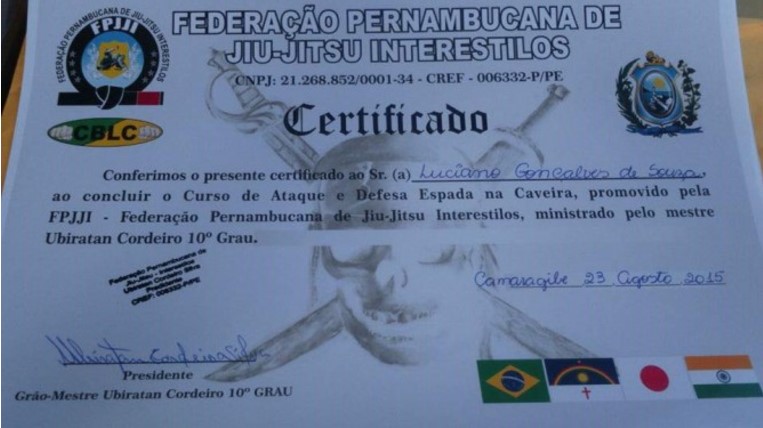
There’s an “explanation” of Ubitaran Cordeiro as he’s the president of an obscure BJJ federation called Federacao Pernambucana de Jiu-Jitsu Interestilos. Federation that he started and gave himself the highest rank in BJJ, 10th Degree Red Belt.

As we can see, GrandMaster Ubitaran Cordeiro is Brazilian, probably training BJJ for whole his life and the question here is if this is legit move or not? Are Gracies “owners” of Brazilian Jiu-Jitsu and people who should be asked about anything related to BJJ?

We can see Urbitaran Cordeiro’s Jiu-Jitsu certificate here:

Ubitaran Cordeiro Certificate

Also here is a video of his Vale Tudo slap boxing (whatever that is) fight here:

Jiu-Jitsu matches refereed by Grandmaster Ubiratan Cordeiro

How And Why BJJ Frames And Levers Work

BJJ Frames And Levers

It is clear by now that if you want to really progress in BJJ, you’ll have to know why things work, rather than just have an array of different moves. There’s a fine balance between the why (concepts and principles) and the how (techniques, details, and tactics). This balance does take some time to figure out, but that does not mean that you shouldn’t aim to understand some of the most important concepts while you’re looking to learn all the tools of the trade, which are the techniques and moves. Understanding just what BJJ frames and levers are is going to change the way you approach technical learning. Why not gain an edge as early as possible in your BJJ journey?

BJJ frames and levers are something almost everyone involved in Jiu-Jitsu has heard of. They are mechanical concepts that apply to everything we use in BJJ and have a role to play in any successful and unsuccessful execution of specific techniques. While they are not easy concepts to understand, from a physics standpoint, the dumbed-down version we use in BJJ is perfectly understandable and easy to incorporate in anyone’s game. From white to black belt, everyone uses frames and levers, it is just about recognizing them, and that’s where higher belts have the advantage.

When To Use Frames       

BJJ frames and levers go together, but we’ll analyze them on their own before we go into how they work in unison. Starting things off are going to be frames, a concept that is slightly easier to explain than levers. And still, despite the heavy use of frames in Jiu-Jitsu, I do feel there’s room for improvement, especially in our core understanding of them.

BJJ Frames And Levers - using framesA frame in Jiu-Jitsu is every structure that allows you to create and maintain space between you and your opponent, without having to rely on muscular power throughout it. Frames can be created with just about every moving part of your body – head, arms, and legs, and all possible combinations of them. In BJJ, we mostly use hands to create frames, especially in situations when we’re defending from the bottom.

The way we build frames is by combining grips and posts to rate mechanically strong structures that are able to withstand weight, pressure, or help create movement. An obvious example would be framing from bottom side control, in order to create space for a hip escape. While a frame made out of both our extended arms would be applicable here, creating a square-like structure with our arms bent at the elbows provides us with a lot more stability and options.

In the realm of frames, I have to note that creating frames that have our elbows away from our bodies is not a good idea, at least according to me. If we keep the frames closer to ourselves, we’d be able to block a lot more, and expose a lot less. An example would be a frame from the bottom of the mount. Instead of allowing access to our elbows, it is much smarter to keep them glued to our bodies. The frame is going to work even better, preventing someone from going towards our head, but at the same time, will block any attempt at opening our elbows.

When To Use Levers

Levers are the second part of the BJJ frames and levers system that is integral we understand. In comparison to frames, though, levers are a bit more complicated. The first thing to consider is that a lever can only be called a lever if there’s a fulcrum involved. That means that this concept has two moving parts, and we need to be aware of which is which if we’re to be useful at utilizing them.

BJJ Frames And Levers - using leversOnce again, in relation to frames, levers are the more offensive part of the BJJ frames and levers concept. What that means is that levers are ways in which you manipulate limbs or any other part of the body that has a joint. In terms of anatomy, levers go past beyond just arms, legs, and the head. The spine, hips, and even the entire body in certain situations (takedowns/sweeps) can be seen as a lever and manipulated as one.
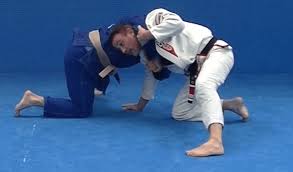
The key point in a lever, apart from identifying its start and endpoint, is identifying what the fulcrum is going to be. A great example is an armbar, where you use the lever you create by pulling on the wrist to place pressure on the elbow. Your crotch area, which props up against the elbow is actually the fulcrum in this particular example. This should be enough when you’re starting to dabble in the concept of levers. If you’re more advanced, it matters where you place the fulcrum, how high it is, how much of a surface area of the fulcrum is making contact with the lever, etc. Other BJJ lever examples are arm drags, the tripod and sickle sweep, the kneebar, etc.

When (And How) To Combine BJJ Frames And Levers

As you can see from what I wrote above, using BJJ frames and levers does not seem like something you can use at the same time. That’s true, up to a certain point. Frames work better defensively, but sometimes, they do find themselves useful in offensive situations as well. For example, Nelsons and Kimuras are both instances where you use a frame structure to accentuate the attacking properties of a lever.

In terms of levers, you could also use them defensively, creating space when frames are not really an option. A scarf hold escape where you redirect the opponent’s arm by gripping the armpit is the perfect example of using a lever to open space up. The space you get can later be used to escape, or full up with a frame that will give you more options and security.

BJJ Frames And Levers - CombinationsHowever, the best use of BJJ frames and levers is when you turn one into the other. This is especially important when you’re attacking. It can be really hard to get past a stiff arm, if you’re trying to complete a Torreando or over underpass, for example. A stiff arm represents a frame but a long one. The longer the frame, the less of an angle it coves with its intended role – do not give way space.
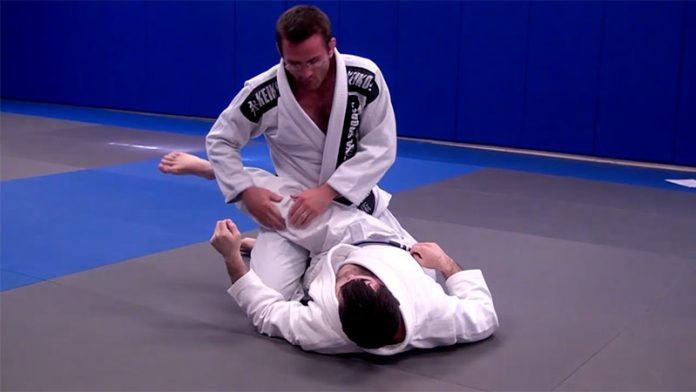
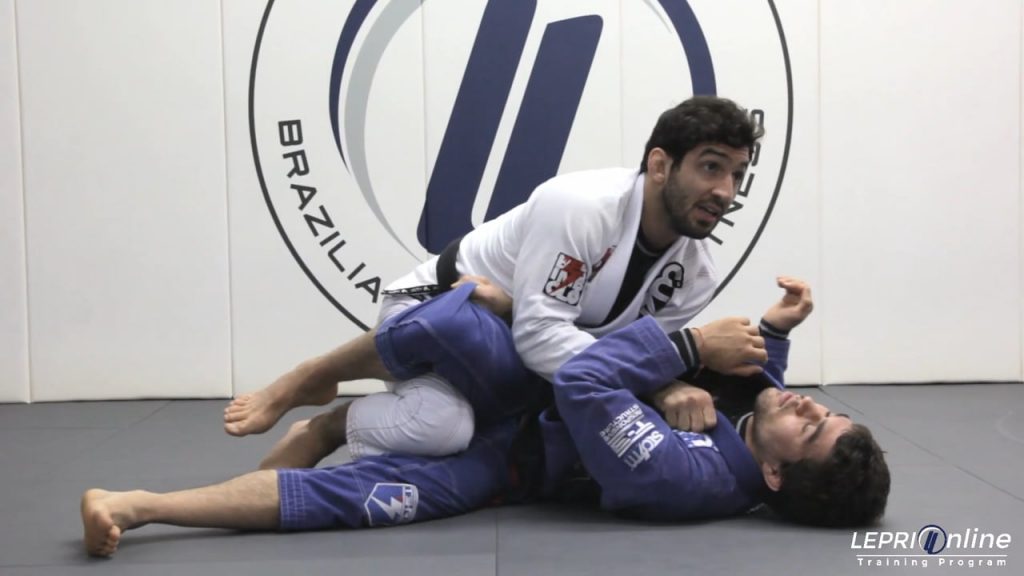
That means that you won’t’ be able to just slide past it, but if you change the angle with your hips or footwork, you’ll now turn the frame an opponent had into a lever that works in your favor. In other words, you’ll end up isolating the arm as you pass, gaining a really dominant position. In much the same manner, levers can be turned into frames if the need arises, both offensively and defensively.

Closing Thoughts

The story of BJJ frames and levers is not a simple one. Everyone, from white to the black belt can find something that suits them, and there will still be a lot more to learn. Every new position or move we come up  in BJJ brings about a different use of BJJ frames and levers. The fact of the matter is, they’re all around us, and if we’re to become effective at grappling, we need to at least be aware of where they are, how we can use them, and why we use them to achieve specific goals.

https://bjj-world.com/grip-strength-for-bjj/
https://bjj-world.com/bjj-control-chin-strap-grip/
https://bjj-world.com/north-south-escapes/

3 Essential BJJ Leg Drag Pass Variations

BJJ Leg Drag Pass Variations - cover

Everyone has their favorite BJJ guard pass. or, even better, most advanced people have a few of them to cycle through depending on their needs. Among all the guard passes in Jiu-Jitsu, there is a pass that is a proven high-percentage, high-reliability guard pass. That is the BJJ leg drag pass, a sequence that opens up directions to the mount, back, or side control, all done from a pinning position that has the bottom person only waiting for the inevitable.

The best part about the BJJ leg drag pass (from my standpoint) is that everyone can do it. You’re not limited by how strong someone is, how much experience they have, or, most importantly, how flexible their hips are. The leg drag involves several fundamental principles of Brazilian Jiu-JItsu that allow it to be extremely functional and highly applicable. Moreover, in both Gi and No-Gi, you can really on the same sequence. However, the one aspect of the leg drag that is the real “selling” point of the pass is the fact it works against just about any guard you’ll come up against in Jiu-Jitsu.

The BJJ Leg Drag Pass

As with most things that are broadly applicable and highly effective in BJJ, the leg drag pass has several different variations. Before we get to explore them, and what each of them brings to the table, though, it is important to know why the BJJ leg drag pass works, and how it works.

BJJ Leg Drag Pass - fundamentalsThe key principle of the BJJ leg drag pass is that it allows you to point the knees and feet of an opponent away from you. This is one of the key aspects of getting past the legs in BJJ. Not many other guard passes can offer the same thing. Even better, the leg drag pass also provides you with a pressure component. Category-wise it is a tight pass that takes you around the legs. In that sense, it combines two categories that usually do not go together. Most passes that go around the legs, (X-pass, Torrenado, etc). are loose passes that are based on footwork. Pressure asses, on the other hand (over-under, knee slice, etc) usually take you through or under the legs.
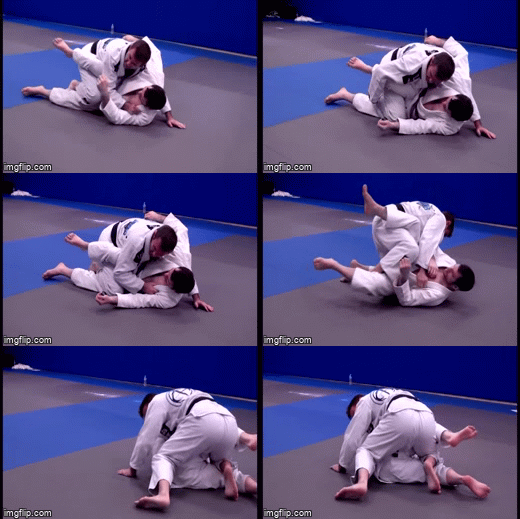
Going around the legs is what allows you to point the knees and feet away from you, which translates to immense hip control. The pressure component of the leg drag pass means you can extend that control to the torso, conquering the all-important inside space and pinning the shoulders. Speaking of pinning, there’s also a staple-type pin on the bottom leg, which just piles more misery on the person getting passed. This unique combination of things allows you to stay in the BJJ leg drag pass position without actually passing. In other words, you get to torture people from an uncomfortable position, before you choose where to pass – them back, mount, or side control.

Variations Of BJJ Leg Drag Pass

There are probably a lot more than just three variations of the BJJ leg drag pass. However, these three have been proven to work, and have been pioneered by elite level black belts that are famous for breezing past some of the most dangerous guards in the game.

The three variations we’ll analyze here are the Galvao leg drag pass, the Mendes leg drag pass, and the skip knee leg drag. They all use the same underlining principles of the leg drag (knees and feet to the side, pin on the hips and shoulders and pressure) but do so with slightly different mechanical settings. That just means there’s something out there for everyone, and that you can adjust the leg drag to your game by using one of these three variants. Are they the only ones at your disposal? now. However, as their names suggest, they’ve been developed by World Champions, and it just so happens that both Galvao and the Mendes brothers trained together under the Atos banner when they became famous for their leg drags.

1. Galvao Variation

The Galvao variation is the most pressure based of all three, which is understandable given Andre Galvao’s size and pressure-oriented game. Form the basic leg drag position, Galvao looks to staple the knee with his leg, getting the most out of the hip rewind position. Locking the leg also means you’re locking the opponent’s hips, leaving just the torso to control. The position usually has people lying slightly or completely on their side, which is important in setting up grips.

BJJ Leg Drag Pass - Galvao VariationThe arm that is in front of the opponent goes on the bottom lapel, grabbing fairly low (at the level of the collar bone). Then, you just look to touch the elbow of that arm to the knee of the same side leg, which is the leg stapling their leg to the ground. The other arm goes into an “underhook ” position, palm on the mats. Alternatively, you can use the “underhook” arm to gab the pants, and further control the hips.
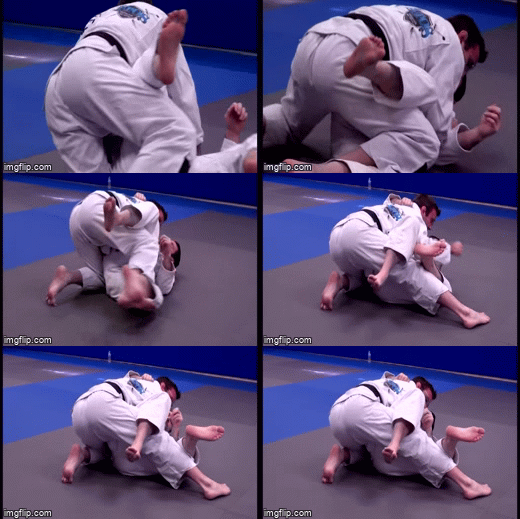
The key moment that people usually don’t do with the leg drag and Galvao does, is pressing the knee of your free leg behind their butt so that it prevents them from turning to their back. This really changes how long you can stay in the position and torture an opponent. The actual passing is determined by who the opponent moves. If they’re still you go-to mount. If they try to roll towards turtle, you take the back. Finally, if they try to wiggle and place their back on the ground, you go to side control.

2. Mendes Leg Drag

BJJ Leg Drag Pass - Mendes VariationThe Mendes leg drag is not very different to the Galvao variation. What Rafa and Gui did was modify the leg drag position because they’re lighter than Galvao, and they got pushed back with the top leg by stronger opponents. So, in order to kill that leg, the brothers extend the leg Galvao uses to staple. That pushes the bottom leg of the opponent, extending it completely in the process, and taking away all power in both legs.  The knee of the other leg goes to the mats, to provide balance. Grips remain the same, but the position provides a lot more pinning than direct pressure on top of your opponent. Especially useful for using the BJJ leg drag pass against larger opponents. Given the leg position, back takes and side control are the options when passing with this setup.
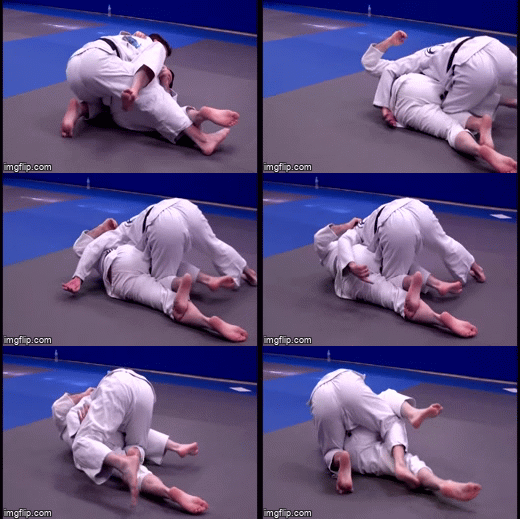
3. The Skip Knee BJJ Leg Drag Pass

This is basically a variation in which you’re going directly to an advanced checkpoint in the BJJ leg drag pass. Instead of using the near side leg to staple, or push the bottom leg, you’ll use the other leg. the knee that is propping the opponent’s butt, or is on the ground, now goes in between both legs, as you staple the bottom leg. Your top leg will then skip over the opponent’s free leg.

BJJ Leg Drag Pass - Skip Knee VariationThe grips stay the same, a low lapel grip and an underhook. Given that your weight is further forward with this variation, you’ll need to place your head on the mats, right next to the opponent’s head. Also, this variation places you nearly into the mount from the get-go,. Back takes are also a possibility, but side control is harder to get.

Wrapping up

The BJJ leg drag pass is one of the most powerful weapons in our grappling arsenal. Using it more often will open up interesting opportunities in your top game. The best part is that you can actually use it as a top position from which you can control, pin, and torture opponents. You only pass when you feel like it, or you see an opportunity too good to pass by. Finally, the variations of the pas mean everyone can figure out one that works for them, or simply have all there as options. Let’s face it, if you can do all three, your passing is going to be unstoppable!

Big Game Hunting In Jiu-Jitsu: 6 Famous BJJ Giant Slayers

BJJ Giant Slayers cover

The claim that a smaller person can beat a bigger person is one of the claims that every martial art in the world clings to. In certain cases, it may even prove to be true. While the concept that someone could beat a bigger person is always there in theory, practice usually begs to differ. Brazilian Jiu-Jitsu is not too different – the entire art got popular based on that claim, which the Gracies did their best to prove. To a certain extent, they did, and the sport/art went viral because of it. Apart from confirming this popular martial arts claim, the sport of BJJ has allowed us to witness the same feats over and over again, in the form of BJJ giant slayers that are not afraid to punch high above their weight class. Pun intended.

Brazilian Jiu-Jitsu is a sport with lots of criteria when it comes to competition. People are divided according to age, sex, belt level, and weight. Out of them all, weight is one area where competitors can test themselves against people that are heavier than them (or lighter) if they choose so. The absolute divisions in tournaments provide not just entertainment but have produced BJJ Giant Killers of a world-class level. In short, every time a grappler from one of the lightest weight classes meets an ultra-heavyweight, the match is bound to be entertaining, one way or another. And picking out the winner can be even more difficult than in the regular weight classes.

Beating Giants With Jiu-Jitsu

The year is 2012. I am a white belt with a couple of stripes, standing in the yellow circle of a wrestling mat, my Manto Gi on. The opposite side of me is another white belt, with nearly the same “experience“ in BJJ as me. The only difference is I weigh around 155 lbs. and he is well above 200 lbs. Not just that, but he is also much taller and stronger. The idea of the coach is that at the end of training we do a mock competition, just two people inside the circle, with others watching. There are no weight classes. I hear the professor say to me “I’d go for the back if I ever had to battle a guy that big). Easy for him to say, given that the professor in question is well over 200 lbs. himself.

That particular “match” went pretty badly for me. The bigger guy smashed me to pieces and tapped me out with a choke. The only time I saw his back was when he was walking away from me after the tap. However, what the professor said back then stuck with me. I knew there’d be other occasions where I was set to grapple people much larger than me. That little piece of advice, to go for the back against a larger person helped me immensely through the years, and I still use it today whenever someone much larger is across me, whether is it is rolling or tournaments.

BJJ Giant slayers don’t just manage to beat bigger guys by luck. There are lots of tactics involved, especially at the highest levels of the sport. Going for the back is just one of the proven ways of gaining an edge when someone outweighs you by half your weight or more. Apart from the back, going for leg locks, or Kimuras is always a good idea because you’re using your entire body to attack just a small part of the opponent’s body. The choice of submissions is based on how high percentage they are, and if they work from both, top and bottom (like a guillotine, for example). Finally, and probably most importantly, never stop moving, especially when you’re’ on the bottom against a bigger person.

6 Proven BJJ Giant Slayers

How would all these tactics look in a real-life match between BJJ black belts? There are lots of examples out there, but I focused on 6 grapplers that are proven BJJ giant killers and have done it on multiple occasions. Seeing them do their “magic” on the mats is one way of getting proof that the theory of a smaller guy beating a bigger one with technique and cunning is not a sham. Will it always work? Of course not. However, on those occasions that it did, it produces BJJ giant slayers and matches that are talked about for years afterward. Here are 6 grappling superstars that have managed to become a part of history with their giant-killing efforts on the mats.

Lachlan Giles

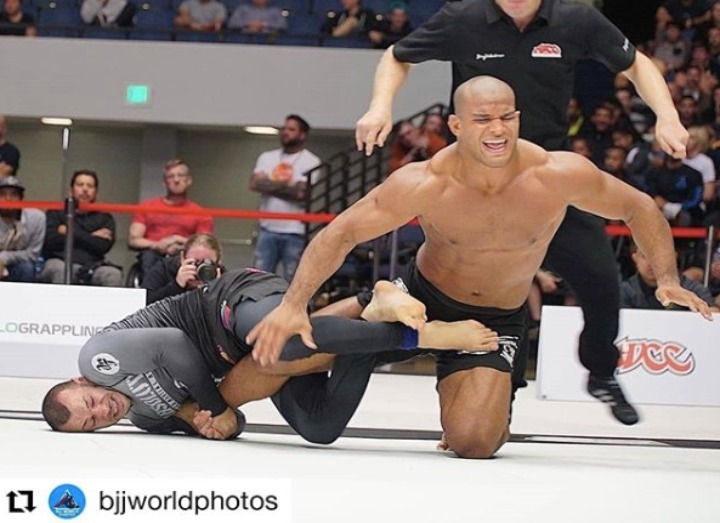
BJJ Giant Slayers lachlanI’ll kick things off with something in regard to BJJ giant slayers that is still fresh in everyone’s memories. I’m talking about Lachlan Giles and his astonishing performance in the absolute division of ADCC 2019. Lachlan went in after a loss in the first round of his division, and in all honesty, not many people expected to see him get ahead. His first opponent was Kaynan Duarte, the man who won the heavyweight division in the same tournament. In a true David vs. Goliath performance, Lachaln submitted Duarte with a slick heel hook in what appeared to be one of the upsets of the tournaments. Only, he wasn’t finished.
Next came another giant in the shape of Patrick Gaudio. Another heel hook, another giant slain. He did come up against the giant of all giants in Gordon Ryan next and lost to a choke to the eventual winner of the division. However, Lachlan got the right to battle for the bronze against yet another colossus of BJJ – Mahamed Aly. The bronze ended up around Lachlan’s neck after another heel hook finish. However, apart from the bronze medal, Lachlan also became a part of the BJJ giant slayers club and went straight into Jiu-Jitsu history.

Mikey Musumeci

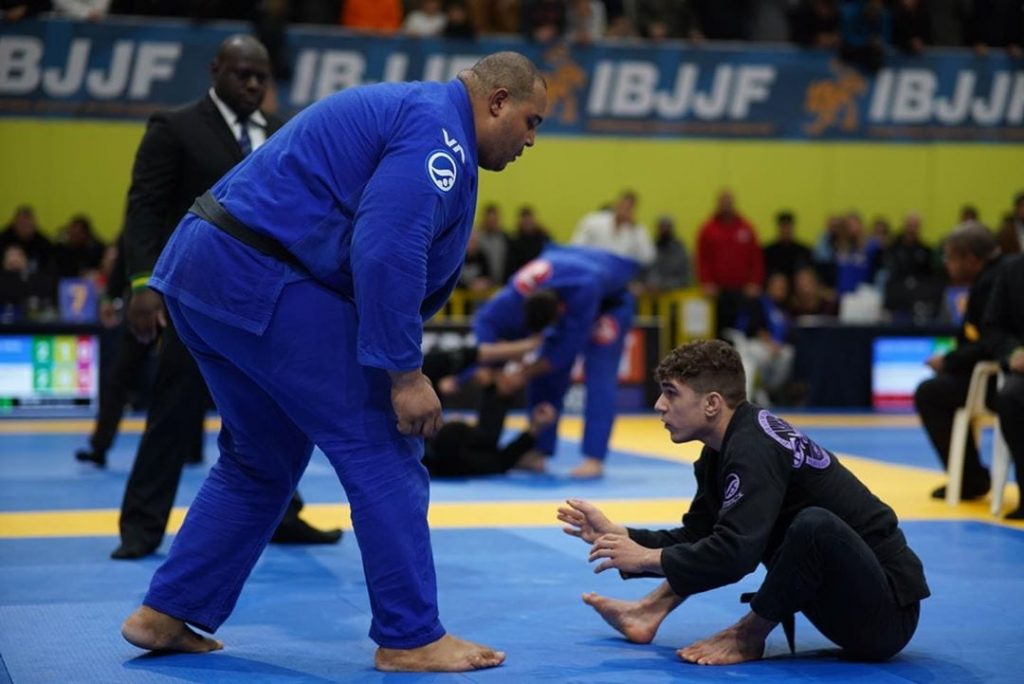
Mikey is another one of the pocket-sized BJJ World Champions that doesn’t shy away from the absolute division. He has plenty of successful giant-killing efforts behind him, but one of his biggest tests came in the latest IBJJF Europeans.

BJJ Giant Slayers MUsumeciMikey Berimbolo-ed past Jacopo Pasquini in the first round, which was “easy” for Musumeci given that Pasquini is a Medium-Heavyweight. The second round saw Musumeci enter a now-legendary match against Seif Eddine-Houmine an ultra-heavyweight that made Mikey look literally like a little child in relation to a grown man. He beat the giant via negative points for Eddine-Houmine, which means the match went to full time – an even more impressive feat. Unfortunately, Musumeci couldn’t get past Aly in the quarter-finals, even though the match was really close.

Caio Terra

BJJ Giant Slayers - Caio TerraCaio Terra not only accomplished legendary feats as one of the best smaller framed grapplers ever but also made a name for himself by fighting and beating large opponents on a regular basis. He has so many matches in the absolute division, both Gi and No-Gi that it is hard to pinpoint his best efforts that landed him in the BJJ giant slayers club. His epic performance against Bruno Bastos pops up straight away, while his battle with Robert Fonseca was just as impressive, if not more. Given that terra actually won the No-Gi Worlds Absolute in 20013, I think he proved beyond a doubt that he has the knack for “big game hunting” in BJJ.

Marcelo Garcia

BJJ Giant Slayers marceloMarcelo Garcia is another name that’s easily relatable to giant-killing in BJJ. One of the GOAT title contenders in the sport, Garcia actually made heavier opponents feel scared of him when he was in his prime. Marcelo actually built his entire game around moves that were equally as effective against bigger, as they were against smaller opponents. Stuff like arm drags, the X-Guard and back attacks are still some of the most useful tools that BJJ Giant Slayers use. Some of the “larger” victims of Marcelo’s efforts include Andre Galvao, Roberto “Cyborg” Abreu, Xhande Riberio,  Thales Leites, Gabriel Gonzaga, and many others. He has a few bronze medals in the IBJJF Worlds absolute divisions, but even more impressively, has a bronze and silver medal from ADCC absolutes.
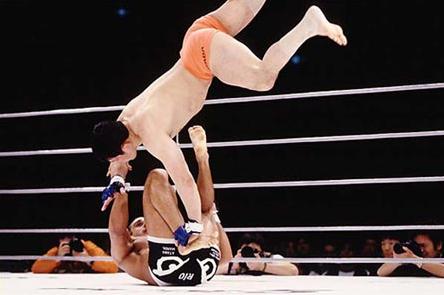
Kazushi Sakuraba

BJJ Giant Slayers - Sakuraba“The Gracie Hunter” and arguably, the most entertaining Japanese fighter/grappler to watch was always going to end up in a list that focuses on BJJ Giant Killers. He has beaten plenty of huge names, along the lines of  Royce and Renzo Gracie, and Vitor Belfort. While Sakuraba made his name slaying giants mostly in MMA, he did it with grappling tactics. His Kimura trap game is out of this world (broke Renzo’s arm), and his nasty armbars brought down giants like Kevin Randleman with apparent ease. His efforts with the low single leg takedown against people of Igor Vovchanchyn’s caliber are also the stuff of legends.
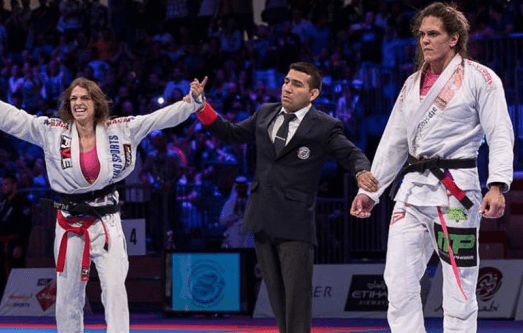
Mackenzie Dern

BJJ Giant Slayers mackenzieMackenzie Dern was never one to shy away from grappling anyone. Her matches against Gabi Garcia, who is probably the largest female in the sport, are nothing short of extraordinary. It was a rivalry that lasted for years, with Gabi walking away as victorious against the IBJJF and UAEJJF World champ Dern. It took Mackenzie several occasions, but she finally managed to slay her giant during a legendary match at the World Pro in Abu Dhabi, where she managed to finally beat Garcia via a penalty.
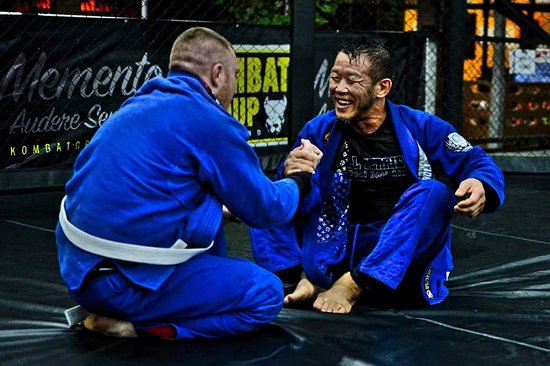
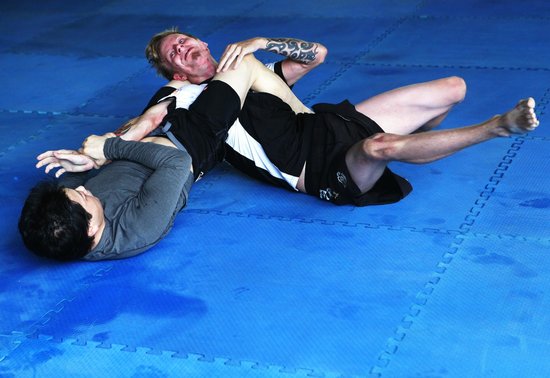
Conclusion

Will you suffer a lot if you try to become a giant killer yourself? I’d say that is guaranteed rather than just probable. However, even if you are the smallest grappler in your gym, that doesn’t mean you can’t join the BJJ Giant Slayers club. Going straight into the absolute at the next tournament is probably not the best idea, though. Start practicing a lot with the bigger people in your gym, and if possible, the bigger and more experienced ones. That is how giant slayers are forged in Brazilian Jiu-Jitsu.

https://bjj-world.com/adcc-2017-winner-gordon-ryan-shows-knee-belly-back-take/

BJJ Attitude: Be a Martial Artist On And Off The Mats

BJJ Attitude: Keep It Real On the Mats

Very often people talk about respect, loyalty, and all the other stuff in martial arts. It all has to do with the perception of martial arts we have in the western world. As you probably know, most martial arts have roots in the eastern civilizations, who have quite different values philosophies, and customs. For them, it is a normal thing to show respect and be humble, while for use Westerners, they’re accomplishments we’re proud to have achieved. In that sense, I’d sum everything up with BJJ attitude, rather than dissecting different moral values one by one. There are some ways of acting in the gym and outside that really do make a difference.

It is not logical to expect that different people will behave the same just because that’s what the manual says. So, when we say we need to be respectful, humble, loyal, and what not in BJJ, you can’t expect everyone will act that way. However, we can talk about the BJJ attitude, and how each individual can act accordingly, while still acting within the bounds of their character. The point in BJJ is to change people’s lives for the better, and in certain cases, that doesn’t involve character. However, we can all aim to have a BJJ attitude that will create the correct training atmosphere, as well as a positive team spirit.

BJJ Attitude: It’s Not Just About The Chokes

When people ask me how promotions in our club go, I tell them that technique is the last thing on my list. Well, okay, I don’t say it quite like that, especially to beginners, but it is a point I make. The idea is that when someone is up for a promotion, it is not just how good they are in rolling that determines whether they get a belt. It is their overall demeanor, from the dressing room to the mats and off them that plays a huge role in determining whether someone is up for a promotion. Technique, how people act in class, rolling, competition (if they compete) and a bunch of other factors help professors determine belt promotions. This is especially true for the higher belts.

BJJ Attitude - train with dignityBrazilian Jiu-Jitsu has a lot to give to people, apart from the chance to simulate life or death combat several nights a week. There’s something I like to call the BJJ attitude that is a much bigger lesson that people learn on the mats. And it has nothing to do with some philosophical concepts or moral values. Of course, everyone is free to focus on their own values, but in a BJJ academy, the atmosphere is everything. It only takes a couple of people to ruin the atmosphere for everyone, on the mats, and in the dressing room. Sometimes such behavior is intentional, in other situations it is not.
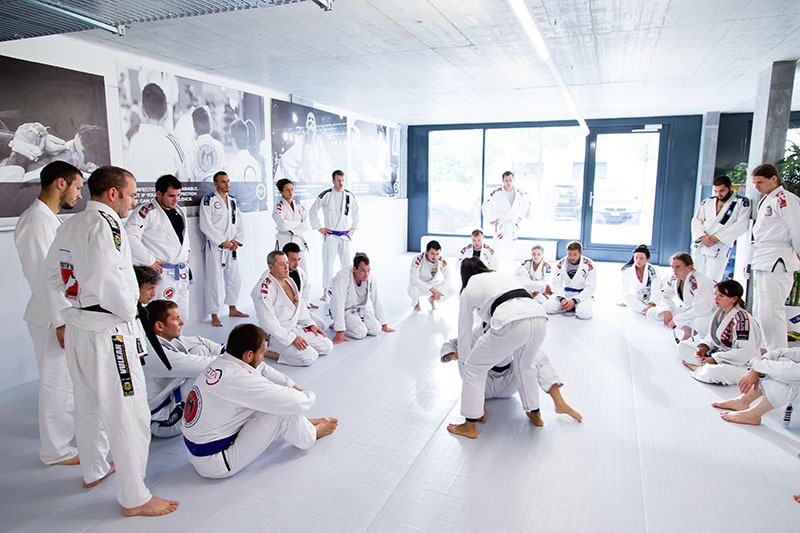
The concept of BJJ attitude is simple – don’t treat people like you wouldn’t want to be treated yourself. It is not realistic to expect that all the people on the mats, especially in big academies, will be friends, o see eye to eye. When it comes to rolling, everyone has the right to say no to anyone, so that’s beside the point. However, there has to be common sense when it comes to how people treat each other, especially on the mats. And faking respect is not something I personally like to see. Common courtesy is more than enough to allow us to train in an environment that will help everyone grow and develop.

Be A Good Person First, And A Good Fighter Second

Speaking of BJJ attitude, let’s try and put things into perspective a little bit. From my personal experience, people usually take the whole eastern moral values to approach out of context, trying to behave like a reincarnation of Buddha himself. And it doesn’t last long. So why not try and figure out something realistic when it comes to how we act on the mats?

With Brazilian Jiu-Jitsu this is easy. The art humbles most people anyway, in one way or another. Rolling is the best douchebag filter in existence – those who don’t belong on the mats, stop showing up because of their bruised egos anyway. However, with all the people that remain, we can expect that we’ll have as many different attitudes as there are members of a club. And, with BJJ being the most relaxed martial art out there when it comes to training, sometimes people get carried away with we‘re just buddies having fun” vibe and things start going out of context.

Personally, I am, all for having a relaxed atmosphere when we’re on the mats. People learn best when they enjoy themselves, and that’s something I’m looking to constantly achieve in training. That said, the attitude I expect from students and instructors alike has to do with balancing the serious aspect of training and the fun ones. That means injecting a bit of common sense into situations and acting not how you want to, but rather how is appropriate for a specific moment in time.

Improve Your Attitude On The Mats

In terms of improving BJJ attitude, on and off the mats, there are some guidelines to further help explain what I mean by BJJ attitude. Let’ take a look at a few practical examples.

Talk to people. This is easy – be open to communicate. You don’t have to be an MC every time you’re on the mats, but do try and say hello, talk to people and be friendly. Moreover, it doesn’t matter what belt you are and who approaches who. This is an aspect of martial arts that deters people from training. Instead, just greet anyone and act as you always do, even off the mats, until such time that class begins.

BJJ AttitudePositive feedback. It is very easy to see someone rolling, or trying to do something and criticizing or “fixing” them. Unfortunately, it is what higher belts tend to do. Yes, there’s always something to teach others, and instructors n particular have countless things to say about every little detail of the art/sport. However, there’s much more value in praising someone for what they did right than trying to fix what they did “wrong’ We’re training for that reason anyway – to fix and learn things. Hitting a move just right is actually something we achieve less than making mistakes. And it should be recognized and commented upon, especially by higher belts.

Help out. By far, something that is not at all mandatory and no instructor/gym owner will lever ask of you. However, helping around the gym, whether it is some administrative stuff, cleaning or chores, or even helping with classes is massively welcome. It is also an aspect of the BJJ attitude that truly shows you care.

Don’t trash talk. Well, at least refrain from trash-talking until you‘re a world-famous professional grappler. By thrash talking, I mean thrash talk, even jokingly, about anyone, from teammates to instructors, opponents at tournaments, and other schools and their members. Who knows, you might end up switching schools in a few years’ time. Why badmouth stuff you know little about? Just keep things simple and focus on the fun and the techniques.

Summary

The BJJ attitude is something you do learn. It is not a set of values or a bunch of principles but rather a way of thinking and acting. The good news is that you’ll grow into it naturally, given that BJJ classes tend to promote such an attitude. It is not something you’ll learn from books, videos, or even this article. It is, however, key, in my opinion, to understand that it is your attitude and not your life philosophies and moral values that matter on the mats. We can’t all act and think the same, or BJJ won’t be a fun thing to do!

https://bjj-world.com/starting-brazilian-jiu-jitsu-training/
https://bjj-world.com/bjj-and-grappling-training-on-hard-surfaces-with-no-mats/
https://bjj-world.com/in-bjj-you-either-win-or-you-learn/

Josh Barnett DVD Review: Championship Level Catch Wrestling

Josh Barnett DVD Review: Championship Level Catch Wrestling

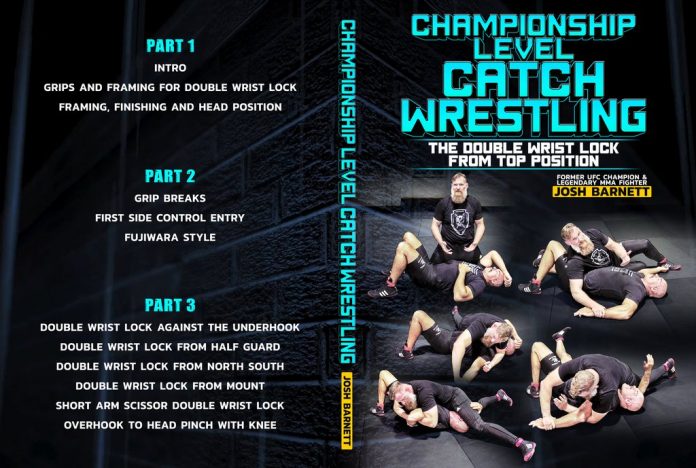
Oh boy, do I love me a Josh Barnett DVD! He can just release a DVD of him talking and I’ll probably be the first one to get it. That man has a wealth of knowledge, and one of the wittiest ways of delivering that knowledge to students than I have ever seen in grappling. Plus, he is a seasoned fighter, UFC veteran, catch wrestler with a no-nonsense approach. With the grappling world seemingly wising up to the benefits of catch wrestling, Josh now issues an instructional of his own “Championship Level Catch Wrestling” here’s what you’ll find inside.

ON SALE HERE:
Josh Barnett – Championship Level Catch Wrestling

Josh Barnett DVD Review: Championship Level Catch Wrestling
Techniques List

Catch wrestling has been in my sights for the past 4 years. I wish I gave it some thought earlier in my grappling career, but I’m definitely not moaning about it. There is a reason why catch wrestlers like Josh Barnett have found it easy to grapple in MMA settings, and even in BJJ/grappling tournaments. Catch wrestlers simply adjust to BJJ faster, and learn quicker than people coming in with a background in other martial arts. The reason is simple – both BJJ and catches wrestling are submission-based arts. “Championship Level Catch Wrestling” is a Josh Barnett DVD that will give you a definite competitive edge in Brazilian Jiu-Jitsu or any other combat sport that allows submission holds.

The Babyfaced Assassin: Josh Barnett

Josh is a really interesting character. He is one of the most interesting people in grappling, both as a competitor and a coach. It is beyond a doubt that he has lots to teach. He is not just extremely accomplished as a fighter but has also spent a lot of time learning from the best in the world, like legendary wrestling coach Billy Robinsons and 10th Planet’s Eddie Bravo. In fact, he got his black belt from Eddie Bravo (an honorary one) but then got a second degree on it from Rigan Machado, which is more than deserved and nothing to do with honorary. Not that Josh needed the ranks to recognize that he is one of the op grapples alive.

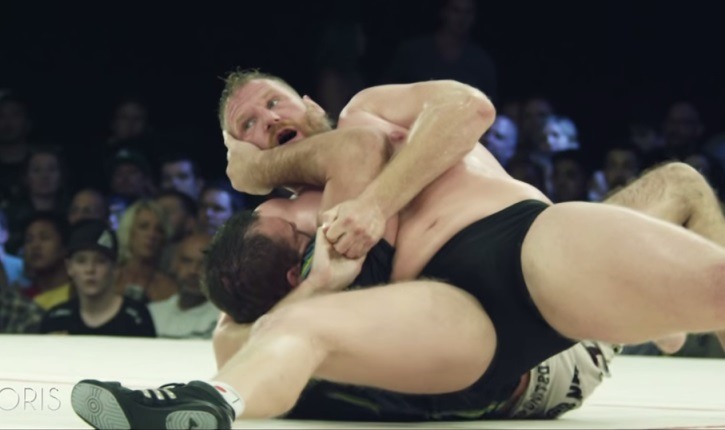
Josh Barnett DVD Championship Level Catch WrestlingAn MMA record od 35-8 at the highest level of the sport further demonstrates Josh is not one to mess around with. His legendary submission of Dean Lister in Metamoris via a catch wrestling chest compression choke from a scarf hold further adds merit to his crazy style fop grappling. Before all that he also fought in Pancreas, Pride, Dream, Strikeforce, and just about any organization out there worth mentioning. Actually, he is not done with MMA yet, as Barnett is on Bellator’s roster at the moment, though he is still to make his debut.
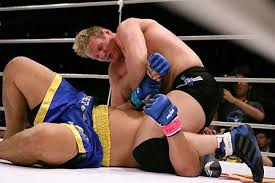
From a more grappling specific standpoint, Josh battled in different organizations that promote professional wrestling and submission grappling his entire life. Those include the New Japan Pro Wrestling organization, Inoki Genome Federation, Game Changer Wrestling, etc. That really does translate to Championship Level catch Wresting, which “just so happens” to be the name of the latest Josh Barnett DVD instructional.

Keep It Painful!

I’ve probably written so much about why catch wresting is great for BJJ in previous articles that it is becoming off-putting. And still, I’ll do it again! I’ll try to keep it short, though, I promise. One reason why I love catch wrestling for BJJ is submissions. Plain and simple, catch is all about submitting someone quickly and without a doubt as to their surrender. And, unlike the intricate and sometimes overly complex nature of BJJ submissions, catch wrestling submissions are straightforward and based on causing your opponent pain. And pain is something everyone responds to when you do it right.

This type of submission holds s not something we see in BJJ too often. Don’t get me wrong, an armbar or straight ankle lock will hurt, but there’s no sudden onset of pain because of pressure that causes people to panic tap like they’re playing the drums. With catch wrestling, things work pretty much along those lines, without lots of focus on positional control. This is exactly why catch and Jiu-Jitsu are the perfect pair – they compliment each other like in a fairytale. And that’s before I even mention the standing aspect of Catch, which tie takedowns along with submissions and top position pressure. The Championship Level Catch Wrestling Josh Barnett DVD has them all.

Championship Level Catch Wrestling Josh Barnett DVD Review

What you can expect from a Josh Barnett DVD is to have fun while watching it. He makes jokes, is down to the point when explains stuff,  and has a great sense of leading you through a move, starting off easy and progressing gradually until he reaches advanced stages. That makes this instructional perfect for anyone, regardless of belt level or experience.

The subject matter of Championship Level Catch Wrestling is a simple one – the double wristlock. You have no idea what that is? Okay, I’ll put in terms BJJ folks will understand – it is all about the Kimura grip, and everything that you can do with it. IN wrestling and catch wrestling, the Kimura is known as the double wristlock and is much more than just a submission hold.

  • Part 1- Getting To Know the Double Wristlock

IN the first of three volumes of this Josh Barnett DVD set, the “Babyfaced Assassin” starts off with a short intro, setting the tone for the entire instructional. He then moves on to talk about the double wristlock, and what it represents in grappling, not just catch wrestling. That leads right into the grips, which is something of a never-resolved issue in grappling. Josh has a simple recipe that will make things clear once and for all. For starters, you’ll start seeing the grip configuration as a frame rather than just a way of holding and that is mort ha enough to change your entire perception of things.

Barnett also utilizes a method of teaching I personally really love – eh shows the grips and finish first, before heading to explore enters, setups, counters, and other areas of the double wristlock later on. That means that after the grips, finishing mechanics and the all-important head positioning follow suite.

  • Part 2 – Entries

There are “only” three chapters in this second portion of the ‘Championship Level Catch Wrestling: instructional. It just so happens, that it is all you need to understand entering into the position, and remaining there indefinitely. Side control is how Josh prefers to explain entering into the double wristlock,. But only after he covers the crucial theme of grip breaking. Spicing things up, where wraps the second portion of the instructional up with the Fujiwara style entry and setup, really adding some classic catch wresting flare to this DVD.

  • Part 3 – Catch Wrestling Double Wristlock Secrets

Championship Level Catch Wrestling Josh Barnett DVD ReviewThe final portion of the “Championship Level Catch Wrestling” Josh Barnett DVD is the one containing the most chapters. Given that all the entries, finishing, and holding mechanics have already been covered, it is now time for some practice applications of all that knowledge.

Here Barnett covers getting to, holding, and finishing the double wristlock form most positions. Moreover, it offers a great way of using it to control and transition in between them, torturing an opponent endlessly. Josh starts off explaining how you get the position against an underhook, which is just as useful standing as it is on the ground. Double wristlocks form half guard, North-South, and mount follow. Wrapping things up are two unusual, unorthodox, and very painful ways of having fun with the double wristlock. On is the short arm scissor double wristlock and the second is an ovehook with a head pinch. Trust me, you’ll love ‘em!

Summary

Another day, another Josh Barnett DVD. This one though, has Josh going back to his roots, back to “Championship level Catch Wrestling.” The focus subject of the instructional is also a great choice, as the double wristlock, AKA Kimura, is something we often take for granted in BJJ. What this instructional does is take both the Kimura lock and the Kimura trap one step further, opening up opportunities most BJJ folks have not thought about.

ON SALE HERE:
Josh Barnett – Championship Level Catch Wrestling

Josh Barnett DVD Review: Championship Level Catch Wrestling
Techniques List