





The Ultimate BJJ Schedule Hack: Balancing Life and Grappling
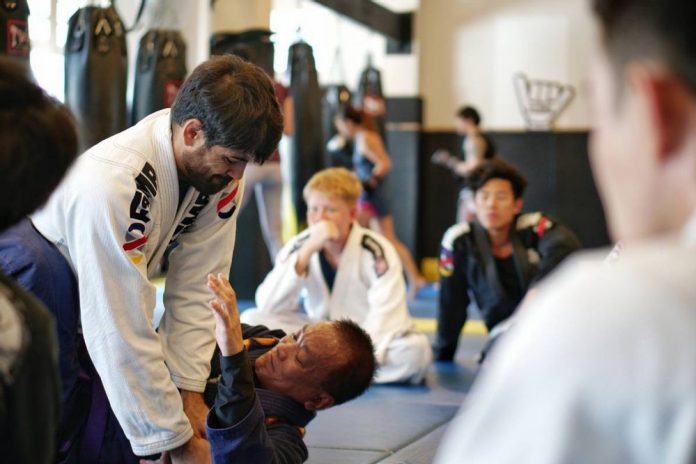
How do you balance everything in life so that you have a happy family, enough money, time for a job, time for BJJ, and enough time to rest? You don’t. Those are just too many variables, for one, and what’s more important, priorities shift all the time so there’s no way you’ll find balance once, and have it work for the rest of your days. It doesn’t really work like that. The good news is that you can figure out a BJJ schedule that will allow you to satisfy your grappling addiction, and leave time for, well, life, as well.
As a BJJ addict of the highest order, I can attest that Jiu-Jitsu doesn’t really leave much time for other things in life. That’s ok for some, but if Jiu-Jitsu is not your job, then, you’re probably in trouble. And that’s before I even start to mention family life and all the other stuff you have to deal with on a daily basis. Just to bring things into perspective, even gym owners and full-time coaches/athletes have other obligations outside the gym they also need to do shopping, do chores, wait in line for administrative duties, etc, etc. It is not like being on the mats is the only thing on their agenda. You just have to fit your BJJ schedule into your day, and not the other way around, if you want to be productive.
Fitting Everything In Your BJJ Schedule?
The one thing people try and do is fit everything into their BJJ schedule. That moment that the “nasty” BJJ bug bites you, everything else you were doing goes down the drain. If you’re not training you’re thinking about training. If you’re not thinking you’re watching BJJ DVDs, YouTube videos, or browsing Jiu-Jitsu Gis and rashguards. Not to mention all those enticing camp offers and the inevitable Joe Rogan Experience podcast which already has more episodes than a man can listen to in a lifetime. Where do you fit in everything else?
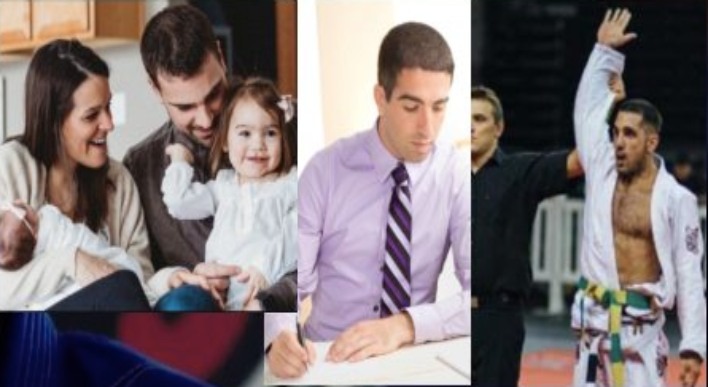 Fitting everything around BJJ is going to prove impossible and it may cost you dearly, even to a point that makes you start to hate Jiu-Jitsu. Blasphemy, I know, but it is how things stand. Instead of trying to make your universe revolve around Jiu-Jitsu, you should focus to insert grappling into your daily life. Think of it as greasing the groove.
“Grease the groove” is a concept used in strength training, one I first heard from Zach Even-esh. The idea is that when you can’t do a full training session you just do whatever you can throughout the day. If you see a pull-up bar you rack up a set or two of pull-ups and move on. Or, you do pushups next to your desk at work. You get the point. Well, you can do all BJJ related stuff outside the gym in a similar manner. Have a moment or two to spare? That’s when you watch your videos. Listen to the latest podcast while grocery shopping. Browse for Gis in the dry cleaners line.
The harder part of balance is training. This, however, is usually fixed in terms of the class schedule so you definitely know when it is coming. And still depending on what your job and other life obligations are, you could be open-minded about things and go to different gyms at different times so that you can do other stuff without BJJ interfering. While BJJ gyms are notorious for creonteism and keeping their “secrets” to themselves, MMA gyms are way more open and will provide you with a great opportunity to do some high-level No-Gi training. Just a thought.
A Moving Puzzle
Despite all of the above, you will need to keep a certain BJJ schedule if you want to progress in the art/sport. Training more than twice a week will require balancing. As I already said, though, that balance is going to be constantly shifting, and you’ll need to adjust stuff on the fly in most cases. Let’s be real, how many times has the perfect day you planned worked out exactly as you expected it? How would you expect weeks and months to go as planned then, particularly when BJJ is a big part of those plans? One injury can, not just derail your training plans and goals, but also interfere with daily life. So drop all the planning.
First of all, more hours in a day is not a possibility, no matter how hard you wish for it. So, you have to make do with what you have. Figure out priorities and make sure you finish them before you go for “leisure-BJJ” activities, the likes of DVDs, and endless chats about how you choked a blue belt out. If you’re training every day, this will be a must, so focus on three things that are priorities FOR THAT DAY. Don’t write them down, just do them, and you can then have a much looser BJJ schedule that will allow you to indulge in the Gentle Art.
Next up, don’t expect things to work out. Just like when you’re caught in mount, you‘ll have to embrace the suffering and discomfort, albeit in daily life instead of on the mats. Things won’t go as planned and you will miss BJJ classes from time to time. Unless you want a Danaher-like life, and you want a family, relationships, going out for a party night, reading a book, and other stuff, BJJ will sometimes have to make way, despite your most meticulous planning. Just remember to “plan” on the go if getting to the mats is really one of your priorities, and you’ll find much more success than with fixed planning.
Making Sacrifices
Something you can bet on is that everything you do in life with dedication and focus will have consequences. In most cases, those are good ones, like getting better at BJJ, perhaps even starting to teach others and stuff like that. It is much the same if you focus on work, or your significant other – you’ll get great things in return on that front. However, consequences that follow are usually never only good or bad – they’re both. So, becoming a full-blown BJJ addict will take away from family time, job opportunities, that trip you’ve been aiming for, and whatever else comes to mind. There’s just so much energy you can spend, and focusing most of it on your BJJ schedule will have effects on other aspects of daily life.
 Understanding that there will be consequences that won’t just be good is crucial for truly making BJJ a part of your life in the long run. It is all about balance once again, and the consequences you’re ready to endure. Is it ok if you spend less time at home as a result of becoming one of the top competitors in your gym? Is extreme progress and that next belt more important than a job promotion you might have coming up? You’ll encounter questions like this regularly when balancing your BJJ schedule and you better be prepared to answer them truthfully.
The bottom line is, you’ll have to make sacrifices if you want balance in your life. Sometimes, it going to be a date night. On another occasion, though it may need to be skipping class, or even a weeks’ worth of them. These are the sacrifices worth making so that you can keep up with your daily and BJJ schedule and make it all work. Daydreaming about BJJ when you’re at work, or a dinner party is a type of sacrifice that’s not worth making since you’re not getting anything positive in return.
In Summary
We all have different goals in life, but trust me, making BJJ the only thing in life is quickly going to turn it into something you don’t quite enjoy as much. Find balance instead, and think about figuring out a BJJ schedule that’s not the sole focus of your day, every day. Do other things if you really want to become better at grappling and actually enjoy it for years to come. Plus, it is a lot more fun going through life with friends, a significant other, family, etc., than alone with your Gis. Consequences and sacrifices, remember?
No Time To Train BJJ? Here Is How To Make Time For Grappling
Knee Cut Pass Defense: Exploring Several Different Options
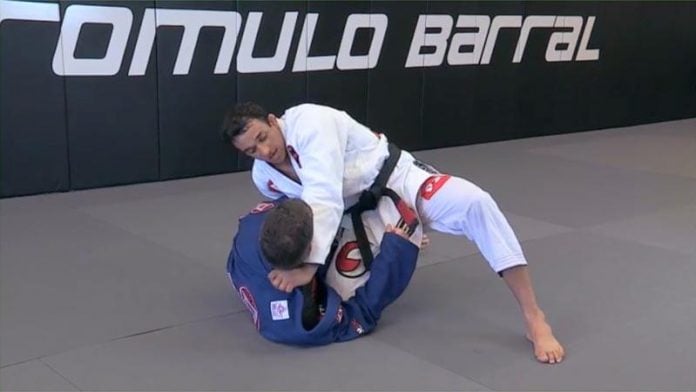
Did you train BJJ today? If so, you most likely rolled, at least a couple of rounds. Now, I can’t tell you everything that happened in those rolls, but I can all but guarantee that in each one of them, either you or your partner ended up attempting, or completing the knee cut pass. It is a pass that is so widespread (and effective) that rarely a roll goes by without someone going for it. With the emergence of the leg lock game, the pass just became even more popular, given that it serves as an entry point into the Inside Senkaku position. But what happens when you’re on the receiving end of the pass? Check out several knee cut pass defense options to test out anyone thinking they can pass your guard.
Knee cut pass defense is not hard, but it is not simple either. There are several “sticking” points in the past, and there’s no guarantee you’ll manage to mount your defense before the top person completes the pass. Luckily, options include defenses that are effective early, in the middle, and in the late stages of the pass. However, there are grip fights and body positing battles that you need to win if you’re to defend the pass. The knee cut is effective because it is hard to stop, but it is far from impossible to prevent.
The Pass Everyone Loves To Use
Why does everyone use the knee cut pass? It works and is uncomfortable for the bottom person. Those are good reasons. However, there’s more to it. Way more. The knee cut pass works because of several things that give it a huge mechanical advantage. However, before I get into those, I want to touch on another subject that makes this pass of widespread – entries. The pass is easily available from a host of different situations, and more importantly, from a bunch of different guards with just slight adjustments. That makes it accessible, on top of effective.
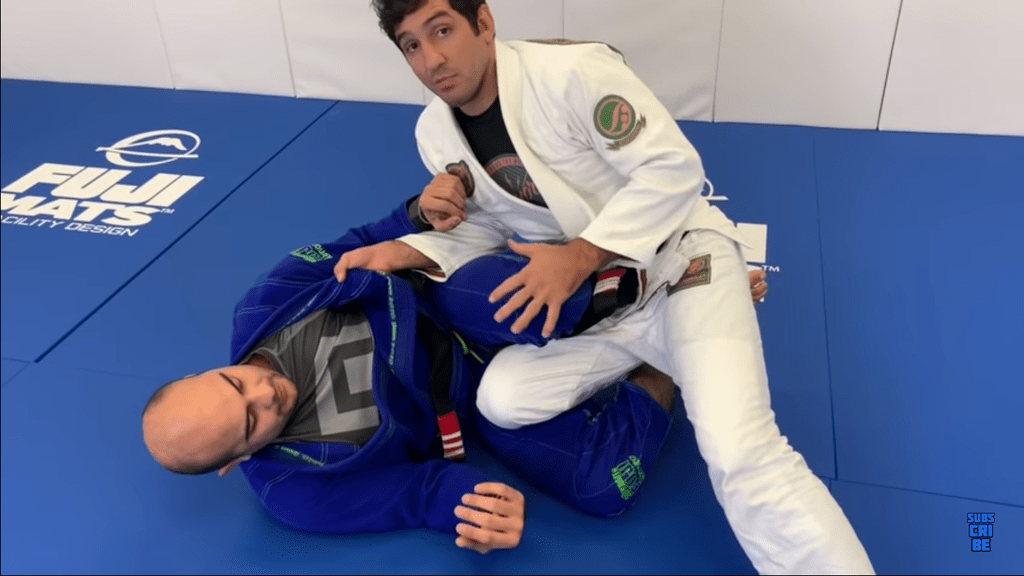 Why does the knee cut pass work? First of all, you have the staple element of the leg. Those that know how to use the pass, can make themselves really heavy on that bottom leg. Another aspect of the pass that is absolutely imperative to its success is getting the far side underhook. In fact, I’ll go as far as claiming that is the most important part of the pass. That far side underhook is the one single thing that makes this pass so difficult to defend against.
Another aspect that makes this pass different from others is the fact that people can hang out midway through it, or even consider other passing options, or leg locks. This provides the knee cut with a moment of stability and makes knee cut pass defense even more challenging. Actually, it makes knee cut pass defense challenging if you’re not aware of all the things I just wrote about, If you know them, though, it is an entirely different ball game.
After all, it wouldn’t be BJJ if we couldn’t turn strengths into weaknesses, right?
Knee Cut Pass Defense Options
How do you mount a successful knee cut pass defense? Win the grip fight. This is absolutely imperative regardless of what technique or concept you’re using to actually defend the pass. When I say grip fight I actually mean a very specific one – the grip fight for the far side underhook. Since it wouldn’t be really wise for you to go for an underhook of your own. All you want is to control the wrist of the opponent’s arm that is supposed to get the underhook. If they can’t get it, you’ll be able to mount different defenses and /or counters at different stages of the knee cut pass.
Secondly, you need to know the weak points of someone that is in the knee cut position. Balance is one thing, weight placement through the staple leg is another, and hip positioning (of the opponent) is the third one. There are more, but these three will be crucial when explaining the knee cut defense options I’m sharing next.
The Hip Escape
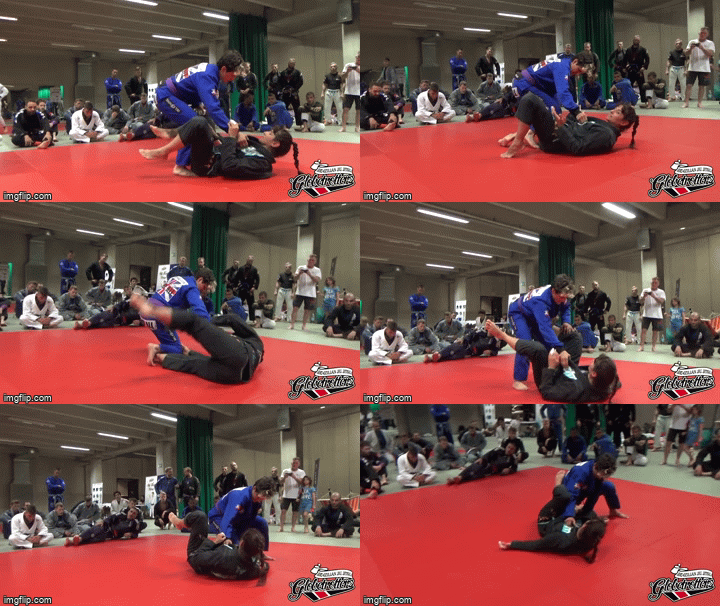 Do you think you can’t use the hip escape against a knee cut pass? Think again. It is actually the perfect motion to get you out of the leg staple with ease. Remember that the leg staple only makes sense if there’s also an underhook. So, getting the wrist grip on the near arm means you’re in control of your inside space and can go for a hip escape.
One thing to remember is to keep a hold of that grip. The hip escape knee cut pass defense is done in the simplest way possible – place the free leg on the ground and shrimp away. Once your knee is free from the staple (you’ll be surprised at how easy this is) you can place the top leg over the arm, or directly on the hip and recover any guar you want.
The RDL Lockdown
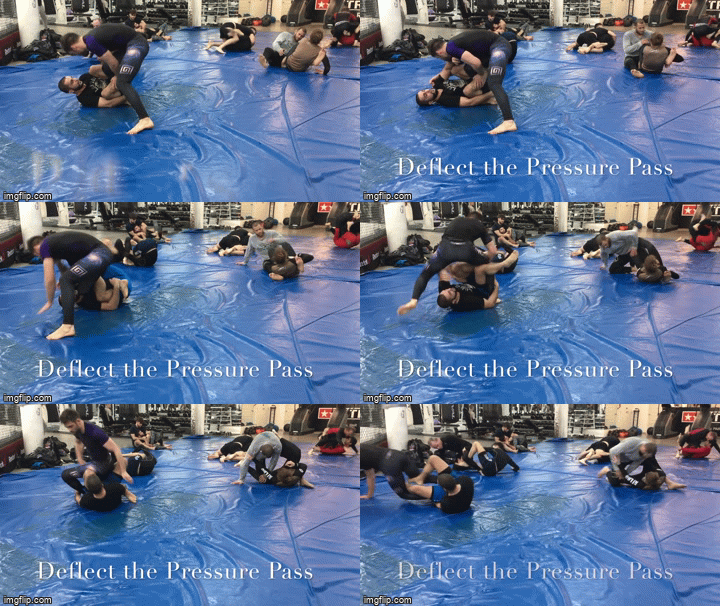 This Firas Zahabi guard hybrid is actually the perfect knee cut pass killer. It is a hybrid from the Reverse De La Riva and completely blocks the pass by utilizing the staple leg weight management weakness. As long as you manage to sneak the bottom arm underneath your knee, there will be no way for the opponent to get to a meaningful knee cut pass position. This is one of those early knee cut pass defense options that don’t just block the pass but also opens up lots of attacking options for you without having to re-guard.
The Bump
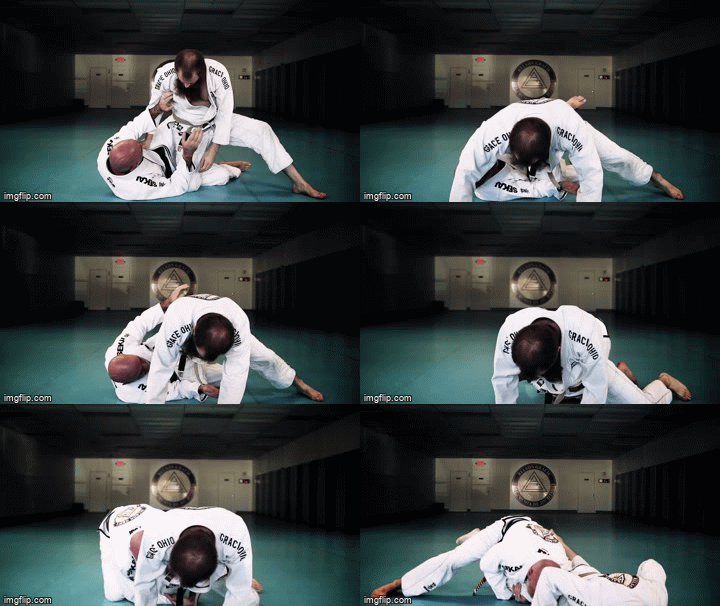 This is one of the simplest knee cut pass defense options and the first one I ever learned. Once again, you should have the wrist grip, but a frame across will also do the trick. If you control the arm, you’ll prevent the opponent from heading into leg locks, when you lower your top leg so that you place your knee behind their but. The weakness you’re exploiting here is balance, and the goal is to bump the opponent forward by hitting them with the knee in the butt. This will take their weight off your leg, so you can get an underhook of your own, on the leg or the torso, and actually sweep immediately or get the back.
The Head Push
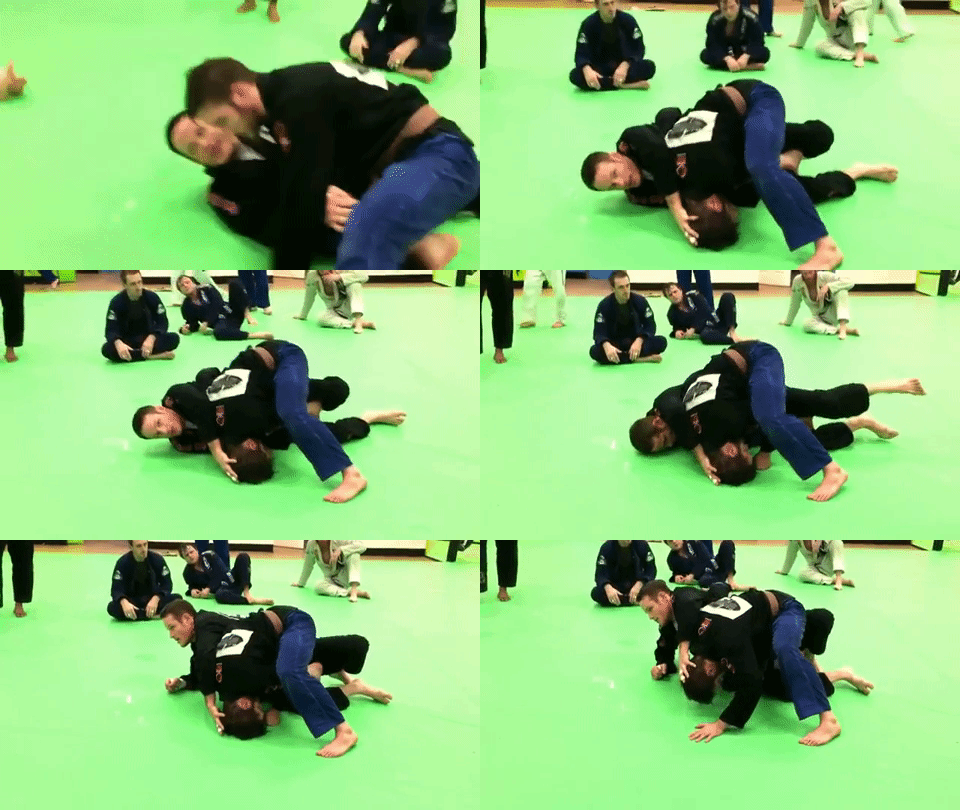 Finally, a very late stage knee cut pass defense that I particularly enjoy doing. This one has to do with the hip positioning of an opponent. Once they go into the pass itself, their hips will sag to the ground, which means their head will come very close to your torso. All you need to do, if you’re late grabbing the arm and feel the opponent sliding through is get a collar tie grip on the head with your top arm and try and touch their forehead to the ground, Even if they’re past your legs, this action will topple them over, giving you top position with ease.
In Summary
Knee cut pass defense is something that you need to practice in order to get good at it. The pass is powerful and with all the Gi grips available in particular it can be difficult to figure out which defense option to use. The good thing is that all these defenses tie into each other since there are defenses for every stage of the pass. Simply put, drill them long enough and you’ll laugh knee cut passes off.
Ezekiel Choke From Guard: Reliable Or a Fairytale Move?
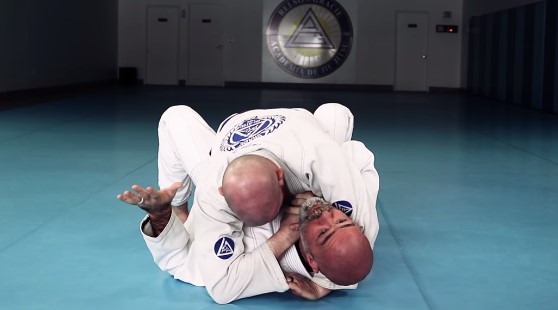
Ezekiel Chokes are sweet ways of finishing people in BJJ. The choke is not just available in different variations but also works in both Gi and No-Gi, despite its reputation as a Gi-only choke. Speaking of variations, you can get an Ezekiel Choke from pretty much anywhere – guard, mount, half guard, side control, and even the back. However, there’s one thing that we need to settle once and for all – can you do an Ezekiel Choke from guard when you’re the one inside the closed guard? This is a question that has been bugging the BJJ world for a while now, so let’s take a look at the evidence to try and find an answer.
The Ezekiel Choke is a choke most people run into at a certain point in time. If you haven’t done it, you’ve certainly tapped to it more than once. Nowadays, it is a staple choke of BJJ, but that wasn’t walkways the case. In fact, the Ezekiel Choke was not a part of the Original BJJ curriculum, but emerged somewhat later, as a result of a weird series of events. The most intriguing question, though is whether you can do an Ezekiel Choke from the guard? In this instance “from guard” means when you’re in someone’s closed guard, rather than you being the person on the bottom.
BJJ Fairytales: Choking Someone Form Inside The Closed Guard
Back in my early days, we had a joke in our club. At least I thought it was a joke as it never materialized, but who knows. My coach used to say that whoever attempted a choke from inside someone’s guard will be thrown out of that class. Moreover, he said that whoever tapped to a choke from a person they’re holding in closed guard, will be banned from the club forever. Neither happened, so I have this down as a joke, given the alternative.
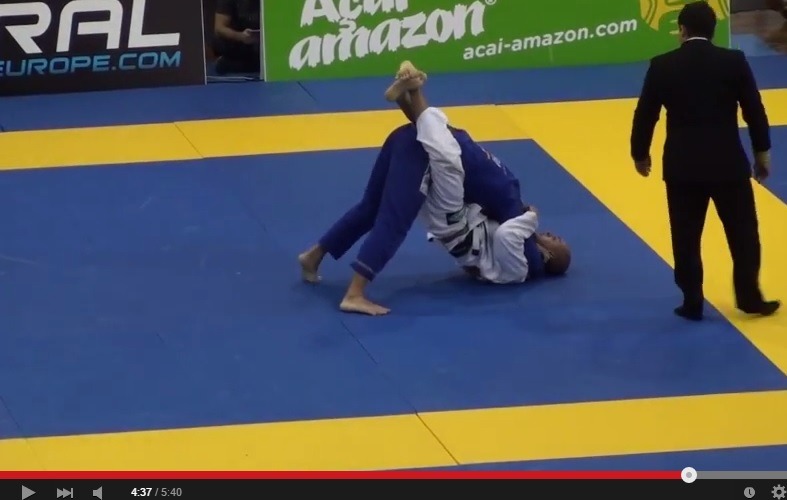 Choking someone from inside their guard seems like a good option until you give it a try. First of all, you have the person’s hips in between you two. That means they control the distance. Second. In order to establish any choking configuration (apart from the Amassa Pao), you need to make a sacrifice. You must either extend your arms to reach the neck or break your posture and lie on top of the bottom person to gain access to the neck. In both cases, the guard is designed to thrive. So, how do people come up with the idea of choking someone from inside the guard?
I have no idea where it all came from, but the Ezekiel Choke actually has a part to play. In fact, the choke was originally executed from inside someone’s guard for the very first time, although it is unclear how skillful that bottom person was. Since I am one of those skeptical overthinkers, that don’t really adhere to BJJ dogmas and absolutes which state you should “always” or “never” do something, I won’t say you can’t do an Ezekiel Choke from guard. However, I do think it is a hard option and one that comes with many risks and not nearly enough rewards.
The Ezekiel Choke History
The man behind the Ezekiel Choke is a Brazilian Judoka named Ezequiel Paraguassú. In all honesty, he is not the creator of the choke, which has existed in Judo for ages but is the first person to pull it off in Brazilian Jiu-Jitsu, and hence, got credit for it. When Paraguassú was preparing for the Olympics in Judo he started training BJJ at Carlson Gracie’s to improve his groundwork. Caught in the guards of people, he decided to go back to an old Judo technique called Sode Guruma Jime to try and pry the guard open. That old technique was the original version of the Ezekiel choke from guard.
The Ezekiel proved to be highly effective in the early 1990s. Most people played a closed guard game and there weren’t many fancy spinning and inverting options from the bottom. That meant that a quickly applied Ezekiel Choke from guard means you could get a tap even when inside the closed guard. Later on, it faded in its efficiency from inside the guard, but new variations emerged, like No-Gi and arm-in Ezekiels that are extremely effective.
Paraguassú actually had no idea the choke took off, as he moved to Europe, and only found out the submission bore his name and was regularly used almost two decades after he terrorized Carlos Gracie grapplers with it.
Will the Ezekiel Choke From Guard Work (And Why)?
How do you execute the Ezekiel Choke from the guard? Well, there are a few instances, but your best bet is actually trying to be heavy on your opponent while you’re setting up the choke. This means throwing your weight on top of them, which does come with risks. Widespread legs will give you a solid base and a power source. The arm around the head goes in first, giving you an anchor point. If you get that far before begin swept or submitted you’ll pull off the Ezekiel Choke from guard. The battle s for the choking arm comes next, but as long as you keep the base and pressure, you’ll do fine.
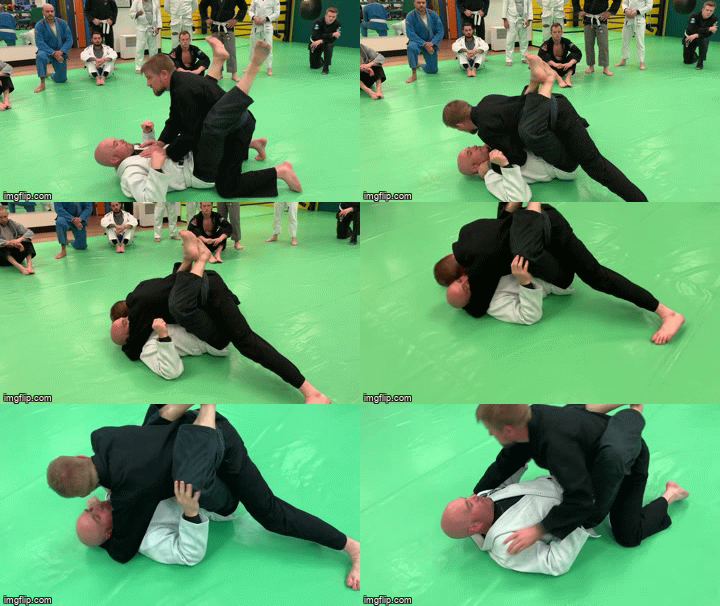 The finish is like every Ezekiel Choke, with downward pressure on the windpipe. During all times, the idea is to keep your torso over the opponent’s torso, in a downward-dog-like position, but with legs spread really wide from the base.
In terms of risks, the moment you shift your weight forward, you’re in danger of flying over and ending up at the bottom of the mount. While you could finish an Ezekiel even from the bottom mount, that is tactically not a smart move. Another thing to consider is that both arms of your opponent are free. That means they can remove your anchor arm and use it to arm drag to your back, transition into arm locks, or hunt for guillotines, loop chokes, or even an Ezekiel of their own. Once again, it is all about the tradeoff and whether you’re willing to risk it.
Final Thoughts
Personally, I stay away from the Ezekiel Choke from guard. Perhaps in another phase of my BJJ journey, I’ll turn to it and really try and make it work. For now, though, choking people from inside their guard is not high on my list of priorities. I already have other unorthodox things I do from the closed guard. However, if you’re interested in really testing out how effective the Ezekiel Choke can be, make sure you do a lot of testing, including all belt levels and body types, before you draw a final conclusion.
Managing BJJ Pain And Chronic Inflammation For Grapplers
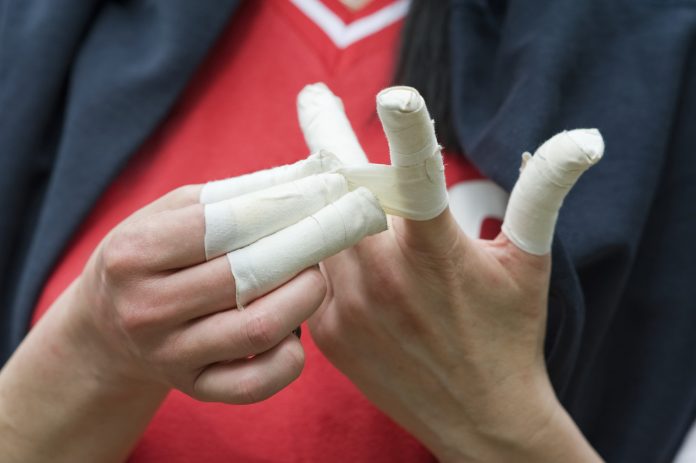
The life of a grappler is a life in pain. Joints ache, there are weird muscle spasms, knees lock up, ears are all twisted and there’s at least one bruise per week somewhere on the face (not to mention the rest of the body). But life doesn’t have to be that way. BJJ pain is something that can be managed, as long as you understand how inflammation, especially of the chronic variety, works. Grapplers don’t have to live in pain, even if they train hard, nor does performance have to suffer on the account of inflammation.
Choric inflammation is a much more serious thing than just the occasional BJJ pain we’re all used to coping with. Sometimes inflammation can even be hard to detect, which does not mean it is not present or influencing performance and everyday life. Grapples usually suffer from inflammation, chronic or otherwise, in different parts of their bodies. The effects, though, are not felt instantly, making inflammation a silent but major factor in the decline of performance, and even perhaps health.
What Is The Deal With Inflammation And Grapplers?
Why are grapplers so prone to inflammation? After all, there are plenty of other sports out there, and in some of them, people train a lot harder than we do in BJJ. What makes grappling so “open” and prone to inflammation is h type of training we do. During BJJ training sessions, and especially rolls, we move and use our bodies in ways that are completely unpredictable and impossible to completely prepare for. While our bodies abide at the time, they do have a price to pay afterward, in the form of local (or even general) inflammation.
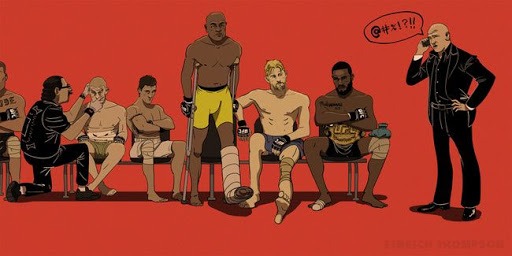 But it is not just the training. Let’s face it unless you’re a professional athlete of the highest caliber, (and even then) you’re probably not really paying close attention to your nutrition, recovery training, and/or sleep quality. On top of everything, despite being the main culprit behind BJJ pain, physical training is not the only cause of inflammation. Lots of stress, trauma, and going into burnout (physical and mental) all have their contribution to chronic inflammation in grapplers.
Inflammation is not all bad though. It serves a very important purpose in our organisms – helps heal injured tissues. Inflammation is a natural response of our body, enabling blood to arrive at the site of an injury and help with healing. It also has a bad side to it, especially in cases of chronic inflammation caused by repetitive stress. A decline in performance usually accompanies it, along with various amounts of BJJ pain in the case of grapplers. If left unchecked it can lead to health issues like metabolic syndrome or cause other types of disturbances.
Managing BJJ Pain From Chronic Inflammation
How do you manage BJJ pain and deal with chronic inflammation? Believe it or not, it just takes a bit of dedication, some planning, and lots of common sense. Inflammation is not rocket science – all grapplers have it. Allowing it to turn into a chronic thing is what most people get wrong. If you establish a routine based on proper sleep, a few tweaks of your nutrition, a simple recovery protocol, and perhaps, a different approach to training or just rolling, you’ll be well on your way to lead a life free of BJJ pain and the drawbacks of constant inflammation.
R&R
For grapplers, R&R means Rest and Recovery, rather than Rest and Recreation. The idea for recreation of most grapples is either doing more BJJ, or doing some other physical activity that doesn’t really help with inflammation. In that sense, rest is key, way more than doing recovery sessions of any variety. Our bodies will take care of anything going haywire, but we need to let them do their thin. How? Easy. Get enough sleep, aiming for at least 6 and preferably 8 hours. Do so in a quiet place, with no electronics, and minimal sounds. Moreover, do try and do a form of restricted eating, not eating anything 5-6 house before you go to bed so that your body can actually focus on repairing stuff, rather than digesting a burger and fries throughout the night.
When BJJ pain is more prominent, you can turn towards recovery to aid your rest. Her you can use some of the basic stuff, like doing Yoga, or even exploring Yoga Nidra. Other options at your disposal are SMR release or foam rolling as you may know it. Stretching also helps, but only when done correctly and with the intention of releasing tightness, so that pains subside and your body can then take care of the inflammation.
Oh, and do take at least two days off training during the week. Non-negotiable!
Food And Supplements
Nutrition is key for grapplers, especially those training hard and/or competing. However, it is hard to dial it in, especially with younger people that like to socialize and go out. The good news is, you won’t need to do some crazy diet in order to maximize how your body deals with inflammation and minimize BJJ pain. All you need is including some foods that lower inflammation and stacking up on a supplement or two.
Food-wise, lower processed carb intake, red meat, bad fats, and the likes. But you already knew that. Also, try to eat more tomatoes, green leafy vegetables, nuts, fish, and berries. On the supplements front, all you need is some good quality vitamins and a solid fish oil supplement. Stuff like curcumin can also be helpful but there’s still more research into it that needs to be done.
Changing Your Approach
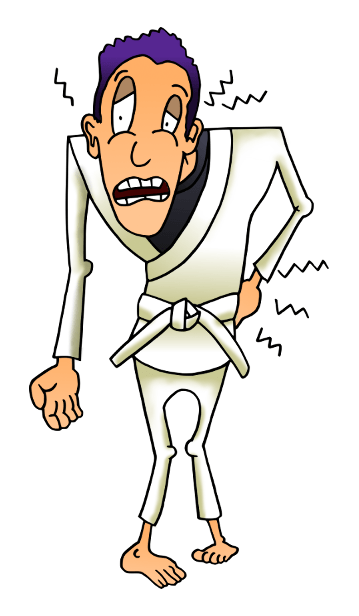 Finally, consider the way you train as well. Three’s no point in doing any of the above if you’re just going to run your body into the ground every time you’re on the mats. Chose a grappling style that will fit your age, goals, injuries, and lifestyle, so that you can be sure inflammation does not affect your performance. Otherwise, life with BJJ pain that gets progressively worse is what is in store for you.
Wrap Up
BJJ pain from injuries and fatigue is always going to be part of grappling. However, enduring those deep pains that are a result of overuse and chronic inflammation is not just needless, but counterproductive to performance as well. The solutions are easy, and I tried to make them even easier and simpler, given that grapples tend to be a stubborn bunch of folks. Let’s see if it works.
BJJ Staph Infection: Everything You Need To Know
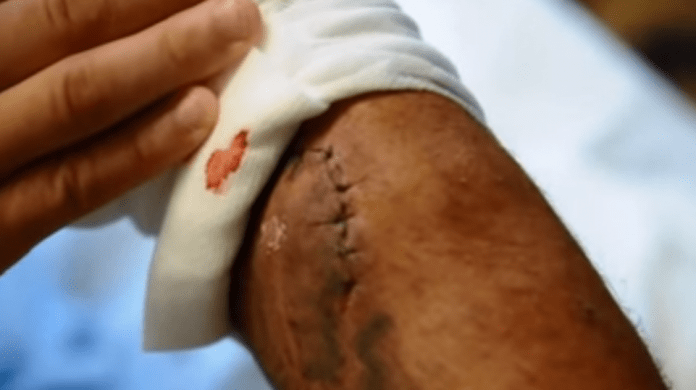
When it comes to skin infections and Brazilian Jiu-Jitsu, often articles start with the disclaimer “I’m not a doctor.” Well I am a doctor, and the subject for today is BJJ staph infections, so focus on what I’m about to write, as it may help spare you a lot of pus and trouble. Disguised? Good. A staph infection is not a fun thing to deal with, and despite the fact that it won’t cause anything serious (unless left untreated), it should not be taken lightly. Luckily, in most cases, staph is easily treatable, but it is also easily transmissible so prevention is way more important than treatment.
Gyms, especially martial arts gyms are usually hubs for different microorganisms that cause skin infections. Whether it is fungi, bacteria, or the odd virus, you can expect them to lurk in the dark corners in and around the mats of most gyms. The higher the frequency of people in a day, the higher the risk is of that gym becoming a breeding ground for unwanted germs. Grappling martial arts, like BJJ, wrestling, Sambo, etc have an even greater potential given the close contact and the amounts of moisture in the air during a usual training session. Out of all the possibilities, a BJJ staph infection might be the most common one, but still, it is something requiring immediate medical attention.
What Is Staph?
Staph is how people usually refer to a bacterial infection, caused by members of the Staphylococcus species. In terms of the bacteria that cause most of the “gym staph” cases, it is Staphylococcus aureus that causes the infection although you might run directly into the much nastier version of MRSA or have a “regular” staph infection turn into MRSA as a result of erroneous treatment.
 Since it is a skin infection, the bacteria usually targets the layers of the skin, but it can go deeper as well. If it does, it runs into fasciitis and that’s when things get serious because it reaches the muscles, and might even get to the bones. The bacteria is common among people, with up to 25% of people carrying it around with no symptoms or ill-effects. It is opportunistic in that sense, only developing an infection when circumstances are right.
Symptoms of a BJJ staph infection vary a lot, but some are quite specific, especially if you don’t react immediately. Usually, one of the first things you’ll notice is a rash that might, or might not be itchy. The rash usually then develops into a pimple-like structure and is easily confused with acne. It may turn into a sore as well if the pimple bursts on its own. There’s usually accompanying redness and inflammation around it and it won’t respond to acne medication. Another usual location for the development of staph is around cuts on the skin. A fever might also be one of the early symptoms and is definitely one of the later stages manifestations.
Dealing With Staph Infections
There are plenty of ways to treat a BJJ staph infection, but the key is actually going to a medical professional that you get the diagnosis. Looking for over the counter creams and trying to self-medicate it can help slightly, make no impact at all, or cause the bacteria to become resistant and turn into an MRSA/VRSA version which can end up being life-threatening.
One thing that a doctor will surely prescribe is antibiotics. Depending on the location, severity, symptoms, and some tests, that include blood and urine samples, those might just be topical antibiotics. However, it is more likely that you’ll end up with a course of oral antibiotics that you have to abide by completely. One way to make a staph infection chronic and or worse is cutting antibiotics a few days in, without running the course. It is simple – just listen to what your doctor says.
In certain cases where abscesses have formed (pus-filled “chambers”), there might be a need for surgical intervention and you might end up with a drain placed in the infection spot until everything subsides.
One thing nobody likes to see happen is MRSA, which stands for Мethicillin-Resistant Staphylococcus Aureus. It doesn’t matter what that means medically, if something is resistant it is a bad thing. This “hardcore” version of staph does not respond to most usual antibiotics and can prove to be really troublesome to cure. There are plenty of factors that influence the emergence of MRSA, but not acting early and not being responsible with treatment certainly do count. A lot.
Preventing BJJ Staph Infection
Prevention is nothing you haven’t heard before. It all comes down to personal hygiene, clean gear, gym hygiene protocols, and keeping an eye out when you roll. What this final thing means is that you shouldn’t train with people that have a weird pimple, or an insect bite. In fact, you shouldn’t even feel sorry or uncomfortable for declining them – it is your health that’s on the line, after all, even if it is just a pimple.
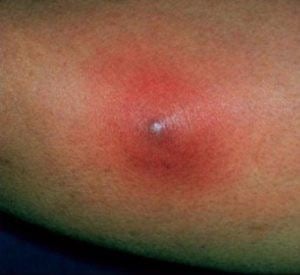 To begin with, make sure your body is clean before training. If you can. It would be great to shower before coming to train BJJ. The same holds true for gear – a fresh Gi, clean rashguard and a washed belt for every class is a must. Also, get in the habit of bringing a towel, but keep it to yourself and don’t share it with training partners. Finally, use an antibacterial/antifungal soap when you wash yourself, especially after training.
Academy hygiene is also huge, with regular disinfection at the end of the day mandatory to deal with fungi like Ringworm and bacteria like Staph. Having people aware of what a BJJ staph infection is, and not allowing anyone to train with symptoms is also very important. In fact, people should have enough information on staph to talk to an instructor/ gym owner if they suspect it, and stay away from the gym until it clears up. Immunity boosting supplements, like vitamins and the likes can also be helpful in fighting off potential staph infections.
Final Words
Just like there’s no acting like a tough guy with chokes, there’s no acting tough with a BJJ staph infection. If you suspect you have one, go to a doctor, and do so immediately! The infection can become potentially limb or even life-threatening, and it is unwise to let it get that far when treatments are readily available, particularly in the early stages. Stay clean, pick a clean gym for yourself, and don’t ignore anything on your skin that’s out of the ordinary.
Why Wearing A BJJ Rashguard Under The Gi in BJJ Is Important
The Modern 50/50 Guard Patrick Gaudio DVD Review
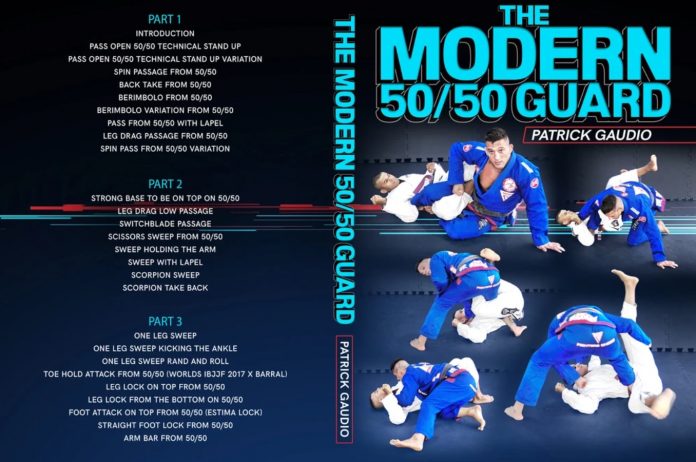
In the BJJ World, the realm of open guards is probably now beyond anyone’s ability to comprehend. There are just too many open guards, to begin with, let alone exploring all the variations and combinations people come up with. Still, some open guards tend to withstand the test of time. Although the 50/50 guard is probably not considered to be one of them it has been around for more than a decade now, perhaps closer to two. The Modern 50/50 Guard Patri9ck Gaudio DVD is BJJ instructional that offers a fresh perspective on using this polarizing guard with the Gi.
ON SALE HERE:
Patrick Gaudio – The Modern 50/50 Guard
Guards come and go in Jiu-Jitsu. The moment someone comes up with a pass that completely deconstructs the guard’s mechanics, you can expect that guard to fade out. Some open guard, though, not just survive such times, but flourish with the help of adjustments and variations. The 50/50 guard is one of those that has already been through several stages of evolution, before reaching its latest version. And who better to explain it, than an open guard expert like Gauido. The Modern 50/50 Guard Patrick Gauido DVD is a real must for any Gi competitor out there.
Patrick Gaudio – A BJJ Champion By Birth
Who exactly is Patrick Gauido? Well, if you’ve been carefully watching the BJJ competition scene, you probably don’t need to ask that question. Gaudio is a GF Team representative and one of the highest level grapplers of today. Proficient both with the Gi and without it, Gaudio has been a black belt since 2014. That si fairly fresh, by BJJ standards, but not quite newbie status. Gaudio has some miles on his black belts and some huge wins along with them.
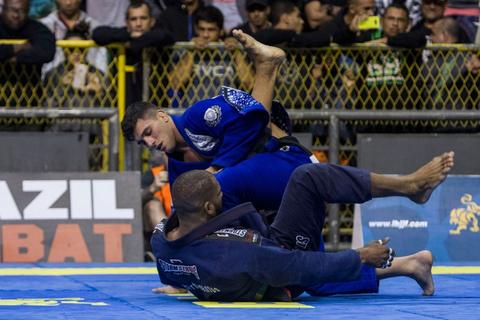 Gauido actually had his championship status determined right from birth. His father, who “happens” to be his main coach, is Fabiano Gaudio, one of the first coaches in Brazil who went about the way of helping poor kids train via one of the BJJ projects. Patrick started training at the Projeto Existe Uma Esperança at the age of 4, along with people like Davi Ramos and Fabiana Borges. He was a natural, quickly getting noticed, and eventually moving to the more competition-oriented GF Team when he relocated to Espirito Santo.
Patrick spent just 7 months at brown belt, winning the IBJJF and Abu Dhabi Pro world titles in the period. Along the way, he has beaten names like Erberth Santos, Felipe Andrew, Tim Spriggs, Keenan Cornelius, and others. His strongest suit is his open guard, giving even more credit to The Modern 50/50 Guard Patrick Gaudio DVD.
The Evolution Of The 50/50 Guard
As it happens, the 50/50 guard came about by accident, when Sauolo Ribeiro entangled into it during a match with Roleata in 1997. It was only named and developed as a guard position later, when the Mendes brothers somehow came across the position. They used it to establish a lapel and Gi heavy game, that opened up routes to their favorite inverting attacks. They used the guard to sweep or play the advantages game and really made the position stand out, albeit notoriously.
Later on, the 50/50 got into the second phase of its evolution when leg locks burst onto the scene. While Ryan hall was one to always swear by the 50/50 guard’s usefulness in leg locks, it was Cavaca and his students that brought it to the Gi BJJ circuit in terms of leg locks.
Later on, Keenan managed to figure out armbars from the 50/50 guard, as well as an intricate system of lapels to take the guard into a new direction. Now it is time for a brand new approach at the 50/50, once again from a Gi BJJ perspective with The Modern 50/50 Guard Patrick Gaudio DVD.
A Patrick Gaudio DVD Review: The Modern 50/50 Guard
What can you expect from this Patrick Gaudio DVD? Well, for one it is a Gi only DVD, which means you can bet there’s a lot of grip combinations and tactical information regarding the 50/50 guard. There are three volumes to this set and each focuses on different aspects of what Gaudio calls The Modern 50/50 Guard. The first volume covers passing and Berimbolos from the 50/50. Sweeps start to appear halfway through the second volume and completely dominate the third. That means that Gaudio did a comprehensive study of the potion, offering both top and bottom solutions form the guard.
Part 1
A short introduction, and then straight to business. Passing 50/50 is a tricky business, given that you’ll most likely be starting off your butt, which is not a usual passing position. that’s why Gaudio offers the technical stand up as a great way of establishing a solid passing base. Options to pass include spinning, passing with the lapel, and going into leg drags.
A very cool aspect of The Modern 50/50 Guard Patrick Gaudio DVD is that he covers passing directly to the back. he is also not shy at introducing the Berimbolo when you’re the top person in the 50/50, which is quite innovative.
Part 2
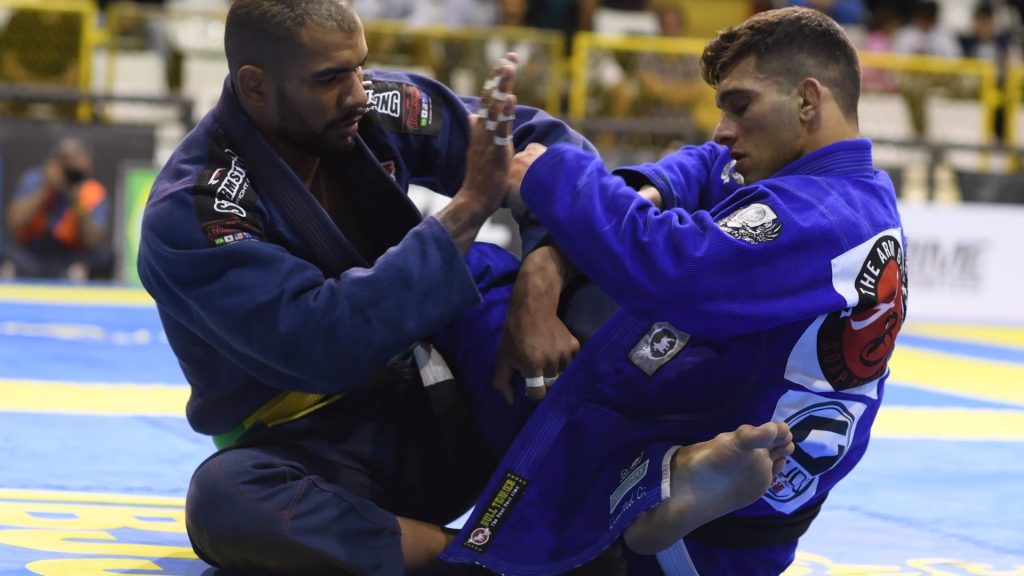 The second portion of the instructional covers yet more passes, at least in the first few chapters. More attention to building your base, and a rally cool pass Patrick dubbs “the switchblade pass” stand out here.
Somewhere around the halfway point of this volume, Gaudio transitions into sweeps from the 50/50 guard. A scissor sweep variation opens up the account, followed by the scorpion sweep and back take which are really interesting options. There’s also a chapter here on sweeping with the lapels, for those that just love to grip that way.
Part 3
The final part of The Modern 50/50 Guard Patrick Gaudio DVD continues with several more sweeping options. The one leg sweep is the centerpiece, coming in a few different variations. Keep an eye out for the Rand And Roll one leg sweep variation.
Finally, completely balancing the modern aspect of the guard, Gaudio demonstrates several leg locking options. They include toe holds, Estima locks, and ankle locks. It is also worth mentioning that Patrick shares leg lock setups from both top and bottom 50/50. Wrapping up this BJJ DVD is a chapter on setting up and finishing the armbar from the 50/50 guard.
Closing Thoughts
The Modern 50/50 Guard is not a DVD for everyone. It is aimed at those that want to develop overall prowess with one of the best competitive moves in BJJ, as well as knowing how to deal with it when they face it on the mats. It is a true competitors’ blueprint of the modern 50/50, aimed at Gi grapplers and containing nothing but legal and approved techniques. This Patrick Gaudio DVD really does bring every aspect of the 50/50 guard together.
ON SALE HERE:
Patrick Gaudio – The Modern 50/50 Guard
Three Ways To Finish Every Takedown In BJJ
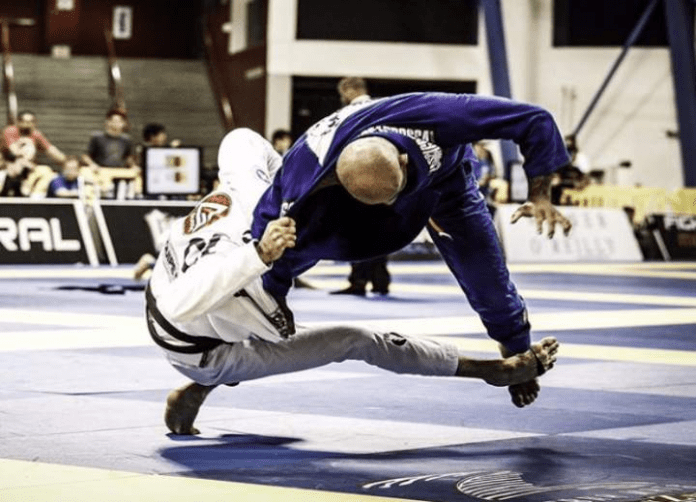
What is the hardest part of BJJ? Finishing submissions? Passing the guard? Holding mount? If I had to wager in, given my personal experience in training and teaching, I’d most definitely choose takedowns. In particular, I’d choose to finish a takedown someone has already set up. What is the secret behind getting a takedown in BJJ? It is pretty much the same as with any other terminal move, like a guard pass, sweep, or a submission: once you start, you need to see it through to the end. The idea with takedowns, since we spend only a fraction of the time working on them, is not to finish every takedown in an original manner, but have ways of finishing that apply to all of them.
Getting a takedown in BJJ is really a special thing. In a sport where you have the option to pull guard, not many opt for the brave version of events, which is standing on the feet and battling for a takedown. It is probably the most chaotic part of Brazilian Jiu-Jitsu, and with the sheer number of techniques borrowed from wrestling, Sambo, and Judo, things usually get overly complicated. Throw in the fact that you can’t just apply any takedown from other grappling martial arts in a BJJ setting, because of counters, submissions, and rulesets, and you have chaos. How do you make turn this chaos into a way that will help you finish any takedown in BJJ?
What Is The Best Takedown In BJJ?
The simplest answer is usually the correct one, according to a philosophy called “Occam’s Razor.” In BJJ, I usually rephrase this so that it reads “the dumbest answer is usually the best option”. And it really is like that in practice. What is the best takedown in BJJ? It is the one that will work. As simple (dumb) as that.
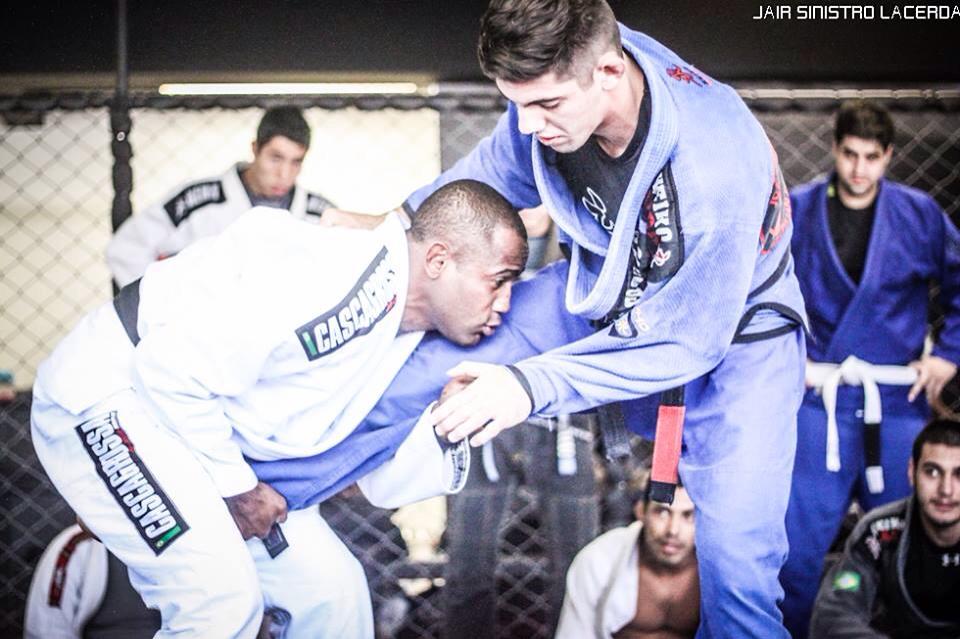 As long as you can take someone down, you have the best move right there. It may not be the move that is best for your training partner though, and that’s perfectly all right. BJJ is not intended to be a “one size fits all” type of thing. That’s why people struggle with making “high percentage moves” work. Sure, there is a mechanical advantage to certain moves in comparison to others. That doesn’t mean that there’s only one way of finishing them, though, nor that just one way will work for everyone. This is especially true for terminal moves, like takedowns and submissions.
Instead of looking around for obscure takedowns or trying to fit the highest percentage move into your game despite it not fitting won’t get you far. In fact, it’ll just encourage you to keep being/become a guard puller. What you should focus on instead is making the takedowns you can already get to work for you against different types of opponents, and in both Gi and No-Gi. There aren’t plenty of variables here, it is all about adjusting the ways in which you actually finish a takedown you’ve already set up. In other words, there’s more than one way to finish a single leg, and one of them is bound to work.
Three Ways To Finish Every BJJ Takedown
It is simple – when you are struggling with things, turn to the basics. Fundamental techniques will always get you a result. However, looking into fundamental concepts that make those techniques work in the first place, will actually make turn them into those high percentage moves you’re so desperately looking for. When it comes to takedowns, the furthest you can go back is wrestling. Taking a look at what makes wrestling moves successful is a great way of actually finishing a takedown in BJJ.
To that extent, there are three ways you can finish a takedown in wrestling. In fact, there are far more than three, but these are the absolute best options that are easily applicable to any takedown you decide to hunt for. Whether it is a double leg, single-leg, body lock, high crotch, or anything else, you have three different options of getting the fight to the ground. The best part about it is that you can flow from one finish into another and keep them coming in an endless chain as long as you can maintain the takedown position.
Lifting
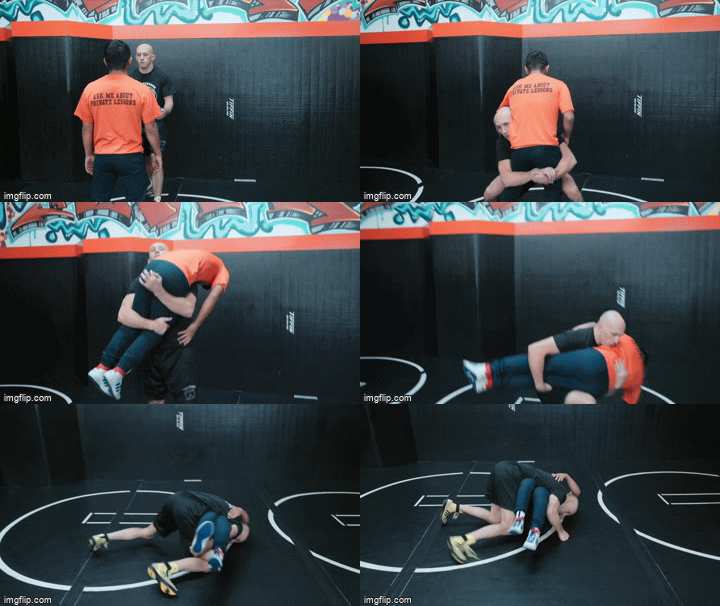 The name actually says it all: Takedown. It means you take someone and put them to the ground. Otherwise, it would be called a pushdown. This is a gross oversimplification, but a very necessary one. If you have a double leg takedown, for example, you don’t just have to look to trip your opponent. Instead, you can opt to lift them in the air, and then send them crashing down. And no, it won’t require any strength at all.
In order to complete the double leg takedown in BJJ with a lifting finish, you just need to lower your center of gravity, so that it is placed below that of your opponents. At that moment, you just stand up and you’ll pick them off the ground with no effort at all. For the finish, swing both legs to one side of your body. You’ll get both the takedown, and a few applause from the crowd. The same method applies to other takedowns like the single leg, or a high crotch.
Spinning
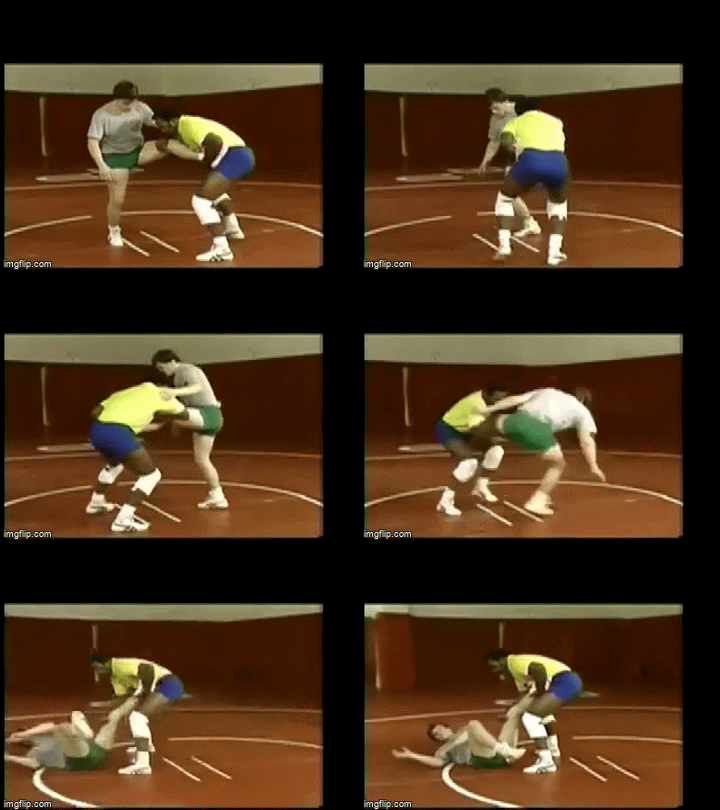 Spinning or the spiral as they refer to it in wrestling is something we’re used to seeing when finishing a single leg takedown. However, there’s a method to the madness, and it takes more than just turning in a circle to get someone down with a spinning finish. The holy trinity here is keeping the shoulder stuck to their belt, having pristine posture, and keeping your elbows close to your ribs. Also, when you spiral/spin, your butt needs to go to the ground, rather than your head. What’s best is that you can use the same method to finish a rear body lock takedown, or a double leg as well.
Blocking
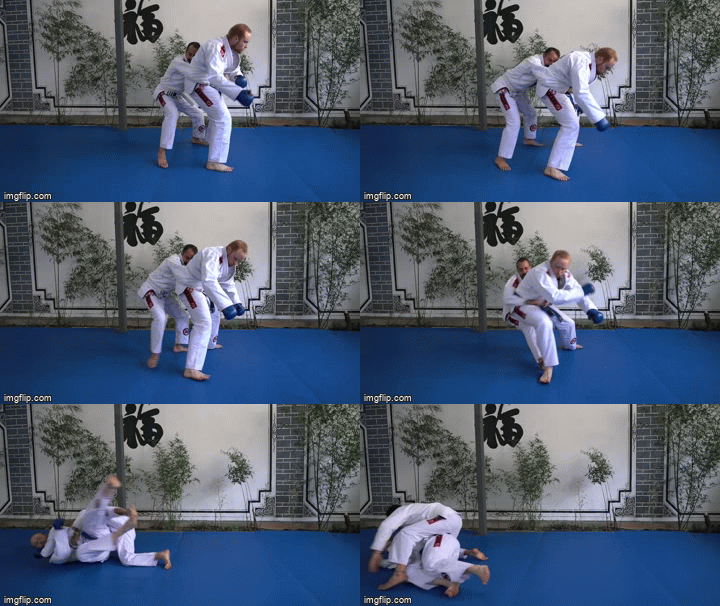 Blocking is the simplest method of finishing takedowns. It is also the method we usually try to use with most takedowns we attempt, apart from the single leg. However, it needs fixing, since we’re looking to trip up people, rather than use the blocking finish to actually complete a takedown in BJJ. How does it work? Well, in a double leg, you already have it because of the grips. Your arm is blocking the leg of an opponent to the side. Once you identify the direction of the block, the rest is easy – take the butt of the opponent over the block. Boom, you have a successful takedown in BJJ. Single legs? No problem, just place the rear arm’s palm on the front of the standing leg and you have a block. You see where I’m going with this.
Conclusion
You can use lifting, spinning, and blocking to finish just about any takedown you attempt in Jiu-Jitsu. As long as you’ve got the grip fighting, entries, and takedown position right, the hardest part – finishing, is actually easy if you just juggle between these three options. Apart from working for every takedown in BJJ, they also work as a chain, or even in combination to ensure you get people down. The best part is that you don’t have to remember a bunch of different finishes for every takedown – just give any or all of the three a try, and you’ll get your points and top position!
How To Be Safe In BJJ During Hard Rolls On Open Mats
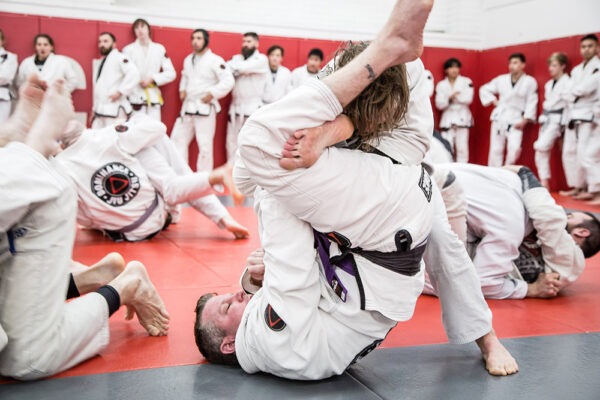
What is the number one thing that annoys you on the Jiu-Jitsu mats? I’ll help, it has to do with open mats and rolling. Let me help you even more – it has to do with lots of people rolling on the mats at the same time. Yeah, you got it – the rolling collisions. If there’s one thing that annoys people when they’re rolling are a couple of other grapplers, especially if they’re of the heavier variety, slamming into them like a freight train. Speaking from experience, this is not fun. However, it goes beyond just fun or annoying, because lapses in attention like this can cause serious injuries to people. How to be safe in BJJ, then? Work on developing mat awareness.
Often times rolling is so encompassing and requires so much of our attention that we completely ignore everything happening outside the grappling exchange we’re into at the moment. I get that. However, others do exist on the mats as well, and the thing is, they’re also deep into grappling exchanges of their own. That does seem like a recipe for disaster. All it takes for one pair of grapplers on an open mat to “lose themselves” and they could potentially injure plenty of the others on the mats. While we might think mat awareness is just common sense, once you’re deep in a roll you’re not really having much to do with common sense. However, thinking about how to be safe in BJJ, for yourself and others, has to be in the back of our minds every time we roll.
You’re Not Alone On the Mat
Open mats are the classes most people look forward to. Actually, they’re the classes everyone looks forward to. However, they also happen to be the most chaotic, injury-ridden training sessions, especially when you’re training among competitors. It is one thing to have injuries that just come with the territory of training a contact combat sport. It is a completely different thing to get injured by people that act as if they’re the only ones on the mats while you’re minding your own roll.
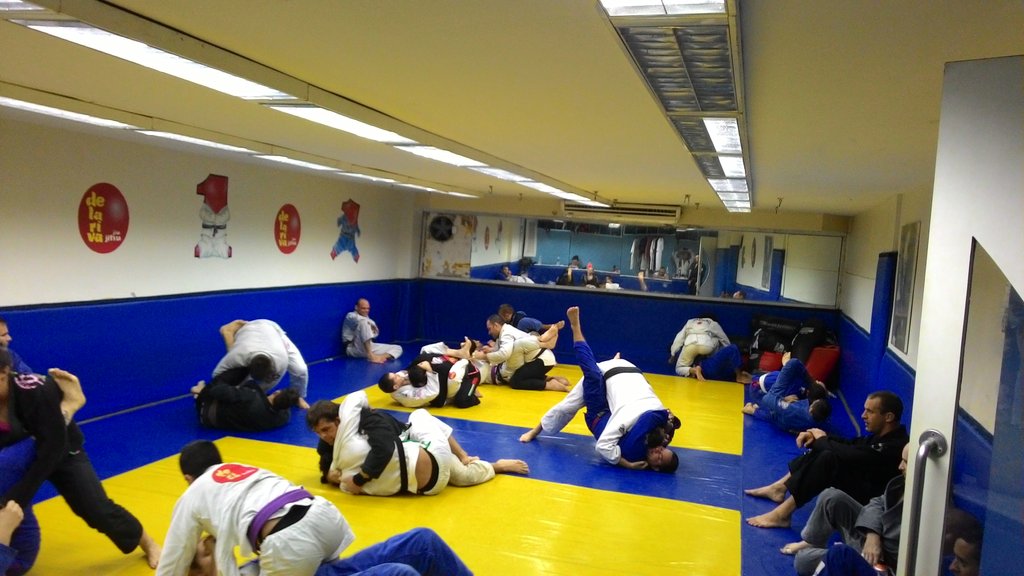 I already said that people sometimes get so deep in a roll, they forget about everything going on around them. Moreover, when that roll is not a “chess match” but rather one of those scrambly affairs that reminds of two cats fighting each other, the dangers of injuring someone in the vicinity is really high. Now imagine if another pair of people acting in the same way. Or, even worse, if everyone just rolled like there’s nobody else and no tomorrow. Suddenly open mat sessions don’t seem like such an attractive thing any longer, do they?
Having mat awareness and common sense when rolling is really the staple of how to be safe in BJJ. A lot of the injuries some highest-level athletes have sustained have been when others bumped/crashed/fell onto them. Both GSP and Dominic Cruz suffered knee ligament tears in that manner during wrestling training. It is not hard to see how really bad injuries can occur when mat awareness is not high on our list of priorities. Unless you’re in a competition, where there’s nobody else on the mats, you have to consider that you’re not alone. Even in competition, innocent photographers by the mats can still end up suffering, as we saw at the 2019 ADCC.
How To Be Safe In BJJ: Ground Rules
No amount of prefab, rehab, stretching and supportive gear will keep you safe on the mats if you and your teammates are not aware of your surroundings. That doesn’t mean stopping every roll all over and over again to check on people near you. It means knowing who the couples rolling next to you are, whether or not you’re a danger to them, or they are to you. Moreover, who you’re rolling with is also important as some couples tend to be explosive rolling combinations however you put them. It wouldn’t be fun, though, to end up injuring a couple of beginners, or worse, one of the top competitors in the gym, just because you wanted to submit a blue belt with the latest crazy move you saw on YouTube at any cost.
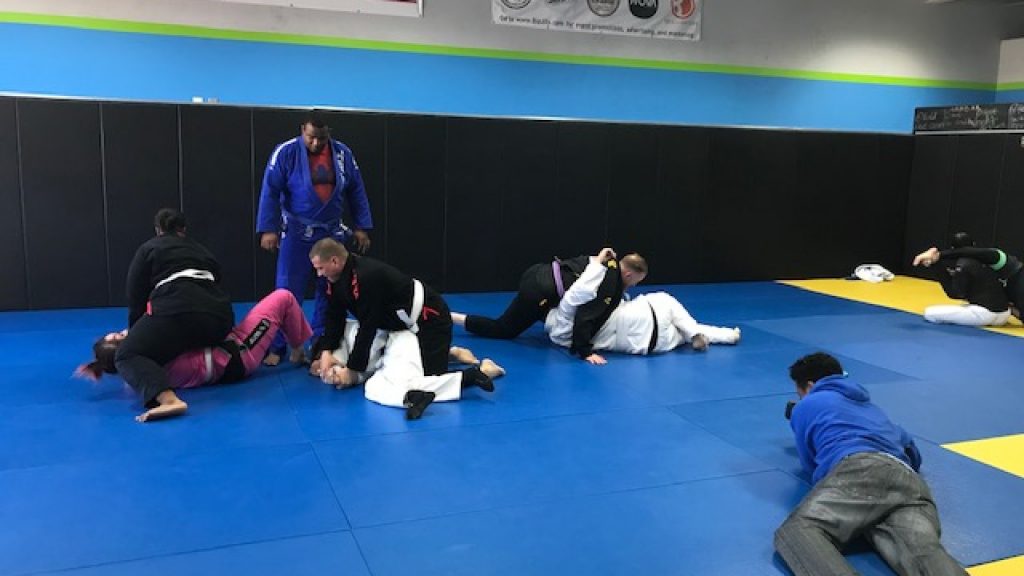 There’s no philosophy to how to stay safe in BJJ, it’s just like when you’re crossing the street: Look around, and make sure you recognize if there are any potential danger, or if you’re a potential danger to nearby pairs. This is what mat awareness is, in essence. Along with keeping a few ground rules in mind, you can easily make sure you are in a safe rolling environment.
Respecting Seniority
The main thing that will help you figure out how to be safe in BJJ is knowing how seniority works in rolling. When you do the look-around before you roll with a partner, see if there are any higher belts around you. If there are, consider that running into them will mean that you need to stop your roll, perhaps even disentangle with an opponent, and reset away from them. It doesn’t matter if you’re a brown belt rolling with another brown belt, and you have a black belt and a white belt next to you – the pair with the black belt has seniority.
Another thing that’s also among the unwritten rules of BJJ is respecting competitors, particularly really active ones. There’s no point in going crazy in a roll when you’re rolling next to a couple of folks who compete a lot, perhaps even professionally, injuring them can really affect their BJJ career.
Ladies First
Also along the lines of seniority, the ladies have the status of a black belt. Normally if there are two pairs of ladies that are nearby, the higher belt seniority principle applies. However, if there’s just one girl among two pairs, the pair where she rolls has seniority, even if the other pair is a brown and black belt, and she is a lower belt. Figuring out how to be safe in BJJ comes down to minimizing the potential risk to people around you, and despite being very tough, BJJ ladies will always be in danger when a couple of ultra-heavyweight competitors are rolling extra hard nearby.
Positional Hierarchy
Wrapping up with hierarchy, we’ll take a look at some positions. In most cases, positional hierarchy applies when people area of the same belt color, or really entangled deep in a very complicated position,. The ground rule here is that the more complicated the position, the higher it is on the hierarchy. Having someone in a tornado guard trumps a pair nearby that’s just hanging around in closed guard when the two are in danger of collision. In that case, the closed guard pair will reset a bit further away, or watch out for the other two.
Taps
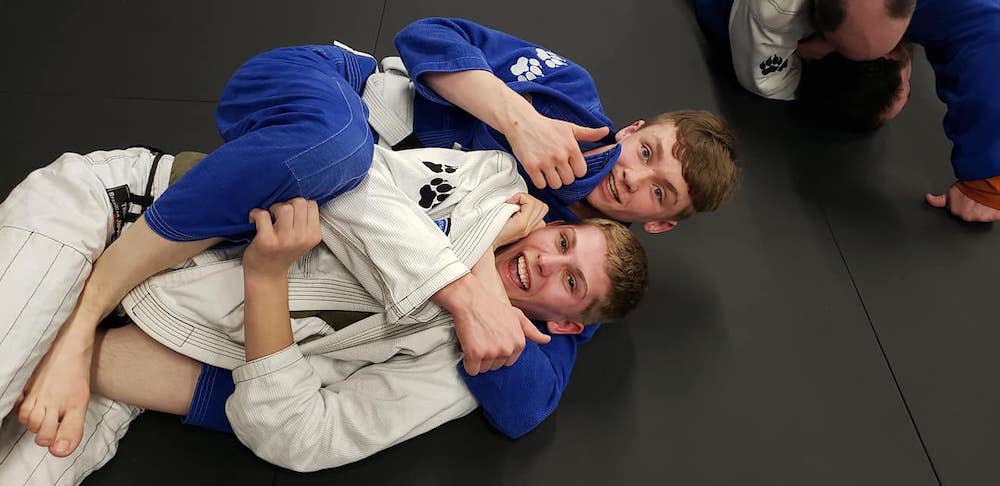 Most open mats are noisy affairs. People breathe heavily, there are all kinds of sounds, some talk, others laugh, there’s often music blaring on a speaker. That means that if you don’t know how to tap, you might find yourself in danger. The same holds true for people rolling next to you. Sometimes it is not possible to tap on your opponent’s body so that they know, and tapping the mats is the only option. If you hear a tap from a nearby pair you have the obligation of letting the person submitting know, since they might not be aware of it. How to be safe in BJJ during rolling extends to much more than just rolling in a respectful and careful manner.
Common Sense
The final piece of the puzzle is common sense. If you want to be safe when rolling, develop mat awareness by looking around and staying vigilant to what’s going on in the vicinity. If you expect others to do it, and you’re not doing it, you’re’ contributing to an unsafe environment. Just don’t do what you don’t want to be done to you. Simple.
Also, consider that some people, like the instructors and some competitors, actually make a living from training. An injury caused by someone crashing into them might cost them dearly, and three’s no good reason to justify it. Actually, plenty of people need their limbs to work, so an injury might endanger their livelihood. How to be safe in BJJ is no rocket science, but it is based on common sense, which some people tend to forget.
In Summary
All in all, mat awareness is a crucial skill in your BJJ skill set that you can’t do without. There’s no point in discussing how to be safe in BJJ training if you’re not going to look out for your training partners while you roll. Simple looking around before you start rolling, and respecting the ground rules we shared above is more than enough to ensure a safe and progressive training environment for all, even if there’ are a hundred people on the mat.
BJJ Science: Laws Of Physics And Principles Of Nature In Grappling
Tom DeBlass DVD Review: The Lockdown Blueprint
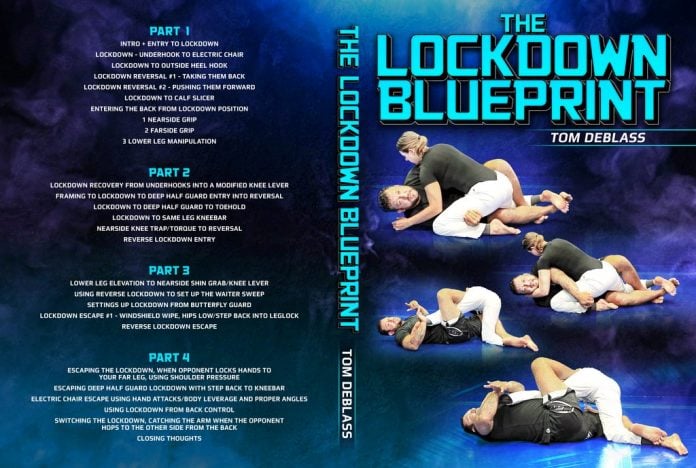
Another Sunday, another Tom DeBlass DVD… But this one is different. Usually, people outside of !0th Planet Jiu-Jitsu don’t do instructionals on positions that are associated with Eddie Bravo or his No-Gi empire. Not that they can’t, but people just don’t spend enough time in the unique positions 10P grapplers usually do. Enter Tom DeBlass and his no-nonsense attitude towards, well, everything. A true aficionado fo the half guard, Tom demonstrates that he really does include everything that is effective in his half guard game, including the Lockdown. His latest instructional is titled “The Lockdown blueprint” and we have an in-depth review of what’s inside.
ON SALE HERE:
Tom DeBlass – Lockdown Blueprint
“The Lockdown Blueprint” is a BJJ instructional not many people expected, I guess. DeBlass already has several half guard instructionals out, focusing on different variations of what is one of his signature positions. However, expiring the Lockdown in a Tom DeBlass DVD is not something I expected. Not that I’m complaining. The first thought when I saw this DVD was that there’s finally a fresh and new perspective on a position I really like to use and base a lot of my game on. It suffices to say, my expectations were more than met.
The Lockdown Position
What exactly sir the lockdown position in BJJ? It is a variation of half guard that pretty much goes against the grain of what is usually taught in regards to playing half guard from the bottom. Namely, the Lockdown allows you to successfully keep someone into the half guard and even attack, while you’re on your back. There’s no other half guard variation that provides such an option. In all honesty, attacks do involve you going to your side and some very specific movements, but in essence, you can use the Lockdown as your go-to checkpoint when guard passers overwhelm your usual defenses.
The lockdown works when you entangle the opponent’s leg that’s trapped in your half guard with both your legs. In essence, think about the structure of a braid – you want to do the same thing. One of your legs reinforces the other, while you’re trapping an opponent’s leg in place, and keeping it straight. In other words, you get to control a big lever of the opponent’s body, which provides you with safety in terms of guard passing, and lots of sweeping and submission options. Moreover, now you can explore different aspects of the position, thanks to The Lockdown Blueprint Tom DeBlass DVD.
Tom’s Half Guard
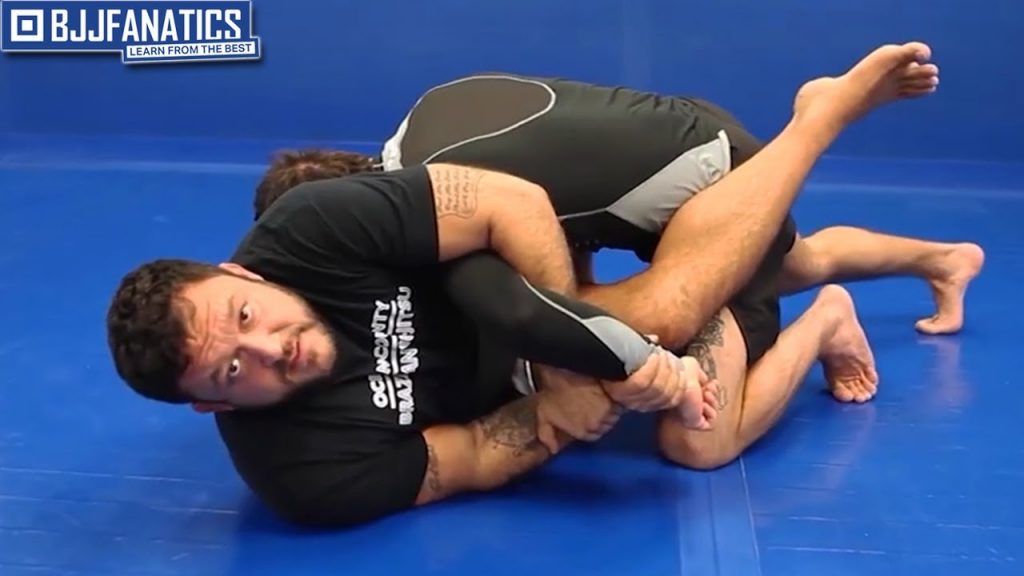 On the subject of Tom’s prowess in the half guard, there’s really not much that hasn’t already been said. No-Gi world champion, and three-time ADCC trials winner, Tom certainly knows what he’s doing and saying. Not to mention that he is a Ricardo Almeida black belt, and runs one of the most successful BJJ gyms in the world – Ocean County Jiu-Jitsu.
Tom also has a stellar record when it comes to being submitted and having his guard passed in competition. In short, both things haven’t happened for a long, long time, and we’re talking about the highest level of the sport here. A huge piece of his game is the half guard, something every opponent of his is trying to stay out of. While it is obvious that his half guard game has plenty of players and an intricate strategy behind it, at least one of those layers is now open for everyone to learn, via “The Lockdown Blueprint” DVD.
A Detailed Review Of “The Lockdown Blueprint” Tom DeBlass DVD
“The Lockdown Blueprint” Tom DeBlass DVD is a four-part Brazilian Jiu-Jitsu instructional that focuses on one of the most effective variations of the BJJ half guard. As we’ve come to expect from a Tom DeBlass DVD instructional, there’s lots of structure to the DVD. Tom starts off with basics, going into retention and transitions, before exploring the reverse lockdown and ending with ways to escape the lockdown. The technical qualities of this instructional are pristine, and the total running length is nearly 4 hours. That is a lot of material, most of it unseen, on the subject of the Lockdown position.
1 – The Basics
As usual, the instructional opens up with an introduction to what the Lockdown is and how it can be used by anyone. Tom doesn’t waste time, though, and goes straight into the most recognizable attack form the lockdown – the electric chair sweep. Tom also explores several main directions of moving people with the Lockdown, including taking them back and pushing them forward. A neat and nasty Lockdown heel hook also makes an appearance here.
Grip variations that range from the underhook, through near and far side grips, to manipulating the lower leg make up a big portion of this volume of the instructional. Ways to get the back, as well as a sneaky calf slicer, finish wrap up the first part of this latest Tom DeBlass DVD.
2 – Transitions And Attacks
The options that the Lockdown provides extend far beyond just the Electric Chair. DeBlass offers ways in which you can use the leg as a lever to get transitions to other guards or recover back to lockdown when opponents try to break out. The deep half guard (surprise, surprise) is an option Tom prefers, as indicated in this volume of “The Lockdown Blueprint.” Reversals, toe holds and the inevitable use of frames mark most of the stuff you’ll see in this portion of the instructional.
The same leg kneebar is one of the innovative things Tom brings to the table in terms of the Lockdown. There’s also a cool way to torque the leg into a reversal, which then opens up the reverse Lockdown, introducing the next volume in this set.
3 – Reverse Lockdown
 The reverse Lockdown is a unique take on the Lockdown position. The way Tom uses it si to retain the half guard even when the Lockdown doesn’t work for him, and open up interesting attacks. Some of those attacks include the waiter sweep and a few more leg lever options that involve manipulating the nearside shin.
Providing an insight into the final volume of this new Tom DeBlass DVD are few chapters on escaping the Lockdown by using windshield wipers, as well as a method of dealing with the reverse Lockdown.
4 – Escaping The Lockdown
Escaping the Lockdown position has long been a mystery in Brazilian Jiu-Jitsu. With people like Eddie Bravo, his black belts, and Tom DeBlass, to name a few, constantly experimenting and evolving the position it is no wonder that it is hard to deal with. And yet, DeBlass has figured out a few ways to get out and neutralize the Lockdown. Tom covers a bunch of scenarios based on what the bottom person is doing, and how the grips are structured. Kneebar counters, escaping the Electric Chair as it happens, and a bunch of other highly useful situations are covered here.
Wrapping up “the Lockdown Blueprint” are a couple of chapters on switching the lockdown form one side to the other, which is the portion I enjoyed the most.
Wrapping Up
“The Lockdown Blueprint” Tom DeBlass DVD is not just another half guard DVD. It is an instructional that covers a position nobody outside 10th Planet ahs ever covered with any amount of success. As I said, I personally play the Lockdown a lot, and this instructional offers so much food for thought and new material, that it’ll completely change the way I approach it. If you’re a lockdown player or are considering it, this is one of the best resources to get!
ON SALE HERE:
Tom DeBlass – Lockdown Blueprint