



Cheap And Dirty Ways To Win A Brazilian Jiu-Jitsu Match

Winning A Brazilian Jiu-Jitsu Match With Cheap Moves

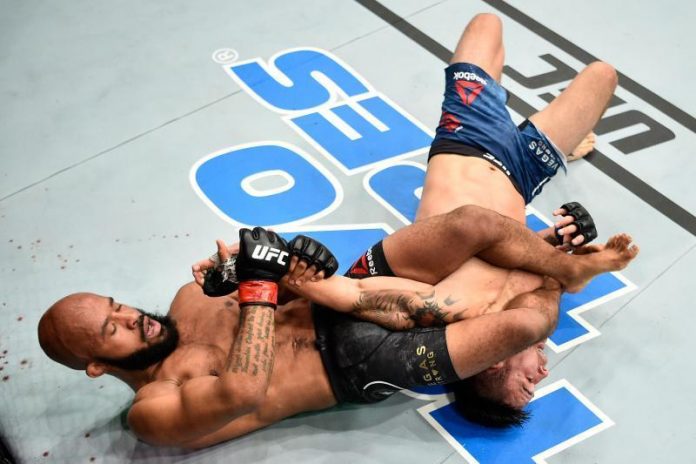
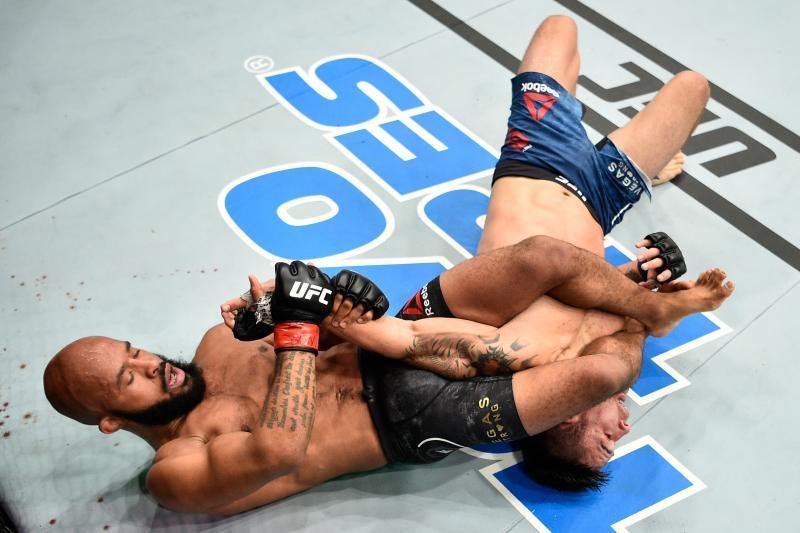
Slap, Bump, and Go. But wait! After the slap, the other guy/girl went straight for an Imanari roll and the bump part turned in you tapping out to a heel hook! these things happen, both in competitions and during rolls. the questions here are should they be allowed to happen, and how should people react to unsportsmanlike cheap shots like this? the desire to win is something we all have, but how far are you willing to go to win in a Brazilian Jiu-Jitsu Match? 

There are plenty of ways to win a Brazilian Jiu-Jitsu Match. Submission, points, advantages, referee’s decision… And yet, people will try to do anything and everything to end up with their hand raised after a grappling match. While there is a case to be made about some “dirty” BJJ moves and their use, others are really cheap shots when it comes to sports, and should not be used, purely out of respect. the thing is, most of these moves are not illegal and won’t lend you in trouble with referees which means, they’re, well, fair game.

The Curious Case Of BJJ Rules 

BJJ rules are most definitely curious ones. I won’t get into the different rules that different organizations have as I’m not looking to lead a witchhunt against one particular promotion or another. instead, I’ll just comment on the confusion and chaos that Brazilian Jiu-Jitsu competition rules inevitably bring to every tournament.

There are plenty of contradictions in Jiu-Jitsu rules, from moves you can and can’t use, to advantage points, interpretation of techniques one way or another, and the likes. Most promotions have covered this by starting their rulebooks with a sentence along the lines of “the referee’s decision is final and unquestionable“. This, however, leaves a lot of responsibility in the hand of the referees and leaves grapplers confused by what they should or shouldn’t do, given that they’ll sometimes get completely different outcomes for the same exact situation.

That aside, there are those things that are actually legal to do in a Brazilian Jiu-Jitsu match that is the most curious of the mall. Things like faking handshakes, pretending to tap, using dirty (but still legal) moves, and similar actions are not things we see every day. Respect still has a role to play in BJJ, but every now and again we’ll run into someone who’ll use moves like this to get a win. the question is, whether or not people should be allowed to act like this when rulebooks cite other far less “insulting” things as being “unsportsmanlike behavior”.

Cheap Shots: Winning A Brazilian Jiu-Jitsu Match At Every Cost 

I must admit, I am a fun of throwing a cheap shot or two now and again. But only in rolling, and only when it is clear that I’m messing around and joking. In tournaments. I’d never resort to using such a move to gain an advantage that might decide the outcome of a Brazilian Jiu-Jitsu match. Footage from tournaments, though, paints a different picture, and we can only wonder what happens behind closed doors during rolls in BJJ academies.

Now, I don’t want to be one of the Rose folks that crises about respect in martial arts and the good old times – I have no idea what those times are. However, I do know there has to be a line somewhere, or we’ll lose the fun aspect of the sport, and competing in matches. It is okay to trick an opponent in a technical and tactical way, But my take on things is that cheap shots should only be allowed in training, as part of fun rolls between friends.

Fake Handshakes

This is a big one in all combat sports. In fact, I can wager this move is as old as competitive grappling itself. The moment a Brazilian Jiu-Jitsu match, people usually shake hands. Actually, in BJJ, they slap and bump. This is a perceived moment of safety and something that people consider to be courteous.

If you are one to look for chap shots, though, this is the perfect moment to pounce,. whether you skip over the handshake completely or simply launch your attack in the middle of it, you’re pretty much guaranteed to succeed with whatever it is you’re trying to do. In most cases, it is takedown, and it will be the easiest takedown you do. It may even earn you a gold medal in a competition if you can sleep soundly at night knowing how you got it.

The “Brazilian Tap”

This one is always making me laugh in the gym. I have no idea why it is called the Brazilian tap, but since a Brazilian black belt told me about it in the first place, I just took it for granted. It is when you are caught in a submission and you know the tap is coming. You raise your arm, obviously about to tap, but still looking to see if you can sneak in a second or two more of resistance. Usually, seeing an arm ready to tap means the opponent will take it easy, waiting for the finish. That is when people lower the arm, and get out of the sub, using the lack of focus and perhaps even a slight release of pressure.

This is the ultimate tricky way to save yourself from losing a Brazilian Jiu-Jitsu match. If you were ahead on points, it may even bring you victory, and it will all come at the cost of your opponent being careful. Perhaps too careful.

“Dirty” Moves

This is an area of Jiu-JItsu that still needs to be clearly defined, so whether or not you win a Brazilian Jiu-Jitsu match (or five) using stuff like this is open for interpretation. They can be considered to be cheap shots or simply legit moves that are a part of the game of fighting.

Dirty moves that you can use to win legally include things like putting pressure on the floating ribs, pressing behind the ear, stomping the neck when brEaking armbar grips, stepping on legs when passing, catch wrestling painful moves, etc. They are legal, but they will also get people to frown upon you.

Slaps And Kicks

This is something we do see in BJJ and it is never apparent whether it is intentional or not. While slams and the like are obviously illegal, slapping or kicking an opponent while doing a sweep, or putting frames up, etc are sometimes not even cautioned by referees. actually, getting a warning is probably the worse you’ll do, unless you keep hitting someone over and over again during a Brazilian Jiu-Jitsu match.

Once again, stuff that happens unintentionally in the heat of battle is okay, but people do tend to take advantage of loopholes like this, sneaking in some Combat Jiu-Jitsu to help them get the ‘W”.

Holding Submissions
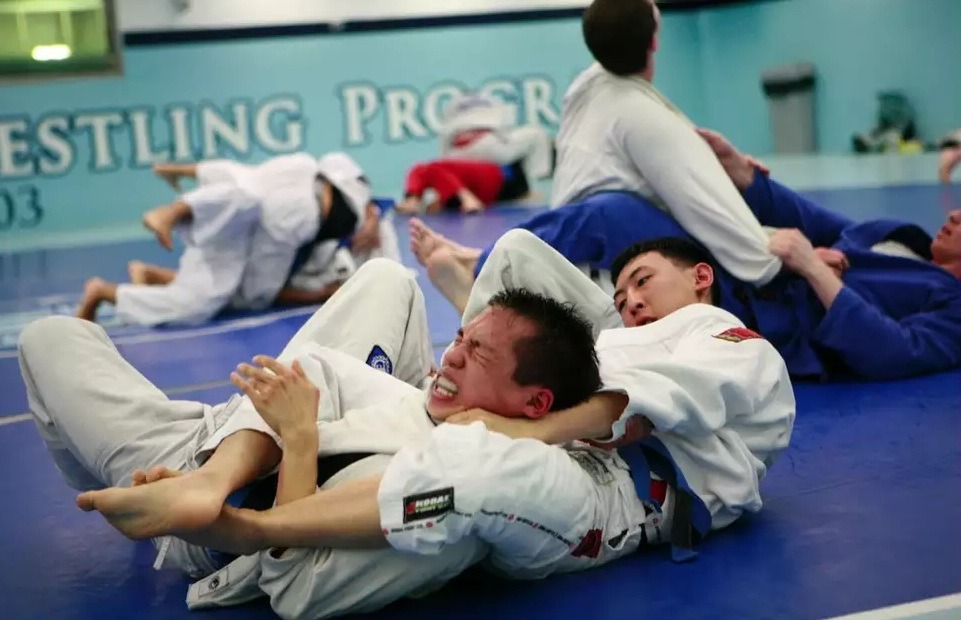
Brazilian Jiu-Jitsu Match Cheap Moves Brazilian TapI guess I shouldn’t even mention this, but it is the worst thing you can do, especially in training. Holding on to a submission after someone taps is grounds for immediate dismissal and it is actually illegal. the thing is, sometimes it takes time for referees to break people apart, and in those crucial seconds, someone might end up injured. In the case of chokes, this means putting someone to sleep when they’ve already surrendered, which is just about the cheapest move you can do in all of combat sports.

Forcing DQs

This used to be a problem, for a while, before rules changed in favor of the folks on the receiving end of it. A clear example was forcing someone’s leg from the single-leg X-guard into a knee-reap position, which would get the bottom person DQed. Rules have changed now to make the person trying to force it getting DQed themselves. However, there are other aspects of BJJ that are not as clear cut as this, and forcing someone out of a Brazilian Jiu-Jitsu match by means of DQ is still a cheap move that people can use.

All In All

Regardless of how much you want to win a Brazilian Jiu-Jitsu match, cheap shots should not be the tools you turn towards. It is not just about winning that one time, but about learning and progressing yourself. DOing quick fix things like that will quickly make you notorious, and, eventually, people will find a way to block them. While they might be fun during certain rolls, it is best that we stick to respectful and sportsmanlike behavior during competitions.


Developing An Ironclad BJJ Competition Mindset

What Not to Do In BJJ Competitions

Gaming The System – IBJJF Competition Hacks

Transgender Jiu-Jitsu Black Belt Claims Trans Athletes Don’t Have An Advantage

Transgender Jiu-Jitsu Black Belt: NO advatnage for trans atheltes

People changing their gender is a normal thing nowadays, and nobody really has the right to say to anyone what they should do with their lives. And yet, there are some aspects of our society that will require a lot more time to adjust. One example is sports, especially the 1-on-1 type of affairs like combat sports. While nobody is judging people that change their gender, the question remains how do they compete in a fair and sportsmanlike manner? Let’s see what a transgender Jiu-Jitsu black thinks on the subject. 

Trans athletes are emerging as a special category of athletes. Personal choices aside, there are biological aspects of gender change that do influence the ability someone has to perform in an athletic manner. The big question here is whether or not trans athletes get an unfair advantage over other athletes in their gender category? when it comes to transgender JIu-Jitsu athletes, where body type, strength, and other physical qualities really do matter a lot, what would be the best approach to even the playing field?

Transgender Athletes In Combat Sports

Alaina Hardie transgender Jiu-Jitsu black beltTransgender athletes competing in any sport really do raise a question. Someone that used to be a male, at least biologically, is now a part of the female divisions in a certain sport. If it is track and field, or some ball-based spot, there would be apparent athletic advantages for someone like this, or even drawbacks if things were reversed. However, when it comes to combat sports, it is an entirely different can of worms.

When two people are fighting, whether it is MMA, Jiu-Jitsu, Judo, Taekwondo, or anything else, every smallest detail can mean victory or defeat. After all, there’s a reason why folks in martial arts starve themselves cutting weight – they’re trying to gain the slightest of weight advantage. Well, now imagine the advantage a male has over a female, speaking in terms of combat sports.

The subject has been beaten to death before. from muscle density to muscle chape, skeletal mechanics, and a whole host of other biological and physiological aspects, the male body is superior to the female in the realm of combat sports competition. But is this really the case? Well, I do not doubt science will provide us a verdict, it just has other things on its plate right now.

Until such time as there are transgender Jiu-Jitsu divisions or tournaments, I don’t’ think that trans athletes should compete in the regular divisions.

Transgender Jiu-Jitsu Black Belt With “Scientific” Claims

Alaina Hardie is a transgender Jiu-Jitsu black belt from Canada. She has been training BJJ for a long time and is a very active grappling competitor. So far, not many people knew she was a transgender athlete, and she recently announced it publically via a podcast, touching on some controversial subjects along the way.

Transgender Jiu-Jitsu Black Belt: NO advatnage for trans atheltesAlaina is now an advocate for the involvement of transsexual athletes in sports, particularly combat sports. She first started expressing her support of Fallon Fox, only to later expand on that, turning to science to back up her claims. Currently, Alaina points to the lack of evidence that trans athletes have athletic advantages over other athletes as evidence to the contrary. In fact, she says that she’d run a long-term study herself given the chance, to corroborate her claims.
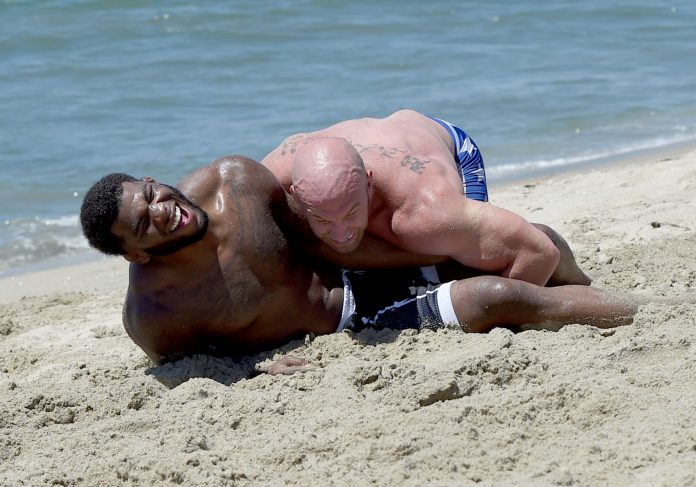
I met Fallon when we both did the ADCC Trials in 2009,” Alaina said in the podcast. “At the time I had no idea she was transsexual, and she had no idea I was, either. I just thought she was like every other non-trans female grappler out there.”
After all the commotion that Fallon Fox’s MMA performances stirred, Alaina reached out to contact her and offer her full support.

A Question That Won’t be Resolved Soon

The question of transgender Jiu-Jitsu, MMA, and other combat sports athletes is one that does require careful deliberation. The point is not just to ban transsexuals from competing in sports they enjoy doing. take the example of Alaina – she is a black belt in BJJ, a feat not many people around the world can claim to have achieved. Robbing her of the chance to compete would be selfish at best.

However, safety has to be of primary concern. There’s no point in being politically correct if that puts people’s wellbeing, and perhaps even lives at stake. The obvious advantages that someone who has been male for decades has over someone who has been a female all their life rally do make for an unfair setting to compete in. And I doubt even science will prove that wrong.

That said, however, there should be a solution to the problem. A straightforward one would be to introduce transgender divisions in competition. Sure it will require logistics, but it seems like the fair thing to do. It will not only help transgender people compete, but also encourage others who still haven’t come out to do so and enjoy the competitive aspects of the combat sports they love to do under fair rules.

Summary

Alaina is the first transgender Jiu-Jitsu black belt that I’ve heard of. She just might be the only one out there, who knows. It is great that she has taken an initiative to provide trans athletes in combat sports with a chance to compete. However, I really think that all the energy of everyone involved should be towards creating an environment of fair competition, rather than debating the current state of affairs which is obviously far from equal for all involved.

Check out the match between 2008 Iron-Woman of Grapplers Quest Alaina Hardie and the 1st USA Female Black Belt Kathy Brothers:

Fallon Fox, Transgender MMA Fighter Who Broke The Skull of Her Opponent

Olympics To Allow Transgenders to Compete! Are We Becoming Too Politically Correct?

Joe Rogan on Female Transgender Athletes who Compete: It’s Bizzare and Ridicolous

Olympics To Allow Transgenders to Compete! Are We Becoming Too Politically Correct?

Transgender’s Letter to BJJ Community – I’m not a Male, I Want to Compete Without Stigma

BJJ And Grappling Training On Hard Surfaces With No Mats

BJJ And Grappling training without mats

How does your BJJ academy look like? If I had to guess, I’d say it is in a facility that has heating, all the things we take for granted like toilets, changing rooms, maybe a common area or a front desk, and even a small shop. The gym itself is just mats and perhaps a small area for people to watch. the main difference between BJJ gyms is usually the mat space for training, which is dependant on the number of members and the size of the academy. But what happens when you do not have access to any kind of facility for BJJ and grappling training? Would you still train, and how? 

In Jiu-Jitsu, we’re used to rolling around on the ground and feeling very comfortable about it. Even though we don’t think about it too often (well, at least not if you’re not an academy owner), the mats are actually a huge part of grappling training. What would happen if you did not have access to mats, though, and you still wanted to train BVJJ. Would you train on a hard surface like wood, or opt to try nature’s mats like snow, grass, or sand?

What If Grappling Training In A Gym Is Not An Option? 

Around the world, people don’t always have access to fancy gyms. To be honest, not many academies around the world can look like the very best ones out there. The Mendes academy, Atos HQ, Renzo’s, Marcelo’s, etc are the cream of the crop. For everyone else, a bit of mat space and enough facilities to make people comfortable is more than enough to successfully run a BJJ academy.

However, as widespread as BJJ and grappling is around the world, there are still spots that do not have the facilities necessary for training Sure, you could transform just about any closed space into a gym, but that requires time and money. Weather permitting, training outside is an option in quite a lot of areas of the world, though. And, since mats are not always an option, or sometimes might even end up being a worse one than training on a hard surface, grappling training without them is the only option left.

the question is, would you suck it up and train if you were in such a situation? there are plenty of people around the world that make do with whatever they have at their disposal, and sometimes, even the weather is not on their side. training outside in the snow is a great example of training just because you love to grapple. Training on grass and sand is also not uncommon, as well as las using carpets or wood floors in the absence of mats. And yes, there is a way to train, as long as you’re smart about what you are doing.

Grappling Training Around The World

So, how does grappling training look around the world? Different places offer different grappling martial arts options, sometimes so ingrained in a tradition that using mats for training or competition would be considered disrespectful. In other spots, it is simply what is available to folks for training. Exploring different options of training without BJJ mats, we’ll take a look at several of the options out there, and consider what you should and shouldn’t do when training in such a fashion.

Grass

This might come as a given since so many grapplers have messed around on grass surfaces. The experience is bearable, but far from the comfort of mats, of course. It all depends on how hard the ground is under that grass, and the stuff you’re trying to pull off. Of, course, stuff like Turkish oil wrestling and similar traditional grappling training and competition events demonstrate that training on grass is perfectly possible.

Something to look out for when grappling on grass is, well, nature. Acorns, thorns, rocks, and similar stuff will make your grappling experience very painful if you don’t take al ook around before you engage in a roll or match. Moreover, objects discarded by people, especially broken glass and sharp objects ara always a treat as well.

While this may come as glaringly obvious, rolling around on the grass should be done from the bottom. Takedowns are not going to be fun, especially Judo type of throws. Sticking to starting from the knees is just what the doctor ordered in this situation.

https://www.youtube.com/watch?v=hJUMbrQ9K2U

Sand

Beach experiences have probably taught you that you can get away with a lot on sand, but there’s a price to pay. it gets everywhere. Now imagine having to grappler on sand. I’ll just leave it at that.

Around the world, the rea re plenty of spots that have traditional grappling events taking place in sandpits or sand covered rings. Grappling training and even competing on sand makes sense, as it is a surface that can absorb a lot, meaning you could even do takedowns on it. the downside is that it is grainy, and it can cause injuries to the skin, especially in the sensitive areas.

Apart from the odd rock or two, or, depending on where you are, a crab, turtle, or some other animal, there’s not much to worry about when it comes to sand. As long as it is not damp, and there’s plenty of it, you can actually have a great time grappling on it.

The stuff you should stay away from is the complicated inverted type of things that you might usually do on mats. Try to keep your face off the ground as much as possible as the grains will let everywhere and will cause abrasions. Shrimping type of motions with your back against the sand will also come at a price.

Snow

I bet you have not considered grappling training in the snow as an option. Messing around with a teammate from time to time, sure, but not full-on training. Well, not only training but competition in the snow is a thing in certain areas of the world. It is more than obvious that you need some warm clothes for this.

Snow can be tricky to grapple on, though. It may come off as an extremely hard surface, particularly if parts of it are frozen. On the other hand, if it is deeper, the movement might be restricted, especially when ending up on the ground. Plus, whether or not it is still raining snow is also something to factor in.

BJJ and grappling training in the snow is the opposite of training on grass. You can do takedowns and throw,s but you better try and spend as little time on the ground as possible, especially in bottom positions. plus, there’s the fact that snow will get inside your clothes as well.

Carpets

Training on carpets in the absence of mats might look like a good idea. it is not. I am saying this from personal experience. Messing around from time to time on a carpet might be something you can get away with, but doing grappling training regularly on one is going to leave you battered.

Apart from the obvious carpet burn, you’ll need to watch out for material. Some carpets are made of stuff that can cause people to develop a rash or even a full-on allergic reaction. Plus, they’re very uncomfortable for both takedown training and rolling around on the ground. They could, though, perhaps pass as surfaces for doing some partner drills, or perhaps, slow-rolling / position sparring.

Wooden floors

Something that is not unheard of, archaically in the east. In Japan, for example, they have special wooden floors made out of bamboo (I think) that were used for Japenese Ju-Jitsu training in ancient times. That said, as uncomfortable as it may sound, grappling training on a hardwood floor can actually be quite a good option.

As long as the wood is smooth, you could pull off certain aspects of BJJ and grappling training. Of course, rustic style wood floors made ou of 2x4s are definitely not an option. That said, different types of wooden floors have different absorption characteristics and even different densities.

That brings us to what you can do. Any standing training goes out the window here, and you should be very careful with everything else, too. You can’t just throw yourself around here, because hitting the floor with the side of the hip won’t be nearly as pleasant as with any o the options above, or mats. Sow rolling is the only way to go here, with lots of looking out for both yourself and your training partners.

https://www.youtube.com/watch?v=MkVO-l4FSgc&feature=emb_title

Not All Mats Are Made Equal

Before we move on to wrap things up, let’ take a look at how different types of mats might feel. Yo usee, when ti comes to Jiu-Jitsu mats, they are not just different in type or color. They differ in core material and texture as well.

When it comes to the core of grappling mats it usually comes to one of three options. Those are polyvinyl chloride (PVC) nitrile foam, cross-linked polyethylene (PE) foam, or ethylene-vinyl acetate (EVA) foam. The core material also impacts the thickness of the mats which is crucial for grappling training. try training on mats designed for karate, and you’ll see what I mean. A minimum thickness of at least an inch is an absolute must for training Jiu-Jitsu.

In terms of texture, you want mats to offer a grip, but not be too grainy to make it feel like you’re rolling on the sand. That is a fine balance that some BJJ mat manufacturers know how to achieve. EVA mats with a tatami texture are the best bet. It will provide a grip, while not causing mat burns nor becoming slippery when wet, as some canvases do.

Final Words

Nothing can stop you from training Jiu-Jitsu if you’re dead set on it. Grappling training is possible on a wide array of surfaces, but only if you are able to accept the fact that it will never feel the same as BJJ mats do. There will be limitations, but you can pull it off, and even get good results with it. As you can see from the examples above, there’s even an option to organize tournaments under such circumstances as well.

The Best BJJ, Grappling, and Jiu Jitsu Mats For Home in 2024

BJJ Mats 101: Buying, Setting Up And Cleaning

The Chin Strap Grip – Complete BJJ Control Everywhere

BJJ Control With The Chin Strap Grip

The one grip in BJJ to solve all your troubles – the mighty Chin Strap. As with most things in Jiu-Jitsu that are proven to work, this is a move borrowed from wrestling. After all, why not take something that has been tested and developed for centuries and proven effective? In the case of BJJ, though, this does not just mean taking the move and running with it, but also evolving it further. Today, the chin strap is the one grip you can use to attack, defend, escape, or apply the most BJJ control you’ve ever felt to most positions in grappling.

I first learned the chin strap grip from a visiting black belt that showed it as part of a guillotine choke class. I was a blue belt at the time and the grip was a huge revelation for me, although I only looked at it in the context of the guillotine choke. Fast forward to today, and the chin strap is my go-to every time a situation like a scramble happens. Actually, it is my go-to anytime I like to focus on BJJ control against an opponent that likes to move around a lot and do unpredictable things.

BJJ Control Points 101 – How to Make People Go Where You Want Them To

BJJ control is a very tricky thing. Unlike most sports, there are no absolute methods of control in Jiu-Jitsu. If you really want to get good at BJJ control, you’ll have to understand that it is a dynamic venture, rather than a static one. Sure, pins from wrestling and Judo might help you control someone completely, but then what? BJJ doesn’t end when an opponent has both shoulder blades on the ground. In turn, that means that even if you hold for time, an opponent will find a way to wiggle something through and escape. If you approach controlling people dynamically, though, you’ll find that you have more success keeping people where you want them.

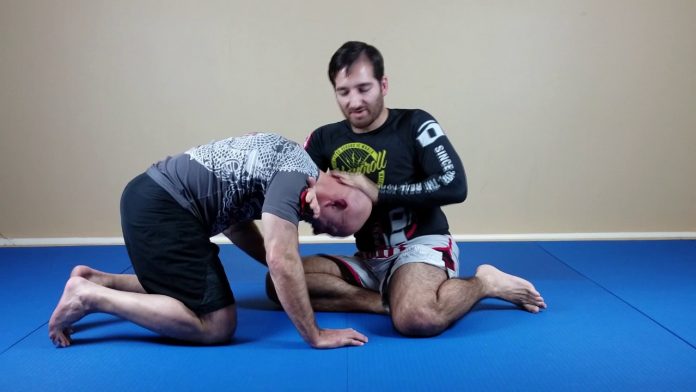
Using Chin Strap Grip for BJJ ControlThe key to controlling someone in Jiu-Jitsu is easy – just think head & shoulders. Yeah, just like the shampoo. All it takes to have someone under complete control is deciding how and if they can move their head and their shoulders. Just think about the standing headlock as the favorite method of playground control with kids. There’s a reason why it works – it provides control over the head and shoulders.
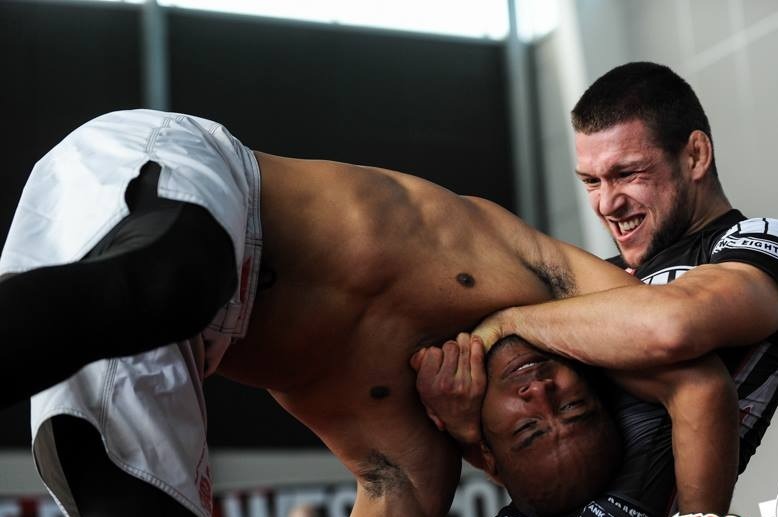
In BJJ if you take a close look at all control positions, you’ll notice they all utilize a form of head and shoulders control. Whether it is side control, mount, half guard, back control, front headlock, etc, the same theme repeats itself – control the head and the shoulders. And it can get even more simple than that – if you can make the head turn to one side or another, or not turn at all, you gain indirect control over the shoulders as well. In other words, for complete BJJ control, you need to be able to really have a handle on the head and neck of an opponent. That is where the chin strap grip comes in.

How The Chin Strap Grip Works                                   

The chin strap grip is actually pretty simple. It does take some getting used to, particularly in terms of BJJ control, but once you become accustomed to it, you’ll be catching it in an instant. The way the chin strap works is by giving you control over the chin of an opponent. Being a prominent feature on the head, the chin is actually the end of a lever when it comes to the head, meaning it offers a way to control the lever while exerting minimal force.

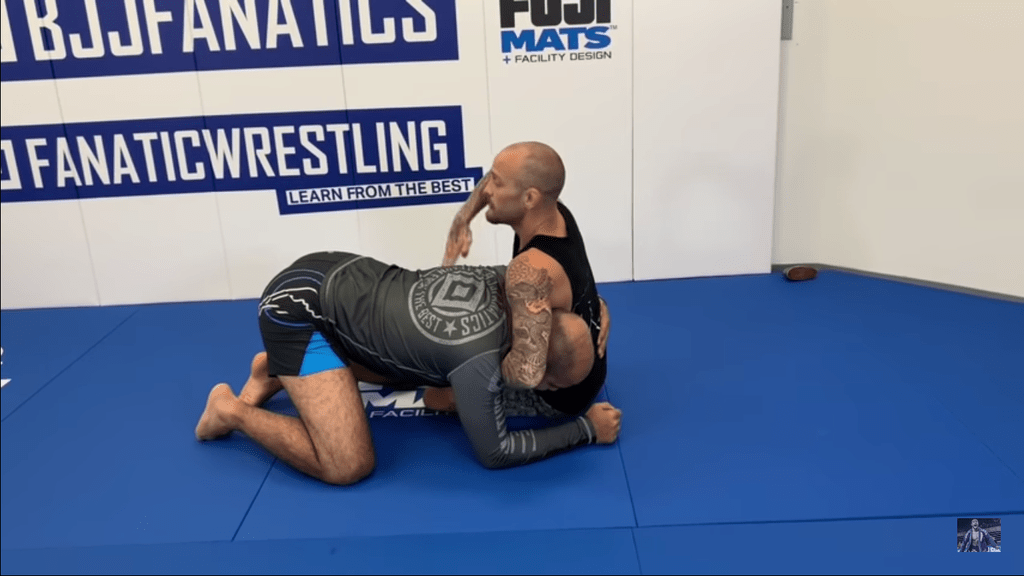
The way you grip is also very important. The area I find most people to struggle with is how to precisely position the palm on the opponent’s chin. The solution is simple – don’t overthink it. You just need the right shape of the palm, and everything will fall into place, like lock and key. The shape in question is the same one you make when you’re trying to dring water out of a hose with the help of your palm. That is a shape everyone knows how to make. Focus on it, and you’ll end up with the perfect chin strap grip, thumb tucked in and all.

However, gripping the chin is only a piece of the puzzle. You control the lever, but not every possible direction of movement. This is where your elbows come into play. The elbow of the arm that has a chin strap needs to be as close to your body as possible. Now you have lateral control as well as rotational control. That leaves movement up and down. Your shoulder, tightly propped up against the top of the head will take care of upward movement. As far as going downward or backward, there’s a simple little painful hack. Use the middle knuckle of the thumb on your chin strap arm and drive it into the throat of the opponent as you’re holding. Now you have the perfect chin strap for ultimate BJJ control.

Practical Examples

Chin Strap Grip BJJ ControlThat is just about enough Jiu-Jitsu theory for today. Let’s look at some practical examples now. Of course, the Guillotine choke will come up first. However else you’ve held a guillotine before, reconsider switching to the chin strap. That way, you can choose whether you’ll finish with a high elbow, low elbow or arm-in guillotine at will. You can even finish with just the chin strap arm in certain situations when you start getting the hang of it.
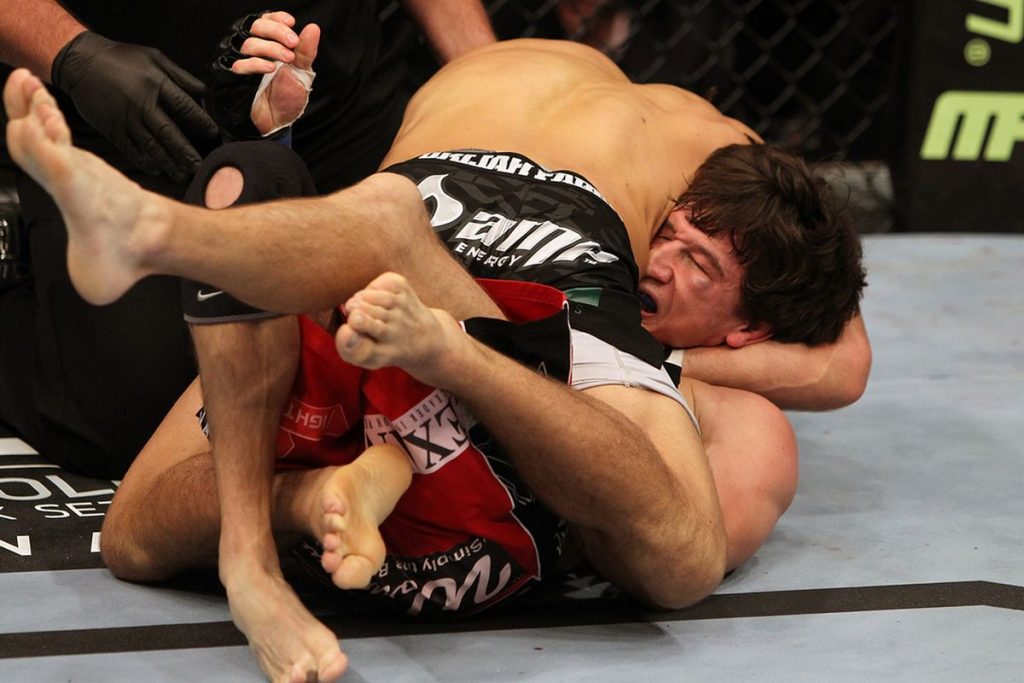
Another great way that I like to utilize the chin strap grip is to escape side control. Yeah, holding a guillotine from bottom side control will open you up for a Von Flue choke. However, holding a chin strap grip will not. In fact, it helps twist the head while making it impossible for an opponent to strip the grip. This will allow you to just wait it out until an opponent disengages, or simply do your favorite side control escape effortlessly.

The chin strap grip is also a great way to stuff takedowns. Whenever you’re too late sprawling or battling from single-leg, look for the chin strap. It will allow you to direct the head wherever you want. The shoulders will inevitably follow, and you’ll be able to stuff any takedown.

BJJ Control With Chin Strap GripA personal favorite of mine is going for the chin strap from the mount. People seem to forget that lifting their head off the ground when caught in mount is a bad idea. It may deal with common attacks but will open up the chin strap. And, even if you don’t get a guillotine choke from there, you can rest assured that your opponent is going nowhere any time soon.
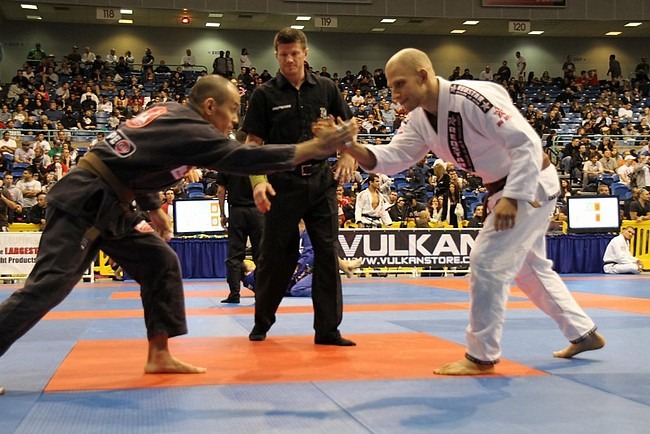
Last but not least, the chin strap is by far my favorite way of passing half guard. Anytime you’re caught in half guard, slap the chin strap on. If they try to play the Coyote guard or any underhook variation, you’ll get it on a silver platter. Once you have it, just lie down on the ground with your hip. The pass is as certain as is the fact you’ve got full BJJ control.

In Summary

There’s a lot more to discuss the potential uses of the chin strap in Jiu-Jitsu. There are also unexplored areas, like using variations of it from the back. One thing is for certain, though, the chin strap will provide you with more dynamic BJJ control in more positions than any other single method of control. Try it out, experiment, and see where the chin strap leads you. I can promise you it’ll be fun!

Developing An Ironclad BJJ Competition Mindset

Develop an Ironclad BJJ Competition Mindset

Train until your idols become your rivals! And then, beat them! Sounds good, right? Well, you certainly have a lot of work to get there. the good thing in BJJ is, that once you get a black belt, if you compete a lot, at one point or another, you’ll get the chance to face off against one of your idols or a legend in the sport. The only question is, how will your BJJ competition mindset be in such a situation?

If you’ve competed in Jiu-Jitsu, you knew that your mind can completely make or break your performance on the mats. I’m not talking about the first time you go to a tournament, as that is simply a moment where you will have to experience the chaos in order to understand what it is like. Every tournament that follows, though, especially if you compete a lot will require you to develop creating a BJJ competition mindset, if you want to perform to the best of your abilities in every match, regardless of opponent.

It Is All In Your Head

Why do you compete in the first place? There are as many competition goals as there are people, but the usual ones include competing to learn, competing for medals, looking to build a professional career, or just having fun. Well, with your goal in mind you’ll have to think about the motivation that drives you to show up on a given day and competes against other people. the way you think about things both before, during, and after a tournament will greatly influence how well you’re able to perform.

BJJ Competition MindsetFirst of all, you can’t be afraid to lose. If there’s one universal aspect of a BJJ competition mindset everyone needs to develop it is that losing comes guaranteed. It may happen now, it may happen at every tournament, or it may happen in a decade. One thing is for certain – you will lose in BJJ. Moreover, you “lose” every time you train and roll, be it a tap or losing position, etc. If you train your mind to accept defeat, you’ll actually be able to win a lot more matches and perform miles better.
When you find yourself at a tournament, questions about how you’ll perform, whether or not opponents are better than you, and similar stuff will flood your mind. that is ok, and those thoughts will always be present. But they can only affect you as much as you let them to. Instead of falling prey to doubt and being scared of people you haven’t even met, why not have fun, approach everything in a loose and happy manner and make others afraid of you?

Developing An Ironclad BJJ Competition Mindset

The questions that plague people’s minds usually have to do with uncertainty in their own abilities, and in giving opponents credit and abilities they most likely don’t deserve. Even if you are up against a very seasoned competitor, of every belt level, so what? It just means you get the chance to compete again some really, really good and test your stuff out. Thes no need to show respect to people that stand across you on the mats, apart from the mandatory BJJ etiquette, of course.

The respect I’m talking about is the one in regard to their abilities. So they’ve been competing long, have a great gameplan, and are shared to beat. So what? If you don’t try, you’ll lose anyway. You might as well get excited that you have the chance to go against someone that is really good, and try and figure out to beat them. The reason you can is that you’re good as well, and perhaps even better, but your BJJ competition mindset might be holding you back!

Developing a BJJ Competition MindsetWhenever you’re at a tournament, do not place pressure on yourself, and certainly don’t let others put it on you. If you can, do not even research your opponents and what they have accomplished. Just go ing there, slap and bump, no pressure, excited about the opportunity to test out your skills. If you’re dominating – great. If you’re not – a great chance to test out escapes and defensive strategies. As you can see it is all about the way you look at things. Simply enjoy and learn.

The Kaizen Principle

How do you develop a BJJ competition mindset that will help you improve with every tournament you go to, without having to care about results? The secret is in the Japanese principle of Kaizen.

Kaizen is a philosophy that dictates continuous change for the better. it simply means a constant improvement in every aspect of life or a highly specific one. It is the “get better every day” philosophy most of us have heard about. Basically, it is all about making slow, but constant progress, rather than looking to make huge leaps forward. Small steps will let you there,  one small thing at a time works is a huge leap in itself.

When it comes to your BJJ competition mindset, Kaizen is in how you think not just before and during a tournament, but after it as well. That is where you learn the most, from the experiences you already had. So, watch your fights, analyze what you did, but also factor in how you felt at the moment, what you thought, what you’d like to change…

Luckily, in BJJ we have rolling as the best practical experiments laboratory. Everything you want to improve from a tournament experience, you’ll try out and polish when rolling. But that doesn’t just include the technical and tactical stuff. You also have to work on your mindset and emotional state as well.

In Conclusion

Competing in BJJ never going to be easy, physically, and mentally. However, the challenge and uncertainty are what make it fun and appealing! Simply give it your all, and don’t great about results before you even arrive at the venue. Instead, let your mind enjoy every moment leading up to it, and then, switch on your BJJ competition mindset of curiosity to learn and excitement to perform, and let all other stuff fade in the background.

BJJ In Real Life: Grappler Saves Baby From Kidnapping!!!

BJJ In Real Life: Grappler Saves Baby From Kidnapping

BJJ in real-life situations works! In the latest examples that prove this notion true, a grappler in New York City used his grappling knowledge to subdue a man who was trying to snatch a baby. Who says grapplers do not possess superpowers? 

Grappler Prevents Kidnapping In NYC

In the video below you can see the NYC local Muay Thai and fighter and grappler Brian Kemsley subdue a man who was trying to kidnap a baby. The perpetrator was trying to steal a woman’s baby from a stroller when Kemsley arrived by chance, walking with his girlfriend.

When Kemsley arrived at the scene, two men were already trying to confront that man in Madison Square Park. Brian immediately saw that the man was a treat so he used a rear-naked choke to bring the man down while obtaining back control. Not looking to injure the man, Brian switched from a choke to a seatbelt with two hooks in and kept the man there until cops could arrive. It took about 30 minutes for them to show up, but park security did turn up after 15 minutes to help restrain the man and give Brian a rest. BJJ in real life at its best!

The man was trying to say stuff like “How do you know this isn’t my baby? Why are you helping her? This could be my baby, you don’t know that,” but that did not change the situation. In fact, 33-year old Brian’s instincts were spot on, as the man ended up in a psych ward.

I think New Yorkers in general tune things out a lot because we hear yelling and screaming all the time,” Kemsley said. “This one was different. This one you could tell there was a very intense altercation going on.

BJJ In Real Life 

Kemsley perfectly demonstrated how BJJ in real life works. He did not hit or injure the man but rather used a controlling position to subdue him and keep him in place until help arrived. As you can see from the video, other people jump in to stop the man from moving toom too much from time to time, but Biran had the entire thing under control throughout the incident.

that is exactly how grappling in a real-life scenario works. Brian, a trained Muay Thai fighter, could have easily used striking to take care of the man but opted for the “Gentle Way” instead. A solid back control, as can be seen when he switches from side to side, and great positioning meant he could easily control the man without having to use submissions or other more invasive techniques in the process.

Kudos to Biran, and yet another statement of how effective Brazilian Jiu-Jitsu can be!

Guy Uses Jiu-Jitsu to Stop Kidnapping Attempt of a Child

Jeff Glover: Choke Artistry BJJ DVD Review

Jeff Glover choke Artistry DVD review

Jeff Glover is definitely one of the most entertaining, innovative and fun personalities in the BJJ world! The man might not be competing anymore, but that just opens up space for him to do other stuff, stuff we’ve waited to see for a long time. For example, he has been extremely active running his own brand of competition, while also relentlessly issuing BJJ DVDs. A great example of his video material is his last “Choke Artistry”: instructional which is, well, your typically atypical Jeff Glover DVD.

ON SALE HERE:
Jeff Glover – Choke Artistry

Jeff Glover choke Artistry
Free Videos and Techniques List

If you are a fan of Jeff Glover, you know how much he loves choking people out. He is one of the first people to really get into the depths of the Darce choke, becoming a real menace with it. However, his efforts don’t stop there, and as he is a real chokes aficionado, in addition to developing crazy guards and some nasty leg locks In fact he does have his own takes on chokes as well, which is something you’ll see in his Chokes Artistry BJJ DVD.

Jeff Glover – The Funniest Man In BJJ? 

Is Jeff Glover the funniest man in Brazilian Jiu-Jitsu? Who knows. From what I’ve seen, though he certainly ranks at the very top. he is not just unusual in his fighting style but also in his teaching style. Whether it is live or through a DVD instructional. Simply put Glover has always been a breath of fresh air in the world of Jiu-Jitsu, and still keeps on being one today. I guess it is now that we need folks like him more than ever.

Jeff Glover choke Artistry DVDDon’t get me wrong, philosophical and methodical Danaher-type breakdowns have their place in BJJ, as do Eddie Bravo’s crazy stuff, but from time to time, we do need a dose of Jeff Glover madness as well. Somewhere in between the craziness of Bravo and methodology of Danaher, lies his unique brand of Jiu-Jitsu that has provided us with the likes of the Donkey guard, as the pinnacle of Jeff’s creative outbursts that have actually worked at the highest level of competition.
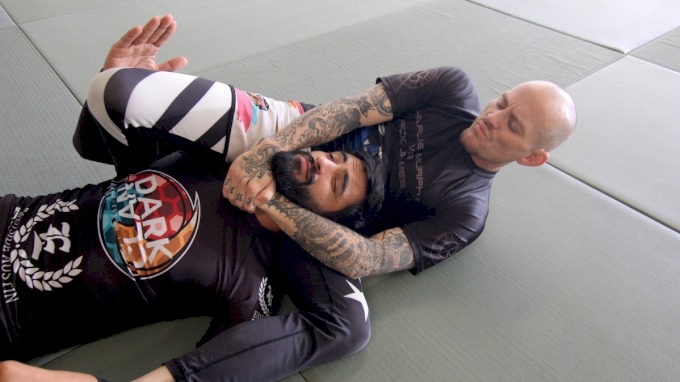
A No-Gi world champion with a rich competitive background, Glover actually managed to pull of crazy stuff in tournaments all the time. That approach is not one we see often with grapplers, who try o squeeze out a win any boring way they can. That is precisely why when I see a Jeff glover DVD on the horizon, I get excited. Choke Artistry once again proved that there’s always something new and crazy to come out of Glover’s mind.

Choking People As An Artform  

If you consider chokes to be simply effective ways of putting people to sleep, I’d point you to the “Choke Artistry” Jeff Glover DVD. It will prove that choke can actually be an art form of their own if you just go deep enough into the endless pit of opportunities that grappling provides. Jeff has been down the rabbit hole and has certainly figured out some Mad Hatter type of stuff while down there.

While Glover is a fan of front headlock chokes, he also doesn’t shy away from arm triangles or strangles from the back. In fact, he likes to mix everything up, from regular stuff like a rear-naked choke, to Gogoplatas and crucifix attacks you’ve never thought of before. The artistry part lies in how he connects everything into one brutal, never-ending loop of choking submissions that is impossible to get out of.

Choke Artistry Jeff Glover DVD Review

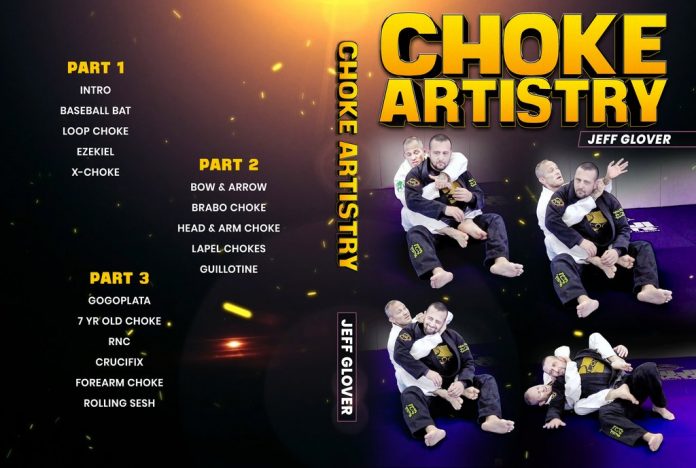
The “Choking Artistry” Jeff Glover BJJ DVD instructional is a three-part one, featuring a wide array of submissions. They are all centered around chokes, although they are not all necessarily strangles. Once again, there are crazy details on choke s we think we know, as well as some choking options that nobody has ever seen before. After all, it is Jeff Glover we are talking about.

The three parts of the DVD all feature different choking options, with and without the Gi. Oh, yeah, this is a Gi instructional so you can expect a lot of innovative lapel and collar work.  The instructional opens up with some basic Gi chokes, moving on to crazier versions of Gi and NO-Gi chokes, before finally coming to a close with a volume full of Jeff’s own creations.

  1. Basic Craziness

Jeff Glover starts the “Choke Artistry” DVD with stuff everyone knows, mostly centered around choking with the help of the Gi. The first choke he goes over, after a short intro of course, is the baseball bat choke. this elusive choke that works from both top and bottom has some funky details that often escape people. Trust Jeff to point them all out and solve this choke once and for all.

A few other staple Gi chokes follow, in the form of the loop choke, Ezekiel choke, and X-choke. Out of all of them, I particularly enjoyed Jeff’s take on the loop choke, as it is highly unusual and features slightly different arm placement than what we’re used to. After trying it, however, I’ll likely never go back to the “old” version again.

  1. Next Level Craziness

In the second volume of the Instructional Jeff steps it up a notch, combining a bit of Gi and No-Gi chokes together. The bow and arrow come first, with an interesting twist (literally) to things. There’s also some key angle discussion in there that will change the way you approach the bow and arrow.

Going forward, the Brabo choke makes an appearance, with all the craziness that you’d expect from Jeff with it. Given that the Brabo is just another name for the Darce, it is somewhat of Glover’s specialty and he paves it by demonstrating Gi and no Gi version of it that will get you more taps than ever before. From there, he goes into lapel chokes, before using the head and arm choke to transition into the world of No-Gi chokes, albeit shortly.

The guillotine choke is the final piece of the puzzle in the second volume of this Jeff Glover instructional DVD.

  1. Jeff Glover At-his-best Craziness

Jeff Glover choke ArtistryFinally, a volume filled with some innovative and typical Jeff Glover stuff. Everything, from the adjustments and variations of the moves we know, to the names of those we don’t, simply screams Jeff Glover. I guess this volume is where the “Choke Artistry ” DVD earned its name.
Opening up is the Gogoplata, as the most “usual” of chokes demonstrated here. How come? Well, the other options include the “7-year-old choke” for example, which will have you stare with an open mouth for several minutes. But that’s not all.

Jeff uses this final volume to demonstrate key twist to the rear-naked choke, crucifix choke, and forearm choke that will provide you with a different dimension of back attacks. There are crazy useful details in this DVD, and Jeff tops it off with a rolling session where he shows not just all the chokes he demonstrated, but also creative ways of linking them together and transitioning.

Wrap Up

Jeff Glover always has something interesting to show. On the subject of wacky ways to choke folks unconscious, he is pretty much the authority. “Choke Artistry” is exactly the BJJ DVD you would expect from Glover – unorthodox, attractive, and efficient. Gi and No-Gi chokes included, this instructional will make you a better submission artist.

ON SALE HERE:
Jeff Glover – Choke Artistry

Jeff Glover choke Artistry
Free Videos and Techniques List

Grappling Cross-Training: Benefits Of Sumo for BJЈ

Sumo for BJJ cover

Have you ever considered sumo wrestling? I’m not talking about becoming huge and competing for ina professional sumo wrestling tournaments. I’m talking about looking into the art to figure out aspects of it that might be helpful for BJJ. We “steal” stuff all the time from all other grappling martial arts anyway, so it figures that there should be something Sumo has to offer as well. The answer is that there are lots to learn from Sumo for BJJ, we just need to open up our minds and recognize what will work. And no, it does not refer to ultra-heavyweights only.  

Grappling cross-training is a logical way of advancing in grappling martial arts. Given that Brazilian JiuJitsu does not suffer from the dogmas other arts and sports have, it is free to feed upon anything that comes out of grappling sports and can be useful. Sumo for BJJ is a little bit out there, I know. However, there are certain aspects of this art that can really help improve your БJJespecially when it comes to standing exchanges 

History of Sumo Wrestling 

Perhaps you did not know this, but Sumo has its’ roots in ritual Shinto dancing. Shinto dancing was a ritual where the most powerful men showcased their skills in front of the gods. This was believed to put the gods in a good mood so they would provide a good harvest. From the dance, Sumo evolved into a way to prove how ready someone was for hand to hand combat – an initiation of sorts. After a while, professional wrestlers emerged, turning Sumo into a sport and giving it the foundation upon which modern Sumo was built.   

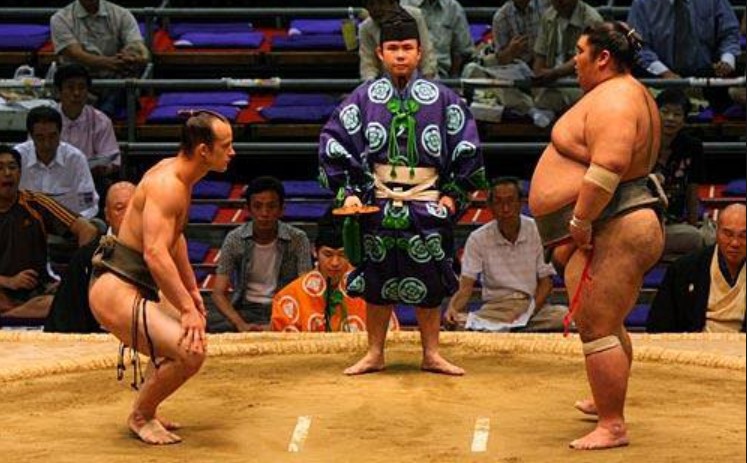
Sumo for BJJ RulesSumo wrestling might seem funny, with grown overweight men sporting man buns and nothing but a huge thong try to push each other outside of a really small ring. However, there’s a lot of technique and tactics to it. Basically, Sumo is the oldest organized sport, dating back more than 1.500 years ago. It has gone through many changes throughout the years and has seen Korean, Chinese, and Mongolian wrestling influences during that time.  
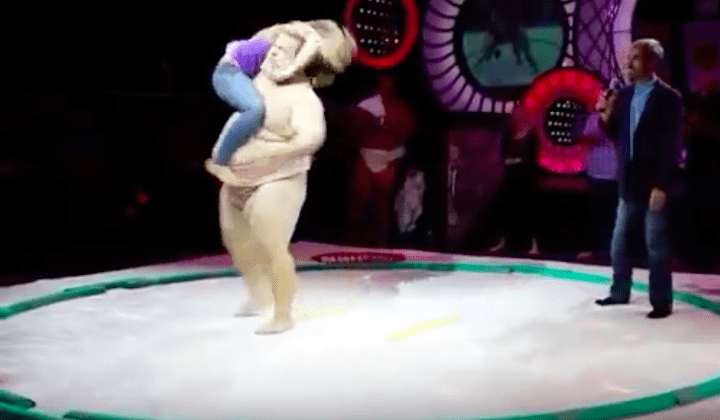
“Sumo”, in a loose translation means “mutual bruising”. I guess if it wasn’t already taken, it would be the perfect description for Jiu-jitsu. Early Sumo was in fact a rough affair. It was not just grappling, but rudimentary boxing as well and had very few rules. It was basically, hand to hand combat with more rituals than actual fighting. Even women were allowed to compete in early Sumo wrestling bouts.  

Sumo as a sport really took off in the 17th century, during the Edo period in Japan. It went into a crazy phase in the 18th century with bouts featuring topless women wrestling blind man and similar unorthodox matchups. A more ceremonial form of Sumo, one that gave homage to the early roots of Shinto as well as a modern wrestling-style format were introduced in the 20th century, giving Sumo the form we know today. This is exactly the Sumo for BJJ we need to be looking to in order to improve as grapplers.   

Sumo Rules 

While there is a case to be made for Sumo For BJJ, the rules that define Sumo as a sport are far fewer and much simpler than any other grappling martial art. The main rule is very simple – nothing but your feet can touch the ground. The most obvious rule is that nobody can step outside the bounds of the marked ring, otherwise, they concede the match.  

Illegal moves include the usual when it comes to grappling sports: eye gouging, hair pulling, closed fist strikes (slaps are allowed), and grabbing the crotch area. Interestingly enough, choking is also prohibited, even though you can open-palm strike the throat area.  

Sumo wrestling has no weight classes (duh) and being as heavy as possible provides an advantage to wrestlers. that is precisely why they try to be as big as possible. However, agility also plays a huge part in Sumo too, as sidestepping is often a tactic that only smaller Sumo writers can utilize.  

Today’s sumo takes place in a ring, and consists of ceremonies that last longer than the matches themselves. In Japan, foreigners are now also allowed to try their hand in Sumo, something that was not an option until a short while ago.  

Sumo matches have no time limit, but they usually don’t take too long, given the rules that determine a winner. However, the longest Sumo match in history lasted for 32 minutes.  

Sumo For BJJ  

Finally, let’s see the ways in which we can use Sumo for BJJ. Sumo does have a variety of techniques that, apart from slaps, include throws, leg trips, thrusting, an intricate grip fighting system, body drops, and specialized moves. You can see how BJJ can pick up on useful details from Sumo.  

Sumo for BJJFirst and foremost, an ara in which Brazilian Jiu-Jitsu really needs to improve in – clinching. Sumo wrestlers do favorize the over-under clinch, although double underhooks are also an option. However, the way they control the clinch is different, given that the worst thing that can happen is someone pushing you outside the bounds of the ring. the ways in which Sumo wrestlers control and brak the clinch are unlike any other grappling martial art out there.  

The single leg is another area where Sumo For BJJ makes senseSumo wrestlers do like to go for single leg variations, given their size. However, they have a twist to the traditional single leg. Different grip variations, including grabbing the thigh with an undrehook from the outside, or an overhook from the inside ara common in Sumo.    

Speaking of takedowns, the throws Sumo employs are kind of Judo-like but do not include the use of a Gi. In other words, they’re perfect for No-Giparticularly some neat body drops that nobody is going to expect. As far as I am concerned, the twisting throws and takedowns, (involving control over an arm, a leg, or Nelson likE head control) have a lot of potential when it comes to Brazilain Jiu-Jitsu or MMA for that matter 

Conclusion 

Sumo For BJJ is perhaps not the most obvious option for grappling cross-training, especially compared to the likes of Judo, wrestling, Sambo, catch werstling, etc, which appear to have a lot more carryover. However, Sumo is highly technical and does employ unorthodox ways of controlling an opponent. While it may any not offer as many different takedown options it does offer a way to control someone in a clinch and force them into corners of the ring where you can apply your game. In other words, it is the perfect thing to supplement your Jiu-Jitsu – people won’t know what hit them, and the techniques are not hard to master 

Hitchhiker: The Best Armbar Escape Ever?

HItchhiker armbar escape

The armbar is the highest percentage submission in Brazilian Jiu-Jitsu to date. Both Gi and No-Gi, there’s no other submission hold that features more than the armbar, at all levels. As such, even though it has been beaten to death by use, there are still people that really struggle to get out of armbars. That is understandable, as the entire approach to defending them is, well, less than effective. After all, the highest percentage submission requires just as equally high percentage escape, doesn’t it? The Hitchhiker is exactly this type of armbar escape.

There’s no Jiu-Jitsu without submissions,. However, subs wouldn’t be half as fun as they are if there weren’t also submission escapes and counters. In that sense, I can tell you that I have turned from a year-long submission hunter into one of those people that look to escape everything, trying to frustrate training partners into oblivion. Submission escapes are just as fun as submission holds, and the highest percentage armbar escape you have to make people want to tear their hair out is definitely the Hitchhiker.

Armbar Mechanics

Armbars are a beautiful thing. They are the perfect BJJ move, allowing a small, weak, unathletic person to easily subdue a bigger training partner/opponent. The armlock is one of the oldest submissions in existence, one that can be traced back to the Japanese Ju-Jitsu roots. Gaining popularity through Judo, it is now a staple of submission grappling arts everywhere, but none utilizes it more than Brazilian Jiu-Jitsu.

The way an armbar works is simple – you force the elbow joint to bend in the wrong direction. Since this is anatomically impossible, the end result should be a separated elbow joint. Given that this is a joint, the armbar does not provide a break, but rather a tear of all the soft tissues keeping two bones together via a joint. Painful and debilitating.
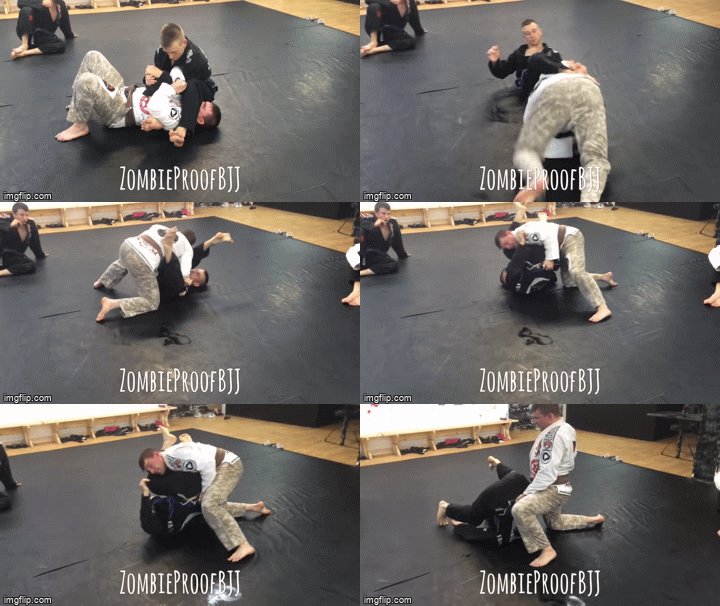
A straight armlock, a.k.a armbar works only because the two joints that are adjacent to the elbow which you’re attacking are staying put. This is the mechanical advantage of every armlock out there, bent or straight, but with the armbar, they’re very pronounced. Namely, you are using your thighs and hips to isolate the shoulder joint, while at the same time pinning the wrist to your chest with the help of your hands.  The finishing details actually require you to hold the shoulder and wrist in place while moving the hips up. Trying to manipulate the wrist joint at the same time will actually take away from the power of the armbar. In fact, this is what the  Hitchhiker armbar escape is based upon.

The Hitchhiker BJJ Armbar Escape 

What is the Hitchhiker armbar escape? Well, as the name states, it is away out of an armbar. However, it is the nature of the escape that is interesting, and somewhat daunting to people. Why? Because the Hitchhiker is a late escape, one of those that takes place extremely close to the point of submission. But, then again, late submission escapes are arguably the only ones worth doing, given the extremely high percentage rate of success they have.

The Hitchhiker armbar escape will work when your arm is extended. With a bent arm, you won’t be able to get the same results. That, however, also means that you have to risk someone submitting you from time to time. It is highly worth it, though, and as Gordon Ryan famously proved against Craig Jones in the final of EBI 14, it is also extremely effective.

This armbar escape starts the moment your grips separate. As your arm extends towards the opponent’s chest, you should already be in motion with your body. This is the power of the escape – it is your body that gets the arm out, as opposed to your arm trying to wiggle out.

HItchhiker armbar escape demoThe first moment of a hitchhiker armbar escape is to let go of the grip yourself rather than waiting for an opponent to bark it. That puts you in control of the motion. the motion in question is turning your arm so that the elbow points to the ceiling, which is possible only if you move your body right. First, look to raise the shoulder of the arm you are defending as high of the ground as possible If you can be on your side, it would be ideal. Then, you want to start moving your legs in the direction of your head, allowing your arm to twist like a screw. The end goal is rolling over that bottom shoulder to end up not just on top, but out of the armbar as well.

The Reverse Hitchhiker?

Another late option in terms of an armbar escape would be to go in the opposite direction of the Hitchhiker. The concept is fairly new and is one that escapes master Priit Mihkelson has been messing around with. I am having quite the success with it, so I’m going to give it a short mention here.

As far as late escapes go, the reverse Hitchhiker is probably the latest armbar escape in existence. This move starts as your arm is fully extended and under the control of your opponent. The absolute key moment here is getting the shoulder out, and not thinking about the elbow. hard, I know, but it will be worth it. That shoulder has to get out from between the legs, and the best way to do it is to turn to your side, looking to bring it up.

This position of the shoulder really takes away from the mechanics of the armbar as it becomes difficult to get breaking pressure without controlling two joints. Trying to run in the Hitchhiker direction, though, is not an option, which means you have to go to the other side. As you should be turned with your back towards your opponent, the goal is to look to hip escape your butt into them. yeah, you read it right, into them. It will get you out of an armbar quicker than you can say “Hitchhiker”.

The best thing about this escape is that even if you get stuck, it’ll open up a route to the regular Hitchhiker that is now unstoppable.

Conclusion

There’s no need to fear submission if you have the ability to escape very late. Of course, doing an early armbar escape, before even getting into position is cool. However, when you have to deal with someone having extended your arm completely, it is far more calming to know that you have not one, but at least two very effective late escape options to turn to. It is time to start giving away arms and frustrating your training partners!

DVD and DIGITAL Instructionals Related to Escapes :

Ultimate Armlock Escapes by Henry Akins

Systematic Armlock Defenses by Ante Dzolic

Submission Escapes by Tom DeBlass

Exit The System by Garry Tonon

The 6 Dumbest Ways To Get BJJ Injuries

6 Dumbest ways to get BJJ Injuries

BJJ injuries are a part of the sport, and most grapplers come to terms that they’ll never wake up pain-free again. In most cases, injures tend to be stuff that is either not serious at all, or will pass given time. Usually, BJJ injuries come down to stuff that is more uncomfortable and just painful rather than injuries that require surgery or other dedicated medical help. That said, nobody likes injuries. In all the ways you can get an injury doing Jiu-Jitsu (and there are many), getting one doing dumb stuff is the worst. Check out six examples of the dumbest wats in which you can injure yourself on the mats.

One of the most anticipated fights in UFC history (and one that never materialized) was the match between Khabib Nurmagomedov and Tony Ferguson. The fight got canceled five times (I think), and one of those was down to an injury Tony sustained. The injury was a severe one – ligament tear in the knee. How did Tony get it, though? He tripped on some cables while on UFC media duty. Talk about a dumb and unexpected way to get an injury! Well, there’s a lot of that in terms of BJJ injuries, especially when people goo around on the mats.

Training With Common BJJ Injuries

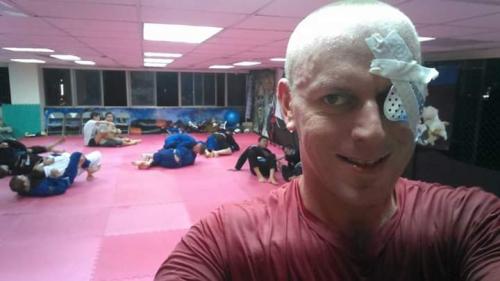
Dumb BJJ InjuriesTo be honest, there’s no uncommon injury for people that train BJJ. I’ve seen or heard just about everything in terms of BJJ injuries, from stubbed toes to broken necks. I guess in a sport as crazy as Jiu-Jitsu you could expect everything to be common. That said, nobody likes injuries, even though there’s a lesson to learn from training with one (or three).
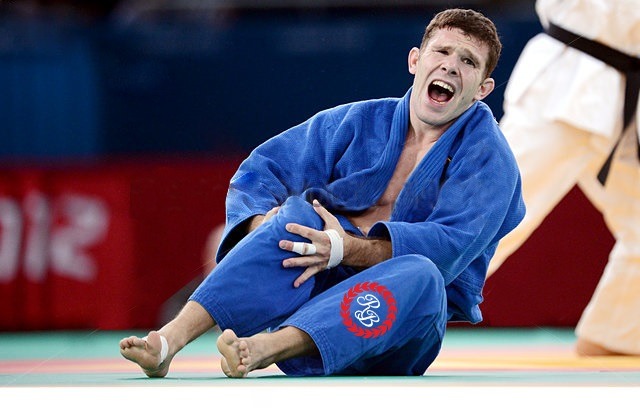
I have to insert a disclaimer here: do not train while you are injured. I know absolutely nobody apart from those having to undergo surgery will listen to it (including me) but still, I have to state the obvious. Now that we have that out of the way, we can talk about how to actually train with common BJJ injuries.

While training with BJJ injuries is possible, rolling with them should be avoided. Since most of you are not going to heed that advice as well, let me share a few pointers. When you have an injury, you have an opportunity to widen your game. Try different things out, preferably those that le you use your body without aggravating your injury. It is a great way to learn new stuff and still be able to train while allowing your injury to heal up.

That said, I have to also note that training with an injury and not adjusting your game should perhaps be considered as another very stupid way to get injured. It not only risks further damage to the injury you have. It also risks developing a new one which is bound to appear as a result of your body compensating for you not using a certain part of it.

6 Dumbest Ways Of Getting Injured In Jiu-Jitsu

Of course, if there were only 6 dumb ways of getting injured in Brazilian Jiu-Jitsu, not so many of us would end up nursing bumps and bruises (to put it gently). There are plenty of other ways, some dumb, some not, but the ones I’m about to list below just keep on being reasons for stupid BJJ injuries over and over again! If I never see another injury because of one of these, I would be a very happy grappler indeed! Somehow, though, I doubt that will happen.

Too Stubborn To Tap

6 Dumbest BJJ InjuriesHow many times have you tapped too late to a submission? Yeah, I know, you don’t like to tap out. You’ll learn to love it soon enough, but it would be great if you don’t get an injury while you’re working on taming your ego.
After a while, you’ll figure out that tapping out is a must. However, you’ll need to learn the fine line between being too stubborn to tap and looking to get better at late escapes. Sacrificing a leg/neck/arm just because you don’t want to tap is neither a good way to defend nor a smart thing to do. In fact, it is one of the dumbest ways that guarantee you get an injury unless your training partner has the composure to let go.

Oh, and another thing – not tapping in a tournament won’t make you a tough guy/girl, but rather a very injured one. Admit the defeat and tap instead of having to sulk about getting an injury in one of the dumbest ways imaginable.

Flying Without Wings

For all of you out there that love to do flying stuff – don’t. Apart from there is absolutely no reason to send your body flying in the air when doing Jiu-Jitsu, there’s such a high risk to reward ration with flying attacks that they’\re simply not worth even considering. Yeah, if they work, it’ll look very cool, but can you really perform the move on everyone with a high degree of success? In most cases, it is either you or the training partner that will let injured. I’ve seen people end up with the most idiotic of BJJ injuries while attempting a flying something.

On that note, also consider that inverting like a fidget spinner is one of the dumbest ways of overusing your neck and developing chronic injuries that might even rule you out of the sport for good. Just sayin’.

Skipping Warm-Ups

There is a good reason why every athletic activity starts with a warm-up – we need it! Moreover, BJJ is such a crazy athletic activity, that it requires a thorough and specific warm-up. And yet, most people skip warm-ups like their Covid-19 positive lamas that are spitting everywhere.

Well, try and go to the open mat and just roll and see what happens. OR even dumber, go to a tournament and jump straight in. There’s not a tendon in your body that won’t come close to snapping, and I’m not even going to talk about ligaments and your spine. If there was ever a dumb way to earn BJJ injuries it is trying to fight with people without getting your body ready for it.

“Murphy’s Law”

“Anything that can go wrong, will go wrong”. This law is just perfect for Brazilian Jiu-JItsu. While there’s no way to predict if someone is going to fall not you. Or come crashing into you when you roll, you can definitely factor for it. I’ve seen folks come to train at 100 square meters facility, and with just two pairs rolling, they still end up crashing into each other. With gyms usually packed for rolling, there’s just no way past this in the sport.

There is, however, a way to mitigate things. Be aware of what is going on around you. If you’re about to roll with a 110 lbs. white belt girl, and next to you are 200+ lbs. purple belt competitors, move to the other side of the gym. It is common sense, but one not often employed by grapples. Conversely, it leads to some of the dumbest injuries when someone else’s body comes crashing or flying on top of you out of nowhere. Joking aside, this is the way in which people get the most gruesome injuries, so really do try and develop spatial awareness on the mats.

Wardrobe Malfunctions

I’ve seen some horrible finger injuries happen when people get their fingers stuck in shorts, T-shirts, or even the Gi! While this one is right out there in Murphy’s law territory, it is still something you should factor in when grappling. If your partner has baggy clothes, warn them about it. Roll, but be wary of how and where you place your grips. Moreover, every time there is a Gi involved, grip with clear intentions rather than just holding on to a part of the cloth. You can easily break fingers or toes tangling them up with the Gi, and I’ve even seen ankle injuries because of it.

Belt Promotions

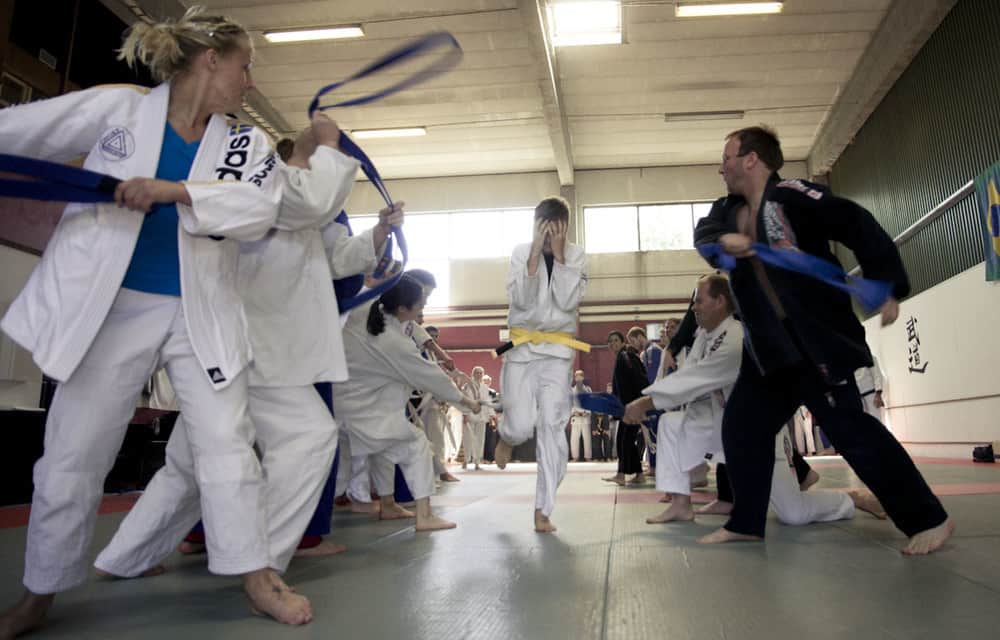
BJJ Injuries gauntletIt has to be one of the dumbest ways that I’ve seen someone get injured in a way that it sidelined them for years! The belt promotion gauntlet is not a good idea anyway. In terms of injuries, it really does cause some of the dumbest BJJ injuries ever.

In one example, I was a person trying to run in order to avoid a few of the more vigorous hitters, only to end up slipping at the end, flying off the mats, and breaking his wrist. It took surgery and a couple of years for him to get back on the mats. Those belt whips also have the potential to cause injuries, especially if someone strikes the neck or head. If you’re looking for one of the dumbest ways to get an injury, not just in BJJ, but in general, the gauntlet has to be it.

In Summary

Getting BJJ injuries is unavoidable. Doing dumb things that get you BJJ injuries, on the other hand, is completely avoidable. This doesn’t mean living in fear of injuries and never attempting a flying armbar, or trying to escape a leg lock very very late. It does mean that you should use common sense and stay safe first, and to everything else second. Why? Because if you have to stay at home or in a hospital with a serious injury, you can’t train. that’s why.

How To Be Safe In BJJ During Hard Rolls On Open Mats

Common BJJ Skin Infections: Psoriasis, Impetigo and Herpes

BJJ Attitude: Be a Martial Artist On And Off The Mats