


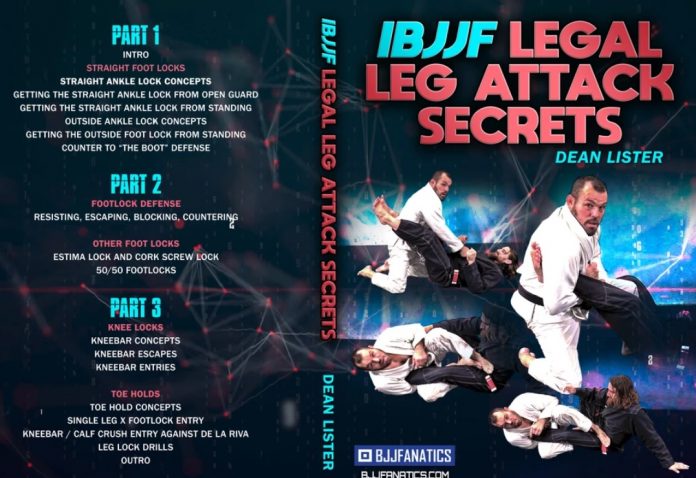
Dean Lister DVD Review: IBJJF Legal Leg Attack Secrets

Dean Lister DVD Review: IBJJF Legal Leg Attack Secrets Cover

Dean Lister. The man who got me into leg locks. Actually, the man who got everyone into leg locks. Dean is the reason John Danaher got so interested in leg locks in the first place. Just one sentence Lister said to Danaher about ignoring 50% of the human body had a butterfly effect on the entire evolution of Brazilian Jiu-Jitsu. Well, the original leg locker is back with yet another awesome leg locking instructional of his own. IBJJF Legal Leg Attack Secrets is just what we’ve been missing from Lister, and as usual, we have the very first Dean Lister DVD review for you.

ON SALE HERE:
Dean Lister – IBJJF Legal Leg Attack Secrets
Dean Lister DVD Review: IBJJF Legal Leg Attack Secrets Cover
Techniques List

A Dean Lister BJJ Instructional is a simple thing. Two things are important – Dean has more knowledge about leg locks than anyone alive. Moreover, he has a great way of presenting information in a way that won’t require you to write down complex flow charts and theн has to remember them while training. In other words, as you’ll see in our Dean Lister DVD review, you’re in for one of the simplest, yet most powerful leg locking instructional ever. What makes IBJJF Legal Leg Attack Secrets even more fun is that it is perfect for everyone, beginner or expert, Gi or No-Gi.

Mr. Leg Locker

Dean Lister has a slightly unusual take on leg locks. And it is just what the doctor ordered. In a time where we might’ve even taken leg locks a bit too far, in terms of systems, positions, and options. It is nice to take a look at a less complicated version of it all. Especially when all of the stuff works. Not to mention that everything in this DVD is 1005 legal as well, meaning you don’t’; have to think about where you are – you just need to do the stuff, the way Dean says you should.

Dean Lister DVD Review: IBJJF Legal Leg Attack SecretsDean Lister is a black belt under Jeffrey Higgs, of the Rickson Gracie lineage. He has been training a while, being a black belt since 2003. That gives him nearly 30 years of experience in BJJ, and a good chunk of it has everything to do with leg locks. Lister has a couple of ADCC titles to his name as well as winning the trials. Despite training with the Gi exclusively for the first 8 years of his career, that right there shows where his true passion lies.

Dean Lister AKA the “Boogeyman” has always been notorious for his foot lock game. He has an impressive number of victories via leg locks, close, I think, to 75 % of all his submissions wins. The most impressive thing is that they range between heel hooks, foot locks, toe holds, and kneebars. Not to mention that some of his victims include people like Saulo Ribeiro, Rodolfo Vieira, Cyborg, etc.

His old-school system was presented in his “K.A.T.C.H.” series which is pretty much a mandatory learning tool for any aspiring leg locker out there. He has since refreshed us on a couple of occasions, but he has never issued an instructional like IBJJF Legal Leg Attack Secrets. Check out the detailed Dean Lister DVD review to see what you’re’ getting with this 3 part instructional.

Going Legal

Let’s get the legal stuff out of the way first. IN Brazilan JIu-JItsu, IBJJF rules are taken as the gold standard. In most cases, of course, but still, these rules are here to stay, and they won’t undergo massive changes anytime soon. That means that if you want to compete in the Gi, are not yet invite-only material, or you simply want to compete for as much as possible, you’ll need to know what you can do in IBJJF tournaments. It is not much, in terms of leg locks, but it is more than enough.

Legally, you can do foot locks at any belt. You can’t do heel hooks at any belt. Toe holds, kneebars and calf slicers are unlocked when you “level up” to a brown belt. Apart from that, you need to be pretty careful of the position you choose to execute your leg locks. The infamous “knee reap” will get you DQ-ed even if you are doing a straight ankle lock from there. That’s it in a nutshell.

If you want to remove a lot of the thinking and wondering, though, and build a legal leg lock game plan, here’s nothing more you need than the latest Dan Lister Instructional. IBJJF legal Leg Attack Secrets really does show you some of the “secret” things you can pull off in any IBJJF match to get airtight foot locks, Dean Lister-style.

IBJJF Legal Leg Attack Secrets Dean Lister DVD Review

The IBJJF Legal Leg Attack Secrets instructional is an easy one to follow. Dean has everything set up in three parts, which are further divided into sections. Now, Lister wants to talk, so you can expect chapters in this instructional to be long and detailed. That doesn’t make them complicated though, which is something of a special trait of Lister.

The instructional opens with straight foot locks. If you think these don’t work at the highest level, try and watch some of Dean’s ADCC matches. He actually talks about examples from his matches against high-level opponents as he clears foot locks up. The second part has two main sections, one on defending foot locks, and the other on “other” foot locks. Finally, in the third part, Lister covers knee bars and toe holds, along with some great leg locking drills.

The ply-by-play Dean Lister DVD review of his IBJJF Legal Leg Attack Secrets is as follows:

Part 1 – Straight Foot Locks

The IBJJF Legal leg Attack Secrets instructional starts with a crash course on foot locks. If you’re one of those people that think straight foot locks don’t work at the highest levels, this is the DVD to change your mind. Dean offers crazy details when it comes to the concepts behind ankle locks. Moreover, he likes to use a simplified version of positioning for ankle locks.

In this highly illuminating portion of the Dean Lister DVD review, I learned that you don’t have to use the Ashi Garami system to get a solid ankle lock on anyone. Den has setups from standing, open guard both on the outside and inside. Moreover, he puts a huge nail in the coffin of the “boot” defense most people try to use against straight foot locks.

Part 2- Defense And Unusual Foot Locks

Right after Dean takes care of the usual “boot” defense, he goes into some defensive concepts of his own. He has a different take on defense. In fact, he doesn’t just look at defending foot locks. On the contrary, he categorizes the defensive leg lock game as escapes, defenses, and counters. That means that once a defense is in place, Dean either completely disengages from a leg lock battle, or goes into counter leg locks. He explains this entire concept to perfection inside the DVD.
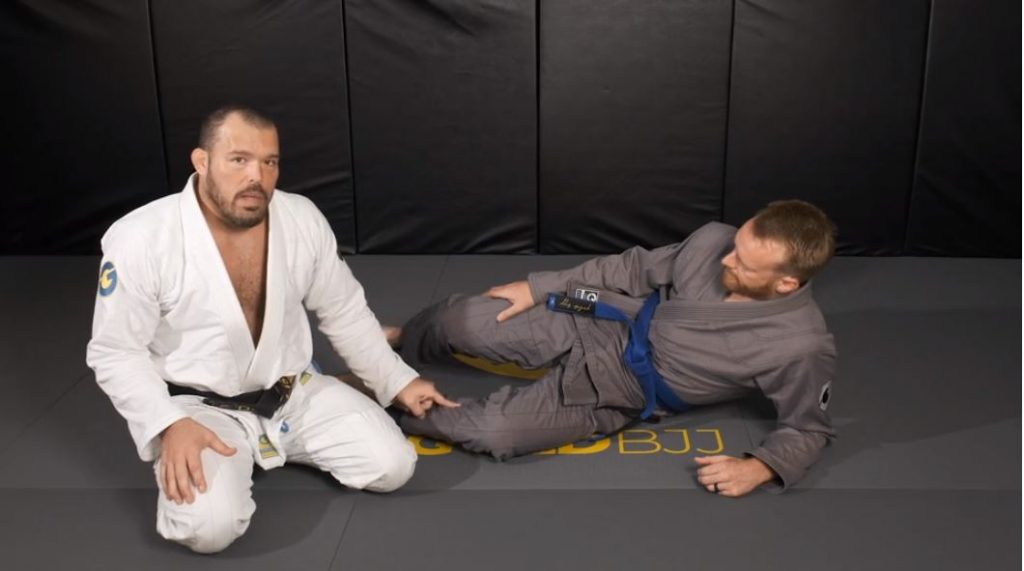
IBJJF Legal Leg Attack Secrets Dean Lister DVD ReviewThe second part of this volume covers some not-so-usual foot locks. Thee includes primarily the Estima lock and the Corkscrew lock. both are pretty innovative and have an “unregulated” status under the IBJJF. For now, you can do them at almost all levels (Estiam is forbidden at white belt level” but do make sure you check back the rulebooks for updates. Apart from that, you also get an insight into 50/50 position IBJJF Legal Leg Attack Secrets.

Part 3 – Knee Locks And Toe Holds

Finally, something to treat brown belts. Keep in mind though, that you might be allowed to use kneebars and toe hold from the brown belt, but you can learn how to do them way before that. That said, this was the favorite part of this Dean Lister DVD review for me.  I really enjoyed this portion, which starts with Kneebars. The organization here is extremely simple. Dean shares his basic concepts first. Then, based on them, he shares escapes and entries into kneebars. Simple, but easy to replicate and add to anyone’s game. Dean Lister DVD Review

When it comes to toe holds (a personal favorite of mine) Dean’s take is extremely detailed. Perhaps the most detailed portion in this instructional is the final section on toe holds. Of course, the mechanics and concepts are what Lister starts with. However, it is the stuff he covers later, like getting toe holds from the single leg X guard and combining them with kneebars and calf slicers against common guards that are literally worth gold.

Wrapping up is a portion of leg lock drills that are simple to do and easy to implement. Plus, they’ll make you really, really good at foot-locking people.

All In All

A Dean Lister instructional on IBJJF Legal Leg Attack SEcrets. Who wouldn’t want it? This is the perfect instructional to get while in COVID-19 isolation, as you’ll have enough time to watch and study it completely. Imagine the surprise on everyone’s faces when you walk back in the gym in a few weeks when this is over with a whole new toolbox of leg locking skills? I hope this e Dean Lister DVD helps you decide on getting this instructional in order to remove any and all leg lock questions you might have.

ON SALE HERE:
Dean Lister – IBJJF Legal Leg Attack Secrets
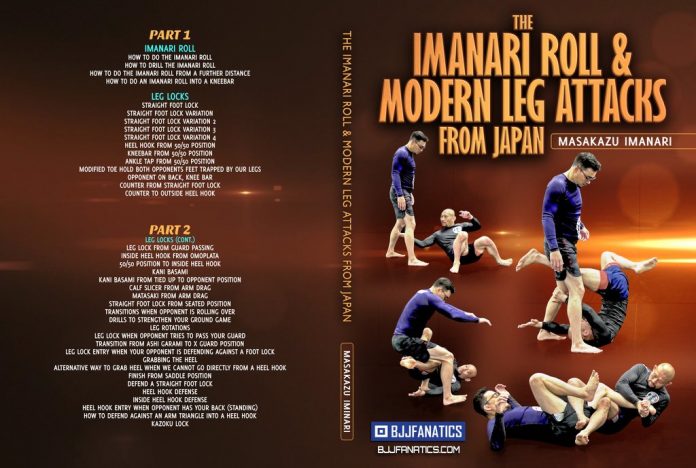
Dean Lister DVD Review: IBJJF Legal Leg Attack Secrets Cover
Techniques List

10 Best Leg Locks DVDs and Digital Instructionals

The Imanari Roll And Modern Leg Attacks: Imanari DVD Review

Masakazu Imanari The Imanari Roll DVD Review

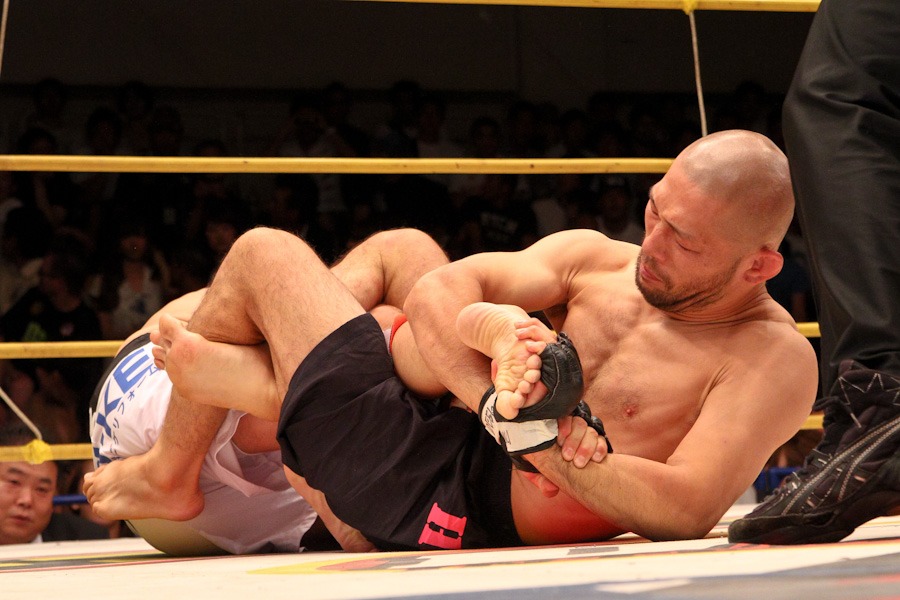
Masakazu Imanari. What do you think of when you read or hear that name? I immediately picture a white canvas, ring ropes and someone’s screaming in pain as their legs are bent in all kinds of unnatural directions. And at the end of it is a small Japanese man, moving around like a cat possessed by a demon. Well, that little Japanese heel hooking wizard, and the man behind one of the most attractive moves in grappling history, now has his own dedicated leg locking DVD instructional. The theme of the DVD is The Imanari Roll and Modern leg Attacks – exactly what the doctor ordered.

ON SALE HERE:
Masakazu Imanari – The Imanari Roll and Modern Leg Attacks

Gordon Ryan Instructional: Systematically Attacking The Back DVD
Techniques List

The Imanari roll is one of the craziest looking, and actually not really complicated moves you can do in BJJ. And by do, I mean that with all the knowledge we have of leg locks now, I mean that even white belts can use it safely under IBJJF rules to get a sweep or an Ashi Garami. That said, who better to learn the move from than the man who invented it, Masakazu Imanari? “Ashinkan Judan”, as he is known, shares a lot of crazy tips and tricks about his infamous roll that every leg locking enthusiast out there is going to go crazy for! You can’t miss this one!

The Scariest Old School Leg Locker

Masakazu Imanari is a 44-year-old MMA fighter from Japan that is legendary for his use of leg locks. That said, Imanari is still an active fighter, with one of his signature leg locking victories coming in just 53 seconds of a match against Kwon Won Li in ONE FC that took place in 2019.

Masakazu Imanari The Imanari Roll Heel HookWith 56 pro MMA fights to his name and a record of 38-18, Imanari has a staggering 27 submission victories in different MMA organizations. He fought under the banner of DREAM, Titan FC, ONE FC, Deep, Pride, and a bunch of others. A staggering 17  of 27 those submission victories have come via a leg lock, something Masakazu Imanari became notorious for from his earliest fighting days. Simply put, there’s no better leg locker in the history of MMA than Masakazu Imanari. Moreover, you’ll hardly find a more efficient and attractive leg lock setups than the Imanari Roll.
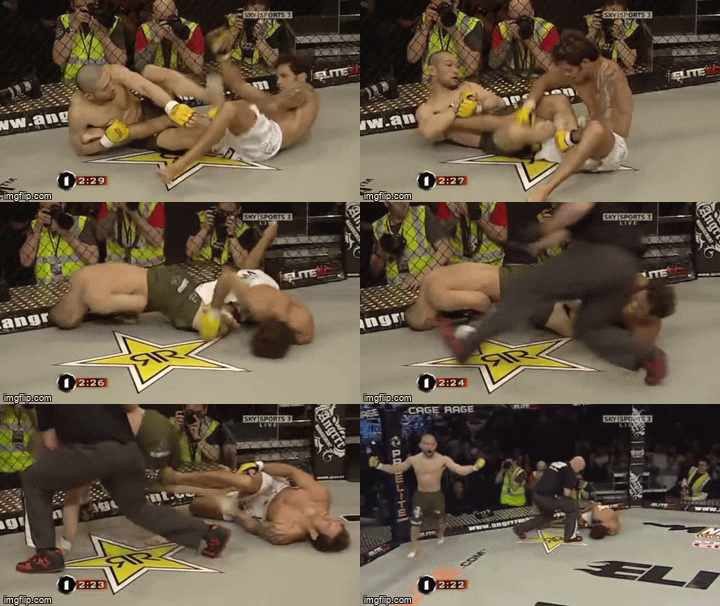
The Imanari Roll

Imanari is a big fan of the 50/50, something that is the signature of old school leg lockers. As Lachlan Giles proved lately, and Ryan Hall is constantly demonstrating, the 50/50 is still one of the best positions to hunt for leg locks.

In essence, the Imanari roll is a Granby roll that takes you from facing your opponent, t an inverted position, and back facing them. The trick is that in the process, you shorten the distance, and get a tight Ashi Grami, or leg entanglement on one of their legs. Whether you go to the 50/50 or into different positions for attacking, can be down to you. Masakazu Imanari himself likes hitting the 50/50 position from there. That said, in modern grappling, the move works great as a sweep as well as an entry into leg locks. All modern leg lockers, including the Danaher Death Squad guys, use this move to set up some of the deadliest heel hooks attacks in existence, And now the master of roll himself decided to share all secrets regarding his trademark move in The Imanari Roll And Modern Leg Attacks BJJ DVD.

Masakazu Imanari DVD Review: The Imanari Roll And Modern Leg Attacks

The Imanari Roll And Modern Leg Attacks DVD instructional by Masakazu Imanari is a two-part instructional. It contains a real wealth of knowledge regarding leg locks and covers several different positions that are highly useful for setting up leg locks, and particularly heel hooks, in modern grappling. Furthermore, he covers different submissions, from ankle locks and toe holds, to kneebars and his deadly heel hooks. While this is a NO-Gi instructional, all setups work just as well in the Gi, and apart from heel hooks, are obviously legal to use under any ruleset.

There are two parts to this DVD, with the first volume focusing mostly on the Imanari Roll and 50/50 leg locks that include all four types of submission holds. The second volume is Imanari putting them to use by demonstrating how you can set them all up from a variety of positions and across 23 chapters. As I said, this one is a real treasure chest for all leg lockers out there.

The Imanari Roll Secrets

Opening up the instructional is a dedicated portion of the Imanari roll. In several chapters, Masakazu Imanari covers the basics of executing the roll, pointing out things that only somebody doing it as long as he has can figure out. Moreover, he has a very cool set of drills that are different from anything you might be doing to improve your Imanari roll at the moment.

The part I particularly enjoyed was covering distance with the roll. Imanari demonstrates how you can get the roll to work even if you’re quite far from your opponent. In that sense, the roll becomes a tool for both shortening the distance and entering into leg locks. Speaking of leg locks, the kneebar entry off the Imanari roll is pure gold.

Leg Locks

Masakazu Imanari The Imanari RollAbout halfway through the first volume, Masakazu Imanari switches over more specific leg locks details. With the Imanari roll as an entry, he demonstrates what to do after you obtain the 50/50. He shared 5 straight foot lock variations, to begin with, and some of them have been tested against top names in the MMA world. And proven effective, of course. Speaking of the 50/50, kneebars and hell hooks follow the foot locks. There’s also a weird toe hold setup where you have both legs completely tied up.
A kneebar when someone has your back is a classic Imanari thing and marks his transition into counters. Heel hook and foot lock counters wrap the first volume up.

More Leg Locks

That is an understatement if ever there was one. This DVD contains leg locks, leg locks, and more leg locks. IN this volume, the focus is on getting to all the different leg locks Masakazu Imanari previously demonstrated.

HE shares entries form passing the guard, from an Omoplata, flying scissor takedowns, from the bottom, from arm drags… basically Imanari has a leg lock setup from every possible BJJ position. The real value, though, is in some signature setups like the calf slicer and Matasaki off arm drags that are really worth your time.

Apart from entries, Imanri also goes over some transitions and drills that will help you understand and master all his leg lock setups and combinations. True to the title of Modern Leg Attacks, Imanari doesn’t just leave it at the Imanari roll and 50/50. He also covers popular positions like the saddle, different heel hook variations as well as different heel hook grips. He even shares heel hook defense concepts that are completely different from anything we’ve seen so far.

One thing that really stands out (and seems legit) is the arm triangle escape that leads into a heel hook. Oh, and there’s the Kazoku lock too. Pure brilliance.

Closing Thoughts

It is beyond a doubt that Masakazu Imanari was well ahead of his time with the leg lock game. He was just too focused on MMA to eve really shine in the grappling world. His decades-long pursuit of excellence in lower limb submissions though makes hi ma human encyclopedia on the subject. And now, that encyclopedia has just had its first complete edition, in the form of the Imanari roll and Modern leg Attacks DVD.

ON SALE HERE:
Masakazu Imanari – The Imanari Roll and Modern Leg Attacks

Gordon Ryan Instructional: Systematically Attacking The Back DVD
Techniques List

10 Best Leg Locks DVDs and Digital Instructionals

A Review Of The Last Gordon Ryan Instructional: Systematically Attacking The Back

Gordon Ryan Instructional: Systematically Attacking The Back REview

A new Gordon Ryan instructional. Is there anything more I need to write? So far, Ryan has a solid track record of BJJ instructionals (bar his very first one on conditioning). He has been systematically breaking down some of the crucial positions in BJJ, offering systems he has developed in collaboration with John Danaher. So far, he has stuff on the closed guard, passing the guard, and attacking the turtle. He is a very well rounded grappler with knowledge in all of these areas, but we have been waiting t see something he really specializes in. The moment has finally come, with Ryan’s latest DVD dubbed Systematically Attacking The Back. About time.

ON SALE HERE:
Gordon Ryan – Systematically Attacking The Back

Gordon Ryan Instructional: Systematically Attacking The Back REview
Techniques List

I guess there’s no better time for a Gordon Ryan instructional. The COVID-19 madness seems to be heading towards a resolution that will have us all back on the mats quite soon. That means there’s enough time to spend hours watching this instructional (which lasts a solid 10 hours). Moreover, it means the time when you can give things a try is actually not that far away. The perfect storm. To that extent, what you can expect from Systematically Attacking the Back is the same as any other Gordon Ryan Instructional, but on steroids.

A New Era Of Back Attacks

The back has never been a position that has fallen out of favor, sort to speak. People do not like someone behind them, and for a good reason – we have no idea what’s going on there. Getting the back is highly favorable not just because of the submission options it offers, but also because it lands you 4 points at a tournament – the most you can get. In fact, it is the one position that is considered a top spot to be in under any rule set out there.

That said, the back became notoriously hard to finish from, given the heavy usage. People start to learn to look for the back from day one, and they soon get good at it. That just means defense is also getting the next level. For a period of time, the finishing rate form the back was quite low, particularly with direct submissions like the rear-naked choke, or the bow and arrow choke. Then, the Danaher back attack system, called Straight Jacket came along.

Now, all credit to Danaher who developed an interesting alternative way of dealing with defenses and skyrocketing submission rates, the fat is, he needed people that would execute it. And none of his star students did it better than Gordon Ryan. In fact, the introduced a lot of his own little tricks into it, so much so, that people now try to avoid having him on their backs as much as they are afraid of having him wrapped around a leg. The “Systematically Attacking The Back” Gordon Ryan instructional can be the perfect extension of Danaher’s back attack system. However, it is more than solid to use on its own, particularly for competitors who need results quickly.

Gordon Ryan’s Proven Back Attack System

Systematically Attacking The Back Gordon Ryan InstructionalAfter the initial game-changing flurry of leg lock finishes, Ryan decided to switch things up even as early as his performances at the EBI. At his last couple of performances there, he didn’t really go for the legs, but opted to strangle people, and chose the back as his go-to position. Suffice to say, he did what he does anyway, submit everyone, showcasing he was much more than a one-trick pony.
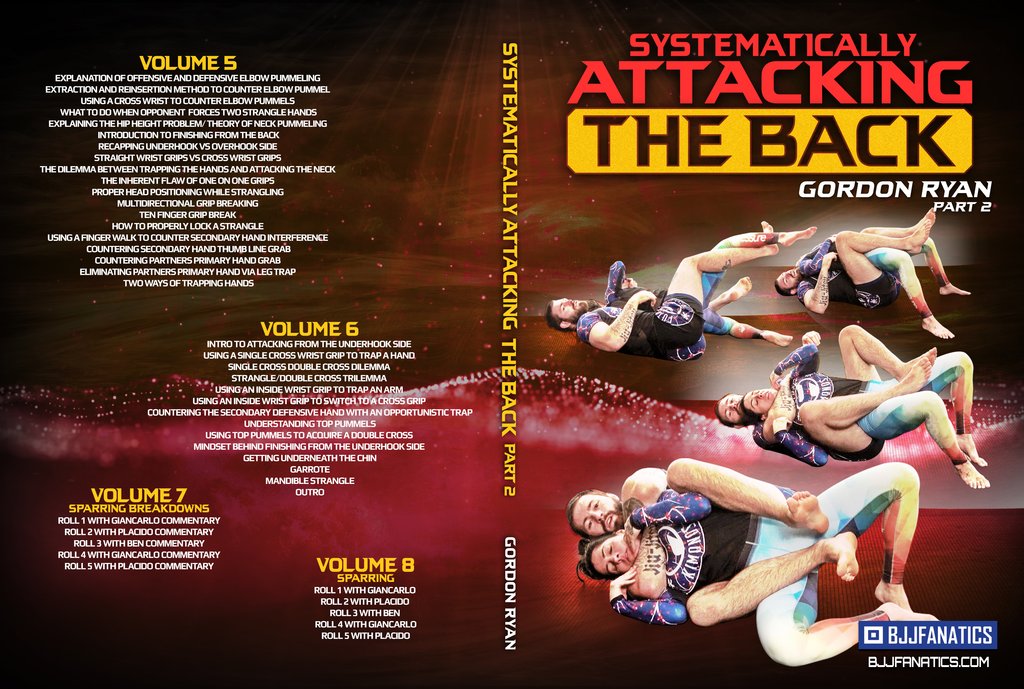
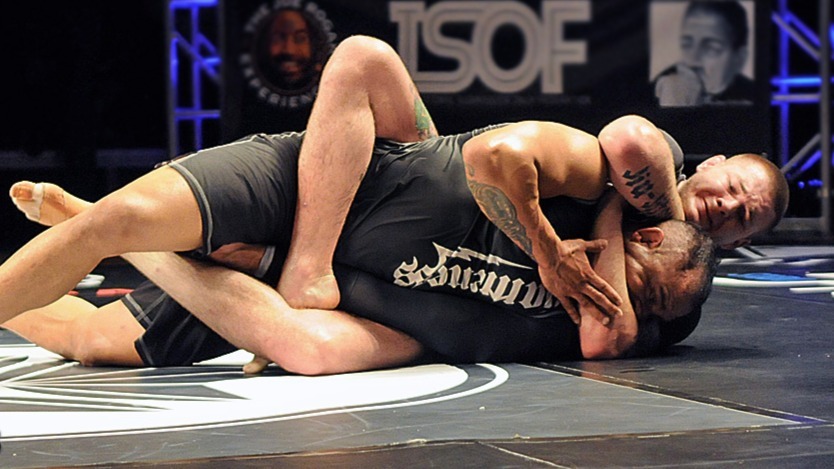
Cue all his performances, well, everywhere, from Third Coast Grappling and Quintet to the ADCC and his back mount became the stuff of nightmares. At the last ADCC, he actually had more submission finishes from the back than any other type of victory. His back system is a polished and competition tested, to say the least. Paired with the fact that the King is just as great at teaching as he is at strangling folks, this Gordon Ryan instructional is exactly what we needed. Personally, I love the back mount and have been studying Danaher’s stuff since it came out. What I can safely say is that if you have the patience to use both, your back attack game will become unstoppable, unless you’re grappling with Ryan himself. In other words, picking up “Systematically Attacking the Back” is a must for any BJJ competitor out there.

Systematically Attacking The Back Gordon Ryan Instructional Review

As is the case with Danaher Death Squad DVDs, this Gordon Ryan instructional is a long one. It comes in the familiar format of 8 parts, starting with concepts you’ve never thought relate to the back, and ending with some, by now mandatory, narrated rolls, or as they’re called in this DVD, sparring breakdowns. In between, them are the volumes where all the back attacking sorcery of the world’s best grappler is. And he is revealing his secrets in Systematically Attacking The Back.

We’re used by now to a lot of information when it comes to a Gordon Ryan Instructional. Well, feel free to expect more. Yeah, that’s right. In this DVD, Ryan surpasses even himself in the amount of detail he shares. Expected, I guess, given his proficiency with strangling from the back. Expect a lot of back retention details that even Danaher skipped over in his instructional. IN other words, nobody is going to be able to get you off their back, and that’s where the main focus of the DVD is. Well, that and a bunch of different ways, each more brutal than the other, to choke someone from behind.

Part 1 – The Inner Workings Of The System

Introduction, a few principles, and straight down to work. That’s how the “usual” Gordon Ryan Instructional starts. Well, the portion on “a few principles” is extended in this one, to say the least. There’s a unique approach to the body and the concept of asymmetry that is going to change the way to attack in general, not just form the back.

Control is a big theme here, and Ryan goes over different aspects of it. As it turns out, there are many little nuances to staying on someone’s back, and being in total control all the time. Ryan uses several different control mechanisms, all of which are explained here. The information in this volume is crucial to understanding what comes next, so be sure to really spend some time understanding what Ryan is demonstrating.

There’s also a lot on goal setting in this opening volume. Another interesting approach of Ryan’s which states that you should have specific goals, both offensive and defensive when you have the back. Grips have a lot to do with this, so he goes deep into the intricacies of grip fighting form the back as well. The volume ends with an introduction to the overhook side, or the one Ryan seems to favor attacking from.

Part 2 – Riding The Back

The interesting about the back is that it is not really easy to get, and it can be extremely difficult to stay on it. And I’m not talking about having any sort of control yet. I’m just talking about becoming a human backpack that is impossible to shake off no matter how an opponent rolls or wiggles. IN other words, that is riding the back, and exactly what Ryan focuses on in the second volume of Systematically Attacking The Back.

He starts off with hooks, and how you can use them to control even when opponents try and clear them. The first ride Ryan goes over is the high ball ride, and it ties in perfectly to attacking from the overhook side. In fact, this entire volume focuses on controlling from the overhook side, although there are some references and comparisons to the underhook side too. A few neat counters to grip defenses are also on the agenda here, with the half claw one to keep an eye out for in particular.

Part 3 – Countering Movement

As Ryan starts to explore the underhook side, he also tightens things up, even more, form the back. In this volume there’s a lot of attention to head position, and how to keep the hooks on even when opponent’s try to clear them off. It is also where Gordon goes deeper into explaining some of the terms he uses in his back system, and how they differ from each other, and from conventional methods of control. The ball ride makes an appearance again, this time in relation to the underhook side.

Countering movement goes so far in this part of the Gordon Ryan instructional, that he offers an option at every step of an escape, from trying to clear a hook to an opponent successfully getting to the turtle. In other words, this is where you learn to stay glued to the back as Ryan does.

Part 4 – The Cross Body Ride

The Danaher Death Squad likes to use a lot of wrestling in their game, and that is apparent once again. the cross body ride is something most people in BJJ do not spend any time on. Well, after this instructional, you’ll be looking at it from a very different perspective. I know I am. Suddenly, the cross-body ride becomes the perfect checkpoint to linger in and use to get to or reclaim back position. And that’s exactly what Ryan demonstrates in this proton of Systematically Attacking the back.

Moreover, he shares a few neat and unexpected submissions from there. In those terms, he goes over a sneaky guillotine, a brutally effective hammerlock, as well as some smooth transitions into Ashi Garami and the invariable leg locks.

Part 5 – Grip Fighting And Finishing

For me, winning the grip fight has always been the number one battle form the back. There are different ways of staying on the back, although Ryan’s are definitely the only ones you’ll need. Still, grip fighting, particularly with stubborn opponents, can be a really frustrating thing. That said, after watching this volume of the Gordon Ryan instructional, I can’t wait to go back to the mats and test a few theories out.

In terms of this instructional DVD, his volume is the biggest one. Ryan covers anything you might think of, from pummeling to losing an underhook. There’s some information here that was clearly lacking in Danaher’s earlier DVDs.

Moreover, grip fighting ties in perfectly with finishing, as you have to deal with the grips before ever thinking about strangling someone. A lot of the straight jacket principles are explained further here, with terms like straight grips and cross grips in the focus of things again. There’s also a very big portion dedicated to grip braking, featuring crazy stuff like the ten-finger grip break and some neat grab counters.

Part 6 – The Straight Jacket System 2.0

The cherry on the cake in Systematically Attacking the Back come is n the form of tying everything together in a much more practical version of the StraightJacket system. The grip fighting is the essence of the StraightJacket, and Ryan did dedicate the largest part of this instructional to solving that particular problem. Given the amount of information on riding and controlling, the stage is set for finishing the job. This is also where Ryan rolls out the dilemma attacks.

In other words, he threatens with several things, making the opponent chose the lesser of two evils, which is just another way to tap out, really. Speaking of evils, Gordon goes over some truly diabolical chokes here. It is not just the rear-naked choke, but also mandible strangles and a thing called the garrote choke that will make people’s eyes pop out, literally.

I particularly enjoyed the chapter on the mindset behind fishing from the back. It really is something not many others cover and makes a huge difference in how you approach back attacks.

Parts 7 & 8 – Sparring Breakdowns

Gordon Ryan Instructional: Systematically Attacking The Back DVDAs is the case with any Gordon Ryan instructional, there’s a lot of sparring at the end, with Ryan doing commentary. Of course, he spends a lot of the time sparring going for the back, allowing for all kinds of different situations to arise that people would usually have to deal with.

Whether it is because of the importance of the subject, or because Gordon loves to take the back. Instead of the usual one volume for narrated rolling, Systematically Attacking The Back contains two such volumes. There are 5 rolls in each, and in some of them, we see the return of Placido as a Uke.

In Conclusion

A Gordon Ryan Instructional on taking the back and finishing from there is not something to skip over if you train BJJ. It is pretty much right out there with him releasing a leg locking instructional, which I certainly hope is in the works. That said, Systematically Attacking the Back is yet another amazing DVD that you should include in your collection. Be ready to spend a lot of time trying to figure it out, though, as the amount of information in there sin staggering!

ON SALE HERE:
Gordon Ryan – Systematically Attacking The Back

Gordon Ryan Instructional: Systematically Attacking The Back REview
Techniques List

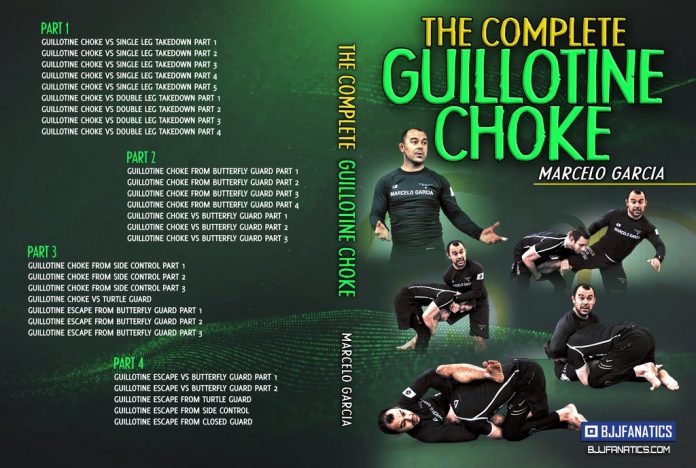
A Complete Marcelo Garcia Guillotine Choke DVD Review

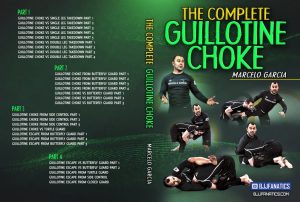
Marcelo Garcia Guillotine Choke DVD Review Cover

Say what you want about Marcelo Garcia, but he is like a pit-bull in anything he does. Just like when he fought, once he sets his sights on to something, there’s no stopping the man. In the case of DVD instructional, we’re all ecstatic that Marcelo has early decided to dedicate to issuing a brand new series. So far, we saw him explain signature positions like the butterfly guard and the North-South choke, the latter of which has never been shown better before. Now, it is time for a third instructional in quick succession – the Marcelo Garcia Guillotine Choke DVD is now out and about. And it is just as juicy as his previous releases, if not more!

ON SALE HERE:
Marcelo Garcia – Guillotine Choke 

Marcelo Garcia Guillotine Choke DVD Review Cover
Techniques List

If you roll No-Gi, then there’s no way you’re not relying on the Guillotine choke. It may just be a way to execute a takedown, get the back or hit a sweep, but that Guillotine always seems to be there in No-Gi. In fact, there are not just many ways to use it, but also plenty of variations on the move. And three’s one man out there that knows them all, and then some! The Marcelo Garcia Guillotine choke is the stuff of legends, the choke every ADCC grappler that ahs went against the Brazilian tried to avoid like wildfire, in most cases without much success.

The Complete Guillotine Choke Guide

With Marcelo Garcia, it is either everything or nothing. The man went without issuing an instructional for more than a decade, instead of focusing on short clips that left people frustrated. It wasn’t a bad strategy though – if you want to learn Marcelo’s secrets, go train with him. Luckily, for those of us that are not so lucky to have access to his Academy, or to any of his black belts, he obviously reconsidered. And, Marcelo being Marcelo, now that he started sharing, he really doesn’t hold anything back.

Marcelo Garcia Guillotine Choke DVDThis Marcelo Garcia Guillotine Choke DVD is the complete guide to everything you’ll lever need to know about this fundamental grappling choke. It is one of the most reliable chokes to use, and, despite some people’s opinion, it does work perfectly even with the Gi. In fact, the power of the Guillotine choke is in all the variety it comes with. There’s so many of them, that you might even get lost at some point. And that is where Marcelo steps in.
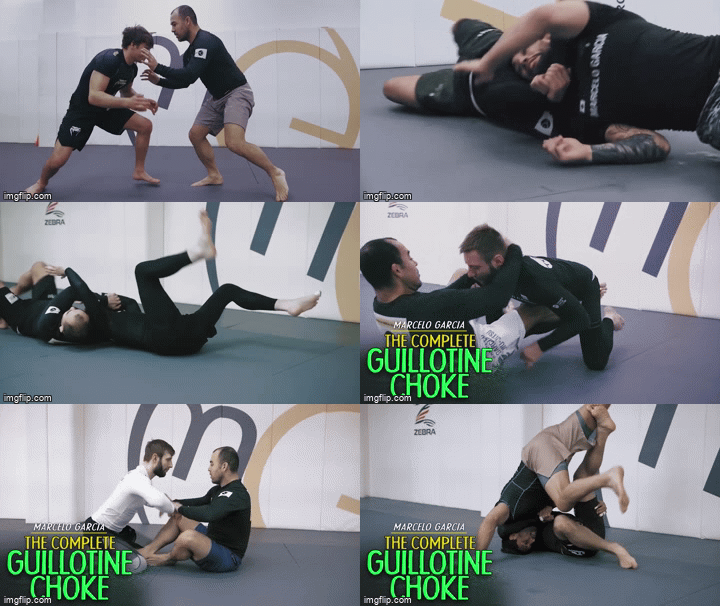
Marcelo Garcia is so good at the Guillotine choke that there’s variation named after him – the Marcelotine. In fact, it is so effective, that it is the nastiest guillotine you can get. However, apart from that, Garcia knows everything about the low elbow guillotine, the ten-finger grip, arm-in variation, and any other guillotine you may think of. And, as you might expect, they all fit perfectly in a system he uses which leaves absolutely no room for escape. Finally, after decades of waiting, the Marcelo Garcia Guillotine choke details are no longer a tightly kept secret!

Marcelo Garcia Guillotine Choke DVD Review

The Complete Marcelo Garcia Guillotine Choke DVD  is just what the doctor ordered. If you do not have much experience with Guillotines. It is the perfect way to start. For those of us that have used them more or less before, it is a great source to learn new things and re-learn some old ones in the correct manner. That said, Marcelo did an outstanding job organizing this DVD in a very simple manner.

The Instructional has four different volumes, with each focusing on a couple of Guillotine related subjects. There are Guillotine setups from virtually anywhere, starting at standing, transitioning through different guards, and ending with top positions setups. Like side control. Moreover, Marcelo shares one of his best kept secrets so far – how t escape and evade getting caught in a Guillotine choke.

Guillotines Vs. Takedowns

With takedowns, it is pretty easy – Guillotines are a great way to deal with wrestling takedowns. The entire first volume of the Marcelo Garcia Guillotine chokes DVD addresses the famous Guillotine counter to single and double leg takedown attempts. There are 9 chapters total, and, with next to no introduction, Marcelo jumps straight in the deep end.

The first 5 chapters detail all the enticing ways in which you can use a Guillotine to stuff a single leg takedown attempt. Of course, Marcelo doesn’t’ stop there, providing different ways of finishing the move at different stages of the takedowns. The same is true for the double leg, where, in 4 chapters, Garcia will teach you how to choke anyone that attempts to grab your legs.

Butterfly Guard Guillotines

Marcelo Garcia Guillotine Choke DVD TrailerThere’s no more recognizable spot for setting up Guillotine chokes than the butterfly guard. As it seems, this s the guard most submission specialists like to use to set submissions up, particularly in No-Gi. Marcelo’s Butterfly Guard is notoriously effective, and was, in fact, the focus of his first DVD instructional after the extended hiatus.
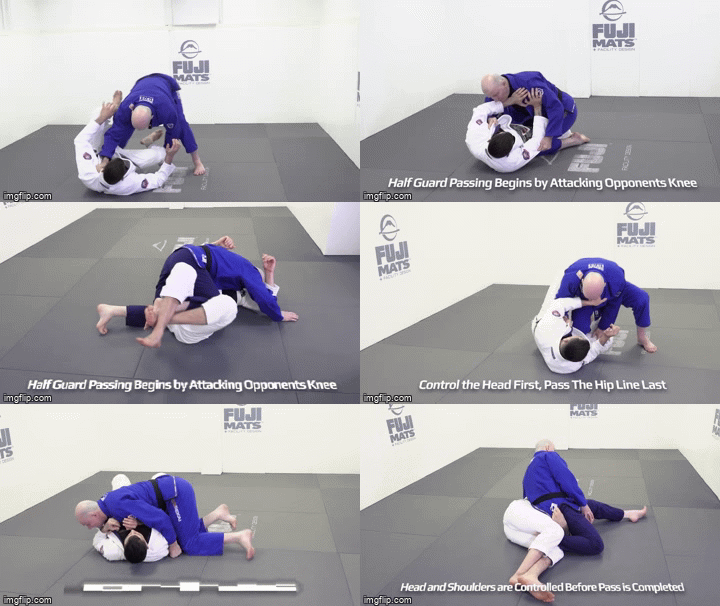
Looking to paint a complete picture of how you can use the Guillotine, Marcelo doesn’t just go over setups from the butterfly guard. Granted, he has almost half a dozen different ways of lifting your opponent into a tight Guillotine, which also, varies from case to case. However, he also shares just as many ways of defeating someone’s butterfly guard by utilizing – a Guillotine choke.

Side Control Guillotine Chokes

This is something you might not have expected, even from a Marcelo Garcia guillotine Choke instructional. While top positions are often used to set the choke up, it is mostly the top Half guard, or perhaps the mount. Not many people op[t for a Guillotine from side control, but then again, Marcelo is not most people.

In this part of the instructional, he focuses on some extremely cool and innovative ways of catching people in a guillotine when in side control. So much so, in fact, there are options for finishing from top or bottom, depending on what your goal is. Moreover, he also deconstructs the turtle, and how you can beat the turtle guard with a very simple guillotine setup.

This is also where Garcia does a gradual transition, switching in the last few chapters to the essentials of escaping Guillotine chokes which is the subject of his next, and last volume.

Guillotine Escapes

I guess this is the volume where most people will find the most useful information. There are plenty of guillotine choke instructionals out there, but very few offers escape details. In fact, this is the only DVD that covers more ways of dealing with different stages of a guillotine choke than any other out there.

Once again, Marcelo uses the same positions as before as examples. That means you get to learn how to escape when in the butterfly guard, turtle, side control, and the closed guard to name a few. Most of the focus is on butterfly guard escapes, as there are plenty of setups form both top and bottom, as we saw earlier.

All In All

If you really made it to the end of this review, you must be convinced by now that getting a Marcelo Garcia Guillotine Choke DVD is a good idea. For most people, it is a no-barrier even from the moment they read the title. It was the case with me, and I have to admit, I went through all the footage in record time, it was that good! As far as the Guillotine goes, it is a quintessential BJJ move that everyone needs in their arsenal, even those training only with the Gi. Actually, they might just need it more.

ON SALE HERE:
Marcelo Garcia – Guillotine Choke 

Marcelo Garcia Guillotine Choke DVD Review Cover
Techniques List

John Danaher Instructional Review: Half Guard Passing and Dynamic Pins

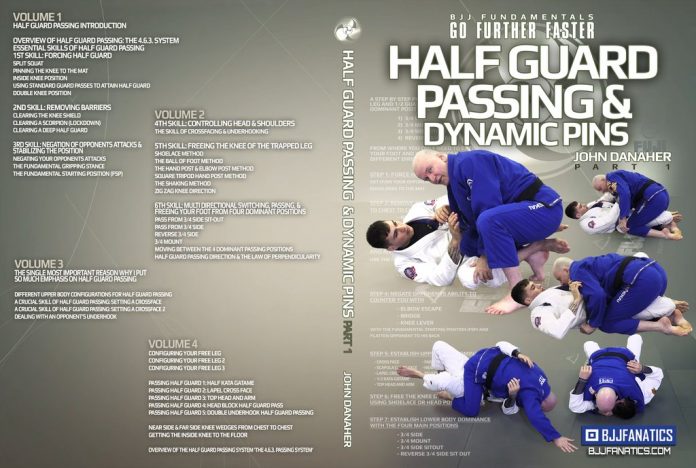
John Danaher Instructional Review: Half Guard Passing and Dynamic Pins Cover

The man with the plan in BJJ is back with his god knows which DVD. While we’ve most definitely stopped counting all the John Danaher instructional DVDs, we by al lemans pay attention to them. And in particular, the latest couple of BJJ DVDs by the Jiu-Jitsu guru seem very interesting. They refer to top positions, after a bunch of instructional dealing with guards and bottom positions. After his take on passing the guard, Danaher now issued a very unique DVD. It is all about half guard passing, which he liked to focus on definitely form general guard passing (explained later) and dynamic pins. This second portion is something nobody has ever covered before. Trust me, I’ve looked everywhere.

ON SALE HERE:
John Danaher – Passing and Dynamic Pins

John Danaher Instructional Review: Half Guard Passing and Dynamic Pins 2
Techniques List

Owning a John Danaher instructional is not a matter of “if” anymore, but of “which”. Let’s be honest, there are too many to be able to take in all the knowledge John is providing. However, most of use have been stacking them up, mostly depending on whether it is Gi or No-GI we’re focusing on. His latest escapade is yet another part of the Gi BJJ Fundamentals series dubbed Go Further Faster. As we know, John likes to teach people how to become extremely good in the shortest time possible. Once again, his DVD contains incredible information and details, this time on the much-needed subjects of Dynamic Pins and Half Guard passing.

Exploring Top Positions with John Danaher

Maintaining a top position in any grappling martial art is the ultimate goal of grapplers. When you come to think about it, no bottom position really score you points. Apart from submitting someone off your back, the only way to start scoring is sweep, which is actually a way to get on top. From there on, top positions earn you the points to win a match. That indicates just how powerful they are and how much you can control someone.

Chirs Haueter likes to emphasize that you should always aim to be on top and stay on top. While getting in a top position will eventually happen in BJJ, staying in one is much more difficult. When that top position is still allowing the bottom person to maintain a defensive line of sorts then you most likely still haven’t passed their guard. And the half guard is the final frontier before starting to earn from dominant top positions in Jiu-Jitsu.

Half guard passing is probably the most difficult, given the position and the fact that there’s no other guard play left for the bottom person. This is one of the reasons there’s an entire John Danaher instructional focusing on this aspect of BJJ. Well, not an entire one, given that Danaher also makes the perfect confection between passing and exploring the nature of dynamic pins in Jiu-Jitsu.

The Dynamic Side Of BJJ Control

Pinning someone has always been something of an art, especially in BJJ. There’s nobody that really tried explaining it in an instructional. In fact, it was extremely difficult for me to find someone to really explain it live for me as well, despite having asked a myriad of black belts in seminars, camps, etc. So, I resorted to wrestling instructionals instead.

However, pining in wrestling, and most other grappling martial arts for that matter is very different to Jiu-Jitsu. Sure, you can learn the essentials from wrestling, but then you have to expand based upon them. It took me a lot of trial and error to figure out that pins in Jiu-Jitsu have nothing to do with keeping someone actually pinned. Instead, dynamic pins are all about control, and more importantly, restricting an opponent’s movement options, so they have to move in the direction of your choosing. Simply keeping someone on the ground will get you penalized in a BJJ match, rather than earing you a win like in wrestling or Judo. This is why the dynamic nature of pins in BJ is unique, and why I’m over the moon that there’s now a John Danaher instructional exploring this “mysterious” aspect of Brazilian Jiu-Jitsu.

Half Guard Passing and Dynamic Pins BJJ Fundamentals Go Further Faster John Danaher Instructional Full Review

It would be redundant at this point to talk about what we can expect from a John Danaher Instructional DVD. There’s hardly anyone among us that has not seen at least parts of one and remained in awe. Well, seeing a Danaher instructional is no longer such a rarity. In fact, there’s arguably too many of them. Still, some really hit the spot, and this latest Go Further Faster volume covering Half Guard Passing and Dynamic Pins is exactly one such DVD.

In this DVD, you get 8 volumes, 5 of which are all about the half guard. Why so much focus on passing the half guard? You’ll get answers in a dedicated volume about that. The remaining three volumes cover dynamic pining. The organization of the material is of course, in a progression, but centers around essential skills you need to master both the passing and pinning aspects. That really makes it easy to follow, remember, and put to use on the mats. Without further ado, let’s get into the play-by-play review of this BJJ DVD.

#1. Half Guard Passing: The Skills

Of course, there’s a “short” introduction to half guard passing as a whole to kick things off. That short introduction will explain all about the system Danaher uses to pas half guard, a system he named the 4.6.3 system. And it is all about mastering 6 essential skills of passing.

The first volume of this Danaher Instructional is all about the first three skills. It starts with forcing half guard, which is something you might already be doing. Some known aspects of the Danaher passing system, like the split squat position and the inside knee position, make an appearance again.

The second skill John covers is about removing barriers, or the “dreaded” frames bottom grapplers use to create and retain space. In other words, things like the knee shield, lockdown, and even deep half won’t present problems ever again.

Finally, the third essential skill of the half guard passing system covered in this volume is about negating resistance and saying in the position you’ve gained. Some key insights into gripping stance and what Danaher calls the fundamental starting position are in the focus here.

#2. Even More Passing Skills

The second volume of the Half Guard Passing and Dynamic Pins Danaher DVD continues where the first stopped. There are three more skills to Danaher’s 4.6.3 system, with the 4th being head and shoulder control. Not unknown, but definitely p[resented form a different perspective to the one we usually have of crossfacing.

The fifth and penultimate skill is something John spends quite a lot of time on – freeing your knee. This is where most of the half guard battle takes place anyway. There are 6 different methods to help you develop this skill and they all tie in together creating dilemmas and trilemmas for the bottom person.

The final skill is about actually getting past the legs. It involves switching directions and completely freeing your foot from any remainders of the half guard, like the 1/4 guard and the ¾ mount. Plus, John shares the four dominant passing positions and how to move between them.

#3. Why Focus On Half Guard Passing?

Finally, an answer to the question most of us had from the start – why a dedicated John Danaher instructional DVD on passing half guard? Well, the single most important thing according to John is revealed here. Moreover, he also goes on to explore subjects like upper body configurations, as well as going really deep into the mechanics of the crossface. If you thought the crossface couldn’t get any more brutal, let me tell you right now, you were wrong.

Wrapping up this portion of the instructional is the all-important chapter on dealing with the bottom person’s underhook.

#4. Passing Variations

John Danaher Instructional: Half Guard Passing and Dynamic Pins DVDThis is the portion that actually holds the information I personally found most helpful about passing half guard. Despite my obsession with the portion of the dynamic pin of this DVD, this volume is one of the most important ones in this instructional. Make sure you pay real close attention to it.
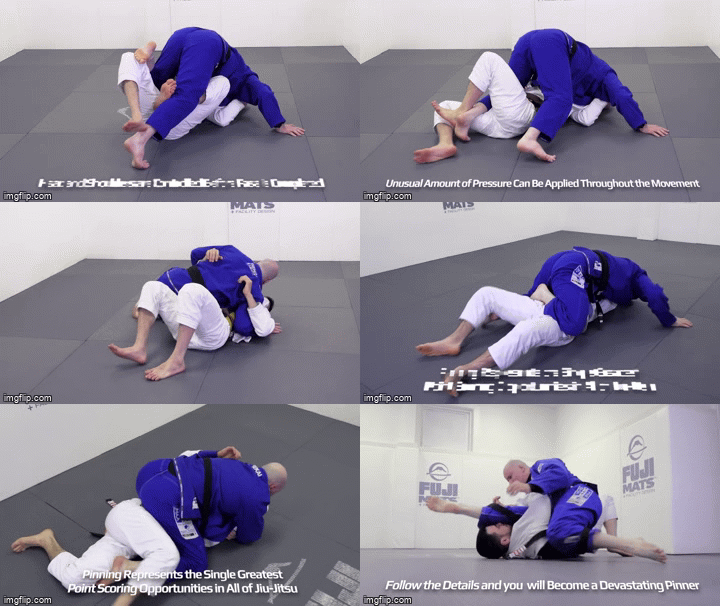
The first portion of the volume is all about lower body configuration, to go hand in hand with the upper body already covered earlier. The bulk of the volume covers actual passing sequences and variations, based on the 6 essential skills of the system. There are 5 different passes: the Kata Gatame, lapel crossface, top head and arm, head block, and double underhook. All of them are covered in incredible depth.

Also in this volume, you’ll find useful information on knee wedges, getting the knee to the floor, and a general overview of the entire 4.6.3 system as a whole.

#5. Dealing With The Half Butterfly

The half butterfly guard get s a volume of its own outside the system because it is arguably, the most dangerous half guard variation you can come up against. Danaher starts with the golden rule of butterfly half guard passing, before exploring more specific things, like upper body grips and lower body positioning. It is all about weight distribution and shifting here. John puts it all together beautifully at the end to provide you with a foolproof method of beating the butterfly half guard. Which gets us to the dynamic pins.

#6. Introduction To The Theory Of Dynamic Pins

Similarly o the half guard portion, Danaher starts off discussing the general theory of dynamic pins in BJJ. The subject is not an easy one, so there’s a lot of talk, and a lot of points to take away. However, this Danaher instructional is definitely the first to really try and put things into perspective for grapplers of all levels.

He starts off by defining pins and talking a lot about wedges, which comes as no surprise, really. Chapters on the base of support, the main goal of pinning as well as 3 golden rules of dynamic pins follow suit. I particularly enjoyed the portion on scoring criteria in BJJ and how pins relate to them.

The portion on static pinning, that’s just put in there on its own might just be the one most important chapter in this entire John Danaher instructional. Just saying.

Wrapping up is a portion on lines of resistance to pins and how to deal with stuff like shrimping, bridging, and pushing.

#7. Essential Pinning Skills

Similarly to half guard passing, Danaher’s dynamic pins system is based on essential skills. Unlike passing, though, there are fewer skills here. In fact, her are just three, to be exact. The first one is all about maintenance, or staying in a pin position for as long as you want to. The pins covered are the side pin, North-South, mount, and back.

The second skill obviously very important,. Given that it starts in this volume, and extends well into the next one. It has to do with transitioning between pins while not letting an opponent escape. That is what dynamic pins are all about, in essence. This volume wraps up with several different ways of progressing from side control to mount, and then form mount to the back.

#8. Maintaining Pins

The final volume of the Half Guard passing And Dynamic Pins John Danaher Instructional DVD covers the few remaining pin transitions to start with. Those are getting from the back into side control and then mount, as well as connecting side control and the back.

John Danaher Instructional: Half Guard Passing and Dynamic PinsThat brings us to the third and final skill of dynamic pins – extracting a foot. This is covered in just one chapter, as there’s a lot of it discussed previously in the half guard passing portions.
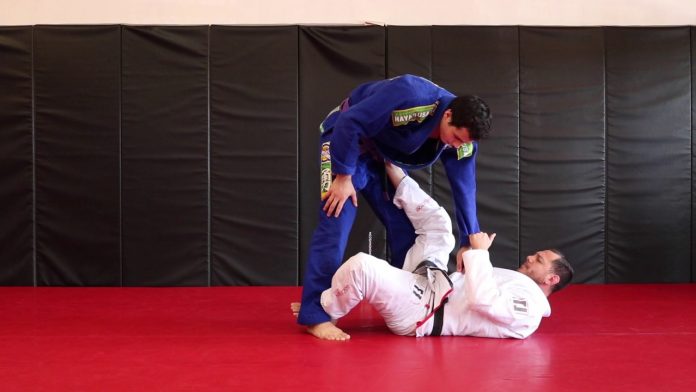
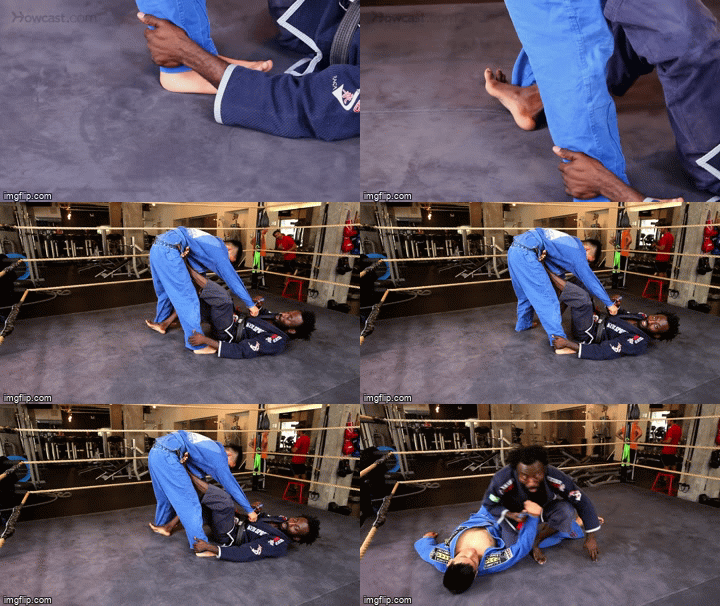
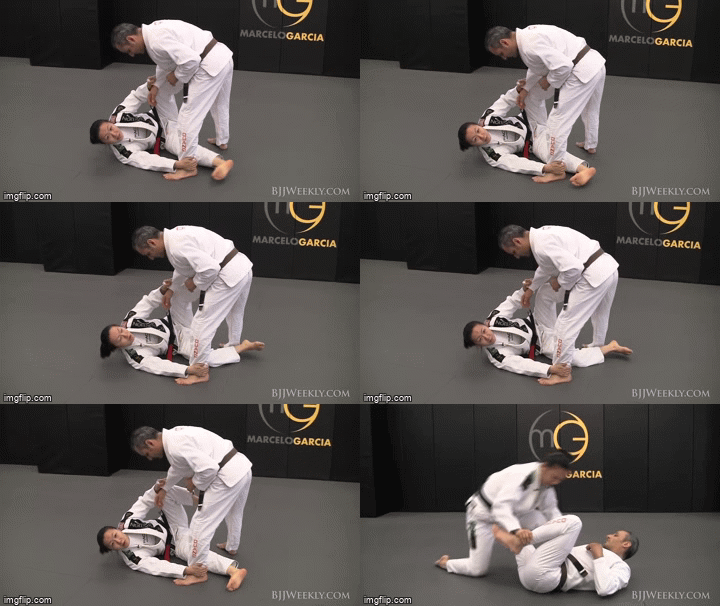
As a wrap-up, there’s a section that focuses on pin retention, or in other words, staying in position indefinitely. Once again, it is all about the mount, side control, and back mount, with key details on how to never get shaken off. Back control gets special attention, as you’d expect from a John Danaher instructional.

In Summary

Passing half guard is not an easy task, but this John Danaher instructional DVD will certainly make it easier. For me, though, the real value of this DVD is in the final three volumes, the ones focusing on dynamic pins for Jiu-Jitsu.  There’s a lot of information in here to process, but it is the one Go Further Faster series DVD that I’ll stick with for the time being.

ON SALE HERE:
John Danaher – Passing and Dynamic Pins

John Danaher Instructional Review: Half Guard Passing and Dynamic Pins 2
Techniques List

How To Use The Tripod Sweep And Sickle Sweep As Checkpoint Guards

Tripod Sweep and Sickle Sweep Combo Guard

You know those moments in Jiu-Jitsu when things you’ve been doing, or trying to do for a while simply “click”? Well, I’ve had one of those clicks not long ago, and, of course, I have to share my thoughts about it. The concept is simple – why not expand the position we use as guards, to include more checkpoints between guards that are already established? For example, if you’re looking to transition from a butterfly guard to an X guard, you have a fair amount of ground you need to cover, so to speak. What I came across are a couple of sweeps along the way, namely the tripod sweep and sickle sweep, that can actually be used as open guards, or checkpoint guards. After some testing, I’m satisfied with how this concept works.

Sometimes, Jiu-Jitsu is way easier than what we make it be. As Rickson Gracie said, “Jiu-Jitsu is perfect, it is humans who make errors”. In other words, Jiu-Jitsu is simple, and it will only be as complicated as we make it. From time top time, these clicks appear though, that put entire areas of BJJ into perspective. I’ve had quite a few of these clicks in the last decade, but this last one has to be one of my favorites. The tripod sweep and its best friend, the sickle sweep are often regarded only as techniques that work for beginners. Nothing could be further from the truth if we only adjust our approach to them.

The “Checkpoint Guard” Concept

The idea of checkpoint guards (for lack of a better term, at least at present) appeared when I was working on the open guard curriculum for classes in my Academy. The idea was, start in the butterfly guard and work towards some of the most common open guard options that work with the highest percentage of success. Of course, that includes the Single leg X and X guard as the final destinations. However, it appeared to me that going from a butterfly or shin-to-shin guard all the way to X guard often times leaves the bottom player exposed. Most of the transitions are based on explosiveness to a certain degree or making your opponent make mistakes. But what happens when those strategies don’t work?

Well, there’s always the Jiu-Jitsu way of doing things. If there are holes in anything you do, patch them up. So I did, the best I could. The idea was, to use every checkpoint on the road between the butterfly guard as the starting point, and the X guard as the endpoint. Of course, the idea was to have a system that will work equally as good in both Gi and No-Gi. A couple of sweeps kept presenting themselves as options along the way. At first, I disregarded them, thinking of them as “beginner” techniques that would “never work” on a skilled and experienced opponent. But then, luckily, I reconsidered.

What if, when we get to these sweeps, which are already there, we try and remain in place as long as possible? The idea was that you can stay in a submission spot like a D’arce choke for long periods, and use it as a position of control rather than just a choke. Why not use the same concept. As it turns out, the tripods weep and the sickle sweep, both readily available and easy to combine are actually the perfect checkpoints when transitioning between open guards. Henceforth, I dubbed them Checkpoint Guards.

The Tripod Sweep

Out of the tripod and sickle sweep, it is usually the tripod that people learn first. In most cases, it is taught as a reactionary sweep against an opponent that has managed to open your closed guard by standing up. It works like a charm in that context, no arguments there.

Tripod sweep setupThe mechanism of the sweep is very basic and that is why it works. The idea is to hold the leg of your opponent with one hand, just like for a De La Riva Guard. In fact, getting to the De La Riva from the tripod is yet another easy option. But I digress. Your leg that is on the same side of the opponent’s leg you’re controlling goes on the hip. Your other arm should have a grip on the Gi or wrist of the opponent, targeting the opposite side arm. A “cross” grip, in BJJ vocabulary. Finally, your other leg should hook behind the heel of your opponent’s free leg. A simple push an pull with your legs, combined with steady grips, will send everyone crashing to their butt.

The way the tripod sweep is set up, though, often has the leg that hooks behind the knee, until you’re ready to sweep. That is what prompted me to consider the position as a guard, rather than simply a sweep. It is also an important detail into why you can actually pull off using the tripod sweep as a checkpoint guard. More on that later on.

The Sickle Sweep

The sickle sweep is the tripod sweep’s best friend. Actually, it is the fail-safe, for when a tripod sweep does not work. This is rare if you set it up, but it still happens. The sickle sweep works in the same manner as the tripod sweep, with only the positioning of the legs and their motion being different.

Sickle sweepUsually, you go for the sickle sweep when an opponent manages to shake off the tripod sweep hook from their leg. For the sickle sweep, you want to place the opposite leg on the hip, compared to the tripod. This will have you on your side, especially when you keep the grips the same, which is the goal. The leg that was on the hip no takes the place of the hook. But does so with the calf muscle hooking behind the opponent’s calf muscle. This gives you a lot more reach, and sweeping is done with the more powerful scissor motion of the legs.

You can set the sickle sweep up directly as well, simply by starting off with the appropriate leg posted on the hip. It is also the main entry point for the X guards, particularly the single leg X.

Developing Guard(s) Out Of Nothing

The idea of checkpoint guards using the tripod and sickle sweep really took shape when I did some experimenting. As it turns out, the basic sweep positions are a bit hard to hold as guards. However, it can all be solved with just a slight adjustment in your body positioning. As usual, the devil is in the details, and this time the game-changing detail is the angle.

The task is simple – always try to have your body aligned with the opponent’s feet. In the case of the tripod sweep, this means being in a position like when pulling guard – facing your opponent with your side, rather than being parallel to them. This is the detail that will turn the tripod sweep into a powerful position of control you can hold. Moreover, it makes your opponent shift base awkwardly making the sweep much more potent as well. A cool side-effect.

With the sickle sweep, things get a bit trickier. Opponents often try to skip past the leg that is hooking, which can leave you in a vulnerable position. This is where that cross grip you have on the arm becomes really important. Use it to pull the opponent forward, so that you take away both their posture (thanks to the leg on the hip) and their balance (thanks to the hooking leg). You’ll find it really easy to hold and control, even with a No-Gi grip.

Finally, the transitional options are endless. The tripod sweep checkpoint leads to De La Riva, X guard, and Singel leg X with ease. The sickle sweep checkpoint offers single leg X, 50/50, and Ashi Grami entries. The best thing about it is that you can use these checkpoint so both enter, and exit these guard positions.

Wrap Up

The idea of checkpoint guards probably exists out there. I just haven’t been lucky enough to find someone to explain it to me. So I had to figure it out on my own. Just in case there’s someone out there that is in the same situation, I hope this breakdown of the concept helps put things into perspective. Moreover, any feedback is more than welcome. Have at it!

Opportunistic And Painful: The Inverted Armbar Submission

Inverted Armbar Sneaky Finishes

The usual order of things in BJJ is that you fight for a dominant position, acquire it, stabilize it, and go for a finish. A beyond than crude explanation, but true nonetheless. Well, sometimes, Jiu-Jitsu does not work like that. I mean, you could always look for the sequence above, as it is a proven and reliable one. But sometimes, submission options simply present themselves. Why not just take them and get a tap right there? the answer is, because most time,s those submissions aren’t really reliable. That’s correct, but, as always, there are exceptions. Like the inverted armbar for example – the most reliable and painful opportunistic submission you can get in Jiu-Jitsu.

The inverted armbar is something that mostly No-gi grapplers use, and even they go for it sparingly. The submission does seem like it is too rudimentary to work against high-level opponents. However, nothing can be further from the truth. The inverted armbar works just fine, all you need is to adjust your attitude towards it. If you think you can attack with this submission from a safe position and have all the time in the world, you’re not going to be successful. If you see it as a move that simply appears in certain moments and can work as blitz move, you’ll be much happier with the results. the inverted armbar goes completely against the “position before submission” philosophy. That is precisely why it works so well.

The Forgotten Armbar

The Inverted armbar is the most forgotten armbar variation of them all. Apart from perhaps the hammerlock, which people do not do at all, the inverted armbar is the rarest arm attack in Jiu-Jitsu. Baffling, seeing as it is just as, if not more effective than other armlocks.

Generally, we divide armlocks into bent armlocks and straight armlocks. The bent armlocks are the Americana, Kimura, and Omoplata, along with every possible variation of them all. the straight armlock is usually restricted to the armbar, whether done from the mount or guard. The inverted armbar falls under the straight armbar category, but works, well, the other way around. The trick with it is that you do not have a safe spot to do it from, like the closed guard or mount.

The inverted armbar is a catch-wrestling style submission – catch it when and if you can. The thing is that if you know how and when you can actually bait opponents into it, rather than having to chase it around in a scramble. Think of it as a submission checkpoint.

How the Inverted Armbar Works

What exactly is the inverted armbar? In simple terms, it is a straight armbar, just done with your body on the opposite side of the arm, compared to the “standard” BJJ armbar, or Juji Gatame. It does seem a bit like an Aikido move at first, and even I wasn’t sold the first time I saw it. In fact, the first time it started working for me was a brown belt. That’s a lot of years behind where I could’ve set perfect submission traps but didn’t because of prejudice.

The inverted armbar works just like any other straight joint lock – by trapping the two joints on either side of the joint you’re actually attacking. The shoulder joint is the one you control with different parts of your body, depending on the variation. More on that later. The wrist is the end of the lever that you control with your head. You can’t let your opponent retract their arm so you use your head and your shoulder to trap the wrist. That leaves the elbow exposed for pressure.

The ways in which you exert pressure on the elbow are numerous. Usually, it is both your arms, with a Gable grip right behind the elbow, that provide breaking pressure. However, this can change between your entire forearm, and in certain cases, even your knees. The best part about the inverted armbar is that once you learn how to isolate the arm instantly, it is pretty much inescapable.

Recognizing Inverted Armbar Opportunities

The beautiful thing about the straight inverted armbar is that you can do it from a bunch of different positions. That also includes a bunch of different grip configurations to provide you with even more variety.

OVerhook inverted armbar from guardA great example is executing the inverted armbar fro the closed guard, by utilizing an overtook grip. Getting an overtook from the closed guard is not too hard. most people have trouble finishing, mostly because the elbow tends to sneak out. there’s an easy solution to that – you need the right angle first. A slight hip escape to the side of the arm you’re attacking, and inserting a knee shield between you and your opponent will do the trick. The key for the finish is t use your free arm to press the shoulder of the opponent back, and then lock a figure four grip with your arms. A simple twist of the wrists will get you a tap, let alone looking for direct elbow pressure.
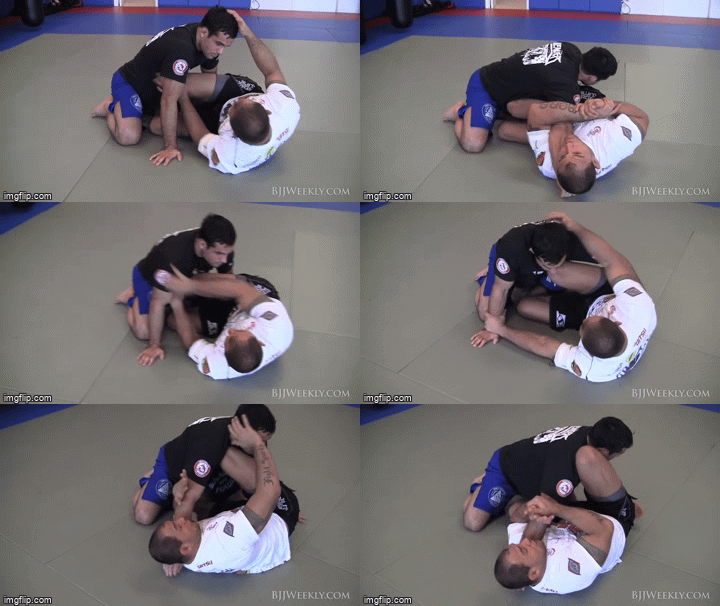
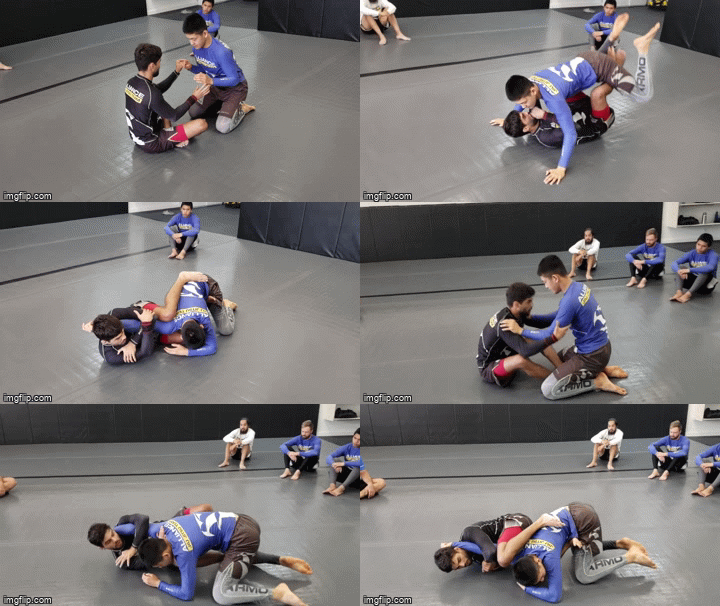
inverted armbar from half guardThe quintessential setup for both Gi and No-Gi though has to be the one from half guard. this one is the easiest, as it works off a bait. Every time someone is in top half guard they tend to look to establish a crossface and smash you. Let them. Placing a crossface means they place their arm in the perfect position for an inverted armbar. Just use your bottom arm to scoop the elbow, and proceed for the standard finish.

butterfly sweep inverted armbarAnother option would be to attack with the inverted armbar in transitions. Opportunities for the submission raise constantly, like for example, every time someone places an arm over your shoulder. In the modern game, people tend to do ti to avoid butterfly guard sweeps or try to float past leg lock entries. That simply means you let them down with your butterfly hooks, but trap the arm in the process. For the finish, you’ll need to angle out again, but it is not far at all.

Conclusion

The inverted armbar is a powerful weapon that lots of ultra high-level black belts use. Gordon Ryan and Marcelo Garcia are just a couple of examples who thrive of the move, mostly using it as a threat to set up other her moves. The beauty is in that you can use the move as a follow-up or even an alternative to most moves too. Al lit takes is for you to recognize the moments an arm is placed over your shoulder, and to figure out the grip adjustments. But you can only do that by trying, right? So what are you waiting for?

A Special, Unarmed Police Jiu-Jitsu Riot Squad – Is That The Answer?

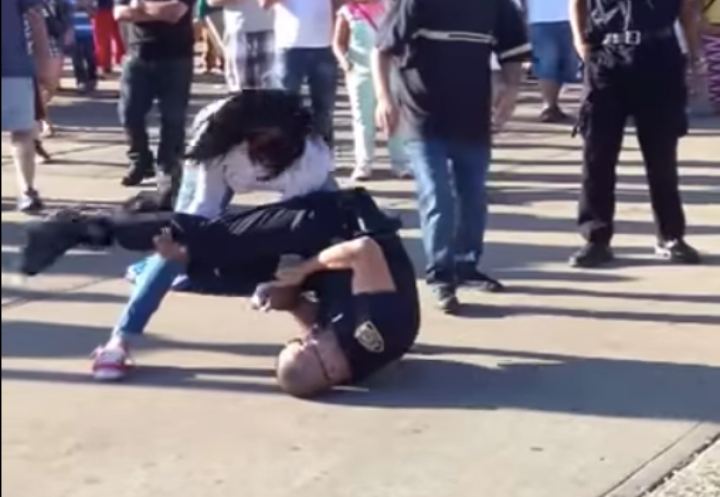
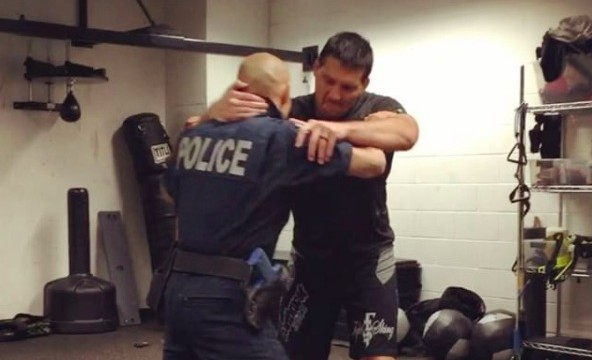
police Jiu-Jitsu Riot Squad

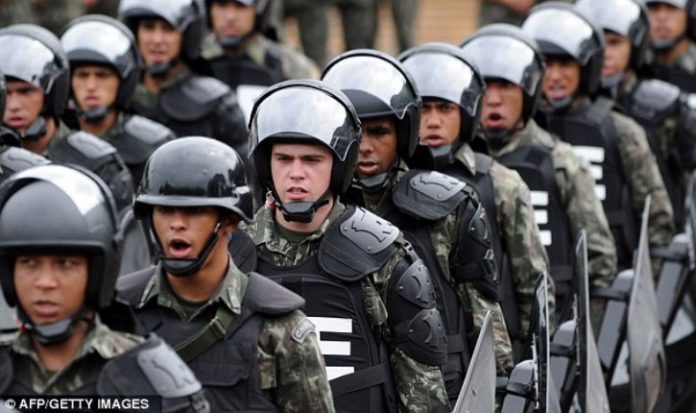
What if law enforcement officers worldwide all knew BJJ at, let’s say purple belt level? Moreover, what if they didn’t have guns with them and had to actually rely on their grappling prowess? Now, this wouldn’t really be appropriate for any type of police officers, but it is more than enough for riot squads and the like. Actually, Brazil already had it tested, by forming a Police Jiu-Jitsu squad to handle world cup protest. I think there’s a lot to learn from their experiences.

Specialized police Jiu-Jitsu squads tasked with handling specific situations, like protest and the likes are not just a great idea – they’re an essential one. Such a squad would be highly proficient at close quarter situations, which almost exclusively involve unarmed and untrained folks on the other side. BJJ is the perfect skill for law enforcement officers to execute their duties in a safe manner both for them, and the people they’re arresting. Let’s face it, police forces are not going anywhere anytime soon, so why shouldn’t at least they be properly trained to handle situations, rather than end up causing drama and heartbreaks?

A Case For Mandatory BJJ For Police Officers

This has been a subject that has been beaten to death, and we’ve discussed it as well right here on BJJ World. There’s just no good reason not to have police officers train Jiu-Jitsu. In fact, anyone that has to work with restraining or tussling with people should train grappling. In fact, it should be a requirement that law enforcement officers have at least a certain level of Jiu-Jitsu knowledge in order to have the right to work. It is a daunting task, I know, but it is also something that I have no doubt will save lives – both those of police officers and civilians alike.

With the aftermath of George Floyd’s murder still reigning throughout the USA, and with support coming in from all parts of the world, this subject is more important than ever. The latest incident involving police officers that were poorly or completely untrained in grappling showed just how bad things can end. With mandatory police Jiu-Jitsu training, I am certain such a tragedy would’ve been avoided. And not just this one.

Police Jiu-Jitsu trainingLet’s think about things from a perspective that’s easy for everyone to understand. You wouldn’t have someone without a driver’s license to drive a bus full of people, would you? You require at least some kind of proof that a person knows how to operate a vehicle full of people, while at the same time being responsible for their lives. It is the same with police officers. They do not need to operate vehicles, but rather the bodies of people that might or might not be resisting. In any case, having formal and practical training in the matter just means that it would take both fewer officers and less time and risks in any situation requiring police intervention. So why aren’t we giving officers every chance at conducting their jobs safely?
The Sao Paolo Police Jiu-Jitsu Squad

Brazil has it right on so many levels. The beaches, surfing, those cocktails, and of course, Brazilian Jiu-Jitsu. Those are just some of the best things that Brazil has to offer the world. On a more serious note, though, Sao Paolo is the city that might just have figured out the perfect formula for police riot squads.

Back in 2014, the World Cup in Soccer took place in Brazil, and it wasn’t a popular choice among the local residents. Everything, from bus fares to food became much more expensive with the majority of populations struggling as it was. That led to protests in the streets that turned into riots. However, Sao Paolo had special squad ready – one trained in special police Jiu-Jitsu tactics.

Learning a lesson from the violent clashes in France in 2005, the Sao Paolo officials had 140 officers trained in Brazilin Jiu-Jitsu for an extended period of time. That proved crucial even before the World Cup. The‘” Tropa do Braço”, or “Troop of Arms” managed to handle a demonstration of more than 1.500 people without weapons and injuries. Moreover, Brazil’s famous elite unite BOPE is also known for having a huge number of BJJ black belts among its members.

Using a trained “Police Jiu-Jitsu squad” meant that the number of officers needed to secure the demonstrations was cut in half. Moreover, during 262 arrests, the injuries sustained by both civilians and police officers were extremely low and largely insignificant compared to previous experiences.

BJJ In Law Enforcement Around The World

It is not just Brazil that has realized the potential of having mandatory police Jiu-Jitsu training for their officers. In Japan, having a black belt in Judo is a must for anyone looking to work in certain police units. In Shanghai, there’s a Law Enforcement Program. It has police officers training BJJ in order to provide them with extensive sills for arresting and restraining suspects.

police JIu-Jitsu Training INitiativeCurrently, there are some programs in the USA and Europe that provide specialized training for police officers. However, such Police Jiu-Jitsu training is still not part of official police training. Rather, it’s something officers choose to do on their own. This is not an option for everyone, though. The issue at hand is that every member of law enforcement actually needs to know BJJ, at least at a purple belt level.

In a police academy in the US, cops spend about 4 weeks working on combat skills. Anyone that has trained Jiu-Jitsu knows that it is not nearly enough to learn, let alone be able to use anything in a real-life situation.

There is a nationwide movement form police officers themselves to make Jiu-Jitsu and grappling training mandatory across the US. In light of recent events, this needs to happen sooner rather than later. In fact, it is already late.

Final Words

Police jiu-jitsu training is something that’s blatantly obviously missing from police curriculums in most countries. It doesn’t have to be a special unit like in the case of Sao Paolo. In fact, every officer needs to know BJJ. It is as simple as that. Every arrest made in a proficient and effective manner significantly reduces the risk of injury to both the officer and civilian in question. What will it take to make BJJ a part of every officer training?

The Most Decorated BJJ World Champion – The Story Of Buchecha

The Buchecha Story- The Most Decorated BJJ World Champion

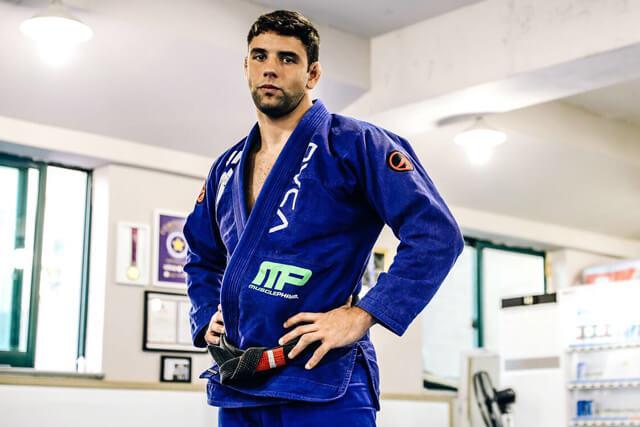
There are plenty of candidates for the GOAT of Jiu-Jitsu. Actually, we covered all of them in-depth in a previous article here on BJJ World. However, one person will still remain the most decorated BJJ World Champion until someone manages to achieve more. Marcus Almeida, more commonly known in the Jiu-Jitsu scene as “Buchecha” has not only achieved amazing results in the sport, engraining his name in BJJ history, but he is also still young and has a lot more to accomplish in the future! But how did this young Brazilian come to be the greatest Jiu-Jitsu athlete of modern times? The story of Buchecha is certainly as full of surprises as it is entertaining.

I first realized that this Marcus Buchecha Almeida guy is not your ordinary heavyweight BJJ competitor in his match against Roger Gracie in 2012. With Roger dubbed the GOAT at the time, the match was branded as “new school vs. old school Jiu-Jitsu”. Although the ruleset of Metamoris meant the match ended in a draw, since nobody got a submission, Buchecha clearly dominated the multiple times WBJJ World Champion and gave him a run for his money. Roger did manage to settle the dust in a rematch in 2017 when he submitted Buchecha, but in the meantime, Almeida grew into a grappling machine that just won’t stop.

Growing Up As Marcus “Buchecha” Almeida

Marcus Almeida was born in Brazil in 1990. The 30-year old’s full name is Marcos Vinicius Oliveira de Almeida. He grew up in Sao Vicente, a small town not far from Santos in Sao Paolo. Similarly to most kids in Brazil, especially in the ’90s, Marcus had aspirations to be a professional soccer player. However, that didn’t really work for him. Instead, he discovered another great Brazilian sport – surfing and dedicated to it in his young years.

The Most Decorated BJJ World Champion - Marcus Almeida BuchechaStanding at 6’3” now, Buchecha was always a large fellow, with great physical strength. Brazilian jiu-jitsu came into Almeida’s life through his family. His father singed his sister up for classes in order for her to learn to defend herself. While taking her to class, he also started practicing and introduced Marcus to the sport. Marcus started training with Rodrigo Cavaca, and stuck with him throughout the years and all belt levels. Under the tutelage of Cavaca, Buchecha won the Brasiliero, the Pans, Mundials, and a bunch of other tournaments while working up the ranks. In 2010 he got his black belt and the story of the most successful BJJ World Champion began.
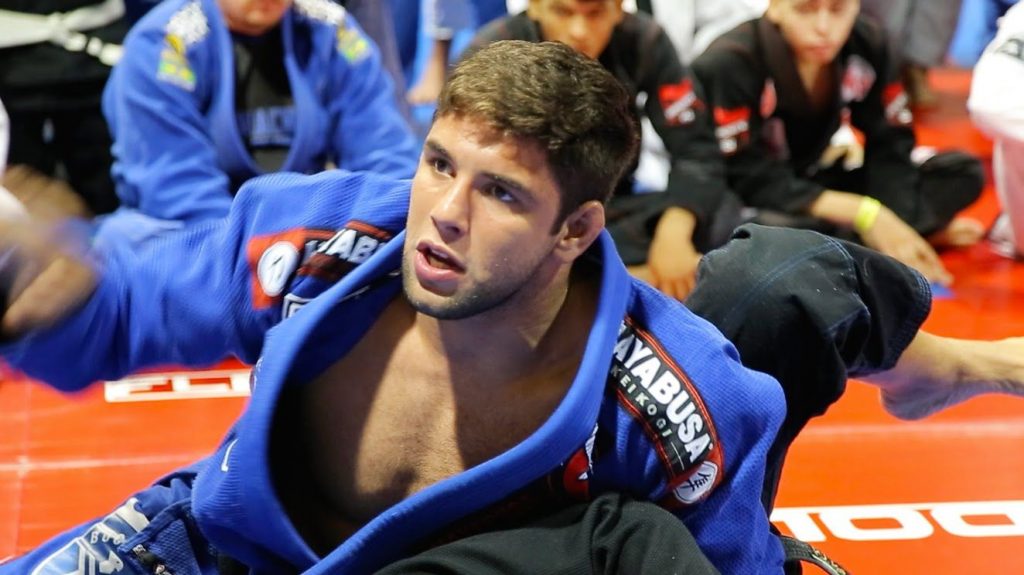
As a black belt, Buchecha moved to the USA, winning double gold in the 2010 No-Gi Worlds. At the time, he was a part of “the Avengers” team along with his master Cavaca and Roberto Cyborg Abreu. TH team didn’t stay together long, though, as Buchecha and Cavaca went back to Brazil. However, After a short while, Almeida did move to the US for good, beginning his meteoric rise in the sport of Brazilian Jiu-Jitsu.

Becoming A Legendary BJJ World Champion

From that point on, things get interesting. Marcus Buchecha Almeida has a total of 13 Gi World titles, with just one of them (in 2018) not being a double championship in both the heavyweight division and the absolute. In addition, as a black belt, Buchecha has 2 ADCC titles (2013 and 2017) as well as 4 No-Gi worlds championships (doubles in both the 2010 and 2011 IBJJF No-Gi Mundials). In terms of Pans, Buchecha “only” has two titles, both coming in 2012. One title in the IBJJF Pro League Grand Prix and a further 6 world championships under the banner of the UAEJJF Abu Dhabi Pro make Almeida the most decorated BJJ World Champion ever.

In fact, the total number of world titles he has (to this day) amounts up to a staggering 28 world titles under all the largest banners. And he achieved it all before he was even 30 years old.

Buchecha - The Most Decorated BJJ World ChampionAn interesting fact about Buchecha’s career is that he might not have been the most decorated BJJ World champion ever if it wasn’t for – a knee injury. In the 2015 Worlds, he suffered a tear to all his knee ligaments in the quarterfinal match against Ricardo Evangelista. The injury delayed his plans to transition into MMA right after the 2015 Mundials. In fact, it derailed him for almost a year, but he came back quick and won double gold at the following year’s Mundials. It was the injury that made Almeida reconsidered his future in MMA, and dedicate completely to Brazilian Jiu-Jitsu. It was all worth it, as he quickly went on to achieve legendary status in the grappling world.
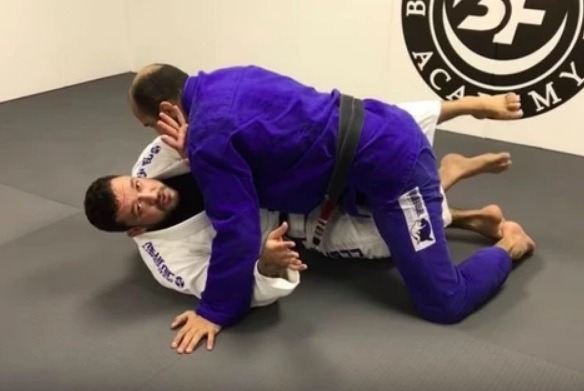
In fact, Buchecha won more titles after his knee injury, than he did before. In the process, he still kept developing his game, incorporating fearless wrestling and a signature half guard and toe-hold game, as if his knee was never hurt.

The Sky Is The Limit

The question remains, though, what is left for Buchecha to conquer in Jiu-Jitsu? Apart from superfights, or submission-only tournament appearances, Buchecha really doesn’t have anything else to p[rove in jiu-jitsu. I doubt anyone will get near to the number of BJJ World Champion titles he has anytime soon, if ever. Of course, we’d all like to see him battle Gordon Ryan again and a handful of other big grappling names of today, but then what? Well, as it turns out, Buchecha’s MMA dream is still not over.

In fact, with most of the big-name grapplers of Buchecha’s generation like Rodolfo, Kron, and Mackenzie Dern all having made a successful transition into MMA, the time seems to be ripe for Almeida to do the same. As it seems, he has been dabbling with MMA training during the lockdown, when BJJ training isn’t really a viable option anyway.

In any case, Buncehcah is far from done, and the BJJ World Champion legend is bound to have lots of success n MMA as well. Until we get to see him in the cage or octagon, though, we do have some quality Buchecha DVD instructionals to look at, in the form of his Half Guard and Folding Pass DVDs.

In Conclusion

The greatest ever BJJ World Champion and most certainly one of the GOAT grapplers, Marcus “Buchecha” Almeida is still quite young and has a lot more to showcase in combat sports. Of course, I’d love to see him keep grappling while he is doing MMA, but I can’t say that I’m not curious how he’d do against some of the heavyweight MMA prospects and champs out there.

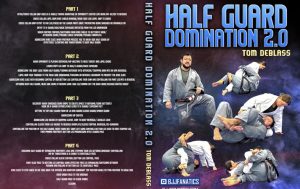
REVIEW: Half Guard Domination 2.0 Tom DeBlass Instructional DVD

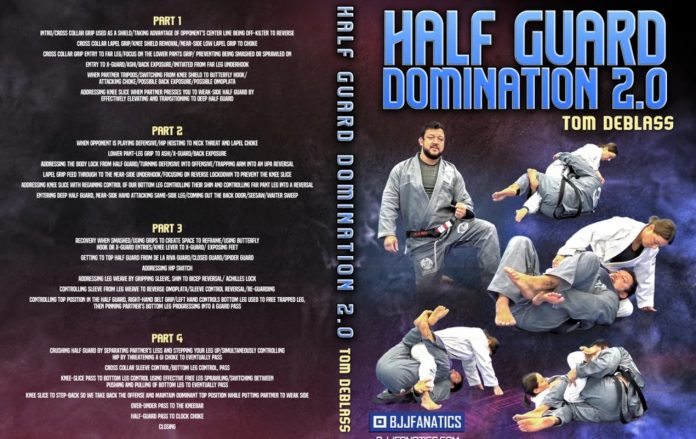
Tom DeBlass Instructional DVD Review: Half Guard Domination 2.0 Cover

Tom DeBlass has been one of the most active coaches on social media, particularly during the COVID-19 pandemic. He is doing everything to still provide classes, helps people out with issues they have due to lockdown, supports academy owners… He is there for the community, as he has always been, we have to grant him that. Moreover, he treats us with yet another Tom DeBlass Instructional DVD, but not just and DVD. Nope, this time he circles back to one of his earliest, and best instructional, issuing a polished up 20. A version of the Half Guard Domination instructional.

ON SALE HERE:
Half Guard Domination 2.0 – Tom DeBlass

Tom DeBlass Instructional DVD Review: Half Guard Domination 2.0 Cover
Techniques List

Although we could argue it is the most used guard in Jiu-JItsu, there are still only a handful of people out there that really understand the half guard. And, TomDeBlass is certainly in the top 3, if not the leader of the pack. He has a wicked half guard game, as we saw in earlier Tom DeBlass Instructional DVD editions. That said, Tom is the epitome of BJJ, demonstrates that Jiu-Jitsu evolves constantly. This latest DVD marks the evolution of this half guard game, and it is safe to say, it has gone to completely new heights.

The Man With The Half Guard Plan

Tom’s initial Half Guard Domination DVD was really in-depth and it is one of the most sought after instructional of all limes. In fact, most people (me included) found it to be airtight, going over anything and everything you might want to know about the half guard. And yet, he has more and more to teach us. In that sense, the Half Guard Domination 2.0 Tom DeBlass Instructional DVD doe build on the first one. It can be used on its own but combined with the knowledge from the first part, it will help you build a foolproof half guard game you can play against everyone (except maybe DeBlass himself).

We all know tom to be very active on social media, promoting BJJ and the lifestyle that comes with it. IN fact, he is a real Mr. Jiu-Jitsu, always the gentleman and representing nothing but the highest virtues of the sport. Plus, he has a half guard that nobody has been able to pass for years. And he trains wit the best black belts in the world. How many people do you know that can claim the same thing?

Speaking of Tom, there was an announcement just a couple of days ago on his Facebook account that he might be considering a return to MMA. So far, it is confirmed that he is going to be representing ONE Fighting Championship, although it wasn’t clear whether it is in grappling, MMA, or both. As it turns out, he will be fighting in MMA again, which is definitely going to be more than worth watching.

Tom DeBlass Instructional DVD Review: Half Guard Domination 2.0

Tom DeBlass Instructional DVD Half Guard Domination 2.0 CoverSo, when it comes to this DVD, there’s nothing you haven’t seen before…in terms of the format. Four different volumes systematically organized in chapters go over the half guard game that Tom selflessly shares with everyone. And he really isn’t pulling any punches either. When it comes to content quality, this Tom DeBlass Instructional DVD is off the charts. It is not just what Tom shares but how he puts it together and the crucial details he shares at a crucial time so it all makes sense. If you think you know the half guard, this DVD will make you think again.
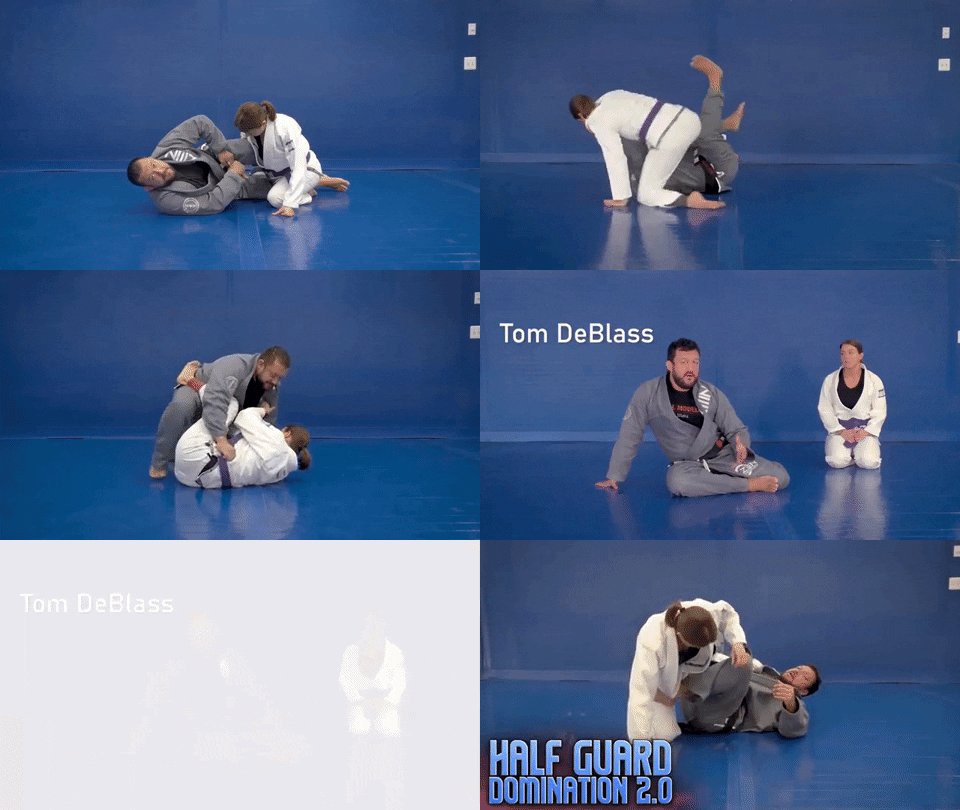
What is the main difference between the Half Guard Domination 2.0 and the first version of Tom’s instructional? Well, apart from this instructional having one more volume than the original, it is also one Tom did in the Gi. For everyone that does both Gi and No-Gi, this makes it the perfect addition to the already very comprehensive Half Guard Domination 1.

What I particularly love about the way Tom teaches in this DVD is that he covers entire sequences in each chapter. That means you can build a complete game and then choose how far you want to take a sequence or combine it with another one. Some real classic DeBlass work right there!

DVD 1 – Cross Collar Grip Setups

6 different chapters are in the first volume of the Half Guard Domination Tom DeBlass Instructional DVD. It all starts with the establishment of a cross collar grip, which, interestingly enough, Tom uses as a shield in itself. Some key center line info here is going to clear up plenty of half guard questions as well.

The entries Tom offers from the cross collar grip start with a choke and head off into Ashi Garami territory and back exposure. The best part about it sit ha you can decide to head in a different direction at any point, allowing for as many possible combinations of the moves as you can think of.

Another original aspect of this DVD is that DeBlas offers “possibilities” as well. He shows setups that may lead to a possible Omoplata, or Back exposure, for example, but are not guaranteed to. It all depends on the opponent’s reactions which he also covers in great detail later on. In fact, there’s one in this volume – dealing with a top opponent that tripods.

DVD 2 – Addressing Opponents’ reactions

For everyone that’s really a fan of the half guard, this second volume of the Tom DeBlass Instructional DVD is going to be a real gold mine. No matter what an opponent does, Tom has an answer – one that leads to a better position or directly into a submission. Even if an opponent is playing a defensive game from the top, Tom has sneaky ways of getting to the neck for a choke.

Pants grabs, Body locks, and most of the passes people attempt will all hit a wall once you master the material from this DVD. There’s a lot of info in this volume in particular on the knee slice, and preventing people from completing it. Moreover, DeBlass shows a wide variety of moves, from The Lockdown to lapel manipulations that open up sweeps and even deep half entries. You’ll have to see this one to really grasp how good it is.

DVD 3 – Recovery And Counters To Passing

You can see how Tom Builds up the Half Guard Domination 2.0 instructional – basic grips and attacks, followed by reactions to what opponents might do, and finally, recovery options and a few late counters to guard passing attempts. Easy to follow and extremely sensible.

Tom DeBlass Instructional DVD Half Guard Domination 2.0 TrailerThe third part of this Tom DeBlass Instructional DVD against works based on grips as frames that help you get back into half guard, even when opponents smash you. In fact, This s where Tom really puts into perspective a movement that’s so simple we all get wrong – the hip switch. there’s o one more powerful move than this one from the half guard, and DeBlass demonstrates how to utilize it correctly and very efficiently.

Following up are options against leg weaves (really annoying), that open up Achilles locks or Omoplatas, depending on the direction of the exchange. Finally top ends up on top, talking about the finer details of developing a top half guard game to go with your already vast bottom one. After all, in most cases, sweeping from half guard lands you in top half guard yourself, so you need to know how to pass it.

DVD 4  – Passing The Half Guard

Which brings us to passing the half guard. With the Gi. This can be almost as annoying as passing lapel guards, and at least just as annoying as passing a closed guard. Luckily, Tom has just the right amount of pointers and sequences to really make things easier for everyone, regardless of the belt level.

Knowing the half guard as very few people do, Tom has a really interesting system of destroying it. For example, he shows how separating the legs will open up guard passes. Furthermore, he teaches the famous dilemma principle as well, combining this passing threat with the threat of a choke, doubling your chances of success with both. From thereon, he heads to the knee slice. Showing you how you should do it, and where people go wrong.

A couple of over-under combinations, with one particularly cool one ending in a kneebar cap this volume, and the entire DVD off.

Wrap Up         

The half guard is one of those positions that will always be simple, yet nobody will ever master it completely. If there’s one man that has come close, though, it has to be DeBlass. This Half Guard Domination DVD, along with his earlier half guard and deep half work is just another brick in the very large wall that should be your un-passable half guard. That said, there’s nothing quite like a Tom DeBlass Instructional DVD fresh off the press, so make sure you get yours today!

ON SALE HERE:
Half Guard Domination 2.0 – Tom DeBlass

Tom DeBlass Instructional DVD Review: Half Guard Domination 2.0 Cover
Techniques List