Due to research, the knee joint is the second joint in Brazilian Jiu-Jitsu to be injured, right after elbow joint. The reason may lie in a fact that heel hooks are forbidden in IBJJF and North American Brazilian Jiu-Jitsu Federation events.
Heel Hook is probably the most dangerous submission and that’s exactly the reason why it’s sanctioned in many jiu-jitsu competitions. If not released on time heel hook can do some severe damage to your legs.
Although heel hook is applied at the ankle the real damage comes from the rotation of the tibia on the femur that produces structural knee damage. Once the ankle is locked and the rotation starts the fibia will rotate on an almost fixed femur. Since knee joints range of motion is limited to flexion and extension there’s little to no room for any kind of rotation. It’s only about a few degrees available of internal rotation before damage will occur.
In a video below we can see a catastrophic leg break. According to a sound that the snap produced both fibia and tibula are broken and it’s not easy to tell what else broke in the knee.
It is very easy to get hooked on Brazilian Jiu-JItsu. I mean, what’s there not to like? First, you get to forget everything else that you have going on for a couple of hours. Next, you get to exercise and sweat. Even more importantly you get to choke people out while you’re doing it all. Or struggle under a heavyweight’s knee on belly, Whatever the case, people come out of Brazilian Jiu-jitsu training with a big smile on their face. This is exactly why people keep coming back for more, feeding the nerd assassin army more and more members. As with all addiction though, there is actually a thing as too much BJJ. But even before you get there, are you sure you realize the effects of Jiu-Jitsu on your social life?
Having a good social life is a huge task in today’s society. To make something clear, we’re not talking about social networks. Chatting with your buddies while on the can does not constitute as a social life. We’re talking about the real interpersonal connections that we, as a species should constantly strive for. It starts with the inner circle of family and close friends, but it goes much beyond that. It includes both people yo d not know that well, co-workers and even strangers. yes, you need basic skills to communicate with people you do not know. It’s called meeting people. And Brazilian Jiu-Jitsu has a dual impact on all of these aspects of your social life.
The dual nature of BJJ’s impact on your social life is somewhat confusing. Brazilian Jiu-Jitsu helps you expand both your social network and your social skills. However, it does so in a very specific portion of social life. Furthermore, BJJ also has a reverse effect, causing people to run away from your cauliflower ears. And not just your ears. the funny thing with BJJ is that you need to balance it…a lot. Just like you need to find that fine balance between training enough and avoiding injuries, you also need to find a way to keep your own social life while making the place for the new, grappling one. Let’s see how exactly BJJ affects your social life, both positively and negatively.
The Social Struggles Of Brazilian Jiu-Jitsu
There’s a meme out there that states that when vegans introduce themselves they say their name first and then state their nutritional preferences. While I have nothing against vegans, this notion is largely true. The same, pretty much, stands true for Crossfit, BJJ or any other aspect of life that is as engaging as these. The trouble with it is that you’re going to become one dimensional very fast if your lifestyle starts spilling all around you.
It is perfectly ok to really be into something, but it’s completely another to throw it into everyone’s faces. I wouldn’t want to listen about sewing all night long. Well, surprisingly some people haven’t gone the slightest interest in Brazilian Jiu-Jitsu. This is one major aspect of BJJ in a social sense that we often miss. The amount of time we like to discuss anything BJJ related is, well, all the time. And this doesn’t bode well in social circles.
Furthermore, it is the way we often appear. Even if you decide to cut back on all the BJJ talk, you’re still a walking commercial. Grapplers that have been training for a few years have the apparel and scars to show for it. They’re all automatic conversation starters, and once you get that snowball rolling there’s no stopping.
Also, there’s the trouble with social behavior. Injuries tend to prevent us from taking part in a bunch of social activities with other people. So does nutrition, and especially weight cuts. I had to skip my best friend’s engagement because I was a week away from the Europeans and deep into a weight cut. Examples like that are countless and those are huge social sacrifices to make.
The Grappling Social Circle
On the other side of the spectrum, BJJ opens the doors to new social adventures, unlike anything you’re used to. The thing with Jiu-Jitsu is that it can build social skills you might be lacking through the process fo training itself. Since you need to be training in close proximity to people and have to communicate all the time, you’ll slowly expand the use of these skills beyond the mats. Furthermore, the reality of BJJ is that people can get over many social anxieties by facing them through situations on the mats.
Brazilian Jiu-Jitsu also tends to form strong relationships between people in the gym. After a while, people become teammates first. Then, they become great friends. Trying to beat each other up, going on tournament road trips etc tends to do that to people. The glaring issue with this is that you’re forming a social circle of people with the same “addiction” as you. This rarely has a positive effect on the social life you have outside of the academy, which is where you need to look for balance.
Kit Dale is one of the people who got their black belt in a record time – about 3 years. Not many people in BJJ can boast about doing that. Furthermore, not many people can also be a social butterfly in any given situation. Understand Jiu-Jitsu and you’ll understand how to balance it with your social life. The “Art Of Learning Jiu-Jitsu 1&2” DVDs can help you achieve both!
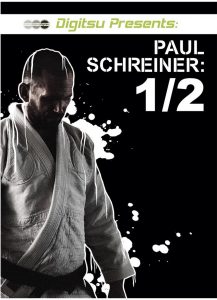
The half guard is a never-ending source of innovation in BJJ. A position born of necessity, when Roberto Gordo Correa suffered an injury to his leg. Unable to battle from the then customary full guard, he had to innovate. He ended up working form a position which kept his leg safe, yet allowed him to fend off guard passes. Fast forward a couple of decades and a half guard is still evolving tirelessly. There are countless variations today, which range from static to inverted ones. Each variation has its flaws and advantages. However, not all of them work equally well, especially at the highest levels of grappling. The latest in a long line of half guard instructions is the Paul Schreiner Half Guard DVD. Is this one really worth your time, effort and money? Read on and decide for yourself.
The half guard is not an overly difficult position to play. Actually, put someone there, and they’ll instinctively make the right decision or two, in most cases .this is due to the fact that the position does not require any specific athletic abilities. After all, a heavily injured Gordo developed it specifically because of that. The half guard offers every type of player a way to mold it into their game. If you’re all about defense, then you can easily re-guard or simply stay safe from the half guard. Point grapplers can use it to sweep in any desired direction without much effort. For submission hunters, it is a finishing paradise, offering a way into virtually any submission system. Each of these aspects features in the Paul Schreiner Half Guard DVD, making it a great resource for both a specialized and a well-rounded half guard game.
What’s Special About Schreiner’s Half Guard Instructional
The issue with the half guard, and subsequently, half guard DVD instructionals is variety. It is very easy to get lost in the sea of information available. First and foremost, of course, is the quality and effectiveness of a half guard instructional. Next, it is the style involved. Not every half guard fits everyone’s body type, needs or experience level. Some half guard variations may be too much for a grappler during a certain period. The same techniques can become their favorite a few years down the road. A good reason to consider the Paul Schreiner Half Guard DVD is that of high-level simplicity. It means that you can watch and use it at blue belt, and then revisit it as a brown belt and discover completely new details.
Paul Schreiner’s Pedigree
Is this Paul Schreiner guy and good at the half guard? I mean, he does have an instructional out and his name sounds vaguely familiar. While the first question can hold some merit if you’re new to the grappling world, the second statement makes no sense at all. Paul Schreiner is extremely well known in the BJJ community, both as a competitor and a coach.
Schreiner has been a black belt for more than a decade, earning his in 2007. He is not just any black belt, but one of Marcelo Garcia’s which is also a huge accomplishment. In terms of competitive pedigree, he is a multiple times US and World champion as well as ADCC trials finalist. The best quality of Paul? That’s easy, teaching! He is among the best in the sport at teaching others how the Gentle Artworks. He currently teaches BJJ at the Marcelo Garcia Academy in New York.
Paul’s pedigree as an instructor includes both high-level Jiu-Jitsu athletes as well as professional MMA fighters. Combined with his vast competitive experience, Paul knows when something really works, and he knows how to teach it to a broad audience. Moreover, he has his mentor, the legendary Marcelo, at his disposal whenever he is working on developing his systems. AS far as the Paul Schreiner Half Guard DVD goes, it is safe to assume it is one of these instructionals more than worth its price.
Paul Schreiner Half Guard DVD Review
This incredible DVD instructional is organized into two DVDs. Each disc covers a specific array of subjects that relate to each other. Overall, combining the techniques from both discs is simple and comes naturally, once you go through them all. This release is applicable to all levels of Jiu-Jitsu. There are no illegal moves, no techniques too difficult to execute, nor stuff that doesn’t work. The Paul Schreiner Half Guard DVD is a rich resource of battle-tested techniques that are essential for any grappler to at least be aware of.
Apart from the technical value of the instructional, you also get great quality too. Whereas bad production can ruin even the best digital instructional out there, this DVD has been spared that predicament. there are absolutely no digital faults in any aspect of this release. The camera work, especially the frequent crucial replays make comprehending the techniques in it a breeze.
DVD 1 – A Few Basic Concepts
Click For Full Technique Video
The first volume of this release features 21 total sections, each on a specific topic. Paul Schreiner ‘s methodical teaching style is apparent from the beginning when he lays out the basic concept s of half guard. there’s no point in playing any guard without first understanding base and structure. Paul addresses both in detail before exploring how you can use them to end up on top.
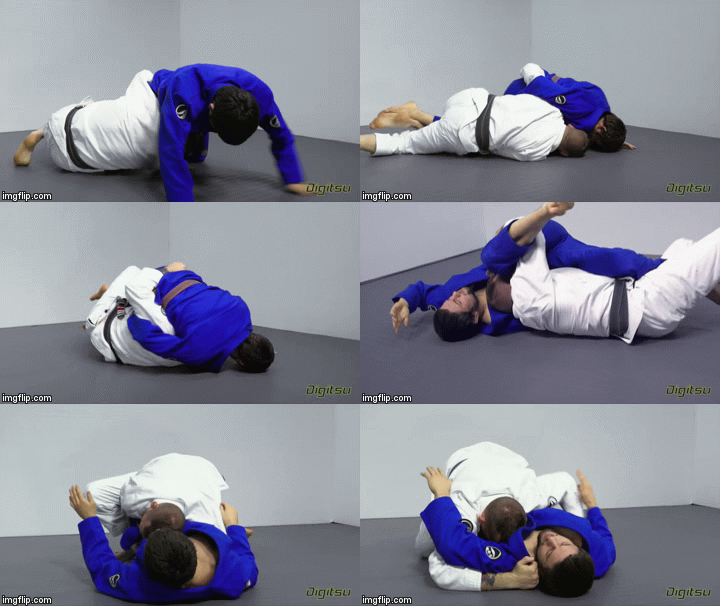
Sweeps are the order of the day in this volume. But before you sweep you need to know how to maneuver yourself into position. Paul addresses hip escape motions and distance management that are essential for disrupting base and structure to sweeping. After a few incredibly basic techniques like the bridge and twist sweep, Paul offers some more unusual options.
Click For Full Technique Video
The basis for the sweeping system here is the hook sweep. However, sweeps are not the only moves on the menu. Paul offers submission finishes as well, in two main directions – after the sweep or from a failed sweep. There are some new sweeping and reversal concepts in there as well, which are a result of the relentless half guard evolution. The best part of this complete DVD, for me, are the strategies for dealing with the Whizzer. Simply incredible!
DVD 2 – Half Guard Madness
This volume is the reason that the Paul Schreiner Half Guard DVD suits grapplers of all levels. The beginning itself is an indication that you should stick to the first volume if you’re below the purple belt at the very least.
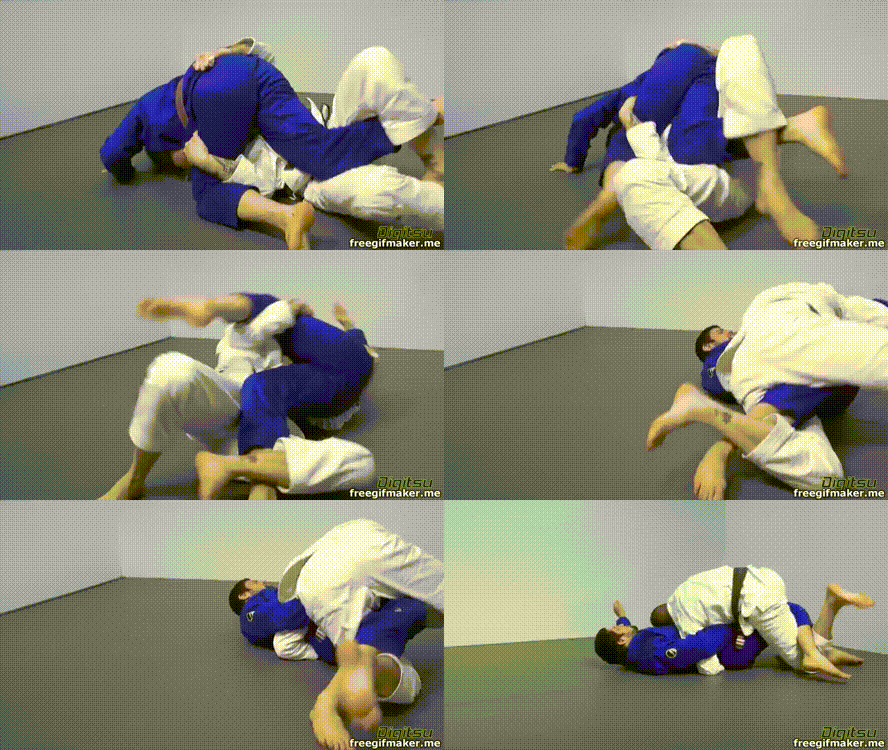
The first few of 21 more chapters are about the leg bundle sweeping system. Paul opens up options that range from a simple Upa sweep to Berimbolo entries. Following closely is the Jedi mind trick section which is going to be everyone’s favorite. How do you sweep someone without them even understanding what’s going on, let alone defend? Well, you Jedi mind trick them, of course. This concept can lead to various great positions, the like of leg drags, back control as well as arm and/or foot locks.
The Jedi mind trick focus carries on to the very end of the DVD, opening up options for dealing with standing opponents as well. Before Paul concludes the instructional, he talks about the reverse half guard as well. As for the conclusion itself, Paul finishes up in the best way possible – by connecting all of the techniques from the set into a comprehensive system.
Who doesn’t like to catch somebody in a submission from the closed guard? After all, there’s nothing better than just lying on your back and getting a tap without much effort. The closed guard is the perfect position to set up submissions against opponents of all sizes. Despite its apparent decline in use lately, the closed guard is a very powerful position. It is not just a guard for beginners, and submissions from guard work even at the highest levels. Furthermore, submissions from guards do not have to be simple and boring at all – just look at the Rubber guard game. However, today’s focus is on the holy trinity of most “basic” closed guard submissions.
This one is for all the old-school BJJ fans. Instead of complicating things with fancy moves, this one is for those that like it simple, clean, and fast. We’re going to go over submissions from the guard that is simple, effective, and work together flawlessly. There’s a certain beauty in the simple submissions of BJJ that everyone knows. Catching an opponent with a cross-collar choke is more rewarding than hitting a flying Gogoplata. The reason is that people know the submission, can recognize it, and know-how to defend it. Pulling it off against all those odds means you’re one really scary grappling MF. And having two more submissions from the guard for the odd occasion when the first one doesn’t work is going to make you world-class off your back.
Our task for today is easy. Outline the basic idea of submissions from the guard. Then, go over the three absolutely best submissions you can get from the position. Finally, connect them all through simple manipulation of grips and hip movement. Suddenly, you’ll have a submission system as elaborate as any of the modern ones. Yet this one is going to be rooted in the very basic building blocks of Jiu-Jitsu. Why spend countless hours looking for brand new closed guard techniques, when you can get better by polishing what you already know.
Get inside knowledge on the closed guard like nothing you’ve ever experienced before! Bernardo Faria’s “The Closed Guard” DVD is an unbelievable resource for all things related to the full guard in Jiu-Jitsu. While the holy trinity of guard submission is enough, there’s so much more to learn, and it’s all available at a cut-price!
Submissions From Guard
There are a few basic principles of submitting from the closed guard that you have to understand. Most closed guard submissions work as a result of certain mechanical advantages the position provides. however, simply being in closed guard does not guarantee you attacking opportunities. You’ll need to become active and use your hips and grips in a smart way, to get submissions from the guard without much effort.
The first thing to look for from the guard is grips. But which grips and why do you need them? Not for simply hanging on to your opponent for dear life, of course. Grip fighting is very strategic and has to be extremely precise. For now, remember that our system is based on collar and sleeve control. We’ll elaborate more on that later on.
Next up, posture. The primary task of grips is to help you break your opponent’s posture down. Attacking submissions on somebody with good posture spells nothing but trouble for you. Also, remember that once you break someone’s posture down from full guard, you need to keep them there.
Finally, remember that the mechanics of the closed guard means your hips are extremely close to your opponent’s. This heavily restricts your movement opportunities without sacrificing control. Since you need your hips in order to re-position yourself for almost all submissions for the guard, you’ll need to move them slightly and strategically. Another reason why you need to have the opponent’s posture broken.
Cross Collar Choke
A true classic of BJJ. The cross-collar choke is one of the first submissions from guard students to learn. It is, despite this, one that they only understand after a couple of years, on average. There’s something about hand positioning and the choking area of the wrist that people just can’t get right straight from the get-go. Still, the cross-collar choke is the best option to go for, against an opponent without posture in the closed guard (with a Gi, of course).
Click For Full Cross Collar Choke Video
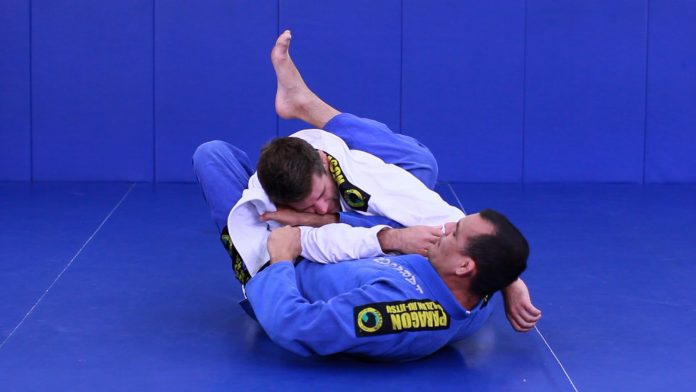
The cross collar choke works by constricting the arteries on both sides of the neck (a blood choke). The hand placement is deep with four fingers of each arm inside the collars. Each hand goes in the opposite side collar, crossing the arms in a scissor-like fashion. So far, most people get it right as there’s not really much to it.
This is the best hint I can offer on mastering this choke right away – pull your elbows together. The positioning of the arms intuitively leads people to flare their elbows thinking they’re tightening the choke. This actually loosens up the choke. Finishing requires you to put your elbows tight together and flex your arms, like for a biceps curl. Furthermore, the side of your arm, right below the wrist on the side where the thumbs are is the choking portion.
Armbar
There’s not much to say about an armbar from the bottom. As far as submissions from guard go, this one is probably the one people go for most often. As with the collar choke, there’s complexity in its simplicity, with the key details often overseen.
Click For Full Armbar Video
In order to get the armbar, you need one arm of the opponent as far across your body as possible. This is where the sleeve grip plays a huge role. Once you have an arm isolated, you’ve taken care of posture as well. TO get to the submission, you’ll need to open the guard and work methodically to re-adjust your hips. First, one leg (on the side of the trapped arm) goes on their hips. This is a pivot point that will allow you to turn your hips in the same direction. The other leg has a crucial role to play at this point. It needs to come down hard on the opponent’s upper back, making sure the posture stays broken.
Finishing is as easy as swinging the other leg over their head and bridging up with the hips. Of course, all other armbar details apply – knees together, legs flexed and arm held tight across your chest.
Triangle
Another BJJ classic. The triangle is a very powerful submission that is arguably the closed guard’s best weapon. For a triangle choke, you need both your legs around the opponent’s neck, along with one of their arms. Trapping the arm is essential, as it is the opponent’s shoulder that provides choking pressure on one side.
Once again you need grips and a broken posture. The basic idea is to swing one leg on the shoulder of your opponent. Once you have it, remember to re-guard right there and then. you’ll end up in the “diamond’ position, like a guard with one leg over the shoulder and one leg under the other arm of an opponent. This is where details come into play.
Click For Full Triangle Video
The first crucial mistake with triangles is the angle. From the diamond, you need to turn yourself as much as you can towards the knee of your own leg. Only then can you think about closing the triangle and finishing. The second mistake is the finish itself. Instead of thinking about pushing down with your legs from a closed triangle, think about squeezing your thighs instead. A pull on the head is all that it takes to get a tap.
The Holy Trinity
\Now, let’s see how this holy trinity actually works together. Remember when I said grips are crucial? Smart grips are going to allow you to both get the opponent’s posture and set up any or all of the three best submissions from the guard. As you get a collar and sleeve grip, remember that you need cross grips. This means your right hand in the opponent’s right collar and left hand on their left sleeve.
Once you have the grips, pull with both, the goal is to get the opponent as close to you as humanly possible. At the same time, the aim of the sleeve grip is to drag their arm across your chest and past your shoulder. This is the “position zero’ for attacking submissions from the guard.
The cross collar choke is right there, you only need to let go of the sleeve grip and sneak your second arm in the collar. In case this fails you can always re-grip the sleeve and re-extend the arm. From there, getting an armbar is only a hip escape away. And, in the unlikely occasion that your opponent pull their elbow out, you’re all set for a triangle choke. Remember to never let go of the collar grip, no matter which submission you’re going for. The beauty is that even if you can’t get a triangle, you can switch back to the cross-collar choke and go again!
DVD and DIGITAL Instructionals Related to Submissions From Guard :
Break falls are not the first thing that spring into mind when you think of BJJ. Why would we need them when we spend most of our time on the ground anyway? Aren’t they better suited to Judo and Aikido? Well, no. BJJ break falls are a part of all warm-up sessions for a reason – we need them. And we do not just need them when we practice takedowns. They come up in almost every roll in one form or another. Trying to resist sweeps, or getting into scramble often end up in fast-paced level changes and switches in direction which ultimately, end in falling down. Knowing how to do it from any position and in any situation is an essential BJJ skill. This requires a lot of drilling and training, though, which is something most people do not really enjoy when it comes to BJJ break falls.
BJJ break falls are nothing complicated. Until you give them a try. It is amazing how many new students have real trouble grasping the basic concepts of break falls. The reason for this is obvious. Some parts of break falling go against our natural instincts. With break falls, instead of looking to land on an outstretched arm, we need to force our body to react differently without thinking. This is exactly why break falls are done each and every class as drills. Tthe best example of how you can change your body’s instinctual mechanics is comparing beginners with experienced students. A purple belt can break fall with ease, not even blinking whereas a white belt is going to clumsily end up in a pile on the ground in most cases. However, this also demonstrates that you can teach your body new movement patterns.
There’s also a hidden benefit to BJJ break falls that most people do not see at first. It’s very easy to make this one clear. Go for 50 reps of a break fall of your choice and you’ll get a workout for your whole body. Not only that but you also develop essential athletic skills while doing them. Think about a backward break fall int a handstand or to a technical stand up. These are movement patterns we see in BJJ all the time and are essential for any grappler hoping to reach the elite level.
How Break Falls Keep You Safe
The whole point of BJJ break falls, as the name suggests, is to break your fall. Damage control is by far the first and most important trait of break falls. However, as we said, it is not only about the takedown game. People in BJJ often go for modified takedowns from the knee as well. there are also a lot of scrambles that end up winding people or causing injuries to outstretched limbs. Brak falls are the easy and obvious solution to all of this grappling induced damage.
Next up is a really important benefit for Jiu-Jitsu. As you know by know, the neck takes a lot of abuse in BJJ and most grapplers end up with a neck injury or two in their career. Neck conditioning is a huge benefit form break falls. Most importantly you get to develop a strong neck specific for BJJ situations. As an added bonus, you get in neck work without having to do it on its own.
A huge one, especially for beginners is overcoming the fear of falling. This is something we have engrained in us and it can be a big obstacle in BJJ. The whole point of Jiu-Jitsu is falling down and getting up multiple times in a roll while being entangled with an opponent. It is way better to get used to falling than in training discovering you’re not ready for it in competition.
There’s also the benefit of developing grappling specific coordination. While this only used to be a benefit for kids, modern lifestyle makes it something adults need to learn as well. I can’t tell you the number of adult beginners. I’ve coached that have absolutely no idea how to move their body in a coordinated an purposeful manner.
Training BJJ Break Falls
Whenever you’re deliberate going against your body’s instinct it will take time to master a movement. The key trouble with falling is that we try to prevent from happening. And the basic notion behind BJJ break falls is accepting the fact that we’re falling on the ground. This is a very important cue in training reak falls. Never resist the motion of falling, and instead, look to go with it. Whenever you drill break falls, make sure you really fall and not try to hold yourself upright as much as possible.
The one key principle of BJJ break falls is becoming a ball. Once you accept you’re going to fall, ti would be unwise to do so by doing nothing at all., Instead, you need to focus on keeping your body compact and forming a curve so that you absorb the power of the impact.
Let’s look at some basic tips about break falling. If you’re going for a backward break fall, you should start with your feet hip-wide apart. Bend the knees as much as possible, aiming to go deep into a squat. The deeper you squat, the easier the fall is going to be. From there on, you need to curl up in a ball. Fall backward, allowing the curvature of the spine to roll on the ground. You should always stop rolling before your neck touches the mats. There should be absolutely no contact between the neck and mats at any point during a break fall.
Also, that motion of slapping the mats with the arms isn’t just for show. Keep your fingers open and use your palms to slap the mats on both sides. This negates the effects of impact from falling even more.
Rewind to about a decade back, and you’ll see that the world of Brazilian Jiu-Jitsu was way different. The tactics and moves you see in matches today are quite different than back then. You won’t see many (if at all) leg locks, for example. You’ll see people playing half guard with their backs on the ground, which is considered suicide these days. You’ll see more of the “classic” BJJ stuff that the Gracies developed. But you’ll also see great innovation. For example, you’ll see a few small guys do inexplicable things from their guard and end up on people’s backs, choking them unconscious. What you’ll see is the Mendes and/or Miyao brothers introducing the grappling world to the Berimbolo.
When can we consider a new BJJ technique, move or concept to be legitimate for widespread use? Well, when you see a move work over and over again against the highest levels of opponent’s you can be sure it’s going to catch on. Furthermore, when that move works regardless of the opponent’s attempts to defend, escape or counter, you know it is the real deal. And, if that move ends up working for more than a decade than it is something you truly need to master. If there was ever any move that fits this description to a T, it is the Berimbolo.
The Berimbolo is one of those moves that you can’t really understand until you try. The first time you see it, you won’t even see it. It is such a confusing thing that you won’t know that it is a deliberate move. Once you start understanding it, you’ll begin to recognize a pattern. then, you’ll be in for the same cycle when you give it a try. At first, it is going to seem like you’re trying to pilot a spaceship. Until you manage to get a few reps in and discover that it is nothing but a mechanically advantageous way of finishing a specific task in Jiu-Jitsu. This is probably the point when you’re either going to fall in love with it or deem it untrustworthy. Our bet is on the former option.
Figuring The Berimbolo Out
The way that the Berimbolo came to be is through the De la Riva guard. The De La Riva is an open guard that people started figuring out right when the Berimbolo emerged. It is one of the first inverted techniques in BJJ. In addition to inverting, the Berimbolo includes a spin as well, to allow you to switch position while leaving your opponent no opportunity to counter.
Despite popular belief, the founder of the Berimbolo is not one of the Mendes brothers. It is actually a grappler by the name of Marcel Ferreira, a Carlson Gracie student. When people in training started shutting his De La Riva down, Ferreira managed to find a workaround by literally spinning around. The move was born in the 90’s but reached the pinnacle of popularity after the turn of the century.
The person responsible for the name of the move is none other than the legendary Andre Galvao. The modern Berimbolo move, which is slightly different from the original technique done by Ferreira, emerged somewhere around the early 2000’s. Before the Mendes brothers, it was a guy named Samuel Braga that used it in competition. However, Gui and Rafa Mendes took the move to a whole new level. Actually, the Mendes brothers built their whole game around the Berimbolo, winning world championships along the way.
How To Do It
Doing the Berimbolo actually requires you to have some understanding of BJJ. Most importantly you need knowledge of two aspects of grappling. The first is the De La Riva guard, and the second is inverting. Inverting is easiest to learn through drills like the Granby roll. The more you drill, the more efficient you’ll become. The De La Riva guard, on the other hand, requires time. You need to experiment with it against different opponents and get the hang of it. Only then can you think about doing Berimbolos.
For the “basic” Berimbolo, you need to have a De La Riva on a standing opponent. One hand needs to be on the ankle of your opponent. just like in the De la Riva. The other hand should go in the middle of their belt. YOUthen use both grips and your De La Riva hook leg to change the angle slightly so that you put pressure on their knee. From there, you need to sweep your opponent, maintaining all grips and leg position as you do.
Once you have the opponent’s butt on the ground, it’s time to think about inverting. Use your grips to pull yourself in an inverted position. When you end up inverted, extend the De La Riva hook leg so that you hook the opposite side hip of the opponent. From there, you simply finish a Granby roll, ending up on your opponent’s back in most cases.
When To Do It
The best application of the Berimbolo is actually as a counter-attack. Sure, you can use it as a primary attack, but you’ll need to find a way to off balance your opponent. On the other hand, using it as a counter requires much less effort and setting up.
Form the De La Riva guard, the Berimboloi right there whenever an opponent puts pressure on you. Once their knee goes forward, which is one way of passing the guard, you have the opening to grab the belt and sweep. Another occasion is when an opponent decides to kneel back, thus rendering your De La Riva useless. In this case, there’s no need for a sweep as you can directly invert into the technique.
The basic goal of the move is to either get you on top of your opponent (a sweep) or, preferably, on their back.
Give BJJ’s tendency for evolution, today the Berimbolo is in its third resurgence. The modern-day bol is slightly different from the Mendes’ signature spin. The person responsible is a BJJ wizard by the name of Gianni Grippo. He doesn’t just have a great DVD instructional on the Berimbolo, but also on the De La Riva and all other Bolo requirements. Check out the Gianni Grippo DVD collection at a cut price for a shortcut to mastering the Bolo!
Who Can Do It
Finally a word on training Berimbolos. It is easy to get discouraged by a move if you look to utilize it before you really understand it’s basic mechanics. IF you decided to try the Berimbolo early on in your BJJ career and ended up smashed, think about revisiting later on, when you have more knowledge.
If you’re deadset on mastering the Bolo, though, then make sure you have the basics right. Do Granby rolls every chance you get and get comfortable with inversions. Dedicate as much time as you can to playing De la Riva guard, especially against higher belts. Also, remember to learn how to take and hold the back position, as there’s no point to dong a Berimbolo if you just have to do it all over again.
As a basic rule of thumb, I’d say that this is a move for people that are seasoned blue belts / early purple belts. By that time, most people know how to invert and have a basic understanding of the De la Riva. Any attempts without a solid technical base are just going to make learning the Bolo that more difficult.
Side control is arguably the most common position in BJJ. There’s no way past a side control variation during a roll, whether you’re on the receiving or giving an end of it. Very often, people misunderstand side control, especially in terms of points and competition use. The fact that there are several variations which sometimes do not seem to fit the description is even more confusing for people new to the sport. As a position, side control is a fundamental pillar of Jiu-Jitsu basics. There’s no way around it and the sooner you understand all the associated variations, the sooner you can put them to good use.
Side control is one of those positions that people perceive differently as they progress through Jiu-Jitsu. At first, they see it as the ultimate position of pressure, where you get points and you can hold your opponent indefinitely. Both of these perceptions soon prove to be wrong, though. What students soon find out is that side control is actually a very dynamic position, especially against an experienced opponent. And even though it is part of the Jiu-Jitsu basics, holding on to it requires time on the mats and repetition. Only when you truly get eth dynamic nature of the position and you learn how to with your weight effortlessly, you can use side control to pin someone in place.
From a competition perspective, many people have difficulties grasping the points associated with side control. Let me make it abundantly clear – there are no points! Yes, you read that right, side control brings you nothing more than perhaps an advantage. The three points people usually associate with it are actually awarded for passing the guard. Since most people obtain side control after passing, the perception is that the position itself brings points. Also, there are no points if you’re on the bottom in side control and you manage to end up on top. Since there’s no guard involved it is just a reversal and not a sweep .therefore, there’s nothing more than an advantage once again.
Do not just learn Jiu-Jitsu basics, learn them in a fun and entertaining way. Who better to amuse you while teaching you slick techniques and sneaky counters than Kurt Osiander! His “Fundamentals Of A Jiu-Jitsu Renegade” DVD set is a must-have for beginners and experienced grapplers alike. Sneak peak: it offers so much more than just side control information…
Jiu-Jitsu Basics: Side Control
Side control is basically a cross body position which allows you upper body control. IN terms of BJJ, it is a great place to be, especially if you have a dynamic attacking game. Side control offers plenty of submission options that involve both joint locks and strangles. It is also the gateway to checkmate positions like the mount or back control. Furthermore, there are actually very few direct attacks a bottom person can efficiently do, making it a very safe spot to be.
The key principle of the position is upper body control through pressure and mechanical leverage. when in side control you need to control either the neck or the hips of your opponent. Traditionally it is more common to control the head. your body should be at a 90-degree angle to the opponents. This provides both pressure and stability. In terms of Jiu-Jitsu basics, you want to be able to stay in side control at least 5-10 seconds without giving away the position.
This might prove to be a really difficult task. If you’re up against an experienced, or much larger and stronger opponent, side control is very difficult to retain. There are certain tips and tricks to help weight distribution and pressure, of course. However, they do not guarantee you a long ride time, nor an inescapable pin. The best way to achieve constant control is by staying active. If you keep moving, holding side control is going to become a breeze. To do that, you’ll need to switch back and forth between some of the most common side control variations in BJJ.
“Classic” Side Control
Classic side control is also known as wrestlers side control. For it, you want to become very compact as opposed to heavy. This variation of side control is all about framing instead of pressure. You want to be past your opponent’s legs, of course, in order to establish the position.
First order of business is head control. The dreaded cross-face is the ultimate weapon of choice here. That means one of your arms is going to go under the opponent’s head. Your shoulder is then going to drop onto their chin, blocking their movement. The hand of the arm can stay on the mats, or go into the opponent’s opposite side armpit for extra discomfort.
The key point in the side control variation is staying tight. Your knee on the side of the cross-face should touch your elbow at all times. the other knee should be right up against the opponent’s hips. Your free arm can go in a lot of different positions, depending on the situation. You can’t master Jiu-Jitsu basics without really getting the nack for this one.
100 Kg Position
Many people’s favorite (and certainly one of my top contenders) is the 100 kg side control variation. For this positions, the focus is completely on pressure. It is a lot less compact than the classic one and it allows for more space. But where it lacks in compactness it makes up with pressure and weight.
For the 100 kg position, you’re pretty much in the same starting position as with the classic, You still need the cross-face, of course. The main difference is in leg positioning. For the 100 kg side control, you want both your legs sprawled behind you. You also have to pay attention to where your chest is positioned. You have to keep your chest right in the middle of the opponent’s torso. Actually, being a bit more towards your side is even better. If you go too far over you’ll be light as s feather and easy to topple over.
A cool wrestling trick is to dig your chest into your opponent’s ribs while pushing off your feet. Also, make sure you have your shoulder pressing hard on their jaw. A lot less direct attacks are available from here but it is the strongest controlling side control variation there is.
Kesa Gatame Variations
The Kesa Ggatame is a Judo classic, but in Jiu-Jitsu this position is only used sporadically. However, in terms of transitioning in between side control variations, the Kesa Gatame is the ultimate pit stop. Kesa Gatame Jiu-Jitsu basics are head control, trapping the near side arm and leg positioning. For this variation, you need to be on your hip/butt, legs pointing towards the opponent’s head. Furthermore, you need to have your legs spladeled and keep your head low next to the opponent’s head. It is dangerous to stay in this position long in BJJ, because an opponent might get your back if they know how.
The reverse Kesa Gatame is a much more viable position for BJJ. As the name suggests, it is pretty much the same as Kesa Gatame, only done in reverse. That means that for this position. you’ll be facing the opponent’s legs. The position is also called twister side control and is great for hunting submissions. The reason for this is that your body is blocking your opponent’s view, meaning you can set up submissions without them being any wiser.
North South And Knee On Belly
A couple more Jiu-JItsu basics deserve an honorable mention even though they’re not technically side control. The North South is an interesting one as it is considered a side control variation even though it is technically not from the side. However, it does offer a route to establish side control on the opposite side, should the need arise.
Knee on belly works perfectly with side control, however, it is a position of its own. Getting there also merits two points, if you can hold on longer than 3 seconds. Despite this, knee on belly and side control will always work together, so if you like to become better at side control, make sure you also include knee on belly drills in your game.
There’s one leg lock submission out there that is dubbed the king of leg locks. Surprisingly it is not the heel hook. There’s a simple, and partly stupid explanation as to why this is the case. The one reason why the knee bar reigns (or did, at least) as the king of leg locks are rules. TH knee bar is a submission legal at brown and black belts across all competitions. And, since the IBJJF has a few decades on all other competition format and doesn’t allow heel hooks, the knee bar is going to remain the most effective leg lock for the time being. In light of the modern leg lock obsession, this raises the need for effective knee bar escapes. Despite the power to be a truly debilitating injury, the knee bar is just as dependable as any other submission in BJJ.
There’s something about getting that knee bar. Despite all the similarities it beats getting an armbar by a country mile. Isolating someone’s leg for a knee bar leaves no doubt about what’s going to happen. People sometimes take armbars, an even wiggle out of seemingly tight ones. With the keene bar, people tend to tap when on the wrong side. Feeling that pressure on the knee has a panic-inducing effect, meaning taps are much more likely than looking for a way out. This, along with its relatively unrestricted use, makes the knee bar a very powerful tool. It also makes knowing knee bar escapes a must instead of just a luxury.
Escaping the knee bar is not overly complicated but it does require you to understand the submission. When you learn armbar escapes, you do not learn them before learning the armbar. So, the first order of learning knee bar escapes is becoming informed about the mechanics of the move. Next up, you need to learn how to recognize that people are attempting to attack you with it. Stopping an attack before your opponent sets up is the best possible defense. Furthermore, you’ll need to discover how to become comfortable in the position by making key adjustments to prevent the submission. Only then can you think about specific ways to get out of there.
Tom DeBlass is a black belt with an impressive record. The former UFC vet has not been submitted for years, both in competition and in training. He brings his secrets into the light in his “Submission Escapes” DVD set. He coves escaping all kinds of submissions but pays special attention to leg lock escapes, knee bars included.
How the Knee Bar Works
Let’s take knee bar escapes step by step and look into the submission itself first. The knee bar is straight leg submission that focuses on the knee joint. It works much like an armbar does. Your hips should be positioned right above the kneecap in order to obtain the best leverage point. Your arms control the end of that lever (the foot) pulling it towards your chest. The submission is due to pressure applied with your hips on the opponent’s knee, opposite of its natural bending direction.
Click For Full Video
Since we’re talking about a leg here, the positional dynamics are where the knee bar differs from the armbar. The focus with the knee bar is on controlling the whole leg with your whole body. During this, your legs have the task of isolating the leg and controlling the hip. Since the legs are much longer than the arms, your grip is also different. In order to finish a knee bar you need to have the foot pointing towards your back. Furthermore, you need to control it with your head, while having a figure four grip in place. Alternatively, you can have the shin of the leg you’re attacking under your armpit as well.
Also different to an armbar, knee bars rarely work when your belly is facing the ceiling. For the knee bar, the direction of work is mainly to the side. Getting a belly down knee bar is hard and potentially very dangerous. Due to the positioning of the hips, sideways knee bar finishes are usually the norm.
What to Look For When Defending
Now that attacking with the knee bar is out of the way, let’s focus on knee bar escapes. Before you think about anything less you need to think about safety. That means, that tapping is the only escape that works 100% of the time and you need to be ready for it. That said, there are other, less ego-damaging ways out of a knee bar.
Preventing your opponent from settling into the knee bar is key. So, once you see a knee bar coming you need to think about neutralizing it immediately. The usual positions for getting a knee bar are guard passes (half guard in particular) and the X-guard. However, these are by no means the only positions for knee bars. If you see an opponent looking to transition into a knee bar, you need to be ready to bail and re-engage later.
If you’re already caught in the position, it’s time to think about preventing extension of the leg. there are two main ways to do this. First up you need to make sure you use your free leg to hide the leg that’s in trouble. The best way to do this is to triangle your legs. Also, since your opponent is looking to use their whole body, you need to try and get at least one of their arms with your grips. This is going to require them to set it free and then break your triangle before they get the tap. Make no mistake, they can do all this, but it’ll take time, which you can use to escape.
Finally, the more you manage to keep their knees apart, the easier it is going to be for you to slip out.
Knee Bar Escapes
When are you safe from a knee bar? The two main points are getting on top and sliding your knee past the opponent’s knees. Once you have that, even if you’re still in a knee bar position, you’re all but safe. However, getting there if all your preventative measures didn’t work, is where techniques and details come into play.
Click For Full Video
One really reliable knee bar escape is changing the point of their leverage. If your opponent has a knee bar slapped tight and you can’t get your knee out of there, then look to push their knee further up. the goal here is to change the leverage point so you’re not in risk of a break. Then, you can look to completely bail the position. For this, you’ll use your free leg to push their top leg towards their own chest. Remember to push right behind their knee for the most leverage. A good hint is to also turn your leg with your toes towards the ceiling in order to disrupt leverage even more.
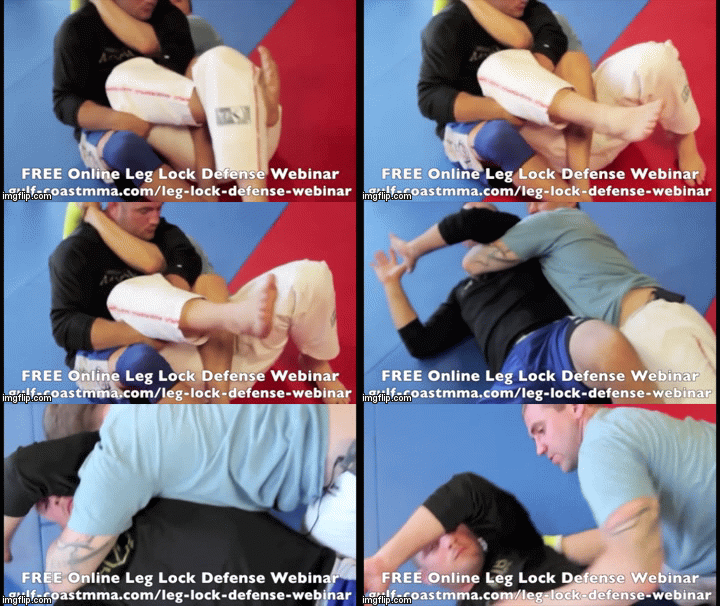
Another solid option is preventing the opponent from extending their hips. For this, you’ll first have to triangle your legs, in order to have enough time to get your upper body into position. From there on, the goal is to place a seatbelt grip around your opponent. However, instead of keeping it in a traditional back control manner, you want it to be more like an arm triangle. When you have everything in place, simply lay to your side and open up your legs. There’s no knee bar for your opponent since the angle of your body, because of the seatbelt grip is now different. You’ll end up in a leg drag-like position and get out with ease, ending up on top.
You are all set to get a submission after working for most of the match to set it up. You are in a perfect position and all it takes is that final twist or squeeze to finish. yet, for some reason, your submission hold just won’t work. how come? It is a submission you’ve been doing for a while and you know you can get it on that specific training partner. How come some jiu-jitsu submissions seem to work less the more you do them? There’s a hidden little trick in BJJ that frustrates generations upon generations of grapplers. Much like with a lot of other things in Jiu-Jitsu, this is a part of the process of mastering the Gentle Art. Thre are a few aspects of finishing submissions that require that “next level approach” in order to remove any obstacles.
People involved in Brazilian Jiu-Jitsu are addicted to the sport for a good reason. BJJ is unlike most other sports, or even martial arts, for that matter. It constantly offers new aspects that keep people hooked. Those that are driven by challenges are going to find no lack of them in grappling. The more cerebral types are also going to remain engaged, discovering concepts, principles and the likes. The professional athlete is always going to have that new detail to learn and try out, constantly looking to improve. There’s no standstill because the more time you spend in BJJ, the deeper the well of knowledge available to you becomes. Finishing Jiu-Jitsu submissions with a high success rate is also not a fixed ability. the same submissions open up new aspects with every year spent in Jiu-Jitsu.
There’s not one person alive that trains grappling or MMA who doesn’t enjoy Jiu-Jitsu submissions. However, as rewarding as they can be for our egos, they can also be a source of great frustration. Losing a submission you thought you had is as annoying as something can get. Especially when you can’t find out the reason why the move didn’t work. As with everything else, BJJ has the solution, it just takes someone to point it out for you. There’s a checklist of submission principles you need to go over with every submission you’re chasing. Furthermore, there’s the phenomenon of knowing something too well. Finally, there is an ultimate trick that’s going to take your submission game to the very next level.
First of all, what are the key characteristics that make a submission effective? To begin with, you need to know the finishing mechanics. Yes, you have to start at the end, at least while learning. You need to know how an armbar break the elbow joint so that you know what your end goal is. Understanding submission mechanics is tightly related to understanding the positioning.
Jiu-Jitsu submissions will not work unless you have inch-perfect positioning. You’ll need to have everything in alignment if you truly want a submission to work. A thing to remember is that no detail is to mall here. How your head lies, where your fingers are pointing, shrugging the shoulder on the right side, are all as key to finishing a submission as they sound insignificant. So, after finishing mechanics, positioning is the second thing on your checklist.
Following closely is control. Forget the “position before submission” mantra. You need control and you need it during the submission, not prior to it. Again using our armbar example, can you keep your opponent there without submitting them? If the answer is no, you need to work on that until you cross it off your checklist.
Finally, know what your opponent can and cannot do to defend. If they’re doing the right things to survive, then you also must know how to block and disrupt them or re-adjust your position.
Are You Too Familiar With Certain Jiu-Jitsu Submissions?
When it comes to Jiu-Jitsu submissions we all have our favorites. It may be based on something you picked up as a beginner and still like to do. It may be submissions that fit your body type or your physical strength. You could also favor moves that help you keep nagging injuries at bay. Whatever the reason we all tend to like some submissions more than others. This is one of the reasons why precisely those submissions might not work as good.
There’s a funny thing in BJJ. the more you go for a certain move, be it a sub, sweep or pass, the less it will work. After a while, most of your attempts are going to fail and the reason is not that you’re training partners have figured you out. The main reason is having too much confidence in your ability to get the moves. The more you go for a certain move, the more familiar your body and your mind get with it. This translates to both of them looking for the end result without going through the checklist above. Suddenly, doing your favorite move seems like you’re doing something for the first time.
Rushing through anything in BJJ is a bad idea, so the solution here is easy. Take a step back and return to the basics. Look to find your way into controlling someone from a point of submission instead of finishing. WHich is exactly where our next little BJJ hack comes into play.
The 20-Second Rule
The 20-second rule is a concept that is going to change your submission game radically. I learned this concept as part of a Guillotine finishing detail and then decided to give it a try in different areas. Unsurprisingly, it works for all chokes, and of course, almost all other submissions.
The main principle behind the 20-second rule is that when you have a fully locked guillotine, you do not let go for 20 seconds no matter what. And, by fully locked I mean you’re in perfect position, squeezing to get the tap. The thing with the Guillotine (and all BJJ chokes for that matter) is that they are slow submissions by trait. You can’t blitz someone with a choke like you can with a wristlock, for example. So, remain in position and keep yourself calm. As long as there’s no way out, proceed to count down from 20. Since chokes get progressively tighter with every breath your opponent manages to squeeze in, you’ll most likely get most taps in the 12-18 seconds range.
In terms of other submissions, the same rule applies. With a few exceptions (like wrist locks) there’s no need to rush any submission in BJJ. SImply get into place and control your opponent. Then, look to place pressure without overcommitting. Keep increasing pressure until you reach the 20-second count.
In the unlikely case of an opponent surviving past the 20 seconds, you do not just give up on a submission. Instead, do an ever so slight adjustment that you know makes things even tighter. Then re-apply pressure and go for the 20-second rule again. it’s a game changer!
Yup, it is another leg locks article. This one, however, is going to be a bit different. Let’s change up the normal routine of either looking specifically at attacking or defending leg locks. For that matter, we’re even going to abandon the Ashi Garami discussions this time. Instead, it’s time to look at leg locks as a counter-attacking weapon. This is going to oppose the major philosophy of today that a leg lock requires control and positioning to work. Well, not really oppose but I kind of bend this philosophy. After all, counterattacks are meant to be quick and decisive, using the element of surprise. There’s no element of surprise in methodically setting up Ashi Garamis for 5 minutes.
Counter-attacking is a somewhat advanced skill in Brazilian Jiu-Jitsu. It takes a good understanding of attacks, to begin with. Furthermore, it takes an understanding of what exactly an opponent is doing. Even more importantly, for counterattacks, you need to know what your opponent is planning to do. This takes time and experience, which is why we consider counters to be an advanced skill. That said, leg locks fit the definition of counter-attacks perfectly. They’re fast working submissions that can result in a lot of pain in an instant. Also, entries from positions of apparent disadvantage are a defining trait of leg locking submissions. All in all, they can be the perfect counter-attacking tool in many grappling situations.
One such situation where a leg lock can do wonders is in countering takedown attempts. Countering takedowns with submissions is not an easy thing to do in BJJ. The reason for this is that you need good positioning before you go for a submission. Since ground fighting is where BJJ is at its strongest, it means a lot of time and effort is required in order to get a submission. This pretty much goes again the principle of counter-attacks, which need to be fast and decisive. So far, front headlock chokes and/or the Kimura trap are the top options to defend against wrestling takedowns like a single leg. Leg locks offer a whole new counter-attacking dimension to them.
Despite the heavy use of leg locks in the modern grappling world, a true understanding of them is really rare. With the exception of the Danaher Death Squad and a few other standouts, like Craig Jones, people have no idea what they’re doing most of the time. know what you are doing. Mastering leg locks takes years and experience. This is exactly what you can use to your advantage.
Instead of going for the complete leg lock experience, look into them as counter-attacks. That way you can limit your focus to just a position or two and a couple of submissions. that said, you’ll be spared from learning entries since the point of a counter-attack is to use the position you’re into. This will shorten the learning curve of leg lock submissions significantly. it will also provide you with a counter that people won’t be able to defend. Because let’s face it, leg lock defense is even more poorly understood than the attacks.
Finally, remember that BJJ is full of exceptions. Even if you hit a counter leg lock perfectly, you might not end up finishing an opponent. They might just be crazy flexible, or they might be one of the rare ones that can defend in time. So even when you counter, make your final countering position be one that can offer transitions to other attacks. The specific counters that we’ll cover today offer precisely that.
The Anti-Takedown Game
Once again, in order to defend a move, you need to know a move. However, when you’re countering a move, you do not need a deep knowledge of it. When you’re defending, usually the best approach is to prevent an attack from happening. Even if an attack happens you’ll be looking to disrupt it while it’s happening. In defending takedowns, it is the most common blueprint people follow.
When you counter, you need a different approach. For one, you need to know what the point of the takedown is, rather than the technique of the move itself. Furthermore, you need to know where and when the takedown is going to end. This is going to allow you to let your opponent work until a specific point. What this allows is for confidence to build in your opponent, who’ll think they’ve got you defenseless.
In order to be able to counter takedowns, you need to know their weak spot. Every takedown has a weak spot you can exploit, in terms of leg locks as counters. These weak points are not in the techniques of wrestling themselves but in their relation to the sport of BJJ. Just like doing an Ippon Seio Nage can land you in a rear naked choke, going for certain takedowns opens up certain counters.
The key elements are proper timing and invisible Jiu-Jitsu. If you time a takedown counter wrong you’ll end up on your back, no doubt about it. Timing your counter means positioning yourself during the opponent’s attack. This is invisible Jiu-Jitsu at its best.
Calf Slicer
The takedown we’re going to focus on today is one of the most utilized moves in all grappling martial arts – the single leg. It is part of the basic BJJ and wrestling curriculum and works at all belt levels. As such, plenty of defenses and counters already exist, but none are as effective as leg locks.
Click For Full Video
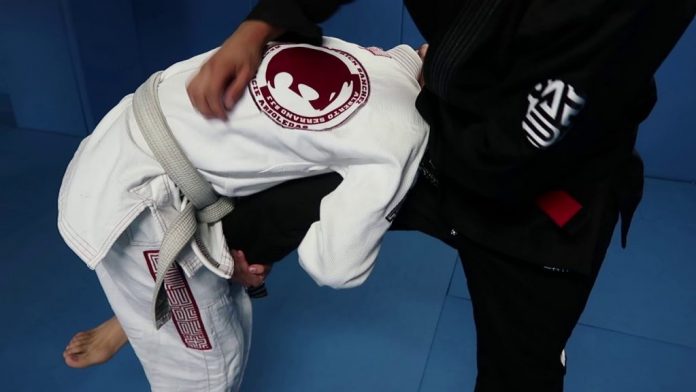
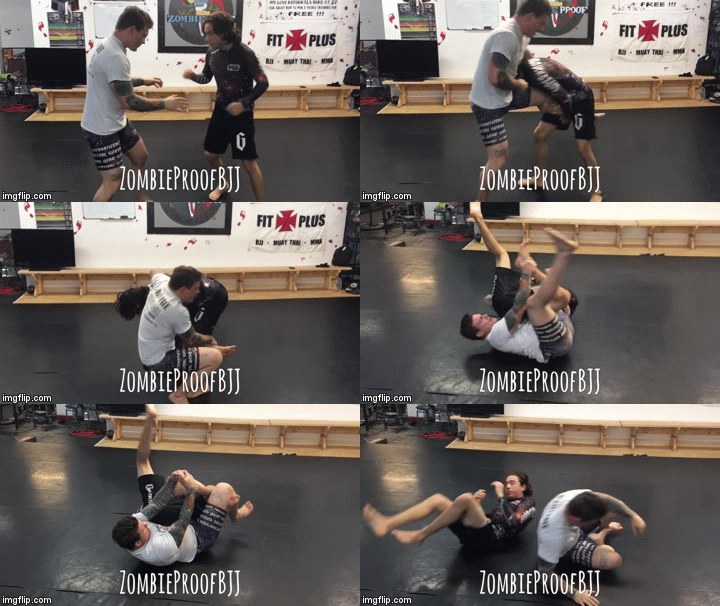
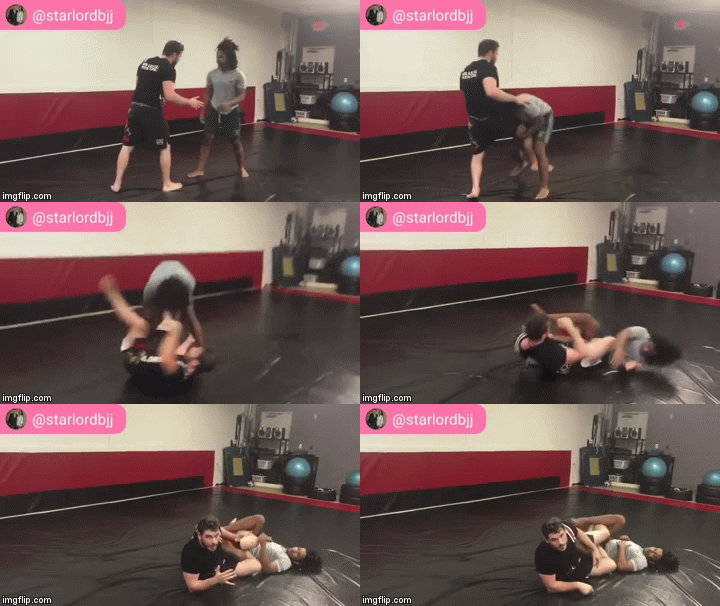
To begin with, a legal one for all you IBJJF die-hards out there. Of course, you’ll need to be a brown or black belt for this, but we did mention counterattacks are advanced, right? As your opponent shoots for a single leg, make yourself look busy but do not truly defend their attempt. Allow them to get your leg in between their legs. Do not, however, let them keep their head on the inside. That’s the only thing you need to worry about for now.
Once their head is on the outside, you can focus on your counter. The higher up your leg they are, the better for you. Use the leg that’s between your opponent’s legs and hook the near side leg. AS you do that, catch your shin with your hand, similar to a triangle setup. All you need to do now is actually fall back on your back and triangle your legs. You’ll end up right in the Truck position with a calf slicer ready to go.
And, in the case things do not work out you always have a transition to the back, or, if rules allow it, to the Twister.
Imanari Heel Hook
Now, let’s explore some “darker” aspects of leg locks. You could also use the dreaded heel hook submission to finish a fight after being caught in a single-leg takedown. Once again, it will only seem as if you were caught and you’ll keep your options open at the end.
Click For Full Video
This counter is actually much more dependent on correct timing. You need to anticipate where the takedown is going to end and use that momentum to get into a counter. The best way to finish a single leg is by pilling the leg and applying forward pressure on the thigh. This will inevitably get you down, but also open up an Imanari roll. Since your leg is already up between the legs of the opponent, all you need to think about is hooking their near side leg with your arm. From there on, you’re a simple roll into a honey hole and an inverted heel hook.
The beautiful thing is that if you mess it up somehow, you can go in two main directions, You can keep playing the leg lock game by transitioning into Ashi Garami controls (like 50/50) and different leg locks. Or, you could simply go into a leg drag and get a sweep and a pass with ease.




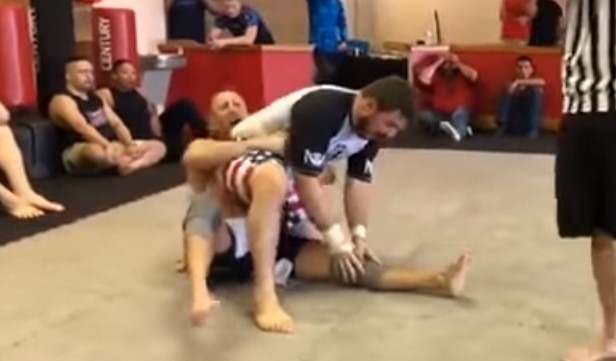

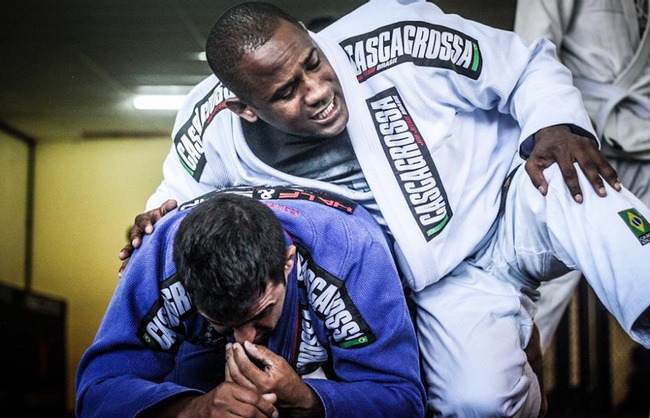 It is perfectly ok to really be into something, but it’s completely another to throw it into everyone’s faces. I wouldn’t want to listen about sewing all night long. Well, surprisingly some people haven’t gone the slightest interest in Brazilian Jiu-Jitsu. This is one major aspect of BJJ in a social sense that we often miss. The amount of time we like to discuss anything BJJ related is, well, all the time. And this doesn’t bode well in social circles.
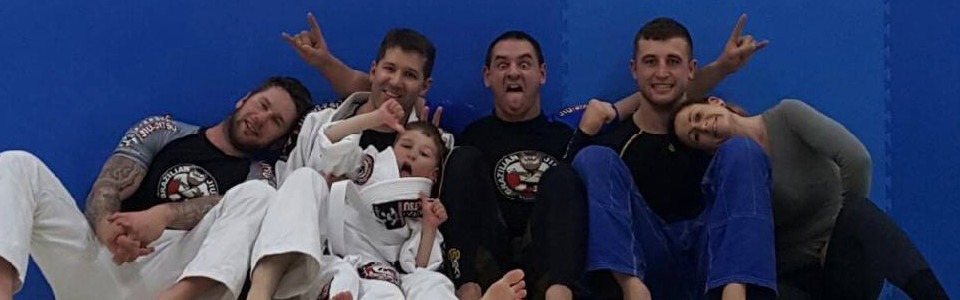 Brazilian Jiu-Jitsu also tends to form strong relationships between people in the gym. After a while, people become teammates first. Then, they become great friends. Trying to beat each other up, going on tournament road trips etc tends to do that to people. The glaring issue with this is that you’re forming a social circle of people with the same “addiction” as you. This rarely has a positive effect on the social life you have outside of the academy, which is where you need to look for balance.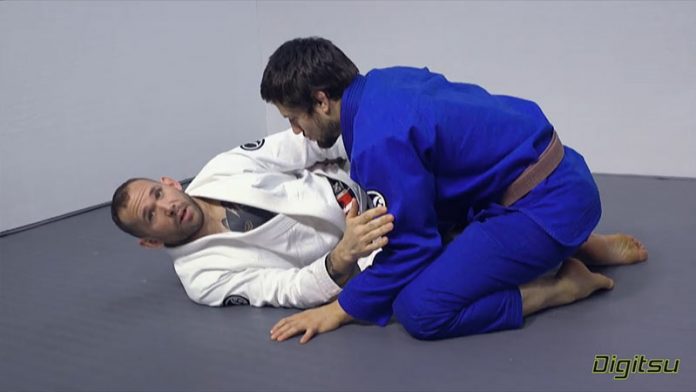
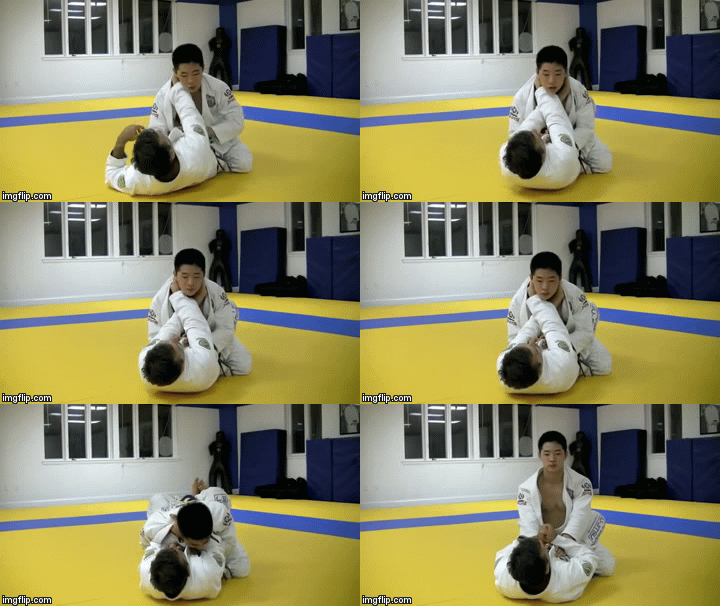
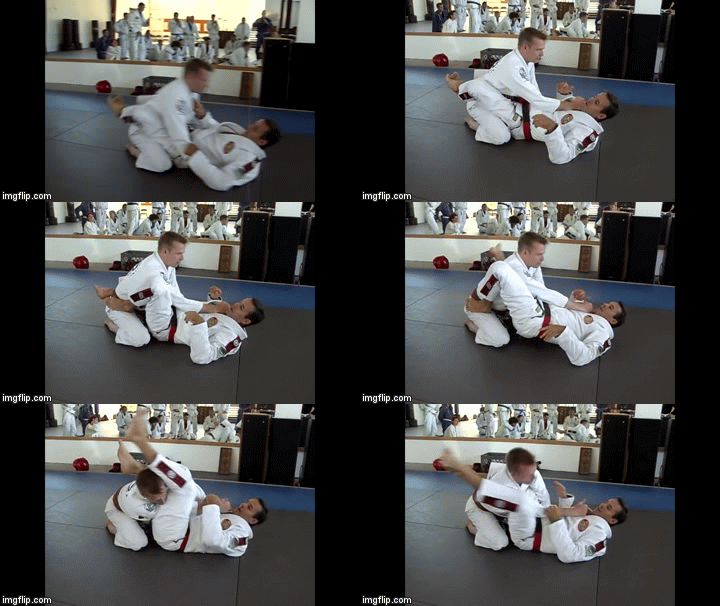

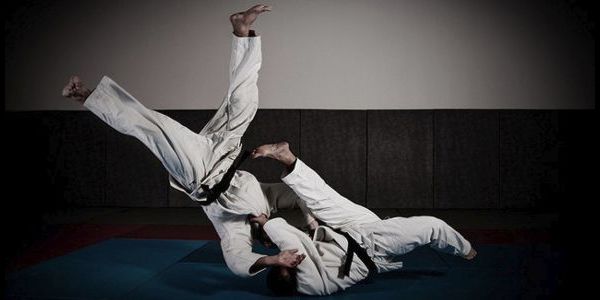
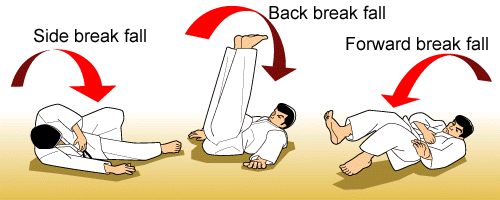 Next up is a really important benefit for Jiu-Jitsu. As you know by know, the neck takes a lot of abuse in BJJ and most grapplers end up with a neck injury or two in their career. Neck conditioning is a huge benefit form break falls. Most importantly you get to develop a strong neck specific for BJJ situations. As an added bonus, you get in neck work without having to do it on its own.
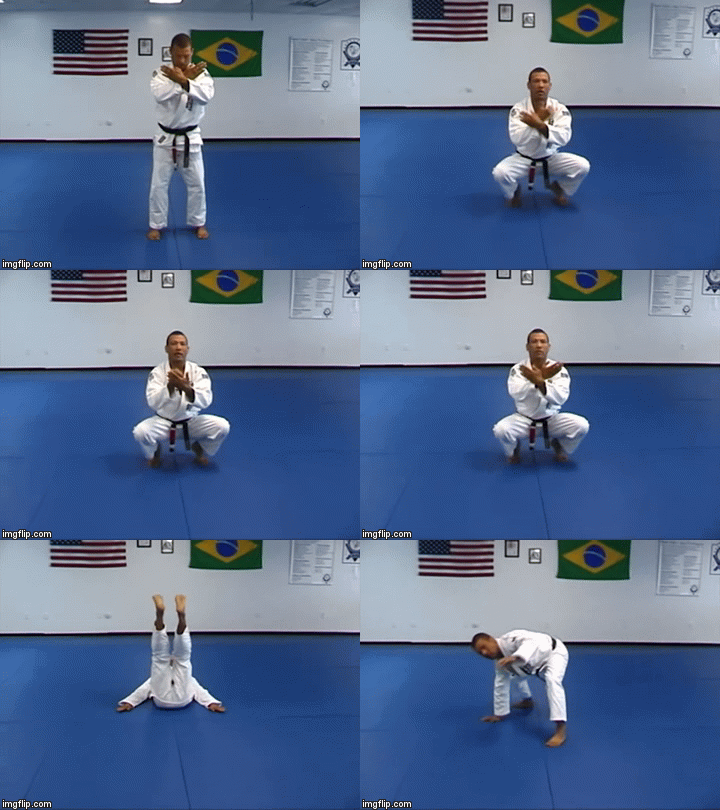 Let’s look at some basic tips about break falling. If you’re going for a backward break fall, you should start with your feet hip-wide apart. Bend the knees as much as possible, aiming to go deep into a squat. The deeper you squat, the easier the fall is going to be. From there on, you need to curl up in a ball. Fall backward, allowing the curvature of the spine to roll on the ground. You should always stop rolling before your neck touches the mats. There should be absolutely no contact between the neck and mats at any point during a break fall.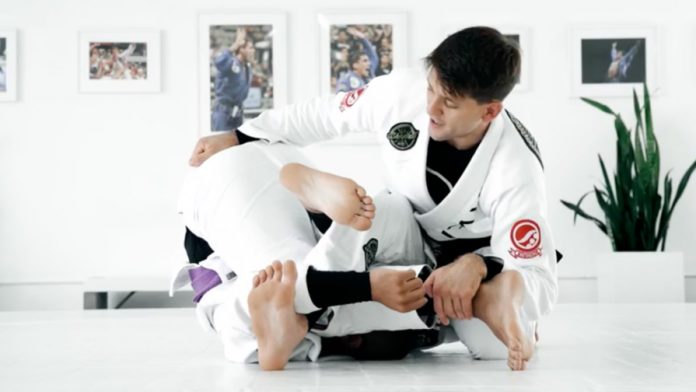
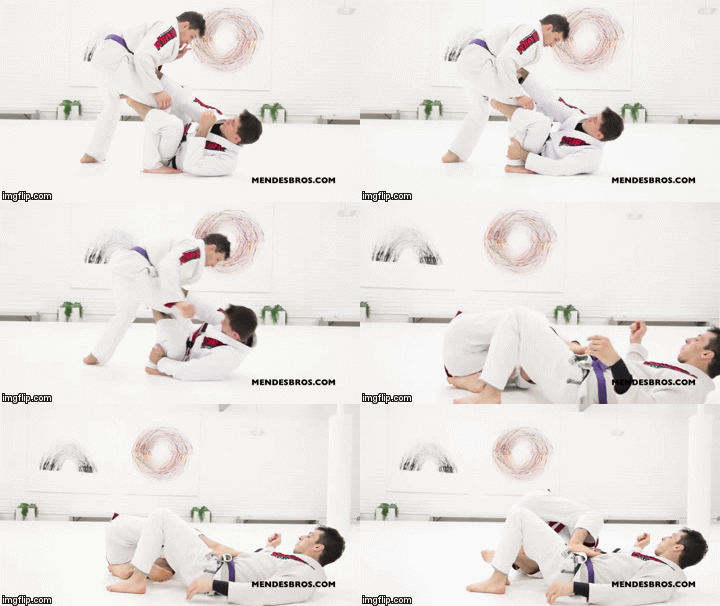
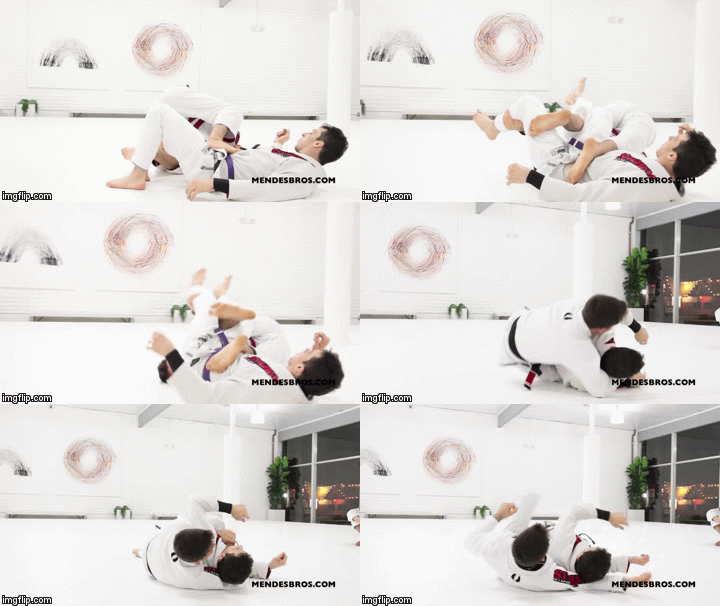
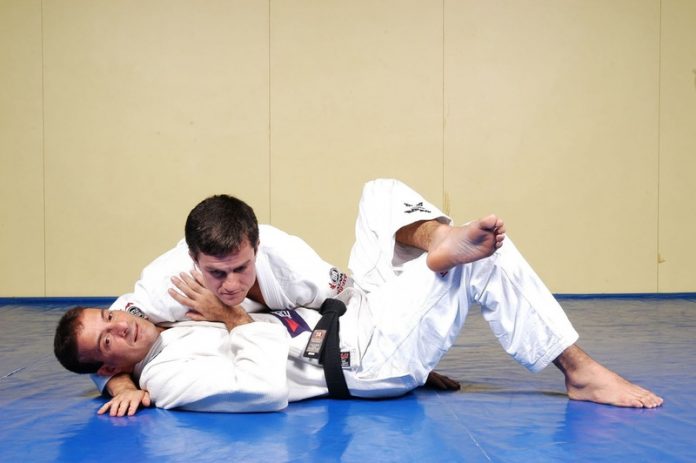
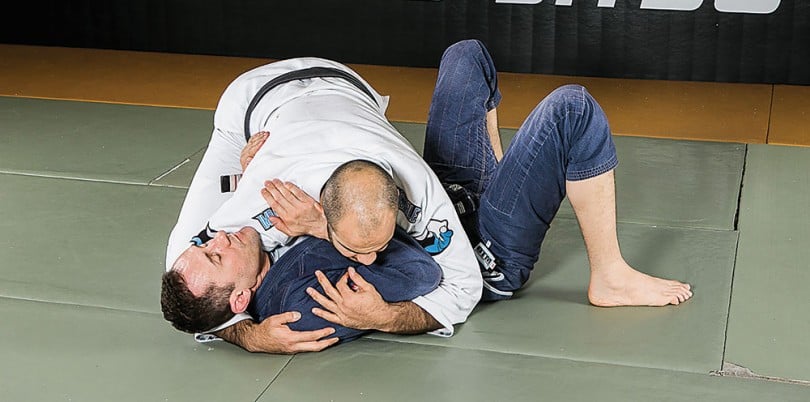 First order of business is head control. The dreaded cross-face is the ultimate weapon of choice here. That means one of your arms is going to go under the opponent’s head. Your shoulder is then going to drop onto their chin, blocking their movement. The hand of the arm can stay on the mats, or go into the opponent’s opposite side armpit for extra discomfort.
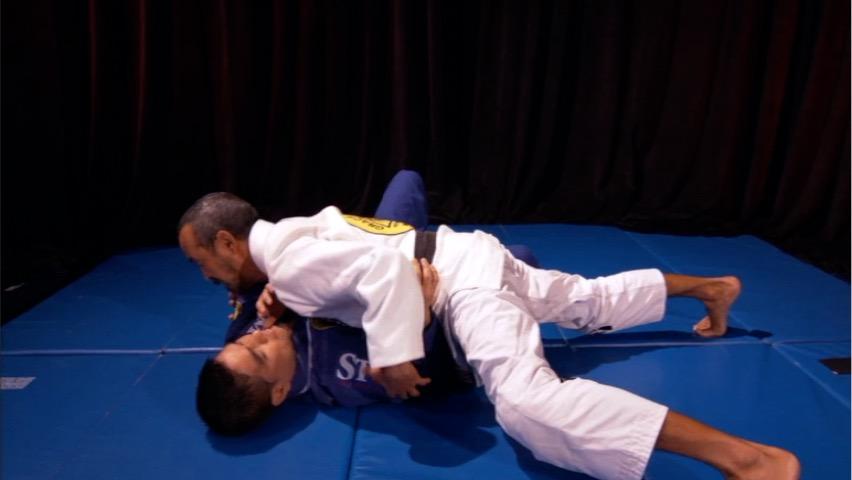 For the 100 kg position, you’re pretty much in the same starting position as with the classic, You still need the cross-face, of course. The main difference is in leg positioning. For the 100 kg side control, you want both your legs sprawled behind you. You also have to pay attention to where your chest is positioned. You have to keep your chest right in the middle of the opponent’s torso. Actually, being a bit more towards your side is even better. If you go too far over you’ll be light as s feather and easy to topple over.
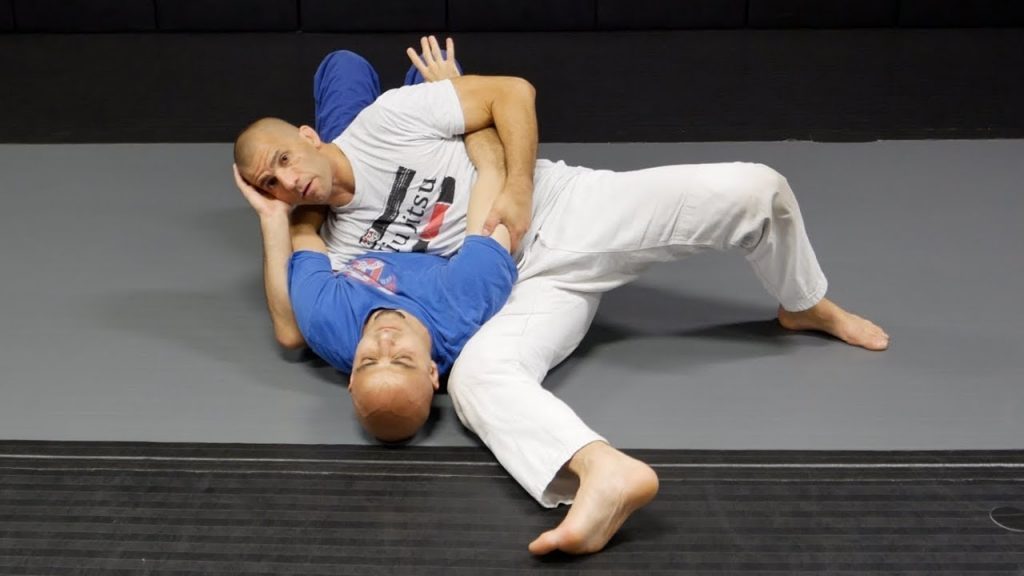 The Kesa Ggatame is a Judo classic, but in Jiu-Jitsu this position is only used sporadically. However, in terms of transitioning in between side control variations, the Kesa Gatame is the ultimate pit stop. Kesa Gatame Jiu-Jitsu basics are head control, trapping the near side arm and leg positioning. For this variation, you need to be on your hip/butt, legs pointing towards the opponent’s head. Furthermore, you need to have your legs spladeled and keep your head low next to the opponent’s head. It is dangerous to stay in this position long in BJJ, because an opponent might get your back if they know how.
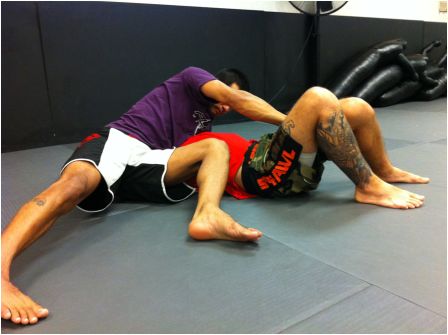 The reverse Kesa Gatame is a much more viable position for BJJ. As the name suggests, it is pretty much the same as Kesa Gatame, only done in reverse. That means that for this position. you’ll be facing the opponent’s legs. The position is also called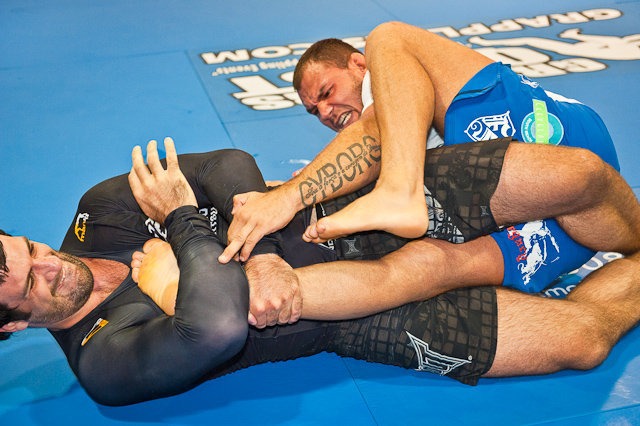
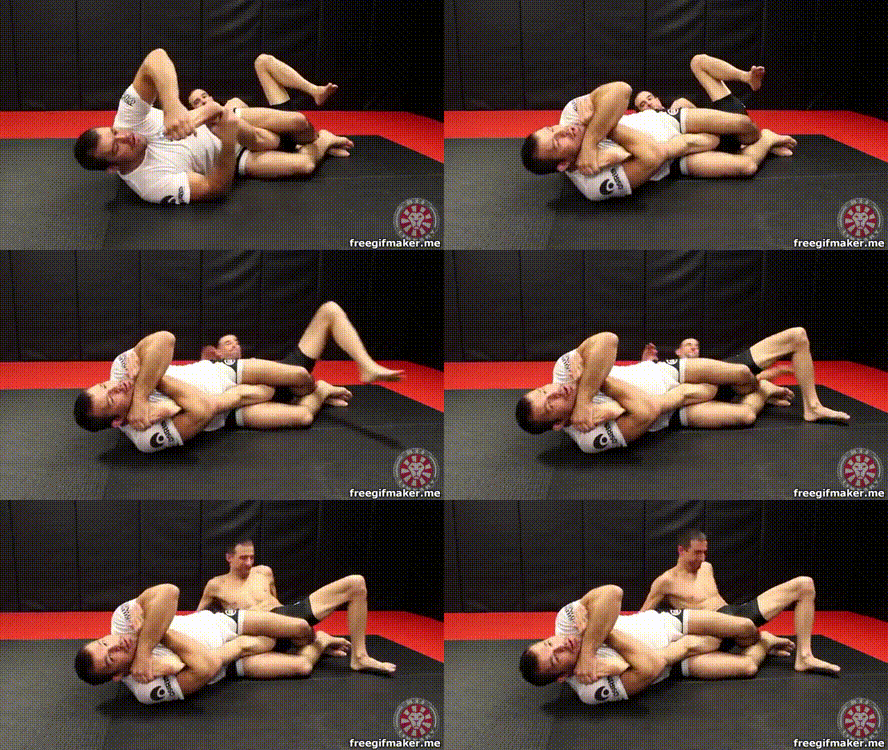
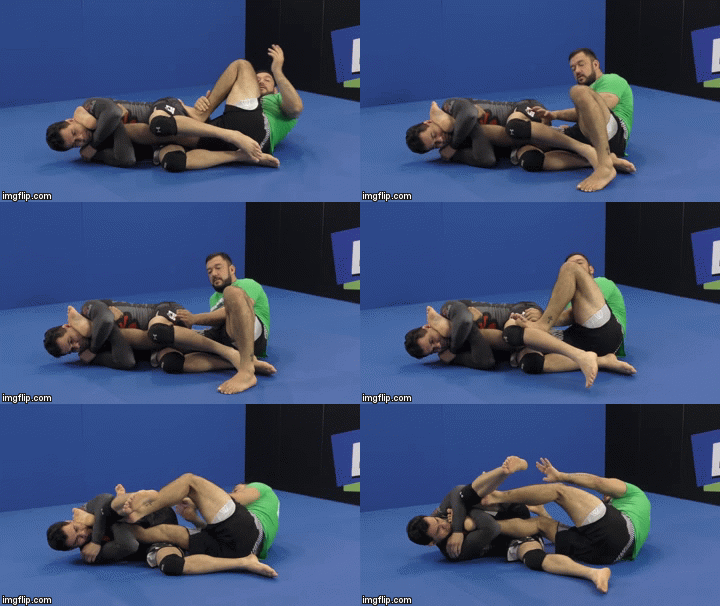
 Another solid option is preventing the opponent from extending their hips. For this, you’ll first have to triangle your legs, in order to have enough time to get your upper body into position. From there on, the goal is to place a seatbelt grip around your opponent. However, instead of keeping it in a traditional back control manner, you want it to be more like an arm triangle. When you have everything in place, simply lay to your side and open up your legs. There’s no knee bar for your opponent since the angle of your body, because of the seatbelt grip is now different. You’ll end up in a leg drag-like position and get out with ease, ending up on top.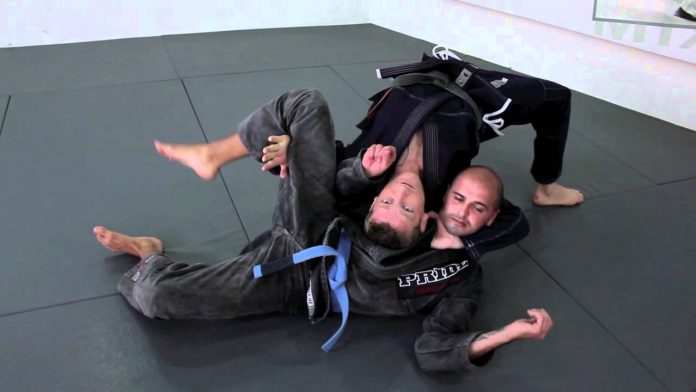
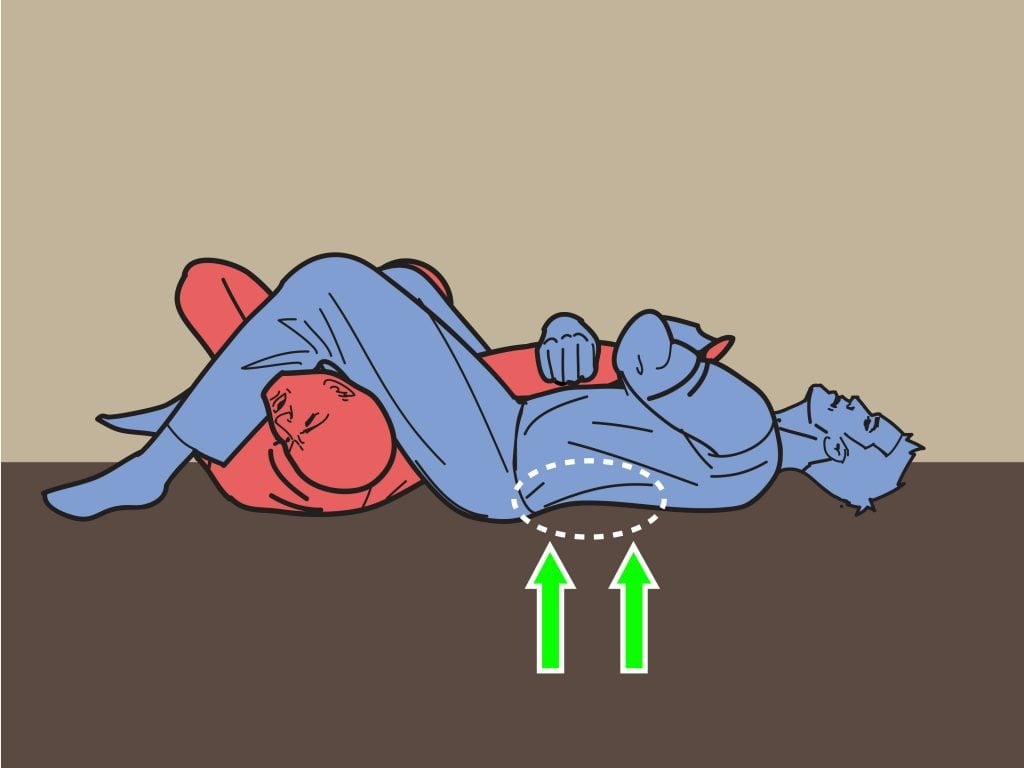 Jiu-Jitsu submissions will not work unless you have inch-perfect positioning. You’ll need to have everything in alignment if you truly want a submission to work. A thing to remember is that no detail is to mall here. How your head lies, where your fingers are pointing, shrugging the shoulder on the right side, are all as key to finishing a submission as they sound insignificant. So, after finishing mechanics, positioning is the second thing on your checklist.
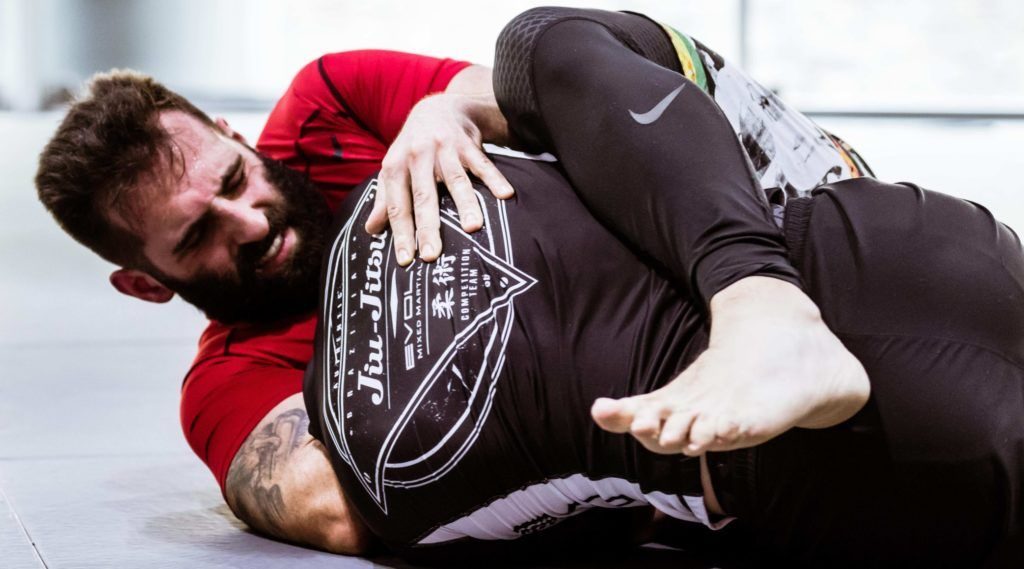 The main principle behind the 20-second rule is that when you have a fully locked guillotine, you do not let go for 20 seconds no matter what. And, by fully locked I mean you’re in perfect position, squeezing to get the tap. The thing with the Guillotine (and all BJJ chokes for that matter) is that they are slow submissions by trait. You can’t blitz someone with a choke like you can with a wristlock, for example. So, remain in position and keep yourself calm. As long as there’s no way out, proceed to count down from 20. Since chokes get progressively tighter with every breath your opponent manages to squeeze in, you’ll most likely get most taps in the 12-18 seconds range.