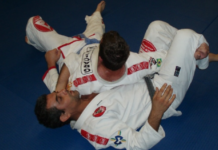
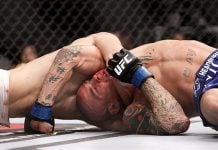
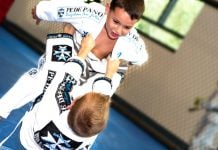
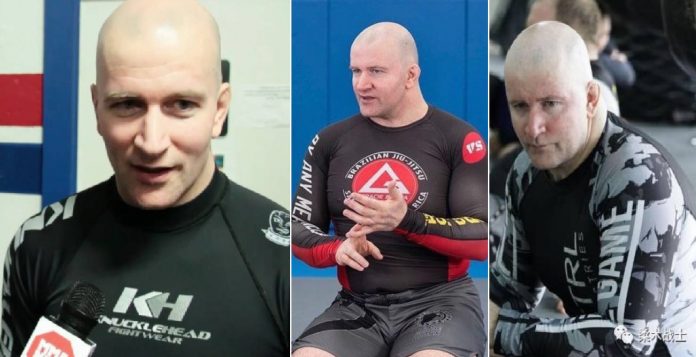
John Danaher is always seen in a rashguard. Whether he’s traveling, shopping, giving interviews.. He was also wearing a rashguard on his friends wedding.
While many people find it pretty weird John Danaher has his own explanation about it. Actually it’s very simple. Read below what John Danaher said why he’s wearing a rashguard all the time.
Arguably the question I am asked more than any other has nothing to do with jiu jitsu. “Why do you always wear a rashguard?” First let me dispel a commonly voiced, but incorrect theory. It has nothing to do with fighting or being ready for fights. In my current physical state, an aggressive five year old could easily defeat me with a simple kick to the knee or hip or even a simple push – a rash guard isn’t going to save me! My reasons are purely practical. First, they are very comfortable, Second, they are easily washed and dried. Third, they are extremely low maintenance/wrinkle free/easily packed for travel etc. Fourth, being a low friction material, they are well adapted for wear under a jacket. Fifth, They enable me to comfortably demonstrate a technique in impromptu social situations to students. Sixth, they are warm in cold weather, yet cooling in hot summers due to wicking effects, and; if caught in rainstorm, they will dry in minutes even while being worn. Seventh, some clothing companies sponsor and support my athletes. I am proud to represent any company that supports my people. Eight, they are free as clothing companies are happy to see me wear their products. Nine, there is considerable variation in rashguard design that can vary from informal daily wear to more formal wear for dates/occasions. When it comes to comfort and utility and low maintenance, I have never seen an attire that can beat track pants, sneakers, rash guard and fanny pack. If i find something more comfortable in the future i will switch to that. It may not be aesthetically pleasing, but I am already rather ugly and odd looking so I don’t even bother with clothing aesthetics as my looks are a lost cause – if I had to rely on looks and charm for anything in my life I would be a homeless beggar already Now it’s time for a rash guard story that may change the minds of some of rash guard doubters out there…I am an admirer of the great MMA fighter Jose Aldo – any time he fights, I’m watching. The night he fought Uriah Faber, I wanted to see it. I don’t own a television, so I suggested to a bunch of my students that we go to a sports bar on the upper east side of Manhattan and watch it live. As always, I was running a little late and came in wearing my usual attire and began looking around for our table. Now my students and I actively seek out every opportunity to prank/ridicule/make fun of each other, my general weirdness gives them lots of raw material to work with! The entire group of them had dressed in rash guards and Fanny packs! As I sat down there was a noticeable look from pretty much the entire bar as they all simultaneously asked the question, “who the f**k are these dorks and why are they dressed in those gimp outfits?” We all started laughing and started to watch the show. Out of nowhere groups of women started up to our table and started asking who we were and why were we dressed like that? Were we a sports team? Cyclists? Triathletes? Lunatics? Morons? Suddenly our table was neck deep in curious babes and hotties and the Jose Aldo fight was forgotten ?
Every single one of my students got multiple phone numbers and action out of that escapade! (I was the only failure)
The dudes at the bar were furious and could not understand how a bunch of dorks in wetsuits who looked like they had beamed down from the deck of the starship Enterprise had gotten all the female attention. So, who knows…maybe you doubters ought to give it a try…my rash guard system worked as well for my students as my leg lock system…perhaps it can work for you too!
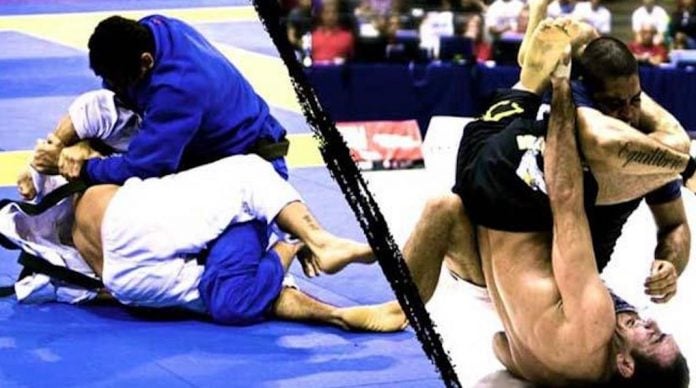
In the modern world of BJJ, there are two main streams of practicing the art. One employs the use of a traditional Gi, along with a certain ruleset some frown upon. That is Gi Jiu-Jitsu. The other often deemed more fun and free-thinking, revolves around wrestling in spats and a rashguard. This is known as No-Gi Jiu-Jitsu. Both of these streams have die-hard proponents who blatantly refuse to recognize the value of the other.
In the modern era, though, it is hard to present a certain thing in a negative sense. People have research tools at their disposal that weren’t there just a few decades ago. Back in the old days, No-Gi Jiu-Jitsu was often ostracized, thanks to propaganda. In fact, the original BJJ practitioners didn’t wear a Gi only when it was too hot to train in one. And, in some instances, while training or competing in Shoot Boxing. Since then, No-Gi has spread onto the BJJ scene, offering a new perspective for both amateur and professional athletes. Let’s put No-Gi Jiu-Jitsu on trial and decide whether it is really as fun and effective as presented?
The Case For No-Gi Jiu-Jitsu
First and foremost, let’s look at the very basics of No-Gi Jiu-Jitsu training. The most obvious difference compared to traditional BJJ is that of the training attire. Most people involved in No Gi nowadays favor wearing rash guards. Earlier in No Gi’s development, most people went for shorts and a shirt, or shorts only. As insignificant as this might seem, shedding the Gi actually changes the game a lot.
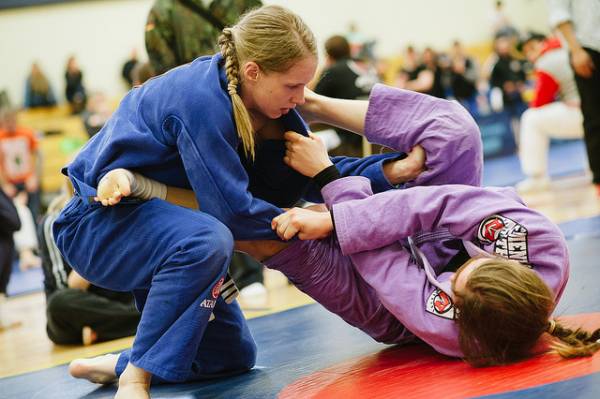
Namely, without the Gi, there are no more collars, sleeves, or pants to grab on to. Traditional BJJ is immensely dependent on these basic grip points for control. The whole game of GI BJJ is based around controlling, and even attacking an opponent with parts of the kimono. The grips in No-Gi are closer to those of submission wrestling, for example. Head control, with one or two arms and gripping the wrists are the two main avenues of control in No-Gi. People like Jean Jacques Machado, who was born with four fingers missing on one of his arms, proved how effective these grips can be. Although seemingly not as tight as Gi grips, they do offer a different way of approaching BJJ.
Furthermore, the inherent ‘lack” of control leads to a higher pace of No-Gi matches. This means that people are sharper, more prone to quick transitioning, and have to be masters of weight distribution.
The rules, although variable from one organization to another, also revolves around the nature of the No-Gi game. No-Gi Jiu-Jitsu rulesets allow for a greater variety of techniques to be employed. Some of these techniques are forbidden under Gi rules, which is another point of disagreement. ADCC competition has proved how entertaining BJJ can be without the risk of added injuries. In recent years, EBI-style tournaments only confirmed that.
The Case Against No Gi Jiu Jitsu
The case against No-Gi Jiu-Jitsu starts with the absence of control. Since BJJ is essentially the game of controlling an opponent, it is understandable why some have this approach. the Gi does offer way more in terms of control, thus opening more opportunities for attack. While No-Gi revolves around wrestling-style controls, Gi Jiu-Jitsu allows for more creativity in this department. Just check out some of the latest lapel-based guard systems and you’ll see how deep BJJ can go.
Having greater control over an opponent means that you can attack from more positions. There are way more sweeps available in Gi Jiu Jitsu, as well as guard variations . The gripping practices of No Gi are transferable to Gi practice, while the opposite doesn’t hold true.
Thus, Gi Jiu-Jitsu is considered to be more technical than No-Gi, whose fast pace means that the style revolves around submission hunting rather than slow control. It is a fact that although the belt system is applicable to both streams, Gi Jiu-Jitsu is considered the best way to get a black belt. One can see why this holds merit, given the wealth of technical knowledge required to battle in the versatility of the Gi.
The Verdict
All in all, the case seems to be closely tied. The determining factors of the verdict come down to two aspects – persona preference and approach to BJJ. In the first category, personal preference dictates whether one will wear a Gi over their rash guard. Since personal preference can hardly be influenced, we come to the approach one has to Jiu-Jitsu. Here, before a student develops their own philosophy of BJJ, they are introduced to the basics by instructors. Instructors’ personal preferences do influence those of students a lot, so instructors have to be careful to present the art without bias.
Finally, I think that the best way to bring this to an end is through a settlement. Students should become as proficient in No-Gi, as they are in Gi Jiu-Jitsu. This is the only way to ensure that every Jiu-Jitsu match is fun and entertaining. As far as fun in training, if you think Gi Jiu-Jitsu is boring, apply No-Gi principles while rolling and create an environment that suits you.
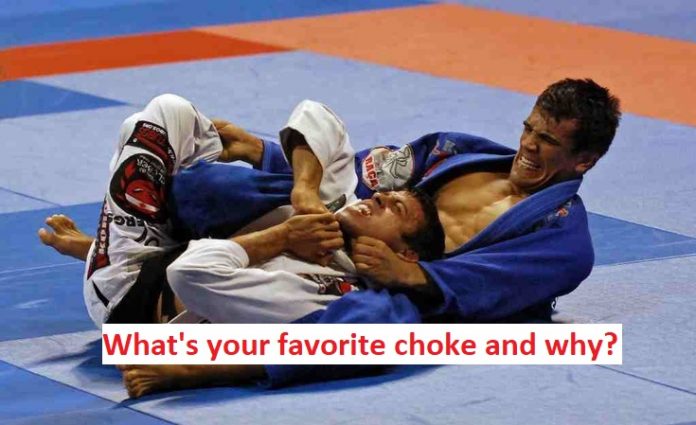
Although chokeholds are not specific to Brazilian Jiu-Jitsu, they have become so much associated with it, that they are considered to be hallmarks of the art. The Rear Naked Choke was perfected by BJJ to such detail, that it bears the name “Lion killer’. Ok, you can’t really kill a lion with it or any wild feline, but it does make a point. BJJ chokes are powerful against any kind of opposition and can be applied to anyone, given the right amount of training.
From another aspect, BJJ chokes are considered to be the ultimate submission holds. Yes, joint locks are painful and might cause injury, but a choke can be lethal. There’s no “I could’ve endured it’ talk with chokes. A properly applied choke leads to two outcomes, none of which leaves any doubt. One is to tap and acknowledge that the opponent got you. The other is to play hard-ass and go through the tunnel and into dreamland. The choice is yours, but do not forget, getting choked out (or tapping to a choke) means that you could’ve died. Such is the power of BJJ’s chokes.
Anatomy Of BJJ Chokes
Since BJJ is an art of control above anything else, it is natural that chokeholds are highly technical affairs. When a choke is applied, it is not just about squeezing tight and holding for dear life. Proper positioning is essential, but it is beyond the scope of this particular article. Let’s consider that you’re in the perfect position to apply a choke. What it is that you’re actually looking for?
BJJ chokes go one of two ways to render an opponent unconscious. Most chokes are “blood chokes”, cutting oxygen off by pressuring the blood vessels in the neck. A smaller group of chokes is one of the so-called ‘air chokes”, restricting airflow through the windpipe via direct pressure.
NO-GI Chokes 6xDVD SET WITH BRANDON QUICK – FADE TO BLACK
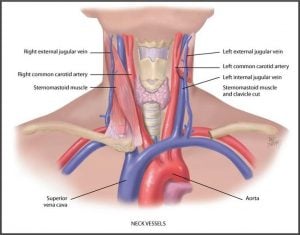
When a blood choke is applied, there’s bilateral pressure on the neck. First in the “line of fire” are the jugular veins. They transport blood from the brain back to the heart. Once they’re compressed, there’s the retention of blood in the head, seen on the face as engorgement. Next, the pressure affects the carotid arteries, vessels that transport blood to the brain. Blood is the only way to transport oxygen to the brain, which is essential for function. Once oxygen is prevented from reaching the brain, consciousness is one of the first sacrifices the body makes in order to try and survive. That is why BJJ chokes result in quick pass-outs. Although blood chokes do not compress the carotid arteries more than 90 %, it takes only 7-10 seconds to go out. Holding on to the choke for longer than a minute has lethal consequences.
Air chokes are “simpler” and a lot less comfortable than blood chokes. They put pressure on Adam’s apple, compressing the windpipe. Since they block air instead of blood, it takes longer to choke someone out.
Choke Systems Of Brazilian Jiu-Jitsu
For the sake of clear categorizations, we’re going to divide BJJ chokes according to different systems. These systems are discernable according to body position and points of pressure. Both variables are included because we grouped BJJ chokes into systems that contain more than one move and can be interchanged in a complex game plan based on choking.
Arm Triangle Chokes
Arm triangle chokes are chokes that utilize both a limb from the one applying the choke, and the one being choked. Usually, one side of the neck is under pressure from a part of the arm of the choker. The other side gets pressured by the arm and shoulder of the person on the receiving end.
The arm triangle choke (Kata Gatame) is a great example. It’s done from side control with one arm being placed around the opponent’s neck from the side. the key point is trapping the near side arm of the opponent in the loop in order to obtain bilateral pressure. The choke is tight and very effective.
Lots of chokes from the front headlock position fall into this category as well. The D’arce choke, the Anaconda, and neckties work together in a very effective system that is hard to get out of.
Rear Naked Chokes
Probably the most recognizable amongst chokes is the Rear Naked Choke. As far as BJJ chokes are concerned, this is the highest percentage choke in training and competitions. A lot of this choke’s success is down to the fact that it is done from the back. Considered the ultimate dominant position, the back is notoriously hard to get out of.
The Rear Naked Choke is applied when one arm is placed around the neck from behind. A key point is placing the chin into the crook of the elbow, so that pressure is distributed equally on both sides. The other arm is placed in a figure 4 configuration ending up behind the opponent’s head. It takes almost no strength to apply huge pressure that takes only seconds to put someone out.
The Rear Naked Chokes system does have a few variations, including an air choke one. When an opponent fights the grips with great success, it’s a good idea to switch to the forearm choke. In this variation, the forearm is placed across the neck, while both palms are firmly clasped over the opponent’s shoulder. Pressure is applied to the windpipe, disrupting airflow.
Leg Triangle Chokes
The leg triangle chokes system is an entertaining one, seeing as the chokes are performed using the legs instead of arms. The classic triangle choke is done from the bottom, by placing one leg through the armpit of an opponent and the other over the opposite shoulder. Pressure stems from the leg over the shoulder on one side, and the trapped arm on the other. The principle is the same as in arm triangles, with the notable difference of using the legs instead of arms.
Lots of variations are available, like the Inverted Triangle, The Reverse Triangle, and even an Arm Triangle Choke.
Lapel Chokes
A system specific to GI Jiu-Jitsu, lapel chokes are highly effective but require the use of a GI. In particular, the lapels of the Gi are used to entangle the neck of an opponent ending up with a blood choke. There are plenty of variations, available from almost every position in BJJ. Some can be done by wrapping one’s own lapel around their neck, while others require the lapel of the person performing the choke. Some, like the Brabo choke, fall under the arm triangle category, where the pressure on one side is replaced by a lapel. The best example of a highly effective lapel choke is the bow and arrow choke.
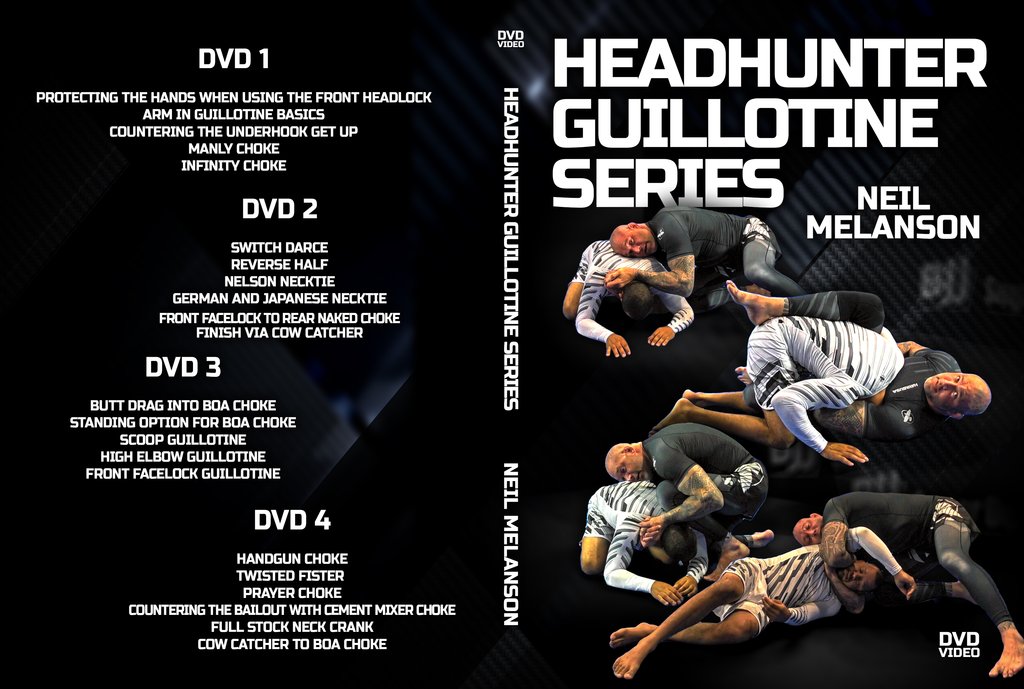
Guillotine Chokes
In regard to air chokes, the Guillotine choke is by far the most effective one. Also, a highly variable choke is applied mostly from the front headlock position. It involves placing the arm around an opponent’s neck from the front, keeping their head in your armpit. Depending on the variation, hands are clamped together on the side of the neck, or trapping one arm. In most instances, pressure is placed on Adam’s apple, resulting in reduced airflow. Apart from being able to put someone out, Guillotine chokes are very uncomfortable and offer a great degree of control.
All BJJ chokes are far from covered in this article. There’s great variety among chokes in Jiu-Jitsu. The North-South Choke, The Buggy Choke, Gogoplata, Paper Cutter choke…the list is endless. However, most of these cheeks can be placed in one of the above systems, whether positionally, anatomically or structurally.
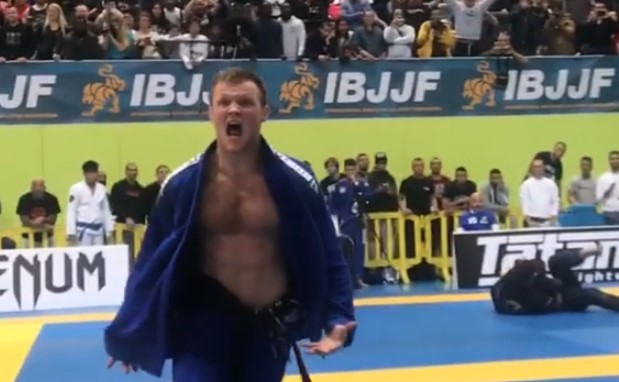
Looks like there’s a bright Career in front of the Tommy Langaker. He came to semi finals with a win over Renato Canuto. In Semi finals Tommy Langaker lost to Lucas Barbosa. Barbosa will face Keenan Cornelius tomorrow in Black Belt absolute division finals.
Check out Langaker’s submission and his celebration after he caught Erberth Santos!
What would you describe as BJJ’s most defining characteristic? The one that makes this art different from other grappling arts? The answer is very easy and can be traced back to the reason BJJ exploded in the first place. During the first couple of UFC events, Royce Gracie amazed the world with his ground fighting abilities. Yes, him choking out huge half naked dudes was impressive, but not unheard of. What really caught the public’s eye was his ability to be deadly from his back. That is the one are that BJJ excels at more than any other art. So the answer to the question above would be the BJJ guard.
The BJJ guard is a very broad term that refers to a whole host of positions. From simple details to huge body positioning changes, the BJJ guard game is unrivaled in it’s efficacy. No other grappling art ever produced a system for offensive fighting from the back as the BJJ guard. For the purpose of this article, we’re going to look at the structure of the most common categories of guards specific to Jiu Jitsu.
The Closed BJJ Guard
The closed guard is perhaps the most recognizable of the guard categories. Who can forget Royce Gracie, and later many others in Pride FC, giving hell to everyone from the ground. The closed guard is one of the basic positions taught in the first few classes of BJJ. Although it’s efficiency is undisputed, the closed guard is not just one position. Is can be considered a whole subsystem of positions and moves, all part of the bigger system known as the BJj guard.
In terms of working from the closed guard in a Gi environment, the closed guard is a go-to for many grapplers. It works from white, all the way to black belt level, offering great control and plentiful attacking options. Sleeve and collar grips help a student control the upper body, while the crossed legs block the hips. From there, it’s all about sweeping or submitting, both done almost effortlessly with the right approach.
The closed BJJ guard for No-Gi gets a bit trickier, mainly because of the lack of high controlling grips. This leads to closed guard varieties that emphasize breaking the posture, to be considered more effective. Among the many variations the one that stands out is the rubber guard. Proven in both BJJ and MMA environments the only drawback of the rubber guard is that it requires a certain level of flexibility. Other, less demanding, but equally effective variations would be the Williams guard, Rat Guard and the Marshall guard.
The Open BJJ Guard
Probolay the most utilized and most varied position in BJJ, the open guard is by far the most entertaining system. Arguably, it offers less control than the closed guard, but is more offensive in a wider variety of ranges. For example, the closed guard can only be played while the opponent is on their knees. Playing open guard means that you can follow an opponent who is changing range, by switching among the many available options.
For example the butterfly guard is great for kneeling opponents. A half kneeling opponent might be kept at bay with the Single Leg X or regular X guard. Against a standing opponents one might go for any De La Riva guard variations when looking for lower body control, or choose spider guard for upper body control. The inverted guard is a story of it’s own, but it does fall under the open guard subsystem.
The BJJ Half Guard
The third big subsystem of the BJJ guard game is the half guard. Again, it is mostly effective against an opponent that is not standing, but it does offer more variety than the closed guard. The half guard has become one of the most powerful attacking positions in BJJ, favoured highly by some of the greatest competitiors at the highest levels. Caio Terra is one who has an unpassable and highly dangerous half guard.
The many varieties of the half guard range from “simple” stuff done off an underhook to highly attractive positions like Cyborg’s tornado guard. This subsystem offers both great controlling positions like the lockdown, as well as unstoppable sweeping variations like the underhook or deep half guard. The half guard game is a good backup for the open guard game as well. Let’s say an open guard gets passed. Instead of ending up in bottom side control, the half guard is right there, offering better options. It can be used as an attacking point of it self, or as a waypoint that can lead to both closed or open guard. the opportunities are endless, aren’t they?
“It is with a heavy heart that we announce the passing of our long-time jiu-jitsu brother, Donnie Puliselich. Over 20 years ago, when I was just a teenager, Donnie was the strong 20-something year-old super dedicated student who could tap me with one hand, and I always wanted to be as good as him (something I wish I would have told him but never did).”
“Most people quit Jiu-Jitsu when their bodies begin to age, but Donnie didn’t, he simply kept modifying his approach and his definition of victory in order to keep enjoying his time on the mat. I always admired him for that, and I hope I can do the same.”
“Donnie battled with depression, something we weren’t aware of because it was never evident when he was on the mat. Unfortunately, he lost the battle last week. For me personally, this serves as an incredibly sad reminder of the many faces of depression, and that we never know what people are going through.”
“As I’m sure everyone has felt who has lost a loved one to depression, I wish I would have done a better job to let Donnie know that he could have come to me for help. To all my students, just because jiu-jitsu is the main reason we come together everyday, doesn’t mean that it’s the only reason. If you every need anything, me, Ryron, and the rest of our instructors are here for you.”
For those who knew Donnie, the funeral is Tuesday 1/23 at 11:30am at Green Hills Memorial (27501 S Western Ave, Rancho Palos Verdes, CA 90275).
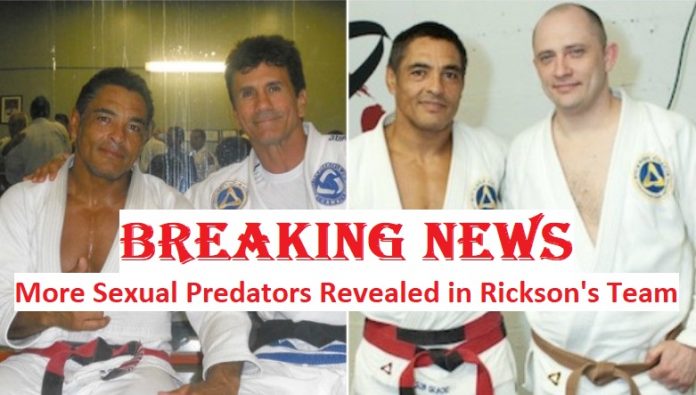
Not long time ago we were writing about DAVID ARNEBECK. Convicted child molester who is a Rickson Gracie Black Belt. But what happened now is that TY Gay revealed two more sexual predators in Rickson’s team. There were not many Rickson Gracie students who accused David Arnebeck, Rickson Gracie JJGF Federation. The one that did it publicly was TY GAY. You can check his statement calling Rickson Gracie a fraud HERE
Ty Gay made a video on this matter and we bring you the most interesting stuff from that video:
TY GAY on Rickson Gracie, JJGF, Scott Naugle and Romolo Barros:
Most guys know that I called Rickson Gracie out, I asked him to set me straight. He posted the picture with him and David Arnebeck. Arnebeck is convicted for touching kids unappropriately. He took a plea deal. He said that he was too drunk to remember.
So, they didn’t make a statement. Four days into it, and there is no statement. I messaged everybody in our Gracie Jiu Jitsu Black Belt group and nothing. Everybody was in there and no one said nothing except Pedro Sauer on the fourth day.
I’ve idolize those guys, these old G’s, for a long time, like 20 years. Pedro Sauer, Rickson Gracie, Rorion Gracie, Royce Gracie. You know, all got the superheroes right? So, it was really nice to have Pedro Sauer to stand up and to be on my side. He’s got six daughters so, he understands very well. In fact, on the first deal they changed their whole Association, where all their instructors have background checks. We should all have that too. So, people like David Arnebeck can’t teach people. Pedro Sauer also has eyes in the sky now so, he’s making sure that he have video cameras everywhere like I have. Also even in the private rooms, just not in the bathrooms obviously.
Let’s talk about the JJGF and Rickson’s statement. Global Jiu-Jitsu Federation or the JJGF made the statement and reads like this:
‘This statement is in regards to my association with David Arnebeck. I take full responsibility for allowing Mr. Arnebeck to continue his membership in the JJGF. Considering the final court ruling that he was permitted full unrestricted normal contact with minors, which declares that Mr. Arnebeck was not to be considered as a danger to minors or to society and that I know him, his wife, his daughter and his work as a Jiu Jitsu instructor for fifteen years, I decided not to impose further penalties on Mr. Arnebeck other than those already given by the court. In doing so, I took the personal position that people who demonstrate the will to change and to pay for past mistakes should not be ostracised and excluded from society. Rickson Gracie’
So I do believe in jujitsu. I believe that Jiu-Jitsu is the great reformer. I believe that if you Give Jiu-Jitsu to Alchohol or Drug addict and you can reform them. Anything, almost anything. I say almost because not sexual predators. They are touchy-feely. Every position in Jiu Jitsu is invading someone’s space. The rest of Rickson’s Statement:
‘However, as of today, the JJGF is adopting a zero tolerance policy towards sexual misconduct.’ -Rickson Gracie
So? What does that mean? That means that they DIDN’T HAVE have a zero-tolerance policy to sexual misconduct until now. Until the Internet started to crush them.
They’ve Known for this guy David Arnebeck and two other guys too for several years. This makes me dissappointed. Guys in JJGF should fire your publicists. What are you thinking? Who wrote this statement?
I get it. They’ll lose a but of money. These guys maybe have a couple of schools and schools has to pay like $500 a year to be an official team and then you can pay them $200 if you’re black belt for your certificate. And I think a little patch on your back and your belt to make you an official JJGF Black Belt.
I’m pretty sure Rickson was the guy who was pretty angry on Rener and Ryron Gracie because they were giving up belts online and that brings up to another great point. We can make videos about people doing online Belt curriculum. Or we can make videos about fake Black Belts or we can dojo storm fake black belts. Or kids that get promoted by somebodies else black belt system of Jiu-Jitsu that they made up. I get it, I was upset too.
Rener Gracie, Ryron Gracie and Rorion gave me my Black Belt and Rener Gracie made a video about guy in Canada ripping him and Brian Ortega off of $10.000. I think that’s important.
TY GAY talking ironicly in Reners name:
‘You can’t be a fake black belt. You can’t rip us off. We’ll post your picture and let everyone know about you.’
Why am I then getting so much blow back for calling out sexual predators?
I had several my Jiu-Jitsu brothers and black belts under Ryron and Rener Gracie also and others who contacted me like, you should never question Rickson, you should close up shop. One guy told me, you shouldn’t be getting money out of Gracie name.
One guy who will recognize him self told me that Rickson is the living reincarnation of Budha.
Rickson Gracie is probably a great guy, whatever, but he’s not a superman. We can’t put these pepole on pedestal like this. it’s cultish. Obviously these guys don’t care about sexual misconducts until the Internet was crushing them.
Rickson Gracie is all about pressure. But I don’t think he planned this kind of pressure, right? It’s not just Rickson’s fault. It’s problem across the board.
So, David Arnebeck was one guy that Henry Atkins and Brandon Hetzler told Rickson and JJFG about two years ago and Rickson and JJFG, basically, did nothing.
ROMOLO BARROS
There’s another guy I wanna call out or bring to your attention… Half of Hawai notified me about this guy. He’s in Hawai, Honolulu. His name is Romolo Barro and he’s Rickson Gracie Black Belt
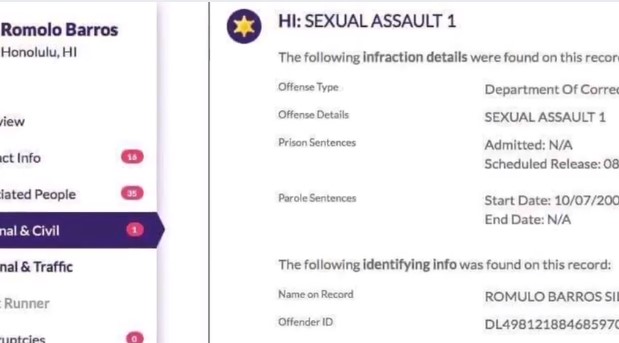
If you look at Romulo Barros’ criminal record he is convicted of First Degree sexual Assault:
Romolo Barros is convicted for sexual harrasment for three different girls. I’m not calling these girls out because they’re survivors and I feel for them. He had to pay to institution for three of them. He had a warrant for his arrest.
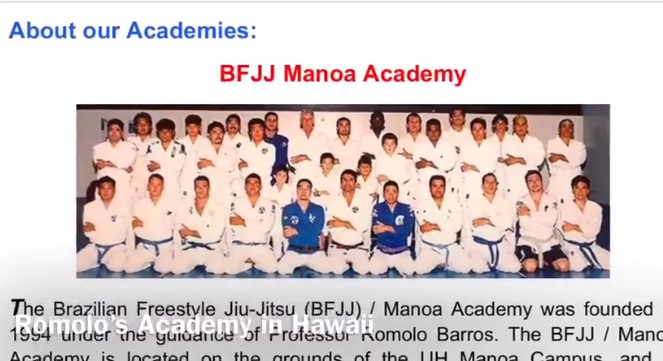
Romolo Barros has BJJ school in Hawai and he’s running tournaments. BFJJ Manoa Academy.
Romolo’s school name is Hawaiian freestyle Jiu Jitsu / BFJJ Manoa Academy.
One guy told me, ‘hey Ty, look at Big Pharma, Big Pharma kills 50,000 people. Who’s going after them? And then he asked me, ‘Would you rather be ra**d or dead?”. WHAT?
Romolo Barros is a bad dude in BJJ community and I don’t care for his stuff and about anything he’s doing:
People can be reformed but not sexual misconducts. And this is why.
WHEN YOU SEXUALLY MISCONDUCT SOME CHILD. THEY NEVER GET THAT BACK.
WHEN YOU R*PE SOMEBODY THEY NEVER GET THAT BACK.
IT DOESN’T MATTER HOW MUCH YOU PAYED TO INSTITUTION THEY ARE NOT GONNA BE THE SAME.
If we keep turning the blind eye on this we’re creating an environment for predators sp they can continue molesting kids. NO!
It can’t just be about money. We’ve got to make sure we have a code of ethics here.
Another sexual Predator Scott Naugle
I want to call out another guy and sexual predator Scott Naugle. My Facebook Friend. How’s going dude? You’ve been stalking me lately because you were worried knowing what I’m gonna do.
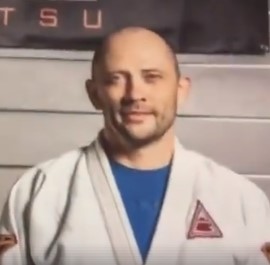
Scott Naugle
Chris Saunders gave him a BJJ Black Belt. I don’t think he knew about his record.
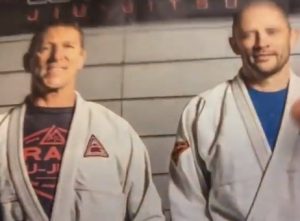
Chris saunders and Scott Naugle
We should all check these people. It’s not like I’m gonna close my eyes for $500 per year.
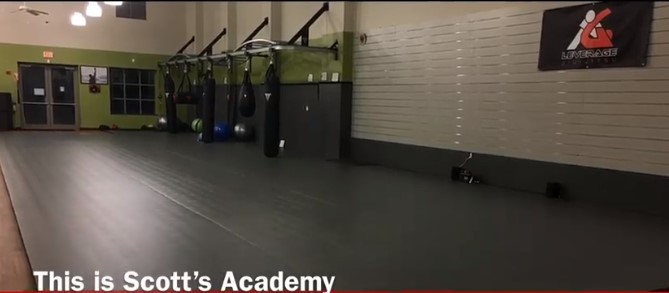
Scott Naugle is teaching BJJ in Maryland. It’s called Leverage Jiu Jitsu.
Don’t confuse it with Todd Safer’s Leverage Jiu Jitsu school in Ohio, which is awesome.
Here is Scott Naugle BJJ Academy in a picture Below:
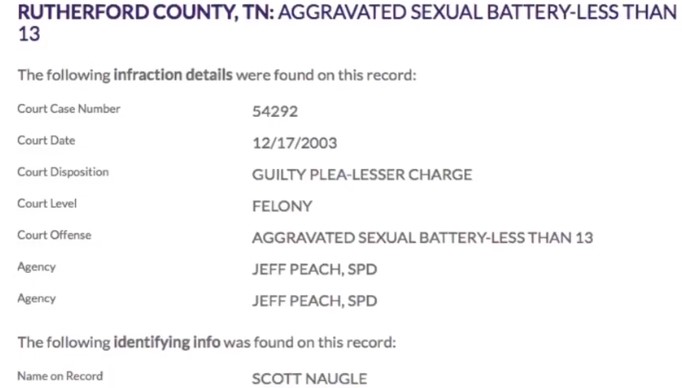
This is a Public Record. Scott Naugle was convicted with felony, aggravated sexual battery – less than 13. And the same thing, different charge. Sexual Battery Severity: 2
Ty Gay’s conclusion on sexual Predators in Brazilian Jiu Jitsu
Problem is when new people that come to Jiu-Jitsu don’t know about these guys.
If you committed any sexual crime you should not be allowed to teach this beautiful art. You’ve lost your privileges. You can’t be guilty on aggravated sexual battery on someone less than 13 years old.
So, If you’re survivor of sexual assault or sexual battery or any kind of weirdness like that, you’re not alone. We’re not gonna forget about you. We have people here behind you. We’re not just let sexual predators and child molesters run rampart throughout our community. We’re gonna call these guys out. We’re gonna call all weirdos out. And we’re Gonna Stand up for all survivors. If you’re a white belt or you’re a Black Belt Stand UP. We’re gonna stand up. We need everyone to stand up now.
All you predators we’re coming for ya! Bet your a$$.
Being a beginner sucks!!! No matter which aspect of life it is, starting something new gets people out of their comfort zones. When it comes down to martial arts, BJJ tends to be on top of the pile regarding difficult new beginnings. In fact, Jiu Jitsu can be tough on experienced practitioners on a regular basis, let alone new students. The white belt period in BJJ is considered to be nothing short of sadistic. Well, that is the point of view of new white belts, in general. However, one can see why they might feel that way.
The first couple of months are the biggest hurdle of anyone’s Jiu Jitsu journey. The feeling of a new white belt is that of jumping into a pool of sharks and alligators. They might not feel like that while signing up, but after the first couple of classes, it’s all they can think about. Let’s be honest, those first couple of months are not a pleasant experience unless you’re a bit masochistic. However, this period is crucial for anyone seriously thinking about training BJJ. Only after surviving this “initiation period” can one be considered as a Jiu Jitsu student. You can also check 25 main reasons why you don’t progress as much as you could HERE.
Realistic White Belt Goals
First and foremost, the early days of a white belt are about survival. By survival, I don’t mean the surviving class, because most won’t. A white belt should focus on mental survival, i.e. that of their ego. As we know full well, BJJ successfully deflates egos, but this process takes time. Not being able to squash the ego is one of the main reasons some people give up very early. A realistic goal for a white belt in their first months of training is to find a way to survive mentally. In a physical sense, a good goal in the survival category is not getting injured.
As a white belt survives the early onslaught and settles in its time for their goals to shift a little bit. Survival is still going to be in the focus, but not as hard. Once a white belt manages to get through a roll with a blue or purple belt without tapping, they often start to think ahead. It is not unusual for a white belt to focus on getting promoted to blue. After all, it is the most desired promotion in BJJ. This, however, is not the correct way to set goals. Thinking about the next belt is never a good idea, but that holds especially true at white belt. A beginner should focus on learning the fundamental technical aspects of the art. They won’t get promoted without them, so they might as well choose the right goal. The method is fairly easy – just keep showing up.
Finally, after a certain amount of time spent at white belt, a student might want to compete. A very important goal for a white belt is to learn the rules of competition. Knowing the rules allows a student to focus on the correct technical areas.
Correct Mindset For White Belts
As previously mentioned, the mindset of a white belt plays a huge role in their development. Nobody expects white belts, especially new ones, to feel comfortable and relaxed. Actually, regardless of experience, it is quite rare for a white belt to be relaxed during rolling. A very helpful way of thinking about BJJ for beginners is to focus less on panic movements and more on getting comfortable. Obviously, it’s never comfortable when a brown belt is in full mount. It can, nonetheless, become less uncomfortable if you’re not struggling spastically. So, white belts should look to get comfortable in bad positions. Just make sure you keep breathing and you’ll be able to think more clearly.
This leads us to the next important mental aspect for a white belt – acceptance. No matter which belt, a BJJ [practitioner is going to get tapped. Beginners might as well accept that they’re going to tap repeatedly and more than any other belt. Apart from the long-standing joke that white belts are food for the blue belts, they’re going to tap to more experienced white belts as well. Accept that this is a big part of learning Jiu-Jitsu and tap early and often.
A Word On Technique
BJJ is overwhelmingly rich with techniques and moves. Nobody expects a white belt to know them all, but instructors do expect students to look for them while rolling. A white belt attempting berimbolos or jumping guard passes never ends well. Instead of all the YouTube craziness, white belts should keep it simple. Listen to the instructor, learn the fundamental techniques and attempt to apply them in sparring. Leave the fancy stuff for later and focus on how you move your body. In a technical sense, it’s not as much about moves, as it is about movement patterns. A white belt should be a master of bridging, hip escaping and the technical stand-up, to name a few.
Having a good grasp on the basic movements is going to do wonders for white belts in rolling. Since white belts mostly look to survive, if they utilize the advice from this article, they’re going to do so much more effectively. Let’s look at a white belt who is comfortable being a beginner, who keeps a cool mind in bad positions and who attempts to get out via technical movements. That white belt is on the correct path for advancement in BJJ and won’t go unnoticed by the instructors.
Josh Barnett shared his opinion on rolling sessions starting on the knees on his facebook official page. According to Josh you should never do it.
“Live wrestling/rolling with both wrestlers/grapplers starting on their knees. Practically anyone who trains in the current grappling climate has seen it. For some gyms it’s the only way they start and I’ll tell you why no matter the case, you’re wasting your time (or your student’s time in the case of coaches) doing it.
First and foremost fights and grappling matches don’t start on your knees. In fact I can’t think of any sports that do besides Inuit Kneel Jumping (Google that sh*t. It’s a real sport) and last I checked that’s not the sport we were training for. I can remember one of the first things my high school wrestling coach said to me “Nice to meet you.” and the second thing being “GET OFF YOUR F#$%!NG KNEES!”.
Being on your toes and is essential to gathering power, evasion, your base, and overall athletic potential. In a real world scenario (or even in a BJJ tournament) you and your opponent are standing upright on your feet. In the case of a real world altercation and you want to engage an opponent on the ground if you’re on your knees there’s a very slim chance of that ever happening. Now try avoiding strikes, a knife, whatever or even being able to run/jump/escape. Not happening. If you’re on your knees for real world combat you should immediately be getting to your feet to an athletically viable stance or attacking to a takedown on a standing opponent. If it’s competitive grappling you’re training for then you should doing the same or pulling guard if that’s your preference but either way being proactive to getting to a position with more potentiality. Sitting on your knees is a weak position athletically and strategically it’s a place that you should only be in, in transition.
You say, “But my academy/gym has so many people that it’s not possible to start on the feet and fight for takedowns!” That’s no excuse not to train takedowns. Rotate people in groups then that would allow enough space for people to do them. You say, “People get hurt doing takedowns”. I say, “Stop coddling your students, stunting their potential growth and allowing them to have a huge hole in their game”. Teach them proper technique and just like with rolling, it doesn’t mean always having to go 1000%. You could be the greatest ground grappler in the world but in a fight if you have no way to take the fight to the ground, then your skills are useless.
“Hey there super grappling champion type guy. Bet you wish you had trained some takedowns now…SOCCER KICK!”
I’ll even suppose that there is even a crowd out there who would say, “I/We don’t care at all about takedowns. All I/We want to do is roll on the ground.” As a martial artist I personally think that’s an absolutely terrible idea to have. But even still, wrestling on your knees in my opinion is not going to help your rolling very much and it’s not going to help you be better prepared for competition. Instead, start with one person in what I call a negative position with a negative position being: on your back or someone in a dominant top position like side, mount, or on your back. These are actual combat viable positions you will see yourself in all the time while grappling whether you’re the person on top or bottom.
What I do is I have people pair off and then play rock, paper, scissors (Or jan-ken if you’re in Japan). The winner gets to choose where they start. Any ground position they want to. They could choose mounted on their partner or have their partner mounted on them. The only thing I suggest is to take into account what you need to work on. If you are having trouble escaping under side control then put yourself there as much as possible. Getting stuck in half guard? Start there every time until you are able to solve your issue. In addition to the starting set up I also add that if anyone escapes to their feet or submits the other then the other person chooses where they start next. This keeps things active and flowing in my opinion and leaves an overarching goal set in mind for the martial artists.”
You will get so much more out of working your back escapes and defense or attacks from the guard position than you ever will wrestling around with someone in a poor athletic position like on your knees. Stop wasting yours or your student’s time working on something that isn’t relevant to sport or real world combat. This solves any of the previously mentioned complaints too in regards to why places start athletes on the knees, except in this case you’re now spending time working on the skills that are directly applicable to your grappling sport or combat arts.”
What is the most desired belt in martial arts? Whether it is BJJ or any other martial art, the answer is the same. And no, it is not the black belt. It is not a belt of a particular color at all. The main desire of martial artists is not to be a white belt. Usually, it does not matter how long it takes, the most important thing is getting rid of the “beginner” tag. In Jiu-Jitsu, the first step along the grading ladder is a BJJ Blue Belt.
The blue belt is a huge benchmark for a BJJ practitioner. It signifies perseverance and dedication. It shows that a practitioner is serious about art. One could even argue that it is the hardest belt to achieve. If you wonder why then you’ve either forgotten how tough you had it at the white belt or never trained Jiu Jitsu. The norm for white belts in the art that takes an average of 10+ years to “master” is mauling. So, apart from moving on from “being a white belt”, a blue belt represents a certain level of experience in the art.
Finally Not A White Belt! So, Now What?
So what should a blue belt focus on after all the excitement of promotion dies down? Simply put, this is the time for techniques. And by that, I don’t mean specializing. It is the time to gather as many technical tools as possible. The conceptual integration of them all comes later on. At BJJ blue belt, it is important to understand one very important aspect of BJJ – it doesn’t stop after one move.
So what should a blue belt know to start with? Well, there’s a reason why there’s a set of techniques often referred to as “Fundamentals”. A blue belt should have enough knowledge of every fundamental position of BJJ. Positions like the mount, guard, side control should be comfortable for a blue belt, in both an offensive and defensive sense. From there, the collection process can begin.
A blue belt is already aware of what an armbar or a collar choke is. However, seeing past just one move is the true mark of a solid blue belt. This is the goal of every new BJJ blue belt and the best way to obtain it is through experimentation. This is the time for developing open guards, looking to string together submissions in chains that make sense and thinking about countering. The guard is usually the one area that gets the most development during this phase.
From a non-technical aspect, a blue belt also has to live up to certain standards. They are often looked upon by white belts and should act accordingly. Mat behavior should reflect the fact that they’re not beginners. Blue belts impact new students the most since higher belts seem very distant to them. Blue belts should also be aware that they represent the academy and the BJJ lifestyle off the mats as well as on them.
The BJJ Blue Belt Blues
A negative statistic regarding the blue belt period is that this is the time that most people give up on BJJ. There is a good explanation for this. Even though a student might acquire their blue belt in a year or so, getting to the next level is harder. Actually, the time spent at blue is longer than any other belt on the way to a black belt.
Staying at blue belt level takes about 2-4 years, almost without exception. The reason is that in order to progress, BJJ blue belts have to demonstrate sufficient technical knowledge. It is said that a purple belt knows all the techniques that a black belt does. Well, purple belts learn all those crucial techniques in blue. Taking into account the sheer volume of techniques available in BJJ, it is understandable why BJJ blue belts are “being slow-cooked”.
Another often-heard complaint among blue belts is a feeling of increased pressure. Even though ego has no place in BJJ, it takes time to learn how to suppress it. Getting tapped by a white belt hits blue belts hard, especially in their early days. It is important to recognize this self-placed pressure in order to get over it. Those who do not often quit altogether.
Time is a luxury in modern times. Throw in everyday life into the mix and it becomes even harder for a student to persevere through the blue belt. BJJ blue belt cannot be promoted to purple just on the merits of being blue for a certain time period. Showing up to class is the most important piece and also the one where most blue belts fail. Those that push through it, though, are now ready to truly experience BJJ.