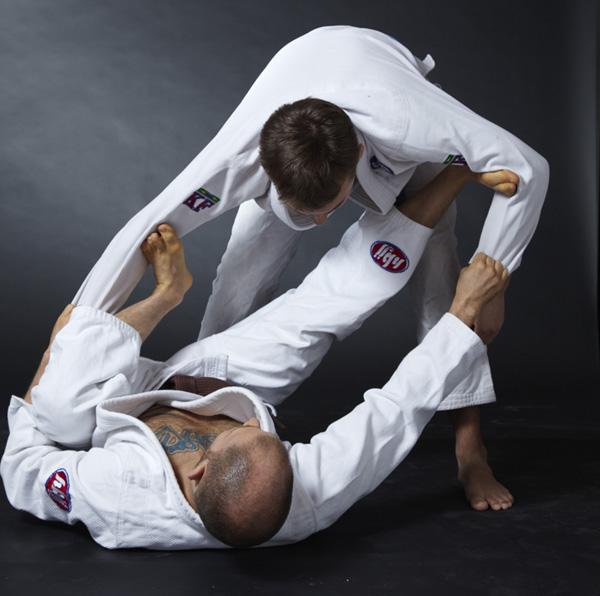
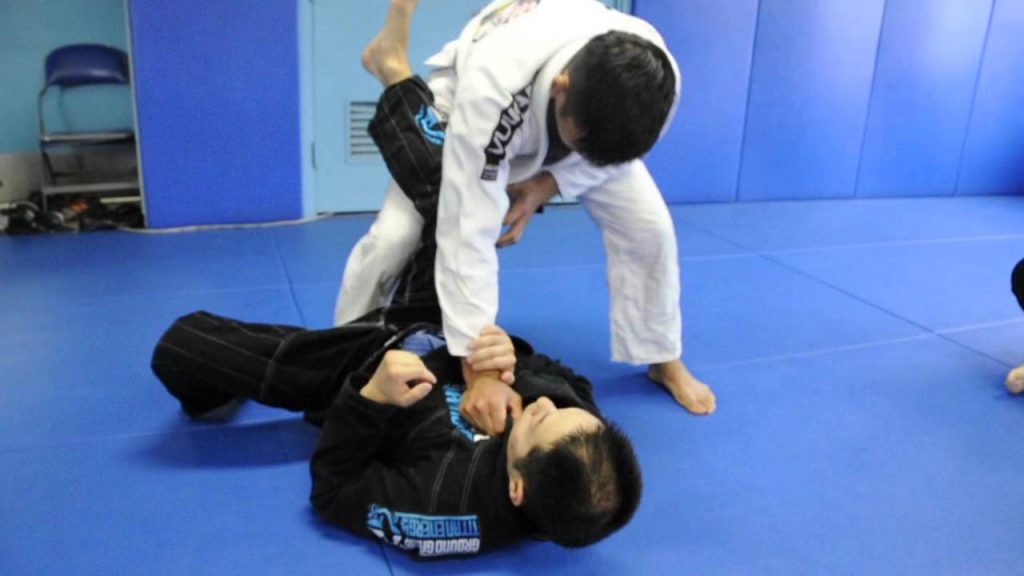
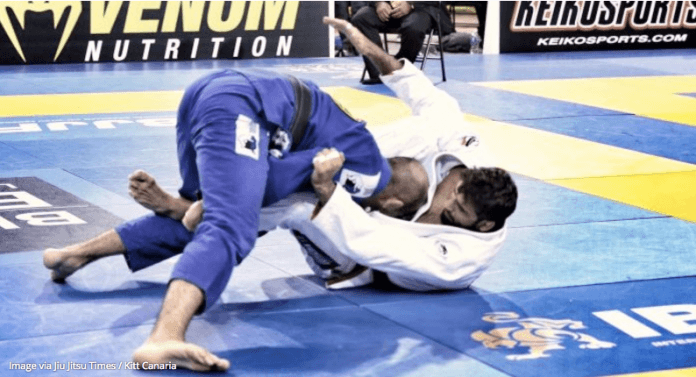
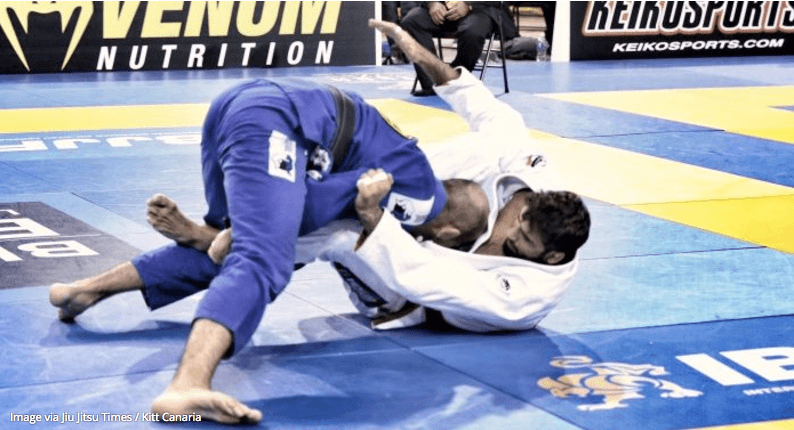
High Percentage Jiu-Jitsu Defense: Knowing How To Attack

High percentage Jiu-Jitsu Defense: Understanding Attacks

All warfare is based on deception. Truer words have never been spoken. If you think about martial arts as warfare on the smallest of scales (1 on 1) then you can definitely apply all wartime strategies in a martial arts setting. Of course, as modern-day BJJ match is as different from a medieval battle as it gets. However, the strategy, and approach are the same. Whether it is one man or an entire army, ceratin concepts are applicable everywhere. One of them is the notion that attacking is the best form of defense. When it comes to the Jiu-Jitsu defense, in particular, this actually has many different forms and uses.

One thing to consider about any Brazilian Jiu-Jitsu match or roll for that matter is that it is an exchange. When you see it that way, you’ll approach it much differently than just “going with the flow”. However you look at a match, at any given point in time, or grappler will be attacking, and the other one will be focusing on Jiu-Jitsu defense. This is a highly predictable thing which means you can actually have an upper hand in any such event, as long as you prepare accordingly. And it doesn’t take much to master a system of JKiu-Jitsu defense that works universally well for any kind of attack. Bare with me a little more.

The Ancient Concept Of Attack As The Best Defense

You’ve surely heard the phrase “attack is the best form of defense” at least once in your life. This ancient philosophy of war is yet another one by the legendary strategist Sun Tzu. The author of “The Art Of War” actually wrote that “Attack is the secret of defense; defense is the planning of an attack”.You may look at it in any way you want, but the fact remains that going on the offensive will limit your defensive duties.

Jiu-Jitsu Defense: Attacking To DefendThe idea behind this notion is that an opponent can’t simultaneously attack you, and defend your attacks. The theory behind it is solid, as trying to do both at the same time will leave you successful at neither. In warfare, this has a much deeper meaning, when numerous troops and weapons are in play. In a one on one exchange, however, the circumstances are different. Attacking is what we’re all after, but in doing so, we ensure that our opponent is on the defense. What happens when it is the other way around and your opponent is the first to start attacking?

This is where this ancient notion actually has a flaw. The flaw in the otherwise leakproof system is that you can’t attack all the time. At a certain point in time, you’ll surely end up on the defense. In terms of Jiu-Jitsu defense, you might make a mistake, or be up against a more experienced and skilled opponent. Whatever the case, I can guarantee you that you’ll end up defending “for your life’ when you roll or compete in BJJ. In cases like this, you can still turn to attack as the best form of defense. However, you’re going to do it from a completely different perspective.

Understanding Attacks

Going on the defensive is just as much a part of BJJ as attacking. The thing is that nobody likes to be defending, (or almost nobody). Instead, people usually thrive when they attack and look for that elusive submission hold to get a tap. Well, the truth is that while nobody likes to rally do Jiu-Jitsu defense, everybody needs it. In fact, it is actually much more important than attacking.

One o the biggest lessons in the Jiu-Jitsu defense is figuring out a formula that works universally. Whether it is going to work for you only, or for everyone, in general, is usually up to you. One thing you cannot do is learning the defenses and counters to all Jiu-JItsu attacks. What you can do, though, is to use the concept of attack as a form of defense to thrive. However, we’re going to twist ist a little bit. Think about it this way – if you understand how an attack works, you can actually defend I much better than learning a direct defense of it.

Tom De Blass Submission Escapes Best BJJ DVD
Techniques List

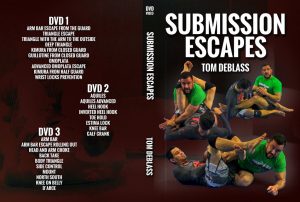
Tom DeBlass is a real escape wizard. Check out his “Submission Escapes” four-volume DVD to become one yourself! 

Let’s look at a mounted armbar as an example. Ther are many defenses to an armbar, but most of them kick in when you’re already caught in the position. Some of them are higher percentages than others, depending on when you start defending. However, if you focus on learning the mechanics of a mounted armbar, how it works, where the entries are., etc, you’ll actually be able to defend it much better. Why? That’s easy. Because you understand the move. Learning and understanding how attacks work is going to make you Jiu-Jisu defense extremely effective because nobody will be able to actually get to a full-blown attack.

Organizing Your Jiu-Jitsu Defense

Thinking in terms of learning attacks in order to develop better Jiu-Jitsu defense actually has double the benefits. This way, you’ll sharpen up your attacking skills, in addition to developing a much better all-around defense.

Just like with learning defensive techniques, you can’t really learn all attacks. That means, that you actually need to go broader and understand how a Jiu-Jitsu attack works. Luckily, there’s a common thread in all grappling attacks that you can exploit to mount a super successful Jiu-Jitsu defense. To begin with, It is all about mindset – don’t panic. You need to remain calm and start recognizing some of the key patterns and stages of every attack.

Attacking Is the best Jiu-Jitsu DefenseThere are actually three stages that characterize every successful grappling attack. First up it is position. If you can deny an opponent the desired structure of a certain position, they won’t be able to complete an attack. Whether it is a positional attack or a submission, if they can’t settle in and control you, they can’t attack. Conversely, you can get out and counter at will. The second stage is when you’re too late to react to the first one. When an opponent has you in a tight position, you should actually switch your focus to dominating the grip fight. Only when you establish a dominant grip and deny the opponent further attacking possibilities, can you turn to break the structure of the position?

The final stage to understand is the so-called Hail Mary stage. At this point, you’re depending on a mistake on your opponents’ part to pull off a Hail Mary escape. You’d be surprised at how often you can actually escape at this stage if you’re calm and confident enough, However, your chances are 50/50 at best, and tapping is your 100% option of getting out.

Final Thoughts

A solid Jiu-Jitsu defense does start with the offense. However, it is more important that you understand BJ Jattacks, and the stages they develop in rather than only look to attack all the time. There is a balance between attacking and defending in every JIu-JItsu match. What you need to know is how to turn every exchange in an attacking situation, even when you’re on the defense.

Xande Ribeiro DVD review: Diamond Concept Of Defense

Want To Tap Out Less In BJJ? Here Is How

Jiu-Jitsu or Boxing for Self Defense? Is Jiu-Jitsu Useless in a Real Fighting Situations?

BJJ Guard Passing – Why It Doesn’t Work And How To Fix It

BJJ Guard Passing - Where You Go Wrong And Hoe To Fix It

There’s a fundamental flaw in how we approach BJJ guard passing. So much so, in fact, that we even say it wrong from the beginning. My personal opinion is that this is the reason why so many people find guard passing really difficult to accomplish. Even those that love passing the guard sometimes struggle against opponents with unorthodox guard games. We even see it in the biggest world stages of grappling. Once again, in my humble personal opinion, there’s an easy way to fix it. It involves a conceptual approach to passing and progressive work through several stages. Learn that, and you’ll never struggle to pass anyone again.

The ultimate standoff in Brazilian Jiu-Jitsu most often happens when one person is playing guard, and the other one is trying to pass it. In terms of advantages and disadvantages, this is pretty much considered to be a 50/50 situation. However, any exchange that happens in this way actually favors the guard player much more than the passer. Yes, even the 50/50 guard actually has more going the way of the bottom player than the top. And the reason for this goes back to the roots of Brazilian Jiu-Jitsu, to begin with. Moreover, we have a widespread flaw in terminology when it comes to BJJ guard passing. It is time that we remedy this and addresses things as they are.

The Fundamental Idea Of Playing Guard

As BJJ emerged, it became famous for the ability of people to submit others while laying on the ground. The closed guard, at the time, was close to an unbeatable puzzle as you could get. Of course, this was in terms of BJJ vs any other martial arts. However, when it came to two grapplers going against each other, was the guard still the better weapon? The answer is yes since BJJ guard passing is actually something that is not conceivable. The closed guard was a double puzzle – how to break out of it, and then, subsequently, pass it. As people started figuring things out, a whole new generation of guards emerged.

The open guard game is something that people still play today. From basic open guards like the De la Riva guard to complicated lapel guards and inverted positions, the open guard is pretty much an area that has no limits. The sheer variety of different guards means that passing them becomes a much more difficult task. But, do you really need a different pass for every type of open guard out there, or is there a winning formula to defeat them all?

Let’s take a look at the guard itself. Actually let’s take a look at the basic idea behind playing a guard game. The guard, similar to standing martial arts is position zero. That makes it a position of safety. In BJJ it also means you have control over an opponent. And, as we all know if you have control, you can attack. Conversely starting from the top position against any guard that’s firmly in place, places you in a disadvantageous position. So, how can you pass a guard without falling prey to all the traps lying ahead?

The Wrong Approach To BJJ Guard Passing

The reason BJJ guard passing doesn’t work is that people attempt to go at it straight on. Do not get me wrong, this is not how we learn to pass the guard. However, once we get int the heat of a grappling match, it is ecxactly how we try to execute it. And much of that is due to poor understanding of the fundamental idea of passing. The first aspect is that there’s absolutely no way for the passer to face any guard position head-on. That’s a losing battle 100% of the time.

Ultimate BJJ Guard Passing FormulaThe reason why you can’t just bulldoze past a BJJ guard is easy – they are designed to stop you from doing so. As I previously said, one of the strengths of the BJJ guard is safety. From basic positioning to retention and recovery methods, staying in the guard is much easier than dealing with it. Moreover, there’s the attacking side of things, which stems from control. So if you try to pass a guard, let’ say, spider guard, you’ll most likely end up in a triangle or swept. That is because you’re playing straight into the strengths of the position. Instead, you need to be exploiting the weaknesses. But where exactly are they?

One thing I consider to be the culprit behind this approach is the terminology. We all say that we need to pass a guard. In essence, this is true. However, if you look at it much more carefully, we never actually pass a guard. In terms of the spider guard example, can you really pass it head-on? Or do you need to start breaking grips, de-attaching the legs and then passing? Now think of it this way – once you break grips and the structure of the guard are you still passing a guard?

BJJ Guard Passing – Understanding The Stages

The basic concept of BJJ guard passing that I’m about to layout is something that I’ve been using as of late. it took me almost a decade in BJJ to figure it out for myself. What I like to say whenever I need to teach guard passing is that it is impossible to pas a guard. The guard is a position designed to give the bottom player all the advantages. Instead, you need to think about passing the legs. However, there’s a gap between beginning in someone’s guard, and having the ability to get past the legs. In order to close that gap, you need to take specific actions, which are divided int there distinct stages of passing. However, for starters, you need to drop the phrase guard passing and start talking and thinking about passing the legs.

Stage 1: Neutralize The Danger

The first thing you need to address when you’re trying to deal with someone’s guard is the dangers of the guard itself. In order to do that, you need to know the basic idea behind that guard. In our spider guard example, it is the broken posture, dominant grips and distance management that are the real threats. So, you need to neutralize them. That starts by creating distance to make the legs inefficient, then freeing your biceps and ultimately, breaking the grips. However, unless you move to stage two, the guard player here is going to recover and start attacking again. So, the basic idea of naturalizing danger is to kill off any attacking avenues a guard offers to the bottom person. Only then can you start thinking about passing.

Stage 2: Break The Structure

Still, even after you neutralize the danger, it is far from safe to try and pass the legs. AS we said, we’re going to forget about BJJ guard passing and talk about passing the legs in Jiu-Jitsu. This is the way you want to think every time you’re on top. After you neutralize the danger it is time to take way the opponent’s ability to re-guard. In the spider guard example, that means getting both the opponent’s knees together to completely kill the guard off.

This is the moment where you go for dominant grips of your own, looking to get the knee and feet to one side or keep their hips elevated. Once you achieve this, there is no more guard. If you compare your starting position to the one you’re currently in you’ll see that the guard’s structure is completely out of the picture. Now you’re safe to start passing the legs.

Stage 3: Pass The Legs

Finally, we get to the passing portion. This is where what we consider as BJJ guard passing actually comes into play. However, if you remember, we naturalized the spider guard (as out example) and then broke it’s structure first. That means we’re now in prime position to pass. How does a pass work? Well, similarly to before you have stages. The ultimate goal is to get your hips past the opponent’s feet, knees and hips. This is integral to remember as even in a situation with no clear guard, an opponent can still recover through smart movement. So, you need to be methodical.

Why BJJ Guard Passing doesn't work and how to fix itAs per our example, let’s say you decide to throw the knees and feet to one side to go fora a leg drag. What you need to focus on first is getting the opponent’s ankles past your hip. That’s pretty much the starting position of a leg drag. Once you go down and pin the bottom legs, you’ll notice that your hips get past the kee a well. Now, from there, by manipulating grips and weight distribution, you can finally end up in side control by getting your hips past their hips. Congratulations, you’ve just executed a successful BJJ pass. However, you did not pass a guard head-on. What you did was deal with a guard, and then pass the opponent’s legs. That is the winning formula of BJJ guard passing.

Lachlan Giles DVD Review Of the guard Passing Anthology: Half Guard instructionalIf you want further information on passing the guard, turn to Lachaln Giles. His incredible 8-part “Guard Passing Anthology” DVD set will teach you everything you need to know about dealing with the half guard. 

Final Words

A conceptual approach to things is going to get you much further into BJJ compared to a purely technical one. However, you’ll always be going to need techniques. In these terms, teaching people how to pass the guard has to involve showing the different passing techniques. However, we need to re-address BJJ guard passing in its most fundamental form and start talking about breaking guards and passing legs. It doesn’t matter if it is the closed guard, spider guard, Tronado guard or the worm guard. The principle is the same: neutralize, brak and pass the legs/. If you’re not trying to pass an opponent’s guard, but rather their legs, this approach will work every time.

Choose Your Jiu-Jitsu Game: Pass Or Play Guard?

Renato Canuto DVD – Advanced Guard Passing

Double Leg Takedown – How to Do It & The Most Common Mistakes


Advanced BJJ – Becoming Comfortable With Discomfort 

Advanced BJJ: Becoming Comfortable in Discomfort

People always say there are levels to Brazilian Jiu-Jitsu. For many, this statement doe nothing more than simply describe the different belt ranks in Jiu-Jitsu. However, this is a very limited way of seeing things. Instead, there are several hallmarks that mark the transition between a beginner’s struggle and an advanced BJJ game. And it has nothing to do with whether, or more importantly not, you get a new belt. It has to do with your performance, particularly when things are not going your way. Make no mistake, instructors are really looking at this, as it marks the moment a student is ready to really embrace grappling on a whole new level.

Whichever way you look at it, BJ is a very difficult sport. The physical, mental and tactical demands are huge, not to mention all the moves, techniques, concepts and principles there are. Of course, you can’t learn all of them, and simply accepting that fact is already a huge step towards advanced BJJ. Still, it is not enough. While we might not understand Brazilian Jiu-Jitsu in its entirety during our lifetimes, we may as well try and understand certain parts of it. And becoming comfortable in any position that you end up in is a true hallmark of someone who is at least starting to develop an understanding of the gentle art. So IF you’re trying to make that decisive next step, focus on what’s important – feeling at home whenever you’re rolling or competing.

The Different Types Of BJJ Discomfort

Advanced BJJ: Becoming Comfortable in DiscomfortLet’s be honest – BJJ discomfort is something different. Other martial arts might place you in an uncomfortable position, but nothing comes even close to BJJ. The discomfort in Brazilian Jiu-Jitsu is actually so big, it comes in several different forms. And dealing with it is going to be the deciding factor in your jump from fundamental to advanced BJJ. Physical smothering is a major one. It is also the first one you encounter, most likely in your opening class. Moreover, this is a type of discomfort that we, as humans are not really designed to endure. You can see why BJJ people would want to use it, right?

Secondly, you have the discomfort of pain. This is something that comes out of positions and submission attacks. A great example is a far side cradle, with the opponent’s knee on your floating ribs. The position itself is enough to have you whimpering and tapping. There are countless examples of such positions in JIu-Jitsu, And finding ways o fight out of them involve you accepting the discomfort, At least to a  certain level.

Finally, and arguably, most importantly, there’s the mental discomfort. It is as simple as panicking. You know the reason people are all miserable when they’re tightly packed on a train or bus? It is because others are intruding into their personal space. Well, in BJJ that’s tenfold. You get sweaty, sometimes significantly heavier people on top of you, trying to crush you, pushing your jaw and grinding you with Gis. Being in a spot like this will push everyone to a mental breaking point. Do you get used to it? Yes., But it won’t be until such time as you’re comfortable with it that you can advance in Jiu-Jitsu.

 Reaching The Advanced BJJ Stage

BJJ is full of little moments that make you realize big things. They might seem completely innocuous until they happen. It is as close to Eureka moment as you can get. Well, those moments are precisely the ones that define your steps up the ladder of Jiu-Jitsu knowledge. Conversely, one such huge step towards advanced BJJ is the first time you actually do not panic in a spot like crossface or the 100 kilos side control. IN other words, that is the moment you start becoming comfortable in BJJ. It is a point of no return, past which you’ll most likely remain a grappler for life.

The importance behind starting to feel comfortable even when you’re stuck and miserable is that you can now organize your defense. When everything you’re thinking about is the pressure/pain/panic of a bad spot, you’re actually playing right into your opponent’s hands. When you manage to remain collected and cool though, you can see many options opening up for you. For one, placing pressure on someone always means there are gaps in other posts. And when you’re comfortable, these gaps became painfully obvious. Those are the gaps that you can exploit to execute your defenses and counters.

And, similarly to being in panic and discomfort, an advanced BJJ game is all about keeping a cool mind when in trouble. As you can see, it comes down to the mindset once again. The moment you manage to beat that instinct of panicking when someone is too close to you is the first moment you really start doing BJJ. Form there on, you can actually play a complete game, one that includes defending and counter-attacking instead of trying to run fro your life and ending up exhausted and beaten.

What’s Next?

If you take a look at any high-level match, particularly EBI over time, you’ll see that experienced grapplers rarely panic. One reason for that ist that they intentionally put themselves in bad spots in training in order to be ready for everything in competitions. That’s the best way to learn how to thrive in discomfort and become and reach the stages of advanced BJJ. Moreover, it is when you can start truly practicing the art of escapes.

Advanced BJJ: Comfortable in DiscomfortWith Jiu-Jitsu escapes, you have to remember one main thing – they can’t just get you out of a tight spot. While an escape in itself really takes effort, it must end in a position that actually brings you dominance. Whether you escape toe abetter position than your opponent’s or directly into a submission threat, you have to look to turn the tide immediately. And the main reason behind the higher percentage of success of ceratin escapes is that you’re comfortable enough to think them over before you start. Moreover, staying calm means you can get the timing right, which is essential to pulling off anything in BJJ, especially escapes.

Last but not least, there’s another aspect to an advanced BJJ game from bad spots – counterattack. When you get comfortable enough to stay in bad spots indefinitely, you can actually forget about escaping. Why waste energy on so much movement when you can go for a counter submission directly? And yes, all of BJJ’s most uncomfortable positions actually offer lots of attacking options. You just need to remain calm enough to see them.

Wrap Up

Next time you see a high-level BJJ match, take a look at how the grapplers react under pressure. What you’ll inevitably notice is that he grappler that handles himself/herself better under pressure is the one that will get the upper hand. In fact, when people are both at the same level of BJJ, it is often the fine details that decide a match. And staying calm when in trouble is probably the most important of them all. Now that you’re aware of it, you can start making some direct and meaningful steps towards a more advanced BJJ game. Good luck.

Stuck With Your BJJ Game? Here’s A Way Out!

BJJ White Belt Survival Kit: 5 Essential Tips For Beginners

Rules Of BJJ: A Competition Guide For Beginners


Rules Of BJJ: A Competition Guide For Beginners

Rules Of BJJ: How To Compete Guide For Beginners

Brazilian Jiu-Jitsu might have started as a self-defense oriented art but it is a full-blown sport nowadays. So much so, in fact, that it has quite a complicated system of rules. Moreover, there are so many organizations out there that use modified rulesets, that it is hard to keep track of them all. For the seasoned grappler, this is nothing that merits extra attention. However, if you’re looking at your first BJJ competition, trying to figure out the basic point system is enough, let alone all possible nuances and variations .to that extent, we’ll go over the rules of BJJ today in a manner that’s very beginner-friendly. After all, we all had to lern the rules. However, we do not all have to take the more complicated road.

To make things simple, there are two main sets of BJJ rules. The first one pertains to Jiu-Jitsu with the Gi, while the second is in terms of No-Gi BJJ. Before we go any further into any off these rules of BJJ competition, let me make one thing clear. Both rulesets belong to different organizations, hence the huge differences in concept. IN fact, BJJ, at least at the moment, lacks a unified governing body. This is the reason why any tournament can use pretty much any rules they want. Still, given the power and reach of two organizations, we’ll go over what’s most commonly accepted. The rules in question re the IUBJJF rules and the ADCC rules.

IBJJF Rules Of BJJ Competition

Let’s start at the beginning. The IBJJF stands for the International Brazilian Jiu-Jitsu Federation. It is run by the people behind Gracie Barra, one of the largest BJJ teams out there. Those people are the direct descendants of Carlos Gracie, namely his son Carlos Gracie Jr. This connection is important in understanding why the rules of BJJ in the Gi favor an approach that’s so different from No-Gi competition. The Gracies are well known for being pretty stubborn in their views. As such, they have a brand of Jiu-Jitsu, now commonly referred to as Gracie Jiu-Jitsu that they like to promote. In those terms, they were also the first ones to create a unified organization like Gracie Barra, as well as the IBJJF, which was the first promotion to organize BJJ tournaments.

Conversely, most of the other promotions that organize Gi events, use the same rules that he IBJJF does. In other words, if you compete in the Gi, you’re either competing in an IBJJF event, A UAEJJF (AJP) event or a local one. In each case, the rule book is the same – The IBJJF one.

While not all Gi tournaments use these rules of BJJ in an exclusive manner, most of them do. The few that use different rulesets are unlikely to interest beginners in the first place. What you need to know is that you might hear from higher belts that he IBJJF rules are not really good, they’re restrictive, etc. It is true that there is some controversy to them, but as a beginner, this should not bother you at all. In fact, the IBJJF rules are the safest set of rules out there, so competitions that abide by them should be your first choice as a white, and even a blue belt.

General Concepts

Let’s begin with some general concepts of BJJ tournaments in the Gi. As mentioned, we’ll be sticking to the IBJJF set of rules of BJJ. First up, tournaments are open for everyone to sign up. Once you do, you’ll have to know your division. That means you’ll need to provide information on your age, sex, belt level, and weight. It is this last one that’s the most important, as the IBJJF weighs you in right before your first match. If you’re even slightly over the weight limit, you’re immediately DQ-ed.

The matches themselves have different lengths, according to belt level and age. For now, let’s stick to length determined by belt level. White belts get 5 minutes to showcase what they’ve learned. As they go up in rank, the matches get longer. Conversely, blue blets have 6, purple belts 7 and brown belts 8-minute matches. 10-minute matches are reserved for black belts.

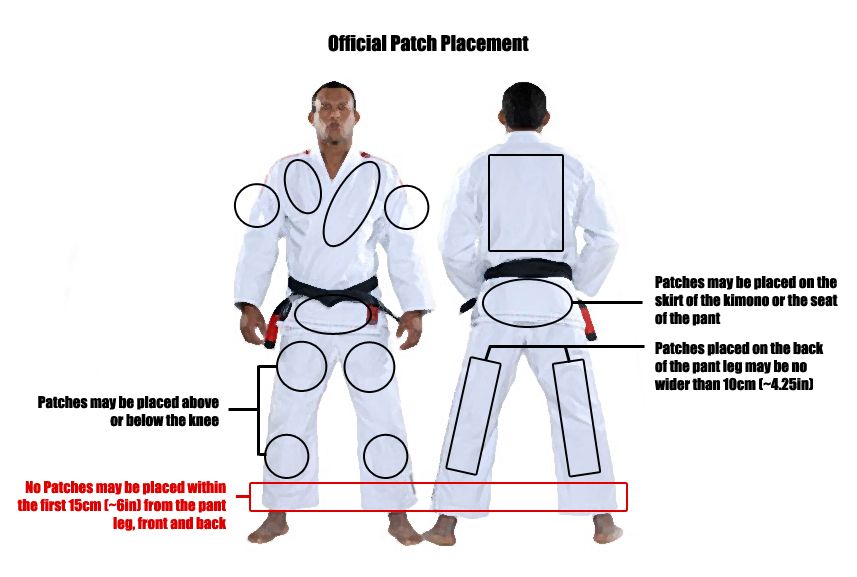
Rules Of BJJ: Gi BJJ RulesKeep in mind that there are also Gi regulations when ti comes to IBJJF rules. For one, you weigh in with the Gi and belt on (that’s an additional 4-5 lbs). next up, your Gi needs to be white, black or blue, and it needs to be in great condition. The length and width of sleeves and pants are often subject of measurements. Also, the belt has to be of the right length and not torn or ragged. You won’t get DQ-ed for this, but you’ll probably be asked to find a different Gi/belt and given 5-10 minutes to do so.

The Points System

The point system is the meat and potatoes of the rules of BJJ when it comes to competition. This is where most people tend to engage in arguments with referees and look for excuses. IF you understand the system, you can use it to your advantage.

Under IBJJF rules, you can get 2, 3, and 3 points. Two points are for taking someone down, sweeping someone, or getting to the knee on belly position. There’s only one instance where you get three points, an that’s when you pass someone’s guard completely. Finally, the most points (4) are reserved for either the mount or back mount positions. That’s more than enough for you as a beginner.

Often times, people wonder why they did not get points. In order to get the points, you need to actually end up ina very specific position. For example, if you sweep someone, you have to end up on top and keep the other person on the bottom for 3 seconds. The 3-second rule actually applies all over. Whether you pass guard, get to knee on belly, mount or back, you need to keep your opponent there for three seconds. In terms of passing, holding knee on belly and keeping mount that means both your opponent’s scapulae are pinned to the floor. When you find yourself in back control, you need a seatbelt and both hooks in to get all 4 points.

In the cases where you pull off any of the above, but you can’t complete the 3-second rule, you get an advantage instead of points. You can also get advantages for activity and submission attempts. If there are no points at the end of a match, advantages can decide the outcome However, even a single point is worth more than a hundred advantages.

Negative Points And Penalties

One more thing o know about Gi rules of BJJ is that there are negative points and penalties. In certain situations, these can also decide a match (if there are no points or advantages scored, for example). When it comes to negative points, there are many traps you can fall into. The most

The important thing to remember as a beginner, though, is grips. Even if you’re tempted, you mustn’t place four fingers inside the pants or sleeves. That’ll earn you a penalty, and eventually, negative point s in no time. Moreover, stalling is a big one as well. IF you’re in the guard for example and you’re doing nothing for a while, a referee will ask you to work. IF you do not, you’ll eventually end up with negative points again.

There are also a bunch of other instances, mostly concerning illegal moves and gray areas that can earn you negative points. However, fro the time being, focus on your grips and stalling. After all, if you stay out of all restricted attacks, you won’t have to worry about penalties or negative points.

Submission Rules

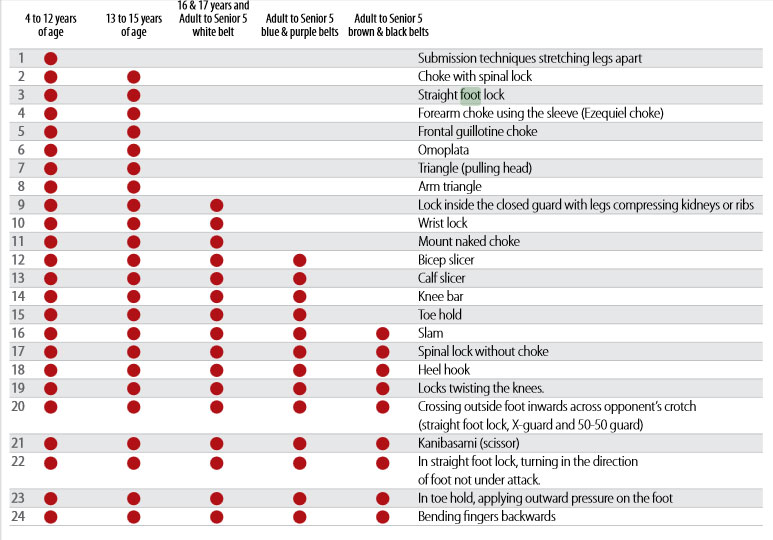
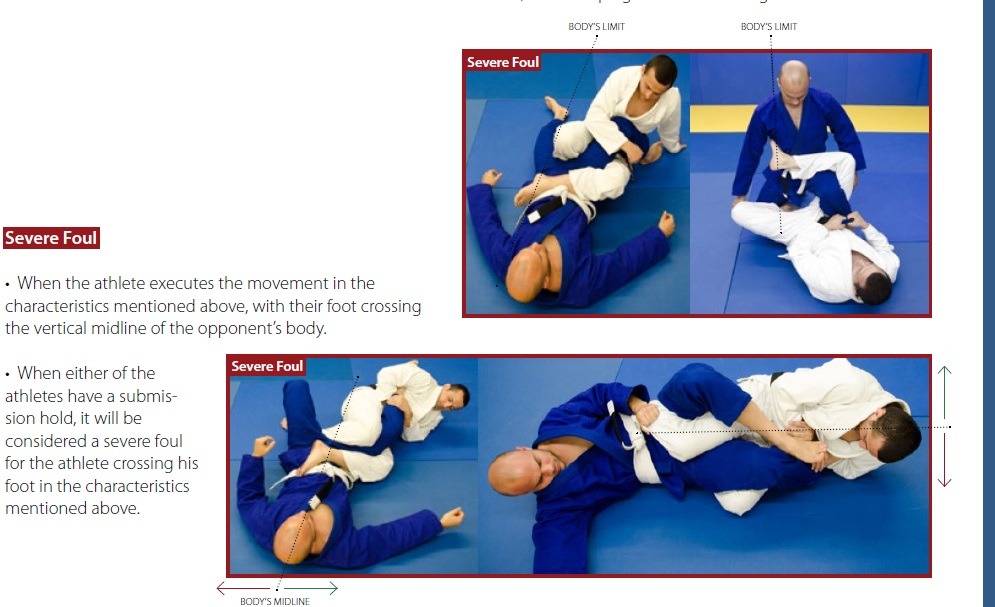
Rules Of BJJ: Illegal IBJJF Moves in GiSpeaking of restricted attacks, they are the primary source of controversy for this et of Rules of BJJ. Namely, the IBJJF has a pretty big rulebook outlining everything, Among the rules, is a list of forbidden techniques, depending on age and belt level. IN terms of age, the differences between kids, juveniles and adults is not something that interests beginners too much. However, belt restrictions are very important. For example, you can’t go for wristlocks, most leglocks, and a bunch of other things as a white belt. Wristlocks open up at blue belt, while certain leg locks (kneebars, toe holds and slicers) become available at brown. However, certain things like heel hooks, neck cranks etc remain illegal even at black belt level.

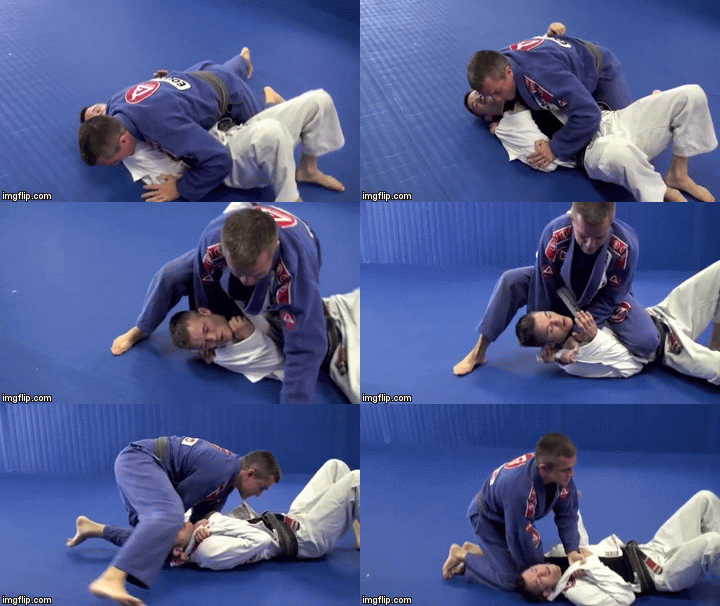
Rules Of BJJ: The Knee reap RuleApart from the submissions, you need to know that there are also certain positions that might get you DQ-ed ina hurry. One of them is the reap position and that’s pretty much the most important one you need to remember. You should talk to your instructors about it before a tournament but in short, never throw your leg around an opponent’s knee from the outside in.

Otherwise, submissions are the preferred way of winning as you can end a match in seconds if you can sink one in. Otherwise, you either win by points, advantages, lack of negative points, or, if everything is square, by a referee’s decision.

The Fine Print

While we’re talking about the IBJJF rules. Let’s mention a few things that are not often considered important, but may cost you a match. One thing to remember is that, as a beginner, you can’t jump guard. Also, make sure you’re not slamming your opponent’s with their back to the ground, even slightly. Moreover, you have to refrain from talking to the referee during a match if you do not want to earn penalties. In fact, talking to one during a match is going to achieve nothing more than this.

Let’s clear up some match related finer rules of BJJ too. One thing to know is that you can’t leave the mat area, particularly in an attempt to escape a submission. Moreover, do not go looking for points when you do reversals. A reversal is getting on top after you’ve been on the bottom of side control or mount. Unless you’re in guard/half guard, it’s an escape, not a sweep. In other words – no points. Speaking of which do not look for points from side control – it is a pass that brings you three points, not side control itself. Also trying to avoid someone’s guard is going to earn you a penalty. So no going backward without engagement.

Remember that her are more rules than you can fit in your head even as a black belt. Heck, even referees do not know and understand them all. Plus, the rules do change from time to time, meaning nothing’s set in stone. If you remember the above, though, you’ll be more than ready to compete.

Going No-Gi: ADCC Rules

In the opposite corner of the Gi Jiu-Jitsu tournaments are the No-gi ones. In modern times, those mostly involve unique sets of rules, the likes of EBI or Quintet. However, those are mostly invitation-only tournaments, meaning you can’t participate as a beginner anyways. What you can do as a white/blue belt is trying out for the ADCC. The ADCC stands for the Abu Dhabi Combat Club. The Sheiks of the East are huge fans of BJJ and they were really fast to follow the formation of the IBJJF with their own league. ADCC, on the other hand, is completely different gravy than the IBJJF.

Rules Of BJJ:No-GIIn ADCC, you compete without the Gi. That means wearing a pair of shorts and rashguard, full spats and rashguard, or nothing but shorts. IN fact, ADCC rules are one of the looser and more entertaining sets of rules out there. However, it may be more challenging for a beginner than competing with the Gi. That said, you could compete in NO-Gi IBJJF tournaments, albeit under the same rules as in the GI. IN ADCC, the rules of BJJ competition are different. However, you probably won’t make it there as a beginner.

The ADCC is held every couple of years at a different spot around the world. Until such time, there are regional and continental ADCC trials which determine who gets a spot. Only four spots per division are available, with the rest 12 reserved for to athletes of the world, who get special invites. However, anyone can sign up for trials, although divisions are not as many as in the IBJJF. Here, you get a weight class, and a spot in either the beginner, intermediate or advanced category. Beginner means white belts, blue and purple go in the intermediate, while brown and black are advanced.

Match Structure

The main structure of ADCC matches is somewhat complex. For now, remember that they have two parts in a match. The first one is a part where you can only win by submission, as there are no points or advantages to be counted. After a certain time, though, points get introduced. That said, while there are both positive and negative points, there are no advantages whatsoever.

Rules Of BJJ: ADCC trialsIn the ADCC trials, matches last 6 minutes during the qualifying rounds. Conversely, a final match lasts 8. The first half of the time allotted is for submission only. After the halfway mark, points enter the frame. You can win a match by submission, points or a referees decision. Conversely, if everything is truly squared, a match can go into overtime. For qualifying ones, ti is 3 additional minutes, and for finals, it is 4.

A huge thing to remember here is that negative points actually start from the very first second, and they might end up deciding a match.

Point System

The ADCC points system is quite different from that we saw in the IBJJF rules of BJJ. In terms of positive points, the actions that bring you points are pretty similar to those in the IBJJF. The amount of points, though is different. Namely, Getting to mount gets you only two points. Furthermore, back control brings your three points. In terms of sweeps and takedowns, you get different amounts of points depending on where you end up. If you sweep someone and end up in their guard, you only get two points. The same is true for a takedown that gets you into guard/half guard.

However, if you pass the guard following a takedown or a sweep you get four points. Moreover, reversals are considered d points here, which can be huge! However, there are certain similarities with IBJJF rules. Knee on belly and guar passing get awarded the same amount of points in both promotions (2 and 3 points respectively). Also, the 3-second rule applies under ADCC rules of BJJ as well.

Negative points are reserved for big infarctions only. One such example is going to the ground from standing, and doing nothing positive in a period fo three minutes. That will earn you 1 negative point. Similarly to the IBJJF passivity and inactiveness are also big infarctions. Also, like in Gi, there’s a warning that precedes a negative point. Also, you get a negative point straightway for backing out of engagements.

Submission Rules

Rules Of BJJ: ADCC BuchechaIf there’s one thing that’s difficult to achieve under ADCC rules, it is getting a DQ for illegal moves. The reason for this is that there aren’t any. Across all levels, you can do pretty much anything you want. From heel hooks and Twisters all the way to armbars and chokes, it’s open season. And, it doesn’t matter if you’re a beginner, intermediate or advanced. The same holds true for slams, knee raping, neck cranks, etc. In other words, nothing is illegal.

The aim of the ADCC is to promote submission focused grappling, rather than trying to secure points to win. That’s a huge reason why there are no advantages, and why there’s overtime round to help decide the winner. Still getting DQ-ed at the ADCC is still possible, if you fix a fight with a teammate, for example.

Conclusion

Competing in grappling is lots of fun regardless of the ruleset. In fact, you can sign up for just about any open tournament, Gi or No-Gi. One limitation in NO-Gi IBBJJF events is that you can’t compete without the Gi as a white belt. However, make sure you learn the rules before you step on those mats. Instead of trying to memorize entire rulebooks, focus on what’s important. Talking to seasoned competitors and instructors is always a great idea. However, now you also have a guide to help you understand the most important aspects of being a BJJ competitor. Good luck!

The Best DVD and Digital Instructionals For BJJ White Belts

Elite Strength and Conditioning For BJJ Competitors [Sample Plan]

BJJ White Belt Survival Kit: 5 Essential Tips For Beginners

BJJ Motivation: Why Do you Train Jiu-Jitsu?

BJJ Motivation: Why Do You Train Jiu-Jitsu?

Whatever we do in life, we have a reason behind it. When that reason is doing something we must, rather than we wan,t we’re not really going to do our best, are we? Imagine going to a job you don’t really enjoy and you’ll know exactly what I mean. When you’re motivated to do something, though, you can’t get enough of it. In Jiu-Jitsu, this is usually not a problem, as the sport is so addictive and fun people can’t wait to get to the gym. However, at certain points, even the most dedicated grapplers struggle with their BJJ motivation. The solution is easy, though.

BJJ motivation is not a simple thing. In fact, it in every possible aspect of the word. When it comes to BJJ motivation, you need to be motivated to train, motivated to compete, motivated to teach, etc. That’s a lot of motivation right there, and that’s before we even talk about you motivating others. So how exactly do you get motivated to train? Well, that’s different for anyone. However, one common thread is that you need discipline. If you are a part of an academy that reinforces the notion of discipline, you won’t lack motivation. If you’re a part of aMcDojo or a gym where everyone does whatever they want, you’ll most likely find it difficult to convince yourself to come in on most days.

Your Reasons For Training Jiu-Jitsu

With discipline as a factor out of the way, let’s talk about BJJ motivation from an individual standpoint. While there are certain things that can motivate most people, it is the individual aspect of motivation that is the most important one. How you look at BJJ is hugely important when it comes to knowing what motivates you to train. However, at certain times, even your individual reasons for coming back to the gym can seem like they’re not enough.

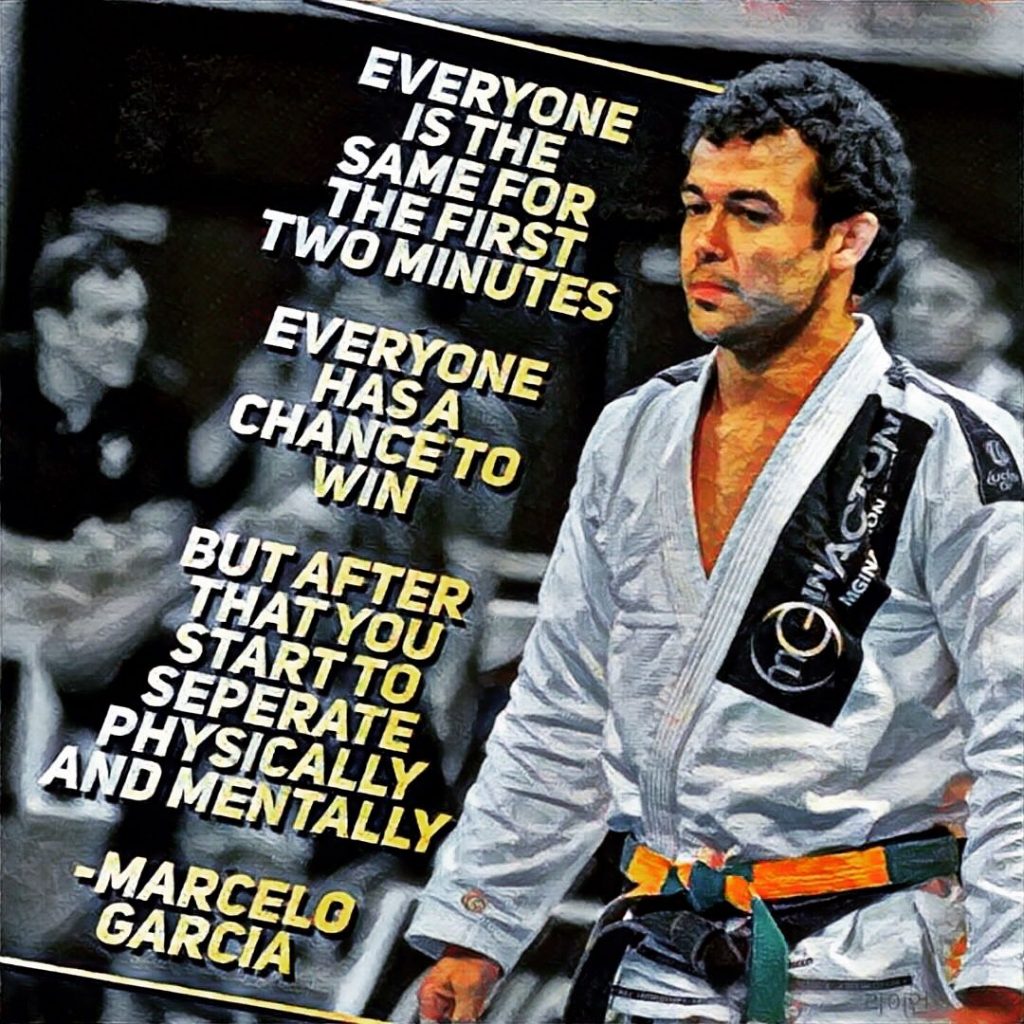
BJJ Motivation:Marcelo GarciaIn essence, the main notion behind Brazilian Jiu-Jitsu is to be able to express your own individuality in a unique setting. However, you need to be aware that this can be a double-edged sword. The nature of the sport is such that you can’t always be on a high when you’re training. Hta men that you’ll need to find motivation n to keep coming back even when you’re constantly getting smashed. Moreover, even the fun times might end up sucking your motivation – you can get bored, although this is very rare. In all those situations and many more, you’ll really need to focus on your BJJ motivation. This holds particularly true for that riskiest category of all – blue belts.

Keeping Your BJJ Motivation High

Thre are many things that you can do to keep your motivation for training Jiu-Jitsu high. However, some of them, if not most na be downright stupid. Individual reasons aside, there are certain aspects of BJJ motivation that are generally good for everyone. IF you have the pleasure of training at an academy that has a clear structure, great discipline, and dedicated instructors, you’ll hardly lose the motivation to come back. Couple that with your own individual reasons for wanting to grappler and you’re set for life. However, if you need to, erm, refresh your motivation a bit, you can use any of the strategies we cover below.

What Are Your Goals?

Setting goals for yourself is a great way of staying motivated in the long run. Luckily, IN Jiu-Jitsu you do not need to look far in order to find goals that you’ll like. From huge things like winning a major tournament to little stuff like solving a certain sweep that’s been bothering you, you can use goals as a booster for your BJJ motivation. However, make sure that your goals do not interfere with your motivation. In that sense, forget about setting belt goals. It is okay to want to achieve the next belt, but refrain yourself from setting time goals. Instead, focus your goals on your game, and improve whatever ara you think you need to. Belts are definitely a source of motivation, but take pride at getting one when your instructor decides you’re ready, not hunting for it. It’ll motivate you, even more, that way.

In terms of competition, also keep things real. Do not think you can win the Worlds just because it is a goal of yours. That big goal will require all of your time. It may be a huge motivator, but make no mistake, it is a full-time job with no days off. So, make sure your gaol are aligned with your capabilities, and you’ll never have a day when you do not want to go to the gym to train.

A Realistic Approach 

BJJ Motivation: Why Do You Train?Speaking of keeping things real, you need an overall realistic approach to Brazilian JIu-Jitsu. BJJ works in cycles, the most important of which are the learning ones. You try out a move, you get destroyed, you stick with it, learn it and then you destroy others. However, at a certain point, people get used to it and you need something new. Now th cycle starts again. The most difficult part of it is having to be bad at something again because you’re striating with something new. However, it is integral to actually become a better grappler. Moreover, it is also very important not to let this kill your BJJ motivation off.

That said, at a certain point in time, you ‘ll also need a break. Whether it is due to overtraining, an injury, or hitting a plateau, you’ll have to take it easy at a certain point. That means that you’ll actually find more motivation for a comeback after a week or two off, rather than trying to push through. In fact, this is probably the most important lesson you’ll learn on your way to becoming an advanced grappler.

Visual Motivation

This is where technology comes in to help you with your fleeting BJJ motivation. What does that man? Well, take al ok at Gordon Ryan’s latest run at the No-Gi worlds. Don’t you just get the urge to get out and go training and competing straight away? Watching matches, particularly those at the highest level is a great motivator for anyone. Whether you analyze the matches or not is down to you, as long as you get hyped about training.

Another aspect is watching instructional DVDs. Today, the choice is huge and you can make sure you get lots of material to deeply explore any one aspect of the sport. That means you find solutions to all the riddles you encounter in your roles. And then some. This is a great way of turning frustration into motivation for training. The ma holds true for reading articles, grappling books, and even social media posts.

A Word On Motivational Quotes

BJJ Motivation: QuotesSpeaking of reading and looking at videos, let’s address some very common source of inspiration and motivation for people – quotes. Nowadays, you can find a bunch of motivational videos, books, articles, and whatnot. There are even quotes and song playlists to keep you in the best mood possible., However, keep in mind that most of these are actually stuff that other people used to motivate themselves.

So if none of them are working for you while you’re searching for BJJ motivation, do not worry about it. Instead, try any of our proven methods above and turn towards yourself to find the source of motivation for your own BJJ journey.

How BJJ Motivation Can Help You Outside The Gym

Finally, remember that you can actually use BJJ and what happens on the mats as a source for motivation outside of the mats. You’ll hardly find a better training tool for problem-solving than grappling. Plus, you have to do it under pressure, while someone’s trying to physically best you. Talk about getting ready for anything life brings! Moreover, you have a competitive success that can actually help you cruise through most days. Fresh off of a tournament win, you can use th motivation to have the most productive and happy month of your life.

Moreover, there’s the notion of safe refuge. Whatever happens in life, you’ll find the strength to get through it because you know you have some awesome “me time” coming up. That’s BJJ. When you get to class, you can think fo nothing else but yourself and whatever’s happening around. There;’s no better way to meditate while you fight, per se than this. Not o mention how motivating it is to know that your day can end in this fashion.

In Summary

BJ Jmotivation is usually not hard to come by, but we all hit a block at some point. In most cases, after the brown belt, you’re in it for life. However, even the best of the best black belts sometimes find it hard to find motivation. Luckily this is only a temporary thing, The more strategies you have to keep your self motivated, the less this frustrating periods will last. So, get up, pack your Gi and go back to training, even if you’re not feeling like it. Let BJJ take care of everything else.

The Annoying Side Of Training Jiu-Jitsu

10 Obvious Reasons Why You’re still a White Belt

25 Reasons Why You Don’t Progress in Jiu-Jitsu As Fast As You Can

Best Jiu-Jitsu Lapel Attacks For BJJ Competitors

Best Jiu-Jitsu Lapel Attacks For Competitors

Brazilian Jiu-JItsu offers so many options to control and attack an opponent that you’ll never find training boring. To that extent, not many other martial arts are as versed a using anything and everything to gain an advantage. What’s more impressive is that it is all legal and free to use in competition as well as in training. To make things clear, this doesn’t mean you can use nearby objects or the likes. However, you can use everything on your opponent’s body or yours to get a tap. Among other things, that includes the Gi. since the Gi consists of pants, a jacket, and a belt, that gives you lots of weapons to use at your disposal. Out of those, the lapels are most often the first choice for most. In the spirit of the modern BJJ game, let’s explore some of the best Jiu-Jitsu lapel attacks you can use.

BJJ is the game of control that leads to submission. That’s an oversimplified way of putting it, but a correct one nonetheless. Well, you can hardly get any more control than by placing a rope around an opponent’s body. When that rope is connected to their body, to begin with, control gets an entirely different meaning. Not to mention the tightness you can achieve at submissions, without any risk of slippage. I can’t pinpoint the exact moment in time that people started using the Gi to attack rather than only control. However, whoever was the first one to grab a lapel and use it as a weapon, they changed the Gi BJJ game forever. Some of the best JIu-Jitsu attacks of today are based on using the lapels and/or collars and even top-level black belts have trouble dealing with them.

The Modern BJJ Game

As more and more people get into BJJ, it starts evolving faster and wider than ever. The sheer number of possibilities from every position is a clear testament to this. Whenever you find yourself, regardless if it is Gi or No-Gi JIu-JItsu, you have the ability to attack and defend, as well as transitions In between positions. This makes training as much fun as it is, but it also keeps the art on top compared to other martial arts.

Best Jiu-Jitsu Lapel AttacksOne of the areas that BJJ is highly unique about, in a slightly unusual way, is the Gi game. In the beginning, sleeve and collar grips and pants grips to an extent had the sole goal of providing control over an opponent. If you look at the original Gracie Jiu-Jitsu, most submissions do not rely on the Gi whatsoever. Kimuras, Americanas, Rear Naked Chokes, Armbars, etc are all submissions that do not require Gi grips. However, as the Gracies discovered, the anchor points you grip onto a Gi, actually provide much better leverage compared to No-Gi. From there on, it was open season to finding new and exciting ways of turning the Gi into a weapon.

Today, we do not only see innovative ways of gripping and even braking the grips, but also ways of entangling opponents until they’re powerless to resist. Whether it is a guard position, a submission, or a way to maintain top position, the Gi is a huge part of the modern BJJ game. To that extent, the best Jiu-JItsu fighters of today use pretty much e every part of the Gi, form the belt all the way to the rims of the pants. And it opens up so many options it is scary. Especially when you realize that this is just the beginning…

Playing With The Lapels 

There’s an undeniable advantage to playing a lapel based JIu-Jitsu game as opposed toa more traditional one. The lapels offer a huge advantage, as they work as extensions of your levers or frames. AS such, you can attack with them, control with them, or even use lapels to defend yourself. Moreover, you’re not limited to only one set of them. On the contrary, you’re free to use both yours and your opponent’s lapels in any combination imaginable.

Whether you use your own, or your opponent’s lapels usually depends on what position you’re in. Some of the best JIu-Jitsu black belts of today are notorious for playing lapel guards, for example. In those cases, using the opponent’s own lapel can help prevent any passing options they might be considering. In fact, getting caught up in any of the modern lapel guards pretty much guarantees you can’t pass unless you completely destroy the guard. And, given how easy it is to firmly grip and hold a lapel, that is a whole different puzzle to solve. At the same time, the person attacking with the lapels can work toward sweeping or submitting.

This example only covers a small aspect of playing lapel guards. However, when ti comps to using lapels you can use them from virtually any position imaginable. You can pass with the help of lapels, attack the turtle, hunt for side control submissio0ns ore ven chokes form the back. There’s no real limit to how you can use them to gain a huge advantage.

worm guard and beyond - Keenan's Lapel EncyclopediaJust take a look at Keenan Cornelius. He has the best Jiu-Jitsu lapel game in the sport. In fact, he has an entire “Lapel Encyclopedia” DVD set, exploring all the options he has come up with so far. Be sure to check this 10-part instructional review out!

Some Of The Best Jiu-Jitsu Lapel Attacks

It is pretty much impossible to cover all lapel attacks Jiu-Jitsu has to offer. In fact, even covering only high percentage one,s this would turn into an e-book rather than an article. So, in order to keep things short and sweet, we chose the best Jiu-Jitsu lapel attacks that are proven to work at the highest levels. This has the aim of acting as an introduction to the attacking lapel game for those that haven’t explored it yet. Moreover, it serves as a shortcut to the most high-percentage moves for those that are already deep into the world of BJJ lapel attacks.

  • Top Side Control Chokes

Best Jiu-Jitsu Lapel Attacks Samurai ChokeIf there’s one spot where you can hunt for lapel attacks, it has to be top side control. The thing is, there are several really high percentage attacks from here that’ll pretty much guarantee a submission. The Brabo choke, Lapel paper cutter, Lapel Ezekiel are just a few examples. However, the most potent one has to be the Samurai choke, which is our choice for today. For the samurai choke, you use the far side lapel of your opponent as your main weapon. The idea is to place it over their arm so that you can grip it like you would a baseball bat. A simple rotation of your body will bring your forearms together for one of the tightest chokes in JIu-Jitsu.

  • Lapel Sweeps

Best Jiu-Jitsu Lapel Attacks Squid Guard SweepWhere do I even start wit sweeps using lapels? Just about any of the lapel guards will do here, as people often give sweeps away just to get out of the lapel traps. Keenan’s squid guard is one of the best examples of unstoppable and effortless open guard sweeping using a lapel. Form an open guard you want one lapel around your leg, and then the thigh of your opponent. This will ensure the opponent can’t pass while making sweeping as easy as pushing them backward.

  • Guard Submissions

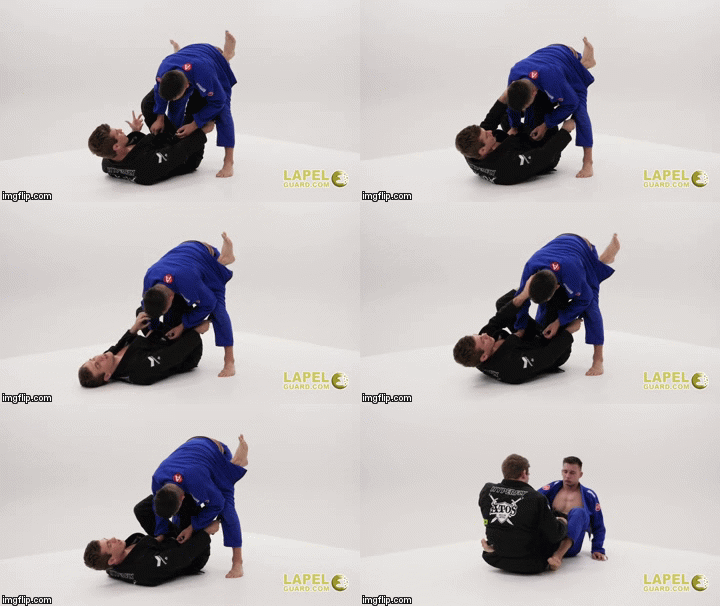
Best Jiu-Jitsu Lapel Attacks TriangleSubmitting somebody from the guard is also possible with lapels. In fact, some of the best Jiu-Jitsu submissions work by utilizing lapels to make things more secure. In those terms, you can hunt for pretty much any submission with a lapel variation. One submission that benefits massively though, is the triangle choke. From a closed guard, you want the lapel on one side behind the back of your opponent, and going across to their opposite side shoulder. From there, as you try to sneak a leg in for the triangle, you can use a foot inside the lapel to lift the opponent up and create space.

  • Turtle Attacks – The Gerbi Choke

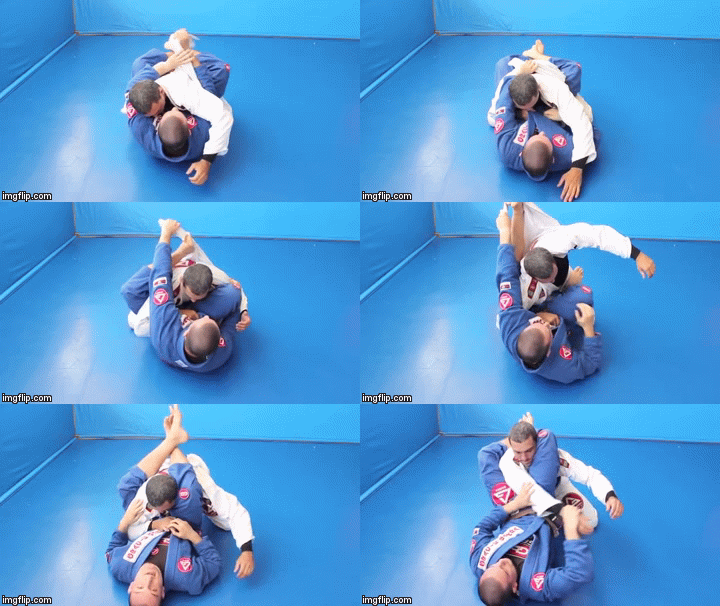
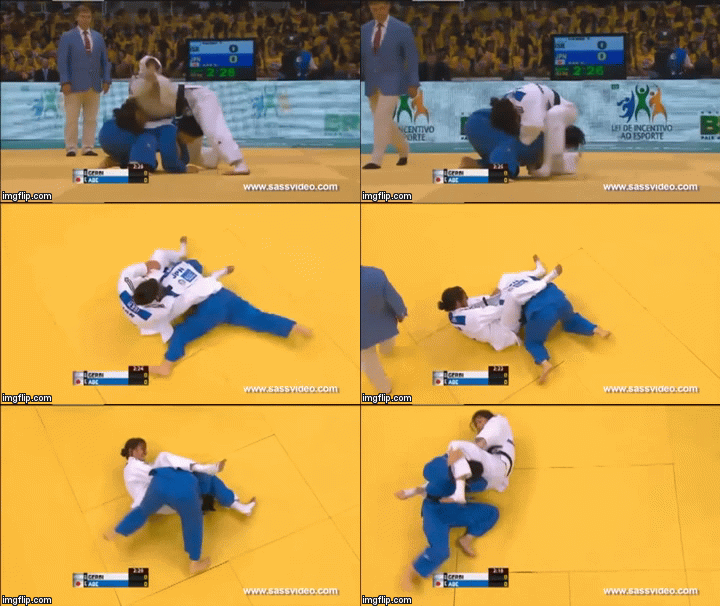
Best Jiu-Jitsu Lapel Attacks Gerbi ChokeThe Gerbi Choke is actually one of the lapel chokes you do with your own lapel. It is one that stems from Judo but is tailor-made for BJJ. It works against the turtle position when you’re in a front headlock. The goal is to release one of your lapels and wrap it around the opponent’s neck. From there on, you proceed to execute a Peruvian necktie, only gripping the lapel rather than your own arm. The Gerbi Choke is much tighter since the lapel makes it impossible for an opponent to scape.

  • Chilean Necktie From The Back

Best Jiu-Jitsu Lapel Attacks Chilean NecktieBefore we wrap things up, let’s look at one more of the best JIu-JItsu lapel attacks of today. That is the Chilean necktie, an ultra-tight lapel choke done from back control. Form seatbelt position you simply add a lapel under the arm to enforce your seatbelt grip. The lapel you use is your own. The goal is to pass the lapel upwards, so that you grip it with your opposite hand, right at the level of the neck. In order to finish, you need to go on your side and swing a leg over the opponent’s head, pushing their neck towards the lapel with your leg. Ultra effective and most often, unexpected.

In Summary

Using lapels is a surefire way of making sure you expend less energy and increase the effectiveness of your attacks. The best part about it is that you do not have to be advanced to accomplish this. In fact, the best Jiu-Jitsu lapel attacks work fro grapplers of all levels. Furthermore, they make their attacks feel like those of seasoned grapplers with decades of experience. Give them a shot. After all, what have you got to lose?

Worm Guard – The Evolution Of BJJ’s Most Annoying Guard

https://bjj-world.com/lapel-choke-closed-guard/

https://bjj-world.com/draculino-lapel-choke-half-guard/

BJJ Mats 101: Buying, Setting Up And Cleaning

Everything About BJJ Mats From Buying To Cleaning

Do you know what is the thing that keeps a BJJ academy running? Most likely, you’ll get several different answers to this question. Most of them will be correct, however, you won’t find the answer we’re looking for today among them. That answer is BJJ mats. Imagine having to train without mats. That is not going to be a pleasant experience, to put it mildly. Well, the role of the mats doesn’t just stop there. Apart from making BJJ training possible, they’re also important in hygiene, safety, and even appearances. Tо that extent, today we’ll cover everything you need to know about buying, setting up, and cleaning BJJ mats, whether it is a tan academy or at home.

We do take BJJ mats for granted, until they start giving away. This s inevitable and even the best of the best will require a change after a certain while. The whole thing is to extend that “while” to last as long as possible. Have you ever stuck a toe in between old mats when rolling? If you have, you know the pain and subsequent reserve that comes with every other roll. Moreover, if you’ve been on the receiving end of a staph or ringworm infection you’ll value the importance of clean mats even more. That said, if you’re rеally a BJJ nut you might end up with BJJ mats at home, meaning you’ll be exposed to them daily. IN that sense, let’s see how you can do everything correctly.

BJJ Mats 101: What You Need To Know

BJJ mats are different from mats for other martial arts. While you may think Judo, Wrestling, or even Karate mats might do, you’re mistaken. Yes, you might train if thereќс nothing else available, but you’ll have to sacrifice a lot of comforts and even risk injury if you do. A big part of what makes BJJ mats so different is the material.

IN general, there are two parts to any type of Jiu-Jitsu mats. Here’s a core, and there’s an outer layer. Both of them have to up to standards, pretty high ones, in order to make grappling training possible. In the best-case scenario, the core is made out of foam that’s highly resistant and has the capability of impact resorption. Polyethylene or EVA foam is the most common since they offer closed-cell foams that also repel water. The outer material can vary largely, but it has to fulfill certain criteria. The material must be non-slip, durable, and easy to clean. Plus, if they’re puzzle mats, they have to fit tightly and perfectly.

Speaking of type, in BJJ, the most common types are tatami or smooth, in terms of texture. The tatami ones have extra grip as a result of a specially textured surface. Smooth ones are similar to wrestling mats and are better used with shoes. Furthermore, you can have puzzle mats, which are pretty self-explanatory, folding mats, or rollout mats. This last type seems to become more and more popular as of late.

Setting Up Your Mat Space

When it comes to setting up BJJ mats, you‘ll actually need a bit of patience. Whether it is a little or extreme amounts of it, depends on thе type of mats you choose. Puzzle mats, for example, will test the patience even of people that have achieved Zen mastery. Rollout mats are much easier to set up, on the other hand. However, both these types of mats come with drawbacks and advantages, so you’ll need to choosе according to your needs. One example is whether you “ll be using them at home or in a gym. For home use, nothing beats puzzle pats.
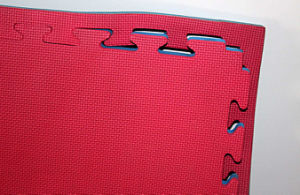
BJJ Mats 101: FittingThe basic rule of thumb is mat size. The bigger the mat surface is of individual mats, the fewer mats you’ll require. The benefit here is that you’ll have fewer seems, which are potential cracks that are causes of finger and toe injuries. There are different sized mats out there and you’ll need to choose according to the space you have available. Iн terms of academies, rollout mats are by far the best option, although folding mats will do also. They have the capability of covering huge areas without any seems whatsoever (in the case of rollout mats). Puzzle mats can be used too but will take a lot of tinkering to setup.

Moreover, with puzzle mats, once you set them up, you can’t ever remove them and then attempt to reassemble them. With time, these mats tend to widen and will never be able to fit together smoothly again. Finally, you can consider combinations. If you have old mats, or too many cracks and seams, you can use a rollout cover canvas, like those used in wrestling. Keep in mind though, that this means you lose all texture, increasing the risk of slip-related injuries.

Essentials Of Mat Hygiene

If you’ve never had to deal with a skin infection, particularly one from dirty mats, consider yourself lucky. Moreover, never seek that particular experience out – you don’t need it. That said, BJJ mats, particularly those in academies, require constant care and attention. As such, you’ll have to clean them up on a daily basis, if you want them to last. And even the cleanup has to be specific so that you do not destroy the outer layer of the mats.

Apart from the obvious dangers of skin diseases (which we’ll get into soon), you also have to factor in wear and tear. The less you take care of your mats, the sooner they’ll tear and break up. In fact, the surface area can easily crack and give way, making each contact with them a painful experience. In other cases, parts of the mats can get torn off leaving huge gaps in the mat area. Apart from becoming sources of injuries, these torn and cracked mats also become the perfect breeding ground for germs. Ringworm, staph, even MRSA can lay hidden in these cracks, particularly if a large number of people frequent each day. Combine that with the high moisture from sweat and the temperature of gyms and you have the perfect recipe for disaster.

Even at home, the same rules apply – you have to be diligent with mat hygiene. Otherwise, if it is not ringworm or staph it may be mold or fungi that decide to all your BJJ mats home. And that’s not an easy thing to get rid of.

If you’re looking to safeguard yourself from common gym germs, then make sure you use one of the best BJJ soaps available.

Cleaning The Mats

The best way to maintain pristine BJJ mats is a two-fold process: First, you vacuum them thoroughly, and then, you proceed to wipe them with some disinfectant. In terms of frequency, after all, classes end are over is a must.

In terms of the first part, there’s nothing to it. Grab a vacuum machine that’s strong enough to pull particles from the seams and corners and be thorough. The goal here is to remove every solid piece of debate that’s on the mats. That includes skin cells, hair, pieces of finger tape, and other stuff that’s commonly found in grappling gyms after practice. Conversely, dry mopping or sweeping can also do the trick.
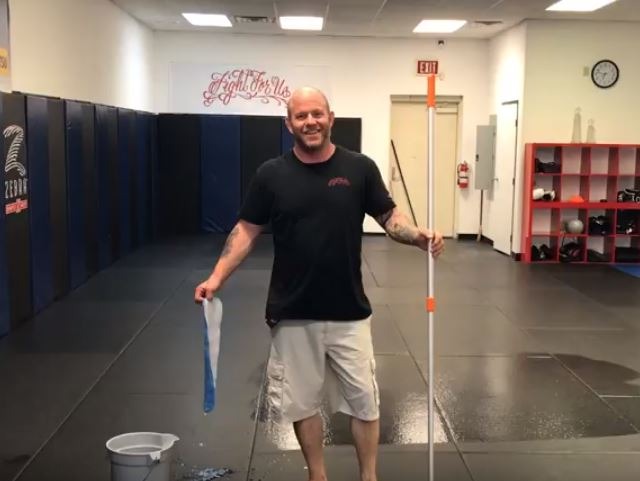
BJJ Mats 101: CleaningThe second part is where you can actually go wrong. The most important thing here is choosing the right cleaning agent. Get something too strong, and you’ll damage the mats, actually achieving the opposite effect. Choose something too weak, and germs will survive and even thrive. Finally, whatever you choose mustn’t be harmful to the skin of people, as there will always be residue left, albeit in trace amounts. The top picks are bleach (diluted in between 1:100 and 1:10), or other commercial synthetic cleaners like Lysol, Odoban, Pine-sol, etc.

Out of them all, bleach is the cheapest and safest bet, unless you get the concentration wrong. Then, it’ll damage your mats beyond recognition. You could also go all-natural with stuff like baking soda and vinegar but its’ too much of a hassle. Conversely, the simplest solution is a soap and water solution, which’s always reliable.

Finally, make sure you spread the solution everywhere. The best choice is a sprinkler of some kind that can spray it, but you might also use professional machines. Finally, make sure you mop it all up carefully and diligently.

Best BJJ Mats For Your Academy

When it comes to academics, you need to think about which BJJ mats you use before you even open the school. Still, in some cases, this is not possible. If that is the case, look to use a rollout canvas-type mat, like those find in wrestling to reduce the cost of having to redo the entire gym. If you can, however, then try and invest in rollout mats, as you can do so much more with them than puzzle mats.

Otherwise, puzzle mats need to be your second choice, before folding mats, Folding mats are easier to set up and remove, and even clean, but they tend to leave large cracks since they’re quite thick. That means that you’ll have to also find a canvas to cover them if you want to forget about the mats and roll freely. Keep in mind that every time you use a cover canvas you make cleaning alto easier, as you can even take it out to wash if you need to.

Meister Interlocking EVA Foam Mats BJJ Mats

Features: 

  • 100% EVA Foam (non-toxic)
  • Thickest and softest mats available
  • Anti-slip surface
  • Interlocking tiles
  • Fully reversible

Meister makes some of the best possible mats for Brazilian Jiu-Jitsu out there. In terms of choosing a top product for your academy, you definitely can’t go wrong with their Interlocking Eva Foam Mats. They are pretty much foam tiles, very easy to put together and use. They also happen to be the thickest and softest mats you can find on the market.

These mats come in six different color designs (black, blue, grey, yellow, red, and green). Moreover, they are fully reversible, essentially doubling the lifespan of the mats. T-pattern surface ensures there is no slipping while training. The mats are completely waterproof and easy to clean. Border pieces are included with every purchase so that you can achieve a smooth uninterrupted training surface. Each mat tile measures 24″ x 24″ and they are 1.5″ (3.8cm) thick.

[amazon fields=”B07FYT9Z9K” value=”button”]


Get Rung Martial Art Puzzle Mats
BJJ Mats Home Puzzle MatsFeatures: 

  • Lead and latex-free
  • Solid color
  • Shock absorbing
  • Waterproof
  • Lightweight and durable

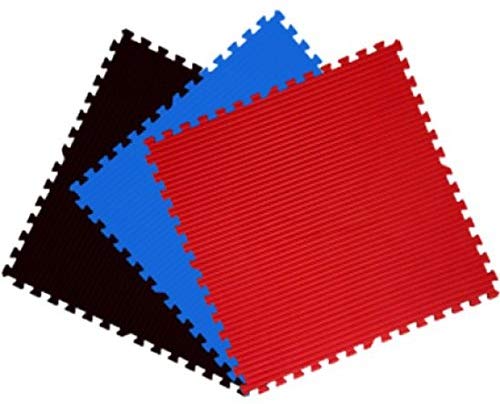
Get Rung mats are also a great choice for any grappling or martial art gym. They are a simpler and cheaper option compared to the INcStores Puzzle mats. However, they are no less comfortable, effective, and easy to set up and maintain. Speaking of which, they offer a sturdy design available in three different color designs. These are the mats you commonly see in BJJ academies across the world.

The Get Rung Puzzle Mats are available in 40″ x 40″ x 1″ dimensions. That provides lots of thickness while also allowing them to be lightweight. The three colors available are fully black, full red, and full blue. Conversely, you can do combinations of them all if you want to and order different colors. In terms of material, what you get is a shock-absorbing and durable EVA foam core, with a waterproof, non-toxic latex-free surface. The mats have an outer texture that helps them achieve the highest safety rankings. Very easy to clean and extremely durable.

[amazon fields=”B01MV1FE3O” value=”button”]


Gold Medal Sports Wrestling Mat
Features: 

  • Extra thick quality material
  • Smooth surface
  • Flexi-roll
  • Easy to clean
  • 6-month warranty

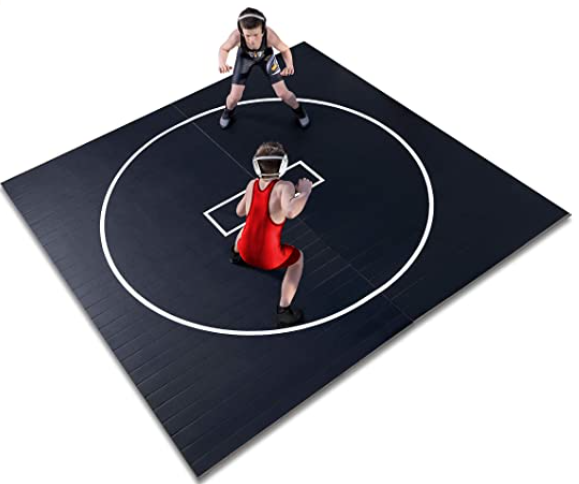
Let’s move on to some different options than puzzle mats. If you have the option of choosing a different type of mat then you absolutely have to consider the Gold meal Wrestling mats. It comes in the form of their 10 x 10ft mat that consists of two halves that are easy to roll up and put away, or set up in the first place.

These mats are not just perfect on their own, but also as a cover for already worn-out puzzle mats. Force reduction technology ensures that you can safely train anything on them, from rolling to high-velocity takedowns and throws. Moreover, they come in blocks of 10 x 10 feet that makes them extremely easy to set up. The design features a white circle in the middle, marking a traditional wrestling area, while the background is black.  Unlike most wrestling mats, the outside vinyl layer has a texture guaranteeing high safety standards, all the while being smooth enough so that it doesn’t gather dust. Lead, latex, and BPA free.

[amazon fields=”B08ZC9RTKP” value=”button”]


IncStores Roll Out Wrestling And BJJ Mats
Everything BJJ Mats: Rollout mats

Features: 

  • Flexible rolling system
  • Closed-cell EVA foam rubber
  • Durable vinyl surface
  • Shock absorbing
  • Easily portable
  • Velcro strip attachments

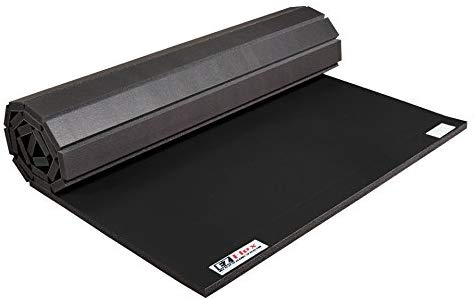
Speaking of roll-out mats, let’s circle back to IncStore. These guys are not messing around, and they have different types of mats for any occasion. Similar to their puzzle mats, the Inc Roll Out mats are of pure quality. On top of it, they also have a perfect design and are tailor-made to fit the needs of BJJ academies. Moreover, they’re the most versatile of the bunch, coming in 9 different colors and three different sizes.

Speaking of versatility, the colors include black, yellow, green, gray, maroon, navy, blue, purple, and red. Sizes available range between 4’ x 6’ x 1 5/8”, 5’ x 9’ x 1 5/8” and 5’ x 10’ x 1 1/4 “. That means you can use them in a commercial gym of any size. These BJJ mats are extremely easy for transport, setup, and storage. Moreover, they come with special amt tape that covers all the cracks, helping you achieve a perfect surface. Still, they have texture to the outside ensuring no slippage even when wet. The mats are also waterproof, odor-resistant, and extremely shock-absorbent.

[amazon fields=”B07C28YJ7N” value=”button”]


Z-Athletic Folding Panel Mats
BJJ Mats - Folding Mats

Features: 

  • Professional design
  • Multifunctional
  • Hook and loop connections
  • High density cross-linked polyethylene foam
  • Non-porous vinyl surface

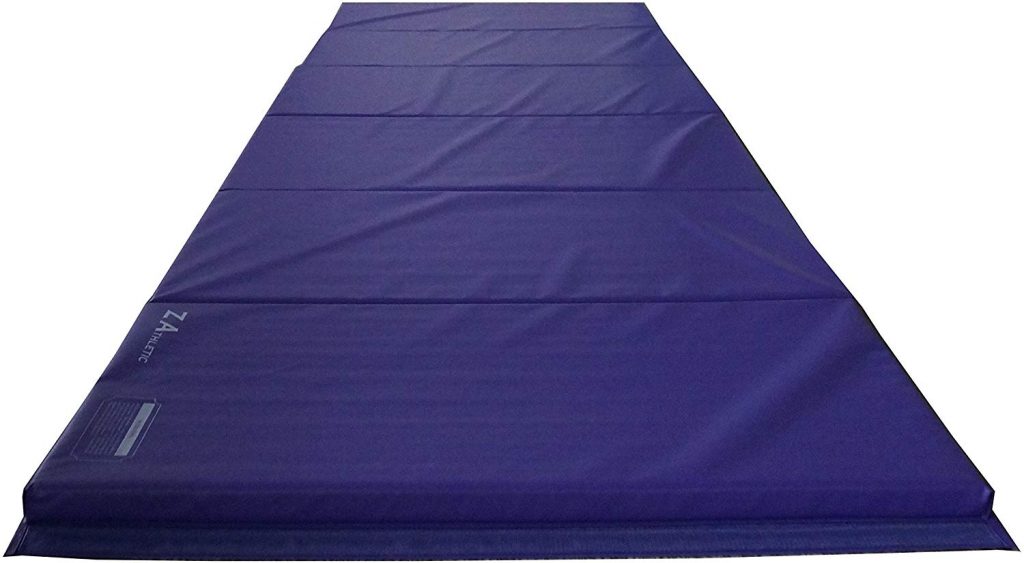
The final contender when it comes to the perfect BJJ mats for academies and large areas are the Z-Atheltic folding mats. These are not always a common choice for BJJ, but if you set them upright, you can actually get a surface unlike any other. Using a bit of mat tape to cover cracks here is a great hack. However, these particular mats are actually designed to remove the dangers of cracks and seams that usual folding mats bring.

There are four colors available in black, blue punk, and purple. Moreover, there are three sizes, ranging between 4’ x 12’, 5’ x 10’, and 4’ x 10’ to fit everyone’s needs. All of the mats have the same thickness of 2 inches. The professional design of these BJJ mats guarantees durability and safety. The core is made of breakthrough high-density cross-linked polyethylene foam. The outside is vinyl that has a special texture to ti providing extra softness. The mats are expandable and use a hook and loop system to stay together and reduce seem sizes. These mats come with a two-year warranty.

[amazon fields=”B091R17D1W” value=”button”]


Best BJJ Mats For Home Use

Having a mat area at home is actually not that daft of an idea. Personally, I have an entire room outfitted like this. This means you can drill solo whenever you feel like it, or roll around with friends. However, even in a home setting, BJJ mats require attention. The best part about home mats is that you’ll rarely have to go from corner to corner with them. That means that you can take them out, even if they’re puzzle mats, and clean them any way you want to. However, do not forget to use disinfectant solutions, just like you would in an academy. Another aspect of cleaning mats at an academy is odor retention. In a commercial area, you might never get rid of certain smells. However, at home, you can easily take the mats outside to make sure you get rid of everything.

WF Atheltic High-Density Puzzle Mats
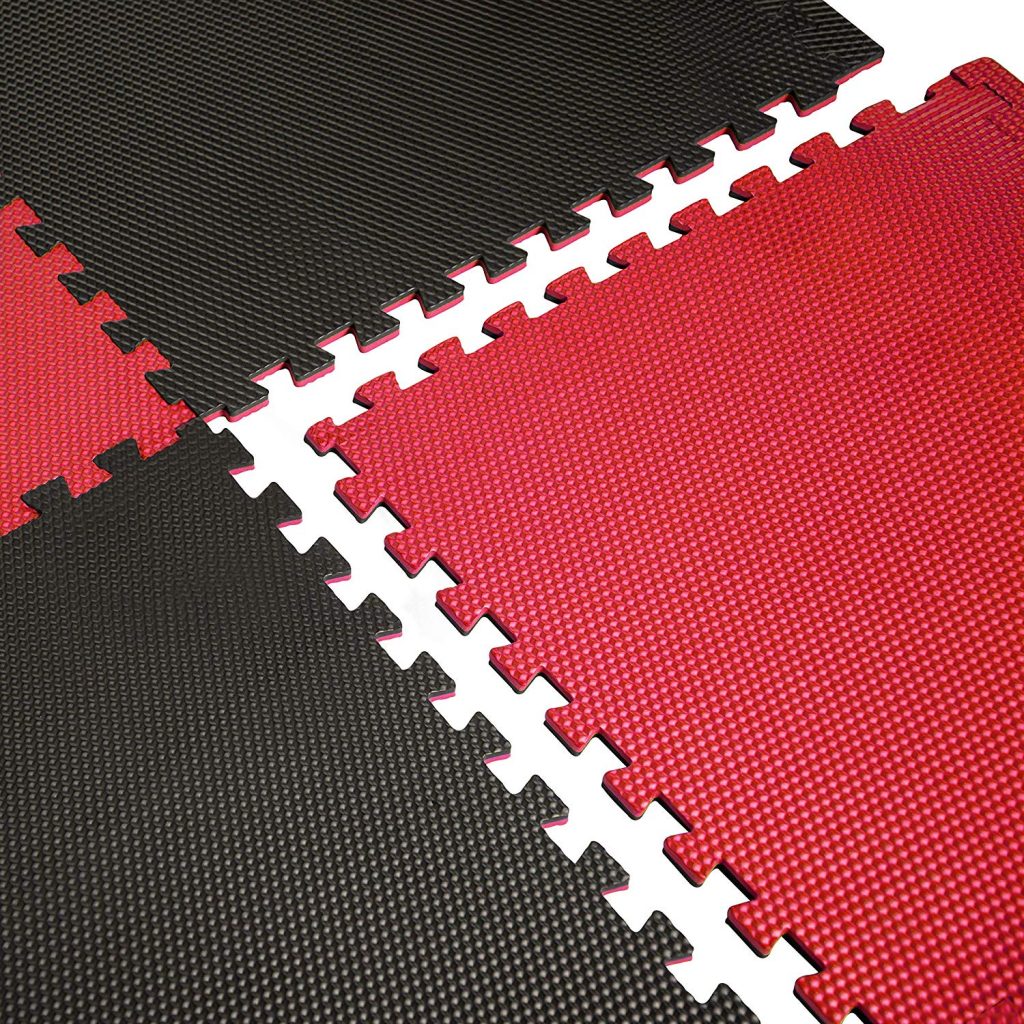
BJJ Mats Home Puzzle Mats

Features: 

  • High-density EVA Foam
  • 3-D diamond texture
  • Easy to clean and durable
  • Edge pieces included
  • Waterproof
  • 2-color combinations

While you can freely use any of the mats above at home, it is usually much easier to choose a smaller and cheaper version. However, you should still aim for quality. A great option is the WF Atheltic High-Density Puzzle mats They are versatile, affordable, and extremely comfortable for home use that includes anything, from Yoga to Grappling or MMA training.

The colors available are black-red and grey-blue, and they come in a two-sided format. Just like with the INcStore ones, this actually means they’ll last you double the amount of time compared to others. The material is high-density EVA foam with a 3-D diamond texture on the outside. This provides both the perfect cushion as well as a non-slip surface. They’re very easy to clean and offer adjustable coverage. Very lightweight and easy to transport and assemble. The dimensions are 22.3” x 22.3″ x 0.5″.

[amazon fields=”B07TYHTHHQ” value=”button”]


Polar Aurora Folding BJJ Mats
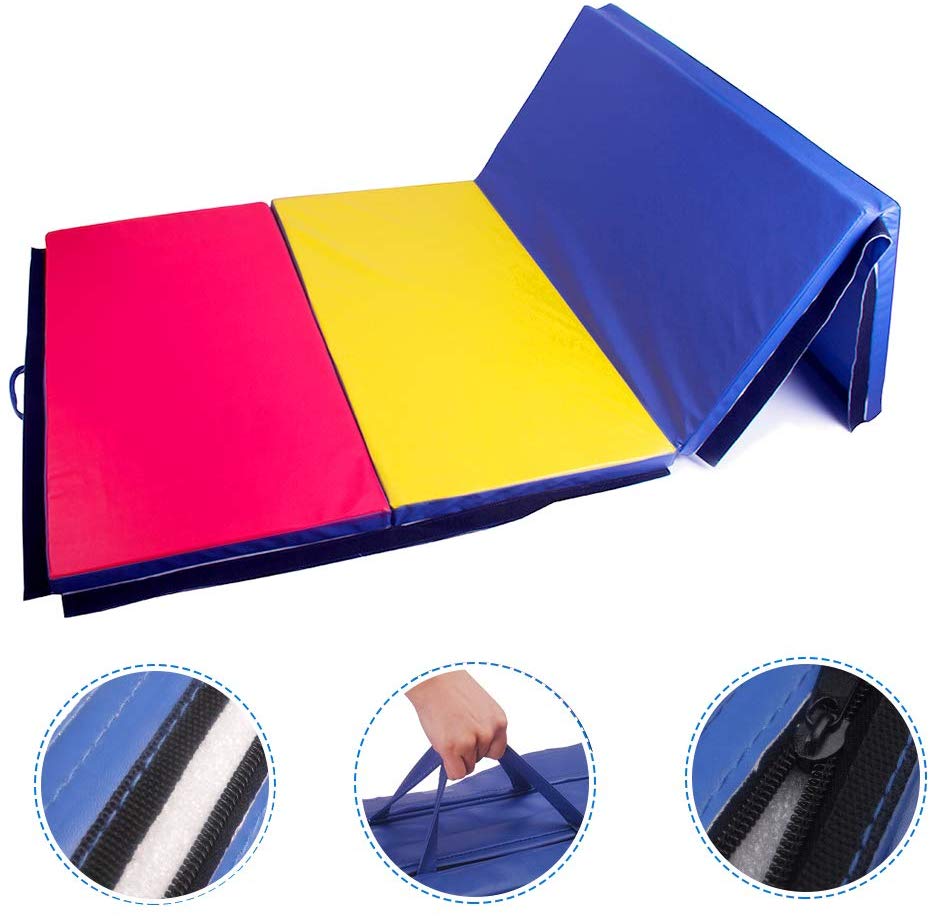
BJJ Mats 101: Folding Mats

Features: 

  • High-Density EPE Foam
  • Easy storage and carrying
  • Durable PU leather
  • Velcro straps
  • Hook and loop closure

High density, cool-looking, affordable mats that you can easily remove after training. What more could you want for your home gym? The Polar Aurora mats fit this description to a T. They are available in 10 colors, and are designed to be extremely portable. Plus, all the materials used for their design are of the utmost quality.

The colors in question range from purple, through camo, and even tree color ones. The material is EPE eco-friendly foam and durable PU leather on the outside. The foam guarantees they’re soft, yet have amazing impact absorption qualities. The leather is highly durable, long-lasting, and very easy to keep clean. They come in dimensions 4’x8’x2″. They’re very easy to fold and unfold and even have handles for easy transport. Furthermore, Velcro straps help latch different mats to each other, making for a very tight and secure training surface.

[amazon fields=”B08T8VL67H” value=”button”]


Gxmmat Extra Large Exercise Home Mat
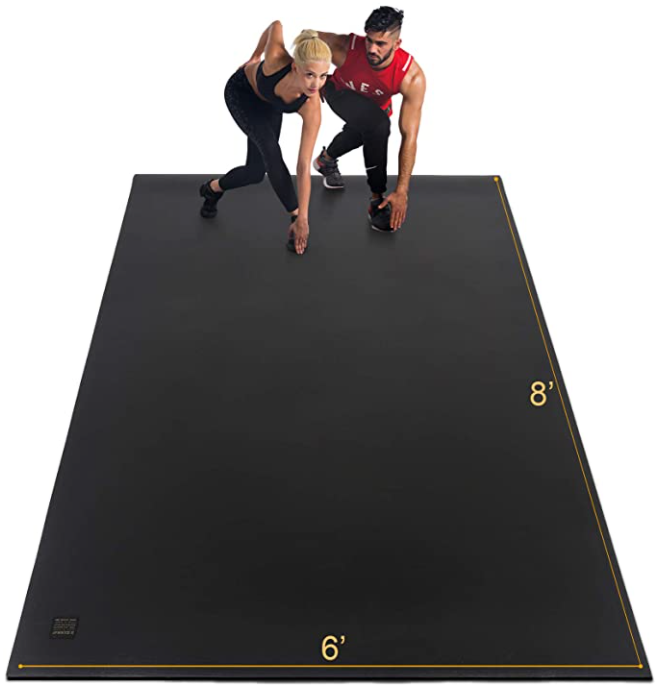
Features: 

  • High Dense Micro-foam
  • Double-sided non-slip surfaces
  • Abrasion and tear-resistant
  • Non-toxic
  • Velcro storage straps and carry bag

Finally, a rollout mat option for your home gym. The Gxmmat mats are the perfect way of ensuring you have a gym-quality training surface at home, with absolutely no hassle. In fact, you can use this type of mat even as a glorified Yoga mat. They roll up easily and can be stored as a Yoga mat, but actually have all the best characteristics of top-grade BJJ/grappling mats fir for any academy.

The mats are available in 2 different colors: double-sided black, and a purple/gray combination. All of them feature a textured, non-slip surface, that provides excellent grip and comfort. Basically, you can leave them on your floor full time. As such, they’re perfect for grappling as they provide grip without any of the burns that regular carpets do. Moreover, special foam ensures they have the necessary thickness (7mm.) and shock absorption for training. Easy to roll out and put together, and come with 3 storage straps and a carry bag. Perfect for home use.

[amazon fields=”B08696H44C” value=”button”]


Frequently Asked Questions

How thick should BJJ mats be?

For Jiu-Jitsu training, safety is of paramount importance. While mats do not have to be too thick, given that most of the exchanges take place on the ground they still have to guarantee nobody gets hurt. In that sense, the IBJJF has stated that 1.5-inch mats are the standard for competition. Thinner mats will work for training or home use, but they’ll require a soft surface underneath, like styrofoam.

What size are Jiu-Jitsu mats?

Since you can’t really train BJJ on a restricted surface, in most cases, the dimensions of the space you have to work with will define how many mats you use. ni terms of individual mats, dimensions vary according to type and manufacturer.

How long do BJJ mats last?

The best BJJ mats, like the examples above, will last you for years. Puzzle mats that can be reversed last really long in particular. At the end of the day, both the frequency of use and how you take care of the mats will determine how long they last.

What mats do BJJ gyms use?

For a long time, puzzle mats were the first choice, followed closely by Judo mats in some gyms. Nowadays people opt for rollout mats, or they use wrestling canvas-type mats over puzzle mats or styrofoam to ensure a seamless surface.

What are the best BJJ mats?

Depends on what you’re after. If you’re fitting mats in a small enclosed space at home or in a garage, puzzle mats will give you the most bang for your buck. If you have a larger surface to cover, or a big gym with lots of members, roll out or fold is the way to go. In any case, all of the jiu-jitsu mats reviewed above will not fail you.

What color mats should you get? 

Some gyms have a color that is predetermined by their affiliation. Others go any way they want. Usually, BJJ gyms choose one color mats (blue, or black, or white) to cover the entire gym. Unless specified so by affiliation, you’re free to use whatever you want from a BJJ gym.  Of course, at home, you can do whatever you want with your mats.

What type of BJJ mats is the best? 

IN terms of my personal experience, I’d go with roll-out mats. Judo mats are also great, and puzzle mats do the trick too, but they have the potential of toes getting stuck and twisted where the mats’ edges join together, no matter how snuggly they feel. While wrestling canvases are a solution to this, I find them a bit too slippery for Jiu-Jitsu. Roll-out mats have Velcro tape that ensures there are no edges, plus a textured surface to prevent slipping.

Final Words

Whatever the case might be, when it comes to BJJ mats you need t know two things. First up, make sure you get some of the best, for which you can use our complete guide. Next, focus on using them correctly and more importantly, keeping them clean and in pristine condition. That way, you’ll get the most out of your mats without any of the possible risks. If you’re using them at home, you have a slightly easier task compared to an academy, However, it all boils down to responsible use, and enforcing the rules of personal hygiene to make sure the mats remain clean even when people are on them.

BJJ Guard Pull Counters For Any Occasion

BJJ Pull Guard Counters

Pulling guard in BJJ is often seen as a coward’s move. I couldn’t disagree with that notion more. The BJJ Guard Pull is actually BJJ’s only original takedown. Yes, even though it lands you on your back. You still have a position of dominance and have taken the fight to the ground. That said, one way to start respecting the guard pull is to repeatedly get caught in it. The options that follow are plentiful for your opponent and extremely limited for yourself. Luckily, there are several ways of countering the pulling guard. In fact, you can actually counter any type of guard pull, as long as you react on time.

Back when I was a white and blue belt, the BJJ guard pull was my main go-to match starter. Coming from a Judo background, I was always comfortable on my feet., However, the notion of playing guard was always very attractive to me, so I wanted to learn the ways in which can get me there. As I discovered different guards, I found further options that allowed me to get into them straight from standing. And no, it is not a move that should be frowned upon. In fact, the fact that people complain about how “unfair” and “unattractive” it only proves how efficient the BJJ guard pull can be. To that extent, if you compete in BJJ. Particularly with the Gi, you simply have to know how to deal with people pulling guard. And your best bet to achieve it is counters.

The Unique Aspects Of The BJJ Guard Pull

What exactly is the BJJ Guard Pull? In short, it is a safe way of pulling an opponent to the ground, directly into your guard. The fact that you’re pulling someone down, rather than trying to throw them or take them down makes people see it as something lesser than a takedown. IN essence, ti is not. The only difference is, you land on your back. However, in BJJ, and particularly when it comes to the guard, this is precisely what you’re after.

BJJ Pull Guard Counters That WorkForm a basic sleeve and collar grip position, the idea behind the fundamental guard pull is to create distance first. To do that, you place one leg on the hip of your opponent. In most cases, it is the leg on the side where you have the sleeve grip so that your opponent can’t reach it. This is your backup, in case anything goes wrong. From there on, you sit down to the ground, pulling the opponent over you. However, how you sit down is also very important. Namely, you need to go to the side, in order to make the most of the leg you have on the hip. There are a lot more details but they’re not the subject today.
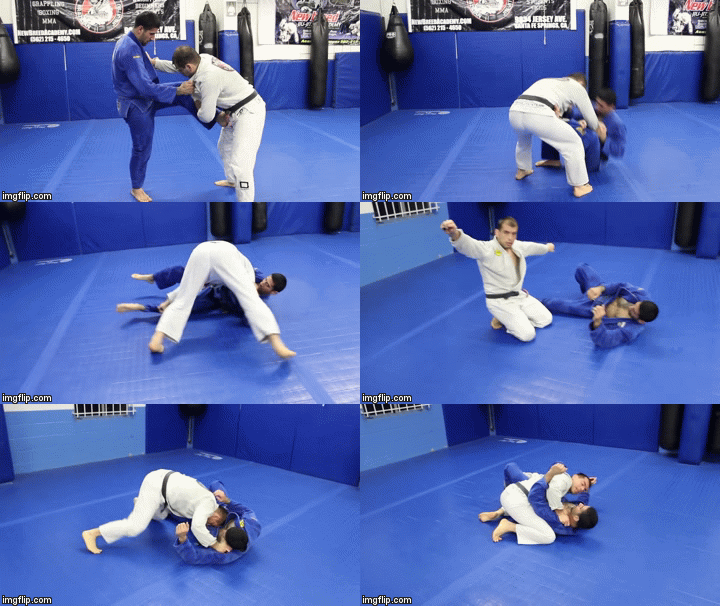
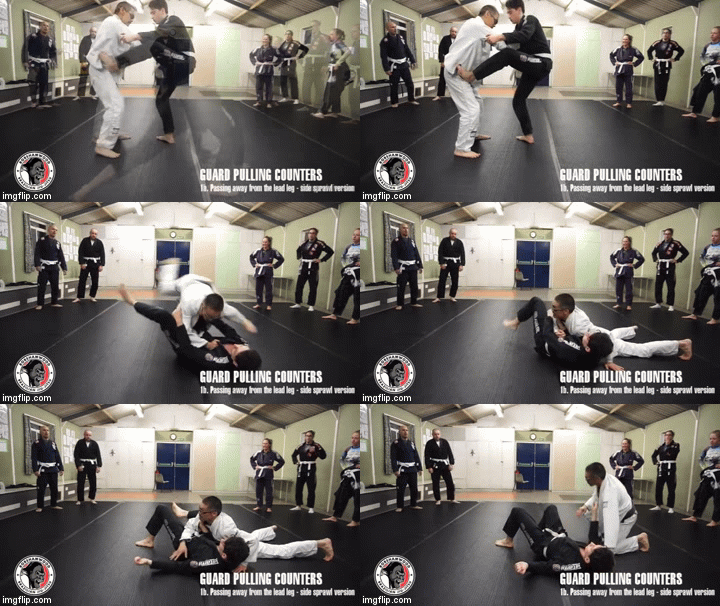
Apart from pulling the closed guard, you could also go for just about any other guard out there, While pulling an inverted guard is not a very smart or effective thing to do, other guards work perfectly well. Some examples of great BJJ Guard Pull options are the half guard and the butterfly guard. Moreover, instead of pulling you could even go and jump into guard if you desire so. And every one of these pulls can actually be prevented with timely counters. Now that is something we’ll be looking into today.

Counters Are Better Than Defense

When it comes to standing, it is best that you forget about defending. Trying to defend takedowns, throws, or even the Guard Pull, for that matter is not really effective. Instead, you need to be focusing on counters and timing them to perfection. Once you have this down, you’ll be unstoppable standing. Then you can go for some guard pulling of your own to annoy everybody.

In terms of countering you have to remember that timing is the absolute key here. That means that whenever you see/feel an opponent going for a BJJ Guard Pull, you need to be expecting a counter without overthinking. Luckily, defense always takes much less time than attack., In that sense, all you need to do is understand where the opponent is trying to get to, and how they’re going to go about it. That is the basic concept of countering guard pulls in BJJ.

Henry Cejudo DVD Review - High Level takedowns Adn Mat Control For grapplersIf you’re looking to master further takedown defense scenarios, look intoHenry Cejudo’s brand new DVD. The four-part instructional labeled “High-Level Takedowns And Mat Control” covers defense in great depth, as well as explaining how takedowns work in the first place.

A Few BJJ Guard Pull Centers For Any Occasion

On to the counters then. The best way to be ready for a kind of BJJ Guard Pull is to master a few yourself. We’ll look into several different ways of countering the guard pull in BJJ. moreover, we’ll explore different stages of the attack, and how you can prevent each of them separately. Just as a bonus, we’ll look into preventing the jump guard as well, since it can be really common, particularly at lower belt level.

Countering The Basic BJJ Guard Pull

BJJ Pull Guard Counters BasicIn terms of the basic BJJ Guard Pull, the first thing you need to be thinking about is grip fighting. If you actually manage to establish dominant grips, you’ll prevent a BJJ Guard Pull altogether. If you’re late though, or the opponent has some trick up their sleeve, your focus needs to shift on the leg that’s on your hip. So, if you manage to remove it, your opponent will actually pull you in a guard pass rather than their closed guard. Since you can’t really reach with the nearside arm, you can use your other arm (that’s gripping the collar) to reach across for the opponent’s pants. All it takes from there is to pop your hips back as they go to the ground and pin their leg. You can now pass with a variety of passes.

Late Counters

BJJ Pull Guard Counters SurfingIn certain situations, you’ll be caught with a quick or unexpected guard pull. The moment that happens, and you’re too late with grip fighting or dealing with the leg, you still have options. At this point though, you need timing more than ever. One thing to focus on is weight distribution. Since your opponent wants to pull you with a spin, you can use that against them. To counter, you simply get your legs off the ground, putting all your weight on their foot. That’ll make it hard to get the leg out from beneath you. IN turn, it’ll allow you to surf to the opposite side and straight into side control.

Jump Guard Counter

BJJ Pull Guard Counters Jump Guard PreventionThe reason why I left the Jump Guard counter last is that it is a move that works against any kind of BJJ Guard Pull. The only drawback is that hs is a Gi Specific move. Still, given that pulling guard in No-Gi equates to simply sitting down, you won’t be using it anyway. The only way to make sure you react on time to a jump guard is to make sure you have distance between your hips and your opponent’s. With a jumping guard, the opponent is most likely going to look for an angle. As soon as you see that, or even if you’re simply uncertain, just release the sleeve grip and grab their belt, right around the knot area. That’s it. The moment they jump guard it is you that has a frame inside now, and the upper hand to pass.

Closing Thoughts

There’s no need to fear and demonize the BJJ Guard Pull. IN fact, learn how to do it yourself, as it will definitely come in handy sometimes. However, when it comes to preventing it, there are several easy options. All you need to do is recognize what stage you’re in so that you can use the appropriate response. That way, you’ll never be pulled into someone’s guard against your will ever again!

Best BJJ Closed Guard Instructionals – The Ultimate Guide

Sumi Gaeshi – The Perfect Throw For Guard Pullers

The Wrestling Crab Ride For BJJ

Keenan Cornelius Warns of a “New” Viral Eye Infection in Gyms: “Don’t be Selfish!”

With only a few days left till ADCC 2019, Cornelius is looking for a good Ophthalmologist. It’s not clear whether Keenan is out of competition or not but it’s very possible that he’ll be out.

Keenan Cornelius sent a strong message to everyone coming to training with any type of disease like viral conjunctivitis in this case.

“PSA: EKC is a form of viral conjunctivitis and it’s highly contagious. Don’t train with people who have eye redness. It’s doesn’t look gross always. Sometimes it’s just red-eye but can turn into something much worse.

DO NOT TRAIN IF YOUR EYE IS TURNING RED.
DON’T BE SELFISH”


What is Epidemic Keratoconjunctivitis (EKC)?

EKC is a serious disease without effective treatment.
Sometimes the term “pinkeye” is used which is a broader term for conjunctivitis caused by both bacteria and virus. Viral conjunctivitis is the more common cause and the majority of viral conjunctivitis are caused by adenovirus. Signs and symptoms of acute bacterial and acute viral conjunctivitis are essentially similar. For bacterial conjunctivitis, there are topical antibiotics available but there is no treatment for viral conjunctivitis. Unfortunately, antibiotics are ineffective at treating viral conjunctivitis and have no therapeutic impact and the patient will remain contagious and can spread the disease to others. Prescribing unnecessary antibiotics can also delay proper treatment and can lead to potential allergies, toxicity, or even antibiotic resistance.

Source: https://www.adenovir.com/about-ekc/

Andrew Sanchez was pulled out of UFC Fight Night 58 because it was suspected that he’s infected with EKC. Later medical results showed that Sanchez was infected with Uveitis-Glaucoma-Hyphema (UGH)


https://www.instagram.com/p/B2UIZoNneEQ/


Osoto Gari by Ronda Rousey

Osoto Gari by Ronda Rousey

Olympian Ronda Rousey goes through the basic Osoto judo technique step-by-step for aspiring judokas learning their first throw. Ronda finally gets to the meat and potatoes in Judo Time.

Throws are the coolest part about judo and this basic Osoto will carry any beginner judoka far. And what is more important a lot of Judo throws are useful in Jiu-Jitsu too.