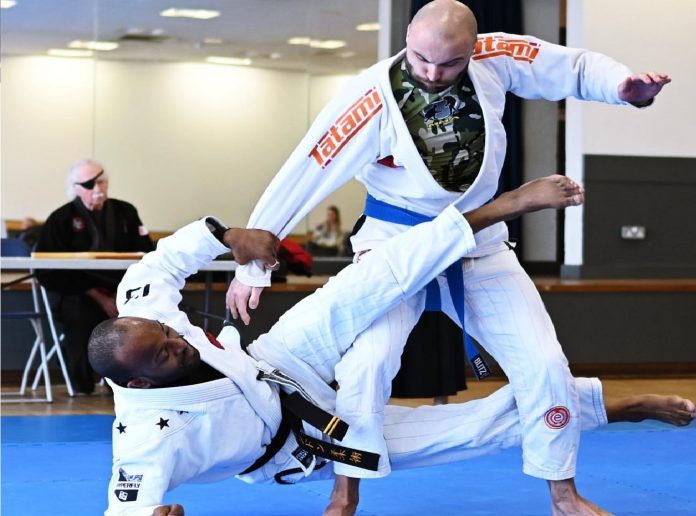
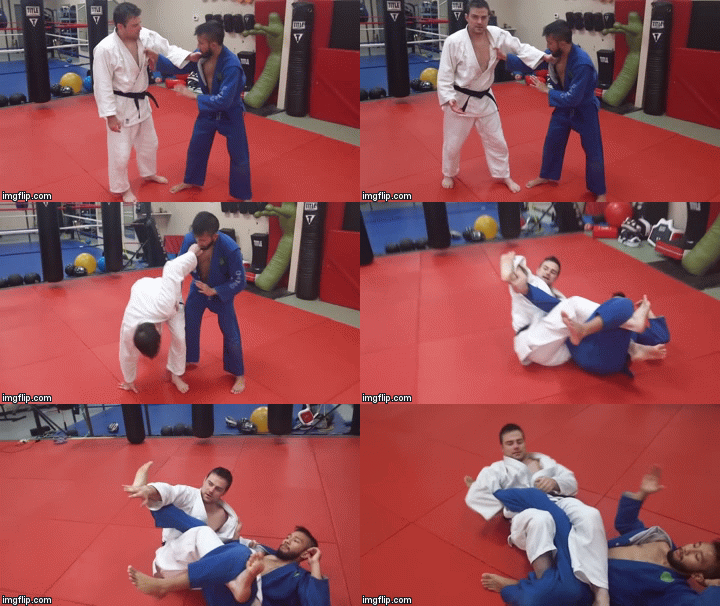
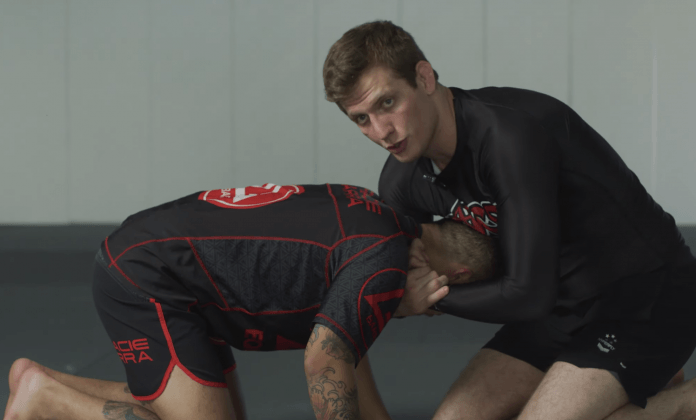
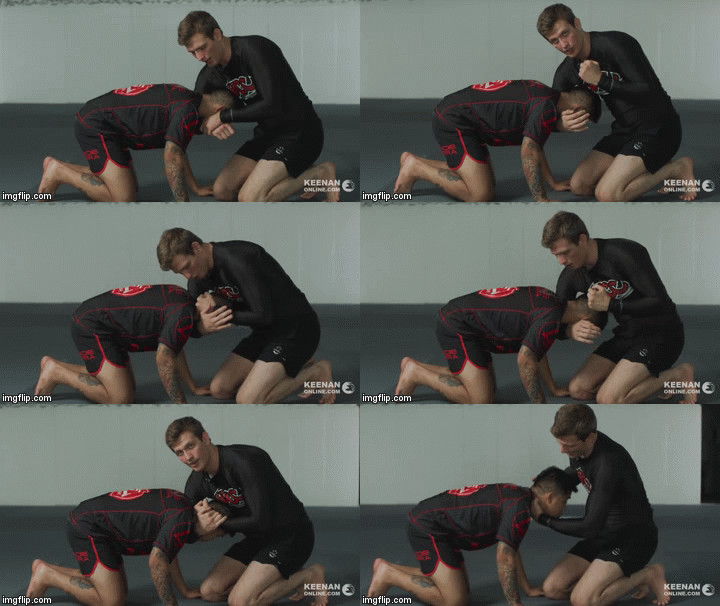
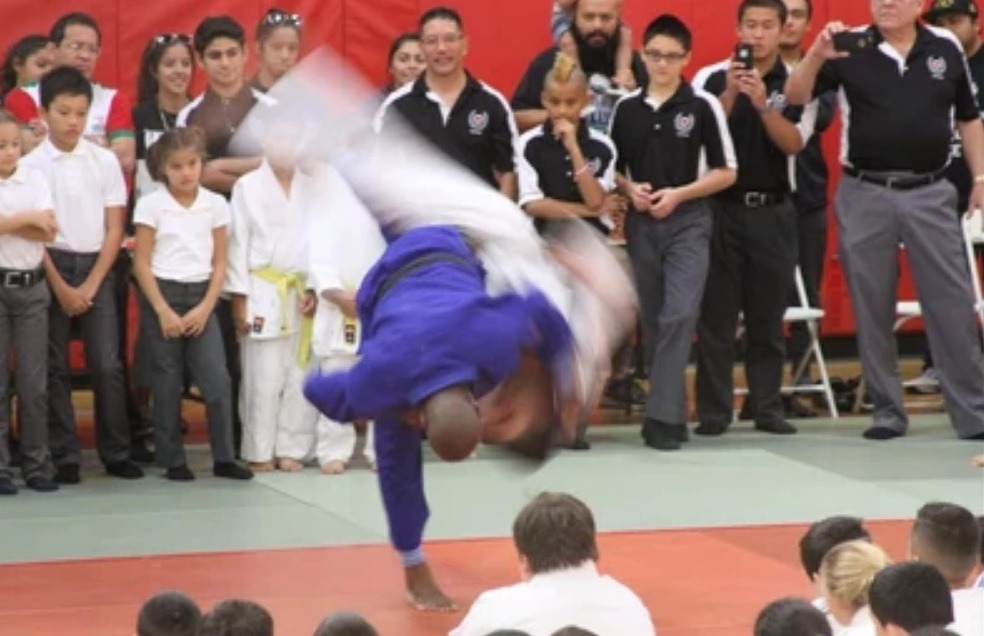
The Guillotine Choke Ends the Street Fight – Guy Choked Unconscious

The Guillotine Choke Ended the Street Fight With Guy Choked Unconscious

Don’t try to grapple if you don’t grapple at all.

Guillotine Choke Instructionals

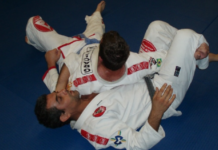
The guillotine choke, also known as Mae Hadaka Jime (前裸絞, “front naked choke”; compare to a rear-naked choke) in judo, is a chokehold in martial arts and wrestling applied from in front of the opponent, often on the ground but can also be done while standing. The choke involves using the arms to encircle the opponent’s neck in a fashion similar to a guillotine

The technique is either a type of tracheal compression restraint (wind choke) that prevents airflow to the lungs or a blood choke depending on how and where pressure is applied, the trachea versus arteries respectively. It can be applied both standing and from the ground and can be used as a defense against a double leg takedown. When executed from the ground, the person applying it will try to control the opponent by the hips, for instance using a closed guard. This is done to prevent the opponent from escaping the hold and to be able to apply additional pressure by extending the hips. It is a very effective maneuver when performed correctly. The arm is wrapped around the trachea and the hands are clasped. Pressure is applied upwards to restrict blood flow to the head, eventually causing unconsciousness and, if applied for more time, even death. It is taught in various grappling martial arts and is considered universal to grappling, including Jujutsu, Brazilian jiu-jitsu, Judo, as well as in mixed martial arts competition and exists as one of the most instinctive chokes.[3] The Guillotine can be applied either solely around the opponent’s neck or including an arm, with the standard guillotine taking 8.9 seconds to render someone unconscious and an arm-in guillotine taking 10.2 seconds on average

12-years-old Boy Violently Assaulted – Gracie Brothers Want to Help Him

12-years-old Boy Violently Assaulted - Gracie Brothers Want to Help Him

A 12-years-old student was slammed to the floor and punched repeatedly by a  classmate after a physical education class at Blake Academy in Lakeland.

Lauren Springfield, beaten boy’s mother was in a state of shock. She even felt like she was having an out-of-body experience watching an older student throw, kick and punch her 12-year-old son. As we can see in a video below an older student threw a boy over a bench after kneeing him to the stomach, pinned him down while repeatedly punching him.

He grabbed the younger boy around the neck and shoved him over a bench onto the floor, then pinned him and continued to punch him in the face and head.

According to Lauren Springfield’s Facebook post one teacher was witnessing the beating of her son but didn’t do anything to stop it.

“Early today I tried to give the teacher that should have been overseeing the students the benefit of the doubt. Having once been a teacher for a short period of time I thought well maybe he had to go to the restroom or maybe he was talking with another student in the gym…

Today we became aware that the teacher was in the locker room! Yes, you read that right. The teacher was in the locker room. Now that the dust has settled a little our son recalls the teacher hearing the commotion and yelling from his office something along the lines of “chill out”. He never came to check on the students to see what was going on.

I keep coming back to the word disturbing. This calls for his job to be gone. There is no excuse.” wrote Lauren Springfield on her Facebook account.

When Rener Gracie saw the video he offered free anti-bullying  program to whole Springfield family.

As there’s a lot more going around the incident and new details are coming up daily, Lauren Springfield, the young boy’s mother, is continuously writing posts about the beating of her son. You can check them all on her Facebook profile.

“Update:

I had the opportunity to speak with a representative from the Bartow Courthouse this morning. I’m very appreciative of Nick’s heartfelt approach to this situation and his explanation of processes. He wanted to let us know that while Judge Butz’ stamp and the name was on the injunction paperwork and when we asked we were told she was the judge she was not the judge that actually reviewed the injunction paperwork. Judge Moore reviewed the injunction paperwork. The representative acknowledged that they as a system need to be more clear about this.

We also had a conversation about court processes and clarity of the severity of actions like the ones that occurred and we came to the conclusion that more education needs to be done for the clerks at the courthouse so they are better able to educate families on their options and the actual process.

This here is progress when it comes to this particular piece at least the court system is starting a dialogue about how to best guide families. What’s fair is fair y’all – our sincere apologies to Judge Butz and we hope looking at how things are processed will prevent this from happening in the future. While this doesn’t change the fact that the injunction was denied – we do want to set the record straight.

Again, we thank you for your support and allowing your voice to be heard but let us also remember to be respectful in what we are doing – kind matters.”

“UPDATE UPDATE UPDATE

Do you know what these people are trying to do to this 12-year-old?!?

They are trying to run a smear campaign because they are upset that they are getting called out. So all of you were right – those that said they would come for his character they have in the most disgusting way. I HAVE NO WORDS. I AM SO ABSOLUTELY DISGUSTED.

They are trying to make it seem like our child was going to sexually assault another female student. That he was this crazily insensitive predator. Are you kidding me? So let me get this right you’re going to fabricate this story about a kid that has no history EVER in the school of doing any of this. NONE OF HIS PREVIOUS SCHOOLS AND TEACHERS WOULD EVER SUPPORT THIS. They would like us to believe that this “big bad bully” that can’t keep his hands off of people didn’t fight back?! This is ludicrous.

Apparently all of these things happened and never not once is there one disciplinary record, one call home…not once in a month and a half of school. THIS IS CALLED RETALIATION AT ITS FINEST.

I see the deflection strategy. I see the how they are trying to offer a distraction. THIS WILL NOT WORK.

Am I surprised? HELL NO – we were expecting them to do something absolutely ridiculous with how shady this whole thing has been.

HE WILL NOT BE DESTROYED.”

The Darce Killer Malachy Friedman DVD Review

This DVD is one I have really mixed feelings about. The reason is that I am a huge fan of the Darce choke and it is one of my main submissions. In fact, I have been working on it for the past 5 years. However, I have to share this instructional with everyone as it really is a genuinely effective one. The reason why I said I have mixed feelings is that the Darce Killer DVD is an instructional on Darce defense. Normally I would laugh it off, but the moment I saw it, I knew it was more than legitimate. Malachy Friedman really hit a home run with this one, and I’m certainly looking forward to finding ways around these crazy effective Darce defenses.

ON SALE HERE:
Malachy Friedman – The Darce Killer (DVD/DIGITAL/COMBO)

Malachy Friedman The Darce Killed DVD on demand instructional
Techniques List

If you really want to learn how to defend a move, my advice is to learn the move itself. Well, I never really had to learn to defend the Darce, as I was always the one attacking with it. In fact, I still am, on a very regular basis. That said, as someone who specializes in the choke, I can instantly tell you whether a defense move will work or get you into more trouble. In fact, there are a bunch of ways to counter early and late defenses, as well as counters to the Darce. However, now that the Darce Killer DVD is out, the landscape has changed. Malachy Friedman has found several ways to ensure no Darce is going to work against you. And, as a Darce enthusiast, I hate to admit that they all work.

The Issues With Defending the Darce Choke

The Darce choke is a move that works like a charm because it is based on a fundamental submission principle – the triangle choke. What that means is that the Darce is pretty much an arm triangle. The only difference between it and the regular arm triangle is the way you entangle your arms. For the Darce, your arms go the other way around, and you set it up from the front headlock, for the most part. As such, it is an extremely powerful submission to have in your arsenal. It uses your own arm to choke you on one side, and your opposite side shoulder ton the other. Plus, the grips make it unbearably uncomfortable and extremely difficult to break out of.

Another huge reason why the Darce choke is effective ist he fact you can get it from multiple positions. One example is from the top half guard. Whenever someone tries to play the underhook half guard 9which 90% of grapples do) they open themselves wide to Darce attacks. However, that’s not all. You can also get it from the front headlock. from the turtle, from bottom side control, even when you’re in the back mount. That makes it very versatile and ultra high-percentage.

The Darce chokes present a challenge to people mostly due to its mechanics. The grips help you keep the posture broken and keep the opponent in the position until you can slowly and patiently set up the Choke. Plus when it is deep, there’s no need to squeeze – it is enough to just wait for the tap. Or, it was. Now that the Darce Killer Malachy Friedman DVD is out, the Darce will have to go through an overhaul.

Malachy Friedman – The Darce Killer

Malachy Friedman is one of those people that can really turn the BJ world upside down. His ‘Heisen guard” instructional is a great example of that. However, The Darce Killer DVD is a whole different can of worms. Thre’s a very good reason why Malachy has such a great grasp on the Darce, and particularly the ways to defend it.

Malachy Friedman is a Ricardo Liborio black belt and the head BJJ coach at American top team. This lineage is exactly why Malachy is so well versed in the Darce. Back in the day, it was Milton Vieira that experimented with the Brabo choke. Training with him was Liborio, who later awarded Malachy his black belt. While it was Renzo’s Joe D’arcy that made the move popular and re-branded it, the old school principles still applied. That means Friedman was able to learn the move from someone who watched it evolve throughout the years. No wonder his defense concepts work so good!

Malachy Friedman: The Darce Killer DVD Review

If you’re expecting a defense instructional that covers a few defense moves and claims to work, you’\re in for a real surprise. Instead of focusing on defense moves, Malachy Friedman covers specific Darce choke defense movements. That means that you can use his system not just to prevent the Darce, but also break out of a fully locked choke. And that is not something many people can do.

The Darce Killer instructional itself has 18 different chapters. The organization is progressive, meaning you start from the beginning and then climb up the ‘what if” ladder. For starters, you get to learn the Darce chokes, with all its glorious mechanics. Only then foes Malachy move into the gist of the DVD – defending and getting out. To that extent, he has several sections. First up are the initial movements and the order in which they work. Next, Friedmans cover different escapes, labeled with letters for easy learning. The final portion covers escaping from specific positions, giving the DVD a much wider range than expected.

#1 – The Basics

This is where Malachy Friedman shares the most important concepts of his Darce escape system. The Darce Killer is based on several key movements. First up is the sit, something you need to do early so that you maximize the chances of success. The swing comes next, ensuring you break out. However, if you still run into resistance, you get to pull out “the big guns”. IN Friedman’s case those are the Chop and the Flip. If you follow through all the steps above you’ll break out of any fully locked Darce in the world.

IN case you need even more options, the Tripod walk, tripod sit and air sit-out are also there to help you get out of more creative situations.

#2 – The Escapes

Escaping the Darce against some of the world’s best submission artists is going to be much different than getting out of it in the gym. The reason why The Darce Killer si such a grat DVD is that it works at every possible level. And much of that success is down to the organization of the instructional.

The scapes Malachy Friedman shares work by utilizing one, several or all of the basic defense movements above. That said, once you defend the Darce, you do need to get out of it as well.  This is where Malachy system of escapes comes in. He has them organized into four different sections. The first is the guard escape, which also happens to be the easiest. Following suits are escapes A to C, all of which work against progressively more difficult positions.

#3 – Positional Battles

Finally, Malachy goes over several different escapes from common BJ positions. OPut of some of them, your opponents can also hunt for Darces, so you get double the work done with just one move. Positions that feature in this portion are the Mount, back and Front headlock. What is truly great, and unique is that Friedman offers defenses to the submissions that ie into chains with the Darce. That means you’ll get bonus defenses to guillotine and Anaconda chokes before Malachy does an outro to wrap it up.

Conclusion

Not many high-percentage submissions in Brazilian Jiu-Jitsu get adequate defensive systems in response. That is exactly why they work so well. Уnfortunately, mostly for me, The Darce Killer DVD comes as the perfect solution to this popular choke. Malachy Freidman made the most out of his opportunity to learn the Darce from Liborio. However, instead of focusing on the offensive, he made leaps and bound in the defensive aspect of the Darce.

ON SALE HERE:
Malachy Friedman – The Darce Killer (DVD/DIGITAL/COMBO)

Malachy Friedman The Darce Killed DVD on demand instructional
Techniques List

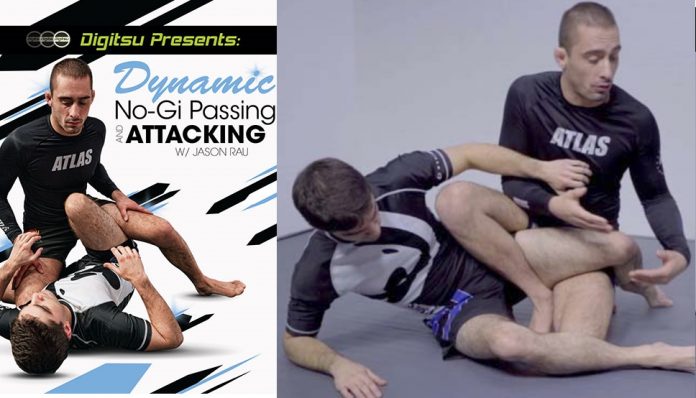
Jason Rau: “Dynamic No-Gi Passing And Attacking” Review

Jason Rau: "Dynamic No-Gi Passing And Attacking" DVD review

When you’re playing the top game in Brazilian Jiu-Jitsu, people usually see it in black and white. The standard version of the event takes you either in a passing direction or in a submission one. In terms of submissions, it is mostly rolling attacks and/or leg locks. However, if you take a look at what the top people grapplers in the sport do, you’ll see that they blend everything together. While this is not an easy skill to acquire, there are resources out there that can help you with it. In fact, if you want to turn into both a guard passing and submission machine, there’s only one. Check out the “Dynamic No-Gi Passing And Attacking” DVD by Jason Rau. You’ll be amazed.

ON SALE HERE:
Jason Rau – Dynamic No-Gi Passing and Attacking

Jason Rau Dynamic No-Gi Passing And Attacking dvd on demand
Techniques List

Blending attacks together is a true mark of an advanced grappler. The good news is that you do not have to necessarily be an advanced grappler to use the concept. All it takes is being aware of it and having a guide so that you do not land yourself in trouble. With the “Dynamic No-GiPassinAnd Attacks” DVD you get both. Plus, you get Jason Rau, a highly-skilled black belt and top coach doing the demonstrations. All you need to do is follow the step by step progressions he shows and you’ll find yourself having double, and often triple the options you usually have when trying to pass the guard.  

The Story Of Matt Serra Black Belt Jason Rau

Jason Rau is currently a first-degree black belt under the legendary Matt Serra. In other words, he is yet another stellar coach to be associated with the Renzo Gracie NYC Academy. Although not in that particular academy, Rau teaches in Serra’s BJJ Academy, based in New York. Rau is one of the main instructors in the academy, covering both beginner and advanced classes. Moreover, he heads all the children’s classes, which makes him a highly patient coach in itself. However, Jason is much more than just a coach. He is also a very active competitor., on that’s not a stranger to the big JIu-Jitsu scene. In fact, he is the RISE welterweight champion, in addition to pursuing just about a No-GI occasion that comes his way. The lightweight is also ranked among the top No-Gi competitors of today.

Jason’s inclination towards No-Gi is understandable, given his lineage.  Apart from being a part of Renzo’s huge tam, he is a direct student and associate of Matt Serra, who thrives in No-Gi. While most people might remember more of Matt’s octagon performances, do not forget that he is as high-level a grappler as they come. NO wonder that Jason Rau has come up with such an intricate, yet simple way of dealing with open guards in No-Gi. As you watch the “Dynamic No-Gi Passing And Attacking” DVD you’ll see a lot of the Matt Serra and Renzo Gracie influence in there. In other words, you’ll see and learn stuff that works at every level.

Dynamic No-Gi Passing And Attacking DVD Review

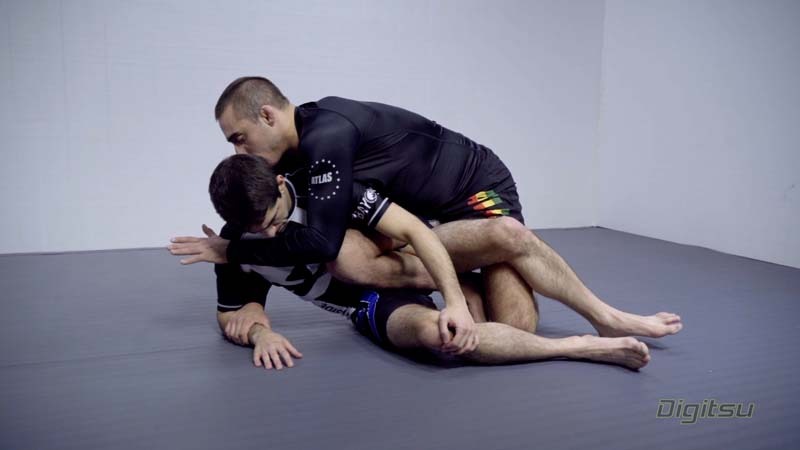
Jason Rau: "Dynamic No-Gi Passing And Attacking" DVD“Dynamic No-Gi Passing And Attacking” DVD is an instructional that features one of the best organizational systems I’ve seen. It helps you get an idea of what the goal is before you start opening up opportunities. Jason Rau is a master at making the transitions between different avenues of attack seem effortless. The instructional itself is long, lasting a total of 215 minutes. That is a lot of material to go through. What’s even more impressive is that here’s no time-wasting. Rau demonstrates every move in a simple and understandable fashion.

The way the instructional is structured is in sections that address specific subjects. For example, the opening section is on the knee cut pass and ways of dealing with the frame. Backstepsan rolling attacks follow before Rau heads over to uncover the secrets of pummeling. Lots of leg locks follow, primarily from the saddle position. A portion covering troubleshooting and several bonus moves wraps it all up in a tight little bow.

Fighting Frames

The opening sequence of the “Dynamic No-Gi Passing And Attacking” DVD starts off with a short introduction before exploring the knee ut pass as the primary attacking option. Lots of details here on how to stay in in the knee cut in No-Gi, thus enabling to consider your options. Passing is, of course, priority number one, but if that doesn’t work straight away, Jason Rau offers more solutions. To that extent, he spends a lot of time on how to beat the frames that most people use when preventing passes.

Unlike most other instructions, though, he does not offer a bunch of ways to get past the frames. Oen is enough, and that one is, for now, the knee cut pass. Instead, he opens up other types of attacks – submissions. The idea here is that he will either get a tap or a pass or very often both. The techniques he uses as frame beaters are the D’arce choke, Triangle, Kimura, and leg locks from the Saddle position, when he has to “head back”.

Rolling Attacks

This is the portion I really enjoyed watching. The method behind the madness is a high-level concept that took me a long time to understand. But then again, I didn’t have an instructional like this one to make things easy. The concept is that the more you can attack submissions in transition, the tighter and higher-percentage they will be. Examples that Rau uses are the transitional triangle and a back step into the Saddle Ashigarami position.

Moreover, he explores rolling as a manner of getting past your opponent’s guard. Against skillful and/or athletic guard players, particularly in No-Gi, you’ll often find it hard to execute your favorite passes. Another path you can explore is rolling into attacks, like the Anaconda choke. What we often see as just a choke, Rau sees as a position to get you past the legs and into further attacks. To that extent, he offers not just choke details, but also transitions into the back mount and even more leg locks.

The Pummel Pass Series

Pummeling is arguably the most useful skill you can have in No-Gi. As far as Jason Rau goes, he considers it superior to anything else, which is why he spends a big chunk of his “Dynamic No-Gi Passing And Attacking” DVD instructional covering this concept. I say concept because he doesn’t just offer you shin circles and passes. He explains the idea behind pummeling, and how the pummel pass works. Similarly to before, straightforward passing pretty much ends there. The options that follow all work off the pummel pass, but extend in many different directions.

Since this is a No-Gi instructional by a Renzo Gracie lineage black belt, it is normal to see a lot of leg locks. The Saddle position features yet again, this time as a means to improve the rate of the pummel pass. However, there’s even more craziness that follows. One of the most attractive setups you’ll see in this DVD has to be the Twister hook back to take off the pummel pass. Jason makes it seem a breeze the way he explains it. Back takes, Kimura traps, and even a return to the knee cut pass can be found here as well.

Getting The Saddle

Thre’s a short series on smash passing before Jason Rau actually goes into exploring the Saddle. Those couple of chapters do not cover a new pass, but another principle of putting oyur opponent under duress. Of course, back takes and heel hooks are the ultimate goals yet again. Which brings us to the Saddle.

Jason Rau: "Dynamic No-Gi Passing And Attacking" InstructionalThe Saddle, AKA Honeyhole, AKA inside senkaku is the worst position you can find yourself in. Escaping is notoriously difficult and there’s a leg lock buffet on offer for the attacker. Moreover, the position is legal, and some of the attacks are also allowed in all belt levels. What is different in the “Dynamic No-Gi Passing And Attacking” DVD is that Jason Rau covers not just leg locks but transitions out of the Saddle. Those include back takes and returning to passing if, for some reason, your leg lock attacks fail.

Troubleshooting

Before Rau concludes with a  series of troubleshooting solves, he does cover a few more techniques. For example, there’s a portion on single Leg X guard and XZ guard passing, once again ending in the Saddle position. What I particularly enjoyed are transitions from one submission to another, which he has in the form of AshiGarami to back control.

In the troubleshooting portion, the focus is on polishing the numerous submission attacks that compliment the passes and transitions. The heel hook gets a lot of attention here, as does the rear-naked choke. Rau also goes back to deconstruct the Anaconda choke further and ends with key details on the Kimura trap. The closing chapter of the DVD is about the approach to drills and how to incorporate them to learn the system faster.

Final Words

There aren’t many instructionals out there that blend all the top game attacks into one system quite like the“Dynamic No-Gi Passing And Attacking” DVD does. In fact, I know of none. Usually, BJJ DVDs cover either passing or submissions. This Jason Rau instructional is a real game-changer, as it is going to help both submission hunters and guard passers. Moreover, it is great for students of all levels, since there are tons of information in there.

ON SALE HERE:
Jason Rau – Dynamic No-Gi Passing and Attacking

Jason Rau Dynamic No-Gi Passing And Attacking dvd on demand
Techniques List

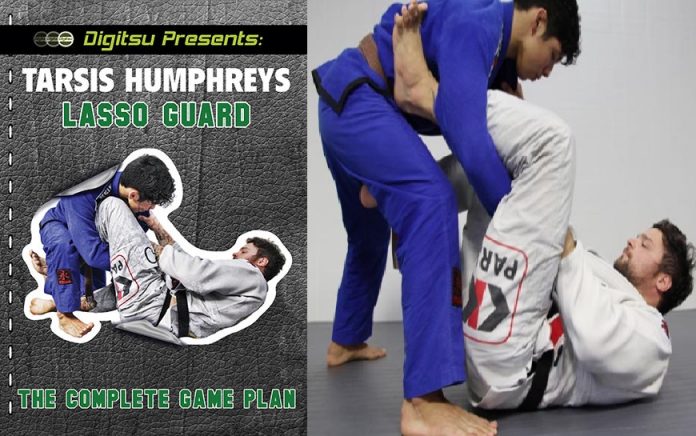
Tarsis Humphreys: Lasso Guard Game Plan DVD Review

Tarsis Humphreys: Lasso Complete Game Plan DVD Review

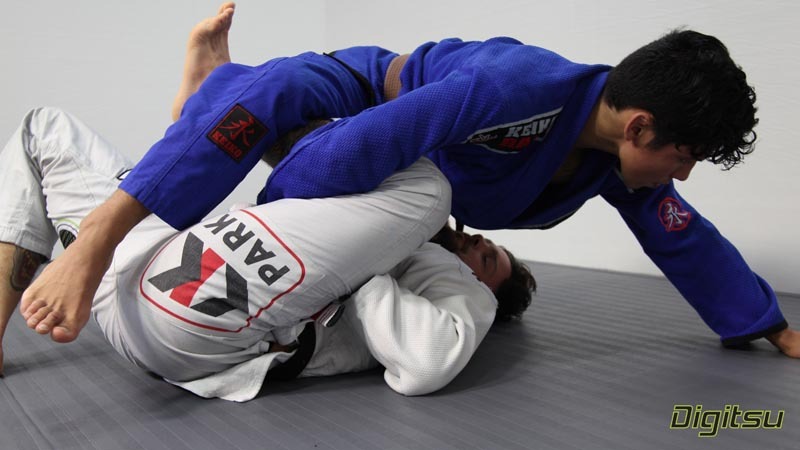
What is the side of BJJ that you really enjoy? If you ask me, it has to be the deception. Higher-level Jiu-Jitsu is always about dangling something in front of an opponent and then doing something completely else. In Fact, the ultimate Jedi mind trick is dangling something and actually performing it without much, or any resistance. To be honest, there are not that many positions that will allow you to do this. Well, at least not before you reach a coral belt level. However, the Lasso guard is one that might work in this fashion even for people that are not highly advanced. The Complete Lasso Game Plan DVD is a masterful instructional by Tarsis Humphreys that will provide you with the best arsenal of deceptive attacking moves.

ON SALE HERE:
Tarsis Humphreys – Lasso Complete Game Plan (DVD/DIGITAL/COMBO)

Tarsis Humphreys - Lasso Guard
Techniques List

Right off the bat, I’m going to make it clear – thiasi s a DVD for competitors. Yes, you can have it as a recreational grappler, and use it all the time. It will work, and it will work against pretty much everyone. That is the point. Those, however, that make competing for their focus, absolutely need to have the Lass guard as part of their gameplan. IN fact, what Tarsis Humphreys demonstrates is the most well-rounded competition game plan based on the leg lasso position. The Lasso ComplteGaem Plan DVD is going to teach you not only how to use the lasso guard, but also several innovative positions that have made Humphreys a real force to be reckoned with.

Who Is Tarsis Humphreys?

If you haven’t heard of Tarsis Humphreys it is not because he is a new, up and coming grappler. Quite the contrary. He is one of the pioneers of competitive JIu-Jitsu and has been around for quite a while. In fact, he got his black belt from Fabio Gurgel in 2006, which gives him well over a decade’s worth of competition experience. You could go as far as saying that he is the most “old-school” of the new school Jiu-Jitsu players.

Tarsis Humphreys was born in Sao Paolo and started BJJ as a 13-year-old under FamioGurgel. One of the most interesting things about Tarsis Humphreys is that he went through all the belt ranks under Fabio Gurgel, eventually earning his black belt. Moreover, he has been a loyal Alliance representative for his entire career. In fact, it is a competition success that rally marks Tarsis’ career. Grappling at 88kg / 194lbs he won the Pans, Brazilian Nationals, and Worlds as a brown belt,m and did it all over again, adding the Europeans as a black belt. One of his most significant accomplishments has to be winning the very first World Professional Jiu-Jitsu cup, AKA the Abu Dhabi World pro.

Another really significant trait of Taarsis’ game is that you can’t really find a hole in his gameplan. He is an extremely well-rounded grappler who is capable of scoring or submitting from literally anywhere. However, he does favor position that allows him plenty of attacks based on deception and leverage. OF course, the perfect example is the leg lasso guard, so no wonder his latest DVD instructional is one on the Lasso Complete game Plan.

The Lasso Complete Game Plan DVD Review

Hopefully, there’s no need to mention that he is a Gi only instructional. That much should be apparent from the subject of the Lasso Complete Game Plan DVD by Tarsis Humphreys. This Instructional is truly masterful, and most of it is down to the vast experience Tarsis Humphreys has as a competitor. He knows perfectly well how to use the unbeatable old-school principles and blend them with new school concepts for the ultimate weapon. IN fact, this instructional is just that – a laser-guided weapon that’ll help you score over everyone. That said, and even though submissions feature, this is not a submission hunting DVD. On the contrary, it contains the best ways to win a sports Jiu-Jitsu match with the help of the Leg lasso guard.

The Lasso Complete Game Plan instructional is divided into clear sections. It contains just over 20 chapters that focus on the use of the lasso guard. What is really eye-catching about this instructional is the first section, which happens to be the longest one. Across 9 chapters, Tarsis Humphreys explains his take on the Deep X guard. This open guard variation is clearly designed primarily for tournaments. Going further, Humphreys looks into the turtle position and how you can use it to attack with the lasso. A Lasso De La Riva follows, offering even more attacks. Wrapping the Lasso Complet game Plan DVD up is a portion on troubleshooting, which contains several common Q and A situations.

The Deep X Guard

What is the deep X guard? Well, the name says it all, rally. It is a unique hybrid of three guards: the X guard, the deep half guard, and the lasso guard. Yeah, I know, if someone told me to combine them all I’d say it is impossible. But that was before I came across the Tarsis Humphreys Lasso Complete Game Plan DVD instructional. Before the Deep X guard section, though, there’s an introductory portion that covers the shoulder drag sweep.

Tarsis Humphreys: Lasso Complete Game Plan DVDIn terms of the DEEP X guard, where do I start? The opening few attacks are nothing new, featuring shoulder rolls, and Tomoe Nage variations. However, the position itself is far from the regular lasso guard, meaning each of these attacks is virtually risk-free. Moreover, there are four different Tomoe Nage variations to choose from, a couple of which leading directly to passes. Further options include back takes, and this is where things get interesting. Apart from various ways of getting the back, there’s also a quick and easy calf slicer setup. Moreover, there’s even a back take that ends up in a calf slicer. As I said, the ultimate Jedi mind trick collection.

Turtle

The turtle position doesn’t get much attention here. The reason for that is that you won’t end up there if you’re using the Lass Complete Game Plan. However, if you do end up in turtle, Tarsis Humphreys doesn’t really offer much in terms of staying there. Instead, he outlines several ways in which you can burst out, attacking as you go. Options include rolling out, and sweeping as you do until you end up in the leg drag pass. Or, if you’re all about the finish, rolling through to a powerful kneebar.

Lasso De La Riva

The second-largest portion on this DVD covers a guard many people try to play often. Those having limited success with it probably never had the pleasure of learning the secret details from Tarsis Humphreys. I count myself among these unlucky people. Luckily, that’s all changed now. The Lasso De La Riva portion has half a dozen techniques that tie with one another in a neat little system. Just like expected, most of the attacks here area sweeps, given the positioning of your body. However, Tarsis Humphreys doesn’t like to stop at just sweeps.

Tarsis Humphreys: Lasso Complete Game PlanAll of his sweeping options, from the sit-up sweep all the way to the side and tilt sweeps offer subsequent attacks. It may be a knee cut pass, a way to obtain the mount or a direct submission like an armbar. The trick with each is to keep on going and scoring until you get a win, one way or another. And, just to balance things out, there’s also a Kimura sweep to an armbar so that you get a direct submission.

Troubleshooting

Finally, a few more chapters round off this incredible Tarsis Humphreys Lasso Complete Game Plan DVD. First up you get a few great options to sweep whenever an opponent decides to stand. However, the real gems in this portion come in the form of a couple of highly effective and attractive sweeps. One is the pinning overhead sweep and the other is the knock over the sweep. Personally, I prefer the latter simply because it ends up in an unstoppable footlock finish.

Closing Thoughts

If you are serious about competing in Gi Jiu-Jitsu than this instructional should be your starting point. IN fact, think of the Lasso Complete Game Plan DVD like your Hail Mary. Learning the things Tarsis Humphreys demonstrates in his instructional will give you the security to try and do whatever you want. That way, you always know you have reliable options to fall back upon should you need them.

ON SALE HERE:
Tarsis Humphreys – Lasso Complete Game Plan (DVD/DIGITAL/COMBO)

Tarsis Humphreys - Lasso Guard
Techniques List

Scissor Takedown (Kani Basami) – Is It Really So Dangerous?

Scissor Takedown Kani Basami - Is It Realyl dangerous to Practice In BJJ?

There are techniques upon techniques you can use for any occasion in Brazilian Jiu-Jitsu. Whether you’re fighting on the bottom, top or standing, you have plenty of options to choose from. Well, not quite. When you’re practicing BJJ, or Judo, or any other grappling martial art as a sport, you’re also bound by rules. Sometimes, these rules can be really limiting and frustrating. On other occasions, they’re actually there to protect us. However, they do seem to take a lot of the fun out of competing. I’m not even going o touch on the subject of leg locks and the rulesets banning or allowing them. However, there’s one technique that should get its time under the sun – the scissor takedown, or Kani Basami, as it is known in Judo.

Kani Basami is a move that every Judoka knows, but only a few can perform. IN fact, it was Judo that first outlawed the throw-in competition. However, Judo is now infamous for throwing out lots of its techniques in order to satisfy Olympic standards. So much so, in fact, that the spirit of the art has been severely damaged. That aside, the Scissor takedowns are certainly not the safest thing you can perform. However, it is most definitely efficient and doesn’t have a steep learning curve, making it picture-perfect for BJJ. However, just like in Judo, BJJ has outlawed this takedown as well, at least when it comes to Gi tournaments. But is it really so dangerous to perform?

Kani Basami – The Judo Origins

The Kani Basami is one of the ancient throwing techniques of Judo. The way this throw, or better, said, takedown works, is by attacking the legs of the opponent. This is exactly what lands it in the Kinshi Waza, or forbidden techniques of Judo. The reasoning is that you can cause massive damage to the knees of the opponent, or cause a traumatic brain injury due to a bad fall backward. Both, however, are quite questionable reasons for completely shunning this efficient and fast takedown.

Scissor Takedown Kani Basami For Judo
Video courtesy of Derrick Darling (https://youtube.com/c/DerrickDarling)

The reason that Kani Basami is also known as the scissor takedown, or even the “flying scissors” is because of the motion of your legs. For this takedown, you actually attack the opponent’s legs with your legs. IN fact, the goal is to use a scissoring motion of your legs to take away the opponent’s base and get them to the ground quickly. And it works. The way Judokas usually set this takedown up is by isolating an arm. The further you can extend an arm away from the opponent’s body, the better. To execute the takedown you need to face the side of your opponent as well, rather than stan in front of them. The goal is to swing one leg in front of the opponent’s waist, and place the other behind their knees./ obviously, this is done while jumping, hence the “Flying” nickname.

In Judo, where you can place tight grips on your opponent’s Gi, this takedown is pretty much a guaranteed success. The grips usually go on the opponent’s sleeve and on the back of the collar.

Once again, the angle makes all the difference here, as you have to be sideways to your opponent. The move was actually a mainstay of both Japanese Ju-Jitsu and Judo, until 1980.

The Revival of the Scissor Takedown

Given that Judo already banned the scissor takedown, BJJ simply transferred the ban to Gi competition rules. The IBJJF rules have long been a source of debate in the Jiu-Jitsu community of today. In fact, they pretty much split the grappling world. There is merit to each side, and some valid points to consider. But that’s a subject for another article. What you need to know for now is that a clear reason why the Kani Basami is forbidden in BJJ is because of the knee reap rule.

However, with the re-shaping of the BJJ competition scene in the last few years, the scissor takedown got some attention. The rise and spread of No-Gi tournaments with a submission-only focus made all moves legal. In fact, just like the ADCC, only grapplers do not have to wait a couple of years in between competitions. That said, it turns out that the forbidden techniques of Brazilian Jiu-Jitsu are tailor-made for each other. For example, the scissor takedown connects perfectly to the inverted heel hook, a fellow forbidden technique. This re-emergence of this ancient technique raises the question of whether or not it can be safe to practice and execute?

To be completely honest, the modern-day leg lock entry via the flying scissors is not quite the same as the original Kani Basami. In terms of setting up leg locks, the idea is to focus more on the near side leg rather than both legs. The end goal is getting to the Inside Snekaku AKA Honeyhole position. As it happens, the position itself is legal under all rulesets. However, in NO-Gi circuits, the highly reliable inside heel hook is the go-to move from the spot. And the Kani Basami modification is the perfect way of getting there without much fuss or effort.

Rules And Precautions

Remember when I said that Kani Basami was not outlawed until 1980? Well, the reason behind it can be found at the All Japan Judo Championship of that year. During a scissor takedown, one competitor ended up with fractures on both legs. The injury became the focus of Japanese media and it ended up being a big deal. Of course, there was an immediate reaction and the Knai Basami got a forbidden status. Since then, the International Judo Federation hasn’t reconsidered.

Scissor Takedown Kani Basami For BJJThe No-Gi take on the scissor takedown that Jiu-Jitsu grapplers use nowadays is not that far from the original version. The only trouble is that it still comes with a certain risk. IN fact, takedowns are statistically the most dangerous part of grappling training. Whether it is a double leg, hip throw or a scissor takedown, the risk is there. Ironically, it may actually be the takedown that leads to one o the most demonized moves in Jiu-Jitsu – the heel hook that is the more dangerous move. However, there are still ways of practicing and executing Kani Basami safely.

The reason this takedown is so dangerous is that it is very quick. The surprise factor is what may snap a knee or land the opponent forcefully on the ground. However, the modern modification of the takedown is that you focus first and foremost on the near leg. This takes away lots of the juping, as it is more of a “guard pull” move than a takedown per se. Furthermore, instead of looking for an explicit scissor movement, you’re actually looking to entangle the leg, which makes it a lot safer to execute. Finally, if you introduce the Gi the move suddenly gets a great anchor and the risk decreases even more significantly.

Conclusion

Whatever your take is on “dangerous” moves, you can’t dispute the fact that most of the work. While I am a big proponent of allowing everything, at least in training and certain rolls, I also believe in restrictions. First of all, the scissor takedown is clearly an advanced move that I think, people shouldn’t even touch before the purple belt. Moreover, I think that training Kani Basami should be trained under strict supervision, and with a willing and cooperative training partner. Even better, if you can learn it from a Judoka, do so. You see, in most Judo schools, even though they can’t use them, people still practice the forbidden moves. We still have a lot to learn in BJJ, as it seems.

Double Leg Takedown – How to Do It & The Most Common Mistakes

Diesel Squeezel – A New Secret Choke By Keenan Cornelius

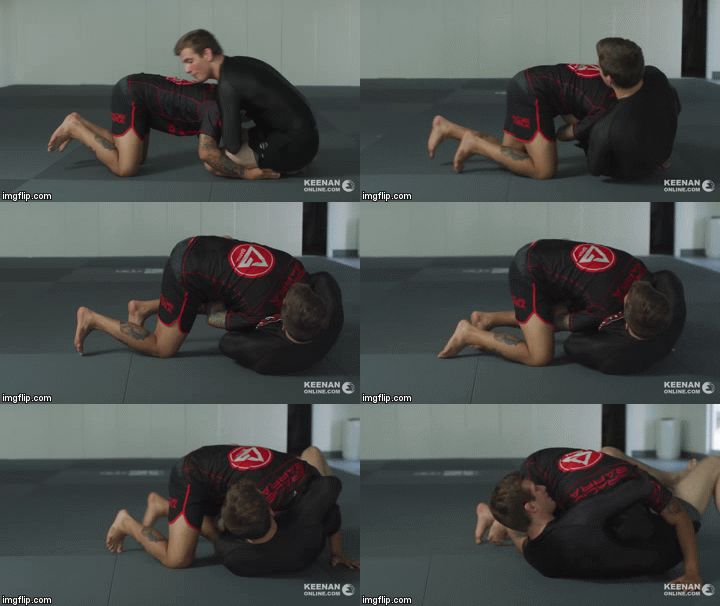
Diesel Squeezel New Keenan Cornelius Choke

When it comes to innovative BJJ moves, people love working with the latest techniques and moves. And, when it is a world-class grappler demonstrating a new mover, or pulling it off in competition, the interest is even higher. Now, let’s add to that the fact that we’re talking about submission and I’m sure I have your full attention. I’ll raise the stakes even higher. This is a submission that works just a well in the Gi as it does without it. And, fro the finale, it is a sneaky submission, meaning it comes with an incredible rate of success. Are you ready for Keenan Cornelius to reveal all the secrets about the Diesel Squeezel choke? Well, it seems he is, jut a few weeks before he attempts to use it on the biggest stage in the world – The 2019 ADCC Championship.

There’s no doubt that out of all of the creations Keenan Cornelius is so known for, this is one of the best-named ones. Keenan is relentless at innovating, but when it comes to him, we’re used to seeing primarily Gi stuff. Actually, he likes not just GI Jiu-Jitsu but a very specific aspect of it – the guard. So far, we’ve seen a bunch of his innovative lapel guards the likes of the Worm, Squid and the Ringworm guard. In fact, he has a whole Encyclopedia of Lapel guards. However, what many people miss is how great Keenan is at No-Gi. Thankfully, as he is preparing for the ADCC, the grappling world can witness his No-Gi innovations as well. The Diesel Sqwueezel is one of Keenan’s latest creations and is a much better thing to learn than a fancy lapel guard system.

The Jiu-Jitsu Wizard: Keenan Cornelius

Keenan Cornelius is one of the most entertaining grapplers of today. If there’s one thing everyone recognized him about, it was all his near misses at the biggest stages of Jiu-Jitsu competition. To be fair, he really was out of luck during the past couple of Worlds Championships. Moreover, he was in the center of controversy, with his bust-up with Andre Galvao and the Atos team a very public affair. Now that it has all subsided, though, Keenan is back to what he does best – Jiu-Jitsu innovations.

As the ADCC approaches, though, Keenan decided to treat us with a really nasty submission that falls under the guillotines category. The Diese Squeezel is a quick and easy guillotine variation that you can set up whenever most things guillotine-related fail. Or, when you’re in a hurry to get a quick and painful tap. In fact, you might know it a punch choke, and you may even have attempted it before. This time, though, Keenan explains all the ins and outs, plus offers several different positions to hunt it from. Granted, until we see him use it in high-level competition everyone should take it with a grain of salt. However, that doesn’t mean we can’t have fun in the gym.

So far Keenan has one No-Gi World title to his name as well as a silver and bronze at the ADCC. The Andre Galvao black belt is certainly one of the best competitors in the world today. However, will his innovations be enough to get him the ADCC title? Having trained with BJ Penn, Lloyd Irvin, Galvao and the Mendes brothers, he certainly has the pedigree. And, If the Diesel Squeezel is anything to go by, he certainly has the arsenal to go with it.

The Diesel Squeezel Choke

As I mentioned, the Diesel Squeezel is essentially a guillotine choke. In fact, this choke is not of Keenan’s own invention, but rather a product of a wrestler named James Kelly. The choke itself is something of a mixture of a guillotine choke, a loop choke, and an Ezekiel choke. However, it is done No-Gi, and it works better than any of the aforementioned chokes. The choke is extremely powerful because it uses the mechanics from all three chokes. It uses the squeeze of the guillotine, the fist placement of the Ezekiel and the torsion of the loop choke to put pretty much anyone to bed. And the best part is that you do not need long arms to make it work.

Diesel Squeezel Keenan Cornelius Choke SetupWith this choke, the secret is in the grip. One arm that goes around the neck just likes for a guillotine choke. However, now you connect your palms in a butterfly grip, rather than the ball in socket or palm to the palm. To be more precise, the arm that goes around, comes on top of the free arm, rather than vice versa in a regular guillotine. To that extent, the choking arm now is the free arm. The goal here is to shove the fist of that arm into the opponent’s carotid.  This is very similar to an Ezekiel choke with the Gi. In all honesty, both arms work for a choke here, but the pressure you feel from the fist is overwhelming.

  • Diesel Squeezel From The Top

Let’s use a front headlock as an example. From the position, the goal is to get the arm that goes around as deep as you need to establish the Diese Squeezel grip. Make it a point not to go too far, though. That way, your fist can end up pressing on the back of the neck where you can’t get a choke. The power of the choke is such that you can freely choke from that position. In fact, one of the best things about this submission is that you do not have to go to your back like for a guillotine.

Diesel Squeezel New Keenan Cornelius Choke From TopKeenan Cornelius offers two finishing options here. One is to tilt the opponent to the side and finish from a top side control-like position. Another is to actually sit down like for a guillotine and allow the opponent to drive into you fro common guillotine counters. However, they don’t work against this choke. All you need to do is roll on the side their head is pointing for the finish. Choking mechanics include squeezing like a guillotine, pressing like fro an Ezekiel and twisting like for a loop choke.

  • From The Bottom

Diesel Squeezel Keenan Cornelius Choke From BottomThe bottom position is not something you want to use on a regular basis, but the Diesel Squeezel does open up new opportunities. You could hunt for it from the closed or half guard, and even the butterfly guard. In fact, if you use a leg over form any guard, like for a guillotine, you’ll geta quick and efficient tap. Where I particularly enjoy using the choke though, is bottom side control. Whenever you can get a guillotine-like grip with one hand, you won’t get many reactions from an opponent. As they think they’re safe. However, all you need is that one hand since your other is already close to your chest. A small bridge or hip escape (or both) will help you get the Diese Squeezel grip. From there, you can proceed to roll the opponent over like before and wrap things up quickly.

  • Standing Setup

Diesel Squeezel Keenan Cornelius Choke Standing SetupRounding things off Keenan Cornelius offers as a standing variation of the choke as well. Since many people like to hunt from the front headlock when standing in No-Gi, this is the perfect opportunity for a setup. Instead of looking for guillotines or Darces, simply put the Diesel Squeezel grip in and you’re good to go. When you have it in, drop to the side of the fist, and do a gator roll. You’ll end up both getting a takedown, earning the top position, and finishing with a quick choke.

In Summary

The best thing about the Diesel Squeezel choke is that if you have an opponent in it, you can finish them at will. You do not need to wait for them to react. If they, do, you have plenty of options, as we saw earlier. However, if they just sit still, thinking they’re safe, you can actually finish it from everywhere, as long as you get the grips right. Thanks for this one to Keenan Cornelius!

What Makes The Marcelotine Better Than A Regular Guillotine

No-Gi Ezekiel Choke From Top And Bottom

The Highest Percentage No-Gi Chokes

Luta Livre Vs BJJ – Same Roots, Different Directions

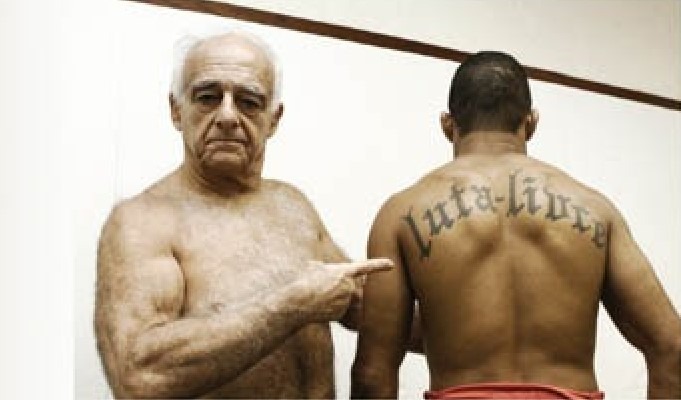
Luta Livre

Some of the craziest ever UFC events you’ll see usually have one thing in common – they take place in Brazil. There’s a reason for this. Brazilians simply love their fight, whether it is inside the octagon, in a BJJ tournament, or in a street. Not only that, but they’re exceptionally good at it! This is why the Brazilian Nationals BJJ tournament ranks among the toughest in the world, along with the Europeans, Mundials, and Pans. That said, Brazil has a long history of combat sport contests. Today, we will explore the world of an old rivalry that comes in the form of Luta Livre Vs BJJ. From common origins to inconceivable differences, these two forms of combat sports have definitely taken very different directions since their conception.

There’s hardly anything about Brazil that is boring. You have the beaches, you have the party life, you have the fighting spirit. However, thriving in such an environment as a fighter today is much different than just 60 or so years ago. Back then, challenges were a common way to resolve everything. To that extent, Luta Livre Vs BJJ contests were on the top of the list when it comes to entertaining fights. The two grappling-based arts were duking it out every chance they got, and ti went on for years. Which one emerged victoriously? Let’s take a look at the details, and you can make up your own mind about who the winner is.

Luta Livre Origins

Before we go into the whole Luta Livre Vs BJJ craziness, let’s give the floor to the Brazilian art of wrestling. In Portuguese, Luta Livre means “freestyle wrestling”. However, it is not wrestling that comes to mind. Instead of thinking of western-style Greco Roman wrestling, think more about the catch wrestling that preceded it by a few2 decades. In fact, you can say that  Luta l\Ivre is actually the South American doppelganger of western catch wrestling.

Many claim that the roots of Luta Livre can be traced back to one man. However, the truth is that this man, known as Euclydes “Tatu” Hatem merely popularized a combat art he was a master of. Given that Luta Livre Esportiva is a style that emerged around the turn of the 20th century, its roots are clearly deep in catch-as-catch-can wrestling. Let’s be honest, catch wrestling is highly entertaining and extremely fun to do. Originating in England, yet another nation that loves their fight, it is not hard to see why it appealed to the fiery temperament of Brazilians. In Luta Livre, people wrestled in what we now call No-Gi, mostly under catch wrestling rules. In other words, they were looking for fast and brutal submissions, with no forbidden moves or holds. Hence the term “Livre”, or “free”.

Euclydes picked up Luta Livre as a 14-year-old boy. Actually, he started with wrestling, in Rio De Janeiro and jumped in as Luta Livre developed. During the 1930s, it was a very popular style of grappling/fighting in Brazil. However, just like everything else, Luta Livre neede a fierce rival to truly explode onto the world martial arts scene. And that came in the 1940s when BJJ started to spread.

Brazilian Jiu-Jitsu History

BJJ was never shy to stake the claim of the most effective martial art in the world. In fact, modern-day MMA would’ve probably never existed if it wasn’t for this boisterous nature of the Gracie family members. Even since the beginning, the Gracie Jiu-Jitsu fighters enjoyed challenging anyone and everyone to matches in order to determine whose style is superior. The only thing is, BJJ ran into a hard nut to crack in Luta Livre.
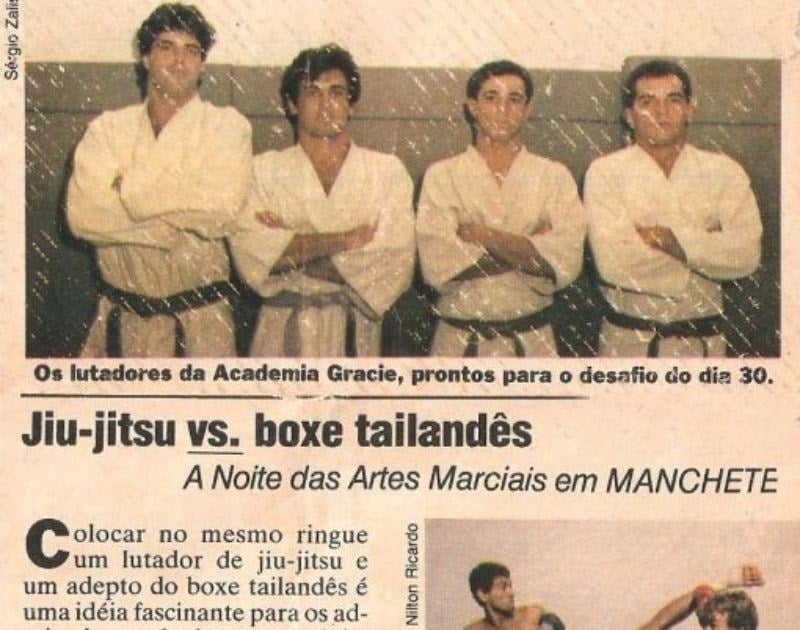
It is probably redundant at this point to talk about the history of Brazilian Jiu-Jitsu, but here it is anyway. Before the Luta Livre Vs BJJ rivalry began and wrestling was the grappling art of choice in Brazil, a man named Mitsuo Maeda arrived in the country. The famous Judoka was on a mission to spread this Japanese martial art across the world. He ended up teaching it to many people, but none stood out as much as Carlos Gracie. However, Carlos was not really satisfied with the ways of Judo and decided to modify them in order to suit his small and skinny body. Later on, he taught his brother Helio which eventually, took those modifications even further, giving birth in the process to the art we now know as Brazilian Jiu-Jitsu.

Nowadays, BJJ is a huge sport and only misses an Olympic call-up to be as mainstream as an art can get. There are tournaments all across the world, offering both Gi and No-Gi opportunities. In fact, you could argue that apart from MMA, BJJ is the biggest martial art of today. In contrast to Luta livre, which has roots in wrestling, BJJ retained the Gi uniform, in honor of its Japanese roots. But that is hardly the total extent of their differences. The Luta Livre Vs BJJ rivalry extends much further deeper.

The Common Roots Of Brazilian Grappling Martial Arts

What is common for both Luta Livre and BJJ is that they are both products of the fighting spirits of the Brazilian people. In both cases, it was a well-established martial art that spurred the development of original fighting styles. In the case of Luta Livre, it is catch wrestling that served as the base. However, if you think that catch wrestling is heavy on sneaky submissions, you should check out some of the Luta Livre moves. The tough guys of Brazil who favored this style really took it a step further.

On the other hand, you have the art of BJJ. Here though, it is an eastern martial art that is the main influence as opposed to western born catch wrestling. The ancient art of Judo, which is itself a product of the even older art of Japanese Ju-Jitsu is the precursor for the birth of BJJ. While Judo was mainly focused on throws (and still is), the Gracie brothers decided to devote themselves to the Ne Waza or groundfishing aspect of it. Similar to Luta Livre, submission plays a huge part of the style. Moreover, BJJ really did cause a martial arts revolution, taking the “worst” position you can be in as its starting point and proving you can be effective from there. That position is the closed guard, a position that nobody sees as inferior today.

While both arts share grappling roots, there’s a much more important aspect that binds them together as well. This is the Brazilian culture. To be more precise, it is the fighting spirit and unique temperament of Brazilians that were the driving forces behind both arts. Finally, the one common thing that actually helped both grappling arts become world-famous is actually the Luta Livre Vs BJJ rivalry.

Luta Livre Vs BJJ – An Age-Old Rivalry

How did the famous Luta Livre Vs BJJ rivalry begin? That’s easy. In 1940, Euclydes “Tatu” Hatem was already considered a master of Luta Livre. At the time, thanks to some aggressive marketing, BJJ was slowly emerging as a Brazilian national martial art contender. In order to achieve this status, the Gracies were fighting everyone and anyone across Brazil. In other words, they were doing the same thing they’d later do all around the globe. However, it was a single match between Geroge Gracie and Tatu that actually started the snowball that turned into a heated Luta Livre vs. BJJ rivalry.

Tatu and George Gracie met in 1940 in a grappling match that ended with Hatem as the winner. While records from the time are anything but reliable, the common story is that Tatu caught Gracie in an Americana, winning by submission. Whether or not this is true,  history shows Luta LIvre as the winner of that one. Since at the time ti was highly uncommon for the Gracies to lose, this rally did give Luta livre boasting rights. Even more so, ti sparked the Luta Livre Vs BJJ rivalry which actually made both arts very famous, due to a bunch of grudge matches that took place during subsequent years.

Ruas Vs. Pinduka

Further adding fuel to the Luta Livre Vs BJJ fire was a clash of academies. Due to certain disagreements, a grudge emerged between the Gracie academy and another academy in Rio named Naja. Rolls Gracie took it upon himself to challenge and beat the head instructor, thinking that would resolve the matter. However, the Naja Academy representative Marco Ruas went on to train Luta LIvre with esteemed Tatu students while preparing to face the Gracies in revenge. When he did face Gracie JIu-Jitsu fighter Pinduka, he battled to a draw,  with one of his students actually beating a Gracie fighter. Once again Luta Livre frustrated the Gracies, deepening the rivalry even more.

Rickson Vs. Duarte
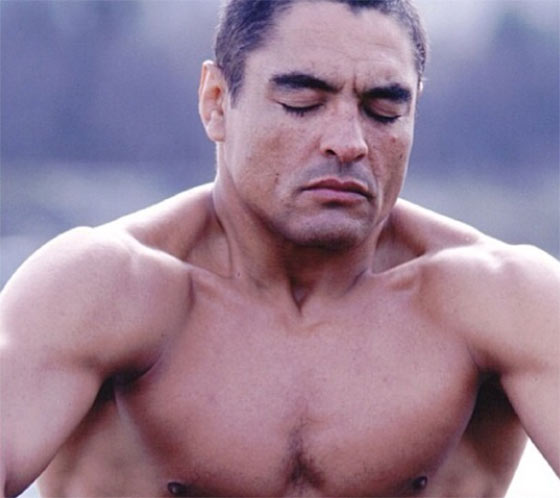
Luta Livre vs BJJ Rickson gracie After his impressive performances against fan-favorite Pinduka, everyone touted Ruas as the man to face the Jiu-Jitsu champion, Rickson Gracie. In fact, since it was in the 80’s Rickson went to Ruas’ gym to challenge him, as he was already looking to move to the USA. When Rickson And Helio Gracie arrived at the gym, Ruas did not want to fight straight away. While he did not decline, he asked for some time to prepare. Rickson wanted to fight right then and there and they argued. One of the Luta Livre fighters decided to jump in, saying he’d fight the Gracies any time. This man was Hugo Duarte.

As word of the challenge Duarte issued spread, RIckosn had to react. Rickson faced Duarte at the Pepe Beach in a battle that’s very popular even today. A reason for this is that there was a camera that recorded the whole thing, as Rickson ground and pounded Duarte to surrender from the mount.

Academy Invasions
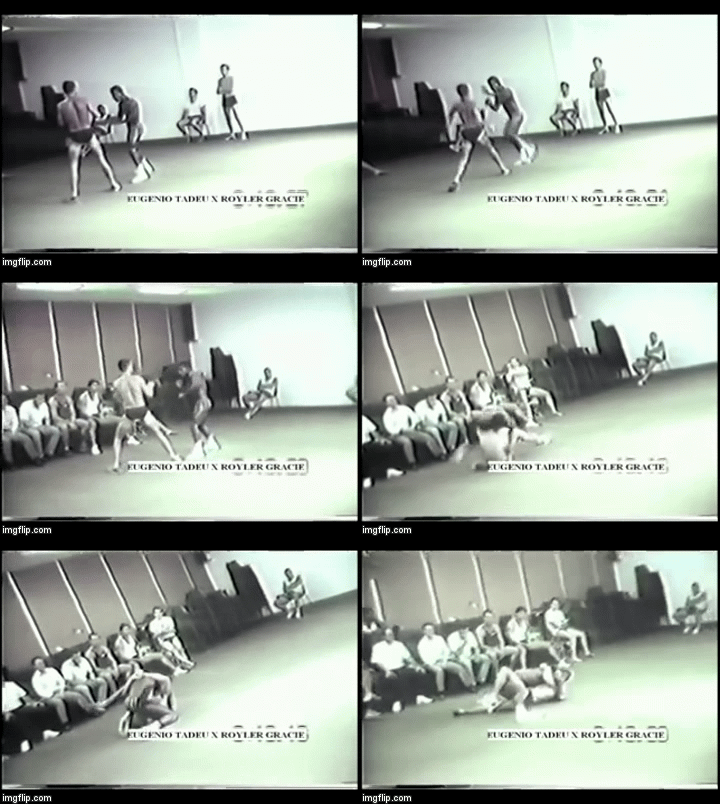
Luta Livre vs BJJ Tadeu vs RoylerSo, as Rickson pulled one back for Gracie Jiu-Jitsu, you’d think the Luta Livre Vs BJJ Rivalry would cool off. However, it is Brazil we’re talking about. Duarte couldn’t make peace with his defeat and he gathered a bunch of people (over 50 and decided to invade the Gracie academy. However, this time, there were weapons involved, including firearms. Incredibly it was Helio Gracie (deep into his seventies) that met them, and actually organized everyone in a circle so that Duarte and Rickson could fight again, this time in a car park. Moreover, Eugenio Tadeu, another Luta Livre mainstay, ended up clashing with Royler Gracie. Rickson beat Duarte in the exact same manner as before, striking form the mount. Unfortunately, the police broke it all off before Tadeu and Royler could engage.

A few years later, in 1991, Luta Livre fighters once again staged an invasion. This time though, the crashed a Jiu-Jitsu competition called the Nastra Cup. The reason was an interview Walid Ismail (a Gracie Jiu-Jitsu fighter) gave to a local newspaper. Walid claimed that Luta Livre was nothing more than a bad copy of BJJ. Of course, this didn’t go well with the LutaLivre fighters. A Luta livre posse invaded Robson Gracie’s Nasra cup as a result. Carlson Gracie intervened to settle things down and resolved the situation by scheduling a Luta Livre vs. BJJ public challenge fight.

Luta Livre Vs BJJ in the ’90s
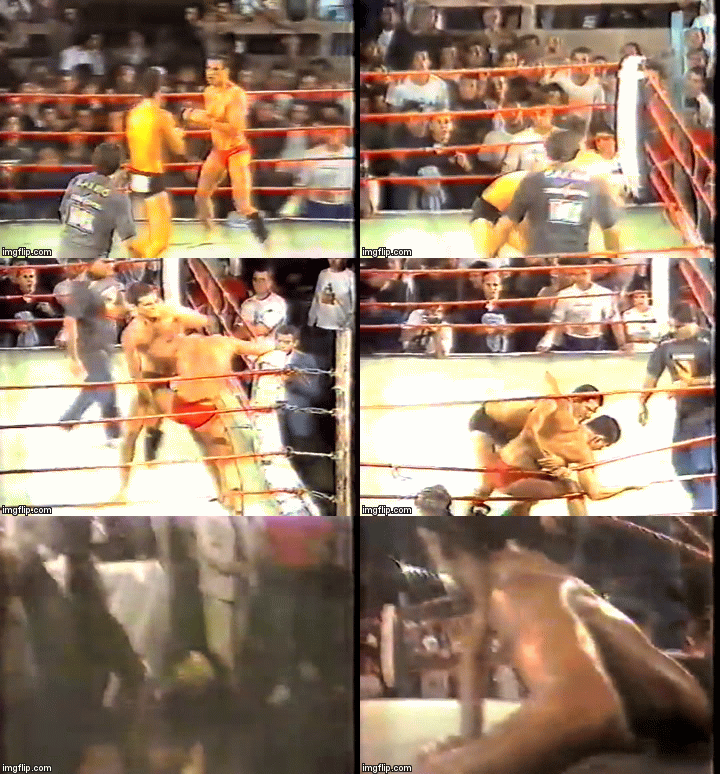
What Carlson did not realize was that he just organized one of the craziest fighting events ever in combat history. The Luta Livre Vs BJJ showdown even got TV time, which was mostly due to Gracie influence. However, the event featured no holds bared rules, meaning it wasn’t just confined to grappling. Jiu-Jitsu emerged as the clear winner here, winning every matchup. The Gracie fighters of the night were Walid Ismail, Fabio Gurgel, and Murilo Bustamante. Luta Livre representatives that day were Tadeu, Denilson Maia, and Marcelo Mendes.

Later in the ’90s, the rivalry sparked up again when Renzo Gracie faced Eugenio Tadeu under the Pentagon Combat banner.  However, the focus quickly shifted from the fight itself as a riot broke out. Hundreds of Luta Livre supporters clashed with hundreds of Jiu-Jitsu supporters. In the chaos, there were plenty of injuries and even the use of firearms. This ended up in a nationwide ban on Vale Tudo. Luta Livre never really recovered from this.

Two Directions Of Evolution

After the glory days of Luta Livre, which were when “Tatu ”Hathem was the representative, the grappling style never really caught on. It did give birth to a very important aspect of martial arts in Vale Tudo, which was pretty much the MMA version of Luta Livre. However, a lack of organization, vision, and particularly leadership cost Luta Livre worldwide recognition. Out of the two grappling arts of Brazil. Jiu-Jitsu turned mainstream, while Luta Livre all but died out.

To be honest, Vale Tudo did make a huge splash, but it did nothing to help the return of Luta Livre. Nowadays, with professional MMA and all, Vale Tudo is back in the mix again. However, it had many years taken away from it, much as a result of the post-riot ban in 1997.

On the other side of the Luta Livre Vs BJJ rivalry, Jiu-Jitsu went viral. This was due mainly to the approach that the Gracie family had to the art. They did have some great fighters, both family members and students. However, they also had great businessmen, who saw the opportunity and made the most out of it. Through the Gracie organizations, Jiu-Jitsu conquered Brazil with ease. After that, it was the IBJJF and the UFC, which made it a  global phenomenon. Eventually, MMA emerged as a result and morphed into a full-time, professional sport. That caused many of the former Luta Livre guys to switch allegiance and join Jiu-Jitsu camps in pursuit of MMA greatness.

In Summary

Out of all the martial arts rivalries in the world, you can leave it to Brazil to develop the fiercest one. Who knows how the Luta Livre Vs BJJ thing would’ve ended, if at all if it wasn’t for some unfortunate circumstances. The Pentagon Combat riot did a lot of damage, at least as far as Luta livre is concerned. And, with the emergence of MMA as a direct result of Jiu-Jitsu, and the hardships pure Luta Livre fighters had with the transition to MMA, the fate of this exciting Brazilan grappling martial art was sealed. However, the best thing about martial arts is that they can never die out, so time will tell when rather than if, Luta Livre is going to make a comeback. Hopefully, this time, it will be at the world stage.

What’s The Most Effective Grappling Martial Art? Is it BJJ?

Jiu-Jitsu or Boxing for Self Defense? Is Jiu-Jitsu Useless in a Real Fighting Situations?

5 Reasons Why BJJ is the Best Martial Art for Women

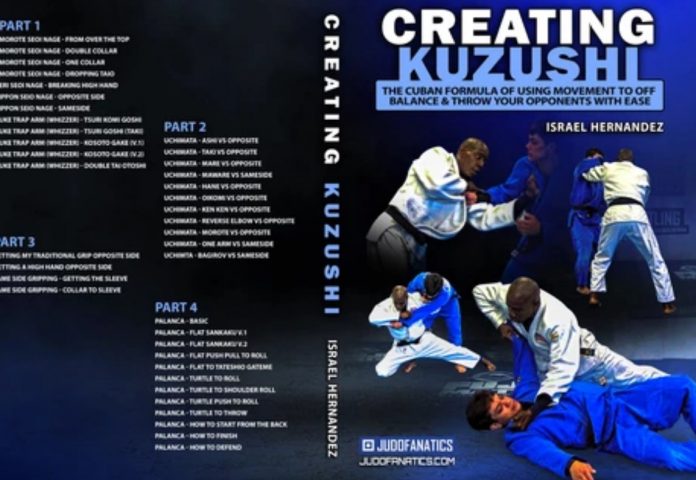
Creating Kuzushi by Israel Hernandez DVD Review

Creating Kuzushi DVD by ISrael Hernandez - In Depth Review

If you area a Judoka, Kuzshi is nothing new to you. However, even f you are a Judo black belt, you’ll benefit from a Kushi specific DVD instructional. The concept is not a difficult one to understand. However, when it comes to actually putting it to practice, things can get frustratingly hard. Moreover, as of late the Kuzushi principle has also made a breakthrough in BJJ. Not that it wasn’t there before, it is just hat we had no name for it or awareness of it. SO far, the best instructional on the subject I have found is the Creating Kuzushi DVD, a four-part instructional by Israel Hernandez.

ON SALE HERE:
Israel Hernandez – Creating Kuzushi

Creating Kuzushi DVD by ISrael Hernandez - In Depth Review
Techniques List


Creating Kuzshi, in simple terms, means creating a misbalance in your opponent. whenever you manage to off-balance someone, you can do pretty much whatever you want. In Judo, where the idea is to throw people around, this is one of the foundational principles. However, in other grappling arts, even though we use it, we do not pay it even close to the attention it deserves. Speaking of attention to Kuzishi, this Israel Hernandez Creating Kuzushi DVD is a Judo instructional first and foremost. However, Any grapplers out there, whether they train BJJ, wrestling or Sambo, will benefit from this crucial instructional.

The Ancient Concept Of Kuzushi

The reason why Judokas tend to focus on Kuzushi so much is easy – it makes throws easier. When you off balance an opponent, there’s nothing they can do until such a time as they regain their balance. Although this might seem like an extremely short period of time, in Judo it is more than enough. While an opponent is off-balance, you can swoop in to set up any throw during the time they’re looking to regain balance. During such a time, they can’t defend, or even less, counter your attacks. Moreover, Judo uses the regaining of balance to an advantage, turning inertia into a powerful ally for throwing someone to the ground.

In Brazilian Jiu-Jitsu, particularly when it comes to the bottom game, Kuzushi might even be of even more importance than Judo. Here, it is not only about sweeping an opponent, but submitting them if possible. The only trouble is that it may prove to be hard if your back is pressed to the floor. You see, when it comes to Creating Kuzushi from the guard, you really need to know what you’re doing. When you manage to do it, though, you get a double treat – you both break your opponents base and posture with just one attack. The best part about it is that Kuzushi is mostly a part of the invisible Jiu-JItsu. It s all about positioning grip fighting and weight shifting rather than obvious overly emphasized broad movements. All of this is covered int eh Crating Kuzushi DVD in great detail.

Israel Hernandez – The Man Behind Тhe “Creating Kuzshi” DVD 

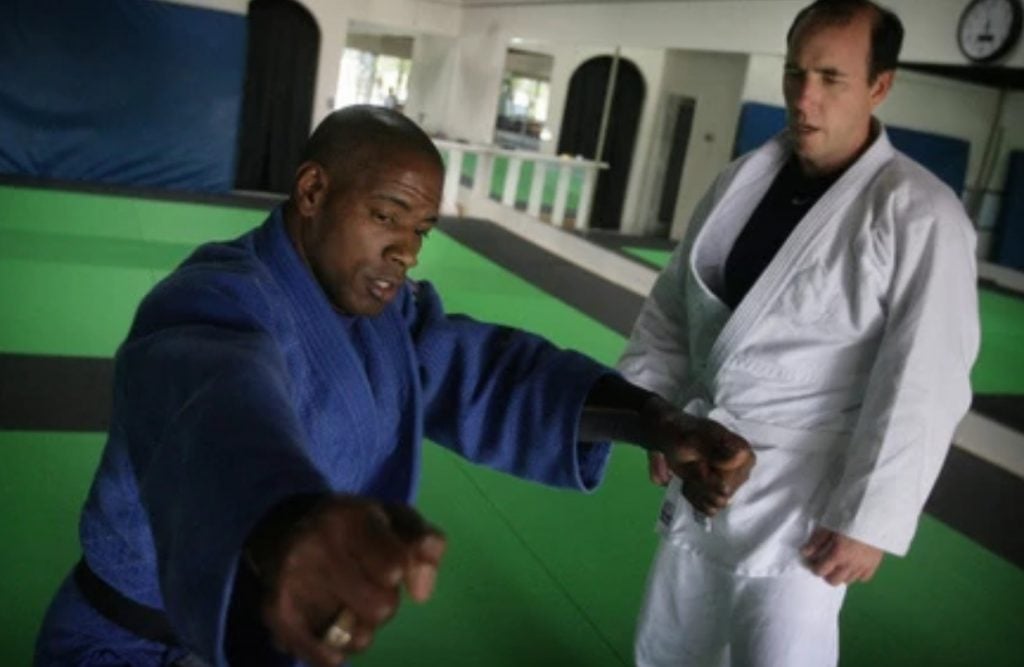
Hernandez is a Cuban Judoka that has several high profile titles to his name. AS we all know, Cubans are notorious for their grappling, particularly when it comes to Judo. Israel Hernandez is the perfect representation of the power of Cuban Judo. He is a two-time Olympic bronze medalist, 5 times continental champion and has two silver and four bronze medals in the world championship. This is without mentioning his numerous titles and medals in international competition.

In addition to being an Olympic level Judo practitioner, Hernandez is also an exquisite coach. As a Judo instructor, he is one of the most sought after Judo coaches in the world today. Now 49 years old, Israel is one of Cuba’s best Judoaks of all times, and the number one at 65 kg.  For a small grappler, he is also very famous for battling and beating people well above his age. |He is also a published author and the man behind several high-end Judo instructionals. However, his Creating Kuzushi DVD is an instructional that raises the bar extremely high, even by Israel Hernandez’s standards.

In-Depth Review Of The “Creating Kuzushi” DVD

This incredible Judo DVD comes as a four-part instructional that doesn’t leave any rock unturned. Given that the subject si creating Kuzushi, this is the only way to ensure it is a successful DVD. There’s no way to cut corners or slack when it comes to getting your opponents off balance. This DVD is all about the finer aspects of grappling. Actually it is about the finest subtle details that make or break any grappling move.

Creating Kuzushi DVD by Israel HernandezThe Creating Kuzushi DVD instructional by Israel Hernandez begins by exploring a key Judo throw – the Morote Seoi Nage. Israel uses it to paint the Kuzushi principle in detail. Moreover, the first disc also covers the Uke Trap Arm, otherwise known as the Whizzer in wrestling. Disc two goes into the Uchi Mata, Hernandez’s favorite move. OF course, this time the focus is on creating Kuzushi rather than only dissecting the Uchi Mata. Part 3 covers grip fighting on both sides before the final one goes into the Palanca concept that makes everyone feel powerless.
#1 The Morote Seio Nage Series

In the opening sequence of the Creating Kuzushi DVD Israel Hernandez uses the Morote Seio Nage to explain the Kuzushi concept. As a matter of fact, he uses different collar grip combinations to explain just ho KLuzishi works in order to enable you to execute a throw. In our case, that throw is the Morote Seio Nage. At least in the first portion of volume one of this awesome DVD.

The second portion of volume one moves on to use a more “conventional” technique – the Uke Arm Trap or Whizzer. You are free to forget all that you think you know about the Whizzer so far. What Israel teaches in this portion is not only the Whizzer, but how it can crate Kuzushi. After you achieve it, you are at liberty to throw people any way you want. Hernandez’s picks are the Tsuri Komi Gosh, KOsoto Gake and my personal favorite, the double Tai Otoshi.

#2 The Uchimata Blueprint

If there’s one move that Israel Hernandez is world-famous for in Judo circles, it has to be the Uchi Mata. As a lightweight grappler, he has arguably the best technique when it comes to this real Judo classic. All of volume two covers the Uchi Mata. It begins with Аshi and Тaki мовемент on the opposite side, before exploring the same side Мaware. From there, it is more opposite side movement, which is all about finding the Kuzushi. In fact, al lof the techniques demonstrated here are really good drills you can easily to in class.

Some interesting details born of Israel’s massive experience conclude this portion of the instructional. Those include a reverse elbow grip and the Bagirov Uchimatata versus the same side which is really cool!

#3 Grip Fighting For Kuzushi

As far as BJJ people go, this is probably the most important part of the Crating Kuzushi DVD. This is where Israel Hernandez uncovers the secrets of grip fighting. To be honest, there’s no grappling martial art better at grip fighting in the Gi than Judo. Part three of the instructional does not contain as many chapters as previous or subsequent volumes. Things her area organize neatly in only three chapters. However, each of them lasts a considerable amount of time, as there’s a lot of details that Henandez covers.

Creating Kuzushi DVD Review ISrael HernandezThe first chapter is all about traditional grips but on the opposite side. Israel doesn’t just offer grip dynamics, but also entries and ways to establish the dominant ones. The second portion goes into the same side gripping, with the focus on sleeve grips above anything else. The final chapter also addresses the same side gripping, but this time, it is botх the collar and sleeve. Moreover, you get to learn how to transfer grips between the two without ever losing the option of creating Kuzushi.
#4 Palanca (Lever) Basics

Finally a bit of Judo training the likes of which you might not be used to. This is where Israel goes deep into the Judo world, uncovering the secrets of leverage, or Palanca, as the Cubans call it. However, this is not leverage in a sense of the throwing portion of Judo. Here, the focus is on escaping by using levers to create Kuzushi, and subsequently, space for counter-attacks. In fact, it is the turtle position that gets all the attention here. However, instead of just bailing out, you get to learn how to turn the turtle into a position of attack. The Palanca series reveals ways in which you can transition into throws and shoulder rolls, and even back mount finishes of the highest quality!

Wrapping Up

All in all, you can’t really go wrong with this DVD. While it is going to benefit Judokas extremely, there’s no telling what it can do to your BJJ game. In all probability, the Creating Kuzushi DVD is exactly what you need to rally become a next level grappler. After all, all the concepts are highly transferrable to both the bottom and top positions. Plus, Israel Hernandez is as good a coach as they come, not to mention a vastly experienced competitor.

ON SALE HERE:
Israel Hernandez – Creating Kuzushi

Creating Kuzushi DVD by ISrael Hernandez - In Depth Review
Techniques List

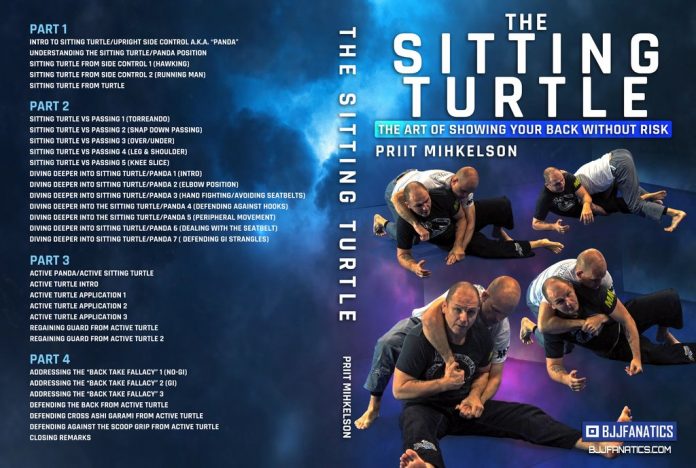
The Sitting Turtle Priit Mihkelson DVD Review

The Sitting Turtle DVD Review - Priit Mihkelson

I have to admit, I’m really excited every time I see a new Priit Mihkelson DVD emerge. Until a few months ago, I truly had no idea who the guy was. After his first BJJ instructional though, I doubt there’s anyone that doesn’t recognize him. His second was also pure gold and left us all wanting for more. Luckily we did not have to wait long. The latest Mihkelson DVD, and third in total is now out. Once again, it focuses on the defensive side of things, in a very unique and entertaining manner. This time though, it is “The Sitting Turtle” that Priit explains, a concept not many grapplers use on a regular basis.

ON SALE HERE:
Priit Mihkelson – The Sitting Turtle (DVD/DIGITAL/COMBO)

The Sitting Turtle DVD Review - Priit Mihkelson
Techniques List

Attacking in Jiu-Jitsu, or any martial art for that matter is always fun. Whenever we’re engaged in something productive, and not having to care about losing, we’re enjoying ourselves. However, Brazilian Jiu-Jitsu does not allow for two people t attack at the same time. At least not efficiently. What you get as a result is the need to know what to do when, inevitably, the tide of a match turns against you. So far, we’ve been looking at the basic concept of getting out of bad spots as soon as possible, and maybe getting a counter along the way. However, Priit Mihkelson has a different take on things – he thrives actually attacking from some of the worst positions in BJJ. One such example is “The Sitting Turtle” DVD.

An Unusual Approach To Defense In BJJ

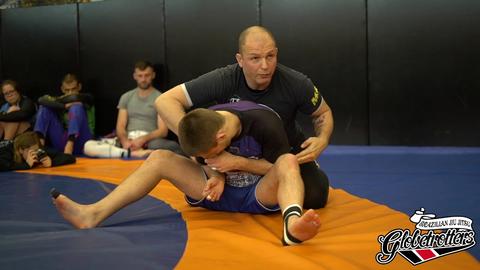
What is so unusual about “The Sitting Guard” DVD? Well, the first thing that really comes to mind is Priit Mihkelson. Yeah, he is an unusual guy, to say the least. That doesn’t make him anything less than an admirable grappler, though. In fact, Priit is one of the most underestimated BJJ black belts worldwide. He was born in Estonia and is a black belt under Matt Thornton. His SBG association alone is more than proof enough of his great BJJ pedigree. However, that’s far from the end of it. Mihkelson is also one of the main coaches in the BJJ Globetrotters community, constantly holding seminars across the world.

The Sitting Turtle DVD riit Mihkelson ReviewStyle-wise, Priit is definitely an unorthodox guy. So far, both his previous DVDs were unusual in both naming and technical lessons. His first one was the “Grilled Chicken Guard Renetetion System” which is just as wacky as the name suggests. In terms of efficiency, though, you won’t find a better No-Gi guard retention system
the “classic” turtle position we all know. The idea behind all of Priit’s instructionals is to bring the spotlight back to the importance of defense. Nowadays we see instructional upon instructional on different types of guards or crazy new submission holds. Priit likes to work the basics.

This is the main concept behind Priit’s game – safety. He does not like to defend himself from bad spots, he likes to be safe in them. As unusual as that sounds, it is perfectly possible and even highly effective. When you find yourself safe in a position like the Sitting Turtle, you can actually think about counter-attacking rather than having to get out of it and reset. This will make your game infinitely more effective and spare you the trouble of having to rely on strength and cardio.

The Sitting Turtle Priit Mihkelson DVD –A Full Review

While Priit might not be the first man to look at the turtle position from an offensive aspect, he certainly doe sit in a unique fashion. What you’ll learn in “The Sitting Turtle” DVD is like Eduardo Telles’ octopus guard on steroids. Moreover, it is a highly detailed system that is far from simple. In fact, despite the DVD is perfect for practitioners of all ranks, it contains some highly advanced concepts and ideas. Moreover, there’s more than enough content to really cover everything in detail, given that here are four-hour-long volumes in this instructional.

Priit is a methodical coach even though he seems to be completely crazy. The explanation behind the Sitting Turtle system is “the art of showing your back without risk”. This is exactly what Priit has managed to deliver. The first volume covers the intro and main sitting turtle concepts. Part two is all about using the sitting turtle in real-life scenarios, like guard pass prevention. Volume three takes care of the Active turtle concept, with some really nutty but amazing stuff inside. Wrapping it up is a portion of back take defense and how you can approach it in a whole different manner. A typical Priit MIhkelson instructional translates to a completely atypical BJJ DVD. Ooh and there’s another thing. Priit demonstrates both Gi and No-Gi variations ins this one, making it a complete instructional!

Part One: What Is The Sitting Turtle

This is where we get to meet the sitting turtle, AKA the panda position. All you chubbier guys out there are certainly going to look the part whenever you’re practicing Priit’s stuff. Don’t’ worry about it, though, as you can be as deadly from there as from the mount or back. The idea si that you use the situation of a seated back take to develop and work from a safe position. Yes, it sounds unlikely but for some crazy reason, it works like a charm!

Sections in this part include crucial info on understanding the position. Only after covering the mechanics, concepts and basic idea behind the system does Priit Mihkelson goe into more technical instructions. The final few chapters of this portion address using the Sitting Turtle System when getting out of side control. AS you can expect, innovative ways like hawking and running make up for the largest portion of techniques here.

Part Two: Diving Deeper

Part two doesn’t waste time skipping over to different aspects of the system. On the contrary, it picks up right where the first volume ended. However, instead of side control sitting turtle, now you get to

learn how to use t against guard passes the first half of volume tow is actaullѕ all about it, covering everything the Torreando Pass, Knee slice pass and everything in between.

The second portion of part two looks deeper into the Panda system. The idea is now that you have the essentials of the system as well as a certain practical application example you can truly understand what you’re trying to accomplish. Priit is definitely an awesome coach for coming up with the perfect progression for his instructional. Her, he goes step by step detecting everything, from elbow position to peripheral movement and defending common attacks like strangles from the seatbelt and back hooks.

Part Three: The Active Panda

The Sitting Turtle DVD - Priit MihkelsonThis is the volume where Priit MIhkelson actually turns his offense on. After knowing the inner working os of the Sitting Turtle system, practical application, and deep understanding of the mechanical aspect, you have guaranteed safety. That means that you can focus on attacking since there are no more threats coming your way.

This part of the instructional focuses on the active Panda system, once against rating with an overview. Right after, Priit explains several ways in which you can apply the active panda position to turn the tables. Remember, you’re never truly in a bad spot as long as you understand the panda position in the first place. Activating it enables you to do more offensive things, like get to guard with ease and set up attacks right away.

Part Four: ADressing Back Take Fallacies

The cherry on the op comes in volume four of this Priit Mihkelson DVD. This is also the most advanced portion of the DVD as well as the most important one. There are some groundbreaking principles in there, as Mihkelson addresses the back taka fallacy. He completely demystifies the back take, removing all of it’s perceived dominance. Moreover, he offers explanations and instructions for both Gi and No-Gi Jiu-Jitsu.

Befoe wrapping everything in a neat little bow. Priit shares a few more pointers on defending the back. Even more importantly, he shares how his active turtle system works to defend cross Ashi Garami as well. Going even further he addresses the dreaded scoop grip too before ending with a conclusion.

In Conclusion

All in all, Priit Mihkelson is exactly the type of coach that can take you a whole level higher in a very short period of time. His instructionals are definitely unusual, but they do work in both competition and training. With an upcoming BJJ globetrotters camp In my vicinity, I’m looking forward to training with Priit very soon! Until then, I’ll keep on practicing the Sitting Turtle System so that I know exactly what to ask him!

ON SALE HERE:
Priit Mihkelson – The Sitting Turtle (DVD/DIGITAL/COMBO)

The Sitting Turtle DVD Review - Priit Mihkelson
Techniques List