




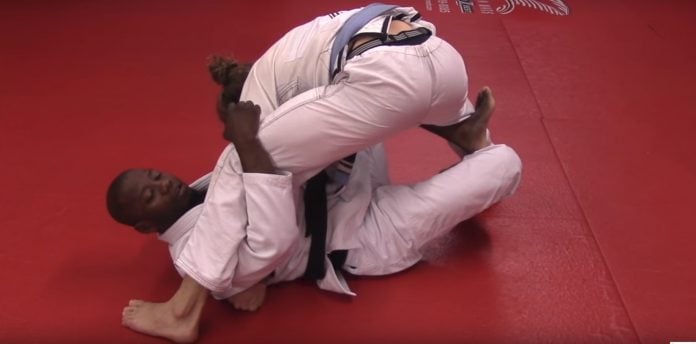

The X Guard is one of the most effective open guard positions in Brazilian Jiu-Jitsu. People usually discover the X-Guard fairly early, somewhere around a blue belt. Those that decide to stick with it, become virtually unstoppable up until they earn their black belt. The X-Guard offers great security, multiple sweep options, and easy entries and transitions. A lot of this is due to the fact that when in X-guard, you’re underneath your opponent, which makes their base really easy to control. However, if you like to use submissions, especially leg locks, there’s a better option than the regular X-Guard. It is called the Reverse X-Guard and it offers everything the regular X does, and then some.
The Reverse X guard came into power after the leg lock game exploded. Actually, even with leg locks now considered a mainstay in Jiu-Jitsu, the use of the Reverse X-Guard is still very scarce. The reason for this is that most people find it a bit unusual to play. the main reason for this is that they are so used to playing the regular X, that building new habit is now extremely difficult. Yet it is not impossible and you can do it with ease, as long as you understand the position and its purposes.
The man responsible for shedding light on the Reverse X-Guard position is none other than grappling phenom Craig Jones. Known as one of the primer leg lockers of today, Craig first introduced the Reverse X-Guard in his “Down Under Leg Attacks” DVD set. In this instructional, Craig goes over every little detail that makes this guard so effective. There’s a large portion of the instructional dedicated to the Reverse X, making it the best learning tool for this position so far!
The Reverse X-Guard Position
The Reverse X-POsition is actually very very similar to the regular X guard. There are only subtle changes in the placement of the feet, from a structural standpoint, Yet, these changes make the guard position that much more effective. The X guard is actually the best spot to get into the Reverse X from. Namely, you need to have a very traditional X-Guard, where you have the opponent’s leg on your shoulder, with an arm wrapped around their knee. If you can’t sweep from there, or want to go straight into high level eg attacks, it’s time to switch to a Reverse X-Guard.
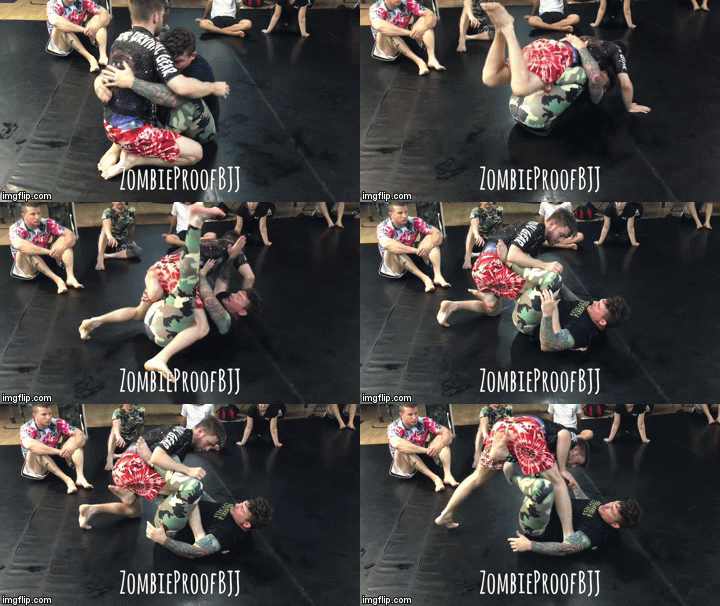 For the Reverse X-Guard, the inside leg needs to be the one that is on the opponent’s hip, foot hooking behind their butt. The other leg (outside one) is going to go under the first leg and hook to the front of the hip. This is exactly reverse of how the legs are positioned in the regular X-guard. While the traditional version offers more balance, Reverse X provides immense power for off-balancing the opponent towards their front. This opens up many attacks, both in the form of sweeps and submissions.

AS you’ll see further in this article, there’s also a version of low Reverse X-Guard which truly changes the dynamics of the position. Furthermore, getting into the guard is really easy from a multitude of other positions. Both the butterfly guard and Single leg-X guard are great transitioning positions. The Reverse X is also readily available form most half guard variations, in particularly the butterfly half.
Leg Lock Entries From The Reverse X-Guard
Getting leg locks to form the Reverse X-Guard is easy! Well, getting into Ashi Garami is, the rest is down to your leg locking abilities. The one most important thing to remember about leg locks from the Reverse X-Guard is a balance. The opponent has to have their arms on the ground for you to have any hope of attacking. The main goal of this is to gain access to the hips so that you can elevate them. This is where the Reverse X excels. The position of the legs means that you can lift the opponent in the air with ease, exposing both legs for attacks. However, it’s the far one you’re really after.
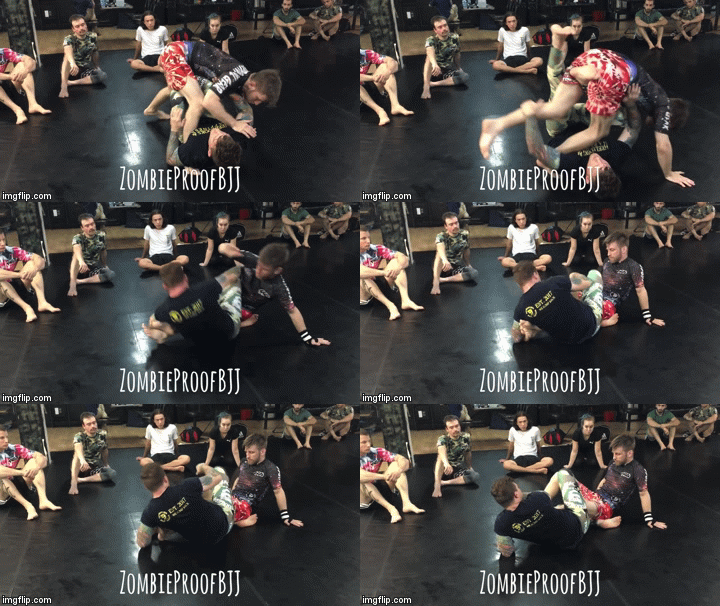 The position of your outside leg means you can use it to guide the leg towards your butt once the hips are in the air. This results in an opening for the Inside Senkaku position. All you need to do is kick your outside leg through and establish a triangle, Now you can lower your opponent to their hip whenever you want and get straight into heel hooks.

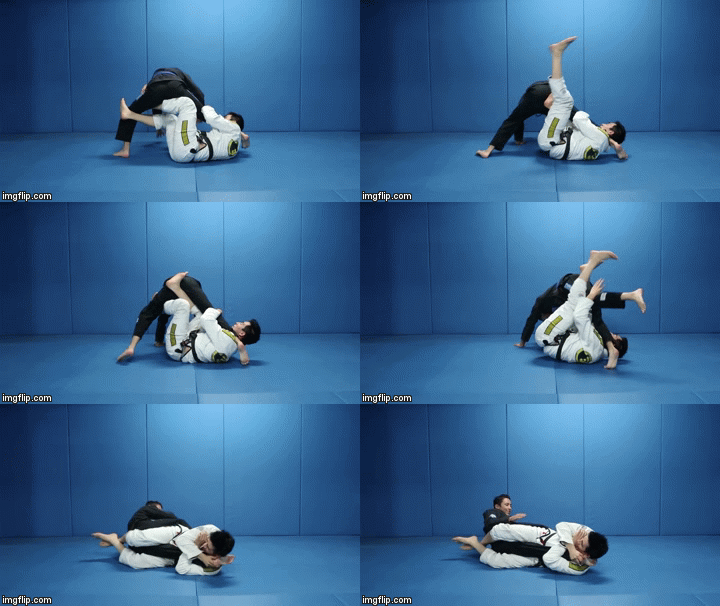 If you’re dead set on getting leg locks from the Reverse X, but can’t go for heel hooks, you still have “legal” options. Instead of trying to trap the far leg into an Inside Senkaku, you can always go for a kneebar. You need to do the same setup as before, up to the point of the triangle. Instead of locking one, simply kick your leg up. Then, switch to your side so that you’re trying to face the leg. This will land you in the perfect position for a kneebar, or a toe hold, depending on the opponent’s reactions.
Sweeps And Transitioning
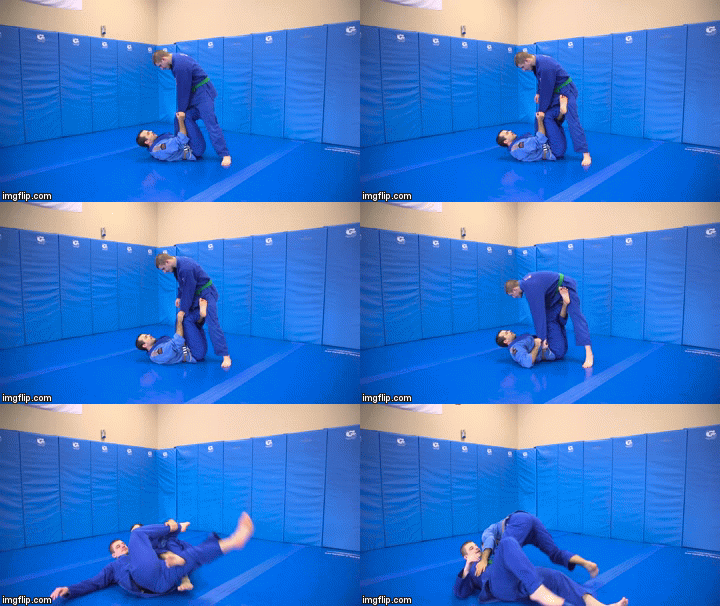 Sweeping from the Reverse X-Guard is usually the backup option. It goes into effect whenever you can’t execute a leg lock entry. the main reason for this is usually balanced. When an opponent manages to stay upright, you can’t get into leg locks. Since you can only unbalance an opponent forward with the Reverse X, you’re going to be looking to sweep there. However, instead of only unbalancing the opponent so that hey post, this time you take one of their posts away. This means you have to get a grip on the near side arm to prevent them from posting on it. Everything else is pretty straightforward. You lift their hips and switch your whole body so that they tilt forward. Without an arm to post on, they’ll fall straight down, giving you a sweep and top position.
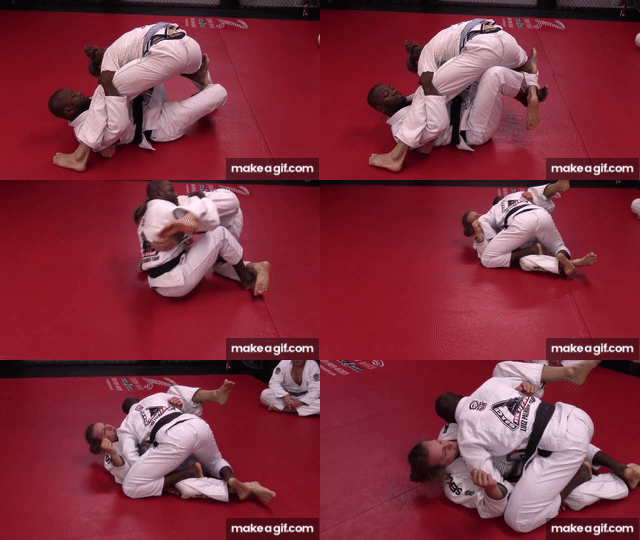 Another great option is to utilize low Reverse X-Guard. Against really skillful opponents, you’ll need to abandon the position of your feet. As you do, the goal is to place the inside leg behind their knee. The outside leg goes in front of the ankle giving you a low Reverse X position. From there, you can now move forward and back in addition to each side. This means you can go for the usual technical get-up sweep or try any other variation you like. The low X is a very very high percentage sweep position. Additionally, it can also provide you with a door to leg locking positions.