


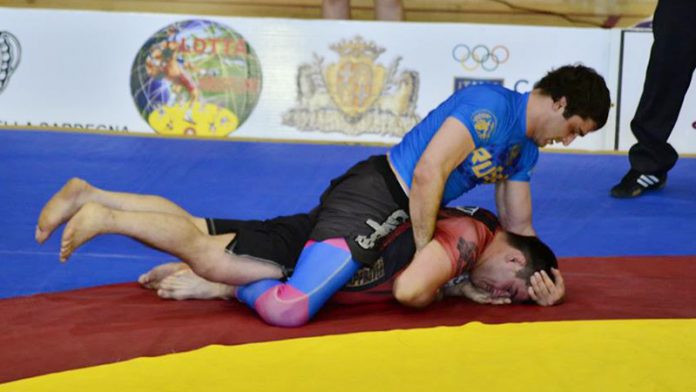
Most Effective Types Of Grappling Martial Arts

Grappling martial Arts

In the world of martial arts, there are two dominant categories created by the area in which a match takes place. The two areas are on the feet and on the ground. In order to make this distinction even easier, the manner of fighting decides the category of an art. In those terms, there can be striking martial arts and grappling martial arts. Of course, with MMA we see a very successful blend of the aforementioned. However, if we focus precisely on one of these categories, could we determine the most dominant art of the bunch?

In fact, let’s give the striking arts a recognition before we shelf them in anticipation of their own article. Every art that consists of punching and kicking while at a distance can be considered a striking martial art. Karate, Boxing, Muay Thai, Taekwondo, Savate etc, are among the top representatives of the category.

On the other hand, we have a huge selection of grappling martial arts,  based on the principles of control and leverage. Let’s focus solely on this category for now, in an attempt to see which one (if any) has the upper hand over the others.

Grappling Martial Arts – A Review

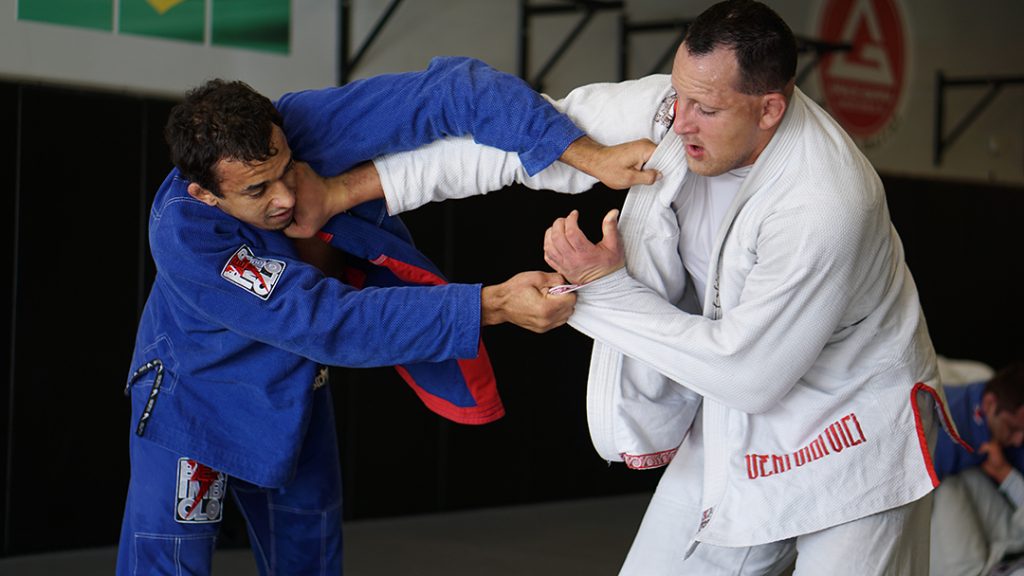
First and foremost, it is important to clearly define the term grappling. A good definition of grappling is that it represents a style of martial arts comprised of close quarters, control and grabbing based combat. Furthermore, grappling’s main focus is domination via leverage and angling both on the feet and on the ground. In both scenarios, the lack of striking is notable. The close proximity of fighters engaged in grappling, as well as the manner in which they utilize their limbs, makes striking redundant. Or, at the very least, effective striking.

With grappling art, the emphasis is on controlling an opponent as thoroughly as possible. The ground is the best area to do so, providing an immovable platform upon which pressure can be applied. In order to achieve ground control, one has to take the fight there in the first place. By the same token, in order to get the fight to the ground, one has to achieve a certain amount of control while standing. This demonstrates that grappling arts are focused on attaining control standing, getting the fight to the ground and domination when grounded.

As close as one art comes to encompassing all these defining traits of grappling, there’s no single art that does so to great effect. Grappling martial arts are numerous and almost impossible to account for in entirety. Instead, we’re going to present the most prevalent and effective ones, in their respective areas of grappling. Afterward, feel free to make your choice (or multiple ones).
Grappling Martial Arts, BJJ

Jiu-Jitsu

Arguably the oldest of the martial arts, Jiu-Jitsu has been subject to evolution since it’s conception. Attributed to the Buddhist Indian monks, the art was refined in Japan. For centuries, it was the samurai’s choice of unarmed combat. Given the fact that striking was largely unsuccessful against armor, grappling became the prominent fighting style amongst the famed Japanese warriors. Later on, the art gave birth to Judo, which is going to be covered in more detail further along.

Probably the most important evolution, and arguably the most complete grappling style ever, originates from Jiu-Jitsu. Brazilian Jiu-Jitsu was developed in Brazil by the Gracie family by modifying Judo to suit their smaller frames. Today, it is the most widespread grappling style in the world, still subject to evolution.

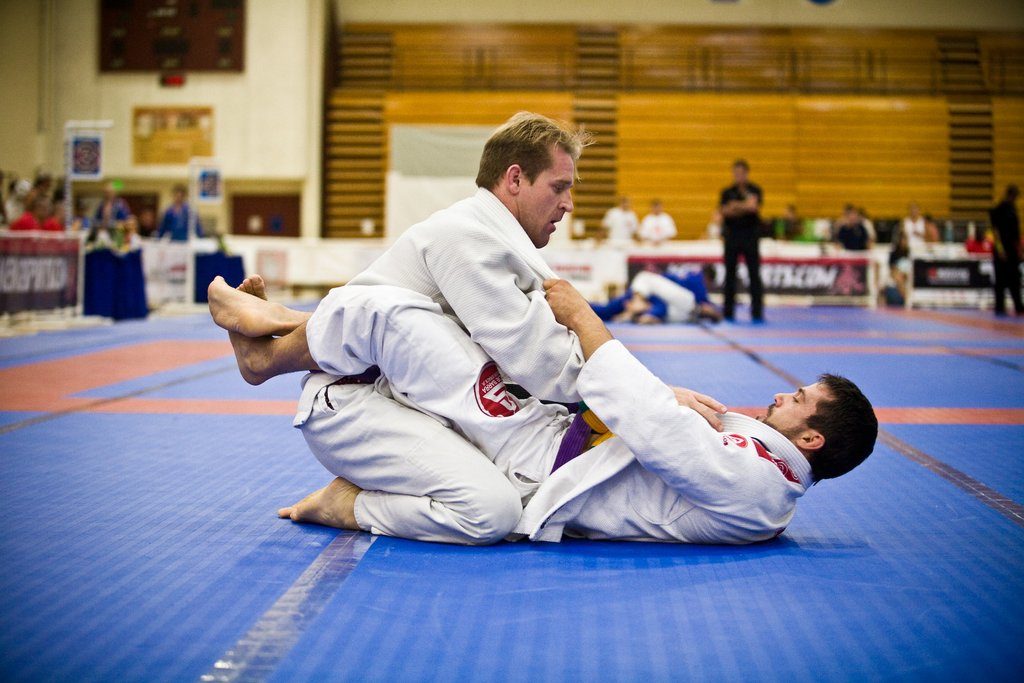
Jiu-Jitsu, since it’s samurai days, was based around throws, joint locks and strangles. Only when BJJ entered the scene did the submission aspect of the art develop immensely. namely, BJJ is unrivaled in the department of ground fighting. Countless positions, transitions, and pins have been developed to the tiniest detail. Moreover, joint locks and strangles were perfected so far that they became unstoppable by any other art. There’s no greater witness to this than the early UFCs.

This specialization of BJJ towards the ground took away from the arts prowess in the standing departments. BJJ is notoriously poor in original options for throws and takedowns. So much so, that they borrow most of their best stuff from other grappling martial arts. Also, rulesets have crippled art in terms of submission opportunities. BJJ remains focused on upper body submissions resulting in an imbalanced art.

Judo

Judo is the primary child of the original Japanese Jiu-Jitsu. Dr. Jigoro Kano perfected the art in the 1880’s. Kano brought the concept of free-sparring to the practice of techniques, resulting in modern Judo. Such is the popularity of the art, that it is still a staple of military and police training in Japan.

As a grappling martial art, Judo’s focus is on the feet. In stark contrast to BJJ, Judo specializes in throws and certain pins, with a submission or two sprinkled along. The art is based heavily on upper body manipulation via grips on the sleeves and/or collar of the traditional Gi. Judo’s use of throw is very elaborate in every department, from gripping, through angles to brutally explosive finishes.

Similarly to BJJ, Judo is another art castrated by rules. Very effective takedowns have been removed from the sports version deemed as too dangerous. The result is an art amazing at throws but, crippled in every other aspect of grappling.
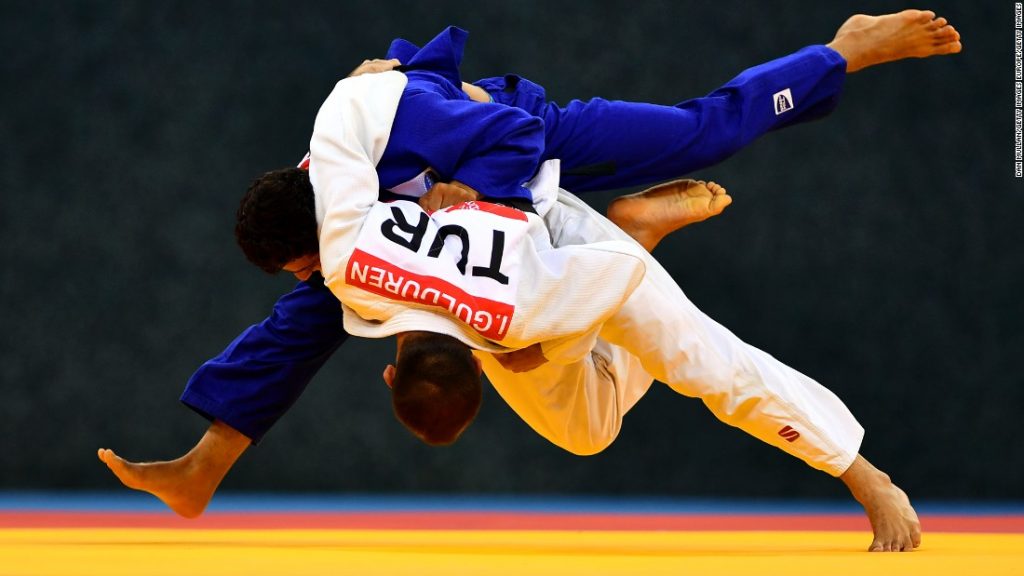
Grappling Martial Arts, Judo

Wrestling

Most people associate wrestling with the Olympics. Despite becoming popular during the games in ancient Greece, it is a much older art. The correct origins are unknown.

Wrestling is a very popular art in American and Eastern European culture. Top wrestlers usually come from the USA, Russia or Bulgaria. Due to its complex origins, wrestling has plenty of styles, all characteristic of the culture they come from. Bokh is the Mongolian version, Korea has Ssireum, Brazil has Luta Livre and China has Shuai Jiao. There’s also Turkish oil wrestling.

Basically, wrestling is the art of getting someone down and holding them there via a pin. Takedowns include both upper and lower body manipulation and are vicious and explosive by nature. Most wrestling takes place in shorts or minimal clothing, thus requiring different control points to those of Judo. On the ground, wrestling is undisputed in terms of pinning someone on the ground by way of weight distribution or limb manipulation.

Catch wrestling is a British style of wrestling that adds submissions to the mix. Another candidate for a complete grappling martial art it does not focus on specific ground control as much as BJJ. On a plus side, it does utilize all of wrestling’s takedown supremacy.

Sambo

Literally meaning “Self-Defence Without Weapons” Sambo is a Russian art belonging to the grappling martial arts category. It was developed during the 1920’s for military purposes. It integrated parts of other grappling martial arts like Judo, Jiu-Jitsu, and wrestling. Vasili Oshchepkov and Viktor Spiridonov are the main culprits behind this grappling art.

Sambo’s uniform consists of a Gi on top and shorts on the bottom, including wrestling shoes. Technically, Sambo is the king of leg locking submissions. Armlock is another big focus of Sambo at the expense of chokes and strangles. While most of the takedowns come from other arts, there is some effective innovation in the department. It is rumored that the Gracies turned to Sambo in order to acquire knowledge about leg locks. Strangely, despite adding them to the art, BJJ practitioners chose to austercize them going forward.
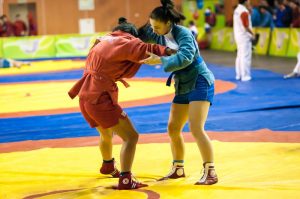
Grappling martial Arts, Sambo

Sumo

Despite requiring a very specific lifestyle, Sumo is definitely wort ha mention among grappling martial arts. This unique Japanese art focuses on pushing or pulling an opponent out of a circular ring or making them touch the ground. As entertaining as Sumo wrestling is, it requires practitioners to be notoriously heavy, making it impractical for most. However, it is a captivating art worth admiring!

So, now that you know the pros and cons of every art, what would you choose? Would you go in the direction of specialization or give cross training a try? Maybe you like to eat and will choose Sumo as your art. Whatever your choice, make sure you know what works before you jump on board!

Maybe you will find it interesting…

Grappling vs Striking or How to Fight As a Grappler in a Street Fight

Aikido vs Grappling – Fantasy vs Reality – Wrestler vs Aikidoka

What’s The Most Effective Grappling Martial Art? Is it BJJ?

Inside 10th Planet Jiu-Jitsu Grappling Concepts That Work

10th Planet Jiu Jitsu

Where there’s innovation, there’s always controversy. People, in general, are unwilling to accept change and innovation straight away. Controversy usually stems from this resistance to change. In those terms, Jiu-Jitsu is no different than any other aspect of life. Despite being a result of the evolution and adaptation of earlier art, BJJ can be very defiant in the face of change. This often comes at a cost, as demonstrated by the case of 10th Planet Jiu-Jitsu.

10th Planet Jiu-Jitsu is a worldwide BJJ organization that focuses on a very distinctive style of Jiu-Jitsu. Namely, they are the original advocates of pure No-Gi Jiu-Jitsu and are in part responsible for the “colorful” rashguard designs associated with modern BJJ. 10th Planet’s eccentric founder Eddie Bravo is definitely a brilliant Jiu-Jitsu character, albeit an eccentric one. But that is part of the charm that lies behind 10th Planet Jiu-Jitsu. The organization does present a bottomless pit of BJJ innovation, that often gets unfairly criticized before it gets recognized.

The Eddie Bravo Story

Eddie Bravo is a Jean Jacques black belt, based out of LA. He spends most of his time teaching at 10th Planet HQ. So far, the organization has 40 plus schools subscribing to its system spread around the world.

Eddie Bravo, or Edgar Cano as is his original name, used to train wrestling before discovering The Gentle Art. He joined Machado’s academy in 1994. Even since his earliest days, he’s been an innovator, a feat encouraged by the unique Jean Jacques. In fact, JJ Machado was forced to innovate along his own Jiu-Jitsu journey, being born with Amniotic Band Syndrome. The renowned coral belt was born without fingers on his left hand, which led to him discovering alternate grips during training. Unable to grip the Gi in a traditional sense, Jean Jacques used hooking motions to great success in order to compensate for his disability.

During his early days, Eddie Bravo managed to pull off a rare wrestling submission he later dubbed “the Twister”. His most notable competitive success to date, though, is his ADCC 2003 victory over Royler Grace. Bravo managed to catch the famed Brazilian in a triangle choke, tapping out a Gracie which was considered near impossible at the time. Even more impressive was the fact that Bravo was a brown belt at the time.

Check out the video of Eddie Bravo vs Royler Gracie at the ADCC 2003.

Encouraged by his teacher Bravo went on to build a style of his own, mostly based on his extraordinary flexibility and open-minded approach. Not every move of his is efficient, but it’s refreshing that he is the first to admit it and work towards improvements. Now, controversy is never far from Bravo who is a die-hard conspiracy theorist. For example, he named his gym “10th Planet Jiu-Jitsu” while claiming the Earth is flat.

10th Planet Jiu-Jitsu Breakthrough Concepts

10th Planet Jiu-Jitsu has been the subject of condemnation from a large portion of the Gracie family since its inception. Whether because of Bravo’s ADCC victory or the fact that he chose to go exclusively No-Gi, his gym never got truly recognized by the founding family. In turn, much of the BJJ community harbored reservations towards the system in the early days.

Despite a certain “lack of popularity, Bravo managed to push through and build a truly impressive system. He kept going in his desired direction, developing a Jiu-Jitsu style that might not be suited for everyone. Or at least it seems so to the uninitiated. Unorthodox as some of the 10th planet positions might be, they are by no means ineffective. Let’s look at some of the concepts that are applicable to every grappler’s game.

The Rubber Guard

The Rubber Guard is Bravo’s main Jiu-Jitsu lovechild. It is a complex guard system based on Bravo’s remarkable flexibility. Since the early days, the guard system has progressed toward a more general-population-friendly version. Originally, the rubber guard was developed as the ultimate MMA guard. It revolves around having the opponent’s posture broken at all times while exploring one of many attacking options.

The Lockdown

The Lockdown is a less demanding position in terms of mobility requirements. It is a half-guard variation that offers enormous control from the bottom. A myriad of sweeps and transitions into unique submissions are available from the lockdown. The ‘Electric Chair” is probably the most famous one. Most recently, Bravo called upon it to Battle Royler Gracie for the second time.

The Twister

The Twister is not a move invented by Bravo, but he put a lot of time into perfecting it for BJJ purposes. Historically known as “The Wrestler’s Guillotine” Bravo utilizes it as both a spine-twisting submission and a controlling position. Transitions to other positions specific to the 10th Planet Jiu-Jitsu system are also available.

The Truck

One more in the innovative 10th Planet toolbox, the truck is a lower-body control position. It can be used to access the Twister, the back, or a few submission options involving the legs. A brutal calf slicer is available from the position as demonstrated in MMA matches. The entry is also possible from a whole host of top positions, making it a great halfway stop between top positions and back control.

Now, these are not 10th Planet’s only concepts, but they are the most effective ones. Keep in mind that Eddie Bravo is an artist (a musician) and has the mindset of one. If you are looking for a more cerebral, methodical approach, John Danaher is a better fit for you. If you don’t mind experimentation and the inevitable failures it brings on the road to success then check out 10th Planet.

The 10th Planet Warmup Series

Another huge step in BJJ innovation is the 10th Planet Jiu-Jitsu Warmup series. In particular, it is a system of drills that go beyond one-step repetitions of techniques. The reasoning behind the system is that BJJ lacks a comprehensive drilling system like standup arts. For example, boxers and kickboxers can practice shadow boxing in order to fine-tune their technique.

The inherent need for a partner in BJJ makes this kind of drilling impossible. However, Bravo’s logic states that working on predetermined scenarios can greatly increase muscle memory in grapplers. Following this train of thought, he developed a system of flow-based scenarios where both partners get to work. He utilizes the system mainly as a warm-up before class, evolving the flows with time.

The EBI Revolution

Finally, the latest !0th Planet Jiu-Jitsu revolution came in one of the most popular tournament formats of today. The Eddie Bravo Invitational or EBI is a professional submission only, No-Gi tournament featuring top-level grapplers. Despite being a platform for advertising his style of Jiu-Jitsu, it offers a great opportunity for grapplers to earn some money competing.

The rules of the tournament are another innovation of Bravo’s, offering original overtime rounds in order to produce a clear winner. There are no draws under the EBI rules. There are no forbidden submissions during an initial 10 minute round. Unless someone taps or naps, overtime rounds take place. In overtime, competitors take turns in position-sparring-like situations, consisting of an armbar position (spiderweb) and back control. The way to win is by submission or the fastest escape time.

EBI’s popularity is constantly growing and the tournament is streamed on UFC Fight Pass. A huge positive is a ruleset that has been accepted by competitions worldwide as one of the top tournament platforms. Much like BJJ itself, 10th Planet keeps evolving and changing for the better as time passes by.

Eddie Bravo Submitting Bigger Opponents

Gogoplata Details That Will Change Your Game Forever

Fake BJJ Purple Belt and Cop Exposed at McGuin Jiu Jitsu Academy

Fake BJJ Purple Belt and and Cop Exposed at McGuin Jiu Jitsu Academy

*Fake Jiu-Jitsu purple belt and fake cop gets exposed at McGuin Jiu-Jitsu Academy* -a guy walks in and claims he’s a purple belt and a cop.

What happens next is pure gold. He was a good sport and I made sure no one got hurt. Fake BJJ Purple Belt admitted he was training some kind of grappling martial arts or Jiu Kitsu but he didn’t know how to explain what grappling martial arts he was training actually.

Jay Queiroz – Fake BJJ Black Belt – The Latest Update

BREAKING: Renzo Gracie vs Sakuraba – REMATCH Announced

Renzo Gracie vs Sakuraba rematch

Nearly 18 years after the first fight in Pride FC of Renzo Gracie and “the Gracie Hunter” Sakuraba they will do a rematch.

Renzo Gracie vs. Kazushi Sakuraba happened in August of 2000 in PRIDE FC 10 event. That fight ended when Renzo refused to tap to Sakuraba’s kimura 11 seconds before the end. Renzo suffered a broken arm in that fight.

It was one of the fights that really made history in Japan. Even before the fight between Sakuraba And Renzo Gracie Sakuraba was able to dominate every Gracie he fought with. That’s why he got a nickname “the Gracie Hunter”

Now, 18 years after, Renzo and Sakuraba will do a rematch in ONE Championship Organization. It’s still unknown if this bout will be a fight with MMA or grappling rules as their previous grappling match happened in 2014 at Metamoris 5. Also, Sakuraba had a second match against Ken Shamrock in October 2017 at RIZIN event with grappling rules. To be honest it was nothing worth watching as nothing actually happened in that grappling match.

The reason why this will probably be a grappling match lies in a fact that Renzo Gracie is 50 yr old and Sakuraba is 48 yr old. It’s really hard to believe that we could see something very interesting in a real MMA between those two rivals. But, you never know what’s going to happen in Japan, so everything is possible.

Check out how Sakuraba Broke Renzo’s arm in Pride FC 10 in 2000.

Renzo Gracie B**chslapped a guy who blew an air horn in His Ear

10 years of Kung Fu vs 10 years of BJJ in Renzo’s Gym

REVIEW: Battle Tested Half Guard – Bernardo Faria DVD

Bernardo Faria DVD

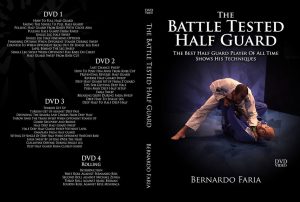
Looking to improve your half guard game? Well, a world champion’s instructional is always a good place to start. Even better, a World champion who is a half guard specialist. Granted, there are many variations of the half guard and there’s no one expert on them all. If you’re really into the half guard game you should start collecting. A great starting point would be Tom DeBlass’ Half Domination DVD. If you’re looking to invert than Roberto Cyborg’s stuff would be your best bet. If it’s more of a high-level half guard and deep half guard game you’re looking for, your search is over. You just need to grab a Bernardo Faria DVD and you’re all set. And not just any of his DVD’s, but “Battle-tested half Guard”.

ON SALE HERE:
Bernardo Faria DVD – Battle Tested Half Guard

Bernardo Faria DVD
Techniques List

Why Bernardo Faria?

As mentioned there are dozens of half guard experts out there. Why go with a Bernardo Faria DVD, you might ask? Well, first of all, he’s a World champion who has beat everyone with a half guard based game. His deep half guard is the stuff nightmares are made of. And the guy really spares no details.

In short, Faria is a World and European champion grappling under the Alliance banner. He’s a super-heavyweight who got his black belt from Ricardo Marques. The 30-year-old has dominated the IBJJF scene, haunting opponents with his half guard game. He did record a previous DVD focused on the deep half guard. It was an awesome instructional, very high level and packed with crucial details. So when I saw that he has a new DVD on the half guard subject, it didn’t take long for me to get it. Here’s what I think about it.

Battle Tested Half Guard – A Bernardo Faria DVD

Anyone who’s ever seen a Bernardo Faria DVD knows what to expect. He’s not shy on details and has the ability to focus on those that actually matter. Namely, Faria doesn’t dwell much on stuff that’s not helpful in regard to the techniques he’s demonstrating. Not everyone has the ability to make such a clear distinction between the crucial and less important while keeping things short and precise.

There isn’t one aspect of the half guard that isn’t covered in this DVD set. Interestingly, Faria’s focus is more towards the “traditional half guard rather than his trademark deep half. However, the DVD does not lack in innovation at all.

Structurally, the material is divided into 4 DVDs. Faria did not pull any punches recording this, as everything is covered. Stand-up, positional philosophies, sweeping, entries, submissions, even specialized grip fighting., everything is covered in depth. There’s also a system for every DVD and the subject presented in it. Check it out:

DVD 1

First of all, there’s the basic introductory part. Without too much babbling, he immediately arises interest by declaring that the DVDs contain his latest stuff from the past couple of years.

It all starts standing, with a few entries to the half guard by way of pulling guard. What I really liked is that he presents options from both standings and from the knees. This is where he first mentions the single-leg half guard, which, for me, was an entirely new concept. It is definitely an original position, one that he covers in-depth later on.

Sweeps are next on the menu on DVD 1. As a matter of fact, it kicks off with single-leg half sweeps which I found very interesting (and effective). There are a few counters to expected pass attempts and escapes, which are not too mouth-watering. The finishing options for an opponent trying to counter one of the sweeps, on the other hand, are a true highlight of the disc.

DVD 2

Furthermore, the second one is more of a classic Bernardo Faria DVD. You guessed it, it’s deep half guard time. Be that as it may, he does start off with the reverse half guard, another subject that hasn’t been really covered in instructionals. A couple of sweep options as well as prevention concepts for any serious half guard player out there.

I’m going to skip right over the deep half stuff, seeing as there’s no doubt on the subject’s quality given the guy demonstrating the moves. What I really liked was the grip fighting concept he presents near the end. My deep half sweep percentage has significantly improved, although my deep half-game is nothing to brag about. Well, for now, anyway.

DVD 3

The third section got me excited from the get-go. It begins with a move that encompasses the deep half guard, the single-leg half and a lapel sweep. ‘The Turkish Get Up” as he calls it, is based on the same movement pattern as the famed kettlebell exercise, not unknown to grapplers.

From there, though, the material takes a turn toward the defensive aspects of the game. First, a few really cool defense options against Kimuras, Guillotines and other chokes. Then, another trademark of Faria, an Omoplata setup from the half guard that works like a charm. Well, for me, at least. All you sweep enthusiast don’t worry, there are more half guard sweeps sprinkled in an around a few interesting guard recovery options.

DVD 4

Finally, we arrive at the final DVD. And it is nothing short of a big, fat, juicy, sweet cherry on top of this half guard cake. There are no techniques or moves shown in the final chapter. In a very original turn of events, Faria ends the DVD with 4 rolling sessions. However, they’re not regular rolling session, but ones with him playing half guard all the time. Moreover, all the rolls are precisely narrated by the man himself. He shares his mindset during the rolls, demonstrating all the stuff previously shown in the first three DVDs at a very high level. It’s simply a must-watch for all grapplers out there.

Conclusion

All in all, you get three 40 minutes long DVDs full of high-level instructions, topped off with another 50 minutes of narrated sparring. For such a reasonably priced set, it is a real bargain, containing 3 hours of top-class, innovative material. A half guard game changer without a doubt. this Bernardo Faria DVD is going straight into my favorites collection. Give it a try and it’ll end up on top of your list as well. Guaranteed!

ON SALE HERE:
Bernardo Faria DVD – Battle Tested Half Guard

Bernardo Faria DVD
Techniques List

REVIEW: Submission Escapes by Tom DeBlass DVD

REVIEW: Omoplata Everyone – Bernardo Faria

10 Obvious Reasons Why You’re still a White Belt

10 reasons why you're still a white belt

When will I get my Blue belt? Why Am I still a white belt? How come I didn’t get my Blue Belt on the last promotion? What am I doing wrong? Does my instructor hate me? These are all the questions white belts tend to ask themselves and their instructor. Well, there are more reasons why you’re still a white belt and it’s up to YOU to fix them.

1. Not Enough Roll Time

We all know that guy. For whatever reason, he never sticks around for live rolling. Or he always got some injury that persuades him to go live after class. It’s not enough for your coach to see that you come to class on a consistent basis. Your coach wants to see that you clearly understand the concepts he has taught and that you can demonstrate them effectively in a live situation. The first milestone of Jiu-Jitsu blue belt requirements requires one thing above any other, the demonstration. If you haven’t demonstrated your ability to execute the techniques in sparring effectively in front of your coach, don’t expect your belt to change colors anytime soon. Because that’s exactly what a “belt test” consists of. It’s demonstrating techniques you’ve learned in the class.

2. Not Enough Class Time

Now, on the opposite side of that coin, some people tend to show up to class late for whatever reasons and only make it in time to roll. Sure, these people might have a nice armbar or some other submission, but that’s 1% of jiu-jitsu. Constantly being late to class and only showing up for rolling is like missing all week of school and only showing up for the test. Sure, there might be some freaks of nature who can do all this and succeed anyway, but if you’re an average Joe you’re going to fail. The only way you are going to be able to earn your professor’s trust and convince him of your knowledge is if you give him the opportunity to pass his knowledge to you! That means showing up to class on time and letting him teach you his or the school’s curriculum. Even if it’s a technique you already know you should pay attention to! Maybe you missed some detail or a concept that could make your technique better and more efficient. Maybe your professor discovered a detail that will improve the technique.

3. You Don’t Compete

Jiu-jitsu is more than a martial art, it’s a sport. It’s a sport with no off-season. BJJ tournament is running all year and a lot of coaches take pride in seeing their students at all belt levels test their skills against other academies. Either you win or lose your coach wants to see you support your academy by testing your skills in a BJJ tournament. Wearing the patch and not competing is like having a sword and shield and not following your brothers and into battle. You want to show the ability to subdue an unknown opponent after rolling with the guys from your academy and represent them. Your coach wants to see you wear the patch into battle and be an ambassador of your school while demonstrating your understanding of Jiu-Jitsu.

The Best DVD and Digital Instructionals For BJJ White Belts

4. You Don’t Support Your Academy

Jiu-jitsu academies, in my opinion, are unlike any martial arts associations in the entire world, in the sense that they are truly a family. Jiu-jitsu academies often have a clear lineage and close associations to other academies across the country and across the world who are under the same banner. Your coach wants to see you support the association. This means that when Mr. Gracie, Mr. Ribeiro, Mr. Medeiros, i.e. the head of your association comes to give a seminar at your school- you be there. If that means skipping a night of drinking to save money for the seminar then do it. If that means staying home Friday night so you can wake up early Saturday and go to the seminar, then do it. Also, a lot of associated academies like to do cross-training in order to prepare for tournaments and get students rolling with people with different tools and weapons. It’s important that you show up to things like this to support your academy and your coach, and most importantly your association.

5. You Care Too Much About the Color of Your Belt

“What’s on the blue belt test?”, “Is this going to be on the blue belt test?”, “When will I be good enough for my blue belt?” It’s okay to ask these questions a few times, and I’m sure your coach does want you to know. But once it becomes clear to your instructor that your main intention is getting promoted that will raise a red flagSome wise man once said, “The belt will change colors on its own”. It’s quite ironic how the more you care about the belt, the slower it seems to come. Slow down, enjoy the experience. The white belt is like the freshmen year of high school. It sucks, but one day you will miss it because it only comes once, and for most people, a black belt is the LAST belt you’re ever gonna have and not to mention the toughest competition you’re ever gonna face, so why be in such a hurry? Take you’re time and enjoy the journey and you won’t regret it.

6. You Use too Much Strength instead of Technique

The whole concept behind Brazilian Jiu-Jitsu is that larger stronger and opponents have no advantage over smaller weaker ones. So if you’re constantly doing well in your academy by using brute strength and muscle to overcome your training partners, this is a clear sign you are not ready to start receiving a rank. Jiu-Jitsu is not about strength in any sense of the word. Strength will come into play at some point in time but that bench pressing and arm wrestling will NOT be part of your blue belt exam or any other belt exam in your BJJ career. Slow down, catch your breath, wipe the sweat off your head and focus on technique rather than strength. Play your guard against bigger opponents. Force yourself to work outside of your comfort zone. Use leverage and technique and you will start to see an improvement in your submission game and your belt color.

BJJ Fundamentals Every White Belt Have to Know

7. You Can’t Stay in one Academy

Well, I would be a blue belt by now if I would have stayed at XYZ academy.” We all know that guy who cannot seem to stay at one academy for some time. A strong piece of advice for any white belt walking into a new academy, the professor does not care who you trained with before or how long you trained with them. A lot of black belts pride themselves on having homegrown champions and a homegrown curriculum for each belt level. It doesn’t matter if you were black belt level from XYZ guy because you’re still gonna have to reach blue belt level for your instructor. You don’t study plumbing for an electronics exam, so don’t expect to get your blue from Carlson with the jiu-jitsu you learned from Rickson. Your coach doesn’t want to just know your Jiu-jitsu, they want to know YOU. Try to stay at ONE academy if you can. If you can’t seem to find what you’re looking for at 2 or 3 or more academies then maybe the problem isn’t the instructors. Maybe BJJ just isn’t your thing and there’s nothing wrong with that. It’s Simple, If you don’t stick around at one academy for at LEAST a year don’t plan on getting your blue belt.

8. You’re Too Predictable

If your coach has shown you 500 techniques and you can still only execute one when rolling then maybe you’re not ready for your Blue Belt. Show your coach that you’re paying attention to what he’s teaching and that you understand. And if you don’t understand, ask questions. If your instructor showed spider guard that day, play spider guard after class.  It’s not only important for your improvement but your instructor really wants you to absorb the information for your own personal gain. In Brazilian jiu-jitsu knowledge is power, and knowledge of a blue belt has to be better than white. Not just by one or two techniques but the full array of techniques.

9. You Don’t Correct Your Obvious Mistakes

The first time your coach tells you to fix some technique it’s OK. The second time, that’s OK too. But, the third and fourth time is still OK but you should fix it till then. But on the 9th, 10th, and 11th, no matter how supportive your instructor sounds, he wants to take the black belt off his waist and hang you with it. Listen to your coach even if sometimes what your coach tells you to do may be uncomfortable and unnatural. Maybe you feel like if you did what he says you will expose yourself to a submission or a bad position, but listen to him as he’s right in 99.999% of situations. If your Instructor keeps telling you to do something that feels unnatural it’s because you’ve created a bad habit and he desperately wants you to abandon it. Going from white to a blue belt isn’t just about learning new techniques but breaking bad habits. Stop giving up your back. Stop resting in bad positions. Stop holding onto the guillotine that is not working in that position. You might think that your coach doesn’t mistakes you continue to make, but it’s more likely that he sees everything. And if you don’t listen to your instructor you might end up being a 10-year white belt. And you won’t be the first one, there’s a lot of them.

10. You’re a No-GI guy

Brazilian Jiu-Jitsu is Brazilian Jiu-Jitsu and it should not be confused with MMA, no-gi grappling, Sambo, Judo, Catch Wrestling, or any other grappling sport. You have to learn the chokes, locks, guards, positions, and everything in BJJ in a GI. So, no amount of training in other NO GI grappling sports will make you a Blue Belt in Brazilian Jiu-Jitsu. You can progress faster, you can be better at rolling than many new students but for BJJ you’re a white belt. So, stop thinking about how you can strangle some blue belt or even purple belt because BJJ is more than just a roll. You have to show that you know all the techniques required for the blue belt and you have to make sure you know how to do BJJ-specific chokes and other submissions in the GI.

Conclusion

YOU ARE NOT AN INSTRUCTOR. Brazilian jiu-jitsu instructors dedicate large amounts of hours of their lives, to learn BJJ. They don’t just wake up in the morning and decide to be an instructor. Although there are many fakes around it takes hours and hours of vigorous training and learning. So don’t ever think for a second that anyone knows if you’re ready for a promotion more than your Instructor does. Put in the mat time, put in the class time, try to compete, support your instructor and your association, learn from your mistakes, show up to the class consistently, maintain the attitude of a student and continue to learn. The belt will change colors on its own!

Inspired by Garcia Mixed Martial Arts

Related Articles:

The 5 Main Reasons People Quit BJJ At Blue Belt
BJJ White Belt Survival Kit: 5 Essential Tips For Beginners
WARNING: Martial Arts Instructor Beats Up His Students

25 Reasons Why You Don’t Progress in Jiu-Jitsu As Fast As You Can

Chris Lomas – Kung Fu Master and DVD Maker in an MMA Fight

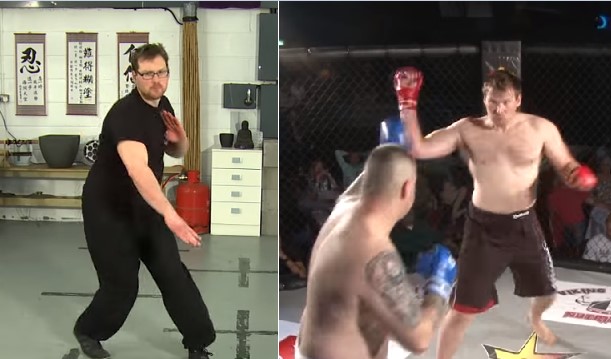
Chris Lomas a.k.a SIFU Chris Lomas, how he likes to call himself is Kung Fu teacher in Manchester. He’s founder and owner of Kung Fu and some other Martial Arts school called Tao Jia Martial Arts Manchester.

Chris Lomas is also the creator of many DVDs and instructionals called “Splashing hands”, “Tan Tui”, “Iron Body”…

Before you jump into the fight take some time to check his “techniques” and something that he teaches his students. He calls it an Extremely Aggressive form of Kung Fu, legendarily developed in the southern Shaolin temple for the Gods in order to teach them to fight quickly.


And here, we bring you his MMA fight against Damien Gojski. There are no words to describe his performance in his MMA fight but if you feel embarrassed while watching him fighting don’t worry. We feel too. Although we must give him credit for stepping up in an MMA fight. He definitely showed courage and the will to prove his system works.

Fred Mastro in an MMA Fight – Let’s See if He’s Able to Apply his Techniques in a real MMA fight

Jay Queiroz – Fake BJJ Black Belt – The Latest Update

BREAKING: Stipe Miocic vs Daniel Cormier in TUF Finale

Stipe MIocic vs DC Cormier

Stipe Miocic and Daniel Cormier have been confirmed for coaches in the 27th season of Ultimate Fighter, after which they will be fighting for Stipe’s heavyweight title

It’s all set and done. Stipe Miocic vs Daniel Cormier bout will take place on July, 6 in TUF 27 Finale as they will be probably coaching Welterweight od Light division fighters. This will be their first experience as The Ultimate Fighter coaches.

Scott Naugle, Sex Offender and BJJ Black Belt Arrested, Police Reports

Scott Naugle Arrested!

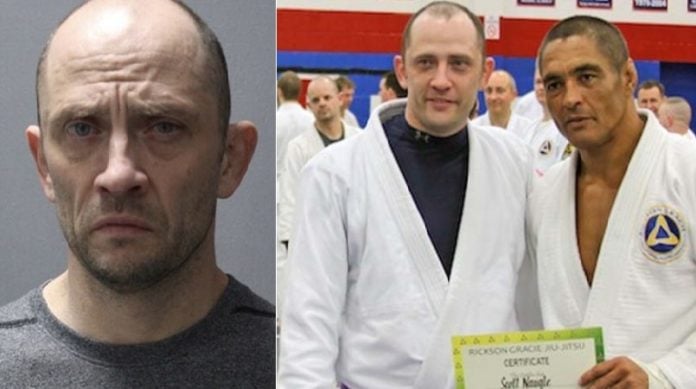
Scott Naugle, the founder and a coach of Leverage Jiu Jitsu in Fulton, Maryland,  is convicted of sexual battery of a child less than 13 years old. As we previously reported Scott Naugle is one of the three Rickson Gracie JJGF Black Belts convicted of sexual harassment. You can check the story at THIS LINK.

Scott Naugle is BJJ Black Belt who’s training with Gracie Family since 1997. He got his Black Belt From Chris Saunders. On February 7, 2014. he was promoted to First Degree BJJ Black Belt By Chris Saunders. And Scott is the first person to be promoted to BB by Chris. Chris Saunders was the first American who got his BJJ Black Belt From Rickson Gracie.
Scott Naugle is also first degree Black Belt in Judo.

As you can see in documents below Scott Naugle is convicted of Aggravated Sexual Battery of Less than 13 years old.

scott Naugle Convicted sexual harrasment

Scott Naugle convicted for Sexual Battery

The reason why he was arrested is that he failed to register as sex offender. He didn’t register as Tier 3 sex offender. And this is what that exactly means in-state of Maryland.

“People on this tier level must remain on the list for the rest of their lives…
The law regarding the sex offenders list is retroactive. That means that anyone who was convicted of these crimes before the date the law went into effect in the state of Maryland must register. There are no exceptions.
Offenders must register within three days of being released from community supervision. If the offender is given jail time for the offense, he or she must register prior to release from prison. He or she must also register three days prior to moving from the state of Maryland.
The law requires that registrants report at various intervals during their tenure on the sex offense list… Tier III registrants must report every three months to assure their profiles are up-to-date.

Howard County Police Report

So, Naugle was convicted in 2003 of sexual battery of less than 13 years old in a different state than where he’s now. After he was convicted, he was ordered to register as a sex offender for the rest of his life. That was the part of his sentence. But, probably, in order to avoid the shame that comes with his sentence, he left the state and came to Maryland.

Soon after he was arrested he was released from Howard County Center on $25.000 bond and he’s forbidden to have contact with anyone under the age of 18. He’s also obligated to register as a sex offender in Maryland registry within three days of his release.

Police are also asking anyone who may have been victimized or is aware of victimization by Naugle or have any information to call 410-313-STOP or email the police [email protected]

If you check Scott Naugle’s Leverage Jiu-Jitsu Academy Schedule it’s visible that he teaches students of all ages including children and teenagers. He’s also offering private lessons, probably to anyone willing to pay no matter of their age.

As we can see Scott Naugle is forbidden to have contact with anyone less than 18 and it was about time. People like Scott should never teach anyone again and not just kids. We believe that there is no place for people like him in our BJJ Community.

We’re are still waiting for Rickson Gracie’s JJGF statement about Romolo Barros and Scott Naugle’s case. They are both convicted of sexual transgressions and we’re left to see what JJGF will have to say about this.

As a reminder. In a case of David Arnebeck Rickson’s Jiu-Jitsu Global Federation (JJGF) released a statement on their status about child molesters and sexual predators in their federation. They said that prior to accepting anyone they will do a check of those people criminal records. Probably they forgot or didn’t want to check the rest of their team? We can just assume what’s going on but the time will tell.

Mike Stewart Jr. wrote a text about Scott Naugle’s Arrest on his Facebook profile:

“Black belt instructor and owner of Leverage Jiujitsu Scott Naugle was arrested last night for failing to register as a tier 3 sex offender. All of this is now public record. Much respect to the MD state police and Howard county police for bringing a convicted child molester who evaded the system for years to justice. This guy should never be around kids again, yet I know some people will still sympathize with him which is sad and disgusting

If you don’t think sexual predators and child molesters should be teaching Gracie Jiu-Jitsu then please share this post.”


BJJ Fundamentals Every White Belt Have to Know

BJJ Fundamentals

A white belt is a very difficult period for a BJJ student. For those that survive the initiation, in the form of torture from higher belts, it gets way more complicated before it gets easier. After the first couple of ego-crushing months, it is time for a new student to actually start learning. However, new white belts are like a boat lost at sea – they need directions to survive. This is the period when they get introduced to the BJJ fundamentals that they’ll need to advance in the art. The fundamentals of BJJ are the building block for a strong game. Instructors need to make sure that new students aren’t just rushed through fundamentals classes.

A common mistake often seen nowadays is white belts going for spinning, flying or potentially dangerous attacks. YouTube doesn’t help either, offering access to the attractive before the fundamental. The role of instructors is paramount at white belt level. They should guide new students carefully towards the BJJ fundamentals. Only by mastering fundamentals can students grow sufficiently enough to embrace the fancier side of BJJ.

BJJ Fundamentals For Every White Belt

Although it might seem to the higher belts that white belts have it easy, it is not so. Try to remember your days as an eager, confused white belt. First of all, the sheer number of names regarding positions and techniques is overwhelming. Remember when you couldn’t, for the life of it, make a difference between a Kimura and an Americana?

The Best DVD and Digital Instructionals For BJJ White Belts

In terms of class structure, BJJ fundamentals are usually geared towards creating movement patterns. A student has to become comfortable in the movement planes associated with the art. Heavy emphasis on details should be avoided during fundamentals classes. It is difficult enough for white belts to try and grasp how to open the guard, let alone focus on subtle angle changes and weight shifting.

The basic concepts of structure, posture, and base have to be drilled into the minds of every BJJ white belt. Speaking of drills, they represent a great way to get repetitions out of new students. Basics first, simple demonstration of the technique, and then lots and lots of drills. That is a foolproof recipe for mastering the fundamentals of BJJ.

Movement Comes First

This point cannot be overstated. Students will not have any success in BJJ unless they master the basic movements. Bridging has to become inch-perfect in order to allow at least hope of escaping a bad position. Shrimping should be effortless on both sides. Getting back to standing or finishing a sweep via a technical stand-up must be lightning quick. The ability to string these basic patterns together is a clear mark of advancement in a white belt.

In order to be able to truly embrace BJJ, one must aim to become as proficient on the feet as they are on the ground. Both break-falls and essential takedown elements (like the penetration step) are fundamental components of beginner drills.

Fundamentals Of BJJ – Grip Fighting

Whereas the term grip fighting might seem indicative of Gi-only training, this is not the case. Grip fighting is equally, if not more, important in No-Gi. Only the principles of gripping are different. Actually, principles of grip fighting are exactly the point of focus in terms of BJJ fundamentals. Again, both standing up and on the ground, students have to know how and where to grip, as well as how to break grips.

This skill might seem even too fundamental to higher belts. Nevertheless, the outcomes of lack of grip fighting fundamentals are present at every tournament. Even blue belts often struggle with basic concepts of grip fighting in competitions. White belts that focus on mastering this skill early are a handful for every level of opponent.

BJJ Fundamentals

Avoid Tensing Up

As crucial as relaxing is in BJJ, it is rare for a white belt to be able to avoid tensing up. It is normal and expectations have to be managed. That, however, does not mean that one shouldn’t aim to learn how to be comfortable in discomfort. In fact, relaxing is one of those elusive fundamentals of BJJ that lots of people seem to miss in the beginning.

It is completely understandable how being smashed under a person that’s trying to choke you at the same time might cause someone to freak out. Nonetheless, time on the mats results in experience during such ordeal, which, in turn, leads to less panic. Now, imagine that you consciously focused on this aspect from the start. It would’ve been so much easier further on, wouldn’t it?

As easy as it sounds, the one crucial step towards more relaxed rolls is breathing. No need for complex Wim Hoff-like methods. Just focus on expelling CO2 and getting your fill of oxygen. Proper breathing is the easiest way to countering panic attacks in uncomfortable positions.

Fundamentals Of Escaping

Now that we covered breathing, we can think about escaping those dreaded bottom positions. First of all, no one expects from a white belt to be able to escape a black belt’s back control. It just won’t happen, because it takes lots of experience and technical knowledge. Similar holds true for the half guard.

On the other hand, positions like side control and mount shouldn’t scare white belts. Yes, there will be plenty of failed attempts. But giving up and allowing a submission without an effort to escape is not the answer. The focus should be on the technical way is out. Bridge, shrimp, bump and find your way out! You’ll soon discover that it becomes easier with practice. And it feels better than tapping out, too.

Attacking From Guard

If there’s a staple of BJJ fundamentals that it must be the closed guard. Yes, Keenan’s latest animal guard is fascinating, but what can you do from the closed guard? Fundamentals classes are usually very closed guard-heavy, as they should be. The closed guard is a high controlling position that allows the bottom person to efficiently attack. It doesn’t require too much energy and is hard to bypass. These are all great characteristics for fundamental positions.

Remember that pesky grip fighting we discussed earlier? This is one very important application of that. Mastery of basic grips allows a guard player to utilize an attacking game. Generally speaking, attacks at the white belt level should go in two main directions. One is looking for a submission adequate for a beginner. Leave the Gogoplatas for later and go for straight Armbars and collar chokes. They’re much more important and effective, especially for beginners.

The second attacking direction is sweeping your opponent to obtain the top position. Again, leave the inverted stuff alone and master scissor, pendulum and sit-up sweeps. They are the holy trinity of fundamental sweeps that every white belt has to know.

BJJ Fundamentals

Fundamental Passing Skills

Lastly, a white belt has to know how to get around the basic closed guard. As many times as you get swept from reverse-De-La-spider guard, accept it and move on. The time will come to address it, but not without sound fundamentals.

Passing the closed guard is the base upon which a more complex passing game can be built. Whether it is pressure passing or acrobatic passing, a strong base and movement are a must. Both of these are fundamental skills taught at white belt.

Again, things should be kept simple. Passing the closed guard should be done kneeling or standing. Numerous repetitions of both are going to work out many kinks and pave the way for more complex passing concepts. In fundamental terms, become unstoppable in preferably both of these aspects and more technical guards are not going to present you with too many challenges.

25 Reasons Why You Don’t Progress in Jiu-Jitsu As Fast As You Can

What to Focus On as a New BJJ White Belt with No Submissions