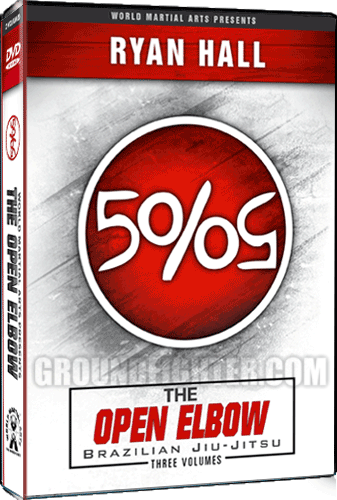
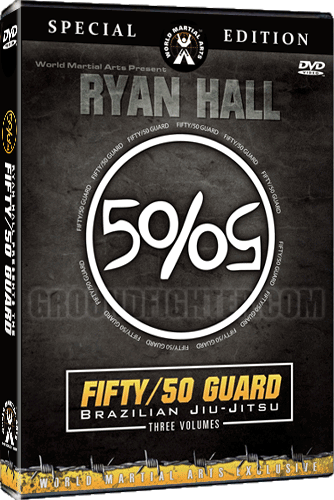
Ryan Hall, the BJJ wizard who is the culprit behind the most comprehensive collection of BJJ instructionals ever issued. Ryan Hall is one of the most accomplished grapplers in the game. He is also a mechanical engineer and an extremely intelligent person. He was the Danaher before John Danaher, albeit not in the realm of leg locks (much). There are a bunch of Ryan hall DVD instructionals available, all of which cover a different aspect of BJJ in depth. Here’s how a Ryan Hall DVD can teach you to become a more complete grappler.
Ryan Hall was a relative unknown to me, at least in competitive terms. back when I was a white belt, heading for blue, I came across a Ryan Hall DVD Instructional. It was the one on inverted guard and I was completely disappointed. I kept wondering when the inverted guard stuff is going to start and just skimmed through to the third volume When there, nothing Ryan demonstrated made any sense to me. He was constantly referring to a previous couple of volumes and I was lost. So, the decision was that his stuff was not at all practical and/or effective. If I only knew how wrong I was.
Further down my Jiu-Jitsu journey, I decided to give Ryan hall and his DVDs another go. I had an injury that spurred me into a very specific direction and one of Ryan’s titles simple made sense. It was then that I discovered how stupid I was in the beginning. Ryan’s stuff now seemed to make much more sense. There was clarity to it, structure and every chapter was building up to the next. All in all the perfect instructional. So, I did what BJJ nerds do – I bought all of Ryans DVD instructionals and went deep into it. As a result, I got through a blue belt in less than two years and built a very well rounded game.
The Wizard Ryan Hall
Ryan Hall is a black belt under Felipe Costa. To those that do not understand the value of that let me put it like this: Ryan Hall is a featherweight grappler. Felipe Costa is even smaller than him. As Joe Rogan often says, if you want to learn BJJ learn it from a small guy. The level of technical knowledge in just one Ryan Hall DVD is mesmerizing. That’s why the complete set is going to take you up a few levels, as long as you put the time in.
Some of Ryan Hall’s accolades include ADCC, Worlds and Pan Ams success against high-level black belt opposition. He even made it to the Ultimate Fighter and subsequently into his UFC.
In the beginning, Hall started his martial arts career as a Thai boxer. He never gave grappling much thought until he went to a jiu-jitsu class or two. After the first competitive experience, he was hooked. He went on to dominate the grappling scene and ultimately opened his own BJJ academy “50/50 Jiu-Jitsu” in Washington DC.
Hall also rose to prominence with a viral video representing his grappling skills ina real-world self-defense situation. Namely, in a very famous clip, he took care of a drunken opponent thanks to his BJJ. He outlined takedowns, mount control, and a rear-naked choke to defuse a tense situation without any bodily harm. In a funny twist, the attacker later became his student.
Ryan Hall’s Teaching Style
Ryan Hall is famous for the inch-perfect use of triangle chokes and inside heel hooks more than anything. As with all other top-level competitive grapplers, he has a very well rounded game. His submissions of choice are simply areas in which he specializes for ultimate success.
That said, Hall has a very cerebral and methodical approach to BJJ. He takes into account every asset he has. For example, he is an extremely flexible guy with a lanky body type. Both his flexibility and his long legs and arms are what he develops his game around. His smart approach to the Gentle Art is also reflected in his teaching style, visible through any Ryan Hall DVD instructional.
What you can expect from a Ryan Hall DVD is a lot of material per volume. Some of his discs are in excess of 3 hours and that’s per volume! While there is a ton of material, there’s no doubt about the way it is organized. Every second is structured in a way that makes sense and is easy to follow.
Ryan is a smart guy that uses everyday examples to clarify some of the fundamental concepts of his game. What you can’t do with a Ryan Hall DVD is skim through and skip to the next volume. It might work, but you’ll have gaping holes in your game. Instead, make sure you pay the closest attention to the first volume of every set. THat’s where he lays the foundations to everything that comes later. Simply put, every Ryan Hall DVD is a complete instructional of a specific aspect of Brazilian Jiu-Jitsu.
Ryan Hall DVD Instructionals Collection:
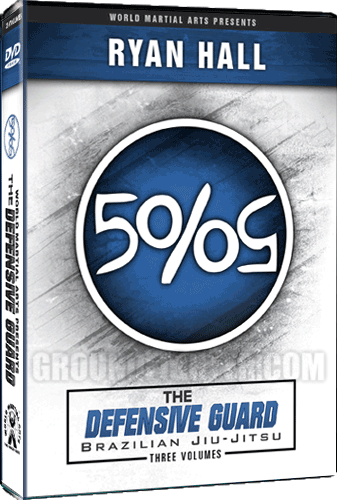
If there’s one thing Ryan Hall is really known about, it is his guard game. After all, he is a tall lanky guy with extreme flexibility skills. His guard game is the stuff of nightmares for both grappling and MMA opponents. That said, he has an amazing DVD on how you should go about making sure nobody can pass your guard. it is a highly technical, conceptual approach to the guard game that fits everyone, from beginner to black belt.
As with many of his other titles, Ryan’s Defensive Guard release is spread across three volumes. The first volume is all about the basic building blocks of your guard wall. The wall concept is one very specific to Ryan and he spares no details in explaining it. Both beginners and advanced students, make sure you really go through the fundamentals in the first volume. Pay especially close attention to the basic movement patterns for guard retention. Learn those, and you can play any guard you want.
The strategy follows the fundamentals before Ryan moves on to the meat and potatoes – building the defensive wall. As with every Ryan Hall DVD, there’s the primary route of action and a backup one. Up until the end, Ryan goes through everything, from grip placement to principles of off-balancing.
Special Hint: Remember to pay attention to the “Your money or our life” concept. It’s a game changer!

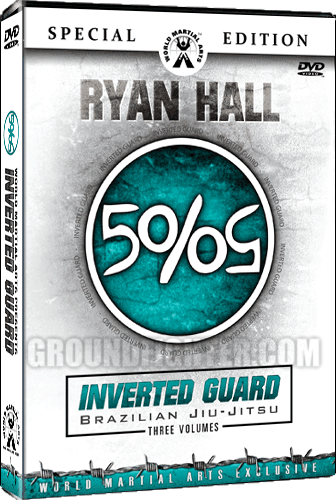
This is the first Ryan hall DVD I ever picked up and didn’t understand at the time. Later on, when I rewatched it turned into one of the most valuable resources in my DVD collection. The inverted guard is not an easy style of the guard to learn. Unless you’re learning from Ryan Hall, of course.
As with any Ryan hall DVD release, it’s all about theory in the first volume. What you won’t get in the first DVD of this set is any inversion whatsoever. And that is the best way to learn. Ryan explains every point of attachment and control you need in order to even think about inverting.
As the set progresses, Hall goes more towards the technical aspects of the inverted guard. Still, before you invert you’ll need to learn how to tilt. Hall explains it to perfection, along with a whole arsenal of sweeps and a few submissions for good measure.
The final volume is all about fighting off an inverted position. Everything from how to attack, how to defend and transitions is in this volume. There’s a nice portion of the disc dedicated to the structure of grips and posture alignment. Pay close attention to it and you’ll be impassable. Now combine all your newfound knowledge with the Defensive Guard Ryan hall DVD and you’ll become unbeatable from the bottom.
Special Hint: Master the tilting setup. Every good inverted guard starts from that specific motion.
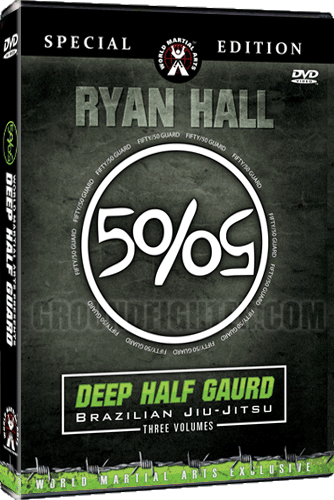
The final in the series of bottom game Ryan hall DVD instructionals is one dedicated to the deep half guard position. Actually, this is probably the first instructional on the subject that actually explained the position. Ryan’s knowledge of the deep half guard is at a crazy level. The best thing about it is that he finds a way to dissect it down to the bare bones.
Normally, it’s all about concepts and theory in the beginning. What stands out in the first DVD is the entries into the position. Even more specific, the movement patterns that get you into the correct position to go for the deep half guard. These are the true cornerstones of any kind of deep half guard game, so mastering them is essential.
The second part of the DVD is all about attacking from the deep half. The most basic sweeping attacks are all here, along with every detail you’ll ever need. Even complete beginners can quickly adopt the techniques displayed in this volume. Of course, the mandatory waiter sweep is the main focus, with many variations available.
Capping things off are advanced deep half guard attacks. In other words, this is the “Jedi mind trick” DVD, the one that’s going to make you a wizard from the position. Some great passing tips round off this must-have Ryan Hall DVD set.
Special Hint: Focus on truly understanding the leg lever, and you’ll be able to do whatever you want from the deep half guard.
This set completely switches the focus of instructions. From the bottom position, Ryan goes on top to dissect guard passing. Again, expect a highly structured and technical DVD based on simple and effective concepts.
The ever-present theory of guard passing is normally at the very start. From there on, it is all about how to make yourself as stable as possible before you even attempt to break a guard. After the long and detailed presentation of theory, Ryan goes into the positions themselves. he has a great way to systematize the most common position you might find yourself in when passing. This is an integrally crucial part of the instructional that you must master completely!
The second and third volumes go deep int very specific passing positions. Ryan clarifies both standing and kneeling guard passing systems. Furthermore, he goes deep into leg drags, double under passing and the over-under guard pass.
Special Hint: Become a grip fighting wizard from the top and you’re going to pass every guard. Do not skip over the grip fighting section of this release at any cost!
This is the Ryan Hall DVD that brought me back into the Hall fanbase. This is the release that opened my eyes to how good Ryan Hall instructionals actually are. It is simply put a submission instructional. However, it is a submission instructional, unlike most others. While other releases focus on single submission attacks, this one deals with a whole family of attacks.
The arm triangle choke is a very effective choke that you can pull off on any size and level of opponent. It is a move that is highly technical, yet simple enough to quickly get the hang of. What most people miss is that many other chokes in BJJ are also based on the same principle. The D’arce choke, the Anaconda, the Guillotine, the Ezekiel and many others work with the same principles. Hall goes through all the inner workings of strangling someone from an arm triangle configuration.
After going through every possible choke variation, Hall starts explaining the basic concepts of positional control. Only then does he start with entries and connecting everything into systems. He offers ways into arm-triangle chokes form both the top and bottom positions. Even more important, he covers the most common problems in the troubleshooting segment of the release. Pay attention to the drills he demonstrates at the very end, and incorporate them into your training. You’re going to become a submission machine in return.
Special Hint: Learn the sleeve Brabo (Ezekiel) choke variation. Look into the No-Gi variation in particular!
The triangle choke is Ryan hall’s original signature move. He pretty much-triangled everyone in his division at one point or another. Even today, after so many years of not really going for triangles he’s known as the triangle guy. There’s a good reason for this – he knows everything there is about the choke.
This set is going to work for everyone. For people that are built like Hall though, this DVD is going to make a world of difference. Nothing related to triangle chokes is going to be a mystery after you get through this release. Even after the first volume, you’re going to have a great understanding of triangle choke mechanics. Furthermore, you’re going to start seeing the triangle as a position instead of just a submission hold. That’s a game-changing concept right there!
As he goes deeper into the material, Hall starts explaining angles of attacks as well as entries. There are closed guard setups of triangle chokes that you probably never even considered as a possibility. Moreover, there are some wicked half guard setups along with great drills to make sure you truly master the system. that’s not all though. There are also advanced attacks, such as triangles from the inverted guard and the sitting guard. There is also a great system of attacking with triangles from top positions like the mount and back control.
Special Hint: Master the posture brak and angle maintenance drills!
There’s a reason why most of the highest level grapplers have an instructional on the back position. It is the ultimate attacking position that offers the most security in BJJ. Ryan Hall is no stranger to this position, along with every attack you can pull off from there.
This Ryan Hall DVD starts off slowly and methodically, with some great concepts regarding the back position. It is all about how to best control an opponent without giving up anything. The complete first volume is all about how to position your torso and limbs so that you render any opponent helpless.
Once you’re able to keep and control the back, it’s time to get into finishes. The second volume is the submissions one. It all starts with chokes from the back, both Gi and No-Gi variations included. Arm locking attacks build on the choking ones, offering fantastic opportunities. Of course, there are the mandatory Ryan hall triangle attacks as well.
For more advanced, or guys into entertaining movements, the final volume is all about rolling back attacks. Attacking from the turtle position, from side control and pretty much everywhere are covered in detail. This fancy-looking movement is actually not hard at all and Ryan is the man to dumb it down for all of us.
Special Hint: The harness principle is arguably the most important one to focus on from this set. There’s no submission without control, and there’s no controlling the back without the harness!
This is a very interesting DVD instructional, to say the least. There are not plenty of DVDs out there that are purely conceptual. Do not get me wrong, there are plenty of submissions in this Ryan hall DVD. The whole approach though is much different, just as the name suggests. Similar to the arm triangle release, the hall focuses on a family of attacks that are based on the same concept – an open elbow.
The idea behind the open elbow is how to control someone by breaking the structure of their arm so that it turns in to a lever you can manipulate. All concepts that refer to the open elbow are covered in high detail. The first volume contains both theory and basic strategies of controlling and attacking via the open elbow.
The second and third volumes focus on applying the open elbow principle to two very common armlocks. The Kimura and Omoplata, respectively are the main subjects here. In both cases, the approach is quite different from the traditional one. Once again, Hall demonstrates them as positions instead of just the position holds. Even better, he keeps building on the open elbow concept building logical systems in every direction.
Special Hint: The complete first volume is an essential lesson in the fundamentals of Jiu-Jitsu. Understand it completely before moving on!
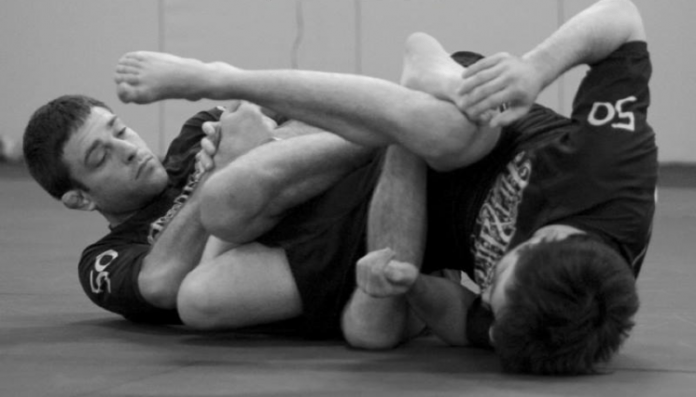
Why is this Ryan Hall DVD at the very end instead of up there with the other guard instructionals? Well, first of all, it is a No-Gi DVD, whereas all other releases are in the Gi. Furthermore, this is the DVD that focuses on Ryan’s other signature move apart from the triangle – the inside heel hook. This is the one source on leglocks from the 50/50 guard that every grappler needs to own. It is as simple as that.
Ryan named the first volume 50/50 illuminated. This is exactly what happens in this disc. Ryan sheds light on everything that is related to the 50/50 guard position. Limb positioning, grip fighting and digging for the heel hook are some of the main subjects of the first volume.
The real magic happens in the second disc. Ryan is famous for his Imanari roll to a 50/50 heel hook in both grappling and MMA. he even did it multiple times in the octagon. He breaks down every entry you can imagine, along with his signature Imanari roll.
The gold mine is, understandably, the final volume. This is the advanced section, filled with in-depth entries and incredible finishing details. It also contains crucial information on dealing with the 50/50 guard from a passing perspective. This is the ultimate complete 50/50 guard instructional, especially for all the heel hook lovers.
Special Hint: Make sure you master the passing sequences. Knowing what breaks the guard can put you a step ahead of any opponent trying to pass. Conversely, you’ll hit heel hooks with much more efficiency!
You Might Also Be Interested in:




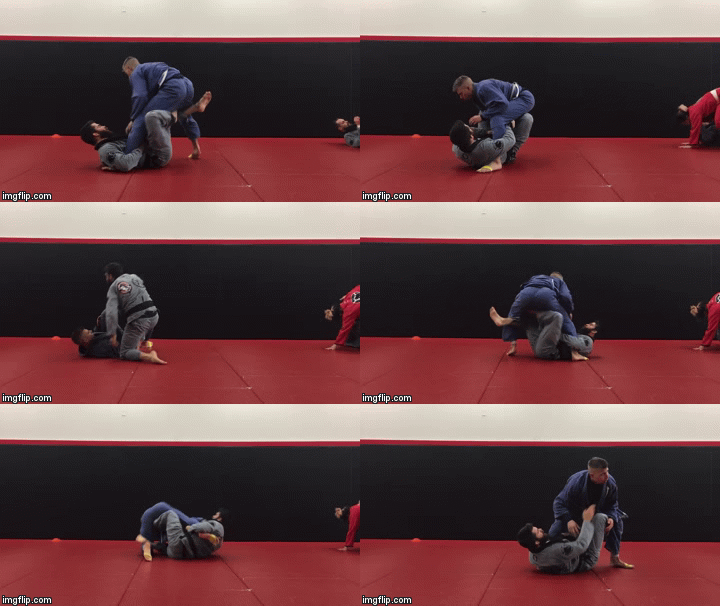 The basic idea of sweeping is to make your opponent base with one limb only, while the other is not touching the ground. From there, you choose the direction of sweeping based on the opponent’s reactions. From the X-guard, the X structure of your feet allows you to easily lift the opponent’s hip. That means that the far leg is going to be the one that goes off the ground in most cases. All you need to do is extend your legs. This is going to allow you to sweep to both sides, as well as over your head.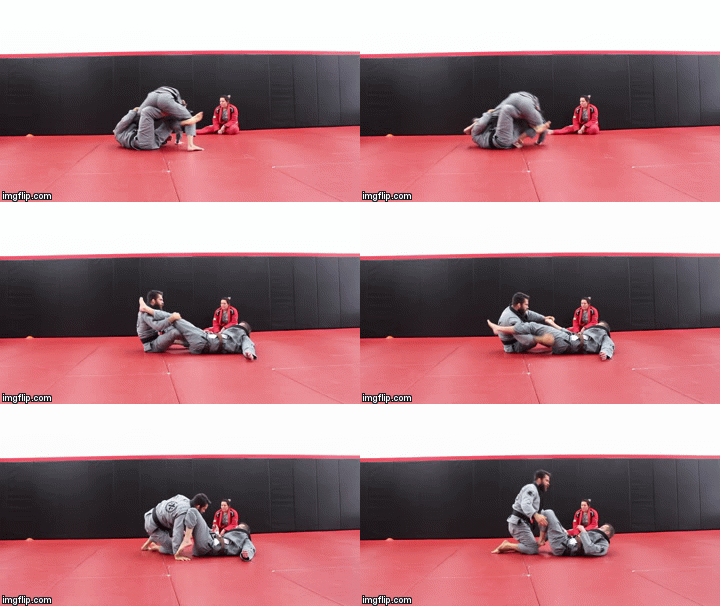
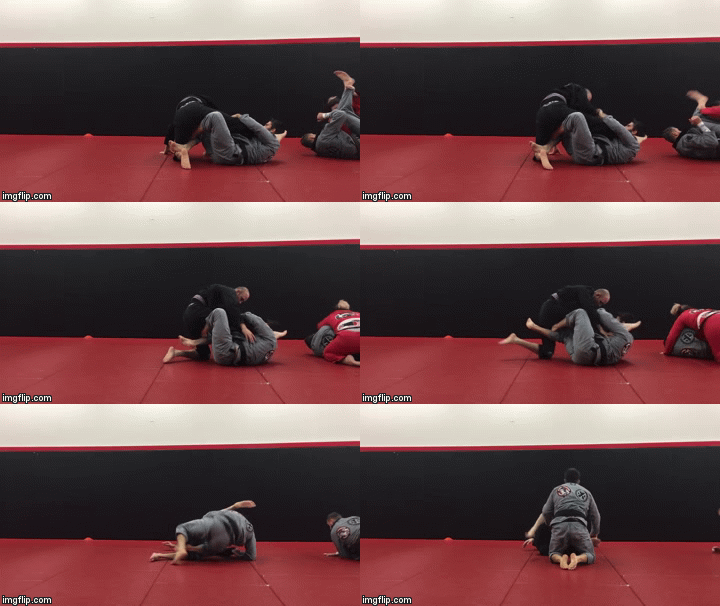 Also available is a sweep that focuses on lifting the other leg. First, you’ll need to extend the opponent’s hip with your legs, just like with the first sweep. Next, perform a technical standup, while keeping tight control of the leg that’s on your shoulder. Your opponent is going to have no choice but to fall down, with you in prime position for passing or a leg lock.
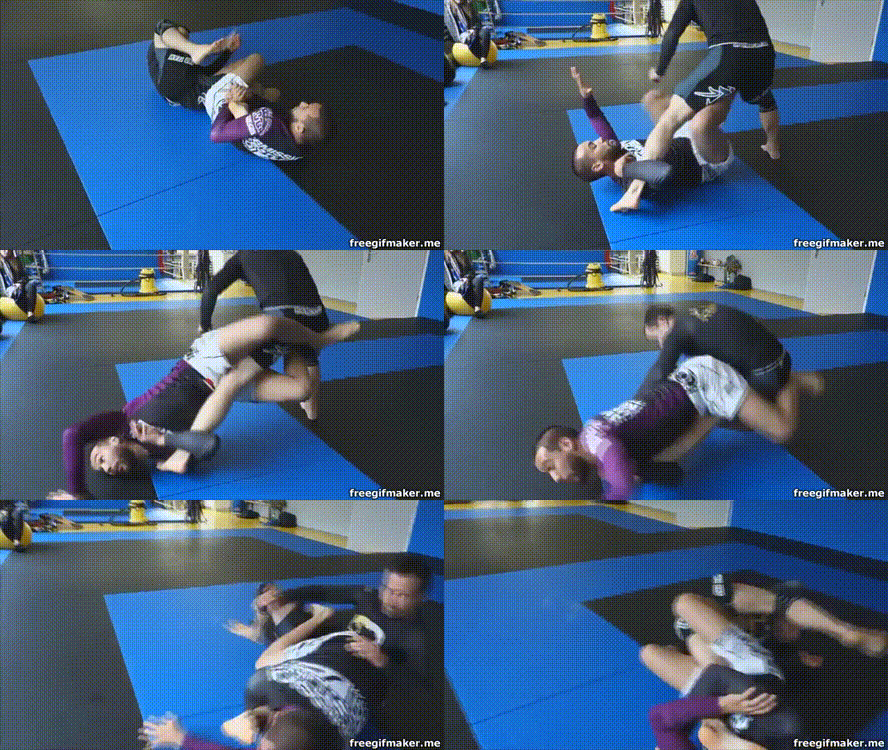 In terms of leg locks, you have virtually every lower body submission you can think of. For example, the kneebar is very easy to get. All you need to do is get the front hook off your opponent’s butt and swing it across the other leg. From there a simple shoulder roll is going to land you deep into a kneebar. You can finish there, or transition to a more dominant leg locking position, like the Inside Senkaku.
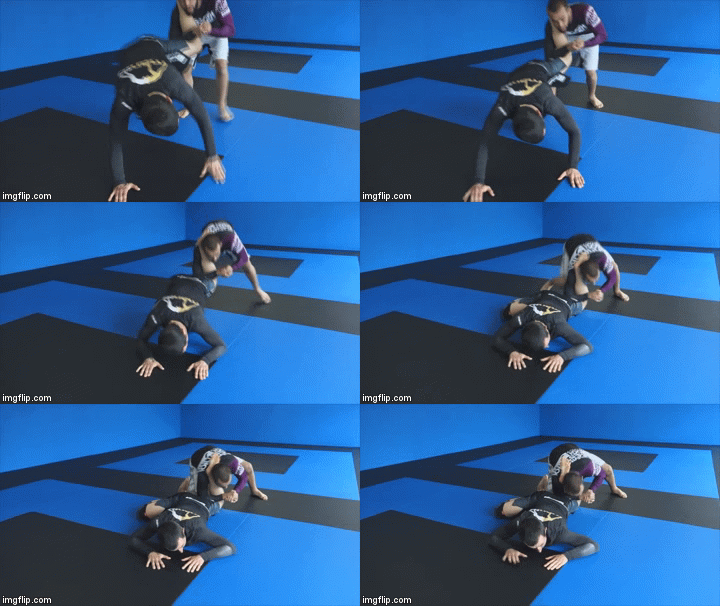 Off the technical stand-up sweep we covered earlier, you can hit a nasty calf slicer. When you go for the sweep, oftentimes your opponent is going to choose to turn in an attempt to run away. When they do this, just pull them down towards you, placing your forearm deep behind their knee. You’re then going to use your shoulder and your whole body to push their foot towards their butt.
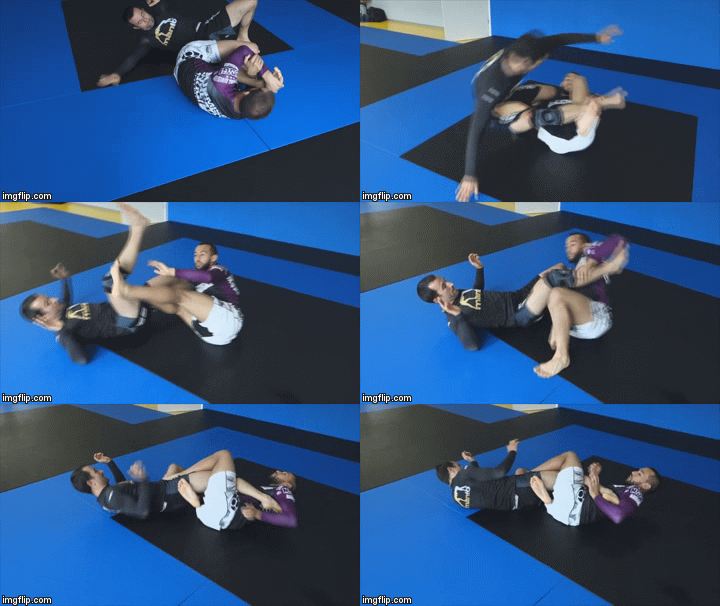 Also, you can always attack off a completed sweep. Instead of going up and passing, use the position that opens up. Both your feet are already among the opponent’s legs. All you need to do is enter into Ashi Garami and hit a heel hook or ankle lock.
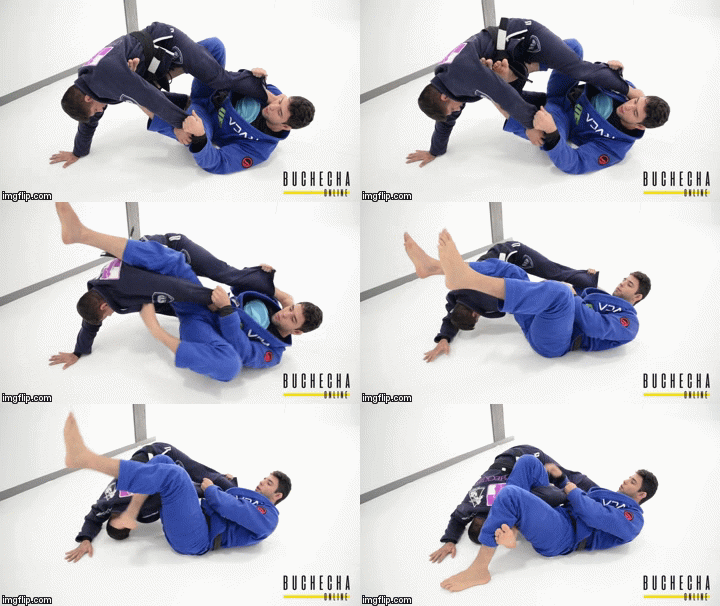 In order to get an upper-body submission from the X guard, You’ll need to off-balance your opponent once again. For an Omoplata, you’ll need to control the opponent’s arm via a sleeve grip and keep it as close to you as possible. Then, release the hip control and thread both legs on either side of the opponent’s trapped arm. The Omoplata is right there for the taking.
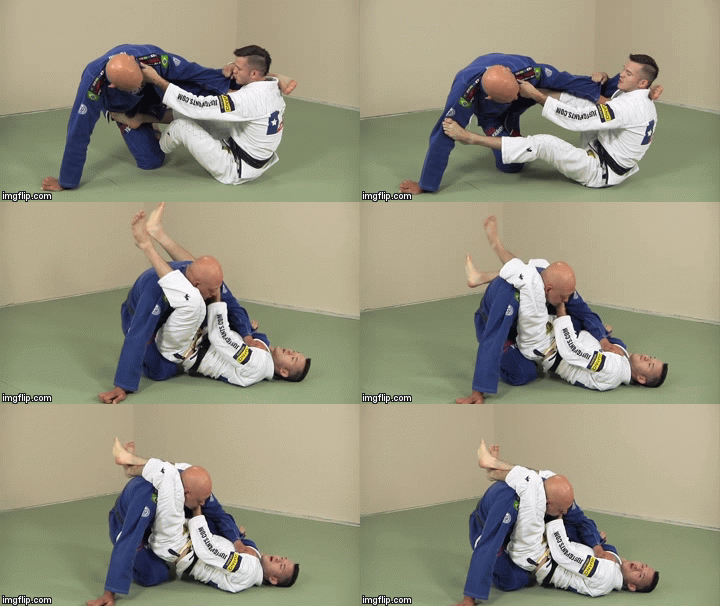 A triangle, on the other hand, is more direct. That said, it is not your usual triangle attack, to be honest. The same position of the arm is essential, i.e. a grip on the sleeve. This breaks the opponent’s posture enough for you to control their head and sneak one arm over their shoulder. Next, sneak your other leg all the way through, catching the opponent’s leg in the triangle along with their arm and neck. It is a leg in a triangle choke that nobody can defend!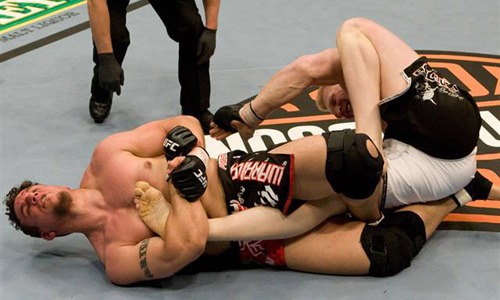
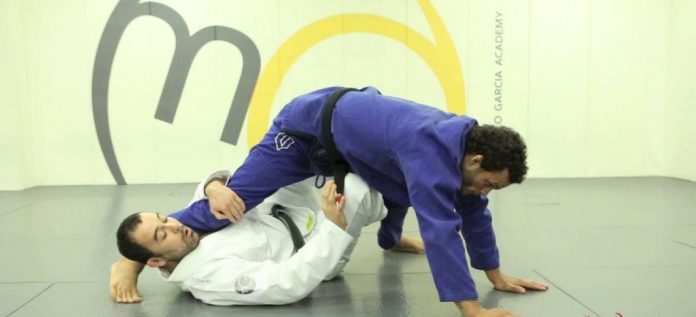
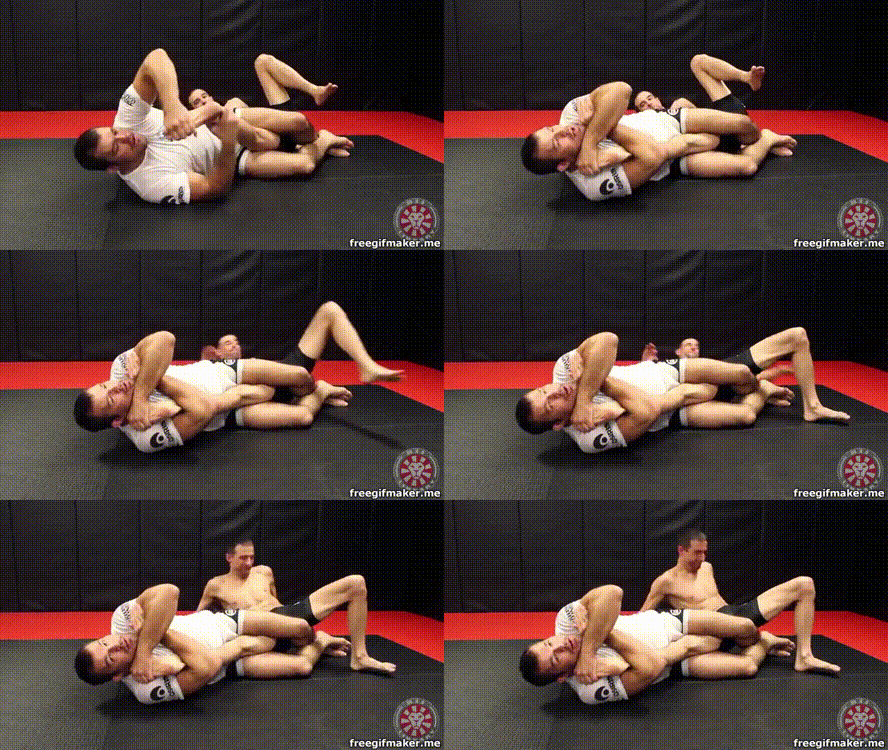 As with all other leg locks, the kneebar starts with correct body positioning. In other words, you need to obtain control over your opponent, before thinking about finishing. Ideally, you should have your body bent at 90 degrees in the knees and hips, respectively. This is the position that allows you to exert the maximal amount of power to finish the submission. It sets you up perfectly for a hip extension with a backward lean movement. To make more sense of the position, it is the same as with a basic BJJ bridge, only you’re on your side instead of your back.
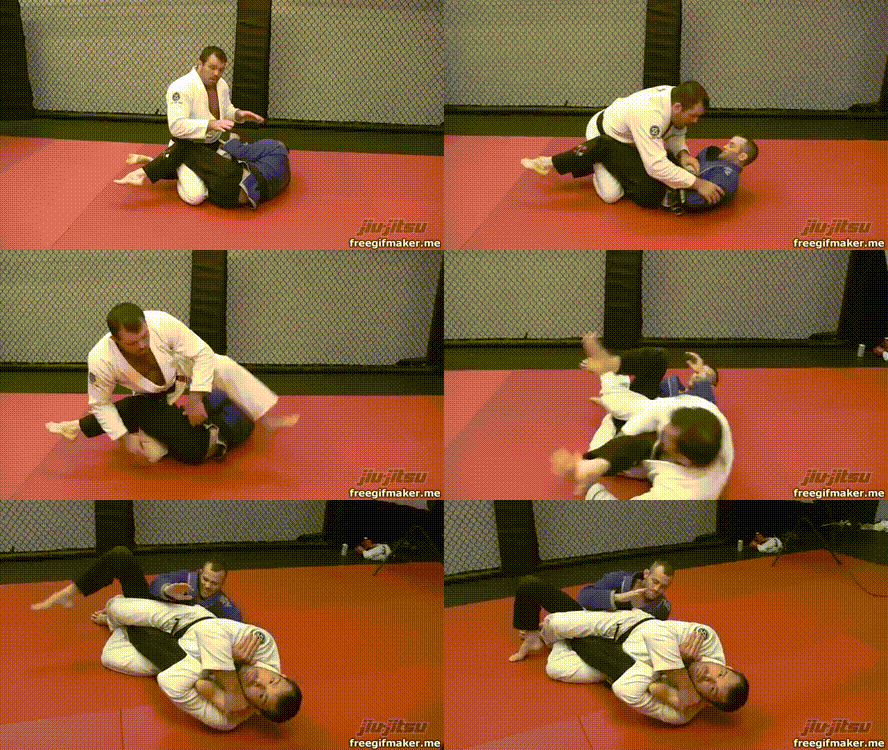 From the half guard, top or bottom, you just need to know which leg you’re attacking. For a kneebar, it is always the opposite side leg of the one that you have in the guard. From the top, all it takes is a little step over with your free leg and a semi-spin. An opponent looking to sweep or underhook is only going to make this easier.
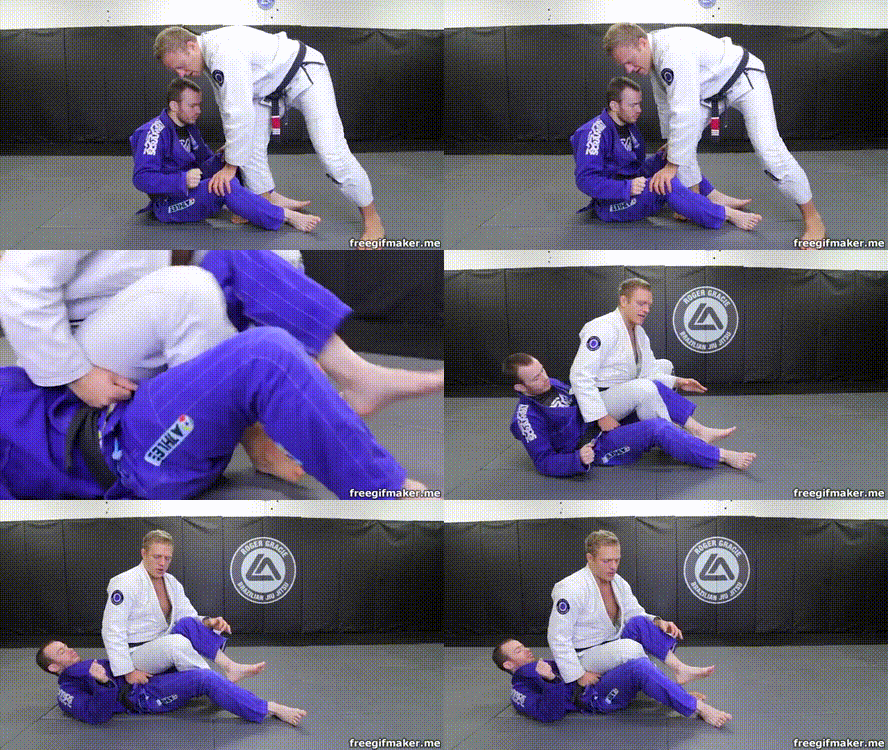 Whenever you’re up against an open guard you can go for the kneebar. It works best against open guard variations which include one leg on the outside. The De La Riva is a great example of this. Just like with the kneebar from the top half guard, you need a spin. Here, the spin is a little bigger, which means you’ll really need to drill it order to hit the kneebar efficiently.
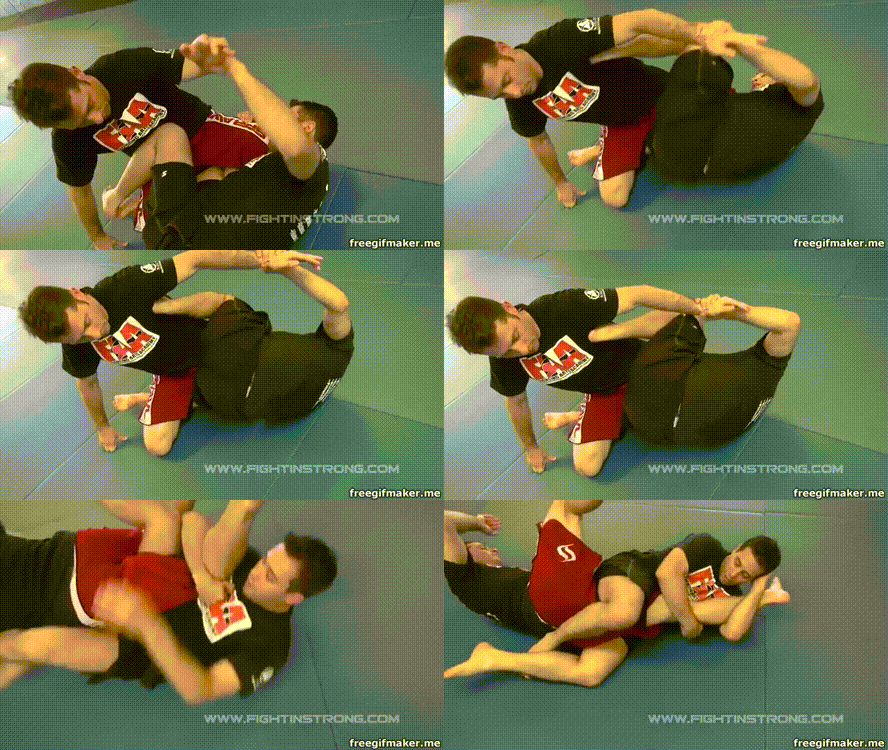 This attack is extremely direct. In the worst case scenario, you’ll end up wit ha sweep. That means you cans still hit a kneebar but from the top. Whenever in the bottom of half guard, you once again need to attack the free leg. The idea is to take your knee shield leg over to the other side of your opponent. You’ll need to thread it past their hips. next, you need to invert in order to get the opponent’s weight over you. From there you’re already in position. You can either spin under or to your side and you’ll get teh tap!
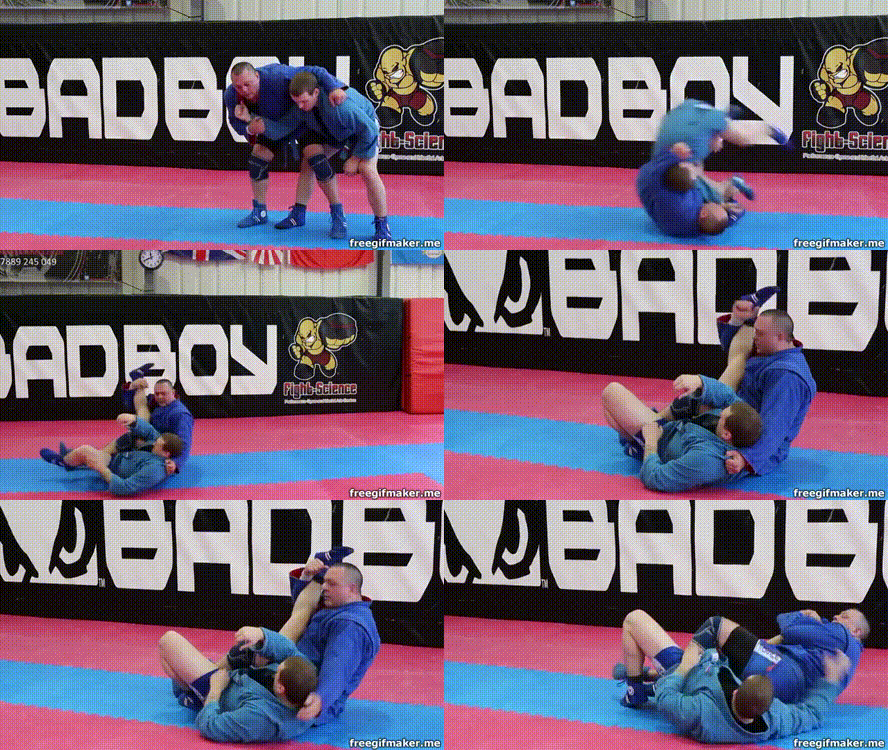 This one is the most popular kneebar setup in Sambo. The Victor roll is a great option to get both a takedown and a submission right away. You’ll need to be at the correct angle, so it works best off failed judo throw attempts. It is also very effective when an opponent slides behind you on the feet. As long as their arms are around your waist, you can hit the Victor roll kneebar immediately. It works at the highest levels of competition and is especially useful in No-Gi.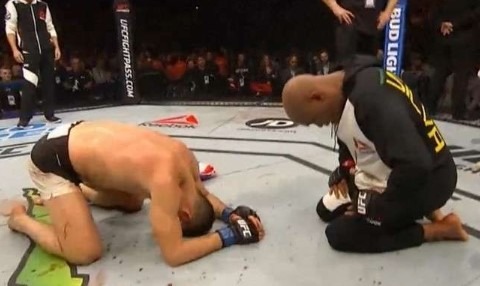
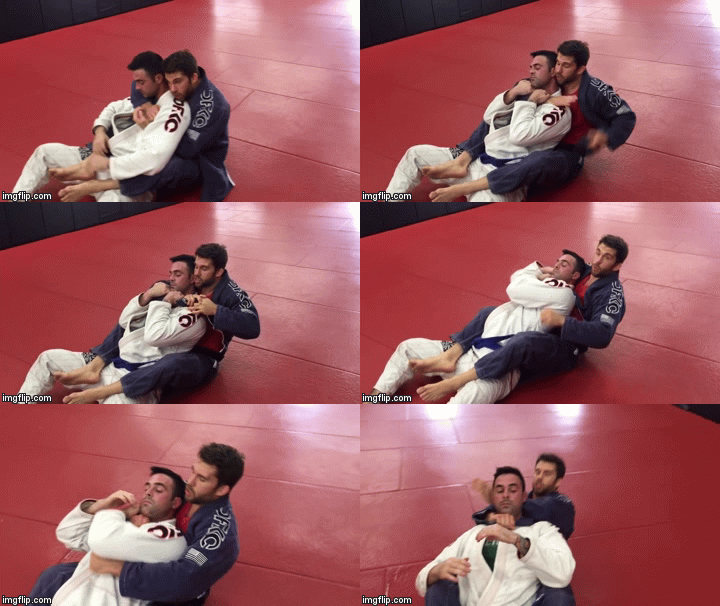 The problem with this back attacks is that people rarely think about linking them together. Provided you have a good grip fighting strategy it is always advisable to go for the RNC. The idea is that even if you can’t get deep enough, you’re still going to be able to grab a collar. the thing is that while you were digging for the RNC you’ve already reached more than enough depth for a very tight collar choke. Of course, you can always abandon the collar choke in favor of an RNC as well. You could even try to hit an RNC on the opposite side of a collar choke attempt.
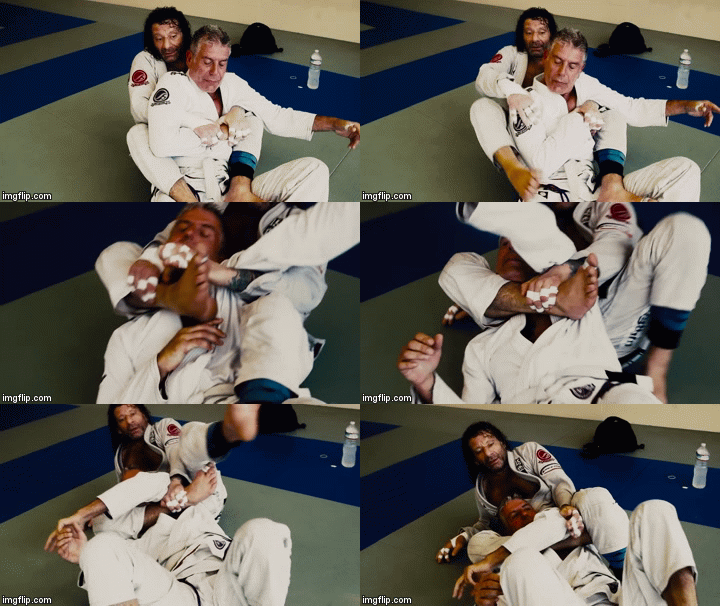 Whenever you are controlling your opponent’s back, you can think about triangle chokes in addition to your basic chokes. Setting it up is easy, especially when an opponent is trying to escape. The basic escape is for the opponent to bridge up until their head touches the mat. This is going to allow you to place both your feet on one side of their hip. For the triangle to work, this has to be the side of the seatbelt control that is over the neck. Once that’s done, simply raise your foot on that side toward the opponent chest, and grab it with your opposite arm. Lock on the triangle and you’re all set.
 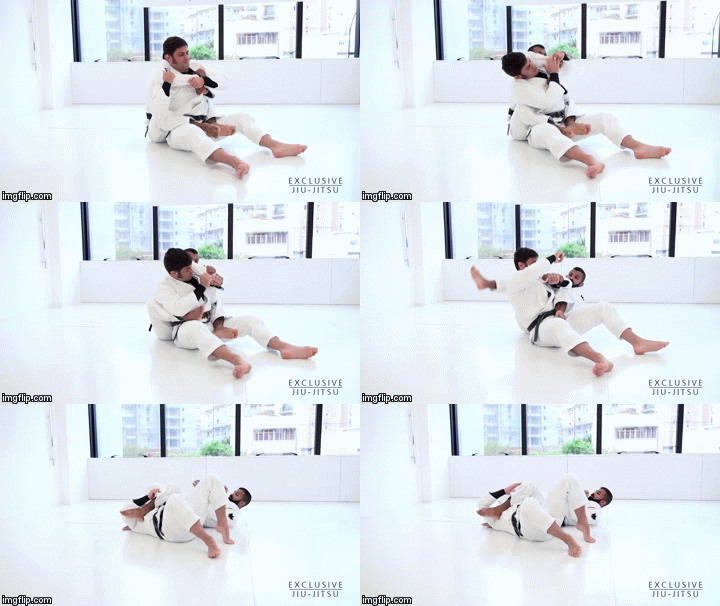 Now, finishing with a kimura from here is highly unlikely. Going for an armbar, however, is a tried and tested tactic. From the Kimura grip position you have, all it takes is to swing one leg over the opponent’s head and you’re in an armbar position. What’s even better is that you can, again, return to fullback control from the armbar position if you need to.
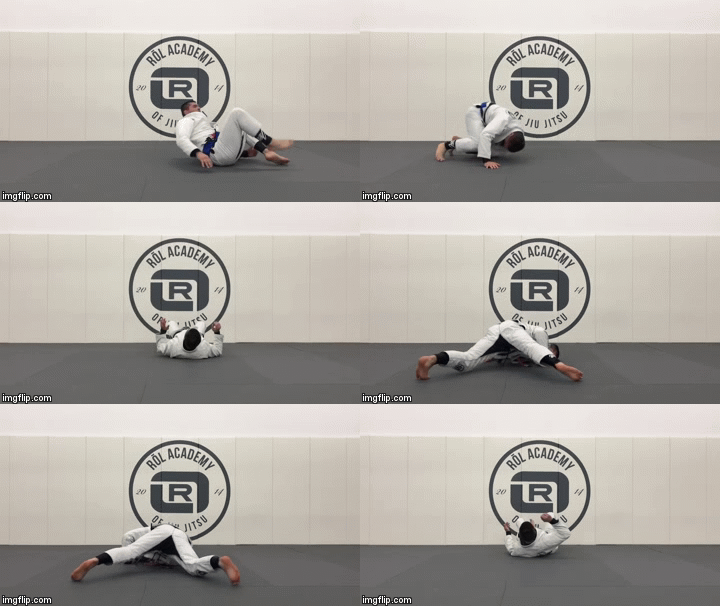 The top option to warm up for Jiu-Jitsu is performing specific drills. To be more precise, specific movement drills. There’s no rocket science here and these could be a warm-up on their own or follow a more traditional sequence. What you need to remember is to be careful not to go into more demanding moves from the start. Start with easy moves, like shrimping and bridging. Make sure to go for enough reps as well, so that you’re both loose and warmed up as you progress with the moves.
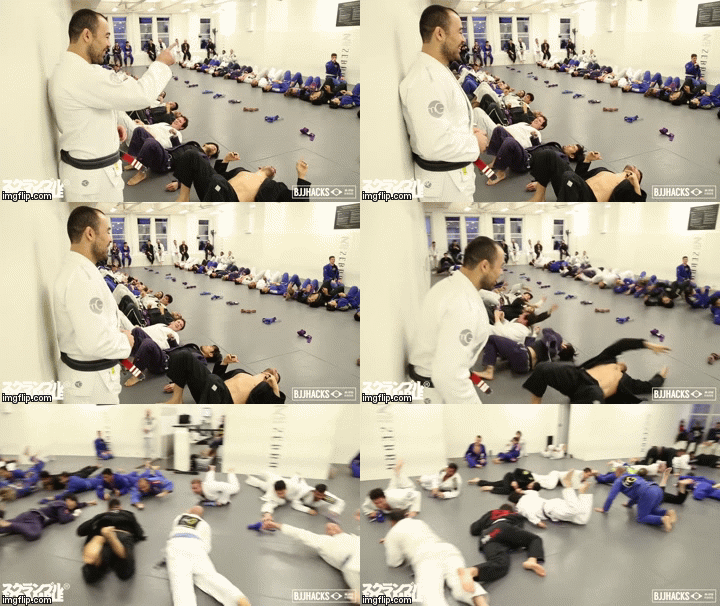 In kid’s classes, this is the preferred way to warm up. Going for games that include BJJ specific movements is not a bad idea for an adult class warm-up routine as well. The advantage of games is that they include the whole class at once, making them both fast and effective. Furthermore, a good selection of games means you’ll be ready for the demands of grappling.
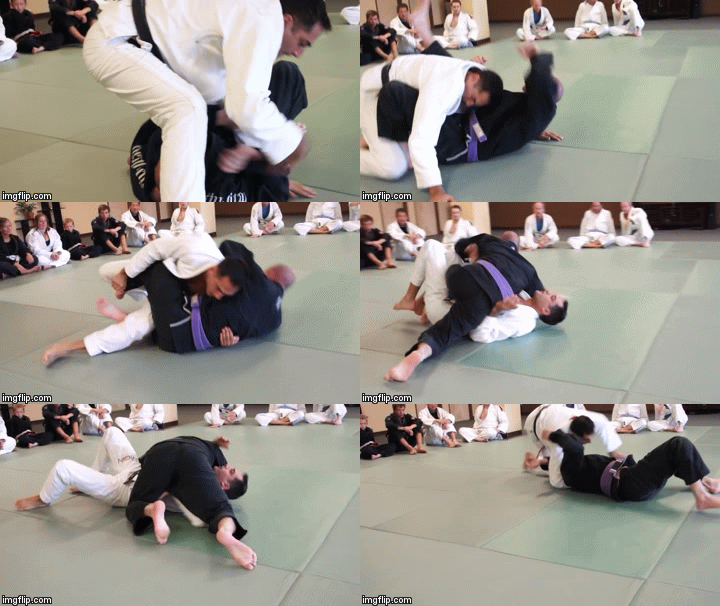 There’s no way that we can exclude flow rolling as a legitimate way to warm up for BJJ. After all, it is as specific as a BJJ warm-up can get. The trouble is that very few people actually know how to “roll light”. As far as advanced BJJ warm-ups go, flow rolling is at the very top. People below the purple belt shouldn’t even think about it. Furthermore, it is not advisable for competitors, unless they’re really good at flowing to warm up like this. Competitors are battle-minded and always looking for an advantage that goes against the nature of flow rolling.
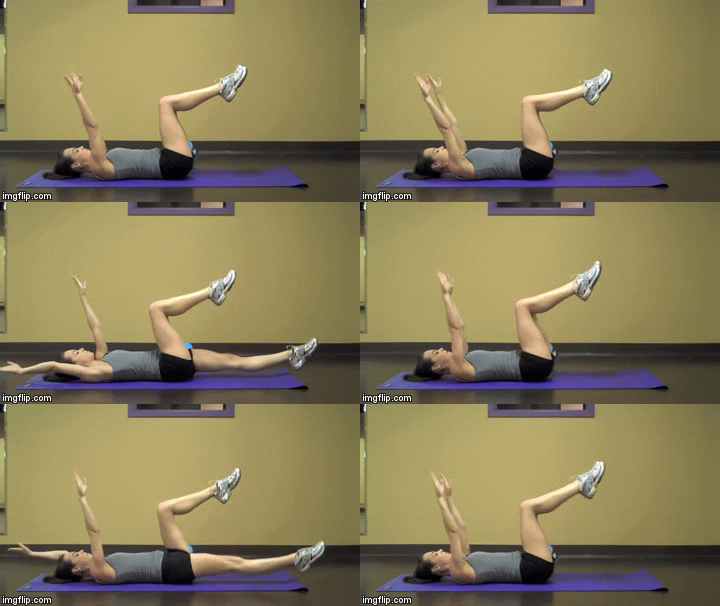 These hit the transverse abdominis while keeping your spine neutral. The basic version is simple, but once you master it you can add external resistance. Bands are the best fir to make this exercise harder.
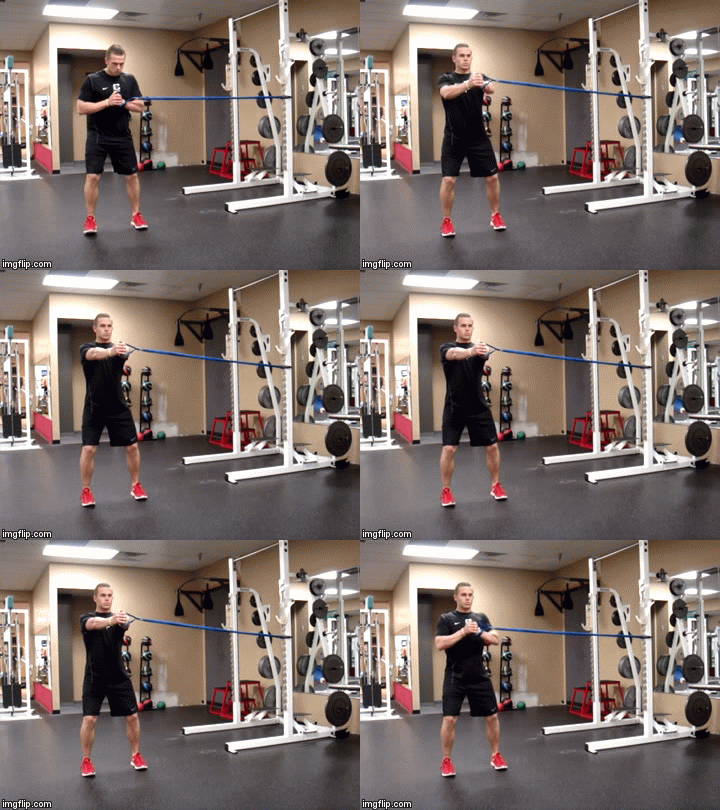 Anti-rotation exercises are as important as they are underestimated. When performing planks, grapplers usually gain some benefits of this type of movement but it is not enough. Here’ a great exercise to include in your BJJ core workout
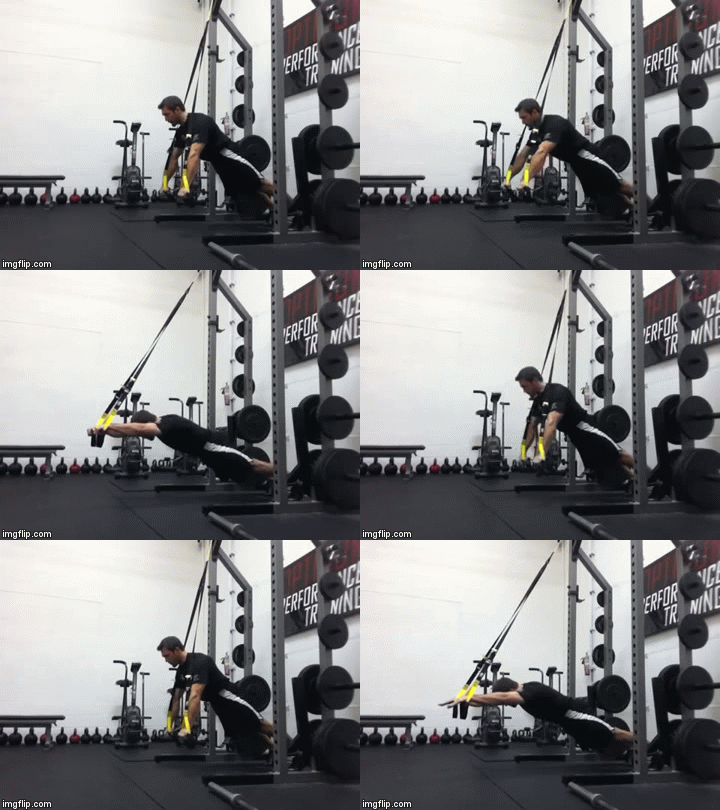 This exercise focuses on lumbar extension as the main motion pattern. Fallouts are arguably the most challenging anti-extension exercises out there. If you decide to stand on one leg only while performing them there’s the added bonus of anti-rotation as well.
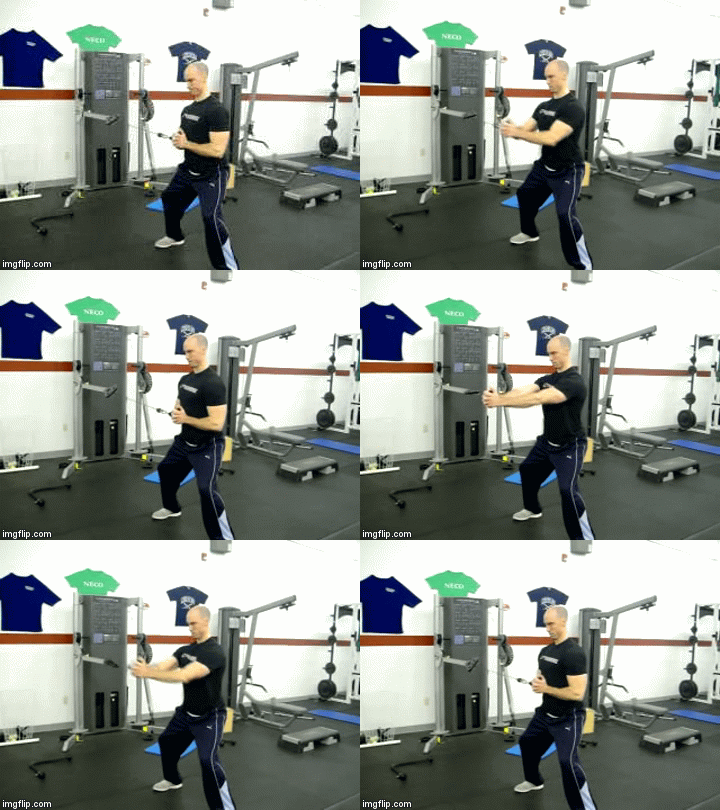 This is probably the most popular anti-rotation exercise that includes moving your arms. Maintain a neutral spine and a firm core. At the same time, the goal is to move your arms and legs. You can see why this is a crucial exercise with a great carry-over to Jiu-Jitsu.
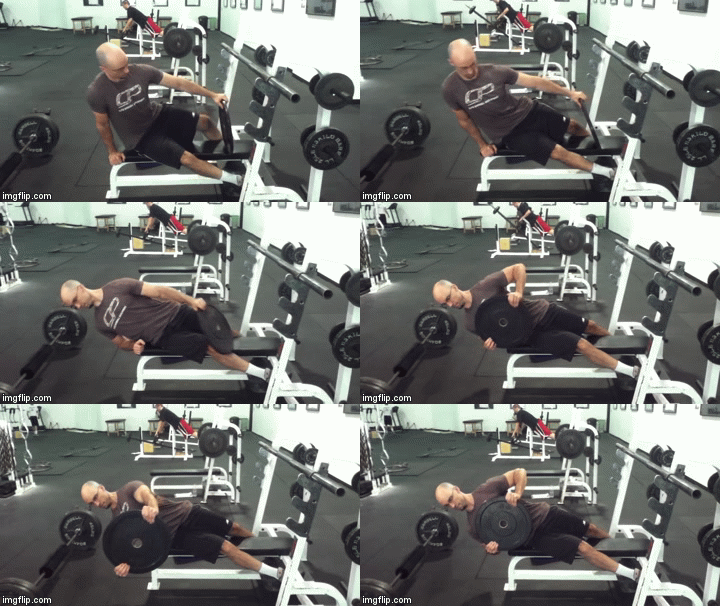 This one requires a partner to anchor you down. Apart from this, it is by far the ultimate anti-lateral flexion exercise out there. Go with just your bodyweight on these at first. Be aware that weighted versions require a lot of time and repetition.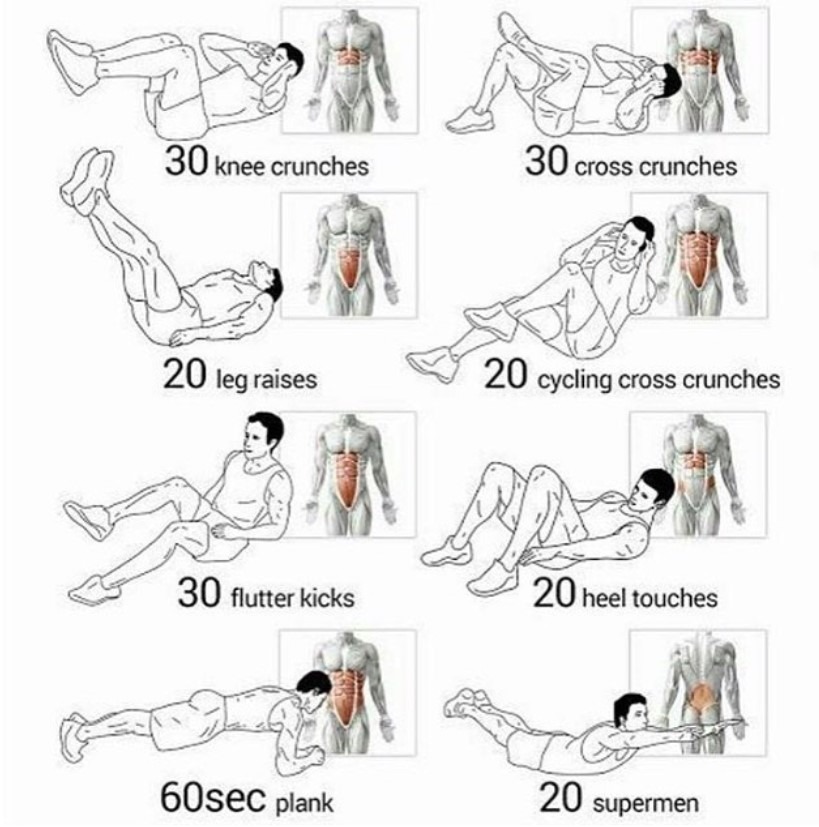
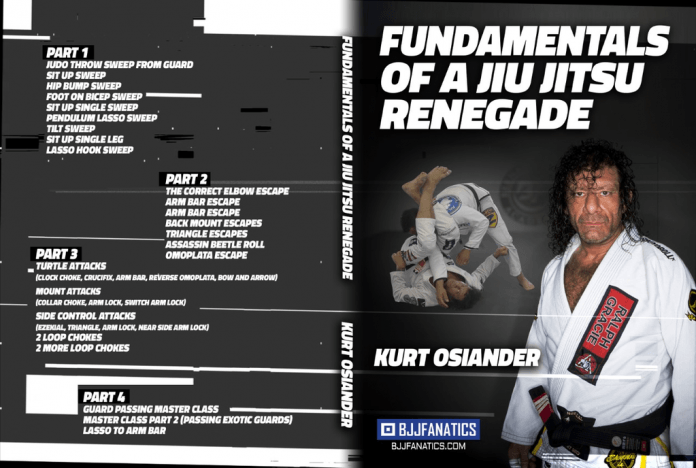
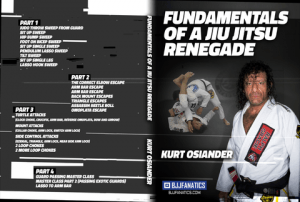
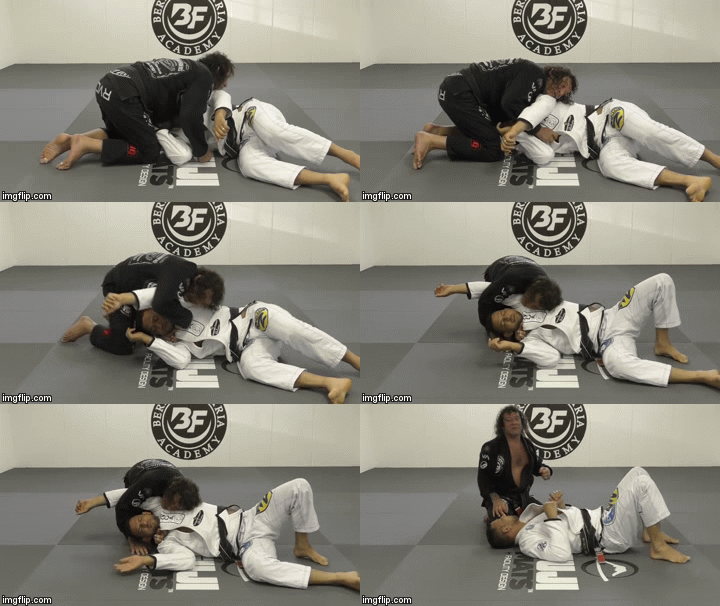 Finally, it’s loop choking time from side control. Not only loop chokes, but there are triangle choke, Ezekiel, and armlocks as well. However, the main focus is on the loop choke. Not only one though, but four of them, organized perfectly into a system of side control attacks that’s going to catch everyone by surprise.
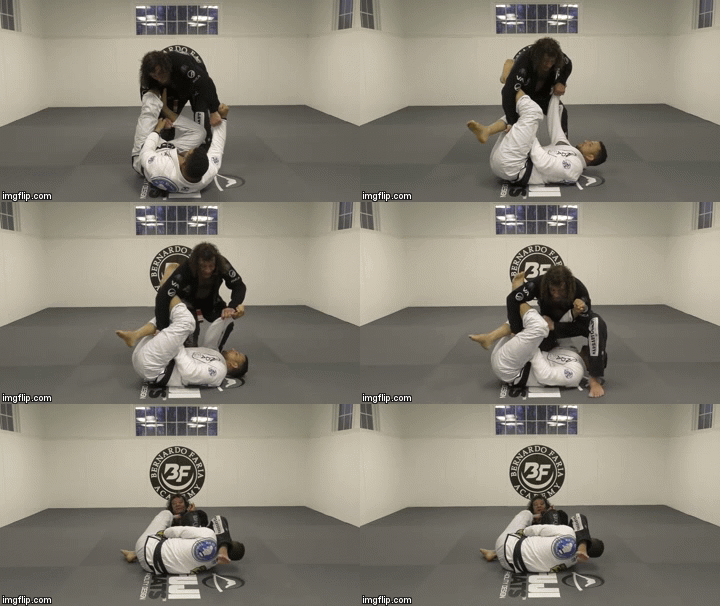 The DVD has just three distinct chapters, only one of which is a technique one. The other two are simply masterclasses on how to pressure the hell out of your opponent when passing. Kurt obviously deemed it necessary to do two masterclasses on the subject instead of one. Furthermore, the second one is all about passing more exotic guards with ease, Osiander style!