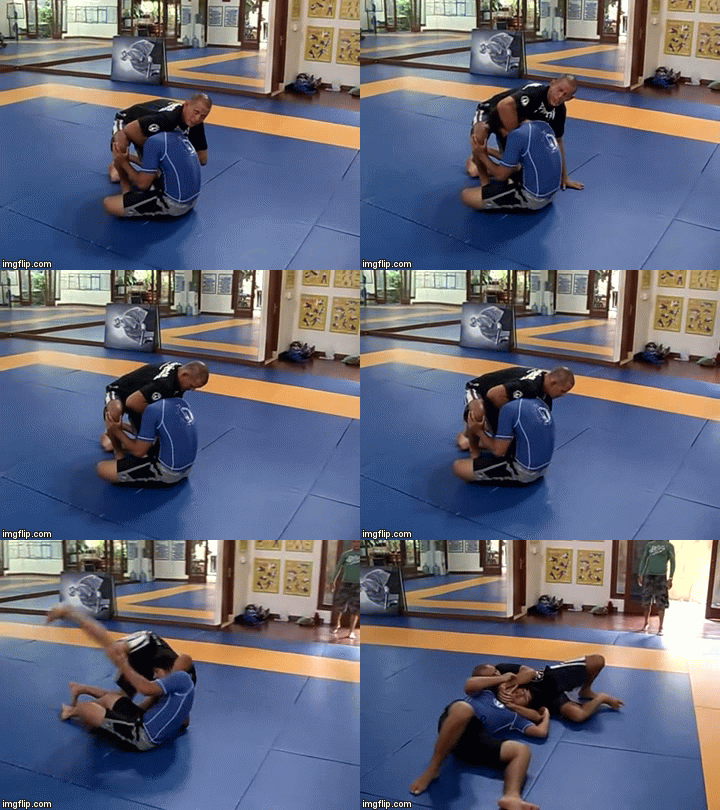
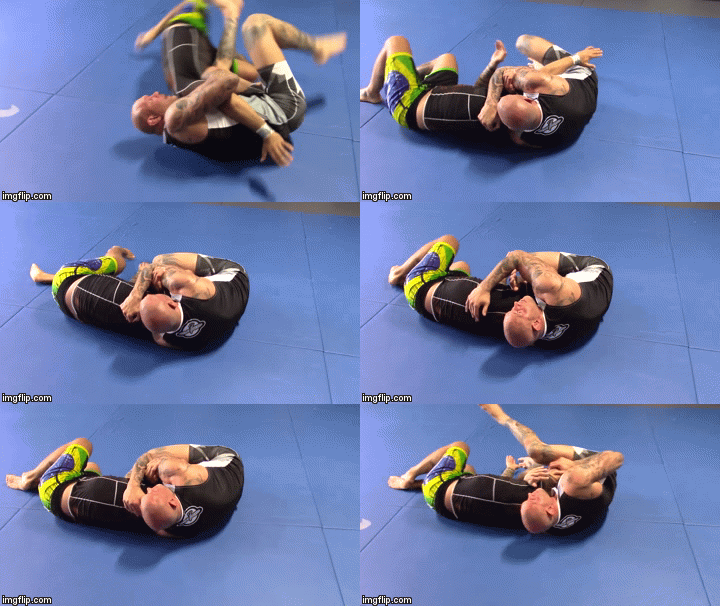
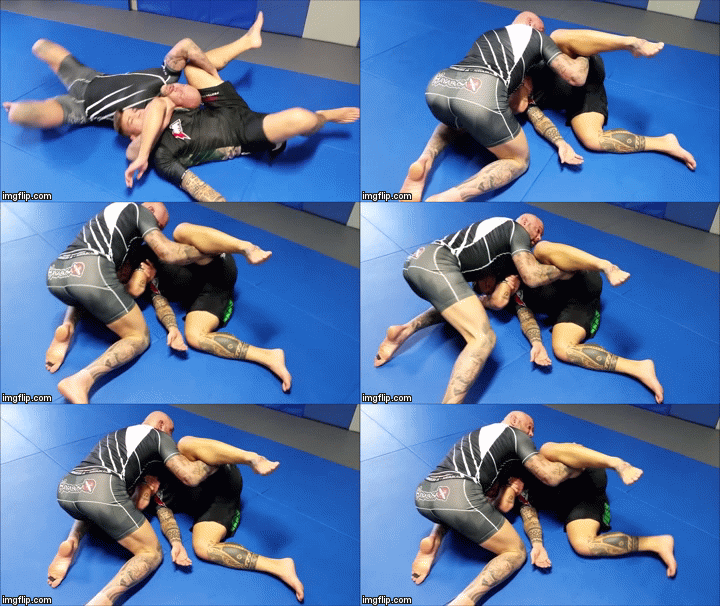
Do You Train Jiu-Jitsu When You’re Sick? Stop Right Now!

Train Jiu-Jitsu With Flu

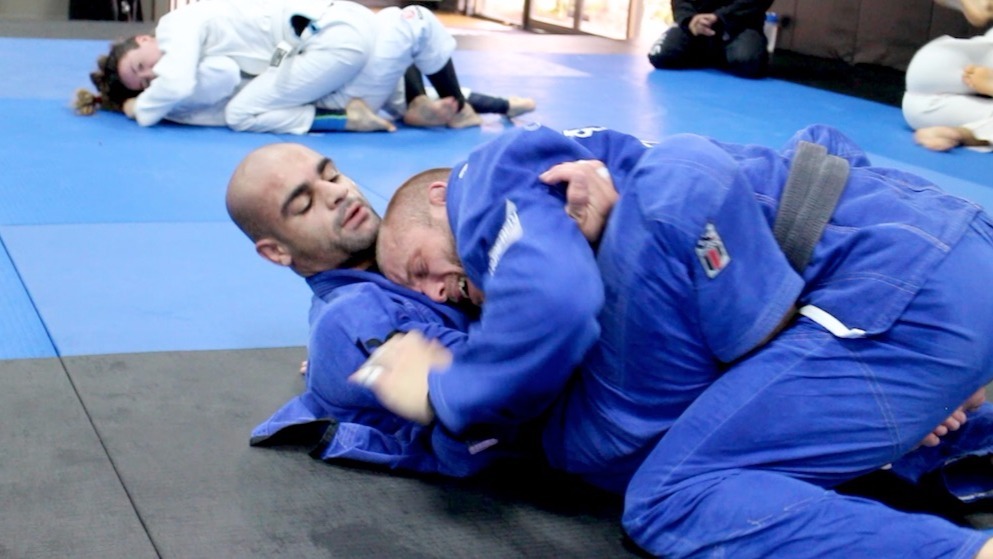
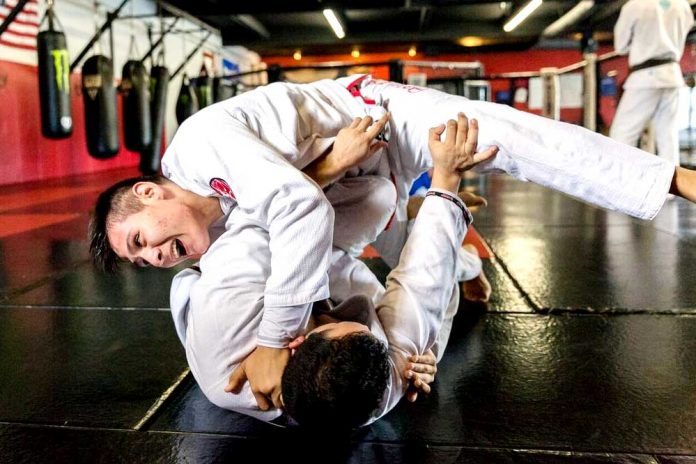
Brazilian Jiu-Jitsu training is an up-and-close experience. As humans, we are hardwired to keep most people outside of our close boundaries. You know that feeling when you’re about to burst with frustration in a crowded bus? Well, the reason for that is primal and lies in our need to keep people out of our comfort zone. Well, most people, at least. A far as Jiu-Jitsu is concerned, comfort zones and personal boundaries go straight out of the window. If you want to train Jiu-Jitsu you’ll have to accept the fact that you’ll have people lying on top of you, or holding you from the bottom in as near a proximity as possible. Furthermore, you’ll have people’s body parts slammed into you while your face is on the mats, all the while having to endure someone’s sweat. And then, there’s the Gi, soaked in the sweat of all the previous training partners of your training partner. Now imagine that the person you’re rolling with is also sick.

The main reason why mother nature has alarm bells ringing whenever someone gets to close to us is not just because of comfort. From an evolution standpoint, we need to keep our distance to prevent the spreading of diseases. Most diseases require human contact, or at least vicinity in order to successfully spread. The common cold is one of them, and we’ll be using it as our example today. However, beware that the common cold is the least of all evil when it comes to diseases. There are much more serious conditions that can find their way to other people when someone goes to train Jiu-Jitsu without a clean bill of health. Going against our basic natural instincts when we roll is enough, there’s no need to spice things up with microorganisms!

Staying at home when you’re sick comes normally to most people in most instances. However, rules go out the window when it comes to BJJ. The Gentle Art is so addictive that staying at home, even when you’re crushed and dead-tired from sickness is simply not an option. While people even fake illness to get out of work, they’d go train Jiu-Jitsu with Ebola if they could. I know that rolling is a lot of fun, but missing a week of BJJ is not going to make your skills go away. it is a question of good etiquette and common sense to stay at home and recover, for the good of everyone. If you go and train in Jiu-Jitsu while sick, you’re a risk to both yourself, your training partners, and, potentially, the whole academy.

When Are You Too Sick To Train Jiu-Jitsu? 

So, how do you know when you’re too sick to train Jiu-Jitsu. Well, there’s one simple rule – if you’re not feeling fine, stay at home. However, this is not enough for die-hard grapplers, so let’s go a bit more into detail.

Normal people know that when they’re feeling tired, drained, have a runny nose, start sneezing or coughing and the like, they need to stay home. It is not difficult to recognize the symptoms of a cold. There are very few people in the world that have never had it. Put simply, if you have any symptoms of a cold, or any disease, for that matter, do not go to BJJ! And, since we’re stating the obvious here, go and see your physician! Yeah, it’s a cold and it will pass, but it may pass quicker if you consult a medical professional and get therapy.

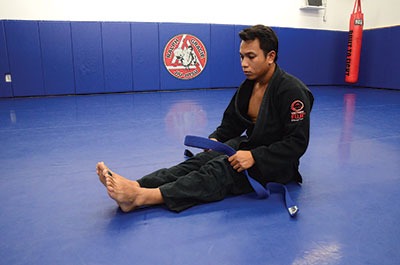
Train Jiu-Jitsu SickWhen our bodies are fighting off bugs, they need all the rest we can afford. All the symptoms you’re having, from a runny nose to elevated body temperature and overall muscle fatigue are not due to the disease itself. It is how your body reacts in order to deal with the intruder and re-establish balance. Getting your body through intense physical exertion is the last thing it needs when trying to get rid of a virus. Going to BJJ is going to make your body use resources to feed your muscles instead of helping your immune system in its battle. So, whenever you have any kind of symptoms that indicate a cold or a disease, you’re too sick to train Jiu-Jitsu. Even if you think you’re feeling fine.

The Risks Of Training Sick

Let’s go a bit deeper into what happens when you go train Jiu-Jitsu while sick. First and foremost, once you have symptoms, that means that the virus has reached your blood. Since blood is the body’s main transportation system it needs to be redirected to its vital organs. This facilitates the immune system’s battle with the diseases. Training with an illness means you’re making your body pump blood to the muscles in order to get you through practice.

You’re also making demands on your metabolism than it can’t fulfill because of the state your body is in. The result is, simply, even further exhaustion fo your immune system. This opens your body up to more infections, and getting a bacterial infection on top of a viral one is the usual way things go. Now, you’re going to be too sick to even get out of bed. Plus, you’ll need double the time and much stronger medicine to recover.

The trouble with sickness like the cold is that it is a caused by a viral agent that spreads easily. Depending on the strength of the viral agent and outside factors, it can affect some or most of the people in your academy. Due to the close contact between people during rolling transmission is very easy. And, since you’re going to roll with multiple people when your train Jiu-Jitsu, who, in turn, are going to roll with others, you’re effectively exposing the entire academy. The worst thing is, that once you get better, a person you originally infected might re-infect you. This creates a vicious circle. Now imagine that the disease is something worse than the cold. A good example is a skin condition. This may even lead to an academy closing its doors for a good while.

When Are You Ready to Train Jiu-Jitsu Again?

Train Jiu-Jitsu SickThe best advice is to make sure you have absolutely no symptoms before you get back in training. But simply getting over the worst part of a cold doesn’t automatically make you ready for the mats again. When symptoms subside, your body is either rid or close to doing so, of the bug. However, just like after a match, your body is exhausted from the fight. It is going to need time to recover, during which the immune system is not up to par. Getting straight back to the gym straight away is going to stress your body further. This is going to pen you up to other diseases, or even worse, the same one.

Makes sure you do not return to action until you’re completely healthy. As a rule of thumb, give yourself a week after symptoms subside. Yes, it is a lot of time, but it is absolutely necessary. Otherwise, you’ll just end up sick again, and keep repeating the cycle throughout flu season. It is better to be stuck at home for two weeks than every other week for a few months. Do the math, and keep yourself and your partners safe. Just stay at home and catch up on the latest DVD’s out there.

Actually, while you’re all sick and miserable, check out Craig Jones‘ latest DVD instructional “The Triangle Machine”.It is a true work of art and is going to help you polish your triangle game while you’re on the sidelines. Plus, it has enough material to keep you engaged until you feel better!

Grappling Mistakes: How Dehydration Makes You Weaker

The Secret To A Huge Gas tank For BJJ Rolling

How To Train Outside Of Jiu-Jitsu To Get In Fighting Shape

Are Pre-Workout BJJ Supplements A Good Idea?

The Way Of The BJJ Spaz – Why Do Some People Roll Wild

BJJ Spaz Reasons

It is undeniable that people that are involved in BJJ come in all shapes and sizes. This is as much in a physical sense as it is in a mental one. Different characters and different backgrounds make for very different grapplers. All of these traits sum the behavior of people on the mats and off them. However, there’s one more very important factor that has a great influence on the way people act – their level. Have you ever wondered why black belts seem so relaxed and outgoing, even when they roll? Or, more importantly, have you ever wondered what makes a BJJ spaz act in such an un-Jiu-Jitsu manner? Today, we’ll focus on the second one and look at it from the perspective of a BJJ spaz. Because, as you should well remember, you were one too, at a certain point in time.

BJJ Spaz and Spazzers

The BJJ spaz is a unique concept that relates to Brazilian Jiu-Jitsu. In other martial arts, people are usually not surprised at explosive sparring and strength-based work. In the game of human chess that is Brazilian Jiu=Jitsu, though, slow and steady wins the game way better than explosive and aggressive. This is not to say that such moments do not have a place in the game, but when they’re strategic and conscious it is a whole different story. The occurrence of spazzing is nothing new and it is, in large, expected out of white belts. Actually, it’s the white belts with a certain level of experience that usually adopt the way of the BJJ spaz. This is no intention in most cases and is only a temporary thing.

It is the people that keep on pushing this mentality that is the worrying ones. The BJJ spaz with a blue or purple belt usually has no right to act like that. Or, do they? Do we really understand why someone is still spazzing despite knowing it is heavily frowned upon? While this is not a desirable way to go through the art it is certainly not a forbidden one. So, let’s stick up for the common BJJ spaz and look at what makes them act in such a specific manner.

Here’s a simple solution to deter spazzers – leg locks. Never let spazzers get into their spaz mode by getting leg locks quickly and efficiently with Craig Jone’s “Down Under Leg Attacks” DVD. It is a complete instructional fit for grapplers of all levels. 

Defining Traits Of The BJJ Spaz

There are certain characteristics that clearly put someone in the BJJ spaz category. Despite usually only coming out during rolling, you can notice a spa during technique practice as well. Often, it is the guy or girl that’ll try and force through a move even when it is not working. Furthermore, they’ll often claim that what you’re doing won’t work because they have a defense. When you see a defense based on lots of fidgeting and agonizing facial expressions, suspect a spaz.

During rolling, things can get really heated with a spaz. At this point, it is not that hard to spot one. Actually, the whole gym is probably going to spot them with ease. What’s common is also for people to be really careful around spazzers, even if they’re only in their vicinity and not actually rolling with them. The basic concept of rolling is to bring order to chaos and make your opponent submit to your will. What a spazzer brings to the table is more chaos to the chaos, making rolling with them a truly uninviting experience.

The BJJ Spaz RollRolling with a spaz goes something like this. After you slap and bum you’re going to have a hard time engaging. They’re going to be safely fending off grips without taking any initiative. Once you go for something, or they decide they see an opening, all hell breaks loose. The BJJ spaz is going to look to implement a certain move despite all odds. And, even though you’re defending, you’ll get smashed, hit, scratched, elbowed, and what not. Basically, the spazzer is going to use as much power as they can to force through moves that aren’t really working. They’ll be really tense, explosive, and uncharacteristically violent. Despite all this, spazzer really rarely has actual bad intentions.

Spazz Psychology

The basic driving force of a spazzer can vary. it is not their motivation that defines them as such, it is their actions. The thing with action is, that we tend to be hardwired as humans to see them through, especially in conflict situations. Since there’s hardly anything that can simulate a conflict situation more realistically than BJJ, instincts tend to kick in. Couple that with ha specific character of a person and you have a BJJ spaz.

It is actually quite simple to deal with a spazzer. All it takes is an instructor that knows what they’re doing. The first step is to identify the reason someone is spazzing in training, especially when they have a higher rank. Next up, you need to find a way to address that aspect, in a way that’ll resonate with the person. That’s all ti takes to make someone realize that there’s another way of doing things.

In order to make spot some of the usual culprits behind spazzing behavior we singled a few out for you:

Inexperience

The first and most widespread reason for spazzing is inexperience. This one is important with white belts, especially those with not much training time. It is not the complete beginners, as they still have no idea what’s going on. The first few months, it is mostly guiding students through the class. However, those that have a stripe, or perhaps two, are usually BJJ spaz material. this is not something that’s universal to all, but it is something we see very often. the lack of experience means people try to make up with strength and explosiveness. The fact that they’ve been training for a while means unwilling to just give up positions, inevitably opening themselves up to spazzing. This one doesn’t really need special attention since it usually goes away on its own.

Insecurity

This is a huge and very important reason for spazzing. People that feel like they can’t pull off a roll with someone due to their rank, skill, size, strength, etc, tend to tense up. Every time someone has doubts about their abilities, tension inevitably follows. With experienced white belts and blue belts, this is a common thing. Being insecure about a roll is going to turn you into a tense, unpredictable partner, with the tendency of overcompensating. This is an issue that instructors need to address, because it may turn into a habit, and even define students rolling style for a long period of time.

Scattered Attendance

BJJ SpazWhat happens when you put inexperience and insecurity together? You almost certainly get a BJJ spaz. Both of them usually come into play in one distinct situation – skipping class. IF a student shows up for class irregularly there’s no way they’ll become comfortable enough to roll correctly. Furthermore, seeing all their peers who are attending class regularly has an ego-bruising effect. This is all the more reason for people to “prove a point”. However, since they do not have the correct tools to do so, spazzing is the usual consequence.

Instincts

Next up, this is probably the hardest one to discover and put in perspective for a BJJ spaz to work on. Even really experienced and high-ranked students can turn into spazzes when they revert to their instincts during a roll. Losing your calm is not an uncommon thing in BJJ, even among high-level grapplers. The result, however, is a panic mode, in which our bodies have a built-in mechanism of action. tensing up the body and increasing heart rate and breathing are usual characteristics of panic mode. FI you add to that the need to get out of a position, submission, or simply force one of your own, you get a spazzer. Since people in this state haven’t got much control over themselves, this is arguably the most dangerous variation of a spazzer possible.

New Territories

This one could be looked at as part of the inexperience point, but I beg to differ. new students can be inexperienced. Students with a few years o training, do not lack experience in rolling. they can, however, end up in deep waters when they’re up against moves they do not know. This, though, is not inexperience, as ll the BJJ principles still apply. It is just a lack of knowledge in a certain aspect, which can make people revert to panic mode. And we already covered what happens when someone panics.

Over Confidence

This is probably the most difficult one to weed out of a student. Whenever you see a purple belt spaz, it is usually down to either scattered attendance or overconfidence. This is the mark of people that already have a certain type of grappling game. For them, what they do is the ultimate solution to any situation. Since there’s a clear flaw in this way of thinking, spazzing is not far behind. Especially when, as time goes by, people keep trying to push their agenda even though their partners have figured out counters.

The Example of Spaz and Spazzer in BJJ Tournaments:

The Best DVD and Digital Instructionals For BJJ White Belts

Common Blue Belt Mistakes Caused By Bad White Belt Habits

The Most Annoying Kind Of BJJ Training Partner

How To Develop Mat Awareness For Safe BJJ Rolling

Revisiting The Inverted North-South Position

Inverted North-South POsition

The usual cycle of Brazilian Jiu-Jitsu is like fashion. Every few years, certain things and styles tend to come right back into fashion. With BJJ, it is not Gis or rashguards we’re talking about. it is techniques. Every 5-10 years, some move, series of techniques or a whole category tends to re-emerge as a favorite. Unlike fashion though, re-emerging moves in Jiu-Jitsu come back more evolved and polished than before. Also unlike fashion, when something goes “out of style” in BJJ, it’s mostly due to diminishing effectiveness. AS the game moves forward, certain moves become redundant, but only for a little while. AS soon as someone finds a way to make them work, the grappling world picks up on them again and the cycle continues. Every now an then, these com-back moves have a tendency to even spur further progress and create something really innovative. Like the inverted North-South position.

The inverted North-South position is nothing new. It’s just something you’ve never thought of as a legitimate position in BJJ, yet, we all end up in it quite often. The thing is, that if you’re not aware of it, you won’t really pay much attention. This is why naming positions is such an important facet of Jiu-Jitsu. Today’s varied application of the position is mostly due to the re-emergence of the front headlock as an attacking position in modern BJJ. There is a really varied and rich choking game from the front headlock, as well as plenty of transitions. Furthermore, getting the position on top ensures you also have great takedown options as well. Hunting for the back, or even leg locks, become a breeze if you can control an attack from the front headlock.

Where the inverted North-South position fits in the front headlock game is as a crucial checkpoint. Most people see it as a transition, without realizing that it is actually a powerful controlling position. It offers paths to mount, side control, chokes, armlocks, and even leg lock entries. Even better, it can lead straight back into the front headlock, allowing you to constantly switch attacks without losing your position.

Lachlan Giles is the man who originally came up with the concept of the inverted North-South position. The famous Australian grappler and coach is a true phenom in the realm of front headlock attacks. His “High Percentage Chokes: No-GI” DVD set pays a lot of attention to the inverted North-South and all available attacks. It is a work of art and something all perspective choke artists need to have in their collection! 

The Inverted North-South Position

There are probably other names out there for this powerful position that different people use. I, personally like Lachlan Giles’ take on it, so I’m going to be using his nomenclature throughout this article.  The inverted North-South position is basically a front headlock, with both people lying on their backs. There are a few crucial tips to holding on to the position with any success, as well as transitioning and/or finishing.

Let’s start at the beginning. Imagine you have a front headlock position from the feet. Your opponent is no beginner and knows how to counter some of the usual attacks. So you opt for a slightly acrobatic option and get your feet a close to his and you do a breakfall. In most cases, you’ll use the inertia to pull yourself on top and end up in the mount. Well, not today. Once your opponent lands on their back, you’re essentially in inverted North-South position. The first and most important tip here is holding on to the grip. And yes, you absolutely have to have the arm-in grip. How you grip your hands is not as important as it is that you control bot the neck and the arm.

An alternative to simply holding on to a ball-in-socket or an S-grip is to control the head via a chin strap. For arms control, your goal is to have a tight grip on the triceps, right above the elbow. Keep the opponent’s upper arm high above their should an as near to their head as possible.

Finally, this is another crucial trick. Keep your upper back and feet on the ground, but rais your hips towards the ceiling in a bridge. As unusual as it sounds, this is going to significantly restrict the opponent’s movements.

The Inverted North-South Checkpoint

As a position, you can get to the inverted North-South from a multitude of other positions. For example, if you’re hunting for a guillotine from the bottom, all you need is a simple butterfly sweep. However, instead of finishing the sweep and struggling to get right into mount, simply get your hips back on the ground and bridge. You now have a great position with a fraction of the movements. If you desire to get to mount, you now have direct access via a back roll, instead of going around and running into their legs.

Inverted North-South Another option is getting to it from side control. Whenever an opponent turns into you, simply place an arm over the head and go for the chin strap. The arm is going to be right there to control. If an opponent is savvy to D’arce chokes, you’ll have a hard time threading your arm in. However, all you need to do id a backstep and pull their arm and you’ll go straight into the inverted North-South. As you’ll see later this will open up much more chokes than one.

You could also go for the inverted North-South position from a guard pass. Whenever an opponent tries to roll you over, instead of posting with your arms, embrace the roll. Use your arms, however, to get the chin strap as you roll. Once you end up on the ground, you’ll be able to pin them into place.

Choking Bonanza

Now, for the fun part. You have no less a few5 cool choking options from the inverted North-South. First up, you can finish the guillotine, with either rolling over to mount, or going around towards side control. For this, though, you’ll need to secure a guillotine grip first, if you have the chin strap and triceps control.

Inverted North-South ChokeAnother readily available submission is the anaconda choke. All it takes for you is to shift your body slightly to the side of the head. then, use your legs to pry open their arm even further, so you can establish a figure four grip under the armpit. All it takes now is crunching towards the opponent while you squeeze.

Inverted North-South Wrestling chokeNext up is a wrestling secret that is going to change your approach to choking forever. Once you’re in the inverted North-South, go deeper with your chin strap and grab the triceps of the arm you’re controlling. From there, use a hip switch motion to get on your belly and into side control, keeping a really tight grip, Now, simply use the opponent’s legs to the opposite side and you’ll put them to slip really fast!

When you roll towards side control, you also have the option to switch to a D’arce. Your advantage now is that you’ll have all your weight over their shoulder so countering or defending is going to be much more difficult. Even if you do not manage to thread your ar far enough for the D’arce, you’ll be able to hit a Japanese necktie with ease.

How To Develop Crushing Grip Strength For BJJ

Schultz Headlock – The Nastiest Front Headlock In Grappling

Jiu-Jitsu Techniques For A Complete Competition Gameplan

Danaher Death Squad – Everything About DDS

Danaher Death Squad

The name John Danaher was not a completely unknown one a decade ago. Apart from those that knew him from Renzo’s, most other people only got to know that Danaher exists because of GSP. When Georges St.Pierre fought, there was a strange-looking guy always in his corner. Many people had no idea who he was. In the features leading to his fights, GSP explained that this guy is a real Jiu-Jitsu mad scientist and praised him more than any other member of his team. Yet, nobody knew anything about Danaher, his experience, background, no competition footage. We got to know a bit more about him on The Ultimate Fighter but not much. Working behind closed doors, the mysterious grappling philosopher managed to put together the scariest competition team in history – the notorious Danaher Death Squad.

Gi, or No-Gi, IBJJF circuit, or the submission only community, there’s no competitor out there that is not aware of the Danaher Death Squad. The legend says that going up against even the most junior members of this team, all but guarantees your defeat. In real life, things are not much different. While some people might somehow, sometimes survive against the Danaher Death Squad, winning against them is notoriously hard. Danaher’s disciples all abide by their coach’s philosophy and guidance, making them real grappling machines. They have their own hierarchy, they have their own system of building younger members and they’re crazy successful, even years after their emergence. Today, the squad has more members than ever, and they’re scarier than ever as well!

The reason behind the Danaher Death Squad’s grappling excellence is not hard to pinpoint. Their main virtue is discipline. Danaher is truly a grappling genius that is capable of finding groundbreaking solutions to every BJJ problem presented before him. All that the Squad has to do is follow his instructions to a T, put the hours in, and get out on the mats to compete. This is the real secret behind their success. Such a bunch of proficient submission hunters of different ages, backgrounds, body types, and capabilities can only work as a unit with something holding them in place. And, when the glue is John Danaher and his twisted mind, the term Death Squad is more than appropriate!

Renzo Gracie Academy’s John Danaher 

Most people tend to take both Danaher and the Death Squad for granted. All they see is a bunch of leg locking specialists, led by a man who somehow hacked a series of submissions that didn’t work before. That approach, right there, is why most people fail when they go up against a member of the Danaher Death Squad. John Danaher is actually as complete a grappler as possible and does deserve the mantle of the world’s greatest coach thanks to his unbelievable mind.

The New Zealander’s background is now common knowledge. A Ph.D. student in philosophy turned grappler that ended up fascinated by the sport, Danaher dedicated himself completely to BJJ. As a purple belt, he started teaching classes at Renzo’s Academy in NY, and the seeds of his own brand of BJJ were planted. His background in philosophy, as well as the fact that he is a true eccentric, give Danaher a different view on life. Since his life is all about Jiu-Jitsu, you can see why his methods are so successful. He finds the solutions to the most common issues that appear in the sport. Also hugely important is the fact that Danaher does not limit himself to the restraints of the sport of BJJ. Instead, he absorbs grappling as a whole, accepting anything that works into his methodology.

There is another reason why the Danaher Death Squad is so prestigious as well. Its members are mainly people that respond to Danaher’s very unique brand of teaching. It is not that he can’t teach everyone, it just takes (or took) a special kind of person to go deep with him. ANd the founding members of the squad did just that.

History Of The Danaher Death Squad

Explaining who John Danaher is in modern days seems redundant. Put simply, he is the most sought-after Brazilian Jiu-Jitsu coach of today. Full stop. Yet, there is much more to the mystery that is John Danaher than just simply leg locks.

The Danaher Death Squads starts when a guy with a similar mindset to Danaher’s joins the gym. Eddie Cummings is a physics major, who got into grappling at the university. He soo needed up at Renzo’s and his academic mind found the perfect coach in Danaher. Their relationship is the foundation of the Danaher Death Squad. Cummigns wholeheartedly accepted the leg lock game, which about a decade ago, was as close to blasphemy as you can get in the world of Brazilian Jiu-Jitsu. Cummings dedicated completely to BJJ, working multiple times a day to understand and apply Danaher’s leg lock methodology in competition.

Other people in the gym soon caught up, fascinated by what Cummins was now able to do. Danaher took a couple more students and the Danaher Death Squad was born. Their rise to power was as methodical as John’s teaching methods. After hours upon hours of technical work and drilling, they started conquering local tournaments featuring an, err, alternative ruleset. At the time, invitational tournaments like Metamoris, EBI, and Polaris started popping up, giving the squad a platform to truly shine.
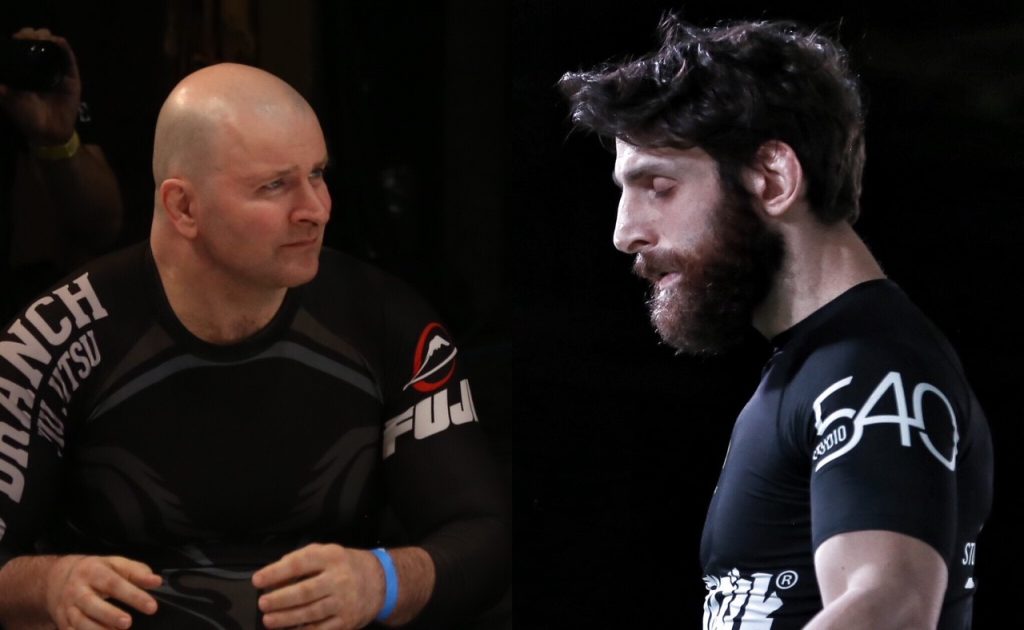
Danaher Death Squad

Senior Squad Members

We already touched upon the original member of the Danaher Death Squad, Eddie Cummings. He joined “the Danaher program” as a blue belt, and ultimately got his black belt from the mastermind. Cummings is a featherweight grappler who never refused a match, regardless of the opponent’s size. He also submitted some of the world’s more renowned leg lockers to date, coming from leg lock heavy grappling martial arts like Sambo. His only notable defeat came at the hands of Geo Martinez, who won via fastest escape in overtime at EBI.

The two that followed are the now-legendary duo of Gary Tonon and Gordon Ryan. Tonon is actually a contemporary of Cummings. They started training in the blue basement together after Tonon saw how successful Cummings was with his leg lock game. Originally a black belt by Tom DeBlass and a with a strong wrestling background, Tonon adopted really quickly Danaher’s philosophy, becoming a crucial part of the squad.

The third original member of the squad is young Gordon Ryan. He was a student of Gary Tonon and ended up in the blue basement courtesy of his coach. Ryan got his black belt from Tonon, after winning everything in sight at the local scene. He was the youngest of the three and offered a lot of perspectives. Ryan is actually still only 25 and already has accomplished more in Jiu-Jitsu than some people in a lifetime. As far as the Danaher Death Squad is concerned, he is currently its most active and known member.

Nicky Rodriguez is another name that meteorically rose from nowhere to BJJ stardom. A blue belt at the time, Nicky destroyed several established back belts in the 2019 ADCC, getting silver in his category in the process. In fact, he got promoted to purple on the podium, after only training BJJ for a year. That said, he does have a solid background in wrestling, and one of the most insane physiques, and all the athleticism that goes with it.
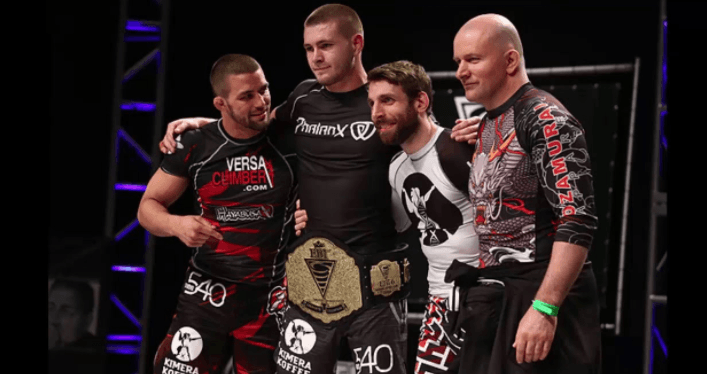
Danaher Death Squad

Younger Death Squad Members

If there’s one person that can give Gordon Ryan a run for his money, it is definitely his younger brother, Nicky. The 19-year-old Danaher black belt and is the youngest ever ADCC competitor. He holds victories over notable black belts in the port and has his whole grappling career in front of him. He is the leader of the junior Danaher Death Squad, opening the doors to a bunch of new faces coming out of the blue basement. Interestingly enough, he spends all his time training and teaching Jiu-Jitsu, with no distractions whatsoever.

Ethan Crelinsten is now as notable as any of the Danaher Death Squad, despite being a junior member. He trains with Frias Zahabi (another Danaher black belt) but competes as part of Renzo’s team. He is another in a long line of incredible submission artists, with back attacks being his favorite weapons.

Another squad member originally (and still to a degree) from Tristar is 27-year-old Oliver Taza. He is another one of Danaher’s disciples that’s making strides in BJJ, catching the eye of the grappling community with his submission-heavy and aggressive style.

In 2018, an unsuspecting member of the Death Squad pretty much summed up what they’re all about. Filling in for a sick Eddie Cummings, teammate John Celestine entered EBI as a complete unknown. Since he was a late replacement he kept Cummings’ top seed spot in the tournament. Celestine ended up submitting everyone to the final, where he beat champion Geo Martinez in overtime.

There’s no way to talk about the Danaher Death Squad without mentioning Erin Blanchfield as well. She is a mainstay at the blue basement and one of the hardest working grapplers (and MMA fighters) there.

The New Generation

As the fame, or better said, the notoriety of the Danaher Death Squad rises, the squad itself expands. Today, there are so many members it is hard to keep a track of. Some of them are just starting to shine on the smaller competition scenes, proving that there’s a lot more to come. Others are still a work in progress and we’ll only see what Danaher has them doing in a few years.

Some of the most notable stars to be training under Danaher today include names like Jason Rau, Nick Ronan, and Mathew Tesla. While still not mainstays of the grappling world they show immense potential. Also, to be clear, being a new generation of the Death Squad is not something defined by age. As such, none of the above are younger than Nicky Ryan, but still, have miles to go.  We can’t wait to see what these grapplers and all other potential Death Squad members bring to the scene in the coming years!

The Integration Of Craig Jones To The Danaher Death Squad

Speaking of new arrivals to the Danaher Death Squad, the role of Craig Jones in the squad remains a very mysterious one. Originally, Craig entered the scene through his success with leg locks in EBI. It was, in fact, the same EBI where he met up with Gordon Ryan in the finals, having submitted everyone with leg locks. in under 5 minutes up to that point. Representing his home gym of Absolute MMA Melbourne, Craig almost caught Ryan in an armbar that Gordon somehow managed to escape in overtime. Ryan went away with the belt, but the world got a sniff of a new leg locker on the scene – Craig Jones.

Since then, despite competing under the Absolute MMA banner alongside his coach Lachlan Giles, Craig was seen from time to time training with the Danaher Death Squad. Suffice to say, he noted massive improvements in his entire game, but most notably, leg locks. His tearing of Vinny Maghalaes’ leg in Submission Underground, when he finally changed Vinny’s mind on the notion of “leg locks don’t work” was orchestrated by John Danaher himself, who prepared the Aussie for the match.

Since then, Craig has dominated in pretty much and match he has had, most of them under the Submission underground banner. IN fact, he has been training pretty much full-time with the DDS lately, raising the question of whether or not he is a full-fledged member.

Let’s call him a part-time member of the Danaher Death Squad for now. At least until we see who he represents at the next ADCC.
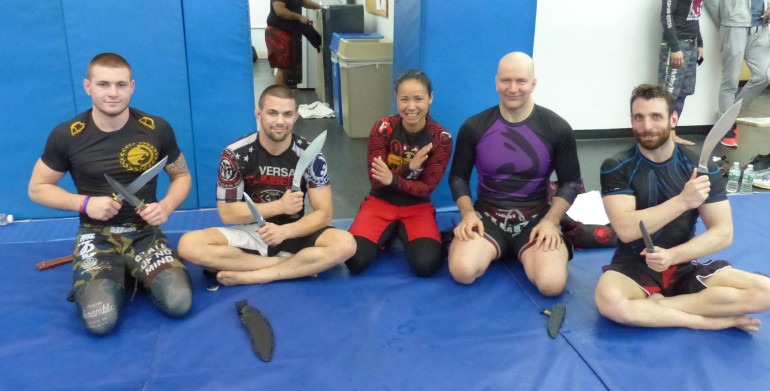
Danaher Death Squad

Danaher’s Philosophy Of Jiu-Jitsu

If there’s one thing that marks the philosophy that Danaher teaches to his followers, it is aggression. Unlike most attacking grapplers out there. though, Danaher is not a fan of doing things just for the sake of them. By aggression, he understands being on the offensive constantly. An offensive game, for Danaher and the Death Squad members, is one of complete control and immobilization of an opponent before going for the finish. As preached as this concept is in Jiu-Jitsu, even the most high-level grapplers tend to overlook this concept.

The complete Danaher methodology is base do on a progressive attacking model. He is all about hunting but not like a rhino. Despite the Danaher Death Squad’s fast finishes, their style of grappling is based on slow progression through plenty of control checkpoints. Their notorious leg locking system, for example, has a clear hierarchy based on mechanics and the opponent’s reactions. This allows them to constantly transition between control when they attack, which in turn, offers them the possibility of being constantly on the offensive.

The squad mentality closely reflects that of their teacher. They work hard, arguably harder than anyone. They also like to put pressure on their opponents, even when they’re at the bottom. having someone retreat is a great way of keeping control even if you do not have any. This is a great competitive mentality, once shared by each squad member.

The Danaher Leg Lock System

The one characteristic that defines the Danaher Death Squad is, without a doubt, leg locks. They got to where they are mostly because of leg locks, and remain the fiercest leg lockers of today. Through his squad, Danaher has single-handedly changed the world of Jiu-Jitsu. Both the success and fame of the squad came as a result of their elaborate Ashi Garami system.

What Danaher managed to do is bring order to a very chaotic part of BJJ. Most old-school people do not like leg locks to this very day. the common perception was that of blitz submission that has a very low chance of success. At the same time, people thought leg locks inevitably result in gruesome injuries. Danaher demonstrated that the BJJ creed of “position before submission” applies here as well. He taught his students how to use controlling positions when hunting for leg locks, making lower body submissions much more understandable for everyone.
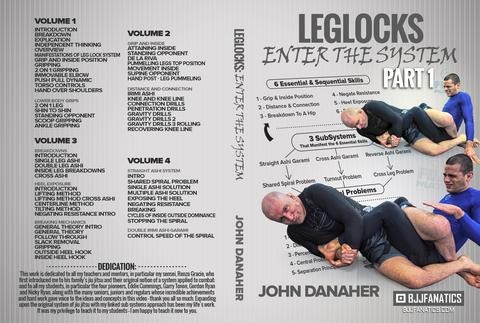
Danaher Death SquadThe Death Squad’s preferred submission is the heel hook. This still keeps them away from some of the biggest competitions due to the ruleset. However, as the rest of the grappling world will soon find out, the squad is about much more than just heel hooks.

After years of jealously keeping his system to himself, Danaher finally gave in. In 2018 he released the long-awaited “Leg Locks: Enter The System” DVD set, featuring his complete leg locking system. It is an amazing 10 hours in length, spread over 8 DVDs! The time to get it is now!

Submission Hunting

The proof that both Danaher and his Death Squad are really well versed in all submissions is becoming more and more apparent. They have a very slick back game, that has opponents even more confused. Danaher’s straight jacket system is as effective as it is complex. According to Danaher, the back is the ultimate position of control, even better than the Ashi Garamis that made him famous. Actually, Gary Tonon’s nickname is “the Lion Killer” which is a testament to his inclination towards back attacks

Danaher Death SquadSpeaking of which, Danaher followed up on his leg locks DVD with one focusing on the back takes and finishes.“Back Attacks: Enter The System” DVD is all about torturing people from back control, just like we’ve seen the Danaher Death Squad do on numerous occasions in competition. Available now!

Apart from the back, front headlock attacks, most notably chokes, also play a huge role in Danaher’s Jiu-Jitsu. Gordon Ryan is one that has had particular success with the guillotine, among other chores. Since the squad also likes to wrestle, they use the front headlock to both threaten with submissions and takedowns at the same time. A perfect fit for the Danaher philosophy.

If you go back even further you can see Eddie Cummings doing crazy stuff off his back as well. He is a truly dedicated leg locker but is also a nasty guard player with, particularly efficient triangle chokes.

Competition Results 

If there’s one platform out there on which the Danaher Death Squad reigns supreme it is EBI. Eddie Bravo’s unique grappling tournament gave the squad the ability to roam free and destroy everyone. Since 2014, the squad has lost just one match, the one Martinez won over Cummings. Even that loss was prevented by Callestine not long ago. Out of all the champions EBI has, none feature more than the Danaher Death Squad. Gordon Ryan, for example, has titles in a few weight classes, including the Absolute.

And, if EBI isn’t a big enough stage for you, the squad also boasts ADCC champions. Namely, despite all three original members being EBI champions, only Gordon Ryan is an ADCC heavyweight champion and absolute silver medalist in 2017 and the double gold winner in 2019. A huge achievement for a 25-year-old. That is without mentioning the fact that his brother gave AJ Agazarm all kinds of trouble in the opening round of the ADCC.

Apart from that, the squad has accepted every super-fight offered to them. Names like Rousimar Palhares, Reilly Bodycomb, Dillon Danis, Geo Martinez, Vinny Magalhaes, and many others have fallen victim to the Danaher Death Squad.

The Move To Puerto Rico

As the Covid-19 pandemic started taking its toll on Jiu-Jitsu academies around the world, its effects did not skip the blue basement at Renzo’s and of course, the Danaher Death Squad using it as a home base. This prompted them to do a very spectacular and completely unexpected move to a place where they can train freely – Puerto Rico.

Gordon Ryan announced just before the turn of the New Year that he has sold his house and was moving to Puerto Rico with his girlfriend Nat Santoro. It soon became apparent, though, that most of the quad was also following as well, including the coveted leader, John Danaher. What ended up happening was that a good portion of the squad switched their home base to Puerto Rico, much to the surprise of the BJJ world.

Currently, apart from Danaher and Ryan, Craig Jones, Oliver Taza, Nicky Rodriguez, Ethan Crelinsten, and Nicky Ryan, along with several other remember of the squat have also relocated to Puerto Rico. They set up a training center there and are seemingly in or the long run.

Danaher Death Squad Puerto Rico

Controversy Equals Attention

Something else that usually follows Gordon Ryan around is controversy. So far it has been mostly in terms of his social media posts, where he does like to touch the nerves of other people and stir up trouble. IT has worked perfectly for him, given that he can back up everything he says online. However, on one occasion so far, the drama spilled out into the real world too.

Namely, Ryan and Andre Galvao have been changing words on social media, taunting a possible super fight. Basically, gGalvao was set to fight Ryan whenever the next ADCC takes place. The Atos founder, however, decided he wants an extreme payday for such a fight to materialize, even though, according to ADCC structure and rules, he should face Gordon. Their beef spilled out of the social media realm when they met up[ behind the scenes of a Who is Number One event.

The encounter ended up with Gordon slapping Andre twice, without a response from Galvao. the incident was caught on camera and of course, went viral, stirring up even more speculation and hyping this potential matchup even more.

The DDS Instructionals That Are Changing Jiu-Jitsu 

Something else that is really noticeable about the Danaher Deaths Squad is their DVD instructional. Namely, between John, Gordon, and Gary, they have more than 50 DVDs that cover a bunch of highly sought-after subjects.

Danaher so far has done series on his No-Gi submission system, a series on Gi fundamentals, takedowns ni the Gi, and now, a No-Gi system for escapes. Ryan isn’t far behind, sticking to No-Gi but covering guards from top and bottom, a well as back takes and turtle strategies. Tonon, true to his unique style has instructionals on escapes, wrestling takedowns, and submission finishing.

All of the above are absolutely irreplaceable but at this point, owning all of them is more than someone can watch, let alone get to learn and use in a lifetime of training. They do offer a different view on everything, though, and provide people trying to specialize in niche areas of Jiu-Jitsu with the utmost levels of instructions you can get today. All of them tried and tested, of course.

The Future Is In MMA? 

The future is more than right for all echelons of the Danaher Death Squad.

Gary Tonnon was the first remember of the squad to focus his attention on MMA. He is currently fighting under the ONE FC banner in Japan, where he dominated in every professional match he has had. He is still going to compete on the submission-only No-gi scene as well.

Just recently, Gordon joined Gary in signing a contract with One Fc for both grappling and MMA fights. At the moment though, he is still fighting in super fights and is scarier than ever. Namely, he now predicts what submission he is doing to pull off against seasoned black belts and at what time, and does it without a glitch.

With the ADCC trials right around the corner, every member of the squad is expected to feature heavily. Young Nicky Ryan n particular is going to be looking for his second chance at stardom at the biggest grappling competition in the world.

Eddie Cummings is taking some time off the squad at present. The Wolverine is attempting to form his own brand on Jiu-jitsu along with the unique game. For an extraordinary grappler like himself, there’s no doubt he will be successful.

On a final note, let’s just reveal that Danaher actually despises the name Danaher Death Squad, which came to be purely by accident!

THE END of Danaher Death Squad – July, 25. 2021.

John Danaher wrote on his Instagram profile about the end of Danaher Death squad:

“End of an era: It is with great sadness that I have to announce the break up of the squad as a unified training and competition team.

“A combination of factors revolving around disagreements in the physical location of a future school, personality conflicts, conflicting values, an inevitable tension between the team brand and the growing individual brands of members were the main factors.”

“I am immensely proud of the tremendous effect the squad had upon the development and direction of our beloved sport over the years. I am extremely confident that all the various team members have risen in competitive ability, teaching skill, and independent creativity that they will be highly successful wherever they choose to go – whatever happens, their legacy is assured and their future very bright indeed. As for the future, it is still uncertain. Most of us still get along very well. I expect some will still train together and we will work together in future projects in accordance with our team philosophy, but no longer as a single unified room.”

I believe the split will have the positive effect of creating a larger footprint for the team as they spread out and develop a wider influence.”

“I always believed that the technical development of the team was best created by a tight, unified room, but at the end of the day human happiness outweighs medals and martial skill and it has become clear that some individual members would be happier in different locations.”

“I would like to thank all the members of the squad for the tremendous effort and myriad sacrifices they made to build a team and legacy that will be remembered, in particular, Garry Tonon, Gordon Ryan, Craig Jones, Eddie Cummings, Nicky Ryan, and Nick Rodriguez. I would also like to thank the many students who formed the room in which the squad developed and honed their skills, and thank you so much to all our faithful followers for your interest and support over the years – I hope and trust we can keep the project of refining our art going despite the changes – Thank you”

Gordon Ryan Shares His Thoughts on DDS Break Up: ‘This Team Has Changed Jiu-Jitsu Forever. On to a New Start’

BREAKING: ‘Danaher Death Squad’ No Longer Exists! John Danaher Explains Why

The LIST of ALL Brazilian Jiu-Jitsu and Grappling DVDs EVER MADE

10 Best Leg Locks DVDs and Digital Instructionals

Gordon Ryan DVD/DIGITAL/EBOOK – Getting SWOLE As A Grappler

Enter the System: Complete John Danaher DVD Collection

Joe Rogan Smokes Weed with Elon Mask on Joe Rogan Experience Podcast

Joe Rogan and Elon Musk smokes weed in Joe Rogan's Podcast

During the 2½ hour podcast interview of Elon Mask by Joe Rogan in Los Angeles, Musk talked about a lot of projects he’s working on. Projects like digging a tunnel under Los Angeles to ease congestion on freeways.

When Rogan asked Elon Musk how is it possible that he has so many ideas, energy and time for everything he’s doing, Elon simply replied with the sentence that he’s an Alien.

When I watch you doing all these things, I’m like how does this m… have all this time and all this energy and all these ideas, and then people just let him do these things?” Rogan asked Elon Musk.

Because I’m an alien,” Musk said.

However, Elon Musk revealed what keeps him up at night:
Joe Rogan and Elon Musk smokes weed in Joe Rogan's PodcastWell, it’s quite hard to run companies, especially car companies. SpaceX is no walk in the park, but it’s very difficult to keep a car company alive”, Elon said. He was probably referring to the private aerospace manufacturer and space transportation services company that he founded back in 2002.

The most interesting part came after Joe Rogan convinced Elon Musk to smoke a joint with him. Elon asked Rogan whether it’s a cigar or a joint:

“Is that a joint? Or is it a cigar?” Musk asked Rogan! Rogan answered to him that it’s a tobacco mixed with marijuana which is legal in California.

Rogan also asked musk whether he tried it before, Musk said: “Yeah, I think I tried one once.”

https://youtu.be/xnvPxvI8yXk

In a case you didn’t know, Joe Rogan’s podcast “The Joe Rogan Experience” is one of the most popular in the United States. Rogan’s interview with Elon Mask, within six hours, had attracted almost 450,000 viewers, and 3.2 million people are subscribed to Rogan’s YouTube channel.

In a YouTube video below you can check the full interview:

The BJJ High: How Weed And Jiu-Jitsu Work Together

Jeff Glover Smoking Weed Between Rounds High Rollerz BJJ

Eddie Bravo about Smoking Weed, Mushrooms, Life after death, Aliens, Pedophiles, Chester Bennington, Illuminates…

Kron Gracie Smoking Weed and Talking about Balance Between Smoking Weed and Training

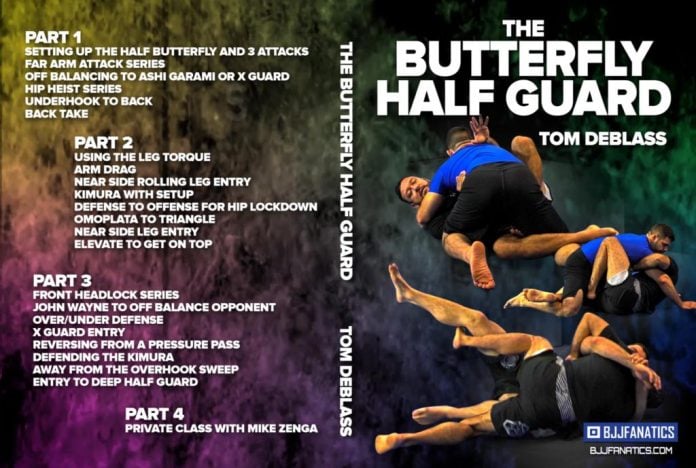
REVIEW: The Butterfly Half Guard DVD Instructional by Tom DeBlass

The Butterfly Half Guard DVD Review

The most charismatic and likable grappler of today is out with a brand new gem! If you do not own a To De Blass DVD so far, you’re not fit to call yourself a grappler. The UFC veteran is one of the most formidable grapplers of today, as well as a premiere Brazilian Jiu-Jitsu professor. Tom is as hardworking as they get, constantly training champions, competing and producing high-quality DVD instructionals on a regular basis. He is famous for tackling subjects that other coaches do not focus on so much. A good example is his Submission Escapes DVD,  as is his Half Domination set. Now, he hits it right bang in the middle again, with The Butterfly Half Guard DVD. It is just what the grappling world needed!

The Butterfly Half Guard DVD focuses on a very specific aspect of half guard that we got a glimpse of in Tom’s Half Domination DVD. The butterfly half guard is a very interesting variation of a BJJ classic and is one I really enjoy using. I came across it a long time ago, in an old Robson Moura instruction. Since then I experimented with it, learning mostly what not to do. The position offers a lot of safety, as well as a really easy sweeping option. Tom’s previous half guard DVD touched upon the subject briefly, opening up leg lock setups from the position. It worked for me really well. Now, I’m as excited about The Butterfly Half Guard DVD as I’ve ever been about a BJJ DVD instructional!

ON SALE HERE:
Tom DeBlass DVD – Butterfly Half Guard
The Butterfly Half Guard DVD Review

Tom DeBlass and Butterfly Half Guard?

The reason why exactly Tom DeBlass is the man to show this modern variation of the half guard is his prowess in the position. Actually, he is a wizard from all half guard variations and has a few of his own inventions to boast about. Think about this fact for a minute – nobody has passed Tom’s guard in training or competition for more than a decade! Furthermore, his favorite guard is the half guard! As far as competence about a certain subject goes, nobody is a better fit to explore the Butterfly Half Guard more than DeBlass. Plus, The Butterfly Half Guard DVD set contains an amazing surprise that’s going to make you want to jump with joy!

The Half Guard Of Tom DeBlass

Tom DeBlass is a Ricardo Almeida black belt. He is the owner and head coach at Ocean County Jiu-Jitsu in New Jersey. Tom’s teaching methodology has resulted in champions like Gary Tonon and Gordon Ryan, who both train with him on a regular basis. DeBlass is a part of the notorious crew that hangs out in the blue basement of Renzo Gracie’s academy and gravitates around Danaher. As a competitor, Tom has seen and done it all – from the UFC to the ADCC.

Apart from being an amazing coach, Tom has a grappling style that is a great fit for most people. This is exactly what makes The Butterfly Half Guard DVD, and all his other material, such a valuable learning tool. Anybody, from beginners to the most advanced students can benefit from his instructionals. Furthermore, they’re perfect for older grapplers or physically weaker ones. Despite being a big, heavy guy, Tom is incredibly technical.

The one part of his game where Tom is unbeatable is the half guard. He is a master of all kinds of half guard variations, from the most basic to really crazy ones. Where does the butterfly half guard fit amongst all those variations? It is a simple-looking guard, that works extremely effectively and is in the advanced guard’s category. That doesn’t make it unusable for beginners though, it’s just a better fit for people who already have some experience with the half guard and the butterfly guard as separate positions.

 The Butterfly Half Guard DVD

The butterfly half guard is the perfect blend of two very efficient positions in Brazilian Jiu-Jitsu. The half guard is a position of safety, offering them opportunities for a slower-paced game that slowly gets an opponent entangled. The butterfly guard is a much more dynamic position, offering sweeps and transitions at the expense of comfortable control. Combining both is as easy as threading the leg you usually use as a knee shield in half guard, inside the thigh of the opponent’s trapped leg in half guard. Presto, you are in the butterfly half guard and can reap all the benefits and none of the drawbacks of both guards!

The butterfly half guard is slowly becoming a staple of today’s modern BJJ game. the reason for this is that it offers much more protection for the bottom player in terms of leg locks. It also makes smash passing virtually impossible. Moreover, it provides increased sweeping leverage as well as better control over the leg. And, of course, there are leg locks. Every time you have both your feet in between the feet of an opponent, it is Ashi Garami time, as you’ll see in The Butterfly Half Guard DVD

Speaking of which, the DVD is once again a four-part instructional. The first three volumes are all classic Tom DeBlass DVDs. Lots of important information organized neatly into multiple chapters. All of the chapters, in turn, connect to each other very easily, allowing you to for a bigger picture. The final disc is a real treat in itself! Read on to learn exactly why!

DVD 1 – Setting Up the Basics

Tom kicks The Butterfly Half Guard DVD off by explaining exactly what the guard is. However, he doesn’ spend much time dwelling on the position itself. Why would he, though, as it is simple enough to set up? Switching directly into attack mode, DeBlass offers attacks on the far arm which most people will find surprisingly easy.

NoOt spending too much time on armlocks, Tom goes directly into what most people are going to look for in this DVD – leg locks. He teaches very interesting entries to the Ashi Garami, based on the principle of Kuzishi. Rounding of the basics of the butterfly half guard is a couple of back taking options. Talk about variety in just one volume!

DVD 2 – Advanced Attacks 

Remember when I said all levels of grapplers are going to benefit from this DVD? Well, the second volume explores some more elaborate avenues of attacks. Namely, Tom goes over some innovative concepts, now available from the position due to the butterfly hook. This volume skips the leg locks and offers a wide variety of sweeps instead. There are also key tactics to maintaining the butterfly half guard and controlling your opponent’s hips.

As far as submissions go, Tom sticks to some of the basics here. He opens the door for Kimuras, triangle chokes, and omoplatas.

DVD 3 – The Crazy Good Stuff

As the Butterfly Half Guard DVD progresses, so do the techniques DeBlass has on offer. I never knew there were so many options for this cool position. As a huge fan of the front headlock, I was stoked to start watching the third volume. It kicks off with what DeBlass calls the front headlock series and it works like a charm! Getting the front headlock from the butterfly half guard is the dream combination for me, and one that does not fail!

The Butterfly Half Guard DVD Tom DeBlass
Click to Watch Full Technique

Another key element of a successful guard game are options to defend against passes and retain the guard. Tom doesn’t skip over this key part of the game. He covers most of the usual ways people are going to try and get past your guard. The over-under pass and pressure pass defenses are as important as anything you’ll learn in this DVD.

There are also a few defense options against common submissions like the Kimura. In a truly high-level style, Tom ties them all into simple and effective counters that are going to turn the tables quickly.

DVD 4 – The Private

The final DVD is really, truly the most important bit of this instructional. There’s no better way to tie things together than going through all the material and asking DeBlass what still doesn’t make sense. Who wouldn’t want a private class with Tom DeBlass on a subject like a butterfly half guard? Well, that’s exactly what you get.

The final volume of The Butterfly Half Guard DVD is precisely this. It is an hour-long private class with Mike Zenga, covering everything there is to cover about the butterfly half guard. Three DVDs full of awesome information plus a free private with Tom DeBlass? No wonder I got this DVD fresh off the press.

ON SALE HERE:
Tom DeBlass DVD – Butterfly Half Guard
The Butterfly Half Guard DVD Review

The Drawbacks Of Being A Submission Specialist In BJJ

Submission Specialist BJJ

Watching submission only tournaments can be a real treat! You get guys and girls hunting for submissions of all varieties and types. It makes you want to run off to the mats and start subbing people right away as well. However, we all know that submitting others in grappling martial arts is not quite so easy. It takes years of practice to figure out the submissions that fit you and then get good at them. The people you see on your screen catching the same submission over and over again are what’s known as submission specialists. It takes great dedication and effort to become a submission specialist in BJJ. Still being one has it’s drawbacks and requires certain sacrifices.

What is the submission you’re known for in your academy? Are you well versed in a few or just the one that nobody can get out of? How did you figure out that this is exactly the ultimate submission for you? Moreover, how do you know that as you evolve and progress through Jiu-Jitsu, a different submission isn’t a better fit? These questions, as well as a host of others, should always go through your mind when you start favoring a move too much. Because, as you’ll see, becoming a submission specialist has crucial drawbacks that might have a huge influence on your game. Not only on your game but on your BJJ progress as a whole.

It is undoubtedly fun to be good at something. It is rewarding to know that you have a move that makes even the most experienced people in your gym approach with caution. Being dangerous is a positive in grappling. However, it is not the only aspect of it, even if you’re a full-time competitor. Even submission only competitors need to be careful when they go on the path of a submission specialist. And yes, this includes black belts as well. Being effective with a submission as Eddie Cummign is with an inside heel hook does not come without a price.

The Traits Of A Submission Specialist

What exactly is a submission specialist? It is a grappler that is so good in a particular submission that they’re able from a host of different positions. But this is not the complete definition of a submission specialist. A submission specialist is also somebody who can submit (usually with one or two moves) from a very specific position at a very high rate.

Submission Specialist BJJThe traits of a submission specialist lie in two major aspects – experience and knowledge. As far as knowledge is concerned, it is all about technique. Submission specialists spend huge amounts of time attacking from their favorite position. However, they also spend countless hours perfecting technical details and doing drills. All of this results in near-perfect technical knowledge of the mechanics of a certain submission, along with the best positions to get it from.
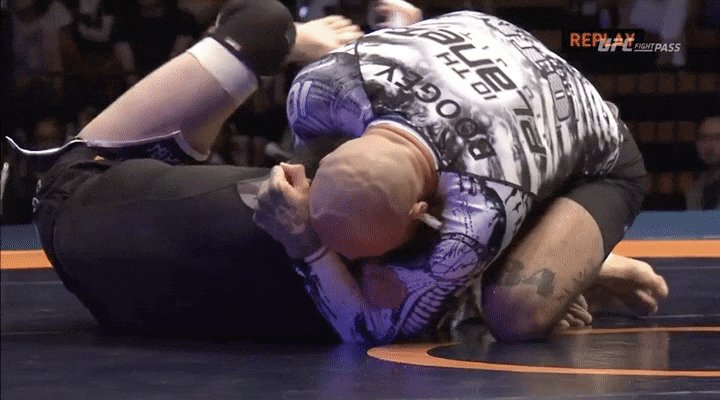
Experience, on the other hand, is all about how and when specialists get their move. It is certain that they’ll get it, even against opponents that know what’s coming. Experience allows specialists to know precisely when to go for a move and how to get in a position that opens it up. It also helps them get into position without being detected. Experience also allows them to have a ‘vision” of how to get the move after a few steps. People that can also anticipate it and manage to fend their attacks off are very rare. And even then, they’ get caught later on. it is simply inevitable.

Drawbacks Of Focusing On Only One Submission

So, with all of the above, why should anyone shy away from becoming a submission specialist? In BJJ things are never so easy as they seem. Have you ever wondered why not everyone is a submission specialist? Well, there are some very apparent drawbacks to playing such a game. And they change and evolve as you do, making things even more complicated.

Submission Specialist BJJThe first thing to consider is level. If you’re a competitor that thrive at every level, it is normal to have favorite moves. However, truly specializing in something is a great way of halting your constant progress. Let’s say you’re a fierce back taker with inescapable chokes from the back. As a blue belt, this gets you through each roll land match with ease. At purple, it works, but you start hitting a few snags. So yo go deeper into it and decide to look for the same move despite everything. Going forward, at brown and black belt level, you’ll suddenly find yourself lacking some integral BJJ skills. parts of the game are certainly going to pass you by.
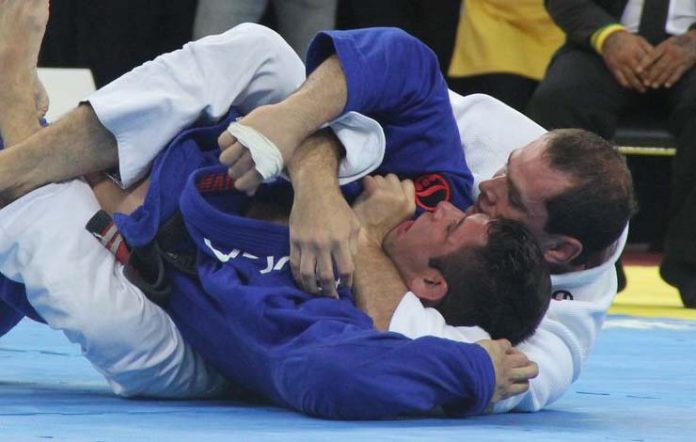
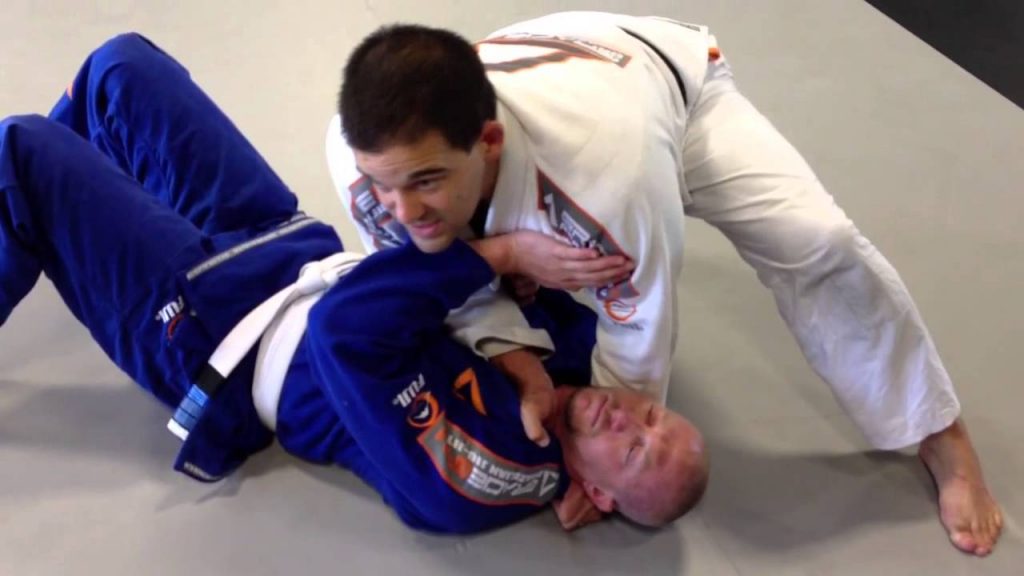
While you’re still going to be good choking from the back, you’ll have less and less success with it and no other viable options to fall back to. Instead, looking to retain your skills while widening them up at every level is a great way to stay aa constant threat and evolve fast at the same time. However, this is the submission hunting approach, as opposed to specializing in a move. So, in order to avoid getting tunnel vision, make sure you specialize in submissions rather than a submission.

You do not need to spend so much time specializing in heel hooks now. All you need is to get all of the Wolverine’s knowledge in a digested and consolidated way. You’re in luck because “The Ashi Garami Seminar” DVD by Cummings is all you need to include brutal heel hooks in your submission game.

https://bjj-world.com/best-bjj-dvd-instructional-for-submission/

https://bjj-world.com/neil-melanson-dvd-collection-review/

REVIEW: Yuri Simoes DVD – High Efficiency No-Gi Top Game

Double Leg Takedown – How to Do It & The Most Common Mistakes

Jiu-Jitsu Submission Hacks: Slow Chokes

Jiu-Jitsu Submission hack: Slow Chokes

Why do Some BJJ submissions fail to work sometimes? It happens to everyone along their BJJ journey, and there’s no way around it. There are times when you did everything right, but the choke just doesn’t seem to work. Regardless of how much you squeeze or pull, nothing is happening. There are a few factors here, but for the sake of argument, we’re going to presume that you know what you’re doing when you’re looking to strangle someone. So how come it won’t work? Well, you’re either messing something up, your opponent is a freak, or you’re missing a crucial, yet subtle element. Instead of going back and re-learning everything or completely abandoning a particular Jiu-Jitsu submission, why not find a workaround? There are certain hacks that can completely change a technique if you know how and when to apply them.

The problem with a Jiu-Jitsu submission game is that it makes you really restricted in your game. Submission hunting is great, but you need to know how to hunt, not just blindly jump towards moves. Even if you get a submission by sheer luck, you need to know how to finish it instead of rushing through and giving away a perfect opportunity. There is a reason why BJJ submissions are so sought after – they’re hard to get! This makes them even sweeter when you finally manage to sink one in. Out of all submissions, chokes or strangles, are particularly held in high esteem. All due respect to leg and arm locks, but a choke is an ultimate tool to finish even the biggest, strongest opponent. Moreover, they come in all shapes and sizes, allowing for lots of variety in attacking.

Jiu-Jitsu Submission hack ChokeThe trouble with chokes is that they might prove difficult to get in certain situations. If we remove the possibility of you messing up the technique, all that’s left are just a few options. One huge factor is your opponent. Against most people, you’ll get a tap from a solid choke without much-added effort. However, every now and then, you’ll run into that crazy partner with a neck of steel, or even worse, an overly flexible one. Remember that chokes are the Jiu-jitsu submission that truly works on everyone. All you need is a small hack to make sure you get taps 100% of the time. 

The Essence Of Strangles

The reason why chokes work so well is because of their mechanics. Getting a chokehold in Jiu-Jitsu relies on the same principles as other submissions. The basic mechanics require you to use your strongest body part or a combination of a few against a significantly weak body part of the opponent. As such, there’s nothing more vulnerable on the human body than the neck. Applying a choke with your arms, legs or a combination of both against the neck of your opponent should always be a whole-body effort as opposed to an isolated one.

This brings us to positioning. There’s no way of finishing a Jiu-Jitsu submission without proper positioning. Positioning means getting your body in the optimal spot for finishing a stranglehold you already have in place. The arms and legs provide only the structure for the choking. the power of the choke, as well as the source of control, comes from correct body alignment in relation to your opponent.

From a more specific standpoint, chokes in grappling work in one of two ways. Very rarely there’s a combination of both methods that work effectively. The primary method is blood chokes. The way they work is through bilateral pressure on both carotid arteries. No blood to the brain means no oxygen, which in turn means no consciousness. Air chokes are a little bit more unreliable and brutal, but effective nonetheless. They work by preventing airflow at the level of the trachea.

Finally, the tool you use to apply the pressure is crucially important. You might use either the Gi or direct arm/leg pressure when you’re choking. Both kinds rely on different mechanics which you need to understand if you want to be successful.

What Exactly Are Slow Chokes

The hack we’re offering today is the skill of applying chokes slowly. Which chokes can you call slow chokes? The answer is all of them! The reason why this approach works is that it addresses a key BJJ principle – space. In the heat of rolling or a match, conditions are usually less than perfect, despite our best efforts. Since the goal is to take away space, in order to make everything tight. The reason why we want tightness is, first and foremost control.

Furthermore, no space means you can exert more pressure on your opponent. We’re not talking about direct choking pressure here. What you need to be aiming for is constant pressure on all sides of your opponent’s neck. The goal is to make them uncomfortable and cause them to make wrong decisions. Even more importantly, by applying constant and, preferably, ever-increasing pressure, you’re causing difficulties breathing. Every time they breathe out, they’ll have much more problems breathing in again. Inevitably, they’ll tap or nap.

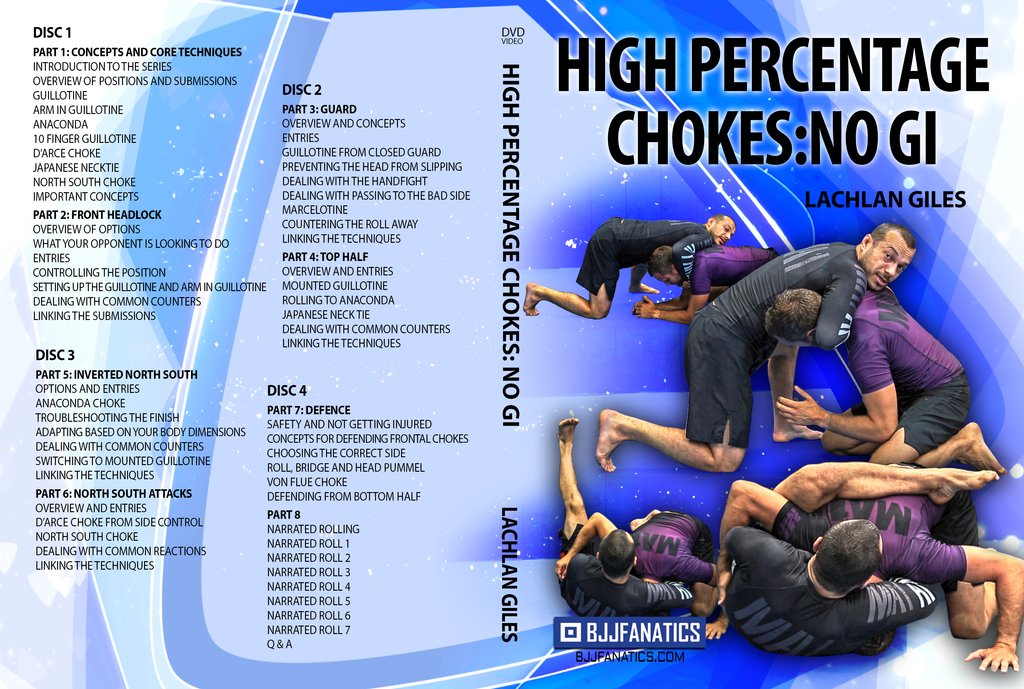
Jiu-Jitsu Submission hackIn order to be able to apply such pressure, you need the aforementioned position. From the back, for example, you need to know how exactly you can use a body triangle and tight upper body control to finish with a Rear Naked Choke. From the front headlock, it is all about shoulder position and the tightness and type of your grip. All it takes is staying in position and patiently taking away breathing space while exerting pressure at the same time. Only when you’re sure you’re as tight as possible, you should look to apply direct choking mechanics, i.e. squeeze.
Jiu-Jitsu Submission Hunting

Remember that hunting for a Jiu-Jitsu submission is not a competition in who is faster. It is a slow and methodical way of keeping constant pressure on your opponent along with the never-ending threat of finishing. For successful finishing, you’ll need to be able to bot threaten with and tap an opponent with multiple different submissions.

That said, in order to obtain a perfect position to slowly choke your way to victory,  you need to be able to confuse your opponent. Submission hunting is all about misdirection instead of openly attacking something over and over again.

Think of it like this. You need to start your matches patiently, like a tiger laying and waiting from an ambush. Keep creeping up until you see your opening and only then explode to get what you want. However, unlike a tiger, instead of going for a quick kill you want to transform into a python and slowly and methodically squeeze the life out of your opponent from a dominant position.

Lachlan Giles has a really comprehensive instructional getting, maintaining and finishing strangles. His “High Percentage Chokes: No-Gi” DVD set is a must-have for all practitioners, regardless of their affinity (or lack of it) towards the Gi. His stuff works, and it includes the principle we’re discussing today along with multiple examples. This DVD is a real bargain!
Lachlan Giles DVD Review

Wrap ‘Em Up: Use Your Opponent’s BJJ Gi Against Them

The Easiest North South Choke Setup

Neil Melanson DVD Collection – A Submission Heaven

Neil Melanson DVD Collection

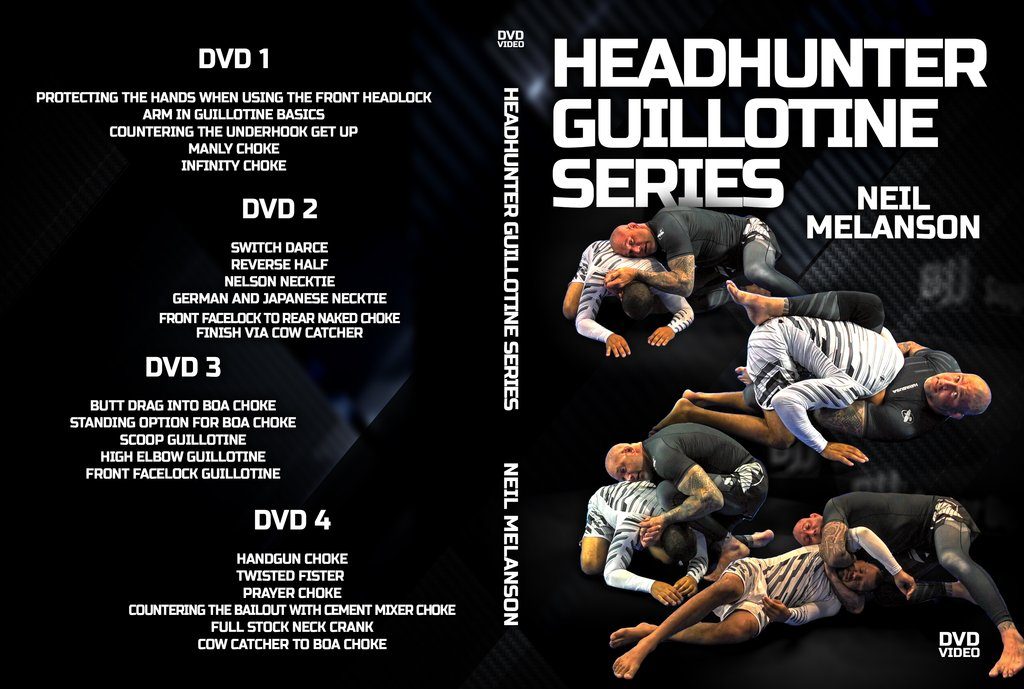
If somebody asked me to choose one coach that I’d like to go and spend some time with, surprisingly it wouldn’t be Danaher. All due respect to the Dark Lord, but there’ someone out there who has an even more brutally effective brand of BJJ. Is it BJJ though, or just simply submission grappling, optimized to the maximum? When grappling is the order, the man responsible for it can be no other than Neil Melanson. Yeah, you might not know him and that’s where part of the beauty is. He is also not a BJJ black belt. Again, it is what makes him exceptional rather than average. Well, that’s my opinion, anyway. Since I can hardly get my wish to go train with the guy, I can get the next best thing – his DVD instructionals. Luckily, Neil’s been really busy in the last year, coming out with no less than 5 amazing titles about grappling. The Neil Melanson DVD Collection is out there people, and it explores submission grappling like no other digital set in the world!

What is the point of training grappling martial arts if you’re shy about submissions? I’m guilty of doing that very thing, or was, at the very least. Up until I was midway through my blue belt, I never really did many submissions. The result – a horrible finishing rate. Abandoning a sound position to risk a submission attack was unimaginable for me. However, I did not like what was going on and had to act. So I decided to throw caution to the wind and go for submissions only. Looking back I could’ve approached everything with a bit more balance, but I was a blue belt, doing what blue belts do. So, my affinity for submissions was born. Years later, and I’m still on a submission hunting quest. But now, I have the help of the Neil Melanson DVD Collection, the ultimate submission-focused instructional bundle.

Why do I like this Neil Melanson guy and his teachings so much? Well, when I went out to explore the best ways of submitting people, I soon found out that BJJ was not the be all end all fo submission grappling. There are grappling martial arts out there that have really strong submission techniques. The problem is that people usually chose one, expecting it to be the solution to all. Instead, if submissions are your choice, getting the best moves from all arts and organizing them to fit your needs is what your goal should be. I used to do it (as best as I could) not realizing that some people already did it before. Now, with the Neil Melanson DVD Collection, I have a complete system that can help me submit anyone in any format! And the best thing about it is that it’s still going to grow!

The Ultimate Submission Grappler 

Neil Melanson is by far one of a kind in the grappling world. He is a true old-school warrior, one that’s as efficient on the ground as he looks intimidating. Is Neil the ultimate grappler? That one is hard to tell, especially with the lack of competition footage on him. However, if coaching is anything to go by, then he’s most certainly a top contender!
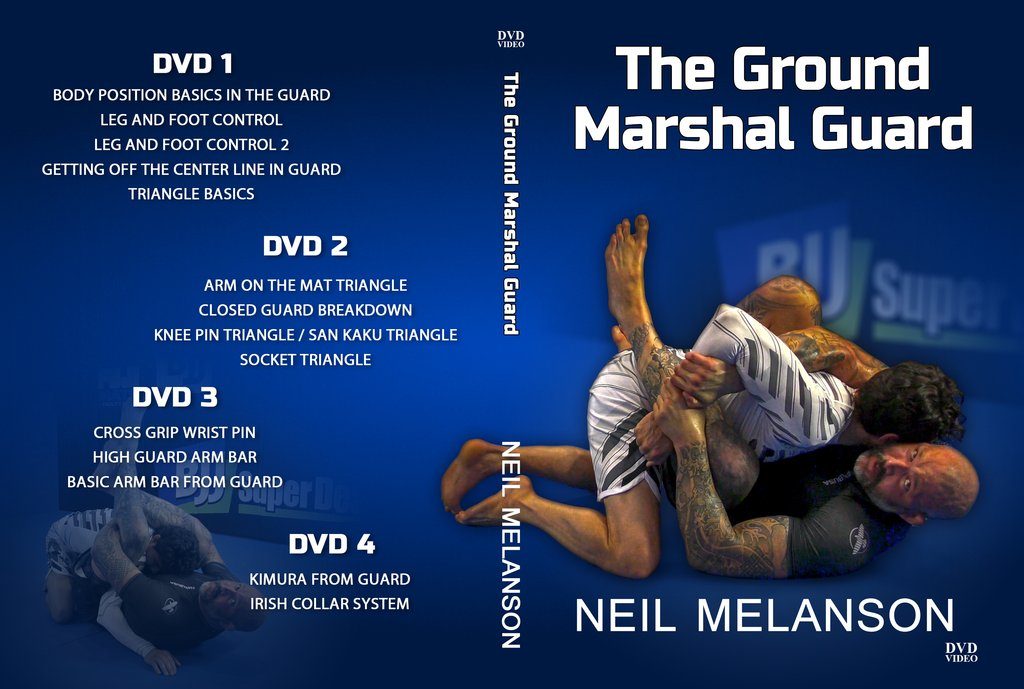
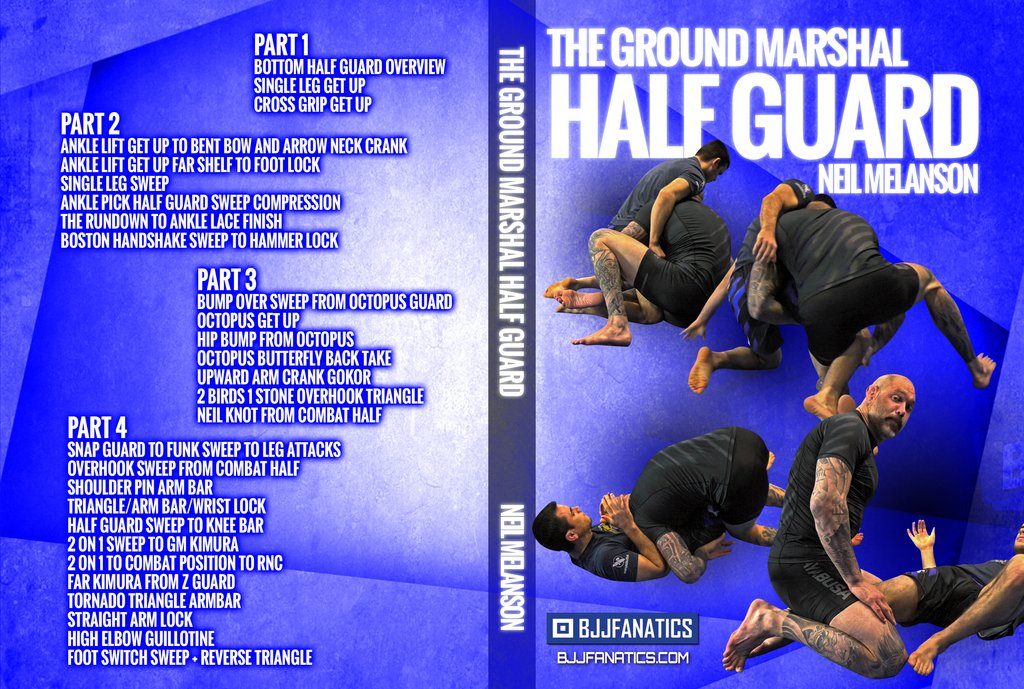
Neil used to be in the service as well, and with some record! He spent 7 years in the Navy and 5 years in the Federal Air Marshall service. This makes him the top choice if you want to learn a grappling style efficient in all aspects of life. Form the mats, through the octagon all the way to the streets, what you learn from Melanson works without a doubt.

Melanson, AKA “The Ground Marshall” has a unique and equally impressive grappling background. He has a black belt from Judo standout and UFC veteran Karo Parisyan. He also has extensive collaboration with a true legend of grappling, Judo’s very own Gene LeBell. Not skipping any grappling related martial art, Neil has a high-level Sambo pedigree as well, courtesy of Gokor Chivichyan. On top of all that, he was a formidable catch-wrestler before he even began looking into other arts.

The result of such a rich background is a unique grappling style that’s apparent throughout the Neil Melanson DVD Collection. There’s no one art that’s going to find the whole system familiar. Neil is a true master of choosing only the things that work. Others in the grappling world area also capable of doing this. However, combining everything into a logical, easy to learn the system that everyone can use, is a trait of a grappling mad scientist! And there’s not many of those lying around.

Catch As Catch Can Wrestling

The basis of Neil Melanson’s style and the Neil Melanson DVD Collection as well lie in the sport of catch wrestling. Catch-as-catch-can wrestling is a grappling style that originates from the 1870’s in Britain. British miners and dock workers of the period would pass the time by organizing wrestling matches between themselves. The goal was to catch someone in a submission hold faster than they caught you. Thus, catch wrestling was born. It arrived in the US along with the British sailors and started spreading, mostly due to carnivals. It was precisely this period that gave birth to lots of the vicious submissions that characterize this style.

At carnivals, catch wrestlers often challenged people to matches. That meant they had to be ready to beat opponents of all sizes and experience, quickly and decisively. The only way to achieve this was by submitting them with brutal moves that left no doubt as to who the winner is. The single most important goal of catch wrestling is to finish as fast as possible. It actually favors blitz submissions based on brutality to positional submissions.

The way catch wrestling benefits BJJ is by picking up where BJJ ends. It is the perfect thing to use when you see openings that Jiu-0Jitsu doesn’t usually exploit. Nneilisi a master at connecting no only BJJ, but Sambo and Judo as well, with the brutal principles of Catch Wrestling.

Neil Melanson’s Coaching Skills

Neil’s style of coaching is a very unique one, just like his grappling style. Apart from his propensity towards combining essential skills from different grappling martial arts, Neil also likes naming things. Unlike Eddie Bravo, he doesn’t go overboard with it but does give his favorite moves cool names. In terms of teaching, this really helps remember them distinctly and call upon them in training.

Neil’s unique style brings positional security to blitz catch wrestling submissions. it also works the other way, offering the Jiu-Jitsu game more finishing options from unlikely positions. Furthermore, all submissions in the Neil Melanson DVD Collection are taken from the absolute best sources. Leg Locks from Sambo, chokes from Judo and Wrestling, neck cranks and arm locks from Catch etc. The impressive feat is that it all works as a complete system.

A huge mark of Neil Melanson’s teaching methodology is attention to details. He focuses on those tiny little bits that make grappling such an interesting art. However, with details, it is very easy to get lost in unnecessary directions. Neil has the rare ability to single out those details that truly make or break something and then he dissects them down.

The Neil Melanson DVD Collection is a set of DVD series that based on a very systematic approach. Melanson likes to do unusually long chapters on most of his techniques. Yet, he has a methodical approach to it, expanding every chapter into a mini system of its own. Combining all chapters provides a grappling system for certain positions that have no holes in it whatsoever.

The Neil Melanson DVD Collection:

Back when catch wrestler Melanson started working with Gokor and Karo, he was not really savvy from the bottom. Gokor gave a young Neil the valuable advice to expand his bottom game since he was sparring with Karo, who fought in the UFC at the time, Neil had to learn fast. And he did. He not only adopted working from the bottom but ended up thriving there.

Melanson brought his catch wrestling philosophy to the bottom grappling game. He ended up going into directions most other people never really explored or deemed ineffective. Today, the guard is considered a favorite position of Melanson’s and triangle chokes are his weapon of choice. In all fairness, all chokes are his strong suit, as you can see from the Neil Melanson DVD Collection. Once he gets a hold of a neck, it is either choke or crank with no chance of escape.

Neil’s grappling innovations do not stop at the guard. There’s a reason why he coached top level MMA fighters at gyms like Xtreme Couture and Alliance MMA. He went on to find catch wrestling, Judo and Sambo solutions to unsolved BJJ problems, ending up with one of the most exciting and applicable styles ever. It is all in the Neil Melanson DVD Collection.

The Guard Series

I think we already covered that Neil has a nasty guard game. What we didn’t cover is the complexity of his systems. Or lack thereof. All guard systems that Neil has to offer, both closed, open and the half guard, are very simple in nature. There are no athletic or flexibility requirements. Actually, they fit older practitioners, as well as smaller and female grapplers a lot.

Keeping things simple is something BJJ lacks today. If you see everything going on, from clips to full-blown instructionals, people seem to like things that are absurd. No wonder they’re not catching on. Instead of looking for elaborate moves that very few people can pull off, Neil likes the simple, yet unusually painful solutions. If you can’t get a submission right away, make it as painful as possible until you do get the option to finish. That is a very foolproof way of fighting off your back.

Ground Marshall Guard

All of Neil’s instructionals that are a part of the Neil Melanson DVD Collection follow a similar structure. There are 4 DVDs in each, every disc containing specific in-depth chapters on a certain subject. The subject of the Ground Marshall Guard DVD is the closed guard. Better said, it is Neil’s take on the quintessential Brazilian Jiu-Jitsu position.

Neil Melanson DVD CollectionFirst things first, it’s the basics of the closed guard. The first volume is all about the very basic closed guard positioning. There are extensive chapters on body positioning, controlling the opponent and crucial attacking strategies. It wouldn’t be complete without a submission, so Neil’s favorite triangle choke wraps this volume up.

The second DVD is all about triangles. Neil shares a few interesting setups, but more importantly, he really provides new options on how to finish this classic BJJ submission. Pay attention to the socket triangle. It is incredible!

The third volume goes into a different aspect of submitting from the guard. Again, no reverse Barataplatas here. Just the simple good old armbar, with a few incredible twists. Three chapters, all in all, mean Neil leaves no stone unturned when it comes to closed guard armbars.

Finally, the fourth volume has the complete Irish Collar guard system which is of Neil’s own creation. It is the end all be all of the closed guard systems. The only thing you’ll ever need to be scary from the bottom.

Advanced Guard Systems

The second member of the Neil Melanson DVD collection picks up where it’s predecessor ended. A few more advancements on the ever-evolving Irish Collar mark the start of this DVD. from there on, Neil provides truly advanced concepts, all about how to bait your opponent into a trap. Guillotines are the submission of choice here for Melanson, and they work like a charm!

Neil Melanson DVD CollectionNext up is his “snare” trap system. It is a true submission hunters dream as it opens up so many different attacks! From reverse Kimuras to sweeping and the ever-present triangle choke, the opportunities are endless!

Since Neil is all about grappling without the Gi, and he still likes to have good control over the opponent, he is a big fan of the overhook from the bottom. Perhaps being such a proficient D’arcer has something to do with avoiding underhooks as well. Whatever the case, his overhook guard system is one to carefully look into. Triangles, armbars, sweeps, you name it – they’re all readily available.

Staying true to his style, Neil leaves the best for last once again. The K-control system is another one of Neil’s inventions. It is the catch wrestlers take on fighting from the bottom, so expect all kinds of submissions to feature heavily throughout!

Ground Marshall Half Guard

This is the latest release in the Neil Melanson DVD Collection. It expands even further into the world of guards, this time focusing on the half guard. Once again it’s high level, well organized and really helpful for grapplers of all levels.

The basics of the half guard are the focus of most of the first volume. It is all about what is the whole point of the position along with some key Melanson details that are going to change your take on it. There’s a single leg finish from there, to keep things interesting in the volume.

Neil Melanson DVD CollectionThe second volume starts with a bang – a bow and arrow neck crank finish. From there on it just gets more and more interesting. And painful for your opponents. Lots of ankle lift sweeps that end up in different submission preceded the notorious Neil Melanson Boston handshake. Of course, there’s a classic catch wrestling submission to cap it off – a Hammerlock.

The third volume focuses on the octopus guard and options to finish from there. It is a brand new take on the old octopus guard system. It further branches out into so many different submission systems that your head is going to spin the first time you see it.

To wrap it all up, Neil offers what looks like everything he knows about the half guard in the last volume. Crazy sweeps and brutal submissions ranging from chokes to weird leg locks are not lacking in this volume. In fact, it is the most submission heavy volume of the whole Neil Melanson DVD Collection.

Top Position Series

The top game of Neil is his strongest side. Yes, he is a true wizard off his back, but his grappling background is all about torturing people from the top. He has two volumes that focus mostly on the top position. His “Catch Wrestling Formula” DVD is all about the top half guard and side control destruction.

The “Headhunter Guillotine Series” DVD is all about front headlock attacks, thus ending up int he top position category. However, the principles of choking people from the front are applicable across the board.

Catch Wrestling Formula

This is the DVD that made me drool over Neil Melanson DVD instructionals. It is the first one that he recorded and it is a key piece of material in my own DVD collection. It is something that I base my top game off to this day.

Neil goes right into it, covering how to deal with the dreaded underhook when you’re on top in half guard. This is where catch wrestling really shines as every step of every move just puts more and more pressure on your opponent. When you finally end up choking them or arm locking them, they’re going to give away a submission just to get away from you.

Neil Melanson DVD CollectionThe second DVD is all about a wrestling classic – the Cow Catcher. It is a modification of this old wrestling move that works like a charm for BJJ, thanks to Neils efforts. The Half Helch is one half guard control you’re going to integrate into your game the instant you lay eyes on it.

DVD three focuses on the cradle. It is the ultimate catch wrestling move to pack an opponent into a ball, causing them massive discomfort and unbearable pain. And that’s even before you even try to submit them. The options Neil offers range from crazy guillotines to the tightest rear naked choke setup I’ve ever seen.

The final disc takes a turn and looks into a closed guard variation to annoy everyone. But not before he provides several ways of heel hooking your opponent’s from the cradle.

Headhunter Guillotine Series

The submission-heavy series features every front headlock choke you’ve heard about. Then it goes on to provide choking options that you, I and most people in the BJJ community never thought possible. It is the final piece of the Neil Melanson DVD Collection, at least so far.

Neil Melanson DVD CollectionThe very first thing you learn here is how to keep your hands safe from your opponent’s countering efforts. It provides the front headlock basis you need to go into the arm in guillotine, for starters. Unusual and original chokes start from the very beginning, via the Infinity and Manly chokes.

The second volume is all about arm-in chokes. D’arce details, Japanese necktie essentials, and the mandatory never-before-seen chokes. There are also the German and Nelson neckties, the latter one fo the most brutal submissions I’ve ever seen in all of the combat sports.

Why do the Anaconda choke when you can go for the much more powerful Boa choke? Yeah, I didn’t know about it either, but then again, nobody did. It is another of Melanson’s inventions and a very efficient and simple one at that. There are also several guillotine choke options that work perfectly along with the Boa.

The final disc is a true Neil Melanson treat. It features only original chokes that are real giant killers. The handgun choke, the prayer choke, and the full stock neck crank are just some of the moves you’ll learn from this instructional.

A Few Interesting And Important BJJ Facts Of Life

Fuin BJJ Facts

New to Brazilian Jiu-Jitsu? Welcome to the sport in which disorder can seem orderly. Welcome to the sport where the more you learn, the less you’ll know. And of course, welcome to the most fun and all-consuming grappling martial art in the world! Now that you’ve made the crucial decision of buying a Gi and you’re a regular in class, it’s time to go over some BJJ facts. Are they essential for your Jiu-Jitsu progress? Absolutely not, but they’re fun and knowing them can help you understand what exactly your new addiction is all about. Actually, even some higher ranked belts might find a thing or two they’ve forgotten all about. So read on, and don’t forget to add your own experiences in the comments section!

Brazilian Jiu-Jitsu is truly a complete lifestyle. What you do off the mats has as much impact as what you do on them. this is usually not the case with most other sports or martial arts out there. In Jiu-Jitsu, there are certain things that people often take for granted. Unfortunately for them, some BJJ facts are just that – facts. As such they do not conform to the needs of individuals and are universally true for most of us. The thing with facts is you can’t get away from them. BJJ facts are there to help new students understand the Gentle Art just a little better before they gain experience. Fr older students, they can help dispell certain myths and unreal expectations.

The fact is, that BJJ facts extend across all aspects of Jiu-Jitsu. Certain facts address technical topics, others are about the art in general, while some are simply fun to know. Now, BJ Jfacts area absolutely not crucial, but can help you immensely. How can they be of service? Well, knowing the factual state of things is going to help you come to terms with different subjects and accept them as such. this means that you can focus on what truly matters in BJJ instead of dwelling on myths and legends.

BJJ Facts About Training

  • BJJ FactsThe first thing to understand about Brazilian Jiu-Jitsu is that it will take time. No, you won’t get your black belt in 3 years. Yeah, it has happened before but in modern BJJ it is just not possible. To put it bluntly, you won’t even get a blue belt in under 2 years, if you’re at a proper Jiu-Jitsu academy. So be ready to put the hours in. 8-10 years is the minimum you’ll have to work for a black belt.
  • Speaking of belts, you should know that there are also ae limits to elts. for example, regardless of training time or talent, you won’t be able to get a blue belt before the age of 16. Nor can someone give you a black belt before you’re at least 19 years old. Furthermore, only third-degree black belts can promote other students to black belt legitimately.
  • Next up, there are no substitutions for training. Skipping a class and going over the technique on YouTube is a once in a while fix. Looking to learn moves online or through DVDs and only turning up to roll is a great way of staying a white belt forever. Fact is, you need to be on time and present for the entirety of class in order to move up.
  • Training BJJ can get you in shape. Of all the BJJ facts this one is probably the most obvious one. In case you need to know exactly how the usual BJJ class helps you burn about 1.000 calories. Go and find another activity that can do the while engaging your whole body and your mind.

What You Need To Know About Techniques

  • If there’s one thing that is as real as getting caught in a choke is, it is that both size and strength DO MATTER in BJJ. Leave the romantic notions of defeating larger and stronger opponents with ease. Do not get me wrong you can beat such opponents with Jiu-Jitsu, but it is not going to be easy at all. Strength and size bring huge advantages to the opponent, and you’ll need to always take them into consideration.
  • Furthermore, on the subject of technical BJJ facts, you can’t do everything. This is true in a few different ways. For one, there’s absolutely no way for you to do certain moves at a certain level. Give it a rest and learn things that are appropriate for you. You’ll get the opportunity to both experiments and do cool looking things later on. Along those lines, body type, flexibility and injuries also play a huge roll in defining what you can and, more importantly, can not do.
  • Speaking of training facts, drilling is actually immensely important. It is not overrated, nor can you advance without it. Get your drills in, the more the better.
  • Also, you absolutely need to have takedown skills and not just rudimentary ones. Guard pulling is not the answer to all stand-up battles. Nor are one or two moves you think you know just for r the sake of it. Learn takedowns, and focus on learning as many different ones as you can!

Speaking of takedowns, check out the “No-Gi Takedowns Made Easy” DVD instructional by Rick Hawn. It has everything you need to become a takedown machine instead of a one-trick pony!

Fun BJJ Facts

  • Despite what you might think, or feel for that matter, BJJ is not the best martial art out there. it does come damn close, but still, it is not the king. Another fact of life is that there’s n absolute best martial art, so the throne remains empty. Jiu-Jitsu is definitely among the most effective ones, definitely among the most difficult and arguably the most fun martial art. It is not, however, the only martial art you’ll ever need.
  • One common thing people usually ask themselves is whether they’re too old to start. As far as BJJ facts go, nothing is clearer than this. You’re never too old to start practicing Jiu-Jitsu. If you need practical examples, take a look at Danaher or Eddie CUmmings. Both started BJJ late in their 20’s and look where they’re now.
  • BJJ Facts Gracie Family A historical fact is that Carlos Gracie was the one that created the basic concepts of the art. Also, a fact is that his brother Helio is the one we have to thank for the direction BJJ took after that. However, Carlos’ role should not be overlooked as he was working on promoting the art worldwide, while Helio was perfecting it on the mats. Oh, and Rolls Gracie is actually Carlos’ biological son, not Helio’s.
  • Finally, as Jiu-Jitsu spreads across the world it seems to include celebrities a well. Some find in it exactly what they needed in life, like singer Demi Lovato. Others, like Keanu Reeves, discover it through shooting movies but get hooked on it instantly. The list of celebrities that actively do Jiu-Jitsu is on too long to discuss. Look it up!

https://bjj-world.com/difference-japanese-jiu-jitsu-bjj/

50 Famous Jiu-Jitsu and BJJ Quotes

Catch Wrestling vs BJJ and Which Art Has Better Submissions?