REVIEW: The Butterfly Half Guard DVD Instructional by Tom DeBlass

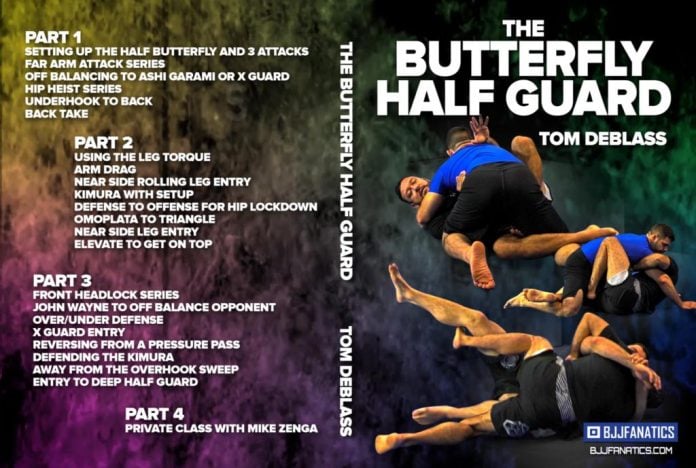
The Butterfly Half Guard DVD Review

The most charismatic and likable grappler of today is out with a brand new gem! If you do not own a To De Blass DVD so far, you’re not fit to call yourself a grappler. The UFC veteran is one of the most formidable grapplers of today, as well as a premiere Brazilian Jiu-Jitsu professor. Tom is as hardworking as they get, constantly training champions, competing and producing high-quality DVD instructionals on a regular basis. He is famous for tackling subjects that other coaches do not focus on so much. A good example is his Submission Escapes DVD,  as is his Half Domination set. Now, he hits it right bang in the middle again, with The Butterfly Half Guard DVD. It is just what the grappling world needed!

The Butterfly Half Guard DVD focuses on a very specific aspect of half guard that we got a glimpse of in Tom’s Half Domination DVD. The butterfly half guard is a very interesting variation of a BJJ classic and is one I really enjoy using. I came across it a long time ago, in an old Robson Moura instruction. Since then I experimented with it, learning mostly what not to do. The position offers a lot of safety, as well as a really easy sweeping option. Tom’s previous half guard DVD touched upon the subject briefly, opening up leg lock setups from the position. It worked for me really well. Now, I’m as excited about The Butterfly Half Guard DVD as I’ve ever been about a BJJ DVD instructional!

ON SALE HERE:
Tom DeBlass DVD – Butterfly Half Guard
The Butterfly Half Guard DVD Review

Tom DeBlass and Butterfly Half Guard?

The reason why exactly Tom DeBlass is the man to show this modern variation of the half guard is his prowess in the position. Actually, he is a wizard from all half guard variations and has a few of his own inventions to boast about. Think about this fact for a minute – nobody has passed Tom’s guard in training or competition for more than a decade! Furthermore, his favorite guard is the half guard! As far as competence about a certain subject goes, nobody is a better fit to explore the Butterfly Half Guard more than DeBlass. Plus, The Butterfly Half Guard DVD set contains an amazing surprise that’s going to make you want to jump with joy!

The Half Guard Of Tom DeBlass

Tom DeBlass is a Ricardo Almeida black belt. He is the owner and head coach at Ocean County Jiu-Jitsu in New Jersey. Tom’s teaching methodology has resulted in champions like Gary Tonon and Gordon Ryan, who both train with him on a regular basis. DeBlass is a part of the notorious crew that hangs out in the blue basement of Renzo Gracie’s academy and gravitates around Danaher. As a competitor, Tom has seen and done it all – from the UFC to the ADCC.

Apart from being an amazing coach, Tom has a grappling style that is a great fit for most people. This is exactly what makes The Butterfly Half Guard DVD, and all his other material, such a valuable learning tool. Anybody, from beginners to the most advanced students can benefit from his instructionals. Furthermore, they’re perfect for older grapplers or physically weaker ones. Despite being a big, heavy guy, Tom is incredibly technical.

The one part of his game where Tom is unbeatable is the half guard. He is a master of all kinds of half guard variations, from the most basic to really crazy ones. Where does the butterfly half guard fit amongst all those variations? It is a simple-looking guard, that works extremely effectively and is in the advanced guard’s category. That doesn’t make it unusable for beginners though, it’s just a better fit for people who already have some experience with the half guard and the butterfly guard as separate positions.

 The Butterfly Half Guard DVD

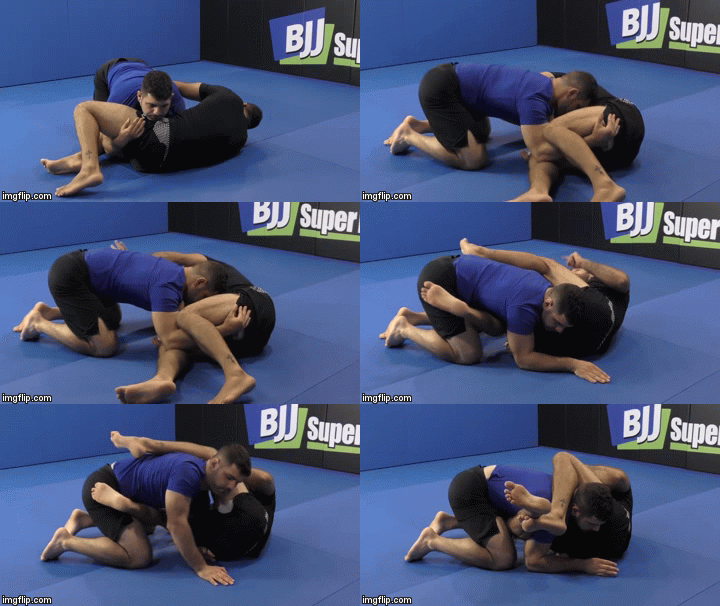
The butterfly half guard is the perfect blend of two very efficient positions in Brazilian Jiu-Jitsu. The half guard is a position of safety, offering them opportunities for a slower-paced game that slowly gets an opponent entangled. The butterfly guard is a much more dynamic position, offering sweeps and transitions at the expense of comfortable control. Combining both is as easy as threading the leg you usually use as a knee shield in half guard, inside the thigh of the opponent’s trapped leg in half guard. Presto, you are in the butterfly half guard and can reap all the benefits and none of the drawbacks of both guards!

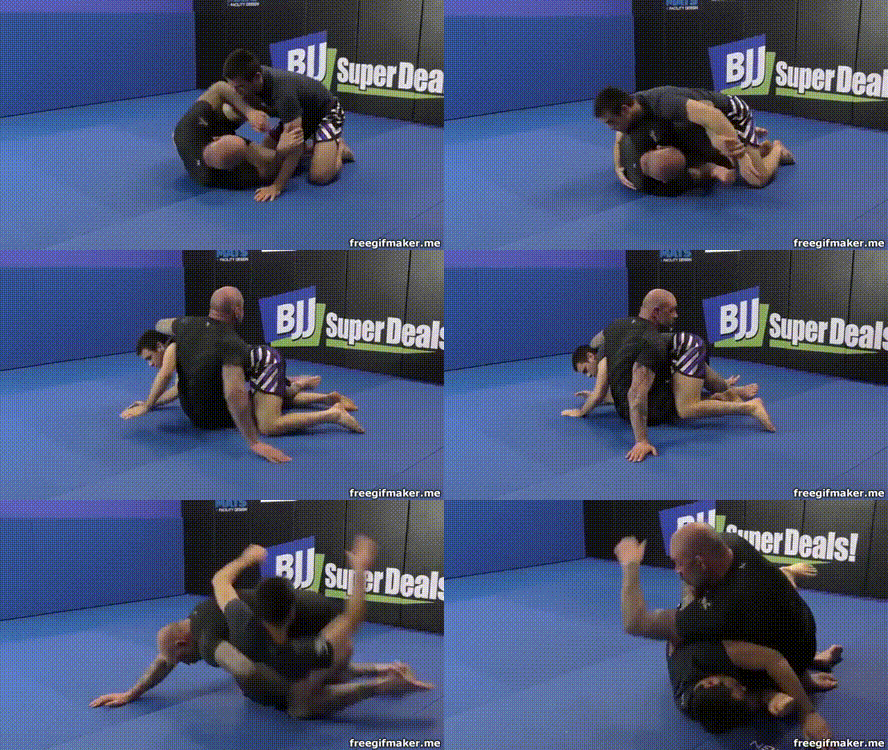
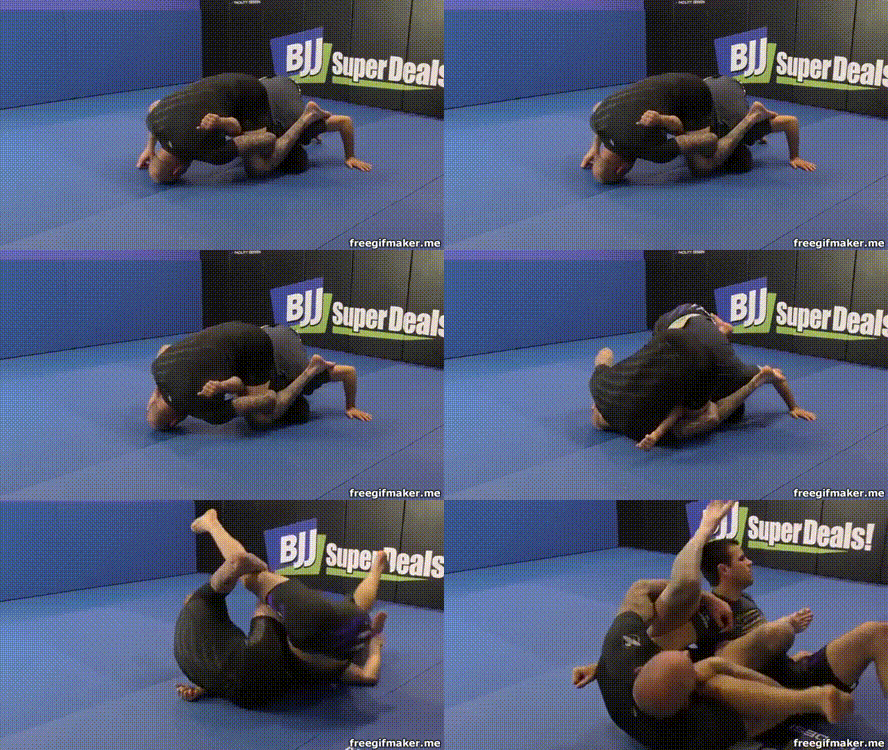
The butterfly half guard is slowly becoming a staple of today’s modern BJJ game. the reason for this is that it offers much more protection for the bottom player in terms of leg locks. It also makes smash passing virtually impossible. Moreover, it provides increased sweeping leverage as well as better control over the leg. And, of course, there are leg locks. Every time you have both your feet in between the feet of an opponent, it is Ashi Garami time, as you’ll see in The Butterfly Half Guard DVD

Speaking of which, the DVD is once again a four-part instructional. The first three volumes are all classic Tom DeBlass DVDs. Lots of important information organized neatly into multiple chapters. All of the chapters, in turn, connect to each other very easily, allowing you to for a bigger picture. The final disc is a real treat in itself! Read on to learn exactly why!

DVD 1 – Setting Up the Basics

Tom kicks The Butterfly Half Guard DVD off by explaining exactly what the guard is. However, he doesn’ spend much time dwelling on the position itself. Why would he, though, as it is simple enough to set up? Switching directly into attack mode, DeBlass offers attacks on the far arm which most people will find surprisingly easy.

NoOt spending too much time on armlocks, Tom goes directly into what most people are going to look for in this DVD – leg locks. He teaches very interesting entries to the Ashi Garami, based on the principle of Kuzishi. Rounding of the basics of the butterfly half guard is a couple of back taking options. Talk about variety in just one volume!

DVD 2 – Advanced Attacks 

Remember when I said all levels of grapplers are going to benefit from this DVD? Well, the second volume explores some more elaborate avenues of attacks. Namely, Tom goes over some innovative concepts, now available from the position due to the butterfly hook. This volume skips the leg locks and offers a wide variety of sweeps instead. There are also key tactics to maintaining the butterfly half guard and controlling your opponent’s hips.

As far as submissions go, Tom sticks to some of the basics here. He opens the door for Kimuras, triangle chokes, and omoplatas.

DVD 3 – The Crazy Good Stuff

As the Butterfly Half Guard DVD progresses, so do the techniques DeBlass has on offer. I never knew there were so many options for this cool position. As a huge fan of the front headlock, I was stoked to start watching the third volume. It kicks off with what DeBlass calls the front headlock series and it works like a charm! Getting the front headlock from the butterfly half guard is the dream combination for me, and one that does not fail!

The Butterfly Half Guard DVD Tom DeBlass
Click to Watch Full Technique

Another key element of a successful guard game are options to defend against passes and retain the guard. Tom doesn’t skip over this key part of the game. He covers most of the usual ways people are going to try and get past your guard. The over-under pass and pressure pass defenses are as important as anything you’ll learn in this DVD.

There are also a few defense options against common submissions like the Kimura. In a truly high-level style, Tom ties them all into simple and effective counters that are going to turn the tables quickly.

DVD 4 – The Private

The final DVD is really, truly the most important bit of this instructional. There’s no better way to tie things together than going through all the material and asking DeBlass what still doesn’t make sense. Who wouldn’t want a private class with Tom DeBlass on a subject like a butterfly half guard? Well, that’s exactly what you get.

The final volume of The Butterfly Half Guard DVD is precisely this. It is an hour-long private class with Mike Zenga, covering everything there is to cover about the butterfly half guard. Three DVDs full of awesome information plus a free private with Tom DeBlass? No wonder I got this DVD fresh off the press.

ON SALE HERE:
Tom DeBlass DVD – Butterfly Half Guard
The Butterfly Half Guard DVD Review

The Drawbacks Of Being A Submission Specialist In BJJ

Submission Specialist BJJ

Watching submission only tournaments can be a real treat! You get guys and girls hunting for submissions of all varieties and types. It makes you want to run off to the mats and start subbing people right away as well. However, we all know that submitting others in grappling martial arts is not quite so easy. It takes years of practice to figure out the submissions that fit you and then get good at them. The people you see on your screen catching the same submission over and over again are what’s known as submission specialists. It takes great dedication and effort to become a submission specialist in BJJ. Still being one has it’s drawbacks and requires certain sacrifices.

What is the submission you’re known for in your academy? Are you well versed in a few or just the one that nobody can get out of? How did you figure out that this is exactly the ultimate submission for you? Moreover, how do you know that as you evolve and progress through Jiu-Jitsu, a different submission isn’t a better fit? These questions, as well as a host of others, should always go through your mind when you start favoring a move too much. Because, as you’ll see, becoming a submission specialist has crucial drawbacks that might have a huge influence on your game. Not only on your game but on your BJJ progress as a whole.

It is undoubtedly fun to be good at something. It is rewarding to know that you have a move that makes even the most experienced people in your gym approach with caution. Being dangerous is a positive in grappling. However, it is not the only aspect of it, even if you’re a full-time competitor. Even submission only competitors need to be careful when they go on the path of a submission specialist. And yes, this includes black belts as well. Being effective with a submission as Eddie Cummign is with an inside heel hook does not come without a price.

The Traits Of A Submission Specialist

What exactly is a submission specialist? It is a grappler that is so good in a particular submission that they’re able from a host of different positions. But this is not the complete definition of a submission specialist. A submission specialist is also somebody who can submit (usually with one or two moves) from a very specific position at a very high rate.

Submission Specialist BJJThe traits of a submission specialist lie in two major aspects – experience and knowledge. As far as knowledge is concerned, it is all about technique. Submission specialists spend huge amounts of time attacking from their favorite position. However, they also spend countless hours perfecting technical details and doing drills. All of this results in near-perfect technical knowledge of the mechanics of a certain submission, along with the best positions to get it from.

Experience, on the other hand, is all about how and when specialists get their move. It is certain that they’ll get it, even against opponents that know what’s coming. Experience allows specialists to know precisely when to go for a move and how to get in a position that opens it up. It also helps them get into position without being detected. Experience also allows them to have a ‘vision” of how to get the move after a few steps. People that can also anticipate it and manage to fend their attacks off are very rare. And even then, they’ get caught later on. it is simply inevitable.

Drawbacks Of Focusing On Only One Submission

So, with all of the above, why should anyone shy away from becoming a submission specialist? In BJJ things are never so easy as they seem. Have you ever wondered why not everyone is a submission specialist? Well, there are some very apparent drawbacks to playing such a game. And they change and evolve as you do, making things even more complicated.

Submission Specialist BJJThe first thing to consider is level. If you’re a competitor that thrive at every level, it is normal to have favorite moves. However, truly specializing in something is a great way of halting your constant progress. Let’s say you’re a fierce back taker with inescapable chokes from the back. As a blue belt, this gets you through each roll land match with ease. At purple, it works, but you start hitting a few snags. So yo go deeper into it and decide to look for the same move despite everything. Going forward, at brown and black belt level, you’ll suddenly find yourself lacking some integral BJJ skills. parts of the game are certainly going to pass you by.

While you’re still going to be good choking from the back, you’ll have less and less success with it and no other viable options to fall back to. Instead, looking to retain your skills while widening them up at every level is a great way to stay aa constant threat and evolve fast at the same time. However, this is the submission hunting approach, as opposed to specializing in a move. So, in order to avoid getting tunnel vision, make sure you specialize in submissions rather than a submission.

You do not need to spend so much time specializing in heel hooks now. All you need is to get all of the Wolverine’s knowledge in a digested and consolidated way. You’re in luck because “The Ashi Garami Seminar” DVD by Cummings is all you need to include brutal heel hooks in your submission game.

https://bjj-world.com/best-bjj-dvd-instructional-for-submission/

https://bjj-world.com/neil-melanson-dvd-collection-review/

REVIEW: Yuri Simoes DVD – High Efficiency No-Gi Top Game

Double Leg Takedown – How to Do It & The Most Common Mistakes

Jiu-Jitsu Submission Hacks: Slow Chokes

Jiu-Jitsu Submission hack: Slow Chokes

Why do Some BJJ submissions fail to work sometimes? It happens to everyone along their BJJ journey, and there’s no way around it. There are times when you did everything right, but the choke just doesn’t seem to work. Regardless of how much you squeeze or pull, nothing is happening. There are a few factors here, but for the sake of argument, we’re going to presume that you know what you’re doing when you’re looking to strangle someone. So how come it won’t work? Well, you’re either messing something up, your opponent is a freak, or you’re missing a crucial, yet subtle element. Instead of going back and re-learning everything or completely abandoning a particular Jiu-Jitsu submission, why not find a workaround? There are certain hacks that can completely change a technique if you know how and when to apply them.

The problem with a Jiu-Jitsu submission game is that it makes you really restricted in your game. Submission hunting is great, but you need to know how to hunt, not just blindly jump towards moves. Even if you get a submission by sheer luck, you need to know how to finish it instead of rushing through and giving away a perfect opportunity. There is a reason why BJJ submissions are so sought after – they’re hard to get! This makes them even sweeter when you finally manage to sink one in. Out of all submissions, chokes or strangles, are particularly held in high esteem. All due respect to leg and arm locks, but a choke is an ultimate tool to finish even the biggest, strongest opponent. Moreover, they come in all shapes and sizes, allowing for lots of variety in attacking.

Jiu-Jitsu Submission hack ChokeThe trouble with chokes is that they might prove difficult to get in certain situations. If we remove the possibility of you messing up the technique, all that’s left are just a few options. One huge factor is your opponent. Against most people, you’ll get a tap from a solid choke without much-added effort. However, every now and then, you’ll run into that crazy partner with a neck of steel, or even worse, an overly flexible one. Remember that chokes are the Jiu-jitsu submission that truly works on everyone. All you need is a small hack to make sure you get taps 100% of the time. 

The Essence Of Strangles

The reason why chokes work so well is because of their mechanics. Getting a chokehold in Jiu-Jitsu relies on the same principles as other submissions. The basic mechanics require you to use your strongest body part or a combination of a few against a significantly weak body part of the opponent. As such, there’s nothing more vulnerable on the human body than the neck. Applying a choke with your arms, legs or a combination of both against the neck of your opponent should always be a whole-body effort as opposed to an isolated one.

This brings us to positioning. There’s no way of finishing a Jiu-Jitsu submission without proper positioning. Positioning means getting your body in the optimal spot for finishing a stranglehold you already have in place. The arms and legs provide only the structure for the choking. the power of the choke, as well as the source of control, comes from correct body alignment in relation to your opponent.

From a more specific standpoint, chokes in grappling work in one of two ways. Very rarely there’s a combination of both methods that work effectively. The primary method is blood chokes. The way they work is through bilateral pressure on both carotid arteries. No blood to the brain means no oxygen, which in turn means no consciousness. Air chokes are a little bit more unreliable and brutal, but effective nonetheless. They work by preventing airflow at the level of the trachea.

Finally, the tool you use to apply the pressure is crucially important. You might use either the Gi or direct arm/leg pressure when you’re choking. Both kinds rely on different mechanics which you need to understand if you want to be successful.

What Exactly Are Slow Chokes

The hack we’re offering today is the skill of applying chokes slowly. Which chokes can you call slow chokes? The answer is all of them! The reason why this approach works is that it addresses a key BJJ principle – space. In the heat of rolling or a match, conditions are usually less than perfect, despite our best efforts. Since the goal is to take away space, in order to make everything tight. The reason why we want tightness is, first and foremost control.

Furthermore, no space means you can exert more pressure on your opponent. We’re not talking about direct choking pressure here. What you need to be aiming for is constant pressure on all sides of your opponent’s neck. The goal is to make them uncomfortable and cause them to make wrong decisions. Even more importantly, by applying constant and, preferably, ever-increasing pressure, you’re causing difficulties breathing. Every time they breathe out, they’ll have much more problems breathing in again. Inevitably, they’ll tap or nap.

Jiu-Jitsu Submission hackIn order to be able to apply such pressure, you need the aforementioned position. From the back, for example, you need to know how exactly you can use a body triangle and tight upper body control to finish with a Rear Naked Choke. From the front headlock, it is all about shoulder position and the tightness and type of your grip. All it takes is staying in position and patiently taking away breathing space while exerting pressure at the same time. Only when you’re sure you’re as tight as possible, you should look to apply direct choking mechanics, i.e. squeeze.

Jiu-Jitsu Submission Hunting

Remember that hunting for a Jiu-Jitsu submission is not a competition in who is faster. It is a slow and methodical way of keeping constant pressure on your opponent along with the never-ending threat of finishing. For successful finishing, you’ll need to be able to bot threaten with and tap an opponent with multiple different submissions.

That said, in order to obtain a perfect position to slowly choke your way to victory,  you need to be able to confuse your opponent. Submission hunting is all about misdirection instead of openly attacking something over and over again.

Think of it like this. You need to start your matches patiently, like a tiger laying and waiting from an ambush. Keep creeping up until you see your opening and only then explode to get what you want. However, unlike a tiger, instead of going for a quick kill you want to transform into a python and slowly and methodically squeeze the life out of your opponent from a dominant position.

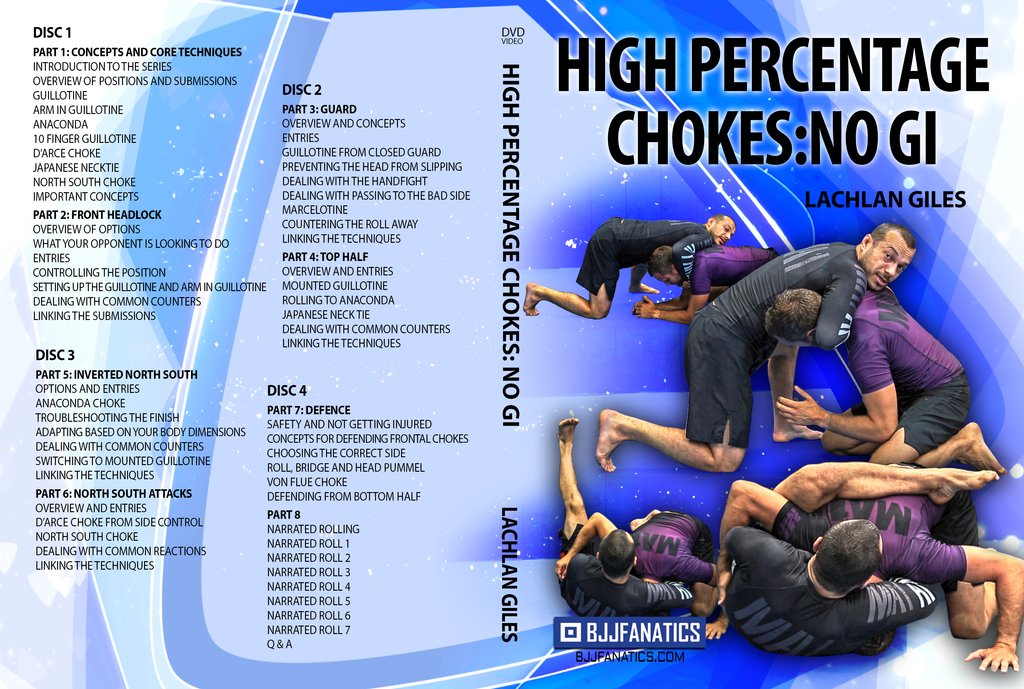
Lachlan Giles has a really comprehensive instructional getting, maintaining and finishing strangles. His “High Percentage Chokes: No-Gi” DVD set is a must-have for all practitioners, regardless of their affinity (or lack of it) towards the Gi. His stuff works, and it includes the principle we’re discussing today along with multiple examples. This DVD is a real bargain!
Lachlan Giles DVD Review

Wrap ‘Em Up: Use Your Opponent’s BJJ Gi Against Them

The Easiest North South Choke Setup

Neil Melanson DVD Collection – A Submission Heaven

Neil Melanson DVD Collection

If somebody asked me to choose one coach that I’d like to go and spend some time with, surprisingly it wouldn’t be Danaher. All due respect to the Dark Lord, but there’ someone out there who has an even more brutally effective brand of BJJ. Is it BJJ though, or just simply submission grappling, optimized to the maximum? When grappling is the order, the man responsible for it can be no other than Neil Melanson. Yeah, you might not know him and that’s where part of the beauty is. He is also not a BJJ black belt. Again, it is what makes him exceptional rather than average. Well, that’s my opinion, anyway. Since I can hardly get my wish to go train with the guy, I can get the next best thing – his DVD instructionals. Luckily, Neil’s been really busy in the last year, coming out with no less than 5 amazing titles about grappling. The Neil Melanson DVD Collection is out there people, and it explores submission grappling like no other digital set in the world!

What is the point of training grappling martial arts if you’re shy about submissions? I’m guilty of doing that very thing, or was, at the very least. Up until I was midway through my blue belt, I never really did many submissions. The result – a horrible finishing rate. Abandoning a sound position to risk a submission attack was unimaginable for me. However, I did not like what was going on and had to act. So I decided to throw caution to the wind and go for submissions only. Looking back I could’ve approached everything with a bit more balance, but I was a blue belt, doing what blue belts do. So, my affinity for submissions was born. Years later, and I’m still on a submission hunting quest. But now, I have the help of the Neil Melanson DVD Collection, the ultimate submission-focused instructional bundle.

Why do I like this Neil Melanson guy and his teachings so much? Well, when I went out to explore the best ways of submitting people, I soon found out that BJJ was not the be all end all fo submission grappling. There are grappling martial arts out there that have really strong submission techniques. The problem is that people usually chose one, expecting it to be the solution to all. Instead, if submissions are your choice, getting the best moves from all arts and organizing them to fit your needs is what your goal should be. I used to do it (as best as I could) not realizing that some people already did it before. Now, with the Neil Melanson DVD Collection, I have a complete system that can help me submit anyone in any format! And the best thing about it is that it’s still going to grow!

The Ultimate Submission Grappler 
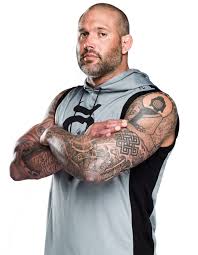
Neil Melanson is by far one of a kind in the grappling world. He is a true old-school warrior, one that’s as efficient on the ground as he looks intimidating. Is Neil the ultimate grappler? That one is hard to tell, especially with the lack of competition footage on him. However, if coaching is anything to go by, then he’s most certainly a top contender!

Neil used to be in the service as well, and with some record! He spent 7 years in the Navy and 5 years in the Federal Air Marshall service. This makes him the top choice if you want to learn a grappling style efficient in all aspects of life. Form the mats, through the octagon all the way to the streets, what you learn from Melanson works without a doubt.

Melanson, AKA “The Ground Marshall” has a unique and equally impressive grappling background. He has a black belt from Judo standout and UFC veteran Karo Parisyan. He also has extensive collaboration with a true legend of grappling, Judo’s very own Gene LeBell. Not skipping any grappling related martial art, Neil has a high-level Sambo pedigree as well, courtesy of Gokor Chivichyan. On top of all that, he was a formidable catch-wrestler before he even began looking into other arts.

The result of such a rich background is a unique grappling style that’s apparent throughout the Neil Melanson DVD Collection. There’s no one art that’s going to find the whole system familiar. Neil is a true master of choosing only the things that work. Others in the grappling world area also capable of doing this. However, combining everything into a logical, easy to learn the system that everyone can use, is a trait of a grappling mad scientist! And there’s not many of those lying around.

Catch As Catch Can Wrestling

The basis of Neil Melanson’s style and the Neil Melanson DVD Collection as well lie in the sport of catch wrestling. Catch-as-catch-can wrestling is a grappling style that originates from the 1870’s in Britain. British miners and dock workers of the period would pass the time by organizing wrestling matches between themselves. The goal was to catch someone in a submission hold faster than they caught you. Thus, catch wrestling was born. It arrived in the US along with the British sailors and started spreading, mostly due to carnivals. It was precisely this period that gave birth to lots of the vicious submissions that characterize this style.

At carnivals, catch wrestlers often challenged people to matches. That meant they had to be ready to beat opponents of all sizes and experience, quickly and decisively. The only way to achieve this was by submitting them with brutal moves that left no doubt as to who the winner is. The single most important goal of catch wrestling is to finish as fast as possible. It actually favors blitz submissions based on brutality to positional submissions.

The way catch wrestling benefits BJJ is by picking up where BJJ ends. It is the perfect thing to use when you see openings that Jiu-0Jitsu doesn’t usually exploit. Nneilisi a master at connecting no only BJJ, but Sambo and Judo as well, with the brutal principles of Catch Wrestling.

Neil Melanson’s Coaching Skills

Neil’s style of coaching is a very unique one, just like his grappling style. Apart from his propensity towards combining essential skills from different grappling martial arts, Neil also likes naming things. Unlike Eddie Bravo, he doesn’t go overboard with it but does give his favorite moves cool names. In terms of teaching, this really helps remember them distinctly and call upon them in training.

Neil’s unique style brings positional security to blitz catch wrestling submissions. it also works the other way, offering the Jiu-Jitsu game more finishing options from unlikely positions. Furthermore, all submissions in the Neil Melanson DVD Collection are taken from the absolute best sources. Leg Locks from Sambo, chokes from Judo and Wrestling, neck cranks and arm locks from Catch etc. The impressive feat is that it all works as a complete system.

A huge mark of Neil Melanson’s teaching methodology is attention to details. He focuses on those tiny little bits that make grappling such an interesting art. However, with details, it is very easy to get lost in unnecessary directions. Neil has the rare ability to single out those details that truly make or break something and then he dissects them down.

The Neil Melanson DVD Collection is a set of DVD series that based on a very systematic approach. Melanson likes to do unusually long chapters on most of his techniques. Yet, he has a methodical approach to it, expanding every chapter into a mini system of its own. Combining all chapters provides a grappling system for certain positions that have no holes in it whatsoever.

The Neil Melanson DVD Collection:

Back when catch wrestler Melanson started working with Gokor and Karo, he was not really savvy from the bottom. Gokor gave a young Neil the valuable advice to expand his bottom game since he was sparring with Karo, who fought in the UFC at the time, Neil had to learn fast. And he did. He not only adopted working from the bottom but ended up thriving there.

Melanson brought his catch wrestling philosophy to the bottom grappling game. He ended up going into directions most other people never really explored or deemed ineffective. Today, the guard is considered a favorite position of Melanson’s and triangle chokes are his weapon of choice. In all fairness, all chokes are his strong suit, as you can see from the Neil Melanson DVD Collection. Once he gets a hold of a neck, it is either choke or crank with no chance of escape.

Neil’s grappling innovations do not stop at the guard. There’s a reason why he coached top level MMA fighters at gyms like Xtreme Couture and Alliance MMA. He went on to find catch wrestling, Judo and Sambo solutions to unsolved BJJ problems, ending up with one of the most exciting and applicable styles ever. It is all in the Neil Melanson DVD Collection.

The Guard Series

I think we already covered that Neil has a nasty guard game. What we didn’t cover is the complexity of his systems. Or lack thereof. All guard systems that Neil has to offer, both closed, open and the half guard, are very simple in nature. There are no athletic or flexibility requirements. Actually, they fit older practitioners, as well as smaller and female grapplers a lot.

Keeping things simple is something BJJ lacks today. If you see everything going on, from clips to full-blown instructionals, people seem to like things that are absurd. No wonder they’re not catching on. Instead of looking for elaborate moves that very few people can pull off, Neil likes the simple, yet unusually painful solutions. If you can’t get a submission right away, make it as painful as possible until you do get the option to finish. That is a very foolproof way of fighting off your back.

Ground Marshall Guard

All of Neil’s instructionals that are a part of the Neil Melanson DVD Collection follow a similar structure. There are 4 DVDs in each, every disc containing specific in-depth chapters on a certain subject. The subject of the Ground Marshall Guard DVD is the closed guard. Better said, it is Neil’s take on the quintessential Brazilian Jiu-Jitsu position.
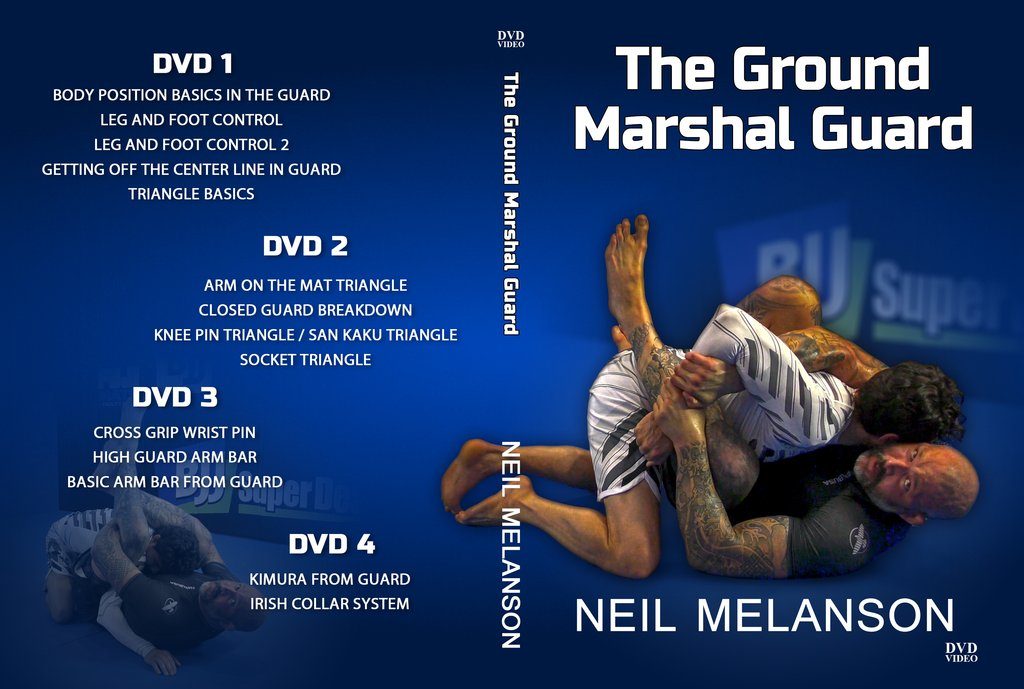
Neil Melanson DVD CollectionFirst things first, it’s the basics of the closed guard. The first volume is all about the very basic closed guard positioning. There are extensive chapters on body positioning, controlling the opponent and crucial attacking strategies. It wouldn’t be complete without a submission, so Neil’s favorite triangle choke wraps this volume up.

The second DVD is all about triangles. Neil shares a few interesting setups, but more importantly, he really provides new options on how to finish this classic BJJ submission. Pay attention to the socket triangle. It is incredible!

The third volume goes into a different aspect of submitting from the guard. Again, no reverse Barataplatas here. Just the simple good old armbar, with a few incredible twists. Three chapters, all in all, mean Neil leaves no stone unturned when it comes to closed guard armbars.

Finally, the fourth volume has the complete Irish Collar guard system which is of Neil’s own creation. It is the end all be all of the closed guard systems. The only thing you’ll ever need to be scary from the bottom.

Advanced Guard Systems

The second member of the Neil Melanson DVD collection picks up where it’s predecessor ended. A few more advancements on the ever-evolving Irish Collar mark the start of this DVD. from there on, Neil provides truly advanced concepts, all about how to bait your opponent into a trap. Guillotines are the submission of choice here for Melanson, and they work like a charm!
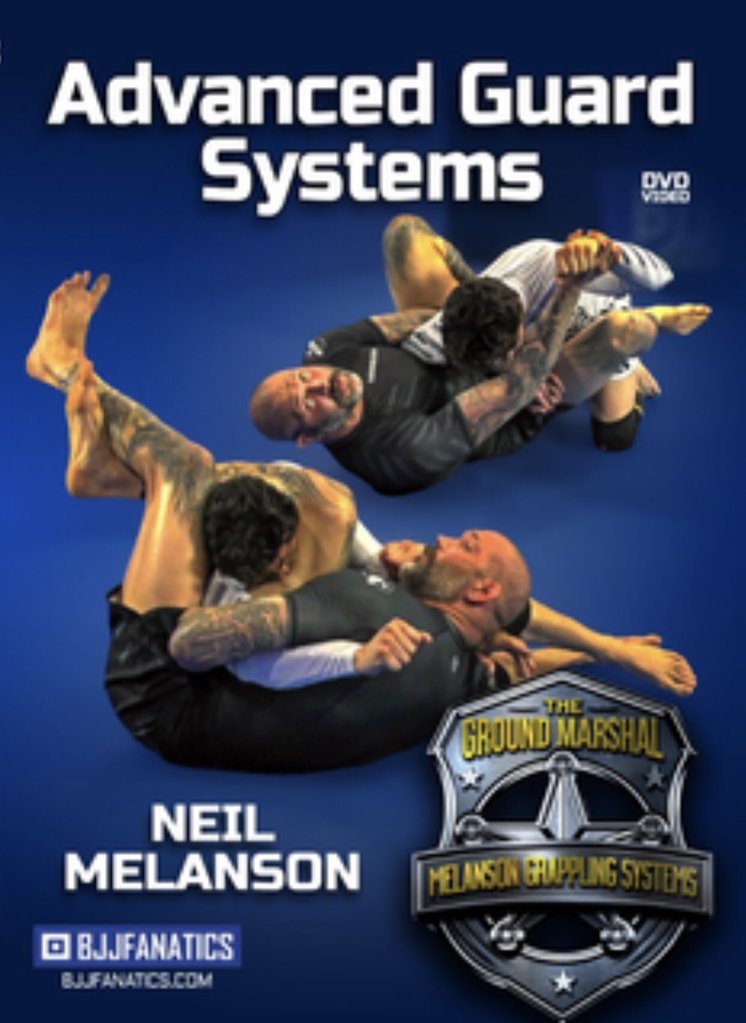
Neil Melanson DVD CollectionNext up is his “snare” trap system. It is a true submission hunters dream as it opens up so many different attacks! From reverse Kimuras to sweeping and the ever-present triangle choke, the opportunities are endless!

Since Neil is all about grappling without the Gi, and he still likes to have good control over the opponent, he is a big fan of the overhook from the bottom. Perhaps being such a proficient D’arcer has something to do with avoiding underhooks as well. Whatever the case, his overhook guard system is one to carefully look into. Triangles, armbars, sweeps, you name it – they’re all readily available.

Staying true to his style, Neil leaves the best for last once again. The K-control system is another one of Neil’s inventions. It is the catch wrestlers take on fighting from the bottom, so expect all kinds of submissions to feature heavily throughout!

Ground Marshall Half Guard

This is the latest release in the Neil Melanson DVD Collection. It expands even further into the world of guards, this time focusing on the half guard. Once again it’s high level, well organized and really helpful for grapplers of all levels.

The basics of the half guard are the focus of most of the first volume. It is all about what is the whole point of the position along with some key Melanson details that are going to change your take on it. There’s a single leg finish from there, to keep things interesting in the volume.
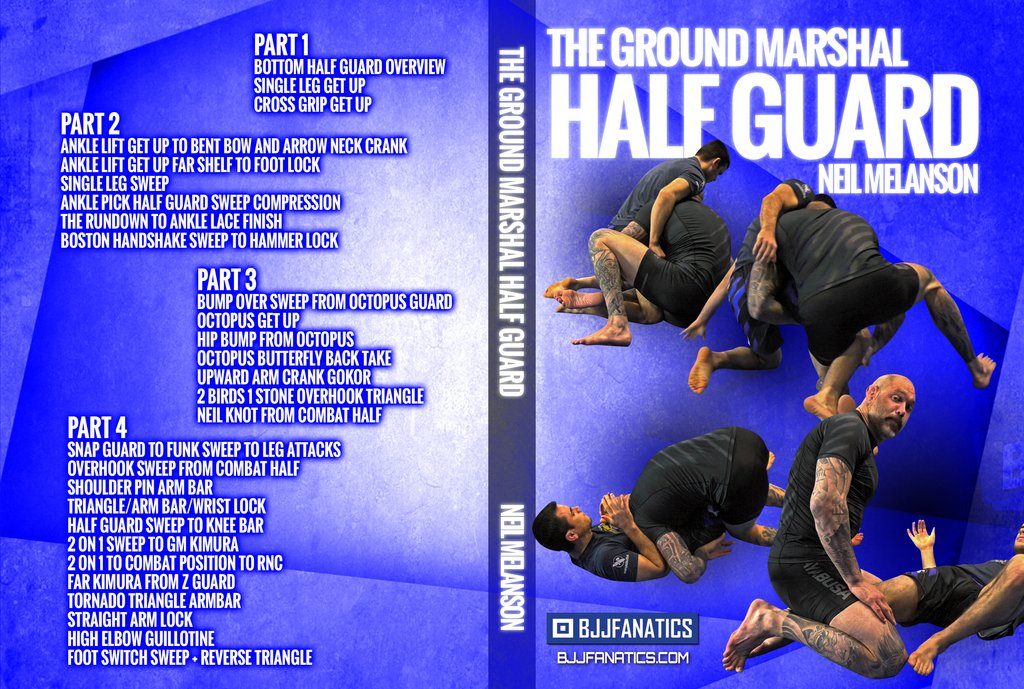
Neil Melanson DVD CollectionThe second volume starts with a bang – a bow and arrow neck crank finish. From there on it just gets more and more interesting. And painful for your opponents. Lots of ankle lift sweeps that end up in different submission preceded the notorious Neil Melanson Boston handshake. Of course, there’s a classic catch wrestling submission to cap it off – a Hammerlock.

The third volume focuses on the octopus guard and options to finish from there. It is a brand new take on the old octopus guard system. It further branches out into so many different submission systems that your head is going to spin the first time you see it.

To wrap it all up, Neil offers what looks like everything he knows about the half guard in the last volume. Crazy sweeps and brutal submissions ranging from chokes to weird leg locks are not lacking in this volume. In fact, it is the most submission heavy volume of the whole Neil Melanson DVD Collection.

Top Position Series

The top game of Neil is his strongest side. Yes, he is a true wizard off his back, but his grappling background is all about torturing people from the top. He has two volumes that focus mostly on the top position. His “Catch Wrestling Formula” DVD is all about the top half guard and side control destruction.

The “Headhunter Guillotine Series” DVD is all about front headlock attacks, thus ending up int he top position category. However, the principles of choking people from the front are applicable across the board.

Catch Wrestling Formula

This is the DVD that made me drool over Neil Melanson DVD instructionals. It is the first one that he recorded and it is a key piece of material in my own DVD collection. It is something that I base my top game off to this day.

Neil goes right into it, covering how to deal with the dreaded underhook when you’re on top in half guard. This is where catch wrestling really shines as every step of every move just puts more and more pressure on your opponent. When you finally end up choking them or arm locking them, they’re going to give away a submission just to get away from you.

Neil Melanson DVD CollectionThe second DVD is all about a wrestling classic – the Cow Catcher. It is a modification of this old wrestling move that works like a charm for BJJ, thanks to Neils efforts. The Half Helch is one half guard control you’re going to integrate into your game the instant you lay eyes on it.

DVD three focuses on the cradle. It is the ultimate catch wrestling move to pack an opponent into a ball, causing them massive discomfort and unbearable pain. And that’s even before you even try to submit them. The options Neil offers range from crazy guillotines to the tightest rear naked choke setup I’ve ever seen.

The final disc takes a turn and looks into a closed guard variation to annoy everyone. But not before he provides several ways of heel hooking your opponent’s from the cradle.

Headhunter Guillotine Series

The submission-heavy series features every front headlock choke you’ve heard about. Then it goes on to provide choking options that you, I and most people in the BJJ community never thought possible. It is the final piece of the Neil Melanson DVD Collection, at least so far.
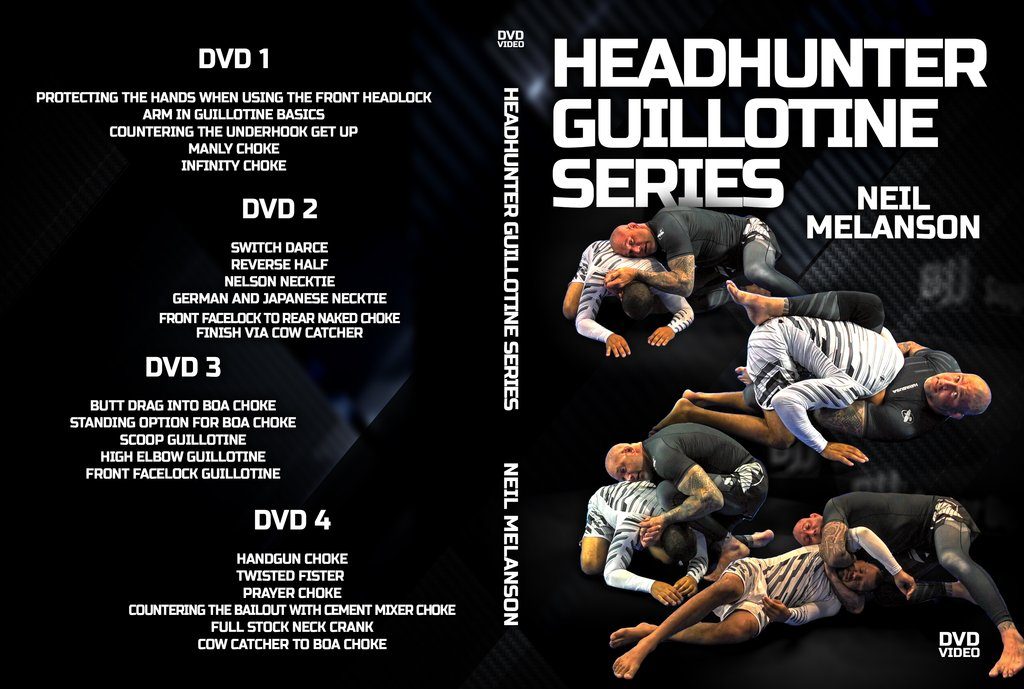
Neil Melanson DVD CollectionThe very first thing you learn here is how to keep your hands safe from your opponent’s countering efforts. It provides the front headlock basis you need to go into the arm in guillotine, for starters. Unusual and original chokes start from the very beginning, via the Infinity and Manly chokes.

The second volume is all about arm-in chokes. D’arce details, Japanese necktie essentials, and the mandatory never-before-seen chokes. There are also the German and Nelson neckties, the latter one fo the most brutal submissions I’ve ever seen in all of the combat sports.

Why do the Anaconda choke when you can go for the much more powerful Boa choke? Yeah, I didn’t know about it either, but then again, nobody did. It is another of Melanson’s inventions and a very efficient and simple one at that. There are also several guillotine choke options that work perfectly along with the Boa.

The final disc is a true Neil Melanson treat. It features only original chokes that are real giant killers. The handgun choke, the prayer choke, and the full stock neck crank are just some of the moves you’ll learn from this instructional.

A Few Interesting And Important BJJ Facts Of Life

Fuin BJJ Facts

New to Brazilian Jiu-Jitsu? Welcome to the sport in which disorder can seem orderly. Welcome to the sport where the more you learn, the less you’ll know. And of course, welcome to the most fun and all-consuming grappling martial art in the world! Now that you’ve made the crucial decision of buying a Gi and you’re a regular in class, it’s time to go over some BJJ facts. Are they essential for your Jiu-Jitsu progress? Absolutely not, but they’re fun and knowing them can help you understand what exactly your new addiction is all about. Actually, even some higher ranked belts might find a thing or two they’ve forgotten all about. So read on, and don’t forget to add your own experiences in the comments section!

Brazilian Jiu-Jitsu is truly a complete lifestyle. What you do off the mats has as much impact as what you do on them. this is usually not the case with most other sports or martial arts out there. In Jiu-Jitsu, there are certain things that people often take for granted. Unfortunately for them, some BJJ facts are just that – facts. As such they do not conform to the needs of individuals and are universally true for most of us. The thing with facts is you can’t get away from them. BJJ facts are there to help new students understand the Gentle Art just a little better before they gain experience. Fr older students, they can help dispell certain myths and unreal expectations.

The fact is, that BJJ facts extend across all aspects of Jiu-Jitsu. Certain facts address technical topics, others are about the art in general, while some are simply fun to know. Now, BJ Jfacts area absolutely not crucial, but can help you immensely. How can they be of service? Well, knowing the factual state of things is going to help you come to terms with different subjects and accept them as such. this means that you can focus on what truly matters in BJJ instead of dwelling on myths and legends.

BJJ Facts About Training

  • BJJ FactsThe first thing to understand about Brazilian Jiu-Jitsu is that it will take time. No, you won’t get your black belt in 3 years. Yeah, it has happened before but in modern BJJ it is just not possible. To put it bluntly, you won’t even get a blue belt in under 2 years, if you’re at a proper Jiu-Jitsu academy. So be ready to put the hours in. 8-10 years is the minimum you’ll have to work for a black belt.
  • Speaking of belts, you should know that there are also ae limits to elts. for example, regardless of training time or talent, you won’t be able to get a blue belt before the age of 16. Nor can someone give you a black belt before you’re at least 19 years old. Furthermore, only third-degree black belts can promote other students to black belt legitimately.
  • Next up, there are no substitutions for training. Skipping a class and going over the technique on YouTube is a once in a while fix. Looking to learn moves online or through DVDs and only turning up to roll is a great way of staying a white belt forever. Fact is, you need to be on time and present for the entirety of class in order to move up.
  • Training BJJ can get you in shape. Of all the BJJ facts this one is probably the most obvious one. In case you need to know exactly how the usual BJJ class helps you burn about 1.000 calories. Go and find another activity that can do the while engaging your whole body and your mind.

What You Need To Know About Techniques

  • If there’s one thing that is as real as getting caught in a choke is, it is that both size and strength DO MATTER in BJJ. Leave the romantic notions of defeating larger and stronger opponents with ease. Do not get me wrong you can beat such opponents with Jiu-Jitsu, but it is not going to be easy at all. Strength and size bring huge advantages to the opponent, and you’ll need to always take them into consideration.
  • Furthermore, on the subject of technical BJJ facts, you can’t do everything. This is true in a few different ways. For one, there’s absolutely no way for you to do certain moves at a certain level. Give it a rest and learn things that are appropriate for you. You’ll get the opportunity to both experiments and do cool looking things later on. Along those lines, body type, flexibility and injuries also play a huge roll in defining what you can and, more importantly, can not do.
  • Speaking of training facts, drilling is actually immensely important. It is not overrated, nor can you advance without it. Get your drills in, the more the better.
  • Also, you absolutely need to have takedown skills and not just rudimentary ones. Guard pulling is not the answer to all stand-up battles. Nor are one or two moves you think you know just for r the sake of it. Learn takedowns, and focus on learning as many different ones as you can!

Speaking of takedowns, check out the “No-Gi Takedowns Made Easy” DVD instructional by Rick Hawn. It has everything you need to become a takedown machine instead of a one-trick pony!

Fun BJJ Facts

  • Despite what you might think, or feel for that matter, BJJ is not the best martial art out there. it does come damn close, but still, it is not the king. Another fact of life is that there’s n absolute best martial art, so the throne remains empty. Jiu-Jitsu is definitely among the most effective ones, definitely among the most difficult and arguably the most fun martial art. It is not, however, the only martial art you’ll ever need.
  • One common thing people usually ask themselves is whether they’re too old to start. As far as BJJ facts go, nothing is clearer than this. You’re never too old to start practicing Jiu-Jitsu. If you need practical examples, take a look at Danaher or Eddie CUmmings. Both started BJJ late in their 20’s and look where they’re now.
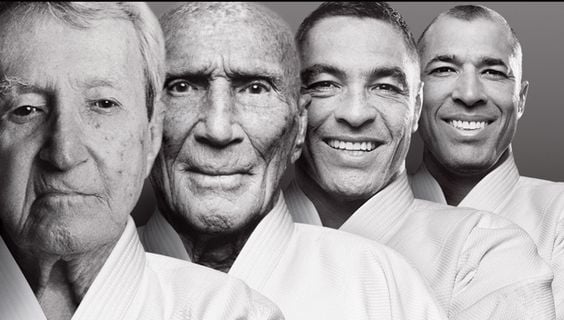
  • BJJ Facts Gracie Family A historical fact is that Carlos Gracie was the one that created the basic concepts of the art. Also, a fact is that his brother Helio is the one we have to thank for the direction BJJ took after that. However, Carlos’ role should not be overlooked as he was working on promoting the art worldwide, while Helio was perfecting it on the mats. Oh, and Rolls Gracie is actually Carlos’ biological son, not Helio’s.
  • Finally, as Jiu-Jitsu spreads across the world it seems to include celebrities a well. Some find in it exactly what they needed in life, like singer Demi Lovato. Others, like Keanu Reeves, discover it through shooting movies but get hooked on it instantly. The list of celebrities that actively do Jiu-Jitsu is on too long to discuss. Look it up!

https://bjj-world.com/difference-japanese-jiu-jitsu-bjj/

50 Famous Jiu-Jitsu and BJJ Quotes

Catch Wrestling vs BJJ and Which Art Has Better Submissions?

This Is The Most Powerful Takedown Combo in BJJ

Powerful BJJ Takedown Combo

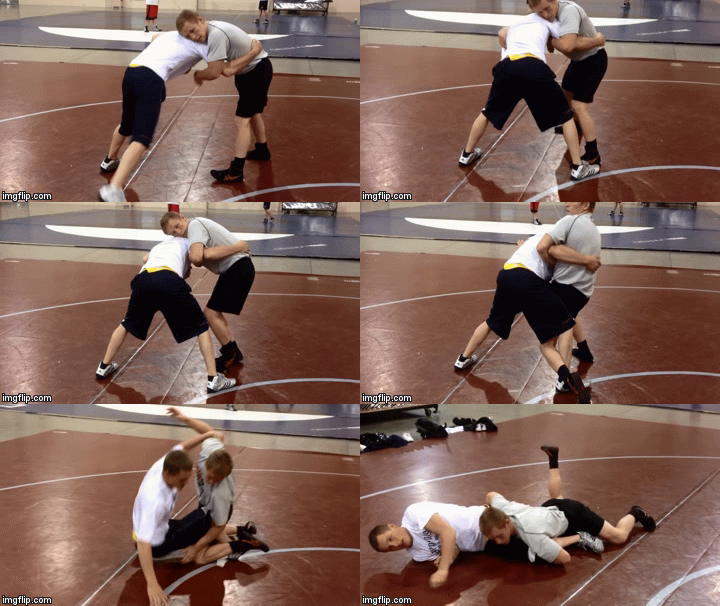
Training takedowns is not something that comes easy for people training BJJ. Those that have no prior experience in stand-up-based grappling martial arts, like Judo, Wrestling, or Sambo, usually develop a slight aversion to takedowns. BJJ offers such a deep and versatile game on the bottom, that people take the path of least resistance. They start rolling from the knees and focus most of their attention to ground fighting. Then, when they’re asked to step into a competition, even though pulling guard is an option, they end up losing the BJJ takedown game. AS far as options go there are no limits. Most takedowns in BJJ are borrowed from Judo, wrestling, and the like. Learning each one on its own is hard enough, let alone trying to do it while training Jiu-Jitsu. So, one great way to approach takedown training is by using combinations of those moves that work the most.

You all know the mantra. Everyone needs to train takedowns for BJJ although very few actually want to. It is the same as with drills, or warm-ups, for that matter. The only people that like training takedowns are usually those good at them because of previous experiences. Wo, they do people in Jiu-Jitsu have this aversion to takedowns? The main reason is probably the fact that they’re just a means to an end in BJJ, unlike other grappling martial arts. While they do bring points, people only see them as a small part of the puzzle. Which is where they’re wrong. They are a part of the puzzle, but it is by no means a small one. However, training them doesn’t need to take up large chunks of your time on the mat. You just need to be smart about creating an easy and effective BJJ takedown game for you.

In terms of takedown effectiveness, different moves tend to work differently in BJJ. Moves that are the highest percentage in their respective grappling arts, may not fare so well in Jiu-Jitsu. This is mostly due to the different ruleset and the aim of the matches. Regardless, you need to have a system that incorporates takedowns from different arts. Moreover, all these takedowns need to tie together easily and logically and also be highly effective in BJJ settings. Since there are quite a few that fit this description, we’re going to introduce another variable. We’re going to choose moves that work at all levels, and that take as little time as possible to master. Now that we know exactly what we’re looking for, let’s take a look at each element of our BJJ takedown combo.

Judo: O Soto Gari

The O Soto Gari is one of the most basic Judo throws. it is actually a part of the Ashi Waza portion of Judo or foot sweeps. There’s a reason why this move, along with the rest of the foot sweeps is taught first. Foot sweeps are a great way to introduce someone to movement on the feet, how to use grips, and take balance away. All these are crucial steps to developing a BJJ takedown game. This is exactly why we base our BJJ takedown system in sweeps and trips, along with a surprise BJJ addition at the end.

BJJ Takedown Combo O Soto GariThe O Soto Gari is simply an outside trip. It works by using two of Judo’s major principles – grip positioning and Kuzihu (off-balancing). In order to arrive at a sweeping position, you first need to take away your opponent’s posture, which disrupts their balance. To do this, you’ll use your basic collar and sleeve grips. once you have the grips imagine that you’re holding a large steering wheel. Then, turn the steering wheel towards the side of the sleeve grip. At the same time, you’ll need to shift your weight towards the leg on the same side. This both provides you with the weight you need to keep your opponent twisted and the space to move your other leg into position.

For the O Soto Gar, you need to stay close to your opponent and aim to have your anchor leg parallel to their outside one. From there, the goal is to swing your other leg forward, and then back. When you swing it back you need to keep it stiff and aim to hit their calf muscle with yours this, along with the broken posture, is going to send your opponent flying.

Wrestling: Inside Trip

The inside trip is a great wrestling technique that is also not very difficult to learn. Despite some considering it an advanced move, I find it much easier to master than double or single leg takedowns, for example, especially for beginners.

Similar to the Judo principles, this move requires you to have upper body control via grips and use it to off-balance the opponent. Then, you’re going to place a leg in their path of movement to trip them to the ground.

BJJ Takedown Combo Inside tripThe over-under upper body control is the usual starting point for this takedown. The goal is to control your opponent and make them lean by pressuring their head with the “under” control. Then you sneak your near side leg in between your opponent’s legs and hook their nearest leg. From there on you just go to the ground, as heavy as possible, while dragging and tripping your opponent along with you.

BJJ: Collar Drag

The BJJ collar drag is not a takedown per say, but more of a sweep. However, in our system, it features a BJJ takedown and a powerful one at that. The collar drag is actually just one of the attacks from a position called the Collar Guard. That, however, is a subject for another article.

BJJ Takedown Combo Collar DragThe collar drag starts with your butt on the ground. Following the same principles as before, you need grips and Kuzihi before you act. In this instance, you get both by just placing a collar grip on your opponent, and keeping your arm as straight as possible. The basic collar drag requires you to have a cross grip on the opponent’s opposite side collar.

The drag part comes with the help of your hips. For the drag to work, you need to be heavy and explosive at the same time. this is very simple when you do things technically. All you need is a fast hip switch while aiming to place your gripping hand on the mat as violently as possible. This movement is going to pull even the toughest opponent down as it is your entire body vs. their neck. That is a fight that you’re going to win 10 times out of 10.

Assembling the Ultimate BJJ Takedown Combo

Now let’s see how all these elements combine together in the most powerful BJJ takedown combo. First of all, you’ll need your grips. Go for the usual collar and sleeve grips, as they’re the easiest to get. Plus, your opponent is most likely to go for them as well, leaving grip fighting out of the equation.

When you get the grips you go for the O Soto Gari. It is the first move of the chain so there’s nothing different from what we described before. The system comes into play when you’re late, or your opponent knows what’s going on. A common thing to happen is for an opponent to pull the leg you’re attacking out and back. This’ll prevent the O Soto Gari but place them in a position for the Inside trip. What’s different here are the grips. Since you still have a collar and sleeve grip you’re going to use them for the trip. Simply place all your weight on the tripping side, pulling on the collar as hard as you can at the same time. You’ll end up with a really powerful takedown that’s virtually unstoppable.

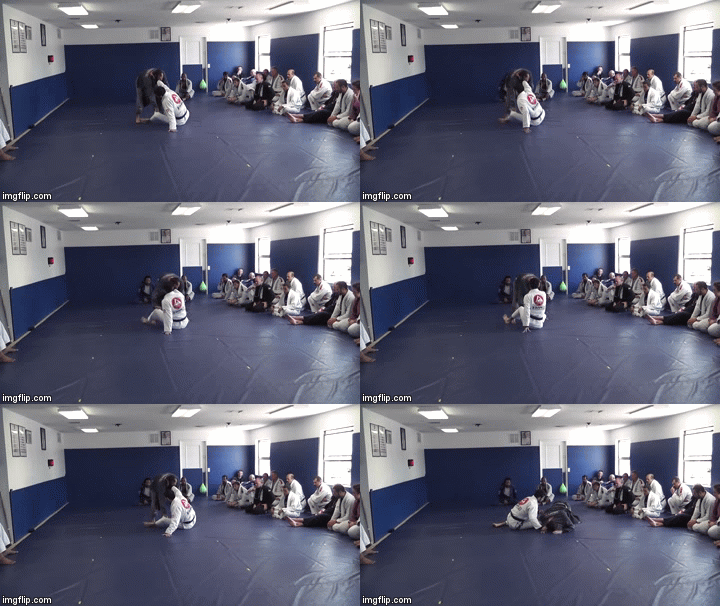
And, in the off chance that your opponent gets that leg out as well, you have one final option. Since the inside trip lands you down on the ground, going back up requires you to abandon and restart. Instead, go down to your butt, release the sleeve grip and collar drag! The only difference here is that you have the same side grip, but it won’t affect the technique. Since the opponent’s hips are far back from escaping the previous two takedown attempts, you’ll drag them down with ease.

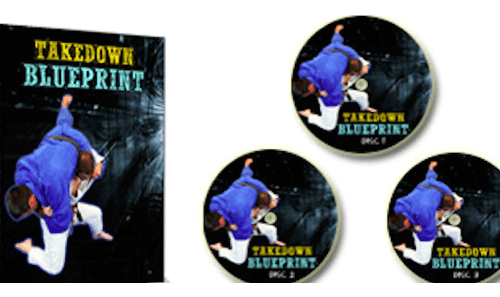
Jimmy Pedro and Travis Stevens are Judo phenoms who have one of the best takedown instructionals ever recorded! Get “The Takedown Blueprint” DVD set to learn the most effective Judo for BJJ and tons of more stuff!
Travis Stevens DVD Digital Instructionals Collection

Double Leg Takedown – How to Do It & The Most Common Mistakes


REVIEW: Neil Melanson DVD – The Ground Marshall Half Guard

The Ground Marshall Half Guard DVD -

A few years ago, not knowing who Neil Melanson is, was somewhat forgivable. Today, if you are in the dark about who Melanson is, then you’re doing something wrong. As far as grappling is concerned, Neil Melanson is right up there with John Danaher, Firas Zahabi, Bernardo Faria and all the other coaching marvels of today. However, Neil’s approach is quite a bit different from that of his peers. For one, he hasn’t got a black belt in BJJ. For that matter, I think he hasn’t got any kind of belt. Yet, he still coaches some of the world’s greatest MMA fighters in grappling. Oh, and he puts out high-quality digital material in the form of DVDs. And he does it often! So far, none of his titles can be branded a miss. Including his latest release, “The Ground Marshall Half Guard DVD”, which we’ll review today.

It is becoming increasingly easy to learn BJJ from high-level black belts thanks to digital material and seminars. The thing with the digital material is, that you do not get to ask any questions. Some coaches, anticipating this, go over the usual Q&A during their material. However, most people just present their moves and call it a day. Even worse, quite a lot of them omit crucial details that actually make everything work perfectly. It may be due to keeping their secrets from competition rivals or simply looking to charge more for private. On the other hand, a few select individuals, shy away from common behavior and go all in. Neil Melanson is one of those that do things on DVDs the same as in the gym. If there’s one reason to pick up The Ground Marshall Half Guard DVD without reading a review, it should be this one.

ON SALE HERE:
Neil Melanson – The Ground Marshal Half Guard

The Ground Marshall Half Guard DVD -
Use checkout code “first15” for 15% off on all instructionals!

Certainly, whenever a coach invests so much into his legacy, the material that comes out is going to have a distinct value. What makes The Ground Marshall Half Guard DVD such an extraordinary digital instructional is coach Melanson’s distinct teaching style. Namely, Melanson likes going deep into the things he is focusing on. When I say deep I mean going into details about the details of every detail deep. Yeah, you could say eh overanalyzes things in his instructionals. The result of such an approach is the rarity of finishing a DVD set and remaining question-free. When was the last time you had that happen? Well, if the half guard is something you like doing, or even thinking about starting with it, this is the guide you need.

Neil Melanson – A Grappler Like No Other

What makes Neil Melanson stand out from the others of the grappling community? I’d say there are three main traits of the distinguished coach that make him an original.

First up, it is his grappling background. A long-term coach of Randy Couture and the grappling coach at Xtreme MMA and Alliance MMA, Neil’s skill set is in high demand. Yet, you won’t find him in any BJJ history book or see him competing at an IBJJF event. The enigmatic grappler is actually a really proficient catch wrestler, as well as an accomplished Judoka. He is truly an old school grappler, who learned his trade from the likes of Gene LeBell and Gokor Chivichyan. While not formally recognized as a BJJ black belt, he could give even the highest level competitor a run for his money (or his life).

Next, it is his attention to detail. Although I already mentioned this it is something worth revisiting. If you are anywhere past a purple belt, this is going to mean a lot to you. For people leaning towards a conceptual BJJ approach, there’s hardly anyone better than Neil. There are not too many moves per chapter in his DVDs but each and everyone is broken down completely. Furthermore, each chapter is a mini-system of its own, as you can see in The Ground Marshall Half Guard DVD.

Third, it is his grappling style. Neil does not shy away from brutal and painful moves and positions. His rich catch wrestling background is apparent from the way he executes techniques. you can see his partners cringing and be grimacing in pain as he demonstrates the moves at no more than 50%. Scary!

An Ever-Growing DVD Collection 

So far, we’ve covered all Melanson’s releases, simply because I am a real fan of the guy. Up until this point, there are 4 titles available out there, each focusing on a crucial part of BJJ. Furthermore, each has catch wrestling solutions to common BJJ problems.

From the bottom, there’s the prequel to The Ground Marshall Half Guard DVD, in the form of the Ground Marshall Guard instructional. Offering more variety from the bottom, Neil also has the Advanced Guard Systems release, a truly unique approach to open guards. With the latest release, now you can get a trio of ultra high-level instructionals covering everything you need from the bottom.

From top position, his breakthrough set, Catch Wrestling Formula is one I still play at least once a week, looking for certain details. The perfect companion to it is the Headhunter Guillotine Series, the ultimate front headlock submission guide.

The Ground Marshall Half Guard DVD

What do you get with The Ground Marshall Half Guard DVD? First of all, you get a 4 Part DVD set to rival others covering the same subject. Secondly, apart from the clear technical quality of the material, the release is also flawless from a production standpoint. Sound, camera work, focus, organization of the material and all that jazz is bang on point. The material is really methodical, just like Neil, making it easy to fit everything together in a complete system.

Part 1

As any good coach would do, Melanson starts with the basics. He spends a lot of time explaining his philosophy of the half guard position. Furthermore, he also outlines the basic mechanics of the position, as well as his preferred way fo working from the bottom half. he also goes really deep into gripping, which is where he got me hooked. He even uses the grips to get up and sweep, via the cross grip get up technique.

It wouldn’t be a DVD of his if there was no wrestling included. The first thing he attacks from the Ground Marshall half guard is a single leg. Frankly, it is a setup worth giving a try, but I still haven’t gotten to it on the mats.

Part 2

Here, it is all about being brutally effective from the half guard. Why just sweep the opponent when you can get directly into really nasty attacks from all kinds of angles? A bow and arrow neck crank? Yup, it exists, it is effective and works perfectly off an ankle pick variation. Actually, the ankle lights get up is something Melanson really explores in this part, demonstrating it throughout half of this volume.

Melanson also likes to name his moves either himself, or as old catch wrestling moves. So, the Boston handshake sweep is just as cool and unusual as the name. There’s also a great ankle lace finish that you can use from a multitude of positions, not just the half guard.

Part 3

The Ground Marshall Half Guard DVD
Click to watch full technique video

I never really thought much of the Octopus guard. Until The Ground Marshall Half Guard DVD came along. Part three is all about Neils take on the Octopus guard, along with a number of really cool sweeping opportunities. The octopus guard opens up so many attacks it’s got me really rethinking my approach to it. Back takes submissions, control, sweeping, everything you might look for in a guard is right there. And it’s really easy to get it, retain it and work from it.

Of course, Neil couldn’t go through a guard based DVD without throwing in his signature submission – the triangle choke. For someone like me, who likes overhook controls, the triangle setup he offers is really helpful.

Part 4

The Ground Marshall Half Guard DVD
Click to watch full technique video

The last part is also the richest one. ti is like Neil realized that he still had a lot to say, but didn’t spread it out across the other DVDs. it is actually uncommon for him to have a volume with so many chapters, but he doesn’t shorten it on that account. quite the contrary, actually.

Kicking it off are leg locks, of course. From there on, it is more about submissions than it is positioning and/or sweeping. There’s no submission you can think of that’s not covered here. Kimuras, triangles, wrist locks, armbars, guillotines, they’re all available from the Ground Marshall half guard. My personal favorite is the half guard sweep ending with a kneebar. Simple, effective and painful – a true example of catch wrestling for BJJ.

ON SALE HERE:
Neil Melanson – The Ground Marshal Half Guard

The Ground Marshall Half Guard DVD -
Use checkout code “first15” for 15% off on all instructionals!

https://bjj-world.com/neil-melanson-dvd-collection-review/

Short And Brutal Grappling Conditioning With Complexes

Brutal Complexes for Grappling Conditioning

Getting in shape for grappling. The hardest thing you’ll ever need to do off the mats. It is not just hard as a workout, it is hard to find the method that really works for you. We all know that it is very easy to get lost in all the mumbo-jumbo available on the Internet. Well, it is easy to get lost even if you’re looking in all the right places. There are so many books, videos and all kinds of material that simply getting through them all is going to require a few years. let alone giving it all a try. So is there a tried and tested method, something that builds grappling conditioning and strength, something fairly easy to learn and something you can do in as little time as possible? There’s only one method that ticks all these boxes that I’m aware of – complexes. While this narrows down your search, you still need to focus on the correct complexes for BJJ.

Back in the day, people often divided their training between pure strength sessions and pure conditioning ones. People that train grappling, though. do not have the time to train like this, Yes, even if they are professionals, training like this requires too much time and has very little actual return. Going with everything in one session is also not an opportunity. It simply takes too much time and doesn’t illicit enough adaptation to improve grappling conditioning. However, hiding somewhere in obscurity there’s a methodology that people have been using for years to develop incredibly well-conditioned boxers, wrestlers, and even MMA athletes. Yet, for some reason, people seem to skip over this method in search for something “modern”.

Modern methods, as impressive as they might look do not have the pedigree some of the old-school stuff do. Still, people tend to dismiss them as completely ineffective, even before trying them. Those that give grappling conditioning methods like complexes a try, soon develop a specific relationship with them. Once you grind them out for a while, just like with BJJ they grow on you. There’s a love-hate relationship that most grapplers have with complexes. they can get you in truly incredible shape but they’re going to squeeze every last drop of energy from you.

A very useful training system based on kettlebells and bodyweight complexes is Ethan Benda’s. Furthermore, his system is designed specifically for grapplers. Check out “The Diamond Protocol” DVD for the ultimate grappling conditioning blueprint! 

Simplifying Complexes For Grappling Conditioning

Okay, what exactly are complexes? They are a series of exercises, performed with just one training tool, done back to back with no rest for a certain number of reps. For example, you pick up a barbell and go through a series of exercises for, let’s say 10 reps each. When you’re done with exercise one, you do not take a break, nor put the barbell down, but instead, goto the second exercise. You keep going like this until you finish all exercises, thus completing the complex. then you get a couple of minutes of rest and you go back in.

The use of complexes as a tool for training athletes is mostly due to a man named Istvan Javorek. Javorek is a Romanian weightlifter who became famous for training college athletes in the USA. He used complexes to get his athletes in tremendous shape, thus exposing the world to a hugely underrated training methodology. For grappling conditioning, there’s hardly anything better that you can do.

With complexes, you can1 achieve everything people used to achieve by training strength and conditioning separately and more! Complexes build endurance, a gas tank like nothing else, explosive power, strength and mental toughness. Plus you can use countless variation to keep things interesting. You can change up reps, sets, weight, training tools and more. They have a fairly easy learning curve, especially if you choose kettlebells, and can provide great benefits, even with light weights.

Bodyweight Complex

If you’ve never attempted a weighted complex, it’s best that you start at the bottom. Bodyweight complexes are also known as circuits. While they can consist of everything, in terms of grappling conditioning, throwing in specific move along with basic calisthenics is always a smart thing to do. Here’s a fool-proof bodyweight complex to get you going for BJJ:

  1. Burpees
  2. Push-ups
  3. Jump Squats
  4. Triangles 
  5. Bear Crawl
  6. Mountain Climbers
  7. Standing Pass Drill 
  8. Wrestler Sit Outs
  9. Plank
  10. Sprawls

Aim to hit 3 rounds of the complex, with 2 minutes of rest in between. Go for reps, in the beginning, starting at 10. Once you’re comfortable with reps, move on to timed sets, working without rest for 30 – 60 seconds. Expect an incredible gas tank very soon!

Kettlebells Complex

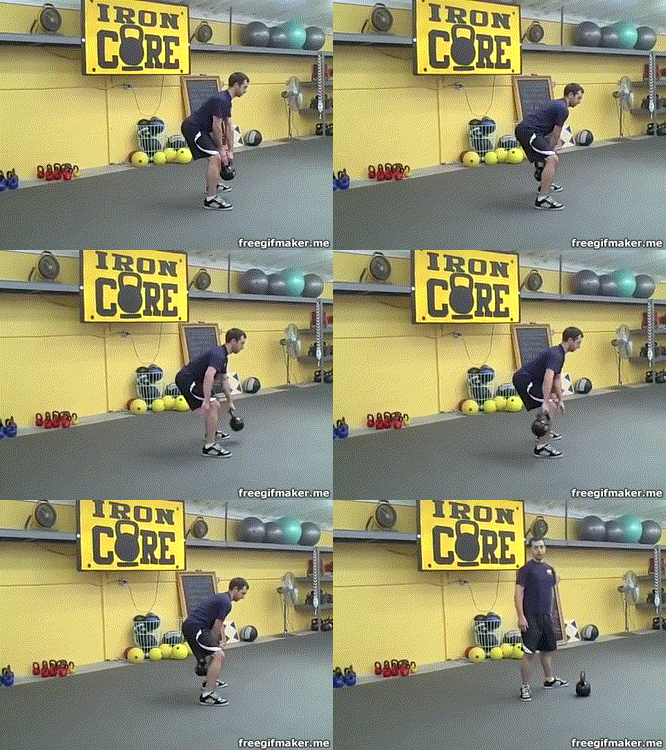
Kettlebells are probably the number one tool for grapplers. There’s something about training with a cannonball that has a handle on it. Plus, the movements are incredible for specific grappling conditioning. The kettlebell is both easier to master technically than the barbell, and is a great tool to introduce you to barbell training. Since kettlebell training uses a lot of Olympic style lifts, you’ll learn the mechanics you need to do complexes with dumbbells or a barbell.

There are plenty of examples, but one proven way of conditioning is with the following complex (done with two kettlebells):

  1. Grappling Conditioning Ketllebell Complexes
    Click For Full Video

    Reverse lunges on each side

  2. Clean and press 
  3. Swings
  4. Front Squats
  5. Rows
  6. Snatches 
  7. Figure 8s

Look to complete 4 rounds, 1-2 minute rest in between. 10 reps on every exercise and make sure it is a weight you can handle. Since snatches are the most demanding exercise here, use them to figure out your weight. Just one hint, go lighter than what you think you can handle at first. You’ll thank me later.

Dumbbells Complex

Dumbbell complexes are either for people who do not have access to kettlebells or those that have shoulder issues and need to avoid barbells. that said, they’re nothing if not effective as a grappling conditioning tool. Actually, they offer much more variety than barbells, although they are somewhat easier to perform.

A basic dumbbells complex for grapplers should look something like this:

  1. Curls
  2. Upright Row
  3. Hang Snatch
  4. Shoulder Press
  5. Bent Row
  6. Thrusters (squat with a push press)
  7. Good Mornings
  8. Triceps extensions

The recipe is actually one of Javorek’s and calls for 6 reps of each, for 3-5 rounds. Rest a minute between sets and jump straight back in. Again, your hardest exercise is the one dictating weight. Here it is either triceps extensions or the shoulder press.

Barbell Complex

Finally, the truly brutal representative of complexes – barbell complexes. These were the bread and butter for Javorek. They’re also the preferred method of plenty of wrestling and boxing coaches. About a decade ago, Randy Couture came out with a complex that the grappling/MMA community went crazy about. It was nothing special but it was short, brutal and effective. Since we’ve come some way forward since then, we’re going to offer a slightly different complex than Randy’s. If you, however, prefer to go with his complex, by all means, go for it. It’s not like it won’t do wonders for your grappling conditioning.

We’ll use just six exercises for the complex here, and keep it pretty basic. The reason is that you actually do not need anything more than this:

  1. Grappling Conditioning Barbell Complexes
    Click for Full Video

    Rows

  2. Cleans
  3. Front Squats
  4. Military Press
  5. Back Squats
  6. Good Mornings


I’ll offer you a couple of options in terms of reps. One is to go for 8 reps of each, the usual 3-5 rounds with a minute or two rest. Another is to start at 8 reps and lower a rep each round, while you increase the weight. This translates to 8 rounds total, again with a couple of minutes rest. Be careful, though, as these are harder than anything you’ve tried before, grappling included!

Quick Jiu-Jitsu Conditioning Workouts For Busy People

Bear Crawl Yourself Into Shape For Brazilian Jiu Jitsu

The Perfect Strength And Conditioning Workout For BJJ

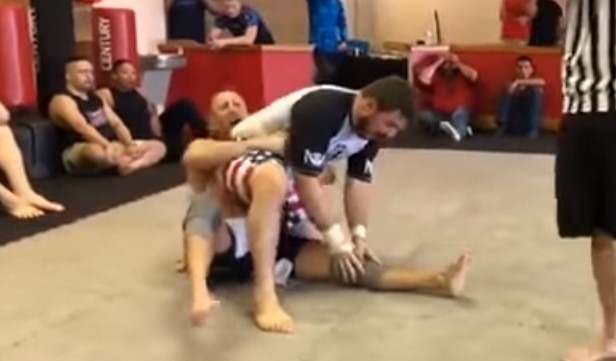
(Warning) Loud Snap of Tibia and Fibula as a Result of a Leg Lock

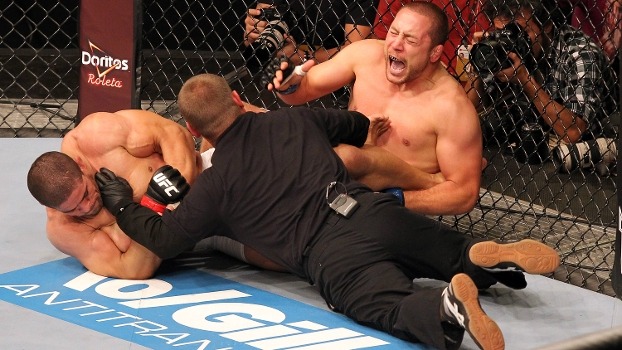
Due to research, the knee joint is the second joint in Brazilian Jiu-Jitsu to be injured, right after elbow joint. The reason may lie in a fact that heel hooks are forbidden in IBJJF and North American Brazilian Jiu-Jitsu Federation events.

Heel Hook is probably the most dangerous submission and that’s exactly the reason why it’s sanctioned in many jiu-jitsu competitions. If not released on time heel hook can do some severe damage to your legs.

Although heel hook is applied at the ankle the real damage comes from the rotation of the tibia on the femur that produces structural knee damage. Once the ankle is locked and the rotation starts the fibia will rotate on an almost fixed femur. Since knee joints range of motion is limited to flexion and extension there’s little to no room for any kind of rotation. It’s only about a few degrees available of internal rotation before damage will occur.

In a video below we can see a catastrophic leg break. According to a sound that the snap produced both fibia and tibula are broken and it’s not easy to tell what else broke in the knee.

WARNING: Terrible Leg Break and Extremely loud Fracture as a result of Heel Hook

WARNING: The Worst Leg Break in Jiu Jitsu Ever

The Impact Of Brazilian Jiu-Jitsu On Your Social Life

The Impact Of Brazilian Jiu-Jitsu On Your Social Life

It is very easy to get hooked on Brazilian Jiu-JItsu. I mean, what’s there not to like? First, you get to forget everything else that you have going on for a couple of hours. Next, you get to exercise and sweat. Even more importantly you get to choke people out while you’re doing it all. Or struggle under a heavyweight’s knee on belly, Whatever the case, people come out of Brazilian Jiu-jitsu training with a big smile on their face. This is exactly why people keep coming back for more, feeding the nerd assassin army more and more members. As with all addiction though, there is actually a thing as too much BJJ. But even before you get there, are you sure you realize the effects of Jiu-Jitsu on your social life?

Having a good social life is a huge task in today’s society. To make something clear, we’re not talking about social networks. Chatting with your buddies while on the can does not constitute as a social life. We’re talking about the real interpersonal connections that we, as a species should constantly strive for. It starts with the inner circle of family and close friends, but it goes much beyond that. It includes both people yo d not know that well, co-workers and even strangers. yes, you need basic skills to communicate with people you do not know. It’s called meeting people. And Brazilian Jiu-Jitsu has a dual impact on all of these aspects of your social life.

The dual nature of BJJ’s impact on your social life is somewhat confusing. Brazilian Jiu-Jitsu helps you expand both your social network and your social skills. However, it does so in a very specific portion of social life. Furthermore, BJJ also has a reverse effect, causing people to run away from your cauliflower ears. And not just your ears. the funny thing with BJJ is that you need to balance it…a lot. Just like you need to find that fine balance between training enough and avoiding injuries, you also need to find a way to keep your own social life while making the place for the new, grappling one. Let’s see how exactly BJJ affects your social life, both positively and negatively.

The Social Struggles Of Brazilian Jiu-Jitsu

There’s a meme out there that states that when vegans introduce themselves they say their name first and then state their nutritional preferences. While I have nothing against vegans, this notion is largely true. The same, pretty much, stands true for Crossfit, BJJ or any other aspect of life that is as engaging as these. The trouble with it is that you’re going to become one dimensional very fast if your lifestyle starts spilling all around you.

Brazilian Jiu-JItsu Social LifeIt is perfectly ok to really be into something, but it’s completely another to throw it into everyone’s faces. I wouldn’t want to listen about sewing all night long. Well, surprisingly some people haven’t gone the slightest interest in Brazilian Jiu-Jitsu. This is one major aspect of BJJ in a social sense that we often miss. The amount of time we like to discuss anything BJJ related is, well, all the time. And this doesn’t bode well in social circles.
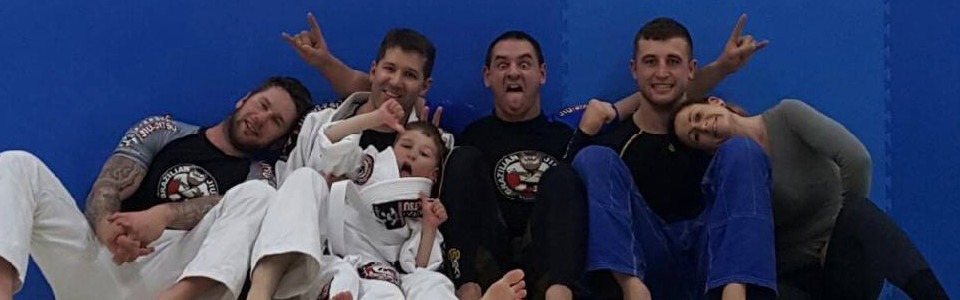
Furthermore, it is the way we often appear. Even if you decide to cut back on all the BJJ talk, you’re still a walking commercial. Grapplers that have been training for a few years have the apparel and scars to show for it. They’re all automatic conversation starters, and once you get that snowball rolling there’s no stopping.

Also, there’s the trouble with social behavior. Injuries tend to prevent us from taking part in a bunch of social activities with other people. So does nutrition, and especially weight cuts. I had to skip my best friend’s engagement because I was a week away from the Europeans and deep into a weight cut. Examples like that are countless and those are huge social sacrifices to make.

The Grappling Social Circle

On the other side of the spectrum, BJJ opens the doors to new social adventures, unlike anything you’re used to. The thing with Jiu-Jitsu is that it can build social skills you might be lacking through the process fo training itself. Since you need to be training in close proximity to people and have to communicate all the time, you’ll slowly expand the use of these skills beyond the mats. Furthermore, the reality of BJJ is that people can get over many social anxieties by facing them through situations on the mats.

Brazilian Jiu-JItsu Social LifeBrazilian Jiu-Jitsu also tends to form strong relationships between people in the gym. After a while, people become teammates first. Then, they become great friends. Trying to beat each other up, going on tournament road trips etc tends to do that to people. The glaring issue with this is that you’re forming a social circle of people with the same “addiction” as you. This rarely has a positive effect on the social life you have outside of the academy, which is where you need to look for balance.

Kit Dale is one of the people who got their black belt in a record time – about 3 years. Not many people in BJJ can boast about doing that. Furthermore, not many people can also be a social butterfly in any given situation. Understand Jiu-Jitsu and you’ll understand how to balance it with your social life. The “Art Of Learning Jiu-Jitsu 1&2” DVDs can help you achieve both! 

https://bjj-world.com/difference-japanese-jiu-jitsu-bjj/