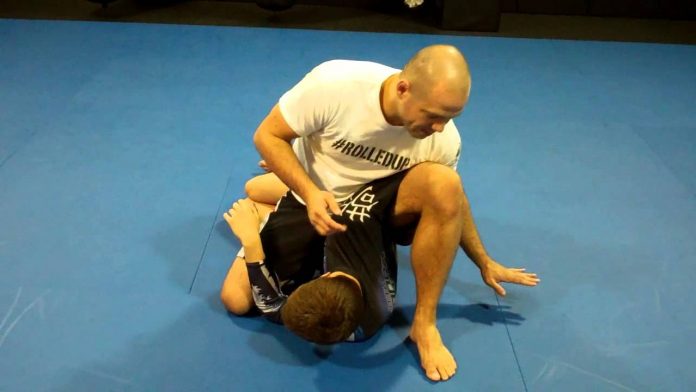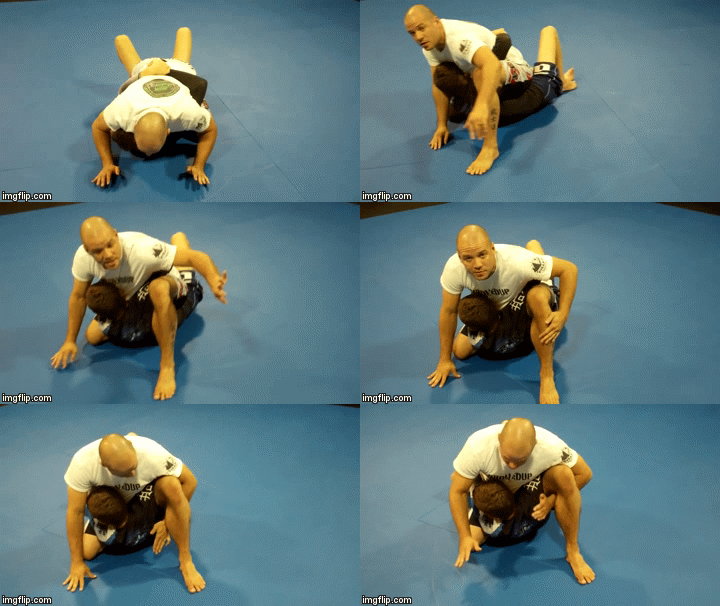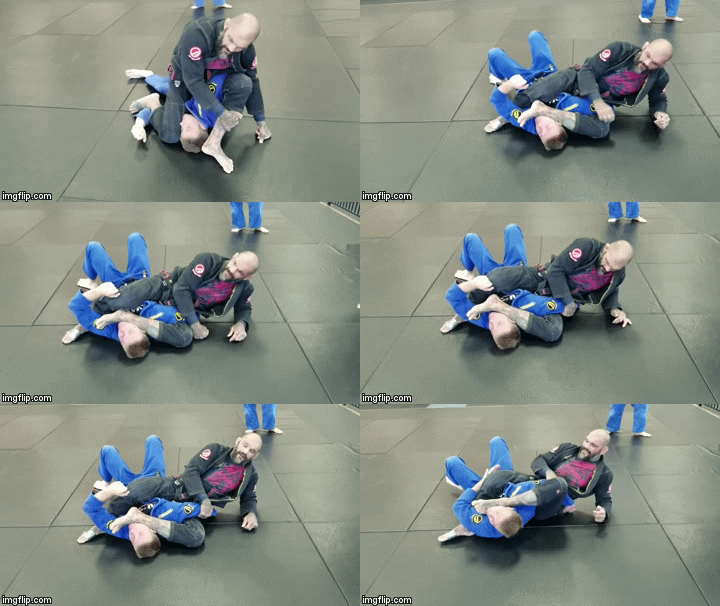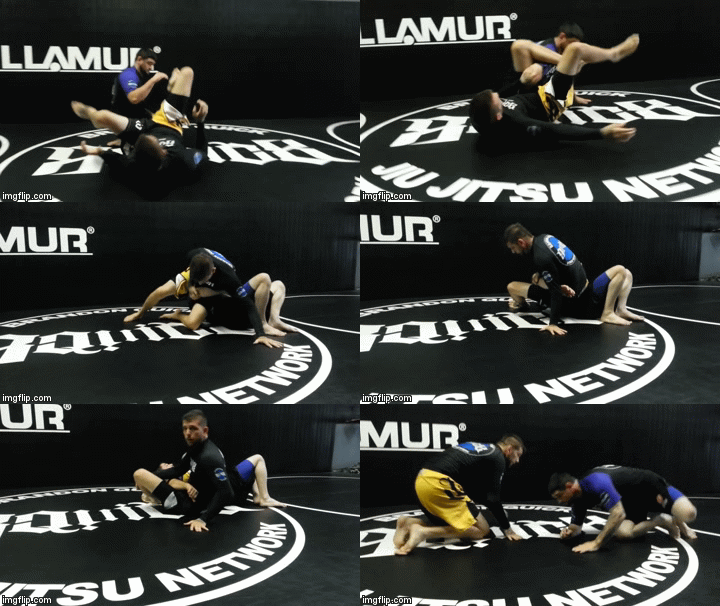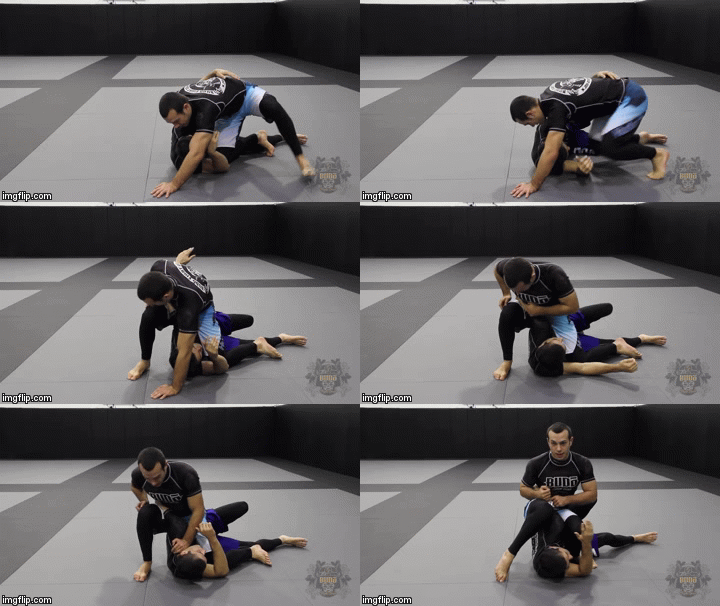



Eddie Cummings DVD – Ashi Garami Seminar

Ashi Garami Seminar Eddie Cummings DVD

Okay, 2018 is officially the craziest year in BJJ. We saw championships change hands, we saw the rise of new promising promotions like Quintet and we saw a boatload of DVDs we never thought would come out! First, Craig Jones came out with a masterpiece on leg locks and went on to release content on all his favorite moves. The biggest bang of them all was the release of the long-awaited John Danaher leg locks instructional. Not only did it come out, but did so twice, due to technical difficulties. Now, as we await Danaher’s back takes masterclass something else popped up out of the blue. It is an Ashi Garami Seminar, coming to us in the format of an Eddie Cummings DVD! Yes, the Wolverine, just like his mentor, has finally produced a BJJ video instructional!

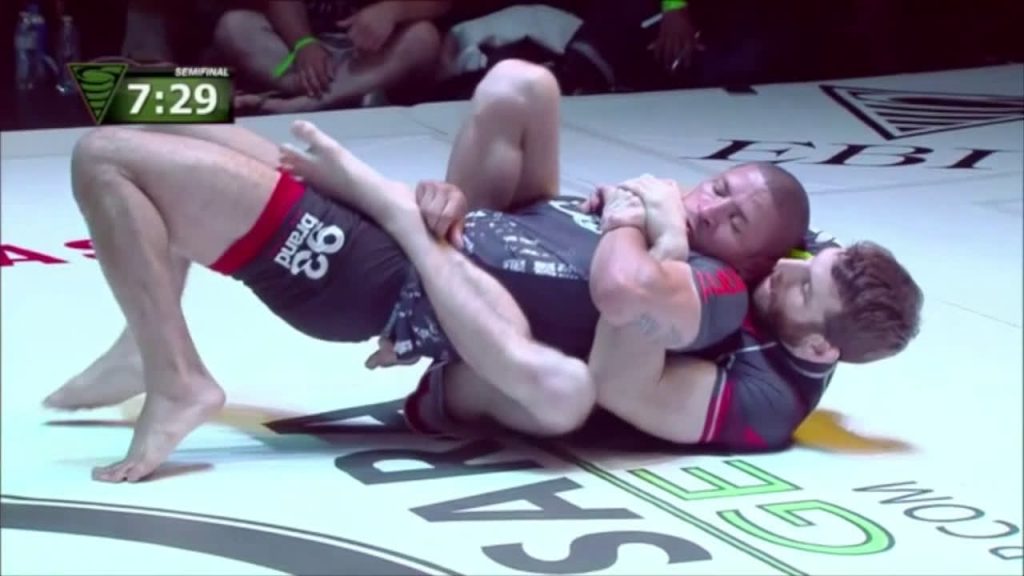
My personal exposure to leg locks apart from a visiting grappler that destroyed my legs on a couple of occasions was EBI. The now premiere (apart from ADCC) No-Gi promotion featured a little-known grappler by the name of Eddie Cummings during its first events. What took me by surprise was the sheer amount of leg lock attempts I saw at those first few tournaments. Not only attempts but very fast and seemingly inescapable submissions. Suddenly, even though I was a purple belt at the time, I was looking at BJJ not understanding a thing. A whole new area of the sport suddenly opened up and I became obsessed with finding out more. The trouble was, there was no Eddie Cummings DVD then. No Ashi Garami Seminar to explain everything, not even a Youtube video to get me going.

Currently ON SALE:
Eddie Cummings Ashi Garami DIGITAL
Free Technique Video & Techniques List

Eddie Cummings Ashi Garami Seminar

For someone who spent all of his time grappling in the Gi and competing under IBJJF rules, the leg lock game was a world apart for me. It was like a whole new grappling martial art, actually. From there on there was no stopping. A few years forward and a bunch of slow-motion analysis of Eddie Cummings matches, I can proudly call myself a leg-locker. By no means an accomplished one, I’m just fascinated by this aspect of BJJ that was “locked” for me up until a while ago. So, imagine my joy when I found out about an Eddie Cummings DVD. At this point, I’d take anything from the Wolverine, let alone a full-blown, in-depth Ashi Garami Seminar! Let’s travel together into the world of leg locks, led by the Wolverine himself and re-discover the finer points of the Ashi Garami positions.

Eddie “The Wolverine” Cummings:

Eddie Cummigns is a charismatic grappler who is a BJJ black belt under the now legendary Joh Danaher. He used to train at the Renzo Gracie Academy in New York until a short while ago. Lately, he’s been trying to make a Jiu-Jitsu brand of his own. The Wolverine is one of the most accomplished No-Gi grapplers from the submission only scene featuring events like Kasai, EBI, Polaris, Fight to Win, etc.

Cummings is born and bred in New York. He started training Jiu-Jitsu fairly late in life, at the ripe age of 26 during his Stony Brook University days. Cummings was a physics student who found out there was a No-Gi grappling class in the basement. That led to him falling in love with the gentle Art and quickly getting his blue belt. 3 years later Eddie joined Renzo’s gym when he moved and the rest is history.

It was at the “blue basement” that Eddie’s fascination with leg locks met its other half – Danaher’s knowledge of them. This potent combination resulted in Cummigns smashing the highest level grapplers with ease and ultimately, gave birth to the Danaher Death Squad. Cummings got his black belt in a record 5 years which is just another testament to Wolverine’s grappling prowess.

The Modern Leg Lock Game 

The Danaher Death Squad emerged quite literally, wit ha bang. Out of nowhere, a group of few grapplers, led by Cummins started claiming limbs and championships left and right. The IBJJF Gi scene didn’t really take notice early on since heel hooks are not allowed. However, the submission only community was taken aback. Along with the astonishment at Wolverine’s submission method of choice came challenges.
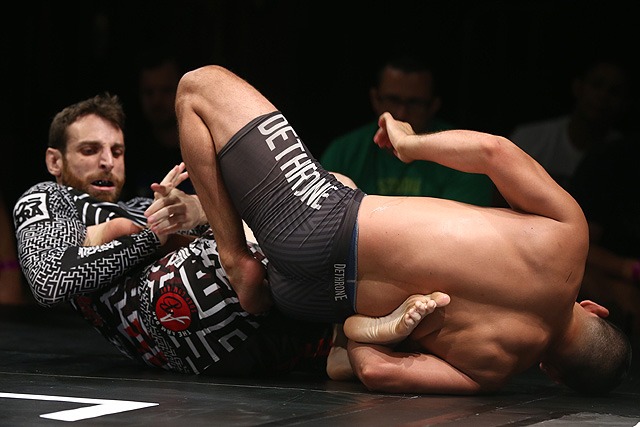
Ashi Garami Seminar Eddie Cummings DVD
Click for Full Video

The old “leg locks don’t work” mantra came to the surface again. Any and all top-level grapplers tried to prove that leg locks were shunned for a reason. It didn’t really work out for them, as the Wolverine and the squad went unbeaten under the tutelage of Danaher. As Eddie’s success with leg locks grew, so did interest in these long-forgotten techniques. People started digging up all kinds of material, but something was lacking. No matter how many old Sambo instructionals they went through, nobody outside of the Squad got even close to their heel hook prowess.

This is when the nerdy BJJ community went into overdrive trying to reverse engineer it all. As a part of that community, I can tell you that the process was slow, frustrating and barely worth it. However, with no clear sight of an Eddie Cummings DVD, his material and a couple of short YouTube clips were all we had to go on. It took this long to actually get unrestricted access to Eddie’s leg locking methodology. As much as the Squad’s grappling success molded the modern leg lock game, expect the Ashi Garami Seminar to re-shape it once again. I guess it’s not a coincidence that the master of the dark side and his most prized pupil both produced amazing leg locking content within months of each other.

Ashi Garami – What We “Know” So Far

So, before we actually take a look at Cummings’ Ashi Garami Seminar, let’s see what we think we know about Ashi Garami. The term itself translates as “leg entanglement” from Japanese. It used to be a part of Judo, although not one that really took on in competitive formats.

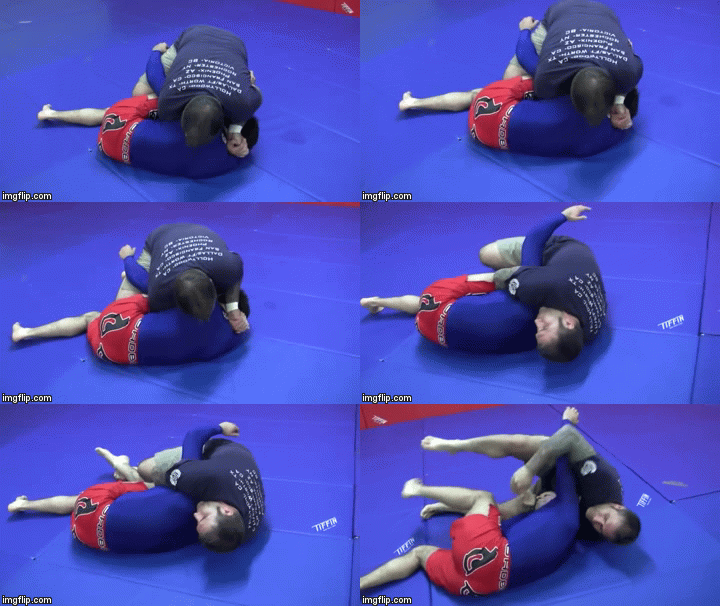
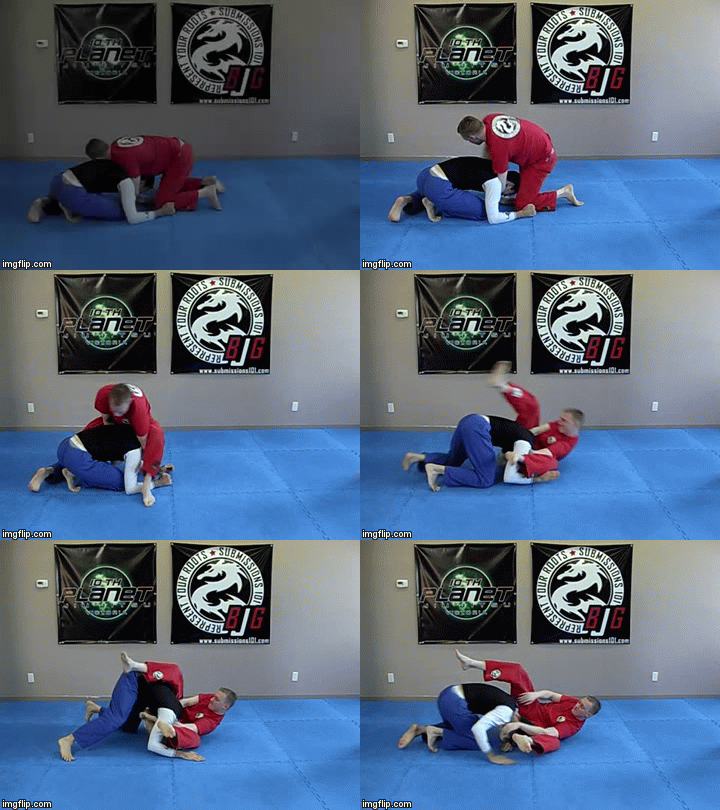
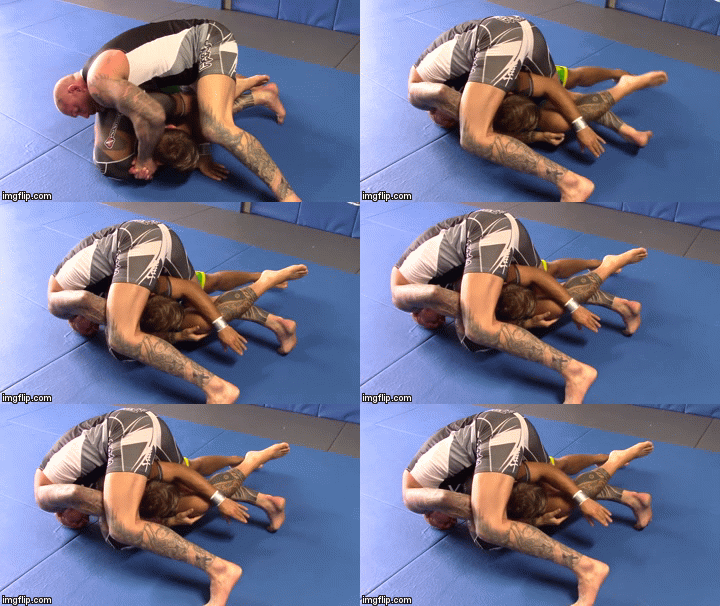
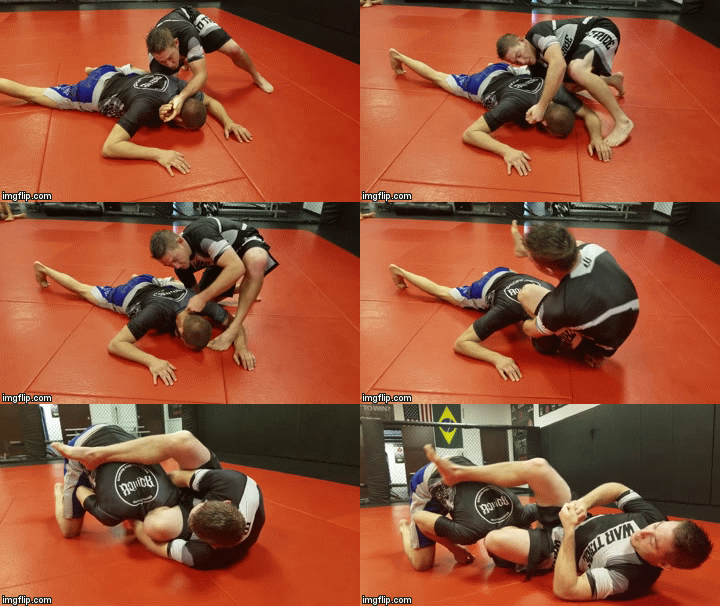
Basically, what the BJJ community thought to be Ashi Garami was a prone single leg x guard. The position offers a way of hip control that exposes the foot of submissions. Both heel hooks and ankle locks work great here. However, what Eddie Cummings’ matches demonstrated is that there are way better Ashi Garami variations out there. For instance, having both feet on the outside of an opponent’s hips offers much better control and finishing options. This is the Outside Ashi Garami.

Getting even further up the leg locking hierarchy was a classic of BJJ, the 50/50 guard. The only trouble with this one is that the opponent has equal attacking opportunities, turning everything into a race. The ultimate checkmate positions came from old Sambo positions. The Inside Senkaku and Game Over are positions that offer immense control and very easy, very brutal submissions. These positions open up inside heel hook submissions and are notoriously difficult to escape. At least when Cummings does them.

What soon became apparent is that reverse-engineering left a lot of space for improvement. Even people who took privates were unable to grasp the complete leg locking concept of the Wolverine. The finer points of control, finishing details, as well as counter leg locking concepts all, feature heavily in this Eddie Cummings DVD. Which is why every grappler, and especially aspiring leg lockers, needs to get a hold of it.

The “Ashi Garami Seminar” Eddie Cummings DVD 

Danaher’s take on Ashi Garami is one of control. Nobody put all his teachings to practice better than Eddie Cummings. The general principle of leg entanglement is all about control. This is the main feature of the Ashi Garami Seminar Eddie Cummings DVD. The hierarchy goes like this: First, you need to understand the position and the mechanics of the submission. In the case of the Ashi Garami Seminar, it’s the heel hook. From there on, you have to learn how to enter the positions and retain control over your opponent as you dig for a submission. Finally, you need to understand how all Ashi Garami variations tie together in a system of effortless transitions.

This Eddie Cummings DVD offers up a complete and systematic approach to Ashi Garami leg locks. He kicks the Ashi Garami Seminar off with outside heel hook setups and progresses through the hierarchy towards the dreaded inside heel hook from the Inside Senkaku. The material structured as a digital download, divided into 4 major volumes. Each volume, in turn, has several chapters, each addressing a specific subject in a systematic manner.

Eddie Cummings is a great coach that has the ability to hold your attention awhile transferring only the knowledge that’s actually important for a given technique. This is unsurprising, as Cummings did spend a while teaching university-level physics. The technical aspect of the release is flawless, with perfect camera work and nothing to criticize about the audio.

Outside Heel Hooks
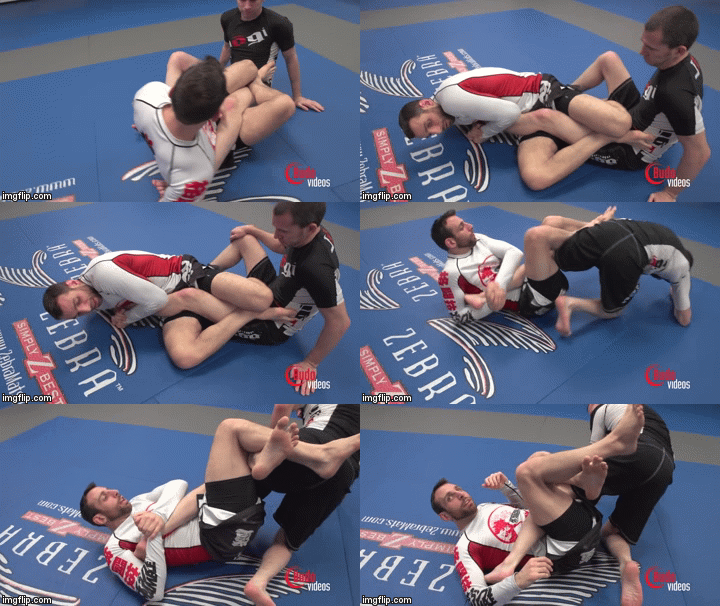
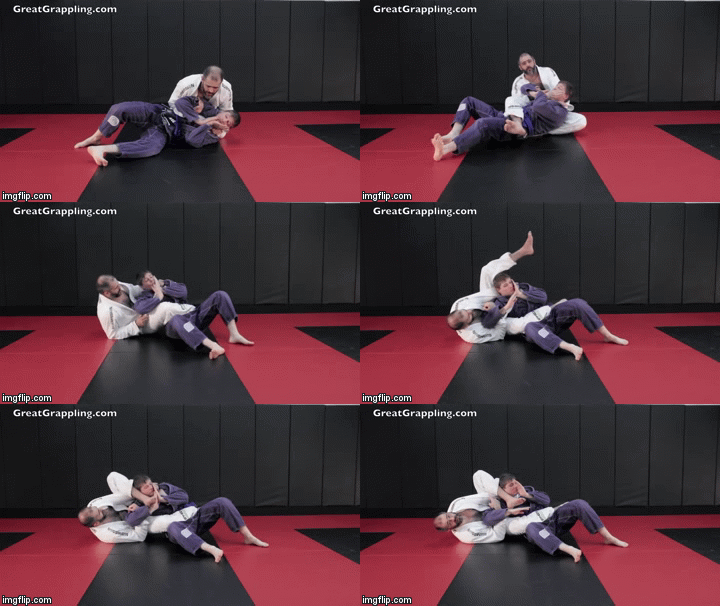
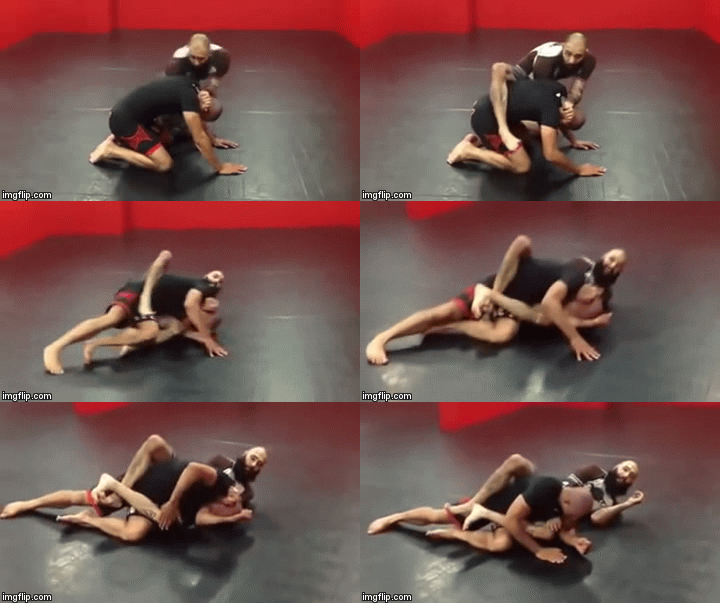
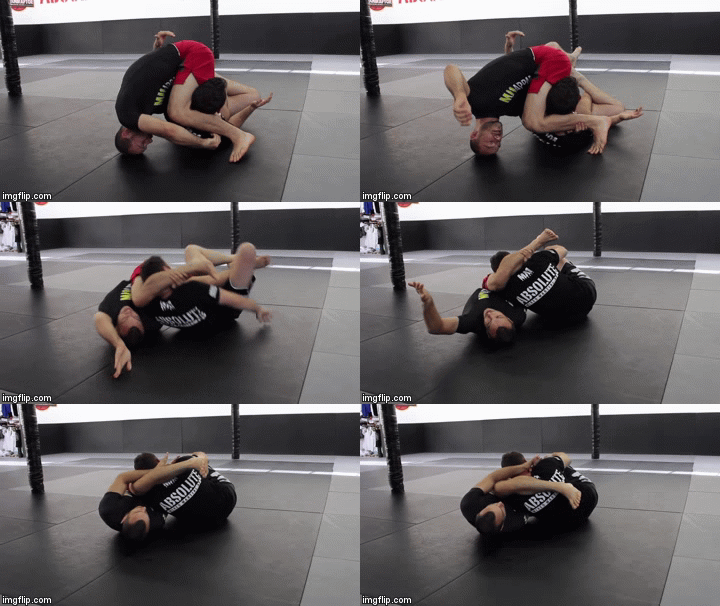
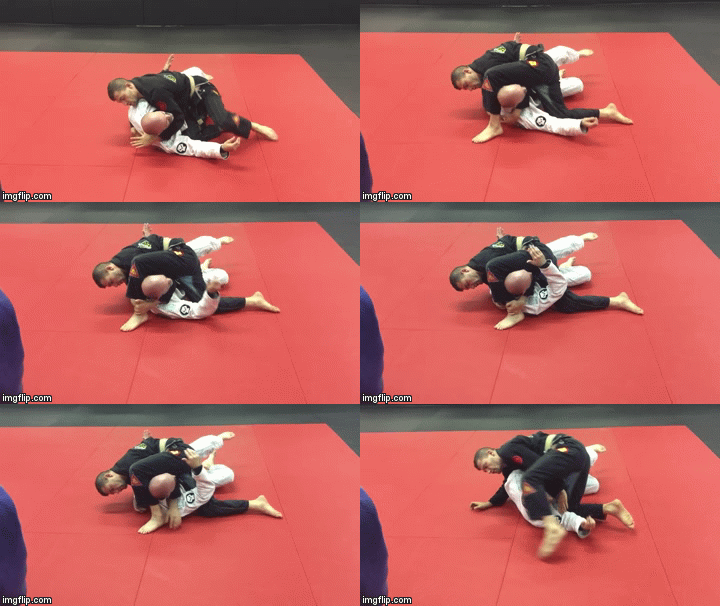
Eddie Cummings DVDThe outside heel hook is the first aspect of leg locking that Eddie Cummings addresses. He likes to attack from the outside Ashi Garami position and focuses on it a lot. Forget what you think you know about the outside heel hook. There are details in here that’ll change your heel hooking game forever! The pinky toe tendon concept is unbelievable. it’ll ensure you never lose another outside heel hook again!

A very key chapter of this volume is also the one on maintaining control of the knee line. Losing the knee line means you lose both the position and submission opportunity. Keeping your opponent under control allows you to set up the outside heel hook perfectly and without having to rush things.

What I particularly like is that he circles back to summarize everything before moving on to the next chapter.

Inside Heel Hooks

On the subject of inside heel hooks, the Ashi Grami Seminar is all about the Inside Senkaku. The first issue of the position is controlled. Everybody who has ever attempted it against a top-level black belt knows that staying in it is no easy feat. Cummings goes over the inside heel hook in amazing detail. Even the most proficient leg lockers are going to benefit from the way the Wolverine likes to set up this submission. In case you think you’re just going to hear Danaher’s advice all over again, you’re much mistaken. Even though Cummings learned the secrets from him, he sprinkles a lot of experience-based details into the mix.

One of those sprinkles includes a very interesting concept regarding the opponent’s knee. Turns out, the angle of the knee in relation to your hips has a lot to do with how you finish. This is the one thing I never could figure out just from looking at matches. Pay attention to the laces inside the heel hook. There are a few chapters dedicated to it at the very end and they bring whole new levels of viciousness to the inside heel hook.

Escapes And Counters 

In truth, this is the main focus of the instructional. A good portion o it, more than half, is dedicated purely to getting out of the Ashi Garami. It gives this Eddie Cummings DVD a lot more value, as there’s hardly a better person to teach you leg lock defense than a cream-of-the-crop leg locker.
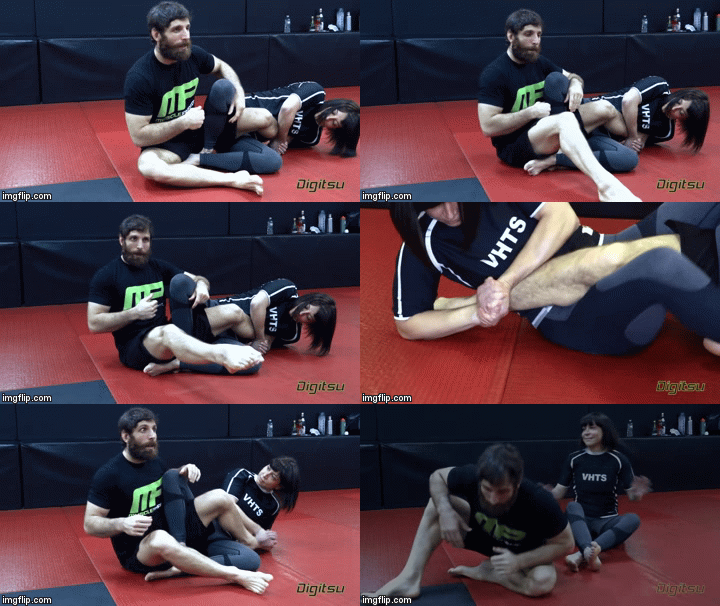
Eddie Cummings DVD Ashi Grami Seminar
Click for Full Video

Just like with attacks, defensive strategies are organized depending on the submission. Actually, the Ashi Grami seminar begins with ways of escaping the outside heel hook. Cummings refers to escapes as “slips” and offers a lot of them. Once again, it’s all about the details and the basic movement principles of escaping a tight leg lock attempt. He also includes a complete volume dedicated to battling for the grips when in outside Ashi Garami. There are several grip braking strategies, all referring to different outside Ashi positional dynamics.

Inside heel hook slips also get a lot of attention. If there’s one thing only you need to focus on in order to survive the Inside Senkaku, it’s how to turn your toes. Eddie’s method for alleviating heel pressure is unique, based on mechanics and works like a charm. Just like before everything ends up with a summary in case you missed something.

Troubleshooting Leg Locks

This is arguably my most favorite part of the Eddie Cummigns DVD. Apart from attending the Ashi Garami Seminar itself, mastering this portion is enough to bring your leg lock game to new heights. If you’ve been into leg locks for a while now, you already have the basic issues you’re facing on a regular basis.

Eddie Cummings DVD
Click for Full Video

One thing I often face from the outside Ashi Garami position is getting smashed. It may be because of insufficient control or a very strong opponent. Whatever the reason, you need to know how to stay on track and eventually finish with a heel hook. Leg pummeling and extensive leg positioning details are covered in-depth, allowing you to capitalize even on a “fleeting” outside Ashi Garami.

Rounding things off are several key leg locking drills that are going to make you extremely good at both offense and defense! Get the Ashi Garami Seminar Instructional. Get better at leg locks. It is as easy as that. By the way, the price is an absolute bargain for the very first Eddie Cummings DVD.

Currently ON SALE:
Eddie Cummings Ashi Garami DIGITAL
Free Technique Video & Techniques List
Eddie Cummings Ashi Garami Seminar


More About Eddie Cummings:

  • Full Name: Edward Cummings
  • Age: 34 (Born in October 1984)
  • Nickname: “Wolverine” – When Wolverine was asked about his nickname and what’s behind it he answered: “They ask me why people call me Wolverine. It’s because I am small, furry and mean-spirited”
  • Lineage: Mitsuyo Maeda > Carlos Gracie > Helio Gracie > Carlos Gracie Jr > Renzo Gracie > John Danaher > Eddie Cummings
  • Achievements:
    EBI 4 Champion
    (2015 – 145lbs)
    EBI 7 Champion
    (2016 – 145lbs)
    Polaris 2 Superfight Winner
    (2015)
    ADCC US East Coast Trials Champion
    (2015)
    Grapplers Quest World Series of Grappling Champion
    (2012)
    Grapplers Quest US Nationals (Rough Zen) Champion
    (2013)
    Long Island Pride XVI Champion
    (2012 purple weight + absolute)
    Grapplers Quest World Series of Grappling 3rd Place
    (2012 absolute)
    Grapplers Quest US Nationals 3rd Place
    (2012)

Why Eddie Cummings Left the Danaher Death Squad?:

There was a lot of fuss on whether Cummings Left the Danaher Death Squad or not. At the beginning of 2018 rumors were spreading around that he’s not attending Danaher’s classes for more than a year. In the end, all of those rumors ended up as a truth.

Danaher himself explained the situation with Eddie in his Instagram post. Danaher explained that Eddie Cummings left due to concerns to train with people with whom he’ll compete with. Danaher also said that some athletes like Gordon Ryan or Garry Tonon and others don’t have any problems with training with people they’ll compete against.

As we can find out Eddie is still active at RGA (Renzo Gracie Academy). He trains there and also teaching classes over the weekends.

Learn More

Eddie Cummings Seminar on Ashi Garami & Awesome Heel Hook Escape

Eddie Cummings Seminar on Ashi Garami & Awesome Heel Hook Escape

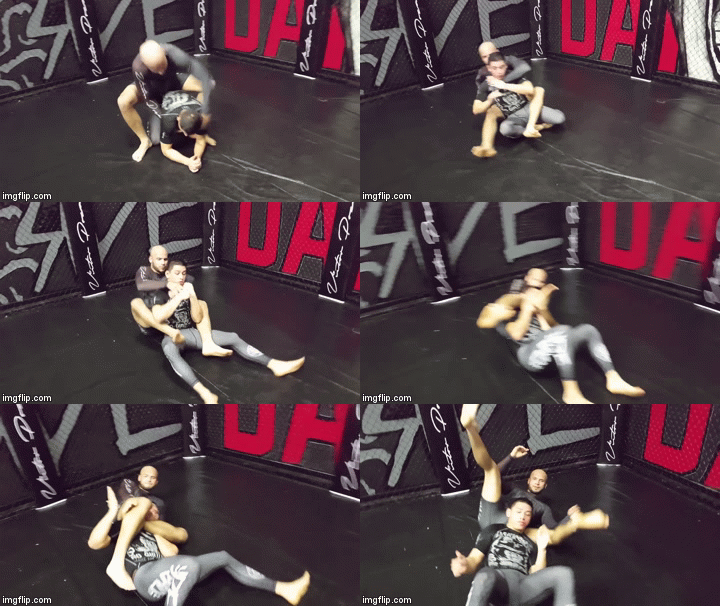
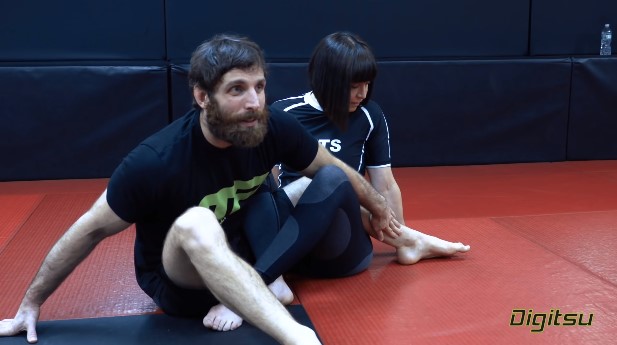
Eddie Cummings The Wolverine is finally here! Eddie Cummings and Digitsu came together to film an extremely candid and eye-opening seminar focusing on the mechanics of the Ashi Garami – Leg Entanglement System.

The objective of this seminar is to provide the students an immediately usable understanding of both the submission side and the escaping side of the Ashi Garami. Eddie’s breakdowns are extremely detailed and methodical.

If you are looking to get a deeper understanding of the Ashi Garami – Leg Entanglement System, this is the place for you. If you’re interested in buying full DVD as it’s priced only $20 Click HERE.

All The BJJ Necktie Variations You Need To Choke Everyone!

BJJ Necktie Variations

Submissions in Brazilian Jiu-Jitsu come in all shapes and sizes. Some work by carefully advancing inch by inch until the opponent has nowhere to go. Others come at you like a freight train, you know what’s going to happen and you’re powerless to avoid it. Another category is blitz submissions, those opportunistic moves that are usually low percentage until the circumstances are just right. And then, there are the sneaky submissions, the moves that get you when you think you’re safe. BJJ necktie submissions fall under each of these categories, depending on circumstances. They’re a large family of attacks that can work together as a comprehensive submission system.

With BJJ necktie submissions, the main question that arises is whether they’re choice or neck cranks? It is one we’re going to answer further down in this article. In essence, BJJ necktie submissions are arm-in choke variations, that usually work from a front headlock-like position. They are brutal submissions that are hiding in plain sight. Neckties also work as pit stops between other chokes, offering much fewer escape possibilities for your opponent.s And, which is probably their greatest advantage, they’re as versatile as it gets.

Naming the neckties is another very interesting aspect of these submissions. Where and how it all started is unclear, but what we know is that every necktie is connected to a country. In that sense, you have Peruvian, Japanese, Mexican, German, Jamaican and many more neckties. At some point in time, there’ll probably be as many BJJ necktie submission variations as there are nationalities. So far, there are a bunch that works and a few others that need some fine-tuning. However, they’re a very powerful weapon to have, especially for those training and competing in the Gi. Let’s take a look at the world of neckties and the variations you need if you’re going to be a formidable grappler.

What Makes BJJ Necktie Submissions Effective

The mechanics of the BJJ necktie submission are fairly simple to grasp. As far as the mechanics go, neckties work primarily as arm-in chokes. the whole difference between an arm-triangle choke or guillotine is in body positioning and gripping. With neckties, your whole body acts as a wedge against the opponent’s head, helping the choke along. there’s also a twisting component to most neckties, courtesy of the grips. This adds both pressures on a choke, or a neck crank option, depending on circumstances.

Since it’s impossible to explain how a BJJ necktie submission works in general, we’ll use one of the variations as an example to explain the mechanics. Further on, we’ll look at many other variations and compare them to our “gold standard” necktie. For that purpose, we’re going to focus on the Japanese Necktie.

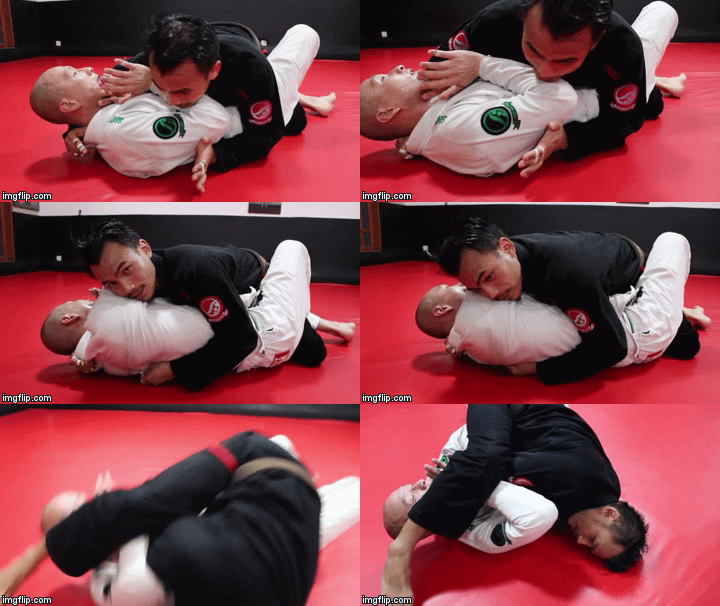
BJJ Necktie VariationsLet’s say you’re hunting a D’arce choke from a top half guard position. You have one arm trapped and your forearm is threaded under the opponent’s neck. However, the fact that your leg is stuck in half guard means that you can’t get the right angle to switch to a D’arce. You can, however, get a necktie. In terms of grips, a palm to palm grip behind the opponent’s head is your best bet. It provides the added benefit of wedging the head with one of your elbows.

finishing the necktie involves lying down on the shoulder of your top arm side. This puts your belly behind the opponent’s head. It provides a source of immense pressure as well as adding a twisting motion to the neck. The leg in half guard is something you actually need to finish, as it crunches and twits your opponent up even further.

BJJ Necktie Variations

In terms of the neck-crank conundrum let’s make something clear, rule-wise. Any and all neck cranking stemming from BJJ neckties submissions is not grounds for disqualification. These submissions are primarily chokes, constricting the carotid arteries to block the blood supply to the brain. So, any cranking effects are the same as a badly placed Rear Naked Choke. They’re legal and more of a side-effect. This means you can use neckties to your advantage as you can turn them into cranks on purpose if you wish so.

The origins of the neckties are not really clear. this is just a guess, but whoever came up with the Peruvian necktie must’ve used the name as it sounds coo land very appropriate. a Peruvian (or Bolivian necktie) is a method of murder common to prisons, involving a V-shaped cut on the neck. Most likely, from there on, people just started adding nationalities in front of BJJ necktie setups, resulting in today’s arsenal. Whatever the history, they’re a bunch of really slick submissions at present!

Neil Melanson knows all there is to know about neckties. Actually, he is the one behind the  German necktie variation. If you want to learn how to use them in conjunction with other front headlock chokes, check out Neil’s “Headhunter Guillotine Series” DVD instructional. Check out what this amazing DVD has to offer in our detailed review.

Peruvian Necktie

Since we already covered the Japanese necktie, we’re now going to go over a BJJ necktie classic – the Peruvian. The Peruvian necktie is the perfect submission to hit a from a front headlock against the turtle position. Very often you can get the front headlock but not sufficiently deep grips for a guillotine or an Anaconda choke. This means you can either transition to the back or use the Peruvian necktie to finish directly and painfully.

BJJ Necktie VariationsThe Peruvian necktie is actually quite simple. You just need an S-grip under an opponent’s chin. A gable grip is tighter but might throw the angle of your forearms off. Once you have the grip, you’ll look to extend your arms, pinching your elbows together. Next, you need to place one on the opponent’s head, hamstring over the back of their head. From there, you just sit back, getting your butt as close as possible to their head. be sure to swing your free leg over their back, just like with a Guillotine, to stop them from rolling over.

German Necktie

The German necktie is kind of a blend between the Japanese and the Peruvian neckties. Since we already know that both these moves work perfectly, a hybrid must double the effectiveness, right? Well, that’s actually not far from the truth.

BJJ Necktie VariationsThe German necktie starts off from the same position as the Japanese – top half guard. The grip is similar to the one used in the Japanese, with a slight variation. Instead of going from palm to palm, look to thread the thumb of the bottom arm in between the forefinger and middle finger of the other palm. This provides a really tight grip that your opponent won’t be able to break.

To finish, simply extend and pinch your elbows, throw your free leg over the opponent’s head and post on the top of your head behind the opponent’s back. You’re essentially using Peruvian necktie mechanics to finish hs from a Japanese necktie position. Really effective!

Texas Necktie

The Texas necktie is kind of the ultimate BJJ necktie finish you can go for. It is a way to counter the best way someone can defend a D’arce or Japanese necktie – lying down flat. Whenever this happens you can look to use the grip you have to force your opponent to their knees and back down on their side. Or, you can go for a direct finish, right then and there.

BJJ Necktie VariationsTo hit the Texas necktie, first, you need to modify your grip. Instead of using the palm to palm, you’ll need the S-grip, just like with the Peruvian necktie. Once you have the S-grip, place the shin of our leg, on the side of the trapped arm. The shin should go directly on the back of their neck. From there, you go to your side, looking to end up on your shoulder. Your free leg should swing over the opponent’s back. Just pul land squeeze for the finish.

Chilean Necktie

The Chilean necktie is a BJJ necktie variation that involves the use of the Gi. Whenever an opponent turns away from you in side control, you can think about this submission. it’s easier to set up than taking the back and it opens up armbars and back takes in case it fails.

BJJ Necktie VariationsWhat you want to do is use your own lapel and push it through under the opponent’s arm. Basically, you want your lapel in place of your “under”arm of a seatbelt grip. Your other arm is going to grab it around the neck of the opponent. Before you proceed, you’ll secure the near sidearm with a biceps grip. From there, you’ll need to lie on your side, so that the opponent ends up on top of you. Now, you simply place your chin on their head and finish with ease.

Mexican Necktie

BJJ Necktie VariationsThe Mexican necktie is the answer to an opponent rolling to their knees in order to defend a Japanese Necktie. To get it you keep your arms in position for the Japanese necktie, palm to palm grip tight behind their head. Once the opponent is on all fours, you’ll look to throw one leg over their lower back. This is going to help you break them down again, ending up in a kind of back control. You can either have both hooks in, like from back control or hit a body triangle if you have the length. Finish by squeezing your elbows together and pulling back.

Australian Necktie

BJJ Necktie VariationsAs far as really cool chokes go, this one wins by a mile! The Australian necktie is a continuation of the German necktie. it comes into play whenever an opponent tries to lie flat on their back while you’re attacking a necktie from top half guard. Whenever you go for the German necktie and you feel the opponent is trying to lie down, you need to let go of your top arm. then, use the arm on the neck to grab the shin of the leg you have over their head. From there on you need to roll and replace your hands once again when you’re done. You end up in a necktie with your leg on their back supplying additional pressure.

Speaking of Australian neckties, Lachlan Giles is by far the ultimate authority. The “High Percentage Chokes: No-GI” 4 DVD set covers everything you’ll ever need to learn about choking people without the GI. It focuses heavily on front headlock chokes and includes very cool necktie setups. Get it ASAP and start getting a boatload of taps! 

Armenian Necktie

Here’s an interesting one. The Armenian necktie is a shortcut between the German and Australian. Since it’s halfway there, you can look to wrap things up with it, instead of going all the way to an Australian.

BJJ Necktie VariationsFor this variation, you’re going to use the grip you have on your leg to finish the choke. Once you release your palm to palm grip from a German necktie and you throw the leg over, grab it just like you would for an Australian. Instead of rolling over and re-gripping, though, simply use the position to finish by extending your leg and pulling up with your arm. It might not work always, but it’s a cool pit-stop between two proficient BJJ necktie variations.

Colombian Necktie

BJJ Necktie VariationsThe best way to describe this one is as a back attack gone crazy. The Colombian necktie is the best way to finish someone from the back when all other usual attacks fail. Let’s say you have perfect back control, hooks in, seatbelt grip secure. You simply can’t find a way to win the hand fight. instead of wasting time, get your “under” arm out of the seatbelt configuration. Re-grip, this time over the shoulder of the opponent and with a ball in socket grip (like for a guillotine).

Once you have the grip in, angle off to one side, just like when attacking an armbar from the back. Throw the bottom leg over the neck/chest area, looking to lock in a triangle with the other leg. The second leg should go over the opponent’s opposite shoulder. Squeeze everything to get your opponent crying.

Brazilian Necktie

BJJ Necktie VariationsWrapping things up is probably the simplest of the neckties, done with the help of the Gi. From the top of half guard, look to get a grip deep on the opponent’s near side lapel. The goal is to reach the back of the collar, or deeper if you can. It’s just like setting up a cross-face. Next, get their far arm between your head and arm, like you’re going for an arm-triangle choke on the opposite side. The goal is to place your far side arm directly under their spine, gripping the Gi. This adds a discomfort component to the submission.

Finishing is as easy as projecting forward in order to open up space to swing your leg over the opponent’s head. Aim to get your knee over the opponent’s chin so that you have maximal leverage. Use the leg to push their head towards your bottom arm, this creating a choke.

Related Articles:

Guillotine Choke – Basics, Secrets, and Variations to Make it Perfect
Turning A Choke Into A Neck Crank – Legit Or Cheap?
Top And Bottom Baseball Choke Setups For Jiu-Jitsu
Peruvian Necktie
Japanese Necktie

Black Belt Coach Throws a Chair and Charge his White Belt Student’s Opponent at IBJJF Austin

Ulpiano Malachias Apology on throwing a chair at BJJ White Belt

As far as we can see IBJJF Austin 2018 was very “interesting” event. First, we had a guy knocking out his opponent with a suplex and now we have a BJJ instructor throwing a chair on the competitor.
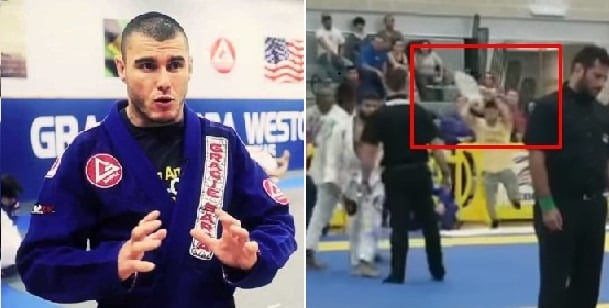
Gracie Barra Black Belt Ulpiano Malachias is the owner and head Instructor at Gracie Barra Westchase in Huston.

As we can see in a video he went crazy after his BJJ White Belt student lost a match in final seconds via takedown.

The guy who took a win flexed and probably said something pointing to Ulpiano Malachias. That was enough for Ulpiano to jump over the barricade rushing toward BJJ White Belt who was celebrating at that moment. On his way, he took a chair and threw it at the poor guy. That wasn’t enough for Ulpiano as he charged the guy pushing him with both hands.

It will be interesting to see what’s going to happen with Ulpiano Malachias after this as he’s representing Gracie Barra.

From a video below we can’t see some real reason on why he did it or what provoked him to attack a white belt like this. It seems like everything was clear in this situation. As soon as we find out more details we’ll update this article.

What would you do in this situation if you’re celebrating and someone throws a chair on you and rash towards you?

UPDATE:

Ulpiano wrote an answer and an “apology” to the situation that took place at IBJJF Austin Open on his Instagram profile.

Ulpiano MalachiasI am posting this in response to the incident at Austin IBJJ Open:
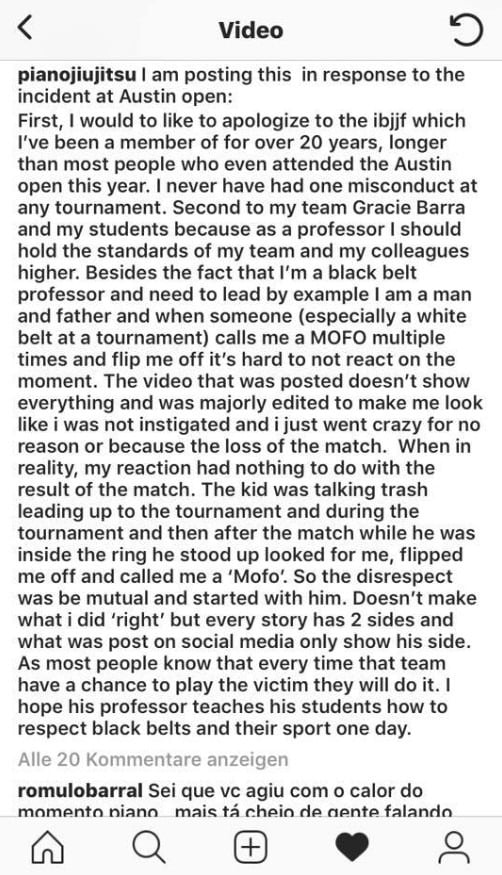
First, I would like to apologize to the IBJJF which I’ve been a member of for over 20 years, longer than most people who even attended the Austin open this year. I never had one misconduct at any tournament. Second, to my team Gracie Barra and my students because as a professor I should Hold the standards of my team and my colleagues higher.
Besides the fact that I’m a Black belt professor and need to lead by example I am a man and father and when someone (especially a white belt at a tournament) calls me a MOFO multiple times and me off it’s hard to not react on the moment. The video that was posted doesn’t show everything and was majorly edited to make me look like I was not instigated and I just went crazy for no reason or because of the loss of the match. When in reality, my reaction had nothing to do with the result of the match.
The kid was talking trash leading up to the tournament and during the tournament and then after the match while he was inside the ring he stood up looked for me, flipped me off and called me a MOFO.
So the disrespect was mutual and started with him. Doesn’t make what I did “RIGHT” but every story has 2 sides and what was posted social media only show his side.
As most people know that every time that team have a chance to play the victim they will do it.
I hope his professor teaches his students how to respect black belts and their sport one day.

Brown Belt Knocking out His Opponent With Crazy SUPLEX at IBJJF Austin

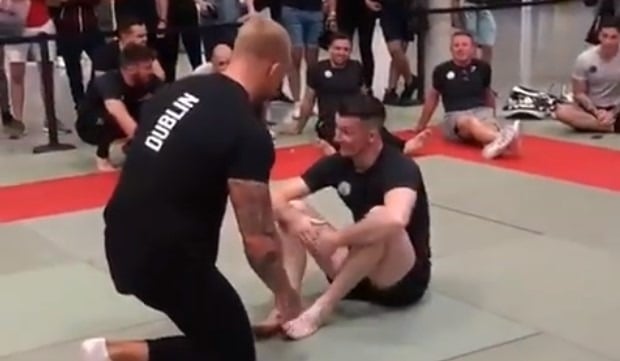
BJJ Black Belt vs Bodybuilder – Challenge Match In Dublin Didn’t Last Long

BJJ Black Belt vs Bodybuilder - Challenge Match In Dublin Didn't Last Long

Here is the newest Challenge match between Body Builder and BJJ Black Belt.

Unfortunately for the bodybuilder, the match didn’t last long enough for him to show us his grappling skills.

Brown Belt Knocking out His Opponent With Crazy SUPLEX at IBJJF Austin

Small Grappler (128 lbs) vs Powerlifter (330 lbs) in a Grappling Match

Guy Walked into a 10th Planet Academy and Challenged Black Belt to a Fight

https://bjj-world.com/120-lbs-female-bjj-black-belt-much-larger-male-challenger-257-lbs/

Street Fighter Dojo Storms BJJ Gym to Challenge Jiu Jitsu Instructor to a Boxing Match

Renzo Gracie Challenged by an “Unchokeable” Man in His Gym

Joe Rogan Challenged to a Grappling Match on MySpace

Well-Known BJJ Black Belt Challenged Cocky Wrestler At The Beach

BJJ vs Karate – Karate Black Belt Accepted a Challenge

Muay Thai School Challenged BJJ School to a Gym vs Gym fight

https://bjj-world.com/woman-vs-man-challenge-match-brazil/

Tae Kwon Do Black belt vs Rener Gracie BJJ Black belt in a No Rules Fight

MMA Fighter vs Wing Chun Master Who Goes all Out on a Poor MMA Guy

Brown Belt Knocking out His Opponent With Crazy SUPLEX at IBJJF Austin

Brown Belt Knocking out His Opponent With Crazy SUPLEX at IBJJF Austin

At IBJJF Austin BJJ Tournaments, something pretty weird happened. BJJ Brown Belt with a nickname @kody_steelebjj on Instagram did a suplex takedown. He was losing the match and last 10 seconds he decided to suplex a guy making him unconscious. Suplex of this kind is illegal at IBJJF tournaments and in the most BJJ tournaments around the world.

Here are some of the comments on his Instagram account from people that are pretty disgusted with what he did here:

“Stupid fucker… No spirit of sportsmanship. Do you realize that you could have intentional paralyzed a man? Then what happens to these kids and family. You are such a fool. I don’t care what he did, you are very stupid”

“Were you heated? Nervous? Mad? It’s a nice takedown but you had so many other options from that body lock… did u just want to injure him or didn’t really care about winning? I’m confused what takes….”

“Shitty that a brown belt that knows better did this shit. Could’ve hurt the dude. It’s one thing to hit a suplex in a contest where people should prep for it, it’s another to do it in an IBJJF comp. Stupid”

Dude…you are a brown belt….you should know the rules by now..

Brah stop playing you know this shit is illegal.

You’re an absolute tool.”

Revisit your actions when you grow up.”

Dude, I was just behind the scorer when this happened. Even in your own video, you can see you just walked away, not looking at him. He was out. He opened his eyes before the medic got to him, but dude was reset right after his head hit the mat. I’ve got no skin in this game. You’re not in my gym and neither was your opponent so I don’t have to care about either of your reputations. I’m just giving the eyewitness details from the perspective of the objective third party observer. Hopefully next time you will check the IBJJF rule book before you hurt someone again.

You’re an asshole.

He, @kody_steelebjj did answer to everyone judging him:

“I wasn’t mad at all. I was competing with a really tough competitor and he defended my takedowns from the back earlier in the match from that position. I was down 1 advantage 10 seconds left and heat of the moment just reacted. Wrestled freestyle before jiu-jitsu and that’s how we score when the opportunity is there. Nothing but respect for my opponent”

Is it possible that this Brown Belt don’t know the rules? Do you think that he did this on purpose just because he’s losing? What’s your opinion about this move?

Here is a video of that suplex posted by a guy who did it with words: “Got this winning takedown at the last 10 seconds of the match but Unfortunately I got disqualified after so I ended up taking 3rd today for the gi. Tomorrow no gi let’s get it!

https://www.instagram.com/p/BlggsUDBI6R/?taken-by=kody_steelebjj


John Danaher DVD – Back Attacks System

John Danaher DVD Back System

As all the craziness of Danaher DVD’s reaches its pinnacle, he’s back with a brand new one, very, very soon. After the enigmatic Renzo Gracie black belt finally decided to produce some digital content with BJJ Fanatics, the grappling world went into meltdown. The arguably greatest mind in Jiu-Jitsu so far finally opened up to his secrets. His Enter The System: Leglocks DVD was a true masterpiece. Nobody expected less from the godfather of modern leg locking. However, it seems now the New Zealander is developing a knack for it. Any day now, the brand new Joh Danaher DVD Back Attacks System is expected to hit the shelves. And we’re as excited as everyone about it!

ON SALE HERE:
John Danaher – Back Attacks

Techniques List

What if I tell you that next week is going to change the world of grappling all over again? It’s Deja Vu time as the latest John Danaher DVD is going to revolutionize yet another huge aspect of Brazilian Jiu-Jitsu. Most people haven’t even watched all the volumes of the Enter The System: Leglocks DVD yet, and there are 10 more hours of material coming our way! This time, Danaher focuses on a BJJ classic, considered by many to be the best possible position in the sport. This time around, Danaher offers his back attacks (in 10+ hours of material) including controlling and attacking from, the back position.

Back control has long been seen as the ultimate position to hunt for in Jiu-Jitsu. The theory is that controlling an opponent from the back has you in the safest place possible. You have the opportunity to attack at will while not having to worry about any kind of counterattack. In most competition formats the back either brings the most points or is an overtime position. Whichever the case, the back gets due recognition as one of the utmost Jiu-Jitsu positions.

The practice is a bit different, though. Getting he back is notoriously difficult, as people usually do not give it up easily. Even if you manage to get the back, you’ll remain in great control but finishing might prove quite difficult indeed. Hand fighting from the back is an art form of its own, one that not many grapplers truly understand. Which is exactly where the Back Attacks John Danaher DVD comes in?

Attacking The Back

Before we even think of approaching the John Danaher DVD about back attacks let’s summarize what we know about the position so far. First; we’ll look at the basic mechanics of the back position. Then we’ll cover some ways of getting it, and deconstruct why strangling people from the back is so effective. Finally, we’re going to talk about the one aspect of the back attacking game that is the weak point of this system. Finally, we’ll see how Danaher solves this particular burning issue.

First things first, attacking the back starts with entries. However, there’s little sense to entries if you have no idea with you’re actually looking for. So, before entries, let’s look at basic positioning.

John Danaher DVD Back System
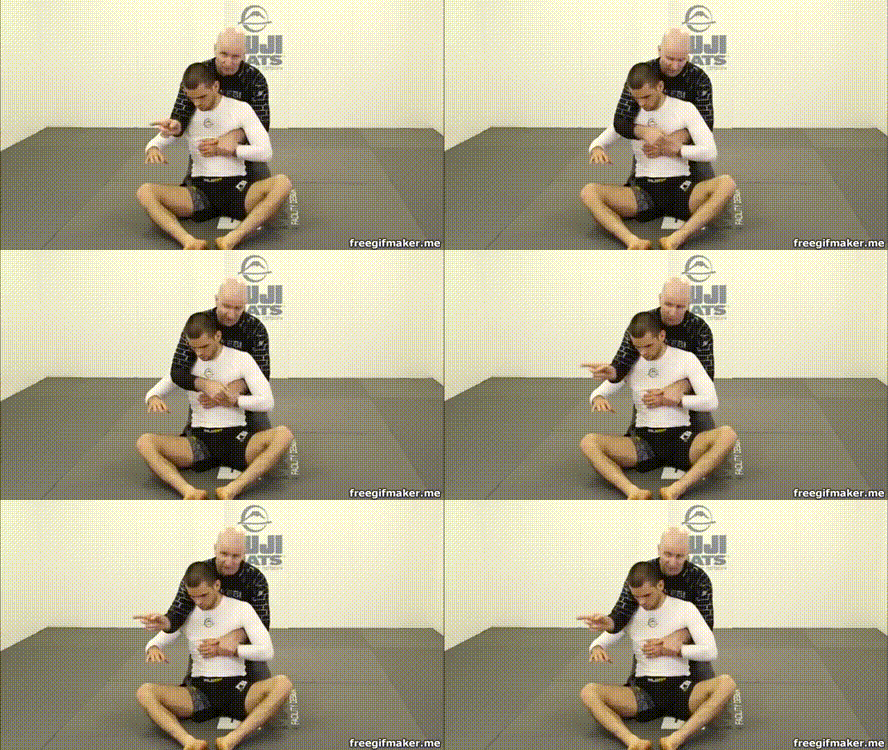
Click on gif For Free John Danaher Back Attacks Video

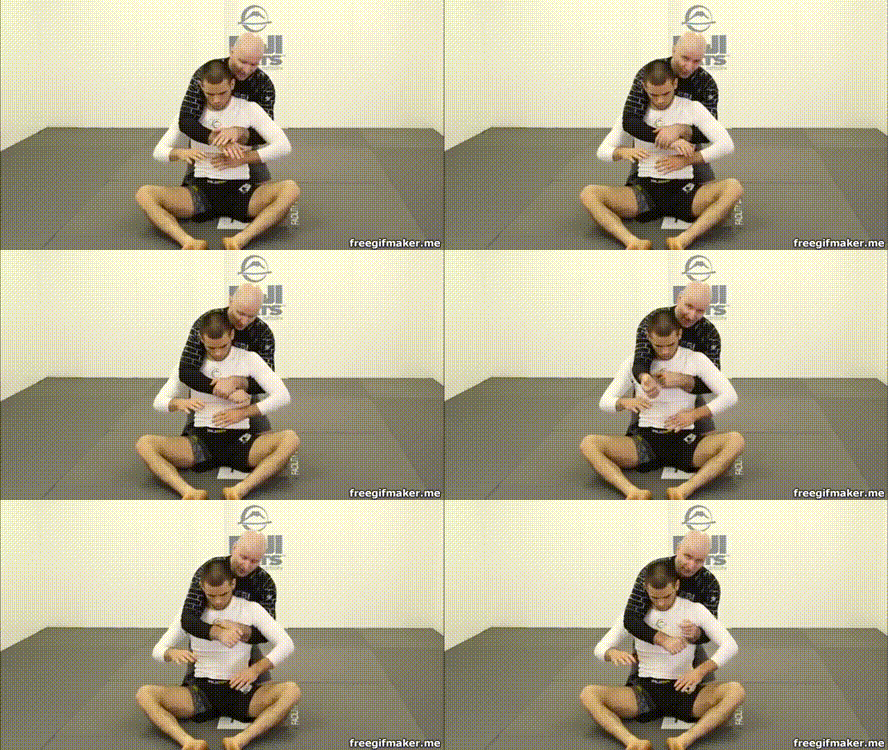
The back position is when you are behind your opponent, hanging off their back similar to a backpack. There are two major points that you need to control. The first one is the rotational movement of the shoulders. The second one is the overall hip movement. In terms of shoulder rotation, you need your arms and head to build a structure. Namely, you need an arm over one of the opponent’s shoulders and another one under their opposite side armpit, The “over” arm needs to go in the pal of the “under” arm for a so-called seatbelt grip. Your head needs to be tight to the opponent’s head on the side opposite of the “over” arm. Finally, your torso needs to be precisely behind their torso, with their spine in the middle of your chest.

Hip control stems from utilizing your legs in a hook-like motion. Basically, you have both feet over each side of the opponent’s hips, heels towards their pelvis. Positionally, your hips need to be above his at all times. Belt level is the rule of thumb here.

Getting to The Back

Taking the back in Jiu-Jitsu is available from virtually every other position. You can take it from standing, from the closed guard, half guard, from topside control, from mount, etc. However, some entries to the back position are far more effective than others. So, we’re going to look at a few of them that really do work in most cases.

John Danaher DVD Back System
Click on Image to Watch the Full Video of Back Control by John Danaher

Taking the back from the turtle position is probably the most utilized back take in grappling. When an opponent turtles up, the open for multiple ways of getting to the back. From the turtle, the main battle is getting the seatbelt grip in. Once you have it there are multiple ways of sneaking the hooks in, either one by one or both at the same time. You can sit back, rollover or simply ride along as your opponent moves.

Another quintessential back take is for the mount. As you attack arms or the neck from the mount, people often try to turn in panic. This actually opens up a much worse position than the mount – the back. Once again, establishing rotational control over the shoulder girdle is your main priority.

A key back take from the bottom is via an arm drag. It plays a huge part of Danaher’s back system as well. You can use the arm drag to get the back from closed guard, butterfly guard, half guard and a bunch of other bottom positions. It works by pulling your opponent to the side with the help of a two-on-one grip on their arm. The new John Danaher DVD is going to explain this in-depth. The idea is to you get behind the opponent by pulling them completely to one of your sides.

The Power Of Strangles

The submission you can readily get from back control is a choke. It may be a rear-naked choke, a forearm choke or any variation of a collar choke. There are also other chokes as well as different submissions, but they require transitioning and/or are low percentage moves. If you want a move to work on everyone, regardless of skill or size, you need to learn how to strangle form back control.

In terms of strangling someone, there’s no better way than the rear-naked choke. It requires only the smallest of squeezes and there’s nothing anyone can do about it. Provided you did everything right, of course. The way this strangle works is by putting pressure on both carotid arteries in your neck .they’re the blood vessels that provide the brain with blood, and in turn, oxygen. Once you cut off oxygen supply the brain shuts down in just seconds.

John Danaher DVD Back System
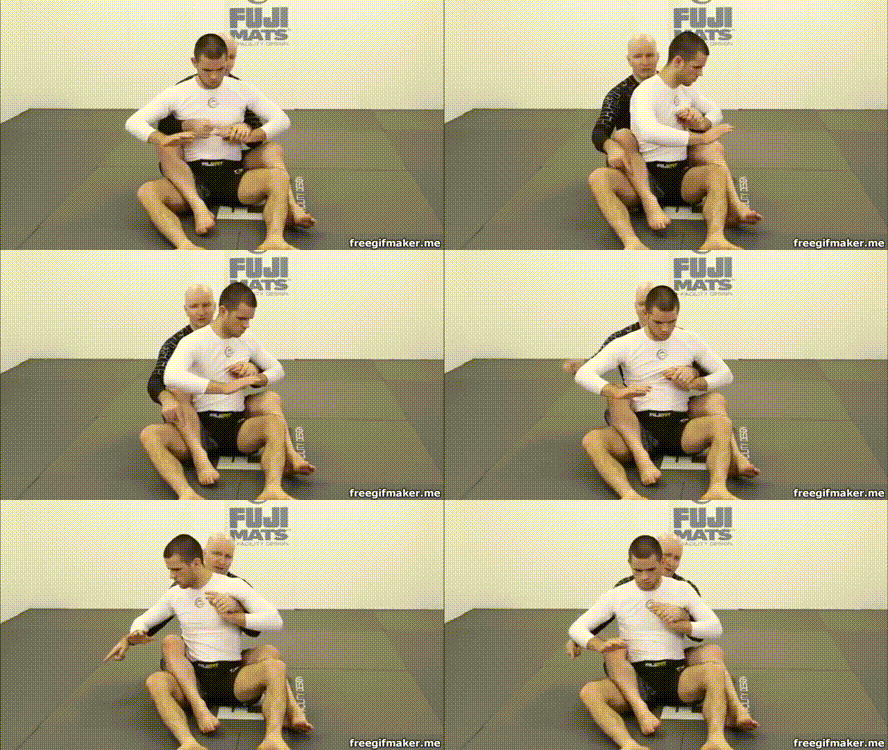
Click on gif For Free John Danaher Back Attacks System Videos

The rear-naked choke involves putting an arm around the opponent’s neck from back control. The goal is to have your elbow right below the chin of an opponent. This places your biceps on one artery and your forearm on the other. The second arm just secures everything in place with a figure four grip and a wedge behind the neck. the final piece of the puzzle is placing your head over the figure four.

Collar chokes work in the same way, only you use the Gi to put pressure on one or both carotid arteries. Do not expect a lot of Gi chokes from a John Danaher DVD, though. At least not this one.

The Weak Spot Of Back Attacks

So, if we already have a back that’s so effective why do we need further innovation? Well, the back system we described works well in theory but there’s an enormous weak spot in practice. Getting and controlling the back is not easy. Finishing is also nothing hard in particular. However, making the small transition from back control to a choke is the hardest part of attacking.

Why is this such a difficult thing than? Well, let’s look at it like this. If you’re in the 50/50 guard, as the name suggests, both you and your partner have the same chance of finishing. usually, the one who is more familiar with the position is going to win after a while. The same goes on with hand fighting form the back. The road from seatbelt control to a rear-naked choke is a short one but filled with ever-revolving obstacles. You have two arms of your own against two of the opponent’s arms. It’s a 50/50 situation, meaning the more experienced (or luckier) grappler is going to prevail.

Plenty of people get really frustrated when they can’t get the choke from the back. As proficient as you might be at taking the back and even finishing, you might face real trouble when attempting to get the choke. At least for a few more days, until the Back System Joh Danaher DVD comes out.

John Danaher DVD: Back Attacks

So, why exactly does John Danaher dabble with a back system? Wasn’t he the leading authority on heel hooks and wearing rashguards on every possible occasion? Well, if you didn’t know by now, John is a very complete coach that loves focusing on areas of BJJ that offer the utmost control. He revolutionized leg locks before only see as quick and opportunistic submissions, into a system based on control. Now, he takes an already established control system and provides even more options from there. On top of everything else, he also fixes most back attacking conundrums grapplers usually face.

So, what can you expect from the Back Attacks John Danaher DVD? You can expect a well organized, methodical approach to back control. So much so, in fact, that you’ll probably not even see anything of back control in the first one or two volumes. Just like in the Leg locks release. However, it all builds up with a purpose. It is going to plug every hole you have in your back system as well as provide you with more knowledge you could ever have hoped for. After all its a John Danaher DVD we’re talking about.

We’re going to take a look at something we already know works, but we have no idea how. Most of the Danaher Death Squad and Gordon Ryan, in particular, have already used the system in competition.  Just like with leg locks, people were trying to understand it through analysis. Just like with leg locks, they failed. Now, Danaher comes out to break it al step by step helping us never to lose back control again!

The Straight Jacket Danaher Back Attacks

The one aspect that’s the focus of Danaher’s back system is rotational control. The upcoming John Danaher DVD offers you the best way to attack from an even better control system than before. The Straight Jacket system is based on not allowing your opponent to turn into you on either side.

John Danaher DVD Back System
Click on gif For Free John Danaher Back Attacks System Videos

First and foremost, Danaher likes to immediately place control over the arm on the “under” side fo seatbelt control. To that extent, he gets a very specific one-on-one wrist grip. This ensures both that the arm is trapped for further attacking purposes and increases the rotation control over the opponent’s torso. If you have this arm under control, there’s no way for an opponent to turn to the other side.

In order to maximize upper body control, Danaher likes to use a very interesting concept I never knew existed. He likes to use the elbows of his arms, under and over the shoulder on each side respectively. This gives him the utmost level fo control while still leaving this forearms quite mobile to attack and hand fight.

John Danaher DVD Back System
Click on gif For Free John Danaher Back Attacks System Videos

Another major groundbreaking concept is diagonal control. After controlling an opponent via the one-on-one grip, there’s still a danger of them turning toward your gripping arm. The solution is as simple as getting a hook in on their hips. For maximum effect, this needs to be the hook on the opposite side of the grip you have. This is the essence of diagonal control, as now your opponent can’t rotate in either direction. And this is still when you only have one grip and one hook in. Suddenly it is not a 50/50 situation anymore!

Expect a full in-depth review of the Back Attacks System John Danaher DVD as soon as I get my hands on it! Not long now…

ON SALE HERE:
John Danaher – Back Attacks Enter The System

John Danaher Back Attacks Enter The System Techniques List

You Might Also Be Interested in:

Are You Hitting The Monoplata As Often As You Should?

Monoplata

Omoplata, Gogoplata, Locoplata, Baratoplata There are a lot of “platas” in Brazilian Jiu-Jitsu. Joking aside, all of these techniques are very efficient and painful submissions. Some, like the Omoplata and Baratoplata, are joint locks, while the Gogoplata is a choke. However, there’s one more submission to this family, that not many people look for. To be honest, apart from the Omoplata and perhaps the Baratoplata, all of the other are not common submissions. This includes the Monoplata as well.  How often do you hit a Monoplata in training? Do you even have it in your arsenal? it is a very powerful submission that works from both top and bottom. Look into it.

Brazilian Jiu-Jitsu joint locks are probably the most numerous submissions in the sport. There are plenty of submissions involving breaking the joints of the limbs. These locks can be done in two main ways. The first is in a straight manner, like the armbar, armlock, kneebar etc. The second one is a joint lock on a bent limb, like a Kimura, Americana, Toe Hold, etc. The Monoplata submission falls under the bent limb joint locks category. In essence, it is a hybrid between an armbar and an Omoplata with the focus on the shoulder joint. It is a quick and easy submission that not many schools teach.

Some coaches, like grappling legend Marcelo Garcia, have the Monoplata in their curriculums. 10th PLanet Jiu-Jitsu also relies heavily on it, given that it ties in with the Omoplata and Gogoplata perfectly. Many other schools though, especially those that are Gi exclusive seem to shy away from it. Why would you skip over a submission that’s halfway between an Omoplata and an armbar? It’s like going from a Guillotine to a D’arce without attempting a Japanese necktie in between.

What’s The Monoplata

The Monoplata is essentially a shoulder lock which involves a slight ned in the arm and both the use of your legs and arms to finish. This makes it a really potent weapon, as you have your whole body up against a carefully isolated limb. Moreover, the positions for the Monoplata are generally very secure, from both the bottom and top attacking instances.

Monoplata grappling
`

Since the quintessential setup for this submission is from the mount, we’re going to use it as our example. The goal here is to go step by step through all the details that make this shoulder lock such an awesome finishing move. The basic setup involves a huge error by your opponent, which is unlikely to happen at higher levels of the game. Fear not as you can provoke enough of a reaction to enter the setup effectively. More on that later on. For now, let’s imagine that you’re in mount and your opponent has double underhooks on you with a grip behind your back.

Monoplata BJJ Once you feel the grip in place, choose a side to attack and lift one leg. Your leg should be bent at a 90-degree angle, like in a lunge position. This is going to both turn your opponent on their side and isolate their top arm. The goal is to create ample space to get your shin over their face. ToO do it, thread your arm around your own knee and tightly grip their shoulder. Use your other arm to push their head towards the mats. Now, you can easily swing the shin over.

The ultimate goal is to sit down like for an armbar, but with the arm trapped under your armpit. All it takes is sliding your bottom knee toward the trapped elbow, pinching your knees.

Wher Can You Get It From?

When you’re hunting Monoplatas, the mount is the best position to get them from. But, when you’re up against anyone with a blue belt or above, you’ll probably not going to have them grip you with underhooks from bottom mount. Regardless of that, you can cause them to act in a manner that’s going to open up a Monoplata entry for you.  For instance, you could scoop their elbow for an armbar, which is going to prompt them to recover it. Once they pull it back, simply trap the arm with your armpit and raise the leg. Another option is going off the basic position of your arm under their head when in the mount.

Monoplata From GuardAnother great way to get the Monoplata is from the bottom. Although a less frequent setup, it is one that works like a charm. Form the closed guard, go about as setting up an Omoplata. Break their posture, trap an arm, shift your hips and try to hit an Omoplata. An intelligent opponent is going to press forward once you place your shin in front of their face, blocking the Omoplata. This is when you’re going to pinch your knees together and place both your palms on the mats, away from your opponent. From there, just switch the hips and you’ll land in the perfect position to finish.

Knee Cut To Monoplata Another great setup is hunting for the Monoplata straight after a knee cut pass. The moment your foot is free from the opponent’s quarter guard, switch your hips and use the underhook you have to open up space for your leg. Swing your nearside leg around their arm and aim to finish from the top. You could also place the leg in front of their face and finish like before.

The Monoplata Game

So how can you tie in the Monoplata into your submission game? We already saw how it connects to the Omoplata, but does it work with other techniques a well?

Well, another readily available move is off the Monoplata is the straight armbar. Since you’re already in place, all you need to do is switch to an armbar position. Keep the arm under your armpit as you’ll get better leverage to finish.

Other options include transitioning into (or from, via the Omoplata route) a triangle choke. One more next door neighbor is the Gogolata, in particular, the mounted Gogoplata. All it takes is to look for a correct foot placement once you swing the leg over. If you can get the neck, go for the Gogo instead of looking for a shoulder lock. When the opponent turns, though, the Monoplata is there for the taking.

Take your Omoplata knowledge to the next level with the “Omoplata Everyone” Bernardo Faria DVD. You’ll even find some Monoplata setups and connections in there. here’s a complete review of what to expect from this fantastic instructional. 

Omoplata Explained – How to Make It Really Work

Gogoplata Details That Will Change Your Game Forever

Gogoplata Details That Will Change Your Game Forever

Kenan Corneliues Reverese Omoplata on Yuri Simoes Full Video and BreakDown – ACBJJ 13


Jiu-Jitsu Self Defense – Are You Training It Right?

jiu-jitsu self defense

Brazilian Jiu-Jitsu was not always a sport-oriented grappling exclusive sport. In its inception, the Gracies relied heavily on their BJJ to get through street fights and Vale Tudo matches. As such, Brazilian Jiu-Jitsu also featured strikes and kicks. Albeit not too much offensively, the Gracies knew all about defending punches, kicks and assorted strikes. Later on, this translated to the self-defense portion of BJJ training, which used to be elaborate and mandatory. Today, most schools tend to shy away from training Jiu-Jitsu self-defense. Or even worse, they do it all wrong.

Martial arts had but one use as they were developed – battle effectiveness. Most (if not all ) martial arts have their roots in combat as they were highly effective in practice, given the time period they were developed in. As martial arts spread across the world they slowly transformed into sports activities, some moving a long way from their original intent. Brazilian Jiu-Jitsu is a fairly young martial art but was heavily based in self-defense. The direction of today’s sports grappling is threatening to completely kill off the Jiu-Jitsu self-defense aspect. Which is sad really.

Brazilan Jiu-Jitsu is a well proven practical martial art. Its self-defense application is unrivaled as the art ticks all relevant boxes. The basic Jiu-Jitsu self-defense techniques are easy to use, work perfectly for practitioners of all sizes and have been tested on the streets and inside the octagon alike. However, if your gym is approaching self-defense training in a manner which reminds you of the bullshido videos of today, maybe it is time to reconsider where you are training. Don’t get me wrong, a BJJ academy can produce awesome grapplers without ever addressing Jiu-Jitsu self-defense. It is those that teach it as part of their classes, but only because they have to, that is the most dangerous. Because there’s hardly anything worse than a false sense of security.

Dean Lister knows a lot about grappling and plenty about self-defense. He also knows how to put them together in the best way possible. Now you can too by picking up his “Alpha Male Self Defense” DVD instructional! It’s available now at a cut price! 

Jiu-Jitsu Self Defense 

Why is Brazilian Jiu-Jitsu in particular so effective as a self-defense method? Well, the art itself is based upon the principles of superiority in daily street altercations, so you could argue there was a lot of practice. The Gracies lived in a tough part of Brazil and were very vocal about the prowess of their fighting method. This lead to countless testings of their skills which in turn, led them to refine them for that specific purpose.

Carlos Gracie, who learned from Mitsu Maeda was not the biggest kid on the block. His brother Helio was even worse off, skinny and sickly. This is the main reason why BJJ is so much about leverage and technique. It was literally tailor-made to suit the brothers’ body types and needs. BJJ’s primary principle is that the smaller person can easily deal with a much larger and significantly stronger attacker. This is not just a notion, like in some other martial arts, but a proven fact of BJJ.

Furthermore, the techniques are all based on control via the aforementioned leverage principles. This means you can control a chaotic situation and de-escalate it at will. It also means you can choose how much damage you want to inflict on someone. You could just control, incapacitate (put to sleep) someone, break a limb or even kill them.

On another note, Jiu-Jitsu does have quite a large learning curve, but that doesn’t mean it’ll take you as long to master the Jiu-Jitsu self-defense aspect. Or get efficient with it, at the very least. The basic Jiu-Jitsu self-defense moves are nothing flashy, nor difficult to learn. There are efficient ways of focusing on a few select moves that could get you out of a tight spot for real.

The Issue With Practicing Self Defense

So, what’s the issue with self-defense training if BJJ is so effective in real life situations? Well, there are a few, to be honest. Let’s address them all one by one.

Jiu-Jitsu Self DefenseThe most important thing, in my opinion, is the way people training. or better yet, teach self-defense. While you do not want to scare away people on their first day, teaching them to block a punch and stay there for a couple of minutes setting something up is just plain dumb. Self-defense requires training scenarios based on realistic events. Unfortunately, today’s self-defense curriculums seem to be based on Steven Seagal movies rather than reality. This is the number one issue the art faces.
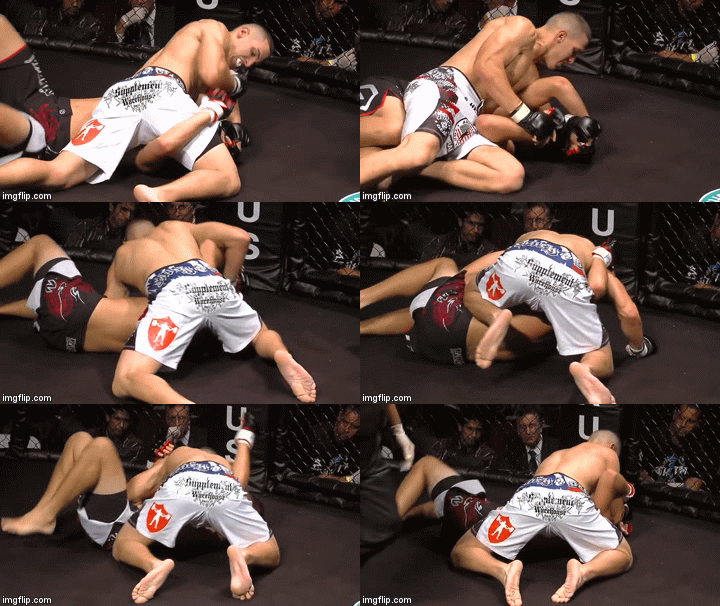
Similarly, people think they are going to get out of a fight untouched. Once again, this is pure Hollywood fiction. There’s no self-defense scenario in which you do not receive some damage. Modern curriculums do not prepare people for the fact that they need to take some damage in order to inflict some more. Sounds easy? Go and get punched in the nose, then let me see you claim it’s easy.

Furthermore, it is the choice of techniques. Teaching people Capoeira-like kicks from the bottom when you have far more effective techniques is, once again, stupid to put it mildly. BJJ has a great arsenal of tools, some great for self-defense, other better fro sports environments. If your “coach” is teaching you to Berimbolo in a self-defense situation, leave the gym, or at least stop treating classes like a self-defense martial art. You’re training a sport that works under specific conditions. That’s it.

A Practical Approach To Training 

So what can you do to successfully defend yourself by using Brazilian Jiu-Jitsu? Well, apart from training with someone from the old-school Gracie guys, you need to know what to look for. A street fight is a violent and entropic situation with an always uncertain outcome. Remember that avoiding one is the most important self-defense you could ever master.

However, if you really need to be ready, then you need to emulate the circumstances as close as possible. To do that, you need to know that under pressure, you’re going to forget all the fancy things you think you know. Once the adrenaline starts surging, you’ll just act instinctively, That means, you need to make Jiu-Jitsu self-defense techniques part of your instincts. You won’t do that by learning BJJ as a sport. AWhat you need are a few, very select techniques that you need to drill long, hard and on a daily basis if possible.

Next, the training environment needs to progress as you master the moves. At first, it is ok to go slow, this move fits this scenario and so on. But once you know what you’re doing, you need to put the pressure on. Create scenarios with shouting, pushing, unexpected attacks etc. See how you react when someone is trying to hurt you, even if it is simulated. This is like being in mount – the more time you spend there, the better you’ll be at escaping.

Jiu-Jitsu Self DefenseFinally, look to introduce strikes. BJJ changes significantly when strikes are factored in, as proven by Combat Jiu-Jitsu. IF you do not like MMA training, at least do grappling with strikes. Use gloves, go slow and take care but learn what to do, and more importantly, not do, in specific situations.

VIDEO: BJJ Black Belt Killed While Trying To Subdue a Guy With A Gun – Breakdown

Royce Gracie: I won’t Teach my Students Anything that Doesn’t Work on the Street

Las Vegas POLICE Officer Uses JIU-JITSU to Control Larger Suspect (Gracie Breakdown)

Zach Stewart, BJJ Instructor and Father Tragically Passed Away During Training

Zach Stewart passed away during bjj class

Zach Stewart was a Precision Jiu-Jitsu Spring Mount instructor. Unfortunately, he passed away during jiu-jitsu class leaving behind his family, wife, and two sons, Harrison, 2 years old and Everett only 2 months old. Zach Stewart was 35-years-old and he passed away from previously unknown medical issues

Zach was also a school teacher of a Spanish language at SpringFord High School.

As we can see from his friends Pete Shoemaker’s message, Zach just passed away last night while doing what he loved doing. There were no any injury or trauma but he maybe had an aneurysm or something similar to an aneurysm that caused death.

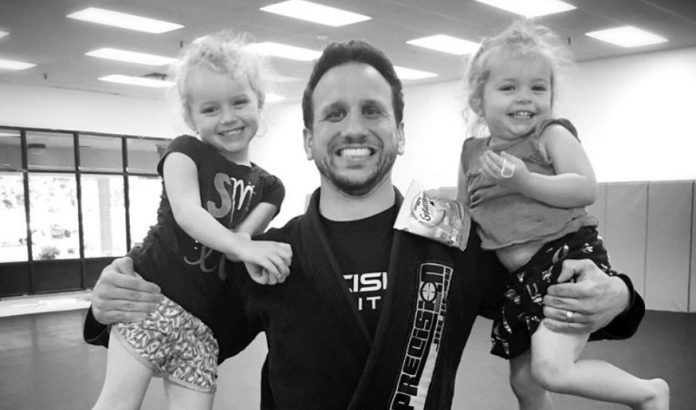
Pete Shoemaker posted a picture of Zach with Pete’s two daughters on his Facebook profile with these words:

I’m writing this post to let you know that Zach Stewart passed away last night while we were training at the gym

Nothing happened, no injury or trauma that we are aware of, he just passed away. Nothing is 100% conclusive yet, but he may have had an aneurysm or something similar. It makes no sense and I still don’t understand how this could have happened.

Thank you to all of you who helped try to save him. From those of you who were there at the gym to the doctors at the hospital thank you. We did all that we could, but nothing we could have done would have changed the outcome. So many people today are blaming themselves, including myself, but we must be rational and realize that is just our grief.

This seems so callous to be giving this information out in this way, but because so many people witnessed what happened, we thought it was necessary to send out this information on a broad scale.

Zach’s family will need all of our help for some time to come, but Karena has understandably asked for some space over the next few days. Please, if you have questions or concerns direct them to me for now. Karena needs time with her family.

Please keep Karena, Everett, Harrison and the rest of Zach’s family in your thoughts.

The gym will be closed for the rest of the week. We will be posting how to donate to his sons’ college funds and also to a scholarship in his name in the coming days.

I’m posting this picture of him with my girls because this is how I’m choosing to remember my brother.”

https://www.facebook.com/pete.shoemaker.3/posts/10217531088295676

Fundraiser Donation for Zach Stewart

We appeal to all of you to help Zach Stewart’s family if you can with an ongoing fundraiser donation that you can find on THIS LINK.

Rest in Peace Zach 🙁