


Jiu-Jitsu Politics – The One Thing BJJ Never Really Needed

Jiu-Jitsu Politics - Why We don't need them

The only people who do not have an aversion towards politics are the politicians, or people looking to become politicians. And this does not only apply to global politics. It is the same in every walk of life, where there’s enough structure to allow for the formation of politics. Unfortunately, Brazilian Jiu-Jitsu has not been spared of its fair share of politics too. In fact, there’s too much of it. And if there’s one thing we can really do without, then it has to be Jiu-jitsu politics.

To be fair to Jiu-Jitsu politics (just this once) they did help shape some things. However, in the long run, politics really just interfere with what Jiu-Jitsu should be about – fun. Politics can help settle things, that’ true, but they’re all things crated by politics themselves. In fact, we have different kinds of politics within the sport. Similarly to any other kind of politics, only those involved really like to keep on going with the concept. If there’ son thing most people are united about in BJJ, is that we need less politics.

Team Politics

Team politics is probably the one thing that’s really affecting Jiu-Jitsu as a whole more than any other type. It may seem like a local thing, but it is far more than just that. Brazilian Jiu-Jitsu is a sport that’s constantly evolving, and it has a lot more evolving to do. Every single student contributes to the evolution of Jiu-Jitsu at one point or another. In order to do that, people need to train with as many different training partners as possible. This is where Jiu-Jitsu politics mess things up.
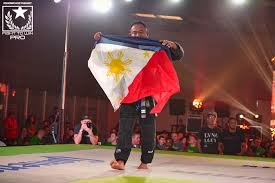
Jiu-Jitsu PoliticsThe concept of “Creonte” in BJJ states that a student can’t train in two different academies at the same time. It is a dumb one, but it does still hold value in the BJJ world. In fact, people really hate being branded a Creonte. In other words, if you have three options to train in your city, you’ll probably have to only pick one. The funny thing is that he has nothing to do with direct rivalry or competitions since you can’t really learn all the “secrets” of every team. instead of being able to really speed up your progress,  you have to settle in one academy, and leave completely and be branded a traitor if you’d like to check out what’s going on in another.

Another aspect of team politics is on a grander scale with the largest competitor teams in the world. They all have their own academy politics that, by association (via the BJJ affiliation issue) extend to any academies around the world. The catch here is that people from Atos and Checkmat (just examples) in a European city are far from the same as the headquarters of both teams. Why should a quarrel, misunderstanding, or whatever other political issue HQs have, extend to all affiliates as well?

Organization Politics

This is an aspect of Jiu-jitsu politics that we all know. There are several huge organizations out there that pretty much dictate what happens in the BJJ world. I’m talking both in terms of what happens at tournaments, and what happens within academies. These organizations have transformed themselves into self-proclaimed governing bodies that dictate rules simply because they have the resources to do so. They organize the most events in a year, and their “rules and regulations” are what people follow when training all around the world.
Jiu-Jitsu Politics - Global PoliticsAs with every other type of politics out there, there are different streams. This causes an even bigger gap between people, once again due to the demand imposed by others. I personally know of cases where people that enjoy training everything were forced to train along some of the more restrictive rulesets out there. Why not keep it simple and let people train Jiu-Jitsu as it is supposed to be trained? Whoever likes to compete under a certain rule set, or at specific tournaments, can shape their training around them.

Furthermore, these huge organizations and their JIu-Jitsu politics rally do affect how much people can compete,. Outside of the rally small percentage of pro-Jiu-Jitsu athletes, amateurs have to pay. Politics keep making it more and more difficult, increasing the fees, for everything, from tournament entries to the type of Gis you have to get in order to train at an academy or to be able to compete. It has to do with even more profit, which is politics 101.

Global Jiu-Jitsu Politics

Of course, there is also a global aspect to Jiu-Jitsu politics as well. They have to do with BJJ hierarchy and lineage, and how belts area warded. Sometimes, they even have to do with how classes are organized and academies are run. This once again brings us to affiliations, which has its roots in team Jiu-jitsu politics.

The thing with promotions is that the governing bodies of BJJ (sell-proclaimed, remember?) state that only inspectors of a certain rank can promote another student to a black belt. This makes sense, but it does centralize power once again, lading towards a few who represent certain political streams. If someone is at black belt level, another black belt should be able to recognize it and promote a person.
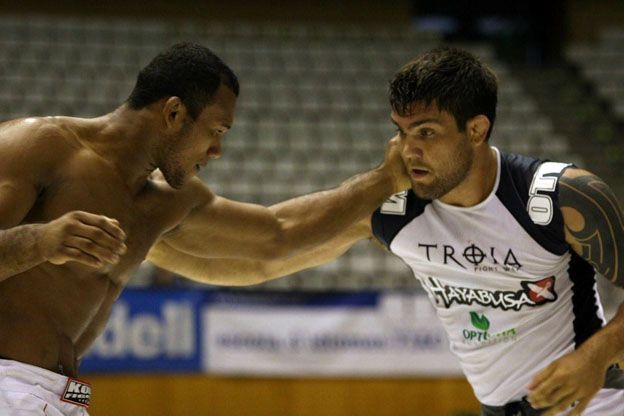
Jiu-Jitsu politics - Team RivalriesSometimes, this extends so far as to deny people the belt they have, simply by association with another professor/coach. Probably the dumbest aspect of BJJ politics if you ask me. Certainly, fake black belts have proved to be an issue, but they’re weeded out pretty quickly and dealt with. Plus, there are now platforms that offer a peer-to-peer based evaluation of your skills, where people that know you can vouch for how long you’ve been training and what belt you are. Things can be simple, instead of being overly complicated by Jiu-Jitsu politics. it just doesn’t fit the ones that have the resources and abilities to rally affect the entire sport.

Closing Arguments

Just to make one thing clear, rivalry is a good thing, and we need it. Rivalry between teams, between individuals, even organizations. It drives everyone forward, including the entire sport of BJJ. However, we need sports rivalries, rather than political ones. Going with your head against a wall just because someone in Brazil said something to someone else 50 years ago makes no sense to me. But, then again, neither do most of the Jiu-Jitsu politics. let’s keep BJJ simple, and kick all politics to the curb.
The Darce Choke Defense Chronicles: Simple Escapes

Darce Choke Defense Chronicles

My personal favorite choke in Brazilian Jiu-Jitsu is the Darce. It came about as a solution to getting undrehooked from half guard and turned into my most dangerous weapon over the years. It is very rare that someone can get out of my Darce, or prevent it. When I get everything right, that is. However, I am most certainly not able to catch everyone I roll with. There are some Darce choke defense moves out there that will cause you to look into other neighboring chokes to broaden your submission threat. So, while I am offering ways out of the Darce for those looking for it, I’m also steering those that love the choke into a more submission-rich territory. 

Darce choke defense is not an easy thing. However, you do have to have it in your arsenal, particularly now that the Darce and all front headlock chokes are quite popular. Oh, and yeah, even if you roll Gi-only, you’ll need a Darce choke defense system. If having a Gi on makes no difference to me, imagine what Darce aficionados like Jeff Glover or Edwin Najmi can do with it. So, in survival terms, a couple of defenses are a must for modern BJJ. The good thing is, that there are simple ways of making sure you don’t tap to every Darce you get caught in.

The Darce Choke

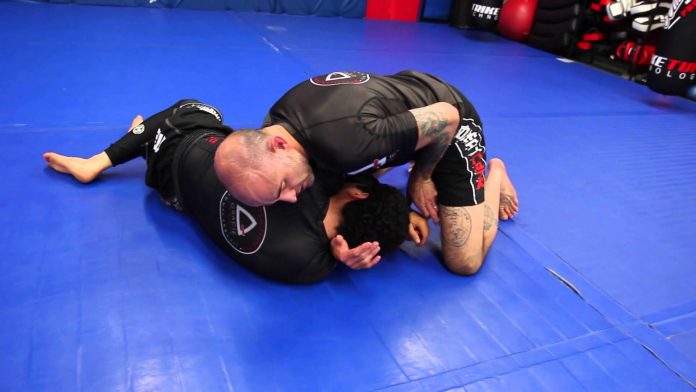
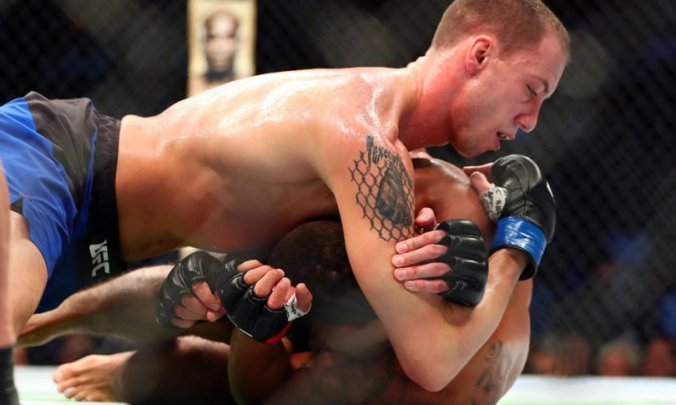
Darce chokeI could probably write a book (short e-book that is) on the subject of the Darce choke for BJJ. In essence, the Darce choke is an arm triangle. Looking at it from a broader view, it is a triangle choke. This is important as the category a strangle falls into is very important in understanding it’s underlying mechanics. Along those lines, a triangle choke requires your body part (leg, arm, etc) on one side of the neck and utilizes the opponent’s own shoulder on the other. This is what makes or breaks any triangle choke, including the Darce.
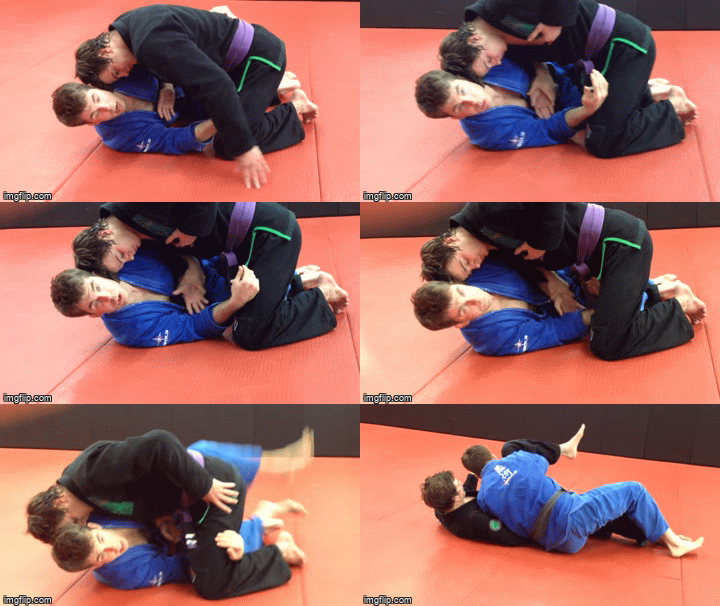
Let’s look at the front headlock Darce. For the choke, you want to sneak your left arm (for explanation purposes, could be the right) under the right armpit of the opponent. The goal is to have your fingers peek out on the left side of their neck. This is where your other arm should grip, with any of a myriad of grips. Let’s say it is the palm to palm grip. The second arm is positioned so that the forearm runs across the back of the neck/head.

To get into a Darce finishing position, you need to topple the opponent over, to the side of the grip. Once down, you can really synch in the choke by looking to grab the triceps of your top arm, with the arm that’s threaded under the armpit. To finish, think about the Macarena dance and try to touch both your shoulder with both your palms, Macarena style. You’ll also need to shift your body so that you face the head of the opponent. This pushes their shoulder in their neck, which in turn, ensures you get a strangle.

You can see that Darce choke defense can be quite hard given the tight mechanics. However, it is far from impossible.

Darce Choke Defense

When it comes to Darce choke defense, timing is your best friend.  You need to understand when the Darce enters into “weak spots” that you can exploit to get out of the choke. It will take an understanding of the strangle itself to be able to effectively mount a Darce choke defense, but that comes as a given. The moments you need to be looking for to defend a Darce are either very early, before the arm threads through, at the moment of the grip transition (from palm to palm to a figure four), and an option for when you’re too late for both.

Early Darce Prevention

Darce Choke Defense - Early PreventionVery, very early, you need to be aware of that all-important choking arm that looks to thread in. the half guard is the perfect spot to explain this from. When you’re on the bottom trying to play underhook half guard, you have to be wary of the Darce. The moment you feel an arm is trying to sneak in, the solution is very simple – grab that arm with your top arm. Try to really close the elbow so that you trap their arm.

Mind you, people that have been doing Darces long will find a way through, and you can use it against them. When they try to free themselves from the grip, use the control over the arm you have to sweep them to the side. All you need is a turn and a hip escape.

Recognizing The Danger

Darce Choke Defense - Grip BreakThis one takes place in the middle when you are not sure what’s going on. Form a front headlock, an opponent usually controls one arm and the neck. the moment you feel they are to the side, and there’s a “bar” behind your head, they’re preparing to get to a Darce. However, they’ll need to either go under you (which is really hard) or turn you over like in our example above. the moment they turn you over is when you mount your Darce choke defense. During this transition between grips, you can easily bust out with good timing and lots of practice.

The move itself involves you placing the bottom arm on their knee, to prevent their hip from coming to close. Then, you simply walk the hips forward, trying to shovel underneath them, and turn to the other side. You won’t always get a sweep, but you’ll end up getting out of the choke. The catch is, if you’re late and the figure four grip is already in, you’ll only end up tapping sooner. As I said, timing is everything.

Late Darce Choke Defense

Darce Choke Defense - Late Darce EscapeWhen you’re on the bottom, deep in a Darce and you know it will soon be time to tap, you still have a glimmer of hope with this particular Darce Choke defense. This defense works by giving you time to get out because it removes the shoulder from your carotid artery. Doing it is simple – grab your thigh with the arm that’s involved in the choke. To really open up space and make the Dare impossible to finish, turn to your belly after you grip the thigh.

There are several ways of breaking out once you’re here, like rolling over and extending your head. However, it may just be smarter to stay there, since you’re safe from the strangle. People will have to try and move you to re-adjust, which is when you get out with ease.

Conclusion

If you want to become good at Darce choke defense, the key is to do the choke more yourself. This is true for any submission defense training. The moment you know where the Darce choke’s weak spots are, you’ll be able to exploit them in a way that suits your game. Until such time, though, you have three different Darce choke defense options that work at different stages of the submission, go test them out!

1 Video Source

2 Video Source

3 Video Source

Grappling History: A Look At The Art Of Shootfighting

What is Shootfighting: History and rules

Shootfighting is a term we sometimes hear in the world of combat sports and grappling martial arts. Along the lines of Vale Tudo in Brazil and later on, MMA in the US, Shootfighting is a hybrid style that involves several martial arts disciplines organized in a fighting system. As such, it is something that has both practical uses and was popular for a while as a sport too. Basically it was a simpler version of MMA, focusing on submission grappling (mostly catch wrestling) and Muay Thai.

Before we go on to explore the enticing world of Shootfighting, let’s talk briefly about Martial arts vs sports. Things like Aikido, Karate, Kung Fu, and the likes are what we consider martial arts. They operate based on having specific answers for any specific situation. On the other end of the spectrum, we have combat sports like wrestling, boxing, and MMA. That’s where you have a position-zero (think hands up, chin down) and you fight in total chaos, trying to use fewer techniques than a martial art, but in a much more realistic way. BJJ is somewhere in the middle of this, while Shootfighting goes right into the combat sports category.

What Is Shootfighting?

Shootfighting was created in Japan in the 1970s. It came about by accident, as its creation wasn’t planned. Famous pro-wrestler Karl Gotch taught some Japanese fighters a very specific set of catch-wrestling moves that were known as “hooking and shooting”. One of the pro-wrestlers, Antonio Inoki went on to fight in MMA-style matches later in the 70s, causing people to develop an interest in his style. The result was as style dubbed “shoot wrestling” and fights were called “shoots”.

Shootfighting History and rulesThe Shootfighting we know today, developed later on when an American named Bart Vale coined the term. He fought for the “Professional Wrestling Fujiwara Gumi”, a Japanese shoot-wrestling promotion, and was their champion for several years in the 80s. Back in the USA, he used the term Shootfighting to describe his own hybrid style, which introduced Kenpo and Ju-Jitsu to the original shoot wrestling platform of catch-wrestling and Muay Thai.
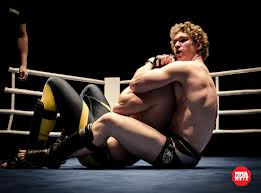
Several organizations took on Shootfighting in the ’90s, particularly in Japan. You might have heard of Shooto, Shoot Boxing, and Pancrase. Pancrase was by far the most famous one, and the organization that launched stars like Ken Shamrock and Bas Rutten, to name a few. In fact, Ken Shamrock stated Shootfighting as his style in the early UFCs.

Shootfighting Rules

The rules are pretty simple and straightforward. Matches last 30 minutes without a break for professionals, and 10 for amateurs. Shootfighting takes place in a wrestling ring. Strikes to the groin are not allowed, but, elbows, kicks, knees, and head butts are all legal. Punches are only allowed to the body, but open hand slaps are allowed to the head. Bas Rutten really took those to another dimension when he fought in Pancrase. There are no gloves.

Grappling-wise, takedowns, and throws are all legal, as is striking a downed opponent. If a fighter is caught in a submission hold, they can grab a hold of the ring ropes to break the hold. However, in doing so, they concede 1/3 of a knockdown. This is important because 5 knockdowns are enough for Shootfighting to lose the fight. Speaking of adding things up, grabbing the ropes 15 times will cost a fighter the fights. A 10 second knockdown (like in boxing) will lose you a fight immediately, as will tapping out to a submission. Anything that goes to the end, is a draw.

In professional Shootfighting tournaments, there’s only a heavyweight division (200lbs and above). In amateur organizations, there are also lighter weight divisions. There is an International Shootfighting Association that defines the rules and regulations.

How Can Shootfighting Help Your BJJ?

Shootfighting is a combat sport that is not as widespread as MMA or BJJ in modern times. You can still train in it,  though, and even compete in some parts of the world. Although it looks like a rudimentary form of MMA, Shootfighting actually ahs some lessons that are important for people training Jiu-Jitsu.

What is ShootfightingThe first things of note are submissions. Compared to BJJ subs, they are much more brutal, fast and seem to contain less complicated details. In that sense, they’re more like catch wrestling submissions. the difference with catch is that other grappling arts, like Judo and Ju-Jitsu, influenced the formation of Shoot. That means that the submissions are a blend of the explosive, surprising and painful nature of catch wrestling submissions, and a more positional setup than catch as a result of the Japanese influences. In other words, the perfect combination to plug any submission attacking hole you BJJ game might have.
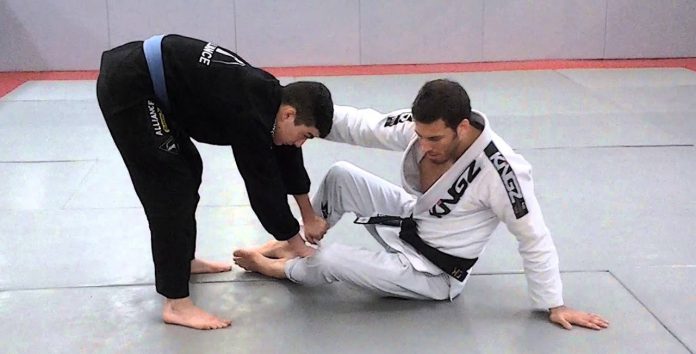
Submission categories that you can expect to improve in with the help of Shootfighting are mostly joint locks. There are some crazy bent arm locks, wristlocks, and leg locks in there, as well as brutal and unexpected neck cranks. While there are some interesting chokes, BJJ has the primacy in that department.

Looking at shoot fights will also clearly demonstrate how important conditioning and pacing throughout a match is. 30 minutes is a lot of time. Give that no limit matches seem to be coming back to grappling, especially on the pro scenes, there are cool tactical tricks to learn about not gassing out from watching shoot fight matches.

In Summary

Shootfighting is an interesting and underrated combat sport. It has a lot to teach strikers, grapplers and MMA fighters alike. While training in it can prove to be difficult, there are plenty of matches, and some instructionals available online. They’re enough to give you an insight into the sport, as well as teach you a few new tricks to try out on the mats.

How To Stop And Survive The BJJ Toreando Pass

Toreando Pass Counters And Defenses

There are certain techniques in Brazilian Jiu-Jitsu that we all hate. Just as much as people that are on top get annoyed with the worm guard (and all lapel guards fro that matter) so do folks that play guard frown at the Toreando pass. It is a speed pass, that also ahs pressure components and has really superior mechanics. In other words, it is one of those nightmares passes that you’ll hate from the bottom of your heart. Especially if you train regularly with the Gi. That said, like everything else in BJJ, there are solutions for the BJJ Toreando pass, you just need to know where to look. Like this article, for example.

The one thing to understand about the BJJ Toreando pass is that there’s no move out there that will keep you safe 100% once the pass starts happening. If you enter in a battle against the Toreando heed on, you’ll end up passed, and stretched out each and every time. Instead, you need to either act early, and set up a trap or two or let it unfold, and execute a counter or a block very late in the process. In order to achieve both, you’ll need to know how the pass itself works.

Figuring The BJJ Toreando Pass Out

The Toreando pass is a weird one. It is not really a loose pass, nor is it a tight pressure pass. it is some weird combination of both. It is very technical and will work for everyone. However, explosive grapplers, like wrestlers for example, really do end up having crazy amounts of success with it because executing it quickly and with power really does make a difference.

Even though the BJJ Toreando pass works in both GI and No-Gi, it is much more difficult to deal with when you’re wearing a Gi. This is exactly the version of the Toreando you need to figure out, in order to be able to prevent both Gi and No-Gi attacks.

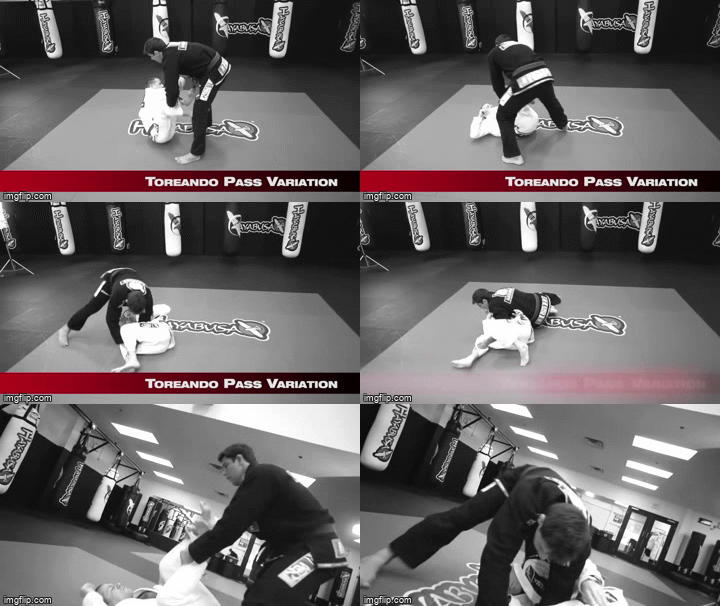
Toreando Pass MechanicsIn short, the BJJ Toreando pass gives the passer immense control over the longest levers of the human body – the legs. there are different spots to grip, but in all fo them, it involves the area of the pants between the knee and the ankle. Usually, people hold midway along the shins. The goal of the pass is to stretch out the near side leg while trying to force the far side leg to bend as much as possible. This, in turn, will rotate the person on the bottom so that the area between their knee an armpit is completely exposed. That is the explosive portion of the pass.

What follows is the pressure part of the Toreando pass. That is when you place your shoulder on the opponent’s belly and stay there, keeping them stuck and bearing all your weight on top. Plenty of other details, like having a stiff arm on the near side, switching the hips, etc. make the pass even more terrible. Plus, there are several different variations of it, in terms of grips, leg placement, motion, etc.

What Are Your Options?

As I mentioned previously, once you know the strengths of the BJJ Toreando pass, you can easily exploit the few weak spots in the chain of motion. Those weak spots appear either very early in the pass, or extremely late. Along the middle, you can just sit back and absorb the pressure, because everything you do will lonely put you in more peril.

The first “hole’ that the Toreando pass has is that it ties the top person’s arms up with the pants grips .that means you can place grips of your own, that will help you deal with the pass, either before it gets going, or right before they complete it. Another thing that goes in your favor is the power of your legs. While the opponent can control them, if you can make them heavy and put them in a certain configuration, it will make their task really hard, blocking them for long enough to mount a counter.

With all that in mind, there are three things you can do from guard when defending the Toreando pass: force them back, choke them, or sweep them. Here’s how:

  • Force Them Back       

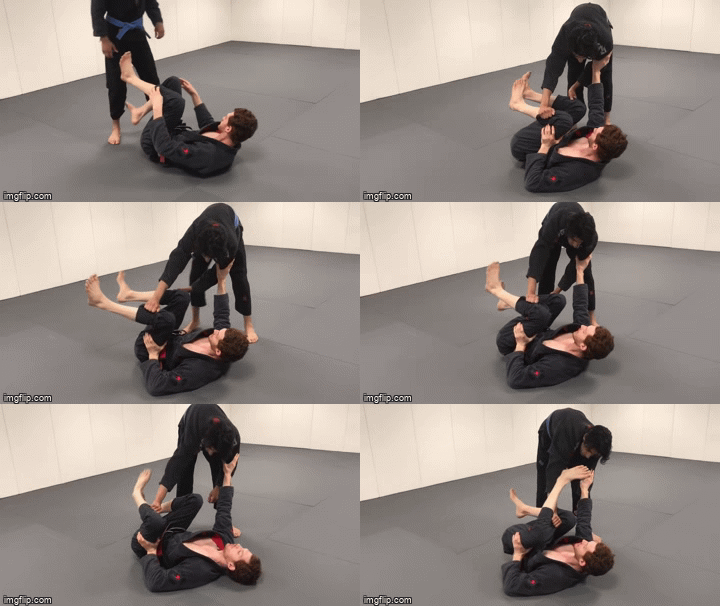
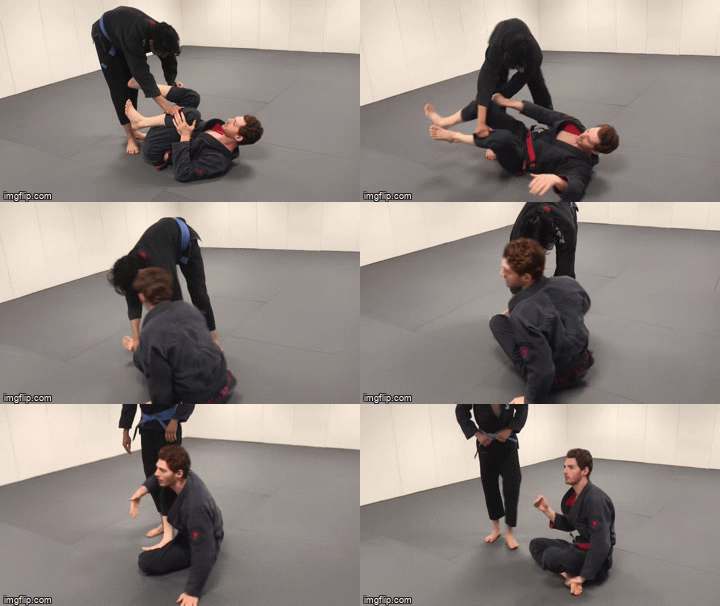
Toreando Pass blockThis is probably the highest percentage BJJ Toreando pass defense there is. It is an early defense and is based on grip placement. Moreover, there are Gi and No-Gi version of it, meaning it is universally effective. The whole idea is to block the leading edge of the pass. In the case of the Toreando, that is the near side arm, whose shoulder looks to fall on your chest/belly. The ways of blocking are twofold. One that works great for Gi and No-Gi is to keep your near side arm on the opponent’s biceps (also on the near side arm) using a C-grip. Once you have the leading edge blocked, you can sneak the far side foot in and place it on their shoulder to recover guard.

Toreando Pass BLock counterThere’s also a late version of this block, one that involves a Gi -only grip. When you’re too late at stopping the shoulder, all you need to do is grip the sleeve on the near side arm and stiff arm it. You could set it up really early as well, but the biceps options is easier to do. A simple sit up and a hip escape swill force the opponent back, and make them wonder if they should try the pass again.

  • Choke ‘Em Out

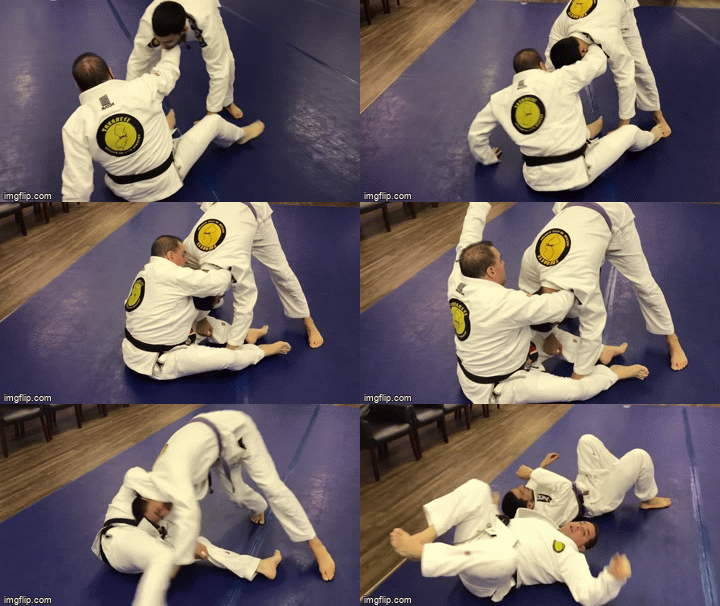
Toreando Pass Loop Choke CounterMy personal favorite. Once an opponent sets up a  BJJ Toreando pass (i.e. you see or feel both grips on the pants), go for a cross collar grip. Most often, if you’re in a seated guard this will be easy, as opponents have to lean over to get the pants grips. You’ll block the op[opponent from going to both sides with just this grip. In order to wrap the choke up you can let them pass, and just focus on opening your elbow enough so they enter the loop themselves. Alternatively, you can attack from a seated guard by changing the angle towards the free side in order to sneak the second arm in.
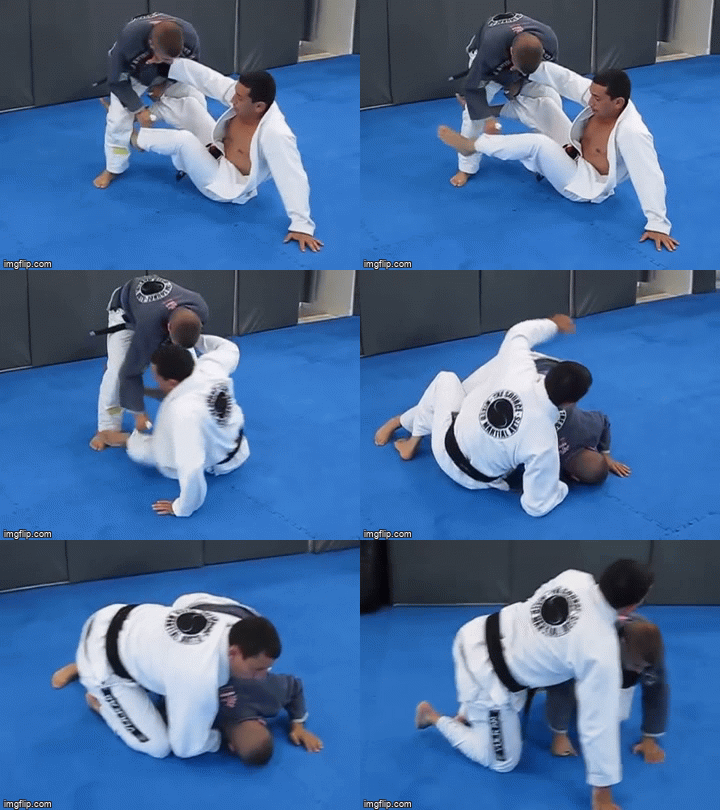
  • Sweep Counter

Toreando Pass Collar Drag Sweep CounterSweeping is one more example of an early counter. This one is a bit more advanced since you have to know how to relax. The moment opponents grab your Gi pants, you need to do two things. First, relax our legs completely, making them heavy to manipulate. Next, lift your butt off the ground, using a collar grip (like the one in the loop choke) to pull, and a post on the mats to push. What you want to do from there is a collar drag sweep. Simply use the pendulum-like position you’re into sewing to the outside of the leg and use the hip switch motion to pull the opponent to the ground. As long as they keep a hold of the Gi pants, they’ll come crashing down to the mat. If they let go, you’re out of ht pass anyway. Mission accomplished.

Closing Thoughts

Understanding the offensive part of any BJJ move is the foundation of making defenses and counters work. With the BJJ Toreando pass, all the danger comes from the manipulation of the legs. However, you get grips for free, and as long as you plant them smartly (biceps, near side sleeve, or cross collar) you’ll be able to prevent the pass early, or even get out of it very, very late. have fun with the three options above and feel free to add-in your own.

Why the “Dad Bod” Is The Perfect BJJ Physique

Dad Bod BJJ Physique Cover

The dad bod. Something nobody likes to have until they do. That’s when people get proud of it and wear it as a badge of honor, even. There are many versions of the dad bod out there, but one thing is for certain – it doesn’t exactly scream “fitness”. However, we see that many fighters, whether grapplers or MMA, do have dad bods, and seem to be having no performance issues with it. So, could the dad bod be the perfect BJJ physique?

We all envision fighters to have chiseled out, sculpture-like physiques, and amazing performance on top of that. Look at a UFC event and you’ll probably see what people are after. The thing most don’t realize is that fighters might look like Greek gods for just a couple of days. They most definitely can’t maintain such a physique year-round. Moreover, the “Men’s Health” look actually decreases performance when it comes to fighting/grappling. If that is the case, then what would be a BJJ physique worth having?

The Types Of Dad Bods

First of all, a key distinction. A dad bod that a fighter/grappler has, is going to be much different than the dad bod someone that ‘s not doing any physical activity and probably works in front of a screen, eating junk food. We’ll be talking about the BJJ physique many refer to as a dad bod, where you do “loosen it up” a bit around the middle, but are still in shape. It may actually be prime shape too!

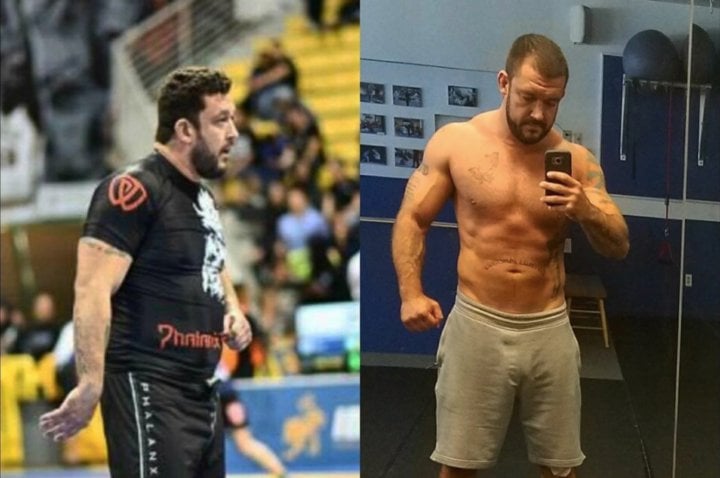
Dad Bod BJJ PhysiqueOf course, age plays a huge factor, as do a bunch of other factors we’ll touch on a bit later. The older you get, the more difficult it will become to maintain a BJJ physique like that of a fitness model. The question is, why would you go through all the trouble, and why would you want one to begin with? The dad bod in BJJ / MMA is usually what people look like outside of a fight. Interestingly, they also seem to have a slightly better performance during those “dad bod” times, compared to right after they cut weight.
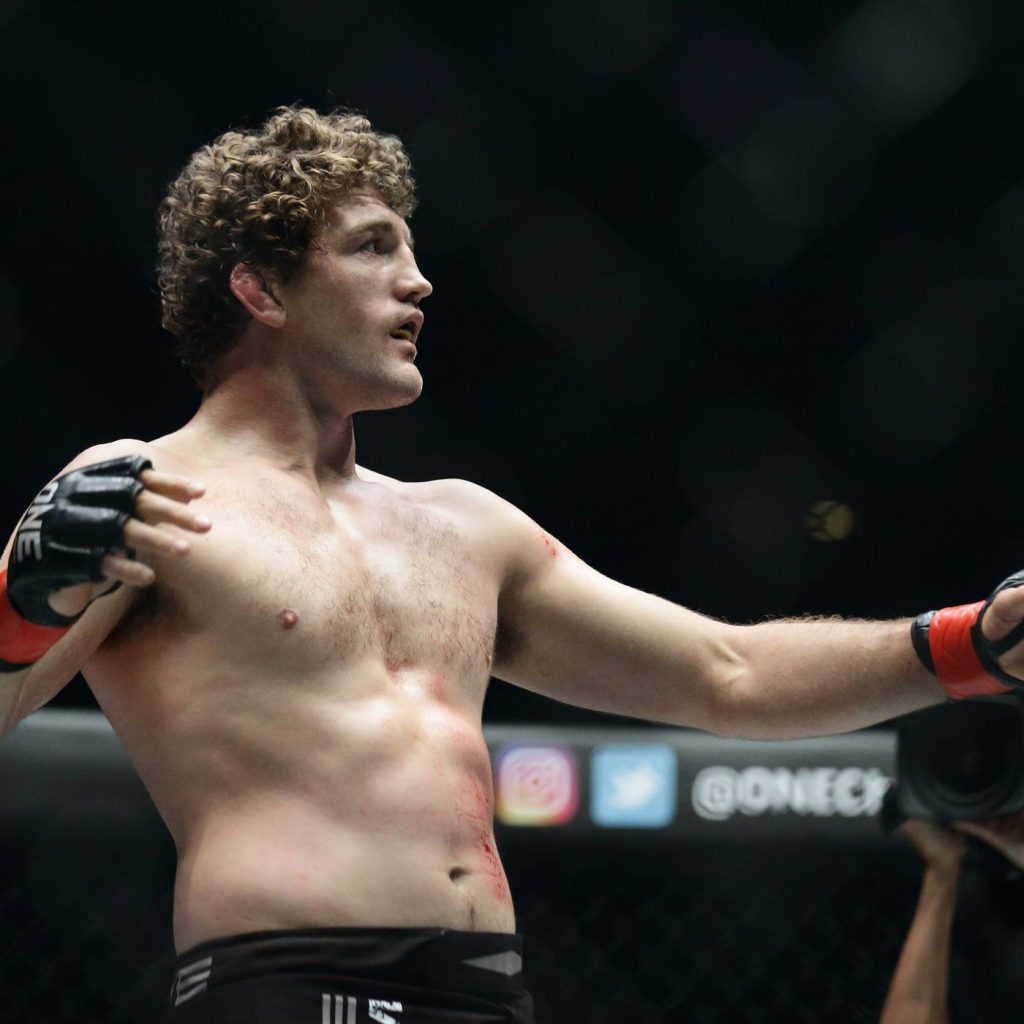
Apart from your regular dad bod, which is someone clearly out of shape with a bit of a gut, and the “fighter gone off diet” type, you also have several more. there’s the bodybuilding type, where despite all the shoulder and trap muscles and huge thighs, the layer of isolation around the gut shows they’re far from being in top shape. There’s also the ectomorph dad bod, where there’s nothing but a gut, with no muscles to speak of. In any case, the dad bod does not necessarily mean you can’t perform athletic abilities. In fact, if it wasn’t for body image issues, we’d probably all be aiming for one.

The Dad Bod BJJ Physique

The dad bod in BJJ works pretty well. First of all, you can be flexible with your diet. Notice that I say flexible, not going completely off the rails. However, if you accept that a set of deep cut abs are not worth all the crazy dieting, the dad bod will work just fine.

When it comes to grappling, you need to be efficient more than anything. Sure, strength, explosiveness, flexibility all have a role to play. However, none of them really requires you to look like a fitness model. there is a point of diminishing returns, but a dad bod BJJ p[hysique is not the same as someone who doesn’t’ train. In fact, you might be doing extra strength and conditioning, have nutrition dialed in and all that jazz, and still, end up with the dad bod. there’s a good reason for this – your body decided it is the best course of action. So, why torture your body? If you can invert, can go for rounds and rounds without gassing, and you’re not struggling strength-wise, why not adopt the look as well?

The only thing with the dad bod for BJJ is letting it get out of hand. You’ll still need to train, you’ll probably still need to do some conditioning work off the mats, and watch your diet. However, measuring every bite of food, buying crazy ingredients that are hard to find, doing endless sets of crunches or CrossFit WODs jut becomes meaningless after a certain point. When you try and answer why you o it, you’ll find that there’s no smart answer. Instead, enjoying time out with friends, a beer, or two or a giant dessert is a much happier lifestyle than having to look like TRT Vitor Belfort all of the time.

Being In Shape For Jiu-Jitsu

Speaking of shape for Jiu-Jitsu, there’s no real determination out there of what Jiu-Jitsu shape is. Unlike other team sports like football, baseball, and the likes, there are no fitness tests that everyone has to go through, nor is there nearly as much science in researching grappling exercise physiology. that just means, to each their own. And, just like BJJ itself, Jiu-Jitsu shape is easy to define.

Dad Bod BJJ Physique AskrenIf you’re able to roll three to five rounds with a short rest in between, you’re in shape. It doesn’t matter if you’re panting at the end, as long as the rolls were effective and meaningful for you. In terms of BJJ strength, there are no real requirements. I’d recommend cunningness and tactics, along with mechanics over strength any day. That way, you get to be lazy when you roll, and still more effective than most of the young, athletic grapplers that look like Brad Pitt in Fight Club.
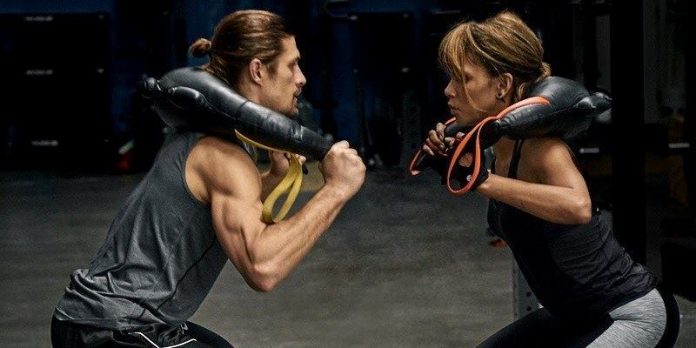
Finally, you need to make sure you recover. A solid diet will help you achieve it, but you’ll also need to do a bit more work. stretch/sauna/float therapy or whatever your favorite recovery method is. Trust me, it is better to devote time to foam rolling, than it is to calculate your macros for the next day. Jiu-Jitsu is all about efficiency, and things don’t always look pretty. The case for the perfect BJJ physique is the same. The dad bod just works, folks!

In Conclusion

With BJJ, it all comes down to goals. Do you want to compete and be a world champion? Are you learning for self-defense? Are you just training for the fun of it and some fitness? all are great goals and you can, of course, have multiple ones. In each case, though, you need a vessel that will help you achieve them, and not just in a few short months. The dad bod is just the BJJ physique we need – you can live freely, allow your body to find balance, and perform at a high athletic level at the same time. there’s something to that dad bod, you just got to loosen up an give it a try! Plus, the ladies don’t mind it all!

 Strength and Conditioning with Bulgarian Bag For BJJ

Bulgarian Bag Workout For BJJ - Cover

Have you ever trained with a Bulgarian Bag? Along with steel maces, I guess that this piece of conditioning equipment really tops the list of odd object training for grappling. Understandably it is a genuinely useful way of improving grappling performance; otherwise, we wouldn’t be discussing it here. The Bulgarian bag is a sandbag of sorts, just firmer and with a very unique shape. It is actually a tool that was designed specifically for wrestlers and features plenty of gripping surfaces to challenge exactly the muscle groups you need for grappling. This crazy fitness tool rally does offer something different, and if you haven’t done a Bulgarian bag workout for BJJ yet, you’ve really missed out on a lot.

Why use a tool that, at least according to its name, originates in Eastern Europe? What makes it so special? Well, all these odd objects that we see in fitness gyms around the world nowadays actually originate in Europe or Asia. The kettlebell is a Russian thing, for example, while the steel mace is a staple of Indian wrestling conditioning. In fact, it just so happens that all these countries that provide us with crazy grappling strength and conditioning tools have some of the best wrestlers in the world, along with age-old grappling traditions. Bulgaria is no different; hence any Bulgarian bag workout for BJJ is bound to make you a much more efficient grappler.

What Is A Bulgarian Bag?

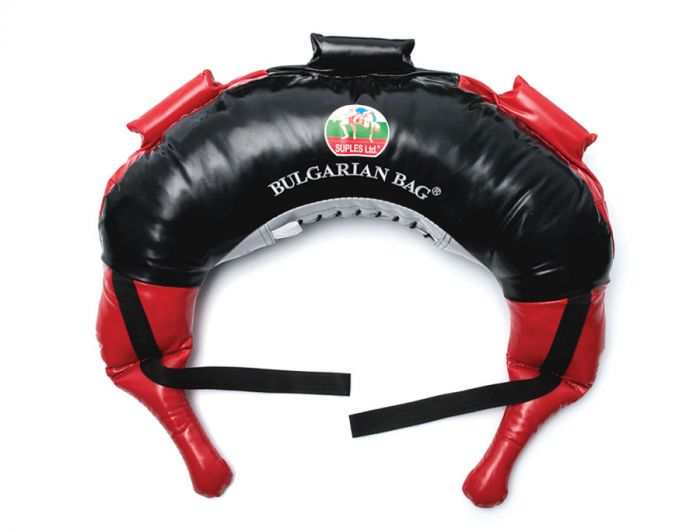
Bulgarian Bag Workout For BJJ - Bag ShapeA Bulgarian bag is a fairly new training tool, compared to other similar odd objects that were/are used for grappling conditioning. In fact, the idea of the Bulgarian bag came about in 2005, when a Bulgarian wrestler named Ivan Ivanov came up with the concept. He was an Olympic-level wrestler that also coached wrestling in the USA. In fact, he was a distinct Olympic-level coach at the Olympic training center in Marquette, Michigan. Seeing the need for a tool that will help his wrestlers become more powerful and explosive while training functionally without wasting time, he came up with the Bulgarian bag.

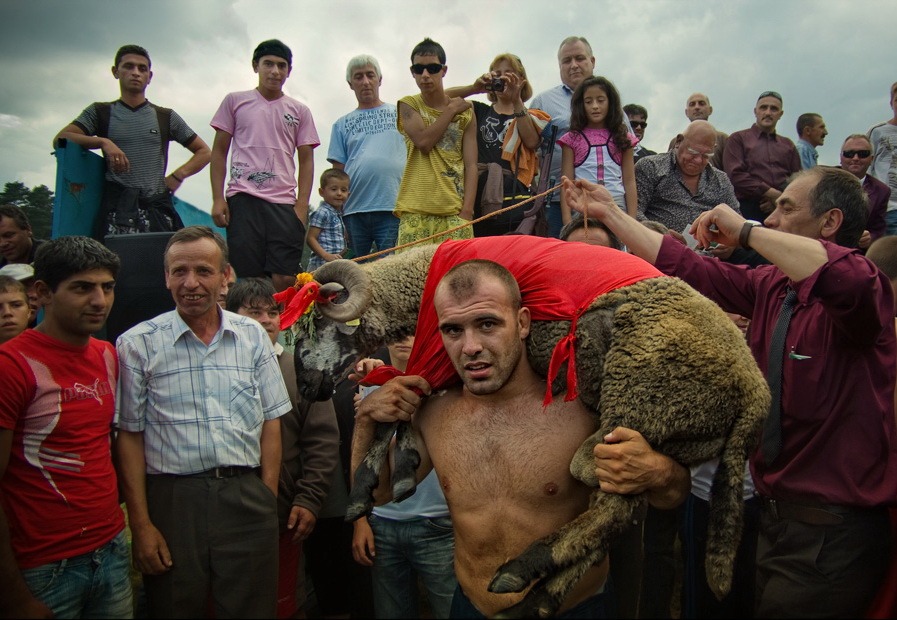
The inspiration for the Bulgarian bag came to Ivanov from Bulgarian folkstyle wrestling conditioning traditions. These involved training while holding livestock animals over the shoulders, with sheep, lamb, rams, or even baby calves being the preferred options. Not really animal-friendly, but definitely worked for Bulgarian wrestlers.

Bulgarian Bag Workout For BJJ - Bulgarian trainingTraining in such a fashion is not really sustainable in today’s modern world. Then again, training with barbells and kettlebells, and other metal equipment is neither the most efficient, nor the safest way to develop Olympic-level wrestlers. Enter the Bulgarian bag. It is crescent-shaped and made out of leather. In Bulgaria, they’re made by hand, mostly from goatskin. On the inside, there are packets of sand, which make it as heavy as you might desire (it comes in several different shapes and sizes).
The bag has two handles on each end, which comes in the form of either handle or straps, depending on what grip quality you’re trying to train there are also more handles running the length of the outer edge, to further provide grip training challenges. The shape and construction of the bag make each Bulgarian bag workout for BJJ interesting, challenging, and extremely sport-specific.

The Unique Nature Of A Bulgarian Bag Workout

If you’ve never done a Bulgarian bag workout for BJJ, you’ve missed out on a lot. The bag itself looks deceitfully small and easy to manipulate until you pick one up. When you do, you’ll realize that even a 22 lbs bag will take the wind out of you in a single Bulgarian bag workout.

The muscles getting a real beating are those of the grip, wrists, shoulders, back, legs, and core muscles, particularly those in charge of rotational movement. Given that Bulgarian bags do not come in ultra-heavy versions (no point in training 1 rep max with one), they focus mostly on developing muscular endurance. This is, arguably, the most important quality for any grappler, whether it is wrestling or BJJ in question.

Bulgarian Bag Workout For BJJApart from endurance, Bulgarian bags help develop many grappling-specific qualities as well, like agility, speed, coordination, mental toughness, etc. Moreover, the movement patterns are such that you can’t actually mimic or replace a Bulgarian bag workout for BJJ with any other available fitness tool (apart from using a live animal, old-school style).

The Bulgarian bag uses acceleration and deceleration motions in order for you to be able to swing, lift, pass, throw, or spin the bag around. Since a Bulgarian bag workout for BJJ takes place in all planes of motions, is it by definition a full-body functional strength and conditioning workout. Plus, you’re going to develop a gas tank that will never fail you when you have to face a person instead of a crescent-shaped leather bag.

Bulgarian Bag Workout For BJJ

The best part about a Bulgarian bag workout for BJ is that you never have t do the same one twice. It is that versatile a tool. In fact, you could use one for any of the regular exercises, like squats, deadlifts, shoulder presses, biceps curls, etc. You could also really work on explosive power by getting one over the shoulders and doing plyometrics like long jumps, jumping lunges, or jump squats. You could even use partner drills with a Bulgarian bag. However, one of the best ways to do a Bulgarian bag workout for BJJ is to use it with functional patterns that no other fitness tools allow you to perform.

This particular workout is organized as a circuit. There are 4 exercises that you need to do back to back, without rest, for 10 repetitions each, before you catch your breath for a minute. If you can do 5 cycles of the circuit without too much difficulty, you need to either up increase the number of reps, go for time or get a heavier Bulgarian bag.

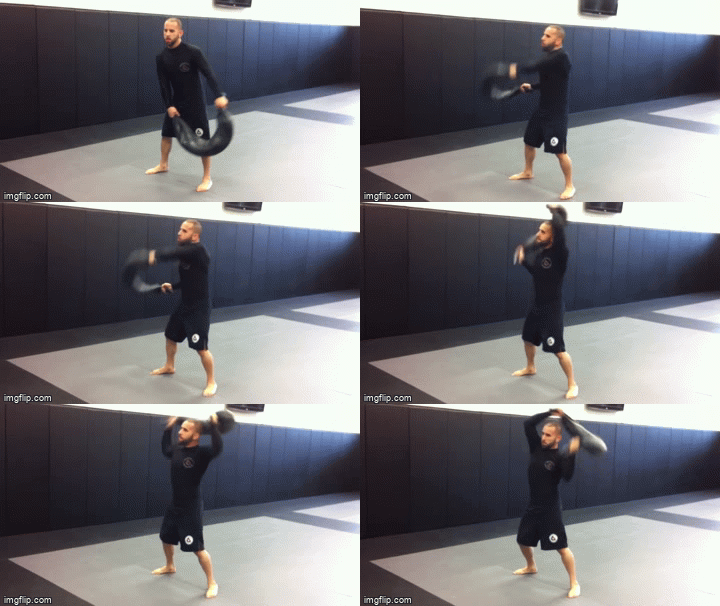
  • Around The World Swings – 10 (do both sides)

Bulgarian Bag Workout For BJJ circles

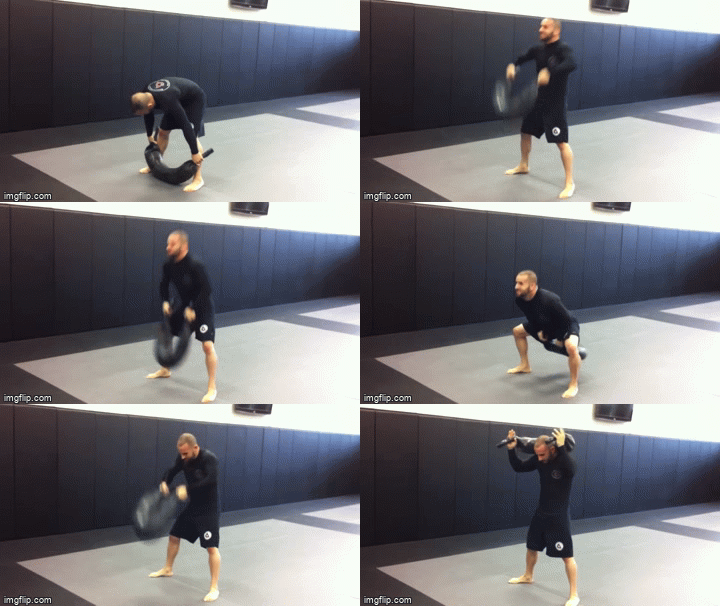
  • Bulgarian Bag Snatches – 10

Bulgarian Bag Workout For BJJ - snatches

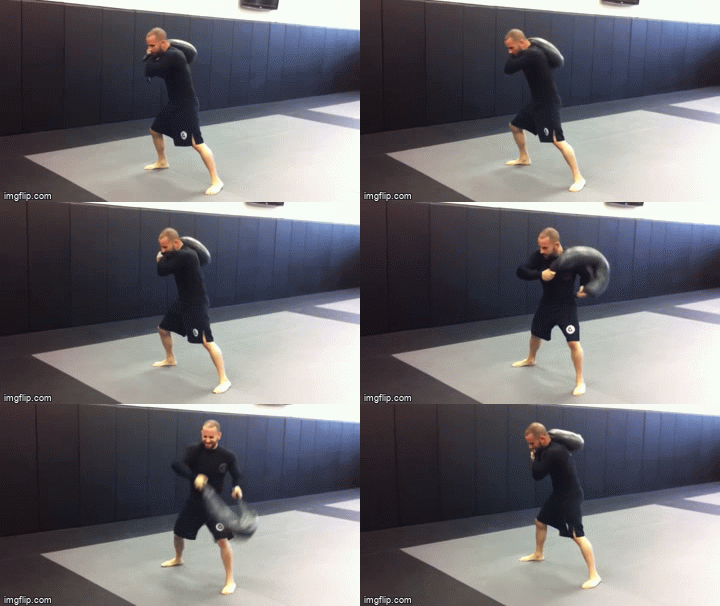
  • Alternating Shoulder Swings 10 (on each side)

Bulgarian Bag Workout For BJJ - shoulder swings

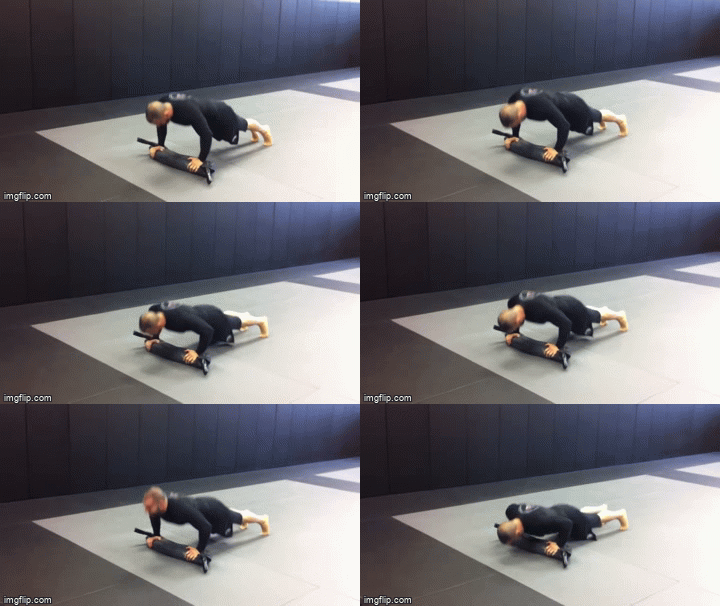
  • Pushups On The Bag – 10

Bulgarian Bag Workout For BJJ - pushups

In Summary

Why waste time with your strength and conditioning “homework” when you can finish in minutes inside the gym or your own home? Pick up a Bulgarian bag, or if you want to be really hardcore, a small livestock animal. Do the above Bulgarian bag workout for BJJ for three weeks, at least three times a week, and you’ll notice improvements in your grappling performance like never before.

The Best Strength & Conditioning DVD and Digital Instructionals

Downright Nasty Sambo Submissions For BJJ

Evil And Nasty Sambo Submissions For BJJ

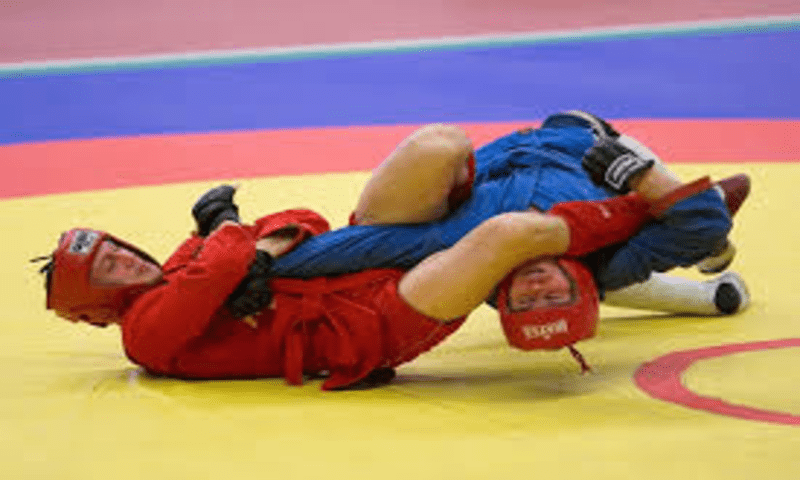
Sambo is a crazy martial art. It is more or less MMA, at least the Combat Sambo version, but done with Gis (well, parts of Gis) on and under very interesting rulesets. Given that Samo is highly reliant on submissions, plus it has some wild takedowns, it makes it the perfect complement to Brazilian Jiu-Jitsu training. On the subject of Sambo submissions for BJJ, the sport is right up there with catch wrestling as a never-ending source of moves that will surprise everyone you roll or compete with. Of course, you have to consider the legality of them under certain rue sets, but it is safe to say that Sambo submissions are something you should definitely add to your game, particularly if you’re a Gi grappler.

Sambo is fun to watch. Try it some time. Actually, let me tell you the two out of three versions of Sambo you can actually watch. Military Sambo is, obviously, off the table. It is how Sambo came to be in the first place. In a sports-sense, you have Sport Sambo (grappling only) and Combat Sambo (very similar to MMA). In both, however, regardless of the presence of strikes, you’ll see a heavy focus on grappling. It makes perfect sense that people like Fedor Emelianenko, Khabib Nurmagomedov, Reilly Bodycomb, Stephen Koepfr, and others have so successfully used Sambo submissions to rule over the MMA / BJJ world for extended periods of time. In fact, nobody has been able to solve Khabib at the moment.

Sambo And BJJ – The Key Differences

Apart from the obvious difference of the two arts having a very different origin story, I’d like to focus on the rules of both, how they differ, and what that means for Sambo submissions for BJJ. First of all, let’s talk about attire. Sambo folks wear a Gi, just like in Brazilian Jiu-Jitsu and Judo.  However, In Sambo, they only wear the top of the GI, or the Gi jacket, if you will. Instead of the pants, they wear shorts, like in No-Gi grappling. This makes Sambo the perfect fusion of Gi and No-Gi grappling, and hence, a great source of very versatile and evil submission holds.

In Combat Sambo, there are also strikes. This makes it similar to both Japanese Ju-Jitsu and MMA. the engagements are similar to MMA, with bouts allowed to go on after clinching, into takedowns and ground fighting exchanges. In terms of gear though, protective headgear and gloves are a must in combat Sambo. When it comes to gripping, three are different strategies, particularly when strikes are involved. The presence of the Gi really changes how clinching, throws, and chokes can be set up, and lots of those things have a great carry over into Brazilian Jiu-Jitsu.

A huge difference between Sambo and BJJ though is the use of chokes/leg locks. While Jiu-Jitsu discourages (yup, still) the use of leg locks, Sambo thieves in coming up with innovative ways to break ankles, knees, and hips. In fact, some of the best original leg lockers, like Gokor Chicichyan have extensive Sambo backgrounds. On the other hand, Jiu-Jitsu allows chokes and strangles of all forms, something that Sport Sambo outlaws as dangerous. Obviously, seeing certain moves as dangerous boils down to how regulatory bodies of different sports view techniques and has nothing to do with reality. Never mind that, Combat Sambo, and a newer branch of sport Sambo called Freestyle Sambo do allow for chokes, and they have come up with some really interesting options when it comes to choking with the Gi.

Sambo Rules That Define Submissions

It is these rules in particular that define how well Sambo submissions work. In sports Sambo, where going for chokes is not an option, the focus has to be on the body parts available for holds. In this case, that would be the arms and legs. the spine is also out of bounds, with cranks not allowed in Sport Sambo. However, similarly to what has been happening over the years in BJJ, this ruleset has refined Sambo’s leg and arm locking techniques to a level unseen in other grappling martial arts. Moreover, if we’re being creative, we can simply borrow some (or all) of these Sambo submissions for BJJ in order to add versatile, unexpected, and extremely effective submissions to our game. It has worked for me.

Sambo Submissions For BJJHowever, why stop there? As I said, Sambo rules do differ between different Sambo disciplines. That said chokes that are used in Freestyle and Combat Sambo are perfectly legal to use in Jiu-Jitsu. In fact, you could do so at every belt level. Given the presence of the Gi jacket, the predominant strangling techniques of Sambo revolve around using the Gi to choke people out. In that department. There are some highly innovative moves that could really help you finish people in BJJ. Simply put, most BJJ folks won’t expect grip configurations for chokes like those in Sambo, meaning you have the element of surprise which is always a great tactical advantage.
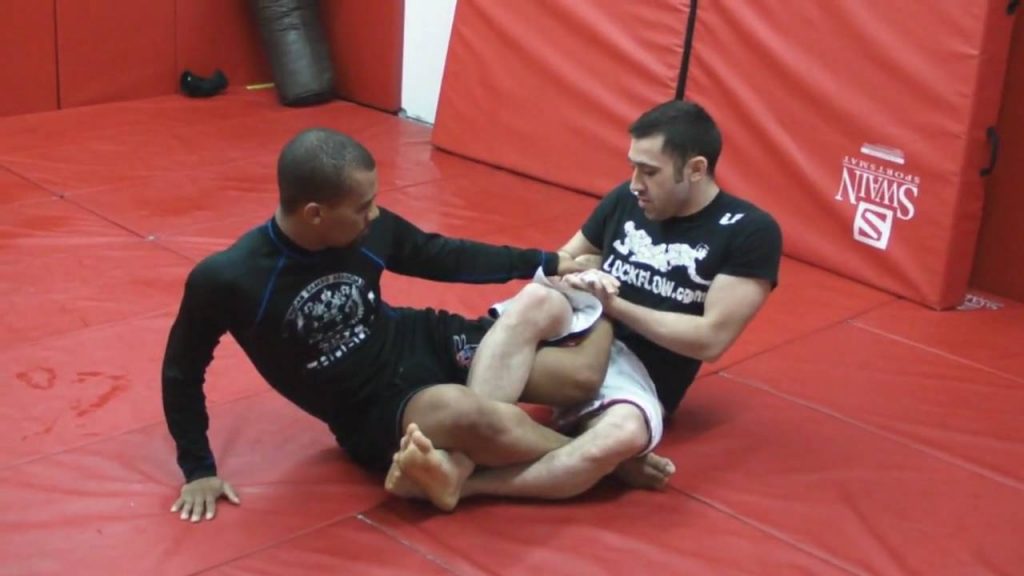
Lastly, I’d like to touch on gripping and throws/takedowns. The weird (for us BJJ people) fusion of Gi and No-Gi means you really need to figure out creative ways to grip in order to regulate distance,. With strikes involved, this becomes paramount. Moreover, takedowns and throws are also specific and plentiful, once again featuring countless combinations of Gi and No-Gi grips to increase their efficiency. Plus, most Sambo takedowns tend to end straight into submission holds, rather than the positional play we often see in Jiu-Jitsu.

Sambo Submissions For BJJ

The best Sambo submissions for BJJ are not going to be the same for everyone. Someone will enjoy leg locks more than chokes, while others will thrive in the arm locking department. Luckily, Sambo is well stocked when it comes to all three types so of submissions we use in grappling. That said, I’ll just go over one of each category as an example of how Sambo submissions can really help you improve your submission rate in BJJ.

Sambo Submissions For BJJ - Sambo knotStarting with leg locks, I’ll talk about a position that offers several different leg locks, rather than just a single submission hold. The Sambo knows, or Game Over position is one of the tightest Ashi Garami positions you can use in all of grappling martial arts. It works by placing a leg up and over an opponent’s hip (knee reaping) and then using both your legs to wedge the free leg underneath. It really is a knot and one that’s extremely hard to get out of. The leg that’s trapped on top is right there for the taking, with ankle locks, heel hooks and toe holds readily available, in several different varieties. Getting out is next to impossible once you’re in, and you can enter from both top and bottom.
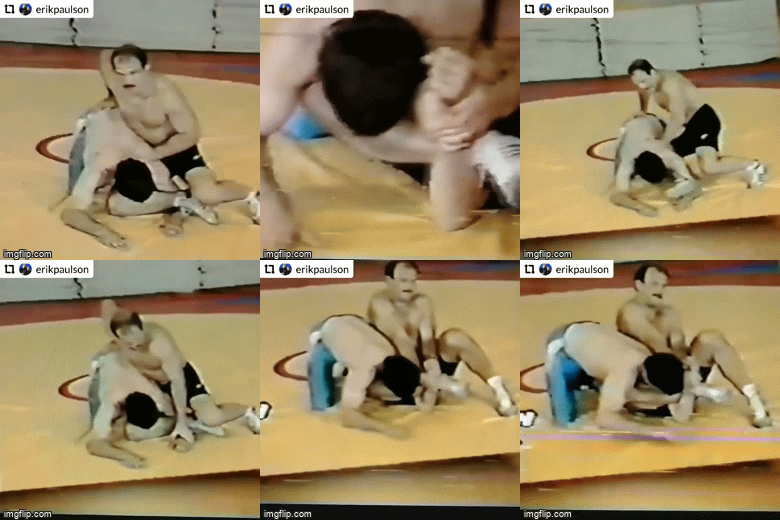
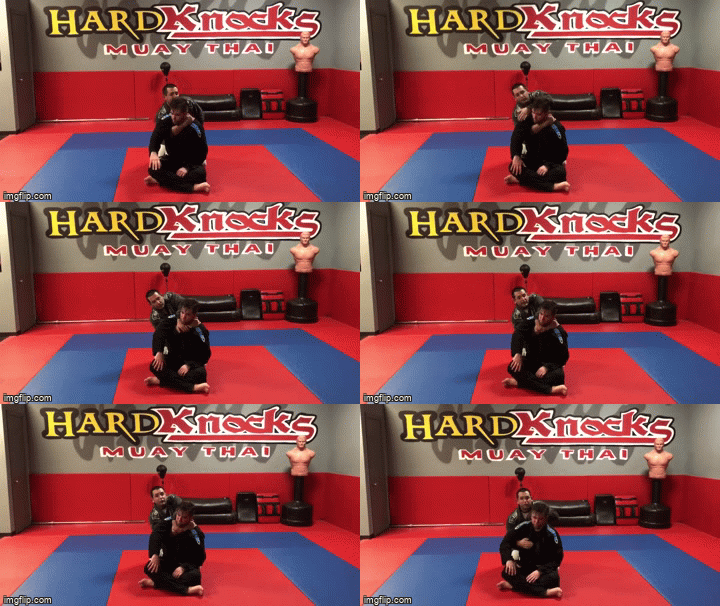
Sambo Submissions For BJJ Forearm slicerA forearm slicer is my pick to represent arm locking Sambo submissions. It is unusual, as in BJJ, even when slicing, the focus is usually on the biceps. In this case, it is the forearm that is being sliced, but not in terms of muscle slicing but an actual break of the forearm bones. For this brutal submission, you use the legs in order to tangle the arm, and you start with an opponent in the turtle position. Simply, sneak the nearside leg inside to trap the biceps muscle with the back of your knee. You then sit back and use both arms to pull the wrist towards your body. If you need to increase the pressure, you can always triangle the legs to make the pain unbearable.

Sambo Submissions For BJJ - chokeI’ll wrap Sambo submissions for BJJ up with a choke from the back. getting the back in BJJ does not guarantee you’ll choke someone out. In fact, it is the hardest spot to finish from, whether it is a Gi or No-Gi choke. This particular Sambo choke solves that problem because the grip configuration is completely unexpected and most BJJ folks won’t have an idea what’s going on. The goal is to thread the underhook arm across the front so that you get a grip over the opposite side shoulder. Now, you place your other arm across, looking to get a grip on your own forearm. This will create a very tight scissor-like choke with both your forearms that’s extremely hard to get out of and gets instant taps.

All In All

You don’t have to go cross-training Sambo in order to learn Sambo submissions for BJJ that will brighten up your game. All you need to do is watch some Sambo matches, perhaps check out an instructional or two, or simply give the three moves I described above a try. The one thing that is for certain is that you’ll get a fresh perspective on finishing people. That, and a few tricks up your sleeve for when none of the “traditional” BJJ submissions work.

DVD and DIGITAL Instructionals Related to Sabo Submissions for BJJ :

  1. TOP ROCK: TURBO – LEG LOCKING & PASSING UNIFIED – REILLY BODYCOMB
  2. Sambo Academy: Arm Bars by Ivan Vasylchuk

  3. Killer Sambo Submissions by Ivan Vasylchuk

  4. Sambo Academy: Kneebars by Ivan Vasylchuk

BJJ Handstand Drills – Learn To Grapple Upside Down

BJj Handstand drills cover

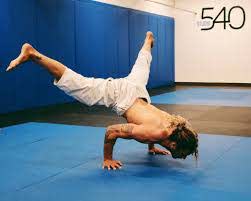
Going upside down in Brazilian Jiu-Jitsu is not something that we’re not used to. Granby rolls, inversions, Tornado guard and a bunch of other crazy stuff gets people in the weirdest inverted positions. However, they all have to do with being on your back and having to fight off the ground. But have you ever thought about going upside down when you’re on top, trying to pass the guard or hold top position? Handstands are a great example of going upside down while you’re on the top. However, developing them will require meticulous repetition of several BJJ handstand drills.

Handstands are not unheard of in grappling. Wrestlers do the craziest things while standing on their hands like cartwheels and one-hand flips. In BJJ, where positions on the ground are even more numerous, handstands are very underused.  Personally, I stumbled across them while doing gymnastics as a means of conditioning. It turns out, BJJ handstand drills will open up new and exciting ways for you to confuse opponents and have lots of fun when rolling.

How To Do A Proper Handstand

Handstands are hard! Unless you’ve been practicing gymnastics from a very early age, or are really into breakdancing you’ll have a tough time doing a handstand. Don’t’ believe me. Ok, try one. Go and do a handstand, unsupported by a wall, and stay in it for a minute. If you can do it, try walking on your hands. If you can do both, you’re ready to implement handstand stuff in your BJJ game.

90 % of people reading this (and I’m being generous here) will not be able to achieve this, though. That doesn’t mean that you’ll never be able to do a handstand. It will just take a bit of practice to figure out how a handstand works as a position before you implement it in you Jiu-Jitsu game.  Just like with BJJ positions.

For handstands, you have one prerequisite – wrist mobility. If your wrists are weak, it is the first thing you need to address, as most of the mechanics behind a handstand are based on wrist strength, and stability. On top of pointers for holding one, think posture. Just like in BJJ the spine needs to be in posture, meaning your head should be looking straight ahead, not trying to gaze towards the ground. Fingers wide, elbows straight and rotated outwards, and shoulder blades open. Tighten the core and you’ve got all the cues you need to develop a free-standing handstand in record time.

BJJ Handstand Drills

BJJ handstand drills are different kinds of drills. Once you know how to do a handstand, you won’t really have much use for it in grappling, unless you modify it to fit your needs. BJJ handstand drills will have you practice handstands against an opponent and by placing your hands on uneven surfaces. Sometimes, to do a handstand based move in BJJ, you’ll have to have a hand on the opponent, or holding a Gi, rather than just placing the palm down like for a regular handstand.

A great drill would be to try and get into a handstand every time you’re passing the guard. You don’t have to finish the pass each time you try. All you need to do is to get a handstand, go back, and try again or use a pass. The trick is finding the sweet spot for going into a handstand, while an opponent has grips and is trying to sweep you. Long story short, there’s hardly a sweep if they can’t get to your legs. Going upside down will really limit their options.

Another option is using handstand to actually sweep people. To achieve this you’ll need to focus your time and effort on drilling ways of getting to a handstand from the ground. This is, arguably, the hardest way of getting into leg locks. Doing a handstand press (it is a gymnastic exercise) is hard on its own, let alone done in grappling. However, there are ways to transition using the grips and inertia from a grappling exchange. The goal of drilling this is to look for that perfect moment to transition into a handstand of sorts.

What To Do With Handstands In BJJ

As I said previously, you can do whatever you want with handstands in a grappling exchange.  If you’re confident enough about your handstanding abilities, of course. Form guard passing, to sweeping, even some submission setups (like rolling chokes) all become a lot easier when going on your hands is an option. Plus, the confusion on people’s face is priceless whenever you pull off a BJJ handstand-based move.

Passing Guard

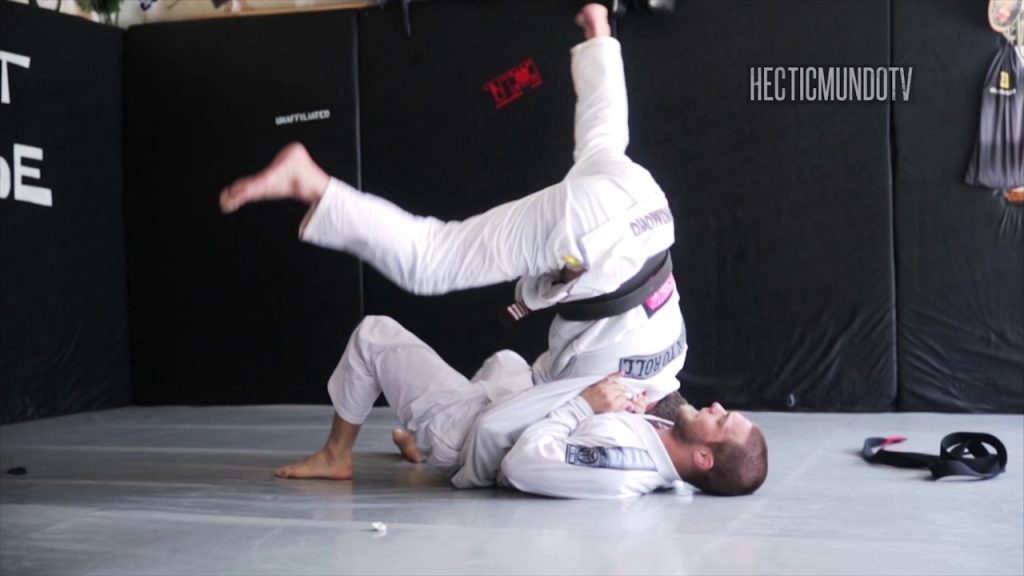
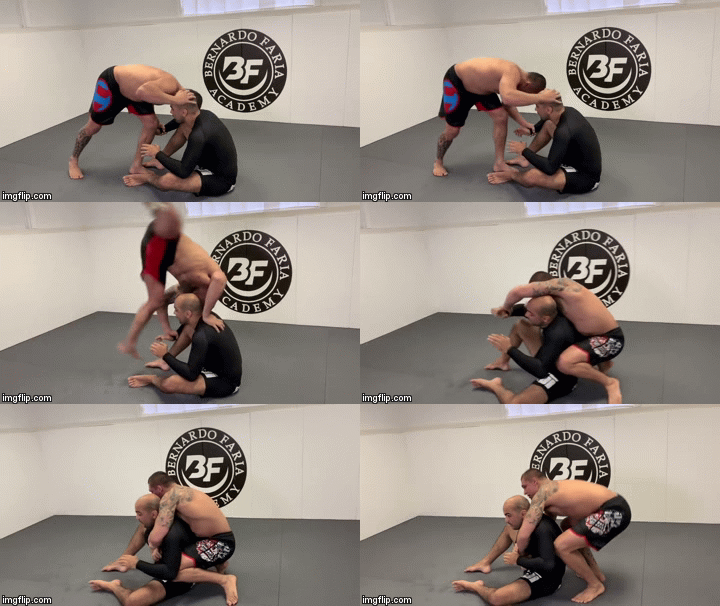
BJj Handstand drills - passingProbably the most obvious use of a handstand. When you can’t get your legs past the opponent’s legs by going through, under, or around them, why not go over them? In the case of the butterfly guard, this is a literal lifesaver. Being able to balance on your hands means that when you crush their feet to their butt, you can go into a handstand, placing weight on their body and taking away all leg locking and/or sweeping options they have. Simply put, you can even hang around in a handstand for a few seconds before you choose which side to pass to. The best part is that it is really easy to setup BJJ handstand drills to practice this pass.

Switching Sides

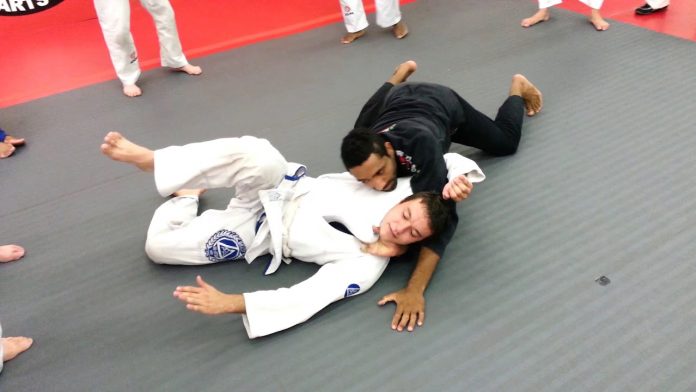
BJj Handstand drills - switching sidesOne of the most useful skills in retaining top positions is following the opponent that will be surely moving. Side control is particularly difficult to retain, given the many directions the bottom person has for movement. All you need to do is switch from side to side effectively, while preventing the bottom person from going to turtle. Having the ability to go into a handstand means you can let them try
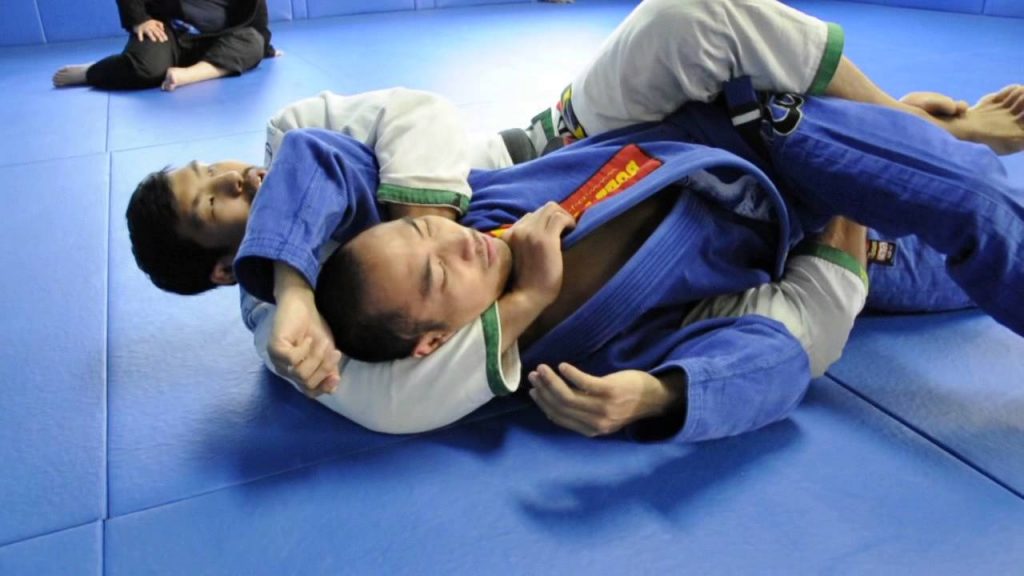
Back Takes

Cartwheel pass Nicky Rodriguez - setupSpeaking of the back, the cartwheel pass that Nicky Rodriguez so famously used in ADCC is also based on the ability to be comfortable in a handstand. For this pass, you need to place one arm on the opponent’s shoulder, while keeping the other on the ground, or sometimes, their hip. In any case, figuring out the balance in an uneven handstand is key to making this work. All the time spent on BJJ handstand drills will pay off, though, as this pass leads straight to the back (that’s 7 points directly for those counting them.

Wrapping Up

Figure out fun ways of learning handstands if you don’t know them. Yoga is a great way to really get the hang of them. For the purposes of Jiu-Jitsu, do BJJ handstand drills that will allow you to put your new athletic skill to a sport-specific use. Apart from that, enjoy and watch as opponents are mesmerized when you sweep, pass or submit them while being upside down.

Rolling BJJ GI Chokes – When Staying Put Doesn’t Get You Taps

Rolling BJJ Gi Chokes Cover

“Position before submission” is the age-old mantra that we hear over and over again. I really dislike that one. I’ll share a few examples as to why later on. The key point is, you can’t really finish someone from a position that scores points. You can only finish from the position the submission configuration leads you to. In other words, that is the position you want to be controlling, rather than looking to stay in a scoring position. That’s why sometimes, rolling BJJ GI chokes work much better than their counterparts from the back or front headlock.

Submitting people in Brazilian Jiu-Jitsu is the hardest part of the sport. It is more fun than anything else, but if you take a look at how many submissions you’ve lost compared to how many ended in taps you’ll see that you’re way behind on your taps. That is because finishing someone is hard, and it just gets harder the closer you get to a submission. BJJ GI chokes make that task a bit easier by employing the Gi as a weapon. Rolling to get them and/or make them tighter only adds fuel to the fire.

The Issue With Positional Jiu-Jitsu

Let’s tat off with my issue with the mantra about the position before submission. Mount is a position. The armbar is a submission. Being in mount is very far from finishing an armbar. In between that position and the submission, there’s the entire sport of Jiu-Jitsu to be played. It is a similar situation with the back and the Rear Naked Choke, or any other choke. And it all boils down to patience.

Rolling BJJ Gi ChokesIf you can stay patiently in the mount, then you know what control is. The same is true for the back. However, a submission rarely takes place directly from one of those highest scoring positions. Instead, you take that same approach and transfer it to the submission itself. Remember that everyone worth submitting is going to look to escape very late. That man that if you want to choke or armbar someone, you have to be able to stay in the submission itself for a long period of time, fins tuning and adjusting aunt ill you get a tap.
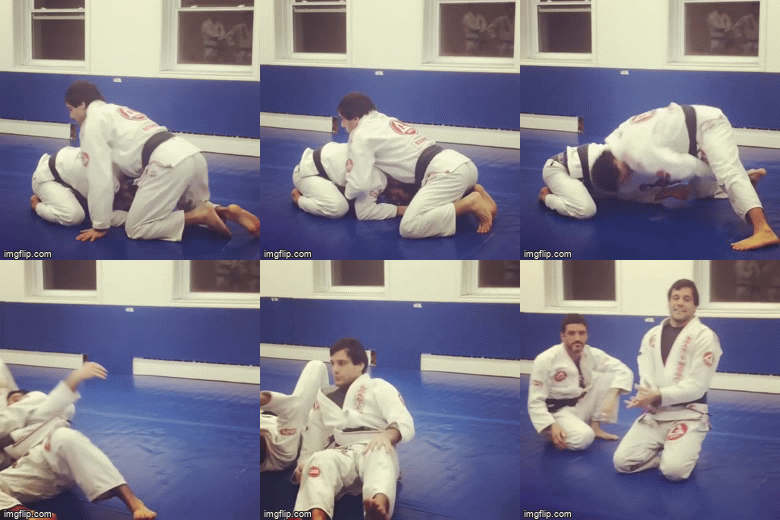

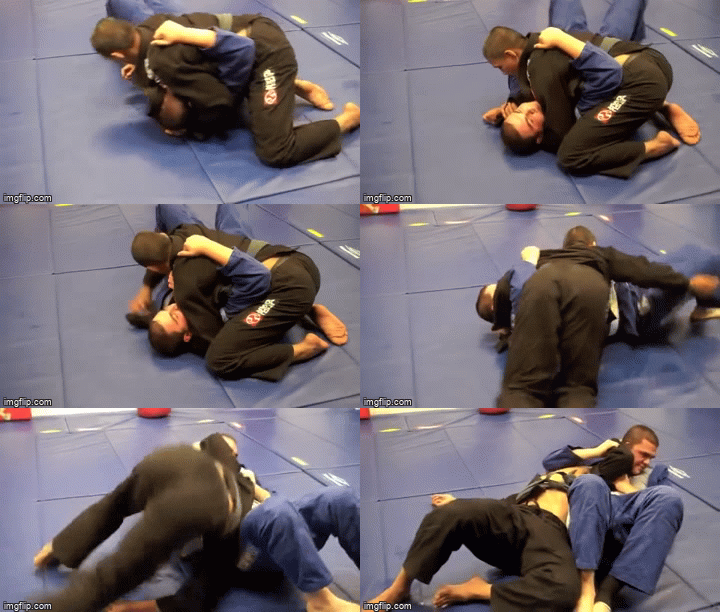
With chokes using Jiu-Jitsu gi, there’s a shortcut to this. Instead of battling for the submission position directly, you take a shortcut by rolling straight into one. The one prerequisite is that you set up a purposeful grip so that when you roll, you end up ready to finish with the slightest pressure, and without a chance for the opponent to defend.

More movement, More control

As controversial as it may sound, in BJJ, you want people to move. If they stay put, and you stay put, you’ll probably both get penalized at a tournament. Plus, there’s no fun in it. If it was wrestling, judo, or even Sambo, you might want to hold a person down for the pin, and points. However, in BJJ three’s no point in staying static. In fact, it offers no control, but rather just the restriction of movement.

Whenever someone moves in BJJ, and you’re the one in a position of control,, that movement opens up even more control for you. Simply look to limit their movements in a specific direction by using superior mechanics. From there on, patience will cause the person to be attacked to try and move. All of their movement is actually something that is providing you with more control. And that is exactly what you want when you’re trying to submit someone – control.

The rolling portion on rolling BJJ Gi Chokes is actually a means of control. It servers to get you in a spot where you maximum control and /or remove slack from the submission you otherwise wouldn’t be able to get easily. That, and there’s a psychological moment where the opponent is clueless to what is happening around them. That is also a type of control.

A Few Cool Rolling BJJ GI Chokes

There are plenty of BJJ Gi Chokes, and some of them are set up by rolling. The rolling part is fun, can look scary, and will take time to get used to it. However, it will take you from a position of battle to a position of superiority. Moreover, rolling makes the BJJ Gi chokes tighter, easier to control, and much better looking. There are countless ways to grip a Gi for a choke, as well as countless directions for rolling. Below we’ll just take a look at several of those chokes that are pretty fun to go for.

The Rodado Choke

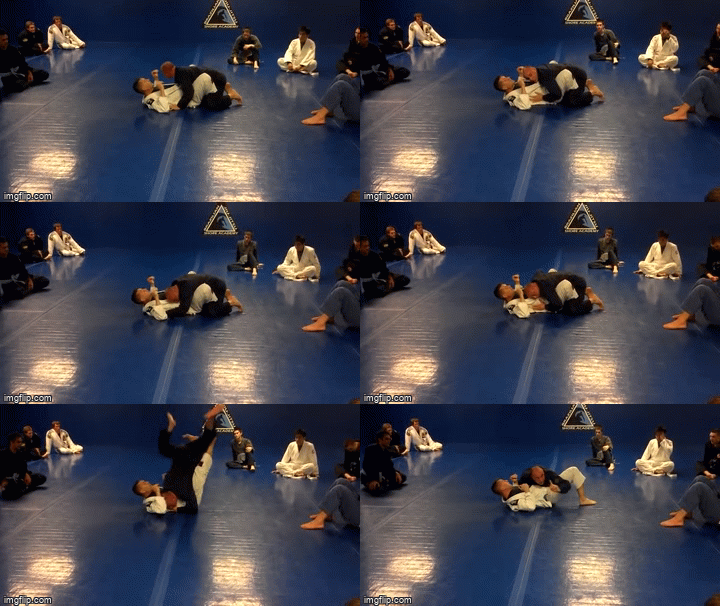
Rolling BJJ Gi Chokes Rodado ChkeThe Rodado choke is set up from standing, and in particular, off of a sprawl that counters a double leg takedown attempt. The goal is easy – get a grip on the GI with an arm heading under the armpit. Think of a D’arce choke, but with the palm in the lapel. From there, you need to grab the back of the collar, four fingers in, and roll to the side. You’ll pull the partner with you, ending up on top with a very deeply sunk in baseball bat-like choke.

The Rolling Collar Choke

Rolling BJJ Gi Chokes Rolling Loop chokeThis one is probably the quintessential rolling choke. As far as BJJ Gi chokes go, this one is a version of a loop choke, just done from a very weird position. You set it up from passing, going for the usual loop choke grip. Once you have it, instead of looking to loop the other arm in, simply roll over the free side shoulder, and look to get a grip on the pant in the process. You end up in weird side control but with your back to the opponent and a very tight Gi choke on.

The Rollover Lapel Choke

Rolling BJJ Gi Chokes Lapel ChokeWhen BJJ Gi chokes fail, you go for rolling collar chokes. When those fail too, you go for rolling lapel chokes. You start this one in side control, feeding the lapel of your own Gi over the neck of the opponent. Use the lapel that’s nearer to the head. Once you have it, you need to head towards North-South, but roll forward in the direction of the opponent’s legs the moment you get into position. Horribly deep and quite painful.

Rolling Turtle Choke

Rolling BJJ Gi Chokes Turtle chokeMy favorite rolling Gi choke is the one you do against a turtled-up opponent. The turtle can be extremely difficult to break down and you need sneaky stuff to break the defenses. For this choke, in particular, all you need is a grip on the collar, like for a back choke. However, you need to get it on a turtled-up opponent while controlling them from the side. That’s where the fun begins.

Contrary to popular belief, you need to completely pull away from the opponent, bar that collar grip. This will allow you to swing a leg over, trap the far arm with your am and roll. One of the best-looking BJJ Gi chokes ever, along with one of the most attractive setups you’ll ever learn. Not to mention how tight this one is.

Conclusion

BJJ Gi chokes work. They work even better when you set them up using rolling setups. As long as you can change the way you think about BJJ control, rolling to get submissions will not be scary. In fact, it will start o seem logical and very straightforward. Focus on the finishing position as the one you need to control, and use all means at your disposal of getting there, or making it tighter. Rolling is just one.

BJJ Heavy Bag Drills For Movement And Top Pressure

BJJ Heavy Bag Drills Cover

Brazilian Jiu-Jitsu offers plenty of ways to train. Even though it may seem like you always need a partner to learn (and you do) it doesn’t mean you train Jiu-Jitsu. A radical thought, I know, but if we learned anything from lockdown, it is that we have to be creative with our BJJ training. It doesn’t take much to figure out a way to drill some aspects of grappling, and it is a striking martial arts tool that can really come in handy for this. Have you ever tried doing BJJ heavy bag drills?

BJJ heavy bag drills might seem like an obsolete thing, given that there are grappling dummies out there that serve the purpose. However, a heavy bag beats a grappling dummy for just one simple reason – they’re much more accessible. You could get one cheap, make one yourself, or simply use a commercial gym where you’re bound to find one hanging in a corner somewhere. On top of it all, heavy bag drills really do help you develop better BJJ movement and some conditioning to go with it.

Using A Heavy Bag For Jiu-Jitsu

A heavy bag might not be your first choice in for training grappling, but try and think outside the box a bit. Heavy bags do offer great benefits, particularly when there’s no one around to train, and lifting weights is not really what you’re after.

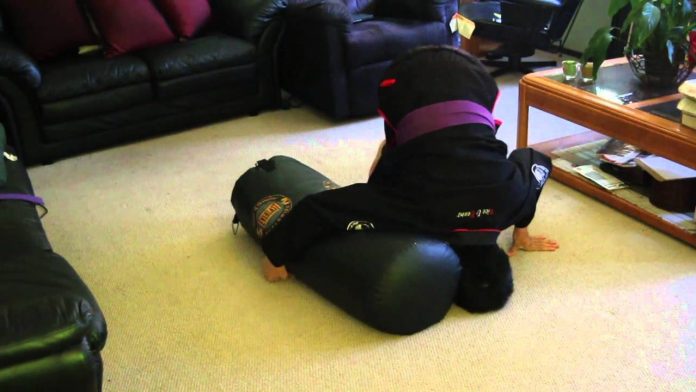
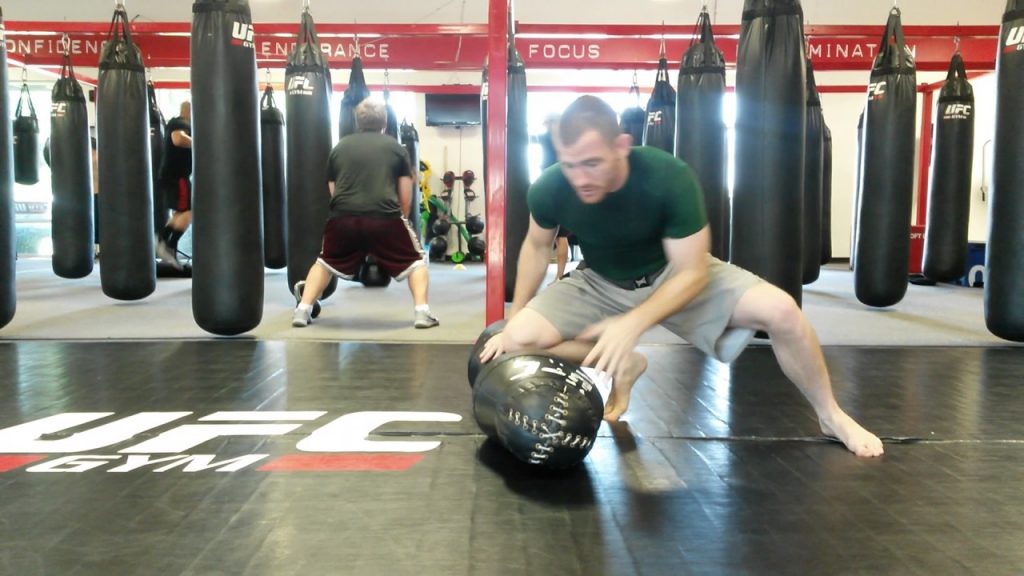
BJJ Heavy Bag DrillsFirst things first, a heavy bag, like the name suggests, is heavy. In fact, there are several different varieties, coming in different lengths, widths, and weights. Accordingly, you can work on different aspects of your BJJ with different heavy bags. The best option for BJJ heavy bag drills would be those floor-to-ceiling kickboxing bags that are very heavy and provide a lot of surfaces to work with. However, if they’re a bit too heavy, the middle-seized bags will also do the trick. It is boxing style short and lighter bags that are the least useful compared to other heavy bags. That said, you could really get some work done with one of them too if they’re nothing else available.
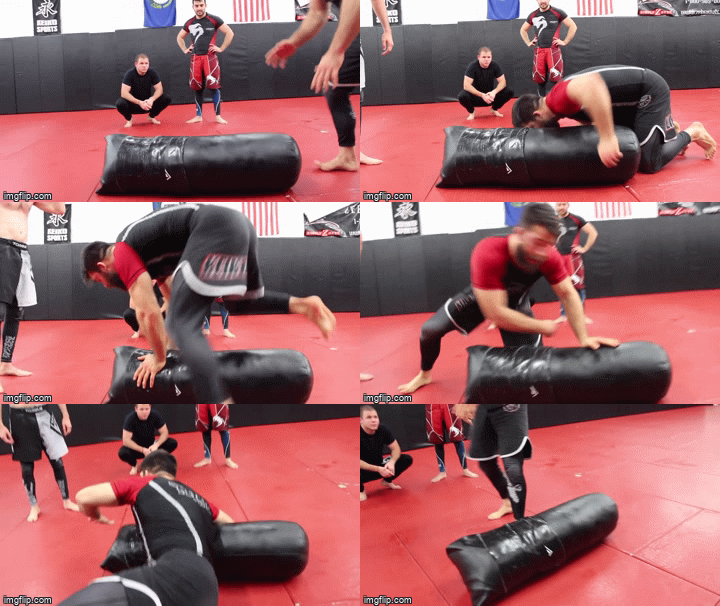
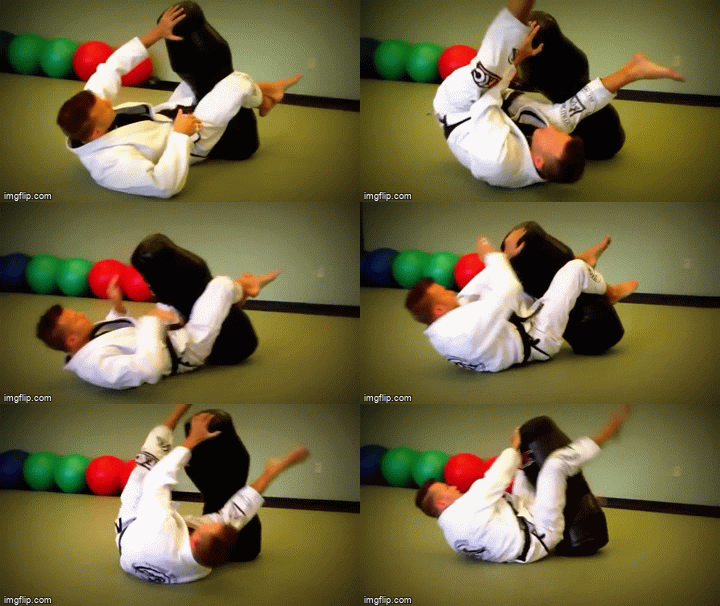
In terms of executing BJJ heavy bag drills, you have two basic options. One is to use the bag to train movement and transitions, which falls under the sport-specific category. Another is to use the bag for conditioning/strength exercises, replacing weights with an object that is similar to a human body. Of course, you could go for a combination of both, or even throw in some ground and pound or other MMA drills that’s up your alley.

The Perfect Drill “Partner” For Transitions And Movement

A heavy bag can really be the perfect training partner for Brazilian Jiu-Jitsu training. It won’t complain, you can train painful pressure moves going as hard as you want, it won’t do the same back to you, and it doesn’t wear an unwashed belt. Okay, there are some drawbacks, but we’re talking drills here, not rolling. In that sense, heavy bags are the perfect tools to get some much-needed reps on key Jiu-Jitsu movements under your belt.

When it comes to BJJ heavy bag drills aimed at conditioning, think odd object training. You can lift the bag, carry the bag, swing the bag, etc. Basically most things you can do with a barbell, or a sandbag, you can do with a heavy bag. The benefit is that it feels much more like a human body, and it is much harder to hold on to because of its size and shape. So, you get a real-life functional workout without having to buy fancy functional pieces of equipment.

It is the technical aspects of grappling though that BJJ heavy bag drills really help you fine-tune. What you want to work on with a heavy bag is holding top positions, and figuring out the transition in between them. Guard passing, side control pressure, switching between side control variations, mount, knee on belly, etc., you can work on everything with a heavy bag. That said, you can actually really try and be as heavy as possible, working on weight distribution. Moreover, you get to figure out balance while transitioning, work on your movement speed, and try and put all the transitions together to be as fluid as possible.

A Few BJJ Heavy Bag Drills Ideas

Enough theory, let’s talk about some JJ heavy bag drills that you can actually do. First of all, I’ll just touch briefly on programming. Depending on your goals, bag type, goals, etc., organize BJJ heavy bag drills however you want. Going for time is usually best, as is doing a circuit of different drills that flow into one another. However, the choice is completely up to you.

BJJ Heavy Bag Drills FlowHow would a sample circuit look like? Try passing first using movement to get to the side of the bag. From there on, go through all pinning positions that score you points. Have fun with wrestling side control, Kesa Gatame, and Twister side, before you transition to knee on belly. Do a windshield wiper drill and head for mount. Once in mount, practice on being heavy for a bit and go for transitions again, using S-mount to get an armbar. From there, be creative in getting back up and flowing into the same, or different circuit.

BJJ Heavy Bag Drills PassingIf you want to focus more on specific techniques, like some guard passes that require balance and athleticism, BJJ heavy bag drills are the best way to really get the knack for them. A good example is the jump-over pass. Place a shoulder and your head on one side of the bag, and jump over, ending up in side control on the other side. You can then do more transitions, or better yet, repeat to get back and keep going like that. This pass is really useful when people turn into you, but it does take a bit of practice to figure out the finer details.

BJJ Heavy Bag Drills BottomYou might even opt to play with the bag from the bottom, but that’s only advisable if you have one of the smaller, boxing –style bags at your disposal. Going for squeezes, in the closed guard or a triangle is your best bet, although you can also do hip swing armbar drill and the likes.

Final Words

There’s never a bad time to think outside the box in Jiu-Jitsu. However, the Covid-19 lockdown has really made us become more creative and figure out new ways of training. BJJ heavy bag drills have actually been around for a while, they just resurfaced now, given the need for training without a partner. That doesn’t mean we should abandon them, though, once things get back to normal.