



Stretching will make you flexible. I bet you’ve heard this before If only things were that easy. Flexibility is an athletic quality that is trainable and can be improved. Factoring in individual needs and limitations, not everybody part can become more flexible at the same rate, but you can most certainly improve. The conundrum that people of the face, particularly BJJ practitioners who would love to be able to triangle choke themselves, is what type of stretches for BJJ should they use? There’s no simple answer to that as there are different types of stretching and mobility that all influence flexibility. That said, deep stretching is a proven way of really pushing your flexibility, but they also come with caution attached.
Deep stretches are all the stretches that you think of when you hear the word stretching. Every stretch that is static in nature, and goes into painful territory can be considered a deep stretch. As I said, it is the perception people usually have when they think of stretching. These types of stretches for BJJ are actually not always recommended, though. In fact, you need to be really careful with them, because they might end up doing more harm than good if you do not utilize them correctly.
What Is Deep Stretching?
In terms of stretching as an athletic activity aimed to help the recovery and improve the flexibility of muscles, there are two main types. One is active stretching, where you remain dynamic throughout the stretch, and the other is passive stretching, where you remain static. Understandably, going deep into a stretch requires you to be in control of your range of motion, so active stretches cannot be as deep as passive ones.
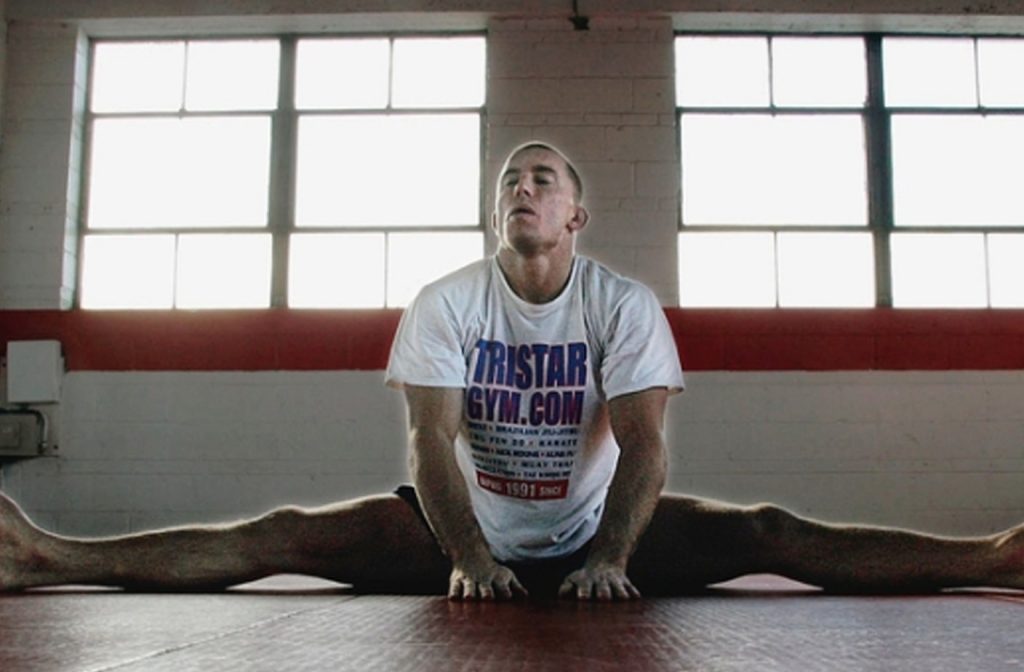 During a passive stretch, you try to move a joint to the end range of flexibility. In those terms, muscles are what you are stretching, but joints are how you set stretches up, and decide the depth of any given stretching exercise. For a passive stretch, the goal is to go as deep as you can, up to a point of mild discomfort, and try to hold. There are different schools of thought, but anything less than 30 seconds won’t allow you to get all the benefits of deep stretching.
In terms of deeps stretches for BJJ, there are certain muscles that require more attention than others, given the demands of the sport. More on this later. For now, remember that doing passive stretching means you need to try and go deep. If you have body parts that are not as limber as you’d like them to be, you can always use props to help you get a better range of motion. For grapplers, the belt is everything you’ll need, most of the time.
Passive deep stretching can greatly improve flexibility, aid recovery, and help your tendons recuperate after strenuous rolling sessions. However, it is key to know when to use deep stretches, and even more important to understand when you should be avoiding them at all costs.
When NOT To Use Deep Stretches
Contrary to popular belief, deep stretches are never a good idea when you’re warming up for a sport, or any athletic activity. Warm-ups should be just that, series of exercises that help you get the blood pumping and raise your core temperature. Trying to use deep stretches in a warm-up routine has a completely opposite effect – it elongates muscles, allowing them to cool. Trying to go for a roll after a solid deep stretch routine is like jumping into BJJ straining straight out of bed. IN other words, it is not the smartest thing to do. Deep stretches for BJJ have their place, but that is certainly not during the warm-ups.
The same holds true for morning routines. Yeah, Yoga is awesome in the morning, but how far can you really go into any given stretch? Try doing the same routine in the afternoon and you’ll suddenly think you’ve doubled your flexibility in a matter of hours. After sleeping, our joints are stiff, muscles are compressed, and have reduced blood flow. This is the worst time to be attempting to improve your splits, or trying to do deep shoulder or hips stretches for example. What you’ll achieve is a pulled muscle, and perhaps even worse.
Speaking of pulled muscles, deep stretches are also something you should skip when returning from an injury. Active stretches and mobility routines. Preferably put together by a doctor or physical therapist are your best bet. Trying to do deep stretches for BJJ on an injured body part will probably just exaggerate the injury, or cause a new one on a different part of your body.
So, what is the best time to do deep stretches then? When you’re warmed up, muscles have blood flow, and your core temperature is higher. That means right after training, or at the end of a dedicated mobility//recovery routine. Alternately, doing such a routine before bed is also not a bad idea.
The Best Deep Stretches For BJJ
Stretches for BJJ include 6 major joint ins the body, and all accompanying muscles and tendons. Those joints are the ankles, hips, shoulders, wrists, neck, and thoracic spine. These just so happen to be joints that allow you to practice an increasing range of motion, thus helping you make the surrounding muscles much more flexible over time. Let’s go over each one of them and see a sample stretch you can do.
Ankles – Calf stretch
 You can do just about any type of calf stretch you want, but standing ones will give you the most bang for your buck. Standing against a wall is always good, but you can do it without support as well. The goal is to get one leg to step backward, on your toes at first, and then try and touch the heel of that leg to the ground. You’ll feel tightening in the calf which is the stretch you’re looking for.
Hips – Glute Stretch
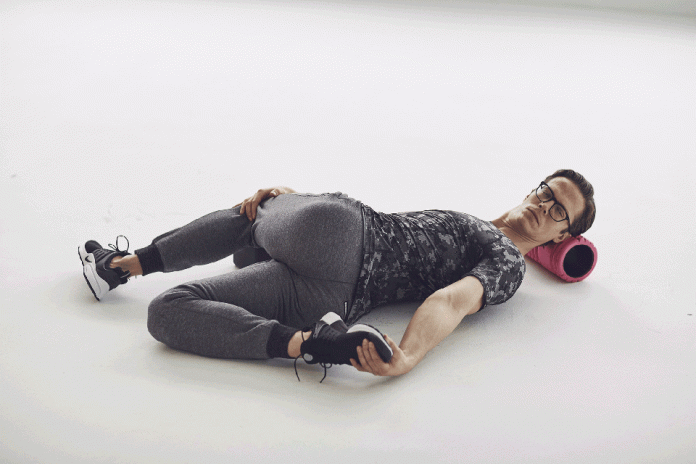
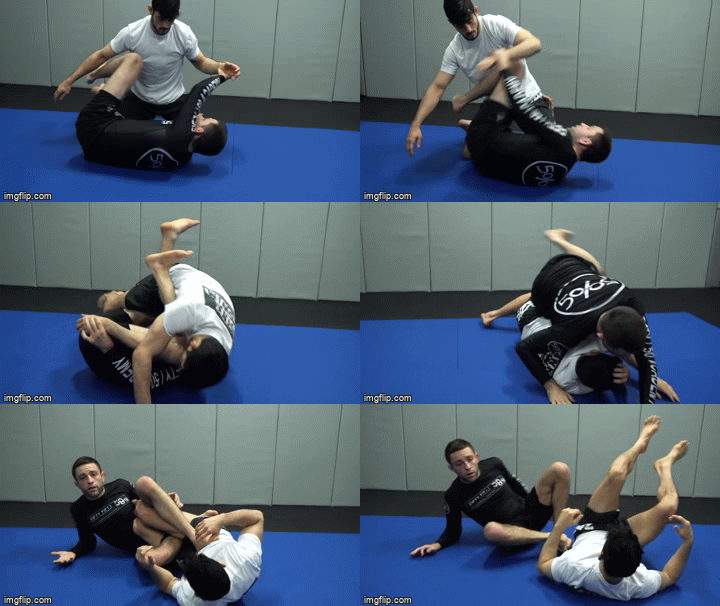
 Among the stretches for BJJ that people come up with, hip stretches are probably the most numerous. A great deep stretch for the hips is the lying glute stretch. It is very applicable to BJJ, given that it requires you to lie down, placing one ankle right above the knee of the opposite leg. Both legs should be bent, bringing the leg you’re stretching into a triangle/rubber guard –like position. Use both hands to pull on the hamstring of the support leg in order to rally make this deep stretch work for you.
Shoulders – Overhead Shoulder Stretch
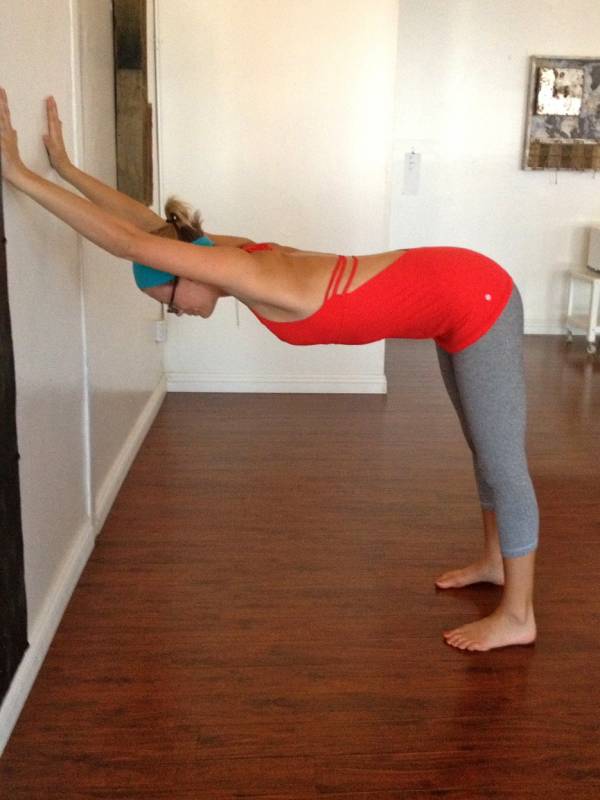 The overhead shoulder stretch does require a ledge to hold on to, but that’s not really something you can’t easily find anywhere. You could do it standing or kneeling, as long as you place both arms on a surface in front of you, while having a 90-degree angle between your belly and things. The goal is to sag your torso while propping your arms on the ledge with the wrists. A bench, a bed, a window ledge, etc. will all do the trick. The lower you go with the torso, the deeper the stretch will be. This is one of my favorite deep stretches fro BJJ ever, and it has really helped my shoulders.
Wrists – Flexion
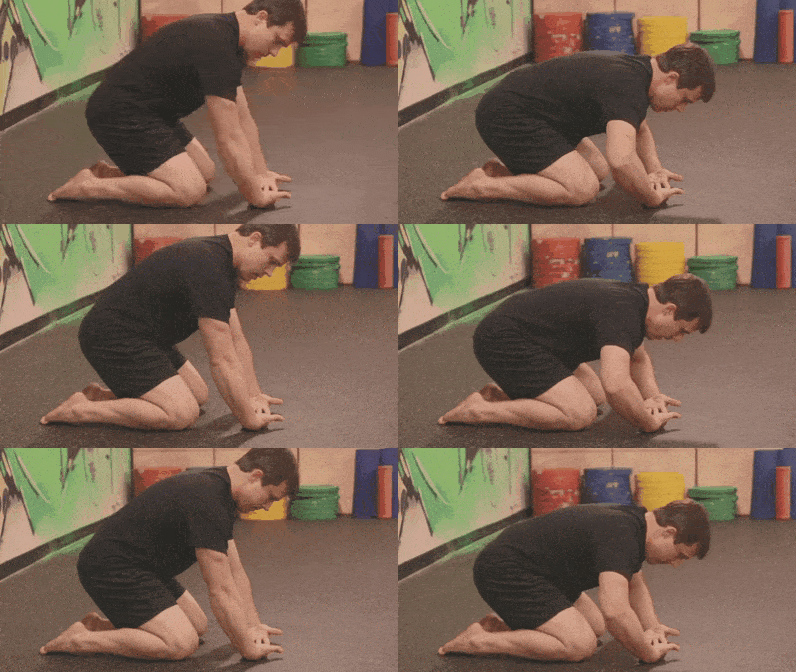 For the wrists, flexion and extension are really important for Jiu-Jitsu. However, wrist flexion is where you really need to improve your flexibility if you’re a grappler. That simply means bending your wrist so that the palm is trying to touch the forearm. The pressure is on the top of the palm and can be via the other arm, or by placing the arm on the ground.
Neck – Sideways Neck Stretch
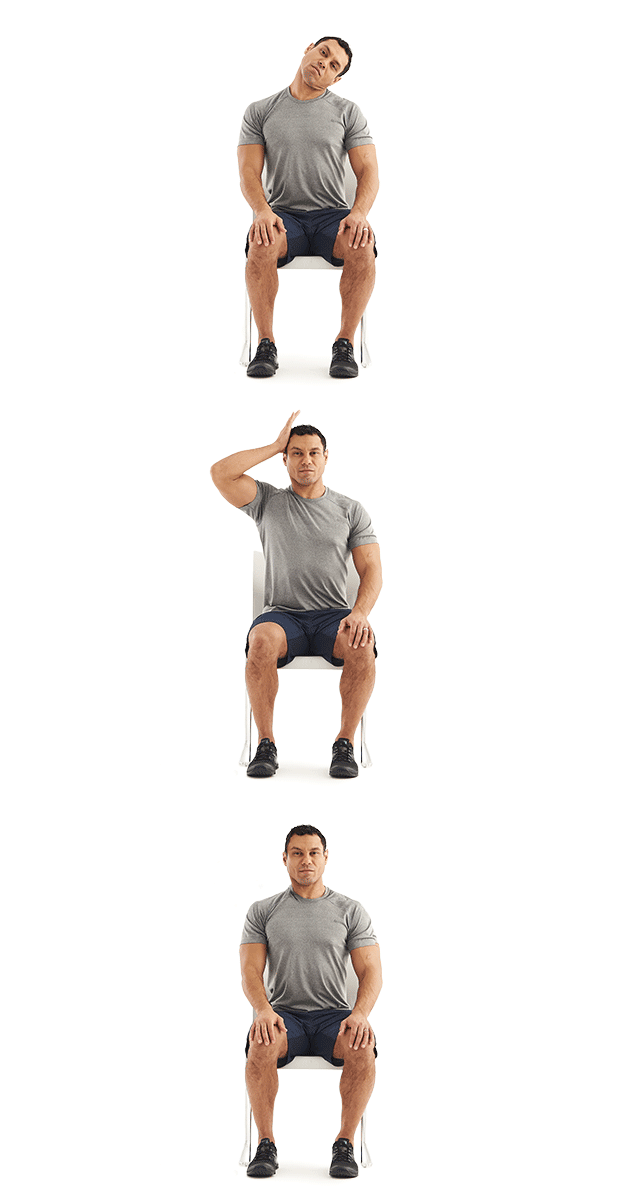 After the hips. Neck stretches for BJJ are the most sought after ones. An exercise we usually do dynamically during warmups is actually the best option here. To make it deep, of course, you’ll have to turn it into a static exercise. That is the ear-to-shoulder sideways neck stretch. Use an arm to help your head to position and stay in the stretch for an allotted time. Remember to do both sides.
Thoracic Spine – The Bretzel
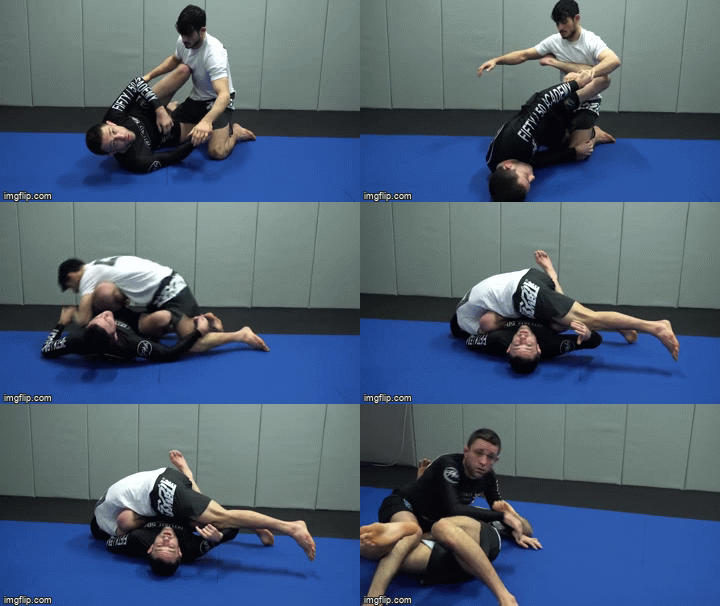
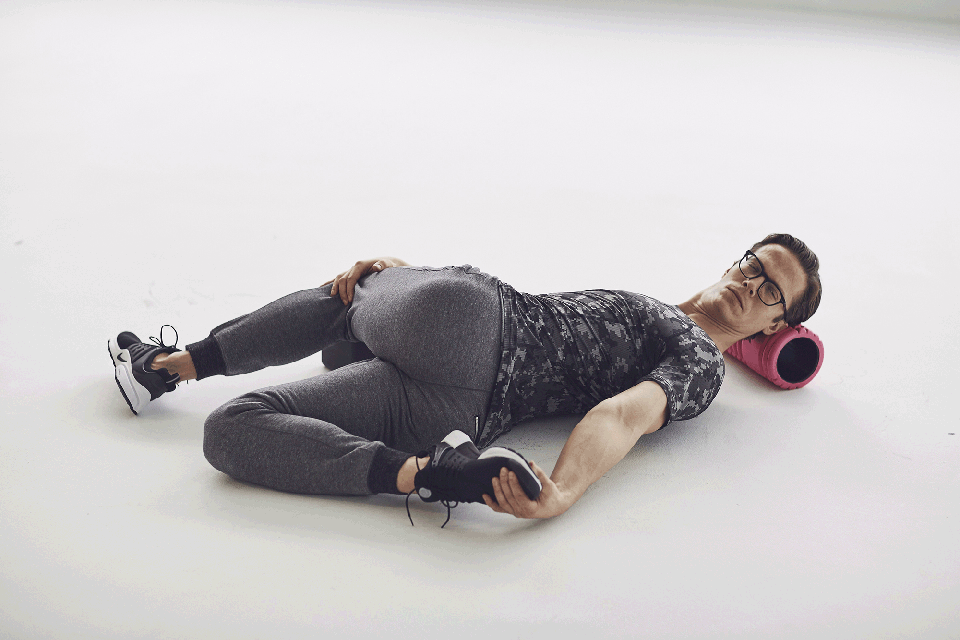 There’s no real way I can explain this nutty stretch with words. The Bretzel, however, is one of the best stretches for BJJ in existence. It also happens to be a very deep and multi-joint stretch that targets the muscles of the entire thoracic spine. The stretch starts with you lying on the ground, bending your knees at a 90-degree angle, and letting them fall to the ground on one side. Then, you extend the bottom leg, so that the arm on the same side can grip the ankle. Use the opposite side arm to try and force the knee of the top leg to the ground.
Closing Thoughts
I already touched on the subject that you shouldn’t do any deep stretch for less than 30 seconds. In terms of organizing all of the above stretches for BJJ into a routine, start with 30 seconds on each stretch (repeat on both sides of the body). Aim for 3 sets of them, either as a circuit or in a straight-set fashion. Once you’re good with that, and you see your flexibility improving, you can go to 45 seconds, or a minute each.
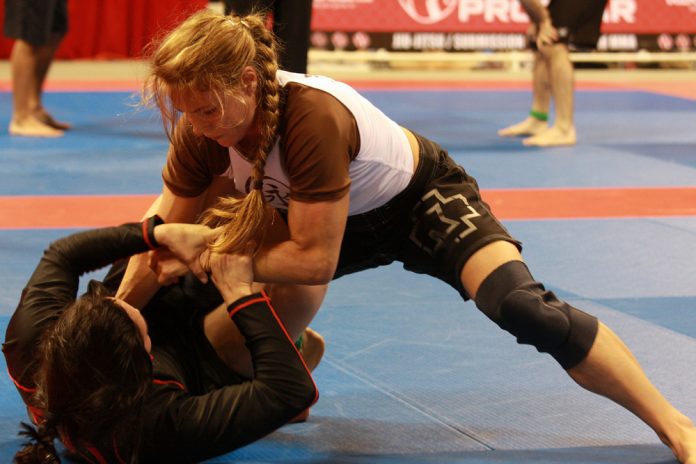
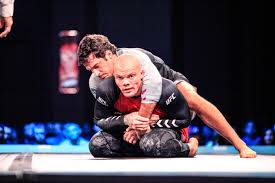 In terms of connection, we usually enter a grip fighting battle in order to achieve grips that will allow us to stay connected, without being at risk. This is much more difficult to achieve than it sounds. When people roll with the Gi, they tend to grab the collar, sleeves, and pants in most cases. However, in the heat of battle, just about any part of the cloth will do. This though usually translates to a very inefficient way of connection to your opponent. In fact, using the gi to grip is an overall less efficient way to grapple, compared to BJJ No-Gi grips.
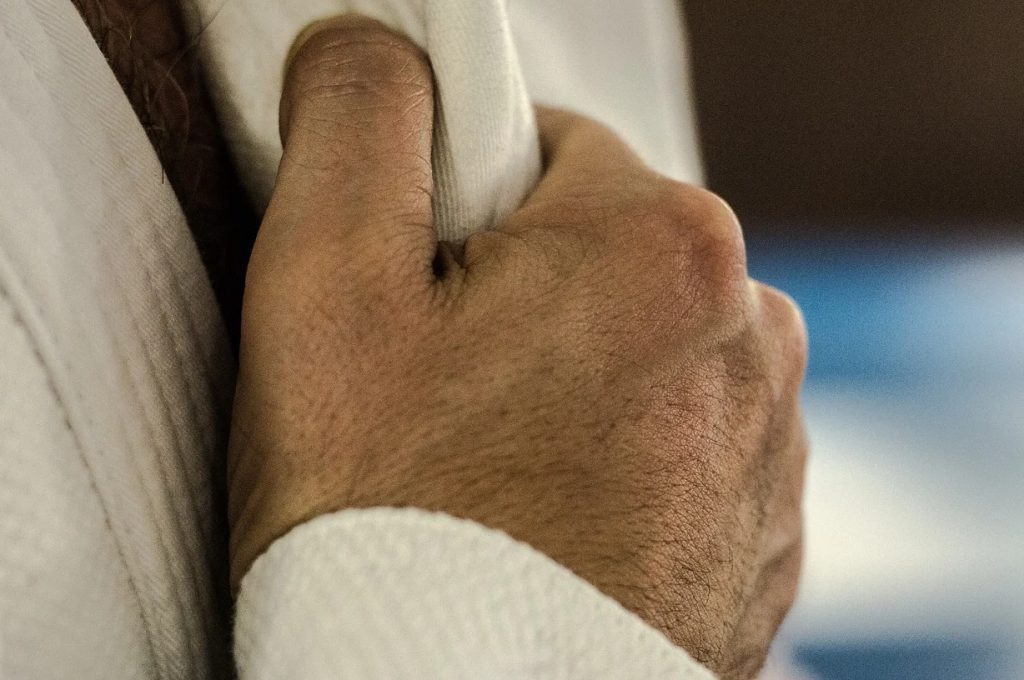 Holding on to the GI, (which, don’t get me wrong, can be efficient) is a form of indirect control. Think about it this way. You’re holding on to a sleeve grip from the closed guard. Whenever the person moves their arm, your arm, attached via the sleeve grip, follows. If you decide to maneuver their arm into a certain position, it will follow, because their arm is inside the sleeve. However, there’s always going to be a bit of slack, where they can move the wrist, twist it, pull or push the Gi to create space. This is something you can account for, but only if you’re aware of it and understand how grips work.
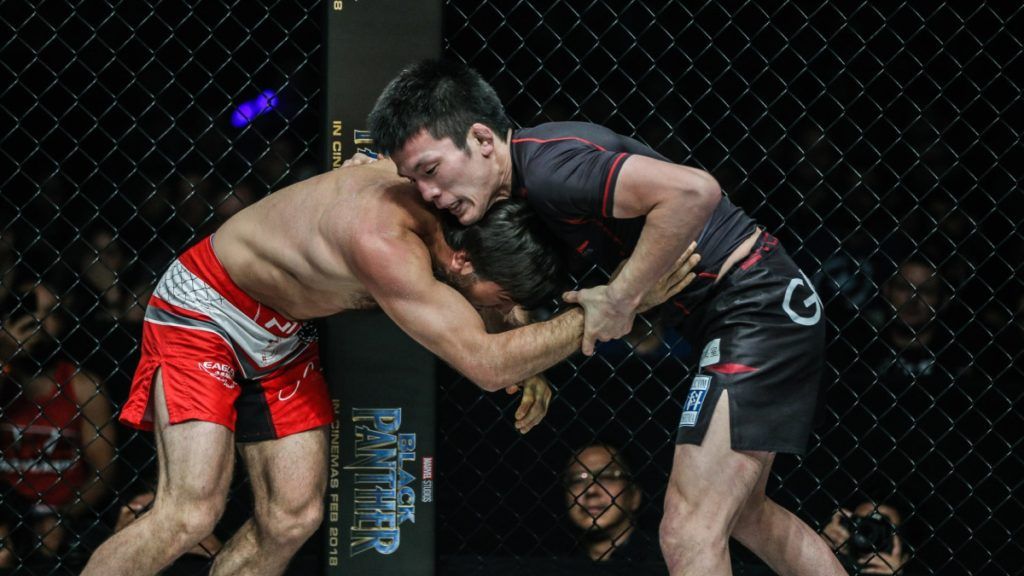 A much easier and more effective control is to use a direct grip. This means, using the same example as before, holding on to the wrist of an opponent with a C-grip, for example. This is the exact same way you’ll hold someone if it was a No-Gi match/roll. However, now your control over their limb (in this case, an arm) is direct. You have a lot more control when you decide to maneuver their arm into position, as well as in cases when they try to retrieve it. You can see why I tend to favor BJJ No-Gi grips of holding on to the Gi.
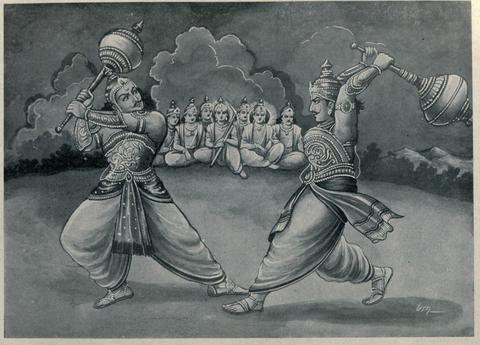 Steel maces are pieces of equipment that consist of steel,
 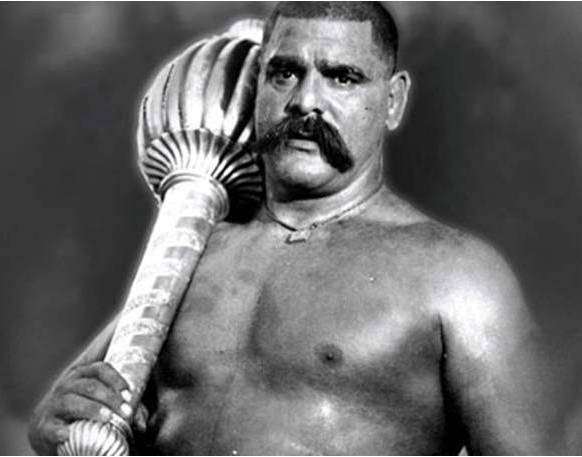 In fact, nowadays, the steel mace is still used by Pehlwani wrestlers in India and Pakistan. A famous Indian wrestler named the Great Gama is to blame for the popularization of the mace. He was undefeated for 50- years, and fought all across India and Europe, beating every wrestler to ever face him. His only tool for
  Last but not least, developing a heightened sense of proprioception is always welcome for any grappler. Steel maces will help you gain kinesthetic awareness that you often see in black belts when they seem to anticipate every move before it actually happens. Well, maces will definitely help you develop this skill faster.
 When we look at it like that, the answer why we’re safe is extremely easy – we control the arms .that means that the moment you end up in the BJJ closed guard position you need to get double wrist grabs. Whether you go from thumb up No-Gi wrist grabs, thumb down wrist grabs, sleeve grips, or something else, is completely down to you. The goal is to control both arms. When you achieve that an opponent won’t be able to strike, they also won’t be able to establish purposeful grips and start opening your guard to get past the legs.
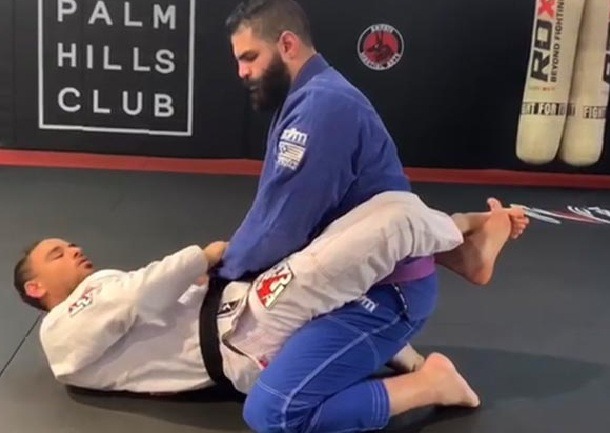 Think of the BJJ closed guard as reverse back mount. If you had someone’s back, you won’t be looking at your feet to keep them there, but rather your knees. If an opponent is between your knees, you can control them from the back. The same is true from the front- keep them between your knees and you’ll never tire out your feet ever again. Plus, the control is much more difficult to escape from.
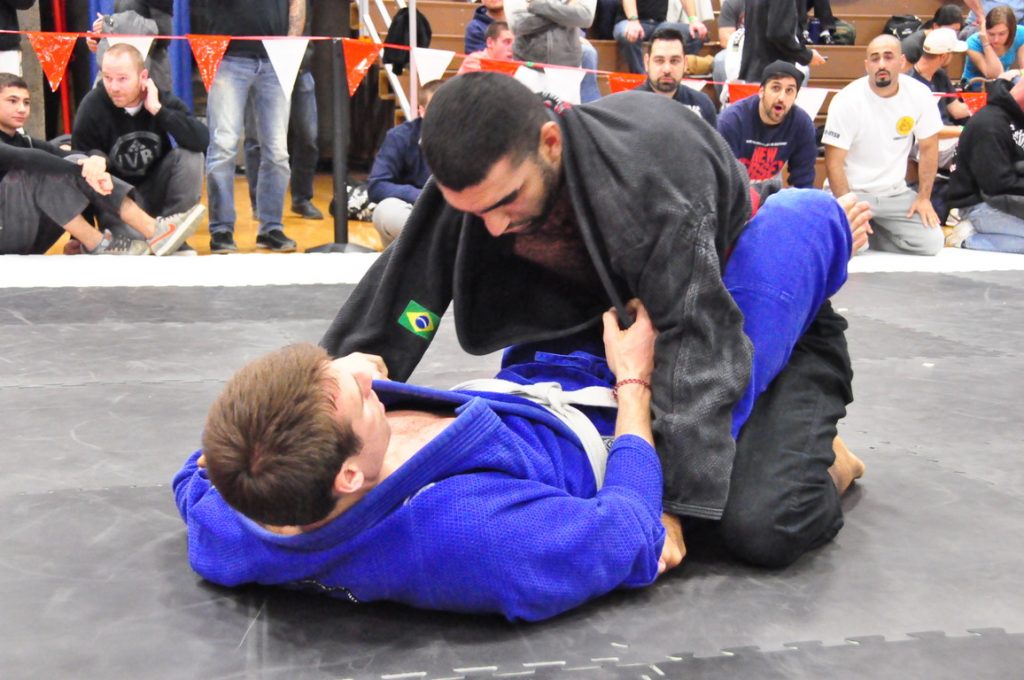 Breaking the posture is easy from the closed guard because you can use your powerful legs to pull the opponent towards you. Don’t focus on their posture but rather on the goal of trying to touch your own knees to your shoulders. Combined with a double wrist grip, nobody will be able to prevent it. Once you have an opponent al broken down, you can start setting up any attack that you wish. Yes, now you can release a grip, r both, and start doing your thing, It may be high guard attacks, you might be going for guillotines, wristlock, cross chokes, any closed guard sweep or trying to arm drag to the back. Now that you’re safe, have control over an opponent and you’ve broken their posture, you can do pretty much anything you want with them. And all that without breaking a sweat.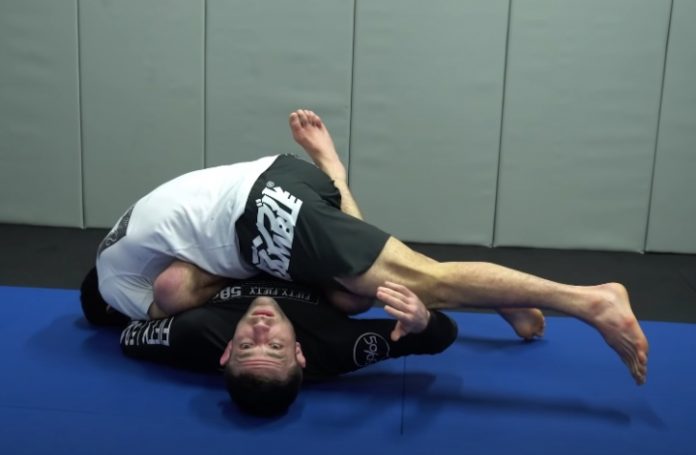
 First of all, a few ground rules. The first one, of course, is to tap. Tap a lot, tap really early, don’t just tap to submissions, but to everything that scares you or makes you uncomfortable. That’s how both you and your training partners learn stuff. Our bodies are our most valued material possessions, and we’re voluntarily giving them to another person to play. That other person, although they do the same, really have a huge responsibility to their training partners. Early taps help reduce injury potential by at least half, in any given situation.
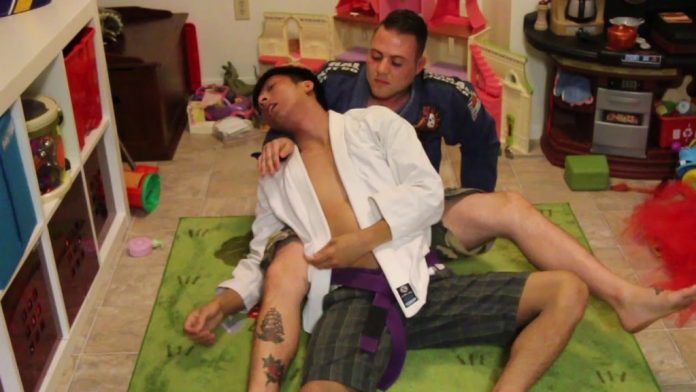
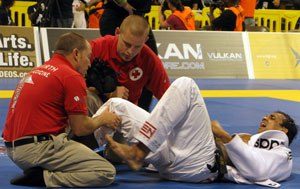
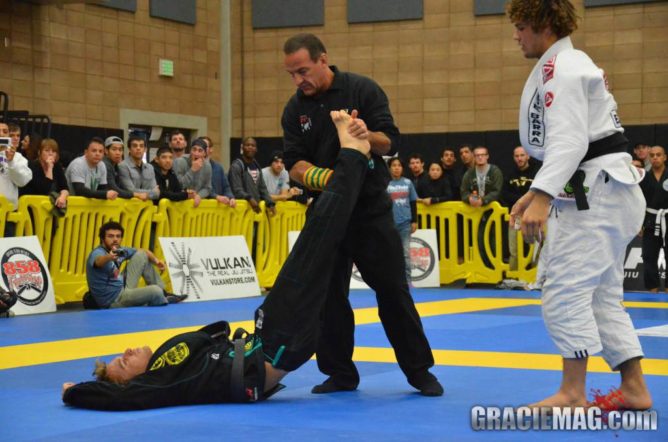 The first thing to do, as the person in charge, is not panic. Ask the training partner, and all other curious bystanders (there will be lots of them) to step back and give you space. Instead of rushing to lift the legs, first, you have to check that the person is breathing, and their tongue is in place. No amount of blood flow (which is what lifting the legs provides) will help if an airway is blocked. Remove a mouthguard (if there’s one) and make sure that the person’s head is tilted back if they’re lying on their back. If everything is in order people usually wake up this point. Still, you should lift the legs and leave them in the recovery position for a little while.
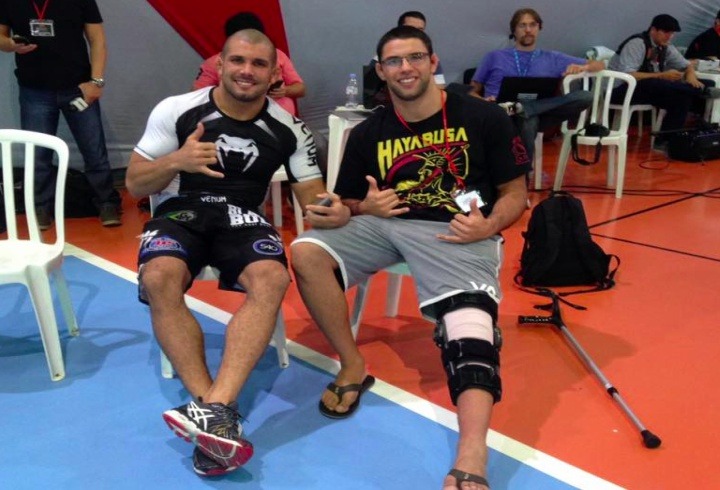 In the case of obvious severe injuries, or if you suspect them to be worse than they look, always immobilize the joint before doing anything else. Your first aid kit should have splint material to help you achieve this, but if that’s not available, just use whatever you can get your hands on, from broomstick handles to pieces of mats to create a splint. Only then can you think about moving the person to get them to a hospital, or perhaps calling in an ambulance.
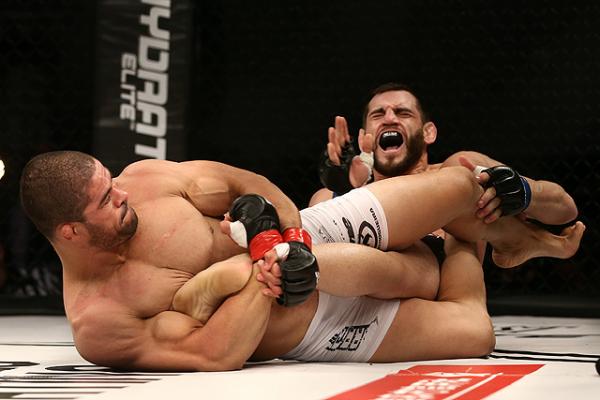
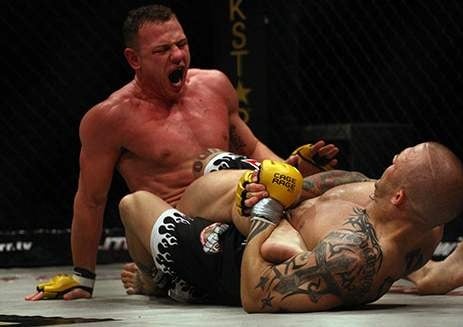 In order to cause a break in the knee joint, you need to create tension. That’s where the grip comes in. gripping the heel with any of the
 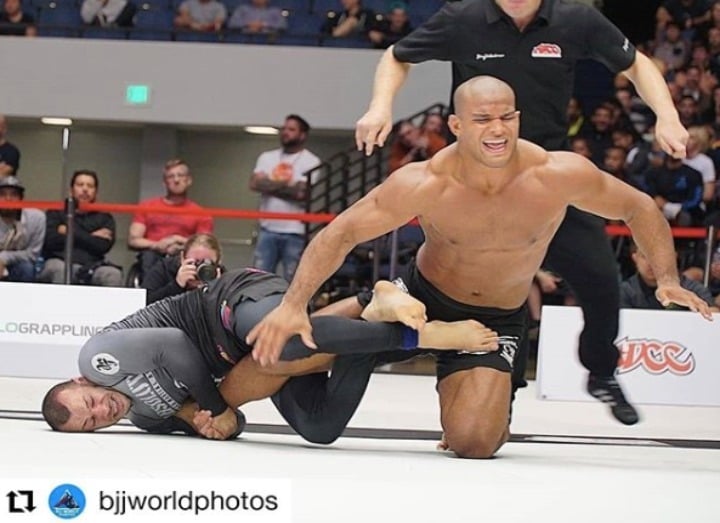 Actually, the reason most people tap too late to a heel hook is that the ligaments involved have very few sensory receptors. That means you won’t feel the pain during the application of the submissions but rather when it is too late. So the first thing to do in order to avoid a heel hook injury – tap early. Even better, for those doing the heel hooks, the moment you feel the tension release the pressure.
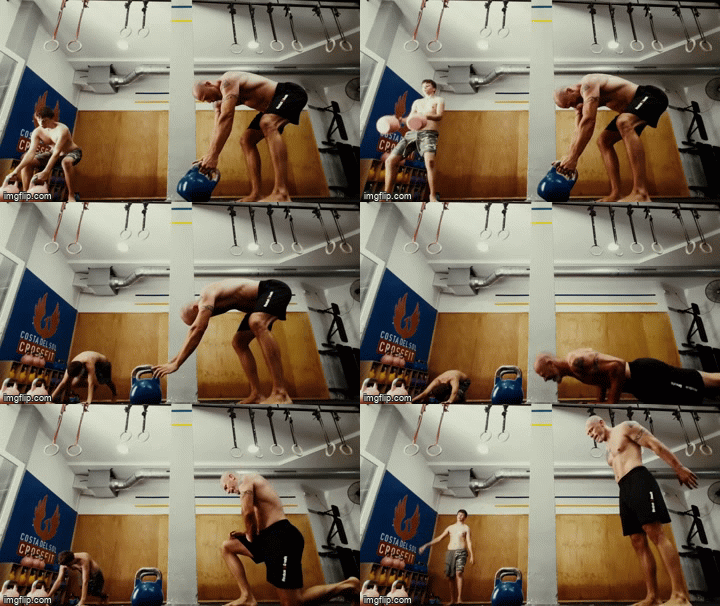
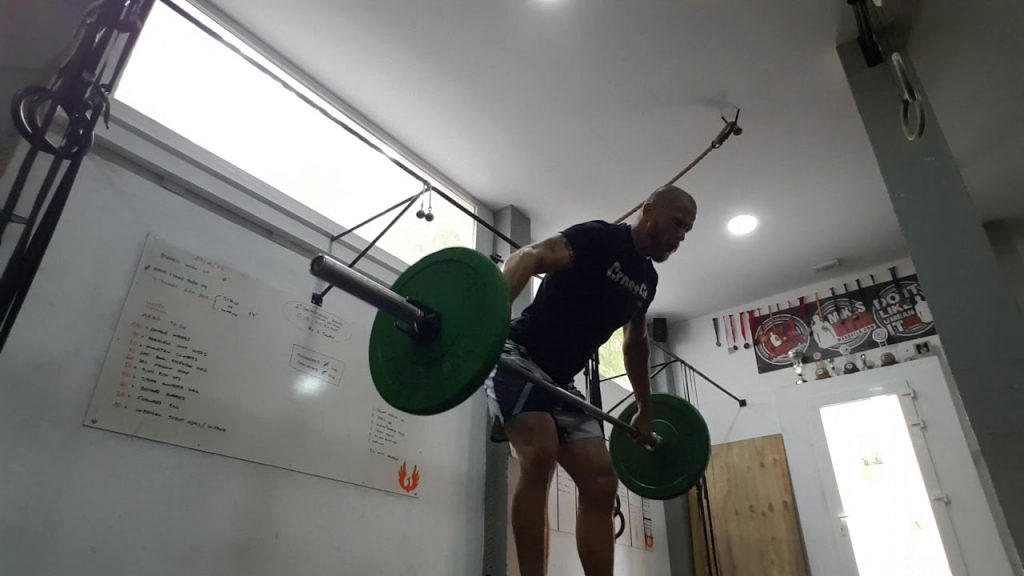 Time-efficient training means you get the job of BJJ strength training done in anywhere between 10 and 20 minutes. This refers mostly to the organization of training, or the methods used. In terms of tools or exercises, you can do just about anything you want. You could use free weights,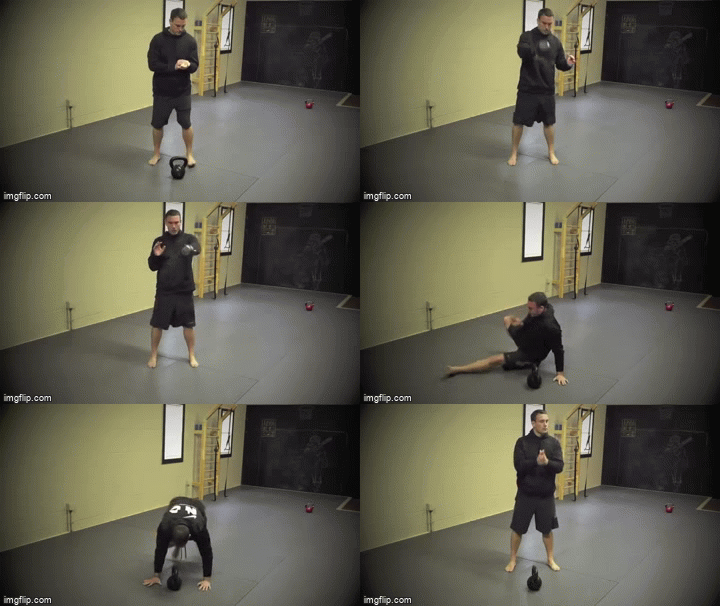
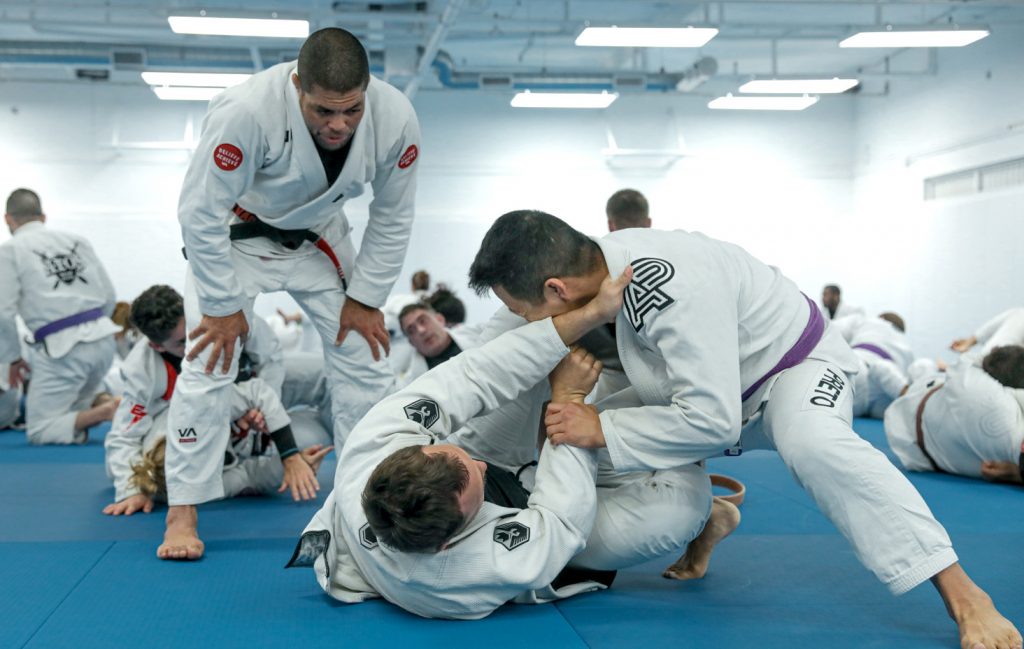 Brazilian Jiu-Jitsu is a sport where you get to learn how to kill people in a gentle way. BJJ is very different from what we usually perceive as martial arts. There are no right or wrong things, just easy, hard, and dumb. There’s also no end to it, and nothing is fixed. What is popular and working today, might not be as well next month, given that the sport is constantly evolving. Plus, everyone involved in it is usually super cool. Given that taps are extremely humbling, and if you’ve been tapping for a long time there’s really nothing that will bother you too much.
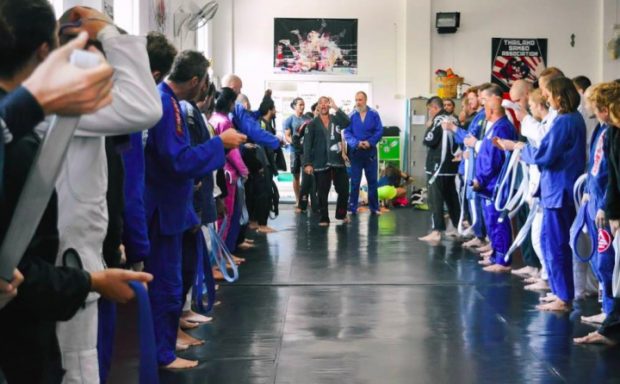
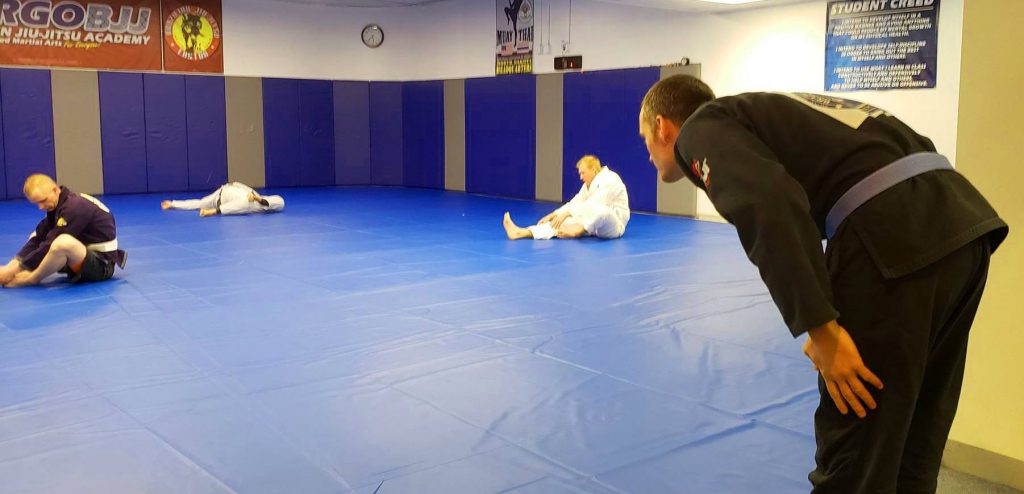 The bow in traditional martial arts is a sign of respect. Bowing to the instructor is much more than just saying “Hi”, and that class has started or ended. However, as a BJJ tradition, the bow is just there to pay homage to the Japanese Judo/ Ju-Jitsu roots. In BJJ, people usually bow at the start of class when they line up, as it is a great way to signify that it is time to get down to work. Most gyms skip the same at the end, although some do like to wrap things up with a bow as well. The bow is often accompanied by “Oss” but has no deep philosophical meaning, past marking the start or end of class.
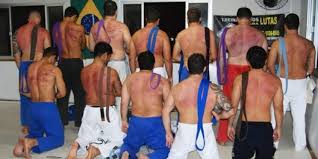 The gauntlet is not one of the original BJJ traditions
 This is one of these BJJ traditions that fall under the pet peeves category. As you go crazy about Jiu-Jitsu and embrace the sport as a lifestyle, you’ll start to display the love for it in any possible way. One of the most common ones is throwing the Shaka hand gesture every occasion you get. The Shaka is a surfing thing, by origin, and it is exactly how it got transferred to BJJ since the two have a very close relationship.