


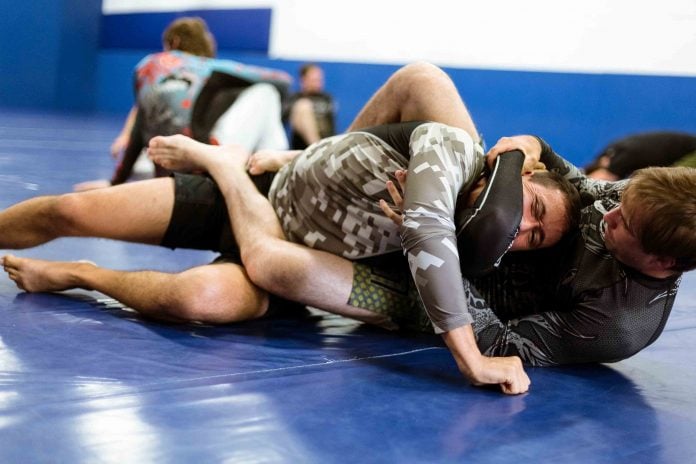
Essential Things You Need For No-Gi Class

What you need for No-Gi Class

Brazilian Jiu-Jitsu has two main branches in terms of training. One is the “traditional” which requires a Gi to train in, and the other is an option that came about as a result of MMA and does not require anything but shorts, really. In that sense, No-Gi BJJ, once shunned by most has really grown during the past decade. It actually paved the way for professional Jiu-Jitsu.  With No-GI growing more and more by the day, let’s take a look at what a NO-Gi class is and what you need to pack with you in order to train.

For me, personally, No-Gi classes are a lot more fun than Gi classes. The faster pace, dealing with slippery situations, and the need to really learn how to control someone make it quite a bit more difficult than Gi Jiu-Jitsu. With the GI on, you get a lot more options in terms of grips, guards, and submissions, but that also means that you can’t ever hope to master them all. In a No-Gi class, things are simpler, albeit much harder. To that extent, there are several things you need to know about a No-Gi class, ranging from what you need to pack, to useful tips and tricks.

What is a No-Gi Class?

Put simply, a No-Gi class is a Brazilian Jiu-Jitsu class, just done without the traditional Gi. When BJJ first started, the Gracies were training with Gis on because that’s how they learned the original submission Judo from Maeda. The Gi started off as a tribute to the Japanese roots of Jiu-Jitsu. However, the Gracies didn’t just adopt the clothing for the sake of it but turned it into a very formidable weapon as well. In modern BJJ, you can do a myriad of things with the Gi, yours or that of the opponent. From setting up submissions to holding people pinned, the Gi has a major role to play.
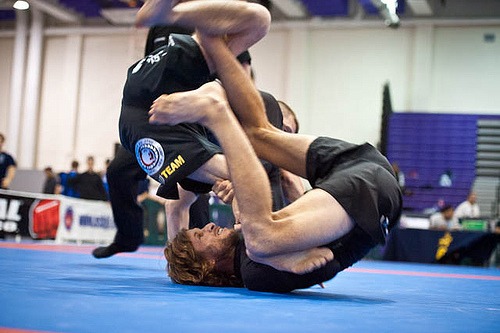
No-Gi ClassOn the other end of the spectrum is training BJJ without a Gi. This came about after the UFC and MMA exploded. Certain gyms adopted a No-Gi only philosophy from those early days, and have really developed this aspect of BJJ immensely. Back then, it didn’t take any special gear to train No-Gi. All you needed to do for a No-Gi class is show up and have shorts on, with a T-shirt being optional.

The lack of uniform to hold on to means that the nature of grappling exchanges is completely different. There’s nothing to latch on to in a scramble or use to slow down the pace of the match and tangle an opponent up. Instead, In a No-Gi class, you‘ll learn how to control the limbs and neck of an opponent directly while going through the positional hierarchy of BJJ in the hunt for a submission. Certain submissions that are exclusive to Gi BJJ won’t work in No-Gi, but all the No-Gi subs work perfectly the other way around. This is just one reason why you need to incorporate No-Gi into your BJJ training and we’ll tell you everything that you’ll need for your No-Gi classes.

No-Gi Class Essentials

What should you bring to A No-Gi class? Well, the situation has changed since the early days of Jiu-Jitsu. You can’t just show up in nothing but shorts and train. Well, at least not at most gyms. Instead, shorts and shirts are the bare minima in terms of apparel, but there are better options out there. Plus, given the nature of NO-Gi training, you’ll need several more pieces of equipment to make sure you get the most out of a No-Gi class.

Rashguard(s)
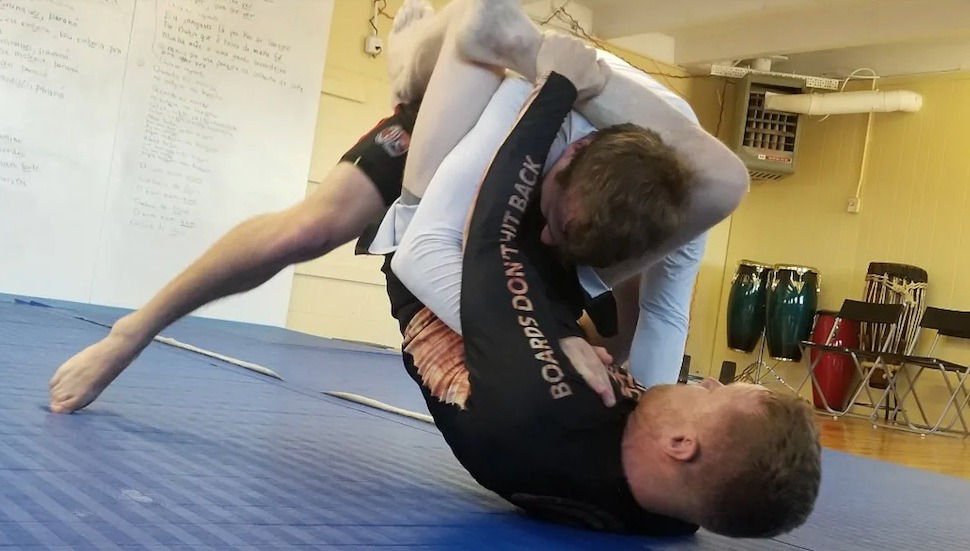
No-Gi Class essentialsToday’s No-Gi uniform nowadays is defined by the use of rashguards instead of any old T-shirt or going shirtless. BJJ rashguards come in so many different designs and colors, things are getting out of hand. In fact, the more unorthodox that rashguard is, the more people seem to love it. That said, the rashguard plays an important role in training, keeping you dry, wicking moisture away and compressing your muscles so that blood flow is improved.

Rashguards come in three main types: Sleeveless, short-sleeved and long-sleeved. Out of them all, the sleeveless option is not a good idea for BJ. IN fact, I’d encourage everyone to think more along the lines of long-sleeved rash guards. Three’s a trick to it – the long sleeves provide you with a surface that has traction whenever you need to grip your own arm or leg in order to execute a move (D’arce choke, for example). In short, there’s no going to No-Gi class if you don’t pack a rashguard first.

Shorts

Shorts are the second piece of gear you can’t do without, for obvious reasons. When it comes to BJJ shorts, there are probably nearly as many designs as there are rashguards. And, while any old shorts will do the trick, BJJ shorts are by far the best option. They are designed in a way that doesn’t restrict movement, they’re durable and don’t contain mesh areas that will tear after the first few minutes in a roll.

When it comes to options you can go with broad shots, which is what most people choose. The alternative is spat-style shorts which are practical but are simply not an option for everyone.

Spats

This is usually an optional piece of gear for No-Gi class, but you’ll hardly see anyone training without them. First and foremost, they usually compliment rashguards in terms of design. Furthermore, they act in the same way a rashguard does for the upper body. Spats wick away moisture, help your regulate body temperature, help protect your skin, and have compression features as well. Once again, they’re a great idea whenever you’re training, given the traction they provide when it comes to grips.

Mouthpiece

Given the pace of a No-Gi class, the use of a mouthpiece is no longer optional. Of course, you can roll without one, but the accidental knees, elbows and other body parts that might end up hitting your face are going to be much more prevalent than in Gi JIu-Jitsu. A mouthpiece will provide you with not just protection for your teeth, but also of the soft tissue in the mouth, as well as the neck. If you are really serious about training and competing, you’ll need to learn how to breathe with a mouthguard, so make sure you always have one in your gym bag for No-Gi class.

Ear Guards

The final piece of the puzzle is ear guards. You might think cauliflower ears are cool, but in reality, they suck big time. And, contrary to popular belief, it is not G classes that cause the majority of cauliflower ears in BJJ. It is training without the Gi that puts you in spots where getting out might mean you need to sacrifice an ear or two. Luckily, the solution is simple – get an ear guard. There’s a reason why wrestlers have been wearing them for ages – they work. In other words, apart from looking the part with the rashguard, shorts and spats, make sure you’re also safe when you go to NO-Gi class and pack your ear guards right next to your mouthpiece.

No-Gi Competition Dress Code

Before we wrap it up, a few words on No-Gi attire for tournaments. At this moment in the evolution of BJJ  NO-Gi is a well-established isocline of Jiu-Jitsu. As such, most promoters organize No-Gi events along with all the GI ones. While Gi events are still more numerous, No-Gi is catching up fast. To that extent, some of them, like the IBJJF and the UAEJJF have certain rules and restrictions in place you should be aware of.
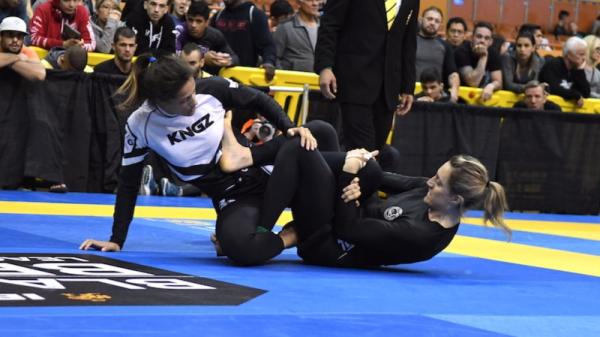
No-Gi Class gearIn terms of attire, the stricter rule sets dictate that the shorts have to be black. ON top of that, you need to wear a rashguard that displays the color of belt you have. Those are called ranked rashguards and are quite readily available the thing is that certain organizations, go even further, allowing just several brands of ranked rashguards for their tournaments. Spats, if worn, also need to be black in color. You also cannot wear ear guards when competing.

Of course, there are organizations out there that have no issue with your choice of rashguard, spats and shorts. That means you can use whatever it is you’re’ using for No-Gi class. It is a good idea, however, to have at least a couple of kits, one freestyle and the other in accordance with the terms of competition that promotion dictate.

Closing Arguments

Training No-Gi is fun, will improve your Gi game and the best part is, you get to dress up as a superhero, or a fruit for that matter, and you’ll actually get praise for your choice of garments. Even if you go to one No-Gi class per week, the fact remains that you need to include this type of training in your schedule. Moreover, you need to be ready for the demands of a No-Gi class and always make sure you bring the essential gear with you.
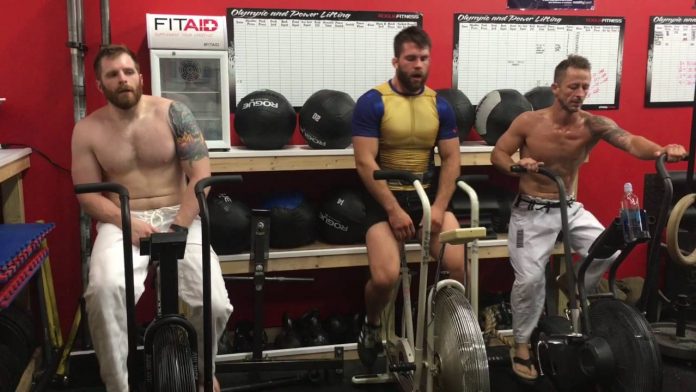
BJJ Fitness: How To Train For Grappling If You’re Not A Pro

BJJ Fitness Training For Non-Professional grapplers

The new-age question every athlete faces is how to gain an advantage, any advantage, to be more competitive in your sport? There has been a crazy amount of research going into improving athletes for specific sports. However, it has not included grappling or fighting arts as much as other sports. Of course, football, basketball, soccer, and the likes are much more interesting given the revenue they create. That said, most people training BJJ are not professionals anyway, so there’s no need really to train as the UFC fighters do. Instead, you should just pick something that will help you achieve your BJJ fitness goals. Plain and simple.

BJJ fitness is easy – be able to roll without fatigue becoming too much of a factor on how you perform. In all honesty, it is not that hard to figure out. The issues emerge when people try to emulate professional fighters, or other athletes, who have individually tailored programs and a bunch of folks measuring things. Forget about it. Even if you’re a professional grappler, it’s not really conceivable. What you can do is pick a discipline, or two, that will align with your BJJ fitness goals and will help you develop the athletic qualities you need for Bette performance on the mats.

What Is BJJ Fitness?

BJJ fitness as a term is not something we see often. It is my opinion, though, that it fits perfectly and we should use it more. Why? Well, all that strength and conditioning mumbo jumbo sounds really fancy but mostly confuses people more than it helps them. After all, we live in the age of information. There’s a term in psychology called the paradox of choice. According to it, the more choices people have, the more they stress instead of being happy about it. And today, there are more training modalities and routines one can count, let alone hope to learn in a lifetime.

The goal of anyone training grappling is to grapple. Here’s the first truth about BJJ fitness – nothing will help you unless you roll and train often. Remember the first few times you rolled? You gassed out in seconds with a higher belt, regardless of your fitness background or current shape. I’ve seen folks that are in Spartan race shape, and yet, they can’t get through a 5-minute roll with a tiny purple belt. The first rule of BJJ fitness is to do BJJ, and by that, I mean roll as much as you can for as many days a week as possible.

On a more specific note, BJ Fitness s all about you being able to roll without getting tired. As easy as that sounds there’s a lot going on behind the scenes. There are different energy systems that kick in at different times, different muscle fiber requirements, flexibility requirements, and some unique dexterity needed in order to make a grappler perform to the best of their athletic abilities. For the everyday person, this is too much to consider. Instead, they usually turn to one of the popular fitness options looking to get in better shape. And that is perfect, as long as you pick the right one for your specific needs and goals.

What Are Your Options?

First and foremost no two people are the same. Secondly, no two rolls or matches in Jiu-Jitsu are going to be the same. That means that unlike a track and field athlete, for example, who has to only prepare for one type of exertion, you can’t know how a roll is going to unfold. That means that it is not about becoming stronger in certain areas of BJJ fitness, but rather removing any weaknesses you might have. Well, at first anyway. Later on, you can focus more on developing certain strengths.

Before I go into the types o fitness activities you can do to improve your BJJ, I’ll just say that all that functional fitness stuff where you hang from a pull-up bar holding your Gi while try to mimic spider guard on resistance bands won’t do you any good. Just like in BJJ, stick to the basics – proven methods of fitness that develop specific athletic abilities.

Yoga

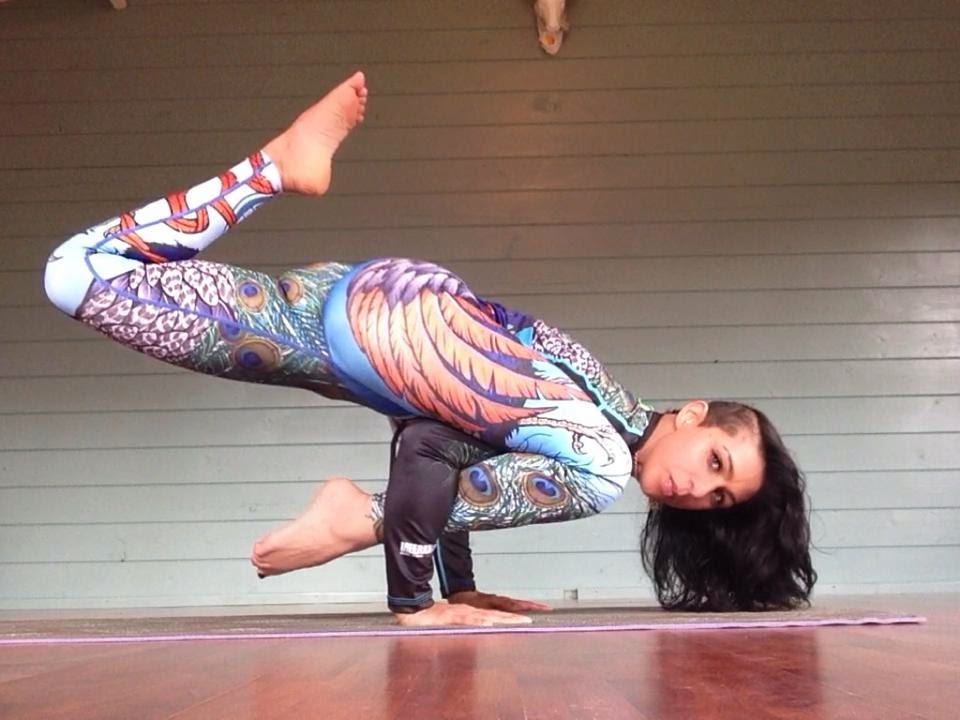
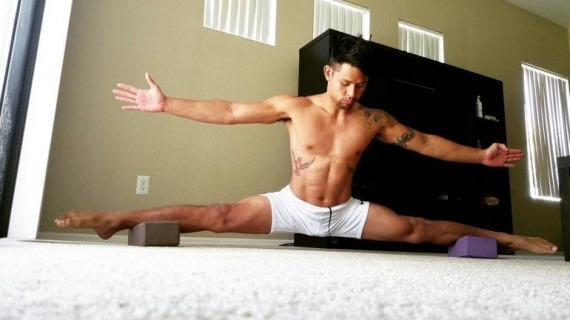
BJJ Fitness: YogaProbably the first thing you should look into, and not for the reasons you think. Yoga is not something ladies do in their pastime. It is not just a way to stretch your muscles. Yoga helps you develop an insane amount of control over your body, especially in isometric terms, which is hugely important for Jiu-Jitsu. Moreover, it will teach you to breathe and calm yourself when under stress and in weird positions. AS far as BJJ fitness goes, I’d recommend everyone to start with Yoga as soon as they begin rolling.
Good for: Breathing control, dexterity, practical flexibility, and body awareness. Breathing under stress has to be the most important lesson a grappling beginner can learn from doing Yoga.

Drawbacks: No external resistance means you can’t develop strength in a way that you could with other means of fitness.

Weightlifting

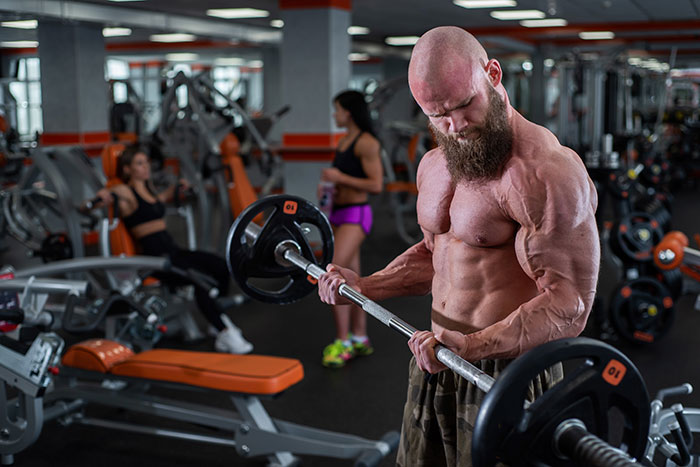
BJJ Fitness: weightliftingThe gold standard for most, when it comes to developing strength. I tend to disagree, but more on that later. As a matter of fact, weightlifting has its place in BJJ fitness. The paradox of choice applies here though, with plenty of different forms of weightlifting available. Should you do bodybuilding style workouts, powerlifting, strongman training, CrossFit, kettlebells, etc.? There’s no right answer for everyone. All of these help, and you should find the weightlifting activity you enjoy the most.
In terms of what weightlifting brings to the table, the answer is easy – strength and power. Depending on what is your weakness, and what quality you need to train, you can quickly turn into a BJJ Hulk if train right.

Good for: Developing strength and explosiveness. In the odd case, you need to put on muscle as well, nothing beats weightlifting workouts.

Drawbacks: Hardly any cardio component, so be sure to have a decent gas tank before addressing strength. Also, it takes a lot of time to recover properly from lifting heavy weights, which is hard to achieve when you’re grappling several times a week.

Gymnastics

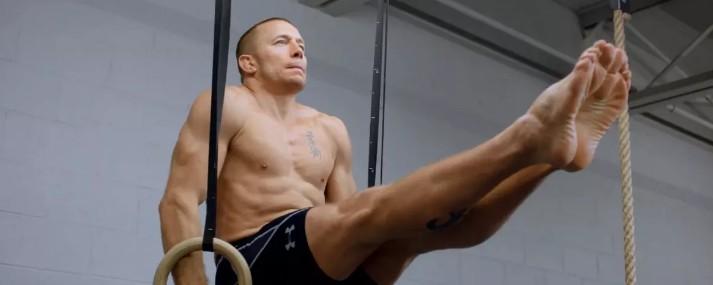
BJJ Fitness: GymnasticsUndoubtedly, the number one activity you can do to help your Jiu-Jitsu. This Olympic sport is the definition of athleticism, with gymnasts being able to adapt to just about anything within minutes. In terms of BJJ fitness, and the ever-changing demands of rolls, this sounds like something picture-perfect for grapplers. Furthermore, gymnastics can teach you different qualities depending on which areas of it you choose to focus on. From body awareness to unbelievable amounts of strength, with no recovery impediments along the way.
Good for: Extreme body control and awareness in mechanically inferior positions. Simultaneously develops strength, explosiveness, cardio, flexibility, mobility and any and all athletic qualities a grappler might need.

Drawbacks: It takes a long time to learn the basics, and start developing connective tissue which is much more useful than muscle tissue. By long time, I mean 2-3 years until you start noticing real improvements in technique and performance.

Swimming

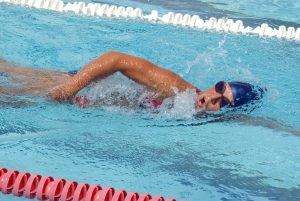
BJJ Fitness: SwimmingWe all like to dip into water the first chance we get. Well, most of us. Have you ever tried really swimming, though?  I mean real, competitive-style swimming? There are insane amounts of technique to it, and similarly to grappling, no other means of fitness training can prepare you for it. However, when it comes to BJJ fitness, swimming offers a way to develop the best ever gas tank while keeping all your already abused joints stress-free.
Good for: Training in water means you give your body a rest from gravity. Swimming is great for the joints and tendons, and it develops killer cardio that is second to none.

Drawbacks: As easy as it is on your joints, swimming can be hard and does require a lot of time to recover, particularly if you’re not used to it. Moreover, similarly to gymnastics, you need to learn massive amounts of technique if you really want to get the most out of it.

MMA/Striking

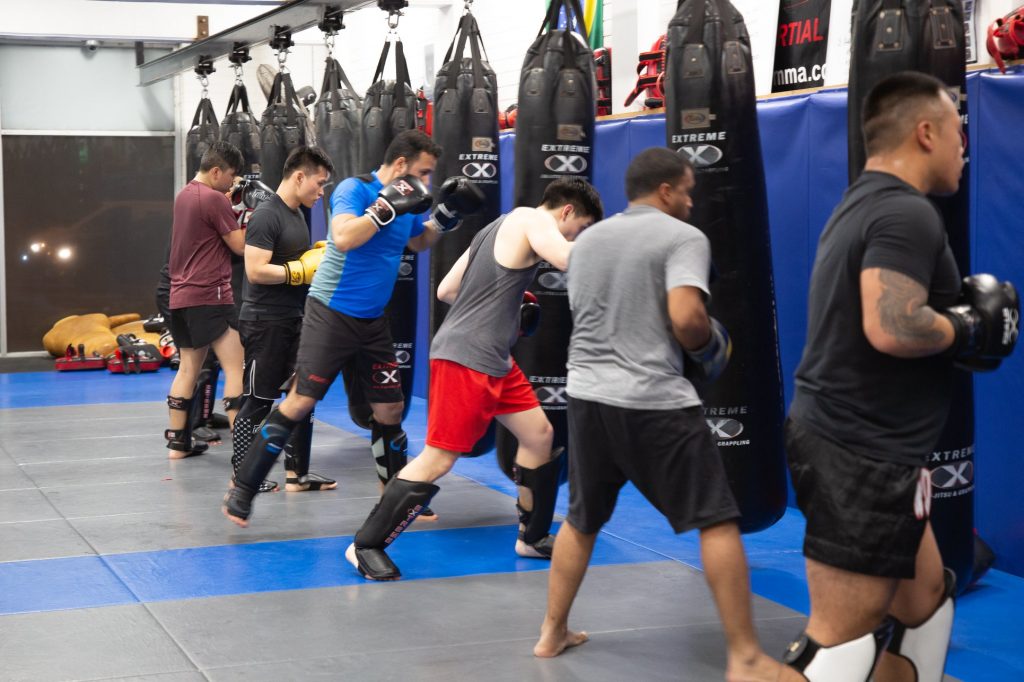
BJJ Fitness: StrikingWhile it may seem like there’s no real benefit of training striking when you’re a grappler, nothing can be further from the truth. Striking or MMA training will help you not only with overall BJJ fitness but also with coordination and timing. There are similar demands in all combat sports, and striking has an explosive component to it that is repetitive in nature, something we don’t see in grappling. As such it is a great way of developing overall fitness in a setting similar to that of Jiu-Jitsu.
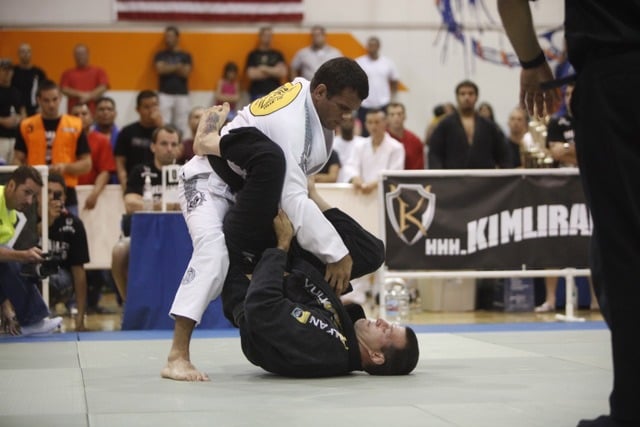
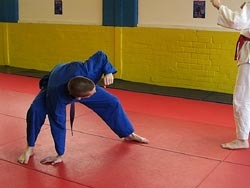
Good for: Developing hand-eye coordination and fighting rhythm. These area qualities no there means of fitness can help you develop. Moreover, you get to work on “fighting fitness”, or in other words, a gas tank specific for fighting needs.

Drawbacks: A lot of impact. It doesn’t matter whether you’re striking a bag or doing sparring, you’re going to place lots of additional stress on your joints. Not to mention the potential for injury.

In Summary

Of course, there are not the only options for developing and improving your BJJ fitness. They are, however, really accessible all around the world, and everyone can sing up for each and every one of them. Plus, as you get better at certain qualities you can switch, or even try to figure out hybrid training by using multiple fitness options. As long as you focus on removing weaknesses first, and do not overwork yourself, you’ll see big improvement n how long and how hard you can roll.

Unsweepable: The Ultimate BJJ Defense Against Sweeps

BJJ Defense Against Sweeps: Becoming Unsweepable

Be on top! That is the first rule of BJJ, according to Chris Haueter. Who is this Chris guy? Well, if you don’t know, then that really tells a lot about how long you’ve been in BJJ. regardless, you can learn all about him, and the rest of the original Dirty Dozen Of BJJ. In the meantime, take my word for it, whatever this guy says, you should do. Plain and simple. And, to be able to achieve this seemingly really easy task of being on top, you have to make sure that one simple thing doesn’t happen – you don’t go on the bottom. That is where BJJ defense against sweeps comes in.

Becoming unsweepable is not hard at all – you just need to follow a few basic principles. In fact, the best BJJ Defense against sweeps is based on a three-step formula. Furthermore, that formula has to do with principles rather than techniques, which is what makes it so powerful. Anyone from white to black belt can use it against everyone, as long as you get the gist of it. So, with the notion of always being ton top in mind, let’s proceed to the ultimate “Unsweepable” formula.

The Immovable Base

First up, the base. Instead of thinking about staying upright and all, think about not letting people bringing your butt to the ground. And for all the talk of angles, weight shifts, stances, and all that stuff, it is very easy to get lost and not be able to figure it out. Instead, I’ll offer you a much simpler way of looking at things. Credit for the concept goes to Christian Graugart, whom I heard it from originally.

BJJ Defense Against Sweeps BaseThe one thing you need to be looking for when you’re standing, and someone is trying to sweep you is to keep your feet and your hip in a straight line. the assist way to learn the concept is by having an actual line in the ground. It may be a line by the mats, or you might place a belt on the ground. In any case, place both your feet on it, and see if your hip is also on the same line, although not touching it. That’s your immovable base, now and for all times. The trick is that the position is dynamic in nature.
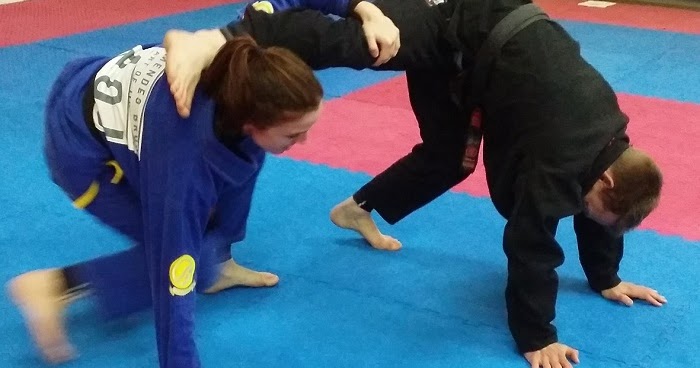
What that means is that it doesn’t have to be your feet touching the ground. It may be your knees instead, or one foot and one knee. All possible combinations apply here. The goal is always the same – keep whatever surface of each leg is touching the ground, and your hips on the same line. Moreover, don’t’ be afraid to go sideways, rotate your hip, bend your spine, etc. You could even place your arms on the ground your head on the opponent etc. in fact, sometimes you’ll place a knee or even your foot on the opponent’s body. The principle still applies – keep the sticking point of the legs and the hips in line and you’ll be as immovable as is humanly possible. That is the first, and most important part of any BJJ defense against sweeps that has the potential to work against everyone.

Hail Mary Leg Lifts

Let’s look at a couple of definitions of BJJ positions to be able to understand what a sweep is, and how you can improve your BJJ defense against sweeps. A guard is any position that has the bottom person’s legs in between them and the top person. Conversely, a sweep is any position that utilizes the legs to get the top person’s butt on the ground. However, in order for a sweep to count, the person executing it must end up on top, otherwise, they’ve achieved nothing. Getting someone to their butt only to have them stand back up is not a sweep. And that is exactly where our Hail Mary principle comes into play.

BJJ Defense Against Sweeps Leg LiftIt is inconceivable to think that people will never force your butt to the ground when you have a top position. Whenever your butt does touch the floor, though, it doesn’t mean you’ve conceded a weep. Instead, whenever you feel you’re about to fall, rule number one is to sit down first. Don’t wait to fall like a tree being cut down. Get your butt down first, kill the inertia, and look for the Hail Mary.
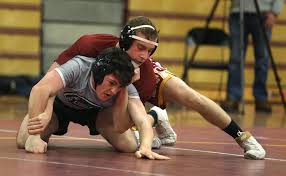
The Hail Mary is beyond simple. Find a leg belonging to your opponent, and lift it in the air. As long as one foot is off the ground, they won’t be able to get up, or it will take a considerable amount of time for them to do so. you can use any grip you want, from getting the leg under the armpit to using scoop-grips at knee level. As long as one foot is off the ground, you will buy yourself more than enough time to get up and reestablish the previous “three points in a line” position which makes your base extremely strong.

“Higher Man Wins”

Once again looking to bury our ego even further, I have to admit that both the above principles are effective, but they’re far from a silver bullet. there will always be times when either your opponent is so good, or you make a mistake, that you end up scrambling to stay on top. And guess what? That’s cool!

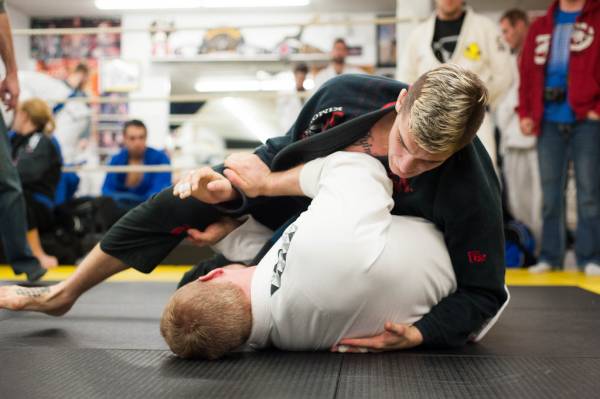
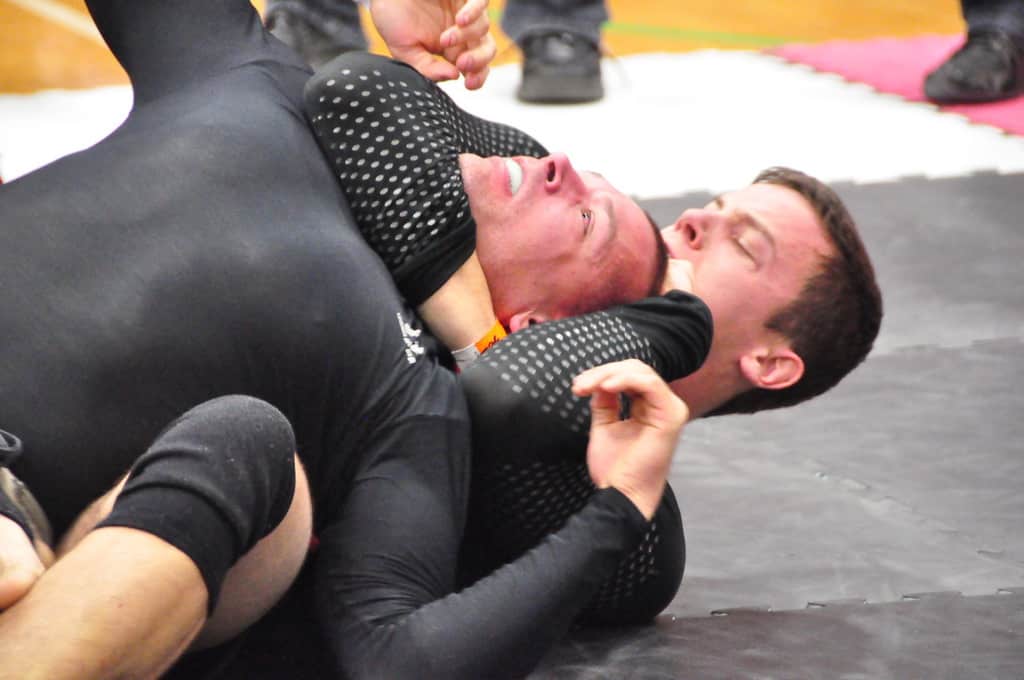
BJJ Defense Against Sweeps Higher ManAt any time that your butt is on the ground and your opponent is getting up, or already up, all you have to do to ensure you remain on top is to use an old wrestling principle. In wrestling, whenever there’s a scramble, the notion is that the “higher man wins”. That simply means that whoever’s head is higher during the scramble, and most importantly, when it ends, has top position. it is beyond simple, but it will require time for you to get used to it and start looking for it in scrambles. And you will end up in scrambles during BJJ defense against sweeps, no matter how good your “line placement” or Hail Mary leg lifts are.
In Conclusion                                                     

BJJ defense against sweeps will never work if you try and figure out a sweep counter for every possible sweep, from every possible guard. Nobody alive could hope to counter sweeps in a technique vs. technique manner. Looking for concepts that apply to all sweeps, though, is a different thing. The three-part “Unsweepable” BJJ defense against sweeps formula is something that evidence points works against everyone. Given that a lot more experimentation is needed, any input you might have is more than welcome.

7 Essential BJJ Beginner Moves Everyone Should Master

7 Essential BJJ Beginner Moves

Despite all my attempts at organizing intro classes and special introductory groups for the newest member of my gym, people are still completely and utterly lost.  It is not about the first few days or weeks even. You can find a way to make those highly enjoyable and interesting to new folks, plus teach them a thing or two in the process. The hard part comes after the first month when people try and figure out what to do in every situation. In order to make things easier for the Jiu-Jitsu beginner that is heading for a few months of anguish and suffering, here are 7 BJJ beginner moves that will help make sense of things as you go along.

BJJ beginner moves are nothing special compared to all other moves in Jiu-Jitsu. In fact, those happen to also be the moves that work perfectly at the highest levels of BJJ as well, after about a decade of practice. That said, certain moves are simple for people who are new to understand and are going to work for them even against higher belts. These were the only two standards I used when trying to figure out what the 7 key BJJ beginner moves are. Furthermore, these moves pretty much focus on all the positions you’ll find yourself in constantly during grappling, so they might just yield interesting options for non-beginners as well.

Deciding What To Focus On

This is the hard part. BJJ beginners have no idea what to focus on, and that’s precisely why there’s a coach around. I’ve said many times before that nobody can teach you Brazilian Jiu-Jitsu but yourself. I still believe that to be true. However, I also believe that guidance is massively helpful when you’re trying to figure out how the Gentle Art will work for you best.

Given that BJJ is highly versatile and is growing every day, it can be really hard for new students to choose what they need to focus on. After blue belt, people usually start “specializing” in area after area, speeding months, and sometimes, years figuring things out. A white belt beginner doesn’t have that option, though – they need to learn how to swim before they drown. Only later can they mess around with different swimming styles or try and dive deeper. This is exactly where the coach comes in.

As a coach, you need to be able to tell your students how swimming is done, but let them figure out their best approach y themselves. That said, you’ll still need to give them the basics of staying afloat, using limbs to propel themselves through the water, and the rhythm of breathing that will keep them going. As students, you need to learn to listen to your coach, particularly during this period of your BJJ journey which is definitely the hardest. Once you have everything you need to stay afloat, you can go about finding your own swimming style. If you truly want to become a shark, there are certain BJJ beginner moves that you need to imprint in your DNA as soon as possible. Here are the 7 most important ones.

BJJ Beginner Moves: The Top Picks

There will be alto of time to explore spinning, flying, and inverting things as you progress through Jiu-Jitsu. In the beginning, you’ll need a set of tools to help you deal with the most common things people will throw at you. Given that you’ll need to roll not just with fellow white belts, but also every other belt in the gym, you can’t just rely on athleticism or instinct. Instead, you need to master the following 7 BJJ beginner moves to be able to deal with the sharks trying to eat you alive while you’re swimming.

To that extent, the BJJ beginner moves you need are a submission hold, a guard of safety, a common guard pass, a sweep, a takedown, an escape, and an overall concept to give you meaning. Since different things work differently for different people, we’ve made a list of the moves that have been proven to work for everyone at every belt level, and are not hard to understand and learn.

The Submission – Rear Naked Choke

BJJ Beginner Moves RNCAlthough statistically speaking the armbar is the highest percentage submission in Brazilian Jiu-Jitsu, there’s nothing that will help you more s a newbie than the Rear Naked Choke. First of all, the Rear Naked Choke means you need to have the opponent’s back, which is definitely the one position you always want to be on the lookout for. Secondly, it is a strangle, meaning that nobody can withstand it or refuse to tap, as is often the case with limb locks. Being stubborn with a choke is only going to earn you a nap when you’re on the receiving end. All in all, you need to focus on figuring out how to choke everyone you roll with form the back, without paying too much attention to other things. Once you have the choke down, you can open up to learning other submission holds.
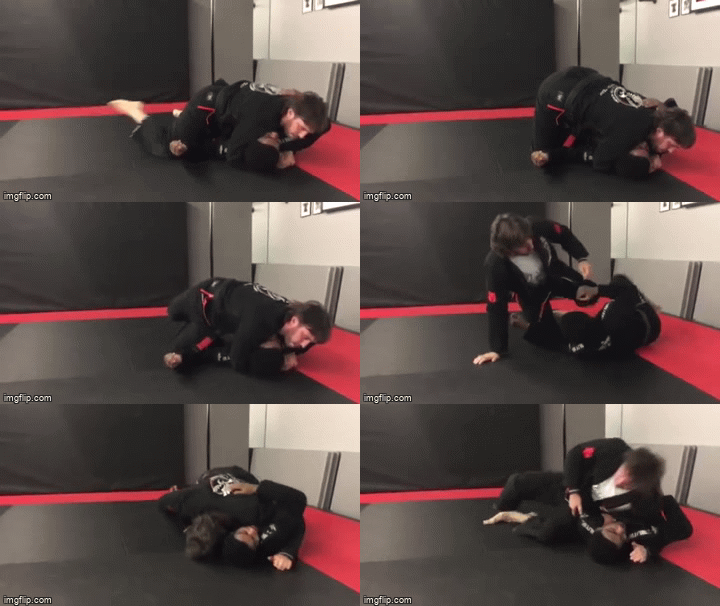
The Pass – Half Guard Smash Pass

BJJ Beginner Moves Half Guard Smash PassWhen it comes to passing the guard, there are concepts, formulas, and a list of techniques so big, it almost rivals the list of BJJ guards. In other words, even the founders of BJJ couldn’t learn all the possible passes, let alone a beginner. The one pass that you need to master as part of your BJJ beginner moves toolkit is the Half Guard pass. You’ll constantly find yourself in the Half Guard position, and from what I’ve seen through the years, beginners really struggle with getting out of it.
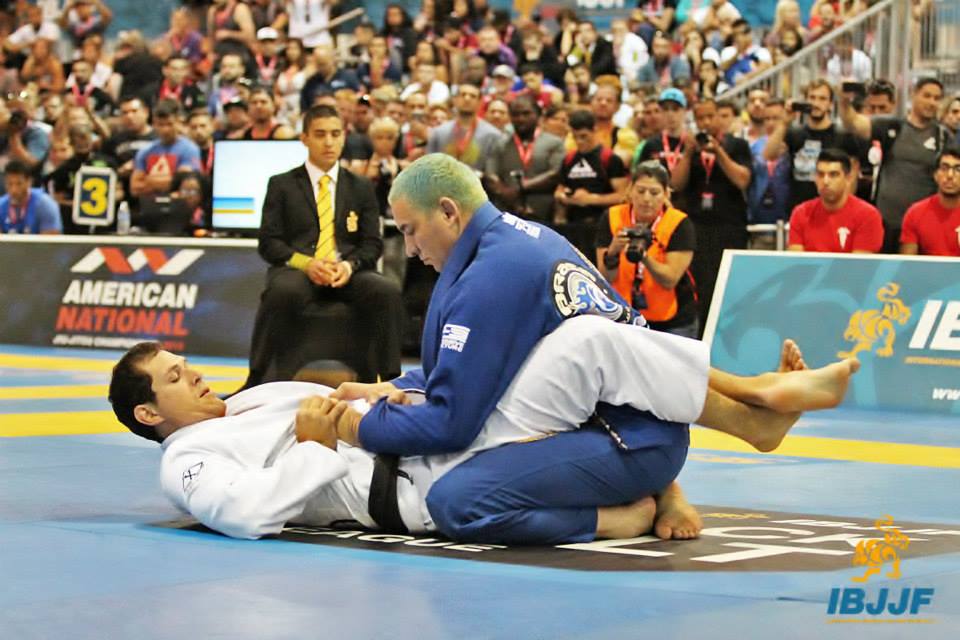
The most basic Half Guard pass you can use is the smash pass. All you need to remember is to hug the head, get an underhook, and place the bottom person with their back on the ground. Keeping them there is what will allow you to pass. Use the free leg to hook the nearest thigh and shake your trapped leg free for a pass to side control, or directly into the mount.

The Guard –  Closed Guard

BJJ Beginner Moves clsoed guardThere’s a reason why the closed guard is the one guard you’ll systematically see people use at every belt level. It is easy to get to, offers security and you can work from there. There are three main things you need to remember about the closed guard to make it a key part of your BJ beginner moves arsenal. First, keep the opponent in between your knees, rather than trying to latch on with your feet. Secondly, control both wrists, either directly, or via Gi sleeve grips. Finally use your legs, by bringing your knees to your shoulder to break the top person’s posture. From there, you can go for the back to choke, or try to get on top.
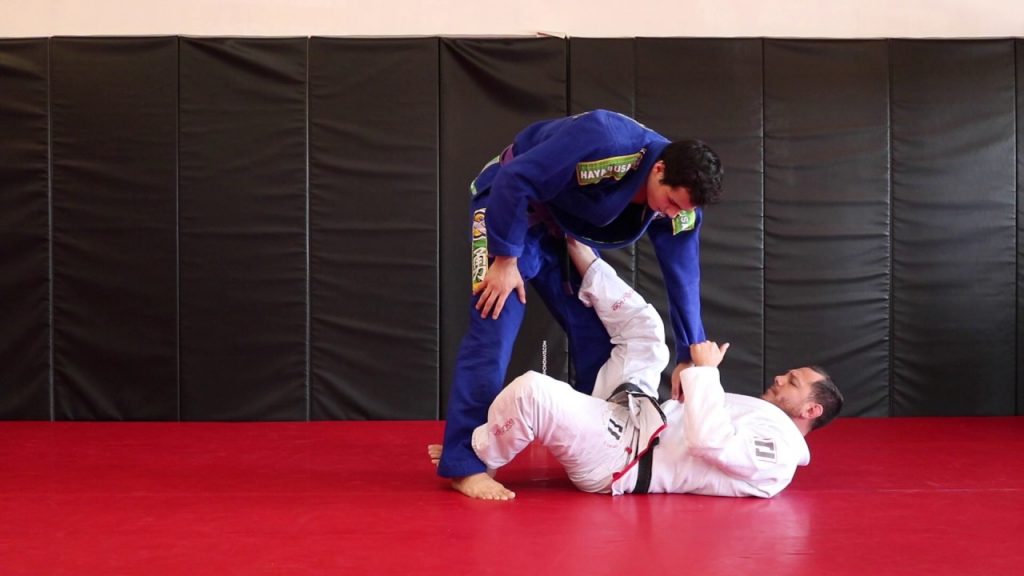
The thing to remember about the guard in BJJ in general, especially as a beginner is that it serves one main purpose – keeping an opponent from getting past your legs. All the attack stuff is what comes after, and there’ll be plenty of time to mess around with it later on.

The Sweep – Tripod Sweep

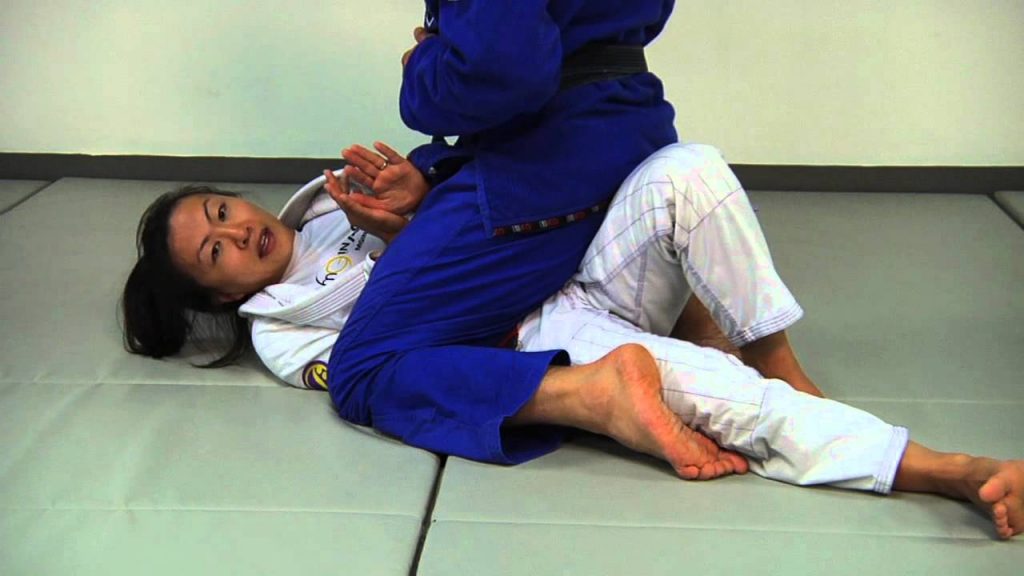
BJJ Beginner Moves tripod sweepSpeaking of getting to the top, I’ll completely change gears here and offer an open guard sweep. Why? Well, the moment you break someone’s posture from closed guard, they’ll start getting out and opening it, not really thinking about passing. Moreover, you’ll find yourself in open guard situations much more often than you’d like as a brand new student of the gentle Art. Instead of trying to learn the latest popular open guard, go for a sweeping position straight away.

The tripod sweep is easy – hold one arm, hold the same side leg, and have one of your legs on the opponent’s hip. The moment you feel like it, use the other leg to trip their free leg, preferably from behind the heel. As far as BJJ beginner moves go, this is the one sweep that will make all the difference every time someone forces open your closed guard.

The Takedown – Ankle Pick

BJJ Beginner Moves Ankle pickAlso not something you’d associate with BJJ beginner moves. My question is “why”? Most people look to the double leg or a Judo throw are the first things new students should learn. I disagree. It is really hard to try and explain an Uchi Mata or a double leg to someone who has never done any wrestling or Judo. Instead telling someone to pick a leg up and pull someone to the ground is very easy to understand and execute.
The ankle pick takedown setup is beyond simple. Get a grip behind the head, or at the collar with one arm, and control the opposite side arm with the other. The goal is to force the opponent to turn towards the side of the arm you’re controlling, while you pull them downwards. When you achieve that, go to one knee, let go of the arm, and catch the ankle of the nearest leg. It can be either leg, really. Get up and pull for one of the easiest takedowns you’ll ever get.

The Escape – Frame From Bottom Mount

Mount is the one spot you’ll constantly end up as a beginner, and you will feel absolutely claustrophobic in there. That’s why I consider escaping this position to be the most important and first escape any new student should learn.

BJJ Beginner Moves mount escapeWithout going into too much detail I’ll just say that the Upa (bridge) escape is not one I particularly like in Jiu-Jitsu. It tends to bring you inside the closed guard, and opening and passing it is usually a tremendous task. Instead, I prefer the frame and shrimp escape, since it lands you in half guard, where you can start attacking with sweeps or submissions immediately.
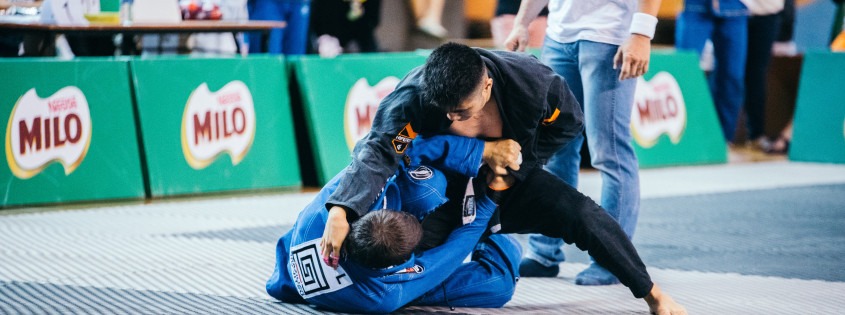
The execution is once again really simple. Use your arms to frame the opponent’s hips, turn to one side and pull the bottom leg up, aiming to touch your elbow with your knee. Escaping your hips while doing this will get you out quicker, but you could pull a frame escapee out without shrimping too. BJJ beginner moves don’t get simpler than this, really.

The Concept – Be On Top

Finally an overall concept in Jiu-Jitsu that’s a real game-changer for anyone, not just new students. However, teaching people this has proven to be much more effective than teaching it to more experienced students. The reason is that newbie are open to learning and don’t have bad habits formed through training.

BJJ Beginner Moves top positionThe concept is simple, really. Always aim to be the person that is on top. Why? There’s no bottom position the entire sport of Brazilian Jiu-Jitsu that will land you points. Certainly, you might get a submission from the guard, but other than that, every guard aims to get you back on top. So, when you’re rolling, aim to be the person on top, regardless of what is going on. You’ll quickly realize that this will keep you dominant even if you have absolutely no idea what the other person is doing. When it comes to BJJ beginner moves there’s nothing more basic than this.
Closing Thoughts

BJJ beginner moves come in all shapes and sizes. Having a simple thing to do from every common position will give you more than a fighting chance. In fact, it will start to open up doors and opportunities for your own creativity to come through the moment you start feeling a bit more comfortable on the mats. Until then, you’ll have “safe spots” to fall back to, and go-to moves that will cause trouble even for the black belts in your gym. Happy rolling!

Weightless Leg Development Exercises For Grapplers

Gymnastic leg exercises for grapplers

What is the most important body part for grappling? Some say it is the core, others point to the hips, there are even those that say legs… The truth is, I have no idea. Brazilian Jiu-Jitsu and all grappling martial arts are so versatile, that there’s really no one body part that you need to use all the time. That said, developing your entire body takes a lot of time and effort, oftentimes more than is available. One thing that you can’t go wrong in any grappling art is to work on your legs. Balance, power, strength, dexterity, mobility, and just about any other quality you can think of. And, contrary to popular belief, the best leg e development exercises for grapplers do not involve using massive weights.

Leg training is an aspect of strength and conditioning, not many people outside of bodybuilding love. To be honest, I doubt even bodybuilders do. However, they do recognize the importance of training legs. When you need to use your legs to move around, balance, jump, or try and push people off you and sweep or submit them, the importance of having your legs operate at maximum potential is even greater. That’s where grapplers need to turn towards gymnastics rather than powerlifting or other “functional” craziness. The best exercises for grapplers are those that will build both muscle and connective tissue, rather than just bulk up parts of their legs.

Going Weightless

If there’s one thing that is really hard to do, it is beat dogmas. After a decade in BJJ, I seem to be making it my mission to beat grappling dogmas and explore different ways of doing things. Challenging dogmas and absolutes is fun, and oftentimes yields very interesting discoveries that truly change Jiu-Jitsu.

The same notion holds true when it comes to strength, conditioning, and mobility exercises for grapplers. Why keep training like powerlifters when there’s ample evidence to suggest that other avenues of training might just offer better results? Training with weights still has a place, and if you like doing it, and it works for you, by all means, keep it up. However, if you’re interested in developing your legs to the maximum, I’d suggest looking into bodyweight exercises. In fact, I’d point you towards gymnastics in particular.

The first benefit of going weightless is developing just about everything in your legs. You’ll not only hit all the visible muscles from different angles but also develop the underlying layers of muscles that often play a key role in the movement. Exercises for grapplers need to develop qualities required on the mat, rather than just size. Moreover, a lot more connective tissue gets developed with gymnastic exercises, although it takes considerably more time than muscle tissue. However, the benefits are through the roof once you manage to achieve it.

Another really important thing to consider is fatigue level. Recovering from bodyweight training,. Regardless of how demanding it ma be, is a lot easier than recovering from a 1 rep max lift. For people that grappler a few times a week in addition to training strength and conditioning, this is crucial.

Nothing Beats Gymnastics

When GSP first started publishing videos of him doing gymnastics instead of Olympic lifting most people thought he was nuts. He may be a bit out there, but all those cartwheels, L-sits, and handstands really proved to work for him. The thing is, gymnastics have been proven to work for everyone, regardless of age or athletic needs.

I’ve written articles before on how gymnastics fit the bill for grappling perfectly. Summing it all up quickly, if you ask a gymnast to do any other sport, including grappling, they’ll manage to figure out how to do it, way better than anyone else with any other background. That’s because they have extreme control over their bodies and are able to adopt really quickly. Plus, there’s that crazy gymnastic strength that is down to connective tissue development. It is clear why the best exercises for grapplers, whether it is leg development or something else, are ones we borrow from gymnastics rather than weightlifting or other sports.

The Best Leg Exercises For Grapplers

To be fair to gymnastics, there are hundreds (if not thousands) of exercises and variations when it comes to training any body part. It is no different with the legs, and there’s a myriad of exercises you can do. Some are overall leg developers, while others target specific characteristics like power, strength, or mobility. Moreover, there are progressive variations of everything, and some of the stuff is really acrobatic and difficult to even watch, let alone try. In the quest for the best weightless leg exercises for grapplers, I focused on several entry-level gymnastic moves that will challenge even the toughest among you.

Twisting Squats

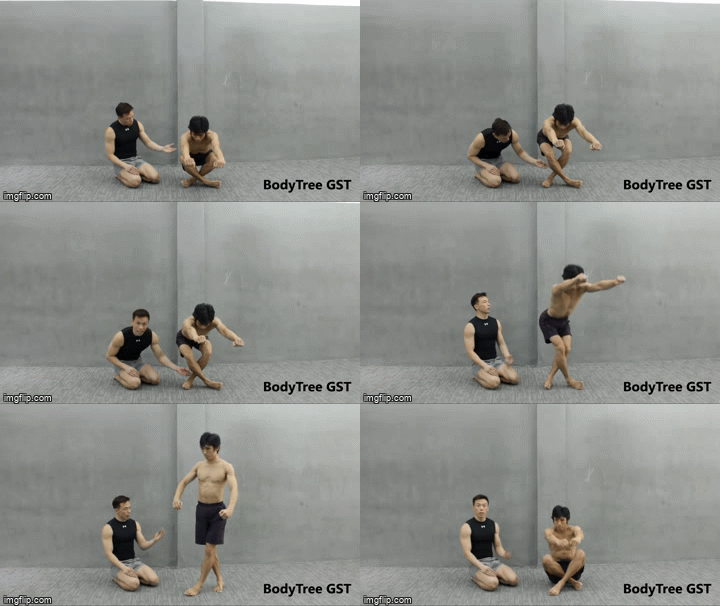
Gymnastic leg exercises for grapplers - twisting squatI’ll start with the twisting squat. It is deceivingly hard, which you’ll notice the first time you try it. You start sitting cross-legged on the ground, with the outer edges of your feet placed on the mats. The aim of the exercise is to lift yourself up just by pushing with your legs, keeping both arms in the air for balance. AS you lift, given that your legs are crossed, you’ll go in the natural direction motion takes you and turn so that your legs are parallel. However, that’s not the end. You need to keep turning until you complete a full 360-degree turn and your legs are now crossed the other way around. Then, you squat back to the ground, completing one repetition.

If I had to choose just one exercise for grapplers, I’d definitely go with this one. It has got everything, from eccentric to concentric work, balance, dexterity, strength, power, and every other athletic quality you can think of.

Natural Leg Extensions

This exercise will have you screaming with pain. You’ve probably done a leg extension exercise on that chair contraption present in every gym across the world. Well, a natural leg extension requires no equipment at all. Using just your bodyweight you can challenge your quads in ways you never thought possible. The exercise is really simple.

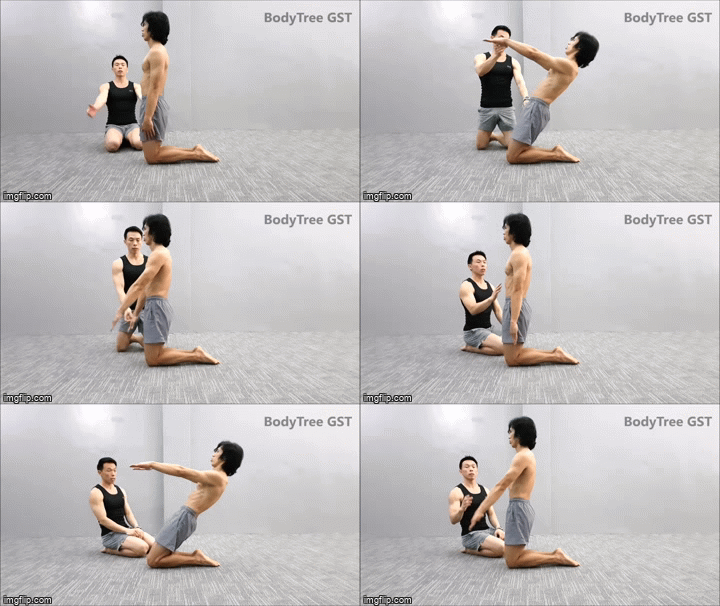
Gymnastic leg exercises for grapplers - natural leg extensionsStart kneeling, with your shins parallel to the ground, and your knees at a 90-degree angle. Keep your body straight and rigid. The aim is to use the knee hinge to tilt backward, as far as possible, while maintaining the body straight. Extend your arms forward as a counterbalance so that you can add more reach to the exercise. It is brutally painful and tailor-made for grapplers.

Natural Leg Curls

Gymnastic leg exercises for grapplers - natrual leg curlsOf course, every time you do leg extensions, it is wise to hit the hamstrings as well, giving your legs some balance. Natural leg curls, for some reason, are a lot more popular than natural leg extensions. You will require a partner though, or any other means of wedging your ankles in order to perform this one. Very popular in functional fitness, this is one of the absolute killer exercises for grapplers and fighters.

You star in the same position as with leg extensions, just with your ankles wedged or held by a partner. The goal is to go forward with your body straight, using only the knee hinge. Going completely down is the goal, but if you’re not willing to smash your face you’ll have to use your arms to catch yourself at a certain point Just remember to use them at the last possible moment, otherwise, they’ll take a lot of potential out of the exercise.

Rolling Squats

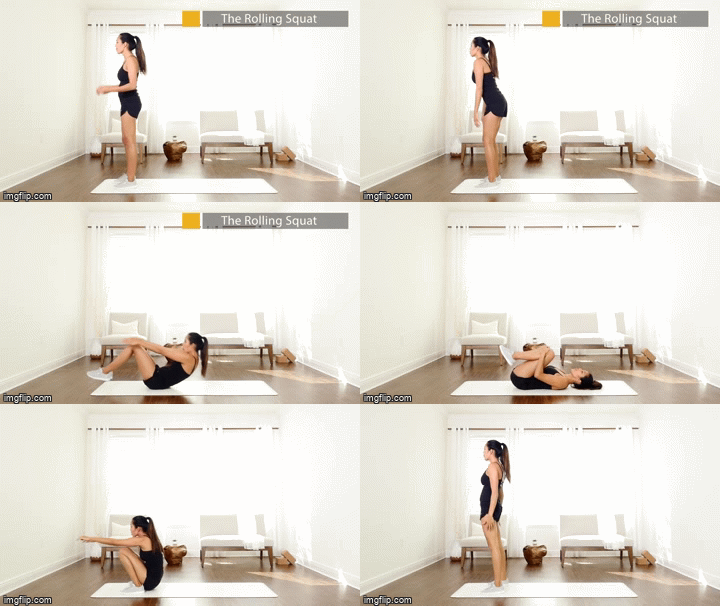
Gymnastic leg exercises for grapplers - rolling squatI truly really love this exercise. It seems easy, but when you do 20 or 30 of them you’ll change your mind. The goal is to start standing, then do a break fall while keeping your core tights. The moment you get on your shoulders, use your core, and not momentum to get back to your fit and squat up. If you’re using momentum, you’ll only gain half the benefits of this exercise. Instead focus on deliberate and precise movement, aiming to plant the feet and get up using your legs.

Progressions include using jump squats, pistol squats, and even weighted variation with an Olympic plate or kettlebell. After you master the basics, of course.

Pistol Squats

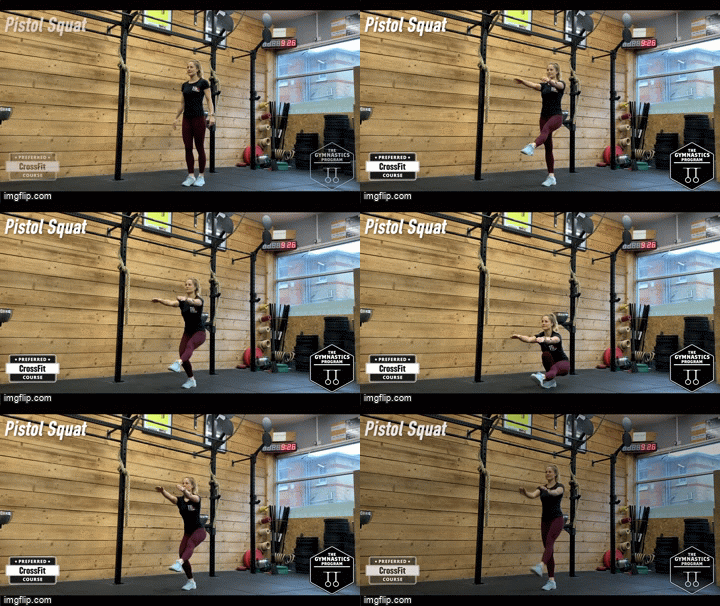
Gymnastic leg exercises for grapplers - pistol squatA notoriously difficult and very rewarding exercise, both mentally and physically. The pistol squat will work on everything, from core to legs, from mobility to strength. The goal is simple- raise a leg straight in front, preferably parallel to the ground Now squat using just one leg. The trick is to squat as deep as possible, while also keeping your foot flat on the ground. Pistol squats are among the very best exercises for grapplers, but also among the hardest exercises to master. Plenty of progressions are available if you’re not there yet, as are even harder variations of the move.

Power Exercises For Grapplers

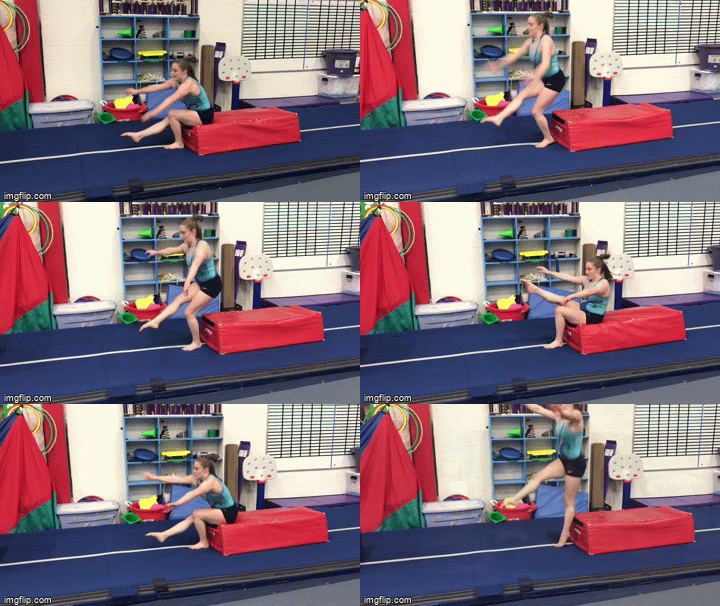
Gymnastic leg exercises for grapplers - stop jumpsHere’s an example of how you can develop extreme power in your legs using nothing but your own body weight. Sit down on a chair or anything else that’s placed so high above the ground, that you’re able to go deeper than parallel when sitting. Sit up from a dead stop and immediately jump as high as you can, returning back to sitting immediately upon landing. If you really want to make this challenging, do it with a pistol squat.

Final Words

Gym antic exercises are extremely beneficial for grapplers. When it comes to developing legs that are able to propel gymnasts across the air, performing multiple crazy flips, these are the exercises that help them achieve it. These are exactly the exercises for grapplers that can help you develop meaningful athletic abilities to go with your technical knowledge of Jiu-Jitsu.

BJJ vs. Bullying: The Story Of 10-Year-Old London Navarro

London Navarro

Brazilian JiuJitsu is a great way to make sure kids have the confidence to stand up to bullies. It doesn’t necessarily mean that kids will immediately get into fights. It is just a way to make them braver, more confident, and able to cope with the issue of bullying that has been ever-present in our society. The example of a 10-year-old girl named London Navarro, and her story about BJJ vs. bullying is a great example of how the Gentle Art can be perfect for bullied children.  

London Navarro – A JiuJitsu Phenom On The Rise 

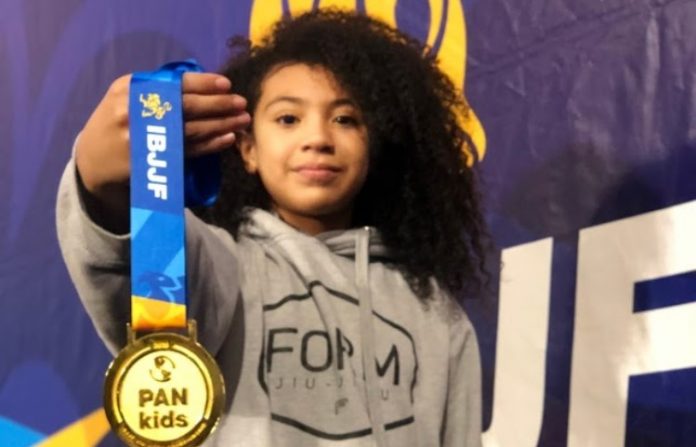
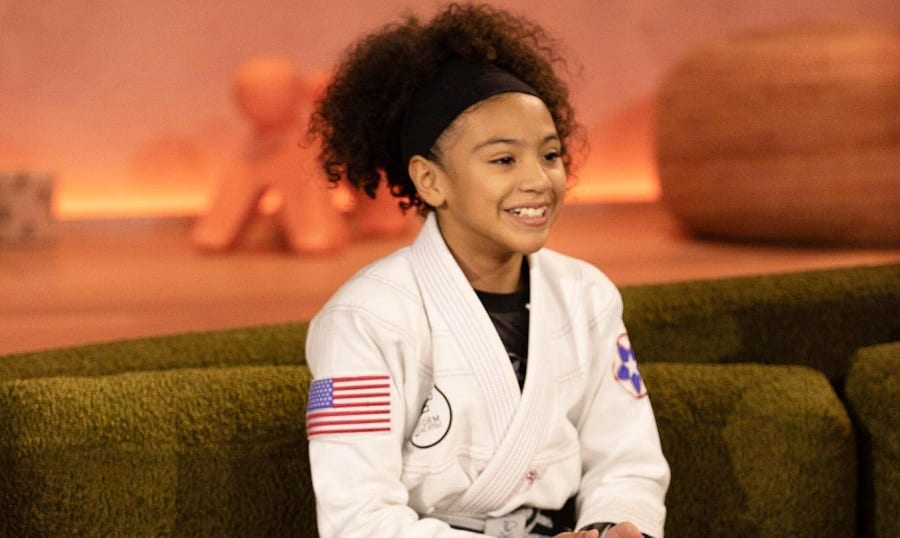
London Navarro is a 10-year-old girl from Baltimore that trains Brazilian Jiu-Jitsu. Nothing extraordinary about that statement. Wait for it. London is not just a BJJ practitioner, but also a fierce competitor. She started her BJJ journey 2 years ago, and in that short time span has amounted more Jiu-Jitsu competition medals than some adults do in their entire lifetime 

London’s story starts in elementary school. Her older brother was the subject of bullying in school, something that transferred to London Navarro as she started going to school. This set off alarm bells in their mother who was desperate to find a solutionIt came in the form of Brazilian JiuJitsu after the mom decided her kids need to enroll in martial arts.   

London did not enjoy the experience initially. She wanted out after just a couple of training sessions, claiming people were hurting her. However, after her mom inspired her by claiming London could beat the bigger people, she really took a liking to JiuJitsuA few months later London even tried her hand at competing and won her division.  

Nowadays, London’s entire day is all about JiuJitsu. She trains for two hours every day and commutes for 90 minutes in one direction to get to training. She even got her father into training. Suffice to say, nobody is bullying the 10-year-old now, with fellow students in her school highly respectful of her success. When it comes to BJJ vs bullying, London is the perfect example of why and how JiuJitsu gets the win.  

BJJ Vs. Bullying 

Over the years. we’ve seen plenty of examples of kids being bullied at school. The scary thing is that this is just the tip of the iceberg. There are plenty more stories of kids that we don’t know of, and most of them even scarier than the ones we do know. Bullying has been an issue in schools for decades, but it seems to be becoming increasingly more prevalent. Not only that but now it comes in a cyber from well, with all the social media platforms.  

London Navarro is not the first kid to turn to Jiu-Jitsu in order to solve bullying problems. there have been plenty of examples throughout the years of kids signing up for BJJ to deal with bullies. In all of the BJJ vs. bullying situationsJiuJitsu comes on top, and it has nothing to do with violence. On the contrary.  

Kim Navarro
Image Source: Kim Navarro

BJJ teaches kids how to move and think. Those are two forgotten skills in the modern age. Moreover, Jiu-=Jitsu provides kids with self-confidence. It has a profound psychological effect on them, changing their demeanor, their posture, the way they see themselves in the world, etc. Furthermore, it has an effect on potential bullies, as knowing that someone is competing in a combat sport is often more than enough to keep bullies away.  

Even in the case of a literal BJJ vs. bulling altercation, Jiu-Jitsu provides kids with a way to cope without having to resort to violence. BJJ is all about control, and a kid can just take a pull-down and hold them until a teacher arrives, or the bully sees that they have no way out. No striking, no bruises, no trouble. It is the picture-perfect way to provide kids with all the tools they need to cope in an increasingly bully-oriented environment which we see in modern schools.  

Closing Arguments 

London Navarro can be considered an ambassador to the BJJ vs bullying movement. She will also be a scary BJJ competitor in the years to come if her successes so far are anything to judge by. I doubt any bully will touch her without thinking twice, despite her being outgoing, positive, and not intimidating at first glance. As I said, it is the psychological power of BJJ that deters bullies much more than the physical side of things.  

REVIEW: The Japanese Necktie DVD by Keith Krikorian

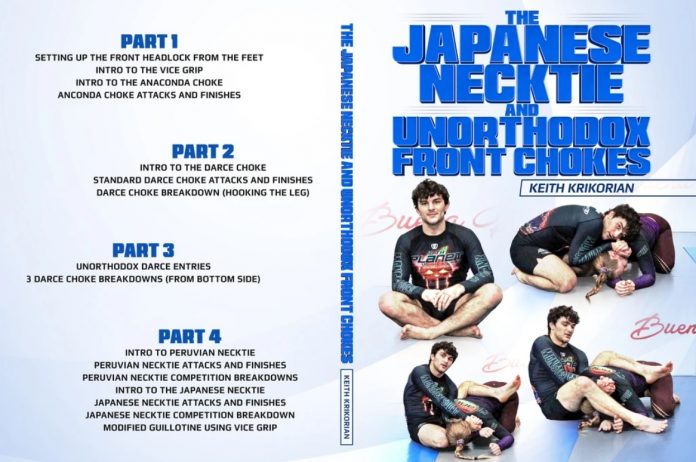
Keith Krikorian Japanese Necktie DVD Cover

One of the best chokes in existence (according to me, anyway) is the Japanese Necktie. It is brutal, it is tight, it is nearly inescapable and it can easily turn into a crank. Plus, it is the perfect pit-stop when having fun with Darces, Anacondas, etc. So far, I only managed to come across it as part of different instructionals, but never in one dedicated solely to the submission. Luckily, Keith Krikorian stepped in to remedy this and offers us the first in-depth Japanese Necktie DVD (along with other unorthodox front chokes).

ON SALE HERE:
Keith Krikorian – The Japanese Necktie

Keith Krikorian Japanese Necktie DVD Cover
Techniques List

The Japanese necktie is unusual, but it is extremely effective. I have no idea why we haven’t seen more of them in competition. I guess people only think of it in relation to the Darce choke, and they avoid it because of the crank potential, which can make it illegal under certain rule sets. That’s no reason not to use the move, though, as is proven oftentimes by No-Gi grapplers, mostly those of 10th Planet Jiu-Jitsu. The move works in Gi and No-Gi, I can guarantee it and this new Keith Krikorian Japanese Necktie DVD will teach you all you need to know.

10th PLanet’s Keith Krikorian

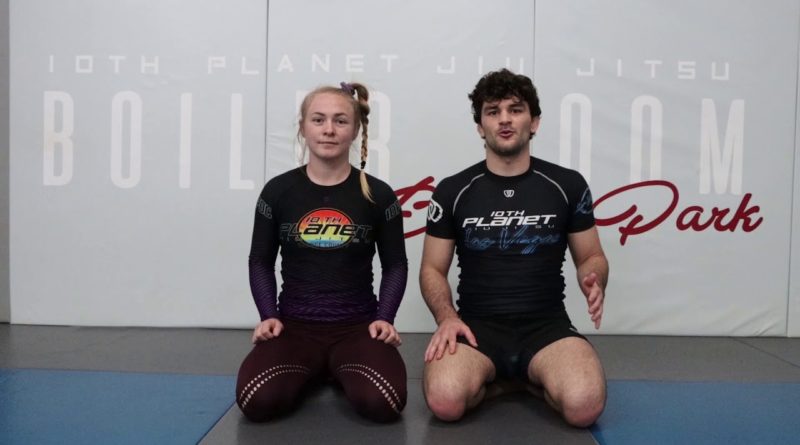
New Keith Krikorian Japanese Necktie DVDKeith Krikorian is a brown belt. As such he is one of the most exceptional grapplers to come out of 10th Planet Jiu-Jitsu. In No-Gi, he is nearly unbeatable proven by the fact the fought in ADDCC 2019 at an age of just 22. he does have a really bright future ahead of him, and I love the fact that he is issuing instructionals on his best moves as he goes.
Competing at -66kg, Krikorian entered the absolute division in ADCC. He was unfortunate to run into the eventual -66kg champion of the year Augusto Tanquinho Mendes in the first round of his weight class. he got an even bigger task going up against Buchecha in the Absolute. Still, his performances were exceptional and he definitely is one that will let an invite back to the ADCC.

On the subject of instructional, the Japanese Necktie DVD is not Keith’s first one. He already has a really cool instructional out that explains EBI overtime rounds, how to prepare for them, and how to become a master at both the attacking and defensive portions.

Japanese Necktie Submission Breakdown

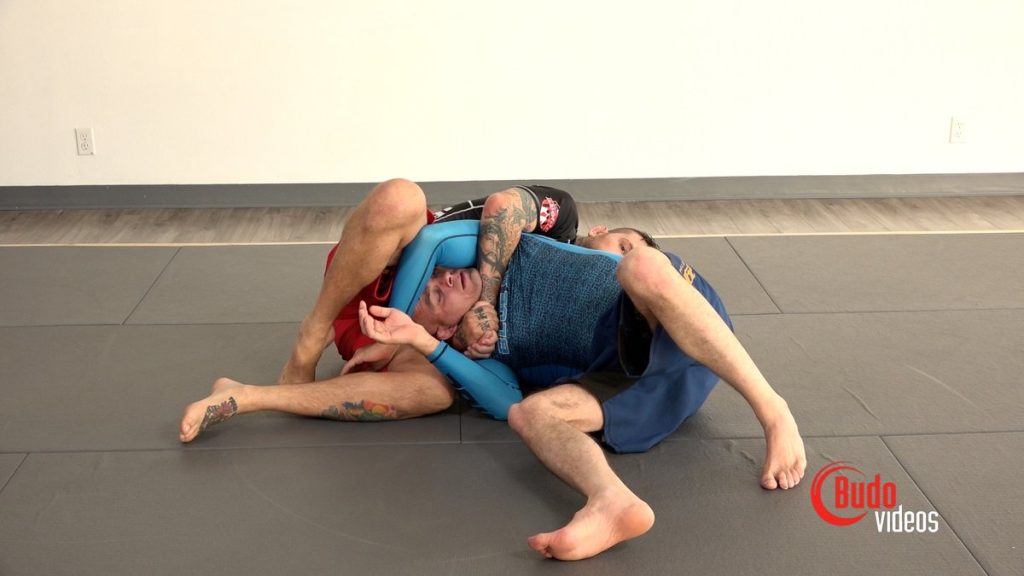
The Japanese necktie is usually described as the Darce choke’s next-door neighbor. It works when you can’t really pull off the grips needed for the Darce. It is also a great thing to do when people block and try to defend the Darce choke. A great thing is that you can go back to the Darce from a Japanese Necktie, forming an endless attack loop.

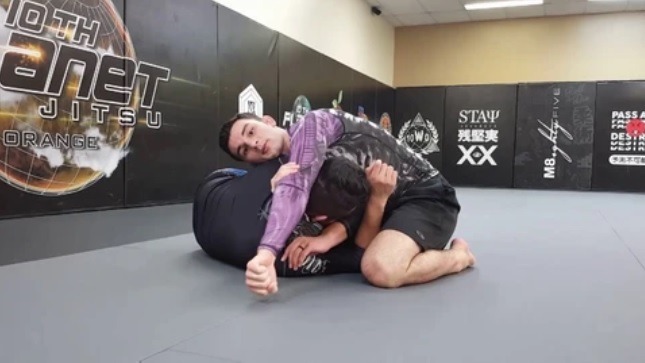
Keith Krikorian Japanese Necktie DVD reviewThe choke works from a palm to palm or S-grip from a Darce choke position. Instead of threading one arm elbow-deep, you keep them shallow. Instead, you focus on trapping one of the opponent’s legs, preferably the top one. Once you do, the goal is to get your chest/belly behind the opponent’s head. There’s really not much to do here, as you’ll get taps just form the positioning. However, you still have space to squeeze and even pull on the leg to make the compression and neck crank much more painful and effective. The Japanese Necktie DVD by Keith Krikorian will help you learn exactly how.
Japanese Necktie DVD Complete Review

Following the standard BJJ DVD format, the Japanese Necktie DVD has four volumes. They all have pars of the Japanese necktie puzzle, but there are also other unorthodox front chokes in there as well. The experience of Keith Krikorian is more than evident, and he is easy to follow and makes a lot of sense. The organization of the instructional is also not overly complicated and has a great structure. There aren’t too many chapters per volume, but each chapter is long, covering lots of material.

Part 1 – Front Headlock Basics

Opening up is an introductory portion of the front headlock. Keith Krikorian starts standing, but does offer lots of options for taking everything to the ground using the front headlock and all assorted chokes. I especially like the fact that Keith covers several front headlock grips that are essential for setting up chokes. The vice grip gets special attention in this first volume of the Japanese Necktie DVD.

There are a couple of chapters explaining the anaconda choke in the first volume as well. After a short intro, Krikorian explores several different Anaconda choke attacks and finishes.

Part 2 – Darce Choke(s)

The Darce is pretty much a Japanese Necktie, just done without involving the body. As such, it gets a lot of attention in this Keith Krikorian Japanese Necktie DVD. Keith meticulously goes over everything that makes the Darce choke tick. He starts off with the usual suspects, grips, shoulder placement, body positioning, the squeeze, etc in this portion of the instructional. He also goes into hooking the leg, which is an unusual detail for a Darce choke, but then aging, it is a DVD about unorthodox chokes. Plus, hooking the leg is what makes a world of difference in a Japanese Necktie.

Part 3 – Unorthodox Front Chokes

Keith Krikorian Japanese Necktie DVDHere’s where things get really infesting. While Keith keeps covering Darces, he also goes into neckties and other unorthodox ways of finishing, still from the same position. Most of Keith’s attention here is on how to enter the Darce choke position (essential fro Darces, Anacondas, Neckties, etc.) in as many unorthodox ways as possible. As it turns out, he might just have more options than Jeff Glover, not to mention crazier ones.
Krikorian also covers Darces from the bottom, which is something I’ve really been using for years. the Ghost escape is a great example of a Darce setup from bottom side control, but there are several more as well in this part of the instructional.

Part 4 – Neckties Galore

Finally, the last part of the Japanese Necktie DVD is where Keith Krikorian really lifts the lid on necktie specifics. In fact, he covers not just the Japanese Necktie, but also the Peruvian, really extending your front headlock options into a different direction.

The material here involves mechanics, entries, finishes, and attack combinations for both the Peruvian and the Japanese Necktie. A really great addition are competition breakdowns, featuring great uses of both my Keith himself. Lots of modifications and details stemming from years of experience are more than evident.

The final treat is a modified guillotine that you’ll learn to finish with a vice grip.

Summary

Keith Krikorian is an interesting character that will become an even bigger name in grappling than he is now. I’m really happy that he is issuing instructionals like the Japanese Necktie DVD so early. They’ll both help him develop and polish his stuff, and everyone else discovers some areas of Jiu-Jitsu where people don’t’ really dabble that much. Unless they’re 10th Planet. of course.

ON SALE HERE:
Keith Krikorian – The Japanese Necktie

Keith Krikorian Japanese Necktie DVD Cover
Techniques List

Animal Grapplers – The Real Founders Of Grappling Martial Arts

Animal grapplers pandas cover

Have you ever seen one of those old Chinese Kung Fu movies? The main characters often shout out their fighting style before they battle, mostly in very badly dubbed English. In most instances, it is an animal they refer to when describing their style. From drunken monkey to tiger or crane, you could hear just about everything in there. And, as funny as it may be, there’s some truth behind it. While those Kung Fu stuff are pretty much useless, there are also animal connections with most martial arts. After all, people did watch animals move and battle when developing martial arts in the first place. Or so they say. In any case, today we’ll honor the best animal grapplers that still have a lot to teach us.

Animal grapplers have been at it since the start of time. It is a part of growing up and daily life for them. Likewise, people have been copying animals since the earliest days of exploring martial arts. Well, some people, anyway. Others, like Khabib Nurmagmedov just went in there with the animals themselves (remember him wrestling a bear cub? ). In any case, up to this day we use animal drills, flows, and movements to make our selves better at BJJ. How about we study animals a bit deeper and figure out even more grappling secrets than just walking like bears or tigers?

Play Fighting Among Animals

Have you ever noticed how animals play fight when they’re little? They still do it when they grow up as well, but perhaps not as often. While we might just see it as play, it is an essential quality that helps animals develop into individuals ready to survive in the wild. A such, it is a lot of fun to watch, but there are also plenty of lessons in there for us, especially in a grappling sense.

Animal grapplersPlay fighting among animals has been the subject of lots of research. While it is clear that it teaches animals, particularly predators how to be more aggressive. that is an essential skill they need in order to survive, whether they’re the hunter or prey. However, there’s another aspect to this. Animals don’t just hunt/run from other animals, they also fight among themselves. Play fighting prepares them for content. Research offers some interesting findings about male vs. female animal grapples getting involved in play fighting, and their later “success” in life compared to others.
There are also other very important benefits of play fighting. There’s a social aspect to it that we people don’t quite understand, but we definitely benefit from it. If you see BJJ as play-fighting among humans, you can see how those that do it have more interesting social skills than others. Moreover, among animals, play fighting teaches younglings about their ability to fight, giving them experience and a sense of “self-assessment”.

The Best Animal Grapplers

One really fascinating thing about animals play fighting (AKA rough-and-tumble play)  is that they take turns when doing it, almost like drilling moves. They sometimes grapple with aims, like biting the flanks and rump or conceding bottom position. This all depends on the animal species and their tendencies towards grappling play.

Speaking of animal grapplers, some area truly high-level grapplers, proficient at ground fighting throughout their lives. Some of them are just build for grappling (think anaconda or octopus), while others simply enjoy doing it (like Pandas).

Koalas

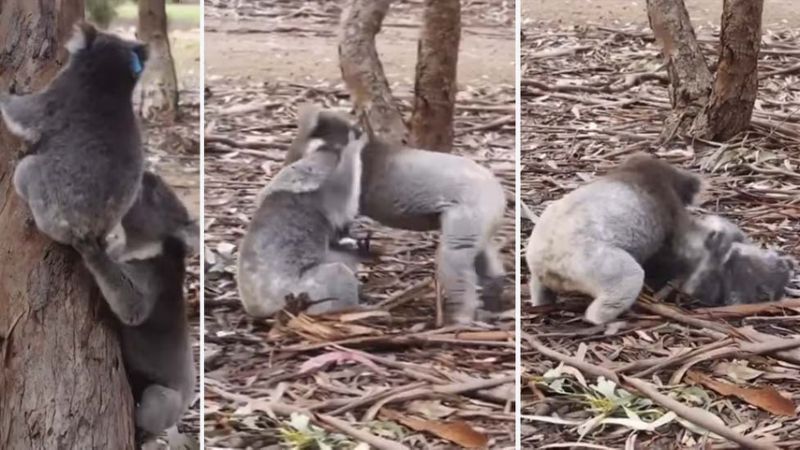
Animal grapplers koalasKoalas are cute and cuddly and people usually imagine them hanging of a eucalyptus tree trunk, nibbling on leaves. They’re actually quite agile and really love to play fight. They grappler a lot, and most do so standing, like wrestlers. Whenever a Koala gets to the ground with their back, they look to spring back up. Plus, they have some slick transitions and body locks.
Snakes

Probably the most obvious of the bunch. Snakes and particularly giant ones like anacondas and pythons are real choke masters. The Anaconda choke is a great example of a move borrowed from animal grapplers and used in BJJ. The crushing pressure these types of snakes use is more than enough to crush and/or suffocate a human. the way n which they leave no space really does demonstrate we still have a lot of grappling to learn from the animal kingdom.

The Big Cats

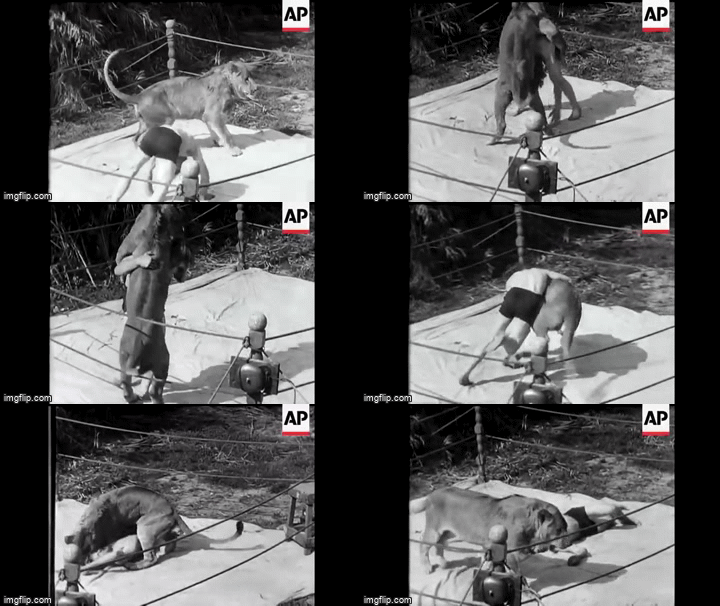
Animal grapplers lion vs manAlso known as grapplers, but they’re a much more active type of grappler, compared to snakes. Often times, people compare purple/brown belts to cats. This has to do with the feather-like movement that seems to flow, with some acrobatics for added flair. Jokes aside, all cats, from the house cat to other big cats (lions, tigers, jaguars, etc.) are fearsome grapplers. There are instances of people going up against them, and not all have a happy end like this one. They back take experts, by the way, as they love to hunt their prey by biting their neck while hanging on their back.
Alligators

Alligators, and to an extent, crocodiles are deadly when they get you in their proffered environment. They like to get you in water or on the shore. The tactics are to use the enormously strong jaw to latch on. From there, they do the famous gator roll to completely destroy the prey’s defenses. Now you know where the “gator roll” in BJJ got its name from, plus what it is meant to achieve.

Pandas

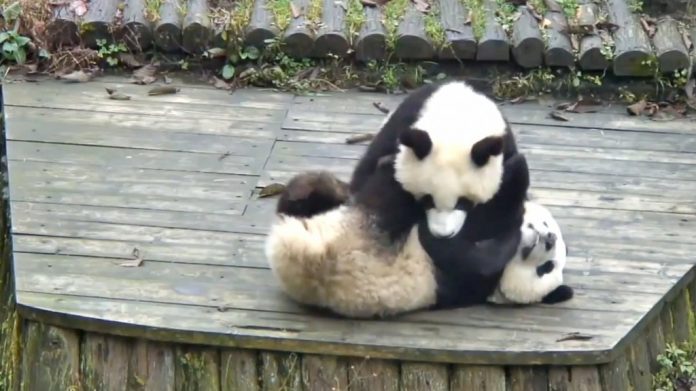
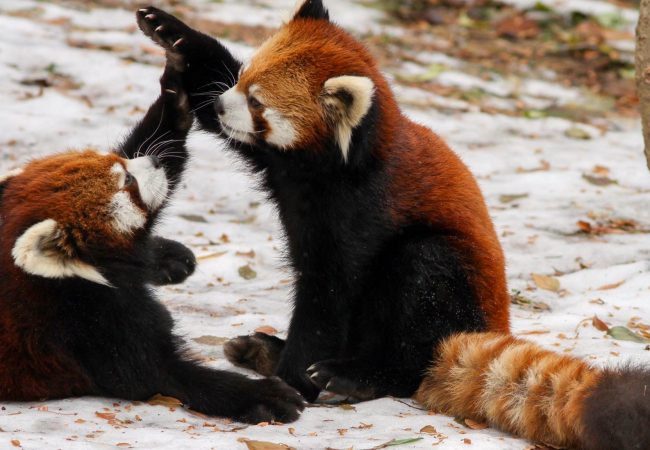
Animal grapplers red pandasIf you like escapes, then there’s no better animal to watch then panda bears. Of all the animal grapplers they might be the most unassuming, but they do move the best. Nobody can invert and flow like a panda bear. Moreover, there are red pandas which are really nature’s perfect grappler – they’re fest, slippery, masters of escape that like to grapple day and night, and have the claws to prove they’re no pushover.
Octopuses

Imagine if you had 8 limbs instead of 4. It would’ve been so much easier to grappler anyone. Well, octopuses are not just blessed with lots of limbs, but also with the brainpower and agility to use them when grappling. Apart from being able to completely wrap around you and block you from doing anything, they’re also hardcore when it comes to defense. You can tear away a limb (literally) and they’ll just swim away. Granted, that limb will grow back but that’s still a crazy move! I’d tap.

Animal Movements For BJJ

Apart from the technical/tactical side of things, we do have lots to learn from animals in terms of body control, movement, and flow. It is no accident that animal movements are a part of grappling, BJJ, Ginastica Natural, etc. They help us master body movement in planes of motion that we don’t usually use as humans. In Jiu-Jitsu, though, and grappling martial arts, all planes of motion are constantly being used. That happens to be one thing animal grapplers are all amazing at too.

All those bear walks, monkey drills, tiger walks, kangaroo jumps, etc we do in warm-ups are not just physical drills. they help you develop body awareness, coordination, agility, speed, focus, and much more. they’re a great way to make use more efficient at movement before we indulge in play fighting. Unfortunately, we don’t have these qualities from birth, as animal grapplers do,. But we do have the means and methods of training them and adding them to our arsenal. So, make sure you really pay attention to the animal drills in training.

Conclusion

Animal grapplers are fun to watch. I actually spend quite a lot of time on videos when researching the subject for this article. In fact, I’ve already seen several things I’m itching to try out on the mats as well. There’s so much to learn from animals that have been grappling for centuries before we even thought about doing stuff like BJJ.

Solving The Over Under BJJ Pass – Advanced Troubleshooting

Over Under BJJ Pass

You know the over-under BJJ pass. it is the one plenty of folks were troubling you (and still are) before you decided to pick up on it. It is a pressure pass that works really well. In fact, it works so well, some of the best in the world have built entire grappling careers around the pass. It is a great one to have in your toolbox but comes with a kink. Given its success, most people now know how to block or escape it. It is time to give it an edge again with these solutions to common over-under BJJ pass problems

Personally I never used the over-under BJJ pass much. Then, I learned about crucial details from a black belt called Aaron Ross at a BJJ camp and the pass waltzed right back to the middle of my passing arsenal. As it turns out, there are a few very simple solutions to some of the things people do to block the over-under. Incorporate them into your pass, and you’ll soon challenge even Bernardo Faria with your effectiveness.

The Mechanics                                                            

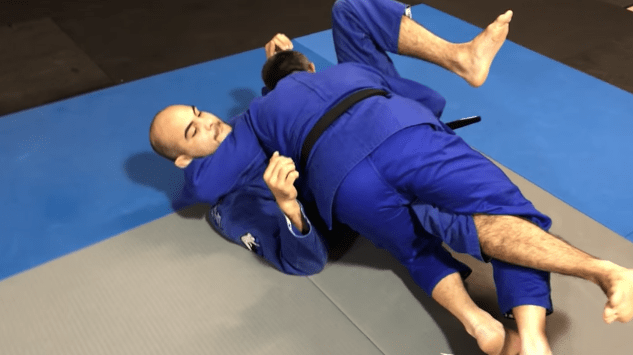
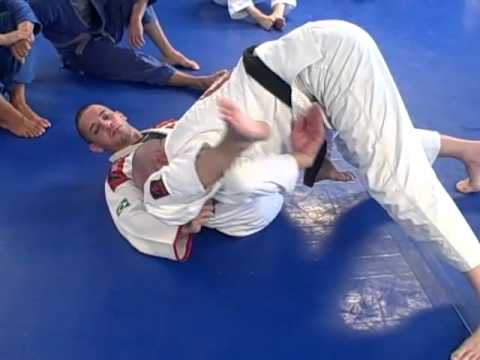
The over under pass utilizes several fundamental BJJ principles. that is precisely why it is so effective. First of all, it completely blocks the hips with the use of your entire bodyweights, which is highly efficient. It is not just your bodyweight, though. You’re using your shoulders and arms to create wedges that block the hip from going in any direction. At the same time, you also control the legs in the best possible way – not allowing the knees to touch the ground.

Over Under BJJ Pass MechanicsThe over-under BJJ pass works with you establishing an udnerhook on one leg, while an opponent is in guard. Just like with a single or double under pass. The difference here is that you don’t grip as deep with the under arm. For the over under pass, you try and grip the Gi jacket if you can, or the pants. Forget about the belt as it comes undone too often.
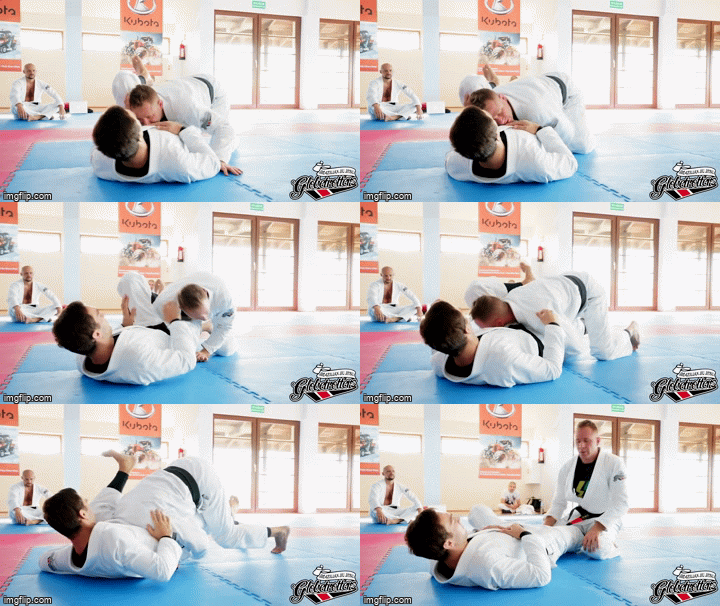
The other arm goes on top of the other leg (hence the name). This arm grip the pants. However it is not at knee level, like most people do, but as low on the pants as possible. IN fact, to make it easy, just grab the pants in the middle of the calf, or lower.

Finally, your head goes to the under side, and you keep your body in a “down dog” like position until you decide to pass. It is exactly when you get your butt up that you start running into some defensive walls.

Solving The Key “What Ifs

What if the opponent pushes my head? What if they place a hook with the leg I’m trying to pass? How about if they stiff-arm my over arm so that I can’t pass? Let’s try and solve these key blocks to the over-under BJJ pass once and for all.

The Head

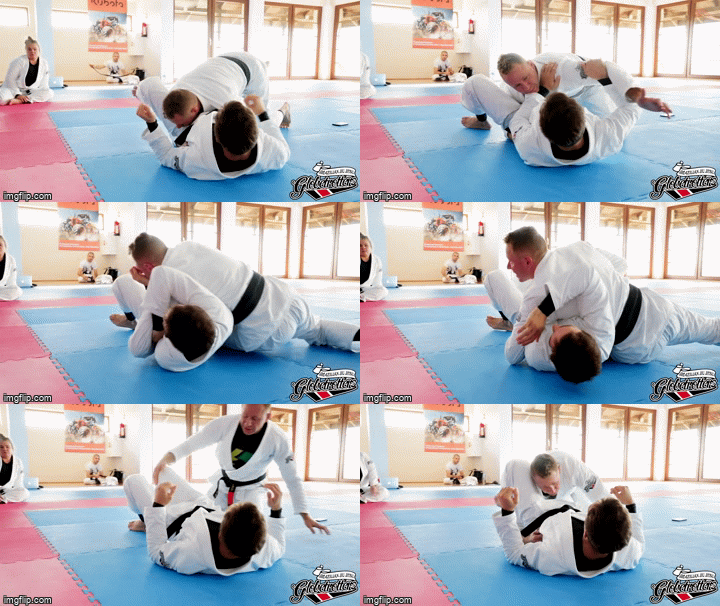
Over Under BJJ Pass - headThe head is quite easy to solve. People will try to push it back, or they’ll try to push it to the other side of their body. You just need to look in the right direction. Literally. In this case, that means having your forehead, almost touch your palm on the under side. You should have your face buried deep in the opponent’s pants, denying them any contact with your forehead, or face area. This will completely take away their options regarding pouching the head.
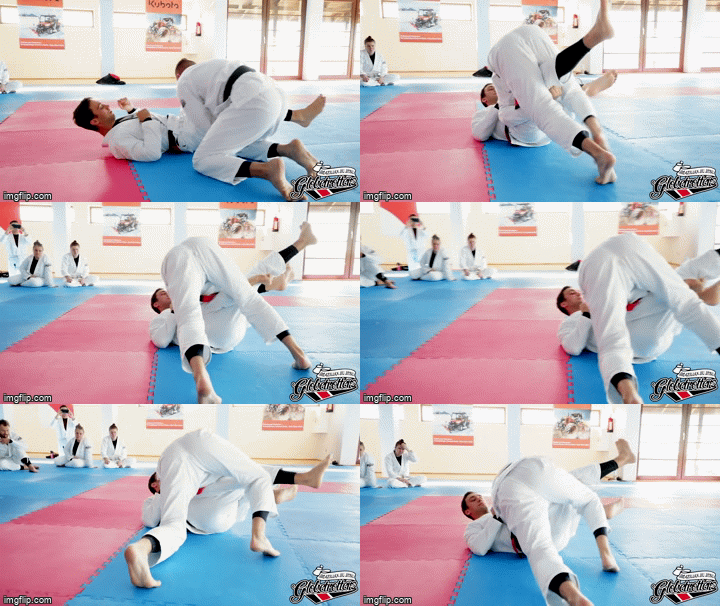
The Hips

Over Under BJJ Pass hipsThis is probably the number one thing that you should understand about the over-under BJJ pass. Most often, the trickiest part, particularly against slick guard players, is to get the second leg over to the side to complete the pass. Many people decide to hook with the leg that’s in between your legs. The solution is actually quite a simple one – twist your hip, butt to the outside.
The reason why people can maintain a hook off of the over under pass is that you can’t reach your leg too far back. Opening up the hips to the side turns a motion of back kicking into side kicking, which greatly increases the range of motion of your leg. At the same time, it gives you a bit more pressure on that side as well.

The Grips

Finally, one of the toughest things to deal with when executing the over-under BJJ pass.  There’s a stupid little counter that ‘s highly effective and it involves them gripping the sleeve of the over arm with their hand, and stiff-arming you. As long as they can keep your wrist glued to their hips, you won’t be able to complete the pass. As stupid as this problem is, there’s an even simpler solution.

Over Under BJJ Pass - knee breakIn fact, there are two solutions. The first one is to punch. Not rally punch your opponent but certainly do a real-life punch. It should be a hook punch too, by the way. The idea is that when you go for a hook punch through the air, aiming to land on the other side of their body, you’ll generate more than enough force to break any grip.
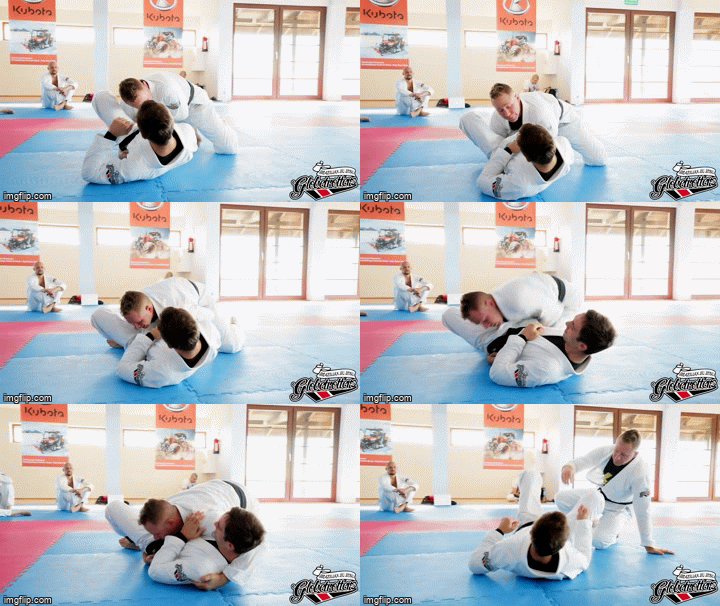
Over Under BJJ Pass - punchAlternatively, you could opt for the more “painful” version of breaking the grip – use your knee. Simply place the knee on top of the opponent’s had, preferably on the top of the palm as they grip. then lower your weight and pull your arm out behind you. Will break the grip every time you try it.
Wrapping Up

The over-under BJJ pass is a very powerful guard pass. It can really win you championships, as long as you don’t abandon ship every time you get stuck in it. use the methods described above to unstick yourself and keep passing, even though opponents know what’s coming.

How To Recover From BJJ Training – Try Float Therapy

FLoat therapy how to recover from training BJJ cover

What is your favorite recovery method? We all have one, even if it is just a hot (or cold) shower and a good night’s sleep in a comfortable bed. You also might be into Yoga, foam rolling, or saunas. There are plenty of activities you can do to recover from training .the one thing they have in common is that they tend to get a bit boring after a while. Particularly the repetitive ones, like foam rolling or Yoga. So, how to recover from BJJ training in an interesting and efficient way? Float therapy.

Float therapy is not something that’s new to the BJJ world, although many people haven’t actually tried it. We’ve all heard about it from Joe Rogan, as he’s been advocating it fro the last 10 years or so, really actively. That said, those that have tried it really do swear by it. I’m not talking about eating mushrooms or getting high on DMT here and going into a flotation tank. The idea is to figure out how to recover from BJJ training, and the tank provides an interesting option that extends to your mind, rather than just your body.

What Is Flotation Therapy?                                                                             

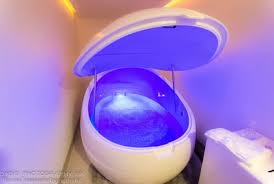
Floatation therapy is a fairly new thing. In fact, it is still not really widespread around the world. In the USA, though, you can easily find a flotation tank somewhere nearby. Flotation therapy takes place in specialized flotation tanks. They’re filled with six to twelve inches of water, which is heated to a specific temperature, similar to your body’s core temperature. Moreover, there’s Epsom salt in the water, in ample quantities. The role of the salt is to help keep you afloat.

FLoat therapy how to recover from training BJJThe tank is constructed in a way that has sensory-depravation qualities. That means there’s no sound or light coming from the outside. Combined with the feeling of weightlessness from the salts, this makes up for a very unique surroundings. You can stay inside for different amounts of time, depending on your goals, or comfort in such an unusual environment. While you let your mind meditate, the salt and water do their thing helping your body heal and recover. In all honesty, along with Yoga Nidra, float therapy is one of the laziest ways to effectively recover from any athletic endeavor.

A slight logistical issue in terms of how to recover from BJJ training with float therapy might be the vicinity, or lack there of, of such a tank to your academy. This can easily be remedied with a few visits to a facility that’s near on days you don’t train. Or perhaps even just once a week. The experience is more than worth the trouble, and the recovery benefits are immense.

How To Recover From BJJ Training With Float Therapy?

Float therapy might not be as much hands-on as other recovery aspects, but I think this is actually an advantage. We try and control everything in Jiu-Jitsu anyhow. In a flotation tank, you get all the benefits of active recovery methods, and then some, all the while doing absolutely nothing. I mean it, it is the calmest, most quiet environment you can find on Earth!

When it comes to the physical side of things, muscle relaxation is a huge benefit of float therapy. In a flotation tank, all your muscles will relax. Not only that, but they relax at the same time, which other methods can’t achieve. Apart from the muscles the joints also get much-needed relief. Floating is the only thing you can do to get the weight of all your joints. In all other means of recovery, bar Yoga Nidra and sleep, your joints are still under stress. In a flotation tank, they get to release and recover, allowing for that much-needed space to form so that your body can do its thing.

There’s also the magnesium in the salt that enters through the skin. We’re all pretty deficient in it anyway, and training only accentuates that. The Epsom salts contain lots of this mineral, along with other essential ones that help restore your body to balance. Even if sleep is your favorite way of how to recover from BJJ training, a flotation tank can help. Your sleep quality will increase massively from doing just one or two sessions in a float tank.

Additional Benefits Of Floating

Apart from the physical aspect of things, float therapy offers additional benefits which are key in how to recover from BJJ training. Those benefits have to do with your mind. I already mentioned that you’ll notice improvements in your sleep from float therapy. There’s more, a lot more.

FLoat therapy how to recover from training BJJ 1Being in a sensory deprivation chamber will give your mind a place to rest. Granted, the first few times you’ll feel weird, and you might even become anxious a bit, but that quickly passes. The sensory deprivation float tank allows your brain to take a break from constantly taking things in. In modern days, we have input all the time, and it does cause us to overthink and tire out our brains Not to mention all the BJJ related stuff that’s in there, especially right after training.

In fact, using a float tank right after Jiu-Jitsu training is a great way of organizing everything you learned in a  meaningful and efficient way. You’ll get the chance to reflect on things, maybe come up with questions, and figure out what you want to retain from class. You can even use a float tank to visualize your game plan for competitions, really working out any kinks you might not notice otherwise.

Summary

If you ask me how to recover from BJJ training, I’d definitely go for the “lazy” methods. My proffered method is Yoga Nidra, but only because there’s no float therapy where I am based. If there was, I’d probably be in there almost as much as I am in the Academy. There’s something unique about being in those chambers with all the salt, floating around with just your thoughts to keep you company. Give it a try, particularly if you’re a competitor or coach, and let us know what you think!