


Jiu-Jitsu RAP by J.T Tenacity – The Best Jiu Jitsu Song Ever

Jiu-Jitsu RAP by J.T Tenacity - The Best Jiu Jitsu Song Ever

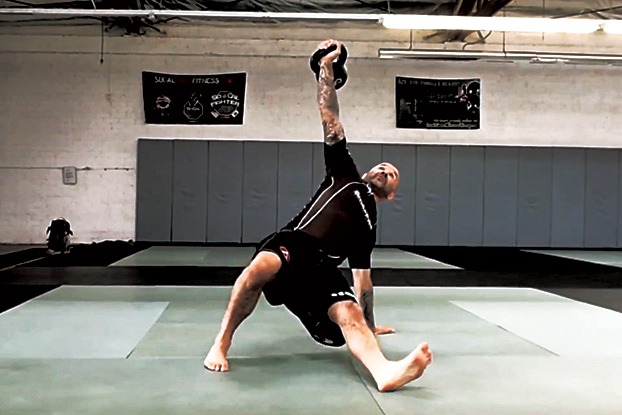
The song is made by J.T. Tenacity. He is a leader in the health and fitness industry helping to drive and pioneer Kettlebell Training in Australia and was 1/8 who were the first certified trainers in Australia. JT has coached and trained multiple world champions during his stays in Brazil and has competed in many world championships. He has also served as a personal advisor and mental coach to some of Melbourne’s business Elite.
JT brings humour, insight and technical understanding that can help anyone to improve personally and professionally. His no BS style cuts through the nonsense and small talk to deliver the Tenacity philosophy- ‘Never Give Up’.

Is this the best Jiu-jitsu rap song ever? Check out these rhymes they’re mind-blowing.

You can also check Ralek Gracie’s Jiu-Jitsu rap song as it’s probably the worst one ever.

African Martial Arts Styles That You Didn’t Know About

African Martial Arts wrestling

When we talk about martial arts, people usually make a straight connection with Japan or China. This impression is mainly due to mainstream movies from the past century. Not to take anyway from the rich history of Eastern martial arts, but they’re not the only creed of fighting systems in the world. Actually, most regions in the world have their own brand of martial art styles. BJJ is so popular that there’s rarely someone that’s not aware of it. Europe has been marked by wrestling since the days of the ancient Greek Olympic Games. America has plenty of boasting rights when it comes to boxing. But are you aware of African martial arts?

Make no mistake about it, African martial arts do exist and are as diverse as the continent itself. Not only they exist but some have very long traditions. Their origins are impossible to pinpoint precisely. As with every other spot in the world, African martial arts are based on a few distinct categories. Continuing on in this article, we bring you the most important grappling, striking and weapon-based fighting styles of Africa.

Grappling Based on African Martial Arts

Call me biased, but I’m going to start with the grappling oriented African martial arts. TO begin with, let’s discover the world of Laamb Wrestling. This is Senegalese grappling art. It’s based on takedowns and similar to Greco-Roman wrestling. Loosely translated as “to fight”, Laamb wrestling is a colorful and ritualistic feat. Matches begin with dancing and shamanic rituals before the fighters entangle. Both fighters are dressed in loincloths and decorated with talismans believed to have magical properties. Fights are scored based on the success of takedowns and even punches are allowed during professional matches.

Another distinct African grappling style is Evala. It is another art based on takedown prowess. In some parts of Africa, Evala is not just a competitive sport geared toward entertainment. It is part of an initiation ritual into manhood. In Togo, older boys have to wrestle in Rvala in order to reach manhood and prove themselves. It bears resemblance to ancient Spartan ways, with boys being separated from their parents during intense training. Unlike Spartan customs, though, Evala training takes place only a week before the boys wrestle.

There is evidence of similar wrestling based styles from Egypt and Sudan as well. Whatever the wrestling style was, there was a clear objective that was common to them all – to pin the opponent. One exception is a grappling style characteristic to Southeast Africa, in which contestants start kneeling or seated. The uniqueness of this style lies in the fact that wrestlers only used a single arm in their matches.

In African martial arts, there are also numerous traditions of women wrestlers.  As with their male counterparts, reasons for combat vary, from harvest rituals to courtship strategies.

African Martial Arts wrestling

Striking Based African Martial Arts

From a striking standpoint, the art of Dambe is a major one in Africa. It is a boxing based style of fighting with strong spear fighting relations. In honor of ancient spear fighting traditions, both arms of a Dambe fighter have roles. One is dubbed “the spear” and is wrapped in twine or a glove. The other bears the name of “shield” and is left bare, mostly playing a defensive role. Matches are organized in three-round bouts, with the aim being to “kill” the opponent. Dambe considers a “kill” to be a knockdown, which, given that only one arm was used to punch, was quite a difficult task.

A bare-knuckle boxing-like art coming from Africa is Musangwe. It is specific to South Africa and in particular, The Venda people. They have a centuries-long tradition of practicing art. Traditionally, fights are held every Christmas in the Chifude Valley. There are only three rules that decide when a fight gets stopped. One is when blood appears, the second is in case of a knockout and the final is due to one fighter surrendering. Musangwe boxers fight in searing heat, and the spectacle is witnessed by thousands of people.

African Martial Arts

Another very interesting representative of African martial arts is Ladjia. It is a martial art that is very similar to Brazilian capoeira. Ladjia is played along with percussive instruments (drums or sticks). It consists of highly acrobatic moves, including punching, kicking, and eye-gouging. As with capoeira, the tempo of the music dictates the pace of the fight. A victory is earned when one fighter gets the other one on their backs.

Weapon Based on African Martial Arts

Martial arts styles based on the use of weapons are very prevalent on the continent of Africa. The rich tradition of spear use has influenced a lot of the stick fighting styles specific to Africa.

Egypt’s stick fighting system is known as Tahtib. It is one more capoeira-like art but including sticks. Considered to be a remnant of pharaonic Egypt, Tahtib is also performed with music. Ethiopia is considered to have the fiercest and most aggressive Tahtib stick fighters on the continent.

More in line with the tradition of spear utilization, Donga is a martial art involving the use of a long stick. It is specific to the Suri tribesmen. They use the long sticks to herd and defend their cattle. There is but one rule in Donga –  do not kill the opponent. Everything else is permitted. Donga matches are violent and bloody affairs. There are usually 20-30 participants on each side of a Donga competition, each waiting their turn to fight.

African Martial Arts

Bearing resemblance to Escrima, Nguni uses two sticks. It is common to the Zulu tribe.  Much like Dambe, fighters use one stick for offense, and the other for defense. The hand holding the defensive stick also carries a small shield. Bloodshed, a knockout or surrender bring an end to a match.

These are just some examples of African martial arts. Given the diversity of the continent, it is easy to understand how there are countless other styles and variations. Do you know of any unique African martial art? Sound off!

https://bjj-world.com/difference-japanese-jiu-jitsu-bjj/


Top 8 Brazilian Jiu Jitsu Women Competitors of Today

Jiu JItsu Women

Brazilian Jiu-Jitsu is a sport that is demographically as diverse as it gets. People of all nationalities, age groups, religious beliefs, etc. all engage in training worldwide. This diversity, however, is not reflected in one aspect only. unfortunately, the sport is still not evenly matched between the two sexes. Female practitioners are considerably less than their male counterparts. And Brazilian Jiu-Jitsu women competitors are even scarcer. At least for now.

For one reason or another, BJJ doesn’t seem to attract men and women to the same degree. It is not that women are not welcome, or are not successful in the sport. On the contrary, there are impressive examples of women in Jiu-Jitsu as teachers and competitors at the highest levels. The ratio, however, increased during the last decade, remains very much male-oriented to this day. With the hope of expanding the pool of female subscribers to the art, we bring you 8 of the very best Brazilian Jiu-Jitsu women competitors of today. So, follow their example and put the Gi on! You’ll soon be hooked to art with no limitations and can even reach the level of these impressive ladies.

Jiu-Jitsu Women Of Today

Talking about the different ways in which BJJ is beneficial to women is beyond the scope of today’s article. One aspect is very much worth mentioning, though in self-defense. Regardless of competitive aspirations or lack thereof, women training BJJ are going to be able to defend themselves. The techniques are easily transferrable and give the finer half a very high degree of confidence.

Now, almost everyone involved in BJJ, regardless of sex, gets the urge to put their knowledge to the test every now and then. In those terms, competitions offer a great platform for a student to express their style of BJJ. The competition scene might be dominated by the male population in numbers, but not necessarily in quality.

During the last decade, BJJ has seen the rise of several immense Jiu-Jitsu women. Most of them are still competing today, albeit perhaps in different combative formats. Some of these women were pioneers of the sport in a competitive manner, paving the way for others. Now, they represent an example to any aspiring young woman that is contemplating a competitive Jiu-Jitsu career. Anyone can follow in the footsteps of these ladies and go on to become an icon of the sport. And, no, being a black belt is not one of the requirements, so do not wait and start competing now!

#1 Mackenzie Dern

Despite not being associated with BJJ as much during the last year Mackenzie remains one of the top Jiu-Jitsu women of today. Even in her MMA endeavors, she remains a huge ambassador of the sport, demonstrating the supremacy of high-level BJJ against top-class opposition. While we eagerly await her UFC debut, let’s take a look at some of her grappling accomplishments.

Mackenzie is the daughter of renowned black belt Wellington Dias. She has spent her entire life in and around BJJ, competing since the age of 14. Both Royler Gracie and Leticia Ribeiro have influenced Dern during her BJJ journey. Before earning her black belt, Dern won the Worlds at every belt level. The talented champion also won every accolade at featherweight boasting a huge 45 submission wins out of 75 victories. She also had unforgettable wars with Gabi Garcia in the absolute division and is an ADCC champion as well. All in all, she is the face of Jiu-Jitsu Women!

Jiu JItsu Women

#2 Dominyka Obelenyte

Lithuanian born Obelenyte is the first female Marcelo Garcia black belt. She is a staggering 4 times ADCC champion and one of the top competitors of today. She’s been consistently demonstrating phenomenal skills ever since3 her teenage days as a BJJ competitor. She is one of the youngest ever champions to win an adult world title (at 14).

The 23-year-old began training at 9, starting her journey at Louis Vintaloro’s gym in New Jersey. She discovered Marcelo Garcia not long after and managed to get to brown belt by the time she was 17. A black belt since 2015 she won world championships at many levels, including double gold at the 20th World Jiu-Jitsu Championship. Since last year, Obelenyte switched schools and is now associated with Fábio Clemente.

Dominyka Obelenyte

#3 Beatriz Mesquita

Bea Mesquita is a Leticia Ribeiro black belt and one of the most exciting Jiu-Jitsu women competitors out there. Similar to the previous two impressive ladies, Bea was impressive even since her teenage days. She was already a World No-Gi champion and Pan American champion before being promoted to black belt. Mesquita is also very versed in wrestling and Judo, holding numerous competitive accolades in both.

Now 27, Mesquita first became champion at 10, winning numerous Brazillian Judo championships. It wasn’t before 2006 that she started training wrestling, and subsequently BJJ. Since then, the Brazilian has dominated the competition in all facets of the sport. Both her brown and black belt promotions came on the top of the World Championship podium.

Beatriz Mesquita
Beatriz Mesquita

#4 Rikako Yuasa

“Lady Sasa” is a BJJ black belt from Japan that has dominated the Jiu-Jitsu scene lately. She is considered to be one of the most accomplished Jiu-Jitsu women’s competitors of her generation. She’s a World, Asian and European champion at featherweight.

Rikako is notorious for her open guard skills, her lasso guard in particular. Today 27, she started training at 17 with instructor Makoto Ikuta. With Pogona Club Gym. Yuasa soon became proficient in the art and got her black belt from Yukinori Sasa in 2014. A champion at most belt levels, there is still a lot to come from her at black belt. Who knows, you might even end up facing her in competition one day!

Rikako Yuasa
Rikako Yuasa

#5 Tammi Musumeci

Tammi Alana Musumeci is an Emyr Bussade black belt. Ever since she was 19, she caught the eye of the grappling world with her impressive performances.  She showed her value through her 2014 Pan American Championship performance when she beat favorite Mackenzie Dern. Her most memorable performance, though, is at the Worlds where she battled to the end with a broken arm against fellow top competitor Michelle Nicolini.

#6 Michelle Nicolini

When it comes to elite Jiu-Jitsu women fighters, Michelle Nicolini is right there at the top. She is an unbelievable 8 time World Champion as well as ADCC and World Pro champion.  She is a Robert Drysdale black belt and one of Checkmat’s most prominent competitors.

Dabbling in capoeira before settling down in BJJ, Nicolini notably fought 4 weight classes above her own in 2010 responding to a challenge. Her signature move is the shin to shin guard, while her toe holds are stuff nightmares are made of.

Michelle Nicolini
Michelle Nicolini

#7 Gabi Garcia 

The only heavyweight on this list, Gabrielle Garcia is by far the most dominant female BJJ competitor. AKA Gaúcha, she is a black belt under Fabio Gurgel and a key competitor of the Alliance team. Known for her battles with notably lighter Mackenzie Dern, she has also been focusing on MMA during the last couple of years.

32-year-old Garcia was born in Rio but got exposed to BJJ after moving to Sao Paolo. She was a prodigy from the start so turning professional was an easy choice. She won the No-Gi Worlds in 2008 and hasn’t stopped since. 32 of her 58 wins are by way of submission. She is currently fighting professionally in MMA in Japan but has a difficult time finding opponents.

Gabi Garcia
Gabi Garcia

#8 Elvira Karppinen

Elvira Karppinen is a 28-year-old brown belt from Finland. She is part of Eddie Bravo’s 10th Planet Jiu-Jitsu. A dancer prior to starting BJJ, Elvira pulled one of the surprises of the year. Beating Mackenzie Dern in the first round of ADCC 2017. Her coach is her husband, 10th PLanet black belt Lauri Karppinen.

Karppinen is a clear sign the top female competitors are not limited to black belts only. Despite not medaling at the ADCC she’s won plentiful medals and has a lot and lots more waiting for her. She is going to be a fierce black belt in the very near future.

Jiu-Jitsu For Women – Dealing With Common Training Issues

https://bjj-world.com/female-bjj-white-belt-defeats-male-bjj-black-belt/

Mackenzie Dern Chokes Mandy Polk for 4-0 in MMA

Hapkido Black Belt vs BJJ Blue Belt in a Grappling Match

https://bjj-world.com/sized-bjj-blue-belt-vs-hapkido-6th-degree-black-belt/

Hapkido is Korean martial art. It is a form of self-defense Martial Art that just like BJJ employs grappling techniques similar to those of other grappling martial arts. And it also employs kicks, punches, and other striking attacks.

Let’s say it’s something like Japanese Jiu-Jitsu, Japanese Ju-Jitsu, traditional Ju-Jitsu or how you like to call it.

Ib this grappling match BJJ Blue belt pulled guard and tapped after 10 seconds on an ankle lock. It’s pretty weird to tap something like this. While it may hurt a bit, but in my opinion, it’s not something to tap. There so no control at all except that one on an ankle. But, better to tap than sorry 🙂

Without taking any credits for Hapkido guy’s victory I would like to ask you, would you tap on submission attempt like this?

You can also check out the grappling match with outsized BJJ Blue Belt vs Hapkido 6th Degree Black Belt:

Out sized BJJ Blue Belt vs Hapkido 6th degree Black Belt

BJJ Self Defense – How To Keep Yourself And Your Loved Ones Safe

BJJ Self Defense - How To Keep Yourself And Your Loved Ones Safe

Do you feel confident that you’re able to effectively defend yourself with BJJ? Does training Jiu-Jitsu mean that you can use it for self-defense in a violent, real-life altercation? The art certainly provides the means and methods to do so. As complex as it is BJJ can be simple enough to provide one with decent self-defense capabilities in a short time. It is the method of training and the school’s philosophy that dictate the students’ ability to successfully defend themselves, should the need arise. In that sense, is sports training enough for a BJJ self-defense scenario?

For starters, it is beyond doubt that BJJ posses the techniques to defend yourself and your loved ones in a violent scenario. Actually, the arts very roots are in self-defense. In the old days, the Gracies challenged everyone and anyone to Vale Tudo fight. The point was to prove that BJJ reigns supreme over all other martial arts. So, if Jiu-Jitsu tops every martial art than it should be easy to use it against untrained opponents. Well, things are not quite that easy.

BJJ Self Defense Training

First and foremost, let’s tackle the elephant in the room – BJJ works! BJJ self-defense is very applicable in the real world for every category of people. The only trick is to train specifically for it. The sports aspect of the art has taken over it so much, that self-defense is often put in the background. It is not that most of the techniques that are regularly practiced do not work. It is the mindset that needs to be trained. Although the techniques are the same, the BJJ sports and BJJ self-defense mindsets are very different.

BJJ has a unique opportunity to allow people to train live. By that, I mean that sparring is done in a controlled fashion that is as close to a real fight as possible, Now, technically, whether it is a BJJ or MMA fight or a real one, the technical aspect remains the same. However, in a real fight, there are no points, no tapping, and no referee to protect you. That said, the techniques you know will work – it is your mind that needs to be in sync with the situation. This is why self-defense training has to be a part of every academy’s curriculum.

On a different not, BJJ is highly reliable in a self-defense scenario thanks to the nature of the art. While striking is often an uncertain endeavor, despite experience and knowledge, joint locks and chokes are better. They offer a high percentage of success while minimizing the risk thanks to distance management. According to John Machado “The majority of the self-defense moves involving pain compliance function by crushing a muscle or extending a joint in an uncomfortable direction”. You just need to be sure you know what you want to do and to what extent.

How Efficient Is BJJ In The Modern World?

Japanese Jiu-Jitsu was designed to help the Samurai defeat armored adversaries in hand to hand combat. Manipulation of joints and grappling moves proved much more effective than striking. That aspect of the original Jiu-Jitsu successfully transferred to BJJ as well. Even today, traditional Jiu-Jitsu and Judo are mandatory for Japanese law enforcement personnel. There is no reason why such professions would take up an ineffective system.

For the everyday person that is not a law enforcement professional, BJJ offers a high degree of reliability and confidence. For one, most of the unknown are removed due to distance management. Clinching and takedowns are a big part of the art and present excellent means of staying safe and in control. They also provide a route to the ground, where even greater control awaits. This is precisely the one aspect of BJJ self-defense that gives it supremacy over other arts. The ability to control someone on the ground, where most fights end up anyway, is paramount in the outcome of an altercation.

From a legal standpoint, controlling someone until the subdue or authorities arrive is the safest manner to end a fight. Even in extreme cases, a choke is way more reliable than a one-punch-knock-out. And it won’t get you in legal trouble as well since you can completely neutralize an opponent without any visible injuries. Should you choose to inflict an injury, though, devastating joint locks are always there for the taking.

Navy SEAL veteran Willink recommends BJJ as the best self-defense alternative next to having a gun on you. Renowned black belt coach Firas Zahabi did an experiment regarding the effectiveness of Jiu-Jitsu. Here is the outcome:

Confidence For The Finer Half

A very important aspect of BJJ is its applicability for women. In terms of staying safe, there is nothing better for the finer half than BJJ. BJJ self-defense offers women the opportunity to effectively deal with bigger, stronger opponents from disadvantageous positions.

The first very important aspect is the mechanical advantage that BJJ gives the smaller person. In the case of male on female attacks, this is often the case. In such scenarios, BJJ is the best way to equalize the odds. Actually, with the correct training approach, it shifts the odds into the women’s favor most of the time. Movement and leverage are emphasized in BJJ over strength, which is exactly the advantage that women need in an emergency scenario.

Secondly, BJJ revolves around the opportunities to attack from the back. The BJJ guard is a position-specific only to BJJ. Being able to not only defend, but a counter-attack from the back is an unexpected variable for attackers. BJJ is so effective off the back, that it can help even against trained assailants. Since a lot of the attacks on women often end up with them on their backs, BJJ is by far the one best option to provide the finer half with means to successfully get out of an attack unharmed.

Last but not least, constant live training and rolling give women the sense of a real-world scenario. It is one thing to drill moves in a controlled environment and another to be able to use them under stress. Rolling in BJJ is as close to real as it gets, teaching women to be comfortable in close proximity and uncomfortable positions with men. The constant repetition of such exercises results in a calmness of mind that is essential in real-world scenarios.

Empowering Children

Speaking of those closest to us, having a child capable of defense is as important to parents as it is for the children themselves. In reality, children rarely find themselves in situations where they need to defend against full grown adults. Even so, if such an occasion arises, the advantage they have from BJJ tops any other means of self-defense available.

However, in the modern world, children are more often the target of other kids their age or slightly older. Bullying is a major occurrence in today’s society and can have devastating effects on children that are on the receiving end. BJJ self-defense offers kids both verbal and physical options to prevent bullying and diffuse difficult situations. There’s nothing more important than the safety and well being of children and BJJ can help both them and their parents sleep better at night.

BJJ Gi Guide For Beginners: Answering Common Questions

Suffragette Jiu-Jitsu: Grappling For Women’s Rights!

The Best Self Defense Video Ever!

Innovative Aikido Master and His Anti-Takedown System

Innovative Aikido Master and His Anti-Takedown System

It seems like everything is easy when you’re aikidoka! And it seems like Aikido has an answer for all grappling martial arts.

There’s a lot of movies with Aikido, but are these techniques really useful?

Aikido vs Grappling – Fantasy vs Reality – Wrestler vs Aikidoka

Grandmaster with 12 Black Belts and 7th Degree in Grappling

Background Checks for Every BJJ Student

Background Checks for Every BJJ Student

Rener and Ryron made a great video about sex predators in BJJ schools. Here is what they said about it:

There was a lot of talks lately about Jiu-Jitsu schools that are being owned and operated by individuals who have a history of sexual assault.

Rener said that they, Gracie Academy Jiu-Jitsu, conduct background check on all of their instructors to ensure that they are not certifying anyone who has a history of sexual assault! Rener also mentioned that Gracie Academy is doing it for the last 10 years.

There’s also no reason why the level of investigation should only be restricted to instructors in BJJ Schools. We decided to do a background check on every single existing and future student in our academy. We want to make sure that people with sexual misconduct in pas are not among our other students.

As much as we believe that Jiu Jitsu is the place of healing and bringing the best out of people it’s not worth it to have sexual 2, five, 10 people that had a history of sexual assault.

My Children are here, my friends, my friends’ children, their families. People come here because they trust in this place and we’re going to protect that at all cost.

We have to check and make sure that all students don’t have a history of sexual assault. And if they do have they won’t be invited to train in this school.

We strongly encourage other schools too, to do the same thing. Because, how would you feel if you bring your child to train knowing that school has sex offenders? So this is something that is very important.

Check the rest of Rener and Ryron words on this matter in a video below:

More Convicted Sexual Predators in Rickson Gracie JJGF Federation

Rickson Gracie’s BB Sentenced to Prison For Sexual Harassment of 15-yr-old Girl Still Trains with Rickson

Scott Naugle, Sex Offender and BJJ Black Belt Arrested, Police Reports

The Difference Between Japanese (traditional) Jiu-Jitsu And BJJ

The Difference Between Japanese Jiu-Jitsu And BJJ

We all know that Brazilian Jiu-Jitsu is a result of Japanese grappling martial arts. In particular, it was Judo that inspired the Gracie family to create and perfect Jiu-JItsu. However, the traditional elements of Judo mean that the art behind BJJ still exists to this day. Not only that, but the original grappling art, the one behind all grappling martial art styles is still in the picture as well. We’re talking, of course, about Japanese Jiu-Jitsu.

Japanese Jiu-Jitsu is the mother of all grappling arts. It is as simple as that. Originally, it started off as a lethal system to keep the samurai alive in unarmed combat. Today, Japanese Jiu-Jitsu, in most gyms, is in a traditional form of martial arts practice. Although one different from the military version. This traditional style of Jiu-Jitsu is again in the public’s focus, thanks to the explosive spread of Brazilian Jiu-Jitsu. However, the two arts are quite different in some key structural points. Let’s take a look at the main differences between the two.

Japanese Jiu-Jitsu Origins

The precise origins of Japanese Jiu-Jitsu are quite unclear. Speculation points to the Buddhist monks in India, as the first to develop the art centuries ago. What’s known is that it was used as a survival tool for the Japanese Samurai and Ninja warriors. The idea was that in unarmed combat, striking would be completely ineffective because of the warriors’ armor. In such cases, grappling methods that involved throws and joint locks proved to be a superior method of combat.

Japanese Jiu-Jitsu has come a long way from its original military form. The traditional values of the art have survived as the knowledge of the art was passed from generation to generation. As time went by, the art developed into a more sport-friendly format, despite it being the art of choice for military and law-enforcement personnel to this day.

A major change in traditional Japanese Jiu-Jitsu was the introduction of Randori or free sparring. It took the creation of Judo by Dr. Jigoro Kano to introduce this change in the art. As such, Judo later pulled apart from Jiu-Jitsu as a separate grappling martial art. Judo, though, specializes mostly in the throws department, while traditional Jiu-Jitsu is still a very diverse martial art with plenty of elements.

Japanese Jiu-Jitsu

Essentials Of Brazilian Jiu-Jitsu

Brazilian Jiu-Jitsu is a third generation offspring of Japanese Jiu-Jitsu. It came into existence thanks to the influence of Judo. Mitsuyo Maeda was the person responsible for introducing Carlos Gracie Sr. to the art of Judo. Both Carlos Gracie and his brother, Helio were, not the most impressive physical specimens. This was particularly the case of Helio Gracie, who was frail and weak, to begin with. This prompted the Brazilian to focus on the ground aspects of fighting, thus reverting back to the Japanese Jiu-Jitsu roots of Judo.

Brazilian Jiu-Jitsu Today

Today, BJJ is by far the most prevalent grappling art in the world. It was the base for the inception and rise of MMA after Royce Gracie destroyed everyone. Since then, even BJJ itself has evolved substantially from the original version created by the Gracies. So, you could even say that MMA is the result of Japanese Jiu-Jitsu as well, thanks to the influence of Judo and BJJ.

Opposed to Judo, which went the way of throws and sweeps, BJJ’s area of specialization is the ground. Reverting to many of the most basic traditional Jiu-Jitsu principles of control, BJJ is built around a system of dominant pinning positions. The ultimate goal of Brazilian Jiu-Jitsu is to finish an opponent via a choke or joint-lock, which can be traced back to the original days of Japanese Jiu-Jitsu.

Another important aspect is the culture that gave birth to the art. Brazilians are less traditional and more relaxed than the Japanese. This is reflected in the art where training and communication is a lot less formal than Judo or Jiu-Jitsu.

What’s Different Between Japanese Jiu-Jitsu and BJJ?

Now that we know the history of the grappling martial arts of the Jiu-Jitsu line, let’s take a look at how they differ in modern times. Both BJJ and Japanese Jiu-Jitsu are today competitive sports, ranging across different disciplines.

Brazilian Jiu-Jitsu

To begin with, modern BJJ is a much more sports-oriented martial art. Not to take anything from its effectiveness, but the sports aspect has taken away most of the self-defense aspects of the art. Today, BJJ’s focus is in a sports direction, with points and rules guiding the choice of techniques.

Furthermore, BJJ specializes almost exclusively in the ground fighting aspect of grappling. On the ground, it offers complete control over an untrained opponent, regardless of size. Actually, it is more geared towards giving smaller people the upper hand over bigger opponents. The fact that the fight takes place on the ground means that there is less left to chance. Whnenonn the ground, control is easier to obtain and is much more stable. On the negative side of things, BJJ takes more time to elicit complete control over someone. Many people think that in a self-defense context, Brazilian Jiu-Jitsu is useless against multiple opponents, especially armed ones. But, to prove that BJJ makes sense in those types of situations here is an article explaining it.

Japanese Jiu-Jitsu vs BJJ

Japanese Jiu-Jitsu

Today’s Japanese Jiu-Jitsu still has a lot of the traditional elements held in high regard. It is much stricter discipline-wise. However, it does incorporate many different disciplines from striking to practicing throws and locks that are considered dangerous. It is faster in terms of defeating an opponent and is more self-defense oriented. Nonetheless, it is not as effective against a stronger, bigger opponent in a real situation.

To wrap it up, BJJ is undisputed in the ground aspect of fighting. Japanese Jiu-Jitsu, on the other hand, offers more diverse knowledge that is not as in-depth and details as that of BJJ.

Jiu-Jitsu Gi Origins: From The Samurai To The Gracies

OSS Meaning: Discover Its Origin, Usage, And Purport In Martial Arts

Mahatma Gandhi’s Philosophical Relationship With Jiu Jitsu

Jiu Jitsu India

Jiu Jitsu history is one of violence and brutality. Not the history of modern Brazilian Jiu Jitsu, but that of the root Japanese art. Originally, Jiu Jitsu was developed as a means of unarmed combat on the battlefield. The ancient samurai used it for close quarters combat when weapons were not available. What’s today known as “The Gentle Art” was once a lethal system that kept warriors alive on the battlefields.

It is no wonder that  Jiu Jitsu gained popularity thanks to one particular war. In the early 20th century, the Russian and Japanese Empires engaged in a war over territory. This proved to be a great platform for the popularization of a Japanese martial art that proved very useful. As with most wars, sometimes good things come out of all the death and violence. Who knows if Jiu Jitsu would’ve spread as it did if it weren’t for the Russo-Japanese war.

Wartime Jiu Jitsu

Jiu Jitsu was already out of Japan when the Empire’s conflict with Russia began. Victorian England was no stranger to the gentle art, albeit in a modified manner. A certain Edward Barton-Wright was responsible for introducing Jiu Jitsu to English culture. The art somewhat morphed into a version dubbed ‘Bartitsu”, common among entertainers and pro wrestlers.  There’s even a reference to it in one of the Sherlock Holmes novels. If you don’t believe me, check “The Empty House” out.

The reason behind the Russo-Japanese conflict was rivalry over the territories of  Manchuria and Korea. Japan got on top of the conflict and emerged as victorious. It was this victory that brought Jiu Jitsu to attention. It got so popular that even renowned newspapers such as “The Evening Times” reported on it. One such piece comments that “the Japanese soldiers used the principles of Jiu-Jitsu to overcome the enemy.” And, after Hashimoto Yorimitsu’s paper “Soft Power of the Soft Art: Jiu-jitsu in the British Empire of the Eary 20th Century,” Jiu-Jitsu hit the peak of popularity.

Bartitsu Jiu Jitsu

The Gentle Art started appearing in the news, whether it was in serious connotation or in cartoon form. Even the British army, not particularly known for their physical feats, decided to give it try.

The British popularity meant that the system spread to India as well. There, the art was so glorified that it was even taught at universities. Most of the country’s prominent figures believed that it strengthened both the mind and the body. Even one of history’s most nonviolent celebrities had nothing but praise for the Gentle Art.

Gandhi ‘s Political Jiu Jitsu

Mohandas Karamchand Gandhi was an Indian activist and leader of the rebellion against the British dominance in India. His method of choice was nonviolent civil disobedience. HIs philosophy, however, was one of strict peace and no physical violence of any kind.

Despite his pacifistic tendencies, even the great Gandhi was intrigued by Jiu Jitsu and referred to it in one of his philosophical pieces. In it, he heaps praise on the Japanese warriors and explains how they influenced the Englishmen. He calls upon the fact that the British were highly impressed by the Japenese in their war efforts. Namely, Gandhi states that even the well set and tall Russians were no match for the small Japanese warriors.  What the British learned was that Europeans were far behind the Easterners in terms of physical culture. The tiny Japanese had an in-depth understanding of the way bones and joints worked. That allowed them to successfully manipulate and control the bodies of their enemies. Gandhi credits the Japanese with perfecting it to a science.

This fascination of Gandhi’s with Jiu Jitsu brought about the integration of its principles in his philosophies. His cerebral approach to things meant that he favored mental, or political Jiu Jitsu over the physical. In his battle against British colonialism, Gandhi political Jiu Jitsu exposed the violent repression of the opposition in the worst possible way.

On the other hand, his interest in the physical aspects of the art he remained ambivalent and passive. After all, he did not condone any martial art, no matter how “gentle” it was.

Bartitsu Jiu JItsu

Gandhi’s fears

What Mahatma Gandhi feared in terms of Jiu Jitsu was that its efficacy would eventually render it ineffective. As he states, the problem will be to finding something else after the whole world learns the Gentle Art. Furthermore, this would lead to an endless process of discovery and mastery all over again.

Lucky for us, Brazilian Jiu Jitsu proved him wrong, providing an ever-evolving platform that no one person can master in a lifetime.

Keep Rollin’! 

Jiu Jitsu

Theodore Roosevelt’s Jiu-Jitsu Training and his view on Wrestling vs Jiu Jitsu

58 Famous Celebrities who Train Jiu-Jitsu

20 Rules of Life That Will Change You Written By Japanese Samurai 400 Years Ago

9 Jiu-Jitsu Things Non-Grappling Folks Need To Understand About Us

Jiu-Jitsu Facts

It’s been said many times, Brazilian Jiu-Jitsu is not just a sport, it is a complete lifestyle. Most people that start BJJ get really addicted to it. From everyday BJJ apparel to pure joy at meeting another addicted soul at an unexpected place, BJJ simply takes over our lives. As interesting as it can be for us to lead the lifestyle, it is often annoying to people around us. In truth, strangers usually do not suffer much, since Jiu-Jitsu folks aren’t as obsessive as vegans or Crossfiter. But the people around us, whether they are spouses or friends, it can be downright irritating. Unless we make them understand us.

To begin with, we have to be the first to understand that not all people like BJJ. Sounds crazy, I know, but some like to take photos or grow flowers instead. Now, with that out of the way, let’s look at a few aspects of Jiu-Jitsu life and how to make people around us understand it better. It is not going to be easy, but then again, neither is Jiu-Jitsu!

Jiu-Jitsu Class? What, Again?

As consuming as Jiu-Jitsu is in every walk of life, the pinnacle is actually being on the mats. Every grappler’s best part of the day is when the time for class rolls up. Most people eagerly await the time to put on their Gi or Rashguard and start training. And open mat is a whole different story. If we’re eager to get to class than we get to open mat half an hour early, hoping that someone opened the doors.

In order to make people understand the importance of going to class, we have to attempt to relate it to something they look forward to on a daily basis.  For most people, it is grabbing a drink after work or catching the latest episode of a show on Netflix. As wacky as it sounds, people need to relate to the feeling of joy we get from going to class. Comparing it to something they truly enjoy is the only way to do so!

Weekend Nights Out

This one is probably the hardest one to explain. This is especially true for younger guys and girls who are crazy about the Gentle Art. The social customs of today are clear – weekends are nights out and nothing is more important than having fun! Well, non-BJJ folks, for us going to practice is fun! Do not get grapplers wrong, everyone enjoys a good night out with friends, but we probably can’t make it out both Friday and Saturday night.

So, dear friends and loved ones, how about a compromise? You leave us one night of the weekend for Jiu-Jitsu and we’ll keep partying to the morning with you on the other! Sounds like a plan, right?

Jiu-Jitsu Life

Not Another GI!

This one applies specifically to spouses and/or parents, once again depending on age. Ok, spouses first. In the case of a male grappler, it is kind of easier to help the wifey understand. We like and need Gis almost as much as you like and need shoes. So, please, let us have the latest Shoyoroll! After all it is a limited edition and you can relate.

When it is the other way around it gets a little bit trickier. However, all you girls out there already know what makes your man tick.  So, relate his favorite shopping item to your Gi collection. It doesn’t matter if it is video games, sneakers or tailor-made suits. They’ll get it.

Lastly, for all you unemployed teenage BJJ enthusiasts out there, there’s a hack for convincing your parents to splash the cash. Want that latest hemp Gi? Just point out to your parents what other kids your age demand and make them understand how “mature” you are. It’s not guaranteed to work, but it is probably your best option.

Taking A Vacation

Yeah, ok, we all need a vacation, especially if we do not live by the sea. As a rule of thumb though, let’s keep vacations down to no more than a couple per year, all right? Furthermore, please try and support us if, by chance, we run into a competition at our vacationing spot. After all, Jiu-Jitsu is a global phenomenon, so there’s a great chance to find one wherever we go.

Secondly, we understand that the Gi takes up space in our bags, but come on, when are we going to get the chance to train with so and so again? They have a great academy where we booked our hotel, so we get to go at least once, right?

It is very simple, really. A one day fix of visiting an academy, or competing is enough to get us through the vacation without withdrawal symptoms. And you can look at it this way – you get a few hours for yourself at a heavenly destination.

Come On, It’s Just One Burger!

Apart from training, we take our diet very seriously, After all, it is a weight division sport. Let’s be honest we’re not such a big pain in the ass most of the time. Everyone makes an exception for a night out with friends and family. In all honesty, significant others do require extensive patience in order to cope. On a plus side, however, they do get a chance to eat healthy and do not need to cook.

On a final note, dear friends and family, please understand that a tournament costs money. We pay an entry fee, travel expenses, and accommodation. So getting DQed because of missing weight is an enormous expense without any reward. Please have this in mind during a final couple of weeks of a tournament prep. This is the time when grapplers cut weight and a burger is actually a big deal because it can derail our whole progress.

Would You Take It Easy With Laundry?

Let’s put it this way – no one likes to have another person’s smelly garments on their face. We already sweat profusely while training so keeping a clean Gi is the least we can do. Not because anything else, but because we wouldn’t want to be on the receiving end of one.

From a different standpoint, a clean Gi means good hygiene. Bad hygiene has the potential to result in bacterial or fungal contamination, or worse, an infection. These kinds of infections are transferable, meaning they can transfer to close family or roommates. So we wash the Gi for ourselves, our loved ones and our partners. It makes more sense why every day is laundry day now, doesn’t it?

Jiu-Jitsu

Free Time

This one partly relates to the weekend nights out and class frequency that we covered before. Apart from going to class, we do enjoy spending time watching instructional and/or Jiu-Jitsu matches. The average length of an EBI event is around 3 hours. Yes, we seem anti-social and often try to skip social activities in order to watch BJJ-related material. It could be worse, though. We could be hooked on weekly sports events such as football. SO it is better to spend a couple of hours twice a month than every weekend,d right?

No, I’m Not Interested In Lifting Weights

Although we do enjoy the occasional strength and conditioning session, especially while preparing for competition, we’re not gym rats. We can be friends without spending each day dedicated to a different body part, right? Because we like to get our workouts on the Jiu-Jitsu mats instead over barbells. Strength training is like homework for most BJJ people – we do it, but only when we must. After all, you do not really enjoy sweaty people crushing you, so why would you presume we enjoy “the pump”?

Aren’t You Injured?

Yup, this one is hard to understand. You might be right on this one. We probably shouldn’t train unless an injury clears up completely, but it is hard. Minor injuries are often overlooked by BJJ athletes before they inevitably become major ones. Even then, we look for all kinds of excuses to get on the mats. For example, I’m only going to do position sparring today. Or, I’m only going to do light drills and come right back home.

Let’s do another deal here. We’re going to stop complaining about everything that hurts (which is basically everything) at home. You, on the other hand, are going to let us get over our injuries on the mats. Unless they’re really serious and we’re being stupid about it. Then, you’ll need to tie us up, or even better, lock us in the basement.

To summarize, Brazilian Jiu Jitsu really is a lifestyle for us. We would love to be able to share it with you, but if you’re not into it, we understand. So, please try and understand us, because our lives would be empty without BJJ. After all, we’re in it for the long haul, so get comfortable because you’re riding with us!

7 Reasons Why Women Like Guys Who Train Jiu Jitsu

Stranger Things Eleven Trains BJJ

5 Reasons Why Women Should Train Jiu-Jitsu