

Is Your “A-Game” Enough For A BJJ Tournament ?

BJJ Tournament A -Game

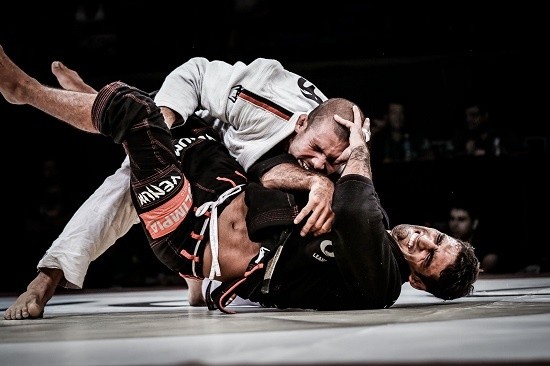
At one point in time, most people involved in Jiu-Jitsu are going to attend a BJJ tournament. Regardless of their motivation behind signing up, it is an experience that is as much a part of Jiu-Jitsu as training and rolling. That said, going to a BJJ tournament without preparing kind of defeats the point of going. If you’re going to step on the mats, whether it is your first or hundredth time, you need to be prepared. And by prepared, I mean mentally and technically ready for anything you might come up against. Yeah, this includes being prepared for unexpected surprises as well. 

Competing in Brazilian Jiu-Jitsu requires you to put some time and effort in your preparation. Leading up to a BJJ tournament you’ll need to work in a very precise and organized fashion. It is your instructor’s task to help you understand exactly what you need. Why should you always have a game plan ready for a competition? Because going in blindly is not only going to end up in you losing, but it’ll most likely take away your will to compete. There’s nothing worse than giving up during a BJJ match because you have no options left. Whenever you’re in such a situation, it is a clear reflection of your lack of preparation and thought leading up to the competition.

For most people, having a game plan is the same as bringing they’re A-game to the tournament. In truth, your A-game should be just a fraction of your complete game plan. It might be the most important fraction, but still, it does not make up the whole. In most cases, especially with seasoned competitors, your A-game is not going to suffice. You’ll have to revert to a plan B in certain situations or even improvise completely.

What to Expect At the BJJ Tournament

Never let your “success” during training and rolling to make you think you’re actually better than you are. This holds especially true for higher ranked belts. Remember that at a BJJ tournament you’ll be up against people at your level, all fo them bringing their A-game. The moves you easily pull off on lower belts, or even those equal to your rank in training, are most likely not going to be enough in a competition setting.

Grappling tournament area wild affairs. People that are there to compete have just one goal in mind – winning. They won’t’ be as inclined as your training partners to tap or easily accept a pass or sweep. Furthermore, they’ll be doing their best to smash you, submit you and completely block your escape attempts. This raises the bar of expectations much higher. it is not that it’s different from rolling, it is just more intense. And, the intensity is something you must factor in your gameplan.

In your first match at a BJJ tournament, you’ll be up against a rested opponent, weighing roughly as much as you and at a similar skill level. They also have grappling training and techniques that they favor. They also have an A-game that they’ll be trying to impose on you, against your will. This means you’ll need to be adaptable and rely on tactics and strategy as much as you do on technique and athletic strengths. What you can expect is well-prepared opponent’s that are looking to go right through you and your A-game. And the most dangerous ones are going to be those that can move past their best moves in order to get one over you.

The “A” Game

While it is not enough on its own, you absolutely need to have a complete A-game ready for competition day. While the term itself is self-explanatory, let’s look a bit deeper into what exactly a BJJ game is. As you know, all grappling matches start standing. That means you’ll have to find a way to get the fight to the ground and end up in your preferred position. As far as positioning goes in general, you have two options – fighting off your back or being on top. In all three of these aspects of a BJJ game, you’ll need to have your top offensive and defensive moves.
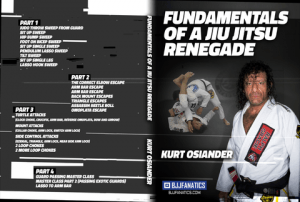
Kurt Osiander Fundamentals of a Jiu-Jitsu Renegade
Techniques List

Listening to Kurt Osiander is always a good idea. The legendary coach has immense BJJ knowledge of fundamentals, along with a sprinkle of originality. “Fundamentals Of A Jiu-Jitsu Renegade” is a DVD instructional set that has all the building blocks of BJJ. It also has great variations to help you define your tournament A-game.

Standing

There’s no point in going to a BJJ tournament without having some fundamental takedown knowledge. You may like wrestling takedowns, Judo throws or even to pull guard. All are viable options as long as you’re comfortable on your feet. In order to hit off your A-game immediately, you’ll need to understand how to win the gripping battle so that you can set your takedowns up.
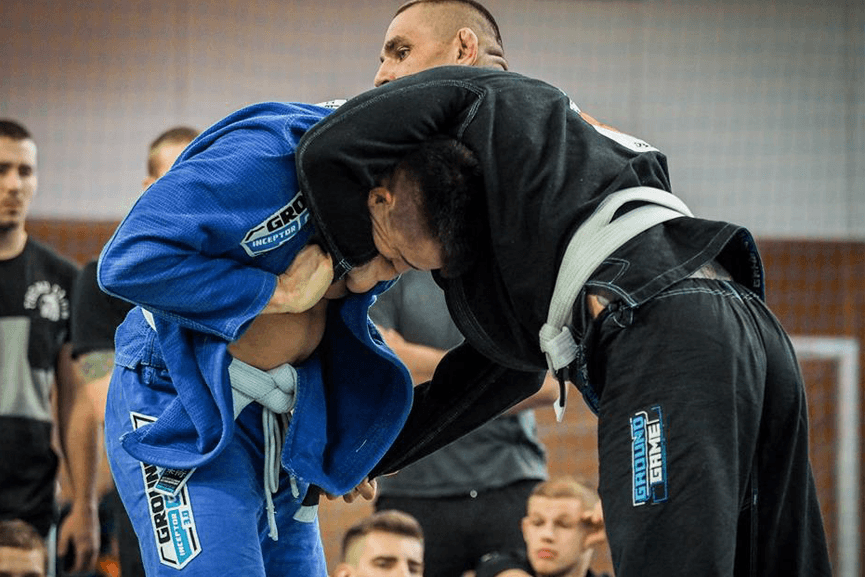
BJJ Tournament A -Game Standing After you’re in position, the best outcome is to execute your takedown and finish in your preferred position. If you like to fight from the bottom, pulling guard is the best option. Conversely, going for to position means you need to find a way to throw or take the opponent down.

Defensively speaking, you need to be ready for the opponent to attack first. Let’s say they get better grips before you set up. You need to understand what they’re after so that you can defend long enough to go for your favorite move. This means recognizing whether you’re up against a wrestler or Judoka and knowing to counter. Sprawls and shifting weight from one leg to another are crucial concepts you have to master.

Top Positions

If you like ending up on top you need to know exactly where you want to land. If you go for a double leg, for example, you need to make sure you end up in side control. From side control, you should either look to finish or get to mount or the back. From there on it is all about your favorite ways of finishing.

Form a defensive standpoint, be ready for your opponent’s guards. While ending up in the guard is definitely not a preferred choice, you need to have a pass ready to go. Actually, you need three – a closed guard pass, an open guard pass, and a half guard pass. Those are the three spots where you might land after your takedown, or where your opponent might aim to escape to. Imagine executing a perfect power double and instead of hitting your favorite side control choke, you end up in the top half guard for the reminder of the match. Not A-game material.

Bottom Game
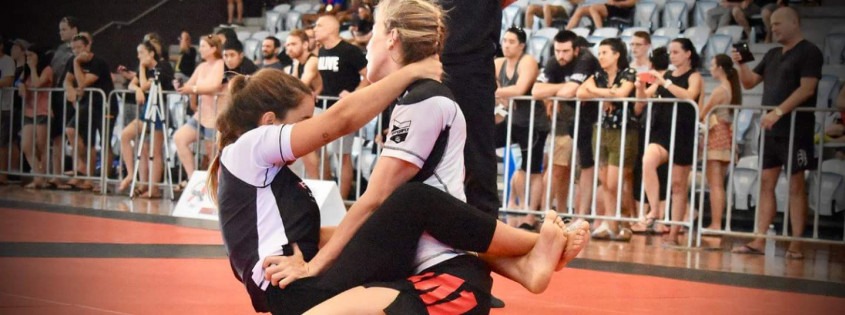
BJJ Tournament A -GameIf you pull guard in a BJJ tournament, you need to make sure you know how to play both open and closed guard. it doesn’t matter if you prefer one of them. Pulling guard, especially after the purple belt, rarely guarantees you’ll end up in closed guard. Submitting your opponent is, of course, the best way to go. However, if you prefer to sweep, make sure you have sufficient follow-up options.

Defensively speaking, know how to prevent most passes that your opponent might try. If you end up pulling guard against a passer, you’ll have a field day if you’re not ready to play a little defense. Guard recovery and retention need to be on top of your list, well above submission hunting.

The “B” Game

Your BJJ tournament B-game is the selection of moves, techniques, and concepts you use when things do not go according to plan. The B-game comes into play whenever you realize you’re caught in the opponent’s A-game. If you do not have a B-game ready, you’re setting yourself up to fail. It may not be in the first or second match, but as the day goes by, you’ll hit a stumbling block for sure.

The B-game is what you need to have ready to use in order to get back to your A-game moves. You can see why it is just as essential to a gameplan as you A-game, if not more.

Standing

You’re up against an opponent at a BJJ tournament and, the moment the fight starts, they get their takedown in. You couldn’t even flinch, let alone sprawl. Your own A-game requires you to be on top in order to be maximally efficient. Now, you’re stuck on the bottom, with a top position expert mauling you. What you need is a good way of preventing your opponent from advancing. That means having a closed or open guard variation drilled so good that you get it while you’re falling down. The ultimate goal is, of course, going to be to sweep so that you return to your preferred top position and go for your A-game.

In the opposite scenario, where you like to pull guard, but the opponent was faster, you’ll have to find balance. As a bottom player, you should know that submission and sweeps are the two main things you should worry about. Now that you’re on top, though, it would b stupid to go on your back. So, you need to have at least a couple of guard passes ready for just such occasions. Your B-game in this instance should include finishing options form the top or at least routes to top positions like back control.

Top Positions

If you’re a bottom person and you end up on top, you’ll need to quickly react and stabilize your position. IN most cases, you’ll be in closed or open guard and you’ll need to pass the guard as efficiently as possible. Your best bet is to threaten with submissions along the way so that you confuse your opponent.
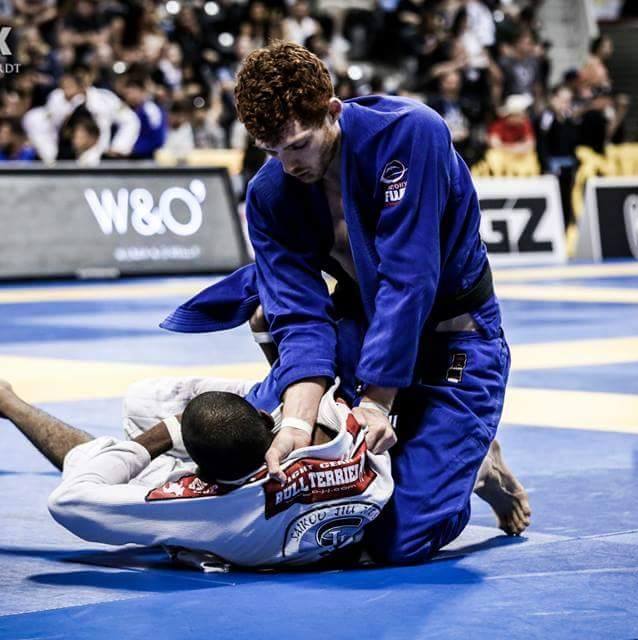
BJJ Tournament A -GameIn a BJJ tournament, it is not advisable to go down to your back once you’re on top. This is especially true from the guard. If you do, you’re both gifting your opponent points and improved positions. If you’re so dead set on hunting from your back, do not go there unless you’re in mount or side control. Even then, your best bet is to use an A-game submission but know how to hunt for it from the top as well. A good example is the cross collar choke or the armbar. Getting a cross collar choke from mount means you can safely roll to your back without giving away points.

Bottom Game

As before, the top or bottom positions tie into the takedowns. It may ba takedown or even a scramble that gets you to the ground but in your opponent’s A-game instead of yours. If you’re a top player stuck on the bottom, you have to follow a checklist. Your B-game should be all about safety first. Being in bottom side control, for example, means you need to stay safe from submissions first.

Only when you have your limbs and neck safe, and your position secure, you can think about getting out. Here, you need to have a go-to escape that works like a charm. the goal is to get back up and get the top position as fast as possible but in a safe and controlled manner.

Remember that A and B are just the first two letters of the alphabet. The highest-level black belts use all the letters in the alphabet when they’re devising their gameplan. The most important thing is to know that your A-game is not nearly enough to get you all the way to the top of the podium at a BJJ tournament.

Jiu-Jitsu Techniques For A Complete Competition Gameplan

Purple Belt Guide To Developing A Mean Jiu-Jitsu Guard

https://bjj-world.com/advanced-bjj-guard-pass-hip-switch/
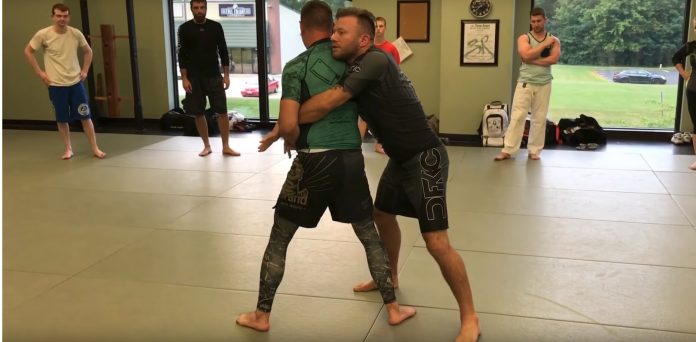
BJJ Bodylock Takedown, Pass And Back Control

Bodylock Takedown BJJ

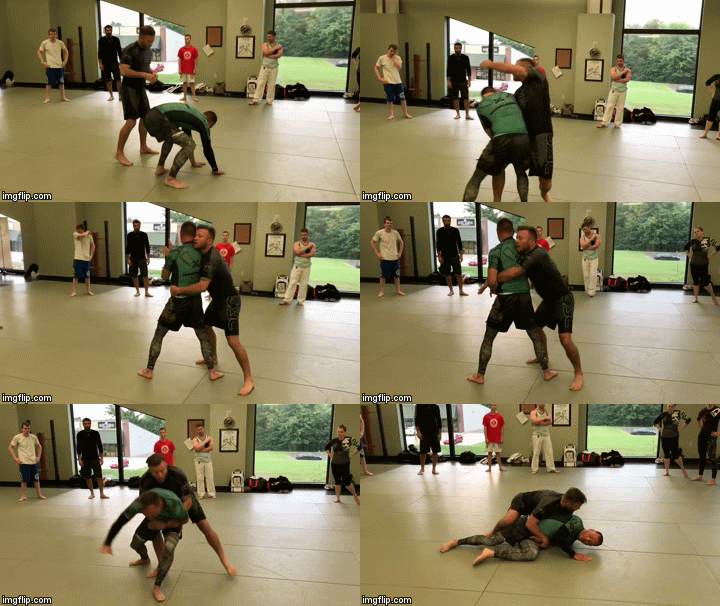
We’re less than 48 hours from one of the biggest fights in MMA history. Lightweight champion Khabib Nurmaghomedov is set to face former two-division champ, Conor McGregor. The grappling world is mostly on Khabib’s side, due to the fact that the Dagestani is one hell of a grappler. One of Khabib’s signature moves is the bodylock takedown, a wrestling staple that he uses to perfection. That said, the bodylock takedown works just as well for Jiu-Jitsu, as it does in the cage. In fact, the bodylock concept is not restricted only to takedowns in BJJ. 

If there’s one prerequisite of a grappling technique to work for BJJ, it is variety. If you can use one move, from multiple positions, then it fits BJJ perfectly. All it takes is for the move’s basic principles to work from different positions. The bodylock takedown fit this bill as good as any other Jiu-Jitsu technique. It is a wrestling classic that, originally, offers two ways of getting the fight to the ground. You can do it from the front or the back, which is where it really benefits BJJ

The bodylock takedown not only offers ways to the ground but also gets you behind an opponent. We all know that when you get the back, you’re pretty much on cruise control. But that’s not all, The bodylock concepts work just as well on the ground. On the subject of back control, you can use a bodylock variation to get even tighter control over your opponent, freeing up your arms to attack. Furthermore, you can even use the bodylock to pass difficult open guards, like the butterfly. Keep reading and you’ll see how.

What is A Bodylock?

A body lock is generally any position that offers you direct control over the opponent’s hips via a closed circuit. The closed circuit is usually by connecting your arms around the opponent’s hips. it can, however, also be done with your legs.

The bodylock offers a lot of options to grapplers, both standing and on the ground. For one, it is perfect for maintaining close contact with an opponent. We all know that space is your enemy when you’re looking to control someone in Jiu-Jitsu. The bodylock takes care of it by placing you as close to your opponent as possible, from the front, back or side.

Moreover, the fact that you have your arms tied together means the control is really difficult to break. The usual positioning of a bodylock is beneath both the opponent’s arms, directly around their hips. In certain cases, you can even trap both their arms, but this doesn’t get you as much control. From there, you can lift or trip for a bodylock takedown and keep your arm configuration until you get a great position.

Bodylock Takedown

The bodylcok takedown usually takes the match to the ground from two general directions. The preferred method is to get behind your opponent, or at least be at their side. Another good variation, although not as versatile, is to stay in the bodylock from the front, where most entries are. Both directions offer distinct options for taking the match to the ground. The best thing about them is that they’re easily interchangeable, albeit mostly from front to back.

Getting in position for a bodylock takedown is fairly straightforward. There are plenty of grip positions and situations you can use to set up a bodylock. The easiest way to get it is via a duck under. From a basic head and arm control standing, you simply switch the control over the arm by placing our arm over an inside the opponent’s. Once there, you can hook their triceps to release your head and open a path to the back.

All other tie-ups, both Gi and No-Gi offer a path to the bodylock. You can get it via arm drags, fake takedown attempts, as a follow up on a failed Judo throw, as a counter etc.

Finish From The Back

Using the duck under, the basic idea is to get behind your opponent, but not straight back. When you’re on the feet, begin directly behind an opponent might backfire. Think of a victor roll to a kneebar and you’ll see what I mean. Instead, the goal is to use a correct angle for maximum control. Once you’re past the arm via a duck under, remain behind the opponent’s hip, while locking both arms on the opposite side. An S-grip would do just fine.

Bodylock TakedownNext up, is posture. Simply holding an opponent there is not going to do you much good. When you get the grip, you need to get your head as close as possible to their body and pull your elbows close to you. this will cause a bend in their spine that is absolutely crucial for taking away their balance. Before you execute the bodylock takedown you’ll also need to adjust your grips. Namely, the arm that’s now behind the opponent’s back should control their far arm from behind. The control is the same as you would control an arm from the back.

Once you have posture and optimal grips, you can move into takedown position. For that, you’ll first need to adjust your stance. You’ll need to get both legs behind the opponent’ leg on the side where you are positioned. Whenever you’re doing a bodylock takedown in BJJ, make sure you do not lift your opponent off the ground as in wrestling. Slams are illegal in BJJ, and trips offer much more control anyway. So, once you get both legs behind, all that’s left to do is drag the opponent down.

Front Bodylock Takedown

Getting into position for the front bodylock takedown is similar to the one before. the duck under is again the method of choice. Actually, you should be going for the back every time you see the opening. However, some opponents are wise to what’s happening and they’ll turn towards you really fast. This will get you a bodylock, but also place you to the front of your opponent.

Bodylock Takedown FrontAlthough control here is not as good a from the back, you’re still in a great position. For one, you have double underhooks and your hands wrapped around your opponent’s hip. Once again, you need to glue your head to their chest and squeeze and pull with your arms., What you’re looking for here is to arch their sine backward, so that they lose posture.

Just like from the back, you’ll to trip instead of a lift. While lifting your opponent in the air might be much more attractive, tripping them is more high-percentage. The key moment here is choosing the direction of the trip. When you’re in a bodylock, you’ll have to position your legs to the side that ‘s opposite of the side you’re facing with your head. This gets you around the opponent.  InN this instance though, you’ll only use one leg for the trip.

Bodylock Pass

The place where the bodylock takedown concept gets it BJJ-specific use is in the guard passing department. While there are ways you can use bodylocks concepts against most guards, the best bet is the butterfly or half guard. Actually, the bodylock ties in great with the over-under pass. That said, the starting position for a bodylock pass is the same as with the front bodylock takedown.

Bernardo Faria DVD ReviewWhenever we mention the over-under pass, your mind should jump straight away to Bernardo Faria. There’s simply no one better than him at destroying guards with the over-under. Hs passing system is outlined in great detail in the “Battle Tested Pressure Passing” DVD instructional. It is the perfect system to compliment the bodylock pass we’re discussing today.

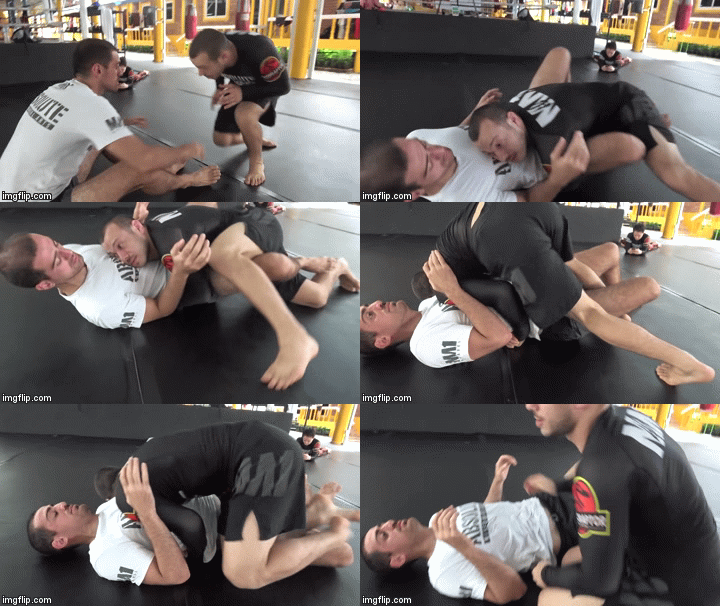
Bodylock Gaurd Pass The most important thing to know about the bodylock pass is hands and head position. Namely, when you’re in a bodylock against a butterfly guard, the main goal is to neutralize the guard before you pass it. To do that, you need to keep your hands clasped behind their back, and your head in the middle of your chest. THen, you want to slide your hand over to the side where your head is facing, so that your elbow closes down their hip.

Before you think about passing, you’ll need to sprawl back, extending the leg opposite of where you’re facing. this will neutralize their hooks so that you can switch your head to the opposite side. Now you can lift your hips, placing pressure with your shoulder. Even if they close half guard, a simple hip switch and a butterfly hook will get you straight into side control or mount.

Bodylock Back Control

Finally, the back control variation of a Bodylock is one that you’re probably familiar with. In BJJ we call ti the body triangle. UNliek with the bodylock takedown and pass, the lock is now done with your legs instead of your arms. Form regular seatbelt control you want to be on the side of your choking arm before you go for a bodylock. The one most important thing you need to remember about a rear Bodylock is that it has to be on the top side of your opponent. Otherwise, they might utilize and easy and painful counter.

Bodylock Back ControlThe goal fo the rear Bodylock is to give you increased control over the opponent’s hips. With a body triangle on, you take away all their rotational power. As a bonus, you also get more leverage to expose their neck by doing a simple hip extension. Not to mention all the pressure they’re feeling form the squeeze. Plus, finishing is much easier if you manage to trap one arm inside your Bodylock when you close it.

Double Leg Takedown – How to Do It & The Most Common Mistakes

Throws And Takedowns For BJJ That Really Work

https://bjj-world.com/how-to-make-single-leg-takedown-work/

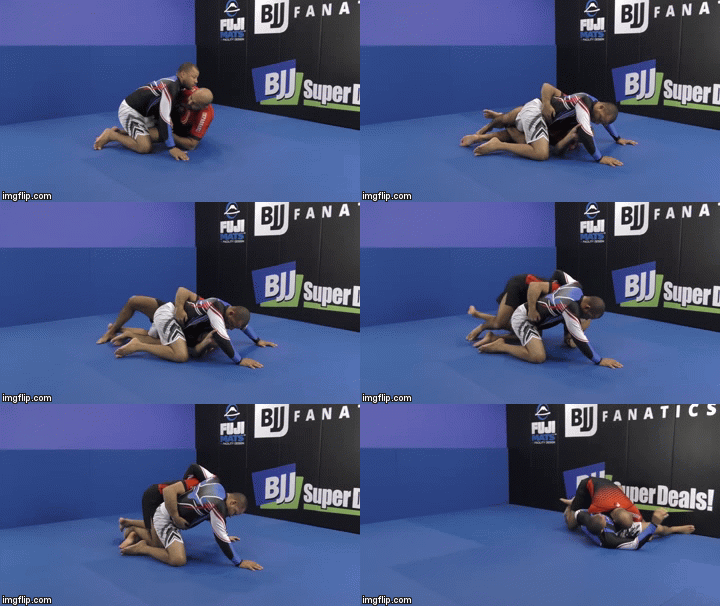
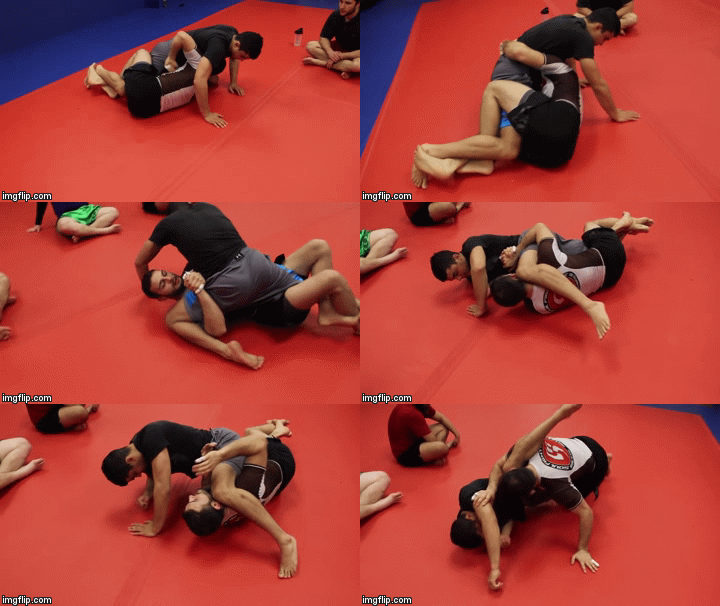
Dynamic Underhook Half Guard No-Gi Sweeps

Half Guard No-Gi Sweeps

There is something about earning your top position in Jiu-Jitsu. Do not get me wrong, I enjoy starting from the top and attacking with pressure just as much as everyone else. However, when I’m on my back, and I execute a perfect sweep to get top position, I enjoy working from the top even more. It brings about a sense of accomplishment. Plus it allows me to work on my bottom game for extended periods of time. When we’re rolling or competing in the Gi, sweeps are usually much easier to come by. So many handles are available with the Gi hat even without perfect technique you can pull off many sweeps. No-Gi sweeps, on the other hand, are a completely different animal. They’re harder to get, a lot more technical but also much more enjoyable as well.

No-Gi sweeps do not offer the luxury of versatile lever control like their Gi counterparts. Controlling your opponent without a Gi is difficult in the best of circumstances, let alone when they’re actively resisting. Throw in the “sweat and slippery” factor and it’s like trying to hold on to a fish. Unless you know the secret ingredients to make No-Gi sweeps work like a charm.

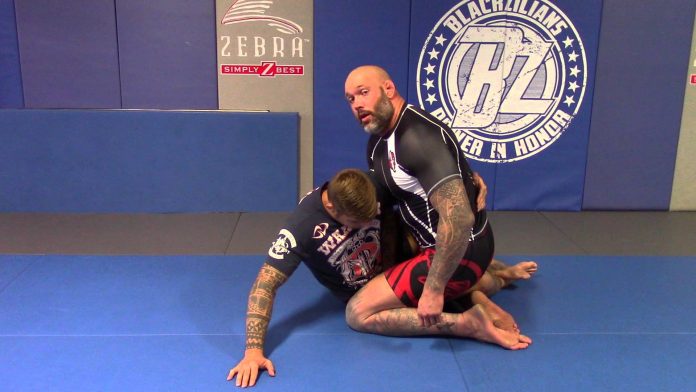
The two main things you need to get right for successful No-Gi sweeps are choice of guard and choice of grips. As far as guards go, only guards that get you underneath your opponent or work as a closed circuit are worth your time. The X guard, deep half and 50/50 are some examples of guards that get you under the opponent. The closed guard is the obvious contender for closed circuit guards. But what if there’s a combination of both? There is and you know it well. It is the half guard.

No-Gi Sweeps – The Challenges

The first time you try rolling in No-Gi is going to be a real wake up call if you’re a Gi only grappler. As much as the cloth annoys wrestlers and No-Gi people going the other way, losing the control it brings frustrates the Gi population. Forget about controlled rolls where you can hold on until you figure out what to do. No-Gi is more dynamic by nature, which is only due to the lack of control options. It is not that there are none, you just can’t stay there s long as you can with the Gi.

Which brings us to the next challenge we face with No-Gi sweeps – leverage. Without sufficient control, it is hard to create a structure to leverage your opponent into falling over. Keeping your frames in place is also a challenge because your opponent can disengage and move away. Even if you manage to somehow sweep, you’ll probably have a hard time holding your opponent down. In No-Gi escaping is a lot easier than it is with the Gi. However, while it is hard to get your game on in No-Gi, it is far from impossible.

No-Gi challenges extend both ways, as now your opponent has less control as well. No-Gi passing is also much more difficult which gives the edge to the person that can dominate the grip fight. Actually, in No-Gi, winning the grip fight is twice as much as important as it is in Gi Jiu-Jitsu. Winning the grip fight means you can establish your game and attack first. When your game calls for No-Gi sweeps, your best bet is to go for a half guard underhook as your position zero.

No-Gi Sweeps – The Underhook

The underhook is a really useful concept in both Gi and No-Gi Jiu-Jitsu. However, while it can help you improve control with the Gi, in No-Gi it is absolutely crucial. Especially when you’re on the bottom.

The whole concept of establishing an underhook has two main goals. The most important one is that it gives you in the side control of our opponent’s torso. Inside control is when you have a grip, or grips, that allow you to directly control the opponent’s torso. This keeps their arms on the outside, requiring that they get them back in before they can do anything.

Furthermore, an underhook helps you keep the opponent’s elbow far from their body. Whenever their elbow is open, no matter how little, they lose the potential to use their arm effectively. It also allows you to eliminate all spaces between you on one side. In No-Gi, this can be the deciding factor of how a match unravels. Even better, after you manage to sweep, in most cases, you can continue using the underhook to control, pass or even end up in mount or back control. The underhook is the perfect hack to bring you as much control over an opponent in No-gi as it is humanly possible.

Let’s go over some of the most important No-Gi sweeps you need to know from the half guard. Needless to say, they are all based on having a solid underhook grip.

#1 Basic Underhook Sweep

The half guard variation you choose to use is not relevant to your success with No-Gi sweeps. It does play a role, but not as much as having an underhook. The thing with the half guard underhook is that you can get it from almost any half guard variation. It doesn’t really matter if your legs are locked together, you’re in Z guard or have a lockdown. Once you get an underhook you’ll have to be turned towards the opponent with an arm on the ground if you want to complete a sweep. If you’re on your back with an underhook, you’re just going to get passed.

Half Guard Underhook No-Gi Sweeps The most basic thing you can do from an underhook half guard position is to look to get up on your knees. Use the underhook to pull yourself up, while your other hand posts on the ground to help. When you get on your knees, focus to go as deep as possible with the underhook. Your goal is to grab the lat muscle on the opposite side if you can.

Finishing the sweep from there is really easy. You need to use the underhook arm to grip the far side foot of your opponent. Make a note to actually grab the foot and not the ankle. Gram the knee of the same leg with your other arm and get on your toes. A simple circle towards the trapped leg gets you straight in tight and heavy side control.

#2 Whizzer Counter Sweep

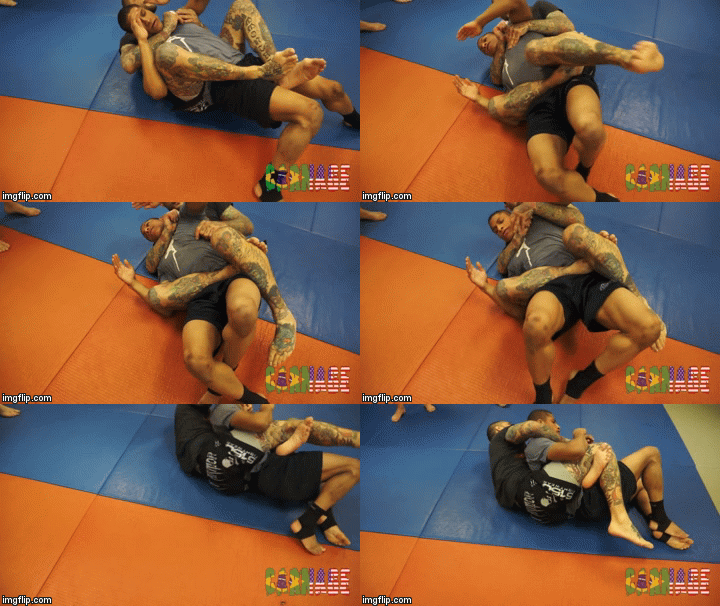
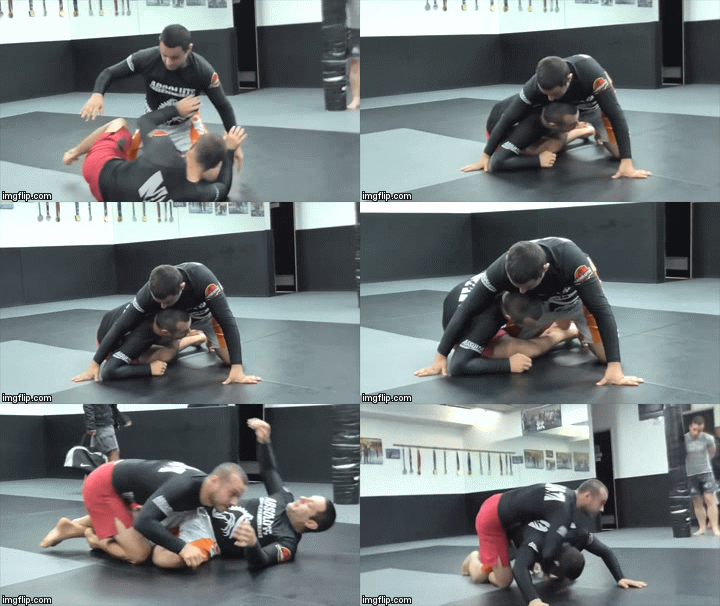
The one thing that an opponent might try to do to counter your underhook is to utilize a Whizzer. This means getting a sort of an overhook on your arm so that they can control you adn stop No-Gi sweeps. There are multiple dangers here, as the Whizzer can open passes and lots of chokes for your opponents. There is, however, a great way to counter it while also getting a sweep.

Half Guard No-Gi Sweeps Whizzer Counter Once you have your underhook in, the goal is to stay on your side as high up as possible. Going to your knees is not going to be an option against a good Whizzer. When you’re in this situation, simply get your underhook arm back by closing the elbow to your side. This will trap their forearm to your body. Proceed to grip their wrist for complete control over the Whizzer arm. All you need to do now is get on your back while reaching under their far leg with your posting arm. You’ll end up doing a sweep that’ll roll them over to the opposite side.

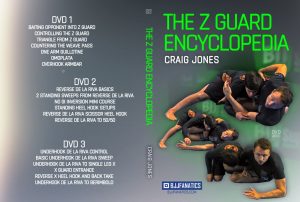
DVD Review: Craig Jones Z Guard EncyclopediaUse Craig Jones to truly master the half guard. All his Z-guard tricks are included in the “Z-Guard Encyclopedia” DVD instructional set. The best No-Gi grappler in the world goes over his best half guard techniques sparing no details. Improve your No-Gi sweeps and overall half guard game with this masterful instructional.

#3 Rollover Dogfight Sweep

At certain times you’re going to get caught in a position called the Dogfight. This is when you manage to get to your knees with an underhook, but your opponent also slips a Whizzer in. Now, neither of you has the control they want to finish. Trying the basic underhook sweep from here is not going to work.

Half Guard No-Gi Sweeps Rollover Since you already have a deep underhook, it would be unwise to give up now. Instead, you’ll try to push your opponent to the side of the far leg, as much as possible. This both opens the space and gets the reaction you need for a sweep. Keeping your underhook in, you’ll thread your posting arm under their far side leg, like in the Whizzer counter sweep. You also roll in the same manner, taking your opponent over your body to the opposite side. With this variation, you end up in a better control position than the previous sweep, though.

#4 Electric Chair Sweep

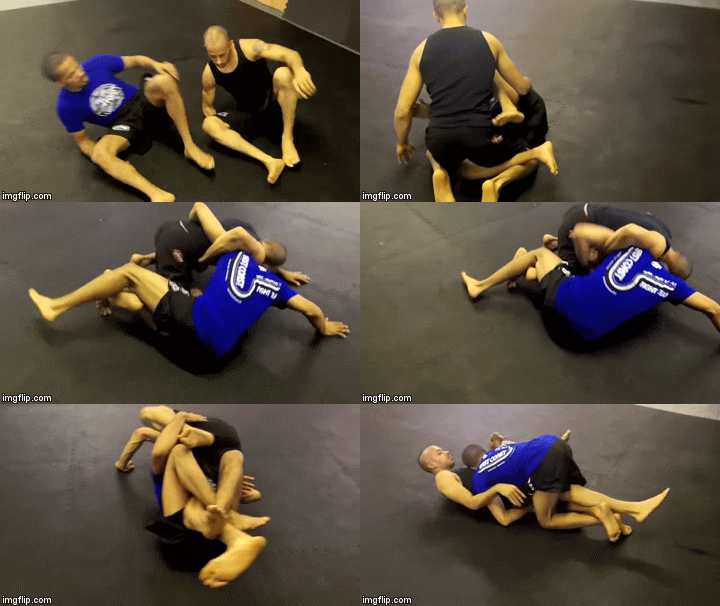
Half Guard No-Gi Sweeps Electric Chair Talking about No-Gi sweeps and not including a 10th Planet Jiu-Jitsu move would be blasphemous. Since we’re on the subject of half guard and underhook, we’ll take the route of the lockdown. This is the perfect option when the opponent has you flat on your back. Now, getting an underhook is really difficult. Instead, you should use the lockdown to control their leg. This, in turn, allows you to keep them in place while you open up space to get an underhook.

Use the lockdown to lift your opponent’s hip high and turn your body sideways to create space. Now you can snake your arm through for an underhook, and you’ll already be on your side, facing them. From there you can underhook the far leg under the thigh. To finish, extend your legs and roll to the other side, using both underhooks to sweep your opponent in a spot where they can’t get away from.

A Collection Of The Best No-Gi BJJ DVD Instructionals

Deep Half Guard in BJJ – Everything About

The Only BJJ Half Guard Sweep You’ll Ever Need!

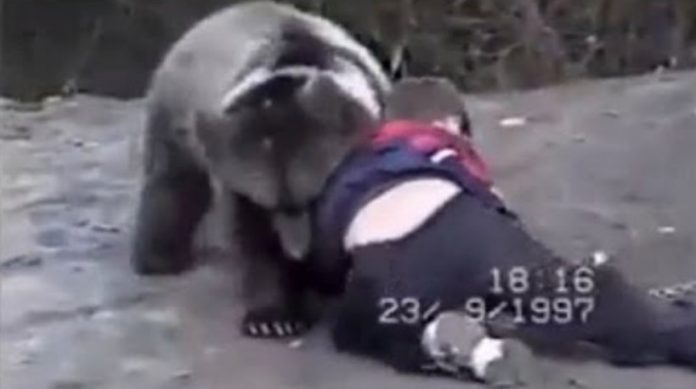
VIDEO: 9-year-old Boy Khabib Nurmagomedov Wrestling With a Bear

Khabib Nurmagomedow Wrestling With a Bear

It’s not a coincidence that Khabib is such a good grappler because from his young age all he was doing was grappling. Today he’s the most dominant wrestler in the UFC and probably in all of MMA. He holds the most impressive record in MMA of 26 wins without a single loss and 10 of the bouts are made in UFC, the most prestige MMA organization in the world. If you ever watched his fights you could see that all of his victories are coming from his great grappling skills and it’s absolutely not a coincidence.

Khabib Nurmagomedov is born in Dagestan and it’s very common for children there to start training wrestling at their early age. So was the situation with Khabib too. He started wrestling when he was 9 and was trained by his father Abdulmanap Nurmagomedov. Luckily for Khabib, his father was a wrestling athlete and veteran of the army. He was also a wrestling competitor from his early age until he started to train soldiers in Judo and Sambo in the military.

Khabib was wrestling for most of his childhood and at age of 15. When Khabib was 17 he started training Combat Sambo again under his father. According to Khabib, he had many problems transitioning from wrestling to Judo. He just couldn’t get used to GI, but his father wanted him to compete in fights with the “GI Jacket” on.

At age of 20, Khabib started to train and compete in MMA. He’s now one of the best ever in the world and everything else is the history.

In the video below you can see Khabib hitting a takedown on a bear. The same classic takedown also known as the trademark takedown of Georges St-Pierre. Enjoy!

https://bjj-world.com/khabib-submits-leandro-vieira-3rd-degree-bjj-black-belt/

https://bjj-world.com/khabib-nurmagomedov-grappling-luke-rockhold/

https://bjj-world.com/khabib-nurmagomedov-vs-first-russian-bjj-black-belt-leonid-gatovskiy/

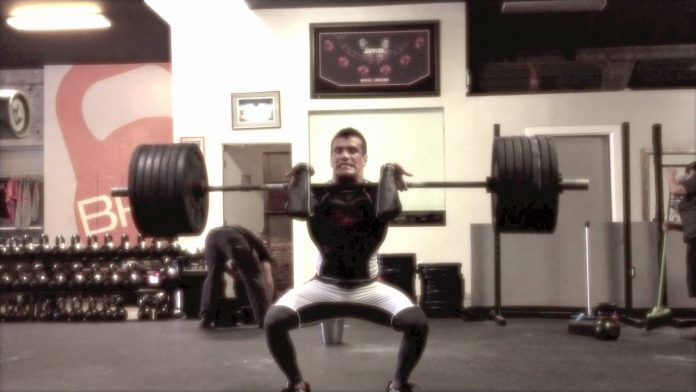
Jiu-Jitsu Strength Methods – Powerlifting For BJJ

Powerlifting For Jiu-Jitsu Strength

There is regular strength and then, there is Jiu-Jitsu Strength. How come there is a difference? Well, just take your average bodybuilder/lifter on their first day. They might be able to throw you around but you can easily choke and leg lock them as much as you want. Even as they learn, their strength won’t have much transference to grappling. Now think of a strong and ripped farm boy that walks in. he can manhandle you from the get-go and will only get better as he learns a technique. that’s functional strength. Furthermore, it is the basic strength which everyone can develop. You won’t need to go and throw bales of hay at a farm. You can just start powerlifting instead.

I think that by now it is clear that you don’t need overly complex ways to train for Jiu-Jitsu strength. Even those with no experience at all can see how bodybuilding splits by bodyparts are not going to do anything for your grappling. Furthermore, I’m really glad that people are also recognizing that bouncing on a Bosu ball is also just a waste of time. As is dressing a barbell in a Gi to train “specifically” for BJJ. There’s no specific strength training for grappling. There’s only strength that works and one that doesn’t. And the one that doesn’t is the one that bodybuilders look to bring to the mats to get an edge.

What Is Powerlifting

Powerlifting is a sport that is focused solely on developing as much strength as humanly possible. It is a straightforward sport for dedicated athletes. In powerlifting, there’s no place for those that want to stand in front of a mirror more than they want to lift. Maximal strength is the goal in most cases. This means that a powerlifter is aiming to lift as much weight possible for at least one repetition.

Powerlifters tend to train in groups, but still compete individually. In competition, they focus on or all three main powerlifts and try to show how much weight they can move. It is not just about weight but also execution, the range of motion etc. meaning a lot goes into training the main lifts of powerlifting. Powerlifters have the ability to move a lot of weight in regard to their body weight, which translates to a huge strength. That said, people that compete in the sport aim to lift as much as possible so they tend to also get as big as possible. Not really something you as a grappler want. However, the ability to lift as much weight as possible for your bodyweight is certainly going to boost your Jiu-Jitsu strength very noticeably.

Finally, the three main lifts that powerlifter use is no unfamiliar to anyone who’s ever been to a gym. The holy trinity consists of the bench press, the squat and the deadlift. Knowing that these three exercises truly work the entire body, you see how even powerlifters can’t train them all at once. Powerlifters use very specific programming and split to reach their goals, but they’re not adequate for most Jiu-Jitsu practitioners.

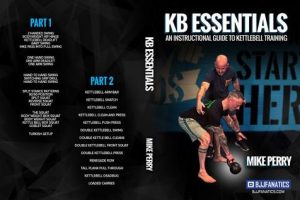
Mike Perry Kettlebells for BJJIf you’re not really a fan of big weights you still might develop some Jiu-Jitsu strength with other methods. Kettlebells are one such option. Mike Perry knows that way and he has it all laid out for you. Check his “Kettlebell Essentials Instructional Guide” DVD for exercises, workouts, and perfect programming for BJJ.

Powerlifting For Jiu-Jitsu Strength

Training like a powerlifter is much too taxing on the body and nervous system. This makes it the perfect tool for developing superhuman strength but a horrible one for Jiu-Jitsu strength. Not that you won’t get freakishly strong, but you’ll have absolutely no energy to perform on the mats. So, you’ll need to modify.

Powerlifting For Jiu-Jitsu Strength The main goal of powerlifting for grapplers is Jiu-Jitsu strength. A useful side-effect, sort of speak, is massively increased power and explosiveness. The only hard part is figuring out how much your body can take and how to program it correctly. Training only three lifts means you can save a lot of time in the gym while you’re getting stronger. Furthermore, the lifts work the whole body as one unit, just like in grappling. Plus there are plenty of varieties of the exercises that directly benefit grappling movement patterns
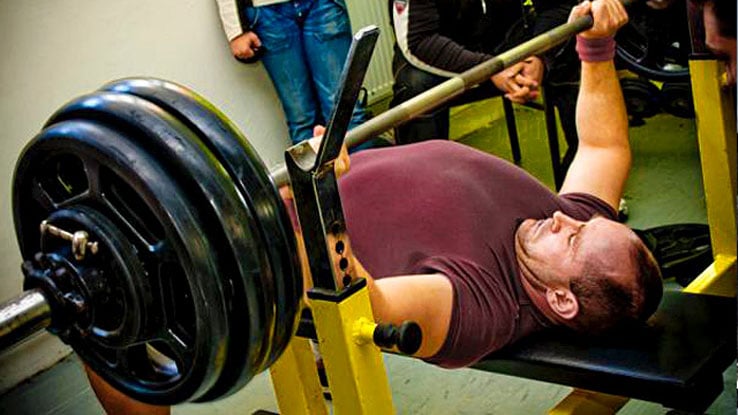
On the downside, powerlifting requires equipment and a space to work in. It is also advisable to have a qualified instructor overseeing your progress. Powerlifting also tends to build muscle, but this is easy to regulate with a few modifications. The biggest problem with powerlifting for grapplers is recovery. Both sports demand a lot, especially from the nervous system. This means getting into overtraining is really easy and you can derail your progress in both very easily.

Programming powerlifting fro Jiu-Jitsu strength has one goal to fulfill – not overdoing it. It is very easy to go all out when you’re training just a couple of lifts in a session. But, reaching your true max on a lift means you can’t do anything for a couple of days until you recover. So, focus on using a slight modification and try to train three additional days per week, with just one powerlift per day.

Squat

A bit more on the three staple exercises of powerlifting. The squat is a multi-joint pushing movement that involves pretty much the whole body. Ass-to-grass is definitely the norm here, with really heavy weights requiring spotters. This really technical exercise develops a lot of stability as well as the range of motion. It works the whole core musculature, along with removing imbalances. Furthermore, there are great variations that you might opt for instead of the traditional back squat. Zercher squats, for one, are a perfect tool to use for increasing Jiu-Jitsu strength.

The best sets and reps combination is to go for more than 3 to 5 sets of three good repetitions. In terms of weight, aim for no more than 1.5 times your bodyweight.

Bench

Powerlifting For Jiu-Jitsu Strength The bench press is arguably the most famous lifting exercise of all times. It works basically all the pushing muscles of the upper body, also demanding stabilization from the pulling muscles. Since grappling is a sport that has a lot of pulling in it, working on your pushing is a great way to achieve balance. Plus, it is a movement pattern where you’re most likely to rely on strength while grappling.

For the bench press, do not exceed a weight of 1.2 times your bodyweight. The sets and reps are the same, and once to twice a week is more than enough.

Deadlift

The deadlift is the one exercise, most strength athletes would choose if they could only do one. Just like with the squat there is plenty of variation to use, depending on your preferences and needs. Deadlifts work all the posterior muscles on your body, from your traps to your calves. They’re irreplaceable as Jiu-JItsu strength builders and an injury prevention exercise. Try to avoid training the deadlift and the squat in one training session when you’re powerlifting. That is a tough ask from any powerlifter, let alone a grappler.

Look to lift at least 1.7 x bodyweight, and preferably double your bodyweight. Do not go beyond that though, as this is the point of diminishing returns. Again, it is 3-5 sets of 3 clean, full range of motion repetitions. Rest should be no less than 2 minutes, preferably more.

Competitive Power Lifting and BJJ Together?

Powerlifters, on the other hand, do not really worry that much about physique or hitting every visible muscle in their body. With them, it is all about how much you can lift with no more than just three exercises. Yup, it is that simple. But, before we go into the reasons you should consider powerlifting over other types of strength training let’s just state the obvious. Powerlifting is a sport on its own and a competitive one at that. If you really want to dedicate yourself, you’ll have to choose between powerlifting and BJJ. If you want to improve your Jiu-Jitsu strength you can borrow certain principles from powerlifting. However, if it’s a max bench record you’re after, stop grappling, start eating and dedicate yourself to lifting as much iron as possible.

The Best Strength & Conditioning DVD and Digital Instructionals

How To Develop Crushing Grip Strength For BJJ

Small Grappler (128 lbs) vs Powerlifter (330 lbs) in a Grappling Match

6 Exercises To Develop Insane BJJ Strength

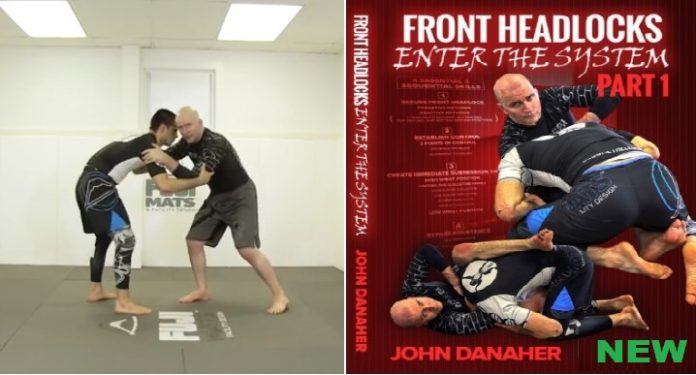
John Danaher DVD – Front Headlocks System

John Danaher DVD Front Headlocks

Оkay, 2018 is officially the craziest year that the grappling community has ever had! Apart from a bunch of amazing events and upsets, including the emergence of Quintet, it’s been a record year in the amount of BJJ DVD instructionals as well. But, it is not just the number of DVDs that’s astonishing. People like Craig Jones, Neil Melanson, and other top-tier grapplers are relentless at producing new material. However, it was one man that stole the show, no doubt about that. John Danaher and his leg lock DVD took the world of Jiu-Jitsu by storm. But he didn’t stop there! He went on and has just released a brand new instructional. it is time to see what the John Danaher DVD – Front Headlocks: Enter The System” has to offer!

ON SALE:
JOHN DANAHER – Front HeadLocks Enter The System

John Danaher DVD Front HeadLock System
Use Code “FIRST15” to get the 15% Discount

Front HeadLocks Instructional by John Danaher is released and It’s Awesome

I have to admit that I, personally, find John Danaher’s work amazing. It might have a lot to do with the fact that I’m biased, I know. Leglocks, the back, and now front headlocks. My three favorite positions make up most of my game. And there’s now material on them from the world’s greatest grappling coach. If the two previous releases are anything to go by, this last one should be a treat. That’s how I approached the front headlocks John Danaher DVD. Unsurprisingly, that’s also what I got.

In a case, you didn’t know the new John Danaher DVD Instructional is out, by the title of Front Headlocks Enter the System. The list of techniques is really impressive as you can see just by reading it. To be honest, I barely managed to get through the material, so that I can offer a solid review. Yes, there’s that much material. Once again, you’re in for about 10 hours of premium quality material, spread over 8 DVD volumes. Did we expect such a top-class DVD? No doubt. Eve the few videos that announced it was pure genius. But this John Danaher DVD goes above and beyond. I’d argue that John has finally come up with his masterpiece. And it is not about leg locks!

A Detailed Review Of Front Headlocks: Enter The System

Before I get really into this John Danaher DVD, I want to get something out of the way first. Those issues that plagued the first leglocks DVD are obviously a thing of the past. I know we all have a dose of suspicion every time a new Danaher DVD comes out. After all, waiting for something for so long, and getting it mauled is what nobody wants. Well, it seems Danaher found his production crew, and they can do one hell of a job!  So every technical aspect of this release that you may or may not think of is nothing but perfect.

Next up the subject of this DVD. The front headlock as a position is really common to grappling. For some inexplicable reason though, most of us do not recognize it as much as other positions. We pay a lot of attention to positions that bring points, like the mount and back. However, people often bypass one of grappling’s fundamental positions. Over the years, as the front headlock traveled from one grappling martial art to another, it got changed and improved. Today, in BJJ, we have a few front headlocks to work from, instead of just the one.

What front headlocks have to offer is variety and control. If they were a point position, everyone would be trying to get there. the front headlock offers virtually everything you’d want from a Jiu-Jitsu technique. it works as a takedown, it works as a control position, it offers submissions. Front headlocks work from the bottom, from the top, from scrambles… You name it, and there’s a front headlock to deal with it. Now, there’s a John Danaher DVD available to completely lift the veil of mystery off this position and all its variations!

Front Headlocks – An Introduction

As we are all accustomed to now, this DVD starts with an introduction to the position itself. Since I started dabbling with the headlock a few years ago I started claiming that it is a position of immense control. Well, it turns out I was right. It also turns out I knew nothing. What you’re going to see from this John Danaher DVD is control like you’ve never seen it before. There’s a cure for any obvious problem you might encounter.

The whole introductory DVD is organized into groups of four concepts. There are four main scenarios, four points of control, and a 4 step system. This makes everything understandable and very easy to remember. Plus it makes it easy to apply in rolling because you won’t have to think about million things.

What I found most helpful about this first volume was the part about the vulnerabilities of front headlocks. As someone who looks for them a lot, I knew of a few of the things Danaher mentioned. What I didn’t know was how easy it is to counter every one of those. It takes a coach of Danaher’s level to point out the easy solutions to complex problems, rather than complicated ones.

Standing Concepts

As I said, the front headlock is a position that works both from the feet and on the ground. On the subject of standing, the DVD starts with entries. There is a concept on standing her that Danaher explains which is a game-changer. The theory of proactive and reactive entries is going to make you reconsider many things in Jui-Jitsu. It is also going to open new doors for your standing attacks.

More technically speaking, there are a bunch of positions in this volume. Just like with any other John Danaher DVD, there’s no stone unturned. the single leg, the snap-down, overtime, overhook, two-on-one… Every position you might get into from standing is right there and covered in extensive detail. The way this volume wraps up is also perfect – two ways of getting to the ground while still in a front headlock position.

Front Headlocks From The Knees

This is the main focus of the Front Headlocks John Danaher DVD. The subject of working from a kneeling position stretches out over three volumes of the instructional. Since it is such a  huge subject, it merits an introduction on its own. As Danaher says, “this is a position you’ll find yourself in very often”. Which is exactly why you need to know what to do and when. To give you a bit of a perspective, the centerline shift video you can see above is part of the introduction to this volume.

Going further, Danaher jumps into the first guillotine setups. Which guillotine you might wonder? Well apart from the two “usual” variations, high elbow and arm-in, there are no less than 4 other variations that are as crazy as you might expect!

From guillotine,s Danaher heads straight into the Katagatame series. Anaconda chokes get a complete DVD of their own, along with the D’arce choke and a ton of crucial details! And this is all before we even get to my favorite part – the cradle series. For the past year or so, cradles have become a position I’m exploring. That’s going to get a huge boost, given what I just saw. There’s also a headlock series that compliments the cradles. To give you a completely rounded front headlocks game off your knees.

Attacking From The Bottom

Getting guillotines from the bottom is pretty much the only aspect of front headlocks Jiu-Jitsu used to focus upon. The fifth and sixth volumes of this John Danaher DVD exactly how much variety there is from the bottom. he also demonstrates the best guard to use when hunting headlocks from the mats. Contrary to p[opular belief, it is the seated guard and not the closed guard.

The focus of this volume is on the snap-down as the best way to get to the headlock when you’re lower than your opponent. A few snaps down variations and a ton of details preceded a couple of great guillotine options off your back.

There’s also a whole volume dedicated completely to how the hip heist works. Why do you need the hip heist? Well, this simple movement is going to open up plenty of opportunities for you. First. it is going to help you protect your starting position on the ground. Next, it offers entries into a bunch of front headlocks as well as re-countering your opponent’s counters. A simple and easy solution to a long-standing problem.

Front Headlocks And Guard Passes

Finally, it is time to wrap up. And Danaher does so in style. The final volume is all about passing the guard. And headlocks, of course, Oh, and submissions, lots of them. Before entering his system, though he goes over the conventional guillotine set up against the guard.

What follows suit is a whole myriad of options of passing guards right into front headlocks? I especially enjoyed his take on the inverted North-South position which is something I’m just discovering. Apart from that, 4 half guard passes are going to ensure you pass and get a headlock. After all, we’ve all passed the half guard with a headlock of some kind a few times in our grappling lives.

And the best is left for last. the final topic of this john Danaher DVD is a principle. But it is such an important principle for anyone dabbling in front headlocks that it brings this DVD to the strongest finish possible!

Conclusion

What happens with every single Danaher’s Instructional is simple. They change your life. and your perspective of Jiu-Jitsu. But not only superficially, Prepare for tectonic changes in the way you think about BJJ. We could see in EBI tournaments that his students were simply invincible under submission-only rules. Just like Gordon Ryan said numerous times, “it’s all because of John Danaher and his unlimited knowledge of Jiu-Jitsu”. Speaking of which, Gordon is a great example of how Danaher’s front headlocks system works in competition.

The front headlock is a position where you’ll find yourself in almost every match and every single sparring. It’s unavoidable, regardless if you’re on top or bottom. So, getting the best out of that position could easily be a match-turning point. Which is where this John Danaher DVD comes in.

What’s even more important that Danaher’s principles of front headlocks and all assorted positions and variations easily work in both Gi and No-Gi grappling. Differences between those two are minor when you find yourself in situations where you have to react fast and smart.  Danaher is going to teach you how to calm down and control every little aspect of the front headlock. This DVD is really a masterpiece that every serious grappler deserves to have.

His Front Headlocks: Enter The System DVD / Digital instructional is probably just another day in the office for him. However, for the grappling world, it is one of the three most valuable pieces of digital content in existence today.

If you ask most people in the grappling world who the top coach of all times is, you’ll most likely get just one answer. John Danaher. In the history of BJJ, there was no coach with such a deep understanding of techniques as well as ways of explaining them. If you watch any John Danaher DVD instructional and listen to him teach, you’ll understand absolutely everything. And that is an art in itself! he teaches not only techniques but overall concepts and principles. What you get from John is not only information about Front headlocks. Instead, you get a blueprint for BJJ, one explaining its most fundamental principles.

The list of Danaher’s achievements is so big that it’s very easy to pronounce him the best grappling coach in the world ever. We’ll mention just a few of them here, for reference sake:

  • Danaher helped a few UFC fighters to get their UFC world titles. Names like Georges St. Pierre and Chris Weidman are a couple that proves how effective Danaher’s teaching methodology really is.
  • His students like Garry Tonon, Gordon Ryan, Eddie Cummings, and others are true grappling icons. They all managed to win all kinds of top-level championships in a very short amount of time. With only a few years of training, some of them even managed to become ADCC champions on top of everything else.

ON SALE:
JOHN DANAHER – Front HeadLocks Enter The System

John Danaher DVD Front HeadLock System
Use Code “FIRST15” to get the 15% Discount

10 Best Leg Locks DVDs and Digital Instructionals

Stalling In a BJJ Match – Legitimate Strategy Or Cheating?

Stalling In A BJJ Match Issue

Have you ever been in a BJJ match? It is a feeling like no other, especially your first one, Once you slap and bump and the referee says go, it’s pure chaos. As time goes by and you become more accustomed to it, it actually gets some structure. Finally, you’ll see order even in the wildest of scrambles. But, even before that happens, you’ll start to notice certain patterns. You’ll see the tendencies of your opponents to do things, and some of those tendencies will be really frustrating. One of those things people often do in a BJJ match is stalling. There’s hardly any more frustrating tactic in grappling than choosing to play the system by stalling for time. While that’s one way of looking at it, what happens if the position were reversed? Would you stall your way to a win?

I modern Jiu-Jitsu, especially with the Gi, stalling is an everyday occurrence. Regardless of the ruleset, organizers usually address it in one way or another. Some, like the IBJJF, leave quite some time before awarding penalties. Others, like newly found Quintet, leave no time at all, restarting the match from the feet along with penalties. Regardless, people still manage to stall as much as possible, if they get the chance to do it. Stalling has now become part of the game. Nowadays, when people train for a competition they usually try and prepare to battle stallers, in either one BJJ match or all of them.

But is stalling just a cheap move or a legitimate BJJ match-winning strategy? The truth is that it can be both. In certain situations, there is a right way to use stalling as a tactic. The IBJJF’s take on it, leaving some time before awarding penalties is actually helpful in these situations. On the other hand, at the black belt level, where matches last 10 minutes, stalling can destroy a match. So, whether we deem stalling to be legit or not is usually down to circumstances. Let’s look into it a bit deeper to try and decide when is stalling ok to use and for how long?

Jiu-Jitsu Rulesets Favoring Stalling

The thing with rulesets is that they can’t make everyone happy all the time. No matter the ruleset, people are going to find reasons to complain about it. This happens even with major things like points or submissions. A thing like stalling, unfortunately, doesn’t really get the attention it requires.

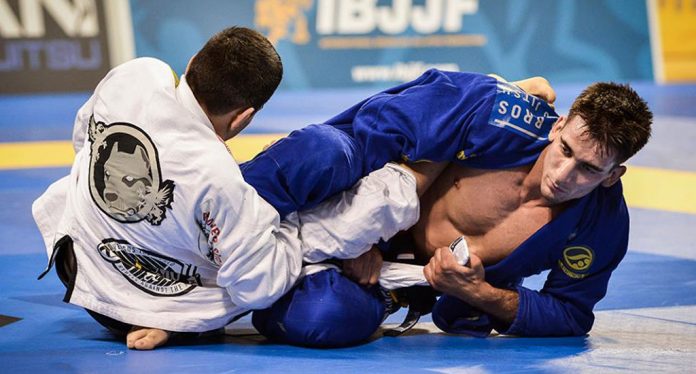
Stalling In A BJJ MatchUnder standard IBJJF rules, competitors in a BJJ match are going to get two warnings before receiving a penalty for stalling. this usually amounts to at least a minute where they can stall and do nothing. In lower belt matches, a minute is a lot of time to lose. Even in black belt matches, it can make a world of difference. is it acceptable? Let’s say yes. the problem is, that one of the grapplers that’s stalling moves and starts being active, they can get away with yet more stalling time if they return to a good position. There rea even people who are so good at stalling that they seem to be active while actually doing nothing.
Even submission-only tournaments have a stalling problem. Apart from Quintet, nobody really addresses it. It is probably one of the main reasons that submission-only matches do not end in submissions most of the time. The main trouble with stalling is that it usually involves pinning the opponent. That means that while they can’t do anything, neither can you. So, now you’re stuck in a position that brings you no points in a BJJ match, unlike wrestling for example.

Stalling Gameplan

In terms of using stalling as a tool in competition, there are two general directions. You can look to incorporate stalling into your game plan, for one. Or, you can look to build a game plan based on stalling. Are you going to be effective with both in a BJJ match? Probably. But are both equally as good for your Jiu-Jitsu progress? That’s a definite no.

Incorporating stalling in your game plan is a legitimate and solid strategy. Depending on your preferred position, you can use stalling legally in many situations. For example, the most legitimate use of stalling is to catch a breath after attaining a hard-fought position. You got the points, now you can rest a bit before moving on with your offense. Or, you could use it to slow down a much faster opponent’s attacks and look to impose your tempo. The common thread here, as you can see is stalling for a short amount of time and MOVING ON as soon as you see fit.

Building a complete game plan on stalling, on the other hand, is exactly what causes massive frustration. If you get into the match, and you know you have a way to stall your way into a win, then you do not have a battle strategy. What you have is a shortcut to victory, one that will eventually stop working. A good example here is the 50/50 guard, where you can spend the entirety of a BJJ match and get an advantage late on to win it.

Dealing With Stalling In A BJJ Match

The best way to ensure you’re not on the wrong end of stalling in a BJJ match is to avoid such positions. This is, however, a perfect scenario, which is rarely the case with grappling. The reality is that you might be able to escape or turn some stalling positions like the 50/50 to your advantage. Yet, there are positions like the mount or half guard that you won’t be able to stop most of the time. this is where you need to get creative in order to deal with a staller.

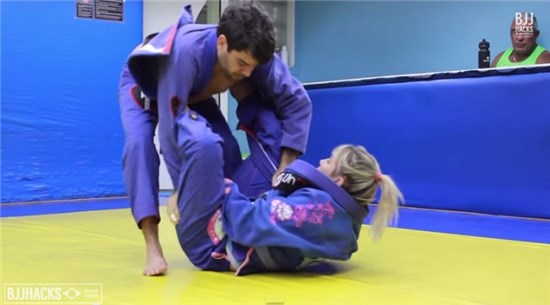
Stalling In A BJJ MatchThe first and crucial thing to consider when stuck are grips. Or, to be more precise, breaking them. In order for an opponent to pin you successfully, they’ll need to use their whole body. If you manage to peel off a grip, or better yet, both, you’ll force them to move. This is especially effective in the Gi where grips really do make everything work. So break grips early and make sure they stay off!
Finally, make sure you cause as much discomfort to a stalling opponent as you can. If you’re on the top, then the way to go is pressure. Even if you can’t place full-on pressure, you can make it really painful for them. Look to pressure a certain body part and give it your all. Or, if you can, go for direct pain. Bone on bone grinding and other “dirty” tricks are a great way to make a staller reconsider.

Tom DeBlass DVD High Tech BJJ In The GiIf you want to deal with stallers effortlessly, turn to Tom DeBlass for help. His “High Tech BJJ In The Gi” DVD has all the answers to your questions about stalling. Never let anyone beat you by an advantage due to keeping you in a position you don’t want to be in!


10 Best Leg Locks DVDs and Digital Instructionals

Obscure IBJJF Rules That Can Influence A Match

The Lowdown On BJJ Rules For IBJJF Competitors

The Grey Zones Of IBJJF Legal Leg Locks

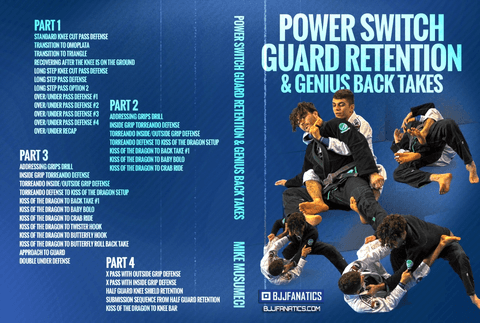
Mikey Musumeci DVD Review: Power Switch Guard Retention & Genius Back Takes

Mikey Musumeci DVD Guard Retention

In the era of the flexible and complex Jiu-Jitsu guards, the smaller grapplers are the ones that get the chance to shine. Open guards in BJJ are now a work of art, with countless variations developing regularly. Guard retention is a big aspect of playing guard, especially when you’re the smaller person in a match or roll. If you see a featherweight black belt match today, you’ll most likely miss a lot if you even blink. The speed of the matches is at a whole new level, particularly in the lighter weight divisions. No wonder so many of the smaller built grapplers base their game on the guard so much. Michael Musumeci is one of the world’s top Jiu-Jitsu athletes and a multiple world champion at featherweight. he is also the author of a crazy good instructional on the subject of guard work. Time to check out the “Power Switch Guard Retention & Genius Back Takes” Mikey Musumeci DVD.

ON SALE HERE:
Mikey Musumeci – Power Switch Guard Retention & Genius Back Takes

Mikey Musumeci DVD Guard Retention
Techniques List

The primary goal of the guard position in Jiu-Jitsu is safety. The theory of guard is to arrive at a position that’ll keep you safe while opening up offensive options for you. The trouble with this approach is that BJJ is not a stagnant martial art. For every new guard variation that emerges, eventually so does an effective pass. This just leads to the further evolution of guards and the cycle keeps repeating. Today’s modern guard game has taken guard retention to a whole new level. This modern game works particularly well for smaller grapplers since the size is a real advantage here. It is much easier for a featherweight to get on their opponent’s back by means of elaborate rolls and inversions from open guard positions. This is precisely what you’ll learn in the “Power Switch Guard Retention & Genius Back Takes” Mikey Musumeci DVD.

If there’s one guy you’d like to learn the secrets of the guard from it is Mikey Musumeci. he has a legendary status in the BJJ community. The 22-year-old black belt world champion (twice) seems like he hasn’t even started to reach his full potential. He is actually the first American to get a world title at a black belt twice. Mikey’s game is a lot like the game of other small-framed competitors of today like Caio Terra and the Miyao brothers. However, each of them has their own take on working form the open guard, and nobody has dedicated more time and effort than Mikey Musumeci.

A couple of words on the impressive grappling background of Mikey Musumeci before we go on. The featherweight has won all there is to win in all blet divisions on his journey to the top. Starting at the juvenile blue belt level, his competitive record boasts world titles all the way to adult brown and black belt.

Mikey Musumeci DVD Power Switch Guard RetentionThe most impressive thing about Mikey is that he has accomplished everything at such a young age. from 2012 onwards, he has a world title to his name, in either the IBJJF or UAJJF or both, at different belt levels. Currently, he is a part of the Caio Terra Association where he sharpens his skills with some of the best lighter weight grapplers in the world. Apparently, and luckily for us, he is now also issuing video instructionals on his favorite moves. You could hardly be a smaller grappler that doesn’t own such a gem of an instructional as this Mikey Musumeci DVD.
Mikey started training at the age of 4, under Fernando Cabeça. After changing a few more academies across the USA, Mikey ended up in a Mendes brothers seminar. He started training with them at every occasion possible, quickly adapting to their sophisticated guard game. As his family moved again and again, Mikey switched a lot of academies before earning his black belt from both Jonatas Gurgel and Gilbert Burns at the age of just 18.

Mikey Musumeci DVD Review

Technically speaking, Mikey’s favorite moves are Berimbolos and all other associated inverted back takes from open guards. Considering all the time he spent with the Mendes brothers, this is hardly surprising. He is a huge fan of inverting, as a means of ensuring guard retention and opening up pathways to the back.

The “Power Switch Guard Retention & Genius Back Takes” Mikey Musumeci DVD is a 4 part instructional, lasting in excess of four hours. Throughout the DVD’s there are some common themes that Mikey goes over on multiple occasions. With that in mind, this review is not going to follow the disc-by-disc model but focuses on the technical aspects of this instructional instead. We’re going to go topic by topic, looking at all the moves that made Musumeci such a dominant world champion.

The Guards

In terms of guard positions, this Mikey Musumeci DVD focuses on the Reverse De La Riva, De La Riva, and Knee Shield Half Guards. Completely understandable as Mikey is a big fan of inverting and spinning underneath to take the back. That said, the Reverse De La Riva is definitely his top pick. A unique aspect of his game is also the crab ride position. Mikey uses this old wrestling mainstay as a very effective guard position on its own. Musumeci can keep his opponent tangled in a crab ride until he sees fit o take the back and finish. Now, you can learn how to do it too!

Guard Retention

In terms of guard retention, the “Power Switch Guard Retention & Genius Back Takes” Mikey Musumeci DVD covers all passes that might get you in trouble. The first thing that Mikey dissects is the knee cut pass and how you should defend it. This common pass causes a lot of problems for guard players, especially smaller ones. Mikey dedicates a lot of time and attention, particularly in the first DVD on how to prevent it.

Next up, he covers the best ways to deal with the long step and over-under passes. This is where Mikey spends quite a lot of time, offering multiple options. He has them ordered by number instead of coming up with new elaborate names. This makes remembering them that much easier.

The Torreando is up next and Musumeci goes into counters as well as retention concepts. The best thing about the Ttorreando defenses is the grip fighting. Mikey really dumbs down how to successfully negate your opponent’s grips. Not only that, but he demonstrates how to get your own grips so you can mount counter-attacks.

Finally, he goes over a couple of X pass defense strategies. Once again, grip fighting plays a huge role in the effectiveness of your guard game.

Kiss Of The Dragon

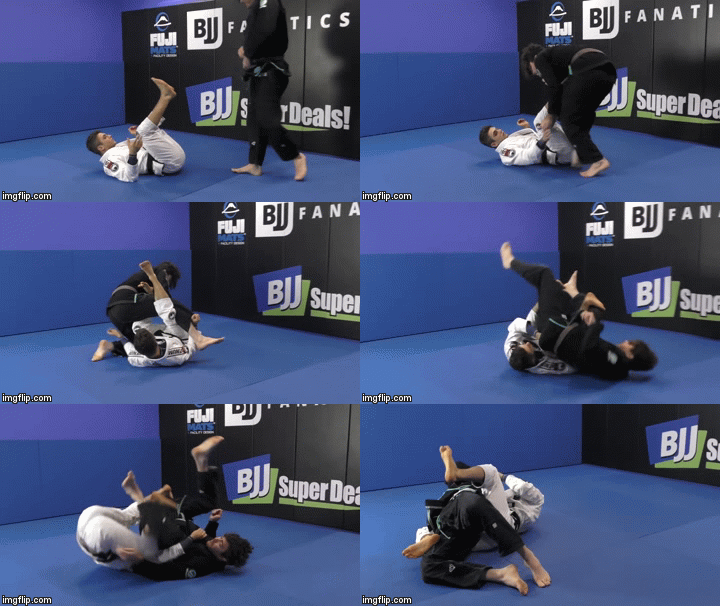
The kiss of the dragon is Mikey’s favorite way of getting to the back. In short, it involves you spinning between and under the opponent’s legs. This is done by inverting and is a great and easy way to end up in the crab-ride, and ultimately, back control. Musumeci is an expert at using this and doesn’t spare any details explaining it.

Mikey Musumeci DVD Kiss Of The Dragon
Click For Full Video

In fact, the techniques regarding the kiss of the dragon are present in each volume of the Mikey Musumeci DVD. Throughout the DVD you can see a pattern repeating. Mikey uses the kiss of the dragon to get to the back, toa baby bolo or the crab-ride. After working on grips and retention against every type of pass, he goes into the kiss of the dragon options. But, he does not stop there.

Apart from these recurring concepts, he also shares some really innovative moves. For example, he uses the kiss of the dragon to set up a twister hook and ultimately get the back. He likes to transition into butterfly hooks a lot, offering another dimension of attacks.

Submissions

Of course, submissions are in no way underrepresented in this instructional. To begin with, Musumeci uses certain moves, like triangles and the Omoplata as direct counters to some passes. As his game gets more complicated, he likes to use the kiss of the dragon to set up finishes. One great example that you’ll see is a very sneaky kneebar setup from there. It became an instant favorite of mine right away!

Mikey also has one hell of a sequence of submission attacks from the half guard. In particular, he likes to use the knee shield to open up multiple threats on his opponent. The result of following this sequence is a 100% certain submission. The best part about it is that you’ll be completely safe in your guard while you’re attacking!

ON SALE HERE:
Mikey Musumeci – Power Switch Guard Retention & Genius Back Takes

Mikey Musumeci DVD Guard Retention
Techniques List

The Grey Zones Of IBJJF Legal Leg Locks

IBJJF Legal Leg Locks

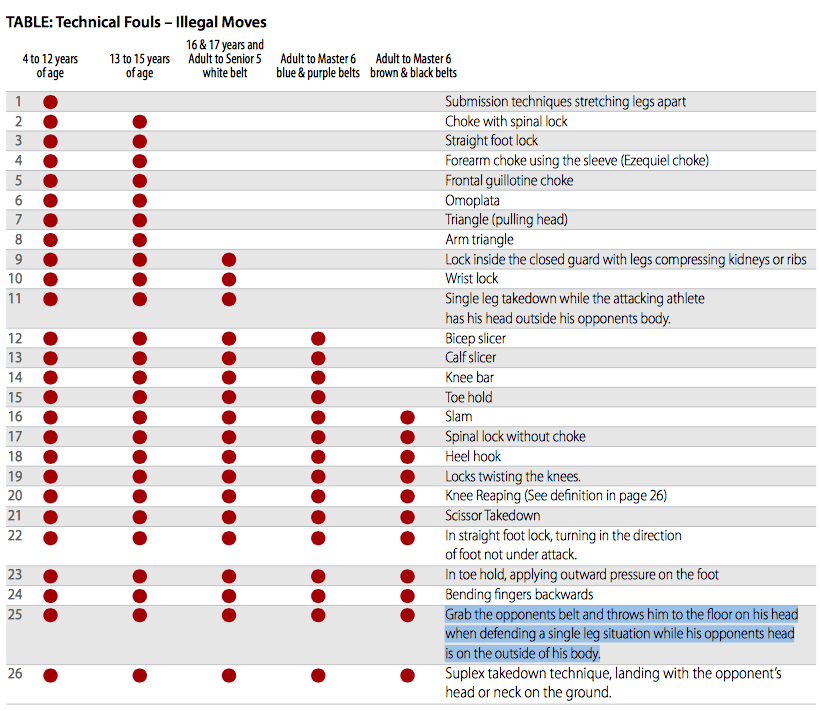
Until a few years ago, the BJJ world had a pretty much-unified stance on leg locks. As per the IBJJF, most were banned from competition up until very advanced levels. Furthermore, people thought that training them was a certain way of getting career-ending injuries. As the landscape of leg locking changed during the past few years, so did the perception people had of these submissions. In today’s modern Jiu-Jitsu, leg locks are considered to be as useful as some of the highest percentage moves, like the rear naked choke for example. However, under the IBJJF rules, which are the ones that “matter” the most, there are still legal leg locks, and those that even black belts cannot execute in competition.

If you like leg locks as much as the next person does, you need to know how to use them in competition. The thing is, most people training BJJ are not black belts, at least not yet. So, training competition legal leg locks requires a high level of understanding of both the rules and the submissions. Despite the rise of plenty of professional submissions only tournaments, the IBJJF still rules the competition stage in BJJ. And, as far as I am concerned, that is perfectly all right. they have the experience, resources, and infrastructure to put on huge BJJ competitions at the worldwide level. Furthermore, they manage to do it a few times a year. So, if you want to win the ultimate honors but you’re also a fan of heel hooks, you’ll need to adjust your game. After all, if Gordon Ryan can do it, why shouldn’t you?

AS with most things in Jiu-Jitsu, the first thing you need to know about IBJJF legal leg locks is what not to do. While some of the rules are as straightforward as possible, some remain hard to decipher for most. Some are actually so stuck in a grey zone that even IBJJF referees get confused. However, things are not that hard to actually understand. The next step in the process is knowing what you can do and when you can do it. Some leg locks still have the reputation of being too dangerous for beginners. However, there’s also the learning curve of leg locks, which is not a small one. So, understanding what lies ahead can let you plan accordingly and start training early.

Assessing The Current SItuation

The trouble most people have with the IBJJF rules is that they deem them to be too restrictive. The efficacy of heel hooks was never something people doubt, but training them in a safe manner was. Training heel hooks were never really at the level it is today. In turn, most leg lock submissions were mostly opportunistic techniques, not really finding their place amongst BJJ mainstays. Staying true to the Gracie ways, the IBJJF devised a ruleset that pretty much-outlawed leg locks in general. The result was that even legal leg locks were used very rarely, taking away a very useful tool for competitors.

On the other side, the IBJJF stance is that leg locks are dangerous, especially certain locks from certain positions. As the massive organization that it is, the IBJJF went on to devise a progressive ruleset concerning leg locks. To be fair, their basic system makes sense. The leg locks people get to do in the competition become more numerous as their belt rank rises. Also, certain positions open up for attacking “lower tiered leg locks” after getting to a certain belt level. It is a somewhat logical system that actually is pretty sensible.

The main issue with these two opposing forces in the BJJ world is lack of compromise. On one side, it is the submission only crowd, calming everyone should be allowed to do everything from the moment they step on the mats. On the other side, the IBJJF has an unmovable stance on legal and illegal leg locks. BWith both currents are unwilling to make changes in order to unify rules, the grappling community remains divided. So, you’ll need to know what you can do at your belt level in terms of lower body submissions.

IBJJF Legal Leg Locks Belt By Belt

Legal Leg LocksAs you start BJJ, most people will refrain from teaching you leg locks. This is particularly true in Gi based academies. Even if you walk in looking to learn leg locks, you’ll most likely end up disappointed. That said, certain locks are available even at white belt level. And some of them are pretty nasty!
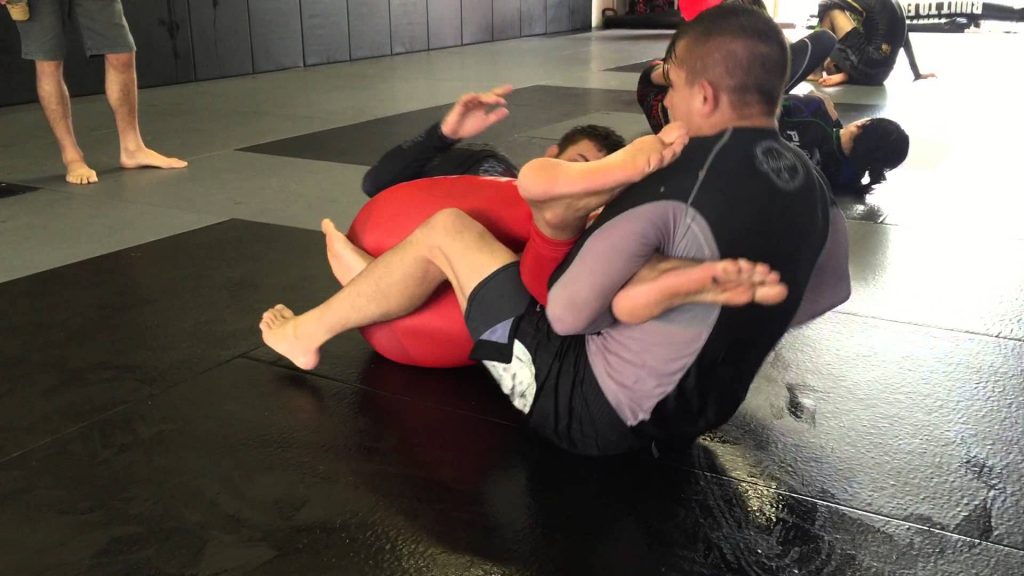
Before you start looking into leg locks though, make sure you adopt a catch and release policy. Even though leg locks are not the boogeyman, training still requires safety. The best way to make sure you’re not even near an injury is to take caution when training. But, then again, this rule applies to every other aspect of training Jiu-Jitsu.

White Belt

As a beginner, you can go ahead and work with straight ankle locks as much as you want. The only condition here is that you are 16 years of age or older. The positions allowed for that are the straight AshiGarami, outside Ashi Garami and the 50/50 guard. Keep in mind that training straight ankle locks requires time and dedication, so spend enough time drilling the positions before you go for them in competition.

Blue And Purple Belt

Unfortunately, blue and purple belts do not get much more to do in terms of legal leg locks. Just like with white belts, they’re restricted to straight ankle locks form the same positions. A thing to consider is that you can’t go for an ankle lock if the leg you’re attacking is on top. So, when you go into the straight Ashi Garami, make sure you’re facing the leg you’re attacking. Also, try and avoid the 4/11 position until referees really clear up where it stands. Just remember to avoid ant submission that puts twisting pressure on the foot/ankle.

Brown And Black Belt

This is where things get interesting. Brown belt is the level where most legal leg locks are available. Apart from heel hooks, you can freely go for toe holds and knee bars in addition to straight ankle locks. The thing is that while attacks open, not man other positions are available to attack from. Knee raping remains forbidden despite belt level. One more submission that’s not on people’s minds often is the calf slicer. After the brown belt, you could go for calf slicers as much as you want, from any position possible. Which brings us to the most curious part of the IBJJF legal leg locks – the grey zones.

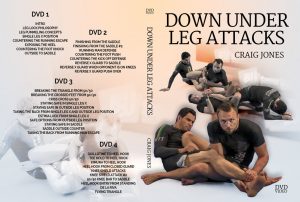
Craig Jones DVD Down Under Leg AttacksTurn to Mr. Craig Jones to improve your leg locking game massively. Learn all kinds of leg locks, both legal and illegal to make sure you can compete in both aspects of BJJ. “Down Under Leg Attacks” is a DVD set that is going to be of use to any grappler looking to learn about leg locks.

The Grey Zones

Now that it is clear what you can and can’t do at every belt level, let’s see what you might get away with. There are plenty of grey zones in the leg locking department, but two stand out more than others. Let’s take a look.

The one thing where most people (IBJJF referees included) end up confused is the Estima lock. While it was legal at all levels for a while there, I think now refers look at it as a toehold. This makes it legal only above the brown belt. The reason is that it places twisting pressure on the ankle, despite the difference in grips to the regular toehold. If you are a white belt, your best bet is to stay away from it. Like a blue or a purple belt, you might and try to get away with it, but I doubt plenty of referees are not ready for just such an occasion.

Legal Leg Locks IBJJF Finally, there’s the dreaded 4/11 position AKA Inside Senkaku. It turns out this position is legal. The reason that his position is not a knee reap position is that of the placement of the leg. The opponent’s leg goes across your body when you get your knee move. It is essentially a reverse half guard position, with a locked triangle. As such, it is perfectly ok at brown and black belts, where kneebars are legal. However, it may land lower belts in trouble, depending on the referee.
In terms of submissions, you can only attack the free leg. This means that you can’t even wrap your arm around the leg you have in a triangle. Furthermore, the only options you have on the other leg are a couple of straight ankle lock variations. Oh and forget about hitting the leg also submission.

DVD and DIGITAL Instructionals Related to IBJJF Legal Leg Locks :

IBJJF Legal Leg Attack Secrets by Dean Lister

IBJJF Legal Leg Attacks by Tiago Alves

High Percentage IBJJF Legal Footlocks by Mikey Musumeci

The Belly Down Footlock From Single Leg X by Tarik Hopstock

IBJJF Legal Footlocks by Jose Varella

10 Best Leg Locks DVDs and Digital Instructionals

The 9 Best Leg Lock DVD Instructionals For Grapplers

https://bjj-world.com/leg-locks-ultimate-guide-positions-submissions/

The Lowdown On BJJ Rules For IBJJF Competitors

Bully Gets Slammed And Knocked Out After Punching a Peaceful Guy

Bully Gets Slammed And Knocked Out After Punching a Peaceful Guy

We can say that this guy really got what he deserves. After doing a cheap shot on a peaceful guy who obviously didn’t want to fight by any means knocking this bully was the only choice this guy had.

In the video below we can see a bully walking behind his victim, calling him names, and trying to provoke him into a fight. Once he was unable to do it he went for a cheap shot. Bully punched a peaceful guy in the head. Although it’s not clear if the shot fully landed or not, a guy who was a victim of bullying reacted so that he immediately took down and slammed his aggressor. One more punch from a bullied guy was enough to secure a knockout.

Maybe this doesn’t look nice and for sure it’s not the way you should react in every altercation on the street but the real question is if bullies really deserve anything better than this?

Watch the video and tell us what you think.

BJJ Brown Belt Instructor Attacked On The Street

WARNING: This is Why Jiu-Jitsu is NOT for Everyone. BJJ in Wrong Hands!

Jiu-Jitsu Saved me Tonight from my Abusive and Alcoholic Father

Swedish BJJ Cop Double Leg Takedown to Kimura