

A George Lockhart Meal Plan For Brazilian Jiu-Jitsu

George Lockhart Meal Plan

George Lockhart is the man that’s on top of the nutrition world at the moment. At least when it comes to people involved in combat sports, especially those that have weight classes. George is a master of nutrition that likes to keep things plain and simple. He likes to keep grapplers and fighters fed and hydrated while teaching them how to eat correctly. Up until a short while ago, he was somewhat of a mystery to the fight world. Today, however, his methods are available on DVD and E-Book. Still, people scramble to find out what Lockhart’s diet is all about and why his weight-cutting methods are so effective. Today, we’ll go over the main principles of his diet, as well as a sample George Lockhart meal plan. 

Nutrition these days is akin to nuclear physics if you try and get the hang of it online. From bodybuilding principles that’ll have you living off protein shakes only, to severe dehydration-based wrestler’s weight cut, you’ll find it all. What you’ll struggle to find is a simple system that’ll give you results and won’t endanger your health. This is exactly what you get with a George Lockhart meal plan. No expensive must-have supplements or crazy restrictive meal plans. Only real food, in moderate quantities and often throughout the day. With cheat meals included!

George Lockhart Nutrition Principles

So what’s the deal with George Lockhart’s nutrition method? Why does this method work so well? In fact, it is so effective that more than 100 UFC fighters have used it to this point. Not to mention all the grapplers and the entire US Marine Corps. The reason is simple the plan is easy to follow and based on eating real food. That means that if it is processed in any way, it doesn’t end up on your plate.
George Lockhart Meal PlanThe first thing to expect from a George Lockhart meal plan is a different take on macros. George identifies fat as the primary fuel for our bodies. However, in situations of high anaerobic demand, like grappling, carbs are the most important thing. In an anaerobic setting, our bodies burn more carbs, which means they require more carbs to replenish right after. During aerobic work like jogging, it is the other way around, with fats being the optimal fuel source. So timing your nutrients according to demands is key in the George Lockhart diet. Lockhart is not a fan of keto diets, nor high-protein ones.

Actually, Lockhart doesn’t even like to supplement with protein. Protein is best to help open up glycogen stores pre-workout. Out of all the supplements available out there, Lockhart sticks only with BCAA’s. They’re the building blocks of protein, so taking them beats taking protein any time.

Weight Management

The key area of expertise that makes Lockhart so popular among fighters is weight cutting. The first thing George figures out is how much glycogen a fighter’s muscles can hold. This gives him the correct information to know how much water weight they can cut and replenish without health consequences.

George Lockhart Meal PlanCutting weight with a George Lockhart meal plan is based on cutting glycogen. Knowing how much glycogen the body can hold give Lockhart information on how much to cut. So, the fighter needs to get in that range well before the fight. Preferably, a fighter should be near cutting weight at the start of a camp. For grapplers, this means the competition season. During a weight cut, Lockhart likes to cut carbs and focus on fat. Fat burns more slowly than other macronutrients, making it the perfect fuel source during a cut. Small quantities are going to give more long-lasting energy compared to other nutrients.

As the weigh-ins approach, Lockhart cuts the fat as well and focuses on frozen fruits. George’s top pick is pineapple, because of the high fiber content. This keeps the brain hydrated at all times during the cut, which is imperative. Hydration is another key element of the system George Lockhart uses.

George Lockhart Meal Plan Sample

Let’s take a look at a sample George Lockhart meal plan that’s perfect for people training Brazilian Jiu-Jitsu. The first thing you should know is that Lockhart prefers multiple meals throughout the day. Usually, this means three main courses and 4 additional meals. the additional meals are snacks and the meals around workout time.
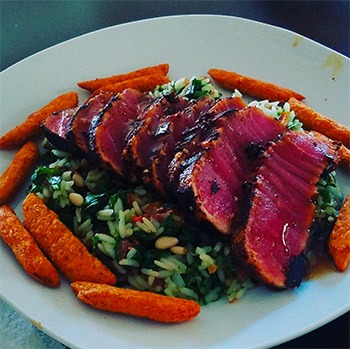
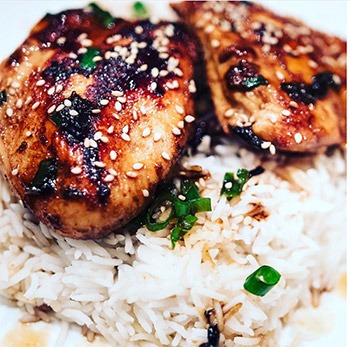
George Lockhart Meal PlanFor the main meals of the day, Lockhart likes to start with a good breakfast. Interestingly he prefers kefir to yogurt in the morning, pairing it with a banana, peanut butter, and oatmeal. This is the perfect high-carb meal to get you going for a hard training day. Lunch is all about easily digestible food, rich in protein and fiber. An example is ground turkey breast with 4-5 egg whites and a pineapple and spinach salad. Olive is the oil of choice. For dinner, light meat like fish is great for the digestive system. A tilapia with some greens and lemons is the perfect Lockhart dinner.

On the subject of snacks Lockhart likes to keep things simple. All snacks are perfect around a workout, both before and after. A classic Lockhart snack includes Greek yogurt, some berries, and some nuts. You could switch the nuts with some ground flaxseed if you like. Also, after a workout, include some BCAAs into your snack, along with some honey and/or dried fruits like dates, for a better carbohydrate kick. After all, it’s all about glycogen.

As far as hydration goes, 21 oz of water with every meal is an absolute must.
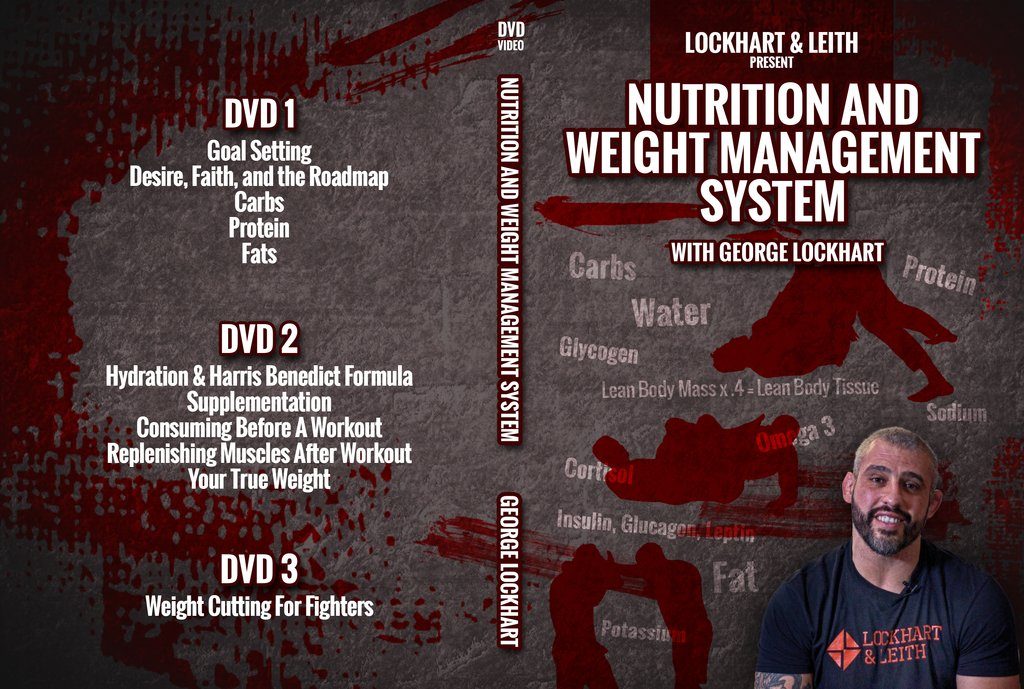
George Lockhart Nutrition And Weight Management System
Click For More Info

Related Articles:

George Lockhart Diet Tips For Grapplers And MMA Fighters
Conor McGregor’s Nutritionist George Lockhart on Joe Rogan Podcast
George Lockhart Nutrition & Weight Management System DVD/EBook
The Conor McGregor Camp – Kavanagh, Lockhart, And Portal
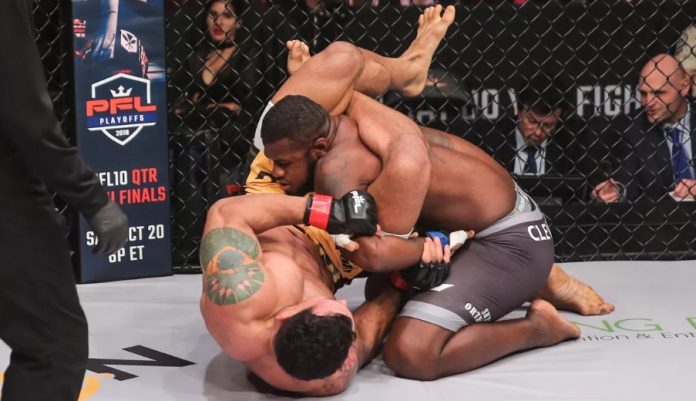
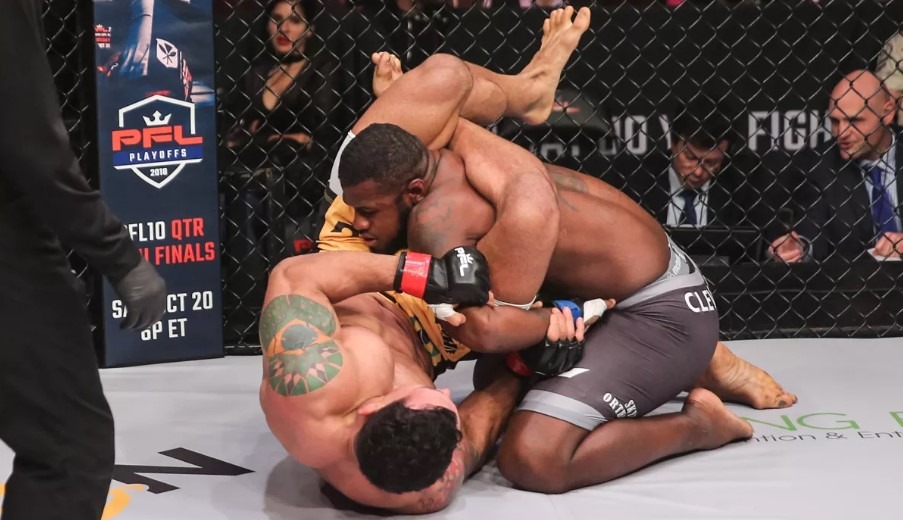
Vinny Magalhaes with an Incredible Flying Triangle to Kimura in PFL 9

Vinny Magalhaes vs Cleveland pfl 9

Vinny Magalhaes vs Cleveland pfl 9

Vinny Magalhaes continues his winning MMA streak in the PFL, MMA organization.

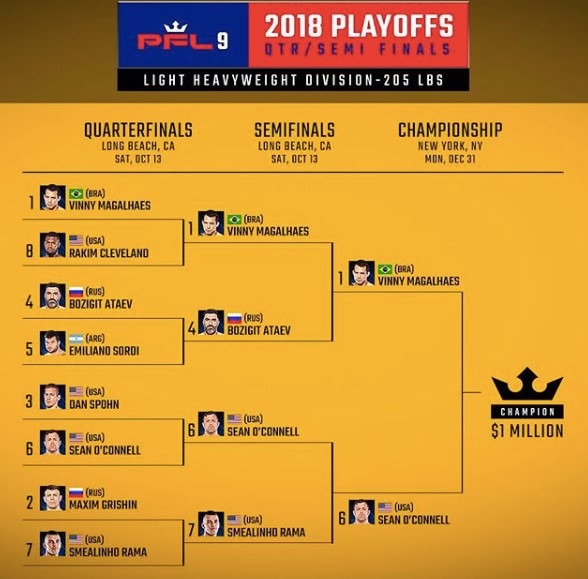
At PFL 9 on Saturday night, Vinny did a great job by submitting Rakim Cleveland with flying triangle transition to the kimura. After Vinny took him down with a flying triangle he latched onto Cleveland’s arm while holding a kimura grip and began torquing his arm what forced Cleveland to tap.

For now, he’s holding 3-0 winning streak in PFL with stoppages in first rounds. All of his wins came in less two minutes into the first rounds.

In the rest of PFL light heavyweight quarter bout, Bozigit Ataev also did a nice a quick work over Emiliano Sordi. Bozigit TKO’s Emiliano Sordi in less than 2 minutes into the first round.

With his latest win, Magalhaes holds a record in MMA of 17 wins, 9 losses, and 1 NC. His latest win will advance him to PFL semi Finals where he’ll fight against Bozigit Ataev for a chance to win a $1 million dollars in PFL heavyweight finale.

Check out the video of Magalhaes’ amazing victory over Rakim Cleveland:

UPDATE: Vinny Magalhaes defeated Bozigit Ataev with a kimura in the first round and he advanced to Finals of PFL 9.

Vinny Magalhaes will meet Sean O’Connell at light heavyweight  lightweight  December 31 in the $1 million finals of the inaugural PFL season at The Theater at Madison Square Garden in New York.

Here is the PFL 9 Light Heavyweight division bracket.

PFL

UPDATE: Vinny Magalhaes defeated Bozigit Ataev

50 Cent Offers A lot of Cash to Khabib To Fight For Him at Bellator, Khabib Responds

Khabib Offers $2 Million to Khabib

Khabib Offers $2 Million to Khabib

Curtis “50 Cent” Jackson is a huge fan of MMA and he’s always present when anything is going on in the world of Mixed Martial Arts.

Hip-hop star recently signed a deal with Bellator that he will award $1 million in cash prize for the winner of the Bellator Welterweight Grand Prix. But now, Jackson wants UFC lightweight Champion Khabib Nurmagomedov to fight for Bellator.

50 Cent, on his Instagram profile, is smashing UFC for their double standard behavior on Khabib Nurmagomedov and Conor McGregor and their teams after their bout on UFC 229. He offered $2 million in cash to Khabib Nurmagomedov if he and his teammate, featherweight Zubaira Tukhugov switch from UFC to Bellator.

I think it’s Wrong that UFC is doing to Khabib, they didn’t do the same thing to McGregor. I’ll pay 2 million cash tonight if he will fight for me at Bellator. I’ll deal with Dana and your contract later. The UFC is not the only game in town. Zubaira is welcome also – wrote 50 Cent

https://www.instagram.com/p/Bo230_OlFXL/?taken-by=50cent

Nurmagomedov later responded to the post in the comment section with his trademark “send me the location” before inviting 50 Cent to visit Dagestan.

$2 million is the exact same amount that is currently held by Nevada State Athletic Commision until they investigate the brawl after UFC 229. On the other side, McGregor received his paycheck of $3 million.

For now, both fighters Nurmagomedov and McGregor are suspended from fighting until the investigation is done.

Few days before Nurmagodeov started a “war” with UFC threatening to leave UFC if they fire his teammate from UFC for his actions after UFC 229.

“In any case, punish me, @zubairatukhugovhas nothing to do with that.
If you think that I’ll keep silent then you are mistaken. You canceled Zubaira’s fight and you want to dismiss him just because he hit Conor. But don’t forget that it was Conor who had hit my another Brother FIRST, just check the video.

if you decide to fire him, you should know that you’ll lose me too. We never give up on our brothers in Russia and I will go to the end for my Brother. If you still decide to fire him, don’t forget to send me my broken contract, otherwise, I’ll break it myself.

And one more thing, you can keep my money that you are withholding. You are pretty busy with that, I hope it won’t get stuck in your throat. We have defended our honor and this is the most important thing. We intend to go to the end.”

https://www.instagram.com/p/Boy2zCpn_m_/?taken-by=khabib_nurmagomedov

This all started during the press conference when Dana White, the UFC president, was threatening to release the two UFC fighters who attacked McGregor. Although their identities are still not confirmed, Tukhugov is on fire and he’s closely related to the incident after the fight.

What’s your opinion about this? Should Nurmagomedov go to Bellator or UFC is the best option for him even after everything that is going on right now?

Two Easy North-South Escapes And A Cool Counter

North-South Escapes And Counters

The only thing worse than being stuck in a really bad position in Brazilian Jiu-jitsu is being utterly and completely exhausted. Now imagine that you’re stuck in one of the wort positions the port has to offer and you’re completely drained of energy as well. You might think that most positions in BJJ where you’re on the bottom fit the bill. Still, even from high-pressure positions like the mount, surviving can be a little bit easier than one specific position. Getting trapped there for the first time is going to get you tired faster than anything else you experience in grappling. Welcome to the North-South position. The, arguably, toughest position in grappling to be in and one of the hardest to escape. Are there any effective North-South escapes to consider or should you just wait for a mistake? Let’s find the answer.

There is something about the North-South position that makes people cringe. Even in the best of circumstances, it is a highly uncomfortable position to be in. That said, having someone on top in No-Gi, sweat dripping from everywhere is a great way of discovering whether you have claustrophobic tendencies. If you do, you’ll start panicking and fidgeting around, ending up exhausted in seconds. Not really the outcome you want. Even if you’re calm, the position is such that you’re natural instincts are only going to get you stuck deeper. The instinctive pushing of your opponent is not one of the North-South escapes you should consider. technical and very patient movements are the only way out.

North-south escapes are going to be an uncomfortable venture. Ending up in the position is the thing you should’ve avoided in the first place. or, in the words of Kurt Osiander, “you f#*$^d up a long time ago”. If you’re at the bottom of North-South, the first aspect of escaping is accepting the discomfort you’re about to be in. Also, be prepared to experience that discomfort for a while, until you manage to set up your escapes. With that out of the way, we can look at how exactly you can get out of BJJ’s most despised position.

Stuck In North-South

So, on to the North-South position. Yeah, you’ll have to read a bit more before we get to the actual North-South escapes. Unless you know what the position and its weaknesses are, there’s no point in trying to get out. You’ll just end up thinking they don’t work. This, in turn, will lead to you trying to muscle your way out. Which will get you, as we previously saw, exhausted.

The North-South position is a variation of side control, where the opponent is actually on top of your head. More precisely, their belly should be on your head. Their elbows must go under your elbows, or you’ll be able to use frames. Furthermore, they usually keep their knees tucked in, creating a tight position around your head and shoulders. In certain situations, they might be sprawled out, exerting lots of pressure.

Escaping the position won’t happen unless you manage to get your structure in order. This means defending first, before looking to get out and even counter, should the opportunity arise.

Worry Free Escapes Dean Lister DVD ReviewLearn a few more North-South escapes from Dean Lister himself. Actually, learn a bunch of escapes from all kinds of positions. Get the “Worry Free Escapes” DVD set and enjoy your private with Dean Lister! Limited time offer!

Defending 

By defending the North-South position, I mean denying your opponent the controls they need to proceed to attack. The first step in any defense strategy would be to prevent the position beforehand. However, as we said, the goal today is to look at North-South escapes once we’re neck deep.

North-South Escapes The first order of business is looking to collect your arms close to your chest. This serves two major purposes that are essential for any impending North-South escapes. The first one is to deny the opponent control over your upper arms and elbows. This will make holding you in place really difficult. The second purpose is to create a structure that will allow you to create space between you and your opponent.

When defending the North-South position, creating space between you and your opponent is everything. Without space, you’ll be in a  hand fighting battle which probably won’t end well for you. Once you have space, do an Upa. Now, you can actually move and cause all kinds of trouble to your opponent. Space is the foundation of all North-South defenses, that can eventually lead into escapes or even counters.

North-South Escapes

Actually escaping the position is going to require some timing and technique in addition to creating space and denying control. With Noth-South escapes, you can either roll out or roll your opponent over.

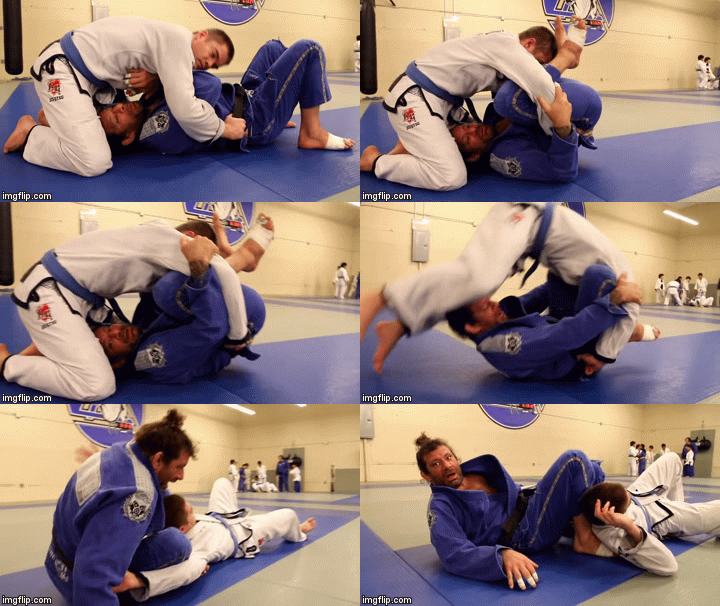
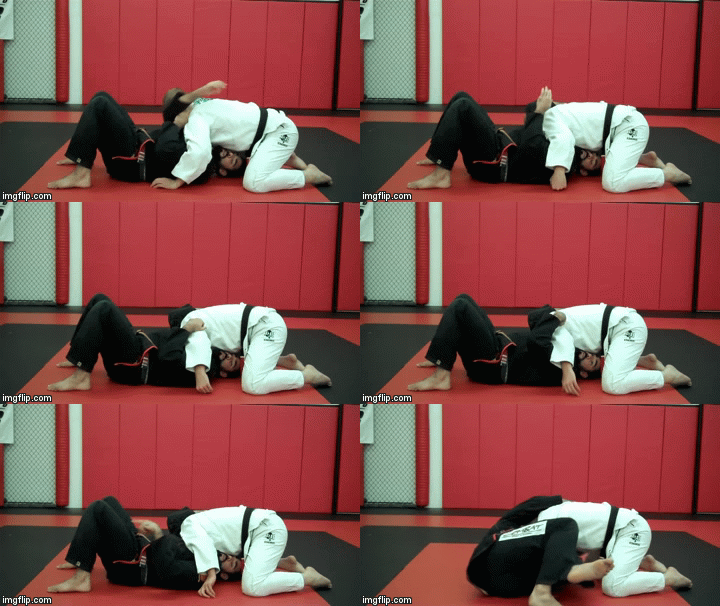
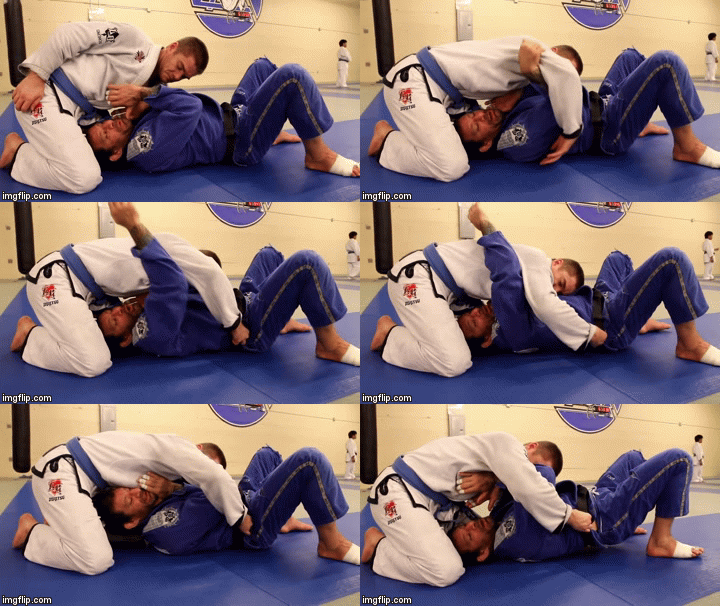
North-South Escapes The first escape is a fairly simple one. Once you have a successful defense structure, your goal is to use your arms to trap the opponent’s forearms to the mats. To do this, you’ll need to open your elbows to your sides but keep them on top of the opponent’s arms. Next, you’ll need to move fast and get the both your arms on the same side of the opponent’s head. Push on the neck with one arm to get the other to that side. Afterward, establish grips over and in both armpits. Escaping now is as easy as rotating toward the opponent on the opposite side of their head.

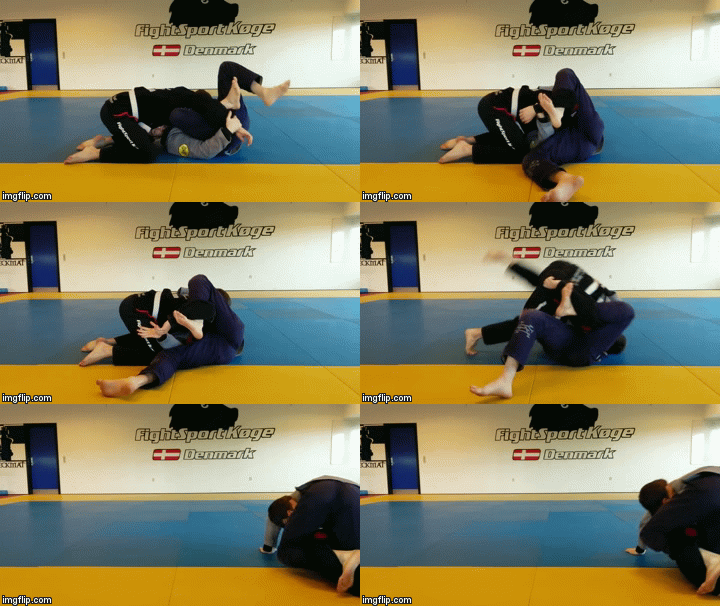
North-South Escapes The second escape is probably even simpler. The same basic defense principles apply, but now, instead of pinning the arms you’ll keep your arms tightly on your chest. You’ll use the Upa to create space and a frame. To do that, do the bridge, but leave your arms extended when you go back down. Now you have enough space to tuck your knees towards your chin. This will get your knees in between you and your opponent. Once you’re there, get both your arms to the triceps of their arms, near the armpits. At the same time, thread both knees on the biceps on each arm. Rock with your feet towards the mats and your opponent is going to fly right over.

Counter Attacking

Countering from the bottom of the North-South position is only something for advanced students. Namely, it’s really easy to make a mistake and end up stuck even worse. The best way is to use any of the North-South escapes above. However, in certain cases, where the opponent is also savvy about what’s going on, you’ll need different options.

North-South Escapes and CounterOne such great option is the Squirrel lock. this is basically a Kimura, only with your legs instead of your arms. For the Squirrel lock, you basically want to end up in position for the second escape above. Once you do though, and you can’t rock your opponent over, you can go for an armlock. Focus on one side an switch your arm to control the wrist of the opponent. Shove your knee as deep towards the armpit as possible. Now, you’re going to rotate a little bit, so that you can swing your other leg over the opponent’s upper arm. Once in, thread a foot under their forearm for a hook. You’ll need to get the knee of your first leg out to achieve this.

Finsihignthe Squirrel lock is not hard from there. You can either get a tap right there or roll the opponent over and finish from top side control.

Revisiting The Inverted North-South Position

The Easiest North South Choke Setup

Versatile Attacks From The BJJ North-South Position

An Interview With Mo Jassim, The Man Behind The ADCC 2019

Mo Jassim Inerview. ADCC

There’s hardly anybody out there in the Grappling Kingdom that doesn’t know what the ADCC is. It is the equivalent of the Olympics for the grappling world. The ADCC or Abu Dhabi Combat Club is the one event all grapplers dream of competing at. Held every couple of years, there are only two ways of getting to the ADCC mats. One is via a direct invitation, which requires you to be a world-class grappler. The second is by winning the continental trials, which take place between events. What people rarely know is how the ADCC works behind the scenes and how the people behind it think. We aim to change that by offering you deep insight into the workings of the ADCC. The man to shed some light is ADCC’s very own, Mo Jassim.

We got to sit down with Mo Jassim to discuss plenty of topics regarding the Abu Dhabi Combat Club. Who exactly is Mo Jassim? We’ll let him explain that for himself. Along the way, we’ll discuss topics as the ADCC schedule, the trials, interesting thoughts on who the best competitors are as well as Mo’s own martial arts background. Check what Mo had to say about all of these, as well as a host of other grappling related subjects:

GK: Can you please introduce yourself to an audience and tell us what’s your role in upcoming ADCC 2019 and ADCC events, in general?

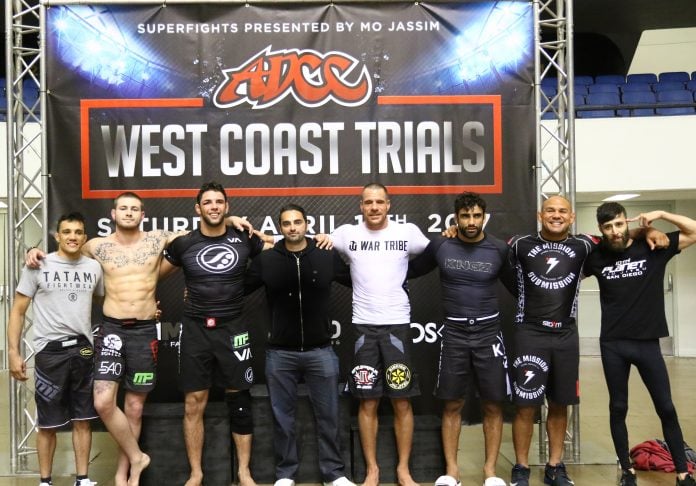
Mo Jassim: My name is Mo Jassim and I will be the head organizer for the ADCC 2019 world championship in Anaheim California September 28 and 29, 2019. I will also be hosting the ADCC West Coast trials.

Could you please tell us more about your role as a promoter for the ADCC as well as how you started working for them and how long ago?

Mo Jassim: My role as a promoter for the ADCC is making sure we have the best venue possible, the fighters have everything they need to perform their best and to make sure the show is an entertaining experience for the fans coming to watch live. As far as how I got started with ADCC, I first attended in 2000 when the event was held in Abu Dhabi and have been in love with it ever since. I’ve had the pleasure of meeting and now working with our senior members, Petar Baltalyski and George Delchev. Since then I officially started helping them in 2007, and I haven’t missed an event since.

Could you please tell us a bit about your martial arts background?

Mo Jassim: Also please let us know how and when you started training BJJ, your gym affiliation as well as rank. It wasn’t until 2003 that I found Rickson Gracie’s academy in Los Angeles, California and I have been hooked on Brazilian Jiu-Jitsu ever since. After moving to Orange County a few months later I continued training at a Cleber Luciano affiliate and was awarded my blue belt in 2005. Since then, I’ve been flying back & forth between Abu Dhabi and the United States, when I was awarded my purple belt by JT Torres in December of 2015. I also supplement my Jiu-Jitsu training with wrestling and boxing with veteran ADCC Judge and MMA coach, George Delchev for the past 6 years. While I’m in California I continue training boxing with Dustin Gonzalez of Wildcard Boxing.

Speaking of BJJ training do you still train actively? Furthermore, have you ever given the competition a try?

Mo Jassim: Aside from private lessons, I like to host BJJ camps at my house every couple of months, where I invite some of the top guys to come and cross train in Southern California. Aside from that, I live close to Romulo Barral’s Northridge academy where I hope to be training more regularly in the near future. #everydayporrada      Mo Jassim

Could you share some of the latest developments on the upcoming ADCC trials as well as the ADCC 2019 main event?

Mo Jassim: One thing we have been working very hard on has been securing the venue for the 2019 Championship, which has finally been booked and will be at the Arena of the Anaheim convention center September 28 & 29th. Additionally, we have been organizing our trial events where participants can earn their spot in our exclusive 16 man world championship bracket.          Mo Jassim
The first trial event will be October 6th in Bucharest, Romania, and the rest will follow. So far we have confirmed.

– 1st North American Trial: Bayville, New Jersey, November 3rd.
– 1st Asian Trial: Kazakhstan,  December 1st.
– 2nd North American Trial: Burbank, CA at the Muscle Pharm HQ on Feb 9th.

The rest are still being organized and we will be sure to update as they are added.

Who, in your expert opinion, is the best No-Gi grappler of today?

Mo Jassim: I believe Marcus “Buchecha” Almeida, Gordon Ryan, Felipe Pena, and Andre Galvao are the top No-Gi grapplers right now. What Andre Galvao has accomplished in ADCC is unprecedented and nothing short of amazing, but he isn’t competing as regularly as the other 3 guys. With recent wins over Gordon Ryan and Buchecha, I believe Felipe Pena is undoubtedly the best No-Gi grappler in the world right now.

Last time out, Gordon Ryan did great at the ADCC, winning his division and claiming silver in the absolute. He is now looking to compete more in the GI. What do you think of his chances in the Gi under IBJJF rules?

Mo Jassim: I know Gordan Ryan very well and I wasn’t surprised in the slightest when he did as well as he did, and I also think he had the best ADCC debut ever. There are many people who transitioned from the GI to no GI, but I think this is the first time an elite level no Gi grappler is going to the Gi scene, so I am very interested to see what happens. Personally, I think he will become a high-level Gi grappler but I think it will be very long and hard road for him to become a world champion. Taking away his heel hooks and having to learn the gripping sequences in the GI against guys who have been doing it over 10 years is no small task but with Gordon’s talent and work ethic, I wouldn’t put it past him.

What was the most interesting match you’ve seen in ADCC so far?

Mo Jassim ADCCMo Jassim: There are too many matches to just pick one but I some of my favorites are

  • Cobrinha vs Rafael Mendes (2013)
  • Ricardo Almeida vs Arona Mo Jassim
  • Vinny Magalhaes vs Werdum
  • Garry Tonon vs Kron Gracie
  • Andre Galvao vs Braulio Estima.

Jiu-Jitsu seems to change and shift more often and faster than before. Do you like where the evolution of BJJ is heading?

Mo Jassim: I like the direction BJJ is taking in terms of going for submissions, the evolution of leg locks and the overall advancements of the sport, but I do feel the new generation of BJJ competitors aren’t as well rounded as the previous generations. When you look at guys like Marcelo Garcia, Jacare, Roger, Galvao they could all play guard, have strong passing games and had good wrestling or judo skills. Many competitors now focus on one or two aspects of BJJ and train those areas extensively while neglecting the other aspects in my opinion. Mo Jassim

If there’s something you could change in the ADCC, be it rules, competition format, weight classes, organization, promotion, what would it be?

Mo Jassim: I would get rid of the Sunday weigh in for ADCC. I feel it’s unfair for the fighters who compete on Sunday and enter the absolute since they must cut weight and the fighters who lost Saturday do not have to cut weight to enter the absolute. Someone suggested to have all absolute competitors cut weight but that isn’t possible since we don’t know who will be in the absolute until 30 mins before we start the matches. Another thing to consider is that there is an 11 KG difference between the ADCC divisions and there are many competitors who are too small for the division above, so they are forced to cut a lot of weight. If we can’t get rid of the Sunday weigh in I would give a 5 KG allowance at least on Sunday so the fighters can be hydrated and give their best performance.

What is the one event that you think was the best ADCC event so far, including the Trials?

Mo Jassim: They each have something that makes them special and exciting, but for me personally, ADCC 2005 is one of the best of all time. Roger Gracie won all 8 matches by submission (Cacareco quit before the second OT) with subs over Jacare, Xande, Werdum, Shinya Aoki, Eduardo Telles. ADCC 2005 also had the legendary Marcelo Garcia vs Ricco Rodriguez match along with many high-level MMA competitors such as GSP, Diego Sanchez, Gilbert Melendez, Uriah Faber, Jake Shields, Frank Trigg, and Dennis Hallman. Our most recent in Finland certainly held up to the level of expectation, and now 2019 being back in the United States since 2007 will make for another spectacular event.          Mo Jassim

Anything you’d like to share with all us ADCC fans out here in the Grappling Kingdom?

Mo Jassim: Get ready for an exciting year of grappling ahead, and watch be sure to keep an eye out for the new up & comers in our ADCC trial events.

A huge thanks to Mo Jassim for answering all our questions! The ADCC trials are taking place soon, as you can see. So, pack your shorts and rashguard and start practicing those heel hooks!

Shared with Courtesy of www.grapplingkingdom.com

Choose Your Jiu-Jitsu Game: Pass Or Play Guard?

Top Or Bottom Jiu-Jitsu Game

There’s hardly any grappling martial art that is more versatile than Brazilian Jiu-Jitsu. This is true both in terms of techniques, positions, options and the potential for evolution. Still, we can divide the whole sport of Jiu-Jitsu into three main areas: top positions, bottom position and submissions. Submissions are a category by himself, because sometimes when you catch one, you’re neither on top nor bottom. Top and bottom position, on the other hand, are more closely related. As such, they offer the same dilemma other related yet different things do – which is better? Very often, a grappler’s Jiu-Jitsu game is defined by their inclination to roll from either the top or the bottom. Which one do you prefer?

If there’s one constant about BJJ, it is the fact it is continuously in flux. The moves in BJJ never set because experimentation is such a huge part of the art. As the art spreads across the world, it’s evolution becomes faster and more complex. Everyone has something to add in this soup of grappling moves, some additions more eye-catching than others. Whatever the case may be, everything goes into one of the categories we mentioned. A pressure-based Jiu-Jitsu game form the top is usually the mark of guard passers. Flexible and fast work from the back is, on the other hand, what guard players are best at. So, with two such diametrically opposing currents, which one should you focus on? Is one really better than the other?

Before we go deeper into what you should focus on first, let’s settle an important matter. You absolutely have to know how to be good in both if you ever aspire to become a well-rounded grappler. That said, having a favorite of the two is what’s going to define the direction fo your Jiu-Jitsu game. Since we already know how important diversity is for the sport, consider applying the same principle to your individual game. Choose your preference carefully and make sure you at least understand how the other aspect works. As for submissions, we all love them in every shape or form, so all bets are off in that department!

Discovering Your Jiu-Jitsu game

Usually, when you start BJJ, you’re learning whatever instructors show. At this point, you have no idea what you want, or what is going to suit you. the right approach is to actually try and absorb as much knowledge as you can during this time. Further down the road, when you understand how things work, you can look in a more specific direction to develop your Jiu-Jitsu game.

The first thing that’s going to define your game are your physical attributes. This is key with beginners, as every lack of technique gets replaced with whatever athleticism one has. It may be a huge size advantage or enormous strength. On the other end of the spectrum are speed, flexibility, and endurance. Or, perhaps, it is pure heart and aggression that carries you through to a more advanced level. Your strongest physical quality will determine if you opt for a top or bottom game very early on.

Next up are any previous habits you might have. If you’re coming n from a wrestling background, or Judo for that matter, you’ll probably lean towards passing the guard. If you have more ground fighting experience (Sambo or Japanese Jiu-Jitsu) or perhaps, no experience, you’ll probably like to work off your back more. People that come from striking martial arts also seem to prefer staying on top.

Whatever the case, these are all factors that decide your Jiu-Jitsu game very early on. After you gain some experience, like getting a blue belt, you may continue on your path, or decide to try something new. AAt this time, though other factors come into play.

Starting From The Bottom

The general tendency in Brazilian Jiu-Jitsu, apart from wrestlers and Judokas, is to start off from the back. People with no grappling experience, in particular, find the closed guard position to be a real safe haven. With women and lighter guys, this seems to be the norm, actually. And it makes perfect sense.

First and foremost, getting to the closed guard is fairly easy. Once a grappler does that, it truly restricts what the top person can do, even if they’re a seasoned wrestler. The full guard offers security, which is what everyone looks for when thrown into a chaotic situation. It also opens the door to control without the need of too much technique. Plus, the guard is easy to maintain, despite often ending up in somewhat “boring” rolls. After all, everyone’s initial Jiu-JItsu game is all about discovering comfort.

Jiu-Jitsu Game: Play Guard Or PassAs people progress, they discover that the guard is also a very attacking position. While it has the downside of offering no points in sports BJJ, it does offer attacks. What is more important it offers direct attacks. From the closed guard, people have options to submit that cover all the submission categories beginners have at their disposal. they can choke and armlock with a whole bunch of moves.
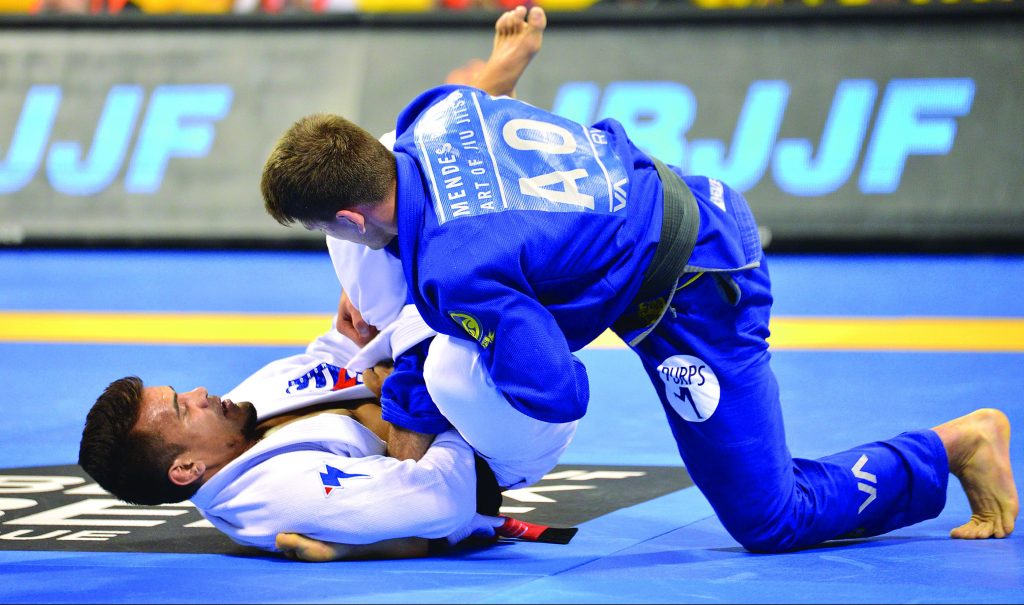
As you progress further and start to open the guard, you’ll also discover something else. Apart from direct submission attacks, the bottom position offers a “shortcut” to strong top positions. Namely, with a good sweep, you can bypass the opponent’s guard and end up directly in side control or mount. WHich now brings you to top position.

Evolving Into A Passer

Blue belt is the period where most people actually decide their Jiu-Jitsu game. This does not mean they won’t dabble in other things, but before black belt, they’ll probably stick to the main theme. This is also the time where guard passing enters the frame.

The one reason why wrestlers have such a difficult time dealing with the guard is that they don’t understand it. For people with a certain level of experience in Jiu-Jitsu, passing comes easier. Most beginners play guard, so when they end up on top they can relate to what the bottom person is trying to do. This will allow them to try and counter and, eventually, break and pass the guard. The only condition here is to spend some time learning how to balance on top. This is also the time when people decide if they’ll switch to passing or remain a dedicated guard player.

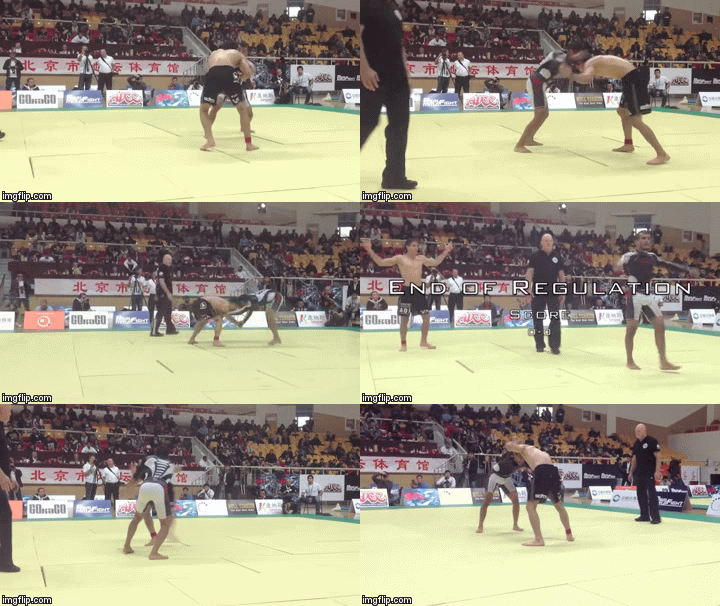
Jiu-Jitsu Game:Entering competition is another huge point that influences where your Jiu-Jitsu game is going to head. Competition starts from the feet everytime. If your takedown game is non-existent, you’ll probably tend to go for guard. If you can take someone down, though, you’ll most likely want to stay on top. That means you’ll need to pass the guard in order to progress.
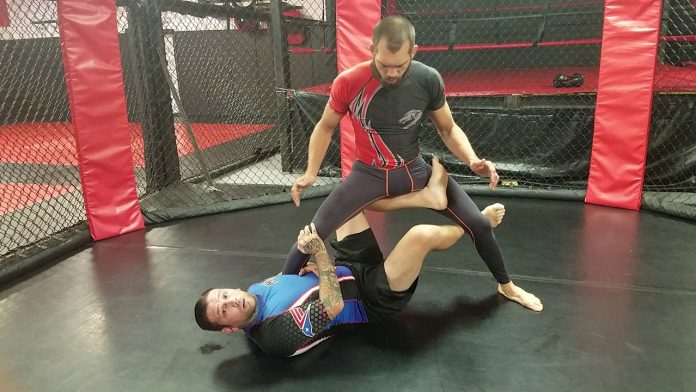
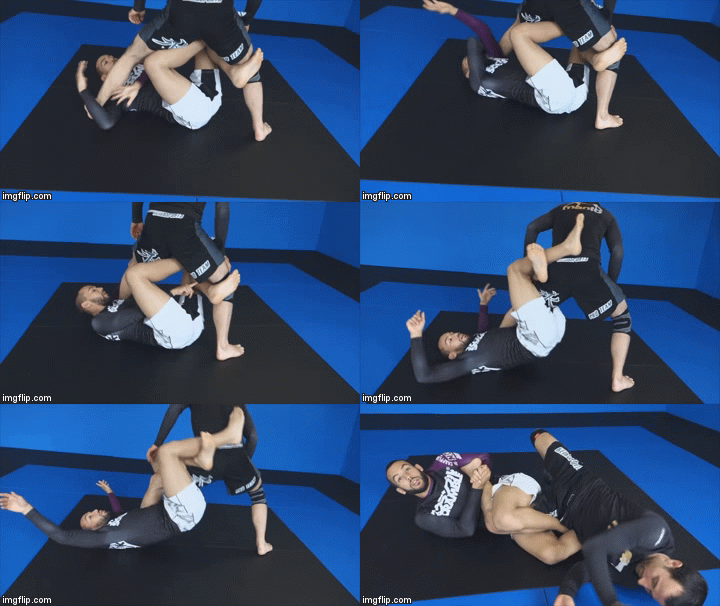
The top-based Jiu-Jitsu game offers a higher percentage of success in competition. This is mostly to the fact that, bar sweeps, only top positions bring you points. However, there’s nothing available unless you find a way to pass the legs. As we all know, against a solid guard play, that can be a real problem. Unless, like before, you have some experience in the guard, and know what to look for.

So, what’s your preference? Top or bottom? And, what led you to make that particular choice?

Leandro Lo Matrix Passing
Techniques List

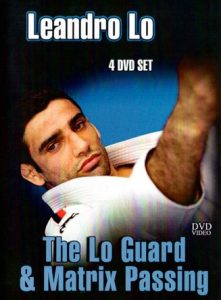
A perfect example of a well-rounded grappler that can do everything is Leandro Lo. He has both unstoppable sweeps and a guard passing game to put everyone to shame. Luckily, his secrets are not hidden anymore. Get the “Lo Guard And Passing Matrix” DVD and learn both top and bottom position essentials from the man himself!


Review Of The Top 5 Guard Passing BJJ DVD Instructionals

Stuck With Your BJJ Game? Here’s A Way Out!

Submissions From Guard: The Holy Trinity

X Guard Submissions: Gi And No-Gi Leg Locks

X Guard Submissions Leg Locks

What is the best offensive guard you can play? the answer is not simple since it all depends on many different actors. However, if there’s one general rule, then being able to manipulate your opponent’s base and/or posture without much effort is definitely high on the requirements list. As such, there is one category of BJJ guards that stands out. Those are all the guard variations that put you underneath your opponent. Depending on your goal, different guards, give you different attacking options. Some are easier to maintain, while others are top submissions hunting spots. The X guard is usually seen as a transitional guard, most effective for sweeping. However, there are plenty of X guard submissions as well, and most of them are in the leg lock department. 

What usually defines the effectiveness of a guard is distance. Different guards work from different ranges. In general, there are four main ranges – far, medium, close, and underneath. Using a far distance guard to grapple from a close distance is going to end up in disasters most of the time. A good example of a far distance guard is the spider guard. The Reverse De La Riva is a medium distance guard. Closed / half guard variations are mostly close distance guards. X guard variations, 50/50, deep half, etc. are great representatives of guards that work from underneath the opponent. While most people are used to single leg X guard submissions, the classic X also has a lot to offer. Particularly in the area of lower body submissions.

X Guard Submissions

The X guard is a staple of Brazilian Jiu-Jitsu, and one of the most useful open guards out there. It works just as well in both Gi and No-Gi and is one of the rare guards that doesn’t require any modification. The same grips apply just as well with the kimono as they do without it.

The most basic X guard position is when you have one leg of your opponent over your shoulder, hooked inside-out with your nearest arm. Both your feet crisscross on the inside of the thigh of the opposite leg, thus resulting in an X pattern. The far side arm usually looks to grip an arm, the lapel, or help you post for attacks. Speaking of attacks, X guard submissions can be as much a part of this versatile guard as sweeps are. The only thing you need to know is how to sue the structure that the X guard provides to get right into them.

Controlling the near side leg can be done with both an under and an overhook from the X guard. This is an important fact because both open up different submission possibilities. It is obvious that the structure of the X guard places you in a perfect position to hunt for leg locks. Both legs are wide apart, and you’re in control of both the distance and elevation. with a few strategically placed grips, you can hit just about any lower body submission there is from the X guard. Also, check the most dynamic x-guard sweep to back take.

Heel Hook

Let’s start directly with the highest percentage lock there is – the heel hook. One thing to know is that while there are plenty of X guard submissions available on the legs, none of them work directly from there. To successfully get a leg lock, you’ll need to use the advantage of the X guard to get into an Ashi Garami.

X Guard Submissions Heel HookOne great example is the heel hook. The 50/50 guard is also an Ashi Garami position that is among the best for finishing the inside heel hook. From a basic X guard position, you need to first transfer the leg that’s near your head to the other side. This means that you’ll first have to stretch your opponent wide using the X hooks. The reason for the stretch is to make the leg you’re trying to transfer lighter. Once all their weight is on the other leg, use your free arm to help you get their leg to the other side. Use the same arm to underhook the leg once you get it over, so that you still have a stable position.

From there it is as easy as getting both legs out and projecting your hips upwards. This is going to allow you to swing one leg over their hip, using the momentum to both get them to the mat and into an Ashi Garami. From there. The heel hook is right there even before they hit the ground.

Toe Hold 

The toe hold is a complicated submission to get from any position. Yet, it still features among the X guard submissions that actually work. What you need to be really careful of is the fact that the Ashi Garami you’re going to be doing a toe hold from, is illegal under IBFFJ rules. At all belt levels.

X Guard Submissions Toe Hold From an X guard, you’re going to stretch your opponent as much as you can once again. When you have their base corrupted, you’ll release your X hooks again. This time though, you’ll swing the opposite side leg around the opponent’s hips. This places you in a knee reap position, which will allow you to get the opponent to the ground. Make sure you take their other leg and trap their foot with both your legs in a stable Ashi Garami before you proceed. Once you have the Ashi Grami, you can easily finish via a regular figure four toe hold. Another option is to just grab the toes with the near arm and the heel with the farm arm to finish directly. Check the secret toe hold details!

Knee Bar 

The kneebar from the X-guard is a classic attack and one of the first I learned from the position. It doesn’t take a lot of work to get there, but it does have a bit of a complicated turning motion. The attack is going to be on the near side leg, which is something many people struggle with. The direction of turning is also important, as it has to be from the inside and going to the outside of their leg.

X Guard Submissions KneebarFrom a basic X guard position. you’ll need the extension of the far leg again. Every time you’re abandoning the X hooks, it is wise to have the opponent’s legs as far from one another as possible. For this setup, we’ll use a Gi example. Turning around one of your opponent’s legs is much easier with a Gi on, as you have better control. You’ll control the leg with an underhook in this instance while having their posture in check with a collar grip with the other arm. YOu’ll want to transfer your inner leg’s hook to the near side leg while swinging your opposite leg over the opponent’s hip. Use the arm that was on the collar to help propel yourself off the floor and around their leg. The movement itself will bring the opponent down towards their back, with you in a perfect kneebar position. Check The Knee Bar escapes and defense principles.

Calf Slicer

This one is a true favorite of mine, as most people go straight into it themselves. Unlike most calf slicer options, this one works with your arms and shoulders instead of your legs. It also requires a certain understanding of how both X guard submissions and sweeps work. In some cases, you won’t able to get your opponent off balance long enough to set up a direct leg look. In such a case, push their far leg as far as possible and immediately get into a technical stand-up. This is going to land you in a position where you’re standing, and you have your opponent’s leg on your shoulder.

X Guard Submissions Calf Slicer Since this is not a position many people enjoy being in, they’ll most likely attempt to turn away from you. This means they can bend their leg and escape. It also means you can get a calf slicer submission. All you need to do is move backward that your opponent lands on their belly, From there use the forearm you already have behind their knee to submit. Establish a palm to palm grip and press your shoulder towards the opponent’s butt for a nasty calf slicer. Also Check the Breakdown of Calf Slicer, defense, counters, and applications HERE.

Ankle Lock 

A series of X guard submissions featuring leg locks won’t be complete without an ankle lock. After all, it is the one X guard submission anyone can do, legally speaking. Once again, we’ll focus on a Gi setup here. The same thing can work in No-Gi too, just with a different grip for the posture break.

X Guard Submissions Ankle LockForm the X guard, you want to have the opponent’s collar and have your X hooks close to you for this one. The grip on the near side leg is with an overhook whenever you’re hunting ankle locks.  The goal is to off-balance your opponent forward first. After that, you’ll want to take them up and over your head. Make sure you stay glued to the opponent’s thigh with your X hooks during the roll. This is essential to finishing the ankle lock from a stable position. In this situation, you’re looking to finish belly down. this is also known as the tripod position. Both your knees on each side of their leg and your free arm are your posts. The other arm should already be in a position to finish, around the ankle.

The Reverse X Guard

Apart from all the regular X guard submissions, there’s also a modified Xguard for leg locks. The reverse X guard is a very leg lock specific guard. In essence, it is not really much different from the regular X Guard. All you need to do is switch the position of your hooks. Your bottom leg is no going to be on top, and vice versa. This very simple little adjustment is essential. It allows you to enter the most powerful Ashi Garami attack available.

Reverse X Guard Submissions Heel HookThe reverse X guard is the best way of getting your opponent off balance and in the air. Interestingly, this time, the leg going up in the air is the far one. Once it’s off the ground, you’ll want to kick your leg so that you enter in the Inside Sankaku. Getting the opponent to the ground is easy from there. Finishing them with an inside heel hook is even easier.

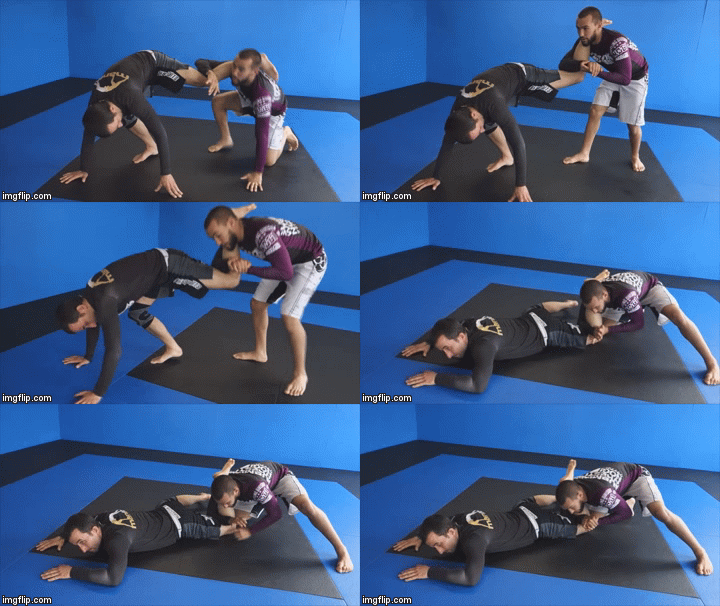
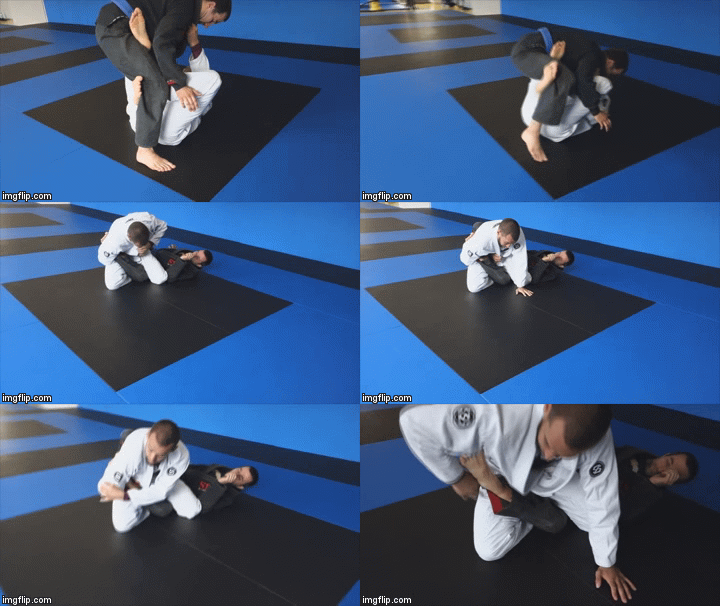
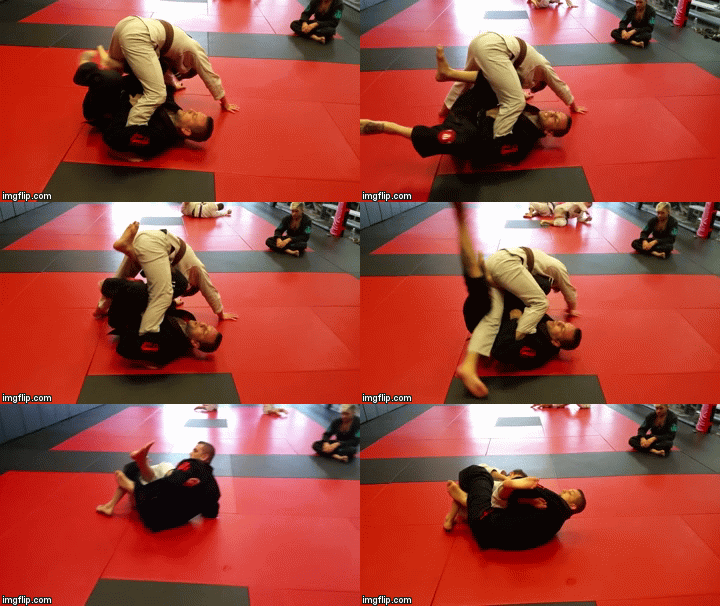
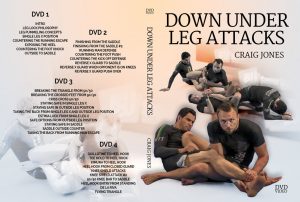
Craig Jones DVD Down Under Leg AttacksCraig Jones is a master of the reverse X guard. As a matter of fact, he has a lot of X guard submissions that target the legs. The “Down Under Leg Attacks” DVD set is everything you need to become a real menace from underneath. After all, there are not many people that are better leg lockers than Craig.

10 Best Leg Locks DVDs and Digital Instructionals

Three Different Grips For Finishing Heel Hooks

Calf Slicer & How to Make it Your Best Leg Lock

(Warning) Loud Snap of Tibia and Fibula as a Result of a Leg Lock

BJJ Vs Wrestling: How To Beat A Wrestler

BJJ vs Wrestling

BJJ Vs. Wrestling – who would win? The answer is that it depends on the ruleset. Speaking from the perspective of BJJ guys, wrestlers are a real handful, even when they do not have BJJ experience. A solid wrestler with no Jiu-Jitsu knowledge can really put even experienced BJJ students under pressure. However, in a BJJ setting, whether it is the gym or competition, there are ways to beat a wrestler. Are you going to beat every wrestler you meet? Of course not, But if you know how to approach them, you can take wrestling out of the equation and make your encounter a pure BJJ match.

At a certain point after you start training BJJ, when all the torture stops, you start realizing that there;’s a fun side to it too. As you train you to become better and better and you really start enjoying Jiu-Jitsu. Then, one day, a wrestler walks in the gym a reminds you of those first few months in BJJ. Suddenly, nothing seems to work. You’re under pressure, you’re tired, there’s no way to end up on top. For all you know, it may be Khabib Nurmaghomedov himself on top of you. Facing a wrestler tends to put things into perspective for lots of people. And it inevitably raises the question of BJJ vs wrestling and the options you might or might not have.

The first thing that might give you hope is the Gi. After a few training sessions where that new guy mauls everyone, he finally gets a Gi. Now, the tables have turned (somewhat). There’s now a way for you to manage what they’re doing, even if you still can’t really accomplish much. However, there are certain strategies that might settle the BJJ vs wrestling dilemma once and for all. As you’ll see in this article, it is not really that difficult to deal with people that come from a wrestling background. Even when you’re standing.

BJJ Vs Wrestling: Know What Wrestlers Want

The first step in knowing how to deal with a tough wrestler in BJJ is understanding what they’ll be looking for. Depending on where you are, wrestling can be really straightforward. The first thing you need in a BJJ match, for example, is to recognize the stance and grip fighting of wrestlers. First of all, a wrestler is going to be standing much lower than a BJJ or Judo guy. There’s also a very specific posture that’s a dead giveaway for wrestlers. If that’s not enough, once you see someone refraining from a gripping fight and measuring distance instead, you can be certain. If they touch your head while circling, and avoid Gi grips, you can be certain. And you’ll need to react quickly.

Wrestlers are going to look to maintain distance until they can set up their takedown game. Once they have their opening, though, they’ll be looking to explode right away. Explosiveness and relentless work are two of the main traits of wrestlers. Once they get a hold of you they’ll be on you like a pit bull. What you can expect is that you’ll end up on the ground in 99% of the time.

Once on the ground, there are is one thing you can be certain of – pressure. Wrestlers are never going to accept fighting from a bottom position. This is to be expected as in wrestling, getting your back on them and is a great way to lose a match. The main problem you’ll have apart from the pressure is a wrestler’s base. Their base is just as notorious as its takedowns skills. So, what do you do against a pressure-heavy wrestler with a base of steel?  BJJ vs Wrestling

On The Feet

BJJ vs WrestlingThe one thing you can master very quickly as a way to deal with wrestlers is sprawl. It is not as much BJJ vs wrestling as it is wrestling vs wrestling. But it works. And it can open up a lot of opportunities for you. However, the sprawl is not the one move that’ll keep you safe against wrestlers. It may help you deflect most attacks that involve them grabbing your legs. Still, you’ll be easy prey for headlocks, Russian ties trips etc. Which brings us to the next step.
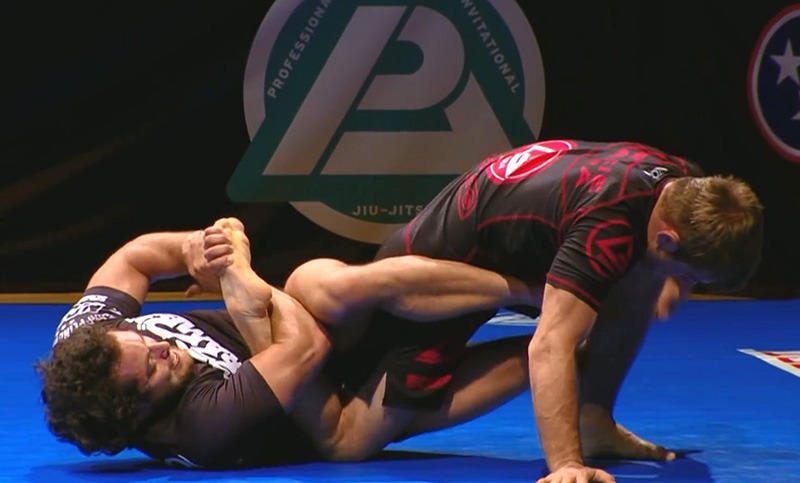
If you’re up against a wrestler and you stuff a takedown attempt or two, pull guard. If you have no wrestling background yourself, pulling guard is your best bet. WIll ti land you in a perfect position? No. That said, there’s probably no position that is perfect to have against a wrestler. What you’ll accomplish with the guard pull is to get to the ground on your terms. The other option is getting taken down, which means the wrestler will have side control at least. Not where you want to be. So, recognize the grips and stance, avid takedowns, and pull guard ASAP.

Bottom Game

The main thing you need to do from the bottom is to deflect direct pressure. In order to do this, forget about most fancy open guards. They’re way too easy for a wrestler to smash right through them. Your best bet after pulling guards to remain in closed guard. Here, you’ll have great control over the pressure with your hips. If you play your cards smart, you’ll also have submission options they won’t expect.

However, what you’\ll hardly achieve from the closed guard is sweeps. And, if you’re up against a strong wrestler (which chances are, you will be) submissions won’t be easy to set up. The absolute best way to finish a wrestler is either a leg lock or a rear-naked choke. If you ask me, I’d go for the second option as many wrestlers will take the pain of a joint lock. To achieve this, you’ll need to go underneath a wrestler. As far as BJJ vs wrestling advice goes, this is the most important one. Get underneath the base of the wrestler. The best guard options for this are the X and single-leg X guards and the deep half guard. The 50/50 might also be helpful but only if you’re dead set on a leg look finish.

When you’re underneath, you can manipulate a wrestler’s base without bearing their pressure. However, when they realize this, they’ll do all they can to return to a better position, or even disengage completely. In order to prevent it, you’ll need to use smart grips, and entangle your opponent. The deep half guard is perfect for this, as it restricts movement more than any other. It also offers you a sweeping option that lands you in a better top control than others.

How To Stay On Top 

If you want to stay on top of a wrestler, you must use wrestling against them. However, you can’t be looking to use pressure against them. they’re too sued to withstanding and escaping it. Instead, your best option is using an old wrestling principle against them – staying loose. This doesn’t mean going limp on top, but staying light and active. Whenever you have side control, use their explosive escape attempts to go straight into the mount, or hunt for the back. Do not be afraid to go from mount back to side control if you need to. Forget holding mount as this is one rodeo you won’t win. Keep floating around a wrestler if you want to truly maintain top position and control.

BJJ vs Wrestling Remember to also attack while you’re transitioning. Allowing any position to set means you’ll leave wrestlers options to look for ways out. Instead, what you want to do is look for submission while you’re in a transition. For example, if they’re turning from the mount, you’ll want to look to slap on a choke while you’re taking their back. BJJ vs wrestling
Finally, make sure you use high percentage submissions only. We already mentioned leg locks and chokes. If you can use them, go for heel hooks and forget any other leg lock. If not, stick to toeholds/Estima locks, as they’re true giant killers. In terms of chokes, nothing beat attacking from the back. If you have the Gi, use it to your maximal advantage. the Bow and arrow are much better than the rear-naked choke because it’ll be tighter and harder to defend against. Also, consider going for loop chokes over guillotines, if you really want to tap out a strong wrestler.

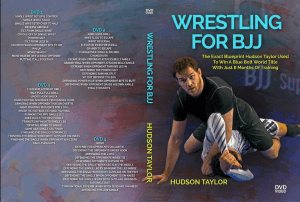
Wrestling for BJJ DVD Hudson TaylorOne great idea is to go out and improve your wrestling skills yourself. Short of going to a wrestling gym and taking extra classes, your best bet is Hudson Taylor. Or, to be more precise, Hudson’s DVD “Wrestling for BJJ”. This is the ultimate resource for you to improve your wrestling skills in a way that is specific for Brazilian Jiu-Jitsu. BJJ

Catch Wrestling vs BJJ and Which Art Has Better Submissions?

The Chest Choke – Catch Wrestling Submission For BJJ

REVIEW: The Catch Wrestling Formula Neil Melanson DVD

Bjj Weight Classes, Weight Cuts And Weigh Ins – The Truth

BJJ Weight Classes Weigh Ins

The one thing that is a major source of controversy in the world of martial arts is weight cutting. All things aside, it usually presents a clear hazard to an athlete’s health. This is particularly the case with multiple successive weight cuts, which is not uncommon for grapplers. Wrestlers usually cut every weekend during the season. Brazilian Jiu-Jitsu athletes might get a couple of weeks in between, but that only makes the problem worse. The real question is, with so many BJJ weight classes available, is cutting down an extra 10 lbs really that important? Truth be told, it seems completely redundant for people that intend to compete in the absolute anyway. So, should major BJJ organizations change the way they approach weigh-ins or should grapplers stick to more natural weight classes? 

The issue of weight cutting is sold as weight class-based sports. The methods people employ are so wide off the mark that they usually stress the body way beyond its limits. And the worst thing is, this is not just a one-time thing. Cutting weight and all the misery associated with it is taken for granted. Luckily, in BJJ there haven’t been deadly consequences so far, but that’s not the case with MMA. This is a clear testament to the issue of weight cutting, which is in essence, based on the existence of BJJ weight classes.

In all honesty, do you think a few pounds more or less are really going to affect you in the blue belt masters division at the local IBJJF tournament? Even with millions of dollars on the line in MMA that practice is stupid and outdated. When you have no financial or similar gain whatsoever, do you really think risking your health is worth you being 100 grams heavier than your opponent?

BJJ Weight Classes

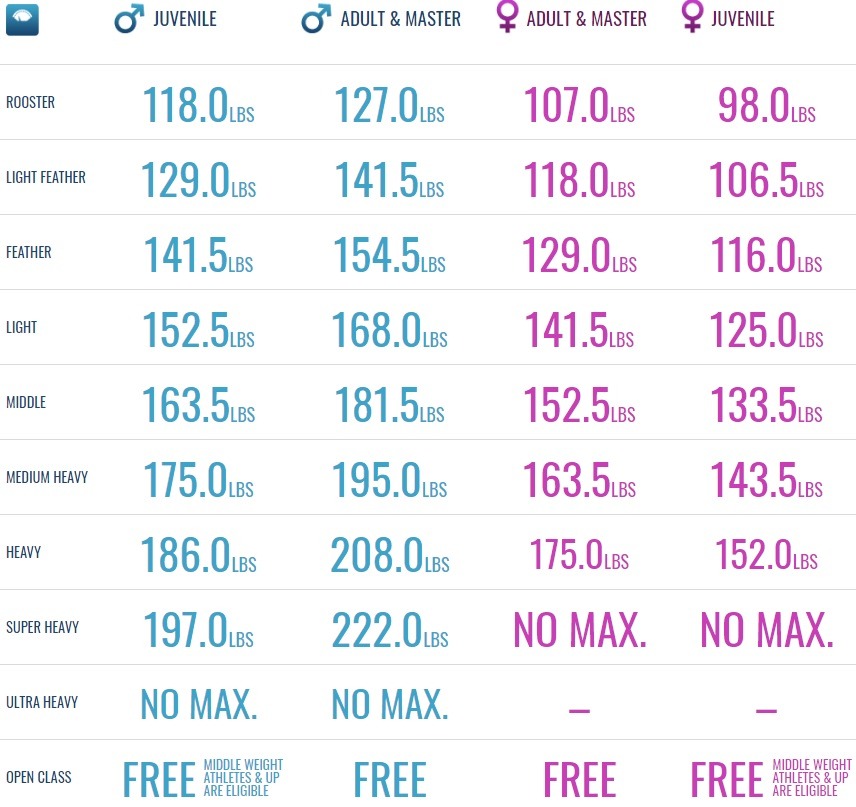
In Brazilian Jiu-Jitsu, there’s anything but a lack of weight classes. So far, there are 9 weight classes that range from 127lbs (male) and 102lbs (female) all the way to unrestricted weight above 222lbs (male) or 175lbs (female). That is quite the range of weight classes, which, as easily seen, are not that much far apart.

BJJ Weight Classes The thing with weight classes is, people rarely fall bang in the middle of one. Seeing as it is rarely more than 15 lbs between BJJ weight classes, this shouldn’t be a very worrying thing for people. Yet, the common perception is that if you’re a featherweight who ends up in the lightweight division, you’ll get crushed by people with ease. No, you won’t! The only thing to worry about if you’re going two or more weight classes above something that you might see as optimal is the height of people. If you’re 5’5″ and weighing 210lbs, you should lose the weight anyhow. What you shouldn’t do, is try to cut down to lightweight in three weeks before a tournament.
Fitting within a BJJ weight class is not hard. Tailor a sustainable nutrition plan first. See if you can stick to it for a few months. By then, you’ll get the most of it. If you’re comfortable staying at that weight (+/-5lbs) during your life then choose the weight class where you fit without any cutting. Obviously, if a pound is a difference you can consider holding the carbs a couple of days before a competition. But otherwise, trying to get three BJJ weight classes lower in order to have a physical advantage is just a hoax. Read on and you’ll understand why.

Cutting Weight For BJJ 

So far, most weight-cutting methods employed by both amateurs and professional grapplers are dangerous, to say the least. The method of choice for most is dehydration, often extreme, in order to reduce water weight. Doing burpees in a sauna is exceedingly uncomfortable – and for a reason. Our body is not designed to kick-start weight loss ta such a steep rate in so little time. Since it’s holding on to everything it can for dear life, water is usually the easiest thing to get rid of. However, doing anything, physical or mental, in a dehydrated state is next to impossible.

One really important thing to consider about BJJ weight classes is the weight of the Gi. For those competing in Gi events, expect a weight of 3-5 lbs on top of your own body weight. This depends a lot on the type of Gi as well as its size. The larger the Gi, the more it weighs. However, after a grueling weight cut, ending up DQed because you didn’t factor in Gi weight is about as useless a risk to your health as it can get.

The one thing that can help you is careful and structured weight manipulation. You need to take your weight down to the level where you can do two things with it. The first is to retain it for extended periods of time with ease. The second is to have the energy to perform at a high pace and level, against another well-trained grappler.

The Weigh-In Debate

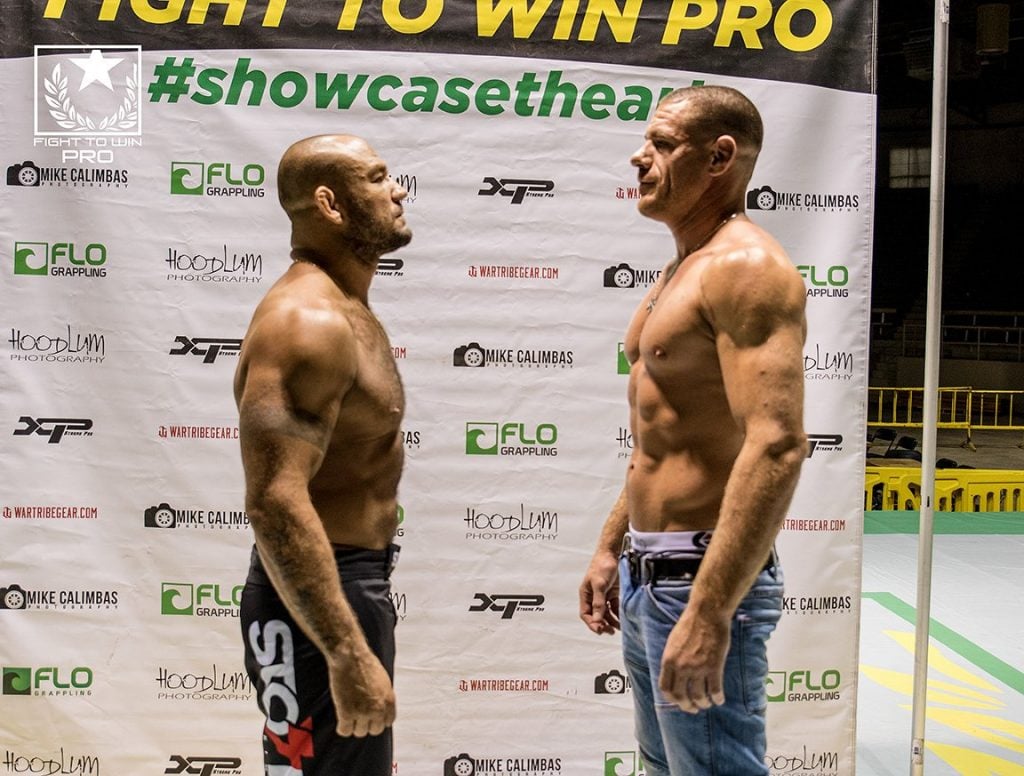
In truth, the blame for extreme weight cutting is not only down to the athletes. While introducing more BJ weight classes doesn’t seem logical, doing something about the weigh-in is pretty straightforward. Most organizations around the world, tend to have the grapplers weigh in right before their first match. In an ideal world with no weight cuts, this seems like the best thing to do to keep things fair.

BJJ Weight Classes, Weigh-InsHowever, if anything is for certain, it is the majority of people are going to look to cut weight. Furthermore, most of them have o idea how to do it safely. So, if this is the trend, would it really be so difficult for organizers to try and reduce the dangers? All it takes is switching the weigh-ins from the day off, to the day before a tournament. Just like in MMA. This is going to give the athletes more time to get back to normal, reducing some of the dangers of cutting weight. It is also login to make an event run much smoother, without the hustle of weighing everyone from all BJJ weight classes before a match.
The UAJJF and other invitational tournaments like EBI have already adopted this practice. it is working for them, and it should be something every other promotion or organization out there considers. After all, the health of the athletes should come first, and both the athlete and the organization should do whatever they can to ensure that.

Benefits Of Drinking Coffee And Green Tea For Jiu-Jitsu Training

The Few Joint Supplements For BJJ Worth Your Time

Rope Jumping Progressions For Brazilian Jiu-Jitsu Conditioning

Gordon Ryan Ridicules McGregors Jiu-Jitsu, Gameplan and Preparations

Gordon Ryan Ridicules McGregors Jiu-Jitsu, Gameplan and Preparations

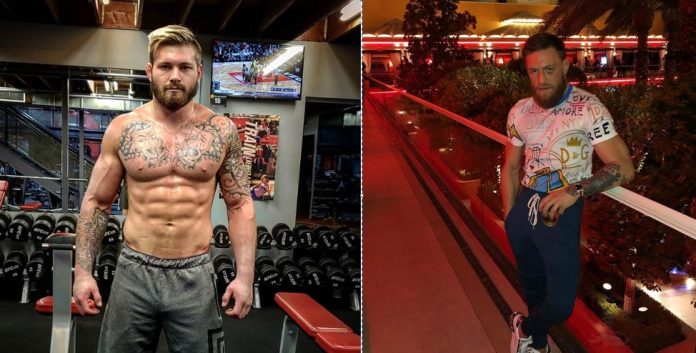
Gordon Ryan gave his opinion on Conor McGregor’s performance in a fight against Khabib Nurmagomedov.

Gordon was commenting on words from McGregor’s coach John Kavanagh in Joe Rogan Experience podcast.

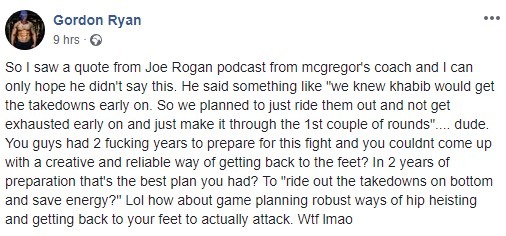
“So I saw a quote from Joe Rogan podcast from McGregor’s coach and I can only hope he didn’t say this. He said something like “we knew Khabib would get the takedowns early on. So we planned to just ride them out and not get exhausted early on and just make it through the 1st couple of rounds”…. dude.”

“You guys had 2 f*cking years to prepare for this fight and you couldn’t come up with a creative and reliable way of getting back to the feet? In 2 years of preparation that’s the best plan you had? To “ride out the takedowns on the bottom and save energy?” Lol how about game planning robust ways of hip heisting and getting back to your feet to actually attack. Wtf lmao”

But what John Kavanagh actually said was: “Conor is always in the gym but we officially had like 10 weeks of preparations for this fight!. That’s the time when we were told his next fight will be against Khabib”.

Rogan asked Kavanagh, was there anything that was surprising in the fight?: “the style of takedowns was what we expected and we spent a lot of time preparing for that. We expected in round 1, it was for sure Khabib’s gonna get the takedown. The Goal of round 1 was to get out of it while still having energy. We didn’t want to put a huge amount of effort into trying to get up in round 1. We saw it too many times and fighters get really tired so… In round 1 the plan was to fight as hard as we can, but if end up on the ground and end up on our back, try to play guard until the bell.
For Round 2 same plan, do as much damage as we can but if we end up on the ground don’t put a huge amount of effort to get up because Khabib is a real master of grounding people.
In round 3, things started turning a little bit in our favor and we did a lot better keeping the fight in the middle, defending the takedowns. Our plan was to slow him down and watch him slowing down in the 3rd, 4th, and 5th round -Kavanagh said!”

For the rest of the interview of John Kavanagh and McGregor’s Nutritionist George Lockhart the writer of the best Book/ebook/DVD on performance nutrition, sports recipes, weight cutting, etc.. watch a podcast in a video below

Gordon Ryan on Conor Mcgregor

https://bjj-world.com/khabib-submits-leandro-vieira-3rd-degree-bjj-black-belt/

Khabib Meets Putin – Russian President With Some Kind Words For Khabib

VIDEO: 9-year-old Boy Khabib Nurmagomedov Wrestling With a Bear