Mica Galvao PEDs Are Back In The Spotlight As He Points The Finger

Mica Galvao PEDs Are Back In The Spotlight As He Points The Finger
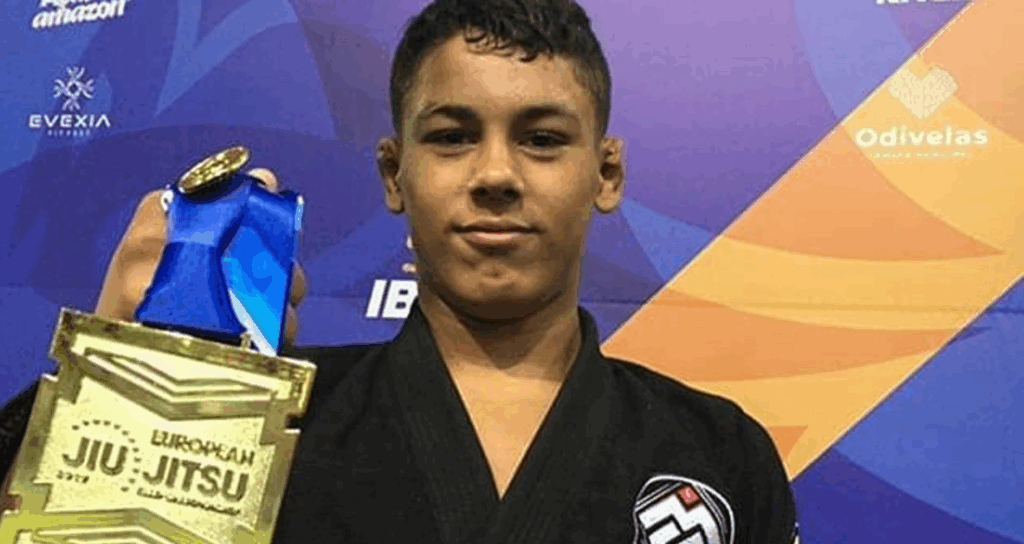
  • Mica Galvao PEDs story has re-ignited debate after the prodigy framed his failed test around guidance he received from people in his circle.
  • The framing shifts attention from individual responsibility to coaching, medical, and managerial oversight in elite BJJ.
  • Even with a USADA sanction in the rearview, the sport is still grappling with how to educate young stars and prevent repeat outcomes.
  • The conversation now centers on safeguards, not scapegoats—and what accountability looks like for athletes and teams alike.

A High-Profile Defense, With The Spotlight On Others

When a generational talent speaks, the room listens. That’s why the renewed attention on Mica Galvao PEDs matters: he’s not simply rehashing a suspension; he’s characterizing the misstep as an outcome influenced—at least in part—by those around him.

For fans, the framing lands like a plot twist. For coaches and managers, it’s a reminder that advice given to a 19- or 20-year-old phenom carries enormous consequence. For the athletes who idolize him, it’s a cautionary tale about the blurry line between trust and due diligence.

“When I went to [the] US, they told me that my testosterone level was very low. They said that they could help me up just to bring it back to normal. For me, I didn’t understand a lot. I was 17. I was just trying to compete and I put my trust in into the doctor at that time and I think it was a mistake.”
– Mica Galvão, in “The Year of Mica”

Whether you see the comments as context or deflection, the hard truth doesn’t change: anti-doping rules put the final responsibility on the athlete. That’s not just legal boilerplate—it’s the foundation of competitive integrity.

And yet, Mica Galvao PEDs discourse now forces the sport to interrogate the ecosystem: Who’s vetting supplements?

Who’s educating prospects on strict-liability? Who’s tracking paperwork and therapeutic exemptions—if any exist?

A star’s confession that “others” played a role resonates because everyone in BJJ recognizes the informal networks that shape careers long before the bright lights of a world final.

Mica Galvao PEDs And The Question Of Accountability

There’s a reason the phrase Mica Galvao PEDs keeps ricocheting across the community: it sits at the intersection of agency and influence.

Young grapplers often operate inside tight inner circles—coaches, S&C staff, teammates, sponsors—where the line between mentorship and management blurs. If that circle even hints that a gray-area shortcut is normal or necessary, the slope is greased.

Still, accountability can’t be a moving target. If an athlete embraces the benefits of a professionalized team—travel managed, camps programmed, nutrition curated—he also inherits the burden of asking hard questions.

“When I went to [the] US, they told me that my testosterone level was very low. They said that they could help me up just to bring it back to normal. For me, I didn’t understand a lot. I was 17. I was just trying to compete and I put my trust in into the doctor at that time and I think it was a mistake.”
– Mica Galvão, in “The Year of Mica”

What’s in the bottle? What’s the batch number? Has this specific compound ever triggered an adverse finding?

The most uncomfortable part of the Mica Galvao PEDs narrative is that it challenges every aspiring champion to become a skeptic, not a passenger, when the stakes are career-defining.

Mica Galvao PEDs

What The USADA Sanction Still Means

USADA sanctions are more than dates on a calendar. It lingers in the metadata of a career—Google results, broadcast mentions, the quiet second glance from a future sponsor.

That’s why the current focus on Mica Galvao PEDs doesn’t just revisit a timeline; it underscores how a single result reshapes public trust.

In practical terms, the sanction forces a reset: clean testing, transparent protocols, and a return to competition where every dominant exchange is viewed through a newly skeptical lens.

This is also a teachable moment for organizers and gyms. Anti-doping in BJJ isn’t a switch you flip at elite events; it’s an education pipeline. Seminars for junior belts, standardized supplement policies at major academies, and documented sign-offs for anything ingested or injected—all of it reduces risk.

If the sport doesn’t want the next Mica Galvao PEDs-style headline, then safeguards must become culture, not crisis management.

The Ecosystem Problem: Young Stars, Big Pressure, Bad Information

The youngest breakout names are also the most vulnerable to bad guidance. They’re asked to be full-time athletes before they’ve had a full semester of anti-doping literacy.

That’s how the pressure cooker creates rationalizations: “Everyone’s doing something,” “This stack is safe,” “You’ll be fine by test day.”

The Mica Galvao PEDs discussion exposes how quickly that logic can warp priorities. The antidote is unglamorous: third-party tested supplements only, a named compliance lead in every camp, and independent medical advice that isn’t filtered through incentives.

For teams, the cost of discipline is far cheaper than the cost of scandal. One flagged product can unravel a decade of careful brand-building.

And for athletes, a single mistake can become the asterisk that chases them from Abu Dhabi to Las Vegas.

Mica Galvao PEDs Are Back In The Spotlight

How The Message Lands With The Next Generation

Here’s the twist: even as he points to external influence in one of the most high-profile cases of doping in Jiu-Jitsu in 2025., Galvão is also telling kids not to repeat the mistake. That duality matters.

The safest interpretation is the most useful one—treat Mica Galvao PEDs not as a pass, but as a warning label.

“People think that it’s kind of normal for you to use stuff on jiu-jitsu. And I don’t want kids to grow up thinking about it.”
– Mica Galvão, in “The Year of Mica”

If you’re 16 and on a rocket ship to the black-belt ranks, assume every supplement is suspect until proven otherwise.

If you’re a coach, assume your advice will be treated as gospel and documented like a prescription. If you’re a parent, ask for the paper trail. This is the boring, meticulous work that prevents careers from detouring into arbitration and press releases.

The Comeback Starts When The Blame Stops

At some point, the conversation has to pivot from explanation to example. If the Mica Galvao PEDs saga ends with an athlete who competes clean, advocates loudly, and helps install guardrails for the next wave, then the legacy of this moment changes.

That won’t erase a sanction, but it can outgrow it—and in a sport that prides itself on solving problems under pressure, that’s the only win that matters.

WATCH: Cop Holds Suspect In Armbar, Draws Gun at Surrounding Crowd

WATCH: Cop Holds Suspect In Armbar, Draws Gun at Surrounding Crowd
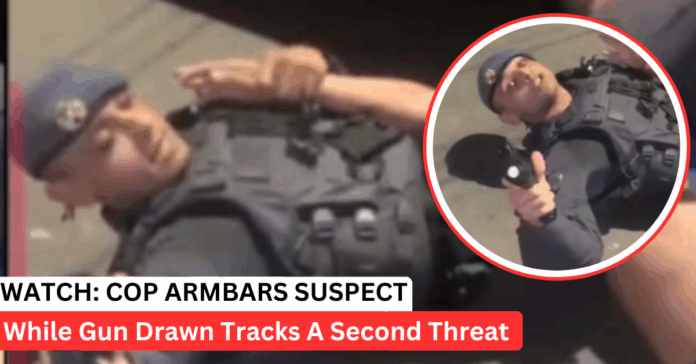
  • A short clip shows a tense scene where a cop holds suspect in armbar while aiming a firearm at a second man.
  • The moment highlights the promise and pitfalls of BJJ-style control in policing and de-escalation.
  • Without full context, conclusions about policy or misconduct are risky.
  • Training, distance management, and clear commands are the keys that decide whether techniques help or hurt.

What The Video Actually Shows

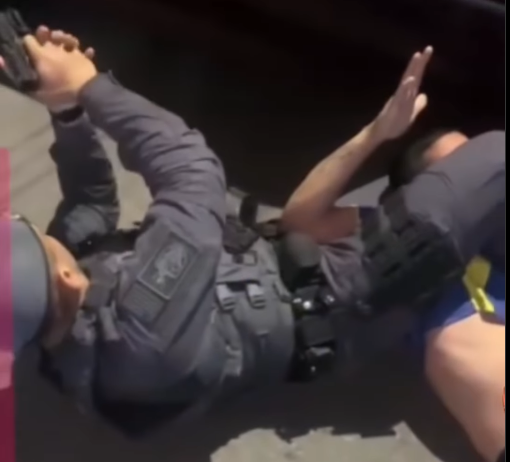
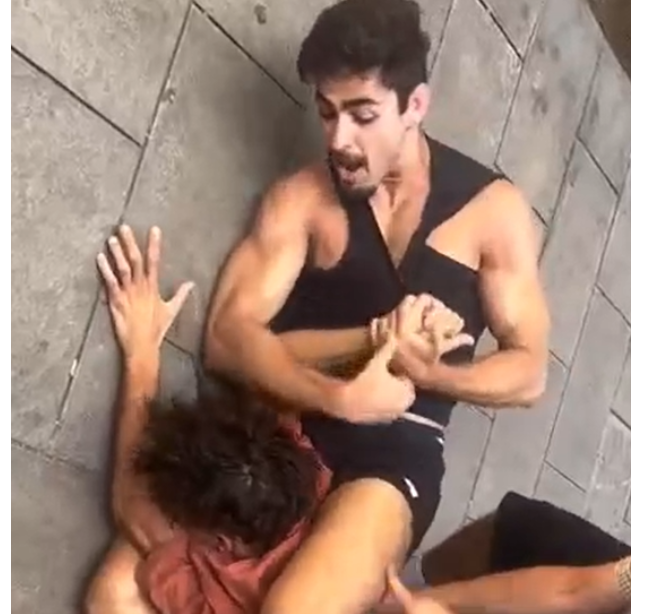
The footage racing around social media captures a high-stress snapshot in Brazil as a cop holds suspect in armbar on the pavement, keeping one arm isolated while directing his sidearm toward a second individual who steps in and out of the frame.

At face value, the image is jarring. It’s also a case study in how grappling intersects with law-enforcement tactics when multiple threats and unknowns collide.

Freeze the frame and you’ll spot the textbook mechanics—hips close, the suspect’s elbow controlled, shoulder line compromised. That’s precisely why the phrase cop holds suspect in armbar is trending: people recognize a BJJ staple being used under real pressure.

But the split second in which the officer has to both secure the position and assess a potential third-party threat is where the technique meets the realities of force-on-force decision-making.

Cop Holds Suspect In Armbar — A Viral Sensation

There’s a reason this specific clip landed in the algorithm’s sweet spot: it compresses fear, tactics, and debate into one image.

For supporters of grappling-based control, a cop holds suspect in armbar reads as a non-lethal, position-before-submission approach that can reduce strikes and chaos. Critics focus on the muzzle direction and the risk calculus: one hand is busy controlling the joint, the other is on a firearm, and a second person is moving nearby.

Both sides are reacting to what the camera doesn’t show—what preceded the takedown, what commands were issued, whether backup was incoming, and what the second man was actually doing.

Without that context, the cop holds suspect in armbar video becomes a Rorschach test: some see non-lethal restraint, others see risk.

The Promise And Pitfalls Of BJJ In Policing

BJJ-style control has been championed in departments precisely because it can create quick, high-percentage pins that end fights without baton strikes or prolonged scrums.

When a cop holds suspect in armbar correctly—controlling the elbow line, pinning the shoulder, keeping base—it can freeze a resisting subject long enough for cuffs or backup. That’s the promise.

The pitfall is the environment. Police encounters aren’t sterile mats: they have curbs, broken glass, tight spaces, and unpredictable third parties.

A cop holds someone in an armbar in a gym, and you hear a tap; same situation in the street, and you hear sirens, shouting, and tires rolling by.

The second man in the clip—regardless of intent—adds a dynamic problem. Even a “good” control can become a liability if the officer’s field of view, distance, and verbal management slip.

Where Training Meets Policy

If agencies want officers to use grappling, BJJ for law enforcement curricula have to extend beyond takedowns and joint control. Build scenarios where a cop holds suspect in armbar while a second role-player circles, shouts, or reaches in.

Layer in weapon retention, radio communication, and staged backup arrival. Teach fast transitions: abandon the armbar to turtle-ride, knee-ride to wrist control, or switch to a two-on-one if the second person closes distance.

Supervisors should audit body-cam footage for exactly these moments. If a cop holds suspect in an armbar and the scene expands, can the officer move, scan, and command? Those are trainable skills—just like finishing a traditional armbar on a resisting opponent is.

WATCH: Cop Holds Suspect In Armbar, Draws Gun

From Viral Clip To Useful Lesson

Strip away the noise and the lesson is clear: when a cop holds suspect in armbar in the wild, the technique is only as safe as the officer’s distance control, muzzle discipline, and ability to transition. The clip went viral because it’s dramatic; it should stick around in training rooms because it’s instructive.

The Komba AI Belt System – Are AI-Driven BJJ Belt Promotions Coming?

The Komba AI Belt System - Are AI-Driven BJJ Belt Promotions Coming?
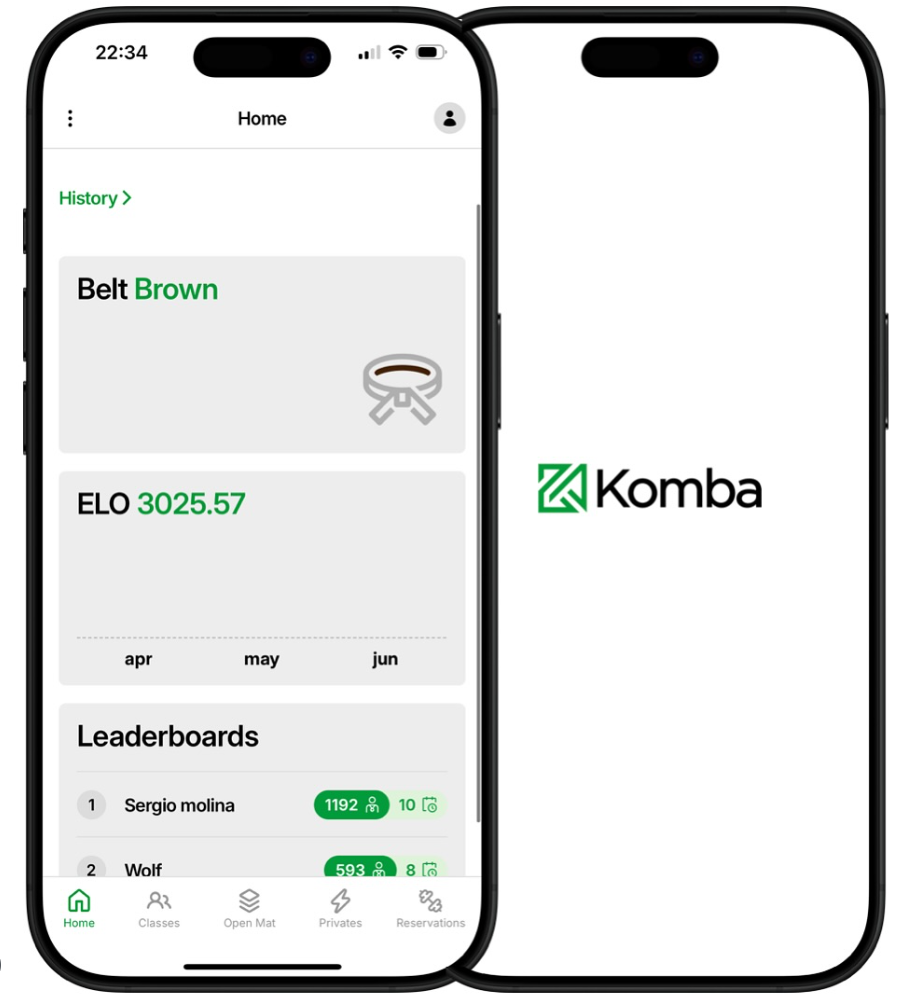
  • The Komba AI belt system tracks progress with a live, app-based rating tied to promotions.
  • You earn points for training and winning in scheduled sparring; losses don’t deduct points (black belt rules may differ).
  • Belt promotions unlock at rating milestones for a more transparent, politics-free pathway for BJJ ranking.
  • Expect leaderboards, match-making by skill, and clearer goals—without replacing coaching or culture.

Belts by Algorithm — How it Works and why Purists Bristle

At its core, the Komba AI ELO belt system treats your training life like a season with a live scoreboard.

Rounds are scheduled and logged through the app, opponents are matched by similar ratings, and each result nudges your number based on the ELO logic: beat someone higher and you jump more; beat someone lower and you inch forward.

You also accrue progress for consistent attendance, so the graph moves even on days you’re experimenting rather than hunting taps. Hit a predefined rating milestone and you’re eligible for the next belt—coaches still have to sign off, but the target is visible for everyone.

That visibility is exactly what many love—and what riles traditionalists. Critics worry a belt becomes a number you can “farm” by cherry-picking rounds, that volume eclipses nuance, and that contextual realities (injuries, big weight gaps, specialized training blocks) get flattened by a single metric.

Others fear a new anxiety loop where athletes chase points instead of solving problems, or that closed ecosystems could inflate ratings without true external tests.

There’s also a cultural hesitation: belt promotions have always mixed skill, character, and time on the mat; handing that conversation to an app—however smart—feels like ceding part of Jiu-Jitsu’s soul.

Supporters counter that transparency cuts politics, rewards consistency, and gives hobbyists and competitors tangible waypoints.

Guardrails can blunt the edge cases: coach veto power, matchmaking that avoids repeat “easy” pairings, cooldowns between rating-eligible rounds, and periodic cross-BJJ gym validations to keep the ecosystem honest.

Used as decision support rather than a dictator, the Komba AI ELO belt system can put receipts behind progress while preserving the human judgment that makes belt promotions meaningful.

Komba AI BJJ Belt System

What the Komba AI Belt System Actually Measures

Komba maps your journey in the gym—class attendance, open-mat rounds, and in-house matches—into a single skill score.

The Komba AI belt system borrows the tried-and-tested ELO concept and adapts it for grappling: beat stronger opponents and your rating jumps more; beat lower-rated ones and it rises modestly.

The result is a living snapshot of where your Jiu-Jitsu stands today, not just the day you last competed or tested.

Inside Komba’s app, you book classes and open mats; the system then pairs you with training partners so you can accrue real, comparable data. The engine behind the Komba AI belt system weighs factors like opponent rank and other competitive parameters before awarding points for a win.

Even on days you “flow,” you’re still moving forward—attendance earns progress, and the structure nudges consistent mat time without punishing experimentation.

One of the starkest differences is psychological. In the Komba AI ELO belt system, you don’t lose points for a loss*—you simply gain points when you win, and you keep banked credit for showing up and putting in the reps.

That makes it easier to try new guards, take strategic risks, and develop without guarding your status like a fragile trophy.

(*Special rules can apply at black belt, keeping expectations aligned at the top.)

Promotions Tied to Milestones

Here’s the piece that changes belt conversations: Komba links data-driven belt promotions to rating milestones. As your score climbs, you cross thresholds that qualify you for the next belt, with the Komba AI belt system acting like a transparent scoreboard rather than a mysterious checklist.

It’s still Jiu-Jitsu—coaching, culture, and consistency matter—but the milestones give athletes a clear path and coaches a shared language when monthly check-ins turn into promotion talks.

For coaches, the system helps organize rounds by ability, keep tabs on who’s improving fastest, and spot athletes ready for tougher training blocks. Athletes get instant feedback loops: train, test an idea, see the number respond.

The Komba AI belt system also discourages sandbagging in local events; when your live rating mirrors your performances, lagging behind a belt level becomes harder to justify, and jumping ahead without results becomes harder to defend.

Will an Algorithm “Get” Jiu-Jitsu Nuance?

No rating system is magic. A number can’t feel the squeeze of a perfect body triangle or the grit it took to fight out of a flattened half guard. That’s why the Komba AI belt system works best as decision support, not dictator.

It quantifies results, rewards consistency, and makes progress legible—while coaches still correct the record when context matters (injuries, size mismatches, trials-only focus, or a specialist working through a new phase).

Guardrails That Make it Athlete-Friendly

Small choices matter. Not docking points for losses removes a key anxiety that can warp training. Pairing partners through the app cuts down on mismatch churn. And tying belts to milestones adds accountability without stripping away the human side of promotions.

Used this way, the Komba AI EL belt system can do what technology does best: standardize the boring parts, spotlight real gains, and leave the teaching to people.

The Bigger Picture for the Sport

If more rooms adopt compatible scorekeeping, you could see cleaner match-ups at in-house events, healthier training incentives for hobbyists, and clearer pathways for hungry competitors plotting their climb.

The Komba AI ELO belt system won’t settle every bar-stool debate about belts—but it can move the conversation from hunches to evidence, and that alone changes how we all train tomorrow.

The Mat is Still the Truth—This Time With Receipts

Numbers aren’t the goal; getting better is. The point of the Komba AI belt system is to make that improvement visible, motivate the grind, and ensure promotions feel earned in the open. Keep the culture, keep the coaching—add clarity.

What Happens When BJJ Black Belt Pretends To Be a White Belt

What Happens When BJJ Black Belt Pretends To Be a White Belt

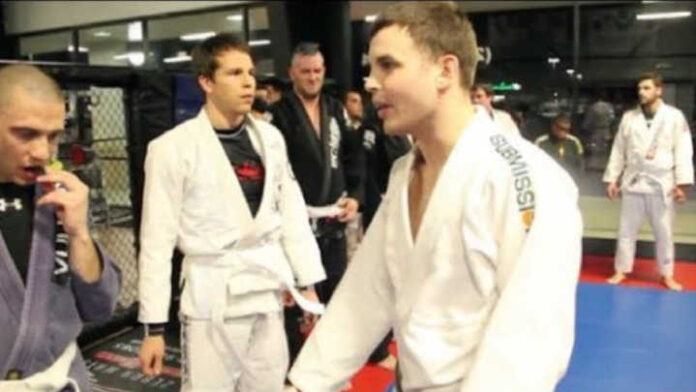
Brazilian Jiu-Jitsu Black Belt, Alex Vamos, puts on a white belt as a joke. He even said they grappled a lot at his Kung-Fu school.

In the end, watch what happens and how everyone reacts to the video where BJJ black belt pretends to be a white belt.

Hey, what’s up guys how are you doing my name is Alex Vamos. I’m from Long Island New York. I own bombers which martial arts out there. I’m here at Alan Belcher School in Mississippi and his guys want me to do a prank I’m a black belt in jiujitsu but what I’m gonna do is I’m gonna take my black belt off and I’m gonna be the new annoying white belt here. I’m even gonna put the belt on the wrong way. Should be fun!” – explained Alex at the start of the video.

Who is Alex Vamos, BJJ Black Belt Pretends To Be a White Belt?

Alex has been studying martial arts for most of his life. He was already a black belt in both Kempo Karate and Northern Shaolin Kung Fu before he began training in Brazilian Jiu-jitsu. Alex knew that BJJ was the art he had been looking for when he discovered it.

He started training intensively and competing right away, in January of 2010. Under Renzo Gracie Black Belt Joe D’Arce, Alex achieved the rank of Black Belt in Brazilian Jiu-jitsu in January of 2010.

Alex, along with his brother, is the head instructor at Vamos Brazilian Jiu-jitsu. Alex is also known for his ability to deconstruct techniques and make them simple to understand as a great competitor as well as an excellent teacher. Alex has also demonstrated the capacity to lead by example and inspire others to live healthier and more balanced lives.

Aside from his martial arts success, Alex is a licensed acupuncturist who obtained his master’s degree in Chinese Medicine from the New York College of Holistic Medicine. Alex is a full-time employee of a doctor who practices acupuncture and herbal medicine.

Alex has been an active competitor in BJJ since he began the art, traveling all around the country to train and fight with the best there is. Now, he’s also the man who showed us all what happens when a BJJ black belt pretends to be a white belt.


BJJ Belts System – Jiu-Jitsu Belts Ranking Guide

Brazilian jiu-jitsu belts

How much do you know about Brazilian Jiu-Jitsu belts apart from the fact that nobody likes to be a white belt? There’s a reason why there is La certain number of belts in Jiu-Jitsu, as well as a reason behind the colors at every belt level.

A bunch of other aspects of BJJ also have to do with belts, from promotions to minimum age requirements for getting a belt, the kids’ unique ranking system, stripes, tying belts, washing them, and picking out the best Jiu-Jitsu belts for you. Everything of the above, and then some, is explained in great detail in this article.

The Brazilian Jiu-Jitsu Belts Ranking System
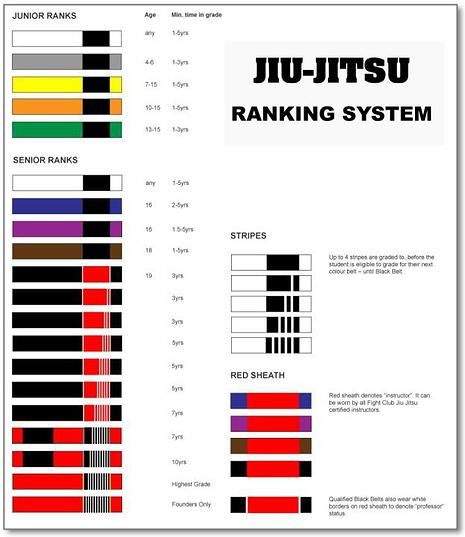
jiu-jitsu belts rankingIn Brazilian Jiu-Jitsu belt system there are different colors of belts signifying different levels of knowledge, dedication, and experience of students. There are also belts for instructors and professors, as well as those reserved only for certain people in the sport.

Junior Belts System

  • White Belt
  • Grey Belt
  • Yellow Belt
  • Orange Belt
  • Green Belt

Junior BJJ Belt Ranking System

BJJ Belts for Adults

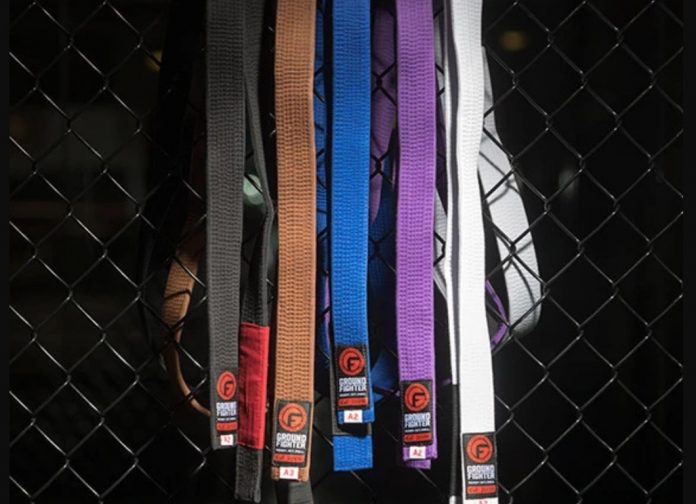
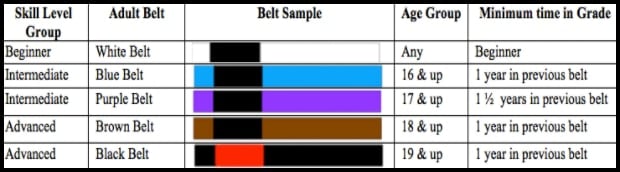
The order of BJJ belts for adults is as follows: 

  • White Belt
  • Blue Belt
  • Purple Belt
  • Brown Belt
  • Black Belt

Juvenile & Adult BJJ Belts System

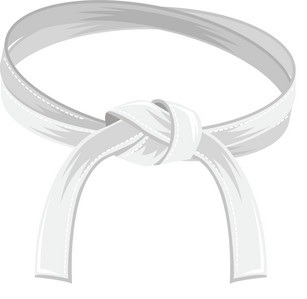
  • White Belt – A white belt in the juvenile and adult belt system is given to anyone who starts training Brazilian Jiu-Jitsu.
  • Blue Belt – Blue belt in Brazilian Jiu-Jitsu is most commonly earned after two years plus of training. Although it can be given in a much shorter time to Black Belts in other grappling martial arts like Judo or Sambo. 
  • Purple Belt – A purple belt in Brazilian Jiu-Jitsu usually takes two years plus of wearing a blue belt once the student is a minimum of 17 years old.
  • Brown Belt – The brown Belt in Jiu-Jitsu is usually earned after being a purple belt for more than two years.
  • Black Belt – A Black belt in BJJ is most of the time earned in a shorter time than previous belts, but as for all belts, it usually depends on the academy or the coach deciding who to promote.
  • Coral Belts (Black and red, Red and White) – Coral belts are given to the 7th and 8th degree Black Belts.
Juvenile & Adult Belt System

The BJJ Black Belt System

Once you receive a black belt it takes exactly 3 years to earn each stripe (degree) on it. At the 7th stripe on Black Belt, the wearer is granted the black and red belt (Coral Belt). The title of Black and Red Coral Belt is a Master.

At the 8th stripe on the Black Belt, the wearer becomes a Red and White belt (Coral Belt). The title of Red and White Coral Belt is a Master. The 9th and 10th stripe on a Black Belt means that the wearer is a Red Belt in Jiu-Jitsu with the Grand Master title.

The 10th-degree red belt is reserved only for pioneers of BJJ, so the 10th degree was given only to the Gracie brothers: Carlos, Helio, Oswaldo, George, and Gaston.

How Long To Get Belts in Brazilian Jiu-Jitsu

An interesting aspect of Brazilian Jiu-Jitsu is that there are certain requirements in terms of Jiu-Jitsu belt levels. For example, you can’t get certain belts unless you are of a certain age.

What is even more interesting, you can’t get some of the more advanced belts (those coming after black belt) unless you spend a certain amount of years at each stripe of your black belt. Let me elaborate.

Senior Belts Timeline

Belts in Jiu Jitsu depend on your training time and your actual knowledge determined by your instructor so the training time before receiving belts may vary from person to person or school to school. Here is the usual training time required to get the belts in BJJ.

  • White Belt

    jiu-jitsu belts white

The white belt is the simplest. There’s no minimum age requirement, as anyone walking into a BJJ gym is a white belt. This is the same for both adults and kids. Moreover, white belts in Jiu-Jitsu have no time requirement, and one can be at that level for a few months and up to several years, depending on a host of circumstances. The usual time people spent at this belt level is between 6 months and two years.
  • Blue Belt

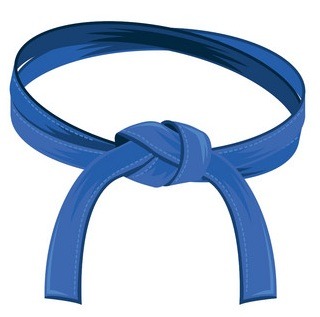
jiu-jitsu belts blueThe most sought-after of all Jiu-Jitsu belts is the first one that comes with an age requirement. Unless you’re 16 years of age, there’s no way to earn a Brazilian Jiu-Jitsu blue belt. Or, at least, not according to the rules. Moreover, there’s a requirement for a blue belt in terms of time spent, although it is not as strict as the minimum age.

In most cases, 2 years are required for students at the blue belt level, but there are plenty of variations to this. Practically speaking, it takes between a year and a half to three years for most people at the blue belt level. It is often deemed the most important of learning belts, and thus the students spend the most time at.
  • Purple Belt

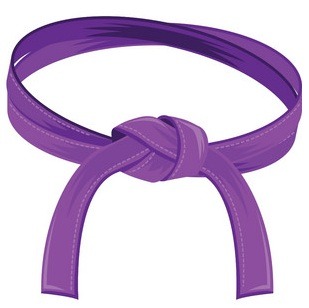
jiu-jitsu belts purpleThe purple belt is the most fun one of all Jiu-jitsu belt ranks. It is the time when you know enough to really have fun and start discovering, but you still have a lot more fundamental stuff to process and learn.

There’s a minimum age of 16 years yet again, which is somewhat confusing given that it is the same one for the blue belt. I’ll explain more when talking about the goals of every belt level and the kids’ ranking system. Time-wise, a year and a half is the “official’ timestamp for purple, but most people do spend an excess of 2 years at that level.
  • Brown Belt

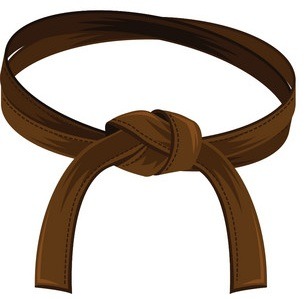
jiu-jitsu belts brownThe minimum required age for the brown belt is 18. There’s a logic behind this because this belt carries a lot of weight and brings about plenty of responsibilities.

Despite brown belts being very close to black belt level, they still have a lot of stuff to let sink in, so the one-year requirement is usually longer, nearer to two or more years. Brown belt is not a period when people rush things, so in most cases, they won’t mind staying at that level for a few months or even years longer.
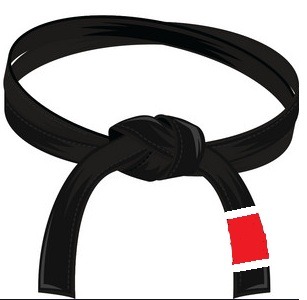
  • Black Belt

jiu-jitsu belts blackThroughout their BJJ journey, people look at the black belt as the top of the mountain in terms of Jiu-Jitsu belts. While it does signify mastery of the art, up to a certain point, it doesn’t mean there’s nothing left to learn, or that there are no other belts to follow.

The minimum age for receiving a BJJ black belt is 19, while the time spent at this belt level is non-negotiable; at least 31 years before you can be eligible for the next belt. Yeah, you read that right, it says 31 years.

  • Coral Belt (Black and Red)

The red and black coral belt, which does carry a minimum age requirement of 50, and at least 7 years of time spent at that level before the next one is available.

  • Coral Belt (Red and White)

The red and white coral belt is only an option if you’re 57 and above. Moreover, you’ll need to spend the next decade at that level, if you want to go for the final piece of the Jiu-Jitsu belt collection – the red belt.
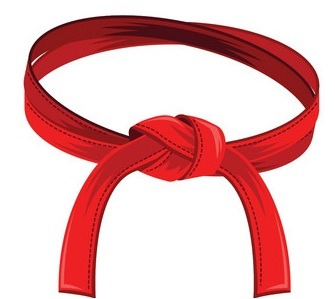
  • Red Belt

jiu-jitsu belts otherThe red belt is the highest-ranking color belt rank anyone can achieve, and it only has a minimum age requirement, which is 67. For a kid starting to train at the age of 6 or 7, this might be an achievable goal after a lifetime spent in the art.

The maximal grading you can achieve at a red belt is 9th degree. Only the founders and pioneers of the art have the right to be given a 10th-degree red belt.

Goals to Achieve At All Jiu-Jitsu Belt Levels

There is a great reason why people spend so much time at each and every one of the Jiu-Jitsu belts. It takes quite a lot to master different aspects of the art, and they all come at different checkpoints throughout your BJJ journey. The goals might not be the same for everyone they start, but there are common threads that appear at every belt level associated with Brazilian Jiu-Jitsu.

White Belts: Survivejiu-jitsu belts white

At white belt, there’s just one thing you should be focusing on – survival. And it is not figurative. You will literally need to survive the onslaught of feeling like you know nothing, the feeling that you’re not learning anything, as well as being the rest round for most people in the gym, including fellow white belts that have more experience (and stripes) than you. That said, it is one of the most exciting and crucial times in Jiu-Jitsu, as it will develop the mindset you absolutely need to carry on forward. At white belt, you’re nothing more than a BJJ baby trying to mutter its first words.

jiu-jitsu belts blueBlue Belts: Light At The End Of The Tunnel

When you manage to get that blue belt tied around your waist, it will seem like you’re on top of the world – you’re not a beginner anymore! As you progress, your priorities shift as well. Now, it is not just time to try and fend off attacks, knowing you’ll fail most of them.

It is a time when stuff starts working for you, and you manage to figure out not just how to catch a person or two, but also escape some of the higher belts’ attacks. Trust me, at blue belt, escaping the brown belts will seem like much more of a victory than tapping out a white belt. This is when you become a grappling “toddler”  figuring out that you can crawl/walk in the BJJ world.

jiu-jitsu belts purplePurple Belts: Get Behind The Steering Wheel

The purple belt is truly a special time. It is one of the most fun times in Jiu-Jitsu, all belt levels considered. This is when you start to develop your own style of Jiu-Jitsu, mostly through researching the different types of guards. It is a period when you will need to address your ego as well because all different types of ego rear their ugly heads at this time.

Apart from begin one of the most fun, it is also one of the hardest Jiu-Jitsu belts and the one that will most likely determine the direction you take during the following belt levels. You’re now a kid starting school and discovering that you have to take a stance and form an opinion about things around you.

jiu-jitsu belts brownBrown Belts: Thrive

The Brown belt is a transitional belt in Jiu-Jitsu. Although most people start to dabble in teaching at the purple belt, they truly mature into coaches/instructors of the art when they reach brown. At this time, two things happen. First, you develop teaching skills and you give back to the sport by trying to steer new students in the right direction.

The second thing is that you start to rediscover the fundamentals you were so eager to skip as a blue and purple belt and understand their value. Moreover, even though you’re just a step away from a black belt, you are kind of hoping you can spend just a bit more time being anything but a black belt.

I can’t explain it, but it is something every brown belt feels before their black belt promotion. You’re in high school now, and wild things start to happen that will help you shape your lifestyle.

Check out our Brown Belt requirements and tips.

jiu-jitsu belts blackBlack Belts: Enjoy The Ride

When you’ve finally reached the black belt, you can actually start to enjoy Jiu-Jitsu. It is not that you wouldn’t enjoy it up until that point, but when you get the black belt, you’ll at least take a break from the mental aspect of promotions, chasing the next belt, and stuff like that.

Instead, you’re now in the shark tank (from a competitive standpoint) and you need to focus on cleaning up your style and giving back to the sport. Achieving it means teaching, figuring out how and when to promote others, as well as developing your game, and perhaps stumbling upon something that will change the landscape of BJJ forever.

In any case, apart from stripes, spaced a few years apart, all other goals here are their personal ones or academy development ones. Or both.

jiu-jitsu belts other

Coral Belts (Black and Red & Red And White)

I have no idea what the goals of coral belts, or red belts, for that matter might be. Perhaps just making it through a roll injury-free, and staying in the art for as long as possible. I haven’t met one, and I am certainly not one. Still, I guess that their goals are much simpler compared to the goals and aspirations of all other Jiu-Jitsu belts.

jiu-jitsu belts other

Red Belts

Once you receive a maximum rank for any adult, 9th degree Red Belt it’s a goal enough. It actually means you dedicated your whole life to the art of Brazilian Jiu-Jitsu and you should be proud.

Kids Jiu-Jitsu Belt Ranking System Explained

Fairly simple, with plenty of stripes and mixed colors belts at every level:

  • White Belt
  • Grey Belt – 1.5 Years
  • Yellow Belt – 2.5 Years
  • Orange Belt – 3.5 Years
  • Green Belt – 4.5 Years

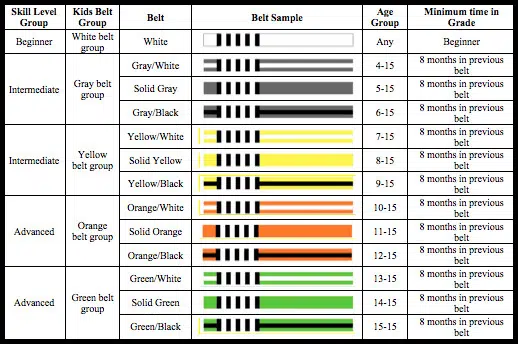
Before moving on to the interesting aspects of Brazilian Jiu-Jitsu belts, let’s talk about the kids’ BJJ belt system and their unique ranking. For kids, it would be counterproductive to have them wait a couple of years for a belt. It may as well be an eternity for them. Following that logic, the official count of kids’ belts is 13, and they get a bunch of stripes in between so that they get encouraged by a “real” feel for their progress more often.
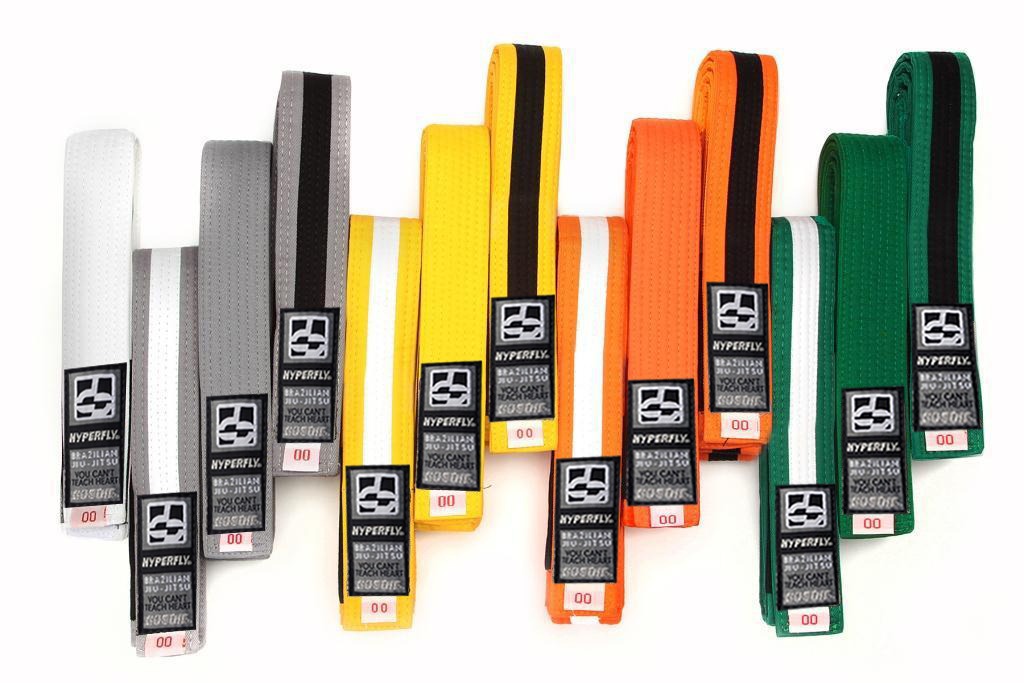
kids jiu-jitsu beltsKids start off with a white belt, similar to adults. While there is a debate about which is the earliest a kid can start training Jiu-Jitsu, out of a personal experience I’ve seen them come and be able to follow a special class as early as four years old. However, five would be the optimal age for starting. Conversely, the white belt has no minimum age requirement, as it is the starting belt for both kids and adults alike.

The first belt or trio of belts are the grey belts, which come in three varieties – grey with white, fully grey, and grey with black. The minimum age for a grey belt is 4, the maximum being 15. In fact, 15 is the upper belt limit for all kids’ belts, as they’re eligible for an adult blue belt if they’re 16 anyway.

Yellow belts (again with a white and a black horizontal stripe on each side of a full yellow belt) come next, with kids eligible for them from age 7 onwards. Kids of 10 can earn an orange and white belt, with the next two orange belts following the same pattern as before.

Finally, 13-year-olds can be at most a green belt with a horizontal black stripe, after going through the horizontal white and full green version before. Given that promotions of kids are more frequent than with adults, there’s no minimum time that a kid should spend at any of the kids’ BJJ belts.

The Origins Of The Colored Belt System in Jiu-Jitsu

Now that the Jiu-Jitsu belt colors are clear, and we know the age and time requirements for all Jiu-Jitsu belts, let’s take a look at why we use the belts in the first place. In the original days of training Japanese Ju-Jitsu and Judo, people only wore white and then black belts.

Only later did Jigoro Kano invent the colors, to distinguish people more easily in class. When Eastern martial arts spread to the West, the need for instant gratification just solidified the belt system further.

The five belts of Brazilian Jiu-Jitsu serve the same purpose as in other arts today – they demonstrate the level of experience a student has in the sport/art. In Jigoro Kano’s (the founder of Judo) original belt system, there was a blue belt signifying the absolute beginners, followed by a white belt.

Those were the student or “kuy” ranks, and eventually, a black one for “dan” degrees. Higher graded “dan” practitioners also wore red and white belts, while the highest graded ones wore solid red belts. You can see the similarities to the Jiu-Jitsu belt ranks we still use today.

Belt Promotions In BJJ

Earning any of the Brazilian Jiu-Jitsu belts is no easy feat. Ann obvious exception is the white belt that you walk into your first class with. From there on, you’ll be promoted several times, mostly by getting stripes, and notably, by getting the next belt.
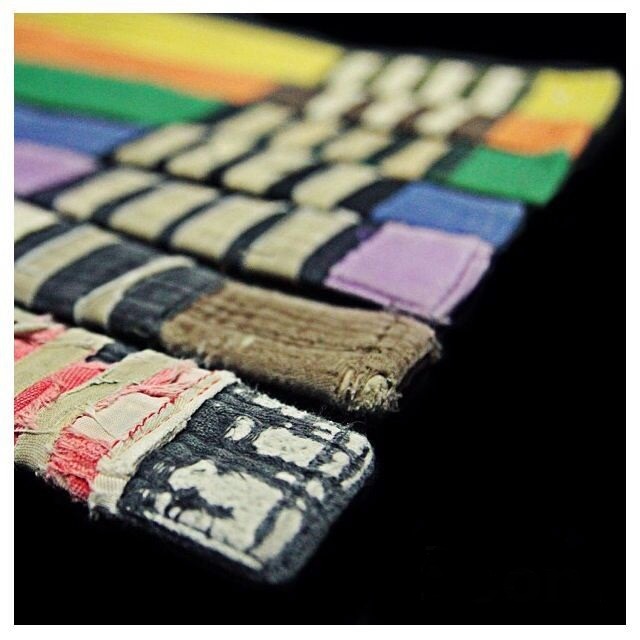
jiu-jitsu belts levelsIn terms of Jiu-Jitsu belts promotions, there are several things you should know. First of all, only a belt higher than you can promote you to the next belt level. However, even then, they can only give you the belt that is below their rank.

For example, a brown belt can only promote people to blue and purple belts. Furthermore, only a second-degree black belt can give out black belts. Sometimes, people spend very little time at a certain place, or rarely, at all, on their way to a black belt.

That is down to their talent, hard work, and that X-factor that some people simply have in them. In such cases, professors decide to promote people much sooner than the requirements, and they have every right to do so.

That brings us to the requirements for getting the next BJJ belt. Apart from achieving the goals most people usually discover at every Jiu-Jitsu belt level, instructors also have certain criteria. Of course, technical knowledge, along with tactics, and possibly competition performances all play a large part in it.

However, at different Jiu-Jitsu belts, different things spring into focus. How you act overall in the gym is a big one from the start, but for people at purple belt and above, there’s also how they behave towards lower-ranked people, and their performance when teaching if they take part in classes from that perspective.

The main thing about belts is that once you get them, they’re yours for the rest of your life. You earned it. It’s like being a doctor. No matter if you work as a doctor, you’re always a doctor. Check out this article where we covered the “if you’re no longer training do you still have your belt?

Finally, there’s a controversial Jiu-Jitsu belts promotion ceremony that includes people being whipped with belts or other violent hazing-type stuff that not everyone in the BJJ world necessarily approves of.

What Do Stripes Mean?

This is one of the small things in Brazilian Jiu-Jitsu that mean a lot to people. Even though I’ve tried to encourage people not to give too much attention to stripes in my academy, they do play a role.

The idea behind stripes is that with every adult belt, you need to achieve four stripes on the belt before you’re ready to move on to the next belt. However, this is really the case, as most people get the next belt with just three, or even two stripes on.

Also, they could get two or three, and I’ve even seen four stripes in one promotion. So while they do have a role to play, they’re far from something people should take too seriously.

In terms of kids’ stripes, things can seem really complex. Apart from the four stripes at the white belt, which is the same as in adults, at every other belt, kids get up to 12 stripes.

At each of the three grey, three yellow, three orange, and three green belts, kids get four white stripes, followed by four red stripes, followed by four black stripes. This allows for lots of promotions, and more importantly, frequent ones, that keep kids on their toes, and give them a sense of progress.

Belt Level In Competitions

In tournaments, Jiu-Jitsu belts are a huge part of the complete competition experience. Along with your age, weight, and sex, belts decide which division you’ll compete in. In fact, it is probably the most important factor in making this distinction. However, there are exceptions to this, depending on the tournament and the ruleset.
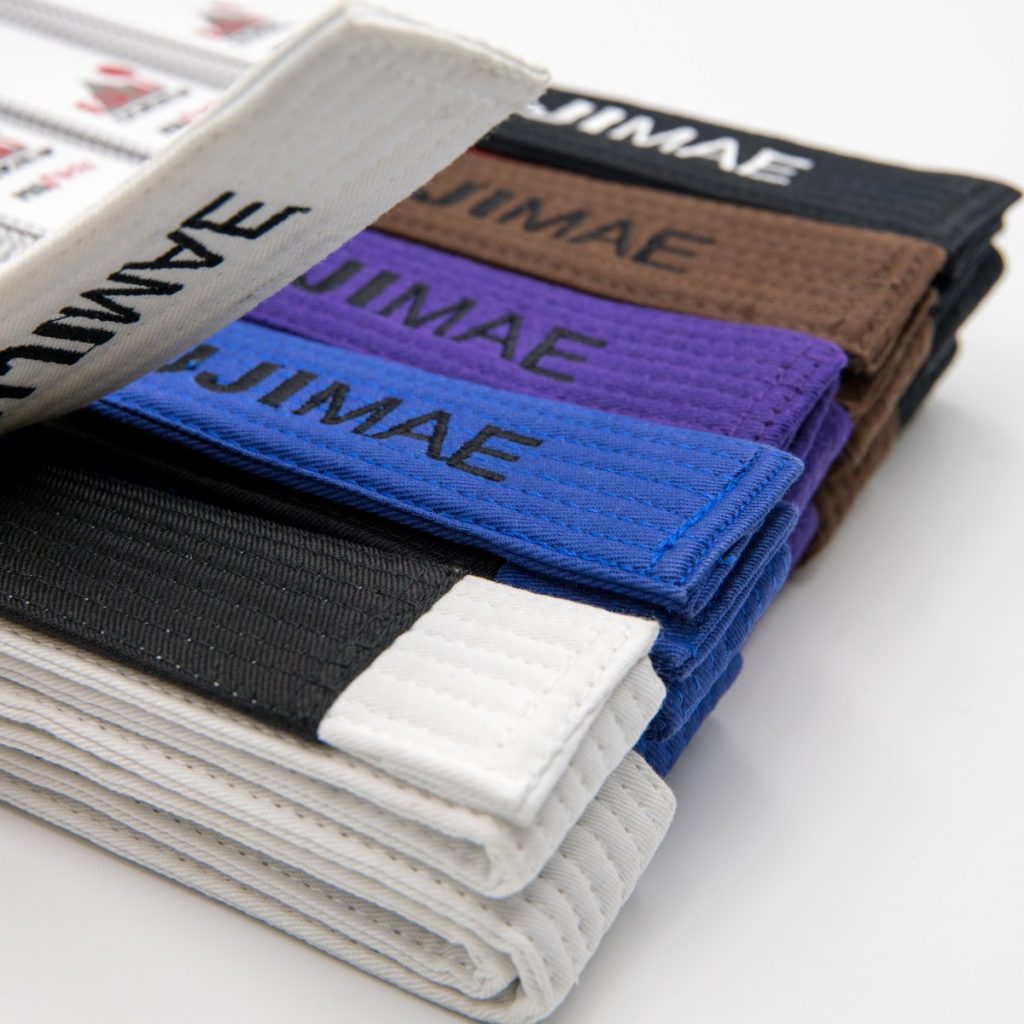
jiu-jitsu beltsIn most Gi tournaments that follow IBJJF / AJP rules, it is rare that propel of different Jiu-Jitsu belt levels end up in the same division. It is possible though when there are not enough competitors of certain belt colors.

For example, if there are only a few white and blue belts of a certain weight or all divisions, they might be asked to form a “special” division just for the purposes of the tournament. It happens often with the ladies, where sometimes the lack of competitors and divisions means different belt colors are put together. The usual combinations are white with blue belts, purple with brown, or brown with black.

Within the modern Jiu-Jitsu professional tournaments, as well as some competitions like ADCC, there are often options for lower belts, i.e. blue and purple belts to face off against black belts. At these types of tournaments, belt level doesn’t play as big of a role, as it does in the IBJJF circuit. Basically, how much Jiu-Jitsu belts impact tournaments is determined by the presence or absence of belt divisions.

No-Gi Belt Rankings

How do people get their belts when they train without a BJJ Gi? As funny as this may sound to seasoned grapplers, it is a question new students often ask. In No-Gi, the Jiu-Jitsu belts work the same, just without an actual belt.

There aren’t many exclusively No-Gi gyms around the world, but those that are, Like 10th Planet, sometimes use ranked rash guards or don’t bother at all displaying their belt level. Apart from such organizations, kids’ classes don’t usually take part in a No-Gi setting, so there’s no need to even mention it.

In terms of the No-Gi competition, once again, ranked rashguards help distinguish people in tournaments that have belt divisions. Some gyms also require students to wear ranked rashguards when attending No-Gi classes, but that is not a rule.

How To Tie Jiu-Jitsu Belt?

One of the biggest challenges in relation to Jiu-Jitsu belts is how to tie them. The first thing to know is that they will always keep on coming undone, so there’ no point in thinking there’s one way to secure it once and for all.

One way of tying the belt is the “traditional” method most people use. It involves you finding the halfway point and placing it at your navel. Wrap the two ends behind you, so that they cross one over the other behind you. Continue bringing the two ends forward, and you’re just left with the knot.

The simplest way is to layer one end of the belt over the part you already have around your waist and the final one over them both. The top one then goes underneath them all, and all you’re left with is one more loop to finish the knot.

Another option is the “professional” type of tying, where you place one end of the belt to the side of your hip, and continue to wrap the belt around, until you’re left with the other end in front. Then you thread the loose end underneath all layers and tie the knot again.

The knot itself also opens up different possibilities. Sometimes, Helio only tied the two ends with each other, not going underneath all layers. Another method I see often is to use the “competitor” method. In it, you thread one end underneath all layers, from the bottom up. You then thread it in between the layers, leaving a loop. the other end goes through this loop, and in between all layers as well before you tighten it up.


Washing Your BJJ Belt

If I could only finish this paragraph by writing “just wash it” I would love that However, there’s a dumb train of thought that if you wash your BJJ belt, your “knowledge” will “wash off. I’m even ashamed that I’m writing this, but apparently, it still has laws to be said even in the 21st century. WASH YOUR JIU-JITSU BELTS!!!

The question of how is not a difficult one – just throw them in the washer along with your Gi. BJJ belts are all machine washable and are fairly quick to dry, so you won’t be forced to attend class without your Jiu-Jitsu belt. Or, if you’re still not sure if all your knowledge of grappling will stay put, wash it by hand, very, very carefully.

Picking The Best Brazilian Jiu-Јitsu Belts

Finally, now that everything is all cleаr, let’s talk about choosing your Brazilian Jiu-Jitsu belt. If yоu know your Gi size, then you know your belt size as well. You might want to look for a bigger-sized belt only in the circumstances when you’re really endowed around the midsection. Otherwise, the same size as your Gi will do just fine.

In terms of choosing a belt brand, it all comes down to personal preference. However, there are plenty of criteria when it comes to figuring out which belts will give you the best quality in return for your money. That’s why we have the most comprehensive BJJ belt guide ever put together so that you can check out reviews and buying options for all the best Jiu-Jitsu belts available!

In Conclusion

The most obvious thing about belts has to do with Jiu-Jitsu belt colors. On that subject, everyone walking in through the door is a white belt, regretless of previous experience in other martial arts. The belt that comes next is the blue belt, which is the most sought-after belt in Jiu-Jitsu.

Why? Because nobody likes to be a white belt. Following suit is the unique purple belt that marks a period in the BJJ journey that usually has people transition from flirting with BJJ into a serious relationship with Gentle Art.

Similar to most other martial arts, the brown belt serves as the predecessor to the black belt. It follows the purple belt and is usually a sign of grappling maturity. After the black belt, there are three more options, albeit under very specific circumstances. The first is the black and red coral belt, followed by the white and red belt. Finally, the red belt marks the end of the journey, at least in terms of Jiu-Jitsu belts.

Brazilian Jiu-Jitsu belts are not something that seems complex at first, but as you can see, there’s a lot of intricacies tied into them. The main thing to remember is that you have goals to reach every belt level, you should expect to spend anywhere between a year and a half and two years at each, and you need to know that getting a black belt is just the beginning.

Buying, washing, tying your belt, the kids’ belts system, and all other aspects of BJJ belts have been covered above in great detail. However, if any belt-related question lingers, do not hesitate to write to us!

Andre Galvao Vs Fake BJJ Black Belt

Related Articles:

Best BJJ Belts in 2021 reviews and guide
Stop chasing BJJ Belts and focus on what’s important
Should grapplers wash their belts?
BJJ frustrations according to BJJ belt levels
BJJ Belt progression roadmap
Are BJJ Belt levels skipping: justified or disrespectful?
Brazilian Jiu-Jitsu belt system explained
Jiu-Jitsu Belt system explained
Jiu-Jitsu Belt Ranks for Kids Fully Explained
Jiu-Jitsu Belts Do Not Represent The True Level Of A Student
Jiu-Jitsu belt order and what every belt means

 

The Complete Lasso Guard Marcos Tinoco DVD Bundle Review [2025]

The Complete Lasso Guard Marcos Tinoco DVD Bundle Review

Key Takeaways

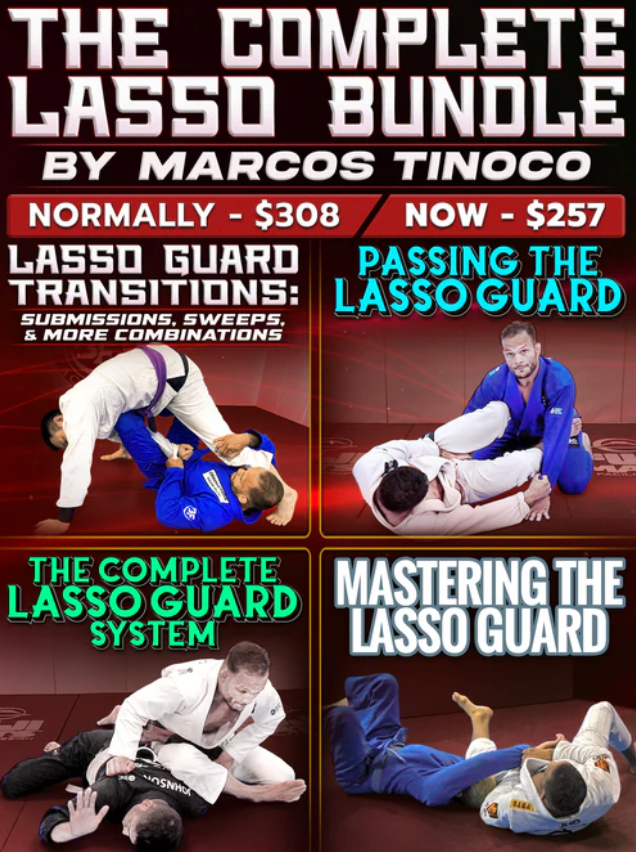
  • A four-part bundle containing a complete breakdown of Marcos Tinoco’s lasso guard game, top and bottom.
  • Covers every way in which you can armbar and sweep someone from different lasso guard variations.
  • 8+ hours of details on lasso chokes, armlocks, leg locks, sweeps, back attacks, passing, and transitions.
  • BJJ World Expert Rating: 8 out of 10.

COMPLETE LASSO GUARD MARCOS TINOCO DVD BUNDLE GRAB HERE

If you’re rolling and competing with the Gi on, and not using the lasso attachment from guards, you’re either super-confident in your guard, or you’re simply unaware of what you’re missing out on. The lasso is a real game-changer that requires no skill—you can start using it today!

The real skill development comes after you set up the lasso from just about any guard in Gi BJJ. How do you attack from it while keeping a hold of the grip that makes passes almost impossible? How do you string chain attacks together? It’s all in The Complete Lasso Guard Marcos Tinoco DVD Bundle.

Marcos “Lekinho” Tinoco

Being a Marcelo Garcia student is an accomplishment in itself. When someone is a Marcelo black belt, a Brazilian National and Pan-American champion, and a coach at the MG academy, that’s a dream come true. Marcos Tinoco is all of the above—but that’s just the beginning.

Tinoco was always a guard player, with a strong affinity for Gi guards. He first caught everyone’s eye as a brown belt, where he had one of the most memorable runs in BJJ history. Namely, he won the Worlds and the New York Pro back-to-back, earning his black belt in the process.

Tinoco’s spider guard is the stuff of nightmares, accompanied by his keen eye for armbars. But that’s not where his Gi guard prowess ends; the Complete Lasso Guard Marcos Tinoco DVD Bundle provides an insight into just how deep Marcos has dived into the world of Gi guards.

Full Complete Lasso Guard Marcos Tinoco DVD Bundle Review

The Marcos Tinoco Lasso Guard Bundle is a quick fix of everything you need to start attacking with the lasso from all kinds of guards in Gi Jiu-Jitsu, and dealing with it when others try to trap you with this super-sticky grip configuration.

Lasso Guard Transitions DVD – AVAILABLE HERE

Subject Matter:

First up, a DVD on moving in and out of the lasso position, while setting up attacks from several different guards, including the spider, De la Spider, and X guard.

Key Points Covered:

The opening instructional in the Complete Lasso Guard Marcos Tinoco DVD Bundle starts with Tinoco’s 10 principles of playing guard, which I think should be on every academy’s wall. He covers upper and lower body attacks, going over scenarios with kneeling, half-kneeling, and standing opponents.

Marcos focuses on constantly moving with the lasso in—he shares submission chains and transitions featuring triangles, armbars, omoplatas, Kimuras, guillotines, etc. Cool and useful traps feature all throughout this DVD, along with effective back takes and sweeps woven in.

Technical DVD Specifications:

This first part of the Complete Lasso Guard Marcos Tinoco DVD Bundle is a three-part Gi instructional with nearly three hours of material—a very strong start.

Passing the Lasso Guard DVD – DOWNLOAD HERE

Subject Matter:

Before going deeper into attacks, the second portion of the Complete Lasso Guard Marcos Tinoco DVD Bundle switches planes and targets details on how to neutralize, break, and pass the lasso guard—something even world champions have failed to do against Marcos.

Key Points Covered:

Passing begins with some drills—old-school, proven methods of getting used to retaining balance against skillful guard players. This part of the bundle covers passing with sleeve control, as well as routes to the back.

You don’t have to wait long for armbars in a Marcos Tinoco DVD, and this one is no exception. This time, though, he focuses on stopping inverted armbars from the lasso, while using double under passing and hip pops to conquer the mount.

Torreando passing and dealing with a shallow lasso hook also feature here, with a set of passing drills completing this DVD and marking the halfway point in the bundle.

Technical DVD Specifications:

The passing information only takes about an hour and a half, with Tinoco opting for the standard four-volume BJJ DVD structure to deliver his instructions.

The Complete Lasso Guard System DVD – GET IT HERE

Subject Matter:

Part three of the Marcos Tinoco Lasso Guard Bundle goes back to the bottom, this time offering a full system of positional guard attacks and recovery tactics, which tie in perfectly with the DVD on transitional attacks.

Key Points Covered:

If you’ve ever seen Tinoco use his lasso guard in competition, then this is the system you’ve witnessed. The DVD kicks off with an armbar-sweep combo and builds on that, branching off into biceps slicers, wrist locks, Kimura trap options, and plenty more sweeps.

Lapel traps are a concept Marcos sticks to a lot in this instructional, offering routes to the crucifix, omoplatas, and the dreaded shotgun armbar mini-system. Helicopter sweeps and triangle traps just add more options to the system, which Tinoco wraps up with some leg locks from the lasso.

Technical DVD Specifications:

This portion of the Complete Lasso Guard Marcos Tinoco DVD Bundle has three hours of top-quality material, spread over four volumes. Marcos delivers all the instructions in a layered way, building the system from the foundations up, so that it fits the needs of grapplers of all levels.

Mastering the Lasso Guard DVD – FULL DOWNLOAD

Subject Matter:

The final contribution to the Complete Lasso Guard Marcos Tinoco DVD Bundle is a DVD offering the concepts and connections behind Tinoco’s world-class lasso guard game. While attack-minded, this DVD connects all the dots presented in the system so far.

Key Points Covered:

As we reach the final part of the Marcos Tinoco Lasso Guard Bundle, “Lekinho” launches into explanations of what drives his system on a conceptual level. He begins with sweeping principles, sharing his action-reaction concepts and using plenty of examples (and even more armbars) to prove his point.

He literally goes over everything in his system, portraying his off-balancing and submission concepts, starting with straight armbars, and ending with inverted attacks and mid-sweep armlock setups.

Leg locks bring everything to an end, with the X guard making an appearance and opening the door to kneebars and ankle locks. Tinoco ends with an iteration of the Donkey Guard, finished with—you guessed it—more armbars.

Technical DVD Specifications:

The final part of the Complete Lasso Guard Marcos Tinoco DVD Bundle offers just under two hours of details on why the system works. Marcos delivers the information over the course of three volumes.

Super Charge Your Gi Guards

When playing guard, the most important skill to develop is staying in that guard. It is not an easy task to manage for most people, simply because everyone is hell-bent on attacking without any regard to keeping the position that makes attacks available intact.

The lasso is sort of a cheat code for that. Even if you’re lazy and don’t want to be bothered with guard retention tactics as you shoot for every sweep and submission you’ve seen in Instagram reels, you can set up a safety net just by using the lasso grip.

As is super-apparent from the Complete Lasso Guard Marcos Tinoco DVD Bundle, you can pair the lasso with just about any guard in Gi BJJ, making it a lot stickier and more difficult to pass than on its own. You also secure a route to chokes, armlocks, and leg locks, not to mention sweeps and back takes, to complement your own array of attacks.

COMPLETE LASSO GUARD MARCOS TINOCO DVD BUNDLE DOWNLOAD

Spin the Lasso! 

The only problem with the lasso guard is that you can’t play it without the Gi—it would’ve been the only guard you need in BJJ otherwise. Regardless, the Complete Lasso Guard Marcos Tinoco DVD Bundle offers more than just a system of developing lasso capabilities for your guard—it holds the blueprint to keep evolving and advancing it as you go up the ranks.


Ashi Garami Made Simple Firas Zahabi DVD Bundle Review [2025]

Ashi Garami Made Simple Firas Zahabi DVD Bundle Review

Key Takeaways

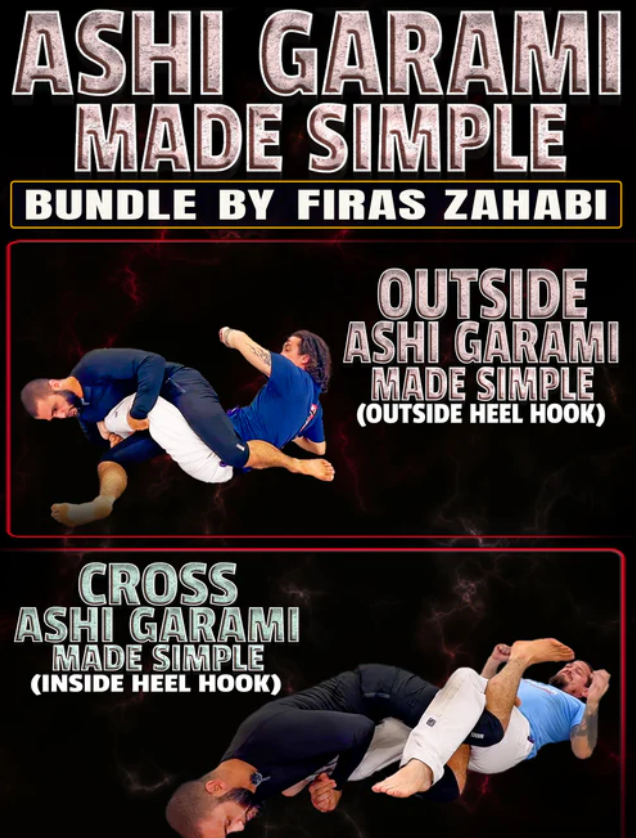
  • A two-part BJJ bundle offering Firas Zahabi’s advice on the two best Ashi Garami variations.
  • Features Zahabi’s overview of the outside and cross Ashi, along with sweeps, passes, submissions, and back-take combos.
  • 3+ hours of heel hooks, Aoki locks, Estima locks, and ankle locks, and ways to finish them even against high resistance.
  • BJJ World Expert Rating: 9 out of 10.

ASHI GARAMI MADE SIMPLE BUNDLE DVD AVAILABLE HERE

Since everyone knows what Ashi Garami is these days, the question is not how it works, but rather, which variations work the best. It’s a subject that is reminiscent of the endless debate on what guard works best, with one key difference — with Ashi, we have clear winners.

The Ashi Garami Made Simple Firas Zahabi DVD Bundle is made for those who have no idea what leg locks and Ashi Garami are, as well as for seasoned submission artists who suffer from too much information on the subject. Reducing the clutter will help both, and with Firas Zahabi doing the delivery, even the trial class guy is going to figure it out fast.

Firas Zahabi’s Unique Legacy

If I could pick who to learn Jiu-Jitsu from, I’d always opt for a lighter-weight grappler or a female grappler — they’re just so technical. That said, if I had to pick one person to train with today, Firas Zahabi would surely feature among the top three on my list.

He ticks the super-technical grappler box and also has knowledge to offer about any position, principle, concept, or strategy in Jiu-Jitsu you can think of. He’s been around the grappling block more than a few times and has been grappling for the better part of 30 years.

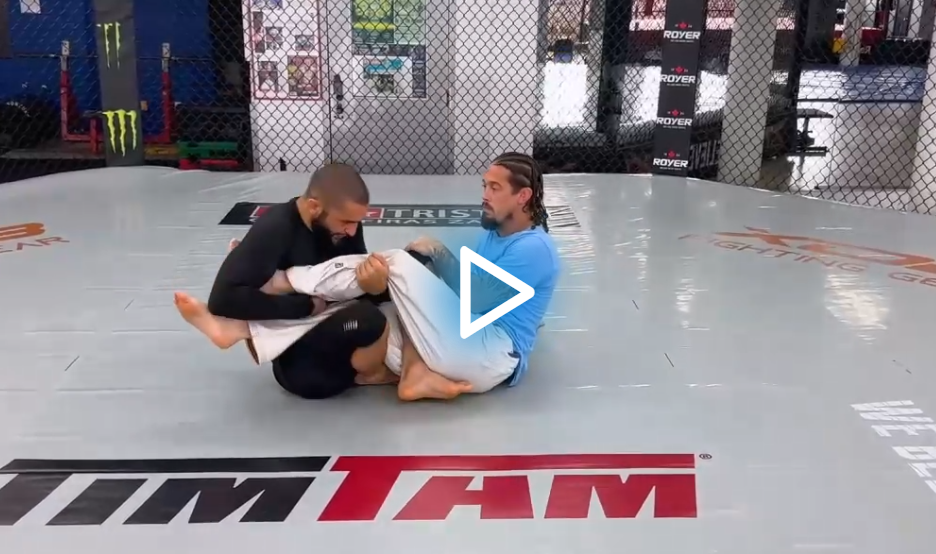
Firas, a Danaher black belt himself, has produced plenty of super high-level MMA fighters and grapplers out of his Tristar MMA gym in Montreal. He constantly looks to innovate, introduce novel methods and moves to his game, and evolve his teaching style — even more reasons to check out his Ashi Garami DVD bundle.

Complete Ashi Garami Made Simple Firas Zahabi DVD Bundle Review

If you want to be a solid leg locker, you don’t need tons of material — the Firas Zahabi Ashi Garami Bundle will do just fine. It covers the two best positions and 4–5 top submissions, which is more than enough to tap most folks out.

Outside Ashi Garami Made Simple DVDAVAILABLE HERE

Ashi Garami Made Simple Firas Zahabi DVD Review Outside Ashi Garami

Subject Matter:

First up in this Firas Zahabi Leg Locks bundle is the outside position, a.k.a. Outside Ashi. Heel hooks feature more than anything else, but Firas does spice things up with lots of outside Ashi-based movement and point-scoring tactics as well.

Key Points Covered:

The Ashi Garami Made Simple Firas Zahabi DVD Bundle kicks off with a chapter on safely practicing leg locks. I don’t think that we need it at this point, but it is still good to hear how to best set up your Ashi drills.

Firas first talks finishes, explaining the mechanics of outside heel hooks, straight ankle locks, and Aoki locks. Those are the go-to finishing moves that are at the center of everything in this DVD.

Speaking of follow-ups, Zahabi shows plenty of ways to use outside Ashi for back takes, sweeping, and passing — all from the same position. He also covers leg lock entries and solutions to common counters such as the limp leg and hop-over escapes.

Technical DVD Specifications:

Three volumes deliver all the information in this Firas Zahabi DVD, with the material spread fairly evenly — about 30 minutes per instructional, leading to a total of an hour and a half.

Cross Ashi Garami Made Simple DVDDOWNLOAD NOW

Ashi Garami Made Simple Firas Zahabi DVD Review Cross Ashi Garami

Subject Matter:

Part two of the Ashi Garami Made Simple Firas Zahabi DVD Bundle is similar in name, structure, and delivery to the first part, with one significant difference — the way the leg entanglement is set up. The much more powerful Cross Ashi Garami is the star here, offering super-tight inside heel hooks.

Key Points Covered:

Kicking things off is yet another disclaimer on leg lock safety in training. This time, it’s more important, given the inside position of the entanglement. The mechanics of the position come up first in this one, with key principles of attachment and details on positional recovery.

Zahabi then launches into an exploration of the double trouble concept and how you can attack with it from the 50/50 position. This sets the stage for finishes, in the form of inside heel hooks, Aoki locks, and the Estima lock, along with some great tactical advice on optimal use of the position.

Technical DVD Specifications:

This second part of the Firas Zahabi Ashi Garami Bundle is also the last. It provides three more volumes of instructions on using the inside Ashi Garami, with the material requiring just under two hours of your time to go through.

Leg Locks Should Be Simple(r)

The first Danaher instructional on leg locks blew everyone’s minds. However, not many people in the world finished the entire thing, and even fewer managed to understand and use the entire system outlined in it. Not to mention, we got two takes of the same instructional.

I was one of the few who not just got through it, but did it at least a dozen times during my hunt for leg lock perfection. It was not easy, and if I had to do it all over again now, I’d give up after volume two.

It’s not that the instructional is not useful — it’s world-class — but rather the fact that there’s no need for so much darn information. DVDs like those in the Firas Zahabi Bundle deliver all the instructions you need in a fraction of the time.

Let’s face it, you barely manage to get open mat, let alone find dozens of hours per week to devote to watching a BJJ DVD. Opt for simpler — it makes all the difference.

ASHI GARAMI MADE SIMPLE BUNDLE DVD BUNDLE DOWNLOAD

All About the Ashi!

Ashi is here to stay, but you don’t have to use every Ashi Garami variation out there to have a strong leg-locking game. I’d say you only need one, but with two, you’re guaranteed success after some practice. The Ashi Garami Made Simple Firas Zahabi DVD Bundle is obviously exactly what you need — a simple yet versatile way to learn leg locks, fast!


Jocko Willink Defends Girls in BJJ After Pastor’s Criticism

Jocko Willink Defends Girls in BJJ After Pastor’s Criticism

The world of martial arts recently found itself in the middle of a heated debate after Pastor Dale Partridge publicly discouraged parents from allowing their daughters to practice Brazilian Jiu-Jitsu (BJJ) or wrestling. His remarks drew criticism from practitioners, parents, and martial artists worldwide—including a powerful rebuttal from retired Navy SEAL commander and BJJ black belt, Jocko Willink.

The Controversial Statement

On social media, Pastor Partridge urged parents to keep their daughters away from grappling-based martial arts, stating:

“Parents, stop putting your daughters into Jiu-Jitsu and wrestling. You’re letting 14-year-old boys grope, mount, and dominate your little girl. Yes, teach them self-defense, but do so with self-awareness and weapons training, not ground fighting.”

When another user suggested that girls could simply train with other girls, Partridge dismissed the idea as “still strange and not feminine.”

His comments quickly went viral, sparking debates about safety, gender roles, and the best methods for teaching young women self-defense.

Jocko Willink’s Strong Response

Jocko Willink, a long-time advocate of martial arts for discipline and self-protection, offered a sharply contrasting perspective:

“Parents, put your daughters into jiu-jitsu and wrestling. That way they will be able to defend themselves against boys trying to grope, mount, and dominate them. It’s comforting when your daughters can choke, maim, or otherwise incapacitate potential attackers.”

Willink’s statement reframed the issue: rather than fearing close contact, he argued that martial arts empowers girls to handle dangerous situations safely and effectively.

Parents and Practitioners Weigh In

The exchange ignited passionate responses from the martial arts community:

  • Brianna Stevens, a parent who initially enrolled her daughter in BJJ, shared:

    “Put our daughter in jiu-jitsu 2 years ago thinking it would be the only girl. Yanked her immediately. We’ll stick to firearms training.”

  • Others, however, praised grappling sports. One parent wrote:

    “I train jiu-jitsu with my 14yo son and 10yo daughter in our garage. It’s not optional. I just think of it as a basic physical skill like swimming.”

  • Another commenter highlighted the confidence boost wrestling gave his daughter:

    “Wrestling has done wonders for her self-esteem and confidence.”

These differing perspectives underscore a broader question: What’s the best way to prepare young women for real-world threats?

BJJ vs. Weapons Training: A False Choice?

Pastor Partridge and some of his supporters insisted that firearms training is more practical. One martial artist agreed:

“Every instructor I have ever had, over decades, said if you had to choose between martial arts training for girls and firearms training, choose firearms.”

However, critics of this view argue that martial arts and weapons training are not mutually exclusive. While firearms can provide protection in some scenarios, BJJ teaches situational awareness, control, and confidence in unarmed combat—skills that are immediately applicable in everyday life.

Professional BJJ coaches also emphasize that safety standards vary by gym. Parents concerned about inappropriate training environments can look for certified academies, such as those affiliated with Gracie University or other reputable organizations, that enforce strict conduct guidelines.

Why BJJ Can Benefit Young Women

Brazilian Jiu-Jitsu is often described as “the gentle art” because it uses leverage, technique, and strategy rather than brute strength. For young women, the benefits are wide-ranging:

  • Practical self-defense skills: Learning how to escape from holds, pins, and unwanted physical contact.

  • Increased confidence: Overcoming challenges on the mat often translates to greater resilience in daily life.

  • Physical fitness: BJJ improves endurance, flexibility, and strength.

  • Community and discipline: Training fosters friendships, respect, and mental toughness.

As Jocko Willink noted, the ability to neutralize larger opponents can be life-changing:

“The solution for her is not ‘grapple well,’ it’s shoot, stab, or spray,” said Partridge.

Willink countered with the opposite: “It’s comforting when your daughters can choke, maim, or otherwise incapacitate potential attackers.”

Balancing Safety and Empowerment

While concerns about training environments are valid, dismissing martial arts altogether may limit young women’s opportunities for growth and self-protection. The key lies in responsible coaching, proper oversight, and encouraging girls to train in safe, supportive spaces.

As one martial artist put it:

“Vet the gym and instructors as you should, but jiu-jitsu is amazing for all children.”


Key Takeaways

  • Pastor Dale Partridge sparked controversy by discouraging girls from practicing BJJ or wrestling.

  • Jocko Willink strongly defended martial arts for girls, highlighting its role in real-world self-defense.

  • Parents and practitioners remain divided between firearms training and martial arts, though many experts stress both can be valuable.

  • Brazilian Jiu-Jitsu offers young women confidence, fitness, and practical skills for handling threats.

  • Choosing a safe, certified gym is crucial for ensuring positive training experiences.


FAQ

Q1: Is Brazilian Jiu-Jitsu safe for young girls?
Yes. When taught in certified academies with proper supervision, BJJ is safe and emphasizes technique over strength.

Q2: Can BJJ really help girls defend themselves?
Absolutely. BJJ equips practitioners with tools to escape, control, and neutralize larger aggressors, making it highly practical for real-world scenarios.

Q3: Should parents choose firearms training over martial arts?
It doesn’t have to be either/or. Firearms training can be valuable, but BJJ builds situational awareness and unarmed defense skills that firearms cannot.

Q4: How can parents find safe BJJ gyms for their daughters?
Look for certified academies with experienced instructors, strong safety protocols, and a positive culture that welcomes women and children.


Suggested Internal Links

How BJJ develops positive virtue in kids

Reasons why BJJ is the martial art for women

Everything about Brazilian Jiu Jitsu

Sydney Sweeney on BJJ: From Jiu Jitsu Mats to Hollywood

Sydney-sweeney-brazilian-jiu-jitsu-mma

Before Sydney Sweeney became a breakout star in HBO’s Euphoria, she was building resilience and confidence through a surprising discipline — Brazilian Jiu Jitsu (BJJ). Long before Hollywood fame, she spent her teenage years training and competing in grappling tournaments, often as the only girl on the mats.

“My mom told me from a very young age to fall in love with as many things as possible. And so I did,” Sweeney recalled in an interview.

Her journey shows how martial arts, particularly Jiu Jitsu, can shape discipline, confidence, and physical readiness — skills she later carried into her acting career.


Early Sports Background

Sweeney’s parents encouraged her to explore a wide range of athletic activities. Growing up, she skied, wakeboarded, and played soccer and softball. But one decision would prove most influential: her parents signed her up for grappling and kickboxing.

The mix of striking and submission grappling became the foundation for her athletic identity and gave her the mental toughness needed to face challenges in a male-dominated dojo.


Starting Jiu-Jitsu as a Teen

At around age 13, Sydney began training in BJJ and grappling at her local dojo. She continued through her late teens, often committing hours on the mats while balancing other sports and school.

Even though she wasn’t aiming for a professional martial arts career, Sweeney’s consistency and dedication reflect the same qualities required to excel in acting.


Competing in Male-Dominated Rooms

Sweeney was often the only female in her dojo, a challenge that many women in martial arts know well. Instead of feeling discouraged, she leaned into the competition.

“I was the only girl at the dojo,”she said.
“I had a few grappling tournaments, which were a lot of fun. I have a few ribbons. I fought all guys.”

This experience gave her both confidence and resilience — the ability to perform under pressure, a skill that translated seamlessly into her acting auditions.

With a laugh, she even joked about the self-defense benefits:

“So, you could kill someone. If they kidnap you, they’re in trouble.”


From Mats to Movie Sets

While her Hollywood career was taking off, Sydney never forgot her martial arts foundation. She has since spoken about wanting to use her athleticism in acting roles, and she found the perfect fit with her upcoming portrayal of boxer Christy Martin in a biopic.

This pursuit connects her martial arts background with her current career — showing how BJJ and combat sports training can prepare someone for high-performance roles both on and off the mats.


What BJJ Athletes Can Take From Her Story

Sydney Sweeney’s journey highlights a universal truth in martial arts: the lessons go far beyond tournaments. For anyone training in Jiu Jitsu, her story is a reminder that:

  • Being outnumbered doesn’t mean being outmatched.

  • The discipline of consistent training builds resilience for life.

  • Competing sharpens confidence under pressure.

  • Martial arts skills can create opportunities outside the gym.


Key Takeaways

  • Sydney Sweeney trained in BJJ and grappling from age 13–19.

  • She competed in tournaments, often against male opponents.

  • Martial arts gave her self-defense confidence and mental toughness.

  • These skills translated into her Hollywood career.

  • Her upcoming Christy Martin biopic role showcases her athletic background.


FAQ

Does Sydney Sweeney train in Brazilian Jiu-Jitsu?
Yes. She trained in grappling and BJJ as a teenager, competing in tournaments and developing confidence through martial arts.

At what age did Sydney Sweeney start BJJ?
She began training around 13 years old and continued through her late teens.

Did Sydney Sweeney compete in tournaments?
Yes, she entered grappling tournaments and earned ribbons, often competing against male opponents.

How has BJJ influenced her acting career?
The discipline, confidence, and physicality she developed in Jiu-Jitsu have helped her prepare for demanding roles, including her upcoming portrayal of boxer Christy Martin.

Is Sydney Sweeney still training BJJ today?
While her main focus is now on acting, she has mentioned in interviews that martial arts remains an important part of her life and fitness routine.

Did BJJ help Sydney Sweeney prepare for her role as Christy Martin?
Yes. Her background in combat sports gave her a foundation in athleticism and discipline, which makes her portrayal of a professional boxer more authentic.

Why is Sydney Sweeney’s BJJ story inspiring for women?
She competed in a male-dominated environment from a young age, showing that women can thrive and succeed in martial arts, even against tougher competition.

Can martial arts like BJJ really help in acting?
Absolutely. The focus, physical conditioning, and ability to stay calm under pressure are skills that translate directly into performing on screen.

What advice does Sydney Sweeney’s story give to young athletes?
Her journey shows that trying many sports and staying consistent builds confidence, resilience, and opens opportunities—even outside of athletics.

WATCH: Brazilian Black Belt Detains Thief in Barcelona as Brother Films It

WATCH: Brazilian Black Belt Detains Thief in Barcelona as Brother Films It
  • Viral video from Spain captures the moment a Brazilian Black Belt detains thief as a grappler stops a suspected bag-snatcher with calm, positional control.
  • Technique matters: a tight, safe jiu-jitsu chokehold and steady transitions kept bystanders out of harm’s way.
  • Legal reality: citizen’s arrest in Spain permits limited detention, but the gray areas are where people get hurt—or sued.
  • Takeaways for the average person: distance, description, and de-escalation beat heroics unless you’re highly trained.
  • Coaches see fundamentals at work—base, frames, and patience—more than brute force.

Brazilian Black Belt Detains Thief in Barcelona, Video Goes Viral 

Brothers Gabriel and Gustavo Galindo—both Brazilian Jiu-Jitsu black belts—were vacationing in Barcelona when they heard a man shouting in Portuguese that he’d been robbed.

They tracked the suspect down the street, with Gabriel using basic positional control to pin him safely while Gustavo cleared space and alerted bystanders until local police arrived.

The moment was filmed and quickly went viral, highlighting how calmly applied fundamentals can neutralize a chaotic situation without unnecessary force.

The clip is short, but the story isn’t. You see a sprint, a scramble, a clean takedown—and then composure. Brazilian black belt detains thief reads like headline bait, yet the most important beat is the pause after contact.

The grappler scans for accomplices, positions his hips so he can’t be bridged off, and narrows the chaos. That’s textbook risk management: control the space first, the person second.

In the background you hear the spillover of a crowded street, the kind of ambient pressure that makes untrained interventions go sideways. Good grapplers make these moments look simple because they’ve rehearsed them thousands of times at full speed.

The “Barcelona thief video” angle is irresistible, but the mechanics are evergreen. He keeps his knees active, posts when the suspect turns, and never chases a finish at the expense of balance.

Notice the hands: one tethering the torso, the other fighting grips. That detail—two jobs, two hands—prevents the frantic scrambles you usually see in viral street fights.

Where Skill Meets the Law in Spain

Technique is only half the story. The other half is legal. Spain recognizes forms of citizen’s arrest, but the lines are narrow: you can restrain to prevent escape and await authorities, not mete out punishment.

That means the same detail that wins in the gym—measured pressure—wins on the street and in a courtroom. Maintaining control without escalating force is the entire ballgame.

Practical guidance, regardless of jurisdiction: call the police immediately, get witnesses on camera if possible, and maintain a running verbal log—“I’m detaining you until police arrive”—that bystanders can later corroborate.

If a weapon appears, disengagement beats heroics every time. Even with elite skill, the safest win condition is containment and handoff, not conquest. That’s the less glamorous reality behind the headline Brazilian black belt detains thief.

Citizen’s Arrest 101 – What the Video Teaches

The “viral video Barcelona” cycle rewards spectacle, but coaches watch different metrics. They see a checklist: base under fire, calm grip fighting, and the discipline to reset hooks rather than chase applause.

They also clock the invisible skills—breathing cadence, head position against headbutts, peripheral scans for friends of the suspect. The teaching takeaway: fundamentals scale across contexts.

For bystanders and new students, this is a lesson in bystander intervention done right: create a perimeter, assign roles (“you call emergency services,” “you record from there”), and avoid the dogpile.

One trained person controlling the situation is safer than five untrained helpers pulling in five directions. If you must engage physically—and again, it’s rarely plan A—think positional control, not a striking brawl.

The jiu-jitsu chokehold is a tool, not a shortcut; it only works safely when layered over posture, balance, and constant situational awareness.

A final point the internet misses: Brazilian black belt detains thief makes for a thrilling caption, but the win condition was restraint, not domination. He used enough technique to stop the sprint, then just enough pressure to hold the line.

WATCH: Brazilian Black Belt Detains Thief in Barcelona

Train Smart, Stay Safe—This Story is the Exception, not Your Blueprint

For most people, the safest contribution is observation and documentation, not entanglement. When force becomes unavoidable, the fundamentals we saw—hips heavy, hooks active, steady breath—are what lower the risk to everyone, including the suspect and the surrounding crowd.

If this clip pushes you toward the mats, good. Seek a reputable academy that teaches control before chaos, positional dominance before submissions, and scenario training that includes voice commands and safe disengagement.

Treat the video as a case study, not a fantasy. Celebrate the composure and the clean mechanics, then remind yourself that Brazilian black belt detains thief stories that go viral precisely because they are outliers.

Build the skills anyway—so that if your ordinary day suddenly demands the extraordinary, you’re ready to choose the safest option available.