‘El Diamante’ has surrendered to the police, he is charged with a horrific crime!

Keishle Marlen Rodriguez Ortiz

A lifeless body of a pregnant woman has appeared, and evidence and a witness point to a once perspective boxer.

Felix Verdejo faces serious charges of kidnapping and murdering pregnant Keishle Marlen Rodriguez Ortiz.

The Puerto Rico boxer and former Olympian surrendered last Sunday in San Juan shortly after the dead body of a 27-year-old Keishle Marlen has been found. People believe she was Felix’s mistress, and who, according to the media, was carrying his child.

Video evidence suggests that young Keishle’s body was thrown into a lagoon after she was beaten and drugged. It all happened after her alleged meeting with Verdeja and at least one other participant, BoxingScene reports, citing information from the arrest warrant.

The evidence pointing to Verdejo and his involvement in this serious crime, was cited by investigators by an unnamed witness, aware of the abduction as well as the murder of the aforementioned Rodriguez.

According to the report, Verdejo contacted Rodriguez on April 27, and when he became aware that she had been carrying his child for a month, he allegedly persuaded the victim to have an abortion. The investigation also suggests that Verdejo then contacted the witness and “asked for help in terminating the pregnancy.”

Phone records suggest that Verdejo contacted Rodriguez on Thursday and requested a meeting near her residence. Verdejo and the witness then drove away in Felix’s car (Dodge Durango SUV) which corresponds to the description of the vehicle that the camera caught near the lagoon where the dead body was found.

According to witnesses, the boxer hit the victim in the face and injected her with previously purchased substances. Verdejo and the witness then tied the victim’s arms and legs, and the witness then took the keys and boarded Keishla’s car (Kia Forte).

Allegedly, Verdejo then transported the drugged and unconscious Rodriguez in his vehicle to the Teodoro Moscoso Bridge from where she was thrown into the water. According to the report, Verdejo then fired a shot at Rodriguez.

The body of the dead Rodriguez was found on Saturday. Her face was so disfigured that it was impossible to identify her without a dental record.

This case was officially taken over by the FBI, from which they immediately collected telephone records indicating the communication between Verde and the victims on April 28 and 29.

Verdejo surrendered on Sunday night, and he and his lawyers have so far declined to comment on the serious allegations.

Felix Verdejo

The 27-year-old boxer nicknamed ‘El Diamante’ has recorded 27 wins and two losses during his professional career. He competed in the lightweight category and was last seen in the ring on December 12, 2020, when he was defeated by Japanese Masayoshi Nakatani by technical knockout.

In 2012, when Verdejo became a professional boxer, he represented Puerto Rico at the Olympic Games.

Gordon Ryan in Joe Rogan’s Podcast Talks About Transition to MMA

Gordon Ryan at Joe Rogan's Podcast Talks About Transition to MMA

White Belt BJJ Stripes Requirements

White Belt BJJ Stripes Requirements: What You Need To Know

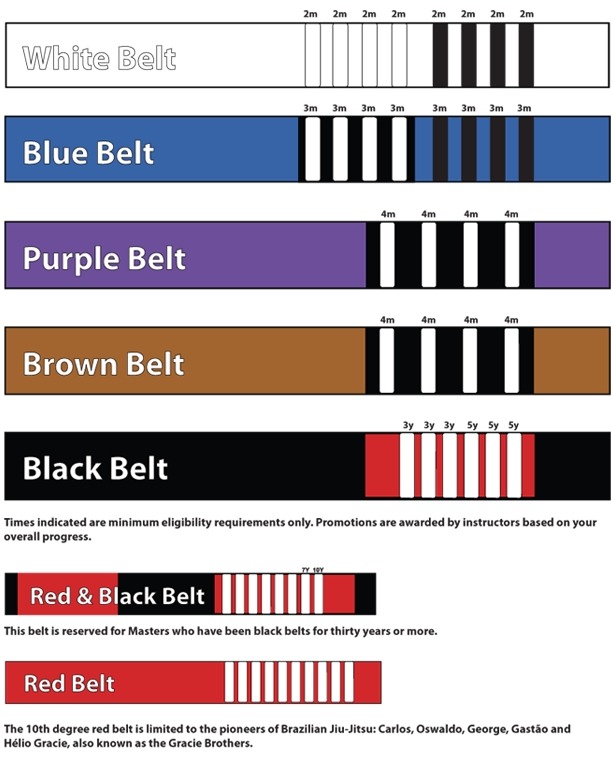
Just started BJJ and you’re already wondering when you’re the first stripe is coming? Take it easy there, this is a marathon and a long one at that. There is no point in focusing on stripes and belts, but until you are a blue belt, this will be hard to process. That is understandable as the human urge not to be a beginner at anything is particularly strong when you are a white belt BJJ practitioner and your belt has no notes on it. Stripes will come, but if you are really interested in what it takes for you to earn them, we offer helpful insight in this article. 

Unlike other martial arts, BJJ does not have pre-requirements for every BJJ belt written in a book or curriculum somewhere. There is a broad consensus of what each belt should know, but specifically speaking iT does vary from gym to gym, instructor to instructor. In terms of stripes, people don’t really care unless those are stripes on a black belt. Yet, for a white belt, BJJ stripes are some of the most important things they can get, simply because they are within reach as opposed to a purple, or let alone black belt.

The White Belt Timeline

White belts have quite a difficult time compared to other belts simply because they know nothing, or know very little. Brazilian Jiu-Jitsu belts take time, almost always measured in years. However, spending time at colored belt means that you get to play around with the knowledge you have while working on expanding it. As a white belt, you do not have any knowledge, and you have to spend what is arguably the longest time you’ll spend at any belt precisely there.

BJJ belts time requirementsThe average time for a white belt to reach the next level, i.e. the blue belt is around two years. While the official time often quoted is around a year and a half, it usually does take more than that. IN fact, I do think it should, and I do think people need to spend most of their time at white and blue belts, figuring out the fundamentals of Jiu-Jitsu. That said, it is a long time to wait for anything, let alone the very first belt in martial art. In other arts, you’d probably have three or four belts already.

Then again, Brazilian Jiu-Jitsu is not like other martial arts. That is very hard for beginners to process though, and they need immediate gratification in order to enforce their sense of accomplishment. So, the stripes enter the frame. Throughout the two years as a white belt, people are genuinely and inexplicably happy every time there receive a stripe on their belt. All those stripes still need to have a technical meaning as well, in addition to making white belt BJJ practitioners happy.

White Belt BJJ Stripes Requirements

The white belt BJJ stripes work in the same manner as stripes on any belt – you can have a maximum of four. Instructors can always give away anywhere from one to four stripes, but at this level, you usually get your stripes one by one. The thing is, a lot more goes into getting a BJJ stripe, especially as you go towards blue belt than you might think.

1st Stripe

The first stripe on your white belt, the first mark that you are no longer a beginner has little to do with your understanding of Jiu-Jitsu or your technical BJJ knowledge. It is something you will get in a few months, and it is there to reward you for coming to class regularly and give you the drive to keep going. This is not to say that you haven’t picked things up in those months, it is just impossible to learn anything meaningful about BJJ in just a few months.

2nd Stripe

This is where your effort will truly be appreciated. If you were in an introductory group without rolling, until your first stripe, you’re no probably getting a taste of the tas well. At this point, you should have a basic understanding of at least what submissions are, what is top and bottom, and at least an idea about using escapes. With two white belt BJJ stripes, you can freely sign up for a competition as well.

3rd Stripe

With the third stripe, there’s a certain amount of knowledge that you should demonstrate. It starts with knowing the names of things, not everything, but the main stuff for sure. By now, you probably have around a year or more of experience. IF you were training regularly,y you should be able to figure things out against peers and those with less experience during rolling. In other words, you’re getting the first taste of what BJ Jrealyl is like, and you can see there is a meaning, however vague, to it all.

WHite Belt BJJ stripes - 3rd stripe

4th Stripe

In my gym, if I give a white belt their fourth stripe, they’re probably at blue belt level already. This happens when I can see them thinking during rolling and applying tactics. Paired with dedicated technical practice and not slacking during drills, that is blue belt material right there. However, it is always as good to mature to the next level already having a grasp of things, so the blue belt will have to wait a while longer yet. There’s no doubt about what is next, though.

Stripe Promotions

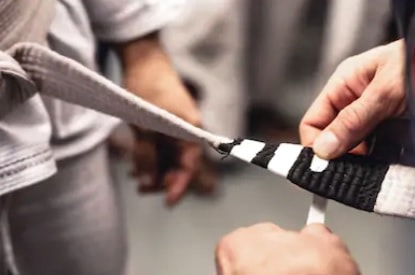
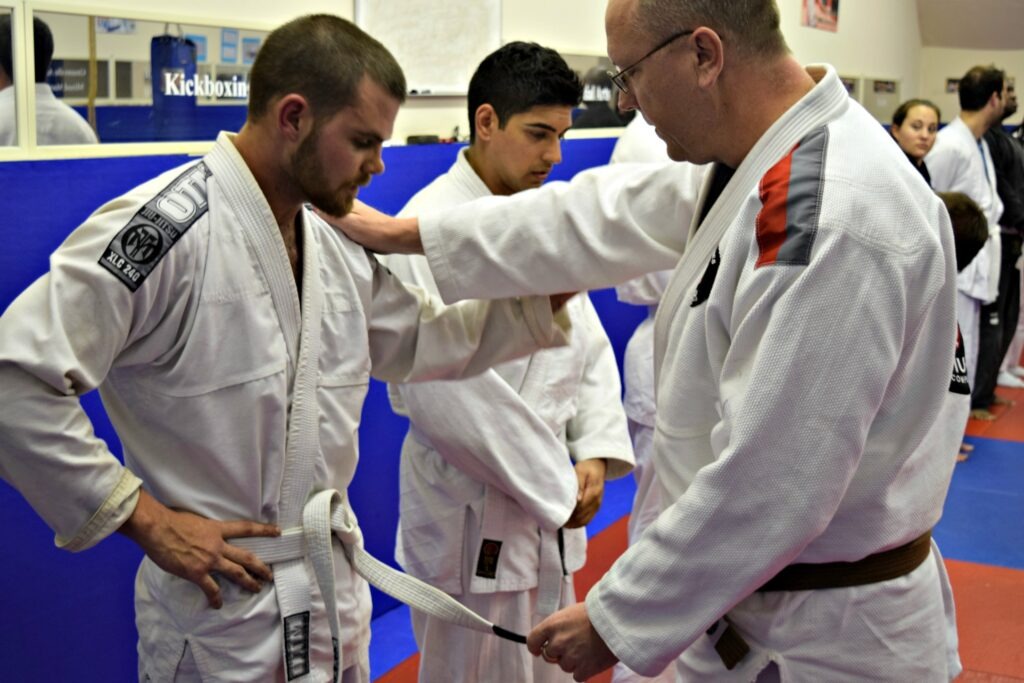
The first thing to know about a BJJ stripe promotion is that you won’t get whipped with belts. That is an outdated tradition anyway, but lots of schools still enjoy doing it. IN fact, in most academies, stripes do not merit special promotion ceremonies of their own. People just get them based on merit, which is the most important thing you need to realize as a white belt BJJ practitioner. Everything you get in the sport will be merit-based.

Speaking of merits, stripe promotions take into account individual accomplishments above all. that means that if you came in with a friend, he or she might get more or fewer stripes than you for training the exact same amount of time. This s not a big deal, and you should look at what you have accomplished instead of fussing about what others have gained or lost.

During promotions, people at all belts might get anywhere from 1 to four stripes. At a white belt, it is rare for someone to get four stripes in one go, but not unheard of. Usually, at this level, after the first one, you will probably get two, or three in one go at some point if you train regularly. OR, you might just end up getting a blue belt without completing the set of four. Everything is possible in Jiu-Jitsu, so just keep training and try not to give stripes too much attention.

Brazilian Jiu-Jitsu Promotions

All In All

White belt BJJ stripes are very important in our sport. This is not just something for students to remember, but also coaches. There is a huge meaning behind every one of those for the student, even if they don’t fully understand why they got them, especially at first. For all, you white belts out there enjoy the journey because you’ll never be a BJJ white belt again!

BJJ Blue Belt Requirements and Curriculum

Why The Kimura Sweep Is The Best BJJ Sweep?

Why The Kimura Sweep Is The Best BJJ Sweep

What can you use the Kimura for in BJJ? Pretty much everything, to be honest. You’ve probably tapped someone out with it, or have been caught in at least one yourself. Also, you have used it to control the back or set up armbars. If you’ve been around BJJ long enough, you’ve also used it to pass the legs and even counter takedowns. However, have you ever thought of doing a Kimura sweep? And I’m not just talking about that basic closed guard sweep that everyone is doing. 

The Kimura is one of the most versatile moves in Jiu-Jitsu. It offers plenty of options that range a lot further than just a shoulder lock. It does take time for people to start seeing things clearly, though, and understanding the full extent of Kimura possibilities takes time. In fact, even though most people show the Kimura sweep (AKA sit-up sweep) among the very first things, which I strongly disagree with, people do not realize the sweeping power a Kimura actually provides.

The Double Trouble Concept Regarding Sweeps

The definition of insanity is doing the same thing over and over again and expecting a different result. After years of teaching people stuff like scissor sweeps and pendulum sweeps from the closed guard during their first weeks of training, and them failing miserably at comprehending how it all worked, I started wondering if we were insane to do so. After all, that is the way we were taught – this is a fundamental technique, you “learn” it now and make it work. Horrible, if I am being honest.

Things like sweeps are quite complicated when it comes to pulling them off in BJJ. Even if you are trying to sweep a stationary body it would be difficult without understanding mechanics, let alone trying to execute a sweep on an opponent that is fighting back. So, I decided to try a different approach.

The basic goal of a sweep is to get from a bottom position to a top one. The method is not set in stone, only the end result is very specifically defined. That simply means you can pretty much do anything that makes sense, as long as you end up on top. So, why open a closed guard up and go for complicated sequences that won’t work if an opponent does not make several errors in a series? Instead, it is much easier to use the threat of something else to get people to topple over. Submissions are that threat.

The Kimura sweep is the perfect example of how threatening with a sweep while holding on to submission will get you either a sweep, a submission, or very often, both. That is the double trouble principle of sweeping that you should always strive for from guard.

JIu JItsu Kumura sweep

Kimura Sweep Mechanics

Let’s talk a bit more about the Kimura sweep. Whenever this sweep is mentioned, people usually think of the sit-up sweep for the closed guard, given that a Kimura-like motion initiates it. The “old-school” version of the sweep has you getting up from closed guard, looking to throw an arm over the shoulder of an opponent as you are looking for a Kimura. The threat of the Kimura leaves them exposed to a sweep. Well, at least at a beginner level.

A more effective and practical way of attacking the Kimura sweep from the closed guard would be to actually break the posture and get a proper Kimura grip first. Basically, look to get the submission before even thinking about sweeping. With the posture broken and the grip set tightly, you can choose which direction to sweep towards. As long as their head is on the ground, you can initiate a sweep with a simple bridge (hip bump), go for a butterfly hook or simply kick one leg out from underneath them.

Something most people do not often consider si doing a Kimura sweep from the half guard. It can work in many different ways, but rollovers are usually the best option. Similar to the closed guard, really do try and get the submission from the bottom. This has people scrambling to defend which gives you the option to roll them over, whether with a barrel roll or by simply following them as they try to posture out of the submission. It is really that easy.

Just to tease you a bit more, you might also want to explore “sweeping” from bottom side control. While this won’t get you to sweep points it will get you out of a tight spot with an option to tap the top person out. The Squirrel lock is the Kimura sweep I’d go for from there.

Why The Kimura Sweep Beats All Other Sweeps

The mechanics of the Kimura submission is what makes the sweep such a dominant option. The principle of double trouble sweeping works well with guillotines and triangle choke as well, just to name a few. However, the Kimura beats every one of them as the best possible way to sweep a result of the mechanical advantages it provides.

When in a Kimura grip, you have extreme levels of control over the elbow of an opponent, but controlling the forearm with a figure four configuration that involves both your hands. Moreover, they’re combined in a wedge system which makes it really hard for the other person to get out of. The real control, though, comes from the placement of your armpit over their shoulder when the top arm goes for the setup.

This means that you not only control their shoulder, you also control their posture. As long as you close your elbows to your torso after getting a Kimura from the bottom, you will be impossible to shake off. This means that you have control over the entire torso in a diagonal fashion, which immediately provides you with a direction to work on off-balancing. Additionally, you can easily control the neck and head causing even more balance issues for your opponent.

In Conclusion

The Kimura sweep, old school or new school from closed guard or from half guard, will work like a charm. You just have to be brave enough to think about the Kimura more like a position for attacking different things, including a shoulder lock, than simply as submission of its own. Time to start experimenting!

Learn 4 Kimura Submission Defenses And Escapes

7-years-old Pronounced Brain-Dead After Multiple Throws by Instructor in Judo Class

7-years-old Pronounced Brain-Dead After Multiple Throws by Instructor in Judo Class

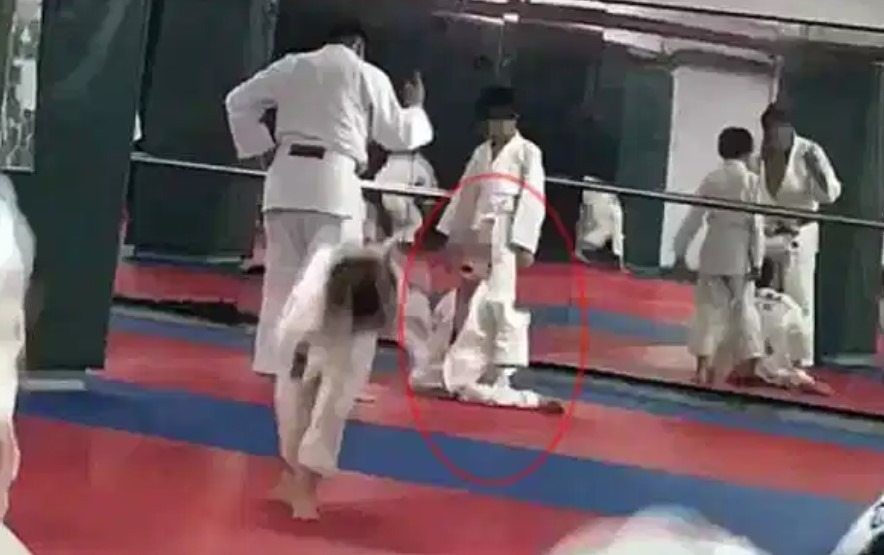
A 7-year-old boy training in judo for only two weeks was “thrown to death”. A boy surnamed Huang in Taichung went to a judo gym to learn judo on Wednesday but was thrown 27 times by his instructor and older Judo practitioner. Suddenly, the young boy couldn’t stand up and was sent to the hospital for emergency treatment. The hospital found that the boy had a brain hemorrhage. After surgery, he was pronounced brain-dead. Even if he survives this incident, he may become a vegetative person.

The young Huang went to the class after training Judo for two weeks. He started training on April 8. and this was his second Judo class. According to the reports, what actually happened is that the Coach ordered a 10-year-old student to throw Huang repeatedly.

Huang’s uncle who was recording the class made a video that explains everything. He said that after his son has been thrown to the ground more than 20 times his nephew couldn’t get up. He stood on his knees and arms complaining about his knee pain while yelling, “my knee, my knee”. The coach thought he was pretending, so instructor Ho threw Huang down 7 to 8 times more before he stopped.

Judo Instructor Ho ordering young boy who was pronounced brain dead to stand up

After the 7-years-old kid stopped moving and became unresponsive, the 67-year-old coach, named Ho, stopped the class and said, “Call an ambulance.”

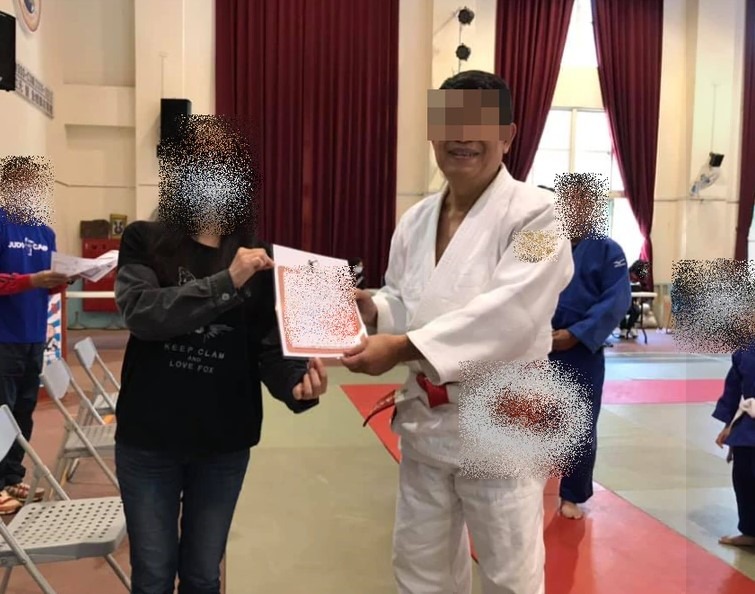
The young kid’s coach’s name is Ho (67-years-old) and he’s a member of the Taichung City Judo Committee, and he’s the coach in many Judo schools. He’s 6th Dan Judo Black Belt and In Judo circles in Taichung circles the stories that he’s very enthusiastic about Judo and teaching.

Another Judo instructor in Taichung revealed that the coach Ho used to work as a bailiff. After retirement, he started to coach Judo in many Judo schools in Taichung City and is teaching for more than 10 years. He also said that apart from selling uniforms to kids, coach Ho wasn’t charging his students a training fee as far as he knows.

Judo Coach Ho, 7-years-old boy braindead

Other Info translated from Apple Daily:

According to Apple Daily, today, the boy’s father and uncle, accompanied by Taichung City Councillors Zhang Thongfen and Chen Bentian, held a press conference at the Legislative Jiang Qichen Service Office.

The boy’s father said at the time that his son wanted to learn judo “to protect you (referring to your family)!” He felt that it was a legitimate exercise and could strengthen his body, so he sent his son to school. Every time he went to class, he was picked up by his uncle.

Boy’s Uncle said that his nephew took a total of 8 judo classes. He would take him there every time. He went to class at 7 pm that night. He was first thrown about 20 times by a fourth-grade boy, and then by coach Ho. After about 7 times, there was still vomiting during the period. I was taken to the sidelines at 8:55 in the evening. At 9:5, I called an ambulance to the Bulifengyuan Hospital

The boy’s father said that his son had fallen to the ground and the coach had not taken the initiative to rescue him. He actually said to his son’s uncle: “Otherwise, you call an ambulance yourself!”

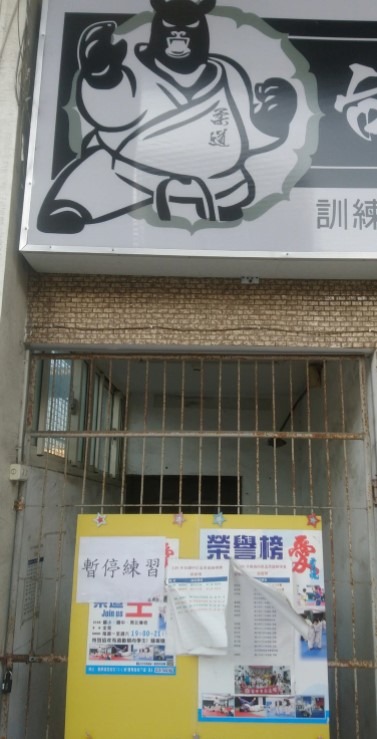
The Judo Gym, which caused the boy’s brain death, posted a “pause of practice” notice today. Photo by Chen Shihe

“Apple” made a second call to the judo instructor in the afternoon, but no one answered and then transferred to the voice mailbox. He went to the judo hall to check and found that the iron door of the gym was deeply locked. A notice was posted at the door saying “Practice Suspended”.

City councilor Chen Bentian, who attended the press conference in the afternoon, said that according to his understanding, most schools enroll judo students at least in the third grade (approximately 10 years old) or above, and some physical education classes even enroll primary five or above. Are they too young? Suitable for learning judo? Or need more comprehensive protection facilities? It deserves the attention of relevant units.

Another city councilor, Zhang Yufen, believes that relevant units should inspect the equipment and teachers of judo teaching venues for safety and competence. Parents should also check and inspect frequently to prevent inferior teaching venues and teachers from causing harm to their children. . (Local Center Mingming, Zhou Tingqing, Chen Shihe/Report from Taichung)

The Cross Guard BJJ System – Power In Simplicity

Cross guard BJJ System - Power in simplicity

It is futile to try and look for the best guard in BJJ. There are so many, and lots of them have awesome merits, so it really would not be real if we crowned one guard “the king” of all others. However, there is a case to be made about guards that will work for a huge part of the people that give them a try, as opposed to some guards that are not really a great fit for everyone. The cross guard BJJ position is like an update on the highly effective and reliable tripod guard. It does, however, offer a lot more, and it does ticket the imagination of where it could lead someone who is an avid Jiu Jitsu competitor. 

The cross guard is something that will work for everyone and is easy to pull off in both Gi and No-Gi. I haven’t tested it in No-Gi yet, but it shouldn’t be that different than the tripod guard, for the most part. With the Gi, it makes a lot of sense, ad really works like a charm against everyone, mostly due to one very important fact – it does not appear like a big threat to the top person. IN other words, it is exactly the deceptive guard you’d like to have in your arsenal in order to be maximally effective with minimum effort. Below is a basic cross guard BJJ guide for you that explains everything about the position.

What is the Cross Guard?

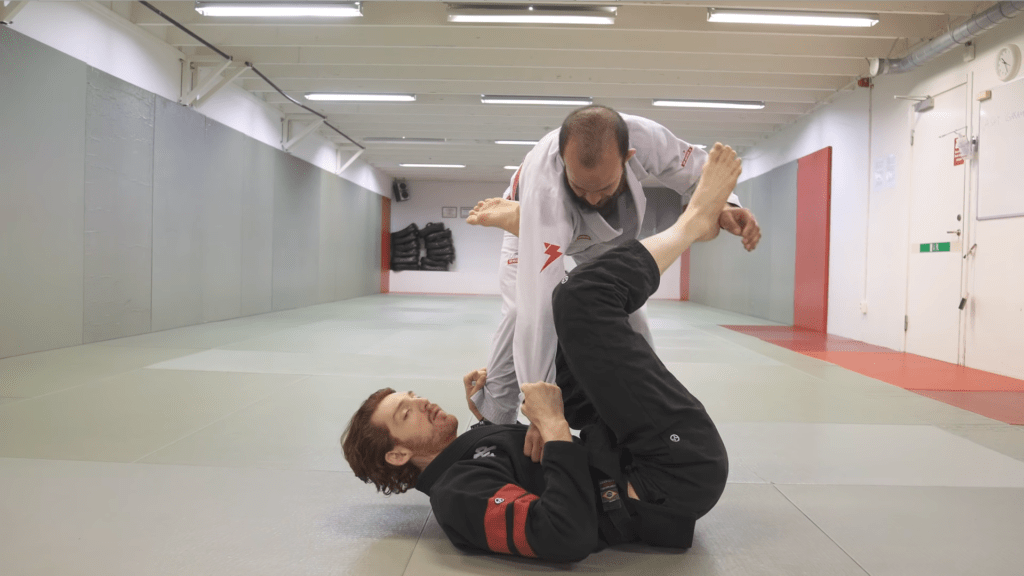
The cross guard BJJ position is an open guard variation that is very easy to set up. As I mentioned, it reminds of the tripod guard, with a couple of very obvious distinctions. In terms of positioning, you want your hips to be at about a 90-degree angle in relation to the opponent’s hips. This is different from most open guards which have your hips squared to some extent.

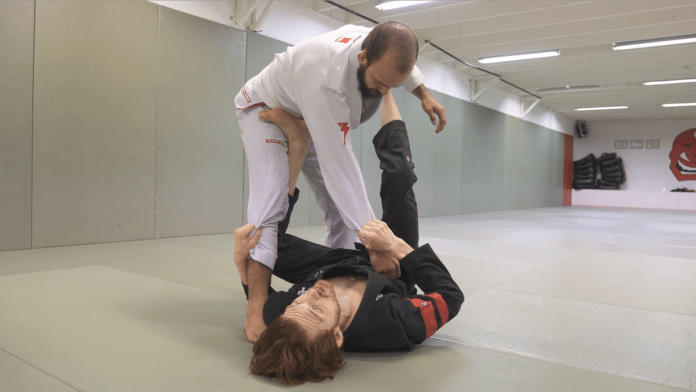
For the cross guard, the hips are at about a 90-degree angle and slightly underneath the opponent. The arm that is closest to the leg goes under and around, ending up with a pocket grip on the pants. This is one huge difference in comparison to the tripod guard, where the grip is directly on the heel. The other arm goes on the sleeve of the same side arm as is the control of the leg, which means it is a cross-grip.

The leg nearest to the opponent is propped on their near-side hip at belt level. The outside part of the foot is the only area making contact initially. hat leaves on leg free, and it goes right into the biceps of the far arm, spider guard-style. This is the second obvious difference compared to the hook placement in the tripod guard.

The cross guard BJJ position, as simple as it seems, actually provides you with as much inside control as you could hope for from a bottom position.

getting to the cross guard

How Do You Get There? 

Apart from winging it and getting to the position on your own term, there are several well-established ways into the cross guard. The one thing that allows for each and every entry, though is the gap between the knee and elbow on the side foreleg and arm you’re going to control. As long as this is available for you to thread the foot in, any entry will do.

The closed guard is a direct and easy route to use. As opponents stand up, you go for the leg, at the same time getting the right angle and the foot on the hip. It is all details from there. Another really easy way in is obviously the tripod guard – all longas you change one grip and one foto placement, you’re there without moving too much (if at all).

The De la Riva and lasso guards are also great options. The leg hook is really important, so as soon as you get that one, you are basically in the cross guard BJJ position directly, given that ht grips are already there from the previous guards.

A very cool option is the X-guard, which is basically both away in, and an option to go to from the cross guard. All you need to do from the X-guard is switch the hip you’re controlling with the near leg and the position of the far leg.

Finally, just about every guard retention motion will open up options for you to get the leg on the hip in place, or the all-important hook with the arm and start playing the guard right when the top person thinks they have passed.

Cross Guard BJJ Attacks

The Cross guard BJJ position immediately screams Omoplata attacks from the first moment you set it up or even see it. Th setup though is not direct, but rather has a snaky step that ensures you get it, or a follow-up. Namely, from the basic cross guard setup, you should use the heel of your near-leag to push in the armpit of the opponent. This will set the Omoplata up perfectly, without any space left for the opponent to sneak an escape in. All that is left is trying to pivot, which will lead directly into a triangle, or try to posture up, which opens up a different series of attacks.

When opponents decide to posture up, they will expose their leg for Ashi Garmi entires, or simple back take maneuvers. For the Ashi Garami, all you need is to get your hips as close as you can to theirs and choose whether you’re going to go to a kneebar or deep into the Honey hole. Fro a back take, hips go up like for leg locks, by you’ll reach for the belt with your top arm, and glide behind them for a smooth and attractive back take.

Ther is also a very cool Armbar/Omoplata combination on the far arm, when opponents decide to grab your free leg after they go to their knees trying to stop an Omoplata attack,. this exposes their far arm for an armbar, which opens up an Omoplata attack on the other side as they try to maneuver out of the first one.

the best thing about the cross guard BJJ position is that it works against all three levels of top positioning: standing, half kneeling, and kneeling.

Conclusion

The cross guard is an interesting position to play around with. we’ve all used variations of it before, but now, there’s a mini cross guard BJJ system in place that does offer clear answers to most of the questions the guard raises. I for one, plan on having lots of fun with it in the future Any of your experiences are more than welcome a well!

The Full Story Behind 10th Planet Jiu Jitsu

Do You Know The Full Story Behind 10th Planet Jiu Jitsu?

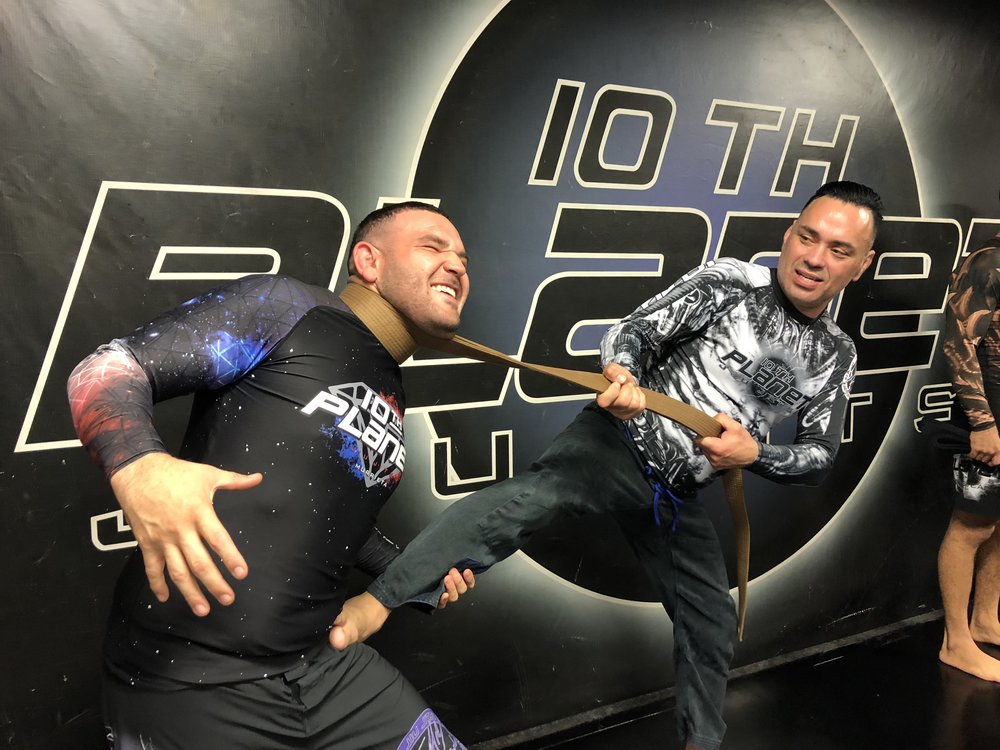
10th Planet Jiu-Jitsu. The moment you read this, you think of No-Gi BJJ, Eddie Bravo, conspiracy theories, and weed. Well, most people that know something about Jiu-Jitsu do, anyway. There is no denying that the empire that Eddie Bravo has built really is different than what most people consider “normal” in terms of BJJ gyms. There is also no denying that his system works and that he produces both amazing competitors and some of the greatest teachers in the world. But how did it all happen, and how did the entire system evolve throughout the years? It is always interesting to look back at how some of the most successful BJJ empires got started.

While most people associate 10th Planet Jiu-Jitsu with Eddie Bravo, and perhaps the Martinez brothers, I have to say that many more notable folks within the system have to get recognition. The system has produced lots of talent throughout the year,s and they all innovate much more than people in “regular” Jiu-Jitsu gyms. A lot of it has to do with how Eddie Bravo approaches running things, where, among other things, he encourages people to have fun exploring not just BJJ, but also wrestling, Sambo, and all other grappling styles.

A Romantic Underdog Story

10th PLanet Jiu-Jitsu has always been the underdog. Just like any other underdog that has pulled off massive upsets, they have embraced the role and thrived in it. Basically, when BJJ spread throughout the world, Gracie Gi-based Jiu-Jitsu was the norm, supported of course by the likes of the IBJJF and presented through Gracie Barra. Nowadays, it couldn’t be less important what gym you are from, but there was lots of noise about it back in the early days.

The Gracies, to be honest, had disagreements within the family to begin with, when it came to teaching and opening gyms up. However, they did band together in proclaiming young Eddie Bravo, a Jean Jacques Machado black belt was completely going against the idea of Jiu-Jitsu. He really did poke them, first discarding the Gi, and then starting to name things his own way. The fact that he enjoyed smoking weed and later on, introducing completely new positions (mostly based on wrestling) had the Gracies livid. Beating Royler Gracie in the ADCC via a triangle choke only made everything worse.

Eddie Bravo, though, handled things perfectly. He did his thing, presenting lots of evidence on why the stuff he was experimenting with made sense. From the rubber guard to the Twister, Bravo demonstrated that the old school ways are not the only ways of training and learning Jiu-Jitsu. In fact, he was one of the most important creative sparks that launched the evolution of BJJ, something that has never stopped and will keep going strong. That and he did open the door for No-Gi in more ways than one throughout the years.

The Full Story Behind 10th Planet Jiu Jitsu

The Birth Of 10th Planet Jiu-Jitsu

The inception of 10th Planet Jiu-Jitsu was never something that came about with lots of thought beforehand. A young musician trying to make it onto the music scene, Bravo stumbled across BJJ as many people did in the 90s – after watching the UFC. Already a fan of martial arts (some experience in wrestling and of course, the mandatory Karate for the time), his curiosity about Jiu-Jitsu was sparked.

Bravo was definitely lucky in choosing his BVJJ gym, as he needed up at that Machado Brothers Jiu-Jitsu Academy and started training under Jean Jacques Machado. Himself a very creative and innovative instructor, Machado fueled Bravo to experiment with Jiu-Jitsu and question the established techniques and protocols. Born with Amniotic Band Syndrome, Jean Jacques has no fingers on his left hand. Yet, he thrived in BJJ, finding a way around the traditional Gi grips and making it work for himself. In short, Bravo found the perfect teacher for his character, and that had a defining role to play in his development as a grappler.

Eddie smartly USD the recognition he got the first American to submit Royler Gracie after their ADCC match to launch his new school. He set up the earliest version of the 10th Planet Jiu-Jitsu school in a kickboxing gym in West Holywood. Even the name was unusual, given Bravo’s fixation with conspiracy theory-type of claims as he dubbed his newfound gym according to the mysterious 10th planet in our solar system – Niburu. He also decided that he would not use the Gi in his gym, rather focusing on practica Jiu-Jitsu for MMA above everything else.

Evolution: Going Against The Grain

Bravo’s personal take on Jiu-Jitsu started after he realized that there was really no Jiu-Jitsu specialized for MMA. The rubber guard was designed to completely take the top[ person’s ability to strike, and offer submission options. Of course, it then morphed into a complex system that is still developing but now has countless moving parts and options.

The Twister, another of Bravo’s signature moves is actually nothing more than a wrestler’s guillotine he pulled off in his first-ever tournament. It was Rigan and Jean Jacques Machado that dubbed the move the Twister. Given that it is a spinal lock, it was not allowed in competitions such as IBJJF tournaments, further widening the chasm between 10th Planet Jiu-Jitsu and the “mainstream” BJJ of the time.

Bravo and his students were never shying away from any submission that worked, going in directions that were demonized at the time, like leg locks. They were one of the earliest gyms to experiment with leg locks, albeit from their own perspective, mostly work inform the Truck position and focusing on calf slicers like the Vaporizer.

With most people saying his BJJ won’t work, or that it was too weird and required special flexibility to execute, Eddie patiently kept working on his system. It inevitably led to such an interest that he soon had lots of students and even black belts of his own that went on to spread the system through the US, and eventually, worldwide.

10th planet

Becoming A World Power

Back when it all started nearly nobody believed in the 10th planet Jiu-Jitsu system. Nowadays, people are trying to make up for lost time and figure it out, although there’s no quick way to do it, really. The system is now worldwide, with hundreds of schools and highly skilled black belts that keep innovating just like Eddie did on his own back in the day.

One of the best things Eddie Bravo does in the system is letting his students have fun experimenting with Jiu-Jitsu and encourages them to do it, just like Machado did with him. Geo and Richie Martinez, Nathan Orchard, Tony Ferguson, young grace Gundrum are just some of the names that have represented the 10th planet colors at the highest levels of the game and are still going strong and have lots more to show.

Bravo also has 4 books so far: “Jiu-Jitsu Unleashed,” “Mastering the Rubber Guard,” “Mastering the Twister.” “Advanced Rubber Guard: Jiu-Jitsu for Mixed Martial Arts Competition”. On top of that, Bravo has several DVD instructionals out, as do some of his most notable black belts like Bradond McCaghren.

These days, at Eddie Bravo’s HQ in LA you can run into huge grappling names, UFC fighters, and pretty much the who is who of grappling at any given time.

Changing The Landscape Of Jiu-Jitsu

Apart from creating his own system taught at 10th Planet Jiu-Jitsu schools, Bravo really did help re-shape the BJJ world. For starters, he was one of the biggest proponents of Submission-only tournaments with revised rules. After going up against Royeler at Metamoris, the first tournament of the kind (a match Bravo won according to many, but officially a draw) he launched what is arguably the best ruleset for BJJ competition – The Eddie Bravo Invitational.

Ebi really did change the world not just for Bo-Gi Jiu-Jitsu, but also for professional grapplers. Suddenly, there was a platform with realistic rules where people actually get paid. EBI paved the way for most of the pro-tournaments that are huge today, the likes of Polaris and Fight To Win.

The tournament evolved into one of the biggest events in Jiu-Jitsu and evolved quite quickly into something else – combat Jiu-Jitsu. Combat Jiu-Jitsu is still something that is not fully accepted, but I am certain it will spread quickly once it is a bit more polished. Basically, it is BJJ with slaps allowed under certain conditions, completely changing the tone of how matches take place.

Also worth mentioning are the 10th Planet Jiu-Jitsu warm-ups, a system of drilling that has truly changed the way lots of people approach BJJ drills. Bravo has his students warming up by doing elaborate scenarios where both partners geet to train.

10 Best Leg Locks DVDs and Digital Instructionals

10th Planet Jiu Jitsu Growth

Conclusion

It is a fact that what Eddie Bravo has accomplished with 10th PLanet Jiu-Jitsu has influenced the development of the entire sport/art to a great extent. Nowadays, his gym is a highly respected one for everything it has accomplished and for all the innovation coming out of it. There is still a lot more to come from them, though, and it is a good idea to go and check out a 10th Planet class in the nearest school, if nothing else, just to try a different kind of Jiu-Jitsu.

Related Articles:

10th Planet Fundamentals DVD – JM Holland & Zach Maslany
Monkey Mount Attacks – 10th Planet Jiu-Jitsu With The Gi
What A Year Of Doing 10th Planet Warm-Ups Has Taught Me
Inside 10th Planet Jiu-Jitsu Grappling Concepts That Work
The Rubber Guard: How To Play And Pass
15 Eddie Bravo Quotes To Make Your Day

15 Eddie Bravo Quotes To Make Your Day

Eddie Bravo Submitting Bigger Opponents

Jiu-Jitsu Schools: Everything You Need To Know

Jiu Jitsu Schools: Everything You Need To Know

What kind of a BJJ school are you training at? What, you had no idea there is more than just one kind of BJJ school out there? Well, you’re in the right place then. This is the one guide that will teach you everything there is to know about Jiu-Jitsu schools. We will cover everything, from types of schools, the best schools in the world for different goals, stuff to look for when picking an academy for you, as well as how whether to not you should change BJJ schools. Let’s go! 

Walking through the doors of a BJJ academy is obviously the most important step. At this point, having a clear idea of what Jiu-Jitsu schools are all about is not usually high on the priority list. After all, there are things like commuting and daily obligations to consider. Still, if a school doesn’t really fit you, you need to be aware that there are other options out there, probably really close by, and that you can pick whatever type of school you feel is the best for you/ After all, you need to be enjoying yourself when training!

Types Of Jiu-Jitsu Schools

The two basic types of Jiu-Jitsu schools that everyone is aware of are big schools, both in reputation and number of student, and smaller ones. Depending on your goals, which we il cover later, you should factor in this basic categorization first. If you are just starting out, I’d recommend starting at a smaller school with a good reputation. That way you will get a lot more attention as you develop, and can switch to a bigger one later on.

That said let’s take a look at the 6 most common types of Jui Jitsu schools across the world and what you can expect from each of them.

Sports BJJ School

This is probably the most common type of school out there. In most cases, these are gyms geared towards Gi training, although a lot of them also offer No-Gi classes as well. They welcome both seasoned competitors and recreational athletes alike. The classes are all about sports Jiu-Jitsu, with lots of attention on points and positional work as well as competition tactics. These Jiu-Jitsu schools might be big competition dens or just your regular next-door academy, but what is common is that they are focused on BJ Jas a sport above anything else.

Specialized Gi/ No-Gi School

These types of schools tend to be more obvious when they specialize in NO-Gi rather than in Gi. training BJJ with a Gi is considered more or less the standard, or at least it was. This made No-Gi schools kind of renegade spots until a decade ago. Nowadays, if we take sports schools that teach bot out of the equation, there’s probably an even distribution between gyms that specialize in Gi or No-Gi. These types of schools might cover both sports and self-defense aspects of BJJ, given that they are categorized by the training gear worn during classes. For the most part, though, they are also under the sports school umbrella in terms of the organization of classes.

Competition School

These are sports Jiu-Jitsu schools, that usually do tend to specialize in Gi or No-Gi. Even the way they organize classes and teach techniques geared towards creating the ultimate effective BJJ fighters. While it is a sports-originated gym in the grand scheme of things, it is one that is focused only on the competitive aspects of the sport. The classes are usually tightly structured and involve a lot more hard work than a regular BJJ class.

Lots of drills and conditioning components, as well as really hard rolls that mimic matches, are the standard in such schools. These are highly efficient at producing top competitors but are not really the spot for room one looking just to have fun and dabble in BJJ. For the purposes of comparison, these are the closes to wrestling schools in terms of the atmosphere and overall approach.
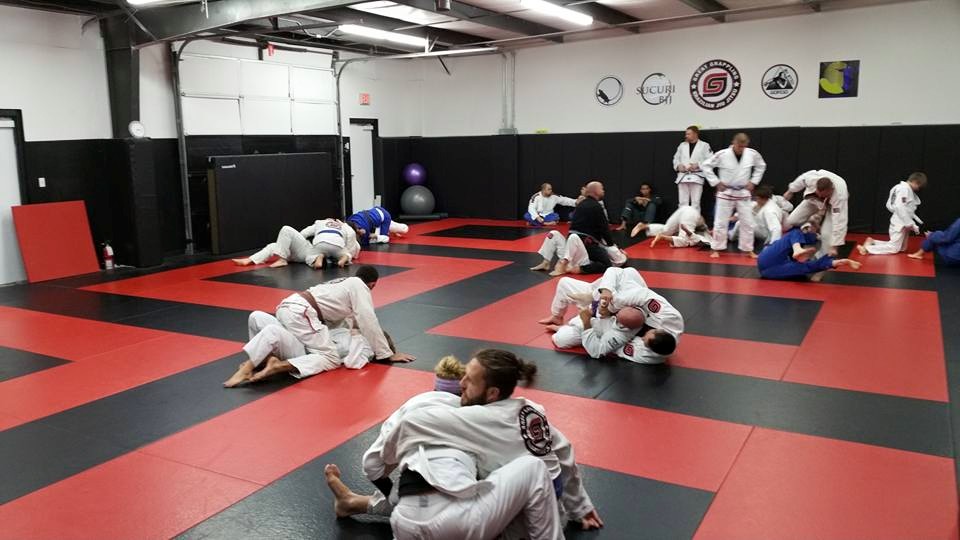
Picking a BJJ school

Self Defense School

These are more or less a dying breed of Jiu-Jitsu schools. while all of BJJ started off with a strong emphasis on self-defense training, the development of the art into sport has changed that. The Gracie Jiu-Jitsu type of school is somewhat of a rarity nowadays, but they still do exist. As long as the person teaching is legitimate, and not just someone that has great marketing but no fighting skills to speak of,l this can be an interesting experience. these types of schools also feature sports BJJ, but they allocate at least half their class time to self-defense. Al the academies under Rickson Gracie, for example, operate under these principles.

MMA School

By MMA here I just mean mixed arts type of schools, not only MMA gyms as we know them. BJJ is something that people love to train, so many martial arts “centers” offer training alongside other disciplines like Jeet Kune Do, Wing Chun, Karate, Kickboxing, etc. IN most cases schools like these employ a coach that has several classes per week to teach BJJ, mostly in a sports aspect. these types of schools can usually take you so far, though, and you’ll probably be looking to a more specialized Jiu-Jitsu school after a certain belt rank.

If an MMA school that teaches BJJ has all the classes for all martial arts run by just one person, then it doesn’t qualify as an aMMA school, but more likely, as a McDojo.

McDojo School

A McDojo is basically not a BJJ school, but rather a business. Any gym or school that is looking for profits more than it is looking at improving the knowledge of the students and members is pretty much a McDojo. If the person in charge claims they’re an expert in everything from BJJ to Taekwondo, and won’t let people train unless they buy a special school Gi, T-shirt, shorts, etc, it is all about the money and you should get out of there ASAP. Unfortunately, these are becoming so common that they have to be mentioned among legit types of Jiu-Jitsu schools.

The Best BJJ Schools

Now that the most common types of Jiu-Jitsu schools are out of the way, let’s talk more about what are the best ones out there. Of course, the categories we used above still apply, but some academies have simply excelled compared to others in certain areas, like competition den’s or spots where you get to learn from some of the best coaches regardless of your goals. Thera rea, of course, the places where training is not only high level but also extremely fun.

Top Learning Schools

  • Marcelo Garcia’s Academy in New York City is one of the best BJJ academies in the world and a dream destination for every grappler. While Marcelo does produce great competitors, his academy is known as one of the top spots for everyone, and not just those looking to kill each other on the mats.
  • 50/50 Martial Arts Academy is Ryan Hall’s school, located in Falls Church, Virginia. The school has Ryan as the main instructor but also features several extremely high-level black belt coaches. Similar to Marcelo’s it is a great spot for competitors, but even if you’re only training recreational, it should on the top of your to-visit list.
  • Rafael Lovato’s School of Brazilian Jiu-Jitsu is an Oklahoma city-based academy where eth legendary Lovato teaches full time. It offers BJJ classes for everyone, from kids to professional competitors, as well as other martial arts classes like Muay Thai and MMA. Offers classes all day long.
  • Tristar Gym is a school that is primarily an MMA school rather than a BJJ one. It offers some of the best Jiu-Jitsu classes on the planet, though, through head coach Firas Zahabi, a Danaher black belt. Classes are mostly No-Gi, and they are open to everyone from newcomers to UFC fighters.

Best Jiu-Jitsu Schools For Competitors

  • Atos HQ is, of course, the first name on the ls of the best Jiu-Jitsu schools for die-hard competitors. it is still the place to go if you want to be a true competitor, especially when training with the Gi. The talent level and training partners there are off the charts, with 15 -year-old blue blets able to beat so of the world’s best black belts.
  • Renzo Gracie’s NYC Academy АКА The Blue Basement is one of the most notorious spots to prepare for grappling competition. Until recently it was the lair of the Danaher Death Squad, which left the room full of both the BJJ world’s leading talent and some of the biggest names on the competition scene.
  • Unity Jiu-Jitsu is another grappling hotspot in New York City and is definitely one of the toughest spots to train in the world. It is run by superstars like Leandro Lo and Murillo Santana and has an open-door policy for competitors of all levels, which draws many of the professionals to share the mats there for some of the toughest drilling and sparring sessions you’ll ever be a part of.
  • AOJ or the Art Of Jiu-Jitsu Academy is the Mendes brothers’ laboratory, where they develop some of the best future superstars of BJJ. They are one of the few Jiu-Jitsu schools that can offer the highest levels of training starting from kids all the way to professional adult competitors. Conversely, There’s no easy roll on those famous white mats.
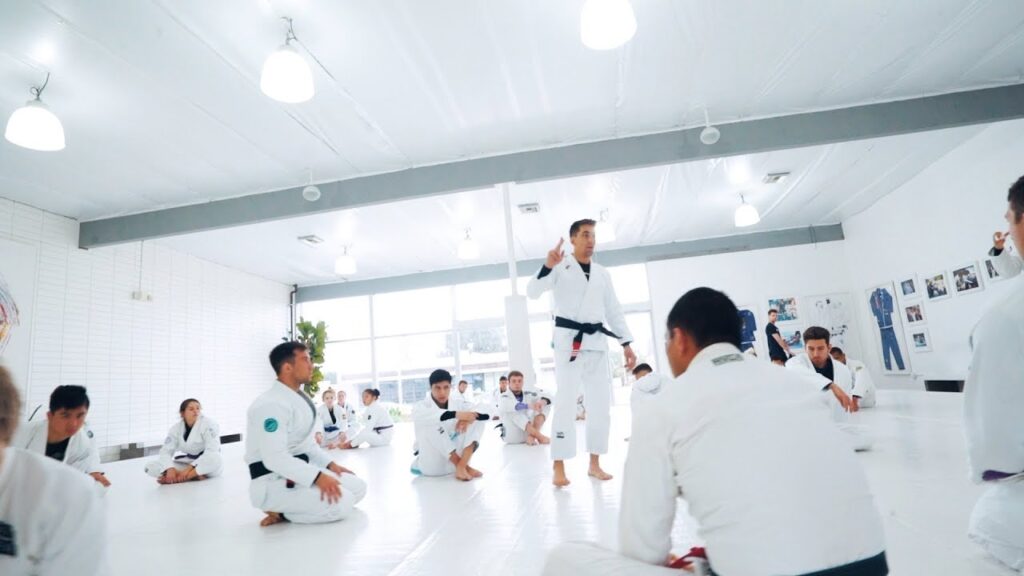
Best Jiu Jitsu Schools

  • GFTeam A Rio de Janeiro, Brazil-based academy which has so many of the world’s best competitors that you’re likely to run into 501+ black belts on a morning open mat during a workday.
  • Danaher Death Squad Gym in Puerto Rico is probably one of the best no-gi academies in the world right now. John Danaher, Gordon Ryan, and others left Renzo Gracie School in NY and left for Puerto Rico. Only the names in that academy guarantee the quality. Top competitors and probably the best coach in the world, John Danaher.

BJJ Acadmeis That Are As Fun As They Are Tough

Some BJJ schools out there, do like to break the mold and in more ways than one. They offer a very high level of BJJ and do produce some awesome competitors. However, they also focus on making the entire experience fun and unusual, rather than more of a traditional military-style competitive training and drilling.

  • 10th Planet Jiu-Jitsu Schools are all over the world, and, encouraged by founder Eddie Bravo, each one of them is unique in what it offers. Of course, you get nothing but the very best in NO-Gi classes. You also get a bunch of hilariously named ultra-effective positions that others don’t use, as well as a great environment filled with very interesting people. Their HQ is in LA.
  • BJJ Globetrotters camps, though not JIu-JItsu schools per se, are also some of the most fun BJ experiences you can have. Given that there are hundreds of clubs affiliated with Globetrotters, you can also find the same vibe in pretty much every corner of the world. Camps take place at unusual and exotic locations and feature both incredible coaches and lots of people from all ranks. Everything si organized in an unorthodox way compared to traditional Jiu-Jitsu and shows there are plenty of alternatives to effective training than just the regular old-school methods.

What To Look For When You’re New 

How exactly do you know if you are in the right BJJ school for you? After all, as you saw from the few main categories covered above, there are many options and alternatives when it comes to Jiu-Jitsu schools However, it is not just our end goal that should determine which school you pick. Yes, you might want to be a recreational athlete with occasional tournament experiences, full-out competitors,s or just have fun. However, that is looking at the bigger picture, and in the case of picking a BJJ academy for you, you’ll need to look at things from a narrower perspective.

To begin with, you have to account for commuting. Let’s face it, not everyone will travel for 3 hours in1 direction several times per week, just to train for an hour and a half. So, you will be somewhat restricted to what is near and easy to access, which is ok, as long as you are not looking at a McDojo.

next up, the instructor is also a very important thing to consider. they do not have to be black belts, but they need to know what they are doing, and they need to know how to actually convey knowledge. There is a huge difference between someone that can teach you Jiu-Jitsu and someone that will just demonstrate moves. This has to top your list of requirements when picking a Jiu-Jitsu school.

You should also take into account how classes are structured. Jiu-Jitsu schools with groups for different levels are usually a better choice compared to ones that just cram everyone in one place. Moreover, you need to gauge how they receive you, whether they ease you in or just say hi, tell you about the fee and let you figure it out.

Hygiene is also a big thing and that will be apparent from the moment you enter. There’s really no way around this, and no compromising on this point, so pick the cleanest school that also fulfills as many other important criteria as possible.

Finally, add in the information on the school’s focus, i.e. put it in one of the main categories we outlined above.
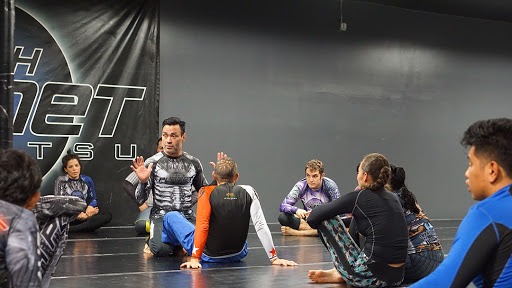
10th Planet Jiu Jitsu HQ

Changing Jiu-Jitsu Schools

This is somewhat of a controversial subject in the BJJ world, despite it really is a simple thing. The bottom line is that you can choose whatever you want, as you are doing it for yourself, and you are the one paying for the service.

The reason for all the controversy is that in the early days when there weren’t as many Jiu-Jitsu schools, switching your school for the only other (for example) spot in town was seen as treason. So much so, in fact, that there’s a word for these that is often used – Creonte. Loosely translated from Portuguese it mains “traitor” and having the label was considered to be a big deal.

Nowadays, the situation is different. While some still subscribe to the Creonte approach, there’s really nothing bad about switching one school for another, and another, or even going back to one, as long as you do it in an honorable and sincere manner. Most instructors won’t mind. In fact, if you are at an entry-level school, like a local one that has a purple belt instructor, and you want to be a top competitor, it should b your instructor to guide you to a bigger academy more equipped for your goals as you master the basics. It just makes sense.

When it comes to changing schools, whether you’re just starting out and giving different ones a try, or you are experienced and looking for the next step, just make sure the next school you are considering ticks all the right boxes for you.

All In All

There are many things to understand about Jiu-Jitsu schools, and even then. You’ll only scratch the surface. The truth is that every school is different, and every school has something unique to offer. Sure, you’ll learn BJJ in most of them, and you can reach all the goals you set by just doing a quick Google search of the academies in your vicinity. However knowing the types, which the best schools are, the important aspects of picking a school and some of the cultural aspects in regards to the community, you’re perfectly equipped to go school-hunting.

Gi Jiu-Jitsu Fun: How To Use The Kimono Better

Gi Jiu Jitsu Fun: How To Use The Kimono Better

The world of Jiu-Jitsu is pretty much split between Gi and No-Gi BJJ. Don’t get me wrong, lots will say that they enjoy the two, but if you ask them to pick, everyone has a favorite, That is okay, and in the future, I’ll present a case for integrating both into a highly successful BJJ game. For now, though, let’s do something that I feel has not been done in a while – focus on Gi Jiu-Jitsu. So many articles and instructionals teach us how to grapple without the Gi, or show Gi moves without really explaining the role the kimono plays in all of that. let’s show the BJJ Gi some love. 

The Gi is a very interesting thing. Apart from the visual (in some cases) and the feel of it, in terms of Gi Jiu-Jitsu, it is really intriguing. On that note, most people far from use even close to the full potential of the Gi. And it has so much to offer, especially when done right By right, I simply mean that people tend to just grab parts of it, thinking they’re achieving something when in reality, they’re not. Today, I’ll try and present the Gi as the ultimate weapon for executing pretty much everything you can think of in Jiu-Jitsu.

Understanding Gi Jiu-Jitsu

Have you ever wondered why we train Jiu-Jitsu with the Gi? I won’t go over a history lesson about the Gi here, that has been done over and over again countless times. However, apart from the respect towards the Japanese roots and Maeda, why did the Gracies not only choose to work with the Gi, but forced it to a point when it comes to BJJ?

I doubt even the Gracies know the correct answer, but it is fact that the Gi offers lots of opportunities when grappling. In fact, even Judokas and Sambo practitioners have not truly gone into the depth of the Gi as BJJ folks have. Gi Jiu-Jitsu is truly an art form in itself.

The Gi, all three parts (the jacket, pants, and belt) have very distinct and diverse roles to play when it comes to controlling, attacking, or defending during grappling exchanges. Nowadays, when you see most people train Gi Ji Jitsu, you see grips all over the material, as well as lots of play with everything that is loose, from lapels to parts of the belt. the truth si that most of these grips only waste your time and leave you exposed instead of providing you with an advantage. Simply holding the collar, or the sleeve, for example, will not give you anything but a handle. When you take into consideration that this handle moves along with your opponent simply hanging on means you’re not achieving anything.

That is not to say that the Gi is useless. Quite the contrary, it is a very powerful tool, but you need to understand where its advantages and its drawbacks are, in order to get the most out of it.

On The Offensive

When you attack in Gi Jiu-Jitsu, you always have to consider whether the grips you are holding are helping you control the opponent, or you are just giving them control by holding on.

I’ll use a practical example. If you are holding your opponent’s collar from half guard bottom, what are you achieving by it? If you are using your top arm on the same side collar, with the elbow straight, not much. You’re actually giving them a lever to control, and providing open space between the elbow and torso. If, on the other hand, you hold a cross collar grip, your elbow to your torso or knee on the top side, you know have a meaningful grip that can affect the opponent’s posture directly, or their base indirectly. Both of those options provide chances to sweep or submit. That is a proactive grip.

Lapels will also work but you have to think about what you’re getting when using them. Wrapping their lapel around your leg won’t’ get you much, except maybe your leg locked. wrapping some body parts of theirs (armpit, elbow, thigh, shin, etc) on the other hand, will cocoon your opponent and allow you to play around with them.

Holding the sleeves is also a huge thing in Gi Jiu-Jitsu. Once again, it is mostly done for the sake of holding. For example, one of the most useless grips ever is grabbing the sleeve at triceps level, whether it is standing or on the ground. Something you can actually use, sticking to our half guard example would be a cross-sleeve grip with your bottom arm. Alternatively, the same side sleeve grip in combination with the cross collar will pretty much destroy all chances of an opponent preventing a sweep. Think about it.

Offensive use of pants grip, from our half guard example, would employ gripping on the inside, either at knee level or even better, with a proper grip at the bottom of the pants. Obviously, you’d use the bottom arm to get this grip. Lots of stuff, like the Tornado guard, are actually based on grips like this. grabbing the pants on the outside of the knee is an example of a waste of time. Again.

The belt is a highly unreliable grip to hold, given how easy it comes undone. OFfensively it doesn’t offer much from the half guard bottom, but you can be creative. If it is in place it is a great handle to have after wrapping an arm around a foot, for example. It is a direct way to control the hips, especially from behind.

Jiu Jitsu - How To Use The Kimono Better

Defend With The Cloth!

Let’s look at defense by using the Gi. Once again, everything you do has to have a meaning, otherwise, you’re just giving things away to your opponents. Let’s say that you are caught at the bottom of the mount. The collar grips are usually thought of as a bad option because of the threat of armbars. However, Holding on to the back of the collar, four fingers in, against an opponent’ that thas their head low in mount (as they should) is basically a Gi Jiu-Jitsu variation of a Thai clinch. This way you protect your neck, arms and prevent the opponent from going into finishing positions. It will even help your Upa escape, if you ara fn fo that.

Lapels from bottom mount are not something people often consider. However, it is not hard to use a lapel that is already available (your opponent’s) and reinforce your frames with it. Snkeaing it underneath a leg would e ideal, but blocking one of their arms with it is going to take away most offensive options they have and force them into errors.

Sleeves are the best option in terms of defending in Gi Jiu-Jitsu when stuck at the bottom of the mount. Think about it this way – what can an opponent do if they can’t use their arms against you? This is a proactive approach to defense and gi Jiu-Jitsu offers plenty of options to explore. Simply gripping both sleeves and having your elbows close to your body will make the top person open up space for escape.

The pants also provide interesting options, but you have to think outside the box. What will really help is figuring out where to grip after you frame at hip level. Depending on the pants there are several options here, all of them basically making the person on top stuck in place.

The thing I’m about to suggest with the belt is helpful and practical, albeit illegal by IBJJF rules. From the bottom mont, placing a foot inside the belt and simply kicking with your leg is a great way to throw anyone off of you.

Gi Jiu Jitsu Fun

Closing Thoughts

Gi Jiu-Jitsu can be actually way more fun when you’re using the Gi to your advantage, both in offense and defense. Make the grips count, and do not be afraid to let them go and switch things up. Above I used just simple examples of how you can play a high-level Gi game. Of course, there er plenty of things to explore and discuss, but the point of this article was to make you think about and reconsider who you use the kimono, not teach you how to attack or defend with it.

Everything About Organizing A BJJ Or Grappling Tournament

Everything You Need To Know About Organizing A BJJ Or Grappling Tournament

Have you ever been to a BJJ or grappling tournament? Of course, you have, you are reading BJJ World after all. Very often you hear people complain, and on a rare occasion, praise how a certain tournament is organized. As usual, it is very easy to judge provided you only have the experience of a competitor or a spectator. However, until such a time as you organize a grappling tournament, you will not know what a huge endeavor that is. Moreover, organizing one will make you appreciate other’s attempts much more when you go as a competitor. 

Now, let’s make something clear right here. This is not a blueprint for organizing a grappling tournament. I will only talk about some of the most basic things you need to take into consideration. Like every event, organizing a tournament has a million moving parts and each of them has the propensity for going wrong. If you’ve ever organized any event, you know what I mean. However, there are certain foundations of an event such as a grappling tournament that simply have to be spot on for it to work. Here’s a look at what those are.

The Craziness Of A Grappling Tournament

What happens at a BJJ tournament? Apart from the matches that everyone is so focused on, what does it take for you to put one together in your area? Well, to begin with, a lot of time and nerves. Be prepared to waste as much physical and mental energy, as you would if you are competing. By the way, if you are organizing a BJJ or grappling tournament I strongly advise against competing in the same one. Unless you are that talented.

A grappling tournament is a very crazy thing. As an organizer, you will need to filter things out as they go. Any game plan you might have had will go straight out of the window. That said, a BJJ tournament does not only take place on the day of the actual event. For the organizer, it starts months in advance and intensifies with every passing week. The real start of the tournament for the person(s) organizing it is around two weeks before the D-day. This is when you should expect everything you do in your day to be in relation to the tournaments in one way or another. trying to juggle other stuff, like a full-time job while looking to organize a tournament will end up with you requiring sick leave or a long vacation.

On the day of the tournament, start the day by waking up early and having a large meal. Even if you are not hungry, trust me, you will need it. The moment you leave the house, you won’t have time for anything until you get back. You will have to be engaged with people constantly, from competitors to coaches, referees, and all of the staff and collaborators that make a grappling tournament come together. That, and putting out fires left, right, and center!

Organizing A BJJ Or Grappling Tournament

What Does It Take To Put Together A BJJ Tournament? 

There are many things that are integral to putting together a solid BJJ or grappling tournament. All of them need to be prearranged and come together as close as possible to perfectly on the day of the event. TO make things easier, I divided them into several categories, which pretty much take care of all the basics. All the additional bells and whistles, as well as unexpected turns of events, are impossible to predict and down to you, and well, Murphy’s law.

  • Venue And Mats

Of course, there is no way to even think about a grappling tournament if you have no place to hold it at. A venue of the right proportions in regard to your tournament is going to be crucial and it should be the first thing on your mind. Usually, sports halls and centers offer everything in one place, but other fancier or more exotic locations might also be an option.

Apart from the venue which should have more capacity than what you are expecting, you should also be aware of what a difficult task setting mats up can be. Make sure you have the appropriate number, type, and quality of games, plus a solid reserve. If you’re putting together a local tournament, or your first ever one, 4 mat spaces will probably suffice, and you can get out with as few as two.

Apart from mats, this is where you think about those screens that work as monitors for the points, screens that show the schedule on the mats, and all the other things you will need. For example, desks for each mat, a registration desk, a warmup area, fences, etc.

  • Rules

Nowadays, the moment you decide you are going to organize a BJJ or grappling tournament, you will need to decide which ruleset you will follow. Back in the day, it was easier, as most local tournament organizers opted for the widely accepted IBJJF ruleset. Now, we have an abundance of different rulesets, ranging from the ever-present IBJJF and ADCC ones, through EBI rules, all the way to crazy new ones like Quintet. Whatever you choose you to have to make sure that it is clearly stated in the registration forms and promotional material for the tournaments. Even more importantly, the choice of rules will also influence your choice of referees.

Speaking of rules, this is also the place where you should consider divisions and weight classes. You can go with pretty much everything, but if it is your very first time in tournament organization, I’d skip the kids’ divisions. Make sure you include masters divisions, though, as there is a huge pool of competitors over 30 in Jiu-Jitsu nowadays.

  • Registration

I would strongly recommend using an online-based system like Smoothcomp. It will help you organize not just your registration, but will also help collect the fees, as well as provide you with a full schedule for the mats that people can follow in real-time on a TV screen of any sort.

If you are going for a tournament that will feature more than the people in your immediate vicinity, this is what will make your day run way more smoothly and spare you lots of headaches and paperwork.

Speaking of paperwork, this is the post to mention that you should have disclaimers for people to sign, acknowledging that it will not be your fault if their competitive performance results in an unwanted injury.

  • Referees

This can be kind of tricky if you do not have people handy. As someone who has organized a tournament and refereed in one, I would definitely suggest against doing so. Refereeing takes a lot of focus and should be done by someone who doesn’t have any other distractions. That said, your choice of referees should always be of competent ones that you can trust, given that most grappling tournament complaints have t do with refereeing whether they are founded or not.

The ruleset will be the first determinant of who your referees are and the price for their services the second,. that said, if there is one area of a grappling tournament where you should go for quality apart from the mats for the competitors, it is the referees.

  • Sales

If it is not you that will put up sales stands, then it will be someone else. It is another hugely important part of the logistical puzzle, especially when you are the one offering grappling item for sale. Do not forget that stuff like T-shirts, rashguards or even Gis can be great vehicles for promoting your tournament, to someone else who si sponsoring you., thus enabling you to have a sales stand.

Apart from grappling gear, selling snacks (BJJ folks love their Acai) and drinks is a must. If you don’t have the intention of running one then you should definitely outsource one to somebody. Oh and make sure sales stands look interesting and appealing, not just to attract people, but because of the overall image of the tournament.

  • Sponsors

Sponsors are a highly individual thing, or better said, a thing of opportunity. A tournament will run a lot better with sponsors, but if you’re organizing one, you already know that. Simply put, you will be hard-pressed to run a successful BJJ or grappling tournament without sponsors. In that sense, you will need to accommodate them whether it is by acknowledging them in an opening speech, having their stuff up for sale, or displaying their banners around. Be ready to deal with them on the day of a tournament a lot.

  • Manpower

This part of the equation will make or break your tournament. The people you employ, whether they are there for a fee or working as volunteers, will be crucial to how your grappling tournament is perceived by competitors and spectators.

What you need is a three-man crew behind every table on every mat, running the score, keeping up with the action, and taking care of administrative duties. You also need mat coordinators for each mat, those that will prepare people for upcoming matches, thus preventing unnecessary delays. you also need a person to do the announcements, and that should involve someone that has experience if that is a possibility.

You will also need to make sure you have a medical team on standby. Having a crew of a few people to take care of the distribution of medals on the podium is also a good idea. And last but not least, do employ the services of a professional photographer. You can thank me later for that particular tip.

Putting together a BJJ tournament

  • Promoting

Do not forget that promoting your BJJ or grappling tournament is the one single thing that will make it succeed or fail in terms of a number of people. The reason I said that a tournament starts a few months before the intended date was mainly this. When you figure out the name of your tournament and book the venue, the first thing to do is focused on aggressive promotion via any means available. Nowadays, that mainly has to do with social media and online marketing, and you should take it very seriously.

People will need to plan to go to a tournament, so make sure you start your promotion as early as possible and do intensify it as the date approaches.

All In All

Organizing a BJJ/grappling tournament is no easy feat. You can expect lots of hurdles and issues to overcome, and that is if everything runs smoothly. If you factor in the key elements thought, and your execution of tasks is efficient, you can expect to have a successful event and a good, albeit exhausting, time. When it comes to organizing a tournament, it is pretty much the same as competing or refereeing in one – practice makes perfect.