

The Old Man Sweep – Very Effective Sweep that you Should Learn ASAP

Old Man Sweep - Very Simple and Very Effective

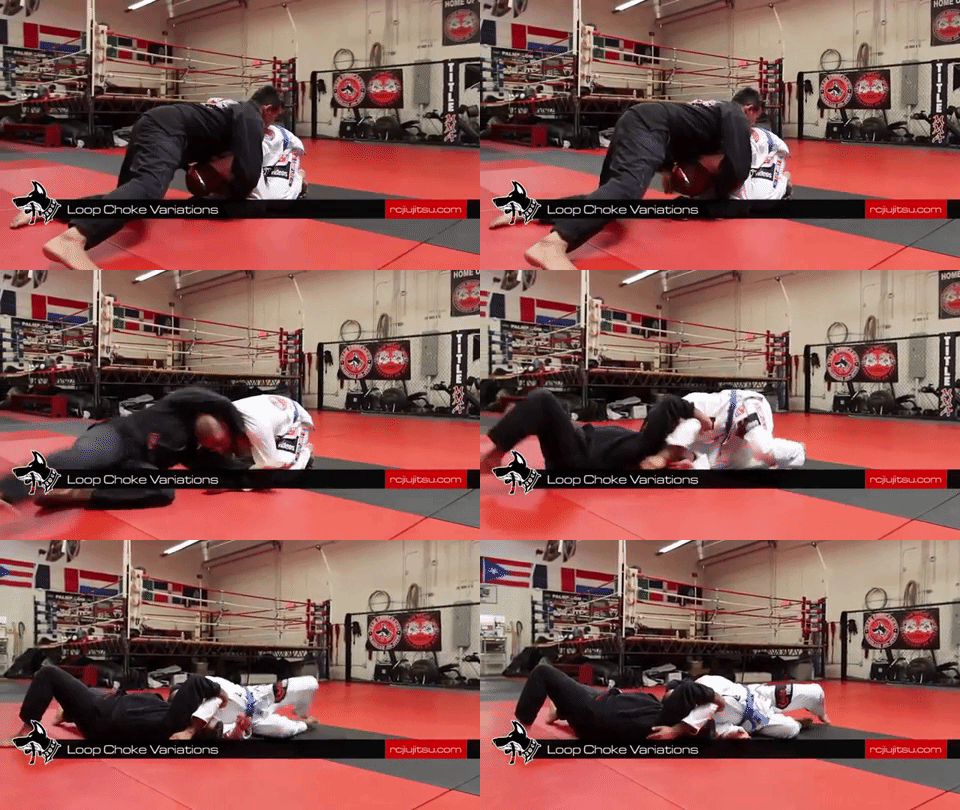
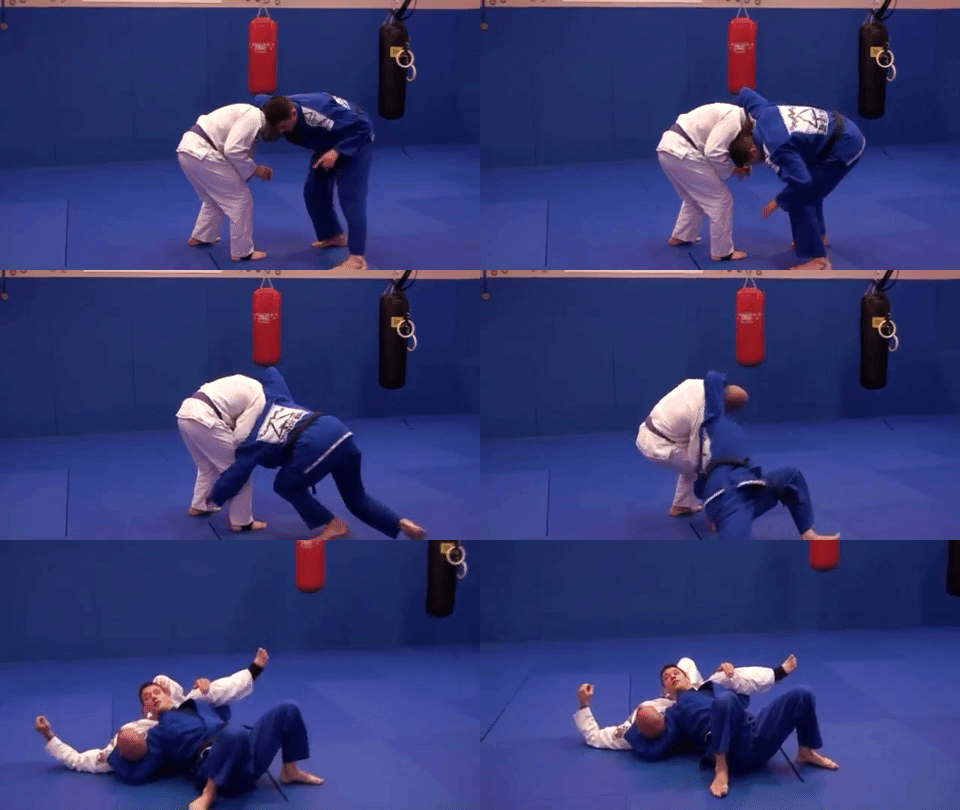
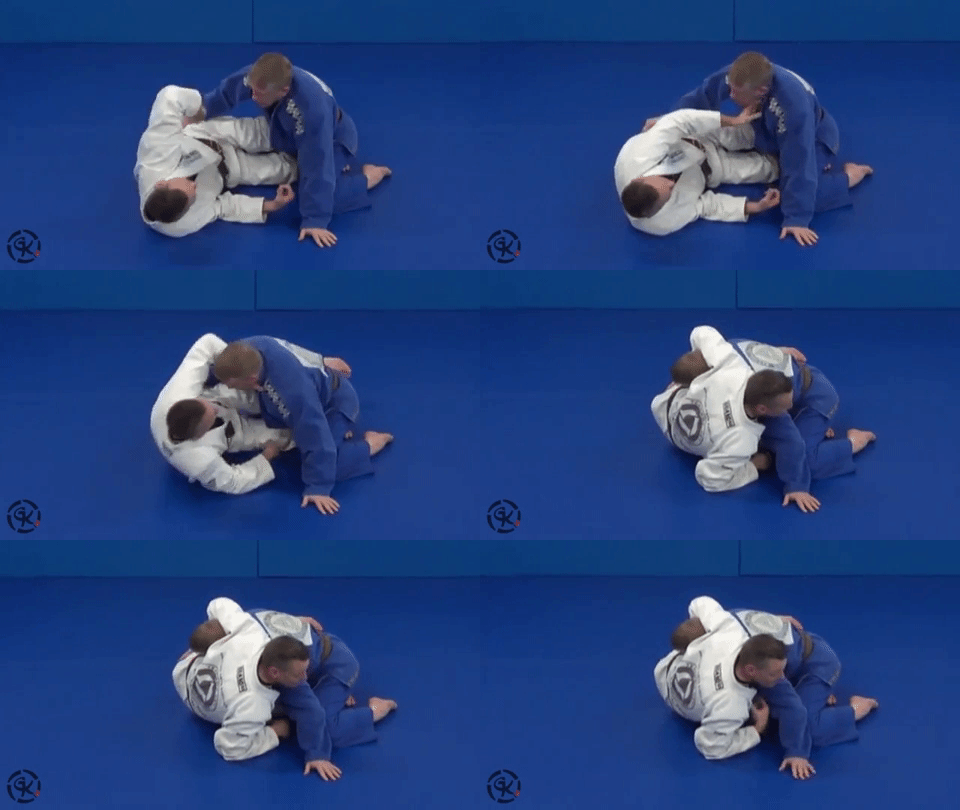
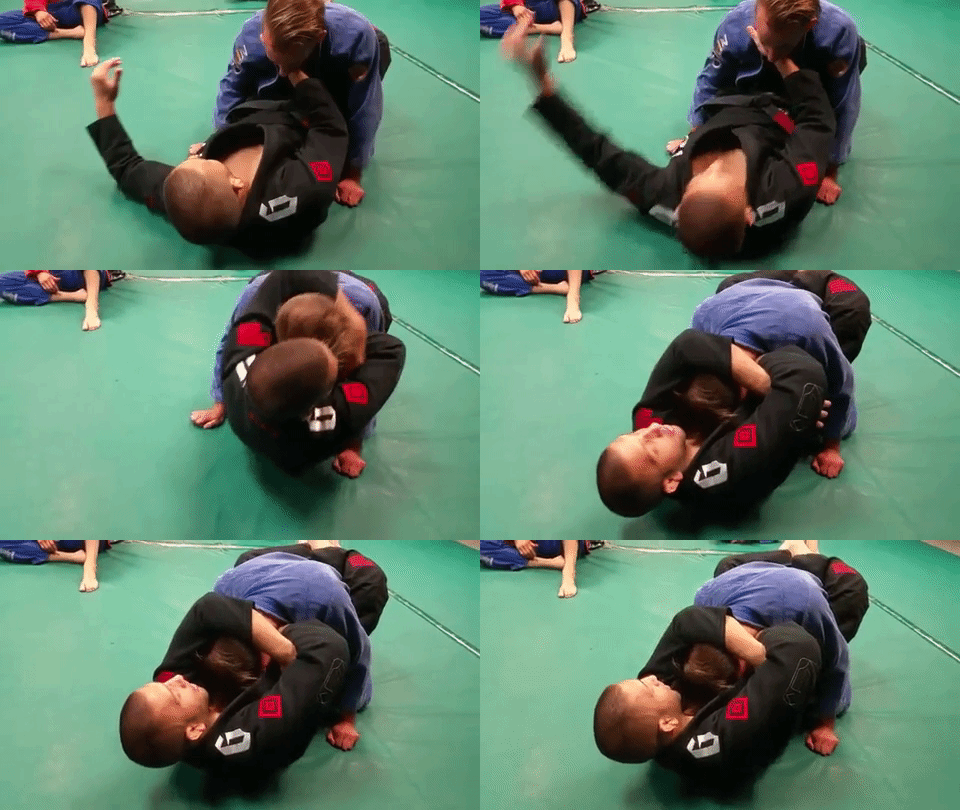
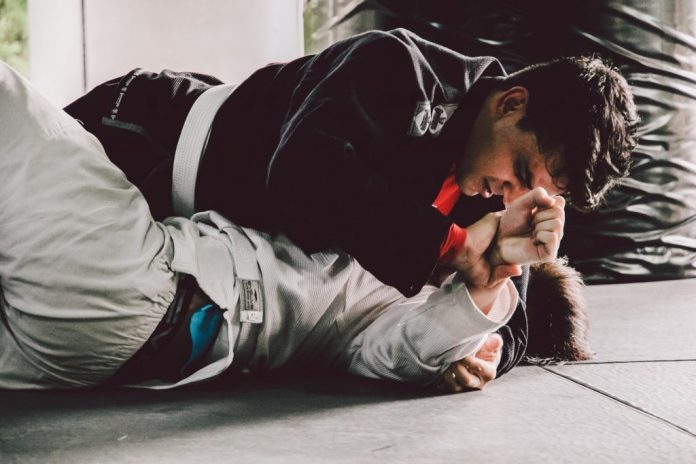
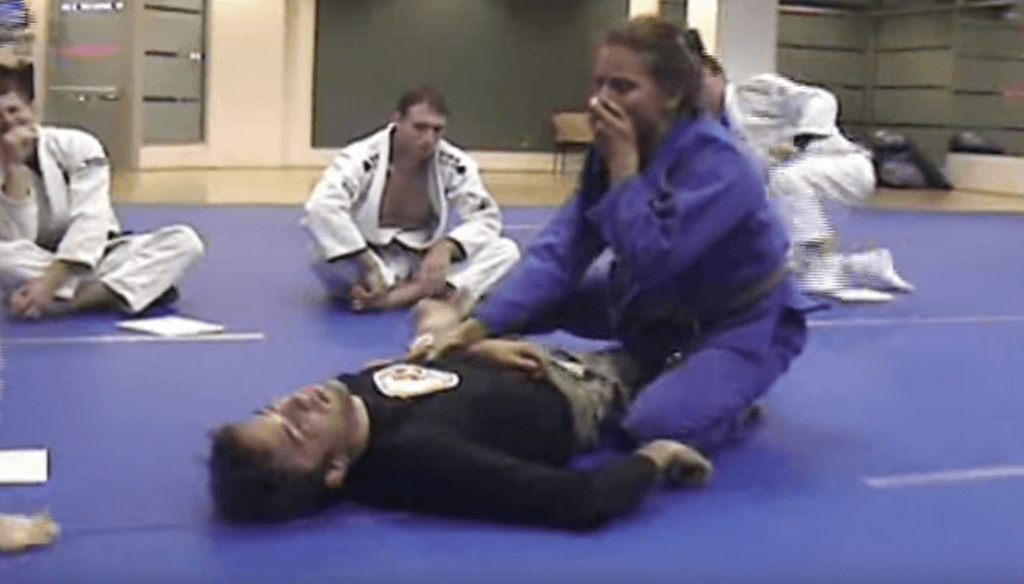
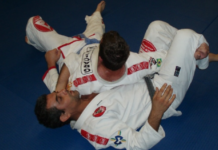
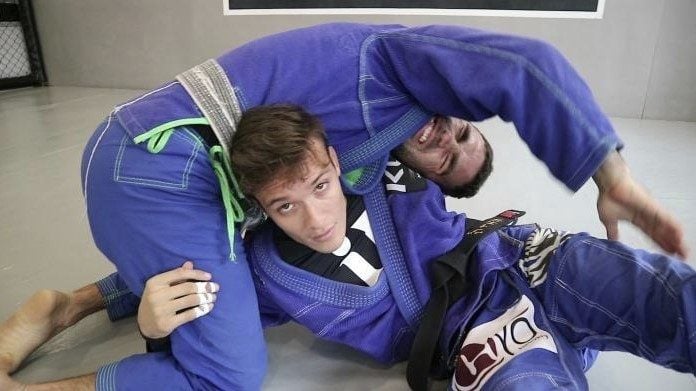
Have you ever heard of Old Man Sweep? Well, if you didn’t it’s time for you to learn it. It’s very easy and very effective sweep that can earn you the easiest 6 points ever.

In a video below “old man sweep” is demonstrated by Marcelo Cohen from BJJ Box, ADCC and IBJJF Champion. Check it out, especially if you’re in “BJJ After 40” group of practitioners.

You can also check the article below and check strategies for older people and see why BJJ is the best martial art for older man.

Old Man Jiu-Jitsu – Training Tips For Older Grapplers

How To Keep Weight Training For BJJ Simple And Effective

Weight Training For BJJ

In the maze of information out there on how to train, it is really hard to choose a routine to fit in with BJJ training. The latest program is just a simple click away, full of novel movements and intricate strategies. Despite the availability of options on the internet, very few are applicable to the average grappler. Namely, weight training for BJJ is a very specific subject that requires expertise and knowledge. Not everyone can assume the strength needs of grappling martial arts practitioners. It takes a grappler, preferable that is an expert in weight training, to train a grappler.

Fortunately, lately, there is a lot of backlash in Ji-Jitsu circles against all the needless clutter. Despite the lucky handful, grapplers can’t really make a living through Brazilian Jiu-Jitsu. As such, the cannot train like a professional grappler or an MMA athlete. Even then, all those professionals have tailor-made routines to fit their needs.  Discipline, organization, and understanding are all universal principles that have stood the test of time. Apply them to any training environment and you’ll come up with solid results. In terms of weight training for BJJ, the most important rule is to think simple.

Weight Training For BJJ

How To Keep Workouts Simple

If you’re just starting out, look at some of the lifting programs of the guys from the 50s and 60s. They were simplistic in nature which made them very effective. They were void of complex systems requiring meticulous record-keeping and confusing sequences of execution. Granted, you could argue that this was before science got its hands into the exercise realm, but you can’t dispute the results!

If you’re the type who loves to lift in addition to BJJ, think back. Remember your early days when increases in muscle, strength, or whatever your goals were, came quickly? It was the basics that got you there. It was your efforts toward the necessities and little else that enabled you to focus on just a few simple principles.

When it comes to weight training for BJJ the subject gets a bit more complex. Most people think things must become more scientific, “functional” and sport-specific. Well, it’s time for a brutal wake-up – there’s no sport-specific strength training! Strength is the strength, it is as simple as that. Train it correctly and it will translate well to your BJJ game, giving you an edge over the opposition.

In reality, simplifying your training will free up your attention, so you can apply more effort toward your goals. For a grappler that spends about 10 hours a week rolling on the mats. there’s no need for one-legged Bosu-ball curls with water weights  Overcomplicated training leaves you constantly questioning your methods, and never settling on a clear path to work.

Key Principles Of Weight Training For BJJ

These rules of weight training for BJJ aren’t exactly rocket science. You’ve heard them before, but it’s important to get a quick review. Are you still following these vital principles of minimalist training?

Compound beats isolation: Although repeated to death, this still needs to be stressed again and again. As so many grapplers migrate to concentration curls and machines that meticulously isolate every muscle fiber, the message of the compound, the multi-joint movement has gotten lost.

Progression for success: This principle is key when you want any change to occur. For Jiu-Jitsu purposes, look towards progressive overload with moderate weights and reps. It’s fine to go heavier or lighter some days, as long as you’re constantly moving the needle forward.

Form and range of motion: This is another simple but seldom-followed principle. Learn to correctly brace, contract, and move each area of the body. For example, the deadlift has many technical aspects to consider other than just lifting a bar off the floor.

Weight Training For BJJ

Simple Equipment For Complex Results

Here is a complete (albeit short) list of what you’ll need on to build a weight training for BJJ program. It isn’t sexy, but you also won’t have to go out and buy the latest gadget that tracks every rep, step, and breath. Feel free to add your own minimalist pieces of equipment, but just remember to keep it simple.

  • Barbell
  • Plates
  • A pull-up bar
  • Adjustable bench
  • Squat or power rack
  • Parallel dip bars
  • Kettlebells
  • TRX or Gymnastic rings

Effective Programming

When you choose a training program, make sure you can train at least two, preferably three nonconsecutive days per week (Monday, Wednesday, Friday or Tuesday, Thursday, Saturday). The non-lifting days would be the days you do Jiu-Jitsu.

First and foremost, make sure you go through a complete warm-up before every session, which includes general warm-up movements (walking, jogging, dynamic mobility) along with specific warm-up patterns for each area that’s going to be trained.

Also, stick with your program for at least four weeks, or even better, six. This will enable your body to adapt and see results. After 4-6 weeks, take a few days off from weight training, and then either run the program again (with adjustments and slight changes) or choose a new program. Just keep up with the simple principles stated above.

Travis Stevens’ 3 weeks / 3x per Week Weight Lifting Program for Grapplers

The Ultimate BJJ Core Workout Program

A Jiu-Jitsu Workout Program To Lose Fat And Improve Performance

Use Gymnastics To Become Freakishly Strong For BJJ

21 Strength and Conditioning Exercises For Jiu Jitsu!

How To Integrate The Ankle Pick Takedown Into Your BJJ Game

Ankle Pick BJJ

Do you know what BJJ’s best takedown is? The answer might surprise you, as it is actually the guard pull. All other takedowns are borrowed from other arts such as Judo or Wrestling. Accordingly, those takedowns that connect easily to the guard pull are top choices for higher level Jiu-Jitsu players. In case of borrowing from Judo, foot sweeps and/or sacrifice throws can be combined with pulling guard. On the contrary, wrestling offers a different aspect of takedowns to use in connection with the guard pull – the ankle pick.

The ankle pick is one of the most dynamic and effective wrestling takedowns. Actually, it is one of the most versatile takedowns in grappling martial arts. The ankle pick is an offensive move where a grappler grabs the ankle of the opponent and pulls it towards their own body. The idea is to force the opponent into a one-legged stance and take them down effectively. If you know the basics of this technique, you can pick an opponent’s ankle from almost anywhere!

The Ankle Pick Position

The key to a successful ankle pick is the setup. To begin with, you need to choose which of your opponent’s ankles you are going to pick. Typically, it’s advised to go for the ankle of your opponent’s lead leg. This, in turn, determines which leg you’ll be focusing on. If you are picking his right ankle, your focus will be on his right leg. With this in mind, you can look to get into a position for the ankle pick.

As with all things BJJ, it all starts with the grips. A collar tie or sleeve and collar grips on your opponent are mandatory. This allows for upper body control and the opportunity to push or pull at will. In G, one grip is on the collar, while the other is on the sleeve behind the triceps. In N- Gi it’s head and triceps or wrist control. Knees should be bent and hips low in order to perform a quick level change.

To begin the entry, you need to start pulling your opponent’s head (or collar) down towards the knee of their lead leg. Next, you need to lower your body for a level change. Try to force their head past his knee and towards the ankle you want to pick. The closer the head gets to the ankle, the greater your chances are of taking them down. You’ll also want to try to force a shift in the opponent’s body weight towards the foot of the ankle you’re attacking. This is known as creating a “heavy foot” in wrestling. It is essential in creating much more difficulties for your opponent to defend against the ankle pick.

Taking It To The Ground

To finish the takedown you need to take a penetration step towards your opponent. Make sure you lead with the leg that’s on the same side of your opponent’s body as the ankle you’re picking. From there, look to drop to your knee and cup your opponent’s heel from the outside of the foot.  The outside of their foot should be on the inside of your forearm, given that you’re in the correct position. The arm that grabs the hee3l is the same as your leading leg. It’s the arm that controls the grip on the opponent’s triceps or wrist.

In terms of cupping, aim for the very bottom of the heel so that your pinky finger is touching the mat. This will not only help you control the foot better, but it will also force you to get lower. This is the desired angle for high percentage finishing. Staying on your knee, keep your trail leg extended behind you, basing with your foot.

In one swift motion, look to quickly pull the ankle towards your own body, while keeping a tight grip on the collar/head. Simultaneously with pulling the ankle, push their head/collar away from you. This is going to cause the unbalancing you’re looking for to complete the takedown.

Takedown Variations And Finishes

The fundamental setup to the takedown has a lot of details, which, once mastered, will ensure your success. Pay special attention to details about proper grips and body positioning. Another important aspect is correct arm positioning following the takedown. This takedown in BJJ is very effective and it doesn’t put someone at too much risk for things like Guillotine chokes. It’s a smooth technique and doesn’t rely on brute power.

Fake Guard Pull To Ankle Pick

Linking up a fake guard pull to the takedown setup gives both of these highly effective moves a whole new dimension. Primarily, you need to establish your grips and feel like the opponent is not going to pull guard. A push-pull motion with the grips is essential in the correct timing of the takedown.

To start things off, lift your leg as if you’re going to step on your opponent’s hip in order to pull guard. While balancing on one leg, making the opponent hold your weight so that they have to lower their level as they prepare to brace for a guard pull. When you feel the shifting of weight towards their hips, transition into the takedown. To do so, pull the stepping leg back and reach for your opponent’s ankle with the hand that was grabbing their outside sleeve. After the takedown is finished, make sure to keep at least one knee up to ensure that you’re not caught in the closed guard.

Marcelo Garcia-style Ankle Pick

Marcelo Garcia has his own variation of the ankle pick. One of the keys to the takedown that stands out is how Marcelo pulls the leg to the side instead of straight up. By pulling to the side, you can sweep your opponent over which would make the takedown easier to finish. Marcelo also talks about keeping control of the head as you go for the takedown. By controlling the head/collar, you are able to control your opponent’s movements. Head/collar control will also help you fold the opponent in half when you go for the takedown.

https://www.youtube.com/watch?v=MCt2a-mj530

Toe Hold Finish 

In a very interesting twist of events, you might find yourself in a great position to get a tight submission off of the ankle pick. Here’s a really interesting transition right into a Toe Hold that you should give a try:

So, now that you have a better idea of how the basic ankle picks works, make sure you drill it often. Once you have mastered it, you’ll be able to pick from a variety of grip position, both Gi, and No-Gi. This takedown is invaluable at higher levels of grappling— it’ll make you tough against any opponent.

Double Leg Takedown – How to Do It & The Most Common Mistakes

https://bjj-world.com/seven-takedowns-every-bjj-fighter-know/

https://bjj-world.com/guillotine-choke-basics-bjj-submission/

The Full Circle Of Understanding BJJ Submissions

BJJ Submissions

BJJ submissions are the pinnacle of the sport. Getting a submission in Brazilian Jiu-Jitsu is the ultimate victory. A good submission hold ends up in one of two ways, both of which suit the attacker. One is that the opponents give up, while the other, more painful one is that you take the submission all the way. It is no wonder that everyone involved in Jiu-Jitsu is looking for submissions left and right. But there is a curious thing that happens with the submissions of choice for people.

Namely, most people do not go for all BJJ submissions at all times. Grappling martial arts are so rich in submission holds, that such a feat is not possible anyway. However, the usual practice is for people to focus on a certain submission or chain of them and get really proficient at them. The curious part is, when people that were known for doing a certain submission, suddenly come out tapping people with a completely different move. There’s a circle of understanding BJJ submissions that are very specific to Jiu-Jitsu and everyone has to go through it. The sooner you’re able to recognize it, the faster you’ll progress through BJJ.

The Circle Of Jiu-Jitsu

It takes a very long time for most regular people that enroll in BJJ to achieve the advanced levels of BJJ. Getting to a brown or black belt is a long and hard journey. During this journey, the techniques that we use evolve along with us. As we gain an understanding of them, we choose which to keep and which to discard.

When you first start out, you concentrate on the fundamental BJJ moves. Those are signature moves of Jiu-Jitsu that everyone associates with the Gentle Art. Actually, these are the moves that you very likely learn in your first 6 months of BJJ classes. Scissor sweeps, the Americana, the hip bump, Armbars, the Rear Naked Choke, and others fall into this category. This is also the starting point of the circle of Jiu-Jitsu submissions and their understanding.

BJJ Submissions Fundamentals understanding

Choosing Your BJJ Submissions

As your technical skills accumulate and evolve, you are certainly going to explore some of the more advanced positions. As you reach blue and purple belt, full guard cross chokes are not going to be your go-to move anymore. Now, De la Riva guard sweeps and inverted triangles are your moves of choice.

On the road to the black belt, an interesting thing begins to happen. The first recognition of the circle is around the brown belt when most people go back to basics. Instead of looking for even more new positions, grapplers come full circle. It is not unusual for people to rediscover those fundamental moves they learned back when they first got involved in Jiu-Jitsu. This holds especially true for BJJ submissions. These are the submissions that you perhaps discarded because they “didn’t work against advanced guys”. One more reason to call it a day on submission is that everyone knows you’re going to hunt for it and they defend successfully.

Now that you are a brown belt, though, you most likely have a much deeper understanding of the weight placement, timing, and leverage. This means that your understanding of these basic moves is much deeper than when you were previously practicing them. All of a sudden, these “old” BJJ submissions become new again. It’s a magic circle!

At the highest levels of the sport, professional grapplers often tap out to that same old Rear Naked Choke, Guillotine, or Americana.

Going Full Circle

So, why does this happen? Quite simply, the fundamental submissions work! The reason they’re considered basic is that they have proven themselves over and over again. These basic BJJ submissions usually have shorter movements and fewer steps involved, which makes them so effective.

BJJ Submissions Guillotine

When you reach the brown belt level, it seems that you’ve suddenly gained the ability to comprehend an entirely new level of technical precision.  Now, take notice that many of these basic submissions you probably dismissed as a beginner. For example, it’ not unusual for your professor to submit you with the same moves that he just demonstrated in the Fundamentals class.  While you look for intricate and innovative ways to catch him off, he just does the very basics over and over again to frustrate you. It’s very normal, and you’ll do the same too when you reach their level.

So whenever you find yourself having renewed interest in moves like the Kimura,  cross collar choke, or Triangle Choke once you get to the brown belt. Congratulations, now you’ve come full circle in Jiu-Jitsu. It is amazing that there were so many details that you were unaware of before, and are now clear as day. All the black belts have their favorite advanced submissions, but the majority concurs that they have switched their focus back to the basics.

So, the next time your instructor shows a move that you’ve seen before, suspend your skepticism and show deeper interest. The basic submissions work and they may well become new again for you. The sooner, the better!

Weed Out Beginner Mistakes In Your Jiu-Jitsu Game
Brush Up On Your BJJ Choke basics

Collegiate Jiu Jitsu Coaches Come Together to Create Tournament League

Collegiate Jiu Jitsu Coaches Come Together to Create Tournament League

When I was an undergraduate at the University of Northern Iowa, I started a judo club after taking a single physical education credit in the art. We were lucky to find a competent coach and work out regularly, keeping the club going for the duration of my time at the school. In the many years (don’t worry about the exact number) since I was an undergrad, the popularity of grappling arts, spurred by the meteoric rise of MMA, has flourished.  For Chris Martin, founder and executive producer of BJJ 4 Change, that popularity presented a daunting but exciting possibility that would not have been remotely possible in 2003; a collegiate jiu-jitsu tournament league.

In addition to running his own gym, Nova Gyms in Wisconsin, Martin is also the head coach of the BJJ Program at Marquette University, his alma mater. Martin has reached out to coaches at other universities with the hope of creating a league of schools that could compete regularly as a club sport, under a unified set of rules. He believes that regular collegiate competition will not only raise awareness of the sport and provide an additional competitive opportunity for its students but will also benefit from unifying rules as a step toward increased legitimacy for IOC consideration. He has spoken with Matt Leighton, head coach of the University of Iowa’s jiu-jitsu club, as well as Mark Hamel, president of a club at the University of Oregon, and Roger DeCampo, who coaches at Texas Tech.

Coach Martin’s experience in BJJ & MMA production and promotion as the executive producer for the BJJ 4 Change remains an asset as he works to launch this new venture

The idea of proliferating jiu-jitsu through established channels such as those that promote wrestling and even other mainstream sports like the track isn’t a new one. Dana White has notably expressed his belief that Jiu Jitsu would one day be a collegiate and an Olympic sport. Last year, the JJIF began preparations to submit a proposal to add jiu-jitsu to the Olympics. Martin, however, is focused on building the sport on a collegiate level and has paired with a number of coaches and organizations to document each tournament. Through this process, Martin hopes to introduce jiu-jitsu to a wider audience in much the same way as organizations like FloSports, whose FloGrappling promotions have grown in popularity in recent years.  Martin plans to go after sponsorships and other sources of funding as well. “Personally, I believe that recruiting is huge; plus, if wrestling is a money sport that brands spend money at, then why not BJJ?” he says.

The main obstacles inherent in a college program, shared by all coaches interviewed, include limited training time, lack of experienced students as well as less availability of high-level coaches for collegiate club programs (many are run by purple, blue or even white belts), as well as the struggle of fitting jiu-jitsu commitments in between academic responsibilities. However, the more organized, structured, and prolific jiu-jitsu becomes on college campuses, the more likely it is that these problems may solve themselves through higher student engagement and cohesion from year to year. Programs that become established could easily retain dedicated students for at least 3-4 years, and as the age that students begin training grows younger, it would not be unreasonable for people entering a jiu-jitsu club to have attained blue or even purple belt. Coach del Campo adds that some of his current students are alumni who have continued to train despite finishing their studies at the school. A more challenging puzzle to solve is the notion of constantly rotating leadership. Marquette is lucky to have Mr. Martin, an alumnus who coaches consistently, whereas other schools may stand to lose their leadership as they move on from their schooling.

One particular ruleset proved most popular with the coaches interviewed. Though not unanimous, the EBI-style submission only ruleset was a heavy favorite. Each coach listed individual preferences with respect to knee reaping, lower body submissions, etc. which presents another significant barrier to uniform club participation: competition rules. Even within the sub-only format, there was no clear consensus on submissions or issues such as guard pulling and the infamous butt-scoot. Clearly, this is something that must be clearly defined before a collegiate league is established.

Regardless of the barriers inherent in putting together such an ambitious venture, the result if successful would be a potentially nation-wide effort to promote the art of jiu-jitsu, an art that most StumbleUpon rather than seek out. It could lead to sponsorship programs, recruiting, and would certainly increase the profile of those non-collegiate jiu-jitsu programs as well. The benefit to the jiu-jitsu community is incalculable.  

Martin plans further school-versus-school events in the future. If you would like to be considered for participation in this league, please contact him directly at [email protected]

written by: Mike Bushby

Two Faces Of The 50/50 Guard In BJJ

50/50 guard BJJ

It is amazing how certain BJJ positions get completely opposing reactions in different time periods. The usual example is, of course, that of leg locks. Previously seen as a cheap move, today they’re redefining the world of grappling martial arts. There are plenty of Jiu-Jitsu positions that come in and out of “fashion” as times change. The Berimbolo is no longer a mystery, but neither is it done as often as before. One of the positions that have gotten lots of slack over the years is the 50/50 guard. Much like with leg locks, the 50/50 guard is finally getting some recognition as the dangerous position it is.

Today’s big resurgence of the 50/50 guard is connected to the rise of leg locks. It predates the Danaher Death Squad system for a short period of time and was brought into the spotlights thanks to Ryan Hall. He is such a proponent of the 50/50 guard that he has named his academy 50/50 Jiu-Jitsu. Hall proved the efficiency of the position in both BJJ and MMA competition, lifting the veil of ignorance off of the position. From there on, things started looking good for the 50/50. So much so, in fact, that even the IBJJF changed the rules regarding the position a few years back.

What Is The 50/50 Guard?

The 50/50 guard is a Brazilian Jiu-Jitsu position that falls under the open guards’ category. It involves two athletes getting entangled with their legs intertwined in very similar fashion. One competitor’s leg gets around another competitor’s same side leg, thus providing the same set of circumstances for both. Since both opponents have the same opportunities, the position was dubbed “50/50”. During the engagement, both people are usually seated on the ground, hunting for leg locks or different lapel guard options. The mechanics of the guard change slightly when one opponent stands up, but once again, both players get opportunities to work so it remains a 50/50 situation.

The 50/50 guard is very easy to attain from a wide variety of different positions. Such is the diversity of this position, that entries are available from both standing, top position, bottom position and even while escaping bad positions. Here are a few different entry concepts to reach the 50/50 guard that you can use based on the resistance and skill level of your opponent.

The Bad Reputation Of The Position

This guard is often associated with stalling in BJJ competitions. Or at least it used to be. Since the much-debated ban on “knee-reaping” and heel hook attacks, the 50/50 was demoted to a tame position. Players would usually consider it a strategic position that allows the competitor familiar with it to play the point system.

The bad reputation of the 50/50 guard was due to the perception that none of the competitors could (or would) advance in a match. Submissions, the ultimate goal of a Jiu-Jitsu contest, were thought to be off the menu from the 50/50 guard. Instead, both competitors are stuck in a battle for advantages and sweeping points. Sweeping was huge from the 50/50 guard but practically ineffective. You can sweep your opponent pretty easily from the position, but they can sweep you right back. So, people started faking sweeps to get advantages and win matches by the smallest of margins. Since the 50/50 guard is easy to maintain but doesn’t get negative stalling points, competitors used it to run down the clock while controlling their opponent without much effort.

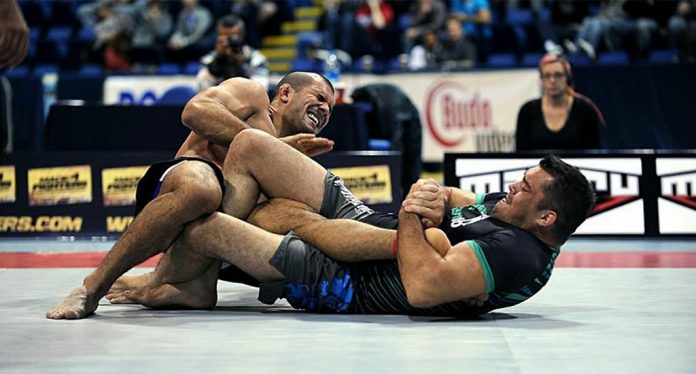
The 2009 World Championship featherweight black belt semi-final did not help this perception. Rafael Mendes and Rubens Charles went for a 9 minute 50/50 “battle” that seems like nothing was happening. The two grapplers were stuck in the 50/50 position for exchanging sweeps. To be honest, they did attempt a few Toe Holds, but with no apparent success. What they did achieve is open up the stallers’ eyes to the opportunities of the position. From there on, matches like that became the standard, rather than the exception.

Fábio Gurgel and Rodolfo Vieira, among others,  criticized how people were using the 50/50 it to slow matches the game down.

The Two Faces Of The 50/50 Guard

So, is the 50/50 guard really that boring? Truthfully, that depends a great deal on two major factors. One is the context of use, while the second is the rule set of the tournament. An ADCC match where heel hooks (both regular and reverse/inverted) are allowed, demonstrates how dangerous the 50/50 guard can be. Actually, in most No-Gi settings, the guard provides spectators with great entertainment and excitements.  On the other hand, in an IBJJF tournament where heel hooks are outlawed, it is a whole different story. Since even toe holds are only allowed at brown and black belt level, the 50/50 guard can grind all action to a halt.

Since the heel hook is probably the 50/50’s most powerful weapon, it would be great if the IBJJF would reconsider their rules. However, it is not just heel hooks that can be done from the 50/50 guard in high-level matches. Modern lapel guards are the analog of leg locks for the Gi community. They’re proven moves that are frowned upon by the No-Gi proponents (for obvious reasons) However, the lapel game is another huge aspect of the 50/50 guard that makes the position exciting. If two people are forced to battle for straight ankle locks and/or sweeps from the 50/50 it will indeed be a boring affair indeed. But it’s not the position’s fault it is how it is perceived by grapplers. So wise up and discover all the awesome opportunities from the 50/50 guard.

50/50 Guard Attacks

First, it is important to understand what the 50/50 guard has to offer. It is important to be aware of what you’re looking for once in the 50-50 position. This understanding will give you a better chance of progressing through it towards a submission. For starters, you have to make sure have control over the knee of your oponnent’s trapped leg. The best way to go about this is using your arms. Whoever controls the knee in the 50/50 is going to control much of the action. For one, the opponent won’t be able to step out of the trap. Even more so, you’ll both have offensive opportunities and be fairly safe yourself.

Sweeps

When an opponent is also familiar with the 50/50 principles, it becomes harder to stand up. If you feel like you’re behind your opponent, you should primarily make sure you’re safe from submission. Causing your opponent to stand up is a great way of evening the odds. However, whenever you sweep from the 50/50, remember not to follow them and come up on top. If you do your leg might end up trapped and you’ll be in the pendulum-like sweep exchange. Make sure you have your knee free before you get up, or, even better, set u pa submission while your opponent is falling down.

Submissions

As the position continued to develop, more submission attacks are becoming available from the 50/50. Foot locks, toe holds kneebars, even D’arce setups and armlocks are starting to pop out everywhere. Other from Ryan Hall, Rodrigo Cavaca along with his students, is one of the biggest 50/50 guard innovators. Check out some cool options, legal across all rule sets, from the 50/50 guard:

The basic concept when passing is to initiate a position that turns the odds in your favor. That means transforming the 50/50 into a 70/30 at least. Otherwise, you’ll just end up back on your butt.  A great concept comes from Caio Tera, where your inside leg has to get across and to the opposite side of your partner’s body.  This position is now called “unfair 50/50.”  the reason is that the “leg across” concept takes away all the leverage of the bottom person, allowing you to apply pressure and break the structure of the guard.

How John Danaher’s Leg Lock System Re-shaped Jiu-Jitsu

Invest In Jiu-Jitsu Leg Locks To Really Master Them

Secret Toe Hold Details To Submit Any Opponent

Undefeated Transgender Wins a Girls’ State Wrestling Championship 2nd in a Row – Crowd Boos

Undefeated Transgender Wins a Girls' State Wrestling Championship 2nd in a Row - Crowd Boos

Cypress, Texas – For the second year in a row, the transgender wrestler is winning girls’ state championship in a Class 6A 110-pounds Division

Mack Beggs is an 18-year-old transgender from Euless Trinity High School in Dallas. Mack is currently being undefeated in wrestling. In a final match on Saturday, he wins the title beating Chelsea Sanchez

Mack Beggs is currently in the process of transition from Female to Male using low doses of testosterone. That’s exactly that forced a debate about competitive fairness and transgender rights last season. Unfortunately for Mack, he was almost stopped last year by the last-minute lawsuit.

On his way to the title this year, he had three girls to beat and now he’s holding a record of 35-0.

Mack Beggs mother, Angela McNew, said: “He has so much respect for all the girls he wrestles.  “People think Mack has been beating up on girls … The girls he wrestles with, they are tough. It has more to do with skill and discipline than strength.”

Beggs Mother, Angela McNew is not allowing his son to give any interviews or any statement for the media. She wants her son to concentrate on competition and tasks ahead of him. She also said that she’s trying to protect him from all negative comments and insults on social media and even insults on wrestling mats.

What do you think? Are we becoming too politically correct?

Fallon Fox, Transgender MMA Fighter Who Broke The Skull of Her Opponent

Joe Rogan on Female Transgender Athletes who Compete: It’s Bizzare and Ridicolous

Transgender’s Letter to BJJ Community – I’m not a Male, I Want to Compete Without Stigma

Roll Tired To Perfect Your Jiu-Jitsu Techniques

Jiu-Jitsu Techniques - Rolling Tired

Brazilian Jiu-Jitsu is not just the Gentle Art. It is the art of balancing very technical movements within the chaos of free sparring, all the while playing chess in your mind. This balance is a huge step in Jiu-Jitsu and one that needs to be mastered by everyone involved in any kind of grappling martial arts. However, it is an extremely difficult task. Staying calm enough to look for technical nuances while rolling is kind of an oxymoron. It’s difficult enough to categorize all those Jiu-Jitsu techniques when resting, let alone apply them live. So, how does one go about to find this elusive balance of BJJ?

One approach is to roll as much as you can, with as many people as you can. It is certainly the right approach, but at a certain point, it is inevitably going to need modification. The thing is, when we roll we still look for as much control as possible, despite the environment of entropy we find ourselves in. It is human nature, to try and bring order to things, The problem that arises is that we tend to look for our favorite Jiu-Jitsu techniques during rolls and stay away from positions that are not in our top-stuff toolbox. There is, although, a method that is going to make you widen your technical arsenal while you roll.

Hard Rolls For Better Jiu-Jitsu Techniques

It is already very well established that grappling martial arts are very tiresome athletic activities. Wrestling workouts, for example, are notoriously difficult. The idea behind it is that it builds ‘mental toughness’ in grapplers. That aside, it does one more thing that is, for some reason, not recognized enough. Pushing through hard training forces grapplers to emphasize the use of techniques a lot more.

The reasoning behind this is actually very simple. The more tired you are, the less you can rely on your physical attributes. Whether you’re freakishly strong or flexible like rubber, you won’t be able to use your favorite Jiu-Jitsu techniques when exhausted. The reason most people tend to do moves that turn out high-percentage for them is certain physical attributes that allow them to do so. When these are taken away, they’re suddenly left with nothing.

Going for a roll (or 10) when tired is extremely beneficial for all levels of grapplers. Both competitors and hobbyists are going to become noticeably more technical in a short amount of time. Despite the obvious cardio gains, a huge positive is an improvement in both the quality and quantity of Jiu Jitsu techniques. Firstly, all your favorite moves are going to become way more technical than usual. Furthermore, you’re going to have to open up and utilize moves you do not use on a regular basis. When you’re in a physically disadvantageous situation, you have no other choice. One of the all-time BJJ greats, Marcelo Garcia is a big proponent of doing this and e all know what he can do!

Jiu-Jitsu Techniques Hard Rolling

The Correct Way To Roll Tired

There’s good reasoning behind the madness of this method. When you’re tired you’re simply unable to rely on physical strength. As a result, you’ll have to perfect whatever technique is going to get you out of a bad or into the desired position.

However, you need to be careful. Before anything else, make sure you stay safe while rolling. Don’t use the above method as an excuse to go all out until you puke.  Overtraining is a real issue and can hit everyone pretty fast and hard after a short time. It’s simple, overtraining and you’ll be out for a long while. The alternative is to push through hand injure yourself seriously. Both versions of events are not acceptable for competitors, are they? Just be smart and use the ‘roll tired to learn’ approach to improve your Jiu Jitsu techniques, not to destroy yourself.

There are three main instances when you need to skip rolling altogether, let alone roll in a tired state. First and foremost, the most obvious – never roll when sick! Secondly, and again, very obviously, do not roll when injured. Actually, you should be tucked at home if your injury cannot be fixed with athletic tape. Finally, even if you have a small injury that you can roll with, skip on the rolling tired part. You’re just going to turn the small injury into a major one.

On the other hand, if you’re all healthy and simply feel tired, push yourself and go for it. Chances are you’ll tap out to people that normally cannot catch you. Chances are, you’ll be even more tired when you’re done. However, your technique will get noticeably sharper.

Jiu-Jitsu Techniques Benefits Of Hard Rolls

Practical Benefits Of Hard Rolling

The most important gain from this methodology, for BJJ, is in terms of competitive readiness. The person with the most heart often wins the division. Perseverance goes a long way, and while you can’t teach heart, you can build it. By pushing your own boundaries, you’ll build heart and the upper hand over your opponents. When you spar tired, you’ll find out where your weaknesses are and how to correct them. Rolling when rested is often going to hide your weak points by using strength where Jiu-Jitsu techniques fail.

For self-defense enthusiasts, training tired is simply a must-do. You never know when you’ll need the ability to use what you’ve learned in BJJ class after a really long day of hard work. Or even after a very hard training session, for that matter. Being physically strong is nice, but it is far better to be confident. This means knowing what you are capable of and what you are not capable of when under extreme physical stress.

Don’t push training tired to the point that you hurt yourself because then you won’t be able to train at all. That said if you train tired you will gain a deeper understanding of your own strengths and limitations. You’ll also build your heart a bit along the way. And learning the nuances of Jiu Jitsu techniques and positions will result in way better execution. In turn, this will ultimately result in more efficient energy spending – you’ll get tired less often. Now, wrap your head around that!

Competition Tips To Prepare For BJJ Tournaments

Incredible Transition from Guillotine To Flying Triangle to Armbar in MMA

addy Pimblett's Incredible Transition from Guillotine To Flying Triangle

This Beautiful move showed a great transition from Guillotine choke attempt to a flying triangle followed by armbar submission from triangle hold.

Paddy “The Baddy” Pimblett pulled this move on his opponent Alexis Savvidis. In the first round, Paddy was threatening with a lot of heel hook attempts, but he was defending an armbar at the end of the 1st round.

In a 2nd round, Paddy was trying to pull a guillotine choke and then jumped for a triangle. After that, it was an easy job for him tapping his opponent with an armbar.

Paddy Pimblett aka “The Baddy” is 23-year-old MMA fighter from Liverpool, England. He’s currently holding an MMA record of 15-2-0 (Win-Loss-Draw). Paddy is considered as one of the top Europeans prospects.

This fight was Paddy’s “comeback” fights as he lost the title against Nad Nariman in April 2017. He was fighting against Nad at featherweight division. But, since then, he moved up to the lightweight division and he had an awesome comeback with a fight against Alexis Savvidis. The fight between Paddy Pimblett and Alexis Savvidis happened on CWFC 90 – Cage Warriors Fighting Championship 90 at Echo Arena in Liverpool.

After the fight, Paddy called for a Lightweight Title shot. We’ll see if he’ll get it but we can say that he showed more than enough to become a champion once again. Is he a new UFC star and will he justify people calling him a new UFC star the time will tell?

Calf Slicer & How to Make it Your Best Leg Lock

Calf Slicer BJJ

Calf Slicer submission or so-called Calf Crusher is a submission that is as underrated as it is scary! It’s a compression lock that is pressing calf muscle to a shin bone. You can see this submission in BJJ, MMA, and most Grappling Martial Arts. What’s important are the reasons to make Calf Slicer your best leg lock that people will have no idea how to defend.

The ultimate goal of the art of Brazilian Jiu-Jitsu is to cause an opponent to surrender. The best way to force someone to give in is through a submission hold. Among the many submissions in BJJ, there are some that stand out. There are different reasons for standing out. Some are incredibly effective across all competitive platforms, some are entertaining, and some are pure brutal. It is those that are both effective and painful that rule them all. Twisting neck cranks, heel hooks, Calf Slicers or usually called Calf Crushers are among the scariest submission holds in grappling martial arts.

The reason why Calf Slicer is so underrated

The reason why Calf Slicer is so underrated
One of the reasons why the Calf Slicer is so severely underrated is its legal status. Within IBJJF rules, this submission is permitted only for brown and black belts. This relative lack of exposure means it is not among the ‘everyday’ moves practiced in BJJ academies, especially in GI schools. In No-Gi schools, instructors are showing this painful finisher a bit more but always comes in second to heel hooks and ankle locks. And, if you’ve seen the EBI (15), you’ll know how effective and devastating it can be!

The Mechanism Behind The Calf Slicer

It is a compression lock that involves pressing the opponent’s calf muscle into one of the bones in your shin. As the name implies, it is very much like the biceps slicer submission, only done at the level of the knee.

The mechanism behind the calf slicer is in the leverage that you create by wedging your shin bone behind the knee of your opponent. You can also do it with the forearm instead of the shin, but it’s not as tight or powerful that way. The submission comes on by flexing the opponent’s leg to apply pressure. To clarify, flexion means pulling the foot of the opponent towards their hamstring. The pressure is mainly on the muscles surrounding the fulcrum, the precise point defined by the angle of the lever. In terms of mechanical principles, the calf slicer is a nutcracker. Squeezing it hard enough is going to cause a break at its weakest point – the joint. The damage is focused, but not limited, to the tibia or fibula, or, more likely, the muscles, ligaments, and tendons of the knee.

Slicers of any kind can cause an extreme amount of pain that you feel almost instantly. The pain feels precise as the name suggests. It can feel like a slicing or a crushing pressure to your calf. If a person tries to be tough and not tap, walking afterward is going to be challenging. And not for a short time.

How to Get To The Calf Slicer

There are many variations, entrances and ways to set them up. They are a great option to hunt for directly. However, fighters are using it more as a plan B to other leg locks. The good thing about this finisher is that you can hit it from a bunch of BJJ positions.

Let’s look at the primary points of setting a slicer up.  As opposed to most leg locks, you need to be behind your opponent for the submission to work. You can reach it from most of the Ashi Garami positions favorite today, but you cannot set it up from any one of them. You can look at it as a transitional stop between two Ashi Garami positions.

To get into the position, you need to be facing the posterior chain of your opponent’s legs. Regardless of top or bottom position, the idea is to place your shin across their calf, with your foot in between the opponent’s legs. The next significant step is to cause a bend in the knee, forcing flexion in their leg. To make sure you control your opponent, you also need to stop their hips from moving, which is where your arms come into play. Triangleing your legs are going to keep things tights. For a finish, you either push their leg toward them or pull it towards you. It all depends on where you’re attacking.

Calf Crusher from Top Position

Half Guard Top

Dean Lister's Calf Slicer From Half Mount
Click For Full Video

Calf Crusher is a high attack to go for if you have an opponent that is continuously able to get you into their half guard. From top half guard, you need to be able to pull your knee out just a bit. Next, you’ll need to roll over the shoulder. Keep in mind that we’re talking about the shoulder joint that is on the same side of the leg that you have behind his knee.  The roll is a Granby roll variation. From there, you’re in the truck position.

The Truck

The truck is an exceptionally dynamic position from the 10th Planet system. After the roll, you can finish the Calf Slicer in different ways. One is to triangle your legs and pulls down on your opponent’s instep. Another is to press on the heel of your intertwined leg with your free leg, all that while controlling the opposite leg. For both, you need to pull down towards you to finish.

Calf Slicer from The Truck Position
Click for Full Video

Slicer Crushing From Your Back

X-Guard to Calf Slicer

Calf Slicer from X-Guard
Click for Full Video

A very sneaky, but effective way to get to the calf slicer is from the X-guard. Once there, you need to off-balance your opponent so that you can elevate them off the ground. When you do, your foot that is on his hip is going to transition underneath the leg that is off the ground. From there, all you need to do is triangle your legs, and establish a grip around their waist. The Gable grip is the preferred option. It all ends with you raising your hips and pulling down to cause the pain and get the tap.

Butterfly Guard Sweep to Calf Slicer

Butterfly Guard Sweep to Calf Slicer
Click For Full Video

How to Defend and Counter Calf Slicer

Some people won’t tap to it no matter how painful it is to them. The chances are you’re not among those people, so it’s essential for you to learn how to defend it and escape from this submission.

You have to be aware of the situation when your opponent is trying to put his shin behind your knee. Especially be aware of cases when they’re connecting their legs to yours and trying to roll in the opposite direction.

Calf Slicer Defense and Counter
Click for Full Techniques Video

While there are many positions, we’ll take one example that you’ll find yourself most of the time. It’s a Slicer from the truck position. Defense looks pretty easy, but once you try it, you’ll notice that switching angles can be a pretty hard thing to accomplish. There are few ways of changing angles when you’re caught in Calf Crusher from the truck position. Check out the video below to see an example of Truck Calf Slicer Escape, Defense, and a Counter.

The Video Of Brett johns Applying the Calf Slicer Submission in UFC

Here is one example of a great application of this very painful submission in MMA. The 24-year-old UFC fighter Brett Johns submitted his opponent Joe Soto in less than 30 seconds. He was able to do it while he was defending the single-leg takedown. What Brett did was that from the crotch lift he rolled onto his back while having his opponent’s leg entangled by his leg. After that, he immediately caught Soto’s leg to be able to submit him. Soto had no choice but to tap.

If you look at this video, you can see that Brett made a mistake because he was holding Soto’s leg with both hands. If Soto managed to pull Brett’s arm, he would be able to submit him with an armbar. But, as people usually don’t know how to defend this submission or counter it, this was an easy tap.

So, Should You Practice Calf Slicer or Not?

While it is pretty more laborious to get slicer than other standard leg attacks that do not mean that you should not practice them you should practice and master them and have that be a part of your leg lock game. They come in handy, and many people do not spend time on calf slicer defense. That means that you can get more taps from this pain-inducing submission.

Related Articles:

The Best Leg Lock DVD Instructionals For Grapplers
Omoplata Game Essentials

Check out the list of The 8 Best Leg Lock DVD Instructionals For Grapplers
Take A Look At How Leg Locks Can Change Your game
Not Really Sure What Ashi Garrami Is? Check Out Our Leg Lock Guide

10 Best Leg Locks DVDs and Digital Instructionals