At the second Higherside Chats/Tin Foil Hat live show, Eddie Bravo ended up in an impromptu Flat Earth debate with a couple of audience members who had degrees in Earth Science. Chaos ensues.
The only thing that is missing here is Kron Gracie with his Flat Earth Theory and his personality about always looking for the truth 🙂
The BJJ guard is the quintessential Brazilian Jiu-Jitsu position. before BJJ, nobody promoted fighting off the back. Not only that, but nobody even though you can attack from there with any success. That was until the BJJ guard came to light. Now, the BJJ guard has evolved so much it is unrecognizable. However, in the myriad of new and modified guards out there, some principles still apply to all. These are the black belt tips that are going to make any and all BJJ guard you’re playing a deadly trap.
Most of your time training Jiu-Jitsu is going to be spent either trying to pass the guard or playing it. That said, in both cases, you need to have an understanding of the BJJ guard in order to be successful. When you’re playing guard, there are numerous factors that come into play. Some are general, while others are specific and even individual. The BJJ guard, closed or open, offers so many opportunities that you have to have at least one favorite variation. Now imagine being able to be just as effective from ever BJJ guard variation without spending decades perfecting them. Well, it is not impossible. Actually, it is very easy to do with just a few tips that’ll change your guard game forever.
The basic idea behind playing guard is generally twofold. You either want to get a submission and finish immediately or you want to sweep. However, in order to be successful with both, you first need to know how to control the guard. Even more importantly, you need to know how to get back to the BJJ guard when someone tries to pass it. Yers of experimentation in academies across the world have identified the crucial tips to make any guard a lethal trap for your opponents.
Hidden Tips To Improve Your BJJ guard
The very basics of the BJJ guard are the subject of class. holding each different guard variation is something you need to learn from your instructor or more advanced students in the gym. Not only that but you’ll also need to learn which BJJ guard fits which situation. There’s no point in going for an X-Guard when your opponent is ta distance. The same holds true for longer distance guards. if an opponent is extremely close to you there’s little efficiency in looking for a De La Riva guard.
These are the essentials of the BJJ guard game that you need to know well. Only then you can think about turning to BJJ guard principles in order to make the most out of every guard position at your disposal. There are a few guard position principles that black belts have shared with me that were helpful in tying those techniques together into an effective guard game.
So let’s get straight into the principles that are going to make your guard world-class:
1. Winning The Grip Fight
This tip is as old school as it gets. Even Helio Gracie himself was a huge fan of the grip game. According to the founder of BJJ, a simple collar grip can get you a crucial advantage every time. Helio attributed this to the control over an opponent’s posture and the threat of a choke.
Having a solid collar grip on your opponent means you can use gravity to help you control their posture. Once you have someone’s posture, you can go about applying any open guard attack you want. Breaking the posture is as easy as getting a tight collar grip. Furthermore, if an opponent decides to go with gravity and come down low, the same grip offers a different threat. Now the opponent is at choke level and you have different options to attack. For example, you could go for your basic cross collar choke or hit a loop choke.
Just remember that grip fighting goes both ways. In that sense, you need to make sure the opponent doesn’t break your grips. Not only that but you also have to watch out for the opponent’s grips. Whoever wins the grip battle is going to have the advantage. However, with you in a BJJ guard variation, you’re better primed to attack when you get the desired grip as opposed to the grappler on top.
2.Keep Your Hips Light
As far as playing guard goes this is a must. it is only number two because without grips there’s no guard to speak of. However. your hips play a crucial role in your ability to utilize the BJJ guard to its maximum. Once an opponent pins your hips playing guard is going to become next to impossible.
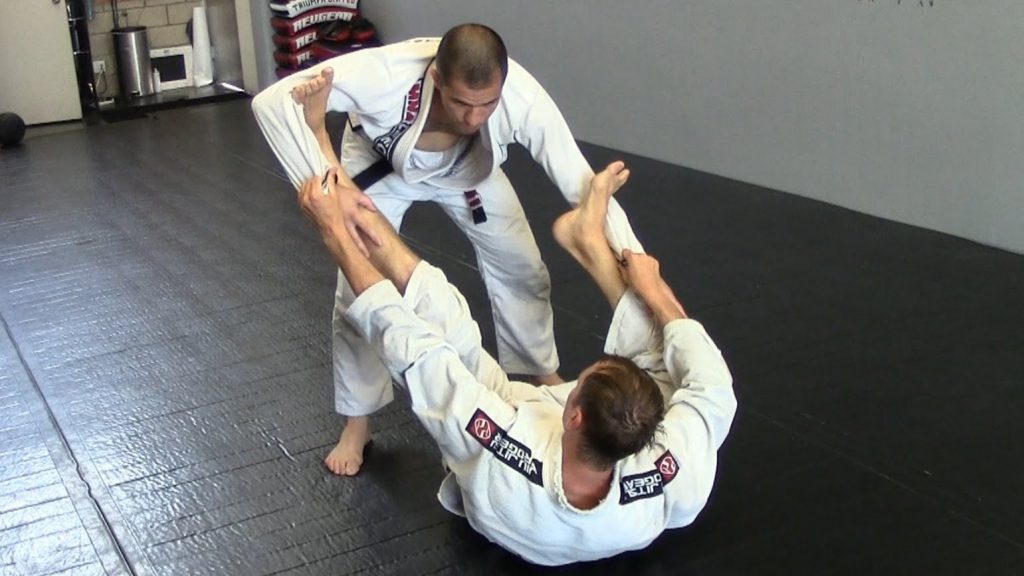
The reason why your hips are important is space. Space is the enemy of the guard passer which makes it your best friend. The ability to manage the space is just as important as winning the grip fighting. If you watch a high-level black belt match constant improvements of grips and constant hip movement are going to be the two prevalent fields of battle.
Given the dexterity requirement of BJJ as a sport, using your legs as efficiently as your arms is a must. Your hips are the ones that dictate how much you can use your legs to control and/or attack an opponent from the guard. Remember that the best way to improve hip mobility is constant drilling. Without this, there’s no guard retention and without it there’s no guard to speak of.
3. Constantly On The Offensive
Finally, the one thing that makes it possible for you to play guard is keeping your opponent at bay. Just like with grip fighting, going on the attacks is the safest way to play guard. As long as you’re a constant threat, your opponent won’t have the opportunity to even think about passing.
If there’s one advice that’s going to make your guard a nightmare for everyone is to constantly be attacking. Not only that but b the first to initiate an attack. NEver let your opponent settle down and impose their game.
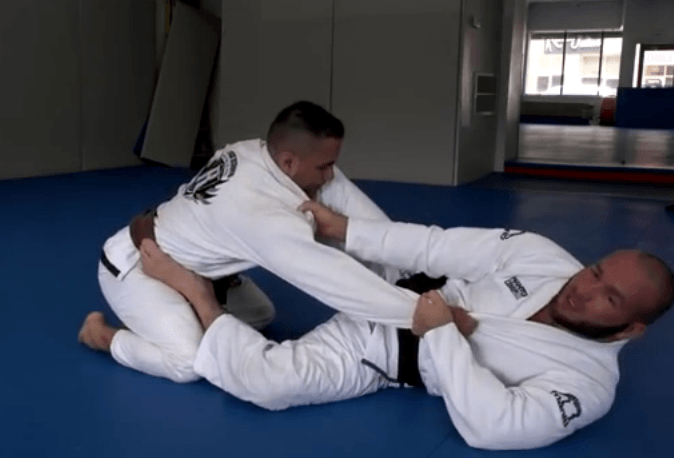
Start threatening your opponent from the very first moment. Get a grip and go for an attack. It can be a sweep or a submission. Whatever you choose to do never let your opponent catch his breath. As long as you have good grip, you can move your hips and you can launch an offensive, your guard is going to become impassable. After all, this is what black belts do!
BJJ Twister Submission is a very nasty move that involves putting a lot of pressure on your spine. it is an illegal move under IBJJF rules and you most certainly do not want to be on the receiving end. However, it is a very effective submission and a potent weapon whenever the rules allow it. Why not have as many tools as possible in your BJJ toolbox? Well, the Twister Submission is an emergency situation tool.
The Twister is not a submission for the faint of heart. it is one of the staples of the 10th Planet Jiu-Jitsu system. The always entertaining Eddie Bravo built much of his system around this painful submission. He did not come up with the move per se but adopted an old wrestling position to get taps in the most painful way possible. Plus, it is a very attractive submission to pull off. No submission carries the wow factor quite like the Twister. What you need to be wary of is the ruleset you’re competing under. Many organizations, especially in the Gi have a ban on the Twister Submission for all levels, black belts included.
In the submission only No-gi scene, however, the Twister is fair game. The same holds true for MMA. The only problem is getting to the position and defeating the opponent’s defense. Entries to the position are not difficult but getting the submission set up might be. In order to get into position, you need to systematically break down your opponent’s defenses one by one. If you rush through it you won’t get it. Not that you’ll be much worse off, because you have both back control and the truck position to transition into. However, if the Jiu-Jitsu Twister submission is your goal, you’ll need to pay attention to every detail.
How Does The BJJ Twister Submission Work?
Jiu-Jitsu Twister submission was originally a wrestling move called “the wrestler’s guillotine”. Eddie Bravo’s wrestling background allowed him to introduce this move to his system. Originally people frowned upon the move but as Bravo polished it, it turned into a really formidable move.
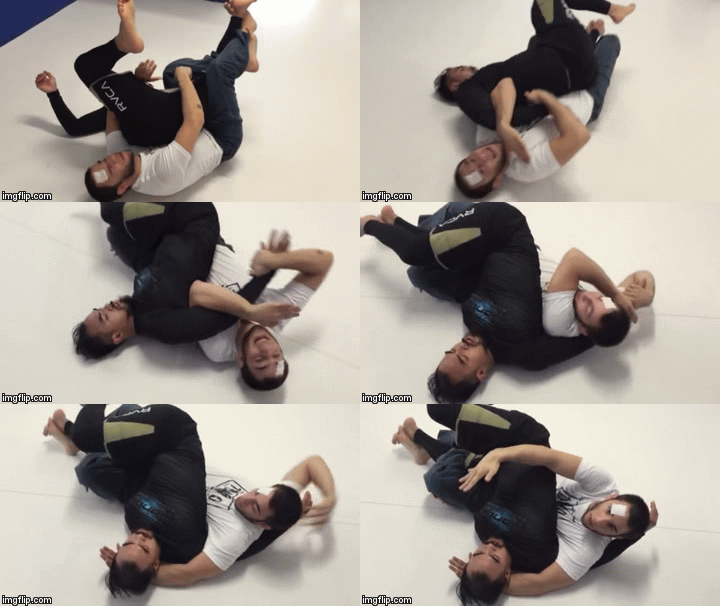
Twister is a rotational spine crank submission. It involves forcing the opponent’s head towards one of their shoulders while twisting the lower body to the opposite side. Technically speaking, the submission with the Twister is due to lateral hyperflexion of the cervical spine. Although many people perceive this as a neck crank it is actually a submission on the whole cervical column. Depending on their level of flexibility, your opponent can feel the effects of a well-placed Twister in multiple body parts. Tension and pressure can range from the neck, all the way through the spine, and even in the shoulders, knees, and abdominal muscles. Most of the pressure is, however, on the neck, thus landing the Twister as a neck crank.
The basic idea is that you’re attached to one of your opponent’s legs with both of yours from back control. The next step involves you shifting towards the opposite side of the leg you’re controlling. You then need to trap the opponent’s arm on that side. To get into position, you must place their arm behind your back and turn towards your opponent. This lands you in the perfect position to get the Twister submission. To finish, simply get your arms around the opponent’s forehead and pull.
Getting To The Jiu-Jitsu Twister
The reason why the Twister is rarely seen in Jiu-Jitsu competition is mainly due to the rules. So far, there are a few examples of Twister submissions in high-level MMA fights. It is also very effective on the sub-only scene, where rules are a lot less restrictive. The first and most memorable rendition of this submission live was that of the Chan Sung Jung. “The Korean Zombie” managed to pull off the submission flawlessly under the bright lights of the UFC. To this day this remains one of the most impressive Twisters submissions ever pulled off in a live fight.
Basically, you have two main paths to the Twister. One takes you to the position from back control. The other one moves in the opposite direction taking you from the truck towards the Twister. These are not the only two position that allows access to the BJJ Twister but is by far the most effective. If you have seatbelt back control, first you’ll need to establish lockdown control with both your legs on one of the opponent’s legs. Once you have it, release the seatbelt grip and establish a baseball bat grip on the opponent’s arm From there, the Twister is just a step away.
The opposite side path takes you from the legs towards the Twister. From the truck position, you need to exchange control of the free leg with the same side arm of your opponent. Once you have the arm, make sure you’re not pulling on your opponent too much as you’ll end up in back control. Instead, focus on triangling your legs and pinning them in place while you battle to thread the arm behind you.
Training Caution
A word of warning – the Twister can cause serious damage to your training partners! Even in a match, make sure you apply the pressure slowly and release the moment the opponent taps. In training, do not even consider going all out. If they don’t tap, release them. Injuring someone is not worth the tap when training. If you know the position, you won’t need to goal the way with stubborn people. After all, the damage is to the spine which can cause lasting injuries or even worse. On the other hand, if you’re caught in the submission tap. Do it early and live to fight another day.
As an example, famous UFC strawweight Angela Magana once took the stubborn path. The Ultimate Fighter Season 20 cast member decided she wouldn’t tap to Twister submission in Brazilian Jiu-Jitsu training. As a result, she ended up in a hospital with a cast over her entire torso. Not her smartest move.
That said, the Twister is no more dangerous than any other submission when practiced right. Keep your mind open and give this move a try. Be cautious while training it and have a more experienced student or your instructor teach you how to correctly perform it. It is a mighty weapon that is going to serve you well!
One of the most useful conditioning tools for grapplers are kettlebells. Using kettlebells for BJJ conditioning is the most efficient way of developing all the athletic attributes you need in a short amount of time. Even better, training with kettlebells for BJJ conditioning means you do not need much space, nor much equipment. We bring you the best kettlebells for BJJ workout exercises that’ll turn you into a grappling machine
For a long time, barbell training was considered to be the golden standard of strength and conditioning for sports. The staple exercises of squatting, deadlifting and pressing are present in virtually every program you can find. However, if you do not have access to a barbell or hate training in commercial gyms, how can you get in shape for grappling? It is very easy – choose to train with kettlebells from BJJ. These marvelous tools are going to provide you with the option of training every fundamental strength move. Not only that but they’ll open the door to moves you never thought of before. Plus, conditioning is included when you’re training with kettlebells for BJJ.
So, what kettlebells are so special for BJJ strength and conditioning? Well, for starters, they’re oddly shaped objects which tend to move through the air very differently from dumbbells and barbells. Not only that but they come in different weights which means you can train different movement patterns. In terms of kettlebells for BJJ, they offer you movements that very closely mimic the movements we do while rolling. SO if you want to develop bone-crushing strength and a gas tank to match, choose kettlebells for BJJ conditioning. And do not be afraid to go heavy, once you master the proper form.
The Only 6 Kettlebells For BJJ Exercises You Need
Once you decide to get into kettlebells for BJJ, you’ll discover that the world of kettlebell exercises is huge. Actually, there is a whole sport around training with kettlebells. It is not wise to take up a whole sport to help you with another one as you’ll get nothing out of both. So, you’ll need to focus only on certain exercises that actually work for Brazilian JIu-Jitsu.
That said, the idea strength and conditioning training session for grapplers should look something like this: You’ll need to spend the least amount of time while getting the maximum benefit. You’ll need to get both strength and conditioning improvements out of it. It is also preferable to be able to do it at home or at the academy. Furthermore, the less equipment needed, the better. Lucky for you, kettlebells tick all these boxes. They’re as close to the ideal training tool for BJJ as you can get.
However, not all exercises are equally effective for grapplers. Actually, there’s no way you could do all exercises and still train Brazilian Jiu-Jitsu at a high level. So, we selected the best, proven exercises that can transform you into a grappling machine on the mats. The following 6 kettlebells for BJJ exercises are all you need to take your strength to the next level:
1. Double Kettlebell Clean And Press
Click for full video instructional
If there’s only one move you can do with kettlebells for BJJ, then this is it. The double kettlebell clean and press is a powerful, full body. It engages both the upper and lower body as well as a number of different pulling and pushing muscles. The double clean and press is going to help you develop strength and power from grappling better than any other tool. With only this exercise, you can get a complete workout that hits nearly every muscle in the body.
On a plus side, the complex nature of the movie has a strong conditioning effect as well. This is one of the best exercises available for grapplers of all levels. The exercise might take some time to master, especially the part where you transfer the weight. Make sure you learn the proper form before going really heavy to reap maximum benefits.
2. Double Kettlebell Floor Press
Click for full video instructional
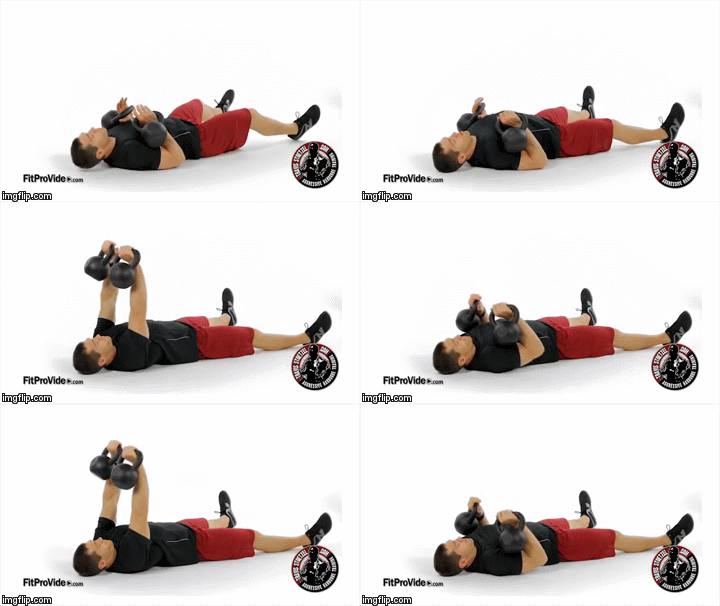
The double kettlebell floor press is the perfect pressing exercise for BJJ. There are two reasons why this exercise beats any bench press variation for grapplers. First, your elbows can’t go all the way down because you’re lying on the floor. This is very much like rolling in BJJ. Furthermore, kettlebells provide a different balanced resistance to dumbbells, again mimicking BJJ.
Technically speaking, the double floor press hits both the shoulders and the chest. It even engages the core. If you’re nursing a shoulder injury then this is The perfect chest exercise for you. When it comes to upper body pushing strength this exercise is unrivaled!
3. Double Kettlebell Bent Row
Click for full video instructional
This is the antagonist move to the double floor press. It is an excellent upper-body pulling exercise with immense benefits for Jiu-Jitsu. The double bent-over row builds back and biceps strength like no other exercise. Pulling exercises are crucial for grapplers, as we spend most of the time pulling on sleeves, collars, and necks. Moreover, it provides balance in a training program when done along with a horizontal push like the floor press. The better you get at pulling, the stronger you’ll be able to push and vice versa.
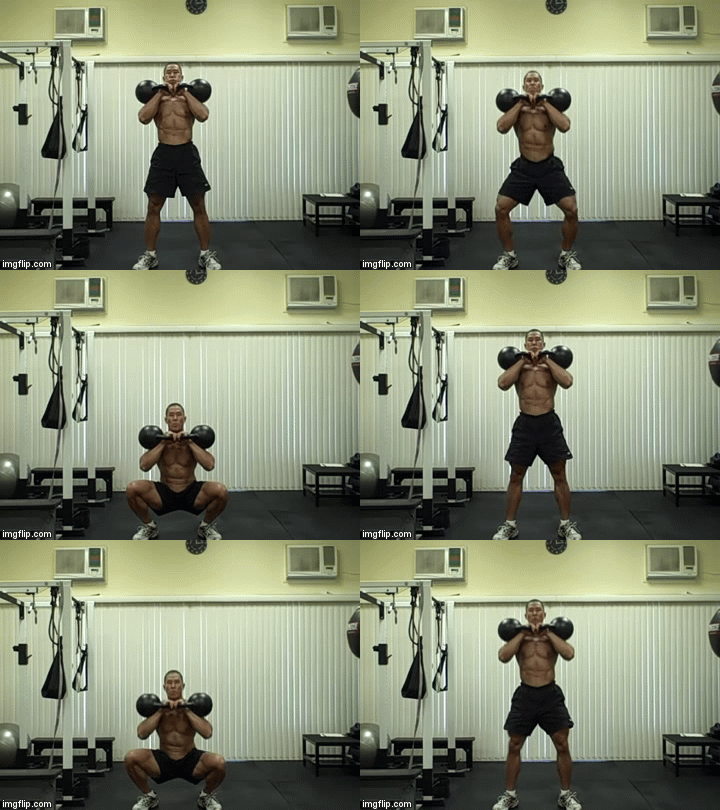
4. Double Kettlebell Front Squat
Click for full video instructional
This is the one lower body-specific move on our list. In truth, it is the only one you need. But, where are the deadlifts, you might ask. You don’t need them The double kettlebell front squat has both your quads and hamstrings covered. This is due to the rack position of the kettlebells which are held in front of your body. It is the ultimate lower body strength and power exercise for BJJ.
As with all other kettlebells for BJJ exercises, the front squat has upper body implications as well. It is, in essence, a whole-body exercise that taxes the lower body just a little bit more than the upper. Your shoulders will get a great workout as well, along with your core. upper back and arms.
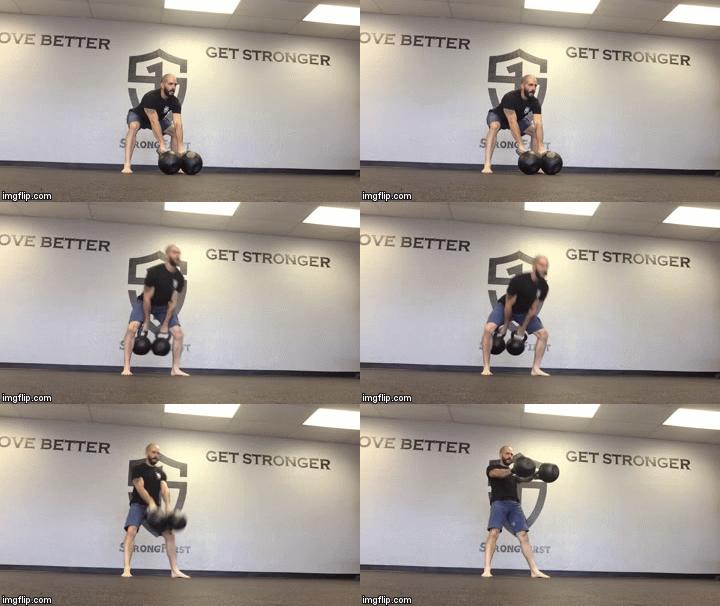
5. Double Kettlebell Swing
Click for full video instructional
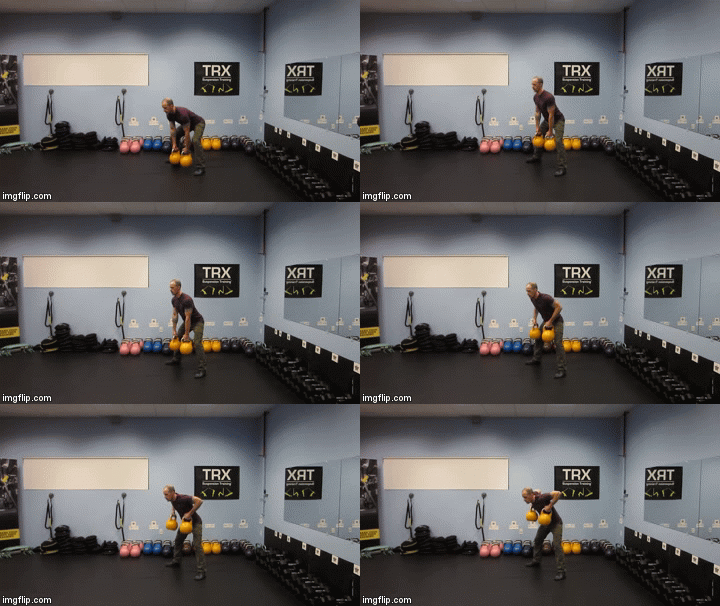
The kettlebell swing is the exercise most often associated with kettlebells. This exercise has the crucial role of improving total body balance. The swings hit the hamstrings along with your complete core, from the butt to the shoulders. When you’re looking to build tremendous power from Jiu-Jitsu, this is the exercise you must do on a regular basis. Do the swings with two kettlebells. Even more importantly go heavy. What you’ll get in return from this exercise is increased power, explosiveness, better flexibility, and an unbelievable gas tank.
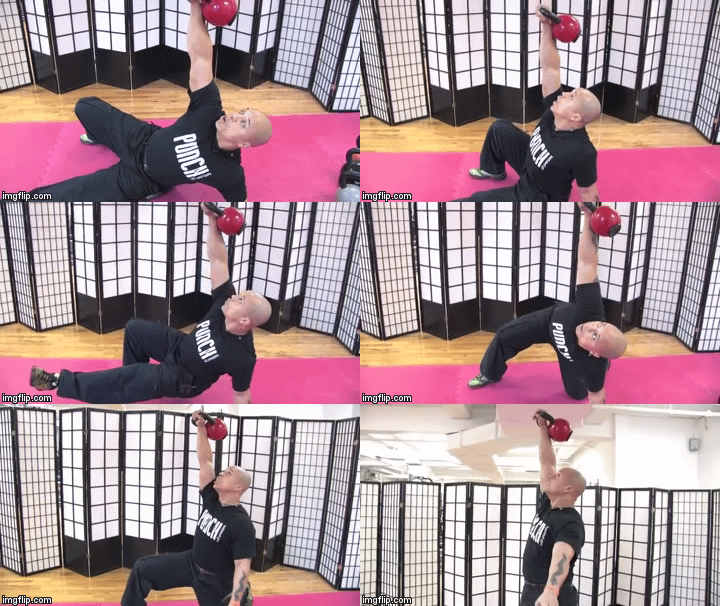
6. Turkish Get Up
Click for full video instructional
If you can do only two kettlebell exercises, then the Turkish get-up should be the one to complement the double clean and press. This is essentially a core exercise, although much like the clean and press it hits the whole body. Every range of motion, from pushing, pulling rotating, and stabilizing is included in the Turkish Get-up.
Throughout the Turkish get up your core doesn’t get a second of rest. Along with the core, the shoulders also get a beating, especially in terms of stabilization. Since you go through a wide range of positions, you’re flexibility and mobility also come into play.
A Simple Kettlebells For BJJ Workout Program
So, what do we mean every time we say train with heavy kettlebells? These are essentially the kettlebells you can only do a few reps with. This is going to require you to have perfect form. it is also going to make you stronger. Depending on the movements and rest times, it is going to help you develop high-level conditioning as a bonus. All in all, with kettlebells for BJJ you get a complete strength and conditioning package.
Now that you know the 6 essential exercises, it is time to organize them into the perfect grappling training session. At first start with low reps, until you get used to the weight,. Once you’re set to go, make 8-10 reps your goal. When you hit 10, it is time to increase the weight. In terms of structure, complex movements should be done as straight sets. Antagonistic upper and/or lower body movements are best done as supersets.
Here’s an example of how you can train with kettlebells for BJJ:
1. Double Kettlebell Clean and Press – 5 rounds x 5 reps
2. Upper Body Superset:
A1:Double Kettlebell Floor Press – 5 rounds x 5 reps B2:Double Kettlebell Bent Over Row – 5 rounds x 5 reps
3. Lower Body Superset:
C1:Double Kettlebell Front Squat – 5 rounds x 5 reps C2:Double Kettlebell Swings – 5 rounds x 5 reps
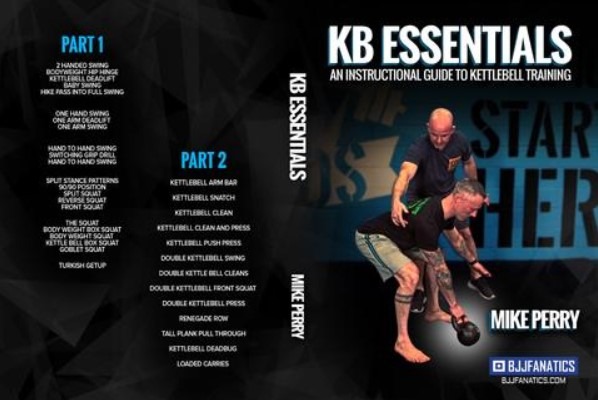
One of the most known Strengths and Conditioning coaches Mike Perry brings you his life experience with kettlebells training. His DVD and Digital instructional on kettlebells are probably the only strength-building instructional that you’ll ever need, so make sure you don’t miss it if you’re really into kettlebells strength training. You can check everything about it HERE.
Check the best KettleBells instructional for Grapplers by Mike Perry – use Checkout Code FANOM10 for 10% off
Becoming a world champion is a dream of almost everyone who signs up for BJJ class. Most people never even end up competing, while those that do rarely reach this goal. There are even fewer that truly stay on the pat despite having all it takes. Imagine the pleasure of not only winning your weight class, but also the absolute. Now imagine achieving that at purple belt while you’re not even 18 years old. That’s exactly what young Roberto Jimenez BJJ Purple Belt pulled off at the 2018 IBJJF World Championship.
Roberto Jimenez is the embodiment of most people’s Jiu-Jitsu dreams. he is a very young athlete that has a bright grappling future in front of him. Even though he is still a teenager, he is not unknown to the BJJ community. He already has very high accomplishments even as a blue belt. Now, as a purple belt, Roberto Jimenez got the highest honor available in the BJJ sphere. he is a double gold purple belt world champion. It can hardly get any better than that. Well, for now, at least, since he still has a lot to offer the grappling martial arts world in many years to come.
Who Is Roberto Jimenez
Roberto Jimenez is a BJJ Purple Belt training at Alliance Team Gaucho in Texas. He is a true Brazilian Jiu-Jitsu warrior. The young grappler is humble, respectful and as fearsome a competitor as they come.
The now teenager has been involved in Brazilian Jiu-JItsu since the age of 5. He went through all the kids BJJ belts before earning his blue belt. Precisely at the blue belt he became known to the BJJ community through some incredible grappling feats.
As far as he remembers, some of his earliest BJJ memories are not pleasant. Enrolled in the class by his father, young Jimenez used to hide in the bathroom not wanting to train. After overcoming his initial resistance he started training up to three times a day. And this is in addition to his daily school chores.
What stands out with Roberto Jimenez apart from his immense technical abilities, is his amazing attitude. He is truly the embodiment of the “leave your ego at home” philosophy. His father Raul Jimenez is also his teacher, meaning he expects more out of his son than any other student. And Roberto isn’t one to disappoint. This relationship has molded Jimenez in the world champion he is today.
The 2018 Worlds Purple Belt Emperor
As the 2018 IBJJF World Championship is in full swing, one grappler’s success cast a shadow even on the much-anticipated black belt matches. Not at all surprising, but also no less impressive, Roberto Jimenez managed to become a world champion. Actually, he managed to get the world title twice. At purple belt. As a teenager!
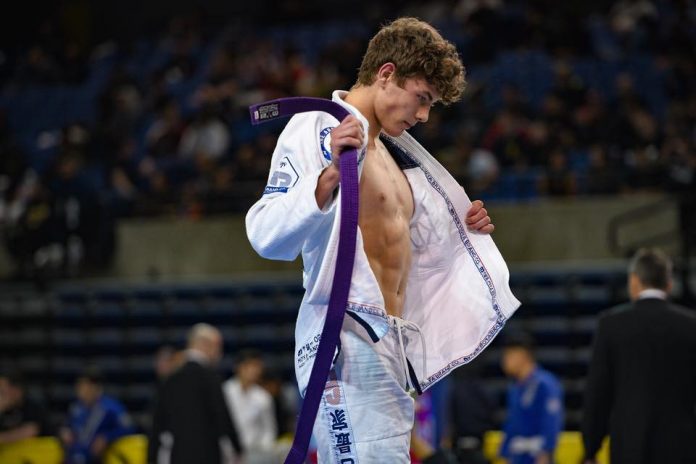
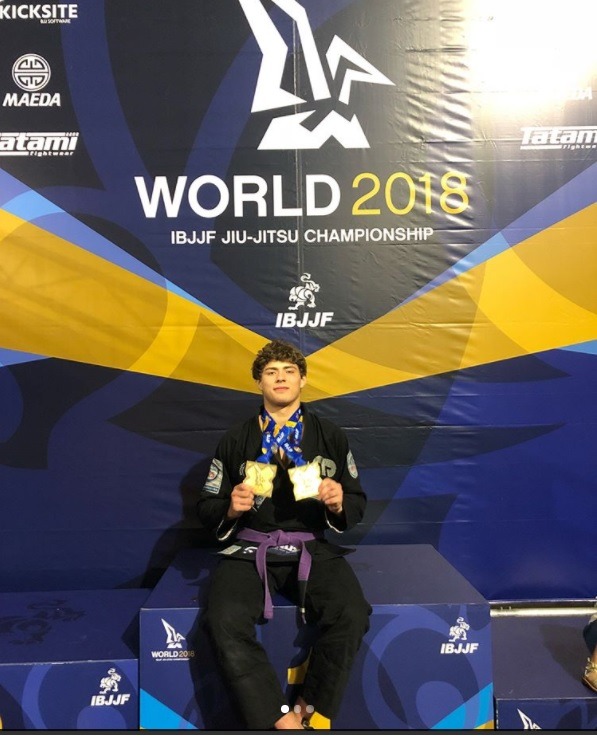
Alliance Spring’s Roberto Francisco Jimenez is the 2018 purple belt heavyweight and absolute world champion. He not only beat every opponent in his path but did so in an incredible fashion. The purple belt teenage sensation initially won six matches to claim the title in his weight division. Later on, he impressed once again by beating five more opponents to become teh undisputed 2018 purple belt world champion! The most impressive thing about his victory is that he beat all 10 of his opponent’s by submission! Yup, he never even saw one match go the distance.
The two sternest tests of Jimenez’s abilities came in the semifinal and the final match. First, Jimenez got back from a 9 point deficit to be Pedro Alex with a lapel choke. In the final, he squared up with MMA fighter Mason Fowler. Not surprising, the final didn’t last long. Jimenez got on Fowler’s back in no time and sunk in another lapel choke. Despite Mason’s brave attempts to escape, Jiminez got the bow and arrow finish.
Jimenez later wrote the following statement on his Instagram Profile: “I’m speechless right now as a dream of mine just became reality. I will make a post tomorrow explaining my joy and gratitude to everyone who has helped me so much and my emotions but right now all I can say is… 2018 DOUBLE GOLD WORLD CHAMPION ??? 10 FIGHTS 10 SUBMISSIONS”
The Latest Message from Roberto Jimenez:
“I’m 2018 worlds heavyweight and absolute champion. I had 10 fights total and finished all of my opponents. I’m beyond happy with my performance but the work continues. This is a moment I’ve literally fantasized about and it feels amazing to see hard work pay off. I want to thank everyone who has helped me and believed in me. All my friends and teammates from Vegas and Charlotte and all of you always pushed me. I want to give special thanks to @lucaslepriand @kinephys they both made a big impact in my game, confidence, and all around helped me grow as an athlete and human being. Also, huge thanks to my family who’s always there supporting me and by my side no matter what, they have raised me the best way possible with respect, modesty, and much love… love you.❤ Huge thanks to my sponsors who always believe in me and help me throughout my career. ECUADOR HAS TALENT.”
Earlier Accolades
Just last year Roberto Jimenez was in the spotlight again, this time as a blue belt. He is famous for managing to finish not one, but two black belts even before he got his purple belt. At Fight To Win Europa in 2016, he battled Lucas Pinheiro of (Gracie Team Plano).
Roberto Jimenez had just recently turned 16. Yet he already had a double gold victory at the Pan Ams to boast with. He ended up grappling with a black belt because he was in the Advanced No-Gi Division. Actually, the only reason Roberto was not yet a purple belt was age. The IBJJF age requirements state that he was too young at the time to be anything but a blue belt. That didn’t stop young Jimenez from dominating an older black belt, though.
One thing is for sure though. Roberto Jiminez is a rising start that is going to provide much more entertaining matches at the highest levels of Jiu-Jitsu. He is a very driven and determined young grappler who is going to be downright scary for anyone to face in a few years time. Remember where you read his name first and follow Roberto Jimenez as he lives the BJJ dream!
Injuries are common in BJJ. Most grapplers accept that as a fact of life. However, some injuries tend to be more awkward and uncomfortable than others. a BJJ rib injury certainly qualifies as uncomfortable. That said, it is manageable, depending on severity. A BJJ rib injury is also quite easy to prevent if you train the right way.
Brazilian Jiu-Jitsu tends to expose the weakness of our bodies in ways we never thought possible. The ribcage is a great example. it is the protective cover of some of our most vital organs, yet it is quite prone to grappling induced injuries. A BJJ rib injury is not an uncommon thing. In fact, it is one of the injuries new students get quite often. The ribs are an area that most other athletic disciplines do not really tax. In BJJ, however, a session of the knee on belly drills, and you’ll barely be able to breathe. Get a BJJ rib injury and you’re out for a couple of weeks at least. Not to mention living in total discomfort.
Direct pressure from a training partner is not the only way to get a BJJ rib injury. Sharp twists and turns, also have an impact, especially on the delicate muscles between the ribs. A BJJ rib injury needs to be managed properly or healing is going to be prolonged. Apart from a broken rib, most injuries of this kind require just rest. That is the one thing that seems to be particularly hard for grapplers. However, rolling with injured ribs is definitely not a good idea under any circumstances. That said, you need to make sure you are aware of a BJJ rib injury no matter how small. So the first thing you need to know is all the symptoms of a rib injury. Furthermore, once you heal from it, it’s time to do all you can to make sure your ribcage becomes tougher and more injury-resistant. This is how:
What Are The Symptoms Of A BJJ Rib Injury?
Basically, symptoms regarding rib injuries fall into one of two categories. Either they’re visible or result in some type of uncomfortable feeling. Very often it is both, and that’s as clear a sign as possible to give it a rest. In terms of stuff that you can see, there’s bruising and swelling of the rib area. It can be precisely on top of a rib, or in between two of them. From a discomfort standpoint, pain is the obvious one, often accompanied by tenderness to touch. Muscle strains tend to result in a very specific sensation of deep discomfort, especially pain during certain motions.
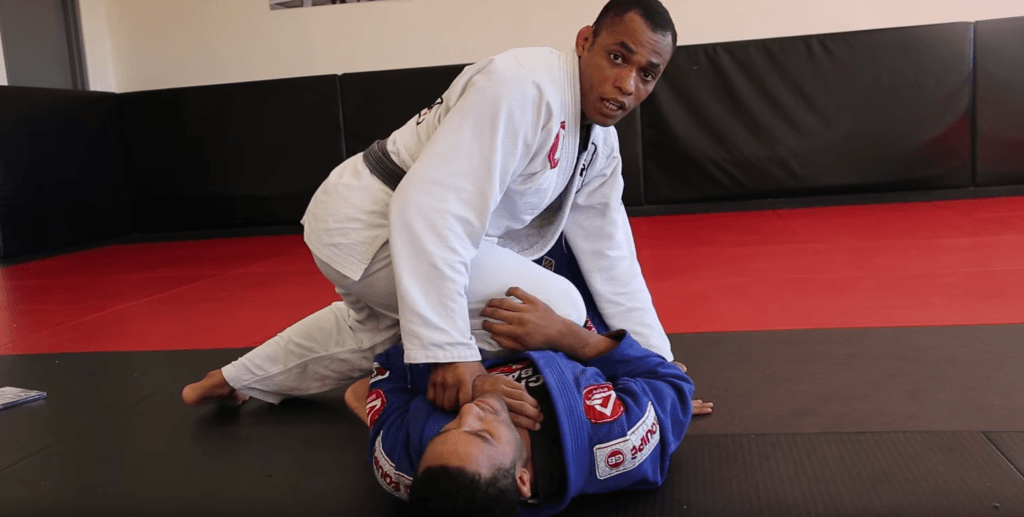
A cracked or broken rib is a very serious condition. There is potential for the bone to go toward the inside, piercing a lung, or even reaching the heart. The pain associated with a broken rib is immense, so it’s hard to miss or keep training with one. Furthermore, you’ll have all of the above symptoms appear at the same time. If that’s the case g straight to an ER to get professional medical help. A broken rib with no organ injuries is resolved with rest and pain medication. There’s no cast for your rib cage as it is constantly in motion when breathing. So just take the rest.
Bruised ribs or muscle strains are the usual extents of a BJJ rib injury. While not as serious as fractures, they are extremely painful and uncomfortable conditions. The treatment is the same as before- rest. However, in these situations, there’s the option of pushing through the pain. The smart thing is to stay put.
Prevention Through Exercise:
All of the above information points to the aftermath of a BJJ rib injury. Once you have an injury, you’ll have to rest until it heals. Do not attempt to roll while using painkiller pills or ointments. That’s only going to aggravate the problem. However, BJJ practitioners are not known for their adherence to medical advice, so there are some things that can help you speed up healing. These are mostly exercises that help return the ribcage into normal operating mode.
Exercises For The Intercostal Muscles: These are the muscles located in between the ribs. Given their location, they are quite difficult to train and strengthen. IN terms of rehab from a BJJ rib injury, breathing techniques are the best way to make sure you work the intercostals. Slow and drawn out-breaths are the exercise of choice here. The main role of these muscles is to expand the ribcage. going for near-maximal ribcage expansion by yourself is a great way to give these muscles some exercise time. However, doing any exercise while there’s pain still present means that you’ll probably only make things worse. If you can do it pain-free, then go for at least five sets of 10- 15 breaths.
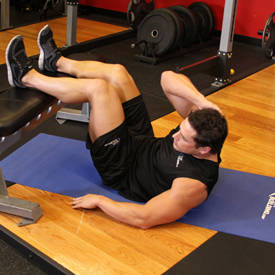
Training The Obliques: The oblique muscles are in charge of bending and twisting motions of the torso. they are the main protective tissue of the lower ribs, AKA floating ribs. There are plenty of exercises out there that target these muscles. Any crunch variation that goes into diagonal is a great way to hit up the obliques. here are some exercise ideas to help you recover from a BJJ rib injury:
The Elusive Serratus Muscles: These muscles are in charge of protecting the upper ribs. Whenever you reach forward with your arms, these muscles come into play. Anatomically they act as a wrap – they start at the shoulder blades and go all the way around to the front. To strengthen and mobilize these muscles you’ll need to include a reaching motion. Combine it with ha crunching variation and you’ll be all set. Crunches with forwarding reaches are a good example. If you feel you’re not getting enough work, add small weights in each hand. In terms of rehab, though, go for the weight-free option and lots of reps.
Edwin Najmi is a Gracie Barra competitor that is as legitimate a black belt as they can get. He is still at the young age of 26 and already a world-famous grappler. Even better he is a submission artist, one that is particularly fond of chokes. Everything from triangle chokes, through back chokes to the D’arce, is included in his arsenal. Now, there’s a complete Edwin Najmi DVD dedicated to the powerful D’arce choke.
The D’arce choke is one of those chokes that can work for everyone. Yes, you read that right, everyone., It doesn’t matter if you have short arms or the opponent has a massive neck. As long as you keep things technical, the D’arce choke is going to put anyone to sleep. Edwin Najmi is no stranger to this choke, which is one of his strongest grappling weapons. The latest Edwin Najmi DVD instructional focuses on exactly this subject: the D’arce choke. Not only that, but Edwin goes deep into the world of the choke, showing you how you can D’arce the world.
Najmi’s recent success at various top-level competitive events, especially n the No-gi scene makes him the perfect new-school D’arce choke expert to learn from. Edwin Najmi has a very attacking game, always hunting for the strangle. He is a lightweight competitor who has a great build for the D’arce choke. However, the Edwin Najmi DVD on this choke also covers how people of different body types can still get the tap. I am a featherweight, for example, and I don’t have the longest arms in the gym. Very often I need to switch up my D’arce finish and this Edwin Najmi DVD has made me much more efficient with it.
An Exciting Young Prospect
Edwin Najmi is one of the top prospects in grappling at the moment. At 26 years of age, he is nearing his prime and is definitely one to watch in the near future. What is more impressive about him is that he is staying true to his love for chokes in the modern era of leglock frenzy. His prowess with every kind of choke, from triangles to front headlock chokes is beyond question. That said, he has some pretty special D’arce knowledge that he finally shares in his latest Edwin Najmi DVD.
Edwin is a Romulo Barral black belt, competing under the Gracie Barra banner. He is considered to be one of the most talented lightweights of his generation. Najmi progressed through the ranks of BJJ with great speed, racking up multiple notable wins along the way.
Najmi discovered the art of Brazilian Jiu-Jitsu through Judo. Najmi’s original Judo instructor was a student of Gokor Chivichyan himself, so he worked a lot on the ground fighting aspect of Juod. This got a young Njami interested in this area of grappling and he consequently got into BJJ. Lucky for Njami, a Romulo Barral ran Gracia Barra academy was just around the corner. In only 6 years since he started, Najmi got his black belt in 2015.
Najmi has multiple World and European titles at brown belt. His black belt pedigree, is not less impressive, with notable medals from the IBJJF Worlds, Pans as well as the UAEJJF Abu Dhabi Pro.
“D’arce The World” – An Edwin Najmi DVD
So, what exactly does Najmi bring in his “D’arce the world” release? The answer is everything, at least in connection to the D’arce choke. Edwin did not spare any details while filming this instructional.
In terms of structure, there’s a clear progressional path throughout the disc. The DVD is made up of a single volume, dedicated to 21 chapters. The grouping of the chapters is in accordance with the specific area of the choke that’s the main topic. Chapters include fundamentals of the choke followed by Gi setups and variations. Further along, Najmi demonstrates specific scenarios in which the D’arce is a great option to counter an opponent’s attack. A few modifications of the D\arce choke complete the attacking part of this Edwin Najmi DVD.
Before summarizing everything, Najmi devotes a few chapters to the counterattacks, or rather, defense destruction. he outlines the chokes you can do off the D’arce when an opponent is intelligently defending themselves.
D’arce Fundamentals
The first 4 chapters are all dedicated to the fundamental principles behind the D’arce choke. After a short introduction, Najmi gets straight to work. It is important to consider the D’arce choke primarily as a position of strong control. Only when you can stay in the position for a long time, disrupting all escape attempts, you can think about finishing. This is going to make sure that you do not rush into the choke and lose both the submission and the position.
Click for Full Video
One of the most common problems with the D’arce is the arm of the opponent, which they can use to create trouble. Najmi offers great ways to clear the arm so that you can keep working on the D’arce. Not only does he offer ways to remove the arm but also how to pin it in place. This is a crucial step to improving your Da’rce choke. A palm to palm D’arce variation is also included in addition to the traditional finish.
Grip Variations
This is where this Edwin Najmi DVD gets interesting. If you’ve been using the D’arce for a while you know where things tend to get complicated. While it is a great No-Gi choke, when going for it in the Gi things tend to get a little complicated. Or, tangled up, to be more precise. That said, Edwin has the solutions.
The Gi is actually a very useful tool to improve the D’arce if you know how to utilize it correctly. What Najmi shows is how to use the sleeves to your advantage. Even a T-Rex could finish the D’arce with these details! Furthermore, there’s a lapel variation that is going to exceed your expectations. it is essentially a one arm D’arce that very few people can see coming.
D’arce Choke Setups And Tricks
As the DVD is progressing, Najmi goes deeper and deeper into D’arce territory. Given that you’re all familiar with the previous content, this is where Njami offers practical advice. The D’arce is not only a powerful choke but also a great counter against people who are particularly savvy in takedowns.
Najmi paves the way to counter most wrestling attempts with the D’arce. There are a few counters to common takedowns, like the single and double leg. There’s also a great way to hit the choke off a sprawling defense, for all you super technical nerds out there. Even better, there are a couple of great ways to open up that pesky turtle defense and get the sub right away!
The icing on the cake is the no-arm choke and near side D’arce. These two variations on the main subject are worth buying the DVD by themselves!
Counterattacks Off D’arce Defenses
As time goes by and you get good with the D’arce, people are going to start countering and blocking your attempts. Well, worry not because Edwin has you covered. Whichever defense you might come up against, there’s a choking solution for it.
Najmi offers a few cousin-chokes to the D’arce to make sure you get the tap, even against experienced opposition. The Peruvian Necktie is straight there off any D’arce if you know how to get it. You could also go for a fake Guillotine and still finish the D’arce. Or just go for the Guillotine. Finally, there’s an inverted triangle setup that’s going to have you running to the academy to give it a try!
In the modern world of sports, using nutritional supplements has become the norm instead of an exception. This fact is widely used by supplement companies for merciless marketing. Walk into any supplement store, or just open their website and you get the same old thing. “Buy this and that supplement to increase muscle, shed fat and have the energy for days”! this intricate net of marketing though, there are a few supplements that actually work. You just need to know how to find them. Creatine for BJJ is one of the best supplements you can take is.
The questions regarding creatine for BJJ are the same as with creatine use for any other sport. Over the years two things have always been associated with creatine. First of all, you’re going to hear that it works. Second, that it is unsafe for your health. One of these statements is true, while the other is completely fabricated. Let’s see if, by the end of this article, you can tell which is which.
Creatine is considered to be the gold standard for which other supplements should be weighed against. In terms of creatine for BJJ, its positive effects are plentiful. For instance, it positively affects performance while helping to improve body composition. Creatine is a proven supplement and is a very popular supplement among grapplers, MMA fighters, and athletes in general. Despite all the benefits a ton of information available it still largely misunderstood.
What Is Creatine?
Creatine is a nitrogen-containing organic compound. It is a compound that our bodies naturally produce, the liver being the main production site. Smaller quantities of creatine also originate from the kidneys and pancreas. In order to produce creatine, our bodies use amino acids as a substrate. The quantity of creatine that our bodies deliver in a day is small, averaging at about 2g per day. Skeletal muscles are the main depo of creatine, while other organs store minuscule amounts as well.
The basic way of getting creatine in our body is through diet. The average daily consumption is around 1g per day. Man nutritional sources of creatine are fish and meat. The creatine we ingest then turns into Creatine Phosphate (CP) stored in the muscles.
The goal of Creatine is in anaerobic energy metabolism. Simply put, it aids in the production of energy for high-intensity exercise for a short duration. It works by resupplying adenosine diphosphate (ADP) with an extra phosphate group to turn it into ATP. ATP is the main energy substrate for our metabolism, working on a molecular level. Creatine allows the ATP system to extend its activity which translates as more energy, for longer.
Why You Should Take Creatine and its Benefits
Click for More Info on Bio Creatine
Creatine enhances the body’s capacity to perform high-intensity work. It also helps with increasing muscle size as well. Creatine Phosphate supplies the muscles with immediate energy, ensuring they do not fatigue prematurely. This strengthens the contraction capabilities of the muscles, helping grapplers las longer. Even more so, it helps maintain a high output of energy for an extended period of time.
In fact, without it, energy production during high-intensity bouts of exercise would not be possible. Supplemental creatine has been shown to further enhance this process. This is a fact not lost on the scores of athletes who depend on it to enhance their performance.
Creatine for BJJ also helps to promote complete recovery from intense rolling. The ability to successfully recover between training sessions is crucial. Creatine is a safe way to accomplish this feat.
Furthermore, vegetarians that do not consume meat need the supplement in order to maintain normal metabolism. There are also indications that creatine boosts mental power. Actually, it is being used to lessen the effects of dementia and Alzheimer’s in recent years.
Creatine For BJJ
If you’re a grappler or combat sports competitor, you’re going to massively benefit from creatine. Creatine for BJJ athletes is a source of fuel for improved high-intensity anaerobic work. It can raise your anaerobic capabilities by up to 15%. This is a huge benefit of fro grappling endurance. In a study on Judo athletes (Radovanovic et al, 2008) results showed that creatine supplementation significantly affects power output. Furthermore, it helps with improved body composition in a very short period of time.
On a different note, creatine use can also help athletes recover much faster. Ingesting creatine with a source of carbs (like honey) immediately post-workout helps grapplers recover much faster. For grappler that is preparing for a competition or older athletes, this is a key benefit of creatine for BJJ. Add to that the benefit of increased endurance and improved body composition and there’s no reason to avoid this supplement. Quite the contrary.
On the subject of weight cutting, creatine for BJJ is once again very useful. Creatine with glucose drink right after a weigh-in can help keep maximal efforts high for your matches. heavy you ever felt drained and powerless after a tough weight cut? Creatine supplementation might go a long way to mitigate that feeling and give you a legal edge over your opponents.
Types Of Creatine
Creatine monohydrate
Click for More Info
The most common form of this supplement – the one most scientific studies and research use. It has 88% pure creatine per molecule. IN simpler terms, that translates to 4.40 grams of active creatine per gram of supplement.
Check the best deals for monohydrate on Amazon
Click for More Info
Micronized Creatine
Essentially the same as monohydrate. The difference is mechanical – the molecules are much smaller. Dividing or cutting the molecules reduces the surface area, making it easier to absorb. When you see micronized creatine powder and compare it to monohydrate it is going to be noticeably finer. It also reduces one unwanted effect common to monohydrate – bloating.
Check Micronized Creatine Offers on Amazon
Creatine ethyl ester
Click for More Info
This is basically monohydrate with an extra ester. The reason for this is to increase absorption. Allegedly, this type of creatine absorbs up to ten times better in the body compared with all other types. Until now, there’s no actual proof that it actually works in practice. This type of creatine won’t affect you negatively, but it might not be any different than monohydrate. Except for price and marketing.
Check Ethyl Ester Creatine offers on Amazon
Kre-Alkalyn
Click for more info
This type of creatine is believed to have one of the fastest absorption rates of all. Regular creatine is broken down into a waste product called creatinine after you take it. With Kre-Alkalyn, this conversion to creatinine doesn’t take place.
Check the best offers of Kre-Alkalyn Creatine on Amazon
Dosage of Creatine
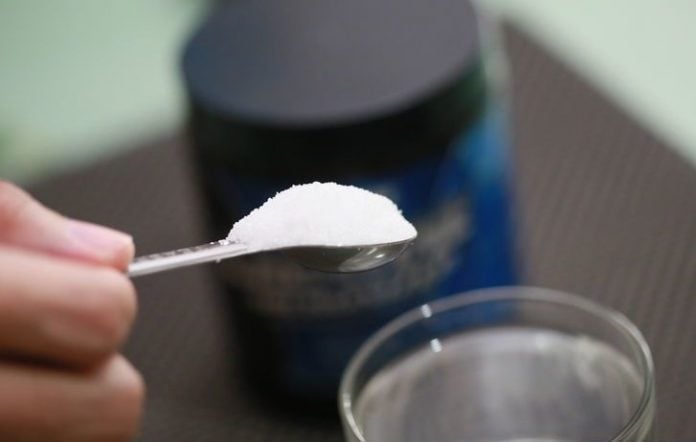
There are two basic ways to dose creatine as a sports supplement. The first is to go through a loading phase. That includes taking 20 grams per day, for a period of five days. It is best to divide this into 5-gram doses, taken throughout the day. Afterward, you enter a maintenance phase of 3-5 grams a day.
The second way is to take 3-10 grams per day. Essentially, you just skip the loading phase and go straight to maintenance. In both cases, it is advisable to cycle off creatine after 2-3 months. A couple of weeks are more than enough. Whichever method you choose, you can’t really go wrong. Just drink plenty of water and reap the benefits of creatine for BJJ, the one supplement that actually works!
The Estima Lock is one of those submissions that are in the grey area of legality under IBJJF rules. It is a devastating twisting leg lock that is legal at all belt levels. The Estima Lock is a fairly new move, one courtesy of the Estima brothers. the best setup is from the top, although there are numerous setups and variations. The beauty of the move is that it works in both Gi and No-Gi and is highly effective at all levels.
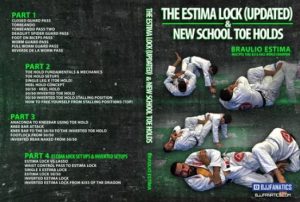
NEW! Braulio Estima – Estima Lock Instructional
Along with the first rising stars of the modern leg lock game in BJJ, two grapplers of the old school came up with a move to rival even the tightest heel hook. What’s even more impressive, they devised such a cunning move, that it is legal. Yup, white belts can also do it, despite it clearly being a very dangerous twisting submission. An Estima lock is close to the toehold in mechanics, but far more powerful.
The Estima Lock is the very brutal foot lock developed by two of the most famous competitors in Jiu-Jitsu. The Estima brothers are Gracie Barra black belts and standouts of the organization, both as competitors and coaches. Their names are Victor and Braulio, the latter being the older of the two. The Estima Lock is mostly attributed to Victor, although Braulio had a lot to do with it as well. They brought it to the attention of the grappling world in 2011. Victor won all his fights via the Estima lock at the No-Gi worlds that year. After that, it was fair game, especially as competitors discovered the IBJJF rules loophole.
The Birth Of The Estima Lock
During the late 2000’s Victor and Braulio Estima somehow ended up discovering the Estima lock. They’re not really famous for their love of leg locks, so this one came as a surprise to everyone. The manner in which they came up with the move though, is a very interesting one. Namely, during Braulio’s ADCC preparations, he annoyed his younger brother regularly with his inverted guard.
During one of their rolls, one of Braulio’s feet ended up stuck in Victor’s midsection. Instinct guided Victor to wrap a figure four with his arms around the trapped foot. It turned out to be a painful submission, one that was hiding in plain sight until then. From that moment on it was all about perfecting their newfound submission. They did so marvelously, as proven at the 2011 No-Gi Worlds.
Apart from Victor’s success, Braulio also put the Estima lock to good use. He actually won the ADCC while relaying a lot on the Estima lock. he found particular success in his batted with another modern BJJ legend – Rafel Lovato Jr. This proved the position worked at the highest level in grappling. Nobody gave it much thought then leaving the brothers with enough time to battle-test it and polish it. After Victor’s success at the Worlds, though, everyone saw the potential effectiveness and brutality of the Estima lock.
The Mechanics Of The Estima Lock
The Estima Lock is basically a very quick and just as painful foot lock. The basic position is just like the one we described before. The foot of the opponent needs to be on your belly. Imagine that your opponent has you in a lasso guard, but their foot is across your belly, fingers pointing to one side. What you need to do is grab the foot with a figure four grip, just like in a rear-naked choke. The first arm needs to go under the inside of the opponent’s ankle and grab the inside of the elbow on your other arm. The second arm completes the figure four.
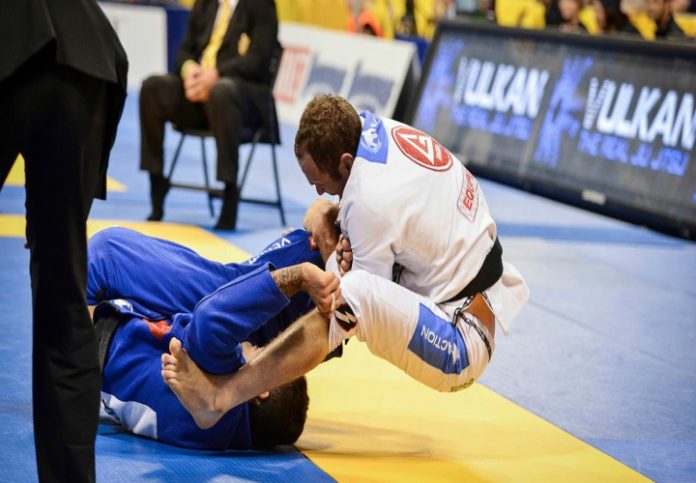
Finishing the movie has an unexpected detail to it. When you have everything set up, you’ll need to squeeze your arms and turn your body. You’ll need to turn towards the inside of the leg you are attacking. The fine detail here is to also engage your belly as you twist. Try and extend your belly into the opponent’s foot as much as possible while squeezing and twisting. The break is fast and brutal, so be careful when training.
The Estima Lock is a great option to quickly deal with a lasso guard or a reverse De la Riva guard, for example. In scenarios like these, your opponents are going to place their feet on your belly by themselves. All you need to do is know how to get the most out of it.
Estima Lock Attacks
The Estima lock is arguably the best foot lock to go for from the top position. That said, one very common setup for it is the reverse De La Riva Guard. Whenever you’re attempting to pass this guard, just make sure your center of gravity is low. As soon s you feel the outside foot of the opponent on your hi, it’s time to pounce. Lock up the figure four grip as tight as possible and engage your abdomen. This traps the foot without any manner of escaping. To finish, turn your body inwards and compress the ankle by raising the opponent’s heel upwards. The tap is going to come lightning quick.
As with all other submissions, the entry is more than half of the puzzle. Also, despite offering extreme control, there’s is a positional value to the Estima lock. The lack of control though is not as important because of the speed of the submission. However, attempting to submit from a distance is going to be pointless. That’s why you need the correct entry. This means getting as close to your opponent as possible so that your twist and crunch have maximal effect.
On a different note, the Estima lock is the ten perfect ways to finish off an opponent’s reaction. One of the most basic guards passes counters it swings the opposite leg over. This is especially the case when the opponent is defending a Half Guard pass. What this provides is a perfect opportunity to go for the Estima lock. Once the leg touches your hips it all about getting the grip. Why even bother passing when you can get a brutal foot lock right then and there and stay fresh for your next match.
Is There A Defense To The Estima Lock?
In terms of defense and counters to the Estima lock, there are some options out there. The trouble is, that contrary to most submissions, this foot lock comes on really fast! That means that you’ll barely have time to react if the opponent knows how to perform the Estima lock. A logical way to defend is to try and push with your trapped foot and attempt to invert in between the opponent’s legs. This is going to work if the lock is not tight since it unravels the grip mechanics. However, the reaction time you’ll need is close to impossible, in the case of a properly set lock.
In summary, no counter or defense works 100%. Actually, there’s no option that goes even near that number. The Estima brothers have a true gem here, one that they proved works at the highest levels. So, if you’re ever caught in a tight Estima lock, make sure you go for the only 100 % defense there is – tap. Anyway, continue reading to find out how to defend, escape and prevent getting caught by Estima Lock.
Estima Lock Escape and Defense
Plenty of BJJ submissions have the potential to be truly devastating. However, it’s those “blitz” moves that usually result in the most damage. The thing is that most of these moves are rarely accompanied by a high degree of control, meaning injuries are not a given. Regardless, here are the few exceptions that can cripple you and your BJJ career. These are the surprising moves, work in a flash and leave no space for escapes or counters. Tap or snap is all your left with, and if you hesitate you might even end up too late to tap. Luckily, not many moves feet this exact description. Of those that do, though, one is a real contender for the undisputed inescapable move in Jiu-Jitsu. It is the dreaded Estima lock, the move which you can’t get out of. Up until now. We bring you a couple of Estima lock defense ideas to keep you safe and rolling!
The infective spread of the leg lock game means most people today are aware of the main dangers of these submissions holds. In most instances, people know what to expect from any of the Ashi Garami variations. Calf slicer,s especially from the Truck position are still quite a gray area, despite being legal under IBJJF rules. However, blitz-style leg locks are nowhere to be seen in the modern leg locking game. It is all about control and slow methodical work. So, when somebody throws in a surprise blitz leg lock that is extremely painful and tight, you need to be ready. Especially when that move is legal for all levels of adult and master grapplers. To be honest there is not much out there on the subject of Estima Lock’s defense. The submission is so fast that even tapping out in time can be a problem. However, there are solutions.
The thing to remember with the Estima lock is that it works from a multitude of positions. Probably the biggest problem is that you can’t see it coming. There’s no elaborate setup, nor complicated games to bait you into position. In most cases, you’ll end up opening the attack for your opponents yourself, not even knowing where you went wrong. This is precisely the spot where you need to focus your Estima lock defense strategy. Understand the lock so you do not give it away for free. Next up are the usual steps in escaping submissions- prevention, a last-ditch defense, and tapping out. Yes, tapping does qualify as a defensive move.
Primary Estima Lock Defense: Prevention
As you can see, there’s not much to the Estima lock as a move. The trouble is that the figure four grip sticks your foot to their torso. besides the huge power of the torso, the position of the foot is a very awkward one resulting in an exceptionally painful submission. This is where the first layer of Estima Lock defense comes in.
As with every defense in Jiu-Jitsu, and especially leg lock escapes, you need to make sure you’re never actually in trouble. A key problem is that the Estima is available against most open guard variations. If you can’t use your favorite guard(s) you won’t be able to apply your A-game. The first way around is the angle of your foot. If you keep your fingers to the outside, much like with a single leg X guard, you can safely venture into Estima lock territory.
The second key aspect is the grip. For the submission to work the opponent needs to turn into you. While this is leaving it late somewhat, stripping off the near sidearm is going to allow for space to wiggle your foot out of danger. The key is to hunt for that arm the moment you notice the grip setting into place. If you reach for the arm after the opponent turns, it will be to tap out. Instead, look to engage one arm if you can. Whenever you think about working from the open guard, rely on a sleeve or writ grip on one arm. There’s no Estima lock without the figure four.
Secondary Estima Lock Defense: A Last-Ditch Effort
This is where things really heat up. This is the one Estima lock defense that can safely get you out of trouble. There’s only one catch – you need to time it absolutely right. The principle of this defense is based on the ground rules for defending a toe hold. Since the Estima lock works pretty much like a toe hold, the same principle applies. To relieve the pressure of a toe hold, you need to turn in the direction of the force your opponent is applying.
This is the essence of this Estima lock defense. When your opponent goes for the lock, you have to immediately turn towards the opposite side of the trapped leg. The goal is to go for inversion, but you must not stop where usual inversions do. Instead of simply inverting you’ll need to do a full circle on your back. If you remain inverted, the lock can still work, so you need to complete a full 360. However, remain wary of timing. If you start turning too late, your opponent can simply drop abase and you’ll be stuck for good. So, learn to recognize the Estima lock dangers and use prevention first and foremost. If you see the grip coming together, go for the roll under to relieve pressure and immediately look to grip an arm.
Buy Eddie Cummings Seminar DVD/On-Demand
Since most people think they know and understand Ashi Garami and leg locks, it is time to throw them a curveball. Check out the “Ashi Garami Seminar” DVD by the man who caught everybody by surprise, Eddie Cummings. “The Wolverine” does not only offer you key leg locking tips but also defensive concepts to escape even the most dreaded positions in Jiu-Jitsu. Get it while it is on sale!
The Tap Out Defense
If you pass the point of no return of the Estima lock, which is the moment your opponent settles into the base after turning their torso, you have just one option left for defense. It is the one defense that universally works 100% of the time. Consider tapping out as a defense instead of a defeat and you’ll discover a whole new level of Jiu-Jitsu. Plus, you’ll keep your feet together to train more and try a different defense.
More About Estima Lock
The Estima Lock is the brainchild of a pair of BJJ’s most famous brothers. Braulio and Victor Estima are legends of the sport. Both are highly rated black belts that fight and teach under the Gracie Barra banner. They both have contributed to the sport immensely, in plenty of technical aspects. However, there’s one move that is probably the move of their careers – the Estima lock.
It was Victor who actually came up with the move by accident, during an ADCC training camp. Braulio, who has a wicked guard game ended up with a foot stuck on Victor’s hip/belly. His brother just slapped a figure four grip out of habit but ended up with as devastating a foot lock as there is in all of grappling martial arts. Further experimentation led to the move that brought Braulio an ADCC title.
The Estima Lock is quite simple from a mechanical standpoint. The basic setup is against an open or half guard. The moment your opponent places the outer edge of their foot on your belly, you’re ready to submit them. One of your arms goes around and the other locks it in place via a figure four grip. From there you take space away by crouching and you finish by turning towards space in between your opponent’s legs.
Eating healthy is a big part of Brazilian Jiu-Jitsu. However, for people with modern lifestyles, this can often be a very difficult thing to accomplish. If you really want to make sure you do your best to eat healthy, learning how to meal prep is your best option. Allocating time out of your week for meal prep might turn out to be the best decision you’re going to make. There are certain strategies to make meal prep an enjoyable and easy task as opposed to a chore you’re dreading. Here’s how:
Want to be healthy and full of energy for BJJ? Then focus time and effort on your nutrition habits. You don’t have to buy the latest Dolce Diet book, nor hire an expert nutritionist. Just a little common sense and a few new habits and you’ll be in the best shape of your life in no time! No worries about time constraints either – we’re all busy. The basic idea is that with a couple of hours a week you can be ready to eat healthily and train hard. The road to sustainable nutrition is in meal prep.
Time is generally the biggest enemy of grapples. Professional grapplers have in excess of three training sessions per day. Recreational grapplers tend to have full-time jobs. Both categories also have families and other responsibilities apart from BJJ. Eating healthy in a sustainable way is a real struggle for everyone. Well, it doesn’t have to be so. All you need is the correct meal prep strategy and you’ll be all set. No need to spend hours cooking each day, or go for junk food because it is convenient. Let’s see how weekly meal prep can help you get better in Jiu-Jitsu.
Weight Maintenance And Cutting
So how can you benefit from doing meal prep for the entire week? Well, for starters, you’re going to save time. Furthermore, you’re going to have healthy meals at your disposal. Finally, you’ll be able to both maintain or cut weight more easily.
If you’re dead set on cooking healthy meals for yourself throughout the week, you’ll need time. Breakfast is not a hard task, but imagine cooking lunch and dinner every day as well. That is difficult even if you’re doing nothing but staying at home between training. Meal prep, on the other hand, requires you to dedicate 2-3 hours during the weekend and you’re set for the week.
The temptation to go for junk food or even a restaurant meal is common for grapplers. Very often, these temptations actually get the better of us. With efficient meal prep, you’ll soon find that these temptations completely go away. Having a pre-prepared meal with you can ensure that you won’t binge on empty calories.
In Jiu-Jitsu terms, the habit of doing a meal prep offers control. Just link when you roll, you need to be able to control your diet. Competitors, in particular, have to learn how to control their diet more than anyone. In a weight-class sport, such as BJJ, being just a pound overweight means you get DQed immediately. , Hitting that competition weight is not an easy task to do. Doing a meal prep is going to allow you to gradually reduce calories which means you can skip a hard weight cut. Furthermore, you can control the type of nutrients you’re ingesting.
A Simple Weekly Meal Prep Guide For Grapples
So, how do you develop the habit of doing meal prep? It’s quite easy, actually. Let’s take Sunday as our meal prep day, as it is one that is usually available to everyone. That said, you do not need the whole day. What you actually need is about an hour to do the shopping and approximately a couple more to cook the meals.
First, make sure you’re efficient when shopping. Have a list and stick to it as much as possible. Go and get all the groceries, come straight home, unbag them and turn on the stove. Make sure you know how many people you’\re cooking for. Don’t let food go to waste, so if you’re only cooking for yourself, don’t go overboard. The idea is that you’ll have everything ready to either eat right away or after a short reheat.
Next, you’ll need to organize your meals. Eating the same meal over and over again is boring. You won’t even last a couple of weeks if all you eat is rice and chicken. Instead, break your meals up. A good starting point is an alternating system of three main meal types. This way, your meal prep will last you six days. To make things clear, you’ll cook three types of meals and make enough of each for two days. In reality, the ingredients might be the same, but meal flavors and combinations are going to be different. After all, you need to enjoy food, otherwise, you’d just boil some chicken. Yuck!
Remember to buy stuff that you can in bulk. It’s cheaper and you can keep using them every week.
How To Avoid Boring Meals
Now that you know how to meal prep, let’s discuss the meals themselves. To prevent your meals from becoming boring you’ll need to introduce some variety. Be as creative as you like in that sense. Remember to keep bulk ingredients neutral (like rice or potatoes) and just introduce flavors and texture later.
For example, let’s say you have a batch of brown rice. Eating brown rice for a week is not a pleasant experience. Here’s how to make things interesting. For the first meal, go for an Asian twist. Throw in fried eggs, some chili, garlic, and cilantro in there. An avocado or some broccoli is also a perfect fit. Of course, add in the meat of choice.
Next, liven up your rice in an Indian fashion. Throw in some curry, cumin, and/or turmeric in some olive oil and add in the rice. You can even put some saffron in boiling water and add it in as well. Combine it with some steamed/stir-fried vegetables and some shrimp and you’re off.
Go for the classic to finish. Keep the rice plain but add in a different kind of meat. Let’s say you’ve got a good steak ready as part of your meal prep. While you reheat the steak and rice, you can whip up a quick mushroom sauce in about 5 minutes. Perfect!
You might’ve understood by now that you also need to bulk cook meat and veggies as well. Make sure you have at least two types of meat and a few different steamed, fried or simply chopped veggies. In terms of storage, let everything cool down, divide into Tupperware containers and place them in your fridge. Nothing to it.





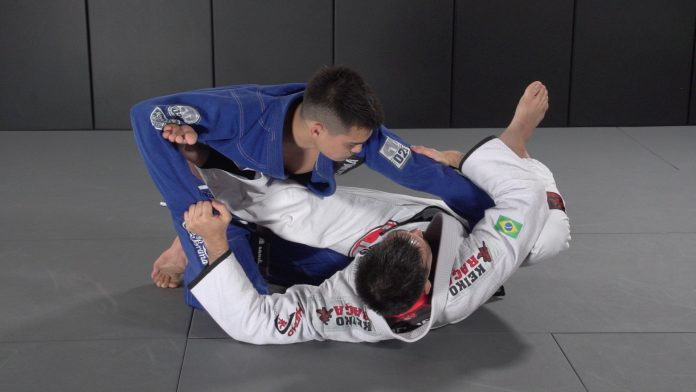
 Having a solid collar grip on your opponent means you can use gravity to help you control their posture. Once you have someone’s posture, you can go about applying any open guard attack you want. Breaking the posture is as easy as getting a tight collar grip. Furthermore, if an opponent decides to go with gravity and come down low, the same grip offers a different threat. Now the opponent is at choke level and you have different options to attack. For example, you could go for your basic cross collar choke or hit a loop choke.
 The reason why your hips are important is space. Space is the enemy of the guard passer which makes it your best friend. The ability to manage the space is just as important as winning the grip fighting. If you watch a high-level black belt match constant improvements of grips and constant hip movement are going to be the two prevalent fields of battle.
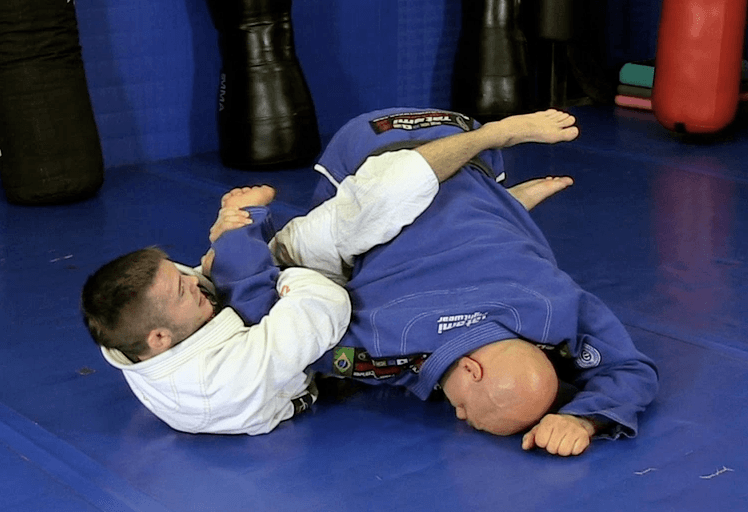 Start threatening your opponent from the very first moment. Get a grip and go for an attack. It can be a sweep or a submission. Whatever you choose to do never let your opponent catch his breath. As long as you have good grip, you can move your hips and you can launch an offensive, your guard is going to become impassable. After all, this is what black belts do!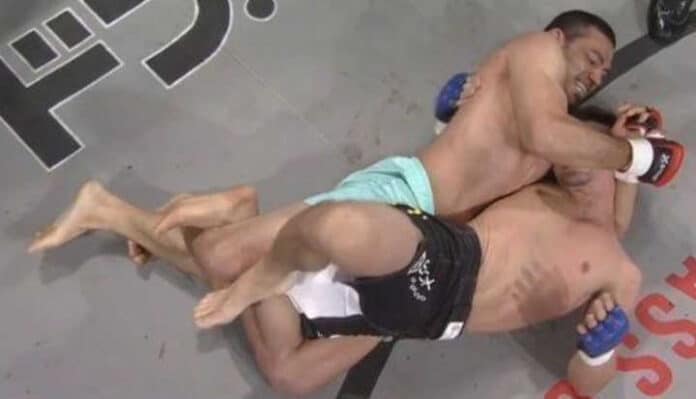
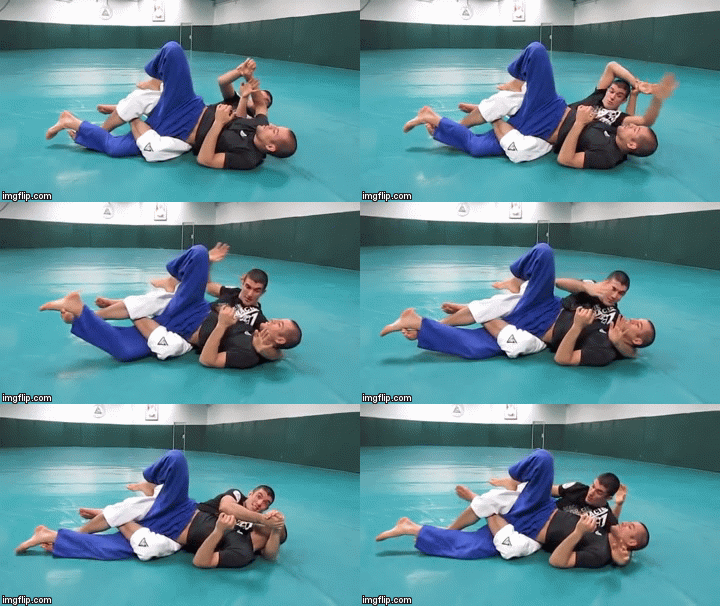 Twister is a rotational spine crank submission. It involves forcing the opponent’s head towards one of their shoulders while twisting the lower body to the opposite side. Technically speaking, the submission with the Twister is due to lateral hyperflexion of the cervical spine. Although many people perceive this as a neck crank it is actually a submission on the whole cervical column. Depending on their level of flexibility, your opponent can feel the effects of a well-placed Twister in multiple body parts. Tension and pressure can range from the neck, all the way through the spine, and even in the shoulders, knees, and abdominal muscles. Most of the pressure is, however, on the neck, thus landing the Twister as a neck crank.
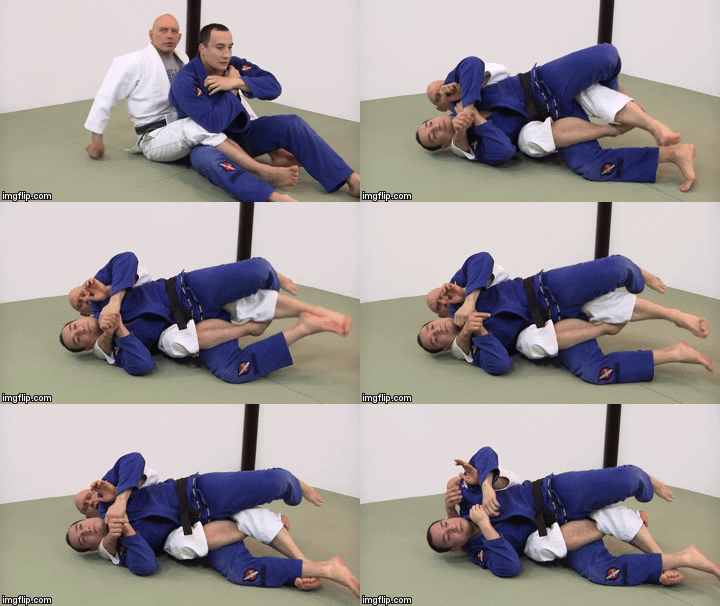 Basically, you have two main paths to the Twister. One takes you to the position from back control. The other one moves in the opposite direction taking you from the truck towards the Twister. These are not the only two position that allows access to the BJJ Twister but is by far the most effective. If you have seatbelt back control, first you’ll need to establish lockdown control with both your legs on one of the opponent’s legs. Once you have it, release the seatbelt grip and establish a baseball bat grip on the opponent’s arm From there, the Twister is just a step away.
 The opposite side path takes you from the legs towards the Twister. From the truck position, you need to exchange control of the free leg with the same side arm of your opponent. Once you have the arm, make sure you’re not pulling on your opponent too much as you’ll end up in back control. Instead, focus on triangling your legs and pinning them in place while you battle to thread the arm behind you.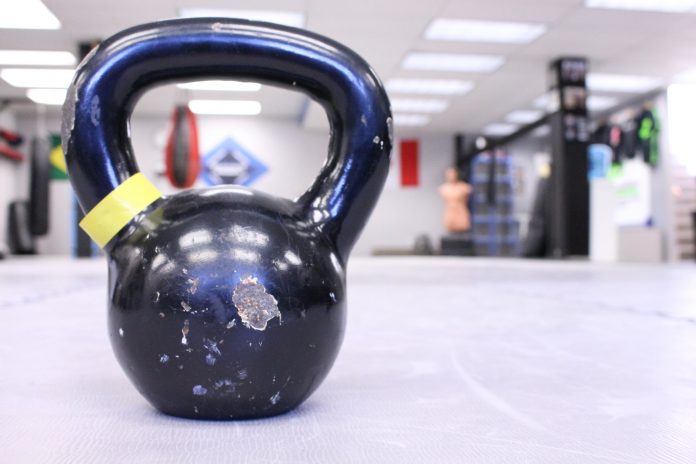

 Alliance Spring’s Roberto Francisco Jimenez is the 2018 purple belt heavyweight and absolute world champion. He not only beat every opponent in his path but did so in an incredible fashion. The purple belt teenage sensation initially won six matches to claim the title in his weight division. Later on, he impressed once again by beating five more opponents to become teh undisputed 2018 purple belt world champion! The most impressive thing about his victory is that he beat all 10 of his opponent’s by submission! Yup, he never even saw one match go the distance.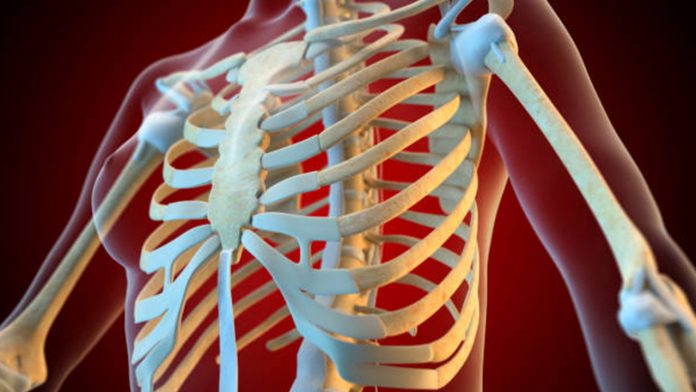
 A cracked or broken rib is a very serious condition. There is potential for the bone to go toward the inside, piercing a lung, or even reaching the heart. The pain associated with a broken rib is immense, so it’s hard to miss or keep training with one. Furthermore, you’ll have all of the above symptoms appear at the same time. If that’s the case g straight to an ER to get professional medical help. A broken rib with no organ injuries is resolved with rest and pain medication. There’s no cast for your rib cage as it is constantly in motion when breathing. So just take the rest.
 Training The Obliques:







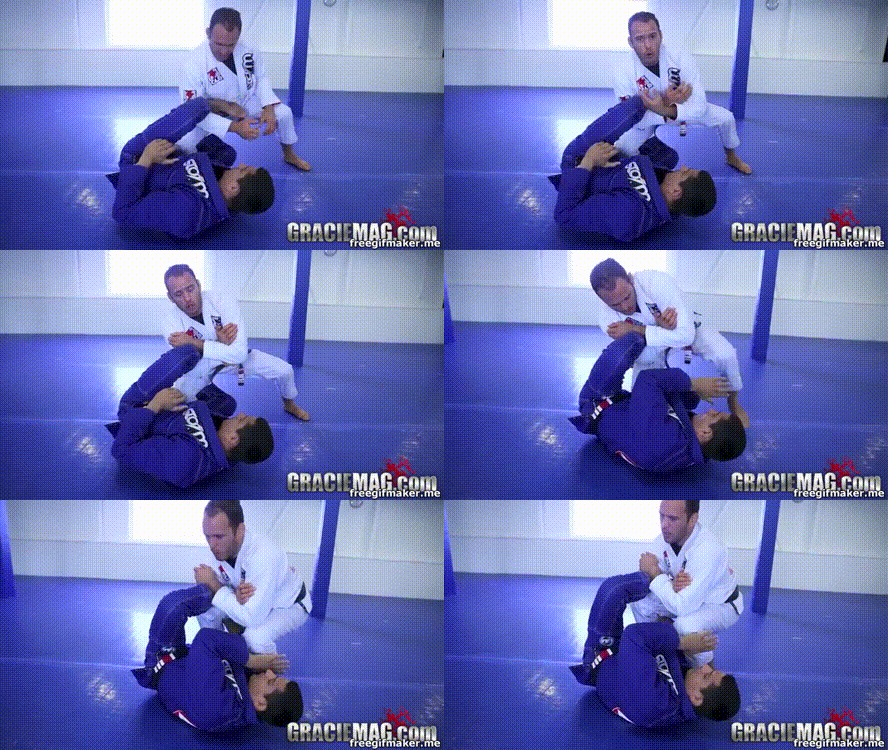 Finishing the movie has an unexpected detail to it. When you have everything set up, you’ll need to squeeze your arms and turn your body. You’ll need to turn towards the inside of the leg you are attacking. The fine detail here is to also engage your belly as you twist. Try and extend your belly into the opponent’s foot as much as possible while squeezing and twisting. The break is fast and brutal, so be careful when training.
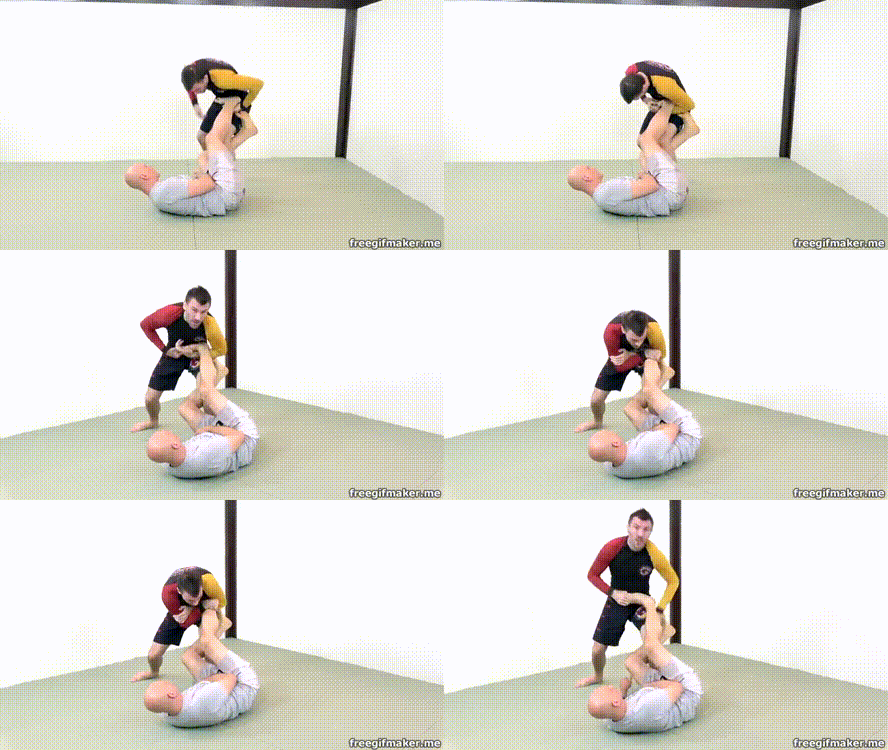 The Estima lock is arguably the best foot lock to go for from the top position. That said, one very common setup for it is the reverse De La Riva Guard. Whenever you’re attempting to pass this guard, just make sure your center of gravity is low. As soon s you feel the outside foot of the opponent on your hi, it’s time to pounce. Lock up the figure four grip as tight as possible and engage your abdomen. This traps the foot without any manner of escaping. To finish, turn your body inwards and compress the ankle by raising the opponent’s heel upwards. The tap is going to come lightning quick.
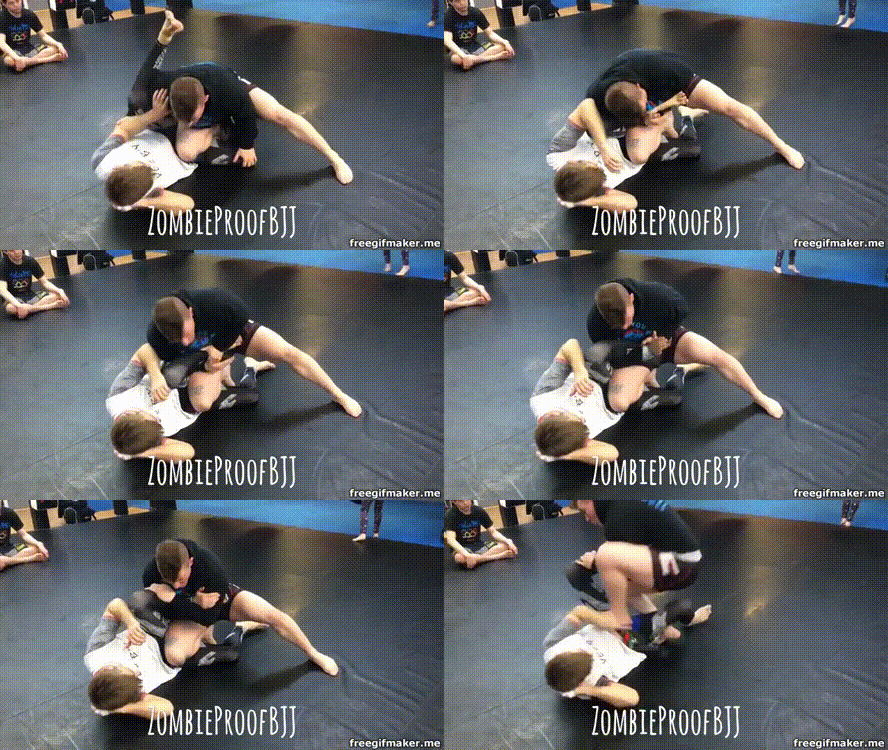 On a different note, the Estima lock is the ten perfect ways to finish off an opponent’s reaction. One of the most basic guards passes counters it swings the opposite leg over. This is especially the case when the opponent is defending a Half Guard pass. What this provides is a perfect opportunity to go for the Estima lock. Once the leg touches your hips it all about getting the grip. Why even bother passing when you can get a brutal foot lock right then and there and stay fresh for your next match.

 Time is generally the biggest enemy of grapples. Professional grapplers have in excess of three training sessions per day. Recreational grapplers tend to have full-time jobs. Both categories also have families and other responsibilities apart from BJJ. Eating healthy in a sustainable way is a real struggle for everyone. Well, it doesn’t have to be so. All you need is the correct meal prep strategy and you’ll be all set. No need to spend hours cooking each day, or go for junk food because it is convenient. Let’s see how weekly meal prep can help you get better in Jiu-Jitsu.
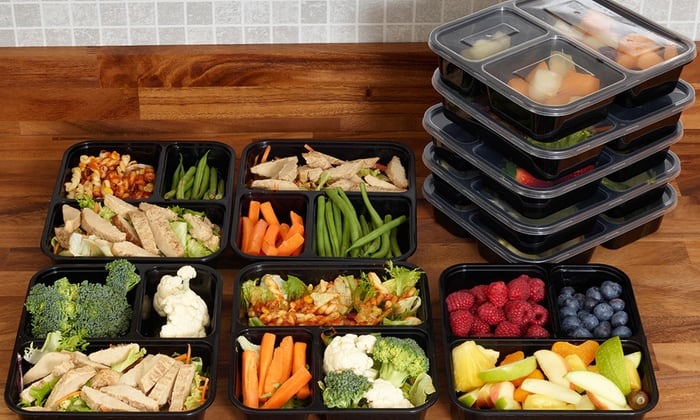 Next, you’ll need to organize your meals. Eating the same meal over and over again is boring. You won’t even last a couple of weeks if all you eat is rice and chicken. Instead, break your meals up. A good starting point is an alternating system of three main meal types. This way, your meal prep will last you six days. To make things clear, you’ll cook three types of meals and make enough of each for two days. In reality, the ingredients might be the same, but meal flavors and combinations are going to be different. After all, you need to enjoy food, otherwise, you’d just boil some chicken. Yuck!