




Two Types Of People That Can Ruin Your BJJ Experience

Two Types Of People That Can Ruin your BJJ Experience

Brazilian Jiu-Jitsu has an uncanny ability to take over your life before you’re even aware. However, it is not just the honeymoon period that you will have with BJJ that will quickly draw you in. BJJ is a different kind of animal, drawing you deeper and deeper the more time you dedicate to it. As far as addictions go, though, it is the one addiction you do what in your life. However, you have to vary of how, you allow to influence your JIu-Jitsu, and even more importantly, to what extent. While you absolutely need others for the ultimate BJJ experience, you can’t let people ruin Jiu-Jitsu for you.

Do you know who the two types of people are that can completely derail your positive BJJ experience and turn it into a negative one? It is easy, those that have the most influence on you can also make grappling life quite hard for you. In that sense, one type is directly involved in your BJJ experience, while the other can have an influence even if you never meet them. Those two types are your BJJ coaches and your BJJ idols. While you absolutely need them in your Jiu-Jitsu journey, the fact of the matter is nobody can ruin an athlete more than their coaches and their idols.

The BJJ Experience

One of the things I enjoy about Jiu-jitsu the most is seeing how it transforms the lives of others. Seeing people discover BJJ, from that first moment when I get to present it to them, to them discovering how deep it can go and all the directions it offers, is something really worth living for. Slowly, people completely immerse themselves in Jiu-Jitsu, accepting the inevitable – it becomes a lifestyle.
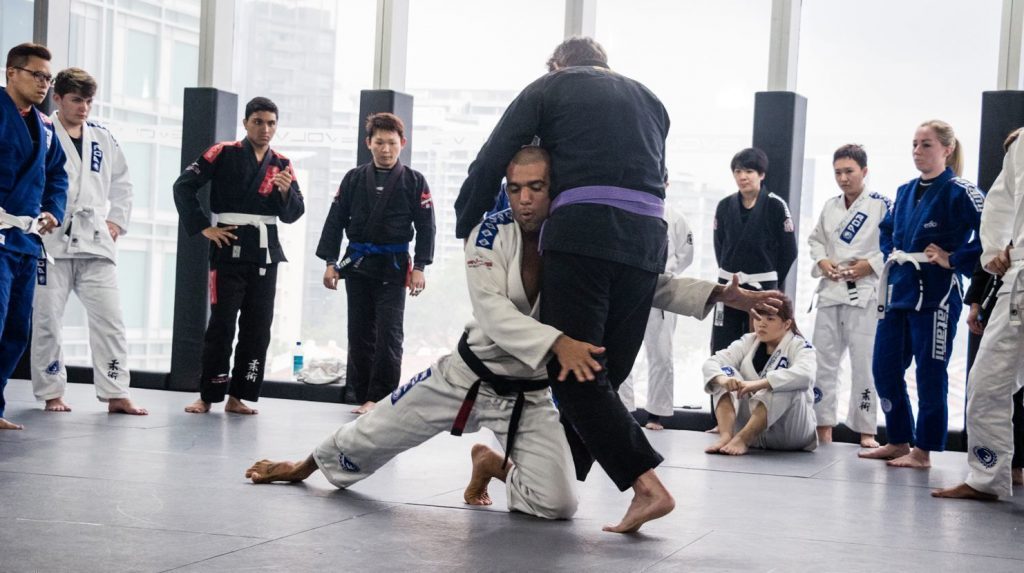
The BJJ Experience: TrainingAt this point, it is not just about what happens on the mats. You start thinking about BJJ on your way home from training, in the shower, before you fall asleep. Curiosity gets the better of you and soon, your YouTube an Google search history clearly reflects your new obsession. Of course, this inevitably raises more questions than it does answers. This is when the BJJ filter starts working. People that are not really in it for the long run, will be able to leave those questions aside and just come back for training. That’s one kind of a BJJ experience, but not one that lasts, although that’s far from a rule.

Those that decide they will look for the answers are the small percentage of folks that will eventually reach the higher levels of the sport. They’re the people that will get the ultimate BJJ experience and might end up switching from a BJJ lifestyle to Jiu-Jitsu being their life. I am one of the lucky ones that can count themselves in this category. However, things can take a turn for the worse, and the source for that are types of people that most of us won’t suspect have such an influence.

Who Can Ruin BJJ For You

Sometimes it is those people that we look at with admiration that can influence us in ways that are unexpected. That said, athletes place huge belief in their immediate coaches and other athletes that are their idols. Suffice to say, in most cases, things turn out as they should, with these people having positive effects on the athlete in question.

In BJJ, this applies not just to those that grapple competitively, but to everyone deeply involved in the sport. That is just about everyone, actually. In that sense, expectations we might have from coaches and idols can often be misguiding and can result in a less than optimal BJJ experience. Both coaches and the superstars we admire are figures of authority when it comes to JIu-JItsu. As such, they carry a huge burden of responsibility towards their students/fans. In most cases, particularly in Jiu-Jitsu, coaches/instructors and even top-level superstars do pay a lot of attention to this. It is when they don’t that they can turn people’s BJJ experience into a sour one and even drive people away from the thing they love. Do not let this be you.

The Influence Of Coaches

It is more than obvious that coaches have the biggest influence on how your BJJ experience turns out. They are the people you interact with at least a few days of the week. Often, people have so many questions that they write or call coaches to clear some of them up. In Jiu-Jitsu, most instructors will oblige and do their best to answer everyone and help them on their BJJ journey. It is one of the best things that you can if you’re an instructor!
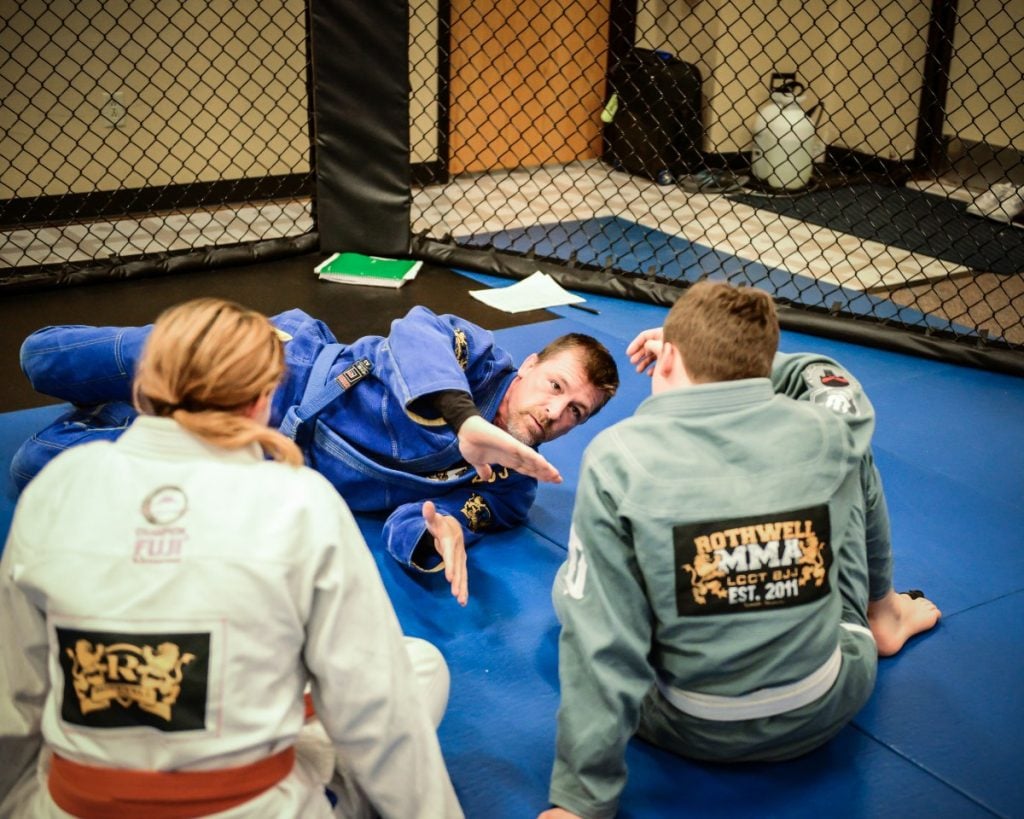
BJJ Experience CoachesHowever, it is undeniable that a coach can influence athletes in ways that are less than optimal for them. Jiu-Jitsu is a highly individual thing and coaches need to recognize each and every person’s affinities and guide them from there. A tall order, I know, but that’s exactly why not everyone is cut out to be a BJJ instructor. One way BJJ coaches can mess the BJJ experience up for people is by trying to apply a rigid approach to things. This can end up working for plenty of people but might hold those back that have the potential to be the next huge thing in grappling. And that’s only the technical aspect of things.

The interpersonal relations of a coach and student are also huge, and also highly individual. Once again, it is the coach that has to be the one with all the responsibility. People that come to Jiu-Jitsu are lost and need lots of guidance. How the coach approaches them at this point can really be the difference between a bad BJJ experience and one that’ll last a lifetime. The same holds true for people that go through the belt system. People will inevitably change, discover their own Jiu-Jitsu, and have more and more questions as time passes by, rather than the other way around. Getting the same answers again and again just because it is easy to give them does not mean the curiosity of the students is going to be satisfied.

Careful With Your BJJ Idols

This is something I can’t stress enough. In most sports, you don’t get to meet your idols. Or, even if you do, you get the same interaction with them that you’d get with a  movie star or famous singer. In Jiu-Jitsu, you can end up training with your idols and rolling with them. Moreover, one day, very easily, you might even come up against them in competition. That means you get to have real contact with them and you might end up bitterly disappointed.

People That Can Ruin your BJJ Experience: IdolsVery often when we admire some huge athlete superstar, expecting one day to be just like them. Managing such expectations is key to having a positive BJJ experience. Even though you can undoubtedly reach the black belt level and become an expert in JIu-Jitsu, you’ll hardly ever reach the top 1% of BJJ. Not impossible but unlikely. Well, those people we all admire that go through everyone like a hot knife through butter are in the top 0.1%. Now that’s impossible, and you should know it.

Finally, in any interaction you end up having with your idols, which you will if you train long enough, managing expectations is key once again. It is unrealistic to expect everyone to be as laid back and nice as some star grapples or people you’re used to are. There are countless ways in which an idol can really mess up your love for BJJ and even drive you away from this beautiful art of ours.

Wrapping Up

Be wary of those who you hold in high regard in Jiu-Jitsu. While everything I said in this article is the exception rather than the rule. As BJJ evolves and spreads, it will become something we see way more often. Jiu-JItsu is for everyone,  and everyone’s BJJ experience should be an uplifting and positive one, preferably even life-changing. And remember, while the responsibility definitely lies with coaches and idols, it also lies with you. You can always find new ones that will fit your way of seeing JIu-JItsu much better.


Coronavirus BJJ Guidelines: Staying Safe In The Gym

Coronavirus BJJ Guidelines For Protection

We’re officially in a health scare craze with the dreaded Corona Virus spreading throughout the world. If I say that you shouldn’t panic, and just keep doing what you’re doing, you’ll most likely write that off. So, even though in my experience as a medical doctor I can freely claim this Coronavirus outbreak is nothing out of the ordinary, I will offer several Coronavirus BJJ guidelines to help you feel and stay safe while you’re on the mats. After all, if we can train busted up with torn ligaments and herniated disk, how is a small thing like a virus going to stop us from rolling with as many people as possible on a daily basis?

Covid-19, AKA the Wuhan Virus, AKA the Coronavirus of 2020 is creating massive panic throughout the world. We’re not in a movie-like level of craziness yet, but if we do reach that point, it will all be down to how people react, rather than how dangerous the virus is. Let’s face ti, with intercontinental flights and people traveling, the virus will spread everywhere. If it was as crazy deadly as diseases of the past, we would’ve been dropping dead left and right by now. Still, I understand that most people do not have a medical background and do not really comprehend what’s going on. So staying safe is better than becoming sick, right? In that sense, here are some logical Coronavirus BJJ guidelines to help you protect yourself.

What Is This Corona Virus Craze?

Let’s start at the very beginning. The Coronavirus is a virus that’s pretty much ubiquitous to our surroundings everywhere in the world. In fact, your pets (if they are mammals, particularly dogs, and cats) have probably had it at a certain point in the form of digestive issues. It goes away on its own because it is not really that virulent (able to cause long and dangerous infections). It is also not very resistant to certain antiviral drugs.

Coronavirus BJJ InfluenceWith that in mind, when a virus mutates, bad things can happen. Particularly if one of the above-mentioned properties (virulence and resistance) changes in the favor of the virus. This particular member of the Coronavirus family is a new one, though. It seems to have jumped from other mammals to humans and keeps spreading between humans at quite a high rate. That makes it contagious, but not nearly as deadly as most people think.
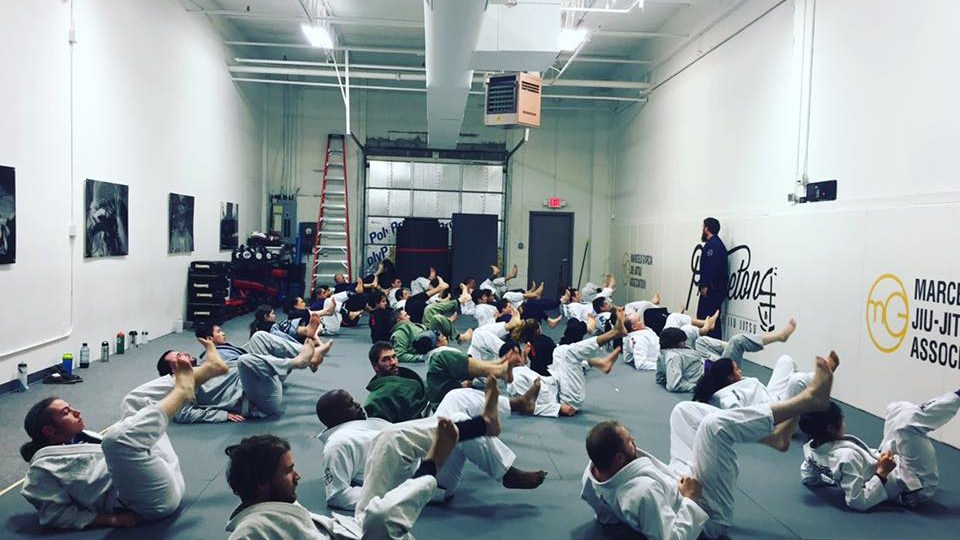
Just as a comparison SARS and MERS had mortality rates of 10% and 35 % respectively. On the other hand, Covid-19 has a mortality rate of 2% and it involves mostly critically ill patients.

Symptoms of a Coronavirus infection include mostly respiratory signs. Viral pneumonia is the outcome of an infection, with coughs, fever and breathing difficulties being the most prevalent. In other words, the Coronavirus symptoms are similar to those of the flu. The immune system is able to fight it off on its own, and there have been some advances made in different countries for cures that work. However, in terms of Coronavirus BJJ guidelines for protection, the same thing that holds true for the flue does so for the Corona –stay at home and recover.

How Will The Outbreak Affect BJJ?

The potential for a Coronavirus BJJ spread is huge, given the close contact people are in when grappling. Currently, most people that train are in good overall health and not considered to be in the group that’s at a higher risk of mortality. It is definitely unwanted for the virus to reach us grappling folks.

For now, people are not yet overreacting with precautions, although there have been some overly cautious steps begin announced. For example, some countries to which the Coronavirus has spread, have declared they’re considering disbanding all sports events in order to minimize large gatherings. This may have an adverse effect on sports and that includes BJJ.

The way in which this virus can affect BJJ is by getting competition events canceled, first and foremost. At this point in time, traveling is unwise anyways, because the virus does spread very easily. However, if the spread continues, academies might be forced to close for an unspecified period of time. That is an outcome none of us want to see. However, there’s a way to prevent it all. As long as we all follow some Coronavirus BJJ guidelines and take precautions, I think we’ll be able to train through this craze just like we train through everything else. After all, it is the panic that is the real danger, at least in the case of the Covid-19.

Coronavirus BJJ Guidelines: Taking Precautions

Coronavirus BJJ Threats And RisksIn terms of specific methods of protection, there are general guidelines that you need to follow first. For example, if you’ve been to China lately, or any of the affected countries, stay at home for a week or so. The recommendations currently are two weeks, which has to do with the incubation period of the virus. Remember that if someone hs the virus, they will shed it long before they display symptoms. Some people might not even display symptoms due to their immune system fighting it off, but that doesn’t mean they won’t spread it. As far as general guidelines go, this is the most logical one that institutions have issued so far.
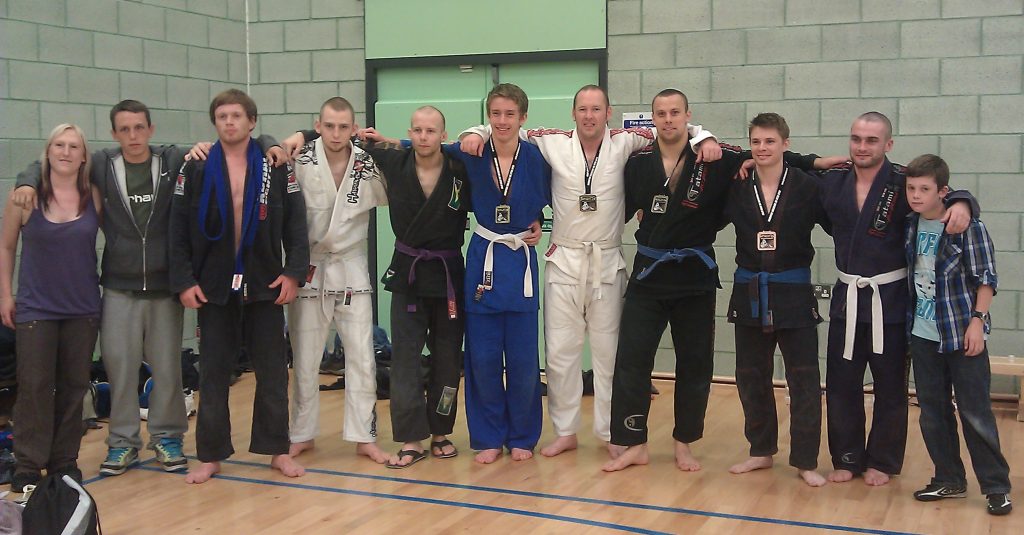
Next up, on a more specific note is hygiene. There’s no need to point out that In BJJ, hygiene is extremely important. Well, if we want to avoid causing a Coronavirus BJJ outbreak, washing our hands a bit more regularly is a simple method that can keep us safe. That, along with increased personal hygiene (washing your training gear, for example)  will help keep out any bug away from you and your academy. Even this “scary” new Coronavirus.

Of course, it goes without saying, that if you have flu-like symptoms you should go see a doctor immediately and most definitely do not come to class tonight!

For gym owners, mat hygiene become seven more important now. There is no real scientific data on how long the virus can survive outside the body on any kind of surface. However, in terms of Coronavirus BJJ precautions, make sure you get a strong disinfectant to wash the mats. Preferably one with distinct antiviral properties.

Oh and one more thing. Do not turn your gym into a bunker and close the doors to visiting grapplers. If they come from infected regions, make sure you have a chat with them, and with your entire team, to figure things out. Remember, most of this virus thing is a scare, and your overreactions might end up having years-long consequences.

Conclusion

So far, there are no confirmed cases of BJJ practitioners who have been infected, even in China. Given that people keep training in cities and countries where there are Coronavirus cases thre’ absolutely no room for panic. However, it is smart to follow some Coronavirus BJJ precautions. Even if you end up not needing them for a Coronavirus, they might help you fend off the flu or some other bug. After all, it’s flu season.

Most Common Types Of JIu-Jitsu Players You’ll Meet

Types Of Jiu-Jitsu Players Cover

One of the best traits of Brazilian Jiu-Jitsu is that it offers an incredible platform to meet all kinds of new people. Just take a look around your gym. You’ll notice that no two people are alike, and that is true for their personality both on and off the mats. When it comes to training BJJ, people’s personalities tend to shine through their style. As such, there are countless types of Jiu-Jitsu players out there. Still, some of them are repeating all across the world, and every gym is likely to have a combination of them at any given time. Taking things further, I decided to group them according to the hierarchy of BJJ into students, instructors, and black belts. just for the fun of it.

BJJ Globetrotting is fun. In fact, it is one of the best possible things you can do to enjoy Jiu-JItsu to the fullest. Whether you’re going to camps, or simply traveling to different academies for training, you’ll end up meeting different types of Jiu-Jitsu players. They might not all suit your personality when it comes to hanging out (i doubt this) but you can certainly learn something from all of them. Recognizing them might even help you seek out the ones that are best suited for you. So, next time you’re training, be on the lookout for the most common types of Jiu_jitsu players out there.

Different Jiu-Jitsu Players And Their Defining Traits

There’s something extremely interesting about rolling with people you do not know. It is like a dialed down competition, for the most part. However, instead of just focusing on the roll itself, you might take things to a whole new different level. You can try and figure out what type of grappler you’re dealing with. This is not only fun, but it has an important lesson hidden inside. If you manage to clock your opponent at a tournament, identifying which type of Jiu-Jitsu players he falls under, you’ll gain an upper hand. This is not always easy to do, but it is not impossible.

As far as I am concerned, it is the variety of people in BJJ that makes the sport so interesting. Of course, this has lots to do with the fact that Brazilian Jiu-Jitsu allows people to express themselves completely in their grappling style. In combination, this means you’ll hardly find people that roll the same, even if they’re trying to do the exact same things. That’s because even though they might follow a similar gameplan, they’re completely different types of Jiu-JItsu players.

In any given gym, at any given time you’ll see students, instructors, and black belts on the mats. Nowadays, instructors absolutely don’t have to be black belts, but they do make u pa different categories compared to people that are just students. In order to make things fun, I decided to categorize the different types of Jiu-Jitsu players in each of the three groups, instead of just talking overall personalities. This is based more or less on my personal experiences, but if you’d have any suggestions, feel free to let me know in the comments.

Types Of Students

Types Of Jiu-Jitsu Players - BJj StudentsLet’s start off with the most common types of students you meet in an academy. In lieu of today’s “categorization,” students include everyone apart from black belts, excluding instructors. So, everyone white to brown that’s just coming in to train, try and figure out which one are you.
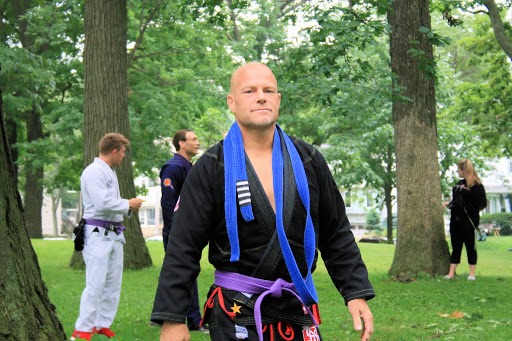
The Meathead

Just like the name suggests, what you see is what you get. this is the person that uses all of their strength (which they have an abundance of) in just about every possible exchange. In BJJ, these are often referred to as spazzers as well, because they tend to go hard and all tense up for a while. The keyword here is for a while because if you weather the storm, you can toy around with meatheads any way you want. They’re fun to be around, though, but not so much to be under.

The Tech Wizard

The one everyone would like to be, but can’t. There’s a physical prerequisite of those extremely technical people in every academy – size. If you take a look, you’ll notice that the smallest people, female or male, tend to have the crispest technical games. That’s down to the fact they simply have no choice. Of course, larger people can be highly skilled too, but if you want to learn technique at the highest level, try rolling with a girl or a smaller guy.

The YoutTube Know-It-All

One of the more modern types of Jiu-jitsu players out there. There are people that like to spend a lot more time searching techniques on YouTube, rather than learning on the mats. That said, Youtube is a great learning tool, when used wisely, the thing with YouTube grapplers is they think they have all the answers through some fancy new 46-second clip. You’ll notice them both trying to pull off stuff like that on people, or trying to teach the moves to others. Both rarely seem to work out for them.

Purple Belt Syndrome

Types Of Jiu-Jitsu Players - purple belt studentsYeah, this is a category of its own. Purple belts tend to think they are done with learning, they know it all and they can go about things their own way, waiting to get promoted. As they’ll inevitably discover as they reach brown, there are loads more to learn. However, in the meantime, they’re the type of Jiu-jitsu players that will skip warm-ups, and even do their own thing during technique practice. It’s highly annoying to instructors and can be disruptive, but is the natural order of things. Still, plenty to learn from these types of students, because they do tend to watch BJJ matches more than anyone else.
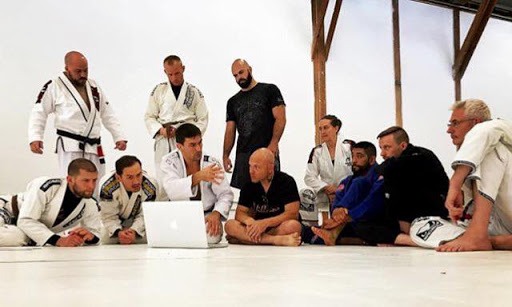
The Hidden Superstar

This is a type of BJJ persona that I found through teaching Jiu-Jitsu. You might argue that they’re the same as people with great talent, but that’s not all. Certina people that walk in and get obsessed with BJJ just have something inside them that sets them apart. Instructors have to make sure they recognize these people as early as possible because with the correct guidance they can be the next big name in BJJ. They could even be at your gym now, and you have no idea. Wait a few years…

Types Of BJJ Instructors

Types Of Jiu-Jitsu Players InstructorsOut of all the Jiu_Jitsu players out there, instructors have the most crucial role in the art. Their actions can literally make or break a grappler. That’s a huge responsibility to bear, particularly when the same rule applies for instructors – there are as many different types as there are different personalities. As a student, you must make sure you’re making the most out of your relationship with your instructor.
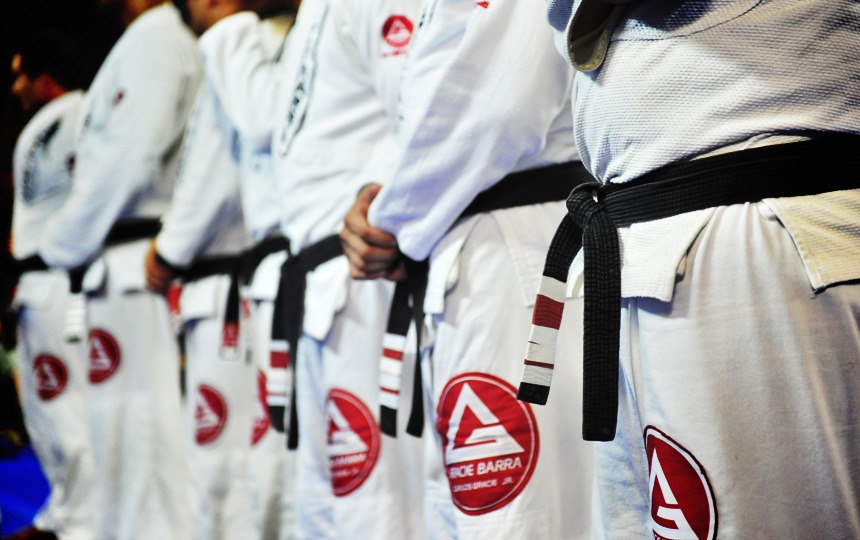
The Drill Sergeant

This is a type of instructor that likes to get things done. Class works pretty much like the military, with everything set to happen at an exact time. Not really a format BJJ people prefer, but still very effective. These are the instructors that won’t tolerate people being lat, want quiet during class, and like rolls to happen with a purpose. Just like their style, they’ll get things done, but there won’t be a lot of fun along the way.

Professional Gym Owner

This is the type of instructor that can be on one of two extremes. Either it is all about the students, the curriculum, classes, etc, or all about the business. If you’re lucky enough to run into the first type, you’ll get some of the best possible instructions on every possible subject. If it is the second one that’s in charge of your classes, you might want to really consider how that will work out long term. They both have knowledge of Jiu-Jitsu, that’s undeniable. However, the way they appraoch teaching couldn’t be more different.

The Laid Back Brazilian

These types of Jiu-Jitsu players do not actually have to be Brazilian. They’re just laid back as most Brazilians tend to be. With these types of instructors, everything seems to happen on a whim, without much pre-planning. But that’s just how things appear. People that are laid back tend to be able to convey much more knowledge than those who like to run a tight ship. having the chance to learn from one usually means you have a gold mine of grappling knowledge at your disposal. you just have to prod it a bit too from time to time to get things going.

The Thinker Monkey

Lately, there are many more of these coming out. These are the type of Jiu-Jitsu players that like to analyze things down to the most fundamental moments. Their style is all about trying to teach people how things work, rather than just show the steps for a leg lock. They’re usually fun to listen to, but do tend to talk way too much. if not for that, they’d probably be the type I’d like to learn from the most.

Type Of Black Belt Jiu-Jitsu Players

Types Of Jiu-Jitsu Players - Black BeltsFinally, we reach the black belts. Rare beasts that are in a category of their own. All black belts are not instructors or teachers, though, which makes them different from everyone else. They also tend to have a personality influenced game, but can also be masters at masking it. Just like they do with everything else during rolling.


The Competitor

Black belt competitors are the creme of the crop, really. Particularly when they also teach in addition to competing at the highest levels. These types of Jiu-Jitsu players tend to be humble, always listen, will talk to anyone about anything and don’t mind rolling with everybody. In fact, they thrive in rolling, particularly competitive rolls. It might be hard for people like that to teach due to the amount of travel they do, but if you can catch them at a seminar or class, make sure you’re there!

Superstar Wannabe

Just like with every other belt, or every personality, for that matter, there are BJJ black belts out there that are not as quite big time as they think they are. Certainly, legit black belts, these types of Jiu-Jitsu players tend to overestimate themselves and can come off a bit stuck up. In certain situations, they might even have the right to be like that, but that is rare. While you can still learn a lot from black belts like this, interaction can be tough, particularly for lower belts.

The One-Team-For-Life Black Belt

These are the types of black belts that re die-hard members of a  BJJ team or affiliation. For them, the team/affiliation comes before them, or anyone else. They’ll be trying to convey the team’s message far more than their own, and actually are the only type that doesn’t let their own personality shine through as much as it should. It is definitely impressive for someone to show such loyalty, but in an art as diverse and vast as BJJ, affiliations might just be more of a problem than an answer. Easy to recognize, always wearing the colors of their affiliation, as well as never acting/talking about of bound of the codex they represent.

Just A BJJ Black Belt

Finally, there are black belts out there that are just black belts. Plain and simple. They tend to have their own teaching and rolling style and are not really bothered by much. They might not complete, or even teach, but are on the mats as much as they can, doing what they do best. you’ll see them not really exposing themselves in any academy, abut always approachable for a roll or a chat. What a black belt should be all about, in my opinion.

In Summary

As I said previously different types of JIu-Jitsu players thave to offer different things you can learn from them .regardlessif ti is a white belt student, purple belt instructor or a black belt, there’s always something to learn. And it is not just about the technical things or the taps. You can learn how different types of people behave when they roll or train and that will help you immensely in trying to figure out the never-ending puzzle that is Brazilian Jiu-Jitsu.

Simple Vegan BJJ Diet Rules For Top Performance

Simple Vegan BJJ Diet Rules

The amount of information on nutrition, diets and the best meal plans for athletes and fighters our there is simply overwhelming. So much so, in fact, that by trying to help people achieve a certain sustainable lifestyle a whole fashionable movement was created. Nowadays you can pick and choose, from sound options that make sense to crazy restrictive diets that have you buy someone’s overpriced special products. One topic that gets a lot of attention is veganism. In that regard, we won’t be covering veganism as a whole, but rather trying to give an answer to a somewhat burning question: Is a Vegan BJJ diet a healthy and reasonable choice for grapplers?

If we take a look at the evidence, it may be hard to draw the best conclusion. A vegan diet is when you avoid everything that originates from animals. That includes eggs and dairy in addition to meat, obviously. This is where things get confusing. Physiologically and biologically speaking, humans are omnivores. That means the can and should eat both meat and plants. That would mean that cutting one out results in health issues and worse athletic performance. And yet, athletes like Nick Diaz, Mat Danzing, Sebastian Broche, the Miyao brothers, Enrico Cocco and plenty others prove this theory wrong. What’s the deal with a vegan BJJ diet?

A Vegan Diet: Benefits vs. Drawbacks

Unlike some diet options out there, a vegan BJJ diet does make sense. There are proven benefits to eating plant-based foods. However, the vegan diet is restrictive by nature, although not as much as some other fad diets out there. That means that along with the benefits, you get several drawbacks as well.

The first thing you’re going to undoubtedly notice on a vegan diet is weight loss. Weight management becomes much easier when you’re eating plant-based, particularly when your food choices are on point. This means you’ll have no trouble getting to a lower weight class, and more importantly, staying there.

Next up is health. Less meat usually translates to a more alkaline diet, meaning acidity goes down. That helps fight off inflammation, boosts immunity, and a whole host of other benefits. In general, there is evidence to support that a vegan diet does impact health positively when done right. One thing that’s for certain is that digestion will improve greatly, along with your gut health.

Vegan BJJ Diet That Works In terms of athletic abilities, most people that switch to a vegan diet claim to recover better. Moreover, endurance levels always seems to be high in vegans. While there’s not too much scientific evidence out there to prove this, it obviously works for most people, so it should work for you as well.

On the other side, there’s a clear and undeniable drawback in the lack of nutrients. Certain vitamins and micronutrients are only available through animal-derived products. That means that however well your Vegan BJJ diet is calibrated, it will always lack certain nutrients. In other words, you will HAVE to use supplements without question.

One more possible negative side is that you can easily keep up with a vegan diet by eating nothing but junk food. Food choices matter even more than on any regular “healthy” diet plan. It is extremely easy to fall in a trap thinking you’re eating healthy just because you’re eating plant-based meals.

The Simple Vegan BJJ Diet Rules

It is not a question of whether a vegan diet is healthy and sustainable. The real question in terms of a vegan BJJ diet is whether or not it will help your performance on the mats? After all, that is the main reason for deciding to go vegan, at least for serious athletes. Rest assured, this is the one diet that will provide you with more than ample fuel for any type of performance. Given the number of nuts and fruits in a vegan diet, you’ll never run out of energy whatever you decide to do.

The second rule that you simply have to adhere to as a vegan athlete is food choices. There’s no way you can pull off a vegan BJJ diet on just fast food. You’ll need to really watch out for what you’re eating. The return, though, is in cutting out all processed foods, and mainly, processed sugars. That’s usually very hard to do on a regular diet. On a vegan one, though, you already have limited choices, so you just need a few more adjustments.

Speaking of food choices, you still have to include all the macronutrients carbohydrates, fats, and protein. As far as carbs go, you’re all set from all the fruit and most of the vegetables you’ll consume. In terms of fat, avocados, nuts, coconut oil, etc provide more both diversity and healthy options. Only in terms of protein do you really need to pay attention. Legumes like beans, peas, lentils, certain grains like quinoa and soy, etc are all very rich in protein. Of course, you can’t get all essential amino acids from plant sources only, which is where protein or amino acid supplements come into play. Vegan ones, of course.

Making The Transition

If you’re already following a vegan diet but having trouble with performance, you only need minor adjustments in food choices and/or supplement s to become a machine. If you’re doing a transition from a normal, or meat-heavy diet though, you’ll need to take it step by step. The goal is not to stop eating animal-based products overnight. Rather than that, you need to wean off them slowly. For example, cut out all meat except fish for starters. After a while, you can add fish to the mix, before slowly excluding eggs, followed by dairy and eventually, honey and whatever else is left. The process should be gradual, taking you at least three weeks.

Also, remember that while doing such a major change as adopting a vegan BJJ diet, you’ll feel weaker before you feel strong. This is inevitable, as your body adapts .however, the more you do a planned out, gradual transition, the less you’ll feel the effects of changing. Which brings us to the questions you most likely have.

Vegan BJJ Diet Food ChoicesThe protein content is one of the main questions people ask. First of all, you do not need nearly as much protein as it is advertised. That said, if you insist, you can freely supplement with soy, pea, or whatever other plant-based protein you can get your hands only. Just remember to throw in some amino acids so that you do not develop deficiencies.
Taste is another frequent question. Despite what you may think, you won’t be eating only salads, and vegan food does not taste bland. On the contrary, you can find insane recipes of everything from baked dishes and stews to cheesecakes to die for.

In terms of eating frequency, you can use just about any protocol you want. For example, you can still do intermittent fasting, but make sure that you’re ingesting enough calories. IF eating more small meals is your thing, you can go for that as well.

Oh, and yes, you can get stronger and even build muscle on a vegan BJJ diet.

Final Thoughts

The evidence is clear – A Vegan BJJ diet is going to provide you with everything you need to perform at a very high level. it is even a great fit for MMA fighters as well. Balancing one out, though, will take some time and research. that’s if you want to do things right. Also, not that you can’t just transition from whatever diet you’re on now directly to a vegan one. take things easy and slowly and in no time, you’ll look and feel the best ever. Or so they say, at least.

The Recipe For Longevity In BJJ

Longevity In BJJ - The Recipe For A Lifetime Of Grappling

Brazilian Jiu-Jitsu is a contact sport. In the world of martial arts, that would translate to an ability for full-on training up to a certain age. Usually, the cut off age is somewhere between 30 and 40 years old. And yet, In BJ, we see people well in their 50s and 60s, and even older, still training. And not just training, but also actively doing sparring and some even competing. What’s the catch here? What makes Brazilian Jiu-Jitsu different from other full-contact martial arts? In all honesty, the same rules apply. Not everyone gets to still actively train at 80 years of age. However, there is a way for everyone to achieve such a feat. Longevity in BJJ does not just mean being ablet o train for a lifetime but train every aspect of the sport for a lifetime. And there are certain guidelines to help you get there.

Longevity in BJJ is like this mystical thing that people talk about but can’t really explain it to each other. That is mostly true for younger athletes that have heard of longevity but do not pay much attention to it. That’s precisely why certain folks won’t get the chance to train for a lifetime. It is too late to start thinking about longevity in BJJ when you’re 40 years old, with a few chronic injuries and family at home to take care of. What you should do, if you’re serious about being a lifetime grappler, is to jump on the longevity bandwagon as early as possible. That way, you’ll train in a way that will ensure you can still move and perform like a young grappler, even when you become an OG.

Training Brazilian Jiu-Jitsu For Life

Longevity In BJJ: RecoveryEven under the best of circumstances, BJJ takes its toll on the body. All sports do, of course, but in Jiu-Jitsu, that toll is somewhat higher than most others. The combination of unusual movement patterns, coupled with the length of classes and the nature of sparring means your body endures lots of stress that’s repeated every time you’re on the mats. That stress you put on the body has a  cumulative effect. As years go by, you’ll start to feel the effects more and more, particularly if you’re still trying to train the way you did when you started.
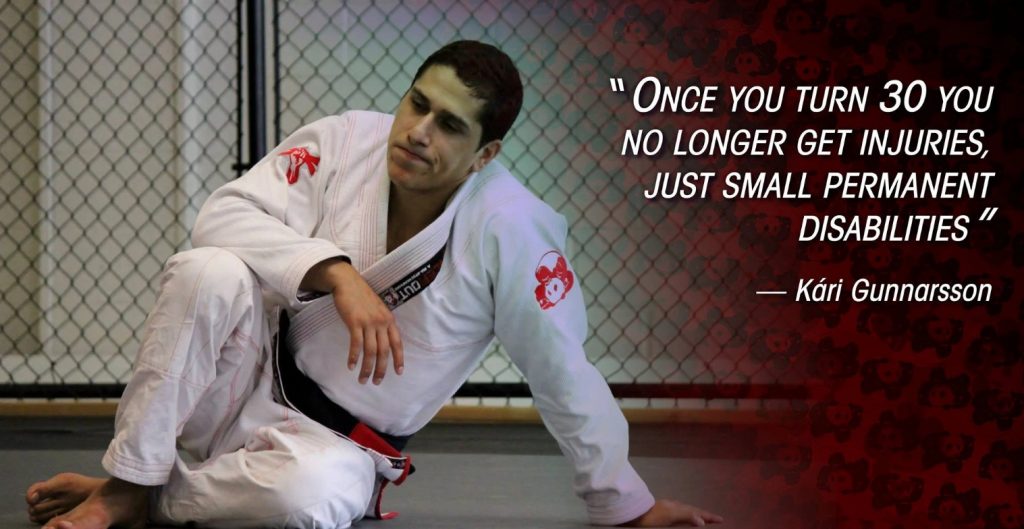
If you want to train BJJ for life, you need to have a cerebral approach to it. Even if your goal is to become a top-shelf competitor, you still need to think about yourself first. If your body does not work, you’ll miss out on more in your life than just Brazilian Jiu-Jitsu. Longevity in BJJ means you need to become a thinker Monkey rather than a gorilla trying to smash its way through everything.

A great example of this is “the Masters Competitors” phenomenon. Young athletes usually enter tournaments all hyped up and go at it like there is no tomorrow. On the other hand, in the master’s division, even if it is white belts, people tend to be much more laid back, respectful and watch out for each other. Of course, this is not a universal rule, but it is what tends to happen more often than not. You want to approach BJJ in general as a masters competitor, rather than an adult. Rafael Lovato Jr. had a nice funny video representing this approach posted on his Facebook page.   

Longevity In BJJ: Building A Long Term Game

Let’s talk longevity in BJJ a bit more specifically. You have to have a lot of things under your control outside of the gym, but it is essentially what you do on the mats that’ll define how long you can train BJJ for. And by train, I mean roll with as many people as possible, as often as possible.

Think of longevity in BJJ as an investment. Adopting the longevity approach as a younger grappler might not yield great results immediately. Just like in an investment, it will take time for things to pay off, but when they do, the returns will be Multifold. And do not worry about not being able to play to your strengths – the BJJ longevity gameplan is just as effective, if not more, than that of athletically gifted grapplers.

Namely, young people’s BJJ game is often marked by certain very specific attributes. They have a lot to do with age and athletic abilities that come with it. They tend to be fast, strong, explosive, have massive as tanks, crazy flexibility, and the likes. All of these can offer way out of bad spots or make attacks work better. However, that doesn’t mean your Jiu-Jitsu gets better. The longevity approach would have you play a game that doesn’t’ rely on any of these abilities, despite the fact you might have them all now. One day in the distant future, you’ll run out of those abilities and you’ll need something to fall back onto.

In more technical terms, for longevity in BJJ, you should stay grounded. Literally. That means avoiding all acrobatic moves, inversions, spins, flying submissions, etc. Keep things simple and technical, trying to submit people while not even breaking a sweat. That is what real Jiu-Jitsu is about.

Key BJJ Longevity Lessons

The best lessons are learned through other people’s struggles. However, when you learn one through your own, you tend to remember it much better. In a quest for longevity in BJJ, I’ve used both. All of these lessons learned have greatly influenced my game, taking my BJJ to another level while offering me a way to be able t train despite age, injuries or just the insane pace of daily life.

Longevity In BJJ- InjuriesThe most important lesson you can learn has to do with rolling. There’s no other aspect of BJJ that stresses your body as much as rolling, even if it is flow rolling. This is where your longevity BJJ game really gets to shine. And it starts with volume and intensity. If you figure out how to train less intensely, you’ll actually be able to train more, which means volume goes up. That way, you get to learn and develop as you spare your body unneeded stress. Plus you can roll with more training partners.
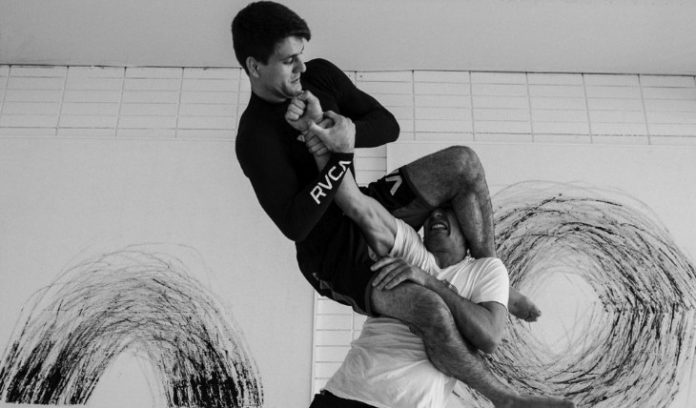
The rolling formula that works for a lifetime is to remove all kinds of panic reactions from your game. Accept everything that happens in a roll, good or bad and work your way out calmly and methodically. Also, tapping out early and often can add years to your time in BJJ. Even if you’re tapping because of a position rather than a submission.

There are a few more things that define longevity in BJJ. Picking your training (and particularly rolling) partners carefully is one.  Focusing on minimalism and defending everything before you attack is another. Make your partners tired before you go for the kill.

Finally, what you do out of the gym also matters a lot. Nutrition and recovery are key here and are much more important than any type of strength training or conditioning.

In Conclusion

If you want to train Brazilian Jiu-Jitsu for the rest of your life, you need to see it as a game. Take BJJ too seriously, and it will destroy your body in the long run. Instead, opt to play around, particularly when you’re rolling. Try and figure out why and how things in BJJ work, rather than trying to submit everyone multiple times in a roll.  This is a proven recipe for longevity in BJJ that will allow you to train as long as Helio Gracie did. Who knows, you might even surpass him!

The Only Way To Do A Flying Armbar Safely

Flying armbar safely

Have you ever tried a flying armbar submission? Of course, you have, even though you might not have done any actual “flying”. Flying submissions appeal to us all, and the flying armbar ranks the highest on that list. The curious thing is that it is mostly white and blue belts that are attempting it, with a few purple belts actually being able to pull it off. Among brown and black belts, there doesn’t seem to be much interest in flying, with a few exceptions, of course. All in all, flying armbars can be effective and they most certainly are attractive. However, they are also quite hard to master and bring about a level of risk that borders on unreasonable. No wonder people love them.

The first moment you see a flying armbar, you go “Wow”! Your very next thought is usually “I want to do this too”! The move is pretty acrobatic and one of the most attractive ways to get a submission. Normally, everyone wants to do it. However, it is also very easy to see that there are risks involved for both people. That’s precisely why executing the flying armbar can be really difficult. There’s a certain amount of fear that comes with every attempt and that only makes things worse. There have been many examples of people suffering debilitating injuries as a result of flying submissions gone wrong. That said, there is a safe way to do the move, but you have to understand that there will always be a level of risk.

The Seductive Nature Of Flying Submissions

Who doesn’t want to fly through the air, end up wrapping a submission hold on an opponent, and come down to the ground directly getting a frantic tap? In BJJ and MMA I’d say most people wouldn’t mind having such an ability in their toolbox. The options are certainly out there. So why aren’t we seeing too many flying submissions at tournaments, all levels included? The answer is – fear.

The flying armbar, as arguably the most efficient of the flying submissions, has a lot of technical details. It is not a Hail Mary move that you just hope works when you jump in the air. Quite the contrary, the fact that you’re “flying” makes technical nuances extremely important. It also makes people abandon caution and tries to push through the fear in a hunt for very attractive submissions.

Flying submissions, including the armbar, are actually efficient moves. They catch opponents by surprise, they’re impossible to defend when done right and have a high percentage of success. Again, it all depends on setting things up correctly. However, unlike a mounted armbar, for example, you don’t have time or space to adjust after you launch for a flying one. This means that you’re sacrificing a lot of control for the reward of adrenaline high from throwing your entire body in the air in order to submit someone. I won’t deny it is exhilarating, but it is not always worth it. In fact, I can’t think fo a legitimate reason fro attempt[ting a flying armbar apart from it being cool.

The only way to get good at flying submissions is to figure out a way to practice them safely. With the flying armbar, looking to go for a guard pull with armbar grips is the first step. Gradually move over to the jumping guard, before finally trying the flying armbar submissions set up in full.

Executing The Perfect Flying Armbar

When you come to think of it, the flying armbar is actually not a technically difficult move. The first lesson you have to remember, though, goes directly against what most people think the submission is about. That lesson is “Don’t fly”. Yes, you should not aim to fly when doing a flying armbar, but rather look to drop.

The best analogy I can use here is a guard pull. The flying armbar is essentially an “armbar pull” if we can call it that. The unique thing is that both your feet are off the ground, meaning you are completely suspended in the air at a certain moment during the setup. And that’s the second most important lesson in setting up the flying armbar – spend as little time as possible off the ground. With those two huge lessons learned, you can move forward to the technical aspects of the move.

Technically speaking, it all starts with grips. You have to have strong ones, placed at the correct spots to ensure you won’t come crashing down. The grips constitute a sleeve grip at the triceps level, a collar grip on the same side.  For the motion, you need to use one leg to push off the ground, looking to post the other leg on your opponent’s hips. Whether you place your shin over their belt or a foot on the same side hip, has to do with the type of armbar you want to finish with. It won’t affect your “flight”.

Finally, as you place the leg on the hips, the leg used to push off the ground goes up in the air, following the momentum you created. The goal is to get your butt as close to their hip as possible while swinging the back leg over their head. It should be the force of gravity that pulls the opponent down, meaning you need to hang on tight. Otherwise, you’ll drop like a stone and bad things can happen.

Safety First!

There’s no way of phrasing this differently. The potential for injuries during a flying armbar is off the charts, compared to other BJJ moves. It is right up there with takedowns, and the only reason it is not topping the list is that people don’t go for flying submissions as often as they go for a takedown.

The potential for injury is actually quite similar for both people involved. In the earlier stages of the move, putting a post or grip incorrectly or mistakes in launching yourself carry a lot of injury potential to the person executing the flying armbar. Past the halfway mark, with everything set up right, most of the risk is with the person whose arm is the focus of the attack. In that sense, safety should be of the utmost importance in doing the move, for both training partners.

There are several critical control points that you need to pay attention to. For example, if you just can’t seem to figure out the timing of your opponent’s movement, you’re probably better off abandoning it altogether and going for something else. Moreover, know this: once you start “flying” you must not change your mind about the move. The moment both legs are off the ground you’re much better off dedicating to the move rather than re-considering in midair or trying it halfheartedly. That is the recipe for disaster, for both you and your training partner/opponent.

Finally, as the person doing a flying armbar, you need to be careful with the submission itself. That goes for every submission hold, but with flying ones, it becomes much more important. Remember that you should only pressure on the elbow once you’re safely on the ground. Attempting to submit someone during the transition is a great way of causing real damage to their arm. That is a great way to lose lots of training partners in just one move.

Wrap Up

If you want to go for flying submissions, you certainly can’t. You just have to make sure of two things – never attempt them without getting proper instructions by someone that knows these types of moves. Furthermore, be sure to sacrifice the success rate for safety. If these are your primary goals, you’ll notice that you’ll actually end up getting more taps with a flying armbar, as opposed to just “winging it”. Pun intended.

24 years Old Gordon Ryan Buys Himself a Million Dollar House With the Income He Made From Grappling

Gordon Ryan House

You may love him or hate him but Gordon Ryan really is “the king”.  3x ADCC world champion, EBI champ, black belt 2x gold at IBJJF No-Gi Pans and Worlds, and this year double gold medalist at ADCC is making his dreams came true.

At age 24, Gordon Ryan has won everything there is to win in No Gi grappling and as a result of that, he’s probably the most paid athlete in grappling sports right now.

Ryan bought himself a new house and here is the story he shared on his Instagram profile:

How fortunate am I? Today I bought my 1st house. Take this as bragging or as inspiration. I don’t care. I started my professional career (professional being defined as me being able to live by myself and pay all my bills) in mid-2016. Less than 4 years later I bought a brand new, just built, 965k dollar home and a brand new truck that will last me 965k miles ?.

@danaherjohn tells us to always think in 5-year cycles. Being professional for 4 years has brought me to a point far beyond where id ever thought id be in grappling. When my parents got divorced 3 years ago I was just starting my career and didn’t have much money. When our house was sold I knew it was an opportunity to get closer to Renzo’s in the city. I and the boys were driving 1000 miles a week, 25 hours a week, and spending 2500$ a month on travel to the city (gas, tolls, and parking).
Since I was early on in my career I didn’t have enough money to buy a house I wanted near the city, so we decided to move into the city. I didn’t think id like it but I gave it a shot. Now, we needed 3 bedrooms. 1 for me obviously, one for big Gord (he’s my best friend and will live with me until he’s gone), and one for all his extra furniture and stuff he was bringing from the house, + a storage unit. Everywhere I looked in midtown or even uptown near the gym was 10k+ a month. My ultimate goal was to save for a house and for investments so I wanted to keep rent around 3k a month and be less than 45 minutes from training. We ended up settling for an apartment 40-45 minutes away in Harlem on West 151st street for 4200 a month (there wasn’t anything big enough/cheap enough in the time we had available).

In just a few years I went from living with my parents to living in Harlem, to buying a million-dollar house to support my entire family. We have me, big g, sonny, and soon Nicky living here full time with the possibility of a few teammates as well. I am a living example of the AMERICAN DREAM. I came from next to nothing and I now have everything. Always remember this doesn’t happen overnight and it is in NO WAY easy. It takes harder work than you think you’re capable of some days. But you sure as sh*t isn’t gonna accomplish anything sitting around feeling sorry for yourself. “Most people drastically overestimate what they can do in a year and drastically underestimate what they can do in 10”. And always remember king Ryan fans (and haters?) , I didn’t do this alone!

Every seminar, every DVD, every teeshirt, every positive review, every little thing you do to support me day in and day out doesn’t go unnoticed. I am your servant and I will continue to not only entertain, but to push the sport forward beyond limits so not only I but generations to come can support not only themselves, their kids and their grandkids. We are gonna change this sport and then we’re gonna change the world. Much love from the Ryan family ❤? ps- when the house is set up me and sonny will give you tours ?

Is Jiu-Jitsu Rolling Alone Enough To Learn BJJ?

Is Jiu-Jitsu Rolling Alone Enough To Learn BJJ?

Learning Brazilian Jiu-Jitsu is available through many methods nowadays. Of course, the best one is to join an academy, and to classes regularly. Even if that is your only avenue of learning, there are different ways to learn during a class. there’s movement training, there are technical drills, competition drills, learning techniques, and concepts and rolling, to name a few. Out of them all, Jiu-Jitsu rolling is by far the most fun part of training. Let’s face it, it is rolling that has us come back to the mats to suffer over and over again. But, how far can only rolling take you and how much can it teach you, really?

In the academy where I train, there are a beginner and advanced groups. People from the beginners’ group, usually only do position sparring as part of a class. So, if they want some open mat fun, they have to wait until the advanced group is done with class. Surprise, surprise, there are plenty of people that hang out by the wall, waiting impatiently for rolling to start. In fac t, they’re much more interested in rolling than trying to learn a few more tricks form watching the advanced classes. There’s just something about Jiu-Jitsu rolling that is unique and irreplaceable. The fact of the matter is, we learn a lot in rolling. The question, though is, how far can it take us?

Jiu-JItsu Rolling: How Much Can It teach You?

It is beyond a doubt that anything BJJ related can teach us a lot about The Gentle Art.  Well, almost everything, Rolling has a huge role to play in learning and understanding Jiu-Jitsu. There are things you just can’t learn by only picking up new techniques or drilling. Certain stuff requires you to either compete on a weekly basis or do simulation matches regularly. That is Jiu-jitsu rolling in a nutshell, Some of the major things only rolling can teach are timing, breathing, weight distribution during transitions, when to explode and when to conserve energy, etc.

It is not whether we can learn from Jiu-Jitsu rolling, it is how much and how frequently This has a lot to do with which belt level you are at. For white belts, rolling is not a very fun experience in general, but it does hold a valuable lesson – it teaches them to persevere. Blue belts usually can figure out that ego has no place in BJJ  by rolling a lot with both white belts and higher belts. That said, I guess purple belts are those that benefit the most from rolling as a learning tool. This is the belt where people discover their style by going deep and trying to roll as much as possible with everyone they come across.

For brown and black belts the focus completely shifts to playing and toying around during rolling. Ther are valuable lessons in there, but not nearly as much as in other avenues, like teaching.

Learning from rolling is possible, but limited, to put things simply. And no, you have not seen it all by the time you reach a purple belt. This may have been true in the early days when purple belts knew the same techniques black belts did, and it was just a question of finesse. Nowadays BJJ evolves every day, and there’s no way to know the same techniques as others, regardless of the belt. So, no, rolling is not the only way to learn if you’re a purple belt or higher.

Different Types Of Rolling For Different Lessons

Jiu-Jitsu rolling, despite not being enough to learn BJJ on it’ own, is definitely an integral part of the learning puzzle. Even more so, there are different types of rolling, and they all have different lessons to teach.

Let’s start with the hardest and most elusive form of rolling – flow rolling. This is when you simply roll to have fun, no physical effort, and pure technique. It takes a lot of self-control to achieve it, and it is not easy to learn. However, it will teach you timing and how to feel movement from the other person like nothing else in BJJ.

Hard Jiu-Jitsu rolling si what most people end up doing most of the time. Even most rolls that start as flows, end up being hard, competitive rolls. You certainly have a lot to learn here, with suffering being the most important lesson. Hard rolls mean you’ll be tired regardless of where you are. Moreover, it teaches you how to pace yourself and use tactical breathing patterns in order not to gas out.

Rolling with different belts also brings about different benefits. Different people have different body types, different styles, and approaches to rolling. All of them have stuff to teach you, both when you’re the one dominating and when you’re trying to survive.

Finally, one of the best possible ways to learn via Jiu-Jitsu rolling by restricting your rolls. There are many ways to do this. You can restrict which positions you and your partner can use, for example. OR, decide you’ll do only one submission hold or one guard pass. Another option is using only one hand during rolling, in order to figure out how to close gaps and/or create space. the combinations are endless.

Playtime vs. Learning Time

In a sport as complex as Brazilian Jiu-Jitsu, there’s no way that restricting yourself to just one learning method will yield results.  For example, you can learn how to read if you just pick up a boo kand try to read. Somehow, you might figure it out with some help. However, if you go toa structured class, where a professional explains the letters, sentences and everything else, you’ll learn to read not just faster, but also, how to read everything ina certain language. The same example works with driving. You can certainly figure out how to drive on your own, but going through structured classes that involve doing some driving works way better.

The same is true for rolling. Every class or just about every class in BJJ contains rolling. there’s a reason why only Jiu-JItsu rolling si not the main focus of most classes. It can help sharpen you up and teach you certain aspects of the game, but you can’t do without the technical classes and drills. Otherwise, you’ll just be trying to drive around without any sense of how both a car and traffic work.

Let’s put it like this – rolling is more of playtime, than learning time. It is fun, free-flowing, allows you to express yourself, etc. At the same time, you do figure out how to put things you’ve learned before in use. And that’s just it. You learn things by doing repetitions of techniques or drilling. Then, you just figure out where it all fits when you get to play around during Jiu-Jitsu rolling.

Closing Arguments

Every part of a BJJ class has a role to play. Jiu-Jitsu rolling is no different. It has a huge role to play and has ultra-valuable lessons to teach. But only going to classes to roll is not going to get you far in BJJ. that is not to say you won’t progress, or even one day reaches a black belt, but it is not an efficient way to go about things. So, use it along with all other methods of learning so that you give yourself the best chance to progress. Yes, that means you’ll have to come to class and do all that tehcnical mumbo-jumbo from time to time.

Jiu-Jitsu Belt Order Аnd What Every Belt Means

Jiu-Jitsu Belt Order History
Do you know the story of the Jiu-Jitsu Belt Order? Why is Brazilian Jiu-Jitsu so different from other martial arts when it comes to the color and order of the belts? Some of these questions were quite difficult to answer until a short while ago. Even now, the correct information can often be hard to find, in the midst of all the myths and stories in regard to Brazilian Jiu-Jitsu belts. The belts in BJJ are definitely unique, from the way they look to the way students earn them. It is time to tell the true story behind BJJ belts and their origin. 
There are plenty of stories and mysteries surrounding how belts came into martial arts in the first place. There are just as many when it comes to Brazilian Jiu-Jitsu belt ranking as well. Most people have probably heard the old story that martial artists whore nothing but white belts.
Throughout the years, they would become so worn out and dirty, that they appeared black. This story, however, has never been corroborated or confirmed, so it remains just a story. In terms of the Jiu-Jitsu belt order and origin, there are plenty of stories, based mostly on what people think happened. The real story, though, is much simpler and makes a lot of sense. Moreover, it has been confirmed by plenty of sources.

Where Does The Jiu-Jitsu Belt Order Come From?

Let’s try and clear up all the confusion. Dr. JIgoro Kano, the founder of Judo is the “man to blame” for the belt system. When transitioning old Japanese Jiu-Jitsu into a sports format, he decided he needed a way to distinguish between beginners and advanced students. Hence, the white and black belts. The idea for the black belt came to Kano via Japanese swimmers, who wore a black ribbon around their waist to symbolize their advanced level.
Later on, a traveling Judo instructor introduced the different colored belts when teaching in Paris. According to him, westerners needed more ranks and instant gratification compared to the Japanese.
Jiu-Jitsu Belt Order Helio Blue BeltThe Gracie Jiu-Jitsu belt order had a similar development to Judo belts. In the earliest days of Gracie Jiu-JItsu (the 1950s), there were only two belts for Jiu-Jitsu practitioners – light and dark blue. People that were training to become instructors wore light blue belts, while instructors had dark blue belts. This system existed until the late 1960s. During that period, the belts represented the level of teaching skills practitioners had, rather than how fast they learned techniques.
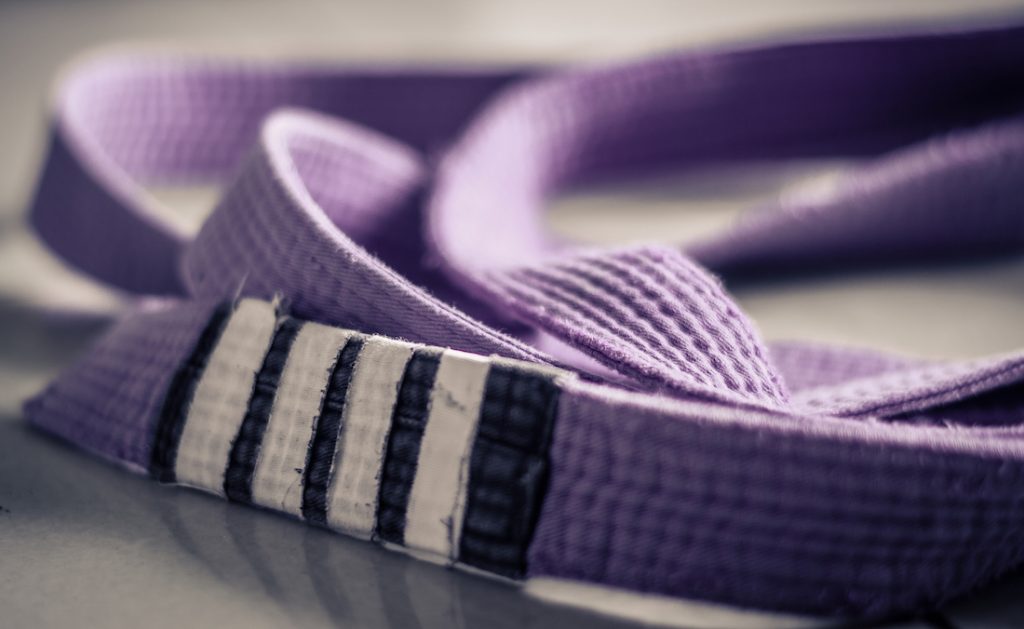
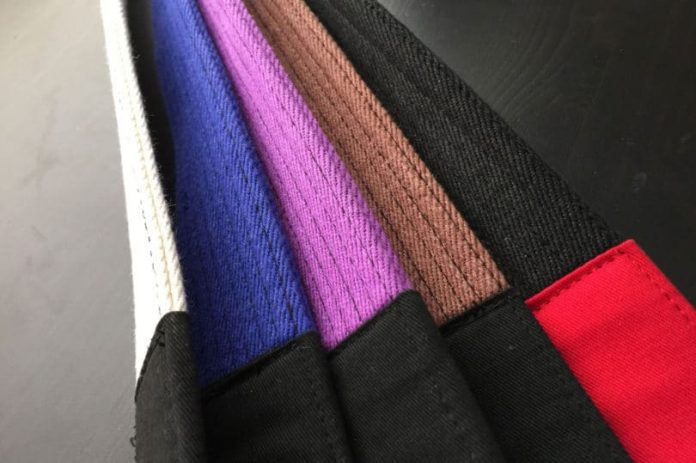
The black belt in Brazilian Jiu-Jitsu was first introduced in 1967, along with the distinguishable bars on the end of a BJJ belt. The role of the bars was to recognize whether someone or not is just a black belt practitioner, instructor, or professor. A black belt with a white bar means someone is a black belt practitioner. The full red bar means an instructor, training to become a professor. Finally, the red bar with white borders on each side represents a Professor of Gentle Art. Moreover, the bars distinguish BJ Jbelts from all other martial arts belts.
There’s also a very specific Jiu-Jitsu belt order for children. The system of kids’ belts was introduced by Hello, based on the similar one used in Judo. According to Helio, adults and kids need to be clearly separated, hence the different belt colors to this day.

What Does Every Belt Level represent Today? 

Everyone has their own journey through the belts of BJJ. However, the Jiu-Jitsu belt order is the same for everyone, and everyone has to go through some common phases during each belt level no matter how fast they learn and how they can earn their black belt.
The White Belt is when you get a real introduction to what JIu-Jitsu is. Feeling lost, overwhelmed, and like your everyone’s rest round comes with the territory. It is a learning experience on so many levels and acts as an initiation period. Surviving the white belt means you can really start doing some Jiu-Jitsu.
At Blue Belt, one of the most important things in BJJ happens, and it has nothing to do with technical skills. What people realize at this time is how big of an ego people have, and how much of an obstacle it can be. Mastering your ego (because you can’t really leave it at the door) is the blue belt milestone. That. And discovering different annoying ways to stop everyone from submitting to you.
Jiu-Jitsu Belt Order - Purple belt meaningAs a Purple Belt, you’ll really begin to touch on the true nature of BJJ. This is the time when you find yourself in the BJJ world, along with your specific style. Lots of guard work, experimenting with different submissions, going hard against anyone, and always skipping warm-ups marks the moment you’re truly a purple belt.
By the time you reach Brown Belt things will finally start to make sense. In the JIu-JItsu belt order, this is the belt where everything you did before clicked together. It is when you start to understand Jiu-Jitsu and, suddenly, things look much simpler and very logical. What marks this belt is that you stop taking BJJ so seriously, meaning you finally get to have some fun with it.
Finally, a Black Belt symbolizes your Jiu-Jitsu maturity, of sorts. What it really signifies is that you can start re-learning BJJ all over again, just at a level that’s completely alien to anyone training except maybe advanced brown belts. Oh, and you get to toy with people. A lot.

BJJ Belt Promotions 

Finally, let’s talk about BJJ belt promotions. The most painful subject for most people. Remember how that old-school Judoka that came to teach in Paris discovered westerners require instant gratification? He was more than right. People can’t wait to get to the next level constantly, and they tend to miss out on lots of important things along the way. Still, the BJJ promotion system is one that doesn’t just let people get to the next belt level without earning it.
Jiu-Jitsu Belt OrderOne of the best things in Jiu-Jitsu is that when you’re time is that when you’re ready, which is something the instructor decides, you get called out and just get a belt tied around your waist. That’s it. Well, that, and all the crazy and controversial promotion ceremonies taking place around the world.
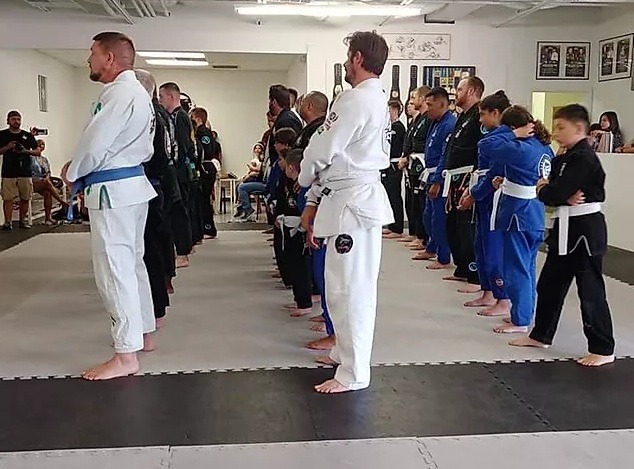
Another thing to touch on in terms of the Jiu-Jitsu belt order is stripes. Promotions usually end up with people earning one or more stripes that go on the black bar at the end of their belt. It is a great way for people to measure progress, and get constant rewards on their way to the next belt level. Given that a BJJ belt takes about two years on average to earn properly, this really helps keep people in the right mindset. Imagine if you had to wait for 6-7 years as a light blue belt, just o get a dark blue one?

Wrapping Up

As far as I am concerned, the JIu-Jitsu belt order works perfectly. As long as people do not abuse it, by giving away belts for money, the standard of belts in BJJ is going to be high and the art will continue to evolve rapidly. On the other hand, I can’t stop but wonder, how would BJJ look if all we had were the two shades of blue or simply white and black belts?

Things To Do After a Brazilian Jiu-Jitsu Class

Things To Do After A Brazilian Jiu-Jitsu Class

Brazilian Jiu-Jitsu doesn’t end when you line up for the end of class. Nor is it over when you finally make yourself stop rolling and head to the changing rooms. Let’s face it, most people do not want BJJ classes to end anyway. Henceforth, people are still in a BJJ mindset long after a class ends. This is a perfect time to keep working on your Jiu-Jitsu even though the Academy is closed and you’re not physically on the mats. There are plenty of things to do after a Brazilian Jiu-Jitsu class that is still BJJ-related. When we can, of course, because life doesn’t always allow for much extra time. When you can find it, though, why not use that time to keep doing your favorite thing in the world?

There are plenty of things that are great for people after a Brazilian Jiu-Jitsu class. Of course, you can just Netflix and chill, but let’s face it, your mind is still going to be processing things that happened in class. Using that time to arrange your impressions or try to make sense of what happened in class is going to yield incredible results. While information is still fresh in your mind, you can focus on making things click in a way that suits you best. Moreover, you can spend that time working on the physical side of things. You can work on recovering or try to improve certain athletic abilities. One of my favorite things is to socialize with my teammates right after class – so many good things come out of those simple interactions.

The Aftermath Of A Brazilian Jiu-Jitsu Class

From the viewpoint of someone who teaches BJJ classes almost daily, organizing a class is not an easy thing to do. However, an even harder thing to do is end a class. BJJ folks never seem to have enough of Jiu-Jitsu. For coaches, a class does not end when people line up for that final “Oss”, or whatever it si you do in your Academy. A Brazilian Jiu-Jitsu class is done when you put the key in the lock to close the facility. Even then, people are usually still around, trying to figure things out. Personally, I love it, and I keep the academy open as long as I can. This provides people with as much time on the mats as possible.

Brazilian Jiu-Jitsu ClassStill, everyone has a different thing they do after class. Of course, after a tough rolling session, going for a hot shower, a good meal and as many hours of sleep as possible is by far the best possible thing to do. However, there are some things you can do after a Brazilian Jiu-Jitsu class that can actually be very beneficial to your game. Everyone has a different approach, so I tried to talk with as many people as I could to figure out what they love doing after a class. Of course, some things are highly individual, while others apply to almost everyone.

Right after class when you pack your Gi and head out is the perfect time to process things that happened. Your mind and your body are still in BJJ mode, and training doesn’t have to stop there. You can focus on different things after different classes, or have a favorite routine you do. Options are plentiful, ranging from recovery to physical training, trying to understand what happened in class to talking and socializing with teammates that share the same passion.

Things You Can Do After Class

I don’t know if it as a blessing or a curse that we can’t rest our minds (and bodies) from BJJ even when we’re not actually training. I choose to look at it as the former, as I’d presume most of us do. That said, some of the best periods of my day, are actually right after a Brazilian Jiu-Jitsu class. I tend to go for “different things every time” approach. It is based on how I’m feeling or what my goals are at the time. However, there are three main categories of things you can do, as far as I can see.

For most people, recovery after training is key. This becomes progressively more important with age, but it is beyond discussion that everyone would be focusing on it. While recovery includes stretching, it extends to much more than just that, as we’ll discuss in a minute.

For those who are feeling fresh and energized, training more is also a popular option. Whether it is conditioning, strength, CrossFit or whatever, training after a Brazilian Jiu-Jitsu class is actually one of the best times to do some strength and conditioning.

Finally, there’s the category of understanding BJJ or engaging your mind. In other words, some much needed “BJJ theory”  studying, as I like to say. That’s when you use whatever is at your disposal, from talking to teammates to watching different types of instructionals, reading books, etc. The goal, of course, is to try and organize everything in a meaningful fashion. Or, to prepare for the next class, if you’re the instructor.

  • Conditioning

Things To Do After A Brazilian Jiu-Jitsu Class - ConditioningThis is a highly popular option, particularly among BJJ competitors. I do think everyone needs to supplement their BJJ training with some physical work. It can take place after class or on days when there’s no BJJ training. The thing to remember is that it is way better to train BJJ fresh, and then finish off with a conditioning session rather than the other way around. To that extent, most academies do have kettlebells, weights and other basic equipment right next to the mats. That makes things easy as you can immediately jump to doing your swings, rope climbs or sprints after class ends.
Remember not to overdo things, though, as overtraining is something that creeps up on you without you being aware. If you overdo conditioning, your BJJ will suffer as well, as training tired is the perfect formula to get injured. Still, if you can’t do conditioning on another day, and still have the energy after a Brazilian Jiu-Jitsu class, get your Gi off and get down to business.

  • Food And Hydration

The most obvious thing to do is usually the hardest for most people. Eating clean really does help BJJ performance, but there’s the most important time for proper nutrition is immediately after training. Whatever your diet option might be, Carnivore or Vegan, High carb or Paleo, you need to get some food right after Brazilian Jiu-Jitsu class. The keyword here is food, rather than the food-like products that are easy to pick up. George Lockhart has some great advice along with great ideas about what to eat right after training.

If there’s one thing that’s more important than food, or anything else for that matter, it is hydration. I can’t stress this enough – drink water. It doesn’t matter how much water you drank throughout the day, or before training. After going through a class and a few tough rolls everyone gets dehydrated. Drinking nearly enough water during rolling is impossible, meaning you need to make up for the liquids lost afterward. Water is your best bet, although shakes, electrolyte drinks, and other similar stuff might help. Watch out for the sugar content in some of the sports drinks. They might end up dehydrating you more, rather than helping you.

  • Stretch

This is the one thing most people try and do after training. It is also the one thing almost everyone fails to do right, at least when grapplers are in question. Stretching is one of the best things to do when done correctly. Moreover, you can do it on the mats, or at home. There are a whole bunch of stretching routines you can do which are perfect for people that train BJJ. They’ll both help you recover, and improve your flexibility at the same time.

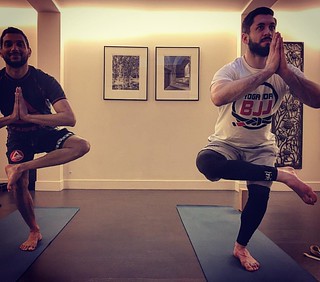
Things To Do After A Brazilian Jiu-Jitsu Class - YogaYoga is the most popular option among grapplers, and for a good reason. A good Yoga routine is incredible in helping you recover, achieve flexibility, balance, and even develop strength. Doing Yoga right after a Brazilian Jiu-Jitsu class is perfect, particularly done right there on the mats. Some academies include short Yoga sessions to wrap up classes, which I think is a great idea.

  • Recovery

While stretching is often seen as the main recovery method among grapplers, there are different ways to recover. For those looking to free up tension in their bodies, foam rolling is an invaluable method of recovery. There are different tools and different methods out there, but it can make a huge difference in whether you leave a Brazilian Jiu-Jitsu class sore and tired, or fresh regardless of how much rolling you’ve done.

Things To Do After A Brazilian Jiu-Jitsu Class - SaunaAn option I really, really recommend is the sauna. While this might be a bit tricky, as academies usually don’t have a sauna. However, finding one nearby is not hard at all. Saunas are all over the place and the benefits they have to offer are nothing short of incredible. A short session in a sauna right after training Jiu-Jitsu will help not only your body but also your mind. Hydration becomes even more important if you choose this method though. Make sure you’ve drunk double the amount of water you’d usually drink.

  • Write Things Down

In all honesty, the period right after a Brazilian Jiu-Jitsu class is the best time to work on Jiu-Jitsu-related stuff. This is when you can organize all the formation in a way that helps you retain as much of it, or simply make sense of things. You don’t’ really actually learn much during a class, but rather absorb information that you’ll make sense of later on. Having a BJJ notebook is an awesome way of organizing what you learn in class. And by notebook, I don’t mean a physical one if you’re dead set on doing things electronically.

Whether you write stuff down, draw things, make diagrams and mind maps for your game, writing down is one of the best ways of speeding up your Jiu-Jitsu progress. Notebooks are extremely helpful and have become one of my favorite tools to use on a daily basis.

  • Watch Videos

This one is huge. It is a trait of modern Jiu-Jitsu, but one that is very welcome. The amount of BJJ-related video material out there is immense. Online videos on YouTube,, online instructionals on dedicated websites, BJJ DVDs, footage of matches or rolls… Whatever you can think of, you can find online. Looking up certain techniques or movements right after a Brazilian Jiu-JItsu class can really help you understand what was taught in class. Moreover, you can find out what questions to ask the next class in order to understand the move(s) better.

For competitors, analyzing footage of matches is an invaluable tool in their preparation. From analyzing opponents to trying to figure out what the best grapplers do, there are countless ways to use the material out there to improve your own game. For most, the period right after class is the best time to connect what you learn in class and what you can use in competition. Watching matches helps immensely.

  • Socialize

Things To Do After A Brazilian Jiu-Jitsu Class - SocializeAnother one of my personal favorites. The best part about socializing is that you can still do most of the activities above, just surrounded by like-minded people rather than alone. Talking with people, whether it is your instructors or teammates. These talks can go on for hours, and often times end up bringing people to very important conclusions. Another great benefit is that the team grows stronger when people get to know each other outside of the mats, even if BJJ is still the main subject. If I had to choose one thing I’d recommend everyone in BJJ does at least once a week after class, it is to socialize with your teammates. The larger the group, the better.

Conclusion

A class might end up at a scheduled time, but BJJ never ends. Since almost everyone that trains BJJ keeps on thinking about it after a Brazilian Jiu-Jitsu class, why not make the most out of it? Read, watch videos, train some more, write things down and contemplate, go to a sauna to unwind, or just hang out with your BJJ buddies. There are plenty of productive things to do instead of just crashing on a sofa and hating yourself for tapping out so many times in rolling.